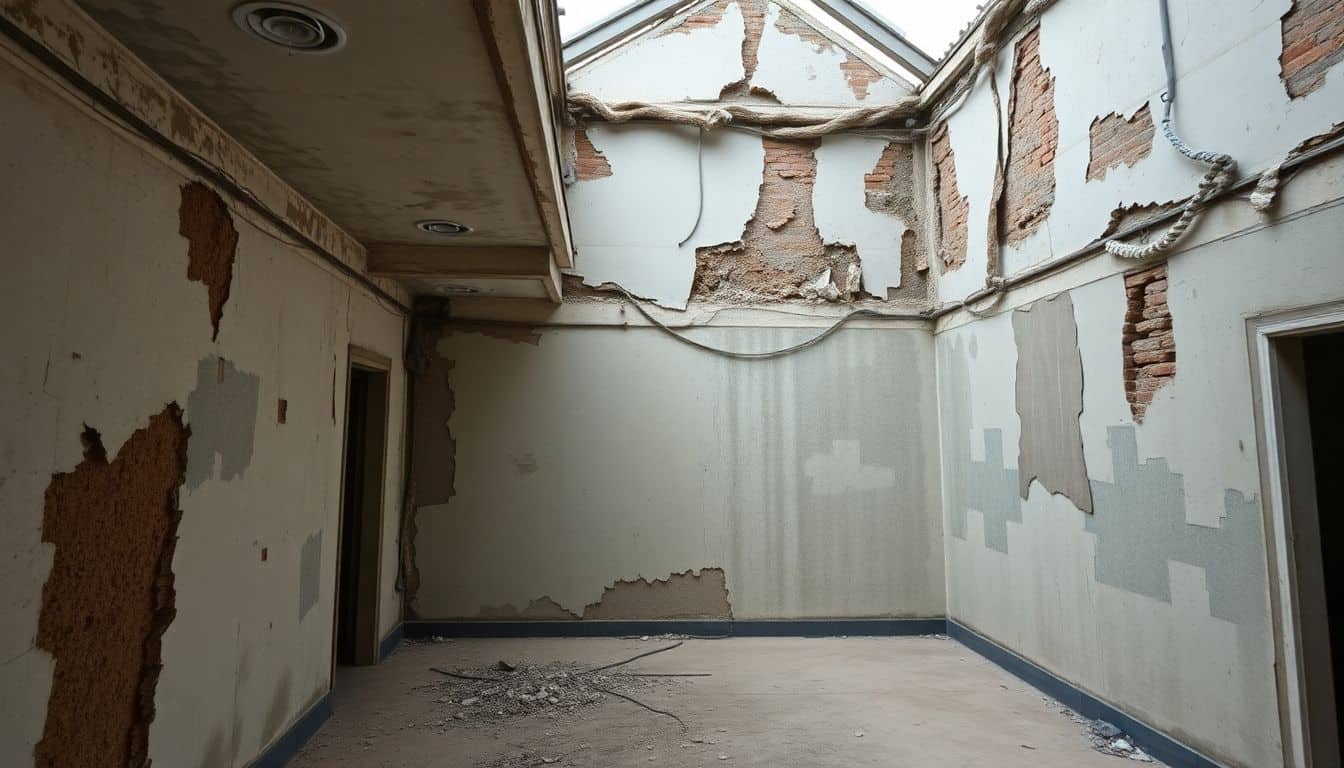
There Is No Safe Level — And That’s What Surprises Most People
Most people assume there’s a threshold — a point below which asbestos exposure simply doesn’t matter. There isn’t one. When people ask how much asbestos exposure is dangerous, the answer may surprise you: no level of exposure has been proven safe. That’s not scaremongering — it’s the position of the Health and Safety Executive (HSE) and the foundation of UK law under the Control of Asbestos Regulations.
The fibres are microscopic, odourless, and invisible to the naked eye. That invisibility is precisely what makes them so hazardous — you can’t see, smell, or taste a dangerous exposure as it happens.
What Is Asbestos and Why Was It Used So Widely?
Asbestos is a naturally occurring group of silicate minerals with a fibrous structure. Those fibres are extraordinarily heat-resistant, flexible, and chemically stable — which made asbestos appear to be a miracle material for much of the 20th century.
It was used in everything from roof sheeting and pipe lagging to floor tiles, ceiling boards, and school buildings. Builders, manufacturers, and architects embraced it enthusiastically because it was cheap, abundant, and effective. Nobody fully understood the consequences until decades later.
The UK banned the import and use of all forms of asbestos under the Control of Asbestos Regulations, but because it was used so heavily in construction for so long, it remains present in a significant proportion of buildings across the country. Any building built or refurbished before 2000 may contain it.
The Six Types of Asbestos You Need to Know About
Asbestos isn’t a single material — it’s a family of minerals, each with slightly different properties and risk profiles. All of them are hazardous.
Chrysotile (White Asbestos)
This is the most commonly used form, accounting for the vast majority of asbestos found in UK buildings. You’ll find it in roofing sheets, wall insulation, floor tiles, pipe lagging, and older vehicle brake pads. Its curly fibres are sometimes described as less dangerous than amphibole types, but it remains a proven carcinogen and is not safe at any level.
Amosite (Brown Asbestos)
Widely used as pipe insulation, in cement sheets, ceiling tiles, and heat-resistant products. Amosite is an amphibole asbestos — its needle-like fibres penetrate deep into lung tissue and are considered particularly hazardous. It was heavily used in industrial and commercial construction.
Crocidolite (Blue Asbestos)
Generally regarded as the most dangerous form. Crocidolite was used as spray-on insulation, in pipe lagging, cement products, and plastics. Its extremely fine, rigid fibres are highly persistent in lung tissue and are strongly associated with mesothelioma.
Anthophyllite
Less commonly used commercially but found as a contaminant in vermiculite and talc products. Like all asbestos types, it presents a cancer risk on inhalation and should not be treated as lower priority simply because it appears less frequently.
Tremolite and Actinolite
These two types have no significant commercial history but are found as contaminants in chrysotile, talc, and vermiculite. Both are hazardous. Neither is restricted in the same way as the main commercial types — which represents a meaningful gap in protection, particularly in specialist industrial contexts.
It’s also worth noting that certain asbestos-like minerals — including winchite, richterite, erionite, and taconite — are not covered by the same regulatory restrictions despite presenting similar health risks. Awareness of these materials matters in specialist settings.
How Much Asbestos Exposure Is Dangerous? The Real Answer
This is the question that genuinely surprises most people: there is no known safe level of asbestos exposure. The HSE and the World Health Organisation both confirm that even low-level or short-term exposure carries some degree of risk.
That said, risk is cumulative and dose-dependent. Someone who worked daily in an asbestos-insulated shipyard for 20 years faces a dramatically higher risk than someone who briefly disturbed a small area of asbestos-containing material on a single occasion. But the person with the single exposure is not risk-free — they simply have a lower probability of developing disease.
Every exposure adds to the total burden of fibres in your lungs. Your body can expel some, but many fibres become permanently lodged in lung tissue. Over time, this accumulation causes inflammation, scarring, and genetic damage that can eventually lead to serious disease.
The latency period — the gap between first exposure and the appearance of disease — can be anywhere from 10 to 80 years. This long delay is one reason why asbestos-related disease remains a significant public health issue today, decades after its use was banned.
Which Occupations Carry the Highest Risk?
Certain workers have historically faced far greater exposure than the general public. If you or someone you know worked in any of the following roles before the 1990s, the risk of having been significantly exposed is real:
- Shipyard workers and merchant sailors
- Boilermakers and pipe fitters
- Electricians and heating engineers
- Carpenters and joiners
- Roofers and insulation installers
- Plumbers
- Painters and decorators
- Miners
- Building demolition workers
- Teachers and school staff (many UK schools were built with asbestos-containing materials)
Shipyard work was among the most hazardous — workers were often surrounded by asbestos insulation in enclosed spaces with poor ventilation. The link between these occupations and mesothelioma is well-established and continues to result in significant numbers of diagnoses each year.
Secondary exposure — sometimes called para-occupational exposure — is also a serious concern. Family members of workers who brought asbestos fibres home on their clothing have developed asbestos-related disease as a result. Decontamination procedures at work sites are not optional formalities.
What Diseases Can Asbestos Exposure Cause?
The diseases caused by asbestos are serious, often progressive, and in several cases fatal. They typically take decades to develop, which is why many people don’t connect their illness to an exposure that happened 30 or 40 years earlier.
Asbestosis
Asbestosis is a chronic lung condition caused by the scarring of lung tissue following prolonged asbestos exposure. Breathing becomes progressively more difficult as the scarred tissue restricts airflow. It is not cancerous, but it is debilitating and currently has no cure.
Pleural Disease
This non-cancerous condition affects the pleura — the lining of the lungs and chest cavity. Asbestos fibres cause the lining to thicken and harden (pleural plaques or pleural thickening), which can lead to fluid build-up, breathlessness, and increased vulnerability to respiratory infections.
Lung Cancer
Asbestos exposure significantly increases the risk of lung cancer, particularly in people who also smoke. The combination of asbestos and tobacco is synergistic rather than simply additive — meaning the combined risk is far greater than either factor alone. Lung cancer caused by asbestos is often indistinguishable from other forms of the disease.
Mesothelioma
Mesothelioma is a rare and aggressive cancer that affects the lining of the lungs (pleural mesothelioma), the abdomen (peritoneal mesothelioma), or other organs. It is almost exclusively caused by asbestos exposure. Symptoms can take 30 to 50 years to appear after initial exposure, and the prognosis remains poor.
Recognising the Symptoms of Asbestos-Related Disease
Because the latency period is so long, symptoms often appear at a point when the disease is already well advanced. Knowing what to look for — and acting promptly — can make a meaningful difference to outcomes.
Symptoms that may indicate an asbestos-related condition include:
- Persistent or worsening shortness of breath
- A chronic cough that doesn’t resolve
- Coughing up blood
- Chest pain or tightness
- Wheezing
- Difficulty swallowing
- Unexplained fatigue
- Swelling of the face or neck
If you have a history of asbestos exposure and experience any of these symptoms, see your GP and mention the exposure history explicitly. Diagnosis typically involves a chest X-ray, CT scan, and in some cases a lung biopsy. Early identification gives the best chance of effective management.
How to Protect Yourself and Others from Asbestos Exposure
Prevention is the only truly effective strategy. Once fibres are inhaled, the damage cannot be undone. Here’s what practical protection looks like in real-world settings.
In the Workplace
If you work in construction, maintenance, or any trade that involves disturbing older buildings, assume asbestos may be present until proven otherwise. Under HSG264 guidance, a suitable asbestos survey must be carried out before any intrusive work begins on a building that may contain asbestos-containing materials.
Always wear appropriate respiratory protective equipment (RPE) and disposable coveralls when working near suspected asbestos. Remove contaminated clothing before leaving the work area and shower before going home — this prevents secondary exposure to family members.
In Your Home or Commercial Property
If your property was built or significantly refurbished before 2000, it may contain asbestos. The material is not necessarily dangerous if it’s in good condition and left undisturbed — but any planned renovation, drilling, or demolition work changes that calculation entirely.
Never attempt to remove or disturb suspected asbestos yourself. Always commission a professional asbestos testing service to identify what’s present and assess its condition before any work begins.
An management survey will locate asbestos-containing materials throughout your building and help you make informed decisions about how to handle them safely. For property owners and managers with legal duties under the Control of Asbestos Regulations, having a current asbestos register and management plan isn’t optional — it’s a legal requirement.
Planning Refurbishment or Demolition Work?
If your project involves structural alterations, significant refurbishment, or full demolition, a standard management survey is not sufficient. In these circumstances, a demolition survey is required — this is a more intrusive inspection designed to locate all asbestos-containing materials before any disruptive work begins.
Commissioning the correct type of survey at the planning stage is far less costly — financially and in terms of health risk — than discovering asbestos mid-project when workers have already been exposed.
After a Potential Exposure Incident
If you believe you’ve been exposed to asbestos — for example, after accidentally disturbing a material that later turned out to contain it — report the incident to your employer, seek medical advice, and keep a record of the circumstances. This documentation matters if health issues emerge years later.
Understanding the Legal Framework That Governs Asbestos in the UK
The Control of Asbestos Regulations places a clear duty on those who manage non-domestic premises. Known as the duty to manage, this obligation requires dutyholders to identify whether asbestos is present, assess its condition, and put a management plan in place to prevent exposure.
HSG264 is the HSE’s approved code of practice for asbestos surveys. It sets out the standards that surveyors must follow and defines the different types of survey required for different situations — from routine management surveys through to full refurbishment and demolition surveys.
Failing to comply isn’t just a legal risk — it’s a direct risk to the health of every person who enters your building. Enforcement action, prohibition notices, and prosecution are all real possibilities for dutyholders who ignore their obligations.
The Role of Professional Asbestos Surveys in Managing Risk
A professional asbestos survey is the foundation of any responsible asbestos management strategy. Without one, you’re making decisions about your building — and the people in it — based on guesswork.
Surveys must be carried out by qualified surveyors who hold the appropriate UKAS-accredited qualifications. The survey will identify the location, type, and condition of any asbestos-containing materials, and produce a written report that forms the basis of your asbestos register.
For those who need laboratory confirmation of suspected materials, asbestos testing provides definitive identification through analysis of physical samples. This removes any ambiguity about whether a material contains asbestos and what type is present.
Supernova Asbestos Surveys operates across the UK, with dedicated teams covering major cities and regions. Whether you need an asbestos survey in London, an asbestos survey in Manchester, or an asbestos survey in Birmingham, our accredited surveyors are ready to help you meet your legal obligations and protect the people in your care.
Key Steps Every Property Owner or Manager Should Take Now
If you manage or own a non-domestic building constructed before 2000, here’s what you should be doing:
- Establish whether an asbestos survey has been carried out. If not, commission one immediately.
- Ensure your asbestos register is current. Materials deteriorate over time — a survey from 10 years ago may no longer reflect the condition of materials in your building.
- Communicate asbestos locations to anyone working in the building. Contractors, maintenance staff, and facilities teams must know where asbestos-containing materials are before they start work.
- Commission the right type of survey before any refurbishment or demolition work. A management survey is not designed for intrusive work — you’ll need a refurbishment and demolition survey.
- Never assume a material is safe because it looks intact. Asbestos in seemingly good condition can still release fibres if disturbed, aged, or subjected to vibration.
- Review your management plan regularly. The duty to manage is an ongoing obligation, not a one-time box-ticking exercise.
Frequently Asked Questions
Is there a safe level of asbestos exposure?
No. The HSE and the World Health Organisation both confirm that no level of asbestos exposure has been proven safe. Risk is cumulative — every exposure adds to the total fibre burden in the lungs. While a brief, low-level exposure carries a lower probability of causing disease than prolonged heavy exposure, it is not risk-free.
What should I do if I think I’ve been exposed to asbestos?
Report the incident to your employer if it occurred at work and keep a written record of the circumstances, date, and duration. Seek medical advice from your GP and make sure you mention your exposure history explicitly. There is no treatment that removes fibres from the lungs, but early monitoring can help manage any conditions that develop.
Do I need an asbestos survey if my building was built in the 1990s?
Yes. The UK ban on all forms of asbestos came into force progressively, and buildings constructed or refurbished right up to 1999 may contain asbestos-containing materials. Any non-domestic building built before 2000 should be surveyed. If you’re unsure whether a survey has been carried out, commission one — it’s the only way to know for certain what’s present.
What’s the difference between a management survey and a demolition survey?
A management survey is designed for occupied buildings undergoing normal use. It locates and assesses asbestos-containing materials that could be disturbed during routine maintenance. A refurbishment and demolition survey is far more intrusive and is required before any significant structural work, refurbishment, or demolition. Using the wrong type of survey for the situation is a common and potentially serious mistake.
How long does asbestos-related disease take to develop?
The latency period for asbestos-related diseases varies considerably. Mesothelioma, for example, typically takes between 30 and 50 years to develop after initial exposure. Asbestosis and pleural disease can appear earlier, but still usually take at least 10 to 20 years. This long delay means many people don’t connect their illness to an exposure that happened decades earlier.
Protect Your Building and the People in It
Understanding how much asbestos exposure is dangerous — and accepting that the answer is any exposure — is the first step towards taking the issue seriously. The second step is acting on that knowledge.
Supernova Asbestos Surveys has completed over 50,000 surveys across the UK. Our UKAS-accredited surveyors provide fast, accurate, and legally compliant asbestos surveys for commercial properties, public buildings, schools, and more. Whether you need a routine management survey, a pre-demolition inspection, or laboratory testing of a suspected material, we’re here to help.
Call us on 020 4586 0680 or visit asbestos-surveys.org.uk to book your survey or speak to one of our team.
Leave a Reply