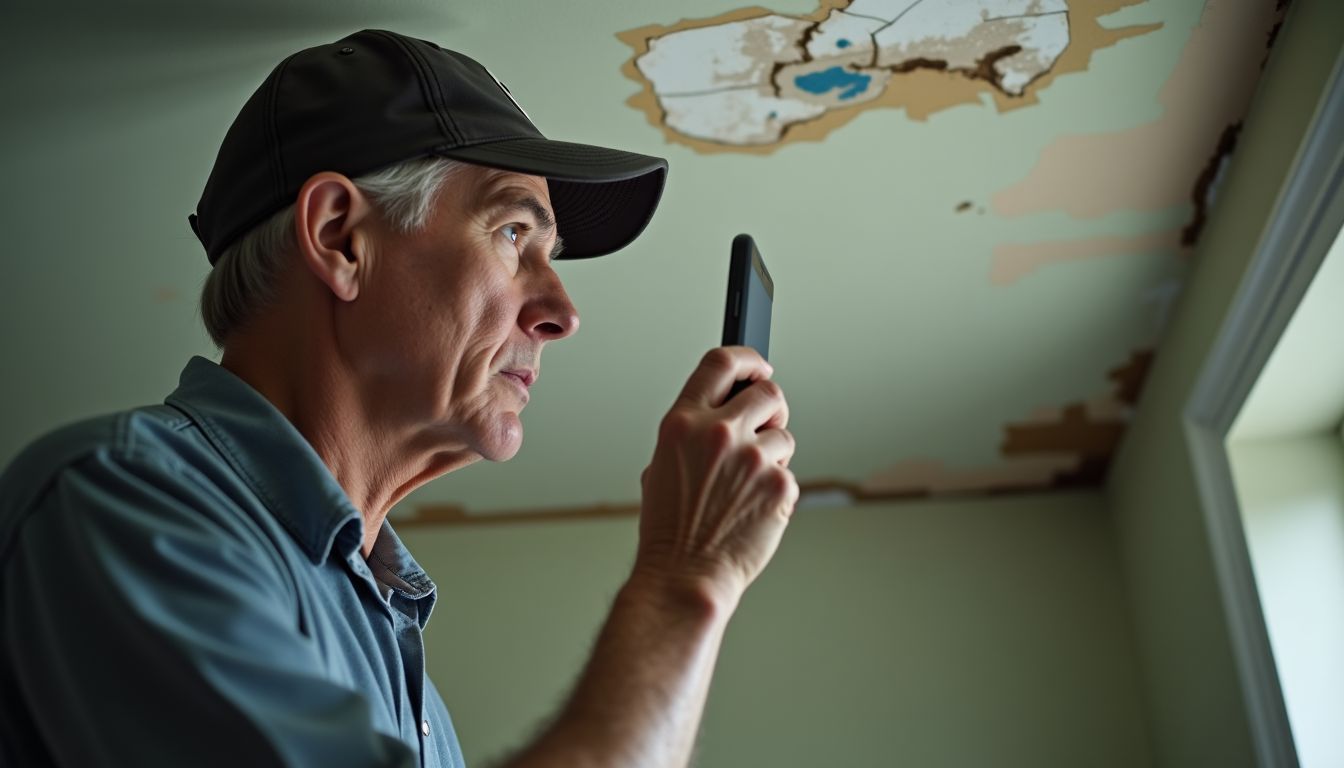
Asbestos in 1990s Houses: What the Final Decade Means for Your Property Today
Most people assume asbestos is a problem confined to Victorian terraces or post-war council estates. The reality is more unsettling. Asbestos in 1990s houses represents the final decade of legal use in the UK, meaning properties completed just a few years before the millennium can still contain asbestos-containing materials (ACMs) hidden in plain sight.
If you own, manage, or are buying a pre-2000 home, understanding what may be lurking behind the walls, under the floors, and above the ceilings is not optional — it is essential.
How the UK Finally Banned Asbestos
Asbestos use in the UK did not end overnight. It wound down across several decades as scientific evidence mounted and regulations tightened.
1950s to 1980s: Peak Usage in UK Construction
From the 1950s through to the mid-1980s, asbestos was everywhere in UK construction. Blue asbestos (crocidolite) and brown asbestos (amosite) were used extensively in pipe lagging, boiler insulation, roofing sheets, wall cladding, and asbestos insulating board (AIB). White asbestos (chrysotile) appeared in textured coatings like Artex, vinyl floor tiles, and cement products.
By the 1970s, the links between asbestos exposure and serious lung disease were becoming impossible to ignore. Despite growing concern, the materials remained in widespread use because they were cheap, fire-resistant, and extremely durable.
1985: The First Partial Ban
Blue and brown asbestos were banned in the UK in 1985. These amphibole fibres are considered more hazardous than white asbestos because they are more rigid and biopersistent — meaning they stay in lung tissue longer and cause damage more aggressively.
However, white asbestos remained legal, and its use continued throughout the late 1980s and into the 1990s. The partial ban removed the most dangerous variants from circulation but left a significant loophole that the construction industry continued to exploit.
The 1990s: Continued Use and the Final Phase
Through the 1990s, white asbestos continued to appear in UK homes and commercial buildings. Suppliers were permitted to use up existing stock, meaning ACMs were still being installed in properties well into the decade. Textured coatings, roofing felts, vinyl floor tiles, pipe insulation, and flue linings all remained potential sources.
Awareness was rising and health and safety controls on construction sites were tightening. But the material had not yet been banned, and budget-conscious builders continued to use it where it was available and permitted.
1999: The Complete Ban
In late 1999, the UK implemented a full ban on the import, supply, and use of all forms of asbestos, including white asbestos. This was the definitive end of a decades-long chapter in UK construction history.
Any property completed before this date — including homes built throughout the 1990s — could potentially contain ACMs. This is why surveyors and the HSE treat any pre-2000 property as a potential asbestos risk until proven otherwise.
Why Asbestos Was Still Being Used in 1990s Houses
Understanding why asbestos persisted into the final decade helps explain where it is most likely to be found today.
Fire Resistance and Structural Durability
Asbestos fibres have exceptional heat resistance. White asbestos in particular was widely used in insulation around boilers, flues, and warm-air heating ducts because it could withstand high temperatures without degrading. Its tensile strength made it ideal for reinforcing cement products, textured coatings, and floor tiles.
In a 1990s home with an older heating system or a garage with a cement sheet roof, these properties made asbestos the practical choice — right up until the ban forced the industry to find alternatives.
Cost and Availability
White asbestos was significantly cheaper than many of the alternatives available at the time. For developers working to tight margins on housing estates and commercial projects, the cost advantage was real and difficult to ignore.
Until the ban closed the supply chain, it remained a financially attractive option for a range of building products. The transition to asbestos-free substitutes happened quickly once the ban took effect, but properties built or refurbished before that point retain the legacy of those material choices.
Where Asbestos Hides in 1990s Properties
ACMs in 1990s homes are often well concealed. They are frequently in good condition — which is precisely why they go undetected until someone picks up a drill or starts a renovation.
Textured Coatings on Ceilings and Walls
Artex and similar textured coatings applied before 2000 commonly contain white asbestos, typically at concentrations of 2 to 5 percent by weight. These coatings were used extensively on ceilings and occasionally on walls throughout the 1980s and into the 1990s.
The risk is low when the coating is intact and undisturbed. The danger arises when someone sands, scrapes, or drills through it — activities that release fine fibres into the air. A modern, asbestos-free textured coating can look identical to one containing asbestos, making visual identification completely unreliable.
Vinyl Floor Tiles and Adhesive
Vinyl floor tiles fitted from the 1960s through to the 1990s frequently contain white asbestos, sometimes at concentrations of 10 to 25 percent. The black bitumen adhesive used to bond these tiles to the subfloor is also a common source of asbestos fibres.
These tiles are generally safe when left in place and in good condition. The risk increases significantly during removal, scraping, or sanding. Any planned flooring work in a pre-2000 property should be preceded by a professional survey.
Roofing, Soffits, and Garage Roofs
Asbestos cement sheets remained a popular choice for garage roofs, outbuildings, and sheds well into the 1990s. Roofline components — including soffits, fascias, and infill panels — sometimes contained asbestos, particularly where older stock was being used up by builders and merchants.
Weathered or damaged asbestos cement is more hazardous than intact material. Sheets that have become brittle, cracked, or mossy can release fibres more readily. If you are unsure whether your garage roof or outbuilding contains asbestos, do not attempt to break or remove it without a survey first.
Pipe Lagging, Boiler Insulation, and Heating Ducts
Older heating systems in 1990s properties — particularly those installed in the 1970s or 1980s and not yet replaced — may still have asbestos lagging on pipes and insulation around boilers. AIB was commonly used to line warm-air heating ducts and boiler flue systems.
These materials are often boxed in, hidden behind panels, or tucked into crawl spaces. They can remain undisturbed for decades. Any heating system upgrade, pipe replacement, or loft conversion that involves disturbing this area needs careful professional management.
Loose-Fill Insulation
Loose-fill asbestos insulation is rare but extremely high risk. It was used in some cavity walls and loft spaces, and can appear as a fluffy, white, grey, or blue-grey material.
If you discover what looks like loose fibrous insulation in a pre-2000 property, do not disturb it. Treat it as potentially containing asbestos until a qualified surveyor confirms otherwise.
The Health Risks: Why This Still Matters
Asbestos-related disease is not a historical footnote. It remains one of the leading causes of work-related death in the UK, and exposure can occur in domestic settings just as readily as on construction sites.
How Asbestos Causes Harm
Asbestos fibres are microscopic. When ACMs are disturbed, fibres become airborne and can be inhaled deep into the lungs. The body cannot expel them, and over time they cause scarring, inflammation, and — in some cases — malignant disease.
The conditions associated with asbestos exposure include:
- Asbestosis — scarring of the lung tissue that progressively impairs breathing
- Pleural thickening — thickening of the lining around the lungs, causing breathlessness
- Lung cancer — risk is significantly elevated with asbestos exposure, particularly in smokers
- Mesothelioma — a cancer of the lining of the lungs and abdomen, almost exclusively caused by asbestos exposure
These diseases typically develop 20 to 40 years after exposure, which means people carrying out DIY work in 1990s homes today may not see the consequences for decades.
Risk Levels Depend on Condition and Disturbance
ACMs that are in good condition, sealed, and left undisturbed pose a low risk. The danger escalates when materials are damaged, degraded, or physically disturbed. Friable materials — those that crumble easily — release fibres far more readily than bonded products like intact cement sheets.
This is why the approach to asbestos management focuses on condition assessment and risk rather than automatic removal. Understanding what you have, where it is, and what state it is in allows you to make informed decisions about management, encapsulation, or removal.
Identifying Asbestos in a 1990s Home
You cannot identify asbestos by looking at it. This is one of the most important facts for any homeowner or property manager to understand — and one that is routinely underestimated.
Why Visual Checks Are Not Enough
AIB can look like standard plasterboard. Vinyl floor tiles containing asbestos are visually indistinguishable from asbestos-free versions. Asbestos cement sheets resemble modern fibre cement products. Textured coatings containing asbestos look the same as those that do not.
Even experienced tradespeople cannot reliably identify ACMs without laboratory analysis. Some indicators can raise suspicion — grey corrugated sheets on a garage roof, black adhesive beneath old floor tiles, a heavily textured ceiling in a pre-1999 property — but these are prompts to investigate, not confirmation of asbestos presence.
The Role of Professional Surveys
A professional asbestos survey carried out by a qualified surveyor is the only reliable way to identify ACMs. Surveyors hold P402 qualifications and work to the standards set out in HSG264, the HSE’s guidance on asbestos surveying. They take samples for laboratory analysis, map the location and condition of any ACMs found, and produce a written report.
There are two main types of survey:
- A management survey is appropriate for properties in normal occupation — it identifies ACMs that could be disturbed during routine maintenance and provides a basis for an ongoing asbestos management plan.
- A demolition survey is required before any major refurbishment, structural alteration, or demolition work — it is more intrusive and aims to locate all ACMs before work begins.
For non-domestic properties, a management survey is a legal requirement under the Control of Asbestos Regulations. For residential properties, a survey is strongly recommended before any renovation or sale.
Managing Asbestos in a 1990s Property: Your Options
Finding asbestos in your home does not automatically mean you need to remove it. The right approach depends on the type of material, its condition, and what you plan to do with the property.
Encapsulation and Management in Place
Where ACMs are in good condition and not likely to be disturbed, encapsulation is often the preferred approach. This involves sealing the material with a specialist coating, overboarding it, or installing a physical barrier.
Textured coatings, for example, are frequently managed by applying a skim coat over the top rather than attempting removal. Encapsulation is less disruptive and less expensive than removal. The ACM must be monitored periodically to ensure the encapsulant remains intact and the material has not deteriorated.
Removal
Removal is necessary when ACMs are in poor condition, when refurbishment work cannot avoid disturbing them, or when a property is being demolished. Licensed asbestos removal contractors must carry out work on the most hazardous materials — including AIB, pipe lagging, and loose-fill insulation — under a licence issued by the HSE.
Some lower-risk materials, such as asbestos cement sheets in good condition, may be removed by competent non-licensed workers under specific conditions, but this must still follow strict control measures set out under the Control of Asbestos Regulations. Asbestos waste must be double-bagged, clearly labelled, and disposed of at a licensed waste facility.
If you are planning any work that could disturb suspected ACMs, asbestos removal by a licensed contractor is the safest and legally compliant route.
Buying or Selling a 1990s Property: What You Need to Know
Asbestos can affect property transactions in ways that catch buyers and sellers off guard. A pre-sale survey gives sellers a clear picture of what is present and demonstrates transparency to prospective buyers. For buyers, commissioning an independent survey before exchange of contracts is straightforward protection.
Mortgage lenders and insurers are increasingly aware of asbestos risk in pre-2000 properties. An asbestos management report demonstrating that ACMs are in good condition and being appropriately monitored can reassure all parties and keep a transaction moving.
Undisclosed asbestos discovered after completion can lead to costly disputes. A survey before exchange removes the uncertainty from both sides of the transaction.
Legal Responsibilities for Landlords and Property Managers
If you own a 1990s property that you let to tenants, you have legal obligations that go beyond general goodwill. The Control of Asbestos Regulations place a duty to manage asbestos on those responsible for non-domestic premises, including communal areas of residential buildings such as hallways, plant rooms, and roof spaces.
For landlords of domestic properties, the legal picture is less prescriptive but the duty of care is real. Allowing contractors to work in a property without first establishing whether ACMs are present exposes both the landlord and the workers to risk — and potential liability.
Practical steps for landlords include:
- Commissioning a management survey before any maintenance or renovation work
- Keeping a written record of any ACMs identified, including their location and condition
- Informing contractors of known or suspected ACMs before they begin work
- Arranging periodic re-inspection of any ACMs that are being managed in place
Where Supernova Surveys Operates
Supernova Asbestos Surveys carries out asbestos surveys across the UK, with experienced surveyors available in all major cities and regions. Whether you need a survey for a 1990s terrace in the capital or a commercial premises in the Midlands, our teams are on hand.
We provide asbestos survey London services across all London boroughs, covering residential, commercial, and mixed-use properties of all types and sizes. Our asbestos survey Manchester team covers the Greater Manchester area and the wider North West, while our asbestos survey Birmingham surveyors serve the West Midlands and surrounding counties.
All surveys are carried out by BOHS P402-qualified surveyors, with samples analysed by UKAS-accredited laboratories and full written reports provided promptly after each visit.
Frequently Asked Questions
Can a house built in the 1990s really contain asbestos?
Yes. The UK’s complete ban on asbestos did not come into force until late 1999, meaning properties built or refurbished at any point during the 1990s could contain asbestos-containing materials. White asbestos (chrysotile) remained legal throughout the decade, and suppliers were permitted to use up existing stock, so ACMs were still being installed in new builds and renovation projects right up to the ban.
What are the most common places to find asbestos in a 1990s home?
The most common locations include textured coatings on ceilings and walls (such as Artex), vinyl floor tiles and their adhesive, asbestos cement sheets on garage roofs and outbuildings, pipe lagging around older boilers and heating systems, and AIB used to line boiler flues and warm-air heating ducts. Any of these can be present in a 1990s property, even if the house looks modern and well-maintained.
Do I legally have to have my 1990s home surveyed for asbestos?
For domestic properties, there is no legal requirement to commission an asbestos survey simply because you own or occupy the property. However, the Control of Asbestos Regulations do impose a duty to manage asbestos in non-domestic premises and in communal areas of residential buildings. For domestic landlords, a survey is strongly recommended before any maintenance or renovation work. For homeowners, a survey before renovation, extension, or sale is considered best practice and can prevent costly and dangerous mistakes.
Is it safe to leave asbestos in place in a 1990s property?
In many cases, yes. ACMs that are in good condition, not damaged, and unlikely to be disturbed pose a low risk. The HSE’s guidance is clear that well-managed asbestos in place is often safer than attempted removal, which can release fibres if not carried out correctly. The key is knowing what you have, assessing its condition, and monitoring it over time. A professional survey gives you the information you need to make that judgement safely.
How much does an asbestos survey for a 1990s house typically cost?
Survey costs vary depending on the size and type of the property, the number of rooms, and the scope of the survey required. A management survey for a standard residential property is generally straightforward and competitively priced. The cost of a survey is modest compared to the potential expense — financial and health-related — of disturbing unidentified ACMs during renovation work. Contact Supernova Asbestos Surveys for a no-obligation quote tailored to your property.
Get a Survey Booked Today
If you own, manage, or are buying a 1990s property, the sensible next step is a professional asbestos survey. Supernova Asbestos Surveys has completed over 50,000 surveys across the UK, and our qualified surveyors can assess your property quickly, professionally, and at a competitive price.
Call us on 020 4586 0680 or visit asbestos-surveys.org.uk to book your survey or request a quote. Do not let uncertainty about asbestos in 1990s houses put your property, your health, or your renovation plans at risk.