Tag: NSUK

  • These Are the 6 Most Common Types of Asbestos in the UK

    These Are the 6 Most Common Types of Asbestos in the UK

    The Most Common Types of Asbestos in the UK — And Why They Still Matter

    Asbestos was once celebrated as a miracle material. Cheap, fire-resistant, and extraordinarily versatile, it was woven into the fabric of UK construction for much of the 20th century. But we now know the cost of that convenience — and it is measured in lives.

    Understanding the most common types of asbestos in the UK is not merely academic. If you own, manage, or work in a building constructed before 2000, this knowledge could be critical to protecting people’s health and meeting your legal obligations.

    The UK banned the importation and use of all asbestos in 1999. But because the material was so extensively used from the mid-1950s onwards, it remains present in a significant number of older properties across the country. Breathing in asbestos fibres can cause asbestosis — irreversible scarring of the lungs — as well as mesothelioma, a devastating and almost always fatal cancer with a latency period that can span decades.

    Here is what you need to know about each type, where you are likely to find it, and what action to take.

    Understanding Asbestos: The Two Mineral Families

    Asbestos is not a single mineral. It is a collective term for a group of naturally occurring silicate minerals that share one defining characteristic — they can be separated into fine, durable fibres. Those fibres are resistant to heat, fire, and most chemicals, which is precisely why the construction and manufacturing industries relied on them so heavily for decades.

    All six types fall into one of two mineral families:

    • Serpentine — produces soft, curly fibres. Only one type belongs here: chrysotile (white asbestos).
    • Amphibole — produces rigid, needle-like fibres. The remaining five types — crocidolite, amosite, anthophyllite, tremolite, and actinolite — all belong to this family.

    Amphibole types are generally considered more hazardous. Their sharp, brittle fibres are harder for the body to expel once inhaled, meaning they can remain lodged in lung tissue for years, causing persistent and progressive damage.

    The danger with any asbestos type arises when asbestos-containing materials (ACMs) are disturbed or damaged, releasing microscopic fibres into the air. Asbestos that is in good condition and left completely undisturbed presents a much lower immediate risk — but only once it has been properly identified, assessed, and recorded.

    These Are the Most Common Types of Asbestos in the UK

    1. White Asbestos (Chrysotile)

    Chrysotile is by far the most widely used form of asbestos in UK construction history, and the type most commonly encountered during surveys today. As the only serpentine asbestos, its fibres are softer and more curly in structure than the amphibole types, which means the body can break them down more readily — though chrysotile is still classified as a carcinogen and must be handled with full precautions.

    You will typically find chrysotile in:

    • Cement roofing sheets and guttering
    • Floor tiles and textured coatings such as Artex
    • Ceiling tiles and partition boards
    • Pipe insulation and fire doors
    • Gaskets and friction materials

    Chrysotile was the last of the six types to be banned in the UK, with a complete prohibition coming into force in 1999. Its widespread use means it can appear in almost any pre-2000 building — from domestic extensions to large commercial premises.

    2. Blue Asbestos (Crocidolite)

    Crocidolite is widely regarded as the most dangerous commercially used form of asbestos. It is an amphibole mineral with short, sharp, needle-like fibres that are easily inhaled and extremely difficult for the body to expel. Once lodged in the lungs, those fibres cause persistent physical damage to tissue and significantly elevate the risk of mesothelioma and lung cancer.

    Crocidolite was commonly used in:

    • Spray-applied insulation coatings
    • Pipe and steam engine insulation
    • Certain cement products and wallboards
    • Marine and shipbuilding applications

    It was banned in the UK in 1970, but given how extensively it was used in the post-war era — particularly in industrial, marine, and public sector buildings — it can still be found in older properties today. If crocidolite is identified during a survey, it must be managed or removed with the utmost care by a licensed contractor.

    3. Brown Asbestos (Amosite)

    Amosite — the name is an acronym derived from the Asbestos Mines of South Africa — is the second most commonly found type in UK buildings. Like crocidolite, it is an amphibole mineral with coarse, brittle, needle-like fibres that are highly hazardous when inhaled. Exposure to amosite carries a significantly higher cancer risk than exposure to chrysotile.

    Amosite was heavily used in:

    • Asbestos insulating board (AIB)
    • Ceiling tiles and thermal insulation
    • Pipe lagging
    • Partition walls and fire protection systems

    It was voluntarily withdrawn from use in the UK in 1980. Because amosite and chrysotile were sometimes blended together — particularly in insulation boards — it is not unusual for both types to be present in the same material. This is one of the key reasons why visual identification alone is never sufficient.

    4. Anthophyllite

    Anthophyllite is one of the rarer types and was never widely used as a primary construction material in the UK. It appears in grey, green, or white colouring and belongs to the amphibole family, forming the same needle-like fibre clusters as crocidolite and amosite.

    Its main significance in the UK context is as a contaminant. Anthophyllite is commonly found as an impurity within chrysotile asbestos products, as well as in talc and vermiculite. Because it can be present without being the primary asbestos material identified, it underlines the importance of thorough laboratory analysis when carrying out asbestos testing on suspect materials — you cannot rely on a visual inspection to tell the full story.

    5. Tremolite

    Tremolite ranges in colour from white and grey to green, brown, or even transparent. Like anthophyllite, it is most often encountered as a contaminant in other materials rather than as an intentionally used product. It has been found as an impurity in talc, vermiculite, and chrysotile asbestos products.

    Tremolite is an amphibole mineral forming short, rigid needle-prisms. Its presence within chrysotile products is particularly significant — what appears to be a lower-risk, serpentine material may also contain these more hazardous amphibole fibres. This is precisely why professional sampling and laboratory analysis is essential, rather than relying on assumptions based on material type or appearance alone.

    6. Actinolite

    Actinolite is chemically similar to tremolite and tends to appear in the same contexts — as a contaminant in talc, vermiculite, and other asbestos-containing products. It can be clear, grey, green, or white, though it is often darker in colour than tremolite. It is among the rarer types encountered during UK surveys.

    As an amphibole mineral, actinolite shares the same needle-like fibre structure as crocidolite, amosite, tremolite, and anthophyllite. When fibres are released and inhaled, it is equally hazardous. Its relative rarity does not make it any less dangerous.

    Why Visual Identification Is Never Enough

    One of the most important lessons from understanding the six types of asbestos is this: you cannot identify asbestos by looking at it. Chrysotile, amosite, and crocidolite can all appear in broadly similar materials. Rarer types like tremolite and anthophyllite are almost always invisible to the naked eye, present as trace contaminants within other products.

    Colour is an unreliable indicator too. Despite their common names — white, blue, and brown asbestos — the actual colours of these materials in situ often bear no resemblance to those descriptors once they have been mixed into cement, board, or coating products.

    Professional sampling and asbestos testing by an accredited laboratory is the only way to confirm what a material contains. HSG264, the HSE’s guidance on asbestos surveys, sets out the standards that surveyors and laboratories must meet — and reputable surveying companies will always work to those standards.

    Higher-Risk and Lower-Risk Asbestos-Containing Materials

    Not all asbestos-containing materials carry the same level of immediate risk. The HSE’s guidance distinguishes between materials that are considered lower risk when undamaged, and those that require more stringent controls.

    Lower-risk materials (when undamaged) include:

    • Reinforced plastics such as toilet cisterns and seats
    • Mastics, sealants, and putties including glazing beads
    • Artex and other textured coatings
    • Sheet vinyl flooring and thermoplastic tiles
    • Bitumen felt products

    Higher-risk materials that typically require licensed contractor removal include:

    • Asbestos insulating board (AIB)
    • Pipe lagging and sprayed (limpet) coatings
    • Loose-fill asbestos insulation
    • Fireproof and insulating textiles such as ropes, yarns, and fabrics found in fuse boxes, gaskets, and fire blankets
    • Resin paper used as flooring backing

    Even lower-risk materials require precautions if they are being disturbed or removed. The category of a material informs the level of controls required — it does not mean a material can be handled carelessly under any circumstances.

    What Are Your Legal Obligations as a Duty Holder?

    Under the Control of Asbestos Regulations, duty holders — employers, building owners, and those responsible for the maintenance of non-domestic premises — have a clear legal obligation to manage asbestos in their buildings. This means knowing where it is, assessing its condition, and taking appropriate action to protect anyone who might come into contact with it.

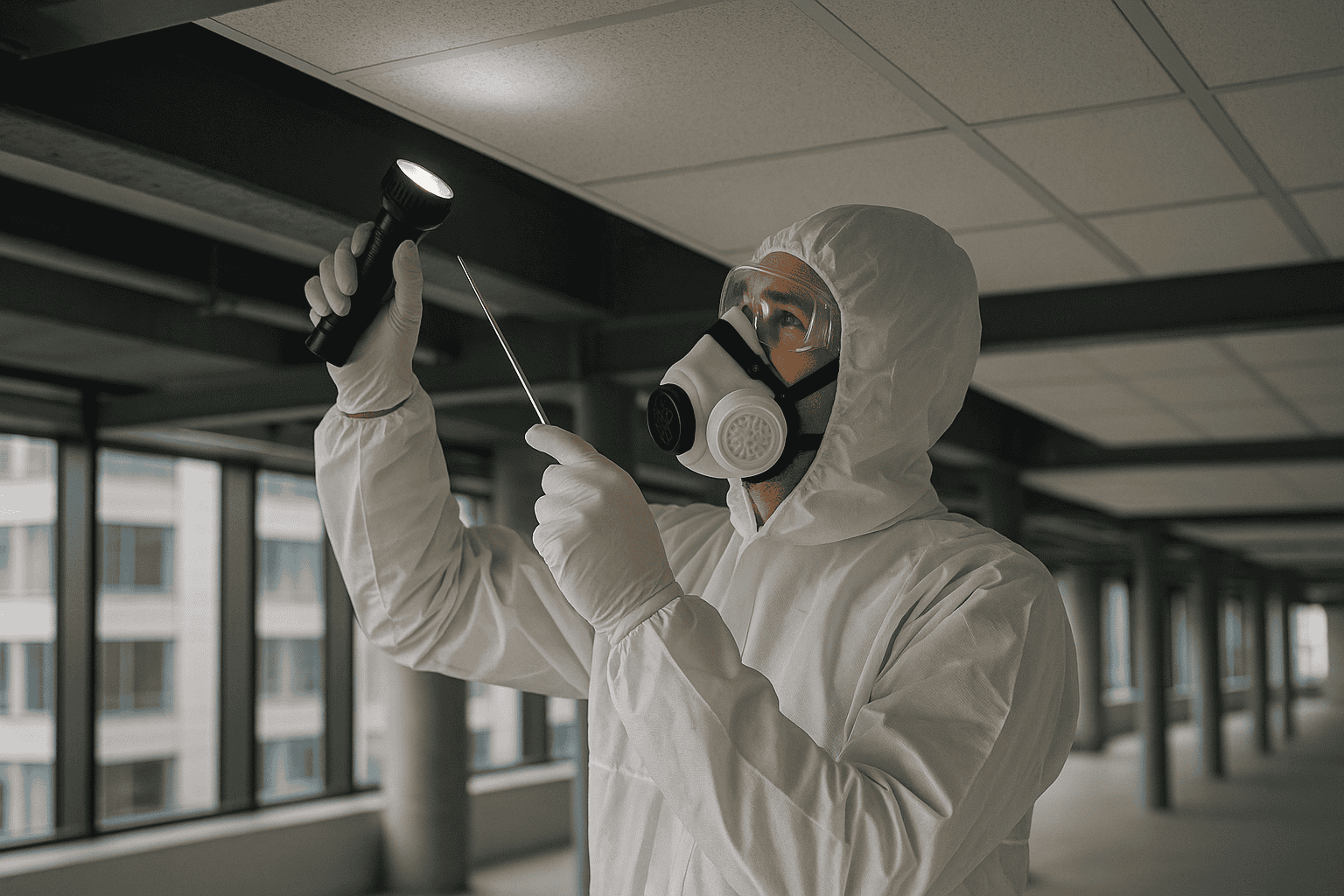
    For any non-domestic building constructed before 2000, an asbestos management survey is the standard starting point. This involves a trained surveyor inspecting accessible areas of the building, sampling suspect materials, and producing a register of all identified ACMs along with a risk assessment for each.

    Before any refurbishment, renovation, or demolition work begins, a separate demolition survey — also known as a refurbishment and demolition survey — is required by law. This is a more intrusive inspection designed to locate all ACMs, including those hidden within the fabric of the building, before any work disturbs them.

    Failing to comply with these requirements is not just a regulatory risk. It puts workers, occupants, and visitors in genuine danger, and duty holders can face serious legal consequences.

    How Asbestos Surveys Work in Practice

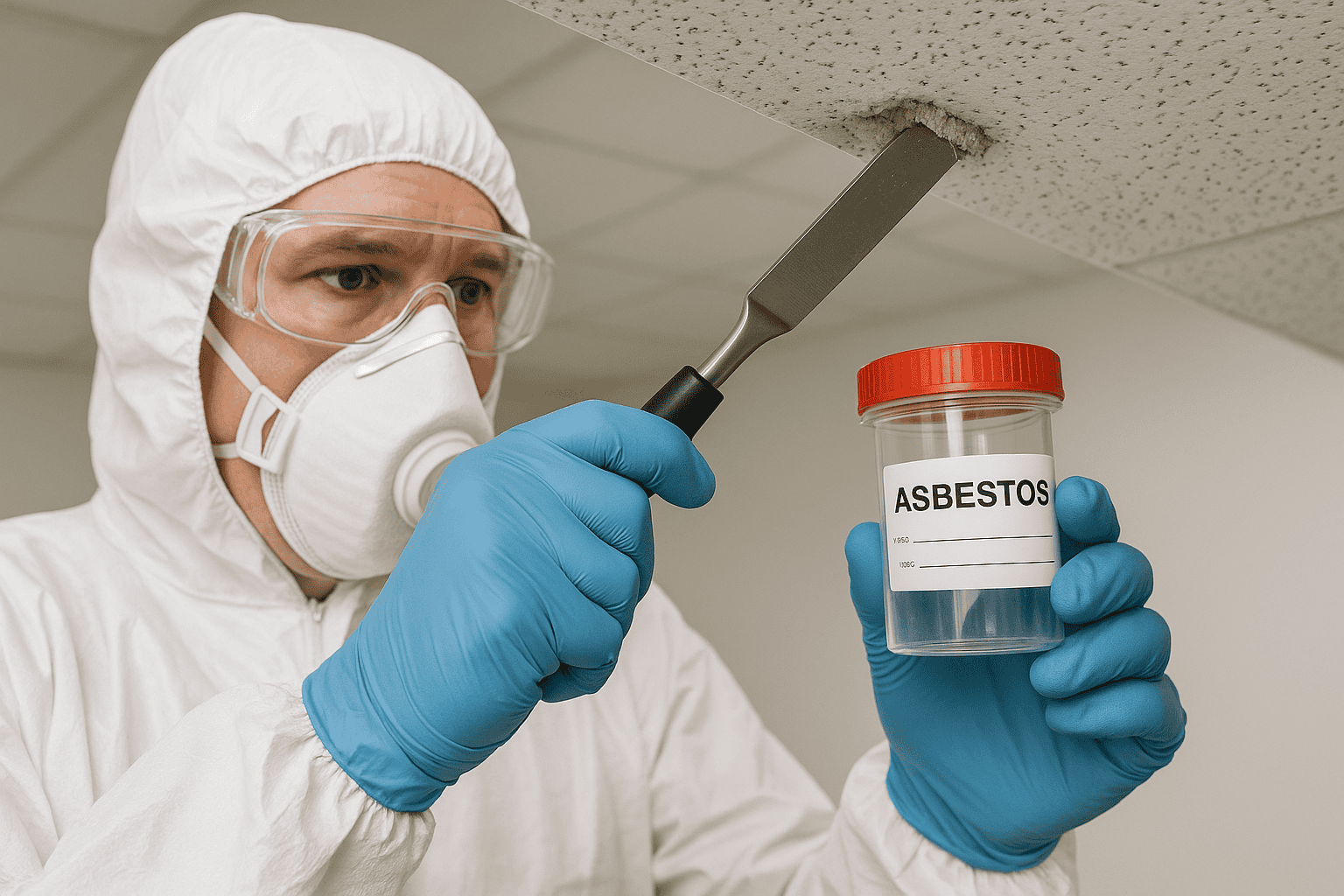
    A management survey is a non-intrusive inspection of all reasonably accessible areas of a building. The surveyor will visually assess suspect materials, take samples where appropriate, and have those samples analysed by an accredited laboratory. The result is a detailed asbestos register that tells you exactly what is present, where it is, what condition it is in, and what level of risk it poses.

    That register then becomes a living document. It needs to be kept up to date as conditions change, as works are carried out, and as new information comes to light. Anyone working in or on the building — from maintenance contractors to construction teams — must be made aware of the register before they begin any work.

    The refurbishment and demolition survey is a more invasive process. Surveyors will access areas that would not be disturbed during normal occupation — above ceiling voids, within wall cavities, beneath floor coverings — to ensure that no ACMs are missed before intrusive works begin. This type of survey is not optional when building works are planned; it is a legal requirement.

    Where in the UK Are These Asbestos Types Most Commonly Found?

    All six of the most common types of asbestos in the UK can appear anywhere that pre-2000 buildings exist — and that covers a very large proportion of the country’s built environment. Industrial cities with extensive post-war construction and redevelopment activity tend to have particularly high concentrations of ACMs in their older building stock.

    Schools, hospitals, council offices, and commercial buildings constructed during the 1950s, 1960s, and 1970s are among the most likely to contain significant quantities of asbestos insulating board, pipe lagging, and spray-applied coatings. Domestic properties of the same era may contain chrysotile in textured coatings, floor tiles, and roof materials.

    If you are based in London and need a survey for a commercial or residential property, our team provides a full asbestos survey London service covering the capital and surrounding areas. For properties in the north-west, our asbestos survey Manchester service covers the Greater Manchester region and beyond. And for properties across the West Midlands, our asbestos survey Birmingham team is ready to assist.

    Wherever your property is located, the process is the same: a qualified surveyor attends, inspects, samples, and delivers a clear, actionable report.

    What to Do If You Suspect Asbestos Is Present

    If you suspect that a material in your building may contain asbestos, the most important rule is straightforward: do not disturb it. Do not drill, cut, sand, or attempt to remove the material yourself. The risk of releasing fibres is real, and the consequences of exposure can take decades to manifest.

    The correct course of action is to:

    1. Leave the suspect material undisturbed and ensure others do the same.
    2. Contact a UKAS-accredited asbestos surveying company to arrange an inspection and sampling.
    3. Wait for laboratory analysis to confirm whether asbestos is present and, if so, which type.
    4. Act on the surveyor’s recommendations — whether that means encapsulation, ongoing monitoring, or licensed removal.
    5. Update your asbestos register and ensure all relevant parties are informed.

    Taking prompt, professional action is always the right approach. Attempting to manage asbestos without specialist knowledge puts you, your colleagues, and anyone else in the building at serious risk.

    Frequently Asked Questions

    What are the most common types of asbestos found in UK buildings?

    The six types are chrysotile (white), crocidolite (blue), amosite (brown), anthophyllite, tremolite, and actinolite. Chrysotile is by far the most frequently encountered during surveys, followed by amosite. Crocidolite, while less common, is considered the most hazardous. The remaining three — anthophyllite, tremolite, and actinolite — are typically found as contaminants within other asbestos-containing materials rather than as primary products.

    Is white asbestos (chrysotile) less dangerous than blue or brown asbestos?

    Chrysotile is generally considered less hazardous than crocidolite or amosite because its softer, curly fibres are more readily broken down by the body. However, it remains classified as a Group 1 carcinogen and must be treated with the same professional precautions as any other asbestos type. There is no safe level of asbestos exposure.

    Can I identify asbestos by its colour or appearance?

    No. Despite the common names — white, blue, and brown asbestos — the actual appearance of these materials once incorporated into building products bears little resemblance to those colours. Rarer types such as tremolite and anthophyllite are essentially invisible to the naked eye when present as contaminants. The only reliable way to identify asbestos is through professional sampling and laboratory analysis by an accredited facility.

    Do I legally need an asbestos survey before renovation work?

    Yes. Under the Control of Asbestos Regulations, a refurbishment and demolition survey is legally required before any work that could disturb the fabric of a building constructed before 2000. This applies to non-domestic premises and to domestic properties where contractors will be carrying out the work. The survey must be completed before works begin — not during or after.

    How do I arrange an asbestos survey for my property?

    Contact a UKAS-accredited surveying company such as Supernova Asbestos Surveys. A qualified surveyor will attend your property, inspect and sample suspect materials, and provide a detailed report with risk assessments and recommendations. Supernova operates nationwide and has completed over 50,000 surveys across the UK. Call us on 020 4586 0680 or visit asbestos-surveys.org.uk to get started.

    Get Expert Asbestos Advice From Supernova

    Supernova Asbestos Surveys is the UK’s leading asbestos surveying company, with over 50,000 surveys completed for clients across every sector — from housing associations and local authorities to commercial landlords and construction firms.

    Whether you need a management survey for an occupied building, a refurbishment and demolition survey before planned works, or laboratory testing of a suspect material, our UKAS-accredited team is ready to help. We operate nationwide, with specialist teams covering London, Manchester, Birmingham, and every region in between.

    Call us today on 020 4586 0680 or visit asbestos-surveys.org.uk to request a quote or speak to a member of our team.
  • Where Is Asbestos Found? 10 Unexpected Places That Contain Asbestos

    Where Is Asbestos Found? 10 Unexpected Places That Contain Asbestos

    The Unexpected Places Asbestos Is Still Hiding in UK Buildings

    Asbestos was once considered a wonder material — heat-resistant, fireproof, durable, and cheap. Builders, manufacturers, and engineers used it in almost everything throughout the 20th century. The UK banned all forms of asbestos in 1999, but by then it had already been embedded into millions of buildings, vehicles, and products across the country.

    Understanding where is asbestos found — including the unexpected places that contain asbestos — isn’t just useful background knowledge. If your property was built or refurbished before 2000, it could be the difference between keeping people safe and unknowingly exposing them to serious harm.

    Asbestos fibres, when inhaled, can cause mesothelioma, asbestosis, and lung cancer. These diseases often don’t present until decades after exposure. The material is most dangerous when disturbed — which is exactly why knowing where it hides matters so much.

    1. Wall and Ceiling Insulation

    This is one of the most widespread uses of asbestos across UK buildings. Its fire-resistant and sound-deadening properties made it an obvious choice for builders throughout the mid-20th century, and it was used extensively in homes, offices, schools, and hospitals.

    Asbestos insulation that remains in good condition and is completely undisturbed may not pose an immediate risk. The danger comes when it’s drilled into, damaged, or disturbed during renovation — at which point microscopic fibres are released into the air.

    Never assume a material is safe based on appearance alone. A professional management survey will tell you whether the material needs to be managed in place, encapsulated, or removed by a licensed contractor.

    2. Pipe Insulation and Lagging

    Because of its exceptional heat resistance, asbestos was routinely used to insulate pipework — particularly around boilers, hot water systems, and heating pipes. It was applied either as a wrap or lagging around the outside of pipes, or sprayed and painted directly onto the pipework itself.

    Where asbestos lagging is wrapped around pipes, it can sometimes be removed without replacing the pipework beneath. Where it’s been applied directly, a more extensive remediation approach is typically required.

    Either way, this work must only be carried out by a licensed asbestos contractor — not a general plumber or heating engineer. If you’re upgrading an older heating system, arrange a professional assessment before any work begins.

    3. Flooring — Tiles, Sheet Vinyl, and Adhesives

    Flooring is one of the most commonly overlooked sources of asbestos in older buildings, and it catches property owners off guard more often than you’d expect. A range of flooring products manufactured before the late 1980s regularly contained asbestos, including:

    • Vinyl floor tiles
    • Vinyl sheet flooring
    • Asphalt floor tiles
    • Floor adhesives and backing materials

    If your building was constructed or refurbished before 1985, there’s a meaningful chance the flooring — or at least the adhesive beneath it — contains asbestos. This applies to residential properties just as much as commercial and public buildings.

    Intact, undamaged vinyl flooring can often be safely sealed or overlaid rather than removed. But if you’re planning any work that involves lifting or disturbing old floors, have the material tested first. Never sand, grind, or mechanically remove old floor tiles without knowing exactly what you’re dealing with.

    4. Furnaces, Boilers, and Heating Systems

    Older boilers, furnaces, and heat-generating appliances were frequently insulated using asbestos-containing materials. This includes insulation boards, rope seals, and gaskets used in and around the appliances themselves, as well as surrounding ductwork and flue systems.

    If your property has a heating system that hasn’t been replaced in decades, have it assessed before carrying out any maintenance or replacement work. A heating engineer who disturbs asbestos-containing materials without realising it could put themselves and the building’s occupants at serious risk.

    Upgrading to a modern system is sensible for both energy efficiency and safety — but that process needs to be carefully managed if asbestos is present.

    5. Wallpaper and Hidden Wall Layers

    This is one that catches many people off guard. Older wallpaper — particularly from the mid-20th century — could contain asbestos fibres, added to improve fire resistance and durability. The more pressing concern is what might be hidden beneath the surface.

    It’s surprisingly common to find multiple layers of old wallpaper beneath paint or newer coverings in older properties. If previous owners painted over wallpaper rather than stripping it, there could be asbestos-containing material concealed within those wall layers.

    If the wallpaper is intact and undisturbed, it’s unlikely to pose an immediate risk. But if there’s any tearing, peeling, or damage — or if you’re planning renovation work — arrange for asbestos testing before you touch anything.

    6. Curtains, Drapes, and Specialist Fabrics

    It might sound unlikely, but asbestos was woven into certain textiles before its widespread ban. Fire-resistant curtains and drapes were used in theatres, cinemas, hospitals, and other public buildings — and asbestos fibres were central to that fire resistance.

    Beyond soft furnishings, asbestos was also used in a range of industrial and protective textiles, including firefighting gear, heat-resistant gloves, and ironing board covers.

    While it’s unlikely that asbestos-containing fabrics remain in everyday domestic use, they can still be found in older commercial and public buildings that haven’t been fully refurbished. If you manage a historic venue, theatre, or older public building, this is worth bearing in mind when planning any refurbishment or fit-out work.

    7. Soundproofing and Acoustic Insulation

    Asbestos has naturally effective sound-absorbing properties, which led to its use in acoustic insulation and soundproofing panels. This means it can turn up in a wide variety of settings where noise management was a priority — including music venues, churches, schools, recording studios, and older residential properties.

    If you’re planning any refurbishment that involves acoustic panels or insulation in an older building, treat those materials as potentially containing asbestos until a professional survey or test proves otherwise. Don’t remove or disturb them without a proper assessment first.

    8. Vehicle Parts

    Asbestos wasn’t limited to buildings. It was widely used in the automotive industry, appearing in components such as:

    • Brake pads and brake linings
    • Clutch facings
    • Gaskets
    • Heat shields and underbonnet insulation
    • Underbonnet soundproofing

    Vehicles manufactured before the mid-1990s are particularly likely to contain asbestos components. If you own or work on older or classic vehicles, be cautious about carrying out DIY repairs on brakes, clutches, or gaskets — disturbing these parts can release asbestos fibres.

    Specialist mechanics who work on classic or vintage vehicles are better equipped to handle these risks safely. If in doubt, seek professional advice before starting any mechanical work on an older vehicle.

    9. Chalkboards in Schools

    Some older chalkboards — particularly those installed in schools during the mid-20th century — contained asbestos in their backing or surface materials. Given that asbestos is also commonly found in the walls, ceilings, floors, and insulation of older school buildings, it represents a genuine and well-documented concern in the education sector.

    Teachers in older school buildings have faced prolonged, repeated exposure to asbestos-containing materials throughout their careers. If you manage or work in an older school building, a thorough asbestos management survey is not just advisable — under the Control of Asbestos Regulations, it’s a legal duty for those responsible for non-domestic premises.

    The HSE’s HSG264 guidance sets out exactly what duty holders are required to do, including how surveys should be conducted and what they must cover.

    10. Electrical Panels and Cable Insulation

    Asbestos was used extensively in electrical installations because of its excellent heat and fire resistance. It can be found in consumer units (fuse boxes), electrical cable insulation, and the insulating boards used in older distribution panels.

    Because electrical systems run throughout entire buildings, asbestos could potentially be distributed across multiple areas of a property — not just in one easily identifiable location. Any electrical upgrade or rewiring work in an older building should be preceded by a proper assessment for asbestos-containing materials.

    An electrician who unknowingly disturbs asbestos-containing insulation boards is at real risk. Make sure any contractor working on older electrical systems is aware of the potential hazard before they start.

    Where Is Asbestos Found? More Places Than Most People Realise

    The honest answer to where is asbestos found — including all the unexpected places that contain asbestos — is: almost anywhere built, fitted out, or manufactured before the turn of the millennium. Its extraordinary versatility meant it was used across an enormous range of applications, and much of that legacy material remains in place today.

    The challenge is that asbestos cannot be identified by sight alone. It may be hidden beneath layers of paint, flooring, or newer materials. It may look perfectly intact while still posing a risk if disturbed.

    The only reliable way to know whether asbestos is present — and what condition it’s in — is through professional surveying and sampling. Whether you’re based in the capital and need an asbestos survey London, manage properties in the North West and require an asbestos survey Manchester, or you’re in the Midlands and need an asbestos survey Birmingham, the process is the same — a qualified surveyor inspects the building, takes samples where appropriate, and provides a clear written report.

    What Should You Do If You Suspect Asbestos?

    If you suspect asbestos-containing materials in your property, the steps are straightforward — but they must be followed in the right order.

    1. Don’t disturb the material. Leave it alone until a professional has assessed it.
    2. Don’t attempt to identify it visually. Asbestos cannot be confirmed or ruled out by appearance alone.
    3. Arrange a professional survey. A qualified surveyor will inspect the building, take samples where appropriate, and provide a clear written report.
    4. Follow the surveyor’s recommendations. Depending on the condition and location of any asbestos-containing materials found, you may need to manage them in place, encapsulate them, or arrange for licensed removal.
    5. Keep records. If you’re a duty holder under the Control of Asbestos Regulations, you’re legally required to maintain an asbestos register and management plan.

    Professional asbestos testing is the only reliable method for confirming whether a material contains asbestos fibres. Visual inspection — no matter how experienced the person — cannot substitute for laboratory analysis of a sample.

    Who Is Legally Responsible for Managing Asbestos?

    Under the Control of Asbestos Regulations, anyone who has responsibility for the maintenance or repair of non-domestic premises has a legal duty to manage asbestos. This includes landlords, facilities managers, school governors, and business owners.

    The duty to manage requires you to identify any asbestos-containing materials, assess the risk they pose, and put a plan in place to manage that risk. HSE guidance document HSG264 provides detailed direction on how surveys should be conducted and what they must cover.

    Failing to comply with these duties is a criminal offence — not just a regulatory technicality. Enforcement action can result in prosecution, significant fines, and reputational damage. More importantly, non-compliance puts people’s lives at risk.

    Don’t Wait Until Renovation Work Begins

    One of the most common mistakes property owners and managers make is only thinking about asbestos when work is already underway. By that point, materials may already have been disturbed, fibres may already be in the air, and contractors may already have been exposed.

    The right time to investigate asbestos is before any planned work begins — whether that’s a minor refurbishment, a full fit-out, or even routine maintenance that involves drilling, cutting, or disturbing building fabric.

    This is especially relevant for:

    • Landlords preparing a property for new tenants
    • Facilities managers planning maintenance schedules
    • School business managers overseeing building works
    • Developers acquiring pre-2000 properties for refurbishment
    • Business owners moving into older commercial premises

    Proactive surveying is far less disruptive — and far less costly — than dealing with the consequences of accidental asbestos disturbance.

    How Supernova Asbestos Surveys Can Help

    Supernova Asbestos Surveys has completed over 50,000 surveys nationwide, working with property managers, landlords, schools, local authorities, and commercial operators across the UK. Our qualified surveyors operate to HSG264 standards and provide clear, actionable reports that tell you exactly what’s present, where it is, and what needs to happen next.

    Whether you need a management survey for an occupied building, a refurbishment or demolition survey ahead of planned works, or sampling and laboratory analysis of a specific material, we have the expertise to help you manage your legal obligations and protect the people in your buildings.

    Call us on 020 4586 0680 or visit asbestos-surveys.org.uk to arrange a survey or speak to one of our team.

    Frequently Asked Questions

    Where is asbestos most commonly found in UK homes?

    In residential properties built before 2000, asbestos is most commonly found in ceiling tiles, pipe lagging, floor tiles and their adhesives, wall insulation, and around boilers and heating systems. It can also be present in textured coatings such as Artex applied to ceilings and walls. The only way to confirm whether a material contains asbestos is through professional sampling and laboratory analysis.

    Can asbestos be present in a building that looks well-maintained?

    Yes. Asbestos-containing materials can appear perfectly intact and show no visible signs of deterioration. A well-maintained surface can still conceal asbestos beneath it, and that material becomes hazardous the moment it’s disturbed. Appearance is never a reliable indicator of whether asbestos is present or safe.

    Do I need a survey if I’m only doing minor renovation work?

    Yes. Even minor work — drilling a wall, lifting a floor tile, removing a ceiling panel — can disturb asbestos-containing materials and release fibres. If your property was built or refurbished before 2000, a survey or targeted sampling should be carried out before any work that involves disturbing the building fabric, regardless of how small the job appears.

    Who is legally required to manage asbestos in a building?

    Under the Control of Asbestos Regulations, the duty to manage asbestos falls on whoever is responsible for the maintenance or repair of non-domestic premises. This is typically the building owner, landlord, or facilities manager. They are required to identify asbestos-containing materials, assess the risk, and maintain an up-to-date asbestos register and management plan.

    What’s the difference between an asbestos management survey and a refurbishment survey?

    A management survey is used for occupied buildings where no major works are planned. It identifies asbestos-containing materials that could be disturbed during normal occupation and routine maintenance. A refurbishment or demolition survey is required before any significant building work takes place — it is more intrusive and designed to locate all asbestos-containing materials in the areas affected by the planned works.