
Tag: Asbestos Report

  • Asbestos Reports for Commercial Properties: Legal Duties & Requirements

    Asbestos Reports for Commercial Properties: Legal Duties & Requirements

    Commercial deals stall for all sorts of reasons, but missing asbestos records is one of the most avoidable. An asbestos report for commercial property is often requested early by buyers, lenders, solicitors, contractors and managing agents because it affects legal compliance, safety, maintenance planning and future costs.

    If you own, lease, manage or are preparing to sell non-domestic premises, asbestos cannot sit in a drawer as a forgotten PDF. Under the Control of Asbestos Regulations, dutyholders must take reasonable steps to identify asbestos-containing materials, assess their condition, and manage the risk. HSE guidance and HSG264 set the standard for how asbestos surveying should be approached.

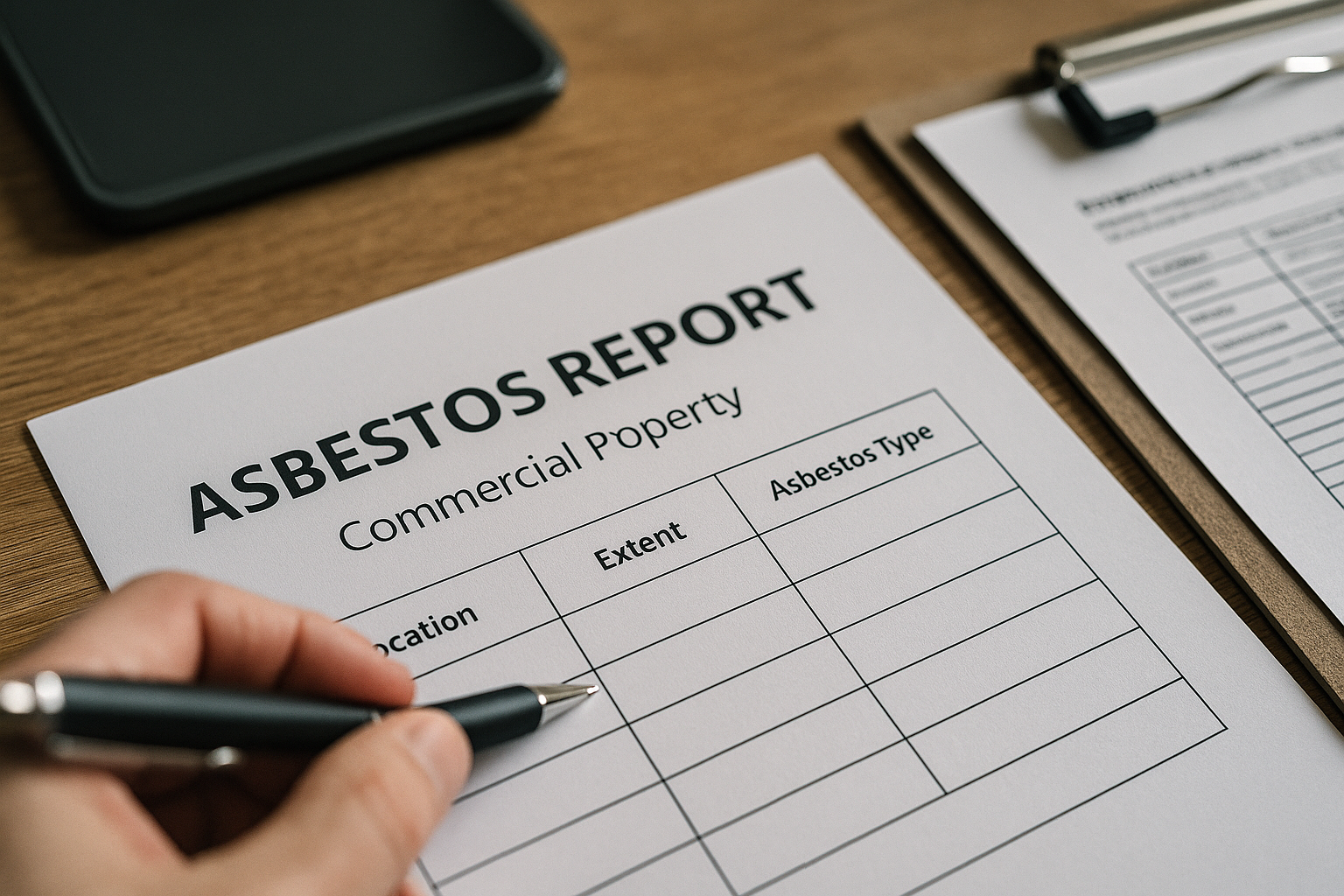
    A useful asbestos report for commercial property does more than confirm whether asbestos is present. It gives you practical information you can act on: where the materials are, what condition they are in, how likely they are to be disturbed, and what needs to happen next.

    Why an asbestos report for commercial property matters

    For property managers and landlords, asbestos compliance is about control. If you cannot show that asbestos has been identified and managed properly, you leave yourself open to disruption, enforcement concerns, contractor disputes and transaction delays.

    Many commercial buildings still contain asbestos-containing materials in places that are easy to overlook. That can include ceiling tiles, floor tiles, pipe insulation, insulation board, textured coatings, cement sheets, service risers, plant rooms and fire protection products.

    The key question is not simply whether asbestos exists. It is whether anyone responsible for the building knows:

    • what materials are present
    • where they are located
    • what type of product is involved
    • what condition the material is in
    • how likely it is to be disturbed
    • whether it should be managed, repaired, enclosed or removed
    • what information must be passed to contractors and occupiers

    A properly prepared asbestos report for commercial property helps answer those questions clearly. That is what makes it valuable in day-to-day management as well as during sales, leasing, refurbishment and maintenance work.

    Who is responsible for asbestos in commercial premises?

    This is where confusion causes problems. Responsibility does not always sit with the freeholder, and it does not automatically pass to a tenant just because they occupy the space.

    Under the duty to manage, the dutyholder is usually the person or organisation with responsibility for maintenance or repair. Depending on the lease and the way the premises are managed, that could be the landlord, tenant, managing agent, facilities team or more than one party.

    Typical responsibility arrangements

    • Owner-occupied building: the owner is usually the dutyholder.
    • Single-let commercial unit: responsibility depends on the lease and repairing obligations.
    • Multi-let property: the landlord or managing agent often manages common parts, while tenants may hold responsibilities within their own areas.
    • Vacant premises: vacancy does not remove the duty to manage asbestos.
    • Mixed-use buildings: common parts and non-domestic areas still fall within the duty to manage.

    If the lease is unclear, sort that out before works start or a transaction progresses. When contractors need asbestos information, uncertainty over responsibility is not a defence.

    For occupied buildings, the starting point is often a professional management survey so the dutyholder has a reliable basis for the asbestos register and management plan.

    What the law expects from dutyholders

    The legal position across England, Scotland and Wales is broadly consistent for non-domestic premises. The duty is not to wait for a problem. The duty is to manage the risk.
    asbestos report for commercial property - Asbestos Reports for Commercial Properti

    In practical terms, HSE guidance expects dutyholders to:

    1. take reasonable steps to find out whether asbestos-containing materials are present
    2. presume materials contain asbestos unless there is strong evidence they do not
    3. identify where asbestos is and what type of material it is
    4. assess the risk of fibre release and exposure
    5. prepare a written plan to manage that risk
    6. put the plan into action
    7. review and update the information
    8. provide information to anyone liable to disturb the material

    That means an asbestos report for commercial property should feed directly into live management arrangements. It should support:

    • the asbestos register
    • the management plan
    • contractor controls
    • permit-to-work systems where relevant
    • maintenance planning
    • refurbishment and demolition planning

    If your records are old, incomplete or disconnected from the way the building is currently laid out, they may not be good enough to support compliance. A report is only useful if people on site can rely on it.

    What should an asbestos report for commercial property include?

    Not all reports are equally useful. A vague report full of caveats creates more questions than answers, especially when buyers or contractors start reviewing the paperwork.

    A strong asbestos report for commercial property should normally include:

    • the survey type and scope
    • the areas inspected and any limitations
    • material assessments
    • clear location details for suspect or confirmed asbestos-containing materials
    • photographs where appropriate
    • sample results if sampling was carried out
    • risk-based recommendations
    • priority actions where relevant

    It should also be clear enough for someone unfamiliar with the property to understand what is present and what controls are needed. If a contractor cannot use the information confidently, the report may not be doing its job.

    Common asbestos-containing materials found in commercial buildings

    Commercial premises can contain asbestos in visible and hidden locations. Typical examples include:

    • asbestos insulating board in partitions, ceiling voids and risers
    • pipe lagging in plant rooms and service ducts
    • vinyl floor tiles and bitumen adhesive
    • textured coatings on walls and ceilings
    • cement sheets to roofs, soffits and outbuildings
    • insulation behind panels and within service areas
    • gaskets, rope seals and other plant-related materials

    Where there is a specific suspect material that needs laboratory confirmation, professional sample analysis can be useful. It is worth remembering, though, that isolated testing is not a substitute for a full survey where wider duty-to-manage information is required.

    Does a seller need to provide an asbestos report when selling commercial property?

    There is no blanket rule saying every seller must commission a fresh survey purely because a commercial property is being sold. In practice, however, buyers and their advisers usually expect reliable asbestos information during due diligence.
    asbestos report for commercial property - Asbestos Reports for Commercial Properti

    If the premises fall within the duty to manage, the existing dutyholder should already have taken reasonable steps to identify and manage asbestos. So while the legal question is not always framed as “must the seller provide a new survey?”, the commercial reality is often simpler: if you cannot provide a usable asbestos report for commercial property, the buyer may slow the deal down while they investigate the risk themselves.

    What buyers usually want to see

    • a current or still-relevant asbestos survey report
    • an asbestos register
    • a management plan where asbestos is present or presumed
    • records of removals, encapsulation or remedial work
    • re-inspection records where materials are managed in place
    • sample results or supporting laboratory documentation

    If a report is several years old, the next question is whether the building has changed since it was prepared. Alterations, M&E upgrades, tenancy changes, partitioning and strip-out works can all reduce the reliability of older records.

    If the property is being sold with redevelopment potential, a standard management report may not be enough. Planned intrusive work usually means the affected areas need a refurbishment survey before work starts.

    How to review an asbestos report for commercial property properly

    Plenty of businesses have a report on file but have never checked whether it is still suitable. That is where avoidable risk creeps in.

    When reviewing an asbestos report for commercial property, work through the following points.

    1. Confirm the survey type

    A management survey is designed to help with normal occupation and routine maintenance. It is not intended to authorise intrusive refurbishment or demolition work.

    If major alterations are planned, the survey type must match the work. For demolition, the correct step is a demolition survey before demolition proceeds.

    2. Check the scope and limitations

    Read the exclusions carefully. Locked rooms, high-level areas, live service ducts and inaccessible voids can leave significant gaps in the information.

    If key areas were not accessed, ask whether those limitations are still acceptable. If not, the report may need updating.

    3. Compare the report with the building today

    Walk the site and compare the report against the current layout. If walls have moved, ceilings have changed, plant has been replaced or areas have been merged or subdivided, the report may no longer reflect reality.

    4. Review recommendations and actions

    Check whether earlier recommendations were completed. If the report called for repair, encapsulation, labelling, removal or re-inspection, there should be a record showing what happened next.

    5. Make sure records are live

    An asbestos register should be updated when materials are removed, repaired or found to have deteriorated. If asbestos remains in place, periodic review matters.

    That is where a re-inspection survey becomes useful, helping confirm whether materials are still in the same condition and whether your management arrangements remain suitable.

    What to do when asbestos is found

    Finding asbestos does not automatically mean panic, closure or immediate removal. In many commercial properties, the safest and most proportionate option is to leave sound material in place and manage it properly.

    The right decision depends on the product, its condition, accessibility and the likelihood of disturbance.

    Your main options

    • Manage in place: suitable where the material is in good condition and unlikely to be disturbed.
    • Repair: appropriate where minor damage can be made safe.
    • Encapsulate or enclose: helps reduce the risk of fibre release.
    • Label and monitor: useful where site controls are needed and materials remain in place.
    • Remove: necessary where the material is damaged, higher risk or likely to be disturbed by planned works.

    A good asbestos report for commercial property should support proportionate decisions. Overstated recommendations create unnecessary cost, while vague wording leaves dutyholders guessing.

    Practical management steps

    If asbestos is being managed in place, take action straight away:

    1. update the asbestos register
    2. record the condition of each material
    3. brief maintenance staff and contractors
    4. put site controls in place for affected areas
    5. schedule periodic checks
    6. review the management plan after any change in use or layout

    These steps are not paperwork for its own sake. They are what make the report usable in the real world.

    Choosing the right survey for the work planned

    One of the most common mistakes is relying on the wrong survey type. That usually happens when a building has an existing report and someone assumes it covers every future project.

    It does not.

    Management survey

    This is the standard survey for occupied buildings where the aim is to locate, as far as reasonably practicable, asbestos-containing materials that could be disturbed during normal occupation and routine maintenance. If you are managing an office, warehouse, school, retail unit or mixed commercial premises, this is often the baseline requirement.

    Refurbishment survey

    This is needed before intrusive refurbishment or upgrade works in the affected area. It is more disruptive than a management survey because it is designed to find asbestos that could be hidden within the fabric of the building.

    Demolition survey

    This is required before demolition. It is intended to identify asbestos-containing materials throughout the structure so they can be dealt with before the building comes down.

    Matching the survey to the planned work protects everyone involved. It also prevents the familiar problem of contractors stopping mid-project because hidden asbestos was never properly investigated.

    Common issues that make an asbestos report unreliable

    Not every report on file is fit for purpose. Some are too old, too limited or too detached from how the property is now used.

    Watch out for these warning signs:

    • the report does not state the survey type clearly
    • large areas were not accessed
    • the building has been altered since the survey
    • there is no linked asbestos register or management plan
    • actions recommended in the report were never completed
    • the report cannot be matched to room numbers or current layouts
    • there are no follow-up re-inspection records where asbestos remains in place

    If any of those apply, do not assume the report will satisfy a buyer, contractor or enforcing authority. Review it before it becomes a problem.

    Practical advice for property managers, landlords and business owners

    If you need an asbestos report for commercial property, the best approach is to be proactive rather than reactive. Waiting until a sale, fit-out or contractor query lands on your desk usually means higher cost and more pressure.

    Use this checklist:

    1. identify who the dutyholder is under the lease or management arrangements
    2. check whether you already have an asbestos survey and whether it is still relevant
    3. confirm that the survey type matches the current use and any planned works
    4. update the asbestos register and management plan
    5. brief contractors before maintenance or installation work begins
    6. arrange re-inspection where asbestos is managed in place
    7. commission a more intrusive survey before refurbishment or demolition

    If you manage multiple sites, standardise your records. Keep surveys, registers, plans, remedial records and contractor communications together so they can be produced quickly when needed.

    Location also matters when response times are tight. If you need local support, Supernova can help with an asbestos survey London, an asbestos survey Manchester or an asbestos survey Birmingham depending on where your commercial premises are based.

    Frequently Asked Questions

    Do I always need a new asbestos report for commercial property before selling?

    Not always. If you already have a suitable and still-relevant report, plus an up-to-date asbestos register and management plan where needed, that may be enough. The key issue is whether the information is reliable for the property as it stands today.

    Is a management survey enough before refurbishment works?

    No. A management survey is for normal occupation and routine maintenance. If intrusive refurbishment is planned, the affected area usually needs a refurbishment survey before work starts.

    What if asbestos is found in good condition?

    It does not always need to be removed. If the material is in good condition and unlikely to be disturbed, it can often be managed in place with suitable controls, an updated register, a management plan and periodic re-inspection.

    Who needs access to the asbestos report?

    Anyone liable to disturb asbestos-containing materials needs the relevant information. That often includes maintenance teams, contractors, facilities managers, managing agents and, in some cases, occupiers responsible for works within their area.

    How often should asbestos information be reviewed?

    There is no one-size-fits-all interval that suits every building. The review period should reflect the condition of the materials, the likelihood of disturbance and the management plan in place. Where asbestos remains in situ, periodic re-inspection is usually needed.

    If you need a reliable asbestos report for commercial property, Supernova Asbestos Surveys can help with management surveys, refurbishment surveys, demolition surveys, re-inspections and asbestos sampling support across the UK. Call 020 4586 0680 or visit asbestos-surveys.org.uk to arrange the right survey for your premises.
  • Asbestos Reports Explained: Contents, Legal Requirements & Costs

    Asbestos Reports Explained: Contents, Legal Requirements & Costs

    What an Asbestos Report Actually Tells You — and Why Getting It Right Matters

    One missing asbestos report can stop a project dead. Contractors stand idle, costs mount, and the duty holder is left scrambling to demonstrate compliance with the Control of Asbestos Regulations. If you manage, own or maintain a building that may contain asbestos, the report is not a box-ticking exercise — it is the foundation of every safe decision you make about that property.

    A good asbestos report tells you what is present, where it is, what condition it is in, how reliable the findings are, and what needs to happen next. For property managers, landlords, facilities teams and commercial occupiers, that information directly affects maintenance planning, contractor control, budgeting and whether work can proceed without disruption.

    If a building was constructed or refurbished before 2000, asbestos should remain a live possibility until a competent survey — and, where needed, laboratory analysis — confirms otherwise. Assumptions are what cause expensive surprises.

    What Is an Asbestos Report?

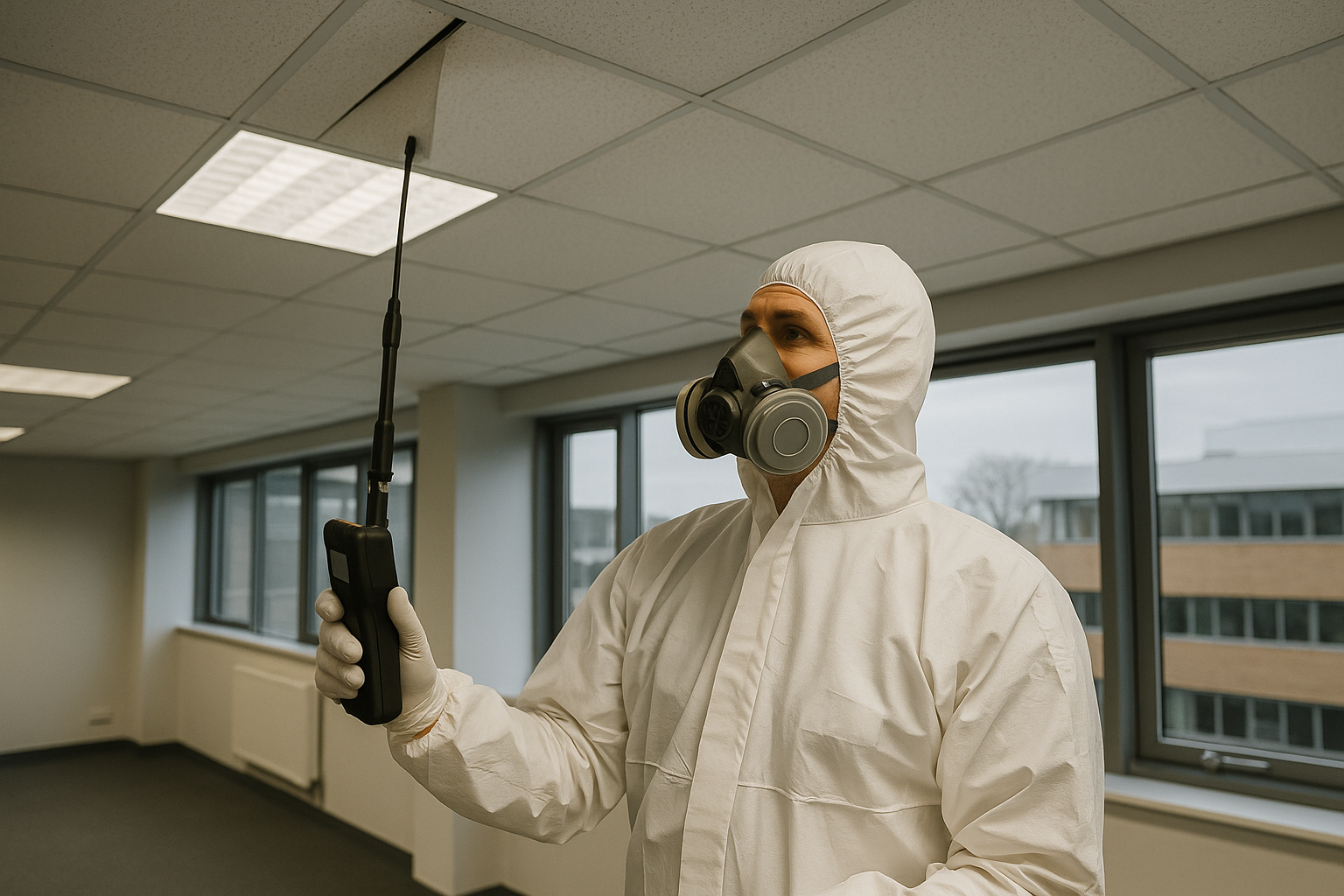
    An asbestos report is the formal document produced after an asbestos survey or targeted inspection. It records any asbestos-containing materials (ACMs), or suspected ACMs, identified during the inspection and explains the risk they present.

    A reliable asbestos report does far more than list sample results. It sets out the survey scope, areas accessed, limitations encountered, material condition assessments, photographs, location references and practical recommendations you can act on immediately.

    In day-to-day property management, the asbestos report becomes a working document. It feeds your asbestos register, informs your management plan and gives contractors the information they need before they disturb the building fabric. Without it, safe management is guesswork.

    Why an Asbestos Report Matters Under UK Law

    Under the Control of Asbestos Regulations, duty holders for non-domestic premises must take reasonable steps to find out whether asbestos is present, assess its condition and manage the risk it poses. Without dependable survey information, meeting that duty properly is extremely difficult.

    HSE guidance and HSG264 Asbestos: The Survey Guide make clear that surveys must be suitable, sufficient and carried out by competent people. The survey type must match the building use and the work planned. If it does not, the resulting asbestos report may not be fit for purpose — and a report that is not fit for purpose offers no protection.

    This matters across a wide range of properties and duty holders:

    • Commercial landlords managing shared areas and plant rooms
    • Managing agents coordinating contractors across multiple sites
    • Schools, healthcare settings and public buildings with formal asbestos management duties
    • Industrial sites where maintenance activity can disturb hidden materials
    • Owners planning refurbishment or demolition works
    • Residential blocks with communal areas and service spaces

    If you are unsure what is required, get advice before work starts. Arranging the right survey early is almost always far cheaper than halting a project once suspect materials are uncovered.

    Types of Survey and the Asbestos Report Each One Produces

    Not every asbestos report looks the same, because each survey type has a different purpose. The right survey depends on whether the building is in normal occupation, being altered or being demolished. Choosing the wrong type is one of the most common — and costly — mistakes duty holders make.

    Management Survey

    A management survey is the standard survey for occupied buildings in everyday use. Its purpose is to locate, as far as reasonably practicable, asbestos-containing materials that could be damaged or disturbed during normal occupation, routine maintenance or foreseeable installation work.

    This survey is usually non-intrusive, although some minor disturbance may be needed to access certain areas. The asbestos report from a management survey supports your asbestos register and management plan. It is commonly used for:

    • Offices and retail units
    • Schools and colleges
    • Warehouses and industrial premises
    • Healthcare premises
    • Communal areas in residential blocks

    Refurbishment Survey

    If you are altering the fabric of a building, a management survey is not sufficient. Before intrusive works begin, you will normally need a refurbishment survey. The asbestos report from this survey focuses on the specific area affected by the planned works.

    It is designed to identify asbestos that could be disturbed during the project, including hidden materials in voids, risers, partitions, floor build-ups and service routes. This applies to more than major schemes — rewiring part of an office, replacing kitchens, upgrading toilets, altering partitions or opening up ceilings can all disturb concealed asbestos.

    Demolition Survey

    Where a structure, or part of it, is due to be demolished, a demolition survey is required. This is the most intrusive survey type, and the resulting asbestos report aims to identify all ACMs so they can be dealt with before demolition proceeds.

    Demolition without the right asbestos information creates serious risk. It can also trigger major delays and significant costs once hidden materials are exposed mid-project.

    Re-inspection Survey

    If asbestos is being managed in place, the information must stay current. A re-inspection survey checks known or presumed ACMs to confirm whether their condition has changed since the last assessment.

    The updated asbestos report supports ongoing compliance and helps you decide whether materials can remain in place, need repair, require encapsulation or should be removed. The frequency of re-inspections should reflect the condition and location of the materials involved.

    When You Should Arrange an Asbestos Report

    The best time to arrange an asbestos report is before a problem develops. Waiting until contractors are on site, ceilings are opened or demolition is booked is what turns a manageable task into a costly, disruptive delay.

    Follow this straightforward process:

    1. Identify the trigger. Is the property in normal use, or are works planned?
    2. Choose the right survey type. Management, refurbishment, demolition or re-inspection — the purpose of the survey determines the format of the report.
    3. Provide clear scope information. Floor plans, access details, previous records and details of planned works all help the surveyor deliver an accurate report.
    4. Book the survey before work starts. Do not rely on old reports with gaps, verbal assumptions or guesswork.
    5. Check the existing report is suitable. If any work will disturb walls, ceilings, floors, ducts, risers, insulation or fixed plant, confirm that the existing asbestos report covers that exact scope. If it does not, arrange the correct survey first.

    What an Asbestos Report Should Contain

    An asbestos report prepared in line with HSE guidance and the principles of HSG264 should contain enough detail for the duty holder to act on it confidently. Formats vary between surveying firms, but the core information should be consistent.

    Look for these key sections in any asbestos report you receive:

    • Survey details — property address, survey type, date and surveyor credentials
    • Scope and limitations — what was inspected and, critically, what was not
    • Methodology — how the survey was carried out and what sampling approach was used
    • Sample results — where materials were analysed, the fibre type identified and the analytical method used
    • Material condition assessments — describing the likelihood of fibre release based on material type, condition and location
    • Location references — photographs, plans or clear room-by-room descriptions that make materials easy to find
    • Recommendations — manage, monitor, encapsulate, repair, remove or inspect further
    • Register information — structured data to support ongoing asbestos management

    The best asbestos report is one that a facilities manager, contractor and health and safety lead can all understand without having to decode technical jargon. If the report leaves you guessing, it is not doing its job.

    Why Limitations Matter

    Every survey has limitations. Rooms may be locked, plant may be live, voids may be inaccessible or parts of the building may fall outside the agreed scope. If an area was not accessed, the asbestos report must say so clearly.

    That transparency allows you to arrange further inspection where needed, rather than assuming an uninspected area is asbestos-free. A limitation that is not declared in the report is a risk that is invisible to everyone who relies on it.

    How Intrusive Surveys Differ

    The scope of intrusive surveys is often misunderstood. A refurbishment or demolition asbestos report is designed to identify asbestos in areas that are not visible during normal occupation. Depending on the property and the planned works, this may involve:

    • Opening boxing and service risers
    • Lifting floor coverings and checking beneath
    • Accessing ceiling voids and roof spaces
    • Breaking into partitions or wall linings
    • Inspecting behind fixed units or within ducts
    • Checking plant, insulation, gaskets and hidden service materials

    Asbestos is frequently concealed. Textured coatings may be visible, but insulation board, pipe lagging, debris in voids, floor tile adhesive and older service insulation are often hidden until works begin. A basic walk-through cannot replace the correct intrusive survey.

    How the Asbestos Report Is Used in Practice

    The results of an asbestos survey are meant to drive decisions. A useful asbestos report supports management, maintenance, contractor control and project planning — not just regulatory compliance.

    Asbestos Management

    Where ACMs are in good condition and unlikely to be disturbed, they may be managed in situ. The asbestos report helps you record their location, assess the risk and plan ongoing monitoring. That information feeds directly into your asbestos register and management plan.

    Anyone who may disturb those materials — maintenance operatives, contractors, service engineers — must have access to the relevant information before work starts. The report is the mechanism that makes that possible.

    Maintenance and Contractor Control

    Before drilling, cabling, lighting changes, HVAC upgrades or repairs, the asbestos report should be checked. This helps contractors plan safe methods of work and avoids accidental disturbance of ACMs.

    If you only need to investigate one suspect item, targeted asbestos testing can sometimes answer a specific question without commissioning a full survey. A single ceiling tile, textured coating or board may need confirmation before minor works proceed.

    Refurbishment and Demolition Planning

    Where works are planned, the asbestos report identifies what must be removed, what controls are needed and whether further inspection is required before contractors proceed. If ACMs need to be taken out, use a competent specialist for asbestos removal. Removal planning should always be based on the report findings, the material type and condition, and the nature of the work that follows.

    Asbestos Testing, Sampling and Analysis

    Sometimes the question is not about the whole building. Sometimes you need to know whether one specific material contains asbestos. In those cases, sampling and asbestos testing may be more appropriate than a full survey.

    Targeted testing can be useful when:

    • A specific material needs confirmation before minor works proceed
    • A sample was presumed positive in an earlier survey and you want analytical confirmation
    • You are purchasing a property and need a quick answer on a particular material
    • A contractor has flagged a suspect material during works

    The key is ensuring the sample is taken safely by a competent person and that the result is interpreted in context. A positive or negative result on one sample does not necessarily tell you about the rest of the building. Where doubt remains, a full survey is the appropriate response.

    Asbestos Reports Across Different Locations

    The same principles apply regardless of where your property is located, but local knowledge and rapid response times matter when surveys need to be arranged at short notice. Whether you need an asbestos survey London, an asbestos survey Manchester or an asbestos survey Birmingham, the report you receive should meet the same standard and contain the same level of detail.

    Supernova Asbestos Surveys operates nationwide, with surveyors covering major cities and regional locations across the UK. Over 50,000 surveys completed means consistent quality wherever your property is situated.

    What an Asbestos Report Costs

    The cost of an asbestos report varies depending on the survey type, the size and complexity of the property, the level of access required and whether laboratory analysis is included. A straightforward management survey of a small commercial unit will cost considerably less than a full demolition survey of a large industrial site.

    Factors that influence the cost include:

    • Property size and number of rooms or areas to be inspected
    • Survey type — management, refurbishment and demolition surveys involve different levels of intrusion
    • Number of samples taken and sent for laboratory analysis
    • Access requirements — plant rooms, roof spaces and confined areas add time
    • Turnaround time — urgent reports may carry a premium
    • Location and travel

    The cost of getting it wrong almost always exceeds the cost of getting it right. A project delayed because the wrong survey was commissioned, or no survey was commissioned at all, can cost many times the price of the original report.

    Always ask for a clear quotation that specifies what is included, how many samples are covered, what the laboratory turnaround time is and what format the report will be delivered in.

    Common Mistakes to Avoid

    Having reviewed thousands of properties across the UK, certain mistakes come up repeatedly. Avoiding them keeps projects on track and duty holders compliant.

    • Using an old report for new works. An asbestos report from a previous survey may not cover the areas affected by current works. Always check the scope before relying on an existing document.
    • Assuming a management survey covers refurbishment works. It does not. If works are intrusive, a refurbishment survey is required before they begin.
    • Treating limitations as unimportant. Areas not accessed during a survey are not confirmed as asbestos-free. Follow up on limitations before work starts in those areas.
    • Not sharing the report with contractors. The asbestos report only protects people if those who could disturb ACMs have read it and understood it.
    • Letting re-inspection intervals lapse. Asbestos managed in place must be re-inspected periodically. An out-of-date report does not reflect the current condition of materials.
    • Commissioning a survey from an unqualified provider. HSG264 is clear that surveys must be carried out by competent people. Check the surveyor’s qualifications and accreditation before booking.

    Frequently Asked Questions

    What is the difference between an asbestos survey and an asbestos report?

    The survey is the physical inspection of the property carried out by a qualified surveyor. The asbestos report is the formal document produced from that inspection. The report records what was found, where, in what condition and what action is recommended. You cannot have a compliant report without a competent survey behind it.

    How long does an asbestos report remain valid?

    There is no fixed expiry date on an asbestos report, but its usefulness depends on whether the building has changed and whether the scope still reflects the current situation. For managed asbestos, re-inspections should be carried out periodically — typically annually, though the interval may vary based on material condition and risk. If works are planned, always check whether the existing report covers the relevant areas before relying on it.

    Do I need an asbestos report for a domestic property?

    The Control of Asbestos Regulations place duties on duty holders for non-domestic premises. Private homeowners are not subject to the same legal duty, but anyone carrying out work on a pre-2000 domestic property — tradespeople, contractors, landlords managing common areas — should be aware of the potential for asbestos and take appropriate steps before disturbing materials.

    What happens if asbestos is found during a survey?

    Finding asbestos during a survey does not automatically mean it needs to be removed. The asbestos report will include a material condition assessment that helps determine the appropriate course of action — which may be to manage and monitor, encapsulate, repair or remove the material. The decision depends on the type of asbestos, its condition, its location and whether it is likely to be disturbed. A competent surveyor will explain the options clearly.

    Can I commission an asbestos report quickly if works are urgent?

    Yes. Supernova Asbestos Surveys can arrange surveys at short notice across the UK, with fast report turnaround times where required. Contact us on 020 4586 0680 or visit asbestos-surveys.org.uk to discuss your requirements and get a quotation.

    Get Your Asbestos Report From a Team You Can Trust

    Supernova Asbestos Surveys has completed over 50,000 surveys across the UK. Our qualified surveyors produce clear, actionable asbestos reports that meet HSE guidance and give duty holders the information they need to manage their properties safely and compliantly.

    Whether you need a management survey for an occupied building, a refurbishment survey before works begin, a demolition survey for a site clearance or a re-inspection to keep your records current, we deliver reports you can rely on.

    Call us on 020 4586 0680 or visit asbestos-surveys.org.uk to arrange a survey or request a quotation. Do not let an incomplete or out-of-date asbestos report put your project — or your people — at risk.