Category: Understanding Asbestos: A Comprehensive Guide

  • How Does One Identify Asbestos in a Building

    How Does One Identify Asbestos in a Building

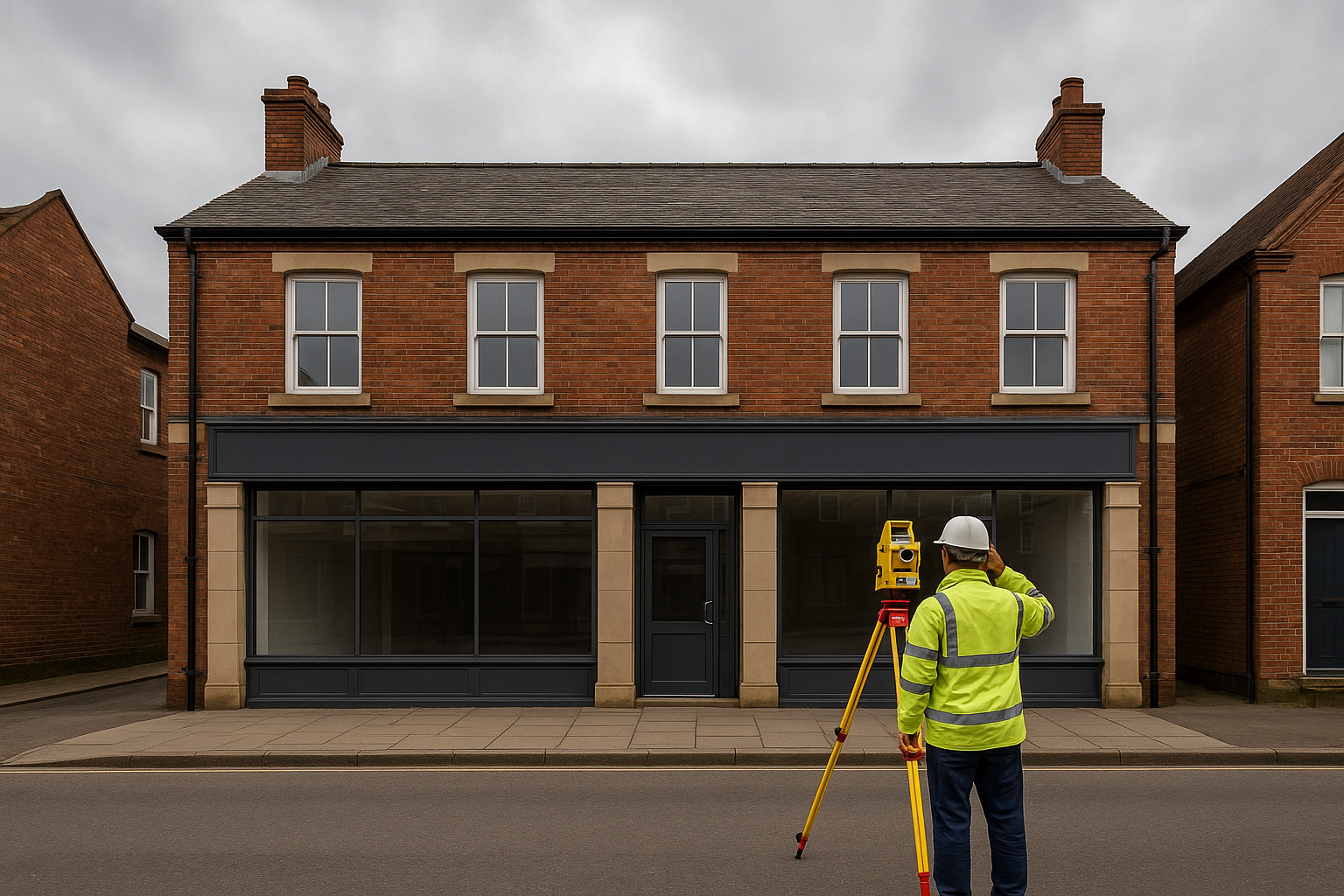
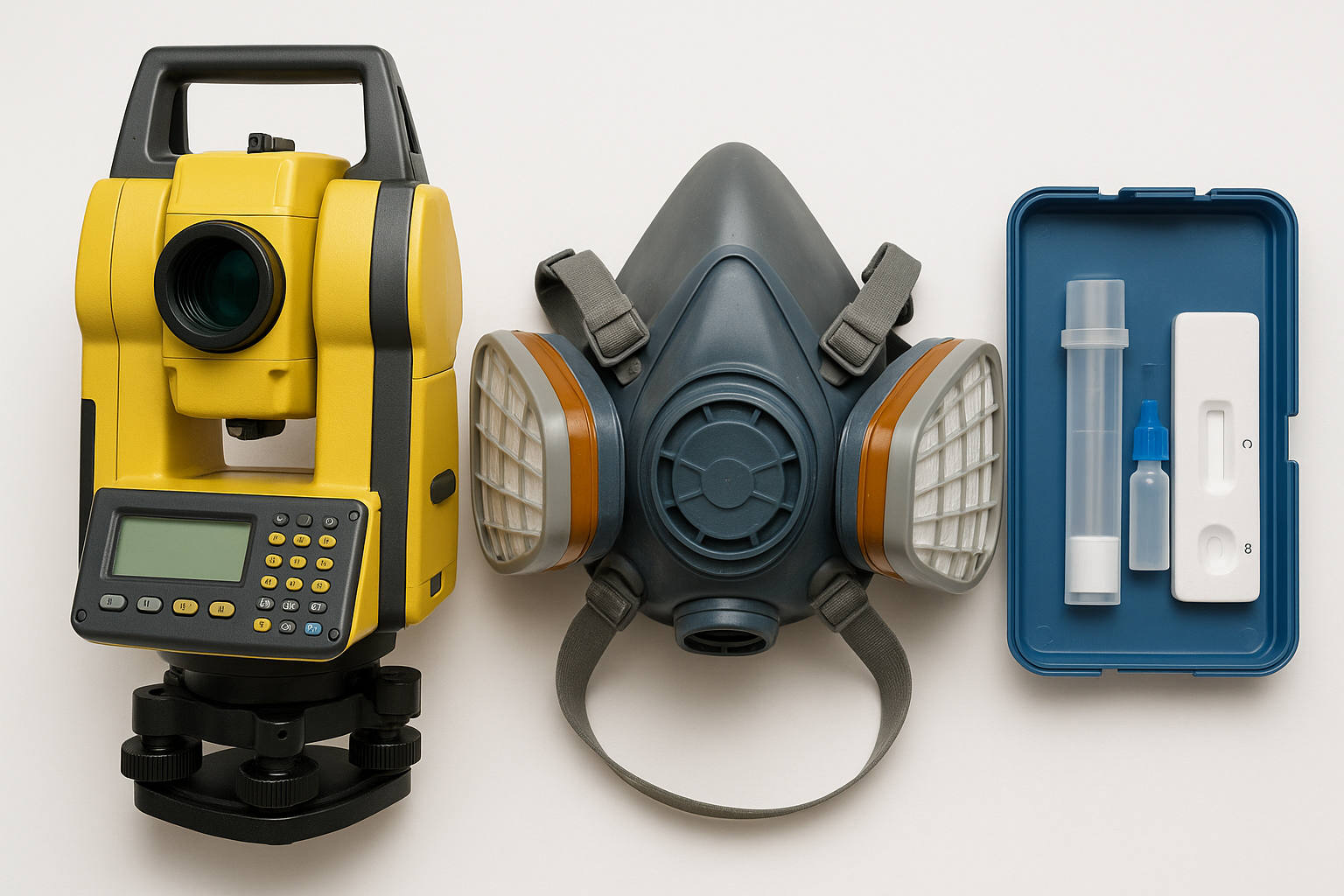
    One damaged ceiling tile or a single drill hole in the wrong place can turn a routine job into a contamination incident. In a building some materials that are suspected to contain asbestos can be positively identified, but only when the right process is followed through inspection, controlled sampling and laboratory analysis.

    If your property was built or refurbished before 2000, asbestos should never be treated as a remote possibility. It was used in a wide range of products across homes, offices, schools, factories and public buildings, and many of those materials still remain in place.

    That does not mean every older building contains high-risk asbestos. It does mean suspicious materials should be treated carefully, records should be checked before work starts, and professional assessment should be arranged whenever there is doubt.

    Why asbestos is still found in UK buildings

    Asbestos was widely used because it offered fire resistance, insulation and durability. For decades, it appeared in products ranging from pipe lagging and insulation board to floor tiles, textured coatings and cement sheets.

    Buildings also change over time. Materials may have been removed during earlier works, covered over during refurbishment, or left hidden above ceilings, inside risers, behind boxing and within service ducts.

    The age of a property is a useful warning sign, but it is not the whole story. A modern-looking fit-out can still conceal older asbestos-containing materials underneath.

    Common places asbestos may still be found

    • Commercial buildings: ceiling voids, plant rooms, service risers, partitions, soffits and boiler areas
    • Domestic properties: garages, outbuildings, textured coatings, floor tiles, flues and soffits
    • Industrial premises: roof sheets, wall cladding, pipe insulation, gaskets and cement products
    • Public buildings: schools, hospitals and civic buildings with layers of historic refurbishment

    The practical point is simple: if work is planned, check first. A survey arranged early is far cheaper than a stopped project, emergency clean-up or contractor exposure.

    In a building some materials that are suspected to contain asbestos can be positively identified, but not by sight alone

    Many people want a quick visual answer. Unfortunately, asbestos does not work like that. Even experienced surveyors do not confirm asbestos by appearance alone because asbestos-containing materials often look almost identical to non-asbestos alternatives.

    A plain board, a textured coating or a floor tile may look harmless, but appearance tells you very little. In a building some materials that are suspected to contain asbestos can be positively identified only after suitable inspection, controlled sampling and formal laboratory analysis.

    Where sampling is not suitable at that stage, the material may need to be presumed to contain asbestos until further investigation is possible. That approach is often the safest option during maintenance, refurbishment or emergency call-outs.

    Materials often mistaken for non-asbestos products

    • Asbestos insulation board mistaken for ordinary partition board or fire protection lining
    • Textured coatings assumed to be decorative finish only
    • Vinyl floor tiles and black bitumen adhesive overlooked during refits
    • Pipe lagging hidden beneath later coverings or boxing
    • Asbestos cement products treated as low concern because they appear solid and weathered
    • Ceiling tiles and panels confused with modern replacements

    Condition matters as much as product type. A sealed, undamaged asbestos cement sheet presents a very different level of risk from broken lagging or damaged insulation board.

    Warning signs that should make you stop work immediately

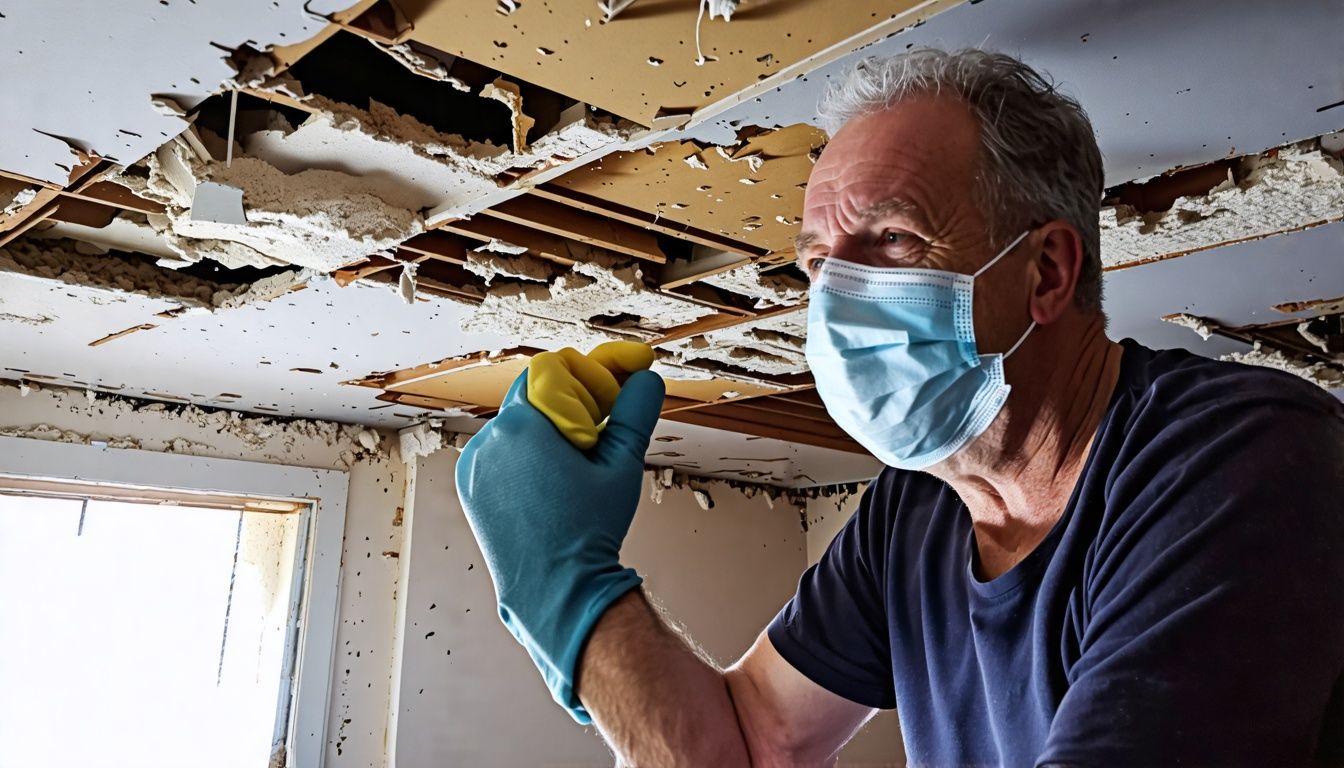
    If you uncover a suspicious material during maintenance, strip-out or repair work, the safest response is to stop. Carrying on for “just a minute” is how fibres get released and contamination spreads.

    in a building some materials that are suspected to contain asbestos can be positively identified - How Does One Identify Asbestos in a Buil

    Common warning signs include older materials that are fibrous, brittle, chalky, cement-like or unusually dense for their appearance. The setting matters too. Plant rooms, service cupboards, risers, boiler areas and older garages are all common locations.

    Examples of suspect materials

    • Textured coatings on walls and ceilings
    • Pipe lagging with a plaster-like or fibrous finish
    • Insulation board in partitions, ceiling tiles, service risers and soffits
    • Corrugated cement roof sheets on garages, warehouses and outbuildings
    • Old floor tiles and adhesive layers
    • Cement flues, gutters, downpipes and tanks
    • Debris from broken boards, ceiling panels or insulation around service work

    What not to do

    • Do not drill, cut, sand or break the material
    • Do not sweep dust or debris
    • Do not use a standard vacuum cleaner
    • Do not bag waste casually without advice
    • Do not let other trades continue working nearby

    What to do next

    1. Stop work straight away
    2. Keep people away from the area
    3. Prevent further disturbance
    4. Record the exact location
    5. Arrange professional inspection or sampling

    That protects people first, but it also protects your legal position. Under the Control of Asbestos Regulations, duty holders in non-domestic premises must manage asbestos risks properly, and identification is the starting point.

    How asbestos is properly identified

    A proper asbestos identification process follows a clear structure. It does not rely on guesswork, assumptions from contractors or old memories of previous works.

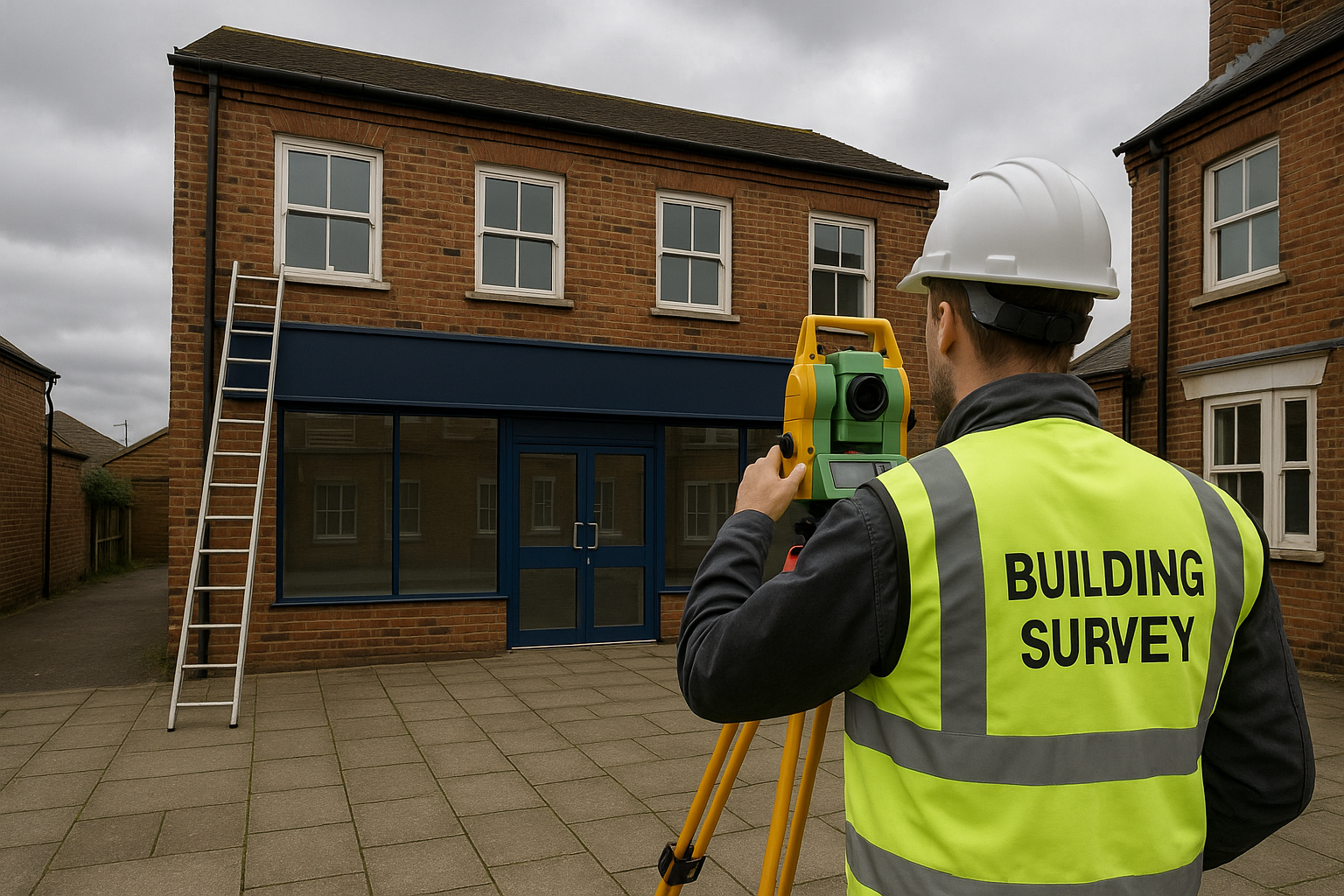
    HSG264 and wider HSE guidance set out the framework for asbestos surveying in the UK. The aim is to identify the location, extent, condition and surface treatment of asbestos-containing materials, and to assess how likely they are to be disturbed.

    1. Visual inspection

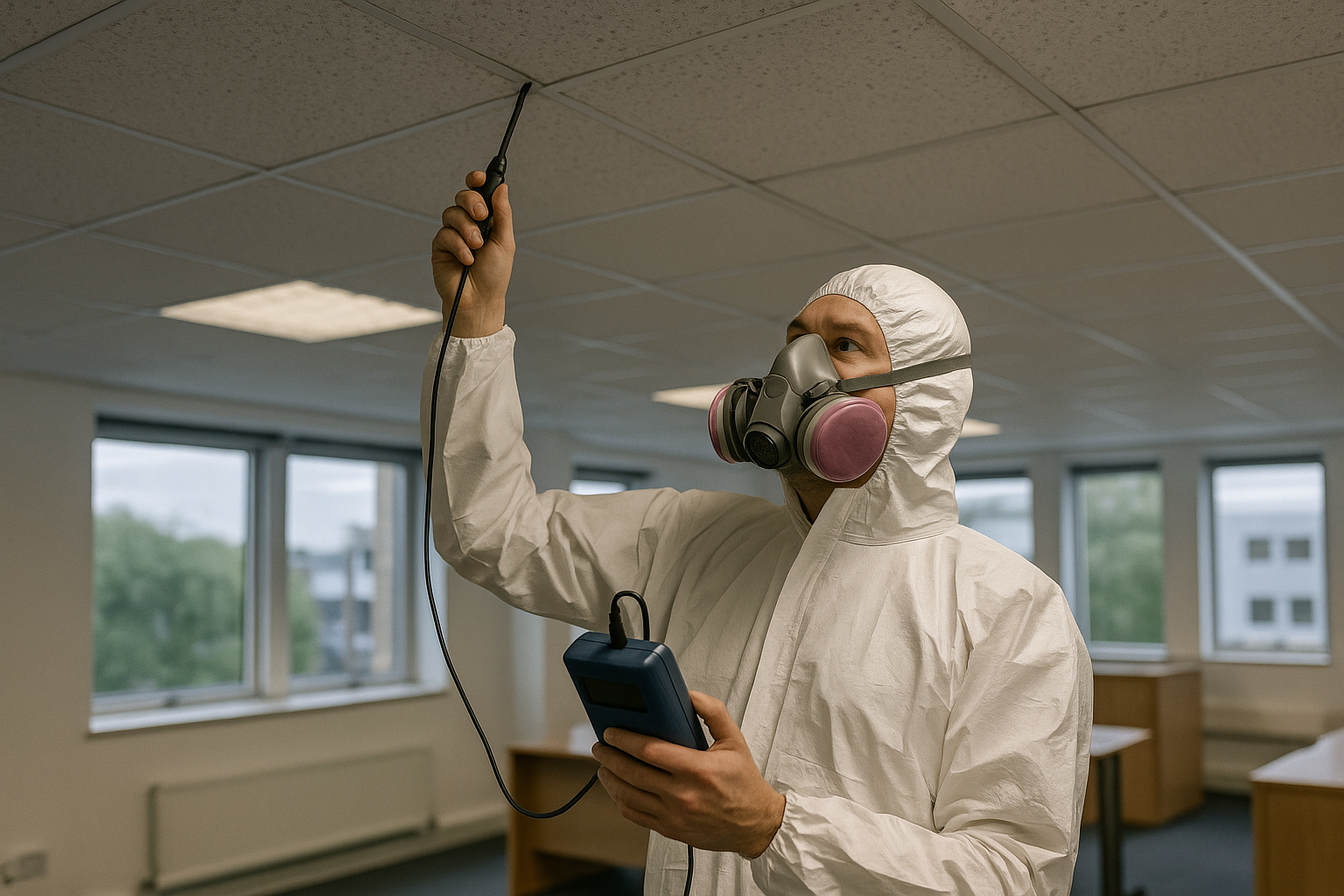
    Visual inspection helps a surveyor recognise suspect materials and decide what level of action is needed. It is useful, but it is only the first step.

    A surveyor will look at the product type, location, accessibility, damage, surface treatment and any signs of previous disturbance. They will also consider how the building is used and whether maintenance work is likely to affect the material.

    2. Controlled sampling

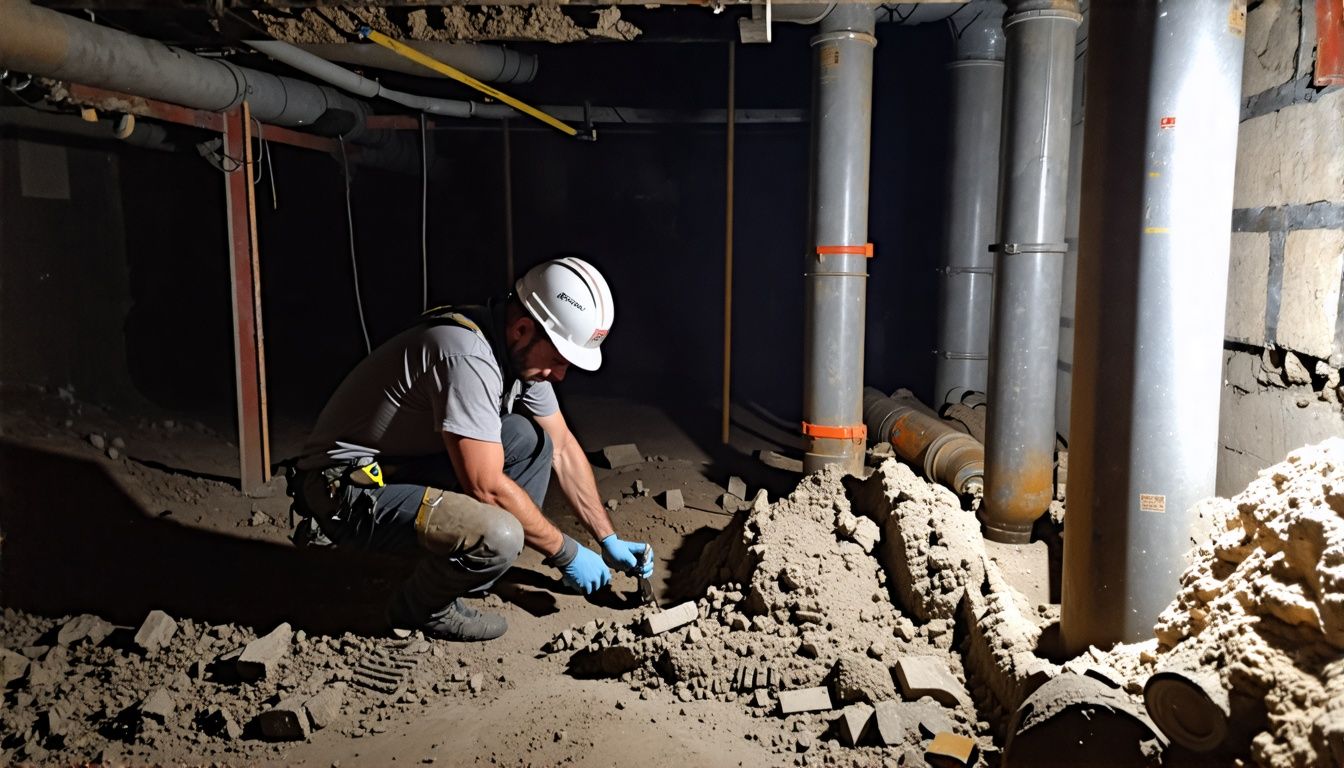
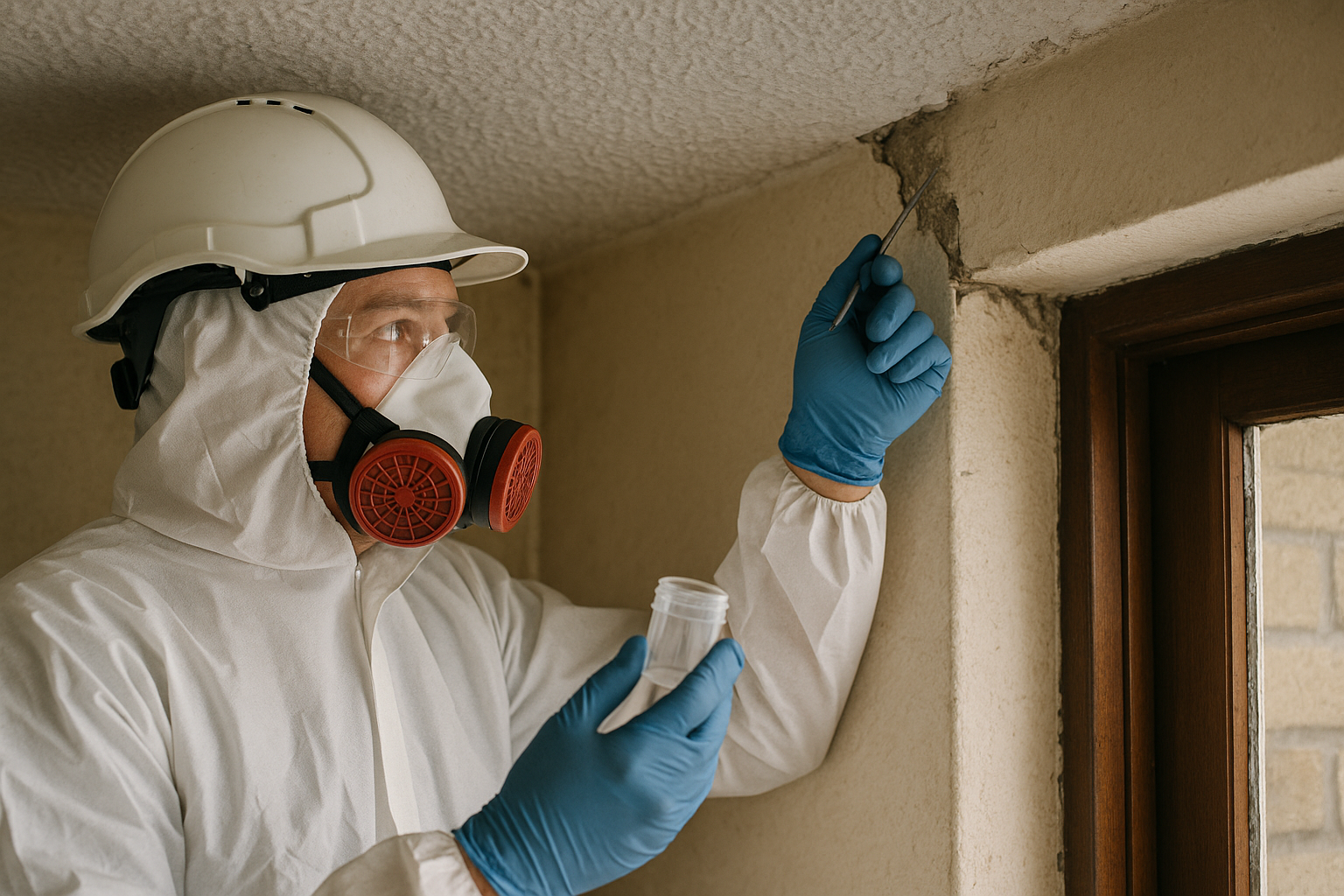
    Where it is safe and appropriate, a trained surveyor takes a small controlled sample. This is done carefully to minimise fibre release and avoid spreading contamination.

    Sampling is not simply a matter of cutting out a piece and putting it in a bag. The area, method, tools and aftercare all matter.

    3. Laboratory analysis

    The sample is then examined by a UKAS-accredited laboratory. This is the stage where a suspect material can be confirmed as asbestos-containing or shown not to contain asbestos.

    So when people ask whether asbestos can be identified in a building, the accurate answer is this: in a building some materials that are suspected to contain asbestos can be positively identified through surveyor inspection, controlled sampling and formal analysis. Without that process, certainty is missing.

    What happens during asbestos sampling and testing

    Testing is the only reliable route to confirmation. If the material is accessible and sampling can be carried out safely, a trained professional will manage the process from start to finish.
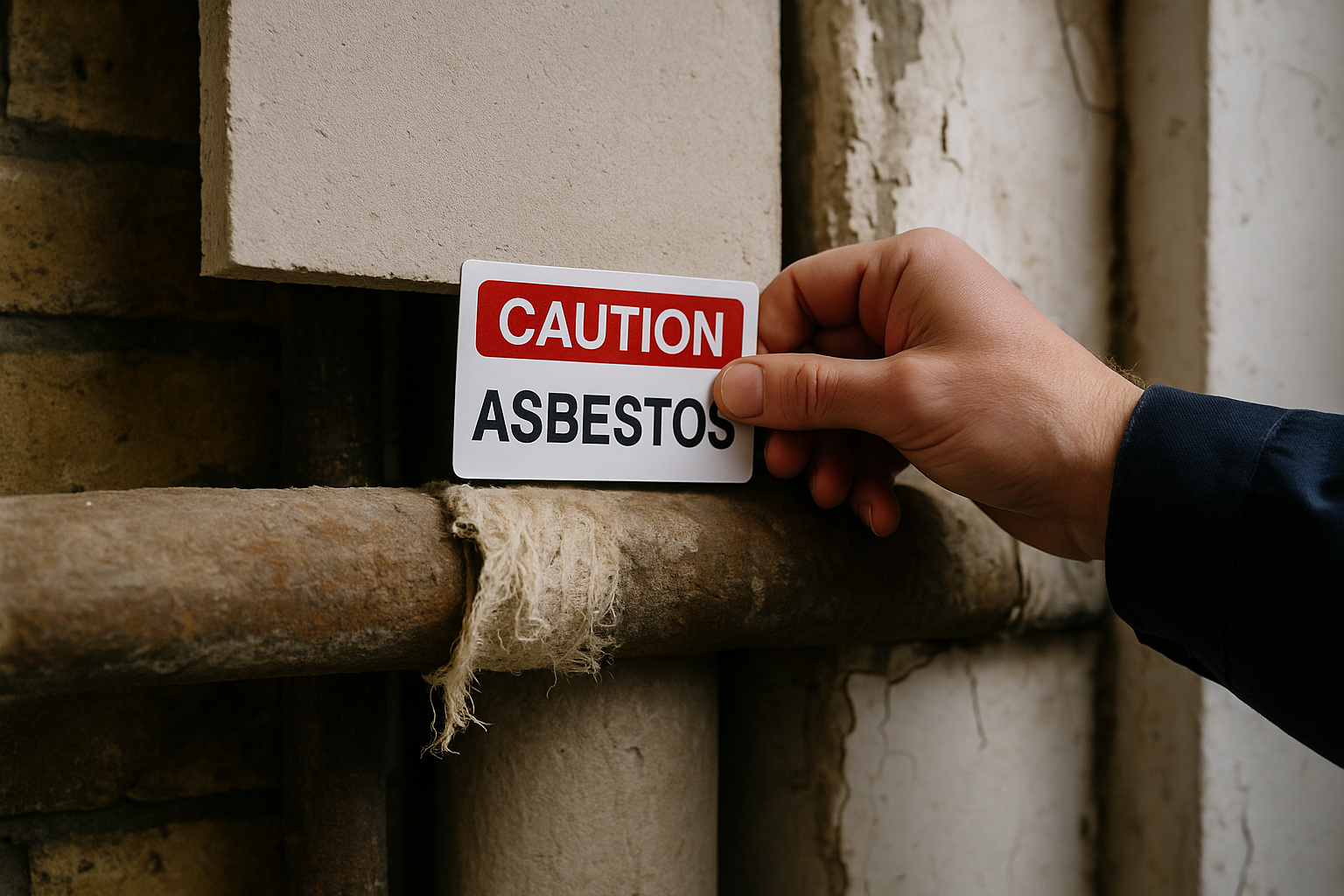
    in a building some materials that are suspected to contain asbestos can be positively identified - How Does One Identify Asbestos in a Buil

    This is not a DIY task. Poor sampling technique can release fibres, contaminate nearby areas and make a manageable issue far worse.

    The usual sampling process

    1. The surveyor assesses the area, access and material condition
    2. The sample point is controlled to limit dust and fibre release
    3. A small piece of material is removed carefully
    4. The sample is sealed, labelled and documented
    5. The area is left in a safe condition
    6. The sample is sent for laboratory examination

    If you only need material confirmation, professional asbestos testing can be the right first step. For clients sending specific materials for checking, Supernova also offers sample analysis services where appropriate.

    Once results are back, decisions become much clearer. You can decide whether the material should be managed in place, repaired, encapsulated, monitored or removed, depending on its type, condition and the likelihood of disturbance.

    For urgent property queries or fast booking support, many clients also use our dedicated asbestos testing service page to arrange the next steps quickly.

    Which asbestos survey is needed for proper identification?

    An asbestos survey is the recognised route for identifying suspect materials in a building. It is also central to compliance in many non-domestic premises.

    The correct survey depends on what is happening in the property. Routine occupation, refurbishment and demolition all require different levels of inspection.

    Management survey

    A management survey is designed for normal occupation and routine maintenance. It identifies asbestos-containing materials that could be disturbed during everyday use of the building.

    This survey supports your asbestos register and management plan. For offices, schools, communal areas, retail premises and industrial sites, it is often the starting point.

    Refurbishment survey

    If you are upgrading, altering or stripping out part of a building, a refurbishment survey is needed before work begins. It is more intrusive because it must locate asbestos within the areas affected by the planned works.

    This is where projects either stay under control or become expensive. Ordering the right survey before contractors arrive helps avoid delays, emergency stoppages and exposure incidents.

    Demolition survey

    Before a structure is demolished, a demolition survey is required. This is the most intrusive survey type and aims to identify all asbestos-containing materials in the area due for demolition.

    Demolition should never proceed on assumptions. Full identification is needed so asbestos can be removed or otherwise dealt with safely before structural work starts.

    Re-inspection survey

    Finding asbestos once is not the end of the job. A re-inspection survey checks known asbestos-containing materials to confirm they remain in suitable condition and that your records are still accurate.

    This is especially useful where asbestos is being managed in place. If the condition changes, your management plan should change with it.

    Practical advice for property managers, landlords and duty holders

    Most asbestos problems do not begin with major construction. They begin with ordinary maintenance. Replacing lights, chasing cables, repairing ceilings, fitting signage, opening service risers or upgrading heating systems can all disturb hidden asbestos if the area has not been checked first.

    If you are responsible for non-domestic premises, the duty to manage asbestos is not optional. You need suitable information, accessible records and a process that contractors actually follow.

    Good practice before maintenance or contractor work

    • Check existing survey information before any intrusive work
    • Make sure contractors can access relevant asbestos records
    • Use a clear sign-off or permit process for higher-risk tasks
    • Keep your asbestos register up to date
    • Arrange surveys before works start, not after a discovery on site
    • Review whether known materials need re-inspection

    If records are old, incomplete or do not cover the planned work area, act before the job starts. Waiting until debris appears on the floor is a poor time to discover a gap in your asbestos information.

    The same principle applies to tenanted and occupied buildings. Staff, visitors, residents and contractors all rely on you to control the risk properly.

    What happens if asbestos is confirmed?

    A positive result does not automatically mean removal is required. The right action depends on the material, its condition, where it is located and how likely it is to be disturbed.

    Some asbestos-containing materials can remain in place safely if they are in good condition and are properly managed. Others need urgent action because they are damaged, friable or directly affected by planned works.

    Typical options after identification

    • Manage in place: suitable where the material is sound and unlikely to be disturbed
    • Repair: minor local damage may sometimes be addressed appropriately
    • Encapsulate: sealing the surface may help reduce the risk of fibre release
    • Remove: often necessary where materials are damaged or refurbishment or demolition is planned

    The key is evidence-based decision-making. Once in a building some materials that are suspected to contain asbestos can be positively identified, you can stop relying on assumptions and start managing the issue properly.

    Why records, registers and re-checks matter

    Identification is not a one-off exercise that gets filed away and forgotten. Asbestos information only helps if it is current, accessible and tied to day-to-day building management.

    A survey should feed into an asbestos register, and that register should support a working management plan. Contractors need to see the relevant information before they start, not after they have opened up a wall or ceiling.

    Your asbestos records should include

    • The location of known or presumed asbestos-containing materials
    • The type of material where known
    • Its condition and surface treatment
    • The risk of disturbance
    • Actions needed to manage or monitor it
    • Dates and findings from any follow-up checks

    If materials are being managed in place, periodic review is essential. Damage, water ingress, wear, vibration and unauthorised works can all change the risk profile over time.

    Local support for faster asbestos identification

    Speed matters when a project is waiting or a suspect material has been uncovered. Local access to surveyors can help you move from uncertainty to a clear plan quickly.

    If you need support in the capital, Supernova can arrange an asbestos survey London service. For clients in the North West, we also provide an asbestos survey Manchester option, and for the Midlands we offer an asbestos survey Birmingham service.

    Local coverage helps reduce delays, especially when planned works are approaching or a contractor has already uncovered a suspicious material. The sooner the right survey or testing is arranged, the sooner you can make a safe decision.

    Common mistakes that lead to asbestos problems

    Most asbestos incidents are avoidable. They usually happen because someone assumed a material was modern, relied on memory, or started work before checking the records.

    Mistakes to avoid

    • Assuming a refurbished area cannot contain older asbestos materials
    • Relying on visual judgement alone
    • Starting intrusive work with only a management survey when a refurbishment survey is needed
    • Using outdated records that do not reflect later alterations
    • Failing to share asbestos information with contractors
    • Ignoring minor damage because the material has been in place for years

    Each of these mistakes can lead to avoidable exposure, project delays and unnecessary cost. The fix is usually straightforward: check what you know, identify what you do not know, and arrange the correct professional assessment.

    When to presume asbestos instead of waiting for certainty

    There are situations where immediate sampling is not possible or appropriate. The material may be inaccessible, the area may be unsafe to enter, or urgent controls may be needed before anyone gets close enough to take a sample.

    In those cases, presuming asbestos is often the sensible short-term step. That means treating the material as though it contains asbestos until inspection and analysis can confirm otherwise.

    This approach helps prevent exposure while decisions are being made. It is especially useful during emergency maintenance, partial access situations and early planning for intrusive works.

    Get expert help before work starts

    If there is any doubt about a suspect material, do not leave it to guesswork. In a building some materials that are suspected to contain asbestos can be positively identified, but only through the right survey, controlled sampling and proper laboratory analysis.

    Supernova Asbestos Surveys has completed more than 50,000 surveys nationwide, helping landlords, duty holders, contractors and property managers make safe, compliant decisions. Whether you need a survey, testing, re-inspection or advice on the next step, contact Supernova on 020 4586 0680 or visit asbestos-surveys.org.uk to book the right service.

    Frequently Asked Questions

    Can asbestos be identified just by looking at it?

    No. Some materials may look suspicious, but asbestos cannot be confirmed by sight alone. Proper identification requires inspection, and where appropriate, controlled sampling followed by analysis by a UKAS-accredited laboratory.

    What should I do if I accidentally disturb a material that might contain asbestos?

    Stop work immediately, keep others away from the area and prevent further disturbance. Do not sweep debris or use a standard vacuum cleaner. Arrange professional advice, inspection or testing as soon as possible.

    Does a positive asbestos result always mean removal is needed?

    No. If the material is in good condition and unlikely to be disturbed, it may be managed in place. Removal is more likely where the material is damaged, friable or affected by planned refurbishment or demolition.

    Which survey do I need before building work starts?

    It depends on the work. A management survey is for normal occupation and routine maintenance. If refurbishment or demolition is planned, a refurbishment survey or demolition survey is usually required before work begins.

    Who is responsible for managing asbestos in non-domestic premises?

    Under the Control of Asbestos Regulations, the duty holder is responsible for managing asbestos risk in non-domestic premises. That includes identifying asbestos-containing materials, keeping records up to date and making sure anyone who may disturb asbestos has the right information.
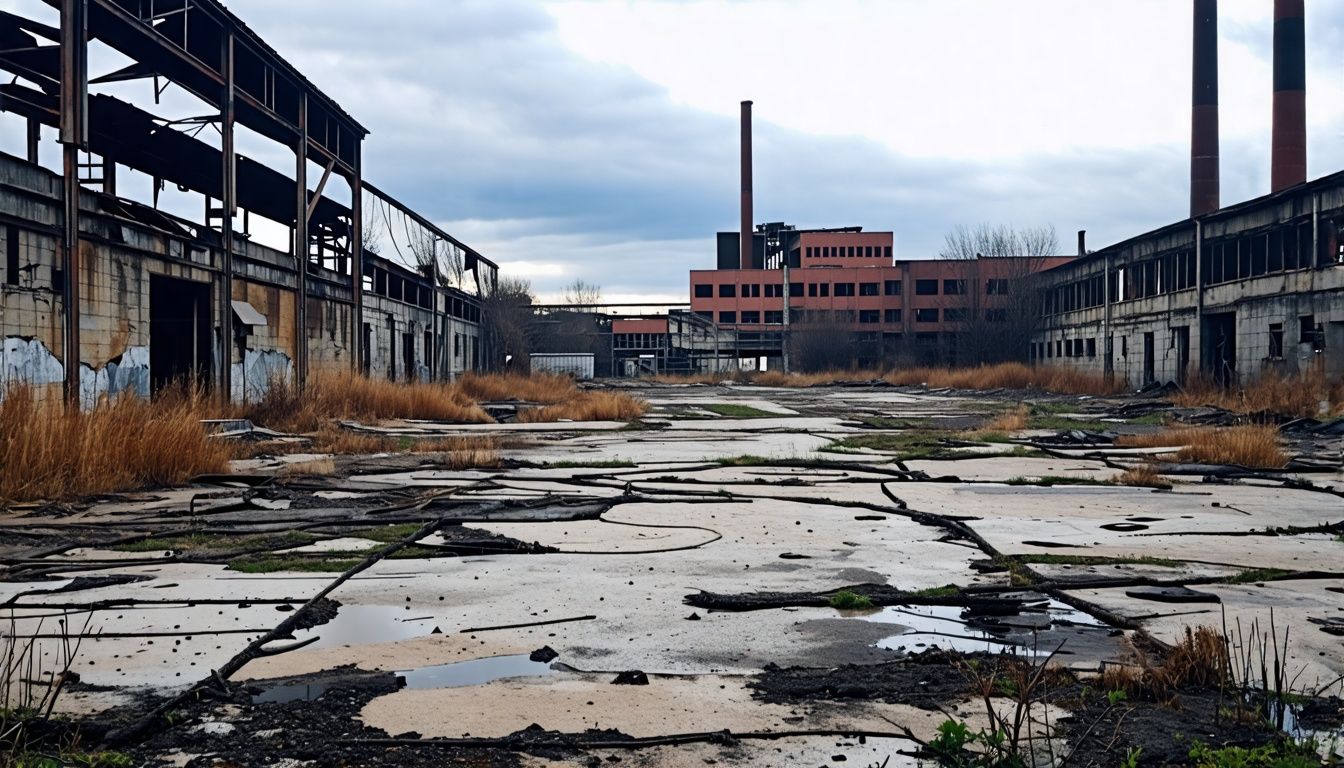
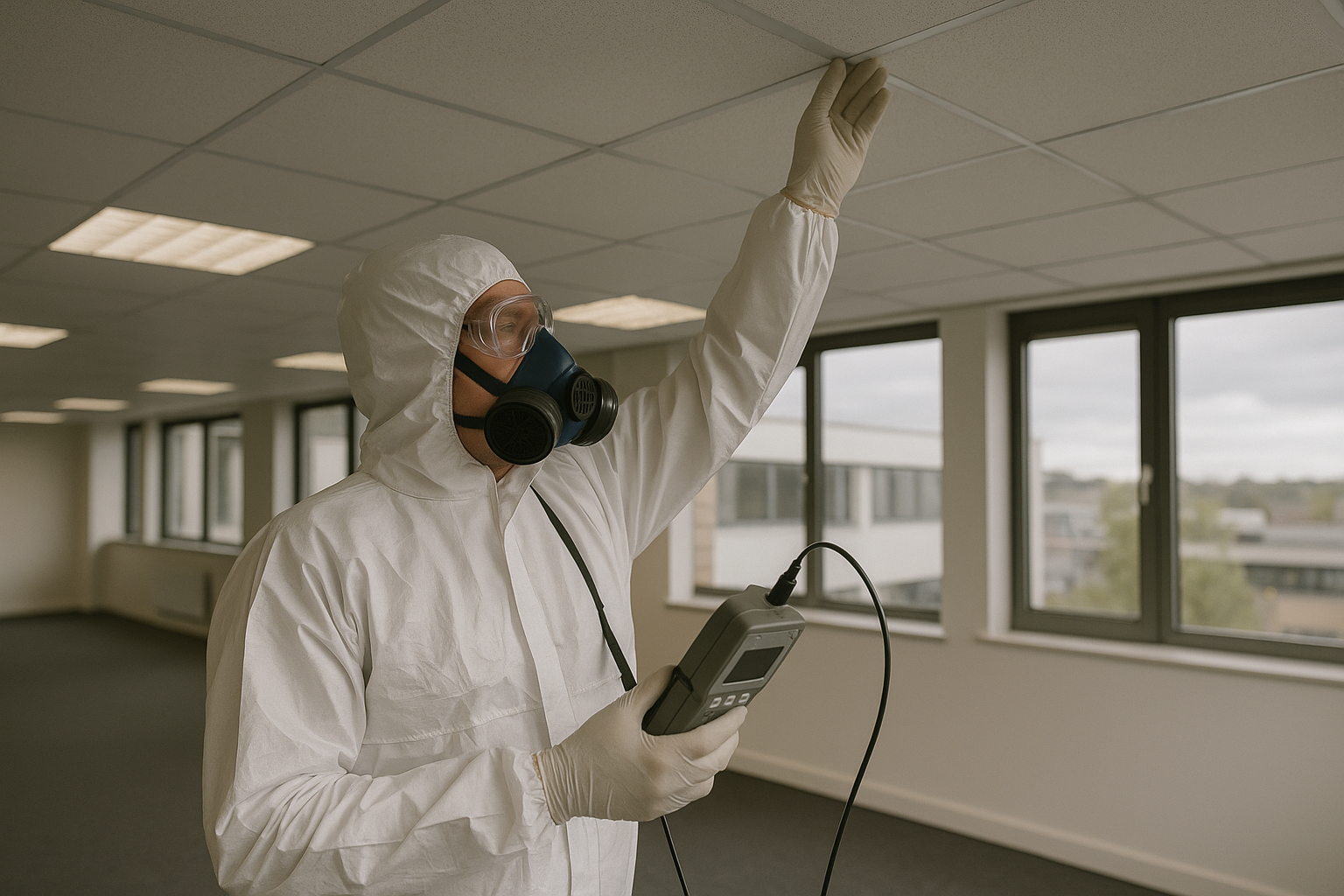
  • How Does Asbestos Affect the Environment: Understanding the Environmental Impacts of Asbestos Exposure – Exploring the Question: How does asbestos affect the environment?

    How Does Asbestos Affect the Environment: Understanding the Environmental Impacts of Asbestos Exposure – Exploring the Question: How does asbestos affect the environment?

    Asbestos and the Environment: What Every Property Owner Needs to Know

    Asbestos is widely understood as a human health hazard — but its asbestos environmental impact is a dimension that rarely gets the attention it deserves. Once fibres enter the air, soil, or water, they don’t simply disappear. They persist, accumulate, and continue to pose risks to ecosystems, wildlife, and communities long after the original source has been removed or forgotten.

    If you manage a property, work in construction, or have responsibility for a site with suspected asbestos-containing materials (ACMs), understanding the environmental dimension is just as important as understanding the health risks to occupants.

    Where Does Asbestos Environmental Contamination Come From?

    Asbestos enters the environment from two broad sources: natural geological deposits and human activity. In the UK context, it’s the latter that demands the most attention — though both are worth understanding.

    Natural Asbestos Deposits

    Asbestos is a naturally occurring mineral group, formed over millions of years within ultramafic and serpentinised rock. Deposits exist across the world — including parts of Europe — and can release fibres through wind erosion or seismic activity without any human involvement.

    In the UK, naturally occurring asbestos is far less of a concern than in countries like Canada, South Africa, or parts of Eastern Europe. That said, ground disturbance through infrastructure projects or quarrying can expose asbestos minerals if they happen to be present in the local geology.

    Industrial Sources and Improper Disposal

    This is where the vast majority of asbestos environmental contamination in the UK originates. Decades of widespread industrial use — in shipbuilding, construction, insulation manufacturing, and more — left behind an enormous legacy of ACMs in buildings and on brownfield sites.

    Environmental contamination typically occurs through:

    • Demolition and refurbishment work carried out without proper surveys, releasing fibres into the air and onto surrounding land
    • Fly-tipping of asbestos waste, which remains a persistent problem across the UK
    • Deteriorating ACMs in neglected buildings, where weather and physical decay cause fibres to shed over time
    • Landfill sites that accepted asbestos waste before current controls were in place, where fibres can leach into soil and groundwater
    • Former industrial sites and factories where ACMs were used extensively and disposal was poorly regulated

    The problem is compounded by the fact that asbestos fibres are invisible to the naked eye and can travel considerable distances on air currents before settling on land, water, or vegetation.

    How Asbestos Affects Air Quality

    Airborne asbestos fibres represent the most immediate and well-documented asbestos environmental threat. When ACMs are disturbed — through drilling, cutting, demolition, or natural decay — microscopic fibres become suspended in the air and can remain there for extended periods.

    Unlike larger particles, asbestos fibres don’t fall to the ground quickly. Their shape and weight allow them to stay airborne long enough to be carried well away from the original source, affecting people and wildlife who may have no idea the disturbance even occurred.

    Health Consequences of Fibre Inhalation

    Once inhaled, asbestos fibres lodge in lung tissue and cannot be expelled by the body. The consequences are serious and frequently fatal:

    • Mesothelioma — an aggressive cancer of the lining of the lungs or abdomen, almost exclusively caused by asbestos exposure
    • Asbestosis — progressive scarring of lung tissue leading to severe respiratory impairment
    • Lung cancer — risk significantly elevated by asbestos exposure, particularly in smokers
    • Pleural thickening — a non-malignant condition that nonetheless causes significant breathing difficulties

    There is no known safe level of asbestos exposure. The latency period — the gap between exposure and disease onset — can be anywhere from 15 to 60 years. This long delay makes it extremely difficult for individuals to connect their illness to a specific exposure event, and it’s precisely why preventing environmental contamination matters so much.

    Risks to Wildlife

    It’s not only humans who are affected. Birds, small mammals, and other wildlife living near contaminated sites can inhale or ingest asbestos fibres. The research on wildlife-specific impacts is less extensive than human health studies, but the biological mechanisms — fibre accumulation causing tissue damage — are not unique to humans.

    Any site with known or suspected asbestos environmental contamination should be assessed with wildlife exposure in mind, particularly where ecological surveys are required as part of a planning or development process.

    Asbestos Contamination of Soil and Water

    Water Supply Contamination

    Asbestos can enter water systems through several routes. Historically, asbestos-cement pipes were widely used in water distribution infrastructure across the UK. As these pipes age and degrade, fibres can be released into the water flowing through them.

    Runoff from contaminated land — particularly during heavy rainfall — can also carry fibres into streams, rivers, and eventually reservoirs. Improper disposal of asbestos waste near watercourses is a significant contributing factor to this problem.

    Ingested asbestos fibres are generally considered a lower risk than inhaled fibres, as the digestive system provides some barrier. However, long-term consumption of asbestos-contaminated water has been associated with increased risk of gastrointestinal cancers, and the precautionary principle strongly supports taking this exposure route seriously.

    Soil Contamination and Ecosystem Disruption

    When asbestos fibres settle from the air or leach from waste deposits, they accumulate in soil. This contamination can persist for decades — or indefinitely — since asbestos fibres do not biodegrade under normal environmental conditions.

    The ecological consequences include:

    • Disruption to soil microbiomes — the microscopic organisms that underpin soil health and fertility can be adversely affected by fibre accumulation
    • Uptake through plant roots — fibres can be absorbed by plants and enter the food chain, affecting herbivores and the predators that feed on them
    • Re-suspension of fibres — agricultural activity, construction, or strong winds can disturb contaminated soil and return fibres to the air
    • Long-term land sterilisation — heavily contaminated sites may be unfit for agriculture, development, or ecological use without costly remediation

    Brownfield sites across the UK — former industrial land earmarked for housing or regeneration — frequently carry asbestos soil contamination as part of a broader legacy of industrial pollution. Any development on such sites requires thorough environmental assessment before work begins.

    The Different Types of Asbestos and Their Environmental Risk Profiles

    Not all asbestos types behave identically in the environment. The six regulated asbestos mineral types fall into two broad categories, and understanding the distinction matters when assessing asbestos environmental risk.

    Serpentine Asbestos

    Chrysotile (white asbestos) is the most widely used form globally, accounting for the vast majority of asbestos found in UK buildings. Its curly fibres are considered somewhat less durable in biological tissue than amphibole fibres — but it remains highly hazardous and is fully banned in the UK.

    Amphibole Asbestos

    This group includes amosite (brown asbestos), commonly found in insulation boards and ceiling tiles in buildings constructed between the 1950s and 1980s, and crocidolite (blue asbestos), considered the most hazardous type, with needle-like fibres that penetrate tissue deeply and resist breakdown. Tremolite, actinolite, and anthophyllite are less commonly encountered but remain regulated.

    Amphibole fibres are generally more environmentally persistent and more biologically damaging than chrysotile. In soil and water, they resist chemical breakdown and can remain hazardous almost indefinitely. This makes their proper containment and removal even more critical from an asbestos environmental standpoint.

    The UK Regulatory Framework for Asbestos Environmental Management

    The UK has some of the most comprehensive asbestos regulations in the world. All forms of asbestos have been banned from use in new products and construction. The key legislative framework includes:

    • The Control of Asbestos Regulations — the primary legislation governing the management, handling, and removal of asbestos in the UK. These regulations place a legal duty on those responsible for non-domestic premises to manage asbestos risk proactively.
    • The Environmental Protection Act — governs the disposal of hazardous waste, including asbestos, and provides enforcement powers against illegal dumping.
    • The Hazardous Waste Regulations — asbestos waste must be classified, handled, transported, and disposed of at licensed facilities only.
    • HSE guidance and approved codes of practice (ACoPs) — including HSG264, which sets out practical standards for asbestos surveys and management.

    The Health and Safety Executive (HSE) oversees asbestos regulation in workplace settings, while the Environment Agency (and SEPA in Scotland, NRW in Wales) handles environmental enforcement. Penalties for illegal disposal or inadequate management can be severe, including prosecution and significant fines.

    Despite this framework, fly-tipping of asbestos waste remains a serious and ongoing problem. The cost of legal disposal — combined with poor awareness — continues to drive illegal dumping, particularly of corrugated asbestos roofing sheets.

    How Asbestos Remediation Works in Practice

    Whether you’re dealing with ACMs in a building or contaminated land on a development site, professional remediation is non-negotiable. This is not work that can be safely managed without specialist knowledge, equipment, and in many cases, an HSE licence.

    Survey and Assessment

    The first step is always a thorough, professional asbestos survey. Depending on the nature of the site and the planned works, this will typically be one of the following:

    • A management survey — for occupied premises, to locate and assess the condition of ACMs for ongoing management without disruption to normal use
    • A demolition survey — required before any significant building work or demolition, this is more intrusive and designed to locate all ACMs that could be disturbed during the works

    Suspected materials are sampled and sent for laboratory analysis to confirm presence and fibre type. At Supernova Asbestos Surveys, our surveyors are trained to BOHS P402 standard and operate across the whole of the UK.

    Risk Evaluation and Management Planning

    Not all ACMs need to be immediately removed. Materials in good condition and unlikely to be disturbed can often be safely managed in situ, with a documented asbestos management plan and regular re-inspection survey monitoring to track their condition over time.

    Where materials are damaged, deteriorating, or in the path of planned works, removal is usually the appropriate course of action. The decision should always be made by a qualified professional — not guesswork.

    Safe Removal and Disposal

    Licensed asbestos removal contractors operate under strict controls to protect both workers and the surrounding environment:

    1. Establishing containment zones with negative air pressure to prevent fibre release beyond the work area
    2. Using HEPA-filtered respiratory protective equipment (RPE) and full protective suits
    3. Wetting materials during removal to suppress fibre release
    4. Double-bagging and clearly labelling all waste in line with hazardous waste regulations
    5. Transporting waste only to licensed asbestos disposal facilities
    6. Conducting a thorough four-stage clearance process, including independent air testing, before a clearance certificate is issued

    Ongoing Monitoring

    For sites where ACMs remain in situ under a management plan, regular monitoring is essential. Conditions change — buildings deteriorate, uses change, and previously stable materials can become damaged. A re-inspection survey carried out at appropriate intervals ensures that any deterioration is identified and acted upon before fibres are released into the environment.

    Asbestos Environmental Risks During Development and Demolition

    Development projects — whether residential, commercial, or infrastructure — carry a heightened asbestos environmental risk. Demolition in particular is one of the most common triggers for fibre release, and the consequences of getting it wrong extend well beyond the site boundary.

    Before any demolition or major refurbishment work begins, a full demolition survey is legally required. This survey must be completed by a qualified surveyor and must cover the entire structure, including areas that would be difficult or dangerous to access during normal occupation.

    Developers and contractors working in major urban centres need to be especially vigilant given the density of pre-2000 buildings in those areas. Whether you need an asbestos survey London, an asbestos survey Manchester, or an asbestos survey Birmingham, the principle is the same: survey first, work second.

    Skipping or cutting corners on a pre-demolition survey isn’t just a legal risk — it’s an asbestos environmental risk that can affect neighbouring properties, local communities, and the wider ecosystem for years to come.

    What Property Owners and Duty Holders Should Do Right Now

    If you have responsibility for a non-domestic building constructed before the year 2000, or a site with a legacy of industrial use, here are the practical steps you should be taking:

    1. Commission a professional asbestos survey if you don’t already have one, or if your existing register is out of date. An up-to-date register is the foundation of all asbestos environmental management.
    2. Review your asbestos management plan to ensure it reflects the current condition of ACMs and any changes in how the building is used.
    3. Schedule regular re-inspections — annually is the standard benchmark, though higher-risk materials or more demanding environments may warrant more frequent checks.
    4. Never allow unlicensed contractors to disturb ACMs. Even well-intentioned tradespeople working without awareness of asbestos can cause significant environmental contamination.
    5. Dispose of asbestos waste legally. Fly-tipping is not only an environmental offence — it carries the risk of serious prosecution and unlimited fines.
    6. Seek specialist advice before any demolition or major refurbishment. The earlier a surveyor is involved in the planning process, the more effectively environmental risks can be managed.

    Frequently Asked Questions

    How does asbestos get into the environment?

    Asbestos enters the environment primarily through human activity — demolition and construction work, fly-tipping of asbestos waste, deterioration of ACMs in neglected buildings, and historical industrial disposal. Naturally occurring asbestos deposits can also release fibres through erosion or ground disturbance, though this is less of a concern in the UK than in some other countries.

    Can asbestos fibres in soil or water cause harm?

    Yes, though the risk profile differs from airborne exposure. Fibres in soil can be re-suspended into the air by wind, agricultural activity, or construction work. Fibres in water have been associated with increased gastrointestinal cancer risk with long-term consumption. Soil contamination can also disrupt ecosystems and enter the food chain through plant uptake.

    Is asbestos still found in UK buildings?

    Asbestos was used extensively in UK construction until it was fully banned. Any building constructed or refurbished before the year 2000 may contain ACMs. The Control of Asbestos Regulations place a legal duty on those responsible for non-domestic premises to manage this risk through a documented asbestos management plan.

    Do I need a survey before demolishing a building?

    Yes. A demolition survey is a legal requirement before any significant demolition or major refurbishment work. It must be carried out by a qualified surveyor and must cover the entire structure. Failing to commission a survey before demolition is both a legal offence and a serious asbestos environmental risk.

    What happens if asbestos waste is fly-tipped?

    Fly-tipping of asbestos waste is a criminal offence under the Environmental Protection Act. It exposes the public, wildlife, and local ecosystems to asbestos fibre contamination that can persist indefinitely. Offenders face prosecution, significant fines, and in serious cases, custodial sentences. The Environment Agency and local authorities have powers to investigate and prosecute fly-tipping incidents.

    Speak to Supernova Asbestos Surveys

    Supernova Asbestos Surveys has completed over 50,000 surveys across the UK, helping property owners, developers, and duty holders manage asbestos environmental risk safely, legally, and effectively. Our surveyors are BOHS P402 qualified and operate nationwide — from large industrial sites to individual residential properties.

    Whether you need a management survey, demolition survey, re-inspection, or advice on asbestos removal, we’re here to help. Call us on 020 4586 0680 or visit asbestos-surveys.org.uk to request a quote or speak to a member of our team.

  • What is the Definition of Asbestos: Understanding the Risks and Uses of this Mineral – What is the Definition of Asbestos?

    What is the Definition of Asbestos: Understanding the Risks and Uses of this Mineral – What is the Definition of Asbestos?

    Asbestos is still one of the most significant hidden risks in older UK buildings. It sits in ceiling voids, risers, plant rooms, wall panels, roof sheets and service ducts, often unnoticed until someone drills, cuts or disturbs it.

    For property managers, landlords, duty holders and contractors, asbestos is not just an old construction material. It is a live compliance issue tied to safety, maintenance planning and the legal duty to prevent exposure.

    The reason asbestos became so common is straightforward. It was strong, heat resistant, chemically durable and cheap to use in everything from insulation to cement products. Those same qualities helped it spread through British construction and industry, and they explain why so much asbestos remains in place today.

    What is asbestos?

    Asbestos is a commercial term for a group of naturally occurring fibrous silicate minerals. It is not one single material. The term covers six recognised minerals that can be separated into very small fibres and used in manufactured products.

    Those fibres are what make asbestos dangerous. When asbestos-containing materials are damaged, drilled, cut, sanded, broken or allowed to deteriorate, fibres can be released into the air and breathed in.

    Under the Control of Asbestos Regulations, those responsible for non-domestic premises must identify asbestos risks and manage them properly. Surveying, risk assessment, record keeping and safe work planning all sit within that duty.

    A practical point matters here: asbestos is often safest when it is in good condition and left undisturbed. The risk changes when the material is damaged or when work is planned without checking what is present.

    The six types of asbestos

    Asbestos is divided into two mineral families: serpentine and amphibole. In day-to-day property management, you will usually hear about three types more than the others, but all asbestos types are hazardous.

    Serpentine asbestos

    • Chrysotile – often called white asbestos

    Amphibole asbestos

    • Amosite – often called brown asbestos
    • Crocidolite – often called blue asbestos
    • Tremolite
    • Anthophyllite
    • Actinolite

    In UK buildings, the types most commonly encountered are:

    • Chrysotile in cement sheets, floor tiles, textured coatings, gaskets and some insulation products
    • Amosite in asbestos insulating board, ceiling tiles, partition systems and thermal insulation
    • Crocidolite in some sprayed coatings, pipe insulation, cement products and specialist applications

    None of these should be treated casually. If a material is suspected to contain asbestos, the correct response is to stop and verify, not to guess.

    Where the word asbestos comes from

    The word asbestos comes from a Greek term meaning “unquenchable” or “inextinguishable”. That tells you a lot about why people valued it for so long.

    asbestos - What is the Definition of Asbestos: Unde

    Its resistance to heat and flame gave asbestos an almost indestructible reputation. That reputation drove its use in fire protection, insulation and industrial processes for centuries before the health risks were fully understood.

    The history of asbestos in buildings and industry

    The history of asbestos stretches back thousands of years. Long before modern construction, people had noticed fibrous minerals that could withstand heat and fire.

    Early uses of asbestos

    Historical accounts describe asbestos being used in lamp wicks, cloths and specialist heat-resistant items. Some writers even referred to fabrics that could be cleaned in fire, which added to the material’s unusual reputation.

    These uses were limited in scale. Production methods were basic, and asbestos was more curiosity than mainstream building product.

    Industrial expansion

    That changed once mining and manufacturing expanded. Asbestos could be crushed, milled, graded and blended into a huge range of products. It moved quickly from niche material to industrial staple.

    Factories, shipyards, railways, power stations and construction firms all found uses for asbestos. It could be woven, sprayed, mixed with cement, formed into boards or packed around hot pipework.

    By the time mass development accelerated across the UK, asbestos was embedded in homes, schools, hospitals, offices, warehouses and public buildings. That is why it still turns up so often during surveys today.

    When the health risks became clear

    Medical concerns about asbestos did not appear overnight. Over time, workers exposed to fibres in mining, insulation, shipbuilding and manufacturing developed severe respiratory disease.

    The evidence eventually became overwhelming. Exposure to asbestos fibres is linked to serious illnesses including asbestosis, mesothelioma and lung cancer.

    That is why modern asbestos management focuses on preventing exposure. In the UK, this means identifying asbestos-containing materials, assessing their condition, recording their location and managing the risk in line with the Control of Asbestos Regulations, HSG264 and current HSE guidance.

    Why asbestos was used so widely

    Asbestos solved several practical problems at once. For builders and manufacturers, it offered a combination of properties that was hard to ignore.

    asbestos - What is the Definition of Asbestos: Unde
    • Heat resistance
    • Fire resistance
    • Thermal insulation
    • Some acoustic insulation
    • Strength when mixed into products
    • Resistance to many chemicals
    • Low cost compared with alternatives available at the time

    That mix made asbestos commercially attractive across several sectors. It was used not because it was rare or specialised, but because it was versatile and easy to incorporate into ordinary products.

    How asbestos was mined, processed and manufactured

    Asbestos production involved more than simply extracting rock from the ground. Deposits were mined, crushed and milled so the fibres could be separated.

    Those fibres were then graded by length and quality. Manufacturers mixed asbestos into cement, bitumen, paper, textiles, insulation products, plastics and friction materials.

    Asbestos was supplied in many forms, including:

    • Loose fibre
    • Boards
    • Cement sheets
    • Pipe lagging
    • Sprayed coatings
    • Ropes and textiles
    • Floor tiles
    • Gaskets and seals
    • Paper products
    • Decorative and textured coatings

    This range is one reason asbestos remains such a surveying issue. It can appear in obvious places, but it can also be hidden inside plant, behind finishes or within service installations.

    Which industries used asbestos most heavily?

    If you manage an older building, its original use often gives strong clues about where asbestos may be present. Different industries used asbestos in different ways.

    Construction and building maintenance

    Construction was one of the largest users of asbestos. It appeared in fire protection, partition systems, roofing, soffits, wall linings, insulation, floor finishes and rainwater goods.

    Maintenance trades then inherited the risk. Electricians, plumbers, telecoms engineers, decorators, joiners and general builders have all historically encountered asbestos during routine work.

    Shipbuilding and marine engineering

    Ships relied heavily on thermal insulation and fire protection. Asbestos was used around engines, boilers, bulkheads, pipework and machinery spaces.

    Manufacturing and heavy industry

    Factories used asbestos in ovens, furnaces, machinery insulation, gaskets, seals and protective products. High-temperature environments made asbestos especially attractive to industry.

    Power generation

    Power stations and boiler houses often contained substantial asbestos insulation. Pipework, ducts, turbines, valves and plant rooms were common locations.

    Transport

    Rail, automotive and aviation sectors used asbestos in friction materials, insulation and heat-resistant components. Brake linings and clutch parts are well-known examples.

    Public sector buildings

    Schools, hospitals, council buildings and similar premises often contain asbestos because they were built or refurbished during periods when asbestos products were standard specification.

    That history matters. A former factory, school or boiler-heavy office block will usually present a different asbestos profile from a simple residential conversion.

    Common asbestos-containing materials in UK buildings

    Many people think asbestos only means pipe insulation. In reality, asbestos was used in hundreds of products, and many still turn up during inspections and surveys.

    Higher-risk asbestos materials

    These materials can release fibres more easily when damaged because they are often more friable:

    • Pipe lagging
    • Sprayed coatings
    • Loose fill insulation
    • Asbestos insulating board

    These products usually need tighter controls because the asbestos content is often high and the material can be easier to disturb.

    Lower-risk asbestos materials

    These can still be dangerous if worked on or damaged, but the fibres are generally more firmly bound within the product:

    • Asbestos cement sheets and panels
    • Roof sheets and wall cladding
    • Floor tiles
    • Bitumen products
    • Textured coatings
    • Gaskets and seals
    • Toilet cisterns and water tanks

    Lower risk does not mean safe to drill, cut or remove without checks. A lower-risk product can still create exposure if the work is uncontrolled.

    Asbestos products often missed

    Some asbestos-containing materials are easy to overlook during maintenance planning:

    • Fire doors with asbestos cores or linings
    • Lift shaft panels
    • Electrical flash guards and fuse carriers
    • Boiler seals and rope gaskets
    • Window infill panels
    • Soffits and service riser linings
    • Backing boards behind heaters
    • Panels inside meter cupboards

    This is exactly why assumptions cause problems. If there is any doubt, check the records and arrange the right survey before work starts.

    Where asbestos is commonly found

    If a building was constructed or refurbished before the UK ban, asbestos could be present. The exact location depends on the building’s age, use, layout and maintenance history.

    Common locations include:

    • Plant rooms and boiler houses
    • Ceiling voids
    • Service risers and ducts
    • Partition walls
    • Soffits and canopies
    • Roof sheets, gutters and downpipes
    • Floor finishes and adhesives
    • Textured wall and ceiling coatings
    • Pipework, valves and calorifiers
    • Fire doors
    • Electrical cupboards and switch rooms
    • Garages, stores and outbuildings

    Asbestos is not always visible. It may be painted over, boxed in, hidden behind newer finishes or sealed inside building fabric.

    What makes asbestos dangerous?

    The danger comes from inhaling airborne fibres. You cannot reliably see asbestos fibres with the naked eye, and you cannot smell them.

    When asbestos-containing materials are disturbed, tiny fibres can become airborne and remain suspended. If breathed in, they can lodge in the lungs and cause serious disease over time.

    The level of risk depends on several factors:

    • The type of asbestos
    • The condition of the material
    • How easily it releases fibres
    • Whether the work disturbs it
    • The extent and duration of exposure

    For practical building management, the key rule is simple: damaged or disturbed asbestos is the real problem. Intact asbestos that is properly identified and managed may not need immediate removal.

    How asbestos is managed in the UK

    Managing asbestos is about preventing exposure, not creating unnecessary disruption. The correct approach depends on the material, its condition and the likelihood of disturbance.

    Check the asbestos register

    Before any maintenance, installation or access work, review the asbestos register if one exists. Contractors should not begin work blind.

    Arrange the correct survey

    For normal occupation and routine maintenance, a management survey is usually the starting point. Its purpose is to locate, as far as reasonably practicable, asbestos-containing materials that could be disturbed during everyday use or minor works.

    Before intrusive refurbishment or structural alteration, a more invasive survey is needed. If major strip-out or demolition is planned, a demolition survey is essential so hidden asbestos can be identified before the building fabric is disturbed.

    Assess condition and risk

    Not all asbestos has to be removed immediately. Materials in good condition and unlikely to be disturbed may be managed in place, provided they are recorded, monitored and clearly communicated to anyone who may work near them.

    Use competent contractors

    Some asbestos work must be carried out by licensed contractors. Even where a licence is not required, the work still needs proper planning, suitable controls and trained personnel.

    Keep records up to date

    Registers, plans, sample results and management actions should reflect the current situation. If asbestos is removed, repaired, encapsulated or newly identified, the records must be updated.

    One of the most effective practical steps is also the simplest: if there is uncertainty, stop the job until the material is checked.

    When should you arrange an asbestos survey?

    You should not wait until something is damaged. Surveys are most useful when they are arranged before work creates a problem.

    Typical triggers include:

    • Taking control of an older commercial property
    • Planning maintenance or contractor access
    • Refurbishing offices, shops, schools or industrial units
    • Stripping out plant rooms or service areas
    • Demolishing part or all of a building
    • Updating an out-of-date asbestos register
    • Investigating suspect materials after damage or deterioration

    If you manage sites in the capital, booking an asbestos survey London service can help you move quickly when maintenance schedules are tight. For regional portfolios, support is also available through an asbestos survey Manchester team and an asbestos survey Birmingham service.

    Practical advice for property managers and duty holders

    Good asbestos management is mostly about process and discipline. Small checks made at the right time prevent expensive mistakes.

    1. Know which buildings are at risk. Older premises, especially those with repeated refurbishments, should always be treated cautiously.
    2. Make the register easy to access. Contractors, facilities teams and project managers need the information before work starts.
    3. Do not rely on memory. Staff changes, tenant churn and historic alterations make verbal assumptions unreliable.
    4. Brief contractors properly. Anyone drilling, fixing, cabling or opening up fabric should know where asbestos may be present.
    5. Inspect known asbestos materials. Check condition periodically and after leaks, impact damage or unauthorised works.
    6. Match the survey to the work. Routine occupation, refurbishment and demolition all require different levels of information.
    7. Pause when something unexpected appears. Hidden boards, lagging or debris should trigger immediate review.

    These steps are practical, proportionate and aligned with how the HSE expects asbestos to be managed in real buildings.

    Does all asbestos need to be removed?

    No. Removal is not automatically the right answer in every case.

    If asbestos-containing material is in good condition, properly recorded and unlikely to be disturbed, managing it in place can be appropriate. That may include labelling, periodic inspection, local protection or encapsulation, depending on the circumstances.

    Removal becomes more likely where:

    • The material is damaged
    • Its condition is deteriorating
    • It is likely to be disturbed by normal use
    • Refurbishment or demolition is planned
    • Management in place is no longer reliable

    The decision should be based on risk, not habit. Removing asbestos unnecessarily can itself create disruption and cost, while leaving deteriorating asbestos unmanaged creates obvious danger.

    What to do if you suspect asbestos

    If you come across a suspect material, avoid touching or disturbing it. Do not drill it, break it, sample it yourself or ask a contractor to “just be careful”.

    Take these steps instead:

    1. Stop work immediately
    2. Keep people away from the area if disturbance may have occurred
    3. Check the asbestos register and any previous survey information
    4. Arrange a competent inspection or sampling visit
    5. Follow the advice given on management, repair or removal

    Fast, calm action is usually enough to prevent a minor concern becoming a serious incident.

    Why professional asbestos surveying matters

    Asbestos is too variable to manage by guesswork. Two materials can look similar while presenting very different levels of risk.

    A professional survey helps you understand:

    • Whether asbestos is present
    • What type of material has been identified
    • Where it is located
    • What condition it is in
    • How likely it is to be disturbed
    • What action should be taken next

    That information supports safe maintenance, legal compliance and better budgeting. It also protects contractors and occupants from avoidable exposure.

    Frequently Asked Questions

    What is the basic definition of asbestos?

    Asbestos is a group of naturally occurring fibrous silicate minerals that were widely used in building materials and industrial products because of their heat resistance, strength and durability.

    Is asbestos always dangerous?

    Asbestos becomes dangerous when fibres are released and inhaled. Materials in good condition that are properly identified and managed may present lower immediate risk, but they still need control.

    Where is asbestos most commonly found in buildings?

    Common locations include pipe lagging, asbestos insulating board, cement roof sheets, ceiling voids, service risers, floor tiles, textured coatings, fire doors and plant rooms.

    Do I need an asbestos survey before refurbishment?

    Yes, if intrusive work is planned in a building where asbestos may be present, a suitable refurbishment or demolition-type survey is needed before work starts so hidden materials can be identified safely.

    Who is responsible for managing asbestos in non-domestic premises?

    The duty usually falls on the person or organisation responsible for maintenance or repair of the premises, which may be the owner, landlord, managing agent or another duty holder under the Control of Asbestos Regulations.

    If you need clear advice, fast turnaround and reliable reporting, Supernova Asbestos Surveys can help. We deliver asbestos surveys across the UK for commercial, public and residential clients. Call 020 4586 0680 or visit asbestos-surveys.org.uk to book a survey or discuss your site.

  • What Are the Potential Risks Associated with Asbestos Exposure? Exploring the Dangers

    What Are the Potential Risks Associated with Asbestos Exposure? Exploring the Dangers

    Asbestos kills around 5,000 people in the UK every year — more than any other single work-related cause of death. What makes this figure so troubling is that the symptoms of asbestos exposure can take 20 to 40 years to appear. By the time someone feels unwell, the exposure that caused their illness may have happened before they even started a family.

    If you worked in construction, lived with someone who did, or manage a building that may contain asbestos-containing materials (ACMs), understanding what to look for could genuinely be life-saving. The UK has one of the highest rates of asbestos-related disease in the world — a direct consequence of the material’s widespread use in construction, shipbuilding, and manufacturing throughout the twentieth century.

    Asbestos was banned from new construction in 1999, but it remains present in an enormous number of buildings built before that date. The risk did not end with the ban.

    Why Asbestos Causes Disease

    Asbestos is a naturally occurring fibrous mineral. Its fire-resistant and durable properties made it extraordinarily popular in industry and construction for most of the last century — and that popularity has left a dangerous legacy.

    The problem begins when ACMs are disturbed. When asbestos-containing materials are damaged, drilled into, cut, or allowed to deteriorate, they release microscopic fibres into the air. These fibres are invisible to the naked eye, have no smell, and can remain airborne for hours.

    Once inhaled, they lodge permanently in the lungs and surrounding tissue. The body cannot break them down or expel them. Damage accumulates silently over years and decades, with no warning signs until disease has already taken hold. There is no established safe level of exposure — even relatively brief contact carries some degree of risk, though the highest risks are associated with prolonged or heavy occupational exposure.

    Recognising the Symptoms of Asbestos Exposure

    The most important thing to understand about the symptoms of asbestos exposure is that they are almost always delayed. The conditions caused by asbestos have latency periods of 20 to 40 years — sometimes longer. By the time symptoms appear, the disease is often already well advanced.

    Watch for the following warning signs:

    • Persistent breathlessness that worsens progressively over time, particularly on exertion
    • A dry, persistent cough that doesn’t resolve and has no obvious cause
    • Chest pain or tightness, often described as a dull ache or a feeling of pressure
    • Unexplained fatigue and a general decline in physical capacity
    • Unexplained weight loss, particularly when combined with respiratory symptoms
    • Coughing up blood — a serious symptom that always requires immediate medical attention
    • Swelling in the face or neck, which can indicate advanced disease affecting the lymphatic system

    If you have a history of working with or around asbestos — or lived with someone who did — and you are experiencing any of these symptoms, see your GP without delay. Make sure your doctor is aware of your exposure history. This context is critical for accurate diagnosis.

    Diagnostic tools include chest X-rays, CT scans, pulmonary function tests, and in some cases biopsy or thoracentesis. Specialist respiratory clinics and occupational health services are the best route to an accurate diagnosis.

    The Diseases Caused by Asbestos Exposure

    The symptoms of asbestos exposure are closely tied to the specific conditions asbestos fibres cause. Each disease has a distinct profile, but all share that characteristic long latency period.

    Mesothelioma

    Mesothelioma is an aggressive, incurable cancer that affects the lining of the lungs (pleura), abdomen (peritoneum), or heart (pericardium). It is almost exclusively caused by asbestos exposure — there is no other known significant cause.

    Symptoms include chest pain, breathlessness, persistent cough, unexplained weight loss, and fatigue. Because these symptoms closely resemble other respiratory conditions, diagnosis is frequently delayed. By the time mesothelioma is confirmed, it is often at an advanced stage.

    Prognosis remains poor, but early diagnosis — while still difficult — offers the best chance of accessing treatment that can extend life and improve quality of life.

    Lung Cancer

    Asbestos exposure significantly increases the risk of developing lung cancer. The risk is compounded considerably for those who also smoke — the two factors together create a far greater combined risk than either alone.

    Asbestos-related lung cancer is clinically indistinguishable from lung cancer caused by other factors, which can make attribution difficult. Symptoms include a persistent cough, coughing up blood, chest pain, and worsening breathlessness. Workers with prolonged occupational exposure — particularly in construction, shipbuilding, and asbestos manufacturing — carry the greatest risk.

    Asbestosis

    Asbestosis is a chronic, progressive scarring of the lung tissue (fibrosis) caused by the inhalation of asbestos fibres over time. It is not cancer, but it is a serious and debilitating condition with no cure.

    As scar tissue builds up, the lungs lose their ability to expand and contract normally. Symptoms include worsening breathlessness, a persistent dry cough, chest tightness, and fatigue. In severe cases, asbestosis can lead to respiratory failure. The condition typically develops after prolonged, heavy exposure and is most commonly seen in people who worked directly with asbestos materials.

    Pleural Plaques and Pleural Thickening

    Pleural plaques are areas of thickened, hardened tissue on the lining of the lungs. They are the most common sign of past asbestos exposure. While not cancerous or directly harmful in themselves, they indicate that significant fibre inhalation has occurred — and that ongoing monitoring is advisable.

    Diffuse pleural thickening is a more extensive scarring of the lung lining and can restrict lung function, causing significant breathlessness and reduced physical capacity in a way similar to asbestosis.

    Who Is Most at Risk?

    Occupational Exposure

    Historically, the highest rates of asbestos-related disease have been among those who worked directly with asbestos materials. Trades and industries with elevated risk include:

    • Construction workers involved in demolition, roofing, and refurbishment of older buildings
    • Plumbers and heating engineers who worked with lagged pipework
    • Electricians working in older commercial and industrial premises
    • Shipbuilders and those involved in vessel maintenance and repair
    • Insulation workers and laggers
    • Firefighters attending incidents in pre-2000 buildings
    • Automotive mechanics handling older brake linings and clutch components
    • Teachers and school staff in buildings constructed with ACMs

    Today, the greatest occupational risk sits with tradespeople working in buildings that contain ACMs — particularly those who may not realise they are disturbing asbestos during routine maintenance or refurbishment. This is precisely why an asbestos management survey is a legal requirement for non-domestic premises and not simply a box-ticking exercise.

    Secondary (Household) Exposure

    Secondary exposure is less well understood by the general public but is a genuine and documented risk. Workers who carried asbestos fibres home on their clothing, skin, and hair unknowingly exposed their families over many years.

    Partners, children, and other household members developed asbestos-related diseases despite never setting foot on an industrial site. Those who laundered contaminated work clothing were particularly at risk. If you believe a family member’s past occupation involved significant asbestos exposure, discuss this history with your GP — especially if you are experiencing unexplained respiratory symptoms.

    Environmental Exposure

    Environmental exposure can occur through demolition or renovation of ACM-containing buildings without proper controls, proximity to industrial sites where asbestos was historically processed, improper disposal of asbestos waste, and naturally occurring asbestos deposits disturbed by construction or land development.

    While environmental exposure typically involves lower fibre concentrations than occupational exposure, any inhalation of asbestos fibres carries risk — particularly with repeated or ongoing contact.

    Where Asbestos Hides in Buildings

    Any building constructed or refurbished before 2000 may contain asbestos. It was used in a wide range of building products, and its presence is not always obvious. Common locations include:

    • Ceiling tiles and floor tiles
    • Textured coatings such as Artex
    • Pipe and boiler lagging
    • Roof sheets and guttering
    • Partition walls and firebreaks
    • Sprayed coatings on structural steelwork
    • Insulating board around heating systems, doors, and soffits
    • Bitumen felt and roofing materials

    Asbestos in good condition and left undisturbed is generally considered low risk. The danger arises when ACMs deteriorate, are damaged, or are worked on without appropriate precautions.

    Before any renovation work, a refurbishment survey must be carried out to identify all ACMs that could be disturbed. Before a building or part of a building is torn down, a demolition survey is a legal requirement under the Control of Asbestos Regulations.

    Your Legal Duties Under the Control of Asbestos Regulations

    The Control of Asbestos Regulations set out clear legal duties for those who own, manage, or have responsibility for non-domestic premises. These are not guidelines — they are enforceable obligations.

    Key duties include:

    1. The duty to manage: Dutyholders must identify the location and condition of ACMs, assess the risk, and put a written asbestos management plan in place.
    2. Surveys before work: A refurbishment or demolition survey must be carried out before any work that may disturb ACMs.
    3. Notification: Certain higher-risk asbestos removal work must be notified to the Health and Safety Executive (HSE) in advance.
    4. Licensed contractors: Removal of certain ACMs — including asbestos insulating board, pipe lagging, and sprayed coatings — must only be carried out by a licensed contractor.
    5. Worker training: Employers must ensure workers who may encounter asbestos are properly trained and informed.

    Failure to comply is a criminal offence and can result in significant fines or prosecution. HSE guidance document HSG264 sets out detailed requirements for asbestos surveys and should be the reference point for anyone commissioning survey work.

    For domestic properties, there is no equivalent duty to manage — but landlords have obligations under broader health and safety legislation to protect tenants, and anyone commissioning work on an older property has a responsibility to check for asbestos before work begins.

    Practical Steps to Reduce the Risk

    Get a Professional Asbestos Survey

    This is the single most important step you can take. Do not assume a building is asbestos-free because it looks well-maintained — ACMs can be concealed within walls, under floors, above ceilings, and around pipework. Only a qualified surveyor can identify what is present, where it is, and what condition it is in.

    At Supernova Asbestos Surveys, our management survey service identifies and assesses ACMs in occupied premises, forming the foundation of your legal duty to manage. We also carry out periodic re-inspection survey work to monitor the condition of known ACMs over time and ensure your asbestos register remains current and accurate.

    Don’t Disturb Suspected Materials

    If you spot a damaged or deteriorating material that you suspect may contain asbestos — particularly in a pre-2000 building — do not touch it, drill into it, cut it, or sand it. Stop work immediately and seek professional advice before proceeding.

    The cost of getting this wrong is not just financial. Disturbing ACMs without proper controls puts you, your workers, and anyone else in the building at risk of inhaling fibres that could cause disease decades later.

    Arrange Professional Asbestos Removal Where Necessary

    Not all ACMs need to be removed — in many cases, managing them in situ is the appropriate approach. But where removal is necessary, it must be carried out correctly. Our asbestos removal service ensures that work is completed safely, in compliance with the Control of Asbestos Regulations, and with full documentation for your records.

    Keep Your Asbestos Register Up to Date

    An asbestos register is a living document, not a one-time exercise. ACMs change condition over time, buildings get modified, and new areas may be accessed. A register that was accurate five years ago may not reflect the current situation.

    Regular re-inspection surveys ensure your register reflects reality — and that anyone working in your building has access to accurate, current information about where ACMs are located and what precautions are needed.

    Know the History of Your Building

    If you manage or own a building constructed before 2000, assume it may contain asbestos until a professional survey proves otherwise. This applies equally to offices, schools, hospitals, industrial units, and residential blocks. The material does not discriminate by building type.

    Supernova Asbestos Surveys operates nationwide. Whether you need an asbestos survey London, an asbestos survey Manchester, or an asbestos survey Birmingham, our UKAS-accredited surveyors are available to carry out the work you need, when you need it.

    If You Think You Have Been Exposed

    If you have reason to believe you have been exposed to asbestos — whether through work, household contact, or environmental factors — the most important step is to speak to your GP as soon as possible. Be specific about your exposure history: the industry you worked in, the years involved, and the nature of the work.

    Do not wait for symptoms to develop before seeking advice. Some asbestos-related conditions can be detected through screening before symptoms appear, and early detection — while it cannot undo past exposure — gives the best possible chance of effective management.

    If you are a dutyholder for a non-domestic building and have not yet commissioned an asbestos survey, you are potentially in breach of the Control of Asbestos Regulations right now. The duty to manage is not triggered by a problem — it exists regardless of whether you believe asbestos is present.

    Frequently Asked Questions

    How long after asbestos exposure do symptoms appear?

    The symptoms of asbestos exposure typically take between 20 and 40 years to appear, and in some cases even longer. This extended latency period means that people are often diagnosed with asbestos-related disease long after the exposure that caused it, making it difficult to connect the two without a detailed occupational or environmental history.

    Can a single exposure to asbestos cause disease?

    There is no established safe level of asbestos exposure, and even a single significant exposure carries some degree of risk. However, the highest risks are associated with prolonged or repeated occupational exposure over months or years. Brief, incidental contact with intact ACMs in good condition is generally considered to carry a much lower risk than sustained, heavy exposure.

    What should I do if I find suspected asbestos in my building?

    Do not disturb it. If you find a material you suspect may contain asbestos, leave it alone and arrange for a professional survey to assess it. Under the Control of Asbestos Regulations, dutyholders for non-domestic premises are legally required to manage ACMs. A management survey will identify what is present, assess its condition and risk, and inform your asbestos management plan.

    Is asbestos only dangerous when it is disturbed?

    Asbestos-containing materials that are in good condition and left completely undisturbed are generally considered low risk. The danger arises when ACMs are damaged, deteriorating, or worked on — because this releases microscopic fibres into the air that can be inhaled. Any planned work on a pre-2000 building should be preceded by an appropriate asbestos survey to establish what is present before work begins.

    Are landlords legally responsible for asbestos in their properties?

    For non-domestic premises, the duty to manage under the Control of Asbestos Regulations applies to anyone who has responsibility for maintenance or repair of the building. For residential landlords, while the specific duty to manage does not apply in the same way, broader health and safety obligations mean landlords must take reasonable steps to ensure tenants are not exposed to asbestos risk. Professional advice should be sought if asbestos is suspected in a rented property.

    Speak to Supernova Asbestos Surveys

    Supernova Asbestos Surveys has completed over 50,000 surveys across the UK. Our UKAS-accredited surveyors provide the full range of asbestos survey and management services — from initial management surveys through to refurbishment and demolition surveys, re-inspections, and licensed removal.

    If you have concerns about asbestos in a building you manage, own, or work in, call us today on 020 4586 0680 or visit asbestos-surveys.org.uk to find out how we can help. Do not leave it to chance — the consequences of getting asbestos wrong are too serious and too permanent.

  • How Does Asbestos Impact the Health of Individuals?

    How Does Asbestos Impact the Health of Individuals?

    Asbestos Survey Winchester: What Property Owners and Managers Need to Know

    Winchester is a city built on history — and like much of the UK, a significant proportion of its buildings were constructed during the decades when asbestos was used as a matter of course. If you own, manage, or are responsible for a building in Winchester that was built before the year 2000, there is a real possibility that asbestos-containing materials (ACMs) are present. Getting a professional asbestos survey in Winchester is not just good practice — in many cases, it is a legal requirement.

    This post covers why asbestos surveys matter, what the different types involve, who is legally responsible, and what happens if asbestos is found.

    Why Asbestos Is Still a Live Issue in Winchester

    Asbestos use in UK construction was not banned until 1999. That means any building erected before that date — offices, schools, hospitals, industrial units, residential blocks, churches, and civic buildings — could contain one or more types of ACM.

    Winchester has a rich stock of older buildings, from Victorian terraces and Edwardian commercial properties through to the post-war social housing and 1960s–80s public buildings that are among the highest-risk structures in the country. The materials used in those buildings — ceiling tiles, pipe lagging, insulating board, textured coatings, roofing sheets — were routinely manufactured with asbestos.

    When ACMs are in good condition and left undisturbed, they pose a limited immediate risk. The danger arises when they deteriorate, are damaged, or are disturbed during maintenance, renovation, or demolition. At that point, microscopic fibres become airborne and can be inhaled — with potentially fatal consequences decades later.

    Asbestos-related diseases, including mesothelioma, asbestosis, and asbestos-related lung cancer, remain a leading cause of work-related death in the UK. The latency period — the time between exposure and disease onset — can be anywhere from 15 to 50 years, which means exposure happening in Winchester buildings today could have consequences well into the future.

    Who Has a Legal Duty to Manage Asbestos?

    Under the Control of Asbestos Regulations, anyone who has responsibility for maintaining or repairing a non-domestic building has a legal duty to manage asbestos. This applies to building owners, employers, and those with management responsibility under a lease or service agreement.

    The duty to manage requires you to:

    • Identify whether ACMs are present in the building
    • Assess the condition and risk of any materials found
    • Produce and maintain an asbestos register
    • Implement a written asbestos management plan
    • Ensure anyone who might disturb ACMs — contractors, maintenance staff — is informed of their location and condition
    • Keep the register up to date through regular re-inspection

    Failure to comply is a criminal offence. The Health and Safety Executive (HSE) has the power to prosecute, issue improvement notices, and impose significant fines. More importantly, non-compliance puts people’s lives at risk.

    For domestic properties, the legal picture is slightly different — homeowners do not have the same statutory duty as employers or commercial landlords — but the health risk is identical. Anyone planning renovation or extension work on a pre-2000 home in Winchester should arrange a survey before work begins.

    The Three Types of Asbestos Survey Explained

    Not all asbestos surveys are the same. The type of survey you need depends on what you intend to do with the building. Here is a clear breakdown.

    Management Survey

    A management survey is the standard survey for buildings in normal occupation. Its purpose is to identify ACMs that could be disturbed during routine maintenance and day-to-day use of the building.

    The surveyor will inspect accessible areas, sample suspect materials, and produce a detailed report including an asbestos register and risk assessment. This gives you everything you need to fulfil your duty to manage under the Control of Asbestos Regulations.

    A management survey is the starting point for most commercial property owners and managers in Winchester. If you do not already have an up-to-date asbestos register for your building, this is where you begin.

    Refurbishment Survey

    If you are planning any refurbishment, fit-out, or intrusive maintenance work, you need a refurbishment survey before work starts. This type of survey is more thorough than a management survey and involves some destructive inspection — opening up walls, lifting floor coverings, accessing voids — to locate hidden ACMs that could be disturbed during the works.

    Carrying out refurbishment work without a prior survey is a serious regulatory breach and puts contractors and occupants at risk. If asbestos is discovered mid-project, work must stop immediately — causing costly delays and potential enforcement action.

    Demolition Survey

    Before any structure is demolished, a demolition survey is required. This is the most thorough type of survey, designed to locate every ACM throughout the entire building — including in areas that would normally be inaccessible.

    All asbestos must be removed prior to demolition. Demolition surveys are highly intrusive and should only be conducted in buildings that have been vacated. The resulting report provides the information needed to plan safe, compliant asbestos removal before any structural work begins.

    What Happens During an Asbestos Survey in Winchester?

    If you have never had a survey carried out before, knowing what to expect helps you prepare properly and ensures the process goes smoothly.

    A qualified asbestos surveyor — accredited to the relevant UKAS standard — will attend your property at an agreed time. The surveyor will carry out a thorough visual inspection of the building, looking for materials that are known or suspected to contain asbestos.

    Where suspect materials are identified, small samples are taken for laboratory analysis. Sampling is carried out using controlled methods to minimise fibre release, and the surveyor will seal and make good any areas disturbed during sampling.

    Samples are sent to an accredited laboratory for analysis. Results confirm whether asbestos is present and, if so, which type — different fibre types carry different risk profiles. The three main types found in UK buildings are chrysotile (white asbestos), amosite (brown asbestos), and crocidolite (blue asbestos), with amosite and crocidolite considered the most hazardous.

    Once analysis is complete, you receive a full written report including:

    • A complete asbestos register listing all identified and presumed ACMs
    • The location, condition, and extent of each material
    • A risk assessment for each ACM
    • Photographs and floor plan markings
    • Recommendations for management, monitoring, or removal

    The report becomes your working document for asbestos management going forward. It should be kept on site, made available to contractors, and updated whenever the condition of materials changes or new work is planned.

    Common Asbestos-Containing Materials Found in Winchester Buildings

    Asbestos was used in a remarkable range of construction products. The following ACMs are among the most commonly identified in surveys of Winchester properties:

    • Textured decorative coatings — products like Artex applied to ceilings and walls before 1999 frequently contain chrysotile
    • Asbestos insulating board (AIB) — used in ceiling tiles, partition walls, fire doors, and boxing around pipes and ducts
    • Pipe and boiler lagging — particularly common in older commercial and industrial properties with original heating systems
    • Asbestos cement products — roofing sheets, guttering, downpipes, and wall cladding on agricultural and industrial buildings
    • Floor tiles and adhesives — thermoplastic floor tiles and the black bitumen adhesive used to fix them
    • Sprayed asbestos coatings — applied to structural steelwork and concrete for fire protection in larger commercial and public buildings
    • Rope seals and gaskets — found in older boilers, furnaces, and heating plant

    Many of these materials are not immediately obvious to the untrained eye. A professional surveyor knows where to look and how to distinguish suspect materials from safe ones — which is why attempting to self-assess is never advisable.

    What Happens If Asbestos Is Found?

    Finding asbestos in a building does not automatically mean it needs to be removed. In many cases, ACMs in good condition and in low-risk locations can be safely managed in place — monitored regularly and left undisturbed.

    Your asbestos surveyor will assign a risk rating to each material based on its condition, location, accessibility, and the likelihood of disturbance. This risk rating drives the recommended management action, which might be:

    1. Monitor and manage — the material is in good condition and low risk; record it, check it periodically, and ensure contractors are aware of its location
    2. Repair or encapsulate — the material shows signs of minor damage or deterioration; specialist encapsulation or sealing can stabilise it
    3. Remove — the material is in poor condition, is at high risk of disturbance, or removal is required before planned works

    Where removal is necessary, it must be carried out by qualified professionals. For the most hazardous materials — sprayed coatings, asbestos insulating board, and pipe lagging — work must be undertaken by a licensed contractor under strict HSE-approved methods. Our asbestos removal service covers all categories of work, from non-licensed removals through to full licensed enclosure projects.

    Choosing the Right Asbestos Surveying Company in Winchester

    Not all surveying companies are equal. When selecting a provider for your asbestos survey in Winchester, there are several non-negotiable criteria to check:

    • UKAS accreditation — the surveying company should hold accreditation from the United Kingdom Accreditation Service, demonstrating that their surveyors meet the competence requirements set out in HSG264, the HSE’s guidance on asbestos surveys
    • Qualified surveyors — individual surveyors should hold recognised qualifications such as the BOHS P402 certificate
    • Accredited laboratory analysis — samples should be analysed by a UKAS-accredited laboratory, not an in-house facility without independent accreditation
    • Clear, detailed reporting — the survey report should meet the requirements of HSG264 and provide all the information you need to manage asbestos compliantly
    • Professional indemnity insurance — essential protection for you and the surveying company alike

    Supernova Asbestos Surveys meets all of these standards. With over 50,000 surveys completed across the UK, we bring the same level of rigour to every survey — whether it is a small retail unit in Winchester city centre or a large commercial complex on the outskirts.

    Supernova Asbestos Surveys: Nationwide Coverage, Local Expertise

    We carry out asbestos surveys across the UK, from major city centres to smaller towns and rural areas. Alongside our Winchester service, we cover major urban centres including asbestos survey London, asbestos survey Manchester, and asbestos survey Birmingham — with the same accredited standards applied everywhere.

    Our surveyors understand the local building stock and can advise you quickly on which survey type is appropriate for your property and circumstances. We provide fast turnaround on reports and are available to talk through findings and recommendations once your report is delivered.

    If you need an asbestos survey in Winchester — whether for compliance, before planned works, or because you have concerns about materials in your building — contact Supernova Asbestos Surveys today. Call us on 020 4586 0680 or visit asbestos-surveys.org.uk to request a quote and speak to a member of our team.

    Frequently Asked Questions

    How much does an asbestos survey in Winchester cost?

    The cost depends on the size, type, and complexity of the property. A management survey for a small commercial unit will cost considerably less than a demolition survey of a large industrial building. The best way to get an accurate figure is to request a quote directly — we provide clear, itemised pricing with no hidden charges.

    Do I need an asbestos survey for a domestic property in Winchester?

    Homeowners are not subject to the same statutory duty as commercial landlords or employers, but the health risk is the same. If your home was built before 2000 and you are planning renovation, extension, or significant maintenance work, arranging a survey before work begins is strongly advisable. Disturbing ACMs without knowing they are present puts you, your family, and any tradespeople at risk.

    How long does an asbestos survey take?

    The duration depends on the size and type of property. A survey of a small office or retail unit might take two to three hours, while a large school or industrial complex could take a full day or more. Laboratory analysis of samples typically takes a few working days, after which your written report is prepared and issued. We aim to deliver reports promptly so you are not left waiting.

    What is the difference between a management survey and a refurbishment survey?

    A management survey is designed for buildings in normal use and focuses on accessible areas where ACMs might be disturbed during day-to-day activity or routine maintenance. A refurbishment survey is more intrusive — it involves opening up structures to find hidden materials before any building work begins. If you are planning any works that will disturb the fabric of the building, a refurbishment survey is required, even if you already have a management survey in place.

    Can asbestos be left in place rather than removed?

    Yes — in many cases, managing asbestos in place is the correct and legally compliant approach. ACMs that are in good condition, in a low-risk location, and unlikely to be disturbed can be monitored and recorded rather than removed. Removal is only necessary when materials are in poor condition, are at high risk of disturbance, or when planned works require it. Your survey report will set out the recommended course of action for each material identified.

  • What are the different types of asbestos? A comprehensive guide to chrysotile, crocidolite, amosite, anthophyllite, tremolite, & actinolite

    What are the different types of asbestos? A comprehensive guide to chrysotile, crocidolite, amosite, anthophyllite, tremolite, & actinolite

    Asbestos is still one of the most common hidden risks in UK property. It turns up in ceiling voids, service risers, pipe boxing, floor tiles, roof sheets and plant rooms, often sitting undisturbed for years until a repair, refit or demolition job brings it into play.

    If you manage, own or work on a building constructed or altered before 2000, asbestos should never be treated as a remote possibility. It is a live compliance, safety and project-planning issue, and the right response starts with knowing what asbestos is, where it was used and how different types behave in buildings.

    What is asbestos and why does it still matter?

    Asbestos is the name given to a group of naturally occurring fibrous minerals. These fibres are strong, heat resistant, chemically stable and resistant to electricity, which is why asbestos was used so widely in construction, engineering and manufacturing.

    The problem is not simply that asbestos exists. The risk arises when asbestos-containing materials are damaged, drilled, cut, sanded, broken or otherwise disturbed, releasing microscopic fibres into the air where they can be inhaled.

    From a practical property management point of view, a few principles matter most:

    • Asbestos in good condition is not always an immediate danger
    • Damaged or disturbed asbestos can create serious exposure risk
    • You cannot confirm asbestos by sight alone
    • Surveying and sampling are the proper way to identify asbestos
    • Records must be kept up to date and shared with anyone who may disturb asbestos

    That is the thinking behind the duty to manage asbestos under the Control of Asbestos Regulations. In occupied non-domestic premises, dutyholders must take reasonable steps to find out whether asbestos is present, assess risk and prevent accidental disturbance.

    HSE guidance and survey standards such as HSG264 set the framework for how asbestos should be surveyed, assessed and recorded. For property managers, the takeaway is simple: if asbestos may be present, you need clear information before anyone starts work.

    Where the word asbestos comes from

    The word asbestos comes from a Greek term often translated as “inextinguishable” or “unquenchable”. That meaning reflects the feature that made asbestos so attractive for centuries: it does not burn easily.

    Long before asbestos became a routine building material, it was valued for heat-resistant textiles, lamp wicks and other specialist products. Once industrial mining and processing expanded, asbestos moved from niche use into mainstream manufacturing.

    The history of asbestos use in UK buildings

    Early and industrial use

    Small-scale use of asbestos-like fibrous minerals goes back a long way, but the major spread of asbestos only came with industrial expansion. Steam power, shipbuilding, railways and heavy engineering all demanded materials that could cope with heat, friction and chemical exposure.

    asbestos - What are the different types of asbestos

    Asbestos fitted that need extremely well. It was versatile, relatively cheap and easy to mix into other products.

    Post-war construction and widespread use

    In the UK, asbestos became especially common during post-war rebuilding and expansion. Homes, schools, hospitals, offices, warehouses, factories and public buildings all made use of asbestos in one form or another.

    That legacy is why asbestos remains such a major issue now. New use is banned, but asbestos-containing materials are still present in many existing properties and must be managed in line with HSE guidance.

    Recognition of harm

    Over time, the health effects of asbestos exposure became impossible to ignore. Workers handling asbestos dust developed serious respiratory disease, and regulation tightened as the evidence grew.

    That history still matters because asbestos is not only a historic problem. In many buildings, it is a present-day management issue waiting to surface when maintenance or refurbishment begins.

    Why asbestos was used so widely

    Asbestos became popular because it solved several building and industrial problems at once. It was not used in one narrow category of products. It appeared across a huge range of materials because it improved performance in practical ways.

    Manufacturers used asbestos to:

    • Improve fire resistance
    • Add strength and durability
    • Provide thermal insulation
    • Reduce noise transfer
    • Increase chemical resistance
    • Improve resistance to wear and friction
    • Support electrical insulation in some products

    That breadth of use explains why asbestos is still found in so many different locations today. It may be obvious, such as cement roof sheets on a garage, or hidden behind finishes, inside ducts or above suspended ceilings.

    What are the different types of asbestos?

    There are six regulated types of asbestos. These fall into two mineral groups: serpentine and amphibole.

    asbestos - What are the different types of asbestos

    For anyone managing property, the key point is that all types of asbestos must be treated seriously. Some were used more often than others, and some are associated with higher-risk materials, but none should be disturbed without proper assessment.

    Serpentine asbestos

    The serpentine group contains one commercially important type of asbestos: chrysotile, often called white asbestos.

    Chrysotile fibres are curly and flexible. That made this type of asbestos easier to weave and easier to mix into products such as cement sheets, floor coverings, gaskets and textured coatings.

    In UK survey work, chrysotile remains one of the most commonly identified forms of asbestos. It appears in many lower-friability materials, but that does not mean it is safe to disturb.

    Amphibole asbestos

    The amphibole group includes:

    • Crocidolite – often called blue asbestos
    • Amosite – often called brown asbestos
    • Anthophyllite
    • Tremolite
    • Actinolite

    These asbestos fibres are straighter and more needle-like than chrysotile. In practical terms, crocidolite and amosite are especially significant because they were used in some of the higher-risk asbestos-containing materials found in buildings.

    Anthophyllite, tremolite and actinolite were less commonly used commercially, but they can still be encountered in specialist products or as contaminants in other materials.

    Why the type of asbestos is only part of the picture

    The type of asbestos matters, but the material it is bound into matters just as much. A damaged asbestos insulating board can present a more urgent risk than an intact asbestos cement sheet, even though both contain asbestos.

    When assessing asbestos risk, surveyors look at more than fibre type. They also consider condition, surface treatment, friability, accessibility, occupancy and the likelihood of disturbance.

    Chrysotile asbestos

    Chrysotile is the asbestos type most people are likely to encounter in UK buildings. It was used extensively because its fibres were flexible and easy to incorporate into manufactured products.

    Common examples of chrysotile asbestos include:

    • Asbestos cement roof sheets and wall cladding
    • Textured coatings
    • Floor tiles and some adhesives
    • Gaskets and seals
    • Vinyl sheet backing
    • Some insulation products

    Because chrysotile asbestos was so widely used, it often appears in both domestic and commercial settings. That is one reason surveys are so important. Materials that look ordinary may still contain asbestos.

    Crocidolite asbestos

    Crocidolite, or blue asbestos, is one of the amphibole forms of asbestos. It was used in products requiring strong heat resistance and chemical durability.

    Crocidolite asbestos may be found in:

    • Sprayed coatings
    • Pipe insulation
    • Some cement products
    • Certain insulating materials

    In building risk terms, crocidolite asbestos is particularly concerning where it exists in friable or damaged materials. If there is any suspicion of debris, deterioration or previous disturbance, stop work and arrange professional assessment straight away.

    Amosite asbestos

    Amosite, often called brown asbestos, is another amphibole form that appears regularly in UK survey findings. It was commonly used in asbestos insulating board, ceiling tiles, thermal insulation products and some fire protection materials.

    Typical locations for amosite asbestos include:

    • Partition walls
    • Soffits
    • Service risers
    • Fire doors and linings
    • Ceiling panels
    • Plant rooms and boiler areas

    Amosite asbestos is a major reason intrusive work must never begin without the correct survey. It is often hidden behind finishes or inside service spaces, only becoming visible when work is already underway.

    Anthophyllite, tremolite and actinolite asbestos

    These three types of asbestos are less commonly encountered in mainstream UK buildings, but they are still regulated and still relevant.

    Anthophyllite asbestos was used in some insulation products and composite materials, though far less widely than chrysotile, crocidolite or amosite.

    Tremolite asbestos and actinolite asbestos were not major commercial asbestos products in the same way as the better-known types, but they may appear as contaminants in other minerals or materials.

    For dutyholders and contractors, the practical message is the same across all asbestos types: identification must be based on inspection, sampling where appropriate and competent analysis, not guesswork.

    Common asbestos-containing materials in UK properties

    One of the biggest mistakes in asbestos management is assuming asbestos only appears in obvious industrial products. In reality, asbestos was added to a wide range of everyday building materials.

    Common asbestos-containing materials include:

    • Asbestos cement roof sheets, wall cladding, gutters and downpipes
    • Asbestos insulating board in partitions, soffits and service risers
    • Pipe lagging and boiler insulation
    • Sprayed coatings on ceilings and structural steel
    • Textured coatings on walls and ceilings
    • Floor tiles and bitumen adhesives
    • Vinyl floor backing
    • Moulded products such as cisterns and tanks
    • Rope seals, gaskets and packing materials
    • Fire blankets and heat-resistant textiles
    • Electrical backing boards and older fuse board components
    • Fire doors, panels and protective linings

    Not every asbestos-containing material presents the same level of risk. Broadly speaking, softer and more friable asbestos materials release fibres more easily when disturbed than firmly bound products such as asbestos cement.

    Where asbestos is commonly found in buildings

    Asbestos often sits in parts of a building that people stop noticing. It may be hidden above ceilings, inside ducts, behind boxing or in little-used service areas.

    Typical locations include:

    • Garage roofs and outbuildings
    • Soffits and fascias
    • Ceiling tiles and suspended ceiling voids
    • Partition walls and service boxing
    • Pipe insulation in boiler rooms
    • Lift shafts and risers
    • Electrical cupboards and plant rooms
    • Floor tiles, underlays and adhesives
    • Wall panels and textured coatings
    • Fire doors and fire protection linings
    • Industrial units, stores and workshops

    If you manage an older property, pay close attention to hidden service areas. Asbestos is frequently discovered in risers, ceiling voids and plant spaces just before intrusive work begins, which can halt a project and increase costs fast.

    Property types and industries with heavy historic asbestos use

    The original use of a building can offer strong clues about where asbestos may be present. Some sectors relied on asbestos more heavily than others.

    Buildings and industries with significant historic asbestos use include:

    • Construction and demolition
    • Shipbuilding and marine engineering
    • Railways and transport depots
    • Power generation facilities
    • Factories and heavy industry
    • Steelworks and foundries
    • Chemical processing sites
    • Oil and gas facilities
    • Automotive workshops
    • Boiler houses and plant buildings
    • Schools, hospitals and public sector estates
    • Older offices, shops and warehouses

    A converted building needs particular care. A former industrial site now used as offices may still contain asbestos in hidden structural elements, ducts or old plant areas even if the occupied space looks modern.

    What to do if you suspect asbestos

    If you think a material may contain asbestos, do not disturb it. Many avoidable exposures happen because someone drills, sands, cuts or removes a suspect material before checking what it is.

    Take these steps immediately:

    1. Stop work if the material could be disturbed
    2. Keep people away from the area if the material is damaged or debris is visible
    3. Check your records, including asbestos surveys, registers and management plans
    4. Arrange inspection and sampling by a competent professional if needed
    5. Inform contractors about known or suspected asbestos before any work starts

    If there is visible debris, do not sweep it and do not use a standard vacuum cleaner. Leave the area alone until it has been professionally assessed.

    Good asbestos management is usually about disciplined decisions rather than dramatic action. Know what is there, keep records current and make sure nobody starts work blind.

    Choosing the right asbestos survey

    Using the correct asbestos survey is one of the most important decisions a dutyholder can make. The wrong survey can leave asbestos undiscovered and create unnecessary risk, delays and cost.

    Management survey

    For normal occupation and routine maintenance, a management survey is usually the starting point. Its purpose is to locate, as far as reasonably practicable, the presence and extent of asbestos-containing materials that could be damaged or disturbed during normal occupancy, including foreseeable maintenance.

    This type of asbestos survey supports the duty to manage asbestos. It helps you build or update your register and decide what needs monitoring, labelling, repair or control.

    Demolition survey

    If major strip-out or demolition is planned, a demolition survey is required. This is a fully intrusive asbestos survey designed to identify asbestos in the areas affected so it can be dealt with safely before work starts.

    Relying on a standard management asbestos survey before intrusive work is a common and expensive mistake. A survey for occupation is not designed to make demolition or major strip-out safe.

    Practical survey advice for dutyholders

    • Do not assume an old asbestos survey still reflects the current building layout
    • Check whether all relevant areas were accessed
    • Review asbestos findings before every significant maintenance project
    • Make sure contractors receive asbestos information before arriving on site
    • Update the asbestos register when materials are removed, repaired or re-inspected

    If your property portfolio covers multiple sites, consistency matters. Use the same process for checking asbestos records before works, and make sure site teams know who holds the latest information.

    How workers can stay safe around asbestos

    Workers do not need to be asbestos specialists to come across asbestos. Electricians, plumbers, joiners, decorators, telecoms engineers, caretakers, maintenance teams and general builders can all disturb asbestos during routine tasks.

    The simplest rule is still the best one: if you do not know what the material is, do not disturb it.

    Key safety rules include:

    • Check the asbestos register before starting work
    • Read the survey information for the exact area involved
    • Stop immediately if unexpected suspect material is found
    • Never drill, cut, sand or break a material just to see what is behind it
    • Report damaged asbestos or debris straight away
    • Make sure subcontractors receive the same asbestos information as direct staff

    For planned works, asbestos information should be part of the job pack, not an afterthought. That one step prevents a large number of avoidable incidents.

    Asbestos management in day-to-day property operations

    Effective asbestos management is not just about surveys. It is about using the information properly once you have it.

    In practical terms, that means:

    • Maintaining an accurate asbestos register
    • Carrying out regular reinspection where asbestos remains in place
    • Labelling or otherwise controlling access where appropriate
    • Briefing staff and contractors before work begins
    • Reviewing asbestos information whenever the building changes

    Asbestos does not always need removal. In many cases, asbestos in good condition can remain in place and be managed safely. The key is making sure its location, condition and risk are understood and communicated.

    Local support for asbestos surveys

    If you need site-specific help, local knowledge can make the process faster and more practical. Supernova provides asbestos surveying across the UK, including services for clients who need an asbestos survey London, an asbestos survey Manchester or an asbestos survey Birmingham.

    That matters when projects are moving quickly. Whether you are managing a single property or a wider portfolio, having the right asbestos survey in place before maintenance, refurbishment or demolition saves time and avoids unnecessary disruption.

    Frequently Asked Questions

    Can you identify asbestos just by looking at it?

    No. Some materials may strongly suggest asbestos, especially in older buildings, but asbestos cannot be confirmed by appearance alone. Proper identification requires a competent survey and, where appropriate, sampling and analysis.

    Is asbestos always dangerous if it is present?

    Not always. Asbestos that is in good condition and not being disturbed may present a lower immediate risk than damaged or friable asbestos. The real danger comes when asbestos fibres are released through damage, deterioration or work activity.

    When do I need an asbestos survey?

    You may need an asbestos survey if you are responsible for managing a non-domestic building, planning maintenance, arranging refurbishment or preparing for demolition. The correct survey type depends on what the building is used for and what work is planned.

    What is the difference between a management survey and a demolition survey?

    A management survey is used to help manage asbestos during normal occupation and routine maintenance. A demolition survey is fully intrusive and is needed before demolition or similar destructive work so asbestos can be identified and dealt with safely.

    What should I do if contractors uncover suspected asbestos during works?

    Stop work immediately, prevent further access if needed, check the asbestos records and arrange professional assessment. Do not allow work to continue until the suspect material has been properly identified and the right controls are in place.

    Need expert help with asbestos?

    If you need clear, reliable advice on asbestos in a commercial, public or residential property, Supernova Asbestos Surveys can help. We carry out asbestos surveys nationwide, including management and demolition surveys, with practical reporting that helps dutyholders act quickly and correctly.

    Call 020 4586 0680 or visit asbestos-surveys.org.uk to book a survey or speak to our team about the right asbestos service for your property.