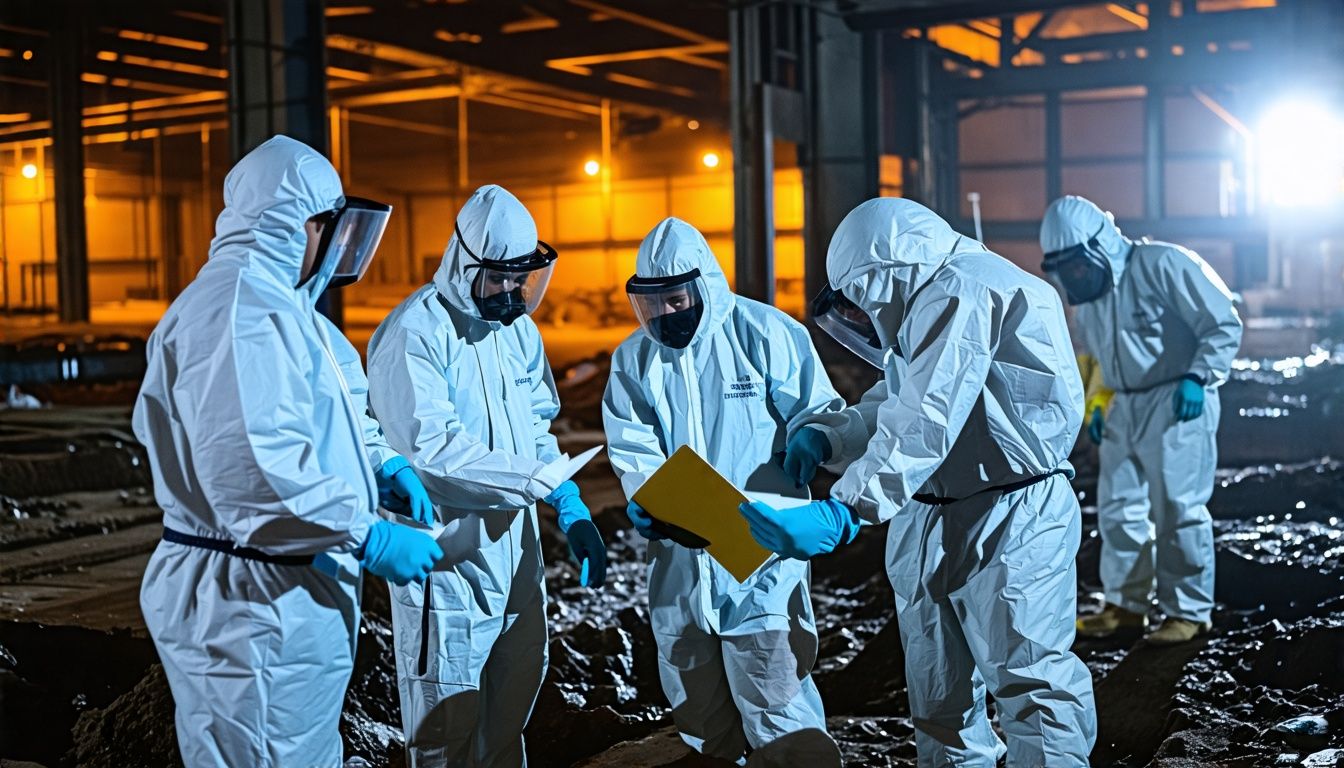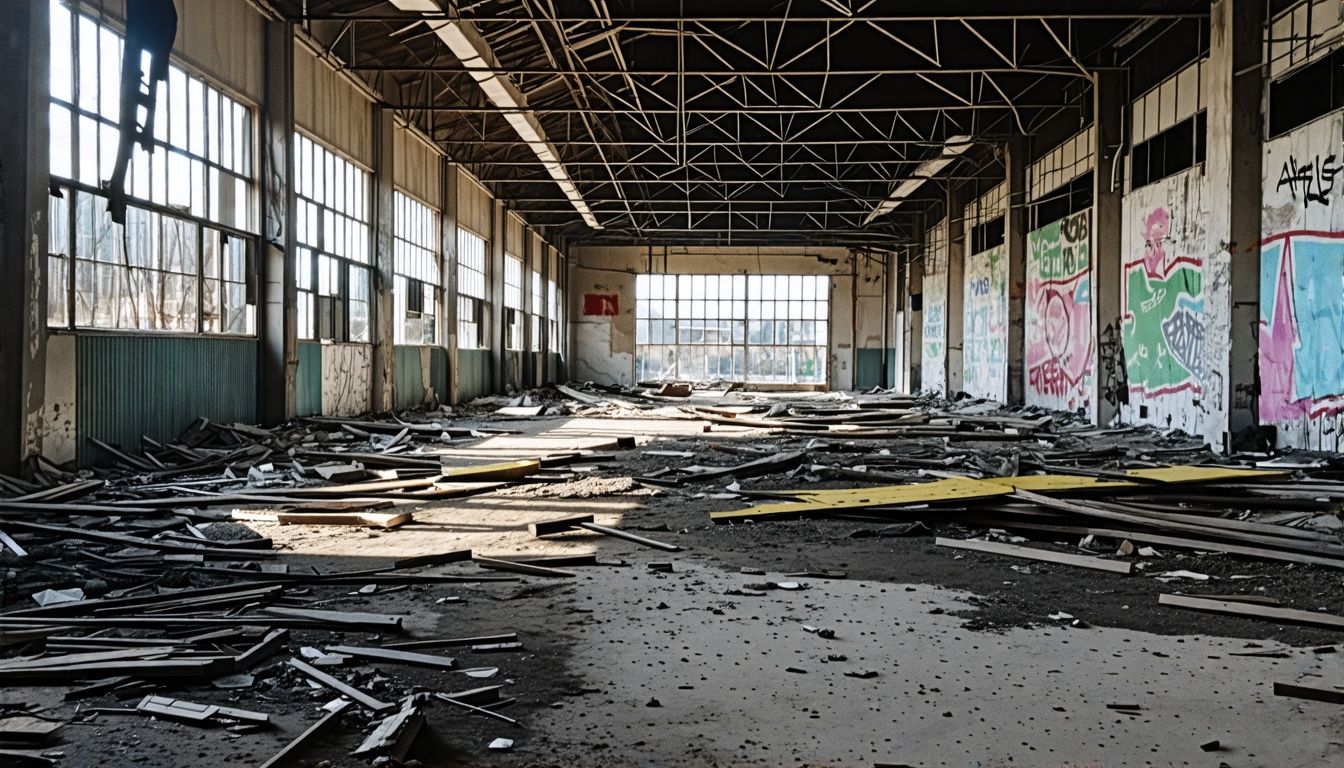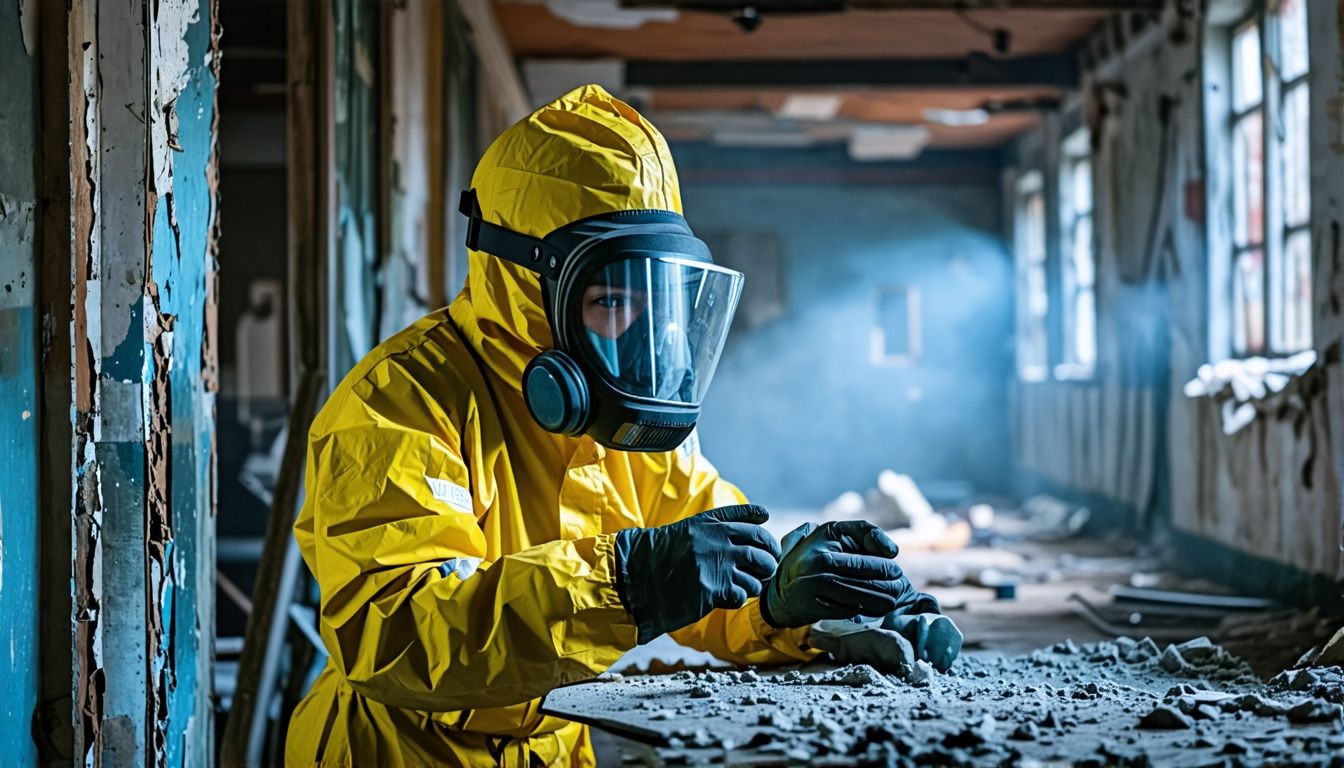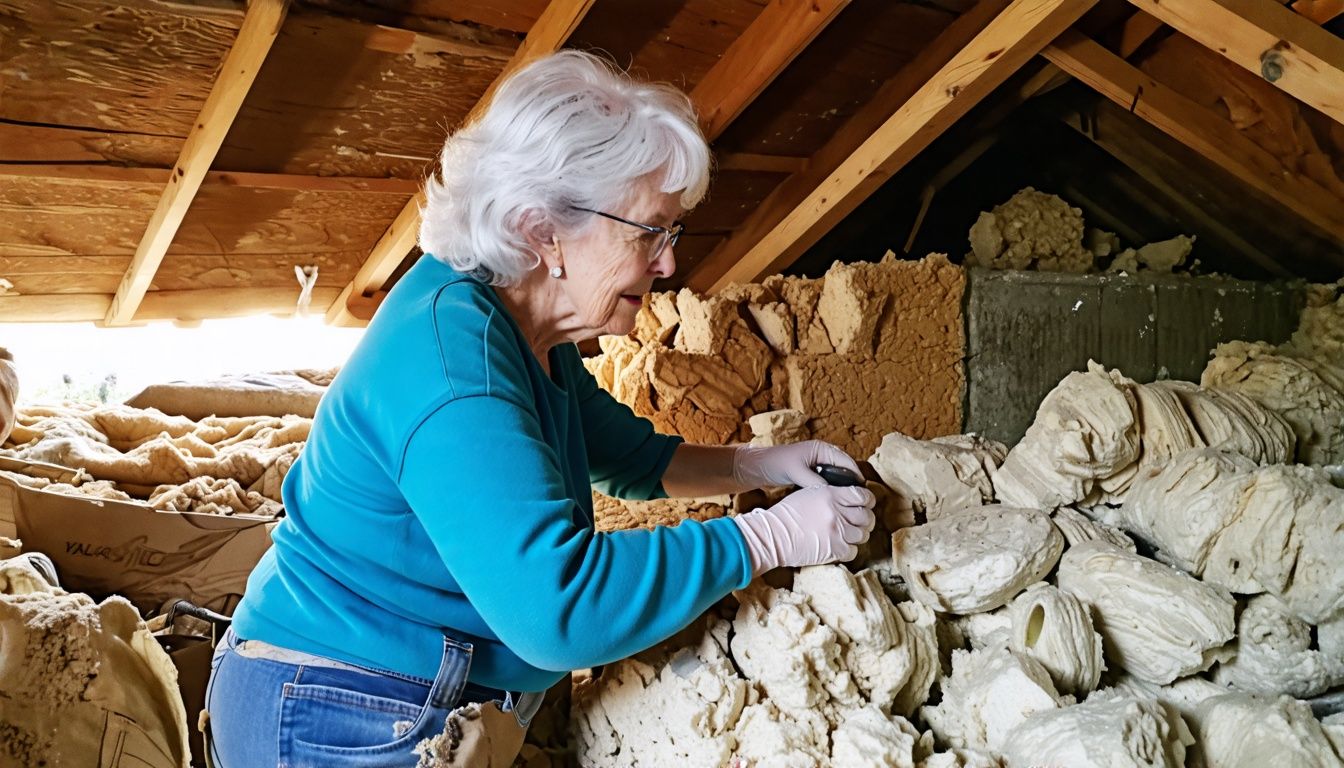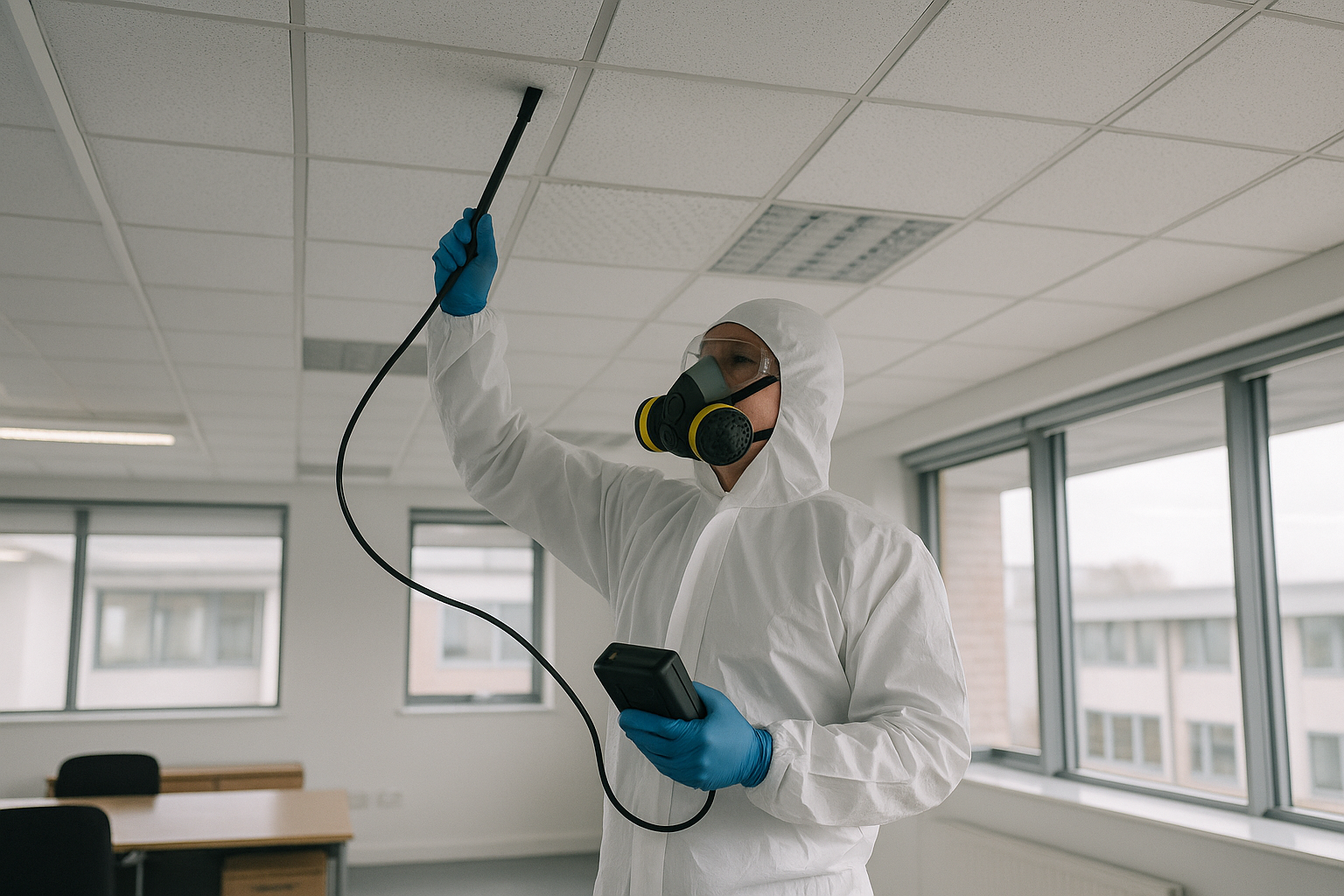
Ask ten people what does asbestos look like and most will picture a fluffy white fibre. Real buildings are rarely that simple. In practice, asbestos usually looks like an ordinary product: a ceiling board, a garage roof, a pipe wrap, a floor tile, a textured coating or a panel inside plant equipment. That is why it still catches out landlords, facilities teams, contractors and property managers across the UK.
If a building was constructed or refurbished before asbestos was fully banned, you should assume asbestos-containing materials may be present until a competent inspection or sample proves otherwise. Under the Control of Asbestos Regulations, dutyholders must identify and manage asbestos risks. HSE guidance and HSG264 are clear on the point: visual clues can raise suspicion, but they do not confirm whether a material contains asbestos.
So, what does asbestos look like in the real world? Often, it looks unremarkable. It may be grey and cement-like, thin as paper, moulded into resin, woven into textiles or hidden behind later refurbishments. The practical skill is not trying to diagnose asbestos by eye alone. It is knowing which materials, locations and warning signs should make you stop work and get professional advice.
What does asbestos look like in buildings?
The short answer is that asbestos does not have one single appearance. It was added to hundreds of products because it improved heat resistance, strength, insulation and durability. You are usually not looking for loose fibres drifting through the air. You are looking at a manufactured material that may contain asbestos.
That means what does asbestos look like depends on the product in front of you. It can appear as:
- Grey corrugated roofing sheets
- Flat wall, ceiling or fire protection boards
- Textured decorative coatings
- Pipe lagging and thermal insulation
- Floor tiles and bitumen adhesive
- Paper linings and wraps
- Textiles such as ropes, cloths and blankets
- Moulded resin products
- Cement flues, gutters, soffits and tanks
Colour alone is not enough to identify it. Neither is age. Many non-asbestos products look similar, including plasterboard, fibre cement, mineral wool, cellulose insulation and modern textured finishes.
That is why the safest working assumption is simple: if the material is suspicious and the building is old enough, treat it as presumed asbestos until it has been properly assessed.
Popular Essentials: the first red flags to look for
Before getting into product types, there are a few practical checks that matter on almost every site. These are the Popular Essentials that should make you pause before drilling, stripping, sanding or breaking anything.
- The building dates from an era when asbestos was commonly used
- The area has seen multiple refurbishments and hidden layers are likely
- The material is in a boiler room, plant room, riser, service duct, ceiling void, garage or outbuilding
- The product looks unusually heat resistant, dense, fibrous or cement-like
- Old records refer to AIB, lagging, asbestos cement or insulation
- The material is damaged, dusty, flaking or has exposed fibrous edges
- There is debris beneath old boards, pipework or textured coatings
For property managers, the most useful habit is to stop people making assumptions on site. A contractor who says a board is “probably plasterboard” or a roof sheet is “just old cement” is not identifying asbestos. They are guessing.
Practical steps before any work starts
- Check the age and refurbishment history of the building.
- Review the asbestos register and previous survey information.
- Stop intrusive work if the material has not been identified.
- Restrict access if there is visible damage or loose debris.
- Arrange sampling or the right survey before works continue.
If you need an inspection for normal occupation and maintenance, a management survey is usually the correct starting point. If the work is more intrusive, such as strip-out or major alterations, you will normally need a refurbishment survey before the project begins.
Why visual identification has real limits
When people search what does asbestos look like, they usually want certainty from a photograph or a quick description. Unfortunately, asbestos does not cooperate. Two products can look almost identical, with one containing asbestos and the other containing none.
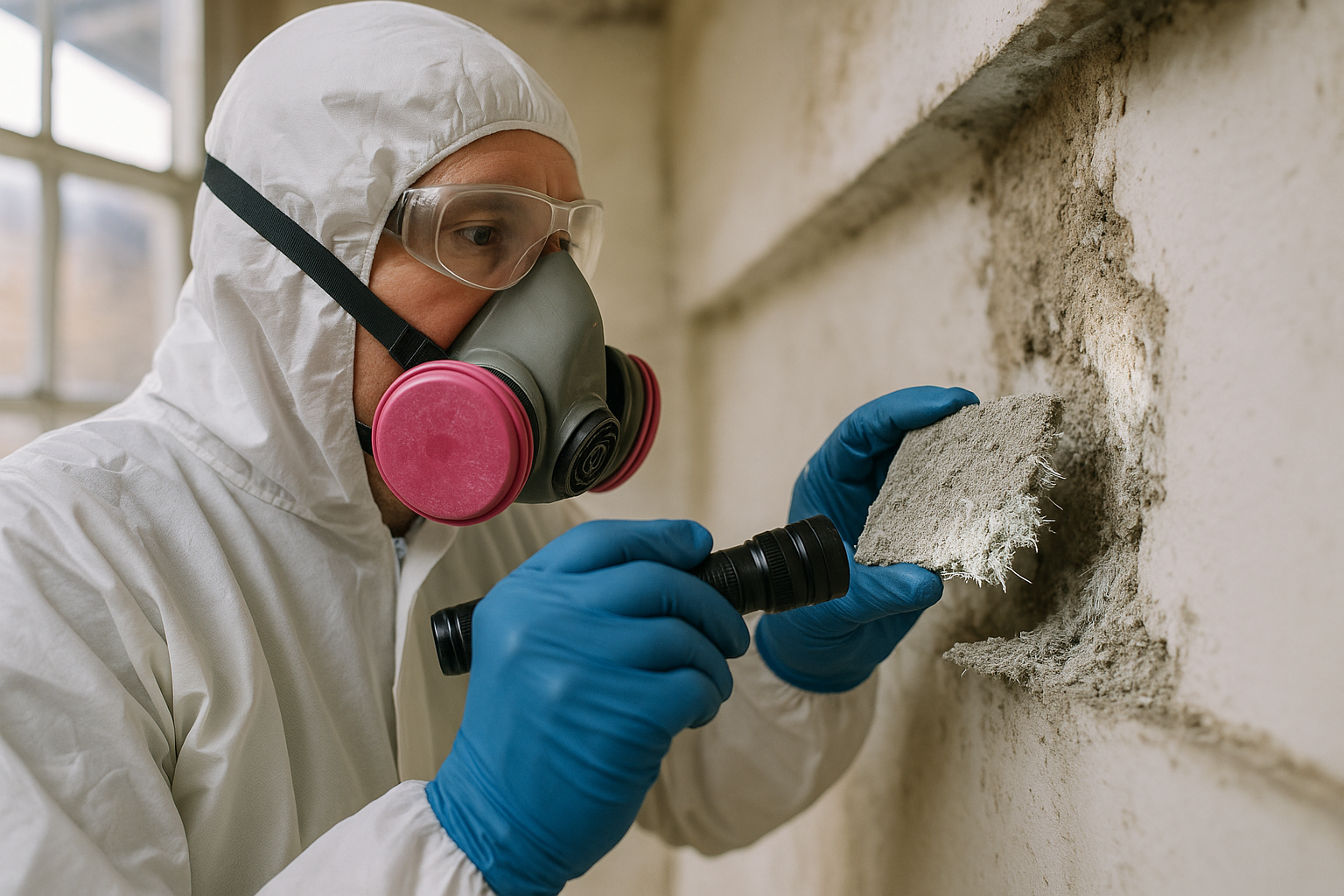
A flat grey board might be asbestos insulating board, fibre cement, calcium silicate or another non-asbestos panel. A textured ceiling could be an asbestos decorative coating or a later non-asbestos finish. A bitumen-backed floor tile may look no different from a modern replacement.
HSG264 places emphasis on suitable surveys, competent inspection and sampling where needed. That matters because disturbing suspect materials just to “check” them can create the risk you were trying to avoid.
Never do these things to identify a suspect material
- Snap off a corner to inspect the inside
- Drill a test hole
- Sand or scrape the surface
- Lift floor tiles with a scraper
- Break roof sheets to see the edge
- Peel off wraps around pipes or ducts
- Pressure wash cement sheets or flues
If you need certainty, arrange professional asbestos testing. Sampling should be carried out in a controlled way by someone who understands how to avoid unnecessary fibre release.
Asbestos Thermal Insulation: what it looks like and where it hides
Asbestos Thermal Insulation is one of the more hazardous forms because it can be friable and easy to disturb. This category includes old pipe lagging, boiler insulation and thermal wraps used to hold heat in or keep heat away from surrounding areas.
If you are asking what does asbestos look like around heating systems, this is one of the first materials to consider. It often appears rougher, softer and more layered than cement products.
How asbestos thermal insulation may appear
- White, off-white, grey or brown lagging around pipes
- Plaster-like coverings with a rough or uneven finish
- Sectional insulation around bends, valves and joints
- Cloth, paper or painted outer wraps over softer insulation beneath
- Damaged areas showing fibrous or crumbly internal material
In older plant rooms, basements and service corridors, lagged pipework may have been patched repeatedly over the years. That can leave a mix of paints, tapes, bandages and coverings, making the original material harder to recognise.
Common locations
- Boiler rooms
- Plant rooms
- Basement service runs
- Heating risers
- Calorifiers and older tanks
- Pipework in hospitals, schools and commercial buildings
The warning sign here is condition. If thermal insulation is cracked, frayed, punctured or missing sections, do not send maintenance teams in to patch around it. Isolate the area and get specialist advice.
Asbestos Boards: one of the most commonly misidentified products
Asbestos Boards are a major source of confusion because they can look like many other sheet materials. In UK buildings, the term often refers to asbestos insulating board, commonly known as AIB, although some people use it more loosely for other asbestos sheet products.
When people ask what does asbestos look like behind service risers, inside cupboards or above suspended ceilings, asbestos boards are often the answer.
What asbestos boards tend to look like
- Flat sheets, usually grey, off-white or light brown
- Smoother than cement sheet but softer at broken edges
- Board faces that may be painted or covered
- Fixings through panels in partitions, risers and soffits
- A fibrous or slightly fluffy appearance at damaged edges
AIB is generally less dense than asbestos cement. If broken, it may show a softer core rather than a hard, compact cement matrix. That difference matters because asbestos boards can release fibres more readily when cut, drilled or snapped.
Where asbestos boards are often found
- Partition walls
- Ceiling tiles and ceiling linings
- Service risers and ducts
- Soffits
- Fire breaks in roof spaces
- Heater cupboard linings
- Fire door panels
- Lift shaft and plant room enclosures
Contractors often encounter asbestos boards during electrical upgrades, fire stopping works and strip-outs. If there is any doubt, stop the work before the first hole is drilled.
Asbestos Cement: the material many people have actually seen
Asbestos Cement is one of the most widespread asbestos products still found in UK properties. It usually contains fibres bound into a hard cement matrix, making it less friable than lagging or AIB, but still hazardous if damaged or worked on.
For many buildings, when someone asks what does asbestos look like, asbestos cement is the material they have in mind.
How asbestos cement usually appears
- Grey or off-white colour
- Matt, weathered or slightly rough finish
- Corrugated sheets on roofs and walls
- Flat sheets used for soffits, panels and linings
- Dense broken edges that look compact rather than fluffy
- Older surfaces with lichen, staining or a chalky residue
Common locations for asbestos cement
- Garage and shed roofs
- Agricultural buildings
- Industrial roofing and cladding
- Soffits and fascias
- Wall panels
- Rainwater goods such as gutters and downpipes
- Flue pipes
- Water tanks and cisterns
Asbestos cement can often remain in place if it is in good condition and unlikely to be disturbed. Problems usually start when someone cuts it, drills it, breaks it, removes it badly or pressure washes it.
If you are unsure whether a roof sheet, soffit or flue contains asbestos, arrange asbestos testing before any trade starts work.
Asbestos Paper: thin, hidden and easy to miss
Asbestos Paper does not match most people’s mental picture of asbestos. It is thin, lightweight and often used as a backing, separator or insulating layer rather than as the visible finish.
So what does asbestos look like when it is paper-based? Often, it looks like dry, aged paper, card or felt tucked behind another material.
Where asbestos paper may be found
- Backing to vinyl sheet flooring
- Linings inside older electrical equipment
- Wraps around ducts or pipes
- Insulating layers behind heaters
- Packing materials within plant and machinery
How it can appear
- Off-white, grey or light brown colour
- Brittle, dry or layered texture
- Thin sheet form resembling card or felt
- Dusty edges where it has degraded with age
- Paper-like fragments behind panels or under coverings
Because asbestos paper can be thin and fragile, it may release fibres more easily than harder bonded products if it is peeled, torn or crumbled. Maintenance teams often uncover it unexpectedly and try to remove it quickly. That is exactly the wrong approach.
Asbestos Textiles: woven products that can still turn up on site
Asbestos Textiles were used where heat resistance was needed. These products can look like rope, cloth, tape, blankets or woven seals rather than rigid building materials.
If you are trying to work out what does asbestos look like around old plant, doors, hatches or heating equipment, textiles should be on your list.
Examples of asbestos textiles
- Fire blankets and heat-resistant cloths
- Ropes and seals around stove or boiler doors
- Woven tapes around joints and insulation sections
- Protective gloves or pads in older industrial settings
- Curtains or fabric barriers near high-heat processes
Typical appearance
- White, grey, cream or off-white woven finish
- Fabric-like texture with visible weave
- Rope form around doors, flues or access hatches
- Brittle, frayed or powdery edges when aged
- Painted or coated surfaces hiding the woven texture beneath
Asbestos textiles are often most at risk during maintenance and replacement work. Pulling out old door seals, removing woven tape or stripping cloth wraps can disturb fibres very easily. If the product looks aged and heat resistant, do not assume it is harmless simply because it resembles fabric.
Asbestos Resin: moulded products that do not look fibrous
Asbestos Resin products surprise people because they often look like ordinary hard plastic or moulded composite items. Asbestos fibres were mixed into resin compounds to improve strength, heat resistance and electrical performance.
That means what does asbestos look like in resin products is often not obviously fibrous at all.
Where asbestos resin might be found
- Electrical flash guards and backing panels
- Older toilet cisterns and seats
- Window boards and sills
- Laboratory bench pads or sink pads
- Moulded industrial components
How asbestos resin products can look
- Smooth, rigid and neatly moulded
- Black, brown, dark red or other solid colours
- Hard edges with little visible texture
- No obvious fibres unless badly damaged
- Dense manufactured finish similar to older plastic composites
The main risk comes when these items are drilled, sawn, sanded or broken. Intact resin products may not draw much attention, but once they are mechanically worked, fibres can be released from the matrix.
Asbestos Decorative Coating: textured finishes that still catch people out
Asbestos Decorative Coating is another category that often appears ordinary. These textured finishes were applied to walls and ceilings for decoration and to hide imperfections.
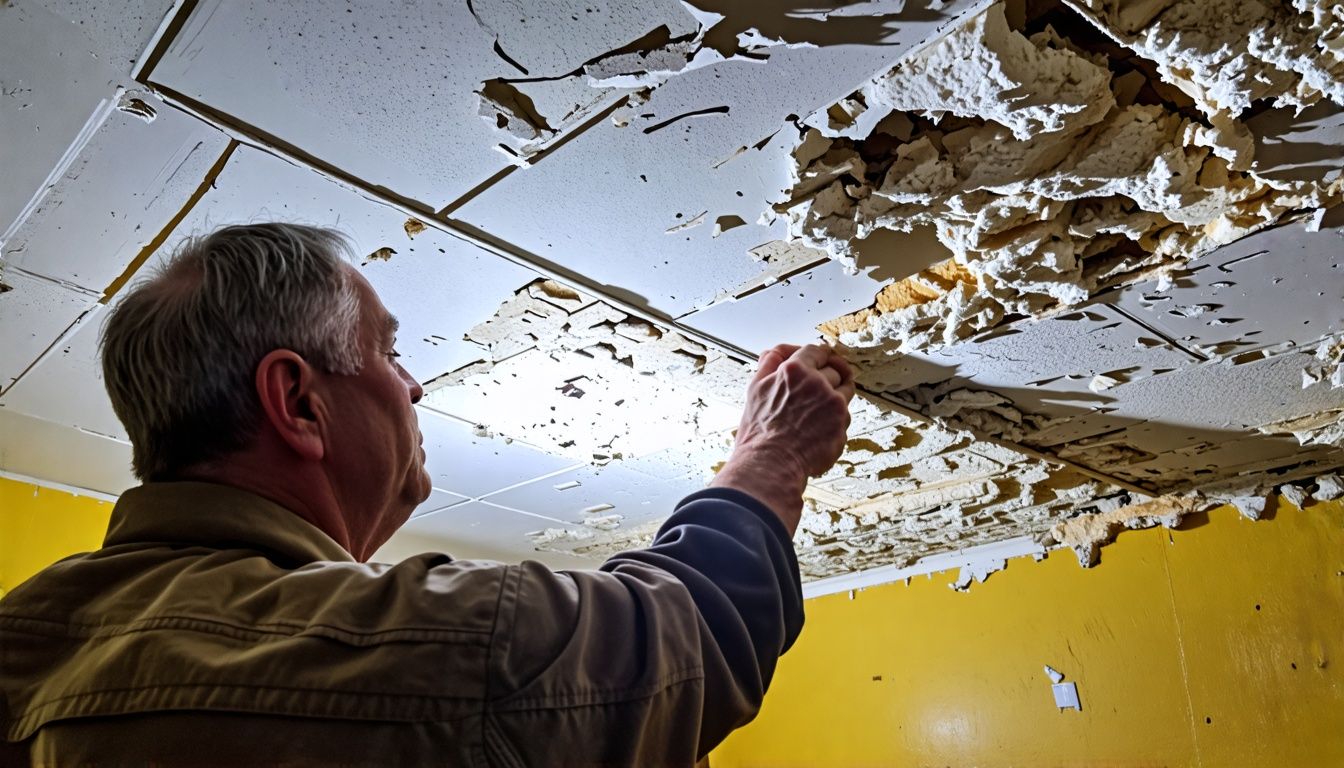
When homeowners or landlords ask what does asbestos look like on a ceiling, this is often what they mean.
What asbestos decorative coating may look like
- Textured swirls, stipples or peaks on ceilings
- Patterned wall finishes with a hard painted surface
- White or cream coatings, though later painted any colour
- Rough decorative texture rather than a flat plaster finish
On its own, a textured coating may present a lower risk than friable insulation if it is in good condition and left undisturbed. The problem starts during scraping, sanding, drilling for lights or fittings, or full ceiling removal.
If planned works involve chasing cables, installing downlights or re-plastering, check the ceiling first. Disturbance during refurbishment is where most trouble starts.
Flooring, adhesives and hidden layers underfoot
Older floors are one of the easiest ways asbestos gets disturbed during refurbishment. The visible surface may look harmless, but the asbestos can be in the tile, the backing or the adhesive beneath.
So what does asbestos look like in flooring? Usually, it looks like ordinary older floor finishes.
Common clues in old floors
- Small rigid floor tiles, often around 9 inches
- Muted marbled or speckled finishes
- Brown, black, grey, green or red tiles
- Black bitumen adhesive beneath old coverings
- Multiple layers from repeated refurbishments
Do not let contractors start scraping, grinding or lifting old floor finishes on the assumption they are modern. This is a routine cause of avoidable contamination in schools, offices, communal areas and commercial units.
Gaskets, washers and small components in plant equipment
Some asbestos products are easy to miss because they are not large building materials. Gaskets, washers and seals can still present a serious exposure risk, especially during engineering works.
If you are wondering what does asbestos look like inside older boilers, valves or pipe flanges, these smaller components are worth checking.
Typical uses
- Boilers and calorifiers
- Pipe flanges and valves
- Pumps and compressors
- Ovens and furnaces
- Older electrical and thermal equipment
How they may appear
- Flat compressed sheet cut to shape
- White, grey, blue-grey, off-white or brown tones
- Hard fibre-like washers
- Gasket residue stuck to metal faces
- Cracked, frayed or brittle edges after years of heat
The practical risk is maintenance. Undoing flanges, scraping off old gasket residue and wire-brushing mating surfaces can disturb asbestos if the original component has not been identified first.
Item added to your cart: why buying a testing kit is not the same as managing risk
The phrase Item added to your cart often appears when people search online for quick answers and end up looking at DIY products. That leads to a fair question: Have you thought about using an asbestos testing kit to check your suspect materials?
Testing kits can sound convenient, but they are not a substitute for proper asbestos management. The issue is not just laboratory analysis. It is how the sample is taken, whether the right material has been sampled, whether the area is made safe afterwards and whether the result is interpreted in context.
Things to think about before using a DIY kit
- Taking the sample may disturb the material and release fibres
- You may sample the wrong layer and get a misleading result
- Mixed materials often need experienced judgement
- Damaged or friable products should not be sampled casually
- You still need to know what action to take after the result
For a property manager or landlord, the better route is usually to arrange professional sampling or a survey. That gives you a defensible record, clearer risk information and practical recommendations you can actually use.
What to do if you suspect asbestos in a building
If a material looks suspicious, the right response is calm and methodical. The wrong response is to poke at it, break it or let work continue while everyone hopes for the best.
- Stop any work that could disturb the material.
- Keep occupants and contractors away from the area if there is damage.
- Check whether the asbestos register or previous survey already identifies it.
- Photograph the material from a safe distance for record purposes.
- Arrange competent inspection, sampling or the appropriate survey.
- Do not restart work until you have clear advice.
If you manage property in the capital, a local asbestos survey London service can help you verify suspect materials before maintenance or refurbishment causes a bigger problem. The same applies regionally if you need an asbestos survey Manchester or an asbestos survey Birmingham appointment for portfolios, commercial premises or residential blocks.
How dutyholders should approach asbestos risk in practice
Knowing what does asbestos look like is useful, but legal compliance depends on more than recognition. Under the Control of Asbestos Regulations, dutyholders must identify asbestos-containing materials so far as reasonably practicable, assess the risk and manage that risk properly.
In practical terms, that means:
- Having suitable asbestos information for the premises
- Keeping an up-to-date register where asbestos is identified or presumed
- Making sure contractors can access relevant information before work starts
- Monitoring known asbestos-containing materials for condition and disturbance risk
- Commissioning the right survey before refurbishment or demolition
This is where many organisations slip up. They may have a survey somewhere, but not for the right area, not for the right scope or not available to the people actually doing the work.
Common mistakes people make when trying to identify asbestos
Most asbestos incidents start with a shortcut. Someone assumes a material is modern, harmless or too minor to matter.
- Judging by colour alone
- Assuming painted materials cannot contain asbestos
- Believing only industrial buildings contain it
- Thinking cement products are safe to cut because they are hard
- Ignoring hidden layers behind later refurbishments
- Letting small maintenance jobs proceed without checking the register
- Using a negative result from one sample to clear a whole area
The safest mindset is simple: if the building is old enough and the material is suspicious, pause first and verify it properly.
When asbestos is more likely to be dangerous
Not every asbestos-containing material presents the same level of risk at the same time. The risk depends on the product type, its condition and whether it is likely to be disturbed.
Higher concern situations
- Damaged lagging, insulation or asbestos boards
- Loose debris beneath suspect materials
- Works involving drilling, chasing, cutting or demolition
- Access in cramped service areas where materials are easily knocked
- Repeated maintenance around old plant and pipework
Harder bonded materials such as asbestos cement may present a lower risk when intact and left alone, but they still need to be managed. Friable materials such as thermal insulation, paper and some boards require much more caution.
Frequently Asked Questions
Can you tell what asbestos looks like just by looking at it?
No. Visual clues can make asbestos more or less likely, but they do not confirm it. Many asbestos-containing materials look similar to non-asbestos products, so competent sampling or surveying is often needed.
What does asbestos look like in a ceiling?
It may look like a flat board, a ceiling tile or a textured decorative coating. Older textured ceilings and certain ceiling linings can contain asbestos, but appearance alone is not enough to confirm it.
Is asbestos always white and fluffy?
No. In buildings, asbestos is usually bound into another product. It can look like cement sheet, board, floor tile, paper, rope, cloth or resin. Loose fluffy material is only one possible form.
Should I use a DIY testing kit on suspect asbestos?
DIY kits may seem convenient, but taking the sample can disturb the material and create risk. For landlords, dutyholders and property managers, professional sampling or surveying is usually the safer and more reliable option.
What should I do if I think a material contains asbestos?
Stop work, prevent disturbance, check any existing asbestos information and arrange professional advice. Do not drill, break, scrape or remove the material to investigate it further.
If you need clear answers about what does asbestos look like in your building, Supernova Asbestos Surveys can help with surveys, sampling and practical advice across the UK. Call 020 4586 0680 or visit asbestos-surveys.org.uk to arrange the right service for your property.