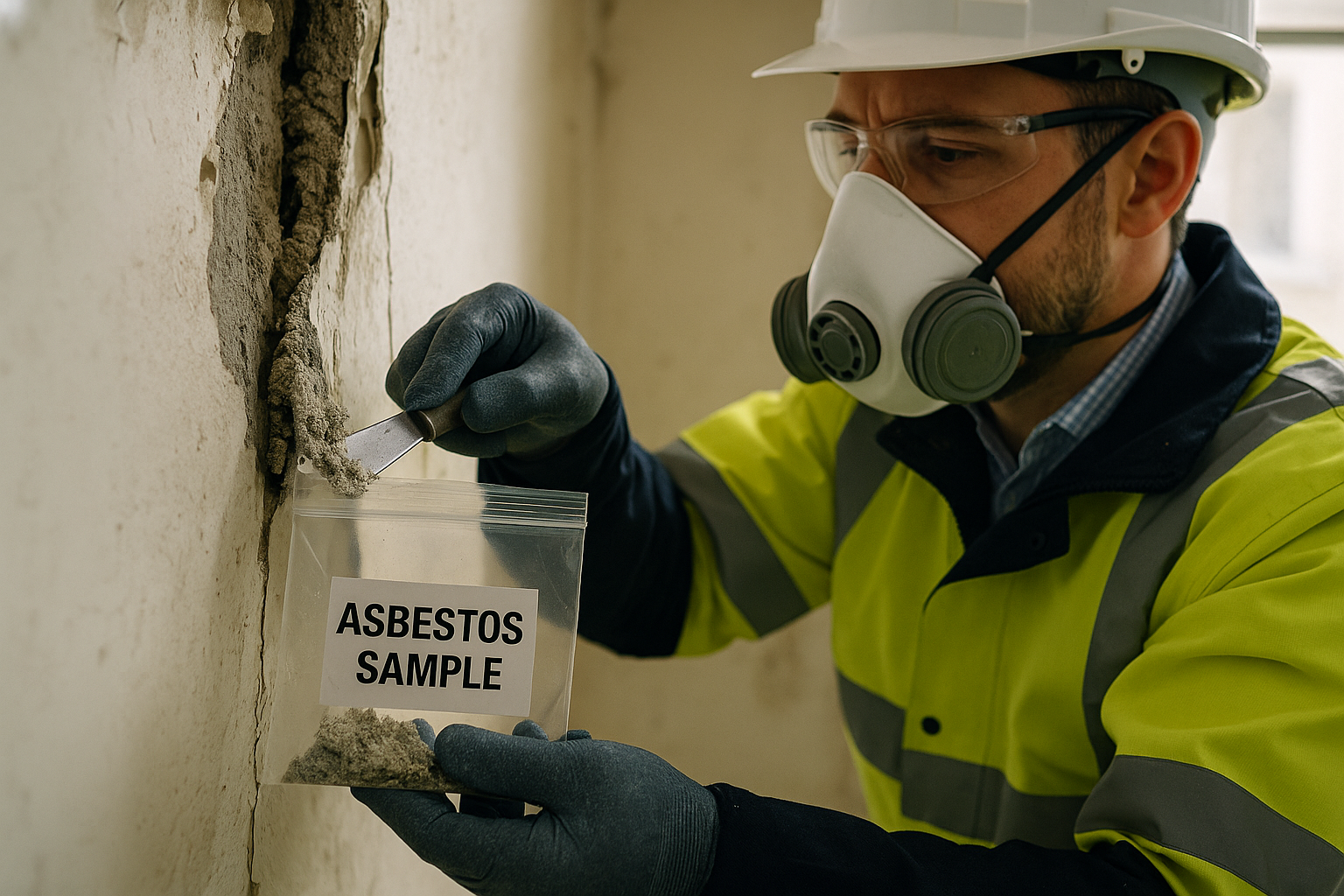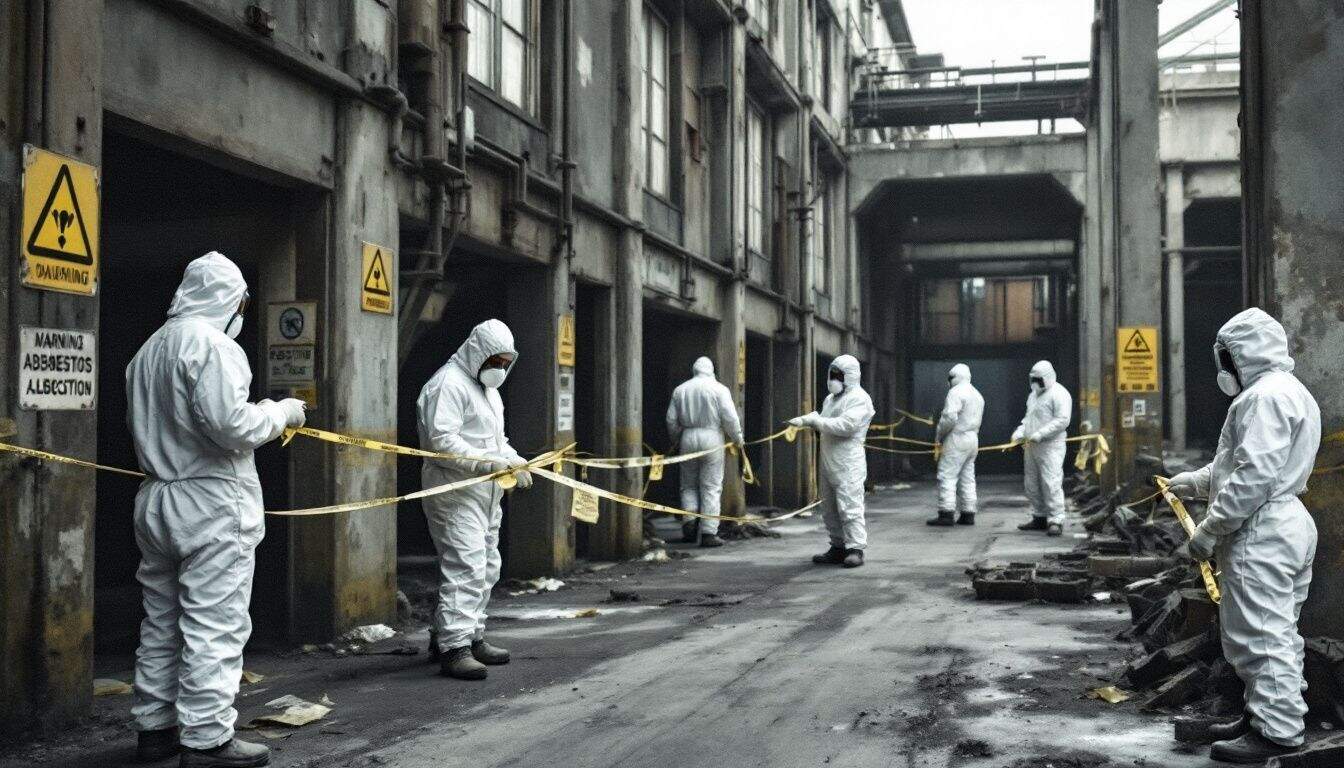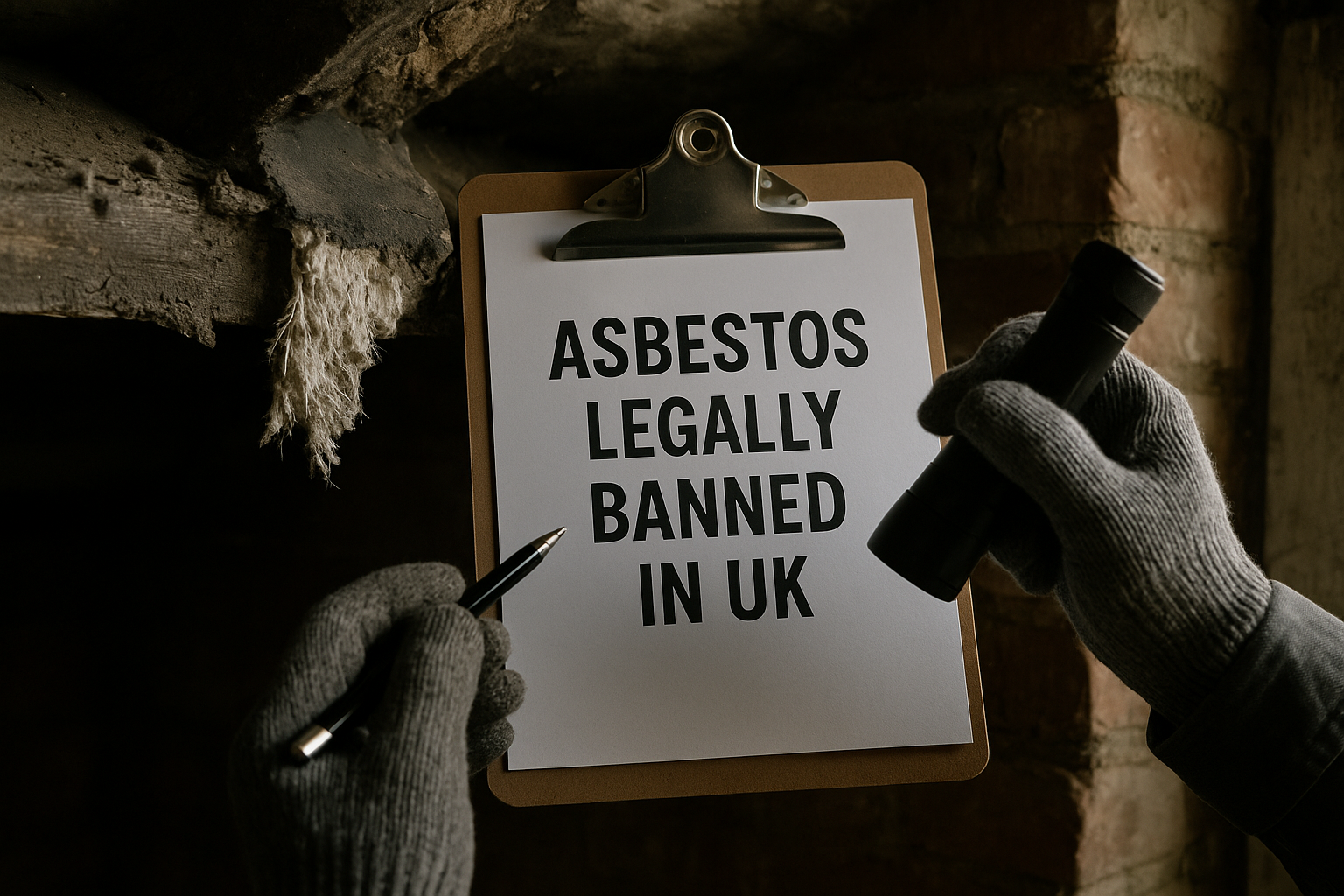
Category: The Impact of Banning Asbestos in the UK

  • What industries have been affected the most by the ban on asbestos in the UK?

    What industries have been affected the most by the ban on asbestos in the UK?

    When Was Asbestos Banned in Construction — and What Changed for UK Industries?

    Asbestos banned in construction is not just a historical footnote — it reshaped entire industries, rewrote safety legislation, and continues to affect every builder, electrician, and property owner working with pre-2000 buildings today. The UK’s total prohibition, which came into full effect in 1999, was one of the most significant occupational health interventions in modern British history.

    Yet the legacy of asbestos is far from over. Understanding which industries were hit hardest, what the law now demands, and how workplaces have adapted is essential knowledge for anyone managing, renovating, or demolishing older properties.

    Why the UK Banned Asbestos — A Brief History

    Asbestos was once considered a wonder material. It was cheap, fire-resistant, durable, and easy to work with. For most of the twentieth century, it appeared in everything from roof sheeting and pipe lagging to floor tiles and textured decorative coatings.

    The problem was already well understood by the 1960s and 1970s. Asbestos fibres, when disturbed, become airborne and can be inhaled. Once lodged in lung tissue, they cause progressive and fatal diseases including mesothelioma, asbestosis, and lung cancer. These conditions typically take 20 to 50 years to develop, meaning workers exposed in the 1970s and 1980s are still being diagnosed today.

    The UK progressively restricted different types of asbestos over several decades. Blue asbestos (crocidolite) and brown asbestos (amosite) were banned earlier due to their particularly aggressive fibre structure. White asbestos (chrysotile), which had been marketed as a safer alternative, was finally banned in 1999 — completing a total prohibition on the importation, supply, and use of asbestos in the UK.

    This ban had immediate and lasting consequences for several major industries.

    Construction and Demolition: The Highest-Risk Sector

    No industry was more fundamentally affected by asbestos banned in construction than the building trades. Construction workers account for a significant proportion of asbestos-related deaths in the UK each year — a figure that continues to rise because of the long latency period between exposure and diagnosis.

    The core problem is straightforward: the UK’s building stock is old. Millions of homes, offices, schools, hospitals, and industrial buildings were constructed before 1999 using asbestos-containing materials (ACMs). Every time a contractor drills into a ceiling, strips out old insulation, or demolishes a partition wall in one of these buildings, there is a potential exposure risk.

    Where Asbestos Hides in Buildings

    ACMs are not always obvious. Common locations include:

    • Sprayed coatings on structural steelwork and ceilings
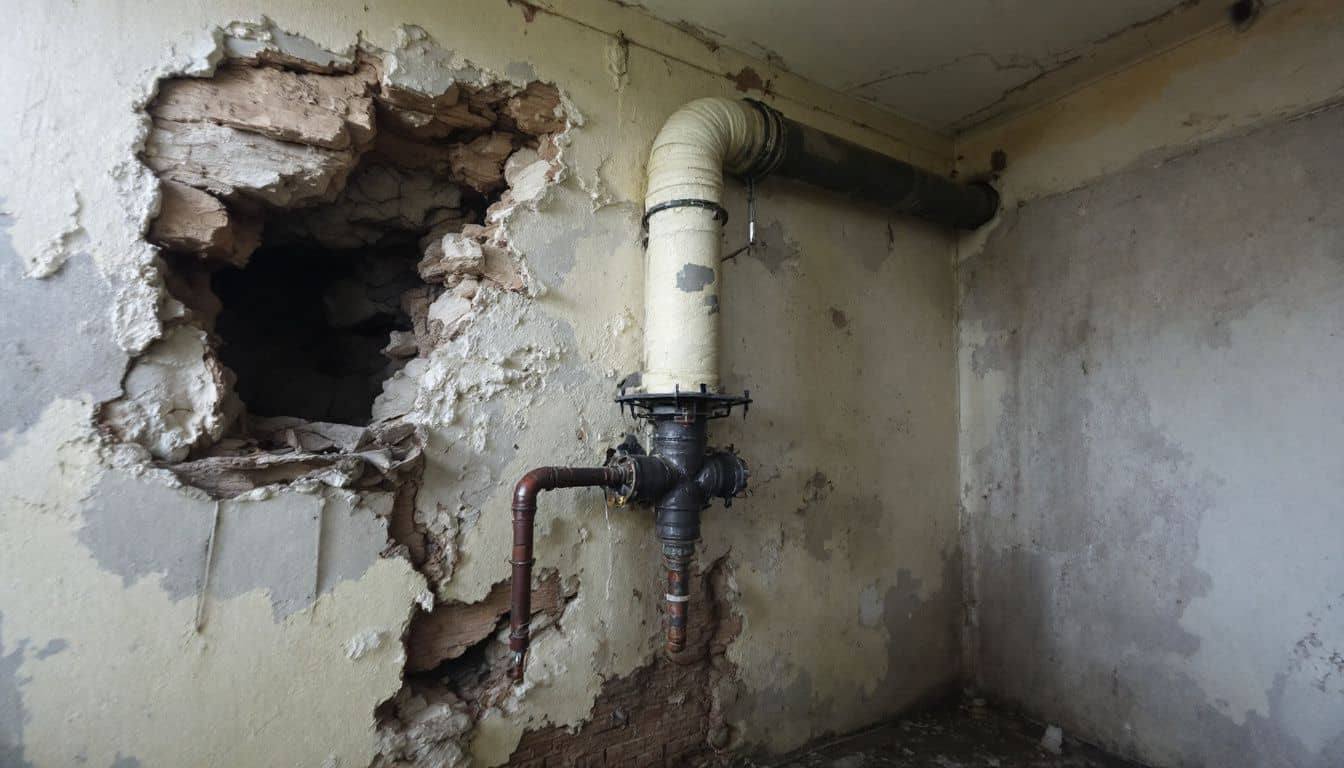
    • Pipe and boiler lagging
    • Ceiling tiles and floor tiles
    • Textured decorative coatings such as Artex
    • Roof sheets, guttering, and soffits — particularly in industrial buildings
    • Partition walls and fireproofing boards
    • Electrical equipment and fuse boxes

    Workers who disturb these materials without proper precautions risk releasing fibres into the air. The damage is done long before any symptoms appear, which is why the HSE describes asbestos as the single greatest cause of work-related deaths in the UK.

    The Impact on Specific Construction Trades

    The ban changed working practices across the entire construction sector, but some trades face disproportionate risk.

    Carpenters and joiners regularly cut, drill, and fix into building boards and ceiling materials that may contain asbestos. Mesothelioma rates among carpenters remain among the highest of any occupation, reflecting decades of historical exposure.

    Electricians and plumbers work inside wall cavities, ceiling voids, and around plant rooms where asbestos insulation was commonly applied. Rewiring an older building or replacing pipework can mean working in close proximity to ACMs. These trades have historically accounted for a significant share of asbestos-related deaths, and the risk persists wherever older buildings are being upgraded.

    Insulation workers face perhaps the most direct exposure risk of any trade. Removing or replacing old insulation — whether on pipes, boilers, or structural elements — frequently involves disturbing material that contains asbestos. Workers in this occupation have some of the highest recorded rates of mesothelioma.

    For anyone undertaking renovation or refurbishment work, the first step must always be commissioning a management survey before any work begins. This identifies the presence, condition, and risk level of any ACMs before your contractors set foot on site.

    Where demolition or major structural work is planned, a demolition survey is a legal requirement — it provides a full intrusive assessment of all ACMs that could be disturbed during the works.

    Shipbuilding and Marine Industries

    The UK’s shipbuilding industry has an unenviable record when it comes to asbestos-related disease. Asbestos was used extensively throughout the construction of naval and commercial vessels — in engine rooms, boiler rooms, bulkheads, and pipe lagging — because of its fire resistance and insulating properties.

    Shipyard workers often laboured in enclosed, poorly ventilated spaces, meaning fibre concentrations could reach extremely high levels. The UK has consistently recorded some of the highest per capita rates of mesothelioma in the world, and the shipbuilding regions of the north-east, Scotland, and Belfast account for a disproportionate number of cases.

    Since the ban, shipbuilders and repair yards have replaced asbestos with alternative materials including polyurethane foam insulation and mineral wool. Strict safety protocols now govern any work on vessels built before the ban, where legacy asbestos may still be present in older components.

    Manufacturing: Adapting to Life Without Asbestos

    Before 1999, asbestos was a standard component in many manufactured goods. Brake linings and clutch pads relied on it for heat resistance. Insulation boards, gaskets, and ceiling tiles were routinely produced with asbestos as a core ingredient. Factory workers who cut, shaped, and handled these materials faced chronic exposure over the course of entire careers.

    The ban forced manufacturers to fundamentally redesign their products and processes. Safer substitute materials — including ceramic fibres, fibreglass, and advanced polymer compounds — were developed and adopted across the sector. This transition required significant investment in new equipment, retraining, and quality assurance processes.

    Today, manufacturers operating in the UK are prohibited from producing or importing any asbestos-containing products. However, legacy materials produced before the ban may still be present in older plant and machinery, meaning maintenance workers in some industrial settings continue to face residual exposure risks.

    If your facility is located in the West Midlands, arranging an asbestos survey Birmingham is a practical first step in understanding what ACMs may be present in your buildings and equipment.

    The Regulatory Framework That Governs Asbestos Today

    The ban on asbestos was only one part of the legislative response. Equally important is the ongoing regulatory framework that governs how asbestos-containing materials are managed in buildings constructed before the ban.

    The Control of Asbestos Regulations

    The Control of Asbestos Regulations remain the primary piece of legislation governing asbestos management in the UK. They set out clear duties for employers, building owners, and those responsible for non-domestic premises.

    Key requirements include:

    • Duty to manage: Those responsible for non-domestic buildings must identify whether ACMs are present, assess their condition, and put in place a management plan to control the risk.
    • Licensing: Higher-risk asbestos work — including the removal of sprayed coatings, pipe lagging, and asbestos insulating board — can only be carried out by HSE-licensed contractors.
    • Notification: Licensed work must be notified to the HSE before it begins.
    • Training: Anyone liable to encounter asbestos during their work must receive appropriate information, instruction, and training.
    • Air monitoring: Licensed work requires air monitoring during and after removal to confirm that fibre concentrations remain within safe limits.
    • Record keeping: Employers must maintain records of asbestos-related work and worker exposure data for 40 years.

    HSG264: The Surveying Standard

    The HSE’s guidance document HSG264 sets out the standards for asbestos surveys. It defines two main survey types: management surveys, which are used to locate and assess ACMs in buildings that are in normal occupation, and refurbishment and demolition surveys, which are required before any intrusive work takes place.

    Following HSG264 is not optional — it is the benchmark against which surveyors and their clients are judged if enforcement action is taken. Any survey that does not comply with this guidance may not satisfy the duty to manage.

    Employer Responsibilities

    Under the Control of Asbestos Regulations, employers have specific obligations that go beyond simply commissioning a survey. These include:

    • Providing workers with adequate training on asbestos hazards and safe working practices
    • Supplying appropriate personal protective equipment (PPE), including respiratory protective equipment (RPE)
    • Implementing regular air quality monitoring in areas where ACMs are present
    • Conducting health surveillance for workers who carry out licensed asbestos work
    • Maintaining a written asbestos management plan and reviewing it regularly
    • Ensuring that all asbestos removal work is carried out by appropriately licensed contractors

    Failure to comply with these requirements can result in substantial fines, enforcement notices, and in serious cases, prosecution. The HSE takes asbestos enforcement seriously — it remains one of their highest-priority areas of inspection activity.

    What Replaced Asbestos in Construction and Industry?

    One of the most practical outcomes of the ban was the wholesale shift to alternative materials across multiple industries. This transition has not been without its challenges — some early substitute materials have since been found to carry their own health risks — but the overall direction of travel has been towards safer working environments.

    In construction, the main alternatives to asbestos-containing products include:

    • Fibre cement: Used in roofing and cladding where asbestos cement sheets were previously standard
    • Calcium silicate boards: A fire-resistant alternative to asbestos insulating board
    • Mineral wool (rockwool and glasswool): Used for thermal and acoustic insulation in place of asbestos lagging
    • Gypsum-based products: Widely used in partition walls and fire-resistant linings
    • Intumescent materials: Used for fire protection of structural steelwork

    These materials have enabled the construction industry to maintain the fire resistance, thermal performance, and structural integrity that asbestos once provided — without the associated health risks.

    Legacy Asbestos: The Challenge That Remains

    The 1999 ban stopped the use of new asbestos in construction. It did not — and could not — remove the asbestos already installed in millions of buildings across the country. Asbestos remains present in a very large proportion of UK buildings constructed before 2000, including schools, hospitals, offices, factories, and residential properties.

    The material does not always need to be removed. If it is in good condition and not likely to be disturbed, it can often be managed safely in place. But it must be identified, assessed, and monitored.

    This is why asbestos surveys remain a legal requirement and a practical necessity for anyone managing, buying, or carrying out work on older buildings. The presence of undiscovered ACMs is not just a health risk — it is a legal liability.

    When Removal Becomes Necessary

    Not all asbestos can be safely managed in place. Removal becomes necessary when:

    • ACMs are in poor condition and deteriorating
    • Planned refurbishment or demolition work will disturb the material
    • The material is in a location where it is regularly at risk of disturbance
    • The building owner or duty holder decides that removal is the most appropriate long-term management strategy

    In these situations, asbestos removal must be carried out by a licensed contractor working to the standards set out in the Control of Asbestos Regulations. Attempting to remove higher-risk ACMs without a licence is a criminal offence.

    Regional Exposure: Industries Across the UK

    The impact of asbestos banned in construction has not been felt evenly across the UK. Regions with a strong industrial heritage — shipbuilding, heavy manufacturing, power generation — have recorded higher rates of asbestos-related disease than areas dominated by service industries or newer commercial development.

    London, as the UK’s largest city, contains an enormous volume of pre-2000 commercial and residential property. Anyone managing or working on older buildings in the capital should ensure they have a current asbestos survey London in place before any work proceeds.

    In the north-west, Manchester’s extensive stock of Victorian and mid-twentieth century industrial and commercial buildings presents similar challenges. A current asbestos survey Manchester is an essential starting point for any property manager or developer working in the region.

    Across all regions, the practical message is the same: if your building was constructed or substantially refurbished before 2000, assume ACMs may be present until a qualified surveyor tells you otherwise.

    What Property Managers and Building Owners Must Do Now

    The legal and practical obligations around asbestos do not disappear once the initial survey is complete. Managing asbestos in a building is an ongoing responsibility, not a one-off task.

    A structured approach includes the following steps:

    1. Commission a survey. If you do not have a current, HSG264-compliant asbestos survey for your building, arrange one before undertaking any work or change of use.
    2. Produce an asbestos register. Document the location, type, condition, and risk rating of all identified ACMs. This register must be accessible to anyone working in the building.
    3. Develop a management plan. Set out how ACMs will be monitored, who is responsible, and what action will be taken if condition changes.
    4. Communicate with contractors. Before any maintenance, refurbishment, or construction work begins, share the asbestos register with contractors and ensure they understand the risks.
    5. Review regularly. The condition of ACMs can change over time. Regular re-inspection — typically annually — ensures that the management plan remains accurate and effective.
    6. Act promptly when condition deteriorates. If a re-inspection reveals that ACMs have degraded or been damaged, take action immediately — whether that means encapsulation, repair, or licensed removal.

    These steps apply equally to a small office block and a large industrial facility. The scale of the building changes the complexity; the legal obligations remain the same.

    Frequently Asked Questions

    When was asbestos banned in construction in the UK?

    The UK’s total ban on asbestos came into full effect in 1999, when white asbestos (chrysotile) was finally prohibited. Blue and brown asbestos had been banned earlier due to their particularly dangerous fibre structures. Since 1999, the importation, supply, and use of all forms of asbestos in the UK has been illegal.

    Does the asbestos ban mean all buildings are now safe?

    No. The ban stopped new asbestos being used in construction, but it did not remove the asbestos already present in existing buildings. A very large proportion of UK buildings constructed before 2000 still contain asbestos-containing materials. These must be identified, assessed, and managed in accordance with the Control of Asbestos Regulations.

    Which industries still face the greatest asbestos risk today?

    Construction and demolition trades carry the highest ongoing risk, because workers regularly disturb building fabric in older properties. Electricians, plumbers, carpenters, and insulation workers are particularly exposed. Maintenance workers in older industrial facilities and those working on pre-ban vessels in the marine sector also face residual risks from legacy asbestos.

    Do I need an asbestos survey before renovation work?

    Yes. If your building was constructed before 2000 and you are planning any refurbishment, renovation, or demolition work, a survey is a legal requirement under the Control of Asbestos Regulations and HSE guidance HSG264. A management survey is appropriate for buildings in normal occupation; a refurbishment and demolition survey is required before any intrusive work begins.

    Who is responsible for managing asbestos in a commercial building?

    The duty to manage asbestos falls on the person or organisation responsible for maintaining or repairing non-domestic premises. This is typically the building owner, employer, or managing agent. The duty holder must ensure that ACMs are identified, their condition assessed, and a management plan put in place — and must share this information with anyone working in or on the building.

    Get Expert Asbestos Advice from Supernova

    Supernova Asbestos Surveys has completed over 50,000 surveys across the UK, helping property managers, building owners, and contractors meet their legal obligations and protect their workers. Whether you need a management survey, a demolition survey, or licensed removal, our UKAS-accredited team delivers fast, accurate results to HSG264 standards.

    Call us on 020 4586 0680 or visit asbestos-surveys.org.uk to arrange a survey or speak to one of our surveyors about your specific requirements.
  • Have any advancements been made in asbestos removal methods and techniques since the ban in the UK?

    Have any advancements been made in asbestos removal methods and techniques since the ban in the UK?

    How Asbestos Removal Has Advanced Since the UK Ban

    Millions of tonnes of asbestos-containing materials (ACMs) remain embedded in buildings across the UK, despite the full ban on asbestos use that came into force in 1999. If you are responsible for managing a building, you have almost certainly asked whether advancements have been made in asbestos removal methods and techniques since the ban in the UK — and the answer matters far more than a simple yes or no.

    The industry has evolved substantially. Detection technology, removal techniques, protective equipment, regulatory frameworks, and waste management have all moved forward in the decades since the ban. But challenges persist, and understanding both the progress and the limitations is essential for anyone with a duty to manage asbestos today.

    Why Removal Technique Matters So Much

    The core risk in any asbestos removal project is the release of respirable fibres into the air. Even brief exposure to airborne asbestos fibres can cause mesothelioma, asbestosis, and lung cancer — diseases that may not present for decades after the original exposure event.

    Every advance in removal technique is ultimately aimed at reducing fibre release at each stage of the process. The goal is not simply to get the material out — it is to do so without creating the very hazard you are trying to eliminate. That distinction drives everything that follows.

    Advances in Asbestos Removal Techniques Since the Ban

    Specialist Wetting Agents and Dust Suppression

    One of the most practically significant advances since the ban is the development of specialist wetting agents. These chemical solutions are applied directly to ACMs before and during removal, dampening fibres so they cannot become airborne.

    Earlier methods relied on water alone, which was far less effective at penetrating dense or layered materials. Modern wetting agents are formulated to bind to asbestos fibres at a molecular level, substantially reducing fibre release during disturbance. For contractors working in confined spaces or with friable materials — the most hazardous category — this is a measurable improvement that directly supports the control measures required under the Control of Asbestos Regulations.

    Laser-Based Detection and Non-Destructive Identification

    Historically, identifying exactly where ACMs are located required physical sampling followed by laboratory analysis. Laser-based detection systems have changed that. These systems use laser scanning technology to identify the spectral signature of asbestos fibres in materials, providing rapid, non-destructive identification without disturbing the material first.

    This supports more accurate risk assessments, helps licensed contractors plan removal sequences more effectively, and reduces the likelihood of accidentally disturbing unidentified ACMs. It also generates real-time data that can be logged and reported, supporting compliance with HSE guidance including HSG264.

    Encapsulation as a Managed Alternative to Full Removal

    Not every situation calls for full physical removal. Encapsulation — the application of specialist sealants or coatings to ACMs in good condition — has become a far more sophisticated and widely accepted approach since the ban.

    Where asbestos-containing materials are intact and unlikely to be disturbed, encapsulation can effectively lock fibres in place and prevent release while avoiding the risks associated with physical removal itself. Modern encapsulants are engineered to penetrate porous materials and form a durable barrier, with products now available for a wide range of substrates including insulation board, ceiling tiles, and pipe lagging.

    This approach is fully compliant with the Control of Asbestos Regulations when properly assessed and documented. It also supports sustainable building management by reducing unnecessary waste going to landfill.

    Whether full asbestos removal or managed encapsulation is the right approach depends on the condition of the material, its location, and the likelihood of future disturbance. That decision must be made by a qualified surveyor or hygienist — not estimated or guessed at by a maintenance contractor.

    Advances in Personal Protective Equipment and Site Safety

    Improved Respirators and Protective Clothing

    The people carrying out removal work face the greatest exposure risk. Advances in personal protective equipment (PPE) have substantially improved protection for those workers over the past two decades.

    Modern respirators used in licensed asbestos removal work now achieve filtration efficiencies that were simply not available with older equipment. Powered air-purifying respirators (PAPRs) and self-contained breathing apparatus provide far superior protection compared to the basic dust masks that were once commonplace on asbestos jobs.

    Full-body disposable coveralls have also improved, with modern materials offering better resistance to fibre penetration while remaining practical enough for physically demanding work. Gloves, boot covers, and disposable hoods are now standard components of a licensed contractor’s PPE ensemble, all subject to strict pre-use inspection and disposal protocols.

    The improvement is not just in the materials themselves — it is in the standardisation and enforcement of correct usage, driven by clearer HSE guidance and more rigorous licensing requirements.

    Rigorous Air Quality Monitoring During and After Removal

    Air monitoring during asbestos removal has become considerably more sophisticated. Phase contrast microscopy (PCM) has long been the standard method for counting airborne fibres, but transmission electron microscopy (TEM) now provides far greater sensitivity, capable of detecting fibres at concentrations that PCM cannot reliably measure.

    Personal air sampling — where monitors are worn by individual workers throughout a shift — is now standard practice on licensed removal projects. This gives a much more accurate picture of actual exposure than static area sampling alone.

    Clearance air testing at the end of a removal project, using the four-stage clearance procedure recommended by the HSE, ensures that no area is released for reoccupation until fibre levels have been confirmed as safe. This structured approach has materially reduced the risk of post-removal contamination.

    Legislative Changes That Have Shaped Modern Asbestos Removal

    Regulatory development since the ban has been just as important as technological progress. The legal framework governing asbestos management in the UK has been substantially strengthened, and compliance requirements have driven higher standards across the industry.

    The Control of Asbestos Regulations

    The Control of Asbestos Regulations consolidated and strengthened earlier legislation, establishing clear duties for building owners, employers, and contractors. The duty to manage asbestos in non-domestic premises requires that ACMs are identified, assessed, and either managed in place or removed — with the decision documented in a formal asbestos management plan.

    Licensed asbestos removal work — covering the most hazardous materials and activities — must be carried out by HSE-licensed contractors, with prior notification to the HSE before work begins. This licensing regime, combined with regular audits and competence assessments, has raised the baseline standard of removal work significantly since the ban.

    Training Requirements and Professional Standards

    The regulations introduced tiered training requirements. Non-licensed work with asbestos requires awareness training; licensed work requires formal, accredited training with regular refresher courses. This has professionalised the sector and reduced the risk of poorly trained workers inadvertently increasing fibre release through incorrect technique.

    The British Occupational Hygiene Society (BOHS) P402 and P403/P404 qualifications have become industry benchmarks for surveyors and removal supervisors respectively, ensuring that the people making decisions about asbestos management have the technical knowledge to do so safely and competently.

    Technological Innovations Transforming Asbestos Management

    Robotics and Remote Handling

    Robotic systems capable of operating in heavily contaminated environments are increasingly being explored for asbestos removal, particularly in situations where human access is difficult or dangerous. Remotely operated machines fitted with cameras, sensors, and removal tools can strip ACMs from surfaces without placing workers in the immediate contamination zone.

    Robotic removal is not yet standard practice across the wider industry, but it has been deployed successfully in specialist applications — particularly in industrial settings, power stations, and large-scale demolition projects. As the technology matures and costs reduce, it is likely to become more widely used, especially for high-risk confined space work.

    Advanced HEPA Filtration Systems

    High-Efficiency Particulate Air (HEPA) filtration has been a cornerstone of asbestos removal for many years, but the systems themselves have improved considerably. Modern negative pressure units used to create controlled removal enclosures now achieve higher air change rates and more reliable pressure differentials, reducing the risk of fibre escape from the work area.

    Integrated air monitoring capabilities in some advanced units allow real-time tracking of conditions inside the enclosure, alerting supervisors immediately if pressure differentials drop or filter performance degrades. This level of real-time operational control was simply not available to contractors in the years immediately following the ban.

    Digital Surveying and Asbestos Register Management

    The way asbestos data is recorded, stored, and acted upon has also changed significantly. Digital asbestos registers and management platforms now allow building owners and duty holders to maintain up-to-date records of ACM locations, condition assessments, and remediation history in a format that is accessible, auditable, and easy to share with contractors.

    This matters practically: a well-maintained digital register reduces the risk of ACMs being disturbed by maintenance workers who are unaware of their presence — one of the most common causes of accidental asbestos exposure in the UK today. If your register is out of date or stored in a paper file that nobody can locate, that is a compliance failure waiting to become a health emergency.

    Challenges That Remain in Modern Asbestos Removal

    Progress has been real and meaningful, but significant challenges persist. Understanding these is as important as acknowledging the advances.

    Asbestos in Historical and Listed Buildings

    The UK’s built heritage presents a particular problem. Many listed and historically significant buildings contain ACMs that are difficult to access, difficult to remove without causing structural damage, and subject to additional planning and conservation constraints.

    Schools, hospitals, and public buildings constructed during the post-war building boom contain substantial quantities of asbestos-containing materials in locations that are not always straightforward to survey or treat. Specialist contractors working on these buildings must balance asbestos management obligations against conservation requirements, often requiring close collaboration with local planning authorities and heritage bodies.

    In major cities, the concentration of older building stock makes this challenge especially acute. If you manage a property in the capital, an asbestos survey in London carried out by experienced surveyors is the essential first step before any planned works. For properties across the north-west, an asbestos survey in Manchester will identify ACMs and inform a compliant management plan. For the Midlands, an asbestos survey in Birmingham provides the same critical baseline for duty holders managing older commercial or residential stock.

    Waste Management and Disposal Capacity

    Asbestos waste remains a significant environmental management challenge. The volume of material going to licensed landfill sites each year is substantial, and capacity constraints at licensed disposal facilities can affect project timelines and costs.

    Double-bagging requirements, specialist waste carriers, and consignment note documentation all add complexity and cost to removal projects. Research into alternative disposal methods — including high-temperature vitrification, which can render asbestos fibres inert — is ongoing, but these processes are not yet in widespread commercial use in the UK.

    Until alternatives scale up, duty holders need to factor waste disposal planning into their removal projects from the outset, not as an afterthought. A licensed contractor will manage this process, but understanding the requirements helps building owners ask the right questions.

    The Hidden Asbestos Problem

    Despite decades of surveying activity, ACMs are still being discovered in unexpected locations during refurbishment and demolition works. Asbestos was used in an extraordinary range of building products — floor tiles, textured coatings, roofing felt, pipe insulation, fire doors, and even some decorative finishes — and not all of it has been identified and recorded.

    The risk of encountering unidentified ACMs during planned works underscores why a thorough survey before any intrusive activity is not optional — it is a legal requirement. No matter how many advancements have been made in asbestos removal methods and techniques since the ban in the UK, none of them can protect workers who disturb ACMs without knowing they are there.

    What This Means for Building Owners and Duty Holders Today

    The practical takeaway from all of this is straightforward. The tools, techniques, and legal frameworks available to manage asbestos today are substantially better than they were when the ban came into force. But better tools only deliver better outcomes when they are applied by competent, licensed professionals following a structured process.

    Here is what good asbestos management looks like in practice:

    • Commission a management survey for any non-domestic building where the asbestos status is unknown or records are incomplete.
    • Ensure your asbestos register is current, accessible, and shared with anyone carrying out work in the building.
    • Commission a refurbishment or demolition survey before any planned intrusive works — this is a legal requirement, not a recommendation.
    • Use only HSE-licensed contractors for licensable removal work, and check their licence status before appointing them.
    • Ensure four-stage clearance testing is completed before any removed area is reoccupied.
    • Review your asbestos management plan regularly and update it when conditions change or remediation work is carried out.

    None of these steps require specialist knowledge on the part of the duty holder — they require engaging the right professionals and following the process. That is what the regulatory framework is designed to support.

    The Future Direction of Asbestos Removal Technology

    Looking ahead, several emerging technologies are likely to shape how asbestos removal is carried out over the coming decade.

    Drone-based surveying is already being used in some applications to access areas that are difficult or dangerous for human surveyors, including large roof spaces, industrial plant rooms, and high-level structural elements. As sensor technology improves, drones equipped with fibre detection capabilities could become a standard part of the pre-removal survey toolkit.

    Artificial intelligence applied to building records and historical construction data could help predict where ACMs are likely to be found in buildings of a given age and construction type, improving survey efficiency and reducing the risk of missed materials.

    Chemical neutralisation research — the development of agents that can render asbestos fibres inert in situ without physical removal — remains an active area of scientific interest. While no commercially viable solution is currently available, the potential to eliminate the fibre release risk associated with physical disturbance entirely would represent a fundamental shift in how the industry operates.

    For now, the most important thing any duty holder can do is ensure that the advancements already available — in technique, equipment, regulation, and professional standards — are being properly applied to their buildings by qualified, licensed professionals.

    Frequently Asked Questions

    Have advancements been made in asbestos removal methods and techniques since the ban in the UK?

    Yes, significantly. Since the full ban on asbestos use in 1999, the industry has seen advances in specialist wetting agents, laser-based detection, encapsulation technology, HEPA filtration systems, air monitoring methods, and personal protective equipment. The regulatory framework has also been substantially strengthened, with the Control of Asbestos Regulations establishing clear licensing, training, and notification requirements that have raised standards across the sector.

    Is encapsulation a safe alternative to full asbestos removal?

    Encapsulation can be a safe and compliant approach when the ACMs are in good condition, unlikely to be disturbed, and the decision is made by a qualified surveyor or hygienist. Modern encapsulants form a durable barrier that locks fibres in place. However, encapsulation is not appropriate for all materials or all situations — it requires ongoing monitoring and must be documented in the building’s asbestos management plan. Full removal may be more appropriate where materials are deteriorating or where future disturbance is likely.

    Who is legally required to manage asbestos in a building?

    Under the Control of Asbestos Regulations, the duty to manage asbestos in non-domestic premises falls on the duty holder — typically the building owner, employer, or person in control of the premises. This duty requires identifying ACMs, assessing their condition and risk, and either managing them in place or arranging for their removal. The duty holder must maintain an asbestos management plan and ensure it is reviewed and kept up to date.

    What is the four-stage clearance procedure and why does it matter?

    The four-stage clearance procedure is the HSE-recommended process for confirming that a licensed asbestos removal area is safe for reoccupation. It involves a thorough visual inspection of the work area, followed by air testing using phase contrast microscopy or transmission electron microscopy. No area should be handed back for use until all four stages have been completed and clearance has been confirmed by an independent analyst. Skipping or shortcutting this process creates a serious risk of post-removal contamination.

    Do I need a licensed contractor for all asbestos removal work?

    Not all asbestos work requires an HSE licence, but the most hazardous categories — including work with sprayed coatings, asbestos insulation, and asbestos insulating board — must be carried out by a licensed contractor. Some lower-risk activities are classified as notifiable non-licensed work (NNLW), which requires notification to the relevant enforcing authority but not a full licence. Any work involving licensable materials must only be undertaken by an HSE-licensed contractor. If you are unsure which category applies, a qualified surveyor can advise.

    Speak to Supernova Asbestos Surveys

    Supernova Asbestos Surveys has completed over 50,000 surveys across the UK, working with building owners, property managers, and contractors to identify and manage asbestos safely and compliantly. Whether you need a management survey, a refurbishment survey, or advice on a planned removal project, our team of qualified surveyors is ready to help.

    Call us on 020 4586 0680 or visit asbestos-surveys.org.uk to find out more or book a survey.

  • Have there been any reported incidents of illegal use of asbestos in the UK since the ban?

    Have there been any reported incidents of illegal use of asbestos in the UK since the ban?

    When Was White Asbestos Banned in the UK — and What Does It Mean for Your Building Today?

    White asbestos was banned in the UK in 1999 — but that single date tells only part of the story. If you own, manage, or are responsible for a building constructed before the turn of the millennium, the full timeline of the UK asbestos ban has direct implications for your legal duties right now. Understanding what was banned, when, and why still matters is not a history lesson. It is the foundation of sound asbestos management.

    The UK Asbestos Ban: A Timeline

    The UK did not prohibit all asbestos types in a single legislative moment. The ban was phased in over more than a decade, with different fibre types restricted at different points as evidence of their health impacts accumulated and political pressure grew.

    Blue and Brown Asbestos — Banned in 1985

    Crocidolite (blue asbestos) and amosite (brown asbestos) were the first to be prohibited in the UK. Both belong to the amphibole family of asbestos fibres, widely regarded as the most hazardous due to their rigid, needle-like structure and the ease with which they penetrate deep lung tissue.

    The 1985 ban also covered tremolite, actinolite, and anthophyllite — lesser-known amphibole types used in smaller quantities but carrying the same serious health risks. Their prohibition was a significant step, but it left the most commercially widespread form of asbestos still in legal use.

    When Was White Asbestos Banned? — The 1999 Prohibition

    White asbestos, known scientifically as chrysotile, was banned in the UK in 1999. This completed a full prohibition on all commercial asbestos types, covering import, supply, and use from that point onwards. Chrysotile is the only serpentine form of asbestos and was by far the most widely used — accounting for the vast majority of asbestos-containing materials still present in UK buildings today.

    The delay in banning white asbestos relative to the amphibole types was partly the result of sustained industry lobbying that argued chrysotile was less dangerous. That argument has since been thoroughly discredited. Chrysotile causes mesothelioma, lung cancer, and asbestosis, and the HSE makes no distinction in terms of the duty of care required when managing it.

    From 1999 onwards, the Control of Asbestos Regulations have governed how existing asbestos in buildings must be identified, managed, removed, and disposed of safely. The regulations apply to all non-domestic premises and place enforceable duties on anyone responsible for their maintenance or repair.

    Why White Asbestos Is Still Found Across the UK

    The 1999 ban stopped new asbestos from being installed. It did not — and could not — remove the asbestos already present in millions of buildings across the country. There is a great deal of it.

    Chrysotile was used extensively in UK construction from the 1950s through to the late 1990s. It was incorporated into a wide range of building materials, including:

    • Asbestos cement sheets and roofing panels
    • Floor tiles and vinyl floor coverings
    • Textured coatings such as Artex
    • Pipe lagging and boiler insulation
    • Ceiling tiles and partition boards
    • Gaskets and rope seals in industrial plant
    • Guttering, downpipes, and soffits

    Any building constructed or refurbished before 2000 could contain white asbestos in one or more of these forms. The material is not always visible, and it is rarely labelled. Without a professional survey, there is no reliable way to know what is present or where it sits within a structure.

    If you manage a non-domestic property, the law requires you to identify and manage asbestos-containing materials. An management survey carried out by a UKAS-accredited surveying company is typically the starting point for meeting that duty.

    Illegal Asbestos Use Since the Ban

    Despite the comprehensive prohibition introduced in 1999, illegal activity involving asbestos has continued to surface across a range of industries. The Health and Safety Executive has pursued prosecutions, issued fines, and conducted targeted inspection campaigns to address this. The pattern of offences falls into several distinct categories.

    Construction and Refurbishment

    The construction sector accounts for a significant proportion of asbestos-related enforcement action. Firms have been prosecuted for disturbing asbestos-containing materials without adequate controls, failing to commission pre-demolition surveys, and continuing work after asbestos has been identified on site.

    Fines in construction cases have reached significant sums, with additional costs and remediation requirements imposed by the courts. The use of an demolition survey before any structural work begins is not optional — it is a legal requirement under the Control of Asbestos Regulations, and the absence of one will be treated as a serious failing by the HSE.

    Shipbuilding and Industrial Maintenance

    Shipyards and heavy industrial facilities have featured repeatedly in HSE enforcement cases. Asbestos was used extensively in vessels and industrial plant built before the ban, and illegal disturbance during maintenance or repair work remains a persistent problem. Fines and mandatory health surveillance for exposed workers have been imposed in several notable cases.

    Improper Removal and Disposal

    Not all illegal activity involves attempting to use new asbestos. A significant category of offences relates to improper removal of existing asbestos-containing materials — work carried out without the required HSE licence, without adequate respiratory protective equipment, or without correct disposal procedures at a licensed facility.

    Unlicensed asbestos removal is a serious criminal offence. Licensed contractors are legally required for work on most notifiable asbestos-containing materials, and the consequences of using unlicensed operators extend to the client as well as the contractor. Commissioning proper asbestos removal from a licensed contractor is the only legally compliant route.

    Educational and Public Buildings

    Schools and other public buildings have also featured in enforcement actions. Failures to maintain asbestos registers properly, combined with inadequate controls during maintenance works, have led to prosecutions and enforcement notices. The HSE has been clear that dutyholder responsibilities apply equally to public sector organisations.

    Ignorance of what is in a building is not a defence. The duty is to find out — and to act on what is found.

    Small Businesses and Sole Traders

    Enforcement is not limited to large organisations. Plumbers, electricians, and small building contractors have been prosecuted for disturbing asbestos during routine maintenance work. In many cases, the individuals involved were unaware that the materials they were working with contained asbestos — which is precisely why pre-work surveys and awareness training are legal requirements, not optional extras.

    The Health Consequences of Asbestos Exposure

    Understanding when white asbestos was banned matters in part because the diseases it causes have a very long latency period. Mesothelioma, the cancer most closely associated with asbestos exposure, typically takes between 20 and 50 years to develop after initial exposure. People being diagnosed today were often exposed decades ago — during periods when asbestos use was still legal, or in the years immediately following the ban when illegal use was more common.

    The main asbestos-related diseases include:

    • Mesothelioma — a cancer of the lining of the lungs or abdomen, almost exclusively caused by asbestos exposure
    • Lung cancer — asbestos exposure significantly increases risk, particularly in combination with smoking
    • Asbestosis — scarring of the lung tissue caused by prolonged exposure, leading to progressive breathlessness
    • Pleural thickening — thickening of the membrane surrounding the lungs, which can restrict breathing
    • Pleural plaques — areas of fibrous thickening on the pleura, often used as a marker of past exposure

    There is no safe level of asbestos exposure. All fibre types, including white asbestos, carry these risks. The HSE’s position is unambiguous on this point, and the Control of Asbestos Regulations reflect it in the duties they impose.

    Your Legal Duties Under the Control of Asbestos Regulations

    The Control of Asbestos Regulations place a duty to manage asbestos on anyone responsible for the maintenance or repair of non-domestic premises. This includes landlords, facilities managers, employers, and building owners. The duty is not triggered by finding asbestos — it is triggered by being responsible for the premises.

    The duty requires you to:

    1. Find out whether asbestos-containing materials are present in the building
    2. Assess the condition and risk posed by any materials found
    3. Prepare and maintain a written asbestos management plan
    4. Share information about asbestos locations with anyone who might disturb it
    5. Review and update the plan regularly

    Failure to comply is a criminal offence. The HSE can issue improvement notices, prohibition notices, and prosecute dutyholders in the magistrates’ or crown court. Fines are unlimited at crown court level.

    For properties across the capital, an asbestos survey London carried out by a qualified, accredited surveyor is the most straightforward way to establish your baseline position and demonstrate compliance with the regulations.

    What HSE Inspections Look For

    The Health and Safety Executive conducts both reactive inspections — following complaints or incidents — and proactive inspection campaigns targeting higher-risk sectors. Construction, building maintenance, and refurbishment are consistently among the priority areas.

    During an inspection, the HSE will typically want to see:

    • An up-to-date asbestos register or management survey
    • Evidence that workers have been informed of asbestos locations before starting work
    • Records of any asbestos removal or disturbance work carried out
    • Confirmation that licensed contractors were used where required
    • Training records for relevant employees

    If these documents cannot be produced, enforcement action is likely. The HSE’s guidance document HSG264 sets out the standards expected for asbestos surveys and is the benchmark against which survey quality is assessed. A survey that does not meet HSG264 standards may not satisfy the HSE — or a court — that you have fulfilled your duty.

    Compensation for Those Affected by Asbestos Exposure

    For individuals who have developed an asbestos-related disease, civil claims against former employers or premises owners remain an important route to compensation. Specialist legal support is available through solicitors who focus exclusively on this area, and successful mesothelioma claims can result in significant awards.

    The government’s Diffuse Mesothelioma Payment Scheme provides a route to compensation where a former employer is no longer traceable or has ceased trading. Mesothelioma UK also publishes guidance for those affected and their families.

    In Scotland, the law has developed to allow claims for pleural plaques — a position that differs from England and Wales, where pleural plaques alone are not currently actionable.

    What to Do If You Suspect Asbestos in Your Building

    If you suspect asbestos-containing materials are present in a property you own or manage, the single most important rule is: do not disturb them. Asbestos in good condition that is left undisturbed poses a significantly lower risk than material that has been damaged, drilled into, or broken up.

    The correct steps are:

    1. Commission a management survey from a UKAS-accredited surveying company
    2. Review the findings and have any high-risk materials assessed for condition and friability
    3. Update your asbestos register and management plan accordingly
    4. Ensure all contractors working on the premises are briefed on asbestos locations before starting work
    5. If materials need to be removed, use a licensed contractor and ensure correct disposal procedures are followed at a licensed waste facility

    For businesses and property managers in the North West, an asbestos survey Manchester from an experienced, accredited team will give you the information you need to manage your obligations with confidence. For those in the West Midlands, an asbestos survey Birmingham provides the same baseline assessment to keep you on the right side of the law.

    Frequently Asked Questions

    When was white asbestos banned in the UK?

    White asbestos (chrysotile) was banned in the UK in 1999. Blue asbestos (crocidolite) and brown asbestos (amosite) had already been banned in 1985. The 1999 prohibition completed a full ban on all commercial asbestos types, covering import, supply, and use across the UK.

    Is white asbestos still found in UK buildings?

    Yes — and in large quantities. The ban prevented new asbestos from being installed, but it did not remove the asbestos already in place. White asbestos remains present in a very large number of buildings constructed or refurbished before 2000, including in floor tiles, cement sheets, textured coatings, and insulation materials. Without a professional survey, there is no reliable way to confirm what is present.

    What are my legal duties if asbestos is found in my building?

    If you are responsible for a non-domestic premises, the Control of Asbestos Regulations require you to identify asbestos-containing materials, assess their condition, and produce a written management plan. You must also inform anyone working on the premises of asbestos locations before they begin work. Failure to comply is a criminal offence and can result in prosecution, unlimited fines, and enforcement notices.

    Can I remove asbestos myself?

    In most cases, no. Work on notifiable asbestos-containing materials must be carried out by a contractor holding a licence issued by the HSE. Unlicensed removal is a criminal offence, and the consequences apply to the client as well as the contractor. Even for minor work that may not require a licence, strict controls and correct disposal procedures must be followed.

    What is the difference between a management survey and a demolition survey?

    A management survey is used to locate and assess asbestos-containing materials in a building that remains in normal use. It informs the asbestos management plan and helps dutyholders meet their ongoing obligations. A demolition or refurbishment survey is required before any structural work, demolition, or significant refurbishment takes place — it is more intrusive and designed to locate all asbestos that could be disturbed during the work. Both must be carried out to HSG264 standards by a competent, accredited surveyor.

    Get Expert Asbestos Advice from Supernova Asbestos Surveys

    Supernova Asbestos Surveys has completed over 50,000 surveys nationwide, working with property managers, landlords, employers, and contractors across the UK. Whether you need a management survey, a pre-demolition survey, or advice on your asbestos management obligations, our UKAS-accredited team can help.

    Call us on 020 4586 0680 or visit asbestos-surveys.org.uk to arrange a survey or speak to one of our specialists.

  • What changes have been observed in the use of asbestos in the UK since the ban?

    What changes have been observed in the use of asbestos in the UK since the ban?

    The UK Asbestos Ban: What Changed, What Remains, and What You Still Need to Do

    The asbestos ban UK property owners and building managers operate under today was not the result of a single decisive moment. It was hard-won over decades, driven by mounting evidence of catastrophic harm and a human cost that continues to be felt in hospitals and courtrooms across the country. If you are responsible for any building constructed before 2000, understanding how the ban unfolded — and where the risks still sit — is not optional. It is a legal and moral obligation.

    Asbestos was once genuinely celebrated. Fireproof, durable, and extraordinarily cheap, it was woven into British construction from the early twentieth century onwards. By the time the full extent of its dangers became undeniable, it was already embedded in millions of buildings. The story of the asbestos ban UK legislation tells is as much about what came before it as what has changed since.

    A Timeline of the UK Asbestos Ban: Key Legislative Milestones

    The UK did not ban asbestos in a single sweeping moment. Regulation came in stages, each responding to a growing body of evidence linking asbestos exposure to fatal disease. Understanding this timeline helps explain why so much asbestos remains in the built environment today.

    The Asbestos Industry Regulations 1931

    The first formal attempt to control asbestos in the UK came with the Asbestos Industry Regulations 1931. These early rules focused on limiting airborne asbestos dust in workplaces — a basic but significant step at a time when the full health picture was still emerging.

    The regulations acknowledged that asbestos fibres posed a risk to workers, even if the scale of that risk was not yet fully understood. They were a starting point, not a solution.

    The Asbestos Prohibition Regulations 1985

    By the 1980s, the evidence was overwhelming. Crocidolite (blue asbestos) and amosite (brown asbestos) — the two most dangerous forms — were banned under the Asbestos Prohibition Regulations. The Health and Safety Executive enforced the ban across construction, manufacturing, and shipbuilding.

    This was a watershed moment. For the first time, the UK was actively removing asbestos types from the market rather than simply managing exposure to them.

    The Complete Ban in 1999

    The final piece fell into place in 1999, when chrysotile (white asbestos) — the last remaining type still in commercial use — was prohibited. This completed the asbestos ban UK law had been building towards for nearly seventy years.

    From this point, no new asbestos could legally be imported, supplied, or used in the UK. Any building constructed after 2000 should contain no asbestos-containing materials whatsoever. Buildings constructed before that date are a different matter entirely.

    The Control of Asbestos Regulations

    The current regulatory framework is built on the Control of Asbestos Regulations, which consolidated previous legislation into a single set of duties. Under these regulations, duty holders in non-domestic premises must identify asbestos-containing materials, assess their condition, and put in place a management plan to prevent exposure.

    Workers who handle asbestos must be appropriately trained and, in most cases, hold the relevant licence. The regulations also set out strict requirements for asbestos surveys, risk assessments, and record-keeping. Non-compliance can result in substantial fines and criminal prosecution.

    What the Asbestos Ban UK Actually Achieved

    The impact of the asbestos ban UK legislation introduced on public health has been significant — but the full picture is complicated by the long latency period of asbestos-related diseases. Mesothelioma, the cancer most closely associated with asbestos exposure, can take between twenty and fifty years to develop after initial exposure.

    This means deaths being recorded today largely reflect exposures that occurred decades before the ban. The ban was the right thing to do — its full benefits are still working their way through the population.

    Reduction in New Asbestos-Related Disease

    The rate of new mesothelioma diagnoses among younger workers — those who entered the workforce after the ban took effect — is markedly lower than in older generations. This is the clearest evidence that removing asbestos from the workplace has worked.

    The HSE publishes mesothelioma statistics regularly, and the trend shows a gradual decline in cases among those born after the 1960s. Lung cancer and asbestosis rates linked to occupational exposure have also declined among workers who did not encounter asbestos during their careers.

    However, the legacy of past exposure means thousands of people are still being diagnosed with asbestos-related conditions each year. The UK continues to have one of the highest rates of mesothelioma in the world — a direct consequence of the scale of asbestos use in the twentieth century.

    Improved Workplace Safety Standards

    The asbestos ban UK legislation established drove a fundamental shift in how construction and maintenance work is approached. Before the ban, workers in trades such as plumbing, electrical installation, carpentry, and demolition routinely disturbed asbestos without knowing it.

    Today, the legal duty to manage asbestos means that tradespeople working in older buildings should be informed of any known asbestos-containing materials before they begin work. Personal protective equipment, air monitoring, and decontamination procedures are now standard practice for licensed asbestos work. This is a dramatic change from the era when workers mixed asbestos cement with their bare hands.

    Increased Public Awareness

    Public understanding of asbestos risks has grown considerably since the ban. The HSE runs awareness campaigns, and asbestos education is now embedded in health and safety training across the construction sector.

    Schools, local authorities, and housing associations have all had to grapple with their asbestos management responsibilities, raising the profile of the issue well beyond specialist circles. Awareness alone does not eliminate risk — but it is the foundation on which safe practice is built.

    What Replaced Asbestos? The Shift to Alternative Materials

    The asbestos ban UK industries faced forced a rapid search for alternatives. Asbestos had been used in such a wide range of applications — insulation, fire protection, roofing, flooring, pipe lagging, textured coatings — that no single replacement could do the same job across the board.

    Different industries adopted different solutions depending on the application:

    • Fibre cement replaced asbestos cement in roofing sheets, guttering, and cladding panels
    • Mineral wool and glass fibre took over much of the thermal and acoustic insulation market
    • Cellulose fibres found use in fire protection and insulation products
    • Polyurethane foams replaced some forms of pipe and cavity insulation
    • Ceramic fibres were adopted for high-temperature industrial applications
    • Recycled plastics and composites entered the manufacturing sector as asbestos-free alternatives

    None of these alternatives carry the same catastrophic health risk as asbestos fibres when inhaled. The construction industry has adapted effectively, and modern buildings present no asbestos risk from new materials whatsoever.

    Impact on Manufacturing and Industry

    Manufacturers who had built their product lines around asbestos-containing materials had to invest heavily in reformulation. Companies that had supplied asbestos products to the shipbuilding, automotive, and construction sectors faced significant restructuring.

    The transition was costly, but ultimately successful. UK industry now operates entirely without asbestos in new products, and the alternatives have proven both effective and far safer for workers and end users alike.

    Contemporary Challenges: Asbestos Is Still Out There

    Here is the critical point that the asbestos ban UK legislation cannot resolve on its own: banning new use does nothing about the asbestos already in place. Asbestos-containing materials are present in the majority of buildings constructed before 2000. That is an enormous legacy that will take generations to fully address.

    The Scale of the Problem

    Asbestos was used in so many building products that it can be found almost anywhere in an older property. Common locations include:

    • Textured coatings such as Artex on ceilings and walls
    • Floor tiles and the adhesive used to fix them
    • Ceiling tiles in suspended ceiling systems
    • Pipe lagging and boiler insulation
    • Roofing felt and corrugated roofing sheets
    • Soffit boards and fascia boards
    • Partition walls and fire doors
    • Insulating board used around heating systems

    Many of these materials are in good condition and pose no immediate risk. But any disturbance — whether through renovation, maintenance, or simple decay — can release fibres into the air. And once airborne, those fibres are invisible, odourless, and potentially lethal.

    The Duty to Manage

    The Control of Asbestos Regulations place a legal duty to manage asbestos on those who own or are responsible for non-domestic premises. This means having an up-to-date asbestos register, a management plan, and regular reinspections to check the condition of known asbestos-containing materials.

    Failing to meet this duty is not a technicality — it is a criminal offence that can result in prosecution and unlimited fines. Domestic properties are not subject to the same duty, but landlords who rent out properties do have responsibilities under the regulations.

    If you are a landlord, managing agent, or facilities manager, you should not assume your property is asbestos-free simply because it looks well-maintained. Age is the key indicator — if the building was constructed before 2000, a professional survey is the only way to know what you are dealing with.

    Licensed Removal and the Risks of DIY

    Most asbestos removal work in the UK must be carried out by a licensed contractor. The HSE maintains a register of licensed asbestos removal contractors, and using an unlicensed operator is both illegal and dangerous.

    Even work that does not legally require a licence — such as removing small amounts of asbestos cement in good condition — must still be carried out in accordance with the Control of Asbestos Regulations, with appropriate precautions in place. Understanding the full asbestos removal process before any work begins is essential for protecting everyone on site and in the surrounding area.

    DIY asbestos removal remains one of the most significant ongoing risks in the UK. Homeowners who attempt to remove suspected asbestos materials themselves — without testing, without protective equipment, and without proper disposal routes — risk exposing themselves, their families, and their neighbours to potentially lethal fibre concentrations.

    The Role of Asbestos Surveys in Managing the Legacy

    An asbestos survey is the starting point for any responsible asbestos management programme. Without knowing what is present, where it is, and what condition it is in, no meaningful risk assessment can be made.

    HSG264 — the HSE’s guidance on asbestos surveys — sets out two main types of survey that duty holders need to understand.

    Management Surveys

    A management survey is used to locate and assess the condition of asbestos-containing materials that could be disturbed during normal occupation and routine maintenance. It is the baseline requirement for meeting the duty to manage under the Control of Asbestos Regulations.

    If you own or manage a non-domestic building constructed before 2000, you almost certainly need one. The survey report forms the foundation of your asbestos register and management plan — both of which are legal requirements.

    Refurbishment and Demolition Surveys

    A refurbishment survey is required before any work that will disturb the fabric of a building — whether that is a full-scale renovation or something as straightforward as installing new pipework. These surveys are more intrusive than management surveys, involving sampling and analysis of materials in the areas to be disturbed.

    Where a building is being demolished entirely, a demolition survey is required. This is the most thorough type of survey, covering the whole structure to ensure all asbestos-containing materials are identified and safely removed before demolition begins.

    Survey reports must be kept up to date. A survey completed ten years ago may no longer accurately reflect the condition of materials that have since been disturbed, damaged, or deteriorated. Regular reinspections — typically annually — are recommended for any known asbestos-containing materials that are being managed in place.

    Asbestos Surveys Across the UK: Where the Need Is Greatest

    The asbestos legacy is not confined to any one part of the country. Older industrial and commercial building stock is spread across every major city and region, and the duty to manage applies equally whether you are managing a warehouse in the north or a school in the south-east.

    In major urban centres, the volume of pre-2000 buildings means the demand for professional surveying is particularly high. If you need an asbestos survey London properties require, or you are managing commercial premises elsewhere, working with an accredited surveying firm is the only way to ensure compliance.

    For those managing properties in the north-west, an asbestos survey Manchester based teams can provide is essential given the region’s significant industrial heritage. Similarly, an asbestos survey Birmingham specialists carry out is critical in a city with one of the largest concentrations of mid-twentieth century commercial and residential buildings in the country.

    Wherever your property is located, the principle is the same: if it was built before 2000, assume asbestos may be present until a survey proves otherwise.

    What the Future Holds for Asbestos Regulation in the UK

    The current regulatory framework is robust, but it is not static. As the body of evidence around asbestos-related disease continues to develop, and as the building stock ages further, there is ongoing discussion about whether existing requirements are sufficient.

    Some campaigners and health professionals argue for a more proactive approach to asbestos removal — particularly in schools and public buildings — rather than the current policy of managing asbestos in place where it is in good condition. The HSE’s position remains that undisturbed, well-managed asbestos does not present an immediate risk, but that view is regularly challenged by those who have seen the consequences of management failures first-hand.

    What is not in dispute is the direction of travel. The UK is committed to eliminating the legacy of asbestos from its building stock over time. The question is how quickly, and with what level of resource and urgency.

    For duty holders, the message is straightforward: do not wait for regulatory change to prompt action. The obligations under the Control of Asbestos Regulations exist now, and the consequences of ignoring them — for workers, for occupants, and for the duty holder themselves — are serious.

    Emerging Issues: Asbestos in Domestic Properties

    While the duty to manage formally applies to non-domestic premises, the domestic sector presents its own significant challenges. Millions of homes built before 2000 contain asbestos-containing materials, and homeowners undertaking renovation work frequently disturb them without realising it.

    The growth of the DIY renovation market, combined with a general lack of awareness among younger homeowners who have grown up in a post-ban world, means accidental asbestos exposure in domestic settings remains a genuine concern. Anyone planning significant work on a pre-2000 home should seek professional advice before any materials are disturbed.

    Record-Keeping and the Transfer of Asbestos Information

    One of the most practical challenges in managing the asbestos legacy is ensuring that information travels with buildings when they change hands. An asbestos register compiled for a previous owner is of limited value if it is not passed on to the new duty holder.

    Solicitors, surveyors, and commercial property agents all have a role to play in ensuring asbestos records are transferred as part of property transactions. Duty holders who acquire a building without receiving an asbestos register should commission a new survey immediately — not wait until a problem arises.

    Key Actions for Duty Holders Right Now

    If you are responsible for a building constructed before 2000, the following steps are not aspirational — they are legal requirements or strongly recommended best practice:

    1. Commission a management survey if you do not already have an up-to-date asbestos register for your premises
    2. Review your asbestos management plan to ensure it reflects the current condition of any known asbestos-containing materials
    3. Carry out annual reinspections of any asbestos-containing materials being managed in place
    4. Inform contractors of any known asbestos before they begin work on your premises
    5. Commission a refurbishment or demolition survey before any work that will disturb the building fabric
    6. Use only licensed contractors for notifiable asbestos removal work
    7. Keep records up to date and ensure they are transferred if the building changes hands

    None of these steps are complicated. All of them matter. The asbestos ban UK law introduced ended the use of new asbestos — but managing what remains is an ongoing responsibility that falls squarely on the shoulders of those who control the buildings it is in.

    Frequently Asked Questions

    When did the UK ban asbestos completely?

    The UK completed its asbestos ban in 1999, when chrysotile (white asbestos) was prohibited. This followed the earlier ban on crocidolite (blue asbestos) and amosite (brown asbestos) in 1985. From 1999 onwards, no asbestos could legally be imported, supplied, or used in the UK.

    Is asbestos still dangerous in buildings today, even though it has been banned?

    Yes. The ban prevents new asbestos from being used, but it does nothing about the asbestos already present in buildings constructed before 2000. Asbestos-containing materials in older buildings remain a significant risk if they are disturbed, damaged, or deteriorate. The duty to manage asbestos under the Control of Asbestos Regulations exists precisely because of this ongoing legacy.

    Do I need an asbestos survey if my building looks well-maintained?

    Visual condition is not a reliable indicator of whether asbestos is present or safe. Many asbestos-containing materials look perfectly normal and are only identified through sampling and laboratory analysis. If your building was constructed before 2000 and you do not have an up-to-date asbestos register, you should commission a management survey regardless of how the building appears.

    Can I remove asbestos myself?

    In most cases, no. The majority of asbestos removal work in the UK must be carried out by a contractor licensed by the HSE. Even for work that falls outside the licensing requirement, the Control of Asbestos Regulations still apply and appropriate precautions must be taken. DIY asbestos removal is dangerous and can result in criminal prosecution as well as serious health consequences.

    What is the difference between a management survey and a refurbishment survey?

    A management survey is used to identify and assess asbestos-containing materials that might be disturbed during normal use and routine maintenance of a building. A refurbishment survey is required before any work that will disturb the building fabric, and is more intrusive — it involves sampling materials in the areas to be worked on. Where full demolition is planned, a demolition survey covering the entire structure is required instead.


    Supernova Asbestos Surveys has completed over 50,000 surveys across the UK, helping property managers, landlords, and duty holders meet their legal obligations with confidence. Whether you need a management survey, a refurbishment survey ahead of planned works, or specialist advice on asbestos removal, our accredited team is ready to help.

    Call us on 020 4586 0680 or visit asbestos-surveys.org.uk to book your survey or speak to a member of our team.

  • How have building codes and regulations been modified since the ban on asbestos?

    How have building codes and regulations been modified since the ban on asbestos?

    When Was Asbestos Banned in Construction — and What Changed After?

    Asbestos was once considered a wonder material. Builders, manufacturers, and engineers relied on it for decades — cheap, fire-resistant, and remarkably durable. Then the evidence became impossible to ignore: asbestos fibres cause mesothelioma, lung cancer, and asbestosis, killing thousands of people every year in the UK alone.

    The story of how asbestos banned in construction became a legal reality is one of hard-won regulatory progress, and it still shapes how buildings are managed today. If you own, manage, or work in a building constructed before 2000, this history is not just interesting — it directly affects your legal duties right now.

    The Early Warning Signs: Asbestos Risks Were Known Long Before the Ban

    Asbestos has been used industrially since the late 19th century. Its heat resistance made it an obvious choice for insulation, roofing materials, pipe lagging, floor tiles, ceiling panels, and fireproofing. At its peak, asbestos-containing materials were built into virtually every commercial and public building in the UK.

    The health consequences were not a mystery that emerged overnight. As far back as 1906, Dr Hubert Montague Murray reported the first documented case of asbestosis in a British inquest. By the 1920s and 1930s, medical literature was accumulating evidence linking asbestos exposure to serious respiratory disease.

    Workers in shipyards, construction sites, and factories were developing debilitating lung conditions at alarming rates. Despite this, commercial interests delayed meaningful action for decades. The asbestos industry was enormously profitable, and the full regulatory response took the better part of a century to arrive.

    The First Legal Milestones in Asbestos Regulation

    The Asbestos Industry Regulations 1931

    The UK’s first formal response came with the Asbestos Industry Regulations 1931. These required employers to control asbestos dust levels in workplaces, provide workers with personal protective equipment, and arrange regular medical examinations for those exposed to asbestos fibres.

    These were genuinely significant steps for their time, but they were limited in scope — focused on industrial settings rather than construction more broadly, and entirely reliant on employers policing themselves. The regulations did not stop asbestos from being used; they attempted to make its use slightly less dangerous.

    International Momentum Builds

    Across the Atlantic, the US Clean Air Act amendments of 1970 classified asbestos as a hazardous air pollutant, empowering the Environmental Protection Agency to regulate asbestos emissions. This marked a shift in thinking: asbestos was no longer just an occupational hazard — it was an environmental one, with implications for anyone living or working near asbestos-containing materials.

    This international momentum helped push UK regulators towards increasingly stringent controls throughout the 1970s and 1980s.

    Asbestos Banned in Construction: How the UK Got There

    The UK did not ban all forms of asbestos at once. The process was phased, driven by the different risk profiles of the three main commercial asbestos types: crocidolite (blue asbestos), amosite (brown asbestos), and chrysotile (white asbestos).

    Blue and brown asbestos were banned in the UK in 1985, having been identified as the most acutely dangerous types. White asbestos (chrysotile) remained in use for another decade before being prohibited. The complete ban on the import, supply, and use of all asbestos came into force in the UK in 1999, covering all asbestos-containing products in construction and other industries.

    This means any building constructed or significantly refurbished before 2000 may contain asbestos. That is not a theoretical risk — it is a near-certainty in older non-domestic premises, and a strong possibility in residential properties of the same era.

    How the UK’s Ban Compared Internationally

    The UK was not the first country to act, nor the last. Iceland banned all asbestos products as early as 1983. The European Union introduced a comprehensive ban across all member states in 2005 — though many countries, including the UK, had already implemented their own prohibitions before this EU-wide measure.

    Australia banned asbestos completely in 2003, and Canada — one of the world’s largest historical asbestos producers — finally prohibited it in 2018. Some countries, including Russia, continue to use asbestos in certain industrial applications to this day, which is why international treaties such as the Basel and Rotterdam Conventions play an important role in regulating the global trade and disposal of asbestos-containing materials.

    The Control of Asbestos Regulations: The Current Legal Framework

    The ban on asbestos in construction was just one part of the regulatory picture. Equally important is what happens to the asbestos already embedded in the UK’s existing building stock — and that is governed primarily by the Control of Asbestos Regulations.

    The current version of these regulations sets out clear duties for anyone who owns, occupies, or manages non-domestic premises. The key obligations include:

    • Duty to manage: Dutyholders must identify whether asbestos-containing materials are present in their premises, assess the condition and risk they pose, and produce a written asbestos management plan.
    • Risk assessment: Regular assessments must be carried out and kept up to date, particularly before any maintenance or refurbishment work begins.
    • Licensed removal: Higher-risk asbestos work — including removal of most asbestos insulation, asbestos insulating board, and sprayed coatings — must be carried out by a contractor licensed by the Health and Safety Executive (HSE).
    • Notifiable non-licensed work (NNLW): Lower-risk asbestos tasks, such as minor repairs or maintenance on certain asbestos-containing materials, still require notification to the HSE and must follow strict safety protocols, including the use of appropriate respiratory protective equipment.
    • Worker training: Anyone liable to encounter asbestos in their work must receive adequate information, instruction, and training.

    The HSE’s guidance document HSG264 provides detailed practical advice on asbestos surveying, and is the benchmark against which all asbestos surveys in the UK are assessed. Any survey that does not follow HSG264 principles is not fit for purpose.

    Asbestos Licensing: Why Only Qualified Professionals Should Do This Work

    One of the most significant changes introduced by post-ban asbestos regulation is the licensing system for removal contractors. Using an unlicensed contractor for licensable asbestos work is not just poor practice — it is a criminal offence.

    Licensed asbestos contractors are assessed and approved by the HSE. They must demonstrate competence in safe working methods, waste handling, and decontamination procedures. Their work is subject to inspection, and their licence can be revoked if standards are not maintained.

    For property managers and building owners, this means due diligence is essential. Before commissioning any asbestos removal work, always verify that the contractor holds a current HSE licence. The HSE maintains a public register of licensed contractors that you can check online.

    Enforcement and the Consequences of Non-Compliance

    The Health and Safety Executive is the primary enforcement body for asbestos regulations in the UK. HSE inspectors have the authority to enter workplaces unannounced, issue improvement and prohibition notices, and initiate criminal prosecutions.

    The consequences of non-compliance are serious:

    • Fines for breaches of asbestos regulations can reach £20,000 in the magistrates’ court, with unlimited fines possible in the Crown Court for more serious offences.
    • Individual directors and managers can face personal prosecution, not just the company.
    • Imprisonment is a possible outcome in cases of gross negligence or wilful disregard for the regulations.
    • Civil liability for asbestos-related illness suffered by workers or building occupants can result in substantial compensation claims.

    Beyond the legal consequences, the human cost of getting this wrong is devastating. Mesothelioma has a latency period of 20 to 50 years — meaning people are dying today from asbestos exposure that occurred decades ago. Proper management now prevents future tragedy.

    Asbestos in Public Buildings: Schools, Hospitals, and Local Authority Duties

    The public sector faces particular scrutiny when it comes to asbestos management. Schools and hospitals built before 2000 are among the buildings most likely to contain asbestos-containing materials in significant quantities, and the vulnerability of their occupants makes rigorous management essential.

    Local authorities and public sector organisations have the same legal duties under the Control of Asbestos Regulations as private employers, but they also face additional public accountability. They must:

    • Conduct and maintain asbestos registers for all relevant premises.
    • Ensure that contractors and maintenance workers are informed of any asbestos present before work begins.
    • Keep asbestos management plans under regular review.
    • Make asbestos information accessible to those who need it, including teachers, caretakers, and contractors.

    Failure to meet these duties in a public building is treated no differently by the HSE than failure in a private commercial premises — the regulations apply equally, and enforcement action follows the same process.

    What Building Codes Changed After Asbestos Was Banned in Construction?

    The 1999 ban on asbestos in construction did not simply remove a material from the approved list — it triggered a broader reassessment of building materials and construction standards. Architects, specifiers, and contractors had to identify and adopt alternative materials for insulation, fire protection, and acoustic management.

    Modern building regulations now prohibit the use of asbestos-containing materials in any new construction or significant refurbishment. Approved Document B (fire safety), Approved Document L (energy efficiency), and other sections of the Building Regulations make no provision for asbestos — it is simply not a permitted material.

    For existing buildings, the regulatory focus shifted from prevention of new use to management of existing stock. Planning applications for refurbishment or demolition now typically require evidence of an asbestos survey before work commences, and local authorities increasingly require this as a condition of planning consent.

    Getting an Asbestos Survey: What You Need to Know

    If you manage or own a building constructed before 2000, an asbestos survey is not optional — it is a legal requirement before any refurbishment or demolition work, and strongly advisable as part of routine asbestos management.

    There are two main types of survey:

    1. Management survey: Identifies asbestos-containing materials that could be disturbed during normal occupancy and maintenance. This is the standard survey for buildings in active use. A thorough management survey gives you the information you need to fulfil your duty to manage under the Control of Asbestos Regulations.
    2. Refurbishment and demolition survey: A more intrusive investigation required before any structural work begins. It must locate all asbestos-containing materials in the areas affected by the planned work, even those in hidden or inaccessible locations. Commissioning a demolition survey before any significant building work is not just good practice — it is a legal obligation.

    Both types of survey must be carried out by a competent surveyor following HSG264 guidance. At Supernova Asbestos Surveys, we carry out both survey types across the UK — from an asbestos survey London covering commercial offices, schools, hospitals, and residential blocks, to an asbestos survey Manchester and an asbestos survey Birmingham for clients across the Midlands and North West.

    Protecting Your Building and the People In It

    The regulatory journey from the first tentative dust controls of the 1930s to the complete prohibition of asbestos in construction has been long, and often tragically slow. But the framework that exists today — the Control of Asbestos Regulations, HSG264, the licensing regime, and the survey requirements — is genuinely robust when it is followed properly.

    The duty to manage asbestos is not a bureaucratic inconvenience. It exists because asbestos-related diseases continue to claim lives, and because the decisions made by building owners and managers today will determine whether workers and occupants are protected for decades to come.

    If you are unsure whether your building has been surveyed, whether your asbestos register is current, or whether planned works require a refurbishment and demolition survey, do not wait. Get professional advice from a surveyor who knows the regulations and has the experience to apply them correctly.

    Supernova Asbestos Surveys has completed over 50,000 surveys nationwide. Call us on 020 4586 0680 or visit asbestos-surveys.org.uk to arrange your survey or speak to one of our specialists.

    Frequently Asked Questions

    When was asbestos banned in construction in the UK?

    The UK banned the most dangerous forms of asbestos — blue (crocidolite) and brown (amosite) — in 1985. White asbestos (chrysotile) remained in use until 1999, when a complete ban on the import, supply, and use of all asbestos-containing products came into force. Any building constructed or significantly refurbished before 2000 may therefore contain asbestos.

    Does the asbestos ban mean older buildings are safe?

    No. The ban prevents asbestos from being used in new construction, but it does not remove asbestos that was already installed. Millions of buildings across the UK still contain asbestos-containing materials. These materials must be managed in accordance with the Control of Asbestos Regulations, and an asbestos survey is required before any refurbishment or demolition work begins.

    Who is responsible for managing asbestos in a building?

    Under the Control of Asbestos Regulations, the duty to manage asbestos falls on the dutyholder — typically the building owner, employer, or person responsible for maintaining the premises. In commercial or public buildings, this means identifying asbestos-containing materials, assessing their condition, producing a written management plan, and ensuring that anyone working in the building is informed of any asbestos present.

    What happens if I carry out building work without an asbestos survey?

    Carrying out refurbishment or demolition work without a prior asbestos survey is a breach of the Control of Asbestos Regulations. It exposes workers and contractors to potentially lethal asbestos fibres, and can result in HSE enforcement action, unlimited fines, and in serious cases, criminal prosecution. A refurbishment and demolition survey is a legal requirement, not an optional extra.

    How do I know if my building contains asbestos?

    The only reliable way to determine whether asbestos-containing materials are present is to commission a professional asbestos survey carried out in accordance with HSG264. Visual inspection alone is not sufficient — many asbestos-containing materials are indistinguishable from non-asbestos alternatives without laboratory analysis. If your building was constructed or refurbished before 2000, treat it as potentially containing asbestos until a survey confirms otherwise.

  • How has the ban on asbestos affected the UK construction industry?

    How has the ban on asbestos affected the UK construction industry?

    When Was Asbestos Banned in Construction — and What Does It Mean for Your Building?

    Asbestos was once the wonder material of the UK construction industry. Cheap, fireproof, and extraordinarily durable, it found its way into roofing, insulation, floor tiles, pipe lagging, and ceiling boards across millions of buildings. Then came the reckoning.

    The full prohibition on asbestos banned in construction — completed in November 1999 — reshaped how the industry builds, manages risk, and protects workers. If you own, manage, or work in any building constructed before the millennium, understanding what that ban actually means — and crucially, what it did not solve — is something you cannot afford to overlook.

    The History of Asbestos Use in UK Construction

    Asbestos use in Britain dates back to the late 1800s. Victorian and Edwardian builders prized it for fire resistance and tensile strength, and by the mid-twentieth century it was embedded in virtually every type of construction project.

    Schools, hospitals, offices, factories, and homes were all built with asbestos-containing materials (ACMs) as standard practice. The health consequences were devastating.

    Workers in asbestos manufacturing and construction began developing asbestosis — a progressive scarring of lung tissue — as early as the 1920s. Medical literature linking asbestos to lung cancer and mesothelioma accumulated steadily through the mid-twentieth century, yet commercial use continued largely unchecked for decades. The gap between what was known and what was acted upon remains one of the most troubling chapters in UK occupational health history.

    The Legislative Road to Asbestos Being Banned in Construction

    The UK did not ban asbestos overnight. The process was incremental, driven by mounting evidence of harm and sustained pressure from trade unions and occupational health campaigners.

    • 1985: Blue asbestos (crocidolite) and brown asbestos (amosite) were prohibited. These amphibole fibres were considered the most hazardous due to their needle-like structure and persistence in lung tissue.
    • 1992: Tightened controls restricted specific asbestos products and applications, further narrowing what could legally be used in building projects.
    • November 1999: The final and complete ban came into force. White asbestos (chrysotile) — long argued by industry to be somehow safer than its amphibole counterparts — was prohibited. From this point, it became illegal to import, supply, or use any form of asbestos in the UK.

    The Health and Safety at Work Act provided the overarching legal framework that made these regulations enforceable, placing a clear duty on employers to protect workers from foreseeable harm.

    The journey from first restrictions to full prohibition took fourteen years — a timeline that cost many workers their lives.

    What Changed When Asbestos Was Banned in Construction

    The immediate effect of asbestos banned in construction was that no new asbestos-containing materials could be installed in any building project. That sounds straightforward. In practice, it triggered a fundamental rethink of materials, supply chains, and site safety protocols across the entire industry.

    Alternative Building Materials

    Builders needed replacements quickly, and the industry responded with a range of safer alternatives that have since become standard across all sectors.

    • Fibre cement: Used in roofing and cladding, it replicates the durability of asbestos cement without the health risk.
    • Mineral wool and cellulose insulation: Replaced asbestos-based thermal and acoustic insulation in walls, floors, and roofing.
    • Vinyl and ceramic tiles: Took over from asbestos floor tiles in commercial and residential settings.
    • Calcium silicate boards: Used as fire-resistant partition and ceiling board alternatives to asbestos insulating board.

    None of these materials carry the same occupational health burden. Their widespread adoption has genuinely improved building safety for workers and occupants, and modern construction sites are measurably safer environments as a result.

    New Industry Standards and Site Practices

    The ban did not just change materials — it changed how construction sites operate day to day. The Health and Safety Executive introduced stricter requirements that are now embedded in everyday practice across the trades.

    • Pre-demolition and pre-refurbishment asbestos surveys became mandatory before any intrusive work begins.
    • Licensed contractors are required for the removal of the most hazardous ACMs, including asbestos insulating board, sprayed coatings, and lagging.
    • Workers must receive appropriate asbestos awareness training relevant to their trade.
    • Personal protective equipment and respiratory protective equipment are required when working near any suspected ACMs.

    These changes shifted asbestos from an accepted background hazard to a managed, regulated risk — a significant cultural shift in an industry that historically prioritised speed over safety.

    The Control of Asbestos Regulations: The Ongoing Legal Framework

    The ban itself stopped new asbestos entering buildings. What it could not do was remove the vast legacy of ACMs already embedded in the UK’s built environment. That challenge is addressed by the Control of Asbestos Regulations, which govern how existing asbestos must be identified, assessed, and managed.

    The regulations place a duty to manage asbestos on anyone responsible for the maintenance or repair of non-domestic premises. This means identifying whether ACMs are present, assessing their condition and risk, and putting a written management plan in place. The plan must be reviewed regularly and acted upon — it is not a document you file and forget.

    Key Requirements Under the Regulations

    • Duty to manage: Duty holders in non-domestic buildings must commission an asbestos survey, record findings, and maintain an up-to-date asbestos register.
    • Risk assessment: All identified ACMs must be assessed for condition, accessibility, and likelihood of disturbance.
    • Management plan: A written plan must set out how ACMs will be monitored, maintained, or removed, and who is responsible.
    • Regular monitoring: The condition of ACMs must be checked periodically. Buildings are not static — materials deteriorate, and risk levels change over time.
    • Air monitoring: Following any asbestos removal work, air testing must confirm that fibre levels are within safe limits before an area is reoccupied.
    • Health surveillance: Workers who are regularly exposed to asbestos must undergo periodic health checks to detect early signs of asbestos-related disease.

    Non-compliance is not treated lightly. The HSE has powers to issue improvement notices, prohibition notices, and prosecute duty holders. Fines and custodial sentences are both possible outcomes for serious breaches.

    HSG264, the HSE’s guidance document on asbestos surveys, sets out in detail how surveys should be planned, conducted, and reported. Any asbestos survey commissioned in the UK should comply with HSG264 standards — if your surveyor cannot confirm this, treat that as a serious red flag.

    The Public Health Legacy: Has the Ban Made a Difference?

    Mesothelioma has a latency period of twenty to fifty years between first exposure and diagnosis. This means the full public health impact of the 1999 ban will not be visible in disease statistics for some decades yet.

    The reduction in new exposure since 1999 should, in time, translate into significantly fewer cases of mesothelioma, lung cancer attributable to asbestos, asbestosis, and pleural thickening.

    What we do know is that the profile of who is being diagnosed has shifted. Cases are now concentrated predominantly in older men who worked in construction, shipbuilding, and manufacturing during the peak decades of asbestos use. Younger workers entering the industry post-ban face a far lower risk — provided the existing stock of ACMs in older buildings is properly managed. That caveat matters enormously.

    Awareness and Training: A Lasting Change

    One of the less-discussed benefits of the ban and subsequent regulation is the transformation in asbestos awareness across the construction trades. Electricians, plumbers, joiners, and decorators — the tradespeople most likely to disturb hidden ACMs during routine maintenance — now receive asbestos awareness training as a standard part of their professional development.

    This matters because a significant proportion of asbestos-related disease in recent decades has not come from large-scale industrial exposure, but from the cumulative effect of repeated low-level disturbance by maintenance workers who did not know what they were dealing with.

    Better awareness directly reduces that risk, and it is one area where the regulatory framework has delivered real, measurable change.

    Managing the Legacy Stock: The Challenge That Remains

    Asbestos banned in construction solved one problem while leaving another firmly in place. There are estimated to be around 1.5 million buildings in the UK that still contain asbestos-containing materials. Schools, hospitals, offices, and homes built between the 1950s and 1999 are the primary concern, and the scale of the challenge should not be underestimated.

    Identifying Asbestos in Older Buildings

    Many property owners and managers are genuinely unaware that their buildings contain ACMs. Asbestos was used in so many products — textured coatings, floor tiles, pipe lagging, ceiling tiles, roof sheets, electrical panels — that even experienced surveyors can find it in unexpected locations.

    The only reliable way to establish whether a building contains asbestos is to commission a professional asbestos survey. An management survey identifies ACMs in accessible areas and assesses their condition, giving duty holders the information they need to fulfil their legal obligations.

    Where intrusive or demolition work is planned, a demolition survey is required — this involves a more thorough inspection of areas that will be disturbed, and must be completed before any work begins.

    The Cost of Getting It Wrong

    Disturbing asbestos without proper controls is not just a regulatory failure — it is a direct health risk to workers and building occupants. Fibres released during uncontrolled disturbance can remain airborne for hours and settle on surfaces throughout a building, creating a contamination problem that is expensive and disruptive to resolve.

    The consequences can include prosecution, remediation costs running into tens of thousands of pounds, and — most seriously — irreversible harm to individuals who were exposed.

    For construction companies, the legal implications extend beyond fines. Reputational damage, project delays, and civil liability claims can all follow from a single poorly managed asbestos incident. Investing in proper surveys and asbestos removal by licensed contractors is not just a legal obligation — it is sound risk management.

    The Economic Impact of the Asbestos Ban on Construction

    There is no question that the ban and the regulations that followed it have added cost to construction and property management. Asbestos surveys, licensed removal, air testing, waste disposal, and ongoing management all represent real expenditure that did not exist in the same form before these requirements came into force.

    However, the economic picture is more nuanced than a simple cost increase. Properties that have been properly surveyed and had ACMs removed or appropriately managed command higher sale and rental values. Buyers and tenants increasingly expect a clear asbestos position as part of due diligence, and lenders are paying closer attention to asbestos risk in their security assessments.

    Insurance premiums for buildings with well-documented asbestos management plans are generally lower than for those with unknown or poorly managed ACMs. The long-term costs of not managing asbestos — through enforcement action, remediation, litigation, and the human cost of preventable disease — far outweigh the upfront investment in proper surveying and management.

    Where Asbestos Surveys Are Most Urgently Needed

    Demand for professional asbestos surveys is highest in urban areas with large stocks of pre-2000 commercial, industrial, and residential buildings. If you are responsible for a property in any of the UK’s major cities, the likelihood of ACMs being present is significant.

    Supernova Asbestos Surveys operates across the country, including dedicated teams for asbestos survey London, asbestos survey Manchester, and asbestos survey Birmingham — three cities where the volume and variety of pre-millennium building stock makes professional asbestos management particularly critical.

    Whether you are managing a single commercial unit or a large portfolio of properties, the starting point is always the same: find out what is in your building before anyone disturbs it.

    What Building Owners and Managers Should Do Now

    If your building was constructed before 2000 and you do not have a current asbestos register, you are likely in breach of the Control of Asbestos Regulations right now. That is not a position you want to be in.

    Here is a straightforward action plan:

    1. Commission a management survey if you have not done so already, or if your existing survey is more than a few years old and the building has changed.
    2. Review your asbestos register and ensure it reflects the current condition of all identified ACMs.
    3. Update your management plan to confirm who is responsible for monitoring, what actions are required, and when they need to be completed.
    4. Brief your contractors — anyone working on your building must be made aware of ACM locations before they start work.
    5. Commission a demolition or refurbishment survey before any intrusive work begins, even if you have an existing management survey in place.
    6. Use licensed contractors for any removal work involving notifiable ACMs. Do not cut corners here — the licensing requirement exists for good reason.

    These steps are not optional. They are legal requirements, and they exist because the consequences of getting asbestos management wrong are irreversible.

    How Supernova Asbestos Surveys Can Help

    With over 50,000 surveys completed across the UK, Supernova Asbestos Surveys has the experience and expertise to help you meet your legal obligations and manage asbestos risk properly. Our surveyors are fully qualified, all surveys comply with HSG264, and we provide clear, actionable reports that give you everything you need to fulfil your duty to manage.

    Whether you need a management survey for an office block, a demolition survey ahead of a refurbishment, or advice on managing a complex legacy asbestos situation, our team is ready to help.

    Call us on 020 4586 0680 or visit asbestos-surveys.org.uk to book a survey or discuss your requirements with one of our specialists.

    Frequently Asked Questions

    When was asbestos banned in construction in the UK?

    The complete ban on asbestos in UK construction came into force in November 1999. This followed earlier partial bans on blue asbestos (crocidolite) and brown asbestos (amosite) in 1985. The 1999 ban prohibited the import, supply, and use of all forms of asbestos, including white asbestos (chrysotile), which had previously been permitted under tighter restrictions.

    Does the asbestos ban mean my building is safe if it was built after 1999?

    Buildings constructed entirely after November 1999 should not contain asbestos-containing materials, as no new ACMs could legally be installed from that point. However, if a post-1999 building incorporates any older materials, salvaged components, or underwent significant work using pre-ban materials, a professional survey is still advisable. If in doubt, commission a survey — it is the only way to be certain.

    Is asbestos still present in UK buildings even though it is banned?

    Yes. The ban stopped new asbestos entering buildings but did not remove the ACMs already installed. Millions of buildings constructed before 2000 still contain asbestos in various forms — from roof sheets and floor tiles to pipe lagging and textured coatings. These materials are managed in place under the Control of Asbestos Regulations unless they are in poor condition or are likely to be disturbed, in which case removal may be required.

    Who is legally responsible for managing asbestos in a building?

    Under the Control of Asbestos Regulations, the duty to manage asbestos falls on the person or organisation responsible for the maintenance and repair of non-domestic premises. This is typically the building owner, landlord, or managing agent. The duty holder must commission a survey, maintain an asbestos register, carry out a risk assessment, and implement a written management plan. Failing to meet these obligations can result in enforcement action by the HSE.

    What type of asbestos survey do I need?

    The type of survey you need depends on what you plan to do with the building. A management survey is appropriate for occupied buildings where you need to identify and manage ACMs during normal use and maintenance. A demolition or refurbishment survey is required before any intrusive work — including significant refurbishment, structural alterations, or demolition — takes place. Both survey types must comply with HSG264 guidance. A qualified surveyor will advise you on which is appropriate for your situation.

  • How have international trade and imports of asbestos been impacted by the ban in the UK?

    How have international trade and imports of asbestos been impacted by the ban in the UK?

    Many companies faced challenges when the UK banned asbestos. In 1999, the UK government stopped importing and exporting asbestos. This article explains how the asbestos ban affected international trade and imports.

    Explore the changes today.

    Key Takeaways

    • In 1999, the UK banned all asbestos imports and exports, stopping the trade completely.
    • Import volumes dropped from 170,000 tonnes annually in the 1960s-70s to nearly zero after the ban.
    • After 1999, the UK ceased exporting asbestos, reducing export volumes to 0 tonnes each year.
    • Strict regulations and detailed documentation now control any asbestos-related trade, ensuring safety.
    • Companies shifted to new markets and used safer materials due to the asbestos ban.

    Overview of the UK Asbestos Ban

    A worker dismantling asbestos materials in a dusty industrial warehouse.

    In 1999, the UK banned all use of asbestos to safeguard public health. The Control of Asbestos Regulations 2012 established strict rules for managing asbestos in workplaces.

    Year of implementation

    The UK banned blue asbestos and brown asbestos in 1985. This move targeted the most hazardous forms, reducing the risk of asbestos-related diseases. Strict asbestos regulations were introduced to control the use and disposal of these materials.

    White asbestos remained in use until 1999 when it was fully banned. The Control of Asbestos Regulations 2012 further strengthened these measures. “Banning all forms of asbestos was crucial for public health and safety.”.

    Key regulations involved

    The UK enforces strict laws to control asbestos. These regulations protect public health and limit asbestos use.

    1. Control of Asbestos Regulations 2012

      This rule manages asbestos in workplaces. Employers must identify and control asbestos-containing materials. Safety measures reduce asbestos fibre exposure for workers.

    2. Comprehensive Asbestos Ban since 1999

      All asbestos imports and exports were banned in 1999. This ban includes harmful types like chrysotile and amphibole asbestos. It stops the trade of asbestos-containing materials effectively.

    3. REACH Regulations for Historical Items

      REACH controls hazardous chemicals, including asbestos in old products. It ensures safe handling during building renovations or demolitions. These regulations prevent environmental asbestos exposure.

    4. Control of Substances Hazardous to Health (COSHH)

      COSHH requires risk assessments for asbestos use. Employers must implement measures to protect workers from asbestos exposure. Compliance ensures safer workplaces and reduces health risks.

    5. Health and Safety Executive (HSE) Guidelines

      HSE oversees asbestos regulation enforcement. They conduct inspections and audits to ensure rules are followed. Penalties apply for non-compliance, promoting adherence to asbestos bans.

    Impact on International Trade

    After the UK banned asbestos, imports fell quickly due to stricter rules. Exporters sought new markets, changing usual trade routes.

    Changes in import volumes

    Since the UK banned asbestos, import volumes have changed drastically:

    Time PeriodImport Volume (tonnes annually)
    1960s-1970s170,000
    Post-1999Significantly reduced

    Shifts in export destinations

    Following changes in import volumes, the UK has also seen shifts in its export destinations.

    PeriodExport DestinationsExport Volume
    Before 1999Countries with less strict regulationsSignificant volumes exported annually
    Post-1999 BanExports of asbestos-containing materials ceased0 tonnes exported

    Import and Export Controls Post-Ban

    Importers and exporters of asbestos must follow strict paperwork and clearance steps. There are now tight restrictions and bans on certain asbestos types to ensure safety.

    Documentation and clearance procedures

    Clear documentation ensures safe handling of asbestos imports. Clearance procedures regulate hazardous materials effectively.

    • Detailed Manifests Required

      Importers must submit comprehensive manifests listing all asbestos-containing materials. Each manifest must specify the type, quantity, and source of asbestos fibres.

    • Safety Data Sheets Mandatory

      Every shipment must include safety data sheets (SDS). SDS provide information on handling, risks, and protective measures for asbestos.

    • Asbestos Content Declarations

      Declarations must state the exact asbestos content in products. This ensures compliance with UK regulations on hazardous substances.

    • Clearance at Customs

      All asbestos imports undergo strict customs clearance. Customs officials review documentation to prevent illegal asbestos entry.

    • Verification of Compliance

      Authorities inspect documentation for accuracy. Non-compliance can lead to shipments being rejected or penalties imposed.

    • Electronic Submission Systems

      Importers use electronic systems to submit required documents. This streamlines the clearance process and ensures timely approvals.

    • Regular Updates and Reviews

      Documentation standards are regularly updated. Importers must stay informed about changes to maintain compliance.

    • Training for Staff

      Companies must train employees on documentation procedures. Proper training reduces errors and enhances occupational safety.

    • Record-Keeping Obligations

      Importers must keep records of all asbestos transactions. Records are essential for audits and tracking asbestos-related activities.

    • Collaboration with Regulatory Bodies

      Importers work with agencies like the Asbestos Secretariat. Collaboration ensures adherence to international and UK-specific regulations.

    Restrictions and prohibitions

    The Control of Asbestos Regulations 2012 bans the import, export and use of all types of asbestos, including chrysotile and tremolite. Only specific exceptions apply for research and safe disposal.

    Companies must follow strict documentation and clearance procedures to handle asbestos-containing materials. The UK aligns with the Rotterdam Convention to ensure global compliance.

    Importing asbestos without authorisation leads to severe penalties. This ban supports the reduction of asbestos fibres in the environment, lowering the risk of lung cancer and malignant mesothelioma.

    Strict regulations protect public health and the environment from asbestos hazards.

    Compliance and Enforcement Mechanisms

    Regulators carry out regular inspections and audits to enforce asbestos ban laws. Companies that break the rules can face heavy fines and legal penalties.

    Inspections and audits

    The UK conducts regular inspections and audits to enforce the asbestos ban. HSE inspectors ensure all asbestos activities follow the regulations.

    • Routine Inspections:
      • HSE inspectors visit sites handling asbestos-containing materials.
      • These checks prevent illegal asbestos trade and reduce environmental exposure.

    • Licensing Audits:
      • Asbestos removal licences are valid for three years.
      • Companies must pass audits to renew their licences.

    • Compliance Monitoring:
      • Audits ensure adherence to the duty to manage asbestos.
      • Non-compliance leads to penalties and possible licence suspension.

    • Documentation Review:
      • Detailed records of asbestos handling are examined.
      • Accurate documentation is required for import and export clearance.

    • Enforcement Actions:
      • Violators face asbestos litigation and fines.
      • Strict penalties deter non-compliant businesses and protect public health.

    Penalties for non-compliance

    Non-compliance with the asbestos ban attracts strict penalties. These measures ensure adherence to safety regulations.

    • Fines in Magistrates’ Courts: Businesses can be fined up to £20,000 for minor breaches of asbestos regulations.
    • Higher Courts Fines: Serious violations may result in unlimited fines, depending on the offence’s severity.
    • Imprisonment: Individuals responsible for severe non-compliance can face up to two years in prison.
    • Legal Actions: The asbestos industry may encounter significant legal challenges, affecting asbestos export operations.
    • Insurance Impact: Non-compliant companies might face higher insurance premiums from insurers assessing increased risks.
    • Company Reputation: Firms violating asbestos regulations can suffer reputational damage, impacting their market position.
    • Personal Consequences: Managers and executives may face personal fines and imprisonment, affecting their careers and lives.

    Effects on Asbestos-Containing Products

    The asbestos ban has reduced the availability of asbestos-containing materials in the UK market. Construction companies are now using alternative materials and new technologies to maintain safety standards.

    Availability in the UK market

    Asbestos-containing materials have been banned in the UK since 1999. The construction sector now uses safer alternatives like fibre cement and steel. Historical buildings may still have asbestos, but its use is tightly controlled.

    Removing and disposing of asbestos requires special licences and strict safety measures.

    Alternative materials and technologies are widely available in the UK market. Suppliers provide substitutes that ensure worker safety and meet regulations. Public health has improved with less asbestos in buildings.

    The ban reduces risks of asbestos-related diseases such as pleural mesothelioma and other cancers.

    Alternative materials and technologies

    New materials have replaced asbestos in many UK construction projects. Fibre cement, plastic fibres, and cellulose are now common. These alternatives are safer and meet building standards.

    Builders use them to ensure structures are strong without health risks.

    Research and development in asbestos safety have grown since the ban. Companies invest in creating better materials and testing methods. This support has led to innovations that protect workers and the public.

    Asbestos training programmes ensure everyone handles materials safely, reducing occupational exposure and related diseases.

    International Collaboration and Information Sharing

    The UK partners with the World Health Organization to tackle asbestos issues together. They share information and strategies to keep people safe around the world.

    Partnerships with other countries

    The UK works closely with international organisations to manage asbestos. These partnerships enhance safety standards and reduce asbestos use globally.

    • Collaborate with the World Health Organisation (WHO): Develop and implement guidelines for asbestos management and safety.
    • Partner with the International Labour Organisation (ILO): Create workplace health standards to protect workers from asbestos exposure.
    • Engage in International Ban Asbestos Secretariat: Support global enforcement of the asbestos ban through coordinated efforts.
    • Support Developing Countries: Assist in the safe removal and disposal of asbestos-containing materials to prevent health risks.
    • Share Best Practices: Exchange information and strategies with other nations to improve asbestos regulation and compliance.
    • Participate in Environmental Protection Initiatives: Work with countries to conduct environmental impact assessments related to asbestos use.

    Shared initiatives for asbestos management

    Shared initiatives for asbestos management strengthen global efforts to reduce asbestos risks. These collaborations enhance safety standards and promote best practices across borders.

    • Joint Research Projects

      Countries collaborate on research to develop safer alternatives to asbestos. Projects focus on reducing asbestos in construction and manufacturing, improving workplace health.

    • Asbestos Awareness Campaigns

      Targeted campaigns educate the public about asbestos-related diseases. These campaigns increase awareness of asbestos-containing materials and promote safe handling.

    • Standardised Safety Protocols

      Nations work together to create common safety regulations. Standardised protocols ensure consistent protection against asbestos exposure in workplaces.

    • International Training Programs

      Shared training initiatives build expertise in asbestos management. Professionals receive education on identifying asbestos and implementing safety measures.

    • Funding for Asbestos Research

      Governments and organisations fund international research on asbestos safety. Investments support the development of new technologies and safer materials.

    • Data Sharing and Monitoring

      Countries exchange data on asbestos use and related health impacts. Shared information helps track asbestos-related diseases and improve prevention strategies.

    Economic Impact of the Ban

    The asbestos ban affects construction firms by limiting the use of asbestos-containing materials in new buildings. Insurance companies have adjusted their policies to reflect fewer asbestos-related claims.

    Influence on the construction industry

    Before the UK banned asbestos, the construction industry used it widely in buildings. Asbestos containing materials provided insulation and fire resistance. After the ban, builders adopted safer materials and new technologies.

    This change improved workplace health and safety. Workers now use personal protective equipment (PPE) when handling asbestos. The shift reduced asbestos related diseases and strengthened occupational health standards.

    Impact on the insurance industry

    The asbestos ban led to more asbestos-related claims. Policyholders seek compensation for pain and suffering. General damages have risen as personal injury cases increase. Insurance companies face higher payouts to cover these claims.

    Enhanced regulations influence insurance policies. Insurers update their terms to manage asbestos risks. Penalties apply for non-compliance with new rules. Companies conduct more audits and inspections to ensure compliance.

    Public Health and Safety Improvements

    The asbestos ban has reduced cases of diseases such as asthma linked to asbestos exposure. Workplace safety has improved with stricter limits on asbestos and the use of better protective gear.

    Reduction in asbestos-related diseases

    Since the UK banned asbestos in 2013, cases of mesothelioma and asbestosis have fallen. The UK once had one of the highest rates of these diseases per person worldwide. Fewer people now suffer from lung, larynx, and ovarian cancers caused by asbestos.

    Strict regulations limit the use of chrysotile asbestos. Medical professionals track new cases to ensure safety. Workplace rules require protective gear, reducing occupational exposures.

    These steps have led to a significant drop in asbestos-related illnesses.

    Enhanced workplace safety regulations

    Enhanced workplace safety regulations have become stricter under the Control of Asbestos Regulations 2012. Employers must manage serpentine asbestos and other harmful types. They must regularly update asbestos reports to ensure safety and compliance.

    Workers are trained to handle asbestos safely, keeping exposure below the permissible limit. Inspections and audits check adherence to these rules. Companies failing to comply face heavy penalties.

    These measures reduce health impacts of asbestos, lowering asbestos-related diseases.

    Future Trends and Developments

    New tools will help find asbestos more easily and safely. Future laws might make importing and exporting asbestos even more restricted.

    Advances in detection technology

    Advanced detectors scan buildings quickly for asbestos fibres. Laboratories now identify vermiculite and chrysotile accurately. Ongoing monitoring in over 5,000 UK buildings ensures safety standards are met.

    Environmental monitoring keeps fibre levels below the permissible exposure limit. New technologies manage asbestos effectively, enhancing public health and workplace safety.

    Potential legislative changes

    Following advances in detection technology, the UK is set to update the Control of Asbestos Regulations 2012. New laws will strengthen safety measures for handling chrysotile and erionite.

    The government will collaborate with the Chrysotile Institute to ensure regulations meet health standards. Regulations will align with the Basel Convention, tightening import controls on hazardous materials.

    Enhanced rules will require detailed chemrisk assessments and stricter documentation for imports. Penalties for non-compliance will increase, discouraging illegal asbestos imports.

    These legislative changes aim to reduce asbestos-related health issues and improve public safety.

    Conclusion

    The UK’s asbestos ban greatly reduced asbestos imports and exports. Companies now choose safer materials instead. Strict laws and fines help enforce the ban. Trade in asbestos has dropped significantly.

    This change has made workplaces safer and improved public health.

    FAQs

    1. How has the UK asbestos ban affected international trade?

    The ban on asbestos in the UK has reduced imports of anthophyllite and other asbestos types. This change limits businesses from trading these materials, impacting suppliers and manufacturers who relied on asbestos for their products.

    2. What insurance changes have occurred due to the asbestos ban?

    With the asbestos ban, motor insurance and other policies for businesses may now include clauses about asbestos-related claims. Insured companies might face new conditions, and options like conditional fee agreements or after the event insurance have become more common to cover potential pain, suffering, and loss of amenity claims.

    3. How do legal fees work for asbestos-related cases after the ban?

    Success fees and conditional fee agreements are often used in asbestos litigation. These agreements allow claimants to seek compensation for pain, suffering, and loss of amenity without upfront costs. Lawyers may charge success fees only if the case is won, helping more people pursue their claims.

    4. What health concerns are linked to asbestos trade post-ban?

    The asbestos ban addresses dangers from substances like simian virus 40 and monkey virus linked to asbestos exposure. Reducing asbestos imports helps protect public health, decreasing cases of illnesses caused by these viruses and asbestos-related conditions, thereby lowering overall pain and suffering.

  • How has the ban on asbestos affected the insurance industry in the UK?

    How has the ban on asbestos affected the insurance industry in the UK?

    One line in a policy can turn a routine building issue into a major financial headache. That is why asbestos insurance matters so much for landlords, managing agents, employers and dutyholders responsible for older premises across the UK. Many people assume insurance will simply pick up the bill if asbestos is found, but the reality is far more nuanced.

    Insurers usually focus on the cause of the problem, the exact wording of the policy, and whether you have met your duties under the Control of Asbestos Regulations, HSG264 and wider HSE guidance. If asbestos was already known about, poorly recorded, damaged during avoidable works or left unmanaged, a claim can quickly become difficult. The safest approach is to treat asbestos as a live risk that needs active management, not something to hand over to your insurer after the event.

    What is asbestos insurance?

    Asbestos insurance is not usually a single standalone product. In most cases, it refers to asbestos-related cover, exclusions, endorsements and conditions spread across several different policies.

    Depending on the building, the occupants and the work being carried out, asbestos issues may sit within:

    • commercial property insurance
    • buildings insurance
    • public liability insurance
    • employers’ liability insurance
    • contractors’ all risks insurance
    • professional indemnity insurance
    • environmental or pollution liability cover
    • business interruption insurance

    That is why two policyholders can face a similar asbestos problem and get very different outcomes. One may secure cover for damage caused by an insured event that exposed asbestos, while another may find that testing, specialist contractors, delays, reinstatement and disposal costs are partly excluded or not covered at all.

    If you manage property, the practical lesson is simple. Never assume asbestos insurance is automatic. Read the policy wording carefully, ask your broker direct questions and keep your asbestos records in order before any claim arises.

    Why asbestos creates insurance problems

    Insurers dislike uncertainty, and asbestos brings plenty of it. Claims can involve property damage, alleged personal exposure, contractor disputes, business interruption, specialist removal costs and questions over whether the issue was sudden or pre-existing.

    Historic exposure claims

    Asbestos-related disease can develop long after exposure. That creates difficult liability questions, especially where employers, landlords, contractors and more than one insurer may become involved.

    Employers’ liability insurance may be relevant where workers were exposed during employment. Public liability may also come into play if visitors, tenants, contractors or occupants allege exposure linked to failures in the management of premises.

    High remediation costs

    Asbestos work is not routine maintenance. Costs can include surveys, sampling, air monitoring, enclosure works, licensed contractors, waste transport, analyst attendance and reinstatement.

    Even a small area of asbestos can create a much larger claim once access restrictions, programme delays and tenant disruption are factored in. This is one reason asbestos insurance is often handled cautiously by insurers.

    Compliance failures

    If a dutyholder has not identified and managed asbestos properly, insurers are likely to ask difficult questions. Was there an asbestos register? Was there a management plan? Were contractors told before they started work? Was the correct survey carried out before refurbishment?

    If the answer to those questions is no, the position on asbestos insurance becomes much less favourable. Insurance discussions are always easier when your records show sensible, competent management.

    What asbestos insurance may cover

    The phrase asbestos insurance sounds broader than it often is. Some policies may respond to parts of an asbestos-related incident, but not every cost linked to it.

    asbestos insurance - How has the ban on asbestos affected the

    Situations where insurance may respond include:

    • asbestos discovered after an insured peril such as fire, flood or escape of water
    • liability claims alleging exposure caused by negligence
    • employee exposure claims under employers’ liability, subject to policy terms and evidence
    • business interruption losses where the underlying trigger is insured
    • accidental disturbance during insured works, where the wording allows for it

    Even then, insurers often separate the original insured event from the asbestos issue itself. For example, a leak may be covered, but the extra cost of removing asbestos-containing materials encountered during repair works may be excluded, capped or subject to conditions.

    If you need to make a claim, gather evidence early. Useful documents include:

    • the current asbestos survey
    • the asbestos register and management plan
    • dated photographs
    • contractor notes and permits
    • incident timelines
    • communications showing who knew what and when

    Clear evidence does not guarantee cover, but it gives your insurer less room to argue that the issue was unmanaged, foreseeable or pre-existing.

    What asbestos insurance often does not cover

    This is where many misunderstandings start. In a large number of cases, asbestos insurance does not pay for routine asbestos removal simply because asbestos is present in a building.

    Common exclusions or limitations may include:

    • routine removal where there has been no insured event
    • costs of meeting legal duties that should already have been met
    • pre-existing asbestos contamination or known defects
    • gradual deterioration rather than sudden damage
    • upgrades or improvements during reinstatement
    • delays caused by poor planning or lack of asbestos information
    • pollution or contamination losses unless specifically included

    That is why owners and managing agents should budget separately for asbestos management. Insurance is not a substitute for compliance.

    If asbestos-containing materials need to be removed because of their condition, planned works or demolition, that is usually a specialist project rather than an insurance event. Where removal is required, using a competent contractor and planning the work properly is the practical route. If materials are damaged, deteriorating or likely to be disturbed, arranging professional asbestos removal is often the safest and most commercially sensible next step.

    How UK regulations affect asbestos insurance

    Insurers do not write asbestos law, but they pay close attention to whether policyholders have followed it. In the UK, the legal framework is shaped by the Control of Asbestos Regulations, with surveying standards and good practice informed by HSG264 and wider HSE guidance.

    asbestos insurance - How has the ban on asbestos affected the

    For non-domestic premises, the duty to manage asbestos is central. If you own, occupy, manage or have repair responsibilities for commercial property or common parts of residential buildings, you may need to:

    • take reasonable steps to find out if asbestos is present
    • presume materials contain asbestos unless there is strong evidence otherwise
    • assess the risk from those materials
    • keep an up-to-date record of location and condition
    • prepare and implement an asbestos management plan
    • share information with anyone liable to disturb the material

    From an insurer’s perspective, these are not box-ticking exercises. They are evidence of responsible risk management. A current asbestos register and management plan can help show that you understood the risk and took sensible steps to control it.

    For day-to-day occupation and maintenance, the right starting point is usually a management survey. This helps identify asbestos-containing materials that could be disturbed during normal occupancy, maintenance or minor works.

    Where refurbishment or demolition is planned, a management survey is not enough. More intrusive work needs the correct survey before the project begins. If that step is missed, the result can be uncontrolled disturbance, project delays, enforcement action and a much harder conversation about asbestos insurance.

    How the asbestos ban changed the insurance market

    The ban on asbestos did not remove asbestos from the built environment. It stopped new use, but older premises across the UK still contain asbestos-containing materials in insulation boards, textured coatings, pipe lagging, floor tiles, ceiling systems, roofing products and service risers.

    That means the insurance market has had to adapt rather than move on. Over time, insurers have generally become more cautious in several areas:

    • Policy wording: clearer exclusions, tighter definitions and more specific contamination clauses
    • Underwriting: more questions about building age, refurbishment history, surveys and management arrangements
    • Claims handling: closer scrutiny of whether asbestos was known, recorded and properly managed
    • Premiums and excesses: greater pricing pressure where asbestos risk is higher or poorly controlled

    This is especially noticeable in sectors such as construction, property management, manufacturing, education, healthcare and industrial estates. Older buildings, frequent contractor access and intrusive maintenance all increase the chance of asbestos disturbance.

    The key point is straightforward. Good asbestos management does not only reduce health risk. It can also support better underwriting outcomes and fewer disputes when relying on asbestos insurance.

    Asbestos insurance for different property types

    Not every building presents the same insurance profile. The age, use, occupancy and maintenance pattern of the property all influence how underwriters view asbestos risk.

    Commercial offices and mixed-use buildings

    Offices often contain asbestos in risers, ceiling voids, plant rooms and service areas. Mixed-use buildings add another layer of complexity because retail, office and residential occupiers may all be affected by one issue.

    Practical steps include:

    • keep the asbestos register accessible to facilities teams
    • brief contractors before drilling, cabling or fit-out works
    • review tenant alteration requests carefully
    • update records after any removal or encapsulation work

    Industrial units and warehouses

    Industrial properties commonly feature asbestos cement roofs, wall sheets, gutters and older insulation products. Damage from leaks, impact or repair works can trigger both property and liability concerns.

    Insurers may want reassurance that roof condition is monitored and that maintenance teams know where asbestos-containing materials are located. If roof access is common, make sure procedures are written down and followed.

    Residential blocks and common areas

    In communal areas of flats, asbestos can appear in service cupboards, soffits, ceiling coatings, floor tiles and panel products. Managing agents should make sure common parts are assessed and that residents are protected during repairs.

    Where contractors attend regularly, access to accurate asbestos information is essential. If a contractor disturbs asbestos in a communal area because no one shared the register, the insurance issues can become immediate and expensive.

    Refurbishment projects

    Refurbishment creates one of the highest-risk periods for asbestos disturbance. Before strip-out, M&E upgrades or layout changes, commission the correct survey for the affected area.

    If you are planning works in the capital, a properly scoped asbestos survey London service can identify issues before contractors start. The same applies elsewhere, whether you need an asbestos survey Manchester appointment for a commercial unit or an asbestos survey Birmingham visit for a managed block or industrial site.

    How insurers assess asbestos risk

    Underwriters and claims handlers tend to look for the same core indicators. If you can answer these clearly, you are in a much stronger position when arranging or relying on asbestos insurance.

    Expect questions such as:

    • When was the building constructed or later refurbished?
    • Is there a current asbestos survey?
    • Is there an asbestos register and management plan?
    • Have asbestos-containing materials been identified and monitored?
    • Have any previous removals, disturbances or incidents been recorded?
    • How are contractors informed before starting work?
    • Are refurbishment projects controlled through permits and pre-start checks?
    • Who holds responsibility for asbestos management across the site or portfolio?

    If your answers are vague, inconsistent or unsupported by documents, insurers may see the risk as poorly controlled. That can affect premium, excess, cover terms or the willingness to insure at all.

    A practical way to improve your position is to keep a simple but disciplined audit trail. Make sure surveys are current, records are easy to access, and responsibilities are clearly assigned. If a claim arises, organised evidence can make a significant difference.

    Common claim scenarios and where disputes happen

    Many asbestos insurance disputes arise not because there is no policy, but because there is disagreement about what triggered the loss and who should have prevented it.

    Escape of water exposes asbestos

    A leak damages ceilings or service areas and asbestos-containing materials are found during repairs. The leak itself may be insured, but the added cost of asbestos-related works may be treated separately.

    Check whether the policy deals with contamination, removal, reinstatement and access costs. Do not assume all follow-on expenses are included.

    Contractor disturbs asbestos during maintenance

    A contractor drills into asbestos insulating board because no register was shared before work started. The insurer may ask whether the disturbance was accidental, foreseeable or caused by a failure to manage asbestos properly.

    This is where records matter. If you can show the register existed, was issued and was ignored, the position may look very different from a situation where no information was available at all.

    Refurbishment starts without the right survey

    Works begin on a strip-out project and asbestos is discovered after ceilings, partitions or plant have already been disturbed. Delays follow, contractors stop work and costs escalate.

    Insurers may question why the correct pre-refurbishment survey was not commissioned. If the issue arose from poor planning rather than an insured event, asbestos insurance may offer limited help.

    Known asbestos deteriorates over time

    If asbestos-containing materials have been identified for some time and their condition worsens gradually, insurers may argue that this is a maintenance and compliance issue rather than an insurable loss.

    That is why periodic reinspection and prompt action matter. Leaving damaged materials in place without review can weaken both safety and insurance positions.

    Practical steps to strengthen your asbestos insurance position

    You cannot remove every asbestos risk from an older building, but you can make your position far stronger before a problem arises. The aim is to show that asbestos is being managed competently and that any incident was not caused by neglect.

    1. Get the right survey. Use a suitable asbestos survey for the building and the planned activity. Day-to-day occupation and maintenance need a different approach from refurbishment or demolition.
    2. Maintain an asbestos register. Keep it current, clear and accessible. If materials are removed, encapsulated or reinspected, update the record promptly.
    3. Prepare a management plan. This should explain how asbestos risks are monitored, communicated and controlled across the property.
    4. Brief contractors before work starts. Do not rely on verbal assumptions. Make asbestos information part of permits, inductions and job packs.
    5. Record incidents properly. If damage occurs, photograph it, secure the area and document who was involved and what happened.
    6. Review policy wording with your broker. Ask direct questions about exclusions, contamination clauses, business interruption, removal costs and liability triggers.
    7. Budget for planned asbestos work. Do not expect insurance to pay for routine compliance, known defects or project-related removal.

    These steps are practical, affordable and directly relevant to how insurers assess risk. They also help protect occupants, contractors and your organisation.

    Questions to ask your insurer or broker about asbestos insurance

    If you are renewing cover or placing insurance on an older property, ask clear questions and get the answers in writing. That avoids assumptions later.

    • Does the policy contain any asbestos exclusion or limitation?
    • Are contamination or pollution clauses relevant to asbestos?
    • Would the policy respond if asbestos is discovered after fire, flood or escape of water?
    • Are testing, access, removal, disposal and reinstatement costs covered?
    • Is business interruption available where asbestos delays reinstatement?
    • How are contractor-related asbestos incidents treated?
    • What evidence would be expected in the event of a claim?

    Do not settle for broad assurances. Ask for the relevant wording, conditions and endorsements. A verbal comment that asbestos is covered is far less useful than a written explanation tied to the actual policy.

    Why proactive asbestos management matters more than policy wording alone

    Asbestos insurance is only one part of the picture. The stronger your asbestos management, the less likely you are to face uncontrolled disturbance, emergency costs, tenant disruption or a disputed claim.

    Good management means knowing what is in the building, understanding its condition, communicating that information to the right people and commissioning the correct survey before intrusive works. It also means taking damaged materials seriously and acting quickly when circumstances change.

    For landlords and managing agents, this is not just about compliance. It is about protecting cash flow, avoiding delays and showing insurers that the risk is being handled responsibly.

    Frequently Asked Questions

    Does asbestos insurance cover the cost of removing asbestos from a building?

    Usually not if the removal is routine or linked to planned works. Asbestos insurance may respond where asbestos is encountered after an insured event, but standard compliance or project-related removal is often excluded.

    Can an insurer reject a claim if asbestos was already known about?

    Yes, it can happen. If asbestos was known, poorly recorded, left unmanaged or disturbed because proper controls were missing, an insurer may limit or reject parts of a claim depending on the policy wording and the facts.

    Do I need an asbestos survey to support asbestos insurance?

    In many cases, yes. A current survey helps show that you have taken reasonable steps to identify and manage asbestos risk. It is also a key document if a claim arises or if underwriters ask how the property is being controlled.

    What is the biggest mistake property managers make with asbestos insurance?

    The biggest mistake is assuming the policy will deal with everything. Insurance does not replace legal duties, asbestos management plans, contractor communication or the need for the correct survey before refurbishment.

    Does the asbestos ban mean newer insurance policies automatically exclude asbestos?

    No. The ban changed the market, but policy terms still vary. Some policies contain strict exclusions, while others may respond to certain asbestos-related losses. The only safe approach is to review the wording carefully and ask direct questions before relying on cover.

    If you need clear advice on surveys, management or next steps before works begin, Supernova Asbestos Surveys can help. We carry out asbestos surveys nationwide for landlords, managing agents, commercial clients and dutyholders. Call 020 4586 0680 or visit asbestos-surveys.org.uk to book a survey or discuss your property.

  • What measures have been taken to enforce the ban on asbestos in the UK?

    What measures have been taken to enforce the ban on asbestos in the UK?

    Which Category of Work Is the Most Dangerous According to the Control of Asbestos Regulations?

    Asbestos kills more people in the UK each year than any other single work-related cause. Despite a total ban on its use since 1999, millions of buildings still contain asbestos-containing materials (ACMs) — and the people most at risk are those who disturb them without understanding the rules that govern such work.

    Understanding which category of work is the most dangerous according to the Control of Asbestos Regulations is not merely a regulatory exercise. It is the difference between life and a slow, painful death from mesothelioma or asbestos-related lung cancer. Get the category wrong — or ignore it entirely — and the consequences extend far beyond a fine.

    The Control of Asbestos Regulations divide asbestos work into distinct categories based on the level of risk involved. Each carries different legal obligations, and the framework exists for a very specific reason: some asbestos work is genuinely lethal if not handled under strictly controlled conditions.

    How the Control of Asbestos Regulations Categorise Asbestos Work

    The Control of Asbestos Regulations establish a tiered framework for all asbestos-related work. The tier a job falls into determines what controls, notifications, and licences are required before anyone touches an ACM.

    There are three broad categories:

    • Licensed work — the highest-risk category, requiring a licence issued by the Health and Safety Executive (HSE)
    • Notifiable Non-Licensed Work (NNLW) — lower risk than licensed work but still requiring formal HSE notification
    • Non-Licensed Work — the lowest-risk category, with no notification or licence required, though safe working practices still apply

    These categories are not arbitrary. They reflect the type of asbestos material being disturbed, the scale of the work, and the likely level of fibre release into the air. The more fibres released, the greater the risk — and the stricter the controls required.

    Licensed Work: The Most Dangerous Category Under the Control of Asbestos Regulations

    Licensed work is unequivocally the most dangerous category of asbestos work under the Control of Asbestos Regulations. It covers tasks most likely to generate high concentrations of airborne asbestos fibres — the kind that lodge permanently in lung tissue and cause irreversible, fatal disease.

    Licensed work typically includes:

    • Removal of sprayed asbestos coatings (sometimes called limpet asbestos)
    • Stripping asbestos insulation from pipes, boilers, and structural steelwork
    • Removing asbestos insulating board (AIB) in large quantities
    • Any work with asbestos that is in poor condition and highly friable
    • Major refurbishment or demolition work where significant ACMs are present

    These materials — particularly sprayed coatings and thermal insulation — contain high concentrations of asbestos fibres that become airborne very easily when disturbed. The fibres are microscopic and invisible to the naked eye, meaning workers have no way of knowing they are inhaling them without proper monitoring and protective equipment in place.

    Why Licensed Work Carries the Greatest Risk

    The danger in licensed work comes from the combination of fibre type, material condition, and the nature of the task itself. Friable materials — those that crumble easily — release fibres far more readily than bonded materials such as asbestos cement.

    Amphibole asbestos types, including blue asbestos (crocidolite) and brown asbestos (amosite), are particularly hazardous. These fibres are longer, thinner, and more durable in lung tissue than white asbestos (chrysotile), making them more strongly associated with mesothelioma. They are commonly found in thermal insulation and sprayed coatings — precisely the materials that require licensed removal.

    The HSE sets a control limit for asbestos fibres of 0.1 fibres per cubic centimetre (f/cm³) measured over a four-hour period, and a short-term limit of 0.6 f/cm³ over ten minutes. During licensed removal work, fibre concentrations can far exceed these limits without the correct enclosures, negative pressure units, and respiratory protective equipment (RPE) in place.

    What Licensed Asbestos Work Actually Involves

    Carrying out licensed asbestos work is not a matter of putting on a dust mask and getting on with it. The regulatory requirements are extensive — and for very good reason.

    The HSE Licence

    Only companies holding a current HSE licence may carry out licensed asbestos removal. Licences are granted for periods of up to three years and are subject to renewal. The HSE can revoke or suspend a licence at any time if standards are not maintained.

    To obtain a licence, companies must demonstrate:

    • Competent, trained personnel with relevant qualifications
    • Robust health and safety management systems
    • Experience in carrying out licensed asbestos work safely
    • Adequate equipment, including full enclosures and air monitoring capability
    • Valid public liability insurance

    Prior Notification to the HSE

    Before any licensed work begins, the employer must notify the HSE at least 14 days in advance. The notification must include details of the location, the type of asbestos involved, the planned start date, and the duration of the work.

    This requirement exists specifically because licensed work is the most dangerous category under the Control of Asbestos Regulations. The HSE needs to be aware of it so it can inspect and intervene if necessary.

    Health Surveillance and Medical Records

    Workers engaged in licensed asbestos work must undergo regular health surveillance by an appointed doctor. Their medical records must be retained for 40 years — a direct reflection of the long latency period of asbestos-related diseases, which can take between 15 and 60 years to manifest after exposure.

    Controlled Work Areas

    Licensed work must be carried out within a controlled area — typically a sealed enclosure fitted with a negative pressure unit (NPU) to prevent fibres escaping into the wider building. Workers must enter and exit through airlocks, and contaminated clothing must be removed in a decontamination unit before leaving the work area.

    Air monitoring is conducted throughout the work and during clearance to ensure fibre levels are within acceptable limits before the enclosure is dismantled. Proper asbestos removal by a licensed contractor is the only legally compliant way to deal with high-risk ACMs.

    Notifiable Non-Licensed Work: The Middle Tier

    Notifiable Non-Licensed Work (NNLW) sits between licensed work and non-licensed work in terms of risk. It covers tasks that are hazardous enough to require formal notification to the HSE, but do not require a full licence.

    NNLW typically includes:

    • Removal of small quantities of asbestos insulating board (AIB)
    • Minor encapsulation or sealing of AIB
    • Removal of textured coatings such as Artex that contain asbestos
    • Short-duration work on AIB that is in reasonable condition

    Employers carrying out NNLW must notify the relevant enforcing authority before work starts. They must also ensure workers receive appropriate training, undergo health surveillance, and that exposure records are maintained.

    NNLW is not without risk. AIB can release significant quantities of fibres if cut, drilled, or broken — which is why it occupies its own category rather than being treated as routine maintenance work.

    Non-Licensed Work: The Lowest Risk Category

    Non-licensed work involves ACMs that are unlikely to release significant quantities of fibres under normal working conditions. This includes materials such as asbestos cement sheets, asbestos floor tiles, and bitumen products containing asbestos.

    Examples of non-licensed work include:

    • Removing intact asbestos cement roof sheets with minimal breakage
    • Encapsulating asbestos cement products
    • Drilling asbestos cement with appropriate controls
    • Cleaning up small amounts of asbestos cement debris

    No HSE notification or licence is required for non-licensed work. However, employers must still carry out a risk assessment, ensure workers are trained in asbestos awareness, and provide appropriate RPE. The absence of a licence does not mean the absence of risk — it simply means the risk is lower and can be managed without the full apparatus of licensed controls.

    The Duty to Manage: Before Any Work Begins

    Before any category of asbestos work can be properly planned, the presence and condition of ACMs in a building must be established. This is where the duty to manage asbestos under the Control of Asbestos Regulations becomes critical.

    Duty holders — typically the owner or manager of a non-domestic building — are legally required to identify ACMs, assess their condition, and put a management plan in place. This almost always requires a professional asbestos survey.

    A management survey is used for occupied buildings to locate ACMs that could be disturbed during normal occupation or routine maintenance. It is the starting point for any effective asbestos management programme.

    A refurbishment survey is required before any significant works take place. It is far more intrusive than a management survey and is designed to locate all ACMs that could be disturbed during the planned work — including those concealed within the building fabric.

    Where a building is being demolished, a demolition survey must be completed before any demolition work begins. This is a comprehensive inspection of the entire structure to ensure all ACMs are identified and properly managed before the building is brought down.

    Without an accurate survey, contractors cannot know which category of work they are dealing with. Proceeding without this information is not only dangerous — it is a criminal offence.

    What Happens When Categories Are Ignored

    Misclassifying asbestos work — or simply ignoring the categorisation system entirely — is one of the most common causes of illegal asbestos exposure in the UK. It happens most often in construction and refurbishment, where contractors encounter ACMs unexpectedly and make a judgement call to proceed without stopping to assess the risk properly.

    The consequences can be severe:

    • For workers: Uncontrolled exposure to asbestos fibres, with no health surveillance or records to track future disease development
    • For employers: Prosecution by the HSE, unlimited fines, and potential imprisonment
    • For building occupants: Contamination of the wider building if fibres escape a poorly controlled work area
    • For the public: Environmental contamination if asbestos waste is not properly sealed, labelled, and disposed of at a licensed site

    The HSE actively investigates reports of illegal asbestos work and has the power to issue prohibition notices, improvement notices, and to prosecute both companies and individuals. Fines in serious cases have reached hundreds of thousands of pounds. Cutting corners is never worth the legal, financial, or human cost.

    HSG264 and the Role of the HSE

    The HSE’s guidance document HSG264 — Asbestos: The Survey Guide — provides detailed technical guidance on how surveys should be conducted and how ACMs should be assessed. It is the authoritative reference for surveyors, duty holders, and contractors trying to understand the condition and risk posed by materials they have identified.

    HSG264 supports the categorisation system by helping surveyors accurately assess the type of material present, its condition, and the likelihood of fibre release during disturbance. This assessment directly informs the category of work that will be required to manage or remove it.

    The HSE also publishes detailed guidance on licensed work, NNLW, and non-licensed work — all freely available on its website. Employers have no excuse for not knowing the rules.

    Asbestos Work Categories Across Different Property Types

    The category of asbestos work required depends heavily on the type of building and its age. Properties built before 2000 are the primary concern, as asbestos was widely used in construction materials throughout the mid-to-late twentieth century.

    Commercial and Industrial Properties

    Older offices, factories, warehouses, and public buildings frequently contain sprayed asbestos coatings on structural steelwork, AIB ceiling tiles, and lagged pipework — all materials that fall into the licensed work category when removal is required. Refurbishment of these buildings almost always triggers the need for a refurbishment and demolition survey before works begin.

    If you require an asbestos survey in Birmingham for a commercial or industrial property, Supernova Asbestos Surveys provides fully accredited surveys to help duty holders understand exactly what they are dealing with before any works commence.

    Residential Properties

    Houses and flats built or refurbished before 2000 can contain a wide range of ACMs — from Artex ceilings and AIB panels to asbestos cement roof sheets and floor tiles. The category of work required depends on the specific material and its condition.

    Textured coatings like Artex that contain asbestos typically fall into NNLW when removal is planned. AIB panels in poor condition may require licensed removal. Understanding the distinction matters enormously before any refurbishment project begins.

    Schools, Hospitals, and Public Buildings

    Many public sector buildings constructed during the post-war decades contain significant quantities of ACMs, including sprayed coatings and AIB — the very materials most likely to require licensed removal. Duty holders in the public sector carry the same legal obligations as private building owners, and the consequences of non-compliance are equally serious.

    For those managing properties across the north-west, an asbestos survey in Manchester from Supernova Asbestos Surveys will provide the detailed information needed to plan work safely and compliantly.

    Choosing the Right Contractor for the Right Category of Work

    One of the most practical things a duty holder or project manager can do is verify that the contractor they appoint is actually permitted to carry out the category of work involved. For licensed work, this means checking that the contractor holds a current HSE licence — which can be verified directly on the HSE website.

    Appointing an unlicensed contractor to carry out licensed work does not transfer liability away from the duty holder. Both the contractor and the client can face enforcement action if illegal work is carried out on a property.

    For those in the capital, an asbestos survey in London from Supernova Asbestos Surveys will establish the presence and condition of ACMs across your property, giving you the information you need to appoint the right contractor for the right category of work.

    A Practical Summary: Matching the Work to the Category

    To bring this together clearly, here is a practical overview of how the three categories align with common asbestos tasks:

    1. Licensed work — sprayed coatings, pipe lagging, AIB in poor condition, large-scale AIB removal, any highly friable material. Requires HSE licence, 14-day prior notification, controlled enclosure, air monitoring, and health surveillance.
    2. NNLW — small quantities of AIB in reasonable condition, textured coatings containing asbestos, minor AIB encapsulation. Requires notification to the enforcing authority, appropriate training, health surveillance, and exposure records.
    3. Non-licensed work — asbestos cement products in reasonable condition, floor tiles, bitumen products. No licence or notification required, but risk assessment, awareness training, and RPE remain mandatory.

    The starting point for any of these categories is always the same: know what is in the building before anyone picks up a tool. A professional asbestos survey is not an optional extra — it is a legal requirement in most circumstances and the foundation of safe asbestos management.

    Frequently Asked Questions

    Which category of work is the most dangerous according to the Control of Asbestos Regulations?

    Licensed work is the most dangerous category under the Control of Asbestos Regulations. It covers tasks involving highly friable materials such as sprayed asbestos coatings, pipe lagging, and asbestos insulating board in poor condition — all of which can release very high concentrations of airborne fibres if not handled under strictly controlled conditions.

    What is the difference between licensed work and NNLW?

    Licensed work involves the highest-risk ACMs and requires an HSE-issued licence, 14-day prior notification, a controlled enclosure, air monitoring, and ongoing health surveillance. Notifiable Non-Licensed Work (NNLW) covers lower-risk tasks — such as removing small quantities of AIB or textured coatings — that still require notification to the enforcing authority and health surveillance, but do not require a full HSE licence.

    Do I need an asbestos survey before refurbishment work?

    Yes. A refurbishment survey is a legal requirement before any significant refurbishment work begins in a building that may contain ACMs. Without it, contractors cannot determine which category of asbestos work applies to the materials they may disturb — and proceeding without this information is both dangerous and a criminal offence.

    Can any contractor carry out licensed asbestos removal?

    No. Only contractors holding a current licence issued by the HSE may carry out licensed asbestos removal. Licences must be verified before work begins. Appointing an unlicensed contractor for licensed work exposes both the contractor and the duty holder to HSE enforcement action, including prosecution and unlimited fines.

    How long must health records be kept for workers doing licensed asbestos work?

    Medical and health surveillance records for workers engaged in licensed asbestos work must be retained for 40 years. This reflects the long latency period of asbestos-related diseases, which can take between 15 and 60 years to develop after the original exposure occurred.

    Speak to Supernova Asbestos Surveys

    Supernova Asbestos Surveys has completed over 50,000 surveys across the UK, helping duty holders, property managers, and contractors understand exactly what they are dealing with before any work begins. Whether you need a management survey for an occupied building, a refurbishment survey ahead of planned works, or specialist advice on which category of work applies to your property, our accredited team is ready to help.

    Call us on 020 4586 0680 or visit asbestos-surveys.org.uk to book a survey or speak to one of our surveyors today.

  • How have workplace safety regulations changed since the ban on asbestos in the UK?

    How have workplace safety regulations changed since the ban on asbestos in the UK?

    What Was the Main Change Introduced by the Control of Asbestos at Work Regulations 2002?

    Most people know the UK banned asbestos in 1999. Far fewer understand what happened next — and why it mattered just as much as the ban itself. If you manage, own, or are responsible for a non-domestic building, understanding what was the main change introduced by the Control of Asbestos at Work Regulations 2002 is not just useful background knowledge. It is the foundation of your legal obligations today.

    These regulations did not simply tighten a few existing rules. They fundamentally shifted who bore responsibility for managing asbestos in buildings — and that shift changed how the entire industry operates.

    The UK Asbestos Ban: What Came Before 2002

    The UK had been restricting asbestos use for decades before the full ban arrived. The decisive moment came in 1999, when chrysotile (white asbestos) — the last commercially permitted form — was banned under the Asbestos (Prohibitions) (Amendment) Regulations. From that point, the import, supply, and use of all asbestos types across Great Britain became unlawful.

    That was a landmark achievement. But banning new use did nothing to address the millions of tonnes of asbestos already embedded in buildings constructed before the turn of the millennium. Schools, hospitals, offices, factories, and residential blocks built during the peak decades of asbestos use — roughly the 1950s through to the 1980s — still contained enormous quantities of asbestos-containing materials (ACMs).

    That was the problem the 2002 regulations were designed to solve.

    What Was the Main Change Introduced by the Control of Asbestos at Work Regulations 2002?

    The headline change was the introduction of a legal duty to manage asbestos in non-domestic premises. For the first time, there was a clear, enforceable obligation placed on those who own, occupy, or manage non-residential buildings to take active steps to identify, assess, and manage any ACMs on site.

    This is commonly referred to as the duty to manage, and it represented a fundamental shift in approach — from reactive to proactive.

    Before 2002, the legal framework focused primarily on workers who were actively disturbing asbestos. The 2002 regulations said something different: if you are responsible for a building, you must find out whether asbestos is present and manage it, whether or not anyone is currently disturbing it. The obligation existed regardless of whether any work was planned.

    What the Duty to Manage Required

    Under the 2002 regulations, duty holders were required to:

    • Take reasonable steps to find out whether ACMs are present in their premises
    • Presume materials contain asbestos unless there is strong evidence to the contrary
    • Make and keep up to date a written record of the location and condition of all ACMs
    • Assess the risk from those materials
    • Prepare and implement a plan to manage that risk
    • Provide information on the location and condition of ACMs to anyone who might disturb them — including contractors and maintenance workers
    • Review and monitor the management plan and the condition of ACMs on a regular basis

    This was not a one-off box-ticking exercise. It was — and remains — an ongoing management obligation. And it applied to anyone with responsibility for the maintenance or repair of non-domestic premises, not just the building owner.

    Why This Change Was So Significant

    Before 2002, there was no statutory requirement to proactively survey a building for asbestos unless work was being planned that might disturb it. That left a dangerous gap. Contractors, maintenance engineers, and tradespeople were regularly encountering asbestos they had no idea was present — and being exposed as a result.

    The 2002 regulations closed that gap. By requiring duty holders to identify and record ACMs in advance, and to share that information with anyone working on the building, the regulations dramatically reduced the likelihood of accidental disturbance.

    This is the core reason why the duty to manage is considered the single most important change the 2002 regulations introduced. It moved asbestos management from a hazard-response model to a hazard-prevention model.

    The Practical Impact on Contractors and Maintenance Teams

    Before the duty to manage existed, a plumber called out to fix a leaking pipe had no legal right to expect information about asbestos in the building. After 2002, duty holders were legally required to provide that information. Workers could check the asbestos register before starting any task and adjust their approach accordingly.

    That change saved lives. It also created a new standard of professionalism in how buildings are managed — one that the industry has built upon ever since.

    How the 2002 Regulations Fitted Into the Broader Legislative Timeline

    The Control of Asbestos at Work Regulations 2002 did not arrive in isolation. They were part of a steady progression of legislation that has shaped how asbestos is managed across the UK.

    Before 2002: Piecemeal Protection

    Prior to the 2002 regulations, asbestos-related legislation was spread across multiple instruments. Earlier regulations had set out requirements for employers managing workers who might be exposed, but there was no single consolidated framework and no explicit duty to manage buildings proactively. The result was an uneven patchwork of obligations that was difficult for duty holders to navigate.

    2006: Consolidation Into a Single Framework

    The Control of Asbestos Regulations 2006 consolidated the existing piecemeal legislation into one coherent document. The licensing regime, the duty to manage, the requirements for training and notification — all brought together under a single set of regulations. This made compliance significantly easier to understand and implement. The duty to manage introduced in 2002 was carried forward and strengthened.

    2012: The Framework That Governs Us Today

    The Control of Asbestos Regulations 2012 updated the framework to align with European health and safety standards. The key changes included revised occupational exposure limits, enhanced air monitoring requirements, and tighter controls on notifiable non-licensed work (NNLW). These are the regulations that remain in force today, and they retain the duty to manage at their core.

    Everything that began with the 2002 regulations runs through to the current framework. Understanding the origin of the duty to manage helps explain why today’s obligations are structured the way they are.

    The Duty to Manage Today: What It Means in Practice

    The duty to manage, first established in 2002 and now embedded in the Control of Asbestos Regulations 2012, continues to be the cornerstone of asbestos management in non-domestic premises. If you manage or own a commercial building, school, hospital, industrial unit, or any other non-domestic property built before the year 2000, this duty applies to you.

    Conducting an Asbestos Management Survey

    The starting point for meeting the duty to manage is an asbestos management survey. This is a survey designed to locate, as far as reasonably practicable, the presence and extent of any ACMs in a building that could be damaged or disturbed during normal occupation. It follows the guidance set out in HSG264, the HSE’s definitive guide to asbestos surveying.

    A management survey does not require destructive investigation. Its purpose is to identify materials that could be disturbed during everyday activities — maintenance, minor repairs, fitting-out work — and to assess their condition and risk. It is the evidence base upon which everything else in your asbestos management programme is built.

    The Asbestos Register and Management Plan

    Once the survey is complete, the findings must be recorded in an asbestos register. This document lists every identified or presumed ACM in the building, its location, its condition, and the risk it poses. The register must be kept up to date and made accessible to anyone who might disturb the materials — including maintenance contractors and emergency services.

    Alongside the register, duty holders must have an asbestos management plan. This sets out how identified ACMs will be managed — whether that means leaving them in place and monitoring them, encapsulating them, or arranging for their asbestos removal by a licensed contractor. The plan is a living document, not a filing-cabinet relic.

    Refurbishment and Demolition Work

    If you are planning refurbishment or demolition work, a management survey alone is not sufficient. You will need a demolition survey — a more intrusive investigation that must be completed before any such work begins. This survey is designed to locate all ACMs, including those in hidden or inaccessible areas, so that they can be safely removed before the building is disturbed.

    Commissioning a refurbishment or demolition survey is not optional. Starting this type of work without one is a breach of the Control of Asbestos Regulations and can expose duty holders to serious enforcement action.

    Compliance Requirements: What Businesses Must Do Now

    Understanding the history is valuable. But what matters most for property managers and employers is knowing exactly what they are required to do right now.

    Regular Surveys and Risk Assessments

    If your building was constructed before 2000 and has not been surveyed, that needs to be addressed without delay. Risk assessments must also be reviewed whenever there is a change in the building’s use, condition, or occupancy. They are not a one-time task — they are an ongoing obligation.

    Buildings that have been partially surveyed, or where the survey is significantly out of date, may not provide adequate protection. If you are in any doubt about the current status of your asbestos management, commission a fresh survey.

    Training and Awareness

    The regulations require that anyone liable to disturb asbestos — or who supervises such work — receives adequate information, instruction, and training. This includes maintenance workers, contractors, and facilities managers. Training must be appropriate to the role and regularly refreshed.

    Employers must also ensure that workers understand the risks, know how to identify materials that might contain asbestos, and know what to do if they suspect they have disturbed ACMs. Awareness is not a luxury — it is a legal requirement.

    Notifiable Non-Licensed Work

    The current regulations include a category of notifiable non-licensed work (NNLW). Some asbestos work does not require a full licence but still needs to be notified to the relevant enforcing authority before it begins. Workers carrying out NNLW must have health surveillance, and their employer must keep records of the work. This was a direct tightening of the framework that began with the 2002 regulations.

    Documentation and Record Keeping

    Keep detailed records of all surveys, risk assessments, management plan reviews, and any work carried out on ACMs. These records are essential for demonstrating compliance and must be available for inspection by the HSE or local authority enforcing officers.

    Non-compliance with the duty to manage can result in enforcement action, improvement notices, prohibition notices, and significant financial penalties. The personal liability of directors and senior managers is also a real consideration.

    The HSE’s Role in Enforcing and Updating the Regulations

    The Health and Safety Executive is the primary enforcing authority for asbestos regulations in most workplaces. Local authorities enforce the rules in certain premises such as offices, shops, and restaurants. The HSE publishes detailed guidance — including HSG264 and the L143 Approved Code of Practice — to help duty holders understand and meet their obligations.

    The HSE reviews the effectiveness of asbestos regulations periodically and consults with industry experts, occupational health specialists, and employers when considering changes. Their guidance is updated to reflect the latest scientific evidence and best practice. Staying current with HSE guidance is not optional — it is part of what compliance looks like in practice.

    Where the HSE identifies systemic non-compliance — for example, through targeted inspection campaigns — it publishes its findings and uses them to inform future enforcement priorities. Duty holders who treat asbestos management as a genuine ongoing obligation rather than a periodic administrative task are far better placed when inspectors arrive.

    Asbestos Surveys Across the UK: The Same Obligations Apply Everywhere

    The duty to manage applies equally across England, Scotland, and Wales. Whether your premises are in central London, Greater Manchester, or Birmingham, the same legal obligations apply.

    If you need an asbestos survey London for a commercial building in the capital, the regulatory requirements are identical to those for an asbestos survey Manchester or an asbestos survey Birmingham. The standard is national, and it is non-negotiable.

    What differs is the practical context — the age of the building stock, the types of premises, and the local enforcement landscape. A qualified asbestos surveying company with genuine nationwide experience will be familiar with all of these factors and will be able to advise accordingly.

    Where Asbestos Regulation Is Heading

    The regulatory framework has evolved considerably since 2002, and it will continue to develop. The HSE has signalled that stricter requirements for asbestos surveying and removal are under consideration, particularly given the ongoing toll of asbestos-related diseases in the UK. Mesothelioma, lung cancer, and asbestosis continue to claim lives every year — the legacy of decades of exposure before the ban.

    There has also been ongoing debate about whether the UK’s occupational exposure limits align with the best available evidence on safe exposure levels. This is an area where regulatory change is possible, and businesses should monitor HSE communications closely.

    Technology is also playing a growing role. Improved detection methods, better analytical techniques, and digital management systems are making it easier to maintain accurate asbestos registers and monitor ACMs over time. Duty holders who invest in these tools now will be better prepared for whatever regulatory changes follow.

    The core principle established by the 2002 regulations — that those responsible for buildings must proactively manage the asbestos within them — is not going away. If anything, the direction of travel is towards greater rigour, not less.

    Get Expert Asbestos Support From Supernova

    At Supernova Asbestos Surveys, we have completed over 50,000 surveys nationwide. Our team of qualified surveyors helps property managers, employers, and facilities professionals meet their legal obligations — from initial management surveys through to refurbishment and demolition investigations and licensed removal projects.

    Whether you need a survey for a single commercial unit or a portfolio of properties across multiple locations, we provide clear, accurate reports that give you everything you need to manage asbestos safely and compliantly.

    Call us on 020 4586 0680 or visit asbestos-surveys.org.uk to book a survey or discuss your requirements with our team.

    Frequently Asked Questions

    What was the main change introduced by the Control of Asbestos at Work Regulations 2002?

    The main change was the introduction of a legal duty to manage asbestos in non-domestic premises. For the first time, those responsible for non-residential buildings were legally required to identify, assess, and manage asbestos-containing materials — whether or not any work was planned that might disturb them. This proactive obligation is known as the duty to manage.

    Who does the duty to manage asbestos apply to?

    The duty to manage applies to anyone who has responsibility for the maintenance or repair of non-domestic premises. This includes building owners, employers who occupy premises, and managing agents acting on behalf of owners. It covers a wide range of property types, including offices, schools, hospitals, industrial units, and retail premises.

    Are the Control of Asbestos at Work Regulations 2002 still in force?

    The 2002 regulations were superseded by the Control of Asbestos Regulations 2006 and subsequently updated by the Control of Asbestos Regulations 2012, which are the regulations currently in force. However, the duty to manage introduced in 2002 was carried forward into both subsequent sets of regulations and remains a central legal requirement today.

    What happens if a duty holder fails to comply with the duty to manage?

    Non-compliance can result in enforcement action by the HSE or local authority, including improvement notices, prohibition notices, and prosecution. Significant financial penalties can be imposed, and in serious cases individuals — including directors and senior managers — can face personal liability. The HSE takes non-compliance with asbestos management obligations seriously.

    What is the difference between an asbestos management survey and a refurbishment and demolition survey?

    An asbestos management survey is designed to locate ACMs that could be disturbed during normal occupation and everyday maintenance. It is the survey required to meet the duty to manage. A refurbishment and demolition survey is a more intrusive investigation required before any refurbishment or demolition work begins. It is designed to locate all ACMs — including those in hidden or inaccessible areas — so they can be safely removed before work starts.

  • How have government regulations and policies changed since the ban on asbestos in the UK?

    How have government regulations and policies changed since the ban on asbestos in the UK?

    When Was Asbestos Banned in the UK — and What Changed After?

    Asbestos was fully banned in the UK in 1999. That single legislative moment marked the end of decades of widespread use of one of the most dangerous building materials ever deployed in construction — but it was far from the beginning of the regulatory story, and certainly not the end of it.

    Understanding when asbestos was banned in the UK, and what happened before and after that ban, matters enormously if you own, manage, or work in any building constructed before the year 2000. Millions of properties across Britain still contain asbestos-containing materials (ACMs), and the legal duties around managing them remain very much in force today.

    The UK’s Asbestos Ban: A Timeline of Key Legislation

    The UK didn’t arrive at a total ban overnight. Regulation tightened progressively over several decades as the health evidence became impossible to ignore. Each step forward was hard-won, and the delays cost lives.

    Early Controls: The 1930s to 1970s

    The first formal acknowledgement that asbestos posed a health risk came as early as 1931, when the Asbestos Industry Regulations introduced basic dust controls in asbestos factories. These were limited in scope but represented a significant early step.

    Throughout the 1960s and 1970s, evidence linking asbestos exposure to mesothelioma, asbestosis, and lung cancer became increasingly robust. The Health and Safety at Work Act 1974 brought broader occupational health protections and set the framework for more targeted asbestos controls that followed.

    The 1985 Prohibition Regulations

    Blue asbestos (crocidolite) and brown asbestos (amosite) — widely regarded as the most dangerous fibre types — were banned from import and use in the UK under the Asbestos (Prohibitions) Regulations 1985. This was a major step forward, though white asbestos (chrysotile) remained in use.

    Chrysotile continued to be used in products such as cement sheets, floor tiles, and roofing materials throughout the late 1980s and into the 1990s, despite growing evidence of its hazards. The commercial lobby around chrysotile was considerable, and the delay in banning it cost lives.

    1999: The Complete Ban

    The Asbestos (Prohibitions) (Amendment) Regulations 1999 finally banned the import, supply, and use of all forms of asbestos in the UK, including chrysotile. This is the date most people refer to when asking when asbestos was banned in the UK.

    From that point, no new asbestos could legally be installed in any building or product. However — and this is the critical point — asbestos already in place was not required to be removed. It remains in situ in a vast number of buildings across the country to this day.

    What the 1999 Ban Did Not Do

    The ban on asbestos in the UK stopped new use, but it created a significant ongoing challenge: the management of existing ACMs in the built environment. Any building constructed or refurbished before 2000 may contain asbestos — including schools, hospitals, offices, factories, residential flats, and commercial properties.

    The presence of asbestos is not automatically dangerous. Undisturbed ACMs in good condition can be safely managed in place. The danger arises when materials are disturbed, damaged, or deteriorating, releasing fibres into the air.

    This reality is precisely why post-ban legislation has focused heavily on management, not just prohibition. Knowing when asbestos was banned in the UK is only part of the picture — understanding your ongoing duties is what actually protects people.

    Post-Ban Regulations: How the Law Evolved After 1999

    The Control of Asbestos Regulations

    The most significant piece of post-ban legislation is the Control of Asbestos Regulations, which consolidated and strengthened earlier rules. These regulations place a legal duty to manage asbestos on those responsible for non-domestic premises — typically building owners, employers, and those with maintenance obligations.

    Under these regulations, duty holders must:

    • Take reasonable steps to find out whether ACMs are present in their premises
    • Assess the condition and risk posed by any ACMs identified
    • Produce and maintain a written asbestos management plan
    • Ensure the plan is implemented, reviewed, and monitored
    • Provide information about ACMs to anyone who may disturb them

    The regulations also set out strict requirements for anyone carrying out work that may disturb asbestos, including licensing requirements for the most hazardous activities.

    Licensing Requirements for Asbestos Work

    Not all asbestos work requires a licence, but work involving the most hazardous materials — such as sprayed coatings, lagging, and insulation board — must be carried out by a contractor holding a licence issued by the Health and Safety Executive (HSE).

    Licensed contractors must notify the relevant enforcing authority before starting work, and operatives must hold appropriate training certificates. Even for non-licensed work, strict controls apply, including the use of appropriate personal protective equipment, air monitoring, and correct waste disposal procedures.

    HSE Guidance: HSG264

    The HSE’s guidance document HSG264 — Asbestos: The Survey Guide — sets out the standards for asbestos surveys in non-domestic premises. It defines two main types of survey:

    • Management surveys: Used to locate and assess ACMs that could be disturbed during normal occupation and maintenance
    • Refurbishment and demolition surveys: Required before any major refurbishment or demolition work, and far more intrusive in nature

    HSG264 is the benchmark document used by professional surveyors across the industry and informs how surveys should be scoped, conducted, and reported. Any survey that does not follow HSG264 standards is not fit for purpose.

    The Role of the Health and Safety Executive

    The HSE is the primary enforcement body for asbestos regulations across Great Britain. Its inspectors have the authority to enter workplaces, examine records, issue improvement and prohibition notices, and prosecute duty holders who fail to comply with their legal obligations.

    Enforcement action is taken seriously. Duty holders who fail to commission appropriate surveys, maintain adequate management plans, or use unlicensed contractors for licensable work face significant financial penalties and, in serious cases, criminal prosecution.

    The HSE also provides extensive guidance to help businesses understand and meet their duties, including sector-specific advice for construction, facilities management, education, and healthcare settings.

    Asbestos in the Construction Industry Post-1999

    The ban transformed how the construction industry operates. New builds no longer incorporate asbestos, and a generation of construction professionals has grown up never working with the material.

    However, the renovation and maintenance sector faces daily encounters with legacy ACMs. Trades most at risk include electricians, plumbers, carpenters, and general builders — often referred to as the “hidden workforce” — who may disturb asbestos during routine maintenance without realising it is present. This is precisely why the duty to manage and the requirement for pre-refurbishment surveys exist.

    Safer alternatives introduced post-ban include mineral wool, fibreglass, cellulose fibre, and polyurethane foam for insulation, and fibre cement and PVC for sheeting and pipework. These materials have been widely adopted and do not carry the same catastrophic health risks associated with asbestos.

    Advances in Asbestos Detection and Survey Technology

    Since the ban, detection technology has advanced considerably. Analysts now use polarised light microscopy (PLM) and transmission electron microscopy (TEM) to identify asbestos fibre types with a high degree of accuracy. These techniques allow laboratories to confirm whether sampled material contains asbestos, and which specific fibre type is present.

    Air monitoring technology has also improved, enabling more precise measurement of airborne fibre concentrations during and after remediation work. This supports clearance certificate processes and helps confirm that areas are safe for re-occupation following asbestos removal.

    Digital survey reporting tools have streamlined the way asbestos registers are created, maintained, and shared with contractors and facility managers — making compliance more manageable for duty holders across all property types.

    Public Health Outcomes Since the Ban

    The health picture since the 1999 ban is a story of both progress and ongoing concern. Mesothelioma — the cancer most closely associated with asbestos exposure — has a latency period of several decades. This means that cases diagnosed today typically reflect exposures that occurred in the 1970s, 1980s, or 1990s, before the ban took effect.

    The UK has one of the highest rates of mesothelioma in the world, a legacy of its heavy industrial past and the widespread use of asbestos in shipbuilding, construction, and manufacturing. The expectation — supported by epidemiological modelling — is that rates will decline as the cohort of heavily exposed workers ages out.

    The ongoing risk to tradespeople and maintenance workers who disturb legacy ACMs is a continuing public health concern. Reducing this risk depends on rigorous compliance with survey requirements, proper training, and robust enforcement.

    The Three Types of Asbestos Survey Explained

    Understanding which type of survey applies to your situation is essential for compliance. The wrong survey type will not satisfy your legal obligations, and could leave you exposed to enforcement action.

    Management Survey

    A management survey is the standard survey required for occupied, non-domestic premises. It identifies the location, type, and condition of ACMs that could be disturbed during normal occupation, maintenance, and minor works.

    The surveyor will produce an asbestos register and risk assessment, which forms the foundation of your management plan. This is typically the starting point for any duty holder who has not yet addressed their asbestos obligations.

    Refurbishment Survey

    Before any intrusive works take place — whether that’s a kitchen refit, a rewire, or a full floor-by-floor renovation — a refurbishment survey is legally required. This is a more intrusive process than a management survey, involving destructive inspection of areas that will be disturbed.

    It must be completed before work begins, not during it. Starting refurbishment without this survey in place is a breach of the Control of Asbestos Regulations and puts workers at serious risk.

    Demolition Survey

    Where a building or part of a building is to be demolished, a demolition survey is required. This is the most thorough and intrusive survey type, designed to locate all ACMs throughout the entire structure so that they can be removed safely before demolition proceeds.

    No demolition contractor should begin work without one. The consequences of proceeding without a demolition survey — both legally and in terms of worker and public health — are severe.

    What Building Owners and Managers Should Do Now

    If you haven’t already addressed your asbestos obligations, here is a straightforward action plan:

    1. Check your building’s age. If it was built or refurbished before 2000, assume asbestos may be present until a survey proves otherwise.
    2. Commission a management survey from an accredited surveyor who operates to HSG264 standards.
    3. Create and maintain an asbestos register based on the survey findings.
    4. Develop a written management plan that sets out how identified ACMs will be monitored and managed.
    5. Inform contractors about the location of ACMs before any maintenance or refurbishment work begins.
    6. Commission a refurbishment or demolition survey before any intrusive works take place.
    7. Review your management plan regularly — at least annually, and following any work that may have affected ACMs.

    Failing to follow these steps is not just a legal risk. It puts workers, occupants, and visitors at genuine risk of exposure to one of the most dangerous carcinogens known.

    Asbestos Surveys Nationwide: Where We Work

    Supernova Asbestos Surveys operates across the length and breadth of the UK, providing fully accredited surveys to HSG264 standards. With over 50,000 surveys completed, our teams are experienced across all property types — from commercial offices and industrial units to schools, hospitals, and residential blocks.

    If you need an asbestos survey in London, our surveyors cover all boroughs and can mobilise quickly for urgent requirements. For clients in the North West, our team providing asbestos surveys in Manchester handles everything from routine management surveys to complex pre-demolition inspections. In the Midlands, our asbestos survey Birmingham service covers the city and surrounding areas with the same rigorous standards applied nationwide.

    Wherever you are in the UK, Supernova can provide the survey you need, delivered by qualified professionals who understand both the technical requirements and the legal framework.

    Get in Touch with Supernova Asbestos Surveys

    If your building was constructed before 2000 and you haven’t yet commissioned an asbestos survey, now is the time to act. Legal duties don’t pause, and the risks to health from undiscovered or unmanaged ACMs are real.

    Call our team on 020 4586 0680 to discuss your requirements, or visit asbestos-surveys.org.uk to request a quote online. We’ll advise you on the right survey type for your situation and get your compliance on track without delay.

    Frequently Asked Questions

    When was asbestos banned in the UK?

    Asbestos was fully banned in the UK in 1999, when the Asbestos (Prohibitions) (Amendment) Regulations banned the import, supply, and use of all asbestos types, including white asbestos (chrysotile). Blue and brown asbestos had been banned earlier, in 1985. The 1999 ban covered new use only — asbestos already present in buildings was not required to be removed.

    Does the asbestos ban mean my building is asbestos-free?

    Not if it was built or refurbished before 2000. The ban stopped new asbestos being used, but it did not require the removal of existing asbestos-containing materials. Any pre-2000 building should be treated as potentially containing ACMs until a professional survey confirms otherwise.

    Am I legally required to have an asbestos survey?

    If you are responsible for a non-domestic premises built before 2000, you have a legal duty under the Control of Asbestos Regulations to manage asbestos. This typically begins with commissioning a management survey. Additional survey types — refurbishment or demolition surveys — are required before intrusive works or demolition. Failure to comply can result in enforcement action, fines, and prosecution.

    What happens if asbestos is found in my building?

    Finding asbestos does not automatically mean it needs to be removed. If the material is in good condition and unlikely to be disturbed, it can often be managed safely in place. Your surveyor will assess the condition and risk, and your management plan will set out how to monitor it. Removal is typically required only when materials are damaged, deteriorating, or about to be disturbed by refurbishment or demolition work.

    How do I know which type of asbestos survey I need?

    The survey type depends on what you intend to do with the building. A management survey covers day-to-day occupation and maintenance. A refurbishment survey is required before any intrusive or renovation works. A demolition survey is needed before any part of the structure is demolished. If you’re unsure, speak to an accredited surveyor — they will advise you on the correct approach for your specific situation.

  • What measures have been taken to educate the public about the dangers of asbestos following the ban in the UK?

    What measures have been taken to educate the public about the dangers of asbestos following the ban in the UK?

    Banning Asbestos Was Only the Beginning — How the UK Has Worked to Educate the Public

    Asbestos kills more than 5,000 people in the UK every year, and every single one of those deaths results from exposure that happened decades ago. The ban on all forms of asbestos came into force in 1999, but banning a material and managing its legacy are two entirely different challenges. Understanding what measures have been taken to educate the public about the dangers of asbestos following the ban in the UK means examining everything from legislation and workplace enforcement to school safety programmes, community campaigns, and the digital resources that now reach millions of people.

    The fibres are still out there. Millions of UK buildings constructed before 2000 contain asbestos-containing materials (ACMs), and without sustained public education, those materials remain a serious risk to anyone who disturbs them unknowingly. The work of keeping people safe didn’t end with the ban — in many ways, it was just getting started.

    The Legal Framework That Underpins Public Awareness

    Education about asbestos in the UK doesn’t rely on goodwill alone. It’s driven by a legal framework that compels building owners, employers, and contractors to act — and in doing so, to inform the people around them.

    The Control of Asbestos Regulations is the cornerstone of this framework. It places a legal duty on those responsible for non-domestic premises to identify ACMs, assess the risk they pose, and produce a written management plan. That plan must be shared with anyone who might disturb those materials — from maintenance staff to visiting contractors.

    The Health and Safety Executive (HSE) enforces these regulations and publishes detailed guidance, including HSG264, which sets the professional standard for asbestos surveys. By making compliance a legal requirement rather than a recommendation, the government effectively embedded asbestos education into everyday building management across the country.

    The Duty to Manage: Informing Everyone Who Needs to Know

    Under the duty to manage asbestos, owners and managers of non-domestic premises must not only identify and record ACMs but actively communicate that information. Survey results must be made available to staff, contractors, and safety representatives — not filed away in a drawer.

    This requirement alone has driven a significant increase in awareness among tradespeople and facilities managers who might otherwise never have considered the issue. Commissioning an asbestos management survey is often the first step a duty holder takes, and it sets in motion a chain of communication that spreads awareness through an entire organisation.

    Licensed contractors carrying out asbestos removal are required to hold specific licences from the HSE and follow strict protocols. The licensing regime acts as an educational filter — only those with the right training and knowledge can legally carry out notifiable work, raising the standard of understanding across the entire sector.

    The HSE’s Role in Educating the Public After the Ban

    The HSE is arguably the single most important institution when it comes to educating the public about asbestos dangers in the post-ban era. Its website serves as a central hub for guidance on everything from identifying ACMs to understanding legal responsibilities as a building owner or employer.

    The HSE publishes plain-English guides aimed at different audiences — employers, workers, building owners, and members of the public. These aren’t dry regulatory documents; they’re practical resources designed to help people make informed decisions about asbestos in their environment.

    Workplace Inspections as an Educational Tool

    HSE inspectors visit workplaces to check that asbestos management plans are in place and being followed. When they find gaps, they don’t just issue notices — they explain what needs to change and why, creating a direct educational effect on employers and their workforce.

    The HSE also publishes enforcement notices and prosecution outcomes, which serve as a public record of what happens when asbestos regulations are ignored. These cases act as cautionary examples that reinforce the seriousness of asbestos management across industries, from construction and property management to healthcare.

    HSE Inspection Programmes in Schools

    Schools present a particular challenge. A significant proportion of UK school buildings were constructed during the period when asbestos use was at its peak, and many still contain ACMs today.

    The HSE has conducted targeted inspection programmes in schools to assess how well asbestos is being managed — checking whether management plans exist, whether they’re up to date, and whether staff have been properly informed about the location of ACMs. One of the key findings from these programmes has been the critical importance of communication: staff need to know not just that asbestos is present, but precisely where it is and what activities they must avoid.

    For example, inserting pins or staples into asbestos ceiling tiles or boards can release dangerous fibres into the air — something a teacher might do without a second thought unless they’ve been properly informed.

    Government Initiatives Targeting Schools and Educational Settings

    Recognising the scale of the challenge in educational buildings, the government and trade unions have focused considerable effort on the school environment. The Department for Education has issued specific guidance on managing asbestos in school buildings, providing clear direction for headteachers, governors, and estates managers.

    This guidance outlines responsibilities, inspection requirements, and the steps that must be taken when ACMs are found or disturbed. It’s a practical document designed to be used by people who are not asbestos specialists — which is exactly the point.

    Union Involvement: NEU and JUAC

    The National Education Union (NEU) and the Joint Union Asbestos Committee (JUAC) have been vocal advocates for stronger asbestos management in schools. Both organisations have produced guidance materials, checklists, and campaign resources specifically aimed at teachers, support staff, and school safety representatives.

    The JUAC in particular has pushed for higher standards of asbestos surveying in educational buildings, raising concerns about the quality and consistency of surveys carried out in schools. Their campaigning has helped keep the issue firmly on the agenda for school governors and local authorities.

    Safety representatives have a legal right under the Safety Representatives and Safety Committees Regulations to be consulted on asbestos matters. Unions have actively encouraged their members to exercise this right, creating another channel through which asbestos awareness spreads within educational institutions.

    Community Education Programmes and Awareness Campaigns

    Beyond the workplace and school setting, broader community education has played an important role in raising public awareness of asbestos dangers. These programmes take a variety of forms and target very different audiences.

    Public Workshops and Seminars

    HSE experts and accredited professionals have led public seminars on asbestos risks, explaining how to identify potential ACMs in homes and what to do if you suspect their presence. These events are particularly valuable for homeowners carrying out renovation work, who may inadvertently disturb asbestos without realising it.

    Local councils and housing associations have also run awareness sessions for tenants in older properties, particularly in areas with high concentrations of pre-2000 housing stock. These sessions cover practical topics such as when to call a professional and how to avoid disturbing materials that may contain asbestos.

    Leaflets, Posters, and Charity Campaigns

    Printed materials remain a surprisingly effective awareness tool, particularly for reaching older demographics who may be less likely to search for information online. Leaflets distributed through GP surgeries, libraries, and community centres have been used to explain the link between asbestos exposure and diseases such as mesothelioma, asbestosis, and lung cancer.

    Mesothelioma UK, a specialist charity, has been instrumental in raising public awareness of the disease and its connection to asbestos. Their campaigns have helped bring asbestos-related illness into mainstream public consciousness, reducing the stigma around seeking information and encouraging people to get support early.

    Training Programmes for Contractors and Tradespeople

    One of the most targeted forms of asbestos education has been the mandatory training requirement for workers who may encounter ACMs. Anyone carrying out non-licensable work with asbestos must have received appropriate training under the Control of Asbestos Regulations.

    This has created a structured pathway for education that reaches tens of thousands of workers in the construction and maintenance sectors each year. Licensed contractors must complete specific training and demonstrate competency before they can legally carry out higher-risk asbestos work — ensuring that the people most likely to disturb ACMs are also the most informed about the risks involved.

    This training covers a wide range of practical knowledge, including:

    • Identifying ACMs by appearance and location
    • Understanding fibre release risks and how disturbance occurs
    • Using the correct personal protective equipment (PPE)
    • Following safe decontamination procedures on site
    • Knowing when to stop work and call in a licensed contractor

    For tradespeople working in older buildings, this knowledge is not a theoretical exercise — it’s a practical safeguard applied on site, every day. A plumber drilling into an old ceiling or a carpenter cutting through partition boards needs to know what they might be dealing with before they pick up a tool.

    Online Resources and Digital Awareness Tools

    The growth of digital resources has significantly expanded the reach of asbestos education in the UK. The HSE website is the primary source of authoritative guidance, offering downloadable documents, interactive tools, and plain-English explanations of legal responsibilities.

    Educational videos and webinars hosted by the HSE and other bodies cover topics ranging from how to conduct a management survey to the health effects of fibre inhalation. These resources are accessible around the clock and can be revisited as often as needed — a significant advantage over one-off training sessions.

    NEU Digital Materials for Schools

    The National Education Union has developed a suite of online resources specifically for schools, including asbestos checklists, template management plans, and guidance documents for safety representatives. These materials are freely available and regularly updated to reflect current best practice.

    Interactive asbestos management plan templates are available through several organisations, helping duty holders in schools and other non-domestic premises meet their legal obligations without needing specialist knowledge from the outset.

    Support Forums and Online Q&A Platforms

    Online forums and Q&A platforms have created informal but valuable spaces for people to ask questions about asbestos in their homes and workplaces. Health professionals and asbestos management experts contribute to these discussions, helping to correct misinformation and provide accurate, practical guidance.

    This peer-to-peer element of asbestos education is increasingly important. When someone discovers what they think might be asbestos in their home, the first place many people turn is online — and having accurate, accessible information available in those moments can prevent dangerous DIY removal attempts that put lives at risk.

    Regional Outreach: Bringing Awareness Closer to Home

    Asbestos education isn’t just a national effort — it happens at a regional level too. Accredited surveying companies, local authorities, and industry bodies run awareness initiatives tailored to the specific building stock and demographics of their areas.

    In major cities with large volumes of pre-2000 commercial and residential properties, the need for localised outreach is particularly acute. Property managers and building owners in these areas face a higher statistical likelihood of encountering ACMs, and regionally focused guidance helps them understand the risks specific to their context.

    If you’re a property manager or building owner in the capital, an asbestos survey London provider can offer advice tailored to the types of buildings and ACMs most commonly found in London’s diverse property stock. Similarly, those managing properties in the North West can access specialist guidance through an asbestos survey Manchester service, while Midlands-based duty holders can benefit from working with an asbestos survey Birmingham team who understand the region’s industrial and commercial building heritage.

    Local outreach matters because asbestos risk isn’t uniform across the country. Different regions have different concentrations of specific building types — former industrial premises, post-war social housing, Victorian terraces — and the ACMs found in those buildings vary accordingly. Regional expertise translates into more relevant, more actionable education for the people who need it most.

    What Still Needs to Happen: The Gaps That Remain

    Despite significant progress, there are still gaps in public awareness that leave people at risk. Homeowners remain one of the most underserved groups when it comes to asbestos education. Unlike employers and building managers, private individuals have no legal duty to manage asbestos in their own homes — which means many of them never receive any formal guidance on the subject.

    DIY renovation work remains one of the most common causes of unintentional asbestos disturbance in the UK. A homeowner sanding down an old artex ceiling, removing vinyl floor tiles, or drilling through a partition wall in a pre-2000 property may be exposing themselves and their family to dangerous fibres without any awareness that the risk exists.

    The key practical steps any homeowner should take before starting renovation work on a pre-2000 property include:

    1. Assume that ACMs may be present until you know otherwise
    2. Arrange a professional survey before any intrusive work begins
    3. Never sand, drill, or cut materials that might contain asbestos
    4. If you suspect you’ve disturbed asbestos, stop work immediately and seek professional advice
    5. Do not attempt to remove suspected ACMs yourself — always use a licensed contractor

    The message is straightforward, but it needs to reach people before they pick up a power tool — not after.

    The Ongoing Importance of Professional Surveys

    All the public education in the world is only as effective as the action it prompts. For building owners and managers, the most important action they can take is commissioning a professional asbestos survey carried out by a qualified, accredited surveyor.

    A survey doesn’t just identify where ACMs are located — it provides a risk assessment, informs a management plan, and gives duty holders the documented evidence they need to demonstrate compliance with the Control of Asbestos Regulations. It’s the foundation on which everything else is built.

    Without that baseline knowledge, even the best-intentioned building manager is working blind. Awareness of asbestos risks is valuable; knowing precisely where those risks exist in your specific building is essential.

    Frequently Asked Questions

    What measures have been taken to educate the public about the dangers of asbestos following the ban in the UK?

    Since the 1999 ban, the UK has implemented a wide range of educational measures. These include the legal duty to manage asbestos in non-domestic premises under the Control of Asbestos Regulations, HSE enforcement and public guidance, targeted inspection programmes in schools, union-led campaigns, mandatory contractor training, community awareness programmes, and a growing library of digital resources. The combined effect of these measures has significantly raised awareness, though gaps remain — particularly among homeowners carrying out renovation work.

    Is asbestos still a danger in UK buildings even though it’s been banned?

    Yes. The ban prevents new asbestos from being used, but it does not remove the ACMs already present in millions of buildings constructed before 2000. As long as those materials remain undisturbed, they are generally considered low risk. However, any activity that disturbs them — drilling, cutting, sanding, or demolition — can release dangerous fibres into the air. This is why ongoing management and public education remain critical.

    Who is responsible for managing asbestos in a non-domestic building?

    Under the Control of Asbestos Regulations, the duty to manage asbestos falls on the person or organisation responsible for maintaining or repairing the premises — typically the building owner, landlord, or facilities manager. This duty includes identifying ACMs, assessing their condition and risk, producing a written management plan, and communicating relevant information to anyone who might disturb those materials.

    Do homeowners have a legal duty to manage asbestos in their own homes?

    No. The duty to manage asbestos applies to non-domestic premises. Private homeowners are not legally required to survey their properties or produce management plans. However, they are strongly advised to arrange a professional survey before carrying out any renovation or refurbishment work on a pre-2000 property. Disturbing ACMs without knowing they’re there is one of the most common causes of unintentional asbestos exposure in the UK.

    What should I do if I think I’ve found asbestos in my property?

    Stop any work in the area immediately and do not disturb the material further. Do not attempt to remove or sample it yourself. Contact a qualified asbestos surveying company to arrange a professional inspection. If the material has already been disturbed, seek advice on whether air testing is needed. Never attempt DIY asbestos removal — it is illegal for licensable materials and dangerous regardless of the type of ACM involved.


    At Supernova Asbestos Surveys, we’ve completed more than 50,000 surveys across the UK, helping building owners, facilities managers, schools, and homeowners understand and manage asbestos risk with confidence. Whether you need a management survey, a refurbishment and demolition survey, or specialist advice on ACMs in your property, our accredited team is ready to help.

    Call us on 020 4586 0680 or visit asbestos-surveys.org.uk to find out more or book a survey today.

  • How has the ban on asbestos affected the availability and cost of building materials in the UK?

    How has the ban on asbestos affected the availability and cost of building materials in the UK?

    When Was Asbestos Banned in Construction — And What Has Changed Since?

    Asbestos was once regarded as a wonder material. Cheap, fire-resistant, and seemingly indestructible, it found its way into over 3,000 different building products across the UK. Then the health evidence became impossible to ignore, and the question of when asbestos was banned in construction became one of the most pivotal turning points in British building history.

    The ban didn’t just change what materials were permitted on site. It reshaped supply chains, drove up costs, transformed the regulatory landscape, and created an entirely new sector dedicated to managing the asbestos already embedded in millions of existing buildings.

    When Was Asbestos Banned in Construction in the UK?

    The UK ban on asbestos in construction wasn’t a single event — it happened in stages. Understanding the timeline is essential, particularly if you’re managing, surveying, or working on older properties.

    1985: The Ban on Blue and Brown Asbestos

    Blue asbestos (crocidolite) and brown asbestos (amosite) were the first to be prohibited. Banned from use in the UK in 1985, these two types were considered the most hazardous, with fibres that are particularly aggressive when inhaled.

    Their removal from the market sent a clear signal that the industry’s relationship with asbestos was coming to an end — though it would take another fourteen years to complete the process.

    1999: The Complete Ban

    White asbestos (chrysotile) — the most widely used type — remained legal until 1999. That year, the UK implemented a complete ban on the import, supply, and use of all asbestos-containing materials (ACMs) in new construction, bringing the UK in line with European Union directives.

    It effectively ended the use of asbestos in any new building work. The 1999 ban is the date most people refer to when asked when asbestos was banned in construction. It marked the end of an era during which asbestos had featured in everything from roof tiles and floor coverings to pipe lagging and textured coatings such as Artex.

    What the Ban Did Not Cover

    The ban prohibited new use. It could not — and did not — remove asbestos already installed in buildings constructed before 1999. That material remains in place across millions of properties throughout the UK, from terraced houses to hospitals, schools to office blocks.

    Managing existing asbestos is an ongoing legal and practical responsibility for building owners and duty holders. The ban was a beginning, not an end.

    How the Ban Affected the Availability of Building Materials

    Removing asbestos from construction created an immediate and significant gap in the market. Asbestos had been used so widely, and so cheaply, that replacing it required a fundamental rethink of how buildings were insulated, clad, tiled, and fireproofed.

    The Sudden Scarcity of Traditional Products

    Builders who had relied on asbestos cement sheets, asbestos floor tiles, and ACM insulation boards found those products simply unavailable overnight. Supply chains built around asbestos-containing products had to pivot quickly, and not all of them managed it smoothly.

    Larger firms adapted faster, spreading the cost of transition across multiple projects and investing in new supplier relationships. Smaller contractors bore a disproportionate share of the disruption — they lacked the purchasing power to absorb the change and often faced delays waiting for compliant alternatives to become available in sufficient quantities.

    The Rush for Alternatives

    Demand for non-asbestos alternatives surged rapidly after 1999. Several materials emerged to fill the gap:

    • Fibre cement — became the primary replacement for asbestos cement sheeting in roofing and cladding applications
    • Mineral wool and glass wool — adopted for thermal and acoustic insulation in walls, lofts, and pipe lagging
    • Gypsum-based boards — replaced asbestos insulating boards in fire protection applications across commercial premises
    • Cellulose fibre — used in insulation and composite materials as a natural, low-risk alternative
    • PVA and polypropylene fibres — used in cement reinforcement where asbestos fibres had previously been standard

    The problem was that supply chains weren’t ready for the scale of demand. Manufacturers producing these alternatives had to scale up production rapidly, and that lag between demand and supply pushed prices upward across the board.

    Long-Term Supply Chain Adjustments

    The construction industry’s full adjustment to a post-asbestos supply chain took years — in some respects, decades. New British and European manufacturers established dedicated production lines for compliant materials, and quality standards were developed and tested to verify that alternative fibres met safety requirements.

    Today, the supply chain for non-asbestos building materials is well established. But the transition period created genuine short-term strain with measurable financial consequences for the industry.

    The Economic Impact on the Construction Industry

    The financial consequences of the asbestos ban were real and wide-ranging. They affected material costs, project budgets, compliance expenditure, and the competitive landscape between large and small firms.

    Rising Material Costs

    Alternative materials cost more than the asbestos products they replaced — at least initially. The combination of increased demand, limited supply, and the cost of developing and certifying new products pushed construction material prices higher in the years immediately following the ban.

    Over time, as production scaled and competition increased, prices for many alternatives stabilised and in some cases fell. But the transitional cost impact was felt across the industry, with smaller projects often hit hardest.

    The Cost of Managing Legacy Asbestos

    The ban on new use was only part of the financial picture. The far larger and more sustained cost came from managing the asbestos already in place. Millions of buildings — residential, commercial, industrial, and public — contained ACMs that now had to be identified, monitored, and in many cases removed.

    Professional asbestos removal became a significant and specialist sector in its own right. Remediation costs are substantial, and the financial burden of asbestos management across the UK public sector — covering schools, hospitals, and government buildings — represents an enormous long-term liability that continues to this day.

    The Financial Divide Between Large and Small Firms

    Compliance with post-ban regulations placed different burdens on different types of business. Large construction firms could spread compliance costs across many projects, invest in training programmes, and negotiate better terms with alternative material suppliers.

    Small builders and contractors faced the same regulatory obligations with far fewer resources. For some, the cost of compliance — surveys, safer materials, training, and documentation — represented a significant percentage of project budgets, creating real competitive pressure and, in some cases, contributing to market consolidation.

    Regulatory Changes and What They Mean for Building Owners

    The 1999 ban was accompanied and followed by a strengthening of the regulatory framework governing asbestos in buildings. The key piece of legislation is the Control of Asbestos Regulations, which imposes a duty to manage asbestos on anyone responsible for non-domestic premises.

    The Duty to Manage

    Under the Control of Asbestos Regulations, duty holders — including building owners, landlords, facilities managers, and employers — are legally required to identify whether asbestos is present in their premises, assess its condition and risk, and put in place a written management plan. Failing to do so is a criminal offence.

    The HSE’s guidance document HSG264 sets out the standards for asbestos surveying and forms the basis for how professional surveys are conducted across the UK. Any survey carried out by a competent surveyor will reference HSG264 methodology.

    Types of Survey Required

    There are three main types of asbestos survey recognised under HSG264, and choosing the right one matters enormously:

    1. Management survey — used to locate and assess ACMs in buildings that are in normal occupation and use. This informs the asbestos management plan and is the standard survey for occupied premises. A management survey is the starting point for most duty holders.
    2. Refurbishment survey — required before any work that could disturb the fabric of a building. More intrusive than a management survey, it must locate all ACMs in the relevant area before work begins. Booking a refurbishment survey before any renovation work is not just best practice — it’s a legal requirement.
    3. Demolition survey — follows similar principles to a refurbishment survey but covers the entire structure prior to demolition. If you’re planning to demolish a pre-2000 building, a demolition survey is mandatory before any structural work begins.

    Using a management survey where a refurbishment or demolition survey is required is a regulatory failure — and one that can expose workers and building occupants to serious risk. If you’re unsure which survey applies to your situation, speak to a qualified surveyor before work begins.

    Disclosure Obligations

    Property owners and sellers have obligations to disclose known asbestos when selling or letting commercial premises. Transparency about the presence of ACMs is both a legal requirement and a practical necessity.

    Undisclosed asbestos can create significant liability after a transaction completes, and buyers and tenants are increasingly alert to the issue. Getting a survey completed before marketing a property is straightforward and removes any ambiguity.

    Innovation in Building Materials After the Ban

    The asbestos ban forced the construction industry to innovate. While the transition was painful and expensive in the short term, it accelerated the development of safer, more sustainable building materials that have ultimately benefited the sector.

    What Replaced Asbestos?

    Different applications required different solutions. The materials that emerged to replace asbestos have, in many cases, proven superior to their predecessors on metrics beyond safety — including thermal efficiency, weight, and ease of installation.

    • Fibre cement — durable and weather-resistant, now the standard for roofing, cladding, and guttering applications that previously used asbestos cement
    • Mineral wool and glass wool — better thermal performance than asbestos insulation with no carcinogenic risk
    • Gypsum-based boards — widely used in fire protection, offering comparable performance to asbestos insulating boards
    • Cellulose fibre — a natural, low-risk option for insulation and composite applications
    • PVA and polypropylene fibres — effective cement reinforcement alternatives to asbestos fibres

    The Role of Technology in Material Development

    Advanced analytical techniques played a key role in developing and validating alternative materials. Electron microscopy allowed scientists and manufacturers to study fibre behaviour at a microscopic level, ensuring that replacement fibres did not pose the same health risks as asbestos.

    This investment in material science has had lasting benefits. The construction sector is now significantly more focused on health, safety, and sustainability than it was during the asbestos era — a shift that the ban, for all its disruption, helped to accelerate.

    Real-World Impact: How Properties Across the UK Have Been Affected

    The shift away from asbestos has played out in real construction and refurbishment projects across every part of the country. Understanding the local picture helps building owners and managers appreciate the scale of the challenge still ahead.

    Residential Properties

    Across the UK, residential properties built in the mid-twentieth century have undergone extensive refurbishment programmes. Asbestos roof tiles, textured ceilings, and floor coverings have been systematically replaced with modern, compliant alternatives.

    However, millions of homes still contain ACMs that have never been formally assessed. Homeowners undertaking renovation work — even relatively minor work such as drilling into a ceiling or lifting old floor tiles — can disturb asbestos without realising it. Awareness of the risk is the first line of defence.

    Commercial and Industrial Buildings

    Commercial properties built before 2000 are subject to the duty to manage under the Control of Asbestos Regulations. Offices, warehouses, retail units, and industrial premises all carry the potential for ACMs — particularly in pipe lagging, ceiling tiles, partition boards, and roof structures.

    Duty holders who haven’t yet commissioned a survey are operating outside the law. The consequences of non-compliance range from enforcement notices and fines to prosecution in the event of an exposure incident.

    London: A City of Legacy Asbestos

    London’s dense concentration of Victorian and post-war buildings makes it one of the most asbestos-affected cities in the country. If you’re managing a property in the capital, an asbestos survey London is often the essential first step before any refurbishment work begins. The sheer volume of pre-2000 commercial and residential stock means the issue is far from resolved.

    Manchester and the North West

    Manchester’s industrial heritage means its building stock carries a particularly high proportion of asbestos-containing materials, especially in former mills, warehouses, and terraced housing. If you’re managing or developing property in the region, commissioning an asbestos survey Manchester before any structural work is not just prudent — it’s legally required for non-domestic premises.

    Birmingham and the Midlands

    Birmingham’s extensive post-war redevelopment left a legacy of ACMs across commercial, industrial, and residential stock. An asbestos survey Birmingham is routinely required before refurbishment or demolition projects across the city, and demand for qualified surveyors in the region continues to grow as older buildings are brought back into use or redeveloped.

    What Building Owners and Managers Should Do Now

    Understanding when asbestos was banned in construction is useful context — but what matters practically is knowing your obligations right now, today, in relation to the buildings you own or manage.

    Here’s a clear framework for action:

    1. Establish whether your building was constructed before 2000. If it was, assume asbestos may be present until a survey proves otherwise.
    2. Commission the right type of survey. A management survey for occupied premises, a refurbishment survey before any building work, and a demolition survey before any demolition. Don’t guess — ask a qualified surveyor.
    3. Create or update your asbestos management plan. This is a legal requirement for non-domestic premises and should be reviewed regularly, not filed and forgotten.
    4. Ensure contractors are informed. Anyone working on your building must be made aware of known or suspected ACMs before they start. This is a duty holder responsibility, not the contractor’s.
    5. Review disclosure obligations. If you’re selling or letting a commercial property, ensure any known asbestos is properly disclosed and documented.
    6. Don’t disturb suspected ACMs without professional assessment. If in doubt, stop work and get a surveyor on site before proceeding.

    Frequently Asked Questions

    When was asbestos banned in construction in the UK?

    The UK banned blue and brown asbestos in 1985. White asbestos (chrysotile) — the most commonly used type — was banned in 1999, completing a full prohibition on the import, supply, and use of asbestos-containing materials in new construction. Any building constructed or refurbished before 1999 may contain asbestos.

    Is asbestos still present in UK buildings?

    Yes. The ban prevented new use but did not remove asbestos already installed. Millions of properties across the UK — residential, commercial, industrial, and public — still contain asbestos-containing materials. The Control of Asbestos Regulations imposes legal duties on building owners and managers to identify, assess, and manage this material.

    Do I need an asbestos survey before refurbishment work?

    Yes, if the building was constructed before 2000. A refurbishment survey is legally required before any work that could disturb the fabric of a building. A management survey alone is not sufficient for this purpose. Commissioning the wrong type of survey is a regulatory failure that can expose workers to serious health risk.

    What are the legal consequences of ignoring asbestos obligations?

    Failure to comply with the Control of Asbestos Regulations is a criminal offence. Duty holders can face enforcement notices, significant fines, and prosecution — particularly where a failure to survey or manage asbestos results in worker or occupant exposure. The HSE actively enforces these requirements.

    What replaced asbestos in construction materials?

    A range of materials replaced asbestos depending on the application: fibre cement for roofing and cladding, mineral wool and glass wool for insulation, gypsum-based boards for fire protection, and polypropylene fibres for cement reinforcement. Most alternatives are now well established and widely available, with supply chains that have fully adjusted since the late 1990s.

    Get Expert Asbestos Support from Supernova

    Supernova Asbestos Surveys has completed over 50,000 surveys across the UK. Whether you need a management survey for an occupied building, a refurbishment or demolition survey before construction work, or professional advice on asbestos removal, our qualified surveyors are ready to help.

    We operate nationwide, with specialist teams covering London, Manchester, Birmingham, and every region in between. Our surveys are carried out in accordance with HSG264 and the Control of Asbestos Regulations, giving you the documentation and confidence you need to stay compliant.

    Call us on 020 4586 0680 or visit asbestos-surveys.org.uk to book your survey or speak to a member of our team.

  • Have there been any noticeable improvements in public health since asbestos was banned in the UK?

    Have there been any noticeable improvements in public health since asbestos was banned in the UK?

    Ask when was asbestos legally banned in the UK, and most people will say 1999. That answer is correct, but it only tells part of the story. If you manage property, commission maintenance or plan refurbishment works, the real issue is not just the ban date but the fact that asbestos is still sitting inside a huge number of UK buildings.

    That is why this question still matters. Knowing when was asbestos legally banned in the UK helps you understand the legal history, but knowing what remains in place, where it is found and what your duties are under current law is what protects people on site.

    When Was Asbestos Legally Banned in the UK?

    The short answer to when was asbestos legally banned in the UK is 1999. That was the point at which the importation, supply and use of all remaining asbestos types were prohibited.

    However, asbestos was not banned in one single step. The most hazardous amphibole types, including blue asbestos and brown asbestos, were prohibited before white asbestos. White asbestos, also known as chrysotile, remained in legal use for longer and appeared in a wide range of building products.

    So if someone asks when was asbestos legally banned in the UK, the practical answer is:

    • Blue asbestos was banned earlier
    • Brown asbestos was banned earlier
    • White asbestos remained in use for longer
    • All asbestos types were fully banned in 1999

    That final date is the one most commonly quoted. It is also the reason any building constructed or refurbished before 2000 should be treated as potentially containing asbestos unless there is evidence to show otherwise.

    Why Asbestos Was Used So Widely Before the Ban

    Asbestos became common because it was seen as highly useful. It offered fire resistance, heat insulation, durability and chemical resistance, and it could be mixed into a wide variety of products at relatively low cost.

    Builders, manufacturers and public bodies used it extensively across the UK. It appeared in commercial premises, industrial units, schools, hospitals, housing stock and public buildings.

    Common asbestos-containing materials in UK properties

    Asbestos can still be found in many forms, including:

    • Pipe and boiler lagging
    • Asbestos insulating board in partitions, risers and ceiling tiles
    • Sprayed coatings used for insulation or fire protection
    • Textured coatings on ceilings and walls
    • Vinyl floor tiles and bitumen adhesives
    • Asbestos cement roof sheets, gutters and wall panels
    • Fire doors, backing boards and service panels
    • Gaskets, ropes and seals in older plant and equipment

    One of the biggest problems is that asbestos cannot be identified reliably by sight alone. Some asbestos-containing materials look identical to safer alternatives. If there is doubt, arrange professional asbestos testing before any work starts.

    Why Was Asbestos Banned?

    Asbestos was banned because inhaling airborne asbestos fibres can cause serious and often fatal disease. When asbestos-containing materials are damaged, drilled, cut, sanded or removed without proper controls, tiny fibres can be released into the air.

    when was asbestos legally banned in the uk - Have there been any noticeable improveme

    Once inhaled, those fibres can remain in the body for decades. The health consequences may not appear for many years, which is one reason asbestos-related disease continues long after the ban.

    Diseases linked to asbestos exposure

    • Mesothelioma
    • Asbestos-related lung cancer
    • Asbestosis
    • Pleural thickening and other pleural disease

    There is no sensible reason to take chances with suspect materials. If a product could contain asbestos, stop work and get it assessed properly.

    The ban did not happen because of a single study or one isolated concern. It followed a substantial body of medical and occupational evidence showing the connection between asbestos exposure and severe disease. That evidence shaped HSE guidance and the legal framework that now governs asbestos management in existing premises.

    Have There Been Public Health Improvements Since Asbestos Was Banned?

    Yes, but the picture is more complicated than many people expect. If you are asking when was asbestos legally banned in the UK because you want to know whether the ban improved public health, the honest answer is that the benefits are real but gradual.

    The ban stopped new legal use of asbestos. Better awareness, tighter site controls, licensed removal requirements and improved training have also reduced the risk of fresh occupational exposure.

    Even so, asbestos-related disease has not disappeared. The reason is latency. People exposed decades ago may only develop illness much later in life, so the health burden continues long after the original exposure.

    Why disease still appears after the ban

    • Asbestos-related diseases often take decades to develop
    • Workers exposed before effective controls are still living with the consequences
    • Asbestos remains present in many older properties
    • New exposure can still happen when materials are disturbed during maintenance or refurbishment

    So while the ban was essential, it did not remove asbestos from the built environment overnight. That is why the question when was asbestos legally banned in the UK should always be followed by another one: does this building still contain it?

    What Still Poses a Risk Today?

    The main risk now does not come from new asbestos products entering the market. It comes from asbestos already installed in older buildings. If those materials remain in good condition and are not disturbed, the risk may be manageable. If they are damaged or affected by work, the risk changes quickly.

    when was asbestos legally banned in the uk - Have there been any noticeable improveme

    Tradespeople are especially vulnerable where asbestos has not been identified in advance. Electricians, plumbers, decorators, joiners, maintenance teams and refurbishment contractors routinely disturb hidden materials during everyday work.

    Typical situations where asbestos exposure still happens

    • Drilling through textured coatings or boards
    • Removing old ceiling tiles or partition walls
    • Lifting floor finishes without checking the adhesive beneath
    • Working in plant rooms, risers and service voids
    • Demolishing garages, outbuildings or industrial structures with cement sheets

    Practical advice is simple: if the building predates 2000 and the work is intrusive, assume asbestos may be present until a competent survey or test proves otherwise.

    What UK Law Requires Now

    Knowing when was asbestos legally banned in the UK is useful background, but your current duties matter more. The Control of Asbestos Regulations place legal responsibilities on those who manage or control maintenance and repair in non-domestic premises.

    HSE guidance and HSG264 set out how asbestos surveys should be carried out and what a suitable approach looks like in practice. If you are responsible for a building, you need to know whether asbestos is present, what condition it is in and how people will avoid disturbing it.

    Core duties under the Control of Asbestos Regulations

    • Identify whether asbestos-containing materials are present
    • Presume materials contain asbestos if there is no strong evidence to the contrary
    • Assess the risk from those materials
    • Maintain an asbestos register
    • Prepare and review an asbestos management plan
    • Provide asbestos information to anyone who may disturb the material

    These duties are not optional paperwork exercises. They affect contractor safety, project planning, compliance and liability.

    Which Survey Do You Need?

    The right survey depends on what is happening in the building. Choosing the wrong one can leave hidden asbestos in place and create serious risk when work begins.

    Management survey

    For occupied buildings in normal use, a management survey is usually the starting point. It is designed to locate, as far as reasonably practicable, asbestos-containing materials that could be disturbed during routine occupation, maintenance or minor works.

    This survey supports your asbestos register and management plan. It is essential for offices, schools, retail units, communal areas and many other non-domestic settings.

    Demolition survey

    If a structure is due to be knocked down, stripped out or taken back to shell, a demolition survey is required. This is a fully intrusive survey intended to identify asbestos hidden within the fabric of the building before demolition starts.

    It is not interchangeable with a management survey. Demolition and major strip-out works demand a much more invasive inspection because hidden materials are likely to be disturbed.

    How to Tell If Your Property Is Likely to Contain Asbestos

    If your property was built or refurbished before 2000, asbestos may be present. Age alone does not confirm it, but it should trigger caution.

    This applies to:

    • Offices
    • Schools and colleges
    • Hospitals and healthcare premises
    • Warehouses and factories
    • Retail units
    • Blocks of flats and communal areas
    • Domestic garages and outbuildings
    • Public buildings and social housing stock

    Common locations to check

    • Ceiling coatings and ceiling tiles
    • Boxing around columns and pipework
    • Panels in service cupboards
    • Floor tiles and black adhesive
    • Soffits, fascias, gutters and garage roofs
    • Boiler rooms, ducts and insulation systems
    • Older fire doors and backing panels

    If any of these materials are damaged, friable or due to be disturbed, stop work. Do not rely on assumption, memory or a contractor saying it looks harmless.

    Testing and Sample Analysis

    Sometimes you do not need a full survey straight away. If there is one suspect material and you need a clear answer before proceeding, targeted testing may be appropriate.

    Where a material needs laboratory confirmation, professional sample analysis can provide a reliable result. This is useful for resolving uncertainty about a specific product, but it does not replace a full survey where wider asbestos risk needs to be assessed.

    For many clients, local access matters as much as speed. If you need a second route for arranging checks, you can also book asbestos testing through Supernova’s dedicated service page.

    Practical Steps for Property Managers and Dutyholders

    If you are responsible for a site, the safest approach is structured and proactive. Waiting until contractors uncover a suspect board or damaged lagging is how delays, extra cost and exposure incidents happen.

    What good asbestos management looks like

    1. Check the age and history of the building before planning works
    2. Commission the correct survey for the activity
    3. Keep the asbestos register current and easy to access
    4. Make sure contractors review asbestos information before starting
    5. Do not allow intrusive works where suspect materials remain unassessed
    6. Review the management plan regularly
    7. Reinspect known asbestos-containing materials as needed

    A practical rule is this: survey early, test where necessary and share the information before tools come out. That avoids emergency stoppages and protects everyone involved.

    Special Considerations During Pregnancy

    Asbestos exposure should be avoided entirely during pregnancy. The immediate concern is inhalation of fibres by the mother, which creates an unnecessary health risk.

    If asbestos is suspected in a home, workplace or project area, the material should be assessed before anyone disturbs it. There is no benefit in taking chances where a simple survey or test can provide clarity.

    Asbestos Surveys Across London, Manchester and Birmingham

    Supernova Asbestos Surveys supports clients nationwide, from single-site landlords to multi-property organisations. If you need local support in the capital, our asbestos survey London service covers commercial and residential properties across Greater London.

    For sites in the North West, our asbestos survey Manchester team provides surveys and testing for offices, industrial units, schools and housing stock. In the Midlands, our asbestos survey Birmingham service helps clients manage compliance before maintenance, refurbishment and demolition works.

    Why the Ban Date Still Matters Today

    The reason people keep asking when was asbestos legally banned in the UK is simple: the date helps identify risk. If a building predates the full ban, asbestos may still be there. That affects maintenance planning, contractor control, budgeting and legal compliance.

    The ban ended legal use, but it did not remove asbestos from schools, offices, warehouses, flats or plant rooms. For dutyholders, the lesson is practical rather than historical. Treat older premises carefully, commission the right survey and never let intrusive work start on assumptions.

    If you need help identifying asbestos risks, arranging testing or commissioning the correct survey, Supernova Asbestos Surveys can help. We provide management surveys, demolition surveys, testing and compliance support across the UK. Call 020 4586 0680 or visit asbestos-surveys.org.uk to book a survey or speak to our team.

    Frequently Asked Questions

    When was asbestos legally banned in the UK?

    All asbestos types were fully banned in the UK in 1999. Blue and brown asbestos were prohibited earlier, while white asbestos remained in use for longer before the final ban came into force.

    Can a building still contain asbestos if it was built before 2000?

    Yes. Any building constructed or refurbished before 2000 may contain asbestos-containing materials. Age does not confirm asbestos, but it is a strong reason to arrange a survey before intrusive work.

    Do I need an asbestos survey before refurbishment works?

    If the works are likely to disturb the fabric of the building, you should arrange the appropriate asbestos survey before work starts. A management survey is not enough for demolition or major strip-out works.

    Is asbestos dangerous if it is left alone?

    Asbestos is most dangerous when fibres are released through damage or disturbance. Some asbestos-containing materials can be managed safely in place if they are in good condition and properly recorded, monitored and protected.

    What should I do if I suspect asbestos in my property?

    Stop work immediately and prevent further disturbance. Arrange professional testing or an asbestos survey so the material can be identified and the risk assessed properly.

  • How has the ban on asbestos impacted the overall health and well-being of the UK population?

    How has the ban on asbestos impacted the overall health and well-being of the UK population?

    Why Asbestos Is Illegal in the UK — and What That Means for You

    Asbestos illegal use, importation, and supply has been prohibited in the UK since 1999, yet its legacy continues to affect hundreds of thousands of buildings across the country. Understanding exactly what the law says, why the ban was introduced, and what obligations fall on property owners and employers today is essential — not just for compliance, but for protecting lives.

    This is not a historic curiosity. Asbestos-related diseases still kill thousands of people in the UK every year, and the fibres responsible are still present in a significant proportion of buildings constructed before the year 2000.

    The History of Asbestos Use in the UK

    For much of the twentieth century, asbestos was considered a wonder material. It was cheap, fire-resistant, and highly effective as an insulator. It found its way into roof tiles, floor tiles, pipe lagging, ceiling tiles, textured coatings, and boiler insulation across homes, schools, hospitals, and commercial premises.

    The UK was one of the largest consumers of asbestos in the world at its peak. Millions of tonnes were imported and used across virtually every sector of the construction industry. Workers in shipbuilding, construction, plumbing, and manufacturing were exposed daily, often without any protective equipment whatsoever.

    The evidence linking asbestos to fatal lung diseases had been building since the early twentieth century, but commercial interests and a lack of regulatory urgency meant the material remained in widespread use for decades longer than it should have.

    When Did Asbestos Become Illegal in the UK?

    The ban on asbestos in the UK was introduced in stages. Blue asbestos (crocidolite) and brown asbestos (amosite) were banned in 1985. White asbestos (chrysotile) — the most widely used variety — remained legal until 1999, when it was finally prohibited under the Asbestos (Prohibitions) Regulations.

    From 1999 onwards, it became asbestos illegal to import, supply, or use any form of asbestos in the UK. This was one of the most significant public health regulatory decisions of the late twentieth century.

    However, the ban on new use does not mean asbestos disappeared overnight. Materials installed before the ban remain in situ in millions of buildings. The law does not require their automatic removal — it requires their proper management.

    What the Law Currently Requires

    The primary legal framework governing asbestos today is the Control of Asbestos Regulations, enforced by the Health and Safety Executive (HSE). These regulations place clear duties on those responsible for non-domestic premises — known as dutyholders.

    The Duty to Manage

    Any person who has responsibility for maintaining or repairing non-domestic premises has a legal duty to manage asbestos. This includes landlords, employers, facilities managers, and managing agents. The duty requires them to:

    • Find out whether asbestos-containing materials (ACMs) are present in the building
    • Assess the condition and risk posed by any ACMs found
    • Produce and maintain an asbestos management plan
    • Share information about ACMs with anyone likely to disturb them
    • Monitor the condition of ACMs over time

    Failing to meet this duty is a criminal offence. The HSE can prosecute dutyholders, and penalties include unlimited fines and, in serious cases, imprisonment.

    Licensed and Non-Licensed Work

    Not all asbestos work requires a licence, but the most hazardous types do. Work involving asbestos insulation, asbestos insulation board, and asbestos coating must only be carried out by contractors holding a licence issued by the HSE. Undertaking this work without a licence is a serious criminal offence.

    For lower-risk asbestos work — such as work with asbestos cement products in good condition — a licence may not be required, but notification, risk assessment, and appropriate controls are still legally mandated.

    The Health Consequences That Made Asbestos Illegal

    The decision to make asbestos illegal was driven by overwhelming evidence of its catastrophic impact on human health. Asbestos fibres, when inhaled, become permanently lodged in lung tissue. The body cannot expel them. Over time, they cause irreversible scarring and cellular damage.

    Mesothelioma

    Mesothelioma is a cancer of the lining of the lungs, abdomen, or heart. It is caused almost exclusively by asbestos exposure. The disease has a latency period of between 20 and 50 years, meaning people exposed decades ago are still being diagnosed today. There is no cure, and survival rates remain poor despite advances in treatment.

    The UK has one of the highest rates of mesothelioma in the world — a direct consequence of the scale of asbestos use during the twentieth century. The disease continues to claim thousands of lives annually, and diagnosis numbers are not expected to fully decline for some years yet.

    Asbestosis

    Asbestosis is a chronic lung condition caused by prolonged inhalation of asbestos fibres. It causes progressive scarring of the lung tissue, leading to breathlessness, reduced lung function, and a significantly diminished quality of life. There is no treatment that reverses the damage — management focuses on slowing progression and relieving symptoms.

    Lung Cancer

    Asbestos exposure significantly increases the risk of lung cancer, particularly in those who also smoke. The combination of asbestos and smoking is particularly dangerous, with the two risk factors multiplying rather than simply adding to one another.

    Asbestos-related lung cancer typically develops decades after exposure, and many cases go unattributed to asbestos because patients and clinicians are unaware of past exposure histories.

    The Impact of the Ban on Public Health

    The prohibition on asbestos use has had a measurable positive impact on public health, though the full benefit will take decades to be realised given the long latency periods involved.

    Rates of new occupational exposure have fallen dramatically since the ban. Younger workers entering the construction industry today are not being exposed to asbestos in the way that previous generations were. Over time, this will translate into a significant reduction in asbestos-related disease.

    Medical advances have also improved outcomes for those already diagnosed. Immunotherapy and targeted drug treatments have extended survival times for mesothelioma patients, and earlier detection through improved screening is helping manage the disease more effectively.

    Workplace air quality has improved substantially. Stricter enforcement of the Control of Asbestos Regulations means that when asbestos is disturbed during maintenance or refurbishment work, proper controls are far more likely to be in place than they were in previous decades.

    Safe Asbestos Removal and Management

    Because the ban does not require the removal of all existing asbestos, management in place is often the most appropriate approach — particularly where materials are in good condition and unlikely to be disturbed. However, when removal is necessary, it must be carried out correctly.

    Professional asbestos removal involves a structured process designed to protect both workers and building occupants. Key elements include:

    1. Site assessment and planning — identifying the type, condition, and extent of ACMs before any work begins
    2. Enclosure and containment — sealing the work area to prevent fibre release into the wider building
    3. Controlled removal — using wet methods and appropriate tools to minimise fibre disturbance
    4. Air monitoring — measuring fibre concentrations during and after removal to verify safety
    5. Licensed waste disposal — double-bagging and transporting asbestos waste to licensed hazardous waste facilities
    6. Clearance certificate — an independent four-stage clearance process before the area is reoccupied

    Only HSE-licensed contractors should undertake high-risk removal work. Attempting to remove asbestos insulation or asbestos insulation board without a licence is not only dangerous — it is illegal.

    Ongoing Challenges: Illegal Asbestos Activity

    Despite the ban and the regulatory framework in place, illegal asbestos activity continues to occur. The most common forms include:

    • Unlicensed removal — tradespeople disturbing or removing licensable asbestos materials without the required HSE licence
    • Failure to survey before refurbishment — starting demolition or renovation work without first commissioning a refurbishment and demolition survey
    • Improper disposal — fly-tipping asbestos waste or disposing of it through non-licensed channels
    • Failure to notify the HSE — licensed contractors are required to notify the HSE before undertaking licensable work; failure to do so is a legal breach
    • Inadequate management plans — dutyholders maintaining paper-only or outdated asbestos registers that do not reflect the actual condition of ACMs

    The HSE investigates complaints and can carry out unannounced inspections. Enforcement action can range from improvement notices through to prosecution. The courts have handed down significant fines to both individuals and organisations found to have breached asbestos regulations.

    Economic Consequences of the Asbestos Ban

    The prohibition on asbestos use has had real economic consequences for the construction, property, and insurance sectors. Compliance with the Control of Asbestos Regulations represents a significant cost — surveys, management plans, licensed removal, and ongoing monitoring all require investment.

    Insurance premiums for properties with known or suspected ACMs are higher, and some insurers will not cover buildings where asbestos management obligations have not been met. For commercial property transactions, the presence of asbestos and the adequacy of the management plan in place are increasingly scrutinised during due diligence.

    For the construction industry, the requirement to survey before any refurbishment or demolition work adds time and cost to projects. However, the alternative — exposing workers and the public to asbestos fibres — carries far greater costs, both human and financial.

    The cost-benefit case for the asbestos ban is not seriously in dispute. The economic burden of asbestos-related disease — in healthcare costs, lost productivity, and compensation claims — dwarfs the compliance costs associated with managing the material safely.

    Public Awareness and Education

    Public understanding of asbestos risks has improved considerably since the ban, but gaps remain. Many homeowners are unaware that their property may contain asbestos, or that disturbing it during DIY work can be dangerous. Tradespeople working in older properties are at particular risk if they are not trained to recognise and respond appropriately to suspected ACMs.

    The HSE’s asbestos guidance, including HSG264, provides detailed advice for surveyors, contractors, and dutyholders. Training programmes for workers who may encounter asbestos — known as non-licensed work training — are widely available and legally required for relevant roles.

    Community awareness campaigns have helped shift public perception of asbestos from a historical problem to an ongoing concern requiring active management. Charities supporting mesothelioma patients and their families have also played a significant role in keeping the issue in the public consciousness.

    Asbestos Surveys: The Starting Point for Compliance

    For any dutyholder or property owner uncertain about whether their building contains asbestos, the first step is always a professional asbestos survey. There are two main types:

    Management Survey

    A management survey is designed for buildings in normal use. It locates and assesses the condition of ACMs that could be disturbed during routine maintenance. The findings feed into the asbestos management plan, which must be kept up to date and shared with relevant parties.

    Refurbishment and Demolition Survey

    A refurbishment and demolition survey is required before any significant building work takes place. It is more intrusive than a management survey and aims to locate all ACMs in areas that will be affected by the planned work. This survey must be completed before work begins — not during it.

    Supernova Asbestos Surveys carries out both types of survey across the UK. Whether you need an asbestos survey in London, an asbestos survey in Manchester, or an asbestos survey in Birmingham, our qualified surveyors provide thorough, accurate reports that meet HSE requirements and help you fulfil your legal obligations.

    Frequently Asked Questions

    Is asbestos illegal in the UK?

    Yes. The importation, supply, and use of all forms of asbestos has been illegal in the UK since 1999. However, asbestos installed before the ban remains in many buildings and is subject to strict management regulations rather than a blanket removal requirement.

    Is it illegal to have asbestos in your home?

    It is not illegal to have asbestos-containing materials in a domestic property, provided they are in good condition and not being disturbed. The legal duty to manage asbestos applies primarily to non-domestic premises. However, homeowners should be aware of the risks and take precautions before undertaking any renovation or DIY work.

    What happens if you disturb asbestos illegally?

    Disturbing licensable asbestos materials without an HSE licence is a criminal offence. Penalties can include unlimited fines and imprisonment. Beyond the legal consequences, disturbing asbestos releases fibres that can cause fatal diseases, both to those carrying out the work and to others in the vicinity.

    Do I need a survey before refurbishing a building?

    Yes. A refurbishment and demolition survey is legally required before any significant building work begins on a property that may contain asbestos. Starting work without one puts workers at risk and exposes the dutyholder to serious legal liability.

    How do I know if my building contains asbestos?

    The only reliable way to determine whether a building contains asbestos is through a professional asbestos survey carried out by a qualified surveyor. Visual inspection alone is not sufficient — many asbestos-containing materials are indistinguishable from non-asbestos alternatives without laboratory analysis. Contact Supernova Asbestos Surveys to arrange a survey.

    Get Professional Asbestos Support from Supernova

    With over 50,000 surveys completed nationwide, Supernova Asbestos Surveys has the expertise and reach to help property owners, landlords, and employers meet their legal obligations safely and efficiently. Our UKAS-accredited surveyors work to HSE and HSG264 standards, providing clear, actionable reports and practical guidance on next steps.

    Do not wait until asbestos becomes a problem. If you manage or own a property built before 2000, get in touch today to discuss your requirements.

    Call us on 020 4586 0680 or visit asbestos-surveys.org.uk to book a survey or request a quote.

  • What impact has the ban on asbestos had on the environment in the UK?

    What impact has the ban on asbestos had on the environment in the UK?

    The UK Asbestos Ban: What It Actually Changed — and What Still Needs Doing

    Asbestos was once considered a wonder material. Fireproof, cheap, and extraordinarily versatile, it ended up woven into the fabric of millions of British buildings — school ceilings, factory insulation, domestic pipe lagging, floor tiles. The decision to ban it stands as one of the most consequential public health and environmental interventions the UK has ever made. Yet the story of what that ban actually achieved is more layered, and more hopeful, than most people realise.

    For anyone managing older properties, planning refurbishment work, or trying to understand why asbestos regulations remain so stringent decades later, the environmental legacy of the ban deserves serious attention. The effects are still unfolding — in the air we breathe, the water we drink, and the land beneath our feet.

    How the Asbestos Ban Transformed Air Quality Across the UK

    Before the ban took hold, asbestos fibres entered the air routinely. Building work, demolition, and the everyday deterioration of ageing materials sent microscopic fibres into the atmosphere. People breathed them in without knowing it — workers, residents, and passers-by alike.

    The UK took a phased approach to prohibition. Crocidolite (blue asbestos) and amosite (brown asbestos) were banned first, with chrysotile (white asbestos) following later. Each step progressively cut the volume of new asbestos-containing materials entering the built environment.

    Renovation and demolition projects are now governed by strict requirements under the Control of Asbestos Regulations, which mandate that licensed contractors follow controlled removal procedures before disturbing any asbestos-containing material. The result has been a measurable reduction in ambient asbestos fibre concentrations in UK air.

    Fewer fibres in the atmosphere directly reduces the risk of mesothelioma, lung cancer, and asbestosis — diseases with latency periods of up to 40 years, which means the full health dividend of cleaner air is still accumulating. The benefits being realised today are, in part, the consequence of decisions made and enforced a generation ago.

    What Happens When Asbestos Is Disturbed

    Asbestos in buildings does not automatically pose an airborne risk if it remains intact and undisturbed. The danger arises during refurbishment, demolition, or accidental damage — when fibres are released into the air and can be inhaled.

    This is precisely why the Control of Asbestos Regulations require duty holders to manage asbestos in non-domestic premises: identifying it, assessing its condition, and ensuring anyone who might disturb it knows exactly where it is. A professional management survey is the standard mechanism for achieving this — it locates and assesses asbestos-containing materials in buildings that remain in normal occupation, without causing unnecessary disturbance.

    When removal is necessary, licensed contractors use negative pressure enclosures and high-efficiency particulate air (HEPA) filtration to prevent fibres from escaping into the surrounding environment. This is not just a legal requirement — it is the practical mechanism by which the ban’s environmental benefits are protected on a site-by-site basis, every time a building is touched.

    Water Contamination: A Less Visible Environmental Benefit

    Asbestos-cement pipes were widely used in UK water infrastructure throughout the twentieth century. As these pipes aged and degraded, they shed fibres into drinking water supplies. The ban halted the installation of new asbestos-cement pipework and prompted a long-term programme of replacement across the country.

    Groundwater contamination from asbestos waste disposal sites also declined as stricter regulations took effect. Historically, asbestos waste was sometimes disposed of carelessly — buried on site, tipped illegally, or mixed with general construction debris. Tighter waste management rules, backed by significant penalties for non-compliance, substantially reduced the volume of asbestos entering waterways and groundwater over time.

    Cleaner water sources have downstream benefits for aquatic ecosystems, soil quality in flood-prone areas, and ultimately for public health through safer drinking water. These are not dramatic, headline-grabbing changes — but they are real, cumulative, and ongoing.

    Soil Quality and the Recovery of Natural Habitats

    Asbestos fibres in soil are persistent. Unlike many organic pollutants, they do not biodegrade. Once in the ground, they remain a hazard indefinitely unless the contaminated material is excavated and disposed of correctly.

    The ban, combined with improved remediation techniques, has allowed contaminated sites to be cleaned up progressively. Industrial sites, former manufacturing facilities, and locations where asbestos products were produced or stored have undergone remediation — contaminated soil removed, replaced, and monitored.

    Where this has happened, plant life has returned, soil ecology has improved, and in some cases, wildlife habitats have re-established themselves.

    Biodiversity and Ecosystem Recovery

    Asbestos contamination suppresses plant growth and disrupts soil microbiology. As remediation has progressed across former industrial sites, the recovery of native vegetation has followed. That in turn supports invertebrates, birds, and mammals that depend on healthy ground cover.

    The connection between asbestos remediation and biodiversity is not always made explicit in environmental policy discussions, but it is real. Cleaning up contaminated land is not just about human health — it restores the ecological function of land that had been effectively sterilised by decades of industrial pollution. Remediation and rewilding are, in this sense, two sides of the same coin.

    The Public Health Dimension: Progress and What Remains

    Mesothelioma is almost exclusively caused by asbestos exposure. It remains a significant cause of death in the UK, with cases still being diagnosed in people exposed decades ago. The long latency period — typically 20 to 50 years between exposure and diagnosis — means the UK is still experiencing the legacy of asbestos use that predates the ban.

    However, the trajectory is changing. As the cohort of workers heavily exposed during the peak of asbestos use ages and diminishes, and as the ban prevents new exposures, mesothelioma incidence is expected to decline over time. Asbestosis, pleural plaques, and other asbestos-related conditions are similarly expected to fall.

    Fewer cases of these diseases means reduced pressure on the NHS, fewer working years lost to illness, and healthier communities — particularly in areas historically associated with shipbuilding, construction, and manufacturing, where asbestos exposure was heaviest.

    Who Remains Most at Risk Today

    The people most at risk today are not those encountering asbestos for the first time — they are tradespeople working in buildings constructed before 2000. Electricians, plumbers, carpenters, and general builders are routinely exposed to asbestos-containing materials during maintenance and refurbishment work, often without realising it.

    This is precisely why the duty to manage asbestos, established under the Control of Asbestos Regulations and supported by HSE guidance document HSG264, is so critical. Knowing where asbestos is located before work begins is the single most effective way to prevent ongoing exposure — and that knowledge comes from a properly conducted survey.

    Asbestos Waste Management: How the Rules Have Evolved

    Managing asbestos waste correctly is one of the more technically demanding aspects of environmental compliance. Asbestos waste is classified as hazardous waste and must be double-bagged, clearly labelled, and transported to a licensed disposal facility. It cannot be mixed with general construction waste under any circumstances.

    The regulatory framework governing asbestos waste disposal has tightened considerably since the early years of the ban. Carriers must be registered, disposal sites must be licensed, and waste transfer documentation must be maintained throughout the chain of custody.

    These requirements exist because illegal dumping of asbestos waste — which does still occur — creates serious and long-lasting environmental hazards that can persist for generations. If you are planning significant refurbishment or demolition work, commissioning a demolition survey before any structural work begins is a legal requirement. It identifies all asbestos-containing materials that could be disturbed during the works, enabling proper planning for safe removal and disposal.

    Technology in Asbestos Detection and Removal

    Detection and removal technology has advanced significantly since the early days of the ban. Robotic systems are now used in some applications to access confined spaces or high-risk environments, reducing the need for operatives to work in close proximity to asbestos-containing materials.

    HEPA filtration units maintain negative air pressure within removal enclosures, preventing fibres from escaping into the wider building or external environment. Air monitoring during and after removal operations provides an objective record that clearance standards have been met.

    Analytical techniques for identifying asbestos types have also improved considerably. Polarised light microscopy and transmission electron microscopy allow analysts to identify even low concentrations of asbestos fibres in samples, supporting more accurate risk assessments and more targeted remediation work. The science underpinning asbestos management today is substantially more sophisticated than it was even twenty years ago.

    Ongoing Challenges: Historical Waste and Enforcement

    The ban has delivered enormous benefits, but it has not resolved every problem. A substantial volume of historical asbestos waste remains in the ground at sites across the UK — some of it properly contained, some of it not. Identifying, assessing, and remediating these sites is a long-term challenge that will occupy regulators, local authorities, and environmental agencies for decades to come.

    Enforcement is also an ongoing difficulty. The Health and Safety Executive conducts inspections and issues enforcement notices to businesses that fail to comply with asbestos regulations. Penalties for non-compliance can be severe, including prosecution and significant fines.

    Despite this, some organisations continue to cut corners — whether through ignorance or deliberate avoidance — and illegal disposal of asbestos waste remains a persistent problem.

    The Challenge of Buildings Constructed Before 2000

    Any building constructed or refurbished before the year 2000 may contain asbestos-containing materials. This includes not just industrial and commercial premises, but residential properties, schools, hospitals, and public buildings of every kind. The sheer volume of potentially affected buildings makes comprehensive management a significant logistical challenge.

    For non-domestic premises, the Control of Asbestos Regulations place a legal duty on those who own, manage, or have responsibility for buildings to manage asbestos effectively. This means commissioning asbestos surveys, maintaining an asbestos register, and ensuring that anyone who might disturb asbestos-containing materials is informed of their location and condition.

    In major urban centres, the concentration of pre-2000 commercial and residential buildings makes this challenge particularly acute. Teams providing an asbestos survey London service work with the specific building stock and regulatory environment of the capital, where Victorian and post-war construction is prevalent. Similarly, those managing properties across the North West can draw on specialists offering an asbestos survey Manchester service, while the Midlands is served by teams experienced in asbestos survey Birmingham projects across a wide range of property types.

    What Duty Holders Must Do Right Now

    If you own, manage, or have control over a non-domestic building constructed before 2000, the law requires you to act — not to wait until a problem emerges. Here is what that means in practice:

    • Commission a management survey if you do not already have one. This is the foundation of your legal duty to manage asbestos.
    • Maintain an asbestos register and keep it up to date as conditions change or materials are disturbed.
    • Inform contractors and maintenance workers of the location and condition of any asbestos-containing materials before they begin work.
    • Commission a demolition or refurbishment survey before any structural work, major renovation, or demolition takes place.
    • Ensure any removal work is carried out by a licensed asbestos contractor, with appropriate waste documentation in place.
    • Review your asbestos management plan regularly — it is not a one-time exercise but an ongoing responsibility.

    These steps are not optional. Failure to comply with the Control of Asbestos Regulations can result in enforcement action, prosecution, and substantial financial penalties — as well as the very real risk of harm to workers and building occupants.

    The Broader Environmental Legacy: A Work in Progress

    The UK’s decision to ban asbestos was the right one, and its environmental benefits are real and measurable. Air quality has improved. Water contamination from asbestos-cement infrastructure has declined. Contaminated land has been progressively remediated, and biodiversity has returned to sites once rendered sterile by industrial pollution.

    But the work is far from finished. Millions of buildings still contain asbestos-containing materials. Historical waste sites require ongoing monitoring and remediation. Tradespeople continue to be exposed through work on older buildings. And enforcement of asbestos regulations remains an active challenge for the HSE and local authorities.

    The environmental story of the asbestos ban is ultimately one of sustained, incremental progress — achieved not through a single dramatic intervention, but through decades of regulation, professional practice, and the unglamorous work of surveys, removals, and waste management carried out building by building, site by site, across the country.

    Every properly conducted survey, every licensed removal, and every correctly disposed load of asbestos waste is a small but genuine contribution to that ongoing environmental recovery. The cumulative effect, over time, is substantial.

    Frequently Asked Questions

    Is asbestos still present in UK buildings today?

    Yes. Any building constructed or refurbished before 2000 may contain asbestos-containing materials. This includes commercial premises, schools, hospitals, and residential properties. The presence of asbestos does not automatically create a risk — undisturbed, intact asbestos in good condition is generally managed in place rather than removed. The risk arises when materials are damaged or disturbed during maintenance or refurbishment work.

    What is the legal duty to manage asbestos in non-domestic buildings?

    Under the Control of Asbestos Regulations, those who own, manage, or have control over non-domestic premises have a legal duty to manage asbestos. This includes identifying asbestos-containing materials through a professional survey, maintaining an asbestos register, assessing the condition of materials, and ensuring that anyone who may disturb them is informed of their location. Failure to comply can result in enforcement action, prosecution, and significant fines.

    What is the difference between a management survey and a demolition survey?

    A management survey is carried out in buildings that remain in normal use. It locates and assesses asbestos-containing materials that could be damaged or disturbed during routine occupation or maintenance. A demolition survey — also known as a refurbishment and demolition survey — is required before any major structural work, renovation, or demolition. It is more intrusive and aims to identify all asbestos-containing materials that could be disturbed during the planned works, so they can be safely removed beforehand.

    How is asbestos waste disposed of legally in the UK?

    Asbestos waste is classified as hazardous waste. It must be double-bagged in appropriate packaging, clearly labelled, and transported only by registered waste carriers to a licensed disposal facility. Waste transfer documentation must be completed and retained. Mixing asbestos waste with general construction waste is illegal. Illegal dumping of asbestos carries serious penalties and creates long-lasting environmental hazards.

    Who is most at risk from asbestos exposure today?

    The greatest risk today falls on tradespeople — electricians, plumbers, carpenters, and general builders — who work in buildings constructed before 2000 and may disturb asbestos-containing materials without realising it. This is why the HSE’s guidance document HSG264 and the Control of Asbestos Regulations place such emphasis on identifying asbestos before any work begins. A properly conducted survey is the most effective tool for protecting workers from inadvertent exposure.

    Get Professional Asbestos Survey Support from Supernova

    Supernova Asbestos Surveys has completed over 50,000 surveys across the UK, supporting property managers, building owners, contractors, and local authorities in meeting their legal obligations and protecting the people who use their buildings.

    Whether you need a management survey for an occupied commercial property, a demolition survey ahead of major works, or specialist coverage in London, Manchester, Birmingham, or anywhere else in the country, our UKAS-accredited surveyors are ready to help.

    Call us on 020 4586 0680 or visit asbestos-surveys.org.uk to request a quote or discuss your requirements with our team.

  • Have there been any studies or research conducted on the long-term effects of the ban on asbestos in the UK?

    Have there been any studies or research conducted on the long-term effects of the ban on asbestos in the UK?

    When Was Asbestos Legally Banned in the UK — And What Has Happened Since?

    Asbestos was once celebrated as a wonder material. Cheap, fire-resistant, and extraordinarily versatile, it was woven into the fabric of British construction for most of the twentieth century. Then the evidence of what it does to human lungs became impossible to ignore — and understanding when asbestos was legally banned in the UK means understanding one of the most consequential regulatory decisions in the country’s industrial history.

    The ban did not arrive in a single moment. It came in stages, shaped by decades of epidemiological research, trade union campaigning, and mounting pressure on regulators. And crucially, the prohibition on new use did not solve the problem — it simply changed its nature.

    Millions of buildings across the UK still contain asbestos-containing materials installed before the ban took effect. Managing that legacy remains a live legal and safety obligation for property owners and managers today. Here is the full picture: the legislative timeline, the science that drove it, what research has revealed since, and what it means for anyone responsible for a building right now.

    When Was Asbestos Legally Banned in the UK? The Legislative Timeline

    The UK’s approach to banning asbestos was incremental. Regulators targeted the most dangerous fibre types first, then extended the prohibition to cover all forms. Understanding this timeline matters — it explains why so many different types of asbestos-containing material can still be found in buildings constructed at different points during the twentieth century.

    1985: Blue and Brown Asbestos Prohibited

    Crocidolite (blue asbestos) and amosite (brown asbestos) were the first to be prohibited, banned under the Asbestos (Prohibitions) Regulations. These amphibole fibre types were considered the most hazardous — their sharp, needle-like fibres lodge deeply in lung tissue and resist the body’s natural clearance mechanisms.

    The link between these fibres and mesothelioma, the fatal cancer of the lung lining, was well established by this point. Removing them from use was a significant step forward, but it left chrysotile — white asbestos — still legally permitted in many applications for another fourteen years.

    1999: The Complete UK Asbestos Ban

    The complete ban came into force in 1999. Amendments to the Asbestos (Prohibitions) Regulations extended the prohibition to chrysotile, the last remaining permitted form. From that point, no new asbestos-containing materials could be imported, supplied, or used in the UK.

    This made the UK one of the earlier industrialised nations to implement a full ban — though it followed years of sustained pressure from health campaigners and trade unions who had long argued that no level of asbestos exposure was safe. The science has since confirmed that position repeatedly.

    Why Did It Take So Long? The Science Behind the Delay

    Asbestos-related diseases have an unusually long latency period — typically between 20 and 50 years from first exposure to diagnosis. This biological reality made it extremely difficult in the early and mid-twentieth century to draw a clear causal line between occupational exposure and illness.

    By the time workers developed mesothelioma or asbestosis, their exposure had often occurred decades earlier. Without the epidemiological tools and longitudinal data sets needed to track those cohorts over time, the industry was able to contest the evidence for far longer than it should have been permitted to.

    Large-scale cohort studies tracking asbestos workers over several decades eventually produced findings that were impossible to dismiss — significantly elevated mortality rates from mesothelioma, lung cancer, and asbestosis. Combined with laboratory research showing how asbestos fibres damage DNA and cell membranes at a molecular level, the case for prohibition became irrefutable.

    The UK currently reports approximately 2,700 mesothelioma deaths per year — one of the highest rates per capita globally. These deaths reflect exposures that occurred predominantly before the ban, and the numbers are expected to remain elevated for some years yet before declining as the cohort of heavily exposed workers diminishes.

    What Research Has Shown Since the 1999 Ban

    The ban was not the end of the story scientifically. Research into asbestos-related disease has continued to develop in important ways, with findings that have shaped both clinical practice and regulatory thinking.

    Genetic Risk Factors and Individual Susceptibility

    One of the more significant discoveries in recent years has been the role of genetic variation in determining individual susceptibility to asbestos-related cancer. Research has identified that variations in the BAP1 gene — a tumour suppressor gene — can substantially increase a person’s risk of developing mesothelioma following asbestos exposure.

    This does not mean genetics alone causes the disease. Asbestos exposure remains the primary driver. But it helps explain why some individuals who experienced relatively modest exposure develop mesothelioma while others with heavier exposure do not — and it is beginning to inform how surveillance programmes are designed.

    Cellular and Molecular Research

    Laboratory studies using electron microscopy and advanced imaging have confirmed in detail how asbestos fibres interact with human cells. Both chrysotile and amphibole fibres have been shown to penetrate cell membranes, cause oxidative stress, and induce genetic mutations that can trigger malignant transformation.

    This research underpins the regulatory position that there is no safe threshold for asbestos exposure. Any exposure carries some degree of risk — a position that has direct implications for how legacy asbestos in buildings must be managed today.

    Advances in Early Detection and Diagnosis

    Diagnostic technology has improved substantially since the ban. High-resolution computed tomography and biomarker analysis now allow clinicians to detect asbestos-related changes in lung tissue before symptoms become apparent. Earlier diagnosis translates directly into more treatment options and better outcomes for patients.

    Scanning electron microscopy has also improved the ability to identify asbestos fibres in tissue samples and building materials with high precision — supporting both clinical diagnosis and the analytical work carried out by professional asbestos surveyors.

    Treatment Developments

    Medical treatment for asbestos-related cancers has advanced considerably. Immunotherapy agents including pembrolizumab and nivolumab have shown meaningful results in mesothelioma treatment — a disease previously considered almost uniformly fatal within a short period of diagnosis. Combination chemotherapy regimens have also improved, and gene therapy research continues to progress.

    These developments do not diminish the importance of prevention, but they represent genuine progress for those affected by exposures that occurred before the ban took hold.

    The Ongoing Challenge: Legacy Asbestos in UK Buildings

    The 1999 ban stopped new asbestos entering the built environment. It did nothing to remove the asbestos already installed. This is the central challenge facing property managers, employers, and surveyors today.

    Asbestos-containing materials are present in a significant proportion of UK buildings constructed before 2000. This includes not just industrial and commercial premises but schools, hospitals, and domestic properties — particularly those built during the post-war construction boom of the 1950s, 1960s, and 1970s when asbestos use was at its peak.

    Common Locations of Asbestos in Buildings

    Many asbestos-containing materials are not immediately obvious. Asbestos cement sheeting looks like ordinary cement. Artex looks like decorative plaster. Without professional testing, it is impossible to confirm the presence or absence of asbestos in suspect materials.

    Common locations include:

    • Ceiling tiles and textured coatings, including Artex
    • Pipe lagging and boiler insulation
    • Roof panels and corrugated sheeting
    • Floor tiles and associated adhesives
    • Partition walls and suspended ceiling panels
    • Soffit boards and fascias
    • Sprayed coatings on structural steelwork
    • Insulating board used in fire protection systems

    The risk is not simply from the presence of asbestos — it is from disturbance. Fibres are only released when materials are cut, drilled, sanded, or otherwise broken up. This is why planned works in older buildings require careful management before any contractor picks up a tool.

    The Legal Duty to Manage Asbestos

    Understanding when asbestos was legally banned in the UK is one thing. Understanding the ongoing legal obligations that flow from that ban is another — and for anyone responsible for a non-domestic building, those obligations are substantial.

    The Control of Asbestos Regulations place a duty on those responsible for the maintenance or repair of non-domestic premises to identify whether asbestos is present, assess its condition, and put a management plan in place. This is known as the duty to manage.

    The HSE’s guidance document HSG264 provides detailed technical guidance on how surveys should be conducted and what they must cover. Failure to comply is not a minor administrative matter. Enforcement action by the HSE can result in substantial fines and, in serious cases, prosecution.

    The Duty Does Not Require Immediate Removal

    This is a point that causes genuine confusion. The duty to manage does not automatically mean asbestos must be removed. In many cases, asbestos in good condition and unlikely to be disturbed is best left in place and monitored.

    What the regulations require is that it is known about, documented, and controlled — and that anyone who might disturb it is made aware before they begin work. An up-to-date asbestos register and management plan are the practical tools through which duty holders demonstrate compliance.

    Types of Asbestos Survey and When You Need One

    Not all asbestos surveys are the same. The type required depends on the circumstances and the intended use of the building. Commissioning the wrong type — or skipping a survey entirely — can have serious legal and safety consequences.

    Management Surveys

    A management survey is the standard survey required for most occupied non-domestic premises. Its purpose is to locate asbestos-containing materials that could be disturbed during normal occupation, routine maintenance, and foreseeable minor works. It informs the asbestos management plan and should be updated whenever the condition of materials changes or planned works come into scope.

    Refurbishment and Demolition Surveys

    Before any refurbishment or demolition work takes place, a more intrusive survey is required. A demolition survey involves destructive inspection to locate all asbestos-containing materials in the areas affected by the planned work. It must be completed before contractors begin — this is a legal requirement, not an optional precaution.

    Skipping this step exposes contractors, building owners, and occupants to serious risk. It also exposes the duty holder to enforcement action if undisclosed asbestos is subsequently disturbed during works.

    What Happens When Asbestos Is Found?

    Finding asbestos does not automatically mean it needs to come out. The decision depends on the type of asbestos, its condition, its location, and the likelihood of it being disturbed during normal use or planned works.

    Asbestos in good condition that is not in a position where it will be disturbed is often best managed in place — recorded, monitored, and flagged to anyone who might encounter it. Where asbestos is damaged, deteriorating, or in a location where disturbance is unavoidable during refurbishment, professional asbestos removal by a licensed contractor is the appropriate course of action.

    Licensed removal is legally required for the most hazardous materials, including sprayed coatings, asbestos insulation board, and pipe lagging. Only contractors holding a licence issued by the HSE may carry out this work. Attempting to remove these materials without the appropriate licence is a criminal offence.

    The Legacy of the Ban: Where the UK Stands Now

    More than two decades after asbestos was legally banned in the UK entirely, the consequences of pre-ban use continue to play out across the country’s building stock and public health statistics. The regulatory framework in place today — built around the Control of Asbestos Regulations and supported by HSG264 — reflects the hard-won understanding that the danger did not end in 1999.

    The ban removed asbestos from new construction. The work of managing what remains is ongoing, and it falls squarely on those who own and operate the buildings where it still exists. That responsibility is not optional, and it is not diminishing with time.

    For property managers and employers, the practical takeaway is straightforward: if your building was constructed before 2000 and you do not have a current asbestos survey and management plan in place, you are likely not compliant with your legal duties. Getting a survey commissioned is the first and most important step.

    Asbestos Surveys Across the UK

    Supernova Asbestos Surveys operates nationwide, with specialist teams covering every region of the country. Whether you need a survey for a single commercial unit or a large multi-site estate, we have the experience and accreditation to deliver it correctly.

    If you are based in the capital, our asbestos survey London service covers the full Greater London area, from central offices and retail premises to schools and industrial sites. Our teams are familiar with the range of building types and construction periods found across the city.

    In the North West, our asbestos survey Manchester service covers the wider Greater Manchester area, including the significant stock of industrial and commercial premises built during the post-war decades when asbestos use was at its height.

    In the Midlands, our asbestos survey Birmingham team works across the city and surrounding areas, supporting duty holders in a region with a substantial legacy of manufacturing and commercial construction from the asbestos era.

    Frequently Asked Questions

    When was asbestos legally banned in the UK?

    The complete ban came into force in 1999, when amendments to the Asbestos (Prohibitions) Regulations extended the prohibition to chrysotile (white asbestos) — the last permitted form. Blue and brown asbestos had already been banned in 1985. From 1999 onwards, no asbestos-containing materials could be imported, supplied, or used in the UK.

    Does the ban mean there is no asbestos in UK buildings today?

    No. The 1999 ban prevented new asbestos from entering the built environment, but it did nothing to remove materials already installed. A significant proportion of UK buildings constructed before 2000 still contain asbestos-containing materials. Managing this legacy is an ongoing legal obligation for those responsible for non-domestic premises.

    Am I legally required to have an asbestos survey?

    If you are responsible for the maintenance or repair of a non-domestic building constructed before 2000, the Control of Asbestos Regulations place a duty on you to identify whether asbestos is present, assess its condition, and put a management plan in place. An asbestos management survey is the standard mechanism for fulfilling this duty. A demolition or refurbishment survey is additionally required before any significant building works begin.

    Is asbestos always dangerous, or only when disturbed?

    Asbestos-containing materials in good condition and left undisturbed do not generally pose an immediate risk. The danger arises when materials are damaged, deteriorating, or disturbed — for example, during drilling, cutting, or refurbishment work — which releases microscopic fibres into the air. Inhaling those fibres is what causes asbestos-related diseases. This is why managing and monitoring asbestos in place is often the correct approach, rather than automatically removing it.

    What should I do if I suspect asbestos is present in my building?

    Do not disturb the material. Commission a professional asbestos survey from a qualified, accredited surveyor who can sample and test suspect materials in a laboratory. Once the survey is complete, you will have a clear picture of what is present, its condition, and what action — if any — is required. Never attempt to identify asbestos by appearance alone, as many asbestos-containing materials look identical to non-asbestos alternatives.

    Get Your Asbestos Survey Booked Today

    Supernova Asbestos Surveys has completed over 50,000 surveys across the UK. Our surveyors are fully qualified, our reports are clear and actionable, and we operate under accreditation that meets the requirements of HSG264 and the Control of Asbestos Regulations.

    Whether you need a management survey, a refurbishment survey, or advice on what to do following a positive asbestos find, our team is ready to help. Call us on 020 4586 0680 or visit asbestos-surveys.org.uk to request a quote or speak to a surveyor directly.

  • Have there been any developments in asbestos detection technology since the ban?

    Have there been any developments in asbestos detection technology since the ban?

    The Alert PRO 1000 and What Modern Asbestos Detection Technology Actually Looks Like

    Asbestos fibres are invisible to the naked eye, yet they remain one of the most serious occupational health hazards in the UK. The technology used to detect them has changed dramatically — and tools like the Alert PRO 1000 are at the forefront of that shift.

    For property managers, safety officers, and anyone responsible for asbestos-containing materials (ACMs), understanding what modern detection looks like is no longer optional. From portable real-time monitors to AI-assisted analysis and robotic removal systems, the gap between identifying a risk and acting on it has narrowed considerably.

    Here is what the current landscape looks like, and why it matters for anyone managing buildings where asbestos may be present.

    What Is the Alert PRO 1000 and How Does It Work?

    The Alert PRO 1000 is a portable, real-time asbestos air monitoring device. It is designed to detect airborne asbestos fibres on-site, without waiting days for laboratory results.

    Using photonic sensing technology, it identifies fibres almost instantaneously, giving safety managers actionable data during the very activities that carry the highest risk — drilling, cutting, or disturbing surfaces where ACMs may be present.

    Traditional air sampling methods require samples to be sent to an accredited laboratory, which typically takes 24 to 72 hours. During that window, work may continue and exposure may be ongoing. The Alert PRO 1000 closes that gap entirely.

    Key Features of the Alert PRO 1000

    • Real-time monitoring: Continuously measures airborne asbestos fibre concentrations as work progresses
    • Time-stamped data logging: Records readings over time for audit trails and compliance documentation
    • LED and audible alarms: Alerts workers immediately when fibre levels exceed safe thresholds
    • LCD screen: Clear, readable display suitable for on-site use in varying light conditions
    • 8GB onboard memory: Stores extensive monitoring data without requiring an external device
    • 8-hour battery life: Covers a full working day without recharging
    • Compact and portable: Designed for use in confined spaces and active work areas

    The device is available to hire or purchase through specialist suppliers, and its settings can be calibrated to different workplace safety standards. An upgraded model, the Alert PRO 2000, adds cloud-based data management features, making it easier to integrate monitoring data directly into asbestos management plans.

    Photonic Sensing: The Technology Behind Real-Time Detection

    The Alert PRO 1000’s effectiveness comes down to photonic sensing — a technology that uses light to identify and count airborne particles in real time. When asbestos fibres pass through the device’s detection chamber, the photonic sensor registers their presence and size, distinguishing asbestos fibres from other airborne particulates.

    This is a meaningful leap forward from phase contrast microscopy (PCM), which has traditionally been used for air sampling but requires a trained analyst and laboratory conditions to produce results. Photonic sensing brings comparable analytical capability directly to the work site.

    High-volume sampling combined with electron microscopy remains the gold standard for definitive fibre identification, but the Alert PRO 1000 fills a critical gap: it gives workers and safety managers immediate situational awareness during high-risk activities. For any site where ACMs have been identified, that kind of real-time feedback is operationally invaluable.

    Advances in Microscopy and Laboratory-Based Detection

    Portable devices like the Alert PRO 1000 handle on-site monitoring, but laboratory-based techniques continue to improve in precision and capability. Two methods in particular have transformed how asbestos fibres are identified and analysed after sampling.

    Transmission Electron Microscopy (TEM)

    TEM provides the highest level of detail when analysing asbestos samples. It can identify individual fibres at the nanometre scale and distinguish between different asbestos types — crucial for accurate risk assessment and compliance with HSE guidance under HSG264.

    TEM is particularly valuable in clearance testing following asbestos removal, where confirming that fibre concentrations have returned to background levels is both a legal and safety requirement. Without this level of precision, a clearance certificate cannot be issued with confidence.

    Scanning Electron Microscopy (SEM)

    SEM offers a complementary approach, producing detailed three-dimensional images of fibre structures. It is widely used in both occupational health diagnostics and building material analysis.

    When combined with energy-dispersive X-ray spectroscopy (EDX), SEM can chemically characterise fibres, confirming asbestos type with a high degree of certainty. These laboratory methods underpin the work carried out during a professional asbestos survey London and form the backbone of accurate, legally defensible asbestos reports. They are not being replaced by portable monitoring — they are being complemented by it.

    Innovations in Asbestos Removal Technology

    Detection is only part of the picture. Once ACMs are identified, removing them safely is where technology has also made substantial strides. Two areas stand out: advanced HEPA filtration and robotic removal systems.

    Advanced HEPA Filtration Systems

    High-efficiency particulate air (HEPA) filtration is now standard practice in professional asbestos removal. Modern HEPA filters capture 99.97% of airborne particles, including asbestos fibres, ensuring that air within and around the removal enclosure remains safe for workers and building occupants.

    HEPA-filtered negative pressure units (NPUs) create a controlled airflow within the removal zone, preventing fibres from migrating to adjacent areas. Proper disposal protocols — double-bagging in sealed, labelled containers and transporting waste to licensed disposal sites — work in tandem with HEPA systems to meet the requirements of the Control of Asbestos Regulations.

    Robotic Asbestos Removal

    Robotic removal systems represent one of the most significant safety advances in recent years. These machines can enter confined or structurally compromised spaces where human operatives cannot safely work, using specialised tools to extract and encapsulate ACMs without exposing workers to fibres.

    Robots fitted with cameras and sensors can navigate complex building structures, identify ACM locations, and carry out removal with a level of precision that reduces the risk of fibre release. Encapsulating materials applied by robotic systems can also stabilise ACMs that are not immediately removed, reducing risk during any interim period before full remediation.

    If you are managing a large-scale remediation project, professional guidance from a qualified surveyor is essential before any removal begins. Teams carrying out an asbestos survey Manchester can advise on the most appropriate removal strategy based on the type, condition, and location of ACMs identified.

    AI and Machine Learning in Asbestos Detection

    Artificial intelligence is beginning to reshape how asbestos monitoring data is analysed and acted upon. Machine learning algorithms can process large volumes of air quality data far faster than a human analyst, identifying patterns and anomalies that might otherwise be missed during a busy working day.

    In practice, real-time monitoring systems paired with AI can flag elevated fibre concentrations almost instantaneously, triggering alarms and logging events automatically. Over time, machine learning models trained on historical monitoring data can also help predict when and where fibre levels are likely to rise during specific activities — enabling more targeted safety interventions before exposure becomes a risk.

    Computed tomography (CT) imaging, enhanced by AI analysis, is also improving how asbestos-related diseases are diagnosed. Earlier identification of conditions like asbestosis and mesothelioma gives clinicians more treatment options and improves patient outcomes.

    Biomarker Research and Early Health Diagnosis

    Alongside detection technology, medical research into asbestos-related disease has advanced considerably. Biomarker research — particularly around a protein called mesothelin — has opened new avenues for early diagnosis of mesothelioma.

    Blood tests measuring mesothelin levels can indicate exposure and early disease development before symptoms become apparent. This matters because mesothelioma typically presents at a late stage, by which point treatment options are significantly limited. Earlier diagnosis changes that picture.

    Genetic research has also shed light on how asbestos exposure alters gene expression in lung tissue. Large-scale longitudinal studies tracking workers with documented asbestos exposure over many years have identified specific genetic mutations associated with asbestos-induced malignancies, informing the development of targeted therapies and improving understanding of individual susceptibility to asbestos-related disease.

    What UK Law Requires: The Regulatory Framework

    Technology advances are most effective when they operate within a clear legal framework. In the UK, the Control of Asbestos Regulations sets out the duties of employers, building owners, and duty holders in managing ACMs.

    Key obligations include:

    1. Conducting a suitable and sufficient asbestos survey before any refurbishment or demolition work
    2. Maintaining an up-to-date asbestos register and management plan
    3. Ensuring that any work involving ACMs is carried out by competent, trained operatives
    4. Meeting the control limit for airborne asbestos fibres and keeping exposure as low as reasonably practicable
    5. Providing appropriate personal protective equipment (PPE) and respiratory protective equipment (RPE) to workers
    6. Ensuring that clearance air testing is carried out after removal work, before an enclosure is signed off

    HSG264, the HSE’s guidance on asbestos surveys, provides detailed technical requirements for how surveys should be planned, conducted, and reported. Following HSG264 is not optional for duty holders — it reflects the standard the HSE expects in any enforcement action.

    Businesses and property managers in the West Midlands can access professional survey services through an asbestos survey Birmingham to ensure full regulatory compliance.

    Environmental Monitoring and Tightening Air Quality Standards

    Beyond the workplace, environmental monitoring of asbestos fibre concentrations in ambient air is an area of growing regulatory attention. Background asbestos fibre levels vary between rural and urban environments, and regulatory bodies are reviewing whether existing limits remain adequate given what we now know about low-level chronic exposure.

    The scientific consensus is clear: there is no known safe threshold for asbestos exposure. That position is increasingly reflected in regulatory thinking, with pressure building towards stricter limits on asbestos fibre concentrations in workplace air.

    Real-time monitoring tools like the Alert PRO 1000 are well-positioned to help organisations stay ahead of tightening standards. Continuous data that demonstrates compliance — and flags exceedances immediately — supports proactive risk management rather than reactive damage limitation.

    International Research and the Global Picture

    Asbestos remains a global problem. While the UK and much of Europe have banned its use, asbestos is still mined and used in parts of Asia, South America, and Russia. International research collaboration — led by bodies including the International Agency for Research on Cancer (IARC), the World Health Organisation (WHO), and the International Labour Organisation (ILO) — continues to generate important data on asbestos-related disease burden worldwide.

    Large-scale cohort studies tracking workers with documented asbestos exposure over many years have produced detailed epidemiological data that informs both clinical practice and regulatory policy. This global body of evidence strengthens the case for continued vigilance in countries like the UK, where legacy asbestos in existing building stock remains a live issue rather than a historical footnote.

    For UK duty holders, the lesson from international research is straightforward: the risks associated with disturbing asbestos do not diminish with time. They require active management, supported by the best available detection and monitoring technology.

    Choosing the Right Detection Approach for Your Site

    No single piece of technology replaces a properly conducted asbestos survey. The Alert PRO 1000 is a powerful tool for real-time air monitoring during active work — but it is not a substitute for the bulk sampling, laboratory analysis, and professional risk assessment that a qualified surveyor provides.

    The most effective approach combines multiple layers of detection and monitoring:

    • Pre-work surveys to identify and characterise ACMs before any disturbance occurs
    • Real-time air monitoring using devices like the Alert PRO 1000 during high-risk activities
    • Laboratory analysis via TEM or SEM for definitive fibre identification where required
    • Clearance testing following removal to confirm that the area is safe to reoccupy
    • Ongoing management through a regularly reviewed asbestos register and management plan

    Each layer serves a distinct purpose. Skipping any one of them creates gaps in your risk management that no single technology — however advanced — can fully compensate for.

    The Alert PRO 1000 represents a genuine step forward in on-site safety. Used as part of a structured, compliant asbestos management programme, it gives safety managers the kind of immediate situational awareness that was simply not available a decade ago. That is a meaningful improvement — and one that reflects how seriously the industry takes the ongoing challenge of managing legacy asbestos in UK buildings.

    Frequently Asked Questions

    What does the Alert PRO 1000 actually detect?

    The Alert PRO 1000 detects airborne asbestos fibres in real time using photonic sensing technology. It measures fibre concentrations in the air and triggers LED and audible alarms when levels exceed set thresholds. It is designed for use during activities that risk disturbing ACMs, such as drilling, cutting, or demolition work, providing immediate on-site data rather than waiting for laboratory results.

    Is the Alert PRO 1000 a replacement for a professional asbestos survey?

    No. The Alert PRO 1000 is an air monitoring device — it detects airborne fibres during active work. A professional asbestos survey, conducted in line with HSG264, identifies and characterises ACMs within a building’s fabric before any disturbance takes place. Both serve distinct purposes and should be used as complementary parts of a broader asbestos management programme.

    How does photonic sensing differ from traditional air sampling methods?

    Traditional air sampling using phase contrast microscopy (PCM) requires a physical sample to be collected on-site and then analysed by a trained technician in a laboratory, a process that typically takes 24 to 72 hours. Photonic sensing, as used in the Alert PRO 1000, analyses airborne particles in real time as they pass through the detection chamber, providing results almost instantaneously without any laboratory involvement.

    What are my legal obligations when managing asbestos in a commercial building?

    Under the Control of Asbestos Regulations, duty holders must conduct a suitable asbestos survey before refurbishment or demolition, maintain an up-to-date asbestos register and management plan, ensure ACM work is carried out by competent operatives, and keep airborne fibre levels as low as reasonably practicable. HSG264 provides the HSE’s detailed technical guidance on how surveys must be planned and reported. Failure to comply can result in enforcement action, improvement notices, or prosecution.

    Can the Alert PRO 1000 be used in any type of building?

    The Alert PRO 1000 is designed to be compact and portable, making it suitable for use across a wide range of environments including confined spaces, active construction sites, and occupied buildings undergoing refurbishment. Its 8-hour battery life and onboard data storage mean it can operate throughout a full working day without needing to be connected to an external power source or device. Settings can be calibrated to suit different workplace safety standards and site-specific risk profiles.

    Speak to Supernova Asbestos Surveys

    If you are responsible for managing asbestos in a commercial or residential property, Supernova Asbestos Surveys can help. With over 50,000 surveys completed across the UK, our qualified surveyors provide management surveys, refurbishment and demolition surveys, air monitoring, and clearance testing — all carried out in full compliance with the Control of Asbestos Regulations and HSG264.

    Call us on 020 4586 0680 or visit asbestos-surveys.org.uk to arrange a survey or discuss your asbestos management requirements with our team.

  • Have any new regulations been implemented for the safe disposal of asbestos waste since the ban?

    Have any new regulations been implemented for the safe disposal of asbestos waste since the ban?

    Asbestos Regulations in the UK: What You Need to Know About Safe Disposal

    Asbestos regulations in the UK are not static. They evolve, tighten, and expand — and if you manage, own, or work on properties built before the year 2000, staying on top of these rules is not optional. Getting it wrong carries serious consequences for your workforce, your business, and potentially your freedom.

    This post cuts through the noise and gives you a clear, accurate picture of the current regulatory landscape around asbestos disposal, compliance obligations, and what the Health and Safety Executive (HSE) expects from duty holders today.

    The Foundation: UK Asbestos Regulations and Their Origins

    The UK’s approach to asbestos has been shaped over decades, with each regulatory update responding to growing evidence of the material’s devastating health effects. Asbestos-related diseases — including mesothelioma, asbestosis, and lung cancer — continue to claim thousands of lives every year in the UK, making this one of the most serious occupational health issues the country faces.

    The cornerstone of current UK asbestos law is the Control of Asbestos Regulations, which consolidates earlier legislation and sets out the duties placed on employers, building owners, and contractors. These regulations apply to non-domestic premises and cover everything from initial surveys and risk assessments through to safe removal and disposal.

    Underpinning the regulations is the HSE’s guidance document HSG264, which provides detailed, practical advice on how asbestos surveys should be conducted. Together, these form the bedrock of compliant asbestos management in the UK.

    The Historical Trajectory

    Understanding where the regulations came from helps explain why they are structured the way they are today. Early rules in the 1930s focused narrowly on preventing asbestosis in factory workers. By the 1960s and 1970s, exposure limits and mandatory protective equipment had been introduced. The 1980s brought licensing requirements for the most hazardous asbestos work, and the late 1990s saw the ban on the import, supply, and use of all forms of asbestos, including chrysotile (white asbestos).

    The regulations as they stand today represent a cumulative body of law shaped by decades of enforcement experience, scientific understanding, and legal precedent. Each layer has added clarity, tightened controls, and expanded the responsibilities of those who own or manage buildings.

    What the Control of Asbestos Regulations Require

    The Control of Asbestos Regulations place a legal duty to manage asbestos on anyone who owns, occupies, manages, or has responsibilities for non-domestic premises. This is known as the duty to manage, and it is one of the most important obligations in UK health and safety law.

    Here is what duty holders are required to do:

    • Identify whether asbestos-containing materials (ACMs) are present in the building
    • Assess the condition and risk posed by any ACMs found
    • Produce and maintain a written asbestos management plan
    • Keep an up-to-date asbestos register
    • Ensure that anyone who might disturb ACMs is made aware of their location and condition
    • Arrange regular re-inspections to monitor the condition of known ACMs
    • Ensure that any work involving asbestos is carried out safely and by appropriately licensed contractors

    Failing to meet any of these duties is a criminal offence. The HSE has the power to issue improvement notices, prohibition notices, and prosecute businesses and individuals who fall short.

    Licensed, Notifiable, and Non-Licensed Work

    Not all asbestos work is treated equally under the regulations. The law distinguishes between three categories of work, each with different requirements:

    1. Licensed work — required for the most hazardous materials, such as sprayed asbestos coatings and asbestos insulation. This work must be carried out by a contractor holding an HSE licence, and the work must be notified to the HSE in advance.
    2. Notifiable non-licensed work (NNLW) — less hazardous than licensed work, but still requires notification to the relevant enforcing authority, medical surveillance for workers, and health records kept for 40 years.
    3. Non-licensed work — lower-risk tasks that do not require a licence or notification, but still demand appropriate risk assessment, safe working methods, and suitable PPE.

    Correctly categorising the work before it begins is critical. Misclassification — whether deliberate or through ignorance — can expose workers to unnecessary risk and leave businesses facing enforcement action.

    Safe Disposal of Asbestos Waste: The Current Requirements

    Asbestos waste is classified as hazardous waste under UK law, and its disposal is tightly controlled. The regulations governing disposal sit alongside the Control of Asbestos Regulations and are enforced jointly by the HSE and the Environment Agency.

    Here is what the current requirements demand:

    • All asbestos waste must be double-bagged in heavy-duty polythene bags, clearly labelled with the appropriate hazard warning
    • Waste must be transported in licensed vehicles by carriers registered to handle hazardous waste
    • Disposal must take place at an authorised landfill site licensed to accept asbestos waste — not all landfill sites are permitted to do so
    • Waste transfer notes and consignment notes must be completed accurately and retained for at least two years
    • Duty holders must notify the relevant authority before licensed asbestos removal work begins

    These requirements apply regardless of the quantity of waste involved. Even small amounts of asbestos waste — from a broken floor tile or a damaged pipe lagging — must be handled and disposed of in accordance with these rules.

    Technological Developments in Asbestos Waste Treatment

    Research into alternative asbestos waste treatment methods has progressed in recent years. Thermal treatment technologies, for example, can convert asbestos fibres into non-hazardous silicate minerals, effectively neutralising the material. While these processes are not yet widely deployed at commercial scale in the UK, they represent a significant development in reducing the long-term environmental burden of asbestos waste in landfill.

    Advances in protective equipment have also improved safety for workers handling asbestos. Modern HEPA-filter respirators now capture more than 99% of airborne asbestos fibres. Disposable coveralls, gloves, and overshoes are now standard, and their correct use is mandated under the regulations. The HSE updates its guidance on PPE requirements regularly to reflect improvements in available equipment.

    Training and Certification Requirements Under Asbestos Regulations

    One of the most significant aspects of the current regulatory framework is its emphasis on competence. The regulations make clear that anyone involved in asbestos work — from surveyors to removal contractors — must be appropriately trained and, where required, certified.

    Asbestos Awareness Training

    Asbestos awareness training is required for anyone whose work could inadvertently disturb asbestos. This includes tradespeople such as electricians, plumbers, and joiners working in older buildings. The training must cover:

    • What asbestos is and where it is likely to be found
    • The health risks associated with asbestos exposure
    • How to avoid disturbing ACMs during routine work
    • What to do if asbestos is unexpectedly encountered

    This training must be refreshed regularly — typically annually — to remain valid.

    Specialist Training for Licensed Work

    Workers carrying out licensed asbestos removal must hold specific qualifications and work under the supervision of a licensed contractor. Training programmes must cover risk assessment, safe working methods, decontamination procedures, and the correct use of PPE. Workers must also undergo regular medical surveillance, with health records maintained for 40 years from the date of last exposure.

    HSE inspectors themselves receive specialist training to enforce the regulations effectively, including the ability to identify non-compliant working practices and take appropriate enforcement action on site.

    The HSE’s Role in Enforcing Asbestos Regulations

    The Health and Safety Executive is the primary enforcement body for asbestos regulations in the UK. Its inspectors have wide-ranging powers, including the ability to enter premises without notice, examine records, interview workers, and issue notices requiring immediate action.

    The HSE takes asbestos enforcement seriously. Prosecutions for asbestos breaches regularly result in significant fines — in some cases running to hundreds of thousands of pounds — and custodial sentences for individuals found to have acted recklessly or negligently. Courts have consistently treated asbestos offences as serious matters, particularly where workers or members of the public have been exposed to fibres as a result of non-compliance.

    What Non-Compliance Looks Like in Practice

    Common enforcement triggers include:

    • Carrying out licensed asbestos removal without an HSE licence
    • Failing to notify the HSE before licensed work begins
    • Disposing of asbestos waste at unlicensed sites or without proper documentation
    • Failing to conduct an asbestos survey before demolition or refurbishment work
    • Not providing workers with appropriate PPE or training
    • Failing to maintain or act on an asbestos management plan

    The consequences can include unlimited fines, imprisonment for up to two years for certain offences, civil liability claims from affected workers, and serious reputational damage. Duty holders cannot plead ignorance of the law as a defence.

    HSE Support and Resources

    Alongside its enforcement role, the HSE provides a substantial range of guidance to help businesses comply. Its website hosts detailed technical guidance, approved codes of practice, and free educational materials. Industry associations work in partnership with the HSE to deliver training and awareness programmes, and the HSE’s asbestos licensing unit provides direct support to contractors navigating the licensing process.

    Asbestos Regulations and the Construction Sector

    The construction and demolition sector carries a disproportionate share of asbestos risk, simply because its workers are most likely to encounter ACMs in existing buildings. The regulations place specific obligations on principal contractors and clients commissioning work on older properties.

    Before any refurbishment or demolition project begins, a refurbishment and demolition survey must be carried out. This is a more intrusive survey than a standard management survey, designed to locate all ACMs in the areas to be disturbed. Work cannot legally proceed until this survey has been completed and any identified ACMs have been appropriately managed or removed.

    If your project is based in the capital, our asbestos survey London service covers all property types across the city. For projects in the north-west, our asbestos survey Manchester team is on hand to provide fast, compliant surveys. And for the Midlands region, our asbestos survey Birmingham service delivers the same high standard of survey work across the region.

    Where ACMs are identified and need to be removed before work proceeds, this must be carried out by a licensed contractor. Our asbestos removal service connects clients with accredited removal specialists who operate fully within the regulatory framework.

    Residential Properties and Asbestos Regulations

    A common misconception is that asbestos regulations only apply to commercial or industrial buildings. While the duty to manage under the Control of Asbestos Regulations applies specifically to non-domestic premises, residential properties are far from exempt from asbestos law.

    Any contractor working in a domestic property that contains or might contain asbestos must still comply with the regulations governing safe working methods, PPE, and waste disposal. Homeowners commissioning renovation work on pre-2000 properties should always ensure their contractors are aware of the potential for asbestos and are equipped to manage it safely.

    Landlords of residential properties also have responsibilities. Where common areas of a building — such as hallways, plant rooms, or roof spaces — fall under their management, the duty to manage applies in the same way as it would for a commercial property.

    Staying Compliant: A Practical Checklist

    If you manage or own a building constructed before 2000, here is a straightforward checklist to help you stay on the right side of asbestos regulations:

    1. Commission an asbestos survey — if you do not have an up-to-date survey, arrange one before any work is carried out
    2. Maintain your asbestos register — keep it current and ensure it is accessible to contractors and maintenance workers
    3. Review your asbestos management plan — it should be a living document, reviewed regularly and updated when circumstances change
    4. Schedule re-inspections — the condition of known ACMs should be checked at regular intervals, typically annually
    5. Brief your contractors — anyone working in your building must be told about the location and condition of ACMs before they start
    6. Use licensed contractors for licensed work — check that any contractor removing asbestos holds a current HSE licence
    7. Keep disposal records — retain waste transfer notes and consignment notes for at least two years
    8. Ensure worker training is current — asbestos awareness training must be refreshed regularly

    Frequently Asked Questions

    What are the main asbestos regulations in the UK?

    The primary legislation is the Control of Asbestos Regulations, which sets out duties for employers, building owners, and contractors. These are supported by the HSE’s guidance document HSG264, which provides detailed advice on conducting asbestos surveys. The regulations cover everything from identifying and managing asbestos in buildings to the safe removal and disposal of asbestos waste.

    Who is responsible for managing asbestos in a building?

    The duty to manage asbestos falls on whoever owns, occupies, manages, or has responsibilities for a non-domestic premises — this person is known as the duty holder. In practice, this is often the building owner or the facilities manager. The duty holder must ensure an asbestos survey is carried out, an asbestos register is maintained, and a management plan is in place and acted upon.

    Do asbestos regulations apply to domestic properties?

    The duty to manage under the Control of Asbestos Regulations applies specifically to non-domestic premises. However, contractors working in domestic properties that contain or may contain asbestos must still follow the regulations covering safe working practices, PPE, and waste disposal. Landlords with management responsibilities for communal areas of residential buildings also have duties under the regulations.

    What are the penalties for breaching asbestos regulations?

    Penalties for non-compliance can be severe. The HSE has the power to issue improvement and prohibition notices, and to prosecute businesses and individuals. Fines are unlimited in the Crown Court, and custodial sentences of up to two years are possible for certain offences. Courts treat asbestos breaches seriously, particularly where workers or the public have been exposed to fibres as a result of the non-compliance.

    How often should an asbestos survey be carried out?

    An initial asbestos management survey should be carried out if one does not already exist for the building. Following that, known asbestos-containing materials should be re-inspected at regular intervals — typically annually — to monitor their condition. A refurbishment and demolition survey must be commissioned before any intrusive work begins, regardless of whether a management survey already exists.

    Speak to the UK’s Leading Asbestos Surveying Company

    Supernova Asbestos Surveys has completed over 50,000 surveys nationwide, helping property owners, managers, and contractors meet their obligations under UK asbestos regulations. Whether you need a management survey, a refurbishment and demolition survey, or specialist advice on asbestos disposal, our team is ready to help.

    Call us on 020 4586 0680 or visit asbestos-surveys.org.uk to book your survey or discuss your requirements with one of our experts.