Category: The History of Asbestos Use around the World

  • What Industries Have Commonly Used Asbestos? A Comprehensive Overview

    What Industries Have Commonly Used Asbestos? A Comprehensive Overview

    Asbestos Textiles Have Been Used in the Production of What? A Complete Industry Guide

    Most facilities managers and property owners think of asbestos as something found in ceiling tiles or roof sheets. But ask a specialist where asbestos textiles have been used in the production of what, and the answer covers a far wider range of products than most people expect — rope seals, fire blankets, gaskets, woven curtains, protective clothing, braided packing, exhaust wraps and more. These flexible textile forms were built to last, and many are still present in older UK buildings today.

    That matters because damaged or disturbed asbestos textiles can release respirable fibres. For dutyholders, landlords and maintenance teams, the real risk is not just knowing what these products were — it is knowing where they might still be hiding before routine works begin.

    What Exactly Are Asbestos Textiles?

    Asbestos textiles are products made by spinning, weaving, braiding or otherwise processing asbestos fibres into flexible forms. Unlike rigid asbestos-containing materials such as insulating board or cement sheets, textile forms could be shaped around pipes, packed into joints, stitched into garments or draped across openings.

    That flexibility was the whole point. Engineers needed materials that could resist heat and flame while conforming to awkward shapes. Asbestos textiles delivered both, which is why they became standard items across so many industries for most of the twentieth century.

    Common Products Made Using Asbestos Textiles

    • Fire blankets and welding blankets
    • Protective clothing — gloves, aprons, hoods, leggings and foundry suits
    • Boiler and furnace rope seals
    • Woven cloth and heat-resistant curtains
    • Yarn, thread, cord and twine
    • Braided packing for pumps and valves
    • Gasket materials and flange seals
    • Pipe wraps and exhaust wraps
    • Thermal tapes and joint protection strips
    • Heat-resistant mats and pads

    If a product needed to bend, drape, wrap, pack or seal in a high-temperature environment, asbestos may well have been used in its manufacture. That is why these materials turn up not just in the building fabric itself, but in older service equipment, plant rooms and stored supplies.

    Why Asbestos Was Chosen for Textile Production

    Manufacturers did not choose asbestos arbitrarily. It solved multiple engineering problems at once and was widely available at relatively low cost during the peak years of industrial production.

    The main properties that made asbestos attractive for textile use were:

    • Heat resistance — suited to boilers, furnaces, ovens and steam systems
    • Fire resistance — essential for blankets, clothing and barriers
    • Flexibility — could be wrapped, packed and fitted around uneven shapes
    • Tensile strength — when spun into yarn or woven into cloth
    • Durability — withstood demanding industrial conditions over long periods
    • Chemical resistance — useful in certain process environments
    • Electrical insulation — relevant in specific engineering applications

    For engineers specifying plant maintenance materials, asbestos rope, cloth and packing were practical, cost-effective catalogue items. The problem is that the same fibres responsible for these properties are hazardous when inhaled. Once textile products fray, age or are disturbed during maintenance, they can release fibres into the air.

    How Asbestos Textiles Were Manufactured

    Understanding how these products were made helps explain why asbestos textiles have been used in the production of what amounts to an enormous range of industrial goods — and why they remain in so many older premises today.

    From Mineral to Spinnable Fibre

    Asbestos was mined, crushed and mechanically opened to separate the individual fibres. The material was then graded by fibre length and quality. Longer fibres were generally better suited to spinning and weaving, while shorter grades were used in other applications.

    Manufacturers often blended asbestos with other fibres such as cotton or rayon. This improved handling during production and helped create yarns and fabrics with the required strength and flexibility for specific uses.

    Spinning, Weaving and Braiding

    Once prepared, asbestos fibres could be converted into a range of textile forms:

    • Spun into yarn for cloth, cord and tape
    • Woven into fabric for blankets, curtains and garments
    • Braided into rope for seals and packing
    • Compressed with binders into gasket sheet materials
    • Reinforced with wire for higher-temperature applications

    Finished products were then cut, stitched, layered or wrapped depending on their intended use. In many cases, the textile component was only one part of a larger insulation or sealing system.

    Why Production and Handling Were Dangerous

    Manufacturing asbestos textiles created significant exposure risk. Opening fibres, spinning yarn, weaving cloth, cutting materials and cleaning machinery could all release airborne asbestos at high concentrations.

    That risk did not end at the factory gate. Installers, maintenance engineers and removal contractors were also exposed when asbestos textiles were fitted, repaired or stripped out. Many of the health consequences from this exposure only became apparent decades later.

    Where Asbestos Textiles Are Commonly Found in Buildings

    Asbestos textile products were widely used in older premises precisely because they could fit around shapes that rigid materials could not. They are most often found in service areas rather than in the main occupied spaces of a building.

    Boilers, Furnaces and Heating Plant

    Boiler doors, access hatches and furnace openings frequently used asbestos rope seals. Gaskets, packing and woven insulation pads were also common around older heating systems. If you manage a plant room containing legacy equipment, treat suspect seals and wraps as potentially containing asbestos until a competent surveyor has confirmed otherwise.

    Pipework, Valves and Flanges

    Asbestos cloth, tape and rope were often wrapped around pipework and fittings. Valve packing and flange gaskets are particularly common in older heating and steam installations. These can be easy to miss because they may resemble ordinary worn insulation or old sealing material rather than a recognisable asbestos product.

    Plant Rooms and Service Risers

    Commercial buildings often contain hidden asbestos in risers, basements, ceiling voids and service ducts. Textile products may appear as wraps, pads, tapes or packing around mechanical and electrical services. This is precisely why an management survey is so valuable — it identifies accessible asbestos-containing materials that could be disturbed during normal occupation or routine maintenance before anyone realises the risk.

    Industrial Machinery

    Machinery in bakeries, laundries, foundries, workshops and manufacturing plants often used heat-resistant gaskets, rope seals and insulating cloth. Older equipment may still contain these materials even if the surrounding building has been refurbished. Before servicing legacy plant, check the maintenance history and have suspect materials assessed by a competent surveyor.

    Stored Protective Equipment

    Some sites still have old stock tucked away in cupboards or stores. Fire blankets, welding blankets, gloves and aprons may have been purchased decades ago and forgotten. If an item is old and its composition is unclear, do not shake it out or put it back into use — have it assessed first.

    Industries That Commonly Used Asbestos Textiles

    When people ask asbestos textiles have been used in the production of what, they are often trying to trace where these materials may have been used historically. The answer sits within a broad pattern of use across many UK industries throughout most of the twentieth century.

    Shipbuilding and Marine Engineering

    Shipbuilding used asbestos heavily because of fire risk, confined spaces and extensive hot plant. Textile forms were used for seals, wraps, gaskets and fire-resistant barriers around engines, boilers and pipework. Marine environments demanded durable, heat-resistant materials, which made asbestos products attractive to designers and engineers of the time.

    Former shipbuilding sites, dry docks and marine engineering workshops may still contain remnants of these materials in legacy equipment or stored supplies.

    Power Generation

    Power stations relied on boilers, turbines, valves, heat exchangers and high-pressure steam systems. Asbestos textiles were used in rope seals, packing, gaskets and insulation wraps across high-temperature plant. Older power infrastructure and associated maintenance buildings may still contain these materials in service areas and plant rooms.

    Manufacturing and Heavy Industry

    Foundries, steel works, glass works, chemical plants and engineering works all used asbestos textiles where heat and abrasion were part of daily operations. Curtains, mats, gloves, rope seals and woven insulation were treated as routine consumable items rather than specialist hazardous materials.

    That attitude explains why records are often incomplete. Asbestos textiles were ordered from standard catalogues and fitted without the kind of documentation that might now alert a surveyor or facilities manager.

    Construction and Building Services

    Asbestos is often associated with roofing sheets or insulating board, but building services also used textile forms extensively. Older commercial and public buildings may contain asbestos rope, gaskets, wraps and tapes in heating systems, ducts and service plant. This is especially relevant in pre-2000 premises undergoing maintenance or refurbishment, where disturbing a service duct or replacing old plant can expose materials that have been undisturbed for decades.

    Transport, Automotive and Rail

    Vehicle manufacturing and maintenance used asbestos in friction materials, engine components and heat-resistant products. Textile forms appeared in wraps, gaskets and protective equipment used during repair and operation. Rail depots and transport workshops can still hold suspect legacy materials today, particularly in older parts of the estate or in stores holding vintage spare parts.

    Public Sector Estates

    Schools, hospitals, council buildings and universities often contain older service infrastructure. Even where the main building fabric looks modern, hidden plant and riser spaces may still contain asbestos textile products from earlier installations. Large estates need a clear asbestos management plan rather than assumptions based on visible finishes.

    If you manage premises across multiple sites in major cities, professional surveys are available across the UK. Whether you need an asbestos survey London, an asbestos survey Manchester or an asbestos survey Birmingham, specialist surveyors can assess your estate and provide the documentation needed for legal compliance.

    The History of Asbestos Textiles in Industry

    Asbestos was known long before modern industry. Historical accounts describe mineral fibres valued for their resistance to burning, and there are references to heat-resistant cloths and lamp wicks made from naturally occurring fibrous minerals. For long periods these uses remained limited, because mining, processing and transport were not developed enough for mass production.

    Industrial Expansion and Growing Demand

    As industrial methods improved during the nineteenth and twentieth centuries, demand grew sharply for better heat control, insulation and fire protection. Steam systems, factories, railways, shipbuilding and power generation all needed materials that could withstand high temperatures without becoming rigid or brittle. Asbestos textiles fitted that need well — they could be woven, braided and supplied in practical forms that engineers could install quickly on site.

    Routine Commercial Use

    Over time, asbestos cloth, rope and packing became standard catalogue items. Engineers and maintenance teams ordered them as ordinary supplies for plant upkeep, much as they might order lubricants or replacement gaskets. That history explains why asbestos textiles are still overlooked today. They were often fitted as part of equipment maintenance rather than recorded as a significant building material.

    The widespread use of asbestos continued until health evidence accumulated and regulatory controls were introduced. The Control of Asbestos Regulations now govern how asbestos is managed, surveyed and removed in the UK, with HSE guidance including HSG264 providing the technical framework for survey work.

    Other Asbestos-Containing Materials Often Found Alongside Textiles

    When investigating where asbestos textiles have been used in the production of what, it is tempting to focus on one suspect item. On site, though, asbestos textiles rarely exist in isolation. Older premises may contain several different asbestos-containing materials in the same area.

    Common products found alongside asbestos textiles include:

    • Pipe lagging and thermal insulation
    • Boiler insulation and calorifier lagging
    • Sprayed fire protection coatings
    • Asbestos insulating board in partitions, ducts and ceiling voids
    • Ceiling tiles and fire doors
    • Asbestos cement roofs, wall sheets, gutters and flues
    • Vinyl floor tiles and bitumen adhesives
    • Textured decorative coatings
    • Brake linings and clutch facings
    • Electrical flash guards and insulation panels

    If one asbestos material is present, do not assume it is the only one. A wider review is often needed, especially in plant rooms, service areas and older mechanical installations where multiple materials may have been used together as part of the same system.

    What Dutyholders Should Do Now

    Understanding where asbestos textiles have been used in the production of what is only the first step. For dutyholders and property managers, the practical obligation is to manage the risk in line with the Control of Asbestos Regulations and HSE guidance.

    Key steps to take include:

    1. Commission a management survey for any non-domestic premises built or refurbished before 2000. This will identify, locate and assess asbestos-containing materials including textile products in service areas.
    2. Review your asbestos register if one already exists. Check whether service plant, risers and mechanical spaces have been properly surveyed, not just the main building fabric.
    3. Brief maintenance teams before any work starts. Anyone working on older plant should know that rope seals, gaskets, packing and wraps may contain asbestos until confirmed otherwise.
    4. Do not disturb suspect materials without assessment. If you find old rope seals, worn packing or unidentified wraps on heating plant, stop and get them assessed before proceeding.
    5. Keep records of all survey findings, condition assessments and any remedial work. This is a legal requirement under the Control of Asbestos Regulations and protects both the dutyholder and the workforce.

    For refurbishment or demolition work, a more intrusive refurbishment and demolition survey will be required in addition to any existing management survey. HSG264 sets out the requirements for both survey types in detail.

    Frequently Asked Questions

    Asbestos textiles have been used in the production of what specific products?

    Asbestos textiles were used to make fire blankets, welding blankets, protective clothing such as gloves and aprons, boiler rope seals, braided packing for pumps and valves, gaskets, pipe wraps, thermal tapes, heat-resistant curtains and insulating mats. Any product that needed to resist heat or flame while remaining flexible was a candidate for asbestos textile production.

    Are asbestos textiles still present in buildings today?

    Yes. Many asbestos textile products were built into plant and equipment in buildings constructed or refurbished before 2000. Rope seals, gaskets, packing and wraps can still be found in boiler rooms, plant rooms, service risers and older mechanical installations. They are often overlooked because they do not look like obvious building materials.

    How can I tell if an old rope seal or gasket contains asbestos?

    You cannot tell by looking. Asbestos textiles can resemble ordinary fibrous materials, and many products were blended with cotton or other fibres that make visual identification impossible. The only reliable method is sampling and laboratory analysis by a competent surveyor. Do not handle, cut or disturb suspect materials before this is done.

    What regulations govern asbestos textile management in the UK?

    The Control of Asbestos Regulations place duties on those responsible for non-domestic premises to manage asbestos, including textile products. HSE guidance document HSG264 provides the technical standards for asbestos surveys. Dutyholders must identify asbestos-containing materials, assess their condition and manage the risk to prevent exposure.

    Do I need a survey even if my building looks modern?

    If the building was constructed or refurbished before 2000, a survey is advisable regardless of how the visible finishes appear. Asbestos textile products are often hidden in service areas, plant rooms and risers that are not visible during a general inspection. A professional management survey will assess these areas and give you the evidence needed to manage the risk properly.

    Get Professional Asbestos Advice from Supernova

    Supernova Asbestos Surveys has completed over 50,000 surveys across the UK, helping property managers, facilities teams and landlords identify and manage asbestos-containing materials — including textile products that are easily missed during routine inspections.

    Whether you manage a single commercial premises or a large multi-site estate, our qualified surveyors will provide accurate, compliant survey reports that give you the information you need to protect your building, your workforce and your legal position.

    Call us on 020 4586 0680 or visit asbestos-surveys.org.uk to book a survey or discuss your requirements with our team.
  • In which countries has asbestos been used historically? A global perspective

    In which countries has asbestos been used historically? A global perspective

    Asbestos may be banned in the UK, but the question what countries still use asbestos is not just a point of curiosity. It affects procurement, refurbishment planning, imported materials, and the wider risk picture for anyone responsible for buildings. For UK property managers, landlords and dutyholders, the global position helps explain why asbestos remains a live compliance issue even where new use has stopped.

    Britain imported asbestos for decades and used it extensively in construction, plant and industrial products. That legacy is now managed under the Control of Asbestos Regulations, supported by HSE guidance and survey standards set out in HSG264. So while the UK no longer permits new use, asbestos remains present in many existing premises and still appears in parts of the global market.

    What countries still use asbestos today?

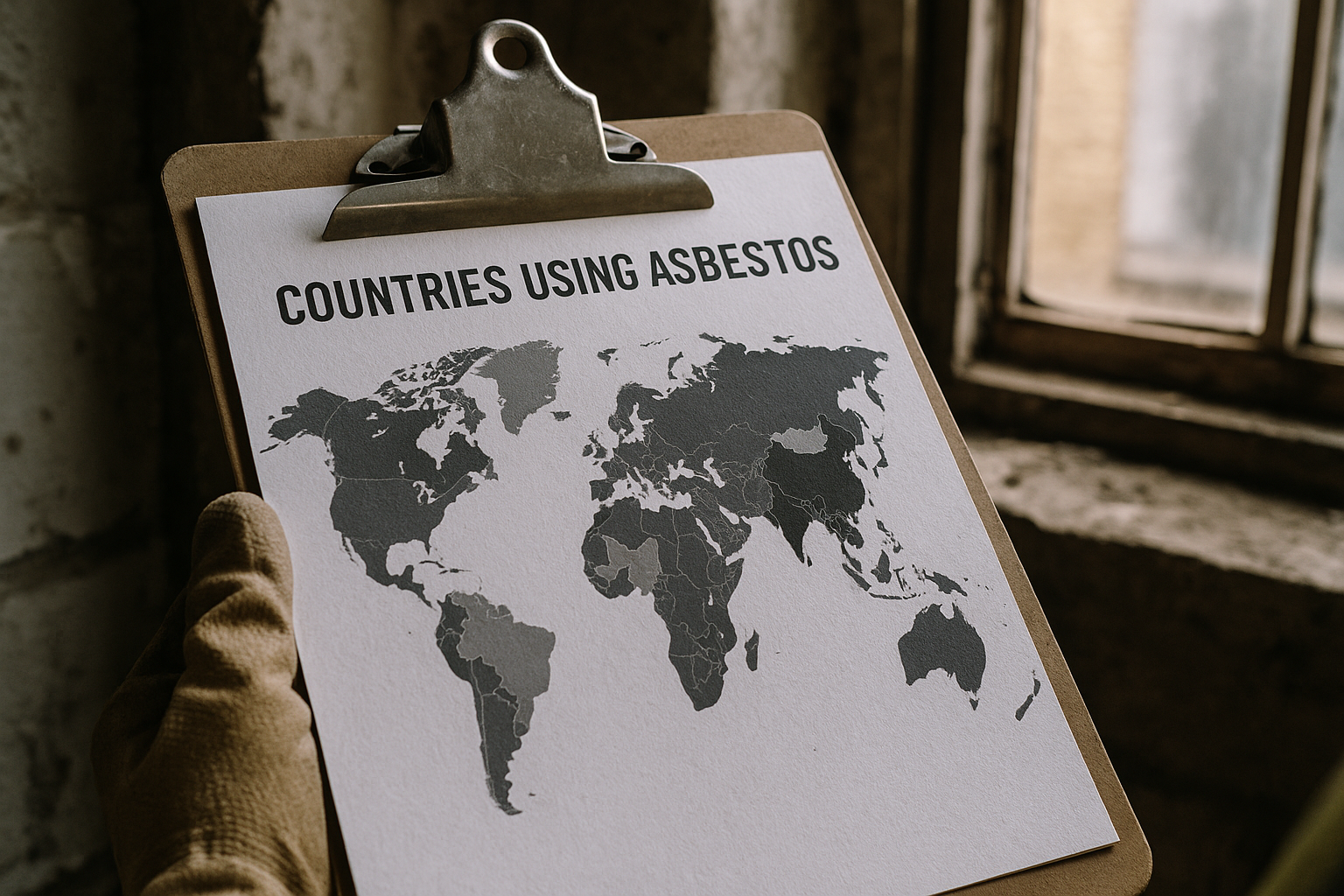
    If you are asking what countries still use asbestos, the short answer is that asbestos has not been fully banned worldwide. Some countries still mine chrysotile asbestos, some still import it, and others continue to allow it in certain products or sectors.

    The position changes over time, and legal frameworks can tighten quickly. Even so, countries often identified as still allowing some form of asbestos use have included Russia, Kazakhstan, China, India, Indonesia, Vietnam and Thailand, alongside other jurisdictions where restrictions, enforcement or phase-out measures vary.

    Most ongoing use is linked to chrysotile, sometimes promoted as suitable for controlled use. That argument is not accepted by mainstream occupational health guidance. In real workplaces, control measures are often inconsistent, and the risk of exposure during manufacture, installation, maintenance, damage and demolition remains a serious concern.

    • Russia – a major producer and exporter of chrysotile
    • Kazakhstan – another significant chrysotile-producing country
    • China – historical production and use in manufacturing and industry
    • India – a major importer, especially for asbestos-cement materials
    • Indonesia – long associated with asbestos imports and use
    • Vietnam – asbestos has remained present in some sectors
    • Thailand – restrictions have existed, but not always a full ban

    If you need certainty for due diligence, supply chain checks or procurement decisions, do not rely on a static list. Check the current legal position in the relevant jurisdiction and review product documentation properly.

    Why some countries still use asbestos

    The reason what countries still use asbestos remains such a common search is simple: asbestos was cheap, durable, heat resistant and widely used for decades. In lower-cost construction markets, those characteristics have continued to attract manufacturers and buyers, particularly for cement-based products.

    Asbestos-cement roofing sheets, wall panels, pipes and industrial components have often remained in use because they are familiar and relatively inexpensive. Where domestic mining or manufacturing exists, the commercial pressure to continue can be strong.

    Main drivers behind continued use

    • Low cost compared with substitute materials
    • Established factories and supply chains
    • Domestic chrysotile mining industries
    • Weak enforcement of workplace protections
    • Claims that chrysotile can be used safely under strict controls
    • Slow movement from partial restriction to full prohibition

    That last point matters. A country may recognise asbestos as hazardous but still take years to move from limited controls to a complete ban. During that gap, workers, contractors and occupants can still be exposed.

    For UK businesses buying overseas products, practical caution is essential. If the origin, composition or certification of a material is unclear, do not make assumptions.

    Countries that still mine or export asbestos

    When looking at what countries still use asbestos, mining and export are central to the picture. Global production is far more concentrated than it once was, but a handful of producing countries have helped keep asbestos in international trade.

    what countries still use asbestos - In which countries has asbestos been use

    Russia

    Russia is one of the most prominent answers to what countries still use asbestos. It has long been one of the world’s largest producers of chrysotile and has exported to overseas markets for many years.

    That matters beyond Russia itself. A strong export industry helps maintain supply to manufacturers in countries where asbestos use continues, especially in building materials and industrial products.

    Kazakhstan

    Kazakhstan is another major producer. It has substantial chrysotile reserves and has remained part of the export market, which means it plays a wider role in keeping asbestos available internationally.

    For anyone tracking global asbestos use, Kazakhstan matters not only because of domestic activity but because it supports ongoing manufacturing elsewhere.

    Other producing nations

    The wider picture can change as mines open, close or reduce output. Production is now concentrated in fewer places, but where mining continues it tends to support both local use and export-led demand.

    That is one reason asbestos has not disappeared from the world economy, even though many countries have banned it outright.

    Countries that still import or manufacture with asbestos

    Mining is only part of the story behind what countries still use asbestos. Importing and manufacturing are just as relevant, particularly where asbestos-cement products remain common.

    India

    India is frequently cited in discussions about what countries still use asbestos. It has been one of the largest importers of asbestos, with asbestos-cement roofing sheets and related construction products widely used in parts of the market.

    The commercial appeal has often been cost. The health concern is exposure during manufacturing, installation, maintenance, breakage, repair and demolition.

    China

    China has a significant history of asbestos production and use. Controls have developed over time, but asbestos has remained present in some industrial and manufacturing settings.

    As with many large economies, the practical picture is complex. National policy, regional enforcement, industrial demand and legacy buildings do not always move at the same pace.

    Indonesia, Vietnam and Thailand

    These countries have often appeared in discussions about ongoing asbestos use, especially in roofing and construction materials. The exact position can shift, but they are regularly referenced when people ask what countries still use asbestos.

    If you are sourcing products internationally, this is where proper due diligence matters. Review technical data, declarations, origin information and testing evidence rather than relying on labels or assumptions.

    Countries that have banned asbestos

    To understand what countries still use asbestos, it helps to set that against the many countries that no longer allow it. More than 60 countries have adopted some form of ban, although the scope and enforcement of those bans can differ.

    what countries still use asbestos - In which countries has asbestos been use

    Countries and regions that have moved to prohibit asbestos include:

    • United Kingdom
    • European Union member states
    • Australia
    • Canada
    • South Africa
    • Brazil
    • Japan

    A ban on new use does not remove asbestos from the built environment. Older buildings, industrial sites, plant, equipment and contaminated land can still present a risk for decades. That is exactly the position in the UK.

    The ban stopped new installation, but it did not remove asbestos from offices, schools, warehouses, factories, hospitals, retail units and housing built or refurbished before the prohibition took effect.

    The UK position: banned, but still heavily managed

    In Britain, asbestos is no longer used in new construction, but it remains a major compliance issue because so many existing buildings still contain asbestos-containing materials. That is why the question what countries still use asbestos should not distract from the practical question for dutyholders: where is asbestos in your building, what condition is it in, and how is it being managed?

    Under the Control of Asbestos Regulations, those responsible for non-domestic premises must identify and manage asbestos risk. The duty is not automatic removal in every case. It is about proper assessment, recording, communication and control.

    Survey work should follow HSG264, which sets out the purpose and standard of asbestos surveys. HSE guidance also makes clear that asbestos in good condition can sometimes be managed in place, provided it is properly identified, monitored and protected from disturbance.

    What this means in practice

    • Know whether asbestos is present
    • Keep an up-to-date asbestos register
    • Assess material condition and risk
    • Review asbestos information regularly
    • Control maintenance and refurbishment work
    • Use competent contractors where required

    If you need to identify asbestos in an occupied building, a management survey is usually the starting point. It helps dutyholders locate likely asbestos-containing materials and manage them safely during normal occupation and routine maintenance.

    Why global asbestos use still matters to UK property managers

    There is a direct link between what countries still use asbestos and day-to-day building management in the UK. Even where domestic use has ended, international trade and historical imports still shape the materials found in British properties.

    For decades, asbestos fibres and asbestos-containing products moved across borders in huge volumes. UK buildings incorporated materials sourced from overseas mines and manufacturers, then used them in everything from insulation board and pipe lagging to floor tiles, cement sheets, textured coatings and service risers.

    Practical implications for UK buildings

    • Older buildings may contain imported asbestos products – the age of the building matters more than the country of origin
    • Refurbishment can expose hidden materials – asbestos is often concealed behind finishes, in voids and plant areas
    • Imported plant or components may need checking – especially older machinery or undocumented stock
    • Procurement teams should verify materials carefully – particularly where products come from markets with a known asbestos history

    If you manage older premises, focus on what is actually in the building rather than assuming all risk sits overseas. The global story explains the background, but compliance starts with your own register, survey information and control measures.

    Common products linked to asbestos use worldwide

    When people ask what countries still use asbestos, they often picture mines or heavy industry. In reality, asbestos has been linked to a wide range of products, especially in markets where chrysotile use has continued.

    Examples include:

    • Asbestos-cement roofing sheets
    • Wall cladding and partition boards
    • Pipes and flues
    • Brake and clutch components
    • Gaskets and seals
    • Thermal insulation materials
    • Some fire-resistant textiles and specialist products

    That does not mean every imported product contains asbestos. It means assumptions are risky, especially with older stock, undocumented materials or products from sectors with a known history of asbestos use.

    If there is doubt, stop and verify. Sampling and inspection should be carried out by competent professionals, not by site staff improvising on live materials.

    Health risks behind the global move away from asbestos

    The reason so many countries have banned asbestos is straightforward. Exposure to asbestos fibres is linked to serious disease, and the risk sits with inhalation of airborne fibres released when materials are damaged, drilled, cut, broken or disturbed.

    Diseases associated with asbestos exposure include:

    • Mesothelioma
    • Asbestos-related lung cancer
    • Asbestosis
    • Pleural thickening and other pleural disease

    Risk depends on the type of material, the work being done, how friable the product is, the duration of exposure and the controls in place. What does not change is the need for caution. If a material may contain asbestos, it should be treated carefully until it has been properly assessed.

    For dutyholders, the practical lesson is simple: do not guess, do not disturb suspect materials unnecessarily, and do not rely on visual judgement alone.

    Practical advice before maintenance, refurbishment or demolition

    The search for what countries still use asbestos often starts as general interest. For property professionals, it should end with practical action. The biggest mistakes usually happen when work starts before asbestos information is checked.

    Before maintenance work

    • Check whether the building was constructed or refurbished before 2000
    • Review the asbestos register and any existing survey reports
    • Make sure contractors have relevant asbestos information before starting
    • Do not allow drilling, cutting or access into hidden voids without checking risk first

    Before refurbishment or intrusive works

    • Do not rely on a standard management survey for intrusive work
    • Arrange the correct survey before opening up the building fabric
    • Plan access so hidden materials can be inspected properly
    • Build asbestos risk into project timelines and budgets

    If suspect materials are damaged

    1. Stop work immediately
    2. Keep people away from the area
    3. Do not sweep, vacuum, cut or sample the material yourself
    4. Seek competent advice on inspection, sampling and next steps
    5. Record the incident and review controls before work resumes

    Where removal is necessary because materials are damaged, deteriorating or in the way of planned works, use a specialist asbestos removal service so the work is handled safely and in line with legal requirements.

    How asbestos surveys fit into compliance

    Surveying is the foundation of proper asbestos management. Without reliable information, registers become guesswork, contractors are exposed to unnecessary risk, and projects can grind to a halt once suspect materials are uncovered.

    A suitable survey helps you identify likely asbestos-containing materials, assess their condition and decide whether they can be managed in place or need further action. It also supports communication with maintenance teams, trades and project managers.

    If you are responsible for sites in the capital, arranging an asbestos survey London service before works begin can prevent delays and uncontrolled disturbance. The same applies in other regions. For North West properties, an asbestos survey Manchester booking can help establish what is present before contractors start opening up walls, ceilings or plant areas.

    In the Midlands, a pre-works asbestos survey Birmingham service can save time, protect workers and avoid expensive stop-start projects caused by unexpected asbestos discoveries.

    What to do if you are buying materials or equipment from overseas

    If your interest in what countries still use asbestos is linked to procurement, take a structured approach. Imported products, old spare parts and second-hand plant can all raise questions, especially where origin records are weak.

    • Ask for product composition and compliance documentation
    • Check whether the item comes from a sector with a known asbestos history
    • Be cautious with older machinery, friction products, seals and insulation components
    • Do not assume a product is asbestos-free because it is commonly sold
    • Where doubt remains, seek professional inspection or testing before use

    This is particularly relevant for facilities teams, industrial operators and buyers dealing with legacy equipment. A low-cost component can create a much larger compliance problem if asbestos is discovered after installation or disturbance.

    Frequently Asked Questions

    What countries still use asbestos the most?

    Countries commonly identified in discussions about ongoing asbestos use include Russia, Kazakhstan, China, India, Indonesia, Vietnam and Thailand. The exact legal position can change, so current local law and product controls should always be checked.

    Is asbestos still legal anywhere in the world?

    Yes. Although many countries have banned asbestos, some still allow mining, import, manufacture or use in certain products. Most ongoing use is associated with chrysotile asbestos.

    If asbestos is banned in the UK, why does it still matter here?

    It matters because many UK buildings still contain asbestos installed before the ban. Dutyholders must manage that legacy under the Control of Asbestos Regulations, using surveys, registers, risk assessment and proper controls.

    Does a building need asbestos removed straight away if it is found?

    No. HSE guidance allows some asbestos-containing materials to be managed in place if they are in good condition and unlikely to be disturbed. Removal is usually considered where materials are damaged, deteriorating or affected by planned works.

    What is the first step if I manage an older commercial property?

    The first step is to make sure you have suitable asbestos information for the building. If that information is missing or out of date, arrange a professional survey and build the findings into your asbestos register and maintenance controls.

    Need expert asbestos help?

    If you manage property and need clear, practical advice, Supernova Asbestos Surveys can help. We carry out asbestos surveys nationwide, support dutyholders with compliant asbestos management, and can advise on the next steps where removal is required.

    Call 020 4586 0680 or visit asbestos-surveys.org.uk to book a survey, discuss your site, or get expert guidance from a team that understands how asbestos risk works in real buildings.

  • What were the Earliest Documented Uses of Asbestos? Exploring its History

    What were the Earliest Documented Uses of Asbestos? Exploring its History

    Who Invented Asbestos? The Ancient Origins of Earth’s Most Controversial Mineral

    Asbestos wasn’t invented — it was discovered. The question of who invented asbestos is really a question about who first recognised its extraordinary properties, and how that recognition shaped thousands of years of human history across every major civilisation on earth. It’s also a question with a direct bearing on the present day, because that same history of widespread use is precisely why asbestos remains embedded in millions of UK buildings right now.

    The Earliest Known Uses of Asbestos: Going Back 6,000 Years

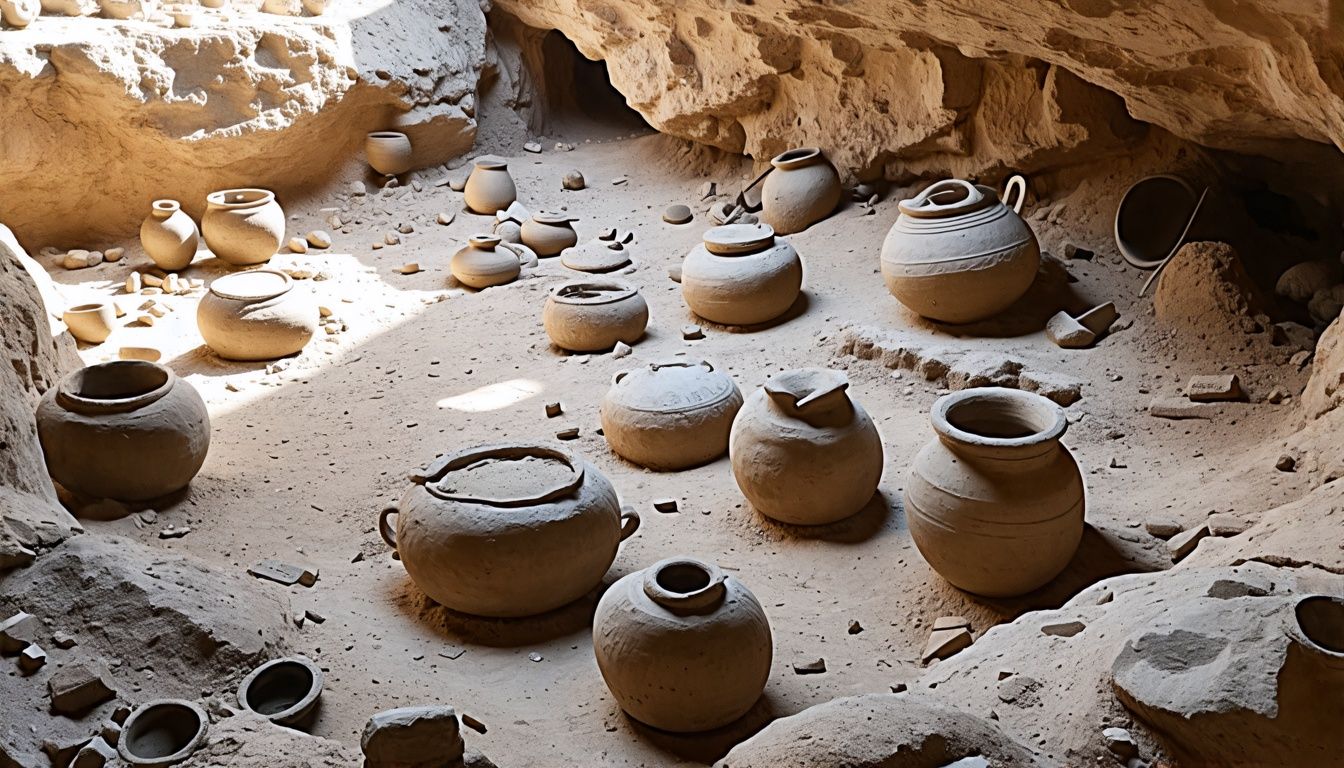
    The oldest documented evidence of asbestos use dates back to around 4,000 BCE. Archaeological finds from the Stone Age show asbestos fibres woven into clay pottery — the fibres strengthened the ceramic and prevented cracking during the firing process. Nobody needed to understand the mineral’s chemistry. Observation was enough.

    From that point, use spread across cultures and continents, driven almost entirely by one remarkable property: asbestos doesn’t burn. In a world where fire was both essential and terrifying, a material that appeared immune to it was nothing short of extraordinary.

    What’s striking about these earliest uses is how consistent they are across cultures that had no contact with one another. From Scandinavia to the Middle East, early peoples independently arrived at the same conclusion — this material is useful precisely because it refuses to combust.

    Ancient Greece and Rome: Where the Name Came From

    The ancient Greeks are widely credited with giving asbestos its name. The word derives from the Greek meaning “indestructible” or “unquenchable” — which tells you exactly what they thought of it.

    Greek and Roman craftsmen wove asbestos into textiles: tablecloths, napkins, and ceremonial cloths that could be “cleaned” simply by throwing them into fire. The flames would burn away food and grease whilst the cloth emerged intact. This trick was reportedly used to impress guests at royal banquets, and asbestos quickly acquired an almost mythological status.

    Pliny the Elder, the Roman naturalist and writer, described asbestos cloth in his writings with obvious fascination, noting its resistance to flame as something bordering on supernatural. Roman engineers also put asbestos to practical use — there is evidence of it in building materials, lamp wicks, and candle holders throughout the empire. Logical applications in a world where open flames were a constant presence in every structure.

    Roman Engineering and Asbestos

    Roman construction was among the most sophisticated of the ancient world, and asbestos found a natural home within it. Engineers used it to reinforce building materials, and there is evidence to suggest it was incorporated into mortar and plaster in certain high-temperature environments.

    The Roman military also had practical applications in mind. Asbestos-woven materials were reportedly used to create fire-resistant pouches and wrappings for transporting lit torches and other combustibles — a genuinely useful property on campaign.

    Ancient Egypt, China, and the Far East

    Asbestos and the Pharaohs

    In ancient Egypt, asbestos cloth was reportedly used in burial practices. Pharaohs were said to have been wrapped in asbestos linen during cremation to keep their ashes separated from those of the funeral pyre, preserving the purity of the remains. Whether this was widespread practice or something more limited remains debated by historians.

    The association between asbestos and preservation reflects a sophisticated understanding of its properties — even without any knowledge of its mineralogy. These ancient Egyptians didn’t know what asbestos was on a molecular level, but they understood precisely what it could do.

    Fire Cloth and Mythology in the Far East

    In China, asbestos was known as “fire cloth” and used to create fire-resistant textiles. Chinese craftsmen also mixed asbestos with other materials, including lead, to produce more durable cookware and construction elements. References appear in Chinese texts dating back well over a thousand years, often describing the material in mythological terms — as the wool of a fire-resistant animal, or stone spun into thread.

    Across the Far East more broadly, asbestos was associated with magic and the supernatural. Its apparent immunity to flame made it genuinely difficult for early observers to classify as a naturally occurring mineral at all. The mythology surrounding it wasn’t ignorance — it was a reasonable response to something that appeared to defy the natural order.

    Medieval Europe and the Salamander Legend

    By the medieval period, asbestos had accumulated considerable folklore across Europe. The most persistent myth was that it was the fur or skin of the salamander — a creature believed to live in fire. Merchants and travellers brought asbestos textiles back from Asia and the Middle East, and the salamander story made for a far more compelling sales pitch than “naturally occurring silicate mineral.”

    Marco Polo, travelling through Asia in the 13th century, is credited with debunking this particular legend. After witnessing asbestos mining operations firsthand, he wrote that the “salamander” cloth was in fact a mineral extracted from the earth — one of the earliest recorded attempts to document asbestos accurately rather than mythologically.

    Despite Polo’s account, the salamander myth persisted for centuries. Asbestos cloth remained a luxury item in Europe, used in religious ceremonies, displayed in court, and occasionally presented as a curiosity to royalty. The gap between what asbestos actually was and what people believed it to be remained wide for a very long time.

    The Industrial Revolution: From Curiosity to Industrial Staple

    Asbestos remained a relatively exotic material until the Industrial Revolution transformed the scale of its use entirely. As steam power, factories, and heavy industry spread across Britain and Europe through the 18th and 19th centuries, demand for fireproofing and insulation materials skyrocketed — and asbestos ticked every box.

    It was heat-resistant, durable, flexible when processed into fibres, and abundant enough to mine commercially. Scotland, Canada, Russia, and South Africa became major suppliers, and industrial-scale extraction began in earnest.

    Key Industrial Applications That Drove Demand

    • Steam engines and boilers: Asbestos insulated boilers, steam pipes, and engine components — essential for the railways and factories that powered the industrial age.
    • Shipbuilding: The Royal Navy and commercial shipyards became major consumers. Asbestos was applied to boiler rooms, engine rooms, pipe lagging, bulkheads, and decking. Workers handled loose fibres daily, often in confined spaces with no ventilation.
    • Building construction: Asbestos cement became a widely used product — strong, cheap, and fire-resistant. It appeared in roof tiles, wall panels, guttering, and pipe systems across British housing, schools, hospitals, and commercial buildings.
    • Insulation: Loose-fill asbestos was blown into wall cavities and loft spaces. Sprayed coatings were applied to structural steelwork. Asbestos insulating board (AIB) became a common interior construction material.
    • Textiles and manufacturing: Asbestos-woven gloves, aprons, and protective clothing were standard in foundries and high-heat environments.
    • Automotive: Asbestos was used in brake pads, clutch linings, and gaskets well into the 20th century.

    By the mid-20th century, asbestos was genuinely everywhere. The peak of its use in UK construction ran roughly from the 1950s through to the 1980s — which is precisely why so many buildings from that era contain asbestos-containing materials (ACMs) in some form today.

    When the Health Risks Became Impossible to Ignore

    The health risks of asbestos were not entirely unknown, even in the early days of industrial use. As far back as the late 19th century, physicians were noticing unusually high rates of lung disease among workers who handled asbestos fibres.

    Dr H. Montague Murray is typically credited with documenting one of the earliest clinical cases of asbestosis — a scarring of the lung tissue caused by inhaled fibres — in a young asbestos textile worker who had spent years in heavily contaminated conditions.

    In the 1920s, further research began to formalise the connection between asbestos dust and serious lung disease. The term “asbestosis” entered medical use, and by the 1930s the UK government had introduced some of the earliest occupational health regulations in the world specifically addressing asbestos exposure.

    Despite this, the industry continued to expand. Economic interests, wartime demand, and a significant gap between early research and public awareness meant that asbestos use actually accelerated through the 1940s, 50s, and 60s. It wasn’t until the 1970s and 1980s that the link between asbestos and mesothelioma — an aggressive cancer of the lung lining — became widely accepted and acted upon with any urgency.

    The UK banned blue (crocidolite) and brown (amosite) asbestos in 1985. White asbestos (chrysotile) wasn’t banned until 1999, making the UK one of the later Western nations to impose a full prohibition.

    The Three Types of Asbestos and Why They Matter

    Not all asbestos is the same. The three types most commonly encountered in UK buildings each carry different risk profiles:

    • Crocidolite (blue asbestos): The most hazardous type. Fine, needle-like fibres that penetrate deep into lung tissue. Banned in the UK in 1985.
    • Amosite (brown asbestos): Commonly used in insulating board, ceiling tiles, and thermal insulation. Also banned in 1985.
    • Chrysotile (white asbestos): The most widely used type globally and the last to be banned in the UK. Found in cement products, floor tiles, and textured coatings. Still considered hazardous despite being regarded as less dangerous than the other two types.

    All three types can cause serious and fatal disease when fibres are inhaled. There is no safe level of asbestos exposure, and this principle underpins every aspect of the UK’s regulatory framework for managing the material today.

    The Legacy of Asbestos in UK Buildings Today

    That long history of use — from ancient pottery kilns to 20th-century tower blocks — has left the UK with an enormous stock of buildings containing asbestos. Any non-domestic building constructed or refurbished before the year 2000 may contain ACMs. That includes schools, hospitals, offices, industrial units, and rental properties.

    Asbestos is also found in many residential properties, particularly those built or extended between the 1950s and 1980s. The material doesn’t announce itself — it’s embedded in floor tiles, ceiling panels, pipe lagging, roof sheets, and textured coatings that look entirely ordinary.

    The Control of Asbestos Regulations place a legal duty on those responsible for non-domestic premises to manage asbestos risk. That means knowing what’s in your building, where it is, what condition it’s in, and having a plan to manage or remediate it. This isn’t a historical concern — it’s an active legal and health responsibility affecting hundreds of thousands of buildings across the country right now.

    From Ancient Discovery to Modern Management: What You Need to Do

    Understanding the history of who invented asbestos and how it came to be used so widely is one thing. Knowing what to do about it in a building you’re responsible for is another. Here’s what the practical management process looks like.

    Management Surveys

    An asbestos management survey is the baseline requirement for any non-domestic building in normal occupation. It identifies the location, type, and condition of ACMs so that a management plan can be put in place. If you don’t have one for your building, you’re likely already in breach of the Control of Asbestos Regulations.

    The management survey is non-intrusive by design — it’s intended to locate ACMs in accessible areas without disturbing them. It gives you the information you need to manage risk without creating unnecessary disturbance to materials that are better left alone.

    Refurbishment and Demolition Surveys

    Before any construction work, renovation, or demolition, a more intrusive survey is required. A refurbishment survey is needed before any renovation work begins, accessing areas that would be disturbed during the project.

    Where a building is being torn down entirely, a demolition survey goes even further — it is a legal requirement before any significant demolition work commences, ensuring all ACMs are identified and safely managed before structural work begins.

    Re-Inspection Surveys

    Where ACMs are being managed in place rather than removed, a periodic re-inspection survey is needed to check whether their condition has deteriorated and whether the risk level has changed. The HSE’s HSG264 guidance recommends these are carried out at least annually, though higher-risk materials may require more frequent assessment.

    Asbestos Testing and Sample Analysis

    Where the presence of asbestos is suspected but unconfirmed, material samples can be sent for laboratory analysis. Professional asbestos testing provides definitive identification of fibre type and confirms whether a material contains ACMs.

    Our sample analysis service uses UKAS-accredited laboratory testing to give you a clear, legally defensible result. If you want to take a first step yourself, an asbestos testing kit allows you to collect samples safely for professional analysis — the kit includes everything you need to take samples without disturbing the material unnecessarily.

    For a broader overview of your options, our dedicated asbestos testing service page sets out the full range of sampling and analytical services we provide. Whether you need a single sample confirmed or a full programme of testing across a large estate, we can help.

    Why the History of Asbestos Still Matters

    It might seem like an academic exercise — tracing who invented asbestos back through millennia of human history. But the reason this history matters is practical. Every era of enthusiastic asbestos use left a physical legacy in the built environment. The Romans used it in mortar. The Victorians used it to lag pipes. The post-war building boom embedded it in schools, hospitals, and homes across the country.

    Each of those layers of use is still present somewhere. Understanding the scale and longevity of asbestos adoption helps explain why the UK’s regulatory framework takes it so seriously, and why the duty to manage it falls on such a wide range of building owners and managers today.

    The mineral that ancient civilisations revered as indestructible turns out to be indestructible in another, less welcome sense — it persists in our buildings, in our lungs when disturbed carelessly, and in the disease burden that continues to affect thousands of people in the UK every year.

    Managing that legacy well isn’t optional. It’s a legal duty, a moral responsibility, and — when done properly — a straightforward process that protects everyone who uses the buildings in your care.

    Frequently Asked Questions

    Who invented asbestos, and when was it first used?

    Asbestos wasn’t invented — it’s a naturally occurring mineral. The earliest documented evidence of human use dates to around 4,000 BCE, when Stone Age peoples wove asbestos fibres into clay pottery to strengthen it and prevent cracking during firing. Ancient Greek and Roman civilisations later used it extensively in textiles and building materials, and the Greeks gave it its name, derived from a word meaning “indestructible.”

    Why was asbestos used so widely throughout history?

    Its fire resistance was the primary driver across every era of use. In a world without modern fire suppression, a material that genuinely would not burn was extraordinarily valuable. The Industrial Revolution added further demand — asbestos was also heat-resistant, durable, cheap to process, and flexible enough to be woven, sprayed, or mixed into building materials. These properties made it almost universally adopted across industry, construction, and manufacturing throughout the 19th and 20th centuries.

    When did the UK ban asbestos?

    The UK banned blue (crocidolite) and brown (amosite) asbestos in 1985. White asbestos (chrysotile) remained in use until 1999, when a full ban came into force. Any building constructed or refurbished before 2000 may therefore contain asbestos-containing materials, and the Control of Asbestos Regulations place a legal duty on those responsible for non-domestic premises to manage that risk.

    Does asbestos in older buildings still pose a risk today?

    Yes — but the risk depends heavily on the condition and type of the material. Asbestos that is in good condition and left undisturbed generally poses a low risk. The danger arises when ACMs are damaged, deteriorating, or disturbed during maintenance or refurbishment work, releasing fibres into the air. This is why regular re-inspection and proper management are essential, not just a one-off survey.

    What should I do if I think my building contains asbestos?

    Don’t disturb it. Commission a professional asbestos management survey to identify what’s present, where it is, and what condition it’s in. If you need to confirm whether a specific material contains asbestos before work begins, professional sample analysis or an asbestos testing kit can provide a definitive answer. From there, a qualified surveyor can advise on whether management in place or removal is the appropriate course of action.

    Speak to Supernova Asbestos Surveys

    Supernova Asbestos Surveys has completed over 50,000 surveys across the UK, working with property managers, local authorities, housing associations, schools, and commercial landlords. Whether you need a baseline management survey, a pre-refurbishment inspection, or laboratory testing of a suspected material, our team can help you meet your legal obligations and protect the people in your buildings.

    Call us on 020 4586 0680 or visit asbestos-surveys.org.uk to find out more or book a survey.

  • How Has the Use of Asbestos Evolved Over Time? A Comprehensive History

    How Has the Use of Asbestos Evolved Over Time? A Comprehensive History

    Asbestos still turns up in schools, offices, shops, warehouses and blocks of flats across the UK. That is why the question what is asbestos is not just about history. It is a live issue for anyone responsible for property, maintenance or building work.

    If you manage a site built or refurbished before 2000, you cannot afford guesswork. Under the Control of Asbestos Regulations, supported by HSE guidance and survey standards in HSG264, you need reliable information before routine maintenance, refurbishment or demolition starts.

    What is asbestos?

    What is asbestos in simple terms? It is the name for a group of naturally occurring fibrous minerals. These minerals were widely used in construction and manufacturing because they are heat resistant, durable and easy to mix into other materials.

    The problem is what happens when asbestos fibres are released. Once disturbed, tiny fibres can become airborne and be breathed in. They are too small to see with the naked eye, and they can stay in the lungs for many years.

    When people ask what is asbestos, they usually want to know three things:

    • What the material actually is
    • Why it was used so widely
    • Why it creates a risk today

    The short answer is that asbestos was valued for its practical performance, but it becomes dangerous when damaged or disturbed. That is why asbestos-containing materials must be identified, assessed and managed properly.

    The main types of asbestos found in UK buildings

    In UK premises, three types are most commonly encountered:

    • Chrysotile – often called white asbestos
    • Amosite – often called brown asbestos
    • Crocidolite – often called blue asbestos

    All asbestos types are hazardous. Some materials are more friable than others, which means they release fibres more easily if damaged, but none should be treated as safe.

    For day-to-day property management, the type matters less than the condition, location and likelihood of disturbance. A damaged insulating board panel in a busy service area may present a greater immediate risk than intact cement sheeting on an outbuilding.

    Why asbestos was used so widely

    To understand what is asbestos, it helps to understand why it became so common. It solved several building and engineering problems at once. It resisted heat, helped with fire protection, improved durability and was relatively cheap to use.

    what is asbestos - How Has the Use of Asbestos Evolved Over

    That made it attractive across construction, manufacturing, transport, shipbuilding and heavy industry. In buildings, it was often added to products that looked completely ordinary.

    Common reasons asbestos was added to products

    • Thermal insulation for pipes, boilers and ducts
    • Fire protection in walls, ceilings, doors and structural steel
    • Strengthening cement sheets, roof panels and flues
    • Improving durability in floor tiles, textured coatings and sealants
    • Heat resistance in gaskets, brakes and plant equipment

    This is why a simple visual check is never enough. Asbestos may be hidden in materials that do not look unusual at all.

    Where asbestos is commonly found

    If a building was constructed or refurbished before 2000, asbestos may be present. That does not mean it definitely contains asbestos, but it does mean you should not assume materials are safe without evidence.

    Asbestos-containing materials can appear in obvious and less obvious places. Some are high risk if disturbed, while others are lower risk when intact.

    Common asbestos-containing materials

    • Pipe and boiler lagging
    • Asbestos insulating board in partitions, risers and ceiling tiles
    • Sprayed coatings on structural steel and ceilings
    • Asbestos cement roof sheets, wall cladding, gutters and flues
    • Textured coatings on walls and ceilings
    • Vinyl floor tiles and bitumen adhesive
    • Soffits, panels and service duct linings
    • Fire doors, insulation panels and rope seals
    • Gaskets, fuse boards and older plant room components

    Condition makes a major difference. Intact asbestos cement is generally lower risk than damaged lagging or broken insulating board. Accessibility also matters, especially in plant rooms, ceiling voids, risers and service areas where contractors may work.

    For occupied premises, the usual starting point is a professional management survey. This helps identify asbestos-containing materials that could be disturbed during normal occupation or foreseeable maintenance.

    Why asbestos is dangerous

    The danger comes from breathing in airborne fibres. You cannot rely on sight or smell to tell whether fibres are present, which is why asbestos risk is often underestimated until work has already started.

    what is asbestos - How Has the Use of Asbestos Evolved Over

    Exposure can happen during drilling, cutting, sanding, breaking, maintenance, refurbishment or demolition. Even small jobs can create a serious problem if the material has not been checked first.

    Health risks linked to asbestos exposure

    • Mesothelioma
    • Asbestos-related lung cancer
    • Asbestosis
    • Pleural thickening

    These diseases can take many years to develop. That long delay is one reason asbestos remains such a serious issue in the UK, even though its use has been banned.

    Who is most at risk?

    Anyone can be exposed if asbestos is disturbed, but some groups face greater routine risk because of the work they carry out:

    • Maintenance staff
    • Electricians
    • Plumbers
    • Joiners
    • Heating engineers
    • Roofers
    • Demolition workers
    • Refurbishment contractors

    For dutyholders and property managers, the practical message is clear. Before work begins, confirm whether asbestos is present and make sure anyone likely to disturb it has the right information.

    What the law expects from dutyholders

    If you are asking what is asbestos from a legal and compliance angle, the answer is tied directly to your duties. In non-domestic premises, the Control of Asbestos Regulations place a duty to manage asbestos.

    This duty can apply to owners, landlords, occupiers, managing agents and others with responsibility for maintenance or repair. It can also apply to common parts of domestic buildings such as corridors, stairwells, service risers and plant rooms.

    What the duty to manage involves

    • Finding out whether asbestos is present, and where
    • Assessing the risk from those materials
    • Keeping an up-to-date asbestos register
    • Preparing and implementing an asbestos management plan
    • Providing information to anyone liable to disturb asbestos
    • Reviewing and monitoring the condition of known materials

    HSE guidance is clear on the basic principle. Asbestos in good condition is often safer left in place and managed than removed without a proper reason.

    The right action depends on the material, its condition, its accessibility and the likelihood of disturbance. Survey work should follow HSG264 so the information you rely on is suitable for the building and the planned works.

    If records are old or known materials may have deteriorated, a re-inspection survey helps confirm whether they remain in a safe condition and whether your register still reflects the property accurately.

    How asbestos is identified properly

    You cannot confirm asbestos just by looking at a material. Some products may strongly suggest its presence because of their age, appearance or location, but visual identification alone is not enough for safe decision-making.

    Proper identification usually combines building history, professional inspection, sampling where appropriate and laboratory analysis.

    Typical ways asbestos is identified

    1. Review the age and refurbishment history of the building
    2. Inspect suspect materials in the relevant areas
    3. Take representative samples where safe and appropriate
    4. Have those samples analysed by a competent laboratory

    If there is uncertainty about a suspect material, arrange professional asbestos testing. For isolated items, using a laboratory for sample analysis can help confirm whether asbestos is present before maintenance or repair goes ahead.

    For wider works, localised testing alone may not be enough. The survey type matters just as much as the test result.

    What to do if you suspect asbestos

    If you think a material may contain asbestos, stop work immediately. Do not drill it, cut it, break it, sand it or try to remove it yourself.

    Your first priority is to prevent further disturbance. Your second is to get competent advice quickly.

    Immediate steps to take

    • Stop work in the area
    • Restrict access if needed
    • Avoid sweeping, brushing or vacuuming debris
    • Record the location and condition of the suspect material
    • Inform anyone who may be affected, including contractors
    • Arrange inspection by a competent asbestos surveyor

    If asbestos is confirmed, the next step depends on risk. In some cases, the material can remain in place and be managed. In others, repair, encapsulation, enclosure or removal may be needed.

    Where removal is necessary, use a competent specialist for asbestos removal. Some asbestos work requires licensed contractors, strict controls and carefully planned procedures.

    Survey types and when you need them

    Surveying is how you move from assumptions to evidence. Under HSG264, the survey type must match the purpose. Choosing the wrong one can leave hidden asbestos directly in the path of planned works.

    Management surveys

    A management survey is used to locate, as far as reasonably practicable, the presence and extent of asbestos-containing materials that could be disturbed during normal occupation and foreseeable maintenance.

    It is the standard survey for occupied buildings where no major intrusive works are planned. If you are running a property day to day, this is often the baseline document you need.

    Refurbishment and demolition surveys

    Before intrusive refurbishment or demolition, a more invasive survey is required. These surveys are designed to identify asbestos in the area of planned works, including hidden materials behind finishes, inside voids and within the building fabric.

    If demolition is planned, a demolition survey is essential before work begins. The same level of intrusive investigation is generally needed for refurbishment in the affected areas.

    Re-inspection surveys

    Where asbestos has already been identified and is being managed in place, periodic re-inspections are used to monitor condition. This helps keep the asbestos register current and highlights deterioration before it creates a bigger problem.

    Asbestos during maintenance, refurbishment and demolition

    Many asbestos incidents happen during routine jobs that seem minor at first. Replacing a light fitting, opening a ceiling void, removing boxing, upgrading fire doors or accessing a riser can all disturb hidden asbestos.

    That is why work planning matters. Contractors should never start based on assumptions, memory or a vague note saying there is probably no asbestos.

    Before maintenance work

    • Check the asbestos register
    • Confirm the information is current and relevant to the exact work area
    • Make sure contractors have seen the asbestos information
    • Pause work if records are incomplete or unclear

    Before refurbishment work

    • Define the scope of works clearly
    • Arrange the correct intrusive survey for affected areas
    • Review findings before tendering or starting site work
    • Allow time for any remedial action or removal

    Before demolition work

    • Do not rely on a management survey
    • Commission the correct pre-demolition survey
    • Ensure asbestos risks are addressed in the wider project plan
    • Coordinate removal and waste handling properly

    Practical planning prevents delays and protects workers, occupants and visitors from avoidable exposure.

    Asbestos and wider building safety duties

    Asbestos compliance rarely sits on its own. In real buildings, it overlaps with fire safety, contractor control, maintenance planning and general health and safety management.

    Plant rooms, service risers, ceiling voids and fire protection works often involve both asbestos risk and other safety considerations. Coordinating these duties saves time and reduces the chance of unsafe work.

    For example, if you are reviewing service penetrations, ceiling works or compartment lines, check whether asbestos information is current before opening anything up. If the records are old, unclear or incomplete, deal with that first rather than hoping the area is clear.

    Practical advice for property managers and dutyholders

    If you are responsible for a building, the safest approach is to treat asbestos management as a live process rather than a one-off document exercise. Records that sit in a folder but never reach contractors are of limited use.

    Use these practical steps to stay ahead of the risk:

    1. Know your building stock. Flag properties built or refurbished before 2000.
    2. Check your surveys. Make sure you have the right survey for the purpose, not just any survey.
    3. Keep the register current. Update it when materials are removed, repaired or re-assessed.
    4. Share information properly. Contractors need relevant asbestos information before they start work.
    5. Review condition regularly. Materials can deteriorate over time, especially in high-traffic or service areas.
    6. Do not rely on assumptions. If there is doubt, stop and verify.

    These steps are straightforward, but they prevent the most common failures: outdated records, poor communication and work starting before asbestos risk has been checked.

    Local asbestos survey support across the UK

    Fast access to competent surveyors matters when maintenance is due, a tenant fit-out is planned or a project is already under time pressure. Local support can make compliance quicker and easier to manage.

    If you need help in the capital, an asbestos survey London service can help you assess risk and keep works moving safely. For projects in the North West, an asbestos survey Manchester option gives you local coverage for commercial and residential properties. In the Midlands, an asbestos survey Birmingham service can support everything from routine management duties to pre-refurbishment planning.

    If you need broader testing support, this dedicated asbestos testing page explains how professional testing can fit into maintenance and project planning.

    What is asbestos management really about?

    At a practical level, what is asbestos management really about? It is about preventing exposure by making informed decisions before materials are disturbed.

    That means knowing what is in the building, understanding the risk, choosing the right survey, keeping records up to date and making sure anyone carrying out work has the right information at the right time.

    For most dutyholders, the biggest mistake is not failing to remove asbestos. It is failing to identify and communicate the risk early enough. Good management is usually quieter than people expect. It is planned, documented and built into everyday maintenance control.

    Need expert asbestos help?

    If you need clear answers about what is asbestos, or you need a survey, testing or removal support, Supernova Asbestos Surveys can help. We carry out management, refurbishment, demolition and re-inspection surveys nationwide, along with testing and practical advice for dutyholders, landlords and property managers.

    Call 020 4586 0680 or visit asbestos-surveys.org.uk to book a survey or speak to our team.

    Frequently Asked Questions

    What is asbestos made of?

    Asbestos is a group of naturally occurring fibrous minerals. The fibres are strong, heat resistant and durable, which is why asbestos was used in many building products and industrial materials.

    Is asbestos always dangerous if it is in a building?

    Not always in the same way. Asbestos is most dangerous when fibres are released and breathed in. Materials in good condition that are sealed and unlikely to be disturbed may often be managed in place, but they still need proper assessment and monitoring.

    Can you identify asbestos just by looking at it?

    No. Some materials may look suspicious because of their age or appearance, but asbestos cannot be confirmed by sight alone. Proper identification usually requires inspection, sampling and laboratory analysis.

    When do I need an asbestos survey?

    You may need a survey when managing an older non-domestic property, before maintenance that could disturb materials, before refurbishment or before demolition. The correct survey type depends on what work is planned and how the building is used.

    What should I do if a contractor damages a suspect material?

    Stop work immediately, keep people away from the area and avoid disturbing the debris further. Then arrange competent asbestos advice and assessment as quickly as possible so the risk can be controlled properly.

  • How did the use of asbestos begin around the world? A historical perspective

    How did the use of asbestos begin around the world? A historical perspective

    Where Did Asbestos Come From? The Full History Behind a Dangerous Material

    Asbestos has been called the “magic mineral” and the “miracle fibre.” Today it is recognised as one of the most hazardous substances ever used in construction, responsible for thousands of deaths across the UK every year. But where did asbestos come from, and how did something so harmful become so deeply embedded in human history — and in so many British buildings?

    The story spans thousands of years and crosses continents. Understanding it explains why asbestos remains present in a significant proportion of UK buildings constructed before 2000, and why managing it correctly is both a legal duty and a moral obligation for every property owner and manager.

    The Ancient Origins: Where Did Asbestos Come From First?

    Stone Age Discoveries

    Asbestos use predates written history. Archaeological evidence suggests that Stone Age peoples were incorporating asbestos fibres into ceramic pots and lamp wicks as far back as 4000 BCE. The reasoning was entirely practical — the fibrous mineral didn’t burn, didn’t crack under heat, and added structural strength to fragile clay vessels.

    Asbestos occurs naturally in surface deposits across many parts of the world, so early contact with the material was almost inevitable. Once people discovered its properties, knowledge of those uses spread rapidly along trade routes.

    Greek and Roman Uses

    The ancient Greeks gave us the word “asbestos” — derived from a term meaning indestructible or unquenchable. Greek and Roman writers documented its remarkable fire-resistant properties with a mixture of wonder and mythology. Some believed it came from the fur of a fire-dwelling creature; others simply marvelled at cloth that could be “cleaned” by throwing it into flames.

    Practical applications in the ancient world included:

    • Woven tablecloths and napkins that could be held over fire to remove stains
    • Wicks for eternal flames in temples and sacred spaces
    • Burial shrouds for prominent figures, believed to keep their ashes pure
    • Insulating materials for pottery and vessels

    The Romans reportedly used asbestos napkins at banquets, impressing guests by tossing them into the fire to “launder” them. Whether this was entirely practical or partly theatrical is debatable — but it shows how deeply the material captured the imagination of ancient cultures.

    Asbestos in Asia and the Middle East

    Chinese records reference asbestos-woven fabrics used for fire-resistant clothing for emperors, with some accounts dating back thousands of years. Charlemagne is said to have owned an asbestos tablecloth, used to astonish visitors by holding it over flames.

    Across the ancient world, asbestos was rare enough to seem magical and useful enough to be genuinely valued. Its trade along early commerce routes meant it reached civilisations far from natural deposits, cementing its reputation as a material of almost supernatural quality.

    The Industrial Revolution: When Asbestos Became Big Business

    Why Industry Embraced Asbestos

    Everything changed during the Industrial Revolution. Steam engines, factories, shipbuilding, and power generation created enormous demand for materials that could withstand intense heat, resist fire, and insulate against both temperature and electricity. Asbestos ticked every box — and it was relatively cheap to extract and process at scale.

    Major mining operations were established in Canada, Russia, and South Africa during the 19th century, and production scaled rapidly. The Jeffrey Mine in Quebec became one of the largest asbestos mines in the world. Russia’s Ural Mountains contained vast chrysotile deposits that would be mined for well over a century.

    Applications That Defined an Era

    By the late 1800s and early 1900s, asbestos was being incorporated into an extraordinary range of products:

    • Insulation lagging on steam pipes and boilers
    • Fireproofing for ships and naval vessels
    • Roofing felt and asbestos-cement sheets
    • Textile fibres woven into protective clothing
    • Gaskets, seals, and packing materials for machinery
    • Electrical insulation in industrial settings

    For engineers and manufacturers of the era, asbestos wasn’t just convenient — it seemed almost miraculous. No synthetic material of the time could replicate its combination of heat resistance, tensile strength, and chemical stability.

    The 20th Century: Peak Production and the UK Building Boom

    Asbestos Enters Everyday Life

    The first half of the 20th century saw asbestos move beyond industrial settings and into ordinary homes, schools, hospitals, and offices. Post-war building programmes — including the UK’s enormous social housing expansion — relied heavily on asbestos-containing materials (ACMs) for their affordability and practicality.

    Common ACMs installed in UK buildings during this period included:

    • Sprayed asbestos coatings on structural steelwork and ceilings
    • Asbestos insulating board (AIB) used in ceiling tiles, partition walls, and fire doors
    • Asbestos cement sheets for roofing and external cladding
    • Floor tiles bonded with asbestos-containing adhesives
    • Pipe lagging in boiler rooms and heating systems
    • Textured coatings such as Artex applied to ceilings

    This is precisely why the Health and Safety Executive (HSE) recognises that asbestos-containing materials are still present in a significant proportion of UK buildings constructed before 2000. The legacy of 20th-century construction is still with us today — and it affects properties across the country, from those requiring an asbestos survey in London to Victorian terraces in the north.

    The Automotive Industry

    It wasn’t just buildings. The automotive industry became one of the largest consumers of asbestos globally, incorporating it into brake pads, clutch facings, gaskets, and heat shields. Mechanics working on older vehicles were unknowingly exposed to asbestos dust for decades — a fact that has contributed to mesothelioma cases appearing many years after the original exposure.

    Global Production Peaks

    Global asbestos mining reached its peak in the mid-1970s. The countries driving production were primarily Russia (then the Soviet Union), Canada, South Africa, Brazil, China, and Kazakhstan. Demand came from industrialised nations across North America, Europe, Japan, and Australia — all of which were building rapidly and faced little regulatory pressure to stop.

    The Global Asbestos Trade: Who Produced It and Who Used It

    The Major Producers

    Russia has historically been the world’s dominant asbestos producer and remains active today, continuing to mine and export chrysotile asbestos despite widespread international bans. Kazakhstan is the other significant current producer. Both countries have resisted calls to ban the substance, arguing — contrary to scientific consensus — that controlled use of chrysotile asbestos is safe.

    Canada was a major producer for much of the 20th century but banned the substance in 2018. South Africa phased out mining significantly before implementing a full ban. Brazil banned asbestos in 2017 following years of legal challenges from the industry.

    The Heaviest Users

    The UK, United States, Japan, Australia, and most of Western Europe were among the heaviest importers and users throughout the 20th century. Industrial uses varied by country — some prioritised asbestos-cement construction products, others focused on insulation and fireproofing for shipbuilding or textiles.

    Developing nations in Asia, Africa, and Latin America also adopted asbestos heavily, often at a time when health risks were already documented elsewhere. Economic pressures, lower regulatory standards, and active lobbying from asbestos industry groups contributed to continued use in these regions well into the 2000s.

    When Did We Know It Was Dangerous?

    Early Warning Signs

    The health risks of asbestos were not a sudden discovery. Concerns emerged early and built steadily — but were suppressed, ignored, or deprioritised for decades by both industry and government.

    Factory inspectors in Britain noted alarming levels of lung disease among asbestos textile workers as early as 1898. By the late 1920s, physicians were documenting a new condition — asbestosis — caused by the scarring of lung tissue from inhaled asbestos fibres. A landmark UK government report in the early 1930s formally established the link between asbestos dust and lung disease, leading to the first asbestos industry regulations.

    The Link to Cancer

    The connection between asbestos and cancer took longer to establish formally. Research in the 1950s definitively linked asbestos exposure to significantly elevated rates of lung cancer. By the 1960s, mesothelioma — a rare and aggressive cancer of the lining of the lungs or abdomen — was identified as being caused almost exclusively by asbestos exposure.

    What makes asbestos-related disease particularly devastating is the latency period. Mesothelioma can take anywhere from 20 to 60 years after exposure to develop. Many people diagnosed today were exposed during the UK’s post-war construction boom or whilst working in shipyards, power stations, and factories in the 1960s and 70s.

    Industry Concealment

    It is now well-documented that major asbestos manufacturers and mining companies were aware of the health risks far earlier than the public. Internal documents revealed that some companies actively suppressed research findings, manipulated studies, and lobbied against regulation.

    This deliberate concealment delayed protective action by decades and contributed directly to preventable deaths. It is one of the most troubling episodes in the history of occupational health.

    Regulation, Restriction, and the Road to Bans

    Early UK Regulation

    The UK was among the first countries to attempt regulation, introducing asbestos industry rules in the early 1930s following the Merewether report. However, these early rules focused primarily on limiting visible dust rather than restricting asbestos use itself.

    Stricter controls followed gradually. Asbestos licensing requirements for high-risk work were introduced in the 1980s. Crocidolite (blue asbestos) and amosite (brown asbestos) were both banned in the UK in 1985, and chrysotile (white asbestos) followed in 1999. From 1999, the importation, supply, and use of all forms of asbestos has been prohibited in the UK.

    The Current UK Legal Framework

    Today, the management of existing asbestos in buildings is governed by the Control of Asbestos Regulations. The duty to manage asbestos applies to non-domestic premises and requires dutyholders — employers, building owners, and those responsible for maintenance — to:

    1. Identify the location and condition of any asbestos-containing materials
    2. Assess and manage the risk those materials present
    3. Maintain an asbestos register and management plan
    4. Ensure anyone who might disturb ACMs is informed of their presence
    5. Arrange re-inspections at appropriate intervals

    Any work involving the disturbance, removal, or encapsulation of licensed asbestos materials must be carried out by a contractor holding an HSE asbestos licence. The HSE’s guidance document HSG264 sets out the standards for asbestos surveying and should be followed by any competent surveyor.

    The Global Picture Today

    More than 60 countries have now implemented comprehensive bans on asbestos, including all EU member states, Australia, Japan, Canada, and the UK. The World Health Organisation and International Labour Organisation have both called for global elimination of asbestos use.

    However, asbestos mining and use continues in several countries, with Russia and Kazakhstan remaining significant producers. Some lower-income nations continue to import and use asbestos in construction and manufacturing, often with limited regulatory infrastructure to protect workers.

    Why This History Matters for UK Property Owners Today

    The historical trajectory of asbestos — from ancient marvel to industrial staple to banned substance — explains directly why so many UK buildings still contain it. If your property was built or refurbished before 2000, there is a realistic possibility that ACMs are present somewhere within the fabric of the building.

    This isn’t a reason for panic. Asbestos-containing materials that are in good condition and left undisturbed do not typically pose an immediate risk. The danger arises when materials are damaged, deteriorating, or disturbed during maintenance, renovation, or demolition work.

    The practical steps every property owner or manager should take include:

    • Commission a management survey to identify the location, type, and condition of any ACMs in your building
    • Maintain an asbestos register documenting all identified materials and their condition
    • Brief contractors before any building work begins, ensuring they are aware of any ACMs that might be disturbed
    • Arrange periodic re-inspections to monitor the condition of known ACMs over time
    • Commission a refurbishment or demolition survey before any intrusive work takes place

    Property managers in major cities face the same obligations as those managing buildings anywhere in the UK. Whether you need an asbestos survey in Manchester or are managing a portfolio of commercial premises elsewhere, the legal framework applies equally and the risks are identical.

    What Types of Survey Do You Need?

    Under HSG264, there are two principal types of asbestos survey:

    • Management survey: The standard survey for occupied buildings. It identifies ACMs that could be disturbed during normal occupation and routine maintenance. It is the starting point for every asbestos management plan.
    • Refurbishment and demolition survey: Required before any intrusive work or demolition. It is more invasive and aims to locate all ACMs in the areas affected by the planned work, including those that are hidden or inaccessible during normal occupation.

    Choosing the wrong survey type — or using an unqualified surveyor — can leave you legally exposed and your occupants at risk. Always use a surveyor who works to HSG264 standards and holds appropriate qualifications.

    The Human Cost of Getting It Wrong

    Asbestos-related diseases remain a significant cause of occupational death in the UK. Mesothelioma, lung cancer, asbestosis, and pleural thickening continue to affect people whose exposure occurred decades ago. The latency of these diseases means the full impact of past asbestos use is still unfolding.

    For property owners and managers, this history is not abstract. Every building constructed before 2000 is a potential site of legacy asbestos, and every renovation or maintenance job that disturbs ACMs without proper precautions is a potential exposure event. The duty to manage is not a bureaucratic formality — it exists because the consequences of getting it wrong are severe and irreversible.

    If you manage properties in the West Midlands, arranging an asbestos survey in Birmingham with a qualified specialist is the single most effective step you can take to protect both your occupants and your legal position.

    Frequently Asked Questions

    Where did asbestos come from originally?

    Asbestos is a naturally occurring fibrous silicate mineral found in surface and underground deposits across many parts of the world, including Canada, Russia, South Africa, Australia, and parts of Europe and Asia. It was first used by humans thousands of years ago, with evidence of its use in ceramics and lamp wicks dating back to around 4000 BCE. Its fire-resistant properties made it highly valued across ancient civilisations long before industrial mining began.

    When was asbestos banned in the UK?

    The UK banned crocidolite (blue asbestos) and amosite (brown asbestos) in 1985. Chrysotile (white asbestos) was banned in 1999. Since 1999, the importation, supply, and use of all forms of asbestos has been prohibited in the UK. However, asbestos installed before these bans remains in a significant proportion of buildings constructed before 2000 and must be managed in accordance with the Control of Asbestos Regulations.

    Why is asbestos still found in UK buildings today?

    Asbestos was used extensively in UK construction from the early 20th century through to the late 1990s. It was incorporated into a wide range of building materials including ceiling tiles, floor tiles, pipe lagging, roofing sheets, textured coatings, and fire doors. Because it was not banned until 1999, a large number of buildings constructed or refurbished before that date still contain asbestos-containing materials. These materials are not necessarily dangerous if they are in good condition and undisturbed, but they must be identified, recorded, and managed correctly.

    How do I know if my building contains asbestos?

    The only reliable way to determine whether asbestos-containing materials are present in your building is to commission a professional asbestos survey carried out by a qualified surveyor working to the standards set out in HSG264. Visual inspection alone is not sufficient — many ACMs are indistinguishable from non-asbestos materials without laboratory analysis. If your building was constructed or refurbished before 2000, you should treat ACMs as potentially present until a survey confirms otherwise.

    Who is responsible for managing asbestos in a building?

    Under the Control of Asbestos Regulations, the duty to manage asbestos in non-domestic premises falls on the dutyholder — typically the building owner, employer, or person responsible for maintenance and repair. This duty requires the dutyholder to identify ACMs, assess and manage the risk they present, maintain an asbestos register and management plan, and ensure that anyone liable to disturb ACMs is made aware of their presence. Failure to comply with this duty is a criminal offence.

    Speak to Supernova Asbestos Surveys

    Supernova Asbestos Surveys has completed over 50,000 asbestos surveys across the UK, working with property owners, facilities managers, housing associations, local authorities, and commercial landlords. Our surveyors work to HSG264 standards and provide clear, actionable reports that meet your legal obligations and help you manage risk effectively.

    Whether you need a management survey for an occupied building, a refurbishment survey ahead of planned works, or advice on your asbestos management plan, our team is ready to help.

    Call us on 020 4586 0680 or visit asbestos-surveys.org.uk to arrange a survey or discuss your requirements with one of our specialists.