Category: The Cost of Asbestos Removal and Abatement

  • What is the average cost for removing asbestos in the UK?

    What is the average cost for removing asbestos in the UK?

    A textured ceiling can sit unnoticed for years, then suddenly turn into a cost, programme and compliance problem the moment refurbishment is planned. If you are trying to budget for artex asbestos removal cost in a commercial property, there is no one-size-fits-all figure. The right answer depends on whether asbestos is actually present, the condition of the coating, how the building is used, and whether removal is even the most sensible option.

    For landlords, managing agents, facilities teams and commercial owners, this is not just a decorating issue. It sits within your duties under the Control of Asbestos Regulations, should be informed by survey work carried out in line with HSG264, and must follow current HSE guidance so asbestos-containing materials are identified, assessed and managed properly.

    Artex asbestos removal cost: what commercial properties should expect

    The average artex asbestos removal cost in the UK varies widely because the method, level of control and reinstatement needs can differ from one site to another. A small vacant office with one textured ceiling is very different from a live commercial building with multiple occupied units, phased access and strict out-of-hours working.

    As a practical guide, commercial clients often see prices in these broad ranges:

    • Testing only: around £25 to £50 per sample for lab analysis, plus attendance if a surveyor takes the sample
    • Scraping and sanding confirmed asbestos-free Artex: around £200 to £500 per room
    • Steam-assisted removal where asbestos is present: often around £50 to £80 per m²
    • Overboarding with plasterboard: often around £20 to £40 per m²
    • Controlled asbestos removal: often around £50 to £100 per m² depending on access, condition and waste volumes

    These are guide prices, not fixed rates. Final artex asbestos removal cost can rise quickly if the site needs high-level access, night shifts, tenant protection, isolation measures, extensive cleaning or significant making good after the coating has been dealt with.

    When comparing quotations, make sure the scope is like for like. One contractor may price only the strip-out, while another includes protection, cleaning, waste disposal, supervision and reinstatement.

    What Artex is and why it affects cost

    Artex is a textured decorative coating commonly found on ceilings and sometimes walls. It was widely used to create patterned finishes and hide uneven backgrounds without the need for extensive plastering.

    Some older textured coatings contain asbestos, usually chrysotile. You cannot confirm that by appearance alone. Pattern, age and condition are not reliable indicators, which is why testing is essential before anyone drills, scrapes, sands or starts refurbishment.

    For commercial dutyholders, the key questions are straightforward:

    • Does the textured coating contain asbestos?
    • What condition is it in?
    • Will planned works disturb it?
    • Is removal necessary, or can it be managed in place?

    The answers to those questions drive both risk and artex asbestos removal cost.

    Start with evidence before pricing removal

    If you are looking for help with textured coatings, start with evidence rather than assumptions. The cheapest route is often to confirm exactly what is present before anyone prices removal, encapsulation or overboarding.
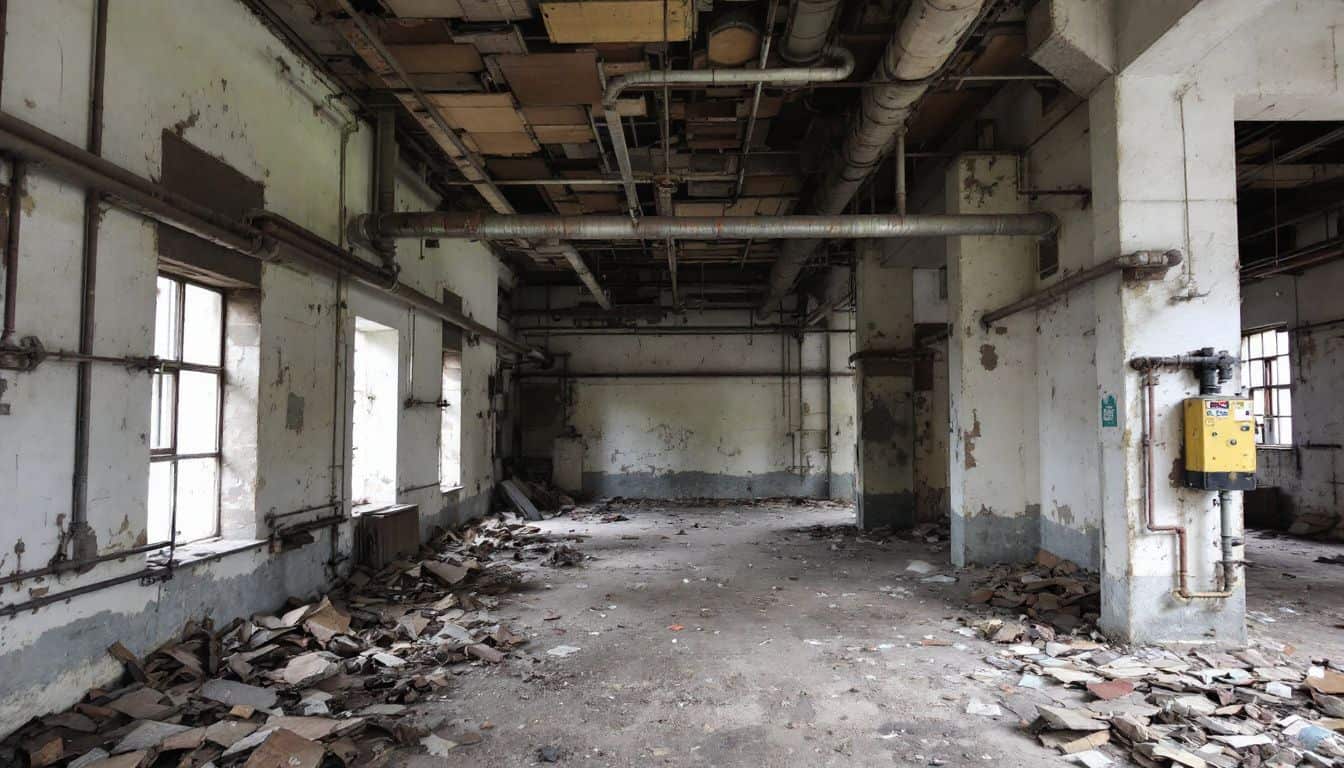
    artex asbestos removal cost - What is the average cost for removing as

    For occupied commercial premises, a management survey is usually the right starting point where the aim is to locate and manage asbestos during normal occupation and routine maintenance.

    If the building is heading into major strip-out, structural alteration or redevelopment, you will usually need a demolition survey before intrusive works begin.

    Where you simply need to know whether a textured coating contains asbestos, professional asbestos testing can be the fastest and most cost-effective first step. Once you have a result, you can make a defensible decision about whether to manage in place, encapsulate, overboard or remove.

    Practical first steps for property managers

    1. Identify where textured coatings are present across the property.
    2. Check whether asbestos records or previous survey data already exist.
    3. Arrange sampling before maintenance or refurbishment starts.
    4. Decide whether the coating will remain undisturbed or be affected by planned works.
    5. Get quotations based on the same scope, including waste and reinstatement.

    If you need a quick answer on one suspect area, sample analysis may be suitable in the right circumstances. For some straightforward situations, a testing kit can help, although in commercial settings professional attendance is usually the safer and more defensible option.

    For urgent attendance, multiple samples or a faster commercial response, this dedicated asbestos testing service is often the better route. It reduces the risk of accidental disturbance and gives you documented results for your asbestos records.

    Main options that affect artex asbestos removal cost

    The method chosen has a direct effect on artex asbestos removal cost. It also affects programme length, disruption, waste volume and the amount of making good required afterwards.

    In practice, the main options are scraping and sanding, steam-assisted removal, overboarding with plasterboard and full controlled asbestos removal. The right choice depends on test results, substrate condition, occupancy and what the building needs next.

    Scraping and sanding

    Scraping and sanding should only be used when the textured coating has been confirmed asbestos-free. If asbestos is present or even suspected, dry disturbance methods can release fibres and create avoidable risk.

    For confirmed non-asbestos coatings, typical commercial costs are often:

    • Per room: around £200 to £500
    • Per day labour: around £150 to £300 for the operative element, excluding waste and making good

    It can look like the cheapest route on paper. In practice, once dust control, protection, waste, skimming and redecoration are added, the total can be higher than expected.

    Steam-assisted removal

    Steam can soften textured coating so it can be removed with less dust than dry methods. Where asbestos is present, controlled wet techniques are generally preferred because they help reduce fibre release during the work.

    Typical commercial costs are often:

    • Per m²: around £50 to £80
    • Small room: around £750 to £1,600
    • Larger multi-room area: £3,000 upwards depending on access and controls

    This method can still be labour-intensive. Costs rise where there are high ceilings, awkward access points, occupied areas nearby or a need to phase works around tenants.

    Overboarding with plasterboard

    Overboarding is often one of the most economical ways to deal with stable textured coating when removal is not necessary. Instead of stripping the existing finish, plasterboard is fixed over it and skimmed to create a flat surface.

    Typical costs are often:

    • Per m²: around £20 to £40
    • Average room: around £300 to £800
    • Larger sections: £1,500 to £4,000 or more

    This option can reduce disruption and speed up programme times. It also avoids some of the mess associated with direct removal.

    It does not remove the asbestos-containing material. The material remains in place and still needs to be recorded and managed correctly within your asbestos arrangements.

    Overboarding can make sense when:

    • The coating is in reasonable condition
    • No intrusive works are planned through or above the ceiling
    • You need a faster route to a new finish
    • Budget and downtime are tight

    Full controlled asbestos removal

    Where the coating is damaged, deteriorating or due to be disturbed by refurbishment, full removal may be the best option. This is usually the highest artex asbestos removal cost route because it involves specialist labour, controlled methods, cleaning and hazardous waste disposal.

    Typical ranges often fall within:

    • Per m²: around £50 to £100
    • Per room: around £750 to £2,000
    • Large commercial areas: £4,000 to £12,000+

    The upper end is usually driven by complexity rather than the coating alone. Restricted access, high-level work, night shifts, tenant protection and extensive reinstatement all add cost.

    If removal is the right route, make sure you are dealing with a specialist provider of asbestos removal who understands commercial planning, waste handling and compliance requirements.

    What pushes labour costs up

    Labour is one of the largest parts of artex asbestos removal cost. Once asbestos is involved, the work demands trained operatives, careful planning, supervision and controlled cleaning.
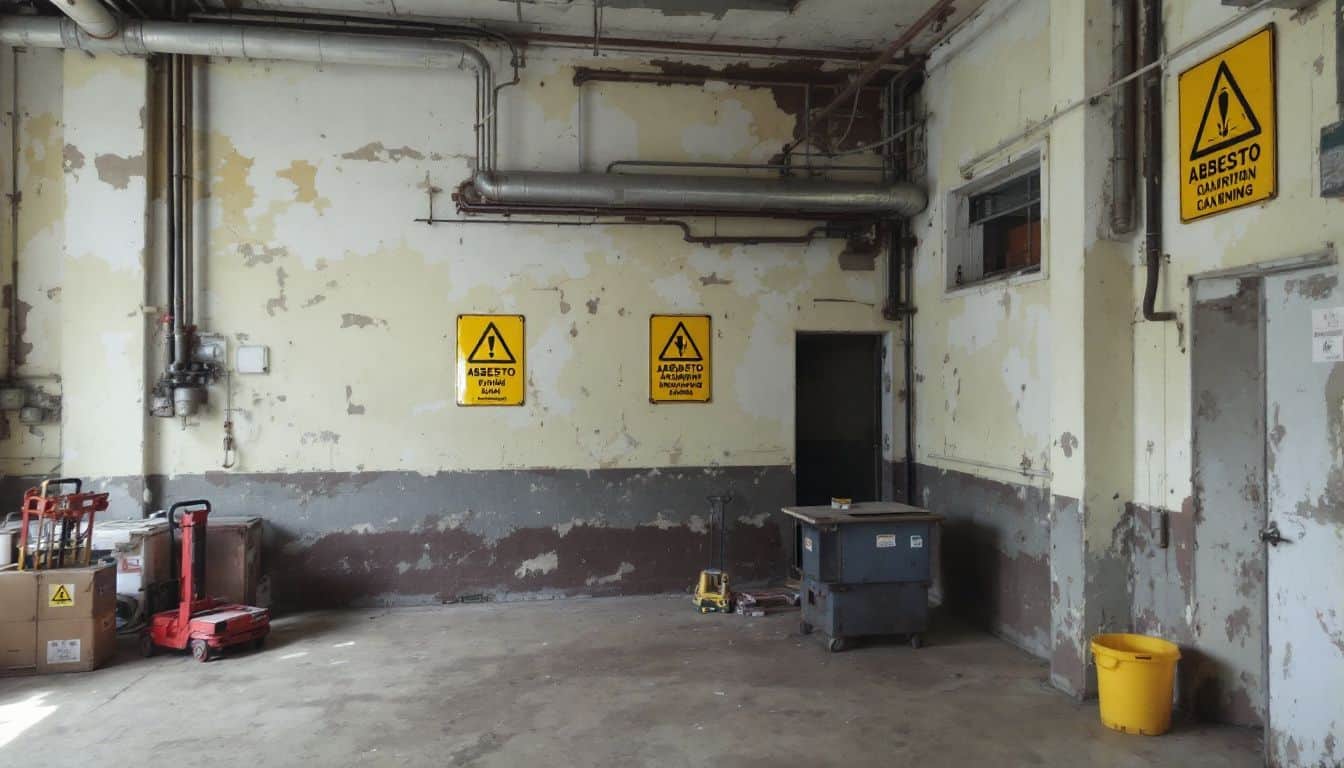
    artex asbestos removal cost - What is the average cost for removing as

    For non-asbestos decorative removal, labour may be fairly straightforward. For asbestos-containing textured coatings, labour costs rise because the process is slower, more controlled and more heavily documented.

    Common labour cost drivers

    • Out-of-hours working in occupied premises
    • Restricted access or difficult parking
    • High ceilings, stairwells or plant areas
    • Multiple small rooms instead of one open area
    • Fragile backgrounds requiring slower removal
    • Extra cleaning and decontamination procedures
    • Phased works to keep the building operational
    • Close coordination with other contractors

    On commercial projects, labour cost is rarely just the removal team. It may also include supervision, setup, transit route protection, cleaning operatives and site coordination.

    If a quotation looks unusually low, ask whether it includes:

    • Site setup and protection
    • Controlled removal methods
    • Waste packaging and transport
    • Final cleaning
    • Analyst attendance where required
    • Reinstatement or making good

    Factors that change artex asbestos removal cost

    No two commercial projects price the same. Final artex asbestos removal cost is shaped by the building, the coating condition and how the works need to be delivered.

    Condition of the coating

    Stable textured coating is usually easier and cheaper to manage than damaged, flaking or water-affected material. Poor condition can increase the controls needed and slow the removal process.

    Size of the area

    Larger projects are often priced per square metre, while smaller jobs may be priced per room. Multi-room schemes can benefit from economies of scale, but only where access and sequencing are efficient.

    Access and ceiling height

    A standard office ceiling is simpler than a retail unit with high soffits or a communal stair core. Towers, platforms or specialist access equipment will increase the total.

    Occupancy and programme

    An empty unit is usually cheaper to work in than a live office, school, surgery or managed block. If the building needs to stay open, isolation measures and night work can quickly increase artex asbestos removal cost.

    Waste disposal

    Asbestos waste must be packaged, labelled, transported and disposed of correctly. Waste volume and the logistics of getting it off site can make a noticeable difference to the quotation.

    Reinstatement requirements

    Removing the coating is only one part of the job. You may also need plastering, boarding, decoration, electrical reinstatement or suspended ceiling work before the space is ready for handover.

    Plastering after Artex removal

    Plastering is often where commercial clients underestimate the true budget. Once textured coating has been removed, the surface underneath may be uneven, damaged or unsuitable for direct decoration.

    A skim coat may be enough in some rooms. In others, you may need patch repairs, full reboarding or extra preparation to achieve a finish suitable for offices, communal areas or customer-facing spaces.

    Typical plastering costs vary by condition and area, but the practical point is simple: include it in the project budget from the start. A low removal quote can stop looking competitive once plastering is added.

    When plastering is usually needed

    • After scraping and sanding non-asbestos Artex
    • After steam-assisted removal where the substrate is marked
    • Where old ceilings have cracks or previous repairs
    • When a flat modern finish is required

    If the ceiling is badly uneven, overboarding and skimming may be more cost-effective than trying to make a damaged surface good.

    Painting and decorating costs after removal

    Decoration is another cost that is easy to overlook when focusing only on artex asbestos removal cost. Commercial ceilings often need mist coats, stain blocking, full redecoration and sometimes wall touch-ups if adjacent finishes are affected.

    For a single room, decoration may be modest. Across a multi-room office, school, healthcare setting or managed block, it becomes a significant part of the total project spend.

    To avoid delays and disputes, decide early whether the contractor’s quotation includes:

    • Preparation of newly skimmed surfaces
    • Primer or mist coat
    • Full ceiling decoration
    • Wall touch-ups
    • Protection of fixtures and fittings
    • Return visits after drying time

    If decoration is excluded, get a separate price before the project starts so the full budget is clear.

    When removal is not the best option

    Commercial clients often assume that asbestos automatically means removal. That is not always the case. If a textured coating is in good condition and will remain undisturbed, managing it in place may be entirely appropriate under the Control of Asbestos Regulations.

    That might involve recording the material, assessing the risk, labelling where appropriate, and ensuring anyone carrying out maintenance is aware of its presence.

    Removal is more likely to be necessary when:

    • The coating is damaged or deteriorating
    • Refurbishment will disturb it
    • Services need to pass through the ceiling
    • Future maintenance access is likely to affect it
    • The area is being stripped out or redeveloped

    For many commercial buildings, the most cost-effective decision is not the cheapest immediate quote. It is the option that best matches future use of the property, planned works and compliance duties.

    How to compare quotations properly

    When reviewing prices, do not focus only on the headline artex asbestos removal cost. A cheaper quote can become the more expensive option if it excludes access, waste, cleaning or reinstatement.

    Ask each contractor these questions

    1. Has the coating been tested, or is the price based on assumption?
    2. Does the quotation include setup, protection and cleaning?
    3. Is waste disposal included?
    4. Are access equipment and out-of-hours costs included?
    5. Does the price include plastering or making good?
    6. Will the building remain occupied during the works?
    7. What information will be provided for asbestos records after the work?

    Clear scope avoids budget drift. It also helps you compare contractors fairly and defend procurement decisions internally.

    Commercial planning advice for landlords and facilities teams

    If you manage multiple units or a larger estate, treat textured coating issues as a planning matter rather than a reactive maintenance problem. Good asbestos management reduces disruption and prevents expensive emergency decisions.

    Practical steps include:

    • Review asbestos records before issuing maintenance instructions
    • Check textured coatings before lighting, HVAC or cabling works
    • Bundle sampling across several areas to reduce attendance costs
    • Coordinate removal with wider refurbishment to limit repeat access
    • Decide early whether the property will remain occupied during works
    • Keep survey, testing and removal records in one accessible place

    If you need location-specific support, Supernova can assist with an asbestos survey London, an asbestos survey Manchester or an asbestos survey Birmingham depending on where your property portfolio is based.

    Frequently Asked Questions

    Does Artex always contain asbestos?

    No. Some older textured coatings contain asbestos, usually chrysotile, but not all do. The only reliable way to confirm whether asbestos is present is to have the material sampled and analysed.

    What is the average artex asbestos removal cost for a commercial property?

    There is no single average that suits every site. Commercial artex asbestos removal cost often ranges from around £50 to £100 per m² for controlled removal, but final pricing depends on testing results, access, occupancy, waste and reinstatement.

    Is overboarding cheaper than removal?

    Often, yes. Overboarding with plasterboard is commonly cheaper than full removal where the textured coating is stable and does not need to be disturbed. However, the asbestos-containing material remains in place and must still be recorded and managed correctly.

    Can maintenance staff remove asbestos-containing Artex themselves?

    That is rarely a sensible approach in commercial settings. Even where work is not licensable, employers still have duties under the Control of Asbestos Regulations to assess risk, use competent people, apply suitable controls and follow HSE guidance. In most commercial environments, specialist support is the safer option.

    What should be done before refurbishing a building with textured ceilings?

    Check existing asbestos information first. If records are missing or unclear, arrange appropriate survey work or testing before any intrusive work begins. For refurbishment, the correct survey type depends on the scope of the planned works and whether the building fabric will be disturbed.

    Need a clear quote for artex asbestos removal cost?

    If you need reliable advice on artex asbestos removal cost, Supernova Asbestos Surveys can help with surveys, testing, sampling and removal support for commercial properties across the UK. We have completed more than 50,000 surveys nationwide and understand the practical pressures facing landlords, managing agents and facilities teams.

    Call 020 4586 0680, visit asbestos-surveys.org.uk, or contact Supernova today for expert help with asbestos surveys, testing and project planning.
  • How much does a professional asbestos survey cost?

    How much does a professional asbestos survey cost?

    When you are planning works, buying a building or trying to stay on top of compliance, asbestos survey cost is never just a line in a budget. The real question is whether you are paying for the right survey, carried out to the right standard, with a report you can actually use when decisions need to be made quickly.

    For commercial property managers, landlords, duty holders and buyers, cost varies because buildings vary. A small office with clear access is a different job from a mixed-use block with risers, voids, plant rooms and a long history of alterations. The right survey helps you avoid delays, protect occupants and contractors, and meet your duties under the Control of Asbestos Regulations in line with HSG264 and current HSE guidance.

    What affects asbestos survey cost?

    Asbestos survey cost depends on scope, access and complexity rather than a single fixed rate. Two buildings with similar floor area can still attract very different quotes if one has restricted access, more suspect materials or a more intrusive survey requirement.

    Before you compare prices, check what is actually included. A low quote can become expensive if sampling, laboratory analysis, re-visits or report amendments are added later.

    Main factors that influence price

    • Survey type – management, refurbishment, demolition or re-inspection
    • Size of property – more rooms, floors and ancillary areas usually mean more time on site
    • Accessibility – ceiling voids, basements, locked rooms, risers and roof spaces add complexity
    • Building age and construction – older premises often contain more suspect materials
    • Use of the property – offices, schools, retail units and industrial sites all create different access and safety considerations
    • Number of samples – more suspect materials can mean more laboratory work
    • Urgency – fast turnaround or out-of-hours attendance can increase the fee
    • Report detail – larger sites may need more extensive registers, plans and recommendations

    If you are requesting quotes, ask these practical questions:

    1. Is sample analysis included?
    2. Are there limits on the number of samples?
    3. Will the report include photographs and location plans?
    4. Is the price based on full access to all relevant areas?
    5. What is the turnaround time for the final report?

    Those details matter more than the cheapest headline figure. Good reporting saves time later when contractors, buyers or managing agents need clear information.

    What type of asbestos survey do I need?

    Choosing the correct survey is one of the biggest drivers of asbestos survey cost. If the wrong survey is commissioned, you may need a second visit before works can proceed, which means extra cost and avoidable delay.

    Management survey

    A management survey is usually the starting point for occupied commercial premises. It is designed to locate, as far as reasonably practicable, the presence and extent of asbestos-containing materials that could be disturbed during normal occupation, routine maintenance or minor works.

    This is the most common survey for offices, communal areas, retail units, schools, warehouses and other non-domestic premises where the duty to manage applies. If you need an asbestos management survey for an occupied building, make sure the scope matches how the property is actually being used.

    Refurbishment survey

    If planned works will disturb the fabric of the building, a refurbishment survey is required for the affected area before work starts. This survey is intrusive and may involve opening up walls, floors, ceilings, boxing and service voids.

    Because it is more invasive and often more time-consuming, the asbestos survey cost is usually higher than for a management survey. It is the right choice before strip-outs, office fit-outs, major M&E upgrades, kitchen replacements in mixed-use properties or any project where hidden materials may be disturbed.

    Demolition survey

    Before a building is demolished, a demolition survey is needed. This is the most intrusive survey type and aims to identify all reasonably accessible asbestos-containing materials so they can be managed or removed before demolition proceeds.

    Where the structure is unstable, heavily altered or difficult to access, the survey process can be more complex. That is why asbestos survey cost for demolition work is often at the upper end of the scale.

    Re-inspection survey

    If asbestos has already been identified and remains in place, a re-inspection survey helps you review its condition and keep your records current. For many duty holders, this is a practical way to maintain compliance and demonstrate that asbestos risks are being monitored.

    Re-inspection work is often more affordable than a first survey because known materials are already recorded. Even so, the report still needs to be accurate, current and shared with anyone who may disturb the materials.

    Combined surveys

    On live commercial sites, combined survey arrangements are often the most sensible option. You may need a management survey for occupied areas and a refurbishment survey for one floor or one vacant unit due for works.

    This approach can make asbestos survey cost more efficient by reducing duplicated mobilisation and aligning the survey scope with the way the building is actually being used.

    How likely is it that my property contains asbestos?

    If your property was built or refurbished when asbestos was widely used in UK construction, there is a realistic possibility that it contains asbestos-containing materials. The older the building, and the more historic alterations it has undergone, the more sensible it is to assume asbestos may be present until a proper survey proves otherwise.

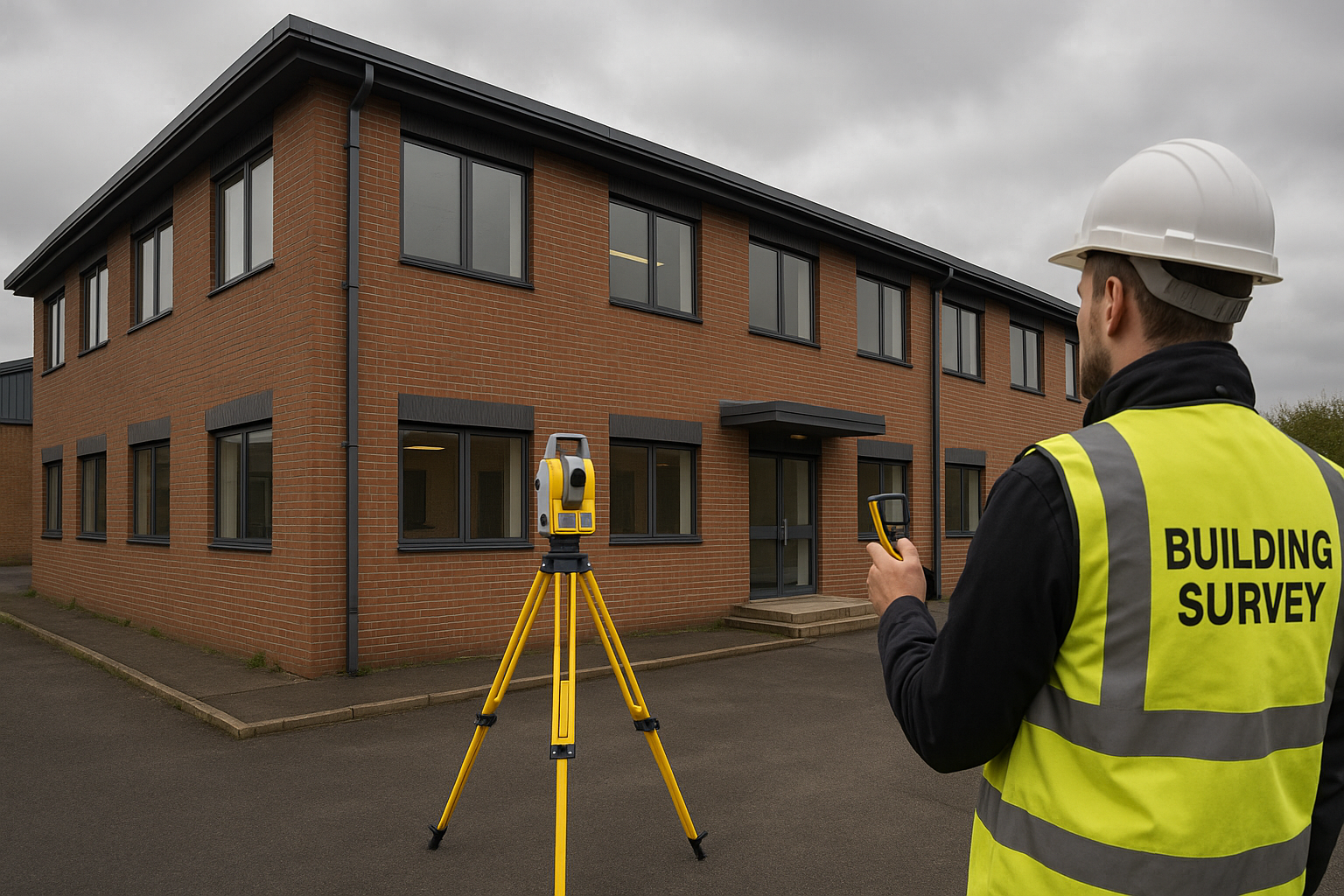
    asbestos survey cost - How much does a professional asbestos su

    Asbestos was used in a wide range of products because it was valued for insulation and fire resistance. In commercial buildings, it is often found in both obvious and less obvious locations.

    Common places asbestos may be found

    • Insulation board in partitions, ceilings and service risers
    • Pipe lagging and thermal insulation
    • Sprayed coatings
    • Cement roof sheets, wall panels and flues
    • Floor tiles and bitumen adhesives
    • Textured coatings such as Artex
    • Soffits, gutters and downpipes
    • Fire doors, panels and duct linings
    • Plant rooms, lift shafts and back-of-house areas

    Properties that deserve extra caution include:

    • Older offices and civic buildings
    • Schools, hospitals and public premises
    • Industrial units and warehouses
    • Retail units with repeated fit-outs
    • Mixed-use properties with commercial and residential areas

    If records are missing, do not rely on assumptions. Ask for previous surveys, asbestos registers, removal paperwork and maintenance records. If there is uncertainty, the asbestos survey cost is usually modest compared with the disruption of discovering asbestos after contractors have already started work.

    How much does a domestic asbestos survey cost?

    Although the main search intent here is commercial, domestic pricing is often relevant for landlords, portfolio owners, mixed-use buildings and home buyers. The answer depends on the same factors: survey type, property size, access and the number of suspect materials.

    For a straightforward domestic property, a management-style inspection or home buyer asbestos survey is usually less expensive than a refurbishment or demolition survey. A small flat with good access will generally cost less than a large detached house with garages, loft areas, outbuildings and multiple textured coatings.

    Typical domestic pricing often falls into broad bands such as:

    • Small flat or maisonette: around £200 to £350
    • Typical house: around £250 to £500
    • Larger or more complex domestic property: £500 and above

    These are indicative ranges rather than fixed tariffs. Final asbestos survey cost depends on the actual scope, access and whether sampling and laboratory analysis are included.

    If you only need a specific material checked, targeted sample analysis may be suitable. That can be useful where one suspect item needs confirmation, but it is not a substitute for a full survey when wider management or planned works are involved.

    Size of property matters

    Size of property has a direct effect on asbestos survey cost because surveyors need time to inspect each relevant area properly. More rooms, more floors and more ancillary spaces usually mean more inspection time, more notes, more photographs and potentially more samples.

    For commercial clients, it is worth thinking beyond headline square footage. Outbuildings, service yards, roof voids, basements, plant areas and storage zones all affect the scope.

    Accessibility also changes the price

    A building that is easy to inspect is usually quicker and more cost-effective to survey. Restricted access, live trading conditions, security controls, confined spaces or the need for out-of-hours attendance can all increase asbestos survey cost.

    If you want an accurate quote, provide floor plans, site photos and details of any access restrictions at the enquiry stage. That helps avoid revised pricing later.

    Why an asbestos survey is crucial for home buyers

    Home buyers often focus on mortgage valuations and general building surveys, but those reports do not usually confirm the presence, extent or condition of asbestos-containing materials. If a buyer plans to rewire, replace ceilings, renovate kitchens or convert loft space, that gap matters.

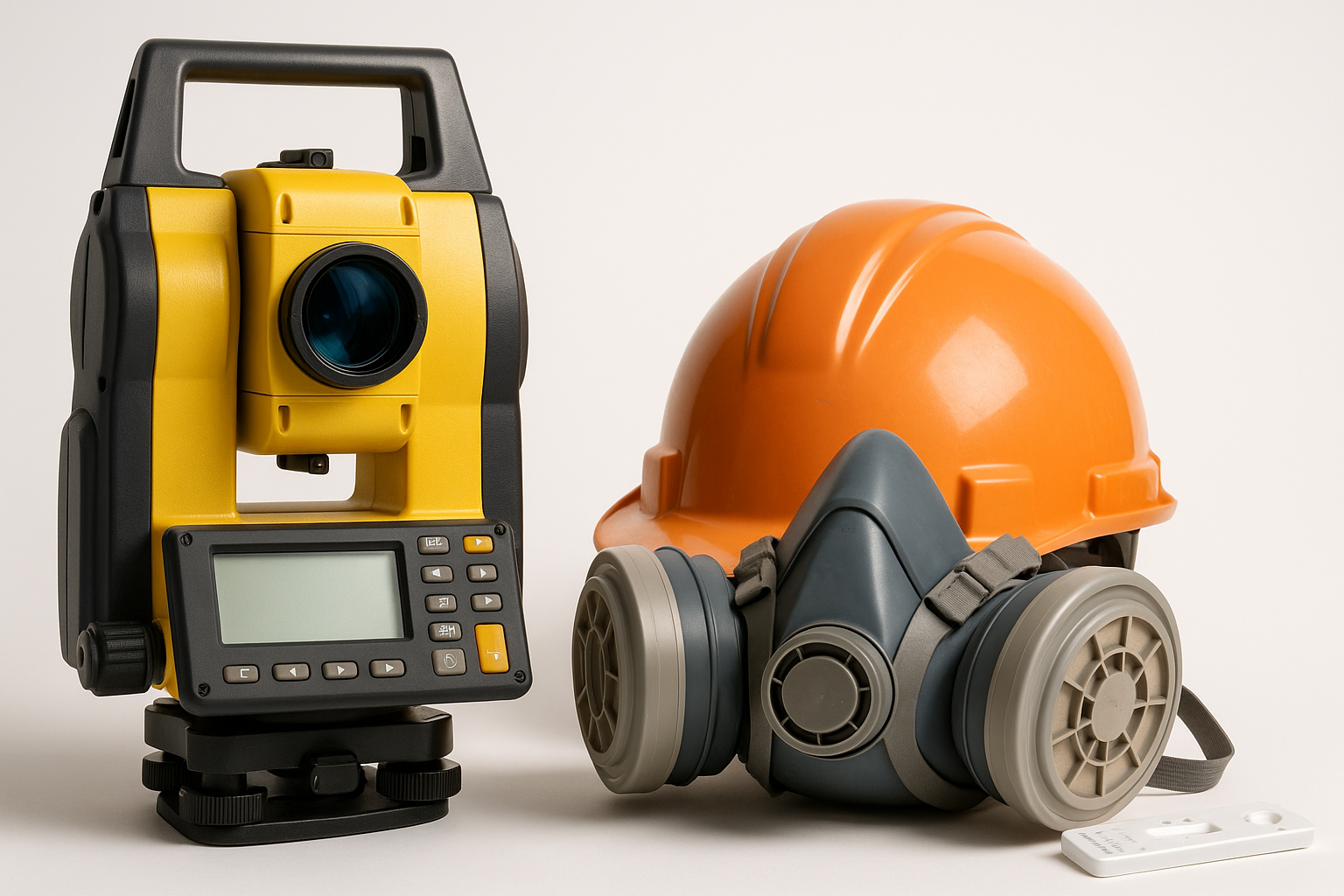
    asbestos survey cost - How much does a professional asbestos su

    An asbestos survey gives buyers clearer information before they commit to works or final budgets. It can also be useful during negotiations if materials need management, encapsulation or removal.

    Why buyers commission a survey

    • To understand whether suspect materials are present
    • To budget for management or removal work
    • To avoid disturbing asbestos during refurbishment
    • To protect tradespeople and occupants
    • To support negotiations before exchange or completion

    This is especially relevant in mixed-use and semi-commercial properties. A shop with a flat above, a converted office, or a building with shared service areas can create risks that a standard property survey will not address.

    For commercial buyers, the same principle applies during due diligence. Spending sensibly on asbestos survey cost before acquisition can prevent expensive surprises once the deal is done.

    Asbestos surveys: ensuring a safe and healthy home and workplace

    The purpose of a survey is broader than price. It is about protecting people, preventing accidental disturbance and making sure anyone working in or managing the property has reliable information.

    In mixed-use buildings, that means a safe and healthy home as well as a safe workplace. Shared corridors, service risers, ceiling voids and plant rooms can all contain asbestos-containing materials that need to be identified and managed properly.

    A professional survey helps you:

    • Identify suspect asbestos-containing materials as far as reasonably practicable
    • Assess their condition
    • Support an asbestos register and management plan
    • Plan maintenance safely
    • Reduce the risk of project delays and emergency stoppages
    • Provide clear information to contractors, staff, tenants and visitors where relevant

    That is why asbestos survey cost should always be judged against the cost of getting it wrong. A cheaper survey that misses key areas or limits sampling too heavily can become the most expensive option on the project.

    Popular essentials when comparing asbestos survey quotes

    Some providers talk about extras. In reality, the essentials should be clear from the start. When reviewing asbestos survey cost, look for the practical items that make the report usable rather than just technically compliant.

    What you should expect

    • Inspection by a competent asbestos surveyor
    • Sampling of suspect materials where appropriate
    • Laboratory analysis
    • Photographs and clear location details
    • Material assessments where relevant
    • A structured survey report or asbestos register
    • Recommendations for management, remedial action or next steps

    Popular essentials for commercial clients also include:

    • Fast report turnaround where projects are live
    • Clear floor-by-floor findings
    • Practical advice rather than vague wording
    • Survey scheduling that fits around tenants or operations
    • Coverage across multiple sites if you manage a portfolio

    If you operate in the capital, booking an asbestos survey London service with local coverage can help with access planning and turnaround. The same applies if you need an asbestos survey Manchester appointment or an asbestos survey Birmingham visit for regional property management.

    How much does Artex removal cost?

    Textured coatings such as Artex are a common concern, especially in older homes, communal areas and commercial conversions. Not all textured coatings contain asbestos, which is why testing should come before any removal decision.

    If asbestos is confirmed, removal cost depends on the condition of the coating, how it is bonded to the surface, the size of the area, access and the removal method required. Some textured coating work may be non-licensed, but it still needs to be assessed properly and carried out with suitable controls.

    Typical Artex removal costs can range from a few hundred pounds for a small, straightforward area to several thousand pounds for larger or more complex projects. The right first step is confirmation by testing or survey, followed by a removal quote based on the actual scope.

    If the coating is in good condition and is unlikely to be disturbed, management may be more appropriate than removal. That decision should be based on the material condition and your planned works, not guesswork.

    Asbestos removal costs 2026 (UK): what to expect

    Clients often search for future-facing pricing because they are budgeting for projects that have not started yet. While no responsible surveyor should promise exact removal costs without seeing the materials, there are clear factors that shape asbestos removal costs in the UK.

    Removal pricing depends on:

    • The type of asbestos-containing material
    • Its condition and friability
    • Whether work is licensed or non-licensed
    • The volume of material involved
    • Access and site constraints
    • Enclosure, decontamination and waste requirements
    • Air monitoring and clearance arrangements where applicable

    As a rough guide, asbestos cement removal is usually less expensive than removing insulation board, lagging or sprayed coatings. Small jobs can cost a few hundred pounds, while larger licensed projects can run into several thousands of pounds or more.

    The practical way to budget is this:

    1. Commission the right survey first
    2. Use the findings to define the actual removal scope
    3. Obtain quotes from competent removal contractors
    4. Allow for associated costs such as access equipment, reinstatement and programme impact

    That approach gives you a far more reliable budget than trying to guess removal costs before materials have been identified properly.

    Why Supernova stands out

    Some competitor pages talk about why they stand out. The better question is what makes a survey company genuinely useful when deadlines, compliance and property risk are all in play.

    Supernova Asbestos Surveys has completed more than 50,000 surveys nationwide. That experience matters because commercial clients need more than a basic inspection. They need a team that understands live environments, varied property types and the practical realities of managing buildings, projects and tenants.

    Clients choose Supernova because we focus on what property managers and duty holders actually need:

    • Clear advice on the right survey type before work starts
    • Nationwide coverage for single sites and portfolios
    • Reports that are practical, readable and useful on live projects
    • Survey planning that works around occupied premises
    • Strong understanding of duty holder responsibilities under UK regulations
    • Straightforward communication from enquiry to report delivery

    That is the difference between simply obtaining a report and getting information you can act on. When asbestos survey cost is being weighed against project risk, clarity and competence are worth paying for.

    Practical advice before you book a survey

    If you want the best value from asbestos survey cost, preparation helps. A little planning at the start often leads to a better quote, a smoother site visit and a more useful report.

    • Gather any previous asbestos records, plans and removal certificates
    • Be clear about whether the building is occupied, vacant or partly in use
    • Explain any planned works so the right survey type is quoted
    • List access restrictions, permit requirements or security arrangements
    • Highlight outbuildings, roof spaces, basements and plant areas
    • Ask when the report will be issued and what it will include

    If you are managing multiple sites, ask whether a phased or portfolio approach would be more efficient. In many cases, that helps control asbestos survey cost while keeping compliance consistent across the estate.

    Frequently Asked Questions

    How much does an asbestos survey cost for a commercial property?

    Commercial asbestos survey cost usually depends on the survey type, the size of the property, access and the number of suspect materials. A small, straightforward management survey may start from a few hundred pounds, while larger or more intrusive surveys can cost significantly more.

    What is the difference between a management survey and a refurbishment survey?

    A management survey is for occupied buildings and routine use. A refurbishment survey is needed before intrusive works that will disturb the building fabric. The refurbishment survey is more invasive, so it usually costs more.

    Do I need an asbestos survey before buying a property?

    If the property is older or you plan to carry out works, an asbestos survey is often a sensible step. Standard building surveys do not usually confirm whether asbestos is present, so a dedicated survey gives you clearer information for budgeting and negotiations.

    Does asbestos survey cost include sample testing?

    Not always. Some quotes include sampling and laboratory analysis, while others charge separately or cap the number of samples. Always check what is included before you approve the instruction.

    Can I just test one material instead of booking a full survey?

    If you only need to confirm one suspect item, targeted sampling may be suitable. However, if you need wider compliance information, an asbestos register or clearance before works, a full survey is usually the better option.

    If you need clear advice on asbestos survey cost, the right survey type, or fast support for a commercial or mixed-use property, speak to Supernova Asbestos Surveys. Call 020 4586 0680 or visit asbestos-surveys.org.uk to arrange a quote.

  • Can an asbestos survey be conducted during regular working hours?

    Can an asbestos survey be conducted during regular working hours?

    How Often Should Asbestos Surveys Be Carried Out?

    If you manage a building constructed before 2000, asbestos is almost certainly present somewhere in the fabric of that structure — and the law requires you to manage it actively. One of the most common questions duty holders ask is: how often should asbestos surveys be carried out? The honest answer depends on your building’s condition, what’s happening inside it, and where you are in the property lifecycle.

    This post cuts through the uncertainty and gives you a clear, practical picture of your obligations — and what happens if they’re not met.

    Your Legal Duty and Why Survey Frequency Matters

    Under the Control of Asbestos Regulations, anyone who owns, manages, or holds responsibility for a non-domestic premises built before 2000 has a legal duty to manage asbestos. That duty doesn’t end with a single survey — it’s continuous.

    The Health and Safety Executive (HSE) and its guidance document HSG264 are explicit: asbestos-containing materials (ACMs) must be identified, their condition assessed, and a written management plan maintained and kept current. Because ACMs deteriorate over time and buildings change — through maintenance, alterations, and general wear — that assessment must be revisited regularly.

    Failure to maintain an up-to-date asbestos register and management plan can result in enforcement notices, prosecution, and unlimited fines. More critically, it puts the people who live and work in your building at genuine risk.

    The Three Main Types of Asbestos Survey

    Before addressing frequency, it’s worth being clear on which survey applies to your circumstances. There are three main types, each serving a distinct purpose — and the question of how often surveys should be carried out can’t be answered without understanding which type you need.

    Management Survey

    A management survey is the standard survey for occupied, operational premises. It identifies ACMs in accessible areas and assesses their condition so they can be managed safely over time. This is the survey most duty holders require as the foundation of their ongoing compliance.

    It’s non-intrusive, meaning surveyors work within accessible areas without dismantling the building fabric. The result is an asbestos register and a risk assessment that informs your management plan.

    Refurbishment Survey

    A refurbishment survey is required before any work that will disturb the building fabric — whether that’s a full renovation or a targeted alteration to a specific zone. It’s more intrusive than a management survey and must be completed before work begins, not during it.

    A management survey does not substitute for a refurbishment survey. The two serve different purposes and have different scopes.

    Demolition Survey

    A demolition survey is required before any part of a building is demolished. It’s the most intrusive survey type and must be fully completed before demolition work starts. This is a legal requirement — not a recommendation — and no previously completed survey replaces it.

    How Often Should an Asbestos Management Survey Be Repeated?

    A management survey is not a one-and-done exercise. Once the initial survey is complete and your asbestos register is in place, you’re required to keep that register current through periodic re-inspection surveys.

    HSG264 recommends that ACMs are re-inspected at least annually in most circumstances. However, the appropriate frequency depends on several factors:

    • The condition of identified ACMs: Materials in poor condition or at risk of disturbance need more frequent monitoring — sometimes every six months.
    • The type of premises: High-traffic buildings with frequent maintenance activity carry a higher risk of ACMs being accidentally disturbed.
    • Changes to the building: Any alterations, repairs, or new works should trigger a review of the register, even between scheduled re-inspections.
    • Occupancy patterns: Buildings with vulnerable occupants — schools, care homes, hospitals — warrant more frequent inspection intervals.
    • The number of ACMs present: Buildings with extensive asbestos-containing materials across multiple locations require closer monitoring than those with a single, well-contained ACM.

    In practice, most duty holders arrange an annual re-inspection as a baseline. Your asbestos management plan should specify the re-inspection interval, and that interval should be justified by the risk assessment in your survey report — not chosen arbitrarily.

    When a New Survey Is Required — Not Just a Re-Inspection

    Re-inspections update the condition assessment of known ACMs. But there are specific circumstances where a brand new survey — or an extension of an existing one — is necessary. Knowing when to commission a new survey, rather than relying on a re-inspection, is a critical part of managing your duty.

    Change of Duty Holder

    If a building changes ownership or management, the incoming duty holder should not rely solely on the previous survey. The register should be reviewed carefully, and if it’s out of date, incomplete, or was produced by a non-accredited operator, a new asbestos management survey should be commissioned promptly.

    Inheriting liability for an inadequate register is a risk no responsible manager should accept. If the documentation doesn’t stack up, act before something goes wrong — not after.

    Significant Time Has Passed Without Re-Inspection

    If a survey was carried out many years ago and the building has not been re-inspected since, it cannot be relied upon. ACMs degrade. Buildings change through maintenance, minor works, and general use. A survey from a decade ago that has never been reviewed is unlikely to reflect current conditions — and is unlikely to satisfy your duty of care under the Control of Asbestos Regulations.

    Refurbishment or Construction Work Is Planned

    Even if you have a current management survey in place, any planned refurbishment work requires a separate refurbishment survey for the affected areas before work begins. The management survey is non-intrusive — it doesn’t investigate behind walls, beneath floors, or above ceilings in the same way a refurbishment survey does. Contractors must not start work until a refurbishment survey has been completed for the area in question.

    Areas Previously Not Surveyed

    Management surveys cover accessible areas at the time of inspection. If your building has areas that were inaccessible during the original survey — locked plant rooms, sealed voids, areas under long-term tenancy — these gaps must be addressed. A supplementary survey of those areas should be arranged as soon as access becomes available.

    Gaps in your register are gaps in your legal compliance. Don’t leave them unresolved.

    The Building Is Being Demolished or Substantially Altered

    Regardless of what surveys have been carried out previously, a demolition survey is a legal prerequisite before any demolition work begins. No existing survey — however recent — replaces it. This applies to partial demolitions as well as full-building demolitions.

    What Happens During a Re-Inspection Survey?

    A re-inspection survey is carried out by a qualified, UKAS-accredited surveyor who revisits all previously identified ACMs and assesses their current condition. The surveyor checks for:

    • Deterioration or physical damage to ACMs since the last inspection
    • Any disturbance to materials — accidental or otherwise
    • Changes to the building that may have exposed previously concealed materials
    • New works or alterations that may have affected the integrity of ACMs
    • Any materials that have been removed or encapsulated since the previous inspection

    The outcome is an updated condition score for each material, along with revised recommendations. Your asbestos register is updated accordingly, and the new report becomes the current version of your compliance documentation.

    This updated register is what contractors must be shown before carrying out any work in the building — a legal requirement that is frequently overlooked in practice. If your register is out of date, you’re not compliant, regardless of whether a survey was ever completed.

    Asbestos Surveys in Occupied Buildings

    A practical concern for many duty holders is whether surveys can be carried out while the building is in use. For management surveys and re-inspections, the answer is yes — with appropriate planning and coordination.

    Surveyors take small samples of suspected ACMs where necessary, wetting the material first to suppress fibre release and sealing the sample immediately. When carried out by a competent, UKAS-accredited professional, the process poses negligible risk to building occupants. The key is ensuring that staff are not present in the immediate area during sampling.

    A surveyor typically works through zones in sequence, so the rest of the building can continue operating normally. Some straightforward steps make the process run smoothly:

    • Schedule the survey during quieter periods where possible
    • Brief staff in advance so there’s no unnecessary concern
    • Assign a point of contact to escort the surveyor and manage access
    • Ensure all areas — including locked plant rooms and roof access — are accessible on the day
    • Use signage to keep staff clear of active inspection zones

    Refurbishment surveys are different. They require intrusive access and must be carried out in unoccupied areas. If your building is partially occupied and a refurbishment survey is needed in a specific zone, that area must be vacated before the surveyor begins work.

    What the Survey Report Should Include

    Whether it’s an initial management survey or a re-inspection, the resulting report is a critical compliance document. A properly completed survey report should include:

    • A full schedule of all ACMs identified or presumed present
    • The location, extent, and condition of each material
    • A risk assessment for each item
    • Photographic evidence of each ACM
    • Recommendations for management, encapsulation, or removal
    • An asbestos register to be kept on site and made available to contractors

    This report forms the foundation of your asbestos management plan. It must be reviewed and updated at every re-inspection interval, and a copy must be accessible on site at all times. Contractors who carry out any work in the building must be shown the register before they begin — this is a legal obligation, not a courtesy.

    What If You’re Not Sure Whether ACMs Are Present?

    If you’re unsure whether a specific material contains asbestos — perhaps following minor damage or ahead of a small maintenance task — a testing kit allows you to take a sample and have it analysed by an accredited laboratory. This is a practical option for targeted situations where a full survey isn’t immediately required.

    That said, a testing kit is not a substitute for a full management survey. If your building doesn’t have an up-to-date asbestos register, a proper survey is the only way to meet your legal duty. A single sample result tells you about one material in one location — it doesn’t give you the building-wide picture the Control of Asbestos Regulations require.

    Why UKAS Accreditation Is Non-Negotiable

    Not all asbestos surveyors are equal. Always use a company that holds UKAS accreditation — specifically to ISO 17020 for inspection bodies. UKAS accreditation means the company has been independently assessed against national and international standards, with audited processes and demonstrably qualified surveyors.

    A survey carried out by a non-accredited operator may not be legally defensible. In the event of an enforcement visit, an insurance claim, or a health incident, a survey from an unaccredited provider could leave you exposed — professionally, legally, and financially. The accreditation status of your surveyor is not a detail to overlook.

    Asbestos Surveys Across the UK

    Supernova Asbestos Surveys operates nationwide, with UKAS-accredited surveyors available to visit your site quickly and work around your operational requirements. Whether you need an asbestos survey London based teams rely on, an asbestos survey Manchester properties require, or an asbestos survey Birmingham duty holders trust, we have the coverage and experience to deliver.

    We’ve completed over 50,000 surveys across commercial, industrial, educational, and public sector buildings. We understand that every building is different — and that duty holders need practical guidance alongside a compliant report.

    To arrange a survey or discuss your requirements, call us on 020 4586 0680 or visit asbestos-surveys.org.uk.

    Frequently Asked Questions

    How often should asbestos surveys be carried out in a commercial building?

    For most commercial buildings, the initial management survey should be followed by an annual re-inspection at minimum. Buildings with ACMs in poor condition, high occupancy, or frequent maintenance activity may require more frequent checks — every six months in some cases. Your asbestos management plan should specify the interval based on the risk assessment in your survey report.

    Does a new owner or manager need a new asbestos survey?

    Not necessarily a brand new survey, but the incoming duty holder should review the existing register carefully. If the survey is out of date, incomplete, or was carried out by a non-accredited operator, commissioning a new management survey is strongly advisable. Inheriting an inadequate register means inheriting the liability that comes with it.

    Can I rely on an old asbestos survey?

    Only if it has been kept up to date through regular re-inspections and accurately reflects the current condition of the building. A survey from many years ago that has never been reviewed is unlikely to be compliant. ACMs deteriorate, buildings change, and an outdated register does not satisfy your duty of care under the Control of Asbestos Regulations.

    Is a re-inspection survey the same as a new management survey?

    No. A re-inspection survey revisits previously identified ACMs and updates their condition assessment. A management survey identifies ACMs across the building for the first time — or covers areas not previously surveyed. If your building has never been surveyed, you need a management survey first. Re-inspections follow from there as part of ongoing compliance.

    Do I need a survey before refurbishment even if I already have a management survey?

    Yes. A management survey is non-intrusive and covers accessible areas only. Before any refurbishment work that will disturb the building fabric, a separate refurbishment survey must be completed for the affected areas. This is a legal requirement under the Control of Asbestos Regulations, and a management survey — however recent — does not fulfil it.

  • Are there any legal requirements for conducting an asbestos survey in the workplace?

    Are there any legal requirements for conducting an asbestos survey in the workplace?

    Ignore asbestos for long enough and a straightforward maintenance job can become a legal, financial and safety problem very quickly. If you are responsible for a workplace, school, shop, warehouse, rental portfolio or the shared parts of a residential block, the asbestos survey legal requirement is not a technical side issue. It sits right at the centre of your duty to manage risk.

    For most non-domestic premises in the UK, the law expects dutyholders to take reasonable steps to find asbestos-containing materials, assess their condition, and prevent anyone from disturbing them without proper controls. That normally means arranging the right survey at the right time, keeping records current, and making sure contractors are given clear asbestos information before work starts.

    What does the asbestos survey legal requirement actually mean?

    The phrase asbestos survey legal requirement is usually shorthand for the duties created by the Control of Asbestos Regulations. In practice, if you are the person or organisation responsible for maintenance or repair in non-domestic premises, you need to know whether asbestos is present, where it is, what condition it is in, and how the risk will be controlled.

    The law does not say you can simply commission one survey and forget about it. It requires active management. HSE guidance and HSG264 set out how asbestos surveys should be planned, carried out and reported, so if you are relying on survey information to support compliance, it needs to be suitable for the building and the work involved.

    That means you should be able to show:

    • What asbestos information you already hold
    • What areas have been surveyed
    • What materials have been identified or presumed
    • How the risk has been assessed
    • What actions are in place to prevent disturbance
    • Who has access to the asbestos register and management plan

    If those basics are missing, your compliance position is weak even before any incident happens.

    Which buildings fall under the asbestos survey legal requirement?

    The asbestos survey legal requirement applies mainly to non-domestic premises and the common parts of domestic buildings. That covers far more properties than many owners and managing agents first assume.

    Typical examples include:

    • Offices and business parks
    • Shops, restaurants, pubs and hotels
    • Factories, depots and warehouses
    • Schools, colleges and universities
    • Hospitals, surgeries and care settings
    • Churches, village halls and public buildings
    • Communal corridors, stairwells, risers, plant rooms and roofs in blocks of flats

    If a property was built or refurbished before 2000, it should be treated as potentially containing asbestos unless there is reliable evidence showing otherwise. Age alone does not prove asbestos is there, but it is a clear reason to investigate properly.

    Inside a private home, the duty to manage does not apply in the same way as it does in non-domestic premises. Even so, asbestos still has to be considered before refurbishment or demolition works in older domestic properties. Tradespeople, occupants and neighbours can all be put at risk if hidden asbestos is disturbed.

    Who is responsible for meeting the asbestos survey legal requirement?

    The person with the legal duty is known as the dutyholder. This is usually the person or organisation with responsibility for maintenance or repair, although responsibility can also sit with anyone who has control over part of the premises.

    asbestos survey legal requirement - Are there any legal requirements for con

    Depending on the property and the lease structure, the dutyholder may be:

    • The building owner or freeholder
    • A landlord
    • A managing agent
    • A facilities management company
    • An employer in control of the workplace
    • A leaseholder with repairing obligations

    In multi-let buildings, responsibility is often shared. That is where confusion creeps in. If nobody has clearly agreed who commissions surveys, who updates the asbestos register and who briefs contractors, gaps appear very quickly.

    A practical step is to review leases, service agreements and maintenance contracts now. Make sure asbestos responsibilities are written down, named, and easy to follow. If there are shared areas, confirm who controls them and who is expected to act.

    When is an asbestos survey legally required?

    The answer depends on what is happening in the building. The asbestos survey legal requirement is not limited to one survey type or one stage in a property’s life. Different situations trigger different duties.

    During normal occupation and routine maintenance

    If you manage a non-domestic building, you need enough information to comply with the duty to manage asbestos. In most cases, that means arranging a management survey so accessible asbestos-containing materials can be located and assessed.

    This survey supports day-to-day occupation, planned maintenance and routine works. It helps you create an asbestos register and decide whether materials should be monitored, repaired, encapsulated or removed.

    Before refurbishment works

    If works will disturb the fabric of the building, a management survey is not enough. Before strip-out, rewiring, HVAC upgrades, kitchen replacements, ceiling works, structural alterations or major maintenance, you will usually need a refurbishment survey.

    This type of survey is intrusive by design. It is intended to identify asbestos hidden behind walls, above ceilings, within risers, under floors and inside service voids that the planned works could disturb.

    Before demolition

    If a building, or part of one, is due to be demolished, a demolition survey is required. This is the most intrusive survey type and is used to locate asbestos-containing materials throughout the structure so they can be dealt with safely before demolition starts.

    No demolition contractor should be expected to proceed without this information. Hidden asbestos can lead to exposure, contamination, delays and enforcement action.

    After asbestos has already been identified

    Once asbestos-containing materials are known or presumed to be present, they need to be monitored. That is where a re-inspection survey becomes useful.

    Re-inspections check whether materials remain in the same condition, whether risk ratings still make sense, and whether the management plan reflects what is actually on site. Many dutyholders review annually, but the correct interval depends on the material, its condition and the likelihood of disturbance.

    Choosing the right survey type matters

    One of the most common mistakes is using the wrong survey for the job. The asbestos survey legal requirement is not satisfied by having just any asbestos report on file. The survey must match the building use and the planned work.

    asbestos survey legal requirement - Are there any legal requirements for con

    Management survey

    A management survey is designed for occupied premises where normal activities continue. Its purpose is to locate, as far as reasonably practicable, the presence and extent of suspect asbestos-containing materials that could be disturbed during normal occupation, routine maintenance or foreseeable installation work.

    It is not a substitute for a refurbishment or demolition survey.

    Refurbishment survey

    A refurbishment survey is required before work that breaks into the building fabric. It is intrusive within the area of the proposed works and can involve destructive inspection. If the project affects only one part of the building, the survey can be targeted to that area, but the scope must be accurate.

    Demolition survey

    A demolition survey is required before demolition of the whole building or a defined part of it. It aims to identify all asbestos-containing materials, including those in concealed or difficult-to-access areas. Because it is highly intrusive, the area is usually vacant at the time of survey.

    Re-inspection survey

    A re-inspection survey reviews materials that have already been identified or presumed. It updates condition information and helps you decide whether your current controls are still suitable. If materials have deteriorated, your management plan must be updated.

    What the law expects dutyholders to do

    Meeting the asbestos survey legal requirement involves more than booking a surveyor. Dutyholders need a structured, documented approach to asbestos management.

    As a minimum, you should be able to do the following:

    1. Review existing asbestos information for the property
    2. Commission the correct survey where information is missing or unsuitable
    3. Presume materials contain asbestos where there is uncertainty
    4. Assess the risk based on condition and likelihood of disturbance
    5. Maintain an asbestos register
    6. Prepare a written asbestos management plan
    7. Inform contractors, staff and anyone else who may disturb asbestos
    8. Review and update records when conditions or building use change

    If you cannot produce these records when asked, it becomes very difficult to demonstrate compliance. That applies even if no one has yet been exposed.

    What should an asbestos survey report include?

    A useful report should do more than list sample results. It should give you clear information you can act on. HSG264 sets the benchmark for what a suitable survey report should contain.

    A good asbestos survey report will usually include:

    • The survey scope and purpose
    • The areas accessed and any limitations
    • Details of areas not accessed
    • Descriptions of suspect materials
    • Photographs and plans where appropriate
    • Material assessments and condition notes
    • Laboratory results for samples taken
    • Recommendations for management, re-inspection or removal

    If the report is vague, does not reflect the actual work scope, or leaves major gaps unexplained, challenge it straight away. A poor survey can create false confidence, which is often more dangerous than knowing information is incomplete.

    Do you need asbestos sample testing as well?

    In many cases, yes. Surveyors often take representative samples of suspect materials so they can be analysed by a suitable laboratory. Where sampling is not possible, materials may need to be presumed to contain asbestos until there is evidence to the contrary.

    If you already have a suspect material and need laboratory confirmation, professional sample analysis can help establish whether asbestos fibres are present. That said, a single lab result is not a replacement for a building survey where legal duties apply.

    A survey provides context, location data, condition assessment and management advice. A standalone sample result only tells you what was in the piece tested.

    How often should asbestos information be reviewed?

    There is no single review period that applies to every building and every material. What matters is that your asbestos information remains current and your risk assessment still reflects reality.

    As a practical approach:

    • Review the asbestos register regularly
    • Re-inspect known materials at suitable intervals
    • Check asbestos information before any maintenance or project work
    • Update records after damage, removal, encapsulation or changes in use
    • Make sure contractors are always working from the latest information

    Annual review is common practice, but high-traffic areas, vulnerable materials and locations with frequent contractor access may need more frequent checks. Set diary reminders and assign responsibility to a named person rather than relying on memory.

    Common mistakes that lead to non-compliance

    Most asbestos problems do not happen because the law is unclear. They happen because routine controls were missed. Property managers can reduce risk quickly by avoiding a few recurring mistakes.

    • Relying on an old survey that no longer reflects the building layout or condition
    • Using a management survey before intrusive refurbishment works
    • Failing to tell contractors where asbestos is located
    • Ignoring the common parts of residential buildings
    • Assuming previous works removed all asbestos
    • Leaving inaccessible areas unaddressed with no presumption recorded
    • Commissioning a survey that does not match the actual work scope
    • Filing the report away and taking no further action

    A simple control measure is to build asbestos checks into every maintenance and project planning process. Before any work is approved, ask: what asbestos information do we have, is it current, and is it suitable for this task?

    Practical steps for property managers and dutyholders

    If you are trying to get on top of asbestos compliance across one site or a whole portfolio, keep the process simple and repeatable. The asbestos survey legal requirement becomes much easier to manage when it is built into ordinary property procedures.

    1. Identify older buildings. Flag any property built or refurbished before 2000 for asbestos review.
    2. Gather existing documents. Collect previous surveys, registers, removal records and plans.
    3. Check suitability. Ask whether the existing information is current and relevant to the intended work.
    4. Commission the right survey. Match the survey type to occupation, maintenance, refurbishment or demolition.
    5. Create a live register. Make sure asbestos information is easy for the right people to access.
    6. Brief contractors. Share relevant asbestos information before they arrive on site.
    7. Review regularly. Update records after inspections, works or changes in condition.

    If you manage sites in the capital, arranging an asbestos survey London service can help keep projects moving while meeting your legal duties. The same applies to regional portfolios where local support matters, whether you need an asbestos survey Manchester appointment or an asbestos survey Birmingham visit.

    What happens if you ignore the asbestos survey legal requirement?

    Ignoring the asbestos survey legal requirement can lead to far more than paperwork problems. If asbestos is disturbed unexpectedly, you may face work stoppages, emergency clean-up costs, contractor claims, tenant complaints and scrutiny from enforcing authorities.

    There is also the human risk. Asbestos is dangerous when fibres are released and inhaled. That is why the regulations focus so heavily on identifying materials before they are disturbed and keeping reliable information available to anyone who may work on the building.

    From a property management point of view, non-compliance usually shows up in one of three ways:

    • A contractor starts work without seeing the asbestos register
    • Refurbishment begins based on an unsuitable survey
    • Known asbestos is left on site with no effective review or management plan

    Each of those failures is preventable with the right planning.

    Why competent surveying matters

    Not all asbestos information is equally useful. A survey only helps you if it is accurate, clearly scoped and carried out by a competent organisation that understands the building, the regulations and the intended works.

    When instructing a survey, be clear about:

    • The building type and use
    • Whether the property is occupied
    • The exact area of planned works
    • The level of access available
    • The timescale for the project
    • Any previous asbestos information already held

    The clearer your brief, the more reliable the result. If you are unsure which survey type you need, ask before booking. Getting that decision right at the start is cheaper than correcting it after contractors have been delayed.

    Frequently Asked Questions

    Is an asbestos survey a legal requirement for every workplace?

    Not every workplace automatically needs the same type of survey, but dutyholders in non-domestic premises must manage asbestos risk under the Control of Asbestos Regulations. In practice, that usually means having suitable asbestos survey information for the building and the work being carried out.

    Do I need an asbestos survey before refurbishment?

    Yes, if the refurbishment will disturb the building fabric, a refurbishment survey is normally required. A management survey is not designed to identify hidden asbestos in areas affected by intrusive works.

    How often should asbestos be re-inspected?

    There is no single fixed interval for every building. Re-inspection should take place at suitable intervals based on the type of material, its condition and the likelihood of disturbance. Many dutyholders review annually, but some situations need more frequent checks.

    Can I rely on an old asbestos survey?

    Only if it is still relevant, accurate and suitable for the current building layout and planned work. If the property has changed, areas were not accessed, or intrusive works are now planned, an older report may no longer be enough.

    Is sample testing enough on its own?

    No. Sample testing can confirm whether a material contains asbestos, but it does not replace a survey where legal duties apply. A survey provides location details, condition assessment, risk information and recommendations for management.

    If you need clear advice on the asbestos survey legal requirement, Supernova Asbestos Surveys can help. We provide management, refurbishment, demolition and re-inspection surveys across the UK, with practical reporting that helps dutyholders act quickly. Call 020 4586 0680 or visit asbestos-surveys.org.uk to book a survey or discuss your property.

  • What should be done with any materials or samples collected during an asbestos survey?

    What should be done with any materials or samples collected during an asbestos survey?

    NADIS Asbestos: What Really Happens to Samples and Materials After a Survey

    NADIS asbestos is a phrase that regularly brings property managers, landlords and facilities teams to search engines looking for practical answers. The real question behind that search is almost always the same: once a surveyor has collected samples or identified suspect materials in your building, what happens next — and what are you responsible for?

    The answer matters because the gap between collecting a sample and acting on the result is where compliance problems tend to develop. A poorly labelled sample, an unread report or an outdated asbestos register can put occupants and contractors at risk and leave dutyholders exposed to enforcement action.

    This post covers the full picture: safe sampling practice, chain of custody, laboratory analysis, how survey type affects your obligations, and what must happen to materials, waste and records once the survey is done.

    Why NADIS Asbestos Searches Usually Lead to Compliance Questions

    When someone searches for nadis asbestos, they are generally trying to understand how asbestos information should be managed in practice. That covers surveys, sample analysis, asbestos registers, legal compliance and whether identified materials need removal or ongoing monitoring.

    For dutyholders, the key point is this: samples collected during a survey are not standalone items. They feed directly into the survey report, the asbestos register and every decision you make about occupation, maintenance, refurbishment or demolition.

    If your premises were built before 2000, asbestos must always be considered before any work begins. The Control of Asbestos Regulations place a legal duty to manage asbestos in non-domestic premises, and HSE guidance — including HSG264 — sets out how surveys should be planned and carried out. Getting the sampling process right from the start is not optional; it is the foundation of everything that follows.

    What Should Happen the Moment Asbestos Samples Are Collected

    Sampling suspected asbestos-containing materials should only be carried out by a trained, competent operative using correct methods, appropriate control measures and suitable personal protective equipment. This is where practical problems either begin or are avoided.

    If a sample is taken carelessly, labelled poorly or left unsealed, both the reliability of the result and the safety of the immediate area can be compromised.

    Safe Sampling Practice

    Before a sample is removed, the surveyor should assess the material, its condition and the likelihood of fibre release during disturbance. The area should be controlled, and the material is commonly dampened to reduce dust and fibre release during sampling.

    Typical precautions include:

    • Suitable respiratory protective equipment, commonly with P3 filtration
    • Disposable coveralls and gloves
    • Controlled sampling techniques to minimise disturbance
    • Cleaning the immediate area after the sample is taken
    • Sealing or making good the sampled point where appropriate

    A competent surveyor takes the smallest sample necessary. The goal is confirmation, not excavation.

    Immediate Containment and Labelling

    Once collected, the sample should be placed into a sealed bag or container and then securely double-bagged or otherwise packaged to prevent any fibre release. Each sample must be clearly traceable back to the exact point it came from.

    That identification should include:

    • A unique sample reference number
    • The building, floor, room and material description
    • The date of collection
    • The surveyor or operative details
    • A clear indication that the material is suspected asbestos or an asbestos-containing material

    This is not bureaucracy for its own sake. If the link between a sample and its location is broken, the laboratory result may be of little practical use when updating your asbestos records.

    NADIS Asbestos and the Chain of Custody

    Any useful discussion of nadis asbestos needs to address the chain of custody. Once a sample leaves the wall, ceiling, floor tile, riser or insulation system it came from, there must be a clear record of what happened to it at every stage.

    That record helps prove the sample was handled correctly and analysed properly. It also protects the dutyholder if questions arise later from contractors, insurers, prospective buyers or enforcing authorities.

    What the Chain of Custody Should Show

    A proper chain of custody record should capture:

    • Who took the sample
    • Where it was taken from, with precise location details
    • How it was packaged and sealed
    • When it was transferred for transport
    • When the laboratory received it
    • How the result was linked back to the survey report and register

    If you manage multiple sites, insist on a consistent sample tracking process across all properties. It makes future audits, re-inspections and remedial planning considerably easier.

    Transporting Samples Safely

    Small bulk samples taken during a survey still need secure transport. Packaging must prevent leaks or fibre release, and the sample must remain clearly identified throughout transit. Do not allow loosely packed or poorly sealed suspect materials to be moved around a site informally. Samples should go directly from the surveyor to the laboratory using documented procedures.

    Laboratory Analysis: What Happens After the Sample Leaves Site

    After collection, the sample should be sent for asbestos testing through a suitable accredited laboratory. The purpose is to confirm whether asbestos is present and, where it is identified, what type of asbestos is in the material.

    This stage is critical because every management decision that follows depends on accurate results. Whether a ceiling tile can remain in place, whether insulation board needs enclosure, or whether a contractor can proceed — all of these decisions rest on dependable analysis.

    Use UKAS-Accredited Analysis

    HSE guidance supports the use of UKAS-accredited laboratories for asbestos sample analysis. Accreditation gives you greater confidence that testing is carried out within a quality-controlled system and that results can be relied upon for compliance and management purposes.

    If you have a single suspect material and do not need a full survey, a sample analysis service can be a practical route. For those who need a straightforward way to submit a suspect material safely, an asbestos testing kit may be appropriate, provided the sampling itself suits the circumstances.

    Some property owners reach for a testing kit when they first spot a suspicious textured coating, floor tile or cement sheet. That can help in limited situations, but if the material is damaged, difficult to access or part of a wider refurbishment project, a professional survey is almost always the safer and more reliable option.

    What the Laboratory Result Tells You

    The result should confirm one of two outcomes: asbestos not detected, or asbestos identified. Where asbestos is identified, the report should specify the type present in the sample.

    That information matters because the material type, condition, surface treatment, accessibility and likelihood of disturbance all influence the risk assessment and recommended action. A positive result does not always mean immediate removal is required — but it always means the material must be managed properly going forward.

    If you need broader support beyond a single sample, specialist asbestos testing services can help clarify next steps and make sure findings are correctly tied into your records.

    How Survey Type Affects What Is Done With Collected Samples

    Not every survey has the same purpose, and that changes how samples are collected, interpreted and acted upon. Selecting the wrong survey type before work begins is a common and avoidable mistake — even well-analysed samples may not give you enough information to stay compliant if the survey scope was wrong.

    Management Surveys

    A management survey is designed to locate, as far as reasonably practicable, the presence and extent of suspected asbestos-containing materials that could be damaged or disturbed during normal occupation, including routine maintenance and installation work.

    Samples taken during a management survey support day-to-day asbestos management. The results should feed into your asbestos register and management plan so that staff and contractors always know what is present and where.

    Refurbishment Surveys

    If planned works will disturb the fabric of the building, a refurbishment survey is needed for the affected area. This is more intrusive because the purpose is to identify asbestos in locations that may be hidden behind finishes, within voids or inside building elements due to be disturbed.

    Samples from this type of survey often lead directly to decisions about removal, isolation or changes to the project scope. If refurbishment starts without the correct survey in place, there is a real risk of accidental asbestos disturbance — with serious consequences for workers and dutyholders alike.

    Demolition Surveys

    Where a structure is due to come down, a demolition survey is required. This is fully intrusive and intended to identify asbestos-containing materials throughout the entire building so they can be dealt with before demolition proceeds.

    Collected samples from a demolition survey are part of a much wider pre-demolition compliance exercise. The findings help determine what must be removed, by whom and how the resulting waste stream must be managed.

    Re-Inspection Surveys

    Where asbestos-containing materials remain in place and are being managed, they should be monitored periodically. A re-inspection survey checks known or presumed ACMs to confirm whether their condition has changed and whether previous recommendations still stand.

    Fresh samples are not always required during a re-inspection, but additional sampling may be necessary if records are unclear, materials have deteriorated, or previously inaccessible areas can now be inspected properly.

    Updating the Asbestos Register and Management Plan

    One of the most important steps after sample collection and analysis is updating the asbestos register. This is where many dutyholders fall short. They commission the survey, receive the report, then fail to translate the findings into a live, working management document.

    Your asbestos register should record the location, extent, product type, condition and status of all identified or presumed asbestos-containing materials. It should also reflect the recommendations arising from the survey and laboratory results, not just the raw findings.

    What Should Happen Once Results Are Received

    Once analysis is complete, take these actions promptly:

    1. Review the survey report in full — not just the sample summary table
    2. Update the asbestos register with all confirmed findings
    3. Revise the asbestos management plan where required
    4. Share relevant information with maintenance staff and contractors before any work begins
    5. Arrange remedial work, encapsulation, labelling or monitoring as recommended

    If you manage several buildings, keep records in a format that can be accessed quickly before works begin. A register that sits unread in a filing cabinet is not asbestos management — it is a liability.

    Practical Advice for Property Managers

    • Check that every sample result is linked to a precise, identifiable location
    • Make sure presumed asbestos is clearly marked as presumed, not confirmed
    • Review recommended actions by priority, especially in high-traffic or maintenance-prone areas
    • Do not allow contractors to start intrusive work without reviewing the relevant asbestos information first
    • Schedule periodic review of both the register and the management plan

    What Should Be Done With Leftover Materials and Waste After Sampling

    Collected samples are only part of the picture. Survey work can also generate debris, offcuts, dusts, cleaning wipes and disposable PPE. None of these should be treated as ordinary rubbish if they may contain asbestos.

    Anything contaminated or suspected to be contaminated must be packaged, labelled and handled as asbestos waste where appropriate. The exact disposal route depends on the material, quantity and whether licensed removal is required for the specific waste type.

    Temporary Storage on Site

    If suspect or confirmed asbestos waste is awaiting collection, it must be stored in a secure location away from occupied areas. Packaging must remain intact, sealed and clearly marked at all times. Do not leave bagged asbestos waste in open corridors, shared plant areas or anywhere accessible to building users or third parties.

    Disposal Through Authorised Routes

    Asbestos waste must be disposed of through licensed and authorised routes. This typically involves a licensed waste carrier and an appropriately permitted disposal facility. Documentation — including consignment notes where required — must be kept as part of your compliance records.

    Your surveying company should be able to advise on the appropriate waste handling route based on the type and quantity of material involved. If you are unsure, do not improvise — incorrect disposal of asbestos waste carries serious legal consequences.

    Common Mistakes Dutyholders Make After an Asbestos Survey

    Understanding nadis asbestos in a practical sense means recognising where things go wrong after a survey is completed. The survey itself is rarely the problem. It is what happens — or does not happen — afterwards that creates risk.

    The most common mistakes include:

    • Not reading the full report. Dutyholders focus on whether asbestos was found but miss recommendations, presumed materials and priority actions buried in the detail.
    • Failing to update the register. Survey findings must be incorporated into the live asbestos register promptly, not filed away separately.
    • Sharing incomplete information with contractors. Contractors must be told about asbestos before they start work, not after they have already disturbed something.
    • Treating a management survey as sufficient for refurbishment work. It is not. A management survey does not cover hidden voids or areas behind finishes.
    • Ignoring presumed materials. Materials presumed to contain asbestos must be managed as if they do until sampling confirms otherwise.
    • Disposing of survey waste incorrectly. Bags of suspect material left in general waste skips are a compliance failure and a health risk.

    Avoiding these mistakes is not complicated, but it does require a clear process and someone taking ownership of the asbestos management function within the organisation.

    Getting Professional Support for Your Asbestos Obligations

    Whether you are managing a single commercial property or a portfolio of sites across the country, the obligations around asbestos surveys, sample handling and register maintenance are the same. The Control of Asbestos Regulations do not distinguish between large and small organisations when it comes to the duty to manage.

    If you are based in or near the capital and need a survey, asbestos survey London services from Supernova cover the full range of survey types, sample analysis and ongoing management support.

    Supernova Asbestos Surveys has completed over 50,000 surveys nationwide. Our qualified surveyors follow HSE guidance throughout, from initial site assessment to final report and register update. Every sample we collect is handled, documented and analysed correctly — so you have results you can act on and records that hold up to scrutiny.

    To discuss your requirements or book a survey, call us on 020 4586 0680 or visit asbestos-surveys.org.uk.

    Frequently Asked Questions

    What does NADIS asbestos mean and why do people search for it?

    NADIS asbestos is a search phrase used by property managers, landlords and facilities professionals looking for practical guidance on asbestos records, survey findings, sample handling and compliance obligations. It typically reflects a need to understand what should happen after a survey is carried out — from sample analysis through to register updates and waste disposal.

    Who is allowed to collect asbestos samples during a survey?

    Asbestos samples should only be collected by trained, competent operatives who understand the correct sampling methods, control measures and personal protective equipment required. Poorly taken samples can compromise both the reliability of the result and the safety of the area. Sampling as part of a formal survey should always be carried out by a qualified asbestos surveyor.

    What type of asbestos survey do I need before refurbishment work?

    Before any refurbishment work that will disturb the fabric of a building, you need a refurbishment survey covering the affected area. A standard management survey is not sufficient for this purpose because it does not cover hidden voids, areas behind finishes or building elements due to be disturbed. Starting refurbishment without the correct survey type in place risks accidental asbestos disturbance and potential enforcement action.

    How should asbestos waste from a survey be disposed of?

    Asbestos waste — including samples, debris, disposable PPE and cleaning materials — must be packaged, labelled and disposed of through licensed and authorised routes. This means using a licensed waste carrier and an appropriately permitted disposal facility. Consignment notes may be required depending on the waste type. Placing asbestos waste in general skips or ordinary rubbish is a legal offence.

    How often should an asbestos register be reviewed and updated?

    An asbestos register should be reviewed and updated whenever new survey findings or sample results are received, whenever the condition of known materials changes, and at regular intervals as part of your asbestos management plan. HSE guidance recommends periodic re-inspection of in-situ asbestos-containing materials — typically annually, though the frequency should reflect the condition and risk level of the materials involved.

  • Are there any specific areas that require extra attention during an asbestos survey?

    Are there any specific areas that require extra attention during an asbestos survey?

    What Do Asbestos Surveyors Check? A Building-by-Building Breakdown

    Not every corner of a building carries the same asbestos risk — and an experienced surveyor knows exactly where to look. Understanding what do asbestos surveyors check helps you ask sharper questions, hold contractors accountable, and ensure nothing gets missed on your property.

    Whether you manage a 1970s office block, a school, an industrial unit, or a period conversion, the materials, locations, and conditions covered below are what trained surveyors focus on most closely — and why.

    Insulation and Fireproofing: The Highest-Risk Materials

    Asbestos was prized above almost everything else for its fire resistance and thermal insulation properties. That’s why it ended up in so many insulation and fireproofing applications — and why these materials remain among the most commonly found asbestos-containing materials (ACMs) in UK buildings.

    Spray-applied asbestos coatings were used on structural steelwork, concrete beams, and columns to provide fire protection. Pipe lagging — the insulation wrapped around heating pipework, boilers, and calorifiers — frequently contains amosite or chrysotile asbestos. Both are classed as higher-risk materials because deterioration or disturbance can release fibres readily.

    During a survey, inspectors will examine:

    • Pipe lagging in boiler rooms, plant rooms, and service corridors
    • Thermal insulation on heating systems and hot water tanks
    • Sprayed coatings on structural steelwork and concrete surfaces
    • Insulation boards used as fire barriers or duct linings

    These materials often sit in areas that aren’t regularly accessed — plant rooms, roof voids, service corridors — which is precisely why they can deteriorate unnoticed for years.

    Ceiling Tiles, Floor Coverings, and the Voids Above and Below

    Suspended ceiling tiles are one of the most reliable hiding places for asbestos in commercial buildings. Many older offices, schools, and public buildings installed mineral fibre or textured ceiling tiles that contained asbestos as a binder or filler.

    The void above a false ceiling compounds the problem. ACMs may be present in the tiles themselves and in the space above, where pipe lagging, insulation boards, and other materials may have been installed and forgotten.

    Floor coverings are equally important. Vinyl floor tiles — particularly the 9-inch square format common in offices and schools from the 1960s through to the 1980s — frequently contain chrysotile asbestos. The adhesive used to lay them can also be asbestos-containing. Bitumen-based floor tile adhesives, thermoplastic tiles, and some sheet vinyl products all warrant close scrutiny.

    Surveyors will pay particular attention to:

    • All suspended ceiling tiles in pre-2000 commercial buildings
    • The void above false ceilings, including service ducts and cable trays
    • Vinyl floor tiles and the adhesive beneath them
    • Sheet vinyl flooring in kitchens, corridors, and utility areas
    • Floor coverings in basements, cellars, and ground-floor areas

    Where floor tiles are covered by a newer layer of carpet or flooring, the surveyor must assess whether the underlying material can be safely sampled. A refurbishment survey will require intrusive access to confirm the presence or absence of ACMs beneath overlaid surfaces.

    Textured Coatings and Decorative Finishes

    Artex and similar textured decorative coatings were applied to ceilings and walls in millions of UK homes and commercial properties. These coatings frequently contained chrysotile asbestos up until the late 1980s, and in some cases beyond that.

    The asbestos content is typically low, and an undamaged textured coating in good condition poses minimal risk. But any work that involves sanding, scraping, or drilling through these surfaces has the potential to release fibres.

    Surveyors will assess the condition of textured coatings and, where appropriate, take samples for laboratory analysis. If you’re planning any redecoration, ceiling work, or installation of downlights, make sure these surfaces have been assessed before work starts. This is not optional — it’s part of your duty to manage under the Control of Asbestos Regulations.

    Structural Components: Beams, Columns, and Enclosures

    In refurbishment and demolition surveys, structural elements demand particularly thorough inspection. Asbestos insulating board (AIB) was commonly used to encase structural steelwork, forming protective enclosures around beams and columns. These enclosures can look deceptively ordinary — a standard boxed-in column or beam may be lined with AIB on the inside.

    AIB is classified as a higher-risk material. It’s more friable than many other ACMs and can release significant quantities of fibres if cut, drilled, or broken. Any refurbishment work that involves removing or altering structural enclosures must be preceded by a proper survey to establish exactly what’s present.

    A demolition survey is intrusive by nature — surveyors will need access to areas that might be boarded up, covered, or otherwise inaccessible during a routine management survey. This is a legal requirement under the Control of Asbestos Regulations before notifiable work begins.

    What Do Asbestos Surveyors Check When It Comes to Material Condition?

    Condition is as important as location. An ACM in good condition and unlikely to be disturbed presents a very different risk profile from one that’s crumbling, water-damaged, or showing signs of physical deterioration.

    Surveyors assess the condition of each ACM they identify, applying a material assessment score that accounts for:

    • The type of asbestos present
    • The product type and its friability
    • Surface treatment — sealed or unsealed
    • Extent of damage or deterioration

    Areas where deterioration is commonly found include:

    • Boiler rooms and plant rooms, where heat and humidity accelerate degradation
    • Roof spaces and loft voids, where temperature fluctuations and water ingress take their toll
    • Storage areas, loading bays, and corridors subject to accidental damage
    • Lift shafts and risers, where maintenance activity may have disturbed materials over the years
    • External surfaces such as asbestos cement roofing sheets and cladding

    If deteriorated ACMs are found, the surveyor’s report will include recommendations for remedial action. Depending on the condition and risk, that might mean encapsulation, enclosure, or asbestos removal by a licensed contractor.

    Roof Spaces, Lofts, and Concealed Voids

    These concealed areas are some of the most important to access during a survey — and some of the most commonly skipped when building owners try to manage asbestos informally.

    Loft spaces in older commercial properties and flat roofs with accessible voids often contain pipe lagging, loose-fill asbestos insulation, and AIB boards. Loose-fill asbestos insulation — poured between floor joists or used as cavity fill — is particularly hazardous. It’s friable, easily disturbed, and highly dangerous when any building work is carried out.

    Service ducts, riser shafts, and ceiling voids should be inspected wherever safe access can be achieved. In an asbestos management survey, access may be limited by practicality and safety. In a refurbishment survey, intrusive investigation of these areas is required.

    External Asbestos Cement Products

    Asbestos cement was used extensively in external building elements — corrugated roofing sheets, flat roof panels, wall cladding, guttering, downpipes, and fascia boards. It’s one of the most prevalent ACMs in UK commercial and industrial buildings.

    Asbestos cement is a lower-risk material compared to AIB or sprayed coatings, but it can’t be ignored. Weathered, cracked, or mossy asbestos cement can release fibres — particularly if it’s damaged, jet-washed, or drilled during maintenance.

    External walls clad with asbestos cement panels are a common feature of 1960s and 1970s industrial units and school buildings. A thorough survey will always include the external envelope of the building, not just the interior. Any surveyor who doesn’t step outside hasn’t done the full job.

    The Pre-2000 Building Priority

    The importation and use of all forms of asbestos was banned in the UK by 1999. Any building constructed or significantly refurbished before that date could potentially contain asbestos. The older the building, the greater the likelihood — but buildings from the 1990s aren’t automatically safe, particularly where refurbishment work used materials sourced before the ban.

    Different eras carry distinct risk profiles:

    • Pre-1960s: Blue asbestos (crocidolite) and brown asbestos (amosite) were widely used, particularly in industrial and commercial buildings. Sprayed coatings on structural steelwork were common.
    • 1960s–1970s: Peak use of AIB, asbestos cement, vinyl floor tiles, and ceiling tiles. Many public sector buildings — schools, hospitals, local authority offices — date from this period.
    • 1980s–1990s: Chrysotile remained in use in textured coatings, some insulation products, and gaskets. Materials from this period can still contain asbestos, though less commonly than earlier decades.

    If you manage or own a building constructed before 2000 and don’t have an up-to-date management survey on file, you have a legal duty under the Control of Asbestos Regulations to arrange one.

    Heritage Buildings and Historic Properties

    Heritage buildings present their own specific challenges. Victorian and Edwardian buildings predate widespread asbestos use, but many were retrofitted with asbestos-containing materials during the mid-20th century — particularly during post-war renovation programmes.

    A historic exterior can conceal decades of internal modification, including asbestos insulation, AIB partitions, and textured coatings applied during 1960s and 1970s refurbishments. The complexity increases when listed building consent is required for intrusive survey work, or when structural constraints limit access.

    If you’re planning renovation work on a heritage property, commission a survey early in the project planning phase. Discovering asbestos mid-project causes delays and cost overruns that are entirely avoidable.

    How Surveyors Confirm What They Find: Sampling and Analysis

    Visual identification alone isn’t enough to confirm the presence of asbestos. Surveyors collect bulk samples from suspect materials, which are then sent to an accredited laboratory for analysis. The results confirm whether asbestos is present, which fibre type, and at what proportion.

    This is why asbestos testing is an integral part of any survey — not an optional add-on. The laboratory findings feed directly into the material assessment score and the recommendations in your survey report.

    If you want to test a specific material before commissioning a full survey, a testing kit allows you to collect a sample safely and send it for professional sample analysis. This can be a useful first step, but it doesn’t replace a full survey — particularly if you have a legal duty to manage asbestos in a non-domestic property.

    What a Thorough Survey Report Should Contain

    The quality of the survey report matters as much as the quality of the inspection itself. A thorough report should clearly record:

    1. The location of every ACM identified, with photographs and floor plan references
    2. The type of asbestos confirmed by laboratory analysis
    3. The condition of each material
    4. A material assessment score and recommended action for each ACM
    5. Any areas that were inaccessible, and the reason why

    That last point matters considerably. If areas couldn’t be accessed, the report must flag them explicitly — so they’re not forgotten and a follow-up inspection can be planned. An inaccessible area is not a safe area.

    HSE guidance under HSG264 sets out the standards surveyors must follow when conducting and reporting on surveys. If your existing report doesn’t meet these standards, it may not be fit for purpose — and you may still be exposed to legal liability as a dutyholder.

    Choosing the Right Type of Survey for Your Situation

    Not all surveys are the same, and using the wrong type can leave significant gaps in your knowledge of the building’s asbestos risk.

    Management Survey

    A management survey is the standard survey for occupied buildings. It identifies ACMs that could be disturbed during normal occupation and everyday maintenance. It’s non-intrusive, meaning surveyors work within the accessible areas of the building without breaking into the fabric of the structure. This is the survey most dutyholders need to fulfil their ongoing legal obligations.

    Refurbishment and Demolition Surveys

    Where building work, alteration, or demolition is planned, a more intrusive survey is required. A refurbishment survey focuses on the specific areas where work will take place, while a demolition survey covers the entire building — including areas that must be destructively investigated. Both surveys must be completed before any notifiable work begins, in line with the Control of Asbestos Regulations.

    If you’re unsure which survey type applies to your situation, a qualified surveyor can advise you. For properties in London, our asbestos survey London service covers the full range of survey types across all property categories.

    What Happens After the Survey?

    The survey is the starting point, not the end. Once you have a report in hand, you need to act on its findings. For most non-domestic buildings, this means creating or updating an asbestos register and putting an asbestos management plan in place.

    The management plan sets out how identified ACMs will be monitored, who is responsible for managing them, and what action will be taken if their condition changes. It’s a living document — not something to file away and forget.

    Where ACMs are in poor condition or present a risk that can’t be managed in situ, remedial work will be required. Depending on the material and its risk level, options include encapsulation, over-boarding, or full removal by a licensed contractor. Your survey report should make clear which option is appropriate for each material identified.

    For ongoing asbestos testing requirements — such as air monitoring during or after remedial work — your surveying company should be able to advise on the appropriate approach and arrange accredited laboratory analysis.

    Frequently Asked Questions

    What do asbestos surveyors check in a typical commercial building?

    Surveyors check all areas where asbestos-containing materials are likely to be present, including pipe lagging, ceiling tiles, floor tiles and adhesives, textured coatings, structural enclosures, roof spaces, service voids, and external asbestos cement products. The scope depends on the type of survey commissioned — a management survey covers accessible areas, while a refurbishment or demolition survey involves intrusive investigation of concealed spaces.

    Do asbestos surveyors check outside the building as well as inside?

    Yes. A thorough survey always includes the external envelope of the building. Asbestos cement was widely used in corrugated roofing, wall cladding, guttering, downpipes, and fascia boards. Any surveyor who limits their inspection to the interior has not completed a full assessment.

    How do surveyors confirm whether a material contains asbestos?

    Visual identification alone is insufficient. Surveyors take bulk samples from suspect materials and send them to an accredited laboratory for analysis under polarised light microscopy. The results confirm the presence, fibre type, and approximate proportion of asbestos in the sample. This laboratory analysis is a core part of every survey, not an optional extra.

    Do I need a survey if my building was built in the 1990s?

    Potentially, yes. The UK ban on all asbestos types came into effect in 1999, so buildings constructed or refurbished before that date could contain asbestos. Buildings from the 1980s and 1990s may contain chrysotile in textured coatings, some insulation products, and gaskets. If you’re a dutyholder for a non-domestic property built before 2000, the Control of Asbestos Regulations requires you to have an up-to-date management survey in place.

    What should I do if my survey report identifies asbestos-containing materials?

    The first step is to read the material assessment scores and recommendations carefully. Not all ACMs require immediate removal — many can be safely managed in place if they’re in good condition and unlikely to be disturbed. You’ll need to update your asbestos register and management plan to reflect the findings. Where materials are in poor condition or remedial work is recommended, contact a licensed contractor to discuss encapsulation or removal options.

    Get a Professional Asbestos Survey from Supernova

    Supernova Asbestos Surveys has completed over 50,000 surveys across the UK, working with property managers, local authorities, schools, landlords, and developers. Our surveyors are qualified, accredited, and trained to the standards set out in HSG264 — so you can be confident that nothing gets missed.

    Whether you need a management survey for an occupied building, a refurbishment survey ahead of planned works, or a full demolition survey, we’ll provide a detailed, compliant report that gives you a clear picture of your asbestos risk and your next steps.

    Call us on 020 4586 0680 or visit asbestos-surveys.org.uk to get a quote or book a survey today.

  • Is there a specific protocol or checklist to follow when conducting an asbestos survey?

    Is there a specific protocol or checklist to follow when conducting an asbestos survey?

    What Is an Asbestos Inspection Form UK — and Why Does It Matter?

    An asbestos inspection form UK isn’t just paperwork. It’s the documented backbone of a legally compliant asbestos survey — the structured record that proves a qualified surveyor followed the correct protocol, assessed every accessible area, and captured their findings in a format that protects both people and property.

    If you manage a commercial building, own rental properties, or are planning any kind of construction work, understanding what a proper asbestos inspection form looks like — and what it must contain — helps you verify that the survey you’ve commissioned is actually worth the paper it’s written on.

    Why the UK Has a Regulated Approach to Asbestos Inspection

    Asbestos was widely used in UK construction until it was fully banned in 1999. Buildings constructed before that date — offices, schools, hospitals, factories, residential blocks — can contain asbestos-containing materials (ACMs) in dozens of locations. When those materials are disturbed, fibres are released. When fibres are inhaled, the consequences can be fatal.

    The Control of Asbestos Regulations places a legal duty on those responsible for non-domestic premises to manage the risk from ACMs. That duty begins with a survey — and the survey must be properly documented. The asbestos inspection form is how that documentation happens.

    HSE guidance, including the HSG264 surveying guide, sets out what a survey must cover and how findings must be recorded. It’s not optional, and it’s not a formality. Falling short of these requirements doesn’t just create a paper trail problem — it can leave duty holders personally liable if someone is exposed to asbestos fibres as a result.

    What an Asbestos Inspection Form UK Must Include

    A compliant asbestos inspection form captures every stage of the survey process. Whether it’s a paper-based form completed on site or a digital record produced by specialist software, the content requirements are the same.

    Here’s what a properly completed form must document:

    • Surveyor details — name, qualifications (P402 or equivalent), and the organisation’s UKAS accreditation reference
    • Property details — address, building type, construction date, and the name of the duty holder or client
    • Survey type — management, refurbishment, or demolition, with the scope clearly defined
    • Date and time of inspection
    • Areas inspected — a room-by-room or zone-by-zone record of every location assessed
    • Areas not accessed — clearly noted, with reasons; these must be presumed to contain asbestos until proven otherwise
    • Materials assessed — each suspected ACM recorded with location, description, and condition
    • Material assessment scores — a standardised scoring system that rates each ACM’s risk based on type, condition, and likelihood of disturbance
    • Sample references — unique identifiers for each sample taken, cross-referenced to laboratory results
    • Photographic references — photo numbers linked to specific locations and materials
    • Recommendations — manage in place, encapsulate, or remove

    Missing any of these elements doesn’t just weaken the form — it may render the survey non-compliant with HSG264 and the Control of Asbestos Regulations.

    The Three Survey Types and How They Shape the Asbestos Inspection Form

    The survey type determines the scope of the inspection, which directly affects what the form must record. Using the wrong survey type — and therefore the wrong form scope — is one of the most common and costly mistakes in asbestos management.

    Management Survey

    A management survey is the standard survey for occupied buildings. It’s non-intrusive — the surveyor assesses accessible areas without breaking into voids or lifting floors unnecessarily. The inspection form for a management survey will document all materials visible and accessible during normal occupation, with assumptions made about hidden areas.

    This survey feeds directly into your asbestos management plan and register. It’s what most duty holders need to fulfil their legal obligations for occupied premises.

    Refurbishment Survey

    Before any refurbishment work begins — even minor works like replacing a ceiling or fitting a new kitchen — a refurbishment survey is required in the affected areas. This is a fully intrusive survey.

    The inspection form must document materials found in voids, behind partitions, under floors, and in any area that contractors will access during the works. This survey must be completed before work starts — not during, not after.

    Demolition Survey

    A demolition survey is the most comprehensive survey type, required before any structure is demolished. Every part of the building must be assessed, including areas that require destructive access.

    The inspection form for a demolition survey is typically the most detailed document of all — it must account for every ACM in the entire structure so they can be safely removed before demolition begins.

    Step-by-Step: How the Asbestos Inspection Form Is Completed

    The form doesn’t exist in isolation — it’s the output of a structured survey process. Understanding that process helps you verify that the form you receive is a genuine reflection of proper work carried out on site.

    Step 1: Pre-Survey Planning

    Before arriving on site, a competent surveyor will review any existing asbestos register or previous survey reports, obtain building plans where available, and identify high-risk areas based on the building’s age and construction type. This background work informs the survey plan — and that plan should be referenced in the inspection form.

    Buildings constructed before 2000 are the primary concern, but the specific materials used varied considerably by era and building type. A 1970s office block and a Victorian terraced house present very different risk profiles.

    Step 2: Risk Assessment and Method Statement

    Before work begins on site, the surveyor must produce a risk assessment and method statement (RAMS). This documents how the survey will be conducted safely — what PPE will be worn, how samples will be taken, and how any disturbance will be controlled.

    If a surveyor can’t produce a RAMS on request, that’s a serious red flag. No reputable, accredited surveying company operates without one.

    Step 3: Visual Inspection and Material Assessment

    The surveyor works methodically through every accessible area, assessing materials that could contain asbestos. Common ACMs found in UK buildings include:

    • Asbestos insulating board (AIB) — ceiling tiles, partition walls, fire doors
    • Sprayed coatings — on structural steelwork, beams, and columns
    • Lagging — on pipes, boilers, and ducts
    • Asbestos cement — roofing sheets, gutters, flue pipes, panels
    • Textured coatings — including Artex on ceilings and walls
    • Vinyl floor tiles and thermoplastic tiles
    • Bitumen products — damp proof courses, adhesives
    • Rope seals and gaskets in plant rooms

    Each material is assessed for its condition — intact, damaged, or deteriorating — and its likelihood of disturbance. This feeds into the material assessment score recorded on the inspection form.

    Step 4: Sampling

    Where a material is suspected to contain asbestos, a sample must be taken for laboratory analysis. Presuming a material doesn’t contain asbestos without sampling evidence is not acceptable under HSG264.

    The sampling process must be documented precisely on the inspection form:

    1. The area is dampened to suppress fibre release
    2. A small sample is taken using appropriate tools
    3. The sample is sealed immediately in a labelled, airtight container
    4. The damaged area is made good — typically with sealant or tape
    5. The surveyor records the exact location, material type, condition, and sample reference number

    Samples are submitted to a UKAS-accredited laboratory. The lab results — confirming whether asbestos is present and which type — are attached to the inspection form as part of the final report. Chrysotile (white), amosite (brown), and crocidolite (blue) carry different risk profiles, and the type identified can influence the management approach.

    Step 5: Photographic Documentation

    Every identified or suspected ACM must be photographed. Photos are cross-referenced with sample numbers and location references on site plans. This creates an unambiguous visual record that supports the written form — and helps future contractors identify materials without needing to re-inspect.

    Step 6: Completing the Formal Report

    The inspection form feeds into the formal survey report — the document you receive at the end of the process. A compliant report should include:

    • Full surveyor and accreditation details
    • Scope and limitations of the survey
    • An inventory of all identified and presumed ACMs
    • Material assessment scores
    • Laboratory analysis certificates
    • Photographic evidence with location references
    • Annotated site plans
    • Recommendations for each ACM

    This report becomes the foundation of your asbestos register — which must be kept on site and made available to anyone who might disturb ACMs.

    The Asbestos Register: What Happens After the Inspection Form

    The inspection form doesn’t sit in a filing cabinet once the survey is done. It becomes part of a living document — the asbestos register — that must be maintained and updated throughout the life of the building.

    Under the Control of Asbestos Regulations, duty holders must keep the register up to date and ensure it’s accessible to contractors before any work begins. Every time an ACM is removed, encapsulated, or disturbed, the register must reflect that change.

    Key responsibilities for register management:

    • Keep a copy on site at all times
    • Share it with contractors before they begin any work
    • Update it after each re-inspection survey or following any works affecting ACMs
    • Review the asbestos management plan alongside the register at regular intervals
    • Ensure new staff and tenants are aware of its existence and location

    Re-inspection surveys — typically carried out annually — allow you to monitor the condition of known ACMs and identify any deterioration before it becomes a hazard. The condition of an ACM can change over time, particularly in buildings that experience heavy footfall, maintenance activity, or environmental changes such as damp.

    What Happens When Asbestos Is Found

    Finding asbestos doesn’t automatically mean panic or immediate removal. In many cases, ACMs in good condition are best managed in place rather than disturbed. Disturbance is the primary risk, not presence.

    The inspection form will support one of three recommendations for each ACM identified:

    • Manage in place — the material is in good condition and unlikely to be disturbed; it’s recorded, monitored, and left alone
    • Encapsulate — the material is sealed or enclosed to prevent fibre release
    • Remove — the material is deteriorating, at risk of disturbance, or in an area earmarked for refurbishment

    Removal must only be carried out by a licensed contractor where the material is notifiable — this includes most sprayed coatings, AIB, and lagging. Supernova’s asbestos removal service works alongside our surveying teams, giving you a joined-up approach from identification through to safe disposal.

    Red Flags: When an Asbestos Inspection Form Isn’t Worth Trusting

    Not all surveys — and not all inspection forms — are equal. A cheap survey from an unqualified operator can give you false confidence and leave you legally exposed.

    Watch out for these warning signs:

    • No UKAS accreditation — the surveying organisation should hold UKAS accreditation to ISO 17020; check the UKAS directory directly
    • No laboratory analysis — visual identification alone is not sufficient; every sample must be lab-confirmed
    • Areas left uninspected without justification — every inaccessible area must be noted and presumed to contain asbestos
    • No material assessment scores — these are required under HSG264 and must appear on the form
    • Outdated reports used for active management — a survey from several years ago doesn’t reflect the current condition of ACMs
    • Wrong survey type used — a management survey does not satisfy the requirement before refurbishment work begins
    • No RAMS produced — the surveyor should be able to provide a risk assessment and method statement on request

    If any of these apply to a survey you’ve received, commission a new one from a properly accredited provider before relying on those findings for compliance or contractor safety.

    Asbestos Surveys Across the UK: Where We Work

    Supernova Asbestos Surveys operates nationwide, with specialist teams covering every region of England, Scotland, and Wales. We’ve completed over 50,000 surveys for property managers, local authorities, housing associations, schools, and commercial landlords.

    If you’re based in the capital, our asbestos survey London service covers all London boroughs, with rapid response times and fully accredited surveyors. For the North West, our asbestos survey Manchester team serves Greater Manchester and the surrounding region. In the Midlands, our asbestos survey Birmingham service covers the city and wider West Midlands area.

    Wherever your property is located, you’ll receive the same standard of documentation — a fully compliant asbestos inspection form that meets HSG264 requirements and holds up to regulatory scrutiny.

    Frequently Asked Questions

    What is an asbestos inspection form UK and who needs one?

    An asbestos inspection form is the formal record produced during an asbestos survey, documenting every area inspected, every material assessed, and the results of laboratory sampling. Any duty holder responsible for a non-domestic building constructed before 2000 is legally required to have a survey carried out and the findings documented in this way. Landlords of HMOs and certain residential blocks also have specific obligations under the Control of Asbestos Regulations.

    How long is an asbestos inspection form valid for?

    There is no fixed expiry date on an asbestos survey report, but the condition of ACMs changes over time. HSE guidance recommends that known ACMs are re-inspected at least annually, and that a new survey is commissioned if the building undergoes significant changes or if the original report is more than a few years old. Relying on an outdated form for active management decisions is a compliance risk.

    Can I use the same asbestos inspection form for refurbishment work?

    No. A management survey — and the inspection form it produces — only covers accessible areas under normal occupation. Before any refurbishment work, a separate refurbishment survey must be carried out in the affected areas. This is a legal requirement, not a discretionary step. Using a management survey report to satisfy a refurbishment requirement is non-compliant and could expose contractors to serious risk.

    What qualifications should the surveyor have?

    Surveyors conducting asbestos surveys in the UK should hold a P402 qualification as a minimum. The organisation they work for should hold UKAS accreditation to ISO 17020 for inspection bodies. You can verify accreditation directly through the UKAS online directory. Always request proof of accreditation before commissioning a survey — a reputable company will provide it without hesitation.

    What should I do if asbestos is found during a survey?

    Follow the recommendations set out in the inspection form. Many ACMs in good condition can be safely managed in place and monitored through annual re-inspections. Where removal is recommended — particularly for high-risk materials such as sprayed coatings, AIB, or deteriorating lagging — only use a licensed asbestos removal contractor. Your surveyor should be able to advise on the appropriate course of action for each material identified.

    Get a Compliant Asbestos Survey from Supernova

    Supernova Asbestos Surveys is one of the UK’s most trusted asbestos surveying companies, with over 50,000 surveys completed nationwide. Every survey we carry out produces a fully compliant asbestos inspection form that meets HSG264 requirements, includes UKAS-accredited laboratory analysis, and gives you a clear, actionable record for your asbestos management obligations.

    Call us on 020 4586 0680 to discuss your requirements, or visit asbestos-surveys.org.uk to request a quote online. Whether you need a management survey, a refurbishment survey ahead of planned works, or a full demolition survey, our teams are ready to help — wherever your property is located.

  • What areas of the workplace should be included in an asbestos survey?

    What areas of the workplace should be included in an asbestos survey?

    Office Asbestos Surveys: Every Area That Must Be Covered

    If your office building was constructed or refurbished before 2000, asbestos-containing materials (ACMs) are very likely present somewhere on the premises. Office asbestos surveys are not a box-ticking exercise — they are a legal requirement under the Control of Asbestos Regulations, and the scope of those surveys matters enormously.

    A survey that misses areas is not a compliant survey. It is a liability. The question is not simply whether asbestos exists in your building — it is where it is hiding, what condition it is in, and what needs to happen next.

    Why the Scope of Office Asbestos Surveys Determines Their Value

    Asbestos was used extensively in UK construction right up until its full ban in 1999. It appeared in hundreds of building products — insulation boards, floor tiles, ceiling tiles, pipe lagging, textured coatings, roofing sheets, and more. In many office buildings, ACMs are present in areas that are rarely visited or easily overlooked.

    A survey that only checks the main office floor or the most accessible areas is not fit for purpose. Under the Control of Asbestos Regulations, dutyholders must take reasonable steps to determine whether ACMs are present in all non-domestic premises. That means a systematic, building-wide inspection — not a selective walkthrough.

    The HSE’s guidance document HSG264 sets out exactly how asbestos surveys should be planned and conducted. Surveyors are expected to follow this methodology, and dutyholders are expected to commission surveys that meet it.

    If you are based in the capital and need a qualified team, our asbestos survey London service covers the full range of survey types across all commercial property.

    General Office Spaces, Corridors, and Communal Areas

    The everyday working environment is often where ACMs are most likely to be disturbed — and therefore most likely to pose a risk. Surveyors should inspect ceiling tiles, partition walls, floor coverings, and any textured coatings on ceilings or walls.

    Artex is a well-known example of a textured coating that frequently contained asbestos, and it was applied widely in offices built and refurbished during the 1970s and 1980s. Corridors and communal areas deserve the same level of attention as individual offices.

    Fire doors in older buildings frequently contain asbestos infill panels. Skirting boards and decorative mouldings may also be ACMs, particularly where they date from the mid-twentieth century. These are the spaces your staff occupy every day — if ACMs in these areas are in poor condition or at risk of disturbance, that needs to be identified and managed promptly.

    Storage Rooms, Plant Rooms, and Maintenance Areas

    These are among the highest-risk areas in any office building, precisely because they are accessed less frequently and ACMs can deteriorate unnoticed for years. Plant rooms and maintenance spaces often contain older pipe insulation, boiler insulation, and gaskets — all common sources of asbestos.

    Storage rooms, particularly in older buildings, can contain residual materials from previous fit-outs or building works. Basements and sub-floor voids fall into the same category — they are easy to skip during a survey, but they must be included in a complete inspection.

    If your maintenance team regularly accesses these areas without knowing whether ACMs are present, that is a serious and unacceptable risk. A thorough office asbestos survey will always include these spaces.

    Heating, Ventilation, and Mechanical Systems

    Asbestos was widely used in thermal insulation for heating systems throughout the twentieth century. Pipe lagging, boiler insulation, and duct insulation are all potential ACMs that need careful assessment during office asbestos surveys.

    Ventilation systems present a particular concern. If fibrous insulation is present inside or around ductwork and it is in poor condition, it can circulate fibres through the entire building. A thorough survey should examine all accessible ductwork, air handling units, and associated plant.

    Do not assume that because a heating system has been partially updated the insulation has been replaced. In many older office buildings, original lagging remains in place around sections of pipework that were not touched during refurbishment works.

    Roof Spaces, Ceiling Voids, and False Ceilings

    Roof voids and ceiling voids are frequently overlooked — but they are exactly the kind of space where ACMs accumulate undisturbed. Asbestos insulation boards, pipe insulation, and even loose-fill asbestos have been found in roof spaces of buildings constructed between the 1950s and 1980s.

    False ceiling voids — the space above suspended ceilings — should always be inspected. This is a common route for services including electrical conduit, pipework, and ducting, all of which may be insulated with ACMs. Contractors working above suspended ceilings are at particular risk if this area has not been surveyed.

    A management survey should cover all accessible voids. Where voids are not accessible without breaking into the building fabric, a refurbishment survey will be required before any work is carried out in those areas.

    Stairwells, Fire Escape Routes, and Lift Shafts

    Stairwells were frequently treated with fire-resistant materials, some of which contained asbestos. Sprayed asbestos coatings used as fireproofing are among the most hazardous forms of ACM when disturbed — and they were commonly applied in exactly these kinds of areas.

    Lift shafts in older office buildings may contain asbestos rope seals, insulation boards, and fireproofing materials. These should always be assessed before any work begins in those areas.

    Fire escape routes are particularly important to survey thoroughly. In the event of an emergency, the last thing you want is for evacuating staff or emergency services to disturb deteriorating ACMs in a stairwell.

    Service Ducts, Access Hatches, and Hidden Voids

    Any area accessible via an access hatch needs to be opened and inspected. Service ducts — particularly in older office buildings — often contain pipe lagging and electrical insulation that includes asbestos.

    These areas are sometimes neglected during maintenance, which means ACMs can deteriorate significantly before anyone notices. A surveyor who does not open access hatches or inspect service ducts is not conducting a compliant survey.

    Make sure you commission a firm that takes a genuinely thorough approach to the survey scope. Cutting corners here is not just poor practice — it puts people at risk.

    External Areas and Building Fabric

    Many dutyholders assume office asbestos surveys only cover interiors. In fact, external building fabric is a significant area of concern, particularly in commercial buildings from the 1960s through to the 1990s.

    • Roofing sheets: Asbestos cement was one of the most common roofing materials used in commercial buildings. Weathered or damaged sheets can shed fibres, creating risk for anyone working on or near the roof.
    • Soffits and fascias: Asbestos cement was widely used in external soffits, particularly on buildings from the 1960s and 1970s.
    • Gutters and downpipes: Asbestos cement guttering was standard on many commercial properties. It may look intact but can be brittle and prone to crumbling.
    • Cladding panels: External wall cladding on flat-roofed commercial buildings may contain asbestos, particularly where it was installed before the mid-1980s.

    External ACMs that are weathered or damaged can shed fibres, creating risk for anyone working nearby. They must be included in your survey scope — do not allow a surveyor to omit them.

    Types of Office Asbestos Survey — Which One Do You Need?

    Management Surveys

    A management survey is the standard survey for occupied office premises. Its purpose is to locate, as far as reasonably practicable, ACMs in all areas likely to be disturbed during normal occupation — including routine maintenance.

    This type of survey uses a combination of visual inspection and limited sampling to identify ACMs, assess their condition, and estimate the risk they pose. The output is an asbestos register and a management plan — both of which are legal requirements for non-domestic premises.

    Management surveys are not designed to be fully intrusive. They will not involve breaking into the building fabric. For areas that cannot be accessed without structural interference, a different survey type is required.

    Refurbishment Surveys

    Before any significant building work begins — whether that is a partial office refurbishment, a fit-out, or structural alterations — a refurbishment survey is required. This is a far more intrusive process.

    Surveyors will access voids, break into the building fabric, and inspect areas that would not normally be disturbed during day-to-day occupation. All ACMs in the area of work must be identified before contractors start. This is a legal requirement, not a best practice recommendation.

    Failing to commission a refurbishment survey before building work is one of the most common ways workers are inadvertently exposed to asbestos — and it is a serious regulatory breach.

    Demolition Surveys

    Where a building or part of a building is to be demolished, a demolition survey is required. This is the most intrusive type of survey — the entire structure must be inspected before demolition work begins, including areas that are not normally accessible. HSG264 sets out the full requirements for this type of survey.

    Re-inspection Surveys

    Once ACMs have been identified and recorded in your asbestos register, they need to be monitored regularly to check their condition has not deteriorated. A re-inspection survey revisits known ACMs, assesses whether their condition has changed, and updates your register accordingly.

    Re-inspections are typically carried out annually, though higher-risk materials may require more frequent assessment. This is an ongoing obligation, not a one-off task.

    Sampling and Laboratory Analysis

    Where a surveyor suspects a material may contain asbestos, samples should be taken and sent to a UKAS-accredited laboratory for analysis. This is the only reliable way to confirm whether a material is an ACM.

    Key points on sampling during office asbestos surveys:

    • Samples must be taken carefully to minimise fibre release during collection.
    • Laboratories used for sample analysis must hold UKAS accreditation for asbestos testing.
    • All sample locations should be clearly documented and cross-referenced in the survey report.
    • Where sampling is not possible due to access or risk, materials should be presumed to contain asbestos and managed accordingly.

    If you want to test a specific material without commissioning a full survey, our asbestos testing kit allows you to collect a sample safely and have it analysed by an accredited laboratory. This is a practical option when a contractor or maintenance operative has identified a suspect material and needs a quick answer before proceeding.

    For more information on our laboratory and field services, visit our dedicated asbestos testing page.

    Your Asbestos Register and Management Plan

    The output of a management survey is not just a report — it is the foundation of your ongoing asbestos management obligations. Every dutyholder in a non-domestic building must maintain an asbestos register and an asbestos management plan.

    Your asbestos register should record:

    • The location of every known or presumed ACM
    • The type of asbestos, where confirmed by analysis
    • The condition of each ACM and its risk rating
    • The date of last inspection
    • Any remedial action taken or planned

    The register must be kept up to date. It should be reviewed and updated after any building work, after a re-inspection survey, or whenever there is a change that might affect known ACMs. Reviewing it annually as a minimum is sound practice.

    Critically, the register must be made available to anyone who might disturb ACMs — including contractors, maintenance staff, and emergency services. Keeping it filed away where no one can access it defeats the purpose entirely.

    What Happens If Areas Are Missed?

    An incomplete survey creates a false sense of security. If a dutyholder believes their building has been fully assessed but areas were skipped, they may unknowingly allow work to proceed in locations where ACMs are present and undocumented.

    The consequences can be severe. Workers or contractors disturbing unidentified ACMs face direct exposure to asbestos fibres. The dutyholder faces potential prosecution under the Control of Asbestos Regulations, and the HSE takes enforcement action seriously in cases involving inadequate asbestos management.

    Beyond the legal risk, there is the human cost. Asbestos-related diseases — including mesothelioma and asbestos-related lung cancer — are caused by inhaling fibres that are invisible to the naked eye. A missed area on a survey can have consequences that take decades to manifest but are irreversible when they do.

    Choosing the Right Surveying Company

    Not all asbestos surveys are equal. The quality of an office asbestos survey depends heavily on the competence of the surveyor, the methodology they follow, and the thoroughness with which they approach the scope.

    When selecting a surveying company, look for the following:

    • UKAS accreditation or P402-qualified surveyors: Surveyors should hold the relevant qualifications under the British Occupational Hygiene Society (BOHS) scheme or equivalent.
    • Clear methodology aligned with HSG264: The company should be able to explain how they plan and conduct surveys in line with HSE guidance.
    • Transparent reporting: Survey reports should be detailed, clearly structured, and include photographs, sample results, and condition assessments.
    • Full scope coverage: Confirm that the survey will cover all areas — including plant rooms, voids, external fabric, and any areas accessed via hatches.
    • Ongoing support: A good surveying company will help you understand your management obligations, not just hand over a report and disappear.

    Our management survey service is conducted by qualified professionals following HSG264 methodology. We cover every area of your building — nothing is skipped, nothing is presumed without evidence.

    Frequently Asked Questions

    Do I legally need an office asbestos survey?

    Yes. Under the Control of Asbestos Regulations, dutyholders of non-domestic premises — which includes office buildings — have a legal duty to manage asbestos. This requires taking reasonable steps to identify whether ACMs are present, which means commissioning a suitable survey. If your building was built or refurbished before 2000, a survey is not optional.

    What type of asbestos survey does my office need?

    For an occupied office building, a management survey is the standard starting point. If you are planning refurbishment or fit-out works, you will need a refurbishment survey covering the areas to be disturbed. If full demolition is planned, a demolition survey is required. Your surveying company can advise on the right type based on your specific circumstances.

    How often should office asbestos surveys be updated?

    Your asbestos register should be reviewed annually as a minimum. Known ACMs should be re-inspected regularly — typically once a year — to check their condition has not deteriorated. A re-inspection survey is used for this purpose. If building works are carried out, the register must be updated to reflect any changes.

    Can I collect asbestos samples myself?

    You can use a testing kit to collect a sample from a suspect material and have it analysed by a UKAS-accredited laboratory. However, this should only be done where it is safe to do so and where the material is not likely to release fibres during sampling. For a full building assessment, always commission a qualified surveyor rather than attempting to sample multiple materials yourself.

    What areas are most commonly missed in office asbestos surveys?

    The areas most frequently overlooked include plant rooms, roof voids, ceiling voids above suspended ceilings, service ducts, lift shafts, and external building fabric such as roofing sheets and soffits. A competent surveyor following HSG264 guidance should inspect all of these areas as standard. If a surveyor proposes to exclude any of them without a clear and documented reason, that is a red flag.


    Supernova Asbestos Surveys has completed over 50,000 surveys across the UK, working with office landlords, facilities managers, and property owners to ensure their buildings are fully assessed and legally compliant. Whether you need a management survey, a pre-refurbishment inspection, or ongoing re-inspection support, our qualified team is ready to help.

    Call us on 020 4586 0680 or visit asbestos-surveys.org.uk to book your survey or discuss your requirements with our team.

  • How long does it typically take to conduct an asbestos survey in a workplace?

    How long does it typically take to conduct an asbestos survey in a workplace?

    When contractors are booked, tenants are waiting and a project cannot move until the paperwork is in place, one question quickly becomes urgent: how long does an asbestos survey take? The short answer is that the site visit may take anything from a few hours to several days, while the full process from inspection to report can range from a few working days to a couple of weeks depending on the building, the survey type and how prepared the site is.

    There is no honest one-size-fits-all answer. A tidy, accessible office with a clear brief is very different from a school with multiple blocks, a warehouse with high-level access issues, or a refurbishment project that needs intrusive inspection behind finishes and inside voids.

    If you are responsible for a workplace, rental portfolio, commercial unit or mixed-use building, understanding the timeline helps you avoid programme delays and meet your duties under the Control of Asbestos Regulations. It also helps you ask better questions before appointing a surveyor.

    How long does an asbestos survey take in most buildings?

    For many properties, the on-site part of the job is quicker than people expect. For others, it takes longer because the surveyor needs wider access, more sampling or a more intrusive inspection.

    As a practical rule of thumb:

    • Small management survey: often a few hours to one day
    • Larger management survey: one day to several days
    • Refurbishment survey: commonly one to several days
    • Demolition survey: often several days, sometimes longer on complex sites
    • Re-inspection survey: usually shorter than the original survey

    The full timeline is longer than the visit itself because it also includes sample analysis, report writing and quality checks. If samples are taken, laboratory turnaround becomes part of the answer to how long does an asbestos survey take.

    Be wary of anyone who gives a fixed duration without asking about the property first. Under HSG264, the scope of an asbestos survey should be based on the premises, the purpose of the survey and the level of access required.

    What affects how long does an asbestos survey take?

    Several factors shape the timescale. Some are obvious, such as building size. Others are less obvious, such as whether plant rooms are locked, ceiling voids are obstructed or tenants have not been told the survey is happening.

    Size and layout of the property

    Larger buildings take longer to inspect because there are more rooms, more circulation space and more hidden areas. Layout matters just as much as floor area.

    A compact office floor can be straightforward. A site with split levels, basements, roof voids, risers, outbuildings or service tunnels will usually take longer because the surveyor has more locations to inspect and record.

    Type of survey required

    The survey type has a major impact on timing. A management survey is normally less intrusive, so it is often the quickest option for occupied premises.

    A refurbishment survey is intrusive by design because the surveyor needs to inspect areas that will be disturbed during the works. A demolition survey is typically the most intrusive of all, which is why it often takes the longest.

    Age and condition of the building

    Buildings built or refurbished before 2000 may contain asbestos-containing materials. Older properties often have more suspect materials across more locations, which increases inspection time and the chance that samples will be needed.

    Condition matters too. Fragile surfaces, damaged finishes and poor access can slow the process because the surveyor must inspect carefully and avoid unnecessary disturbance.

    Access arrangements

    Access problems are one of the most common reasons a survey runs over time or needs a return visit. If keys are missing, rooms are occupied, stock blocks access hatches or a permit has not been arranged, the surveyor may not be able to complete the inspection in one attendance.

    Common access issues include:

    • Locked plant rooms or service risers
    • Ceiling voids hidden by fixed finishes
    • Tenanted areas with no prior notice
    • Working at height restrictions
    • Security clearance or induction requirements
    • Stored materials blocking suspect areas

    If you are asking how long does an asbestos survey take, access planning should be part of the conversation from the start.

    Number of samples needed

    Where materials are suspected to contain asbestos, the surveyor may take samples for laboratory testing. Each sample has to be taken safely, sealed, labelled and logged correctly.

    If the building contains multiple types of insulating board, floor tiles, textured coatings, cement sheets, bitumen products or insulation materials, sampling can add time on site and after the visit. More samples usually mean a longer reporting timeline as well.

    How long each type of asbestos survey usually takes

    To answer how long does an asbestos survey take properly, you need to match the timescale to the right survey. HSG264 sets out the purpose and scope of asbestos surveys, and that scope directly affects duration.

    how long does an asbestos survey take - How long does it typically take to condu

    Management surveys

    A management survey is used for normal occupation and routine maintenance in non-domestic premises. Its purpose is to locate, as far as reasonably practicable, the presence and extent of asbestos-containing materials that could be damaged or disturbed during normal use or foreseeable maintenance.

    Because it is usually non-intrusive or only lightly intrusive, it is often the quickest survey type. For many offices, shops, schools, warehouses and communal areas, the site work can be completed in half a day to one day. Larger or more complex premises can take several days.

    The report usually supports an asbestos register and helps duty holders manage asbestos in line with HSE guidance.

    Refurbishment surveys

    If planned works will disturb the fabric of the building, a refurbishment survey is normally required in the affected area before work starts. This applies to anything from replacing services and partitions to strip-outs and full internal upgrades.

    These surveys are intrusive. Surveyors may need to inspect behind wall linings, above ceilings, under floors and inside boxing or service ducts. That is why they often take longer than management surveys.

    Timing depends on:

    • The size of the refurbishment area
    • Whether the area is occupied or vacant
    • How much opening up is required
    • Safe access arrangements
    • Whether the project is phased

    If the works are being completed in stages, the survey can sometimes be phased too. That can help keep a programme moving, but only if the scope is clearly defined in advance.

    Demolition surveys

    A demolition survey is required before a building or structure is demolished. It is designed to identify asbestos-containing materials so they can be dealt with before demolition begins.

    Because full access is needed, including destructive inspection where necessary, this type of survey usually takes the longest. A small detached garage or single-storey outbuilding may still be quick. A large industrial site, office block or mixed-use property can require several days and sometimes staged attendance.

    Where demolition is planned, survey timing should be built into the programme early. Leaving it until the last minute can delay enabling works, tendering and removal planning.

    Re-inspection surveys

    If asbestos-containing materials have already been identified and remain in place, their condition should be monitored. A re-inspection survey checks known materials against the existing register and records whether their condition or risk has changed.

    These are usually quicker than an original survey because the surveyor is reviewing known items rather than starting from scratch. For many premises, a re-inspection can be completed in a few hours to one day, although larger estates will take longer.

    From site visit to report: the full asbestos survey timeline

    Many people ask how long does an asbestos survey take when what they really mean is how long it takes to receive the final report. The site inspection is only one part of the process.

    1. Site inspection

    This is the physical survey of the premises. The surveyor inspects accessible areas, records suspect materials, takes photographs, notes locations and collects samples where required.

    The better the site preparation, the faster this stage usually is. Good access, clear plans and a defined scope save time immediately.

    2. Sample analysis

    Samples are sent to a laboratory for sample analysis. Standard turnaround varies depending on workload and service level, while urgent processing may be available for time-sensitive jobs.

    If you only need a material checked rather than a full survey, standalone asbestos testing may be suitable in some situations. There is also separate information on asbestos testing for clients who need to understand when testing is appropriate.

    For small, controlled checks, some clients use an asbestos testing kit or a testing kit. That can be useful for specific material identification, but it is not a substitute for a survey where a survey is legally or practically required.

    3. Report preparation

    Once results are back, the survey findings are compiled into the report. A proper report should clearly set out locations, material assessments, sample results, photographs where relevant and practical recommendations.

    For management surveys, the report typically supports your asbestos register and management arrangements. For refurbishment and demolition work, it helps the project team plan safe next steps before contractors begin disturbing the building fabric.

    Typical end-to-end timeframe

    As a working estimate, allow:

    • A few hours to several days for the site work
    • A few working days for laboratory results, depending on service level
    • A few working days for report issue, depending on complexity and scope

    Urgent instructions can often move faster, but only if the brief is clear and the property is ready for inspection.

    How to speed up an asbestos survey without cutting corners

    If time matters, preparation makes the biggest difference. The answer to how long does an asbestos survey take often depends on what happens before the surveyor even arrives.

    how long does an asbestos survey take - How long does it typically take to condu

    Send useful information in advance

    Provide floor plans, site maps, previous asbestos reports, refurbishment details and any known access restrictions before the visit. This allows the surveyor to plan properly, bring the right equipment and estimate the time more accurately.

    Make sure all areas are accessible

    Before the survey date:

    1. Locate keys, fobs and alarm codes
    2. Arrange escorts for secure or restricted areas
    3. Clear stored items away from hatches, risers and plant spaces
    4. Notify staff, tenants or occupiers
    5. Confirm permit, induction or PPE requirements
    6. Identify any fragile surfaces or working at height issues

    These simple checks can prevent aborted visits and costly return appointments.

    Commission the correct survey

    One of the biggest causes of delay is instructing the wrong survey type. A management survey is not enough for refurbishment or demolition works. If contractors need intrusive information later, the project can stall while a second survey is arranged.

    If you are unsure, explain the planned works in detail before booking. A clear scope at the start is far cheaper than redoing the job later.

    Be upfront about deadlines

    If there is a tender deadline, shutdown window or contractor start date, say so early. Faster attendance, expedited analysis and priority reporting may be possible where the programme is realistic.

    What happens if asbestos is found?

    Finding asbestos does not automatically mean a building must close or that every asbestos-containing material has to be removed. In many cases, materials can remain in place if they are in good condition and unlikely to be disturbed.

    The survey report should explain the next step. Typical recommendations include:

    • Manage in place if the material is in good condition and not likely to be disturbed
    • Repair or encapsulate if minor damage is present or protection is needed
    • Remove if the material is damaged, higher risk or will be disturbed by planned works

    Where removal is required, it should be arranged safely and in line with HSE guidance. If remedial works are needed before a project can proceed, professional asbestos removal should be planned into the programme as early as possible.

    Your legal duties as a duty holder, employer or managing agent

    If you manage non-domestic premises, you are likely to have duties under the Control of Asbestos Regulations. In practical terms, you need to identify whether asbestos is present, assess the risk and manage that risk properly.

    That usually means:

    • Finding out whether asbestos-containing materials are present
    • Keeping an up-to-date asbestos register where required
    • Making information available to anyone who may disturb asbestos
    • Monitoring known materials through periodic review
    • Arranging the correct survey before refurbishment or demolition

    HSG264 provides the recognised framework for asbestos surveying, while wider HSE guidance supports duty holders in managing asbestos safely in premises. If you are unsure what survey is needed, get advice before works start, not after a contractor uncovers a suspect material.

    Practical examples: how long does an asbestos survey take in real situations?

    Every building is different, but these examples show how timing can vary.

    Small office with good access

    A straightforward management survey in a small office with clear access, available keys and minimal sampling may only take a few hours on site. If samples are limited and reporting is standard, the final report may follow within a few working days.

    Occupied school or healthcare setting

    A larger occupied site often takes longer because access has to be managed around staff, visitors or pupils. Certain rooms may only be available at set times, and multiple blocks can add complexity even if the floor area is not huge.

    Warehouse with plant areas and roof voids

    A warehouse may look simple from the outside, but high-level access, service ducts, mezzanines and plant rooms can extend the survey significantly. If specialist access equipment or escorts are needed, the timeline can increase.

    Refurbishment project with intrusive inspection

    Where builders are about to strip out ceilings, walls and services, the surveyor needs to inspect hidden areas. That means more opening up, more sampling and more recording, so the site work often takes at least a full day and sometimes several.

    Choosing the right time to book your survey

    The best time to arrange a survey is before the project becomes urgent. If you wait until contractors are due on site, any delay in access, sampling or reporting can affect the whole programme.

    Book early if:

    • You are planning refurbishment works
    • You are preparing a property for demolition
    • You are taking over management of a commercial building
    • Your asbestos register is out of date
    • Known asbestos-containing materials are due for review

    Early booking gives you more flexibility on attendance dates and more time to act on the findings.

    Why survey quality matters more than speed alone

    Fast turnaround is useful, but only if the survey is suitable, accurate and clearly reported. A rushed or poorly scoped survey can create bigger delays later if contractors reject it, hidden asbestos is missed, or additional inspections are needed.

    A good survey balances speed with proper planning, competent inspection and clear reporting. That is what keeps projects moving safely and helps duty holders stay compliant.

    If you need to know how long does an asbestos survey take for your building, the best starting point is a proper discussion about the property, the planned works and the level of access available. That gives you a realistic timeline rather than a guess.

    Frequently Asked Questions

    Can an asbestos survey be done in one day?

    Yes, many smaller management surveys can be completed in one day or less. Larger, more complex or intrusive surveys may take longer, especially where access is restricted or significant sampling is needed.

    How long does it take to get asbestos survey results back?

    The site visit is only part of the process. If samples are taken, laboratory turnaround and report preparation add time. In many cases, clients receive the final report within a few working days to around two weeks, depending on urgency, complexity and service level.

    Does a refurbishment survey take longer than a management survey?

    Usually, yes. A refurbishment survey is more intrusive because it needs to inspect hidden areas that may be disturbed during the works. That extra inspection and sampling often makes it slower than a standard management survey.

    What can delay an asbestos survey?

    The most common causes are poor access, missing keys, occupied rooms, blocked hatches, unclear scope and late notice to tenants or staff. Preparing the site properly can save a great deal of time.

    Do I need a survey or just asbestos testing?

    It depends on what you are trying to achieve. If you need to manage asbestos in a building or carry out refurbishment or demolition works, a survey is usually required. If you only need a specific material identified, testing may be enough in some situations.

    If you need a fast, reliable answer on how long does an asbestos survey take for your property, speak to Supernova Asbestos Surveys. We provide management, refurbishment, demolition, re-inspection and testing services nationwide. Call 020 4586 0680 or visit asbestos-surveys.org.uk to arrange a quote and book the right survey without delay.

  • What tools or equipment are needed to properly conduct an asbestos survey?

    What tools or equipment are needed to properly conduct an asbestos survey?

    What an Asbestos Core Sampling Kit Actually Contains — And Why Every Tool Matters

    Asbestos surveys cannot be carried out with a clipboard and good intentions. Behind every compliant, legally defensible survey is a carefully assembled set of tools — and at the centre of that toolkit sits the asbestos core sampling kit. Understanding what goes into that kit, and why each component is there, helps you ask the right questions when commissioning a survey and ensures the work is done to the standard the law demands.

    This post covers the full range of equipment used by professional asbestos surveyors — from personal protective equipment through to advanced detection technology and waste disposal — and explains the role each piece plays in keeping people safe and surveys compliant.

    Personal Protective Equipment: The Non-Negotiable Starting Point

    Before a surveyor takes a single sample, they must be properly protected. Asbestos fibres are invisible to the naked eye and cause fatal diseases — mesothelioma, asbestosis, and lung cancer — often decades after exposure. PPE is the first line of defence, and it is never optional.

    A correctly equipped asbestos surveyor will wear:

    • Half-face P3 respirator — filters airborne asbestos fibres to the highest protection level required for surveying work, and must be individually fit-tested
    • Disposable coveralls (Type 5/6) — prevent fibres settling on clothing and being carried out of the survey area
    • Nitrile gloves — protect skin from direct contact with asbestos-containing materials (ACMs)
    • Protective overshoes or dedicated footwear — reduce the risk of fibres being tracked through a building
    • Safety goggles — essential when working in ceiling voids, loft spaces, or anywhere debris may fall
    • Hard hat — required in older buildings or anywhere structural integrity may be a concern

    Under the Control of Asbestos Regulations, duty holders and contractors must ensure appropriate protective measures are in place whenever work involves potential asbestos disturbance. PPE is a regulatory requirement, not a precaution left to the surveyor’s discretion.

    The Asbestos Core Sampling Kit: What It Contains and How It’s Used

    The asbestos core sampling kit is the centrepiece of any survey. It contains the instruments used to extract material samples from suspect ACMs for laboratory analysis. The technique matters as much as the tools — poor sampling practice can release fibres unnecessarily and produce unreliable results.

    Cutting and Extraction Tools

    A standard asbestos core sampling kit will include:

    • Stanley knives and scalpels — for cutting or scraping small sections from suspect materials such as floor tiles, ceiling tiles, and pipe lagging
    • Chisels and screwdrivers — for accessing materials in confined or awkward spaces
    • Core borers — used to extract intact plugs of material, particularly useful for composite boards, textured coatings such as Artex, and cement products where a clean cross-section is needed
    • Pliers and pry bars — for lifting flooring materials or accessing areas behind fixtures

    Core borers deserve particular attention. When a surveyor needs to assess a layered or composite material — a floor screed, a ceiling board, or a sprayed coating — a core borer extracts a clean cylindrical plug that preserves the material’s structure. This allows the laboratory to analyse each layer individually and identify asbestos in materials where surface sampling alone might miss it.

    Sample Containment and Suppression

    Once a sample is taken, it must be secured immediately to prevent fibre release during handling and transport. Every asbestos core sampling kit should include:

    • Airtight, sealable sample bags — double-sealed to prevent fibre escape
    • Water spray or damp cloths — applied before and after sampling to suppress fibre release at the point of disturbance
    • Pre-labelled sample containers — clearly marked with location, material type, date, and condition before being sent to a UKAS-accredited laboratory

    The handling of samples is tightly governed by HSE guidance, including HSG264. Any surveyor who cuts corners at this stage risks regulatory non-compliance and genuine harm to building occupants.

    Fibre Suppression and Decontamination Materials

    Alongside the core sampling tools, surveyors carry materials to manage the immediate environment during sampling:

    • Plastic sheeting — laid beneath sample points to catch debris
    • Adhesive tape — for sealing sheeting and sample bags
    • Wet wipes and decontamination cloths — for cleaning tools and surfaces after sampling

    These items are not optional extras. They are part of the surveyor’s duty to leave the sampling area in a safe condition and prevent secondary contamination.

    Air Monitoring Equipment

    During and after sampling — particularly during demolition survey work — air monitoring is essential to confirm that fibre levels remain within safe limits.

    Personal and Static Air Sampling Pumps

    Air sampling pumps draw air through membrane filters at a controlled flow rate. The filters are then analysed at a UKAS-accredited laboratory using phase contrast microscopy (PCM) to count airborne fibres.

    These pumps must be calibrated before every use using a traceable calibration device — inaccurate calibration produces unreliable data, which can create either a false sense of security or unnecessary alarm.

    Real-Time Particle Monitors

    Some surveyors also use real-time monitors that provide instant feedback on airborne particle levels. They do not distinguish asbestos fibres from other particulates, but they are useful for identifying when disturbance is occurring and when conditions warrant stopping work.

    They function as an early warning system alongside formal air sampling — not a replacement for it.

    Advanced Detection Equipment

    Professional surveyors — particularly those conducting refurbishment or demolition surveys — may deploy more sophisticated technology to locate ACMs that are not immediately visible.

    HEPA Vacuums

    High-Efficiency Particulate Air (HEPA) vacuums are designed specifically for asbestos work. Standard domestic or industrial vacuums will simply exhaust fibres back into the air — making the situation significantly worse.

    HEPA filters capture particles down to 0.3 microns, making them essential for cleaning up during and after sampling. They are used throughout the survey process: clearing debris from sample points, cleaning access routes, and managing any minor disturbance of suspect materials.

    Infrared Thermal Imaging Cameras

    Infrared cameras detect heat differentials in building structures. They do not directly identify asbestos, but they reveal voids, cavities, and anomalies behind walls and ceilings that may indicate hidden insulation or lagging — both historically associated with ACMs.

    Using thermal imaging allows surveyors to identify areas warranting further investigation without unnecessary destructive access. This is particularly valuable in occupied buildings where minimising disruption is a priority.

    Portable X-Ray Fluorescence (XRF) Analysers

    XRF analysers emit X-rays that cause materials to fluoresce, revealing their elemental composition. On-site, they can indicate whether a material contains asbestos-associated compounds, helping surveyors prioritise sampling locations.

    XRF is not a substitute for laboratory analysis — a sample must still be taken and confirmed by a UKAS-accredited laboratory. But it reduces guesswork and can significantly speed up the survey process in large or complex buildings.

    Documentation and Reporting Tools

    An asbestos survey is only as useful as the report it produces. Comprehensive documentation is a legal requirement under the Control of Asbestos Regulations, and the tools used to capture information directly affect report quality.

    Digital Cameras and Video Equipment

    Every ACM identified during a survey should be photographed in context — showing its location, extent, and condition. High-resolution digital cameras allow surveyors to produce clear evidence that supports risk assessment decisions.

    In complex buildings with extensive roof voids, basements, or service tunnels, video walkthroughs provide a more complete record than static images alone.

    Measurement and Access Tools

    • Laser distance measurers — for accurately mapping the location of ACMs within floor plans
    • Tape measures — for areas where laser tools cannot be used effectively
    • Inspection mirrors and torches — for seeing into confined spaces, behind ducts, and under raised floors without requiring full access
    • Borescopes — for inspecting cavities and voids through small access points

    Survey Data Management Software

    Professional surveyors use dedicated survey software to log findings in real time, link photographs to specific locations, assign risk ratings, and generate compliant asbestos registers. This data forms the basis of the asbestos management plan that duty holders are legally required to maintain under the Control of Asbestos Regulations.

    Disorganised or incomplete records are one of the most common compliance failures identified during HSE inspections. The right software makes this failure entirely avoidable.

    Tools Specific to Different Survey Types

    The equipment deployed depends on the type of survey commissioned. Not all asbestos surveys require the same level of intrusion or the same toolkit.

    Management Surveys

    A management survey is designed to locate ACMs in a building during normal occupation, focusing on materials that could be disturbed during routine maintenance. The level of intrusion is deliberately limited.

    Surveyors typically use:

    • PPE (respirators, coveralls, gloves)
    • Standard asbestos core sampling kit (knives, corers, sealable bags)
    • Inspection mirrors and torches for limited-access areas
    • Digital camera and measurement tools
    • Survey software for real-time data capture

    Refurbishment and Demolition Surveys

    These surveys are far more intrusive. Before any refurbishment or demolition work begins, all ACMs must be located — including those hidden behind linings, within voids, and embedded in structural elements. A demolition survey must be completed in full before any structural work commences, and the equipment required reflects that higher level of risk.

    Additional equipment includes:

    • Core borers and heavy-duty sampling tools for penetrating composite materials
    • Containment systems — plastic sheeting and negative pressure enclosures to isolate the work area
    • HEPA vacuums for managing fibre release during intrusive access
    • Air monitoring pumps to confirm fibre levels remain controlled throughout
    • Waste disposal containers — double-lined, correctly labelled bags for ACM waste
    • Thermal imaging cameras to identify potential hidden ACMs before destructive access

    Refurbishment and demolition surveys must only be carried out by surveyors with the appropriate qualifications and experience. The consequences of missed ACMs during major works are severe — both for health and for legal liability.

    Equipment Maintenance and Calibration

    All survey equipment must be properly maintained to be reliable. This is a regulatory expectation, not simply good practice.

    • Air sampling pumps must be calibrated before every use using a traceable calibration device
    • XRF analysers require regular factory servicing and on-site verification checks
    • HEPA vacuums must have filters checked and replaced in line with manufacturers’ guidance
    • Respirators must be fit-tested for each individual user and inspected before every use
    • Core borers and cutting tools must be cleaned and decontaminated between uses to prevent cross-contamination between sample sites

    Equipment that has not been properly calibrated or maintained can produce inaccurate results. In asbestos surveying, inaccurate results can have life-threatening consequences.

    When commissioning a survey, it is entirely reasonable to ask your surveyor about their equipment maintenance and calibration procedures. A professional surveyor will welcome the question.

    Asbestos Waste Disposal: The Final Step

    Every sample taken during a survey generates asbestos waste. That waste must be handled and disposed of in strict accordance with the Control of Asbestos Regulations and relevant waste management legislation.

    Proper waste disposal requires:

    • Double-lined, sealable waste bags — clearly labelled with the asbestos waste hazard symbol
    • Rigid waste containers — for sharps, broken materials, and items that could puncture standard bags
    • Hazardous waste consignment notes — required for the legal transfer of asbestos waste to a licensed disposal facility
    • Decontamination of all tools and equipment — before they leave the survey area

    Asbestos waste cannot be placed in general waste streams. Any surveyor who disposes of ACM samples or contaminated materials incorrectly is breaking the law — and creating a hazard for anyone who subsequently handles that waste.

    Where Surveys Are Conducted Across the UK

    The equipment described above is deployed by professional surveyors across all building types — commercial, residential, industrial, and public sector — throughout the country. Whether you require an asbestos survey in London, an asbestos survey in Manchester, or an asbestos survey in Birmingham, the same rigorous standards apply.

    Buildings vary enormously in age, construction type, and condition — but the regulatory requirements do not. Every survey, regardless of location, must be conducted by a competent surveyor using appropriate equipment and producing a report that meets the requirements of HSG264.

    What to Ask Before Commissioning a Survey

    Knowing what equipment a professional surveyor uses puts you in a much stronger position when selecting a provider. Before committing, ask the following:

    1. Are your surveyors BOHS P402 qualified or equivalent?
    2. Do you use a UKAS-accredited laboratory for sample analysis?
    3. How is your air monitoring equipment calibrated, and how frequently?
    4. What containment measures do you use during sampling?
    5. How is asbestos waste from sampling disposed of?
    6. What does your survey report include, and how is it structured?

    A surveyor who cannot answer these questions clearly and confidently is not a surveyor you should trust with a legally required asbestos assessment.

    Frequently Asked Questions

    What is an asbestos core sampling kit and what does it contain?

    An asbestos core sampling kit is the set of tools used by a qualified surveyor to extract material samples from suspected asbestos-containing materials (ACMs) for laboratory analysis. A standard kit includes core borers, Stanley knives, scalpels, chisels, sealable sample bags, water spray for fibre suppression, and pre-labelled sample containers. The core borer is particularly important — it extracts a clean cylindrical plug from layered or composite materials, allowing each layer to be analysed individually at a UKAS-accredited laboratory.

    Why does the type of equipment used in an asbestos survey matter?

    The equipment used directly affects both the safety of the survey and the reliability of the results. Poorly maintained air sampling pumps produce inaccurate fibre counts. Inadequate containment during sampling can release fibres into occupied areas. Samples that are not correctly sealed and labelled may be rejected by the laboratory or produce unreliable findings. Under HSG264 and the Control of Asbestos Regulations, surveys must be conducted to a defined standard — and the equipment used is central to meeting that standard.

    Do different types of asbestos survey require different equipment?

    Yes. A management survey — designed for occupied buildings during normal use — requires a standard asbestos core sampling kit, PPE, inspection tools, and survey software. A refurbishment or demolition survey is far more intrusive and requires additional equipment including heavy-duty core borers, negative pressure enclosures, HEPA vacuums, continuous air monitoring pumps, and thermal imaging cameras. The level of equipment reflects the level of risk involved in each survey type.

    Can a surveyor use a standard vacuum cleaner during an asbestos survey?

    No. Standard domestic or industrial vacuum cleaners must never be used during asbestos surveying or sampling work. They do not filter fine asbestos fibres and will exhaust them back into the air, significantly worsening contamination. Only HEPA-filtered vacuums — designed specifically to capture particles down to 0.3 microns — are suitable for use in areas where asbestos disturbance may have occurred.

    How should asbestos samples be disposed of after a survey?

    Asbestos samples and contaminated materials generated during a survey are classified as hazardous waste. They must be placed in double-lined, clearly labelled sealable bags and transferred to a licensed disposal facility using the correct hazardous waste consignment documentation. Asbestos waste cannot be placed in general waste streams. Any surveyor who does not follow correct waste disposal procedures is in breach of both asbestos and waste management regulations.

    Commission Your Survey with Supernova Asbestos Surveys

    Supernova Asbestos Surveys has completed over 50,000 surveys across the UK, working with commercial landlords, housing associations, local authorities, contractors, and private clients. Our surveyors are fully qualified, our laboratories are UKAS-accredited, and every survey is conducted using properly maintained, calibrated equipment — including a fully stocked asbestos core sampling kit for every site visit.

    If you need a management survey, a refurbishment survey, or a demolition survey, we can advise on the right approach for your building and deliver a report that meets the full requirements of HSG264 and the Control of Asbestos Regulations.

    Call us on 020 4586 0680 or visit asbestos-surveys.org.uk to get a quote or speak to one of our surveyors today.

  • Can an asbestos survey be conducted by an individual or is a team required?

    Can an asbestos survey be conducted by an individual or is a team required?

    Who Can Conduct Asbestos Surveys? Qualifications, Teams, and Legal Requirements

    It’s one of the most common questions we’re asked — and the answer matters far more than most people realise. Understanding who can conduct asbestos surveys isn’t simply about ticking a compliance box. Get it wrong, and you’re looking at missed asbestos-containing materials (ACMs), potential prosecution, and — most seriously — people being exposed to one of the most dangerous substances found in the UK’s built environment.

    The short answer: surveys must be carried out by a competent, qualified person. Whether that means one surveyor or an entire team depends on the type of survey, the size of the building, and the complexity of the inspection.

    Why Asbestos Surveys Are a Legal Requirement

    If you own, manage, or have responsibility for a non-domestic building constructed before 2000, you have a legal duty to manage asbestos under Regulation 4 of the Control of Asbestos Regulations. That means identifying any ACMs, assessing their condition, and putting a management plan in place.

    This isn’t optional — and the Health and Safety Executive (HSE) enforces it seriously. Failing to meet your duty can result in prosecution, with penalties ranging from significant fines to custodial sentences for the most serious breaches.

    Domestic properties aren’t subject to the same dutyholder obligations, but asbestos is no less dangerous in a home. If you’re planning renovation or building work on a property built before 2000, a survey should still be carried out before any work begins. The risk to tradespeople disturbing unknown ACMs is very real.

    The Competency Requirement: What It Actually Means

    The HSE is unambiguous on this point: asbestos surveys must be carried out by a competent person. Competency isn’t a vague aspiration — it has a specific meaning in this context, and it sets a clear bar that unqualified individuals simply cannot meet.

    A competent asbestos surveyor will have:

    • Formal qualifications in asbestos surveying — typically the BOHS P402 certificate or an equivalent recognised qualification
    • Practical, hands-on experience identifying the full range of ACMs found in UK buildings
    • A thorough working knowledge of the Control of Asbestos Regulations and relevant HSE guidance, including HSG264
    • The ability to safely collect samples using appropriate personal protective equipment (PPE) and correct sampling procedures
    • Access to a UKAS-accredited laboratory for sample analysis

    UKAS accreditation for the surveying organisation itself is a further mark of quality. It demonstrates that the company has robust systems, quality assurance processes, and the technical competency to deliver surveys that hold up to scrutiny.

    When you commission a survey from a UKAS-accredited body, you’re getting a legally defensible document — not just a report.

    Can You Survey Your Own Building?

    No — not in any meaningful legal sense. You can use an asbestos testing kit to collect a sample from a specific material and have it analysed, but that is not a survey. A proper asbestos survey requires trained eyes, specialist knowledge, and a systematic approach to identifying ACMs throughout a building — including in locations that aren’t immediately obvious.

    An unqualified self-survey won’t satisfy your legal obligations under the Control of Asbestos Regulations. If an ACM is missed and a worker is subsequently exposed, the absence of a professional survey report won’t protect you — it will work against you.

    Individual Surveyor or a Team — What Does the Law Actually Say?

    There is no regulation that mandates a specific number of surveyors. What the law requires is that the survey is fit for purpose — thorough, accurate, and completed by a competent person or persons. Whether that means one surveyor or a team of several is determined by the practicalities of the job.

    When a Single Surveyor Is Appropriate

    A single, fully qualified surveyor can carry out a legally compliant and thorough survey in the right circumstances. This is typically suitable for:

    • Small or straightforward properties with a limited number of rooms or areas
    • Routine management survey work on premises with a well-maintained asbestos register
    • Re-inspection survey work on familiar buildings where previous survey documentation already exists
    • Residential properties requiring a survey prior to renovation

    A skilled, experienced surveyor working alone can produce a report that is both thorough and legally compliant — provided the scale and complexity of the building allow for a complete inspection within a reasonable timeframe. The key word is complete. If a single surveyor cannot physically access and document all relevant areas in one visit, that’s when the approach needs to change.

    When a Survey Team Is Required

    Larger and more complex buildings almost always require a team. Attempting to survey a multi-storey office block, a school, a hospital, or an industrial facility with a single surveyor creates a genuine risk of missed ACMs — and that has serious consequences for both safety and legal compliance.

    A team approach is typically necessary for:

    • Large commercial or industrial buildings with multiple floors, plant rooms, or extensive service areas
    • Refurbishment and demolition surveys requiring intrusive inspection across the full building fabric
    • Buildings with complex layouts — hospitals, schools, universities, and large residential blocks
    • Sites where simultaneous access to multiple areas is needed to complete the survey efficiently and safely
    • Any building where a single surveyor cannot physically cover all areas in a single visit

    Refurbishment and demolition surveys are inherently more demanding than management surveys. They involve destructive inspection — lifting floor coverings, cutting into walls, accessing voids and cavities — which often makes a team approach both safer and more practical.

    The Different Types of Asbestos Survey

    Understanding which survey type applies to your situation directly affects the resource requirements. There are three main types, each with a distinct purpose and scope.

    Management Surveys

    A management survey is the standard survey for any non-domestic building in normal occupation. Its purpose is to locate, as far as reasonably practicable, all ACMs that could be damaged or disturbed during normal use — including routine maintenance activities.

    The surveyor carries out a visual inspection, takes samples of suspected ACMs, and produces a report that feeds directly into your asbestos register and management plan. For most standard commercial premises, a single competent surveyor can complete this effectively.

    Refurbishment Surveys

    A refurbishment survey is required before any refurbishment or building work that could disturb the fabric of a building. Unlike a management survey, it involves intrusive inspection — accessing areas that wouldn’t normally be disturbed during day-to-day building use.

    The scope is broader, the physical demands are greater, and the consequences of missing ACMs are potentially severe — workers could be directly exposed to asbestos fibres during the refurbishment work. For anything beyond a small domestic property, a team is generally the right approach.

    Demolition Surveys

    A demolition survey is legally required before any demolition work begins. It must cover the entire building, and the inspection is fully intrusive — no area is excluded. The aim is to identify all ACMs so they can be safely removed before demolition commences.

    This type of survey almost always requires a team. The scale, the physical demands, and the legal requirement for complete coverage make a single-surveyor approach impractical for all but the smallest structures.

    Re-Inspection Surveys

    Once a management survey has been completed, identified ACMs must be periodically re-inspected to check whether materials have deteriorated or been disturbed. A re-inspection survey is usually less resource-intensive than the original survey, and a single surveyor can often complete it on smaller premises.

    Re-inspections are a legal obligation, not an optional extra. They keep your asbestos register current and ensure your management plan reflects the actual condition of materials in the building.

    Asbestos Testing: Part of the Process, Not a Replacement for a Survey

    Samples collected during a survey are sent to a UKAS-accredited laboratory for sample analysis. This is a non-negotiable part of the process — visual identification alone is not sufficient to confirm the presence or absence of asbestos.

    If you’ve spotted a material you’re concerned about — damaged textured coatings, old pipe insulation, ceiling tiles — and you want a quick answer before commissioning a full survey, a testing kit allows you to collect a sample yourself and send it to an accredited lab. It’s a useful first step, and Supernova offers testing kits directly from our website.

    However, a testing kit tells you whether a specific material contains asbestos — it doesn’t give you the complete picture of a building’s ACM profile, the condition of those materials, or the risks they present. For asbestos testing that forms part of a legally compliant survey, you need a qualified surveyor collecting samples as part of a systematic inspection.

    For a broader assessment of your property’s asbestos risk, professional asbestos testing carried out by a qualified surveyor is always the right route.

    Choosing a Qualified Surveyor: What to Look For

    Not all asbestos surveyors are equal. When selecting a surveyor or surveying company, there are several things you should check before signing anything.

    Qualifications

    Ask specifically about qualifications. The BOHS P402 (Building Surveys and Bulk Sampling for Asbestos) is the industry-recognised standard for asbestos surveyors in the UK. Surveyors should be able to evidence this — or an equivalent qualification — without hesitation.

    UKAS Accreditation

    Commissioning a survey from a UKAS-accredited organisation gives you the strongest assurance that the work will be carried out to the required standard. UKAS accreditation isn’t self-awarded — it requires independent assessment against internationally recognised criteria.

    Experience With Similar Properties

    A surveyor with extensive experience in office buildings may not have the same depth of knowledge when it comes to industrial facilities, schools, or hospitals. Ask about their experience with properties similar to yours — and ask to see examples of previous reports if you have any doubt.

    Laboratory Arrangements

    Confirm that samples will be analysed by a UKAS-accredited laboratory. A survey report that relies on analysis from an unaccredited lab is not worth the paper it’s printed on from a legal compliance perspective.

    The Risks of Getting It Wrong

    Asbestos-related diseases — including mesothelioma, asbestosis, and asbestos-related lung cancer — are caused by inhaling asbestos fibres. These conditions have a long latency period, often not manifesting until decades after initial exposure. There is no safe level of exposure to asbestos.

    A poorly conducted survey that misses ACMs puts workers, building occupants, and contractors at risk. It also puts the dutyholder at serious legal risk. An incomplete or inaccurate asbestos register is not a defence — it’s evidence of a failure to meet your duty of care.

    Conversely, a survey carried out by a qualified professional produces a legally defensible document. If something does go wrong — a contractor disturbs a previously unknown ACM, for example — a proper survey report demonstrates that you acted in good faith and with due diligence. That distinction matters enormously.

    What About Location — Does It Affect Who Can Survey?

    The legal requirements for who can conduct asbestos surveys are the same across England, Scotland, Wales, and Northern Ireland. The Control of Asbestos Regulations apply UK-wide, and there is no regional variation in the competency requirements for surveyors.

    That said, local knowledge can be genuinely valuable. Surveyors familiar with a particular region’s building stock — the types of construction methods used, the materials commonly found in buildings of a certain era — can often work more efficiently and spot ACMs that a less experienced surveyor might overlook.

    If you’re based in the capital and need an asbestos survey in London, Supernova’s surveyors have extensive experience across all London boroughs, covering everything from Victorian commercial premises to mid-century residential blocks.

    How Supernova Asbestos Surveys Meets the Standard

    With over 50,000 surveys completed nationwide, Supernova Asbestos Surveys operates with fully qualified, BOHS P402-certified surveyors and holds UKAS accreditation — giving clients the legal assurance they need from every report we produce.

    We match the right resource to every job. A straightforward management survey on a small commercial premises gets an experienced individual surveyor. A multi-site refurbishment project or a complex demolition survey gets a coordinated team with the capacity to cover the full scope properly.

    Our approach is built around one principle: your survey report must be fit for purpose, legally defensible, and accurate. Anything less isn’t a survey — it’s a liability.

    To book a survey or discuss your requirements, call us on 020 4586 0680 or visit asbestos-surveys.org.uk. Our team will advise on the right survey type, the resources required, and how quickly we can get to you.

    Frequently Asked Questions

    Who can legally conduct an asbestos survey in the UK?

    An asbestos survey must be carried out by a competent person — someone with formal qualifications (typically the BOHS P402 certificate), practical experience identifying ACMs, and a working knowledge of the Control of Asbestos Regulations and HSG264. The surveying organisation should ideally hold UKAS accreditation to provide the strongest legal assurance.

    Can a building owner or facilities manager conduct their own asbestos survey?

    No. While a building owner can use a testing kit to sample a specific material, this does not constitute a survey and will not satisfy legal obligations under the Control of Asbestos Regulations. A proper survey requires a qualified, competent surveyor with the training and equipment to systematically identify all ACMs throughout a building.

    Is one surveyor enough, or do you always need a team?

    It depends on the size and complexity of the building and the type of survey required. A single competent surveyor is often sufficient for smaller properties and routine management or re-inspection surveys. Larger buildings, refurbishment surveys, and demolition surveys typically require a team to ensure complete coverage and legal compliance.

    What qualifications should I look for when hiring an asbestos surveyor?

    The BOHS P402 (Building Surveys and Bulk Sampling for Asbestos) is the industry-recognised qualification for asbestos surveyors in the UK. You should also check that the surveying company holds UKAS accreditation and that samples will be sent to a UKAS-accredited laboratory for analysis.

    What is the difference between asbestos testing and an asbestos survey?

    Asbestos testing — whether using a testing kit or having a professional collect samples — tells you whether a specific material contains asbestos. An asbestos survey is a systematic inspection of an entire building, identifying all ACMs, assessing their condition, and producing a report that satisfies your legal duties. Testing is part of the survey process, but it is not a substitute for one.

  • Are there any risks involved in conducting an asbestos survey in the workplace?

    Are there any risks involved in conducting an asbestos survey in the workplace?

    The Risks Inside an Asbestos Survey — and Why Getting It Right Matters

    Every asbestos survey carries a hook that property managers often miss: the survey itself, if conducted poorly, can create the very hazard it’s designed to manage. Understanding the asbestos surveys hook — the balance between legal obligation, genuine risk, and professional control — is what separates duty holders who manage asbestos effectively from those who are simply ticking boxes.

    A well-conducted survey is a controlled, low-risk activity. The danger lies in surveys done badly — by unqualified individuals, without proper equipment, or without following established protocols. This post unpacks what actually happens during an asbestos survey, where risks arise, and how competent professionals keep those risks firmly under control.

    Why Asbestos Surveys Are a Legal Requirement, Not an Optional Extra

    The Control of Asbestos Regulations places a legal duty on those responsible for non-domestic premises to manage asbestos. That duty begins with knowing where asbestos is located, what condition it’s in, and whether it poses a risk to anyone in or around the building.

    Without a survey, you’re managing blindly. Maintenance workers, contractors, and employees could unknowingly disturb asbestos-containing materials (ACMs) during routine tasks — and that’s where genuine, serious harm occurs.

    An asbestos survey does three things:

    • Identifies ACMs within the building structure and fabric
    • Assesses the condition and risk level of those materials
    • Provides the information needed to create or update an asbestos register and management plan

    HSG264 — the HSE’s definitive guidance on asbestos surveys — sets out exactly how surveys should be planned, conducted, and documented. Any survey that doesn’t follow this guidance isn’t worth the paper it’s written on.

    The Four Types of Asbestos Survey Explained

    Not all surveys are the same. The type required depends on what the building is being used for and what work is planned. Getting this wrong is a common and costly mistake.

    Management Survey

    A management survey is the standard survey for occupied buildings that aren’t undergoing significant work. It’s designed to locate ACMs that could be disturbed during normal use and maintenance, assess their condition, and help you manage them safely over time.

    It isn’t fully intrusive — surveyors work within the normal use of the building, inspecting accessible areas including ceiling voids, service ducts, floor coverings, pipe lagging, and wall panels. For most duty holders, this is the starting point.

    Refurbishment Survey

    Before any refurbishment work begins, a more intrusive survey is required. A refurbishment survey involves accessing all areas that will be disturbed by the planned works — including breaking into walls, lifting floors, and inspecting structural elements.

    This type of survey is more likely to disturb ACMs during the process itself. That’s precisely why it must only be carried out by trained, competent surveyors following strict protocols. Cutting corners here puts both surveyors and future workers at serious risk.

    Demolition Survey

    If a building is being fully or partially demolished, a demolition survey is required before any work commences. This is the most intrusive type of survey, covering every part of the structure — including areas that are difficult or dangerous to access.

    All ACMs must be identified and removed before demolition begins. There are no shortcuts here, and no grey areas.

    Re-Inspection Survey

    Managing asbestos isn’t a one-off exercise. A re-inspection survey is carried out at regular intervals — typically annually — to monitor the condition of known ACMs and update your asbestos management plan accordingly.

    The condition of asbestos materials changes over time. A material that was intact and low-risk two years ago may have deteriorated. Regular re-inspection is how you stay ahead of that.

    The Real Risks of Conducting an Asbestos Survey

    Let’s be direct: a well-conducted asbestos survey carries minimal risk. The danger comes when surveys are rushed, carried out by unqualified individuals, or when proper controls aren’t in place. Here’s where things can go wrong.

    Disturbance of Asbestos-Containing Materials

    The act of surveying — particularly during refurbishment and demolition surveys — requires physical inspection of materials that may contain asbestos. Sampling, probing, and accessing concealed areas can disturb ACMs and release fibres into the air.

    Even materials that appear stable can shed fibres when touched or cut. Textured coatings such as Artex, pipe lagging, insulating board, and ceiling tiles are among the most common ACMs found in UK commercial buildings — and all can release fibres if disturbed without proper controls.

    Health Risks to Surveyors

    Asbestos remains the single largest cause of work-related deaths in the UK. Diseases caused by asbestos exposure — mesothelioma, asbestosis, lung cancer, and pleural thickening — can take decades to develop, which is why the risk is sometimes underestimated.

    Surveyors are in a higher-risk occupation by nature. They regularly enter buildings with unknown asbestos content and physically assess materials that may be friable or damaged. Without the right protective equipment and training, the cumulative exposure risk is significant.

    This is why professional surveyors must use appropriate respiratory protective equipment (RPE) — typically FFP3 masks or higher — as well as disposable coveralls and gloves. PPE must be fit-tested to the individual, not just issued and assumed to work.

    Cross-Contamination Risk

    There’s also the risk of spreading asbestos fibres beyond the immediate survey area. Surveyors who don’t follow proper decontamination procedures can carry fibres on their clothing or equipment into other parts of the building — or offsite entirely.

    Proper decontamination procedures, including removing and bagging disposable coveralls before leaving the survey area, are non-negotiable. This isn’t bureaucracy — it’s basic fibre control.

    Legal and Regulatory Risk for Employers

    If an asbestos survey is conducted incorrectly — whether that’s using an unqualified surveyor, failing to follow safe working procedures, or not reporting incidents — the legal consequences can be serious.

    Breaches of the Control of Asbestos Regulations can result in enforcement notices, prosecution, and substantial fines. Where negligence has led to exposure, civil liability can also follow. Duty holders who commission surveys must ensure those surveys are carried out by competent, appropriately qualified individuals — the responsibility doesn’t end when you hand over the commission.

    Safety Protocols That Competent Surveyors Follow

    A reputable asbestos surveyor doesn’t just turn up with a notepad. There’s a structured approach to every survey that minimises risk at every stage.

    Pre-Survey Planning

    Before entering the building, a competent surveyor will review any existing asbestos information or previous survey reports, identify which areas require intrusive sampling versus visual inspection, and assess the likely condition of materials based on building age and type.

    They’ll also plan the survey route to minimise unnecessary disturbance and confirm that all PPE and sampling equipment is in order before arriving on site.

    Personal Protective Equipment

    The minimum PPE requirement for asbestos surveying includes:

    • FFP3 disposable respirator, fit-tested to the individual surveyor
    • Type 5/6 disposable coveralls
    • Nitrile gloves
    • Disposable overshoes where required

    For higher-risk refurbishment and demolition surveys, powered air-purifying respirators (PAPRs) may be required depending on the level of likely disturbance. The RPE selected must be appropriate for the task — not just whatever happens to be available.

    Controlled Sampling Techniques

    When sampling suspected ACMs, surveyors use controlled techniques to minimise fibre release. This includes dampening the material before taking a sample, sealing the sample immediately in a labelled container, and applying a sealant to the sampled area to prevent further fibre release.

    Samples are sent to a UKAS-accredited laboratory for analysis. Results confirm whether asbestos is present and, if so, which type — this determines the risk level and appropriate management action. If you need to test a specific material outside of a full survey, a professional asbestos testing service can analyse samples quickly and accurately.

    Decontamination and Waste Disposal

    Asbestos waste — including used PPE, sample bags, and any debris — must be double-bagged in clearly labelled asbestos waste bags and disposed of at a licensed facility. Improper disposal of asbestos waste is a criminal offence, not a procedural oversight.

    Why Competency Is Non-Negotiable

    There’s no legal requirement for asbestos surveyors to hold a specific licence — but there is an absolute requirement for competency. HSG264 is clear that surveys must be carried out by someone with the appropriate skills, knowledge, experience, and equipment.

    In practice, this means looking for surveyors who:

    • Hold or work for a company with UKAS accreditation or an equivalent recognised qualification
    • Are members of a professional body such as the British Occupational Hygiene Society (BOHS) or hold the P402 qualification
    • Follow the guidance set out in HSG264
    • Can provide evidence of relevant training and ongoing competency

    An unqualified or inexperienced surveyor may miss ACMs entirely, misidentify materials, or cause unnecessary disturbance. The consequences of an inaccurate survey aren’t just regulatory — they affect every person who works in or visits that building afterwards.

    What to Do If Asbestos Is Accidentally Disturbed During a Survey

    Even with the best controls in place, accidental disturbance can happen. The priority in any such situation is to stop the spread of fibres immediately.

    The correct procedure is:

    1. Stop work immediately and evacuate the affected area
    2. Isolate the area to prevent others from entering
    3. Ensure anyone who may have been exposed removes outer clothing and washes thoroughly
    4. Contact a licensed contractor — a professional asbestos removal service will have the equipment and authorisation to make the area safe
    5. Report the incident under RIDDOR if it meets the reporting threshold

    Under the Reporting of Injuries, Diseases and Dangerous Occurrences Regulations, certain asbestos-related incidents must be reported to the HSE. This includes the diagnosis of an asbestos-related disease in a worker, as well as certain dangerous occurrences involving uncontrolled asbestos release. Failure to report when required is itself a legal offence.

    Testing Individual Materials Without a Full Survey

    Sometimes you need to test a specific material rather than commission a full building survey. If you’ve identified a suspect material during maintenance work or a minor renovation, there are straightforward options available.

    An asbestos testing kit allows you to collect a sample safely and send it to a UKAS-accredited laboratory for analysis. This is a cost-effective route when you need a quick answer on a single material — though it doesn’t replace a full survey for duty-holder compliance purposes.

    If you’d prefer to have a professional handle the sampling, standalone sample analysis is also available. Results from UKAS-accredited labs are legally defensible and give you a clear, documented record of the material’s status.

    For more detail on standalone testing options and turnaround times, visit our dedicated asbestos testing page.

    Your Responsibilities as a Duty Holder

    If you manage or are responsible for a non-domestic building, you have a legal duty to manage asbestos under the Control of Asbestos Regulations. That means:

    • Commissioning an appropriate asbestos survey if one hasn’t been done, or if the existing one is out of date
    • Keeping an up-to-date asbestos register and management plan
    • Sharing asbestos information with anyone who may disturb ACMs — including contractors and maintenance staff
    • Arranging regular re-inspections to monitor the condition of known materials
    • Acting promptly when materials deteriorate or planned works require a more detailed survey

    The duty to manage asbestos is ongoing. It doesn’t end with a single survey report — it requires active management, regular review, and a commitment to keeping the people in your building safe.

    If you’re unsure whether your current asbestos information is sufficient, or if you’re planning works that may disturb existing materials, the safest course of action is always to get expert advice before proceeding.

    Frequently Asked Questions

    Is it dangerous to have an asbestos survey carried out in an occupied building?

    When conducted by a competent surveyor following HSG264 guidance, a management survey in an occupied building carries very low risk. Surveyors use controlled techniques, appropriate PPE, and decontamination procedures to prevent fibre release. More intrusive surveys — such as refurbishment or demolition surveys — are typically carried out in unoccupied areas or with appropriate access controls in place.

    Who is legally responsible if something goes wrong during an asbestos survey?

    Both the duty holder who commissioned the survey and the surveying company can carry legal responsibility. Duty holders must ensure they appoint competent, appropriately qualified surveyors. The surveying company is responsible for following safe working procedures. Where negligence causes exposure, both parties may face regulatory enforcement and civil liability.

    How do I know if a surveyor is competent enough to carry out an asbestos survey?

    Look for surveyors who hold recognised qualifications such as the BOHS P402 certificate, work for a UKAS-accredited organisation, and can demonstrate compliance with HSG264. Ask to see evidence of training, insurance, and previous survey reports. A competent surveyor will be transparent about their qualifications and methodology before the survey begins.

    What happens to the samples taken during an asbestos survey?

    Samples are sealed immediately after collection, labelled, and sent to a UKAS-accredited laboratory for analysis. The lab identifies whether asbestos is present and determines the fibre type — such as chrysotile, amosite, or crocidolite — which informs the risk assessment and management recommendations. Results are included in the final survey report.

    Do I need a new asbestos survey if I already have one from several years ago?

    It depends on the type of survey, when it was carried out, and what has changed in the building since. An existing management survey may still be valid if the building hasn’t changed significantly — but it should be supplemented by regular re-inspections. If you’re planning refurbishment or demolition work, a new, more intrusive survey will almost certainly be required regardless of what existing information is on file.

    Talk to Supernova Asbestos Surveys

    Supernova Asbestos Surveys has completed over 50,000 surveys nationwide. Our qualified surveyors follow HSG264 guidance on every job, using UKAS-accredited laboratory analysis and robust safety protocols to give you accurate, legally defensible results.

    Whether you need a management survey for an occupied building, a refurbishment or demolition survey ahead of planned works, or standalone sample testing, we’re ready to help.

    Call us on 020 4586 0680 or visit asbestos-surveys.org.uk to book your survey or get expert advice on your asbestos management obligations.

  • Are there specific regulations for conducting an asbestos survey in the UK?

    Are there specific regulations for conducting an asbestos survey in the UK?

    Asbestos Register Requirements in the UK: What Every Dutyholder Must Know

    If you manage, own, or are responsible for a non-domestic building in the UK, asbestos register requirements are a legal obligation — not a box-ticking exercise. Yet despite clear legislation, many dutyholders still have significant gaps in their understanding of what needs to be documented, who carries responsibility, and what happens when things go wrong.

    This post gives you a straightforward, accurate account of what the law requires, what good compliance looks like in practice, and how to protect yourself, your building, and everyone who works in it.

    The Legal Foundation: Control of Asbestos Regulations

    The primary legislation governing asbestos management in the UK is the Control of Asbestos Regulations, which applies across England, Scotland, Wales, and Northern Ireland. These regulations place a legal duty on anyone responsible for non-domestic premises to manage asbestos-containing materials (ACMs) effectively.

    Regulation 4 is the cornerstone of dutyholder responsibility. It requires you to take reasonable steps to determine the location and condition of ACMs, assess the risk they pose, and — critically — produce and maintain a written asbestos register and management plan.

    The Health and Safety at Work Act underpins all of this. Ignorance of the rules is not a defence, and asbestos management is never optional. HSE guidance set out in HSG264 provides the technical detail on how surveys should be conducted and what records must be kept. Any dutyholder serious about compliance should be familiar with both the regulations and the HSG264 guidance document.

    Who Do These Requirements Apply To?

    The regulations apply to dutyholders — anyone who has responsibility for the maintenance or repair of non-domestic premises. This is a broad category that includes:

    • Building owners
    • Landlords of commercial property
    • Employers who control a workplace
    • Managing agents acting on behalf of owners
    • Those with a contractual obligation to maintain a building

    If your building was constructed before the year 2000, asbestos survey and register obligations almost certainly apply to you. Asbestos-containing materials were used extensively in UK construction up until the full ban, and any building from that era should be treated as potentially containing ACMs until a proper survey confirms otherwise.

    Residential landlords are not entirely exempt either. Common areas of HMOs and blocks of flats are treated similarly to commercial premises under the regulations — if you manage shared spaces, you have obligations.

    What Are the Asbestos Register Requirements?

    The asbestos register is one of the two central documents your compliance depends on. It is a comprehensive, written record of all ACMs found in your building — or confirmed as absent following a survey. It is not a one-off document; it is a living record that must be kept accurate and up to date.

    What the Register Must Contain

    For each ACM identified, the register should record:

    • Location — specific enough to be actionable, e.g. “ceiling tiles, second floor open-plan office” or “pipe lagging, boiler room”
    • Type of material — textured coating, floor tiles, pipe lagging, insulating board, etc.
    • Condition and risk assessment — typically scored by a surveyor using a recognised assessment method
    • Recommended action — monitor, repair, or remove
    • Photographic evidence where appropriate
    • Any changes — if materials are removed, disturbed, or their condition deteriorates, this must be reflected in the register

    The register must also be readily accessible. It is not a document to be filed away and forgotten. Any contractor, maintenance worker, or emergency responder who may disturb ACMs must be shown the register before they start work — this is a specific legal requirement under Regulation 4, not simply good practice.

    What Happens When No ACMs Are Found?

    If a survey concludes that no asbestos is present, that finding must still be documented. A register that records a confirmed absence is just as important as one that lists ACMs — it provides the evidence base that you have fulfilled your duty to determine the location and condition of any materials.

    The Asbestos Management Plan: The Register’s Essential Partner

    The asbestos register tells you what is there and where. The management plan tells you what you are going to do about it. Both are required under Regulation 4, and neither is sufficient without the other.

    Your management plan should set out:

    • Which materials are being managed in situ and why
    • Who is responsible for asbestos management within your organisation
    • How contractors and maintenance workers will be informed about ACMs
    • The schedule for re-inspections and monitoring
    • Procedures for dealing with accidental disturbance of asbestos
    • When and how materials will be reviewed for removal

    The plan must be reviewed regularly and updated whenever circumstances change. A refurbishment, a change in building use, or deterioration in an ACM’s condition should all trigger a review. An outdated management plan is not a compliant one.

    Types of Survey That Feed Into Your Register

    Your asbestos register is only as good as the survey that underpins it. Using the wrong survey type — or one that does not go far enough — can leave you with an incomplete register and a false sense of compliance. HSG264 defines three distinct survey types, each serving a different purpose.

    Management Survey

    A management survey is the standard survey required for occupied, non-domestic premises. Its purpose is to locate ACMs that could be disturbed during normal occupancy — routine maintenance, day-to-day use of the building, and minor works.

    This is the survey most dutyholders will need as their baseline compliance measure, and it forms the foundation of the initial asbestos register. It is a non-intrusive survey, but surveyors should still access all reasonably accessible areas, including roof voids, ceiling spaces, and service ducts where safe and practical.

    Refurbishment Survey

    If you are planning any work that will disturb the building fabric — fitting out a new office, renovating a bathroom, or upgrading HVAC systems — you need a refurbishment survey before work begins. This is a legal requirement, not a recommendation.

    The results must be incorporated into your asbestos register before any works proceed. This survey type is more intrusive than a management survey — surveyors will need to access areas that would be disturbed by the planned works, which may involve some minor destructive investigation.

    Demolition Survey

    Before any structure is demolished — in whole or in part — a full demolition survey must be carried out. This is the most comprehensive survey type, requiring intrusive access throughout the entire building to locate all ACMs regardless of condition or accessibility.

    Demolition cannot legally proceed until all asbestos has been identified and safely removed by a licensed contractor.

    Re-Inspection Survey

    Where ACMs are left in place and managed rather than removed, they must be regularly re-inspected. A re-inspection survey checks whether previously identified materials have deteriorated, been disturbed, or require remedial action.

    The findings must be used to update your asbestos register — this is how the register stays current and legally compliant over time. Annual re-inspections are standard for most sites, though the frequency should be determined by the risk level of the materials as set out in your management plan.

    Who Can Carry Out the Survey?

    The Control of Asbestos Regulations require that surveys be carried out by someone who is competent to do so. In practice, this means using a company that holds UKAS accreditation under ISO 17020 for asbestos inspection.

    UKAS (United Kingdom Accreditation Service) accreditation is the recognised benchmark for asbestos surveyors in the UK. It means the organisation has been independently assessed against a rigorous standard — surveyors are trained, methodology is sound, and quality management systems are fit for purpose.

    Using an unaccredited surveyor is a false economy. If your survey is challenged — by the HSE, an insurer, or a prospective buyer — work carried out by an unaccredited company may be deemed inadequate. You would need to commission another survey and could face enforcement action in the interim.

    Your asbestos register is only legally defensible if the survey behind it was conducted by a competent, accredited professional. At Supernova Asbestos Surveys, all our surveys are carried out by UKAS-accredited professionals with extensive field experience across a wide range of property types — from small commercial units to large industrial facilities.

    Keeping Your Register Compliant Over Time

    One of the most common compliance failures is treating the asbestos register as a one-time exercise. The duty to manage is ongoing. A register produced several years ago and never updated is not a compliant register — it is a liability.

    Triggers for Updating the Register

    Your register should be reviewed and updated whenever any of the following occur:

    • A re-inspection survey identifies changes in condition
    • ACMs are removed or repaired
    • Refurbishment or maintenance work reveals new materials
    • The building changes use or occupancy
    • A contractor reports a suspected disturbance of ACMs
    • Your management plan is reviewed and updated

    Making the Register Accessible

    Accessibility is a legal requirement, not a courtesy. Before any maintenance or repair work takes place, the relevant sections of the asbestos register must be shared with contractors. Many dutyholders keep a physical copy on site and a digital version accessible to their facilities management team.

    Whatever system you use, it must work in practice — a register that cannot be found quickly when a contractor arrives is not fulfilling its legal purpose.

    Asbestos Register Requirements Across the UK

    The Control of Asbestos Regulations apply uniformly across Great Britain, so whether your premises are in the capital or the north of England, the same obligations apply. Supernova Asbestos Surveys operates nationwide, with local teams covering major urban centres.

    For property managers in the capital, our asbestos survey London service covers commercial, industrial, and mixed-use premises across all London boroughs. In the north-west, our asbestos survey Manchester team handles everything from city-centre office blocks to older industrial units across Greater Manchester. And in the Midlands, our asbestos survey Birmingham service supports dutyholders managing a wide variety of commercial and public-sector properties.

    Wherever your building is located, the same standard of UKAS-accredited survey work applies — and the same asbestos register requirements must be met.

    Penalties for Non-Compliance

    The HSE takes asbestos enforcement seriously, and the penalties reflect that. Asbestos-related diseases remain a significant cause of work-related deaths in the UK — the risks are not theoretical, and the law is not lenient.

    Penalties for breaching the Control of Asbestos Regulations include:

    • Magistrates’ court: Fines of up to £20,000 and/or imprisonment for up to six months
    • Crown Court: Unlimited fines and imprisonment of up to two years

    Beyond criminal penalties, non-compliance can result in prohibition notices stopping all work on site, improvement notices requiring corrective action within a set timeframe, and significant civil liability if workers or occupants are harmed.

    The HSE also has the power to recover its investigation costs from dutyholders found in breach — a cost that can far exceed the original fine. An inadequate or absent asbestos register is one of the most common findings in HSE enforcement action. Do not underestimate how seriously this is treated.

    Practical Steps to Get Compliant

    If you are unsure where your compliance currently stands, work through this sequence of actions:

    1. Establish whether your building requires a survey. Any non-domestic building constructed before the year 2000 should have one.
    2. Commission the right type of survey. A management survey covers ongoing occupancy; a refurbishment or demolition survey is needed before intrusive works.
    3. Use a UKAS-accredited surveyor. Check that any company you instruct holds current UKAS accreditation for asbestos inspection — you can verify this on the UKAS website.
    4. Act on the survey findings. A report sitting in a drawer does not keep anyone safe. Review recommendations, prioritise urgent actions, and ensure your register is complete and accurate.
    5. Produce your management plan. The register and the plan work together. Neither satisfies Regulation 4 without the other.
    6. Schedule re-inspections. Build re-inspection dates into your facilities management calendar. Annual inspections are standard for most sites.
    7. Make the register accessible. Ensure your site team and contractors can access the register quickly and easily before starting any work.

    Getting compliant is not complicated — but it does require deliberate action. Every step you delay is a step during which someone could unknowingly disturb an ACM without the information they need to stay safe.

    Frequently Asked Questions

    What are the asbestos register requirements under UK law?

    Under Regulation 4 of the Control of Asbestos Regulations, dutyholders responsible for non-domestic premises must produce and maintain a written asbestos register documenting the location, type, condition, and risk rating of all ACMs — or recording their confirmed absence. The register must be kept up to date and made accessible to contractors and maintenance workers before any work begins.

    Does an asbestos register need to be updated regularly?

    Yes. The duty to manage asbestos is ongoing, and the register must reflect the current condition of your building. It should be updated following re-inspection surveys, after any ACMs are removed or disturbed, when refurbishment work reveals new materials, or whenever there is a change in building use or occupancy. An outdated register does not satisfy the legal requirement.

    Who is responsible for maintaining an asbestos register?

    Responsibility lies with the dutyholder — typically the building owner, employer in control of the premises, landlord, or managing agent. If there are multiple parties with responsibility for different parts of a building, each must ensure their obligations are met. Responsibility cannot be delegated away entirely, though a competent asbestos management professional can assist with the practical administration.

    Do residential properties need an asbestos register?

    Private dwellings are generally exempt from the duty to manage under Regulation 4. However, the common areas of HMOs and residential blocks of flats — such as stairwells, corridors, plant rooms, and communal spaces — are treated similarly to commercial premises. Landlords and managing agents responsible for these shared areas have the same asbestos register requirements as commercial dutyholders.

    What happens if I don’t have an asbestos register?

    Failing to produce and maintain an asbestos register is a breach of the Control of Asbestos Regulations and can result in enforcement action by the HSE. Penalties include fines of up to £20,000 in a magistrates’ court, unlimited fines in the Crown Court, and potential imprisonment. Beyond criminal penalties, dutyholders may face civil liability if workers or building occupants are harmed as a result of undocumented asbestos.

    Get Your Asbestos Register in Order with Supernova

    Supernova Asbestos Surveys has completed over 50,000 surveys across the UK, helping dutyholders in every sector meet their asbestos register requirements with confidence. Our UKAS-accredited surveyors work across all property types and all regions — delivering clear, actionable reports that form the legal foundation of your asbestos management.

    Whether you need a first-time management survey, a pre-refurbishment inspection, or a re-inspection to bring your register up to date, we can help. Call us on 020 4586 0680 or visit asbestos-surveys.org.uk to book a survey or speak to one of our team.

  • What qualifications or training are necessary to conduct an asbestos survey?

    What qualifications or training are necessary to conduct an asbestos survey?

    Getting asbestos qualifications wrong is rarely a paperwork problem. It usually shows up later as a poor survey, unsafe maintenance work, confused responsibilities, or a contractor who cannot prove they are competent when it matters most.

    If you manage property, oversee compliance, or appoint surveyors and contractors, you need to know what asbestos qualifications actually mean in practice. Under the Control of Asbestos Regulations, anyone who may disturb asbestos, manage asbestos risks, survey asbestos-containing materials, or carry out asbestos work must have suitable information, instruction and training for the task they perform.

    That does not mean everyone needs the same certificate. A caretaker, a facilities manager, an asbestos surveyor and a licensed removal operative all need different levels of competence. The key is matching the training route to the real work on site.

    Why asbestos qualifications matter

    Asbestos risk management depends on competence. If the person inspecting a building does not understand likely asbestos locations, material types, sampling methods or reporting standards, the survey can be unreliable from the start.

    The same applies to maintenance and removal work. Someone with asbestos awareness training is not qualified to take samples, carry out intrusive inspection work, or remove asbestos-containing materials. Awareness training is about avoiding disturbance, not intervening.

    For surveying work, HSG264 sets the benchmark for how asbestos surveys should be planned, completed and reported. The Health and Safety Executive also makes clear that training must be appropriate to the work being carried out. In other words, the right asbestos qualifications support legal compliance, but they also protect building occupants, contractors and anyone else who may be affected by the work.

    If you are appointing a consultant or contractor, do not stop at asking whether they are trained. Ask what qualification they hold, what practical experience they have, how their work is supervised, and what quality assurance checks are in place.

    Who needs asbestos qualifications?

    People often assume asbestos qualifications are only relevant to surveyors. In reality, several roles may need asbestos training, and some need formal qualifications as part of demonstrating competence.

    • Asbestos surveyors and bulk samplers
    • Duty holders for non-domestic premises
    • Facilities and estates managers
    • Maintenance teams and caretakers
    • Electricians, plumbers, builders and decorators
    • Main contractors planning refurbishment or demolition works
    • Project managers overseeing intrusive works
    • Licensed asbestos removal operatives and supervisors
    • Consultants managing asbestos registers and plans

    The level of training depends on the task. Someone who may come across asbestos during routine work needs awareness. Someone carrying out surveys needs a surveying qualification and practical competence. Someone removing asbestos needs role-specific training suitable for licensable or non-licensable work.

    Duty holders and property managers

    If you are responsible for a non-domestic building, you do not necessarily need to become a surveyor. You do, however, need enough knowledge to understand survey findings, maintain an asbestos register, arrange re-inspections, brief contractors and make sensible decisions about remedial action.

    That management-level understanding is often overlooked. It is one reason asbestos information sits in a file but never gets used properly on live sites.

    Tradespeople and maintenance staff

    Trades working in older buildings are among the most likely to disturb asbestos accidentally. Awareness training helps them recognise suspect materials, understand the risk, and stop work before damage is done.

    That training should be relevant to their day-to-day tasks. Generic slides are not enough if your team regularly works above ceilings, in risers, plant rooms, service ducts or older back-of-house areas.

    Main types of asbestos qualifications and training

    When people search for asbestos qualifications, they are usually trying to identify the right route for a specific role. The main categories are straightforward once you separate awareness, surveying, management and practical asbestos work.

    asbestos qualifications - What qualifications or training are nece

    1. Asbestos awareness training

    This is the baseline level of asbestos training. It is designed for people who might encounter asbestos but are not expected to disturb it deliberately.

    Typical candidates include:

    • Maintenance operatives
    • Caretakers
    • Electricians and plumbers
    • Decorators and joiners
    • IT and cabling installers
    • General contractors working in older premises

    Good awareness training should cover:

    • What asbestos is and why it is hazardous
    • Common asbestos-containing materials and where they may be found
    • The health effects of exposure
    • How to avoid disturbing suspect materials
    • What to do if asbestos is discovered or damaged
    • Basic legal duties under the Control of Asbestos Regulations

    It is worth repeating: asbestos awareness does not qualify anyone to survey, sample, repair or remove asbestos.

    2. Surveying and bulk sampling qualifications

    For asbestos surveyors, recognised qualifications such as BOHS P402, or an equivalent regulated route, are commonly used to demonstrate technical knowledge. These qualifications focus on inspecting buildings, identifying suspect materials, taking representative samples safely, and reporting findings in line with accepted standards.

    If you need a management survey, ask what qualification the individual surveyor holds rather than only checking the company name. You should also ask how reports are reviewed internally and whether surveyors receive ongoing supervision and refresher training.

    A certificate matters, but it is only part of the picture. Competence also depends on site experience, methodical inspection skills, safe sampling techniques and report quality.

    3. Management-focused asbestos training

    Some asbestos qualifications and training routes are aimed at duty holders, compliance leads and property managers rather than field surveyors. These are useful if you need to understand registers, material risk, priority assessment, contractor control and ongoing monitoring.

    This level of training is especially valuable for organisations with multiple sites. When asbestos information is handled consistently across a portfolio, it becomes far easier to brief contractors, prioritise remedial works and maintain defensible records.

    That also links directly to follow-up inspections. A properly timed re-inspection survey helps keep records current and ensures known asbestos-containing materials are still in the condition your register describes.

    4. Training for non-licensable work and notifiable non-licensed work

    Some lower-risk asbestos tasks do not require a licence, but they still require task-specific training. In some cases, the work may fall into the category of notifiable non-licensed work, which brings additional procedural requirements.

    Training for this type of work should cover:

    • The materials involved in the specific task
    • Risk assessment and plans of work
    • Control measures and safe systems of work
    • Correct use of PPE and RPE
    • Decontamination arrangements
    • Waste handling and disposal
    • Emergency procedures if materials are damaged unexpectedly

    Employers should be cautious here. Assuming a worker can move from awareness training into hands-on asbestos work is a common and serious mistake.

    5. Training for licensable asbestos work

    Higher-risk asbestos work requires a licensed contractor, with role-specific training for operatives, supervisors and managers. This is a specialist area with stricter controls, more detailed planning and closer oversight.

    Where a survey identifies asbestos that must be removed before refurbishment, maintenance or demolition, the next step is to appoint a properly competent contractor for asbestos removal. Their staff should be trained for the exact type of work being undertaken, and records should be available to demonstrate that competence.

    What good asbestos qualifications should actually cover

    Not all training is equal. The best asbestos qualifications are relevant to the role, independently assessed where appropriate, and reinforced by practical experience.

    Depending on the course level, useful training content should include:

    • Properties of asbestos and its health effects
    • Types, uses and typical locations of asbestos-containing materials
    • Legal duties under the Control of Asbestos Regulations
    • Relevant HSE guidance for the work activity
    • How to prevent fibre release
    • Emergency arrangements if asbestos is damaged
    • Sampling, inspection and reporting methods where applicable
    • Use of PPE and RPE where applicable
    • Waste handling, decontamination and site controls

    For surveyors specifically, strong training should also develop the ability to inspect methodically, identify suspect materials without guesswork, take samples safely, assess material condition, and produce clear reports aligned with HSG264.

    If you are appointing a surveyor, ask to see a sample report. A well-trained surveyor should be able to produce findings that are clear, proportionate and usable by contractors and building managers.

    How to choose the right asbestos qualifications for the role

    The easiest way to choose asbestos qualifications is to start with the task, not the job title. Two people with similar titles may need very different training depending on what they actually do on site.

    asbestos qualifications - What qualifications or training are nece
    1. List the activities involved. Are they avoiding asbestos, managing asbestos information, surveying, sampling, or carrying out asbestos work?
    2. Match the training level to the task. Awareness is for avoidance. Surveying qualifications are for inspection and sampling. Removal training is for hands-on asbestos work.
    3. Check whether practical assessment is included. This matters for surveying and asbestos work, where theory alone is not enough.
    4. Review experience as well as certificates. A newly qualified person may still need supervision before working independently.
    5. Keep records and refresh training when needed. Competence has to be maintained, not just achieved once.

    For employers, this process should be documented. If the HSE asks how you decided someone was competent, you need more than a verbal assurance that they had done a course at some point.

    Questions to ask before appointing a surveyor or contractor

    • What asbestos qualifications does the individual hold?
    • Is the qualification independently recognised or regulated?
    • How much practical experience do they have in similar buildings?
    • How is their work checked or audited internally?
    • What refresher training do they complete?
    • Can they provide clear examples of reports or project documentation?

    Those questions are just as relevant whether you need an asbestos survey London service, support for a regional estate, or a one-off project in a single building.

    How to apply for asbestos qualifications

    The route into asbestos qualifications is usually straightforward, although the exact process depends on the level of training and the awarding body.

    1. Identify the correct qualification. Start with the role and tasks involved.
    2. Check entry requirements. Some courses are suitable for beginners, while others assume prior site experience.
    3. Choose an approved provider. Make sure the course is delivered and assessed to the right standard.
    4. Book the training and assessment. Confirm whether there is a written exam, practical assessment, or both.
    5. Complete the course properly. For higher-level asbestos qualifications, practical competence matters as much as theory.
    6. Retain training records. Keep certificates, assessment outcomes and refresher dates centrally.

    If you manage teams across more than one location, standardise this process. A central training matrix makes it much easier to track who is qualified for what and where the gaps are.

    This is especially useful for organisations operating across several cities. Whether you need support linked to an asbestos survey Manchester instruction or project planning around an asbestos survey Birmingham requirement, consistency in training records helps avoid costly confusion.

    Choosing an approved training provider

    When selecting a provider for asbestos qualifications, approval and quality assurance matter. A low-cost course that produces a certificate but does not build real competence can create far more risk than value.

    Before booking, check:

    • Whether the provider is approved by the relevant awarding body
    • Whether the qualification is independently regulated where appropriate
    • Who delivers the course and what industry experience they have
    • Whether practical elements are assessed properly
    • What support is available after the course
    • How often course content is updated to reflect current guidance and working methods

    It is also sensible to ask how the course relates to real site conditions. Good trainers can explain not just the syllabus, but how it applies in plant rooms, schools, offices, industrial units, housing stock and refurbishment projects.

    For buyers of asbestos services, the lesson is simple: ask what route a contractor or surveyor has followed and whether their asbestos qualifications are recognised and relevant to the work you are commissioning.

    Certificates, records and proving competence

    A certificate is not the same as competence, but you still need it. Employers must be able to show that staff and contractors have received suitable information, instruction and training for their role.

    Training records should normally include:

    • Name of the learner
    • Course or qualification title
    • Training provider
    • Date completed
    • Assessment result where relevant
    • Recommended refresher date

    Keep these records centrally and make them easy to retrieve. If you are audited, investigated after an incident, or asked to justify your contractor controls, scattered emails and missing certificates will not help.

    Good record keeping should sit alongside your asbestos register, management plan, survey reports and contractor briefing procedures. Together, these documents show that asbestos is being managed as a live compliance issue rather than a historic file.

    Refresher training: when it is needed

    Asbestos qualifications should not be treated as a one-off exercise. Refresher training helps maintain awareness, reinforce safe systems of work and keep pace with changes in duties or working methods.

    Refreshers are particularly sensible when:

    • Staff change roles
    • New tasks expose them to different materials or building types
    • Internal procedures change
    • An incident or near miss exposes a knowledge gap
    • Training records are out of date
    • Surveying or removal methods have changed

    For practical asbestos work, refresher training is even more important. It should revisit safe methods, use of equipment, decontamination standards, emergency procedures and lessons from audits or site observations.

    For surveyors, refresher development may also include report review, sampling technique checks and updates on how to interpret building defects, access restrictions and material condition during inspection.

    Common mistakes people make with asbestos qualifications

    Most problems do not come from a complete lack of training. They come from using the wrong training for the wrong task or assuming a certificate tells the whole story.

    • Confusing awareness with competence to work on asbestos. Awareness only teaches avoidance.
    • Checking the company but not the individual. The named surveyor or operative must be competent.
    • Ignoring practical experience. Qualifications need to be supported by supervised site work.
    • Failing to refresh training. Knowledge fades and procedures change.
    • Keeping poor records. If you cannot prove training, you may struggle to prove compliance.
    • Not matching training to the building type. Complex estates often require more experience and stronger supervision.

    A practical way to avoid these mistakes is to build asbestos competence checks into procurement. Make qualification review part of contractor onboarding, not an afterthought once work has started.

    What property managers should do next

    If you are responsible for a building or estate, start by reviewing who does what. Identify which staff only need awareness, which need management-level understanding, and which activities should always be outsourced to specialist surveyors or licensed contractors.

    Then check your records. Make sure you can answer these questions quickly:

    • Do we know where asbestos-containing materials are or may be present?
    • Do we have the right survey for the planned work?
    • Are our asbestos records current?
    • Do our contractors receive the asbestos information before they start?
    • Can we prove our staff and suppliers have suitable asbestos qualifications or training?

    If the answer to any of those is unclear, deal with that before the next maintenance job or refurbishment project begins. It is far easier to resolve competence gaps at planning stage than after an accidental disturbance.

    Frequently Asked Questions

    Do you need formal asbestos qualifications to carry out an asbestos survey?

    Yes. Anyone carrying out an asbestos survey should have suitable training, knowledge and experience for surveying work. In practice, recognised surveying qualifications, supported by practical competence and quality assurance, are the standard expectation.

    Is asbestos awareness training enough for maintenance staff?

    It is enough if their role is limited to recognising asbestos risk and avoiding disturbance. It is not enough if they are expected to sample materials, carry out intrusive work on asbestos-containing materials, or remove asbestos.

    How often should asbestos training be refreshed?

    There is no single answer for every role, but refresher training should be provided when duties change, records become outdated, incidents occur, or practical work methods are updated. For ongoing asbestos work, regular review is essential.

    What should I ask an asbestos surveyor about their qualifications?

    Ask what qualification the individual surveyor holds, how much practical experience they have, how their reports are checked, and what refresher or continuing training they complete. Also ask to see an example report if you are appointing them for a live project.

    Are asbestos qualifications alone enough to prove competence?

    No. Qualifications are important, but competence also includes practical experience, supervision, quality assurance, and the ability to apply knowledge correctly on site. The best appointments are based on all of those factors together.

    If you need expert advice on surveys, re-inspections or next steps after asbestos is identified, Supernova Asbestos Surveys can help. We deliver nationwide support, practical guidance and clear reporting for property managers, landlords and duty holders. Call 020 4586 0680 or visit asbestos-surveys.org.uk to arrange a survey or discuss your requirements.

  • How often should an asbestos survey be conducted in your workplace?

    How often should an asbestos survey be conducted in your workplace?

    One missed ceiling tile, one unrecorded leak, one contractor drilling into the wrong panel — that is often how asbestos incidents start. An annual asbestos inspection gives duty holders a practical way to keep asbestos records accurate, spot changes early and show they are actively managing risk rather than relying on an old survey that no longer reflects the building.

    If you manage a workplace, school, surgery, warehouse, shop, block or mixed-use premises built before 2000, asbestos management is not a box-ticking exercise. Under the Control of Asbestos Regulations, supported by HSE guidance and HSG264, asbestos-containing materials left in place must be monitored and reviewed at suitable intervals.

    For many properties, an annual asbestos inspection is a sensible benchmark. But the right interval is always based on risk, condition and likelihood of disturbance, not a calendar date applied blindly across every material in the building.

    Why an annual asbestos inspection matters

    An annual asbestos inspection is widely used because many asbestos registers are reviewed every 6 to 12 months. That approach works well for a lot of occupied buildings, especially where asbestos-containing materials are stable and there is no major change in use.

    What matters most is not the phrase itself but the purpose behind it. A proper inspection checks whether known or presumed asbestos-containing materials have changed, whether existing controls still work and whether your management plan still matches what is happening on site.

    • It helps identify damage, wear or deterioration early
    • It keeps the asbestos register current
    • It supports safer maintenance and contractor control
    • It helps duty holders demonstrate active compliance
    • It reduces the chance of accidental disturbance during routine works

    That last point is often where problems arise. A report from years ago may still list asbestos correctly, but if the area has been altered, damaged or used differently since then, the information may no longer be reliable enough for day-to-day management.

    The purpose of an asbestos survey

    An asbestos survey gives you the baseline information needed to manage asbestos safely. It identifies suspected or confirmed asbestos-containing materials, records their location and condition, and supports decisions on monitoring, repair, encapsulation or removal.

    Without a reliable survey, your asbestos register is little more than guesswork. That creates immediate problems when maintenance is planned, contractors attend site or building use changes.

    What a survey should help you do

    • Identify the location, extent and condition of asbestos-containing materials
    • Assess the likelihood of disturbance during normal occupation or maintenance
    • Decide whether materials should be monitored, repaired, sealed or removed
    • Create or update an asbestos register
    • Set suitable re-inspection intervals for materials left in situ

    A survey is not just a report for a file. It is the working foundation of your asbestos management plan, and every annual asbestos inspection depends on that foundation being sound.

    Which survey do you need before an annual asbestos inspection?

    If asbestos information is missing, limited or out of date, the first step is to arrange the correct survey. The right survey depends on how the building is used and whether any work is planned.

    annual asbestos inspection - How often should an asbestos survey be c

    For occupied premises, the usual starting point is a management survey. This is designed to locate asbestos that could be disturbed during normal occupation, routine maintenance or minor works.

    If intrusive works are planned, you will usually need a refurbishment survey before the project starts. If the building is coming down, a demolition survey is required so asbestos can be identified before demolition proceeds.

    Where asbestos has already been identified and remains in place, a re-inspection survey is often the most practical way to carry out an annual asbestos inspection and keep records up to date.

    Management survey

    A management survey is the standard survey for non-domestic premises in normal occupation. It aims to identify asbestos-containing materials that could be damaged or disturbed during day-to-day use, light maintenance or installation work.

    If your building has never had one, or the existing report no longer matches the layout, use or condition of the premises, arranging a new survey should be a priority before relying on any annual asbestos inspection process.

    How often should an annual asbestos inspection take place?

    The name suggests once a year, but the correct interval should be risk-based. HSE guidance supports periodic re-inspection where asbestos-containing materials remain in situ, and the timing should reflect the material type, its condition and the chance of disturbance.

    When annual may be suitable

    • Materials are in good condition
    • They are sealed, protected or encapsulated
    • They are in low-traffic or low-access areas
    • There is little chance of accidental disturbance
    • No leaks, impacts or maintenance issues have been reported

    When more frequent checks may be needed

    • Materials are damaged, worn or deteriorating
    • The area has regular contractor or maintenance access
    • The material is friable or easier to disturb
    • The use of the building has changed
    • There has been water ingress, impact damage, fire or unauthorised work

    A useful annual asbestos inspection is not a quick walk-through. It should compare current condition against previous findings, confirm labels and controls remain in place and record any actions needed.

    In some buildings, different materials may need different review periods. Pipe insulation in a busy plant room may justify more frequent checks than asbestos cement sheets in a locked external store. One blanket interval across the whole site is rarely the best approach.

    What happens during an annual asbestos inspection?

    A structured annual asbestos inspection should follow the asbestos register item by item. The aim is to verify whether each known or presumed asbestos-containing material is still in the same condition and whether the original management decision remains suitable.

    annual asbestos inspection - How often should an asbestos survey be c
    1. Review the existing survey report, asbestos register and management plan
    2. Visit each accessible asbestos location on site
    3. Check condition, surface damage, sealing and signs of disturbance
    4. Confirm labels, access controls and local procedures are still in place
    5. Record any changes in use, occupancy or maintenance activity
    6. Update the register and management plan where required
    7. Set the next review date based on current risk

    If the inspection identifies damage or uncertainty, further action may be needed straight away. That could mean repair, encapsulation, restricted access, sampling, removal planning or a revised inspection interval.

    Good inspections are evidence-led. Notes should be clear, photographs should match locations and any change in condition should be recorded in a way that maintenance teams and contractors can understand quickly.

    What duty holders should check during an annual asbestos inspection

    If you are responsible for asbestos management, do not treat the inspection as something only the surveyor needs to understand. You should know what is being checked and what decisions may follow.

    Condition of the material

    Look for cracks, chips, abrasion, delamination, exposed edges, broken seals or debris nearby. Even minor changes can affect the risk rating if the material is in an area with regular access.

    Likelihood of disturbance

    Ask whether people, tools, stock or maintenance activity now come closer to the material than before. A panel in fair condition may still become higher risk if the area is now used more heavily.

    Controls already in place

    Check that warning labels remain visible, access restrictions are still practical and staff know what the controls mean. A control measure only works if people on site actually follow it.

    Changes to the building

    Refits, partition moves, service upgrades and occupancy changes can all affect asbestos risk. An annual asbestos inspection should account for what has changed since the previous review, not simply repeat old wording.

    Industries and property types where asbestos inspections are critical

    Asbestos duties apply across a wide range of sectors. The exact risk profile changes from one property to another, but the need for accurate surveys and regular review does not disappear because a site appears quiet or low use.

    • Commercial offices where ceiling voids, risers, plant rooms and service ducts may contain asbestos materials
    • Education including schools, colleges and training buildings with long occupancy periods and frequent maintenance
    • Healthcare such as surgeries, clinics and older hospital buildings where services are often upgraded
    • Retail units and shopping premises with repeated fit-outs and signage works
    • Industrial sites with vibration, plant maintenance and higher wear
    • Warehousing and logistics buildings with asbestos cement roofs, wall panels and service areas
    • Hospitality and leisure where refurbishment is common
    • Public sector estates with mixed building ages and varied maintenance demands

    A factory with regular engineering works may need closer monitoring than a low-occupancy storage unit, even if both contain similar materials. The re-inspection interval should always reflect real site conditions.

    If you manage property portfolios across major cities, local support can make scheduling easier. Supernova can assist with an asbestos survey London booking, an asbestos survey Manchester appointment or an asbestos survey Birmingham service.

    Sampling and analysis of asbestos materials

    Not every suspect material can be identified reliably by eye. Sampling and analysis are used where confirmation is needed, especially when the material type affects the management decision.

    Samples should be taken by a competent person using suitable controls. They are then analysed by an accredited laboratory to confirm whether asbestos is present and, where relevant, what type has been identified.

    Why sampling matters

    • It confirms whether a suspect material actually contains asbestos
    • It prevents unnecessary removal of non-asbestos materials
    • It supports accurate risk assessment and register updates
    • It improves decisions around repair, encapsulation or removal

    Sampling is not a DIY task. Disturbing a suspect material without the right controls can release fibres and create avoidable exposure.

    Where sampling is not possible during a survey, materials may be presumed to contain asbestos until proven otherwise. That presumption should still be recorded clearly in the report and management plan, and it should be reviewed during the next annual asbestos inspection.

    Selecting a competent surveyor for an annual asbestos inspection

    The quality of your annual asbestos inspection depends heavily on who carries it out. A poor surveyor can miss materials, misjudge condition or give you a report that looks polished but is weak in practice.

    When appointing a surveyor, focus on evidence of competence rather than price alone. HSE guidance and HSG264 set the standard for how asbestos surveys should be planned, undertaken and reported.

    What to look for

    • UKAS accreditation for asbestos surveying and relevant analytical work
    • Appropriate qualifications and training for the surveyor carrying out the work
    • Experience in your property type, whether education, healthcare, industrial, retail or commercial
    • A clear scope of work showing what areas and activities are covered
    • Reports aligned with HSG264 and suitable for day-to-day management use

    Questions to ask before appointing

    • What type of survey do you recommend for this building and why?
    • Will sampling be included where required?
    • How will inaccessible areas be recorded?
    • What format will the asbestos register be provided in?
    • Can you support ongoing re-inspection scheduling?

    A competent surveyor should be able to explain the process in plain English. If the recommendation is vague or the survey type does not match the planned work, stop and ask more questions.

    Checking the accuracy of the survey report

    Receiving the report is not the end of the job. Checking its accuracy is a key part of asbestos management because a weak report can leave gaps that affect contractors, maintenance teams and your legal position.

    Read the report alongside your own site knowledge. Compare it against the building layout, plant areas, risers, voids and maintenance history.

    What a good report should include

    • A clear description of the survey scope
    • Any exclusions or inaccessible areas
    • The location and extent of identified or presumed asbestos-containing materials
    • Material and priority assessments where applicable
    • Photographs and clear location references
    • Sampling results where samples were taken
    • Recommendations for management, further action and re-inspection

    Red flags to watch for

    • Large areas marked inaccessible without explanation
    • Vague location details such as “various areas”
    • No clear distinction between sampled and presumed materials
    • Condition ratings that do not match what you can see on site
    • No practical guidance on next steps

    If something does not look right, challenge it. Ask for clarification, amendments or a return visit where necessary.

    An annual asbestos inspection only works if the underlying records are trustworthy. If the original survey is weak, the inspection process becomes weaker with it.

    Building an effective annual asbestos inspection process

    A reliable annual asbestos inspection process is built around the asbestos register, not treated as a separate exercise. Each review should confirm whether materials remain in the same condition, whether controls are still suitable and whether the management plan needs updating.

    Practical steps for duty holders

    1. Start with sound baseline information. If the existing survey is weak or outdated, replace it before relying on historic records.
    2. Review each asbestos item by risk. Do not apply one blanket inspection interval across the whole site if different materials present different risks.
    3. Schedule inspections in advance. Put review dates into your compliance calendar and assign responsibility to a named person.
    4. Brief staff and contractors. Anyone working near asbestos needs access to the relevant information before work starts.
    5. Update records immediately. If condition changes, amend the register and management plan straight away.
    6. Trigger extra inspections after incidents. Water ingress, impact damage, unauthorised works and fire should all prompt a review.

    This is where many organisations fall short. They have a survey, but no live process around it. The report sits in a folder, the register is not updated and the next inspection is only remembered when a contractor asks for asbestos information.

    A better approach is to link the annual asbestos inspection to wider property management routines. Tie it into planned preventive maintenance, contractor induction, project approval and compliance audits so asbestos information stays active rather than forgotten.

    Common mistakes that undermine asbestos management

    Most asbestos failures are not caused by the material suddenly changing on its own. They happen because information is outdated, controls are unclear or the wrong type of survey was used for the work taking place.

    • Assuming an old survey is still accurate without checking changes on site
    • Using a management survey where intrusive refurbishment works are planned
    • Failing to review presumed asbestos-containing materials
    • Not sharing the asbestos register with contractors before work starts
    • Ignoring minor damage because the material looked stable last year
    • Leaving inaccessible areas unresolved for long periods
    • Treating the annual review as paperwork rather than a physical inspection

    If any of these issues sound familiar, act before the next maintenance job begins. A short delay to review records is far better than dealing with accidental disturbance, emergency clean-up and disrupted operations.

    When an annual asbestos inspection is not enough on its own

    An annual asbestos inspection is a key part of asbestos management, but it is not a substitute for the right survey at the right time. If you are planning intrusive works, changing building use or uncovering previously hidden areas, you may need more than a routine re-inspection.

    For example, opening walls, replacing services, stripping ceilings or reconfiguring occupied space can all disturb materials that were never accessed during a management survey. In those cases, a refurbishment survey is usually required before work starts.

    The same principle applies after incidents. If there has been flooding, fire, impact damage or unauthorised drilling, a standard annual check may not be enough. You may need urgent assessment, sampling or remedial action to make the area safe and restore confidence in the register.

    Practical advice for keeping asbestos records usable

    The best asbestos records are simple enough to use under pressure. If a contractor arrives to fix a leak, your team should be able to identify the relevant area, check the register and understand the controls within minutes.

    • Keep the latest survey and register in an accessible digital format
    • Use clear location references that match how the site is actually described
    • Make sure room names, floor plans and plant areas are current
    • Record inaccessible areas clearly and plan how they will be addressed
    • Review asbestos information whenever layouts or services change
    • Train key staff to understand the difference between survey types and re-inspection needs

    Small practical improvements make a big difference. A well-organised register supports a more effective annual asbestos inspection and reduces the chance of bad decisions during urgent maintenance.

    Frequently Asked Questions

    Is an annual asbestos inspection a legal requirement?

    There is no universal rule that every building must be inspected exactly once a year. The legal duty is to manage asbestos properly under the Control of Asbestos Regulations, using suitable monitoring and review intervals based on risk, condition and likelihood of disturbance. For many premises, an annual asbestos inspection is a sensible and defensible routine.

    What is the difference between an asbestos survey and an annual asbestos inspection?

    An asbestos survey establishes what asbestos-containing materials are present, where they are and what condition they are in. An annual asbestos inspection, often carried out as a re-inspection, reviews known or presumed materials left in place to check whether their condition or risk has changed.

    Who should carry out an annual asbestos inspection?

    It should be carried out by a competent person. In many cases, duty holders use a specialist asbestos surveying company so the inspection is consistent, properly recorded and aligned with HSG264 and HSE guidance.

    What happens if asbestos is damaged during an inspection?

    If damage is identified, access to the area may need to be restricted immediately. The next steps could include assessment, repair, encapsulation, sampling or arranging licensed removal, depending on the material and the level of risk.

    Do I need a new survey if I already have an asbestos register?

    Not always, but you do need to know whether the register is still reliable. If the building has changed, areas were previously inaccessible, intrusive works are planned or the original report is poor, a new survey may be necessary before relying on the register for ongoing management.

    If you need a dependable annual asbestos inspection, a new survey or support reviewing your asbestos register, Supernova Asbestos Surveys can help. We provide UKAS-accredited surveying services nationwide, with practical advice that fits real buildings and real maintenance pressures. Call 020 4586 0680 or visit asbestos-surveys.org.uk to arrange the right service for your property.

  • Who should be responsible for conducting an asbestos survey in your workplace?

    Who should be responsible for conducting an asbestos survey in your workplace?

    Who Is Responsible for an Asbestos Survey — and What Happens If You Get It Wrong?

    If you manage or own a commercial property in the UK, the question of who is responsible for an asbestos survey is not a matter of best practice — it is a legal obligation with serious consequences if ignored. The law is clear, but the practical reality of shared buildings, complex tenancy arrangements, and overlapping management structures means the answer is not always straightforward.

    Here is what you need to know, whether you are a building owner, employer, facilities manager, or tenant.

    Understanding the Duty Holder

    The term duty holder sits at the heart of asbestos management law in the UK. A duty holder is the person — or organisation — who holds legal responsibility for managing asbestos-containing materials (ACMs) within a non-domestic building.

    In most cases, the duty holder is the building owner, the employer who occupies the premises, or the person who controls the building through a tenancy or management agreement. Where multiple parties share a building, responsibility can be split — and that split must be clearly defined in writing, not assumed.

    Who Counts as a Duty Holder?

    • Building owners — if the property is unoccupied or they retain control of common areas
    • Employers — if they have full occupation and control of the premises
    • Facilities or property managers — if they manage the building on behalf of an owner or landlord
    • Landlords — for shared areas in multi-occupancy buildings such as stairwells, plant rooms, and roof spaces

    If you are unsure who holds responsibility in your building, apply this rule of thumb: whoever has control over maintenance and repair is typically the duty holder. That person or organisation must actively manage asbestos — not simply acknowledge it might be present.

    What the Law Actually Requires

    The Control of Asbestos Regulations places a specific duty to manage on duty holders in non-domestic properties. This is a legal requirement enforced by the Health and Safety Executive (HSE) — not a voluntary standard or a box-ticking exercise.

    The duty applies to all non-domestic premises, including offices, schools, hospitals, warehouses, retail units, and the common areas of residential blocks such as purpose-built flats and converted properties.

    Your Core Legal Obligations as a Duty Holder

    1. Identify ACMs — Find out whether asbestos-containing materials are present, where they are, and what condition they are in
    2. Maintain an asbestos register — A written record of all known or presumed ACMs, kept on site and accessible to anyone who might disturb them
    3. Produce a management plan — A documented plan explaining how each ACM will be managed, monitored, and — where necessary — removed
    4. Keep records up to date — The plan must be reviewed regularly and updated whenever significant changes occur
    5. Share information — Anyone who may disturb ACMs — contractors, maintenance workers, emergency services — must be informed before work begins
    6. Assume asbestos is present — Unless you hold documentary evidence confirming otherwise, treat any suspect material as though it contains asbestos

    Failure to comply can result in improvement notices, prohibition notices, or prosecution. Asbestos-related disease remains one of the leading causes of occupational death in the UK — the HSE enforces these obligations accordingly.

    Who Is Responsible for an Asbestos Survey — and Who Should Carry It Out?

    As the duty holder, you are responsible for arranging the survey. But you must not carry it out yourself unless you hold the appropriate qualifications and accreditations. Asbestos surveys must be conducted by a competent, qualified professional — this is non-negotiable under HSE guidance.

    An asbestos survey conducted by an unqualified person has no legal standing and offers no protection to you, your employees, or anyone else in the building.

    What Makes a Surveyor Qualified?

    When choosing an asbestos surveying company, look for the following:

    • UKAS accreditation — The surveying organisation should hold United Kingdom Accreditation Service (UKAS) accreditation for asbestos surveying. This is the gold standard and means their processes have been independently assessed against recognised criteria
    • Individual surveyor qualifications — Surveyors should hold recognised qualifications such as the RSPH Level 3 Award in Asbestos Surveying or equivalent
    • Adherence to HSG264 — The HSE’s guidance document HSG264 sets out the correct methodology for asbestos surveys. Any reputable surveyor follows this as standard
    • UKAS-accredited laboratory analysis — Any samples taken during the survey must be analysed by a laboratory holding UKAS accreditation for asbestos fibre identification. This ensures results are accurate and legally defensible
    • Relevant sector experience — Asbestos is found differently across different building types. An experienced surveyor will know where to look in a 1970s school versus a Victorian warehouse or a modern industrial unit
    • Clear, detailed reporting — A good surveyor produces a report that tells you exactly what was found, where, in what condition, and what to do about it — not a vague summary that leaves you more confused than before

    Red Flags to Watch Out For

    • No UKAS accreditation, or inability to evidence it when asked
    • Unusually cheap quotes — surveys done on the cheap are rarely thorough
    • No mention of laboratory analysis as part of the process
    • Reports that do not follow the HSG264 format
    • Surveyors who cannot clearly explain what type of survey they are proposing, or why

    What Type of Survey Does Your Workplace Need?

    Not all asbestos surveys are the same. The type you need depends on what you plan to do with the building. Getting this wrong does not just waste money — it can leave you legally exposed and fail to protect the people working in your building.

    Management Survey

    A management survey is the standard survey required for any occupied building. It locates and assesses ACMs that could be disturbed during normal occupation — routine maintenance, repairs, installing new equipment, running cables, and so on.

    A management survey involves some minor intrusive inspection, but the building remains in use throughout. The findings feed directly into your asbestos register and management plan, and this is the survey most duty holders will need to commission first.

    Refurbishment Survey

    A refurbishment survey is required before any refurbishment or intrusive maintenance work. This is a more thorough inspection designed to locate all ACMs in areas that will be disturbed — including those hidden within the building fabric, such as inside walls, above ceilings, or beneath floors.

    The area being surveyed must be vacated and cleared before inspection begins. A refurbishment survey cannot be used as a substitute for a management survey in a building that remains in use.

    Demolition Survey

    A demolition survey is required before any part of a building is demolished. This is the most comprehensive and intrusive type of survey — every part of the structure must be assessed, including areas that would normally be inaccessible during occupation.

    The goal is to ensure all ACMs are identified and safely removed before demolition work begins. Skipping this step is not only illegal — it puts demolition workers at serious risk.

    Re-Inspection Survey

    If you already have an asbestos register in place, a re-inspection survey checks whether the condition of known ACMs has changed since the last assessment. These are typically carried out annually, though the frequency can vary depending on the condition and risk rating of the materials identified.

    Re-inspections are not optional — they are part of your ongoing duty to manage, and failing to carry them out can leave your management plan out of date and your legal position exposed.

    The Responsibilities of Non-Duty Holders

    Even if you are not the duty holder, you still carry responsibilities under the Control of Asbestos Regulations. Employees, tenants, and contractors operating within a building must cooperate with the duty holder’s asbestos management obligations.

    In practice, this means:

    • Providing access to all areas when a survey is arranged
    • Reading and acknowledging asbestos information provided before starting any work
    • Reporting any damage to materials suspected or known to contain asbestos
    • Not disturbing suspect materials without checking the asbestos register first

    If you are a tenant and your landlord has not provided you with an asbestos register or management plan for the building, request this formally in writing. It is their legal obligation to have one — and your right to see it.

    What Happens After the Survey?

    Completing the survey is the beginning of your asbestos management journey, not the end. Once your surveyor has produced their report and register, you need to act on it.

    Building Your Asbestos Management Plan

    Your management plan must document:

    • The location and condition of every identified or presumed ACM
    • The risk rating assigned to each material
    • The action to be taken — whether that is monitoring, encapsulation, or removal
    • Who is responsible for each action and by when
    • How and when information will be shared with those who might disturb ACMs
    • The schedule for re-inspection

    When Should You Arrange Removal?

    Not all asbestos needs to be removed. If ACMs are in good condition and unlikely to be disturbed, the safest option is often to leave them in place and monitor them. Removal itself carries risk — disturbance is what releases fibres into the air.

    Removal becomes necessary when materials are damaged, deteriorating, or when refurbishment or demolition work is planned. Licensed asbestos removal must be carried out by a contractor holding a licence from the HSE for notifiable work — not any contractor who happens to own a dust mask.

    Practical Steps for Duty Holders Right Now

    If you are a duty holder and you are not confident your obligations are fully met, here is where to start:

    1. Check whether a survey has ever been carried out — If your building was constructed before 2000, it should have been surveyed. If you have no record of it, do not assume the survey was done properly
    2. Locate your asbestos register — It should be on site and accessible. If you do not have one, arrange a management survey without delay
    3. Check the date of your last re-inspection — If ACMs are being monitored, this should be happening at least annually
    4. Ensure contractors can access the register — Before any maintenance work begins, contractors must be shown the relevant sections
    5. Review your management plan — Is it current? Does it reflect any changes to the building or its use?

    Asbestos Surveys Across the UK

    Supernova Asbestos Surveys carries out all four types of asbestos survey nationwide. Whether you need an asbestos survey in London, an asbestos survey in Manchester, or an asbestos survey in Birmingham, our UKAS-accredited team is available to advise and act quickly.

    With over 50,000 surveys completed across the UK, we understand the pressures facing duty holders — tight timelines, complex buildings, and the need for clear, actionable reports that actually help you manage your obligations.

    Call our team on 020 4586 0680 or visit asbestos-surveys.org.uk to discuss your requirements. We will tell you exactly what you need — and why — without the sales pitch.

    Frequently Asked Questions

    Who is responsible for an asbestos survey in a rented commercial property?

    Responsibility depends on who has control over maintenance and repair. In most commercial leases, the landlord retains responsibility for common areas and the building structure, while the tenant may be responsible for the demised space they occupy. This should be clearly defined in the lease agreement. Where it is not, both parties should seek clarification — and the duty should be documented in writing. If in doubt, the HSE’s guidance on the duty to manage is the reference point.

    Does my workplace legally need an asbestos survey?

    If your non-domestic building was constructed before 2000, the duty holder is legally required to manage asbestos — and that starts with knowing what is present. In practice, this means commissioning a management survey if one has not already been carried out. Even if you believe asbestos is not present, you must have documentary evidence to support that conclusion. Assumption is not a defence under the Control of Asbestos Regulations.

    Can I carry out an asbestos survey myself?

    No. Asbestos surveys must be carried out by a competent, qualified professional. HSE guidance is clear that surveyors must be adequately trained and, where organisations are used, they should hold UKAS accreditation for asbestos surveying. A self-conducted survey has no legal standing and will not satisfy your duty to manage. It could also put you and others at risk if ACMs are missed or misidentified.

    What happens if I do not commission an asbestos survey?

    Failing to meet your duty to manage asbestos is a criminal offence. The HSE can issue improvement notices, prohibition notices, or prosecute duty holders. Beyond the legal penalties, the practical risk is significant — workers, contractors, or visitors could be exposed to asbestos fibres without knowing it, with potentially fatal long-term consequences. The HSE takes enforcement action in this area seriously.

    How often does an asbestos survey need to be updated?

    A management survey does not need to be repeated unless significant changes are made to the building. However, once ACMs are identified, the condition of those materials must be re-assessed regularly through a re-inspection survey — typically at least annually. If you are planning refurbishment or demolition work, a separate refurbishment or demolition survey will be required regardless of whether a management survey has already been completed.

  • What steps should be taken to ensure an accurate asbestos survey in your workplace?

    What steps should be taken to ensure an accurate asbestos survey in your workplace?

    Asbestos Exposure Assessments: What Every Duty Holder Needs to Know

    Getting asbestos exposure assessments wrong isn’t just a paperwork failure — it’s a direct risk to the health of every person who sets foot in your building. Miss a material, underestimate a risk, or appoint an unqualified surveyor, and you’re not just exposed to HSE enforcement action. You’re leaving workers and contractors vulnerable to one of the most serious occupational health hazards in the UK.

    If your building was constructed or refurbished before 2000, asbestos-containing materials (ACMs) may well be present. Understanding how to carry out accurate, legally compliant asbestos exposure assessments is a core duty for anyone responsible for managing non-domestic premises.

    Why Asbestos Exposure Assessments Matter

    Asbestos remains the single largest cause of work-related deaths in the UK. The fibres released when ACMs are disturbed cause mesothelioma, asbestos-related lung cancer, and asbestosis — diseases that can take decades to develop and are irreversible once they do.

    An enormous proportion of the UK’s commercial and public building stock falls within the pre-2000 bracket. Offices, schools, hospitals, warehouses, factories, retail units — all of them could contain ACMs. Without thorough asbestos exposure assessments, workers and contractors may be disturbing asbestos without any awareness of the risk.

    The consequences aren’t just health-related. Duty holders who fail to comply with the Control of Asbestos Regulations face improvement notices, prohibition notices, unlimited fines, and in serious cases, prosecution.

    Your Legal Duties Under the Control of Asbestos Regulations

    The Control of Asbestos Regulations place a clear legal duty on those who manage non-domestic premises. This is commonly referred to as the “duty to manage” asbestos, and it applies to employers, building owners, and anyone with control over a workplace.

    The duty to manage requires you to:

    • Identify whether ACMs are present, or could be present, in your premises
    • Assess the condition and risk level of any ACMs found
    • Produce and maintain a written asbestos register
    • Create and act upon an asbestos management plan
    • Share information about ACM locations and conditions with anyone who might disturb them
    • Review and monitor the plan at regular intervals

    This is not optional guidance — it’s enforceable law. HSG264, the HSE’s guidance document on asbestos surveying, sets out the standards that surveys and exposure assessments must meet. Familiarity with that guidance is essential for any duty holder.

    Where Asbestos Is Commonly Found in Commercial Buildings

    Asbestos was incorporated into dozens of different building products because of its fire resistance, insulating properties, and low cost. It was used extensively throughout UK construction for much of the twentieth century.

    Common locations for ACMs in commercial and public buildings include:

    • Ceiling tiles and suspended ceiling systems
    • Insulation lagging around pipes, boilers, and ductwork
    • Sprayed coatings on structural steelwork or concrete, used for fire protection
    • Roof sheets and rainwater goods made from asbestos cement
    • Floor tiles and vinyl floor coverings, including adhesive beneath
    • Textured wall and ceiling coatings, including products like Artex
    • Partition walls and door panels
    • Electrical panels and consumer units
    • Soffits, fascias, and external cladding panels

    Asbestos cannot be reliably identified by sight. It was mixed into products and often looks indistinguishable from non-asbestos materials. Only laboratory analysis of a physical sample can confirm its presence with certainty — which is why asbestos testing by a qualified professional is the only reliable route to an accurate assessment.

    Choosing the Right Type of Survey for Your Asbestos Exposure Assessment

    One of the most common mistakes duty holders make is commissioning the wrong type of survey. Different surveys serve different purposes, and using the wrong one leaves dangerous gaps in your asbestos exposure assessment.

    Management Survey

    A management survey is the standard survey required for occupied, working premises. It locates and assesses the condition of ACMs that could be disturbed during normal building occupation — routine maintenance, minor works, and day-to-day activities.

    This type of survey is not fully intrusive. It won’t access areas requiring significant structural disruption to inspect. It forms the foundation of your asbestos register and management plan.

    Refurbishment Survey

    A refurbishment survey is required before any work that could disturb the fabric of a building. It is fully intrusive — floors are lifted, walls are opened, voids are accessed. The purpose is to locate every ACM in the area to be worked on before a single contractor starts.

    Even if a management survey already exists, a refurbishment survey is still required for any areas affected by planned works. Carrying out refurbishment without one is both illegal and dangerous.

    Demolition Survey

    A demolition survey is required before full or partial demolition of a structure. Like the refurbishment survey, it is fully intrusive and must locate all ACMs throughout the entire building or affected section. No demolition contractor should break ground without one.

    Re-Inspection Survey

    Where ACMs are being managed in place rather than removed, they must be inspected at regular intervals to check their condition hasn’t deteriorated. A re-inspection survey updates your existing asbestos register and management plan, and is an essential part of ongoing asbestos exposure assessments.

    Step-by-Step: What Makes an Asbestos Exposure Assessment Accurate

    1. Plan the Survey Before Anyone Sets Foot on Site

    Provide your surveyor with accurate, complete information about the building before the survey begins. Share any existing asbestos records, building drawings, construction dates, and a full list of areas to be covered — including those that are difficult to access.

    Don’t assume previous surveys are complete or current. Buildings change over time, and surveys carried out many years ago may not meet the standards required today.

    2. Appoint a Competent, Qualified Surveyor

    This is the single most important factor in the accuracy of any asbestos exposure assessment. Anyone conducting an asbestos survey must be sufficiently trained and competent to do so.

    For most commercial premises, you should use a surveyor who holds — or works for a company that holds — UKAS accreditation for asbestos surveying. Check that your surveyor:

    • Holds a recognised qualification, such as the British Occupational Hygiene Society’s P402 certificate or equivalent
    • Works for a company with appropriate accreditation and insurance
    • Has direct experience with your building type
    • Can clearly explain their sampling strategy and the limitations of the survey

    At Supernova Asbestos Surveys, all our surveyors are fully qualified and we carry nationwide coverage across England, Scotland, and Wales. If you’re based in the capital and need an asbestos survey in London, we have local teams ready to mobilise quickly.

    3. Ensure Full Access on the Day

    A survey is only as accurate as the access it’s given. Locked plant rooms, inaccessible roof voids, sealed ceiling spaces, and restricted areas are among the most common causes of incomplete asbestos exposure assessments.

    Arrange for a facilities representative to accompany the surveyor. Ensure keys are available, plant rooms are unlocked, and any areas requiring permits to work are properly arranged in advance.

    If some areas genuinely cannot be accessed, they must be clearly documented in the report as presumed to contain asbestos until proven otherwise. Leaving these as unknowns is not an acceptable outcome.

    4. Insist on Representative Sampling

    Where materials are suspected to contain asbestos, samples must be taken and submitted for laboratory analysis. Visual identification alone does not meet the required standard under HSG264.

    Samples should be taken from a representative spread of locations across the building — not just the most accessible points. All samples should be analysed by a UKAS-accredited laboratory. You can arrange sample analysis directly through Supernova if you have a suspect material that needs testing quickly.

    If you want to test a specific material before commissioning a full survey, our asbestos testing kit is a straightforward way to get a preliminary result quickly and cost-effectively.

    5. Review the Survey Report Thoroughly

    When you receive the completed report, don’t simply file it away. Review it carefully and confirm it includes:

    • A full list of all areas inspected and any that were inaccessible
    • Details of every ACM or presumed ACM, including location, type, extent, and condition
    • A risk assessment for each material using a recognised scoring methodology
    • Clear photographs of each material and its location
    • Laboratory analysis certificates for all samples taken
    • Recommendations for management, remediation, or removal

    If anything is unclear or missing, go back to the surveyor before accepting the report. An incomplete survey report is an incomplete asbestos exposure assessment.

    Creating and Maintaining Your Asbestos Register

    Your asbestos register is a live document, not a one-time exercise. It must be kept up to date and made available to anyone who could disturb ACMs in your building — maintenance teams, contractors, and emergency services.

    Your register must include:

    • The location of every ACM or presumed ACM identified
    • A description of each material and its extent
    • The condition of each material and any changes observed over time
    • The risk score assigned to each material
    • Details of any actions taken — sealing, encapsulation, or removal — and when
    • Records of re-inspection visits and their findings

    Any time work is carried out that affects an ACM — including its removal — the register must be updated immediately. If a refurbishment survey reveals materials not previously identified, they must be added without delay.

    Safety Precautions During Asbestos Exposure Assessments

    Even a survey — which is not a removal exercise — requires appropriate safety precautions when samples are taken from suspect materials.

    Personal Protective Equipment

    Surveyors taking samples from ACMs must wear appropriate PPE as a minimum:

    • FFP3 disposable respirator, face-fit tested
    • Disposable Type 5 coveralls
    • Nitrile gloves

    Samples must be taken carefully to minimise fibre release, dampened where appropriate, sealed immediately, and correctly labelled for the laboratory.

    Notifiable Non-Licensed Work

    Some asbestos-related activities — including certain sampling work on specific material types — may constitute notifiable non-licensed work (NNLW). This requires prior notification to the relevant enforcing authority, health records for workers, and additional controls. A competent surveyor will know exactly when NNLW protocols apply.

    Asbestos Awareness Training for Your Team

    Anyone who could come into contact with asbestos in your building — maintenance staff, cleaning teams, facilities managers — must have appropriate asbestos awareness training. This is a legal requirement under the Control of Asbestos Regulations, not an optional extra.

    Awareness training doesn’t turn staff into surveyors. It teaches them to recognise situations where they might be disturbing ACMs, stop work immediately, and follow the correct reporting process.

    Annual refresher training is widely recommended as best practice to ensure knowledge stays current. Training records should be kept and made available on request.

    What to Do If Asbestos Is Disturbed Unexpectedly

    Despite the best planning, unexpected discoveries happen — particularly during maintenance or renovation work in older buildings. If ACMs are disturbed without prior assessment, you must act immediately.

    1. Stop all work in the affected area immediately
    2. Clear and secure the area — prevent access until it has been properly assessed
    3. Contact a licensed asbestos contractor for an emergency assessment
    4. Report to the HSE under RIDDOR if there has been a significant release of fibres or if workers have been exposed
    5. Do not re-enter the area until it has been declared safe by a competent person
    6. Update your asbestos register to record the discovery and the actions taken

    Speed matters in these situations. The longer an area remains uncontrolled after a disturbance, the greater the risk of fibres spreading through ventilation systems and into adjacent spaces.

    Using Asbestos Testing to Fill Gaps in Your Assessment

    There are situations where a full survey isn’t immediately practical — perhaps a single suspect material has been identified during routine maintenance, or you’re trying to establish whether a specific area requires further investigation before scheduling works.

    In these cases, targeted asbestos testing can provide fast, reliable answers without waiting for a full survey to be scheduled and completed. A sample taken from the suspect material and submitted to a UKAS-accredited laboratory will give you a confirmed result, usually within a few working days.

    This approach works best as a supplement to — not a replacement for — a properly scoped asbestos exposure assessment. If testing confirms the presence of asbestos, the next step is always to commission the appropriate survey type for the works or occupation scenario involved.

    How Often Should Asbestos Exposure Assessments Be Reviewed?

    There is no single prescribed interval that applies universally — the frequency of review depends on the condition of the ACMs present, the nature of activities in the building, and any changes to the structure or its use.

    As a general principle:

    • ACMs in poor condition or in high-traffic areas should be re-inspected more frequently — typically every six to twelve months
    • ACMs in good condition in low-disturbance areas may be reviewed annually or less frequently
    • Any significant change to the building — new tenants, change of use, refurbishment, or emergency works — should trigger an immediate review
    • Following any incident where ACMs may have been disturbed, an unscheduled re-inspection is mandatory

    Your asbestos management plan should specify the review schedule for each material and be updated whenever circumstances change. Treating the plan as a static document is one of the most common compliance failures seen during HSE inspections.

    Common Mistakes That Undermine Asbestos Exposure Assessments

    After more than 50,000 surveys completed across the UK, the Supernova team has seen the same avoidable errors appear time and again. The most damaging include:

    • Relying on outdated surveys — a survey from ten or fifteen years ago is unlikely to reflect the current state of your building
    • Failing to commission a refurbishment survey before works begin, relying instead on an existing management survey
    • Not sharing the asbestos register with contractors before they start work
    • Presuming materials are safe because they appear undamaged — condition can change rapidly
    • Appointing unaccredited surveyors on cost grounds — a cheap survey that misses ACMs is far more expensive in the long run
    • Filing the survey report without acting on its recommendations — identification without management action does not fulfil your legal duty

    Each of these failures has the potential to result in HSE enforcement action, civil liability, or — most seriously — preventable harm to the people in your building.

    Get Accurate Asbestos Exposure Assessments from Supernova

    Supernova Asbestos Surveys has completed over 50,000 surveys across the UK, working with property managers, facilities teams, local authorities, schools, and private landlords. Our surveyors are fully qualified, our laboratories are UKAS-accredited, and our reports are built to meet the standards set out in HSG264 and the Control of Asbestos Regulations.

    Whether you need a management survey for an occupied building, a refurbishment survey ahead of planned works, or a re-inspection to update an existing register, we can mobilise quickly across England, Scotland, and Wales.

    Call us on 020 4586 0680 or visit asbestos-surveys.org.uk to discuss your requirements and get a quote.

    Frequently Asked Questions

    What is an asbestos exposure assessment and who needs one?

    An asbestos exposure assessment is the process of identifying whether asbestos-containing materials are present in a building, assessing their condition and risk level, and determining what action is needed to protect anyone who works in or visits the premises. Under the Control of Asbestos Regulations, the duty to manage asbestos applies to anyone who has responsibility for maintaining or repairing non-domestic premises — including employers, building owners, and facilities managers.

    How is an asbestos exposure assessment different from an asbestos survey?

    An asbestos survey is the physical inspection carried out by a qualified surveyor to locate and sample suspect materials. The asbestos exposure assessment is the broader process that includes the survey, laboratory analysis of samples, risk scoring of identified materials, and the production of a management plan. The survey is the data-gathering stage; the assessment is what you do with that data to manage risk.

    Can I carry out an asbestos exposure assessment myself?

    For most commercial premises, no. The Control of Asbestos Regulations and HSG264 require that surveys are carried out by competent, suitably trained individuals. For larger or more complex buildings, UKAS-accredited surveyors should be used. Attempting to carry out your own assessment without the necessary qualifications, sampling equipment, and access to a UKAS-accredited laboratory will not meet the required legal standard and could leave you exposed to enforcement action.

    How long does an asbestos exposure assessment take?

    The time required depends on the size and complexity of the building, the type of survey needed, and the number of suspect materials identified. A management survey of a small commercial unit might be completed in a few hours. A fully intrusive refurbishment or demolition survey of a large industrial or public building could take several days. Laboratory analysis of samples typically adds a further few working days before the final report is issued.

    What happens if asbestos is found during an assessment?

    Finding asbestos does not automatically mean it needs to be removed. Many ACMs can be safely managed in place, provided they are in good condition, are not being disturbed, and are monitored regularly through re-inspection surveys. Where materials are in poor condition, damaged, or in locations where disturbance is unavoidable, remediation or removal by a licensed contractor will be recommended. Your surveyor’s report will set out the appropriate management action for each material identified.