Category: Protecting Your Family from Asbestos Exposure

  • How can you prevent asbestos exposure in your household?

    How can you prevent asbestos exposure in your household?

    Asbestos Exposure at Home: What Every UK Homeowner Needs to Know

    Millions of UK homes built before 2000 contain asbestos-containing materials (ACMs). Most of the time, those materials pose no immediate risk — but asbestos exposure becomes a very real danger the moment those materials are disturbed, damaged, or deteriorate with age. Understanding where asbestos hides, how to respond when you suspect it, and when to call in professionals could genuinely protect your family’s long-term health.

    This isn’t scaremongering. Asbestos-related diseases — including mesothelioma, asbestosis, and lung cancer — are responsible for thousands of deaths in the UK every year. The fibres are microscopic, odourless, and invisible to the naked eye. You won’t know you’ve inhaled them until it’s far too late.

    Where Asbestos Hides in Older UK Homes

    Asbestos was used extensively in UK construction from the 1950s through to the late 1990s. Its fire resistance, durability, and insulating properties made it a builder’s favourite — which means it ended up in a surprisingly wide range of household materials.

    Common locations where ACMs are found in domestic properties include:

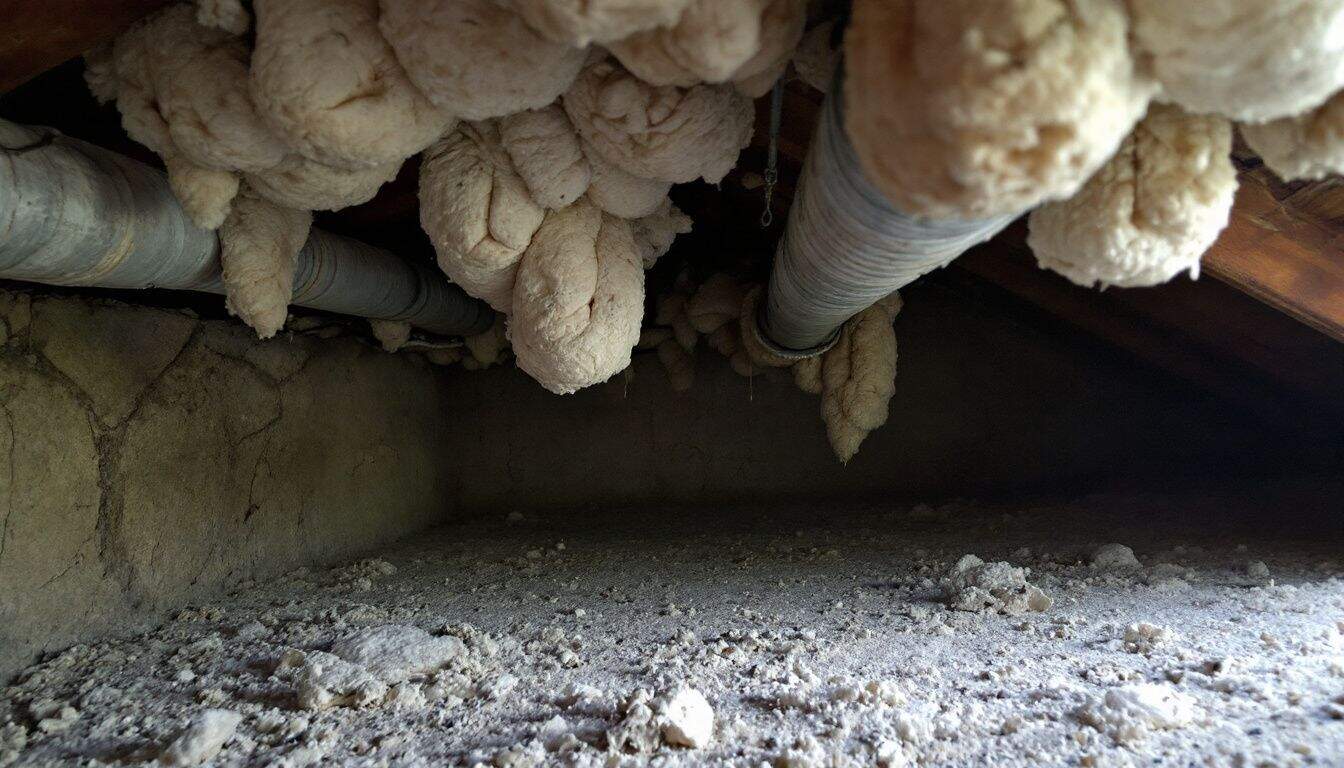
    • Pipe lagging and boiler insulation — particularly in older heating systems and airing cupboards
    • Textured coatings — such as Artex on ceilings and walls, widely applied from the 1960s to 1980s
    • Floor tiles and adhesive — vinyl floor tiles, especially in kitchens and bathrooms, frequently contained chrysotile (white asbestos)
    • Roof tiles, guttering, and soffit boards — asbestos cement was a standard roofing and cladding material
    • Garage roofs and outbuildings — corrugated asbestos cement sheeting is still common in older properties
    • Insulating board — used around fireplaces, in partition walls, and as ceiling tiles
    • Vermiculite insulation — loft insulation products containing vermiculite may contain asbestos
    • Air ducts and vent linings — particularly in properties with older ducted heating systems

    If your home was built or significantly renovated before 2000, there’s a reasonable chance at least one of these materials is present. Age alone doesn’t make them dangerous — but it does mean they warrant careful attention.

    Can You Identify Asbestos Visually?

    No — and this is one of the most important points to understand. Asbestos cannot be confirmed by sight alone. Many ACMs look identical to their non-asbestos equivalents, and even experienced surveyors cannot make a definitive identification without laboratory analysis.

    If you spot materials that look brittle, fibrous, or deteriorating — particularly in older parts of your home — treat them as potentially hazardous and arrange proper asbestos testing before doing anything else. Never attempt to scrape, sand, drill, or otherwise disturb a material you suspect might contain asbestos.

    Understanding the Real Risk of Asbestos Exposure

    Not all asbestos exposure carries the same level of risk. The key factors that determine danger are the type of asbestos, the condition of the material, and whether fibres have become airborne.

    ACMs in good condition that are left undisturbed are generally considered low risk. The danger escalates significantly when materials are:

    • Crumbling, cracked, or visibly deteriorating
    • Damaged by impact, water ingress, or general wear
    • Being drilled, cut, sanded, or sawn during renovation work
    • Located in high-traffic areas where repeated disturbance is likely

    The three main types of asbestos found in UK buildings are chrysotile (white), amosite (brown), and crocidolite (blue). Brown and blue asbestos are considered the most hazardous due to the shape and durability of their fibres in lung tissue. All three types were banned from use in UK construction by 1999.

    Prolonged or repeated asbestos exposure — particularly in occupational settings — carries the highest risk. But domestic exposure during DIY renovations is a growing concern, precisely because homeowners often don’t realise what they’re dealing with until it’s too late.

    What to Do If You Suspect Asbestos in Your Home

    Suspecting asbestos doesn’t require panic — it requires a calm, methodical response. The single most important rule is this: do not disturb the material.

    Immediate Steps to Take

    1. Stop all work in the area immediately. If you’re mid-renovation and have disturbed a material you now suspect contains asbestos, cease all activity at once.
    2. Clear the area. Ask everyone — including children and pets — to leave the room or space.
    3. Seal off the affected area. Close doors and windows. If necessary, use heavy-duty plastic sheeting and strong tape to seal doorways and vents.
    4. Turn off ventilation systems. Heating, air conditioning, and extractor fans can circulate airborne fibres throughout the property.
    5. Do not clean up yourself. Sweeping, vacuuming with a standard hoover, or using compressed air will make things significantly worse by redistributing fibres.
    6. Contact a licensed professional. A qualified asbestos surveyor or removal contractor should assess the situation before the area is re-entered.

    If the material has been significantly disturbed and you believe fibres may have been released, avoid re-entering the space without appropriate respiratory protection. A licensed professional will advise on the appropriate next steps, including whether air monitoring is necessary.

    Sealing Off Suspected Areas

    Temporary containment buys time and limits the spread of any fibres that may have become airborne. Use 1000-gauge polythene sheeting to cover doorways, seal around windows, and block any ventilation openings.

    Secure all edges firmly with duct tape and post clear warning notices on all entry points to prevent others from accidentally entering the space. Keep the area sealed until a professional has assessed and — if necessary — cleared it.

    Professional Asbestos Inspection and Testing

    If you have reason to believe ACMs are present in your home — whether because of its age, visible damage to materials, or upcoming renovation work — the correct course of action is to arrange a professional survey and, where appropriate, laboratory-based asbestos testing by an accredited analyst.

    In the UK, asbestos surveys are governed by the Control of Asbestos Regulations and conducted in accordance with HSE guidance document HSG264. There are two main types of survey relevant to domestic properties:

    • Management survey — identifies ACMs in their current condition to help manage the risk on an ongoing basis. Suitable for properties not undergoing significant works.
    • Refurbishment survey — a more intrusive survey required before any renovation or refurbishment work begins. This survey locates all ACMs that could be disturbed during works.
    • Demolition survey — required before any demolition work, this is the most thorough type of survey and covers the entire structure.

    Choosing a Qualified Asbestos Surveyor

    Not all asbestos surveyors are equal. When selecting a professional, look for the following:

    • Accreditation by a recognised body such as UKAS (United Kingdom Accreditation Service)
    • Surveyors holding the P402 qualification (Building Surveys and Bulk Sampling for Asbestos) or equivalent
    • Clear, transparent reporting that complies with HSG264 requirements
    • Professional indemnity and public liability insurance
    • A willingness to explain findings clearly and answer your questions

    Ask for a detailed written quote before work begins, and make sure the scope of the survey is clearly defined — particularly if you’re planning renovation work and need a refurbishment survey rather than a standard management survey.

    What Happens During an Asbestos Survey

    A qualified surveyor will carry out a thorough visual inspection of the property, identifying materials that may contain asbestos. Where sampling is required, small bulk samples are carefully collected using appropriate PPE and sealed for laboratory analysis.

    Samples are sent to a UKAS-accredited laboratory, where analysts use polarised light microscopy or electron microscopy to confirm the presence and type of asbestos fibres. You’ll receive a formal report detailing the location, condition, and risk rating of any ACMs identified, along with recommendations for management or removal.

    Safe Asbestos Removal: When and How

    Not all ACMs need to be removed. In many cases, materials in good condition are best left in place and managed — removal itself carries risk if not carried out correctly.

    However, removal becomes necessary when:

    • Materials are significantly damaged or deteriorating
    • Renovation or demolition work will disturb the material
    • The material poses an ongoing risk that cannot be managed effectively in situ

    Under the Control of Asbestos Regulations, the removal of licensed asbestos materials — including pipe lagging, sprayed coatings, and insulating board — must be carried out by a contractor holding a licence issued by the HSE. Attempting to remove these materials yourself is not only dangerous but illegal.

    For lower-risk materials such as asbestos cement, removal may be carried out by a non-licensed contractor, but strict notification, risk assessment, and disposal requirements still apply. Professional asbestos removal ensures that all legal obligations are met and that waste is disposed of at a licensed facility.

    What Professional Removal Involves

    Licensed removal contractors will establish a controlled work area — often using a negative-pressure enclosure — to prevent fibres from escaping into the wider property. Workers wear full PPE including disposable coveralls and appropriate respiratory protective equipment (RPE).

    Once removal is complete, the area undergoes a thorough clean using HEPA-filtered vacuum equipment and damp wiping. Air monitoring may be carried out to confirm that fibre levels have returned to background levels before the enclosure is dismantled and the area is handed back for use.

    Preventing Asbestos Exposure During Home Renovations

    DIY renovations in older properties are one of the most common causes of unintentional domestic asbestos exposure. Drilling into an Artex ceiling, sanding old floor tiles, or ripping out a boiler cupboard can release significant quantities of fibres if ACMs are present.

    The golden rule is simple: before you start any renovation work in a property built before 2000, commission a refurbishment survey. This applies whether you’re fitting a new kitchen, converting a loft, or replacing a bathroom floor.

    Practical steps to protect yourself during renovations:

    • Always assume materials in older properties may contain asbestos until proven otherwise
    • Commission a refurbishment and demolition survey before any intrusive work begins
    • Share the survey report with your contractor before work starts
    • Ensure contractors are aware of any ACMs and have a plan for managing or avoiding them
    • Never dry-sand, dry-cut, or use power tools on suspected ACMs
    • If in doubt, stop work and seek professional advice immediately

    Regular Maintenance and Ongoing Asbestos Management

    For properties where ACMs have been identified and left in place — as is often the case following a management survey — ongoing monitoring is essential. The HSE recommends that the condition of known ACMs is checked regularly and any deterioration is addressed promptly.

    Practical maintenance measures include:

    • Keeping an up-to-date asbestos register for the property, noting the location and condition of all known ACMs
    • Carrying out periodic visual checks — at least annually — for signs of damage or deterioration
    • Repairing minor damage to ACMs using appropriate sealant products, carried out by a professional
    • Ensuring any tradespeople working in the property are made aware of the location of ACMs before they begin work
    • Cleaning surfaces near ACMs with a damp cloth rather than dry dusting, and using a HEPA-filtered vacuum where necessary

    If you’re a landlord, you have a legal duty under the Control of Asbestos Regulations to manage asbestos in your properties and to share relevant information with anyone who might disturb it. This duty applies to the common parts of residential buildings — such as communal hallways, plant rooms, and roof spaces — as well as to commercial premises.

    Asbestos Surveys Across the UK

    Asbestos exposure is a risk wherever older buildings exist — and that means virtually every town and city in the UK. Whether you own a Victorian terrace or a 1980s semi-detached, the age of your property is the single most reliable indicator that ACMs may be present.

    Supernova Asbestos Surveys provides professional asbestos surveys across the country. If you’re based in the capital, our team carries out asbestos survey London work across all boroughs and property types. We also cover major cities including asbestos survey Manchester and asbestos survey Birmingham, with surveyors available nationwide.

    Every survey is carried out by qualified professionals in line with HSG264 and the Control of Asbestos Regulations, with clear reporting and practical recommendations tailored to your property.

    Frequently Asked Questions

    How do I know if my home contains asbestos?

    You cannot tell by looking. The only reliable way to confirm whether a material contains asbestos is through laboratory analysis of a bulk sample. If your home was built or renovated before 2000, it’s worth commissioning a professional asbestos survey — particularly before any renovation work begins. A surveyor will identify suspect materials and arrange for samples to be tested at an accredited laboratory.

    Is asbestos exposure dangerous even if I only disturb it briefly?

    Even a single, short-term exposure can be harmful if a significant quantity of fibres is released — for example, when drilling into insulating board or sanding textured coatings. The risk depends on the type of asbestos, the quantity of fibres released, and how long you were exposed. There is no known safe level of asbestos exposure, which is why prevention is always the right approach.

    Can I remove asbestos myself?

    For licensed asbestos materials — such as pipe lagging, sprayed coatings, and insulating board — removal must by law be carried out by an HSE-licensed contractor. Attempting to remove these materials yourself is illegal and extremely dangerous. For lower-risk materials such as asbestos cement, non-licensed removal is permitted in some circumstances, but strict controls still apply. In all cases, professional removal is strongly recommended.

    Do I need an asbestos survey before selling my home?

    There is currently no legal requirement for homeowners to commission an asbestos survey before selling a residential property. However, if you are aware of ACMs in your home, you are expected to disclose this information. Buyers and their solicitors are increasingly asking about asbestos, and having a survey in place can help the sale proceed more smoothly — particularly for older properties.

    How often should ACMs be checked once identified?

    The HSE recommends that the condition of known ACMs is monitored regularly. In practice, this means a visual inspection at least once a year, or sooner if there has been any damage, water ingress, or disturbance near the material. Any deterioration should be reported to a qualified professional promptly. Keeping an accurate asbestos register and updating it after each inspection is considered best practice.

    Speak to a Professional Today

    Asbestos exposure is entirely preventable when the right steps are taken. Whether you’re concerned about materials in your home, planning a renovation, or simply want peace of mind, Supernova Asbestos Surveys can help.

    With over 50,000 surveys completed nationwide, our qualified surveyors provide fast, reliable asbestos surveys and testing in full compliance with UK regulations. Call us today on 020 4586 0680 or visit asbestos-surveys.org.uk to book your survey or request a quote.

  • What information can you find in an asbestos report that will help you protect your family?

    What information can you find in an asbestos report that will help you protect your family?

    What Your Asbestos Report Is Actually Telling You — And Why It Matters for Your Family

    Most people receive an asbestos report and flip straight to the summary page. That’s understandable — the documents can be dense — but the detail buried in those pages contains exactly what information you can find in an asbestos report that will help you protect your family. Every section exists for a reason, and knowing how to read it could make a genuine difference to the health of the people living under your roof.

    This post walks you through what a professional asbestos report contains, what each section means in plain terms, and what you should do next based on what it says.

    Why Asbestos in the Home Is Still a Real Concern

    Asbestos was used extensively in UK construction from the 1950s through to 1999, when the final types were banned. That means any property built or refurbished before the year 2000 could contain asbestos-containing materials (ACMs).

    When ACMs are in good condition and left undisturbed, they pose a low risk. The danger comes when fibres become airborne — during renovation work, accidental damage, or natural deterioration.

    Once inhaled, asbestos fibres can lodge permanently in lung tissue and cause serious diseases including mesothelioma, asbestosis, and lung cancer, often decades after exposure. This is why understanding your asbestos report thoroughly is not a bureaucratic exercise — it is a direct health protection tool for your household.

    What an Asbestos Report Contains: A Section-by-Section Breakdown

    A professionally produced asbestos report — also called an asbestos survey report — follows a structured format. Here is what each section tells you and why it matters.

    The Location Register

    The first thing your report will establish is where ACMs have been identified within the property. This is typically presented as a register or schedule listing each room or area surveyed alongside any materials found.

    Common locations flagged in domestic asbestos reports include:

    • Pipe lagging and boiler insulation
    • Textured coatings such as Artex on ceilings and walls
    • Floor tiles and the adhesive beneath them
    • Roof sheets, guttering, and soffits made from asbestos cement
    • Insulated ceiling tiles
    • Partition walls and fire doors in older properties
    • Vermiculite loft insulation

    The location register tells you exactly which areas of your home to treat with caution. If you are planning any DIY work — drilling, sanding, or cutting — cross-reference this list before you pick up a tool.

    The Type of Asbestos Identified

    There are six types of asbestos, but three were most commonly used in UK construction: chrysotile (white), amosite (brown), and crocidolite (blue). Your report will specify which type has been identified in each material.

    This matters because the fibre types carry different risk profiles. Crocidolite and amosite fibres are generally considered more hazardous than chrysotile due to their shape and durability in lung tissue.

    A report that identifies blue or brown asbestos in a damaged or friable material warrants more urgent action than intact white asbestos cement in a garage roof. If you want to understand the process used to identify fibre types, professional asbestos testing involves laboratory analysis of physical samples under polarised light microscopy, carried out by UKAS-accredited laboratories.

    Condition and Risk Assessment

    Every ACM in your report will be assigned a condition rating and an overall risk score. Surveyors assess materials based on their physical state, the likelihood of disturbance, and the potential for fibre release.

    A typical scoring system considers:

    • Product type — friable materials such as lagging release fibres more easily than dense asbestos cement
    • Extent of damage — crumbling, delaminating, or water-damaged materials score higher risk
    • Surface treatment — painted or sealed surfaces contain fibres more effectively
    • Accessibility — materials in high-traffic areas or those easily disturbed by maintenance work carry greater risk

    The resulting risk score — often presented as low, medium, or high — drives the recommended action. A low-scoring material in good condition may simply require monitoring. A high-scoring material in poor condition will likely require management or removal.

    Photographs and Floor Plans

    A thorough asbestos report will include annotated photographs of each ACM and, in many cases, a floor plan marking their locations. These are not just supporting documents — they are reference tools you will use repeatedly.

    If you ever commission building work, share these images with your contractor before work begins. A builder who can see exactly where ACMs are located will take appropriate precautions rather than inadvertently disturbing them.

    Laboratory Analysis Results

    Where samples have been collected and sent for analysis, your report will include the laboratory results. These confirm whether asbestos is present, identify the fibre type, and sometimes quantify the concentration within the material.

    Samples are analysed under ISO 17025-accredited conditions, which ensures the results are scientifically reliable. If a material was sampled but returned a negative result, this will also be recorded — giving you confidence that those areas are clear.

    If you have concerns about a specific material that was not sampled during the survey, a standalone asbestos testing service can be arranged separately.

    Management Recommendations

    One of the most practically useful sections of any asbestos report is the recommendations table. For each ACM identified, the surveyor will recommend one of the following actions:

    1. Monitor — the material is in good condition and poses low risk; inspect it periodically and record its condition
    2. Repair or encapsulate — the material is slightly damaged but can be made safe by sealing or covering it
    3. Remove — the material is in poor condition, at high risk of disturbance, or needs to be cleared ahead of planned works

    Do not treat these recommendations as optional. They are based on the surveyor’s professional assessment of risk and are designed to guide your decision-making.

    Where removal is recommended, this should only be carried out by a licensed contractor. Professional asbestos removal ensures fibres are contained, disposed of correctly, and that the area is cleared to the standard required by the Control of Asbestos Regulations.

    Understanding the Health Risks Flagged in Your Report

    Asbestos reports do not just tell you where materials are — they contextualise the risk to human health. Understanding this section helps you prioritise action appropriately.

    The diseases associated with asbestos exposure include:

    • Mesothelioma — a cancer of the lining of the lungs or abdomen, almost exclusively caused by asbestos exposure and with a poor prognosis
    • Asbestosis — scarring of the lung tissue that causes progressive breathlessness
    • Lung cancer — the risk is significantly elevated by asbestos exposure, particularly in smokers
    • Pleural thickening — thickening of the membrane surrounding the lungs, which can restrict breathing

    These diseases typically have a latency period of 20 to 40 years, meaning exposure that occurs today may not manifest as illness until decades later. This is why even low-level or short-term exposure should be taken seriously, particularly where children are present in the home.

    Your report will note which materials carry the greatest potential for fibre release and therefore the greatest health risk. Pay particular attention to any material described as friable — meaning it can be crumbled by hand — as these release fibres most readily.

    Legal Obligations: What Your Report Means for Compliance

    For homeowners, the legal picture around asbestos is primarily about duty of care during any works carried out on the property. The Control of Asbestos Regulations places specific duties on employers and those in control of non-domestic premises, but the principles apply equally when contractors are working in your home.

    In practical terms, this means:

    • You must not instruct workers to disturb materials identified as ACMs without appropriate precautions in place
    • Licensed contractors must be used for the removal of high-risk asbestos materials, including sprayed coatings, lagging, and certain insulating boards
    • Asbestos waste must be disposed of at a licensed facility — it cannot go in a skip or general household waste

    If you are selling your property, your asbestos report is a material fact that should be disclosed. Failing to inform buyers of known asbestos can create legal liability.

    Similarly, if you are a landlord, HSE guidance requires you to manage asbestos risk in properties you are responsible for. Your asbestos report is the document that demonstrates you have taken the necessary steps to identify and assess risk — it is your evidence of compliance.

    What to Do If You Suspect Asbestos Before a Survey

    If you have not yet had a survey carried out but are concerned about a specific material, there are interim steps you can take. The most important rule is straightforward: do not disturb the material.

    If you suspect a ceiling tile, floor tile, or area of insulation contains asbestos, leave it alone. Do not drill, sand, scrape, or break it. Even well-intentioned investigation can release fibres.

    You can use a home asbestos testing kit to collect a sample safely and send it for laboratory analysis. These kits provide the materials and instructions needed to take a sample without undue risk, and the results will confirm whether asbestos is present in that specific material.

    However, a single sample test is not a substitute for a full survey. It will tell you about one material in one location — a professional survey assesses the entire property and gives you the complete picture needed to manage risk effectively.

    If you need to test a specific suspect material quickly, a testing kit is a practical first step while you arrange a full inspection.

    How to Use Your Asbestos Report Practically

    Once you have your report, the key is to use it as a living document rather than filing it away. Here is how to make it work for your family’s protection.

    Create a Simple Action Plan

    Go through the recommendations section and categorise each item as immediate action required, planned action, or monitor. Assign a realistic timescale to each.

    This turns a technical document into a practical to-do list. It also means you are not trying to act on everything at once — you are prioritising by risk level, which is exactly what the report is designed to help you do.

    Share It With Anyone Working on Your Property

    Before any tradesperson begins work — whether that is a plumber, electrician, or builder — give them access to the relevant sections of your report. A competent contractor will want to know what they might encounter.

    Sharing this information is part of your duty of care. It also protects you legally if something goes wrong during works — you can demonstrate that you provided the information needed for safe working.

    Review It Periodically

    Materials in good condition can deteriorate over time. Schedule an annual walkthrough of the locations listed in your report and check for any changes — new damage, water ingress, or physical disturbance.

    If you notice deterioration, arrange a follow-up inspection promptly. A material that was low risk two years ago may have moved into a higher risk category if its condition has changed.

    Keep It Safe and Accessible

    Store your report somewhere you can retrieve it quickly. If you move home, pass it on to the new owners. If you are a landlord, it should form part of your property management records and be available to any contractor or tenant who needs to see it.

    A report that sits in a drawer and is never referenced offers no protection to anyone. The value of knowing what information you can find in an asbestos report that will help you protect your family lies entirely in acting on what it tells you.

    Getting a Survey: Where to Start

    If you have not yet had your property surveyed, the process is more straightforward than many homeowners expect. A qualified surveyor visits the property, inspects accessible areas, takes samples where appropriate, and produces the report — typically within a few days of the inspection.

    Supernova Asbestos Surveys operates nationwide, with specialist teams covering major cities and surrounding areas. If you are based in the capital, our asbestos survey London service covers all London boroughs and the surrounding region. For the North West, our asbestos survey Manchester team is available across Greater Manchester and beyond. And for the Midlands, our asbestos survey Birmingham service covers Birmingham and the wider West Midlands area.

    Wherever you are in the UK, a professional survey gives you the documented evidence you need to manage risk confidently — and to demonstrate to contractors, buyers, or tenants that you have done so properly.

    Frequently Asked Questions

    What information can you find in an asbestos report that will help you protect your family?

    A professional asbestos report identifies the location of all asbestos-containing materials (ACMs) within your property, the type of asbestos present, the condition of each material, a risk score, laboratory analysis results, and specific management recommendations. Together, these sections tell you what is in your home, how dangerous it currently is, and what action you need to take — making it an essential tool for protecting everyone in the household.

    Do I need an asbestos survey if my home was built before 2000?

    Any property built or significantly refurbished before the year 2000 may contain ACMs. While a survey is not a legal requirement for private homeowners living in their own property, it is strongly advisable before undertaking any renovation, extension, or maintenance work. It is also required practice if you are a landlord or are selling the property. Without a survey, you cannot know with confidence what materials are present or where they are located.

    Can I remove asbestos myself if the report recommends it?

    This depends on the type of material and its risk classification. Some lower-risk materials — such as asbestos cement sheets in good condition — can be removed by a competent non-licensed operative following strict HSE guidance. However, higher-risk materials including sprayed coatings, pipe lagging, and certain insulating boards must only be removed by a licensed asbestos contractor. Your report will indicate which category applies to each material. Never attempt removal of any ACM without first checking the legal requirements.

    How long does an asbestos report remain valid?

    There is no fixed expiry date for an asbestos report, but its accuracy depends on the condition of the materials remaining unchanged. HSE guidance recommends reviewing your asbestos management plan at regular intervals — typically annually — and updating it if conditions change, if new damage is identified, or if works have been carried out. A report produced several years ago may no longer reflect the current state of materials in your property, particularly if there has been any physical disturbance or water damage.

    What should I do if I find damaged material I think might be asbestos?

    Do not touch, drill, sand, or disturb it in any way. Keep the area clear and avoid creating dust. If you need to identify the material quickly, a home asbestos testing kit allows you to take a small sample safely and have it analysed by a UKAS-accredited laboratory. If the result is positive or you have broader concerns about the property, arrange a full professional asbestos survey as soon as possible to assess the complete picture.

    Speak to Supernova Asbestos Surveys

    Supernova Asbestos Surveys has completed over 50,000 surveys across the UK, helping homeowners, landlords, and property managers understand and manage asbestos risk with confidence. Our reports are clear, detailed, and produced to the standards set out in HSG264 and the Control of Asbestos Regulations.

    To book a survey, discuss your report, or get advice on next steps, call us on 020 4586 0680 or visit asbestos-surveys.org.uk. Our team is ready to help you turn your asbestos report into a practical plan that keeps your family safe.

  • Is it necessary to conduct an asbestos survey to protect your family?

    Is it necessary to conduct an asbestos survey to protect your family?

    Does Your Home Put Your Family at Risk? What an Asbestos Survey Actually Reveals

    If your home was built before 2000, there is a very real chance it contains asbestos-containing materials (ACMs). Whether it is necessary to conduct an asbestos survey to protect your family is not purely a legal question — it is about keeping the people you love safe from one of the most dangerous substances ever used in UK construction.

    Asbestos fibres, once disturbed, become airborne and invisible to the naked eye. The diseases they cause — mesothelioma, asbestosis, and lung cancer — can take 20 to 40 years to develop. That delay is precisely why so many people underestimate the risk until it is far too late.

    Why Asbestos Still Matters in UK Homes Today

    Asbestos was widely used in UK construction right up until it was fully banned in 1999. Three main types were used: white asbestos (chrysotile), brown asbestos (amosite), and blue asbestos (crocidolite). All three are hazardous, and all three can still be found in properties built or refurbished before the ban.

    ACMs in good condition and left completely undisturbed are generally considered low risk. The danger arises during renovation, drilling, cutting, sanding, or any activity that releases fibres into the air. Many homeowners carry out DIY work completely unaware they are exposing themselves and their families to potentially lethal material.

    The UK has one of the largest volumes of pre-2000 housing stock in Europe, and asbestos was used extensively throughout residential and commercial construction for much of the twentieth century. It was cheap, fire-resistant, and versatile — which is exactly why it ended up in so many buildings.

    Where Asbestos Hides in a Domestic Property

    Asbestos was used throughout residential construction, often in places that are routinely disturbed during everyday maintenance and renovation. Knowing where to look is the first step towards protecting your household.

    Common locations include:

    • Artex and textured coatings on ceilings and walls
    • Floor tiles and the adhesive beneath them
    • Roof tiles, guttering, and fascia boards
    • Pipe lagging and boiler insulation
    • Garage roofs and outbuildings, particularly cement sheeting
    • Soffit boards and ceiling tiles
    • Insulating board around fireplaces and heating systems
    • Textured decorative finishes applied during the 1970s and 1980s

    If any of these materials are present in your home and you are planning any kind of building work, a survey is the only reliable way to know what you are dealing with before work begins. Visual inspection alone is not enough — you cannot identify asbestos simply by looking at it.

    Is It Necessary to Conduct an Asbestos Survey to Protect Your Family?

    For private homeowners living in their own property, there is currently no legal obligation under the Control of Asbestos Regulations to commission a survey. But the absence of a legal requirement does not mean the absence of risk.

    The regulations were designed primarily for non-domestic premises and duty holders, yet the health risk to your family is identical regardless of whether you own or rent. The HSE is clear that properties built before 2000 should be treated with caution, particularly before any refurbishment or maintenance work begins.

    Conducting a survey before you start any project is not overcautious — it is the sensible, responsible approach. In practical terms, an asbestos survey answers three critical questions:

    1. Is asbestos present? A surveyor will identify and sample suspected ACMs throughout the property.
    2. What condition is it in? The risk depends heavily on whether materials are intact, damaged, or deteriorating.
    3. What action is needed? The survey report will recommend whether materials should be managed in place, encapsulated, or removed.

    Without this information, you are making decisions about your home — and your family’s health — completely blind. A professional survey removes that uncertainty entirely.

    When an Asbestos Survey Is a Legal Requirement

    While private homeowners have discretion, there are clear legal circumstances where a survey is not optional. Understanding these requirements helps property owners, landlords, and employers stay on the right side of the law.

    Non-Domestic Buildings

    Under the Control of Asbestos Regulations, duty holders of non-domestic premises built before 2000 are legally required to manage asbestos. This means commissioning a management survey to locate and assess all ACMs, then creating an asbestos register and a written management plan.

    The management plan must be regularly reviewed and ACMs re-inspected, typically on an annual basis. Failure to comply can result in enforcement action, significant fines, and in serious cases, prosecution. If you are a business owner, employer, or commercial landlord, this is not a grey area.

    Refurbishment and Demolition Projects

    Before any refurbishment or demolition work begins on a property — whether domestic or non-domestic — a demolition survey is a legal requirement where ACMs may be present. This is a more intrusive inspection that accesses all areas likely to be affected by the planned works.

    The survey must be carried out before work starts, and the area surveyed must be vacated during the inspection. Samples are taken and sent to accredited laboratories for analysis. Any ACMs identified must be removed or safely managed before contractors begin — this protects both the workers and your family from contamination spreading throughout the property.

    Communal Areas in Residential Buildings

    Landlords of residential properties have a duty to manage asbestos in communal areas — staircases, corridors, basements, plant rooms, and roof spaces. These areas fall under the same duty to manage as non-domestic premises.

    If you manage a block of flats or a house in multiple occupation (HMO), you need to understand your obligations and ensure a management survey has been carried out. Tenants are entitled to know whether ACMs have been identified in communal areas and what management measures are in place.

    The Specific Risks for Homeowners in Pre-2000 Properties

    The sheer volume of pre-2000 housing stock in the UK means the majority of homes could contain some form of ACM. Many homeowners have lived in their properties for years without incident — but that changes the moment any kind of building work begins.

    Even relatively minor jobs can disturb ACMs. Drilling into an artex ceiling to fit a light fitting, sanding down old floor tiles, cutting through a soffit board — any of these activities can release fibres if the material contains asbestos. You will not know you have been exposed until years later, if at all.

    Buying or Selling a Pre-2000 Property

    Before buying a property built before 2000, it is worth arranging a survey as part of your due diligence. Sellers are not legally required to disclose the presence of asbestos, but the cost of a survey is modest compared to the cost of remediation — or the long-term cost to your family’s health.

    If you are selling, having a completed survey available can provide genuine reassurance to buyers and help avoid delays in the transaction. It demonstrates transparency and removes a significant unknown from the process, which is increasingly valued by informed buyers and their solicitors.

    Planning a Renovation or Refurbishment

    For homeowners planning any renovation — even something as straightforward as a kitchen or bathroom refit — a survey carried out in advance will identify any ACMs in the areas to be worked on. This allows you to have materials safely removed before your contractors begin, protecting both them and your family throughout the project.

    Contractors who disturb ACMs unknowingly can spread fibres throughout a property via dust and debris. The cost of decontamination following an uncontrolled release is considerably higher than the cost of a survey and planned removal beforehand.

    What Happens During an Asbestos Survey?

    A professional asbestos survey is carried out by a trained and qualified surveyor, typically holding a P402 qualification or equivalent. The level of intrusiveness depends on the type of survey being conducted, and it is important to understand which type your situation requires.

    Management Surveys

    A management survey is the standard survey for properties in normal occupation. The surveyor will visually inspect all accessible areas, take samples of suspected ACMs, and assess the condition of any materials identified. Samples are sent to an accredited laboratory for analysis.

    The resulting report includes a full asbestos register listing all ACMs found, their location, condition, and a risk assessment. This forms the basis of your asbestos management plan going forward and gives you a clear picture of what is present in your property. It is the starting point for any responsible approach to managing asbestos in a building that remains in use.

    Refurbishment and Demolition Surveys

    This type of survey is more intrusive and is required before any significant building work. The surveyor will access areas that would not normally be disturbed — inside wall cavities, beneath floors, above false ceilings. The property or the affected area must be vacated during the survey.

    All ACMs identified must be removed by a licensed contractor before work begins. This is non-negotiable when dealing with notifiable ACMs, which must only be handled by contractors licensed by the HSE. The HSG264 guidance document sets out the standards that all asbestos surveys must meet, and any reputable surveyor will work to those standards.

    How to Choose the Right Asbestos Surveyor

    Not all asbestos surveyors are equal. The quality of the survey report and the accuracy of the findings depend entirely on the competence and accreditation of the company you appoint. Choosing the wrong surveyor can leave dangerous materials undetected.

    When choosing a surveyor, look for the following:

    • UKAS accreditation — The surveying company should be accredited by the United Kingdom Accreditation Service for asbestos surveying and air testing.
    • Qualified surveyors — Individual surveyors should hold the P402 certificate for asbestos surveying or an equivalent recognised qualification.
    • Clear, detailed reporting — The survey report should include photographic evidence, a full asbestos register, and clear recommendations.
    • Independent advice — A good surveyor will give you an honest assessment, not push you towards unnecessary remediation work.
    • Transparent pricing — A reputable company will provide a clear, fixed quote before any work begins.

    Always ask to see evidence of accreditation before commissioning a survey. The HSG264 guidance sets out the standards that asbestos surveys must meet, and any reputable surveyor will be familiar with its requirements and able to demonstrate compliance.

    Asbestos Surveys Across the UK: Why Local Expertise Matters

    Construction methods, materials, and the types of ACMs present can vary significantly depending on the age and location of a property. Local knowledge of regional housing stock and commercial building types genuinely adds value to the survey process.

    If you need an asbestos survey London for a Victorian terrace or a period commercial premises, surveyors familiar with the capital’s diverse and often complex building stock will deliver a more thorough inspection. London’s housing ranges from Georgian townhouses to post-war council estates, each with its own asbestos profile.

    For those based in the north west, an asbestos survey Manchester carried out by surveyors with experience of pre-war industrial and residential buildings in the region ensures nothing is overlooked. The area’s industrial heritage means asbestos was used extensively in both commercial and domestic construction.

    In the Midlands, an asbestos survey Birmingham from a team that understands the local property landscape — from Victorian back-to-backs to post-war social housing and commercial premises — provides the depth of knowledge that generic national services cannot always match.

    Wherever your property is located, using a surveyor with genuine regional experience means you are getting more than a tick-box exercise. You are getting an inspection informed by an understanding of how properties in your area were built and what materials were commonly used.

    The Cost of Not Acting: Understanding the Real Stakes

    The financial cost of an asbestos survey is modest relative to the potential consequences of not having one. Unplanned exposure during renovation work can result in contractors halting a project, emergency air testing, decontamination costs, and potential legal liability if workers are exposed on your property.

    Beyond the financial implications, the health consequences are irreversible. Mesothelioma, the cancer most closely associated with asbestos exposure, has no cure. Asbestosis causes progressive and permanent lung damage. Lung cancer linked to asbestos exposure carries a poor prognosis.

    These are not distant, abstract risks. They are the documented outcomes for people who were exposed to asbestos fibres — often without knowing it — during building work on properties just like yours. Asking whether it is necessary to conduct an asbestos survey to protect your family becomes a very different question when you understand what the alternative looks like.

    A survey does not just identify a problem. It gives you control. It tells you exactly what is present, where it is, what condition it is in, and what you need to do about it. That knowledge protects your family, your contractors, and anyone else who spends time in your home.

    Frequently Asked Questions

    Is it a legal requirement for homeowners to have an asbestos survey?

    For private homeowners living in their own property, there is currently no legal obligation under the Control of Asbestos Regulations to commission an asbestos survey. However, the legal position changes significantly if you are a landlord, employer, or duty holder of a non-domestic premises. For anyone planning renovation or demolition work on a pre-2000 property, a refurbishment or demolition survey is effectively a legal requirement before work begins. The absence of a legal duty for owner-occupiers does not reduce the health risk — it simply means the decision rests with you.

    How do I know if my home contains asbestos?

    You cannot identify asbestos by sight alone. Many ACMs look identical to non-asbestos-containing materials. The only reliable way to confirm whether a material contains asbestos is to have it sampled and tested by an accredited laboratory. A professional asbestos survey will identify all suspected materials, take samples, and provide a full report with results. If your property was built or refurbished before 2000, you should assume asbestos may be present until a survey confirms otherwise.

    What is the difference between a management survey and a refurbishment survey?

    A management survey is designed for properties in normal occupation. It covers all accessible areas and identifies ACMs that could be disturbed during routine maintenance. A refurbishment or demolition survey is more intrusive and is required before any significant building work. It accesses areas that would not normally be reached — inside walls, beneath floors, above ceilings — and the affected area must be vacated during the inspection. The type of survey you need depends on what you are planning to do with the property.

    How long does an asbestos survey take?

    The duration depends on the size and type of property and the type of survey being conducted. A management survey on a standard domestic property typically takes between one and three hours. A refurbishment or demolition survey on a larger property may take longer, particularly if the surveyor needs to access concealed areas. Laboratory analysis of samples usually takes between three and five working days, after which you will receive your full survey report.

    What should I do if asbestos is found in my home?

    Finding asbestos in your home does not automatically mean it needs to be removed. ACMs in good condition that are not likely to be disturbed can often be safely managed in place. Your survey report will include recommendations based on the condition and location of any materials found. Where removal is necessary — particularly before renovation work — this must be carried out by a licensed contractor for notifiable ACMs. Your surveyor will advise you on the appropriate course of action and can help you understand your options before you make any decisions.

    Get Professional Asbestos Survey Support from Supernova

    Supernova Asbestos Surveys has completed over 50,000 surveys across the UK, working with homeowners, landlords, businesses, and contractors to identify and manage asbestos safely. Our UKAS-accredited surveyors deliver clear, detailed reports that give you the information you need to protect your family and comply with your legal obligations.

    Whether you need a management survey, a refurbishment survey, or specialist advice before a renovation project, our team is ready to help. Call us today on 020 4586 0680 or visit asbestos-surveys.org.uk to get a quote or find out more about our services nationwide.

  • How can you protect your family from asbestos exposure in your home?

    How can you protect your family from asbestos exposure in your home?

    What Every Homeowner Needs to Know About Home Inspection Asbestos Risks

    Asbestos was used extensively in UK homes built before 2000 — and millions of those properties are still standing today. If your home was built or refurbished during that era, there is a very real chance that asbestos-containing materials (ACMs) are hidden somewhere inside. A proper home inspection asbestos survey is not just a precaution; for many UK homeowners, it is a necessity.

    The fibres released by disturbed ACMs are invisible to the naked eye and can cause devastating, irreversible lung conditions — including mesothelioma and asbestosis — decades after exposure. The good news is that asbestos in good condition and left undisturbed poses a much lower risk. The danger comes when you renovate, drill, sand, or otherwise disturb materials without first knowing what is in them.

    Where Is Asbestos Most Commonly Found in UK Homes?

    Asbestos was used in hundreds of building products throughout most of the twentieth century. It was cheap, fire-resistant, and an excellent insulator — which is exactly why it ended up almost everywhere.

    In a typical pre-2000 UK property, you might find ACMs in the following locations:

    • Artex and textured coatings — applied to ceilings and walls, particularly popular from the 1960s through to the 1980s
    • Pipe lagging and boiler insulation — older central heating systems frequently used asbestos insulation around pipework
    • Floor tiles and adhesive — vinyl floor tiles and the black mastic adhesive beneath them often contained chrysotile asbestos
    • Roof tiles and soffits — asbestos cement was widely used for garage roofs, outbuildings, and exterior cladding
    • Ceiling tiles — suspended ceiling systems in older properties frequently incorporated ACMs
    • Insulation boards — used around fireplaces, in airing cupboards, and behind storage heaters
    • Guttering and downpipes — asbestos cement was a common material for external drainage
    • Loft insulation — loose-fill asbestos was used in some properties, particularly in the 1960s and 1970s

    The critical point is that you cannot identify asbestos by sight alone. Many ACMs look identical to their asbestos-free counterparts. The only way to confirm presence or absence is through laboratory analysis of a physical sample.

    Why Home Inspection Asbestos Surveys Matter Before Any Renovation

    The single most dangerous time for asbestos exposure in a domestic setting is during renovation work. Drilling into an Artex ceiling, ripping up old floor tiles, or removing pipe lagging without knowing the material composition can release millions of fibres into the air of your home.

    Under the Control of Asbestos Regulations, duty holders in non-domestic premises are legally required to manage asbestos. While private homeowners are not subject to the same statutory duty, the health risks are identical — and the moral obligation to protect your family is just as pressing.

    Before any of the following activities, a home inspection asbestos survey is strongly advisable:

    • Loft conversions or extensions
    • Kitchen or bathroom refurbishments
    • Removing or altering internal walls
    • Replacing a boiler or heating system
    • Re-roofing a garage or outbuilding
    • Any work involving drilling, cutting, or sanding of older building materials

    Professional asbestos testing before work begins is far cheaper — and far safer — than dealing with the consequences of uncontrolled fibre release.

    Recognising the Warning Signs: When Should You Be Concerned?

    While you cannot visually confirm asbestos, there are circumstances and material conditions that should prompt you to seek professional advice without delay.

    Age of the Property

    Any home built or significantly refurbished before 2000 should be treated as potentially containing asbestos until proven otherwise. The older the property, the higher the likelihood — and the greater the variety of ACMs that may be present.

    Condition of Building Materials

    Asbestos in good condition is generally lower risk. However, materials that are crumbling, cracked, water-damaged, or showing signs of physical deterioration are far more likely to release fibres. Pay particular attention to:

    • Damaged or flaking ceiling coatings
    • Cracked or broken floor tiles
    • Deteriorating pipe insulation or lagging
    • Damaged soffits or roof sheets on outbuildings

    Planned Disturbance

    Even if materials appear to be in good condition, any planned work that will involve cutting, drilling, or removing them warrants an inspection first. Do not rely on a builder’s visual assessment — insist on laboratory-confirmed testing.

    What Happens During a Professional Home Inspection for Asbestos?

    A professional asbestos survey carried out by a qualified surveyor is a methodical, structured process. It is very different from a quick visual walk-around.

    The Survey Process

    A qualified surveyor will attend your property and systematically inspect all accessible areas. They will look for materials that are known or suspected to contain asbestos, assess their condition, and take physical samples where appropriate.

    Samples are collected carefully to minimise fibre release, sealed immediately, and sent to an accredited laboratory for analysis. Results are typically returned within a few working days.

    The Asbestos Report

    Following the inspection, you will receive a written report detailing:

    • The location of all suspected or confirmed ACMs
    • The condition of each material
    • A risk assessment for each identified material
    • Recommendations for management, encapsulation, or removal

    This report is your roadmap. It tells you what is present, where it is, what condition it is in, and what action — if any — is required. Keep it safe; it will be invaluable for any future renovation work or property sale.

    Types of Survey

    For domestic properties, there are two main types of survey to be aware of:

    • Management survey — identifies ACMs that could be disturbed during normal occupation or minor maintenance. This is appropriate for most homeowners who are not planning major works.
    • Demolition survey — a more intrusive inspection required before any significant renovation or demolition work. This survey accesses areas that a management survey would not disturb.

    Your surveyor will advise which type is appropriate for your situation. HSE guidance document HSG264 sets out the standards that professional surveyors are expected to meet.

    Immediate Steps If You Suspect Asbestos in Your Home

    If you discover damaged or deteriorating materials that you suspect may contain asbestos, the most important thing you can do is stop and do nothing further until a professional has assessed the situation.

    Do Not Disturb the Area

    Avoid sweeping, vacuuming, or touching materials you suspect contain asbestos. Even a standard household vacuum cleaner will not capture asbestos fibres — it will simply blow them back into the air. Keep the area clear of family members, especially children.

    Seal Off the Affected Zone

    If the material is actively deteriorating or has been accidentally damaged, use heavy-duty polythene sheeting to seal off the area as best you can. Turn off any heating or ventilation systems that might circulate air through the space. This limits the spread of any fibres that may already be airborne.

    Contact a Qualified Surveyor

    Do not attempt to collect your own samples for testing. While a testing kit can be a useful starting point for some homeowners, improper sampling technique can itself cause fibre release. A qualified professional will collect samples safely and ensure the results are accurate and legally defensible.

    Asbestos Testing: Confirming What Is Actually There

    Formal asbestos testing involves the laboratory analysis of samples taken from suspect materials. The analysis identifies not just whether asbestos is present, but which type — and that matters, because different asbestos types carry different risk profiles.

    The three main types found in UK properties are:

    • Chrysotile (white asbestos) — the most commonly used, found in a wide range of products
    • Amosite (brown asbestos) — frequently used in insulation boards and ceiling tiles
    • Crocidolite (blue asbestos) — considered the most hazardous; used in some spray coatings and pipe insulation

    Knowing which type is present informs both the risk assessment and the approach to management or removal.

    Asbestos Removal: When Is It Necessary?

    Not all asbestos needs to be removed. In many cases, ACMs that are in good condition and are not going to be disturbed can be safely managed in place — a process sometimes called encapsulation or enclosure. A surveyor will advise on the most appropriate course of action based on the type of material, its condition, and its location.

    However, removal becomes necessary when:

    • The material is in poor condition and cannot be effectively encapsulated
    • Renovation work will inevitably disturb the ACM
    • The property is being demolished
    • The material poses an ongoing risk to occupants

    When removal is required, it must be carried out by a licensed contractor for certain high-risk ACMs — particularly those containing amphibole asbestos types such as amosite or crocidolite. For lower-risk materials, a competent contractor trained in asbestos removal may carry out the work, but it must still follow the requirements of the Control of Asbestos Regulations.

    Professional asbestos removal ensures that the work is done safely, waste is disposed of correctly at a licensed facility, and you receive a clearance certificate confirming the area is safe to reoccupy.

    DIY Asbestos Removal: Why It Is Never Worth the Risk

    It is tempting, particularly for confident DIY enthusiasts, to consider handling asbestos themselves. This is strongly inadvisable. The health consequences of uncontrolled asbestos exposure — mesothelioma, lung cancer, asbestosis — can take 20 to 40 years to manifest, which means the damage is done long before symptoms appear.

    Beyond the health risk, improper removal can contaminate your home, requiring far more extensive and expensive remediation than the original removal would have cost. Disposing of asbestos waste illegally also carries significant penalties under UK law. Asbestos waste is classified as hazardous waste and must be transported by licensed waste carriers to an approved disposal site — any contractor who suggests otherwise should not be trusted with the work.

    The Legal Framework: What UK Homeowners Need to Know

    The Control of Asbestos Regulations place legal duties primarily on employers and duty holders in commercial premises. However, homeowners commissioning work on their properties still have responsibilities — particularly when hiring contractors.

    If you are having building work done on your home, you have a duty to inform contractors of any known asbestos in the property. Contractors in turn are legally required to assess the risk of asbestos exposure before work begins. Providing them with your asbestos survey report fulfils this obligation and protects both parties.

    This is one reason why commissioning a home inspection asbestos survey before any building work is not just good practice — it is the responsible thing to do as a property owner.

    Protecting Your Family: Practical Steps You Can Take Today

    You do not need to wait until you are planning a renovation to take action. Here are practical steps any homeowner can take right now:

    1. Find out when your home was built. If it was built or significantly refurbished before 2000, treat it as potentially containing asbestos.
    2. Commission a management survey. Even if you are not planning work, knowing what is in your home gives you peace of mind and a solid baseline record.
    3. Do not disturb suspect materials. If you notice any deteriorating building materials, keep the area clear and seek professional advice promptly.
    4. Tell your contractors. Always share your asbestos survey report with any tradesperson working in your home before they start.
    5. Keep your report updated. If work is carried out and materials are removed or encapsulated, update your records accordingly.

    Supernova Asbestos Surveys operates nationwide, covering major cities and surrounding areas. Whether you need an asbestos survey in London, an asbestos survey in Manchester, or an asbestos survey in Birmingham, our qualified surveyors are ready to help.

    Get a Professional Home Inspection Asbestos Survey With Supernova

    Supernova Asbestos Surveys has completed over 50,000 surveys across the UK. Our qualified surveyors carry out home inspection asbestos assessments to HSG264 standards, providing clear, actionable reports that tell you exactly what is in your property and what — if anything — needs to be done about it.

    We offer management surveys, refurbishment and demolition surveys, laboratory-confirmed asbestos testing, and full asbestos removal services — all under one roof. You will never be left wondering what to do next.

    To book a survey or speak with one of our team, call us on 020 4586 0680 or visit asbestos-surveys.org.uk. Protecting your family starts with knowing what is in your home.

    Frequently Asked Questions

    Do I need a home inspection asbestos survey if my house was built after 2000?

    If your home was built after 2000, it is very unlikely to contain asbestos-containing materials, as the use of all forms of asbestos was banned in the UK in 1999. However, if your post-2000 property was built using reclaimed or salvaged materials, or if it has been significantly altered using older building components, it is worth seeking professional advice to be certain.

    Can I test for asbestos myself at home?

    DIY testing kits are available and can provide a useful initial indication, but they carry risks if used incorrectly. Improper sampling technique can disturb materials and release fibres. For a legally defensible result and a full risk assessment, a professional survey carried out by a qualified surveyor is always the recommended approach.

    How long does a home asbestos survey take?

    For a typical domestic property, a management survey usually takes between one and three hours, depending on the size and complexity of the home. A refurbishment or demolition survey — which is more intrusive — may take longer. Your surveyor will give you a realistic time estimate when you book.

    Is asbestos in my home dangerous if I leave it alone?

    Asbestos-containing materials that are in good condition and are not being disturbed generally pose a low risk. The danger arises when ACMs are damaged, deteriorating, or subjected to drilling, cutting, or sanding. A professional survey will assess the condition of any materials found and advise whether management in place or removal is the appropriate course of action.

    How much does a home inspection asbestos survey cost?

    The cost of a domestic asbestos survey varies depending on the size of the property and the type of survey required. Management surveys for smaller homes are generally very affordable, and the cost is minimal compared to the potential health and financial consequences of uncontrolled asbestos exposure. Contact Supernova Asbestos Surveys on 020 4586 0680 for a no-obligation quote.

  • What steps should you take to ensure your family is safe from asbestos in the UK?

    What steps should you take to ensure your family is safe from asbestos in the UK?

    Asbestos clearance is the point where reassurance has to be backed by evidence. If asbestos has been disturbed, removed or uncovered in a home, block of flats or shared residential area, you need to know the space is genuinely safe to use again, not just tidy on the surface.

    That matters for homeowners, landlords, managing agents and property managers alike. You cannot see airborne asbestos fibres, and you should never rely on a quick clean-up or a contractor saying the job is finished. Proper asbestos clearance is a defined process, and where higher-risk work is involved it must be completed correctly before people re-enter the area.

    Across the UK, older properties still contain asbestos in a wide range of materials. Some can remain safely in place if they are in good condition and unlikely to be disturbed. Others need urgent professional action, especially when refurbishment, damage or deterioration has created a risk of fibre release.

    If you are responsible for a property where families live, the priority is straightforward: identify suspect materials, prevent disturbance, arrange the right survey, and make sure any asbestos clearance is carried out to the required standard.

    Why asbestos clearance matters in residential properties

    Asbestos was widely used in UK construction because it was strong, heat resistant and affordable. It can still be found in houses, flats, garages, communal areas, plant rooms and outbuildings, particularly in properties built or refurbished before asbestos-containing materials were fully banned.

    The risk begins when asbestos-containing materials are disturbed. Drilling, sanding, cutting, breaking, stripping out or poor-quality removal can release fibres into the air. Once that happens, asbestos clearance becomes a critical part of making the area fit for normal use again.

    Good asbestos clearance helps confirm that:

    • the work area has been cleaned thoroughly
    • visible debris and dust have been removed
    • air testing has been completed where required
    • the area is suitable to be handed back for reoccupation

    For property managers, this is not just about peace of mind. It is part of sensible risk control and, where applicable, legal compliance under the Control of Asbestos Regulations and supporting HSE guidance.

    Where asbestos is commonly found in homes and flats

    If you want to protect occupants, start by knowing where asbestos may be hiding. It often appears in both obvious and unexpected places.

    Common asbestos-containing materials in domestic and residential buildings include:

    • textured coatings on ceilings and walls
    • vinyl floor tiles and bitumen adhesive
    • asbestos cement garage roofs, soffits and rainwater goods
    • insulating board in partition walls, ceiling panels and service boxing
    • pipe lagging and boiler insulation
    • cement flues and water tanks
    • roofing sheets and cladding in sheds and garages
    • fire doors, risers and service cupboards in blocks of flats

    Not all asbestos materials present the same level of risk. Asbestos cement is generally lower risk if it is in sound condition and left undisturbed. Insulating board, lagging and loose fill insulation are much more hazardous and need prompt professional assessment.

    How to recognise possible asbestos without creating more risk

    You cannot identify asbestos just by looking at it. Age, location and appearance may make a material suspicious, but only sampling and analysis can confirm whether it contains asbestos.

    asbestos clearance - What steps should you take to ensure you

    Be cautious if you notice:

    • old textured coatings during decorating
    • board panels around boilers, fuse boxes or airing cupboards
    • corrugated cement sheets on garages or sheds
    • damaged insulation around pipework
    • older floor tiles with black adhesive beneath
    • boxing or panels exposed during rewiring or plumbing work

    If you are unsure, do not drill, scrape, snap, sand or remove the material. Even minor disturbance can release fibres and make later asbestos clearance more difficult and more expensive.

    Warning signs that need immediate action

    Some situations call for a fast, controlled response. If suspect materials are damaged or debris has spread, keep people away and get professional advice straight away.

    Act quickly if you see:

    • crumbled board or insulation near pipework
    • broken ceiling panels or service boxing
    • dust and debris after work in an older property
    • damaged garage roof sheets
    • suspect materials exposed during renovation

    Do not sweep up, vacuum or bag debris yourself. Household vacuums are not suitable for asbestos contamination, and dry brushing can spread fibres further.

    What to do if you suspect asbestos in your property

    The first steps make a real difference. A calm response reduces the chance of exposure and gives surveyors or contractors a better starting point.

    1. Stop work immediately. Tell builders, decorators or maintenance staff to stop.
    2. Restrict access. Keep residents, visitors, children and pets away from the area.
    3. Do not disturb the material. Avoid touching, moving, cleaning or breaking it.
    4. Close doors if possible. This can help limit the spread of dust.
    5. Arrange professional advice. Contact a competent asbestos surveyor or contractor for the next step.

    If the building is occupied and the suspect material is in a shared or high-traffic area, act even faster. Corridors, stairwells, risers and service cupboards in residential blocks can affect multiple occupants and contractors.

    Where no survey has been carried out and work is planned, do not wait for a problem to develop. The safest route is to book a survey before refurbishment or intrusive maintenance begins.

    Choosing the right asbestos survey before any work starts

    Before removal or asbestos clearance can happen, you need to know what is present, where it is, what condition it is in and whether planned work will disturb it. That is where asbestos surveying comes in.

    asbestos clearance - What steps should you take to ensure you

    Management survey

    A management survey is used to locate, as far as reasonably practicable, the presence and condition of asbestos-containing materials that could be disturbed during normal occupation, routine maintenance or minor works.

    This is often the right starting point for occupied residential buildings, rented properties and communal areas. It helps dutyholders and managers understand what needs to be monitored, labelled, recorded or controlled.

    Refurbishment survey

    If more intrusive work is planned, a refurbishment survey is usually required. This is necessary before works such as kitchen replacements, rewiring, heating upgrades, wall alterations, ceiling replacement or major bathroom refits.

    It is designed to identify asbestos that could be disturbed during the planned works. Starting refurbishment without the right survey is one of the most common ways asbestos incidents happen.

    Demolition survey

    Before a structure is pulled down, a demolition survey is needed to identify asbestos-containing materials throughout the building, including hidden areas that may be affected by demolition.

    This survey is intrusive by nature because the goal is to find materials that could become hazardous during the demolition process. It should be completed before demolition work begins, not during it.

    Survey standards and reporting

    Survey work should be carried out in line with HSG264. That guidance sets out expectations for planning, inspection, sampling, assessment and reporting.

    A proper survey report should clearly explain:

    • the location of identified or presumed asbestos
    • the type of material
    • its condition
    • the likelihood of disturbance
    • recommended actions, such as management, encapsulation or removal

    If you need local support, Supernova can help with an asbestos survey London service, as well as regional coverage through asbestos survey Manchester and asbestos survey Birmingham.

    What asbestos clearance actually means

    People often use the phrase asbestos clearance to describe the whole process of making an area safe after asbestos work. In practice, it usually refers to the formal checks carried out after licensed asbestos removal work before the area is handed back for normal use.

    Under the Control of Asbestos Regulations, certain higher-risk asbestos work must be carried out by a licensed contractor. After that work, formal asbestos clearance by an independent analyst is normally required before reoccupation.

    This matters because removal alone is not the end of the process. If cleaning is poor, debris remains or contamination has spread, the area may still be unsafe.

    The four stages of asbestos clearance

    Where four-stage asbestos clearance is required, it generally includes:

    1. Preliminary check of the work area. This confirms the removal work appears complete and the enclosure, equipment and documentation are ready for clearance.
    2. Thorough visual inspection. The analyst checks inside the enclosure for visible asbestos debris or dust.
    3. Air monitoring. Air testing is carried out to confirm fibre levels meet the clearance indicator.
    4. Final assessment after enclosure removal. The surrounding area is checked to confirm it is also clean and suitable for reoccupation.

    If all stages are passed, a certificate of reoccupation may be issued. That certificate is one of the clearest signs that asbestos clearance has been completed properly following licensed work.

    When asbestos clearance may still matter outside licensed work

    Not every asbestos job is licensed, but that does not mean post-work checks are unnecessary. Depending on the material, the extent of work and whether contamination is suspected, additional cleaning, visual inspection or reassurance air testing may still be appropriate.

    If you are unsure, ask the contractor and analyst what level of asbestos clearance is recommended for the work carried out. Do not assume a lower-risk material means no follow-up checks are needed.

    Why asbestos clearance should never be rushed

    There is often pressure to get a room, flat or communal area back into use quickly. That pressure can lead to poor decisions, especially during void works, insurance repairs or planned refurbishment.

    Rushing asbestos clearance creates obvious problems:

    • debris may be missed during cleaning
    • dust can remain in hard-to-reach areas
    • air testing may be delayed or misunderstood
    • occupants may re-enter before the area is genuinely fit for use

    Always ask practical questions before handover:

    • Who carried out the removal work?
    • Did the work require a licensed contractor?
    • Will an independent analyst complete asbestos clearance?
    • What paperwork will be provided at the end?
    • Has a certificate of reoccupation been issued where required?

    Good asbestos clearance is based on evidence, not assumptions. If someone cannot show you what checks were completed, treat that as a warning sign.

    Removal, encapsulation or management: which is the right option?

    Not every asbestos-containing material needs to be removed. In many cases, leaving it in place and managing it is safer than disturbing it unnecessarily.

    The right option depends on the material, its condition, where it is located and whether future work will affect it.

    When asbestos can often be managed in place

    Management may be suitable where the material:

    • is in good condition
    • is sealed, enclosed or otherwise protected
    • is unlikely to be damaged or disturbed
    • can be inspected and monitored over time

    This is often the case with some asbestos cement products and certain textured coatings. Even then, records should be kept and anyone carrying out future work should be informed.

    When removal is usually the better option

    Removal is more likely to be the right choice where the material:

    • is damaged or deteriorating
    • will be disturbed by refurbishment or maintenance
    • is a higher-risk product such as insulating board or lagging
    • is located where occupants or contractors can easily affect it

    If removal is needed, use a competent contractor with the right training, controls and waste procedures. Supernova can help arrange professional asbestos removal where materials need to be taken out safely and followed by appropriate asbestos clearance.

    What about encapsulation?

    Encapsulation means sealing asbestos-containing materials to reduce the chance of fibre release. It can be a sensible option where the material is stable and unlikely to be disturbed, but it is not a shortcut.

    The asbestos remains in the building, so it still needs to be recorded, labelled where appropriate and managed properly. Before choosing encapsulation, ask:

    • Is the material sound enough to encapsulate?
    • Will future maintenance disturb it?
    • How will it be monitored?
    • Who needs to know it is there?

    Practical steps to keep your family, tenants or residents safe

    If your aim is to reduce asbestos risk in a residential setting, a few practical habits make a real difference. Most problems arise when people start work without checking what is in the building.

    Use this checklist:

    1. Know the age and history of the property. Older buildings are more likely to contain asbestos.
    2. Check records before maintenance. Review previous surveys, registers and contractor notes.
    3. Do not let trades start blindly. Electricians, plumbers, kitchen fitters and decorators can all disturb asbestos.
    4. Use the correct survey. Management, refurbishment and demolition surveys each have a different purpose.
    5. Act quickly if damage occurs. Restrict access and seek professional advice.
    6. Insist on proper paperwork. Survey reports, removal records and clearance documents should be retained.
    7. Communicate with occupants. If communal areas are affected, tell residents what is happening and what precautions are in place.

    For landlords and managing agents, this approach helps avoid disruption as well as risk. For homeowners, it prevents avoidable exposure during DIY or contractor-led upgrades.

    Common mistakes that lead to asbestos incidents

    Many asbestos problems are avoidable. They usually start with assumptions rather than deliberate negligence.

    Common mistakes include:

    • starting refurbishment without a suitable survey
    • assuming textured coating or cement products are harmless
    • allowing untrained contractors to disturb suspect materials
    • treating visible cleanliness as proof that the area is safe
    • failing to separate residents from a contaminated area
    • not checking whether formal asbestos clearance is required
    • misplacing paperwork after work is finished

    If you manage multiple properties, standardise your process. Require survey checks before intrusive work, keep records centrally, and make sure contractors know they must stop if they uncover suspect materials.

    What paperwork should you expect after asbestos work?

    Paperwork matters because it shows what was found, what was done and whether the area was made safe properly. If documents are missing, your audit trail is weak and your reassurance is limited.

    Depending on the work, you may need to retain:

    • the asbestos survey report
    • sample analysis results
    • risk assessments and method statements
    • waste consignment documentation
    • air monitoring results where applicable
    • the certificate of reoccupation following four-stage asbestos clearance

    Keep these records somewhere accessible. They are useful not only for compliance and future maintenance, but also when properties are sold, let, refurbished or insured.

    How Supernova helps with asbestos clearance and surveys

    Asbestos issues rarely stay simple for long. What begins as a damaged panel or a planned kitchen refit can quickly turn into a question of surveying, removal, access control, analyst involvement and reoccupation.

    Supernova helps property owners, landlords, agents and managers take the right steps in the right order. That includes identifying suspect materials, arranging suitable surveys, supporting safe removal and making sure asbestos clearance is handled properly where required.

    If you need expert help, contact Supernova Asbestos Surveys for practical advice and fast nationwide support. Call 020 4586 0680, visit asbestos-surveys.org.uk, or get started online to arrange a survey or discuss the right next step for your property.

    Frequently Asked Questions

    What is asbestos clearance?

    Asbestos clearance is the process of checking that an area is safe to reoccupy after asbestos work, particularly after licensed removal. It typically involves visual inspection and, where required, air monitoring by an independent analyst.

    Do all asbestos jobs need formal asbestos clearance?

    No. Formal four-stage asbestos clearance is generally associated with licensed asbestos removal work. However, even where work is non-licensed, post-work inspection, cleaning checks or reassurance air testing may still be sensible depending on the material and the risk of contamination.

    Can I tell if a material contains asbestos just by looking at it?

    No. You cannot confirm asbestos by sight alone. A material may look suspicious because of its age, location or appearance, but only professional sampling and analysis can confirm whether asbestos is present.

    Which survey do I need before building work starts?

    That depends on the work. A management survey is used for normal occupation and routine maintenance, while a refurbishment survey is needed before intrusive refurbishment. A demolition survey is required before a building or part of it is demolished.

    What should I do if asbestos is damaged in a home or communal area?

    Stop work immediately, keep people away, avoid cleaning or disturbing the material, and contact a competent asbestos professional. If contamination is possible, proper assessment and, where necessary, asbestos clearance should be arranged before the area is used again.