
Category: Asbestos

  • Asbestos Awareness Training for Non-English Speaking Workers and Employees

    Asbestos Awareness Training for Non-English Speaking Workers and Employees

    Asbestos Awareness Training in Polish: What Every UK Employer Must Know

    Poland remains the largest source of EU-born workers in the UK, with hundreds of thousands employed across construction, maintenance, and refurbishment — precisely the industries where asbestos exposure is most likely. If your workforce includes Polish-speaking employees, providing asbestos awareness training in Polish is not just good practice. Under the Control of Asbestos Regulations, it is a legal obligation.

    Asbestos is the single biggest cause of work-related deaths in the UK. The fibres are invisible, the diseases take decades to develop, and the risk is highest in trades that disturb old buildings. A worker who cannot fully understand safety instructions in English is at significantly greater risk — and so is your business.

    Why Language Matters in Asbestos Safety

    Asbestos awareness training only works if workers genuinely understand what they are being told. Sitting through a course delivered in a language you do not fully grasp does not make someone safer — it creates a paper trail while the real risk remains entirely unaddressed.

    Polish workers are often highly skilled and experienced tradespeople. The issue is not ability or attitude. It is simply that safety-critical information — what asbestos looks like, where it hides, and what to do if you suspect you have disturbed it — must be communicated clearly in a language the worker actually understands.

    Misunderstanding a single instruction on a refurbishment site could mean a worker drills into an asbestos ceiling tile, sands down asbestos-containing floor tiles, or fails to report damaged pipe lagging. Any of those mistakes can cause serious, irreversible harm to health.

    What the Law Says About Asbestos Awareness Training in Polish

    The Control of Asbestos Regulations place a clear duty on employers to provide information, instruction, and training to anyone who is liable to be exposed to asbestos — or who supervises workers in that position. This applies regardless of nationality or first language.

    The HSE’s guidance document HSG264 reinforces this, making clear that training must be appropriate and adequate for the role. Providing training that a worker cannot understand because of a language barrier does not satisfy that requirement — full stop.

    Employers also have broader duties under health and safety legislation to ensure that all workers receive safety information in a form they can actually use. That means translated materials, bilingual instruction, or courses delivered in the worker’s own language. English-only delivery to a Polish-speaking workforce is not a compliant approach.

    Who Needs Asbestos Awareness Training?

    Asbestos awareness training is required for anyone whose work could foreseeably disturb asbestos-containing materials (ACMs). This is a broad category that covers most trades working in buildings constructed before 2000.

    • Builders and general labourers on pre-2000 properties
    • Plumbers, electricians, and heating engineers
    • Plasterers, tilers, and flooring contractors
    • Roofers and cladding installers
    • Maintenance workers in commercial or residential buildings
    • Demolition crews
    • Site managers and supervisors overseeing any of the above

    If your Polish-speaking employees fall into any of these categories — and in construction, most will — they need formal asbestos awareness training delivered in a way they can genuinely understand and act upon.

    What Asbestos Awareness Training in Polish Should Cover

    A properly structured asbestos awareness course, whether delivered in Polish or any other language, must cover specific content to meet the standards set out under the Control of Asbestos Regulations and HSE guidance. Cutting corners on content — even with a well-translated course — leaves workers and employers exposed.

    The Properties of Asbestos and Its Effects on Health

    Workers need to understand what asbestos is, why it is dangerous, and what diseases it causes. This includes mesothelioma, asbestosis, and asbestos-related lung cancer — all of which have long latency periods, with symptoms often taking 20 to 40 years to appear after exposure.

    Explaining this clearly in Polish, with real examples and straightforward language, helps workers grasp why the risk is taken so seriously even when there is nothing visible or detectable to the senses.

    Types of Asbestos-Containing Materials

    There are six types of asbestos, and they appear in many different forms in buildings constructed before 2000. Polish-speaking workers need to be able to recognise common ACMs, including:

    • Artex and textured coatings on ceilings and walls
    • Insulating board used in fire doors, ceiling tiles, and partition walls
    • Pipe lagging and boiler insulation
    • Floor tiles and the adhesive beneath them
    • Roof sheets and guttering made from asbestos cement
    • Sprayed coatings on structural steelwork

    Visual aids are particularly valuable here. A course that uses photographs of real ACMs in real buildings — labelled and explained in Polish — is far more effective than text-heavy slides run through a machine translator.

    Where Asbestos Is Likely to Be Found

    Training must help workers understand the locations in a building where ACMs are most commonly present. On a refurbishment site, that means knowing to check above suspended ceilings, inside service ducts, and behind old boiler cupboards before starting any work.

    An management survey of the building should already have identified known ACMs — but workers still need to know what to look for, particularly in areas that may not have been surveyed or where materials may have been disturbed since the survey was carried out.

    Safe Working Practices Around Asbestos

    Awareness training does not authorise workers to remove or work with asbestos — that requires separate licensed or non-licensed work training. What it does do is teach workers how to avoid accidentally disturbing ACMs and what to do if they suspect they have.

    Key safe practices that must be communicated clearly in Polish include:

    • Stop work immediately if you suspect you have disturbed asbestos
    • Do not attempt to clean up dust or debris yourself
    • Leave the area and prevent others from entering
    • Report the situation to your supervisor without delay
    • Do not return to the area until it has been assessed by a competent person

    These steps need to be understood instinctively — not puzzled through in a second language under stress. That is precisely why language-appropriate delivery matters so much.

    Emergency Procedures and Reporting

    Workers must know who to report to, how to raise an alert, and what the emergency procedure is on their specific site. Training in Polish should include guidance on completing incident reports and understanding site-specific safety documentation, even if that documentation itself is in English.

    How to Deliver Asbestos Awareness Training in Polish

    There are several practical approaches to delivering asbestos awareness training to Polish-speaking workers. The right option depends on your workforce size, working arrangements, and how dispersed your teams are across sites.

    Online Courses in Polish

    A number of accredited training providers now offer asbestos awareness e-learning courses in Polish. These allow workers to complete training at their own pace, in their own language, on a phone or tablet.

    Courses typically include video content, visual guides, and an end assessment — with a certificate issued on successful completion. For employers with a dispersed workforce or workers across multiple sites, online Polish-language courses are often the most practical solution.

    Workers can complete training before arriving on site, and employers can track completion centrally without significant disruption to operations.

    Bilingual Classroom Training

    Where groups of Polish-speaking workers are based together, face-to-face training delivered by a bilingual instructor — or with a qualified interpreter present — can be highly effective. This format allows for questions, discussion, and hands-on identification exercises, all conducted in Polish.

    The interactive element is particularly valuable for workers who may have limited experience of formal learning environments. Being able to ask questions and receive answers in your own language builds genuine understanding rather than surface-level compliance.

    Translated Written Materials

    All supporting materials — toolbox talk sheets, site induction documents, asbestos register summaries, and emergency procedures — should be available in Polish for workers who need them. This is not a substitute for structured training, but it reinforces learning and ensures workers can refer back to key information independently.

    Machine translation tools have improved significantly, but for safety-critical documents, professional human translation is strongly recommended. Errors in translated safety documentation can have serious consequences on site.

    The Role of the Asbestos Survey in Protecting Your Workforce

    Training is only one part of the picture. Before any work begins on a pre-2000 building, a professional asbestos survey should be carried out to identify, locate, and assess any ACMs present. This information then forms the basis of a safe system of work for everyone on site — including Polish-speaking workers.

    Without a survey, workers are operating blind. Even the best-trained worker cannot protect themselves from an ACM they do not know exists.

    For buildings undergoing significant works, a refurbishment survey is required before any intrusive work begins. This type of survey is more thorough than a standard management survey and is specifically designed to locate ACMs in areas that will be disturbed during the project.

    Supernova Asbestos Surveys provides professional management and refurbishment surveys across the UK, with over 50,000 surveys completed nationwide. Our surveyors operate across the country, including dedicated teams for an asbestos survey London clients rely on, specialist coverage for an asbestos survey Manchester properties require, and a full service for an asbestos survey Birmingham businesses and landlords depend on.

    Certification and Compliance Records

    When Polish-speaking workers complete an accredited asbestos awareness course, they should receive a certificate confirming their training. Employers must keep copies of these certificates as part of their health and safety records.

    In the event of an HSE inspection or an incident involving suspected asbestos exposure, being able to demonstrate that all relevant workers received appropriate, language-accessible training is essential. A certificate from a course delivered in a language the worker does not understand will carry very little weight with an inspector.

    Training records should document:

    • The date training was completed
    • The course content covered
    • The language in which training was delivered
    • The name of the training provider

    Refresher training should be carried out regularly — the HSE recommends at least annually for workers in higher-risk roles, and whenever the nature of the work changes significantly.

    Employer Responsibilities: A Practical Checklist

    If you employ Polish-speaking workers in roles where asbestos exposure is a possibility, work through this checklist to confirm you are meeting your obligations:

    1. Identify all workers who may be at risk of disturbing ACMs, regardless of their first language
    2. Arrange asbestos awareness training delivered in Polish or with Polish-language materials
    3. Ensure training meets the content requirements of the Control of Asbestos Regulations
    4. Commission a professional asbestos survey of any pre-2000 building before work begins
    5. Share survey findings with all workers in a language they can understand
    6. Provide translated written materials to support ongoing site safety
    7. Keep records of all training, including the language of delivery
    8. Schedule annual refresher training and update records accordingly
    9. Review your approach whenever the workforce composition or scope of work changes

    This is not a box-ticking exercise. Each item on this list represents a genuine line of defence between your workers and a potentially fatal exposure event.

    Common Mistakes Employers Make With Non-English-Speaking Workers

    Even well-intentioned employers regularly fall short when it comes to language-accessible safety training. Knowing where the gaps typically appear helps you avoid the same pitfalls.

    Assuming Bilingual Colleagues Can Fill the Gap

    Asking a bilingual team member to translate safety briefings on the fly is not a reliable substitute for formal training. Informal translation introduces errors, omits detail, and places an unfair burden on the worker doing the translating. It also creates no verifiable record of what was communicated.

    Using English Certificates as Proof of Understanding

    A certificate confirming completion of an English-language course does not demonstrate that a Polish-speaking worker understood the content. If challenged by the HSE, this distinction matters enormously. The obligation is not to provide training — it is to provide training that workers can genuinely act upon.

    Treating Training as a One-Off Event

    Asbestos awareness is not a tick-and-forget obligation. Buildings change, survey findings are updated, and workers move between sites. Training must be refreshed regularly, and workers must be kept informed of any new information relevant to the sites they are working on.

    Failing to Translate the Asbestos Register Summary

    Many employers commission a professional survey and then share the findings only in English. A Polish-speaking worker handed an English-language asbestos register has no practical means of acting on that information. A brief translated summary of the key findings — the locations of ACMs, their condition, and the required precautions — is an essential step that is frequently overlooked.

    Frequently Asked Questions

    Is asbestos awareness training in Polish a legal requirement?

    Yes. Under the Control of Asbestos Regulations, employers must provide information, instruction, and training to all workers liable to be exposed to asbestos. This obligation applies regardless of nationality or first language. Training delivered in a language a worker cannot understand does not meet the legal standard. HSE guidance makes clear that training must be appropriate and adequate — which means it must be genuinely accessible to the person receiving it.

    What should asbestos awareness training in Polish actually cover?

    A compliant course must cover the health risks of asbestos exposure, the types of asbestos-containing materials and where they are found in buildings, how to recognise potential ACMs, safe working practices to avoid disturbance, and the correct emergency procedure if asbestos is suspected. All of this content must be delivered — or supported — in Polish for the training to be effective and legally defensible.

    Can I use an online course in Polish to meet my obligations?

    Yes, provided the course is accredited and covers the required content under the Control of Asbestos Regulations. Online Polish-language e-learning courses are a practical option for employers with dispersed workforces. Workers complete training at their own pace, receive a certificate on completion, and employers can track and record completion centrally. Always verify that the provider is accredited before enrolling workers.

    How often does asbestos awareness training need to be refreshed?

    The HSE recommends refresher training at least annually for workers in higher-risk roles, and whenever there is a significant change in the type of work being carried out or the buildings being worked in. Records of all refresher training — including the language of delivery — should be retained as part of your health and safety documentation.

    Do I need an asbestos survey before Polish-speaking workers start on a pre-2000 building?

    Yes. Training prepares workers to recognise and respond to asbestos, but it cannot protect them from ACMs they are unaware of. A professional asbestos survey must be carried out before work begins on any pre-2000 building, and the findings must be shared with all workers in a language they can understand. For buildings undergoing intrusive works, a refurbishment survey is required. Supernova Asbestos Surveys can arrange this quickly and professionally — call us on 020 4586 0680 or visit asbestos-surveys.org.uk.

    Get the Right Survey in Place Before Work Begins

    Asbestos awareness training in Polish protects your workers and your business — but it works best when paired with a thorough, up-to-date asbestos survey from a qualified professional.

    Supernova Asbestos Surveys has completed over 50,000 surveys across the UK. Whether you need a management survey for an occupied building or a refurbishment survey ahead of major works, our surveyors deliver fast, accurate, and fully documented results.

    Call us on 020 4586 0680 or visit asbestos-surveys.org.uk to book your survey or speak to a member of the team.
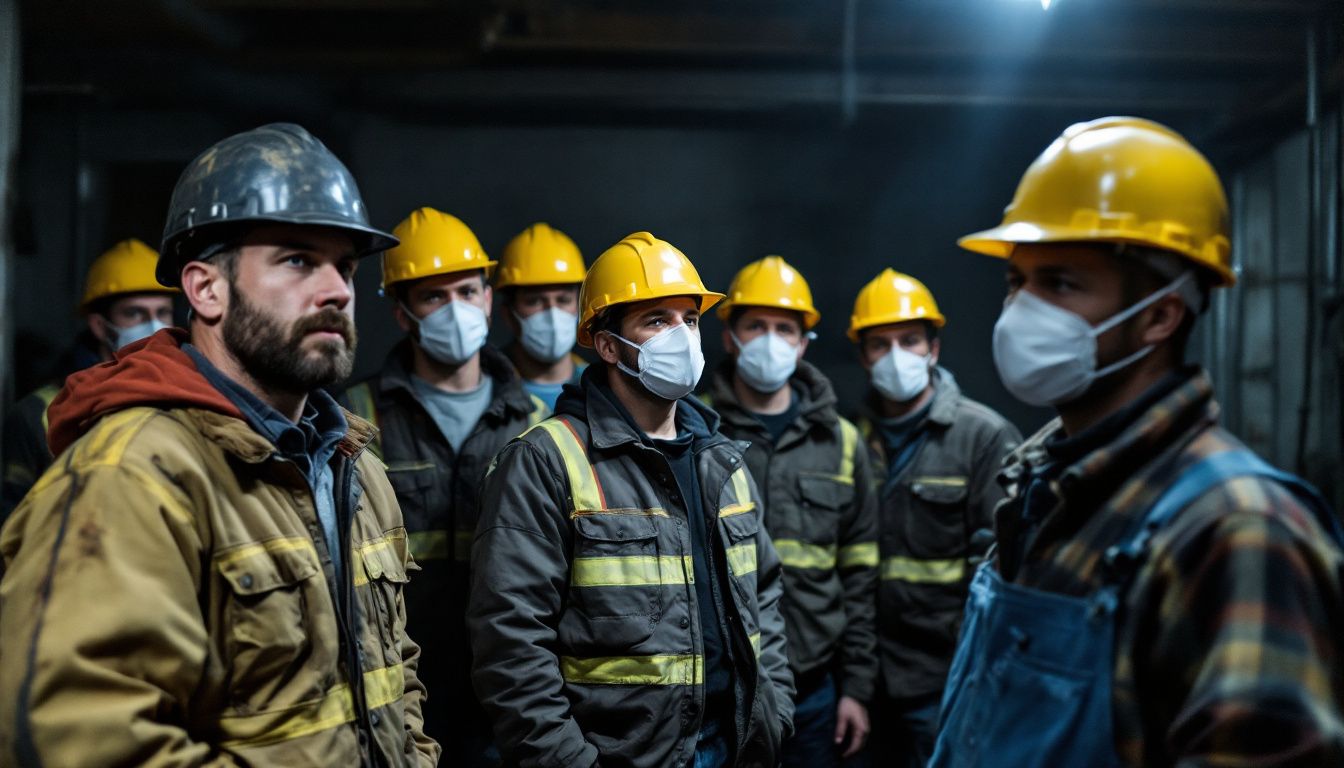

  • Reducing the Risk of Asbestos Exposure Through Proper Training and Procedures

    Reducing the Risk of Asbestos Exposure Through Proper Training and Procedures

    The Best Asbestos Awareness Course Online: What You Need to Know Before You Enrol

    If you’re searching for the best asbestos awareness course online, you’re already doing the right thing. Asbestos remains the single largest cause of work-related deaths in Great Britain, and the law is unambiguous — anyone who might disturb asbestos-containing materials during their work must receive proper training before they pick up a tool.

    Getting that training right isn’t a box-ticking exercise. It’s the difference between a safe workforce and a preventable tragedy.

    This post breaks down what online asbestos awareness training actually covers, who legally needs it, how to spot a quality course, and what to do once training is complete.

    Why Asbestos Awareness Training Matters More Than Ever

    Asbestos was widely used in UK construction until its full ban in 1999. That means millions of buildings — offices, schools, hospitals, homes — still contain it. Electricians, plumbers, carpenters, heating engineers, and general maintenance workers encounter it regularly, often without realising.

    The fibres released when asbestos-containing materials are disturbed are invisible to the naked eye. They lodge in the lungs and can cause mesothelioma, asbestosis, and lung cancer — diseases that typically don’t appear for 20 to 40 years after exposure. By the time symptoms show, the damage is already done.

    Training doesn’t eliminate the hazard. But it gives workers the knowledge to recognise it, avoid it, and respond correctly when they encounter it.

    Who Legally Needs Asbestos Awareness Training?

    Under the Control of Asbestos Regulations, employers must ensure that workers who are liable to disturb asbestos during their normal work receive adequate information, instruction, and training. This isn’t optional — it’s a legal duty.

    The following trades are considered higher risk and typically require at least Category A awareness training:

    • Electricians
    • Plumbers and heating engineers
    • Carpenters and joiners
    • Painters and decorators
    • Plasterers
    • Roofers
    • General maintenance and facilities management staff
    • Building surveyors and architects visiting older sites

    If your role involves working in or around buildings constructed before 2000, asbestos awareness training is almost certainly a requirement — not a suggestion.

    The Three Categories of Asbestos Training Explained

    Before choosing the best asbestos awareness course online, it helps to understand where awareness training sits within the broader framework. The HSE recognises three main categories of asbestos training.

    Category A — Asbestos Awareness

    This is the foundational level, designed for anyone who might accidentally encounter asbestos during their work but who won’t be deliberately working with it. The goal is recognition and avoidance — not removal.

    A good Category A course covers:

    • What asbestos is and where it’s commonly found
    • The health risks associated with exposure
    • How to identify materials that may contain asbestos
    • What to do if you suspect you’ve disturbed asbestos
    • Legal duties under the Control of Asbestos Regulations
    • The role of the duty holder and the asbestos register

    This is the level most people are searching for when they look for the best asbestos awareness course online.

    Category B — Non-Licensed Asbestos Work

    Category B training is for workers who carry out non-licensed asbestos work — tasks involving lower-risk materials where the legal threshold for a licence isn’t reached, but where additional precautions are still required. This includes short-duration work on asbestos cement or textured coatings.

    This training goes further than awareness alone. Workers learn risk assessment, correct use of RPE (respiratory protective equipment), and notification requirements where applicable.

    Category C — Licensed Asbestos Work

    This is the highest level, required for work involving high-risk materials such as pipe lagging, loose-fill insulation, and sprayed asbestos coatings. Licensed work requires a licence from the HSE, and workers must receive specific training before undertaking these activities.

    Category C work cannot be completed online alone — practical, hands-on training is essential at this level.

    What Makes the Best Asbestos Awareness Course Online?

    Not all online asbestos courses are equal. Some are genuinely well-structured and meet HSE guidance requirements. Others are little more than a short video followed by a multiple-choice quiz that anyone could pass without paying attention.

    Here’s what to look for when evaluating a course:

    Accreditation by a Recognised Body

    The two main accrediting bodies for asbestos training in the UK are UKATA (UK Asbestos Training Association) and IATP (Independent Asbestos Training Providers). A course accredited by either organisation has been assessed against recognised standards.

    Always check that the course provider holds current accreditation. Some providers display logos without maintaining active membership — it’s worth verifying directly with UKATA or IATP if you’re unsure.

    Content That Aligns With HSG264 and HSE Guidance

    The HSE’s guidance document HSG264 sets out the framework for asbestos surveys and management. A quality awareness course will reference this guidance and ensure learners understand how the duty to manage asbestos works in practice.

    The course should explain the asbestos register, what an management survey involves, and why the duty holder’s responsibilities matter to the individual worker on the ground.

    Annual Refresher Training Is Built In

    The HSE recommends that asbestos awareness training is refreshed annually. A reputable course provider will make this clear upfront. Be cautious of any provider suggesting that a one-off certificate is valid indefinitely — it isn’t.

    A Certificate That Holds Up

    On completion, you should receive a certificate that includes your name, the date of completion, the course level (Category A), the accrediting body, and the provider’s details. This certificate needs to be stored and produced if requested by a site manager, principal contractor, or enforcing authority.

    A Realistic Assessment

    A credible course includes a proper end assessment — not one that can be passed by clicking through without reading. The assessment should test genuine understanding of the material, not just the ability to scroll to the end.

    Can Online Training Fully Replace Classroom-Based Asbestos Training?

    For Category A awareness training, online delivery is widely accepted and can be highly effective when the course is well designed. The content is knowledge-based — understanding what asbestos is, where it hides, and what to do when you encounter it doesn’t require a physical environment to learn.

    That said, online training works best as part of a broader safety culture. It should be backed up by site-specific inductions, access to the building’s asbestos register, and clear escalation procedures when workers suspect they’ve found asbestos-containing materials.

    For Categories B and C, online learning can supplement but cannot replace practical, hands-on training. The physical elements — donning and doffing PPE correctly, setting up a decontamination unit, using negative pressure equipment — must be practised in person.

    What Happens After the Course? Putting Training Into Practice

    Completing the best asbestos awareness course online is the starting point, not the finish line. Here’s what should happen once training is done.

    Access the Asbestos Register Before Starting Work

    Any building built before 2000 that isn’t a private domestic property should have an asbestos register — a document that records the location, type, and condition of any known or presumed asbestos-containing materials. Before starting any maintenance, refurbishment, or construction work, workers must consult this register.

    If no register exists, or if the duty holder can’t produce one, work should not proceed until a survey has been carried out. A demolition survey is required before any significant structural work begins, and it’s worth understanding how this differs from a standard management survey.

    Know the Emergency Procedure

    Every worker should know what to do if they accidentally disturb asbestos. The steps are straightforward but must be followed without deviation:

    1. Stop work immediately
    2. Leave the area without disturbing anything further
    3. Prevent others from entering — seal off the area if possible
    4. Do not attempt to clean up the material yourself
    5. Report to your supervisor immediately

    The area must remain sealed until assessed by a competent person. Training teaches these steps, but site managers and employers must reinforce them regularly so they become second nature.

    Wear the Right PPE — Every Time

    Even for low-risk incidental contact, appropriate respiratory protective equipment (RPE) must be worn. Disposable FFP3 masks are the minimum standard for most asbestos-related tasks. Face-fit testing is a legal requirement — a mask that doesn’t fit correctly offers no real protection.

    Disposable coveralls must be used and disposed of correctly after every task. Asbestos fibres cling to clothing and can be carried home, putting families at risk — a phenomenon known as para-occupational exposure.

    The Duty to Manage: What Building Owners and Managers Must Understand

    Asbestos awareness training isn’t only relevant to tradespeople. Building owners, facilities managers, and anyone with responsibility for maintaining a non-domestic premises built before 2000 has a legal duty to manage asbestos under the Control of Asbestos Regulations.

    This duty requires them to:

    • Identify whether asbestos is present in the building
    • Assess the condition and risk of any asbestos-containing materials
    • Produce and maintain an asbestos management plan
    • Ensure that anyone working on the premises is informed of the asbestos register’s contents
    • Review and update the register regularly

    A professional management survey carried out by a qualified surveyor is the standard method for fulfilling this duty. Once a survey is in place, a periodic re-inspection survey ensures the register stays current and that any changes in the condition of asbestos-containing materials are captured promptly.

    If you’re responsible for a commercial property in the capital, an asbestos survey London from a qualified team gives you a legally compliant register and a clear picture of the risks within your building. For premises in the North West, an asbestos survey Manchester can be arranged quickly and to the same high standard. And for property managers in the Midlands, an asbestos survey Birmingham provides the same thorough, professional assessment.

    Record-Keeping: The Part Most People Get Wrong

    Training is only useful if it’s documented. Employers must keep records of all asbestos awareness training — who completed it, when, at what level, and with which provider. These records need to be readily accessible for HSE inspections, insurance purposes, and in the event of a health complaint.

    Key documents to maintain include:

    • Training certificates for each worker
    • Records of annual refresher completion
    • Face-fit test certificates for RPE users
    • The building’s asbestos register and management plan
    • Any incident reports relating to suspected asbestos disturbance

    Failing to maintain adequate records is itself a breach of the Control of Asbestos Regulations and can result in enforcement action even where no actual harm has occurred. Don’t let good training be undermined by poor administration.

    Common Mistakes to Avoid When Choosing an Online Asbestos Course

    With dozens of providers operating in this space, it’s easy to make the wrong choice. Here are the pitfalls to watch out for:

    • Choosing on price alone. The cheapest course is rarely the best. If a provider is significantly undercutting the market, ask why. Cut-price courses often cut corners on content depth and assessment rigour.
    • Ignoring accreditation. A certificate from a non-accredited provider may not be accepted on site. Always verify UKATA or IATP membership before purchasing.
    • Assuming one certificate lasts forever. Annual refresher training is an HSE recommendation. A certificate more than 12 months old may not satisfy a principal contractor’s requirements.
    • Treating online training as the whole solution. Training informs — it doesn’t replace a proper asbestos survey, a functioning asbestos register, or a clear management plan.
    • Not checking the course level. Category A awareness training is not sufficient for workers who will be carrying out non-licensed or licensed asbestos work. Make sure the course level matches the work being done.

    How Asbestos Training and Professional Surveys Work Together

    Training and surveys are two sides of the same coin. Training tells workers what to look out for and how to behave safely. A professional survey tells them — and their employer — exactly what’s in the building, where it is, and what condition it’s in.

    Without a survey, even the best-trained worker is operating blind. They know asbestos might be present, but they don’t know where. Without training, even the most thorough survey is undermined — workers who don’t understand the register or the risks it documents can inadvertently cause the very exposures the survey was designed to prevent.

    The two must work together. Employers and duty holders who invest in both are the ones who genuinely protect their workforce — and who can demonstrate compliance if the HSE comes knocking.

    Frequently Asked Questions

    How long does an online asbestos awareness course take to complete?

    Most accredited Category A online asbestos awareness courses take between two and four hours to complete. Some providers allow learners to pause and return, making it flexible for workers who can’t complete it in a single sitting. The duration should be sufficient to cover all required content — be wary of courses claiming to take less than an hour, as these are unlikely to meet HSE guidance requirements.

    Is an online asbestos awareness certificate accepted on construction sites?

    Yes, provided the course is accredited by UKATA or IATP and meets the HSE’s requirements for Category A training. Many principal contractors will check the accrediting body before accepting a certificate. Always ensure your certificate clearly states the course level, the provider, and the accrediting body.

    How often does asbestos awareness training need to be renewed?

    The HSE recommends annual refresher training for asbestos awareness. Most site managers and principal contractors expect to see a certificate dated within the last 12 months. Even if your employer doesn’t enforce this formally, keeping your training current is both best practice and a personal safeguard.

    What’s the difference between asbestos awareness training and a licensed asbestos course?

    Asbestos awareness training (Category A) is for workers who might accidentally encounter asbestos but won’t be working with it deliberately. Licensed asbestos training (Category C) is for workers carrying out high-risk removal work and requires HSE licensing. There is also a middle category (Category B) for non-licensed asbestos work. The level of training required depends entirely on the nature of the work being carried out.

    Do building managers need asbestos awareness training too?

    Yes. Anyone with responsibility for managing a non-domestic building built before 2000 should understand their legal duties under the Control of Asbestos Regulations. This includes understanding the asbestos register, the management plan, and the obligations placed on them as duty holders. Awareness training helps building managers fulfil these responsibilities and communicate effectively with the surveyors and contractors working on their premises.

    Get the Survey That Backs Up Your Training

    Training prepares your team. A professional asbestos survey gives them the information they need to work safely. At Supernova Asbestos Surveys, we’ve completed over 50,000 surveys across the UK — from management surveys for ongoing duty-holder compliance to full demolition surveys ahead of major refurbishment projects.

    Our UKAS-accredited surveyors work to HSG264 standards and produce clear, actionable reports that your team can actually use. Whether you manage a single commercial property or a large portfolio of sites, we’ll give you a legally compliant asbestos register and the peace of mind that comes with it.

    Call us on 020 4586 0680 or visit asbestos-surveys.org.uk to book your survey or speak to one of our team about your asbestos management obligations.

  • The Benefits of Including Asbestos Awareness Training in New Employee Onboarding

    The Benefits of Including Asbestos Awareness Training in New Employee Onboarding

    Why Asbestos Awareness Training Belongs in Every New Employee Onboarding Programme

    Most workplace asbestos incidents don’t happen because someone was reckless. They happen because nobody told the new maintenance worker that the artex ceiling he’s drilling into might contain chrysotile, or that the pipe lagging the apprentice plumber just cut through was once considered perfectly normal building material.

    The benefits of including asbestos awareness training in new employee onboarding go far beyond satisfying a legal checkbox — they protect lives, reduce costly incidents, and build a safety culture that genuinely sticks. Getting this right from day one matters more than most employers realise.

    Asbestos Is Still Everywhere in UK Buildings

    Asbestos was banned from use in the UK in 1999, but that ban didn’t make it disappear from the buildings already standing. Millions of properties constructed before that date still contain asbestos-containing materials (ACMs) — in floor tiles, ceiling panels, pipe insulation, roof sheeting, textured coatings, soffit boards, and dozens of other locations.

    Any worker who enters, maintains, or refurbishes older buildings can encounter asbestos. Electricians, plumbers, carpenters, decorators, HVAC engineers, and facilities managers are all at risk — as are the building managers responsible for those premises, who need to understand what their legal obligations actually involve.

    Asbestos-related diseases — including mesothelioma, asbestosis, and asbestos-related lung cancer — remain among the leading causes of work-related deaths in the UK. These conditions take decades to develop, which means exposures happening in workplaces right now won’t show up in health statistics for many years. That delayed consequence is precisely why prevention through training is so critical.

    What UK Law Actually Requires

    The Control of Asbestos Regulations places a clear legal duty on employers to ensure that anyone liable to disturb asbestos during their work receives adequate information, instruction, and training. This is not optional guidance — it is a statutory requirement.

    Regulation 10 specifically addresses training. Workers must understand:

    • The properties of asbestos and its effects on health
    • The types of materials likely to contain it
    • Operations that could expose them to asbestos fibres
    • The correct procedures to follow if they encounter or suspect ACMs

    The HSE’s Approved Code of Practice L143 provides further detail on what adequate training looks like in practice. For most workers in non-licensed trades, Category A asbestos awareness training — as defined by HSG264 — is the minimum requirement.

    Self-employed workers are not exempt. If you work alone and could encounter asbestos in the course of your work, the same legal obligations apply to you.

    What Happens When Employers Get It Wrong

    Enforcement action for asbestos-related breaches can be severe. Fines running into tens of thousands of pounds are not unusual, and in serious cases, directors and managers face personal liability.

    The reputational damage and the human cost of a preventable illness compound those financial penalties considerably. Integrating asbestos awareness training into onboarding is one of the most straightforward ways to demonstrate compliance from the outset — and to protect your organisation against enforcement action before any incident occurs.

    The Key Benefits of Including Asbestos Awareness Training in New Employee Onboarding

    There are concrete, practical reasons why onboarding is the right moment to deliver this training — not six months in, not at the next team away-day, but right at the start. The following benefits make the case clearly.

    1. Workers Are Protected Before They Encounter Risk

    A new employee walking into an older building during their first week has no way of knowing which ceiling tiles might contain chrysotile, or whether the boiler room pipework is lagged with amosite. Without training, they’re making decisions in the dark.

    Onboarding training ensures workers have the knowledge they need before they’re exposed to any risk. They learn to recognise materials that may contain asbestos, understand why disturbing them is dangerous, and know the correct steps to take — including stopping work and reporting to a supervisor — before any fibres are released into the air.

    2. It Builds Lasting Safety Habits from Day One

    Habits formed early tend to stick. When asbestos awareness is embedded in the onboarding experience, it signals to new starters that safety is a core value in your organisation, not an afterthought bolted on later.

    Workers who receive this training early are more likely to apply safe working practices consistently, ask questions when they’re unsure, and raise concerns when something doesn’t look right. That kind of proactive behaviour is what prevents incidents from occurring in the first place.

    3. It Reduces the Risk of Costly Incidents

    An unplanned asbestos disturbance on a job site doesn’t just create a health risk — it creates a logistical and financial crisis. Work must stop. The area must be assessed. Remediation may be required. Depending on the scale, specialist licensed contractors may need to be brought in at short notice.

    The cost of a single asbestos incident can run to thousands of pounds, before you factor in potential enforcement action, insurance implications, and project delays. Awareness training is a modest investment that dramatically reduces the likelihood of that scenario arising.

    4. It Creates an Auditable Compliance Record

    When you have a structured onboarding process that includes asbestos awareness, you create a clear, auditable record of who has received training and when. This is invaluable if your organisation is ever subject to an HSE inspection or involved in an incident investigation.

    It also ensures that compliance isn’t dependent on individual managers remembering to arrange training — it happens automatically, for every new starter, every time.

    5. It Supports Employee Confidence and Wellbeing

    Workers who understand the risks they face and know how to manage them feel more confident and more valued. Asbestos awareness training removes the anxiety of the unknown.

    Rather than feeling unsure about what to do if they spot suspicious materials, trained workers have a clear protocol to follow. That confidence has a direct impact on wellbeing, job satisfaction, and staff retention. People stay in workplaces where they feel their safety is taken seriously.

    What Good Asbestos Awareness Training Covers

    Not all training is equal. If you’re selecting a provider or reviewing your existing programme, Category A asbestos awareness training should include at minimum:

    • The properties of asbestos and why it is hazardous to health
    • The types of asbestos and which are most commonly found in UK buildings
    • The diseases caused by asbestos exposure and how they develop
    • Where asbestos is likely to be found in buildings constructed before 2000
    • How to recognise materials that may contain asbestos
    • The correct procedure when ACMs are found or suspected
    • Emergency procedures in the event of an unplanned disturbance
    • The legal framework and employer and employee responsibilities

    For workers in higher-risk roles — those who may need to work with or near ACMs — additional non-licensed or licensed asbestos training may be required beyond Category A awareness.

    Choosing the Right Training Provider

    When selecting an asbestos awareness training provider, look for organisations accredited by recognised bodies such as UKATA (UK Asbestos Training Association), BOHS (British Occupational Hygiene Society), ARCA, or IATP. These bodies set quality standards for training content and delivery.

    A good provider will deliver training that workers actually understand and remember — using real examples, practical scenarios, and clear language rather than dense regulatory text. A certificate at the end means little if the worker can’t recall what to do when they encounter a suspicious material on site.

    E-Learning vs. In-Person Training

    For Category A asbestos awareness, e-learning is widely accepted and can be highly effective. It allows new starters to complete training to a consistent standard, at a time that fits their induction schedule, with a clear record of completion.

    In-person or blended training tends to work better for workers in higher-risk roles, where practical demonstration and Q&A sessions add significant value. Consider your workforce’s specific roles and risk exposure when deciding on the format.

    Supporting Non-English Speaking Workers

    UK workplaces are diverse, and asbestos awareness training needs to be accessible to all workers regardless of their first language. Training materials in multiple languages, the use of visual aids and video content, and translated written resources all help ensure that every worker receives the same quality of information.

    This isn’t just good practice — it’s a legal requirement. The duty to provide adequate information and training applies to all workers, and language barriers don’t reduce that obligation.

    How to Integrate Asbestos Awareness Into Your Onboarding Process

    The practical steps for embedding this training into onboarding are straightforward. Follow this framework and you’ll have a process that’s both effective and auditable.

    1. Conduct a training needs analysis. Identify which roles in your organisation could bring workers into contact with asbestos. Not every new starter will need the same level of training, but most who work in or maintain pre-2000 buildings will need at least Category A awareness.
    2. Schedule training within the first week. If workers are entering older buildings from day one, training should happen before or during their first days on site — not after they’ve already been exposed to potential risk.
    3. Use a recognised, accredited provider. Ensure your chosen provider meets the standards set out by UKATA or an equivalent accrediting body.
    4. Keep thorough records. Maintain a training register showing who completed training, when, and with which provider. Include copies of any certificates issued.
    5. Plan for refresher training. While annual refreshers aren’t a statutory requirement, the HSE and industry bodies recommend periodic updates to keep knowledge current. Build this into your training calendar from the outset.
    6. Review training content regularly. Ensure your programme reflects current HSE guidance and any changes to your workplace or the types of buildings your workers enter.

    The Role of Asbestos Surveys in Supporting Worker Safety

    Training tells workers what to look out for and what to do if they find it. But the most effective way to protect your workforce is to know exactly where asbestos is located in your building before any work begins.

    An asbestos management survey identifies the location, type, and condition of all ACMs within a premises. This information feeds directly into your asbestos management plan, which in turn informs your workers about the specific risks in their workplace — making their awareness training immediately relevant and actionable rather than abstract.

    Duty holders managing non-domestic properties are legally required to have a management survey in place. If you’re planning refurbishment or demolition work, a demolition survey is required before any intrusive work begins — no exceptions.

    If your building hasn’t been surveyed, or if your existing survey is out of date, arranging a professional survey should sit alongside your training programme, not replace it. The two work together to create a genuinely safe working environment.

    Asbestos Awareness Training as Part of a Broader Safety Culture

    Asbestos awareness training is essential, but it sits within a wider framework of asbestos management. Training alone won’t protect workers if the building they’re entering has never been surveyed, if the asbestos register is out of date, or if there’s no clear process for reporting suspected ACMs.

    Effective asbestos management requires all of these elements working together:

    • A current, professionally conducted asbestos survey
    • An up-to-date asbestos register and management plan
    • Regular condition monitoring of known ACMs
    • Clear reporting procedures for workers who encounter suspicious materials
    • Asbestos awareness training embedded in onboarding and refreshed periodically
    • Competent, appointed persons responsible for managing asbestos on site

    When onboarding training is delivered alongside a robust management framework, it becomes genuinely meaningful. Workers understand not just the theory of asbestos risk, but the specific protocols that apply to their actual workplace.

    Asbestos Surveys Across the UK

    Whether you’re managing a single premises or a large portfolio of properties, professional asbestos surveying is a non-negotiable part of your duty of care. Supernova Asbestos Surveys operates nationwide, with specialist teams covering every region.

    If you’re based in the capital and need an asbestos survey London teams can rely on, or you’re looking for an asbestos survey Manchester clients trust, or require an asbestos survey Birmingham property managers depend on — Supernova has the accredited surveyors and local knowledge to deliver accurate, thorough results wherever your buildings are located.

    With over 50,000 surveys completed across the UK, we understand the pressures facing employers, facilities managers, and duty holders — and we work to make the process as straightforward as possible.

    Frequently Asked Questions

    Is asbestos awareness training a legal requirement for new employees?

    Yes. Under the Control of Asbestos Regulations, employers have a statutory duty to ensure that any worker liable to disturb asbestos receives adequate information, instruction, and training. For most workers entering or maintaining pre-2000 buildings, Category A asbestos awareness training is the minimum legal requirement. This obligation applies from the moment a worker starts in their role, which is why onboarding is the appropriate time to deliver it.

    How long does Category A asbestos awareness training take?

    Category A awareness training is typically delivered over a half-day, either in person or via e-learning. The duration can vary slightly depending on the provider and delivery format, but the content must meet the standards set out in HSG264. E-learning courses can often be completed in two to three hours, making them a practical option for embedding within a broader induction programme.

    Does asbestos awareness training need to be renewed?

    There is no statutory requirement for annual renewal of Category A awareness training. However, the HSE and industry bodies such as UKATA recommend periodic refresher training to keep knowledge current. Many employers build in refreshers every one to three years, particularly when workers’ roles change or when they begin working in new types of premises. Keeping records of refresher training is good practice and supports your compliance audit trail.

    What’s the difference between asbestos awareness training and a licensed asbestos course?

    Category A asbestos awareness training is designed for workers who may encounter asbestos incidentally during their work — it teaches them to recognise potential ACMs and follow safe procedures, not to work with asbestos directly. Licensed asbestos work requires a much higher level of training and qualification, and is only required for workers who carry out notifiable licensed asbestos work, such as removing asbestos insulation or heavily damaged asbestos materials. Most workers in maintenance, construction, and facilities management roles need awareness training, not a licence.

    Do I need an asbestos survey before delivering onboarding training?

    You don’t need a survey in order to deliver awareness training — the two serve different purposes. However, if your workers will be entering or maintaining a pre-2000 building, you should have a current asbestos management survey in place. This gives your workers site-specific information about where ACMs are located, which makes their awareness training far more relevant and actionable. If you don’t yet have a survey, contact Supernova Asbestos Surveys on 020 4586 0680 or visit asbestos-surveys.org.uk to arrange one.

    Get Professional Asbestos Support from Supernova

    Protecting your workers starts with knowing what’s in your buildings. Supernova Asbestos Surveys has completed over 50,000 surveys across the UK, working with employers, facilities managers, contractors, and duty holders to ensure their premises are properly assessed and their teams are kept safe.

    Whether you need a management survey for an occupied premises, a demolition survey ahead of refurbishment, or simply want to understand your legal obligations, our accredited surveyors are ready to help.

    Call us on 020 4586 0680 or visit asbestos-surveys.org.uk to book your survey or speak to a member of our team.

  • Training Workers and Employees to Properly Handle Asbestos Materials

    Training Workers and Employees to Properly Handle Asbestos Materials

    Why Asbestos Training Classes Could Be the Most Important Investment You Make

    Asbestos remains the single largest cause of work-related deaths in Great Britain. The fibres are invisible, odourless, and once inhaled, they permanently lodge in lung tissue — causing diseases that can take decades to develop but are almost always fatal. For anyone working in or around pre-2000 buildings, asbestos training classes are not optional. They are a legal requirement and, more importantly, a matter of life and death.

    Whether you manage a commercial property, run a construction firm, or work in facilities management, understanding what asbestos training involves — and who needs it — is essential. This post walks you through the legal framework, the three categories of training, what good training actually looks like, and the mistakes that cost employers dearly.

    The Legal Framework Behind Asbestos Training in the UK

    The Control of Asbestos Regulations sets out clear duties for employers. Any worker who is liable to disturb asbestos-containing materials (ACMs) during their normal work must receive adequate training. That obligation falls squarely on the employer — not the worker.

    The HSE’s guidance document HSG264 reinforces this by making clear that identifying and managing asbestos is a structured process requiring trained personnel at every stage. Ignorance of the regulations is not a defence, and enforcement action — including prosecution — is a real possibility for non-compliant businesses.

    Importantly, the duty to train extends beyond those physically handling asbestos. Supervisors, managers, and anyone who might inadvertently disturb ACMs during routine maintenance all fall within scope. If your workforce operates in older buildings, asbestos training classes are a baseline legal obligation, not a discretionary extra.

    The Three Categories of Asbestos Training Classes

    UK law organises asbestos training into three distinct categories, each matched to the level of risk and the nature of the work involved. Getting the category right matters — under-training workers is a legal breach, and it puts lives at risk.

    Category A: Asbestos Awareness Training

    This is the foundation level, designed for workers who could accidentally disturb asbestos during their day-to-day activities. Electricians, plumbers, joiners, painters, and general maintenance staff all typically fall into this group.

    Category A training covers:

    • What asbestos is and why it is dangerous
    • The types of asbestos and what ACMs look like
    • Where ACMs are commonly found in buildings
    • The health risks associated with exposure, including the elevated risk for smokers
    • What to do if you suspect you have encountered asbestos
    • The importance of checking the asbestos register before starting work

    Critically, Category A training does not qualify someone to work with asbestos. It qualifies them to recognise it and stop work immediately if they encounter it. That distinction matters enormously on site.

    Online delivery is acceptable for Category A, provided the course meets the requirements of a recognised body such as UKATA (UK Asbestos Training Association) or IATP (Independent Asbestos Training Providers). Refresher training is typically required every two years, though many employers opt for annual updates given the stakes involved.

    Category B: Non-Licensed Asbestos Work Training

    Some asbestos tasks do not require a licence from the HSE but still involve direct contact with ACMs. These are lower-risk activities, but they carry real exposure potential and demand structured training.

    Typical non-licensed tasks include:

    • Drilling into asbestos cement sheets
    • Removing small areas of textured coatings such as Artex
    • Laying cables close to undamaged asbestos insulation board
    • Removing asbestos floor tiles in good condition
    • Minor repairs to asbestos cement roofing

    Category B training goes significantly further than awareness. Workers learn how to carry out risk assessments, select and correctly use personal protective equipment (PPE) and respiratory protective equipment (RPE), control dust, and dispose of asbestos waste compliantly.

    Refresher training for non-licensed work is required every three years at a minimum. However, if working practices change or a worker moves into a new role involving different ACM types, earlier refresher training is advisable.

    Category C: Licensed Asbestos Work Training

    Licensed work involves the highest-risk ACMs — sprayed coatings, asbestos insulation, and asbestos insulating board (AIB) in significant quantities. Only contractors holding a licence issued by the HSE can legally carry out this work.

    Category C training is the most intensive and covers:

    • Detailed understanding of licensed work regulations and notification requirements
    • Setting up and dismantling controlled enclosures
    • Using negative pressure units and air monitoring equipment
    • Decontamination procedures for personnel and equipment
    • Emergency procedures and spill management
    • Waste handling, packaging, and disposal under hazardous waste regulations

    Licensed workers must undergo refresher training every one to two years. Supervisors working on licensed projects have additional training obligations and must demonstrate competence in managing both the technical and safety aspects of the work.

    Notifiable Non-Licensed Work: The Category That Catches Employers Out

    Between non-licensed and licensed work sits a category that many employers overlook entirely: Notifiable Non-Licensed Work, or NNLW. These are tasks that do not require a licence but must be notified to the relevant enforcing authority before work begins.

    NNLW typically applies when workers are likely to be exposed to asbestos fibres above the control limit — even if the task itself falls below the licensing threshold. Examples include removing larger areas of asbestos cement or working with AIB in short, intermittent bursts.

    For NNLW, employers must also:

    • Designate a supervisor for the work
    • Ensure health surveillance is in place for all workers involved
    • Keep records of exposure for each individual worker
    • Provide training that specifically addresses NNLW requirements

    Training refreshers for NNLW are required annually or every two years, depending on the nature of the tasks. The HSE takes a dim view of employers who treat NNLW as standard non-licensed work — the distinction exists for good reason, and the enforcement consequences reflect that.

    What Good Asbestos Training Classes Actually Look Like

    Not all training is equal. A box-ticking e-learning module completed in twenty minutes is not the same as a properly structured course delivered by a competent trainer. When evaluating asbestos training classes, look for the following hallmarks of quality.

    Accreditation by a Recognised Body

    Courses should be accredited by UKATA or IATP. These organisations set standards for course content, delivery, and assessment. Accredited training provides a defensible paper trail for employers and demonstrates due diligence to the HSE if your practices are ever scrutinised.

    Practical, Hands-On Elements

    For Category B and C training in particular, classroom theory alone is insufficient. Workers need to physically practise donning and doffing PPE, fitting RPE correctly, and carrying out decontamination procedures. A course that skips practical elements is cutting corners in the worst possible place.

    Role-Specific Content

    A generic asbestos course delivered to a mixed group of electricians, roofers, and demolition workers will not serve any of them particularly well. Good training is tailored to the actual tasks and materials workers encounter in their specific roles — the scenarios should feel familiar, not abstract.

    Assessment and Certification

    Workers should be assessed — both in writing and practically — before receiving their certificate. The certificate should include the worker’s name, the level of training, the date of completion, and the accrediting body. Photo ID cards are standard for licensed and non-licensed workers.

    Records Retention

    Employers must retain training records for a minimum of 40 years. This is not bureaucratic pedantry — asbestos-related diseases can take 20 to 40 years to manifest, and records may be critical evidence in future health surveillance or legal proceedings. Digital record-keeping systems make this manageable, but only if they are set up properly from the outset.

    The Role of Asbestos Surveys in Supporting Training

    Asbestos training classes teach workers what to look for and how to respond — but they work best when backed up by accurate, up-to-date survey data. Before any work begins on a pre-2000 building, a thorough management survey should be in place to identify the location, type, and condition of all ACMs on the premises.

    Without a survey, even the best-trained workers are operating blind. They may follow every procedure correctly and still inadvertently disturb materials they did not know were there. The survey is the foundation on which safe working practice is built — training and survey data must work together.

    Supernova Asbestos Surveys operates nationwide, with specialist teams covering major urban centres. If your properties are in the capital and you need an asbestos survey London teams can carry out swiftly, or you need an asbestos survey Manchester clients trust, or an asbestos survey Birmingham properties require, Supernova has local surveyors ready to mobilise quickly.

    Conducting a Training Needs Analysis

    Before booking any asbestos training classes, carry out a Training Needs Analysis (TNA). This is a structured review of your workforce’s roles, the buildings they work in, and the tasks they carry out — mapped against the training categories outlined above.

    A TNA will help you identify:

    • Which workers need Category A, B, or C training
    • Who requires NNLW-specific training
    • Which workers are overdue for refresher training
    • Gaps in supervisory or management-level awareness

    Revisit your TNA whenever you take on new contracts, expand into new building types, or change working methods. Training is not a one-time event — it is an ongoing programme that should evolve with your business and workforce.

    Common Mistakes Employers Make With Asbestos Training

    Even well-intentioned employers make avoidable errors when it comes to asbestos training. Here are the most common ones to watch out for.

    Relying Solely on Induction Training

    A brief mention of asbestos during a general site induction does not satisfy the legal requirement for asbestos training. Workers need structured, category-appropriate training from an accredited provider — induction content is a supplement, not a substitute.

    Letting Refresher Dates Slip

    It is easy for refresher training to fall off the radar, particularly in busy businesses with high staff turnover. Build renewal dates into your HR or compliance system and treat them with the same urgency as equipment inspections or fire drills.

    Assuming Office-Based Staff Are Exempt

    If your office is in a pre-2000 building and staff carry out any maintenance activities — changing light fittings, drilling into walls, moving ceiling tiles — they may need at least Category A awareness training. Do not assume exemption without checking against the actual tasks being performed.

    Failing to Keep Records

    The 40-year record retention requirement catches many employers off guard. Digital record-keeping systems make this manageable, but only if they are set up and maintained properly from the outset. Paper records stored in filing cabinets are a liability waiting to happen.

    Choosing Unaccredited Courses to Save Money

    Cheap, unaccredited online courses may appear to tick the box, but they will not hold up to HSE scrutiny. The cost of proper accredited training is negligible compared to the cost of an enforcement notice, a civil claim, or — far more gravely — a worker’s life.

    What Happens If Workers Are Not Properly Trained?

    The consequences of inadequate asbestos training fall into three distinct areas: legal, financial, and human.

    On the legal side, the HSE can issue improvement notices, prohibition notices, and — in serious cases — pursue criminal prosecution. Directors and senior managers can be held personally liable where there is evidence of negligence or wilful non-compliance. Fines for asbestos-related breaches can be substantial, and the reputational damage from a public enforcement action is difficult to recover from.

    Financially, the costs extend well beyond any fine. Civil claims from workers or their families, increased insurance premiums, loss of contracts, and the cost of remedial work all add up. Businesses that cut corners on training rarely account for these downstream costs when making their initial decision.

    Most gravely, the human cost is irreversible. Mesothelioma, asbestosis, and asbestos-related lung cancer are terminal diagnoses. No amount of compensation or remedial action can undo the harm caused by preventable exposure. Proper asbestos training classes exist precisely because the alternative is unacceptable.

    Refresher Training: Keeping Competence Current

    Asbestos training is not a one-and-done exercise. Regulations evolve, best practice guidance is updated, and workers can fall into complacency without regular reinforcement. Refresher training keeps competence sharp and ensures that your workforce remains legally compliant.

    As a general guide, refresher intervals are:

    1. Category A (Awareness): Every two years minimum; annually recommended
    2. Category B (Non-Licensed Work): Every three years minimum
    3. NNLW: Every one to two years
    4. Category C (Licensed Work): Every one to two years

    These are minimum intervals. If a worker changes role, moves to a different site type, or has had a gap in asbestos-related work, earlier refresher training is prudent. Build a live training register that flags upcoming renewals automatically — do not rely on memory or manual spreadsheets.

    Frequently Asked Questions

    Who legally needs to attend asbestos training classes?

    Under the Control of Asbestos Regulations, any worker who is liable to disturb asbestos-containing materials during their normal work must receive adequate and appropriate training. This includes tradespeople such as electricians, plumbers, and joiners, as well as maintenance staff, supervisors, and anyone who manages buildings constructed before the year 2000. The duty to provide training rests with the employer.

    How often do asbestos training classes need to be refreshed?

    Refresher intervals depend on the category of training. Category A awareness training should be refreshed every two years at a minimum, with many employers opting for annual refreshers. Category B non-licensed work training requires a refresher every three years. Licensed work (Category C) and Notifiable Non-Licensed Work training must be refreshed every one to two years. If a worker’s role changes or there has been a significant gap in relevant work, earlier refresher training is advisable.

    Can asbestos awareness training be completed online?

    Yes — online delivery is acceptable for Category A awareness training, provided the course is accredited by a recognised body such as UKATA or IATP and meets the required content standards. However, Category B and Category C training must include practical, hands-on elements that cannot be replicated through online-only delivery. Always verify accreditation before booking any course.

    Do I need an asbestos survey before training my workers?

    An asbestos survey and asbestos training serve different but complementary purposes. Training equips workers to recognise and respond to ACMs safely. A survey identifies exactly where ACMs are located within a building. Both are required — without a current survey, trained workers may still unknowingly disturb materials. The survey provides the site-specific data that makes training effective in practice.

    What records do employers need to keep for asbestos training?

    Employers must retain training records for a minimum of 40 years. This extended period reflects the long latency of asbestos-related diseases, which can take 20 to 40 years to manifest. Records should include each worker’s name, the category of training completed, the date of completion, the accrediting body, and any assessment results. Digital record-keeping systems are strongly recommended over paper-based filing.

    Get Expert Asbestos Support From Supernova

    Asbestos training classes are one half of a compliant, safe approach to asbestos management. The other half is accurate, professionally conducted survey data that tells your workers exactly what they are dealing with — and where.

    Supernova Asbestos Surveys has completed over 50,000 surveys across the UK. Our UKAS-accredited surveyors work quickly, report clearly, and provide the information your team needs to work safely. Whether you need a management survey for an ongoing duty-of-care obligation or a pre-refurbishment survey before works begin, we are ready to help.

    Call us on 020 4586 0680 or visit asbestos-surveys.org.uk to book a survey or discuss your asbestos management needs with our team.

  • Brexit and Asbestos Surveys: What You Need to Know

    Brexit and Asbestos Surveys: What You Need to Know

    Brexit and Asbestos Surveys: What You Need to Know

    Brexit reshaped many aspects of how the UK operates — but when it comes to Brexit asbestos surveys, what you need to know is more straightforward than most people assume. The fundamental duty to manage asbestos has not been weakened, the regulations remain firmly in force, and the consequences of non-compliance are just as serious as they have always been.

    What has changed is who sets the rules, how asbestos-containing materials are handled at the border, and the practical pressures businesses face when trying to remain compliant in a post-Brexit landscape. Here is exactly where things stand.

    UK Asbestos Regulations After Brexit: The Core Framework

    The single most important thing to understand is that the Control of Asbestos Regulations — the primary legislation governing asbestos management in the UK — remains fully in force. Leaving the EU did not repeal or weaken these rules. If anything, the UK now has full sovereign authority to strengthen them further.

    The Health and Safety Executive (HSE) continues to be the lead enforcement body. They set standards, publish guidance including the widely referenced HSG264, inspect workplaces, and take enforcement action against those who fall short. Nothing about that role changed with Brexit.

    For building owners and managers, the day-to-day obligations are exactly the same as before:

    • Non-domestic buildings constructed before 2000 must be assessed for asbestos-containing materials
    • Identified materials must be recorded, monitored, and managed
    • Workers and contractors must be informed of asbestos locations
    • Surveys must be carried out by competent, accredited professionals

    The Duty to Manage: What Building Owners Must Do

    The duty to manage asbestos sits at the heart of UK asbestos law. It places a legal obligation on the person responsible for maintaining a non-domestic building — whether that is a landlord, facilities manager, or employer — to take reasonable steps to find, assess, and manage asbestos.

    This is not a one-off exercise. It requires ongoing attention and regular review. Here is what the duty to manage typically involves in practice:

    1. Commissioning an asbestos survey to identify the presence, location, and condition of any asbestos-containing materials
    2. Maintaining an up-to-date asbestos register that records all findings
    3. Producing and implementing a written asbestos management plan
    4. Reviewing the condition of asbestos materials at least annually
    5. Informing anyone who might disturb asbestos — contractors, maintenance workers, emergency services — of its location
    6. Ensuring that only licensed contractors carry out notifiable asbestos work
    7. Keeping all records current and readily accessible

    Failing to meet these obligations is not a minor administrative oversight. The penalties are significant and deliberately dissuasive.

    Penalties for Non-Compliance

    Magistrates’ courts can issue fines of up to £20,000 for asbestos breaches. Crown Courts face no upper limit on fines — and for larger organisations, penalties can run into hundreds of thousands of pounds.

    Individual directors and managers can face up to two years in prison if their negligence puts workers at risk. Beyond the financial and criminal consequences, the HSE can issue improvement notices requiring urgent remedial action, or prohibition notices that shut down work entirely until issues are resolved.

    Insurance premiums typically rise following enforcement action, and reputational damage can be lasting. The cost of compliance is always lower than the cost of getting it wrong.

    How Brexit Changed the Regulatory Landscape

    While the core rules stayed the same, Brexit did introduce some meaningful changes — particularly around trade, enforcement capacity, and the UK’s ability to set its own direction on asbestos policy.

    Import and Export of Asbestos-Containing Materials

    Asbestos has been banned in the UK since 1999, so there is no legal trade in raw asbestos. However, asbestos-containing materials — legacy products, certain imported goods, or materials within plant and machinery — can still cross borders, and the rules governing this have shifted post-Brexit.

    Previously, the UK operated within the EU’s REACH regulations, which controlled the movement of hazardous substances across member states. Post-Brexit, the UK now operates under its own UK REACH framework, administered by the HSE.

    The practical effect for most businesses is more paperwork, separate compliance checks, and in some cases, higher costs when dealing with goods that move between Great Britain and the EU. For businesses importing equipment, machinery, or building materials that may contain asbestos, it is essential to understand both UK REACH requirements and any EU-side obligations if goods are moving in both directions. Getting this wrong can result in enforcement action on either side of the border.

    The HSE’s Expanded Role

    With the UK no longer subject to EU-level oversight, the HSE has taken on a broader remit. It now acts as both the domestic regulator and the body responsible for shaping UK-specific guidance and standards — a role that was previously shared, in part, with European agencies.

    This expansion of responsibility has placed additional demands on the HSE’s resources. Enforcement capacity has come under scrutiny, and some industry observers have raised concerns about whether inspection frequency has kept pace with the increased workload.

    For responsible building owners, this is not a reason to relax. It is a reason to ensure your own compliance is watertight, rather than relying on enforcement to prompt action.

    Opportunities in a Post-Brexit Framework

    There is a more positive dimension to Brexit’s influence on asbestos regulation. The UK now has the freedom to tailor its asbestos rules to the specific character of its built environment, its workforce, and its enforcement infrastructure — without needing to align with EU-wide directives that may not reflect UK priorities.

    In theory, this creates space for more targeted guidance, faster regulatory updates, and closer collaboration between the HSE and UK industry bodies. Whether that potential is fully realised will depend on political will and resource allocation — but the framework for improvement exists.

    The Health Case for Asbestos Surveys

    It would be easy, amid the regulatory detail, to lose sight of why asbestos management matters so profoundly. Asbestos is the single largest cause of work-related deaths in the UK. The fibres, when disturbed and inhaled, cause irreversible damage to lung tissue — damage that may not manifest as symptoms for 20 to 30 years after exposure.

    The diseases associated with asbestos exposure include:

    • Asbestosis — scarring of the lung tissue that progressively impairs breathing
    • Lung cancer — significantly more likely in those with a history of asbestos exposure
    • Mesothelioma — an aggressive cancer of the lining of the lungs and chest cavity, almost exclusively caused by asbestos exposure and carrying a very poor prognosis

    There is no safe level of exposure. The vast majority of asbestos-related deaths today are the result of exposure that occurred decades ago — in shipyards, factories, schools, hospitals, and offices. The buildings responsible for tomorrow’s deaths are standing right now. That is why surveys, management plans, and proper removal matter so urgently.

    Types of Asbestos Survey: Choosing the Right One

    Not all asbestos surveys are the same, and choosing the wrong type can leave you legally exposed or operationally unprepared. There are three main types, each suited to different circumstances.

    Management Surveys

    A management survey is the standard survey for buildings in normal use. It is designed to locate, as far as reasonably practicable, asbestos-containing materials that could be disturbed during everyday activities — routine maintenance, minor repairs, and general occupation.

    The surveyor will inspect accessible areas, take samples of suspected materials, and produce a detailed report that forms the basis of your asbestos register and management plan. This type of survey is appropriate for offices, schools, retail premises, warehouses, and other non-domestic buildings where no significant structural work is planned.

    Management surveys need to be reviewed annually, and any changes to the building’s condition or use should prompt an earlier reassessment.

    Refurbishment Surveys

    If you are planning to refurbish or extend a building — or any part of it — you need a refurbishment survey before work begins. This is a more intrusive survey, designed to locate all asbestos-containing materials in the areas that will be affected by the works.

    Surveyors will access hidden voids, break into wall cavities, and inspect structural elements that would not be examined in a management survey. The goal is to ensure that no asbestos is disturbed unknowingly during construction work — something that can have catastrophic consequences for workers and serious legal implications for the client.

    Demolition Surveys

    Where a building is being brought down entirely, a demolition survey is required. This is the most thorough survey type, covering the whole structure to ensure all asbestos-containing materials are identified and safely managed before any demolition work proceeds.

    A survey of this kind must be completed before any contractor sets foot on site to begin structural work. It is not optional, and no competent contractor should be willing to proceed without one.

    Who Can Carry Out an Asbestos Survey?

    Only surveyors with appropriate competence and accreditation should carry out asbestos surveys. UKAS accreditation (United Kingdom Accreditation Service) is the recognised standard for asbestos surveying bodies in the UK. Engaging an unaccredited surveyor not only risks an unreliable result — it may also leave you legally exposed if the survey is later challenged.

    Laboratory analysis of samples must also be carried out by UKAS-accredited labs. This ensures that results are accurate, traceable, and legally defensible.

    Post-Brexit, accreditation standards remain unchanged. UKAS continues to operate as the national accreditation body, and its standards are aligned with international frameworks rather than EU-specific ones. There has been no reduction in the rigour expected of surveying professionals.

    Asbestos Removal: When Is It Required?

    Not all asbestos needs to be removed. In many cases, asbestos-containing materials that are in good condition and are not likely to be disturbed can be safely managed in place. The priority is to prevent fibre release — and sometimes that means leaving materials undisturbed rather than creating risk through unnecessary removal.

    However, when asbestos is damaged, deteriorating, or located in an area where it will inevitably be disturbed — particularly before refurbishment or demolition — asbestos removal becomes necessary. This work must be carried out by a licensed contractor for most types of asbestos, following strict HSE protocols including notification, enclosure, and air monitoring.

    Never attempt to remove or disturb asbestos-containing materials yourself. The risks are severe, the legal requirements are exacting, and the consequences of getting it wrong — for health and for compliance — are long-lasting.

    Practical Challenges for Businesses Post-Brexit

    The post-Brexit period has not been without difficulty for businesses managing asbestos obligations. Several practical pressures have emerged that are worth acknowledging honestly.

    Cost Pressures on Smaller Businesses

    Small and medium-sized enterprises often operate on tighter margins, and the additional administrative burden of UK REACH compliance — on top of existing asbestos management costs — has placed real strain on some organisations. Free guidance from the HSE is available and should be used, but it does not eliminate the cost of surveys, management, and removal.

    The most effective approach is to treat asbestos management as an ongoing operational cost rather than a reactive expense triggered by enforcement. Budgeting annually for survey reviews, register updates, and any necessary remedial work is far less disruptive — and far less costly — than dealing with an enforcement notice or a health incident.

    Supply Chain and Contractor Availability

    Brexit contributed to broader labour market shifts in the construction and specialist contracting sectors. In some regions, the availability of licensed asbestos contractors has tightened, and lead times for survey bookings have extended. This makes early planning more important than ever.

    If you have a refurbishment or demolition project in the pipeline, commission your survey well in advance. Leaving it until the last moment risks delays to your programme and, potentially, pressure to cut corners — neither of which is acceptable when asbestos is involved.

    Cross-Border Property Portfolios

    For organisations with properties in both Great Britain and the Republic of Ireland — or elsewhere in the EU — the regulatory landscape has become more complex. GB properties are governed by UK regulations; Irish properties fall under Irish and EU law. Compliance obligations must be managed separately for each jurisdiction, and the assumption that a UK-compliant approach automatically satisfies EU requirements is no longer valid.

    If you manage a cross-border portfolio, take specific legal and technical advice for each jurisdiction. Do not assume that one framework covers all.

    Asbestos Surveys Across the UK: Regional Considerations

    Asbestos obligations apply equally across England, Scotland, and Wales under the Control of Asbestos Regulations. Northern Ireland has its own equivalent legislation but mirrors the core requirements closely. The type of building stock, the age of construction, and the industrial history of a region can all influence the likelihood of asbestos being present — and the complexity of managing it.

    In major urban centres, the density of pre-2000 commercial and industrial buildings means demand for asbestos surveys is consistently high. Whether you need an asbestos survey in London, an asbestos survey in Manchester, or an asbestos survey in Birmingham, the regulatory requirements are identical — but local knowledge of building types, construction methods, and common asbestos-containing materials in each area can make a real difference to the quality and efficiency of a survey.

    Working with a surveying company that operates nationally but understands regional building characteristics gives you the best of both worlds: consistent standards and local expertise.

    Staying Compliant in a Post-Brexit World: A Practical Checklist

    Regardless of the political and regulatory shifts that Brexit has brought, your core obligations as a dutyholder remain unchanged. Use this checklist to ensure your position is solid:

    • Confirm your building’s asbestos survey status — if no survey has been carried out, commission one now
    • Check your asbestos register is current — it should reflect the current condition of all identified materials
    • Review your asbestos management plan — it must be a live document, not a filing cabinet entry
    • Ensure all contractors are briefed — anyone working on or in your building must be informed of asbestos locations before they begin
    • Verify your surveyor’s accreditation — UKAS accreditation is non-negotiable
    • Plan ahead for any refurbishment or demolition — the correct survey type must be commissioned before work begins
    • Understand your UK REACH obligations — if you import or handle goods that may contain asbestos, get specialist advice
    • Keep records accessible — in the event of an HSE inspection, you need to produce documentation promptly

    Compliance is not a destination — it is a continuous process. The buildings and the people working in them depend on it being taken seriously, every year, without exception.

    Frequently Asked Questions

    Did Brexit change the UK’s asbestos regulations?

    No. The Control of Asbestos Regulations remained fully in force after Brexit. The duty to manage asbestos, the requirement for surveys, and the penalties for non-compliance are all unchanged. What did change is that the UK now operates its own regulatory framework independently of EU oversight, including a separate UK REACH system administered by the HSE.

    Do I still need an asbestos survey after Brexit?

    Yes, absolutely. If you are responsible for a non-domestic building constructed before 2000, you are legally required to assess it for asbestos-containing materials. This obligation has not changed. A management survey is the appropriate starting point for most buildings in normal use, while refurbishment and demolition surveys are required before any significant building works begin.

    Has UKAS accreditation for asbestos surveyors changed post-Brexit?

    No. UKAS continues to operate as the UK’s national accreditation body, and its standards for asbestos surveying organisations and laboratories remain aligned with international frameworks. Post-Brexit, UKAS accreditation is still the recognised benchmark for competence in the UK. Always verify that your surveyor and their laboratory hold current UKAS accreditation before commissioning any work.

    What is UK REACH and does it affect asbestos management?

    UK REACH is the domestic regulatory framework that replaced EU REACH after Brexit, governing the use and movement of hazardous substances in Great Britain. It is administered by the HSE. For most building owners managing asbestos in situ, UK REACH has limited direct impact. However, businesses that import equipment, machinery, or building materials that may contain asbestos need to understand their UK REACH obligations and ensure compliance separately from any EU requirements.

    Can asbestos-containing materials be imported into the UK after Brexit?

    The import of raw asbestos into the UK has been prohibited since 1999 and that ban remains in place. However, asbestos-containing materials can sometimes be present within imported goods, machinery, or equipment. Post-Brexit, these movements are governed by UK REACH rather than EU REACH, and businesses must ensure compliance with UK-specific requirements. If you are unsure whether goods you are importing may contain asbestos, seek specialist advice before they arrive.

    Get Your Asbestos Survey Sorted with Supernova

    Supernova Asbestos Surveys has completed over 50,000 surveys across the UK, working with building owners, facilities managers, and contractors to keep properties compliant and people safe. Our surveyors are fully accredited, our reports are clear and actionable, and we cover locations nationwide — from major cities to rural sites.

    Whether you need a management survey for a building in ongoing use, a refurbishment survey ahead of planned works, or specialist advice on your post-Brexit compliance position, we are ready to help.

    Call us on 020 4586 0680 or visit asbestos-surveys.org.uk to book your survey or speak to one of our team.

  • The Role of Asbestos Awareness Training in Occupational Health and Safety

    The Role of Asbestos Awareness Training in Occupational Health and Safety

    Why the Importance of Asbestos Awareness Cannot Be Overstated

    Asbestos killed more UK workers last year than any other single occupational hazard. It is still present in hundreds of thousands of buildings across the country, and the majority of those buildings are still in daily use. Understanding the importance of asbestos awareness is not a box-ticking exercise — it is the difference between a workforce that goes home healthy and one that does not.

    This is not ancient history. Asbestos was only fully banned in the UK in 1999, which means any building constructed or refurbished before that date could contain it. That covers schools, hospitals, offices, factories, and homes across every city and town in the country.

    What Asbestos Is and Why It Remains a Threat

    Asbestos is a naturally occurring fibrous mineral that was used extensively in construction throughout the twentieth century. It was valued for its fire resistance, durability, and insulating properties. Builders and manufacturers used it in everything from roof sheeting and floor tiles to pipe lagging and ceiling coatings.

    The problem is what happens when asbestos-containing materials (ACMs) are disturbed. Microscopic fibres are released into the air, where they can be inhaled without any immediate sensation. Those fibres lodge in the lungs and other tissues, where they can remain for decades before triggering serious disease.

    The diseases asbestos causes

    Asbestos exposure is linked to several serious and often fatal conditions:

    • Mesothelioma — a cancer of the lining of the lungs or abdomen, almost exclusively caused by asbestos exposure
    • Asbestos-related lung cancer — risk is significantly increased in smokers exposed to asbestos
    • Asbestosis — scarring of the lung tissue that causes progressive breathing difficulties
    • Pleural thickening — thickening of the membrane surrounding the lungs, leading to breathlessness

    Symptoms can take anywhere from 15 to 60 years to appear after initial exposure. By the time a diagnosis is made, treatment options are often severely limited. This latency period is precisely why awareness and prevention are so critical — there is no second chance once exposure has occurred.

    The Importance of Asbestos Awareness in the Workplace

    The workers most at risk are those in the trades — electricians, plumbers, carpenters, painters, and general maintenance staff who regularly work in older buildings. These are the people most likely to drill into a wall, cut through a ceiling tile, or disturb pipe lagging without realising what they are working with.

    Asbestos awareness training exists to close that knowledge gap. It gives workers the understanding they need to recognise where ACMs are likely to be found, what they might look like, and — critically — what to do when they suspect they have encountered one.

    What awareness training covers

    A proper asbestos awareness course is not a half-day lecture. It covers substantive, practical content that workers can apply on site. Topics typically include:

    • The types of asbestos and where each was commonly used
    • How to recognise materials that may contain asbestos
    • The health risks associated with exposure
    • Legal duties under the Control of Asbestos Regulations
    • The importance of checking for an asbestos register before starting work
    • What to do if you suspect you have disturbed ACMs
    • Emergency procedures following accidental exposure

    Awareness training does not qualify workers to work with or remove asbestos. That requires separate, higher-level licensed training. Awareness training is about recognition and avoidance — knowing when to stop and call in a professional.

    Who needs asbestos awareness training

    Under the Control of Asbestos Regulations, employers must ensure that any worker who is liable to disturb asbestos during their normal work receives adequate information, instruction, and training. This is not optional. Failure to provide it puts both workers and employers at serious legal and financial risk.

    The following roles typically require asbestos awareness training as a minimum:

    • Electricians and electrical contractors
    • Plumbers and heating engineers
    • Carpenters and joiners
    • Painters and decorators
    • Demolition workers
    • General maintenance and facilities staff
    • Construction site managers and supervisors
    • Architects and surveyors working in older buildings

    Even office-based staff working in pre-2000 buildings benefit from a basic level of awareness, particularly if they manage contractors or are responsible for building maintenance.

    Legal Duties and Regulatory Compliance

    The legal framework around asbestos in the UK is clear and well-established. The Control of Asbestos Regulations place a duty to manage asbestos on those responsible for non-domestic premises. This duty holder — typically the building owner, employer, or managing agent — must identify whether ACMs are present, assess their condition, and put in place a management plan.

    HSE guidance, including HSG264, sets out the standards for asbestos surveying and provides a framework for managing asbestos safely. Compliance is not just about avoiding prosecution. It is about creating an environment where workers can carry out their jobs without unknowingly putting their health at risk.

    The consequences of non-compliance

    Employers who fail to provide adequate asbestos awareness training face enforcement action from the Health and Safety Executive. This can include prohibition notices, improvement notices, and significant financial penalties. In serious cases, individuals can face criminal prosecution.

    Beyond the legal consequences, there is the human cost. A worker who develops mesothelioma because they were never told about asbestos in their workplace is a preventable tragedy. The importance of asbestos awareness training is, at its core, a matter of basic duty of care.

    Asbestos Awareness Across the UK: Why Location Matters

    Asbestos is a national issue, but the practical challenges vary depending on where you are working. Dense urban areas with large stocks of older commercial and industrial buildings present particular challenges.

    In London, the sheer volume of pre-1999 buildings — from Victorian terraces to post-war office blocks — means that tradespeople and facilities managers encounter asbestos risks on a near-daily basis. A professional asbestos survey London is often the first step in understanding what a building contains before any refurbishment or maintenance work begins.

    In the north of England, cities with heavy industrial heritage carry a particularly significant legacy of asbestos use. Factories, warehouses, and commercial units built during the industrial boom years frequently contain high concentrations of ACMs. Commissioning an asbestos survey Manchester before undertaking any structural work is not just good practice — it is a legal requirement where the presence of asbestos is reasonably foreseeable.

    The Midlands faces similar challenges. Birmingham’s extensive stock of commercial and residential buildings from the mid-twentieth century means that asbestos is encountered regularly across a wide range of trades and property types. An asbestos survey Birmingham provides the baseline information that duty holders need to manage their obligations effectively.

    The Role of Asbestos Surveys in Supporting Awareness

    Training alone is not enough. Workers need accurate, up-to-date information about the specific buildings they are working in. That is where a professional asbestos survey becomes essential.

    There are two main types of survey, each serving a different purpose:

    Management surveys

    A management survey is used to locate and assess ACMs that could be disturbed during normal occupancy, maintenance, and minor works. It provides the information needed to compile an asbestos register and management plan. This is the standard survey for buildings that are in use and not undergoing major refurbishment.

    Refurbishment and demolition surveys

    A refurbishment and demolition survey is required before any significant work that could disturb the fabric of a building. It is more intrusive than a management survey and aims to locate all ACMs in the areas affected by the planned work. This survey must be completed before contractors begin work — not during or after.

    The asbestos register produced from a survey is a living document. It should be made available to any contractor working on the building, and it should be updated whenever new information is obtained. Workers who have received asbestos awareness training will know to ask for this register before starting any task that could disturb building materials.

    Practical Steps for Employers and Duty Holders

    Understanding the importance of asbestos awareness is one thing. Acting on it is another. Here is what responsible employers and duty holders should be doing right now:

    1. Commission a professional asbestos survey for any pre-2000 building you own, manage, or are responsible for. Do not assume it has already been done.
    2. Establish and maintain an asbestos register based on the survey findings. Make it accessible to all relevant staff and contractors.
    3. Ensure all relevant workers receive asbestos awareness training from an accredited provider. Keep records of who has been trained and when.
    4. Include asbestos information in contractor induction processes. Any contractor working on your premises should be made aware of known ACMs before they start work.
    5. Review your asbestos management plan regularly. The condition of ACMs can change over time, and the plan should reflect the current state of the building.
    6. Have a clear emergency procedure in place for accidental disturbance. Workers need to know exactly what to do if they suspect they have disturbed asbestos — stop work, leave the area, seal it off, and contact a licensed professional.

    Choosing the Right Training Provider

    Not all asbestos awareness training is equal. The quality of training varies significantly between providers, and choosing a poorly designed course can give workers a false sense of confidence without actually equipping them with the knowledge they need.

    Look for providers accredited by recognised bodies such as UKATA (UK Asbestos Training Association), BOHS (British Occupational Hygiene Society), or IATP (Independent Asbestos Training Providers). These organisations set standards for course content and delivery that align with HSE guidance and the Control of Asbestos Regulations.

    Training should be refreshed regularly. Knowledge fades, and the workforce changes. An annual refresher is widely considered best practice for workers in high-risk trades. Records of training completion should be retained and made available to inspectors or clients on request.

    What to Do If You Find or Suspect Asbestos

    If a worker discovers or suspects they have disturbed asbestos-containing material, the steps are straightforward but must be followed without delay:

    1. Stop work immediately
    2. Leave the area without disturbing anything further
    3. Prevent others from entering — seal off the area if possible
    4. Do not attempt to clean up dust or debris
    5. Report to the site supervisor or duty holder immediately
    6. Contact a licensed asbestos professional for assessment and remediation
    7. Seek medical advice if you believe you have been exposed to asbestos dust

    Speed matters in these situations. The longer an area remains disturbed and unsealed, the greater the potential for fibre dispersal throughout a building.

    Frequently Asked Questions

    Is asbestos still present in UK buildings?

    Yes. Asbestos was used extensively in construction until it was fully banned in 1999. Any building constructed or significantly refurbished before that date may contain asbestos-containing materials. This includes residential properties, commercial buildings, schools, hospitals, and industrial premises. The only way to know for certain is to commission a professional asbestos survey.

    What are the symptoms of asbestos-related disease?

    Symptoms typically do not appear until 15 to 60 years after exposure. They can include a persistent cough, shortness of breath, chest pain, and in some cases finger clubbing. If you have a history of working in environments where asbestos may have been present, inform your GP so they can monitor your health appropriately.

    Who is legally required to have asbestos awareness training?

    Under the Control of Asbestos Regulations, any worker who is liable to disturb asbestos-containing materials during their normal work must receive adequate training. This includes tradespeople such as electricians, plumbers, carpenters, and decorators, as well as facilities managers and anyone supervising work in pre-2000 buildings.

    What is the difference between an asbestos survey and asbestos awareness training?

    An asbestos survey is a physical inspection of a building carried out by a qualified surveyor to identify and assess ACMs. Asbestos awareness training is education provided to workers to help them recognise potential risks and respond appropriately. Both are necessary — the survey identifies what is present, while training ensures workers know how to respond to that information.

    How often should asbestos awareness training be refreshed?

    There is no fixed legal interval, but HSE guidance and best practice recommend that awareness training is refreshed at least annually for workers in high-risk trades. Training records should be maintained and made available to clients, principal contractors, or enforcement authorities on request.

    Speak to Supernova Asbestos Surveys

    Supernova Asbestos Surveys has completed over 50,000 surveys across the UK, working with property managers, employers, landlords, and contractors who take their asbestos obligations seriously. Whether you need a management survey, a refurbishment survey, or advice on your asbestos management plan, our qualified surveyors are ready to help.

    Call us on 020 4586 0680 or visit asbestos-surveys.org.uk to book a survey or discuss your requirements. The importance of asbestos awareness starts with knowing what is in your building — and we can help you find out.

  • The Intersection of Brexit and Asbestos Reporting Requirements in the UK

    The Intersection of Brexit and Asbestos Reporting Requirements in the UK

    Brexit and Asbestos Reporting Requirements in the UK: What Dutyholders Must Know Now

    When the UK left the European Union, it inherited a complex tangle of safety legislation that needed careful unpicking — and the intersection of Brexit and asbestos reporting requirements in the UK sits right at the heart of that challenge. For building owners, employers, and facilities managers, the question is not whether this affects you. It is how much, and what you need to do about it.

    Asbestos remains the UK’s single largest occupational health killer. Understanding how the regulatory landscape has shifted since Brexit — and where it is heading — is a legal and moral responsibility, not an optional consideration.

    How Brexit Changed the UK’s Asbestos Regulatory Framework

    Before Brexit, much of the UK’s health and safety legislation was shaped by EU Directives. Asbestos controls were no exception. The EU set exposure limits, reporting obligations, and worker protection standards that member states were required to implement.

    Since leaving the EU, the UK has retained its existing asbestos legislation through the Retained EU Law framework, but the trajectory is now set independently. The Health and Safety Executive (HSE) now operates entirely under domestic authority, setting and enforcing standards without reference to EU oversight bodies.

    The core legislation — the Control of Asbestos Regulations — remains in force and continues to govern how dutyholders must manage, survey, and report asbestos in non-domestic premises. What has changed is the mechanism for future updates, and whether UK standards will track EU developments or diverge from them.

    Retained Legislation and Domestic Authority

    The UK government carried over existing EU-derived asbestos regulations into domestic law at the point of departure. This means the Control of Asbestos Regulations, underpinned by HSE guidance including HSG264, still applies in full. Dutyholders have the same obligations they had before Brexit.

    What has changed is accountability. The UK is no longer subject to European Commission enforcement or European Court of Justice rulings. Compliance is now entirely a matter between UK businesses, the HSE, and domestic courts.

    Divergence from EU Asbestos Legislation

    The EU has been moving to tighten its asbestos exposure limits significantly. The UK is watching these developments but is not bound to follow them. This creates a genuine divergence risk — UK workers could theoretically face different levels of protection than their European counterparts if the government chooses not to match EU tightening.

    Industry bodies and trade unions have been vocal about the need to maintain parity — or exceed it — rather than use Brexit as a reason to relax standards. The UK actually has a strong track record here. Britain banned chrysotile (white) asbestos in 1999, ahead of many EU member states, and that history of proactive regulation gives reasonable confidence that the HSE will maintain robust standards going forward.

    The HSE’s Role After Brexit

    The Health and Safety Executive remains the primary regulator for asbestos management in the UK. Its responsibilities have not diminished post-Brexit — if anything, the pressure on the HSE to set clear domestic standards has increased.

    Enforcement and Compliance Activity

    The HSE continues to carry out inspections, issue improvement notices, and prosecute dutyholders who fail to manage asbestos properly. Significant fines have been issued to organisations — including educational trusts — for inadequate asbestos management, demonstrating that enforcement remains active and serious.

    Inspectors visit sites, review asbestos management plans, and check that Notifiable Non-Licensed Work (NNLW) has been properly notified and recorded. These obligations have not changed post-Brexit, and the HSE has made clear it expects full compliance regardless of any wider regulatory uncertainty.

    Guidance and Standard-Setting

    HSG264 — the HSE’s definitive guidance on asbestos surveys — remains the benchmark for how surveys must be conducted and reported. Any surveying company operating in the UK must follow this guidance, covering everything from the types of survey required to how samples should be taken, analysed, and reported.

    If you are commissioning a management survey for a commercial or public building, the surveyor must work to HSG264 standards. That has not changed, and there is no indication it will weaken post-Brexit.

    The Impact of Brexit on Asbestos Reporting Requirements in the UK for Building Owners

    If you own or manage a non-domestic property built before the year 2000, your legal duties under the Control of Asbestos Regulations are unchanged. You must have an asbestos management plan, keep a register of known or presumed asbestos-containing materials (ACMs), and ensure that anyone who might disturb those materials is made aware of them.

    Brexit has not created a compliance holiday. If anything, the shift to domestic authority has made it more important to stay on top of your obligations, because the HSE is now the only body holding you to account.

    Notifiable Non-Licensed Work Requirements

    NNLW requirements remain fully in force. If your contractors carry out work on lower-risk asbestos materials — such as asbestos cement or textured coatings — they must notify the HSE before starting, keep health records for workers, and carry out air monitoring.

    These obligations exist under domestic regulation and are entirely unaffected by Brexit. Failing to meet them puts both your contractors and your business at legal risk.

    Reporting Gaps and Inconsistencies

    One genuine challenge post-Brexit is the inconsistency in how organisations are reporting asbestos findings and exposure data. Without EU-level harmonisation, there is a risk that different sectors and regions develop different reporting practices.

    For businesses operating across both the UK and EU — particularly in construction or facilities management — this divergence creates real administrative complexity. You may need to meet different reporting standards depending on which side of the Channel your projects sit.

    What Asbestos Survey Requirements Still Apply

    Whatever the political backdrop, the practical requirements for asbestos surveys remain the same. If you are planning refurbishment or demolition work on a pre-2000 building, you need a demolition survey before work begins. If you are managing an occupied non-domestic building, a management survey is required to identify and assess any ACMs present.

    Proper asbestos testing of suspect materials is a core part of any survey. Samples must be analysed by a UKAS-accredited laboratory, and results must be recorded in a written report. This process has not changed post-Brexit, and the accreditation framework for laboratories remains domestic and intact.

    Schools and Public Buildings

    A significant number of UK schools are known to contain asbestos. The management of asbestos in educational settings is an area of ongoing concern, with campaigners pushing for a more proactive removal programme.

    Post-Brexit, this is entirely a domestic policy decision — and one that parliamentary committees have called on the government to address with a long-term removal plan. In the meantime, schools and local authorities must continue to manage asbestos in situ, following the HSE’s duty to manage requirements under the Control of Asbestos Regulations. Regular re-inspection, condition monitoring, and staff awareness training are all part of that obligation.

    Worker Safety: The Stakes Have Not Changed

    Asbestos-related diseases kill thousands of people in the UK every year. Mesothelioma, asbestosis, and asbestos-related lung cancer typically develop decades after exposure, meaning the workers dying today were exposed in the 1970s, 1980s, and 1990s. The decisions made now about asbestos management will determine the death toll in the decades ahead.

    Brexit cannot be allowed to weaken the protections that have driven improvements in worker safety over recent decades. Reversing that progress — even inadvertently through regulatory drift — would be catastrophic.

    Training and Awareness Obligations

    Employers remain legally required to ensure that anyone who might encounter asbestos in their work receives appropriate information, instruction, and training. This applies to maintenance workers, construction trades, and anyone else working in older buildings.

    The training requirements are set out in the Control of Asbestos Regulations and are enforced by the HSE. Post-Brexit, there is no change to these obligations. If your team works on pre-2000 buildings and has not received asbestos awareness training, you are already in breach — regardless of what is happening politically.

    Where UK Asbestos Regulation Is Heading

    The future direction of UK asbestos regulation will be shaped by several factors: HSE enforcement priorities, government policy decisions, pressure from trade unions and health campaigners, and the extent to which the UK chooses to align with or diverge from EU standards.

    Digital Reporting and Monitoring

    There is growing interest in digital tools for asbestos management — from electronic asbestos registers to sensor-based air monitoring systems that can detect fibre release in real time. These technologies are developing rapidly and are likely to feature in future HSE guidance updates.

    For building owners and facilities managers, investing in better digital record-keeping now is a sensible step. Accurate, accessible asbestos registers make compliance easier to demonstrate and help ensure that contractors and maintenance teams have the information they need before starting work. If you need reliable asbestos testing as part of building your register, using an accredited provider is essential.

    Pressure for Managed Removal

    The long-term debate about whether the UK should move from a manage-in-situ approach to a programme of managed removal is ongoing. Campaigners argue that leaving asbestos in buildings indefinitely is not a sustainable strategy.

    The government’s position remains that undisturbed asbestos in good condition poses low risk and that management is the appropriate approach for most situations. This debate will intensify as the UK’s building stock ages and as more asbestos-containing materials deteriorate. Brexit does not change the underlying argument, but it does mean that any policy shift will be a purely domestic decision — without the influence of EU-level policy frameworks.

    Exposure Limit Reviews

    The HSE periodically reviews workplace exposure limits, including the control limit for asbestos fibres. As the EU moves to tighten its own limits, there will be pressure on the UK to follow suit. Whether that happens — and on what timescale — remains to be seen.

    What is certain is that any change will require consultation, updated guidance, and a transition period for businesses to adapt. Staying informed through HSE publications and industry bodies is the best way to ensure you are not caught off guard.

    Practical Steps for Dutyholders Right Now

    Amid all the regulatory complexity, the practical steps for building owners and employers are straightforward. Here is what you should be doing regardless of where Brexit-driven regulation ends up:

    1. Commission a survey if you do not already have an up-to-date asbestos register for your pre-2000 building.
    2. Review your asbestos management plan annually and update it whenever the condition of materials changes or work is planned.
    3. Ensure contractors are informed about known or presumed ACMs before they start any work on your premises.
    4. Keep records of all surveys, inspections, sampling results, and NNLW notifications — these are your evidence of compliance if the HSE comes knocking.
    5. Train your staff — anyone who might disturb asbestos in their day-to-day work must receive appropriate asbestos awareness training.
    6. Monitor condition — ACMs that are in good condition and undisturbed pose low risk, but deteriorating materials need reassessment and may require remediation.
    7. Use accredited surveyors and analysts — only work with UKAS-accredited laboratories and surveyors who work to HSG264 standards.

    These steps apply whether you are managing a single commercial property or a large estate. The intersection of Brexit and asbestos reporting requirements in the UK has introduced some uncertainty about future regulatory direction, but it has not changed what you must do today.

    Regional Compliance: Obligations Apply Nationwide

    The Control of Asbestos Regulations applies across England, Scotland, Wales, and Northern Ireland. Whether your property is in the capital or the north of England, your obligations are the same.

    If you manage buildings in London, our team provides specialist asbestos survey London services across all property types. For those managing estates in the north west, our asbestos survey Manchester team covers the full range of survey types required under current legislation. And for the Midlands, our asbestos survey Birmingham service ensures local dutyholders can access fully accredited, HSG264-compliant surveys without delay.

    Wherever your buildings are located, local expertise matters. Surveyors who know the building stock in your area — the types of construction, common ACM locations, and local authority requirements — deliver better outcomes.

    Frequently Asked Questions

    Has Brexit changed my legal duties as a dutyholder for asbestos management?

    No. The Control of Asbestos Regulations was carried over into domestic UK law and remains fully in force. Your obligations to manage asbestos, maintain an asbestos register, and notify the HSE of NNLW are unchanged. Brexit altered the mechanism for future regulatory updates, not your current legal duties.

    Will UK asbestos exposure limits change as a result of Brexit?

    Not immediately. The UK’s current workplace exposure limit for asbestos fibres remains in place under domestic regulation. The EU has been moving to tighten its own limits, and there will be pressure on the HSE to review the UK limit in due course. Any change would require formal consultation and a transition period. Monitor HSE publications and industry guidance to stay ahead of any updates.

    Do I still need a UKAS-accredited laboratory for asbestos sample analysis post-Brexit?

    Yes. The UKAS accreditation framework is a domestic UK system and is entirely unaffected by Brexit. Any asbestos samples taken as part of a survey must be analysed by a UKAS-accredited laboratory. Using an unaccredited analyst puts your compliance at risk and may invalidate your survey report.

    What type of asbestos survey do I need for a building I am about to refurbish?

    If you are planning refurbishment or demolition work on a pre-2000 building, you require a refurbishment and demolition survey (sometimes called a demolition survey) before work begins. This is a legal requirement under the Control of Asbestos Regulations and HSG264. A management survey alone is not sufficient for intrusive work. Always commission the correct survey type for the work being planned.

    Does the intersection of Brexit and asbestos reporting requirements affect businesses operating in both the UK and EU?

    Yes, it creates additional complexity for organisations with operations on both sides. The UK and EU are now developing their asbestos regulations independently, which means reporting obligations, exposure limits, and documentation standards may diverge over time. If your business operates in both jurisdictions, you will need to comply with each set of requirements separately and monitor both regulatory environments for changes.

    Work With the UK’s Most Experienced Asbestos Surveyors

    Supernova Asbestos Surveys has completed over 50,000 surveys across the UK. Our surveyors work to HSG264 standards, our laboratory partners are UKAS-accredited, and our reports are built to stand up to HSE scrutiny.

    Whether you need a management survey for an occupied building, a demolition survey ahead of major works, or straightforward asbestos testing of suspect materials, we deliver accurate results fast — with no unnecessary jargon and no corners cut.

    Call us on 020 4586 0680 or visit asbestos-surveys.org.uk to book your survey or speak to one of our specialists today.

  • Challenges and Opportunities: Brexit’s Influence on Asbestos in the UK

    Challenges and Opportunities: Brexit’s Influence on Asbestos in the UK

    Brexit and Asbestos in the UK: Challenges, Opportunities, and What It Means Right Now

    Asbestos kills more people in the UK each year than almost any other occupational hazard. Brexit did not change that reality — but it fundamentally reshaped the regulatory landscape, supply chain dynamics, and enforcement mechanisms that govern how this country manages asbestos risk. Understanding the challenges and opportunities Brexit’s influence on asbestos in the UK has created is essential for anyone responsible for a building, a workforce, or a compliance programme.

    This is not a theoretical debate. It affects property managers, contractors, surveyors, and building owners every single day. Here is what you need to know.

    How Brexit Changed the UK Asbestos Regulatory Framework

    Before the UK left the European Union, asbestos regulation operated within a shared EU framework. Directives set minimum standards, and member states — including the UK — implemented them into national law. Post-Brexit, the UK retained its existing legislation but is now free to diverge from EU standards entirely.

    The core legislation remains the Control of Asbestos Regulations, which places a duty to manage asbestos on those responsible for non-domestic premises. The HSE’s technical guidance document HSG264 continues to set the standard for how surveys are planned and conducted. Neither of these has been repealed or fundamentally altered since Brexit.

    What has changed is the relationship between UK and EU regulatory development. New EU amendments to asbestos workplace exposure limits no longer automatically apply in Britain. The UK must now independently review, consult on, and legislate any changes — a process that takes time and political will.

    Divergence from EU Exposure Limits

    The EU moved to tighten its occupational exposure limit for asbestos fibres significantly in recent years. The UK’s existing limit remains in place under the Control of Asbestos Regulations, but there is no automatic mechanism to align with any future EU tightening.

    This creates a growing divergence that could affect UK workers’ protections relative to their European counterparts over time. Whether this divergence leads to weaker or stronger protections depends entirely on the political and regulatory choices made in Westminster and by the HSE.

    That uncertainty is itself a challenge for businesses trying to plan long-term compliance strategies. Dutyholders cannot afford to wait and see — they need to act on current obligations now, not anticipated future ones.

    Import and Export Controls on Asbestos Materials

    The UK has maintained its ban on the importation of asbestos and asbestos-containing materials, which has been in place since the late 1990s. Brexit did not weaken this ban. However, the administrative and border control landscape changed substantially when the UK left the EU single market and customs union.

    Goods crossing between the UK and EU now face customs checks that did not previously exist. For asbestos, this theoretically strengthens the ability to intercept illegal shipments — but only if border agencies are adequately resourced and trained to identify asbestos-containing materials. That resourcing question remains live and unresolved.

    The Challenges Brexit Has Created for Asbestos Management

    Brexit introduced a number of genuine difficulties for the UK asbestos sector. These are not hypothetical concerns — they affect how surveys are commissioned, how enforcement is carried out, and how the industry accesses expertise and innovation.

    Enforcement Gaps and Resource Pressures

    The HSE is responsible for enforcing asbestos regulations across the UK. In recent years, the HSE’s inspection capacity has come under significant pressure. Fewer proactive inspections mean that non-compliance in workplaces and construction sites is less likely to be detected and addressed.

    This is not a problem Brexit created alone — resourcing pressures predate the referendum. But Brexit added administrative burden to a regulator already stretched thin, diverting capacity towards trade-related regulatory work rather than frontline enforcement.

    The result is a compliance landscape where responsible dutyholders who invest in proper management survey work and professional oversight may find themselves at a commercial disadvantage relative to those who cut corners. That is a deeply unsatisfactory situation — and it places greater responsibility on building owners to self-police their compliance.

    Risk of Increased Illegal Asbestos Trade

    One of the more serious concerns raised by industry bodies and health campaigners since Brexit is the potential for increased illegal importation of asbestos-containing materials. Some countries outside the EU continue to manufacture products that contain asbestos — particularly certain friction materials, gaskets, and construction products.

    Post-Brexit trade arrangements with non-EU countries have expanded rapidly, and the volume of goods entering the UK from markets where asbestos use remains legal has grown. Border Force and port health authorities need specific training and resources to identify these materials.

    Without adequate investment in detection capability, the risk of illegal asbestos entering the UK supply chain is real. If you suspect asbestos-containing materials are present in a building or have been introduced through recent refurbishment work, professional asbestos testing by an accredited laboratory is the only way to confirm or rule out the presence of asbestos fibres.

    Reduced Access to EU Research and Expertise Networks

    Before Brexit, UK researchers, surveyors, and occupational health specialists participated in EU-funded research programmes and cross-border professional networks. These connections facilitated the sharing of new detection technologies, epidemiological data, and best practice in asbestos management.

    Post-Brexit, UK organisations have more limited access to EU research funding streams. Professional bodies can still engage internationally, but the frictionless collaboration that existed within EU frameworks has been disrupted.

    This matters because asbestos science continues to evolve — new fibre types, improved detection methods, and updated exposure models all depend on international knowledge-sharing. The UK must now invest more heavily in domestic research capacity to compensate, and that investment has not yet been clearly committed to by government.

    Workforce and Skills Pressures

    The UK asbestos surveying and removal sector has historically drawn on workers from across the EU. Freedom of movement allowed skilled operatives to move between countries, helping to address skills shortages in specialist trades.

    Post-Brexit immigration rules have made this more difficult. At a time when the UK’s legacy of asbestos in its building stock — particularly in schools, hospitals, and commercial premises built before 2000 — demands a substantial and sustained workforce of trained professionals, any constraint on labour supply is a genuine concern.

    Training pipelines need investment, and the industry needs to attract new entrants to replace an ageing workforce. This is an area where government, industry bodies, and professional associations need to work together with real urgency.

    The Opportunities Brexit Presents for UK Asbestos Policy

    Brexit is not without its upsides for asbestos management in the UK. Regulatory independence, if used well, creates genuine opportunities to develop policy that is better tailored to British conditions and more responsive to emerging evidence.

    The Freedom to Develop Stronger Independent Standards

    EU directives set minimum standards, but they also required consensus across 27 member states with very different asbestos histories, building stocks, and political priorities. The UK is no longer bound by that consensus process.

    In theory, this means the UK can move faster and further on asbestos protection than EU-wide agreement would have allowed. There is a genuine opportunity to review occupational exposure limits, strengthen the duty to manage in domestic properties, and develop more prescriptive guidance on asbestos in schools and healthcare settings — all areas where campaigners and health professionals have long argued that existing rules fall short.

    New International Partnerships and Knowledge Exchange

    Outside the EU, the UK has actively pursued new trade and regulatory partnerships with countries including Australia, Canada, and New Zealand — all of which have strong asbestos management frameworks and significant experience dealing with legacy asbestos in their building stocks.

    Australia banned asbestos in 2003 and has since developed some of the world’s most detailed guidance on managing asbestos in existing buildings. Canada has deep expertise in asbestos detection technology, including advances in machine learning-based fibre identification. Learning from these partners could meaningfully improve UK practice.

    Investment in Domestic Detection and Removal Technology

    The UK’s departure from EU procurement frameworks creates space to invest in and develop domestic technology for asbestos detection and removal. New analytical tools — including portable X-ray fluorescence devices, hyperspectral imaging, and AI-assisted fibre counting — are transforming the accuracy and speed of asbestos identification.

    British companies and universities are active in this space. With targeted investment and a clear regulatory signal from government, the UK could position itself as a leader in next-generation asbestos management technology — benefiting both domestic safety outcomes and creating exportable expertise.

    Strengthening Domestic Industry Standards

    Post-Brexit, the UK has the opportunity to raise the bar for accreditation and competency in the asbestos surveying and removal sector. Industry bodies, the HSE, and professional associations can work together to develop more rigorous training standards, stronger third-party auditing, and clearer competency frameworks — without needing to align with EU-wide processes.

    For building owners and dutyholders, this means that working with accredited, professionally qualified surveyors becomes even more important. Whether you need an asbestos survey London clients can rely on, an asbestos survey Manchester properties require, or an asbestos survey Birmingham building managers trust, choosing a surveyor with proper accreditation and a demonstrable track record is the single most important decision you can make.

    Public Health: The Stakes Have Not Changed

    Whatever the regulatory and political changes Brexit brings, the underlying public health reality of asbestos in the UK has not shifted. Asbestos-related diseases — including mesothelioma, lung cancer, and asbestosis — remain among the leading causes of occupational death in Britain.

    These diseases have a latency period of 20 to 40 years, meaning that people diagnosed today were likely exposed decades ago. The UK’s building stock contains a substantial legacy of asbestos-containing materials, particularly in structures built between the 1950s and 1980s.

    Schools, hospitals, commercial offices, industrial units, and residential properties all potentially harbour asbestos in:

    • Insulation boards and pipe lagging
    • Ceiling and floor tiles
    • Roofing materials and soffit boards
    • Textured coatings such as Artex
    • Boiler and heating system components
    • Sprayed coatings on structural steelwork

    Disturbance of these materials — during maintenance, refurbishment, or demolition — is the primary route of exposure for workers today. The duty to manage asbestos exists precisely to prevent uninformed disturbance of these materials.

    Why Surveys and Testing Remain Non-Negotiable

    Regardless of how Brexit reshapes the regulatory framework over the coming years, the fundamental requirement to identify and manage asbestos in non-domestic premises remains legally binding under the Control of Asbestos Regulations. Dutyholders who fail to comply face enforcement action, civil liability, and — most importantly — the risk of causing serious harm to the people who work in and visit their buildings.

    The HSE’s guidance in HSG264 sets out clearly how surveys must be planned, conducted, and reported. That guidance applies whether you are managing a single office block or a national estate of properties.

    If you are unsure whether your building has been surveyed, whether your asbestos register is up to date, or whether materials identified in a previous survey have been correctly assessed, the right step is to commission a fresh survey from an accredited provider. You can also arrange asbestos testing where specific materials are suspected but not confirmed — laboratory analysis of bulk samples provides definitive identification of asbestos type and content.

    What Dutyholders Should Do Right Now

    The challenges and opportunities Brexit’s influence on asbestos in the UK has created do not change what responsible dutyholders need to do today. Your obligations under the Control of Asbestos Regulations are clear and current. Here is a practical checklist:

    1. Check your asbestos register — if you do not have one, commission a management survey immediately.
    2. Review your asbestos management plan — it must be kept up to date and actioned, not filed and forgotten.
    3. Ensure your surveyor is accredited — UKAS-accredited surveyors operating to HSG264 standards are the benchmark.
    4. Brief contractors before any work begins — anyone working on or near your building must be informed of known or suspected asbestos locations.
    5. Test suspect materials — if materials have been disturbed or their condition has deteriorated, arrange laboratory testing without delay.
    6. Monitor changes in guidance — post-Brexit, UK regulatory updates will come through the HSE and domestic legislation rather than EU channels. Stay informed.

    The regulatory landscape may be evolving, but the human cost of getting this wrong is fixed. Asbestos-related disease is preventable — but only if the materials that cause it are properly identified, managed, and where necessary removed by qualified professionals.

    Frequently Asked Questions

    Did Brexit change the UK’s asbestos regulations?

    Brexit did not repeal or fundamentally alter the Control of Asbestos Regulations or HSG264. The core legal framework remains in place. What changed is that the UK is no longer automatically bound by EU regulatory updates, including any future tightening of occupational exposure limits. The UK must now develop and legislate any changes independently through the HSE and domestic parliamentary process.

    Is there a greater risk of illegal asbestos entering the UK after Brexit?

    There is a legitimate concern that expanded trade with non-EU countries — some of which still permit asbestos use — combined with increased border complexity could create opportunities for illegal asbestos-containing materials to enter the UK supply chain. Border Force and port health authorities require adequate training and resources to detect these materials. If you suspect asbestos has been introduced through recent building work or imported goods, professional asbestos testing is the appropriate response.

    Has Brexit affected the availability of asbestos surveyors and removal workers?

    Post-Brexit immigration rules have restricted the free movement of skilled workers from EU countries, which has placed pressure on the asbestos surveying and removal workforce. The sector relies on specialist training and competency, and any constraint on labour supply at a time of sustained demand for asbestos management services is a genuine concern. Investment in domestic training pipelines is essential to address this over the medium term.

    What are the opportunities Brexit creates for UK asbestos policy?

    Regulatory independence means the UK can potentially develop stronger, faster, and more targeted asbestos policy than EU consensus processes allowed. There are opportunities to tighten exposure limits, strengthen guidance on asbestos in schools and healthcare buildings, and invest in domestic detection technology. The UK can also learn from international partners such as Australia, Canada, and New Zealand, which have advanced asbestos management frameworks built on decades of experience.

    What should I do if I am unsure about asbestos in my building?

    If you manage a non-domestic premises and are unsure whether asbestos is present, your first step is to commission a management survey from a UKAS-accredited surveyor operating to HSG264 standards. If specific materials are suspected but not confirmed, laboratory testing of bulk samples will provide definitive identification. Do not allow maintenance or refurbishment work to proceed until you have a clear picture of what is in your building. Contact Supernova Asbestos Surveys on 020 4586 0680 or visit asbestos-surveys.org.uk to arrange a survey.

    Talk to Supernova Asbestos Surveys

    Supernova Asbestos Surveys has completed over 50,000 surveys across the UK. Our UKAS-accredited surveyors operate to HSG264 standards and provide clear, actionable reports that help dutyholders meet their legal obligations — whatever the regulatory environment.

    Whether you need a management survey, refurbishment and demolition survey, or laboratory testing of suspect materials, our teams cover the whole of the UK from local offices. Call us on 020 4586 0680 or visit asbestos-surveys.org.uk to get a quote or book a survey today.

  • Asbestos Compliance in the UK: Navigating the Effects of Brexit

    Asbestos Compliance in the UK: Navigating the Effects of Brexit

    Asbestos Compliance in the UK After Brexit: What Property Owners and Businesses Need to Know

    Brexit changed a great deal about how the UK operates — and asbestos compliance is no exception. If you own, manage, or work in a building constructed before 2000, understanding asbestos compliance UK navigating effects Brexit is no longer optional. The regulatory landscape has shifted, and the consequences of getting it wrong remain as serious as ever.

    The good news? The core legal framework is still intact. The bad news? There are new layers of complexity around standards, reporting, and cross-border movement of materials that many businesses are still catching up on.

    The Control of Asbestos Regulations: Still the Cornerstone of UK Law

    Despite Brexit, the Control of Asbestos Regulations remains the primary piece of legislation governing how asbestos must be identified, managed, and removed across Great Britain. These regulations apply to all non-domestic premises and impose clear legal duties on dutyholders — the people responsible for maintaining buildings.

    Under these regulations, dutyholder responsibilities include:

    • Identifying whether asbestos-containing materials (ACMs) are present in the building
    • Assessing the condition and risk of any ACMs found
    • Producing and maintaining an asbestos register
    • Creating a written asbestos management plan
    • Ensuring all workers who may disturb ACMs receive adequate information, instruction, and training
    • Reviewing and updating the management plan regularly

    These duties did not disappear when the UK left the EU. In fact, they were preserved through the Retained EU Law framework, which carried existing regulations forward into domestic law.

    Which Buildings Are Covered?

    The regulations apply to all non-domestic buildings, and to the common areas of domestic premises such as blocks of flats. Any building constructed before the year 2000 is considered potentially at risk, since asbestos was widely used in construction materials until it was fully banned in the UK in 1999.

    If you are planning refurbishment, renovation, or demolition work on a pre-2000 property, a survey is a legal requirement before work begins. A management survey is the appropriate starting point for most occupied commercial properties, providing a full assessment of ACMs and their condition.

    How Brexit Changed the Asbestos Regulatory Landscape

    When the UK left the EU, it did not simply copy and paste EU regulations into domestic law and walk away. The Retained EU Law Act gave Great Britain the power to diverge from EU standards over time — and in the field of chemical and hazardous materials regulation, that divergence is already underway.

    UK REACH and Chemical Safety Divergence

    One of the most significant post-Brexit changes for businesses handling hazardous materials is the introduction of UK REACH — the UK’s own version of the EU’s Registration, Evaluation, Authorisation and Restriction of Chemicals framework. While asbestos itself is banned in both the UK and EU, UK REACH governs how legacy asbestos-containing materials are classified, reported, and managed.

    Great Britain (England, Scotland, and Wales) now operates under UK REACH, administered by the Health and Safety Executive. Northern Ireland, however, remains aligned with EU REACH due to the terms of the Windsor Framework. This creates a practical split within the UK itself, with different reporting obligations depending on where your business operates.

    Northern Ireland: A Regulatory Island

    Northern Ireland’s unique post-Brexit position means that businesses there must navigate two sets of standards simultaneously. If your operations span both Great Britain and Northern Ireland — or if you move materials between the two — you need to be aware of which regulatory framework applies at each stage.

    The HSE provides guidance on this, but the complexity is real and should not be underestimated. Seeking professional advice before undertaking any cross-border work involving ACMs is strongly recommended.

    Import and Export of Asbestos-Containing Materials Post-Brexit

    One area where Brexit has created genuinely new administrative burdens is the cross-border movement of asbestos-containing materials. Before January 2021, the free movement of goods within the EU meant that materials could cross borders with relatively little friction. That is no longer the case.

    UK businesses that import or export any items that may contain asbestos now face:

    • Additional customs documentation and declarations
    • Compliance checks at the border to verify materials meet UK standards
    • Requirements to demonstrate conformity with both UK and, where applicable, EU regulations
    • Potential delays that affect project timelines and costs

    The HSE retains authority over what asbestos-related materials can enter or leave the UK. Companies must ensure they have the correct permits and documentation in place before any movement of ACMs occurs. Failure to comply can result in materials being held at the border, significant financial penalties, and reputational damage.

    Supply Chain Implications

    Many construction and demolition businesses have had to rethink their supply chains as a result of these changes. Materials that were previously sourced from EU suppliers may now involve additional compliance steps. Conversely, waste ACMs being sent to specialist facilities in Europe face new scrutiny.

    The practical advice here is straightforward: audit your supply chain, identify any points where ACMs may cross an international border, and ensure your compliance documentation is watertight before any work begins.

    Asbestos Reporting Requirements: What Has Changed?

    Reporting obligations for asbestos have also evolved in the post-Brexit environment. While the fundamental requirement to maintain an asbestos register and management plan remains unchanged, the way businesses interact with regulators and report incidents has been updated.

    The HSE now operates as the sole regulatory authority for asbestos compliance across Great Britain, without reference to EU bodies. This means:

    • All notifications of licensed asbestos removal work must be submitted to the HSE directly
    • Incident reporting follows UK RIDDOR (Reporting of Injuries, Diseases and Dangerous Occurrences Regulations) requirements, not EU equivalents
    • Businesses must stay current with HSE guidance, which may now diverge from EU guidance over time

    The HSE actively updates its guidance documents and recommends that dutyholders and contractors check for updates regularly. Subscribing to HSE bulletins and attending industry briefings are practical ways to stay ahead of regulatory changes.

    Asbestos Analysts and Licensed Contractors

    Post-Brexit, the accreditation of asbestos analysts and licensed removal contractors continues to be managed through UK Accreditation Service (UKAS) and the HSE’s own licensing regime. EU-based accreditations are no longer automatically recognised in Great Britain. If you are engaging contractors or analysts, confirm that their qualifications and licences are valid under UK frameworks.

    The Health and Safety Executive: Enforcement in the Post-Brexit Era

    The HSE remains the primary enforcement body for asbestos compliance across Great Britain. Its powers have not diminished as a result of Brexit — if anything, its role has become more prominent as the UK’s sole regulator in this space.

    Penalties for Non-Compliance

    The consequences of failing to meet asbestos compliance obligations are severe. HSE enforcement officers have a range of tools at their disposal:

    • Improvement notices — requiring specific remedial action within a set timeframe
    • Prohibition notices — immediately stopping work that poses a serious risk
    • Prosecution — which can result in unlimited fines in higher courts
    • Custodial sentences — for the most serious breaches, company directors and managers can face imprisonment

    The HSE conducts both planned and unannounced inspections. Failed inspections are recorded and can affect a company’s ability to win contracts, particularly in the public sector where compliance records are increasingly scrutinised during procurement.

    HSE Support and Guidance

    The HSE does not simply enforce — it also supports businesses in meeting their obligations. Resources available include:

    • Free guidance documents, including HSG264, which sets out the standards for asbestos surveys
    • Online training materials and e-learning tools
    • A dedicated helpline for businesses with compliance questions
    • Industry workshops and stakeholder consultation events on regulatory changes

    Making use of these resources is not just good practice — it demonstrates due diligence, which can be a significant factor if your compliance is ever called into question.

    Health Risks: Why Compliance Matters Beyond the Law

    It is easy to think of asbestos compliance purely in terms of legal obligation. But the reason these rules exist is straightforward: asbestos kills people, and it does so slowly and silently.

    Asbestos-related diseases — including mesothelioma, lung cancer, and asbestosis — typically take decades to develop after exposure. This latency period means that workers exposed today may not experience symptoms until the 2040s or beyond. The damage caused by inhaling asbestos fibres is irreversible.

    Mesothelioma is a particularly aggressive cancer affecting the lining of the lungs and abdomen. It is almost exclusively caused by asbestos exposure and carries a very poor prognosis. Asbestosis, meanwhile, causes progressive scarring of lung tissue, leading to chronic breathlessness and significantly reduced quality of life.

    Proper asbestos management — identifying materials, assessing their condition, and ensuring they are not disturbed without appropriate controls — is the most effective way to prevent these outcomes.

    Practical Steps for Asbestos Compliance Today

    Whether you are a property owner, facilities manager, or contractor, the following steps will help you maintain compliance in the current regulatory environment:

    1. Commission a survey — If you do not already have an up-to-date asbestos register, a management survey is your starting point. This is a legal requirement for non-domestic premises.
    2. Review your management plan — Existing plans should be reviewed regularly and updated whenever the condition of ACMs changes or work is planned.
    3. Train your staff — Anyone who may disturb ACMs in the course of their work must receive appropriate training. This includes maintenance workers, cleaners, and contractors.
    4. Check contractor credentials — Ensure any asbestos removal contractors hold a current HSE licence and that analysts are UKAS-accredited.
    5. Stay current with HSE guidance — Post-Brexit regulatory divergence means that guidance documents may be updated. Do not rely on old materials.
    6. Audit your supply chain — If your work involves materials that may cross borders, ensure your import/export compliance is in order.

    Asbestos Surveys Across the UK: Getting the Right Help

    Supernova Asbestos Surveys operates nationwide, with experienced surveyors covering every corner of the country. Whether you need a survey in a city centre office block or a rural industrial unit, we can help.

    If you are based in the capital, our asbestos survey London service covers all London boroughs, with surveyors available at short notice. For businesses in the North West, our asbestos survey Manchester team provides the same fast, professional service. In the Midlands, our asbestos survey Birmingham specialists are on hand to help you meet your legal obligations quickly and efficiently.

    With over 50,000 surveys completed across the UK, we understand the full range of asbestos challenges that property owners and businesses face — and we know how to navigate the post-Brexit regulatory environment on your behalf.

    Get a free quote from Supernova today. We can provide a quote within 15 minutes and have a surveyor with you within 24 to 48 hours.

    Frequently Asked Questions

    Has Brexit changed the asbestos regulations that apply to my business?

    The core legislation — the Control of Asbestos Regulations — remains in force and your fundamental duties as a dutyholder have not changed. However, Brexit has introduced divergence in chemical safety standards through UK REACH, created new import/export requirements for asbestos-containing materials, and established a split regulatory environment between Great Britain and Northern Ireland. Staying current with HSE guidance is essential.

    Do I still need an asbestos survey if my building already has an asbestos register?

    An existing register is a good starting point, but it must be kept up to date. If the register is more than a few years old, if the condition of materials has changed, or if you are planning any work that may disturb ACMs, you should commission a new or updated survey. A management survey will confirm whether the existing register remains accurate and compliant with current HSE guidance.

    What is the difference between UK REACH and EU REACH, and does it affect asbestos compliance?

    UK REACH is the domestic version of the EU’s chemical regulation framework, administered by the HSE. While asbestos is banned under both systems, UK REACH governs how legacy ACMs are classified and managed. Northern Ireland remains aligned with EU REACH, meaning businesses operating across both jurisdictions must comply with two separate frameworks. This is particularly relevant for businesses involved in the cross-border movement of materials.

    What happens if I fail an HSE asbestos inspection?

    The HSE can issue improvement notices requiring remedial action, prohibition notices stopping work immediately, or pursue prosecution in serious cases. Fines in higher courts are unlimited, and company directors can face custodial sentences for the most serious breaches. Failed inspections are recorded and can affect your ability to win public sector contracts. Addressing any compliance gaps before an inspection is always the better approach.

    How quickly can Supernova carry out an asbestos survey?

    Supernova Asbestos Surveys can typically arrange a survey within 24 to 48 hours of your enquiry. We cover the whole of the UK, with local surveyors in London, Manchester, Birmingham, and beyond. Reports are delivered within 24 hours of the survey being completed. Call us on 020 4586 0680 or visit asbestos-surveys.org.uk to get a free quote in 15 minutes.

  • Different Types of Asbestos and Their Risks for Workers

    Different Types of Asbestos and Their Risks for Workers

    The Six Asbestos Types in the UK: What They Are and Why They Matter

    Asbestos kills more people in the UK each year than road accidents. That fact alone should make every property owner, facilities manager, and contractor sit up and pay attention. Understanding the different asbestos types in the UK is not just an academic exercise — it is a legal and moral obligation for anyone responsible for a building constructed before the year 2000.

    The UK banned all forms of asbestos in 1999, but that ban came decades too late for many workers. Millions of buildings still contain asbestos-containing materials (ACMs), and every time those materials are disturbed without proper precautions, lives are put at risk. Here is what you need to know.

    What Exactly Is Asbestos?

    Asbestos is not a single substance. It is a collective term for six naturally occurring silicate minerals, all of which share one dangerous characteristic: they fracture into microscopic fibres that become airborne when disturbed.

    Those fibres are invisible to the naked eye, and once inhaled, they cannot be expelled by the body. The fibres lodge permanently in lung tissue and the pleural lining, triggering inflammation and scarring that can develop into fatal diseases — sometimes decades after exposure. There is no safe level of asbestos exposure, and no cure for the diseases it causes.

    The six types fall into two mineral families:

    • Serpentine asbestos — only one member: chrysotile (white asbestos)
    • Amphibole asbestos — five members: amosite, crocidolite, tremolite, actinolite, and anthophyllite

    The distinction matters because amphibole fibres are straighter, sharper, and far more biopersistent than serpentine fibres — meaning they remain in the body longer and cause greater damage.

    The Six Asbestos Types in the UK Explained

    Chrysotile — White Asbestos

    Chrysotile is by far the most widely used asbestos type in UK construction history, accounting for the vast majority of all asbestos ever installed in British buildings. Its curly, flexible fibres made it easy to weave into textiles, mix into cement, and apply as a spray coating.

    You will find chrysotile in an enormous range of materials:

    • Corrugated cement roofing sheets
    • Artex and other textured coatings
    • Floor tiles and vinyl flooring backing
    • Rope seals and gaskets in boiler rooms
    • Roofing felt and bitumen products
    • Ceiling tiles

    Some industry voices have historically argued that chrysotile is less dangerous than amphibole types because its curved fibres are cleared from the lungs more readily. Do not be misled by this argument. Chrysotile still causes mesothelioma, lung cancer, and asbestosis. The UK’s total ban in 1999 reflects the scientific and regulatory consensus: there is no safe type of asbestos.

    Amosite — Brown Asbestos

    Amosite takes its name from the Asbestos Mines of South Africa, where it was primarily extracted. It was banned in the UK in 1985, fourteen years before the final blanket ban. That timeline tells you something important: regulators recognised early that amosite posed an especially serious threat.

    Its straight, brittle fibres penetrate deep into lung tissue with devastating efficiency. Amosite was extensively used in:

    • Thermal insulation boards (commonly known as AIB — asbestos insulation board)
    • Ceiling tiles in commercial and public buildings
    • Pipe lagging and duct insulation
    • Soffit boards in residential properties

    Asbestos insulation board containing amosite is considered one of the highest-risk materials surveyors encounter. It is frequently found in schools, hospitals, and office buildings constructed between the 1950s and 1980s. If you manage a non-domestic premises from that era, amosite is a material you need to account for in your asbestos register.

    Crocidolite — Blue Asbestos

    Crocidolite is widely regarded as the most dangerous of all the asbestos types found in the UK. Its fibres are extremely thin — thinner than chrysotile or amosite — which allows them to penetrate further into the deepest parts of the lung. They are also highly biopersistent, remaining in tissue essentially indefinitely.

    Crocidolite carries the strongest association with mesothelioma, a cancer of the pleural lining that is almost exclusively caused by asbestos exposure. Like amosite, it was banned in the UK in 1985. Common applications included:

    • Spray-applied insulation on structural steelwork
    • Pipe insulation in industrial and marine settings
    • Some cement products
    • Certain insulation boards

    Blue asbestos can sometimes be identified by its distinctive blue-grey colour, but visual identification is never reliable for asbestos. Only laboratory analysis of a sample can confirm the fibre type with certainty.

    Tremolite

    Tremolite was rarely used as a primary construction material in the UK, but that does not make it less dangerous. It appears most commonly as a contaminant in other materials — most notoriously in talc-based products, vermiculite insulation, and some chrysotile deposits.

    The fibres are sharp, needle-like, and highly carcinogenic. Tremolite has been linked to mesothelioma even in people with relatively low levels of exposure, which reflects its particular toxicity. Workers handling older talc-based products or vermiculite should treat these materials with the same caution as any confirmed ACM.

    Actinolite

    Actinolite is another amphibole type that appears primarily as a contaminant rather than an intentional construction material. It has been found as an impurity in chrysotile asbestos, as well as in some vermiculite and certain sealant products.

    Its green-tinged fibrous appearance can occasionally be identified visually, but again — never rely on visual inspection. Actinolite carries the same serious health risks as other amphibole types: lung cancer, mesothelioma, and asbestosis. It is subject to the same regulatory controls under the Control of Asbestos Regulations.

    Anthophyllite

    Anthophyllite is the rarest of the six asbestos types found in the UK. It was used in limited quantities in some insulation materials and composite products. Like tremolite and actinolite, it is more likely to be encountered as a contaminant than as a primary material.

    Do not let its rarity lead to complacency. Anthophyllite fibres are brittle, break apart readily, and carry the same suite of health risks as other amphibole asbestos types. Any surveyor conducting a thorough assessment needs to account for all six types, not just the three most commonly discussed.

    Health Risks: What Asbestos Exposure Actually Does

    The diseases caused by asbestos exposure share one particularly cruel characteristic: they are latent. Symptoms typically do not appear until 20 to 50 years after initial exposure. By the time a diagnosis is made, treatment options are often severely limited.

    Mesothelioma

    Mesothelioma is a cancer of the mesothelium — the thin membrane lining the lungs, chest cavity, and abdomen. It is almost exclusively caused by asbestos exposure and has a very poor prognosis.

    The UK has one of the highest rates of mesothelioma in the world, a direct legacy of the country’s industrial past and the widespread use of asbestos in manufacturing, shipbuilding, and construction. Crocidolite carries the strongest link to mesothelioma, but all six asbestos types are capable of causing it.

    Asbestosis

    Asbestosis is a chronic lung condition caused by the progressive scarring of lung tissue in response to asbestos fibres. The scarring — known as fibrosis — reduces the lungs’ ability to expand and contract, making breathing increasingly difficult over time.

    There is no treatment that reverses the damage. Management focuses on slowing progression and managing symptoms, but asbestosis is a life-limiting condition. It typically results from prolonged, heavy exposure and is most common in workers from trades such as insulation, plumbing, and shipbuilding.

    Lung Cancer

    Asbestos exposure significantly increases the risk of lung cancer independently of smoking. However, for workers who both smoke and have been exposed to asbestos, the risks are not simply additive — they are multiplicative. The combination dramatically amplifies the likelihood of developing lung cancer compared to either risk factor alone.

    Amosite is particularly strongly associated with lung cancer. Workers in trades with historic asbestos exposure should discuss their history with their GP, regardless of whether they currently experience symptoms.

    Other Asbestos-Related Conditions

    Beyond the three major diseases, asbestos exposure is also linked to pleural plaques (thickening of the pleural membrane), pleural effusion (fluid build-up around the lungs), and diffuse pleural thickening. While these conditions are not always immediately life-threatening, they can cause significant respiratory impairment and are markers of asbestos exposure that warrant ongoing medical monitoring.

    Where Are These Asbestos Types Found in UK Buildings?

    Any building constructed or refurbished before the year 2000 may contain asbestos. The type of ACM — and therefore the type of asbestos — varies by the building’s age, use, and construction method. Here is a general guide to where each type is most commonly found:

    • Chrysotile: Textured coatings (Artex), cement sheets, floor tiles, roofing felt, rope seals, gaskets, ceiling tiles
    • Amosite: Insulation boards (AIB), ceiling tiles, pipe lagging, soffit boards, fire doors
    • Crocidolite: Spray coatings on structural steelwork, pipe insulation, some cement products
    • Tremolite: Contaminant in talc products, vermiculite insulation, some chrysotile-containing materials
    • Actinolite: Contaminant in chrysotile, some sealants and vermiculite products
    • Anthophyllite: Limited use in insulation and composite materials; occasional contaminant

    Buildings from the 1950s through to the 1980s are particularly high-risk, as this was the peak period of asbestos use in UK construction. Schools, hospitals, local authority housing, and industrial premises from this era should be treated as likely to contain ACMs until a professional survey proves otherwise.

    UK Regulations Governing Asbestos Types

    The Control of Asbestos Regulations set out the legal framework for managing asbestos in the UK. These regulations apply to all six asbestos types without distinction — there is no regulatory hierarchy that treats one type as acceptable and another as not.

    Key duties under the regulations include:

    1. The duty to manage — Duty holders responsible for non-domestic premises must identify whether ACMs are present, assess their condition, and implement a management plan.
    2. Survey requirements — A management survey is required for routine building management. A demolition survey is required before any intrusive refurbishment or demolition work takes place.
    3. Training — Anyone who is liable to disturb asbestos during their work must receive appropriate asbestos awareness training.
    4. Licensed work — Work with certain high-risk materials, including most work with amosite and crocidolite, requires a licensed contractor.
    5. Notification and medical surveillance — Licensed asbestos work must be notified to the relevant enforcing authority, and workers must undergo medical surveillance.

    The HSE’s guidance document HSG264 provides detailed technical guidance on asbestos surveys and is the standard reference for surveyors conducting work in UK buildings. If you are a duty holder, familiarising yourself with this document — or working with a surveyor who applies it rigorously — is essential.

    Getting a Professional Survey: The Only Reliable Way Forward

    You cannot identify asbestos types by looking at a material. Colour, texture, and location can provide clues, but only laboratory analysis of a physical sample can confirm the presence and type of asbestos with certainty. This is why professional surveying is not optional — it is the foundation of any responsible asbestos management strategy.

    A management survey will identify the location, extent, and condition of accessible ACMs in a building during normal occupation. It is the starting point for any duty holder’s asbestos register and management plan. If you are planning refurbishment or demolition work, a more intrusive demolition survey is required — this involves accessing areas that would not be disturbed during everyday use, including voids, floor cavities, and structural elements.

    Regardless of building type or location, the process is the same: survey, sample, analyse, record, manage. Skipping any step in that chain creates legal liability and puts people at risk.

    Asbestos Surveys Across the UK

    Supernova Asbestos Surveys operates nationwide, with experienced surveyors covering every region. Whether you need an asbestos survey in London, an asbestos survey in Manchester, or an asbestos survey in Birmingham, our teams apply the same rigorous methodology: HSG264-compliant sampling, UKAS-accredited laboratory analysis, and clear, actionable reports.

    With over 50,000 surveys completed across the UK, we have encountered every asbestos type in every kind of building — from Victorian terraces to modern commercial premises that were refurbished with legacy materials. Our surveyors know where to look and what to look for.

    What to Do If You Suspect Asbestos in Your Building

    If you manage or own a building constructed before 2000, the default assumption should be that ACMs are present until a professional survey confirms otherwise. Here is the practical course of action:

    1. Do not disturb suspected materials. If you come across a damaged or deteriorating material that might contain asbestos, stop work immediately and restrict access to the area.
    2. Commission a professional survey. A qualified surveyor will assess the building, take samples where appropriate, and provide a written report identifying all ACMs, their condition, and their risk rating.
    3. Create or update your asbestos register. For non-domestic premises, this is a legal requirement. The register should be accessible to anyone who might disturb ACMs — including maintenance contractors and emergency services.
    4. Implement a management plan. Not all ACMs need to be removed. Many materials in good condition are best managed in place, with regular monitoring and clear records. Your surveyor can advise on the appropriate approach for each material.
    5. Use licensed contractors for high-risk work. If ACMs need to be removed or disturbed, ensure the contractor holds the appropriate HSE licence. Work with amosite and crocidolite almost always requires a licensed contractor.

    Acting promptly is not just about legal compliance. It is about protecting the people who live, work, and visit the buildings you are responsible for.

    Frequently Asked Questions

    What are the six asbestos types found in the UK?

    The six asbestos types found in the UK are chrysotile (white asbestos), amosite (brown asbestos), crocidolite (blue asbestos), tremolite, actinolite, and anthophyllite. Chrysotile is the most commonly encountered in buildings, while crocidolite is widely regarded as the most hazardous due to its extremely fine, biopersistent fibres.

    Which type of asbestos is most dangerous?

    All six types are dangerous and capable of causing fatal diseases, including mesothelioma, lung cancer, and asbestosis. However, crocidolite (blue asbestos) is generally considered the most dangerous due to its exceptionally thin fibres and strong association with mesothelioma. Amosite (brown asbestos) is also considered very high risk, particularly in relation to lung cancer.

    How can I tell if a material contains asbestos?

    You cannot reliably identify asbestos by sight alone. Visual clues such as colour or texture can be misleading, and the only way to confirm the presence and type of asbestos is through laboratory analysis of a physical sample taken by a qualified surveyor. Attempting to sample materials yourself is dangerous and may be illegal depending on the circumstances.

    Am I legally required to survey my building for asbestos?

    If you are the duty holder for a non-domestic premises, the Control of Asbestos Regulations places a legal duty on you to manage asbestos. This includes identifying whether ACMs are present, assessing their condition, and maintaining an asbestos register and management plan. A professional management survey is the standard method for fulfilling this duty.

    What is the difference between a management survey and a demolition survey?

    A management survey is carried out during normal building occupation to locate and assess accessible ACMs for the purposes of ongoing management. A demolition survey — sometimes called a refurbishment and demolition survey — is a more intrusive inspection required before any significant refurbishment or demolition work begins. It involves accessing hidden areas and structural elements that would not be examined during a management survey. Both types are defined under HSG264.

    Speak to Supernova Asbestos Surveys

    If you need a professional asbestos survey, an updated asbestos register, or expert advice on managing ACMs in your building, Supernova Asbestos Surveys is ready to help. With over 50,000 surveys completed and teams operating nationwide, we deliver HSG264-compliant surveys with fast turnaround and clear, actionable reports.

    Call us on 020 4586 0680 or visit asbestos-surveys.org.uk to book your survey or request a quote. Do not wait for a problem to develop — the time to act is before materials are disturbed.

  • Resources for Employers to Provide Asbestos Training to Employees

    Resources for Employers to Provide Asbestos Training to Employees

    What Resources Should Employers Provide for Asbestos Training?

    Asbestos remains the single biggest cause of work-related death in the UK. If your workforce operates in or around buildings constructed before 2000, understanding the resources employers provide for asbestos training to employees is not a matter of best practice — it is a legal obligation with serious consequences if ignored.

    This post breaks down exactly what the law requires, what a robust training package looks like, and how to build a framework that genuinely protects your workforce rather than simply satisfying an audit trail.

    Why Asbestos Training Is a Legal Duty, Not a Tick-Box Exercise

    The Control of Asbestos Regulations places a clear duty on employers to ensure workers who may encounter asbestos-containing materials (ACMs) receive adequate information, instruction, and training. HSE guidance document HSG264 reinforces this, setting out the standard expected of duty holders across all sectors.

    The Approved Code of Practice L143 accompanies the regulations and provides practical detail on how compliance should look in practice. Employers cannot claim ignorance — the framework is well established and widely available.

    Failing to provide appropriate training exposes your business to enforcement action, improvement notices, prohibition notices, and prosecution. Fines can be substantial, and in the most serious cases, individuals face personal liability.

    The Three Categories of Asbestos Training Every Employer Should Know

    Not every worker needs the same level of training. The HSE recognises three distinct categories, and matching the right training to the right role is itself a legal requirement.

    Category A — Asbestos Awareness

    This is the foundation level and applies to anyone whose work could accidentally disturb asbestos. That includes general maintenance workers, electricians, plumbers, painters, and anyone else carrying out building work in premises that may contain ACMs.

    Category A training typically covers:

    • What asbestos is and where it is commonly found in buildings
    • The six types of asbestos and their relative risk levels
    • The health effects of asbestos exposure, including mesothelioma, asbestosis, and lung cancer
    • How to recognise materials that may contain asbestos
    • What to do if you suspect you have disturbed asbestos
    • The importance of not disturbing suspected ACMs before a survey is carried out

    This training is typically delivered as a half-day or full-day course and must be refreshed annually. It does not qualify workers to carry out asbestos work — it ensures they can recognise risk and respond appropriately.

    Category B — Non-Licensed Asbestos Work

    Some tasks involving asbestos do not require a licence but still carry significant risk. Drilling into asbestos cement panels, removing textured coatings, or taking up floor tiles that contain asbestos all fall into this bracket.

    Workers carrying out non-licensed work need training that goes beyond awareness. Category B training covers:

    • Risk assessment specific to the task
    • Correct selection and use of personal protective equipment (PPE)
    • Controlled removal methods to minimise fibre release
    • Decontamination procedures
    • Correct disposal of asbestos waste
    • Air monitoring requirements

    Employers must also be aware that some non-licensed work is notifiable to the HSE. Notifiable Non-Licensed Work (NNLW) carries additional administrative requirements, including health surveillance for workers.

    Category C — Licensed Asbestos Work

    The highest-risk asbestos work — including removal of sprayed coatings, lagging, and heavily damaged or friable materials — can only be carried out by contractors holding an HSE licence. Workers employed by licensed contractors must hold appropriate training certification, typically through an accredited provider.

    Category C training is intensive and covers everything from advanced risk assessment and air testing to emergency procedures and detailed decontamination protocols. This is not something an employer can deliver in-house without specialist expertise.

    Resources Employers Provide for Asbestos Training to Employees: Building a Robust Package

    When we talk about the resources employers provide for asbestos training to employees, we are not simply talking about sending someone on a course. A robust training programme involves a combination of materials, systems, and ongoing support.

    Accredited Training Providers

    The HSE does not directly approve individual training courses, but it does recognise industry bodies that do. The two principal accreditation bodies in the UK are:

    • UKATA (UK Asbestos Training Association) — widely recognised across the industry and referenced in HSE guidance
    • IATP (Independent Asbestos Training Providers) — another established accreditation body with approved members across the country

    Using a UKATA or IATP-accredited provider gives you defensible evidence that the training meets the standard required by the regulations. This matters enormously if you are ever subject to an HSE inspection or face a legal claim following an incident.

    E-Learning vs Classroom Training

    The HSE has considered whether e-learning meets the requirements of the Control of Asbestos Regulations and the Approved Code of Practice L143. The position is nuanced — online learning can satisfy some elements of awareness training but is generally not considered sufficient on its own for higher-risk categories where hands-on practice is essential.

    For Category A training, a blended approach — online theory combined with a practical element — is increasingly common and accepted. For Categories B and C, classroom and practical delivery remains the expected standard.

    Written Policies and Site-Specific Information

    Training alone is not enough. Employers should also provide:

    • A written asbestos management plan for each premises (required for non-domestic properties)
    • Access to the asbestos register for the site
    • Clear written procedures for what to do if ACMs are discovered or disturbed
    • Emergency response protocols
    • Contact details for the duty holder or asbestos manager

    Workers can only act safely if they have access to the right information before they start work. A management survey is the starting point for any premises — it identifies where ACMs are located and informs the risk management decisions that follow.

    PPE and Decontamination Facilities

    Providing training without providing the equipment to act on it is a compliance failure. Employers must supply appropriate PPE — including respiratory protective equipment (RPE) — and ensure workers know how to use it correctly.

    Decontamination facilities must be available where asbestos work is taking place. This is not a discretionary extra — it is a core part of your duty of care.

    Training Records

    The regulations require training records to be maintained. Given the long latency period of asbestos-related diseases — which can take decades to develop — these records should be kept for a minimum of 40 years.

    Records should include:

    • The worker’s name
    • The date of training
    • The category of training completed
    • The provider used
    • The certificate reference number

    Digital record-keeping systems make this manageable for larger workforces and provide a clear audit trail.

    Refresher Training: When and How Often

    Asbestos training is not a one-time event. The HSE expects refresher training to be carried out regularly to keep knowledge current and ensure workers remain aware of any changes in legislation or best practice.

    The standard expectation is annual refresher training for most categories. For licensed work, the frequency and content of refresher training is more prescriptive.

    Refresher courses are typically shorter than initial training — often two to four hours — but should cover any updates to guidance or procedures since the last course. Employers should build refresher training into their annual planning cycle rather than leaving it to individuals to arrange. Lapses in certification can create compliance gaps that are difficult to defend.

    Contractors and the Self-Employed: Your Responsibilities Do Not Stop at Your Own Staff

    Many employers assume their asbestos training obligations only apply to direct employees. This is incorrect. If you engage contractors or self-employed workers to carry out tasks where asbestos exposure is a possibility, you must satisfy yourself that they have received appropriate training before they begin work.

    In practice, this means:

    1. Requesting copies of current training certificates before work commences
    2. Checking that the training category matches the work being carried out
    3. Verifying that certificates are within their renewal date
    4. Keeping copies on file as part of your contractor management records

    This applies equally to small sole traders as it does to large subcontractors. The duty to protect people from asbestos exposure on your premises rests with you as the duty holder.

    Understanding the Six Types of Asbestos and Why It Matters for Training

    Effective asbestos training must cover the different types of asbestos and their varying risk profiles. The six types are chrysotile (white), amosite (brown), crocidolite (blue), tremolite, anthophyllite, and actinolite.

    Of these, crocidolite (blue asbestos) is considered the most hazardous due to the particularly fine, sharp nature of its fibres, which penetrate deep into lung tissue. Amosite is also highly dangerous. Chrysotile is the most commonly found type in UK buildings, present in everything from ceiling tiles to pipe insulation.

    Workers need to understand that they cannot reliably identify asbestos type by sight alone. Only laboratory sample analysis can confirm the presence and type of asbestos in a material. This reinforces the importance of not disturbing suspected ACMs and always getting a professional assessment first.

    The Role of Asbestos Surveys in Supporting Your Training Programme

    Training prepares workers to respond correctly to asbestos risk — but surveys are what identify that risk in the first place. Without an up-to-date asbestos register, workers and managers are operating blind.

    A management survey is required for all non-domestic premises to locate and assess ACMs that could be disturbed during normal occupation and maintenance. Where refurbishment or demolition is planned, a more intrusive demolition survey is required instead.

    The survey report forms a critical resource for your training programme. Workers should be shown the asbestos register for any site they are working on and trained to interpret what it means for their specific tasks. Integrating survey information into site inductions is good practice and demonstrates a joined-up approach to asbestos management.

    Supernova Asbestos Surveys covers the full range of survey types across the UK. Whether you need an asbestos survey London businesses rely on, an asbestos survey Manchester teams trust, or an asbestos survey Birmingham property managers book regularly, our local surveyors can mobilise quickly and deliver reports within 24 hours.

    Emergency Response Training: Preparing for the Unexpected

    No asbestos training programme is complete without covering what to do when things go wrong. Accidental disturbance of ACMs does happen — particularly during maintenance work in older buildings where the asbestos register may be incomplete or out of date.

    Emergency response training should cover:

    • Immediately stopping work and leaving the area without spreading contamination
    • Preventing others from entering the affected area
    • Reporting the incident to the site manager or duty holder
    • Not removing contaminated clothing in an uncontrolled way
    • Seeking medical advice if significant exposure has occurred
    • Arranging for the area to be assessed and cleared by a competent person before work resumes

    Regular drills and scenario-based exercises help embed these responses so that workers act correctly under pressure rather than making decisions that could spread contamination further.

    Sector-Specific Considerations for Asbestos Training

    The resources employers provide for asbestos training to employees will vary depending on the sector. A local authority housing team faces different challenges to a facilities management company operating in commercial office buildings. A school maintenance team has different exposure risks to a construction contractor.

    Tailoring training content to the specific types of buildings your workers enter, the tasks they carry out, and the ACMs most likely to be present in those settings makes the training more relevant and more effective.

    Generic courses satisfy the regulatory minimum. Site-specific and role-specific training is what actually changes behaviour and reduces risk. Where possible, supplement accredited training with site inductions that walk workers through the actual asbestos register for the premises they are about to work in.

    Common Mistakes Employers Make with Asbestos Training

    Even well-intentioned employers make avoidable errors. The most common include:

    • Training the wrong category: Sending workers on awareness training when they are actually carrying out non-licensed work — and therefore need Category B training
    • Letting certificates lapse: Failing to track renewal dates and allowing workers to continue in roles requiring current certification
    • Relying solely on e-learning: Using online-only courses for categories where practical delivery is expected
    • No site-specific information: Providing training without also giving workers access to the asbestos register for the premises they work in
    • Ignoring contractors: Assuming responsibility for training ends at the boundary of direct employment
    • Poor record-keeping: Not retaining training records for the required period, which creates serious liability exposure if a worker later develops an asbestos-related disease

    Each of these errors is correctable. Conducting an annual audit of your asbestos training framework — checking categories, renewal dates, records, and contractor compliance — is the most effective way to stay ahead of them.

    Frequently Asked Questions

    Who is legally required to receive asbestos training?

    Under the Control of Asbestos Regulations, any worker who may encounter or disturb asbestos-containing materials during their work must receive appropriate training. This includes maintenance workers, electricians, plumbers, construction workers, and anyone else working in buildings that may contain ACMs. The level of training required depends on the nature of the work being carried out.

    How often does asbestos training need to be refreshed?

    The HSE expects asbestos awareness training (Category A) to be refreshed annually. For non-licensed and licensed work categories, refresher training is also required regularly, with licensed work carrying more prescriptive requirements. Employers should track renewal dates and build refresher training into their annual planning rather than leaving it to individuals to arrange.

    Does online asbestos training meet the legal requirements?

    E-learning can satisfy some elements of Category A awareness training when combined with a practical component as part of a blended approach. However, for Category B non-licensed work and Category C licensed work, classroom and practical delivery is the expected standard. Online-only training is generally not considered sufficient for higher-risk categories where hands-on competency must be demonstrated.

    What records do employers need to keep for asbestos training?

    Employers must maintain training records that include the worker’s name, date of training, category completed, provider used, and certificate reference number. Because asbestos-related diseases can take decades to develop, records should be retained for a minimum of 40 years. Digital record-keeping systems are strongly advisable for larger workforces.

    Are employers responsible for asbestos training for contractors and self-employed workers?

    Yes. If contractors or self-employed individuals are engaged to carry out work on your premises where asbestos exposure is a possibility, you must verify that they hold current and appropriate training certification before work begins. The duty to protect people from asbestos exposure on your premises rests with you as the duty holder, regardless of employment status.


    Supernova Asbestos Surveys has completed over 50,000 surveys nationwide and supports employers, facilities managers, and duty holders with the full range of asbestos management services. From management surveys and demolition surveys to rapid sample analysis, our team delivers accurate, actionable results that underpin effective training programmes and keep your workforce safe.

    Call us on 020 4586 0680 or visit asbestos-surveys.org.uk to book a survey or discuss your asbestos management requirements.

  • How Asbestos Training Can Protect Both Workers and Employers

    How Asbestos Training Can Protect Both Workers and Employers

    What Is an Asbestos Competent Person — and Why Does Your Business Need One?

    If you manage or own a non-domestic property built before 2000, you have a legal duty to manage asbestos. And that duty cannot be fulfilled without an asbestos competent person. This is not a vague best-practice recommendation — it is a specific requirement under the Control of Asbestos Regulations, and getting it wrong exposes both your workforce and your business to serious consequences.

    Many duty holders remain unclear on what this role actually means, who qualifies, and what responsibilities come with it. What follows is a clear, practical breakdown of what the law expects and what you need to do about it.

    What the Control of Asbestos Regulations Say About Competence

    The Control of Asbestos Regulations place the duty to manage asbestos firmly on those who own, occupy, or have responsibility for non-domestic premises. A central requirement within that duty is ensuring that anyone who assesses, manages, or works with asbestos is suitably trained and competent to do so.

    The HSE’s guidance document HSG264 makes clear that competence is not simply a matter of attending a training course. It encompasses knowledge, skills, experience, and the ability to apply them correctly in real-world situations.

    An asbestos competent person must be able to make sound, evidence-based judgements — not just follow a checklist. This applies across the board: from the surveyor who carries out an initial management survey to the contractor who manages asbestos-containing materials (ACMs) on an ongoing basis. Competence is not a one-time box to tick — it must be demonstrated and maintained.

    Who Qualifies as an Asbestos Competent Person?

    There is no single job title that automatically confers competency. The term covers a range of roles, and the level of competence required varies depending on the nature of the work involved. However, certain criteria apply universally.

    Knowledge of Asbestos and Its Risks

    A competent person must have a thorough understanding of the properties of asbestos, the health risks associated with fibre exposure, and the types of materials likely to contain it. This includes knowing the difference between chrysotile, amosite, and crocidolite — and understanding why some forms carry higher risk than others.

    They must also understand how ACMs behave when disturbed, what conditions increase fibre release, and how exposure can occur during routine maintenance and refurbishment work.

    Familiarity with Relevant Legislation and Guidance

    Competence requires working knowledge of the Control of Asbestos Regulations and the HSE’s supporting guidance, including HSG264. A competent person should understand the legal obligations of duty holders, the distinction between licensable and non-licensable work, and when notifiable non-licensable work (NNLW) applies.

    They should also be familiar with the role of the asbestos register, asbestos management plans, and the conditions under which re-inspection and re-assessment are required.

    Practical Experience and Recognised Training

    Formal training from a recognised body is a strong indicator of competence, but it is not sufficient on its own. The HSE expects that competence is backed by practical experience — the ability to apply knowledge in the field, not just recall it in an exam.

    Recognised training bodies in the UK include:

    • UKATA — UK Asbestos Training Association
    • IATP — Independent Asbestos Training Providers
    • BOHS — British Occupational Hygiene Society
    • ARCA — Asbestos Removal Contractors Association
    • ACAD — Asbestos Control and Abatement Division

    Training from these organisations provides a credible foundation. But duty holders should also look at a person’s track record, the range of properties they have worked on, and whether they stay current with changes in guidance and best practice.

    What Does an Asbestos Competent Person Actually Do?

    The role of an asbestos competent person is not passive. It involves active, ongoing responsibility for identifying, assessing, and managing asbestos risks within a property or organisation.

    Conducting or Overseeing Surveys

    One of the primary responsibilities is ensuring that the right type of survey is carried out — and that it is carried out correctly. A management survey is required for occupied premises to locate ACMs that could be disturbed during normal use. A demolition survey is required before any intrusive refurbishment or demolition work begins.

    The competent person must be able to interpret survey findings, understand the limitations of any survey, and ensure that the asbestos register is kept accurate and up to date.

    Maintaining the Asbestos Register and Management Plan

    Every non-domestic property should have an asbestos register — a document that records the location, type, condition, and risk rating of any known or presumed ACMs. The competent person is responsible for ensuring this register is maintained, accessible, and reviewed at appropriate intervals.

    Beyond the register, they must ensure that a written asbestos management plan is in place. This plan sets out how ACMs will be managed, who is responsible for what, and what steps will be taken if conditions change or work is planned.

    Assessing Risk and Prioritising Action

    Not all ACMs require the same response. The competent person must assess the condition of materials, the likelihood of disturbance, and the potential for fibre release — then prioritise action accordingly.

    Some materials can be safely managed in situ; others may require encapsulation or removal. This risk assessment process must be documented and revisited whenever circumstances change — for example, when a new tenant moves in, when maintenance work is planned, or when an ACM shows signs of deterioration.

    Communicating with Contractors and Workers

    The competent person plays a critical role in ensuring that anyone who might disturb ACMs during their work is made aware of the risks. This includes sharing the asbestos register with contractors before work begins and verifying that contractors carrying out licensable work are properly licensed by the HSE.

    Where asbestos removal is required, the competent person must ensure that correct procedures are followed and that appropriate air monitoring and clearance testing takes place.

    Asbestos Awareness vs. Full Competency: Understanding the Difference

    There is an important distinction between workers who have received asbestos awareness training and those who are genuinely competent to manage asbestos. Conflating the two is a common and potentially costly mistake.

    Awareness training — which is mandatory for anyone who might inadvertently disturb ACMs during their work — teaches people to recognise potential asbestos materials and know when to stop and seek advice. It is a baseline requirement, not a qualification to manage asbestos.

    Full competency goes much further. It involves the ability to make independent judgements about risk, to plan and oversee asbestos management activities, and to take legal responsibility for the decisions made. This cannot be achieved through a one-day awareness course.

    Duty holders should be clear on this distinction. Having a workforce with asbestos awareness training is necessary — but it does not mean you have an asbestos competent person in place.

    Why Employers Must Take This Seriously

    Failing to appoint or engage a genuinely competent person is not just a procedural oversight. It is a breach of the Control of Asbestos Regulations that can carry serious legal and financial consequences.

    Legal Liability

    If workers or building occupants are exposed to asbestos fibres as a result of inadequate management, the duty holder can face prosecution by the HSE. Penalties can include substantial fines and, in serious cases, custodial sentences.

    Civil claims from affected individuals can also follow — particularly where exposure leads to conditions such as mesothelioma or asbestosis, diseases that may not manifest for decades after the original exposure.

    Reputational Damage

    Beyond the legal consequences, a failure to manage asbestos competently can cause lasting damage to an organisation’s reputation. Clients, tenants, and partners expect duty holders to take their obligations seriously. A publicised enforcement action or a personal injury claim sends a clear signal that safety has been deprioritised.

    The Cost of Getting It Wrong

    Emergency asbestos management — triggered by an incident, a failed inspection, or a regulatory notice — is invariably more expensive and disruptive than proactive, planned management. Appointing a competent person from the outset is a sound investment, not an overhead to be minimised.

    How to Appoint an Asbestos Competent Person for Your Property

    If you do not have an asbestos competent person in place, or if you are unsure whether your current arrangements meet the legal standard, there are practical steps you can take right now.

    Internal Appointment

    Some larger organisations appoint an internal asbestos competent person — typically someone with a facilities management or health and safety background who has received formal training and has access to ongoing professional development. This works well where there is a large estate to manage and sufficient resource to support the role properly.

    However, this approach requires genuine investment. The appointed person must have the time, training, and authority to carry out the role effectively — not simply be given an additional title on top of an already full workload.

    Engaging an External Specialist

    For many duty holders — particularly those managing a single building or a small portfolio — engaging an external asbestos surveying company is the more practical and reliable route. A qualified surveyor from a reputable firm brings specialist knowledge, professional indemnity insurance, and the kind of experience that comes from working across a wide range of property types and situations.

    When selecting a provider, look for accreditation with UKAS (United Kingdom Accreditation Service), membership of recognised industry bodies, and a clear track record of delivering surveys and management plans that comply with HSG264.

    Whether you need an asbestos survey London, an asbestos survey Manchester, or an asbestos survey Birmingham, working with a specialist who operates across the UK ensures consistent standards regardless of location.

    Questions to Ask a Prospective Provider

    Before appointing any surveyor or asbestos management specialist, ask the following:

    1. What qualifications and certifications do your surveyors hold?
    2. Is your organisation UKAS-accredited?
    3. Can you provide references from similar properties?
    4. How do you ensure your surveyors stay current with changes in HSE guidance?
    5. What does your asbestos management plan include, and how will it be reviewed?
    6. How do you handle situations where ACMs require urgent action?

    A competent provider will answer these questions with confidence and specificity. Vague or evasive responses should prompt further scrutiny.

    Keeping Competency Current: Ongoing Training and Review

    Competency is not a static state. Regulations evolve, guidance is updated, and best practice changes over time. An asbestos competent person — whether internal or external — must engage in ongoing professional development to remain genuinely competent.

    This means attending refresher training at regular intervals, staying informed about HSE guidance updates, and reviewing asbestos management plans and registers on a scheduled basis. It also means being willing to seek specialist input when a situation falls outside their experience or expertise.

    Duty holders should treat competency as something to be verified periodically — not assumed indefinitely from a single qualification obtained years ago. A competent person who was fully qualified at the point of appointment but has had no development since may no longer meet the standard the law requires.

    Scheduled re-inspection of ACMs is a good prompt for reviewing the competency of those responsible for managing them. If the asbestos register has not been updated, if the management plan has not been reviewed, or if the appointed person cannot demonstrate recent training, these are warning signs that need addressing.

    The Broader Picture: Competence Across the Asbestos Management Lifecycle

    Asbestos management is not a single event — it is a continuous process that spans the lifetime of a building. At each stage of that process, the involvement of a genuinely competent person is essential.

    At the outset, competence is needed to commission the right survey, interpret the results accurately, and produce a management plan that reflects the actual risks present. During the life of the building, competence is needed to keep the register current, manage contractor access safely, and respond appropriately when conditions change.

    When major works are planned — refurbishment, fit-out, or demolition — competence is needed to ensure that the correct survey type is commissioned, that any ACMs identified are dealt with before work begins, and that all statutory notifications are made where required.

    And when ACMs reach the end of their serviceable life, competence is needed to oversee their safe removal, ensure that licensed contractors are used where the law requires it, and verify that the site is properly cleared and certified before reoccupation.

    At every one of these stages, the cost of inadequate competence — in human health terms, in legal terms, and in financial terms — can be severe. The cost of genuine competence, by contrast, is modest and predictable.

    Practical Steps for Duty Holders Right Now

    If you are a duty holder and you are unsure whether your asbestos management arrangements meet the standard required, here is a straightforward checklist to work through:

    • Have you identified whether your property was built before 2000?
    • Has a suitable survey been carried out by a qualified surveyor?
    • Is there an up-to-date asbestos register in place?
    • Is there a written asbestos management plan that has been reviewed recently?
    • Can you identify, by name, the person responsible for asbestos management in your property?
    • Does that person have documented training from a recognised body?
    • Are contractors given access to the asbestos register before commencing work?
    • Are ACMs re-inspected at appropriate intervals?

    If you cannot answer yes to all of these questions, there are gaps in your asbestos management arrangements that need to be addressed. The sooner those gaps are closed, the lower your exposure to risk — legal, financial, and above all, human.

    Frequently Asked Questions

    What is an asbestos competent person?

    An asbestos competent person is someone with the knowledge, skills, and practical experience to assess, manage, and oversee asbestos-containing materials in a building. Under the Control of Asbestos Regulations, duty holders are required to ensure that asbestos management activities are carried out by someone with appropriate competence. This goes well beyond basic awareness training — it requires a demonstrable ability to make sound, independent judgements about asbestos risk.

    Is an asbestos competent person a legal requirement?

    Yes. The Control of Asbestos Regulations require that anyone who carries out work that could disturb asbestos, or who is responsible for managing ACMs, must be suitably trained and competent. For duty holders of non-domestic premises built before 2000, ensuring that asbestos is managed by a competent person is a legal obligation, not an optional extra. Failure to comply can result in HSE enforcement action, prosecution, and significant fines.

    Can I appoint someone internally as an asbestos competent person?

    Yes, provided that person has the necessary training, experience, and ongoing professional development to genuinely fulfil the role. Many larger organisations appoint an internal asbestos competent person from their facilities management or health and safety team. However, the role must be properly resourced — the appointed person needs time, authority, and access to training. Simply assigning the title to an existing member of staff without the appropriate support does not meet the legal standard.

    What qualifications should an asbestos competent person have?

    There is no single mandatory qualification, but training from a recognised body such as UKATA, BOHS, IATP, ARCA, or ACAD provides a credible foundation. For surveyors, UKAS accreditation of their employing organisation is a key indicator of quality. The HSE’s guidance in HSG264 makes clear that qualifications alone are not sufficient — practical experience and the ability to apply knowledge in real situations are equally important.

    How often should an asbestos competent person update their training?

    There is no fixed legal interval, but the HSE expects competence to be maintained over time. Most recognised training bodies recommend refresher training every one to three years, depending on the nature of the work involved. Duty holders should also ensure that the competent person stays informed about updates to HSE guidance and changes in best practice. Competence that is not actively maintained will, over time, fall below the standard the law requires.

    Get Expert Help Today

    If you need professional advice on asbestos in your property, our team of qualified surveyors is ready to help. With over 50,000 surveys completed across the UK, Supernova Asbestos Surveys delivers clear, actionable reports you can rely on.

    Call us on 020 4586 0680 or visit asbestos-surveys.org.uk for a free, no-obligation quote.

  • Creating a Comprehensive Asbestos Training Program for Employees

    Creating a Comprehensive Asbestos Training Program for Employees

    Vital Skills Asbestos Awareness: Building an Effective Training Programme for Your Workforce

    Asbestos remains the single largest cause of work-related deaths in the UK. Every year, thousands of workers lose their lives to diseases caused by past exposure — and many of those exposures happened simply because nobody on site knew what they were looking at.

    Developing vital skills asbestos awareness across your workforce is not a box-ticking exercise. It is the difference between a safe site and a preventable tragedy.

    Whether you manage a commercial property, run a construction firm, or oversee maintenance teams, this post sets out exactly what a robust asbestos training programme looks like, who needs what level of training, and how to keep your organisation legally compliant.

    Why Vital Skills Asbestos Awareness Training Cannot Be Optional

    Asbestos-containing materials (ACMs) are still present in a vast number of buildings constructed before 2000. That covers schools, hospitals, offices, warehouses, residential blocks, and countless other structures across the UK.

    The Control of Asbestos Regulations place a legal duty on employers to ensure that anyone liable to disturb ACMs — or supervise those who do — receives adequate training. This is not a suggestion.

    Failure to provide proper training can result in enforcement action, unlimited fines, and in serious cases, criminal prosecution. Beyond the legal obligation, there is a straightforward moral case: workers cannot protect themselves from a hazard they cannot identify. Training gives them that ability.

    The Three Categories of Asbestos Training

    UK guidance, including HSG264 from the HSE, sets out a tiered approach to asbestos training. The level of training a worker requires depends entirely on their role and the likelihood of encountering ACMs.

    Category A: Asbestos Awareness

    This is the foundational level, intended for anyone whose work could inadvertently disturb asbestos — even if they never handle it directly. Electricians, plumbers, joiners, painters, and general maintenance staff all fall into this group.

    Category A training covers:

    • What asbestos is and why it is hazardous to health
    • The types of ACMs commonly found in buildings and where they are typically located
    • How to recognise materials that may contain asbestos
    • The importance of not disturbing suspect materials
    • What to do if ACMs are discovered unexpectedly during work
    • Emergency procedures and who to report to

    This training should be refreshed annually. It does not qualify workers to remove or work with asbestos — it equips them to stop, step back, and get the right people involved.

    Category B: Non-Licensed Asbestos Work

    Some lower-risk asbestos tasks do not require a licence but still demand specific training. Examples include removing small quantities of asbestos cement sheeting, drilling into textured coatings, or maintaining asbestos-insulating board in good condition.

    Category B training builds on awareness and adds:

    • Safe working methods for non-licensed tasks
    • Correct selection and use of personal protective equipment (PPE)
    • How to carry out a risk assessment before starting work
    • Proper decontamination procedures
    • Waste handling and disposal requirements
    • Air monitoring basics

    Some non-licensed work is classified as Notifiable Non-Licensed Work (NNLW). For these tasks, employers must notify the HSE at least 14 days before work begins, maintain health records for workers involved, and arrange medical surveillance every three years. The training programme must reflect these additional requirements.

    Category C: Licensed Asbestos Work

    High-risk asbestos removal — such as stripping sprayed coatings, removing asbestos insulation from pipes and boilers, or working with heavily damaged asbestos insulating board — can only be carried out by HSE-licensed contractors.

    Workers undertaking this type of work must hold a current licence and receive advanced, role-specific training. Category C training covers everything in Categories A and B, plus:

    • Setting up and maintaining a licensed enclosure with negative pressure units
    • Advanced decontamination unit procedures
    • Air clearance testing and four-stage clearance processes
    • Detailed emergency response planning
    • Supervision and management of licensed removal projects

    Workers in this category should have their competency reassessed regularly, and training records must be meticulous. If your building requires this level of work, you will need a specialist contractor. Our asbestos removal service connects you with fully licensed professionals who meet every HSE requirement.

    Defining Roles and Training Responsibilities

    A common mistake is to treat asbestos training as a single programme delivered to everyone at once. In practice, different roles carry different risk profiles, and training must reflect that.

    Senior Management and Duty Holders

    Under the Control of Asbestos Regulations, the duty to manage asbestos falls on the person responsible for maintaining or repairing non-domestic premises — the duty holder. They need to understand their legal obligations, know how to commission and act on an asbestos survey, and be able to implement a suitable asbestos management plan.

    They do not necessarily need hands-on removal training, but they absolutely need to understand what an asbestos register is, how to keep it updated, and how to communicate its contents to contractors and maintenance teams before any work begins.

    Facilities Managers and Safety Representatives

    These individuals sit at the operational heart of asbestos management. They need to know how to interpret survey reports, how to instruct contractors correctly, and how to respond when ACMs are disturbed.

    Category A training is the minimum. Many will benefit from additional training on managing asbestos in occupied buildings.

    Maintenance and Trades Workers

    Anyone carrying out physical work on the fabric of a building built before 2000 needs, at minimum, Category A awareness training. Those undertaking specific non-licensed tasks need Category B. The risk assessment for each job should determine which applies.

    Emergency Response Personnel

    Security staff, first aiders, and anyone involved in emergency response should understand what to do if asbestos is disturbed unexpectedly. This includes knowing not to sweep up debris, how to isolate the area, and who to call.

    A short, targeted module covering these points should be part of their induction.

    What Good Vital Skills Asbestos Awareness Training Actually Looks Like

    The content of training matters, but so does how it is delivered. Sitting through a 20-minute online video once every few years does not constitute adequate training. The HSE expects training to be appropriate to the role, regularly refreshed, and delivered by competent trainers.

    Approved Training Providers

    Look for training providers accredited by the UK Asbestos Training Association (UKATA) or the Asbestos Removal Contractors Association (ARCA). These organisations set standards for course content and trainer competence.

    UKATA-approved trainers are required to have substantial hands-on industry experience — not just theoretical knowledge.

    Blended Learning Approaches

    Effective asbestos awareness training combines classroom instruction with practical elements. Workers should handle inert example materials, practise donning and doffing PPE correctly, and work through realistic scenarios relevant to their trade.

    Online modules can supplement face-to-face learning for refresher elements, but they should not replace it entirely for higher-risk roles.

    Refresher Frequency

    Category A awareness training should be refreshed every 12 months. For Category B and C workers, refresher timelines depend on the nature of the work, but annual refreshers are standard practice.

    Any significant change in working practices, regulations, or the discovery of new ACMs on a site should trigger an immediate update to training.

    Certification and Record Keeping

    Every completed training session should generate a certificate for the individual worker. Employers must maintain a training register showing who has been trained, to what level, by which provider, and when their next refresher is due.

    This register is a legal document — treat it as one. During an HSE inspection, you will be asked to produce evidence of training. A gap in records is treated the same as a gap in training.

    Integrating Training with Your Asbestos Management Plan

    Training does not exist in isolation. It needs to sit within a broader asbestos management framework that includes a current asbestos register, a written management plan, and clear procedures for contractors working on site.

    The starting point for any management framework is a professional asbestos survey. A management survey identifies the location, type, and condition of ACMs within your building and provides the data your duty holder needs to manage risk effectively. Without this, your training programme is working blind.

    Once ACMs are identified, your management plan should specify:

    • Which materials are present and where
    • Their current condition and risk rating
    • What action is required — monitor, manage, or remove
    • Who is responsible for each action
    • How contractors will be informed before any work begins
    • How the register will be kept up to date

    Workers trained in asbestos awareness should be familiar with the management plan for their site. It is not enough to tell them asbestos might be present — they need to know where, in what form, and what the procedure is if they encounter it.

    Common Gaps in Workplace Asbestos Training

    Having reviewed asbestos management arrangements across a wide range of properties and sectors, several recurring weaknesses appear time and again.

    Assuming Low-Risk Means No Risk

    Many employers correctly identify that their building contains only low-risk ACMs in good condition. They then conclude that minimal training is sufficient.

    This is a mistake. Even low-risk materials can become high-risk if disturbed — and workers who have not been trained to recognise them are the most likely to disturb them accidentally.

    Not Training Short-Term or Agency Workers

    The duty to train applies to everyone working on your premises whose activities could disturb ACMs — including agency staff, temporary workers, and self-employed contractors.

    If they are working on your site, you need to ensure they have received appropriate training and that they have been briefed on your asbestos register before starting.

    Outdated Survey Information

    Training is only as good as the information it is based on. If your asbestos survey is several years old, or if significant work has been carried out since it was completed, the register may no longer accurately reflect what is present.

    An outdated register means workers may be unaware of ACMs that have been exposed or disturbed during previous work.

    Failing to Communicate Survey Findings

    Some duty holders commission a survey, file the report, and never share it with the people who actually need it. The survey findings must be communicated to anyone whose work could be affected — including the maintenance team, external contractors, and anyone managing the building day-to-day.

    Asbestos Training Across the UK: Regional Considerations

    The legal framework for asbestos management applies equally across England, Scotland, Wales, and Northern Ireland (with some variation in Northern Ireland under separate legislation). However, the practical challenges can differ by region, particularly in areas with high concentrations of older industrial or commercial buildings.

    For businesses in the capital, our asbestos survey London service covers the full range of property types — from Victorian terraces to post-war office blocks — with surveyors who understand the specific challenges of working in a dense urban environment.

    In the North West, older mill buildings, industrial units, and pre-war commercial properties present particular challenges. Our asbestos survey Manchester team works regularly across this diverse property landscape, providing accurate survey data that forms the backbone of any effective training programme.

    In the Midlands, a mix of post-war industrial premises and commercial stock means ACMs can appear in unexpected places. Our asbestos survey Birmingham service provides the same rigorous approach, ensuring your workforce is trained against reliable, current information.

    Building a Training Programme That Actually Works

    Pulling all of this together into a functioning programme requires more than booking a training course. Here is a practical framework for getting it right.

    1. Audit your workforce: Map every role against the likelihood of encountering ACMs. Assign a required training category to each role.
    2. Commission or update your asbestos survey: Ensure your register reflects the current state of your building before training begins.
    3. Select an accredited provider: Choose a UKATA or ARCA-accredited trainer with experience relevant to your sector.
    4. Deliver training by role: Do not run a single session for everyone. Tailor delivery to the risk profile of each group.
    5. Issue and file certificates: Record every training event in your training register immediately.
    6. Set refresher dates: Schedule Category A refreshers 12 months from completion. Diarise them now.
    7. Brief contractors before every job: Ensure all external workers receive a site-specific briefing that covers your asbestos register before they start work.
    8. Review after incidents: If ACMs are disturbed unexpectedly, treat it as a training review trigger — not just a safety incident.

    A well-structured programme is not a one-off project. It is an ongoing system that evolves as your building, your workforce, and the regulatory landscape change.

    The Cost of Getting It Wrong

    Inadequate asbestos awareness training carries consequences that extend well beyond an HSE enforcement notice. Workers who develop asbestos-related diseases face years of illness, and mesothelioma — caused exclusively by asbestos fibre inhalation — carries a poor prognosis. There is no safe level of asbestos exposure.

    Civil liability claims following asbestos exposure can be substantial, and reputational damage to a business found to have failed its workers is difficult to recover from.

    The investment in a properly structured training programme is modest compared to those consequences. The legal obligation exists precisely because the risk is real and the harm is irreversible.

    Frequently Asked Questions

    Who is legally required to receive asbestos awareness training in the UK?

    Under the Control of Asbestos Regulations, any worker whose activities could foreseeably disturb asbestos-containing materials must receive appropriate training. This includes trades workers, maintenance staff, facilities managers, and anyone supervising work on buildings constructed before 2000. The duty applies to employees, agency workers, and self-employed contractors working on your premises.

    How often does asbestos awareness training need to be refreshed?

    Category A asbestos awareness training should be refreshed every 12 months. For Category B and C workers, annual refreshers are standard practice, though the frequency may increase if working practices change significantly or new ACMs are identified on site. The HSE expects training to remain current and relevant to the work being carried out.

    What is the difference between licensed and non-licensed asbestos work?

    Non-licensed work involves lower-risk tasks — such as drilling into textured coatings or removing small quantities of asbestos cement — that do not require an HSE licence but still require trained workers. Licensed work involves high-risk activities such as removing sprayed asbestos coatings or heavily damaged asbestos insulating board, and can only be carried out by HSE-licensed contractors with advanced training.

    Does asbestos training apply to workers in residential properties?

    Yes. Tradespeople working in residential properties built before 2000 — including domestic electricians, plumbers, and builders — are just as likely to encounter ACMs as those working in commercial buildings. The duty to provide adequate training applies wherever workers may disturb asbestos, regardless of the property type.

    What should I do if an asbestos survey has not been carried out on my building?

    If you are responsible for maintaining or managing a non-domestic building constructed before 2000 and no survey has been carried out, commissioning one should be your immediate priority. Without a current asbestos register, you cannot brief workers or contractors accurately, and your training programme has no reliable foundation. Contact Supernova Asbestos Surveys on 020 4586 0680 or visit asbestos-surveys.org.uk to arrange a survey.

    Get Expert Support from Supernova Asbestos Surveys

    Building vital skills asbestos awareness into your workforce starts with knowing exactly what you are dealing with. Supernova Asbestos Surveys has completed over 50,000 surveys nationwide, providing the accurate, detailed registers that duty holders and safety managers need to train their teams effectively.

    Whether you need a management survey for a single site or ongoing support across a portfolio of properties, our surveyors are available across the UK. Call us on 020 4586 0680 or visit asbestos-surveys.org.uk to book your survey or discuss your requirements with our team.

  • Ongoing Refresher Courses for Asbestos Awareness Training: Why It Matters

    Ongoing Refresher Courses for Asbestos Awareness Training: Why It Matters

    Why Vital Skills Asbestos Awareness Training Must Be Refreshed Regularly

    Asbestos remains the single largest cause of work-related deaths in the UK. The vital skills asbestos awareness training builds are not permanent — they fade, they become outdated, and without regular reinforcement they can fail workers at exactly the moment they’re needed most.

    If your team completed their initial training two or three years ago and haven’t revisited it since, there’s a real chance they’re operating on eroded knowledge and outdated procedures. That’s not a minor administrative gap — it’s a genuine safety risk with serious legal consequences attached.

    Refresher training isn’t a bureaucratic formality. It saves lives, protects businesses from prosecution, and ensures the people most likely to encounter asbestos-containing materials (ACMs) respond correctly every time.

    What Asbestos Awareness Training Actually Covers

    Asbestos awareness training does not licence workers to remove or handle ACMs — that requires separate, more specialised qualifications. What it does is equip workers to recognise where ACMs might be present, understand the health risks, and know exactly what to do before any work begins.

    The core content of a quality awareness course typically includes:

    • The properties of asbestos and why disturbed fibres are dangerous
    • The three main types found in UK buildings — chrysotile, amosite, and crocidolite
    • Where ACMs are commonly located in pre-2000 structures
    • Health conditions linked to exposure, including mesothelioma, asbestosis, and lung cancer
    • Emergency procedures if asbestos is accidentally disturbed
    • Legal duties under the Control of Asbestos Regulations
    • How to read and act on an asbestos register or management plan

    That’s a substantial body of knowledge. Without regular reinforcement, even conscientious workers will find their recall deteriorating — particularly on the procedural steps that matter most in a live situation.

    The Legal Framework: What the Regulations Actually Require

    The Control of Asbestos Regulations place a clear duty on employers to ensure that anyone liable to disturb ACMs — or who supervises such work — receives adequate information, instruction, and training. Regulation 10 is specific: training must be appropriate to the nature and degree of exposure, and it must be repeated periodically.

    The Health and Safety Executive’s guidance document HSG264 reinforces this position. It sets out expectations not just for initial training, but for ongoing competence. A one-off course completed years ago does not constitute adequate preparation for workers who regularly encounter environments where asbestos may be present.

    Record-Keeping Obligations

    Employers must maintain training records — and this obligation is frequently underestimated. Given the long latency period of asbestos-related diseases, which can take decades to manifest, the HSE expects records to be retained for a minimum of 40 years.

    Good record-keeping means documenting:

    • The name of each worker trained
    • The date the training was completed
    • The name and accreditation status of the training provider
    • The course content and assessment outcomes
    • The date the next refresher is due

    A digital training management system makes this straightforward and ensures records are retrievable when an HSE inspector requests them.

    What Happens If You Don’t Comply

    HSE inspectors can and do issue improvement notices, prohibition notices, and significant fines where asbestos training obligations aren’t met. In serious cases, prosecutions follow. The reputational damage to a business found to have neglected its asbestos duties can be severe and lasting.

    More importantly, non-compliance means workers face unnecessary risk. Mesothelioma — the cancer caused almost exclusively by asbestos exposure — has no cure. The human cost of inadequate training is not abstract.

    Why Knowledge Degrades — and Why That Matters

    There’s a well-established principle in occupational training: skills and knowledge decay over time without reinforcement. This is especially true for procedural knowledge — the step-by-step actions someone must take in a specific situation under pressure.

    Asbestos awareness is particularly vulnerable to this decay because the situations it prepares workers for are, thankfully, relatively infrequent for many individuals. A maintenance operative might go months without encountering a scenario that directly calls on their asbestos training. When that situation does arise, the response needs to be instinctive and accurate — not hesitant and half-remembered.

    Regular refresher training keeps the knowledge active. It also provides the opportunity to correct any bad habits or misconceptions that may have developed in the interim — before those habits cause a serious incident.

    How Regulations and Best Practices Evolve

    The regulatory landscape around asbestos is not static. HSE guidance is updated, industry best practices are refined, and new research continues to inform how risks are understood and managed. A worker trained several years ago may be operating on guidance that has since been superseded.

    Refresher courses address this directly. They introduce updated information — whether that’s a change in how certain ACMs are classified, revised guidance on personal protective equipment (PPE), or new procedures for notifiable non-licensed work (NNLW). Workers leave with current knowledge, not historical knowledge.

    This is particularly relevant for businesses operating across multiple sites or sectors. Building types, usage patterns, and the condition of ACMs vary enormously. Refresher training can be tailored to reflect the specific environments your team works in, making it more practically relevant and more likely to be retained.

    What a Quality Refresher Course Should Include

    A well-structured refresher course does more than recap the basics. It actively tests understanding, updates knowledge, and builds confidence through practical application.

    Updated Risk Information

    As buildings age and are increasingly subject to renovation or demolition, new risk scenarios emerge. Refresher training should reflect current knowledge about where ACMs are being discovered, how they’re being disturbed, and what the consequences have been in recent cases. Real-world examples are far more effective at reinforcing awareness than abstract theory.

    Scenario-Based Learning

    Practical exercises — including simulated situations where workers must identify potential ACMs, decide on appropriate action, and follow correct procedures — are a cornerstone of effective refresher training. These scenarios expose gaps in knowledge and allow workers to practise decision-making in a safe environment before they face the real thing.

    PPE and Decontamination Procedures

    Correct use of respiratory protective equipment (RPE) and other PPE is non-negotiable in any environment where asbestos fibres may be present. Refresher training should include hands-on practice — checking fit, identifying signs of wear or damage, and understanding the limitations of different equipment types.

    Decontamination procedures should be reviewed and practised, not simply described in a slide deck. Workers need to be able to execute these steps correctly under stress, not just recall them in a classroom.

    Emergency Response Procedures

    What happens if asbestos is accidentally disturbed? Workers need to know exactly what to do: stopping work immediately, preventing others from entering the area, notifying the responsible person, and following the steps set out in the site’s asbestos management plan. These procedures need to be drilled, not just described.

    Legal Duties and Documentation

    Refresher courses should remind workers of their own legal responsibilities, not just those of their employer. Understanding how to read an asbestos register, what to do before starting work in an unfamiliar building, and when to escalate concerns are all practical skills that directly reduce risk.

    How Often Should Refresher Training Take Place?

    The Control of Asbestos Regulations require that training be repeated periodically, but they don’t prescribe a fixed interval for all workers. The appropriate frequency depends on the nature of the work, the level of risk, and the individual’s role.

    In practice, annual refresher training is widely regarded as the industry standard for workers who regularly work in environments where ACMs may be present. Many accredited training providers — including those approved by the UK Asbestos Training Association (UKATA) and the Independent Asbestos Training Providers (IATP) — recommend this cadence.

    However, refresher training should also be triggered by specific events, not just the calendar:

    • A change in job role that increases potential exposure to ACMs
    • A significant change in the work environment or site
    • An incident or near-miss involving suspected asbestos
    • A substantial update to relevant regulations or HSE guidance
    • A gap in employment or a prolonged absence from relevant work

    Employers should build these triggers into their training management systems rather than relying solely on annual review dates.

    Choosing an Accredited Training Provider

    Not all asbestos awareness training is equal. The quality of instruction, the currency of the content, and the rigour of the assessment all vary significantly between providers. Choosing an accredited provider — one approved by UKATA or IATP — gives you confidence that the course meets the standards expected by the HSE.

    Accreditation means the provider’s materials are regularly reviewed, their trainers are assessed for competence, and their courses are updated to reflect current guidance. The certificates issued carry genuine weight — with regulators, with clients, and in any legal proceedings that might arise.

    When evaluating providers, look for:

    • Current UKATA or IATP accreditation
    • Clear course content aligned with HSG264 and the Control of Asbestos Regulations
    • Practical, scenario-based elements — not just online slides
    • Transparent assessment criteria and certification processes
    • The ability to tailor content to your specific work environment

    The Role of Asbestos Surveys in Supporting Training

    Training and surveying work together. Workers who have received proper vital skills asbestos awareness training are better equipped to act on the information contained in an asbestos register — but only if that register is accurate, current, and accessible. An outdated or incomplete register undermines even the best-trained team.

    A professional management survey identifies the location, type, and condition of ACMs within a property, providing the foundation for a robust management plan. This is the document your trained workers will rely on before starting any work in a building — and it needs to be trustworthy.

    If your asbestos register hasn’t been reviewed recently, or if significant work has been carried out since the last survey, it’s time to commission an updated assessment. Training without accurate survey data leaves workers making decisions based on incomplete information.

    Supernova Asbestos Surveys operates across the UK, with experienced local surveyors available in major cities. Whether you need an asbestos survey London properties require, an asbestos survey Manchester businesses depend on, or an asbestos survey Birmingham teams can trust, we have surveyors ready to respond quickly.

    Building a Culture of Ongoing Asbestos Awareness

    Refresher training is most effective when it sits within a broader organisational culture that takes asbestos seriously year-round. That means making the asbestos register readily accessible to workers, conducting regular toolbox talks that touch on asbestos risks, and ensuring that managers and supervisors model the behaviours they expect from their teams.

    It also means creating an environment where workers feel confident raising concerns. If someone suspects they’ve encountered an ACM or believes a procedure wasn’t followed correctly, they need to be able to report that without fear of dismissal or ridicule. Near-miss reporting is one of the most valuable tools in any safety management system.

    Employers who treat asbestos awareness as a living part of their safety culture — not a one-off compliance exercise — consistently achieve better outcomes. Their workers are more alert, more confident, and more likely to take the correct action when it matters.

    Practical Steps for Employers Right Now

    If you’re reviewing your approach to vital skills asbestos awareness training, here’s a straightforward action plan:

    1. Audit your current training records. Identify every worker whose role could bring them into contact with ACMs and check when they last completed awareness training.
    2. Identify gaps immediately. Anyone whose training is more than 12 months old and who works in environments where ACMs may be present should be prioritised for refresher training.
    3. Select an accredited provider. Confirm UKATA or IATP accreditation before booking. Check that the course content aligns with HSG264 and includes practical, scenario-based elements.
    4. Review your asbestos register. If it hasn’t been updated since significant work was carried out on the property, commission a new survey before training takes place — workers need accurate information to act on.
    5. Set up a training management system. Whether that’s a dedicated software platform or a well-maintained spreadsheet, ensure you can track training dates, upcoming renewals, and triggered refreshers reliably.
    6. Communicate the purpose. Make sure workers understand why refresher training matters — not just that they’re required to attend. Workers who understand the stakes engage more seriously with the content.

    Taking these steps now is far less costly — financially and in human terms — than responding to an incident or an HSE inspection that reveals inadequate training records.

    Ready to Support Your Asbestos Management Obligations?

    At Supernova Asbestos Surveys, we’ve completed over 50,000 surveys across the UK. Our UKAS-accredited surveyors provide fast, accurate asbestos management surveys that give your trained workforce the reliable information they need to work safely.

    If you need a survey to underpin your asbestos management plan, update an outdated register, or support a new training programme, get in touch with our team today.

    Call us on 020 4586 0680 or visit asbestos-surveys.org.uk to request a quote or speak to a surveyor.

    Frequently Asked Questions

    How often does asbestos awareness training need to be refreshed?

    The Control of Asbestos Regulations require training to be repeated periodically, and the HSE’s guidance makes clear that frequency should reflect the nature and level of risk involved. Annual refresher training is the widely accepted industry standard for workers who regularly operate in environments where ACMs may be present. Training should also be triggered by specific events, such as a change in role, a near-miss incident, or a significant update to HSE guidance.

    What is the difference between asbestos awareness training and licensed asbestos work training?

    Asbestos awareness training equips workers to recognise the potential presence of ACMs, understand the associated health risks, and follow correct procedures before work begins. It does not authorise anyone to disturb, remove, or handle asbestos. Licensed and non-licensed asbestos work requires separate, more specialised training aligned to the specific type of work being carried out.

    Who is legally required to receive asbestos awareness training?

    Under the Control of Asbestos Regulations, any worker who is liable to disturb ACMs in the course of their work — or who supervises such workers — must receive adequate information, instruction, and training. This typically includes maintenance workers, electricians, plumbers, carpenters, and others working in buildings constructed before 2000. Employers are responsible for identifying which roles require training and ensuring it is kept current.

    What should I look for when choosing an asbestos awareness training provider?

    Look for providers accredited by the UK Asbestos Training Association (UKATA) or the Independent Asbestos Training Providers (IATP). Confirm that the course content aligns with HSG264 and the Control of Asbestos Regulations, includes practical scenario-based elements, and results in a recognised certificate. Avoid providers whose courses consist solely of online slides with no practical assessment component.

    Does an asbestos survey support asbestos awareness training?

    Yes — they work in tandem. A current, accurate asbestos management survey provides the register that trained workers rely on before starting work in a building. Without up-to-date survey data, even well-trained workers are making decisions based on incomplete information. If your register is outdated or a building has undergone significant work since the last survey, commissioning a new assessment is an essential step in supporting your team’s safety.

  • Brexit and the Impact on Asbestos Regulations in the UK

    Brexit and the Impact on Asbestos Regulations in the UK

    What Brexit Actually Did — and Didn’t Do — to UK Asbestos Law

    When the UK left the European Union, property managers, employers, and contractors had an entirely reasonable concern: what happens to asbestos law now? The brexit impact on asbestos regulations UK has been a source of genuine uncertainty, and it deserves a straight answer rather than scaremongering or false reassurance.

    Here is the bottom line: the core legal framework protecting workers and building occupants from asbestos remains fully intact. But understanding why — and what might change in the future — is essential for any duty holder managing property in Great Britain or Northern Ireland.

    How UK Asbestos Legislation Survived Brexit

    Before the UK’s departure from the EU, asbestos safety rules were shaped significantly by European directives. When Brexit took effect, the government used the European Union (Withdrawal) Act to convert existing EU-derived legislation into domestic UK law — a process known as “retained EU law.”

    The result was that the Control of Asbestos Regulations — the primary piece of legislation governing asbestos management, surveying, and removal in Great Britain — remained fully in force. The Health and Safety Executive (HSE) continued to operate as the enforcing authority, and the standards set out in HSG264 guidance stayed firmly in place.

    For most duty holders, the day-to-day legal obligations did not change overnight. Here is what remained exactly the same:

    • Licensed asbestos contractors still needed their licences
    • Employers still had a duty to manage asbestos in non-domestic premises
    • Refurbishment and demolition surveys were still legally required before intrusive work on pre-2000 buildings
    • Control limits for airborne asbestos fibres remained unchanged
    • Mandatory training requirements for workers who may encounter asbestos stayed in force

    The Retained EU Law Act: What It Means for Asbestos Safety

    The picture became more complicated with the passage of the Retained EU Law (Revocation and Reform) Act. This legislation gave the government powers to review, amend, or revoke laws that originated from EU directives — including some health and safety regulations.

    Safety professionals and trade unions raised legitimate concerns during this period. Organisations including the Royal Society for the Prevention of Accidents warned that a wholesale review of retained EU law could create gaps in worker protection if asbestos-related regulations were weakened or removed without adequate replacements.

    In practice, the government has signalled its intention to maintain strong asbestos protections. The HSE has been clear that the duty to manage asbestos in non-domestic buildings, the requirement for licensed contractors on higher-risk work, and the control limits for airborne asbestos fibres are not up for removal.

    That said, businesses and property managers should stay alert to any updates published via the HSE and GOV.UK. The regulatory environment is not static, and complacency is its own compliance risk.

    How the Brexit Impact on Asbestos Regulations Affects Businesses Day to Day

    For most organisations managing commercial or industrial property, the practical impact of Brexit on asbestos compliance has been relatively limited so far. The legal duties remain the same. If you manage a non-domestic building constructed before 2000, you are still legally required to have an up-to-date asbestos management plan in place.

    Where things get more nuanced is in the areas of cross-border trade, contractor accreditation, and the divergence between Great Britain and Northern Ireland.

    Northern Ireland: A Different Regulatory Picture

    Since January 2021, Northern Ireland has operated under a distinct arrangement as a result of the Windsor Framework. In practice, this means Northern Irish businesses may find themselves navigating slightly different regulatory requirements compared to those in England, Wales, and Scotland.

    For companies operating across both Great Britain and Northern Ireland, this creates additional administrative complexity. If your operations span both jurisdictions, it is worth seeking specific legal and compliance advice, as the applicable rules may not be identical.

    Imported Asbestos-Containing Materials

    Brexit also changed the landscape for imports. The UK’s ban on chrysotile (white) asbestos has been in place since 1999, and all other forms of asbestos were banned well before that. These bans remain firmly in place and are unaffected by Brexit.

    However, the UK now sets its own import controls independently of EU customs rules. Any asbestos-containing materials entering the UK — whether as part of machinery, construction components, or other goods — must comply with UK law. Procurement teams should audit their supply chains carefully, particularly when sourcing from countries where asbestos use is still permitted.

    Worker Protection: Has the Standard Changed?

    One of the most frequently asked questions about the brexit impact on asbestos regulations UK concerns worker protection. Have exposure limits changed? Are contractors still required to hold licences? Is the training requirement still in force?

    The answer to all three is yes — the standards remain the same. The control limit for asbestos fibres in workplace air, the requirement for licensed contractors to carry out notifiable non-licensed work (NNLW) and licensed work, and the mandatory training requirements for workers who may encounter asbestos are all unchanged.

    The HSE continues to inspect, investigate, and prosecute non-compliance. Enforcement action for asbestos breaches can result in significant financial penalties, and the legal and reputational risks of non-compliance remain very real.

    Proposed Future Reforms to UK Asbestos Policy

    Now that the UK sets its own regulatory agenda independently of Brussels, there is genuine scope for the government and HSE to introduce reforms that go beyond what EU directives previously required. Several proposals have been discussed in consultation documents and HSE guidance reviews.

    • Stricter exposure limits: Some health experts have argued that the current control limit for airborne asbestos fibres should be reduced further, in line with emerging evidence on the risks of lower-level exposure.
    • Extended training requirements: Proposals include mandatory annual refresher training for all workers who may encounter asbestos, rather than the current one-off awareness training for many roles.
    • Digital asbestos registers: There is growing interest in standardised digital records for asbestos-containing materials (ACMs), making it easier to share information with emergency services, contractors, and future owners or tenants.
    • Mandatory disclosure: Building owners may in future be required to share asbestos information proactively with emergency services and maintenance contractors, rather than only on request.
    • Stronger enforcement powers: The HSE may receive additional powers and resources to inspect buildings and prosecute non-compliance, with higher financial penalties for serious breaches.
    • Self-employed obligations: Proposals under consideration would require self-employed individuals to meet the same asbestos safety obligations as companies — closing a gap that has existed for some time and extending protection to workers not directly employed by a business.

    None of these reforms have been formally enacted at the time of writing, but they represent the clear direction of travel. Proactive businesses will use this period to strengthen their asbestos management programmes rather than waiting for new obligations to be imposed on them.

    The Ongoing Challenge of Asbestos in UK Buildings

    Brexit or no Brexit, the fundamental challenge of asbestos in the UK built environment has not changed. A significant number of commercial buildings in the UK contain ACMs — the vast majority constructed before the phased bans took effect. Asbestos is most dangerous when it is disturbed, damaged, or deteriorating.

    Intact, well-managed ACMs in good condition can often be safely managed in place — but only when they are properly identified, recorded, and monitored. That is precisely what a management survey is designed to achieve.

    A management survey locates and assesses the condition of ACMs that could be disturbed during normal occupancy and routine maintenance. It forms the basis of your asbestos management plan — a legal requirement for duty holders under the Control of Asbestos Regulations.

    Where intrusive work is planned — whether refurbishment, structural alteration, or full-scale demolition — a demolition survey is required before work begins. This is a legal obligation, not an optional extra, and it applies regardless of any post-Brexit regulatory changes.

    Why Up-to-Date Surveys Matter More Than Ever Right Now

    In a period of regulatory uncertainty, maintaining a robust asbestos management programme is the most reliable way to demonstrate compliance and protect building occupants. If regulations do evolve post-Brexit, organisations with thorough, current asbestos records will be far better placed to adapt quickly.

    Equally, if your building has not been surveyed recently — or if refurbishment or maintenance work has taken place since the last survey — the existing asbestos register may no longer accurately reflect the condition or location of ACMs. An outdated register is a compliance liability, not a safety asset.

    Regular re-inspection and condition monitoring of known ACMs is not just good practice. In many circumstances, it is a legal requirement under Regulation 4 of the Control of Asbestos Regulations.

    What UK Asbestos Law Looks Like Right Now

    To set out the current legal position clearly:

    • The Control of Asbestos Regulations remain in force across Great Britain, with equivalent legislation applying in Northern Ireland
    • The HSE’s HSG264 guidance on asbestos surveys remains the definitive standard for survey methodology and reporting
    • All six types of asbestos remain banned in the UK — this has not changed
    • Licensed asbestos contractors must still hold a licence issued by the HSE for high-risk removal work
    • Duty holders in non-domestic premises must still manage asbestos in accordance with Regulation 4 of the Control of Asbestos Regulations
    • Refurbishment and demolition surveys are still legally required before intrusive work on pre-2000 buildings

    The brexit impact on asbestos regulations UK has, so far, been one of continuity rather than upheaval. But the regulatory environment is not static, and businesses need to stay informed and prepared.

    Getting Surveys Done Across the UK

    Whether you are managing a single commercial property or overseeing a portfolio of sites across multiple regions, access to qualified, accredited asbestos surveyors is essential — and that requirement has not changed one bit since Brexit.

    Supernova Asbestos Surveys operates nationwide, with local surveyors available at short notice. If you need an asbestos survey London clients can rely on, our surveyors cover all London boroughs and can typically attend within 24 to 48 hours.

    For businesses in the North West, our asbestos survey Manchester service provides the same fast turnaround and UKAS-accredited laboratory analysis. And for properties across the West Midlands, our asbestos survey Birmingham team is on hand to help.

    All Supernova surveys are carried out by BOHS P402-qualified surveyors and fully comply with HSG264 guidance and the Control of Asbestos Regulations. Reports are delivered digitally, typically within 24 hours of the site visit, and include a full asbestos register, condition assessment, and risk-rated management recommendations.

    To book a survey or discuss your compliance requirements, call us on 020 4586 0680 or visit asbestos-surveys.org.uk. With over 50,000 surveys completed nationwide, we have the experience and capacity to support your asbestos management obligations — whatever the regulatory landscape looks like.

    Frequently Asked Questions

    Has Brexit changed the Control of Asbestos Regulations?

    No. The Control of Asbestos Regulations were retained in full under the European Union (Withdrawal) Act, which converted EU-derived legislation into domestic UK law. The duties placed on employers, building owners, and contractors remain unchanged. The HSE continues to enforce these regulations across Great Britain.

    Do duty holders still need an asbestos management plan after Brexit?

    Yes. If you manage a non-domestic building constructed before 2000, the legal requirement to have an asbestos management plan in place under Regulation 4 of the Control of Asbestos Regulations has not changed. This obligation applies regardless of Brexit or any subsequent regulatory reviews.

    Could UK asbestos regulations become stricter now that the UK is outside the EU?

    Potentially, yes. With the UK now setting its own regulatory agenda, there is scope for the government and HSE to introduce reforms that go further than EU directives previously required. Proposals under discussion include stricter exposure limits, extended training requirements, digital asbestos registers, and stronger enforcement powers. None have been formally enacted at the time of writing, but duty holders should monitor HSE and GOV.UK publications for updates.

    Are asbestos import bans still in place after Brexit?

    Yes. The UK’s ban on all forms of asbestos remains firmly in place and is unaffected by Brexit. The ban on chrysotile (white) asbestos has been in place since 1999, with all other forms banned earlier. The UK now sets its own import controls independently of EU customs rules, so procurement teams should audit supply chains carefully when sourcing goods from countries where asbestos use is still permitted.

    Does Northern Ireland follow the same asbestos regulations as England, Scotland, and Wales?

    Northern Ireland operates under a distinct arrangement following the Windsor Framework. While the core principles of asbestos safety law apply across the UK, businesses operating across both Great Britain and Northern Ireland may encounter slightly different regulatory requirements. If your operations span both jurisdictions, it is advisable to seek specific legal and compliance advice.

  • The Future of Asbestos Regulations in a Post-Brexit UK

    The Future of Asbestos Regulations in a Post-Brexit UK

    What Are the Current Asbestos Regulations in the UK?

    Asbestos kills more people in the UK every year than any other single work-related cause. That is not a scare statistic — it is the consistent finding of the Health and Safety Executive, and it is the reason the legal framework around asbestos is as demanding as it is. If you manage, own, or work on buildings constructed before 2000, understanding what are the current asbestos regulations is not optional. It is a legal duty — and the consequences of getting it wrong range from unlimited fines to criminal prosecution.

    This post gives you a clear, accurate picture of the rules in force today, how they work in practice, and exactly what you need to do to stay compliant.

    The Core Law: Control of Asbestos Regulations

    The primary legislation governing asbestos in the UK is the Control of Asbestos Regulations. These regulations consolidate earlier rules and set out the legal duties for anyone who owns, occupies, or is responsible for non-domestic premises — as well as anyone carrying out work that could disturb asbestos-containing materials (ACMs).

    The regulations apply across England, Scotland, and Wales. Northern Ireland has equivalent legislation that mirrors the same core requirements.

    The Health and Safety Executive (HSE) is the enforcing authority. It has significant powers to inspect, prosecute, and issue improvement or prohibition notices against those who fail to comply.

    At the heart of the regulations is a demanding principle: asbestos exposure must be prevented where reasonably practicable, or where prevention is not possible, reduced to as low a level as is reasonably practicable. This is not a best-efforts standard — it is a legal obligation with criminal consequences for those who ignore it.

    The Duty to Manage: Regulation 4 Explained

    One of the most significant elements of what are the current asbestos regulations is Regulation 4 — the duty to manage asbestos in non-domestic premises. This places a legal obligation on the “dutyholder” (typically the building owner, employer, or person in control of the premises) to take specific, documented steps.

    Those steps include:

    • Finding out whether ACMs are present in the building, and if so, where and in what condition
    • Assessing the risk from those materials
    • Preparing and implementing a written asbestos management plan
    • Reviewing and monitoring the plan regularly
    • Providing information about ACMs to anyone who might disturb them — including contractors and maintenance workers

    Failing to meet these duties is a criminal offence. The HSE can prosecute dutyholders regardless of whether any harm has actually occurred — the failure to have a management plan in place is itself a breach of the law.

    A management survey is the standard method used to identify ACMs in occupied premises and forms the foundation of any compliant asbestos management plan. If you do not have a current survey for your property, this is where you need to start.

    Types of Asbestos Work and Licensing Requirements

    Not all asbestos work is treated the same under the regulations. The rules divide work into three categories, each with different legal requirements.

    Licensed Work

    The most hazardous work — such as removing sprayed asbestos coatings, lagging, or asbestos insulating board — must be carried out by a contractor holding an HSE licence. Licensed contractors must notify the HSE before work begins, and workers must undergo medical surveillance with health records maintained for 40 years.

    Notifiable Non-Licensed Work (NNLW)

    Some work does not require a licence but must still be notified to the relevant enforcing authority. This includes certain work with asbestos cement or textured coatings. Employers must keep records of workers undertaking NNLW and arrange health surveillance.

    Non-Licensed Work

    Lower-risk tasks — such as minor disturbance of asbestos cement in good condition — can be carried out without a licence or notification. Safe working methods and appropriate controls must still be in place, however.

    The assumption that any asbestos work is straightforward is a dangerous one. If you need to commission asbestos removal, always verify that your contractor holds the appropriate HSE licence for the type of material being removed. Cutting corners here carries serious legal and health consequences.

    HSE Guidance: HSG264 and the Survey Standards

    The regulations are supported by detailed technical guidance from the HSE. The most important document for anyone commissioning surveys is HSG264 — the HSE’s guidance on asbestos surveying. This sets out the methodology surveyors must follow, the two main survey types, and the standards for reporting.

    Using a surveyor who does not work to HSG264 can leave you legally exposed and put workers at serious risk.

    Management Surveys

    A management survey is required for the routine management of ACMs in occupied premises. It involves a visual inspection and sampling of suspected materials to identify their location, extent, and condition. The results feed directly into the asbestos management plan and ACM register.

    Refurbishment and Demolition Surveys

    Before any refurbishment or demolition work begins, a more intrusive survey must be carried out in the affected area. A demolition survey is more destructive by design — it involves accessing voids, lifting floors, and breaking into the fabric of the building to find all ACMs that could be disturbed during the work.

    Commissioning the wrong type of survey is a compliance failure in itself. Always use accredited surveyors whose work meets HSG264 standards.

    What Are the Current Asbestos Regulations on Exposure Limits?

    The Control of Asbestos Regulations set a workplace exposure limit (WEL) for asbestos fibres. The current limit is 0.1 fibres per cubic centimetre of air, averaged over a four-hour period. There is also a short-term exposure limit of 0.6 fibres per cubic centimetre over a ten-minute period.

    These limits are not targets to work towards — they are absolute ceilings. The legal duty is to reduce exposure as far below these limits as reasonably practicable. Air monitoring is required during licensed work to demonstrate that controls are effective.

    It is worth noting that the European Union has moved to significantly lower its own asbestos exposure limits. While the UK is no longer bound by EU directives, this divergence is something that safety professionals and legislators continue to debate. The HSE keeps its guidance under review, and there is ongoing pressure from health campaigners and parliamentary committees for the UK to adopt stricter limits.

    Post-Brexit: Has Anything Changed?

    Since the UK left the EU, the Control of Asbestos Regulations have remained in force without fundamental change. The UK retained its existing health and safety legislation at the point of departure, so there was no sudden regulatory cliff edge for asbestos management.

    What has changed is the relationship between UK and EU standards. The EU has updated its own asbestos directive to lower exposure limits substantially — to a level far stricter than the current UK WEL. The UK government and HSE are not obliged to follow suit, but the gap has drawn attention from occupational health experts and parliamentary scrutiny bodies.

    For UK businesses, the practical implication is that the domestic regulatory framework remains the binding standard. However, companies operating across UK and EU markets may find themselves navigating two different sets of requirements.

    The broader concern raised by campaigners is that without the automatic pull of EU harmonisation, there is a risk of regulatory drift — particularly if cost pressures or deregulatory agendas influence future policy decisions. The current government position is that worker safety remains a priority, and no rollback of asbestos protections is planned.

    Schools, Public Buildings, and the Wider Debate

    One of the most prominent asbestos-related debates in the UK concerns the presence of ACMs in schools. A significant proportion of school buildings constructed before 2000 contain asbestos, and the condition of some of that material has deteriorated over time.

    The current regulatory approach for schools — as for other non-domestic premises — is to manage asbestos in place where it is in good condition and not at risk of disturbance. Removal is only mandated where material is damaged, deteriorating, or where planned work will disturb it.

    Parliamentary committees and health campaigners have argued that this approach is insufficient, and have called for a national programme to remove asbestos from public buildings over a defined timeframe. No such programme has been legislated for, but the debate continues and may influence future regulatory direction.

    For dutyholders in charge of schools or public buildings, the current obligation remains clear: survey, manage, monitor, and act when condition deteriorates or work is planned.

    Enforcement: What Happens If You Do Not Comply?

    The HSE takes asbestos compliance seriously, and enforcement action is not uncommon. Inspectors can visit premises unannounced, and failure to have an asbestos management plan, a current survey, or appropriate controls in place can result in:

    • Improvement notices requiring corrective action within a set timeframe
    • Prohibition notices stopping work immediately
    • Prosecution in the magistrates’ court or Crown Court
    • Unlimited fines for serious breaches
    • Custodial sentences for the most serious failures

    The HSE publishes details of prosecutions and convictions, and the reputational damage of appearing in enforcement records can be as damaging as the financial penalties. Directors and senior managers can be personally liable where failures are shown to result from their decisions or neglect.

    The message from the HSE is consistent: ignorance of the duty to manage is not a defence. If you are a dutyholder, you are expected to know your obligations and act on them.

    Technology and the Future of Asbestos Management

    Regulation sets the floor, but technology is increasingly shaping how compliance is achieved in practice. Digital asbestos registers, cloud-based management platforms, and improved analytical techniques are making it easier for dutyholders to maintain accurate, up-to-date records and respond quickly when conditions change.

    Air monitoring technology has also improved significantly, with portable devices capable of providing faster results than traditional analytical methods. These tools support — but do not replace — the core regulatory requirements for surveys, management plans, and licensed removal work.

    The HSE encourages the use of technology to improve asbestos management, but the legal obligations remain unchanged. A digital register does not satisfy the duty to manage unless it is based on a proper survey carried out by an accredited surveyor to HSG264 standards.

    Practical Steps for Dutyholders Right Now

    If you manage or own a pre-2000 building and are not certain of your current compliance position, work through this checklist:

    1. Commission a management survey if you do not have a current one, or if your existing survey is out of date or does not cover the whole premises.
    2. Review your asbestos management plan — it must be a live, working document, not a file that sits on a shelf.
    3. Ensure your ACM register is accessible to all contractors and maintenance workers before they begin any work.
    4. Plan ahead for any refurbishment or demolition — commission a refurbishment and demolition survey before work begins, not after.
    5. Check your contractor’s credentials — licensed removal work must be carried out by an HSE-licensed contractor.
    6. Keep records — survey reports, management plans, air monitoring results, and worker health records must all be retained for the required periods.

    Supernova operates nationwide, with local surveying teams covering major cities and regions. Whether you need an asbestos survey London property owners and managers can rely on, an asbestos survey Manchester businesses trust, or an asbestos survey Birmingham dutyholders depend on, we have experienced, accredited surveyors ready to help.

    Get Expert Help From Supernova Asbestos Surveys

    Supernova Asbestos Surveys has completed over 50,000 surveys across the UK. Our accredited surveyors work to HSG264 standards, and we provide the full range of services — from management surveys and refurbishment surveys through to licensed asbestos removal.

    If you are not certain whether your current asbestos management arrangements meet the requirements of the Control of Asbestos Regulations, do not wait for an HSE inspector to tell you. Get in touch with our team today.

    Call us on 020 4586 0680 or visit asbestos-surveys.org.uk to book a survey or speak to one of our advisers.

    Frequently Asked Questions

    What are the current asbestos regulations in the UK?

    The primary legislation is the Control of Asbestos Regulations, enforced by the HSE. These regulations set out duties for building owners, employers, and anyone carrying out work that could disturb asbestos-containing materials. They cover everything from the duty to manage ACMs in non-domestic premises to licensing requirements for removal work and workplace exposure limits.

    Who is responsible for managing asbestos in a building?

    The “dutyholder” under Regulation 4 of the Control of Asbestos Regulations is typically the building owner, employer, or the person with the greatest degree of control over the premises. In practice, this is often a facilities manager, landlord, or managing agent. The duty applies to all non-domestic premises, including commercial, industrial, and public buildings.

    Do the asbestos regulations apply to residential properties?

    The duty to manage under Regulation 4 applies to non-domestic premises. However, other parts of the Control of Asbestos Regulations — including those covering licensed removal work — do apply to domestic settings. If you are a landlord with common areas in a residential building, the duty to manage applies to those shared spaces.

    What happens if you do not comply with asbestos regulations?

    Non-compliance can result in improvement or prohibition notices from the HSE, prosecution in the magistrates’ court or Crown Court, unlimited fines, and — in the most serious cases — custodial sentences. Directors and senior managers can be held personally liable. The HSE does not require harm to have occurred to take enforcement action; failing to have a management plan or current survey in place is itself a breach.

    Has Brexit changed the asbestos regulations?

    The Control of Asbestos Regulations remained in force after the UK left the EU. No fundamental changes were made at the point of departure. However, the EU has since updated its own asbestos directive to set significantly lower exposure limits than the current UK workplace exposure limit. The UK is not obliged to follow suit, but the divergence is subject to ongoing debate among health professionals and parliamentary committees.

  • Exploring the Connection between Brexit and Asbestos Management in the UK

    Exploring the Connection between Brexit and Asbestos Management in the UK

    Brexit and Asbestos Management in the UK: What Property Owners and Employers Need to Know

    When the UK left the European Union, the ripple effects touched almost every corner of regulatory life. Exploring the connection between Brexit and asbestos management in the UK reveals a more complex picture than most property owners realise — one where the core legal duties remain firmly in place, but the practical landscape for compliance has shifted considerably.

    If you manage a commercial property, oversee a construction site, or are responsible for a building constructed before 2000, this matters directly to you. Asbestos remains the single largest cause of work-related deaths in the UK, and the regulatory environment surrounding it continues to evolve in the post-Brexit era.

    The Foundation: UK Asbestos Law Before and After Brexit

    The Control of Asbestos Regulations — enforced by the Health and Safety Executive (HSE) — remains the cornerstone of asbestos law in Great Britain. These regulations set out the duties of building owners, employers, and those responsible for non-domestic premises. They did not disappear with Brexit, and the fundamental obligations remain firmly in place.

    What Brexit changed was the UK’s relationship with EU regulatory frameworks. Previously, UK law operated in close alignment with European directives. Now, the UK sets its own course — which creates both opportunities for tailored regulation and real risks of divergence from international best practice.

    What the Control of Asbestos Regulations Requires

    The regulations place a legal duty to manage asbestos on anyone responsible for the maintenance or repair of non-domestic premises. This is not optional guidance — it is a legal requirement with serious consequences for non-compliance.

    Duty holders must:

    • Identify whether asbestos-containing materials (ACMs) are present in the building
    • Assess the condition and risk of those materials
    • Produce and maintain an up-to-date asbestos register
    • Create and implement a written asbestos management plan
    • Ensure anyone likely to disturb ACMs is informed of their location and condition
    • Only use licensed contractors for higher-risk asbestos work
    • Provide appropriate training for workers who may encounter asbestos

    The HSE’s guidance document HSG264 provides the technical framework for how asbestos surveys should be conducted — and this guidance continues to apply in full. If you need a management survey to establish your legal position, that requirement has not changed post-Brexit.

    How Brexit Has Directly Affected Asbestos Compliance

    Brexit has not weakened asbestos law in the UK. If anything, the HSE has maintained — and in some areas strengthened — its enforcement posture. But the practical landscape for businesses has shifted in several important ways.

    Divergence from EU Standards

    While UK law was previously shaped by EU directives, the UK now has the freedom to set its own standards. In practice, UK asbestos regulations remain broadly aligned with EU frameworks, but the two systems are no longer automatically synchronised. Any future changes in EU asbestos law will not automatically apply in the UK.

    This matters significantly for multinational businesses operating across both jurisdictions. Compliance teams must now track two separate regulatory environments rather than one unified framework, and any divergence that emerges over time needs to be caught early.

    Import and Export of Asbestos-Containing Materials

    The UK has maintained a comprehensive ban on the import, supply, and use of asbestos-containing materials. This ban predates Brexit and remains fully in force.

    However, the practical mechanics of enforcing it at the border have changed considerably. Post-Brexit customs arrangements mean that building materials crossing between the UK and EU now face different documentation and inspection requirements. Testing laboratories and certification processes previously accepted across the EU may now require additional verification for UK import purposes.

    For businesses importing construction materials, fixtures, or equipment, the burden of demonstrating that products are asbestos-free has increased. Materials that once moved freely across borders now require additional paperwork, and delays at ports can affect project timelines — a pressure felt most acutely by small and medium-sized contractors who rarely have dedicated compliance teams.

    Supply Chain Disruption and Materials Testing

    One of the less-discussed consequences of Brexit is its effect on the supply chain for asbestos-related safety equipment and testing services. Some specialist equipment and consumables used in asbestos surveying and removal previously came from EU suppliers under streamlined trade arrangements.

    Post-Brexit trade friction has, in some cases, increased lead times and costs for this equipment. Businesses must now plan ahead more carefully and, in some instances, hold larger stocks of safety materials to avoid project delays. The additional cost burden falls disproportionately on smaller firms with limited procurement resources.

    The Role of the HSE in Post-Brexit Enforcement

    The Health and Safety Executive remains the primary regulatory body for asbestos management in Great Britain. Its enforcement powers have not been diminished by Brexit — and its expectations of duty holders remain high.

    The HSE can issue improvement notices, prohibition notices, and pursue prosecutions for serious breaches. Penalties for non-compliance are significant: unlimited fines in the Crown Court, fines of up to £20,000 in Magistrates’ Courts, and in serious cases, custodial sentences of up to two years. These penalties apply regardless of whether a business was aware of regulatory changes brought about by Brexit.

    Increased Scrutiny of Duty Holders

    The HSE has continued to prioritise asbestos enforcement as part of its wider health and safety inspection programmes. Duty holders — particularly those managing older commercial and public buildings — should expect inspectors to check not just whether an asbestos register exists, but whether it is current, accurate, and actively managed.

    A register compiled years ago and never reviewed will not satisfy an HSE inspector. The duty to manage asbestos is an ongoing obligation, not a one-off exercise.

    Worker Training and Information

    The HSE’s enforcement focus includes checking that workers who may encounter asbestos have received adequate training and information. This applies to maintenance staff, contractors, and tradespeople — not just specialist asbestos removal teams.

    If you employ people who carry out work in older buildings, you have a legal duty to ensure they understand the risks, know how to identify potential ACMs, and know what to do if they encounter suspected asbestos. This duty sits firmly with the employer, not the worker.

    Economic Pressures vs. Safety Obligations

    One of the genuine tensions that Brexit has introduced is increased cost pressure on businesses at a time when they are also expected to maintain rigorous safety standards. Higher import costs, additional compliance paperwork, and supply chain friction all add to the financial burden of asbestos management.

    However, the law is unambiguous: economic pressure does not reduce a duty holder’s legal obligations. The HSE has consistently made clear that cost is not an acceptable reason for failing to manage asbestos safely, and courts have not looked favourably on employers who cite financial difficulty as a defence for safety failures.

    The Cost of Getting It Wrong

    The financial consequences of non-compliance far outweigh the cost of proper asbestos management. A prosecution for failing to manage asbestos can result in fines that dwarf the cost of a survey and management plan. Reputational damage, civil claims from workers or tenants, and the cost of remediation work carried out under enforcement notice can be devastating for any business.

    Investing in a proper asbestos survey and keeping your management plan up to date is not just a legal obligation — it is sound financial risk management.

    Practical Steps to Manage Costs Without Cutting Corners

    1. Commission a management survey before any refurbishment or maintenance work — catching problems early is far cheaper than dealing with a contamination incident
    2. Keep your asbestos register updated as conditions change — this avoids the cost of repeat surveys
    3. Use a UKAS-accredited surveying company to ensure your survey meets HSE standards first time
    4. Train your maintenance staff in asbestos awareness — this reduces the risk of accidental disturbance
    5. Plan materials procurement further in advance to account for post-Brexit supply chain delays
    6. Review your asbestos management plan annually, not just when enforcement action looms

    Where asbestos removal is identified as the appropriate course of action — rather than management in situ — only licensed contractors should be engaged. This requirement has not changed post-Brexit and remains strictly enforced by the HSE.

    Asbestos Surveys Across the UK: Staying Compliant Wherever You Operate

    Brexit has not changed the geographical scope of UK asbestos law. Whether your property is in London, Manchester, Birmingham, or anywhere else in Great Britain, the same legal duties apply. What has changed is the operating environment — and businesses need to ensure their asbestos management keeps pace with those changes.

    If you manage properties in the capital, an asbestos survey London carried out by a local team with knowledge of the city’s diverse building stock will give you the most accurate and actionable results. London has a particularly high proportion of pre-2000 buildings, many of which contain multiple types of ACMs across a wide range of construction materials.

    In the North West, the picture is similar. An asbestos survey Manchester carried out by experienced local surveyors will reflect the specific building types and construction methods common in the region — from Victorian terraces to post-war industrial units, all of which present distinct asbestos risks.

    In the Midlands, older industrial and commercial premises present particular challenges. An asbestos survey Birmingham by a qualified team ensures that the full range of ACMs — including those in less obvious locations such as roof voids, service ducts, and floor coverings — are identified and recorded correctly.

    What the Future Holds: Regulatory Developments to Watch

    Post-Brexit, the UK government retains the ability to update asbestos regulations independently of EU directives. There are ongoing discussions in the health and safety community about whether current UK standards go far enough — particularly around the threshold at which asbestos work requires a licence, and the frequency of mandatory re-inspections of ACMs in occupied buildings.

    The HSE periodically reviews its guidance and enforcement priorities. Duty holders should monitor HSE communications and ensure their asbestos management plans reflect any updated guidance as it is published. Waiting for changes to be forced upon you is a reactive approach that carries unnecessary risk.

    International Alignment and Best Practice

    One area where Brexit creates ongoing complexity is international alignment. The UK now sets its own standards, but UK businesses that operate internationally — or that source materials from global supply chains — need to understand how UK requirements relate to those in other jurisdictions.

    The World Health Organisation and the International Labour Organisation both maintain clear positions on asbestos: complete elimination is the goal. The UK’s existing ban on asbestos use aligns with this position, but the management of legacy asbestos in existing buildings remains a live and evolving challenge — one that post-Brexit regulatory independence makes more, not less, complex to navigate.

    Devolution and the UK’s Internal Regulatory Picture

    It is worth noting that health and safety law — including asbestos regulation — is a reserved matter, meaning it applies consistently across England, Scotland, and Wales under the same HSE framework. Northern Ireland operates under separate but broadly equivalent legislation administered by the Health and Safety Executive for Northern Ireland (HSENI).

    Businesses operating across multiple UK nations should confirm which regulatory body has jurisdiction over their premises, particularly where properties straddle administrative boundaries or where contractors operate across borders.

    Key Takeaways for Duty Holders

    Exploring the connection between Brexit and asbestos management in the UK makes one thing clear: the legal framework is robust, the enforcement environment is active, and the practical challenges of compliance have, if anything, increased since the UK left the EU.

    To summarise what duty holders need to act on:

    • Your legal duties under the Control of Asbestos Regulations have not changed — Brexit did not weaken or remove them
    • Regulatory divergence from the EU is a real and growing risk — particularly for businesses operating across both jurisdictions
    • Supply chain and import compliance has become more complex — plan ahead and verify the asbestos status of imported materials
    • HSE enforcement remains active and rigorous — an outdated or incomplete asbestos register is a liability
    • Economic pressure is not a legal defence — the cost of non-compliance consistently exceeds the cost of proper management
    • Future regulatory changes may diverge further from EU standards — monitor HSE guidance proactively

    The buildings you are responsible for did not change when the UK left the EU. The asbestos in them — if present — remains just as hazardous. What has changed is the compliance environment around it, and staying ahead of that environment is both a legal duty and a business imperative.

    Frequently Asked Questions

    Did Brexit change the rules around asbestos management in the UK?

    Brexit did not remove or weaken the core legal duties around asbestos management. The Control of Asbestos Regulations and the HSE’s guidance document HSG264 continue to apply in full. What changed is that the UK now sets its own regulatory course independently of EU directives, meaning the two frameworks may diverge over time. Duty holders must now monitor UK-specific regulatory developments rather than assuming alignment with EU standards.

    Is the UK’s ban on asbestos still in force after Brexit?

    Yes. The UK’s comprehensive ban on the import, supply, and use of asbestos-containing materials predates Brexit and remains fully in force. However, the practical enforcement of that ban at the border has changed, with new documentation and inspection requirements for materials crossing between the UK and EU. Businesses importing construction materials should ensure they can demonstrate those products are asbestos-free under current UK requirements.

    Who enforces asbestos regulations in the UK post-Brexit?

    The Health and Safety Executive (HSE) remains the primary enforcement body for asbestos management in England, Scotland, and Wales. In Northern Ireland, the Health and Safety Executive for Northern Ireland (HSENI) fulfils an equivalent role. Brexit did not change the HSE’s enforcement powers, and the regulator continues to inspect premises, issue notices, and pursue prosecutions for serious breaches of asbestos law.

    Does Brexit affect asbestos compliance for businesses operating in both the UK and EU?

    Yes, and this is one of the more complex practical consequences of Brexit for compliance teams. The UK and EU asbestos regulatory frameworks are no longer automatically synchronised. Businesses operating across both jurisdictions must now track two separate sets of requirements and manage any divergence that emerges. This is particularly relevant for procurement, materials certification, and worker training standards.

    How often should an asbestos management plan be reviewed?

    An asbestos management plan should be reviewed at least annually, and whenever there is a change in the condition of ACMs, a change in the use of the building, or following any disturbance or remediation work. The HSE expects duty holders to treat asbestos management as an ongoing obligation, not a one-off exercise. An outdated plan that no longer reflects the current state of the building will not satisfy an HSE inspection.

    Get Expert Asbestos Support from Supernova

    Whether you are reviewing your asbestos management plan in light of post-Brexit changes, commissioning a survey for the first time, or managing a complex portfolio of older buildings, Supernova Asbestos Surveys has the expertise and national coverage to help.

    With over 50,000 surveys completed across the UK, our UKAS-accredited team delivers surveys that meet HSE standards and give duty holders the clear, actionable information they need to stay compliant. Call us on 020 4586 0680 or visit asbestos-surveys.org.uk to discuss your requirements.

  • The Legal Responsibilities of Employers in Providing Asbestos Training

    The Legal Responsibilities of Employers in Providing Asbestos Training

    What the Law Actually Requires from Employers on Asbestos Training

    Asbestos remains the single greatest cause of work-related deaths in the UK. The legal responsibilities employers have for providing asbestos training are not optional extras — they are enforceable duties with serious consequences for non-compliance. If your workers could encounter asbestos-containing materials (ACMs) during their day-to-day tasks, you are legally obliged to ensure they receive the right training before they start work.

    Getting this wrong does not just expose your business to prosecution — it puts real people at risk of developing mesothelioma, asbestosis, and lung cancer. These diseases can take decades to manifest but are ultimately fatal. The time to act is before anyone picks up a drill or a screwdriver near a suspect ceiling tile.

    The Legal Framework: What UK Regulations Actually Say

    The primary legislation governing asbestos training in the UK is the Control of Asbestos Regulations, enforced by the Health and Safety Executive (HSE). These regulations apply to all employers whose workers are liable to be exposed to asbestos fibres during their work activities.

    Regulation 10 is the specific duty that places asbestos training squarely on employers’ shoulders. It requires that every employer ensures any employee who is liable to be exposed to asbestos — or who supervises such employees — receives adequate information, instruction, and training. This is not a box-ticking exercise. The training must be appropriate to the nature and degree of exposure risk associated with that worker’s specific role.

    The HSE’s guidance document HSG264 provides detailed practical advice on how these duties should be fulfilled, particularly in relation to asbestos surveys and the management of ACMs in non-domestic premises. Employers should treat HSG264 as essential reading, not supplementary material.

    Failure to comply with Regulation 10 can result in:

    • Unlimited fines issued by the HSE
    • Prosecution of individual directors and managers
    • Custodial sentences in the most serious cases
    • Prohibition notices that shut down your site immediately
    • Civil liability claims from workers who develop asbestos-related illness

    Identifying Which Employees Need Asbestos Training

    One of the first steps employers must take is conducting a proper assessment of which roles carry a realistic risk of asbestos exposure. This is not limited to workers who physically handle ACMs — it extends to anyone who might disturb them inadvertently.

    Trades and Roles at Highest Risk

    The following workers are considered high-risk under HSE guidance and should be prioritised for training:

    • Construction workers and general builders
    • Plumbers and heating engineers
    • Electricians and data cable installers
    • Painters and decorators
    • Roofers and cladding specialists
    • Maintenance and facilities management staff
    • Demolition workers
    • Alarm and security system installers
    • Architects and building surveyors working in older properties

    Roles That Are Often Overlooked

    Employers frequently underestimate the risk to office-based staff who commission or plan refurbishment work, site managers who oversee contractors, and administrative staff who work in older buildings undergoing maintenance. These individuals may not physically touch asbestos, but they need to understand the risks and know how to respond if ACMs are identified.

    Ignorance of what to do in that moment can turn a manageable situation into a dangerous one. If your business operates across multiple sites — managing commercial properties in London, Manchester, or Birmingham, for example — the duty to train applies across all locations.

    Employers who commission an asbestos survey London should ensure that the findings are communicated to relevant staff, and that training reflects any ACMs identified on those premises.

    The Four Types of Asbestos Training Employers Must Understand

    The legal responsibilities employers have for providing asbestos training require that training is matched to the work being carried out. There is no single course that covers every scenario. The HSE recognises four distinct training categories, and employers must ensure each worker receives the level appropriate to their role.

    1. Asbestos Awareness Training

    This is the baseline level of training required for any worker who could accidentally disturb asbestos during their normal activities — even if they never intend to work with it directly. It covers:

    • What asbestos is and where it is commonly found in buildings
    • How to recognise materials that may contain asbestos
    • The health risks associated with asbestos exposure
    • What to do if suspected ACMs are encountered
    • The importance of not disturbing materials until they have been assessed

    Asbestos awareness training is typically available as a short online course — often around 90 minutes in duration — and must be refreshed regularly to remain valid. Workers must demonstrate adequate understanding; many providers require a minimum pass mark to issue a certificate.

    2. Non-Licensed Work with Asbestos Training

    Some asbestos work does not require a licence but still carries significant risk and specific legal requirements. Workers undertaking non-licensed notifiable (NNLW) or non-licensed non-notifiable work must receive training that goes beyond basic awareness.

    This training covers:

    • How to carry out a suitable risk assessment before starting work
    • Preparing a written plan of work
    • Correct use of personal protective equipment (PPE) and respiratory protective equipment (RPE)
    • Air monitoring requirements during the work
    • Notification requirements for notifiable non-licensed work
    • Correct disposal of asbestos waste

    Employers must ensure workers understand that even low-risk asbestos tasks carry real hazards if not managed correctly.

    3. Licensed Work with Asbestos Training

    The most hazardous asbestos work — such as the removal of sprayed asbestos coatings, asbestos insulation, or asbestos insulating board — must only be carried out by contractors holding a licence issued by the HSE. Workers involved in asbestos removal at this level require the most thorough training available.

    This training includes:

    • Advanced removal and encapsulation techniques
    • Erecting and maintaining enclosures and controlled areas
    • Decontamination procedures for both workers and equipment
    • Correct use and maintenance of respiratory protective equipment
    • Emergency procedures specific to high-risk asbestos removal

    Licensed contractors must also undergo health surveillance, and employers are responsible for ensuring this is in place alongside the training programme.

    4. Asbestos Training for Temporary and Contract Workers

    Temporary workers and contractors present a particular challenge for employers. These individuals move between sites and may not have consistent access to in-house training programmes. The law is clear: the duty to ensure training does not disappear simply because a worker is not a permanent employee.

    Employers who engage temporary or contract workers must verify that those workers hold current, appropriate asbestos training before they begin any work on site. Self-employed individuals carry responsibility for their own training, but the employer engaging them still has a duty to check that training is adequate and relevant to the tasks being performed.

    For businesses managing properties across major cities, this is particularly relevant. Employers overseeing maintenance work and commissioning an asbestos survey Manchester should ensure that any contractors engaged as a result of survey findings are properly trained before any remediation or disturbance work begins.

    Record Keeping: A Legal Requirement, Not an Admin Task

    Maintaining accurate records of asbestos training is not a bureaucratic nicety — it is a legal obligation under the Control of Asbestos Regulations. If the HSE investigates your workplace following an incident or a complaint, training records will be among the first documents requested.

    What Training Records Must Include

    Your records should document the following for each worker:

    • Full name and job role
    • Date the training was completed
    • Type of training received and the level covered
    • Name of the training provider
    • Certificate reference number or unique identifier
    • Date when refresher training is due

    Records should be stored securely and remain accessible for inspection. If a worker leaves the business, their training records should still be retained for an appropriate period.

    Issuing Certificates of Completion

    Workers who complete asbestos training must be issued with a certificate confirming what they have been trained to do and when. This certificate demonstrates compliance to the HSE, provides evidence of competence to clients and principal contractors, and gives the worker documented proof of their qualifications.

    Certificates must be renewed following refresher training. Employers should build a system — whether digital or paper-based — that flags when individual workers are approaching their renewal date. Allowing certificates to lapse puts both the worker and the business at risk.

    Refresher Training: How Often and Why It Matters

    Asbestos training is not a one-time event. The HSE expects employers to ensure that training is kept current and that workers are updated on any changes to regulations, working methods, or site-specific risks. Annual refresher training is widely considered best practice for most categories of asbestos work, and many training providers and industry bodies recommend this as a minimum.

    Beyond regulatory compliance, refresher training serves a practical purpose — workers who handle or work near asbestos regularly can become complacent, and regular training reinforces the seriousness of the risk.

    Employers should also consider whether additional training is needed when:

    • A worker changes role or takes on new responsibilities
    • New ACMs are identified in a building the worker regularly enters
    • There has been a near-miss or incident involving asbestos on site
    • Regulations or HSE guidance is updated

    Choosing a Training Provider

    Employers are responsible for ensuring the training they commission is of sufficient quality to meet their legal obligations. Not all asbestos training courses are equal, and selecting the wrong provider can leave your business exposed even if workers have attended a course.

    When selecting a provider, look for the following:

    • Accreditation from a recognised industry body such as UKATA (UK Asbestos Training Association) or IATP (Independent Asbestos Training Providers)
    • Course content that aligns with HSE guidance and the Control of Asbestos Regulations
    • Clear assessment criteria — workers should be tested, not simply handed a certificate for attendance
    • Certificates that are recognised by principal contractors and clients in your sector
    • The ability to tailor training to specific job roles and risk levels

    Online training can be a practical and cost-effective option for asbestos awareness, but higher-risk training categories often require face-to-face or practical elements that cannot be replicated in a purely digital format.

    How Asbestos Surveys Support Your Training Obligations

    Training does not exist in isolation. Before you can train your workers effectively, you need to know where asbestos is present in the buildings they occupy or work within. An asbestos survey is the essential first step in understanding the risk.

    A management survey identifies the location, type, and condition of ACMs in a building so that an asbestos register can be compiled. This register directly informs training — workers need to know which specific materials in their workplace contain asbestos, not just the general principles of where asbestos might be found.

    A demolition survey goes further, identifying all ACMs that could be disturbed during planned works. If you are planning any building works — whether in London, Birmingham, or elsewhere — this type of survey must be completed before work begins, and the findings must feed directly into the training and briefing of all workers on site.

    Employers managing properties in the West Midlands can commission an asbestos survey Birmingham to ensure their buildings are properly assessed before any maintenance or refurbishment activity takes place. Knowing what is in your building is not just good practice — it is the foundation on which all effective asbestos training is built.

    Common Mistakes Employers Make — and How to Avoid Them

    Even well-intentioned employers can fall short of their legal responsibilities. These are the most common failures the HSE encounters during inspections and investigations.

    Assuming Training Is Someone Else’s Responsibility

    When contractors are brought in, some employers assume those contractors have taken care of their own training. While contractors do carry responsibility for their own workers, the employer controlling the site has a duty to verify that training is current and appropriate. Never assume — always check.

    Treating Awareness Training as Sufficient for All Roles

    Asbestos awareness training is the minimum baseline, not a catch-all solution. A maintenance engineer who regularly works in plant rooms containing asbestos lagging needs more than a 90-minute online course. Matching the training level to the actual risk is a legal requirement, not a recommendation.

    Failing to Update Training After Survey Findings

    When a survey identifies new or previously unrecorded ACMs, training must be reviewed and updated accordingly. Workers need to know about specific risks in the buildings they work in — generic training alone is not sufficient once site-specific information is available.

    Letting Certificates Lapse

    Training certificates have an expiry date. Allowing them to lapse — even briefly — creates a period of non-compliance that could expose your business to significant liability if an incident occurs during that window. Build renewal reminders into your HR or facilities management system.

    Keeping Poor Records

    If the HSE asks for training records and you cannot produce them, you may be treated as non-compliant regardless of whether training actually took place. Documentation is not optional — it is your evidence of compliance.

    Frequently Asked Questions

    What are the legal responsibilities employers have for providing asbestos training?

    Under Regulation 10 of the Control of Asbestos Regulations, employers must ensure that any employee liable to be exposed to asbestos — or who supervises such employees — receives adequate information, instruction, and training. This training must be appropriate to the level of risk associated with the worker’s role. Failure to comply can result in unlimited fines, prosecution, and civil liability claims.

    Who needs asbestos training in my organisation?

    Any worker who could encounter or disturb asbestos-containing materials during their normal work activities needs asbestos training. This includes tradespeople such as electricians, plumbers, and builders, but also facilities managers, site supervisors, and anyone who commissions or plans work in buildings that may contain asbestos. The level of training required depends on the nature and degree of the risk involved.

    How often does asbestos training need to be renewed?

    The HSE expects training to be kept current, and annual refresher training is widely regarded as best practice across most categories of asbestos work. Additional training should also be considered when a worker changes role, when new ACMs are identified in their workplace, or following any incident or near-miss involving asbestos.

    Do I need to provide asbestos training for temporary or contract workers?

    Yes. The legal duty to ensure workers are trained does not disappear because someone is employed on a temporary or contract basis. Employers must verify that any temporary or contract worker holds current, appropriate asbestos training before they begin work on site. Self-employed individuals are responsible for their own training, but you still have a duty to confirm it is adequate for the tasks they will be performing.

    How does an asbestos survey help with my training obligations?

    An asbestos survey identifies the location, type, and condition of ACMs in your building. This information forms the basis of your asbestos register, which directly informs the training your workers receive. Generic training teaches the principles; site-specific survey findings tell your workers exactly what they are dealing with in the buildings they actually work in. Without a survey, your training programme is missing a critical layer of detail.

    Get Expert Support from Supernova Asbestos Surveys

    Understanding and fulfilling the legal responsibilities employers have for providing asbestos training starts with knowing what is in your buildings. Supernova Asbestos Surveys has completed over 50,000 surveys across the UK, giving employers the site-specific information they need to train their workers properly and manage ACMs safely.

    Whether you need a management survey for an occupied building, a demolition survey ahead of planned works, or specialist advice on asbestos removal, our team is ready to help. We operate nationwide — including London, Manchester, and Birmingham — and our surveyors are fully qualified and HSE-accredited.

    Call us today on 020 4586 0680 or visit asbestos-surveys.org.uk to book your survey or speak to a member of our team.

  • Tips for Employers on Implementing Asbestos Awareness Training for Workers

    Tips for Employers on Implementing Asbestos Awareness Training for Workers

    Why Getting Asbestos Awareness Training Right Could Save Your Workers’ Lives

    Asbestos kills more people in Great Britain each year than any other single work-related cause. If you employ people who work in or around buildings constructed before 2000, these tips for employers implementing asbestos awareness training for workers could make the difference between a safe workforce and a preventable tragedy.

    Getting this right is not optional — it is a legal duty. With the right structure, the right provider, and a clear understanding of who needs what level of training, you can build a programme that genuinely protects your people and keeps you on the right side of the law.

    Asbestos Awareness Training Is a Legal Requirement — Not a Recommendation

    The Control of Asbestos Regulations places a clear duty on employers to ensure that workers who are liable to disturb asbestos — or who supervise those who do — receive adequate information, instruction, and training. This is not a guideline. It is a legal obligation, and enforcement action from the HSE is very real.

    Regulation 10 specifically covers the training requirement. It applies to anyone whose work could expose them to asbestos fibres, including those carrying out non-licensed work. The penalty for non-compliance can include unlimited fines and, in serious cases, prosecution.

    Beyond the legal risk, there is a straightforward human reason to take this seriously. Asbestos-related diseases — including mesothelioma, asbestosis, and asbestos-related lung cancer — have a long latency period. Workers exposed today may not show symptoms for decades. By then, it is far too late.

    Identifying Which Workers Need Asbestos Awareness Training

    Not every employee needs the same level of training, but a wide range of trades and roles are at genuine risk. The HSE’s guidance document HSG264 makes clear that asbestos awareness training should be provided to anyone whose work could foreseeably disturb the fabric of a building.

    Trades and Roles Most Likely to Encounter Asbestos

    The following workers are among those most commonly at risk and should be prioritised when rolling out your training programme:

    • Electricians — working in ceiling voids, behind panels, and around old wiring systems in pre-2000 buildings
    • Plumbers — handling old pipe lagging, asbestos cement tanks, and floor tiles
    • Painters and decorators — sanding or stripping textured coatings that may contain asbestos
    • Joiners and carpenters — cutting into partition walls, floors, and ceiling boards
    • Roofers — working with asbestos cement sheets and roof tiles
    • Building maintenance staff — carrying out routine repairs in older commercial or residential properties
    • Construction and demolition workers — breaking into structures where asbestos-containing materials may be present
    • Retrofit and insulation teams — upgrading older buildings where asbestos may be concealed within the fabric
    • Facilities managers and supervisors — overseeing work in buildings where asbestos may be present

    If your workers fall into any of these categories and operate in buildings built before 2000, asbestos awareness training is not a nice-to-have — it is mandatory.

    Assessing Exposure Risk Before You Design Your Training

    Before you can structure effective training, you need to understand where and how your workers might encounter asbestos. A proper risk assessment should form the foundation of your training programme.

    Start by reviewing any existing asbestos management plans or survey reports for the buildings your workers operate in. If no survey has been carried out on a pre-2000 property, commissioning a management survey is the logical first step — it tells you exactly what you are dealing with before any work begins.

    Map the locations where asbestos-containing materials have been identified or are suspected. Use this information to categorise work areas by risk level — high, medium, or low — and tailor training content accordingly. Workers who regularly enter high-risk areas need more detailed instruction than those with only occasional, incidental access.

    Tips for Employers Implementing Asbestos Awareness Training: Structuring Your Programme

    A well-structured programme is not a single afternoon session ticked off a checklist. It is a layered approach that matches training depth to job risk, uses a variety of learning methods, and is refreshed regularly.

    Core Topics Every Training Session Must Cover

    Regardless of the level of training being delivered, there are fundamental topics that every worker needs to understand. These include:

    • What asbestos is, the different types (chrysotile, amosite, crocidolite), and where each is commonly found in buildings
    • The health risks associated with asbestos fibre inhalation, including the diseases it causes and why there is no safe level of exposure
    • How to visually identify materials that may contain asbestos — and crucially, why visual inspection alone is never enough to confirm or rule it out
    • The difference between licensed, non-licensed, and notifiable non-licensed work (NNLW) and what each classification means for the worker
    • What to do if asbestos is discovered unexpectedly during work — including stopping work, leaving the area, and reporting to a supervisor
    • How to correctly use and fit respiratory protective equipment (RPE) and personal protective equipment (PPE)
    • Safe working practices to minimise fibre release during permitted non-licensed tasks
    • Correct disposal procedures for asbestos waste
    • How to read and interpret an asbestos register or management plan
    • Who to contact internally and externally when asbestos concerns arise

    Matching Training Depth to Risk Level

    The HSE distinguishes between different tiers of training, and your programme should reflect this. Basic asbestos awareness training — typically a half-day course — is appropriate for workers who might encounter asbestos but whose work does not involve directly handling it.

    Workers carrying out non-licensed asbestos work need more detailed instruction, including practical elements covering safe working methods, RPE selection and fit-testing, and decontamination procedures. Those involved in licensed work require the most comprehensive training package, which must be delivered by an accredited provider and kept up to date.

    Do not apply a one-size-fits-all approach. A cleaner working in a modern office with a small amount of legacy asbestos ceiling tile has very different training needs from a plumber stripping out a 1970s boiler room.

    Incorporating Practical, Hands-On Learning

    Classroom instruction alone is not sufficient. Workers retain far more when they can practise what they have learned in a realistic setting.

    Practical training elements should include:

    • Donning and doffing PPE and RPE — including fit-checking respirators and understanding the limitations of different mask types
    • Simulated discovery scenarios — role-playing what to do when unexpected asbestos is found during a task
    • Identification exercises — examining photographs or physical samples of common asbestos-containing materials
    • Decontamination procedures — walking through the correct sequence for leaving a potentially contaminated area
    • Asbestos register reading — practising how to locate and interpret information on an asbestos management plan

    Mock drills are particularly effective. Running a scenario where a worker unexpectedly uncovers a damaged ceiling tile and must follow the correct response procedure builds muscle memory that translates directly to real-world behaviour.

    Selecting a Competent Training Provider

    The quality of your training is only as good as the provider delivering it. Choosing the wrong provider — whether to save money or because due diligence was not done — can leave you legally exposed and your workers dangerously under-prepared.

    What to Look for in an Accredited Provider

    When evaluating training providers, look for the following:

    • UKATA accreditation — the UK Asbestos Training Association sets and monitors training standards, and UKATA-accredited providers are audited against those standards
    • IATP membership — the Independent Asbestos Training Providers association is another recognised quality mark
    • Trainer qualifications — the individual delivering your training should hold demonstrable qualifications in asbestos management and safety, not just a generic health and safety background
    • Up-to-date course content — ask when the course material was last reviewed and whether it reflects current HSE guidance and the Control of Asbestos Regulations
    • Practical training capability — confirm the provider can deliver hands-on elements, not just slide presentations
    • Assessment and certification — workers should receive a recognised certificate upon completion, and the provider should offer a formal assessment to confirm understanding
    • Post-training support — a good provider will be available to answer follow-up questions and support your ongoing compliance

    Ask for references from other employers in your sector. A provider who regularly trains workers in your industry will understand the specific risks your team faces and can tailor content accordingly.

    Avoiding Common Mistakes When Choosing a Provider

    Be cautious of providers offering very short, very cheap online-only courses for workers in high-risk trades. While e-learning has a role to play — particularly for basic awareness refreshers — it cannot replace face-to-face, practical instruction for workers who handle or regularly work near asbestos-containing materials.

    Also check that the provider holds adequate professional indemnity and public liability insurance. If something goes wrong during a training session, you need to know that cover is in place.

    Keeping Records and Maintaining Compliance

    Training your workers is only half the job. You must also be able to demonstrate that training took place, what it covered, and when it needs to be renewed. In the event of an HSE inspection or a legal claim, your records are your evidence.

    What Records to Keep

    For every training session, maintain records that include:

    1. The name of each worker who attended
    2. The date and duration of the training
    3. The name and accreditation details of the training provider
    4. The topics covered and the level of training delivered
    5. Assessment results or confirmation of competence
    6. Copies of certificates issued
    7. The date on which refresher training is due

    Store these records digitally where possible, with a clear system for flagging upcoming renewal dates. A training record that sits in a filing cabinet and is never reviewed is not a compliance system — it is a paper trail waiting to become a liability.

    How Often Should Training Be Refreshed?

    The HSE recommends that asbestos awareness training is refreshed annually. This is not merely administrative box-ticking. Regulations and guidance evolve, workers’ roles change, and the buildings they work in change too.

    Annual refreshers keep knowledge current and reinforce safe behaviours before they have a chance to slip. Build renewal reminders into your HR or compliance management system so that no worker’s certification lapses without it being caught in advance.

    The Role of Asbestos Surveys in Supporting Your Training Programme

    Training tells your workers what asbestos is and how to respond to it. But knowing what is actually present in the buildings they work in gives that training real-world context and dramatically reduces the risk of accidental disturbance.

    Before any maintenance, refurbishment, or construction work begins on a pre-2000 building, an asbestos survey should be commissioned. This is not just best practice — in most commercial settings, it is a legal requirement under the duty to manage asbestos.

    Supernova Asbestos Surveys operates nationwide. Whether you need an asbestos survey in London, an asbestos survey in Manchester, or an asbestos survey in Birmingham, our local surveyors deliver accurate, HSG264-compliant reports that give you the information you need to protect your workforce and fulfil your legal obligations.

    A current, accurate asbestos register transforms your training programme. Instead of teaching workers to respond to hypothetical scenarios, you can show them exactly what materials are present in the specific buildings they work in, where those materials are located, and what condition they are in. That level of specificity makes training far more effective.

    Building a Culture Where Asbestos Awareness Is the Norm

    Training is most effective when it sits within a broader workplace culture that takes asbestos seriously at every level. That starts with leadership. If managers and supervisors treat asbestos awareness as a box-ticking exercise, workers will follow suit.

    Senior staff should complete the same training as the workers they oversee — and be seen to take it seriously. When a supervisor can answer a worker’s question about an asbestos register on site, or confidently explain why a particular task requires a different approach, that reinforces the message that this is a genuine priority, not a compliance formality.

    Consider appointing a designated asbestos coordinator within your organisation. This person does not need to be a licensed contractor or a surveyor, but they should have a thorough understanding of your asbestos management plan, your training records, and the procedures workers must follow. Having a named point of contact removes ambiguity and gives workers someone to go to when questions arise.

    Communicating Asbestos Information Effectively on Site

    Information about asbestos-containing materials should be accessible to workers before they begin any task that could disturb building fabric. That means making asbestos registers and management plans available on site — not locked in a head office filing cabinet.

    Consider using visual aids such as floor plans marked with the locations of known asbestos-containing materials, laminated reference cards summarising emergency procedures, and clearly labelled areas where asbestos has been identified. These practical tools reinforce training and reduce the likelihood of accidental disturbance.

    What to Do When Asbestos Is Found Unexpectedly

    Even with thorough training and a current asbestos survey in place, unexpected discoveries can and do happen. Workers need to know exactly what to do — and that response needs to be instinctive, not something they have to look up.

    The correct procedure is straightforward:

    1. Stop work immediately. Do not attempt to continue or to clean up the material.
    2. Leave the area. All workers should exit and the area should be isolated to prevent others from entering.
    3. Do not disturb the material further. Avoid sweeping, vacuuming with a standard vacuum, or handling the material.
    4. Report to a supervisor. The supervisor should then contact a competent asbestos professional.
    5. Do not return to work in the area until the material has been assessed by a qualified surveyor and a decision has been made about how to proceed.

    This procedure should be covered in every training session and rehearsed through practical drills. Workers who have practised the response are far more likely to follow it correctly under the stress of an actual discovery.

    Frequently Asked Questions

    Who is legally required to receive asbestos awareness training?

    Under the Control of Asbestos Regulations, any worker whose job could foreseeably expose them to asbestos fibres must receive adequate training. This includes tradespeople such as electricians, plumbers, joiners, and roofers, as well as building maintenance staff, facilities managers, and supervisors overseeing work in pre-2000 buildings. The duty falls on the employer to ensure this training is provided.

    How often does asbestos awareness training need to be renewed?

    The HSE recommends that asbestos awareness training is refreshed on an annual basis. Roles change, buildings change, and guidance is periodically updated, so annual refreshers ensure workers’ knowledge remains current and safe behaviours are reinforced consistently.

    Can online asbestos awareness training satisfy the legal requirement?

    E-learning can be appropriate for basic awareness refreshers, but it is generally not sufficient on its own for workers in high-risk trades who regularly work near or with asbestos-containing materials. The HSE expects training to include practical elements — such as RPE fitting and emergency response procedures — which cannot be adequately delivered through an online-only course.

    What is the difference between asbestos awareness training and non-licensed asbestos work training?

    Asbestos awareness training is designed for workers who may encounter asbestos but do not directly handle it as part of their work. Non-licensed asbestos work training is more detailed and covers safe working methods, RPE selection and fit-testing, and decontamination procedures for workers who carry out tasks that disturb asbestos-containing materials. The level of training required depends on the nature and frequency of potential exposure.

    Does my business need an asbestos survey before I can train my workers?

    A survey is not a prerequisite for delivering training, but it significantly enhances the value of that training. Knowing exactly what asbestos-containing materials are present in the buildings your workers operate in allows you to contextualise training with real, site-specific information. For any pre-2000 commercial property, a management survey is a legal requirement under the duty to manage asbestos — and it should be in place before maintenance or construction work begins.

    Protect Your Workers — Speak to Supernova Asbestos Surveys

    Asbestos awareness training is most effective when it is underpinned by accurate, up-to-date survey information. Supernova Asbestos Surveys has completed over 50,000 surveys across the UK, delivering HSG264-compliant reports that give employers the clarity they need to keep workers safe and meet their legal obligations.

    To book a survey or discuss your asbestos management requirements, call us on 020 4586 0680 or visit asbestos-surveys.org.uk. Our surveyors are ready to support your compliance programme wherever your buildings are located.

  • Common Misconceptions About Asbestos and Why Training is Essential

    Common Misconceptions About Asbestos and Why Training is Essential

    Asbestos Myths That Are Still Putting People at Risk

    Asbestos myths are not just harmless misunderstandings — they get people killed. In the UK, asbestos-related diseases claim more lives every year than road traffic accidents, and a significant number of those deaths are linked to decisions made by people who simply didn’t have the right information.

    If you work in or around older buildings, manage a property, or commission any kind of renovation work, the myths covered here could directly affect your health or your legal liability. Let’s go through the most dangerous misconceptions, set the record straight, and explain what the evidence and UK regulations actually say.

    Asbestos Myths About Exposure: What People Get Wrong

    Myth: Small amounts of asbestos won’t cause harm

    This is one of the most persistent asbestos myths, and it’s entirely false. The HSE is unambiguous: there is no known safe level of asbestos exposure.

    Asbestos fibres are microscopic — invisible to the naked eye — and once inhaled, they lodge permanently in lung tissue. Your body cannot break them down or expel them. The damage accumulates silently, and diseases like mesothelioma and lung cancer can take anywhere from 10 to 50 years to develop after initial exposure, which means people often don’t connect their illness to a seemingly minor contact decades earlier.

    The idea that a brief or small exposure is acceptable is not supported by any credible medical or regulatory guidance.

    Myth: Only prolonged, long-term exposure is dangerous

    Many people assume that asbestos-related disease is something that only happens to workers who spent entire careers surrounded by the material. This is wrong.

    Workers who have spent a single day disturbing old asbestos-containing materials — removing ceiling tiles, cutting through old pipe lagging, drilling into textured coatings — have gone on to develop serious illness. Duration of exposure does influence risk, but it does not create a threshold below which exposure becomes safe.

    Even a one-off disturbance event can release a significant quantity of fibres into the air. If you’re planning any work on a building constructed before 2000, you need to establish whether asbestos-containing materials are present before a single drill bit or chisel touches a wall.

    Myth: Asbestos is only a risk for men in construction

    The image of asbestos exposure as a problem for male construction workers ignores a much wider reality. Women have been affected in significant numbers — not only those who worked directly with asbestos-containing materials, but also those who laundered the work clothes of partners and family members who did. Asbestos dust brought home on clothing is a documented route of secondary exposure.

    Beyond gender, the occupational spread is far wider than most people appreciate. Electricians, plumbers, joiners, painters and decorators, HVAC engineers, and even office workers in older buildings can all encounter asbestos-containing materials in the course of their work. Asbestos does not discriminate by trade or title.

    Myth: Asbestos is a problem from the past

    The UK banned the use of blue and brown asbestos in 1985, and white asbestos followed in 1999. But banning its use is not the same as removing it from existence.

    An enormous proportion of the UK’s building stock — commercial premises, schools, hospitals, residential flats, industrial units — was constructed before those bans came into effect. The asbestos installed in those buildings is still there. Every time a refurbishment project begins, every time a landlord instructs maintenance work, every time a tradesperson cuts into an old partition wall, there is a potential encounter with asbestos-containing materials.

    This is not a historical issue. It is an ongoing, live risk that the Control of Asbestos Regulations specifically addresses through legal duties on dutyholders in non-domestic premises.

    Asbestos Myths About Disease: Clearing Up the Confusion

    Myth: Mesothelioma and lung cancer are the same thing

    These are two distinct diseases that are frequently conflated. Lung cancer develops within the lung tissue itself. Mesothelioma develops in the mesothelium — the thin protective lining that surrounds the lungs, the abdomen, the heart, and in some cases the testes.

    They behave differently, spread differently, and require different treatment approaches. Asbestos exposure is the primary cause of mesothelioma. Lung cancer, by contrast, has multiple causes including smoking, though asbestos exposure significantly increases the risk. Mesothelioma typically has a latency period of 20 to 50 years, meaning a person exposed in the 1970s or 1980s may only receive a diagnosis now.

    Treating these as interchangeable conditions leads to misunderstanding of both the disease and its legal implications.

    Myth: Asbestosis and mesothelioma are the same disease

    They are not. Asbestosis is a chronic lung condition caused by the scarring of lung tissue following prolonged inhalation of asbestos fibres. It causes progressive breathlessness and reduced lung function, and it is not a cancer.

    Mesothelioma is a malignant cancer of the organ linings, and it is typically far more aggressive in its progression. Both conditions are caused by asbestos exposure, but they are clinically separate diagnoses requiring very different medical management. Conflating them contributes to a broader misunderstanding of just how wide-ranging the health consequences of asbestos exposure actually are.

    Myth: Mesothelioma is the only disease caused by asbestos

    Asbestos exposure is linked to a range of serious conditions, not just mesothelioma. These include:

    • Asbestosis — chronic scarring of the lungs leading to progressive breathing difficulties
    • Pleural plaques — areas of fibrous thickening on the lining of the lungs, which are a marker of past exposure
    • Pleural thickening — more extensive than plaques, this can restrict lung function significantly
    • Lung cancer — asbestos exposure substantially increases the risk, particularly in combination with smoking
    • Mesothelioma — malignant cancer of the mesothelial linings

    Each of these conditions has its own clinical profile, prognosis, and treatment pathway. Anyone who has had significant asbestos exposure and develops respiratory symptoms should seek medical advice and make their exposure history known to their doctor.

    Asbestos Myths About Safety Practices

    Myth: Wetting asbestos makes it safe to handle

    Wetting asbestos-containing materials can reduce the immediate release of airborne fibres during disturbance, and it is used as one element within a controlled removal process. But this is a controlled technique used by trained, licensed professionals as part of a broader safety methodology — it is not a standalone fix.

    Wetting does not neutralise asbestos. It does not make the material inert or safe to handle without appropriate personal protective equipment and respiratory protection. If someone believes they can spray water on an asbestos-containing ceiling tile and then safely remove it themselves, they are placing themselves and anyone nearby at serious risk.

    Any asbestos removal must be carried out by licensed contractors following the correct procedures under the Control of Asbestos Regulations.

    Myth: A standard dust mask is sufficient protection

    Standard disposable dust masks — the kind available from any hardware shop — are not designed to filter asbestos fibres. Asbestos fibres are far smaller than the particles these masks are rated to capture. Wearing a basic dust mask while disturbing asbestos-containing materials provides a false sense of protection while offering little to no actual filtration of the hazardous fibres.

    The correct respiratory protection for work involving asbestos is a HEPA-filtered respirator, correctly fitted and appropriate to the type and level of work being undertaken. The specific type of respirator required depends on the nature of the work and the concentration of fibres likely to be released. This is not a decision to make based on what’s available at a local DIY store.

    Myth: If asbestos looks undamaged, it’s fine to leave alone without any assessment

    Undamaged, undisturbed asbestos-containing materials in good condition do pose a lower risk than damaged or friable materials. However, “it looks fine” is not an assessment — it is a guess.

    Visual inspection alone cannot confirm whether a material contains asbestos, whether it is in good condition throughout, or whether it is at risk of future disturbance. The Control of Asbestos Regulations place a legal duty on those responsible for non-domestic premises to manage asbestos. This means conducting a proper management survey, recording the findings, assessing the condition of any asbestos-containing materials identified, and putting a management plan in place. Assumption is not compliance.

    Why These Asbestos Myths Persist — and the Real Cost of Believing Them

    Several factors keep these myths alive. Asbestos-related diseases have a very long latency period, which breaks the intuitive link between cause and effect. A worker who disturbs asbestos today may not develop symptoms for 20 or 30 years — by which point the connection to that specific event may never be made. This delay makes it easy to dismiss the risk as theoretical.

    There is also a legacy of incomplete information. Generations of workers were told that white asbestos (chrysotile) was safe, that brief exposure was nothing to worry about, and that basic precautions were sufficient. Some of those beliefs have persisted even as the science and regulation have moved on decisively.

    The cost of believing these myths is not abstract. It is measured in diagnoses, in lost years, in compensation claims, in enforcement action by the HSE, and in the deaths of people who thought they were being careful. Dutyholder responsibilities under the Control of Asbestos Regulations are not optional, and ignorance of the regulations is not a defence.

    What Responsible Asbestos Management Actually Looks Like

    Understanding the real risks — rather than the myths — leads to better decisions at every level. For property managers and dutyholders in non-domestic premises, it means commissioning proper surveys before any work is carried out, maintaining an asbestos register, and ensuring that anyone who might disturb asbestos-containing materials has been appropriately informed.

    For tradespeople, it means knowing how to recognise materials that may contain asbestos, understanding when to stop work and seek further advice, and using the correct PPE and respiratory protection when required. The HSE’s guidance, including HSG264, provides a detailed framework for survey methodology and the management of asbestos in non-domestic premises.

    For anyone commissioning work on a building built before 2000 — whether a full refurbishment or a relatively minor maintenance job — it means asking the right questions before work starts rather than after something has gone wrong.

    Key steps for responsible asbestos management

    1. Commission a management survey for any non-domestic property where you have dutyholder responsibilities
    2. Commission a demolition survey before any intrusive refurbishment or demolition work begins on a pre-2000 building
    3. Ensure survey reports are accessible to anyone carrying out work on the premises
    4. Keep the asbestos register up to date and review it when building use or condition changes
    5. Use only licensed contractors for notifiable asbestos removal work
    6. Ensure workers and contractors are appropriately trained and briefed on asbestos risks relevant to their work

    What Happens If You Ignore These Legal Duties?

    Failing to manage asbestos correctly is not simply a health and safety oversight — it carries serious legal consequences. The HSE has powers to issue improvement notices, prohibition notices, and to prosecute dutyholders who fail to comply with the Control of Asbestos Regulations. Prosecutions have resulted in substantial fines and, in some cases, custodial sentences.

    Beyond regulatory enforcement, there is civil liability to consider. If a worker, contractor, or visitor develops an asbestos-related disease as a result of exposure on premises you are responsible for, you may face significant compensation claims. The fact that you were unaware of the asbestos, or believed it to be safe, does not automatically provide a defence.

    Property transactions are also affected. Buyers, lenders, and insurers increasingly require evidence that asbestos has been properly assessed and managed. An incomplete or absent asbestos register can delay or derail a sale entirely.

    Asbestos Surveys Across the UK

    Supernova Asbestos Surveys operates nationwide, with local surveyors available to reach most locations quickly. Whether you need an asbestos survey in London, an asbestos survey in Manchester, or an asbestos survey in Birmingham, our teams are ready to mobilise promptly.

    We have completed over 50,000 surveys nationwide, working with property managers, local authorities, housing associations, schools, NHS trusts, commercial landlords, and private clients. Our surveyors are fully qualified and our reports are produced in line with HSG264 and the requirements of the Control of Asbestos Regulations.

    If you’re unsure what type of survey you need, or you want to discuss the asbestos management obligations that apply to your property, call us on 020 4586 0680 or visit asbestos-surveys.org.uk. We’ll give you a straight answer, not a sales pitch.

    Frequently Asked Questions

    Is there a safe level of asbestos exposure?

    No. The HSE states clearly that there is no known safe level of asbestos exposure. While the risk does increase with the duration and intensity of exposure, no threshold has been established below which exposure can be considered harmless. Any exposure carries some degree of risk, which is why the Control of Asbestos Regulations require dutyholders to manage and minimise it.

    Can I remove asbestos myself if the material looks intact?

    In most cases involving notifiable asbestos-containing materials, removal must be carried out by a licensed contractor. Even where a material appears intact, disturbing it during removal can release fibres. DIY removal without appropriate training, equipment, and licensing is illegal for notifiable work and dangerous in all circumstances. Always seek professional advice before attempting any work that might disturb asbestos-containing materials.

    What is the difference between a management survey and a demolition survey?

    A management survey is designed to locate asbestos-containing materials in a building that is in normal use, so that they can be managed safely. A demolition survey — more formally known as a refurbishment and demolition survey — is required before any intrusive work, refurbishment, or demolition takes place. It is more thorough and may involve destructive inspection to ensure all materials are identified before work begins.

    How long does it take for asbestos-related disease to develop?

    Asbestos-related diseases typically have a long latency period. Mesothelioma, for example, commonly takes between 20 and 50 years to develop after initial exposure. Asbestosis and lung cancer also have significant latency periods. This delay is one of the reasons asbestos myths persist — people do not immediately experience symptoms following exposure, which can make the risk feel less real than it actually is.

    Does asbestos only affect people who work in construction?

    No. While construction workers have historically faced high levels of exposure, asbestos-related disease affects a much wider range of people. Electricians, plumbers, teachers, office workers in older buildings, and people exposed secondhand through contaminated clothing have all been affected. The risk is occupational, environmental, and in some cases domestic. Anyone who spends time in buildings constructed before 2000 may potentially encounter asbestos-containing materials.