Category: Asbestos

  • Real Estate Agents’ Responsibilities in Disclosing Asbestos in Property Listings

    Real Estate Agents’ Responsibilities in Disclosing Asbestos in Property Listings

    Asbestos Real Estate Definition: What Every UK Buyer, Seller, and Agent Must Know

    Asbestos turns up in more property transactions than most people expect. If you are buying, selling, or managing a pre-2000 building in the UK, understanding the asbestos real estate definition — what it means legally, practically, and financially — is the difference between a smooth sale and a collapsed chain, a clean survey and a six-figure liability.

    Estate agents, property managers, landlords, and buyers all carry obligations when asbestos enters the picture. This post sets out exactly what those obligations are, how asbestos affects valuations, what the law requires, and what to do when asbestos-containing materials (ACMs) are found.

    What Is the Asbestos Real Estate Definition?

    In a property context, the asbestos real estate definition refers to the presence, identification, and legal status of asbestos-containing materials (ACMs) within a building — and the obligations that arise from that presence during any sale, lease, or transfer of ownership.

    Asbestos is a naturally occurring fibrous mineral that was widely used in UK construction until it was fully banned in 1999. It was valued for its fire resistance, insulation properties, and durability. The problem is that when ACMs are disturbed or deteriorate, they release microscopic fibres that, when inhaled, can cause serious and often fatal diseases including mesothelioma, asbestosis, and lung cancer.

    In real estate terms, asbestos is not simply a building material. It is a disclosed risk, a legal liability, and a factor that directly affects property value. Any property built or refurbished before the year 2000 must be treated as potentially containing asbestos until proven otherwise.

    Where Asbestos Is Typically Found in UK Properties

    Asbestos was used in dozens of building products throughout the twentieth century. Knowing where to look is the first step in managing the risk properly — and in understanding why a professional survey is so important before any transaction proceeds.

    Common Locations in Residential Properties

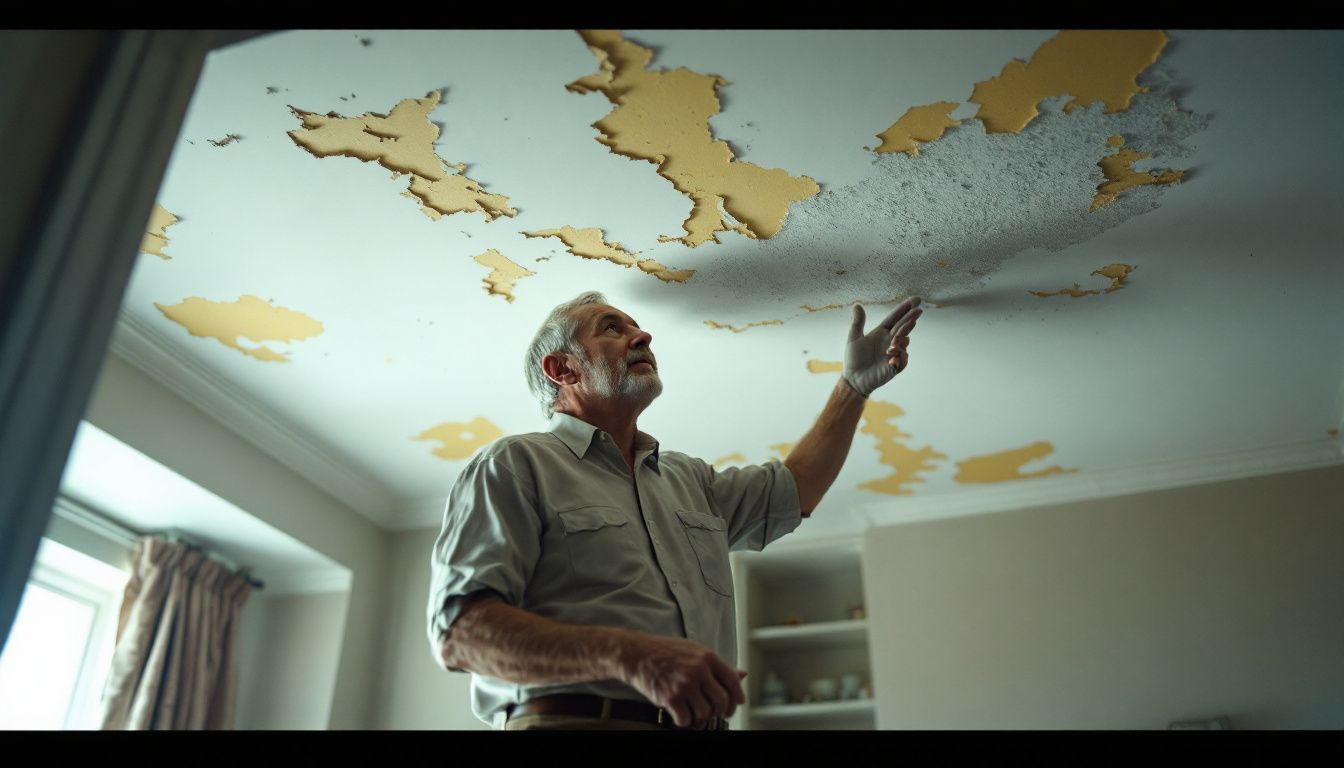
    • Textured coatings such as Artex on ceilings and walls
    • Floor tiles and the adhesive used to fix them
    • Roof slates, corrugated roofing sheets, and soffit boards
    • Pipe lagging and boiler insulation
    • Ceiling tiles and partition boards
    • Outbuildings, garages, and lean-to structures
    • Rainwater goods and guttering

    Common Locations in Commercial Properties

    • Sprayed coatings on structural steelwork
    • Insulation boards around columns and beams
    • Ceiling tiles in suspended ceiling systems
    • Roofing felt and insulation layers
    • Plant rooms, boiler rooms, and service ducts
    • Decorative finishes and fire protection panels

    The critical point for anyone involved in a property transaction is this: you cannot identify asbestos by sight alone. Many ACMs look identical to non-asbestos alternatives. Only laboratory analysis of a sample taken during a professional survey can confirm presence or absence.

    The Legal Framework: What UK Law Says About Asbestos in Property

    The UK has one of the most developed regulatory frameworks for asbestos management in the world. Understanding which rules apply to your situation is essential before listing or purchasing any older property.

    The Control of Asbestos Regulations

    The Control of Asbestos Regulations place a legal duty on those who manage or have responsibility for non-domestic premises to manage asbestos risks. This is known as the duty to manage. It requires the dutyholder to identify ACMs, assess their condition, and put a written asbestos management plan in place.

    For commercial property sales and lettings, this duty transfers with the building. Buyers and incoming tenants need to know what ACMs are present, where they are, and what condition they are in. Failing to pass on this information is not just poor practice — it is a breach of the regulations.

    Consumer Protection Legislation and Misrepresentation

    Estate agents and sellers in the residential market are bound by consumer protection legislation that prohibits misleading omissions. If asbestos is known to be present and that information is withheld from a buyer, the seller and agent risk legal action for misrepresentation.

    Courts have found in favour of buyers who were not informed of asbestos risks prior to exchange. The consequences can include rescission of the contract, damages, and in serious cases, regulatory action against the agent’s licence.

    HSE Guidance and HSG264

    The Health and Safety Executive publishes HSG264, the definitive guidance document on asbestos surveys. It sets out the two main survey types — management surveys and refurbishment and demolition surveys — and explains when each is required.

    Any survey carried out in connection with a property transaction should follow HSG264 methodology and be conducted by a UKAS-accredited surveyor. This is not an area where cutting corners is advisable.

    Asbestos Disclosure: What Estate Agents Must Do

    The asbestos real estate definition carries real weight for estate agents. Disclosure is not a courtesy — it is a legal and professional obligation that applies before a property goes to market, not after an offer has been accepted.

    Before Listing a Pre-2000 Property

    The most effective approach is to commission a professional asbestos survey before the property goes to market. This gives the seller complete knowledge of what is present, allows informed pricing decisions, and provides buyers with the documentation they need to proceed with confidence.

    A management survey is the appropriate starting point for most occupied properties. It identifies ACMs that could be disturbed during normal occupancy and routine maintenance, and produces a written register with condition ratings and risk assessments.

    What Must Be Disclosed to Buyers

    • The presence of any known or suspected ACMs
    • The location and condition of those materials
    • Any previous asbestos surveys or reports held by the seller
    • Any remediation work already carried out, including certificates
    • The existence of an asbestos management plan for commercial properties

    This information should be provided in writing, ideally as part of the pre-contract documentation. Verbal disclosure is not sufficient — if it is not documented, it effectively did not happen.

    What Happens If Agents Fail to Disclose

    The consequences of non-disclosure are serious. Buyers can pursue claims for misrepresentation, seeking to recover the cost of remediation, any reduction in property value, and in cases involving health impacts, personal injury damages.

    Agents face complaints to The Property Ombudsman, loss of membership, and potential prosecution under consumer protection legislation. The reputational damage from a failed asbestos disclosure can be career-ending. The safest and most professional approach is always full, documented transparency.

    How Asbestos Affects Property Value

    Asbestos presence does not automatically make a property unsellable. But it does affect value, and understanding how helps agents and sellers price and negotiate more effectively.

    The Impact on Residential Sales

    The extent of any value reduction depends on several factors: the type of asbestos present, its condition, its location within the property, and whether removal or encapsulation is straightforward. Low-risk, intact materials in accessible locations have a far smaller impact than friable, high-risk asbestos in difficult areas.

    Sellers often address this by offering remediation credits — a reduction in the asking price or a cash contribution towards removal costs. This approach keeps the sale moving while giving the buyer control over how and when the work is done.

    The Impact on Commercial Transactions

    Commercial buyers and investors typically conduct more detailed due diligence. The absence of a current asbestos register or management plan can delay or kill a transaction entirely. Conversely, a well-maintained asbestos register with clear condition ratings and a professional management plan demonstrates responsible ownership and can actually support the asking price.

    For commercial properties where refurbishment is planned, buyers will require a demolition survey in addition to the management survey. The cost and programme implications of asbestos removal will be factored directly into the purchase price and development appraisal.

    Types of Asbestos Survey Relevant to Property Transactions

    Not all asbestos surveys are the same. Choosing the right survey type for the situation is critical to getting information that is actually useful during a property transaction.

    Management Survey

    This is the standard survey for occupied buildings and the most common type commissioned in connection with property sales. It involves a visual inspection and sampling of accessible materials, producing a written register identifying all known or presumed ACMs, their location, condition, and a risk priority rating.

    For non-domestic properties, a current management survey is a legal requirement under the duty to manage. For residential sales, it provides the documentation that buyers, solicitors, and mortgage lenders increasingly expect to see.

    Refurbishment and Demolition Survey

    This is a more intrusive survey required before any significant building work. It involves accessing hidden areas, lifting floorboards, cutting into walls, and sampling materials that would not be disturbed under normal use. It is destructive by nature and should only be carried out on vacant buildings or in areas that have been cleared.

    If a buyer intends to refurbish a property after purchase, they will need this survey before work begins. In some transactions, sellers commission it in advance to demonstrate full transparency and remove a key buyer concern before negotiations begin.

    Managing Asbestos Before Selling: Practical Options

    Once ACMs have been identified, sellers and their agents have several options. The right choice depends on the type and condition of the material, the likely buyer profile, and the commercial context of the sale.

    Professional Removal

    Full asbestos removal by a licensed contractor eliminates the risk entirely and removes asbestos as a negotiating issue. It is the most expensive option but produces the cleanest outcome for all parties.

    Licensed removal contractors follow strict HSE-approved procedures, use appropriate personal protective equipment, and dispose of all waste at licensed facilities. Removal is the only appropriate option for high-risk, friable materials such as sprayed coatings or loose insulation.

    Encapsulation

    Encapsulation involves applying a specialist sealant or coating to ACMs to bind the fibres and prevent release. It is less disruptive and less expensive than removal, and is appropriate for materials that are in reasonable condition and are unlikely to be disturbed.

    It is not a permanent solution — encapsulated materials still need to be monitored and managed. But it can be a practical and cost-effective way to address asbestos risk before a sale, particularly in residential properties where full removal would be disproportionate.

    Selling with Asbestos In Situ

    Selling a property with ACMs in place is entirely lawful, provided full disclosure is made. Many properties change hands each year with asbestos present — the seller’s obligation is transparency, not remediation.

    This approach works best when the materials are in good condition, the risk is low, and the buyer is experienced — whether that is an investor, a developer, or a buyer who has received independent advice and is comfortable proceeding. Clear documentation, honest pricing, and professional survey reports are the foundations of a successful sale in these circumstances.

    Asbestos Surveys Across the UK: Regional Coverage

    Property transactions happen everywhere, and so does asbestos. Whether you are selling a Victorian terrace, a 1970s office block, or an industrial unit, getting the right survey from an accredited provider in your area is straightforward.

    Supernova Asbestos Surveys operates nationally, with experienced surveyors covering every region. If you need an asbestos survey London properties require before sale or letting, our teams are available across all London boroughs with fast turnaround times.

    For properties in the North West, our asbestos survey Manchester service covers commercial and residential properties across Greater Manchester and the surrounding areas. In the Midlands, our asbestos survey Birmingham team handles everything from pre-sale management surveys to urgent sampling requests.

    All Supernova surveys are carried out by UKAS-accredited surveyors following HSG264 methodology, with written reports delivered promptly so transactions are not unnecessarily delayed.

    What Buyers Should Do When Asbestos Is Declared

    Receiving an asbestos disclosure or survey report as a buyer can feel alarming. It does not have to be. Here is a practical approach to working through it.

    1. Read the survey report carefully. Pay attention to the condition ratings and risk priority scores. Not all ACMs carry the same level of risk — intact, low-risk materials in inaccessible locations are very different from deteriorating, friable materials in occupied areas.
    2. Get independent advice. A UKAS-accredited surveyor can review the report and give you an honest assessment of what the findings mean for your intended use of the property.
    3. Obtain remediation quotes. If removal or encapsulation is required, get written quotes from licensed contractors before exchange. This gives you a factual basis for renegotiating the price if appropriate.
    4. Check your mortgage lender’s requirements. Some lenders have specific requirements regarding asbestos. Your solicitor should confirm whether any conditions apply.
    5. Do not panic. Millions of UK properties contain asbestos in some form. With the right information and the right professionals, it is a manageable issue — not a deal-breaker.

    Landlords and Asbestos: Ongoing Obligations After Purchase

    The asbestos real estate definition does not end at the point of sale. For landlords of non-domestic premises, the duty to manage asbestos is an ongoing legal obligation that continues for as long as they hold the property.

    This means maintaining an up-to-date asbestos register, carrying out periodic condition monitoring of known ACMs, and ensuring that anyone who might disturb those materials — contractors, maintenance workers, tenants — is informed of their location and condition before work begins.

    Failure to maintain this duty is a criminal offence under the Control of Asbestos Regulations. The HSE has the power to issue improvement notices, prohibition notices, and prosecute dutyholders who fail to comply. Fines and custodial sentences are both possible outcomes.

    Residential landlords also carry responsibilities. While the formal duty to manage applies to non-domestic premises, landlords of residential properties have broader health and safety obligations to tenants under housing legislation. Commissioning a survey and acting on the findings is the responsible and legally defensible position.

    Frequently Asked Questions

    What does the asbestos real estate definition mean for a property sale?

    The asbestos real estate definition refers to the legal and practical status of asbestos-containing materials (ACMs) within a property, and the obligations that arise from their presence during a sale, lease, or transfer of ownership. In practical terms, it means that sellers and agents must disclose known ACMs, provide relevant survey documentation, and ensure buyers have the information they need to make an informed decision. For commercial properties, it also means ensuring the asbestos management plan transfers with the building.

    Do estate agents have a legal duty to disclose asbestos?

    Yes. Estate agents are bound by consumer protection legislation that prohibits misleading omissions. If asbestos is known to be present and that information is withheld, both the agent and seller risk legal action for misrepresentation. Disclosure must be made in writing — verbal disclosure is not considered sufficient if a dispute arises later. Agents who fail to disclose face complaints to The Property Ombudsman and potential loss of licence.

    Does asbestos always reduce a property’s value?

    Not necessarily, and not always significantly. The impact on value depends on the type of asbestos, its condition, its location within the property, and how straightforward remediation would be. Low-risk, intact ACMs in inaccessible locations may have a minimal effect on price. High-risk, deteriorating materials in occupied areas will have a greater impact. Sellers can often manage value reduction through transparent pricing, remediation credits, or commissioning removal before going to market.

    What type of asbestos survey do I need before selling a property?

    For most occupied properties, a management survey is the appropriate starting point. It covers accessible areas and identifies ACMs that could be disturbed during normal use and routine maintenance. If the buyer intends to carry out refurbishment or demolition, a refurbishment and demolition survey will also be required before that work begins. Both survey types should be carried out by a UKAS-accredited surveyor following HSG264 methodology.

    Can I sell a property that contains asbestos?

    Yes. Selling a property with asbestos in situ is entirely lawful in the UK, provided you make full and documented disclosure to the buyer. You are not legally required to remove asbestos before selling — your obligation is transparency. Many properties change hands each year with ACMs present. The key requirements are a professional survey report, honest disclosure, and accurate pricing that reflects the condition of the materials.


    Get Expert Asbestos Survey Support from Supernova

    Supernova Asbestos Surveys has completed over 50,000 surveys across the UK, supporting buyers, sellers, landlords, and agents at every stage of the property transaction process. Our UKAS-accredited surveyors follow HSG264 methodology, deliver clear written reports, and work to timescales that keep your transaction on track.

    Whether you need a pre-sale management survey, a refurbishment survey ahead of development, or advice on managing ACMs in a property you already own, we can help. Call us on 020 4586 0680 or visit asbestos-surveys.org.uk to book your survey or request a quote.
  • Managing Asbestos in Property Listings: Best Practices for Real Estate Agents

    Managing Asbestos in Property Listings: Best Practices for Real Estate Agents

    What Every Estate Agent Needs to Know About Managing Asbestos in Property Listings

    Asbestos doesn’t have to derail a property sale — but only if you handle it correctly from the outset. Managing asbestos in property listings best practices for real estate agents is one of the most misunderstood areas of the profession, yet getting it wrong exposes you to serious legal liability and can collapse deals at the worst possible moment.

    Properties built before 2000 may contain asbestos-containing materials (ACMs), and in the UK, a significant proportion of the housing stock falls into that category. As an agent, you need to know where asbestos hides, what the law requires of you, and how to present affected properties in a way that’s both legally compliant and commercially effective.

    Where Asbestos Hides in Older Properties

    Asbestos was used extensively in UK construction right up until its full ban in 1999. That means any property built or refurbished before 2000 could contain it — and it’s rarely obvious to the untrained eye.

    Common Locations in Residential Properties

    Estate agents should be aware of the typical locations where ACMs are found, even if identifying them definitively requires a professional survey. Knowing where to look helps you ask the right questions and advise vendors appropriately.

    • Roof materials: Corrugated asbestos cement sheets and roofing felt
    • Floor coverings: Vinyl floor tiles and the adhesive beneath them
    • Ceiling tiles: Particularly textured or Artex-style coatings applied before the 1990s
    • Pipe lagging and boiler insulation: Common in airing cupboards and plant rooms
    • Partition walls and ceiling boards: Asbestos insulating board (AIB) was widely used
    • Gutters, soffits, and fascias: Especially in properties built in the 1960s and 70s
    • Textured wall and ceiling coatings: Artex applied before 1985 is particularly likely to contain asbestos

    The critical point here is that you cannot identify asbestos by sight alone. Materials that look perfectly ordinary may contain fibres. This is why professional inspection is non-negotiable before any works are carried out on a pre-2000 property.

    Why Professional Surveys Matter Before Listing

    A professional management survey identifies the location, condition, and extent of any ACMs within a property. It gives you — and your vendor — a documented, evidence-based picture of what’s present and what risk it poses.

    Without this, you’re relying on guesswork. That’s not a position any responsible agent should be in, especially when asbestos disclosure is a legal obligation rather than a courtesy.

    Surveys are carried out by licensed, qualified surveyors who follow HSE guidance (HSG264) and take physical samples where necessary. The resulting report categorises materials by risk and recommends appropriate management or remediation actions.

    The Legal Obligations Estate Agents Must Understand

    Managing asbestos in property listings best practices for real estate agents isn’t just about good practice — it’s about staying on the right side of UK law. The regulatory framework is clear, and ignorance of it is not a defence.

    The Control of Asbestos Regulations

    The Control of Asbestos Regulations place a duty on those responsible for non-domestic properties to manage asbestos. For commercial property listings, this means the duty holder — often the landlord or owner — must have an up-to-date asbestos management plan in place before the property changes hands.

    As an agent handling commercial premises, you should be asking vendors for evidence of compliance. If they can’t produce it, that’s a significant issue that needs resolving before marketing begins.

    Disclosure Requirements and Consumer Protection Law

    Under consumer protection legislation, estate agents are required to disclose material facts about a property — and known asbestos is unquestionably a material fact. Failing to disclose it, or actively concealing it, can result in serious legal consequences including fines and civil claims from buyers.

    The principle is straightforward: if you know about it, you must disclose it. This applies whether you’re selling a terraced house or a commercial unit.

    Mortgage lenders also increasingly require asbestos surveys or management reports before approving loans on older properties. Getting ahead of this requirement prevents frustrating delays further down the transaction chain.

    Your Duty of Care to All Parties

    The Health and Safety at Work Act places a broader duty of care on those who create or manage workplaces — which includes commercial properties you’re marketing. But even in residential sales, the ethical and legal expectation is clear: all parties must have the information they need to make informed decisions.

    As an agent, documenting what you’ve done to identify and disclose asbestos-related information protects you if a dispute arises later. Keep records of every survey, report, and disclosure conversation.

    Best Practices for Managing Asbestos in Property Listings

    This is where managing asbestos in property listings best practices for real estate agents becomes a practical, day-to-day skill rather than an abstract legal concern. Here’s how to handle it professionally at every stage of the sales or lettings process.

    Commission a Survey Before You Market

    The single most effective step you can take is ensuring a professional asbestos survey is carried out before a property goes to market. This eliminates uncertainty, prevents nasty surprises during conveyancing, and gives buyers the confidence to proceed.

    Encourage your vendors to arrange a survey early. If they’re resistant, explain that undisclosed asbestos discovered during a buyer’s survey is one of the most common reasons property transactions collapse — and that a proactive survey actually strengthens their negotiating position.

    Supernova Asbestos Surveys operates across the UK and can typically deliver survey reports within 24 hours of the inspection. That turnaround means there’s no reason to delay.

    Understand the Survey Report and Communicate It Clearly

    A survey report will categorise ACMs according to their condition and risk level. Not all asbestos is equally dangerous — intact, undisturbed materials in good condition pose a low risk and may not require removal at all.

    Understanding this distinction allows you to have informed conversations with buyers rather than letting the word “asbestos” trigger unnecessary alarm. Be honest, be clear, and provide the full report rather than a summary you’ve interpreted yourself.

    If a buyer’s solicitor asks questions about asbestos, being able to produce a professional survey report immediately demonstrates transparency and competence. It builds trust rather than eroding it.

    Advise Vendors on Their Options

    Once asbestos is identified, vendors have several options. Your role is to help them understand the implications of each:

    • Professional removal: Where ACMs are in poor condition or in areas that will be disturbed during renovation, asbestos removal by a licensed contractor is the safest and most permanent solution. It removes the issue entirely and can make the property more straightforward to sell.
    • Encapsulation or sealing: Where materials are in good condition and not at risk of disturbance, encapsulation — applying a specialist sealant to contain fibres — is a recognised management method. It’s typically less costly than removal and is a valid long-term approach when properly maintained and monitored.
    • Management in place: For low-risk, intact materials, a documented management plan that records the location and condition of ACMs and sets out a monitoring schedule may be sufficient. This is particularly common in commercial properties.
    • Price adjustment or buyer credits: Where vendors choose not to remediate before sale, adjusting the asking price or offering a remediation credit at completion gives buyers a transparent, workable solution. The credit should reflect realistic local contractor pricing rather than an arbitrary figure.

    Pricing Properties with Asbestos Accurately

    Properties with identified asbestos — particularly where remediation hasn’t been carried out — will often be valued lower than comparable properties without it. This is a market reality, not a catastrophe. The key is accurate, evidence-based pricing from the outset.

    Overpricing a property with known asbestos issues and then having to reduce following a survey creates a much worse impression than pricing it correctly from day one. Work with your vendor to factor in realistic remediation costs and price accordingly.

    A well-priced property with full asbestos disclosure and a professional survey report will attract serious buyers, including cash purchasers and investors who are experienced in handling such properties.

    Targeting the Right Buyers for Asbestos-Affected Properties

    Not all buyers are put off by asbestos — in fact, for the right purchaser, a property with managed or remediable asbestos can represent a genuine opportunity. Understanding your buyer pool is part of managing asbestos in property listings best practices for real estate agents.

    Cash Buyers and Property Investors

    Cash buyers and property investors are often the most pragmatic audience for properties with asbestos. They’re not constrained by mortgage lender requirements, they typically understand the remediation process, and they’re often looking for properties where there’s room to add value.

    Build relationships with investors and developers who specialise in older or distressed stock. Having a ready network of buyers who won’t be deterred by an asbestos survey report is a genuine competitive advantage.

    Buyers Undertaking Renovation or Development

    Buyers planning significant renovation or development work will need to commission a demolition survey regardless of what a management survey has found. Being upfront about this requirement — and being able to point them towards a reliable surveying partner — positions you as a knowledgeable, trustworthy agent rather than someone trying to hide problems.

    Buyers who plan to renovate are also typically more comfortable with the idea of managing or removing asbestos as part of a wider project. Frame it as part of the renovation scope rather than an unexpected burden.

    Working with Asbestos Surveyors as a Business Partner

    The most effective estate agents don’t treat asbestos surveys as a one-off box-ticking exercise. They build ongoing relationships with accredited surveyors who can provide fast, reliable service across their portfolio of listings.

    Supernova Asbestos Surveys has completed over 50,000 surveys across the UK, with local surveyors available in major cities and regions. Whether you’re managing listings in the capital — where our asbestos survey London team operates — across the north of England with our asbestos survey Manchester team, or in the Midlands with our asbestos survey Birmingham specialists, we can provide rapid, accredited surveys with 24-hour report turnaround.

    Having a reliable surveying partner means you can advise vendors confidently, provide buyers with professional documentation quickly, and keep transactions moving rather than stalling at the asbestos question.

    Documenting Everything: Protecting Yourself as an Agent

    Whatever approach you take to managing asbestos in property listings, documentation is your protection. Keep records of:

    • Survey reports and any correspondence with the surveying company
    • Written disclosure to buyers, including the date and method of disclosure
    • Any vendor instructions regarding asbestos management or remediation
    • Remediation certificates or encapsulation records where works have been carried out
    • Buyer acknowledgements confirming they’ve received and understood the asbestos information

    If a dispute arises months or years after a sale, this paper trail demonstrates that you acted professionally, disclosed what you knew, and gave all parties the information they needed to make an informed decision. Without it, you’re exposed.

    Digital record-keeping is perfectly acceptable — just ensure documents are stored securely, backed up, and retrievable. Many agents now use transaction management platforms that automatically archive communications and documents. Whatever system you use, the discipline of recording everything must be consistent across your team.

    Common Mistakes Estate Agents Make with Asbestos

    Even experienced agents can fall into avoidable traps when asbestos is involved. Here are the most common errors — and how to sidestep them.

    Assuming Newer-Looking Properties Are Safe

    A property that’s been renovated or redecorated can still contain original ACMs beneath new surfaces. Cosmetic updates don’t eliminate asbestos — they sometimes obscure it. Always check the original construction date, not the most recent refurbishment.

    Waiting for the Buyer to Raise the Issue

    Some agents take a passive approach, waiting for buyers or their solicitors to ask about asbestos before addressing it. This is legally and commercially risky. Proactive disclosure is always the better strategy — it demonstrates professionalism and reduces the likelihood of disputes.

    Treating All Asbestos as an Emergency

    Overcommunicating the danger of low-risk, intact asbestos can unnecessarily alarm buyers and kill deals that should proceed. Asbestos in good condition, properly managed and documented, is not an emergency. Present the facts accurately and let the professional survey report do the talking.

    Failing to Update Listings When New Information Emerges

    If a survey reveals ACMs after a property has already been listed, update your marketing materials and buyer communications immediately. Continuing to market a property without reflecting newly discovered asbestos information is a compliance failure, not just a commercial misstep.

    Frequently Asked Questions

    Do estate agents have a legal duty to disclose asbestos in a property?

    Yes. Under consumer protection legislation, estate agents must disclose material facts about a property — and known asbestos is a material fact. Failing to disclose it can lead to legal action, fines, and civil claims from buyers. If you know asbestos is present, you are obligated to inform all relevant parties.

    What type of asbestos survey is needed before selling a property?

    For most residential and commercial properties being sold in their current condition, a management survey is the appropriate starting point. It identifies the location, condition, and risk level of any ACMs. If the buyer plans significant renovation or demolition, a refurbishment or demolition survey will also be required before those works begin.

    Does asbestos always reduce a property’s value?

    Not necessarily. Low-risk, intact asbestos that is professionally documented and managed may have minimal impact on value. Where remediation is required, the cost of that work is typically reflected in the asking price or negotiated as a buyer credit. Accurate, evidence-based pricing from the outset is far more effective than overpricing and reducing later.

    Can a property with asbestos still be sold or let?

    Absolutely. Asbestos does not prevent a property from being sold or let, provided it is properly managed and disclosed. Many properties across the UK contain ACMs that are safely managed in place. The key requirements are professional documentation, transparent disclosure to all parties, and — where necessary — appropriate remediation or management plans.

    How quickly can an asbestos survey be arranged before listing?

    With Supernova Asbestos Surveys, inspections can typically be arranged at short notice and reports delivered within 24 hours of the survey. There’s no need to delay a listing for weeks waiting for results. Contacting a professional surveying company early in the process is always the best approach.

    Get Expert Support from Supernova Asbestos Surveys

    Managing asbestos in property listings best practices for real estate agents starts with having the right professional partner. Supernova Asbestos Surveys has completed over 50,000 surveys nationwide, working with estate agents, property managers, landlords, and developers to keep transactions moving and properties compliant.

    Whether you need a management survey ahead of a listing, a demolition survey for a development site, or specialist advice on a complex commercial property, our accredited surveyors are ready to help. We cover the whole of the UK, with dedicated teams in London, Manchester, Birmingham, and beyond.

    Call us on 020 4586 0680 or visit asbestos-surveys.org.uk to arrange a survey or speak with one of our specialists. Don’t let asbestos stall your next transaction — get the facts, get the report, and keep the deal moving.

  • Proper Asbestos Management in Real Estate Transactions: Why It Matters

    Proper Asbestos Management in Real Estate Transactions: Why It Matters

    Why Asbestos Management Can Make or Break a Property Transaction

    The importance of proper asbestos management in real estate transactions is something too many buyers, sellers, and agents only appreciate after the damage is done — when a deal collapses, a legal dispute surfaces, or a renovation uncovers something nobody budgeted for. If a property was built before 2000, asbestos is a genuine possibility, and handling it correctly from the outset protects every party involved.

    This isn’t about ticking a compliance box. It’s about knowing exactly what you’re buying or selling, setting realistic expectations, and making sure the right professionals are involved at every stage of the process.

    The Legal Framework: What UK Law Requires

    The Control of Asbestos Regulations places clear duties on anyone who owns, manages, or holds responsibility for a non-domestic property. Where asbestos-containing materials (ACMs) are present — or likely to be present — the duty holder must manage them actively. That means surveying, recording, monitoring, and acting where the situation demands it.

    For property transactions specifically, those legal obligations create real pressure on sellers and landlords:

    • Sellers of commercial properties must disclose known asbestos findings as part of the transaction process
    • Landlords must share asbestos management information with tenants and contractors who may disturb the fabric of the building
    • Failure to disclose can expose sellers to significant legal liability after completion
    • Duty holders who fail to manage asbestos appropriately face enforcement action from the Health and Safety Executive (HSE)

    HSE guidance under HSG264 sets out the standards for asbestos surveys and the duties around managing findings. These aren’t optional recommendations — they form the basis of enforcement decisions.

    Residential properties carry fewer formal legal duties, but that doesn’t mean asbestos is irrelevant. Any pre-2000 home being refurbished or extended requires the same careful approach before work begins.

    Mandatory Disclosure: What Sellers and Agents Must Share

    Transparency about asbestos isn’t just good practice — in many circumstances, it’s a legal requirement. For commercial property sales, sellers are expected to provide buyers with all material information about the property’s condition, including any known asbestos surveys and management plans.

    Estate agents carry responsibility here too. Withholding known information about hazardous materials can expose agents to professional sanctions and legal claims. The right approach is always to include asbestos survey results in the property information pack and ensure buyers have access to those documents before exchange.

    Sellers who commission a survey early in the process are in a far stronger position. They can address issues proactively, negotiate from a position of knowledge, and avoid the scenario where a buyer’s surveyor finds something unexpected and uses it to renegotiate the price — or walk away entirely.

    How Asbestos Surveys Protect Everyone in a Property Deal

    An asbestos survey is the foundation of any sensible asbestos management strategy, and it’s especially critical when a property is changing hands. Without one, neither party truly knows what they’re dealing with.

    Management Surveys

    A management survey is the standard survey type for properties that are occupied and in normal use. It identifies the location, condition, and extent of any ACMs that could be disturbed during everyday activities or minor maintenance work.

    For commercial property transactions, a current asbestos management survey is often a prerequisite for due diligence. Buyers and their solicitors will want to see it. Mortgage lenders increasingly ask for it. Without one, the transaction can stall.

    Management surveys are non-intrusive — they don’t involve breaking into the building fabric. They give a clear picture of what’s present and in what condition, which is exactly what’s needed to make informed decisions during a sale.

    Refurbishment and Demolition Surveys

    If the buyer intends to refurbish or redevelop the property, a demolition survey is required before any intrusive work begins. This type of survey is far more thorough — it involves accessing areas behind walls, above ceilings, and beneath floors to locate every ACM that could be disturbed during the works.

    This survey must be completed before any refurbishment or demolition project starts, regardless of scale. It’s a legal requirement under the Control of Asbestos Regulations, and it protects contractors, workers, and future occupants from exposure to disturbed asbestos fibres.

    Buyers who plan significant works should factor the cost and findings of a demolition survey into their purchase calculations. Discovering extensive asbestos after contracts are exchanged — without having surveyed properly — is an expensive lesson that’s entirely avoidable.

    What Surveyors Are Looking For

    Qualified asbestos surveyors follow HSG264 methodology when inspecting a property. They’re looking for materials that commonly contained asbestos in pre-2000 construction, including:

    • Textured coatings and decorative finishes such as Artex
    • Ceiling tiles and floor tiles
    • Pipe lagging and boiler insulation
    • Roof sheets and soffit boards
    • Partition walls and door panels
    • Spray coatings on structural steelwork

    Samples are taken where materials are suspected to contain asbestos and sent to an accredited laboratory for analysis via asbestos testing. The survey report records the location, condition, and risk rating of each material found — giving property owners and buyers a clear, actionable document to work from.

    The Impact of Asbestos on Property Value and Negotiations

    Asbestos findings don’t automatically kill a property deal, but they do change the dynamics. Buyers who discover asbestos partway through a transaction — particularly if it wasn’t disclosed — will typically seek a price reduction, request remediation before completion, or withdraw entirely.

    The scale of the impact depends on several factors:

    • Type and condition of the ACMs: Intact, low-risk materials in good condition are manageable. Damaged or friable asbestos in high-traffic areas is a different matter entirely.
    • Extent of the contamination: A small amount of asbestos floor tiles is very different from spray-applied asbestos insulation throughout a building.
    • What the buyer intends to do with the property: A buyer planning a full refurbishment will price in removal costs. An investor buying to let may be less concerned if materials are stable and manageable.

    Sellers who take a proactive approach — commissioning a survey, developing a management plan, and being transparent with buyers — are in a far stronger negotiating position than those who hope nothing comes up. Surprises in property transactions always cost more than preparation.

    Buyer Perceptions and Due Diligence

    Experienced commercial buyers treat asbestos as a standard due diligence item, not a deal-breaker. They want to see a survey, understand the findings, and factor remediation costs into their offer where necessary.

    What they don’t want is to discover after exchange that the seller knew about asbestos and didn’t disclose it. That scenario creates legal exposure and destroys trust in a transaction that may already be under pressure.

    Residential buyers tend to be more anxious about asbestos, often because they’re less familiar with the risks. A good surveyor — and a good estate agent — can help contextualise findings accurately. Asbestos that’s in good condition and unlikely to be disturbed poses a very different risk profile from damaged materials in a poorly maintained building.

    What to Do When Asbestos Is Found

    Finding asbestos in a property doesn’t mean work has to stop or a deal has to fall apart. It means a clear, structured response is needed.

    Develop an Asbestos Management Plan

    For non-domestic properties, an asbestos management plan is a legal requirement where ACMs are present. The plan must record:

    1. The location and condition of all identified ACMs
    2. The risk rating for each material
    3. Who is responsible for monitoring and managing each material
    4. The schedule for regular reinspection
    5. What actions to take if materials deteriorate or are disturbed

    This plan must be made available to anyone who might disturb the materials — contractors, maintenance teams, and future occupants. In a transaction context, it should be handed over to the buyer as part of the completion documentation.

    Arrange Professional Asbestos Removal Where Necessary

    Not all asbestos needs to be removed. In many cases, managing it in situ is the safest and most cost-effective approach. But where materials are damaged, deteriorating, or in locations where they’re likely to be disturbed, asbestos removal by a licensed contractor is the right course of action.

    Licensed asbestos removal is required for the most hazardous materials — including sprayed asbestos, asbestos insulation board, and pipe lagging. The work must be carried out under controlled conditions, with air monitoring before, during, and after to confirm the area is safe.

    Attempting to remove asbestos without the proper licences and controls is illegal and dangerous. Always use a contractor who holds an HSE licence for asbestos removal work.

    Asbestos Management Across Different Property Types

    The importance of proper asbestos management in real estate transactions isn’t limited to one type of property. The risks and obligations vary depending on what’s being bought or sold, but the principle remains consistent: know what’s there before you commit.

    Commercial and Industrial Properties

    Offices, warehouses, factories, and retail units built before 2000 are among the most likely to contain ACMs. These buildings often used asbestos extensively in insulation, fireproofing, and roofing materials. The duty to manage is at its most stringent here, and buyers should expect to see an asbestos management survey as part of any credible due diligence pack.

    For investors acquiring commercial portfolios, asbestos management becomes a recurring operational responsibility, not just a one-time transaction concern. Every building in the portfolio needs a current survey, a live management plan, and a clear process for handling maintenance and refurbishment safely.

    Residential Properties

    Domestic properties don’t carry the same formal legal duties as commercial buildings, but asbestos remains a real consideration for pre-2000 homes. Buyers commissioning a homebuyer’s survey should be aware that standard surveys don’t include asbestos testing — a specialist survey is needed if there’s any concern.

    Where a residential buyer plans to renovate, extend, or carry out significant works, arranging an asbestos survey before work begins is not just sensible — it protects the health of everyone on site. Tradespeople working in homes have been seriously harmed by disturbing asbestos that nobody knew was there.

    Mixed-Use and Development Sites

    Properties being acquired for development present a particular challenge. The site may include buildings of different ages, in varying conditions, with complex ownership histories. A thorough pre-acquisition survey — and a demolition survey before any clearance work begins — is essential.

    Developers who factor asbestos management into their project planning from the outset avoid costly delays. Discovering significant ACMs after demolition has started is far more disruptive — and far more expensive — than identifying them in advance.

    Choosing the Right Asbestos Surveyor for a Property Transaction

    Not all asbestos surveys are equal, and in a property transaction, the quality of the survey report matters enormously. A poorly conducted survey that misses materials, uses vague condition ratings, or fails to meet HSG264 standards can create as many problems as it solves.

    When selecting a surveyor for a property transaction, look for the following:

    • UKAS-accredited laboratory analysis: Samples must be analysed by an accredited laboratory. This is non-negotiable for a legally defensible report.
    • Surveyors holding relevant qualifications: The P402 qualification is the recognised standard for asbestos surveying in buildings. Check that the individual conducting the survey holds it.
    • Clear, detailed reporting: The report should include photographs, precise location references, condition assessments, and risk ratings for every material identified.
    • Experience with the property type: A surveyor familiar with commercial industrial buildings will approach a warehouse differently from a surveyor whose experience is primarily residential.
    • Professional indemnity insurance: If a survey misses something significant, you need to know the surveyor is covered.

    Solicitors and property professionals increasingly expect to see surveys from reputable, accredited firms. A report from an unknown or unqualified operator is unlikely to satisfy due diligence requirements on either side of the transaction.

    Regional Considerations: Asbestos Surveys Across the UK

    The legal obligations around asbestos management apply equally across England, Scotland, Wales, and Northern Ireland — but local property markets and building stock do vary. Properties in older industrial cities often have higher concentrations of asbestos-containing materials, reflecting the construction methods and materials used during periods of rapid urban development.

    Supernova Asbestos Surveys operates nationally, with specialist teams covering major property markets. If you need an asbestos survey London for a commercial transaction in the capital, our surveyors are experienced with the full range of London’s commercial and residential building stock — from Victorian warehouses to post-war office blocks.

    For transactions in the North West, our asbestos survey Manchester service covers the full range of survey types across Greater Manchester and the surrounding region. And for the Midlands market, our asbestos survey Birmingham team works with property developers, investors, and commercial agents across the city and beyond.

    Wherever the property is located, the same standards apply. Local knowledge matters — understanding building types, construction periods, and common materials in a given area helps surveyors work efficiently and accurately.

    Practical Steps for Buyers, Sellers, and Agents

    Whether you’re on the buying or selling side of a transaction, the following steps will help you manage asbestos correctly and protect your position throughout the process.

    For sellers:

    1. Commission a management survey before marketing the property — don’t wait for a buyer to raise it
    2. Disclose all known asbestos findings to prospective buyers and their solicitors
    3. Ensure any existing asbestos management plan is current and accurate
    4. If ACMs are in poor condition, consider remediation before listing — it strengthens your negotiating position
    5. Include the survey report and management plan in the completion documentation

    For buyers:

    1. Always request asbestos survey documentation as part of your due diligence
    2. If the seller cannot provide a current survey, commission one yourself or negotiate a price reduction to cover the cost
    3. Factor remediation or removal costs into your offer where ACMs are identified
    4. If you plan to refurbish, ensure a demolition survey is completed before works begin
    5. Ensure the asbestos management plan transfers to you at completion

    For estate agents and solicitors:

    1. Make asbestos disclosure a standard part of your commercial property transaction checklist
    2. Advise clients to commission surveys early — before issues arise mid-transaction
    3. Ensure asbestos documentation is included in the property information pack
    4. Be aware of your own professional obligations around material non-disclosure

    Frequently Asked Questions

    Does asbestos have to be disclosed when selling a commercial property in the UK?

    Yes. Sellers of commercial properties are expected to disclose all material information about the property’s condition, including known asbestos findings. Failure to disclose can result in legal liability after completion. An asbestos management survey and any existing management plan should be provided to buyers as part of the due diligence process.

    Do I need an asbestos survey before selling a house?

    There is no legal requirement to commission an asbestos survey before selling a residential property, but it is strongly advisable for pre-2000 homes. If a buyer’s surveyor identifies potential asbestos-containing materials and you have no documentation, it can create uncertainty and delay. Commissioning a survey in advance gives you control over the information and removes the element of surprise from negotiations.

    What is the difference between a management survey and a demolition survey?

    A management survey is used for occupied properties in normal use. It identifies ACMs that could be disturbed during day-to-day activities and minor maintenance. A demolition survey is required before any refurbishment or demolition work begins — it is far more intrusive and designed to locate every ACM that could be disturbed during the works. Both types follow HSG264 methodology but serve different purposes in a property’s lifecycle.

    Can a property transaction proceed if asbestos is found?

    Yes. Finding asbestos does not automatically prevent a transaction from completing. In many cases, ACMs in good condition can be managed in situ under a formal management plan. The key is that both parties understand the findings, agree on how they will be managed or remediated, and factor any costs into the negotiation. Transactions fail when asbestos is discovered unexpectedly — not when it is identified and handled transparently.

    Who is responsible for asbestos management after a property changes hands?

    Once a property transaction completes, the duty to manage asbestos passes to the new owner or whoever assumes the role of duty holder under the Control of Asbestos Regulations. The seller should hand over all asbestos documentation — including the management survey, any sampling results, and the asbestos management plan — as part of the completion process. The new owner is then responsible for keeping that documentation current and acting on any recommendations it contains.

    Talk to Supernova Asbestos Surveys

    Supernova Asbestos Surveys has completed over 50,000 surveys across the UK, working with property developers, commercial investors, estate agents, solicitors, and private buyers. We understand what’s needed at every stage of a real estate transaction — from pre-marketing management surveys through to pre-demolition inspections and licensed removal.

    If you’re involved in a property transaction and need clear, reliable asbestos advice, call us on 020 4586 0680 or visit asbestos-surveys.org.uk to find out how we can help you move forward with confidence.

  • Common Mistakes to Avoid When Listing a Property with Asbestos

    Common Mistakes to Avoid When Listing a Property with Asbestos

    Why Listing a Property with Asbestos Goes Wrong — and How to Prevent It

    Selling a property that contains asbestos is not the same as any other transaction. Sellers who treat it as business as usual regularly find themselves facing collapsed deals, legal disputes, and buyers who feel genuinely misled.

    The common mistakes to avoid when listing a property with asbestos are well documented — yet they keep happening, largely because sellers underestimate their obligations or assume buyers simply won’t notice. If your property was built before 2000, there is a reasonable chance asbestos-containing materials are present somewhere inside it. Knowing how to handle this honestly and professionally is what separates a smooth sale from an expensive, drawn-out one.

    Mistake 1: Failing to Disclose Asbestos to Buyers

    Non-disclosure is the single most damaging mistake a seller can make. Asbestos is a material fact — something that could directly affect a buyer’s decision to purchase or the price they are willing to pay. Concealing it, whether deliberately or through negligence, can expose you to legal action long after completion.

    Sellers in England and Wales are required to complete a TA6 property information form as part of the conveyancing process. This form asks directly about the presence of hazardous materials, including asbestos. Leaving it blank or providing inaccurate information is not a minor oversight — it can result in claims for misrepresentation and, in serious cases, rescission of the sale.

    Most buyers will still proceed once they know asbestos is present, particularly if it is intact and properly managed. Transparency builds trust. Concealment destroys it.

    What You Must Tell Buyers

    • Whether asbestos-containing materials have been identified in the property
    • The location and condition of any known asbestos
    • Whether a professional asbestos survey has been carried out
    • Any remediation or management work already completed
    • The contents of any existing asbestos management plan

    Sharing this information upfront, supported by a professional survey report, positions you as a credible seller and significantly reduces the risk of the sale collapsing during the buyer’s due diligence phase.

    Mistake 2: Going to Market Without a Professional Survey

    One of the most common mistakes to avoid when listing a property with asbestos is going to market without a professional survey in hand. Sellers sometimes assume that because the property looks fine, or because no one has raised concerns previously, there is nothing to worry about. That assumption is frequently wrong.

    Asbestos was used in over 3,000 different building products. It can be present in floor tiles, ceiling tiles, roof panels, pipe lagging, textured coatings such as Artex, partition boards, and many other materials that look completely unremarkable. A visual inspection alone will not reliably identify these materials.

    A professional survey gives you documented evidence of what is present, where it is located, and what condition it is in. This is the foundation of everything else — disclosure, pricing, negotiation, and legal compliance.

    Which Type of Survey Do You Need?

    The right survey depends on what you are planning to do with the property and what stage of the sale process you are at.

    A management survey is the appropriate starting point for most residential and commercial properties that are occupied and not undergoing significant structural work. It identifies accessible asbestos-containing materials and assesses their condition and risk level — making it the most relevant survey for sellers who simply want to understand what they are dealing with before listing.

    If the buyer intends to carry out refurbishment work — or if you are undertaking improvements before the sale — a refurbishment survey is required. This is a more intrusive inspection that examines areas likely to be disturbed during building work, including inside walls and floor voids.

    Where a property is being sold for demolition, a demolition survey is a legal requirement. This is the most thorough type of inspection and must be completed before any demolition work begins.

    Who Should Carry Out the Survey?

    Only use surveyors who hold recognised qualifications. For asbestos surveying, look for the BOHS P402 qualification as a minimum, and ensure the company holds UKAS accreditation for asbestos surveying. This is not a job for a general building inspector or a handyman with a checklist.

    A properly accredited surveyor will produce a report that is defensible, credible to buyers and their solicitors, and fully compliant with HSE guidance under HSG264. This is the document you will rely on throughout the entire sale process.

    Mistake 3: Misunderstanding Your Legal Responsibilities

    UK law around asbestos is not ambiguous. The Control of Asbestos Regulations place clear duties on those who manage or have responsibility for non-domestic premises. The Health and Safety at Work Act establishes broader duties of care that apply to anyone who could put others at risk through their actions or omissions.

    For residential sellers, the legal position is primarily governed by property law and the duty not to misrepresent. But if tradespeople, surveyors, or contractors are working on your property prior to sale, the obligations around asbestos management become considerably more direct. You must not allow workers to disturb asbestos-containing materials without appropriate precautions and information in place.

    The Duty to Manage in Commercial Properties

    If you are selling a commercial property, the legal requirements are more explicit. The Control of Asbestos Regulations impose a duty to manage asbestos on those responsible for non-domestic premises. This means having an up-to-date asbestos register, a written management plan, and a programme for monitoring the condition of any known asbestos-containing materials.

    Failing to have this documentation in place when selling a commercial property is a significant legal and commercial risk. Buyers, their solicitors, and their lenders will ask for it. If it does not exist, the sale will stall.

    Estate Agent Responsibilities

    Estate agents also carry obligations. They must not knowingly market a property in a way that creates a misleading impression. If an agent is aware that asbestos is present and fails to ensure this is reflected in the property information, they face professional and legal consequences.

    Agents should be proactive in asking sellers about asbestos and ensuring survey documentation is available for prospective buyers from the outset.

    Mistake 4: Assuming Asbestos Can Wait Until After the Sale

    Some sellers take the view that asbestos is the buyer’s problem once contracts are exchanged. This approach tends to backfire badly. Buyers who discover undisclosed asbestos during their own surveys — which is extremely common — will either withdraw, renegotiate aggressively, or proceed and pursue a claim later.

    Addressing asbestos before listing, or at least having a clear and documented position on it, puts you in a much stronger negotiating position. You control the narrative. You can demonstrate that the materials are in good condition, that risk is low, or that remediation has already been carried out professionally.

    How Asbestos Affects Property Value

    The impact on value depends on several factors: the type and quantity of asbestos present, its condition, its location within the property, and what needs to happen to it before or after sale. Asbestos that is intact, inaccessible, and in good condition is a very different proposition from damaged or friable material in a frequently accessed area.

    Buyers and their surveyors will factor in the estimated cost of management or removal when making offers. If you have already obtained a professional survey and can demonstrate that the asbestos is stable and low-risk, you are in a far stronger position than a seller who has no documentation and leaves buyers to assume the worst.

    Where removal is the appropriate course of action, getting this done before listing — using a licensed contractor — can remove the issue from the sale entirely. Professional asbestos removal carried out before marketing may well recover its cost through a stronger sale price and fewer complications during conveyancing.

    Mistake 5: Attempting DIY Removal or Using Unlicensed Contractors

    This is where mistakes move from costly to dangerous. Disturbing asbestos-containing materials without the correct training, equipment, and licensing releases fibres into the air. Those fibres, once inhaled, can cause mesothelioma, lung cancer, and asbestosis — diseases that may not manifest for decades after exposure.

    DIY asbestos removal is not a grey area. For licensed asbestos materials — including most forms of sprayed coatings, lagging, and insulation board — removal must be carried out by a contractor licensed by the HSE. For non-licensed work, strict notification and safety requirements still apply under the Control of Asbestos Regulations.

    Using an unlicensed contractor to save money is a false economy. If the work is not done correctly, you may face enforcement action, the cost of remediation, and liability for anyone affected by the exposure.

    What Proper Removal Involves

    1. A detailed survey identifying all materials to be removed
    2. A written plan of work submitted to the relevant parties
    3. Appropriate enclosure and containment of the work area
    4. Correct personal protective equipment and respiratory protection
    5. Air monitoring during and after the work
    6. Waste disposal at a licensed facility
    7. A clearance certificate confirming the area is safe

    Any contractor who cannot provide all of the above should not be doing the work. Professional removal by a licensed contractor provides documentation that the work was done safely and in compliance with regulations — documentation that becomes part of your property’s history and adds confidence for buyers.

    Mistake 6: Poor Record Keeping and Documentation

    Even sellers who do everything else right sometimes fail at this stage. Documentation is the evidence that protects you. Without it, you are relying on verbal assurances that carry no weight in a legal dispute.

    Every piece of asbestos-related work carried out on your property should be documented and retained. This includes survey reports, laboratory analysis certificates, contractor invoices, waste transfer notes, clearance certificates, and any correspondence with the HSE or local authority.

    When you come to sell, this documentation should be provided to your solicitor and made available to buyers. It demonstrates a responsible approach, reduces uncertainty, and gives buyers and their lenders confidence that the property has been properly managed throughout.

    Building an Asbestos Register

    For commercial properties, an asbestos register is a legal requirement under the duty to manage. For residential properties, it is simply good practice. The register records the location, type, condition, and risk assessment of all known asbestos-containing materials in the building.

    A well-maintained register, updated following any survey or remediation work, is one of the most useful documents you can hand over to a buyer. It shows the property has been managed responsibly and significantly reduces the likelihood of disputes arising after completion.

    Mistake 7: Underestimating How Buyers and Lenders React

    Many sellers assume buyers will be put off by asbestos regardless of what steps have been taken. In reality, informed buyers and experienced mortgage lenders deal with asbestos regularly — particularly in older housing stock. What they react badly to is uncertainty and a lack of information.

    A buyer who receives a professional management survey report showing that asbestos-containing materials are present but in good condition, with a clear management plan in place, is in a very different position to a buyer who discovers asbestos through their own enquiries with no documentation to hand. The former feels reassured. The latter feels alarmed — and acts accordingly.

    Lenders, too, are far more likely to proceed with a mortgage offer when there is documented evidence that asbestos has been professionally assessed and is being properly managed. Unexplained or undocumented asbestos can lead to mortgage conditions, retention of funds, or outright refusal to lend.

    How to Present Asbestos Information to Buyers

    Being proactive and organised in how you present asbestos information makes a measurable difference to how buyers respond. Rather than waiting for their solicitor to raise it as a concern, include the survey report in your property pack from day one.

    • Provide the full survey report, not just a summary
    • Include any management plan or remediation records
    • Be available to answer questions through your solicitor or agent
    • If removal has been carried out, include the clearance certificate
    • Make clear what ongoing management obligations, if any, transfer to the buyer

    Buyers who feel well-informed are buyers who proceed. Buyers who feel kept in the dark find reasons to pull out or reduce their offer.

    Mistake 8: Not Considering Location-Specific Requirements and Surveyor Access

    Asbestos surveying requirements and the practicalities of instructing a surveyor can vary depending on where your property is located. Urban properties, particularly in densely built areas, may have access constraints that affect the scope of a survey. Properties in conservation areas or listed buildings may have additional considerations when it comes to remediation options.

    If your property is in London, working with a surveyor who understands the local building stock and regulatory environment makes a real difference. The same applies to major cities elsewhere in the country. For properties in the capital, an asbestos survey London carried out by an experienced local team ensures nothing is missed and the report meets the standards buyers and lenders expect.

    For sellers in the north-west, instructing a team with strong local knowledge is equally valuable. An asbestos survey Manchester from a qualified local surveyor provides the same standard of documentation and gives buyers in that market the reassurance they need.

    Similarly, properties in the West Midlands benefit from local expertise. An asbestos survey Birmingham conducted by accredited professionals ensures your documentation is credible and complete, wherever in the country your buyer’s solicitor or lender is based.

    A Practical Checklist Before You List

    If you are preparing to sell a property built before 2000, work through the following before going to market:

    1. Commission a professional asbestos survey from a UKAS-accredited company with BOHS-qualified surveyors
    2. Review the survey report and understand what materials are present, where they are, and what condition they are in
    3. Decide on your approach — management in place, encapsulation, or removal — based on the surveyor’s recommendations
    4. If removal is required, instruct a licensed contractor and retain all documentation including the clearance certificate
    5. Complete the TA6 form accurately and provide full disclosure through your solicitor
    6. Compile your asbestos documentation pack — survey report, management plan, remediation records, clearance certificates
    7. Brief your estate agent so they can answer basic questions from buyers without creating confusion or alarm
    8. Ensure your solicitor has everything they need to respond to buyer enquiries promptly and accurately

    Following this process does not guarantee a problem-free sale — no process can. But it dramatically reduces the likelihood of the sale collapsing, a price reduction being forced upon you, or a legal dispute arising after completion.

    Frequently Asked Questions

    Do I have to declare asbestos when selling a property?

    Yes. In England and Wales, the TA6 property information form asks about the presence of hazardous materials, including asbestos. Providing inaccurate or incomplete information can result in claims for misrepresentation. Even where there is no formal legal obligation to disclose in a specific format, concealing a known material fact is legally risky and can result in the sale being unwound after completion.

    Will asbestos stop my property from selling?

    Not necessarily. Asbestos is present in a significant proportion of UK properties built before 2000, and experienced buyers, solicitors, and lenders deal with it routinely. What causes sales to collapse is not the presence of asbestos itself, but the absence of documentation, poor disclosure, or the discovery of undisclosed asbestos during the buyer’s own surveys. A professional survey report and a transparent approach significantly reduce the risk of the sale being derailed.

    What is the difference between a management survey and a refurbishment survey?

    A management survey is designed for properties that are occupied and not undergoing significant structural work. It identifies accessible asbestos-containing materials and assesses their condition and risk. A refurbishment survey is more intrusive and is required before any refurbishment or building work that could disturb the fabric of the building. If you are selling a property as-is, a management survey is typically the appropriate starting point. If the buyer plans to renovate, they will need a refurbishment survey before work begins.

    Can I remove asbestos myself before selling?

    For most types of asbestos-containing materials, no. Licensed asbestos materials — including sprayed coatings, pipe lagging, and insulation board — must be removed by an HSE-licensed contractor. Even for materials that fall outside the licensed category, strict requirements apply under the Control of Asbestos Regulations, including notification obligations and the use of appropriate protective equipment. Attempting DIY removal creates health risks, legal liability, and leaves you without the documentation buyers and lenders require.

    How long does an asbestos survey take?

    The duration depends on the size and complexity of the property. A management survey of a standard residential property typically takes a few hours. Larger commercial properties, or those with complex layouts and multiple access points, will take longer. A refurbishment or demolition survey is more intrusive and may take a full day or more. Your surveyor should be able to give you a realistic estimate once they understand the scope of the property. The survey report is usually issued within a few working days of the inspection.


    Get Your Survey Right Before You List

    At Supernova Asbestos Surveys, we have completed over 50,000 surveys across the UK. Our UKAS-accredited, BOHS-qualified surveyors provide clear, defensible reports that give sellers, buyers, and lenders the confidence they need to move forward.

    Whether you are preparing to sell a residential property, a commercial building, or a site earmarked for development, we can advise on the right survey type and turn around your report quickly so your sale stays on track.

    Call us on 020 4586 0680 or visit asbestos-surveys.org.uk to book your survey or speak to one of our team.

  • The Future of Asbestos in the Hospitality Industry: Trends and Predictions

    The Future of Asbestos in the Hospitality Industry: Trends and Predictions

    Hospitality Buildings and Asbestos: Where the Industry Is Heading

    Thousands of hotels, restaurants, and hospitality venues across the UK are sitting on a legacy problem that will not resolve itself quietly. If your building was constructed before 2000, there is a very real chance it contains asbestos — and the future asbestos hospitality industry trends and predictions point firmly towards tighter regulation, smarter detection, and an accelerating push to eliminate this hazardous material from every guest-facing space in the country.

    For property managers and hotel operators, understanding where things are heading is not optional. It is the difference between staying compliant and facing serious legal and financial consequences.

    The Current State of Asbestos in UK Hospitality Buildings

    Asbestos remains embedded in a significant number of non-domestic buildings across the UK. Many of these are hotels, restaurants, conference centres, and leisure facilities built during the mid-to-late twentieth century, when asbestos was used extensively in insulation, ceiling tiles, floor coverings, pipe lagging, and fire protection systems.

    The scale of the challenge is substantial. Hundreds of thousands of non-domestic buildings are estimated to still contain asbestos-containing materials (ACMs) in some form. In the hospitality sector specifically, the risk is compounded by the fact that renovation and refurbishment work is frequent — and disturbance of ACMs during building work is one of the most common causes of dangerous fibre release.

    Asbestos-related diseases continue to claim thousands of lives in the UK every year. These are not historical casualties — they are the result of exposures that occurred decades ago, and the latency period means current exposures will not show up in mortality figures for many years to come. That reality should sharpen the focus of every hospitality operator managing older stock.

    Future Asbestos Hospitality Industry Trends: The Regulatory Landscape

    The regulatory framework governing asbestos management in the UK is already robust, but the direction of travel is clearly towards greater scrutiny and stricter enforcement. Understanding where regulation is heading is essential for any hospitality operator planning a long-term property strategy.

    The Control of Asbestos Regulations and the Duty to Manage

    The Control of Asbestos Regulations place a clear legal duty on those responsible for non-domestic premises to manage asbestos risk. This includes identifying the presence of ACMs, assessing their condition, creating a management plan, and ensuring that plan is implemented and kept up to date.

    For hotels and hospitality venues, this duty applies to every part of the building to which staff, contractors, or guests have access. It is not limited to back-of-house areas or plant rooms — common areas, guest rooms, kitchens, and function spaces all fall within scope.

    Enforcement action by the Health and Safety Executive (HSE) has historically focused on the most egregious failures, but there is a clear trend towards more proactive inspection — particularly in sectors where building work and refurbishment is common. Hospitality sits squarely in that category.

    The UK’s Long-Term Asbestos Removal Ambitions

    There has been significant discussion at a policy level about the UK government’s ambitions to systematically remove asbestos from public and commercial buildings over the coming decades. A long-term programme of managed removal — rather than indefinite management in situ — represents a meaningful shift in approach.

    If such a programme gathers momentum, hospitality operators should expect increased pressure to move from asbestos management plans to active remediation. That means budgeting for asbestos removal as a capital expenditure item, not simply an emergency response to an incident.

    Stricter Licensing and Contractor Oversight

    Only licensed contractors are legally permitted to carry out certain categories of asbestos removal work, and the licensing regime is subject to ongoing review. Expect requirements around contractor competency, air monitoring, waste disposal, and post-removal verification to become more demanding over time.

    For hospitality operators, this means due diligence on your supply chain matters more than ever. Engaging an unlicensed or inadequately trained contractor — even inadvertently — exposes you to significant liability.

    Innovations Shaping Asbestos Detection and Management

    Technology is transforming the way asbestos is identified, managed, and removed. Several emerging approaches are particularly relevant to the hospitality sector, where minimising disruption to guests and operations is a constant consideration.

    Advanced Detection Technologies

    Traditional asbestos identification relies on bulk sampling and laboratory analysis — a process that is effective but time-consuming. Newer detection technologies are beginning to offer faster, less invasive options.

    Portable analytical instruments capable of providing on-site fibre identification are becoming more sophisticated. While bulk sampling and laboratory confirmation remain the gold standard required under HSG264 guidance, these tools can help surveyors prioritise areas of concern and reduce the number of intrusive samples required during a survey.

    Smart sensor technology is also developing, with the potential to provide continuous environmental monitoring in areas where ACMs are present but managed in situ. For a hotel with asbestos-containing ceiling tiles in a managed condition, sensors could provide early warning of deterioration or disturbance before a problem escalates.

    Safer Removal Methods

    Asbestos removal techniques have advanced considerably. Wet removal methods — where ACMs are dampened before disturbance to suppress fibre release — are now standard practice. HEPA filtration systems, negative pressure enclosures, and rigorous air monitoring protocols protect both workers and building occupants.

    Robotic removal systems are beginning to emerge for use in confined or hazardous spaces where human access is difficult or dangerous. Dry ice blasting and other low-disturbance techniques are also being refined. These innovations are particularly valuable in hospitality settings, where access constraints and the need to maintain partial operation during works create real logistical challenges.

    Non-Toxic Encapsulation Materials

    Where removal is not immediately practicable, encapsulation — sealing ACMs to prevent fibre release — remains a legitimate management option. The materials available for encapsulation have improved significantly, with modern plant-based and water-based sealants creating durable barriers around asbestos fibres without introducing additional chemical hazards.

    For hospitality operators managing ACMs in situ, upgraded encapsulation materials can extend the safe life of existing management plans while longer-term remediation is planned and budgeted.

    Why Asbestos Surveys Remain Non-Negotiable for Hospitality Venues

    The foundation of any asbestos management strategy is an accurate, up-to-date survey. Without knowing precisely where ACMs are located, what type they are, and what condition they are in, every decision that follows — from maintenance scheduling to refurbishment planning — carries unnecessary risk.

    HSG264, the HSE’s guidance on asbestos surveys, distinguishes between three primary survey types, all of which are relevant to the hospitality sector:

    • An management survey is required for routine maintenance and ongoing management of a building. It gives you the information you need to fulfil your duty to manage under the Control of Asbestos Regulations.
    • A refurbishment survey is required before any significant building work begins. It gives contractors the information they need to work safely and ensures ACMs are not disturbed unknowingly during renovation.
    • A demolition survey is required before any part of a building is demolished, providing a full picture of all ACMs present so they can be safely removed prior to structural work.

    Skipping any of these — or relying on an outdated survey — is not a cost saving. It is a liability. Many operators need more than one survey type at different points in their building’s lifecycle, and the surveys must be carried out by a competent surveyor working to HSG264 standards.

    Supernova Asbestos Surveys provides all survey types for hospitality venues across the UK. Whether you need an asbestos survey London for a city-centre hotel, an asbestos survey Manchester for a northern venue, or an asbestos survey Birmingham for a Midlands property, our experienced surveyors work around your operational requirements to minimise disruption.

    Asbestos Testing: The Role of Sampling in Hospitality Risk Management

    Surveying and testing are closely related but distinct processes. A survey identifies the location and condition of suspected ACMs. Asbestos testing — the laboratory analysis of bulk samples — confirms whether a material actually contains asbestos fibres and, if so, which type.

    This distinction matters in practice. Not every material that looks like it might contain asbestos actually does. Conversely, some materials that appear benign may contain asbestos in concentrations that require professional management. Only laboratory analysis provides certainty.

    For hospitality operators, there are several scenarios where asbestos testing is particularly important:

    • Before any refurbishment, renovation, or fit-out work begins
    • When a material suspected to contain asbestos has been disturbed
    • When acquiring a property without a complete asbestos register
    • When existing survey records are incomplete or out of date
    • Following any incident where ACMs may have been damaged

    Air monitoring — measuring airborne fibre concentrations — is a separate but complementary process, typically carried out during and after removal works to verify that the environment is safe for re-occupation.

    Safer Alternatives to Asbestos in Hospitality Construction and Refurbishment

    One of the most positive trends shaping future asbestos hospitality industry predictions is the growing availability and adoption of high-performance, asbestos-free building materials. For operators planning refurbishment or new-build projects, the choice of alternative materials is now genuinely strong.

    Mineral Wool

    Mineral wool — produced from rock or slag spun into fibrous form — is one of the most widely used asbestos alternatives in commercial construction. It performs well as both thermal and acoustic insulation, meets fire safety requirements, and is suitable for a wide range of applications including wall cavities, roof spaces, and pipe insulation.

    For hotels, the acoustic performance of mineral wool is particularly valuable. Effective sound attenuation between guest rooms and common areas is a genuine quality-of-stay issue, and mineral wool delivers this without the health risks associated with legacy asbestos insulation.

    Fibreglass Insulation

    Fibreglass insulation offers excellent thermal performance and is non-combustible, making it well suited to fire safety applications in hospitality buildings. It is lightweight, easy to install, and compatible with a wide range of construction systems.

    Well-specified fibreglass insulation can deliver meaningful reductions in energy consumption — a consideration that aligns with the sustainability commitments increasingly expected of hospitality operators by both guests and regulators.

    Cellulose Fibre

    Made from recycled paper and cardboard, cellulose fibre insulation is an environmentally attractive option for hospitality operators with sustainability targets. It can be blown or sprayed into cavities, making it effective for retrofitting older buildings where access is limited.

    Cellulose fibre requires treatment with fire-retardant chemicals to meet building regulations requirements, but when properly specified and installed it offers a genuine combination of environmental and performance credentials.

    Calcium Silicate and Other High-Performance Boards

    Calcium silicate boards are widely used as asbestos-free replacements for legacy asbestos insulating boards (AIB) in commercial buildings. They offer comparable fire resistance and mechanical strength, and are available in a range of formats suited to hospitality applications including ceiling systems, duct enclosures, and fire barriers.

    For operators replacing AIB during a phased refurbishment programme, calcium silicate and similar high-performance boards represent a like-for-like upgrade that meets current regulatory standards without compromise on performance.

    What Future Asbestos Hospitality Industry Trends Mean for Your Property Strategy

    Pulling these threads together, the picture for hospitality operators is one of increasing obligation, improving capability, and a clear direction of travel away from indefinite management and towards active remediation.

    Here is what that means in practical terms for your property strategy:

    1. Commission or update your asbestos register now. If your survey is more than a few years old, or if significant work has been carried out since it was completed, it needs revisiting. An outdated register is not a defence — it is an additional risk.
    2. Build asbestos management into your maintenance planning. ACMs in a managed condition require regular inspection. Condition changes must be recorded and acted upon. This is not a one-time exercise.
    3. Plan for remediation as a capital investment. As regulatory pressure increases and removal technology improves, the economics of managed removal become more favourable. Operators who plan ahead will be better positioned than those who wait for enforcement action to force their hand.
    4. Vet your contractors rigorously. Any contractor working on a building that contains or may contain asbestos must be competent and, where required, licensed. Verify credentials before work begins — not after an incident.
    5. Align asbestos strategy with sustainability goals. The shift towards asbestos-free materials and lower-impact removal methods fits naturally within broader sustainability frameworks. Operators who frame asbestos management as part of their ESG commitments will find it easier to secure budget and stakeholder buy-in.
    6. Stay informed on regulatory developments. The policy environment is moving. Subscribe to HSE updates, engage with your industry body, and ensure your legal obligations are reviewed regularly by a competent professional.

    The hospitality sector faces a significant but manageable challenge. The operators who will navigate it most successfully are those who treat asbestos management as a strategic priority rather than a reactive compliance task.

    Frequently Asked Questions

    Do all hotels and hospitality venues need an asbestos survey?

    Any non-domestic building constructed before 2000 must have its asbestos risk assessed under the Control of Asbestos Regulations. For hotels and hospitality venues, this almost always means commissioning a formal asbestos management survey. If you are planning refurbishment or demolition work, additional survey types are required before work begins. Operating without an up-to-date survey is a legal risk, not just a health one.

    What are the main types of asbestos found in hospitality buildings?

    The most commonly encountered asbestos types in UK commercial buildings include chrysotile (white asbestos), amosite (brown asbestos), and crocidolite (blue asbestos). In hospitality settings, ACMs are frequently found in ceiling tiles, floor tiles and adhesives, pipe lagging, boiler insulation, partition boards, and fire-resistant panels. The type and condition of the material determines the level of risk and the appropriate management response.

    How often should an asbestos management plan be reviewed in a hospitality venue?

    The HSE expects asbestos management plans to be reviewed at least annually, and whenever there is a change in the condition of ACMs, a change in the use of the building, or any maintenance or building work that could affect ACMs. In busy hospitality environments where works are frequent, reviews may need to happen more often. A competent asbestos surveyor can advise on an appropriate review schedule for your specific building.

    Can a hotel remain open during asbestos removal works?

    In many cases, yes — but only with careful planning and strict controls. Licensed asbestos removal contractors use containment enclosures, negative pressure systems, and air monitoring to prevent fibre release beyond the work area. In practice, affected areas must be isolated and access controlled. Whether partial operation is feasible depends on the location and extent of the works. A specialist contractor will assess the specific situation and advise on the safest approach for your venue.

    What happens if asbestos is found unexpectedly during renovation work?

    Work must stop immediately in the affected area. The site should be secured and access restricted. A competent asbestos surveyor should be called to assess the material and confirm whether it contains asbestos through laboratory testing. If ACMs have been disturbed, air monitoring may be required before the area can be re-entered. Attempting to continue work without addressing the discovery is a serious legal offence under the Control of Asbestos Regulations and could result in significant penalties.

    Work With Supernova Asbestos Surveys

    Supernova Asbestos Surveys has completed over 50,000 surveys across the UK, working with hospitality operators, property managers, and facilities teams to manage asbestos risk professionally and efficiently. We provide management surveys, refurbishment surveys, demolition surveys, asbestos testing, and removal services — everything you need under one roof.

    Our surveyors understand the operational pressures of the hospitality sector. We schedule work to minimise disruption, deliver clear and actionable reports, and provide practical guidance on next steps — not just a list of findings.

    To discuss your requirements or arrange a survey, call us on 020 4586 0680 or visit asbestos-surveys.org.uk.

  • Key Considerations for Real Estate Agents When Selling Properties with Asbestos

    Key Considerations for Real Estate Agents When Selling Properties with Asbestos

    Selling a House with Asbestos: What Every Seller and Agent Needs to Know

    Selling a house with asbestos is far more common than most people realise. Around half of all properties built before 2000 contain some form of asbestos-containing material (ACM), yet many sellers — and even some estate agents — are caught off guard when the subject comes up during a sale. Handle it correctly and the process can be entirely straightforward. Ignore it, and you risk derailing the transaction at the worst possible moment.

    Below, we cover your legal obligations, how asbestos affects property value, which surveys you need, and how to manage the whole process from listing to completion.

    Your Legal Obligations When Selling a House with Asbestos

    The UK has strict rules around asbestos disclosure, and they apply whether you are a homeowner selling privately or an estate agent acting on someone else’s behalf. Asbestos use was banned in the UK in 1999, but the material remains in millions of properties built before that date — in everything from floor tiles and textured coatings to pipe lagging and roof sheets.

    Sellers have a legal duty to disclose any known asbestos to prospective buyers. Failing to declare known asbestos can expose the seller to claims for misrepresentation and, in some cases, significant financial penalties.

    What Sellers Must Disclose

    If you are aware of asbestos in your property — whether through a previous survey, building works, or visual inspection — that information must be shared with buyers. This includes:

    • Any existing asbestos survey reports
    • The location and condition of known ACMs
    • Any remediation work already carried out
    • Air testing results or clearance certificates

    Buyers’ solicitors will ask about asbestos through the standard property information forms. Answering these questions honestly is not just good practice — it is a legal requirement.

    What Happens If You Don’t Disclose

    Non-disclosure is a serious risk. If a buyer discovers asbestos after completion and can prove the seller knew, they may pursue a claim for misrepresentation or breach of contract. Legal costs, damages, and the cost of remediation can all fall to the seller.

    For estate agents, the consequences include regulatory action and reputational damage that is very difficult to recover from. The safest approach is always transparency — buyers who are informed upfront are far less likely to pull out than those who feel misled later in the process.

    Where Is Asbestos Commonly Found in Residential Properties?

    Asbestos was used extensively in UK construction throughout the twentieth century because of its fire resistance, durability, and insulating properties. By the time it was banned, it had found its way into dozens of building materials. Knowing where to look is the first step in managing it properly.

    Common locations in pre-2000 homes include:

    • Textured coatings — Artex and similar products applied to ceilings and walls often contained chrysotile (white asbestos)
    • Floor tiles and adhesives — Vinyl floor tiles and the bitumen adhesive used to fix them frequently contain asbestos
    • Roof sheets and guttering — Asbestos cement was widely used in flat and pitched roofing, as well as rainwater systems
    • Pipe lagging — Boiler pipes and hot water systems were often insulated with asbestos-based materials
    • Soffit boards and fascias — Particularly on properties built in the 1960s to 1980s
    • Insulating board — Used in ceiling tiles, partition walls, and fire doors
    • Garage roofs — Corrugated asbestos cement sheets remain one of the most common finds during surveys

    Asbestos cannot be identified by sight alone. A material may look perfectly ordinary and still contain fibres. Only laboratory analysis of a physical sample can confirm the presence of asbestos — which is precisely why a professional survey is essential before selling.

    Why You Should Commission an Asbestos Survey Before Listing

    Getting a survey done before you put your property on the market is one of the smartest moves a seller can make. It removes uncertainty, allows you to manage any issues proactively, and prevents unpleasant surprises during the buyer’s due diligence process.

    An asbestos management survey is the standard survey type for occupied residential and commercial properties. It identifies the location, type, and condition of any ACMs, and assesses the risk they pose. The surveyor will take samples where necessary, which are then sent for laboratory analysis, and you receive a detailed written report with a risk assessment and recommendations.

    What the Survey Report Tells You

    A thorough management survey report gives you a clear picture of what you are dealing with. It will typically include:

    • The location of all suspected and confirmed ACMs
    • The type of asbestos identified (white, brown, or blue)
    • The condition of each material and whether it is damaged or deteriorating
    • A risk rating for each material
    • Recommendations for management, encapsulation, or removal

    Armed with this report, you can make informed decisions about what — if anything — needs to be done before sale. You can also share the report directly with prospective buyers, which demonstrates transparency and often accelerates the transaction.

    When Is a Survey Legally Required?

    For residential sales, there is no blanket legal requirement to commission a survey before listing. However, for non-domestic properties, the Control of Asbestos Regulations places a duty on those responsible for the premises to manage asbestos risk — which typically means having a survey in place.

    For any property — residential or commercial — where renovation, refurbishment, or demolition work is planned, a survey is legally required before work begins. The HSE’s guidance document HSG264 sets out the standards that surveyors must meet.

    Even where it is not a strict legal requirement, commissioning a survey before sale is strongly advisable. Many mortgage lenders now request asbestos information as part of their valuation process, and buyers’ solicitors increasingly raise the question as standard.

    How Asbestos Affects Property Value and the Sale Process

    Asbestos does affect property value, but the extent of that impact depends heavily on the type, location, and condition of the materials involved. Asbestos in good condition that poses minimal risk is a very different situation from damaged or friable material in a high-traffic area of the home.

    Pricing Considerations

    Buyers will typically factor the cost of future management or removal into any offer they make. If asbestos is identified during the buyer’s own survey or flagged in your disclosure, expect negotiation. Buyers may request a price reduction to cover the cost of remediation, or ask that certain works are completed before exchange.

    Sellers who have already commissioned a survey, understand what they have, and can present a clear plan for managing it are in a much stronger negotiating position than those who leave it to the buyer to discover.

    Mortgage and Lending Implications

    Some mortgage lenders are cautious about properties with asbestos, particularly where the material is in poor condition or present in significant quantities. In certain cases, lenders may require evidence of a professional survey, or confirmation that high-risk materials have been remediated, before they will approve a mortgage.

    This is particularly relevant for properties with asbestos cement roofing or large areas of damaged insulating board. If you are selling a property with these features, it is worth anticipating that some buyers may face lending difficulties and factoring this into your marketing strategy.

    Removal, Encapsulation, or Management: Choosing the Right Approach

    Not all asbestos needs to be removed. In many cases, ACMs that are in good condition and unlikely to be disturbed can be safely managed in place. The right approach depends on the specific materials present, their condition, and what you intend to do with the property.

    When Management Is Appropriate

    If the ACMs in your property are intact, undamaged, and in locations where they will not be disturbed, a management plan combined with regular monitoring may be entirely sufficient. This is often the case with textured coatings on ceilings, asbestos cement panels in good condition, or floor tiles beneath fitted carpets.

    Demonstrating that a management survey has been carried out and that a management plan is in place can reassure buyers and their solicitors without requiring costly remediation works.

    When Encapsulation Makes Sense

    Encapsulation involves applying a specialist sealant to asbestos-containing materials to prevent fibre release. It is less disruptive and less expensive than full removal, and is suitable where materials are in reasonable condition but may be at some risk of disturbance.

    It is not appropriate for heavily damaged or friable materials, where the risk of fibre release is already elevated. In those situations, removal is the only safe option.

    When Removal Is the Right Call

    Full asbestos removal is necessary where materials are damaged, deteriorating, or in locations where future building work will disturb them. It is also the preferred option for sellers who want to present a clean bill of health to buyers and remove any uncertainty from the transaction.

    Asbestos removal must be carried out by a licensed contractor for certain material types — specifically those containing higher-risk forms of asbestos such as amosite (brown) or crocidolite (blue), or where the material is in a friable condition. All removal work must comply with the Control of Asbestos Regulations, and a licensed contractor will handle the required notifications and waste disposal documentation.

    Costs vary considerably depending on the extent and type of material involved. Small-scale removal of a single area can start from around £1,000, while larger projects involving roof sheets or significant quantities of insulating board will cost considerably more. Your asbestos survey report will give you a clear picture of what is involved before you commit to any works.

    A Practical Step-by-Step Process for Sellers

    If you are preparing to sell a property built before 2000, follow this sequence to protect yourself and keep the transaction on track:

    1. Commission a management survey before listing. This gives you a clear, documented picture of any ACMs in the property.
    2. Review the survey report with a qualified asbestos consultant. Understand which materials require action and which can be managed in place.
    3. Decide on your approach — management, encapsulation, or removal — based on the survey findings and your sale timeline.
    4. Complete any agreed works using licensed contractors where required, and retain all documentation including clearance certificates.
    5. Disclose fully on the property information forms. Share the survey report and any remediation records with the buyer’s solicitor as early as possible.
    6. Be prepared to negotiate if the buyer raises asbestos as a concern. Having documentation in place puts you in a much stronger position.

    Advice for Estate Agents Handling Asbestos Properties

    Estate agents have a professional duty to handle asbestos disclosures correctly. This means asking the right questions at the point of instruction — not waiting for the buyer’s survey to raise the issue.

    When taking on a pre-2000 property, ask the seller directly whether they are aware of any asbestos. If they are unsure, recommend a survey before listing. Document all conversations about asbestos, and ensure the seller has confirmed their disclosure obligations in writing.

    Keep records of all correspondence relating to asbestos throughout the transaction. If asbestos is identified during the marketing period, inform the seller immediately and advise them to take professional advice before proceeding.

    Never downplay the presence of asbestos to prospective buyers. Doing so exposes both you and your client to significant legal and regulatory risk. Your role is to facilitate an informed transaction — not to manage buyer perception by withholding material facts.

    Practical Checklist for Agents

    • Ask about asbestos at the point of instruction for all pre-2000 properties
    • Recommend a professional survey if the seller is unsure or has no existing documentation
    • Ensure all known asbestos information is disclosed on property information forms
    • Share survey reports with buyers’ solicitors promptly and proactively
    • Document every conversation and piece of advice given regarding asbestos
    • Advise sellers on the likely impact on price and lending before they receive offers
    • Never advise a seller to withhold asbestos information from buyers

    Selling a House with Asbestos: Regional Considerations

    The challenges of selling a house with asbestos are consistent across the UK, but the volume and type of properties affected does vary by region. Older housing stock in major cities tends to have a higher concentration of pre-2000 construction, meaning asbestos is a routine consideration in many urban property transactions.

    If you are selling in the capital, an asbestos survey London from a qualified local team ensures you meet all obligations efficiently and without delay. For properties in the north-west, an asbestos survey Manchester can be arranged quickly to keep your sale on track. Similarly, sellers in the West Midlands can commission an asbestos survey Birmingham to get the documentation they need before going to market.

    Wherever your property is located, using a UKAS-accredited surveying firm ensures the report will be accepted by solicitors, mortgage lenders, and buyers without question.

    Frequently Asked Questions

    Do I have to declare asbestos when selling a house?

    Yes. If you are aware of asbestos in your property, you are legally obliged to disclose it to prospective buyers through the standard property information forms. Failing to do so can expose you to claims for misrepresentation after completion. Even if you are not certain whether asbestos is present, it is advisable to commission a survey so you can answer the question accurately.

    Can you sell a house that has asbestos in it?

    Absolutely. The presence of asbestos does not prevent a sale from proceeding. Millions of properties in the UK contain asbestos-containing materials, and the vast majority are sold without issue every year. The key is to identify what is present, understand its condition, disclose it properly, and either manage or remediate it as appropriate. Buyers and lenders respond far better to documented, managed asbestos than to uncertainty.

    How much does asbestos devalue a property?

    There is no fixed figure, as the impact depends on the type, quantity, location, and condition of the materials involved. Asbestos in good condition that poses minimal risk may have little or no effect on the sale price. Damaged or extensive ACMs — particularly in roofing or structural elements — can lead buyers to negotiate reductions to cover remediation costs. Having a survey report and a clear management or remediation plan in place significantly limits the impact on price.

    Does asbestos affect getting a mortgage on a property?

    It can. Some lenders are cautious about properties with asbestos, particularly where high-risk materials are in poor condition. Lenders may request evidence of a professional survey or require confirmation that certain materials have been removed before they will approve a mortgage offer. This is most common with properties containing large areas of asbestos cement roofing or damaged insulating board. Sellers who have survey documentation and remediation records are better placed to satisfy lender requirements.

    What type of asbestos survey do I need when selling a house?

    For most residential sales, a management survey is the appropriate survey type. It covers all accessible areas of the property, identifies and assesses any ACMs, and produces a report that can be shared with buyers and solicitors. If the property is to be refurbished or partially demolished before or after sale, a refurbishment and demolition survey may also be required for those specific areas. A qualified asbestos surveyor can advise on the right approach for your property.

    Get Expert Help from Supernova Asbestos Surveys

    Supernova Asbestos Surveys has completed over 50,000 surveys across the UK. Our UKAS-accredited team provides fast, reliable asbestos management surveys for residential and commercial properties, with reports that are accepted by solicitors, mortgage lenders, and buyers nationwide.

    Whether you are a seller looking to get ahead of the process, an estate agent needing a trusted referral partner, or a buyer wanting independent assurance, we can help. Call us on 020 4586 0680 or visit asbestos-surveys.org.uk to book your survey or request a quote.

  • Working with Asbestos-Containing Properties: A Checklist for Real Estate Agents

    Working with Asbestos-Containing Properties: A Checklist for Real Estate Agents

    The Asbestos Inspection Form UK: What Real Estate Agents and Property Managers Must Know

    Selling or managing a pre-2000 property without understanding the asbestos inspection form UK requirements is a serious professional risk. Whether you’re a real estate agent handling residential sales, a property manager overseeing commercial premises, or a landlord with a portfolio of older buildings, the paperwork behind asbestos management is just as important as the physical survey itself.

    This post walks you through exactly what an asbestos inspection form covers, what the law requires, how surveys work in practice, and what you need to keep on record — so you can protect your clients, your tenants, and yourself.

    Why the Asbestos Inspection Form UK Matters Under Law

    The Control of Asbestos Regulations places a legal duty on those responsible for non-domestic premises to manage asbestos-containing materials (ACMs). That duty includes having a written plan — and the asbestos inspection form is central to that plan.

    For real estate agents, the implications go further. Failing to disclose known asbestos to a buyer or tenant can result in civil liability and regulatory action. The inspection form creates a documented paper trail that shows due diligence was carried out.

    HSE guidance, specifically HSG264, sets out the standards surveyors must follow when inspecting a property and recording their findings. Any asbestos inspection form worth relying on will be produced in line with those standards.

    What Is an Asbestos Inspection Form?

    An asbestos inspection form is the written record produced following a professional survey of a property. It documents where suspected or confirmed ACMs were found, their condition, their risk level, and what action — if any — is recommended.

    The form is not just a tick-box exercise. It becomes part of the asbestos register for the property, which must be kept up to date and made available to anyone who might disturb the materials — contractors, maintenance workers, and future surveyors alike.

    What a Properly Completed Form Should Include

    • The property address and date of inspection
    • Name and accreditation details of the surveying company
    • A description of each area inspected
    • Location, type, and condition of any ACMs identified
    • A risk assessment score for each material
    • Photographs of materials in situ
    • Recommendations for management, encapsulation, or removal
    • Sample reference numbers and laboratory results where applicable
    • A site plan or floor plan marking ACM locations

    Any form that lacks these elements should be treated with caution. Incomplete records leave property owners exposed to liability and leave workers at risk.

    Types of Asbestos Survey and the Forms They Produce

    Not every survey is the same, and the type of inspection determines the depth of the form produced. Choosing the wrong survey type is a common mistake — and it can leave dangerous materials undetected.

    Management Survey

    A management survey is the standard inspection required for occupied premises. It identifies ACMs in accessible areas that could be disturbed during normal occupation or routine maintenance, and the resulting form records all findings to form the basis of the asbestos management plan.

    This is the survey most real estate agents will encounter when dealing with commercial property sales or lettings. It covers common areas, plant rooms, service ducts, and accessible building fabric without causing damage to the structure.

    Refurbishment Survey

    A refurbishment survey is required before any structural work begins. It is intrusive by design — surveyors will open up cavities, lift floors, and access void spaces to find any ACMs that could be disturbed during the works.

    The inspection form produced from a refurbishment survey is more detailed than a management survey report. It must be completed before any contractor starts work, and it informs the principal contractor’s pre-construction health and safety plan.

    Demolition Survey

    Where a building is to be fully demolished, a demolition survey is required. This is the most intrusive type of survey and covers the entire structure, including areas that would not normally be accessible. The resulting form must account for every part of the building before demolition can lawfully proceed.

    Which Survey Do You Need?

    • Selling or letting a commercial property: Management survey and register
    • Property about to undergo renovation: Refurbishment survey before work starts
    • Full demolition planned: Demolition survey covering the entire structure
    • Residential property changing hands: No legal obligation for a survey, but strongly advisable for pre-2000 builds

    Common Locations of Asbestos in UK Properties

    Understanding where ACMs are typically found helps real estate agents and property managers flag potential issues before a formal inspection. The asbestos inspection form will cover all of these areas, but knowing what to look for is useful context.

    High-Risk Areas in Pre-2000 Buildings

    • Roof sheets and tiles: Cement-based asbestos was widely used in flat and pitched roofing
    • Floor tiles: Vinyl and thermoplastic floor tiles, particularly 9×9 inch formats, often contained chrysotile asbestos
    • Pipe lagging: Boiler rooms and service areas frequently have asbestos insulation on pipework
    • Ceiling tiles: Textured or acoustic ceiling tiles from the 1960s to 1980s are a common source
    • Artex and textured coatings: Widely used in domestic properties until the late 1980s
    • Insulating board: Used in fire doors, partition walls, and ceiling panels
    • Soffit boards: External soffits on pre-1990 properties are frequently asbestos cement
    • Gaskets and rope seals: Found around boiler doors and flue connections

    A thorough asbestos inspection form will record each of these areas with condition ratings and photographs. If you receive a report that skips entire sections of a building without explanation, ask why.

    The Asbestos Inspection Form as a Legal Document

    Once completed, the asbestos inspection form carries legal weight. It must be kept on site or readily accessible, and it must be handed over to any contractor before work begins. Under the Control of Asbestos Regulations, the duty holder is required to ensure that anyone liable to disturb ACMs is informed of their location and condition.

    For real estate agents, this means the form must be disclosed to buyers and tenants where it exists. Withholding a known asbestos report from a purchaser could constitute misrepresentation.

    Keeping the Register Up to Date

    The asbestos register is a living document. It must be reviewed and updated whenever:

    • Work is carried out that might have disturbed ACMs
    • The condition of materials changes
    • New materials are discovered
    • ACMs are removed or encapsulated
    • The property changes use or ownership

    A register that hasn’t been reviewed in several years is not compliant. Annual reviews are considered good practice for most commercial premises.

    Selecting a Qualified Asbestos Surveyor

    The quality of an asbestos inspection form is only as good as the surveyor who produced it. Under HSG264, surveyors carrying out asbestos surveys must be competent — in practice, that means using a company accredited by UKAS (United Kingdom Accreditation Service).

    UKAS accreditation means the surveying organisation has been independently assessed against internationally recognised standards. It is the benchmark the HSE points to when defining competence for asbestos inspection work.

    What to Check Before Appointing a Surveyor

    1. Confirm UKAS accreditation — ask for the accreditation number and verify it on the UKAS website
    2. Check that the laboratory analysing samples is also UKAS accredited
    3. Ask for a sample report to assess the quality and detail of their forms
    4. Confirm the surveyor carries appropriate professional indemnity insurance
    5. Ensure the company can deliver reports within your required timeframe

    A reputable surveyor will have no hesitation providing this information. If they are evasive about accreditation, look elsewhere.

    Sample Collection and Laboratory Analysis

    Where a surveyor suspects an ACM, they will take a small sample for laboratory analysis. This is an important part of the asbestos inspection process and feeds directly into the form’s findings.

    Samples must be collected by a competent person wearing appropriate PPE. The material is dampened before sampling to reduce fibre release, then double-bagged and labelled with the location and date.

    Only UKAS-accredited laboratories should analyse the samples. The lab report will identify the type of asbestos present — chrysotile, amosite, crocidolite, or others — and this information is recorded on the inspection form. The type of asbestos affects the risk rating and influences what action is recommended.

    When the Inspection Form Recommends Removal

    Not every ACM identified on an inspection form needs to be removed. Many materials in good condition can be safely managed in place. However, where the form identifies damaged, friable, or high-risk materials, action will be required.

    Licensed asbestos removal must be carried out by a contractor licensed by the HSE. This applies to all work involving asbestos insulation, asbestos insulating board, and sprayed asbestos coatings. Some lower-risk materials can be handled by unlicensed but trained contractors, but the inspection form will specify what applies.

    Following removal, a clearance certificate must be obtained and attached to the asbestos register. The inspection form should then be updated to reflect the change in the property’s ACM status.

    Asbestos Inspections Across the UK

    Asbestos is not a regional problem — it is found in older buildings across every part of the country. Supernova Asbestos Surveys operates nationally, with local surveyors available in major cities and surrounding areas.

    If you need an asbestos survey London for a commercial or residential property in the capital, our team can typically attend within 24 to 48 hours, covering central, north, south, east, and west zones.

    For properties in the North West, our asbestos survey Manchester service covers the city and surrounding boroughs including Salford, Trafford, and Stockport. We understand the age profile of the housing stock in this region and the specific challenges it presents.

    In the Midlands, our asbestos survey Birmingham service covers the city and the wider West Midlands conurbation. With a large proportion of pre-1980 commercial and industrial stock, Birmingham properties frequently require detailed inspection and management planning.

    Practical Checklist for Real Estate Agents Dealing with Asbestos

    If you regularly deal with pre-2000 properties, the following checklist will help you manage asbestos-related obligations professionally and consistently.

    1. Establish the build date. Any property built before 2000 should be treated as potentially containing asbestos until proven otherwise.
    2. Check for an existing asbestos register. Ask the vendor or landlord whether a survey has been carried out and request a copy of the inspection form.
    3. Assess the register’s currency. A report that is several years old may not reflect the current condition of ACMs. Recommend a review if there is any doubt.
    4. Disclose findings to buyers and tenants. Share all known asbestos information in writing. Do not rely on verbal disclosure.
    5. Commission a survey if none exists. For commercial properties, a management survey is a legal requirement. For residential sales, it is strongly advisable.
    6. Ensure refurbishment surveys are in place before works begin. If a buyer is purchasing with renovation plans, make sure they understand this obligation before exchange.
    7. Keep copies of all documentation. Retain inspection forms, laboratory reports, and removal certificates as part of the property file.
    8. Update the register after any work. Any maintenance or construction activity that affects ACMs must be reflected in an updated register.

    What Happens If You Get It Wrong?

    The consequences of mishandling asbestos documentation are not theoretical. Duty holders who fail to manage ACMs correctly face enforcement action from the HSE, including improvement notices, prohibition notices, and prosecution. Fines can be substantial, and in serious cases, custodial sentences have been handed down.

    For real estate agents specifically, failing to disclose a known asbestos report to a buyer or tenant can expose you to civil claims for misrepresentation. Professional indemnity insurance may not cover deliberate non-disclosure, leaving you personally liable.

    The asbestos inspection form UK framework exists to protect everyone involved — workers, occupants, buyers, and the professionals who handle these properties. Treating it as a bureaucratic inconvenience is a risk no responsible agent or manager should take.

    Frequently Asked Questions

    Is an asbestos inspection form legally required for all UK properties?

    The legal requirement applies specifically to non-domestic premises under the Control of Asbestos Regulations. Duty holders — typically employers or those in control of a building — must manage ACMs, which includes having a written asbestos management plan supported by an inspection form. For residential properties, there is no equivalent statutory duty, but an asbestos inspection is strongly recommended for any pre-2000 home, particularly before sale, purchase, or renovation work.

    How long is an asbestos inspection form valid?

    There is no fixed expiry date, but the asbestos register must be kept under regular review. Annual reviews are considered good practice for most commercial premises. The form becomes outdated whenever the condition of materials changes, work is carried out that could have disturbed ACMs, or materials are removed or encapsulated. If you’re relying on a report that is several years old, commission a review before proceeding with any transaction or works.

    Can I use a non-UKAS surveyor to produce an asbestos inspection form?

    Technically, the law requires surveyors to be competent rather than specifying UKAS accreditation by name. However, HSG264 guidance and HSE enforcement practice consistently point to UKAS accreditation as the recognised benchmark for competence. Using a non-accredited surveyor creates significant risk — their reports may not be accepted by insurers, solicitors, or the HSE, and you may find yourself commissioning a second survey at additional cost.

    What should I do if an asbestos inspection form reveals high-risk materials?

    Do not panic — and do not ignore the findings. High-risk materials identified on an inspection form require a managed response, which may involve encapsulation, more frequent monitoring, or licensed removal depending on the material type and condition. Engage a licensed asbestos removal contractor where the form specifies licensed work is required. Once remediation is complete, obtain a clearance certificate and update the asbestos register accordingly.

    Do residential landlords need an asbestos inspection form?

    The Control of Asbestos Regulations duty to manage applies to non-domestic premises, so private residential landlords are not subject to the same statutory obligation as commercial duty holders. However, landlords have a general duty of care to their tenants, and failing to address known asbestos risks in a rental property could result in civil liability. For houses in multiple occupation (HMOs) and other managed residential premises, the position is more complex and professional advice should be sought.

    Get Your Asbestos Inspection Form from a UKAS-Accredited Surveyor

    Supernova Asbestos Surveys has completed over 50,000 surveys across the UK. Our UKAS-accredited surveyors produce detailed, HSG264-compliant asbestos inspection forms that give property professionals the documentation they need to transact, manage, and comply with confidence.

    Whether you need a management survey for a commercial letting, a refurbishment survey before renovation works, or a full demolition survey, our team is ready to attend at short notice across England, Scotland, and Wales.

    Call us on 020 4586 0680 or visit asbestos-surveys.org.uk to book your survey or request a quote.
  • Asbestos Risk Management Plans for Hospitality Industry Owners and Managers

    Asbestos Risk Management Plans for Hospitality Industry Owners and Managers

    Why Every Restaurant Owner Needs an Asbestos Survey

    If your restaurant operates from a building constructed before the year 2000, there is a very real chance asbestos-containing materials are present somewhere on the premises. An asbestos survey for restaurant properties is not optional — it is a legal requirement under the Control of Asbestos Regulations, and failing to act puts your staff, customers, and business at serious risk.

    Asbestos was used extensively in UK commercial construction for decades. It was cheap, fire-resistant, and excellent at insulation. The problem is that when those materials deteriorate or get disturbed during maintenance or refurbishment, they release fibres that cause fatal lung diseases — including mesothelioma and asbestosis — with no safe level of exposure.

    This is not a remote risk. It is happening in commercial kitchens, dining rooms, and storage areas across the country right now, often without the owner’s knowledge.

    Legal Duties: What the Law Requires of Restaurant Owners

    The Control of Asbestos Regulations place a clear duty on anyone who owns, manages, or has responsibility for the maintenance of a non-domestic building. That includes restaurants, cafés, takeaways, hotel dining areas, and any other hospitality premises.

    As a duty holder, you are legally required to:

    • Assess whether asbestos-containing materials (ACMs) are present in your premises
    • Commission a suitable asbestos survey if the presence of ACMs cannot be presumed absent
    • Maintain an up-to-date asbestos register
    • Produce and implement an asbestos management plan
    • Ensure contractors and maintenance workers are informed of any ACMs before starting work
    • Arrange regular monitoring of any ACMs that are left in place

    Ignorance is not a defence. If an HSE inspector visits your premises and you cannot produce an asbestos register or management plan, you are exposed to enforcement action, improvement notices, and potentially prosecution.

    Who Counts as a Duty Holder in a Restaurant?

    In most cases, the duty holder is the building owner. If you lease your restaurant premises, the responsibilities may be split between landlord and tenant — and your tenancy agreement should make this clear.

    As a tenant, you are typically responsible for managing asbestos risks in the areas you occupy and control. Your landlord retains responsibility for shared areas such as stairwells, plant rooms, and external fabric. Both parties need to communicate clearly and keep shared records up to date.

    Where Asbestos Hides in Restaurant Buildings

    Asbestos does not always announce itself. In many pre-2000 commercial buildings it is hidden inside walls, above suspended ceilings, beneath floor tiles, and around pipework — all areas that are routinely disturbed during restaurant fit-outs and refurbishments.

    Common locations where ACMs are found in hospitality premises include:

    • Ceiling tiles — Artex and textured coatings in dining areas and back-of-house spaces frequently contain chrysotile asbestos
    • Floor tiles and adhesives — Vinyl floor tiles, particularly in kitchens and service corridors, often contain asbestos, as does the black bitumen adhesive beneath them
    • Pipe lagging and boiler insulation — Plant rooms, basement areas, and service ducts are high-risk zones
    • Partition walls — Asbestos insulating board (AIB) was widely used in internal walls and ceiling panels
    • Roof sheets and external cladding — Corrugated asbestos cement was common on flat-roofed commercial extensions
    • Electrical cupboards and service risers — Asbestos was used as fire protection around electrical installations
    • Sprayed coatings — Applied to structural steelwork for fire protection in older commercial builds

    The kitchen area deserves particular attention. Extraction systems, ductwork, and the areas around commercial catering equipment were often insulated with asbestos-containing materials. Any work involving these areas — even something as routine as fitting a new extraction hood — can disturb ACMs if a survey has not been carried out first.

    Types of Asbestos Survey for Restaurant Properties

    Not every survey is the same, and choosing the right type matters. The HSE’s guidance document HSG264 defines two main categories of asbestos survey, each suited to different circumstances.

    Management Survey

    A management survey is the standard survey required for premises that are in normal use. It is designed to locate, as far as reasonably practicable, the presence and extent of any ACMs that could be damaged or disturbed during everyday activities.

    The surveyor will inspect accessible areas of the building, take samples where ACMs are suspected, and produce a report detailing the location, condition, and risk rating of any materials found. This forms the basis of your asbestos register.

    For most restaurants that are simply operating and carrying out routine maintenance, a management survey is the starting point. It does not involve destructive investigation — walls are not broken open and floors are not lifted — but it covers the areas your staff and contractors are likely to encounter.

    Refurbishment and Demolition Survey

    If you are planning a fit-out, renovation, or any significant building work, a management survey alone is not sufficient. You need a refurbishment and demolition survey, which is far more intrusive.

    This type of survey involves destructive inspection — breaking into walls, lifting floors, accessing voids — to locate all ACMs in the areas affected by the planned work. It must be completed before any refurbishment or demolition work begins.

    Restaurant refurbishments are one of the most common triggers for asbestos exposure incidents. Contractors ripping out old kitchens, removing suspended ceilings, or chasing walls for new services frequently disturb ACMs without knowing it. A refurbishment survey eliminates that risk.

    What Happens During an Asbestos Survey for a Restaurant?

    Understanding the process helps you prepare and minimise disruption to your business. A qualified surveyor from an accredited organisation will attend your premises and carry out a systematic inspection of the building.

    The process typically involves:

    1. Pre-survey information gathering — The surveyor will want to know the age of the building, any previous survey records, and details of any recent works
    2. Physical inspection — Every accessible area is inspected, including kitchen, dining room, toilets, storage areas, plant rooms, and roof spaces where accessible
    3. Sampling — Small samples are taken from materials suspected of containing asbestos and sent to an accredited laboratory for analysis
    4. Risk assessment — Each identified ACM is assessed for its condition and the likelihood of fibre release
    5. Report production — A detailed written report is produced, typically within 24 hours, including an asbestos register, site plans, photographs, and recommendations

    Surveys can often be arranged outside of trading hours to avoid disruption. For a typical restaurant premises, a management survey will usually be completed within a few hours.

    Creating and Maintaining an Asbestos Management Plan

    Once your survey is complete and your asbestos register is in place, you need a written asbestos management plan. This is a legal requirement, not a nice-to-have document.

    Your management plan should include:

    • A list of all identified ACMs with their locations, condition, and risk ratings
    • Named individuals responsible for managing asbestos on the premises
    • Procedures for informing contractors and maintenance workers about ACMs before work begins
    • A schedule for regular monitoring of ACMs left in situ
    • Actions required for any ACMs in poor condition or at risk of disturbance
    • Emergency procedures in the event of accidental disturbance

    The plan must be reviewed and updated regularly — at least annually, and whenever building works are carried out or conditions change. It should be readily accessible to anyone who needs it, including your maintenance team and any contractors working on the premises.

    Communicating with Your Team and Contractors

    One of the most practical — and most frequently overlooked — aspects of asbestos management in restaurants is communication. Your kitchen porter, your maintenance contractor, or the electrician you call in to fix a fault could all disturb ACMs if they are not made aware of what is in the building.

    Before any contractor begins work, you must show them your asbestos register and point out any ACMs in or near their work area. This is a legal obligation, and it is also the single most effective way to prevent accidental asbestos exposure on your premises.

    When ACMs Need to Be Removed

    Not all asbestos needs to come out immediately. If an ACM is in good condition and is not likely to be disturbed, it is often safer to leave it in place and manage it. Removal itself creates risk if not done properly.

    However, removal becomes necessary when:

    • ACMs are damaged, deteriorating, or showing signs of fibre release
    • Planned refurbishment or building work will disturb the materials
    • The materials are in a location where they are regularly at risk of damage
    • You are planning to sell the property or hand back a lease

    Any asbestos removal work involving higher-risk materials — such as asbestos insulating board, sprayed coatings, or pipe lagging — must be carried out by a contractor licensed by the HSE. Using an unlicensed contractor is illegal and puts everyone at risk.

    Lower-risk materials such as asbestos cement may be removable by a competent but unlicensed contractor, though they must still follow the relevant regulations and notification requirements. Always take professional advice before making this distinction.

    The Cost of Getting It Wrong

    The consequences of failing to manage asbestos properly in a restaurant go far beyond a fine. They include:

    • Criminal prosecution — Duty holders who fail to comply with the Control of Asbestos Regulations can face prosecution, unlimited fines, and in serious cases, imprisonment
    • Civil liability — If a member of staff or a contractor is exposed to asbestos on your premises due to your failure to manage it, you face personal injury claims that can be substantial
    • Business closure — An HSE prohibition notice can shut your restaurant down with immediate effect
    • Reputational damage — An asbestos incident at your premises will affect customer confidence and staff morale

    The cost of an asbestos survey for a restaurant is modest by comparison. Getting a survey done is the single most effective step you can take to protect your business, your staff, and your customers.

    Supernova Asbestos Surveys: Covering Restaurants Nationwide

    Supernova Asbestos Surveys has completed more than 50,000 surveys across the UK, working with restaurant owners, hospitality operators, and commercial landlords of all sizes. Our accredited surveyors understand the specific challenges of surveying working premises — and we work around your trading hours wherever possible.

    We provide surveys across the country, including asbestos survey London services for the capital’s dense commercial sector, asbestos survey Manchester coverage across the North West, and asbestos survey Birmingham services for the Midlands and beyond.

    Reports are delivered within 24 hours of the survey. Our quotes are transparent, with no hidden costs.

    To get a free quote in under 15 minutes, call us on 020 4586 0680 or visit asbestos-surveys.org.uk. Do not wait until you are planning a refurbishment — get your survey in place now and manage the risk properly from the start.

    Frequently Asked Questions

    Do I need an asbestos survey for my restaurant?

    Yes, if your restaurant is in a building constructed before the year 2000, you have a legal duty under the Control of Asbestos Regulations to assess whether asbestos-containing materials are present. A management survey is required for premises in normal use, and a refurbishment and demolition survey is required before any significant building work begins.

    What happens if asbestos is found in my restaurant?

    Finding asbestos does not mean your restaurant needs to close. If the materials are in good condition and not likely to be disturbed, they can be managed in place with regular monitoring. Your surveyor will provide a risk rating for each material found and recommend appropriate action. Only damaged or high-risk materials require urgent removal.

    How much does an asbestos survey for a restaurant cost?

    The cost depends on the size and complexity of the premises. Supernova provides transparent, no-obligation quotes — call 020 4586 0680 and we can give you a price in under 15 minutes. Surveys for typical restaurant premises are competitively priced, and the cost is negligible compared to the legal and financial risks of not having one.

    Can I carry out an asbestos survey myself?

    No. Asbestos surveys must be carried out by a competent surveyor with appropriate training, equipment, and access to an accredited laboratory for sample analysis. HSG264 sets out the requirements for surveyors. Using an unqualified person to carry out a survey does not fulfil your legal duty and could put people at serious risk.

    How long does an asbestos survey take in a restaurant?

    A management survey for a typical restaurant premises usually takes between two and four hours on site. Larger or more complex properties will take longer. Reports are delivered within 24 hours of the survey being completed. Supernova can often arrange surveys outside of trading hours to minimise disruption to your business.

  • What Real Estate Agents Need to Know About Asbestos Reports

    What Real Estate Agents Need to Know About Asbestos Reports

    Asbestos Reports and Property Transactions: What Every Agent Must Know

    Asbestos can stop a property deal in its tracks — or worse, create legal and financial problems long after the keys have changed hands. If you work in UK property sales, lettings, or management, understanding what real estate agents need to know about asbestos reports is not optional. It is a core part of doing your job properly.

    Properties built before 2000 may contain asbestos-containing materials (ACMs) in everything from floor tiles to roof sheets. Knowing how to handle this — and what your obligations actually are — protects your clients, your reputation, and your business.

    What Is an Asbestos Report and Why Does It Matter?

    An asbestos report is a formal document produced by a qualified surveyor following a physical inspection of a property. It identifies whether ACMs are present, where they are located, what condition they are in, and what action — if any — is recommended.

    This is not a tick-box exercise. A properly produced report gives property professionals and their clients the information they need to make informed decisions about a sale, purchase, renovation, or tenancy. Without it, everyone involved is exposed to unnecessary risk.

    Reports are produced following one of several types of asbestos survey, each suited to different circumstances. The type required depends entirely on what is planned for the property — whether it is being managed as-is, refurbished, or demolished.

    The Three Types of Asbestos Survey Every Agent Should Understand

    Getting the right survey type is critical. Recommending or commissioning the wrong one can leave clients exposed to risk — legally and physically.

    Management Surveys

    A management survey is the standard survey for occupied or in-use properties. It is designed to locate ACMs that could be disturbed during normal occupation and routine maintenance, and it is the type most commonly required for non-domestic properties under the Control of Asbestos Regulations.

    For residential properties changing hands, a management survey gives buyers, sellers, and agents a clear picture of what is present and what level of risk it poses. It covers accessible areas and does not involve destructive inspection.

    Refurbishment Surveys

    Before any renovation, extension, or fit-out work begins on a pre-2000 property, a refurbishment survey is required. This goes further than a management survey — it involves intrusive inspection of areas that will be disturbed during the works.

    If your client is buying a property with plans to renovate, this survey must be completed before contractors start work. Failing to arrange one puts workers at serious risk and exposes everyone in the chain to legal liability.

    Demolition Surveys

    A demolition survey is the most thorough type. It is required before any structure is demolished and involves a full, intrusive inspection of the entire building — including areas that would normally be inaccessible.

    All ACMs must be identified and removed before demolition can legally proceed. If you are acting on a transaction where demolition is planned, this survey is non-negotiable.

    Legal Obligations: What the Law Actually Requires

    This is where many agents get caught out — not through bad intentions, but through a lack of clarity about who is responsible for what.

    The Control of Asbestos Regulations

    The Control of Asbestos Regulations place a legal duty on those responsible for non-domestic premises to manage asbestos. This applies to landlords, managing agents, and employers. The duty holder must have an up-to-date asbestos management plan and ensure that anyone who might disturb ACMs is made aware of them.

    For commercial property transactions, the asbestos register and management plan should form part of the due diligence pack. As an agent, you should be asking for this documentation as a matter of course — not waiting for the buyer’s solicitor to flag it.

    Disclosure Obligations for Sellers and Agents

    In residential transactions, there is no specific statute that forces sellers to commission an asbestos survey before listing. However, sellers are required to answer property information forms honestly — and knowingly concealing a material fact about a property’s condition, including the presence of asbestos, can give rise to misrepresentation claims.

    As an agent, if you are aware that a property contains asbestos and you fail to disclose this to a prospective buyer, you risk professional disciplinary action and potential civil liability. The Consumer Protection from Unfair Trading Regulations reinforce this — misleading omissions are prohibited.

    The practical advice is straightforward: if a property was built before 2000, recommend a survey. If a survey has already been carried out, make sure the report is shared with all relevant parties before exchange.

    Responsibilities in Commercial Lettings

    For commercial landlords and managing agents, the duty to manage asbestos is ongoing — not just at the point of sale. The HSE’s guidance document HSG264 sets out best practice for asbestos surveys and is the benchmark against which all professional surveys should be measured.

    Agents managing commercial properties must ensure that an asbestos management plan is in place, that it is reviewed regularly, and that contractors working on the premises are given access to it before starting any work.

    What an Asbestos Report Actually Contains

    Understanding the structure of an asbestos report helps you interpret findings and explain them clearly to clients. A report produced in line with HSG264 guidance should include the following sections.

    A Schedule of Asbestos-Containing Materials

    This lists every ACM found during the survey — its location, the type of asbestos present, the quantity, its condition, and an assessment of the risk it poses. Materials are typically categorised by asbestos type: chrysotile (white), amosite (brown), or crocidolite (blue).

    Blue and brown asbestos were banned from use in the UK in 1985. White asbestos continued to be used legally until 1999. All three types are hazardous when disturbed and release fibres into the air — there is no safe type of asbestos.

    A Risk Assessment for Each Material

    Each ACM is assigned a risk score based on its condition, accessibility, and the likelihood of it being disturbed. Materials in good condition that are unlikely to be disturbed may simply be monitored. Damaged or deteriorating materials may require encapsulation or removal.

    This risk assessment drives the recommendations section — and it is the part of the report that most directly affects property value and transaction negotiations.

    Photographs and Location Plans

    A well-produced report includes photographs of each ACM and marks their locations on a floor plan. This makes it far easier for clients, solicitors, and contractors to understand exactly what has been found and where.

    Recommendations for Action

    The report will recommend one of several courses of action for each material:

    • No action required — material is in good condition and low risk; monitor at regular intervals
    • Encapsulation — sealing the material to prevent fibre release
    • Labelling — marking ACMs so they are not accidentally disturbed
    • Removal — required where material is damaged, deteriorating, or in a high-disturbance area

    Where removal is recommended, this must be carried out by a licensed contractor. Supernova’s asbestos removal service covers the full process — from notification through to licensed disposal.

    How Asbestos Reports Affect Property Transactions

    The presence of asbestos in a property does not automatically kill a deal. What matters is how it is handled — and how clearly the information is communicated.

    Impact on Property Valuation

    Asbestos in poor condition, or in locations that require removal before refurbishment, will affect the property’s value. Buyers and their surveyors will factor in remediation costs when making offers.

    The earlier this information is available in the transaction, the smoother the negotiation. Surprises at the survey stage — particularly where asbestos was known but not disclosed — tend to result in price renegotiations, delayed exchanges, or collapsed sales. Transparency upfront is always the better commercial strategy.

    Impact on Mortgage Lending

    Some mortgage lenders take a cautious view of properties with asbestos, particularly where it is in poor condition. Lenders may require evidence that ACMs have been remediated before releasing funds, or they may impose retention conditions.

    Knowing this in advance allows buyers to plan accordingly and avoids last-minute complications that can derail a transaction at the worst possible moment.

    Impact on Insurance

    Standard home insurance policies typically exclude asbestos removal costs. This means buyers cannot rely on their buildings insurance to cover remediation work. Making this clear to clients early — particularly first-time buyers — helps set realistic expectations about the total cost of ownership.

    Supporting Buyer Confidence

    A clear, professionally produced asbestos report actually builds buyer confidence rather than undermining it. When a seller proactively commissions a survey and shares the results, it signals transparency and reduces the buyer’s perception of risk.

    Asbestos that is in good condition and properly managed is not necessarily a barrier to sale. The report gives everyone in the chain the facts they need to proceed with confidence.

    Common Locations for Asbestos in UK Properties

    Knowing where asbestos is commonly found helps agents ask the right questions and identify properties most likely to require a survey. In pre-2000 buildings, ACMs may be present in:

    • Textured coatings on ceilings and walls (such as Artex)
    • Floor tiles and the adhesive beneath them
    • Roof sheets, gutters, and downpipes
    • Pipe lagging and boiler insulation
    • Ceiling tiles and partition boards
    • Soffit boards and fascias
    • Insulation boards around fireplaces and in airing cupboards
    • Garage roofs and outbuildings

    The presence of ACMs in any of these locations does not necessarily mean the property is unsafe. Condition and likelihood of disturbance are the key factors — and a proper survey will assess both.

    What Real Estate Agents Need to Know About Asbestos Reports: A Practical Process

    Here is a clear process to follow when asbestos is identified — or suspected — in a property you are handling.

    1. Obtain the report early. Ask sellers of pre-2000 properties whether an asbestos survey has been carried out. If not, recommend one before listing. Early information avoids late-stage surprises.
    2. Read the recommendations section. Focus on what action is required — not just what is present. Low-risk, stable materials require very different handling to damaged ACMs recommended for removal.
    3. Share the report with all relevant parties. Buyers, their solicitors, and any contractors should have access to the report before exchange or before work commences.
    4. Factor remediation costs into negotiations. Where removal or encapsulation is recommended, get indicative costs so both parties can negotiate from an informed position.
    5. Ensure contractors have seen the report. Any tradesperson working on a pre-2000 property must be made aware of any known ACMs before starting work. This is a legal requirement under the Control of Asbestos Regulations.
    6. Recommend re-inspection after disturbance. If work has been carried out on a property since the last survey, a new survey may be required to confirm the current position.

    Supernova Asbestos Surveys: Covering the UK

    Supernova Asbestos Surveys has completed over 50,000 surveys across the UK. Our qualified surveyors operate nationwide, with dedicated teams covering major cities and surrounding areas.

    If you need an asbestos survey London clients can rely on, our local team can typically attend within 24 to 48 hours. We also cover the Midlands — including an asbestos survey Birmingham — and the North West, with an asbestos survey Manchester service that serves the city and surrounding boroughs.

    Whether you are an estate agent, letting agent, property manager, or solicitor, we can provide fast, accredited surveys that meet HSG264 standards and give your clients the certainty they need to proceed.

    Call us on 020 4586 0680 or visit asbestos-surveys.org.uk to request a quote or book a survey.

    Frequently Asked Questions

    Do sellers legally have to commission an asbestos survey before selling a residential property?

    There is no specific law requiring residential sellers to commission an asbestos survey before listing a property. However, sellers must answer property information forms honestly, and knowingly withholding information about a known material defect — including the presence of asbestos — can result in misrepresentation claims. For pre-2000 properties, commissioning a survey before listing is strongly advisable.

    What is the difference between a management survey and a refurbishment survey?

    A management survey is designed for occupied properties and covers accessible areas without destructive inspection. It is used to identify and manage ACMs during normal use. A refurbishment survey is more intrusive and is required before any renovation or fit-out work begins. It inspects areas that will be disturbed during the works and must be completed before contractors start.

    Can a property still be sold if asbestos is found?

    Yes. The presence of asbestos does not prevent a sale from proceeding. What matters is the condition of the materials and whether remediation is required. ACMs that are in good condition and low risk can often simply be monitored and managed. Where removal is recommended, this can be factored into the price negotiation. A clear, professional report helps all parties understand the situation and proceed with confidence.

    Who is responsible for managing asbestos in a commercial property?

    Under the Control of Asbestos Regulations, the duty to manage asbestos falls on the person or organisation responsible for maintaining or repairing non-domestic premises — typically the landlord, property owner, or managing agent. This duty is ongoing and includes maintaining an asbestos management plan, keeping it up to date, and ensuring contractors are made aware of any ACMs before starting work.

    How long does an asbestos survey take?

    The time required depends on the size and type of property. A management survey of a standard commercial unit or residential property can often be completed within a few hours. Larger or more complex buildings — or those requiring a refurbishment or demolition survey — will take longer. Supernova Asbestos Surveys can advise on timescales when you request a quote, and we typically offer fast turnaround on both the survey and the written report.

  • How to Effectively Communicate Asbestos Information to Potential Buyers

    How to Effectively Communicate Asbestos Information to Potential Buyers

    Selling a home with asbestos can feel scary for many property owners. Asbestos was a common building material in UK homes built before 1980, and it still exists in many properties today.

    This guide will show you clear steps to talk about asbestos with your buyers in a way that builds trust and keeps everyone safe. You’ll learn how to handle this tricky topic like a pro.

    Key Takeaways

    • Tell buyers right away if your home has asbestos, as UK law requires this for homes built before 1980. Professional asbestos surveys cost between £230 to £780, while air tests range from £300 to £1,200.
    • Homes with asbestos often sell for 15% less than similar properties without it. Smart sellers offer £5,000 in buyer credits to cover future asbestos work, which helps close deals faster.
    • Work with real estate agents who know about asbestos properties. These experts charge 1.15% to 1.40% of the sale price. They help follow rules and explain safety steps to buyers.
    • Keep clear records of where asbestos exists in your home. Share all test results and past fixes with buyers. This builds trust and stops legal troubles later.
    • Professional removal costs about £1,600 in the UK. Sealing asbestos in place costs 15-25% less than removal. Both options need licensed experts to do the work safely.

    Identifying Asbestos in Your Home

    A man in protective gear conducting asbestos survey in basement.

    Asbestos likes to hide in plain sight, often lurking in old floor tiles, pipe insulation, and ceiling materials. A qualified asbestos surveyor can spot these risky materials and give you a proper report to share with your buyers.

    Common locations where asbestos is found

    Older homes built before the 1980s hide many asbestos-filled spots. You’ll spot this risky material in roof tiles, textured wall coatings, and vinyl floor tiles. The stuff also lurks in door panels, soffit boards, and those old drainage pipes.

    Most people don’t know their loft insulation might contain this hazardous material too.

    Your home’s hidden history could be right above your head or under your feet.

    Building materials from past decades packed quite a punch with toxic substances. The most common places include vermiculite insulation wrapped around pipes and textured ceiling coatings that gave homes their special look.

    These materials seemed great for indoor air quality back then, but now we know better about their health risks. Regular building maintenance needs extra care around these spots to keep everyone safe.

    Importance of professional asbestos inspections

    Professional asbestos inspections keep you and your family safe from harmful materials. A trained expert spots asbestos in places you might miss during a basic home check. These experts use special tools like light microscopy to test building materials properly.

    The cost of a proper inspection ranges from £230 to £780, which is money well spent for your safety. Air monitoring tests add extra protection and can cost between £300 to £1,200.

    Expert companies like Supernova Asbestos Surveys bring 40+ years of knowledge to each home inspection. They check every corner of your house with proper safety gear and methods. DIY test kits exist in stores, but they often miss hidden asbestos spots.

    Professional inspectors follow strict rules to test materials and give clear reports. A full building material analysis helps spot any dangers in your home. The next step after finding asbestos is knowing the legal rules about telling buyers.

    Legal Obligations and Disclosure Requirements

    The law requires you to tell buyers about asbestos in your home. You must share clear details about where asbestos exists and its current state, or you could face legal trouble later.

    Understanding local laws regarding asbestos

    Local laws in Britain set strict rules about asbestos in buildings. Property owners must follow the Control of Asbestos Regulations 2012, which makes it clear what they need to do.

    These rules tell owners to check for asbestos and share this info with buyers. Missing these steps can lead to big fines and legal trouble.

    Safety first: Know your asbestos laws, protect your property value.

    Owners of non-domestic buildings face extra rules under UK law. They must do fire risk checks and spot any asbestos risks. This helps keep people safe and stops problems before they start.

    Smart owners keep good records of all asbestos checks and work done. This makes selling easier and shows buyers they care about safety.

    Mandatory disclosure practices for sellers

    Sellers must tell buyers about any asbestos in their homes. This legal duty helps stop future lawsuits and money problems. The law says you need to fill out special forms that show where asbestos is in your house.

    These forms also need to explain what type of asbestos you have and if it’s in good shape. Being clear about asbestos keeps everyone safe and follows the rules.

    Real estate agents play a big part in helping sellers share asbestos info the right way. Good agents know all about asbestos rules and can guide you through the paperwork. They make sure you don’t miss any important details that could cause trouble later.

    They also help explain things in simple terms to buyers. Your agent should check that all forms are filled out properly to keep you safe from legal issues. Next, we’ll look at smart ways to talk about asbestos with people who want to buy your home.

    Strategies for Communicating Asbestos Information

    Clear talks about asbestos can make or break your property sale. You need to share test reports, safety records, and past fixes with buyers in a simple, direct way that builds trust.

    Presenting asbestos reports and surveys

    Asbestos reports need clear presentation to help buyers understand the risks. Professional surveys show exact details about asbestos in a property.

    • Make a simple cover page with the property address, survey date, and inspector details. This helps buyers find key information fast.
    • Put a clear summary at the start that lists where asbestos was found. Use simple words and short sentences to explain the main points.
    • Include photos of all areas with asbestos. Mark these spots on a house plan so buyers can see exactly where they are.
    • Show lab test results in a simple chart. List what type of asbestos was found and how much there is.
    • Write down the condition of each asbestos item. Say if it’s safe to leave alone or needs fixing right away.
    • Add a risk rating for each spot where asbestos exists. Use simple terms like “low risk” or “high risk” to make it clear.
    • List safety steps the new owner should take. Give tips about what to avoid and how to stay safe.
    • Put in contact details for asbestos experts. This helps buyers know who to call if they need more help.
    • Share maintenance tips that keep asbestos materials safe. Simple rules stop damage and keep everyone healthy.
    • Give cost estimates for fixing or removing asbestos. This helps buyers plan their budget.
    • Add a glossary that explains technical terms. Simple words make the report easier to read.
    • Include legal papers that show the survey follows safety rules. This builds trust with buyers.

    Explaining the risks and safety measures to buyers

    Clear communication about asbestos risks helps buyers make smart choices. Safety measures protect everyone during property viewings and future renovations.

    • Fibres from disturbed asbestos can cause lung cancer and other deadly illnesses. These health problems often show up 20 to 30 years later.
    • Buyers need to know where asbestos exists in the home through detailed inspection reports. A professional survey maps out all risky areas.
    • Safe viewing rules must stay in place during property tours. No touching or disturbing any suspected materials keeps everyone protected.
    • Simple safety steps include keeping children away from suspect areas. Proper protective gear must be worn near any damaged materials.
    • Regular air testing shows if any harmful fibres float in the home. Monthly checks help spot any new damage quickly.
    • Professional removal teams can take out dangerous materials safely. They use special tools and follow strict safety rules.
    • Sealing off asbestos areas stops fibres from spreading through the house. Special coating materials lock dangerous bits in place.
    • Warning signs must mark all areas containing asbestos materials. Clear labels help prevent accidental contact or damage.
    • Written safety guides teach new owners how to live safely with asbestos. The guides list dos and don’ts for home maintenance.
    • Contact details for local asbestos experts help buyers plan future work. Quick access to help keeps everyone safe if problems pop up.

    Providing transparency to build trust

    Moving beyond safety talks, open communication forms the bedrock of trust with buyers. Honest discussions about asbestos create a positive selling environment. Sellers must share all test results, inspection reports, and past remediation work upfront.

    This openness helps buyers make informed choices about the property.

    Transparency isn’t just good practice – it’s the foundation of successful property transactions.

    Being truthful about asbestos saves time and prevents future disputes. Smart sellers provide full documentation and answer questions clearly. They give buyers access to expert opinions and cost estimates for any needed work.

    This authentic approach often leads to smoother negotiations and fair deals. Buyers feel more confident when sellers show accountability through complete disclosure.

    Options for Handling Asbestos Before Selling

    Selling a home with asbestos needs smart planning and expert help. You can pick from several proven methods to deal with asbestos before putting your house on the market, from full removal to proper sealing.

    Professional asbestos removal and remediation

    Professional asbestos removal needs expert hands and proper safety steps. Licensed contractors must follow strict rules to take out asbestos from homes and buildings. The cost sits at about £1,600 in the UK, which covers safe removal and proper disposal.

    These pros use special tools and wear protective gear to keep everyone safe during the work.

    The removal process starts with a full check of the area and setting up containment barriers. Teams seal off the work space to stop asbestos fibres from spreading to other parts of the building.

    The materials go into special bags and move to licensed disposal sites. This careful approach keeps both workers and home owners safe from harmful asbestos dust. Proper remediation creates a safer living space and adds value to your property.

    Managing asbestos in situ with sealing techniques

    Sealing asbestos materials in place offers a safe way to manage risks at a lower cost. This method costs 15-25% less than complete removal and keeps the dangerous fibres locked away.

    Special sealants create a strong barrier over asbestos materials to stop any loose bits from getting into the air. The process needs careful work to seal all areas properly.

    Safe asbestos handling starts with clear labels and regular checks of sealed areas. Building owners must mark all sealed spots and keep good records of where asbestos stays in place.

    No drilling or repairs should touch these sealed sections without proper safety steps. The next step involves picking the right removal or sealing choice for each asbestos spot in your home.

    Offering buyer credits for asbestos management

    Buyer credits serve as a smart way to handle asbestos in property sales. A seller can offer £5,000 as a credit to cover future asbestos work. This money helps buyers feel more confident about buying a home with asbestos issues.

    The credit shows good faith and makes the property more appealing to careful buyers.

    Property disclosure rules make sellers tell buyers about asbestos. Many buyers feel better if they can control how the asbestos gets fixed. The credit gives them this control. They can pick their own experts and decide the best time to do the work.

    This leads us to discuss the next important topic about how asbestos affects property value during sales.

    Impact of Asbestos on Property Value and Sale

    Asbestos in your home can drop your property value by 10-30%, but smart pricing and clear safety records can help you seal the deal – read on to learn the proven ways to protect your investment.

    Pricing strategies considering asbestos presence

    Setting the right price for a home with asbestos needs careful thought. Properties with asbestos often sell for 15% less than similar homes without it. Smart sellers can make their homes more appealing by offering money to help buyers deal with the asbestos.

    A credit of £5,000 for cleanup work can make buyers feel better about their purchase.

    The property market shows clear patterns in how asbestos affects home values. Real estate agents must talk openly about any asbestos issues during price talks. Some buyers might want bigger price cuts to cover future removal costs.

    Others might accept lower offers if the seller agrees to fix the problem before the sale. The key is to stay open about all costs and risks.

    Addressing buyer concerns during negotiations

    Buyers often feel worried about asbestos in properties. Smart sellers tackle these fears head-on during price talks. They share clear facts about where the asbestos is and what it means for safety.

    Many sellers offer money back to help pay for fixing the asbestos problem. This builds trust and keeps deals moving forward.

    Good talks need honest facts and open minds from both sides. Sellers must show all test results and expert reports about the asbestos. Some buyers feel better if they get price cuts for future work.

    Others want the seller to fix things before they buy. Clear chats about these choices help both sides reach happy deals.

    Marketing Strategies for Homes with Asbestos

    Smart marketing of asbestos-containing homes needs a mix of honesty and clever sales tactics, from clear ‘as-is’ listings to working with estate agents who know their stuff about asbestos properties – fancy learning the tricks of the trade?

    Listing the property “as is”

    Selling a property “as is” with asbestos needs clear communication from the start. The listing must state upfront that the home contains asbestos materials and will be sold in its current state.

    This direct approach helps build trust with buyers and saves time by filtering out those who aren’t ready to handle asbestos issues. The price should reflect a 15% reduction compared to similar homes without asbestos, making it more appealing to potential buyers.

    Real estate agents play a vital role in marketing “as is” properties with asbestos. They must prepare detailed property condition reports and gather all past asbestos inspection documents.

    These papers give buyers a full picture of what they’re getting into. A good agent will also point out any previous safety measures taken to manage the asbestos. Moving forward, let’s explore how professional real estate agents can best handle properties with asbestos presence.

    Highlighting remediation efforts undertaken

    Smart sellers show off their asbestos cleanup work to attract buyers. They share test results and photos that prove the property is now safe. A clear record of professional removal helps buyers feel good about their choice.

    Many sellers offer £5,000 in credits for extra cleanup work, which makes the home more appealing.

    Property owners can speed up sales by telling buyers about past safety fixes. Cash buyers often close deals in just 10 days if they see proper cleanup proof. This quick timeline works well for sellers who need to move fast.

    Clear details about past asbestos work create trust and lead to smoother sales talks.

    Using experienced real estate agents for asbestos properties

    After showing your asbestos cleanup work, you need a skilled real estate agent to sell your home. Real estate agents with asbestos knowledge charge between 1.15% to 1.40% of the sale price.

    These experts know the rules about selling homes with asbestos. They help owners follow the law and tell buyers what they need to know.

    These special agents make selling homes with asbestos much easier. They talk to buyers about safety steps and explain test results clearly. Their skills help both sellers and buyers feel good about the sale.

    They also know which papers to file and how to list the home properly. Most agents in this field have sold many homes with asbestos before, so they handle worries from buyers well.

    Managing Asbestos in Property Listings: Best Practices for Real Estate Agents

    Real estate agents play a vital role in selling properties with asbestos. Professional agents who handle asbestos properties charge between 1.15% to 1.40% of the sale price for their expert services.

    • List all known asbestos locations in the property details clearly and upfront.
    • Take clear photos of areas containing asbestos to show in listing materials.
    • Include recent asbestos inspection reports in the property information pack.
    • Create a fact sheet about the current state of asbestos materials in the home.
    • Put safety notices about asbestos in plain sight during property viewings.
    • Keep detailed records of all asbestos-related talks with buyers and sellers.
    • Make a list of local asbestos removal firms to share with interested buyers.
    • Price the property based on local market rates for homes with asbestos.
    • Get proper training on asbestos rules and safety guidelines.
    • Build a network of asbestos experts for quick answers to buyer questions.
    • Tell buyers about past asbestos work done on the property.
    • Give buyers tips on safe ways to live with sealed asbestos.
    • Set up special viewing times to let experts check asbestos areas.
    • Make clear notes about asbestos in all sale papers.
    • Share contacts of asbestos pros who can help after the sale.

    Negotiating the Sale of a Home with Asbestos

    Selling a home with asbestos calls for clear talks and fair deals between buyers and sellers. A smart seller can tackle price talks head-on by showing proof of proper asbestos checks and care plans.

    Handling buyer objections effectively

    Buyers often raise concerns about asbestos in homes. A clear plan helps tackle these worries head-on. Talk openly about the asbestos location and share all test reports right away.

    Show them proof of past safety checks and fixes. This builds trust and makes sales talks smoother.

    Smart sellers offer money back to cover future asbestos work. This helps calm buyer fears about extra costs. Keep talks friendly and focus on fixing problems together. Share facts about how sealed asbestos stays safe.

    Give them names of good asbestos experts who can help later. Most buyers feel better after seeing all the facts and getting honest answers to their questions.

    Structuring agreements for required asbestos management

    Clear agreements help both sellers and buyers handle asbestos safely. Smart contracts protect everyone and make the sale go smoothly.

    • State the exact spots where asbestos exists in the property on paper
    • List all past asbestos tests and reports with dates
    • Add a £5,000 credit option for buyers to handle asbestos removal
    • Write down who will pay for new asbestos tests if needed
    • Put safety rules in place for any work near asbestos areas
    • Spell out time limits for asbestos removal or sealing work
    • Name trusted asbestos experts who can do the work
    • Include costs for different asbestos fix options
    • Add rules about who checks the work quality
    • Write clear steps if asbestos problems pop up later
    • Put in writing how disputes about asbestos will be sorted
    • Make a list of safety tips for living with sealed asbestos
    • Set dates for future asbestos checks
    • Add contact details for asbestos experts and inspectors

    The next section talks about giving buyers tips to stay safe after they buy the house.

    Post-Sale Support

    A good seller stays helpful after the sale wraps up. We give our buyers a handy guide with local asbestos experts’ phone numbers and safety tips for living in a home with sealed asbestos materials.

    Providing buyers with maintenance and safety tips

    Safe asbestos management starts with proper knowledge and guidance. New homeowners need clear safety tips to handle asbestos-containing materials in their property.

    • Keep a detailed record of all known asbestos locations in your home for quick reference during maintenance work.
    • Check asbestos materials monthly for any signs of wear, damage, or loose fibres.
    • Clean areas near asbestos materials with damp cloths only, never use dry dusting methods.
    • Seal off any rooms with damaged asbestos materials right away and ring a licensed professional.
    • Paint or seal exposed asbestos surfaces to lock in fibres, but only if the material is in good shape.
    • Tell all tradespeople about asbestos spots before they start any work in your home.
    • Store the contact details of local asbestos experts in your phone for quick access during emergencies.
    • Book yearly checks with qualified asbestos inspectors to spot early warning signs.
    • Keep children and pets away from areas with known asbestos materials.
    • Learn the proper steps for reporting asbestos concerns to local health officials.
    • Save all paperwork from past asbestos surveys and removal jobs in a safe place.
    • Put up warning signs near asbestos areas to stop accidental damage during DIY jobs.
    • Ask your insurance company about their rules for homes with asbestos materials.
    • Join local homeowner groups to share tips about managing asbestos safely.

    Sharing contacts for asbestos professionals

    Giving buyers a list of trusted asbestos experts helps them plan future work on their property. Supernova Asbestos Surveys stands out with 40+ years of asbestos management know-how.

    Their team of licensed asbestos contractors and certified consultants can handle testing, removal, and safety checks. This makes life easier for new homeowners who need help with asbestos issues.

    A good contact list should include local asbestos testing specialists and skilled mitigation teams. These pros can guide buyers through proper asbestos care and safety steps. Many qualified asbestos surveyors offer free advice about managing asbestos materials safely.

    The right expert support keeps homes safe and gives owners peace of mind.

    Conclusion

    Clear talks about asbestos keep everyone safe during home sales. Smart sellers share all facts about asbestos with their buyers right away. Your honest approach builds trust and makes deals go smoothly.

    Good asbestos info helps buyers make smart choices for their new home. Working with experts and staying open about asbestos creates happy buyers and sellers.

    For more detailed insights on how estate agents can navigate asbestos issues, read our guide on managing asbestos in property listings: best practices for real estate agents.

    FAQs

    1. How do I tell buyers about asbestos in a clear way?

    Start with the facts, keep it simple. Tell them where the asbestos is and what tests show. Give them a written report that spells out all the details in plain English.

    2. What key points should I cover when talking about asbestos?

    Talk about the location, condition, and any risks. Share the test results and explain what steps you’ve taken to make things safe.

    3. Should I hide asbestos information from potential buyers?

    Never hide asbestos facts. Being open builds trust and keeps you out of legal trouble. Plus, it’s the right thing to do.

    4. When is the best time to bring up asbestos during a sale?

    Bring it up early in your talks with buyers. This gives them time to ask questions and get expert advice. It also shows you’re honest and care about their wellbeing.

    What to Expect From an Asbestos Survey

    When you book an asbestos survey with Supernova Group, our BOHS P402-qualified surveyor will contact you to confirm a convenient appointment, often available within the same week. On arrival, the surveyor will conduct a thorough visual inspection of the property, taking samples from any materials suspected to contain asbestos. Samples are sent to our UKAS-accredited laboratory for analysis, and you will receive a comprehensive written report — including an asbestos register, risk assessment, and management plan — within 3–5 working days. The report is fully compliant with HSG264 guidance and satisfies all legal requirements under the Control of Asbestos Regulations 2012.

    • Step 1 – Booking: Contact us by phone or online; we confirm availability and send a booking confirmation.
    • Step 2 – Site Visit: A qualified P402 surveyor attends at the agreed time and carries out a thorough inspection.
    • Step 3 – Sampling: Representative samples are collected from suspect materials using correct containment procedures.
    • Step 4 – Lab Analysis: Samples are analysed under polarised light microscopy (PLM) at our UKAS-accredited laboratory.
    • Step 5 – Report Delivery: You receive a detailed asbestos register and risk-rated management plan in digital format.

    Survey Costs & Pricing

    Supernova Group offers transparent, fixed-price asbestos surveys across the UK. Our pricing is competitive without compromising on quality or compliance. Below is a guide to our standard pricing:

    • Management Survey: From £195 for a standard residential or small commercial property.
    • Refurbishment & Demolition (R&D) Survey: From £295, covering all areas to be disturbed prior to works.
    • Bulk Sample Testing Kit: From £30 per sample, posted to you for DIY collection (where permitted).
    • Re-inspection Survey: From £150, plus £20 per ACM (Asbestos-Containing Material) re-inspected.
    • Fire Risk Assessment (FRA): From £195 for a standard commercial premises.

    All prices are subject to property size and location. Contact us for a free, no-obligation quote tailored to your specific requirements.

    Asbestos Regulations You Need to Know

    Asbestos management is governed by a strict legal framework in the United Kingdom. Understanding your obligations helps you stay compliant and protects everyone who works in or visits your property.

    • Control of Asbestos Regulations 2012 (CAR 2012): The primary legislation controlling work with asbestos in Great Britain. It sets out licensing requirements, notification duties, and the obligation to protect workers and others from asbestos exposure.
    • HSG264 – Asbestos: The Survey Guide: The HSE’s definitive guidance on conducting management and refurbishment/demolition asbestos surveys. Supernova Group follows HSG264 standards on every survey.
    • Duty to Manage (Regulation 4, CAR 2012): Owners and managers of non-domestic premises have a legal duty to manage asbestos. This includes identifying ACMs, assessing risk, and maintaining an up-to-date asbestos register.

    Failure to comply with these regulations can result in significant fines and, more importantly, serious harm to building occupants. Our surveys provide the documentation you need to demonstrate full legal compliance.

    Why Choose Supernova Group?

    With thousands of surveys completed and over 900 five-star reviews, Supernova Group is one of the UK’s most trusted asbestos consultancies. Here’s why clients choose us:

    • BOHS P402/P403/P404 Qualified Surveyors: All our surveyors hold British Occupational Hygiene Society qualifications — the gold standard in asbestos surveying.
    • 900+ Five-Star Reviews: Our reputation is built on consistently excellent service, clear communication, and accurate reports.
    • UK-Wide Coverage: We operate across England, Scotland, and Wales — whether you’re in London, Manchester, Cardiff, or anywhere in between.
    • Same-Week Availability: We understand that surveys are often time-critical. We prioritise fast scheduling to keep your project on track.
    • UKAS-Accredited Laboratory: All samples are analysed in our accredited lab, ensuring accurate and legally defensible results.
    • Transparent Pricing: No hidden fees. You receive a fixed-price quote before we begin.

    Book Your Asbestos Survey Today

    Do not leave asbestos management to chance. Whether you need a management survey for an ongoing duty of care, a refurbishment survey before renovation works, or bulk sample testing, Supernova Group is ready to help.

    📞 Call us on 020 4586 0680 to speak with a specialist today.
    🌐 Visit asbestos-surveys.org.uk to request a free quote online.

  • Best Practices for Maintaining Asbestos-Free Environments in the Hospitality Sector

    Best Practices for Maintaining Asbestos-Free Environments in the Hospitality Sector

    Why Hospitality Properties Cannot Afford to Get Asbestos Wrong

    A hotel that looks immaculate on the surface can still harbour a serious hidden danger. For any hospitality business operating from a building constructed before 2000, the best practices for maintaining asbestos-free environments in the hospitality sector are not optional extras — they are legal obligations that directly affect the safety of every guest, chef, housekeeper, and maintenance engineer on site.

    Whether you run a boutique B&B, a city-centre hotel, or a large conference venue, the consequences of getting asbestos management wrong are severe: enforcement action, unlimited fines, prosecution, and most critically, irreversible harm to the people who live and work in your building.

    Why the Hospitality Sector Faces Unique Asbestos Risks

    Hotels, restaurants, pubs, and event venues are not like standard office buildings. They operate around the clock, host members of the public, and require constant maintenance — from kitchen refits to bedroom renovation programmes. That combination of high footfall and frequent building work creates a significantly elevated risk of asbestos disturbance.

    Many hospitality buildings were constructed or extensively refurbished during the decades when asbestos use was at its peak. It was used widely in thermal insulation, fire protection, floor tiles, ceiling boards, and textured coatings — all materials commonly found throughout hotel infrastructure.

    Unlike a warehouse or factory, a hotel cannot simply shut down while remediation work takes place. This makes proactive asbestos management even more critical. You need to know exactly where asbestos-containing materials (ACMs) are located before any work begins — not after something goes wrong.

    Legal Responsibilities for Hotel Owners and Hospitality Managers

    The Control of Asbestos Regulations places a clear duty on those who manage or have control of non-domestic premises. If you own or manage a hospitality property, you are almost certainly a dutyholder under this legislation. That duty is not delegable — you cannot pass it entirely to a contractor or facilities manager and consider the matter closed.

    What the Law Requires

    Your legal obligations as a dutyholder include:

    • Identifying whether ACMs are present in your premises
    • Assessing the condition and risk posed by any ACMs found
    • Producing and maintaining a written Asbestos Management Plan (AMP)
    • Keeping an up-to-date asbestos register
    • Ensuring all staff and contractors are informed about ACM locations before undertaking any work
    • Arranging regular monitoring of known ACMs
    • Using only licensed contractors for notifiable asbestos work
    • Providing appropriate training to staff who may encounter asbestos

    The HSE’s guidance document HSG264 sets out the methodology for asbestos surveys in detail and is the standard against which all professional surveys in the UK are conducted. Ignoring these requirements is not just a health risk — it exposes your business to enforcement action, unlimited fines, and potential prosecution.

    Duty of Care Towards Guests and Staff

    Beyond regulatory compliance, there is a fundamental duty of care. Guests staying in your hotel have a reasonable expectation that the building they sleep in is safe. Staff working in your kitchen, maintenance team, or housekeeping department are entitled to a safe working environment under the Health and Safety at Work etc. Act.

    Asbestos-related diseases — including mesothelioma and asbestosis — have long latency periods. The harm caused by a single exposure event today may not manifest clinically for decades. That makes prevention the only viable strategy.

    Where Asbestos Hides in Hospitality Buildings

    One of the biggest challenges in the hospitality sector is the sheer variety of spaces within a single property. A large hotel might contain guest rooms, commercial kitchens, plant rooms, lift shafts, conference suites, and staff accommodation — each with its own construction history and potential ACM profile.

    High-Risk Areas to Prioritise

    The following locations consistently present the highest risk of ACM presence in hospitality properties:

    • Boiler rooms and plant rooms: Pipe lagging, thermal insulation around boilers, and asbestos gaskets around old machinery are common findings.
    • Roof spaces and ceiling voids: Asbestos cement sheets, loose insulation, and fireproofing boards are frequently encountered in these areas.
    • Commercial kitchens: Heat-resistant asbestos pads beneath old commercial ranges, asbestos boards behind wall tiles, and floor vinyl can all contain ACMs.
    • Bathrooms and wet rooms: Asbestos-containing vinyl floor tiles and backing boards behind ceramic tiles are a well-documented risk.
    • Service corridors and risers: Asbestos-wrapped pipes, electrical backing boards, and fire breaks are often found in these hidden areas.
    • Lift shafts: Asbestos sheets used for fire protection between floors were standard practice in older buildings.
    • External walls and soffits: Asbestos cement cladding can look identical to modern fibre cement products without laboratory testing.
    • Textured wall and ceiling coatings: Products such as Artex, applied widely in the 1970s and 1980s, frequently contain chrysotile asbestos.
    • Window surrounds and fire barriers: Asbestos boards used as fire-resistant panels around window frames and between compartments.

    This list is not exhaustive. Any building element in a pre-2000 property that you cannot positively identify as asbestos-free should be treated as potentially containing ACMs until proven otherwise by sampling and analysis.

    The Role of Professional Asbestos Surveys

    No amount of visual inspection by untrained staff will give you the certainty you need. Asbestos cannot be identified by sight alone — laboratory analysis of physical samples is the only reliable method. Commissioning a professional survey is the essential first step for any hospitality property built before 2000.

    Management Surveys

    A management survey is conducted to locate and assess ACMs in the normally occupied and accessible areas of a building. This is the baseline survey required for ongoing management of the premises and is designed to be minimally intrusive — a critical consideration for hospitality properties that cannot simply close their doors.

    Once complete, you will receive a detailed report identifying the location, type, condition, and risk rating of all ACMs found. This report forms the foundation of your asbestos register and management plan.

    Refurbishment and Demolition Surveys

    Before any structural work, renovation, or demolition, a demolition survey is required. This is a more intrusive process that may involve opening up walls, floors, and ceilings to locate all ACMs that could be disturbed during the planned works.

    If you are planning a kitchen refurbishment, bar refit, or bedroom upgrade programme, this survey must be completed before work begins — not during it. Commissioning the correct survey type in advance is not just best practice — it is a legal requirement under the Control of Asbestos Regulations.

    What Happens After a Survey

    Where ACMs are found to be in poor condition or in areas where disturbance is likely, your surveyor will recommend either remediation or removal. For materials that require removal, professional asbestos removal by a licensed contractor ensures the work is conducted safely, in full compliance with the Control of Asbestos Regulations, and with proper waste disposal documentation.

    Never attempt to remove or disturb ACMs using in-house maintenance staff. The legal, health, and financial consequences of unlicensed asbestos removal are severe.

    Best Practices for Maintaining Asbestos-Free Environments in the Hospitality Sector: Your Management Plan

    An Asbestos Management Plan is not a document you produce once and file away. It is a living document that must be reviewed and updated regularly — particularly after any building work, change in occupancy, or new survey findings.

    Core Components of an Effective AMP

    A robust AMP for a hospitality property should include:

    • A complete, up-to-date asbestos register with locations, material types, condition ratings, and photographs
    • Floor plans and maps clearly marking ACM locations throughout the building
    • Risk assessments for each identified ACM, including the likelihood of disturbance
    • A schedule of regular monitoring inspections, typically every three to twelve months depending on condition and risk
    • Procedures for informing contractors and maintenance staff about ACM locations before work begins
    • Emergency response procedures for accidental disturbance or damage to ACMs
    • Training records for all staff who may encounter asbestos in their work
    • Contact details for your licensed asbestos surveyor and removal contractor
    • Records of all previous survey reports, air monitoring results, and removal certificates

    Keeping Your Asbestos Register Current

    The asbestos register must be updated whenever circumstances change. If ACMs are removed, encapsulated, or found to have deteriorated, the register must reflect that immediately.

    New maintenance staff and contractors must be given access to the register — and must sign to confirm they have read it — before undertaking any work on the premises. Storing your register digitally as well as in hard copy is strongly advisable. A cloud-based system allows your facilities manager, maintenance team, and external contractors to access current information quickly, reducing the risk of someone inadvertently disturbing an ACM because they were unaware of its location.

    Staff Training and Contractor Management

    Your staff are your first line of defence against accidental asbestos disturbance. Housekeeping teams, maintenance engineers, kitchen staff, and front-of-house managers all need to understand the basics of asbestos awareness — not so they can carry out surveys themselves, but so they can recognise potential risks and know when to stop work and call for expert help.

    Asbestos Awareness Training

    Under the Control of Asbestos Regulations, anyone who may be liable to disturb asbestos in their work — including maintenance and facilities staff — must receive appropriate information, instruction, and training. This typically means annual asbestos awareness training that covers:

    • What asbestos is and why it is dangerous
    • Where ACMs are likely to be found in your specific building
    • How to recognise potentially damaged or disturbed ACMs
    • What to do if they suspect they have encountered asbestos
    • The correct reporting procedures within your organisation

    Training records must be kept and refreshed regularly. Staff turnover in the hospitality sector is high, and your training programme must account for that with a robust induction process for new starters.

    Managing External Contractors

    In the hospitality sector, external contractors are a constant presence — decorators, plumbers, electricians, HVAC engineers, and fit-out teams all pass through hotel buildings regularly. Every one of them must be briefed on ACM locations before they begin work.

    Before any contractor starts on site, your management should:

    1. Provide the contractor with a copy of the relevant sections of your asbestos register
    2. Walk them through the areas where they will be working and highlight any known ACMs
    3. Obtain written confirmation that they have received and understood this information
    4. Ensure that for any notifiable asbestos work, only a licensed contractor is engaged
    5. Retain all documentation from the contractor following completion of any asbestos-related work

    Verbal briefings are not sufficient. Written records protect your business in the event of an incident and demonstrate due diligence to the HSE.

    Routine Monitoring and Periodic Review

    Asbestos management is not a one-time event. ACMs that are currently in good condition can deteriorate over time — particularly in areas subject to vibration, moisture, or physical damage. Your monitoring programme should be proportionate to the risk: high-risk materials in accessible areas warrant more frequent inspection than sealed, low-risk ACMs in undisturbed voids.

    At a minimum, conduct a documented visual inspection of all known ACMs at least annually. Where condition has changed, update your register immediately and seek professional advice on whether remediation or removal is now required.

    Triggering a Re-Survey

    Certain events should automatically trigger a new or updated survey. These include:

    • Any planned refurbishment, extension, or structural alteration
    • A change in the use of part of the building (for example, converting a storage area into guest accommodation)
    • Discovery of previously unidentified materials that may contain asbestos
    • Accidental damage to a suspected ACM
    • A significant period of time having elapsed since the last survey — particularly if the building has undergone incremental changes

    Do not wait for a problem to emerge before commissioning an updated assessment. Proactive re-surveying is far less costly than managing an enforcement action or a personal injury claim.

    Regional Considerations for Hospitality Businesses

    Hospitality businesses operate in every corner of the UK, and the age and construction profile of your building will vary significantly depending on location. City-centre hotels in historic urban areas are particularly likely to contain ACMs given the age of the building stock.

    If you operate a hospitality property in the capital, Supernova’s specialist team offers a dedicated asbestos survey London service covering all property types across the city. For properties in the North West, our asbestos survey Manchester team provides the same rigorous standard of service. And for hospitality businesses across the West Midlands, our asbestos survey Birmingham specialists are on hand to support your compliance obligations.

    Wherever your property is located, local knowledge matters. Our surveyors understand the construction periods, building types, and common ACM profiles associated with hospitality properties in each region.

    What to Do If Asbestos Is Accidentally Disturbed

    Even with the best management plan in place, accidental disturbance can occur. Knowing how to respond quickly and correctly can significantly reduce the harm caused.

    If a member of staff suspects they have disturbed an ACM, the immediate steps are:

    1. Stop work immediately and leave the area without disturbing the material further
    2. Prevent anyone else from entering the affected area
    3. Do not attempt to clean up dust or debris — this can spread fibres further
    4. Notify your designated asbestos responsible person straight away
    5. Contact a licensed asbestos contractor to assess the situation and carry out any necessary air monitoring
    6. Document the incident fully, including who was present, what work was being carried out, and what material was disturbed

    Depending on the nature and scale of the disturbance, you may also be required to notify the HSE. Your licensed contractor will advise you on this. Do not attempt to manage a disturbance incident without professional support.

    Frequently Asked Questions

    Do I need an asbestos survey if my hotel was built after 2000?

    If your building was constructed entirely after 1999, asbestos-containing materials are very unlikely to be present, as the use of asbestos in construction was banned in the UK in 1999. However, if your building was refurbished using older materials, or if you are uncertain about the construction date of any part of the structure, a survey is still advisable to confirm the position with certainty.

    How often should a hospitality property’s asbestos register be reviewed?

    Your asbestos register should be reviewed at least annually as part of your routine monitoring programme. It must also be updated immediately following any building work, change in ACM condition, removal of materials, or new survey findings. Treating it as a living document — rather than a static record — is central to effective asbestos management.

    Can my in-house maintenance team remove asbestos materials?

    In most cases, no. The Control of Asbestos Regulations requires that notifiable asbestos work — which covers the majority of removal activities — is carried out only by contractors licensed by the HSE. Attempting removal using untrained or unlicensed staff is a criminal offence and exposes your business to serious legal and financial consequences, as well as putting your staff at risk.

    What is the difference between a management survey and a refurbishment survey?

    A management survey is designed to locate ACMs in the normally accessible areas of a building during its day-to-day use. It is minimally intrusive and suitable for ongoing asbestos management. A refurbishment or demolition survey is a more thorough, intrusive inspection required before any structural work or renovation takes place. It may involve opening up building fabric to locate ACMs that would be disturbed during the planned works. Both survey types must be carried out by a qualified surveyor in accordance with HSG264.

    What should I tell contractors before they start work on my hospitality property?

    Before any contractor begins work on your premises, you must provide them with the relevant sections of your asbestos register, brief them on the location of any known ACMs in the areas where they will be working, and obtain written confirmation that they have received and understood this information. Verbal briefings alone are not sufficient — written records are essential for demonstrating due diligence in the event of an incident or HSE inspection.

    Get Expert Support From Supernova Asbestos Surveys

    Supernova Asbestos Surveys has completed over 50,000 surveys across the UK, working with hospitality businesses of every size — from independent guesthouses to multi-site hotel groups. Our UKAS-accredited surveyors understand the unique operational pressures of the hospitality sector and will work around your schedule to minimise disruption to your guests and staff.

    Whether you need a baseline management survey, a pre-refurbishment assessment, or support developing your Asbestos Management Plan, our team is ready to help. Call us on 020 4586 0680 or visit asbestos-surveys.org.uk to request a quote or speak with one of our specialists.

  • Asbestos Removal in the Hospitality Industry: Ensuring Proper Procedures

    Asbestos Removal in the Hospitality Industry: Ensuring Proper Procedures

    Why Every Hotel Built Before 2000 Needs an Asbestos Survey

    If your hotel was built or refurbished before the year 2000, there is a very real chance asbestos-containing materials are hidden somewhere in the fabric of the building. Walls, ceiling voids, boiler rooms, pipe lagging, floor tiles — asbestos was used extensively across the construction industry for decades, and the hospitality sector is no exception.

    An asbestos survey for hotels is not just a legal formality. It is the foundation of a safe, compliant, and well-managed property. Whether you run a boutique city-centre hotel, a large resort, or a chain of serviced apartments, the obligations are the same — and the consequences of getting it wrong are serious.

    The Legal Duty to Manage Asbestos in Hotels

    Under the Control of Asbestos Regulations, anyone who owns, manages, or holds responsibility for a non-domestic premises is classified as a dutyholder. That includes hotel owners, general managers, and in some cases, facilities management contractors.

    The dutyholder’s obligations are clearly defined:

    • Identify whether asbestos-containing materials (ACMs) are present in the building
    • Assess the condition and risk of any ACMs found
    • Produce and maintain an Asbestos Management Plan (AMP)
    • Ensure anyone who may disturb ACMs is made aware of their location
    • Monitor the condition of ACMs on a regular basis

    Failing to meet these obligations is a criminal offence. Penalties range from fines of up to £20,000 and 12 months’ imprisonment at magistrates’ court, up to unlimited fines and two years’ imprisonment at Crown Court.

    The HSE takes enforcement in the hospitality sector seriously. There are documented cases of hotel operators receiving significant fines following unsafe asbestos work. Commissioning a proper asbestos survey for your hotel is not optional — it is a legal requirement.

    Where Asbestos Hides in Hotel Buildings

    Asbestos was used in an enormous variety of building products, which is precisely why it is so difficult to identify without professional testing. In a hotel environment, ACMs can appear in locations regularly accessed by both guests and maintenance staff.

    Common locations to check

    • Ceiling tiles and textured coatings — particularly Artex-style finishes applied before the late 1990s
    • Pipe lagging and boiler insulation — especially in plant rooms and service corridors
    • Floor tiles and adhesives — vinyl floor tiles from the mid-twentieth century frequently contained chrysotile asbestos
    • Roof materials — asbestos cement was widely used in flat and pitched roof construction
    • Partition walls and ceiling voids — asbestos insulating board (AIB) was a common material in fire-resistant partitions
    • Sprayed coatings on structural steelwork — found in older hotel buildings with exposed steel frames
    • Water tanks and service ducts — particularly in older utility areas

    The critical point is this: you cannot identify asbestos by looking at a material. Only laboratory analysis of a sample taken by a trained professional can confirm whether asbestos is present. Visual identification alone is never sufficient.

    Types of Asbestos Survey for Hotels

    Not all asbestos surveys are the same. The type of survey required depends on what you intend to do with the building. HSG264 — the HSE’s guidance document on asbestos surveying — sets out the framework for survey types, and choosing the right one matters significantly.

    Management Survey

    A management survey is the standard survey for a hotel in normal day-to-day operation. It is designed to locate ACMs that could be disturbed during routine maintenance, cleaning, or minor works — without causing significant disruption to the building or its occupants.

    The surveyor will inspect accessible areas, take samples where ACMs are suspected, and produce a report detailing the location, condition, and risk rating of any materials found. This forms the basis of your Asbestos Register and Management Plan.

    Management surveys must be kept up to date. If the building’s condition changes, or if new areas are accessed during maintenance, the register should be reviewed and updated accordingly.

    Refurbishment Survey

    If you are planning any renovation, refitting, or structural alteration work — even something as straightforward as replacing a bathroom suite or knocking through a wall — you will need a refurbishment survey before work begins.

    This survey is more intrusive than a management survey. It involves accessing areas that would normally remain undisturbed, including ceiling voids, wall cavities, and floor substrates. The area being surveyed must typically be vacated during the inspection.

    A refurbishment survey ensures that contractors working on the hotel are not inadvertently disturbing hidden ACMs — one of the most common causes of accidental asbestos exposure on renovation sites.

    Demolition Survey

    If any part of your hotel is being demolished — whether a single outbuilding or the entire structure — a demolition survey is a legal requirement before any demolition work commences.

    This is the most thorough and intrusive type of survey. Every part of the building must be inspected and sampled, including areas that are structurally inaccessible under normal circumstances. The goal is to produce a complete picture of all ACMs present so that they can be safely removed prior to demolition.

    Demolition surveys must be carried out by a UKAS-accredited surveying organisation, and the findings must be made available to the principal contractor before any demolition work starts.

    Developing an Asbestos Management Plan for Your Hotel

    Once a management survey has been completed, the findings feed directly into your Asbestos Management Plan. This is a living document — not something you produce once and file away. It needs to be actively maintained and regularly reviewed.

    What a good AMP contains

    • A full Asbestos Register listing all known or presumed ACMs, their location, condition, and risk rating
    • Floor plans or annotated drawings showing where ACMs are located throughout the property
    • Details of the actions required for each material — whether monitoring, encapsulation, or removal
    • A schedule for re-inspection of ACMs being managed in situ
    • Emergency procedures in the event of accidental disturbance
    • Records of all training provided to staff who may encounter ACMs
    • Details of any remedial or removal work carried out, including contractor details and waste transfer notes

    Communicating the AMP to your team

    The AMP is only effective if the right people know about it. Maintenance staff, housekeeping supervisors, and any contractors working on site must be made aware of the Asbestos Register before starting any work that could disturb building materials.

    This is not just good practice — it is a legal requirement under the Control of Asbestos Regulations. Keep the AMP accessible, review it at least annually, and update it whenever the building’s condition changes or new work is carried out.

    Staff turnover in the hospitality industry is high. New team members need to be inducted on asbestos awareness as part of their onboarding — a straightforward, inexpensive step that significantly reduces risk.

    When Asbestos Removal Becomes Necessary

    Not all asbestos needs to be removed immediately. ACMs that are in good condition and are unlikely to be disturbed can often be safely managed in place. However, there are circumstances where removal is the appropriate course of action.

    Situations that typically require removal

    • ACMs that are damaged, deteriorating, or friable (crumbling)
    • Areas that are being refurbished, extended, or demolished
    • Materials in high-traffic areas where regular disturbance is likely
    • ACMs that cannot be practically managed in situ due to their location

    When removal is required, it must be carried out by a licensed contractor in most cases. Certain non-licensed asbestos work can be carried out by trained operatives, but the majority of ACMs found in older hotel buildings — particularly AIB, pipe lagging, and sprayed coatings — fall into the licensed category.

    Our team provides full asbestos removal services, working to strict HSE-approved procedures to ensure the safety of your guests, staff, and contractors throughout the process.

    What safe asbestos removal involves

    Licensed asbestos removal is a controlled, methodical process. Before any work begins, the contractor must notify the HSE using an ASB5 form. A regulated work area is then established — sealed with heavy-duty polythene sheeting, fitted with negative pressure units to prevent fibre escape, and clearly signed to prevent unauthorised access.

    Workers must wear appropriate personal protective equipment (PPE) including respiratory protective equipment (RPE) to the correct assigned protection factor, disposable coveralls, and gloves. All equipment must be checked before use.

    Once the ACMs have been removed, the area undergoes a thorough decontamination process. Air monitoring is carried out by an independent analyst before the enclosure is dismantled and the area is cleared for reoccupation. All asbestos waste must be double-bagged, labelled, and disposed of at a licensed waste facility — with waste transfer notes retained as part of your records.

    Preventing Accidental Asbestos Exposure in Your Hotel

    The most common cause of asbestos exposure in hotels is not a major construction project — it is routine maintenance work carried out without adequate knowledge of what is in the building. A maintenance engineer drilling into a ceiling to fix a light fitting, or a contractor cutting through a partition wall, can release significant quantities of asbestos fibres without either party realising the risk.

    Practical steps to reduce risk

    1. Ensure all maintenance staff and contractors receive a briefing on your Asbestos Register before starting any work
    2. Introduce a permit-to-work system for any task that involves disturbing building fabric
    3. Display clear signage in areas where ACMs are present
    4. Never allow drilling, cutting, sanding, or scraping in areas where ACMs have been identified without first consulting the AMP
    5. Carry out regular re-inspections of known ACMs — at least annually, or more frequently if materials are in a vulnerable location
    6. Induct new staff on asbestos awareness as part of their standard onboarding process

    Training is not a one-off event. With high staff turnover common across the hospitality sector, asbestos awareness must be embedded into your induction process and refreshed regularly. It is one of the simplest risk-reduction measures available to any hotel operator.

    Asbestos Surveys for Hotels Across the UK

    Supernova Asbestos Surveys operates nationwide, supporting hotels, guest houses, serviced apartments, and hospitality venues of all sizes. Whether you manage a boutique property in the city centre or a large resort hotel, our UKAS-accredited surveyors carry out the full range of surveys with minimal disruption to your operation.

    We cover major cities and regions across England, Scotland, and Wales. If you are based in the capital, our asbestos survey London team is available for fast turnaround. For properties in the North West, our asbestos survey Manchester service covers the wider region. For the Midlands, our asbestos survey Birmingham team is on hand to help.

    With over 50,000 surveys completed, we understand the operational pressures that come with managing a live hotel environment. We work around your schedule, prioritise minimal disruption, and deliver clear, actionable reports that give you everything you need to stay compliant and protect everyone on your premises.

    To book an asbestos survey for your hotel, call us on 020 4586 0680 or visit asbestos-surveys.org.uk to request a quote. Our team is ready to help you meet your legal obligations and keep your property safe.

    Frequently Asked Questions

    Do hotels legally need an asbestos survey?

    Yes. Under the Control of Asbestos Regulations, hotel owners and managers are classified as dutyholders and are legally required to identify whether asbestos-containing materials are present in their premises. This obligation applies to all non-domestic buildings, including hotels, guest houses, and serviced accommodation. A management survey is the standard starting point for any hotel that is in active use.

    What type of asbestos survey does a hotel need?

    The type of survey depends on what you plan to do with the building. A management survey is required for hotels in normal operation and forms the basis of your Asbestos Register and Management Plan. A refurbishment survey is needed before any renovation or alteration work begins. A demolition survey is legally required before any part of the building is demolished. In many cases, hotel operators will need more than one type of survey over the lifetime of the property.

    Can asbestos be left in place in a hotel?

    Yes, in many cases. ACMs that are in good condition and are not at risk of being disturbed can be safely managed in place under an Asbestos Management Plan. Removal is not always necessary or even advisable — disturbing intact materials can create more risk than leaving them undisturbed. However, damaged, deteriorating, or friable materials, and any ACMs in areas being refurbished or demolished, will typically need to be removed by a licensed contractor.

    How often should a hotel’s asbestos management plan be reviewed?

    Your Asbestos Management Plan should be reviewed at least annually as a minimum. It should also be updated whenever the condition of known ACMs changes, when new areas of the building are accessed or altered, or when any remedial or removal work is carried out. The plan is a live document — not a one-time exercise — and keeping it current is a legal obligation under the Control of Asbestos Regulations.

    Who can carry out an asbestos survey for a hotel?

    Asbestos surveys must be carried out by a competent, trained surveyor. For management and refurbishment surveys, the surveyor should hold the relevant P402 qualification or equivalent. Demolition surveys must be carried out by a UKAS-accredited organisation. Supernova Asbestos Surveys is UKAS-accredited and operates nationwide, with experienced surveyors who understand the specific challenges of surveying occupied hospitality premises.

  • Tips for Real Estate Agents When Dealing with Asbestos in UK Properties

    Tips for Real Estate Agents When Dealing with Asbestos in UK Properties

    What Every Estate Agent Needs to Know About Asbestos in UK Properties

    Asbestos doesn’t disappear just because a property is on the market. For estate agents, it sits quietly in the background of thousands of UK transactions — and how you handle it can make or break a deal, a client relationship, or your professional standing. Commissioning an asbestos survey for estate agents and their clients isn’t just about ticking a compliance box. It’s about protecting buyers, sellers, and your own reputation in a market where transparency is everything.

    Why Asbestos Is Still a Live Issue in UK Property Sales

    Any property built before 2000 could contain asbestos-containing materials (ACMs). That’s not scaremongering — it’s the reality of UK construction history. Asbestos was used extensively from the 1950s through to the late 1990s, appearing in a wide range of building materials across both residential and commercial stock.

    The UK has one of the highest rates of mesothelioma in the world, a direct consequence of decades of widespread asbestos use. When asbestos fibres are disturbed — during renovation, refurbishment, or even routine maintenance — they become airborne and can cause serious, irreversible lung disease.

    For estate agents, this isn’t an abstract health concern. It’s a practical issue that affects valuations, buyer confidence, mortgage approvals, and legal liability. Knowing how to handle it professionally is what separates agents who close deals from those who watch them collapse.

    Where Asbestos Hides in UK Properties

    One of the biggest challenges is that asbestos is often invisible to the untrained eye. It was mixed into dozens of different materials, and many of them look completely ordinary. Estate agents aren’t expected to identify asbestos themselves — that’s what surveyors are for.

    But knowing where it commonly occurs means you can have informed conversations with clients and flag concerns early. Walking into a valuation with this knowledge means you’re already ahead.

    Common Locations to Flag to Clients

    • Textured coatings — Artex ceilings and walls from the 1970s and 1980s frequently contain chrysotile asbestos
    • Ceiling tiles — particularly in commercial properties and older residential buildings
    • Vinyl floor tiles — common in kitchens and hallways of pre-1990 homes
    • Pipe lagging and insulation — especially around boilers, hot water cylinders, and older heating systems
    • Soffit boards — the flat boards under roof overhangs, often manufactured from asbestos cement
    • Garage roofs and outbuildings — corrugated asbestos cement sheeting was widely used across the UK
    • Bath panels and toilet cisterns — manufactured with asbestos materials up to the late 1990s
    • Loft water tanks — older cold water storage tanks sometimes incorporated asbestos components
    • Gutters and downpipes — asbestos cement was a popular material before UPVC became standard
    • Roof felt and roofing tiles — particularly on properties built or re-roofed before the 1990s

    You can spot the red flags, ask the right questions, and manage client expectations before they become problems — all because you went into the valuation prepared.

    The Legal Position for Estate Agents and Asbestos

    This is where many agents get caught out. The legal landscape around asbestos in property transactions is more nuanced than most people realise, and the consequences of getting it wrong can be serious.

    Disclosure Obligations

    Under UK consumer protection legislation, sellers — and by extension their agents — must not knowingly conceal material facts about a property. Asbestos is a material fact. If a survey has been carried out and ACMs have been identified, that information must be disclosed to prospective buyers.

    Failing to disclose known asbestos can expose sellers to claims for misrepresentation and agents to professional negligence claims. The reputational damage alone should be enough to make transparency the default approach in every transaction.

    The Control of Asbestos Regulations

    The Control of Asbestos Regulations place a duty on those responsible for non-domestic premises to manage asbestos. For commercial properties, mixed-use buildings, and blocks of flats, there is a legal duty to have an asbestos management plan in place.

    When acting for landlords or commercial vendors, estate agents should ensure their clients understand this duty. A property going to market without an up-to-date asbestos register can face serious complications during due diligence — particularly when the buyer is a commercial entity with their own compliance obligations.

    HSE Guidance for Property Professionals

    The Health and Safety Executive’s guidance document HSG264 sets out the standards for asbestos surveys in non-domestic premises. Understanding the difference between survey types — and knowing when each is required — is essential knowledge for any agent working in the commercial or mixed-use sector.

    It’s also the kind of expertise that builds client trust and sets you apart from agents who treat asbestos as someone else’s problem.

    The Two Types of Asbestos Survey Estate Agents Should Know

    Not all asbestos surveys are the same. The type of survey required depends on what the property is being used for and what work is planned. Getting this wrong can cost your clients time and money — and it reflects on you as their agent.

    Management Survey

    A management survey is the standard survey for occupied premises. It identifies the location, extent, and condition of any ACMs that could be disturbed during normal occupation and routine maintenance. It’s the survey required for the ongoing duty to manage asbestos in non-domestic properties.

    For estate agents, this is typically the survey you’ll be recommending for commercial properties coming to market, or for landlords managing residential blocks. It gives buyers a clear picture of what’s present and how it’s being managed — which is exactly the kind of transparency that keeps transactions moving.

    Refurbishment Survey

    A refurbishment survey is required before any refurbishment, renovation, or demolition work begins. It’s more intrusive than a management survey — surveyors will access areas that are normally concealed, including ceiling voids, floor cavities, and wall spaces.

    If a buyer is purchasing a pre-2000 property with plans to renovate, they need a refurbishment survey before any work starts. Advising clients of this early in the process prevents costly delays and protects them from inadvertently disturbing ACMs without the proper controls in place.

    How Asbestos Affects Property Valuations and Sales

    Asbestos doesn’t have to kill a sale. Handled correctly, it’s a manageable issue that buyers can factor into their decisions. Handled badly, it creates uncertainty, delays, and collapsed transactions that damage everyone involved.

    Impact on Property Value

    The presence of asbestos can affect a property’s value, but the extent depends heavily on the type, location, and condition of the ACMs. Asbestos in good condition that is being properly managed is very different from damaged, friable asbestos in a high-traffic area.

    A professional survey report gives buyers the information they need to make an informed offer. Without that report, buyers and their solicitors will often assume the worst — which can lead to significant down-valuing or withdrawal from the purchase entirely.

    Buyer Credits and Remediation Strategies

    One practical approach for vendors is to offer a buyer credit towards asbestos remediation. This keeps the sale moving whilst giving the buyer funds to address the issue after completion. It’s a transparent, commercially sensible solution that many experienced agents use to bridge the gap between vendor expectations and buyer concerns.

    Alternatively, vendors can commission removal or encapsulation work before listing. This removes the uncertainty from the transaction entirely and can support a stronger asking price — particularly in competitive markets.

    Encapsulation Versus Removal

    Not all asbestos needs to be removed. Where ACMs are in good condition and are not likely to be disturbed, encapsulation — sealing the material with a specialist coating — can be a cost-effective alternative to full removal.

    Where removal is necessary, it must be carried out by a licensed contractor in accordance with the Control of Asbestos Regulations. Unlicensed removal of notifiable ACMs is illegal and puts everyone at risk. You can find out more about the process through Supernova’s dedicated asbestos removal service.

    Selling Strategies for Properties with Asbestos

    The right strategy depends on the property, the client, and the buyer pool. These are the approaches that work in practice — not theory.

    Commission an Asbestos Survey for Estate Agents Before Listing

    The single most effective thing a vendor can do is commission an asbestos survey before the property goes to market. This puts them in control of the narrative, removes uncertainty from the sales process, and demonstrates good faith to buyers.

    A survey report in the legal pack means solicitors have the information they need from day one. It reduces the likelihood of asbestos-related queries holding up exchange and gives buyers confidence that the vendor has nothing to hide.

    Price the Property Accurately

    If ACMs are present, price the property to reflect that reality. Overpricing a property with known asbestos issues and then negotiating down after surveys is a strategy that wastes everyone’s time and erodes trust.

    Work with your client to agree a realistic asking price that accounts for the cost of any remediation work. A well-priced property with a clear asbestos report will attract more serious buyers than an overpriced one with question marks hanging over it.

    Target the Right Buyer Pool

    Properties with asbestos — particularly those requiring refurbishment — often appeal to cash buyers, developers, and investors who are comfortable managing these issues. Targeting this buyer pool from the outset is a far more efficient approach than hoping a first-time buyer won’t notice.

    Cash buyers can move quickly, don’t face mortgage lender restrictions around asbestos, and typically have the experience to handle remediation without it becoming a deal-breaker. Positioning the property correctly from day one saves everyone time.

    Maintain Complete Documentation

    Keep a file for every property that includes all asbestos-related documentation: survey reports, laboratory analysis results, any removal or encapsulation certificates, and correspondence with contractors. This file should be available to buyers’ solicitors on request.

    Good documentation doesn’t just protect you legally — it speeds up transactions and builds your professional reputation as an agent who handles complex issues properly. In a referral-driven business, that reputation is worth more than any single commission.

    Practical Checklist for Estate Agents Dealing with Asbestos

    Here is a clear, actionable checklist for every pre-2000 property you take on:

    1. Ask the right questions at valuation — When was the property built? Has an asbestos survey ever been carried out? Are there any known ACMs on site?
    2. Recommend a survey for all pre-2000 properties — Particularly before listing, and always before any planned refurbishment work.
    3. Know the difference between survey types — Management surveys for occupied premises; refurbishment surveys before any structural or renovation work.
    4. Ensure full disclosure — Any known asbestos must be disclosed to buyers. Document everything in writing to protect yourself and your client.
    5. Advise on remediation options — Help clients understand the difference between removal and encapsulation, and the legal requirement to use licensed contractors for notifiable work.
    6. Build a reliable referral network — Having a trusted asbestos surveying company you can recommend adds genuine value to your service and protects your clients from unqualified operators.
    7. Keep all documentation organised — Survey reports, certificates, and contractor correspondence should be filed and readily accessible throughout the transaction.

    Asbestos Surveys Across the UK — Supernova’s National Coverage

    Whether you’re managing a portfolio in the capital or handling transactions in the Midlands or the North, Supernova Asbestos Surveys provides professional, accredited asbestos surveys nationwide. Our surveyors understand the local property market as well as the regulatory requirements — which means faster turnaround times and reports that actually move transactions forward.

    If you’re based in the capital, our asbestos survey London service covers the full range of residential and commercial property types across all London boroughs. For agents working across the North West, our asbestos survey Manchester team handles everything from Victorian terraces to modern commercial premises. And for the Midlands market, our asbestos survey Birmingham service is available for both one-off instructions and ongoing portfolio management.

    With over 50,000 surveys completed, Supernova has the experience and the national reach to support estate agents at every stage of a transaction — from initial valuation advice through to post-completion remediation.

    Why Estate Agents Choose Supernova Asbestos Surveys

    Speed matters in property transactions. Supernova’s surveyors deliver clear, professionally structured reports that solicitors can work with immediately. We don’t produce reports that generate more questions than answers — our documentation is designed to keep transactions moving.

    We work with estate agents across the UK on a regular referral basis. That means consistent service standards, competitive pricing, and a team that understands the pressures of property sales. When a client asks you to recommend an asbestos surveyor, you want to be confident that the company you refer them to will reflect well on you.

    That’s exactly what Supernova delivers — professional, accredited surveys backed by genuine expertise and a track record built across tens of thousands of UK properties.

    Frequently Asked Questions

    Do estate agents have a legal obligation to disclose asbestos?

    Estate agents must not knowingly conceal material facts about a property. Under UK consumer protection legislation, asbestos is considered a material fact. If a survey has identified ACMs and that information is withheld from buyers, both the vendor and the agent can face claims for misrepresentation. The safest approach is always full disclosure, supported by a professional survey report.

    What type of asbestos survey is needed when selling a commercial property?

    For commercial properties being sold or let, a management survey is typically required. This identifies the location, extent, and condition of any ACMs present and supports the duty holder’s legal obligation to manage asbestos under the Control of Asbestos Regulations. If the buyer intends to carry out refurbishment or demolition work, a refurbishment survey will also be needed before any work begins.

    Can a property with asbestos still be sold?

    Yes — asbestos does not prevent a property from being sold. Many thousands of pre-2000 properties change hands every year, and the presence of ACMs is manageable when handled transparently. A professional survey report, accurate pricing, and clear communication with buyers are the key factors that keep these transactions on track. In some cases, vendors choose to commission removal or encapsulation work before listing to remove uncertainty from the process entirely.

    How long does an asbestos survey take?

    The duration depends on the size and complexity of the property. A management survey for a standard residential or small commercial property can typically be completed within a few hours. Larger or more complex properties may require a full day or more. Supernova aims to deliver survey reports promptly after the inspection, so transactions are not held up waiting for documentation.

    Do residential properties need an asbestos survey before sale?

    There is no blanket legal requirement for a residential asbestos survey before sale, but it is strongly advisable for any property built before 2000. Many mortgage lenders will require evidence of asbestos management before approving a loan on a property where ACMs are suspected or confirmed. Commissioning a survey before listing removes uncertainty, supports the asking price, and demonstrates good faith to buyers — making the transaction smoother for everyone involved.

    Speak to Supernova Asbestos Surveys Today

    If you’re an estate agent looking for a reliable asbestos surveying partner, Supernova Asbestos Surveys is ready to support you. With over 50,000 surveys completed nationwide, we have the expertise and the capacity to handle instructions of any scale — quickly and professionally.

    Call us on 020 4586 0680 or visit asbestos-surveys.org.uk to discuss your requirements or arrange a survey for a client. We work with agents across the UK on a regular basis and understand exactly what’s needed to keep property transactions moving.

  • Preventing Asbestos Exposure in the Hospitality Industry: Strategies and Best Practices

    Preventing Asbestos Exposure in the Hospitality Industry: Strategies and Best Practices

    Asbestos Survey for Hotels: What Every Owner and Manager Needs to Know

    If your hotel was built or refurbished before the year 2000, there is a very real chance asbestos-containing materials are present somewhere in the building. An asbestos survey for hotels is not optional — it is a legal duty, and getting it wrong puts guests, staff, and your entire business at risk. Here is everything you need to know to manage that risk properly.

    Why Hotels Face Particular Asbestos Challenges

    Hotels are not like offices or warehouses. They are lived-in, around the clock, by people who have no idea what is behind the walls or above the ceiling tiles. That creates a unique duty of care that goes well beyond simply ticking a compliance box.

    The sheer variety of spaces in a typical hotel — guest rooms, kitchens, boiler rooms, laundry facilities, plant rooms, service corridors — means asbestos-containing materials can be hiding in dozens of different locations. Add in the fact that hotels undergo frequent refurbishment, and the risk of inadvertent disturbance becomes very real.

    Older buildings are the biggest concern. Hotels constructed or substantially refurbished before the late 1990s were built at a time when asbestos was routinely used in everything from ceiling tiles and floor adhesives to pipe lagging and fire doors. Many of those materials are still in place today.

    Where Asbestos Is Commonly Found in Hotels

    Knowing where to look is the first step. Asbestos does not announce itself — it looks like any other building material, which is precisely why a professional survey is essential.

    Structural and Decorative Areas

    • Ceiling tiles — particularly suspended or acoustic tiles installed before the 1990s
    • Artex and textured coatings — widely used on ceilings and walls throughout the 1970s and 1980s
    • Floor tiles and adhesives — vinyl floor tiles and the black mastic adhesive beneath them frequently contain chrysotile asbestos
    • Partition walls and boards — asbestos insulating board (AIB) was a standard material in internal partitions
    • Decorative coatings — some sprayed finishes applied for fire protection or aesthetics contain asbestos

    Mechanical and Service Areas

    • Boiler rooms and plant rooms — pipe lagging, boiler insulation, and gaskets are high-risk areas
    • Roof spaces and ceiling voids — loose-fill asbestos insulation was used in some buildings and is among the most hazardous forms
    • Service ducts and risers — pipework running through the building may be wrapped in asbestos insulation
    • Laundry and kitchen areas — heat-resistant materials, including rope seals and insulation boards around ovens and boilers
    • Fire doors — older fire doors often contain asbestos boards within their cores

    This is not an exhaustive list. A qualified surveyor will assess the entire building systematically, not just the obvious locations.

    The Legal Duty: What Hotel Owners Must Do Under UK Law

    The Control of Asbestos Regulations place a clear duty to manage asbestos on anyone who owns, occupies, or has responsibility for the maintenance of non-domestic premises. Hotels fall squarely within that definition.

    The duty holder — which in most cases is the hotel owner or operator — must take reasonable steps to find out whether asbestos is present, assess its condition and the risk it poses, and then manage that risk. That means having a written Asbestos Management Plan and ensuring it is acted upon, not just filed away.

    HSE guidance, particularly HSG264, sets out in detail how surveys should be conducted and what they should cover. Compliance with this guidance is not a suggestion — it is the standard against which enforcement action is measured.

    What Happens If You Ignore It

    Non-compliance carries serious consequences. The Health and Safety Executive can issue improvement notices, prohibition notices, and prosecute duty holders. Fines are unlimited in the Crown Court, and custodial sentences are a genuine possibility for the most serious failures.

    Real enforcement action against hospitality businesses has resulted in fines running into tens of thousands of pounds, plus legal costs, reputational damage, and in some cases the disruption of having premises closed while remediation takes place. No hotel can afford that.

    What an Asbestos Survey for Hotels Actually Involves

    There are two main types of survey, and understanding the difference matters.

    Management Survey

    A management survey is the standard survey required to manage asbestos during the normal occupation and use of a building. The surveyor will inspect all accessible areas, identify materials that may contain asbestos, assess their condition, and produce a written report with a risk assessment and recommendations.

    This survey forms the foundation of your Asbestos Management Plan. Without it, you cannot demonstrate compliance with the duty to manage.

    Refurbishment and Demolition Survey

    If you are planning any building work — even something as seemingly minor as replacing ceiling tiles, knocking through a wall, or upgrading pipework — you need a refurbishment survey before work begins. This is a more intrusive survey that may involve sampling and minor destructive investigation to locate all asbestos that could be disturbed by the planned works.

    Skipping this step is one of the most common ways hotel operators end up in front of the HSE. Contractors disturb asbestos they did not know was there, fibres are released, and the consequences can be severe.

    Re-Inspection Survey

    Once you have a management survey in place, your duty does not end there. A re-inspection survey should be carried out at regular intervals — typically annually, though the frequency depends on the condition and risk rating of the materials identified. The purpose is to check whether known asbestos-containing materials have deteriorated, been disturbed, or require action.

    Re-inspections keep your Asbestos Management Plan current and demonstrate ongoing compliance. They are not an optional extra.

    Asbestos Testing: When Sampling Is Needed

    Visual inspection alone cannot confirm whether a material contains asbestos. When a surveyor identifies a suspect material, a sample is taken and sent to an accredited laboratory for analysis under polarised light microscopy.

    If you have a specific concern about a material — perhaps a contractor has disturbed something, or you have discovered an old building material during maintenance — standalone asbestos testing can be arranged without a full survey. This gives you a definitive answer quickly.

    Air monitoring is a separate form of asbestos testing used to measure fibre concentrations in the air, typically before, during, and after any disturbance or removal work. In a hotel context, this may be relevant during refurbishment projects to ensure the rest of the building remains safe while work is carried out.

    Building Your Asbestos Management Plan

    An Asbestos Management Plan is a live document, not a one-off exercise. It needs to reflect the current state of your building and be accessible to anyone who needs it.

    What a Robust Plan Includes

    • A record of all asbestos-containing materials identified in the survey, including their location, type, and condition
    • Floor plans or drawings marking the location of known materials
    • A risk assessment for each identified material
    • A schedule of re-inspections
    • Details of any materials that have been removed or encapsulated
    • Procedures for contractors and maintenance staff — what to check before starting work
    • Staff training records
    • Emergency procedures in the event of accidental disturbance
    • Contact details for your asbestos surveying company and any licensed removal contractors

    The plan must be communicated to anyone who is liable to work on or disturb the building fabric. That includes in-house maintenance teams, external contractors, and facilities management companies.

    Keeping Records

    Documentation is your protection. Keep copies of all survey reports, laboratory results, re-inspection records, training records, and any correspondence with contractors about asbestos. Store them securely but accessibly — both digitally and in hard copy is sensible.

    If the hotel changes hands, the asbestos register and management plan must be passed to the new duty holder. Failure to do so creates liability for both parties.

    Protecting Staff and Guests: Practical Day-to-Day Measures

    Legal compliance is the baseline. Genuinely protecting people requires embedding asbestos awareness into how your hotel operates every day.

    Staff Training

    Any member of staff who could encounter or disturb asbestos-containing materials needs appropriate training. For most hotel employees, that means asbestos awareness training — understanding what asbestos is, where it might be found, what it looks like, and crucially, what to do if they suspect they have found or disturbed it.

    Maintenance staff need a higher level of training, particularly if they carry out any work on the building fabric. The key message is simple: if in doubt, stop and seek advice.

    Contractor Management

    Before any contractor starts work on your building, they must be informed of any known asbestos in the areas where they will be working. This is a legal requirement. Provide them with the relevant sections of your asbestos register and make sure they have read and acknowledged it.

    For any planned refurbishment, ensure a refurbishment survey is completed first. Do not allow contractors to proceed on the assumption that materials are asbestos-free without evidence to support that assumption.

    What to Do If Asbestos Is Accidentally Disturbed

    1. Stop work immediately and leave the area
    2. Prevent others from entering — seal off the area if possible
    3. Turn off any air handling systems that could spread fibres through the building
    4. Do not attempt to clean up the material yourself
    5. Contact a licensed asbestos contractor to assess the situation and arrange safe decontamination
    6. Record the incident and notify the relevant parties, including your insurer

    Speed matters. The longer fibres remain airborne, the greater the potential exposure.

    Asbestos Surveys for Hotels Across the UK

    Supernova Asbestos Surveys operates nationwide, with particular depth of coverage in major urban areas where the concentration of older hotel stock is highest.

    If you manage or own a hotel in the capital, an asbestos survey London team is available to carry out management, refurbishment, and re-inspection surveys across all London boroughs. For properties in the north-west, our asbestos survey Manchester service covers the full Greater Manchester area and surrounding regions. In the Midlands, an asbestos survey Birmingham can be arranged quickly for hotels of any size or configuration.

    Wherever your property is located, Supernova’s surveyors are BOHS-qualified and UKAS-accredited, meaning the reports they produce meet the standards required by the HSE and will hold up to scrutiny.

    Frequently Asked Questions

    Does my hotel legally need an asbestos survey?

    Yes. If your hotel was built before the year 2000, the Control of Asbestos Regulations require you to take reasonable steps to determine whether asbestos is present and manage any risk it poses. A management survey is the standard method for fulfilling this duty. Operating without one puts you in breach of the law and exposes your business to enforcement action.

    How often does an asbestos survey need to be updated?

    Your initial management survey should be followed by regular re-inspections — typically annually, though the frequency depends on the condition and risk rating of the materials identified. Any time you plan building work, a separate refurbishment survey is required before work begins, regardless of when the last management survey was carried out.

    Can I carry out asbestos checks myself?

    You cannot reliably identify asbestos-containing materials by sight alone, and untrained sampling carries its own risks. Surveys must be carried out by competent, trained surveyors. For the results to be legally defensible and insurance-valid, the surveyor should hold BOHS P402 qualification or equivalent, and laboratory analysis must be carried out by a UKAS-accredited lab.

    What happens if a contractor disturbs asbestos during refurbishment work at my hotel?

    Stop work immediately, seal off the area, and contact a licensed asbestos contractor. You are also likely to have a reporting obligation under RIDDOR if workers have been exposed. The incident should be documented fully. This situation is largely avoidable with a refurbishment survey carried out before work begins — which is precisely why the law requires one.

    How long does an asbestos survey take for a hotel?

    It depends on the size and complexity of the building. A small boutique hotel might be surveyed in a day; a large multi-storey property with extensive plant rooms and service areas may take several days. Your surveyor will give you a realistic timescale during the quotation stage. In most cases, surveys can be arranged with minimal disruption to hotel operations.

    Get Your Hotel’s Asbestos Survey Arranged Today

    Supernova Asbestos Surveys has completed over 50,000 surveys across the UK. Our BOHS-qualified surveyors understand the specific challenges of surveying occupied hotel buildings and will work around your operational needs to minimise disruption.

    Whether you need a management survey to establish your legal baseline, a refurbishment survey ahead of planned works, or an ongoing re-inspection programme, we can help.

    Call us on 020 4586 0680 or visit asbestos-surveys.org.uk to get a quote or speak to a surveyor directly.

  • A Collaborative Approach: Working with Contractors to Manage Asbestos in the Hospitality Sector

    A Collaborative Approach: Working with Contractors to Manage Asbestos in the Hospitality Sector

    Why Asbestos Management in Hospitality Venues Demands a Collaborative Approach

    If your hotel, restaurant, or pub was built before 2000, asbestos is almost certainly somewhere in the fabric of that building. The question is not whether you need to manage it — the law is unambiguous on that point — but how you manage it without disrupting guests, staff, or round-the-clock operations.

    The answer lies in a collaborative approach to working with contractors to manage asbestos in the hospitality sector. That means structured communication, clearly defined responsibilities, and asbestos awareness embedded into every contractor relationship — not just the ones that obviously involve building work.

    This is not box-ticking. It is about protecting people, safeguarding your licence to operate, and building a safety culture that runs through every layer of your organisation.

    Why Asbestos Presents Unique Challenges for Hospitality Operators

    Hotels, restaurants, pubs, and leisure facilities face asbestos management challenges that most other commercial properties simply do not encounter. Guests move through the building at all hours. Kitchen staff, maintenance crews, housekeeping teams, and external contractors all work in different areas simultaneously.

    Older hospitality buildings — particularly those constructed between the 1950s and the late 1990s — routinely used asbestos-containing materials (ACMs) in their construction. Common locations include:

    • Ceiling tiles and textured coatings such as Artex
    • Pipe lagging and thermal insulation around boilers and plant rooms
    • Vinyl floor tiles in kitchens and service corridors
    • Cement roofing sheets and soffit boards
    • Partition walls and fire doors in older sections of the building
    • Bathroom and toilet areas, particularly around pipework

    These materials frequently sit in areas subject to regular maintenance, refurbishment, or everyday wear and tear. A kitchen refit, a bathroom renovation, or even a routine plumbing job can disturb ACMs if nobody knows they are there.

    That is precisely where a structured, collaborative approach becomes essential — and where many hospitality operators currently fall short.

    The Legal Framework Every Hospitality Duty Holder Must Understand

    The Control of Asbestos Regulations places a legal duty on those who own, manage, or have responsibility for non-domestic premises — including every type of hospitality venue — to manage asbestos risk. This is known as the duty to manage, and it applies whether you own the freehold or manage the property under a lease.

    Under these regulations, duty holders must:

    1. Identify the location and condition of all ACMs in the premises
    2. Assess the risk posed by those materials
    3. Produce a written asbestos management plan
    4. Implement that plan and review it regularly
    5. Provide information about ACM locations to anyone who may disturb them — including all contractors

    The HSE’s guidance document HSG264 sets out exactly how surveys should be conducted and what they must cover. Failure to comply is not treated lightly — enforcement action can result in significant fines, and in serious cases, prosecution can lead to custodial sentences.

    For hospitality operators, the reputational risk sits alongside the legal one. A prosecution or enforcement notice becomes public record. That is not something any hotel or restaurant group wants appearing alongside their name in a search result.

    Starting With the Right Survey: Your Foundation for Everything Else

    Before any collaborative approach can function properly, you need accurate information about what you are dealing with. That means commissioning a proper survey carried out by a qualified, accredited surveyor.

    A management survey is the baseline. It identifies the location, extent, and condition of all ACMs that could be disturbed during normal occupancy and routine maintenance. For a working hotel or restaurant, this survey needs to be planned carefully to minimise disruption — a good surveying company will work around your operational schedule.

    The survey report becomes the foundation of your asbestos management plan. It should clearly identify:

    • Every ACM found, with photographs and precise location details
    • The condition and risk rating of each material
    • Recommended actions — whether monitoring, encapsulation, or removal
    • A priority order for any remedial work

    If you are planning any refurbishment or significant building work, you will also need a demolition survey in addition to the management survey. This is a more intrusive inspection designed to identify all ACMs in areas where work will take place, before that work begins.

    How Often Should Surveys Be Updated?

    Your asbestos management plan should be reviewed at least annually. The condition of known ACMs should be monitored every six to twelve months depending on their risk rating.

    If the condition of any material deteriorates, or if building work is planned, a re-inspection is required before work proceeds. Do not wait for a scheduled review if circumstances change — act immediately.

    Building a Genuine Collaborative Approach With Contractors

    This is where many hospitality operators fall short. They commission a survey, file the report, and then carry on without properly integrating asbestos management into their day-to-day contractor relationships. That is when accidents happen.

    A genuine collaborative approach to working with contractors to manage asbestos in the hospitality sector means making asbestos information part of every contractor interaction — not just the ones that obviously involve structural work.

    Sharing the Asbestos Register With Every Contractor

    Every contractor who sets foot in your building must be made aware of the asbestos register before they begin work. This is a legal requirement under the Control of Asbestos Regulations, not a courtesy.

    Your facilities manager or duty holder should have a clear, documented process for providing this information as part of the contractor induction. A digital system works well for larger properties with multiple contractors working across different areas simultaneously.

    Whatever format you use, the principle is the same: no contractor should ever start work in a pre-2000 building without knowing where ACMs are located.

    Defining Roles and Responsibilities Clearly

    One of the most common causes of asbestos incidents in hospitality settings is ambiguity about who is responsible for what. When responsibilities overlap between in-house maintenance teams and external contractors, things fall through the gaps.

    Before any project begins, establish in writing:

    • Who holds the duty to manage asbestos for the premises
    • Who is responsible for providing the asbestos register to contractors
    • Which tasks require a licensed asbestos contractor and which do not
    • Who is responsible for notifying the HSE of any notifiable asbestos work
    • How unexpected discoveries of ACMs will be reported and managed

    This clarity protects everyone. Your contractors know exactly what they are permitted to do and what they must stop and report. Your management team knows who to call if something unexpected is found during a refurbishment.

    Selecting the Right Asbestos Contractors

    Not all contractors are equal when it comes to asbestos work. For licensed asbestos work — which includes the removal of most friable or high-risk ACMs — you must use a contractor licensed by the HSE. This is not optional.

    When selecting an asbestos contractor, check:

    • That they hold a current HSE asbestos licence
    • That they are accredited by a recognised body such as UKAS
    • That they carry appropriate insurance for asbestos removal work
    • That they can provide references from similar hospitality or commercial projects
    • That their method statements and risk assessments are thorough and site-specific

    For asbestos removal in a working hospitality environment, experience matters enormously. Removing ACMs from a hotel that is still receiving guests requires careful sequencing, proper containment, air monitoring, and clear communication with your operational team throughout.

    Protecting Your Staff Through Training and Awareness

    Your own staff are often the first line of defence against accidental asbestos disturbance. Maintenance technicians, housekeeping supervisors, and facilities managers need to understand the basics of asbestos awareness — not so they can handle ACMs themselves, but so they know when to stop and who to call.

    Asbestos awareness training is a legal requirement for anyone whose work could foreseeably disturb asbestos. For hospitality venues, this typically includes:

    • Maintenance and engineering staff
    • Housekeeping team leaders who supervise work in service areas
    • Any staff involved in minor building or decorating work

    Training should cover what asbestos is, where it is likely to be found in your type of building, what to do if ACMs are suspected, and how to access the asbestos register. Records of training must be maintained, and training should be refreshed regularly.

    Joint training sessions — where your internal team and your regular contractors train together — can be particularly effective. They build shared understanding, establish common language around risk, and reinforce the collaborative culture you are working to create.

    Managing Asbestos During Refurbishment and Renovation

    Refurbishment is one of the highest-risk activities in hospitality asbestos management. Whether you are updating a guest room block, renovating a restaurant kitchen, or extending a leisure facility, the potential to disturb ACMs is significant.

    The collaborative approach is most critical here. Before any refurbishment begins:

    1. Commission a refurbishment and demolition survey for the specific areas affected
    2. Ensure the principal contractor has reviewed the survey findings in full
    3. Agree a clear sequence of works that addresses ACM removal before other trades begin
    4. Establish air monitoring requirements and agree who is responsible for them
    5. Confirm waste disposal arrangements — all asbestos waste must be double-bagged, labelled, and disposed of at a licensed facility

    The worst scenario is discovering ACMs mid-project when other trades are already on site. Proper pre-project planning eliminates this risk entirely and keeps your refurbishment on schedule and on budget.

    Keeping Guests and Operations Safe During Works

    In a working hotel or restaurant, you cannot simply close the building while asbestos work is carried out. This requires careful planning with your contractor to establish appropriate exclusion zones, manage access routes, and ensure effective containment of any asbestos removal areas.

    Negative pressure enclosures, appropriate PPE for workers, and air monitoring at the perimeter of the work area are all standard requirements for licensed asbestos removal. Your contractor should be able to explain exactly what controls will be in place and how they will protect non-workers in adjacent areas.

    If they cannot explain this clearly and confidently, that is a warning sign worth acting on before work begins.

    Maintaining Your Asbestos Management Plan as a Living Document

    An asbestos management plan is not something you produce once and shelve. It needs to be updated every time work is carried out on ACMs, every time a re-inspection changes the risk rating of a material, and every time a new area of the building is surveyed.

    Good record-keeping is not just good practice — it is a legal requirement. Your records should include:

    • All survey reports and re-inspection records
    • Dates and details of all asbestos-related work carried out
    • Air monitoring results from any removal work
    • Waste transfer notes for all asbestos waste removed from site
    • Staff training records
    • Health records for any workers who have been exposed to asbestos — these must be retained for 40 years

    Digital management systems make this significantly easier, particularly for larger hotel groups or multi-site operators. The ability to access up-to-date records instantly — whether for an HSE inspection or a contractor induction — is a practical advantage that paper-based systems simply cannot match.

    Multi-Site Operators: Scaling the Collaborative Approach

    If you manage multiple hospitality venues, the principles remain exactly the same — but the logistics become more complex. Each site needs its own survey, its own management plan, and its own documented contractor processes.

    A centralised approach to contractor approval and asbestos management documentation can help ensure consistency across your portfolio. Approved contractor lists, standardised induction processes, and group-level training programmes all reduce the risk of individual sites developing gaps in their approach.

    Whether your venues are concentrated in one city or spread across the country, working with a surveying partner that has genuine national reach makes a significant difference. Supernova Asbestos Surveys operates across the UK, including asbestos survey London, asbestos survey Manchester, and asbestos survey Birmingham, providing consistent, accredited survey services wherever your properties are located.

    What Good Looks Like: The Collaborative Approach in Practice

    Bringing this all together, a hospitality operator with a genuinely effective collaborative approach to asbestos management will typically have the following in place:

    • An up-to-date asbestos register, accessible digitally and reviewed regularly
    • A documented contractor induction process that includes mandatory review of the asbestos register
    • Clear written responsibilities for all asbestos-related tasks, reviewed at the start of every project
    • A vetted list of approved asbestos contractors with current HSE licences and relevant experience
    • Asbestos awareness training records for all relevant in-house staff, refreshed on a regular cycle
    • Pre-refurbishment surveys commissioned before any significant building work begins
    • A management plan that is updated after every piece of asbestos-related work
    • A clear escalation process for unexpected ACM discoveries during any works

    None of this is complicated in principle. The challenge is consistency — making sure that every contractor, on every job, in every part of your building, is working within the same framework. That is what a collaborative approach actually means in practice.

    It also means that when something unexpected does happen — and in older buildings, it sometimes will — your team knows exactly what to do, who to call, and how to protect everyone on site while the situation is managed safely.

    Frequently Asked Questions

    Do I need an asbestos survey if my hospitality venue was built after 2000?

    If your building was constructed after the year 2000, it is very unlikely to contain asbestos, as the material was banned from use in construction in the UK in 1999. However, if there is any uncertainty about the construction date, or if the building incorporates older sections or materials, a survey is always the safest approach. A qualified surveyor can confirm whether any ACMs are present.

    Which contractors need to see the asbestos register — just building contractors?

    No. Under the Control of Asbestos Regulations, the duty to share asbestos information applies to any contractor whose work could foreseeably disturb ACMs. That includes plumbers, electricians, IT engineers installing cabling, decorators, and HVAC engineers — not just those carrying out structural or building work. When in doubt, share the register. It is a legal requirement, not a discretionary step.

    Can we carry out asbestos removal ourselves to save costs?

    For most high-risk or friable ACMs, the answer is no. Licensed asbestos removal must be carried out by a contractor holding a current HSE licence. Attempting to remove these materials without a licence is a criminal offence. Some lower-risk, non-licensed work can be carried out by trained personnel, but the boundaries are clearly defined in the Control of Asbestos Regulations and HSG264. Always take professional advice before proceeding.

    How do we handle an unexpected asbestos discovery during a refurbishment?

    Work in the affected area must stop immediately. The area should be secured and access restricted. Your duty holder should be notified, and a qualified asbestos surveyor should be called to assess the material before any further work proceeds. Do not attempt to remove or disturb the material. If licensed removal is required, the HSE must be notified at least 14 days before work begins under the Control of Asbestos Regulations.

    How often should we review our asbestos management plan?

    At a minimum, your asbestos management plan should be reviewed annually. However, it should also be updated whenever the condition of a known ACM changes, whenever asbestos-related work is carried out, whenever a new area of the building is surveyed, or whenever there is a significant change in how the building is used or maintained. Treat it as a living document, not an annual compliance exercise.

    Work With Supernova Asbestos Surveys

    Supernova Asbestos Surveys has completed over 50,000 surveys across the UK, working with hospitality operators, property managers, and facilities teams to deliver accurate, actionable asbestos information. Our surveyors are fully accredited, and we work around your operational schedule to minimise disruption to your business.

    Whether you need a management survey for an existing venue, a refurbishment survey ahead of building works, or specialist advice on building a contractor management framework that actually works, our team is ready to help.

    Call us on 020 4586 0680 or visit asbestos-surveys.org.uk to discuss your requirements with one of our surveyors today.

  • Dealing with Asbestos-Containing Materials in the Hospitality Industry

    Dealing with Asbestos-Containing Materials in the Hospitality Industry

    Why Hospitality Businesses Cannot Afford to Ignore Asbestos

    Hotels, pubs, restaurants, and guest houses built before 2000 carry a risk that many owners still underestimate: asbestos-containing materials hidden within the very fabric of their buildings. Dealing with asbestos-containing materials in the hospitality industry is not optional — it is a legal duty, and getting it wrong can mean serious harm to staff and guests, significant fines, and lasting reputational damage.

    Whether you manage a boutique hotel in the city centre or a chain of budget properties across the UK, the rules apply equally. The hospitality sector presents a uniquely complex set of asbestos risks — constant refurbishment cycles, high footfall, and a revolving door of contractors all create conditions where asbestos disturbance becomes far more likely than in a standard office or industrial setting.

    Understanding those risks — and knowing exactly what to do about them — is what separates a well-managed property from a liability waiting to happen.

    Why the Hospitality Industry Faces Particular Asbestos Risks

    Hotels and hospitality venues are in a constant state of modification. Rooms get refurbished, kitchens are upgraded, boiler rooms are serviced, and pipe runs are altered. Every one of those activities carries the potential to disturb asbestos-containing materials if the building has not been properly surveyed first.

    Many hospitality buildings were constructed during the peak decades of asbestos use — the 1950s through to the late 1990s. Asbestos was widely used in ceiling tiles, floor tiles, pipe lagging, spray coatings on structural steelwork, roof panels, partition boards, and textured decorative coatings. In a busy hotel environment, these materials can be present in dozens of locations across multiple floors.

    High footfall, frequent maintenance, and ongoing refurbishment cycles all increase the chances of accidental disturbance. That is why robust asbestos management is not just good practice — it is essential for any responsible operator in this sector.

    Your Legal Duties Under the Control of Asbestos Regulations

    The Control of Asbestos Regulations place a clear duty to manage asbestos on anyone who has responsibility for the maintenance or repair of non-domestic premises. In the hospitality sector, that typically means the building owner, the leaseholder, or the facilities manager — sometimes all three, depending on how responsibilities are divided in a lease agreement.

    The duty holder must:

    • Take reasonable steps to identify whether asbestos-containing materials are present in the premises
    • Assess the condition and risk of any materials found
    • Produce a written asbestos management plan and keep it up to date
    • Ensure the plan is implemented and that relevant staff are informed
    • Arrange regular monitoring of the condition of known asbestos-containing materials

    Managers who lease hotel or restaurant spaces must read their contracts carefully. Lease agreements often split responsibility between landlord and tenant, and failing to understand your obligations is not a defence in law.

    The Health and Safety Executive’s guidance document HSG264 sets out the technical standard for asbestos surveys and is the benchmark that all reputable surveyors work to. Any survey report you receive should explicitly reference compliance with HSG264.

    Getting the Survey Right: Which Type Do You Need?

    The first practical step for any hospitality business is commissioning the correct type of asbestos survey. There are two main types, and choosing the right one matters enormously — both for legal compliance and for the safety of everyone in the building.

    Management Surveys

    A management survey is the standard requirement for premises in normal occupation and use. It locates asbestos-containing materials that could be disturbed during everyday activities and routine maintenance. For a hotel or restaurant that is not currently undergoing major works, this is the survey you need as your baseline.

    The surveyor will carry out a visual inspection of all accessible areas, take samples from suspected materials, and send those samples to a UKAS-accredited laboratory for analysis. You will receive a written report containing an asbestos register, a risk assessment for each material found, and recommendations for management.

    Refurbishment and Demolition Surveys

    If you are planning any significant building work — knocking down walls, replacing ceilings, upgrading a kitchen, or carrying out a full room refurbishment — a demolition survey is required before work begins. This is a more intrusive survey that accesses areas not normally disturbed during day-to-day use.

    Skipping this step is one of the most common and costly mistakes in the hospitality sector. Contractors who disturb asbestos-containing materials without prior identification face prosecution — and so do the building owners who hired them without ensuring a survey had been completed first.

    Where Asbestos Is Commonly Found in Hospitality Buildings

    Knowing where to look helps you understand the full scope of the risk. In hotels, pubs, and restaurants, asbestos-containing materials have historically been found in a wide range of locations:

    • Ceiling tiles and suspended ceiling systems
    • Floor tiles and the adhesive used to fix them
    • Pipe lagging and duct insulation in boiler rooms and service corridors
    • Spray coatings on structural steelwork, particularly in older buildings
    • Textured decorative coatings on walls and ceilings
    • Partition boards and internal wall panels
    • Roof panels and external cladding
    • Electrical equipment and switchgear panels

    Any building constructed or refurbished before 2000 should be treated as potentially containing asbestos until a survey proves otherwise. This is not a precaution — it is the legally correct starting position.

    Developing a Robust Asbestos Management Plan

    Once a survey has been completed and the asbestos register is in place, the next legal requirement is an asbestos management plan. This is a working document — not something to file away and forget. In a busy hospitality environment, it needs to be actively maintained and accessible to the right people at all times.

    A well-structured plan for a hospitality business should include:

    • A clear asbestos register — listing every location where asbestos-containing materials have been identified, their type, condition, and risk rating
    • A monitoring schedule — setting out how often each material will be re-inspected to check for deterioration
    • Procedures for planned maintenance — ensuring that any contractor working on the building is informed of asbestos locations before they start
    • Emergency procedures — clear instructions for what staff should do if they accidentally damage or disturb a suspected asbestos-containing material
    • A named duty holder — the individual responsible for implementing and updating the plan
    • Training records — evidence that relevant staff have received asbestos awareness training

    The plan must be reviewed whenever there is a change in the condition of materials, after any building work, or when the asbestos register is updated. It is a live document, not a one-off exercise.

    Dealing with Asbestos-Containing Materials in the Hospitality Industry: Safe Daily Practices

    Understanding the legal framework is one thing. Embedding safe practices into daily operations is another. Here is how hospitality businesses can make asbestos safety part of their working culture rather than a box-ticking exercise.

    Asbestos Awareness Training for Staff

    Every member of staff who could conceivably come into contact with asbestos-containing materials — maintenance technicians, housekeeping supervisors, facilities staff — must receive asbestos awareness training. This is a legal requirement under the Control of Asbestos Regulations, not an optional extra.

    Awareness training does not teach staff to work with asbestos. It teaches them to recognise materials that might contain it, understand the risks, and know exactly what to do if they encounter suspected asbestos — which is to stop work immediately and report it to the duty holder. Training records must be kept as evidence of compliance.

    Using Licensed Contractors for Removal and Repair

    Some asbestos work can be carried out by non-licensed contractors, but only for specific, lower-risk tasks. The vast majority of asbestos removal in hospitality settings — particularly the removal of pipe lagging, spray coatings, or heavily damaged materials — requires a contractor licensed by the HSE.

    When licensed removal is required, contractors must:

    1. Notify the HSE before starting notifiable work
    2. Establish a controlled work area with appropriate enclosures and negative pressure units
    3. Use full personal protective equipment and respiratory protective equipment
    4. Conduct air monitoring throughout the removal process
    5. Issue a clearance certificate once the area has been independently tested and confirmed safe

    Always ask to see a contractor’s HSE licence before they begin any asbestos work. Keep copies of all clearance certificates — these are your legal evidence that the work was done correctly.

    Managing Contractors and Planned Maintenance

    One of the most common routes to accidental asbestos disturbance in hotels is contractors beginning maintenance or refurbishment work without being briefed on the asbestos register. This is entirely preventable.

    Before any contractor starts work on your premises, share the relevant sections of your asbestos management plan with them. Make it a contractual requirement that they acknowledge receipt and understanding of the asbestos information before work commences. Document this process every time — that documentation is your protection if something goes wrong.

    Communicating with Guests: Transparency Without Alarm

    Asbestos that is in good condition and properly managed poses a low risk. Guests do not need to be alarmed by the presence of asbestos-containing materials in a building — but they do deserve to be managed by a team that takes their safety seriously.

    Appointing a Designated Point of Contact

    Every hospitality business should appoint a named individual as the asbestos duty holder and point of contact. This person should be familiar with the asbestos management plan, know where the register is kept, and be the first point of call if a maintenance worker or guest raises a concern.

    Having a single, knowledgeable point of contact means queries are handled consistently and accurately, rather than being passed around or answered incorrectly by staff who lack the relevant information.

    Handling Guest Concerns Professionally

    If a guest raises a concern about asbestos — perhaps because they have noticed work being carried out nearby — the response should be calm, factual, and reassuring. Staff should be briefed on what to say and who to refer guests to if they need more detailed information.

    The key messages are straightforward: the building has been surveyed, any asbestos-containing materials are being managed in accordance with legal requirements, and any remedial work is being carried out by licensed professionals. Transparency builds trust. Evasion does the opposite.

    The Consequences of Getting It Wrong

    The hospitality industry has seen prosecutions and significant fines as a result of asbestos mismanagement. Regulatory enforcement action can follow from a single incident — a maintenance worker disturbing asbestos-containing materials without prior identification, or a refurbishment project proceeding without the correct survey in place.

    Beyond the financial penalties, the reputational damage to a hotel or restaurant brand can be severe. In an industry that depends on guest trust and positive reviews, an asbestos incident that becomes public knowledge can have lasting commercial consequences.

    The cost of getting asbestos management right is modest compared to the cost of getting it wrong. HSE inspectors can and do visit hospitality premises, and improvement notices or prohibition notices can force a business to cease operations until compliance is demonstrated.

    Asbestos Surveys Across the UK: We Cover Your Location

    Supernova Asbestos Surveys operates nationwide, with specialist teams covering major hospitality hubs across the country. If your property is in the capital, our asbestos survey London service provides rapid response and full compliance documentation for hotels, restaurants, and licensed premises of all sizes.

    For properties in the North West, our asbestos survey Manchester team covers the full Greater Manchester area and surrounding regions. In the Midlands, our asbestos survey Birmingham service supports hospitality operators across the city and beyond.

    Wherever your premises are located, we can provide a fully compliant survey, a clear asbestos register, and an actionable management plan — all delivered to the HSG264 standard.

    Practical Steps to Take Right Now

    If you manage a hospitality property built before 2000 and have not yet commissioned an asbestos survey, these are the immediate actions you should take:

    1. Commission a management survey — this is your legal baseline and must be completed before any maintenance or refurbishment work begins
    2. Review your lease agreement — confirm who holds duty holder responsibilities and ensure the correct person is named in your management plan
    3. Audit your contractor management process — check that every contractor who works on your premises is being briefed on your asbestos register before they start
    4. Check your training records — confirm that all relevant staff have completed asbestos awareness training and that records are up to date
    5. Review your management plan — if you have one, check when it was last updated and whether it reflects the current condition of all identified materials
    6. Book a refurbishment or demolition survey — if any building works are planned, this must be done before work commences, without exception

    None of these steps are complicated. What they require is a commitment to taking asbestos management seriously — and the willingness to act before an incident forces your hand.

    Frequently Asked Questions

    Do I need an asbestos survey if my hotel was built in the 1990s?

    Yes. Any building constructed or refurbished before 2000 should be treated as potentially containing asbestos until a survey demonstrates otherwise. Asbestos use in the UK continued right up until its total ban in 1999, so buildings from the 1990s are very much within scope. A management survey will confirm whether asbestos-containing materials are present and advise on how they should be managed.

    Who is responsible for asbestos management in a leased hotel or restaurant?

    Responsibility depends on the terms of the lease. In many cases, the landlord retains responsibility for the structure and common areas, while the tenant takes on responsibility for the demised space. However, lease agreements vary significantly, and both parties can hold duties simultaneously. You must review your lease carefully and seek legal advice if the position is unclear. Ignorance of your obligations is not a legal defence.

    Can my in-house maintenance team carry out asbestos removal?

    Only for very limited, low-risk tasks. The Control of Asbestos Regulations define which work is licensable and which is not. Most asbestos removal work in hospitality buildings — particularly involving pipe lagging, spray coatings, or damaged materials — requires an HSE-licensed contractor. Attempting to carry out licensable work without the correct authorisation is a criminal offence and puts workers at serious risk.

    How often should I review my asbestos management plan?

    Your asbestos management plan should be reviewed at least annually as a minimum. It must also be reviewed after any building work, whenever the condition of a known asbestos-containing material changes, and whenever the asbestos register is updated. In a busy hospitality environment where maintenance and refurbishment are frequent, reviews may be needed more regularly than once a year.

    What should I do if a contractor accidentally disturbs asbestos during work on my premises?

    Stop all work in the affected area immediately. Evacuate the area and prevent anyone from re-entering until the situation has been assessed by a competent person. Do not attempt to clean up any debris yourself. Depending on the nature and extent of the disturbance, you may need to notify the HSE. Contact a licensed asbestos contractor to carry out an assessment and, if necessary, arrange controlled removal and independent air testing before the area is reoccupied.

    Work With Supernova Asbestos Surveys

    Supernova Asbestos Surveys has completed over 50,000 surveys across the UK, working with hospitality operators, property managers, and facilities teams to deliver fully compliant asbestos management from initial survey through to clearance. Our surveyors are qualified, experienced, and work to the HSG264 standard on every project.

    If you manage a hotel, pub, restaurant, or guest house and need to get your asbestos obligations in order, call us today on 020 4586 0680 or visit asbestos-surveys.org.uk to find out how we can help.

  • Navigating Asbestos Laws When Selling a Property: A Guide for Real Estate Agents

    Navigating Asbestos Laws When Selling a Property: A Guide for Real Estate Agents

    Selling a House with Asbestos: What Every Seller Needs to Know

    Asbestos turns up in more property sales than most people expect — and when it does, the transaction can stall, collapse, or end in legal dispute if it’s handled badly. Selling a house with asbestos is entirely possible, but it requires honesty, the right surveys, and a clear plan for how the material will be managed or removed.

    If your property was built before 2000, there’s a realistic chance asbestos-containing materials (ACMs) are present somewhere. That doesn’t make the property unsellable — it just means you need to know what you’re dealing with before you put it on the market.

    Why Asbestos Is Still Common in UK Homes

    The UK banned the use of chrysotile (white) asbestos in 1999, following earlier bans on blue and brown asbestos in the mid-1980s. But millions of homes built before that point still contain asbestos in perfectly ordinary building materials — and many owners have no idea.

    Asbestos was used so widely because it was cheap, fire-resistant, and durable. It wasn’t until the serious health risks became undeniable that its use was phased out.

    The problem is that asbestos fibres, when disturbed, are microscopic and invisible to the naked eye. Inhaling them can cause mesothelioma, asbestosis, and lung cancer — diseases that may not appear until decades after exposure. This is why the condition of asbestos matters just as much as its presence.

    Asbestos that is intact and undisturbed poses a much lower risk than damaged or friable material. A professional survey tells you which category you’re dealing with.

    Where Asbestos Hides in Residential Properties

    You cannot identify asbestos by looking at it. It was blended into dozens of common building materials, and many of them look completely unremarkable. The only reliable way to confirm its presence is laboratory sample analysis carried out on material collected by a qualified surveyor.

    That said, the following locations are where asbestos is most commonly found in pre-2000 homes:

    • Textured coatings — Artex and similar textured ceiling and wall finishes frequently contain asbestos, particularly in properties decorated between the 1960s and mid-1980s
    • Floor tiles — Vinyl floor tiles, especially nine-inch square tiles, often contain asbestos in the tile itself or the adhesive beneath
    • Roof and soffit materials — Corrugated cement sheets, flat roof coverings, and fascia boards may all contain asbestos
    • Pipe lagging and boiler insulation — Grey or white wrapping around pipes and boilers was commonly made with asbestos insulation
    • Electrical panels and fuse boards — Asbestos was used as a backing material in older consumer units for fire protection
    • Garage roofs and outbuildings — Asbestos cement sheeting was widely used for garages, sheds, and extensions
    • Fireplace surrounds and hearths — Some older fireplaces used asbestos-based board for heat resistance
    • Cold water storage tanks — Tanks and their surroundings sometimes incorporated asbestos materials

    Finding asbestos in any of these locations doesn’t automatically mean you have a crisis on your hands. What matters is the type of asbestos, its condition, and whether it is likely to be disturbed during normal use or renovation work.

    The Legal Position When Selling a House with Asbestos

    UK law doesn’t prevent you from selling a property that contains asbestos. However, it does require you to be transparent about it. Concealing known asbestos from a buyer is a serious legal risk — and it’s one that catches up with sellers more often than they anticipate.

    The Consumer Protection from Unfair Trading Regulations place a duty on sellers and their agents to disclose material facts about a property. Asbestos is unambiguously a material fact. Failing to disclose it — or actively misleading a buyer — can result in the sale being unwound, compensation claims, or legal action after completion.

    For commercial and mixed-use properties, the Control of Asbestos Regulations add further obligations. The duty to manage asbestos applies to non-domestic premises, requiring the person responsible for the building to identify ACMs, assess the risk, and put a management plan in place.

    If you’re selling a commercial property, a flat above a shop, or any premises with communal areas, these obligations are directly relevant to the transaction.

    For residential sales, the practical obligation is straightforward: disclose what you know, get a survey if you’re uncertain, and don’t put buyers in a position where they can claim they were misled.

    Getting the Right Asbestos Survey Before You Sell

    The most effective thing a seller can do is commission an asbestos survey before listing the property. It removes uncertainty from the transaction, gives buyers confidence, and puts you in control of how the asbestos is presented and managed.

    There are two main types of survey to understand.

    Asbestos Management Survey

    An asbestos management survey is the standard survey for occupied properties. It identifies the location, condition, and extent of ACMs that could be disturbed during normal occupation or routine maintenance.

    This is typically the right starting point for a residential sale, as it gives buyers a clear picture of what’s present without requiring invasive access. The survey produces a written report with photographs, sample analysis results, and a risk assessment — a document that can be shared directly with buyers and their solicitors as part of the conveyancing process.

    Asbestos Refurbishment Survey

    If the property is going to be significantly renovated before or after sale — or if a buyer intends to carry out structural work — an asbestos refurbishment survey is required. This is a more intrusive survey that involves accessing hidden voids, lifting floors, and opening up the building fabric to locate all ACMs that could be disturbed during refurbishment work.

    Under HSE guidance (HSG264), a refurbishment survey must be completed before any major renovation or demolition work begins. If a buyer is purchasing specifically to renovate, this survey should be part of the pre-sale process.

    Your Options for Managing Asbestos Before Completion

    Sellers frequently ask whether they need to remove asbestos before selling. The honest answer is: not always. The right approach depends on the type and condition of the material, the buyer’s intentions for the property, and what both parties agree to during negotiation.

    Option 1: Professional Asbestos Removal

    Full asbestos removal gives the buyer a clean property and eliminates future liability. It’s the cleanest outcome for all parties, though it comes at a cost.

    Removal must be carried out by a licensed contractor for higher-risk materials such as sprayed coatings, pipe lagging, and insulating board. Lower-risk materials like asbestos cement may be handled by a competent contractor following the correct procedures.

    The removed waste must be double-bagged, labelled, and disposed of at a licensed facility. Air testing before, during, and after removal is standard practice. Once complete, a clearance certificate is issued — this is a valuable document to pass on to the buyer.

    Option 2: Encapsulation and In-Situ Management

    Where asbestos is in good condition and not at risk of disturbance, encapsulation is a legitimate and cost-effective alternative to removal. Licensed contractors apply specialist sealants that bind the fibres and prevent them from becoming airborne.

    Any encapsulated asbestos must be clearly documented, with records passed on to the new owner. The buyer needs to know where it is, what condition it’s in, and what monitoring schedule should be followed. This is part of responsible property management — and it’s entirely acceptable to buyers who understand what they’re taking on.

    Option 3: Price Adjustment and Full Disclosure

    Some sellers choose to disclose the asbestos survey findings, leave the materials in place, and reduce the asking price to reflect the cost of future remediation. This is a common approach, particularly where the asbestos is low-risk and the buyer is a developer or experienced landlord who is comfortable managing it.

    If you go down this route, make sure the disclosure is explicit and documented. A verbal acknowledgement is not sufficient — the survey report, its findings, and the agreed price adjustment should all be referenced in the legal paperwork.

    How Selling a House with Asbestos Affects Property Value

    The presence of asbestos doesn’t automatically destroy a property’s value, but it does affect buyer confidence — and that has a real impact on what people are willing to pay.

    Properties where asbestos has been professionally surveyed, documented, and either removed or properly managed tend to sell more smoothly and at better prices than those where the situation is unknown or poorly handled.

    Buyers who discover asbestos during their own surveys — having received no prior disclosure — are likely to use it as leverage for a significant price reduction, or to withdraw from the sale entirely. Proactive disclosure, backed by a professional survey report, puts you in a far stronger negotiating position.

    The cost of a survey is modest relative to the cost of a collapsed sale or a post-completion legal dispute. It’s one of the more straightforward investments a seller can make.

    What to Tell Your Estate Agent and Solicitor

    Your estate agent and conveyancing solicitor both need to be aware of the asbestos situation from the outset. This isn’t optional — it’s part of their professional duty to buyers, and it protects you from claims of misrepresentation further down the line.

    Brief your estate agent on what the survey found, what action has been taken, and how the property is being marketed. They should not downplay the issue or omit it from discussions with prospective buyers.

    Your solicitor needs to ensure the survey report and any remediation records are included in the legal pack. If encapsulation has been carried out or materials remain in situ, this should be clearly noted in the contract. The buyer’s solicitor will almost certainly ask — being prepared with complete documentation avoids delays and demonstrates good faith.

    A Practical Step-by-Step Process for Sellers

    1. Commission a survey early — Before listing the property, arrange a management survey from a UKAS-accredited provider. Don’t wait for the buyer to raise the issue.
    2. Review the report with a specialist — Understand what’s been found, what condition it’s in, and what the risk assessment says. Ask questions if anything is unclear.
    3. Decide on your approach — Based on the findings, decide whether to remove, encapsulate, or disclose and adjust the price. Get quotes for any remediation work before you list.
    4. Disclose fully and in writing — Share the survey report with buyers and their solicitors. Make sure it forms part of the legal pack.
    5. Keep records of all work carried out — Clearance certificates, contractor invoices, and air test results should all be passed to the buyer on completion.
    6. Brief your solicitor — Make sure your conveyancer is aware of the asbestos situation and can advise on how it should be handled in the contract.

    What Happens If Asbestos Is Found During the Buyer’s Survey?

    If a buyer commissions their own survey and asbestos is found — and you haven’t disclosed it — expect the transaction to become significantly more complicated. The buyer may demand a price reduction, request removal before exchange, or pull out of the sale altogether.

    Even if you genuinely didn’t know the asbestos was there, the situation is far easier to manage if you’ve already commissioned your own survey. You can respond with facts rather than uncertainty, and you retain control of the narrative.

    Where a refurbishment survey has already been carried out and shared with the buyer, disputes at this stage are far less likely. Both parties are working from the same information, which makes negotiation more straightforward.

    Asbestos Surveys Nationwide

    Supernova Asbestos Surveys operates across the UK, with local teams available to carry out surveys quickly and professionally. Whether you need an asbestos survey London or support further afield, we have experienced surveyors ready to help.

    We also cover major cities including asbestos survey Manchester and asbestos survey Birmingham, as well as towns and rural areas across England, Wales, and Scotland.

    Our surveyors regularly work with sellers, estate agents, and solicitors to produce clear, accurate reports that support smooth property transactions. With over 50,000 surveys completed nationwide, we understand what’s needed to keep a sale moving.

    Call us on 020 4586 0680 or visit asbestos-surveys.org.uk to book your survey or request a quote.

    Frequently Asked Questions

    Can you sell a house that contains asbestos?

    Yes. There is no legal barrier to selling a house with asbestos in the UK. The key obligations are disclosure and transparency. You must inform buyers of any known asbestos, share survey reports as part of the conveyancing process, and ensure the legal documentation accurately reflects the situation. Concealing known asbestos from a buyer is a legal risk that can result in claims after completion.

    Do I have to remove asbestos before selling my house?

    No, removal is not a legal requirement before selling. Your options include professional removal, encapsulation with full documentation, or disclosing the findings and adjusting the asking price accordingly. The right choice depends on the type and condition of the asbestos, the buyer’s plans for the property, and what both parties agree during negotiation.

    What type of asbestos survey do I need before selling?

    For most residential sales, an asbestos management survey is the appropriate starting point. It identifies the location and condition of ACMs without requiring invasive access. If the buyer intends to renovate, or if significant works are planned before sale, an asbestos refurbishment survey will also be required under HSE guidance (HSG264).

    How does asbestos affect the value of a house?

    Asbestos doesn’t automatically reduce a property’s value, but undisclosed or poorly managed asbestos can seriously damage buyer confidence and lead to price reductions or collapsed sales. Properties with a professional survey report, clear documentation, and a managed or remediated asbestos situation typically sell more smoothly and at better prices than those where the position is unclear.

    What happens if asbestos is discovered after the sale completes?

    If a buyer discovers asbestos after completion and can demonstrate it was known to the seller but not disclosed, they may have grounds for a legal claim under the Consumer Protection from Unfair Trading Regulations. This can result in compensation or, in serious cases, the unwinding of the sale. Thorough pre-sale disclosure, backed by a professional survey, is the most effective protection against this outcome.

  • Importance of Conducting an Asbestos Survey Before Listing a Property

    Importance of Conducting an Asbestos Survey Before Listing a Property

    Do I Need an Asbestos Survey to Sell My Flat?

    Selling a flat is stressful enough without a hidden hazard derailing the deal at the last minute. If your property was built before 2000, asbestos could be present — and failing to address it properly can cost you buyers, delay your sale, or expose you to legal liability.

    So, do you need an asbestos survey to sell your flat? The short answer is: it depends on your specific situation, but commissioning one is almost always the right move. Here’s what flat sellers, landlords, and estate agents need to know.

    What Is Asbestos and Why Does It Matter When Selling a Flat?

    Asbestos is a naturally occurring fibrous mineral that was widely used in UK construction throughout the 20th century. It was valued for its fire resistance and durability, which is why it ended up in everything from floor tiles and ceiling panels to pipe lagging and textured coatings like Artex.

    The UK banned the use of all forms of asbestos in 1999. Any property built or refurbished before that date could contain asbestos-containing materials (ACMs). When those materials are disturbed — during renovation, demolition, or even routine maintenance — they release microscopic fibres that, when inhaled, can cause serious and potentially fatal diseases including mesothelioma and asbestosis.

    For flat sellers, the issue is straightforward: if your property could contain asbestos and you haven’t investigated, you’re either unknowingly putting people at risk or leaving yourself open to questions from buyers, solicitors, and mortgage lenders that you simply cannot answer.

    Is an Asbestos Survey Legally Required to Sell a Flat?

    There is no single piece of legislation that says you must obtain an asbestos survey before listing a residential flat for sale. However, the legal picture is more nuanced than that — and ignoring asbestos entirely is rarely a safe option.

    The Duty to Manage Under the Control of Asbestos Regulations

    The Control of Asbestos Regulations place a legal duty on those who manage non-domestic premises to identify and manage asbestos. For residential flats, this duty typically falls on the freeholder or managing agent responsible for the common areas — corridors, plant rooms, roof spaces, and stairwells — rather than on individual flat owners.

    However, if you own the freehold of the building, or if you’re a landlord selling a leasehold flat where you also manage the building, the duty to manage applies directly to you. Failing to comply with the Control of Asbestos Regulations can result in prosecution and significant fines.

    What Solicitors and Mortgage Lenders Expect

    Even where there’s no strict legal requirement to survey before selling, solicitors acting for buyers will often raise asbestos as part of their enquiries — particularly for older properties. If asbestos is known to exist but hasn’t been surveyed or managed, that disclosure can stall or kill a sale entirely.

    Mortgage lenders may also require evidence that any identified asbestos is either stable and managed, or has been professionally removed, before they’ll release funds. Having a current asbestos survey report in hand removes that obstacle before it becomes a problem.

    Your Disclosure Obligations as a Seller

    UK property law requires sellers to disclose material facts about a property that could affect a buyer’s decision. If you are aware of asbestos in your flat and fail to disclose it, you could face claims for misrepresentation after the sale completes.

    A professional asbestos survey creates a clear, documented record that protects you legally — and demonstrates to buyers that you’ve acted responsibly. It’s not just about compliance; it’s about protecting yourself from costly disputes down the line.

    Which Type of Asbestos Survey Do You Need?

    Not all asbestos surveys are the same. The type you need depends on what you plan to do with the property and what stage of the sale process you’re at.

    Management Survey

    A management survey is the standard survey for properties that are occupied and in normal use. It identifies the location, type, and condition of any ACMs that could be disturbed during everyday activities or routine maintenance. The surveyor will access all reasonably accessible areas and take samples for laboratory analysis where necessary.

    For most flat sellers, a management survey is the appropriate starting point. It gives you — and prospective buyers — a clear picture of what’s present, where it is, and whether it poses any immediate risk. If the materials are in good condition and unlikely to be disturbed, they may simply be recorded and managed in place rather than removed.

    Refurbishment and Demolition Survey

    If you’re planning to carry out any renovation work before selling — whether that’s a new kitchen, a bathroom refit, or structural changes — you’ll need a demolition survey (also called a refurbishment and demolition survey) before any work begins. This is a more intrusive survey that involves sampling from within the fabric of the building — behind walls, beneath floors, above ceilings — to ensure that any ACMs are identified before they’re disturbed by contractors.

    Under the Control of Asbestos Regulations, this type of survey is a legal requirement before refurbishment or demolition work on any pre-2000 building. Skipping this step and allowing contractors to disturb hidden asbestos isn’t just dangerous — it’s illegal, and the consequences can include criminal prosecution.

    What Happens During an Asbestos Survey?

    If you’ve never had a survey done before, knowing what to expect makes the process far less daunting. A qualified surveyor — who should hold a BOHS P402 qualification as a minimum — will visit your property and carry out a systematic inspection.

    For a typical flat, the process looks like this:

    1. The surveyor inspects all accessible areas of the property, including any storage spaces, loft hatches, and utility areas.
    2. Where materials are suspected to contain asbestos, small samples are taken carefully and sealed for laboratory analysis.
    3. Each suspected ACM is noted, photographed, and assessed for its condition and the risk it poses.
    4. Samples are sent to a UKAS-accredited laboratory for analysis.
    5. A detailed written report is produced — typically within 24 hours — outlining findings, risk assessments, and recommended actions.

    The on-site portion of a residential survey usually takes one to two hours. You’ll receive a report that you can share with solicitors, estate agents, and buyers as part of the sale process.

    Common Places Asbestos Hides in Flats

    Asbestos doesn’t announce itself. It’s often hidden in plain sight or tucked away in areas that rarely get a second look. In a typical pre-2000 flat, you should be aware of these common locations:

    • Textured coatings — Artex ceilings and walls were frequently made with chrysotile asbestos.
    • Floor tiles — Vinyl floor tiles and the adhesive used to fix them often contained asbestos.
    • Pipe lagging — Insulation around boiler pipes and heating systems is a common source.
    • Ceiling tiles — Suspended ceiling tiles in older flats may contain asbestos.
    • Soffit boards — Particularly in properties with older external cladding or communal areas.
    • Boiler cupboards and airing cupboards — Insulation boards around older boilers frequently contained asbestos.
    • Partition walls — Asbestos insulation board (AIB) was widely used in internal partitions.

    You cannot identify asbestos by looking at it. Only professional asbestos testing by an accredited laboratory can confirm whether a material contains asbestos fibres. Never attempt to take samples yourself — disturbing suspected ACMs without the correct training and equipment creates exactly the risk you’re trying to avoid.

    What If Asbestos Is Found in Your Flat?

    Finding asbestos in your flat is not the end of the world — or the end of your sale. The key is how you respond to the finding.

    Don’t Panic — Assess the Risk First

    Not all asbestos needs to be removed. Asbestos that is in good condition, undamaged, and unlikely to be disturbed during normal use is often best left in place and managed. The survey report will assign a risk rating to each identified ACM and recommend the appropriate course of action.

    HSE guidance is clear on this point: the presence of asbestos alone is not a reason for alarm. The risk depends on the type of material, its condition, and whether it’s likely to be disturbed. A well-maintained Artex ceiling, for example, poses minimal risk if it’s not being sanded, drilled, or otherwise disturbed.

    Consider Professional Removal Where Necessary

    Where asbestos is damaged, deteriorating, or in a location where it’s likely to be disturbed, professional asbestos removal may be recommended. This work must be carried out by a licensed contractor for certain types of asbestos, and by a competent contractor following safe working procedures for lower-risk materials.

    Having asbestos professionally removed before listing your flat removes a potential objection from buyers and can actually strengthen your asking price. It demonstrates that the property has been properly managed and is ready for occupation without further remediation.

    Be Transparent with Buyers

    If asbestos is present but in a managed condition, disclose this clearly to buyers along with the survey report and any management plan. Buyers who understand the situation — and can see that it’s been professionally assessed — are far more likely to proceed than those who discover asbestos unexpectedly during their own surveys.

    Transparency here isn’t just good ethics; it’s good sales strategy. Surprises during conveyancing cost everyone time and money.

    What About the Common Areas of the Building?

    When selling a leasehold flat, it’s not just your individual unit that matters. Buyers and their solicitors will often ask about the condition of the building’s common areas — stairwells, corridors, roof spaces, and plant rooms — particularly in older blocks.

    The freeholder or managing agent has a legal duty under the Control of Asbestos Regulations to maintain an asbestos register for these areas and to manage any identified ACMs. As a seller, you should request a copy of the building’s asbestos register and any associated management plan from the freeholder or managing agent before your sale progresses.

    If no asbestos register exists for the building, that’s a red flag that needs to be addressed — either by the freeholder or, if you hold the freehold, by commissioning a survey of the common parts yourself. Buyers’ solicitors will ask, and not having an answer will cause delays.

    How an Asbestos Survey Protects Your Sale

    Estate agents and property solicitors will tell you that surprises kill sales. Anything that emerges unexpectedly during the conveyancing process — particularly something as emotive as asbestos — can cause buyers to pull out, renegotiate aggressively, or stall while they seek further advice.

    Commissioning an asbestos survey before you list your flat puts you in control of the narrative. You know what’s there, you’ve addressed it appropriately, and you can provide documentation to any party who asks. That transparency builds buyer confidence and keeps your sale on track.

    Properties with a clean asbestos survey — or with documented evidence of proper management or removal — tend to move more smoothly through the conveyancing process. Mortgage lenders are satisfied, solicitors have fewer queries, and buyers feel reassured about their investment.

    How Much Does an Asbestos Survey Cost for a Flat?

    For a standard residential flat, a management survey typically starts from around £250 plus VAT. The exact cost will depend on the size of the property, its location, and the complexity of the inspection required.

    When you consider that a failed sale or a last-minute price renegotiation could cost you thousands, a few hundred pounds for professional certainty is a sound investment. Getting a free quote takes minutes and gives you a clear picture of costs before you commit.

    If you’re uncertain whether a full survey is warranted, a targeted asbestos testing service can provide laboratory analysis of specific materials you’re concerned about — a useful option if you have a particular area of the flat you want to investigate before committing to a full survey.

    Asbestos Surveys Across the UK

    Supernova Asbestos Surveys operates nationwide, with specialist teams covering every major city and region. Whether you’re selling a Victorian conversion in the capital, a purpose-built block in the Midlands, or a tenement flat in the North West, our surveyors are on hand to help.

    If you need an asbestos survey in London, our local team covers all boroughs and can typically arrange visits at short notice. For sellers in the North West, our asbestos survey Manchester service offers the same UKAS-standard reporting with fast turnaround times. And if you’re based in the Midlands, our asbestos survey Birmingham team is ready to assist with everything from single flats to large residential blocks.

    With over 50,000 surveys completed across the UK, Supernova has the experience and accreditation to give you the certainty you need to sell with confidence.

    Practical Steps for Flat Sellers

    If you’re preparing to sell a pre-2000 flat, here’s a straightforward checklist to work through before you list:

    1. Check the build date. If your flat was built or significantly refurbished before 2000, treat it as potentially containing ACMs until proven otherwise.
    2. Contact the freeholder or managing agent. Request a copy of the building’s asbestos register and management plan. If one doesn’t exist, flag this immediately.
    3. Commission a management survey. Book a BOHS-qualified surveyor to inspect your flat and produce a written report before you list.
    4. Review the findings. Understand the risk rating of any identified ACMs and follow the surveyor’s recommendations — whether that means management in place or professional removal.
    5. Share the report with your solicitor and estate agent. Make it part of your property pack from day one. Don’t wait for buyers to ask.
    6. Arrange removal if required. If damaged or high-risk ACMs are identified, get them professionally removed before listing where possible.
    7. Disclose clearly. Be upfront with prospective buyers. A documented, managed asbestos situation is far less damaging to a sale than an undisclosed one discovered later.

    Frequently Asked Questions

    Do I legally have to have an asbestos survey before selling my flat?

    There is no law that specifically requires a residential flat seller to commission an asbestos survey before listing. However, the Control of Asbestos Regulations impose a duty to manage asbestos on those responsible for non-domestic premises, which can include freeholders and managing agents. Beyond legal obligations, sellers have a duty to disclose material facts — including known asbestos — to buyers. Failing to do so can result in misrepresentation claims after the sale completes. A survey protects you and keeps your sale on track.

    What type of asbestos survey do I need to sell my flat?

    For most flat sellers, a management survey is the appropriate choice. It assesses all accessible areas of the property, identifies any asbestos-containing materials, and assigns a risk rating with recommended actions. If you plan to carry out any refurbishment work before selling, you’ll also need a refurbishment and demolition survey before that work begins — this is a legal requirement under the Control of Asbestos Regulations.

    What if asbestos is found in my flat — will it stop the sale?

    Not necessarily. The presence of asbestos does not automatically prevent a sale. If the materials are in good condition and unlikely to be disturbed, they can be recorded, managed in place, and disclosed to buyers with supporting documentation. Many sales proceed smoothly with asbestos present, provided it has been professionally assessed and appropriately managed. Where removal is recommended, arranging this before listing removes the issue entirely.

    Who is responsible for asbestos in the common areas of a leasehold building?

    The freeholder or managing agent is legally responsible for managing asbestos in common areas such as stairwells, corridors, roof spaces, and plant rooms under the Control of Asbestos Regulations. As a seller of a leasehold flat, you should request a copy of the building’s asbestos register before your sale progresses. If no register exists, this needs to be addressed before buyers’ solicitors raise it as a concern during conveyancing.

    How long does an asbestos survey take for a flat?

    The on-site inspection for a standard residential flat typically takes one to two hours. Laboratory analysis of any samples taken usually follows within 24 to 48 hours, and the written report is generally delivered shortly after. In most cases, you can have a full management survey report in hand within a few days of booking — well within the timeframe needed to prepare your property for sale.

    Get Your Asbestos Survey Sorted Before You List

    Supernova Asbestos Surveys has completed over 50,000 surveys nationwide, working with flat sellers, landlords, estate agents, and solicitors to make property transactions run smoothly. Our BOHS-qualified surveyors operate across the UK, and our reports are produced to HSG264 standards — the documentation that solicitors and mortgage lenders expect to see.

    Don’t let asbestos become the reason your sale falls through. Call us today on 020 4586 0680 to speak with a surveyor, or visit asbestos-surveys.org.uk to get a free quote in minutes. We’ll help you sell with confidence.

  • Educating Buyers on the Risks of Asbestos in Property Listings

    Educating Buyers on the Risks of Asbestos in Property Listings

    Buying a House With Asbestos: What Every UK Buyer Needs to Know

    Buying a house with asbestos is far more common than most people realise — and far less catastrophic than many fear. Any property built before 2000 could contain asbestos-containing materials (ACMs), and in the UK that covers millions of homes across every region and price bracket.

    Before you exchange contracts or pick up a paintbrush, here is everything you need to understand about asbestos, your rights as a buyer, and the practical steps that protect both your health and your investment.

    Why Asbestos Is Still Found in So Many UK Homes

    Asbestos was used extensively in British construction from the 1940s right through to its full ban in 1999. It was cheap, fire-resistant, and an excellent insulator — which made it a go-to material for builders across the country for over half a century.

    The result is that a significant proportion of the UK’s housing stock contains asbestos somewhere. It does not matter whether the property looks modern or well-maintained on the surface. If it was built or significantly refurbished before 2000, ACMs could be present.

    Where Asbestos Hides in Residential Properties

    Asbestos is not always obvious. It was blended into dozens of building products, which means it can be almost anywhere in an older home. Common locations include:

    • Textured coatings such as Artex on ceilings and walls
    • Floor tiles and the adhesive used to fix them
    • Roof sheets, soffit boards, and guttering on garages and outbuildings
    • Pipe lagging and boiler insulation
    • Insulating boards around fireplaces, boilers, and airing cupboards
    • Bath panels, ceiling tiles, and partition walls
    • Window putty and old sealants
    • Fuse boxes and electrical backing boards
    • Corrugated roofing on sheds and extensions

    Many of these materials are not dangerous in their current state. Asbestos that is intact and undisturbed poses a low risk. The danger arises when materials are drilled into, sanded, cut, or broken — releasing microscopic fibres into the air that can be inhaled.

    Which Types of Property Carry the Highest Risk?

    Post-war properties built between the late 1940s and the 1970s carry the highest concentration of asbestos. These homes were constructed during the peak of asbestos use in the UK, and the material was incorporated into almost every element of the build.

    Properties built in the 1980s and 1990s also warrant attention. While asbestos use declined during this period, it was not fully banned until 1999, so residual use continued. Even a house that looks like it was renovated recently may have original asbestos materials lurking beneath newer finishes.

    The Health Risks You Cannot Afford to Ignore

    Asbestos-related disease is the UK’s biggest occupational killer. Thousands of people die each year from conditions directly linked to asbestos exposure, including mesothelioma, asbestosis, and lung cancer.

    These diseases typically develop silently over 20 to 40 years after exposure, which means the consequences of disturbing asbestos today may not become apparent for decades. Children are particularly vulnerable because their lungs are still developing and they have a longer lifespan ahead during which disease could manifest.

    The key point for buyers is this: asbestos in a property is not automatically a crisis, but disturbing it without proper knowledge is. Anyone planning renovation work on a pre-2000 property must understand what they are dealing with before a single wall is touched.

    What UK Law Says About Asbestos When Buying a House

    The legal landscape around asbestos disclosure in residential property sales is something every buyer should understand. Sellers are not always legally required to proactively disclose asbestos in the same way commercial landlords are required to manage it — but that does not mean buyers are without protection.

    The Seller’s Obligations

    Under consumer protection and property misrepresentation legislation, sellers must not make false or misleading statements about a property. If a seller knows asbestos is present and conceals that fact, they risk legal action from the buyer after completion.

    The Law Society’s property information forms (TA6) ask sellers to disclose known hazardous materials. If a seller completes these forms dishonestly, they can face claims for misrepresentation. Buyers who discover undisclosed asbestos after purchase have successfully pursued sellers through the courts.

    The Control of Asbestos Regulations

    The Control of Asbestos Regulations place a duty to manage asbestos on those responsible for non-domestic premises. For residential buyers, the regulations become directly relevant the moment you take ownership and plan any work.

    If you commission a contractor to carry out refurbishment without first establishing whether asbestos is present, you could be in breach of your legal duties as a client under the Construction (Design and Management) Regulations. HSE guidance is clear: before any work on a pre-2000 building, asbestos must be identified. Ignorance is not a defence.

    The Role of Asbestos Surveys When Buying a House With Asbestos

    An asbestos survey is the single most important step you can take when buying a house with asbestos risk. It gives you verified, documented information about what is present, where it is, and what condition it is in — so you can make an informed decision about the purchase.

    Management Survey

    A management survey is designed for properties that are occupied or will be used without immediate refurbishment. It identifies accessible ACMs, assesses their condition, and produces a report that allows the owner to manage asbestos safely in place.

    For buyers moving into a property without major renovation plans, this is typically the right starting point. It tells you what is there and how to keep it safe.

    Refurbishment Survey

    If you are planning to renovate — knocking down walls, replacing flooring, or updating a kitchen or bathroom — you will need a refurbishment survey before work begins. This is a more intrusive inspection that accesses hidden areas and takes samples from materials that will be disturbed.

    It must be carried out before any refurbishment work starts, not during it. Starting work without one puts both your health and your legal compliance at risk.

    Demolition Survey

    If you are buying a property with a view to full demolition or major structural alteration, a demolition survey is required. This is the most thorough type of survey and must cover the entire structure, including areas that will be destroyed in the process. It is a legal requirement before demolition work commences.

    Asbestos Testing

    If a surveyor identifies suspected ACMs, samples will be taken and sent to an accredited laboratory for analysis. Asbestos testing confirms whether a material actually contains asbestos and identifies the fibre type, which affects the risk level and management approach.

    You can also arrange standalone asbestos testing if you have a specific material you want checked before committing to a full survey. This can be a cost-effective first step when you have a single area of concern.

    How Asbestos Affects Property Value and Purchase Negotiations

    Buying a house with asbestos does not automatically make a property unsellable or unliveable — but it does affect the negotiation. Buyers who understand the situation are in a far stronger position at the table than those who discover issues after completion.

    Using a Survey Report in Negotiations

    If an asbestos survey reveals ACMs in poor condition or in locations that will need to be disturbed during planned works, you have concrete grounds to renegotiate the purchase price. Remediation costs — whether that means encapsulation or full removal — can be quantified and used to justify a price reduction.

    Sellers who have already commissioned a survey and managed any high-risk materials are in a better position to defend their asking price. Transparency works in both directions: a clean or well-managed asbestos report can actually build buyer confidence rather than destroy it.

    When to Walk Away

    Most asbestos situations in residential properties are manageable. However, there are scenarios where the extent or condition of ACMs makes a purchase genuinely high risk — particularly if friable (crumbling) asbestos is found in large quantities, or if the cost of safe removal would make the project financially unviable.

    A qualified surveyor’s report gives you the information to make that judgement rationally, rather than emotionally. Do not rely on a visual inspection or a vendor’s reassurances — get the facts in writing from an accredited professional.

    What Happens If Asbestos Needs to Be Removed

    Not all asbestos needs to be removed. In many cases, materials that are in good condition and will not be disturbed can be safely managed in place, monitored, and recorded. Removal is not always the safest option either — the act of removal itself disturbs fibres and carries risk if not done correctly.

    Where removal is necessary, it must be carried out by a licensed contractor for higher-risk materials such as sprayed coatings or pipe lagging, and by a competent contractor following HSE guidelines for lower-risk materials. Our asbestos removal service connects you with licensed professionals who follow all regulatory requirements and provide full documentation on completion.

    Practical Steps for Buyers: A Clear Action Plan

    If you are in the process of buying a house with asbestos risk, follow this sequence before you exchange:

    1. Check the build date. If the property was built or refurbished before 2000, treat asbestos as a possibility, not a remote chance.
    2. Review the seller’s property information forms. Look for any disclosures about known hazardous materials. Ask your solicitor to raise specific enquiries if nothing is declared.
    3. Commission an independent asbestos survey. Do not rely on the seller’s survey alone. An independent survey protects your interests and gives you unbiased information.
    4. Review the survey report carefully. Understand the condition ratings for any ACMs found. Ask the surveyor to explain anything that is unclear.
    5. Factor remediation costs into your offer. If the survey identifies materials that will need managing or removing before or during planned works, get a remediation quote and use it in negotiations.
    6. Plan your renovation work around the report. Do not start any work until you know exactly where ACMs are located and what precautions are required.
    7. Keep the survey report. Once you own the property, the report becomes part of your asbestos management obligations and should be passed on to future buyers or contractors.

    Mortgage Lenders, Insurers, and Asbestos

    It is worth understanding how asbestos can affect your mortgage and insurance arrangements. Most high street lenders will not automatically refuse a mortgage on a property containing asbestos — but they may require evidence that any ACMs are in a stable, managed condition before they will lend.

    If a surveyor flags asbestos in poor condition or in a location that poses a structural or safety concern, a lender may insist on remediation before releasing funds. Having a professional survey report in hand before you apply gives you — and your lender — the clarity needed to move forward without delays.

    Buildings insurers may also ask about asbestos when you take out or renew a policy. Failing to disclose known ACMs could invalidate your cover. Again, a documented survey report is your best protection — it demonstrates that you have taken a responsible, informed approach to managing the risk.

    Asbestos in Buy-to-Let and Investment Properties

    Buying a house with asbestos takes on additional legal weight if you intend to let the property. Landlords have specific duties under HSE guidance to ensure that tenants are not exposed to asbestos risk, and to manage any ACMs that are present in the property.

    Before letting a pre-2000 property, you should have a management survey completed and an asbestos management plan in place. This plan should record the location and condition of all ACMs, set out how they will be monitored, and detail what precautions must be taken before any maintenance or repair work is carried out.

    If you are buying a portfolio of properties or a house in multiple occupation (HMO), the survey and management requirements apply to each property individually. Cutting corners here carries both legal and reputational risk — and more importantly, it puts tenants’ health at risk.

    Why an Independent Survey Always Beats Relying on the Seller

    Some sellers will present their own asbestos survey as part of the marketing pack. While this is better than no information at all, there are good reasons to commission your own independent survey rather than relying solely on what the seller provides.

    A survey commissioned by the seller serves the seller’s interests. An independent survey commissioned by you is prepared with your interests in mind. The surveyor is accountable to you, and the report gives you a basis for legal recourse if something is missed.

    There is also the question of currency. A survey carried out several years ago may not reflect the current condition of ACMs, particularly if the property has been occupied, renovated, or left vacant in the interim. Always check the date of any existing survey and consider whether conditions may have changed.

    Supernova Asbestos Surveys: Nationwide Coverage, Fast Turnaround

    Supernova Asbestos Surveys has completed over 50,000 surveys across the UK, working with residential buyers, property investors, landlords, and commercial clients. Our UKAS-accredited surveyors operate nationwide, with local teams ready to mobilise quickly wherever you are in the country.

    Whether you need an asbestos survey London covering any of the capital’s boroughs, an asbestos survey Manchester, or an asbestos survey Birmingham, we have experienced local surveyors ready to help. Our coverage extends across England, Scotland, and Wales.

    Reports are delivered within 24 hours of the survey. Get a free quote within 15 minutes — call us on 020 4586 0680 or visit asbestos-surveys.org.uk to get started.

    Frequently Asked Questions

    Does buying a house with asbestos mean I should pull out of the purchase?

    Not necessarily. The presence of asbestos does not automatically make a property unsafe or a bad investment. What matters is the type, condition, and location of any asbestos-containing materials. A professional survey report gives you the information you need to make a rational decision. Many buyers proceed with purchases after receiving a survey, either negotiating a price reduction or agreeing a management plan with the seller.

    Is the seller legally required to tell me about asbestos?

    Sellers are not always under a specific statutory duty to disclose asbestos in residential sales, but they must not make false or misleading statements about the property. The Law Society’s TA6 property information forms ask sellers to declare known hazardous materials. If a seller knowingly conceals asbestos and you discover it after completion, you may have grounds for a misrepresentation claim. Always ask your solicitor to raise specific enquiries about asbestos if nothing has been declared.

    How much does an asbestos survey cost for a residential property?

    The cost of an asbestos survey for a residential property varies depending on the size of the property, the type of survey required, and your location. A management survey for a standard house is typically the most affordable option. The best way to get an accurate figure is to request a quote directly — Supernova Asbestos Surveys provides free quotes within 15 minutes. Call 020 4586 0680 or visit asbestos-surveys.org.uk.

    Can I get a mortgage on a house with asbestos?

    In most cases, yes. Mortgage lenders do not automatically refuse to lend on properties containing asbestos, but they may require evidence that any ACMs are in a stable, managed condition. If a survey identifies materials in poor condition, your lender may ask for remediation before releasing funds. Having a professional survey report ready before you apply puts you in a much stronger position with your lender.

    Do I need to tell future buyers or tenants about asbestos?

    Yes. Once you own a property and have an asbestos survey report, that document should be passed on to future buyers as part of the property information pack. For landlords, HSE guidance requires that tenants and contractors are made aware of any known ACMs before work is carried out. Keeping your survey report up to date and accessible is both a legal safeguard and a practical necessity.

  • Asbestos Inspections in the Hospitality Industry: Why It Matters

    Asbestos Inspections in the Hospitality Industry: Why It Matters

    Asbestos Survey for Hospitality: What Every Hotel and Venue Owner Needs to Know

    If you own or manage a hotel, restaurant, pub, or any other hospitality venue built before 2000, asbestos is almost certainly somewhere in your building. An asbestos survey for hospitality premises is not optional — it is a legal requirement under the Control of Asbestos Regulations, and getting it wrong can cost you far more than a surveyor’s fee. We’re talking unlimited fines, prosecution, and the very real risk of harming the guests and staff who trust you to keep them safe.

    This post covers your legal duties, where asbestos hides in hospitality buildings, how to build a management plan that actually works, and how to choose the right surveyor for the job.

    Why Asbestos Is a Particular Risk in the Hospitality Sector

    Hospitality buildings are not like offices or warehouses. They are busy, constantly maintained, and regularly refurbished. Kitchens get upgraded, bathrooms are renovated, and guest rooms are refreshed — often on tight timescales with contractors who may not be fully briefed on what lies beneath the surface.

    That combination of constant activity and ageing building fabric makes asbestos exposure a genuine, ongoing risk. A tradesperson drilling into an asbestos insulation board behind a kitchen wall, or a maintenance worker disturbing lagging around a boiler room pipe, can release fibres that are invisible to the naked eye and dangerous long after the dust settles.

    The UK stopped using asbestos in construction in 1999, but millions of buildings constructed before that date still contain it. Hotels, pubs, restaurants, and leisure venues built during the 1960s, 70s, and 80s are particularly likely to have multiple asbestos-containing materials (ACMs) throughout their fabric.

    The variety of spaces in a typical hospitality venue — guest rooms, kitchens, plant rooms, service corridors, roof voids — means there are simply more places for ACMs to be present and more opportunities for accidental disturbance.

    Your Legal Duties Under the Control of Asbestos Regulations

    The Control of Asbestos Regulations place a clear duty on anyone who owns, occupies, or has responsibility for the maintenance of a non-domestic property. In the hospitality sector, that means hotel owners, pub landlords, restaurant operators, and facilities managers all have legal obligations they cannot delegate away.

    The core duty is to manage asbestos. That means:

    • Finding out whether asbestos is present in your premises
    • Assessing the condition and risk of any ACMs identified
    • Producing and maintaining an Asbestos Management Plan (AMP)
    • Making that information available to anyone who might disturb the fabric of the building
    • Monitoring the condition of ACMs on a regular basis

    The HSE’s guidance document HSG264 sets out the technical standards surveyors must follow. It is the benchmark against which all asbestos surveys in the UK are measured, and any surveyor you appoint should be working to it.

    What Happens If You Do Not Comply?

    The penalties for failing to manage asbestos are serious. Magistrates’ courts can impose fines for individual breaches, while crown court cases can result in unlimited fines and custodial sentences. Prosecutions are not rare — the HSE actively investigates asbestos-related incidents and has a strong track record of bringing cases against duty holders who have failed in their obligations.

    Beyond the legal consequences, the reputational damage to a hospitality business that becomes associated with asbestos exposure can be severe and long-lasting. Guests, staff, and the media do not look kindly on venues that have cut corners on safety.

    Where Asbestos Hides in Hospitality Buildings

    One of the challenges with an asbestos survey for hospitality premises is the sheer variety of materials and locations that need to be assessed. Hospitality buildings tend to have complex layouts, multiple service areas, and a mix of original fabric and later additions.

    Kitchens and Service Areas

    Commercial kitchens are high-risk zones for asbestos. Heat-resistant boards behind cooking equipment, old vinyl floor tiles, and insulation around extraction ducts can all contain asbestos. These areas are also subject to frequent maintenance and upgrade work, which increases the likelihood of accidental disturbance.

    Boiler Rooms and Plant Rooms

    Pipe lagging, boiler insulation, and thermal wrapping on tanks are among the most common ACMs found in hospitality premises. Boiler rooms are often cramped, poorly ventilated, and accessed regularly by maintenance contractors — a combination that makes proper identification and management essential.

    Guest Rooms and Common Areas

    Textured coatings such as Artex on ceilings and walls were widely used in hotels and guesthouses throughout the 1970s and 80s, and many formulations contained asbestos. Ceiling tiles, partition board, and floor coverings in corridors and guest rooms may also be affected.

    Roof Spaces and Structural Elements

    Asbestos cement roof sheets, soffits, and guttering were standard materials in commercial construction for decades. Roof spaces often contain loose-fill asbestos insulation that was sprayed or blown in, which is among the most hazardous forms due to its friable nature.

    Lift Shafts and Fire Doors

    Asbestos board was commonly used to line lift shafts for fire protection. Older fire doors may also contain asbestos within their cores. These are areas that maintenance teams access regularly, so accurate identification is particularly important.

    Electrical Panels and Service Voids

    Old millboard around electrical panels, insulating boards in service voids, and asbestos paper used as backing material in older installations are frequently overlooked but can pose a real risk during electrical maintenance work. These areas are often disturbed during routine upgrades and are easy to miss without a thorough survey.

    Types of Asbestos Survey: Which One Does Your Venue Need?

    Not all asbestos surveys are the same, and choosing the right type is critical for a hospitality operator. The two main categories are management surveys and refurbishment or demolition surveys.

    Management Survey

    A management survey is the standard requirement for any non-domestic premises in normal occupation. Its purpose is to locate ACMs that could be disturbed during routine maintenance and to assess their condition. It is not fully intrusive — the surveyor will not break into sealed voids or dismantle equipment — but it provides the information you need to manage asbestos safely on a day-to-day basis.

    For most hospitality venues, a management survey is the starting point. It should be carried out by a UKAS-accredited surveying organisation and repeated whenever there is a significant change to the building or if the condition of known ACMs deteriorates.

    Refurbishment and Demolition Survey

    If you are planning any building work — whether that is a kitchen refit, a bedroom renovation, or a full structural project — you need a demolition survey before work begins. This is a more intrusive inspection that involves accessing areas that would be disturbed during the works. It is a legal requirement, not a recommendation.

    Failing to commission this survey before refurbishment work is one of the most common ways hospitality operators fall foul of the regulations. Contractors disturbing unknown ACMs without proper controls in place creates a serious risk of exposure and a clear breach of the law.

    Building an Asbestos Management Plan That Works

    An Asbestos Management Plan is not a document you produce once and file away. It is a living record that should be regularly reviewed, updated, and made accessible to everyone who needs it.

    A robust AMP for a hospitality venue should contain:

    • A register of all identified ACMs, including their location, type, condition, and risk rating
    • Floor plans or annotated drawings showing where ACMs are located throughout the building
    • A monitoring schedule with clear timescales for re-inspection of each ACM based on its condition and risk
    • Procedures for contractors — every person working on the building must be shown the register before they start work
    • Emergency procedures detailing what to do if ACMs are accidentally disturbed
    • Staff training records showing that relevant personnel have been made aware of asbestos locations and risks
    • Records of all inspections, monitoring visits, and remedial actions taken
    • Contact details for your appointed UKAS-accredited surveyor and any licensed removal contractors

    Records relating to asbestos management should be retained for a minimum of 40 years. This is not bureaucratic excess — asbestos-related diseases have a latency period of decades, and those records may one day be essential evidence in a legal or insurance context.

    Emergency Procedures: What to Do If Asbestos Is Disturbed

    Every hospitality venue should have a clear, written procedure for what happens if asbestos is accidentally disturbed. The immediate steps are straightforward: stop work, evacuate the area, prevent access, and contact a licensed contractor.

    Do not attempt to clean up disturbed asbestos fibres with a standard vacuum cleaner — this will spread contamination rather than contain it. Staff who may be first on the scene need to know these steps before an incident happens, not during one.

    A brief, laminated instruction card posted in high-risk areas such as plant rooms and service corridors can make a real difference in an emergency. If asbestos removal is required following a disturbance, only a licensed contractor should carry it out — attempting to manage it in-house is both dangerous and illegal for higher-risk materials.

    Working With Contractors: Getting It Right

    One of the most common sources of asbestos incidents in the hospitality sector is contractors working on buildings without being properly briefed. As the duty holder, you are responsible for ensuring that anyone working on your premises has been shown the asbestos register and understands what precautions are required.

    This should be a formal part of your contractor management process — not an informal chat, but a documented briefing with a signature confirming the contractor has seen the relevant information. Your AMP should include a standard form for this purpose.

    If your survey identifies ACMs that need to be removed before work can proceed, that removal must be carried out by a licensed contractor for the most hazardous materials. For lower-risk materials, a notifiable non-licensed contractor may be appropriate, but the distinction matters and your surveyor can advise you on which applies in each case.

    Practical Steps for Hospitality Operators Right Now

    If you are not sure where your venue stands on asbestos management, work through this checklist:

    1. Check the age of your building. If any part of it was constructed or significantly refurbished before 2000, assume asbestos may be present until a survey says otherwise.
    2. Establish whether a survey has been carried out. If you have recently taken over a venue, ask the previous owner or landlord for any existing asbestos records. Do not assume a survey was done — verify it.
    3. Check the date and scope of any existing survey. Surveys become outdated when buildings change. If significant work has been carried out since the last survey, or if the survey predates major guidance updates, commission a new one.
    4. Confirm your AMP is up to date and accessible. It should be held somewhere that contractors and maintenance staff can access it before starting work — not locked in a filing cabinet in the general manager’s office.
    5. Brief your maintenance team and front-of-house staff. Everyone who works in the building should know that an asbestos register exists and understand the basic steps to take if they suspect a material has been disturbed.
    6. Review your contractor management process. Ensure that briefing contractors on asbestos is a documented, mandatory step before any work begins — regardless of how minor the job appears.
    7. Plan ahead for any refurbishment work. If you are considering any renovation or structural changes, commission a refurbishment and demolition survey well in advance of work starting. Last-minute discoveries cause costly delays and create legal exposure.

    Choosing the Right Surveyor for a Hospitality Venue

    Not every surveying firm has the experience to handle the complexity of a busy hospitality venue. When selecting a surveyor, look for UKAS accreditation as a minimum — this confirms the organisation operates to the standards required by HSG264 and has been independently assessed.

    Beyond accreditation, look for a firm that understands the operational realities of a working hotel or restaurant. Surveys need to be planned around occupancy, kitchen service times, and guest access — a surveyor who has worked extensively in the hospitality sector will understand how to minimise disruption while still carrying out a thorough inspection.

    Ask to see example reports and check that the register format will integrate easily with your existing contractor management processes. A survey report that is difficult to navigate is less likely to be used effectively by the people who need it most.

    Supernova Asbestos Surveys operates across the UK, including asbestos survey London coverage for hospitality venues in the capital, asbestos survey Manchester for venues across the North West, and asbestos survey Birmingham for operators in the Midlands. Wherever your venue is located, our UKAS-accredited surveyors have the experience to handle the specific demands of the sector.

    The Cost of Getting It Wrong vs. the Cost of Getting It Right

    A professional asbestos survey for a hospitality venue is a relatively modest outlay compared to the potential consequences of not having one. Unlimited fines, criminal prosecution, civil claims from affected staff or guests, and the reputational fallout from a publicised asbestos incident can be devastating for a hospitality business.

    The cost of a survey is predictable and finite. The cost of an enforcement notice, a prohibition notice shutting down part of your premises, or a prosecution is not. When you frame it in those terms, commissioning a proper asbestos survey for hospitality premises is not a cost — it is risk management.

    Regular monitoring visits, a well-maintained AMP, and a clear contractor briefing process add very little to your operational overhead. They do, however, give you a defensible position if anything ever goes wrong — and they protect the people who work in and visit your building every day.

    Frequently Asked Questions

    Do I need an asbestos survey if my hotel was built after 2000?

    If your building was constructed entirely after 1999, it is unlikely to contain asbestos-containing materials, as the use of asbestos in UK construction was banned by that point. However, if any part of the building predates 2000 — including older wings, extensions, or retained structural elements — those areas should be surveyed. If you are in any doubt, a survey will confirm the position definitively and give you a clear record for your files.

    How often should an asbestos survey be repeated?

    A management survey does not have a fixed expiry date, but it should be reviewed whenever there are significant changes to the building, whenever the condition of known ACMs deteriorates, or whenever new areas are accessed that were not included in the original survey. Your Asbestos Management Plan should include a schedule for regular monitoring visits — typically annual — to check the condition of identified materials.

    Can my maintenance team carry out asbestos checks themselves?

    No. Asbestos surveys must be carried out by a competent, UKAS-accredited surveying organisation working to the standards set out in HSG264. Your maintenance team can and should be trained to recognise materials that might contain asbestos and to report concerns, but they should never attempt to sample or assess materials themselves. Disturbing a suspected ACM without proper controls in place creates a risk of exposure and a potential breach of the Control of Asbestos Regulations.

    What is the difference between a management survey and a refurbishment survey for a hospitality venue?

    A management survey covers the building as it is currently used — it identifies ACMs that could be disturbed during routine maintenance and assesses their condition. A refurbishment and demolition survey is required before any building work takes place. It is more intrusive, involving access to areas that will be affected by the planned works, and it must be completed before contractors begin. Both types are relevant to hospitality operators: management surveys for ongoing compliance, and refurbishment surveys before any renovation or upgrade project.

    Who is responsible for asbestos management in a leased hospitality premises?

    Responsibility under the Control of Asbestos Regulations falls on whoever has control of the premises — which in a leased property is typically defined by the terms of the lease. In many cases, the tenant takes on the duty to manage asbestos for the areas they occupy and control, while the landlord retains responsibility for common areas and the building structure. It is essential to review your lease carefully and seek advice if the position is unclear. Both landlord and tenant can face enforcement action if asbestos is not properly managed.

    Talk to Supernova Asbestos Surveys

    Supernova Asbestos Surveys has completed over 50,000 surveys across the UK, with extensive experience in the hospitality sector. Whether you need a management survey for a single venue or a programme of surveys across a portfolio of properties, our UKAS-accredited team will give you clear, actionable results and support you in building a management plan that actually works.

    Call us on 020 4586 0680 or visit asbestos-surveys.org.uk to get a quote or discuss your requirements with one of our surveyors.