What Is the Asbestos Condition Assessment Algorithm and Why Does It Matter?
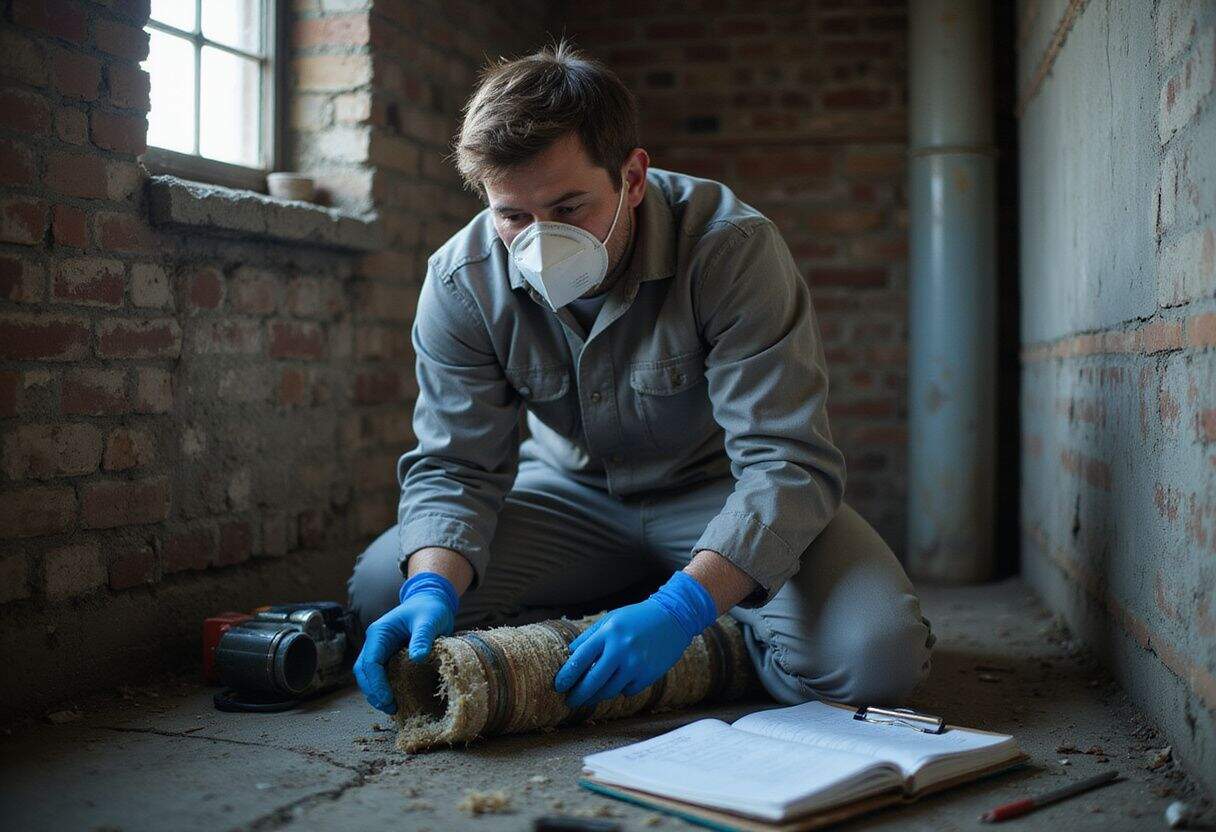
Asbestos-containing materials (ACMs) can sit undisturbed in a building for decades — silent, invisible, and legally your responsibility. Whether you manage a school, an office block, or an industrial unit, you need a structured way to judge the risk each material presents. That structured way is the asbestos condition assessment algorithm explained in the HSE’s guidance document HSG264.
The algorithm converts what a surveyor observes on site into a numerical score. That score tells you how likely a material is to release fibres, and it drives every decision that follows — from routine monitoring through to urgent encapsulation or asbestos removal.
This post walks through each scoring component, explains what the final numbers mean in practice, and shows how the algorithm connects to your wider legal duties under the Control of Asbestos Regulations.
The Four Components of the Material Assessment Score
The algorithm is built on four separate scores. Each one reflects a different characteristic of the ACM or its condition. A surveyor assesses all four during an asbestos management survey, then adds the scores together to produce a total material assessment score out of 12.
1. Product Type Score
This score reflects how easily the material could release fibres if disturbed. It is based on the physical form of the ACM, not its condition.
- Score 1 — Composite materials such as vinyl floor tiles or asbestos cement sheets. The fibres are tightly bound within the matrix, so release potential is low.
- Score 2 — Asbestos insulating board (AIB). More friable than composite products, meaning it can crumble under relatively modest force.
- Score 3 — Thermal lagging and sprayed coatings. These are highly friable materials where fibre release can occur with minimal disturbance.
Product type is the baseline score. Even a perfectly intact piece of sprayed insulation carries a higher inherent risk than a vinyl tile in poor condition, simply because of how the material behaves when disturbed.
2. Damage Level Score
This component assesses the current physical state of the ACM. A material in pristine condition scores 0. One showing severe deterioration scores 3.
- Score 0 — Good condition, no visible damage.
- Score 1 — Low damage: minor surface marks or slight wear.
- Score 2 — Medium damage: visible cracks, soft spots, or localised breakage.
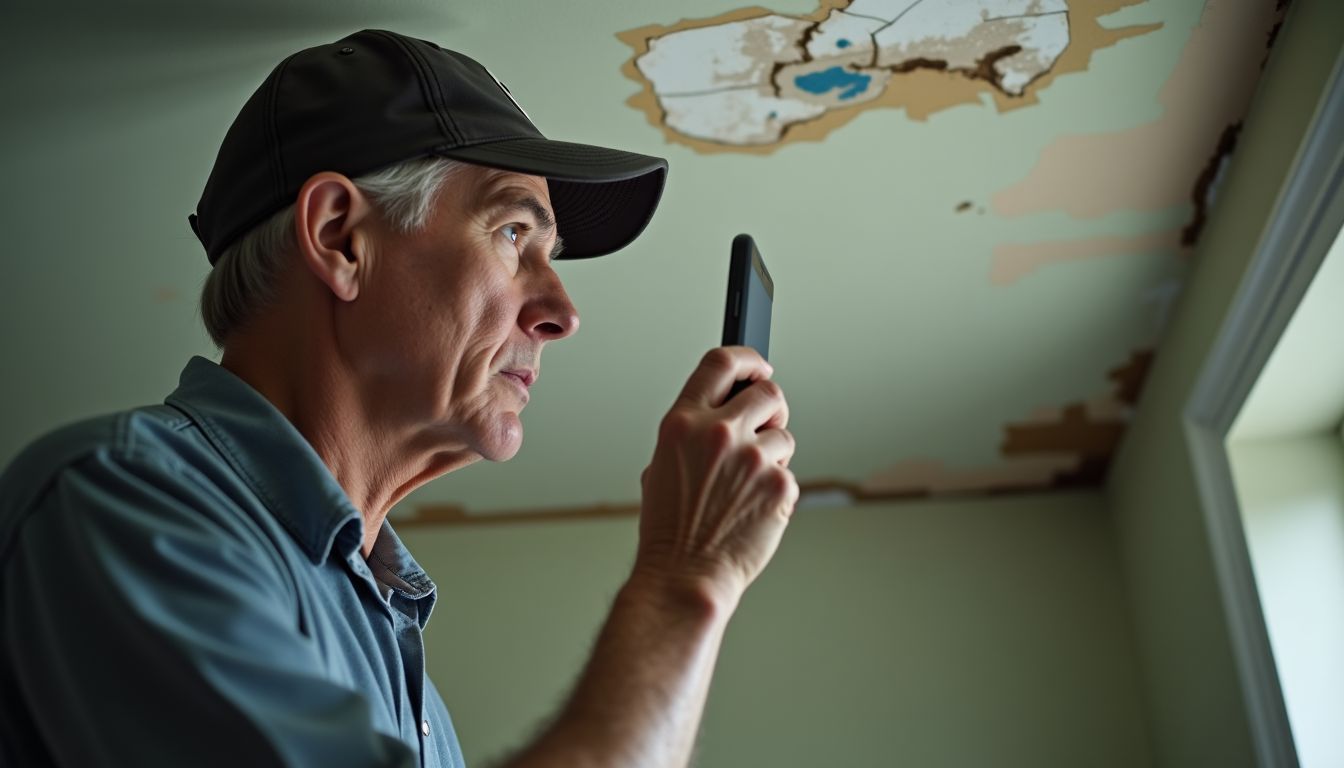
- Score 3 — High damage: significant crumbling, gouging, water damage, or heavy surface wear.
Surveyors look carefully for staining, delamination, and impact marks. Damaged ACMs may need urgent action — sealing off the area, short-term repair, or planning licensed removal — well before the next scheduled inspection.
3. Surface Treatment Score
Surface treatment scoring considers how well the ACM is protected from the outside. A sound coating, sealant, or physical barrier keeps fibres locked inside the material and reduces the chance of disturbance releasing dust.
- Score 0 — Strongly bonded or encapsulated surface, such as painted vinyl tiles. Fibres are not accessible at the surface.
- Score 1 — Lightly sealed or painted friable material.
- Score 2 — Unsealed or poorly protected surface.
- Score 3 — No coating, damaged coating, or exposed friable surface where fibres sit at or near the surface.
Good-quality coatings genuinely lower risk and buy time while a longer-term management strategy is developed. Damaged or missing treatments raise the overall score under HSG264 guidance and should be flagged as a priority action.
4. Asbestos Type Score
The HSE recognises six types of asbestos: Chrysotile, Crocidolite, Amosite, Actinolite, Anthophyllite, and Tremolite. Their different fibre structures create different risk profiles.
- Score 1 — Chrysotile (white asbestos). Generally considered less hazardous due to its curly fibre structure, though it remains a Class 1 carcinogen.
- Score 2 — Actinolite, Anthophyllite, and Tremolite. Less commonly encountered in UK buildings but still carry significant health risks.
- Score 3 — Crocidolite (blue) and Amosite (brown). Amphibole fibres with a needle-like structure that penetrate deep into lung tissue and are strongly associated with mesothelioma and other asbestos-related diseases.
Correct identification is a legal requirement under the Control of Asbestos Regulations. Laboratories accredited to ISO/IEC 17025 use techniques including polarised light microscopy and transmission electron microscopy to confirm fibre type. Only competent professionals should carry out this work as part of a formal survey and sampling process.
Interpreting the Total Material Assessment Score
Once a surveyor adds the four component scores together, the total falls somewhere between 1 and 12. Each band carries a different management implication.
Very Low Risk: Scores 1–4
Materials in this band are well protected and unlikely to release fibres under normal building use. Urgent intervention is not typically required under the Control of Asbestos Regulations.
That said, do not simply file the results and forget them. Keep detailed records, maintain your monitoring schedule, and note each location on your site plans. HSE inspectors will check that your asbestos register and management plan reflect actual site conditions.
Low Risk: Scores 5–6
A score in this range suggests the material is in reasonable condition but warrants routine monitoring. Location matters here — the same score in a busy corridor carries more practical weight than in a rarely accessed plant room.
Surveyors record condition details and usage context during an asbestos management survey. Maintain any coatings, record changes after refurbishment work, and review the entry if the space changes use. Early action on deteriorating coatings prevents scores from climbing into higher bands.
Medium Risk: Scores 7–9
Medium scores indicate a moderate chance of fibre release if the material is disturbed. These ACMs need active management — they cannot simply be monitored and left.
Practical steps at this level include:
- Increasing inspection frequency.
- Applying sealants or protective coverings where feasible.
- Introducing restricted access controls and clear signage.
- Updating site plans to reflect current risk status.
- Drafting a timeline for longer-term remediation within your management plan.
Pay particular attention to accessible locations and any areas flagged as no-access during the original survey. Interim controls protect people while permanent solutions are arranged.
High Risk: Scores 10–12
A material assessment score of 10 to 12 demands urgent attention. At this level, fibre release is likely if anyone disturbs the area — and in a busy workplace or shared building, the potential for human exposure rises quickly.
Actions at this level typically include:
- Immediate area controls: barriers, warning signs, and restricted access.
- Rapid re-inspection by a qualified asbestos surveyor.
- Urgent repair or encapsulation where safe to do so.
- Planning licensed removal by a trained team with appropriate personal protective equipment.
- Notifying the relevant authorities where required under the Control of Asbestos Regulations.
High-risk ACMs should appear prominently in your asbestos register and be treated as the top priority in your management plan. Follow HSE guidance closely and document every action taken.
Material Assessment vs. Priority Assessment: Understanding the Difference
The material assessment algorithm scores the ACM itself. The priority assessment scores the likelihood that people will disturb it. Both are needed for a complete picture.
What the Material Assessment Covers
Material assessment focuses entirely on the physical characteristics of the ACM — product type, damage, surface treatment, and asbestos type. It does not consider who uses the space or how often. The total score runs to 12, and higher numbers mean a greater chance of fibre release if disturbance occurs.
Results feed directly into your asbestos register and compliance records under the Control of Asbestos Regulations. From there, you decide which items need repair, removal, or routine monitoring within your management plan.
What the Priority Assessment Adds
Priority assessment asks a different question: how likely is it that someone will actually disturb this material? It considers:
- Occupancy levels — A space used daily by more than ten people scores higher than an infrequently visited store room.
- Area size — Larger spaces with more foot traffic carry greater disturbance potential.
- Maintenance activities — Regular work above suspended ceilings, for example, raises the likelihood of ACM contact.
- Type of occupants — Contractors, maintenance staff, and cleaning teams often work in areas that office workers never enter.
A competent surveyor works alongside the duty holder — who understands how the building actually operates — to review activities in schools, shops, offices, and plant rooms. Site plans help identify frequent routes, busy zones, and shared workspaces. The aim is to align the asbestos register and management plan with daily building life, not just a snapshot taken on survey day.
Together, the two assessments give you a total overall score that reflects both the material’s condition and the realistic chance of exposure. This combined approach is the foundation of proportionate, legally compliant asbestos management.
Your Legal Duties Under the Control of Asbestos Regulations
The Control of Asbestos Regulations place a duty to manage asbestos on anyone responsible for non-domestic premises or shared areas in residential buildings. The HSE enforces these regulations and publishes an Approved Code of Practice alongside HSG264 to explain what compliance looks like in practice.
Your core obligations include:
- Identifying all known or suspected ACMs and recording them in an up-to-date asbestos register.
- Carrying out a risk assessment before any work that might disturb ACMs — including refurbishment, demolition, cabling, and routine maintenance.
- Producing a written management plan based on your survey findings and material assessment scores.
- Ensuring that anyone liable to disturb ACMs — contractors, maintenance staff, and building occupants — is made aware of the register and plan.
- Reviewing and updating the register and plan regularly, and after any work that affects ACM condition or location.
- Arranging appropriate medical surveillance for workers regularly exposed to asbestos, with records kept for the long term.
For higher-risk, non-licensable work, notification to the relevant enforcing authority may be required. Licensed work — such as removing thermal lagging or sprayed coatings — must only be carried out by HSE-licensed contractors.
The algorithm is not just a technical tool. It is the mechanism that connects your survey findings to these legal duties. Accurate scores mean accurate decisions, which means genuine protection for the people who use your building.
How the Algorithm Feeds Into Your Asbestos Management Plan
An asbestos management plan is only as good as the data behind it. Survey findings without a structured assessment score leave duty holders guessing about priorities. The algorithm removes that guesswork.
Here is how the process flows in practice:
- A qualified surveyor completes a management survey of your premises.
- Each ACM is scored across the four algorithm components.
- Material assessment scores and priority assessment scores combine to produce a total overall score for each item.
- The asbestos register is populated with scores, locations, photographs, and sample results.
- The management plan sets out specific actions — monitoring schedules, repair timelines, removal plans — ranked by score.
- Regular re-inspections update scores as conditions change.
The plan is a living document. Scores change when materials deteriorate, when maintenance work is carried out, or when building use changes. Keeping it current is not optional — it is a legal requirement under the Control of Asbestos Regulations.
Regional Asbestos Survey Services From Supernova
Supernova Asbestos Surveys operates nationwide, with experienced surveyors covering every region of the UK. If you need a survey close to home, our location-specific teams are ready to help.
We cover major cities including those needing an asbestos survey London, an asbestos survey Manchester, or an asbestos survey Birmingham — as well as hundreds of other locations across England, Scotland, and Wales.
Every survey follows HSG264 methodology and the Control of Asbestos Regulations, giving you a register and report you can rely on.
Frequently Asked Questions
What is the asbestos condition assessment algorithm and how does it work?
The asbestos condition assessment algorithm is a scoring system used during an asbestos management survey to evaluate the risk posed by each ACM in a building. It scores four components — product type, damage level, surface treatment, and asbestos type — and adds them together to produce a material assessment score out of 12. Higher scores indicate a greater likelihood of fibre release and drive more urgent management action under the Control of Asbestos Regulations.
Who carries out the asbestos condition assessment?
The assessment must be carried out by a competent asbestos surveyor — typically someone holding a relevant BOHS qualification (P402 or equivalent) and working for a UKAS-accredited survey organisation. Duty holders should not attempt to score ACMs themselves. Inaccurate assessments can lead to under-management of high-risk materials or unnecessary disruption to low-risk ones.
How often should material assessment scores be reviewed?
There is no single fixed interval required by law, but HSG264 guidance recommends that ACMs in anything other than very good condition are re-inspected at least annually. High-risk materials may need more frequent checks — quarterly or even monthly in some cases. Scores should also be reviewed after any maintenance, refurbishment, or incident that could have affected the material’s condition.
What is the difference between a material assessment and a priority assessment?
A material assessment scores the physical characteristics of the ACM itself — how friable it is, how damaged, how well protected, and what type of asbestos it contains. A priority assessment scores the likelihood that people will disturb the material, based on occupancy levels, building use, and maintenance activities. Both scores combine to give a total overall score that informs your management plan and asbestos register.
Does a high material assessment score mean the asbestos must be removed immediately?
Not necessarily. A high score means the material needs urgent management action, but that action might be encapsulation, restricted access, or frequent monitoring rather than immediate removal. Removal is sometimes the right answer — particularly for very friable materials in poor condition — but it also carries its own disturbance risks. A qualified surveyor and your duty holder should agree on the most appropriate response based on the full assessment picture and HSE guidance.
Get an Accurate Asbestos Survey From Supernova
With over 50,000 surveys completed across the UK, Supernova Asbestos Surveys has the expertise to assess your building accurately, produce a reliable asbestos register, and help you build a management plan that stands up to HSE scrutiny.
Do not rely on outdated records or incomplete surveys. A properly scored material assessment is the foundation of safe, compliant asbestos management — and getting it right protects everyone who uses your building.
Call us on 020 4586 0680 or visit asbestos-surveys.org.uk to book your survey or discuss your management requirements with our team.