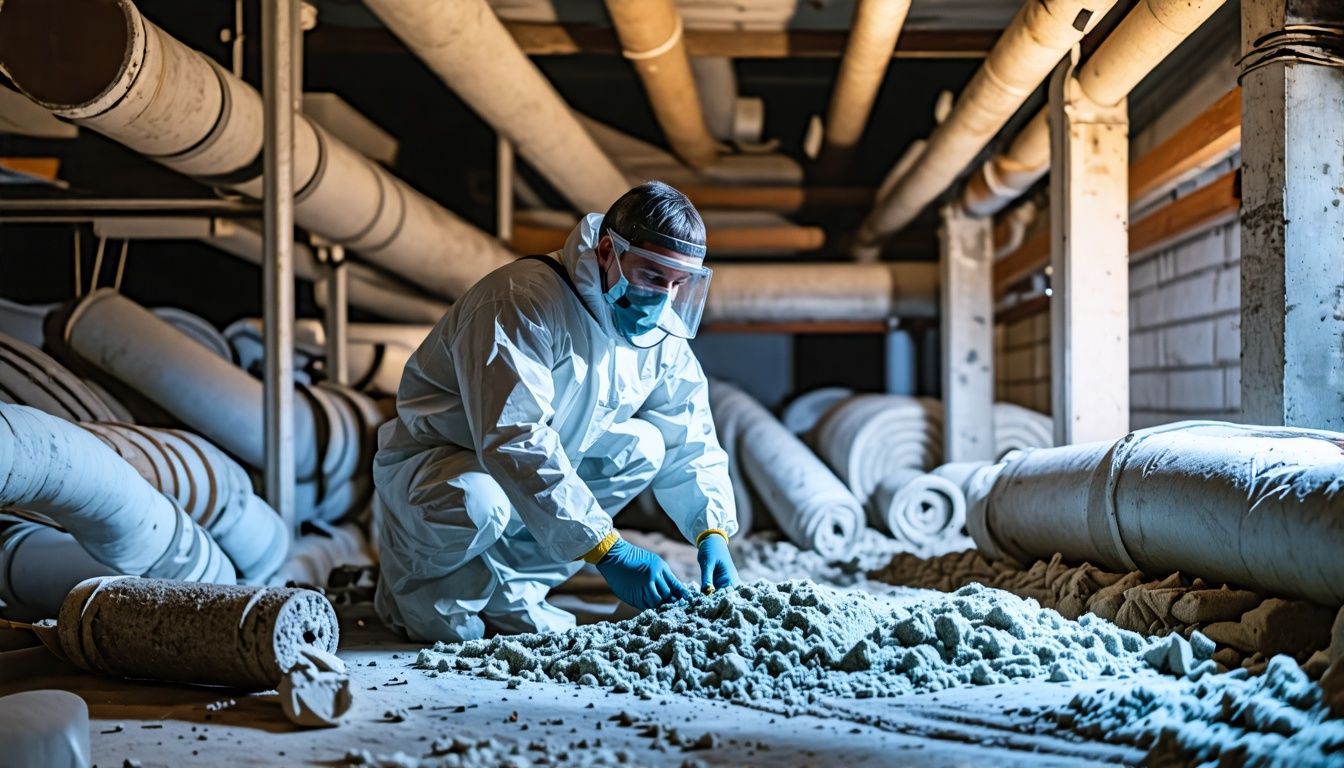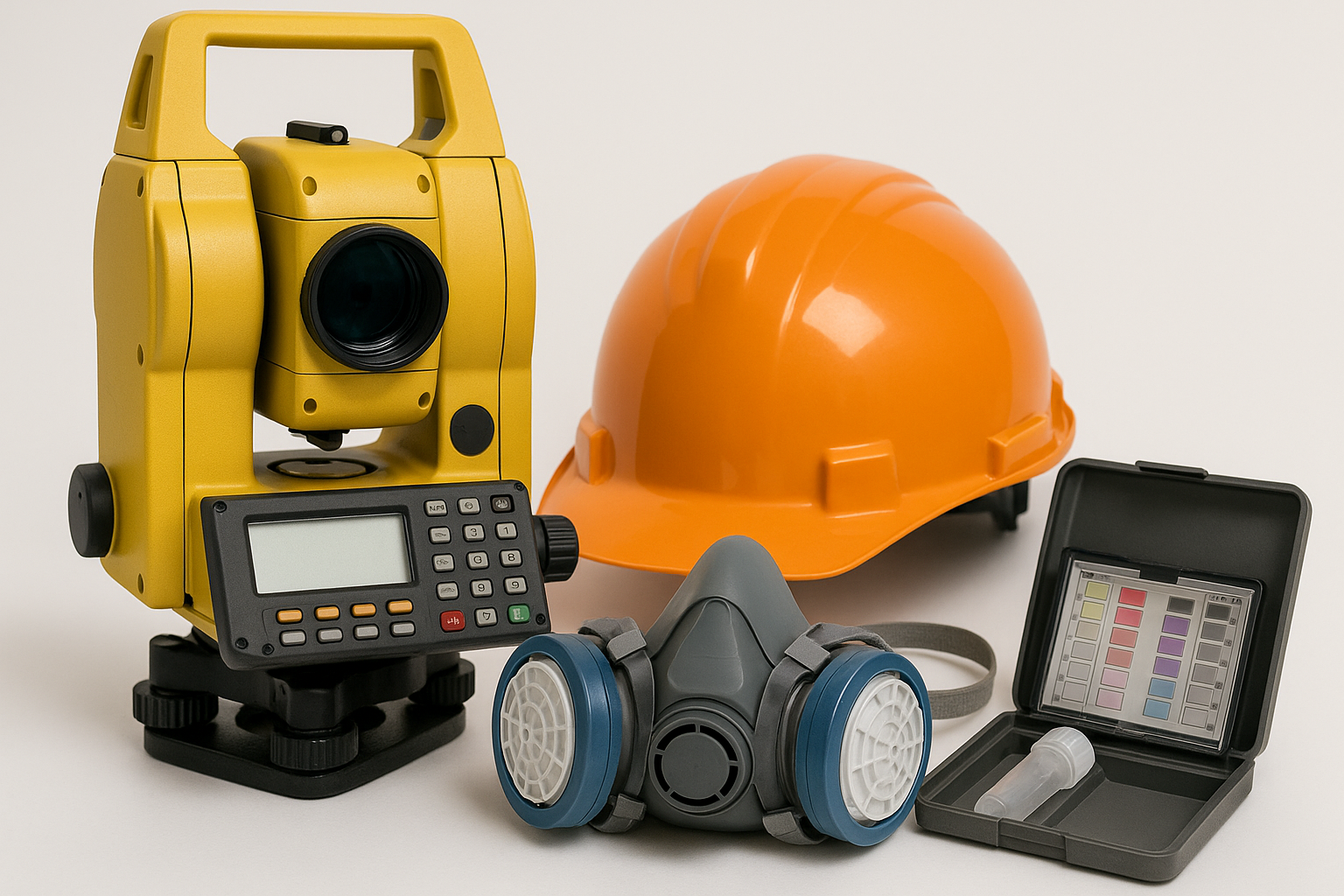
Category: Asbestos

  • Are There Any Restrictions on Where Asbestos Can be Disposed of in the UK? Understanding the Regulations

    Are There Any Restrictions on Where Asbestos Can be Disposed of in the UK? Understanding the Regulations

    One wrong skip, one unlabelled package, or one unlicensed carrier can turn asbestos disposal into a serious compliance problem. In the UK, asbestos waste cannot be dropped into general construction waste or taken to any convenient tip. It has to follow a controlled route from identification through to final disposal, with the right packaging, transport, paperwork, and receiving site.

    That matters whether you manage a single rental property or a national estate. If asbestos is disturbed without a proper plan, you risk fibre release, rejected waste loads, project delays, and enforcement action. The safest jobs are the ones where disposal is considered before removal starts, not after the waste is already sitting on site.

    Why asbestos disposal is tightly controlled

    Asbestos becomes hazardous when fibres are released and inhaled. That risk rises when materials are drilled, cut, broken, stripped out, or allowed to deteriorate.

    The legal framework reflects that risk. The Control of Asbestos Regulations set duties around identifying, managing, and working with asbestos, while waste law and duty of care requirements govern how hazardous waste is stored, transported, and disposed of. Survey work should align with HSG264 and relevant HSE guidance.

    In practice, compliant asbestos disposal means making sure:

    • the material is identified before it is disturbed
    • the work method limits fibre release so far as reasonably practicable
    • waste is packaged and labelled correctly
    • transport is arranged through the proper route
    • the receiving site is authorised to accept that waste stream
    • records are retained to show what happened and where the waste went

    If one link in that chain fails, the whole job is exposed. That can mean contamination, rejected loads, expensive rework, and awkward questions from regulators or clients.

    Where asbestos can and cannot be disposed of in the UK

    The short answer is simple: asbestos disposal cannot use a normal skip, a general waste transfer station, or an ordinary landfill unless that site is specifically permitted to accept asbestos waste. You must use an authorised route.

    Most asbestos waste is taken to a permitted hazardous waste landfill or another facility operating under the correct environmental permit. You should never assume a local tip, waste yard, or recycling centre can accept it.

    Places asbestos waste should not go

    • general builders’ skips
    • mixed construction waste containers
    • standard landfill sites without the right permit
    • most household recycling centres unless a council runs a specific asbestos scheme
    • bonfires or standard incineration routes
    • vacant land, farms, lay-bys, or private yards
    • unsecured on-site storage with no lawful disposal plan

    Fly-tipping asbestos is not just poor practice. It creates a public health risk, usually triggers specialist clean-up, and can lead to prosecution.

    Can household recycling centres accept asbestos?

    Sometimes, but only in limited circumstances. Some councils offer pre-booked arrangements for small amounts of cement-bonded asbestos from domestic properties.

    That does not mean every council accepts it, and it does not mean commercial waste can use the same route. Always check the exact local rules before moving anything. If you manage properties in different areas, expect disposal options to vary between authorities.

    Household and commercial asbestos disposal are not the same

    This is where many people come unstuck. A homeowner with a small amount of asbestos cement may, in some areas, be able to use a council collection service or a booked slot at a designated site.
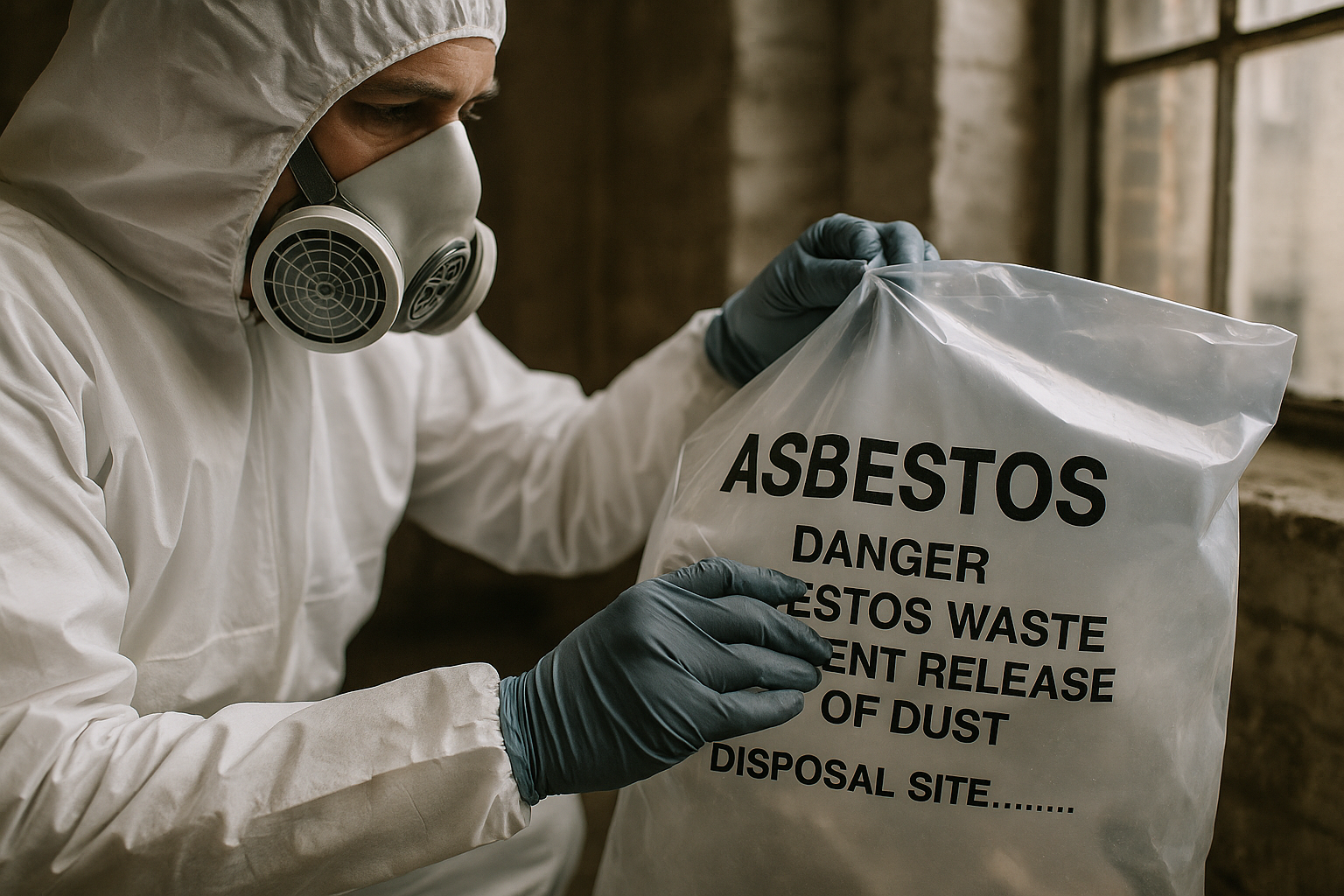
    asbestos disposal - Are There Any Restrictions on Where Asbe

    A landlord, contractor, managing agent, facilities manager, or business usually cannot rely on those household arrangements. If the waste comes from rented property maintenance, common parts, planned works, or business activity, treat it as commercial asbestos disposal from the outset.

    That means:

    • checking the waste route before removal starts
    • using suitable packaging and labelling
    • arranging transport through the correct channel
    • keeping the paperwork in order

    Do not assume that low-risk appearance means an informal disposal route. Even asbestos cement needs to be handled lawfully.

    Start with identification before asbestos disposal

    Good asbestos disposal starts long before the waste leaves site. First you need to know what the material is, where it is, what condition it is in, and whether removal is actually necessary.

    Not every asbestos-containing material should be stripped out straight away. If it is in good condition and unlikely to be disturbed, managing it in place may be safer than removal. If work is planned, the correct survey or testing is the first step.

    When a survey is needed

    For occupied buildings, a management survey is normally the starting point. This helps identify asbestos-containing materials that could be disturbed during normal occupation, maintenance, or minor works.

    If intrusive works are planned, a refurbishment survey is usually required. This is designed to locate asbestos likely to be disturbed during refurbishment, upgrades, or strip-out works.

    If a building is due to be taken down, a demolition survey is required before demolition starts. This is fully intrusive because the aim is to identify all asbestos that could be disturbed during the demolition process.

    When testing is the better first step

    If there is uncertainty about a specific material, arrange asbestos testing before anyone touches it. Sampling and analysis can confirm whether a product contains asbestos and help you choose the correct removal and disposal route.

    For clients who need a fast answer on a suspect material without commissioning a full survey straight away, dedicated asbestos testing can be a practical first move.

    The rule is straightforward: if you do not know what it is, do not drill it, break it, bag it, or move it.

    How asbestos waste should be packaged

    Packaging is one of the most important parts of asbestos disposal. If the waste is packaged badly, fibres can be released during lifting, storage, loading, transport, or tipping.
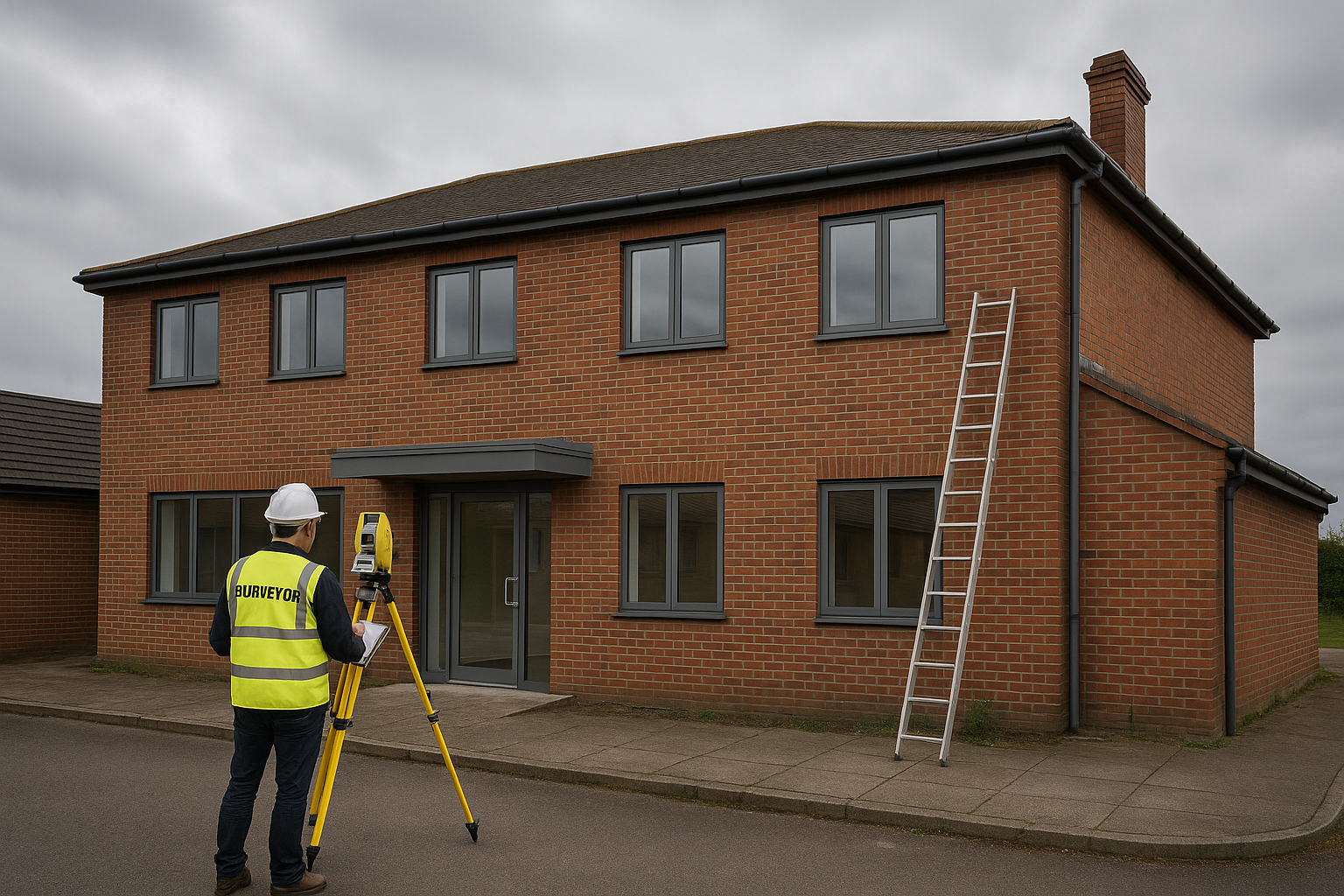
    asbestos disposal - Are There Any Restrictions on Where Asbe

    The exact method depends on the material type, condition, and size. The objective is always the same: contain fibres and make the package clearly identifiable as asbestos waste.

    Common packaging methods

    • red inner asbestos waste bags with clear outer bags for suitable smaller waste
    • heavy-duty polythene wrapping for boards, sheets, and larger rigid items
    • sealed and enclosed skips for properly packaged asbestos waste on larger projects
    • enclosed vehicles or sealed containers used by authorised contractors
    • specialist packaging where required for more friable or higher-risk waste

    Loose asbestos should never be thrown into a standard skip. It should not be mixed with timber, plasterboard, rubble, insulation, or general site waste.

    Practical packaging rules

    • remove materials as intact as possible
    • avoid breaking sheets or boards to make them fit smaller bags
    • double-bag or double-wrap where appropriate
    • seal all joints and openings securely with strong tape
    • apply clear asbestos warning labels
    • store packaged waste in a secure area until collection or delivery
    • keep the material damp where appropriate, without creating contaminated run-off

    If the material is damaged, dusty, or likely to release fibres easily, stop and get specialist advice before packaging it. Guesswork at this stage often creates the contamination you were trying to avoid.

    Is there a standard asbestos bag size?

    Not across every contractor, site, or local authority. Smaller items are often placed in specialist asbestos waste bags suitable for double-bagging and safe manual handling, but dimensions can vary.

    Councils that accept limited household asbestos may issue their own packaging instructions. The safest approach is to follow the requirements given by the disposal site or contractor handling your asbestos disposal. Do not overfill bags and do not force rigid items into packaging that is too small.

    Bagged waste versus wrapped waste

    Bagged disposal is generally more suitable for smaller debris, fragments, and contaminated PPE under controlled conditions. Large cement sheets, insulation boards, or pipe sections are usually wrapped rather than bagged.

    If you know the quantity in advance, plan the packaging before removal starts. Overpacked bags are a common reason for splits, contamination, and rejected loads.

    Transport rules for asbestos disposal

    Once asbestos waste leaves site, transport becomes a major compliance point. The waste must be moved through the correct route, with suitable containment, correct documentation, and a carrier authorised to transport that waste.

    This is not a job for an ordinary van and a vague promise to “sort it at the tip”. If the load is not packaged, labelled, and documented properly, the receiving site may refuse it.

    Before waste is transported, check:

    • the waste is correctly packaged and labelled
    • the carrier is appropriate for the waste being moved
    • the receiving facility is authorised to accept that asbestos waste stream
    • the paperwork is prepared and retained
    • the load can be moved without damage to the packaging

    For larger projects, transport should be planned as part of the work sequence. That includes where waste will be stored, how it will be loaded, and how occupants or neighbours will be protected during collection.

    What a proper asbestos collection and disposal service should include

    A contractor offering asbestos disposal should be able to explain the entire chain, not just the collection. If they cannot tell you how the waste will be packaged, transported, documented, and deposited, you do not have enough information to proceed safely.

    A proper service will usually include:

    • confirmation of what the material is, supported by survey or testing information where needed
    • advice on whether the work is licensed, notifiable non-licensed, or non-licensed
    • safe removal or collection arrangements
    • correct packaging and labelling
    • transport by an appropriate waste carrier
    • delivery to a facility authorised to receive that waste stream
    • waste documentation and record retention where required

    Cheap quotes often hide weak practice. Be cautious if asbestos waste is being bundled into general clearance work with no clear paper trail.

    Questions to ask before booking collection

    1. What type of asbestos waste are you expecting to collect?
    2. Is the work licensed, notifiable non-licensed, or non-licensed?
    3. How will the waste be packaged and labelled?
    4. Who is transporting it?
    5. Which authorised site will receive it?
    6. Will I receive the relevant waste paperwork?
    7. Do you need survey or testing evidence before collection?

    These are basic due diligence checks. They protect you if the disposal route is questioned later by a client, regulator, or insurer.

    Different asbestos materials can require different disposal routes

    Not all asbestos waste is handled in exactly the same way. The disposal route depends on the material, its condition, the quantity involved, and how likely it is to release fibres.

    Cement-bonded sheets in good condition are not dealt with in exactly the same way as loose insulation debris, damaged lagging, or contaminated dust. Both require lawful asbestos disposal, but the controls around removal, packaging, and transport can differ.

    Factors that affect the disposal route

    • whether the asbestos is bonded or friable
    • the condition of the material
    • the quantity involved
    • whether it is sheet material, debris, lagging, insulation board, or contaminated soil
    • whether the waste came from domestic or commercial activity
    • whether the removal work itself requires additional controls

    This is why a one-size-fits-all approach causes problems. The route should fit the waste, not the other way round.

    Planning asbestos disposal for larger quantities

    Once quantities become significant, asbestos disposal needs proper project planning. Bulk loads from roof replacement, plant room strip-out, refurbishment, or demolition should never be treated as a last-minute skip problem.

    Where larger volumes are involved, expect the process to include survey or testing evidence, segregation from other waste, controlled loading, secure storage before collection, and pre-arranged acceptance at the receiving site.

    What to plan in advance

    • where the waste will be packaged
    • where it will be stored securely on site
    • how it will be segregated from general waste
    • how vehicles will access the loading area
    • how occupants and neighbouring premises will be protected
    • what documentation will be required

    If you leave asbestos disposal until the final day of the job, mistakes are far more likely. Build it into the project plan from the start.

    Common asbestos disposal mistakes to avoid

    Most disposal failures are not complicated. They happen because someone assumes asbestos can be treated like ordinary building waste.

    • starting removal before confirming whether the material contains asbestos
    • using a general skip for suspect waste
    • breaking sheets to fit into smaller containers
    • mixing asbestos with rubble or general demolition waste
    • failing to label packaged waste clearly
    • using the wrong collection route for commercial waste
    • taking waste to a site without checking it can accept asbestos
    • forgetting to retain paperwork
    • leaving packaged asbestos unsecured on site

    Each of these mistakes can create extra cost. More importantly, they can expose workers, occupants, and the public to avoidable fibre release.

    Practical advice for property managers and dutyholders

    If you are responsible for a building, the easiest way to stay out of trouble is to make asbestos disposal part of your early planning. Do not wait until contractors are already on site asking where to put the waste.

    Use this simple checklist:

    1. Identify suspect materials before works begin.
    2. Arrange the right survey or testing.
    3. Decide whether the material should be managed in place or removed.
    4. Confirm the removal category and controls required.
    5. Plan packaging, storage, transport, and the receiving site.
    6. Keep all records together with the job file.

    If you manage multiple properties, standardise this process across your portfolio. That reduces rushed decisions and makes contractor oversight much easier.

    Local support for asbestos surveys before disposal

    Disposal decisions are only as good as the information behind them. If you need to identify asbestos before maintenance, refurbishment, or removal, local survey support can save time and prevent expensive mistakes.

    Supernova provides regional help including asbestos survey London, asbestos survey Manchester, and asbestos survey Birmingham. Getting the right survey first makes asbestos disposal far easier to plan properly.

    Need help planning asbestos disposal?

    If you are unsure whether a material contains asbestos, whether a survey is required, or how to plan a compliant disposal route, get advice before works begin. Supernova Asbestos Surveys carries out asbestos surveys and testing nationwide, helping property managers, landlords, contractors, and dutyholders make safe, compliant decisions.

    Call 020 4586 0680 or visit asbestos-surveys.org.uk to arrange expert support with surveys, sampling, and asbestos planning.

    Frequently Asked Questions

    Can asbestos go in a normal skip?

    No. Asbestos disposal should not use a normal skip unless it is part of a controlled and authorised arrangement for properly packaged asbestos waste. In most cases, a general builders’ skip is not suitable.

    Can I take asbestos to my local tip?

    Only if the site specifically accepts it and you meet its conditions. Some councils accept small amounts of bonded asbestos from domestic properties by appointment, but many do not. Commercial asbestos waste should never be taken on the assumption that a household site will accept it.

    Do I need a survey before asbestos disposal?

    Often, yes. If asbestos has not already been identified, the right survey or testing helps confirm what the material is and whether removal is necessary. That information is essential for safe asbestos disposal.

    Is asbestos cement easier to dispose of than other asbestos materials?

    It may be lower risk than friable materials when in good condition, but it still needs lawful asbestos disposal. It should be removed carefully, packaged correctly, and taken only to an authorised site.

    What paperwork should I keep after asbestos disposal?

    You should keep the records linked to identification, removal, transport, and disposal. The exact paperwork depends on the job, but the key point is being able to show what the waste was, how it was handled, and where it went.

  • How Often Should Asbestos Surveys Be Conducted in the Workplace? A Comprehensive Guide

    How Often Should Asbestos Surveys Be Conducted in the Workplace? A Comprehensive Guide

    What Is the Right Asbestos Management Survey Frequency for Your Building?

    It is one of the most common questions facility managers and property owners ask us: how often should asbestos surveys be carried out? The honest answer is that no single number applies to every premises. But there are clear legal duties, and getting the frequency wrong carries serious consequences — for your people and your business.

    Understanding asbestos management survey frequency is not just about ticking a compliance box. It is about maintaining a live, accurate picture of the asbestos-containing materials (ACMs) in your building and ensuring they remain safely managed over time.

    Your Legal Duty as a Dutyholder

    Under the Control of Asbestos Regulations, anyone responsible for the maintenance or repair of non-domestic premises has a legal duty to manage asbestos. This means identifying ACMs, assessing the risk they present, and putting a management plan in place — then keeping that plan up to date.

    That last part is where survey frequency becomes critical. A one-off survey filed away and forgotten does not fulfil your duty. The regulations require active, ongoing management.

    The Health and Safety Executive (HSE) is clear that dutyholders must review and revise their asbestos management plan whenever there is reason to believe it is no longer valid. In practice, this means regular re-inspections are not optional — they are a legal requirement.

    Understanding the Different Types of Asbestos Survey

    Before discussing frequency, it helps to understand that not all surveys serve the same purpose. Each type addresses a different set of circumstances and risks.

    Management Survey

    A management survey is the standard survey required for any building that may contain asbestos. It locates ACMs in areas likely to be disturbed during normal occupation and routine maintenance, helping you manage those materials safely over time.

    This is not designed to find every last trace of asbestos in a building. It focuses on the areas relevant to day-to-day use and maintenance activities.

    Refurbishment Survey

    A refurbishment survey is required before any works that could disturb the fabric of the building. It is a far more intrusive process, involving destructive inspection to locate ACMs that might be affected by planned works.

    This survey must be completed before work starts. There are no exceptions, and contractors cannot legally begin without it.

    Demolition Survey

    A demolition survey is legally required before any demolition work begins. Similar in approach to a refurbishment survey but covering the entire structure, it ensures all ACMs are identified and safely managed before the building is brought down.

    Re-Inspection Survey

    A re-inspection survey is the periodic check-up on ACMs already identified in your asbestos register. It monitors the condition of known materials and flags any deterioration or change in risk level.

    This is the survey type most directly relevant to the question of asbestos management survey frequency — and the one most often neglected.

    How Often Should Re-Inspections Happen?

    Annual re-inspections are the standard recommendation for most workplaces, and this is what HSE guidance points toward. But annual is a baseline, not a ceiling. The right frequency for your building depends on several factors specific to your premises and the condition of the ACMs within it.

    Higher-Risk Buildings May Need More Frequent Checks

    Some buildings warrant re-inspection more often than once a year. Consider increasing your frequency if any of the following apply:

    • ACMs are in poor or deteriorating condition
    • The building is older and has asbestos throughout multiple areas
    • There is high footfall or regular maintenance activity near ACMs
    • The building is used for industrial or high-activity purposes
    • Previous surveys have rated materials as moderate or high risk
    • The building has suffered water ingress, fire damage, or structural movement

    In these cases, six-monthly re-inspections are common. In some high-risk scenarios, quarterly checks are entirely appropriate.

    Your asbestos management plan should specify the frequency — and a competent surveyor should help you set that schedule based on actual risk, not a blanket policy.

    Lower-Risk Buildings

    If ACMs are in good condition, well-encapsulated, and located in areas unlikely to be disturbed, annual re-inspection may be entirely sufficient. The key is that the decision is documented, justified, and reviewed whenever circumstances change.

    Even in lower-risk buildings, you cannot simply assume nothing has changed. An annual check keeps your register current and your management plan valid.

    Circumstances That Require an Immediate Additional Survey

    Regardless of when your last survey was carried out, certain events trigger an immediate requirement for further assessment. Do not wait for the next scheduled re-inspection if any of the following apply.

    Before Refurbishment or Demolition

    A refurbishment or demolition survey is legally required before any works that could disturb the fabric of the building — whether you are stripping out a single office or demolishing an entire structure. Contractors cannot legally begin work without it in place.

    Damage to Known ACMs

    If any asbestos-containing material is damaged through accident, flood, fire, or structural failure, an immediate inspection is essential. Damaged ACMs may be releasing fibres, which creates an immediate health risk that must be assessed without delay.

    Discovery of Suspected ACMs

    If materials that could be asbestos are found during maintenance, decoration, or any other activity, work must stop immediately. A targeted survey or sample analysis should be carried out before work resumes.

    Change of Building Use

    If a building changes from storage to office use, or takes on additional occupants, the risk profile of existing ACMs changes too. More people in the building, or different patterns of use, can significantly affect the likelihood of disturbance — a re-evaluation is warranted.

    Property Acquisition or New Lease

    If you are buying or taking on a lease for a commercial property, do not rely on the previous owner’s survey. Asbestos conditions change, surveys become outdated, and you need a current picture of the asbestos status to fulfil your duty from day one.

    Post-Remediation

    After asbestos removal or encapsulation work, a follow-up survey confirms the work was completed properly and the area is safe. This is essential before the space is reoccupied.

    Following Regulatory or Guidance Updates

    If HSE guidance or best practice standards are updated, your management plan should be reviewed to ensure it reflects current requirements. Your surveyor can advise on whether an additional assessment is needed.

    What Your Asbestos Management Plan Should Specify

    Your asbestos management plan is a live document — not something to produce once and archive. It should clearly set out:

    • The location and condition of all identified ACMs
    • The risk rating for each material
    • The re-inspection schedule for each ACM, which may vary by material and location
    • Actions required — whether monitoring, encapsulation, or removal
    • Who is responsible for overseeing asbestos management on site
    • Records of all surveys, re-inspections, and any remedial work carried out

    The plan should be reviewed at least annually, or whenever there is a material change to the building or its use. It must be accessible to anyone who might disturb ACMs — including contractors working on site.

    If you have any doubt about whether your current plan is adequate, HSG264 — the HSE’s guidance document on asbestos surveys — provides detailed guidance on what a compliant management plan should contain.

    Can You Use Testing Instead of a Full Survey?

    Sample testing has a role to play, but it does not replace a full survey. If a material is found and you want to confirm whether it contains asbestos, a testing kit or professional asbestos testing service can provide a rapid answer.

    However, testing an individual sample tells you only whether that specific material contains asbestos. It does not assess the condition of ACMs throughout the building, identify materials you have not already found, or satisfy your duty to conduct a proper asbestos management survey.

    Use testing as a targeted tool — not as a shortcut to avoid a full survey.

    Who Can Carry Out Asbestos Surveys?

    Only competent, qualified surveyors should conduct asbestos surveys. For management surveys and refurbishment or demolition surveys, the HSE strongly recommends using surveyors accredited by UKAS (United Kingdom Accreditation Service) to ISO 17020.

    Using an unaccredited surveyor — or attempting a DIY assessment — is not only dangerous but is unlikely to satisfy your legal duty. If a health and safety incident occurs and your survey was carried out by someone without proper qualifications, the legal consequences for the dutyholder can be severe.

    All Supernova Asbestos Surveys surveyors are fully qualified, and our surveys are compliant with current HSE guidance and HSG264 requirements. We work with organisations across the UK, from single commercial properties to large multi-site portfolios.

    Asbestos and Fire Risk: Understanding the Overlap

    There is an important overlap between asbestos management and fire safety that many dutyholders overlook. A fire can damage ACMs, causing fibres to become airborne and creating a serious post-incident hazard. If your premises has experienced a fire, asbestos re-inspection should form part of your immediate response.

    Equally, if you are arranging a fire risk assessment for your premises, it is worth coordinating this with your asbestos management review. Both processes require access to building fabric information, and both contribute to a complete picture of your premises risk profile.

    Practical Steps to Get Your Survey Schedule Right

    If you are unsure whether your current asbestos management approach is adequate, work through the following steps:

    1. Check when your last survey was carried out — and confirm whether it was a management survey, a re-inspection, or a refurbishment survey. Each has a different scope.
    2. Review your asbestos register — does it reflect the current state of the building? Has anything changed since the survey was completed?
    3. Assess your re-inspection schedule — is it documented in your management plan? Is the frequency appropriate for the risk levels identified?
    4. Book a re-inspection if you are overdue — if your last survey was more than 12 months ago and conditions have changed, do not delay.
    5. Ensure contractors are aware — anyone working on your building should be given access to the asbestos register before they start work.
    6. Review ahead of any planned works — if refurbishment or demolition is on the horizon, commission the appropriate survey well in advance so it does not hold up your programme.

    Why Asbestos Management Survey Frequency Matters Beyond Compliance

    Staying on top of asbestos management survey frequency is not simply about avoiding enforcement action. ACMs that are left unmonitored can deteriorate silently — releasing fibres into the air without anyone realising. The health consequences of asbestos exposure are severe and irreversible, and they can take decades to manifest.

    For dutyholders, the reputational and financial consequences of a failure are equally serious. HSE investigations, improvement notices, prohibition notices, and prosecutions are all on the table when asbestos management is found to be inadequate. The cost of getting it right is a fraction of the cost of getting it wrong.

    Regular, properly documented surveys are your evidence that you have met your duty of care — to your staff, your contractors, and anyone else who uses your building.

    Get Expert Help With Your Asbestos Survey Schedule

    Supernova Asbestos Surveys has completed over 50,000 surveys across the UK. Whether you need an initial management survey, a periodic re-inspection, a refurbishment or demolition survey, or guidance on setting the right frequency for your premises, our qualified surveyors can help.

    Call us on 020 4586 0680 or visit asbestos-surveys.org.uk to book a survey or speak to our team about your asbestos management requirements. We will give you a straight answer and a clear plan — no jargon, no unnecessary upselling.

    Frequently Asked Questions

    What is the recommended asbestos management survey frequency for most workplaces?

    Annual re-inspections are the standard baseline recommended by HSE guidance. However, buildings with ACMs in poor condition, high levels of activity near asbestos materials, or extensive asbestos throughout may require re-inspections every six months or even quarterly. Your asbestos management plan should document the specific frequency for your premises, justified by the risk levels identified during survey.

    Does a new building need an asbestos survey?

    Buildings constructed after the year 2000 are extremely unlikely to contain asbestos, as its use in construction was banned. However, if there is any doubt about the construction date or materials used — particularly in refurbished or extended buildings — a survey provides certainty and protects you legally. When in doubt, survey.

    What if no asbestos was found in the initial survey?

    If a thorough management survey found no ACMs, you do not necessarily need regular re-inspections in the same way. However, your finding should be documented, and you must still commission a refurbishment or demolition survey before any intrusive works are carried out. A clean initial survey does not provide a permanent exemption from future obligations.

    Can I carry out my own asbestos re-inspection?

    No. Asbestos surveys and re-inspections must be carried out by competent, qualified surveyors. The HSE strongly recommends using UKAS-accredited surveyors for all survey types. Attempting a self-assessment does not satisfy your legal duty and could expose you to serious liability if an incident occurs.

    What happens if I do not keep up with asbestos re-inspections?

    Failing to maintain an up-to-date asbestos management plan and carry out regular re-inspections is a breach of the Control of Asbestos Regulations. The HSE can issue improvement notices, prohibition notices, and pursue prosecution. Beyond the legal consequences, unmonitored ACMs that deteriorate can pose a direct health risk to anyone in the building.

  • What Measures Can Be Taken to Protect Employees from the Dangers of Asbestos?

    What Measures Can Be Taken to Protect Employees from the Dangers of Asbestos?

    Is an Asbestos Mask Actually Enough to Keep You Safe?

    The short answer is: it depends entirely on which asbestos mask you’re using, how you’re wearing it, and what work you’re doing. Get any of those three things wrong, and respiratory protection offers very little real defence against one of the UK’s most dangerous occupational hazards.

    Asbestos fibres are invisible to the naked eye. They don’t smell. They don’t irritate your throat when you breathe them in. That invisibility is precisely what makes them so lethal — and why choosing the right asbestos mask, and using it correctly, is a matter of life and death rather than a box-ticking exercise.

    Why Respiratory Protection Matters So Much with Asbestos

    When asbestos-containing materials (ACMs) are disturbed — drilled, cut, sanded, or broken — microscopic fibres become airborne. Once inhaled, those fibres can lodge permanently in lung tissue. The diseases they cause — mesothelioma, asbestosis, asbestos-related lung cancer — typically take decades to develop, which means workers exposed today may not see the consequences for many years.

    There is no safe level of asbestos exposure. The Control of Asbestos Regulations place a legal duty on employers to reduce exposure as far as reasonably practicable — and where residual risk remains, to provide appropriate respiratory protective equipment (RPE).

    An asbestos mask is the last line of defence, not the first. Engineering controls — encapsulation, enclosure, wet suppression methods, local exhaust ventilation — must always come first. RPE supports those controls; it doesn’t replace them.

    Not All Masks Are Suitable for Asbestos Work

    This is where many employers and workers make a dangerous mistake. A standard dust mask — the kind you might pick up at a hardware shop — offers no meaningful protection against asbestos fibres. Neither does a surgical mask. The fibres are simply too fine to be captured by low-grade filtration.

    For any work where asbestos exposure is possible, you need RPE that meets specific performance standards. The HSE is clear on this: only correctly selected, properly fitted, and well-maintained RPE provides adequate protection.

    FFP3 Disposable Respirators

    FFP3 is the minimum acceptable standard for an asbestos mask used in lower-risk, non-licensed asbestos work. These filtering facepiece respirators filter at least 99% of airborne particles when properly fitted.

    The critical word is fitted. An FFP3 mask that doesn’t seal correctly against the face — because of facial hair, incorrect size, or improper donning — provides dramatically reduced protection. Fit testing is not optional; it’s a legal requirement for tight-fitting RPE under the Control of Asbestos Regulations.

    Half-Face and Full-Face Respirators with P3 Filters

    Reusable half-face or full-face respirators fitted with P3 particulate filters offer a higher level of protection than disposable FFP3 masks and are more appropriate for regular or prolonged exposure scenarios. Full-face versions also protect the eyes and face from fibre contamination.

    These must be properly maintained, with filters replaced according to the manufacturer’s guidance. A degraded or overloaded filter provides no meaningful protection regardless of the mask’s quality.

    Powered Air-Purifying Respirators (PAPRs)

    For higher-risk asbestos work — including licensed removal of sprayed coatings, lagging, and asbestos insulating board — powered air-purifying respirators (PAPRs) are typically required. These use a battery-powered blower to pass air through a HEPA filter before delivering it to the wearer, providing a higher assigned protection factor than tight-fitting disposable or reusable masks.

    PAPRs are also the preferred option where facial hair or other features prevent an adequate seal with tight-fitting RPE. They are more expensive and require more maintenance, but for licensed asbestos work they are often the only appropriate choice.

    Supplied Air Respirators

    In the most extreme scenarios — very high fibre concentrations, enclosed spaces, or complex licensed removal work — supplied air respirators that deliver clean air from an external source may be required. These are specialist items used by licensed asbestos removal contractors and are not relevant for most duty holders or facilities managers.

    Fit Testing: The Step Most Employers Miss

    Selecting the right grade of asbestos mask is only half the job. Under HSE guidance, all tight-fitting RPE must be fit tested before use — and the test must be repeated if the wearer’s face shape changes significantly, or if a different mask model is introduced.

    There are two types of fit test:

    • Qualitative fit testing — uses a bitter or sweet-tasting aerosol to check whether the wearer can detect any leakage around the seal. Simple and widely used for FFP3 disposable masks.
    • Quantitative fit testing — uses specialist equipment to measure the actual ratio of particles inside and outside the mask. More precise and required for higher-specification RPE.

    A mask that passes fit testing for one person may fail for another. Fit testing is individual, not generic. Handing a box of FFP3 masks to a team and assuming they’re protected is not compliance — it’s a liability.

    Wearing an Asbestos Mask Correctly

    Even the right mask, properly fitted, can fail if it’s worn incorrectly. Workers must be trained in correct donning and doffing procedures — and that training needs to be documented.

    Putting the Mask On

    1. Check the mask for damage before each use — discard if torn, deformed, or if the straps are degraded
    2. Ensure the face is clean-shaven in the seal area
    3. Position the mask over the nose and mouth, securing straps above and below the ears
    4. Mould the nose clip firmly to the bridge of the nose
    5. Perform a positive or negative pressure user seal check before entering the work area

    Removing the Mask Safely

    Doffing — removing the mask — is where secondary contamination most commonly occurs. Fibres that have settled on the outside of the mask can be transferred to hands, face, and clothing if removal isn’t handled carefully.

    1. Remove the mask only after leaving the contaminated area or decontamination unit
    2. Avoid touching the front of the mask — use the straps to remove it
    3. Dispose of disposable masks immediately into a sealed asbestos waste bag
    4. Wash hands and face thoroughly after removal

    Removing a mask inside a contaminated work area, or touching the filter face during removal, can expose workers to the very fibres the mask was designed to keep out.

    RPE Is Part of a Wider Protection System

    An asbestos mask doesn’t work in isolation. It’s one component of a broader protection framework that must be in place before any work involving potential asbestos disturbance begins.

    Know What’s There Before Work Starts

    Before any building work, maintenance, or refurbishment begins, the presence or absence of ACMs must be established. A management survey identifies ACMs in buildings that are in normal use and feeds directly into an asbestos management plan.

    For buildings about to undergo intrusive work, a refurbishment survey is required — this is a more invasive inspection that locates materials hidden above ceilings, inside walls, and beneath floors. Where full demolition is planned, a demolition survey must be completed before any structural work begins, ensuring all ACMs are located and safely removed before demolition crews move in.

    Verify Suspected Materials Before Exposure

    If a material is suspected to contain asbestos but hasn’t been confirmed, it must be treated as though it does — until asbestos testing confirms otherwise. For straightforward situations, Supernova offers a postal testing kit, and full laboratory sample analysis is available for more complex cases.

    Use the Right Coveralls and Protective Clothing

    An asbestos mask protects the respiratory system. It does nothing to prevent fibre contamination of skin, hair, and clothing. Workers must also wear:

    • Type 5 disposable coveralls — designed to resist penetration by fine particles including asbestos fibres. Standard workwear is not adequate.
    • Gloves — to prevent hand contamination during handling of ACMs
    • Overshoes or boot covers — to prevent fibres being tracked out of the work area
    • Eye protection — particularly where fibres could be projected towards the face

    All disposable PPE must be removed carefully and disposed of as asbestos waste — not placed in general waste bins.

    Contain the Work Area

    Physical containment prevents fibres from spreading beyond the immediate work zone. This includes sheeting off the area, using airlocks, and — for licensed removal work — establishing a full decontamination unit (DCU) through which workers pass before leaving the controlled area.

    Negative air pressure systems ensure that any air movement is inward rather than outward, preventing contaminated air from escaping into adjacent spaces.

    When Licensed Contractors Are Required

    Not all asbestos work can be carried out by a trained operative wearing an FFP3 mask. The Control of Asbestos Regulations define categories of work that can only be performed by contractors holding an HSE asbestos removal licence.

    Licensed work includes removal of:

    • Sprayed asbestos coatings
    • Asbestos lagging on pipes and boilers
    • Asbestos insulating board (AIB)
    • Any ACM in poor condition where significant fibre release is likely

    For these materials, the RPE requirements are more stringent, the containment procedures more complex, and the regulatory oversight more intensive. Using a non-licensed contractor — or attempting the work in-house — is a criminal offence under the Control of Asbestos Regulations, regardless of what PPE is worn.

    Supernova Asbestos Surveys can arrange safe, compliant asbestos removal where required, ensuring the work is carried out in full compliance with HSE requirements.

    Keeping Your Asbestos Management Current

    Even when ACMs are identified, documented, and managed in place, the work doesn’t stop. Materials deteriorate. Buildings change. New contractors arrive without awareness of what’s in the fabric of the building.

    A re-inspection survey — typically carried out annually — checks that the condition of known ACMs hasn’t changed and that the asbestos register remains accurate. It’s a legal requirement under the duty to manage, and it’s the mechanism that ensures your asbestos management plan stays fit for purpose rather than becoming an outdated document in a filing cabinet.

    Buildings that present additional fire risk should also have a current fire risk assessment in place. Fire can cause ACMs to break down and release fibres into smoke and debris — a risk that is compounded significantly when a building’s asbestos register is out of date or inaccessible to emergency services.

    A Practical Checklist for Employers and Duty Holders

    Before any building work involving potential asbestos disturbance, work through this checklist:

    1. Establish whether ACMs are present before any building work begins
    2. Commission the correct type of survey for your situation
    3. Maintain an up-to-date asbestos register and management plan
    4. Ensure contractors receive asbestos information before starting work
    5. Select the correct grade of asbestos mask for the specific task and risk level
    6. Ensure all tight-fitting RPE is individually fit tested and records are kept
    7. Provide Type 5 coveralls and full PPE alongside respiratory protection
    8. Train workers in correct donning, doffing, and decontamination procedures
    9. Use only HSE-licensed contractors for licensable removal work
    10. Schedule annual re-inspection surveys to keep the management plan current
    11. Keep records of all surveys, training, air monitoring, and asbestos-related activities

    Why Mask Selection Starts with Survey Data

    Choosing the right asbestos mask for a task requires knowing what type of ACM is present, what condition it’s in, and what work is being done to it. That information only comes from a professional survey — not from assumption, visual inspection, or guesswork.

    A building constructed before 2000 should be treated as potentially containing asbestos until a survey proves otherwise. That applies whether you’re planning a full refurbishment or simply replacing a ceiling tile. The type of ACM present directly determines the category of work, the RPE specification required, and whether a licensed contractor must be involved.

    Skipping the survey and reaching for a mask first is working backwards. The mask is the final layer of protection in a system that starts with knowledge — knowledge that only a properly commissioned asbestos survey can provide.

    You can learn more about the asbestos testing process and how it informs your overall management approach on our dedicated testing page.

    The Real Cost of Getting This Wrong

    Asbestos-related diseases remain among the leading causes of work-related deaths in the UK. The regulatory framework exists precisely because voluntary compliance has historically been insufficient to protect workers.

    Enforcement action under the Control of Asbestos Regulations can result in substantial fines and — in cases of serious negligence — criminal prosecution of individuals, not just organisations. Beyond the legal consequences, the human cost of preventable asbestos exposure is irreversible.

    The right asbestos mask, properly selected and correctly worn, is a genuine life-saving piece of equipment. But it only delivers that protection when it sits within a properly managed system — one that starts with knowing what’s in your building and ends with licensed, compliant removal where required.

    Frequently Asked Questions

    What is the minimum standard for an asbestos mask?

    FFP3 is the minimum acceptable standard for an asbestos mask used in lower-risk, non-licensed asbestos work. Standard dust masks and surgical masks offer no meaningful protection against asbestos fibres, which are too fine to be captured by low-grade filtration. For licensed asbestos removal work, higher-specification RPE such as powered air-purifying respirators (PAPRs) is typically required.

    Do I need to be fit tested for an asbestos mask?

    Yes. Under HSE guidance and the Control of Asbestos Regulations, all tight-fitting RPE must be individually fit tested before use. A mask that fits one person may not seal correctly on another. Fit testing must be repeated if the wearer’s face shape changes significantly or if a different mask model is introduced. Providing RPE without fit testing is not legal compliance.

    Can I wear an asbestos mask instead of hiring a licensed contractor?

    No — not for licensable work. The Control of Asbestos Regulations specify categories of work, including removal of sprayed coatings, asbestos lagging, and asbestos insulating board, that can only be carried out by contractors holding an HSE asbestos removal licence. Attempting this work in-house, regardless of the RPE worn, is a criminal offence. An asbestos mask alone does not make unlicensed work lawful or safe.

    How do I know if my building contains asbestos before work starts?

    A professional asbestos survey is the only reliable way to establish whether ACMs are present and in what condition. A management survey covers buildings in normal use; a refurbishment or demolition survey is required before intrusive or structural work begins. If you have a suspected material but no survey has been carried out, it must be treated as asbestos-containing until laboratory testing confirms otherwise.

    Is an asbestos mask enough on its own to protect workers?

    No. An asbestos mask protects the respiratory system only. Workers must also wear Type 5 disposable coveralls, gloves, overshoes, and eye protection to prevent fibre contamination of skin, hair, and clothing. The work area must be physically contained, and all disposable PPE must be disposed of as asbestos waste. RPE is the last line of defence in a system of controls — not a standalone solution.

    Talk to Supernova Asbestos Surveys

    If you’re unsure whether your building contains asbestos, what type of survey you need, or how to manage ACMs safely, Supernova Asbestos Surveys can help. With over 50,000 surveys completed across the UK, we provide management surveys, refurbishment and demolition surveys, re-inspection surveys, asbestos testing, and licensed removal coordination — everything you need to manage asbestos compliantly and keep your workers safe.

    Call us on 020 4586 0680 or visit asbestos-surveys.org.uk to book a survey or speak to one of our specialists.

  • How can one determine the proper disposal method for a specific type of asbestos

    How can one determine the proper disposal method for a specific type of asbestos

    Asbestos Waste Classification: What It Means and Why Getting It Wrong Is Costly

    Asbestos disposal is one of the most legally and technically demanding aspects of managing asbestos-containing materials (ACMs) in UK buildings. At the heart of every compliant disposal process is asbestos waste classification — identifying what type of waste you have, which regulatory category it falls into, and what that means for how it must be packaged, transported, and disposed of.

    Get the classification wrong and you are not just looking at a fine. You are potentially exposing workers, waste collectors, and the public to serious health risk — and placing yourself in direct breach of UK law.

    What Is Asbestos Waste Classification?

    In the UK, asbestos waste is classified as hazardous waste under the Hazardous Waste Regulations (known as special waste in Scotland). This is not a grey area — it applies to virtually all asbestos-containing waste, regardless of quantity or condition.

    Hazardous waste classification carries specific legal obligations around how the waste is handled, stored, moved, and ultimately disposed of. These obligations apply to the person or organisation that produces the waste, not just the contractor who removes it.

    The classification itself is determined by three key factors:

    • The type of asbestos fibre present
    • The nature of the material it is bound within
    • Whether that material is friable or non-friable

    Each of these factors influences the risk level — and therefore the controls required throughout the disposal chain.

    The Three Asbestos Fibre Types Found in UK Buildings

    Before you can classify asbestos waste correctly, you need to know what you are dealing with. There are three fibre types commonly found in UK buildings:

    • Chrysotile (white asbestos) — the most widely used historically, found in roof sheets, floor tiles, textured coatings, and cement products
    • Amosite (brown asbestos) — commonly used in insulation boards, ceiling tiles, and fire protection materials
    • Crocidolite (blue asbestos) — considered the most hazardous, historically used in pipe insulation, spray coatings, and some thermal insulation products

    All three are classified as hazardous waste when removed. However, the fibre type alone does not determine the disposal method — the physical form of the material matters just as much.

    Crucially, you cannot identify asbestos fibre type by sight. The only reliable method is laboratory analysis of a properly collected sample. If you are unsure whether a material contains asbestos, professional asbestos testing is the only way to get a confirmed answer before any work begins.

    Friable vs Non-Friable: The Classification That Drives Disposal Decisions

    Within asbestos waste classification, the distinction between friable and non-friable material is arguably the most important factor in determining how waste must be handled.

    Friable Asbestos Waste

    Friable asbestos can be crumbled, pulverised, or reduced to powder by hand pressure. This includes sprayed coatings, pipe lagging, loose-fill insulation, and heavily deteriorated materials. Because fibres are released easily, friable waste presents the highest risk and requires the most stringent controls throughout the disposal chain.

    Work involving friable ACMs almost always requires a licensed asbestos contractor under the Control of Asbestos Regulations. The waste generated must be packaged, labelled, and transported under full hazardous waste procedures with no exceptions.

    Non-Friable Asbestos Waste

    Non-friable asbestos is bound within another material — cement, vinyl, or resin, for example. Asbestos cement sheets, floor tiles, and certain insulation boards fall into this category. When intact, they pose a lower immediate risk.

    But once broken, drilled, or cut, they release fibres just as readily as friable materials. Non-friable waste is still classified as hazardous waste and must be disposed of through the same licensed channels. The packaging requirements may differ slightly — larger sheets go into rigid sealed containers rather than polythene bags — but the legal obligations are identical.

    Condition Changes Everything

    A material that was once non-friable can become effectively friable through age, water damage, physical impact, or previous disturbance. Always assess condition at the point of removal, not based on what the material looked like in a previous survey.

    If in doubt, treat it as friable. That is the safer and legally defensible position.

    The UK Regulatory Framework Governing Asbestos Waste Classification

    Several pieces of legislation work together to govern asbestos waste classification and disposal in the UK. Understanding which rules apply to your situation is essential before any work starts.

    The Control of Asbestos Regulations

    The Control of Asbestos Regulations set out the core duties for managing asbestos in non-domestic premises. For disposal purposes, the key requirement is that most work involving friable or high-risk ACMs must be carried out by a licensed asbestos contractor.

    Some lower-risk work is notifiable but unlicensed, and a narrow category of tasks is neither licensed nor notifiable. If you are unsure which category your work falls into, get professional advice before proceeding. Misclassifying the work type — and therefore using the wrong contractor — is a compliance failure with serious consequences.

    The Hazardous Waste Regulations

    Under the Hazardous Waste Regulations, asbestos waste must be:

    • Consigned separately from all other waste
    • Accompanied by a completed consignment note from site to disposal facility
    • Transported only by a registered hazardous waste carrier
    • Delivered only to a permitted disposal site authorised to accept hazardous waste

    Producers of hazardous waste in England must notify the Environment Agency if they produce more than 500kg per year from a single premises — though for most asbestos removal projects, the consignment note system applies regardless of volume.

    The Environmental Protection Act — Duty of Care

    The duty of care provisions in the Environmental Protection Act place legal responsibility on anyone who handles, stores, or transfers waste — including asbestos. You cannot hand asbestos waste to someone without verifying they are authorised to handle it.

    Always confirm your waste carrier is registered with the Environment Agency (England), Natural Resources Wales, or SEPA (Scotland) before they take anything off your site. Keep records. If something goes wrong further down the chain, your documentation is what protects you.

    How Asbestos Waste Must Be Packaged and Labelled

    Correct asbestos waste classification feeds directly into packaging requirements. The physical form of the waste determines how it must be contained, but certain rules apply universally.

    Bagged Waste

    For loose or friable materials, the standard procedure is:

    1. Double-bag in heavy-duty polythene bags — minimum 1,000 gauge (250 microns)
    2. Seal using a gooseneck fold and tape securely — do not use knots, which can split
    3. Label each bag clearly with ASBESTOS WASTE and the appropriate hazard warning
    4. Wipe down the outer bag with a damp cloth before it leaves the work area

    Rigid Containers for Larger ACMs

    Bulkier items — asbestos cement sheets, insulation boards, and similar materials — must go into rigid, sealed containers such as specialist skips or drums. These must be clearly labelled and covered during transport.

    Where possible, remove asbestos cement sheets whole rather than breaking them. Unnecessary breakage increases fibre release and complicates the disposal process.

    Storage Before Collection

    Packaged asbestos waste must be stored in a locked, clearly signed area until collected by a licensed carrier. It must not be placed in open skips, mixed with general waste, or left where it could be accessed or disturbed by unauthorised persons.

    The Role of Professional Surveys in Correct Asbestos Waste Classification

    You cannot classify asbestos waste accurately without first knowing what you have. A professional asbestos survey is the foundation of every compliant disposal process — and in most commercial or public buildings, it is a legal requirement before refurbishment or demolition work begins.

    There are three survey types relevant to disposal decisions:

    • A management survey identifies ACMs under normal occupancy conditions and forms the basis of your asbestos register and management plan
    • A refurbishment survey is required before any invasive work and covers all areas likely to be disturbed
    • A demolition survey is the most thorough type, required before a building is demolished, and must identify all ACMs so they can be removed before structural work begins

    Each survey type generates the information needed to classify waste correctly — fibre type, material condition, location, and extent. Without this data, you are guessing. And guessing with asbestos waste is not a position you want to be in.

    If you need a sample confirmed before committing to a full survey, our sample analysis service provides laboratory-confirmed results quickly. Alternatively, our testing kit allows you to collect a sample from a domestic property and send it in for analysis — a practical first step when you suspect ACMs are present but are not yet certain.

    Licensed Removal and the Chain of Custody

    Once waste has been correctly classified and packaged, it must be removed by a contractor with the appropriate authorisation. For most friable and high-risk ACMs, this means a licensed asbestos removal contractor — not a general builder, and not a DIY job.

    Professional asbestos removal contractors will manage the full chain of custody: correct packaging, a completed consignment note, a registered hazardous waste carrier, and delivery to a permitted disposal facility. They will provide you with copies of the consignment notes, which you are legally required to retain for a minimum of three years.

    If you are based in London and need a survey to precede removal work, our asbestos survey London service covers the capital and surrounding areas. For those in the north of England, our asbestos survey Manchester team operates across Greater Manchester and beyond.

    Common Asbestos Waste Classification Mistakes

    These are the errors that most commonly lead to enforcement action, fines, and health incidents:

    • Mixing asbestos waste with general waste — illegal, and puts waste collectors at serious risk
    • Using an unregistered waste carrier — places you in breach of your duty of care, regardless of what happens to the waste
    • Skipping the consignment note — required by law and your only documentary proof of compliant disposal
    • Disposing at a household recycling centre — these facilities are not permitted to accept hazardous waste under any circumstances
    • Assuming intact materials do not need professional handling — condition can deteriorate rapidly, and classification always requires confirmed asbestos testing
    • Failing to keep records — consignment notes and survey reports protect you if your disposal process is ever questioned
    • Treating all asbestos waste as identical — friable and non-friable materials have different risk profiles and may require different packaging, even though both are classified as hazardous

    Asbestos Waste Classification in Domestic Properties

    Homeowners occupy a slightly different legal position to commercial property owners and employers. The Control of Asbestos Regulations do not apply to domestic occupiers carrying out work in their own homes. However, the hazardous waste regulations still apply — and asbestos waste from a domestic property is still classified as hazardous waste for disposal purposes.

    In practice, this means a homeowner cannot simply bag up asbestos and put it in the general bin or take it to a household tip. Disposal must still go through a registered hazardous waste carrier to a permitted facility.

    Given the complexity and the genuine health risks involved, the strong advice is to use a professional for both the removal and the disposal — even in a domestic setting. The cost of getting it wrong, in terms of health risk and potential liability, far outweighs the cost of doing it properly.

    Some local authorities do operate limited asbestos drop-off schemes for small quantities from domestic properties — typically sealed asbestos cement sheets only. Contact your local authority directly to find out whether such a scheme exists in your area and what conditions apply. Do not assume a scheme is available, and never turn up at a tip with unpackaged or unlabelled asbestos waste.

    What Happens If Asbestos Waste Is Misclassified or Illegally Disposed Of?

    The consequences of getting asbestos waste classification wrong extend well beyond a fixed penalty notice. Enforcement action can come from multiple directions simultaneously — the Health and Safety Executive, the Environment Agency, and local authorities all have powers to investigate and prosecute.

    Penalties for illegal disposal of hazardous waste, including asbestos, can include unlimited fines and custodial sentences for the most serious cases. Directors and individual managers can be held personally liable — not just the company. Fly-tipping of asbestos waste is treated particularly seriously by enforcement bodies.

    Beyond the legal consequences, there is the reputational damage to consider. For property managers, contractors, and developers, a prosecution for illegal asbestos disposal is not something that disappears quietly. It affects contracts, insurance, and the ability to operate.

    The straightforward way to avoid all of this is to start with a proper survey, get the classification right, use licensed contractors, and keep your paperwork in order. Every compliant disposal starts with knowing exactly what you have — and that means professional identification before any work begins.

    Frequently Asked Questions

    Is all asbestos waste classified as hazardous in the UK?

    Yes. In England and Wales, all asbestos-containing waste is classified as hazardous waste under the Hazardous Waste Regulations. In Scotland, it is classified as special waste. This classification applies regardless of the quantity involved or whether the material is intact or damaged. The legal obligations around packaging, transport, consignment notes, and disposal at a permitted facility apply in every case.

    What is the difference between friable and non-friable asbestos waste?

    Friable asbestos can be crumbled or reduced to powder by hand pressure — it includes materials like sprayed coatings, pipe lagging, and deteriorated insulation. Non-friable asbestos is bound within a matrix such as cement or vinyl, making it less likely to release fibres when undisturbed. Both are classified as hazardous waste, but friable materials carry a higher immediate risk and require more stringent handling controls. Non-friable materials can become effectively friable if broken, cut, or damaged.

    Can I dispose of asbestos waste at a household recycling centre?

    No. Household recycling centres — commonly known as tips or civic amenity sites — are not permitted to accept hazardous waste. Even if you are a homeowner dealing with a small quantity of asbestos from a domestic property, you cannot use these facilities for disposal. Some local authorities operate separate, limited drop-off schemes for small quantities of sealed asbestos cement — contact your local authority to check. All other asbestos waste must go through a registered hazardous waste carrier to a permitted disposal facility.

    Do I need a consignment note for every asbestos waste removal?

    Yes. A consignment note must accompany every movement of asbestos waste from the point of production to the disposal facility. This is a legal requirement under the Hazardous Waste Regulations and applies regardless of the quantity being moved. The note must be completed correctly and copies retained by all parties involved in the transfer. You are legally required to keep your copies for a minimum of three years.

    How do I know what type of asbestos is in a material before disposal?

    You cannot determine asbestos fibre type by visual inspection alone. The only reliable method is laboratory analysis of a sample taken from the material. A professional asbestos survey will include sampling and analysis as part of the process, providing confirmed identification of fibre type, material condition, and extent. If you need a quick answer before committing to a full survey, a sample analysis service or a testing kit for domestic properties can provide laboratory-confirmed results as a first step.

    Get Expert Help Today

    If you need professional advice on asbestos in your property, our team of qualified surveyors is ready to help. With over 50,000 surveys completed across the UK, Supernova Asbestos Surveys delivers clear, actionable reports you can rely on.

    Call us on 020 4586 0680 or visit asbestos-surveys.org.uk for a free, no-obligation quote.

  • What are the steps involved in a professional asbestos removal process? A Complete Guide

    What are the steps involved in a professional asbestos removal process? A Complete Guide

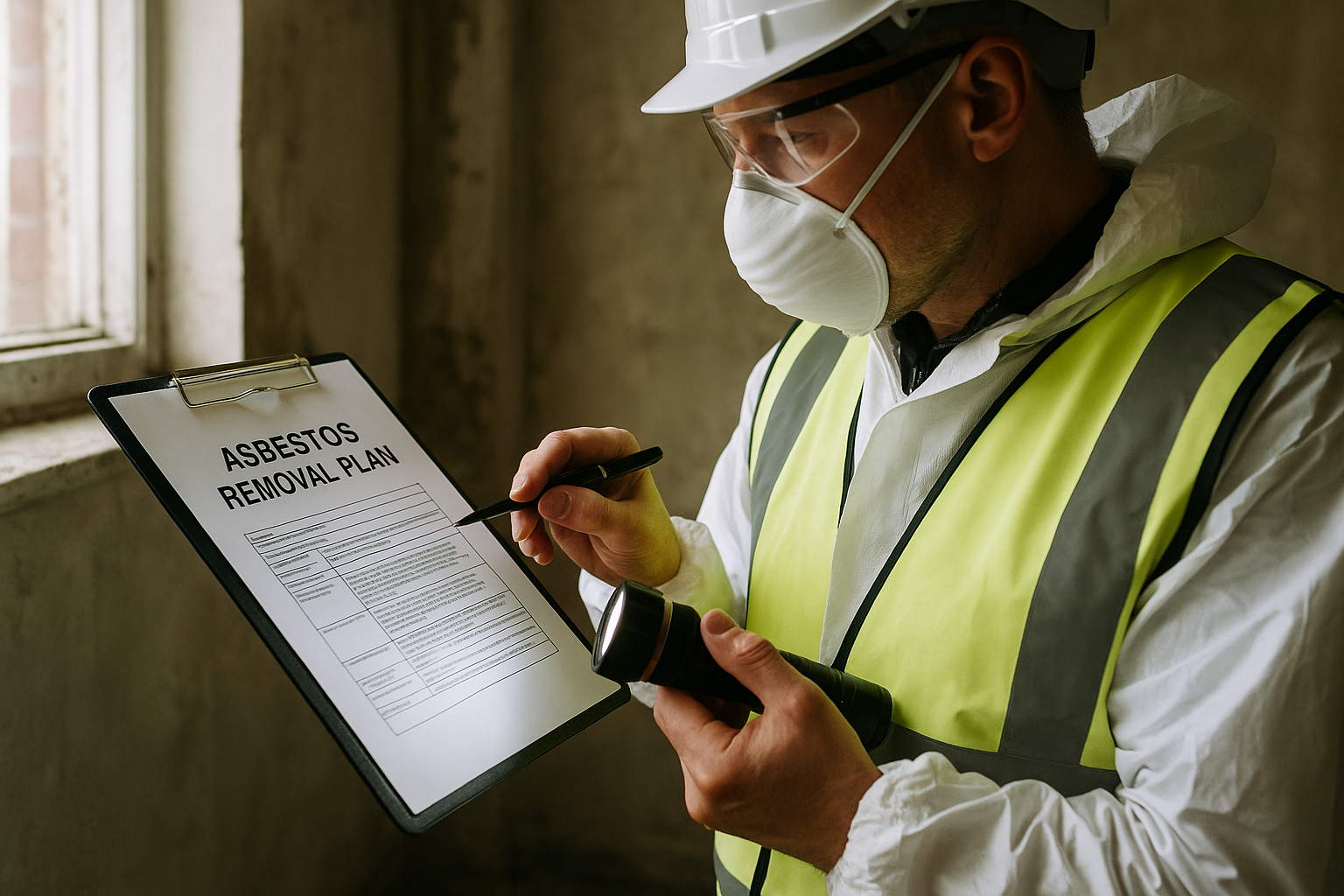
    One weak asbestos removal plan can turn a controlled job into a contamination incident. When asbestos-containing materials are disturbed without the right survey, site controls and clearance process, fibres can spread through a building without any obvious warning. For property managers, landlords and dutyholders, the risk is not just to health. It can also mean delays, extra cost, complaints from occupants and difficult questions about compliance.

    A proper asbestos removal plan is not a generic template sitting in a folder. It is the working document that connects survey findings, risk assessment, notification, containment, removal methods, decontamination, waste disposal and final handover. If a building was constructed before 2000, asbestos should be presumed present unless suitable information shows otherwise. Under the Control of Asbestos Regulations, asbestos work must be properly assessed and managed, and survey work should align with HSG264 and current HSE guidance.

    If you are arranging work in an occupied office, a school, a retail unit or a residential block, the quality of the asbestos removal plan often decides whether the job runs smoothly or becomes a problem. The plan needs to be specific to the site, the material and the work. Anything vague usually causes trouble later.

    Why an asbestos removal plan matters

    Asbestos is dangerous when fibres are released and inhaled. You cannot assess that risk by eye once work starts, which is why planning matters so much. A strong asbestos removal plan tells everyone involved exactly how the material will be removed, how exposure will be controlled and what evidence will be provided at the end.

    For dutyholders, the plan is also a practical management tool. It helps you check whether the contractor has understood the building, chosen the right work category and thought through access, occupancy, waste routes and emergencies.

    A fit-for-purpose asbestos removal plan should do all of the following:

    • Identify the asbestos-containing materials to be removed
    • State where they are located and how far they extend
    • Describe their condition and likely fibre release risk
    • Confirm whether the work is licensable, notifiable non-licensed or non-licensed
    • Set out the sequence of work in practical detail
    • Explain containment, access control and transit arrangements
    • Specify PPE and respiratory protective equipment
    • Cover decontamination of the work area and equipment
    • Explain waste packaging, transport and disposal
    • Set out air monitoring, clearance and certification arrangements
    • Include emergency procedures and responsibilities

    If those points are missing, copied from another site or described in generic language, the asbestos removal plan is not doing its job.

    Start with the right survey before writing an asbestos removal plan

    No reliable asbestos removal plan starts with guesswork. It starts with a survey that matches both the building and the work you intend to carry out. Without accurate survey information, no contractor can prepare a safe and lawful plan of work.

    The survey should identify what is present, where it is, what condition it is in and whether the planned work will disturb it. That sounds basic, but many projects still run into trouble because someone relies on old records, partial sampling or a survey for the wrong purpose.

    Management survey

    If the premises are occupied and the aim is routine management during normal use, a management survey is usually the starting point. This helps identify asbestos-containing materials that could be damaged or disturbed during occupation, maintenance or minor works.

    It is useful for day-to-day control, but it is not enough for intrusive works. A management survey should not be treated as the basis for refurbishment strip-out or demolition planning unless it specifically covers those intrusive areas, which it usually will not.

    Refurbishment survey

    If you are altering part of a building, opening up walls, replacing services or carrying out strip-out works, you will normally need a refurbishment survey. This is intrusive by design and focuses on the exact areas affected by the proposed works.

    That detail is critical when preparing an asbestos removal plan. If hidden asbestos is missed because the wrong survey was used, the removal strategy may be unsafe from the start.

    Demolition survey

    Where a building or structure is due to be taken down, a demolition survey is required. This is the most intrusive survey type and aims to identify, so far as reasonably practicable, all asbestos-containing materials before demolition begins.

    Demolition can disturb materials that would never be touched during normal occupation. That is why the survey is such an important foundation for the asbestos removal plan.

    Practical survey checks before removal is planned

    • Check the survey type matches the planned work
    • Confirm the survey covers the exact areas being disturbed
    • Review sample results and material assessments carefully
    • Make sure the report is recent enough to reflect current site conditions
    • Do not rely on verbal assurances from contractors or previous occupiers
    • Pause the project if there are gaps in asbestos information

    If you are managing sites across different regions, local support can speed up the process. Supernova can help with an asbestos survey London instruction for time-sensitive works, as well as regional support through our asbestos survey Manchester and asbestos survey Birmingham teams.

    When should asbestos be removed?

    Not every asbestos-containing material needs immediate removal. In many buildings, asbestos can remain in place and be managed safely if it is in good condition, sealed, protected from disturbance and properly recorded. The decision to remove should be based on risk, planned works and whether the material can realistically remain undisturbed.

    asbestos removal plan - What are the steps involved in a profess

    That said, there are clear situations where removal is the right option and the asbestos removal plan becomes essential.

    Common reasons for removal of asbestos materials

    • The material is damaged, deteriorating or friable
    • Refurbishment or demolition will disturb it
    • It is in a location where accidental damage is likely
    • Encapsulation or management in place is no longer reliable
    • Maintenance access means repeated disturbance is likely
    • Occupants or contractors cannot be adequately protected while it remains

    Higher-risk materials such as pipe lagging, sprayed coatings and some asbestos insulating board often require more urgent attention because they can release fibres more readily if disturbed. Lower-risk materials such as asbestos cement may sometimes remain in place if they are sound and unlikely to be damaged, but that still needs proper assessment.

    Questions to ask before deciding on removal

    1. What product contains the asbestos?
    2. What condition is it in right now?
    3. Will planned works disturb it directly or indirectly?
    4. Can it be safely managed in place instead?
    5. Who could be exposed if it is left where it is?
    6. What category of asbestos work applies?

    If the answer to those questions points towards disturbance, deterioration or uncertainty, removal is usually the safer route. The key is to make that decision on evidence, not convenience.

    What your asbestos removal plan should contain

    A strong asbestos removal plan is detailed, site-specific and written in plain operational language. It should not rely on broad statements such as remove asbestos safely using suitable controls. That wording tells you almost nothing about how the work will actually be done.

    The plan should explain the job from start to finish. Anyone reading it should understand what is being removed, how the area will be controlled, how workers will decontaminate and what happens before the space is handed back.

    Core information your plan should include

    • Site address and exact work location
    • Survey reference and asbestos register details where relevant
    • Description of each asbestos-containing material
    • Extent, condition and accessibility of the material
    • Work category: licensable, notifiable non-licensed or non-licensed
    • Risk assessment findings
    • Step-by-step sequence of work
    • Removal techniques and tools to be used
    • Dust suppression and fibre control measures
    • Containment and enclosure arrangements
    • Negative pressure arrangements where required
    • Access, egress and transit routes
    • Location of decontamination facilities
    • PPE and RPE requirements
    • Supervision arrangements and named responsibilities
    • Air monitoring and analytical arrangements
    • Waste packaging, temporary storage and disposal routes
    • Emergency procedures for accidental disturbance or enclosure failure
    • Handover arrangements and clearance requirements

    A good asbestos removal plan also reflects the wider site. It should account for nearby offices, residents, shared corridors, service risers, ventilation systems, fire routes and other contractors. If those practical issues are ignored, even technically competent removal work can create avoidable disruption.

    What poor planning usually looks like

    • Generic wording copied from another project
    • No clear distinction between clean and dirty routes
    • No detail on how waste leaves the enclosure
    • Missing emergency arrangements
    • Survey references that do not match the work area
    • No explanation of how occupants will be protected
    • Unclear responsibilities between contractor, analyst and client

    If you spot those weaknesses early, ask for the asbestos removal plan to be revised before work starts. That is much easier than trying to fix a poor plan once the site has been set up.

    Notification and legal duties

    Notification is one of the areas where dutyholders and property managers often get caught out. Not all asbestos work is treated the same way. The category of work depends on the material, its condition, how it will be handled and the likely level of fibre release.

    asbestos removal plan - What are the steps involved in a profess

    Some work is licensable and must be carried out by a contractor holding the appropriate licence. Some work is notifiable non-licensed work. Other tasks may be non-licensed. The asbestos removal plan must match the correct category. If the wrong category is assumed, the whole project can be delayed or challenged.

    What notification should cover

    For work that requires notification, the contractor must follow the relevant requirements under the Control of Asbestos Regulations. The notification process is not just an administrative step. It helps confirm that the work has been properly considered, categorised and scheduled.

    Your planning checks should include:

    • Whether the identified material makes the work licensable
    • Whether notification is required before work begins
    • Who is responsible for submitting the notification
    • Whether the programme allows for the required lead time
    • Whether the plan of work matches the notified scope

    Questions to ask the contractor

    1. How have you categorised this asbestos work?
    2. What survey evidence supports that decision?
    3. Who prepared the risk assessment and plan of work?
    4. Has the required notification been made?
    5. What documentation will you provide before mobilisation?

    A competent contractor should be able to answer those questions clearly. If the explanation is vague, treat that as a warning sign.

    Setup of work area and containment

    The setup phase is where the written asbestos removal plan becomes visible on site. Good containment protects workers, occupants and adjoining areas from fibre spread. The exact arrangement depends on the material and risk level, but the principle is always the same: isolate the work and stop contamination escaping.

    For higher-risk removal, this may involve a full enclosure, airlocks, a bag lock, a decontamination unit and negative pressure equipment. For lower-risk tasks, the controls may be simpler, but the area still needs to be clearly segregated and managed.

    Key elements of work area setup

    • Barriers and warning signage to restrict access
    • Isolation of services where appropriate
    • Protection of nearby surfaces and common parts
    • Construction of enclosures using suitable sheeting and sealed joints
    • Negative pressure units where required to reduce escape risk
    • Airlocks for personnel entry and exit
    • Bag locks or controlled waste transfer points
    • Clearly defined clean and dirty routes
    • Placement of the decontamination unit in a practical location
    • Checks on enclosure integrity, including smoke testing where appropriate

    From a property manager’s perspective, this is the moment to ask practical questions. Where will the skip go? How will occupants be diverted? Will lifts, corridors or fire routes be affected? How will deliveries and other contractors be managed while the asbestos work is underway?

    Containment problems to watch for

    • Work starting before the enclosure is complete
    • Damaged or poorly sealed sheeting
    • No clear separation between waste route and clean route
    • Ventilation systems left running when they should be isolated
    • Signage that is missing or unclear
    • Transit routes passing through busy occupied areas without proper controls

    If the site setup does not match the asbestos removal plan, stop and query it. Changes should be justified, recorded and communicated before work continues.

    Removal of asbestos materials: methods, PPE and site discipline

    The actual removal of asbestos materials must follow the method set out in the asbestos removal plan. The aim is to minimise fibre release, control exposure and remove the material in the safest practical way. That means using the right tools, the right sequence and the right level of supervision.

    PPE and respiratory protective equipment

    Workers need suitable personal protective equipment and respiratory protective equipment for the task. This often includes disposable coveralls, gloves and suitable footwear, along with correctly selected RPE. The exact specification depends on the material and method.

    RPE must be suitable for the wearer as well as the job. Face-fit issues, poor maintenance and incorrect use can undermine protection. This should never be treated as a box-ticking exercise.

    Removal methods

    Different asbestos products require different techniques. A competent asbestos removal plan should reflect that rather than applying one generic method to everything.

    • Pipe lagging and thermal insulation: usually high risk and often requires licensed removal with tightly controlled methods
    • Sprayed coatings: typically high risk and demanding in terms of containment and control
    • Asbestos insulating board: often requires careful controlled removal to reduce breakage and dust release
    • Asbestos cement: may sometimes be removed intact using lower-risk methods if condition and access allow
    • Floor tiles and textured coatings: need task-specific assessment rather than assumptions

    Power tools that generate dust are generally avoided unless there is a specific controlled reason to use them. Unnecessary breakage is poor practice. Removing materials intact where possible is usually the safer approach.

    Site discipline during removal

    Even a well-written asbestos removal plan can fail if site discipline slips. Supervision matters throughout the job, not just at the start.

    Useful checks during the works include:

    • Are operatives following the planned entry and exit procedures?
    • Are waste bags being sealed and labelled correctly?
    • Are tools being cleaned or disposed of as planned?
    • Is the enclosure still intact?
    • Have site conditions changed since work began?
    • Are nearby occupants still properly protected?

    If anything changes on site, the method may need to be reviewed before the work continues.

    Decontamination of the work area and equipment

    Decontamination is a central part of any asbestos removal plan. Removing the asbestos is only part of the job. The area, equipment and personnel all need to be decontaminated in a controlled way to prevent fibres being carried into clean areas.

    This is where poor practice can undo otherwise competent removal work. If tools, footwear, waste routes or surfaces are left contaminated, the risk continues after the visible work has finished.

    What decontamination should cover

    • Worker decontamination when leaving the enclosure
    • Use of the decontamination unit where required
    • Cleaning of tools and equipment before removal from the work area
    • Controlled cleaning of the enclosure and surrounding surfaces
    • Inspection for visible debris and residue
    • Management of contaminated consumables and disposable PPE

    The exact process depends on the type of work, but the principle is consistent. Nothing contaminated should move into a clean area without the correct procedure being followed first.

    Practical points for clients to check

    • Is there a clear route from enclosure to decontamination facilities?
    • Has the contractor allowed enough space for safe decontamination?
    • How will larger equipment be cleaned before removal?
    • Who checks the area before analyst attendance?
    • How will shared corridors or access points be protected during demobilisation?

    If these points are not considered in the asbestos removal plan, ask for clarity before the job starts.

    Waste packaging and disposal

    Asbestos waste must be handled with the same care as the removal itself. A weak approach to packaging or disposal can spread contamination beyond the work area and create legal problems for the dutyholder as well as the contractor.

    The asbestos removal plan should explain exactly how waste will be packaged, moved, stored temporarily and taken off site. That includes the route through the building, not just the final disposal point.

    What good waste planning looks like

    • Waste is packaged promptly at the point of removal where appropriate
    • Suitable asbestos waste bags or wrapping are used
    • Packages are sealed and labelled correctly
    • Sharp or awkward items are wrapped in a way that prevents puncture
    • Waste routes are planned to avoid unnecessary contact with occupied areas
    • Temporary storage is secure and clearly designated
    • Transport and disposal arrangements are made in advance

    Clients should also ask what happens if access is restricted, lifts are unavailable or waste has to move through common parts. Those details often get overlooked until the day of the job.

    Common waste handling mistakes

    • Overfilled or damaged bags
    • Waste left unsealed inside the enclosure
    • Poorly planned routes through occupied buildings
    • No secure holding area for wrapped materials
    • Unclear responsibility for consignment records and disposal evidence

    Waste handling should never be treated as an afterthought. It is a core part of the asbestos removal plan.

    Documentation and record-keeping

    Paperwork matters because asbestos work needs an evidence trail. If there is a question later about what was removed, how the work was categorised or whether the area was safe to reoccupy, your records need to answer it quickly.

    A well-managed asbestos removal plan sits within a larger set of documents. Together, they show that the job was planned, carried out and completed properly.

    Documents you should expect to retain

    • Relevant asbestos survey report
    • Risk assessment
    • Plan of work or method statement
    • Notification records where required
    • Training and competence records where relevant
    • Site logs and supervisor records
    • Air monitoring and analytical results
    • Waste consignment documentation
    • Clearance documentation and certificate where applicable
    • Updated asbestos register or management records after removal

    For dutyholders, one of the most useful habits is to check that records are updated promptly after the work. If asbestos has been removed, your building records should reflect that. If some material remains, that should also be clearly recorded so future contractors are not working from outdated information.

    Record-keeping tips for property managers

    1. Keep survey reports and removal records linked to the exact area of the building
    2. Store digital copies in a place facilities teams can access easily
    3. Update the asbestos register after removal or reinspection
    4. Cross-check handover documents before signing off the job
    5. Make sure maintenance teams know what remains in place

    Good record-keeping reduces confusion on future projects and helps demonstrate compliance if your decisions are ever questioned.

    Air monitoring, issue of a clearance certificate and handover

    One of the most important stages in the whole process comes after the visible removal work appears to be finished. The area may look clean, but asbestos work is not complete until the required checks, monitoring and clearance steps have been carried out.

    The asbestos removal plan should make clear what analytical involvement is needed, who is responsible for arranging it and what evidence will be provided before the area is handed back.

    Air monitoring

    Air monitoring may be used at different stages depending on the job. This can include background monitoring, leak monitoring, reassurance monitoring or clearance-related testing where applicable. The exact approach depends on the work type and risk profile.

    From a client perspective, the key point is that analytical arrangements should not be vague. You should know when monitoring will happen, what it is intended to show and how the results will be communicated.

    Issue of a clearance certificate

    For work that requires formal clearance procedures, the area must pass the necessary stages before a clearance certificate is issued. This certificate is a key part of the handover process because it provides evidence that the area has met the required standard for reoccupation following the relevant clearance procedure.

    The certificate should not be treated as a routine administrative attachment. It is one of the main documents confirming that the controlled work area can be handed back.

    Before you accept handover

    • Check that the scope of removal matches the original plan
    • Confirm any required analytical work has been completed
    • Obtain the relevant clearance documentation
    • Review waste paperwork and disposal evidence
    • Update building records to reflect what has been removed
    • Confirm whether any asbestos remains elsewhere nearby

    If the contractor cannot provide clear handover documents, do not assume the process is complete just because the enclosure has come down.

    Choosing competent support for surveys and asbestos removal

    The best asbestos removal plan is built on accurate survey information and delivered by competent professionals. That means choosing the right survey type, making sure the scope is correct and appointing contractors who can explain their methods clearly.

    If you need help with surveys before intrusive works, Supernova can arrange the right inspection for your building and project. If removal is required, our asbestos removal service helps clients move from identification to safe, controlled action with the right documentation and support.

    Practical checklist before asbestos removal starts

    If you want a simple way to pressure-test an asbestos removal plan, run through this checklist before mobilisation:

    1. Do we have the correct survey for the planned work?
    2. Does the plan identify the exact asbestos materials and locations?
    3. Has the work been categorised correctly?
    4. Has any required notification been dealt with?
    5. Are containment and transit routes practical for this building?
    6. How will occupants and neighbouring areas be protected?
    7. What is the decontamination process for workers and equipment?
    8. How will asbestos waste be packaged and removed from site?
    9. What records will be provided at handover?
    10. Will a clearance certificate be issued where required?

    If you cannot answer those questions confidently, the planning stage is not finished.

    Need help with an asbestos removal plan?

    If you are planning works in a commercial, residential or public-sector property, Supernova Asbestos Surveys can help you get the process right from the start. We carry out the surveys that underpin a safe asbestos removal plan, and we support clients nationwide with practical advice, fast reporting and reliable asbestos services.

    To arrange a survey or discuss removal requirements, call 020 4586 0680 or visit asbestos-surveys.org.uk. If you already have survey information and need help turning it into a workable, compliant next step, speak to Supernova today.

    Frequently Asked Questions

    What is an asbestos removal plan?

    An asbestos removal plan is a site-specific document that explains how asbestos-containing materials will be removed safely and in line with legal requirements. It should include survey references, risk assessment findings, work methods, containment, decontamination, waste disposal and handover arrangements.

    When should asbestos be removed rather than managed in place?

    Asbestos should usually be removed when it is damaged, likely to be disturbed by planned works, difficult to protect in place or located where accidental damage is likely. If it is in good condition and unlikely to be disturbed, management in place may be appropriate, but that decision should be based on proper assessment.

    Does every asbestos job need notification?

    No. The need for notification depends on the type of material, its condition and the work involved. Some asbestos work is licensable, some is notifiable non-licensed, and some is non-licensed. The work must be categorised correctly under the Control of Asbestos Regulations.

    What documents should I receive after asbestos removal?

    You should normally receive the relevant survey information, the plan of work, waste documentation, any analytical results and clearance documentation where applicable. Your asbestos register or management records should also be updated after the work.

    What is a clearance certificate in asbestos work?

    A clearance certificate is issued after the required clearance procedure has been completed for relevant asbestos work and the area has met the standard for handover. It is an important record showing that the controlled work area can be reoccupied following the necessary checks.

  • How Long Does It Typically Take to Remove and Dispose of Asbestos from a Building?

    How Long Does It Typically Take to Remove and Dispose of Asbestos from a Building?

    A tight project programme can unravel quickly when asbestos is discovered. If you are asking how long does asbestos removal take, the honest answer is that it ranges from a single day for a simple low-risk job to several weeks for complex licensed work. The timeline depends on the material, the condition it is in, how easy it is to reach, what controls are required, and whether the building can stay occupied while the work is carried out.

    That is why the removal day is only part of the story. In practice, the full programme often includes surveying, testing, planning, notification where required, site setup, removal, clearance and hazardous waste disposal. If you understand what drives the schedule, you can plan works properly, avoid preventable delays and keep your property compliant with the Control of Asbestos Regulations, HSG264 and current HSE guidance.

    How long does asbestos removal take in real terms?

    Most asbestos jobs follow the same broad sequence, but the duration varies sharply from one site to another. A small asbestos cement garage roof with good access may be removed in a day, while asbestos insulating board or pipe lagging in a live commercial building can take much longer because the controls are stricter.

    As a rough planning guide:

    • Small, simple jobs: often around 1 day on site
    • Moderate projects: commonly 2 to 5 days on site
    • Larger or complex works: 1 to 6 weeks or more

    Those figures are only a starting point. When clients ask how long does asbestos removal take, what they usually need to know is the full project duration from first identification to final handover. That wider timescale is what affects refurbishments, tenant moves, maintenance windows and demolition programmes.

    What affects how long asbestos removal takes?

    Safety controls drive the programme. Higher-risk materials need tighter containment, more planning and more detailed clearance procedures, which adds time for good reason.

    Type of asbestos-containing material

    Some materials are straightforward to remove compared with others. Asbestos cement sheets and certain floor tiles are generally lower risk than pipe lagging, sprayed coatings or asbestos insulating board.

    Higher-risk materials often require licensed contractors, sealed enclosures, negative pressure units and full decontamination procedures. That can add substantial time before the actual removal begins.

    Condition of the material

    Damaged or deteriorating asbestos-containing materials are more likely to release fibres if disturbed. When the material is cracked, delaminated, frayed or already broken, operatives need to work more slowly and the cleaning stage is often more involved.

    Intact material can sometimes be removed more efficiently, but never casually. Controlled methods are still essential.

    Size of the affected area

    A single panel in one room is very different from multiple floors, service risers or plant areas spread across a site. Larger areas usually mean more containment, more labour, more waste handling and longer clearance times.

    • More enclosure construction
    • More transit route protection
    • More packaging and waste movements
    • More detailed cleaning before handover

    Access and site constraints

    Even a small quantity of asbestos can become a slow project if access is awkward. Roof voids, risers, ceiling voids, plant rooms and confined spaces all affect how quickly work can proceed.

    Live sites create further delays. Restricted hours, shared entrances, permit systems, parking limitations and the need to separate occupants from the work area all add time.

    Whether the building is occupied

    If the work area can be fully isolated, part of the building may remain operational. If it cannot, some or all occupants may need to vacate the area while the work is carried out.

    This is common in offices, schools, retail units, healthcare settings and residential blocks. Coordinating access and temporary relocation can add days to the programme.

    Licensed, notifiable and non-licensed work

    Under the Control of Asbestos Regulations, not all asbestos work is treated the same way. Some work must be carried out by a licensed contractor, some is notifiable non-licensed work, and some lower-risk tasks may be non-licensed if the conditions are appropriate.

    If the work is licensed, notification to the HSE becomes part of the overall timescale. That is one of the main reasons asbestos removal cannot always start immediately.

    The typical stages of an asbestos removal project

    When people ask how long does asbestos removal take, they often focus on the day the team arrives on site. In reality, the process starts much earlier.

    how long does asbestos removal take - How Long Does It Typically Take to Remov

    1. Survey and identification

    You cannot plan removal properly until you know what is present, where it is located and how likely it is to be disturbed. For occupied buildings, a management survey helps identify asbestos-containing materials that could be affected during normal occupation, maintenance or minor works.

    If intrusive works are planned, the survey must match the project. For major strip-out or structural works, a demolition survey is used to locate asbestos in areas that will be disturbed or removed.

    The survey itself may take a few hours or several days depending on property size and complexity. If the wrong survey is commissioned, the whole programme can stall later.

    2. Sampling and laboratory analysis

    Suspect materials usually need to be sampled and analysed so the work can be planned correctly. Without confirmed results, any estimate of how long does asbestos removal take is provisional.

    Professional asbestos testing helps confirm whether asbestos is present and what type of material is involved. If you already have a safely obtained sample and need a fast result, a dedicated sample analysis service can help move the decision-making along.

    Turnaround times vary by laboratory workload and urgency. Until the results are back, the removal method and programme cannot be finalised with confidence.

    3. Planning the work

    Once asbestos has been confirmed, the contractor prepares a plan of work. This sets out the removal method, site controls, personal protective equipment, decontamination arrangements, waste handling and emergency procedures.

    For a simple external cement job, planning may be relatively quick. On a live commercial site with multiple stakeholders, planning can take much longer because phasing, access, isolation and occupant protection all need to be coordinated.

    4. Notification where required

    Licensed asbestos work must be notified to the HSE in line with legal requirements. This notice period can be one of the biggest reasons a project does not start straight away.

    If you are scheduling refurbishment, handover or demolition, this stage needs to be built into the programme early. Leaving it late can delay every trade that follows.

    5. Site setup and enclosure construction

    Before removal starts, the team may need to build enclosures, install negative pressure units, protect transit routes and set up a decontamination unit. On lower-risk external work, setup may be relatively simple.

    On higher-risk internal work, setup can take from half a day to several days. The more containment required, the longer this stage will take.

    6. Removal of the asbestos

    The actual removal is carried out using controlled methods designed to minimise fibre release. Depending on the material, this may involve wet techniques, shadow vacuuming, careful dismantling and sealed packaging.

    Waste is double-bagged or wrapped, labelled correctly and moved through controlled routes. Safe handling always comes before speed.

    7. Cleaning and clearance

    After removal, the area is cleaned thoroughly. Where required, the area then goes through formal clearance procedures before it can be handed back for normal use or follow-on trades.

    For licensed work, this commonly includes the four-stage clearance process completed by an independent analyst. If the area does not pass first time, additional cleaning is needed, which extends the programme.

    8. Waste transport and disposal

    Asbestos waste is hazardous waste. It must be transported by a registered carrier to a licensed facility, and the relevant paperwork should be retained for your records.

    Disposal itself may be quick, but transport logistics, local access restrictions and waste volume can still affect the final completion date.

    Realistic timeframes for common asbestos jobs

    There is no universal answer to how long does asbestos removal take, but typical examples can help with planning.

    Small domestic jobs

    Examples include a few asbestos cement sheets, a small outbuilding roof or limited textured coating work. The on-site removal may take around a day, although the wider process can still take longer once surveying, testing and paperwork are included.

    Garage or shed roof removal

    An asbestos cement garage roof is often one of the quicker jobs if access is good and the sheets are intact. In many cases, the removal can be completed in a day, with waste taken away shortly afterwards.

    If the roof is damaged, difficult to reach or part of a larger site setup, allow more time.

    Floor tiles and adhesives

    Asbestos floor tiles can sometimes be removed relatively quickly where the area is limited and access is straightforward. The adhesive, the condition of the subfloor and preparation for follow-on trades can all add time.

    On larger commercial floor plates, the programme may stretch to several days or longer.

    Asbestos insulating board

    AIB usually requires stricter controls than cement products. Removing AIB ceiling tiles, riser panels, boxing or partition linings can take several days even on modest sites because setup, enclosure work and clearance are more demanding.

    Pipe lagging and thermal insulation

    This is often among the most time-consuming types of asbestos removal. Lagging can be fragile, difficult to access and spread through plant rooms, ceiling voids and service risers.

    Even a relatively small amount can require a longer programme than a much larger area of lower-risk material.

    Whole-building or phased commercial projects

    Where multiple asbestos-containing materials are spread across a building, removal often needs to be phased around occupation, other contractors or demolition sequences. These projects can run for weeks.

    If you manage a portfolio, this is where early surveys and clear sequencing save the most time and disruption.

    Can asbestos removal start straight away?

    Sometimes, but often not. The main delay is usually not labour availability. It is the legal and practical preparation needed to do the work safely.

    how long does asbestos removal take - How Long Does It Typically Take to Remov

    Removal may not start immediately because:

    • The asbestos has not yet been confirmed
    • The wrong type of survey was carried out
    • Licensed work requires HSE notification
    • The site needs access planning or isolation measures
    • Occupants must be moved first
    • Other trades are still working nearby

    If you suspect asbestos and have a project deadline, arrange identification work as early as possible. For local support, Supernova can assist with an asbestos survey London, an asbestos survey Manchester or an asbestos survey Birmingham depending on where your property is based.

    Do you always need to remove asbestos?

    No. If asbestos-containing materials are in good condition and are unlikely to be disturbed, managing them in place may be the better option. This is common in occupied buildings where the material is stable, sealed and protected from accidental damage.

    In those cases, removal may create more disruption than sensible management. The right decision depends on condition, location, accessibility and future plans for the building.

    Management in place usually involves:

    • Recording the location of asbestos-containing materials
    • Assessing their condition and risk
    • Labelling where appropriate
    • Briefing anyone who may work on the building
    • Reviewing the condition periodically

    Where materials remain in situ, a re-inspection survey helps confirm whether their condition has changed over time.

    That said, if refurbishment or demolition will disturb asbestos, management in place is no longer enough. The material must be dealt with properly before those works proceed.

    How to avoid delays in asbestos removal

    If you want the shortest realistic timeline, preparation matters more than anything else. Most overruns happen because the site was not properly understood early enough.

    1. Commission the right survey early. A management survey is not a substitute for intrusive pre-works surveying.
    2. Confirm suspect materials with testing. Assumptions lead to delays, disputes and unsafe planning. If needed, a second route for asbestos testing can help you arrange the right support quickly.
    3. Share reports promptly. The removal contractor needs accurate information to prepare the plan of work.
    4. Check whether the building can stay occupied. If not, arrange access and decant plans in advance.
    5. Allow for notification and clearance. Do not book follow-on trades too tightly.
    6. Keep all documents organised. Survey reports, plans of work, waste paperwork and clearance records should be easy to access.
    7. Use specialists from the outset. If removal is required, arrange professional asbestos removal rather than relying on guesswork about scope or programme.

    For property managers, the practical takeaway is simple: the earlier asbestos is identified, the easier it is to control the timeline. Last-minute discovery is what causes most disruption.

    Planning around occupied buildings and live projects

    One of the biggest misconceptions around how long does asbestos removal take is that the answer depends only on the material itself. In live buildings, operational constraints often have just as much impact.

    If the site is occupied, ask these questions early:

    • Can the work area be isolated safely?
    • Will tenants, staff or residents need to vacate?
    • Are there restricted working hours?
    • Do you need permits, security clearance or out-of-hours access?
    • Will other contractors be working nearby?

    These details affect setup time, sequencing and the handover date. They also influence whether the job can be completed in one phase or needs to be broken into smaller sections.

    For commercial properties, schools and multi-occupied buildings, phased removal is often the most practical option. It may look slower on paper, but it can reduce operational disruption and make the programme more reliable.

    What paperwork should you expect at the end?

    Completion is not just about the material being removed. You should also expect the relevant records to show that the work was carried out properly.

    Depending on the project, that may include:

    • The asbestos survey report
    • Laboratory sample results
    • The contractor’s plan of work
    • Notification records where applicable
    • Waste consignment documentation
    • Clearance certification where required

    If you manage multiple properties, keep these records in a central location. That makes future maintenance, audits and project planning much easier.

    Frequently Asked Questions

    How long does asbestos removal take for a garage roof?

    If the roof is asbestos cement, access is straightforward and the sheets are in reasonable condition, on-site removal can often be completed in a day. The full process may still take longer if surveys, testing or scheduling need to be arranged first.

    How long does asbestos removal take before refurbishment can start?

    That depends on whether asbestos has already been identified, whether sampling is complete and whether the work is licensed. For some projects, removal can be arranged quickly. For others, planning, notification, setup and clearance mean refurbishment cannot start for several days or longer.

    Can a building stay open during asbestos removal?

    Sometimes, yes. If the work area can be isolated properly and the removal method is suitable, parts of a building may remain in use. If isolation is not practical or the risk is higher, some or all occupants may need to leave the area temporarily.

    Does asbestos testing speed up the process?

    Yes, because confirmed results allow the work to be planned accurately. Without testing, contractors are often working from assumptions, which leads to delays, revised scopes and avoidable disruption.

    What is the quickest way to keep an asbestos project on schedule?

    Start early with the right survey, confirm suspect materials through analysis, share reports promptly and avoid booking follow-on trades too tightly. The most reliable programmes come from good preparation, not rushed removal.

    If you need a clear answer on how long does asbestos removal take for your property, Supernova Asbestos Surveys can help you plan the job properly from the outset. We provide surveys, testing, sample analysis, re-inspections and removal support nationwide. Call 020 4586 0680 or visit asbestos-surveys.org.uk to arrange expert advice and a fast quotation.

  • How Does Exposure to Asbestos in the Workplace Affect Employee Health?

    How Does Exposure to Asbestos in the Workplace Affect Employee Health?

    Asbestos Exposure at Work: What Every Employer and Worker Needs to Know

    Asbestos remains the single greatest cause of work-related deaths in the UK. Yet the harm it causes is almost entirely invisible — no immediate symptoms, no warning signs, just microscopic fibres embedding themselves in lung tissue and quietly doing damage that won’t become apparent for decades. Asbestos exposure at work is not a historical footnote. It is an ongoing public health crisis, and every employer, building manager, and tradesperson operating in older premises needs to understand the risks, the diseases, and the legal duties involved.

    Why Asbestos Is Still a Live Workplace Hazard

    Asbestos was fully banned in the UK in 1999, but that ban came after decades of widespread use across construction, manufacturing, and shipbuilding. Any commercial or residential building constructed or refurbished before 2000 may contain asbestos-containing materials (ACMs). That covers an enormous proportion of the UK’s built environment — offices, schools, hospitals, warehouses, factories, and housing stock.

    When ACMs are left undisturbed and in good condition, they do not necessarily pose an immediate risk. The danger arises when materials are damaged, deteriorating, or disturbed during maintenance or construction work. The fibres released are microscopic — invisible to the naked eye — and the body has no effective mechanism to expel them once inhaled.

    Tradespeople are among the most at-risk groups. Electricians, plumbers, joiners, and decorators routinely work in buildings where asbestos is present, often without knowing it. A single session of drilling into an asbestos-containing ceiling tile or cutting through lagging can release a significant quantity of fibres.

    The Diseases Caused by Asbestos Exposure at Work

    Asbestos causes a distinct cluster of serious diseases. None are trivial. Several are fatal. Understanding each condition is essential for grasping why the regulations around asbestos are as strict as they are — and why compliance cannot be treated as optional.

    Mesothelioma

    Mesothelioma is an aggressive cancer that develops in the lining of the lungs (pleura), abdomen (peritoneum), or, less commonly, the heart. It is almost exclusively caused by asbestos exposure — there is no other significant cause. The latency period between first exposure and diagnosis can be anywhere from 20 to 50 years, which means workers exposed during the 1970s and 1980s are still being diagnosed today.

    By the time symptoms appear, the cancer is typically at an advanced stage. Common symptoms include:

    • Persistent chest pain or tightness
    • Breathlessness that worsens progressively
    • Unexplained weight loss
    • A persistent cough
    • Abdominal swelling in peritoneal cases

    Treatment options exist — surgery, chemotherapy, and immunotherapy — but mesothelioma remains extremely difficult to treat and prognosis is generally poor. There is no safe level of asbestos exposure when it comes to mesothelioma risk.

    Asbestos-Related Lung Cancer

    Asbestos fibres lodged in lung tissue can trigger the cellular changes that lead to lung cancer. The latency period is typically 15 to 35 years after initial exposure, making it difficult to connect a diagnosis back to its occupational cause. Workers who both smoked and were exposed to asbestos face a dramatically elevated risk — the two factors do not simply add together, they multiply the risk.

    Asbestos-related lung cancer is clinically identical to lung cancer caused by other factors, which is one reason it is sometimes under-reported as an occupational disease. Any worker with a significant asbestos exposure history should make their GP aware of it, particularly if respiratory symptoms develop.

    Asbestosis

    Asbestosis is a chronic, progressive lung disease caused by prolonged inhalation of asbestos fibres. The fibres cause scarring — pulmonary fibrosis — of lung tissue, gradually stiffening the lungs and making breathing increasingly difficult. Symptoms typically appear between 10 and 40 years after exposure and include:

    • Shortness of breath, initially on exertion and later at rest
    • A persistent dry cough
    • Chest tightness
    • Finger and toe clubbing in advanced cases
    • Cyanosis due to low blood oxygen levels

    There is no cure for asbestosis. Management focuses on slowing progression and maintaining quality of life. The condition also increases the risk of developing lung cancer.

    Pleural Thickening and Pleural Plaques

    Pleural plaques are areas of thickened, calcified tissue on the lining of the lungs. They are a marker of significant asbestos exposure and, while not directly harmful in themselves, indicate elevated risk of other asbestos-related diseases. Diffuse pleural thickening is more serious — extensive scarring of the pleural lining that restricts lung expansion and causes breathlessness. Like asbestosis, it is irreversible.

    Ovarian Cancer

    Research has established a link between asbestos exposure and ovarian cancer. The International Agency for Research on Cancer has classified asbestos as a cause of ovarian cancer, with fibres thought to reach the ovaries via the lymphatic system or bloodstream after inhalation or ingestion. Women who worked in high-exposure industries, or who were exposed through a family member’s contaminated workwear, face an elevated risk. Women with a history of asbestos exposure should inform their GP and seek appropriate monitoring.

    Employers’ Legal Duties Under the Control of Asbestos Regulations

    The Control of Asbestos Regulations place clear legal duties on employers, building owners, and anyone responsible for premises where asbestos may be present. Ignorance is not a defence — non-compliance can result in prosecution, unlimited fines, and imprisonment.

    The Duty to Manage

    If you are responsible for non-domestic premises built before 2000, you have a legal duty to manage asbestos on site. This means:

    1. Identifying whether asbestos is present, typically through a management survey
    2. Assessing the condition and risk level of any ACMs found
    3. Producing and maintaining an asbestos register
    4. Creating a written asbestos management plan
    5. Sharing information about ACMs with anyone who may disturb them
    6. Monitoring the condition of ACMs on an ongoing basis

    This is not a one-off exercise. The register must be kept current, and the management plan must be reviewed regularly and whenever building work is planned.

    Surveys Before Refurbishment or Demolition

    Before any refurbishment or demolition work begins, a more intrusive survey is legally required. A demolition survey — also called a refurbishment and demolition survey — accesses areas that would be disturbed during the works, including within walls, floors, and ceilings. Attempting refurbishment without this survey is one of the most common ways workers are unintentionally exposed to asbestos.

    Training and Information

    Employers must ensure that any worker who may come into contact with ACMs receives appropriate asbestos awareness training. This applies to maintenance workers, site managers, and any contractor working in buildings where asbestos may be present. The level of training required depends on the nature of the work being carried out.

    Licensed Removal Work

    Most work that disturbs asbestos insulation, asbestos insulation board, or asbestos coatings must be carried out by a contractor licensed by the HSE. Using unlicensed contractors for licensable work is a serious breach of the regulations and puts workers directly at risk. The HSE’s guidance document HSG264 provides detailed information on survey types, risk assessment, and management requirements — it is essential reading for anyone with asbestos management responsibilities.

    Practical Steps to Protect Your Workforce

    Regulatory compliance is the baseline. Genuinely protecting your workforce means going further. Here is what robust asbestos management looks like in practice.

    Commission the Correct Type of Survey

    A management survey is the starting point for occupied premises in normal use. It identifies ACMs in accessible areas and assesses their condition. A refurbishment or demolition survey is required before any intrusive building work. Using the wrong survey type can leave dangerous materials undiscovered in precisely the areas most likely to be disturbed — do not guess which you need.

    If you are unsure whether a material contains asbestos, professional asbestos testing is the only reliable way to find out. Never disturb a suspect material to investigate it — that is exactly how fibres are released.

    Keep Your Asbestos Register Current

    An asbestos register is only useful if it reflects the current state of the building. Update it after any works that may have disturbed or removed ACMs. Ensure it is accessible to contractors and maintenance staff before they begin any activity on site. A register that sits in a filing cabinet and is never consulted offers no real protection.

    Use Air Monitoring During Works

    Air monitoring measures airborne asbestos fibre concentrations during and after works, confirming that exposure levels are within safe limits and that clearance procedures have been effective. It provides documented evidence that work was carried out safely — valuable for both regulatory compliance and for protecting workers’ long-term health.

    Provide Appropriate PPE

    Where workers may be exposed to asbestos fibres, appropriate personal protective equipment is non-negotiable. This includes:

    • Respiratory protection: FFP3 disposable masks or half-face/full-face respirators with P3 filters, depending on the work
    • Disposable coveralls: Type 5/6 suits with sealed seams
    • Nitrile gloves to prevent skin contact
    • Protective footwear or disposable boot covers

    All PPE must be properly fitted. Respirators require fit-testing — an ill-fitting mask offers little real protection. Workers must also be trained in correct donning and doffing procedures to avoid self-contamination during removal.

    Implement Controlled Work Areas

    Any work that disturbs asbestos should be conducted in a clearly defined, restricted-access area with appropriate enclosure and decontamination facilities. Wet methods — dampening materials before disturbance — significantly reduce the release of airborne fibres and should be used wherever practicable.

    Handle Asbestos Waste Correctly

    Asbestos waste is classified as hazardous waste and must be disposed of in accordance with current hazardous waste regulations. This means double-bagging in purpose-marked polythene bags, clearly labelling the waste, and using a licensed hazardous waste carrier. Never place asbestos waste in general skips or standard waste streams — doing so is a criminal offence.

    Arrange Medical Surveillance

    Workers carrying out licensable asbestos work must be under medical surveillance by an HSE-appointed doctor. For other workers with regular asbestos exposure, health monitoring is strongly advisable — including baseline lung function tests and periodic review. Early identification of any respiratory changes allows for earlier intervention.

    Have a Clear Emergency Procedure

    Every workplace where asbestos is present should have a documented procedure for accidental disturbance. If a material is unexpectedly found or damaged, work should stop immediately, the area should be evacuated and secured, and a competent asbestos professional should be called to assess the situation before any further activity takes place.

    When You Need Sample Testing

    If you suspect a material may contain asbestos but are not certain, do not assume — and do not disturb it to find out. Professional asbestos testing is the only reliable method of identification. Supernova Asbestos Surveys offers professional sample analysis through accredited laboratory partners, giving you a definitive answer quickly and safely.

    Samples must be taken by a competent person using correct procedures to avoid unnecessary fibre release. The results will tell you exactly what you are dealing with — and from there, you can make informed decisions about management or removal.

    Asbestos Surveys Across the UK

    Supernova Asbestos Surveys operates nationwide, with surveyors covering every region of the UK. Whether you need an asbestos survey in London, an asbestos survey in Manchester, or an asbestos survey in Birmingham, our experienced surveyors can be with you quickly to carry out a thorough, accredited inspection.

    With over 50,000 surveys completed, we understand what different premises require and what different clients need. We do not offer a one-size-fits-all service — we give you the right survey for your specific situation, with clear, actionable results.

    Frequently Asked Questions

    What are the main health risks of asbestos exposure at work?

    Asbestos exposure at work can cause several serious diseases, including mesothelioma, asbestos-related lung cancer, asbestosis, diffuse pleural thickening, and ovarian cancer. All of these conditions have long latency periods — symptoms may not appear until 20 to 50 years after initial exposure, by which time the disease is often at an advanced stage.

    Who is most at risk of asbestos exposure in the workplace?

    Tradespeople — including electricians, plumbers, joiners, decorators, and builders — face some of the highest risks because they routinely work in older buildings where asbestos-containing materials may be present. Workers in manufacturing, shipbuilding, and construction industries historically had very high exposure levels. Anyone who maintains or works in buildings constructed before 2000 should be aware of the potential for asbestos to be present.

    What should I do if I think I have been exposed to asbestos at work?

    If you believe you have been exposed to asbestos fibres at work, report it to your employer immediately and seek medical advice from your GP. Inform your doctor of the potential exposure, as this will be relevant to any future monitoring of your respiratory health. Your employer is legally required to investigate the incident and take steps to prevent further exposure.

    Do employers have a legal duty to protect workers from asbestos?

    Yes. Under the Control of Asbestos Regulations, employers and those responsible for non-domestic premises have a legal duty to manage asbestos, including identifying ACMs, maintaining an asbestos register, and ensuring workers are not exposed to harmful levels of asbestos fibres. Failure to comply can result in prosecution, unlimited fines, and imprisonment.

    How do I find out if my workplace contains asbestos?

    The most reliable approach is to commission a professional asbestos management survey. A qualified surveyor will inspect the premises, identify any suspected asbestos-containing materials, assess their condition and risk level, and produce a written report. Where materials need laboratory confirmation, sample analysis will be carried out. Do not attempt to identify or test materials yourself — disturbing suspect materials without proper precautions can release harmful fibres.

    Talk to Supernova Asbestos Surveys

    If you have concerns about asbestos exposure at work — whether you need a survey, sample testing, or advice on your legal obligations — Supernova Asbestos Surveys is here to help. We are the UK’s leading asbestos surveying company, with over 50,000 surveys completed nationwide and a team of fully qualified, accredited surveyors.

    Call us on 020 4586 0680 or visit asbestos-surveys.org.uk to discuss your requirements. We will give you straightforward advice and get the right survey booked quickly — so you can protect your workforce and meet your legal obligations with confidence.

  • How has the handling and disposal of asbestos waste been regulated globally?

    How has the handling and disposal of asbestos waste been regulated globally?

    Friable Asbestos: What It Is, Why It’s Dangerous, and What UK Law Requires

    Friable asbestos is the most hazardous form of asbestos-containing material you are likely to encounter in a building — and if you are responsible for premises built before 2000, it demands your full attention. When asbestos-containing materials can be crumbled, pulverised, or reduced to powder by hand pressure alone, they are classified as friable, and that single characteristic makes them far more dangerous than bonded asbestos materials in good condition.

    For property managers, building owners, and facilities teams, understanding what friable asbestos is, where it hides, and what the law requires of you is not optional. It is a legal and moral obligation.

    What Makes Asbestos “Friable”?

    The term describes the physical state of the material, not the type of asbestos fibre within it. Asbestos exists in two broad categories: friable and non-friable (also called bonded).

    Non-friable asbestos is locked into a solid matrix — cement, vinyl flooring, or textured coatings, for example — where fibres are held firmly in place and pose a lower risk when undisturbed. Friable asbestos, by contrast, is loosely bound or has degraded to the point where fibres can be released with minimal disturbance.

    Common examples of friable asbestos materials include:

    • Sprayed asbestos coatings used for fireproofing and thermal insulation on structural steelwork
    • Pipe and boiler lagging made from asbestos insulation materials
    • Asbestos insulating board (AIB) that has deteriorated significantly
    • Loose-fill asbestos used in ceiling and wall cavities
    • Asbestos rope and gaskets in aged industrial equipment

    Any of these materials in poor condition — damaged, water-stained, crumbling, or simply old — can shed fibres into the air with minimal provocation. A maintenance worker brushing past lagging, or a drill passing through a ceiling void, can release thousands of fibres in seconds.

    Why Friable Asbestos Carries the Highest Risk

    All forms of asbestos are classified as human carcinogens. But friable asbestos presents a more acute and immediate inhalation risk because it releases respirable fibres far more readily than bonded materials. The fibres are microscopic — invisible to the naked eye — and remain suspended in air for hours after disturbance.

    Once inhaled, asbestos fibres become permanently lodged in lung tissue. The body cannot break them down or expel them. Over years or decades, this accumulation can cause:

    • Mesothelioma — a rare and aggressive cancer of the lining of the lungs or abdomen, almost exclusively caused by asbestos exposure
    • Asbestos-related lung cancer — risk increases significantly with smoking history
    • Asbestosis — progressive scarring of lung tissue leading to severe breathing difficulties
    • Pleural disease — thickening and scarring of the pleura surrounding the lungs

    The latency period for these diseases can be 20 to 50 years. Someone exposed to friable asbestos during building work in the 1980s may only be receiving a diagnosis now. This delayed consequence is precisely why the World Health Organisation maintains that there is no safe level of asbestos exposure.

    Where Friable Asbestos Is Most Commonly Found in UK Buildings

    The UK used asbestos extensively in construction and industry from the 1950s through to the late 1990s. Buildings constructed or refurbished during this period are the primary concern.

    Industrial and Commercial Buildings

    Factories, power stations, shipyards, and large commercial premises often contain sprayed asbestos coatings on structural steelwork and pipe lagging around boilers and heating systems. These materials were applied for their excellent thermal and fire-resistant properties — and many remain in place today, often in deteriorating condition.

    Schools and Public Buildings

    Asbestos insulating board was used extensively in school construction during the 1960s and 70s. Where that board has degraded — through impact damage, water ingress, or simple age — it can become friable. Thousands of UK schools still contain asbestos-containing materials, many of which require active management programmes.

    Residential Properties

    While domestic properties are less likely to contain sprayed coatings or lagging, older houses can contain loose-fill asbestos in loft spaces — a particularly hazardous form of friable asbestos. Any pre-2000 property should be treated with caution before any renovation or demolition work begins.

    Plant Rooms and Utility Areas

    Boiler rooms, plant rooms, and service ducts are high-risk areas. Pipe lagging and boiler insulation made from asbestos materials were standard practice for decades. Even where materials appear intact, vibration and heat cycling can cause gradual deterioration over time.

    How UK Regulations Govern Friable Asbestos

    The Control of Asbestos Regulations is the primary legislative framework governing asbestos in the UK, supported by detailed HSE guidance including HSG264. These regulations apply to all non-domestic premises and establish clear duties for building owners, managers, and contractors.

    The Duty to Manage

    Dutyholder obligations under the Control of Asbestos Regulations require that those responsible for non-domestic buildings identify, assess, and manage any asbestos-containing materials — including friable asbestos — within their premises. This is not a one-time exercise. It requires an ongoing management plan, regular condition monitoring, and prompt action when materials deteriorate.

    Failing to fulfil this duty is a criminal offence. The Health and Safety Executive has the power to issue improvement notices, prohibition notices, and pursue prosecution for serious breaches.

    Licensable Work with Asbestos

    Friable asbestos materials — sprayed coatings, lagging, and most asbestos insulating board — fall into the category of licensable asbestos work. This means that removal or significant disturbance of these materials can only be carried out by contractors holding a current HSE licence.

    Before licensable work begins, the contractor must notify the relevant enforcing authority at least 14 days in advance. The work area must be sealed and placed under negative air pressure using HEPA-filtered extraction units. Workers must wear appropriate respiratory protective equipment and disposable coveralls, and pass through a three-stage decontamination unit before leaving the controlled zone.

    Air Monitoring and Clearance

    During and after removal of friable asbestos, independent air monitoring is required to confirm that fibre concentrations are within acceptable limits. A four-stage clearance procedure — visual inspection, background air test, aggressive air test, and final air test — must be completed before the area is handed back for normal use.

    This process cannot be rushed or skipped. Returning an area to use before clearance is confirmed puts occupants at serious risk and constitutes a regulatory breach.

    Safe Handling and Removal of Friable Asbestos: What the Process Looks Like

    For property managers and building owners, understanding what a compliant asbestos removal project actually involves helps ensure that contractors are working to the correct standard — and that you can identify when corners are being cut.

    Pre-Removal Survey and Planning

    Before any removal work begins, a refurbishment survey is required to fully characterise the asbestos-containing materials present. This is a destructive survey that accesses all areas which will be disturbed during the works, informing the contractor’s method statement and risk assessment before work starts.

    Where a building is being fully or partially demolished, a demolition survey is required instead. This is the most intrusive survey type and must locate all asbestos-containing materials before any structural work begins.

    Enclosure and Negative Pressure

    The work area is sealed using polythene sheeting and airlocks. Negative air pressure is maintained by HEPA-filtered extraction units, which ensure that any airborne fibres are drawn away from the enclosure rather than escaping into adjacent areas. This is a non-negotiable control measure for friable asbestos work.

    Wet Methods and Careful Removal

    Friable materials are dampened down before and during removal to suppress fibre release. Mechanical methods that generate dust — grinding, power-sanding, high-pressure air — are prohibited. Removed material is double-bagged in heavy-duty polythene, sealed, and clearly labelled as asbestos waste immediately.

    Waste Packaging, Transport, and Disposal

    Asbestos waste is classified as hazardous waste under UK law. Every movement of asbestos waste must be covered by a consignment note. The waste must be transported by a licensed carrier to a landfill site that is specifically permitted to accept asbestos-containing materials.

    Illegal dumping of asbestos waste — fly-tipping — remains a persistent problem and carries severe penalties. Local authorities deal with fly-tipped asbestos regularly, and the costs of remediation fall on the public purse when responsible parties cannot be identified.

    Friable Asbestos and the Global Regulatory Picture

    The UK’s approach to friable asbestos sits within a broader global regulatory picture that varies enormously between nations. Understanding this context helps explain why asbestos-related disease remains a global public health crisis despite decades of awareness.

    The International Framework

    No single body governs asbestos worldwide, but several international agreements shape national policy. The Rotterdam Convention requires prior informed consent before importing hazardous chemicals including chrysotile asbestos. The Basel Convention controls cross-border movement of hazardous waste, including asbestos waste. The ILO Asbestos Convention sets baseline workplace safety standards in countries that have ratified it.

    The European Union

    The EU-wide ban on asbestos use and marketing covers all member states. European directives set maximum exposure limits and require air monitoring during removal work. Disposal standards are broadly harmonised across the bloc, though enforcement quality varies between countries.

    Countries Still Mining and Exporting Asbestos

    Russia, China, and Kazakhstan account for the vast majority of global asbestos production and continue to mine and export chrysotile asbestos. Proponents of so-called “controlled use” argue that chrysotile can be handled safely — a position that contradicts the scientific consensus and the WHO’s unequivocal recommendation for a global ban on all asbestos forms.

    Emerging Disposal Technologies

    Landfill remains the primary disposal route in the UK, but alternative technologies are developing globally. Thermal vitrification — heating asbestos fibres above 1,000°C to convert them into inert silicate glass — has been adopted at industrial scale in Japan. Chemical treatment and plasma arc technology offer further possibilities, though none has yet displaced licensed landfill as the standard approach in the UK.

    What to Do If You Suspect Friable Asbestos in Your Building

    If you manage or own a building constructed before 2000 and suspect the presence of friable asbestos — particularly if materials appear damaged, crumbling, or disturbed — act on the following steps without delay.

    1. Do not disturb the material. Avoid any work in the area until a professional assessment has been carried out.
    2. Commission a management or refurbishment survey from a UKAS-accredited surveying company. The survey will confirm whether asbestos is present, identify the type and condition of materials, and assess the risk.
    3. Implement an asbestos management plan. If materials are in good condition and will not be disturbed, managing in-place may be appropriate. If materials are deteriorating or work is planned, asbestos removal by a licensed contractor is required.
    4. Engage an HSE-licensed contractor for any licensable removal work. Verify their licence status on the HSE’s public register before appointing them.
    5. Maintain records. Keep all survey reports, management plans, air monitoring results, and waste transfer documentation. These records must be available to contractors and, where relevant, to the HSE.

    Managing Friable Asbestos Risk Across Different Property Types

    The risk profile for friable asbestos varies depending on the type of building you manage. A one-size-fits-all approach rarely works — the materials present, their condition, and the activities taking place in the building all influence the level of risk and the appropriate management response.

    Commercial and Industrial Estates

    Large commercial and industrial buildings are statistically the most likely to contain sprayed asbestos coatings and lagging in significant quantities. If your estate includes pre-2000 industrial units, warehouses, or plant facilities, a thorough asbestos management survey should be your starting point. Do not assume that previous surveys remain current — condition changes over time.

    Healthcare and Education Settings

    Hospitals and schools built during the peak asbestos era present particular challenges. High footfall, ongoing maintenance activity, and the vulnerability of occupants — children, patients — mean that the consequences of unmanaged friable asbestos are especially serious. Duty holders in these settings should review their asbestos management plans regularly and ensure all contractors are briefed before undertaking any intrusive work.

    Residential Landlords and Managing Agents

    While the duty to manage under the Control of Asbestos Regulations applies primarily to non-domestic premises, residential landlords have duties under other legislation to ensure their properties are safe. Any renovation of pre-2000 housing — loft conversions, rewiring, plumbing work — should be preceded by appropriate asbestos checks, particularly where loose-fill asbestos in loft spaces is a possibility.

    Supernova Asbestos Surveys: Expert Help Across the UK

    Supernova Asbestos Surveys has completed over 50,000 surveys across the UK, helping property managers, building owners, and contractors manage friable asbestos safely and in full compliance with UK regulations. Our surveyors are UKAS-accredited, fully trained to HSG264 standards, and experienced across every type of commercial, industrial, and residential property.

    Whether you need a management survey to establish your baseline position, a refurbishment or demolition survey ahead of planned works, or specialist advice on managing deteriorating friable asbestos materials, our team is ready to help.

    We operate nationwide, with dedicated teams covering asbestos survey London, asbestos survey Manchester, asbestos survey Birmingham, and every region in between.

    Call us today on 020 4586 0680 or visit asbestos-surveys.org.uk to book a survey or speak with one of our specialists.

    Frequently Asked Questions

    What is the difference between friable and non-friable asbestos?

    Friable asbestos can be crumbled, pulverised, or reduced to powder by hand pressure alone, which means it releases respirable fibres easily and presents a high inhalation risk. Non-friable asbestos is bound within a solid matrix — such as cement or vinyl — where fibres are held in place and pose a lower risk when the material is undisturbed and in good condition. Both types require professional assessment and management, but friable asbestos demands more immediate action when found in a deteriorating state.

    Is friable asbestos always illegal to leave in place?

    Not automatically. The Control of Asbestos Regulations require duty holders to manage asbestos-containing materials, not necessarily remove them. If friable asbestos is in good condition, is not likely to be disturbed, and can be safely monitored, a managed in-place approach may be appropriate. However, if the material is deteriorating, damaged, or located in an area where disturbance is likely, removal by an HSE-licensed contractor is the correct course of action.

    Who can legally remove friable asbestos in the UK?

    The removal of friable asbestos — including sprayed coatings, pipe lagging, and deteriorated asbestos insulating board — is classed as licensable work under the Control of Asbestos Regulations. This means it can only be carried out by contractors holding a current licence issued by the Health and Safety Executive. You can verify a contractor’s licence status on the HSE’s publicly available register before appointing them.

    How do I know if my building contains friable asbestos?

    Visual inspection alone cannot confirm the presence or type of asbestos. The only reliable way to identify friable asbestos is through a professional asbestos survey carried out by a UKAS-accredited surveying company. A management survey will identify accessible asbestos-containing materials and assess their condition. If refurbishment or demolition is planned, a more intrusive survey is required to locate all materials that could be disturbed during the works.

    What should I do if friable asbestos is accidentally disturbed?

    Stop all work in the area immediately and evacuate anyone who may have been exposed. Do not attempt to clean up the material yourself. Seal off the area to prevent further spread of fibres and contact a UKAS-accredited asbestos surveying company and an HSE-licensed removal contractor as soon as possible. Depending on the scale of the disturbance, the HSE and local authority may need to be notified. Keep records of the incident, the individuals present, and all subsequent actions taken.

  • Can the presence of asbestos in the workplace be entirely eliminated? Understanding employer responsibilities and best practices

    Can the presence of asbestos in the workplace be entirely eliminated? Understanding employer responsibilities and best practices

    What Is the Purpose of an Asbestos Register? Everything Dutyholders Need to Know

    If you manage or own a non-domestic building in the UK, you have almost certainly encountered the term asbestos register — but what is the purpose of an asbestos register, exactly? The answer is clear: the register exists primarily to inform workers on site where asbestos is located, or where there might be asbestos. Everything else flows from that single, critical function.

    Asbestos remains the single greatest cause of work-related deaths in the UK. It was used extensively in construction materials right up until the ban in 1999, meaning any building constructed or significantly refurbished before that date could contain asbestos-containing materials (ACMs). Without a register, the people most at risk — maintenance workers, electricians, plumbers, contractors — are effectively working blind.

    The Primary Purpose of an Asbestos Register: Informing Workers Where Asbestos Is Located

    The core purpose of an asbestos register is to tell workers on site where asbestos is located, or where it might be present. This is not a bureaucratic formality. It is a life-saving document.

    When a maintenance engineer drills into a wall, when a plumber cuts through a ceiling tile, when an electrician chases a cable run — they need to know what they are dealing with before they start. If ACMs are present and nobody has told them, fibres can be released into the air without anyone realising.

    Those fibres do not cause immediate symptoms. The diseases they cause — mesothelioma, asbestosis, asbestos-related lung cancer — can take decades to develop. By the time someone is ill, it is too late to undo the exposure.

    The asbestos register solves this by creating a single, accessible record that captures:

    • The location of all known or suspected ACMs within the premises
    • The type of asbestos material identified — for example, asbestos cement, asbestos insulating board, lagging
    • The condition of each material at the time of inspection
    • The risk rating assigned to each ACM based on its condition and likelihood of disturbance
    • The date of the last inspection and any actions taken

    This information must be made available to anyone who might disturb those materials, including contractors arriving on site for the first time. Sharing the register with workers and visitors is not optional — it is a legal requirement under the Control of Asbestos Regulations.

    What the Asbestos Register Is NOT Designed to Do

    Because the register is sometimes misunderstood, it is worth being clear about what it does not cover — and why those things sit elsewhere in your asbestos management framework.

    It Does Not Instruct Workers on How to Remove Asbestos

    The asbestos register is a location and condition record, not a removal guide. Instructions for removing asbestos are governed by separate legislation, risk assessments, and method statements. Licensed removal work must be carried out by a contractor holding a current HSE licence.

    A document that records where something is cannot substitute for that expertise and authorisation. If ACMs in your building need to come out, the register informs the decision and the planning — but asbestos removal is a distinct, highly regulated activity in its own right.

    It Does Not Detail PPE Requirements for Removal Work

    Personal protective equipment requirements for asbestos work are determined by the type of work being carried out, the risk level involved, and the specific materials being disturbed. This information belongs in risk assessments and method statements — not the register itself.

    PPE for asbestos work typically includes respiratory protective equipment (subject to face-fit testing), disposable Type 5 coveralls, gloves, and appropriate footwear. The exact specification depends on the work category — licensed, notifiable non-licensed, or non-licensed — and must be assessed on a job-by-job basis.

    It Does Not Classify Materials as Licensed or Non-Licensed

    The distinction between licensed and non-licensed asbestos materials is important, but it is not the register’s job to make that determination. Whether a particular activity requires a licensed contractor depends on the type of material, its condition, the nature of the work, and the likely fibre release — not simply on what type of ACM is present.

    That classification is made by a competent person when planning specific works, using the register as one input alongside a full risk assessment. The register informs the process; it does not complete it.

    The Legal Framework: Why You Must Have an Asbestos Register

    The duty to manage asbestos in non-domestic premises is established under the Control of Asbestos Regulations. If you are a dutyholder — an employer, building owner, or anyone with responsibility for maintaining non-domestic premises — you are legally required to:

    1. Take reasonable steps to identify whether ACMs are present in your premises
    2. Assess the condition and risk posed by any ACMs found
    3. Produce and maintain an asbestos register
    4. Create and implement an asbestos management plan
    5. Review and update both documents regularly
    6. Share information with anyone who might disturb ACMs

    The HSE’s guidance document HSG264 sets out in detail how surveys should be conducted and how findings should be recorded. Failure to comply with the duty to manage is a criminal offence. Employers have faced prosecution, significant fines, and reputational damage for neglecting these obligations. More importantly, failure puts lives at risk.

    How the Asbestos Register Is Created

    An asbestos register does not appear from nowhere. It is produced as the output of a formal asbestos survey carried out by a qualified surveyor. The type of survey required depends on the circumstances of the building and any planned works.

    Management Surveys

    For buildings in normal occupation and use, a management survey is the standard starting point. This type of survey is designed to locate ACMs that could be disturbed during routine activities and maintenance.

    The surveyor inspects accessible areas, takes samples of suspect materials, and sends those samples for analysis at an accredited laboratory. The results feed directly into the asbestos register and form the basis of your asbestos management plan.

    A management survey gives you the information you need to fulfil your duty to manage — including the ability to brief workers and contractors on where ACMs are located before any work begins.

    Refurbishment and Demolition Surveys

    Before significant building work takes place, a management survey alone is not sufficient. A refurbishment survey is required before any intrusive works begin, while a demolition survey is required before any major demolition work commences.

    Both involve a more intrusive process — including destructive inspection to access areas that would normally remain undisturbed — because they need to locate every ACM that could be affected by the planned works. The findings update the asbestos register and inform the removal specification before any structural work starts.

    Re-Inspection Surveys

    ACMs left in place do not stay the same forever. Condition deteriorates over time, particularly in buildings subject to vibration, water ingress, or physical wear. A periodic re-inspection survey assesses whether materials have deteriorated since the last inspection, whether risk ratings need updating, and whether any action is now required.

    Re-inspection is a legal obligation under the duty to manage — not an optional extra. The asbestos register must be updated following each re-inspection to reflect the current condition of all ACMs.

    The Role of Asbestos Testing in Populating the Register

    Visual inspection alone cannot confirm whether a material contains asbestos. Samples must be analysed in an accredited laboratory to identify the presence and type of asbestos fibres. This is a fundamental step in producing a reliable asbestos register.

    If you have a building with no existing asbestos records, or you have found a suspect material during maintenance work, asbestos testing is the logical first step before any further decisions are made.

    Supernova provides bulk sample analysis through accredited laboratory partners, with results typically returned within a few working days. For straightforward situations where you need a cost-effective answer quickly, an asbestos testing kit is available through our website — you collect the sample, send it to the lab, and receive a formal analysis report.

    Bear in mind that sampling should only be carried out by someone with appropriate training and PPE. If you are in any doubt, have a qualified surveyor take the sample on your behalf. Our accredited asbestos testing service provides the documented evidence you need to populate or update your asbestos register with confidence.

    The Asbestos Register vs the Asbestos Management Plan

    These two documents are closely related but serve different purposes, and both are legal requirements for dutyholders. The asbestos register tells you where ACMs are and what condition they are in. The asbestos management plan tells you what you are going to do about them. One without the other is incomplete.

    An effective asbestos management plan should:

    • Reference the register and detail the risk rating of each identified ACM
    • Set out the actions to be taken — monitoring, encapsulation, or removal
    • Define responsibilities: who is accountable for what, and by when
    • Include procedures for contractors and maintenance staff
    • Establish a re-inspection schedule
    • Set out emergency procedures in the event of accidental disturbance

    The plan is a living document. It should be reviewed whenever there are changes to the building, following any work that may have affected ACMs, and at regular intervals — typically annually as a minimum.

    Making the Asbestos Register Work in Practice

    Having an asbestos register is one thing. Using it effectively is another. Here is what good practice looks like day to day.

    Contractor Briefing

    Every contractor arriving on site to carry out work that could disturb building fabric should be shown the relevant sections of the asbestos register before they start. This is not a courtesy — it is a legal requirement.

    Many asbestos incidents occur because contractors were not told what was in the building, or because the register had not been updated since the last survey. Build this briefing into your site induction process without exception.

    Permit to Work Systems

    In buildings with significant ACMs, a formal permit to work system adds an additional layer of protection. Before any intrusive work begins, the permit process requires the register to be checked, the relevant ACMs to be identified, and appropriate controls to be confirmed.

    This creates an auditable trail and reduces the risk of accidental disturbance. It also demonstrates to regulators and insurers that you are managing your obligations seriously.

    Keeping the Register Current

    An out-of-date register can be as dangerous as no register at all. If work has been carried out that removed or disturbed ACMs, the register must be updated to reflect this. If a re-inspection has identified changes in condition, the register must be amended accordingly.

    Assign clear responsibility for maintaining the document and build register reviews into your routine site management procedures. Do not leave it to chance.

    Storage and Accessibility

    The register must be readily accessible to anyone who needs it. This typically means keeping a copy on site at all times — whether in physical form, as a digital document on a building management system, or both.

    A register locked in a head office filing cabinet serves nobody. The whole point is that workers and contractors can access it before they start work, not after something has gone wrong.

    Common Mistakes Dutyholders Make

    Even well-intentioned dutyholders sometimes get this wrong. The most common failures include:

    • Assuming a clean survey means no asbestos: A management survey covers accessible areas. It cannot rule out ACMs in inaccessible voids or behind sealed surfaces. Presumed materials must be treated as containing asbestos until proven otherwise.
    • Failing to share the register with contractors: The register has no protective value if the people who need it never see it. Make sharing it part of your standard contractor management process.
    • Not updating the register after works: Every time ACMs are removed, disturbed, or re-inspected, the register must be updated. A snapshot in time becomes misleading the moment circumstances change.
    • Confusing the register with a management plan: Knowing where asbestos is located is only the first step. You also need a plan that sets out how you will manage those materials going forward.
    • Treating the register as a one-off task: The duty to manage is ongoing. The register is a live document, not a box-ticking exercise carried out once and then filed away.

    Who Is Responsible for the Asbestos Register?

    Responsibility for the asbestos register sits with the dutyholder. In most non-domestic premises, this is the employer, the building owner, or the person or organisation with responsibility for maintaining the building — such as a facilities manager or managing agent.

    Where there are multiple occupiers in a shared building, responsibilities must be clearly allocated. In practice, this often means the landlord or managing agent holds the register and shares relevant sections with each occupying tenant.

    The dutyholder does not have to carry out the survey themselves — indeed, they should not, unless they hold appropriate qualifications. The survey must be conducted by a competent person with the necessary training, equipment, and access to accredited laboratory analysis. What the dutyholder cannot delegate is their ultimate legal responsibility for ensuring the register exists, is accurate, and is acted upon.

    Frequently Asked Questions

    What is the purpose of an asbestos register?

    The primary purpose of an asbestos register is to inform workers on site where asbestos is located, or where there might be asbestos. It records the location, type, condition, and risk rating of all known or suspected asbestos-containing materials in a building, and must be made accessible to anyone who could disturb those materials. It is not a removal guide, a PPE specification, or a licensing classification document — those matters are addressed separately through risk assessments, method statements, and contractor arrangements.

    Is an asbestos register a legal requirement?

    Yes. Under the Control of Asbestos Regulations, dutyholders with responsibility for non-domestic premises are legally required to identify ACMs, assess their condition, and produce and maintain an asbestos register. Failure to comply is a criminal offence and can result in prosecution, fines, and enforcement action by the HSE. The duty also extends to sharing the register with anyone who might disturb ACMs, including contractors and maintenance staff.

    How is an asbestos register created?

    An asbestos register is created as the output of a formal asbestos survey conducted by a qualified surveyor. For occupied buildings, a management survey is the standard starting point. Before refurbishment or demolition work, more intrusive surveys are required. Suspect materials identified during the survey are sampled and sent to an accredited laboratory for analysis. The survey findings — including locations, material types, condition ratings, and risk assessments — are compiled into the register.

    How often should an asbestos register be updated?

    The asbestos register must be updated whenever circumstances change — for example, following a re-inspection survey, after ACMs have been removed or disturbed, or when new suspect materials are identified. HSE guidance recommends that ACMs in anything other than good condition are re-inspected at least annually. The management plan associated with the register should also be reviewed at regular intervals and whenever significant changes occur in the building.

    Does having an asbestos register mean asbestos must be removed?

    No. The presence of asbestos in a building does not automatically mean it must be removed. ACMs in good condition and unlikely to be disturbed can often be safely managed in place. The register and management plan set out how those materials will be monitored and controlled. Removal is only necessary when materials are in poor condition, pose an unacceptable risk, or are likely to be disturbed by planned works. Any removal must be carried out by a competent contractor, and in many cases a licensed contractor is required by law.

    Get Your Asbestos Register in Order with Supernova

    Supernova Asbestos Surveys has completed over 50,000 surveys nationwide. Whether you need a management survey to create your first asbestos register, a re-inspection to bring an existing register up to date, or laboratory analysis for a suspect material, our UKAS-accredited team has the expertise to help.

    We work with building owners, facilities managers, housing associations, local authorities, and contractors across the UK. Our surveyors are qualified, our laboratory partners are accredited, and our reports are clear, actionable, and legally compliant.

    Call us on 020 4586 0680 or visit asbestos-surveys.org.uk to book a survey, request a quote, or find out more about our full range of asbestos services.

  • What are the Different Disposal Options Available for Asbestos in the UK? A Comprehensive Guide

    What are the Different Disposal Options Available for Asbestos in the UK? A Comprehensive Guide

    Asbestos Disposal in the UK: What You Must Know Before a Single Bag Leaves Your Site

    Get asbestos disposal wrong and a routine maintenance job can spiral into a legal, financial and health catastrophe within hours. The regulations are strict, the paperwork is mandatory, and the consequences of cutting corners range from enforcement notices to criminal prosecution — and that is before considering the very real harm to human health.

    If you own, manage or work on a property built before the UK’s full asbestos ban, your disposal obligations are not optional. They are a legal duty, and they apply from the moment asbestos-containing material is disturbed right through to the final paperwork being signed at a permitted facility.

    Why Asbestos Disposal Is Treated as Hazardous Waste Management

    Asbestos is not inherently dangerous simply because it exists in a building. The real risk comes when asbestos-containing materials are cut, drilled, broken or otherwise disturbed, releasing microscopic fibres into the air. Those fibres can remain airborne for extended periods and, once inhaled, can lodge permanently in the lungs.

    The diseases associated with asbestos exposure — mesothelioma, asbestosis, lung cancer — are serious, frequently fatal and often take decades to develop. This is precisely why the HSE and environmental regulators treat asbestos disposal as hazardous waste management, not ordinary skip hire.

    Your responsibilities do not end once waste leaves the site. As a duty holder, you remain legally accountable for ensuring the material was correctly identified, handled properly and delivered to a permitted facility by competent people. Appointing a contractor transfers the physical work — it does not transfer your legal duty to verify that the entire disposal route is lawful.

    The UK Legal Framework Governing Asbestos Disposal

    The primary legislative foundation is the Control of Asbestos Regulations, which set out duties around identifying asbestos, managing risk, training, licensing and safe working with asbestos-containing materials. Survey work and the information it generates should align with HSG264, the HSE’s guidance on asbestos surveys in non-domestic premises.

    Beyond asbestos-specific law, wider environmental legislation covering hazardous waste, transport and duty of care also applies. In practice, that means all of the following must be in place:

    • Asbestos waste must be kept entirely separate from general waste
    • It must be correctly packaged and labelled before leaving the site
    • It must be transported by an authorised waste carrier where required
    • It must be delivered to a site holding a permit to accept asbestos waste
    • All consignment notes and disposal records must be completed and retained

    These duties apply whether you manage a commercial building, school, office block, warehouse or residential rental portfolio. Selecting competent contractors and verifying their compliance is part of your obligation — not an optional extra.

    What Counts as Asbestos Waste?

    Many people assume only loose insulation or visibly damaged materials qualify as asbestos waste. The category is far broader than that. Once any asbestos-containing material is removed from a building, it becomes hazardous waste and must be treated accordingly — regardless of how intact it appears.

    Common types of asbestos waste include:

    • Pipe lagging and thermal insulation
    • Sprayed asbestos coatings
    • Asbestos insulating board (AIB)
    • Asbestos cement roof sheets and wall panels
    • Soffits, gutters and downpipes containing asbestos cement
    • Floor tiles and bitumen adhesives containing asbestos
    • Textured coatings such as Artex where asbestos is confirmed
    • Contaminated PPE, rags, wipes and cleaning materials
    • Dust and debris generated during asbestos work

    The disposal route and handling method depend partly on the material type and its condition. A fragmented piece of asbestos insulating board requires different management to an intact cement sheet, even though both are classed as hazardous waste and both demand lawful disposal.

    Do You Need a Survey Before Arranging Asbestos Disposal?

    In most cases, yes — and skipping this step is where many duty holders create serious problems for themselves. Before arranging asbestos disposal, you need reliable, documented information about what the material is, where it sits within the building, what condition it is in, and whether planned works risk disturbing additional asbestos nearby.

    Management Surveys

    If the building is occupied and asbestos is being managed in place, an management survey identifies asbestos-containing materials that could be damaged during normal occupation, routine maintenance or minor works. It forms the basis of your asbestos management plan and informs future disposal decisions when materials eventually need to come out.

    Refurbishment Surveys

    If specific areas of a building are being refurbished without full demolition, a refurbishment survey is required before any work begins in those areas. This survey is intrusive within the defined scope, locating asbestos that would otherwise be disturbed by contractors who have no idea it is there.

    Demolition Surveys

    For major strip-out or full demolition, a demolition survey is a legal requirement before work commences. This is the most intrusive survey type, designed to locate all asbestos including materials hidden in voids, beneath floor coverings and above suspended ceilings. Without it, contractors risk disturbing concealed asbestos, triggering contamination, delays, enforcement action and significant additional cost.

    Do not rely on the age of a building, its appearance or previous assumptions. Materials that look entirely harmless can still contain asbestos, and disposal decisions must be based on survey evidence or sampling by a competent professional — not guesswork.

    Who Can Legally Carry Out Asbestos Removal and Disposal Work?

    One of the most persistent misunderstandings is the idea that anyone can remove and dispose of asbestos provided they are careful enough. The regulations do not work that way. The type of material and the nature of the work determine who is legally permitted to carry it out.

    Licensed Work

    Higher-risk asbestos work must only be carried out by a contractor holding a current HSE licence. This applies to insulation, lagging and many jobs involving asbestos insulating board — particularly where the material is damaged or likely to release fibres during removal. For these materials, appoint a specialist who manages removal, containment, transport and disposal as a single regulated process.

    Non-Licensed Work

    Some lower-risk materials, such as certain asbestos cement products in good condition, may fall under non-licensed work. That does not make casual removal acceptable. The person carrying out the work still needs appropriate training, the right equipment, a suitable method statement and proper waste arrangements. Avoiding fibre release, controlling dust and packaging waste correctly are all mandatory regardless of licensing category.

    Notifiable Non-Licensed Work

    Some tasks sit between the two main categories and are classed as notifiable non-licensed work. These may require prior notification to the relevant enforcing authority and additional record keeping, depending on the material and the specific activity involved. If you are unsure which category applies, seek advice from a competent surveyor or specialist before any work starts — that is where most expensive mistakes originate.

    Asbestos Disposal Options Available in the UK

    There is no single disposal route that suits every situation, but the lawful options are clearly defined. The right choice depends on the type and volume of asbestos waste, whether the property is domestic or commercial, and who is carrying out the removal.

    1. Specialist Contractor-Managed Disposal

    For most property managers and commercial clients, this is the most straightforward and legally robust option. A competent contractor takes responsibility for removal, packaging, transport and delivery to an authorised disposal facility, reducing the risk of errors at any point in the chain. Arranging professional asbestos removal through a licensed specialist keeps responsibilities clear and ensures the documentation trail is complete from start to finish.

    2. Permitted Hazardous Waste Landfill Sites

    Asbestos waste can only be accepted at landfill sites holding the appropriate environmental permit to receive it. It cannot be placed in skips for mixed construction waste, deposited in general rubbish bins or sent through standard waste streams. Permitted facilities have specific controls for hazardous waste acceptance, and they will typically require advance booking, particular packaging standards and completed consignment paperwork before accepting a load.

    3. Licensed Waste Transfer Facilities

    Some waste transfer stations are permitted to accept asbestos waste before onward movement to a final disposal site. This can be a practical option for contractors working across multiple sites, but the transfer facility must hold the correct permit for asbestos and all paperwork must be accurate and complete. Never assume a transfer station accepts asbestos simply because it handles other construction waste — always confirm permit status before a load arrives.

    4. Council Collection Services for Domestic Properties

    Some local councils offer asbestos collection services for householders dealing with small quantities of bonded asbestos, such as cement sheets. Availability varies considerably across the country, and many councils restrict the service to specific material types, small volumes and pre-booked collections. This route is generally unavailable for commercial premises or larger-scale projects.

    5. Household Waste Recycling Centres

    A limited number of household waste recycling centres accept small amounts of asbestos from domestic properties. Rules differ by local authority and by individual site. Where this option is available, pre-booking is typically required, packaging must meet the site’s specific instructions, and strict quantity limits apply. Arriving unannounced with asbestos waste is likely to result in the load being refused outright.

    Packaging Requirements for Asbestos Waste

    Poor packaging is one of the most common failures in asbestos disposal. If waste is not properly sealed, fibres can escape during handling or transport, putting workers, waste handlers and members of the public at risk.

    Bagged Waste

    Smaller debris, contaminated PPE, fragments and dust are typically placed in a red inner asbestos waste bag, then placed inside a clear outer bag. Both must be securely sealed and clearly labelled with the appropriate asbestos hazard warnings. Do not overfill bags — an overloaded or sharp-edged bag is far more likely to split when lifted or moved.

    Wrapped Waste

    Larger items such as asbestos cement sheets may not fit into bags. These should be wrapped in heavy-duty polythene sheeting, sealed fully with tape and labelled clearly on the outside. Keep sheets as intact as possible during removal to minimise breakage and fibre release during handling.

    Friable or Damaged Waste

    Loose insulation and severely damaged materials may require placement in rigid sealed containers before outer wrapping, depending on the waste type and the handling method being used. Your contractor or waste specialist should confirm the appropriate approach for the specific material involved — do not improvise with packaging for high-risk materials.

    How to Plan Asbestos Disposal on Site

    Good asbestos disposal begins long before the waste leaves the building. The planning stage is where you prevent fibre release, avoid packaging failures, reduce the risk of rejected loads and protect your compliance position.

    1. Identify the material through survey information or professional sampling
    2. Determine whether the work is licensed, non-licensed or notifiable
    3. Select a competent contractor or confirm the appropriate disposal route
    4. Prepare a task-specific plan for removal and waste handling
    5. Set up the work area to prevent contamination spreading beyond the work zone
    6. Package and label waste immediately after removal — not at the end of the working day
    7. Arrange transport to a permitted facility with the correct paperwork in place
    8. Retain all consignment notes and disposal records

    On larger sites, nominate one person to check every package before it leaves the work area. That single step prevents split wrapping, missing labels and documentation errors that can cause significant problems further down the line.

    Transport Rules for Asbestos Waste

    Moving asbestos waste off site is a regulated activity. In most cases, transport must be carried out by a registered waste carrier and accompanied by the correct hazardous waste consignment documentation. The vehicle must be appropriate for hazardous loads, and the driver must have access to the required information about the material being transported.

    Before any load moves off site, confirm:

    • The carrier is registered with the Environment Agency (or equivalent devolved authority)
    • The consignment note is fully completed with accurate waste descriptions and quantities
    • The destination facility is permitted to accept asbestos waste
    • Copies of all documentation are retained by both the consignor and the carrier

    Consignment notes must be kept for a minimum period in line with current hazardous waste regulations. If an enforcing authority requests documentation and records are incomplete or missing, that is a serious compliance failure — not a minor administrative oversight.

    Asbestos Disposal Across the UK: Regional Considerations

    The legal framework for asbestos disposal applies consistently across England, Scotland and Wales, though devolved environmental legislation means some administrative details differ. Permitted facility requirements, waste carrier registration and consignment note procedures are broadly similar, but always confirm the specific requirements for the region in which the work is taking place.

    Supernova Asbestos Surveys operates nationwide, providing surveys and supporting disposal planning across the country. Whether you need an asbestos survey London, an asbestos survey Manchester or an asbestos survey Birmingham, our surveyors are experienced in the local building stock and can provide the documented evidence you need before any disposal work begins.

    Common Mistakes That Create Serious Problems

    After more than 50,000 surveys completed across the UK, the same errors appear repeatedly when asbestos disposal goes wrong. Avoid these:

    • Skipping the survey: Proceeding with removal without confirmed identification of the material type and extent
    • Using an unlicensed contractor: Appointing someone without checking their HSE licence status for the type of work involved
    • Mixed waste streams: Allowing asbestos waste to be placed in general construction skips
    • Inadequate packaging: Using domestic bin bags or single-layer wrapping for asbestos waste
    • No consignment paperwork: Moving waste without the required documentation completed in advance
    • Unverified disposal facilities: Assuming a waste site accepts asbestos without confirming its permit
    • Lost records: Failing to retain consignment notes and disposal certificates after the work is complete

    Each of these mistakes carries real consequences — regulatory enforcement, remediation costs, potential prosecution and reputational damage. None of them are difficult to avoid with proper planning and the right professional support.

    Frequently Asked Questions

    Can I dispose of asbestos waste myself as a homeowner?

    For very small quantities of bonded asbestos — such as a couple of cement sheets — some local councils offer collection services or allow disposal at designated household waste recycling centres. However, this varies significantly by area, pre-booking is almost always required, and strict quantity and packaging rules apply. For anything beyond minor domestic quantities, or for any friable or damaged asbestos, professional removal and disposal is strongly advisable. Attempting DIY disposal of higher-risk materials without the right training and equipment creates serious health and legal risks.

    What paperwork is required for asbestos disposal?

    Hazardous waste consignment notes are required when asbestos waste is transported from a site. These must accurately describe the waste, its quantity and its origin, and copies must be retained by the consignor, the carrier and the receiving facility. Records should be kept for the minimum period specified under current hazardous waste regulations. Your contractor should provide you with copies of all disposal documentation — if they do not, ask for them and keep them securely.

    How do I find a permitted facility to accept asbestos waste?

    The Environment Agency’s public register lists sites permitted to accept hazardous waste, including asbestos. Your licensed removal contractor will typically have established relationships with permitted disposal facilities and will arrange this as part of the project. If you are managing disposal independently, always verify a facility’s permit status before transporting waste — do not rely on verbal assurances alone.

    Does asbestos disposal apply to all types of asbestos-containing materials?

    Yes. Once any asbestos-containing material is removed from a building, it is classified as hazardous waste regardless of the asbestos type or the material’s condition. Intact asbestos cement sheets, damaged asbestos insulating board, loose insulation and contaminated PPE all require lawful disposal through permitted channels. The handling method and packaging approach may differ depending on the material, but the legal obligation to dispose of it correctly applies across the board.

    What happens if asbestos waste is disposed of incorrectly?

    Incorrect asbestos disposal can result in enforcement action by the HSE or the Environment Agency, including improvement notices, prohibition notices and prosecution. Duty holders — including building owners and managers who appointed the contractor — can face significant fines and, in serious cases, criminal liability. Beyond the legal consequences, improper disposal creates genuine risks to waste handlers, members of the public and the environment. The cost of getting it right is always less than the cost of getting it wrong.

    Get the Right Advice Before Any Disposal Work Begins

    Asbestos disposal is not an area where improvisation pays off. The legal framework is detailed, the health risks are real and the consequences of non-compliance are serious. Getting the survey right, selecting competent contractors, verifying disposal routes and retaining documentation are all steps that protect you, your workers and anyone who might encounter the site in future.

    Supernova Asbestos Surveys has completed over 50,000 surveys across the UK and provides the professional, accredited survey work that underpins safe and lawful asbestos disposal. Whether you need a management survey for an occupied building, a refurbishment survey before a fit-out or a full demolition survey before a major project, our team provides clear, reliable results backed by qualified surveyors.

    Call us on 020 4586 0680 or visit asbestos-surveys.org.uk to discuss your requirements and arrange a survey.

  • How Does an Asbestos Survey Help Identify Potential Dangers in the Workplace for Workplace Safety?

    How Does an Asbestos Survey Help Identify Potential Dangers in the Workplace for Workplace Safety?

    How Are Asbestos-Containing Materials Identified Before Work Commences — And How Are the Findings Documented?

    If your building was constructed or refurbished before 2000, asbestos-containing materials (ACMs) are very likely present somewhere on the premises. The critical question isn’t whether asbestos exists — it’s whether you know exactly where it is, what condition it’s in, and how the findings are documented so that ACMs can be identified before work commences. Without that documentation, every maintenance job, refurbishment, or demolition project carries a hidden risk.

    An asbestos survey isn’t a formality. Done properly, it produces a detailed, legally defensible record that protects your workers, satisfies your regulatory obligations, and gives contractors the information they need before they pick up a single tool.

    Why ACMs Must Be Identified Before Any Work Begins

    Asbestos was banned from use in new UK construction in 1999, but that ban didn’t remove it from the millions of buildings where it had already been installed. It was used in ceiling tiles, pipe lagging, floor adhesives, roofing felt, textured coatings, insulating board, and dozens of other building materials.

    Undisturbed asbestos in good condition doesn’t automatically pose a risk. The danger arises when ACMs are damaged, deteriorating, or disturbed — releasing microscopic fibres into the air that can be inhaled and lodge permanently in the lungs. The resulting diseases — mesothelioma, asbestosis, and lung cancer — are serious, often fatal, and can take decades to manifest after the original exposure.

    This is why the Control of Asbestos Regulations require that ACMs are identified before work commences. Workers breaking through walls, stripping out old building fabric, or drilling into ceilings without knowing what’s in them is precisely how serious asbestos exposures happen. The survey and its documentation are what stand between ignorance and harm.

    What an Asbestos Survey Is Designed to Establish

    An asbestos survey identifies the presence, location, type, and condition of ACMs within a building. It gives dutyholders — those legally responsible for managing asbestos in non-domestic premises — the factual basis they need to act.

    Specifically, a survey will:

    • Identify which materials within the building contain asbestos, or presume they do where sampling isn’t immediately practical
    • Record the exact location of each ACM using annotated floor plans and photographs
    • Assess the condition of each material and its potential to release fibres
    • Assign a risk priority rating to guide management decisions
    • Form the foundation of your asbestos register and management plan

    Without this information, you’re managing blind. Maintenance contractors, facilities managers, and building occupants are all exposed to hazards they can’t see and haven’t been warned about.

    The Types of Asbestos Survey and When Each Applies

    The type of survey you need depends on what’s happening with your building. Each produces its own form of documentation, and choosing the wrong type leaves gaps in your knowledge — and your legal compliance.

    Management Survey

    A management survey is the standard survey for buildings in normal occupation and use. It’s designed to locate ACMs that could be disturbed during everyday activities — general maintenance, minor repairs, or routine works. The surveyor inspects all normally accessible areas, samples suspect materials, and assesses their condition.

    The results feed directly into your asbestos register and management plan, which you’re legally required to maintain and keep current under the Control of Asbestos Regulations. Management surveys aren’t intrusive — surveyors won’t break into wall cavities or lift floorboards — but they do cover everything a maintenance worker or contractor might realistically encounter during normal day-to-day activity.

    Refurbishment and Demolition Survey

    If you’re planning any significant building work — from a partial fit-out to full demolition — a demolition survey is a legal requirement before work starts. This is explicitly mandated under the Control of Asbestos Regulations, and it exists because refurbishment and demolition work disturbs areas of a building that a management survey doesn’t reach.

    This type of survey is intrusive by design. Surveyors need access to hidden voids, beneath floors, inside service risers, and behind partition walls. The goal is to locate every ACM that could be disturbed by the planned works so it can be safely removed beforehand. Skipping this step puts workers directly in harm’s way.

    Re-Inspection Survey

    If you already have an asbestos register, it needs to be kept current. ACMs degrade over time, and building use changes. A re-inspection survey revisits previously identified materials to check their condition and update risk ratings accordingly. Most management plans recommend re-inspections on an annual basis, though higher-risk or deteriorating materials may require more frequent review.

    How the Survey Process Works — From Access to Analysis

    Planning and Preparation

    A competent surveyor doesn’t simply arrive on site and begin inspecting. Good surveys start with a desk-based review of available building information — construction dates, previous survey records, known or suspected uses of asbestos, and any refurbishment history. This helps focus the on-site inspection and ensures nothing obvious is missed.

    A site-specific survey plan is then developed, covering scope, methodology, sampling strategy, and safety protocols. Surveyors will coordinate with you to ensure safe access to all areas and minimise disruption to building occupants.

    On-Site Inspection and Sampling

    On site, the surveyor carries out a systematic inspection of the building, examining materials that could reasonably be expected to contain asbestos. Where materials are suspect, representative samples are taken using specialist tools, then sealed, labelled, and sent to an accredited laboratory for analysis.

    Sampling is carried out carefully and in line with strict protocols to minimise any fibre release. Where sampling isn’t possible — for example, in an occupied area with a fragile material — the surveyor will presume asbestos is present. This means the material is treated as if it contains asbestos until laboratory analysis proves otherwise. It’s a precautionary approach built into HSE guidance (HSG264) for good reason.

    Laboratory Analysis

    Samples are analysed using polarised light microscopy (PLM) or other accredited methods to confirm the presence and type of asbestos. Different types — chrysotile, amosite, crocidolite, and others — carry different risk profiles. Knowing which type is present informs how the material should be managed or removed. For independent confirmation, asbestos testing can also be arranged separately where there’s doubt about a specific material.

    How Are the Findings Documented? Understanding the Survey Report

    This is where the survey becomes a practical working tool rather than just a process. The question of how findings are documented for asbestos-containing materials is central to everything that follows — your legal compliance, your contractor briefings, and your ongoing management obligations.

    A properly completed survey report will include:

    • A full ACM inventory — every identified and presumed ACM listed with its material type, location, extent, and condition
    • Annotated floor plans — drawings marking the precise location of each ACM so contractors can identify them at a glance
    • Photographs — visual records of each ACM and its condition at the time of survey
    • Material condition assessments — a structured assessment of each ACM’s physical state, including surface damage, delamination, and any visible deterioration
    • Risk priority scores — numerical ratings that allow you to rank ACMs by urgency and plan your management response accordingly
    • Laboratory analysis results — confirmation of asbestos type for every sample taken
    • Management recommendations — clear guidance for each ACM on whether it should be monitored, labelled, encapsulated, or removed
    • Access limitations — a record of any areas that couldn’t be inspected, and why, so you know where gaps exist

    This report isn’t a document to file away. It’s a live reference that should be updated whenever conditions change, work is carried out, or re-inspections are completed.

    Understanding Risk Scores — What They Mean in Practice

    Survey reports assign risk scores to each ACM based on a combination of factors. Understanding these scores helps you prioritise action effectively rather than treating every ACM as equally urgent.

    Key factors in the risk assessment include:

    • Material condition — Is it intact, slightly damaged, or severely deteriorated?
    • Friability — How easily can the material release fibres if disturbed? Sprayed coatings and pipe lagging are high-risk; floor tiles and bitumen products are generally lower-risk.
    • Location — Is it in a high-traffic area, a plant room rarely accessed, or above a suspended ceiling?
    • Likelihood of disturbance — How often might maintenance or other activities put the material at risk?
    • Occupant exposure potential — How many people are in the vicinity, and for how long?

    A high-risk score doesn’t automatically mean immediate removal — it means immediate action is required, whether that’s remediation, encapsulation, or a priority removal programme. Lower-risk materials may be safely managed in place with regular monitoring and clear labelling.

    Your Legal Obligations as a Dutyholder

    The Control of Asbestos Regulations place a legal duty to manage asbestos on those responsible for non-domestic premises. This applies to employers, building owners, landlords, and facilities managers — anyone with responsibility for maintenance or repair of a building.

    Your core obligations include:

    1. Taking reasonable steps to find out whether ACMs are present
    2. Assessing the condition and risk of any ACMs found
    3. Preparing and maintaining an up-to-date asbestos management plan
    4. Keeping an asbestos register and making it available to contractors
    5. Ensuring ACMs are monitored and their condition regularly reviewed
    6. Providing information to anyone who might disturb ACMs

    Failure to meet these duties isn’t just a regulatory risk — it’s a direct risk to people’s health. Enforcement action by the HSE can include improvement notices, prohibition notices, and prosecution. In serious cases, individuals can face personal liability.

    The asbestos survey and its documentation are the starting point for all of this. Without them, you cannot demonstrate that you have met your duty to manage.

    Acting on Your Survey Results — A Practical Checklist

    Receiving a survey report is the beginning, not the end. Here’s how to use it effectively:

    Build and Maintain Your Asbestos Register

    Use the survey findings to create or update your asbestos register. This is a live document — it needs to reflect any changes to ACMs, any removal work carried out, and any re-inspection updates. It should be stored somewhere accessible and version-controlled so you always know which edition is current.

    Develop or Update Your Management Plan

    Your asbestos management plan should detail how each ACM will be managed, who is responsible, what monitoring schedule is in place, and what the emergency procedures are if asbestos is accidentally disturbed. It should reference the survey report directly.

    Brief Every Contractor Before They Start

    Every contractor working on your premises must be shown the asbestos register before they begin work. This is non-negotiable under the Control of Asbestos Regulations, and it’s your responsibility as dutyholder to ensure it happens. Keep a record of who has been briefed and when.

    Train Relevant Staff

    Anyone who might encounter or disturb ACMs in the course of their work — maintenance staff, facilities personnel, cleaning staff — needs appropriate asbestos awareness training. This is a separate obligation from the survey itself, but the survey findings inform what that training needs to cover.

    Arrange Removal Where Necessary

    Where survey findings indicate high-risk or deteriorating ACMs, asbestos removal may be the safest long-term option. Certain types of asbestos removal must be carried out by a contractor licensed by the HSE. Always verify contractor credentials before any work begins.

    How Often Should You Survey and Re-Inspect?

    A management survey is the baseline — if you don’t have one for your premises, you need one now. After that, the frequency of re-inspections depends on the condition and risk profile of the ACMs identified.

    As a general guide:

    • Annual re-inspections are recommended for most commercial premises
    • Higher-risk or deteriorating materials may warrant more frequent review
    • A new management survey is required if the building undergoes significant changes in use or layout
    • A refurbishment or demolition survey must be carried out before any significant works begin — even if you already have a management survey in place

    If you’re unsure which type of survey applies to your situation, or whether your existing documentation meets current HSE standards, speaking to an accredited surveyor is the fastest way to get clarity.

    Where Supernova Operates

    Supernova Asbestos Surveys operates nationwide, with dedicated teams covering major cities and regions across the UK. Whether you need an asbestos survey in London, an asbestos survey in Manchester, or an asbestos survey in Birmingham, our surveyors are available to mobilise quickly and work around your operational requirements.

    We’ve completed over 50,000 surveys across the country, and every report we produce meets the standards set out in HSG264 and the Control of Asbestos Regulations. If you need asbestos testing as a standalone service, we can arrange that too.

    Get a Professional Asbestos Survey From Supernova

    Supernova Asbestos Surveys provides management surveys, refurbishment and demolition surveys, re-inspection surveys, asbestos testing, and asbestos removal support across the UK. Our surveyors are fully accredited, our reports are clear and actionable, and we work to minimise disruption to your building and its occupants.

    If you need to ensure that ACMs are properly identified and documented before work commences — or if you’re not confident your existing documentation is up to date — get in touch today.

    Call us on 020 4586 0680 or visit asbestos-surveys.org.uk to request a survey or speak to one of our team.

    Frequently Asked Questions

    How are the findings documented for asbestos-containing materials identified during a survey?

    The findings are documented in a formal survey report that includes a full ACM inventory, annotated floor plans, photographs, material condition assessments, risk priority scores, laboratory analysis results, and clear management recommendations. This report forms the basis of your asbestos register and management plan, both of which must be maintained and made available to contractors working on the premises.

    Why must ACMs be identified before work commences?

    The Control of Asbestos Regulations require that ACMs are identified before any refurbishment or demolition work begins. Disturbing asbestos without prior identification puts workers at risk of inhaling fibres that can cause mesothelioma, asbestosis, and lung cancer. The survey and its documentation give contractors the information they need to avoid or safely manage those materials before work starts.

    What is the difference between a management survey and a refurbishment and demolition survey?

    A management survey covers normally accessible areas of a building in routine use and is designed to identify ACMs that could be disturbed during everyday maintenance. A refurbishment and demolition survey is more intrusive, accessing hidden voids, beneath floors, and behind walls to locate every ACM that could be disturbed by planned building works. The latter is a legal requirement before significant works begin.

    How often does an asbestos register need to be updated?

    Your asbestos register should be updated whenever the condition of an ACM changes, removal work is carried out, or a re-inspection is completed. Most management plans recommend annual re-inspections for commercial premises, though higher-risk materials may need more frequent review. The register must always reflect the current state of ACMs in the building.

    Do I need a new survey before every refurbishment project?

    Yes. Even if you have an existing management survey, a separate refurbishment or demolition survey is required before any significant building works begin. Management surveys don’t cover hidden voids, service risers, or areas behind walls — exactly the areas that refurbishment work tends to disturb. A dedicated pre-works survey ensures all ACMs in the affected areas are identified and safely managed before work commences.

  • What Information is Typically Included in an Asbestos Report: Understanding the Content

    What Information is Typically Included in an Asbestos Report: Understanding the Content

    What Information Does a Non-Domestic Building’s Asbestos Register Include?

    If you manage or own a non-domestic building, the asbestos register is not optional paperwork — it is a legal requirement, and getting it wrong puts people at risk. Yet a surprising number of duty holders receive their report and are not entirely clear on what the register actually contains, what each section means, or what they are expected to do with it.

    This post answers the question directly: what information does a non-domestic building’s asbestos register include, and why does every element of it matter?

    The Legal Foundation: Why the Asbestos Register Exists

    Under the Control of Asbestos Regulations, duty holders for non-domestic premises have a legal obligation to manage asbestos. That obligation starts with finding out what is there — which means commissioning a survey and maintaining a register of the findings.

    The asbestos register is the central document in that process. It records every asbestos-containing material (ACM) identified in a building, along with the information needed to manage each one safely. Without it, you are making decisions about building safety with no reliable basis.

    The HSE’s guidance document HSG264 sets out how surveys should be conducted and what the resulting documentation should contain. Any professionally produced register should be consistent with that guidance.

    The Type of Survey Determines the Scope of the Register

    Before examining what the register contains, it is worth understanding how it is produced — because the type of survey carried out directly affects the completeness of the findings.

    Management Survey

    A management survey is the standard survey for occupied buildings. The surveyor inspects all reasonably accessible areas, takes samples of suspect materials, and assesses their condition. It is not fully intrusive — it will not involve breaking into concealed voids — but it covers the areas where ACMs could realistically be disturbed during normal building use.

    The register produced from a management survey gives you what you need to manage asbestos safely during day-to-day occupation.

    Refurbishment Survey

    A refurbishment survey is required before any refurbishment work begins. It is more intrusive — surveyors access concealed areas, break into building fabric, and sample materials a management survey would not reach. The register it produces is comprehensive enough to support contractor planning and safe working.

    You cannot legally begin refurbishment work without this survey being completed first.

    Demolition Survey

    A demolition survey is the most thorough of the three. Every part of the structure is assessed, including areas that are difficult or hazardous to access. The register it generates identifies all ACMs across the whole building so that licensed removal can be planned before demolition begins.

    If a refurbishment survey has already been completed for part of a building, a demolition survey must still cover any areas not previously assessed.

    What Information Does a Non-Domestic Building’s Asbestos Register Include? A Section-by-Section Breakdown

    The register is the core of any asbestos report. Here is what a properly produced register contains, section by section.

    Property and Inspection Details

    Every register opens with the basics: the property address, the date of inspection, the surveyor’s name and qualifications, and the scope of the survey. This section also identifies which areas were inspected and — critically — which areas were inaccessible or excluded.

    Do not overlook the exclusions. If a loft space, plant room, or basement was not accessed, that is a gap in your knowledge. Excluded areas should be treated as potentially containing asbestos until a further survey proves otherwise.

    Survey Methodology

    A credible register explains how the survey was conducted — the inspection techniques used, the number of samples taken, and the sampling strategy employed. This section confirms that the survey followed HSG264 guidance.

    If a report does not describe its methodology, that is a red flag about the quality of the work overall.

    The ACM Schedule: The Heart of the Register

    This is where the detailed information lives. For every material identified as containing — or presumed to contain — asbestos, the register should record:

    • Location — floor, room, and specific area within the building
    • Material type — for example, ceiling tiles, pipe lagging, textured coating, floor tiles, or insulating board
    • Asbestos type identified — chrysotile (white), amosite (brown), crocidolite (blue), or a combination
    • Extent of the material — approximate area or quantity, so you understand the scale of what is present
    • Condition assessment — whether the material is intact, damaged, or deteriorating
    • Risk priority score — a numerical or categorised score reflecting the likelihood of fibre release
    • Recommended action — manage in place, repair, encapsulate, or remove

    The register should be presented in a format that is straightforward to update. It is a living document — every time conditions change or materials are disturbed, the register must reflect that.

    Condition Assessment and Risk Scoring

    Not all asbestos presents the same level of risk. The condition of a material — whether it is intact, damaged, or actively deteriorating — directly determines how likely it is to release fibres into the air.

    UK surveyors typically use a scoring system based on the material’s physical condition, its surface treatment, and the potential for disturbance given how the building is used. This produces a priority score that guides decision-making.

    The common action categories are:

    • Manage in place — The material is in good condition and not at risk of disturbance. Monitor and record at agreed intervals.
    • Repair or encapsulate — The material is damaged or at moderate risk. Remedial work is needed before it deteriorates further.
    • Remove — The material is severely damaged, at high risk of disturbance, or poses an immediate risk. Licensed removal is required.

    The risk score is not just a number — it is the basis for prioritising your actions and allocating resources appropriately.

    Sample Analysis Results

    Where samples were taken during the survey, the register should include the laboratory analysis results. This section confirms:

    • Which samples contained asbestos and which did not
    • The type of asbestos identified — this matters, as different fibre types carry different risk profiles
    • The percentage of asbestos within the material
    • The analytical method used — typically polarised light microscopy

    For materials that were not sampled, the surveyor may record them as presumed to contain asbestos. This is a legitimate and cautious approach. Presumed ACMs must be managed identically to confirmed ones until analysis proves otherwise.

    If you want to move a presumed ACM to confirmed status without commissioning a full survey, sample analysis is available as a standalone service — useful for targeted clarification.

    Laboratory Accreditation Details

    Any laboratory carrying out asbestos analysis for a UK survey must be accredited by UKAS — the United Kingdom Accreditation Service. The register should reference the laboratory used and confirm its accreditation status.

    This is not box-ticking. UKAS accreditation means the laboratory meets independently verified quality standards and its analysts are regularly assessed for proficiency. Results from non-accredited labs carry no legal weight and cannot be relied upon for compliance purposes.

    The surveyor themselves should hold relevant qualifications — typically the P402 certificate for building surveys and bulk sampling, issued under the British Occupational Hygiene Society (BOHS) proficiency scheme. Always check credentials before commissioning work.

    Photographs

    A properly produced register is supported by photographs of each identified ACM. These images should clearly show the material, its location context, and its current condition.

    Photographs serve multiple purposes: they help future surveyors locate materials during re-inspections, they provide a baseline record of condition at the time of survey, and they make it easier for contractors to plan work safely. A register with no photographs — or photographs that do not clearly correspond to specific entries — is a quality concern.

    Recommendations and Action Plan

    Every material in the register should come with a clear, specific recommended action. Generic statements about managing asbestos are not sufficient. Look for:

    • Clear timescales for any required actions
    • A distinction between urgent actions and those that can be planned
    • Guidance on whether licensed or non-licensed contractors are required for specific work
    • Re-inspection intervals for materials being managed in place

    If the recommendations are vague or unspecific, go back to the surveyor and ask for clarification. You need actionable guidance, not general commentary.

    Presumed vs Confirmed ACMs: Understanding the Difference

    The distinction between presumed and confirmed ACMs appears throughout any register and is worth understanding clearly.

    A confirmed ACM has been sampled and laboratory-tested — asbestos was detected. A presumed ACM was not sampled, but the surveyor assessed it as likely to contain asbestos based on its appearance, age, and location in the building.

    Both must be managed in the same way. The presumption of asbestos is the legally defensible and responsible position — treating a presumed ACM as safe without analysis is not.

    If you want to verify a presumed material, you can use an asbestos testing kit to collect a sample for laboratory analysis, or arrange for a surveyor to take a targeted sample as part of a re-inspection visit.

    The Register as a Living Document

    One of the most important things to understand about the asbestos register is that it does not stay static. It must be updated whenever anything changes — and a number of situations trigger that requirement.

    The register should be updated when:

    • Any maintenance or building work affects or disturbs an ACM
    • A material’s condition worsens between re-inspections
    • An ACM is removed or encapsulated
    • A presumed material is tested and the result changes its status
    • Previously inaccessible areas are surveyed
    • A re-inspection survey is carried out

    Periodic re-inspection surveys are a regulatory requirement — not an optional extra. The frequency depends on the risk level of the materials present, but annual re-inspection is typical for most commercial premises.

    What the Register Feeds Into: The Asbestos Management Plan

    The register does not stand alone — it feeds directly into your asbestos management plan, which is the broader document governing how asbestos is managed across the building’s lifetime.

    An asbestos management plan sets out:

    • Who is responsible for managing asbestos on site
    • How and when ACMs will be monitored and re-inspected
    • What information is communicated to staff, contractors, and emergency services
    • Procedures for planned and emergency work near ACMs
    • How the register will be kept up to date

    The management plan must be reviewed regularly and updated whenever conditions change. It is a live document, just like the register it is built on.

    Your Legal Obligations Once You Have a Register

    Receiving the register is the beginning of your duty, not the end of it. As a duty holder, you are legally required to:

    1. Keep the register accessible at all times and share it with anyone who needs it — maintenance staff, contractors, and emergency services
    2. Implement the recommended actions within appropriate timescales
    3. Arrange re-inspections at the intervals specified in the report
    4. Ensure all contractors confirm they have read and understood the register before commencing any work on the premises
    5. Update the register whenever any work is carried out that affects an ACM

    Failure to meet these obligations is not a minor administrative oversight — it is a breach of the Control of Asbestos Regulations, which can result in enforcement action, improvement notices, or prosecution.

    When You Need More Than a Management Survey

    The management survey register gives you what you need for day-to-day building management. But there are situations where the information it contains is not sufficient on its own.

    If you are planning refurbishment work — even minor work involving drilling, cutting, or disturbing building fabric — a refurbishment survey must be completed for the affected areas before work begins. The management survey register cannot be used as a substitute.

    Similarly, if you are considering demolition of any part of a structure, a demolition survey is required. The register from that survey will form the basis of the licensed removal plan.

    For buildings in London or elsewhere across the UK where you need asbestos testing carried out as part of a wider survey programme, always ensure the work is commissioned through a UKAS-accredited provider using qualified surveyors.

    Checking the Quality of Your Existing Register

    If you have inherited a register from a previous owner or manager, or if your existing register is several years old, it is worth auditing its quality before relying on it.

    Ask yourself:

    • Does the register clearly identify all areas inspected and all areas excluded?
    • Is there a condition assessment and risk score for every ACM listed?
    • Are laboratory analysis results included, with UKAS accreditation confirmed?
    • Are photographs present and clearly matched to register entries?
    • Are the recommendations specific and actionable?
    • Has the register been updated following any work or re-inspections since it was produced?

    If the answer to any of these questions is no, the register may not provide adequate protection — legally or practically. A fresh survey, or at minimum a re-inspection, may be needed to bring the documentation up to standard.

    If you are unsure whether a specific material in your building contains asbestos, you do not always need to commission a full survey to find out. An asbestos testing service or a DIY testing kit can provide laboratory-confirmed results for individual materials — a practical first step when you need targeted answers quickly.

    Frequently Asked Questions

    What is the difference between an asbestos register and an asbestos management plan?

    The asbestos register is the record of all ACMs identified in a building — their location, type, condition, and risk score. The asbestos management plan is the broader document that sets out how those materials will be managed, monitored, and communicated about. The register feeds into the management plan, but they are two distinct documents. Both are required under the Control of Asbestos Regulations.

    Does an asbestos register need to be updated after building work?

    Yes. Whenever any work is carried out that affects, disturbs, removes, or encapsulates an ACM, the register must be updated to reflect the change. Failing to keep the register current is a breach of your legal duty as a duty holder. A re-inspection survey is the formal mechanism for reviewing and updating the register at regular intervals.

    What happens if a material was not sampled during the survey?

    If a surveyor did not sample a material but assessed it as likely to contain asbestos, it will be recorded as a presumed ACM. Presumed ACMs must be managed exactly as confirmed ACMs — they cannot be treated as safe until laboratory analysis proves otherwise. You can use a testing kit or arrange targeted sampling to move a presumed material to confirmed status.

    Who needs to be given access to the asbestos register?

    The register must be made available to anyone who could disturb ACMs or be affected by them. This includes maintenance staff, contractors, and the emergency services. Before any contractor begins work on the premises, they must be shown the register and confirm they have understood its contents. This is a legal requirement, not a courtesy.

    How often does the asbestos register need to be re-inspected?

    The frequency of re-inspection depends on the condition and risk level of the ACMs present. For most commercial premises, annual re-inspection is standard. Higher-risk materials or materials in poor condition may require more frequent monitoring. The original survey report should specify re-inspection intervals, and these should be followed as part of your asbestos management plan.

    Get Your Asbestos Register Right With Supernova

    Supernova Asbestos Surveys has completed over 50,000 surveys across the UK, producing registers that are accurate, HSG264-compliant, and built to support duty holders in meeting their legal obligations — not just satisfy a tick-box exercise.

    Whether you need a management survey for an occupied building, a refurbishment survey ahead of planned works, or an asbestos survey in London or anywhere else in the country, our qualified surveyors deliver documentation you can rely on.

    Call us on 020 4586 0680 or visit asbestos-surveys.org.uk to discuss your requirements or book a survey.

  • What Steps Are Taken to Monitor and Regulate the Presence of Asbestos in the Workplace?

    What Steps Are Taken to Monitor and Regulate the Presence of Asbestos in the Workplace?

    Asbestos Monitoring in the Workplace: What Every Duty Holder Must Know

    Asbestos remains one of the most serious occupational health hazards in the UK. Despite a complete ban on its use and importation, asbestos-containing materials (ACMs) are still present in vast quantities across buildings constructed or refurbished before 2000 — and that makes asbestos monitoring far more than a best-practice recommendation.

    It is a legal obligation that falls squarely on anyone responsible for a non-domestic premises. If you own, manage, or occupy a commercial building, understanding how asbestos is monitored and regulated could protect your workforce, your tenants, and yourself from serious consequences.

    Here is what effective workplace asbestos management actually looks like in practice.

    The Legal Framework Underpinning Asbestos Monitoring

    The Control of Asbestos Regulations

    The Control of Asbestos Regulations form the backbone of asbestos law in the UK. They apply to all non-domestic premises and place clear duties on employers, building owners, landlords, facilities managers, and anyone else responsible for maintaining or repairing a building.

    Enforcement sits with the Health and Safety Executive (HSE) and, in certain workplaces, with local authorities. Non-compliance can result in improvement notices, prohibition notices, prosecution, and unlimited fines — and in the most serious cases, custodial sentences for individuals.

    Who Counts as a Duty Holder?

    A duty holder is anyone with responsibility for the maintenance or repair of non-domestic premises. In practice, that could be:

    • A building owner
    • An employer operating from the premises
    • A facilities manager or managing agent
    • A leaseholder, depending on the terms of the lease

    Where responsibility is shared between multiple parties, duty holders must cooperate to ensure asbestos is properly managed. Gaps in responsibility are not a legal defence.

    The Duty to Manage

    At the heart of the regulations is the “duty to manage” asbestos. This requires duty holders to:

    1. Identify whether ACMs are present in their premises
    2. Assess the condition and risk of those materials
    3. Produce and maintain an asbestos management plan
    4. Keep an asbestos register — a written record of all ACMs identified
    5. Share information about ACMs with anyone who might disturb them
    6. Review and update all records regularly

    Asbestos monitoring is an ongoing responsibility. It must be revisited whenever building work is planned, occupancy changes, or materials deteriorate — not just ticked off once and forgotten.

    Why Visual Inspection Alone Is Never Enough

    Asbestos fibres are microscopic. ACMs frequently look identical to non-asbestos alternatives, and there is no visual test that can confirm or rule out their presence. Textured coatings, floor tiles, ceiling tiles, pipe lagging, and insulation boards can all contain asbestos — and none of them are labelled.

    The HSE’s position, set out in HSG264, is unambiguous: any material suspected of containing asbestos should be treated as though it does, until laboratory analysis proves otherwise. Assumption is not a management strategy.

    Where ACMs Are Commonly Found

    In buildings constructed or refurbished before 2000, ACMs can appear almost anywhere. The most common locations include:

    • Sprayed coatings on ceilings, beams, and structural steelwork
    • Pipe and boiler lagging
    • Insulating boards used in partitions, ceiling tiles, and fire doors
    • Textured decorative coatings such as Artex
    • Vinyl and thermoplastic floor tiles
    • Roofing felt and cement roof sheets
    • Electrical switchgear and distribution boards
    • Toilet cisterns and water storage tanks
    • Gaskets and rope seals in boiler rooms

    All three main types of asbestos — white (chrysotile), brown (amosite), and blue (crocidolite) — present health risks. Blue and brown asbestos are considered particularly hazardous and were among the earliest types to be banned in the UK.

    Asbestos Surveys: The Foundation of Effective Asbestos Monitoring

    Commissioning the right type of survey is essential. Using the wrong survey type — or skipping one entirely — can put workers at serious risk and leave you legally exposed. There are three main survey types, each serving a distinct purpose.

    Management Survey

    A management survey is the standard survey for occupied buildings. Its purpose is to locate ACMs that could be disturbed during normal occupation and routine maintenance activities.

    A qualified surveyor will inspect all accessible areas, take samples from suspected materials, and produce a detailed report including an asbestos register and risk assessment. This is the survey that fulfils your duty to manage under the regulations — if you haven’t had one carried out, you are not compliant.

    Refurbishment and Demolition Survey

    Before any refurbishment, renovation, or demolition work begins, a demolition survey is required. This is a far more intrusive process, involving access to areas that would normally be sealed — voids, ceiling cavities, wall interiors — to identify all ACMs that could be disturbed during the planned works.

    This survey must be completed before work starts, not during it. Discovering asbestos once contractors are already on site creates significant risk and can be extremely costly to manage retrospectively.

    Re-Inspection Survey

    If you already have an asbestos register, your duty doesn’t end there. ACMs left in situ must be periodically re-inspected to confirm their condition hasn’t deteriorated. A re-inspection survey assesses whether previously identified materials remain stable and updates your register accordingly.

    The frequency of re-inspections depends on the risk rating of the materials involved. Higher-risk ACMs in poor condition may require more frequent checks — typically every six to twelve months.

    Risk Assessment and the Asbestos Register

    Carrying Out a Proper Risk Assessment

    Once ACMs have been identified, each one must be assessed for risk. The key factors that determine risk include:

    • Condition: Is the material intact, damaged, or actively deteriorating?
    • Type of asbestos: Different fibre types carry different risk profiles
    • Location: Is it in a high-traffic area where disturbance is likely?
    • Accessibility: Could it be accidentally disturbed by maintenance workers or occupants?
    • Friability: How easily could it release fibres if disturbed?

    This assessment determines what action to take — whether to leave the material in place and monitor it, encapsulate it, or arrange for removal. Each decision must be documented and justified.

    Maintaining the Asbestos Register

    The asbestos register is the central document in your asbestos management system. It must record:

    • The precise location of every ACM, by building, floor, room, and position
    • The type, condition, and estimated quantity of each material
    • The risk rating assigned to each ACM
    • Control measures currently in place
    • Dates of surveys, re-inspections, and any remedial work
    • Photographic records where possible

    This register must be kept up to date and made available to anyone who could disturb the materials — including contractors, maintenance staff, and emergency services. Keeping it locked in a filing cabinet that nobody knows about defeats the purpose entirely.

    The Asbestos Management Plan

    Alongside the register, you must have a written asbestos management plan. This sets out how ACMs in your building will be managed, who is responsible, how information will be shared with workers and contractors, and what will trigger a review.

    The plan should be a living document — reviewed regularly and updated whenever there are significant changes to the building, its use, or the condition of identified materials.

    Air Monitoring: Measuring Fibre Concentrations

    Asbestos monitoring in the most literal sense — measuring airborne fibre concentrations — is a critical safety control during high-risk activities. During asbestos removal and certain other intrusive works, air monitoring is used to verify that fibre levels remain within safe limits.

    Air samples are taken at the work area and analysed by an accredited laboratory. The results determine whether work can safely continue or whether additional controls are needed.

    The Four-Stage Clearance Process

    At the end of licensed asbestos removal work, a four-stage clearance procedure must be completed before an area can be reoccupied. This involves:

    1. A thorough visual inspection of the work area
    2. A thorough clean of all surfaces
    3. A background air test to establish baseline fibre levels
    4. A final air clearance test carried out by an independent analyst

    Only once all four stages have been satisfactorily completed can the area be declared safe for reoccupancy. This process must be carried out by a body accredited to UKAS for asbestos air testing — it cannot be signed off by the removal contractor themselves.

    Asbestos Removal: When It’s Necessary and Who Can Do It

    A common misconception is that all asbestos must be removed immediately. That’s not the case. ACMs in good condition that are unlikely to be disturbed can often be safely left in place and managed through ongoing asbestos monitoring. Unnecessary removal can actually create more risk by releasing fibres that would otherwise remain stable.

    Removal becomes necessary when materials are in poor condition, when they’re in a location where disturbance is unavoidable, or when refurbishment or demolition is planned. When removal is required, asbestos removal must be carried out by appropriately licensed and qualified contractors.

    Licensed, Notifiable Non-Licensed, and Non-Licensed Work

    The regulations distinguish between three categories of asbestos work:

    • Licensed work: High-risk activities such as removing sprayed asbestos coatings, asbestos lagging, or asbestos insulating board (AIB). This must only be carried out by contractors holding an HSE licence, and the work must be notified to the HSE before it begins.
    • Notifiable non-licensed work (NNLW): Lower-risk work with ACMs, such as minor maintenance on asbestos insulating board or removing small amounts of textured coating. No licence is required, but the work must be notified to the relevant enforcing authority at least 14 days in advance. Workers must be subject to health surveillance, and exposure records must be kept for at least 40 years.
    • Non-licensed work: Short-duration, low-risk tasks involving materials such as asbestos cement or floor tiles in good condition. Notification is not required, but safe working practices must still be followed.

    If you’re unsure which category applies to your situation, don’t guess. Seek professional guidance before any work begins.

    Worker Protection During Asbestos Work

    Respiratory Protective Equipment

    For workers who may be exposed to asbestos fibres, appropriate personal protective equipment is essential. Respiratory protective equipment (RPE) is the most critical element — at a minimum, FFP3 disposable masks are required for most asbestos work. Powered air-purifying respirators or supplied-air systems may be required for licensed removal activities.

    Disposable coveralls, gloves, and overshoes must also be worn to prevent fibres being carried out of the work area on clothing. PPE must be the correct type for the task, properly fitted, and used consistently throughout.

    Face-Fit Testing

    Any worker required to wear tight-fitting RPE must undergo face-fit testing. This verifies that the specific mask forms an adequate seal against that individual’s face — facial structure, facial hair, and the mask model all affect fit, and a mask that works for one person may be entirely unsuitable for another.

    Face-fit testing must be carried out by a competent person using an approved method. It should be repeated if the worker’s face shape changes significantly or if a different mask model is introduced.

    Decontamination and Waste Disposal

    Asbestos waste is classified as hazardous waste and must be handled accordingly. All waste materials — including used PPE, sheeting, and debris — must be double-bagged in clearly labelled, UN-approved asbestos waste sacks before being removed from site.

    Asbestos waste can only be disposed of at a licensed hazardous waste facility. It cannot be mixed with general construction waste or placed in standard skips. Failure to comply with hazardous waste regulations carries its own serious legal consequences, entirely separate from asbestos legislation.

    Workers must also decontaminate themselves before leaving the work area — using a decontamination unit on larger projects, or at minimum removing and bagging disposable coveralls and washing hands and face thoroughly.

    Asbestos Monitoring Across the UK

    The duty to manage asbestos applies equally whether your premises are in a city centre or a rural location. The regulations make no geographical distinction, and the HSE enforces them nationwide.

    If you are based in the capital and need an asbestos survey London professionals can rely on, Supernova operates across all London boroughs. For businesses in the North West, our asbestos survey Manchester service covers the full Greater Manchester area. And for property managers and duty holders in the Midlands, our asbestos survey Birmingham team is on hand to help you meet your obligations.

    Wherever you are in the UK, the standards are the same — and so is our approach to delivering accurate, actionable survey results.

    Common Mistakes That Put Duty Holders at Risk

    Even well-intentioned duty holders can fall into traps that leave them non-compliant. The most common errors include:

    • Assuming a building is asbestos-free because it looks modern or has been recently decorated — cosmetic refurbishment does not remove ACMs buried within the structure
    • Commissioning the wrong survey type — a management survey is not sufficient before demolition or major refurbishment
    • Failing to share the asbestos register with contractors before they begin work on site
    • Not updating the register after remedial work, re-inspections, or changes to the building
    • Treating the asbestos management plan as a one-off document rather than a living record that requires regular review
    • Allowing unlicensed contractors to carry out work that legally requires an HSE licence

    Each of these mistakes can result in enforcement action, and more importantly, can put real people at risk of exposure to one of the most dangerous substances ever used in construction.

    Frequently Asked Questions

    What is asbestos monitoring and why is it required?

    Asbestos monitoring refers to the ongoing process of identifying, assessing, and tracking asbestos-containing materials (ACMs) within a building, as well as measuring airborne fibre concentrations during high-risk work. It is required under the Control of Asbestos Regulations for all non-domestic premises. The duty to manage asbestos means that building owners and managers must not only identify ACMs but actively monitor their condition over time and take action when risks change.

    How often does an asbestos re-inspection need to take place?

    The frequency depends on the risk rating of the materials identified. ACMs in good condition in low-disturbance areas may only need checking annually, while materials in poor condition or in high-traffic areas may require inspection every six months or more frequently. Your asbestos management plan should specify the re-inspection schedule for each material, and this should be reviewed whenever the building’s use or condition changes.

    Can asbestos be left in place rather than removed?

    Yes — in many cases, leaving ACMs in place and managing them through ongoing asbestos monitoring is the safest approach. Removing asbestos unnecessarily can disturb stable materials and release fibres that would otherwise pose no immediate risk. Removal is required when materials are in poor condition, are likely to be disturbed, or when refurbishment or demolition is planned. The decision must be based on a proper risk assessment, not assumptions.

    Who can carry out asbestos air monitoring?

    Air monitoring during and after asbestos removal must be carried out by a body accredited to UKAS for asbestos air testing. Critically, the final air clearance test after licensed removal work must be conducted by an independent analyst — it cannot be carried out by the removal contractor themselves. This independence is a legal requirement, not a recommendation, and is designed to ensure that clearance results are objective and reliable.

    What happens if I don’t comply with asbestos monitoring regulations?

    The consequences of non-compliance can be severe. The HSE has powers to issue improvement notices, prohibition notices, and to prosecute duty holders. Fines are unlimited, and in the most serious cases — particularly where non-compliance leads to exposure — individuals can face custodial sentences. Beyond the legal penalties, the health consequences for workers exposed to asbestos fibres can be fatal, with diseases such as mesothelioma typically not appearing until decades after exposure.

    Get Your Asbestos Monitoring in Order with Supernova

    Supernova Asbestos Surveys has completed over 50,000 surveys across the UK, helping duty holders in every sector meet their legal obligations with confidence. Whether you need a first-time management survey, a pre-demolition inspection, or a periodic re-inspection of existing ACMs, our UKAS-accredited surveyors deliver accurate, detailed reports that stand up to scrutiny.

    Don’t wait until a contractor uncovers something on site or an HSE inspector comes knocking. Get your asbestos monitoring programme in place now.

    Call us on 020 4586 0680 or visit asbestos-surveys.org.uk to book a survey or speak to one of our team.

  • How Have Technological Advancements Affected the Use of Asbestos?

    How Have Technological Advancements Affected the Use of Asbestos?

    How Technology Has Transformed the Way We Handle Asbestos Exposure

    Asbestos was once celebrated as a wonder material — cheap, fire-resistant, and extraordinarily versatile. For decades it was built into homes, schools, offices, and industrial sites across the UK. Then came the evidence: mesothelioma, asbestosis, lung cancer. And eventually, a full ban on all asbestos use in Great Britain.

    But banning asbestos didn’t erase the problem. Millions of buildings constructed before 2000 still contain asbestos-containing materials (ACMs), and the risk of tech/aid asbestos exposure — both accidental and occupational — remains very real for anyone responsible for managing those properties today.

    What has changed is how we detect, monitor, assess, and remove asbestos. Technology has fundamentally shifted what’s possible, making the process safer, faster, and more precise. If you manage a property that might contain asbestos, understanding those changes is directly relevant to your legal obligations and your duty of care.

    The Asbestos Legacy: Why the Problem Hasn’t Gone Away

    Asbestos was used in over 3,000 different products — from roof sheeting and floor tiles to pipe lagging, textured coatings like Artex, and partition walls. Many buildings contain multiple types of ACMs, some significantly more hazardous than others depending on their condition, location, and fibre type.

    The Control of Asbestos Regulations place a legal duty on those who manage non-domestic premises to identify ACMs, assess the risk they pose, and manage them appropriately. This applies to commercial buildings, schools, hospitals, housing association properties, and any premises where workers or members of the public could be exposed.

    The scale of the challenge is considerable. Getting it right depends on accurate identification — and that’s precisely where technology has made the most significant difference in reducing the risk of tech/aid asbestos exposure in the modern built environment.

    Advances in Asbestos Detection Technology

    Laboratory Analysis: More Precise Than Ever

    The gold standard for confirming whether a material contains asbestos remains laboratory analysis of physical samples. The techniques available today, however, are substantially more precise than those used even a decade ago.

    Polarised Light Microscopy (PLM) is widely used to identify asbestos fibre types in bulk samples. It’s cost-effective and reliable for the majority of surveying work. Where greater precision is required — particularly in complex or disputed cases — Transmission Electron Microscopy (TEM) and Scanning Electron Microscopy (SEM) can identify individual asbestos fibres at the nanoscale, distinguishing between chrysotile, amosite, crocidolite, and other fibre types with exceptional accuracy.

    X-ray Diffraction (XRD) has also grown in use. It characterises the mineral composition of a sample and is particularly valuable when dealing with materials that have degraded or been mixed with other substances over time. Knowing exactly which fibre type is present — and in what form — directly informs decisions about risk management, removal strategy, and legal compliance.

    On-Site Testing and Faster Turnaround

    Traditional surveying required samples to be sent to an accredited laboratory, with results taking several days. While lab analysis remains essential for confirmation, field screening tools have improved considerably.

    Portable XRF (X-ray fluorescence) analysers and improved sampling protocols allow surveyors to gather more meaningful data on-site. Combined with rapid turnaround laboratory services — some now offering same-day or next-day results — the overall survey process is faster and far less disruptive to building occupants.

    For property owners who need a straightforward initial assessment, our asbestos testing kit allows you to safely collect samples yourself, which are then sent to our UKAS-accredited laboratory for professional sample analysis. It’s a practical option for smaller properties or lower-risk situations where a full survey isn’t immediately required.

    Airborne Fibre Monitoring: Protecting People in Real Time

    One of the most significant technological developments in managing tech/aid asbestos exposure is the improvement in airborne fibre monitoring. This matters enormously during and after removal work, and whenever disturbance of ACMs is a possibility.

    Phase Contrast Microscopy and Its Limitations

    Phase Contrast Microscopy (PCM) has long been the standard method for counting airborne fibres in workplace air samples. It remains widely used, but it has limitations — it counts all fibres, not just asbestos fibres, which can complicate interpretation in mixed environments.

    TEM-based air analysis has become more accessible and provides a far more detailed picture, identifying fibre type as well as concentration. This is now routinely used for clearance testing after removal works — the four-stage clearance procedure that any licensed contractor must complete before a controlled area is re-occupied.

    Continuous Real-Time Monitoring Systems

    For higher-risk environments — large-scale demolition or refurbishment projects, for example — continuous real-time monitoring systems can now be deployed. These use automated particle counters and fibre detection technology to provide ongoing data throughout a project, flagging any spikes in airborne fibre levels immediately.

    This technology significantly reduces the risk of workers or building occupants being unknowingly exposed. It also generates a detailed audit trail, which is increasingly important from both a regulatory and liability perspective.

    Innovations in Asbestos Removal Techniques

    Licensed Removal: Safer and More Controlled

    Any work involving licensed asbestos — including sprayed coatings, lagging, and asbestos insulating board — must be carried out by a contractor licensed by the Health and Safety Executive (HSE). That regulatory requirement hasn’t changed.

    What technology has done is make licensed asbestos removal safer, faster, and more tightly controlled. Modern removal work takes place within sealed enclosures maintained at negative pressure — meaning air flows into the work area rather than out, preventing fibre migration into the wider building. The equipment used to create and maintain these enclosures has become more reliable, with pressure differentials continuously logged throughout the job.

    Personal Protective Equipment has also improved significantly. Powered air-purifying respirators (PAPRs) offer higher protection factors than older half-mask respirators, reducing risk for the operatives carrying out the work.

    Encapsulation: A Technology-Driven Alternative

    Not all ACMs need to be removed. Where materials are in good condition and unlikely to be disturbed, encapsulation is often the preferred management strategy — less disruptive, less costly, and carrying a lower risk of fibre release than removal itself.

    Modern encapsulants have advanced considerably. Penetrating encapsulants bond with asbestos fibres at depth, while bridging encapsulants form a durable protective coating over the surface. Both types have become more effective and longer-lasting, with better performance data to support their use in formal asbestos management plans.

    The decision between removal and encapsulation should always be made by a competent surveyor following a proper risk assessment.

    Robotics in Hazardous Environments

    Robotic removal systems have been developed for environments that are particularly hazardous or difficult to access — heavily contaminated industrial plant, confined spaces, or situations where structural complexity makes human access problematic.

    Remote-operated equipment can carry out cutting, bagging, and decontamination tasks while keeping operatives physically separate from the highest-risk areas. This isn’t standard practice for typical building surveys and removal projects, but it represents an important development for complex industrial decommissioning work where the risk of tech/aid asbestos exposure would otherwise be very high.

    Digital Tools and Asbestos Management

    Asbestos Register Software

    The duty to manage under the Control of Asbestos Regulations requires duty holders to maintain an up-to-date asbestos register and management plan. Digital platforms have made this considerably more manageable.

    Modern asbestos register software allows surveyors to upload findings directly from site, attach photographs and sample results, and generate reports that feed into a live management system. Duty holders can access their register online, schedule re-inspections, track remedial actions, and maintain records that clearly demonstrate compliance.

    This kind of systematic record-keeping isn’t just good practice — it’s a legal requirement, and digital tools make it far easier to maintain consistently.

    Building Information Modelling (BIM)

    For large or complex estates, Building Information Modelling is increasingly being used to map the location of ACMs within a three-dimensional digital representation of a building. This allows facilities managers, contractors, and surveyors to understand exactly where asbestos is located in relation to planned works — dramatically reducing the risk of accidental disturbance and unplanned tech/aid asbestos exposure.

    As BIM adoption grows across the construction and facilities management sectors, integrating asbestos data into building models is becoming standard practice on major projects. It’s one of the clearest examples of digital technology directly improving safety outcomes.

    Mobile Surveying Technology

    Surveyors in the field now routinely use tablet-based platforms that allow them to record findings, annotate floor plans, photograph materials, and log GPS coordinates in real time. This has replaced paper-based systems that were slower, more prone to error, and harder to audit.

    The data captured on-site feeds directly into report generation software, reducing the time between survey completion and delivery of the final report. For duty holders managing large or complex properties, this speed matters — it means risk management decisions can be made on accurate, up-to-date information rather than waiting days for a written report to arrive.

    What the Right Survey Looks Like in Practice

    Technology has made asbestos management more accurate, more efficient, and safer. But it hasn’t changed the fundamental obligations of those who manage properties. If you’re responsible for a non-domestic building constructed before 2000, the following applies to you.

    • A management survey is required for all non-domestic premises in normal occupation. It identifies ACMs that could be disturbed during routine maintenance and everyday use, and forms the basis of your asbestos management plan.
    • A demolition survey is required before any structural work begins. It’s more intrusive and must cover all areas affected by the planned refurbishment or demolition — it cannot be skipped or substituted with an older management survey.
    • A re-inspection survey is required periodically to confirm that known ACMs remain in acceptable condition and that your risk assessment is still valid.
    • Asbestos testing should be used whenever there is any doubt about whether a material contains asbestos. Assumption is never an acceptable substitute when health is at stake.

    Getting this right protects people from exposure. It also protects you from enforcement action, civil liability, and the kind of reputational damage that can follow a serious incident.

    It’s also worth noting that asbestos management doesn’t exist in isolation. Buildings that contain ACMs often present other risks too — a fire risk assessment should be part of any thorough property safety programme, particularly in older commercial or residential buildings where both risks may be present simultaneously.

    The Human Element Hasn’t Changed

    For all the advances in detection technology, monitoring systems, and digital management tools, the human element remains central to managing asbestos safely. Technology assists — it doesn’t replace — the judgement of a qualified, experienced surveyor who understands the materials they’re looking at and the risks those materials present in context.

    HSG264 — the HSE’s guidance on asbestos surveying — sets out the competency requirements for surveyors and the standards surveys must meet. No technology shortcuts those requirements. What good technology does is give competent surveyors better tools to work with, and give duty holders clearer, more reliable information on which to base their decisions.

    The risk of tech/aid asbestos exposure hasn’t disappeared from UK buildings. What has changed is our ability to find it, characterise it, monitor it, and manage it with a level of precision that simply wasn’t available to previous generations. That’s meaningful progress — but only when it’s applied by people who know what they’re doing and take their obligations seriously.

    Speak to Supernova Asbestos Surveys

    Supernova Asbestos Surveys has completed over 50,000 surveys nationwide. Whether you need a management survey, a pre-demolition survey, air monitoring, or sample testing, our qualified surveyors use the latest technology to deliver accurate, compliant results quickly.

    Call us on 020 4586 0680 or visit asbestos-surveys.org.uk to discuss your requirements or book a survey. Don’t leave asbestos management to chance — get the right advice from specialists who do this every day.

    Frequently Asked Questions

    How has technology improved the detection of asbestos in buildings?

    Modern laboratory techniques such as Transmission Electron Microscopy (TEM), Scanning Electron Microscopy (SEM), and X-ray Diffraction (XRD) allow analysts to identify asbestos fibre types with far greater precision than older methods. On-site, portable XRF analysers and digital surveying platforms have made the process faster and more accurate, reducing the risk of missed or misidentified materials.

    What is the best way to confirm whether a material contains asbestos?

    Laboratory analysis of a physical sample remains the only reliable method for confirming the presence of asbestos. A UKAS-accredited laboratory will analyse the sample using Polarised Light Microscopy or more advanced techniques. If you’re unsure whether to commission a full survey or collect a sample yourself, our testing kit provides a straightforward starting point for lower-risk situations.

    Do I legally need an asbestos survey for my building?

    If you manage a non-domestic premises constructed before 2000, the Control of Asbestos Regulations require you to identify any ACMs, assess the risk they pose, and manage them appropriately. This typically means commissioning a management survey as a minimum. Failure to comply can result in enforcement action by the HSE, including improvement notices, prohibition notices, and prosecution.

    How often should an asbestos register be updated?

    Your asbestos register should be reviewed and updated whenever there is any change to the condition of known ACMs, following any work that may have disturbed asbestos-containing materials, or after a re-inspection survey. As a general rule, re-inspections are typically carried out annually, though the frequency should be determined by the risk level assigned to the materials in your management plan.

    Can asbestos be left in place rather than removed?

    Yes — where ACMs are in good condition and are unlikely to be disturbed, leaving them in place and managing them is often the safest option. Removal itself carries a risk of fibre release if not carried out correctly. Encapsulation is another option for materials that are slightly deteriorated but not yet requiring full removal. The right decision depends on a professional risk assessment by a competent surveyor.

  • How have international efforts and organizations addressed the global issue of asbestos use?

    How have international efforts and organizations addressed the global issue of asbestos use?

    The WHO’s ‘No Safe Level of Exposure’ Statement: What It Really Means for UK Buildings

    The World Health Organisation’s declaration that there is no safe level of asbestos exposure is not a cautionary footnote buried in a technical report. It is the scientific and regulatory bedrock upon which every asbestos law in the UK — and across the world — has been constructed. If you manage a building, oversee construction work, or employ people in premises built before the year 2000, the WHO asbestos no safe level of exposure statement has direct, practical consequences for you.

    Asbestos fibres cause mesothelioma, lung cancer, and asbestosis. These diseases typically take 20 to 50 years to develop after exposure, which means the damage is done long before any symptoms appear. There is no minimum threshold below which exposure is considered safe — even low-level, intermittent contact carries genuine risk.

    Understanding how international organisations arrived at that conclusion, and how it has shaped regulation both globally and in the UK, gives property managers and employers the context they need to take their legal obligations seriously.

    Why the WHO Asbestos No Safe Level of Exposure Statement Carries Such Weight

    The WHO has classified all forms of asbestos — chrysotile, amosite, crocidolite, tremolite, actinolite, and anthophyllite — as Group 1 carcinogens. Group 1 is the highest risk category, reserved for substances where the evidence of human carcinogenicity is conclusive.

    This classification is not based on a single study. It reflects decades of epidemiological research, occupational health data, and pathological evidence gathered across multiple countries and industries. The consistency of findings across different populations, exposure levels, and fibre types is precisely what makes the WHO’s position so definitive.

    The practical implication is unambiguous: there is no ‘safe’ amount of asbestos to disturb, no acceptable level of fibre release, and no exposure scenario that can be dismissed as too minor to matter. That principle underpins every aspect of UK asbestos regulation — from the Control of Asbestos Regulations through to the HSE’s HSG264 guidance on surveying and management.

    The Chrysotile Question: Why All Fibre Types Deserve Equal Concern

    There has historically been significant lobbying — particularly from asbestos-producing nations — to distinguish chrysotile (white asbestos) from amphibole fibres like amosite and crocidolite. The argument was that chrysotile is less hazardous and therefore deserves different regulatory treatment.

    The WHO and the International Agency for Research on Cancer (IARC) have consistently and firmly rejected this distinction. Chrysotile is still carcinogenic. It still causes mesothelioma and lung cancer. The fact that it was the last fibre type to be banned in the UK reflects the lobbying power of the asbestos industry, not any genuine difference in health risk.

    Any asbestos register or survey that treats chrysotile as a lower priority is not reflecting current scientific consensus. All fibre types must be managed with the same level of rigour, regardless of their colour or texture.

    How International Organisations Have Shaped the Global Response

    The WHO’s no safe level of asbestos exposure statement did not emerge in isolation. It was developed alongside, and reinforced by, the work of several other major international bodies — each approaching the asbestos crisis from a different angle.

    The International Labour Organisation (ILO)

    The ILO has focused primarily on the occupational health dimension of asbestos. Its Asbestos Convention established an international framework for protecting workers who handle or work near asbestos-containing materials, covering exposure monitoring, protective equipment, health surveillance, and training requirements.

    The ILO’s standards directly influenced the development of workplace asbestos regulation in dozens of countries. The UK’s Control of Asbestos Regulations drew on this international framework when establishing the duties placed on employers, duty holders, and contractors.

    The International Ban Asbestos Secretariat (IBAS)

    IBAS operates as an independent advocacy body, coordinating campaigns, research, and policy support across a global network of trade unions, victims’ groups, medical professionals, and activist organisations. It tracks national bans, monitors asbestos trade flows, and ensures that the human cost of asbestos exposure remains central to policy discussions.

    The work of IBAS has been particularly important in maintaining political pressure on governments that might otherwise delay action. It also amplifies the experiences of people who have developed asbestos-related diseases — a reminder that these are not abstract regulatory matters, but conditions that destroy lives.

    The United Nations Environment Programme (UNEP)

    UNEP has concentrated on the environmental dimensions of asbestos: safe disposal, contaminated site remediation, and the development of asbestos-free construction materials. Its technical assistance programmes have helped lower-income nations build the regulatory capacity to handle asbestos legacy issues more safely.

    UNEP has also worked to promote commercially viable alternatives to asbestos in construction — supporting a broader market shift away from asbestos-containing materials in regions where safer substitutes have historically been harder to access or more expensive.

    The Rotterdam Convention

    The Rotterdam Convention governs international trade in hazardous chemicals and pesticides. Chrysotile asbestos has been listed under the Convention, meaning countries receiving asbestos shipments must be formally informed of its hazards before trade can proceed.

    The Convention has been consistently weakened by opposition from asbestos-producing nations, which have blocked attempts to impose stronger restrictions. It raises awareness and creates a framework for informed consent, but it falls well short of an outright trade ban. Asbestos production and export continues — primarily from Russia, Kazakhstan, and Brazil — to markets across Asia, Africa, and Latin America.

    National Bans: Progress Built on International Evidence

    The WHO’s no safe level of asbestos exposure statement, combined with ILO standards and IARC classifications, gave national governments the scientific foundation they needed to justify comprehensive bans. The progression of national legislation reflects this:

    • Iceland became the first nation to ban asbestos in 1983
    • Norway and Denmark introduced full bans in the mid-1980s
    • Germany and France implemented comprehensive bans in the 1990s
    • The United Kingdom banned the import, supply, and use of all asbestos — including chrysotile — in 1999
    • Australia introduced a nationwide ban in 2003
    • Japan implemented a complete ban in 2004
    • Canada — previously one of the world’s largest asbestos producers and exporters — enacted a ban in 2018

    More than 60 countries have now banned asbestos in some form. But a ban on future use does not eliminate the legacy problem. Every country on that list still has asbestos-containing materials embedded in older buildings — and managing that safely requires ongoing professional attention.

    Where Significant Gaps in Global Progress Remain

    Substantial asbestos consumption continues across parts of Asia, South and Southeast Asia, parts of Africa, and the Middle East. In some regions, asbestos remains in active use in construction, manufacturing, and automotive sectors — industries that have transitioned to safer alternatives in countries with effective regulation.

    Key challenges include:

    • Limited regulatory capacity in lower-income countries
    • Continued lobbying by asbestos industry interests
    • The relative cost of asbestos-free alternatives in some markets
    • Illegal trade in asbestos products even in countries with bans
    • The sheer scale of legacy asbestos-containing materials in existing building stock worldwide

    These gaps matter not just as a global health concern, but because they demonstrate how readily the industry resists regulation when scientific evidence is not backed by sustained political and legal pressure. The WHO’s no safe level of asbestos exposure statement remains the most powerful tool available to advocates pushing for stronger international action.

    What the WHO’s Position Means for UK Duty Holders

    The UK banned asbestos more than 25 years ago. But asbestos did not disappear when the legislation came into force — it remained in the buildings where it had already been installed. Any building constructed or refurbished before the year 2000 may contain asbestos-containing materials, and the WHO asbestos no safe level of exposure statement means that ‘probably fine’ is not an acceptable management approach.

    The Control of Asbestos Regulations place a clear legal duty on those who manage non-domestic premises to identify, assess, and manage any asbestos-containing materials present. This is a legal requirement, not optional guidance. The HSE’s HSG264 sets out in detail how surveys should be conducted, what must be recorded, and how the duty to manage should be discharged.

    Your Core Legal Obligations

    If you manage a non-domestic property built before 2000, your obligations are clearly defined:

    1. You must have an up-to-date asbestos management survey in place — this is the baseline requirement for any occupied non-domestic building
    2. Before any refurbishment work, a refurbishment survey is legally required to identify all asbestos-containing materials that could be disturbed
    3. Before demolition, a demolition survey must be completed — this is a more intrusive investigation covering the entire structure
    4. Any asbestos identified must be recorded in an asbestos register and actively managed
    5. Known asbestos-containing materials must be re-assessed regularly — a re-inspection survey should be conducted at appropriate intervals to monitor condition and reassess risk
    6. Removal of the most hazardous asbestos materials must be carried out by a licensed contractor

    Failure to comply can result in enforcement action from the HSE, significant fines, and — far more seriously — harm to the people who occupy or work in your building.

    Safer Alternatives: The Evidence That Asbestos Was Never Irreplaceable

    One of the arguments historically used to resist asbestos bans was that the material was irreplaceable — that no alternative could match its combination of fire resistance, thermal insulation, and structural durability at comparable cost. That argument has been comprehensively disproved.

    Industries that once depended on asbestos have adapted, often more readily than predicted. Common alternatives now in widespread use include:

    • Mineral wool (rock wool and slag wool) — fire resistance and thermal insulation across a wide range of applications
    • Fibreglass — thermal and acoustic insulation used in residential and commercial construction
    • Cellulose fibre — eco-friendly insulation derived from recycled materials
    • Calcium silicate boards — fire-resistant construction boards used in partition and ceiling systems
    • Aramid fibres — heat-resistant applications in industrial and automotive settings
    • Polyurethane foam — spray insulation and prefabricated panel systems

    None of these alternatives carry the same carcinogenic risk profile as asbestos. The transition required investment and regulatory encouragement — but it has proven entirely achievable, and the construction industry has adapted accordingly.

    Practical Steps for Property Managers and Employers

    If you are uncertain whether your building has been properly assessed, or if an existing asbestos register has not been updated recently, the starting point is a professional survey. Do not assume that because asbestos-containing materials appear undamaged they present no risk — condition can deteriorate, and maintenance or refurbishment work can disturb materials that were previously stable.

    Here is what you should do right now:

    1. Check whether a current asbestos register exists for your building. If it does not, or if it is more than a few years old, commission a new management survey immediately
    2. Review your asbestos management plan — the register alone is not sufficient. You need a documented plan for managing any identified materials
    3. Brief your contractors — anyone carrying out maintenance or building work must be made aware of the asbestos register before they start work
    4. Plan ahead for any refurbishment — never commission building work without first confirming the asbestos status of the areas to be disturbed
    5. Keep records — document every survey, inspection, and management decision. If the HSE ever investigates, your paper trail is your defence

    Supernova Asbestos Surveys operates nationwide, covering major cities and regions across England, Scotland, and Wales. Whether you need an asbestos survey in London, an asbestos survey in Manchester, or an asbestos survey in Birmingham, our UKAS-accredited surveyors can assess your property and provide a clear, actionable report.

    The Human Cost Behind the Science

    It is easy to engage with the WHO asbestos no safe level of exposure statement as an abstract regulatory matter — a policy position that shapes compliance requirements. But the statement exists because real people developed fatal diseases after being exposed to asbestos fibres at work, at home, and in public buildings.

    Mesothelioma is an aggressive and almost always fatal cancer. Asbestosis causes progressive and irreversible lung scarring. Asbestos-related lung cancer is indistinguishable from other forms of the disease except by its cause. The people who developed these conditions often had no idea they had been exposed to anything harmful — the fibres are invisible, the exposure felt like nothing, and the consequences did not emerge for decades.

    That is why the WHO’s position is so uncompromising, and why UK regulation reflects it so directly. The duty to manage asbestos is not bureaucratic box-ticking. It is the legal expression of a straightforward moral obligation: to protect the people in your building from a known and preventable harm.

    Frequently Asked Questions

    What does the WHO’s ‘no safe level of asbestos exposure’ statement actually mean?

    It means that no amount of asbestos fibre exposure has been identified as risk-free. There is no established threshold below which exposure can be considered safe. Even brief, low-level exposure carries some degree of risk, which is why the WHO classifies all asbestos fibre types as Group 1 carcinogens — the highest risk category used by the International Agency for Research on Cancer.

    Does the no safe level statement apply to chrysotile (white asbestos) as well as other types?

    Yes. The WHO and IARC have consistently rejected attempts to treat chrysotile as less hazardous than amphibole fibres such as amosite and crocidolite. Chrysotile is carcinogenic and causes the same diseases — mesothelioma, lung cancer, and asbestosis. All fibre types must be managed with equal rigour under UK regulation.

    What legal obligations does the WHO’s position create for UK property managers?

    The Control of Asbestos Regulations, which reflect the WHO’s scientific position, require duty holders managing non-domestic premises to identify, assess, and manage asbestos-containing materials. This means having a current asbestos management survey, maintaining an asbestos register, producing and following an asbestos management plan, and commissioning refurbishment or demolition surveys before any intrusive building work begins.

    Is asbestos still present in UK buildings if it was banned decades ago?

    Yes. The ban on asbestos prevents new installation, but it does not remove materials already in place. Any building constructed or significantly refurbished before the year 2000 may contain asbestos-containing materials in roofing, insulation, floor tiles, ceiling tiles, pipe lagging, textured coatings, and many other locations. These materials must be identified and managed professionally.

    How often should an asbestos re-inspection survey be carried out?

    The HSE’s HSG264 guidance recommends that known asbestos-containing materials are re-inspected at regular intervals — typically annually, though higher-risk materials or locations may require more frequent assessment. The purpose is to monitor condition, identify any deterioration, and update the risk assessment accordingly. A re-inspection survey provides the documented evidence that your management plan is being actively followed.

    Talk to Supernova Asbestos Surveys

    Supernova Asbestos Surveys has completed over 50,000 surveys across the UK. Our UKAS-accredited surveyors provide management surveys, refurbishment and demolition surveys, re-inspection surveys, and asbestos sampling — all delivered with clear, actionable reports that help you meet your legal obligations with confidence.

    Call us on 020 4586 0680 or visit asbestos-surveys.org.uk to book a survey or discuss your requirements with our team.

  • What were the alternatives to asbestos that were explored and adopted over time: A Comprehensive Overview

    What were the alternatives to asbestos that were explored and adopted over time: A Comprehensive Overview

    Asbestos alternatives changed the way buildings, plant and products were designed across the UK. They were not simply newer materials brought in for convenience. They became necessary because asbestos could no longer be justified where safer substitutes could deliver the same job without the same risk when materials are damaged or disturbed.

    That matters if you manage property, oversee maintenance or plan refurbishment work. Many older premises still contain asbestos-containing materials, and modern replacement products can look surprisingly similar. If a building was constructed or refurbished before 2000, you should never assume a board, sheet, panel or insulation product is asbestos-free just because it appears newer than the rest of the building.

    Why asbestos alternatives became essential

    Asbestos was once used because it offered several useful properties at the same time. It resisted heat, improved insulation, added strength, helped with fire protection and performed well in harsh industrial settings. For decades, that made it attractive in construction, engineering, transport and manufacturing.

    The problem is equally clear. When asbestos-containing materials are drilled, cut, broken, sanded or allowed to deteriorate, fibres can be released and inhaled. That is why the Control of Asbestos Regulations place clear duties on those responsible for non-domestic premises, and why HSE guidance and HSG264 remain central to asbestos identification and management.

    In practical terms, asbestos alternatives matter because they:

    • Allow modern projects to avoid specifying hazardous asbestos-based products
    • Support safer repair, replacement and refurbishment decisions
    • Provide equivalent or better performance in insulation, sealing, reinforcement, fire protection and friction applications
    • Reduce the chance of repeating historic material choices that created long-term risk

    There was never one single substitute for every asbestos use. The best asbestos alternatives depend on what the original product needed to do. A material suitable for thermal insulation may be completely wrong for a gasket, brake component or fire-resistant fabric.

    Are asbestos alternatives as effective as asbestos?

    In many applications, yes. In some cases, asbestos alternatives perform better because they are designed for a specific task rather than expected to cover multiple functions at once.

    The key is proper specification. Asbestos was valued partly because it was versatile, but modern materials tend to be more specialised. That usually leads to better performance when the right product is chosen for the right environment.

    When comparing asbestos alternatives, look at:

    • Operating temperature
    • Fire resistance requirements
    • Moisture exposure
    • Chemical resistance
    • Mechanical stress and wear
    • Acoustic performance
    • Installation method and maintenance access

    Some substitutes are lighter and easier to install but less suitable for extreme heat. Others work exceptionally well in demanding conditions but need thicker sections, different fixings or more careful detailing. That does not make them inferior. It simply means modern material selection is more precise.

    Common asbestos alternatives used in construction and industry

    Most asbestos alternatives are well established rather than experimental. They have been used for years across buildings, industrial plant, transport systems and manufacturing processes.

    asbestos alternatives - What were the alternatives to asbestos t

    Cellulose fibres

    Cellulose fibres are among the most familiar asbestos alternatives in the built environment. Usually derived from plant-based sources such as wood fibre or paper pulp, they are used in insulation products and modern fibre cement materials.

    They became especially useful as replacements for asbestos cement products. You now see cellulose-reinforced materials in roofing sheets, cladding components, soffits and boards.

    For property managers, there is one obvious caution. Modern fibre cement can look very similar to older asbestos cement. You cannot confirm content by sight alone. If there is any doubt in an occupied building, arrange a management survey before routine maintenance starts.

    Flour fillers

    Flour fillers are finely milled organic materials, often based on wood flour or similar plant-derived powders. They have been used as filler materials where asbestos once added bulk or support in composite products.

    These are generally more suitable for lower-temperature applications. Where severe heat or thermal cycling is involved, other asbestos alternatives are usually a better fit.

    Thermoset plastic flour

    Thermoset plastic flour is produced by grinding cured thermoset resins into a fine powder. It is used in moulded products, industrial composites and some friction materials where dimensional stability and heat tolerance are needed.

    Because thermoset materials do not soften again once cured, they can perform well under pressure and changing temperatures. That made them a practical replacement in certain products once associated with asbestos.

    Polyurethane foams

    Polyurethane foams became a major substitute where thermal insulation and acoustic control were needed. They are available as rigid boards and spray-applied systems, which gives designers plenty of flexibility.

    Rigid boards are common in roofs, walls and floors because they provide strong insulation performance for their thickness. Spray-applied products can suit awkward voids, but they need careful consideration because they may affect inspection access and later maintenance.

    One useful rule is to think beyond thermal performance. If a product makes future inspection difficult, it can create practical problems even if it is not an asbestos issue in itself.

    Amorphous silica fabrics

    Amorphous silica fabrics are widely used where flexible, heat-resistant textile materials are needed. They replaced asbestos cloth in many industrial applications and remain one of the most effective asbestos alternatives for high-temperature textile uses.

    Typical applications include:

    • Welding blankets
    • Furnace curtains
    • Pipe wrapping
    • Thermal barriers

    Aramid fibres

    Aramid fibres are strong, heat resistant and well suited to demanding mechanical uses. They became an important part of the move towards asbestos alternatives in brake pads, clutch facings and specialist reinforcement products.

    They are not a universal replacement, but they are highly effective where friction performance and durability matter.

    Glass fibre and mineral-based materials

    Glass fibre products and other mineral-based materials are also common asbestos alternatives. Depending on the product, they may be used for insulation, reinforcement, thermal shielding or fire-resistant textiles.

    Selection matters. Different mineral and glass fibre products have different limits, so the right choice depends on the actual service conditions rather than the general idea of needing a non-asbestos material.

    Calcium silicate boards

    Calcium silicate boards are widely used for fire protection, insulation and lining applications. They became a practical substitute where asbestos insulating boards were once used for heat resistance and structural stability.

    These boards are common in service risers, ceiling systems, fire-rated enclosures and plant areas. They can offer strong performance, but they still need correct installation and detailing to achieve the intended fire resistance.

    Mineral wool

    Mineral wool is one of the most widely used asbestos alternatives in modern buildings. It is commonly specified for thermal insulation, acoustic control and fire stopping.

    You will often find it in partition walls, roof spaces, floor systems, ductwork and service penetrations. It is versatile, readily available and familiar to most contractors, which makes it one of the more practical replacements for historic asbestos insulation uses.

    PTFE and graphite-based products

    Where asbestos was once used in gaskets, seals and packing materials, PTFE and graphite-based products became important asbestos alternatives. These materials can perform well in chemical processing, pipework systems and plant equipment.

    They are often chosen for their sealing performance, temperature resistance and chemical stability. As always, the correct grade matters.

    Asbestos alternatives in building materials

    Many people searching for asbestos alternatives are really asking a site-level question: what replaced asbestos in the materials I see every day?

    Historically, asbestos appeared in a wide range of building products, including:

    • Cement sheets and roof panels
    • Insulation boards
    • Pipe insulation and thermal lagging
    • Textured coatings
    • Floor tiles and backing materials
    • Fire protection products
    • Gaskets and seals

    Over time, those roles were taken over by combinations of cellulose fibre, fibre cement, mineral wool, calcium silicate, polyurethane insulation, glass fibre products and engineered polymers.

    Some common replacements include:

    • Asbestos cement sheets replaced by fibre cement reinforced with cellulose or synthetic fibres
    • Insulating applications replaced by mineral wool, glass fibre and foam insulation products
    • Asbestos textiles replaced by silica, glass fibre and aramid-based materials
    • Gaskets and seals replaced by PTFE, graphite and other engineered compounds

    The practical lesson is simple. Replacement materials may look familiar, but older versions may still contain asbestos. Before drilling, stripping out, rewiring or refurbishing, confirm what is present rather than relying on appearance.

    Asbestos alternatives in the automotive industry

    The automotive sector once relied heavily on asbestos because it handled heat and friction well. Brake pads, clutch facings, gaskets, seals and heat shields all made use of it.

    asbestos alternatives - What were the alternatives to asbestos t

    Replacing it meant finding asbestos alternatives that could withstand pressure, wear and temperature without creating the same long-term hazard.

    Common replacements include:

    • Aramid fibres in brake pads and clutch facings
    • Thermoset plastic flour in friction materials
    • PTFE in seals and gaskets
    • Ceramic and mineral-based composites in high-temperature parts
    • Steel fibres in some heavy-duty braking systems

    These materials are now standard across much of the industry. When correctly specified, modern non-asbestos friction materials can provide stable and predictable performance.

    If you manage workshops, depots or transport premises, remember that legacy asbestos may still be present in plant rooms, old insulation, historic stock or redundant equipment. If you need support in the capital before maintenance starts, booking an asbestos survey London service can help establish exactly what is on site.

    Asbestos alternatives in textiles and high-heat applications

    Asbestos was widely used in textiles where heat resistance and fire performance were critical. Cloths, ropes, tapes, blankets and packing materials were common in industrial settings.

    Modern asbestos alternatives in this area include woven and non-woven materials designed for thermal protection without the same asbestos hazard profile.

    Typical substitutes include:

    • Amorphous silica fabrics for welding protection and thermal curtains
    • Glass fibre textiles in heat-resistant applications
    • Ceramic fibre textiles for very high-temperature environments
    • Aramid fabrics for specialist protective clothing and industrial use

    Each material has a different role. Some are chosen for flexibility, some for abrasion resistance and some for prolonged high-temperature exposure. The right answer depends on the operating environment rather than simply the need to avoid asbestos.

    How to choose the right asbestos alternatives

    Choosing between asbestos alternatives should start with function, not product names. Ask what the original material was expected to do and what conditions it will face in service.

    A simple selection process helps:

    1. Identify the original application, such as insulation, sealing, fire protection or friction
    2. Assess the service conditions, including heat, moisture, chemicals and mechanical wear
    3. Check compliance requirements and product certification
    4. Review installation details, maintenance access and replacement cycles
    5. Confirm whether any existing material needs testing before work begins

    For property managers, the final point is often the most urgent. If you are replacing a suspect board, panel, lagging section or roof sheet, do not assume the existing material is safe to disturb just because a modern equivalent exists.

    Questions worth asking before specifying a substitute

    • Will the replacement meet the required fire performance?
    • Can it cope with the actual operating temperature, not just occasional peaks?
    • Will moisture or chemicals affect durability?
    • Does the product need specialist installation?
    • Will it make future inspection harder?
    • Could the existing material still contain asbestos?

    Are asbestos alternatives more expensive?

    Sometimes, but not usually in a way that changes the decision. Many asbestos alternatives are now standard products with established supply chains and familiar installation methods.

    For mainstream building uses, materials such as fibre cement, mineral wool and rigid insulation boards are widely available and often cost-effective. In specialist industrial settings, higher-performance materials like silica fabrics or engineered composites may cost more, but they are chosen because they suit the application.

    The better question is not whether asbestos alternatives cost more per unit. It is whether the chosen material is appropriate, durable and safe over the life of the installation. A cheaper product that fails early or complicates maintenance is rarely the best value.

    What asbestos alternatives do not change

    Using modern substitutes does not remove the need to manage legacy asbestos in existing premises. This is where confusion often arises. A building may contain both modern non-asbestos materials and much older asbestos-containing materials in adjacent areas.

    For example, a plant room might have newer insulation around one section of pipework and older asbestos insulation or asbestos insulating board elsewhere. A roof may include replacement fibre cement sheets beside original asbestos cement sheets.

    That is why visual assumptions are risky. If the age or composition of a material is uncertain, stop work and verify it properly.

    This is especially relevant during:

    • Refurbishment projects
    • Mechanical and electrical upgrades
    • Roof repairs
    • Fire door and riser works
    • Demolition planning
    • Maintenance in service ducts, basements and ceiling voids

    Practical advice for property managers and dutyholders

    If you are responsible for non-domestic premises, asbestos alternatives are only part of the picture. You also need to know whether asbestos is already present and whether planned work could disturb it.

    Use these practical steps:

    1. Review the building age and any available asbestos records
    2. Check whether previous surveys are still suitable for the work being planned
    3. Do not rely on product appearance or verbal assumptions from contractors
    4. Arrange sampling or a survey before intrusive work if materials are uncertain
    5. Make sure contractors know where asbestos-containing materials are located
    6. Keep records updated after removal, encapsulation or replacement works

    If you manage a portfolio across different regions, consistency matters. The same cautious approach should apply whether you are overseeing a school, office, warehouse, retail unit or industrial site.

    For regional support, Supernova can assist with an asbestos survey Manchester appointment or an asbestos survey Birmingham service where local premises need checking before maintenance or refurbishment.

    When a survey is needed before dealing with asbestos alternatives

    A survey is needed when you do not know whether an existing material contains asbestos and the planned work could disturb it. The fact that a modern replacement exists does not make the original safe to handle.

    Under HSE guidance and the approach set out in HSG264, the type of survey depends on what you are doing. Routine occupation and normal maintenance needs differ from intrusive refurbishment or demolition work.

    In practice:

    • A management survey helps locate and assess asbestos-containing materials that could be disturbed during normal occupation, including foreseeable maintenance
    • A refurbishment or demolition survey is needed before more intrusive work where materials will be disturbed

    If there is uncertainty, pause the job and get competent advice. That is far cheaper than contaminating an area, delaying contractors or exposing occupants and workers to avoidable risk.

    Frequently Asked Questions

    What are the main asbestos alternatives used today?

    The main asbestos alternatives include cellulose fibre, mineral wool, glass fibre, calcium silicate, polyurethane foam, aramid fibres, silica fabrics, PTFE and graphite-based materials. The right choice depends on whether the application involves insulation, fire protection, sealing, reinforcement or friction.

    Can you identify asbestos alternatives by appearance alone?

    No. Many asbestos alternatives look similar to older asbestos-containing products, especially fibre cement sheets, boards and insulation materials. If the age or composition is uncertain, the material should be assessed properly before work starts.

    Did one material replace asbestos in every application?

    No. There is no single universal replacement. Different asbestos alternatives were adopted for different uses, including construction, industrial textiles, automotive friction products, insulation and gaskets.

    Are asbestos alternatives always safer?

    They avoid the specific hazards associated with asbestos, but they still need to be selected, installed and handled correctly. Safety depends on proper specification, competent installation and understanding the environment the product will be used in.

    Do I still need an asbestos survey if modern replacement materials are present?

    Yes, if there is any chance that older asbestos-containing materials remain in the building and planned work could disturb them. Newer non-asbestos products do not prove that all earlier materials were removed.

    Need clear advice on asbestos alternatives and certainty about what is actually in your building? Supernova Asbestos Surveys has completed more than 50,000 surveys nationwide and can help with management surveys, refurbishment surveys and sampling across the UK. Call 020 4586 0680 or visit asbestos-surveys.org.uk to book a survey.

  • What were the major factors contributing to the banning of asbestos in certain countries?

    What were the major factors contributing to the banning of asbestos in certain countries?

    Why Was Asbestos Banned? The Science, Law, and Human Cost Behind a Global Decision

    Asbestos was once celebrated as a wonder material — heat-resistant, durable, cheap, and extraordinarily versatile. For much of the 20th century it was woven into the fabric of buildings, ships, factories, and homes across the UK and beyond. Then the bodies started piling up.

    Understanding why asbestos was banned means confronting one of the most damaging industrial cover-ups in modern history. It matters now more than ever — because the material is still present in millions of UK buildings, and the risks haven’t gone anywhere.

    The Health Evidence That Made Banning Asbestos Inevitable

    Mesothelioma: A Disease With Only One Cause

    The most powerful argument for banning asbestos was the disease it caused. Mesothelioma — an aggressive, incurable cancer affecting the lining of the lungs, chest wall, or abdomen — is almost exclusively caused by asbestos exposure. There is no safe level of exposure. There is no cure.

    Alongside mesothelioma, asbestos causes lung cancer, asbestosis (a chronic scarring of lung tissue), and pleural thickening. These conditions devastated workers in construction, shipbuilding, insulation, and manufacturing — industries where asbestos use was routine throughout the mid-20th century.

    The UK continues to record one of the highest rates of mesothelioma in the world. Thousands of people are still diagnosed each year, many of them exposed during the 1960s, 70s, and 80s — a grim reminder that the consequences of industrial asbestos use are still unfolding decades later.

    The Latency Problem: Why Action Took So Long

    One reason bans took decades to materialise was the disease’s latency period — typically 20 to 50 years between first exposure and diagnosis. This made it extremely difficult to connect workplace exposure directly to illness, and it gave industry groups an extended window to dispute and delay.

    As occupational health studies and epidemiological data accumulated through the latter half of the 20th century, the picture became undeniable. Even short-term, low-level exposure carried significant risk. That realisation was the turning point — both scientifically and politically.

    All Types of Asbestos Are Carcinogenic

    For years, the debate centred on whether some types of asbestos were safer than others. Blue asbestos (crocidolite) and brown asbestos (amosite) were banned in the UK in 1985. White asbestos (chrysotile) remained in use longer, with industry groups arguing it was less hazardous.

    The World Health Organisation eventually settled the argument. Its position is unambiguous: all forms of asbestos — including chrysotile — are carcinogenic. No safe threshold exists. That scientific consensus removed the last credible argument against a total ban, and the UK prohibited all asbestos products in 1999.

    Why Was Asbestos Banned Globally? The Role of International Institutions

    The WHO’s Unambiguous Position

    The World Health Organisation has been instrumental in driving global action on asbestos. Its recommendation is clear: the most effective way to eliminate asbestos-related diseases is to stop using asbestos entirely.

    The WHO has consistently pushed member states to phase out asbestos, develop safer alternatives, and manage existing asbestos in buildings responsibly. These recommendations gave national governments both the scientific backing and the political cover to legislate — particularly in countries where industry lobbying had previously stalled reform.

    The International Labour Organisation

    The ILO’s Asbestos Convention established baseline safety standards for workers exposed to asbestos. While ratification was uneven globally, it represented a significant statement of intent from the international community and shaped occupational health legislation across many countries.

    Together, these international bodies created a framework that made it increasingly difficult for governments to justify continued asbestos use — even when domestic industry interests pushed back hard.

    Legal Battles, Litigation, and the Cost of Accountability

    How Lawsuits Accelerated the Ban

    Asbestos litigation played a decisive role in accelerating bans and tightening regulations. As the health evidence became undeniable, victims and their families began pursuing legal action against manufacturers, employers, and negligent building owners.

    In the UK, landmark court cases throughout the 1980s and 1990s established employer liability for knowingly exposing workers to asbestos without adequate protection. These cases were significant not just for the compensation they secured, but for the message they sent to industry and government alike.

    The financial exposure facing companies in the asbestos supply chain was enormous. Manufacturers and insurers faced wave after wave of claims, with some driven into administration. The threat of future liability became, in itself, a powerful incentive to stop using the material.

    Dedicated Compensation Schemes

    Many victims couldn’t trace a former employer or insurer — particularly those diagnosed decades after exposure in industries that had since collapsed. The UK government responded by establishing dedicated compensation funds to ensure eligible victims could still receive support even when direct liability couldn’t be established.

    These schemes reflect an important principle: the state has a responsibility to protect workers from known industrial hazards, and failing to do so carries real consequences — human and financial.

    The Economic Case for Banning Asbestos

    The healthcare costs associated with asbestos-related disease are substantial. Treating mesothelioma, lung cancer, and asbestosis places a significant burden on the NHS. Add disability payments, lost productivity, and compensation claims, and the economic argument for prevention becomes compelling.

    For many governments, the cost-benefit analysis eventually tipped decisively in favour of banning. The long-term expense of managing an asbestos-sick population far outweighed the short-term disruption of transitioning to safer materials.

    The practical case for asbestos also weakened as alternatives improved. Fibreglass, mineral wool, cellulose fibre, and various synthetic materials now fulfil most of the roles asbestos once played — often more effectively and always more safely. Once the ‘there is no substitute’ argument collapsed, the last major obstacle to legislation was removed.

    International Agreements That Shaped Global Trade in Asbestos

    The Rotterdam Convention

    The Rotterdam Convention regulates international trade in hazardous chemicals and pesticides, and it includes chrysotile asbestos. It requires that exporting countries obtain prior informed consent from importing nations before shipping the substance.

    While this doesn’t constitute a global ban, it gives importing countries the legal standing to refuse asbestos shipments and ensures they receive full information about the risks. It has contributed to a meaningful reduction in global asbestos trade.

    The Basel Convention

    The Basel Convention governs the cross-border movement of hazardous waste, including asbestos-containing materials. It has been important in preventing the dumping of asbestos waste in countries with weaker regulatory frameworks — a practice that had emerged as bans were implemented in wealthier nations.

    Together, these conventions created an international architecture that made it progressively harder to continue producing, trading, and disposing of asbestos without scrutiny.

    Public Advocacy and the Human Stories Behind the Legislation

    Behind every piece of legislation, there were people. Workers who became ill. Families who lost loved ones. Campaigners who refused to let the issue disappear into legal and political processes.

    Patient advocacy groups and trade unions were particularly effective in the UK. They gave a human face to the statistics, lobbied MPs directly, and kept asbestos firmly on the political agenda even when powerful industry interests pushed back. The UK’s 1999 ban didn’t emerge from nowhere — it was the product of sustained, determined campaigning over many years.

    The Health and Safety Executive also played a central role, educating duty holders about their legal obligations and running enforcement and awareness campaigns that kept asbestos risk visible long after the material ceased to be used in new construction.

    Where the UK Stands Today — and Why It Still Matters

    The UK’s ban on asbestos is comprehensive. Under the Control of Asbestos Regulations, the manufacture, supply, importation, and use of all asbestos products is prohibited. But banning new use doesn’t make existing asbestos disappear.

    A significant proportion of UK buildings constructed before 2000 contain asbestos-containing materials in some form. Under current regulations, duty holders — including commercial property owners, landlords, and employers — have a legal obligation to manage that asbestos safely. That means knowing where it is, assessing its condition, and ensuring it doesn’t put people at risk.

    The Control of Asbestos Regulations also require that surveys are carried out before any intrusive work begins on a building that may contain asbestos. Getting this wrong carries serious legal and financial consequences — and more importantly, it puts lives at risk.

    It’s worth noting that asbestos is still mined and used in parts of Asia, Africa, and Latin America. Russia, Kazakhstan, and China remain dominant producers. This ongoing use is a serious public health concern and reflects the uneven progress of international bans — something the WHO continues to push back against. For anyone in the UK working with imported materials or managing buildings with international supply chains, this is a relevant consideration.

    Asbestos testing remains the only reliable way to confirm whether a material is safe — and it should always be your first step when there’s any doubt.

    What Duty Holders Must Do Right Now

    If you manage, own, or occupy a building constructed before 2000, your obligations under the Control of Asbestos Regulations are real and enforceable. The HSE’s guidance document HSG264 sets out exactly how surveys should be planned and conducted — and ignorance of those requirements is not a defence.

    At a minimum, you should:

    1. Commission a management survey to identify asbestos-containing materials in occupied buildings and assess their condition.
    2. Arrange a demolition survey before any refurbishment or demolition work begins.
    3. Keep your asbestos register current with a re-inspection survey at regular intervals.
    4. Use asbestos testing to confirm whether suspected materials actually contain asbestos fibres.
    5. Arrange asbestos removal by a licensed contractor where materials pose an unacceptable risk.

    If you’re unsure whether materials in your building contain asbestos, you can order a testing kit and submit samples for sample analysis through our online shop — a straightforward first step that removes all guesswork.

    Whether you need an asbestos survey in London or support anywhere else in the country, Supernova Asbestos Surveys operates nationwide with fully accredited surveyors ready to help you meet your legal obligations.

    Get Expert Help From Supernova Asbestos Surveys

    With over 50,000 surveys completed across the UK, Supernova Asbestos Surveys has the experience, accreditation, and nationwide reach to support duty holders at every stage — from initial surveys and testing through to management planning and removal coordination.

    Don’t wait until a refurbishment project or HSE inspection forces the issue. Book a survey online today, call us on 020 4586 0680, or visit asbestos-surveys.org.uk to discuss your requirements with our team.

    Frequently Asked Questions

    Why was asbestos banned in the UK?

    Asbestos was banned in the UK because of overwhelming scientific evidence linking it to fatal diseases including mesothelioma, lung cancer, and asbestosis. All forms of asbestos are classified as carcinogenic with no safe level of exposure. The UK banned blue and brown asbestos in 1985 and prohibited all asbestos products, including white asbestos (chrysotile), in 1999 under the Control of Asbestos Regulations.

    Is asbestos still present in UK buildings?

    Yes. A large proportion of UK buildings constructed before 2000 are likely to contain asbestos-containing materials in some form. The ban prevents new use but does not remove existing asbestos. Duty holders are legally required under the Control of Asbestos Regulations to manage asbestos in place, which typically begins with a professional management survey.

    What diseases does asbestos cause?

    Asbestos exposure is linked to mesothelioma (an incurable cancer of the lung lining or abdomen), lung cancer, asbestosis (scarring of lung tissue), and pleural thickening. Mesothelioma is almost exclusively caused by asbestos and has a latency period of 20 to 50 years, meaning people exposed decades ago are still being diagnosed today.

    Why is asbestos still used in some countries?

    Despite bans in over 60 countries, asbestos is still mined and used in parts of Asia, Africa, and Latin America. Countries including Russia, Kazakhstan, and China remain significant producers. Weaker regulatory frameworks, economic dependence on asbestos industries, and industry lobbying have all slowed progress. The WHO continues to advocate for a global phase-out.

    What should I do if I suspect asbestos in my building?

    Do not disturb the material. Commission a professional asbestos survey carried out in accordance with HSG264 guidance. If you need a quick initial answer, you can purchase a testing kit and send samples for laboratory sample analysis. Where asbestos is confirmed and poses a risk, a licensed contractor should carry out removal or the material should be managed in place under a formal asbestos management plan.

  • What are the recommended safety measures for dealing with asbestos during removal?

    What are the recommended safety measures for dealing with asbestos during removal?

    Inadvertent Asbestos Exposure: Emergency Procedures You Must Follow

    Asbestos fibres are invisible to the naked eye. You cannot smell them, taste them, or feel them entering your lungs — and that is precisely what makes accidental disturbance so dangerous.

    In the case of inadvertent exposure, what are the emergency procedures that should be followed? Every person working in or managing a pre-2000 building needs to know the answer before an incident occurs, not after.

    Whether a contractor has unknowingly disturbed a ceiling tile, a maintenance worker has drilled through pipe lagging, or a demolition team has encountered unexpected asbestos-containing materials, the response must be immediate, structured, and properly documented. Getting it wrong does not just affect the individuals directly involved — it can contaminate an entire building and expose others to risk, including people who were nowhere near the original disturbance.

    Why Emergency Procedures for Asbestos Exposure Matter

    Asbestos-related diseases — including mesothelioma, asbestosis, and asbestos-related lung cancer — have a latency period measured in decades. Symptoms may not appear for 20 to 40 years after the original exposure took place.

    That means the consequences of an incident today may not be felt until long after the event has been forgotten. This is not a reason to be complacent — it is a reason to act decisively the moment exposure is suspected.

    The actions taken in the first few minutes and hours after an incident can significantly limit the scale of contamination and the number of people affected. Under the Control of Asbestos Regulations, duty holders and employers have clear legal responsibilities when accidental disturbance occurs. Failing to follow correct emergency procedures is not just a health risk — it is a prosecutable offence.

    In the Case of Inadvertent Exposure, What Are the Emergency Procedures That Should Be Followed?

    Here is the sequence every responsible duty holder, employer, and site manager needs to know — and be prepared to act on without hesitation.

    1. Stop Work Immediately

    The moment asbestos disturbance is suspected or confirmed, all work in the affected area must stop. No exceptions.

    Workers should not attempt to clean up the material, continue the task, or assess the damage without proper protection in place. Instruct everyone in the immediate vicinity to cease activity and move away from the area without disturbing anything further. The instinct to tidy up or take a closer look can make things considerably worse.

    2. Evacuate and Restrict Access

    Clear the affected area immediately. Everyone — workers, building occupants, visitors — should leave the zone promptly and calmly.

    Do not allow people to re-enter for any reason until the area has been assessed and declared safe by a competent person. Physically restrict access using barriers, signage, and where necessary, locking doors. If the area sits within a larger building, consider whether ventilation systems could be spreading fibres to adjacent spaces and isolate them if possible.

    3. Do Not Use Standard Cleaning Equipment

    This is one of the most critical points — and one of the most commonly misunderstood. A standard vacuum cleaner, broom, or compressed air line will make contamination dramatically worse by dispersing fibres into the air.

    Never use these tools in a suspected asbestos incident area. Leave the area undisturbed until a licensed professional can assess and manage the situation, even if there is visible debris on the floor.

    4. Identify Everyone Who May Have Been Exposed

    Compile a list of everyone who was in the affected area at the time of the incident and in the period immediately following it. This includes workers, building occupants, contractors, and any visitors who passed through.

    Record their names, contact details, and the estimated duration of their presence in the area. This information is essential for health surveillance purposes and may be required by the HSE or enforcing authority during any subsequent investigation.

    5. Notify the Relevant Authorities

    Depending on the nature and scale of the incident, you may be legally required to notify the HSE or the relevant local authority enforcing body. Under RIDDOR (Reporting of Injuries, Diseases and Dangerous Occurrences Regulations), certain asbestos-related incidents must be reported.

    If the incident involves a significant release of asbestos in a workplace, this constitutes a dangerous occurrence and must be reported to the HSE. Do not delay this notification — it is a legal requirement, not a discretionary step.

    6. Contact a Licensed Asbestos Specialist

    Once the area is evacuated and access restricted, contact a licensed asbestos surveying and removal specialist without delay. They will assess the extent of contamination, carry out air monitoring, and advise on the appropriate remediation approach.

    Do not attempt to manage the remediation internally unless you have suitably qualified and licensed personnel on site. For most organisations, this means bringing in external specialists. The cost of professional intervention is considerably lower than the cost of mismanaging a contamination incident.

    What Happens After the Immediate Emergency Response

    The initial emergency steps are only the beginning. Once the area is secured and specialists are on site, a structured process of assessment, remediation, and clearance must follow.

    Air Monitoring and Fibre Assessment

    A competent analyst will take air samples to determine the concentration of airborne asbestos fibres in and around the affected area. These readings establish the extent of contamination and directly inform the remediation strategy.

    Background monitoring of adjacent areas may also be required, particularly if there is any possibility that fibres have migrated through ventilation systems or open doorways. The results will determine whether the contamination is localised or has spread further.

    Material Identification and Sample Analysis

    If the material that was disturbed has not already been confirmed as asbestos, samples must be taken and submitted for laboratory analysis. Accurate sample analysis from a UKAS-accredited laboratory will confirm whether asbestos is present and identify the fibre type — information that directly affects the remediation approach and the level of risk to those who were exposed.

    Do not assume a material is or is not asbestos based on visual inspection alone. Only laboratory analysis provides definitive confirmation, and attempting to guess can lead to entirely the wrong remediation response.

    Surveying the Wider Area

    An inadvertent exposure incident often reveals that an adequate asbestos survey was not in place before work began. Following the immediate response, a full management survey of the wider building should be carried out to identify any other asbestos-containing materials that may be at risk of disturbance.

    If the building is undergoing refurbishment or demolition work, a demolition survey will be required before any further intrusive work can proceed. This is a legal requirement under the Control of Asbestos Regulations, not a recommendation.

    Remediation and Decontamination

    Depending on the extent of contamination, remediation may involve encapsulation, controlled removal, or full decontamination of the affected area. All remediation work involving significant quantities of asbestos must be carried out by a licensed contractor.

    The work area must be enclosed, negative pressure maintained, and all debris and contaminated materials disposed of as hazardous waste in accordance with current regulations. Once remediation is complete, independent clearance air testing must confirm that fibre levels are below the statutory clearance indicator before the area can be reoccupied.

    For work requiring the physical removal of asbestos-containing materials, asbestos removal by a licensed contractor is the only legally compliant route available.

    Health Surveillance for Those Who Were Exposed

    Everyone identified as having been present during an inadvertent exposure incident should be referred for appropriate health surveillance. This is not a bureaucratic formality — it is a critical step in protecting individuals from long-term harm.

    Under the Control of Asbestos Regulations, workers who undertake notifiable non-licensed work must be enrolled in health surveillance. Following an accidental exposure incident, employers should consult an occupational health physician to determine the appropriate level of monitoring for all affected individuals, regardless of their employment status.

    Health records for workers exposed to asbestos must be retained for a minimum of 40 years. Ensure that records from the incident — including the date, duration, and estimated level of exposure — are properly documented and retained in a retrievable format.

    Legal Duties of Employers and Duty Holders

    The Control of Asbestos Regulations place clear duties on employers and those responsible for non-domestic buildings. In the case of inadvertent exposure, what are the emergency procedures that should be followed from a legal standpoint? The answer is unambiguous: follow the hierarchy of controls, notify the relevant authorities, document everything, and ensure affected individuals receive appropriate health surveillance.

    Failure to act appropriately following an accidental asbestos disturbance can result in:

    • HSE enforcement action
    • Improvement or prohibition notices
    • Substantial financial penalties
    • Criminal prosecution in serious cases

    The duty holder’s responsibility does not end when the area is cleared. It extends to the ongoing management of those who were exposed and the prevention of future incidents through proper asbestos management planning.

    Documentation and Incident Records

    Every aspect of the incident and the response to it must be documented in writing. Thorough records protect both the individuals involved and the organisation responsible for the building.

    Your incident documentation should include:

    • The date, time, and location of the incident
    • A description of what happened and how the disturbance occurred
    • The names and contact details of all individuals present
    • The estimated duration and nature of exposure for each person
    • The emergency actions taken and by whom
    • Air monitoring results and sample analysis reports
    • Details of any notifications made to the HSE or enforcing authority
    • The remediation approach and clearance testing results
    • Health surveillance arrangements for affected individuals

    This documentation forms part of your legal duty and may be requested by the HSE during any subsequent investigation. Keep records secure and accessible for the full retention period required.

    Preventing Inadvertent Exposure Before It Happens

    The best emergency procedure is the one you never need to use. Inadvertent asbestos exposure almost always occurs because adequate surveys were not carried out before work began, or because the information from an existing asbestos register was not communicated to those undertaking the work.

    Every pre-2000 building should have an up-to-date asbestos management plan based on a competent survey. Before any maintenance, refurbishment, or intrusive work begins, the person responsible for the building must ensure that contractors are made aware of any known or suspected asbestos-containing materials in the areas where they will be working.

    The HSE’s guidance document HSG264 sets out clearly how asbestos surveys should be planned and conducted. Following this guidance is not optional for duty holders — it is the baseline standard expected by regulators and courts alike.

    Regional Survey Coverage Across the UK

    Supernova Asbestos Surveys operates nationwide, with qualified surveyors available to respond quickly wherever you are based.

    If you need an asbestos survey in London, our team covers the capital and all surrounding areas. We also provide a full survey and management service for those requiring an asbestos survey in Manchester, with rapid response times across the North West. For clients in the Midlands, our asbestos survey in Birmingham service delivers the same rigorous standards with local knowledge.

    With over 50,000 surveys completed across the UK, we have the experience, accreditation, and capacity to support you — whether you need a routine management survey, urgent post-incident assessment, or full remediation support.

    Frequently Asked Questions

    In the case of inadvertent exposure, what are the emergency procedures that should be followed first?

    The very first step is to stop all work in the affected area immediately and instruct everyone present to move away from the zone without disturbing anything further. Do not attempt to clean up debris or assess the damage. Once people are clear, restrict access using barriers and signage, and contact a licensed asbestos specialist as quickly as possible.

    Do I have to report an accidental asbestos disturbance to the HSE?

    In many cases, yes. Under RIDDOR, a significant release of asbestos in a workplace constitutes a dangerous occurrence that must be reported to the HSE. Even where the incident falls below the formal reporting threshold, it is advisable to document everything and seek specialist guidance on your notification obligations. Failing to report when required is a criminal offence.

    Can I use a regular vacuum cleaner to clean up after an asbestos disturbance?

    No — this is one of the most dangerous mistakes people make. A standard vacuum cleaner will disperse asbestos fibres into the air rather than contain them, dramatically worsening the contamination. Only specialist H-type (HEPA) vacuums designed for asbestos work should ever be used, and only by licensed professionals wearing appropriate respiratory protective equipment.

    How long do health records need to be kept after an asbestos exposure incident?

    Under the Control of Asbestos Regulations, health records for workers exposed to asbestos must be retained for a minimum of 40 years. Given the long latency period of asbestos-related diseases, this retention period exists to ensure that medical history is available if symptoms develop decades after the original exposure. Records should be stored securely and remain retrievable throughout that period.

    What survey do I need before refurbishment or demolition work on a pre-2000 building?

    Before any intrusive refurbishment or demolition work begins, a refurbishment and demolition survey is legally required under the Control of Asbestos Regulations. This is a more intrusive survey than a standard management survey and is designed to locate all asbestos-containing materials in areas that will be disturbed. Carrying out such work without this survey in place is a breach of your legal duty and significantly increases the risk of inadvertent exposure.

    Speak to Supernova Asbestos Surveys Today

    If you have experienced a suspected asbestos disturbance, need an urgent survey, or want to put proper management procedures in place before work begins, Supernova Asbestos Surveys is ready to help.

    Call us on 020 4586 0680 or visit asbestos-surveys.org.uk to speak with a qualified surveyor. With nationwide coverage and over 50,000 surveys completed, we are the team duty holders across the UK trust when it matters most.

  • Are there any specific regulations or laws in the UK regarding asbestos removal and disposal? Understanding the Specific Regulations and Laws for Asbestos Removal and Disposal

    Are there any specific regulations or laws in the UK regarding asbestos removal and disposal? Understanding the Specific Regulations and Laws for Asbestos Removal and Disposal

    UK Asbestos Legislation: What Every Building Owner and Contractor Must Know

    Asbestos removal and disposal in the UK is one of the most tightly regulated areas of health and safety law — and for good reason. Get it wrong and you’re not just facing enforcement action from the HSE. You’re potentially exposing workers and building occupants to fibres that cause mesothelioma, lung cancer, and asbestosis.

    Understanding asbestos legislation isn’t optional if you own, manage, or work on buildings constructed before the year 2000. This post breaks down exactly what the law requires, who it applies to, and what happens when it’s ignored.

    The Core Asbestos Legislation in the UK

    Two pieces of legislation form the backbone of UK asbestos law. They work together — one sets the broad framework for workplace safety, the other drills down into specific requirements for asbestos management, removal, and disposal.

    The Control of Asbestos Regulations

    The Control of Asbestos Regulations (CAR) is the primary asbestos legislation governing how asbestos-containing materials (ACMs) must be identified, managed, removed, and disposed of in the UK. It applies to non-domestic premises and covers the entire lifecycle — from initial identification right through to final waste disposal.

    The regulations establish a clear hierarchy of duty. If you own, occupy, or manage a non-domestic building, you have a legal duty to manage any asbestos present. That means knowing where it is, assessing its condition, and ensuring it doesn’t put anyone at risk.

    Key requirements under CAR include:

    • Conducting a suitable asbestos survey before any refurbishment or demolition work
    • Maintaining an up-to-date asbestos register for the building
    • Ensuring only licensed contractors carry out licensable asbestos work
    • Notifying the HSE at least 14 days before licensable work begins
    • Providing adequate information, instruction, and training to workers who may disturb asbestos
    • Disposing of asbestos waste only at licensed, authorised facilities

    The regulations also distinguish between three categories of work — licensed, notifiable non-licensed (NNLW), and non-licensed — each carrying its own requirements around training, supervision, and record-keeping.

    The HSE’s guidance document HSG264 provides detailed technical guidance on how surveys should be planned and conducted in line with this legislation.

    The Health and Safety at Work etc. Act

    The Health and Safety at Work etc. Act underpins all UK occupational safety legislation. It places a general duty on employers to protect the health, safety, and welfare of their employees and anyone else affected by their work activities.

    For asbestos, this means employers cannot simply delegate risk management entirely to contractors. If you engage a contractor to work on a building where asbestos is present, you have a duty to share relevant information and take reasonable steps to protect people from exposure.

    The HSE enforces both pieces of legislation and has wide-ranging powers — including issuing improvement notices, prohibition notices, and pursuing criminal prosecutions.

    Who Is Responsible Under UK Asbestos Legislation?

    Responsibility for asbestos management falls on several parties simultaneously. Understanding where your duties begin and end is essential — ignorance of the law is not a defence.

    Duty Holders

    The duty to manage asbestos applies to anyone with maintenance or repair responsibilities for a non-domestic premises. This typically includes:

    • Building owners (commercial, industrial, educational, healthcare, and public sector properties)
    • Landlords of non-domestic premises
    • Facilities managers acting on behalf of building owners
    • Managing agents

    Residential landlords also have obligations, particularly in common areas of multi-occupancy buildings such as stairwells, plant rooms, and roof spaces.

    Your core responsibilities as a duty holder are to commission an appropriate asbestos survey, maintain a written asbestos management plan, keep that plan current, and make the information available to anyone likely to disturb ACMs — including contractors and maintenance staff.

    Commissioning a management survey is typically the starting point for fulfilling your duty to manage. It gives you a legally defensible record of your building’s ACM status and forms the foundation of your asbestos management plan.

    Employers and Contractors

    Employers whose workers may come into contact with asbestos — even incidentally — must ensure those workers are properly trained and that adequate controls are in place before work begins.

    For high-risk asbestos removal, only HSE-licensed contractors are permitted to carry out the work. Licensing is not a formality. Contractors must demonstrate competence, apply rigorous safety protocols, use appropriate respiratory protective equipment (RPE), and adhere to strict waste handling procedures.

    Non-licensed work — such as minor disturbance of asbestos cement or textured coatings — can be carried out by trained, competent individuals. But even then, the work must be properly planned, supervised, and recorded.

    The Licensed Asbestos Removal Process: Step by Step

    Professional asbestos removal isn’t simply a case of stripping out material and leaving site. Every stage is regulated under asbestos legislation, and shortcuts create both serious legal and health consequences.

    1. Survey and Sampling

    Before any removal work takes place, the building must be surveyed to locate and characterise all ACMs. For refurbishment or demolition work, a demolition survey is required — this is intrusive and designed to identify all materials that may be disturbed during the project.

    Samples are submitted to a UKAS-accredited laboratory for analysis to confirm fibre type. This information directly determines what category of removal work applies.

    2. Risk Assessment and Method Statement

    The licensed contractor prepares a detailed risk assessment and method statement (RAMS) specific to the job. This documents the scope of work, the control measures to be used, the PPE and RPE requirements, and the emergency procedures in place.

    3. HSE Notification

    For licensable asbestos work, the contractor must notify the HSE a minimum of 14 days before work begins. This is a legal requirement — not a courtesy — and forms part of the paper trail that demonstrates compliance with asbestos legislation.

    4. Site Preparation and Enclosure

    The work area is sealed off using polythene sheeting. Negative pressure units (NPUs) are installed to create an enclosure under negative pressure, ensuring asbestos fibres cannot escape into the surrounding environment.

    5. Removal

    Workers in full PPE — including disposable coveralls and appropriate RPE — carefully remove the ACMs using wet suppression techniques to minimise fibre release. Tools and methods are selected to keep disturbance to an absolute minimum.

    6. Waste Packaging

    Asbestos waste is double-bagged in heavy-duty, clearly labelled polythene sacks. All packaging must meet the requirements for hazardous waste transport. The bags are sealed and placed in a waste skip or rigid container before leaving site.

    7. Decontamination

    Workers pass through a decontamination unit — typically a three-stage unit comprising a dirty area, shower, and clean area — before leaving the enclosure. Equipment is also decontaminated to prevent cross-contamination.

    8. Air Monitoring

    Throughout the removal process, air monitoring is carried out to ensure fibre levels remain below the control limit set out in asbestos legislation. Monitoring is typically conducted by an independent analyst to ensure objectivity.

    9. Clearance Inspection

    Once removal is complete, an independent analyst carries out a four-stage clearance procedure. This includes a thorough visual inspection of the work area followed by air testing. Only when the area passes all four stages can it be reoccupied.

    10. Waste Transport and Disposal

    Asbestos waste is classified as hazardous waste under UK law. It must be transported by a licensed waste carrier and disposed of at a licensed hazardous waste landfill site. Consignment notes must be completed for every movement of asbestos waste and retained for a minimum of three years.

    If you need asbestos removal carried out professionally and in full legal compliance, always verify your contractor holds a current HSE licence before work begins.

    11. Documentation

    All records — including the survey, risk assessment, notification, air monitoring results, clearance certificate, and waste consignment notes — must be retained and made available on request to the HSE or other enforcement authority.

    Asbestos Disposal: The Legal Requirements in Detail

    Asbestos waste cannot be disposed of in general waste. It is classified as hazardous waste under the Hazardous Waste Regulations and subject to strict controls at every stage of the disposal chain. UK asbestos legislation is explicit on this — there are no grey areas.

    The key requirements are:

    • Packaging: ACMs must be double-wrapped in purpose-made polythene sheeting or bags, sealed with duct tape, and clearly labelled with hazard warnings
    • Carrier licensing: The company transporting asbestos waste must hold a valid waste carrier licence issued by the Environment Agency (England), Natural Resources Wales, SEPA (Scotland), or NIEA (Northern Ireland)
    • Consignment notes: A hazardous waste consignment note must accompany every load and be completed by all parties — producer, carrier, and receiving facility
    • Disposal site: Only sites specifically licensed to accept asbestos can receive the waste
    • Record retention: Consignment notes must be kept for a minimum of three years

    Fly-tipping asbestos waste is a criminal offence and has resulted in prosecutions, unlimited fines, and custodial sentences. The consequences extend beyond the individual — landowners can also face enforcement action if asbestos waste is illegally deposited on their land.

    How to Identify Asbestos Before Work Begins

    You cannot determine whether a material contains asbestos by looking at it. Asbestos was used in hundreds of building products — from ceiling tiles and floor tiles to pipe lagging, roof sheets, and textured coatings. The only way to know for certain is laboratory analysis.

    For professional asbestos testing, samples are analysed by a UKAS-accredited laboratory using polarised light microscopy or electron microscopy. Results confirm both the presence and type of asbestos fibre — critical information for determining how the material must be managed or removed.

    If you want to test a specific material before commissioning a full survey, an asbestos testing kit allows you to collect a sample safely and send it for laboratory analysis. This can be a practical first step — particularly for homeowners or small landlords who need a quick answer on a specific material.

    For larger or more complex properties, professional asbestos testing services provide a thorough assessment that meets the requirements of asbestos legislation and gives you a legally defensible record of the building’s ACM status.

    What Happens If You Don’t Comply With Asbestos Legislation?

    The consequences of failing to comply with asbestos legislation are serious — both legally and in terms of the harm caused to real people.

    Enforcement Action

    The HSE has broad enforcement powers and actively investigates asbestos breaches. Enforcement action can include:

    • Improvement notices — requiring specific remedial actions within a set timeframe
    • Prohibition notices — stopping work immediately until compliance is achieved
    • Prosecution — with unlimited fines in the magistrates’ court for less serious offences, and the Crown Court able to impose substantial fines and imprisonment for serious breaches

    Directors and senior managers can be held personally liable where non-compliance results from their decisions or negligence. This is not just a corporate risk — it is a personal one.

    Health Consequences

    Asbestos-related diseases — mesothelioma, lung cancer, asbestosis, and pleural thickening — have long latency periods. Symptoms may not appear for 20 to 40 years after exposure. By the time a diagnosis is made, the damage is irreversible.

    There is no safe level of asbestos exposure. Even a single significant exposure event can have life-altering consequences decades later. This is why asbestos legislation exists — and why compliance is not a box-ticking exercise but a genuine duty of care.

    Asbestos Legislation Across Different Property Types

    The legal framework applies differently depending on the nature of the property and the work being undertaken. Understanding which rules apply to your situation is essential before any project begins.

    Commercial and Industrial Properties

    All non-domestic premises built before 2000 are subject to the duty to manage under the Control of Asbestos Regulations. Building owners and facilities managers must have a current asbestos management plan in place and ensure it is actively maintained — not simply filed and forgotten.

    If you’re based in or managing properties across major UK cities, professional survey services are available nationwide. Whether you need an asbestos survey in London, an asbestos survey in Manchester, or an asbestos survey in Birmingham, local expertise ensures surveys are conducted efficiently and in full compliance with current legislation.

    Residential Properties

    Private homeowners are not subject to the duty to manage under CAR — but they are not exempt from all obligations. If you are a landlord with common areas in a multi-occupancy building, the duty to manage applies to those shared spaces.

    For homeowners undertaking renovation work, the practical advice is straightforward: if your property was built before 2000, assume asbestos may be present until you have laboratory confirmation otherwise. Disturbing ACMs without knowing what you’re dealing with puts you, your family, and any tradespeople at risk.

    Refurbishment and Demolition Projects

    Any refurbishment or demolition project on a pre-2000 building must be preceded by an appropriate asbestos survey. This is a legal requirement, not a recommendation. Proceeding without one exposes the principal contractor and client to significant legal liability — and puts workers directly in harm’s way.

    The survey must be intrusive enough to identify all ACMs that could be disturbed by the planned work. A standard management survey is not sufficient for this purpose — a refurbishment or demolition survey is required.

    Practical Steps to Ensure Compliance

    Complying with asbestos legislation doesn’t have to be complicated. The following steps cover the essentials for most building owners and managers:

    1. Commission an asbestos survey — if you don’t already have one, this is your first legal obligation
    2. Establish an asbestos register — document the location, type, condition, and risk rating of all identified ACMs
    3. Create a management plan — set out how you will monitor and manage ACMs, including inspection intervals and responsibilities
    4. Communicate with contractors — share your asbestos register with anyone working on the building before they start
    5. Use licensed contractors for licensable work — verify HSE licence status before engaging any asbestos removal contractor
    6. Keep records — retain all survey reports, risk assessments, notifications, air monitoring results, and waste consignment notes
    7. Review and update — your asbestos management plan must be kept current; review it whenever the building’s condition or use changes

    These steps aren’t bureaucratic formalities. They are the practical expression of a legal duty — and the most effective way to protect the people who use your building.

    Frequently Asked Questions

    Does asbestos legislation apply to residential properties?

    The duty to manage asbestos under the Control of Asbestos Regulations applies specifically to non-domestic premises. Private homeowners are not legally required to commission an asbestos survey before carrying out work on their own home. However, landlords with common areas in multi-occupancy residential buildings — such as stairwells, corridors, and plant rooms — do have legal obligations for those shared spaces. For any homeowner undertaking renovation work on a pre-2000 property, commissioning a survey or arranging asbestos testing before work begins is strongly advisable.

    What is the difference between licensed and non-licensed asbestos work?

    UK asbestos legislation divides work into three categories. Licensed work involves high-risk ACMs — such as sprayed coatings, lagging, and loose-fill insulation — and must be carried out by an HSE-licensed contractor with 14 days’ notice given to the HSE. Notifiable non-licensed work (NNLW) covers lower-risk tasks that still require notification to the HSE and medical surveillance for workers. Non-licensed work involves the lowest-risk materials and can be carried out by trained, competent individuals without HSE notification, though it must still be properly planned and recorded.

    Can I dispose of asbestos waste in a skip or at a household recycling centre?

    No. Asbestos waste is classified as hazardous waste under UK law and cannot be placed in general waste skips or taken to standard household recycling centres. It must be double-wrapped, clearly labelled, transported by a licensed waste carrier, and disposed of at a facility specifically licensed to accept asbestos. Consignment notes must be completed for every movement. Illegal disposal — including fly-tipping — is a criminal offence carrying unlimited fines and potential imprisonment.

    What is HSG264 and how does it relate to asbestos legislation?

    HSG264 is the HSE’s technical guidance document on asbestos surveys. It sets out how surveys should be planned, scoped, and conducted in line with the Control of Asbestos Regulations. While HSG264 is guidance rather than law, following it is the accepted way to demonstrate compliance with the legal requirement to commission a suitable and sufficient survey. Surveyors and duty holders who deviate from HSG264 without good reason may struggle to demonstrate compliance if challenged by the HSE.

    How often should an asbestos management plan be reviewed?

    UK asbestos legislation requires that asbestos management plans are kept up to date, but does not prescribe a fixed review interval. In practice, the HSE expects duty holders to review their plan whenever there is a change in the condition of ACMs, following any work that may have disturbed asbestos, after any change in the building’s use or occupancy, and at regular intervals — typically annually as a minimum. An outdated management plan that does not reflect the current state of the building is unlikely to satisfy the duty to manage.


    Get Expert Help With Asbestos Compliance

    Supernova Asbestos Surveys has completed over 50,000 surveys across the UK, helping building owners, facilities managers, and contractors meet their obligations under asbestos legislation. Whether you need a management survey, a demolition survey, laboratory testing, or licensed removal, our accredited team delivers results you can rely on.

    Call us on 020 4586 0680 or visit asbestos-surveys.org.uk to discuss your requirements and get a quote.

  • Can Asbestos Be Safely Removed by Homeowners or Is Professional Help Necessary? A Comprehensive Guide to Safe Handling and Disposal

    Can Asbestos Be Safely Removed by Homeowners or Is Professional Help Necessary? A Comprehensive Guide to Safe Handling and Disposal

    Can Asbestos Be Safely Removed by Homeowners, or Is Professional Help Necessary?

    You’ve found something suspicious — a textured ceiling, crumbling pipe lagging, old floor tiles that look like they’ve been there since the 1970s. The instinct to deal with it yourself is completely understandable. But when asking whether asbestos can be safely removed by homeowners or whether professional help is necessary, the honest answer is almost always the same: you need a professional.

    In most cases, DIY asbestos removal is not only dangerous — it’s illegal. And the consequences of getting this wrong don’t show up immediately. Asbestos-related diseases can take decades to develop, by which point your options are extremely limited.

    Does Your Home Actually Contain Asbestos?

    If your property was built or refurbished before 2000, there’s a realistic chance asbestos-containing materials (ACMs) are present somewhere. Asbestos wasn’t fully banned in the UK until 1999, and for decades it was used extensively in residential construction because of its fire resistance, durability, and low cost.

    Here’s the problem: you cannot identify asbestos by looking at it. The fibres are microscopic, and many ACMs are visually identical to their non-asbestos equivalents. The only reliable way to confirm whether a material contains asbestos is through laboratory testing.

    Where Is Asbestos Commonly Found in UK Homes?

    Asbestos turns up in more places than most homeowners expect. Common locations include:

    • Artex and textured coatings — particularly on ceilings applied before the 1990s
    • Ceiling tiles and floor tiles — especially vinyl floor tiles in kitchens, bathrooms, and hallways
    • Roof sheets and garage roofs — corrugated asbestos cement was extremely common in outbuildings
    • Soffit boards and fascias — particularly in properties built between the 1950s and 1980s
    • Pipe lagging and boiler insulation — in older heating systems and around hot water pipes
    • Partition walls and ceiling boards — asbestos insulation board (AIB) was widely used
    • Window putty and sealants — older glazing compounds sometimes contained asbestos
    • Fireplace surrounds and flue linings — due to asbestos’s heat-resistant properties
    • Sprayed coatings on structural steel — more common in commercial properties but found in some older residential conversions

    If your home was built before 2000 and you’re planning any work that will disturb building materials, treat those materials as potentially containing asbestos until proven otherwise. That’s not overcaution — that’s the correct approach.

    The Health Risks Are Real and Serious

    Asbestos-related diseases kill more people in the UK each year than any other single work-related cause of death. That includes mesothelioma, asbestosis, and asbestos-related lung cancer — all caused by inhaling microscopic fibres that become lodged in lung tissue.

    What makes asbestos particularly dangerous is the latency period. You won’t feel anything when you’re exposed. There’s no immediate cough, no warning sign. The damage accumulates silently over years and decades.

    The Three Main Asbestos-Related Diseases

    • Mesothelioma — an aggressive and almost always fatal cancer of the lining of the lungs or abdomen, almost exclusively caused by asbestos exposure
    • Asbestosis — progressive scarring of the lung tissue, causing chronic breathlessness and a significantly reduced quality of life
    • Asbestos-related lung cancer — a substantially increased risk, particularly in those who also smoke

    There is no safe level of asbestos exposure. This isn’t scaremongering — it’s the scientific and regulatory consensus, and it’s the reason UK law treats asbestos handling as seriously as it does.

    What UK Law Says About DIY Asbestos Removal

    The Control of Asbestos Regulations set out clear rules about who can remove asbestos, under what conditions, and what training and licensing is required. These regulations apply to all work with asbestos — including in domestic properties.

    Assuming that because it’s your own home you can do whatever you like is a dangerous misconception.

    Licensed vs Non-Licensed Asbestos Work

    Not all asbestos work requires a licence, but the distinction matters enormously:

    • Licensed asbestos removal — required for the highest-risk materials, including asbestos insulation board (AIB), sprayed coatings, and pipe lagging. Only contractors holding a licence issued by the Health and Safety Executive (HSE) can carry out this work legally. As a homeowner, you cannot do this yourself.
    • Notifiable non-licensed work (NNLW) — some lower-risk work doesn’t require a full licence but must still be notified to the relevant enforcing authority, and workers must have received appropriate training.
    • Non-licensed work — the lowest-risk category, covering materials like asbestos cement in good condition. A licence isn’t required, but strict controls still apply.

    The practical reality for homeowners is this: unless you have the training, equipment, and knowledge to correctly categorise the material you’re dealing with — and the vast majority of homeowners don’t — you should not be attempting removal yourself.

    What About Small DIY Jobs?

    There’s a common misconception that homeowners can freely remove small amounts of asbestos from their own properties. While domestic premises fall outside some areas of health and safety legislation that apply to workplaces, this does not mean anything goes.

    The health risks to you, your family, and your neighbours are identical regardless of legal technicalities. Improper removal can contaminate your home, your clothing, and your vehicle. It can also affect your ability to sell or remortgage your property if asbestos contamination is later discovered.

    Beyond the health consequences, improper disposal of asbestos waste is a criminal offence under environmental legislation. Fly-tipping asbestos or putting it in household waste is illegal and can result in significant fines.

    When a Licensed Professional Is Not Optional

    There are situations where using a licensed asbestos contractor is a legal requirement, not simply a recommendation. These include:

    • Removal of any asbestos insulation board (AIB)
    • Removal of pipe lagging or boiler insulation containing asbestos
    • Any sprayed asbestos coatings
    • Any work in commercial, industrial, or public buildings
    • Asbestos asbestos removal as part of a refurbishment or demolition project
    • Any situation where the material is friable — crumbling, damaged, or deteriorating — regardless of type

    If you’re in any doubt about what type of material you’re dealing with, treat it as requiring licensed removal. The cost of bringing in a professional is nothing compared to the cost — financial, legal, and human — of getting it wrong.

    The Right Way to Handle Suspected Asbestos in Your Home

    If you find or suspect asbestos-containing materials in your property, your approach should be methodical and cautious. Here’s what to do — and what to avoid.

    What You Should Do

    1. Leave it alone. Undisturbed asbestos in good condition poses minimal risk. The danger comes when fibres are released into the air.
    2. Get it tested. Arrange for a sample to be taken and analysed by an accredited laboratory before making any decisions. Our asbestos testing service provides fast, accurate results from UKAS-accredited analysts.
    3. Book a professional survey. A management survey will identify all ACMs in your property, assess their condition, and give you a clear picture of the risk — without you having to disturb anything.
    4. Commission a refurbishment survey before any building work. If you’re planning renovations, a refurbishment survey is essential before works begin. It locates ACMs in areas that will be disturbed and helps ensure the work is carried out safely and legally.
    5. Use a licensed contractor for removal. If removal is necessary, engage a contractor with a current HSE licence and ask to see their documentation.

    What You Should Not Do

    • Drill, sand, scrape, cut, or otherwise disturb any material you suspect might contain asbestos
    • Use a standard vacuum cleaner on suspected asbestos dust — it will spread fibres rather than contain them
    • Attempt to remove asbestos ceiling tiles, Artex, or insulation board yourself
    • Dispose of asbestos in household bins, skips, or by fly-tipping
    • Assume a material is safe simply because it looks intact or undamaged

    What Professional Asbestos Removal Actually Involves

    When you engage a licensed asbestos contractor, you’re not simply paying someone to pull material off a wall. You’re paying for a controlled, documented process that protects everyone — the operatives, the occupants, and the wider environment.

    A professional removal will typically involve:

    • A detailed risk assessment and method statement before any work begins
    • Notification to the HSE where required under the regulations
    • Full enclosure and containment of the work area using negative pressure air units and polyethylene sheeting
    • Operatives wearing appropriate respiratory protective equipment (RPE) and disposable protective clothing
    • Wet methods to suppress fibre release during removal
    • Continuous air monitoring throughout the process
    • Double-bagging and correct labelling of all asbestos waste
    • Disposal at a licensed hazardous waste facility
    • A clearance certificate and independent air test upon completion

    This level of control is simply not achievable for a homeowner working alone. The equipment alone — HEPA-filtered vacuum units, negative pressure enclosures, appropriate RPE — is specialist kit that requires proper training to use correctly and safely.

    Not All Asbestos Needs to Be Removed

    This is a point that often surprises homeowners: in many cases, leaving ACMs in place and managing them is the safer and more cost-effective approach. Where materials are in good condition and are unlikely to be disturbed, removal may actually create more risk than it prevents.

    A professional management survey will tell you what you have, where it is, and what condition it’s in. From there, a qualified surveyor can advise whether management in situ, encapsulation, or full removal is the appropriate course of action for each material.

    For landlords and property managers, there is a specific legal duty to manage asbestos in non-domestic premises. This includes maintaining an up-to-date asbestos register, conducting regular re-inspection survey visits, and ensuring that anyone working on the building has access to that information before they start work.

    What If You’re Planning a Demolition?

    If your property is being demolished — in whole or in part — the requirements are even more stringent. A demolition survey must be carried out before any demolition work begins. This is an intrusive survey that aims to locate all ACMs throughout the entire structure, including areas that would normally be inaccessible.

    Failing to commission a demolition survey before proceeding with demolition work is a serious regulatory breach. It also puts demolition workers at significant risk of exposure — which carries both legal and moral consequences for the property owner.

    Testing Options for Homeowners

    If you want to understand what you’re dealing with before committing to a full survey, testing is a sensible starting point. Our asbestos testing kit allows you to take a sample safely and send it to an accredited laboratory for analysis.

    It’s worth being clear about what a testing kit can and can’t do. It can confirm whether a specific material contains asbestos. It cannot tell you the extent of ACMs throughout your property, assess the condition of materials, or provide the kind of documented risk assessment that’s required for legal compliance or property transactions.

    For a complete picture — particularly if you’re buying, selling, or planning significant works — a full professional survey is the right tool. If you’re based in the capital and need fast, expert support, our asbestos survey London service covers the full range of survey types across all London boroughs.

    Choosing the Right Survey for Your Situation

    Not every situation calls for the same type of survey. Understanding which one applies to your circumstances saves time and ensures you’re meeting your legal obligations.

    • Management survey — suitable for occupied properties where no major works are planned. Identifies and assesses ACMs without significant intrusion into the building fabric.
    • Refurbishment survey — required before any renovation or refurbishment work that will disturb the building fabric. More intrusive by design.
    • Demolition survey — required before full or partial demolition. The most thorough and intrusive survey type, designed to locate every ACM in the structure.
    • Re-inspection survey — used to monitor the condition of known ACMs over time, updating the asbestos register and flagging any deterioration.

    If you’re unsure which survey type applies to your situation, speak to a qualified surveyor. The right advice at the outset will save you significant time, money, and stress further down the line.

    Frequently Asked Questions

    Can I legally remove asbestos from my own home in the UK?

    The legal position depends on the type of material involved. Some low-risk, non-licensed asbestos work — such as carefully removing a small amount of asbestos cement in good condition — is not explicitly prohibited for homeowners. However, licensed materials such as asbestos insulation board, pipe lagging, and sprayed coatings can only be removed legally by a contractor holding a current HSE licence. Because most homeowners cannot reliably identify which category a material falls into, professional assessment before any action is always the correct first step.

    How do I know if a material in my home contains asbestos?

    You cannot tell by looking at it. The only reliable way to confirm the presence of asbestos is through laboratory analysis of a sample taken from the material. Supernova offers both a professional asbestos testing service and a postal testing kit for homeowners who want a quick answer on a specific material. For a full assessment of the entire property, a management survey is the appropriate route.

    Is it safe to leave asbestos in place rather than removing it?

    In many cases, yes. Asbestos-containing materials that are in good condition and are unlikely to be disturbed pose very little risk. The danger arises when fibres are released into the air — typically through cutting, drilling, sanding, or other physical disturbance. A qualified surveyor can assess the condition of any ACMs in your property and advise on whether management in situ, encapsulation, or removal is the most appropriate course of action.

    What happens if I dispose of asbestos incorrectly?

    Improper disposal of asbestos waste is a criminal offence under UK environmental legislation. This includes placing asbestos in household bins, disposing of it in a standard skip, or fly-tipping. Offenders can face substantial fines and, in serious cases, prosecution. Asbestos waste must be double-bagged in clearly labelled, sealed bags and taken to a licensed hazardous waste facility. A professional asbestos contractor will handle all of this as part of their removal service.

    Do I need an asbestos survey before renovating my home?

    If your home was built or refurbished before 2000 and you’re planning work that will disturb the building fabric — including plastering, rewiring, plumbing, or structural alterations — a refurbishment survey is strongly recommended and, in many contexts, legally required. This survey identifies ACMs in the areas to be disturbed before work begins, allowing contractors to plan the work safely and ensuring you’re not inadvertently exposing workers or occupants to asbestos fibres.

    Speak to Supernova Asbestos Surveys

    With over 50,000 surveys completed across the UK, Supernova Asbestos Surveys has the expertise to help you understand exactly what you’re dealing with — and what to do about it. Whether you need a management survey, a refurbishment survey ahead of building works, or fast laboratory testing on a suspect material, our UKAS-accredited team is ready to help.

    Call us on 020 4586 0680 or visit asbestos-surveys.org.uk to book your survey or request a quote. Don’t take chances with asbestos — get the right advice from the people who do this every day.