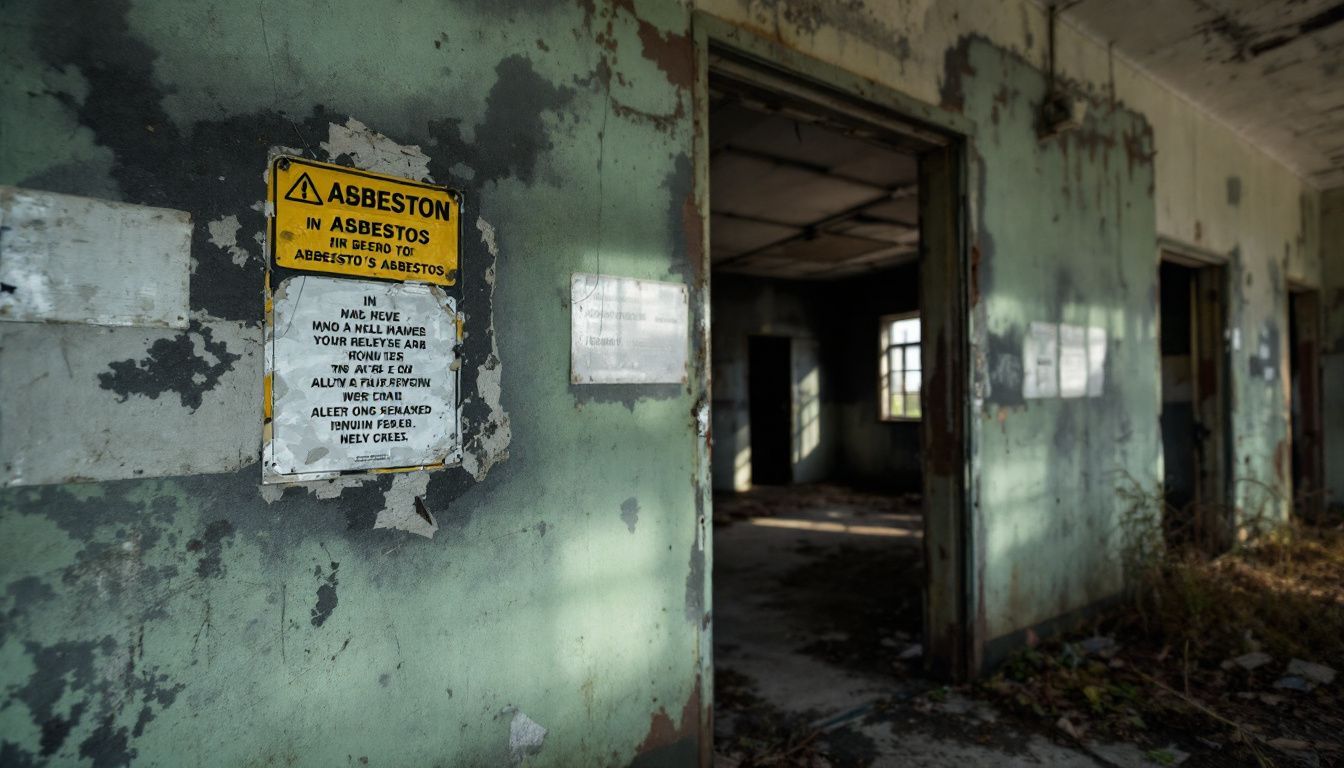
Facts on Asbestos: Separating Reality From Dangerous Myths
Asbestos has killed more people in the UK than any other single work-related cause — and yet dangerous myths about it persist at every level, from site managers to school governors to building owners. Getting the facts on asbestos right is not a matter of academic interest. It is a matter of life and death, sometimes decades after the original exposure.
Whether you manage a commercial property, a block of flats, or a public building, the decisions you make about asbestos-containing materials (ACMs) will affect real people. This post cuts through the misinformation and gives you the accurate, practical knowledge you need to protect them.
Why Myths About Asbestos Are So Dangerous
Misinformation about asbestos does not just cause confusion — it causes harm. When people believe asbestos is only dangerous in large doses, or that modern buildings are always safe, they take risks they should not take.
The consequences of exposure can take 20 to 50 years to appear, which makes it dangerously easy to dismiss the danger in the moment. That delay is exactly why the facts on asbestos matter so much — by the time symptoms develop, the exposure happened a generation ago.
Debunking the Most Persistent Asbestos Myths
Myth: Asbestos Has Been Banned Everywhere
This is one of the most persistent myths, and one of the most dangerous. Asbestos has not been banned worldwide. More than 60 countries prohibit it, but several significant nations still permit limited use and continue to export raw asbestos fibre.
In the UK, blue asbestos (crocidolite) and brown asbestos (amosite) were banned in 1985. White asbestos (chrysotile) followed in 1999. However, a UK ban does not mean UK buildings are asbestos-free.
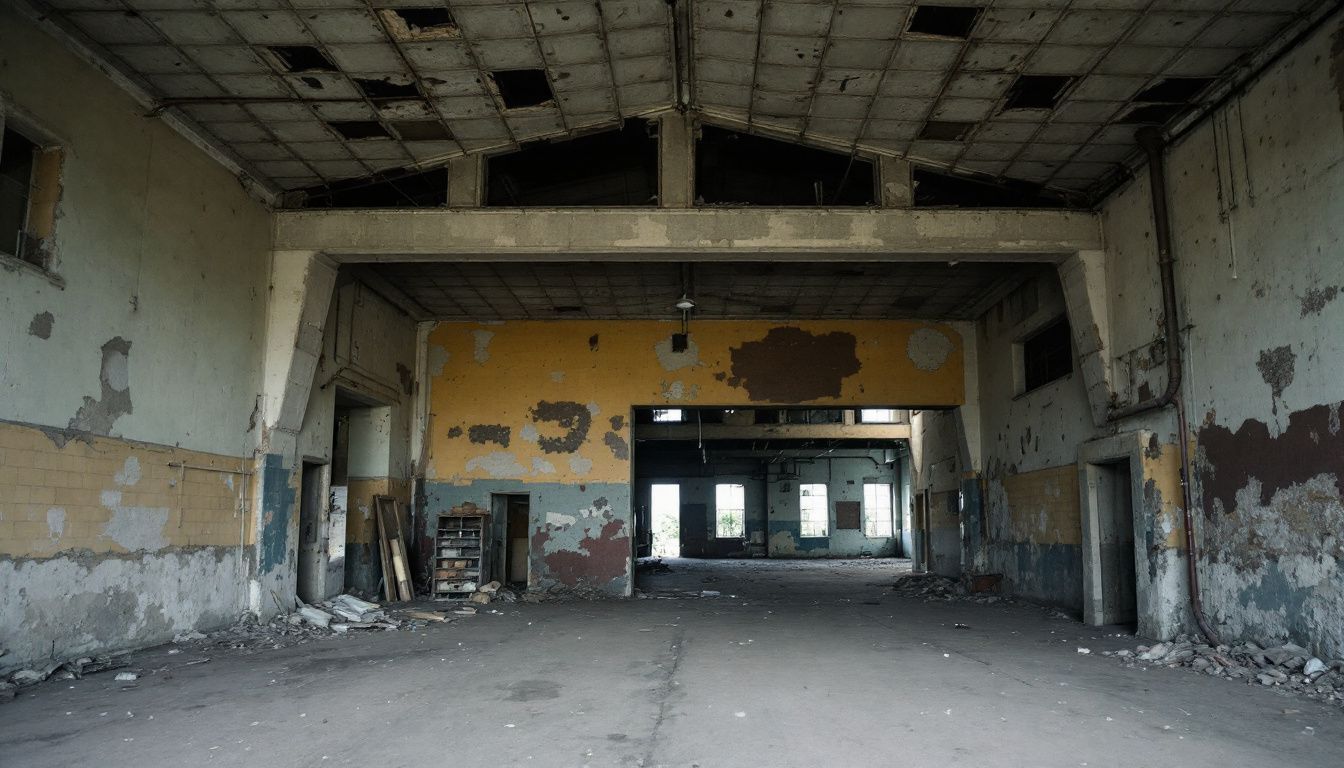
Any structure built or refurbished before 2000 may contain ACMs, and reclaimed materials or imported goods can introduce asbestos into the supply chain long after a ban takes effect. Under the Control of Asbestos Regulations, anyone responsible for a non-domestic building must identify, assess, and manage ACMs. Ignorance of what is in your building is not a defence — it is a legal failing.
Myth: A Brief Exposure Is Harmless
There is no safe level of asbestos exposure. This is not a precautionary statement — it is the scientific and regulatory consensus held by the World Health Organisation and the Health and Safety Executive (HSE).
Asbestos fibres are microscopic. When disturbed, they become airborne and can be inhaled without any visible dust or obvious sign. Once lodged in lung tissue, they cannot be removed by the body, and the damage accumulates silently.
Even short-duration tasks — drilling a ceiling tile, sanding a textured coating, lifting old floor tiles — can release enough fibres to cause harm. The fact that effects may not appear for decades makes it dangerously easy to underestimate a brief encounter.
Myth: You Can Identify Asbestos by Looking at It
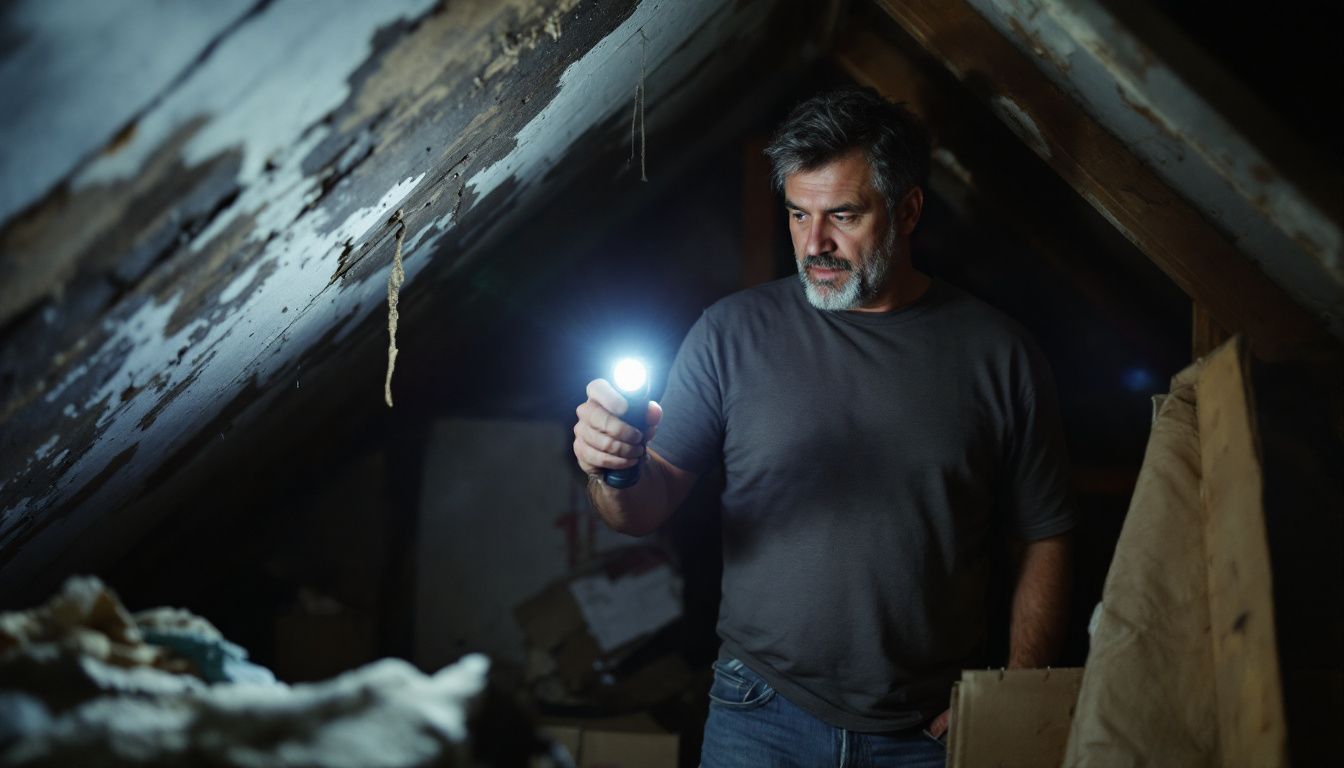
Asbestos fibres are invisible to the naked eye. They are woven into products — cement sheets, textured coatings, insulation boards, floor tiles, pipe lagging — and those products often look completely ordinary.
Artex ceilings, for example, can look identical whether they contain asbestos or not. The same applies to many roofing products and insulation materials. Visual inspection creates a false sense of security and has led to countless unnecessary exposures.
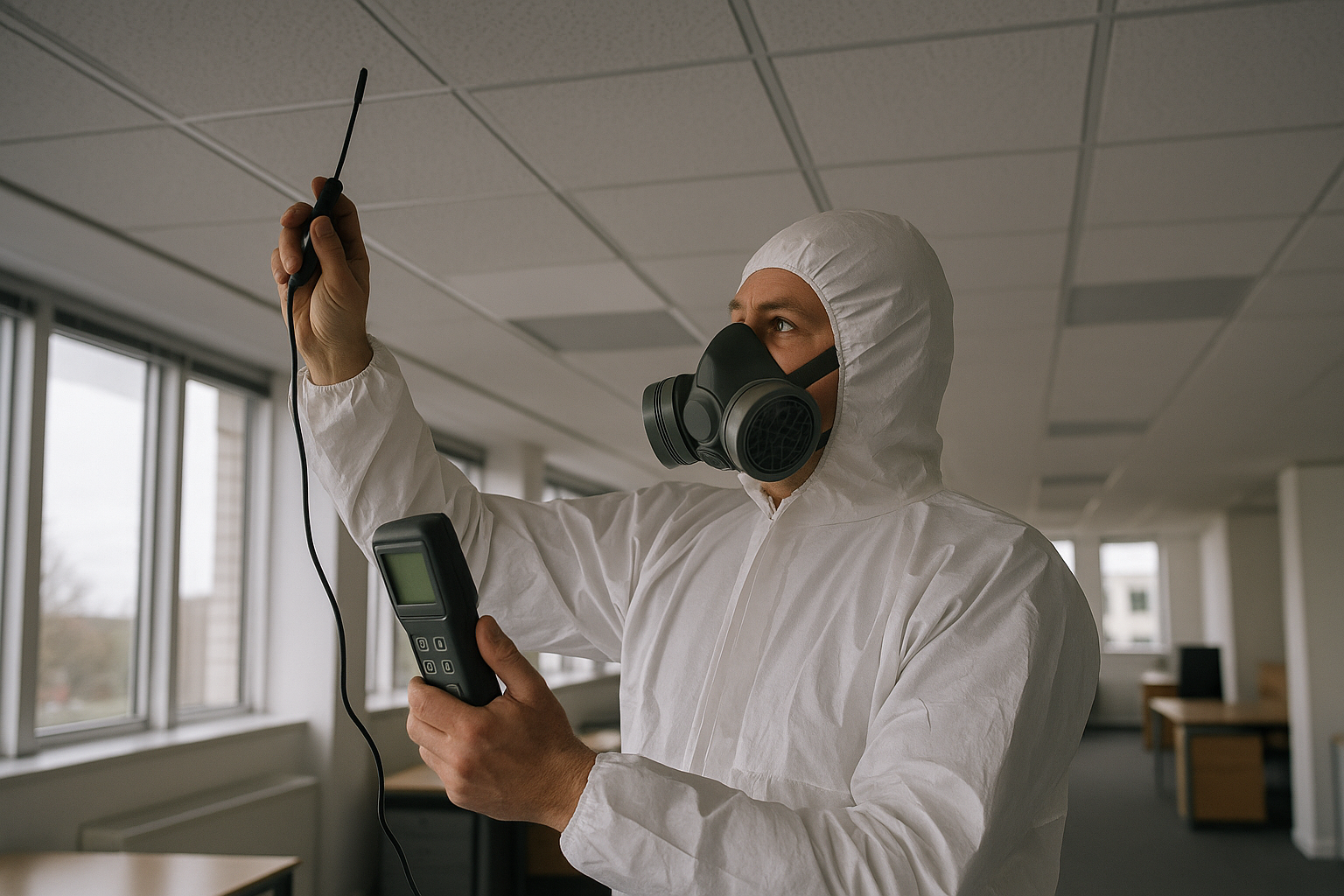
The only reliable way to confirm whether a material contains asbestos is through sampling and laboratory analysis by a UKAS-accredited laboratory. Professional asbestos testing is the only route to a reliable answer.
Myth: Modern Buildings Are Always Asbestos-Free
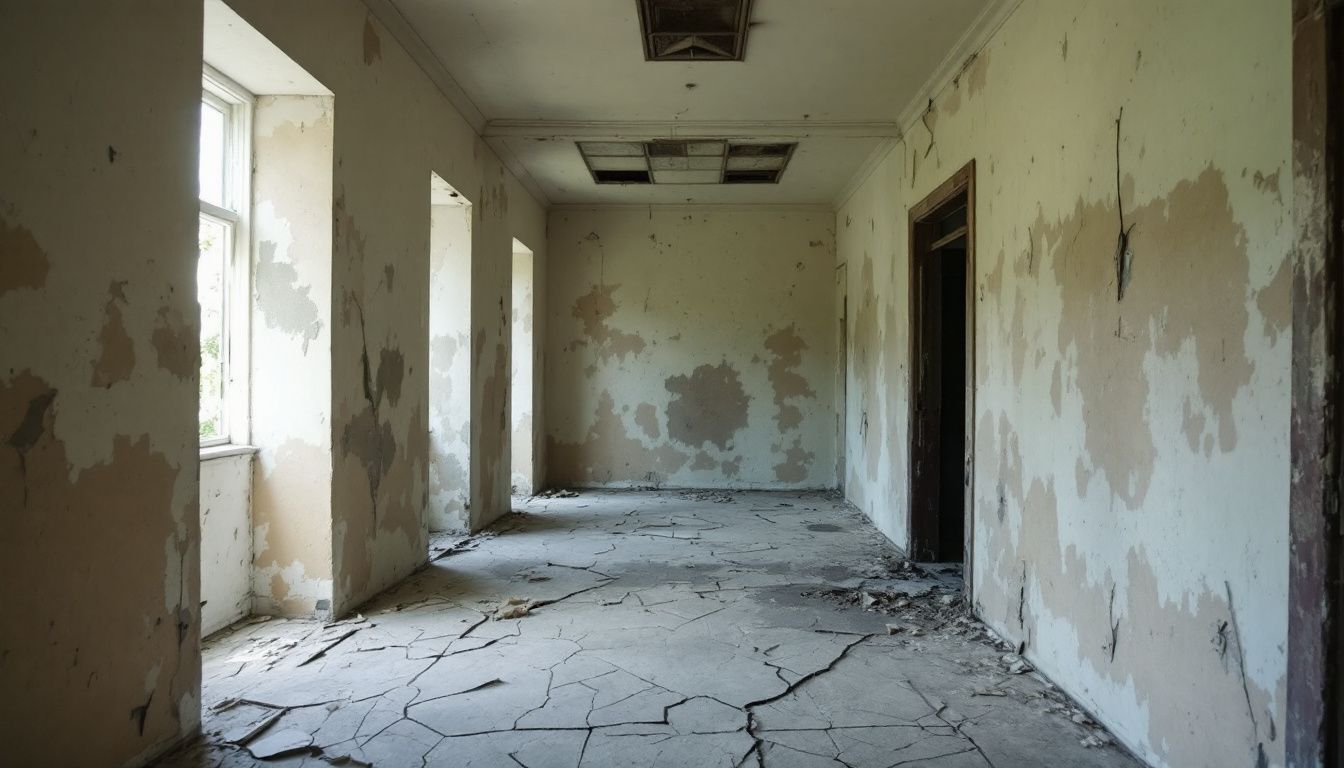
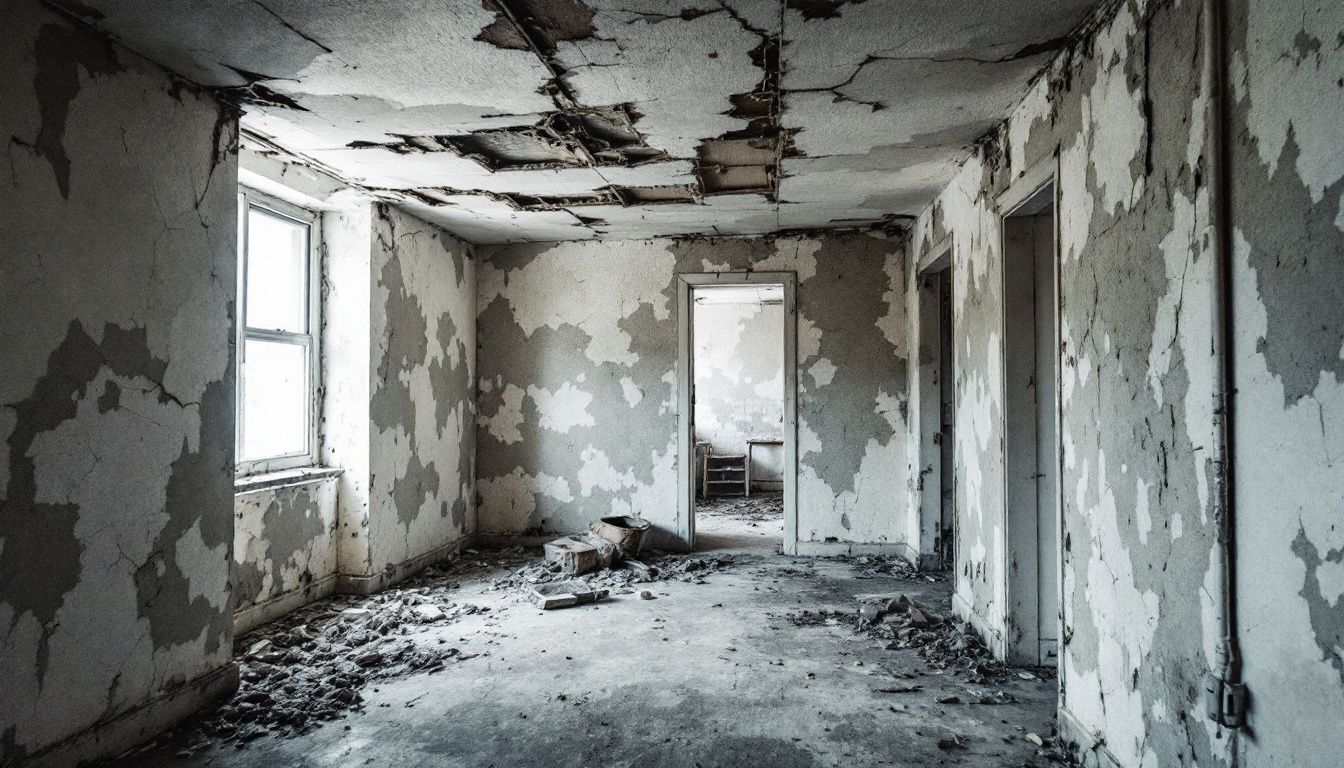
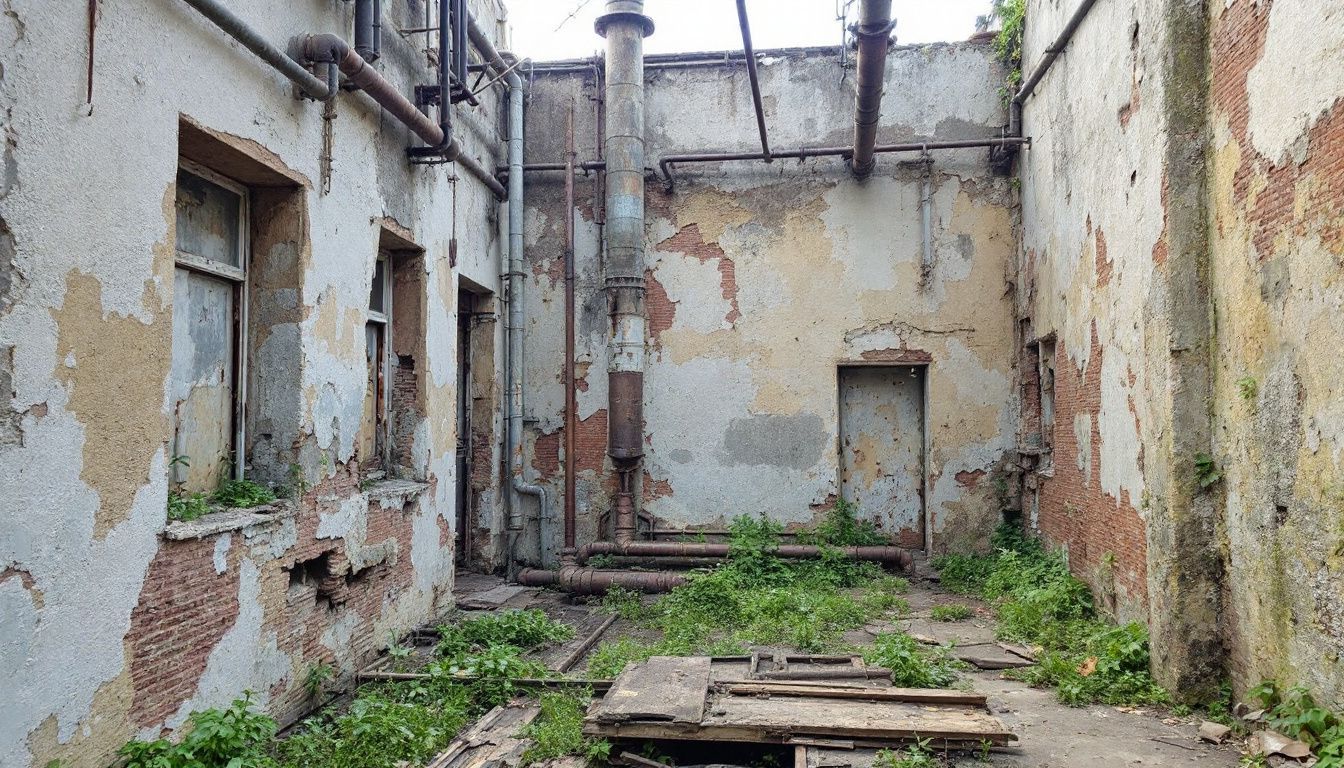
Buildings completed as late as 1999 in the UK may still contain ACMs. Construction projects often used materials that had been in stock for years before installation, and refurbishments carried out before the 1999 ban may have introduced asbestos into otherwise newer structures.
Common hiding places include:
- Ceiling tiles and textured coatings, including Artex
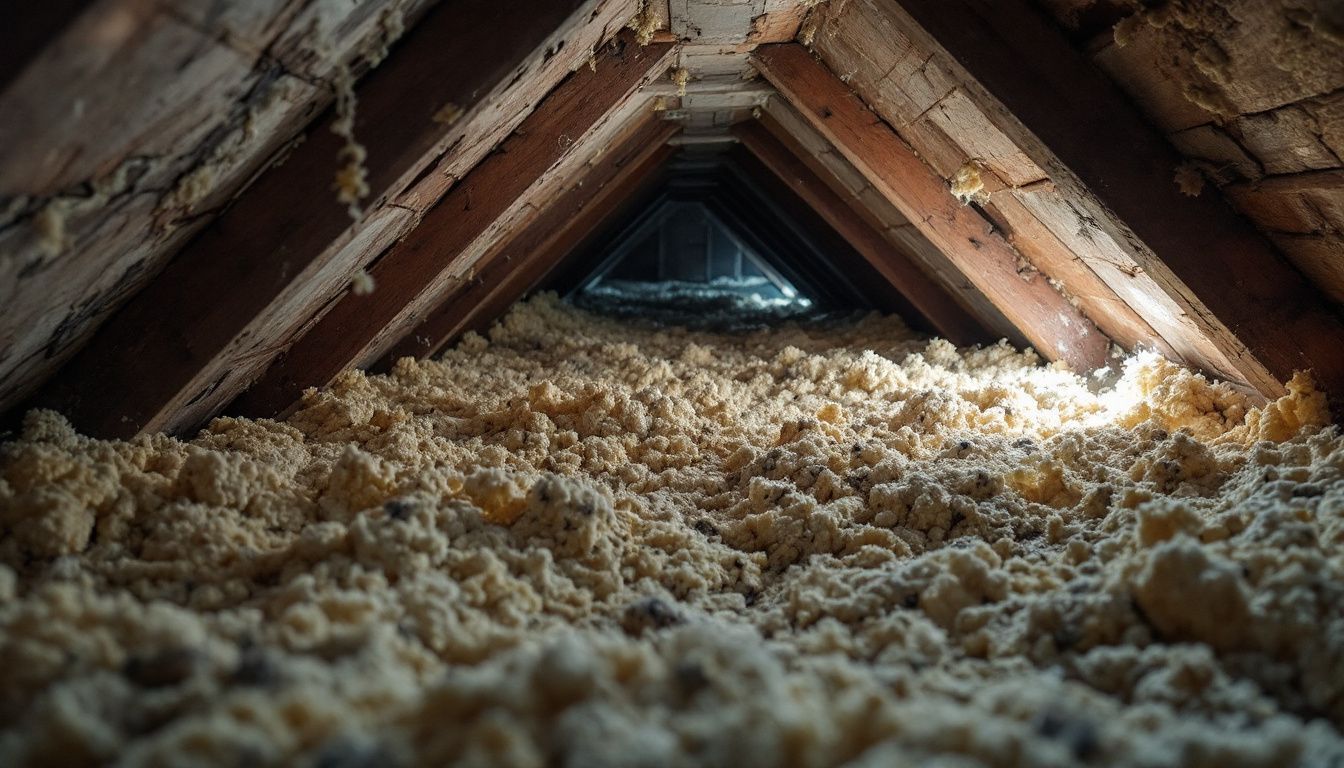
- Sprayed insulation on structural steelwork
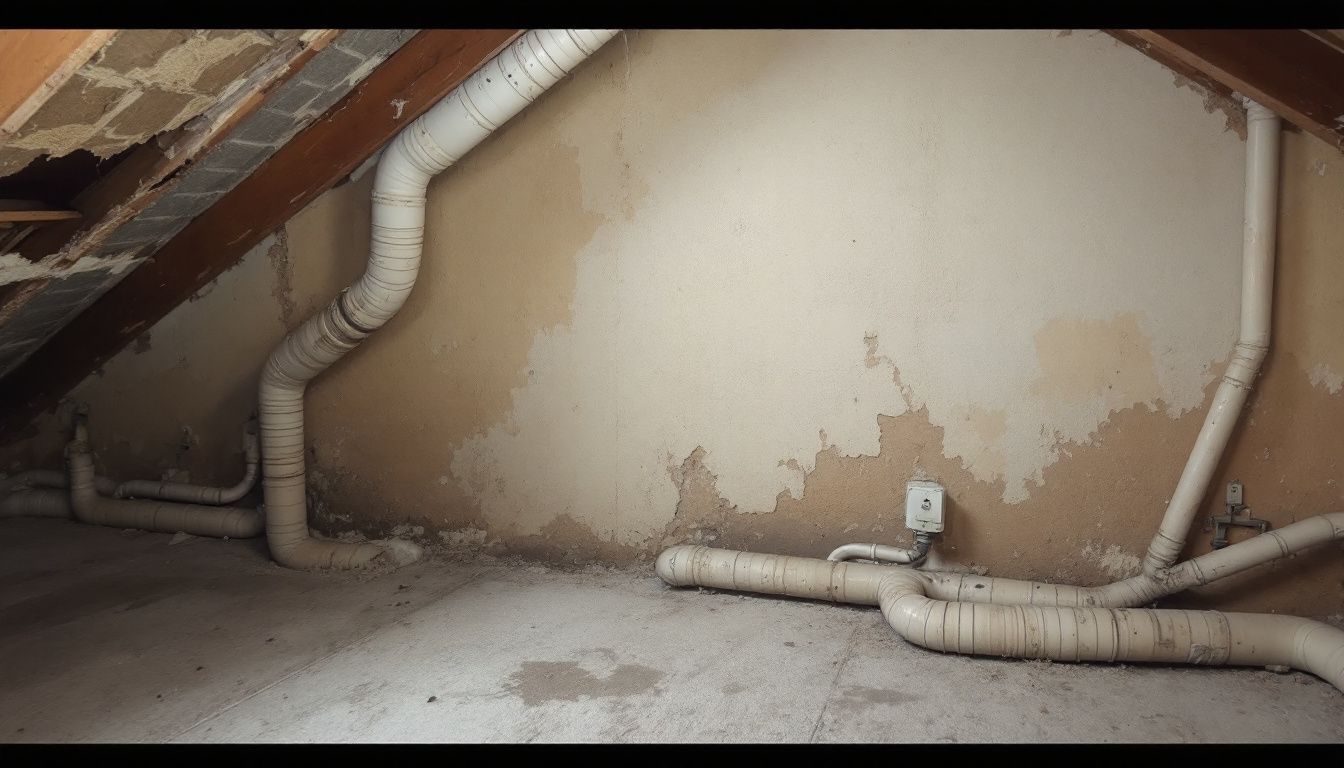
- Pipe lagging and boiler insulation
- Insulation boards used in fire protection
- Vinyl floor tiles and their adhesives
- Roofing felt and corrugated cement sheets
- Plant rooms and service ducts
If a building was constructed or significantly refurbished before 2000, treat it as potentially containing asbestos until a qualified survey confirms otherwise.
Myth: DIY Removal Is Safe With the Right Protective Gear
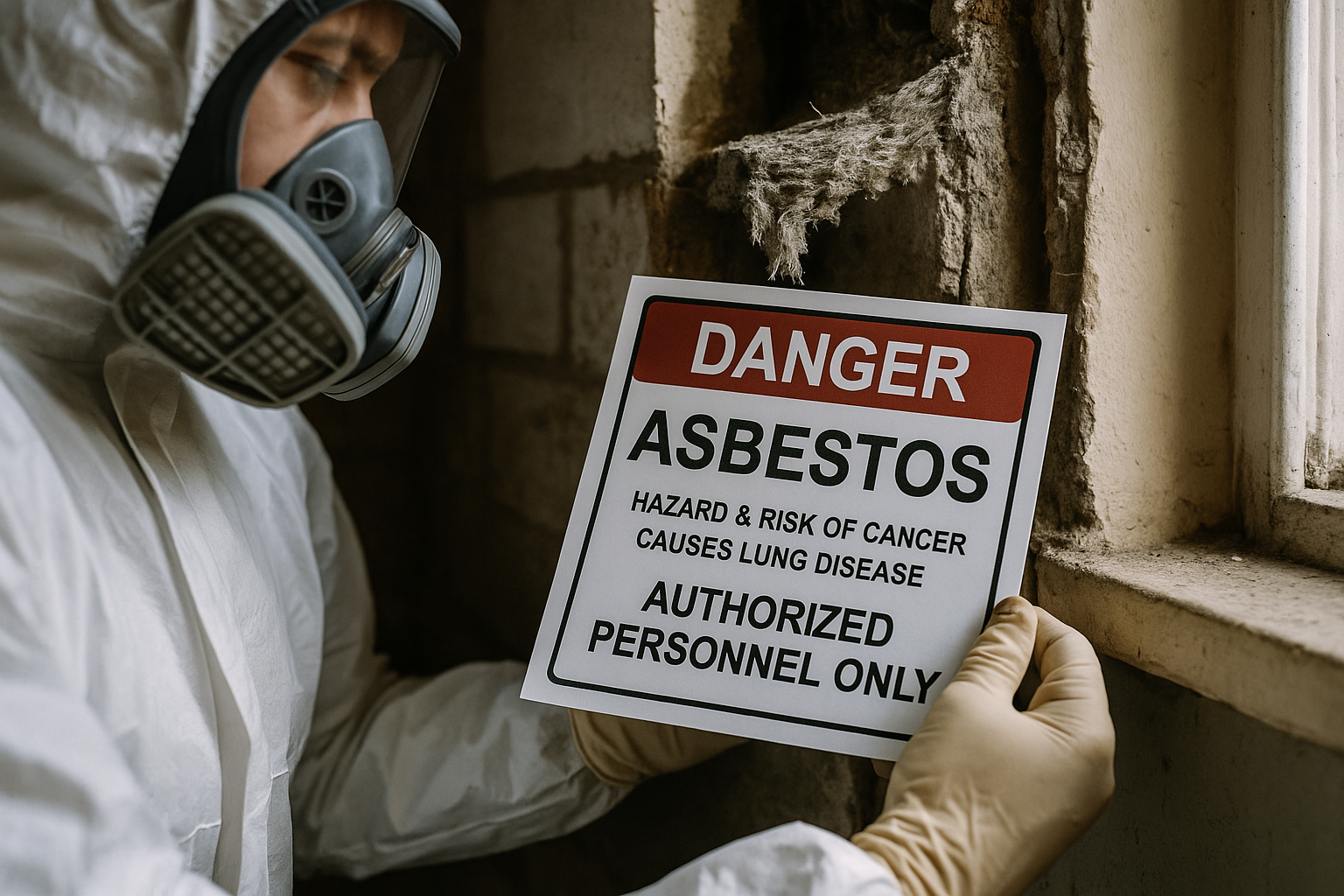
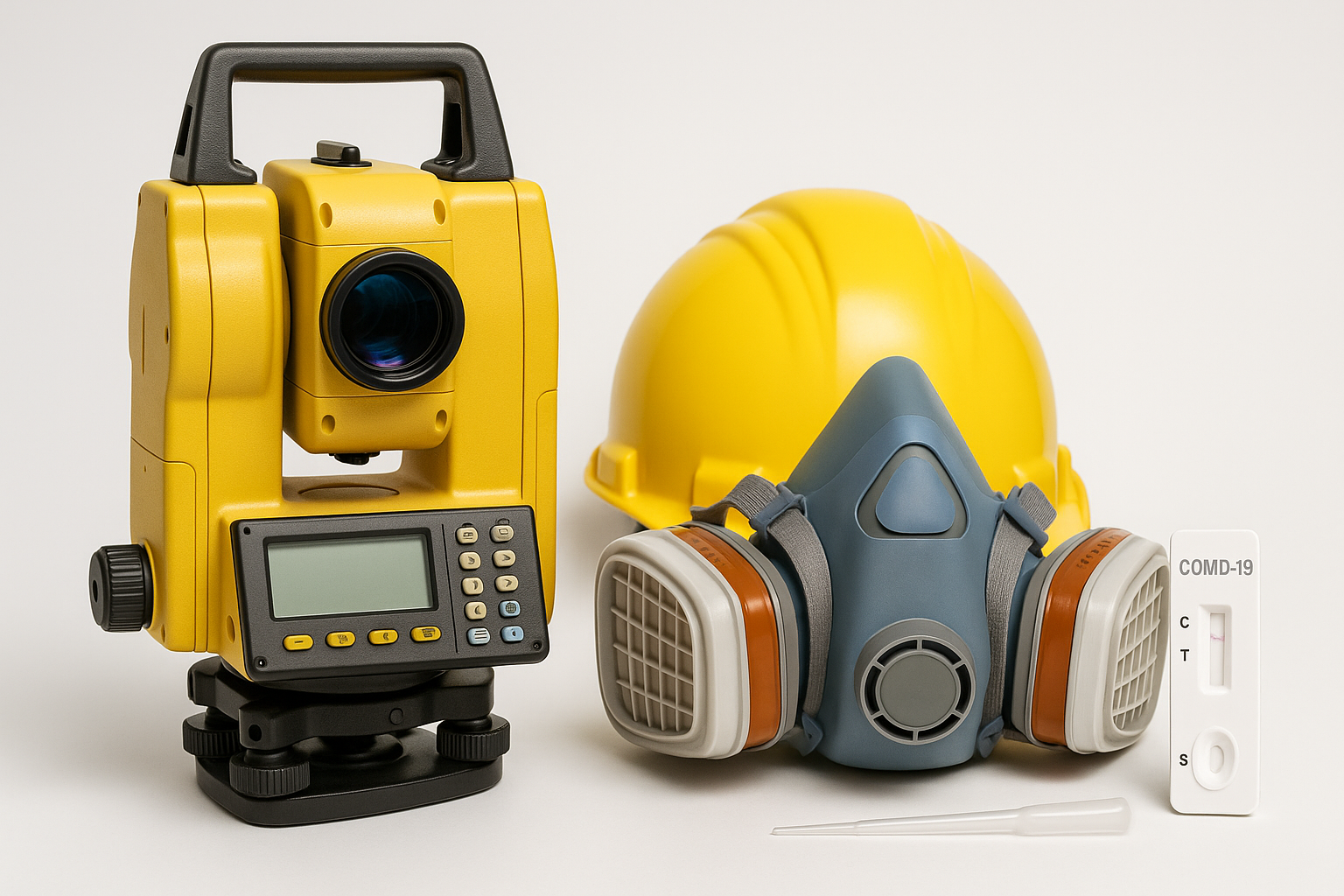
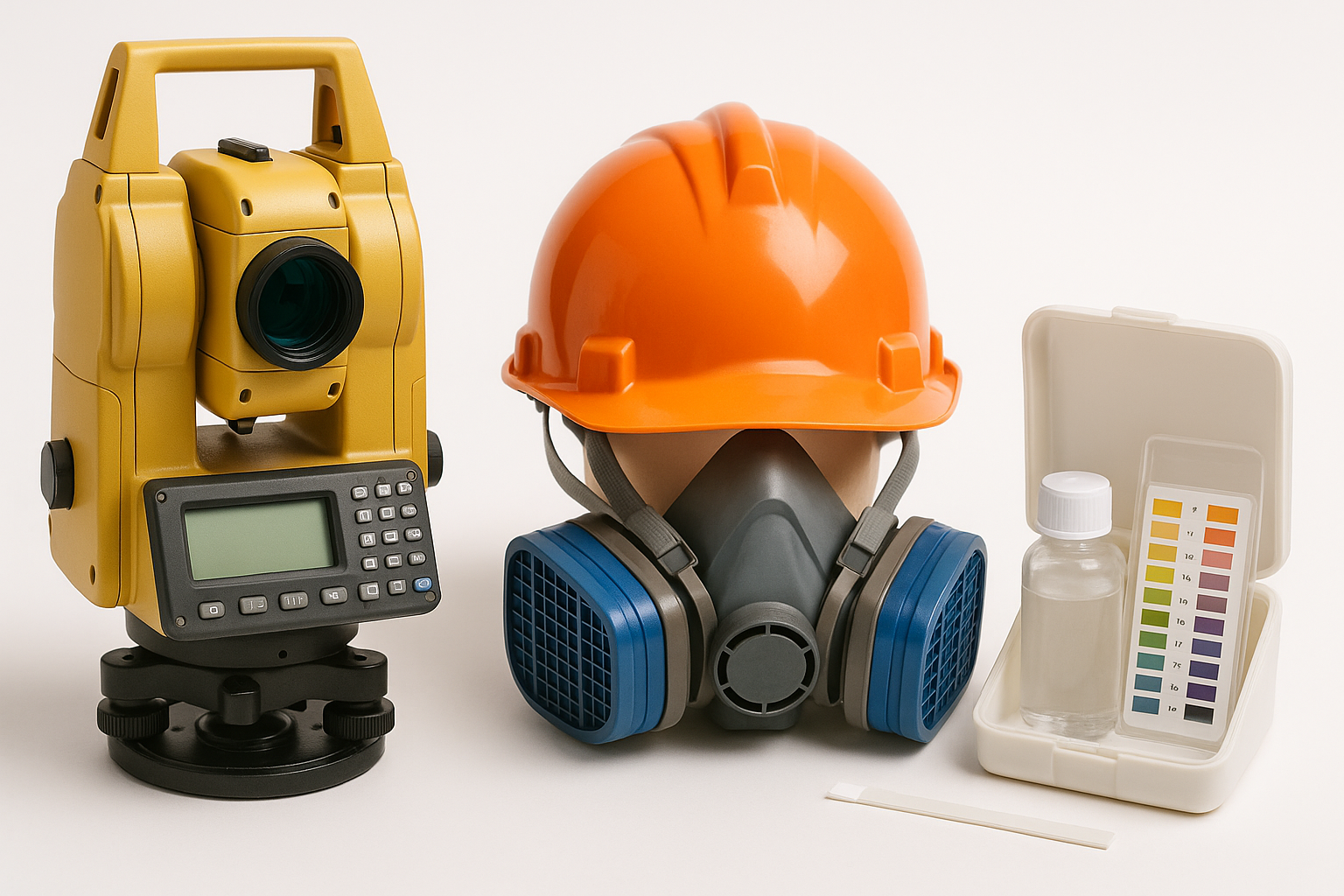
This myth puts people at serious risk. Standard dust masks and disposable coveralls are not adequate protection against asbestos fibres. Only specialist respiratory protective equipment — properly fitted and rated for asbestos — offers meaningful protection.
Beyond the equipment issue, untrained removal spreads contamination. Fibres settle on surfaces, clothing, and tools, and can be carried out of the work area into homes and vehicles, creating secondary exposure for family members who were never near the original site.
The Control of Asbestos Regulations require a licensed contractor for the majority of asbestos removal work. Unlicensed removal is not just unsafe — in most cases, it is unlawful. Licensed asbestos removal teams use sealed enclosures, negative pressure units, HEPA filtration, and strict decontamination protocols for good reason.
Key Facts on Asbestos Every Property Manager Should Know
Beyond debunking myths, there are core facts on asbestos that every property manager, employer, and building owner should understand. These are not scare stories — they are the foundation of effective asbestos management.
All Six Types of Asbestos Are Hazardous
Asbestos is not a single mineral. It is a group of six naturally occurring silicate minerals, all of which are classified as Group 1 carcinogens by the International Agency for Research on Cancer.
The three most commonly found in UK buildings are chrysotile (white), amosite (brown), and crocidolite (blue). Amphibole types — blue and brown — are generally considered to pose a higher cancer risk than chrysotile due to the shape and durability of their fibres. However, no form of asbestos is safe. The distinction matters for risk assessment, not for dismissing any type as harmless.
Diseases Develop Decades After Exposure
The latency period for asbestos-related diseases is one of the most important — and most misunderstood — facts on asbestos. Mesothelioma, the cancer most closely associated with asbestos, typically develops 20 to 50 years after exposure. Lung cancer linked to asbestos follows a similar pattern.
This means someone exposed during building work in the 1980s or 1990s may only now be receiving a diagnosis. It also means that exposures happening today will not become apparent for another generation. Prevention is the only effective strategy.
Asbestosis Is a Separate Condition From Cancer
Many people conflate asbestos-related diseases, but they are distinct conditions with different mechanisms. Asbestosis is the scarring of lung tissue caused by inhaled fibres. It is not cancer, but it is progressive, debilitating, and has no cure.
Pleural plaques and pleural thickening are further conditions caused by fibre deposition on the lining of the lungs, causing breathlessness and reduced lung function. Mesothelioma is a cancer of the pleural or peritoneal lining and is almost exclusively linked to asbestos exposure.
Smoking Dramatically Multiplies the Risk
The interaction between asbestos exposure and smoking is not simply additive — it is multiplicative. A smoker who has been exposed to asbestos faces a significantly higher risk of lung cancer than either risk factor alone would suggest.
Cigarette smoke damages the cilia in the airways that help clear inhaled particles, allowing asbestos fibres to penetrate deeper into lung tissue and remain there longer. Supporting staff to stop smoking is a meaningful health intervention in any workplace where asbestos exposure is a possibility.
Undisturbed ACMs Are Generally Safer Left in Place
This is one of the most practically important facts on asbestos for anyone managing a building. Intact, well-sealed ACMs that are not at risk of being disturbed do not typically release fibres. The danger comes from disturbance — cutting, drilling, breaking, or abrading the material.
Removal is not always the right answer. Licensed surveyors will assess the condition and location of ACMs and advise on the most appropriate management strategy. Options include monitoring, encapsulation, repair, or removal — the correct choice depends on the specific material, its condition, and the planned use of the space.
Who Is Most at Risk From Asbestos Exposure?
Asbestos affects everyone who encounters it, but certain groups face consistently higher exposure levels and therefore higher health risks.
Trades Workers
Plumbers, electricians, carpenters, plasterers, and general maintenance workers are among the highest-risk groups. Their work routinely involves disturbing building fabric — exactly where ACMs are most likely to be found.
A tradesperson who has spent a career working in pre-2000 buildings may have accumulated significant cumulative exposure without ever being formally warned about the risks.
School Staff and Children
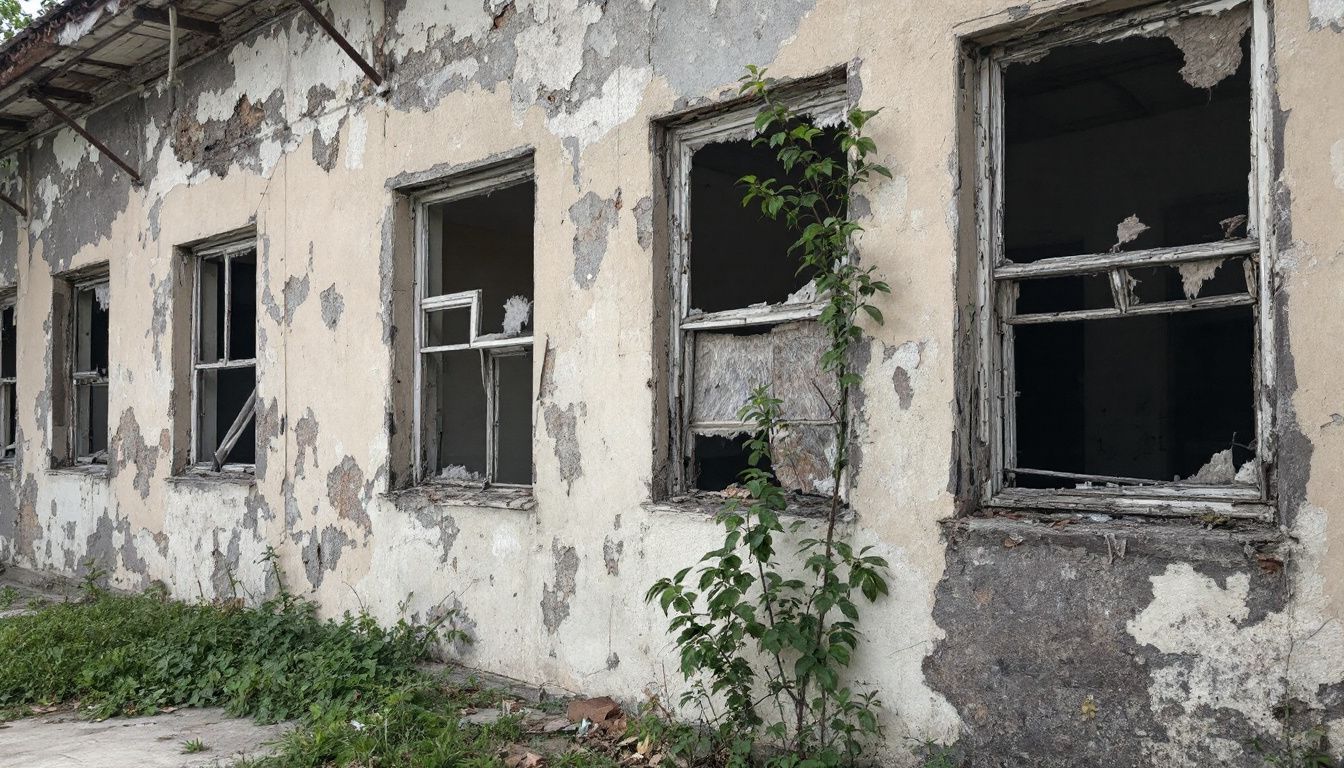
A large proportion of UK schools were built during the peak years of asbestos use. Many still contain ACMs in ceiling tiles, insulation boards, and other building materials.
Teachers have died from mesothelioma as a result of low-level, long-term exposure — the kind that comes from decades of working in a building where ACMs are present but not properly managed.
Secondary Exposure
People who were never near an asbestos-containing site can still develop asbestos-related diseases through secondary exposure. This occurs when fibres are carried home on work clothing, tools, or hair.
Family members — particularly partners and children of workers — have developed mesothelioma through this route. The risk is real, well-documented, and entirely preventable with proper site controls and decontamination procedures.
Building Owners and Managers
Legally and practically, those who manage buildings carry significant responsibility. Failing to identify and manage ACMs puts not only occupants at risk, but also contractors, maintenance staff, and visitors.
The HSE takes enforcement action against duty holders who fail to meet their obligations under the Control of Asbestos Regulations.
Your Legal Duties Under the Control of Asbestos Regulations
The Control of Asbestos Regulations place a legal duty to manage asbestos on anyone responsible for the maintenance or repair of a non-domestic building. This is known as the duty to manage, and it applies to employers, landlords, and building managers.
Your obligations include:
- Taking reasonable steps to find out if ACMs are present in your premises
- Assessing the condition of any ACMs found
- Preparing and maintaining an asbestos register and management plan
- Ensuring anyone who might disturb ACMs — including contractors — is given access to the register
- Reviewing and updating the management plan regularly
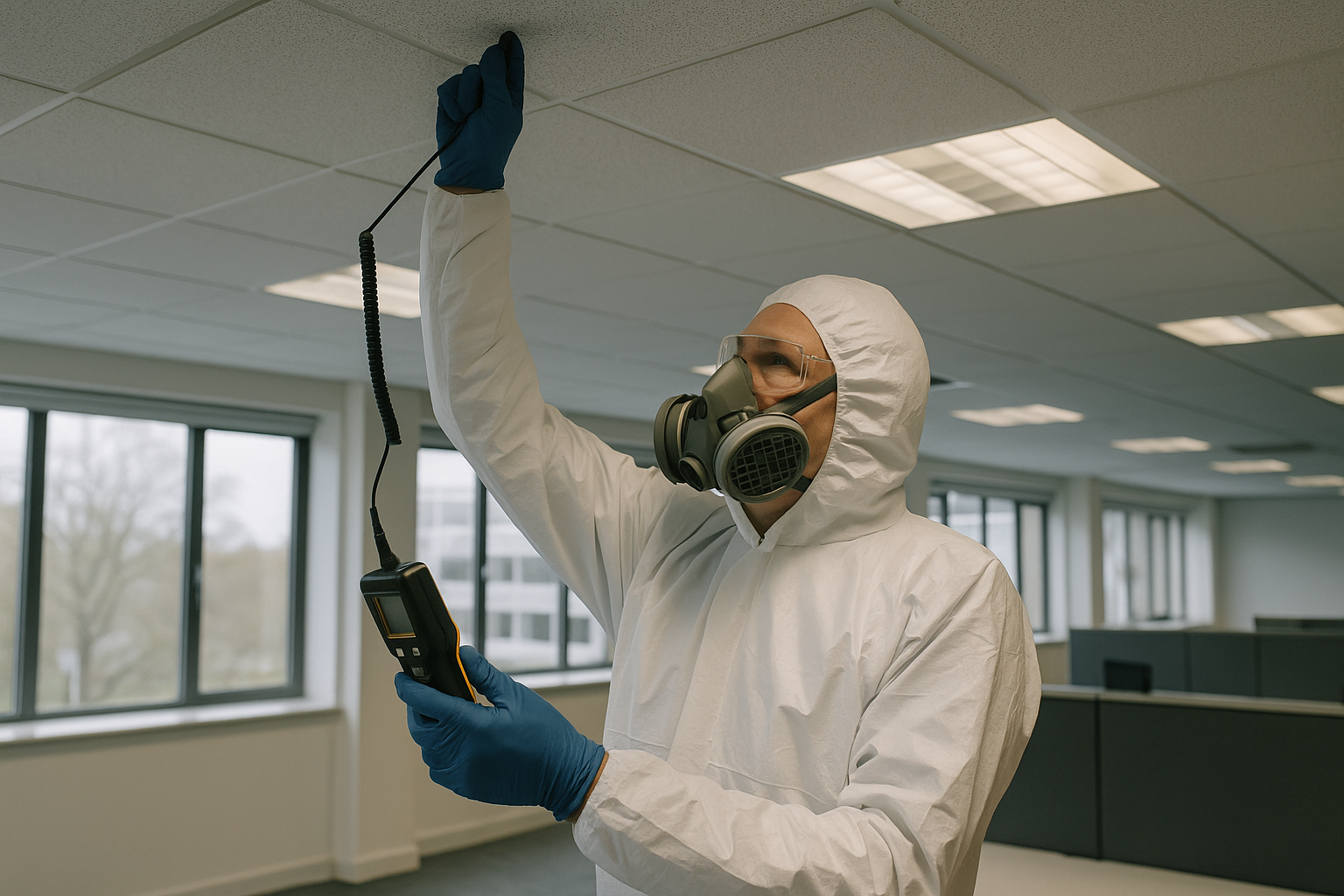
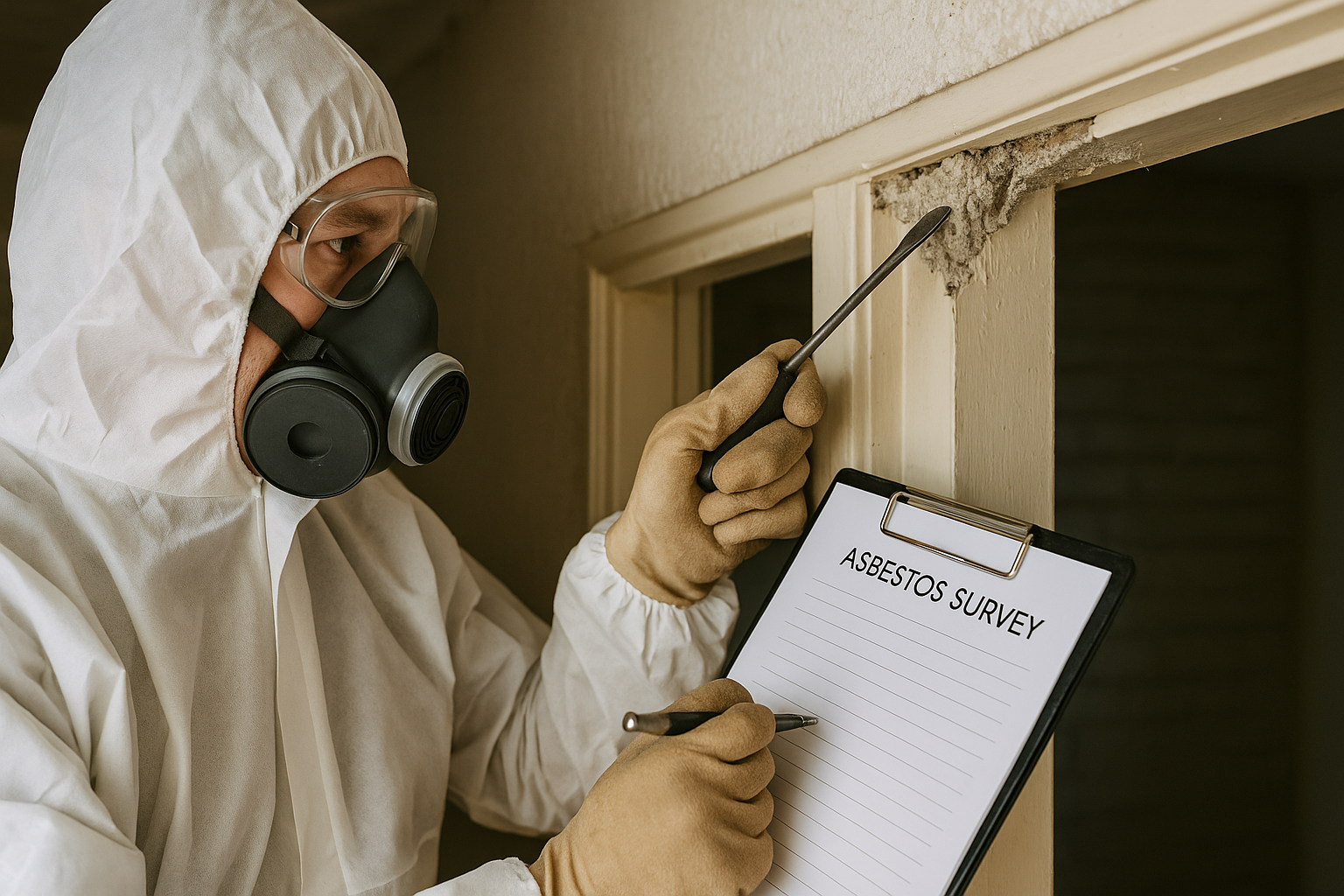
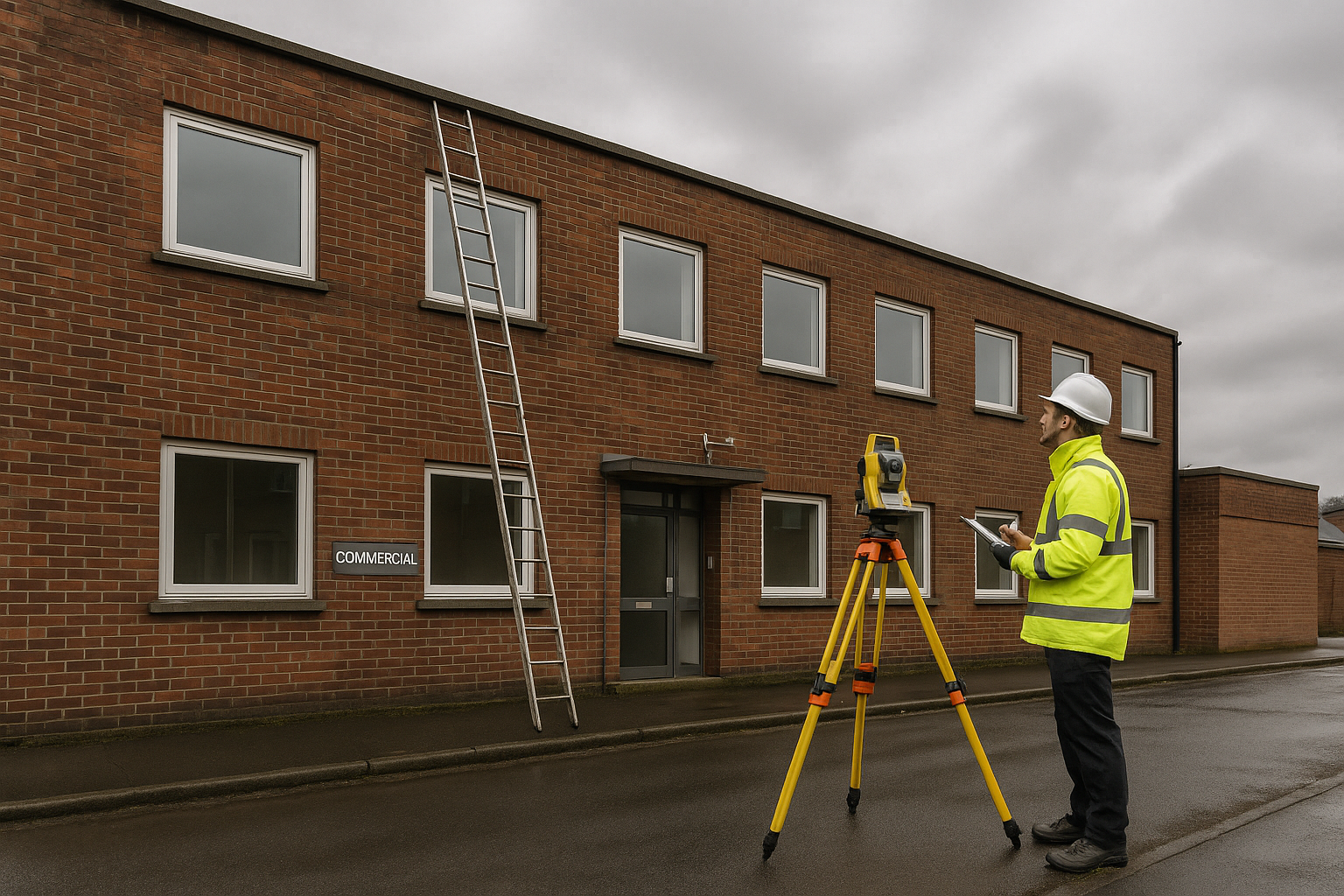
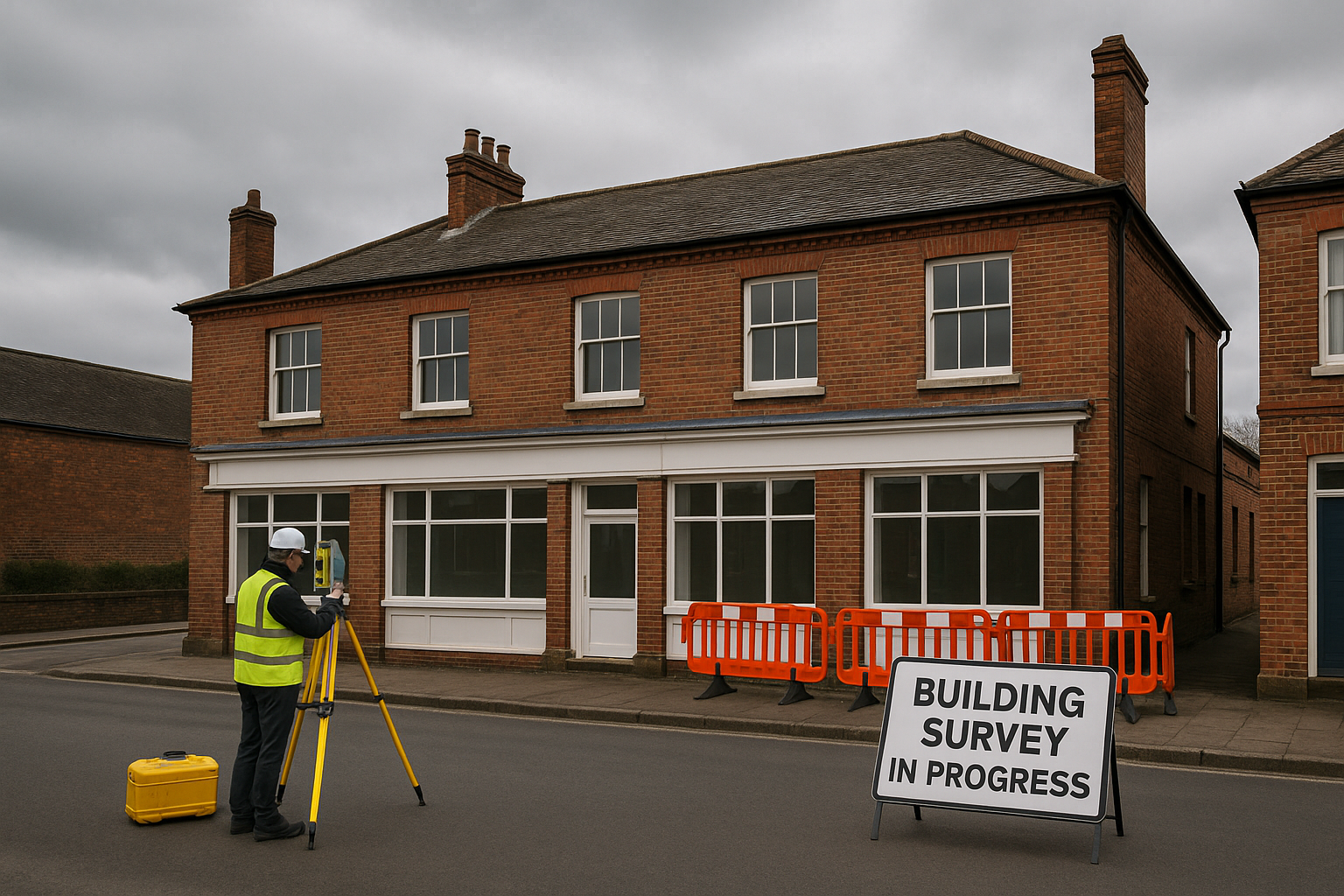
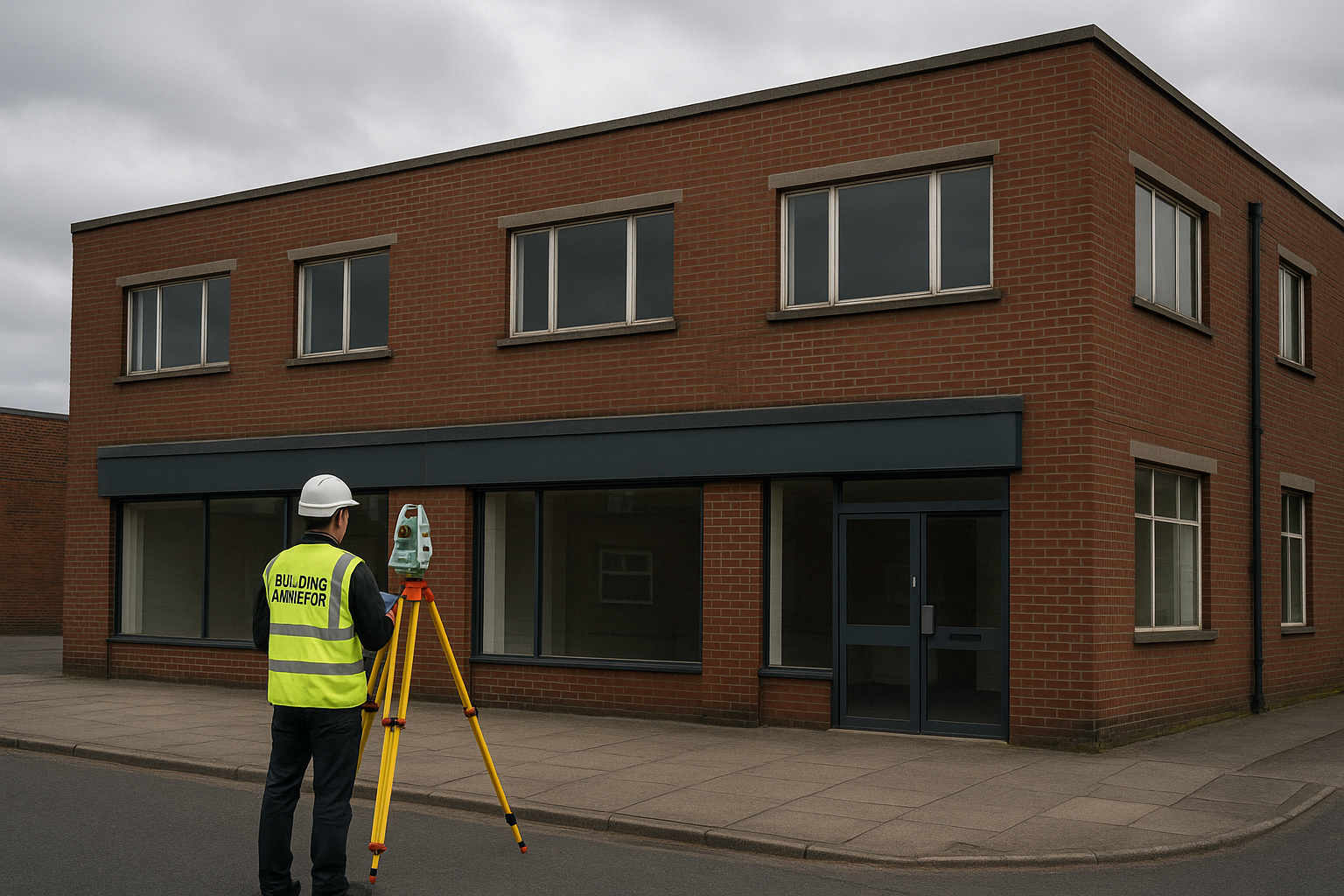
The HSE’s guidance document HSG264 provides detailed advice on how surveys should be conducted and what they should cover. An management survey is the standard requirement for occupied buildings in normal use, while a demolition survey is required before any major refurbishment or demolition work begins. Understanding which one you need is the essential first step.
What to Do If You Suspect Asbestos in Your Building
If you suspect ACMs are present in your building, stop any work that might disturb the material immediately and do not attempt to investigate further yourself.
Follow these steps:
- Stop work immediately in any area where ACMs might be disturbed
- Do not attempt visual identification — you cannot confirm asbestos by sight
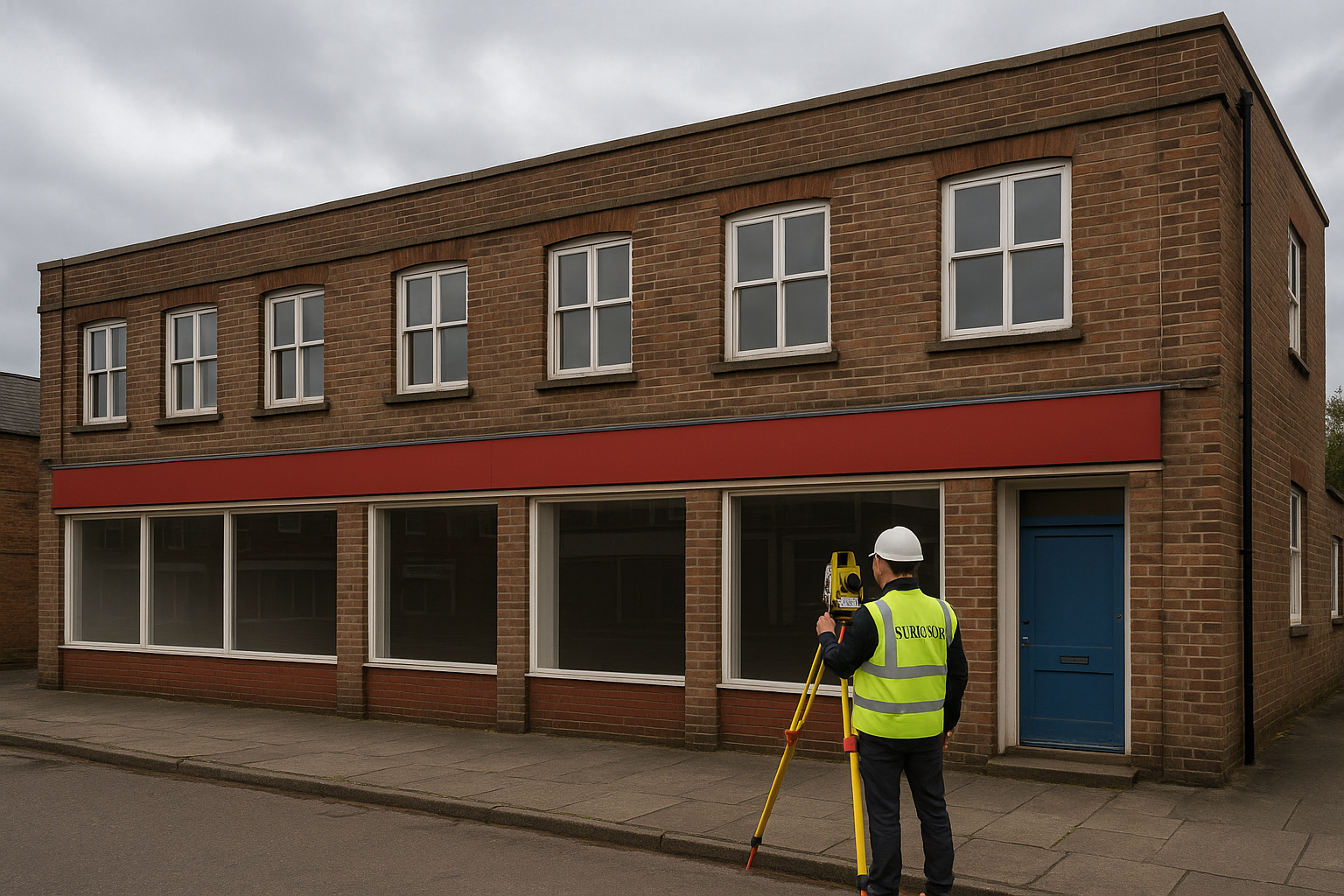
- Contact a licensed surveyor to arrange a professional inspection
- Arrange laboratory-confirmed sampling through asbestos testing to get a definitive answer
- Keep records of all findings, actions taken, and communications with contractors
If an ACM is found to be in poor condition or at risk of disturbance, do not delay in seeking professional advice. The material may need to be encapsulated, repaired, or removed by a licensed contractor — but that decision should always be made by a qualified professional, not guessed at.
Asbestos Surveys Across the UK
Asbestos is a national issue, not a regional one. Pre-2000 buildings exist in every city and town across the country, and the legal duty to manage applies regardless of location.
Supernova Asbestos Surveys operates nationwide. If you need an asbestos survey in London, our teams are on hand to respond quickly across all London boroughs. For those in the north-west, we provide a full asbestos survey in Manchester covering commercial, industrial, and residential properties. We also carry out an asbestos survey in Birmingham for clients across the West Midlands region.
With over 50,000 surveys completed, our qualified surveyors understand the specific building stock and construction history of each region — which matters when you are trying to locate ACMs in complex or ageing structures.
The Bottom Line on Facts on Asbestos
Asbestos remains one of the most significant occupational health hazards in the UK. It is present in millions of buildings, it is invisible to the naked eye, and its effects can take decades to manifest. None of that makes it unmanageable — but it does make accurate information essential.
The facts on asbestos are clear: there is no safe level of exposure, no reliable way to identify it visually, and no shortcut that replaces professional surveying and testing. The legal framework exists to protect people, and compliance with the Control of Asbestos Regulations is not optional.
The good news is that with the right survey, a clear management plan, and qualified contractors, asbestos can be managed safely and legally. The risk does not have to be ignored or feared — it has to be understood and addressed.
Frequently Asked Questions
Is asbestos still present in UK buildings?
Yes. Any building constructed or significantly refurbished before 2000 may contain asbestos-containing materials. This includes offices, schools, hospitals, industrial units, and residential blocks of flats. The UK ban on asbestos use does not mean existing buildings have been cleared — it means no new asbestos should have been introduced after the ban dates. A professional survey is the only reliable way to determine whether your building contains ACMs.
What are the most common health conditions caused by asbestos?
The main asbestos-related conditions are mesothelioma (a cancer of the lung or abdominal lining), asbestos-related lung cancer, asbestosis (scarring of the lung tissue), and pleural thickening or pleural plaques (changes to the lining of the lungs). All of these conditions have a long latency period — typically 20 to 50 years between exposure and diagnosis — and most have no cure. Prevention through proper management and avoidance of exposure is the only effective strategy.
Do I have a legal duty to manage asbestos in my building?
If you are responsible for the maintenance or repair of a non-domestic building, yes. The Control of Asbestos Regulations impose a legal duty to manage on employers, landlords, and building managers. This includes identifying whether ACMs are present, assessing their condition, maintaining an asbestos register and management plan, and informing contractors who may disturb ACMs. Failure to comply can result in enforcement action by the HSE, including prosecution and significant financial penalties.
Can I remove asbestos myself?
In most cases, no. The Control of Asbestos Regulations require that the majority of asbestos removal work is carried out by a licensed contractor. Unlicensed removal is not only dangerous — it is unlawful for most ACM types. Even for materials that fall outside the licensed contractor requirement, strict controls and procedures still apply. DIY removal using standard dust masks and disposable overalls does not provide adequate protection and risks spreading contamination to other areas and people.
How do I know if a material in my building contains asbestos?
You cannot tell by looking at it. Asbestos fibres are microscopic and are incorporated into a wide range of building products that appear entirely ordinary. The only way to confirm the presence of asbestos is through sampling and laboratory analysis by a UKAS-accredited laboratory. A qualified surveyor will take samples safely and send them for analysis — this is a routine part of any professional asbestos survey and provides a definitive, legally defensible answer.
Get Expert Help From Supernova Asbestos Surveys
If you need accurate facts on asbestos translated into practical action for your building, Supernova Asbestos Surveys is ready to help. With over 50,000 surveys completed across the UK, our BOHS-qualified surveyors provide management surveys, demolition surveys, asbestos testing, and removal coordination for properties of all sizes and types.
Call us on 020 4586 0680 or visit asbestos-surveys.org.uk to book a survey or speak to one of our team about your specific situation. Do not leave asbestos management to chance — get the facts, and act on them.