
Category: Asbestos Report: An Essential Document for Property Transactions

  • An Asbestos Report in Property Transactions: Why It Matters

    An Asbestos Report in Property Transactions: Why It Matters

    Why Every Home Buyer Needs an Asbestos Report Before Exchanging Contracts

    Buying a property is one of the biggest financial decisions you will ever make. Yet thousands of buyers exchange contracts each year on homes without knowing whether the walls, ceilings, or floors contain a material linked to fatal lung disease. A home buyer asbestos report gives you that knowledge before it is too late to act on it — and in a property built before 2000, that knowledge could save you tens of thousands of pounds and serious health risk.

    Asbestos was woven into UK construction throughout the 1970s, 80s, and into the 90s. Artex ceilings, floor tiles, pipe lagging, roof soffits — it was everywhere. If the property you are buying was built or refurbished during that period, the question is not whether asbestos might be present. It is where it is, and what condition it is in.

    What Is a Home Buyer Asbestos Report?

    A home buyer asbestos report is a formal document produced by a qualified asbestos surveyor following a physical inspection of the property. It identifies the presence, location, condition, and risk level of any asbestos-containing materials (ACMs) found on site.

    This is not a guess or an estimate. It is based on a visual inspection, material sampling where necessary, and laboratory analysis of those samples. The surveyor then translates all of that into a clear risk assessment that buyers, solicitors, and lenders can act upon.

    The Two Main Types of Survey

    There are two main survey types that feed into a home buyer asbestos report:

    • Management survey — Covers all areas of the property that are normally accessible during day-to-day occupation. This is the standard starting point for most residential purchases and gives you a clear picture of any ACMs you would be living alongside.
    • Demolition survey — Goes further than a management survey. It involves a more intrusive inspection of the building fabric to locate asbestos that would be disturbed during significant renovation or demolition work.

    Most residential buyers start with a management survey. If the results flag concerns — or if you have major renovation plans — you escalate to a more intrusive survey before any work begins.

    Which Properties Are at Risk?

    Any property built or significantly refurbished before the year 2000 should be treated as potentially containing asbestos until proven otherwise. The HSE is clear on this point, and it is a position that experienced surveyors take seriously.

    Common locations for asbestos in residential properties include:

    • Artex and textured coatings on ceilings and walls
    • Floor tiles and the adhesive beneath them
    • Roof tiles, soffits, and fascias — particularly cement-based products
    • Pipe lagging and boiler insulation
    • Insulating board around fireplaces, in airing cupboards, and in partition walls
    • Garage roofing sheets — corrugated asbestos cement is extremely common
    • Guttering and downpipes on older properties

    Post-war housing stock from the 1950s through to the late 1990s carries the highest risk. But even Victorian terraces that were extended or refurbished during the 20th century may have asbestos introduced during those works. Do not assume age alone tells you the full story.

    How a Home Buyer Asbestos Report Affects the Property Transaction

    A home buyer asbestos report does not automatically kill a sale — but it does change the conversation, and rightly so. Here is how it plays out across the key stages of a transaction.

    Impact on Mortgage Applications

    Some mortgage lenders require evidence of an asbestos survey before they will lend on older properties. If asbestos is found in poor condition, lenders may require a management plan, remediation work, or encapsulation before releasing funds.

    Getting the survey done early in the process avoids last-minute delays at exchange — which is exactly the kind of pressure that leads buyers to make poor decisions.

    Impact on Valuation and Sale Price

    When asbestos is identified, buyers factor in the cost of management or removal. High remediation costs — particularly for extensive or friable asbestos — can result in buyers seeking a reduction in the agreed purchase price.

    Sellers who have already obtained a report and taken action to manage or remove ACMs are in a far stronger negotiating position than those who leave buyers to discover issues during their own due diligence.

    Impact on Buildings Insurance

    Buildings insurers increasingly ask about asbestos during underwriting. An unmanaged asbestos risk can affect the terms of cover or lead to exclusions on your policy.

    A properly documented home buyer asbestos report, combined with a management plan, demonstrates that the risk is known and controlled — which insurers look upon far more favourably than a property with no survey history at all.

    Impact on Conveyancing

    Solicitors acting for buyers are increasingly raising asbestos as a specific enquiry during conveyancing. If you are a seller, being unable to answer those questions clearly can stall the transaction.

    If you are a buyer, commissioning your own home buyer asbestos report gives you documented evidence you can rely on — rather than taking the seller’s word for it.

    Legal Obligations for Sellers and Buyers

    The legal landscape around asbestos in residential property is something every party in a transaction should understand before they reach exchange.

    Seller Disclosure Obligations

    Sellers are legally required to disclose known material facts about a property. If a seller is aware that asbestos is present and fails to disclose it, they risk claims for misrepresentation and potential breach of contract.

    The principle of caveat emptor — buyer beware — does not protect a seller who actively conceals a known defect. If you have had an asbestos survey carried out on your property at any point during ownership, those findings must be shared with prospective buyers.

    The Control of Asbestos Regulations

    The Control of Asbestos Regulations set out the legal framework for managing asbestos in the UK. Whilst these regulations apply most directly to non-domestic premises, they inform the standards that all asbestos surveys must meet.

    Any survey carried out by an accredited professional will be conducted in line with HSE guidance, including HSG264, which sets out the methodology for asbestos surveys in buildings. This is the benchmark against which all credible home buyer asbestos reports are produced.

    Duty to Manage in Commercial and Mixed-Use Properties

    For commercial or mixed-use properties, there is a formal duty to manage asbestos under the Control of Asbestos Regulations. This requires the dutyholder to assess the presence of ACMs, maintain a register, and put a management plan in place.

    Buyers of such properties should verify that this duty is being properly met before completion. If it is not, you inherit the liability.

    The Asbestos Testing Process Explained

    A home buyer asbestos report is only as reliable as the testing process behind it. Here is what a professional survey actually involves.

    Initial Visual Inspection

    The surveyor carries out a thorough visual inspection of all accessible areas of the property. They are looking for materials that are known or suspected to contain asbestos, assessing their condition, and recording their location.

    This stage is methodical, experienced-eye work — a qualified asbestos surveyor knows what to look for in a way that a general property surveyor simply does not.

    Bulk Sampling and Laboratory Analysis

    Where a material is suspected to contain asbestos, the surveyor takes a small sample for laboratory analysis. This is done carefully and in accordance with HSE guidance to minimise any disturbance to the material.

    The samples are sent to an accredited laboratory for analysis under polarised light microscopy. Understanding what asbestos testing involves — and what the laboratory results actually mean — helps you make sense of the report when it lands in your inbox.

    Risk Assessment and Report Production

    Once the laboratory results are back, the surveyor produces the formal report. This document includes:

    • A full register of all ACMs identified, including location, type, and extent
    • A condition assessment for each ACM — intact, damaged, or deteriorating
    • A risk priority rating — low, medium, or high — based on condition and likelihood of disturbance
    • Recommendations for management, encapsulation, or removal
    • Photographs and floor plans showing the location of each ACM

    This is the document you hand to your solicitor, your mortgage lender, and your contractor. It is not a cause for panic — it is a tool for making informed decisions with the full picture in front of you.

    What Happens If Asbestos Is Found?

    Finding asbestos in a property does not mean the deal falls apart. The vast majority of asbestos found in residential properties is in a stable, non-friable condition — meaning it poses a low risk if left undisturbed and properly managed.

    Your options typically fall into three categories:

    1. Management in place — If the ACM is in good condition and unlikely to be disturbed during normal occupation, it can often be left in place with a management plan. This is the most common outcome for intact artex ceilings or undamaged floor tiles.
    2. Encapsulation — Damaged or deteriorating ACMs can sometimes be sealed with a specialist coating that prevents fibre release, rather than removed outright. This is a cost-effective middle ground in many cases.
    3. Removal — Where ACMs are in poor condition, or where refurbishment work is planned that would disturb them, removal by a licensed contractor is the appropriate course of action.

    Knowing about this before exchange gives you the opportunity to negotiate the cost into the purchase price or ask the seller to address specific issues before completion. A home buyer asbestos report gives you options. Going in blind does not.

    Do You Need Asbestos Testing as Well as a Survey?

    A survey and a test are not always the same thing. A survey involves a physical inspection of the property, whereas asbestos testing refers specifically to the laboratory analysis of bulk samples taken from suspect materials.

    In most cases, your home buyer asbestos report will include both — the surveyor takes samples during the inspection and sends them for laboratory analysis as part of the same process. But if you already have a survey from a previous owner and simply want specific materials tested, standalone testing is available.

    Always use a UKAS-accredited laboratory for sample analysis. Accreditation matters — it is the difference between a result that stands up to scrutiny and one that does not.

    When Should You Commission a Home Buyer Asbestos Report?

    The ideal time is after your offer has been accepted but before you exchange contracts. This gives you enough time to review the findings, take legal advice if needed, and — if necessary — renegotiate the price or ask the seller to address specific issues before completion.

    Do not wait until after exchange. Once contracts are exchanged, you are legally committed to the purchase. Discovering a significant asbestos problem at that point gives you very limited options and no leverage.

    If you are buying at auction, commission the survey before the auction date. Auction sales complete quickly, and you will not have the luxury of renegotiating after the hammer falls. Treat it as essential pre-auction due diligence, not an optional extra.

    Supernova Asbestos Surveys: Home Buyer Asbestos Reports Nationwide

    Supernova Asbestos Surveys has completed over 50,000 surveys across the UK, working with home buyers, property managers, solicitors, and developers. Our surveyors are fully qualified, and all our work is carried out in line with HSE guidance and the Control of Asbestos Regulations.

    We provide home buyer asbestos reports for residential properties of all sizes and ages — from Victorian terraces to post-war semis to 1990s new builds.

    We cover the whole of England and Wales. If you are buying in the capital, our team provides asbestos survey London services with fast turnaround times. Buying in the North West? Our team offers asbestos survey Manchester services across Greater Manchester and beyond. In the Midlands, our asbestos survey Birmingham team covers the city and the surrounding areas.

    To book a home buyer asbestos report or to discuss your requirements, call us on 020 4586 0680 or visit asbestos-surveys.org.uk. We will advise you on the right type of survey for your property and get a surveyor booked in quickly — because we know that property transactions do not wait.

    Frequently Asked Questions

    Do I legally have to get a home buyer asbestos report before purchasing a property?

    There is no legal requirement for a buyer to commission a home buyer asbestos report before purchasing a residential property. However, for any property built before 2000, it is strongly advisable. Some mortgage lenders may require one before releasing funds, and without it you have no way of knowing what you are taking on. The cost of a survey is negligible compared to the potential cost of undisclosed asbestos problems after completion.

    How long does a home buyer asbestos survey take?

    For a standard residential property, the physical inspection typically takes two to four hours depending on the size and accessibility of the building. Laboratory results are usually returned within a few working days, after which the surveyor produces the formal report. In most cases, you can expect a completed home buyer asbestos report within five to seven working days of the survey being carried out.

    What is the difference between a management survey and a demolition survey for a home purchase?

    A management survey is designed for properties in normal occupation — it covers all accessible areas and identifies ACMs that occupants might encounter or disturb during everyday use. A demolition survey is far more intrusive and is required when significant structural work, renovation, or demolition is planned. For most straightforward residential purchases, a management survey is the appropriate starting point. If your plans involve major works, a demolition survey should follow before any contractor goes near the building fabric.

    Can a seller refuse to share an existing asbestos report with a buyer?

    A seller is legally obliged to disclose known material facts about a property. If an asbestos survey has been carried out during their ownership and they are aware of its findings, withholding that information exposes them to claims of misrepresentation. In practice, solicitors acting for buyers increasingly raise asbestos as a specific conveyancing enquiry, making it very difficult for sellers to sidestep the question. If a seller cannot or will not provide documentation, commission your own home buyer asbestos report before exchange.

    What should I do if my home buyer asbestos report identifies high-risk materials?

    A high-risk finding does not automatically mean the purchase should be abandoned. It means you need to understand the extent of the problem, get a cost estimate for remediation or removal from a licensed contractor, and decide whether to proceed at the current price, renegotiate, or — in extreme cases — withdraw. Your surveyor can advise on the appropriate course of action for each specific ACM identified. In many cases, the most practical solution is management in place or encapsulation rather than full removal.

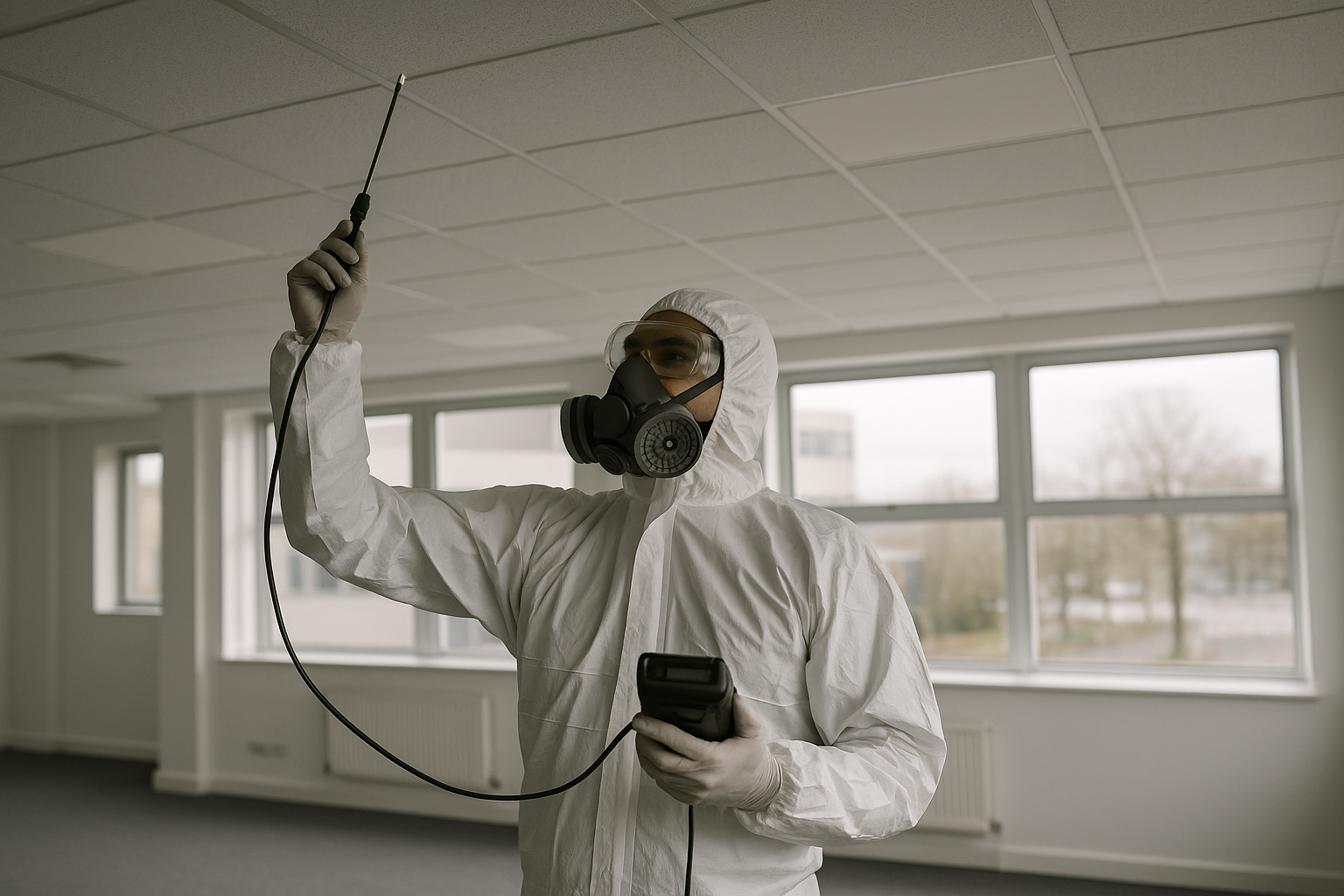
  • Navigating Property Transactions: Why an Asbestos Report is a Must

    Navigating Property Transactions: Why an Asbestos Report is a Must

    Do I Need an Asbestos Survey to Sell My Flat?

    If you’re preparing to sell your flat and someone has mentioned asbestos, you’re probably asking yourself: do I need an asbestos survey to sell my flat, or is this just another cost you can sidestep? The honest answer isn’t a flat yes or no — it depends on when your building was constructed, how your flat is held (leasehold or freehold), and what your buyer’s solicitor starts asking for during conveyancing.

    What follows cuts through the confusion and gives you a straight, practical answer based on how the UK property market actually works.

    Understanding Asbestos in Residential Properties

    Asbestos was used extensively in UK construction right up until it was fully banned in 1999. If your flat sits in a building constructed before that date — which covers an enormous proportion of the UK’s housing stock — there is a realistic chance that asbestos-containing materials (ACMs) are present somewhere in the structure.

    Common locations include:

    • Artex ceilings and textured coatings
    • Floor tiles and the adhesive beneath them
    • Pipe lagging and boiler insulation
    • Partition walls and ceiling tiles
    • Roof soffits and guttering
    • Electrical panels and fuse boxes

    The material isn’t always visible or obvious, which is precisely why surveys exist. Asbestos fibres, when disturbed, become airborne and can cause serious diseases including mesothelioma, asbestosis, and lung cancer. These conditions can take decades to develop — which is exactly why buyers and their solicitors take the issue seriously even when a property looks perfectly fine on the surface.

    Do I Legally Need an Asbestos Survey to Sell My Flat?

    This is the question most sellers want answered first. For residential properties, there is no legal requirement under the Control of Asbestos Regulations that forces a private seller to commission an asbestos survey before completing a sale. The duty to manage asbestos under Regulation 4 applies to non-domestic premises — not private dwellings.

    However, the picture is more nuanced than a simple yes or no, particularly if your flat is leasehold.

    Leasehold Flats and the Freeholder’s Obligations

    The majority of flats in England and Wales are leasehold. This means the common parts of the building — stairwells, corridors, plant rooms, roof spaces — are typically the responsibility of the freeholder or managing agent. These areas are classed as non-domestic premises, meaning the freeholder has a legal duty to manage asbestos in those spaces under the Control of Asbestos Regulations.

    When you sell, your buyer’s solicitor will almost certainly raise enquiries about the building’s asbestos management plan. If the freeholder cannot produce one, this can delay or derail your sale entirely — even though the obligation sits with the freeholder, not you personally.

    What Buyers and Their Solicitors Will Ask

    Even where there’s no strict legal obligation on you as the seller, buyers increasingly request asbestos information as part of their due diligence. Solicitors acting for mortgage lenders may insist on it. Some buyers will walk away — or renegotiate the price downward — if no asbestos information is available for a pre-2000 property.

    Having a survey ready can prevent delays, protect your asking price, and give buyers the confidence to proceed without hesitation.

    The Practical Case for Getting a Survey Before You Sell

    Even if you’re not legally compelled to get one, commissioning an asbestos survey before listing your flat makes practical sense. Here’s why:

    • Transparency builds trust. Buyers feel more confident when a seller can hand over a professional asbestos report upfront rather than scrambling to answer solicitor enquiries mid-sale.
    • It protects your asking price. If a buyer discovers potential asbestos issues without a proper assessment, they may use this as leverage to negotiate a significant reduction. A well-documented report removes that uncertainty.
    • It speeds up conveyancing. Solicitor enquiries about asbestos are common in pre-2000 properties. Having a report ready means fewer delays and a smoother transaction.
    • It protects you legally. Sellers have a general obligation not to misrepresent the condition of a property. If you’re aware of asbestos risks and don’t disclose them, this could expose you to claims after completion.

    The cost of a survey is modest compared to the cost of a failed sale, a delayed exchange, or a last-minute price chip from an anxious buyer.

    What Type of Asbestos Survey Do You Need?

    Not all asbestos surveys are the same. The right type depends on what you’re trying to achieve — whether that’s simply understanding what’s present or preparing for renovation work before or after the sale.

    Management Survey

    A management survey is the standard survey for occupied properties. It identifies the location, condition, and extent of any ACMs that could be disturbed during normal occupation or routine maintenance. For most flat sellers, this is the appropriate starting point.

    The surveyor carries out a visual inspection and takes samples from suspect materials. Results are compiled into an asbestos register with a risk rating for each material found. This report is what most solicitors and buyers will want to see during conveyancing.

    Refurbishment Survey

    If you’re planning to renovate before selling — or if your buyer intends to carry out significant works — a refurbishment survey is required. This is a more intrusive survey that involves accessing areas not normally disturbed, such as wall cavities and ceiling voids, to ensure any ACMs are identified before work begins.

    No contractor should carry out refurbishment work on a pre-2000 building without this survey being completed first. It’s a legal requirement under the Control of Asbestos Regulations.

    Re-Inspection Survey

    If your building already has an asbestos register but it hasn’t been updated recently, a re-inspection survey confirms whether previously identified ACMs are still in the same condition. This is often required by managing agents as part of their ongoing duty-to-manage obligations, and an up-to-date re-inspection report can satisfy buyer enquiries without the cost of a full survey.

    What Happens During an Asbestos Survey?

    Understanding the process helps you prepare and set realistic expectations for your timeline.

    1. Booking: You contact the surveying company, confirm the property details, and arrange a convenient appointment — often available within the same week.
    2. Site visit: A qualified surveyor attends and carries out a thorough visual inspection of the property, noting all materials that could potentially contain asbestos.
    3. Sampling: Small samples are taken from suspect materials using correct containment procedures to prevent fibre release.
    4. Laboratory analysis: Samples are sent to a UKAS-accredited laboratory and analysed using polarised light microscopy (PLM).
    5. Report delivery: You receive a written asbestos register and risk-rated management plan, typically within 3–5 working days.

    The report is compliant with HSG264 guidance and satisfies requirements under the Control of Asbestos Regulations. All Supernova surveyors hold BOHS P402 qualifications — the recognised standard for asbestos surveying in the UK.

    What If Asbestos Is Found?

    Finding asbestos doesn’t automatically mean your sale falls through or that you’re facing a huge bill. The key question is whether the material is in good condition and unlikely to be disturbed during normal use.

    Asbestos that is intact and undamaged poses a low risk and is often best left in place and managed rather than removed. Your asbestos report will include a risk rating for each ACM identified:

    • Low-risk materials can simply be noted in the register and monitored — no further action required before sale.
    • Higher-risk materials may require encapsulation or removal, particularly if a buyer’s mortgage lender requires it as a condition of lending.

    The surveyor’s report will make clear what action, if any, is needed — and in many cases, no immediate action is required at all.

    Asbestos Removal Before Selling

    If removal is necessary, or if you want to present a completely clean bill of health to buyers, professional asbestos removal carried out by a licensed contractor will resolve the issue. Only licensed contractors are permitted to remove certain categories of ACMs, so it’s essential to use an accredited company rather than attempting any DIY removal — which is both dangerous and illegal for licensable materials.

    Once removal is complete, a clearance certificate is issued. This document can be passed on to the buyer as part of the sale documentation and provides definitive reassurance that the material has been safely dealt with.

    Asbestos Testing: A Useful Starting Point

    If you have a specific material you’re concerned about — an artex ceiling, a section of old floor tiles, or pipe lagging in an airing cupboard — and you’re not yet ready to commission a full survey, asbestos testing of individual samples is an option.

    Supernova offers a postal testing kit that allows you to collect a sample yourself and send it to our UKAS-accredited laboratory for analysis. Results confirm whether the material contains asbestos and what type is present. This won’t replace a full management survey for conveyancing purposes, but it can give you useful information before you decide on next steps.

    For a more thorough approach, our professional asbestos testing service covers sampling and laboratory analysis as part of a complete survey package — giving you a single, comprehensive document to present to buyers and solicitors.

    Asbestos and Fire Safety: A Related Consideration

    If you’re selling a flat in a block, buyers and their solicitors may also ask about fire safety alongside asbestos. A fire risk assessment is a legal requirement for the common parts of residential blocks and is the freeholder’s responsibility to arrange.

    If this is out of date or missing, it can cause exactly the same delays during conveyancing as an absent asbestos report. Supernova provides fire risk assessments alongside asbestos surveys, making it straightforward to address both issues with a single provider and a single point of contact.

    How Much Does an Asbestos Survey Cost?

    Cost is a reasonable concern, but a survey is far less expensive than a failed sale or a last-minute price reduction forced by an anxious buyer or their solicitor. Indicative pricing for Supernova’s services:

    • Management Survey: From £195 for a standard residential or small commercial property
    • Refurbishment Survey: From £295, covering all areas to be disturbed prior to works
    • Re-inspection Survey: From £150, plus £20 per ACM re-inspected
    • Bulk Sample Testing Kit: From £30 per sample
    • Fire Risk Assessment: From £195 for a standard premises

    Pricing varies depending on property size and location. You can request a free quote online with no obligation — Supernova provides fixed-price quotes with no hidden fees.

    The Legal Framework: What You Need to Know

    A basic understanding of the regulations helps you make informed decisions and answer solicitor enquiries confidently.

    • Control of Asbestos Regulations: The primary legislation governing asbestos management in Great Britain. Regulation 4 places a duty to manage asbestos on those responsible for non-domestic premises — including the common parts of residential blocks.
    • HSG264 – Asbestos: The Survey Guide: The HSE’s definitive guidance on how management and refurbishment surveys should be conducted. Any reputable survey company will follow HSG264 standards.
    • Health and Safety at Work Act: Provides the broader framework under which asbestos regulations sit, placing general duties on employers and those in control of premises.

    As a private seller of a residential flat, you are not the duty holder for the common parts. However, you should ensure you have access to any asbestos information that exists for those areas and can demonstrate that the freeholder is managing their obligations — because your buyer’s solicitor will ask.

    Frequently Asked Questions

    Do I legally need an asbestos survey to sell my flat?

    There is no legal requirement for a private seller to commission an asbestos survey before selling a residential flat. However, if the building was constructed before 2000, buyers and their solicitors will often request asbestos information as part of their due diligence. Without it, you risk delays, renegotiation, or buyers withdrawing altogether.

    What type of asbestos survey do I need when selling a flat?

    For most sellers, a management survey is the appropriate choice. It identifies the location and condition of any asbestos-containing materials and produces an asbestos register that satisfies solicitor and buyer enquiries. If you’re planning renovation work before the sale, a refurbishment survey is required instead.

    What happens if asbestos is found during the survey?

    Finding asbestos doesn’t mean your sale is over. Many properties contain asbestos-containing materials that are in good condition and pose a low risk. The surveyor’s report will include a risk rating for each material. Low-risk materials can be noted and monitored; higher-risk materials may need encapsulation or removal before sale. Your surveyor will advise on the appropriate course of action.

    Can I use a DIY asbestos testing kit instead of a full survey?

    A postal testing kit can confirm whether a specific material contains asbestos and is a useful first step if you have a particular concern. However, it won’t replace a full management survey for conveyancing purposes. Solicitors typically require a professionally produced asbestos register covering the whole property, not just individual sample results.

    Who is responsible for asbestos in the common parts of a block of flats?

    The freeholder or managing agent is legally responsible for managing asbestos in the common parts of a residential block — stairwells, corridors, plant rooms, and roof spaces. This is a legal duty under the Control of Asbestos Regulations. As a leaseholder selling your flat, you should ensure the freeholder has an up-to-date asbestos management plan in place, as buyers’ solicitors will request this information during conveyancing.

    Get Expert Help Today

    If you need professional advice on asbestos in your property, our team of qualified surveyors is ready to help. With over 50,000 surveys completed across the UK, Supernova Asbestos Surveys delivers clear, actionable reports you can rely on.

    Call us on 020 4586 0680 or visit asbestos-surveys.org.uk for a free, no-obligation quote.

  • Asbestos Report Requirements for Property Transactions in the UK

    Asbestos Report Requirements for Property Transactions in the UK

    Property deals can stall fast when asbestos enters the conversation. Whether you are buying a Victorian warehouse, managing a block of flats, or refinancing a commercial unit, a professionally prepared asbestos report gives everyone involved the evidence they need to move forward with confidence. Without it, solicitors ask questions, lenders hesitate, and contractors refuse to start work. Get it right early, and the whole process runs far more smoothly.

    Why an Asbestos Report Matters in Property Transactions

    An asbestos report is not just paperwork for the file. It is a working document that identifies suspected or confirmed asbestos-containing materials (ACMs), assesses their condition, and explains the level of risk they pose. During a sale, purchase, lease, refinance or planned works, that information can affect valuation, negotiations, access arrangements, timescales and duty of care.

    Lenders, solicitors, surveyors and contractors may all want clarity before a transaction progresses. If asbestos is known or suspected, none of them will simply take your word for it.

    In practical terms, a thorough asbestos report helps you:

    • Identify whether ACMs are present or presumed present
    • Understand the condition and surface treatment of those materials
    • Locate asbestos so it is not disturbed accidentally during works
    • Decide whether management, encapsulation, repair or removal is appropriate
    • Demonstrate that reasonable steps have been taken to manage risk
    • Provide usable information to contractors, occupiers and other dutyholders

    For commercial property, mixed-use sites and common parts of residential blocks, the need for reliable asbestos information is especially pressing. Anyone with responsibility for maintenance or repair needs enough detail to comply with their legal duties.

    Is an Asbestos Report a Legal Requirement?

    The answer depends on the property type, how the building is used, and what is happening at the site. There is no blanket rule requiring every property transaction to include an asbestos report — but there are clear legal duties around asbestos management and refurbishment work that make one essential in practice.

    Under the Control of Asbestos Regulations, the duty to manage applies to non-domestic premises and the common parts of multi-occupied residential buildings. If you are the dutyholder, you must take reasonable steps to find out whether ACMs are present, assess the risk, and keep that information current.

    That means an asbestos report is often a practical necessity, even where the sale contract itself does not explicitly demand one. A buyer, lender or solicitor may ask for evidence that asbestos risk has been identified and properly managed — and without a report, you have nothing to show them.

    When an Asbestos Report Is Commonly Needed

    • Sale or purchase of a commercial property
    • Transfer or lease of industrial units, offices, shops or warehouses
    • Acquisition of blocks with shared corridors, plant rooms or service risers
    • Refinancing where the lender requires clarity on asbestos risk
    • Planned refurbishment, strip-out or demolition works
    • Ongoing compliance management for non-domestic premises

    For a standard single private dwelling, there is no general legal duty to hold an asbestos report simply because the property is changing hands. Even so, if asbestos is suspected or renovation is planned, obtaining one is usually the sensible step. It reduces uncertainty and prevents accidental disturbance during works.

    What UK Guidance Applies?

    Survey work should align with HSG264, the HSE’s guidance document for asbestos surveys. This sets out how surveys should be planned, carried out and reported. Sampling and analysis should also follow relevant HSE guidance and be carried out by competent professionals. Where samples are analysed, using a UKAS-accredited laboratory is the expected standard for reliable results.

    What Should an Asbestos Report Include?

    A useful asbestos report needs more than a simple yes or no. It should give enough detail for someone managing the property, instructing contractors or progressing a transaction to act on the findings. A professionally prepared report will typically cover the following areas.

    Property and Survey Details

    This section confirms what was actually inspected. It should include the full property address, a description of the premises, the areas covered, any exclusions, the date of inspection, the survey type, and the surveyor’s name and competency details. If parts of the building were inaccessible, that limitation must be clearly stated — not buried in small print.

    Findings on Suspected or Confirmed ACMs

    The asbestos report should identify each suspected or confirmed ACM, usually with photographs and location references. It should describe the product type, extent, condition, surface treatment and accessibility. Common materials found in UK buildings include:

    • Textured coatings (such as Artex)
    • Vinyl floor tiles and bitumen adhesive
    • Cement sheets, soffits or flues
    • Insulating board panels
    • Pipe lagging and boiler insulation
    • Sprayed coatings on structural steelwork
    • Gaskets, ropes and toilet cisterns

    Sample Results

    If samples were taken, the asbestos report should record where they came from and what the laboratory identified — whether that is chrysotile, amosite, crocidolite, another asbestos type, or no asbestos detected. Where sampling was not possible, the material may need to be presumed to contain asbestos until proven otherwise. That precaution is standard practice where access is limited or sampling would cause unnecessary damage.

    Material and Priority Assessments

    For management purposes, the asbestos report may include a material assessment and, where appropriate, a priority assessment. These help indicate the likelihood of fibre release and the risk posed by normal occupancy or maintenance activity. The score itself is not the whole story — you also need to consider location, planned works, and how likely the material is to be disturbed.

    Recommendations and Next Steps

    This is one of the most practical sections of any asbestos report. It should clearly explain what action is recommended, such as:

    • Leave in place and manage with a written plan
    • Label or protect the material to prevent accidental disturbance
    • Repair minor damage where it is safe to do so
    • Encapsulate to reduce fibre release risk
    • Arrange licensed or non-licensed removal where appropriate
    • Review the material before any maintenance or refurbishment work
    • Update the asbestos register at the next scheduled re-inspection

    A good report does not create panic. It explains proportionate action based on actual condition and risk — and it gives you a clear path forward.

    Asbestos Register Information

    For dutyholders managing non-domestic premises, the findings should feed directly into an asbestos register. This is a live record used to inform contractors, maintenance teams and anyone likely to disturb the fabric of the building. If asbestos remains in place, the register must be kept current — which is where periodic review becomes essential.

    Which Type of Survey Produces an Asbestos Report?

    Not every asbestos report comes from the same kind of survey. The right survey depends entirely on what you need the information for. Choosing the wrong type means the report may not be suitable for the transaction or project in front of you.

    Management Survey

    A management survey is the standard survey used to locate, as far as reasonably practicable, any ACMs that could be disturbed during normal occupation, maintenance or installation work. This type of asbestos report is typically appropriate for ongoing compliance in non-domestic premises or common parts of residential blocks. It does not involve intrusive inspection beyond what is necessary for the purpose.

    Refurbishment Survey

    If you are planning works that will disturb the fabric of the building, a refurbishment survey is usually required. This is more intrusive and is designed to locate asbestos in the specific areas where works will take place. A transaction involving planned redevelopment often depends on this level of detail. Without the right asbestos report, contractors may encounter hidden ACMs once ceilings, walls, risers or floor finishes are opened up.

    Re-Inspection Survey

    Where asbestos has already been identified and remains in place, a re-inspection survey confirms whether the condition has changed since the last assessment. This is particularly useful for landlords and property managers who need to demonstrate that asbestos information is being actively reviewed rather than left to gather dust.

    How Asbestos Testing Supports the Report

    Visual inspection alone cannot confirm every material. In many cases, sampling is needed to support an accurate asbestos report. Professional asbestos testing allows suspect materials to be analysed so decisions are based on evidence rather than assumption. That can make a significant difference during a transaction, especially where cost liability or work planning is being negotiated.

    What Happens During Testing?

    1. A competent surveyor identifies suspect materials during the inspection
    2. Representative samples are collected using controlled methods to minimise disturbance
    3. Samples are sent to a UKAS-accredited laboratory for analysis
    4. The laboratory identifies the fibre type — or confirms none is present
    5. Results are incorporated into the final asbestos report

    If you only need a specific material checked rather than a full building survey, standalone testing may be suitable. Some clients also use a postal testing kit for targeted, low-risk situations — but this does not replace a proper survey where building-wide information is required. For residential and commercial needs, Supernova also provides dedicated asbestos testing support tailored to the scope of your project.

    What to Expect When You Arrange an Asbestos Report

    If you have never booked a survey before, the process is straightforward when handled by a competent asbestos consultancy. The key is giving the surveyor enough information about the property, access arrangements and the intended use of the report.

    Typical Process

    1. Initial enquiry: You explain the property type, age, location and reason for the asbestos report
    2. Scope agreed: The survey type is matched to your specific needs — management, refurbishment or re-inspection
    3. Site visit arranged: Access is booked and any restrictions are discussed in advance
    4. Inspection and sampling: The surveyor inspects relevant areas and takes samples where required
    5. Laboratory analysis: Samples are analysed by a UKAS-accredited laboratory
    6. Report issued: You receive the asbestos report with findings, risk information and clear recommendations

    A clear brief at the outset saves time later. If the property is being sold, refinanced or renovated, say so upfront. That ensures the asbestos report is suitable for the actual decision you need to make — not just a generic document that raises more questions than it answers.

    How Long Does It Take?

    Timescales depend on property size, access and the number of samples required. In many cases the site visit can be arranged quickly, with the report issued within a few working days after inspection and analysis. If your transaction is time-sensitive, flag the deadline early — waiting until exchange or contractor mobilisation is asking for avoidable delays.

    Practical Advice for Buyers, Sellers and Property Managers

    An asbestos report is most useful when treated as an early-stage risk management tool rather than a last-minute problem. The sooner you know what is in the building, the more options you have — and the less leverage anyone else has over your timeline.

    For Buyers

    • Ask whether an existing asbestos report is available before you proceed
    • Check the survey type and date — do not assume any report will do
    • Review exclusions and inaccessible areas carefully
    • Do not rely on a seller’s verbal assurance that asbestos is not present
    • If works are planned post-purchase, ensure you have the correct refurbishment survey

    For Sellers

    • Gather existing asbestos records before marketing a commercial property
    • Be transparent about known ACMs — concealing them creates legal risk
    • Consider obtaining an updated asbestos report if existing records are outdated
    • Provide supporting documents promptly to avoid delays in legal enquiries

    For Landlords and Managing Agents

    • Keep the asbestos register current and share it with contractors before any works begin
    • Schedule re-inspections at appropriate intervals — do not let the record go stale
    • Ensure new tenants and maintenance staff are aware of known ACMs
    • Review your asbestos report before any planned refurbishment or change of use

    Asbestos Surveys Across the UK

    Supernova Asbestos Surveys operates nationally, with surveyors covering all major cities and regions. Whether you need an asbestos survey London for a commercial property in the City, an asbestos survey Manchester for an industrial unit, or an asbestos survey Birmingham ahead of a refurbishment project, the process is the same: a competent surveyor, a properly structured report, and findings you can act on.

    With over 50,000 surveys completed nationwide, Supernova has the experience to handle properties of every type, age and complexity — from a single commercial unit to a large multi-site portfolio.

    Frequently Asked Questions

    What is an asbestos report and what does it contain?

    An asbestos report is a formal document produced by a competent surveyor following an inspection of a building. It identifies suspected or confirmed asbestos-containing materials, records their location, condition and extent, includes any laboratory sample results, and provides recommendations for managing or removing the materials. It is used by property owners, dutyholders, contractors and solicitors to make informed decisions about a building.

    Do I legally need an asbestos report to sell a property in the UK?

    There is no universal legal requirement to provide an asbestos report when selling a residential property. However, for commercial property and the common parts of multi-occupied residential buildings, the duty to manage under the Control of Asbestos Regulations means an asbestos report is effectively required in practice. Buyers, lenders and solicitors will often request one regardless of property type, particularly for older buildings where asbestos use was common.

    How long is an asbestos report valid for?

    There is no fixed expiry date on an asbestos report, but the information within it can become outdated if the condition of materials changes, if works have been carried out, or if the building has been altered. For managed premises, re-inspection surveys are typically carried out at regular intervals — often annually or every few years depending on the risk level — to keep the report and register current. A report that is several years old may not satisfy a lender, solicitor or contractor.

    What is the difference between a management survey and a refurbishment survey?

    A management survey is designed for buildings in normal occupation. It locates ACMs that could be disturbed during routine maintenance and provides the information needed for ongoing asbestos management. A refurbishment survey is required before any work that will disturb the fabric of the building — such as demolition, strip-out or major renovation. It is more intrusive and focuses on the specific areas where works will take place. Using the wrong survey type can leave you with a report that does not meet the needs of your project or transaction.

    Can I use a testing kit instead of a full asbestos report?

    A postal testing kit can be useful for checking a specific material in a targeted, low-risk situation. However, it does not replace a full asbestos survey and report. A testing kit only tells you about the sample you send — it cannot give you a building-wide picture of where ACMs are located, their condition, or the risk they pose. For property transactions, compliance purposes or planned works, a professionally prepared asbestos report from a competent surveyor is the appropriate route.

    Get Your Asbestos Report from Supernova

    Supernova Asbestos Surveys has completed over 50,000 surveys across the UK. Our UKAS-accredited laboratory partnerships, experienced surveyors and clear reporting give you the asbestos report you need — one that is accurate, actionable and suitable for your specific situation.

    Whether you are managing a commercial property portfolio, progressing a transaction, or planning refurbishment works, we can help you get the right information quickly. Call us on 020 4586 0680 or visit asbestos-surveys.org.uk to book your survey or discuss your requirements with our team.

  • The Role of an Asbestos Report in Buying or Selling a Property

    The Role of an Asbestos Report in Buying or Selling a Property

    Do I Need an Asbestos Survey to Sell My Flat?

    Selling a flat throws up all sorts of questions — and asbestos is one that catches many sellers completely off guard. If your property was built before 2000, there is a very real chance asbestos-containing materials (ACMs) are present somewhere in the building. The question “do I need an asbestos survey to sell my flat” is one we hear constantly at Supernova Asbestos Surveys, and the honest answer is: it depends — but getting one is almost always the right move.

    Whether you are a leaseholder selling your home, a landlord offloading a buy-to-let, or a property manager handling a block transaction, understanding where asbestos fits into the sale process could save you from delays, legal headaches, and collapsed deals.

    What Is an Asbestos Survey and Why Does It Matter for Property Sales?

    An asbestos survey is a formal inspection of a property carried out by a qualified surveyor. Its purpose is to identify whether ACMs are present, assess their condition, and determine the risk they pose to anyone living in or working on the building.

    There are different types of survey depending on what the property is being used for and what is planned for it:

    • A management survey is the standard option for properties in normal occupation. It identifies ACMs that could be disturbed during everyday use and is the relevant starting point for most flat sales.
    • A refurbishment survey goes further, covering all areas that will be disturbed during renovation work. Buyers planning significant alterations will often require this.
    • A demolition survey is required before any demolition work begins and covers the entire structure, including areas not normally accessible.

    For most flat sales, a management survey gives buyers, solicitors, and mortgage lenders the information they need to proceed with confidence.

    Is an Asbestos Survey Legally Required When Selling a Flat?

    Here is where it gets nuanced. Under the Control of Asbestos Regulations, there is no blanket legal requirement for a seller of a residential flat to commission an asbestos survey before completing a sale. However, that does not mean you can simply ignore the issue.

    The legal duty to manage asbestos applies primarily to owners and managers of non-domestic premises. If your flat forms part of a block with communal areas — hallways, plant rooms, roof spaces, basements — the freeholder or managing agent has a legal duty to manage asbestos in those shared spaces. That duty does not disappear when ownership changes hands.

    For the individual flat itself, there is no statutory obligation to survey before selling. But in practice, several factors can make a survey effectively essential:

    • Mortgage lender requirements: Many lenders will flag asbestos concerns during a valuation and may require an asbestos report before releasing funds.
    • Buyer solicitor enquiries: Standard conveyancing enquiries increasingly include questions about asbestos, particularly for pre-2000 properties.
    • Buyer confidence: A clean or well-managed asbestos report can be the difference between a buyer proceeding and walking away.
    • Leasehold obligations: Your lease may contain clauses relating to the condition of the property and your obligations to disclose known hazards.
    • Chain stability: A buyer who discovers asbestos concerns late in the transaction may pull out entirely, costing everyone time and money.

    In short, while the law may not compel you to survey, the practical realities of the conveyancing process very often will.

    Which Properties Are Most Likely to Contain Asbestos?

    Asbestos was used extensively in UK construction from the 1950s through to the late 1990s. The import and use of all forms of asbestos was banned in 1999, which is why properties built after that date are considered very low risk.

    If your flat was built or significantly renovated before 2000, the following materials may contain asbestos:

    • Artex and textured ceiling coatings
    • Floor tiles and the adhesive beneath them
    • Pipe lagging and boiler insulation
    • Partition walls and ceiling tiles
    • Roof felt and soffit boards
    • Electrical panels and fuse boxes
    • Window putty and rope seals
    • Sprayed coatings on structural steelwork

    Many of these materials are in a stable, non-friable condition and pose little immediate risk if left undisturbed. The danger arises when they are damaged, drilled, sanded, or disturbed during renovation work — which is precisely why buyers planning refurbishment will always want to know what is there before they start.

    Do I Need an Asbestos Survey to Sell My Flat If It Was Built After 1999?

    If your flat was constructed after 1999, the likelihood of asbestos being present is extremely low. The ban on asbestos use in construction materials means that post-1999 builds are generally considered safe in this regard.

    That said, if the building itself is older and your flat is a conversion or has been significantly altered, the picture is more complicated. Older structural elements, communal services, or retained original features could still contain ACMs even if the flat’s interior was refurbished more recently.

    If you are unsure about specific suspect materials, asbestos testing of those materials is a cost-effective way to get clarity without commissioning a full survey. Alternatively, our asbestos testing kit allows you to collect samples yourself for laboratory analysis — a practical option when you only need to test one or two suspect materials.

    What Happens If Asbestos Is Found During a Sale?

    Discovering asbestos during a property transaction does not automatically derail the sale. In fact, a well-presented asbestos report — one that identifies ACMs, rates their condition, and sets out a management plan — is far less damaging than having no information at all.

    Buyers and their solicitors are generally more concerned about unknown risks than known, managed ones. An asbestos report demonstrates transparency and gives everyone involved a clear picture of what they are dealing with.

    If ACMs are found to be in poor condition and pose an active risk, you may need to consider asbestos removal before the sale can proceed — or negotiate a price reduction to account for remediation costs. Either way, you are far better off knowing early than having it surface mid-transaction when the pressure to complete is at its highest.

    How Does Asbestos Affect Property Value?

    The presence of asbestos does not automatically reduce a property’s value — but the absence of information about it almost certainly will. Buyers and their advisors will price in uncertainty, and that uncertainty is almost always more costly than the reality.

    A property with a current, professionally prepared asbestos management report is in a considerably stronger negotiating position than one where the buyer has to guess. If the report shows ACMs in good condition with a low-risk rating, many buyers will proceed without any price negotiation at all.

    Where asbestos is in poor condition or actively deteriorating, a realistic remediation cost can be factored into negotiations cleanly. That is a far more straightforward conversation than one driven by fear and speculation.

    What About Asbestos in the Communal Areas of a Block?

    If you are selling a leasehold flat in a block, the communal areas are the freeholder’s or managing agent’s responsibility. As a flat seller, you are not personally liable for asbestos in the roof space or stairwell — but buyers will want to know it is being properly managed.

    Ask the managing agent or freeholder whether an asbestos register exists for the building. If it does, providing this to your solicitor as part of the sale pack can significantly smooth the process. If it does not, that is a red flag for buyers and could slow things down considerably.

    In some cases, a re-inspection survey may be needed if an existing asbestos register is out of date. These are typically the freeholder’s responsibility, but it is worth flagging early so it does not become a last-minute obstacle to your sale.

    What Should You Ask Your Managing Agent?

    Before listing your flat, it is worth putting the following questions to your freeholder or managing agent:

    1. Does an asbestos register exist for the building?
    2. When was it last updated or re-inspected?
    3. Are any ACMs in the communal areas currently rated as high risk?
    4. Is there an active asbestos management plan in place?
    5. Can a copy of the register be provided for inclusion in the sale pack?

    Getting these answers early gives you time to address any gaps before they become problems during conveyancing.

    What Does an Asbestos Survey Involve?

    When you book a survey with Supernova Asbestos Surveys, a BOHS P402-qualified surveyor will visit the property and carry out a thorough visual inspection. Where suspect materials are identified, small samples are collected using correct containment procedures to prevent fibre release.

    Those samples are sent to our UKAS-accredited laboratory for analysis under polarised light microscopy. You will receive a detailed written report — including an asbestos register, risk assessment, and management recommendations — typically within three to five working days.

    The report is fully compliant with HSG264 guidance and meets the requirements of the Control of Asbestos Regulations. It is a document that solicitors, mortgage lenders, and buyers can rely on with confidence.

    The Survey Process Step by Step

    1. Booking: Contact us by phone or online. We confirm availability and send a booking confirmation — often with same-week availability.
    2. Site Visit: A qualified P402 surveyor attends at the agreed time and conducts a thorough inspection of all accessible areas.
    3. Sampling: Representative samples are taken from suspect materials using controlled procedures that prevent fibre release.
    4. Lab Analysis: Samples are analysed at our UKAS-accredited laboratory using polarised light microscopy.
    5. Report Delivery: You receive a risk-rated asbestos register and management plan in digital format, ready to share with solicitors and buyers.

    Survey Costs and Pricing

    At Supernova Asbestos Surveys, we offer transparent, fixed-price surveys with no hidden fees. Here is a guide to our standard pricing:

    • Management Survey: From £195 for a standard residential or small commercial property
    • Refurbishment and Demolition Survey: From £295, covering all areas to be disturbed prior to works
    • Re-inspection Survey: From £150, plus £20 per ACM re-inspected
    • Bulk Sample Testing Kit: From £30 per sample — posted directly to you
    • Fire Risk Assessment: From £195 for standard commercial premises

    All prices vary depending on property size and location. Get in touch for a free, no-obligation quote tailored to your specific property.

    The Regulations You Need to Know

    Asbestos management in the UK is governed by a clear legal framework. Understanding your obligations as a seller, landlord, or freeholder helps you stay on the right side of the law and avoid costly complications.

    Control of Asbestos Regulations

    The primary legislation governing asbestos work in Great Britain. It sets out licensing requirements, notification duties, and the obligation to protect anyone who works in or visits a property from asbestos exposure. Non-compliance can result in fines of up to £20,000 in a magistrates’ court, with unlimited fines in the Crown Court for more serious breaches.

    HSG264 — Asbestos: The Survey Guide

    The HSE’s definitive guidance on conducting management and refurbishment/demolition surveys. All Supernova surveys are carried out in accordance with HSG264 standards, ensuring every report is legally defensible and fit for purpose in a property transaction.

    Duty to Manage (Regulation 4)

    Owners and managers of non-domestic premises — including the communal areas of residential blocks — have a legal duty to identify ACMs, assess risk, and maintain an up-to-date asbestos register. This duty does not pause or transfer during a property sale. Failure to comply can result in significant penalties and, more seriously, harm to building occupants.

    Why Choose Supernova Asbestos Surveys?

    With over 50,000 surveys completed and more than 900 five-star reviews, Supernova Asbestos Surveys is one of the UK’s most trusted asbestos consultancies. Here is what sets us apart:

    • BOHS P402/P403/P404 Qualified Surveyors: All our surveyors hold British Occupational Hygiene Society qualifications — the gold standard in asbestos surveying.
    • UKAS-Accredited Laboratory: All samples are analysed in our accredited lab, ensuring accurate and legally defensible results.
    • UK-Wide Coverage: We operate across England, Scotland, and Wales — from London and Manchester to Cardiff and beyond.
    • Same-Week Availability: Surveys are often time-critical during property transactions. We prioritise fast scheduling to keep your sale on track.
    • Transparent Pricing: Fixed-price quotes with no hidden fees, agreed before we begin.

    Whether you need a management survey for an ongoing duty of care, a refurbishment survey before renovation work, or straightforward sample testing, we are ready to help. Book a survey online today, or call us on 020 4586 0680 to speak with a member of our team. You can also visit asbestos-surveys.org.uk for more information about our full range of services.

    Frequently Asked Questions

    Do I legally need an asbestos survey to sell my flat in the UK?

    There is no blanket legal requirement under the Control of Asbestos Regulations for a residential flat seller to commission a survey before completing a sale. However, mortgage lenders, buyer solicitors, and conveyancing enquiries increasingly demand asbestos information for pre-2000 properties. In practice, having a current management survey almost always speeds up the sale and protects you from last-minute complications.

    What type of asbestos survey do I need when selling a flat?

    For most flat sales, a management survey is the appropriate starting point. It identifies ACMs that could be disturbed during everyday use and provides the risk-rated register that solicitors and buyers need. If the buyer intends to carry out significant renovation work, they may also require a refurbishment survey before starting any works.

    Can a sale fall through because of asbestos?

    Asbestos alone rarely kills a deal, but the absence of information about it frequently does. Buyers are generally more comfortable with a known, managed risk than an unknown one. A professionally prepared asbestos report gives buyers and their solicitors the clarity they need to proceed. Where ACMs are in poor condition, remediation or a price negotiation is usually a more practical route than letting the sale collapse.

    Who is responsible for asbestos in the communal areas of a block of flats?

    The freeholder or managing agent is legally responsible for managing asbestos in communal areas such as hallways, stairwells, plant rooms, and roof spaces. As a leaseholder selling your flat, you are not personally liable for those shared spaces — but you should ask your managing agent for a copy of the building’s asbestos register to include in your sale pack. If the register is out of date, a re-inspection survey may be needed.

    How long does an asbestos survey take for a flat?

    For a standard residential flat, a management survey typically takes between one and two hours on site. Larger properties or those with extensive suspect materials may take longer. Once sampling is complete, laboratory analysis and report delivery usually follow within three to five working days — making the whole process fast enough to fit comfortably within most conveyancing timelines.

  • Asbestos in Property Transactions: a Report is Necessary

    Asbestos in Property Transactions: a Report is Necessary

    Why Every Property Transaction Involving an Older Building Needs an Asbestos Report

    Buying or selling a property built before 2000 carries a risk that too many people overlook until it’s too late. Understanding asbestos in property transactions — and why a report is necessary — can be the difference between a smooth sale and a costly legal dispute that drags on for months.

    Asbestos was used extensively in UK construction until its full ban in 1999, meaning millions of residential and commercial buildings still contain asbestos-containing materials (ACMs) today. Whether you’re a buyer, seller, landlord, or lender, an asbestos report isn’t just a sensible precaution. In many circumstances, it’s a legal and commercial requirement that can directly affect whether a transaction completes at all.

    What Is an Asbestos Report?

    An asbestos report is a formal document produced by an accredited surveyor following a structured inspection of a property. It identifies whether ACMs are present, records their location and type, and assesses their current condition.

    The report draws on a combination of detailed visual inspections and, where necessary, material sampling sent for laboratory analysis. The findings are compiled into a clear record that property owners, buyers, solicitors, lenders, and insurers can all act upon with confidence.

    Types of Survey That Generate an Asbestos Report

    Not all asbestos surveys are the same. The type required depends on what you plan to do with the property and its current status.

    Management Survey

    A management survey is the standard survey for properties in normal occupation. It locates ACMs that could be disturbed during everyday use and routine maintenance, and assesses the risk they pose to occupants and visitors.

    This is the most common survey type requested during property transactions. It provides a proportionate, non-intrusive assessment that gives all parties a clear picture of the property’s asbestos status without causing unnecessary disruption.

    Refurbishment and Demolition Survey

    A demolition survey is required before any major refurbishment or demolition work begins. It is far more intrusive than a management survey — involving destructive inspection to locate all ACMs before structural work starts, ensuring workers aren’t unknowingly exposed to dangerous fibres.

    Both survey types are governed by HSG264, the HSE’s guidance document on asbestos surveys, and must be carried out by competent, accredited professionals. Cutting corners here isn’t just poor practice — it can have serious legal consequences.

    The Legal Framework: What UK Regulations Require

    The legal obligations around asbestos in property are clear, even if they aren’t always well understood by those outside the industry. Getting this wrong can expose you to criminal liability, civil claims, or both.

    The Control of Asbestos Regulations place a duty on those responsible for non-domestic premises to manage asbestos. This means identifying ACMs, assessing their condition, and putting a management plan in place. Ignoring this duty isn’t just risky — it’s a criminal offence.

    For residential properties, the Homes (Fitness for Human Habitation) Act reinforces the principle that landlords must ensure their properties are safe for occupation. A property with unmanaged, deteriorating ACMs could fall foul of this legislation, exposing landlords to civil claims from tenants.

    Disclosure Obligations in Property Sales

    Selling a property with known asbestos is entirely legal in the UK. However, sellers are required to disclose material facts that could affect a buyer’s decision. Failing to disclose known ACMs can lead to claims of misrepresentation after completion.

    Solicitors increasingly request asbestos information as part of the conveyancing process, particularly for pre-2000 commercial properties. Having a current asbestos report to hand speeds up the transaction and demonstrates good faith to all parties involved.

    Understanding Asbestos in Property Transactions — Why a Report Is Necessary for Every Party

    The implications of asbestos don’t fall on one party alone. Every stakeholder in a property transaction has something at stake, and understanding the risks from each perspective is essential.

    For Buyers

    Buyers of older properties are taking on unknown liability if they don’t request an asbestos report before exchange. ACMs in poor condition may require professional removal or encapsulation — costs that can run into thousands of pounds and cause significant delays to any planned works.

    An asbestos report gives buyers the information they need to negotiate the purchase price, factor in remediation costs, or walk away from a property that presents unacceptable risk. Without it, you’re making one of the largest financial decisions of your life without complete information.

    For Sellers

    Commissioning an asbestos survey before listing a property demonstrates transparency and can actually accelerate the sale. Buyers and their solicitors are far less likely to raise last-minute concerns if a professional report is already available for review.

    If ACMs are found, sellers can address them proactively — either through professional removal or by agreeing a price adjustment — rather than having the issue derail negotiations at a critical stage. Taking control of the situation early is always preferable to reacting under pressure.

    For Landlords

    Landlords have an ongoing legal duty to manage asbestos in their properties. This obligation doesn’t end when a tenancy begins — it continues throughout the life of the building and must be reviewed regularly.

    Tenants who are exposed to asbestos due to a landlord’s failure to manage ACMs properly have legal recourse. Fines, civil claims, and reputational damage are all potential consequences of inaction. A current asbestos management plan, underpinned by a professional survey, is the only reliable defence against such claims.

    For Lenders and Insurers

    Mortgage lenders routinely require an asbestos report before approving finance on commercial properties or older residential buildings where ACMs are suspected. The presence of asbestos affects the security value of the asset, and lenders need to understand the risk before committing funds.

    Insurers take a similar view. Properties with unmanaged asbestos may face higher premiums, restricted cover, or specific endorsements limiting liability. A professional report demonstrating that ACMs are identified, assessed, and managed can support more favourable insurance terms and a smoother financing process.

    What an Asbestos Report Actually Contains

    A professionally produced asbestos report is a detailed, structured document — not a simple pass/fail certificate. Understanding what it covers helps you make proper use of its findings.

    • Property details: Address, age, construction type, and the scope of the inspection carried out.
    • Survey methodology: How the inspection was conducted, which areas were accessed, and any limitations such as rooms that couldn’t be entered.
    • ACM register: A full list of identified or presumed ACMs, including their location within the building, the type of asbestos material, and the quantity present.
    • Condition assessment: Each ACM is assessed for its current condition — whether it’s intact and low risk, or damaged and potentially releasing fibres into the air.
    • Risk assessment: A scored risk rating for each ACM, taking into account condition, accessibility, and the likelihood of disturbance during normal use.
    • Recommendations: Clear action points — whether to monitor, encapsulate, or arrange for professional removal of specific materials.
    • Laboratory results: Where samples have been taken, the report will include confirmed fibre identification from an accredited laboratory.

    This level of detail is what separates a professional asbestos report from a superficial inspection. It gives every party in a transaction a clear, evidence-based picture of the property’s asbestos status — and a solid foundation for any decisions that follow.

    The Impact of Asbestos on Property Value and Marketability

    Asbestos doesn’t automatically make a property unsellable. What it does do is affect the transaction in several important ways that buyers, sellers, and agents all need to understand.

    Properties with identified ACMs in poor condition will typically see price negotiations reflect the cost of remediation. Buyers factor in professional removal costs, and in some cases, the presence of extensive asbestos can delay a sale significantly while surveys, quotes, and remediation works are arranged.

    On the other hand, a property with a clean asbestos report — or one where ACMs are confirmed as in good condition and properly managed — can proceed through the transaction process with far less friction. The report becomes a positive asset in the sale rather than an obstacle to be overcome.

    Asbestos and Commercial Property Transactions

    In commercial property, the stakes are even higher. The duty to manage under the Control of Asbestos Regulations applies directly to non-domestic premises, meaning commercial buyers are acquiring not just a building but a set of ongoing legal obligations.

    Due diligence in commercial transactions almost always includes a review of the existing asbestos management plan and survey records. Buyers who skip this step may find themselves inheriting non-compliant premises and the full liability that comes with them — including responsibility for any harm caused to employees or visitors.

    For commercial landlords, the situation is particularly acute. If you’re letting a building that contains unmanaged ACMs, you are potentially in breach of the Control of Asbestos Regulations from the moment a tenant takes occupation. A professional survey and management plan must be in place before that point.

    How to Arrange an Asbestos Survey for a Property Transaction

    Getting an asbestos survey arranged doesn’t need to be complicated. Following a clear process ensures you get the right survey, from the right provider, at the right time in the transaction.

    1. Identify the right survey type. For most property transactions, a management survey is appropriate. If refurbishment or demolition is planned, a refurbishment and demolition survey will be required instead.
    2. Use an accredited surveyor. Always commission surveys from a UKAS-accredited organisation or a surveyor who holds the appropriate qualifications. This ensures the report will be accepted by solicitors, lenders, and insurers.
    3. Commission early. Don’t wait until the transaction is already in progress. Ordering a survey early gives you time to act on findings before they become a negotiating problem that threatens the deal.
    4. Share the report with relevant parties. Once produced, the report should be shared with your solicitor, any prospective buyers or tenants, lenders, and your insurer as appropriate.
    5. Act on the recommendations. If the report identifies ACMs requiring action, arrange remediation through a licensed contractor before the transaction completes where possible.

    Common Mistakes That Derail Property Transactions

    Even when buyers and sellers understand the importance of asbestos reporting, avoidable errors still cause transactions to stall. Knowing what to watch out for can save significant time and money.

    Leaving the Survey Too Late

    Commissioning a survey only after an offer has been accepted — or worse, after exchange — leaves no room to act on findings before the deal is under pressure. Survey early, and survey proactively.

    Using an Unaccredited Surveyor

    A report produced by someone without the appropriate qualifications may not be accepted by lenders, solicitors, or insurers. Always verify credentials before commissioning any inspection. Look for UKAS accreditation and membership of relevant professional bodies such as the British Occupational Hygiene Society (BOHS).

    Assuming a Domestic Property Doesn’t Need a Survey

    Residential properties are not exempt from asbestos risk. Any home built or refurbished before 2000 could contain ACMs in floor tiles, artex ceilings, pipe lagging, roof soffits, or garage roofing. Buyers and sellers of older homes should treat asbestos with the same seriousness as a structural survey.

    Treating the Report as a One-Off Exercise

    An asbestos report isn’t a permanent clearance certificate. ACMs deteriorate over time, and the condition of materials identified in a survey conducted several years ago may have changed. For properties with known ACMs, regular re-inspection is essential to ensure the management plan remains accurate and current.

    Failing to Pass on Records at Sale

    When a property changes hands, all existing asbestos survey records and management plans should be transferred to the new owner. This is a legal requirement under the Control of Asbestos Regulations for non-domestic premises and good practice for all property types. Failing to do so leaves the incoming owner without critical safety information from day one.

    Asbestos Surveys Across the UK: Getting the Right Local Support

    Property transactions happen across every part of the country, and access to a qualified, responsive surveyor matters when timelines are tight. Whether you’re dealing with a Victorian terrace in the capital or a mid-century commercial unit in the Midlands, local knowledge combined with national standards makes a real difference.

    If you’re managing a transaction in the capital, our team providing asbestos survey London services covers the full range of property types across all London boroughs. For transactions in the North West, our asbestos survey Manchester team works with buyers, sellers, and landlords across Greater Manchester and the surrounding region. In the Midlands, our asbestos survey Birmingham service supports commercial and residential clients throughout the city and beyond.

    Wherever your property is located, using a surveyor with genuine local experience means faster turnaround times and a clearer understanding of the building stock in your area.

    Frequently Asked Questions

    Do I legally have to get an asbestos survey before selling a property?

    There is no universal legal requirement for sellers to commission an asbestos survey before selling a residential property. However, sellers are legally obliged to disclose material facts that could affect a buyer’s decision — and knowingly concealing the presence of ACMs can lead to claims of misrepresentation after completion. For non-domestic properties, the duty to manage under the Control of Asbestos Regulations means that relevant survey records and management plans must be available and transferred to the new owner. Commissioning a survey before sale is strongly advisable for any pre-2000 property.

    Can a property with asbestos still be sold or mortgaged?

    Yes. The presence of asbestos does not make a property unsellable or unmortgageable. What matters to lenders and buyers is whether the ACMs have been identified, assessed, and are being properly managed. A professional asbestos report demonstrating that materials are in good condition and subject to a management plan is often sufficient to satisfy a lender’s requirements. Where ACMs are in poor condition, remediation may be required before a mortgage is approved.

    What is the difference between a management survey and a demolition survey?

    A management survey is designed for properties in normal occupation. It identifies ACMs that could be disturbed during day-to-day use or routine maintenance and assesses the risk they present. A demolition survey — also referred to as a refurbishment and demolition survey — is required before any major structural work begins. It is far more intrusive, involving destructive investigation to locate all ACMs throughout the building before work commences. Both are governed by HSG264 and must be carried out by a competent, accredited surveyor.

    How long does an asbestos survey take for a typical property transaction?

    The time required depends on the size and complexity of the property. For a standard residential property, a management survey can typically be completed in a few hours, with the report issued within a few working days. Larger commercial properties or those with complex layouts will take longer to inspect and report on. Commissioning the survey as early as possible in the transaction process ensures the findings are available before they become time-critical.

    Who is responsible for managing asbestos in a rented commercial property?

    Under the Control of Asbestos Regulations, the duty to manage asbestos falls on the person or organisation in control of the premises — which in a commercial tenancy is typically the landlord, though the lease agreement may transfer some responsibilities to the tenant. The duty holder must ensure ACMs are identified, their condition is assessed, and a written management plan is in place. This obligation applies from the point the premises are occupied and must be maintained throughout the tenancy.

    Get Your Asbestos Report Arranged Today

    Supernova Asbestos Surveys has completed over 50,000 surveys across the UK, working with buyers, sellers, landlords, and commercial property teams to ensure transactions proceed on solid, legally compliant foundations.

    Don’t let an unresolved asbestos question stall your sale, delay your purchase, or expose you to liability down the line. Our accredited surveyors provide clear, actionable reports that solicitors, lenders, and insurers accept with confidence.

    Call us on 020 4586 0680 or visit asbestos-surveys.org.uk to book your survey or request a quote today.