Category: Asbestos Refurbishment Survey

  • Understanding Asbestos Refurbishment Survey Cost UK: What to Expect in 2026

    What Does an Asbestos Refurbishment Survey Cost in the UK?

    Before any refurbishment work begins, UK law requires you to know exactly what asbestos-containing materials (ACMs) are present in the areas being disturbed. That means commissioning the right survey — and understanding what you’ll pay for one.

    Asbestos refurbishment survey cost UK varies considerably depending on your building type, its age, how accessible the structure is, and how many samples need laboratory analysis. This post gives you real price expectations, explains what drives quotes up or down, and helps you avoid the hidden extras that catch property managers off guard.

    Key Factors That Influence Asbestos Refurbishment Survey Cost UK

    No two surveys are priced identically. Surveyors assess several variables before producing a quote, and understanding these helps you compare prices fairly and provide the right information upfront.

    Property Size and Type

    Larger buildings take more time to inspect and sample thoroughly. Open-plan layouts are faster to work through than properties divided into many small rooms, plant rooms, or service voids.

    As a general guide for typical UK properties:

    • 1–2 bedroom flat: £195–£275
    • 2–3 bedroom semi-detached house: £250–£395
    • 3–5 bedroom detached house: £395–£695
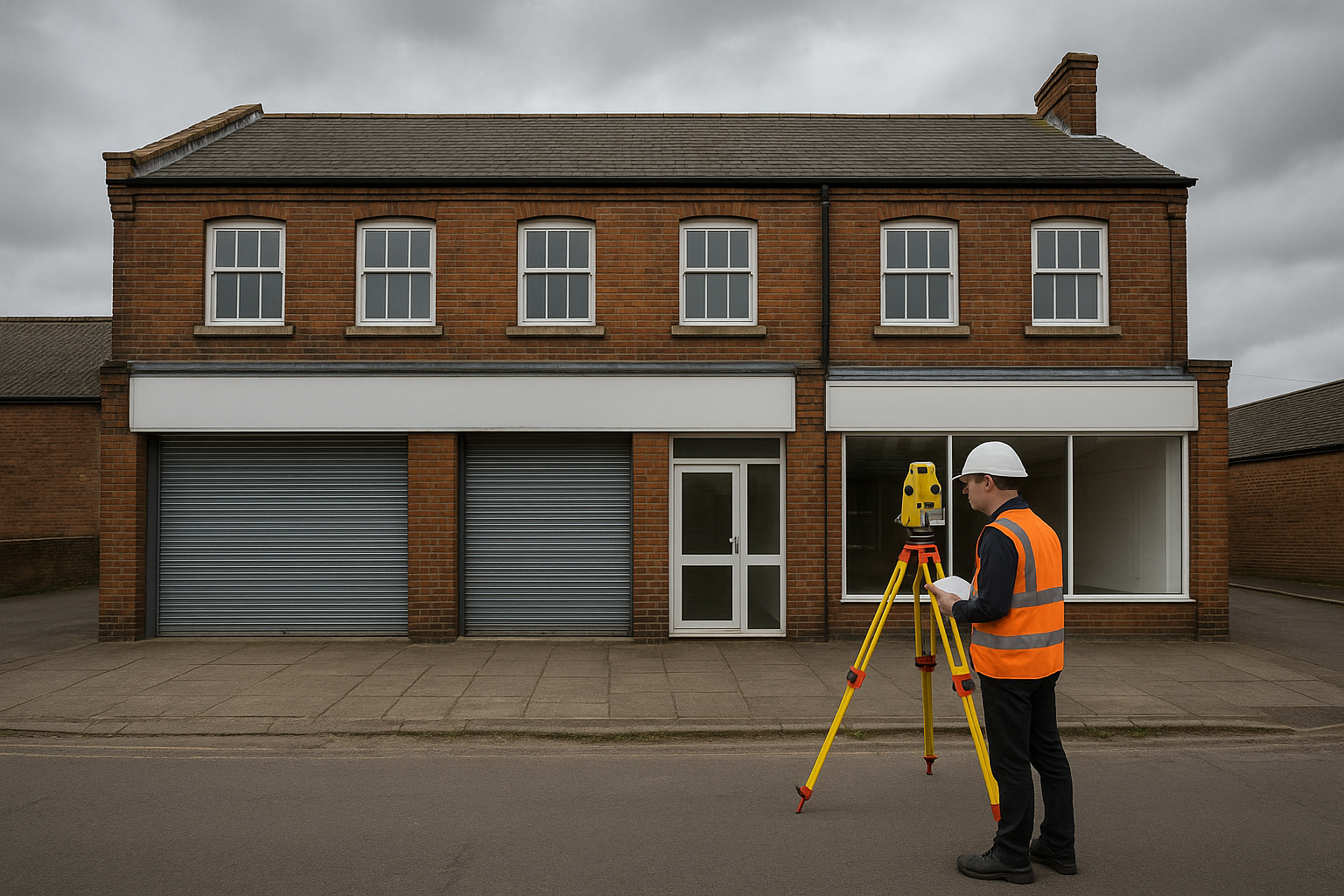
    • Shop with flat above: around £325 for a management survey
    • Warehouse or factory: £495–£695
    • Office or school at 1,000m²: £1,490–£2,980 for a refurbishment or demolition survey
    • Large commercial site over 1,000m²: can exceed £2,000 for refurbishment surveys

    These are indicative ranges. Always request a fixed quote for your specific scope.

    Age and Condition of the Building

    Properties built before 2000 are far more likely to contain ACMs. The older the building, the more materials require inspection and sampling, which drives up both surveyor time and laboratory costs.

    Damaged walls, patched ceilings, previous alterations, and hidden voids all slow access and increase the number of samples required. Buildings constructed after 1999 carry significantly lower risk and often require less intrusive investigation.

    Where a building shows signs of past undocumented work, surveyors may need to open up more areas than expected. Any making-good after sampling is typically charged separately from the survey fee itself.

    Accessibility of the Survey Area

    Confined lofts, cramped plant rooms, high ceilings, and cluttered spaces all add time and cost. Surveyors may need ladders, mobile access towers, or other equipment to reach suspect materials safely.

    In some cases, two surveyors are required for safety in confined spaces, which increases the day rate. Security protocols in schools, hospitals, or government buildings can also add time to the job.

    Areas that cannot be accessed at the time of survey are noted with a caveat in the report. This can increase your liability later if those areas are disturbed during works without further investigation.

    Number of Samples Required

    A refurbishment survey is intrusive by nature — surveyors must physically access and sample materials that could be disturbed during the planned works. This typically means more samples than a standard management survey.

    Smaller residential properties might require five to eight samples. Larger or older commercial buildings can need twenty or more. Each sample sent to a UKAS-accredited laboratory typically costs £30–£50 on top of the base survey fee.

    Good survey planning balances thoroughness with efficiency — taking enough samples to protect workers and meet legal requirements, without unnecessary expense.

    Types of Asbestos Surveys and What They Cost

    Choosing the right survey type matters both legally and financially. Each survey serves a different purpose, and using the wrong one can leave you exposed to risk or regulatory non-compliance.

    Asbestos Management Survey

    An asbestos management survey identifies and assesses ACMs during the normal occupation of a building. It is less intrusive than a refurbishment survey and is used to produce or update an asbestos register for ongoing management.

    Typical costs for a management survey:

    • 2–3 bedroom home: £150–£350, averaging around £250
    • Shop with flat above: £250–£400
    • Commercial property: £200–£600, averaging around £400
    • Office or school at 1,000m²: £695–£1,390

    A management survey does not satisfy the legal requirement before refurbishment or demolition work begins. For that, you need a more intrusive survey.

    Refurbishment and Demolition Surveys

    A full asbestos refurbishment survey is legally required before any work that could disturb the building fabric. This includes strip-outs, rewiring, pipework replacement, and structural alterations.

    The survey must cover all areas that will be affected by the planned works. Surveyors use intrusive methods — cutting, drilling, or lifting — to access concealed spaces and sample materials that would otherwise remain hidden.

    Typical refurbishment survey costs:

    • 1–2 bedroom flat: £195–£275
    • 2–3 bedroom house: £300–£400, averaging around £350
    • Warehouse: £495–£695
    • Office or school at 1,000m²: £1,490–£2,980

    For full demolition projects, a demolition survey is required. This is the most thorough survey type, covering the entire structure before it is torn down. Costs reflect the extensive sampling and access requirements involved.

    Re-inspection Surveys

    Once ACMs are identified and recorded, they must be monitored regularly — typically annually — to check their condition has not deteriorated. A re-inspection survey is less involved than a first-time intrusive survey, so costs are generally lower.

    Pricing depends on building size, number of floors, and how much has changed since the previous inspection. Many providers bundle re-inspections with existing management contracts to reduce cost and administrative burden.

    Typical Asbestos Refurbishment Survey Cost UK: A Summary by Property Type

    To give you a clear reference point, here is a consolidated view of typical costs across property types in the UK. These figures reflect refurbishment or demolition survey pricing. Management surveys for the same properties typically sit at the lower end or below these ranges.

    • Small residential flat (1–2 beds): £195–£275
    • Semi-detached house (2–3 beds): £250–£395
    • Detached house (3–5 beds): £395–£695
    • Small commercial unit or shop: £300–£500
    • Warehouse or factory: £495–£695
    • Office or school (approx. 1,000m²): £1,490–£2,980
    • Large commercial site (over 1,000m²): £2,000+

    Location also plays a role. Surveys in central London may carry a premium due to travel, parking, and access logistics. If you need an asbestos survey London, expect prices to reflect the city’s operating costs. The same applies if you are arranging an asbestos survey Manchester — regional pricing variations exist, though the core survey methodology remains consistent with HSE guidance under HSG264.

    Additional Costs to Factor Into Your Budget

    The base survey fee is rarely the only cost. Planning for these additional items early prevents budget surprises and keeps your project on schedule.

    Laboratory Testing and Sample Analysis

    Each sample collected during the survey must be analysed by a UKAS-accredited laboratory. Typical charges run from £30 to £50 per sample. You can also arrange standalone sample analysis if you have bulk materials to test separately.

    On a large commercial survey requiring 25 or more samples, laboratory costs alone can add £750–£1,250 to your bill. Some survey providers include a set number of samples within their quoted fee — others charge per sample on top of the base price. Always clarify this before accepting a quote.

    Check whether the laboratory is UKAS-accredited, as this is required under the Control of Asbestos Regulations. If an initial result is inconclusive, a re-test may be required, adding a small additional charge.

    Emergency and Out-of-Hours Services

    Urgent surveys — same-day attendance, next-day turnaround, or weekend working — carry a premium. This reflects the cost of deploying surveyors at short notice and processing laboratory results quickly.

    If your refurbishment programme is time-sensitive, it is worth booking as early as possible to avoid these additional charges. Where urgency is unavoidable, the premium can be justified if it keeps the project moving.

    Making Good After Intrusive Sampling

    Because refurbishment surveys involve drilling, cutting, or lifting materials to access concealed areas, there will be minor damage to make good afterwards. This is typically not included in the survey fee and should be factored into your project costs.

    The extent of making good depends on how many areas required intrusive access and the nature of the finishes involved. Agree this scope clearly with your surveyor before work begins.

    UKAS Accreditation and What It Means for Price

    Accreditation through UKAS — the United Kingdom Accreditation Service — is the recognised standard for asbestos surveying in the UK. Gaining and maintaining UKAS approval involves significant ongoing cost for surveying firms, including application fees, pre-assessment charges, initial assessment visits, and annual surveillance fees.

    These costs are reflected in the fees charged by accredited providers. However, using a UKAS-accredited company is not optional if you want your survey to be legally defensible and compliant with HSE guidance under HSG264.

    Non-accredited surveys carry real legal and financial risk. A cheaper quote from an unaccredited provider is not a saving — it is a liability.

    What Happens After the Survey: Removal and Remediation

    If the survey identifies ACMs that need to be removed before works can proceed, you will need to factor in asbestos removal costs separately. Removal is an entirely separate scope from the survey itself and is carried out by licensed contractors under strict HSE controls.

    The cost of removal depends on the type, quantity, and condition of the ACMs identified, as well as the accessibility of the affected areas. Having a thorough survey report gives removal contractors the information they need to quote accurately and work safely.

    Do not attempt to proceed with refurbishment work until any required removal has been completed and a clearance certificate issued. Doing so puts workers at risk and exposes you to serious legal liability.

    How to Get an Accurate Quote for Your Survey

    The more information you provide upfront, the more accurate and competitive your quotes will be. Vague briefs lead to inflated contingency pricing.

    Provide Detailed Property Information

    When contacting a surveying company, have the following ready:

    • Property type (residential, commercial, industrial)
    • Total floor area in square metres
    • Number of floors and rooms
    • Year of construction or approximate age
    • Any existing asbestos management survey reports or registers
    • Details of planned refurbishment works and which areas will be affected
    • Known access restrictions (security, occupied areas, confined spaces)
    • Full address and site contact details

    If you have floor plans, share them. They help surveyors estimate time on site and sample numbers more accurately.

    Always Use a UKAS-Accredited Provider

    Only commission surveys from companies with current UKAS accreditation. This ensures the survey methodology meets the standards set out in HSG264, the HSE’s guidance on asbestos surveys.

    Check that the company holds adequate Professional Indemnity insurance — ideally £5 million or more. Ask about their experience with your type of property. A firm that regularly surveys large commercial buildings will approach a complex office block very differently from one that primarily handles residential properties.

    Accredited providers can offer the full range of survey types you might need across a project lifecycle, from initial management surveys through to refurbishment, demolition, and re-inspection work.

    Compare Like-for-Like Quotes

    When comparing quotes, check what is and is not included:

    • Is laboratory analysis included, and if so, how many samples?
    • Are travel and mileage costs covered in the fee?
    • Does the quote include making good after intrusive sampling?
    • What is the turnaround time for the written report?
    • Is VAT included or excluded from the quoted figure?

    A quote that appears lower at first glance may carry significant additional charges once samples, travel, and report writing are added. Always request a fully itemised breakdown before committing.

    Why the Cheapest Quote Is Rarely the Best Value

    Cutting corners on a refurbishment survey is one of the costliest mistakes a property manager or contractor can make. If ACMs are missed because a survey was rushed, under-sampled, or carried out by an unaccredited operative, the consequences extend well beyond a failed inspection.

    Workers disturbing unidentified asbestos face serious health risks. Duty holders face enforcement action, prohibition notices, and potential prosecution under the Control of Asbestos Regulations. Remediation costs after an uncontrolled exposure incident dwarf any saving made on the original survey fee.

    A thorough, properly scoped survey from a UKAS-accredited firm is an investment in your project’s safety, legal compliance, and financial certainty. The asbestos refurbishment survey cost UK you pay upfront is negligible compared to the cost of getting it wrong.

    Get a Quote From Supernova Asbestos Surveys

    Supernova Asbestos Surveys has completed over 50,000 surveys across the UK, working with property managers, contractors, housing associations, local authorities, and private clients. Our surveyors are UKAS-accredited, experienced across all property types, and committed to accurate, legally compliant reporting.

    Whether you need a refurbishment survey for a single flat or a large commercial building, we provide fixed, transparent quotes with no hidden extras. We cover the whole of the UK, including London, Manchester, and everywhere in between.

    Call us on 020 4586 0680 or visit asbestos-surveys.org.uk to request a quote or speak to a surveyor directly.

    Frequently Asked Questions

    How much does an asbestos refurbishment survey cost in the UK?

    Costs vary by property size, age, and location. A small residential flat typically costs £195–£275, while a commercial office or school at around 1,000m² can range from £1,490 to £2,980. Laboratory sample analysis is often charged separately at £30–£50 per sample. Always request a fixed, itemised quote for your specific property and scope of works.

    Is a refurbishment survey legally required before building work?

    Yes. Under the Control of Asbestos Regulations, a refurbishment survey is legally required before any work that could disturb the fabric of a building constructed before 2000. This applies to strip-outs, rewiring, structural alterations, and similar activities. A management survey alone does not satisfy this requirement.

    What is the difference between a management survey and a refurbishment survey?

    A management survey is used to identify and monitor ACMs in an occupied building during its normal use. A refurbishment survey is more intrusive — surveyors physically access concealed areas and sample materials that could be disturbed during planned works. The two surveys serve different legal purposes and are not interchangeable.

    How long does an asbestos refurbishment survey take?

    A small residential property can typically be surveyed in two to four hours. Larger commercial buildings may require a full day or more, depending on the number of floors, rooms, and accessible areas. Turnaround time for the written report is usually three to five working days, though faster turnaround is available for urgent projects.

    Do I need to vacate the building for a refurbishment survey?

    In most cases, yes — at least for the areas being surveyed. Because refurbishment surveys are intrusive and involve drilling or cutting into materials that may contain asbestos, it is not safe or practical for occupants to remain in those areas during the inspection. Your surveyor will advise on the specific arrangements needed for your building and the planned scope of works.

  • Asbestos Refurbishment Survey vs Management Survey: Key Differences and When to Use Each

    Asbestos Refurbishment Survey vs Management Survey: Key Differences and When to Use Each

    Asbestos Management Survey vs Refurbishment Survey: Key Differences and When to Use Each

    If your building was constructed before 2000, there is a real chance it contains asbestos-containing materials (ACMs). Knowing which type of asbestos survey you need — and when — is not just good practice, it is a legal requirement under the Control of Asbestos Regulations.

    The two most common survey types are the asbestos management survey and the refurbishment survey. Confusing them — or using one when you should be using the other — can put workers and occupants at serious risk and leave you exposed to enforcement action from the HSE.

    Whether you are a duty holder, facilities manager, or property owner, this breakdown will tell you exactly what each survey involves, how they differ, and when each one is required.

    What Is an Asbestos Management Survey?

    A management survey is designed to locate ACMs that could be disturbed during the normal day-to-day use and routine maintenance of a building. It is the standard survey required for any non-domestic premises built before 2000 that is currently occupied or in regular use.

    The surveyor carries out a visual inspection across all accessible areas, collecting samples for laboratory analysis where materials are suspected to contain asbestos. Those results are compiled into an asbestos register, which then forms the backbone of your asbestos management plan.

    Crucially, a management survey is non-intrusive by design. Surveyors do not break into walls, lift floorboards, or open up sealed voids — they work within the limits of what can be safely accessed without causing damage. That means the building can remain in use throughout the survey process.

    What Areas Does a Management Survey Cover?

    A thorough asbestos management survey will inspect all accessible parts of the building, including:

    • All rooms, corridors, stairwells, and communal areas
    • Roof spaces, loft areas, and ceiling voids
    • Basements, cellars, and undercrofts
    • Service ducts, risers, and lift shafts
    • Soffits, fascias, gutters, and external elements
    • Underfloor areas where accessible, including beneath vinyl floor tiles
    • Plant rooms and boiler rooms

    Any area that cannot be safely accessed is recorded as a presumed ACM — meaning it is treated as containing asbestos until proven otherwise. This is a conservative but legally sound approach that protects everyone involved.

    What Is an Asbestos Refurbishment Survey?

    A refurbishment survey is a far more intrusive investigation. It is required before any planned refurbishment, renovation, or structural alteration work begins on a pre-2000 building.

    Where a management survey checks accessible surfaces, a refurbishment survey actively opens up the building fabric to find hidden ACMs. This means drilling through cladding, lifting floorboards, breaking into walls, and accessing concealed voids — wherever the planned works are due to take place.

    The goal is to identify every ACM that the project could disturb before any contractor sets foot on site. Under HSG264 and the Control of Asbestos Regulations, this type of survey is a legal requirement before refurbishment or demolition work begins. A management survey simply does not go far enough in these circumstances — it was never designed to.

    What Areas Does a Refurbishment Survey Cover?

    Unlike a management survey, an asbestos refurbishment survey does not cover the whole building by default. It focuses specifically on the areas affected by the planned works. However, if the entire building is being refurbished or demolished, the whole structure must be surveyed.

    The surveyor uses destructive inspection techniques to open up surfaces and access hidden spaces within the work zone. All materials encountered are sampled and sent for laboratory analysis, and the resulting report must be reviewed and acted upon before any work begins.

    Because the survey involves physical disturbance of the building fabric, the areas being surveyed must be vacated. Disturbing potential ACMs during the survey itself carries a genuine risk of fibre release — protecting everyone on site is not optional, it is a legal obligation.

    Key Differences Between the Two Survey Types

    Both survey types are governed by the Control of Asbestos Regulations and follow the HSE guidance set out in HSG264, but they serve very different purposes. Here is a clear side-by-side comparison:

    • Purpose: Management surveys support ongoing safe occupation; refurbishment surveys protect workers before building work starts
    • Intrusiveness: Management surveys are non-intrusive; refurbishment surveys involve destructive inspection techniques
    • Scope: Management surveys cover the whole accessible building; refurbishment surveys focus on the planned work zone
    • Occupancy during survey: Buildings can remain occupied during a management survey; work areas must be vacated for a refurbishment survey
    • Output: Management surveys produce an asbestos register and inform a management plan; refurbishment surveys determine whether asbestos removal or encapsulation is needed before work proceeds
    • Trigger: Management surveys are required for occupied non-domestic premises; refurbishment surveys are triggered by planned works

    One point worth stressing: having an existing management survey does not mean you can skip a refurbishment survey. The two are not interchangeable. Relying on a management survey before structural work begins is both a legal failing and a serious safety risk.

    When Do You Need an Asbestos Management Survey?

    If you are the duty holder for a non-domestic building constructed before 2000 — whether that is an office, school, warehouse, or retail unit — you are legally required to manage the risk from asbestos. An asbestos management survey is the starting point for meeting that duty.

    You should commission a management survey when:

    1. You take on responsibility for a pre-2000 building with no existing asbestos register
    2. An existing asbestos register is out of date or incomplete
    3. The building use changes significantly, bringing new maintenance activities
    4. Wear, damage, or deterioration is observed in areas that may contain ACMs
    5. You are preparing to let or sell a commercial property

    Once the survey is complete, the findings feed directly into your asbestos management plan. This living document sets out how identified ACMs will be monitored, what controls are in place, who is responsible, and when the plan will be reviewed. It is not a one-off exercise — it needs to be kept current and revisited whenever circumstances change.

    A practical example: a facilities manager at a 1980s office block commissions a management survey before onboarding a new maintenance contractor. The asbestos register identifies textured coating in several meeting rooms and pipe lagging in the basement. These areas are labelled, the plan is updated, and the contractor is fully briefed before any drilling or fixing work takes place. That is the system working as it should.

    When Do You Need a Refurbishment or Demolition Survey?

    Any time planned work will disturb the fabric of a pre-2000 building, you need an asbestos refurbishment survey — or, where the building is being fully demolished, a demolition survey. This is not discretionary. HSG264 is explicit: the survey must be completed, and the findings acted upon, before work starts.

    Common triggers for a refurbishment survey include:

    • Loft conversions or roof alterations
    • Kitchen or bathroom refits
    • Removal or alteration of internal walls
    • Replacement of boilers, pipework, or heating systems
    • Installation of new electrical wiring or data cabling
    • Window or door replacements that involve opening up surrounding structure
    • Suspended ceiling removals
    • Extensions or structural additions

    The survey scope must match the project scope. Before the surveyor attends, you should have clear drawings or descriptions of exactly where the works will take place. The surveyor then focuses their intrusive inspection on those specific zones, collecting samples and producing a detailed report with risk ratings, photographs, and site plans.

    Once the report is issued, any ACMs in the work area must be either safely removed or encapsulated before trades begin. Do not allow contractors to start work while ACMs remain in situ — this is a legal offence and risks serious harm from airborne asbestos fibres.

    The Legal Framework: What the Regulations Require

    Both survey types sit within the framework of the Control of Asbestos Regulations. These regulations place a duty on those responsible for non-domestic premises to manage asbestos risk — and that duty begins with knowing what is there.

    The HSE’s HSG264 guidance document sets out the standards surveyors must follow. It defines the two main survey types, specifies how they should be conducted, and makes clear that the duty holder is responsible for ensuring surveys are carried out by competent, appropriately accredited personnel.

    Key legal obligations for duty holders include:

    • Maintaining an up-to-date asbestos register for all non-domestic premises built before 2000
    • Ensuring a management survey is in place for occupied buildings
    • Commissioning a refurbishment survey before any work that could disturb ACMs
    • Making asbestos information available to contractors and maintenance workers before they begin work
    • Reviewing and updating the asbestos management plan regularly

    Failure to comply can result in enforcement action by the HSE, prohibition notices, and significant fines. More importantly, failure puts lives at risk. Asbestos-related diseases — including mesothelioma and asbestosis — are irreversible and fatal. There is no safe threshold of exposure.

    Why Choosing a Competent Surveyor Matters

    The quality of your asbestos management survey is only as good as the person carrying it out. The HSE is clear that surveys must be conducted by competent surveyors — individuals with the right qualifications, experience, and impartiality to produce reliable results.

    When selecting a surveying company, look for:

    • UKAS accreditation — the United Kingdom Accreditation Service accredits surveying bodies and the laboratories that analyse fibre samples. This is the gold standard for quality assurance in asbestos surveying.
    • BOHS P402 qualification — the British Occupational Hygiene Society’s P402 certificate is the recognised qualification for asbestos surveyors in the UK.
    • Clear, detailed reports — a good report includes site plans, photographs, sample results, risk ratings, and actionable recommendations.
    • Impartiality — your surveyor should have no financial interest in the outcome. A company that both surveys and removes asbestos should have clear separation between those functions.
    • Responsive communication — you need to understand the report and be able to ask questions. A surveyor who cannot explain their findings clearly is not serving you well.

    Do not be tempted to cut corners on surveyor selection. A poorly conducted survey leaves gaps in your asbestos register, exposes workers to hidden risks, and may not stand up to scrutiny if an incident occurs or the HSE investigates.

    Asbestos Surveys Across the UK

    Supernova Asbestos Surveys operates nationwide, with local expertise across major cities and regions. Whether you need an asbestos survey London, an asbestos survey Manchester, or an asbestos survey Birmingham, our qualified surveyors are ready to respond quickly, with 24-hour report turnaround as standard.

    With over 50,000 surveys completed across the UK, we understand the pressures facing duty holders, property managers, and contractors. We provide UKAS-accredited surveys, BOHS P402-qualified surveyors, and clear reports that give you exactly what you need to manage risk and stay compliant — without the jargon.

    Ready to Book Your Survey?

    Whether you need an asbestos management survey for an occupied building or a refurbishment survey ahead of planned works, Supernova Asbestos Surveys can help. We provide fast, accurate, accredited surveys with no delays and no unnecessary complexity.

    Call us on 020 4586 0680 for a quote in 15 minutes, or visit asbestos-surveys.org.uk to get a free quote online today.

    Frequently Asked Questions

    What is an asbestos management survey and who needs one?

    An asbestos management survey is a non-intrusive inspection of a building to locate ACMs that could be disturbed during normal occupation or routine maintenance. It is a legal requirement for duty holders responsible for non-domestic premises built before 2000. This includes offices, schools, warehouses, retail units, and any other non-domestic building in regular use.

    Can I use a management survey instead of a refurbishment survey before building work?

    No. A management survey and a refurbishment survey are not interchangeable. A management survey only covers accessible areas and is not designed to identify hidden ACMs that could be disturbed during structural work. Under HSG264 and the Control of Asbestos Regulations, a refurbishment survey — or demolition survey where applicable — is legally required before any work that will disturb the building fabric begins.

    How long does an asbestos management survey take?

    The duration depends on the size and complexity of the building. A small commercial unit might be surveyed in a few hours, while a large multi-storey building could take a full day or more. The building can remain occupied throughout, which minimises disruption. At Supernova Asbestos Surveys, reports are typically issued within 24 hours of the survey being completed.

    What happens if asbestos is found during a refurbishment survey?

    If ACMs are identified in the planned work zone, they must be either safely removed or encapsulated before any trades begin. The method depends on the type of asbestos, its condition, and the nature of the works. Your surveyor’s report will include risk ratings and recommendations to guide next steps. Work must not start while ACMs remain in situ — doing so is a legal offence under the Control of Asbestos Regulations.

    How often should an asbestos management survey be reviewed?

    An asbestos register and management plan should be reviewed regularly — at minimum annually, and whenever there is a change in building use, a new maintenance regime, or visible deterioration of known ACMs. The asbestos management plan is a living document, not a one-off exercise. Any changes to the building or its use may require an updated or supplementary survey to ensure the register remains accurate and legally compliant.

  • Asbestos Refurbishment and Demolition Survey Explained: What You Need to Know Before Starting Construction

    Asbestos Refurbishment and Demolition Survey Explained: What You Need to Know Before Starting Construction

    Before the First Drill Goes In: What an Asbestos Refurbishment Survey Actually Covers

    Strip out a building without the right checks and you can turn a routine project into a serious health crisis and a legal headache. An asbestos refurbishment survey is the step that reveals what is hidden behind walls, above ceilings, under floors and inside service risers before a single contractor arrives on site.

    If your property was built before 2000 and you are planning anything beyond light decorative work, you need clear information before works begin. That means identifying asbestos-containing materials likely to be disturbed, planning the right controls and avoiding delays, enforcement action and unsafe fibre exposure.

    What Is an Asbestos Refurbishment Survey?

    An asbestos refurbishment survey is a fully intrusive inspection carried out before refurbishment work starts. Its purpose is to locate and identify, as far as reasonably practicable, all asbestos-containing materials in the area where planned works will take place.

    Unlike a routine inspection, this survey does not stop at what is visible. Surveyors may need to open up boxed-in pipework, lift floor finishes, access ceiling voids, inspect behind wall linings and enter other concealed areas that could be affected by the project.

    The survey follows the approach set out in HSG264 and supports compliance with the Control of Asbestos Regulations. In practical terms, it helps dutyholders, landlords, managing agents, contractors and property managers make safe decisions before any refurbishment starts.

    What the Survey Is Designed to Achieve

    • Find asbestos in the work area before it is disturbed
    • Identify the type, location and extent of suspect materials
    • Allow removal or other control measures to be planned properly
    • Reduce the risk of accidental fibre release during works
    • Create a clear record for contractors and project teams

    If you are unsure whether your project needs this level of inspection, the survey scope should be set around the exact works planned — not estimated loosely and adjusted later.

    When an Asbestos Refurbishment Survey Is Required

    An asbestos refurbishment survey is required before any work that will disturb the fabric of a building in areas that may contain asbestos. This applies to partial refurbishment as well as larger strip-out projects. It is not limited to major commercial redevelopments — smaller jobs trigger the same requirement if they involve intrusive work.

    asbestos refurbishment survey - Asbestos Refurbishment and Demolition Su

    Typical Projects That Need a Survey

    • Kitchen and bathroom refits
    • Loft conversions
    • Office fit-outs and partition removal
    • Heating, electrical or plumbing upgrades
    • Floor replacement where underlying materials will be disturbed
    • Window, door or roof alterations
    • Extensions and structural changes

    If the building was constructed before 2000, asbestos must be considered. You cannot assume previous works removed it, and you cannot rely on guesswork from contractors on site.

    For projects involving whole-building demolition rather than refurbishment, the correct requirement is a demolition survey. The scope is different because demolition aims to identify asbestos throughout the entire structure, not just within a defined refurbishment zone.

    How an Asbestos Refurbishment Survey Differs from a Management Survey

    This is where many projects go wrong. A management survey is not a substitute for an asbestos refurbishment survey. They serve entirely different purposes and confusing the two creates real risk.

    A management survey is designed for normal occupation and routine maintenance. It is usually non-intrusive or only lightly intrusive, and its purpose is to help manage asbestos during everyday use of the building. It does not go far enough for intrusive works.

    By contrast, an asbestos refurbishment survey is intrusive by design. It is carried out specifically because planned works will break into the building fabric and could disturb hidden materials.

    Key Differences at a Glance

    • Management survey: for occupation and routine maintenance — Refurbishment survey: for planned intrusive works
    • Management survey: mainly inspects accessible areas — Refurbishment survey: opens up hidden areas likely to be disturbed
    • Management survey: often carried out in occupied premises — Refurbishment survey: usually requires the survey area to be vacant
    • Management survey: lower level of physical intrusion — Refurbishment survey: may involve breaking through finishes and accessing voids

    If you only need to manage asbestos during day-to-day occupation, a management survey may be the correct option. If walls, ceilings, floors or services are being opened up, you need the more intrusive survey.

    What Happens During an Asbestos Refurbishment Survey

    An asbestos refurbishment survey is planned around the exact scope of works. Experienced surveyors need to know what is being removed, altered, upgraded or exposed so the inspection matches the actual project risk.

    asbestos refurbishment survey - Asbestos Refurbishment and Demolition Su

    1. Defining the Scope

    The first step is understanding the planned works in detail — which rooms, floors, risers, voids and service routes will be affected. The more accurate your project information, the more useful the survey report will be. If the scope changes later, further inspection may be needed.

    2. Intrusive Inspection

    Surveyors inspect the relevant areas using intrusive methods. Depending on access and construction, this may involve lifting panels, opening boxing, breaking through wall finishes, accessing ceiling voids or checking beneath floor coverings. The aim is to reach materials that would otherwise stay hidden until contractors disturb them.

    3. Sampling and Analysis

    Where suspect materials are found, samples are taken safely and sent for laboratory analysis. This confirms whether asbestos is present and, where possible, identifies the type of asbestos-containing material found.

    4. Reporting

    You receive a report setting out the findings, including material descriptions, locations, sample results, photographs where appropriate and recommendations for next steps. The report should be clear enough for project teams to act on without guesswork.

    5. Action Before Works Start

    If asbestos is identified in the refurbishment area, it must be managed properly before work proceeds. That may involve removal, encapsulation or redesigning the works to avoid disturbance, depending on the circumstances and the material involved.

    Where removal is required, use competent contractors experienced in asbestos removal and make sure the process is planned before the main trade contractors mobilise.

    Why the Survey Area Usually Needs to Be Vacant

    An asbestos refurbishment survey is intrusive and can disturb materials during the inspection itself. For that reason, the survey area generally needs to be unoccupied and clear of normal users while the work is carried out. This is not a paperwork formality — it is a practical safety measure based on the nature of the inspection.

    Why Vacancy Matters

    • Surveyors may need to break into finishes and enclosed spaces
    • Dust and debris can be generated during access works
    • Occupied areas make full inspection harder and less reliable
    • Restricted access increases the chance of missing asbestos

    If only part of the building is being refurbished, the survey can often be limited to that zone. In mixed-use or occupied properties, segregation and access planning become especially important.

    Practical tip: before booking the survey, confirm who will provide keys, alarm codes, plant room access and permission to enter locked or tenanted areas. Access problems are one of the most common causes of incomplete surveys and project delays.

    What Kinds of Asbestos-Containing Materials May Be Found

    An asbestos refurbishment survey can uncover a wide range of materials — some obvious, some completely hidden. The exact findings depend on the age, use and construction of the building.

    Common Examples Include

    • Asbestos insulating board in partitions, soffits, ceiling tiles and service risers
    • Pipe insulation and thermal lagging
    • Textured coatings on ceilings and walls
    • Floor tiles and bitumen adhesives
    • Cement sheets, panels, flues and roof products
    • Toilet cisterns, bath panels and boxing
    • Gaskets, rope seals and plant-related components
    • Sprayed coatings and insulation materials in older service areas

    Some of these materials are higher risk than others when disturbed. That is why sampling, accurate identification and proper recommendations matter. Risk cannot be judged reliably from appearance alone.

    Legal Responsibilities for Property Owners and Dutyholders

    If you control maintenance or refurbishment in non-domestic premises, you have legal responsibilities under the Control of Asbestos Regulations. Domestic premises can also fall within the regulations where common parts, contractor work areas or shared services are involved.

    The key point is straightforward: asbestos must be identified and managed before work starts. If refurbishment could disturb asbestos, an appropriate survey is expected.

    Your Practical Responsibilities

    1. Identify whether the building age and construction suggest asbestos may be present
    2. Define the exact scope of planned works
    3. Arrange the correct survey before intrusive work begins
    4. Share the survey findings with contractors and relevant parties
    5. Plan removal or control measures where asbestos is identified
    6. Keep records and update asbestos information after works are complete

    HSE guidance is clear on the need for suitable information before work starts. A contractor saying they will “be careful” is not a replacement for an asbestos refurbishment survey.

    How to Prepare for an Asbestos Refurbishment Survey

    A little preparation makes the survey faster, safer and more useful. The best reports come from well-scoped projects with proper access arrangements in place before the surveyor arrives.

    Before the Surveyor Arrives

    • Provide plans, sketches or a written description of the proposed works
    • Mark the exact rooms and elements being refurbished
    • Confirm whether the area will be vacant on the survey date
    • Arrange access to locked rooms, risers, lofts, basements and roof spaces
    • Share any previous asbestos records or historic survey reports
    • Tell the surveyor about fragile finishes, restricted access or live services

    Practical tip: if your contractor has already stripped out parts of the area, say so. Partial strip-out can affect what the surveyor can inspect and what evidence remains.

    What the Survey Report Should Tell You

    A good asbestos refurbishment survey report should do more than list sample results. It should help you make decisions and plan the next stage of the project.

    You Should Expect the Report to Include

    • The scope and limitations of the survey
    • Areas accessed and any exclusions
    • Descriptions and locations of suspect or confirmed asbestos-containing materials
    • Laboratory results for samples taken
    • Photographs or marked plans where helpful
    • Recommendations for removal, encapsulation or further action

    Read the limitations section carefully. If an area could not be accessed, that does not mean it is asbestos-free. It means more inspection may be needed before works extend into that area.

    What Happens After the Asbestos Refurbishment Survey

    Once the asbestos refurbishment survey is complete, the next step is acting on the findings. This is where project planning matters most.

    If No Asbestos Is Found

    You can proceed with greater confidence in the surveyed area, provided the scope of works has not changed and there were no significant exclusions in the report.

    If Asbestos Is Identified

    You need to decide how it will be managed before the refurbishment starts. That may involve removal by a competent contractor, sequencing changes, isolation of certain areas or additional controls around the planned works.

    Do not bury the report in a project folder. Issue it to the principal contractor, relevant trades and anyone pricing or planning the work. The survey only protects people if the information is actually used.

    After Remedial Works

    Once asbestos has been removed or managed, your asbestos records should be updated. For buildings that remain in use, ongoing monitoring may still be needed through a re-inspection survey where asbestos remains in place and is being managed rather than removed.

    Common Mistakes That Cause Delays and Extra Cost

    Most asbestos problems on refurbishment projects are avoidable. They typically come from poor planning rather than bad luck.

    Mistakes to Avoid

    • Booking a management survey when intrusive works are planned. The two surveys have different purposes and the management survey will not satisfy the legal requirement for refurbishment works.
    • Scoping the survey too narrowly. If the works expand during the project, additional inspection may be needed before those areas can proceed safely.
    • Failing to arrange access. Locked rooms, missing keys and restricted risers lead to exclusions in the report and gaps in the information available to contractors.
    • Not sharing the report with the contractor. The survey exists to protect workers. If the findings are not communicated, the risk remains.
    • Assuming a clean survey from years ago still applies. If the building has been altered, or the scope of works has changed, an earlier survey may not cover the current risk areas.
    • Starting works before asbestos is managed. Discovering asbestos after works have begun is significantly more disruptive and costly than identifying it beforehand.

    Asbestos Refurbishment Surveys Across the UK

    Supernova Asbestos Surveys carries out asbestos refurbishment surveys across the country, covering commercial, residential, industrial and public sector properties of all types and sizes.

    Whether you need an asbestos survey London for an office fit-out in the City, an asbestos survey Manchester ahead of a retail refit, or an asbestos survey Birmingham before a residential conversion, the process and the legal requirement are the same. The survey must be intrusive, properly scoped and completed before works start.

    Our surveyors are BOHS-qualified and experienced across a wide range of building types and construction methods. Reports are clear, actionable and structured to support your project team from the moment they land in your inbox.

    Get Your Asbestos Refurbishment Survey Booked

    Supernova Asbestos Surveys has completed over 50,000 surveys nationwide. We work with property managers, principal contractors, housing associations, local authorities and private clients to make sure refurbishment projects start on safe, legally sound ground.

    If you are planning refurbishment works on a pre-2000 property, do not wait until contractors are on site to think about asbestos. Book your survey early, scope it properly and make sure the findings are shared with everyone who needs them.

    Call us on 020 4586 0680 or visit asbestos-surveys.org.uk to get a quote or discuss your project requirements with our team.

    Frequently Asked Questions

    How long does an asbestos refurbishment survey take?

    The duration depends on the size and complexity of the refurbishment area, the level of access available and the construction of the building. A single room or small flat may take a couple of hours. A multi-floor commercial refurbishment may require a full day or more. Your surveyor should be able to give you a realistic timeframe once the scope of works has been discussed.

    Do I need an asbestos refurbishment survey for a domestic property?

    The Control of Asbestos Regulations places the primary duty on non-domestic premises, but contractors working in domestic properties are still legally required to manage the risk of asbestos exposure. If you are having intrusive work carried out in a pre-2000 home — such as a loft conversion, kitchen refit or structural alteration — an asbestos refurbishment survey is strongly advisable and many contractors will require one before they start.

    Can I use an existing asbestos management survey for my refurbishment project?

    No. A management survey is designed for routine occupation and is typically non-intrusive or only lightly intrusive. It does not meet the requirements for intrusive refurbishment works. HSG264 and the Control of Asbestos Regulations are clear that a separate, intrusive survey is required before work that will disturb the building fabric. Using a management survey in place of a refurbishment survey is a common and potentially costly mistake.

    What happens if asbestos is found during the survey?

    Finding asbestos does not automatically stop your project. It means the material needs to be managed appropriately before the relevant works proceed. Depending on the type, condition and location of the material, options may include removal, encapsulation or redesigning the works to avoid disturbing it. A competent asbestos contractor should be engaged to advise on and carry out any remediation work before main contractors begin.

    How much does an asbestos refurbishment survey cost?

    Cost varies depending on the size of the property, the scope of the refurbishment works, the level of access required and the location. Smaller, well-defined projects typically cost less than large multi-floor surveys requiring extensive intrusive access. The cost of the survey is almost always significantly lower than the cost of discovering asbestos mid-project and having to halt works, arrange emergency remediation and reschedule contractors. Contact Supernova Asbestos Surveys on 020 4586 0680 for a project-specific quote.

  • asbestos refurbishment survey cardiff

    asbestos refurbishment survey cardiff

    Planned works in an older building can go off track very quickly when hidden asbestos is discovered after contractors have started. If you need an asbestos survey Cardiff property managers can rely on, the key is getting the right survey at the right time, before the building fabric is disturbed and before risk turns into delay, cost and disruption.

    Across Cardiff, that matters more than many duty holders realise. The city has a wide mix of housing, offices, schools, healthcare premises, industrial units and public buildings, and many were built or altered when asbestos-containing materials were commonly used. If a property was constructed before 2000, asbestos may be present unless a suitable survey shows otherwise.

    Why an asbestos survey Cardiff properties need should never be left too late

    Asbestos is still found in a wide range of materials. Common examples include textured coatings, asbestos insulating board, floor tiles, cement sheets, soffits, ceiling tiles, pipe lagging, boxing and materials hidden in service risers or voids.

    The issue is not simply that asbestos exists. The real danger appears when materials are drilled, cut, broken, sanded, stripped out or otherwise disturbed, releasing fibres that people may inhale.

    That is why an asbestos survey Cardiff duty holders arrange early is so valuable. It gives you practical information before maintenance, refurbishment or demolition starts, helping you protect occupants, staff and contractors while staying aligned with the Control of Asbestos Regulations, HSG264 and relevant HSE guidance.

    • Protect occupants, visitors and workers
    • Reduce the chance of accidental fibre release
    • Avoid stop-start projects and emergency decisions on site
    • Support your asbestos register and management plan
    • Give contractors the information they need before work begins
    • Help you plan remedial works and access arrangements properly

    Which type of asbestos survey Cardiff buildings may need

    Not every building needs the same survey. The right choice depends on how the property is used, whether it is occupied, and what work is planned.

    Management survey

    For occupied buildings, the starting point is often a management survey. This survey is designed to locate, as far as reasonably practicable, asbestos-containing materials that could be damaged or disturbed during normal occupation, routine maintenance or minor works.

    An asbestos management survey is commonly required for offices, schools, retail units, communal areas in blocks of flats, warehouses, healthcare premises and public buildings. For many duty holders, it forms the basis of the asbestos register used to manage risk on an ongoing basis.

    Refurbishment survey

    If planned works will disturb the building fabric, a refurbishment survey is usually required before work starts. This applies to projects such as rewiring, replumbing, kitchen and bathroom replacements, fit-outs, strip-outs, structural alterations and major upgrades.

    An asbestos refurbishment survey is intrusive by design. Surveyors may need to open up floors, ceilings, wall linings, boxing and voids in the affected areas to identify hidden materials that would not be visible during a standard inspection.

    Demolition survey

    Where a building, or part of one, is due to be demolished, a demolition survey is needed. This is the most intrusive survey type and aims to locate all asbestos-containing materials, so they can be managed or removed before demolition proceeds.

    Re-inspection survey

    If asbestos has already been identified and is being managed in place, a re-inspection survey helps monitor its condition over time. This is a practical way to keep records current and demonstrate that asbestos management is active rather than forgotten.

    Who should arrange an asbestos survey Cardiff service?

    In many cases, the answer is simple: the person or organisation responsible for the premises. If you manage non-domestic property, or the common parts of residential buildings, you may have a duty to manage asbestos where you control maintenance, repair or access.

    asbestos survey cardiff - asbestos refurbishment survey cardiff

    You are likely to need an asbestos survey Cardiff service if you are responsible for:

    • Commercial premises
    • Schools, colleges and nurseries
    • Healthcare buildings and surgeries
    • Retail units and shopping parades
    • Warehouses and industrial premises
    • Communal areas in blocks of flats
    • Supported accommodation and hostels
    • Public buildings and community spaces
    • Mixed-use developments

    This often applies to property managers, facilities managers, housing associations, landlords, local authorities, estate teams and managing agents. A suitable survey helps you understand where asbestos is located, what condition it is in and what information contractors need before carrying out work.

    One point is worth being clear about. A management survey is not a substitute for intrusive surveying. If works will disturb the structure or fabric of the building, the correct refurbishment or demolition survey must be completed first.

    Asbestos survey Cardiff advice for repairs and day-to-day property management

    Housing repairs and routine maintenance are among the most common points where asbestos risk gets missed. A job that looks minor on paper can still disturb asbestos if it involves drilling, lifting floor coverings, removing panels, chasing walls or accessing hidden service routes.

    Before raising or attending repairs in a pre-2000 property, check whether there is an up-to-date asbestos register and whether the affected area has been surveyed. If the information is missing, limited or unclear, pause the work and verify the risk before anyone starts.

    Practical steps for repairs teams

    • Review the asbestos register before scheduling work
    • Flag known or presumed asbestos-containing materials on job orders
    • Brief operatives and contractors before attendance
    • Stop work immediately if suspect materials are uncovered
    • Arrange sampling or the correct survey before continuing
    • Update records once findings are confirmed

    This approach is especially useful in void properties, responsive maintenance, cyclical programmes and estate-wide repairs. It reduces rushed decisions on site and helps protect tenants, operatives and contractors.

    Leaseholders and alterations

    Leaseholder alterations often create confusion about responsibility. In general, the party controlling the relevant area should make sure asbestos risk is assessed properly.

    For communal areas, that usually sits with the freeholder, managing agent or other duty holder. If a leaseholder is planning intrusive works inside the flat, they should not rely on a survey of communal parts alone. The affected internal areas may need a dedicated survey before work begins.

    For building managers, the practical steps are straightforward:

    • Keep communal asbestos records current
    • Provide relevant information when works are proposed
    • Require suitable surveys before approving intrusive alterations
    • Make sure contractors receive asbestos information in advance

    Contractor communication

    Contractors also have responsibilities. Anyone carrying out work liable to disturb asbestos must have suitable information before they start.

    If that information is not available, the safe response is to stop and assess the risk properly. Good asbestos management depends on communication, not assumptions, especially in mixed-tenure blocks and large property portfolios where multiple contractors may attend over time.

    Supported housing, independent living and specialist accommodation

    Buildings used for support services need careful asbestos planning because they often remain occupied while maintenance and improvement works continue. The same applies to independent living schemes, homelessness accommodation and specialist housing where disruption can affect vulnerable residents.

    asbestos survey cardiff - asbestos refurbishment survey cardiff

    Supported accommodation

    Support providers need survey information that is clear and practical. Staff should understand where asbestos is, what condition it is in and what restrictions apply before arranging repairs, access works or room upgrades.

    • Keep the asbestos register accessible to estates and maintenance teams
    • Brief staff on what to do if damage is reported
    • Check survey coverage before service installations or room alterations
    • Arrange intrusive surveys before planned improvement works

    Independent living schemes

    Independent living buildings often contain older service cupboards, risers, plant rooms and communal spaces where asbestos-containing materials may still be present. A management survey can identify risks in occupied areas, while targeted refurbishment surveys are needed before adaptations, heating upgrades, rewiring or lift works.

    Because residents may remain in occupation, timing matters. Survey early, isolate affected areas where needed and make sure contractors follow the report recommendations precisely.

    Homelessness services and high-turnover accommodation

    High-turnover accommodation can involve urgent repairs and frequent room changes. That combination increases the chance of accidental disturbance if asbestos records are incomplete or out of date.

    An effective asbestos survey Cardiff strategy for these settings should include baseline surveys, clear repair procedures and rapid escalation when suspect materials are found. Speed matters, but control matters more.

    Specialist and social housing

    Specialist and social housing providers often manage properties of very different ages and construction types. Standard procedures help, but each building still needs the right level of survey evidence for its condition and planned use.

    Where communal areas are involved, the duty to manage remains central. Where intrusive works are planned inside individual dwellings, surveys must be arranged before the fabric is disturbed.

    Planning refurbishment, redevelopment and demolition projects properly

    Across Cardiff, many projects involve conversion, extension, regeneration or redevelopment of existing buildings. Even where the finished scheme will look entirely new, asbestos risk in the original structure must be identified and dealt with first.

    Developers, principal contractors and project managers should build asbestos surveying into the earliest stages of planning. Leaving it until procurement or mobilisation is one of the most common causes of delay.

    A sensible process before work starts

    1. Review the age and history of the building
    2. Identify the exact scope of planned works
    3. Commission the correct survey for the affected areas
    4. Allow time for sampling, analysis and reporting
    5. Assess whether removal is required before the main works
    6. Share findings with designers, contractors and duty holders
    7. Update pre-construction information accordingly

    If asbestos-containing materials are found in the work area, they may need to be removed before the project proceeds. Depending on the material and condition, that may involve licensed or non-licensed work, so early planning is always the safer route.

    Where removal is needed, using a specialist provider for asbestos removal helps keep the project compliant and properly sequenced.

    What happens during an asbestos survey Cardiff clients book?

    A professional asbestos survey Cardiff clients receive should be clear, evidence-based and usable on site. The exact method depends on the survey type, but the process usually includes inspection, sampling, assessment and reporting.

    Inspection and access

    For management surveys, the surveyor inspects accessible areas without causing unnecessary damage. For refurbishment and demolition surveys, access is more intrusive because hidden materials in the affected areas must be identified.

    Good access arrangements make a real difference. If plant rooms, risers, roof voids, locked cupboards or vacant units are inaccessible, the report may contain limitations that leave you with unanswered questions.

    Sampling and analysis

    Where suspect materials are found, samples may be taken and sent for analysis. Sampling helps confirm whether a material contains asbestos and supports more accurate recommendations.

    In some cases, materials may be presumed to contain asbestos if sampling is not appropriate at that stage. That can still be useful for immediate risk management, but confirmed analysis is often needed before intrusive works proceed.

    Assessment and reporting

    The final report should identify the location, extent and condition of asbestos-containing materials, or presumed materials, in the surveyed areas. It should also explain any limitations, provide material assessments where appropriate and include recommendations for management, further action or removal.

    A good report is practical. It should help the person on site make safe decisions rather than leaving them to interpret vague wording.

    How to prepare for an asbestos survey in Cardiff

    If you want your survey to be useful first time, preparation matters. Many survey delays are caused by poor access, incomplete information or uncertainty about the scope of work.

    Before booking an asbestos survey Cardiff property teams should gather the basics:

    • The full property address and building type
    • The age of the property, if known
    • Details of planned works or maintenance activity
    • Which areas need to be surveyed
    • Whether the building is occupied or vacant
    • Any access issues, permits or security requirements
    • Existing asbestos records or historic survey reports

    If refurbishment works are planned, be specific about the areas affected. Saying a building is being refurbished is not enough. Surveyors need to know whether the works involve kitchens, bathrooms, risers, ceilings, roof coverings, M&E routes or structural elements, because the survey scope must match the actual disturbance.

    Common mistakes that lead to asbestos problems

    Most asbestos issues in property management are not caused by rare events. They usually come from ordinary mistakes that could have been avoided with better planning.

    • Assuming a previous survey covers all areas and all future works
    • Relying on a management survey for intrusive refurbishment
    • Sending contractors in before asbestos information is checked
    • Ignoring inaccessible areas and hoping they are not affected
    • Failing to update the asbestos register after repairs or removal
    • Not sharing survey findings with the people doing the work
    • Treating suspect materials as harmless because they look intact

    If you manage multiple properties, standardise your process. Make asbestos checks part of every repair, void, fit-out and capital works workflow rather than leaving it to individual judgement.

    Choosing the right survey provider in Cardiff

    Not all survey arrangements are equal. The best outcome comes from using a provider that understands the property type, the scope of works and the practical pressures around access, occupation and project timescales.

    When comparing providers, ask sensible questions:

    • Do they follow HSG264 and relevant HSE guidance?
    • Can they explain which survey type you actually need?
    • Will the report be clear enough for contractors and duty holders to use?
    • Can they deal with occupied buildings and phased access?
    • Do they understand housing, education, healthcare or commercial environments?
    • Can they support follow-on actions if asbestos is identified?

    If you manage property in more than one city, consistency matters as well. Many clients with regional portfolios also need support beyond Wales, whether that is an asbestos survey London, an asbestos survey Manchester or an asbestos survey Birmingham service delivered to the same standard.

    When asbestos is found: practical next steps

    Finding asbestos in a survey report does not automatically mean panic or major disruption. In many cases, materials can be managed safely if they are in good condition and unlikely to be disturbed.

    The right response depends on the type of material, its condition, its location and the work planned nearby. Practical next steps may include:

    • Updating the asbestos register
    • Labelling or communicating risk where appropriate
    • Restricting access to affected areas
    • Adjusting the scope of works
    • Arranging encapsulation, repair or removal
    • Booking a re-inspection to monitor condition over time

    The key is to act on the report rather than filing it away. A survey only adds value when the findings feed into day-to-day management and project planning.

    Frequently Asked Questions

    Do I need an asbestos survey before refurbishment in Cardiff?

    If the work will disturb the fabric of a pre-2000 building, you will usually need a refurbishment survey before it starts. A standard management survey is not enough for intrusive works such as rewiring, replumbing, strip-outs or structural alterations.

    Is an asbestos survey a legal requirement for commercial property?

    If you are responsible for non-domestic premises, or the common parts of residential buildings, you may have duties under the Control of Asbestos Regulations to manage asbestos risk. In practice, that often means arranging the appropriate survey so you know what is present and how it should be managed.

    Can a building remain occupied during an asbestos survey?

    Yes, many management surveys are carried out in occupied buildings. Refurbishment and demolition surveys are more intrusive, so affected areas may need to be vacated or isolated depending on the scope of work.

    What is the difference between a management survey and a refurbishment survey?

    A management survey helps identify asbestos-containing materials that could be disturbed during normal occupation or routine maintenance. A refurbishment survey is intrusive and is required before planned works that will disturb the building fabric.

    What should I do if contractors uncover a suspicious material?

    Stop work immediately and prevent further disturbance. The material should be assessed properly, which may involve sampling or arranging the correct asbestos survey before work continues.

    If you need a reliable asbestos survey Cardiff service, Supernova Asbestos Surveys can help with management surveys, refurbishment surveys, demolition surveys, re-inspections and follow-on support across Cardiff and nationwide. Call 020 4586 0680 or visit asbestos-surveys.org.uk to arrange a survey or discuss your property requirements.

  • asbestos refurbishment survey south east

    asbestos refurbishment survey south east

    Asbestos Consultancy in the South East: Expert Surveys Before, During, and After Your Project

    If you own, manage, or are about to refurbish a building in the South East, asbestos consultancy isn’t a luxury — it’s a legal obligation. The region is home to some of the highest concentrations of older building stock in England, and with that comes a significant likelihood of asbestos-containing materials (ACMs) sitting inside walls, above ceilings, beneath floor coverings, and throughout service risers. Getting professional guidance before work begins — or before you take on a duty holder role — is the difference between a project that runs smoothly and one that stops dead.

    Supernova Asbestos Surveys provides specialist asbestos consultancy south east wide, covering everything from initial surveys and testing through to ongoing management and compliance support. Here’s what you need to know.

    Why the South East Has a Particular Asbestos Challenge

    The South East is one of the most densely built regions in England. Towns like Brighton, Guildford, Canterbury, Southampton, Reading, Maidstone, and Eastbourne — along with hundreds of villages and suburban areas in between — contain enormous numbers of properties built during the decades when asbestos was in widespread use.

    Asbestos was used extensively in UK construction from the 1950s right through to 1999, when it was finally banned. It appeared in a remarkable range of building materials:

    • Sprayed coatings on structural steelwork and concrete
    • Pipe lagging, boiler insulation, and duct wrapping
    • Ceiling tiles and textured decorative coatings such as Artex
    • Floor tiles and the adhesives used to fix them
    • Asbestos insulating board (AIB) in partition walls and ceiling panels
    • Soffit boards, fascias, and corrugated roof sheets (asbestos cement)
    • Gaskets, rope seals, and lagging in plant rooms and boiler houses

    Victorian terraces, post-war commercial units, 1960s and 70s council estates, and light industrial premises from the 1980s are all commonplace across the region. Any of these could contain ACMs. If your building was constructed or substantially refurbished before 2000, there is a realistic chance that asbestos is present somewhere.

    What Asbestos Consultancy Actually Covers

    The term ‘asbestos consultancy’ covers a broad range of professional services — not just a single survey visit. A qualified asbestos consultant will help you understand your legal position, identify what surveys or testing you need, interpret findings, and plan a compliant way forward.

    At Supernova Asbestos Surveys, our asbestos consultancy south east services include the full range of survey types, laboratory testing, and compliance advice. Here’s how each service fits into the picture.

    Management Surveys

    A management survey is the standard survey for occupied buildings where no intrusive work is planned. It identifies ACMs that could be damaged or disturbed during normal occupation — through routine maintenance, cleaning, or everyday use — and forms the basis of your asbestos management plan.

    If you are a duty holder for a non-domestic premises, a management survey is typically your starting point. It gives you a clear picture of what’s present, where it is, and what condition it’s in, so you can manage it safely over time.

    Refurbishment Surveys

    A refurbishment survey is required before any work that will disturb the fabric of a building. Unlike a management survey, it is intrusive — surveyors access wall cavities, lift floor coverings, open ceiling voids, and inspect behind fixed cladding to find every ACM in the area of planned works.

    This type of survey is not optional. The Control of Asbestos Regulations require that a suitable survey is completed — including laboratory analysis — before refurbishment or maintenance work begins on any pre-2000 building. Starting work without one puts workers at risk and exposes duty holders to serious legal liability.

    If you’re planning internal alterations, service upgrades, loft conversions, or any structural work on a South East property, an asbestos refurbishment survey is the correct starting point.

    Demolition Surveys

    When a building is to be fully or partially demolished, a demolition survey is required. This is the most thorough survey type — it must cover the entire building, including areas that would normally be inaccessible, and all ACMs must be identified and removed before demolition work begins.

    Demolition surveys are highly intrusive and may require some destructive investigation. They are a legal prerequisite before any demolition contractor can start work, and the findings must be shared with the principal contractor and any licensed removal specialists involved.

    Re-Inspection Surveys

    Once ACMs have been identified and a management plan is in place, those materials need to be monitored over time. A re-inspection survey checks the condition of known ACMs at regular intervals — typically annually — to confirm whether their condition has changed and whether the management approach remains appropriate.

    This is not a box-ticking exercise. ACMs that were in good condition when first surveyed can deteriorate over time, particularly in buildings subject to heavy use, water ingress, or ongoing maintenance activity. Regular re-inspections are a core part of your legal duty to manage asbestos safely.

    Asbestos Testing

    Where there is a suspected ACM but a full survey isn’t required, or where additional samples are needed to supplement an existing survey, standalone asbestos testing provides laboratory analysis of individual samples. All samples are analysed by a UKAS-accredited laboratory using polarised light microscopy.

    For smaller-scale situations — a landlord who needs to check a specific material before a trade contractor works on it, for example — an asbestos testing kit allows you to collect a sample safely and send it for professional analysis. Our testing kit includes full instructions and a pre-paid laboratory submission.

    The Legal Framework: What Duty Holders in the South East Must Know

    The Control of Asbestos Regulations place clear duties on anyone who owns, occupies, or manages non-domestic premises. The duty to manage asbestos requires that ACMs are identified, their condition assessed, and a management plan put in place and acted upon.

    HSE guidance, including HSG264, sets out the standards for how surveys must be conducted, what they must cover, and what the resulting reports must contain. Surveys must be carried out by a competent person — in practice, this means a surveyor with appropriate qualifications and experience, working for a company with UKAS accreditation.

    Failure to comply with the regulations can result in improvement notices, prohibition notices, and prosecution. More significantly, disturbing asbestos without prior identification puts workers at risk of developing mesothelioma, asbestos-related lung cancer, and asbestosis — conditions that are frequently fatal and take decades to manifest.

    Duty holders — including building owners, employers, managing agents, and principal contractors — can be held personally liable. This is not a risk worth taking when a professional survey is straightforward to arrange.

    Who Needs Asbestos Consultancy in the South East?

    Asbestos consultancy is relevant to a wide range of people and organisations. If any of the following apply to you, professional advice is likely to be needed:

    • Commercial property owners and landlords — with a duty to manage asbestos in any non-domestic premises built before 2000
    • Residential landlords — particularly those with HMOs, blocks of flats, or older housing stock where common areas are subject to the duty to manage
    • Facilities managers — responsible for the day-to-day management of buildings and the people working in them
    • Developers and principal contractors — commissioning or carrying out refurbishment, conversion, or demolition projects
    • Housing associations and local authorities — managing large portfolios of older residential and commercial stock
    • Schools, colleges, and healthcare premises — where the duty to manage is particularly stringent given the vulnerability of occupants
    • Private homeowners — who are planning significant refurbishment of a pre-2000 property and need to protect their contractors

    If you’re not sure which category applies to you, or what level of survey or consultancy you need, a brief conversation with a qualified consultant will clarify your position quickly.

    What to Expect From the Survey Process

    Initial scoping and briefing

    Before any survey visit, a competent surveyor will discuss the scope of the building, the nature of any planned works, and any existing asbestos information you hold. Providing plans, previous survey reports, and a clear brief at this stage ensures the survey covers everything it needs to.

    The site inspection

    The level of intrusion during the inspection depends on the survey type. A management survey involves a thorough visual inspection of accessible areas. A refurbishment or demolition survey is intrusive — surveyors will open up building fabric, access voids, lift coverings, and take samples from suspected materials.

    Samples are taken following strict protocols to prevent fibre release during sampling. Disturbed areas are left safe after each sample is collected. Multiple samples are taken from each material to ensure accuracy.

    Laboratory analysis

    All samples are submitted to a UKAS-accredited laboratory for analysis by polarised light microscopy. Results typically come back within a few working days. The type of asbestos identified — whether chrysotile (white), amosite (brown), or crocidolite (blue) — influences the risk assessment and management approach.

    The survey report

    You’ll receive a detailed written report covering the location, type, and condition of every ACM found, along with photographs, plans, risk assessments, and laboratory certificates. This report is your legal evidence that a survey was carried out. It should be retained in your asbestos register, passed to contractors before any work begins, and provided to anyone purchasing or leasing the property.

    What Happens When Asbestos Is Found

    Finding asbestos doesn’t mean your project stops. It means you now have the information you need to plan safely. Depending on the type, condition, and location of the ACMs identified, your options typically include:

    • Licensed removal — required for the most hazardous materials, including asbestos insulating board, sprayed coatings, and most lagging. A licensed contractor must carry out this work and notify the HSE in advance.
    • Non-licensed removal — some lower-risk materials, such as certain asbestos cement products in good condition, can be removed by non-licensed contractors following strict controls.
    • Encapsulation or enclosure — where ACMs are in good condition and won’t be disturbed by the planned works, encapsulation may be the appropriate approach rather than removal.

    Your survey report will guide you on what’s required. Supernova Asbestos Surveys can advise on the findings and, where needed, connect you with licensed removal specialists to ensure your project moves forward safely and legally.

    Fire Risk Assessments: The Other Side of Building Compliance

    Many of the same buildings that require asbestos surveys also require formal fire safety assessments. If you are responsible for a non-domestic premises or a residential building with common areas, you are likely to have a legal duty to carry out a fire risk assessment under the Regulatory Reform (Fire Safety) Order.

    Supernova offers fire risk assessments alongside our asbestos services, making it straightforward to address both compliance requirements in a single engagement. This is particularly useful for commercial landlords, facilities managers, and managing agents who need to demonstrate compliance across multiple regulatory frameworks.

    Choosing the Right Asbestos Consultancy in the South East

    Not all asbestos consultancies are equal. When choosing a provider, there are several things to verify before you commit:

    • UKAS accreditation — the surveying company and its laboratory partners should hold UKAS accreditation. This is the benchmark for competence in asbestos surveying and testing.
    • Surveyor qualifications — surveyors should hold relevant qualifications such as the RSPH or BOHS P402 certificate for asbestos surveying.
    • Report quality — a professional survey report should include photographs, plans, laboratory certificates, and clear risk assessments. Ask to see an example before you commission.
    • Geographic coverage — confirm the consultancy covers your specific location within the South East. Supernova operates across the entire region and nationwide.
    • Turnaround times — particularly important if you have a project start date to meet. Ask upfront how quickly the report will be issued following the site visit.

    Supernova Asbestos Surveys has completed over 50,000 surveys nationwide. Our surveyors are fully qualified, our laboratory partners are UKAS-accredited, and our reports are legally robust and suitable for contractor handover.

    Get Your Survey Arranged Today

    Whether you need a management survey for an occupied building, a refurbishment survey ahead of planned works, a demolition survey, or ongoing re-inspection and compliance support, Supernova Asbestos Surveys is ready to help.

    Call us on 020 4586 0680 or visit asbestos-surveys.org.uk to request a quote. Tell us the location, the size of the building, and what you’re planning — we’ll advise on the right survey type and get a qualified surveyor to you quickly.

    Don’t wait until work has started or until a problem arises. Professional asbestos consultancy south east wide is straightforward to arrange, and the cost of getting it right is a fraction of the cost of getting it wrong.

    Frequently Asked Questions

    What is the difference between a management survey and a refurbishment survey?

    A management survey is designed for occupied buildings where no intrusive work is planned. It identifies ACMs that could be disturbed during normal use and forms the basis of an asbestos management plan. A refurbishment survey is required before any work that will disturb the fabric of the building — it is intrusive, covers the specific area of planned works, and must be completed before work begins. The two serve different legal purposes and one cannot substitute for the other.

    Do I need an asbestos survey if I’m a residential landlord?

    If you own a house in multiple occupation (HMO) or a block of flats with common areas, you have a duty to manage asbestos in those common areas. Before any maintenance or refurbishment work is carried out on a pre-2000 property, a suitable survey should be in place. Private homeowners commissioning refurbishment work on their own home are not subject to the same legal duty, but arranging a survey is strongly advisable to protect contractors and comply with their own legal obligations under health and safety law.

    How long does an asbestos survey take in the South East?

    It depends on the size and complexity of the property and the type of survey required. A single floor of a commercial unit might take a few hours; a large industrial building or multi-storey property could take a full day or more. Laboratory results typically come back within a few working days, after which the written report is issued. We’ll give you a realistic timeframe when you get in touch.

    What should I do if asbestos is found unexpectedly during work?

    Stop work immediately, prevent access to the affected area, and contact a specialist. Do not attempt to remove or disturb the material. If asbestos is discovered during work rather than identified beforehand, the duty holder may already be in breach of their legal obligations. A specialist surveyor can attend to assess the material, take samples for analysis, and advise on the appropriate next steps.

    How often should asbestos be re-inspected?

    HSE guidance recommends that known ACMs are re-inspected at least annually, though higher-risk materials or buildings subject to frequent maintenance activity may require more frequent checks. A re-inspection survey assesses whether the condition of known ACMs has changed and whether the existing management plan remains appropriate. Keeping your asbestos register up to date is a legal requirement for non-domestic premises.

  • when is an asbestos refurbishment survey required

    when is an asbestos refurbishment survey required

    Refurbishment work has a habit of uncovering what nobody planned for. Open a ceiling, lift a floor, cut into a riser or strip out a plant room, and hidden asbestos can turn a straightforward job into a shutdown, a compliance problem and a serious health risk. That is exactly why an asbestos refurbishment survey matters before work starts.

    If a building was constructed or altered before 2000, asbestos may be present in the materials your contractors are about to disturb. For property managers, landlords, dutyholders and project teams, the question is not whether paperwork exists somewhere in a file. The real question is whether the asbestos information is suitable for the exact works being planned.

    An asbestos refurbishment survey is designed for intrusive work. It helps you identify asbestos-containing materials in the specific areas that will be opened up, altered or removed, so the job can be planned safely and in line with the Control of Asbestos Regulations, HSG264 and relevant HSE guidance.

    When is an asbestos refurbishment survey required?

    An asbestos refurbishment survey is required before any work that will disturb the fabric of a building. If the project goes beyond normal occupation and routine maintenance, a standard asbestos register or non-intrusive inspection is unlikely to be enough.

    Typical examples include strip-outs, fit-outs, service upgrades, rewiring, plumbing alterations, structural changes and intrusive maintenance. If the works involve opening up hidden areas, the survey scope needs to match those areas precisely.

    You should arrange an asbestos refurbishment survey before works such as:

    • Removing walls, ceilings, floors or fixed joinery
    • Installing new electrical, heating, ventilation or plumbing services
    • Accessing ceiling voids, risers, ducts or plant rooms
    • Replacing kitchens, bathrooms, windows or roofs
    • Carrying out structural alterations or reconfiguration
    • Partial strip-out before refit
    • Intrusive repairs that involve breaking into the building fabric

    If the work is full or partial demolition rather than refurbishment, a demolition survey may be the correct option instead. The survey type should always reflect the actual scope of works, not the label used on project paperwork.

    Why a management survey is not enough

    A lot of delays start with the same mistake: someone assumes an existing asbestos report covers the job, only to discover it was never intended for intrusive works. A management survey has a different purpose.

    A management survey is designed to help dutyholders manage asbestos during normal occupation and routine maintenance. It is usually non-intrusive or only lightly intrusive, focusing on reasonably accessible areas and materials that could be damaged during everyday use.

    An asbestos refurbishment survey is different. It is targeted, intrusive and often destructive because it must locate asbestos in the areas affected by the planned works, including hidden materials.

    Key differences between survey types

    • Management survey: for day-to-day occupation, routine maintenance and ongoing asbestos management
    • Asbestos refurbishment survey: for planned intrusive works in a defined area
    • Demolition survey: for dismantling or demolishing all or part of a structure

    If you already hold an asbestos management survey, review its scope carefully before any project starts. Ask whether it identifies the hidden materials likely to be disturbed by the works. If the answer is no, you need a pre-works survey that does.

    For projects involving fit-outs, strip-outs or alterations, a dedicated refurbishment survey is the safer and more compliant route.

    What an asbestos refurbishment survey involves

    A proper asbestos refurbishment survey is not a quick walk-through. Under HSG264, refurbishment and demolition surveys are intrusive inspections designed to find asbestos-containing materials in the areas where work will take place.

    asbestos refurbishment survey - when is an asbestos refurbishment survey

    The quality of the final report depends on the quality of the scoping, access, inspection and sampling. If any of those stages are weak, asbestos can be missed in voids, risers, behind finishes or within plant.

    1. Scoping the survey properly

    The first step is defining the works clearly. Surveyors need enough information to understand exactly what will be disturbed, removed or accessed during the project.

    Useful information includes:

    • Drawings and marked-up plans
    • Descriptions of the planned works
    • Service routes and plant affected
    • Access restrictions and occupation details
    • Existing asbestos records or historic reports

    Vague instructions produce vague reports. If the scope says “refurbishment works to first floor” but the job later expands into risers, toilets, roof plant or adjacent service zones, the survey may no longer be suitable.

    2. Intrusive inspection

    This is the part that makes an asbestos refurbishment survey very different from routine asbestos inspections. Surveyors physically open up the building to inspect concealed areas where asbestos may be present.

    That can include:

    • Lifting floor finishes and access panels
    • Opening service risers and boxing
    • Inspecting ceiling voids and roof spaces
    • Breaking into partition walls where necessary
    • Checking behind bath panels, soffits and fixed boards
    • Inspecting ducts, plant rooms and undercroft areas

    Because the work is disruptive, these surveys are usually carried out in vacant areas. If part of the building remains occupied, the work needs careful planning, isolation and access control.

    3. Sampling and laboratory analysis

    Suspected materials are sampled and tested to confirm whether asbestos is present. Visual inspection alone cannot reliably identify asbestos, especially where products look similar to non-asbestos materials.

    Common materials sampled during an asbestos refurbishment survey include:

    • Textured coatings
    • Asbestos insulating board
    • Floor tiles and bitumen adhesive
    • Cement sheets, panels and flues
    • Pipe lagging and thermal insulation
    • Gaskets, rope seals and plant insulation
    • Ceiling tiles, partition boards and soffits

    Where you need testing outside a full survey, standalone sample analysis can help confirm whether a suspect material contains asbestos. Results should always be clearly linked to the sampled material and its location.

    4. Reporting and recommendations

    The report should give the project team practical information they can act on. It should not be generic, vague or overloaded with meaningless wording.

    A strong report will normally include:

    • A clear survey scope
    • Areas accessed and any limitations
    • Material descriptions and locations
    • Sample references and laboratory results
    • Photographs and plans where relevant
    • Recommendations for removal, management or further access

    If you are commissioning an asbestos refurbishment survey, make sure the report is reviewed before contractors mobilise. That simple step prevents a lot of site disruption later.

    How to arrange the right survey without delaying the project

    One of the most common compliance failures is leaving asbestos planning too late. Contractors arrive, the first fix starts, a ceiling is opened up, and only then does someone ask whether the existing asbestos information is suitable.

    The best time to book an asbestos refurbishment survey is as soon as the scope of works is clear enough to define the affected areas. Early instruction gives the surveyor time to plan intrusive access properly and gives your team time to deal with any asbestos identified before the programme tightens.

    Practical steps to arrange the right survey

    1. Define the works clearly. Mark up drawings, specifications and service routes so the survey covers the exact areas to be disturbed.
    2. Choose the correct survey type. Normal occupation needs a survey for management purposes. Intrusive works need a refurbishment survey. Demolition needs a demolition-focused scope.
    3. Plan access early. Vacant areas are usually best. You may need isolations, permits, temporary decanting or out-of-hours access.
    4. Share existing information. Old reports, registers and plans can help the surveyor understand the building history.
    5. Allow time for sampling and reporting. Survey findings must be analysed and turned into a report the project team can use.

    If you manage multiple properties, build asbestos checks into your pre-start process. That makes pricing more accurate, reduces programme risk and helps contractors sequence work safely.

    How to check whether the survey report is actually fit for purpose

    Do not file the report away and assume the job is covered. A report can look professional and still be wrong for the project if the scope was incomplete or access was restricted.

    asbestos refurbishment survey - when is an asbestos refurbishment survey

    Checking the report before works begin is one of the most useful things a property manager can do. It helps you spot gaps while there is still time to fix them.

    What to review in the report

    • Scope: Does it cover every room, void, riser and service route affected by the works?
    • Plans: Are room references, floor levels and marked-up areas correct?
    • Access: Were any rooms locked or any voids inaccessible?
    • Samples: Are results clearly tied to materials and locations?
    • Recommendations: Do they explain what must happen before work starts?

    Compare the report against the latest construction drawings. If the design has changed since the survey was booked, the survey may need updating or extending.

    Also check whether there were any limitations. If a riser, floor void or plant enclosure could not be accessed, that gap must be resolved before intrusive work begins in that area.

    What happens if asbestos is found?

    Finding asbestos does not automatically stop the project. It means the work must be planned properly so asbestos-containing materials are managed or removed before they are disturbed.

    The right response depends on the type of material, its condition, where it is located and whether the planned works will affect it. Some materials can only be worked on by a licensed contractor, while others may be dealt with under different controls depending on the task and risk.

    Possible outcomes after an asbestos refurbishment survey

    • Removal before works: often required where asbestos will be disturbed or stripped out
    • Encapsulation or protection: only where the design avoids disturbing the material
    • Further investigation: needed if some areas could not be accessed
    • Design changes: sometimes possible if the work can avoid the material entirely

    Where removal is needed, use a suitable contractor for the material and task involved. If your project moves from identification to remedial action, Supernova can also help arrange compliant asbestos removal support after the survey stage.

    R&D surveys explained

    You may hear the term R&D survey, short for refurbishment and demolition survey. Under HSG264, refurbishment and demolition surveys sit within the same broad category because both are intrusive and intended for works that disturb the building fabric.

    In practice, an asbestos refurbishment survey is used where only part of a building is being altered, stripped out or upgraded. A demolition survey is used where all or part of a structure is to be demolished.

    A refurbishment survey is usually needed when:

    • Only part of a building is being altered
    • The structure remains in use outside the work area
    • Specific rooms, floors or service zones are being stripped out
    • The project involves fit-out, reconfiguration or intrusive upgrades

    A demolition survey is usually needed when:

    • All or part of a structure is to be demolished
    • The survey must identify asbestos across the full demolition area
    • Hidden materials need to be found before dismantling begins

    If you are unsure which applies, explain the works in detail before booking. A competent surveyor should scope the inspection around the project, not force the project into the wrong survey template.

    Buildings and sectors that commonly need an asbestos refurbishment survey

    Any non-domestic building constructed or altered before 2000 may contain asbestos. In practice, an asbestos refurbishment survey is required across a wide range of sectors whenever intrusive work is planned.

    Common industries

    • Commercial offices
    • Retail and leisure
    • Education
    • Healthcare
    • Industrial and manufacturing
    • Hospitality
    • Local authority estates
    • Transport and logistics

    Common property types

    • Office blocks and business parks
    • Shops, restaurants and retail units
    • Schools, colleges and universities
    • Hospitals, clinics and care settings
    • Warehouses, factories and workshops
    • Plant rooms, depots and service buildings
    • Common parts of residential blocks

    The principle is always the same. If the planned work will disturb the fabric of the building, the asbestos information has to be suitable for that risk.

    Choosing a competent asbestos surveyor

    The quality of an asbestos refurbishment survey depends heavily on the competence of the surveyor and the clarity of the scope. A cheap survey that misses hidden asbestos is rarely cheap once delays, reattendance and contractor downtime are factored in.

    Under the Control of Asbestos Regulations, dutyholders and those commissioning work need suitable asbestos information. HSG264 sets out expectations for asbestos surveys, including planning, inspection, sampling, reporting and stating limitations clearly.

    When choosing a provider, look for:

    • Experience with refurbishment and demolition surveys
    • Clear understanding of HSG264 and HSE guidance
    • Ability to scope the inspection around the actual works
    • Practical reporting that contractors can use on site
    • Nationwide coverage if you manage multiple locations

    If your project is location-specific, Supernova can help with regional support including asbestos survey London, asbestos survey Manchester and asbestos survey Birmingham.

    Practical advice for property managers and project teams

    If you are responsible for refurbishments across one site or an entire portfolio, the safest approach is to treat asbestos planning as an early project task, not a last-minute compliance check.

    These habits make a real difference:

    • Ask for asbestos review at project inception
    • Match the survey scope to the latest design information
    • Make sure intrusive areas are vacant or properly controlled
    • Review limitations before issuing reports to contractors
    • Do not let works expand beyond the surveyed area without reassessment
    • Share findings with the principal contractor and relevant trades in good time

    Where there is any uncertainty, stop and clarify before the building fabric is disturbed. That is faster, safer and usually far cheaper than dealing with an unexpected asbestos discovery mid-project.

    Need a reliable asbestos refurbishment survey before works begin? Supernova Asbestos Surveys has completed more than 50,000 surveys nationwide and can help you scope the right inspection, review access requirements and deliver practical reporting your team can use. Call 020 4586 0680 or visit asbestos-surveys.org.uk to book your survey.

    Frequently Asked Questions

    Is an asbestos refurbishment survey legally required before refurbishment works?

    If the planned works will disturb the fabric of a building, you need suitable asbestos information before work starts. In practice, that often means an asbestos refurbishment survey for intrusive projects, in line with the Control of Asbestos Regulations and HSE guidance.

    Can I rely on an existing management survey for refurbishment work?

    Usually not. A management survey is intended for normal occupation and routine maintenance, not for locating hidden asbestos in areas that will be opened up during refurbishment. If the works are intrusive, a refurbishment survey is normally required.

    Does the building need to be empty for an asbestos refurbishment survey?

    The surveyed area is often best vacant because the inspection can be disruptive and destructive. If part of the building remains occupied, the survey should be carefully planned with suitable controls, isolation and restricted access.

    What is the difference between a refurbishment survey and a demolition survey?

    A refurbishment survey is for intrusive works to part of a building where the structure will remain. A demolition survey is for all or part of a structure that is going to be demolished and must identify asbestos throughout the demolition area.

    What should I do if asbestos is found during the survey?

    Review the report and plan the next step before works begin. Depending on the material and the project, that may involve removal, protection, further investigation or changing the design so the asbestos is not disturbed.

  • asbestos refurbishment survey cost

    asbestos refurbishment survey cost

    One unexpected asbestos find can stop a refurbishment job in its tracks. A properly scoped asbestos refurbishment survey helps you avoid that scenario by identifying asbestos-containing materials before builders start cutting, drilling, stripping out or opening up the structure.

    If you are planning works in a property built before 2000, cost matters, but scope matters more. A cheap survey that misses hidden asbestos can lead to delays, extra removal costs, contractor disputes and avoidable exposure risks for anyone on site.

    What is an asbestos refurbishment survey?

    An asbestos refurbishment survey is an intrusive survey carried out before refurbishment, upgrade or structural alteration works begin. Its purpose is to locate, so far as is reasonably practicable, any asbestos-containing materials in the areas that will be disturbed by the planned works.

    This is very different from a management survey. A management survey is designed for normal occupation and routine maintenance, while a refurbishment survey is designed for works that disturb the fabric of the building.

    That difference is critical. Asbestos is often hidden behind panels, inside risers, above ceilings, beneath floor finishes and within service ducts. A non-intrusive survey will not usually go far enough for refurbishment planning.

    To complete an asbestos refurbishment survey properly, surveyors may need to:

    • Lift floor coverings
    • Open boxed-in services
    • Inspect ceiling voids
    • Access lofts, risers and plant areas
    • Break into partitions or wall linings
    • Take bulk samples from suspect materials

    Because the survey is intrusive by design, the area being inspected often needs to be vacant. Finishes may also need repair afterwards, so this survey is usually timed just before works begin.

    Why an asbestos refurbishment survey is required before building work

    Under the Control of Asbestos Regulations, asbestos risks must be identified and managed before work starts where asbestos could be disturbed. For refurbishment projects, that means commissioning the correct survey in advance.

    HSE guidance and HSG264 are clear on the purpose of refurbishment and demolition surveys. The survey must provide enough information for the work to be planned safely, with asbestos risks identified before contractors begin disturbing the building fabric.

    For property managers, landlords, contractors and developers, the practical reasons are just as strong as the legal ones:

    • Protect workers and occupants from exposure to asbestos fibres
    • Avoid emergency stoppages once hidden materials are uncovered
    • Prevent unplanned removal costs appearing mid-project
    • Give contractors accurate information before pricing the work
    • Reduce the risk of enforcement action and programme delays
    • Help sequence removal and strip-out works properly

    If the project involves taking down the structure entirely, you may need a demolition survey instead of, or in addition to, a refurbishment survey.

    What affects asbestos refurbishment survey cost?

    There is no flat national price for an asbestos refurbishment survey. The final figure depends on how much of the building needs to be inspected, how intrusive the work must be and how complex the site is.

    asbestos refurbishment survey - asbestos refurbishment survey cost

    1. Size of the refurbishment area

    The biggest pricing factor is usually the size of the area affected by the works. A single kitchen refurbishment is far quicker to inspect than a full strip-out across several floors.

    Surveyors will usually consider:

    • Total floor area
    • Number of rooms
    • Number of floors
    • Extent of ceiling voids, risers and service areas
    • Whether the whole building or only part of it is in scope

    Larger areas usually mean more inspection time, more samples and more reporting detail.

    2. Type and age of the building

    Older buildings tend to contain a wider range of suspect materials. Properties with multiple extensions or phased refurbishments can also be harder to assess because different construction periods often mean different asbestos risks.

    Common locations include:

    • Textured coatings
    • Ceiling tiles
    • Asbestos insulating board
    • Pipe lagging
    • Vinyl floor tiles and adhesives
    • Soffits, panels and cement sheets
    • Toilet cisterns and service ducts
    • Boiler cupboards and partition walls

    A simple modern fit-out area is usually easier to survey than an older school block, office conversion or industrial unit with mixed construction types.

    3. Accessibility

    Easy access keeps survey time down. Difficult access increases labour, equipment needs and planning requirements.

    Typical cost-increasing access issues include:

    • High-level ceilings
    • Confined loft spaces
    • Locked plant rooms
    • Live service risers
    • Basements and crawl spaces
    • Out-of-hours access restrictions

    If there are permits, site inductions or isolation requirements, mention them when requesting a quote. It helps avoid underpricing and last-minute changes.

    4. Number of samples and laboratory analysis

    Many suspect materials need bulk sampling and laboratory confirmation. The more suspect materials there are, the more analysis may be required.

    This is why you should always check whether asbestos testing is included in the quoted price. A low headline fee can look attractive until analysis charges are added afterwards.

    For isolated concerns outside a full survey, a dedicated sample analysis service can be useful. For refurbishment works, though, isolated testing is rarely enough on its own. You usually need the full intrusive survey to identify hidden materials properly.

    5. Scope of works

    The clearer your project scope, the easier it is to price the survey accurately. If the works later expand into extra rooms or structural areas, further inspection may be needed.

    When asking for a quote, explain exactly what is being changed, removed or opened up, such as:

    • Wall removals
    • Kitchen or bathroom replacements
    • Electrical rewiring
    • Heating upgrades
    • Floor replacement
    • Ceiling works
    • Window and door replacement
    • Full strip-out or conversion works

    6. Turnaround time

    Urgent surveys and fast-track reports can often be arranged, but they may cost more. If your project programme allows, booking ahead is usually more cost-effective.

    Typical asbestos refurbishment survey cost in the UK

    Prices vary by region, property type and complexity, so broad guide ranges are more useful than unrealistic fixed-price promises. Every site should still be quoted on its own scope.

    Residential properties

    • Small flat or maisonette: around £300 to £500
    • Typical 2-3 bedroom house: around £400 to £700
    • Large detached or period property: around £600 to £1,000+

    Even a small domestic asbestos refurbishment survey can take several hours if the works are intrusive and multiple suspect materials are present.

    Commercial properties

    • Small office, shop or unit: around £500 to £900
    • Medium commercial premises: around £800 to £2,000
    • Larger multi-floor buildings: around £2,000 to £5,000+

    Large or complex sites are usually priced individually. Schools, healthcare settings, industrial premises and multi-building estates often need a tailored quotation because access, phasing and reporting requirements are more involved.

    These figures are guide prices, not guarantees. A proper quote should be based on the exact areas being refurbished, not a rough guess based on building type alone.

    What should be included in the price?

    Before accepting any quote for an asbestos refurbishment survey, check what is actually included. The cheapest quote is not always the cheapest final bill.

    asbestos refurbishment survey - asbestos refurbishment survey cost

    A clear quotation should state whether it includes:

    • Site inspection within the agreed scope
    • Intrusive access where required
    • Sampling of suspect materials
    • Laboratory analysis
    • A written report
    • Photographs and material locations
    • Recommendations for next steps
    • Any limitations or exclusions

    If analysis, reporting or return visits are listed separately, ask for the likely total cost before you commit. That makes quote comparison much easier.

    Refurbishment survey vs management survey vs demolition survey

    This is where many projects go wrong. Clients sometimes assume a cheaper survey will be enough, only to discover later that it does not cover the planned works.

    Management survey

    A management survey is for normal occupation and routine maintenance. It is usually non-intrusive or only mildly intrusive and focuses on accessible areas.

    It is not suitable on its own where refurbishment works will disturb hidden materials.

    Refurbishment survey

    A refurbishment survey is intrusive and targeted at the exact areas affected by the planned works. It is designed to find asbestos before construction activity starts.

    Demolition survey

    A demolition survey is required before a building, or part of it, is demolished. It is fully intrusive because the aim is to identify all asbestos-containing materials, so far as reasonably practicable, before demolition proceeds.

    In practical terms:

    • Use a management survey for routine occupation and maintenance
    • Use an asbestos refurbishment survey before refurbishment or structural alteration
    • Use a demolition survey before full demolition

    If you are unsure which applies, ask before the project is tendered. It is far easier to define the right survey at the start than to pause works later.

    What happens during an asbestos refurbishment survey?

    Knowing what to expect makes planning easier, especially in occupied or partially occupied premises.

    Before the survey

    The surveyor will ask about the planned works, building layout, age of the property and any existing asbestos information. If you already have an asbestos register or older survey report, share it.

    You should also confirm access arrangements, permit requirements, site contacts and whether the survey area can be vacated. In many cases, the area needs to be unoccupied while intrusive inspection takes place.

    During the survey

    The surveyor will inspect the agreed areas and open up the structure where needed. This can include lifting finishes, accessing voids, opening ducts and taking samples from suspect materials.

    The process is targeted, but it is disruptive by nature. That is normal for this type of survey and should be planned into the refurbishment programme.

    After the survey

    You should receive a report identifying any asbestos-containing materials found, or materials presumed to contain asbestos where appropriate. The report should help the dutyholder, project manager and contractors decide what must happen before works start.

    Where asbestos will be disturbed by the project, it must be managed properly before refurbishment begins. In many cases, that means arranging asbestos removal by a competent contractor.

    What should a refurbishment survey report include?

    A survey report should be practical, clear and detailed enough for contractors and dutyholders to act on. If it is vague, it is not doing the job.

    Look for the following:

    • Description of the areas inspected
    • Clear statement of any limitations or inaccessible areas
    • Location of each identified or presumed asbestos-containing material
    • Product description and material type
    • Sample references and laboratory results
    • Photographs showing the material and location
    • Recommendations for removal or other action before works
    • Annotated plans or location references where relevant

    The methodology should align with HSG264. If some areas could not be accessed, the report should say so clearly. Hidden exclusions create a false sense of security and can cause serious issues once works begin.

    How to get an accurate quote and avoid underpriced surveys

    If a survey is priced suspiciously low, there is usually a reason. The best way to get an accurate quote for an asbestos refurbishment survey is to provide clear information from the start.

    Give the surveyor the right information

    • Full property address
    • Property type and approximate age
    • Total size of the affected area
    • Number of floors
    • Planned refurbishment works
    • Access restrictions
    • Whether the area is occupied or vacant
    • Any previous asbestos reports

    Ask practical questions

    1. Is laboratory analysis included in the quote?
    2. Are report costs included?
    3. What areas are included and excluded?
    4. How intrusive will the survey be?
    5. What is the report turnaround time?
    6. Will the survey meet HSG264 expectations for refurbishment work?

    If retained parts of the building already have known asbestos materials, you may also need a re-inspection survey to keep existing records current while the refurbishment area is dealt with separately.

    Practical ways to keep survey costs under control

    You cannot safely cut corners on an asbestos refurbishment survey, but you can avoid unnecessary expense by planning properly.

    • Define the scope properly: only survey the areas that will actually be disturbed, unless a wider strip-out is planned.
    • Provide access first time: unlocked rooms, keys, permits and site contacts reduce wasted attendance.
    • Share existing documents: previous asbestos information can help the surveyor plan efficiently.
    • Book early: urgent appointments and fast-track reporting often cost more.
    • Coordinate related compliance work: if refurbishment affects fire precautions, it may make sense to review your fire risk assessment at the same time.

    Good planning does more than reduce survey cost. It also helps keep the whole refurbishment programme moving.

    Common mistakes to avoid

    Most asbestos problems during refurbishment come back to a few avoidable mistakes.

    • Using the wrong survey type: a management survey is not a substitute for a refurbishment survey.
    • Surveying too small an area: if the project expands, the original survey may no longer be enough.
    • Ignoring limitations: if parts of the scope were inaccessible, those areas still need resolving before works start.
    • Starting work before the report is reviewed: the survey only helps if the findings are passed to the people doing the work.
    • Assuming one sample answers everything: different materials in different locations may need separate assessment.
    • Choosing on price alone: a poor survey can cost far more than a properly scoped one.

    If you simply need confirmation on a particular material before making wider plans, a separate service for asbestos testing may help. But once refurbishment starts affecting the building fabric, the full survey remains the right route.

    When should you book an asbestos refurbishment survey?

    The best time to book an asbestos refurbishment survey is as soon as the scope of works is reasonably clear and before contractors are due to start. Leaving it too late creates pressure, and pressure often leads to poor decisions.

    As a rule, book the survey before:

    • Final contractor pricing is agreed
    • Strip-out dates are fixed
    • Building fabric is opened up
    • Temporary works begin
    • Occupants are moved around the site

    Early surveying gives you time to review findings, arrange removal if needed and update the programme without a last-minute scramble.

    Choosing the right asbestos survey provider

    Not all quotes are equal, and not all reports are equally useful. A good provider should be able to explain the survey scope clearly, work to HSE guidance and produce reports that contractors can actually use.

    When comparing providers, look for:

    • Clear experience with refurbishment projects
    • Transparent pricing
    • Scope matched to the planned works
    • Sampling and analysis included or clearly itemised
    • Reports that identify limitations honestly
    • Practical recommendations for next steps

    If you need to arrange an asbestos refurbishment survey for a house, flat, office, school, retail unit or industrial site, make sure the provider understands exactly what will be disturbed and when.

    Frequently Asked Questions

    How much does an asbestos refurbishment survey cost?

    Costs vary depending on the size of the area, the complexity of the building, access issues, the number of samples required and the turnaround time. Small domestic surveys may start from a few hundred pounds, while larger commercial projects can cost significantly more.

    Is an asbestos refurbishment survey a legal requirement?

    Where refurbishment works may disturb asbestos-containing materials, the correct survey is required to identify and manage that risk under the Control of Asbestos Regulations. HSE guidance and HSG264 set out the purpose and expectations for this type of survey.

    Can a management survey be used instead of a refurbishment survey?

    No. A management survey is intended for normal occupation and routine maintenance. It is not suitable on its own for refurbishment works because it does not usually involve the intrusive inspection needed to find hidden asbestos in affected areas.

    Does the survey area need to be empty?

    Usually, yes. Because an asbestos refurbishment survey is intrusive, the area being inspected often needs to be vacated so the surveyor can open up the structure safely and without affecting normal use.

    What happens if asbestos is found?

    If asbestos-containing materials are identified in areas that will be disturbed, the findings must be reviewed before works begin. In many cases, the next step is to arrange suitable removal or other control measures so the refurbishment can proceed safely.

    If you need a reliable asbestos refurbishment survey with clear reporting and practical advice, Supernova Asbestos Surveys can help. We carry out surveys nationwide for domestic and commercial properties, with fast turnaround options where needed. Call 020 4586 0680 or visit asbestos-surveys.org.uk to request a quotation.

  • asbestos refurbishment survey hse

    asbestos refurbishment survey hse

    Refurbishment work has a habit of exposing whatever a building has been hiding for years. In premises built or altered before 2000, an asbestos refurbishment survey is often what stands between a well-planned project and a costly shutdown after hidden asbestos is disturbed.

    For property managers, landlords, developers and contractors, this is not paperwork for the sake of it. An asbestos refurbishment survey is a targeted, intrusive inspection designed to identify asbestos-containing materials in the exact areas affected by planned works, in line with the Control of Asbestos Regulations, HSG264 and current HSE guidance.

    What is an asbestos refurbishment survey?

    An asbestos refurbishment survey is carried out before refurbishment, upgrade, strip-out or alteration works that will disturb the fabric of a building. The aim is simple: find asbestos before the work starts disturbing walls, ceilings, floors, risers, ducts, plant or hidden voids.

    Unlike a routine inspection, this survey is intrusive. Surveyors may need to open up boxed-in services, lift floor coverings, access ceiling voids, inspect behind fixed panels and examine concealed building elements that would not be visible during normal occupation.

    That matters because asbestos is often hidden in places such as:

    • Partition walls and boxing
    • Ceiling voids and service risers
    • Floor tiles and bitumen adhesive
    • Pipe lagging and thermal insulation
    • Asbestos insulating board behind panels
    • Cement sheets, flues and soffits
    • Debris left behind from earlier works

    If those materials are cut, drilled, broken or stripped out during refurbishment, asbestos fibres can be released. That can stop the project immediately, create risk for workers and occupants, and lead to expensive delays while emergency controls are put in place.

    Why an asbestos refurbishment survey matters before intrusive works

    Some asbestos-containing materials can remain in place during normal occupation if they are in good condition and unlikely to be disturbed. Refurbishment changes that completely. Once contractors begin drilling, chasing, stripping, opening up or removing finishes, hidden asbestos can quickly become a live issue.

    An asbestos refurbishment survey gives the project team the information needed to plan properly. It shows what is present, where it is located and what action is needed before the next phase begins.

    In practical terms, that helps you:

    • Price works more accurately
    • Arrange asbestos removal before the main programme starts
    • Reduce the risk of unexpected site stoppages
    • Plan access restrictions and sequencing
    • Demonstrate reasonable steps to identify asbestos risk
    • Protect contractors, maintenance staff and occupants

    Leave the survey too late and the project is already on the back foot. The right time to arrange an asbestos refurbishment survey is when the scope of works is being defined, not when the contractor is due on site next week.

    When do you need an asbestos refurbishment survey?

    You need an asbestos refurbishment survey before any work that will disturb the building fabric in an area where asbestos could be present. It does not have to be a major redevelopment. Even fairly modest upgrades can require intrusive asbestos inspection.

    asbestos refurbishment survey - asbestos refurbishment survey hse

    Typical examples include:

    • Office fit-outs and strip-outs
    • Kitchen, bathroom and washroom replacements
    • Electrical rewires and data cabling routes
    • Heating, ventilation and air conditioning upgrades
    • Window replacements affecting surrounding panels or soffits
    • Retail unit alterations
    • School holiday works
    • Plant room upgrades
    • Flooring replacement where underlying layers will be disturbed
    • Opening up walls, ceilings, ducts or risers

    If the work only affects one part of a building, the survey can usually be limited to that defined area. That keeps the inspection proportionate while still meeting the need to identify asbestos before disturbance.

    Buildings where this survey is commonly required

    Any non-domestic building built or refurbished before 2000 may need this type of survey before intrusive works. Common examples include offices, schools, shops, warehouses, healthcare premises, industrial sites and communal areas in residential blocks.

    Domestic properties can also require an asbestos refurbishment survey where renovation work will disturb suspect materials. The key issue is not whether the building is domestic or commercial. It is whether the planned works will disturb parts of the structure where asbestos may be present.

    Asbestos refurbishment survey vs management survey

    This is one of the most common points of confusion. A management survey is not the same as an asbestos refurbishment survey, and one should never be used as a substitute for the other.

    A routine asbestos management survey is intended for normal occupation and routine maintenance. It helps dutyholders locate and manage accessible asbestos-containing materials that could be disturbed during everyday use of the premises.

    By contrast, an asbestos refurbishment survey is designed specifically for intrusive works. It goes beyond visible surfaces and focuses on the exact areas affected by the project.

    Key differences

    • Management survey: usually non-intrusive or only mildly intrusive, used during occupation
    • Asbestos refurbishment survey: intrusive, used before refurbishment or alteration works
    • Management survey purpose: support an asbestos register and ongoing management plan
    • Refurbishment survey purpose: identify asbestos likely to be disturbed by planned works

    If your building remains occupied and you need to understand day-to-day asbestos risks, a management survey may be the right starting point. If contractors are about to open up the structure, the correct survey is a refurbishment survey.

    The practical rule is straightforward:

    • Normal occupation and routine maintenance: management survey
    • Intrusive refurbishment or alteration works: asbestos refurbishment survey
    • Full or partial demolition: demolition survey

    Asbestos refurbishment survey vs demolition survey

    A refurbishment project and a demolition project are not assessed in the same way. The survey scope has to match the work being planned.

    asbestos refurbishment survey - asbestos refurbishment survey hse

    An asbestos refurbishment survey is used when part of a building is being upgraded, altered or stripped back. It focuses on the specific areas affected by the works. A demolition survey is broader and is intended to identify asbestos throughout the structure, or the part being demolished, before demolition proceeds.

    Choosing the wrong survey can leave hidden asbestos in areas that contractors disturb later. Before booking any inspection, define whether the project involves:

    1. A targeted refurbishment in part of the building
    2. A full strip-out of a defined area
    3. Partial demolition
    4. Complete demolition of the structure

    If there is any doubt, agree the scope before the survey starts. A clear brief avoids repeat visits, reduces delays and makes the final report far more useful.

    What happens during an asbestos refurbishment survey?

    Most clients want to know what surveyors will actually do on site. A well-run asbestos refurbishment survey follows a clear process and should be planned around the works, the building layout and the access available.

    1. Scoping the survey

    The first step is defining exactly what is being refurbished. Surveyors need to know which rooms, voids, service routes, structural elements and plant areas will be affected.

    You can speed that up by providing:

    • Floor plans or drawings
    • A written scope of works
    • Any previous asbestos reports
    • Details of access restrictions
    • Site contact information
    • Permit or induction requirements

    2. Intrusive inspection

    This is what makes an asbestos refurbishment survey different from a routine visit. Surveyors inspect hidden areas and may need to remove access panels, lift floor finishes, open risers, access ceiling voids and examine areas behind fixed elements.

    The aim is not to create unnecessary damage. The aim is to inspect all areas where the planned works could disturb asbestos-containing materials.

    3. Sampling suspect materials

    Where a material is suspected to contain asbestos, samples are taken safely for laboratory testing. Visual inspection alone is not enough to confirm whether a material contains asbestos.

    Materials commonly sampled include:

    • Asbestos insulating board
    • Textured coatings
    • Vinyl floor tiles
    • Bitumen adhesive
    • Pipe insulation and lagging
    • Cement sheets and flues
    • Ceiling tiles and partition boards
    • Gaskets, rope seals and plant components

    If you have a suspect material outside a full survey, Supernova can also arrange sample analysis for submitted samples.

    4. Reporting the findings

    Once inspection and testing are complete, the report should set out exactly what was found, where it was found and what needs to happen before the refurbishment starts.

    A reliable report will usually include:

    • Material descriptions
    • Exact locations
    • Sample references and laboratory results
    • Photographs where useful
    • Plans or marked-up drawings
    • Inspection limitations
    • Recommendations for next steps

    5. Action before work begins

    If asbestos is identified within the refurbishment area, it must be dealt with properly before the main works disturb it. Depending on the material, condition and planned task, that may involve isolation, temporary controls or licensed removal.

    Where removal is required, using a specialist asbestos contractor for asbestos removal helps keep the project compliant and coordinated.

    How to prepare for an asbestos refurbishment survey

    A little preparation makes the survey faster, clearer and more useful. It also reduces the risk of missing areas that later become part of the works.

    Before the survey date, take these steps:

    1. Define the scope clearly. Identify every room, void, riser, ceiling, floor build-up and service route affected by the works.
    2. Check whether the area can be vacated. Because the survey is intrusive, the inspection area often needs to be unoccupied.
    3. Arrange access. Unlock plant rooms, service cupboards, roof spaces and restricted areas in advance.
    4. Gather previous information. Existing asbestos reports, plans and refurbishment drawings all help.
    5. Tell the surveyor about constraints. If there are live services, fragile ceilings, security restrictions or sensitive occupants nearby, say so early.

    One of the biggest causes of delay is incomplete scoping. If the project later expands into adjacent rooms or newly opened voids, the original asbestos refurbishment survey may no longer cover the full work area.

    What a good asbestos refurbishment survey report should show

    Not all reports are equally useful. A strong asbestos refurbishment survey report should give your project team enough detail to act without guesswork.

    Does the scope match the planned works?

    The report should clearly state which areas were surveyed. If your project includes toilets, risers, ceiling voids and floor build-ups, but the report only refers to visible room surfaces, the scope may be too narrow.

    Are limitations clearly recorded?

    HSG264 recognises that access limitations can occur, but they must be documented. Locked rooms, obstructed voids, unsafe access points or operational restrictions should all be recorded plainly.

    Do not ignore limitations. If contractors will disturb an excluded area later, further inspection may be needed before work starts.

    Are sample results easy to follow?

    The report should link suspect materials to sample references and analytical outcomes. If a material has been presumed to contain asbestos rather than sampled, that should also be stated clearly.

    Are locations specific enough for contractors?

    Descriptions should be practical and precise. Contractors need room references, elevations where relevant, photographs and enough detail to identify the material on site.

    Use this quick checklist before sign-off:

    • Does the surveyed area match the refurbishment area?
    • Were all relevant hidden spaces inspected?
    • Are exclusions and limitations clear?
    • Are sample results included?
    • Do the recommendations explain what must happen before works begin?

    If any answer is no, go back to the surveyor before the programme moves on.

    Common mistakes that cause delays and compliance problems

    Most asbestos-related project delays are avoidable. The same issues tend to come up again and again when survey scope, access or planning is rushed.

    Using the wrong survey type

    A management survey does not provide enough detail for intrusive refurbishment works. If the planned work will disturb concealed materials, you need an asbestos refurbishment survey, not a general record for routine occupation.

    Scoping only the obvious areas

    Clients often focus on the room being refurbished but forget the areas linked to it. Ceiling voids, duct runs, boxing, service risers, floor voids and adjacent plant spaces may all be affected once works begin.

    Assuming previous reports are still enough

    Older asbestos reports may not cover the current work area or may have been produced for a different purpose. Always check whether the existing information matches the planned scope of refurbishment.

    Failing to allow for access

    If keys, permits, escorts or shutdowns are needed, organise them early. A surveyor cannot inspect a locked riser or inaccessible roof void, and that limitation may leave a gap in the report.

    Starting work before asbestos is dealt with

    If asbestos is identified in the refurbishment area, action must be taken before the main works disturb it. Waiting until the contractor finds it mid-project is one of the fastest ways to lose time and budget.

    Practical advice for property managers and project teams

    If you manage buildings or oversee refurbishment programmes regularly, a few simple habits can save a lot of trouble.

    • Build asbestos review into the earliest project planning stage
    • Share drawings and scope notes with the surveyor before the visit
    • Make sure contractors understand the survey findings before mobilisation
    • Check whether exclusions in the report need follow-up inspection
    • Keep asbestos information with the rest of the project health and safety file
    • Do not assume one survey covers future phases unless the scope clearly says it does

    Where projects span multiple sites, consistency matters. Using the same approach to scoping, access and reporting makes it easier to compare findings and programme remedial work across the estate.

    Choosing the right asbestos survey provider

    An asbestos refurbishment survey is only as useful as the planning behind it. You need a surveyor who understands building construction, project sequencing and the practical realities of refurbishment work.

    Look for a provider that can:

    • Scope the survey around the actual works, not generic room descriptions
    • Carry out intrusive inspection safely and efficiently
    • Provide clear reports with precise locations and limitations
    • Arrange testing and support next steps where asbestos is found
    • Work across single sites or multi-site property portfolios

    If your project is location-specific, Supernova can help with regional support including asbestos survey London, asbestos survey Manchester and asbestos survey Birmingham.

    For projects where the survey requirement is clear from the outset, you can also book an asbestos refurbishment survey directly.

    Frequently Asked Questions

    Is an asbestos refurbishment survey legally required?

    Where refurbishment work will disturb the fabric of a building and asbestos may be present, the Control of Asbestos Regulations require reasonable steps to identify asbestos before work starts. In practice, that usually means arranging an asbestos refurbishment survey for the affected area.

    Can the building stay occupied during the survey?

    Often, the specific survey area needs to be vacant because the inspection is intrusive and may involve opening up building elements. Occupation in other unaffected parts of the building may still be possible, depending on the layout and the planned inspection.

    How long does an asbestos refurbishment survey take?

    That depends on the size of the area, the complexity of the building, the extent of intrusive access required and any restrictions on site. A small, clearly defined area may be completed quickly, while larger or more complex projects take longer and may need phased access.

    What happens if asbestos is found?

    If asbestos is identified in the refurbishment area, it must be managed before the main works disturb it. The next step may involve removal, encapsulation, isolation or additional controls, depending on the material and the planned task.

    Can I rely on an old asbestos report instead of a new refurbishment survey?

    Only if the existing report clearly covers the exact area and scope of the planned intrusive works. If it was produced for routine management, if access was limited, or if the project scope has changed, a new asbestos refurbishment survey is usually needed.

    Planning refurbishment works without the right asbestos information is a risk you do not need to take. Supernova Asbestos Surveys carries out clear, practical surveys nationwide, with support for single properties, portfolios and time-sensitive projects. To book a survey or discuss the right scope for your site, call 020 4586 0680 or visit asbestos-surveys.org.uk.