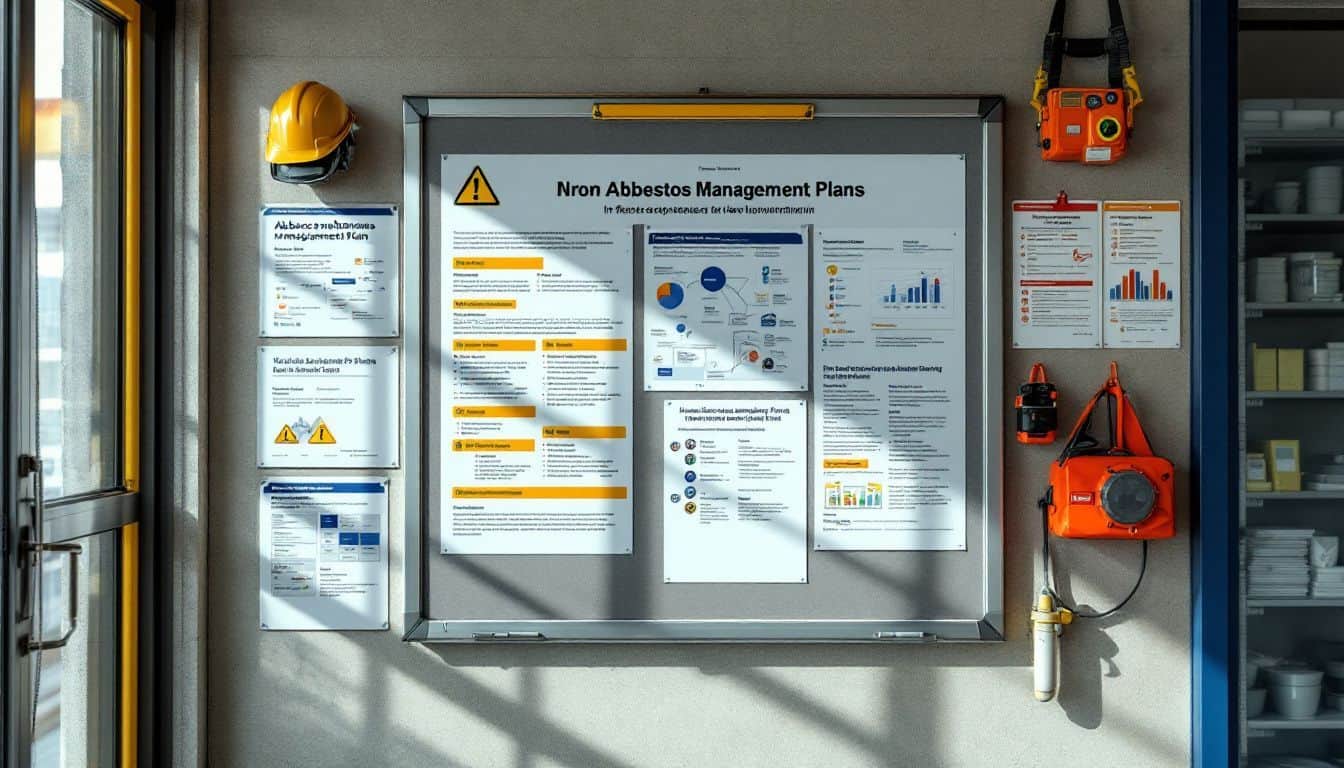
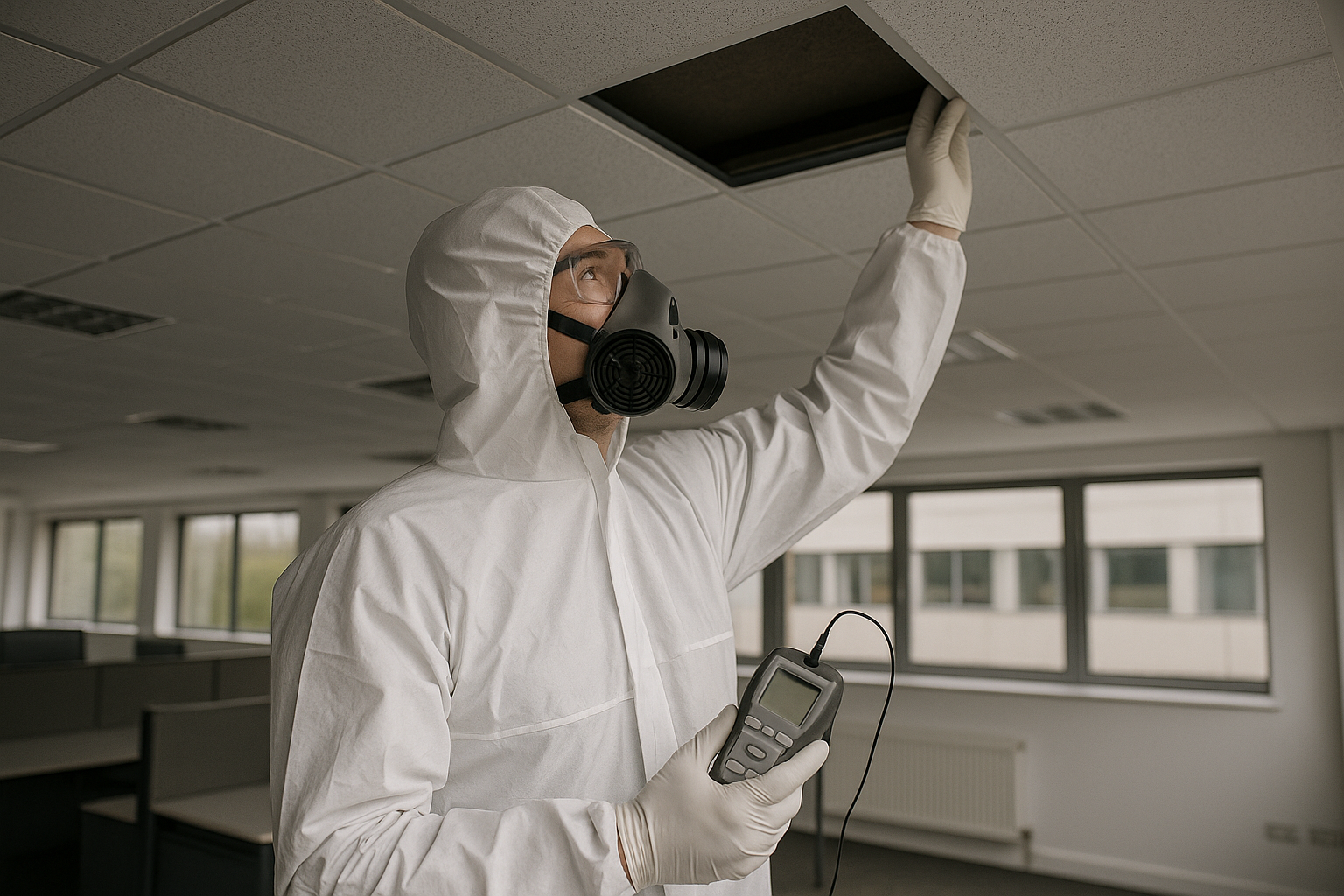
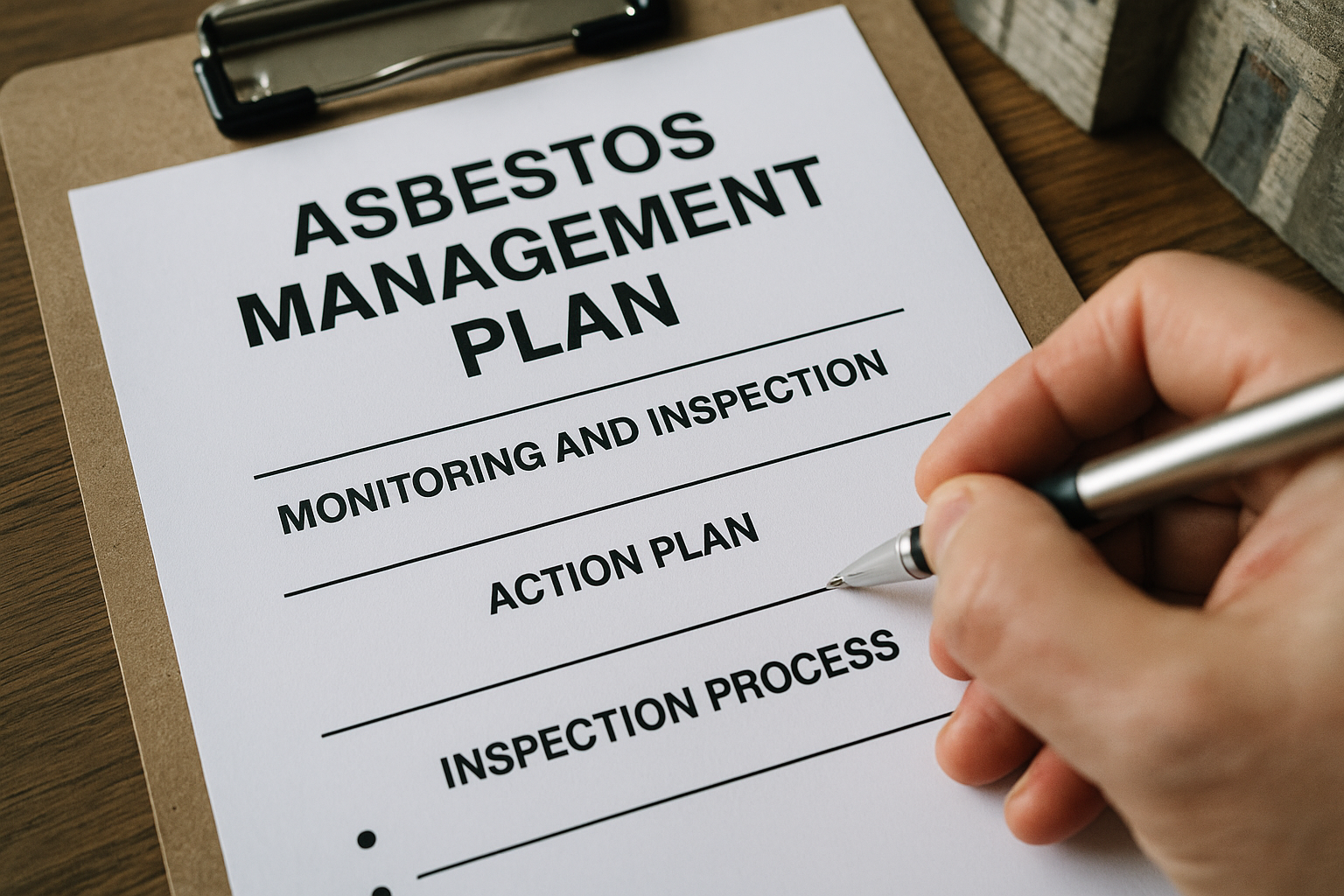
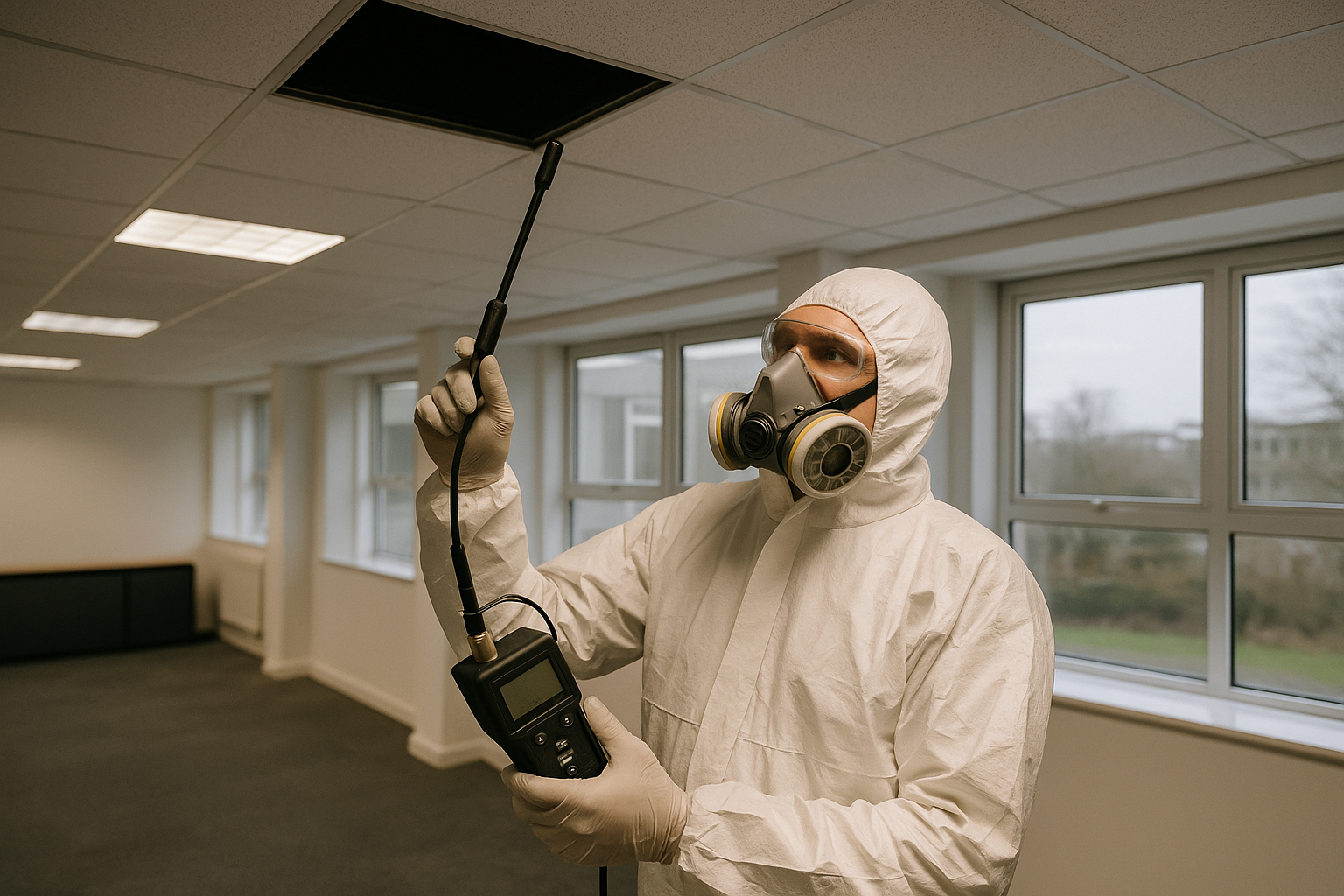
Category: Asbestos Management Plans: An Essential Tool for Safety

  • Understanding the Dangers and Management of Asbestos in Church Buildings

    Asbestos in Church Buildings: What Every Duty Holder Must Know

    Asbestos in church buildings remains one of the most overlooked hazards in the UK’s built heritage. Thousands of places of worship were constructed or refurbished during the decades when asbestos was standard practice, and many still contain hidden asbestos-containing materials (ACMs) that pose a genuine risk to congregations, volunteers, and contractors.

    If you manage, own, or hold responsibility for a church, chapel, or hall, the law is unambiguous: you have a duty to manage asbestos, and ignorance is not a defence. Here is what every duty holder needs to know.

    Where Asbestos Hides in Church Buildings

    ACMs can sit undisturbed for decades in older churches, often in places that receive little routine inspection. A professional management survey is the only reliable way to locate them before any maintenance or refurbishment work begins.

    Boiler Rooms, Basements, and Plant Areas

    These spaces carry some of the highest risk. Asbestos was widely used for heat and fire protection throughout the mid-20th century, and boiler rooms in older churches are frequently lined with it.

    Common ACMs found in these areas include:

    • Boiler and flue insulation
    • Pipe lagging and duct wraps
    • Gaskets and seals on valves
    • Old sanitary fittings
    • Fire-resistant boards around structural steelwork

    All three main types — blue (crocidolite), brown (amosite), and white (chrysotile) asbestos — may be present in these areas. Crocidolite and amosite are considered the most hazardous. Duty holders such as church trustees and wardens must keep an up-to-date asbestos register covering all basement and plant room areas, and arrange a risk assessment before any maintenance work takes place.

    Heating Ductwork Beneath Pews

    Warm-air heating systems installed beneath pews were common in post-war church refurbishments. These systems frequently incorporated ACMs including gaskets at duct joints, insulating boards, and fire-resistant panels.

    Any maintenance or refurbishment work that involves lifting floorboards or accessing sub-floor voids can disturb these materials without warning. Under the Control of Asbestos Regulations, duty holders must survey floor voids and air ducts, then put clear management plans in place before any work proceeds.

    Ceilings, Roof Voids, and Walls

    Ceiling panels may contain asbestos insulating board (AIB), textured coatings such as Artex, or acoustic plaster. Roof voids can conceal loose-fill insulation that is particularly hazardous because fibres become airborne easily when disturbed.

    Partition walls and service risers may also include AIB used for fire protection. This is not work for volunteers with a drill — trustees and wardens must ensure qualified surveyors assess these areas before any changes are made.

    Pipework Serving Organs and Bellows

    This is one of the most frequently missed risk areas in asbestos church buildings surveys. Pipework and ducting connected to organ blower systems were routinely insulated with ACMs, particularly in churches built or refurbished before the 1980s.

    Insulating boards, wraps, and linings were applied for both heat and noise control. Because these systems are often enclosed within cabinetry or walls, they can be overlooked entirely during a standard inspection. Specialist examination of all organ-related plant is essential.

    Specialist Asbestos Risks Unique to Churches

    Beyond the standard locations, churches present a set of asbestos hazards that are genuinely unusual. These are the areas where general surveys most commonly fall short.

    Organ Blower Boxes and Associated Equipment

    Organ blower boxes were frequently lined with asbestos for soundproofing and fire resistance. The insulating boards or linings sit inside enclosed housings where damage can go unnoticed for years.

    Enclosed spaces also mean that if fibres are released, they have nowhere to disperse. Work on old organ equipment — even something as routine as oiling a mechanism — can disturb insulation and raise exposure risks for both workers and visitors. A specialist inspection of all organ plant is not optional; it is a legal requirement under the duty to manage.

    Bell Towers and Restricted-Access Areas

    Bell towers may contain AIB linings or fire-resistant panels installed decades ago. Later repair work can cover original ACMs with new materials, making them even harder to identify without intrusive investigation.

    Access is typically limited to contractors, which makes it even more important that clear risk controls and records are in place before anyone enters. Routine surveys sometimes skip these areas entirely. The safe approach is to presume ACMs are present until a qualified surveyor has confirmed otherwise.

    Acoustic Treatments in Historic Structures

    Many churches underwent acoustic refurbishments during the mid-20th century. Dense acoustic plaster, reinforced panels, and specialist linings from this era frequently contained asbestos, chosen because it offered both sound control and fire protection in one material.

    These layers often sit behind decorative panelling or beneath later finishes, making them invisible during a basic visual inspection. Any plans for modern sound system installation, redecoration, or structural alteration should be preceded by a professional survey that specifically checks these systems.

    Legal Responsibilities for Asbestos in Church Buildings

    Church buildings are non-domestic premises under UK law, which means the full weight of asbestos legislation applies. There are no exemptions for charitable status, historical significance, or infrequent use.

    The Duty to Manage Asbestos

    The duty to manage asbestos is enshrined in the Control of Asbestos Regulations and applies to anyone who has responsibility for maintenance or repair of non-domestic premises. For a church, that typically means the trustees, churchwardens, or the managing body of the congregation.

    The core obligations are:

    1. Arrange a professional survey to identify all ACMs in the building
    2. Presume materials contain asbestos unless a competent surveyor proves otherwise
    3. Keep an accurate, up-to-date asbestos register recording the location, type, and condition of each ACM
    4. Produce a written asbestos management plan covering risk assessment, control measures, maintenance schedules, and emergency procedures
    5. Share this information with anyone who might disturb ACMs during maintenance or refurbishment work
    6. Review and update the register and plan after inspections or site changes

    Failure to meet these duties is a criminal offence. The Health and Safety Executive (HSE) takes enforcement action against duty holders who cannot demonstrate compliance, and the consequences can include significant fines.

    Choosing Between Encapsulation and Removal

    Not every ACM needs to come out. The right decision depends on the current condition of the material, how frequently the area is accessed, and what future plans exist for that part of the building.

    Encapsulation — applying a specialist sealant that locks fibres in place — is often the appropriate solution for stable, undamaged ACMs in low-traffic areas such as plant rooms. It is less disruptive and less costly than full removal.

    Where materials are damaged, deteriorating, or located in areas subject to future work, asbestos removal is usually the safer long-term choice. This must be carried out by a licensed contractor under strict controls, with proper waste disposal by approved hazardous waste carriers.

    Sample Analysis and Identification

    When a surveyor identifies a suspect material, samples are taken and sent for laboratory testing to confirm whether asbestos is present and which type. This process should only be carried out by a competent analyst with appropriate accreditation — you can arrange professional sample analysis through a qualified provider.

    Never attempt to collect samples yourself. Disturbing a suspect material without proper controls is precisely the kind of activity the regulations are designed to prevent.

    Managing Asbestos Safely: A Practical Approach

    Safe management of asbestos in church buildings is not a one-off exercise. It requires ongoing attention, regular re-inspection, and clear communication with everyone who works on the building.

    Commissioning the Right Survey

    There are two main types of asbestos survey under HSG264 guidance from the HSE:

    • Management survey: Identifies ACMs that could be disturbed during normal occupation and maintenance. This is the baseline requirement for all duty holders.
    • Refurbishment and demolition survey: Required before any work that will disturb the fabric of the building. A demolition survey is more intrusive and covers areas not accessed during a management survey.

    For churches, a management survey alone is rarely sufficient if any refurbishment is planned. Specialist areas — organ plant, bell towers, sub-floor heating systems — require specific attention and should be flagged explicitly when you commission the survey.

    Under an active management plan, re-inspection of known ACMs should typically take place every six to twelve months, depending on the condition and risk rating of the materials identified.

    Working Safely Around ACMs

    When work must take place near known or suspected ACMs, practical controls make the difference between a safe job and a dangerous one:

    • Never sweep dust — this spreads fibres. Use Class H vacuum cleaners that capture fine particles safely.
    • Establish clear exclusion zones with appropriate signage before work begins.
    • Arrange air monitoring where there is any risk of fibre release.
    • Ensure contractors have seen the asbestos register and management plan before they start.
    • Ask your contractor to provide a written plan of work, including decontamination procedures and how they will protect visitors and staff during the job.
    • Keep records of every step for your management plan.

    Most high-risk abatement work — including removal of AIB and any work with sprayed asbestos coatings — must be carried out by HSE-licensed contractors. Notifiable Non-Licensed Work (NNLW) requires notification to the relevant enforcing authority before work begins.

    Keeping Records and Communicating Risks

    Your asbestos register and management plan are living documents. They need to be updated whenever a survey is carried out, whenever ACMs are removed or encapsulated, and whenever the condition of materials changes.

    Critically, this information must be accessible to anyone who might disturb ACMs. That includes maintenance contractors, heating engineers, electricians, and anyone undertaking building works. Keeping the register locked in an office drawer defeats its purpose entirely.

    What Happens When Churches Are Refurbished or Demolished

    Many church buildings undergo significant change — conversion to community use, extension, or in some cases demolition. Each of these scenarios triggers additional legal obligations that go beyond routine management.

    Before any refurbishment that will disturb the fabric of the building, a refurbishment and demolition survey is legally required. This is a more intrusive process than a management survey, involving access to areas that would normally remain sealed — roof voids, sub-floor spaces, wall cavities, and enclosed plant rooms.

    The purpose is to identify every ACM that could be disturbed during the planned works, so that a safe system of work can be designed before a single tool is raised. Starting refurbishment without this survey is not just risky — it is a breach of the Control of Asbestos Regulations.

    For churches facing full or partial demolition, the same principle applies with even greater urgency. All ACMs must be identified, assessed, and removed by licensed contractors before demolition work begins. Failing to do so puts demolition workers at serious risk and exposes duty holders to enforcement action.

    Asbestos Surveys for Church Buildings Across the UK

    Supernova Asbestos Surveys carries out professional asbestos surveys for churches, chapels, and places of worship across the country. Whether your building is a Victorian parish church, a mid-century Methodist hall, or a modern community worship centre, our qualified surveyors understand the specific challenges that asbestos in church buildings presents.

    If you are based in the capital, our team provides a dedicated asbestos survey London service covering all London boroughs. For properties in the North West, we offer a full asbestos survey Manchester service. And for churches and community buildings in the West Midlands, our asbestos survey Birmingham team is ready to help.

    With over 50,000 surveys completed nationwide, we have the experience to find what others miss — including the specialist areas that generic surveys routinely overlook.

    Protecting Your Congregation and Your Building

    Asbestos in church buildings is not a problem that resolves itself over time. ACMs degrade, and buildings that were safe a decade ago may present new risks today — particularly if any maintenance or repair work has taken place in the interim.

    The steps are straightforward: commission a professional survey, keep an accurate register, produce and maintain a management plan, and ensure every contractor who works on the building has access to that information. Where materials are deteriorating or work is planned, act before the work begins — not after.

    To book a survey or discuss your building’s specific requirements, call Supernova Asbestos Surveys on 020 4586 0680 or visit asbestos-surveys.org.uk. Our surveyors are available nationwide and understand the unique demands of historic and community buildings.

    Frequently Asked Questions

    Do church buildings legally need an asbestos survey?

    Yes. Church buildings are classified as non-domestic premises under UK law, and the Control of Asbestos Regulations apply in full. Any person or body responsible for the maintenance or repair of a church has a legal duty to manage asbestos, which begins with commissioning a professional survey. Charitable status and infrequent use offer no exemption.

    Which parts of a church are most likely to contain asbestos?

    The highest-risk areas include boiler rooms and plant rooms, sub-floor heating ductwork beneath pews, ceiling panels and roof voids, pipe lagging, and any insulation associated with organ blower systems. Bell towers and areas that have undergone acoustic treatment are also commonly affected. A professional survey will assess all of these areas systematically.

    Can a church manage asbestos in place rather than removing it?

    In many cases, yes. Stable, undamaged ACMs in low-traffic areas can often be managed safely through encapsulation and a robust management plan, rather than removal. However, where materials are deteriorating, located in areas of regular access, or likely to be disturbed by future works, removal by a licensed contractor is usually the appropriate course of action.

    What should church trustees do before any refurbishment work?

    Before any work that will disturb the fabric of the building, a refurbishment and demolition survey is legally required. This is more intrusive than a standard management survey and must be completed before work begins. Trustees should also ensure that all contractors have been shown the existing asbestos register and management plan, and that any licensed removal work is completed before the main contractor starts on site.

    How often should asbestos be re-inspected in a church building?

    HSG264 guidance from the HSE recommends that known ACMs are re-inspected regularly — typically every six to twelve months, depending on the condition and risk rating of the materials. The asbestos register and management plan must be updated following each inspection. If the condition of any material changes between scheduled inspections, the duty holder should arrange an unscheduled review immediately.


  • Asbestos Management vs Asbestos Removal: When to Choose the Right Approach

    Asbestos Management vs Asbestos Removal: When to Choose the Right Approach

    Management and Removal of Asbestos: Choosing the Right Approach for Your Building

    Discovering asbestos-containing materials (ACMs) in your building doesn’t have to trigger panic — but it does demand a clear head and the right professional advice. The management and removal of asbestos are both legally recognised, legitimate responses to finding ACMs, and choosing between them is one of the most consequential decisions a duty holder or property manager can make.

    Get it right and you protect occupants, stay compliant, and spend your budget wisely. Get it wrong and you risk enforcement action, unlimited fines, and — far more seriously — real harm to the people who use your building every day.

    Why Asbestos Is Still a Live Issue in UK Buildings

    Asbestos was banned from use in UK construction in 1999, but the legacy of decades of widespread use is still very much with us. Millions of commercial, industrial, and residential properties built before 2000 contain ACMs — and many of those materials are sitting quietly in walls, ceilings, floors, and service ducts right now.

    The health risk arises when asbestos fibres become airborne and are inhaled. Conditions including mesothelioma, asbestosis, and asbestos-related lung cancer can take 20 to 50 years to develop after exposure, which is precisely why the hazard is so easy to underestimate.

    The Health and Safety Executive (HSE) identifies asbestos as the single largest cause of work-related deaths in the UK. Any building constructed before 2000 should be treated as potentially containing asbestos until a formal survey demonstrates otherwise — and that survey is the non-negotiable starting point for every decision that follows.

    Where ACMs Are Commonly Found

    Asbestos was incorporated into hundreds of building products, and many of them look completely unremarkable. You cannot identify ACMs by sight — only laboratory analysis of a physical sample confirms the presence of asbestos fibres.

    Common locations in pre-2000 buildings include:

    • Pipe lagging and boiler insulation
    • Ceiling tiles and textured coatings, including Artex
    • Asbestos insulating board (AIB) used in fire doors, partitions, and ceiling panels
    • Sprayed coatings on structural steelwork
    • Roofing sheets and rainwater goods
    • Floor tiles and the adhesive beneath them
    • Millboard around boilers and electrical equipment
    • Loose-fill insulation in ceiling voids

    Friable materials — those that crumble or break apart easily, such as sprayed coatings or loose-fill insulation — carry the highest risk because they release fibres readily when disturbed. Non-friable materials like cement sheets or intact floor tiles hold fibres more securely, but still require careful handling if cut, drilled, or broken.

    Getting the Right Survey Before Making Any Decision

    Before you can make any informed choice about the management and removal of asbestos, you need a formal survey carried out by a competent, qualified surveyor working to HSE guidance document HSG264. There are two main survey types, and the right one depends entirely on what you intend to do with the building.

    Asbestos Management Survey

    An asbestos management survey is designed for buildings in normal occupation. It identifies ACMs that could be disturbed during routine maintenance and everyday use, and it forms the basis of your ongoing asbestos management plan.

    This is the baseline survey that every non-domestic premises built before 2000 should have in place. Without it, you have no reliable picture of what is in your building, where it is, or what condition it is in.

    Refurbishment and Demolition Surveys

    A refurbishment survey is required before any significant structural work or refurbishment takes place. It is far more intrusive than a management survey and aims to locate all ACMs — including those hidden within the building fabric — so they can be removed before work begins.

    A demolition survey is mandatory before a building is demolished. Both survey types are designed to ensure that workers and contractors are not unknowingly exposed to asbestos during high-disturbance activities.

    In every case, the surveyor will take samples, assess the condition and risk of each ACM, and produce an asbestos register. That register is a legal requirement under the Control of Asbestos Regulations and must be kept up to date.

    When Asbestos Management Is the Right Approach

    Not every ACM needs to come out immediately. In many situations, managing the risk in place — rather than removing the material — is the proportionate and legally compliant response.

    Under the Control of Asbestos Regulations, the duty holder in non-domestic premises has a legal obligation to manage asbestos risks. Critically, this duty does not automatically mean removal. It means assessing the risk, putting appropriate controls in place, and keeping those controls under regular review.

    Situations Where Management Is Appropriate

    Asbestos management is a suitable approach when:

    • ACMs are in good condition with no signs of damage, crumbling, or fibre release
    • The materials are in low-traffic areas unlikely to be disturbed during normal use
    • No refurbishment or building work is planned that would affect the ACMs
    • The risk assessment confirms that fibres are not being released into the air
    • Regular monitoring can be realistically maintained

    For example, sealed pipe lagging in a rarely accessed void, or intact AIB panels in a low-use plant room, may be safely managed in place for years — provided they are monitored regularly and the management plan is kept current.

    What a Robust Asbestos Management Plan Looks Like

    A management plan is not a filing exercise. It is a live document that drives action. A well-constructed plan should include:

    • A current asbestos register with the location, type, condition, and risk rating of every ACM
    • Clear roles and responsibilities — who is the duty holder, who carries out inspections, who updates the register
    • Inspection schedules — most ACMs should be checked at least annually, and more frequently where disturbance is possible
    • Procedures for contractors — anyone working on the building must be made aware of ACMs before they start work
    • Emergency procedures — what to do if an ACM is accidentally damaged or disturbed
    • Training records for staff and contractors who may encounter ACMs

    Encapsulation and enclosure are the two main management techniques. Encapsulation applies a specialist coating to the ACM surface, sealing fibres in place. Enclosure builds a physical barrier around the material. Both methods reduce risk but do not eliminate the hazard — the ACM remains in the building and must continue to be monitored.

    A management survey is the essential first step before any management plan can be written. Without accurate survey data, the plan has no reliable foundation.

    When Asbestos Removal Becomes Necessary

    There are situations where management is simply not sufficient, and the balance in the management and removal of asbestos tips firmly towards removal. Leaving damaged or deteriorating ACMs in place is neither compliant nor safe.

    Clear Indicators That Removal Is Required

    You should be seriously considering removal when:

    • ACMs are visibly damaged — cracked, crumbling, soft, or showing exposed fibres
    • Air monitoring reveals fibre levels above safe thresholds
    • The building is undergoing major refurbishment or demolition — ACMs must be cleared before structural work begins
    • The ACM is in a high-traffic area where regular disturbance is unavoidable
    • The condition is deteriorating between inspections and encapsulation is no longer effective
    • The risk assessment concludes that management cannot adequately control the risk

    In these situations, asbestos removal carried out by licensed professionals is the only appropriate course of action.

    How Professional Asbestos Removal Works

    Licensed asbestos removal is a tightly controlled process. Each stage has a specific purpose, and cutting corners at any point creates legal liability and puts people at serious risk.

    1. Notification: For licensable work, the contractor must notify the HSE at least 14 days before work begins. This is a legal requirement under the Control of Asbestos Regulations.
    2. Controlled enclosure: The work area is sealed with heavy-duty sheeting and negative pressure units to prevent fibres from escaping into adjacent spaces. Heating, ventilation, and air conditioning systems are isolated.
    3. PPE and respiratory protection: Workers wear disposable coveralls, double gloves, and tight-fitting respirators with HEPA filters. No shortcuts on personal protective equipment are acceptable.
    4. Wet removal methods: Low-pressure water with surfactant suppresses dust during the removal of pipe lagging, insulation boards, and similar materials.
    5. Waste management: All asbestos waste is double-bagged, clearly labelled, and transported by licensed carriers to approved disposal sites. Waste consignment notes must be retained.
    6. Clearance air testing: An independent UKAS-accredited analyst carries out air testing once removal is complete. The area cannot be reoccupied until a formal clearance certificate is issued.
    7. Register update: The asbestos register is updated to reflect what has been removed, and the management plan is revised if any ACMs remain in the building.

    Encapsulation vs Full Removal: Making the Right Call

    Many property managers ask whether encapsulation is a genuine alternative to removal, or simply a way of deferring the problem. The honest answer is that it depends entirely on the condition of the ACM, the building’s future use, and what the risk assessment says.

    Encapsulation costs less upfront and causes minimal disruption to building occupants. It is appropriate for stable, accessible ACMs that can be monitored regularly. The trade-off is that the hazard remains in the building and requires ongoing management — including periodic re-inspection, potential re-encapsulation, and restrictions on future works in the affected area.

    Full removal is more expensive and disruptive in the short term, but it eliminates the hazard entirely. Future works, changes of use, or building sales are all considerably simpler when there are no ACMs to manage or disclose.

    For buildings undergoing significant change, or where ACMs are in poor condition, removal is almost always the better long-term investment. A phased approach often makes financial sense on larger sites — prioritise the highest-risk materials first, then work through lower-risk ACMs over time as budget allows.

    Legal Requirements: What UK Law Requires of You

    The legal framework governing the management and removal of asbestos in the UK is clear and unambiguous. Ignorance of the regulations is not a defence, and the penalties for non-compliance — including prosecution and unlimited fines — are serious.

    Key Obligations Under the Control of Asbestos Regulations

    • Duty holders must assess whether ACMs are present and manage the risk if they are
    • An asbestos register and management plan must be maintained and made available to anyone who could disturb ACMs
    • Any building built before 2000 should have a management survey as a baseline
    • Licensable work — which includes most removal of high-risk or friable ACMs — must be carried out by an HSE-licensed contractor
    • Notifiable non-licensed work (NNLW) requires HSE notification, health surveillance, and job records even where a full licence is not required
    • Clearance air testing must be carried out by a UKAS-accredited analyst after removal works
    • Dangerous incidents — such as accidental drilling into ACMs — must be reported under RIDDOR

    HSE guidance document HSG264 provides detailed technical guidance on asbestos surveying and is the benchmark against which survey quality is judged. If your surveyor is not working to HSG264, find one who is.

    Documentation You Must Keep

    Good records are not just good practice — they are a legal requirement. You should retain:

    • All asbestos survey reports and updates
    • The current asbestos register and management plan
    • Inspection records and air monitoring results
    • Contractor notification records and method statements
    • Waste consignment notes from removal works
    • Clearance certificates following any removal
    • Training records for relevant staff

    These documents may be requested by the HSE during an inspection, or by solicitors and surveyors during a property transaction. Gaps in your records are difficult to explain and can have serious consequences.

    Practical Guidance for Different Building Types

    The right approach to the management and removal of asbestos varies depending on the type of building and how it is used. There is no single answer that applies to every situation.

    Commercial Office Buildings

    In occupied commercial premises, management in place is often the most practical approach for stable, low-risk ACMs. The priority is ensuring that contractors — particularly those carrying out maintenance, IT installations, or fit-out works — are briefed on the asbestos register before they touch anything.

    Many office buildings contain AIB in ceiling voids, fire doors, and service risers. These materials can be managed effectively provided the register is accurate and up to date, and that a clear contractor protocol is in place.

    Industrial and Warehouse Properties

    Industrial buildings frequently contain asbestos cement roofing sheets, which are generally non-friable and manageable in good condition. However, weathering, impact damage, and drilling for fixings can all compromise the material and trigger a reassessment.

    Where roofing sheets are deteriorating — particularly if they are becoming brittle or showing signs of delamination — removal should be seriously considered, especially if the building is to be sold or re-let.

    Schools and Healthcare Premises

    Higher-risk occupancy types require a more precautionary approach. In schools and healthcare settings, even low-risk ACMs should be subject to more frequent inspection, and the threshold for removal is generally lower given the vulnerability of occupants and the reputational consequences of any incident.

    Properties Undergoing Sale or Change of Use

    A building transaction almost always sharpens the focus on asbestos. Buyers, lenders, and their solicitors will scrutinise the asbestos register, and any ACMs in poor condition — or any gaps in the survey record — are likely to affect price or delay completion.

    If you are planning to sell or re-let a building, getting an up-to-date survey and addressing any high-risk ACMs before going to market is almost always the right commercial decision.

    Nationwide Asbestos Survey and Removal Services from Supernova

    Supernova Asbestos Surveys has completed over 50,000 surveys across the UK, working with property managers, facilities teams, local authorities, housing associations, and private landlords. Our surveyors are fully qualified, working to HSG264, and our reports are clear, actionable, and built to support your compliance obligations.

    Whether you need an initial survey to establish your asbestos position, or specialist advice on whether management or removal is the right call for a specific material, our team is ready to help. We cover the full range of survey and removal services nationwide.

    If you’re based in the capital, our team provides a full asbestos survey London service across all property types. We also operate extensively across the North West — our asbestos survey Manchester team handles everything from single commercial units to large multi-site portfolios. In the Midlands, our asbestos survey Birmingham service covers the full range of commercial and industrial properties across the region.

    To discuss your building’s requirements or book a survey, call us on 020 4586 0680 or visit asbestos-surveys.org.uk. Our team will give you a straight answer on what you need — and what you don’t.

    Frequently Asked Questions

    Do I have to remove asbestos if it is found in my building?

    No — removal is not automatically required when ACMs are identified. Under the Control of Asbestos Regulations, the duty holder’s legal obligation is to manage the risk, not necessarily to remove the material. If ACMs are in good condition and are not being disturbed, a structured management plan is often the appropriate and compliant response. Removal becomes necessary when materials are damaged, deteriorating, or when building works would disturb them.

    What is the difference between a management survey and a refurbishment survey?

    A management survey is carried out in occupied buildings during normal use. It identifies ACMs that could be disturbed during routine maintenance and forms the basis of your asbestos management plan. A refurbishment survey is far more intrusive and is required before any significant building work takes place. It aims to locate all ACMs — including those hidden within the fabric — so they can be removed before contractors begin work. The two survey types serve different purposes and are not interchangeable.

    Who is legally allowed to remove asbestos in the UK?

    Most removal of high-risk or friable asbestos materials — including pipe lagging, asbestos insulating board, and sprayed coatings — must be carried out by a contractor holding an HSE licence. Some lower-risk, non-licensed work can be carried out by trained and competent operatives without a licence, but this is still subject to strict controls under the Control of Asbestos Regulations. Always verify a contractor’s licence status with the HSE before work begins.

    How long does asbestos management last before removal becomes necessary?

    There is no fixed timescale. ACMs can remain safely managed in place for many years provided they stay in good condition and are monitored regularly. The decision to move from management to removal is driven by the condition of the material, changes in building use, planned works, and the findings of periodic inspections — not by a predetermined deadline. Regular re-inspection and an up-to-date risk assessment are the tools that drive this decision.

    What happens if asbestos is accidentally disturbed during building work?

    Work must stop immediately and the area should be vacated and sealed off. The incident must be reported under RIDDOR if workers may have been exposed. A specialist contractor should be called to assess the situation, carry out any necessary remediation, and conduct clearance air testing before the area is reoccupied. The asbestos register and management plan must be updated to reflect what happened and what action was taken.

  • Asbestos Management Plan: How to Create One and Safely Manage ACMs

    What an Asbestos Management Plan Actually Involves — and How to Build One That Works

    Asbestos-containing materials (ACMs) are still present in a significant proportion of UK buildings constructed before 2000. If you own or manage a non-domestic property, knowing how to create an asbestos management plan is not just good practice — it is a legal obligation under the Control of Asbestos Regulations. Get it wrong and you risk enforcement action from the Health and Safety Executive (HSE), substantial fines, and — far more seriously — preventable harm to the people who work in or visit your building.

    This post covers every stage of the process in plain terms: from commissioning the right survey to maintaining a plan that stays accurate and legally sound over time.

    Why the Law Requires an Asbestos Management Plan

    The Control of Asbestos Regulations place a duty on those who own, occupy, or manage non-domestic premises to manage the risk from ACMs. This is known as the duty to manage, and it applies whether you are a landlord, facilities manager, or responsible person within a public sector organisation.

    Asbestos fibres are invisible to the naked eye. When ACMs are disturbed — through drilling, cutting, sanding, or even vigorous cleaning — those fibres become airborne and can be inhaled deep into the lungs. The resulting diseases, including mesothelioma and asbestos-related lung cancer, can take decades to develop. That latency period is precisely why proactive management matters so much.

    A well-constructed asbestos management plan does more than satisfy a regulatory requirement. It gives your maintenance team, external contractors, and building occupants a clear, consistent framework for safe working — and it demonstrates to regulators that you are taking your responsibilities seriously.

    Step One: Commission a Professional Asbestos Survey

    You cannot manage what you have not identified. Before any management plan can be written, you need a professional asbestos survey carried out by a qualified surveyor. A visual walkthrough by untrained staff does not meet the standard required by the HSE.

    HSE guidance document HSG264 sets out two main survey types relevant to most duty holders:

    • Management survey — the standard starting point for occupied buildings. It identifies ACMs that could be disturbed during normal occupation and routine maintenance activities.
    • Refurbishment and demolition survey — required before any significant works that will disturb the building fabric. This is a more intrusive inspection, often involving destructive access to concealed voids and cavities.

    For day-to-day compliance purposes, a management survey is typically the right starting point. If major refurbishment is planned, you will need a demolition survey before works begin.

    What Surveyors Look For

    Qualified surveyors use building plans, systematic walk-throughs, and material sampling to locate suspect ACMs. Common materials found in older UK buildings include:

    • Insulation boards and ceiling tiles
    • Textured coatings such as Artex
    • Vinyl floor tiles and their adhesives
    • Pipe lagging and boiler insulation
    • Roof sheets and soffit panels
    • Gaskets and rope seals in plant rooms

    Any suspect material is sampled and sent to an accredited laboratory for analysis. The surveyor records each material’s location, type, and condition, then assigns a risk rating based on how likely normal activity is to disturb it.

    Act Immediately if Damaged ACMs Are Found

    Do not wait for the final survey report before taking action on damaged materials. Apply clear warning labels to affected areas straight away. This simple step significantly reduces the risk of accidental disturbance while you put formal controls in place.

    If you manage property in the capital, our asbestos survey London service covers commercial, industrial, and public sector buildings across all boroughs. We also operate nationally — including our asbestos survey Manchester and asbestos survey Birmingham teams, both of which deliver accredited surveys and condition assessments to support ongoing compliance.

    Step Two: Build and Maintain Your Asbestos Register

    The asbestos register is the foundation of your management plan. It is a formal, maintained record of every known or suspected ACM on your site — and it must be kept up to date at all times, not filed away after the initial survey.

    What the Register Must Include

    For each ACM identified, your register should record:

    • The precise location, cross-referenced to a site plan or floor layout
    • The material type and its likely asbestos content
    • Current condition — intact, slightly damaged, or heavily damaged
    • The risk rating assigned by the surveyor
    • The date of the last inspection
    • Any actions taken, such as labelling, encapsulation, or removal
    • Areas that have not yet been surveyed

    The register is a live document. It must be updated after every inspection, every repair, and every removal. Treating it as a one-off exercise is one of the most common — and most dangerous — mistakes duty holders make.

    Making the Register Accessible

    Every person who might work near ACMs — maintenance staff, external contractors, cleaning teams — must be able to consult the register before they start work. Under the Control of Asbestos Regulations, providing access to the register is a legal requirement, not a courtesy.

    Many duty holders now maintain electronic records, which simplifies version control and allows remote access. Whatever format you use, the register must be readily available on site at all times. Require contractors to sign off on having read it before any job begins.

    Step Three: Carry Out an Asbestos Risk Assessment for Each ACM

    Once your register is in place, you need a risk assessment for each material identified. This determines how the material should be managed and informs the specific control measures you include in your plan.

    What a Robust Assessment Covers

    For each ACM, your risk assessment should address:

    • Location and accessibility — Is the material in a high-traffic area? Is it near vents, risers, or plant rooms that contractors regularly access?
    • Condition — Is it intact and well-sealed, or crumbling, cracked, or water-damaged?
    • Asbestos type — Crocidolite (blue) and amosite (brown) carry a higher risk than chrysotile (white), though all types are hazardous and must be treated accordingly.
    • Likelihood of disturbance — How probable is it that routine maintenance or cleaning will disturb this material?
    • Who could be harmed — Staff, contractors, visitors, tenants, or members of the public?

    The output is a risk rating — typically low, medium, or high — which determines the urgency and nature of the controls required. Your asbestos surveyor can advise on an appropriate assessment template for your premises, and the HSE provides supporting guidance through HSG264.

    Step Four: Write the Asbestos Management Plan Itself

    With your survey results, register, and risk assessments in hand, you can now build the actual management plan. This is the document that turns data into action — it sets out exactly how ACMs will be controlled, monitored, and managed on an ongoing basis.

    Control Measures to Include

    Your plan should specify the following controls, tailored to the risk levels identified in your assessments:

    • Warning labels — All identified ACMs must be clearly labelled so that anyone working nearby can identify the hazard before starting.
    • Access restrictions — High-risk or damaged areas should be restricted to trained personnel with appropriate personal protective equipment (PPE).
    • Permit to work system — No work near ACMs should begin without a formal permit confirming that relevant risk assessments and controls have been reviewed.
    • Encapsulation or sealing — Where ACMs are damaged but immediate removal is not practicable, sealing or encapsulating the material can reduce fibre release in the short term.
    • Planned removal — Where disturbance during refurbishment or maintenance is anticipated, arrange asbestos removal by a licensed contractor before works begin.
    • Dust control — Use damp methods to suppress dust during any work near ACMs. Never dry sweep.
    • Emergency procedures — Set out clear steps for accidental disturbance: stop work immediately, isolate the area, notify the duty holder, and arrange a professional assessment before re-entry.

    Assigning Roles and Responsibilities

    Your plan must name a responsible person — typically the duty holder or a delegated manager — who is accountable for keeping the plan current and ensuring controls are followed. Without clear ownership, even well-written plans deteriorate quickly.

    Everyone with a role in the plan should understand what is expected of them. This includes maintenance managers, facilities teams, reception staff who may field contractor queries, and any third-party managing agents.

    Step Five: Train Your Staff and Manage Contractors Properly

    Training is a legal requirement under the Control of Asbestos Regulations, not an optional extra. Everyone who could encounter ACMs in the course of their work must receive appropriate asbestos awareness training before they start.

    What Training Should Cover

    Effective asbestos awareness training addresses:

    • What asbestos is and why it is dangerous
    • Where ACMs are likely to be found in your specific building
    • How to read the asbestos register and interpret warning labels
    • What to do — and what not to do — if they suspect they have found asbestos
    • Emergency procedures for accidental disturbance
    • How the permit to work system operates

    Keep training records for every individual and update them after refresher sessions, role changes, or significant updates to the management plan. The HSE may ask to see these records, and they are your primary evidence of compliance.

    Managing External Contractors

    External contractors represent one of the highest-risk groups when it comes to accidental asbestos disturbance. Many tradespeople — electricians, plumbers, decorators — work in buildings without knowing what materials they are dealing with.

    Require every contractor to sign off on the asbestos register before work begins. Make the permit to work system mandatory, not advisory. If a contractor cannot demonstrate adequate asbestos awareness, do not allow them to work in areas where ACMs are present.

    Step Six: Monitor, Inspect, and Keep the Plan Current

    An asbestos management plan is not a document you create once and store in a drawer. It must be actively maintained, with regular inspections and a clear review schedule built in from the outset.

    How Often Should ACMs Be Inspected?

    HSE guidance recommends that all known ACMs are inspected at least every six to twelve months by a qualified surveyor. High-risk materials, damaged ACMs, or areas with heavy contractor traffic should be checked more frequently.

    After every inspection, update the asbestos register with:

    • The current condition of each ACM
    • Any changes since the last inspection
    • Actions taken or required
    • The date of the next scheduled inspection

    When to Trigger an Immediate Plan Review

    Certain events should prompt an immediate review of your management plan, not just a routine inspection:

    • Refurbishment or construction work affecting the building fabric
    • Discovery of previously unknown ACMs
    • An incident involving accidental disturbance
    • Changes in the building’s use or occupancy
    • Changes in key personnel or duty holder responsibilities
    • New or updated guidance from the HSE

    After any such event, review the relevant sections of the plan, update the register, reassess risk ratings where necessary, and communicate changes to all relevant staff and contractors without delay.

    Common Mistakes Duty Holders Make — and How to Avoid Them

    Having supported thousands of property managers across the UK, we see the same errors appear repeatedly. Knowing what to avoid is just as valuable as knowing what to do.

    • Treating the register as a one-off document. A register that was accurate three years ago may be dangerously out of date today. It must be updated continuously.
    • Failing to share the register with contractors. If contractors are not consulting the register before they work, the entire system breaks down. Make it a contractual requirement.
    • Assuming good condition means no risk. Even intact ACMs can deteriorate. Regular inspections exist precisely to catch condition changes before they become emergencies.
    • Delegating without documenting. Naming a responsible person is not enough. Their role, authority, and obligations must be set out clearly in the plan itself.
    • Skipping the survey before refurbishment. Starting works without a refurbishment and demolition survey is both illegal and extremely dangerous. Always survey before you start.
    • Relying on an outdated survey. If significant time has passed since your last survey, or if the building has changed, commission a new one. An old survey cannot account for new damage or alterations.

    How Supernova Asbestos Surveys Can Help

    Supernova Asbestos Surveys has completed over 50,000 surveys across the UK, working with property managers, landlords, local authorities, housing associations, and commercial operators of all sizes. Our UKAS-accredited surveyors produce clear, actionable reports that give you everything you need to build and maintain a legally compliant asbestos management plan.

    Whether you need an initial management survey, a pre-refurbishment inspection, ongoing re-inspection support, or advice on asbestos removal by a licensed contractor, our team can help. We cover the whole of England, Wales, and Scotland — with dedicated regional teams in London, Manchester, Birmingham, and beyond.

    Call us on 020 4586 0680 or visit asbestos-surveys.org.uk to book a survey or speak with one of our advisors.

    Frequently Asked Questions

    Who is legally required to have an asbestos management plan?

    The duty to manage asbestos applies to anyone who owns, occupies, or manages non-domestic premises in the UK. This includes commercial landlords, facilities managers, local authorities, housing associations managing communal areas, and employers responsible for workplaces. The obligation is set out in the Control of Asbestos Regulations and is enforced by the HSE.

    What is the difference between an asbestos register and an asbestos management plan?

    The asbestos register is a record of all known or suspected ACMs on a site — their location, type, condition, and risk rating. The asbestos management plan is the broader document that sets out how those ACMs will be controlled, monitored, and managed over time. The register feeds into the plan, but the plan also covers roles and responsibilities, training arrangements, contractor management, emergency procedures, and review schedules.

    How often does an asbestos management plan need to be reviewed?

    At a minimum, your plan should be reviewed annually. However, it should also be reviewed immediately following any significant event — such as the discovery of new ACMs, an incident involving accidental disturbance, refurbishment works, or changes in building use or key personnel. HSE guidance through HSG264 sets out the principles for ongoing management and review.

    Can I write an asbestos management plan myself, or do I need a specialist?

    The plan itself can be written by the duty holder or a competent person within your organisation, but it must be based on a professional asbestos survey carried out by a qualified surveyor. You cannot produce a credible or legally defensible plan without accurate survey data. Many duty holders work with their asbestos surveying company to develop the plan alongside the survey report, which is the most efficient approach.

    What happens if I do not have an asbestos management plan?

    Failing to meet the duty to manage asbestos is a criminal offence under the Control of Asbestos Regulations. The HSE can issue improvement notices, prohibition notices, and prosecute duty holders. Beyond the legal consequences, the absence of a management plan significantly increases the risk of accidental asbestos disturbance — which can have life-altering consequences for anyone exposed.

  • Understanding Asbestos Management Plan Requirements: Key Components and Best Practices

    What the Law Actually Requires From Your Asbestos Management Plan

    If your building was constructed before 2000 and you hold any responsibility for its maintenance or management, asbestos management plan requirements are not optional — they are a legal duty under the Control of Asbestos Regulations. Getting this wrong carries serious consequences, both for the health of people in your building and for your compliance position.

    This post breaks down exactly what your plan must contain, how to keep it effective, and what best practice looks like in the real world.

    Who Is a Dutyholder and Why Does It Matter?

    A dutyholder is anyone who has responsibility for the maintenance or repair of non-domestic premises. That includes building owners, landlords, managing agents, and facilities managers — essentially anyone with control over how a building is maintained.

    If you fall into that category, the duty to manage asbestos applies to you. You cannot delegate the legal responsibility away, even if you appoint a contractor or consultant to handle the practical work. Understanding your position is the starting point for meeting asbestos management plan requirements properly.

    Key Components Every Asbestos Management Plan Must Include

    A compliant and effective asbestos management plan is not a single document you file and forget. It is a live system with several interconnected parts, each of which needs to be maintained over time.

    A Current Asbestos Register

    The register is the foundation of your plan. It records the location, type, condition, and risk rating of every known or suspected asbestos-containing material (ACM) in the building. It should also note any areas that were inaccessible during survey and therefore presumed to contain asbestos.

    Your register must be kept up to date. Any work that disturbs materials, any change in condition, or any new survey findings must be recorded promptly. A register that is months out of date is not a register — it is a liability.

    Critically, the register must be accessible. Contractors, maintenance workers, and visiting trades all need to consult it before starting any work that could disturb building fabric. If they cannot access it easily, you are already falling short of HSE guidance.

    Identification of All ACMs Through a Competent Survey

    You cannot manage what you have not identified. Before your management plan can function, you need a management survey carried out by a qualified surveyor to locate and assess ACMs throughout the building.

    Common locations include:

    • Corrugated cement roofing and rainwater goods
    • Pipe lagging and boiler flues
    • Insulating board used in partitions, ceiling tiles, and fire doors
    • Textured coatings such as Artex on walls and ceilings
    • Vinyl floor tiles and associated adhesives
    • Sprayed insulation in lofts and service areas
    • Fire blankets and other fire-resistant textiles
    • Loose fill insulation beneath floorboards

    The HSE’s guidance document HSG264 sets out the standards surveyors must follow. If your building has not been surveyed by a competent professional, that is the first step — everything else builds on it.

    A Thorough Risk Assessment

    Identifying ACMs is not enough on its own. Each material must be assessed for the risk it poses. That assessment considers:

    • The type of asbestos present — amphibole types such as crocidolite and amosite carry higher risk than chrysotile
    • The condition of the material — damaged, deteriorating, or intact
    • Its location and how likely it is to be disturbed
    • The number of people who could be exposed if fibres were released

    Risk assessment should be carried out by a competent person and reviewed regularly. It informs every decision in your management plan, from inspection frequency to whether materials should be left in place, sealed, or removed.

    Procedures for Ongoing Monitoring and Inspection

    ACMs that are in good condition and unlikely to be disturbed can often be safely managed in place. But their condition must be monitored. Your plan needs to set out a clear schedule for regular inspections, with instructions on what to check and how to record findings.

    Inspections should be carried out by qualified surveyors, not untrained staff. Frequency depends on the risk rating of each material — higher-risk items need more frequent checks. Every inspection result must be recorded and the register updated accordingly.

    Clear Roles and Responsibilities

    Your plan must name a competent person with overall responsibility for asbestos management. In a smaller organisation this might be the owner or premises manager. In a larger one, it is typically the health and safety or estates manager.

    Name a deputy who can act when the lead person is unavailable. Both roles need sufficient training, authority, and resource to carry out their duties effectively. Written records of appointments and training should be kept within the plan itself.

    Emergency Procedures

    Your plan must set out what to do if ACMs are accidentally disturbed. That means stopping work immediately, isolating the area, and contacting a licensed contractor. Staff need to know these steps before they are ever needed — not during an incident.

    Asbestos Management Plan Requirements: The Legal Framework

    The primary legislation governing asbestos management in the UK is the Control of Asbestos Regulations. These regulations place the duty to manage asbestos squarely on those responsible for non-domestic buildings and the common parts of residential buildings such as blocks of flats.

    The regulations require dutyholders to:

    1. Take reasonable steps to find and assess ACMs
    2. Presume materials contain asbestos unless there is strong evidence they do not
    3. Prepare and implement a written management plan
    4. Review and monitor the plan and the condition of ACMs
    5. Provide information on ACMs to anyone who might disturb them

    HSE guidance — particularly HSG264 — supports the regulations and sets out how surveys should be conducted and recorded. Following this guidance is the clearest way to demonstrate compliance.

    Failure to comply is not a minor administrative issue. Penalties under UK law can include substantial fines and, in serious cases, custodial sentences. Beyond the legal consequences, non-compliance puts real people at risk of asbestos-related diseases that can take decades to develop and have no cure.

    Best Practices for Keeping Your Plan Effective

    Meeting the minimum legal requirements is a starting point, not an end goal. The best-managed buildings embed asbestos management into everyday operations rather than treating it as a box-ticking exercise.

    Review Your Plan Regularly

    Your asbestos management plan should be reviewed at least annually. It should also be reviewed after any incident involving ACMs, after any significant building work, or when there is a change in dutyholders or key personnel.

    A plan that has not been touched in three years is not a functioning management system. It is a document that may bear no relation to the current state of the building or the risks present.

    Train the Right People at the Right Level

    Asbestos awareness training is not one-size-fits-all. The level of training required depends on the role:

    • Category A (awareness): For any worker who might encounter ACMs during their normal duties — cleaners, caretakers, maintenance staff. Typically a one-day course.
    • Category B: For workers who carry out non-licensed work on ACMs — for example, removing small amounts of asbestos cement. A two-day course covering safe methods, PPE, and risk assessment.
    • Category C: For workers involved in licensed asbestos work or removal. A five-day programme covering advanced controls and occupational health duties.

    Training records must be kept and refreshed regularly. New starters who may work near ACMs should complete appropriate training before they begin on site. Do not assume previous employers have provided adequate training — verify it.

    Communicate With Contractors Before Work Begins

    Every contractor who carries out work on your building must be informed about ACMs that could be disturbed. This is not a courtesy — it is a legal requirement. Provide access to the register, brief contractors on relevant risks, and confirm they have the competence to work safely near asbestos.

    For planned refurbishment work, a refurbishment survey will be required in addition to your management survey. This more intrusive survey locates ACMs in areas that will be disturbed during the works.

    For demolition projects, a separate demolition survey is required to ensure all asbestos is identified before the structure is taken down.

    Where asbestos removal is required, only licensed contractors should be used for licensable materials, and all work must follow the correct notification and control procedures under the Control of Asbestos Regulations.

    Keep Records That Would Withstand Scrutiny

    If the HSE or a local authority inspector visits your premises, your records need to tell a clear story. That means dated inspection reports, training certificates, contractor briefing records, and a register that is visibly current.

    Good record-keeping is also your best protection if an incident occurs. Being able to demonstrate that you followed a proper management system — with documented evidence — makes a significant difference in any enforcement or legal proceedings.

    When In-Place Management Is Not Enough

    Not every ACM can or should be managed in place indefinitely. Materials that are in poor condition, are repeatedly disturbed, or are located in areas where control is difficult may need to be removed rather than monitored.

    The decision to remove rather than manage should be based on risk assessment, not convenience or cost alone. Removal eliminates the long-term management burden but must be carried out correctly. Licensed contractors are required for the most hazardous materials, and all removal work must follow strict control procedures.

    Once removal is complete, the register must be updated to reflect the change, and any air monitoring results should be retained as part of your records.

    Common Mistakes That Undermine Asbestos Management Plans

    Even well-intentioned dutyholders can fall into patterns that weaken their management system. The most common problems include:

    • Treating the plan as a one-off document rather than a living system that needs regular review
    • Failing to share the register with contractors before work begins
    • Using unqualified staff to carry out inspections or condition assessments
    • Not updating the register after work is completed or incidents occur
    • Assuming materials are asbestos-free without evidence from a competent survey
    • Neglecting training records so there is no evidence of compliance

    Each of these errors creates gaps in your management system. Any one of them could result in accidental exposure, enforcement action, or both.

    Regional Considerations for Asbestos Management

    Asbestos management plan requirements apply equally across England, Scotland, and Wales, but the practical challenges vary by region and building type. Older industrial cities often have a higher proportion of pre-2000 buildings with complex asbestos profiles.

    Supernova operates nationwide. Our asbestos survey London service covers all London boroughs, with local surveyors who understand the building stock in the area. We also provide fully accredited surveys through our asbestos survey Manchester and asbestos survey Birmingham services, delivering detailed registers and risk assessments that meet all regulatory requirements.

    Get Expert Support From Supernova Asbestos Surveys

    Meeting asbestos management plan requirements is straightforward when you have the right support. Supernova Asbestos Surveys has completed over 50,000 surveys across the UK, working with building owners, local authorities, housing associations, facilities managers, and commercial property teams.

    We provide fully accredited management surveys, refurbishment and demolition surveys, asbestos registers, risk assessments, and ongoing monitoring programmes — everything your plan needs to remain compliant and effective.

    Call us on 020 4586 0680 or visit asbestos-surveys.org.uk to discuss your requirements with one of our surveyors.

    Frequently Asked Questions

    What are the core asbestos management plan requirements under UK law?

    Under the Control of Asbestos Regulations, dutyholders must take reasonable steps to identify ACMs, carry out a risk assessment, prepare a written management plan, monitor ACM conditions regularly, and share information with anyone who might disturb them. The plan must be kept up to date and reviewed whenever circumstances change.

    Does my asbestos management plan apply to residential properties?

    The duty to manage asbestos applies to non-domestic premises and the common parts of residential buildings, such as the communal corridors, stairwells, and plant rooms of blocks of flats. It does not apply to individual domestic dwellings, although owners are strongly advised to be aware of asbestos risks in older homes.

    How often should an asbestos management plan be reviewed?

    As a minimum, your plan should be reviewed annually. It should also be reviewed following any incident involving ACMs, after significant building or refurbishment work, or when there is a change in the dutyholder or key responsible personnel. An out-of-date plan offers little practical or legal protection.

    Can I write an asbestos management plan myself?

    You can draft the plan document yourself, but the underpinning survey and risk assessment must be carried out by a competent, qualified surveyor. Without a professionally conducted survey that meets HSG264 standards, your plan will lack the accurate information it needs to function. A poorly founded plan does not satisfy your legal duty.

    What happens if I do not have an asbestos management plan?

    Failing to have a compliant asbestos management plan is a breach of the Control of Asbestos Regulations. The HSE and local authorities have powers to issue improvement notices, prohibition notices, and prosecute dutyholders. Penalties can include substantial fines and, in serious cases involving wilful neglect, custodial sentences. The reputational and civil liability consequences can be equally severe.

  • Creating an Effective Asbestos Register Template UK: A Comprehensive Guide

    What Every Dutyholder Needs to Know About the Asbestos Register Template UK

    If you manage or own a non-domestic building in the UK, keeping an accurate asbestos register is not optional — it is a legal duty. Get it wrong and you are not just risking enforcement action from the HSE; you are putting lives at risk. The right asbestos register template UK format makes the process far more straightforward than most property managers expect.

    This post covers what goes in a register, how to structure it, the legal framework behind it, and the practical steps to keep it current and compliant.

    What Is an Asbestos Register?

    An asbestos register is a formal, living document that records every known or presumed asbestos-containing material (ACM) in a building. It is not a one-off exercise — it must be maintained, updated, and accessible to anyone who might disturb those materials.

    The register forms the backbone of your asbestos management plan. Without it, contractors, maintenance staff, and emergency responders have no way of knowing what hazards are present before they start work.

    The register should cover every area of the building, including spaces that are easy to overlook — lofts, basements, cellars, plant rooms, and roof voids. If a space could be accessed during normal use or maintenance, it needs to be included.

    Who Is Legally Required to Keep One?

    The duty to manage asbestos sits with the dutyholder. That is typically the building owner, landlord, or the person or organisation responsible for maintenance and repair of non-domestic premises.

    The Control of Asbestos Regulations places a clear obligation on dutyholders to:

    • Assess whether ACMs are present (or likely to be present)
    • Record the location, type, and condition of any ACMs found
    • Prepare and implement an asbestos management plan
    • Review and update both the register and the plan regularly
    • Make the register available to anyone who may disturb ACMs

    This applies to offices, schools, hospitals, industrial units, retail premises, and any other non-domestic building. Domestic properties are generally excluded, though common areas of residential blocks — such as hallways and plant rooms — are covered.

    If you are unsure whether your premises fall within scope, HSE guidance is clear: if in doubt, treat materials as containing asbestos until a qualified surveyor proves otherwise.

    The Key Components of an Effective Asbestos Register Template UK

    A well-structured register is easy to read, searchable, and consistent. Anyone picking it up — whether a maintenance engineer, a contractor, or an HSE inspector — should be able to find what they need quickly.

    Here is what every entry in your register should include:

    Unique Asset or Item ID

    Each ACM should have its own reference number. This makes cross-referencing with site plans, survey reports, and inspection logs straightforward. If you have multiple buildings on a site, use a prefix to distinguish between them.

    Location Reference and Location Name

    Be specific. “Toilet on ground floor, east wing” is far more useful than “ground floor.” Include both a reference code (for example, 00/004) and a plain-language description. This reduces the risk of confusion during repairs, inspections, or emergency works.

    ACM Type and Product Description

    Record the suspected or confirmed asbestos type — chrysotile, amosite, or crocidolite — and the product it is found in. Common examples include ceiling tiles, pipe lagging, floor tiles, textured coatings, and adhesives.

    If the type has not been lab-confirmed, mark it clearly as “presumed” or “strongly presumed.” Never leave the identification status ambiguous.

    Extent and Quantity

    Note the approximate size or quantity of the ACM. This might be expressed in square metres for surface materials or linear metres for pipe lagging. This information feeds directly into your risk assessment and helps prioritise management actions.

    Condition Assessment

    Rate the condition of each ACM. Most frameworks use a scoring system — a material score based on the physical state of the material, and a priority score based on factors such as accessibility and likelihood of disturbance. The combined total score helps you decide whether an ACM can be managed in place or needs immediate action.

    Sample Reference and Status

    If a sample has been taken, record the sample number, the laboratory that analysed it, and the result. If no sample has been taken, note that clearly. Never leave this field blank — ambiguity around sample status creates risk.

    Inspection Date and Next Review Date

    Record when each ACM was last inspected and set a date for the next check. Annual inspections are standard for most materials, but higher-risk items may need quarterly or even monthly checks depending on their condition and location.

    Recommendations and Actions

    Include a clear recommendations column for each entry. This might say “monitor annually,” “seal and label,” or “refer for removal.” Link actions to your compliance log so nothing falls through the cracks.

    Responsible Person

    Name the competent person who completed the assessment. This creates accountability and makes it easier to follow up if questions arise later.

    How to Create Your Asbestos Register: A Step-by-Step Approach

    Building a register from scratch can feel daunting. Break it down into stages and the process becomes manageable.

    1. Commission a professional survey. Your register must be based on a survey carried out by a competent, UKAS-accredited surveyor. For occupied buildings where no refurbishment is planned, an asbestos management survey is the appropriate starting point. If you are planning significant works, you will need a demolition survey instead.
    2. Transfer survey findings into your register format. Use the survey report as your source data. Every ACM identified should have its own entry in the register, with all the fields above completed.
    3. Attach a site plan. Mark the location of every ACM on a floor plan of the building. Use consistent symbols and a clear key. Update the plan whenever materials are removed or new ones are identified.
    4. Assign risk scores. Use the material condition and priority scoring approach set out in HSG264 to rate each ACM. This tells you what needs immediate attention and what can be monitored in place.
    5. Set a review schedule. Decide how often each ACM will be inspected and record those dates. Build reminders into your facilities management system so reviews do not get missed.
    6. Make the register accessible. Store it somewhere staff and contractors can access it before starting any work. Many organisations keep a digital copy on their intranet alongside a printed version on site.

    The Legal Framework: What UK Regulations Actually Require

    The Control of Asbestos Regulations is the primary legislation governing asbestos management in the UK. It sets out the duty to manage, the requirement for a written asbestos management plan, and the need to keep records of all ACMs.

    HSG264 — the HSE’s guidance document on asbestos surveys — provides the technical framework for how surveys should be carried out and how findings should be recorded. Your register should align with the approach set out in HSG264, even if you are not required to follow it word for word.

    The Health and Safety at Work Act also applies. Employers have a general duty to protect employees and others from risks to their health and safety, which includes managing asbestos exposure.

    If an incident occurs involving asbestos — for example, if a worker is exposed to fibres during unplanned disturbance — this may need to be reported under RIDDOR (the Reporting of Injuries, Diseases and Dangerous Occurrences Regulations). A well-maintained register helps demonstrate that you took all reasonable steps to manage the risk.

    Choosing the Right Survey Before You Build Your Register

    The type of survey you need depends on what you plan to do with the building. Getting this right matters, because the wrong survey type will not give you the information you need to build a complete and legally compliant register.

    Asbestos Management Survey

    This is the standard survey for occupied, in-use buildings. A management survey identifies ACMs that could be disturbed during normal occupancy and routine maintenance. It is not intrusive — surveyors will not break into sealed voids or take apart building fabric — but it covers all accessible areas thoroughly.

    Refurbishment and Demolition Survey

    If you are planning to refurbish, strip out, or demolish part or all of a building, you need a more intrusive survey. This type of survey involves accessing concealed areas and taking samples from materials that would be disturbed during the works. All ACMs must be identified and, where required, removed before any licensed refurbishment or demolition work begins.

    Tools and Templates: What to Use

    You do not need to build your asbestos register template UK from scratch. Several reliable options are available.

    HSE Template

    The HSE provides an example of a completed asbestos register on its official website. It covers the core fields required for a compliant register and is a useful starting point, particularly for smaller premises or those new to asbestos management.

    Digital Asbestos Management Systems

    For larger estates or organisations managing multiple sites, a digital system is worth the investment. Cloud-based asbestos management platforms allow you to:

    • Store and access records from anywhere
    • Set automated reminders for inspection dates
    • Share records securely with contractors before they start work
    • Generate audit-ready reports quickly
    • Link site plans directly to individual ACM records

    These systems reduce the risk of records becoming outdated or inaccessible, which is one of the most common compliance failures identified during HSE inspections.

    Survey Company Reports

    When Supernova Asbestos Surveys completes a survey, the report we provide is structured to feed directly into your register. Our surveyors assign unique asset IDs, record exact locations, assign risk scores, and provide clear recommendations — so you have everything you need to populate your register accurately from day one.

    Keeping Your Asbestos Register Template UK Current: Ongoing Management

    A register that was accurate three years ago and has not been touched since is a liability, not an asset. Conditions change — materials deteriorate, buildings are altered, and ACMs are removed. Your register needs to reflect the current state of the building at all times.

    When to Update Your Register

    • After any planned maintenance or repair work that could affect ACMs
    • Following any unplanned disturbance or incident
    • After asbestos removal work has been completed
    • When a periodic inspection reveals a change in condition
    • After any structural alteration or refurbishment
    • At least annually as a minimum, regardless of whether anything has changed

    Periodic Inspections

    Regular inspections are not just good practice — they are part of your legal duty. Walk the building systematically, check each ACM against the register, and record what you find. If anything has changed — even slightly — update the entry and reassess the risk score if necessary.

    For higher-risk materials, consider quarterly checks. For well-encapsulated, low-traffic materials in good condition, annual inspections may be sufficient. Your risk assessment should drive the frequency.

    Staff Training

    Everyone who works in or around the building should have a basic awareness of asbestos — where it might be found, why it is dangerous, and what to do if they suspect they have disturbed it. UKATA-accredited asbestos awareness training is the standard for non-licensed workers.

    Contractors must be shown the register before they start any work. Make this a non-negotiable part of your contractor management process.

    Common Mistakes Dutyholders Make With Their Asbestos Register

    Even well-intentioned dutyholders make avoidable errors. Here are the most common problems we see — and how to fix them.

    Treating the Register as a One-Off Document

    The register is not something you create once and file away. It is a live document. If it has not been updated since the original survey, it is almost certainly out of date and potentially misleading.

    Using Vague Location Descriptions

    “Roof space” or “boiler room” is not specific enough. If a contractor cannot pinpoint the exact location of an ACM from the register entry alone, the description needs to be more precise. Combine written descriptions with annotated floor plans.

    Leaving Sample Status Blank

    Every ACM entry should clearly state whether it has been sampled and, if so, what the result was. Leaving this field empty creates ambiguity — and ambiguity around asbestos is dangerous.

    Not Making the Register Available

    The register must be accessible to contractors and maintenance staff before they begin any work. Keeping it locked in a filing cabinet that nobody knows about defeats the purpose entirely. Consider a digital system or a clearly labelled physical copy at reception or in the site office.

    Failing to Update After Removal or Encapsulation

    When an ACM is removed or encapsulated, the register must be updated immediately. Entries for removed materials should be marked as such — not deleted — so there is a clear audit trail of what was done, by whom, and when.

    Using an Unqualified Surveyor

    Your register is only as good as the survey it is based on. Surveys must be carried out by a competent, UKAS-accredited surveyor. Using an unqualified individual — however well-meaning — creates a register that will not stand up to scrutiny and may leave hazardous materials unidentified.

    Asbestos Surveys Across the UK: Where We Work

    Supernova Asbestos Surveys operates nationwide. Whether you need an asbestos survey London for a commercial office block, an asbestos survey Manchester for an industrial unit, or an asbestos survey Birmingham for a school or healthcare facility, our UKAS-accredited surveyors are available to help.

    We have completed over 50,000 surveys across the UK and understand the practical challenges that dutyholders face — from managing large multi-site estates to dealing with older buildings where records are incomplete or non-existent.

    Frequently Asked Questions

    What is an asbestos register template UK and do I legally need one?

    An asbestos register is a formal record of all known or presumed asbestos-containing materials in a non-domestic building. The Control of Asbestos Regulations requires dutyholders to maintain this record as part of their asbestos management plan. It is a legal requirement, not optional guidance.

    What format should an asbestos register be in?

    There is no single prescribed format, but the register must contain sufficient detail to identify every ACM, its location, type, condition, and risk score. The HSE provides an example template on its website. Digital asbestos management systems are increasingly used for larger estates, as they simplify updates, sharing, and audit trails.

    How often should an asbestos register be updated?

    At a minimum, the register should be reviewed annually. It must also be updated after any maintenance, repair, or removal work that affects ACMs, after any unplanned disturbance, and whenever a periodic inspection reveals a change in condition. The register should always reflect the current state of the building.

    Who can carry out the survey that forms the basis of the register?

    Surveys must be carried out by a competent, UKAS-accredited surveyor. Using an unqualified individual will produce a register that does not meet legal requirements and may leave hazardous materials unidentified. Always check that your surveying company holds the appropriate accreditation before commissioning a survey.

    What happens if I do not have an asbestos register?

    Failing to maintain an asbestos register is a breach of the Control of Asbestos Regulations and can result in enforcement action by the HSE, including improvement notices, prohibition notices, and prosecution. Beyond the legal consequences, an absent or inaccurate register puts workers and contractors at serious risk of asbestos exposure.

    Get Your Asbestos Register Right — From Day One

    Supernova Asbestos Surveys has completed over 50,000 surveys across the UK. Our UKAS-accredited surveyors provide detailed, structured reports that feed directly into your asbestos register — giving you accurate data, clear risk scores, and actionable recommendations from the outset.

    Whether you are starting from scratch, updating an existing register, or managing a large multi-site estate, we can help you meet your legal obligations and keep your building safe.

    Call us on 020 4586 0680 or visit asbestos-surveys.org.uk to book a survey or speak to one of our team.

  • Creating an Effective Asbestos Register Template UK: A Comprehensive Guide

    Your Legal Duty Starts Here: What an Asbestos Register Template UK Must Contain

    If you manage or own a non-domestic building in the UK, maintaining an up-to-date asbestos register is not optional — it is a legal requirement. Not a rough list, not a folder of old survey reports, but a structured, accurate record of every known or presumed asbestos-containing material (ACM) on your premises.

    Get it wrong and you risk enforcement action, substantial fines, and most critically, harm to the people who work in or visit your building. This post breaks down exactly what an asbestos register template UK should contain, how to build one properly, what the law requires, and how to keep it current over time.

    What Is an Asbestos Register and Why Does It Matter?

    An asbestos register is the formal record of all ACMs identified — or presumed to be present — in a building. It is a living document, not a one-off exercise.

    The Control of Asbestos Regulations places a duty on those who manage non-domestic premises to create and maintain this record as part of their wider duty to manage asbestos. The register tells anyone entering your building — maintenance staff, contractors, emergency services — where asbestos is located, what type it is, what condition it is in, and what actions are required.

    Without it, those people are working blind. Dutyholders use the register to support asbestos risk assessments, inform management plans, and make decisions about inspections, repairs, or removal. It is not a document you file away and forget — it needs reviewing at least every 6 to 12 months, and immediately after any work that could disturb ACMs.

    Who Is Responsible for Keeping an Asbestos Register?

    The dutyholder is typically the person or organisation with responsibility for maintenance and repair of the building. That could be a property owner, a landlord, a facilities manager, or a managing agent.

    In some cases, responsibility is shared — for example, between a building owner and a tenant. If you are unsure whether the duty falls on you, the HSE’s guidance on the duty to manage asbestos sets out the criteria clearly. When in doubt, treat yourself as the dutyholder and act accordingly.

    Key Components of an Effective Asbestos Register Template UK

    A register is only as useful as the information it contains. Vague entries create confusion and risk. Every ACM entry in your asbestos register template UK should include the following core fields.

    Location Reference and Location Name

    Each ACM must be traceable to a specific point in the building. A location reference — such as a room or zone code — combined with a plain-language location name makes it easy for anyone to find the right spot quickly.

    For a large site, you might use a block title to group entries by building or wing. Clear, consistent location data reduces errors during cleaning, maintenance, or renovation work — exactly the scenarios where disturbance risk is highest.

    Type and Product Description

    Record the suspected asbestos type (for example, chrysotile, amosite, or crocidolite) and the material it is found in (for example, ceiling tiles, pipe lagging, floor adhesive, or textured coating). Where laboratory analysis has not yet been carried out, the status should be recorded as “presumed” or “strongly presumed” rather than confirmed.

    Each ACM should carry a unique Asset ID so that it can be cross-referenced with survey reports, sample records, and site plans.

    Extent and Surface Condition

    Record the approximate size or quantity of each ACM — for example, 0.5 m² of adhesive in a toilet, or 2 m² of textured coating on a kitchen ceiling. Note whether the surface is sealed, damaged, or deteriorating.

    Condition directly affects risk. A sealed, undisturbed ACM in good condition poses a very different risk level to damaged or friable material. Your register needs to reflect this distinction clearly.

    Risk Scoring

    Most templates use a scoring system based on material condition and building priority. A material score reflects the physical state of the ACM — low scores indicate stable, well-maintained material, while higher scores signal deterioration or damage.

    A priority score accounts for factors such as the likelihood of disturbance and the number of people at risk. The combined total score determines inspection frequency and management actions. Higher-scoring ACMs need more frequent checks and may require early intervention.

    Recommendations and Next Inspection Date

    Each entry should include a clear recommendation — whether that is to monitor and re-inspect, repair, encapsulate, or arrange asbestos removal. Set a specific next inspection date for every ACM and record it in the register.

    If conditions change before that date — through damage, leaks, or building works — inspect sooner and update the record immediately.

    How to Create an Asbestos Register: Step by Step

    Building a register from scratch requires a methodical approach. Here is how to do it properly.

    1. Commission a professional asbestos survey. This is the non-negotiable starting point. You cannot populate a register accurately without a survey carried out by a competent, UKAS-accredited surveyor.
    2. Obtain the survey report. The report will list every ACM found or presumed, with location details, condition assessments, and sample results where applicable.
    3. Transfer findings into your register template. Use the survey data to populate each field — location, type, condition, extent, risk score, and recommendations.
    4. Attach a site plan. Mark every ACM location on a floor plan using clear symbols and labels. Update the plan after any removal or new discovery.
    5. Set a review schedule. Decide how often each ACM will be re-inspected based on its risk score, and record those dates in the register from the outset.
    6. Make the register accessible. Anyone who needs it — maintenance staff, contractors, emergency responders — should be able to access it quickly. Many organisations keep a digital copy on their intranet and a printed version on site.

    Which Type of Survey Do You Need?

    The type of survey determines the scope of information you can put into your register. For most occupied buildings, an asbestos management survey is the appropriate starting point. It locates ACMs in all areas likely to be disturbed during normal occupation and maintenance.

    If you are planning refurbishment or demolition, you will need a demolition survey instead. This is more intrusive and designed to locate all ACMs before structural work begins. The findings from either survey type feed directly into your register.

    A management survey will not access all areas — voids, behind fixed finishes, and heavily concealed spaces may require a more intrusive approach. Your surveyor will advise on this based on the building’s age, construction type, and intended works.

    Legal Requirements for Asbestos Registers in the UK

    The legal framework around asbestos management in the UK is clear, and the penalties for non-compliance are serious. Here is what you need to know.

    The Control of Asbestos Regulations

    The Control of Asbestos Regulations set out the duty to manage asbestos in non-domestic premises. Regulation 4 specifically requires dutyholders to assess whether ACMs are present, keep an up-to-date written record of their location and condition, and prepare and implement a written management plan.

    The regulations apply to all non-domestic buildings — offices, schools, hospitals, industrial units, retail premises, and communal areas of residential blocks. If you manage any of these, the duty applies to you.

    HSE Guidance: HSG264

    HSG264 is the HSE’s technical guidance document on asbestos surveying. It sets out the standards that surveyors must follow and explains what a compliant survey and register should look like. If you are reviewing a survey report or building a register, HSG264 is the reference document that underpins best practice in the UK.

    The HSE also provides a downloadable example of a completed asbestos register on its website. This template covers all the key fields — location, product type, asbestos type, extent, condition, surface treatment, and risk scores. It is a useful starting point, particularly for smaller sites or those building a register for the first time.

    The Presumption of Asbestos

    Unless a competent surveyor can confirm that a material does not contain asbestos, it must be presumed to do so. This principle underpins the register. Do not leave gaps in your record on the basis that you assume a material is safe — if it has not been tested or confirmed clear, it goes in as presumed.

    Reporting Obligations

    Significant incidents involving asbestos — for example, uncontrolled disturbance of ACMs leading to exposure — may need to be reported under RIDDOR (Reporting of Injuries, Diseases and Dangerous Occurrences Regulations). Your register and management plan should be referenced in any incident investigation and updated accordingly.

    What to Include in Your Asbestos Management Plan

    The register does not stand alone. It feeds into a wider asbestos management plan, which sets out how you will control risks from ACMs on an ongoing basis. A compliant management plan should include:

    • The name and contact details of the dutyholder and any deputies
    • A copy of the asbestos register and site plan
    • The inspection and monitoring schedule for each ACM
    • Procedures for informing contractors and maintenance staff about ACM locations
    • Steps to take if ACMs are damaged or disturbed
    • A record of training completed by relevant staff
    • A log of all actions taken — inspections, repairs, removals, and incidents

    Review your management plan at least annually, and update it whenever the register changes. The two documents should always be consistent with each other.

    Keeping Your Asbestos Register Current

    A register that is out of date is nearly as dangerous as no register at all. Here is how to keep yours accurate over time.

    Schedule Regular Inspections

    Re-inspect every ACM on the schedule set by its risk score. Annual checks are the standard minimum for low-risk materials. Higher-risk ACMs may need quarterly or even monthly inspection.

    Record the outcome of every inspection — even if no change is noted — with a date and the name of the person who carried it out. This creates an audit trail that demonstrates active management.

    Update After Any Work or Incident

    If building work takes place, update the register before work begins (to inform contractors) and again afterwards (to reflect any changes in ACM status). If material has been removed, encapsulated, or disturbed, the register must reflect this immediately.

    Failing to update the register after work is one of the most common compliance failures — and one of the most preventable.

    Train Your Team

    Everyone who works in or around the building should receive asbestos awareness training. UKATA-accredited courses cover where asbestos may be found, why it is dangerous, and what to do if they suspect they have disturbed it. Keep records of all training completed and refresh it regularly.

    Contractors working on your premises must be shown the relevant sections of the asbestos register before they start work. This is a legal requirement, not a courtesy.

    Use Digital Tools Where Practical

    Cloud-based asbestos management platforms allow you to update records in real time, set automatic inspection reminders, and share access with contractors or colleagues securely. They reduce the risk of version control errors and make audit trails much easier to maintain.

    If your current system is paper-based and unwieldy, a digital upgrade is worth considering — particularly for larger or multi-site organisations.

    Asbestos Registers Across Different Building Types

    The core structure of an asbestos register template UK remains consistent regardless of building type, but the specific challenges vary. Here is what to consider for different premises.

    Schools and Educational Buildings

    High footfall and frequent maintenance activity make accurate, accessible registers essential. Ofsted and local authority inspections may review your asbestos management arrangements. Registers should be reviewed more frequently in schools given the vulnerability of the occupants and the volume of activity that could disturb ACMs.

    Commercial Offices

    Suspended ceilings, partition walls, and floor tiles are common ACM locations in commercial offices. Registers must be updated whenever fit-out works, IT infrastructure changes, or refurbishments take place. Tenants should be provided with relevant sections of the register before they occupy a space.

    Industrial and Warehouse Units

    Older industrial buildings frequently contain asbestos cement roofing sheets, insulation board, and lagging on pipework and boilers. These materials can deteriorate rapidly in exposed or unheated environments. More frequent condition checks are often warranted.

    Residential Communal Areas

    The duty to manage applies to communal areas of residential blocks — stairwells, plant rooms, roof spaces, and car parks. Private flats are not covered, but landlords and managing agents must ensure the communal areas are properly managed and that residents and contractors are informed of any ACMs.

    Healthcare Premises

    NHS trusts and private healthcare providers face particular scrutiny over asbestos management given the vulnerability of patients and the complexity of building infrastructure. Registers in healthcare settings typically require more granular detail and more frequent review cycles.

    Common Mistakes to Avoid When Building Your Register

    Even well-intentioned dutyholders make avoidable errors. These are the most common pitfalls to watch out for.

    • Relying on an outdated survey. A survey carried out many years ago may not reflect the current condition of ACMs or changes made to the building. If your survey is more than a few years old, commission a fresh one.
    • Leaving areas unsurveyed. If a surveyor could not access certain areas, those areas must be flagged and either presumed to contain asbestos or surveyed at the earliest opportunity.
    • Failing to record presumed ACMs. If a material looks like it could contain asbestos and has not been tested, it must go into the register as presumed. Omitting it creates a gap in your legal record.
    • Not sharing the register with contractors. The register only protects people if they can see it. Make sure your contractor management process includes a mandatory register briefing before any work begins.
    • Treating the register as a static document. The register must evolve with the building. Any change — structural, cosmetic, or maintenance-related — should trigger a review of the relevant entries.
    • Using a template that does not meet HSE requirements. Generic templates downloaded from non-specialist sources may omit critical fields. Use the HSE’s own example or a template provided by a UKAS-accredited surveyor as your baseline.

    Getting Professional Help With Your Asbestos Register

    Building and maintaining a compliant asbestos register is not something you have to do alone. A UKAS-accredited asbestos surveying company can carry out the initial survey, provide a fully populated register, and advise on your management plan and inspection schedule.

    If you are based in London, our team provides expert asbestos survey London services across all property types. For clients in the north-west, we offer a full range of surveys through our asbestos survey Manchester service. And for the Midlands, our asbestos survey Birmingham team covers commercial, industrial, and residential properties throughout the region.

    Wherever your building is located, the starting point is always the same: get the right survey, build a compliant register, and manage it actively.

    Frequently Asked Questions

    What should an asbestos register template UK include as a minimum?

    At a minimum, your asbestos register should include the location of each ACM (with a reference code and plain-language description), the type and product description, the extent or quantity, the surface condition, a risk score, a clear recommendation, and a date for the next inspection. Each entry should also carry a unique Asset ID so it can be cross-referenced with survey reports and site plans. The HSE provides a downloadable example template that covers all required fields.

    Is an asbestos register a legal requirement in the UK?

    Yes. The Control of Asbestos Regulations require dutyholders of non-domestic premises to maintain a written record of the location and condition of all known or presumed ACMs. This record forms the basis of your asbestos management plan. Failure to maintain a compliant register can result in enforcement action by the HSE, including improvement notices, prohibition notices, and prosecution.

    How often does an asbestos register need to be updated?

    The register should be reviewed at least every 6 to 12 months as a minimum. Individual ACMs should be re-inspected on a schedule determined by their risk score — higher-risk materials may need quarterly or monthly checks. The register must also be updated immediately following any building work, incident, or change in the condition of an ACM. A register that is not actively maintained is not compliant.

    Can I create my own asbestos register template, or do I need a professional?

    You can use the HSE’s own example template as a starting point, and there is no requirement to use a specific proprietary format. However, the data that populates the register must come from a survey carried out by a competent, UKAS-accredited surveyor. Without a professional survey, you cannot accurately identify, locate, or assess ACMs — and a register based on guesswork or incomplete information does not meet your legal obligations.

    What happens if an asbestos register is not in place?

    Operating a non-domestic building without a compliant asbestos register puts you in breach of the Control of Asbestos Regulations. The HSE can issue improvement notices requiring you to comply within a set timeframe, or prohibition notices stopping certain activities immediately. In serious cases, prosecution can follow, with significant fines and — in cases involving exposure — potential criminal liability. Beyond the legal consequences, the absence of a register puts contractors, maintenance staff, and building occupants at real risk of asbestos exposure.

    Speak to Supernova Asbestos Surveys

    Supernova Asbestos Surveys has completed over 50,000 surveys across the UK. Our UKAS-accredited surveyors can carry out your management or demolition survey, provide a fully compliant asbestos register, and support you in building an effective management plan.

    Call us on 020 4586 0680 or visit asbestos-surveys.org.uk to book your survey or request a quote. We cover the whole of the UK, with dedicated teams in London, Manchester, Birmingham, and beyond.

  • Understanding Asbestos Management Plan Requirements: Key Components and Best Practices

    What the Law Actually Requires From Your Asbestos Management Plan

    If your building was constructed before the year 2000, there is a strong likelihood it contains asbestos somewhere. That is not scaremongering — it is the straightforward reality of UK construction history. Under the Control of Asbestos Regulations, meeting the asbestos management plan requirements is not optional. It is a legal duty that falls squarely on dutyholders: building owners, landlords, and managing agents.

    Getting this right protects your occupants, your contractors, and your organisation. Getting it wrong can mean unlimited fines, criminal prosecution, and — far more seriously — preventable harm to real people. Here is what a compliant, effective asbestos management plan actually looks like in practice.

    What Is an Asbestos Management Plan?

    An asbestos management plan is a formal, written document that records where asbestos-containing materials (ACMs) are located in your building, what condition they are in, who is responsible for managing them, and what actions you will take to keep people safe.

    It is not a one-off exercise. The plan must be treated as a living document — reviewed regularly, updated after incidents or changes, and made accessible to anyone who might disturb ACMs during maintenance or refurbishment work.

    The HSE is clear: simply having a survey done is not enough. You must act on the findings and demonstrate ongoing management. A plan that sits in a filing cabinet, unread and unreviewed, is not compliance — it is a liability.

    Key Components: What Your Asbestos Management Plan Must Include

    Identifying Asbestos-Containing Materials

    The foundation of any asbestos management plan is knowing what you are dealing with. ACMs were used in thousands of building products across the UK until the full ban in 1999, and they turn up in places that often surprise even experienced building managers.

    Common locations include:

    • Corrugated cement roofing sheets and rainwater goods
    • Pipe lagging on hot water and heating systems
    • Insulating boards used in partitions, ceiling tiles, and fire doors
    • Textured coatings such as Artex on walls and ceilings
    • Vinyl floor tiles and their adhesive backing
    • Sprayed insulation in roof spaces and around structural steelwork
    • Boiler flues, fire blankets, and other fire-resistant textiles
    • Loose fill insulation beneath floors and in cavity walls

    Under HSE guidance and the Control of Asbestos Regulations, dutyholders must commission a qualified surveyor to carry out a formal asbestos survey of any non-domestic premises built before 2000. The default position is to presume materials contain asbestos unless there is clear evidence otherwise.

    Clear, thorough identification is what prevents accidental disturbance. A tradesperson who does not know the ceiling tiles contain asbestos cannot protect themselves — or anyone else in the building.

    Creating and Maintaining an Asbestos Register

    The asbestos register is the backbone of your management plan. It is a live record of every known ACM in the building, including its location, condition, risk rating, and any areas that have not yet been inspected.

    Your register should include:

    • A site plan or floor plan marking the exact location of each ACM
    • The type of material, its condition, and its assessed risk level
    • Details of any areas not yet surveyed or presumed to contain asbestos
    • A record of all inspections, incidents, and remedial actions taken
    • Dates of all updates and the name of the person who made them

    The register must be updated after any work that could disturb ACMs, after each periodic inspection, and whenever new information comes to light. Stale data is dangerous data.

    Critically, the register must be accessible. Contractors, maintenance staff, and visiting trades must be able to consult it before starting any work. This is not just good practice — it is a legal requirement. Failing to provide access puts people at risk and exposes you to enforcement action under UK asbestos legislation.

    Assigning Responsibility for Asbestos Management

    Someone must own this. The Control of Asbestos Regulations require dutyholders to appoint a competent person to lead asbestos management within the organisation. In a small business, that might be the owner or office manager. In a larger organisation, it is typically the health and safety manager or estates director.

    Whoever takes the role needs:

    • Adequate training in asbestos management
    • Clear written authority to make decisions and commit resources
    • Enough time in their role to carry out inspections, reviews, and communications
    • A named deputy who can act when they are unavailable

    Written records of appointments and training must be kept within the management plan itself. The HSE expects to see this evidence during any inspection. Placing trained, accountable people in charge is not a bureaucratic exercise — it is what ensures the plan actually functions day to day.

    Asbestos Management Plan Requirements: Ongoing Monitoring and Inspection

    Identifying ACMs and writing a plan is only the beginning. The asbestos management plan requirements under UK law include a duty to monitor the condition of those materials on a regular, documented basis.

    Why does this matter? Because ACMs in good condition that are left undisturbed pose a low risk. But condition changes. Materials deteriorate through moisture, physical damage, vibration, or age. An ACM that was low-risk several years ago may not be low-risk today.

    Setting Inspection Frequencies

    Inspection frequency should be proportionate to risk. High-risk or deteriorating ACMs should be checked more frequently than those in good condition in low-traffic areas. Your surveyor can advise on appropriate intervals based on the specific materials and their location.

    At minimum, all known ACMs should be inspected at least annually. After any incident — a leak, a flood, building works nearby — inspect affected areas promptly and update the register before any further work proceeds.

    Using Qualified Surveyors

    Do not rely on untrained staff to assess ACM condition. Inspections must be carried out by, or under the supervision of, a competent person with appropriate training and experience. For initial surveys and more complex assessments, use a UKAS-accredited surveying organisation.

    If you manage property in the capital, a specialist asbestos survey London service can provide the local knowledge and rapid response that managing a building in a busy urban environment demands. Building managers in the north-west can access specialist support through an asbestos survey Manchester provider familiar with the region’s older commercial and industrial stock.

    Staff Training: Who Needs It and What It Covers

    Training is a non-negotiable part of meeting asbestos management plan requirements. Anyone who might encounter ACMs during their work must receive appropriate training before they start — not after an incident has occurred.

    The Three Categories of Asbestos Awareness Training

    Category A — Asbestos Awareness (one day): Required for anyone who may encounter ACMs incidentally during their work, such as caretakers, cleaners, electricians, and plumbers. Covers what asbestos is, where it is found, and what to do if you suspect you have disturbed it.

    Category B — Non-Licensed Work with Asbestos (two days): For those who will carry out work on non-licensed ACMs, such as minor repairs or sampling. Covers safe working methods, the correct use of PPE, and risk assessment procedures.

    Category C — Licensed Work (five days): For workers engaged in licensed asbestos removal or other notifiable work. Covers advanced control measures, occupational health obligations, and regulatory compliance in detail.

    Training records must be kept within the asbestos management plan. Refresher training should be provided annually, or sooner if HSE guidance changes or if an incident reveals a gap in understanding. New starters who may work near ACMs must complete relevant training before they go on site — no exceptions.

    Legal Compliance: Penalties and Practical Obligations

    The legal framework governing asbestos management in the UK is robust and actively enforced. The Control of Asbestos Regulations apply to all non-domestic premises and to the common areas of residential buildings such as blocks of flats. Ignoring these obligations is not a grey area.

    Penalties for non-compliance include:

    • Fines of up to £20,000 for summary offences heard in a magistrates’ court
    • Up to six months’ imprisonment for serious breaches at magistrates’ level
    • Unlimited fines and up to two years’ imprisonment for the most serious cases heard in the Crown Court

    Beyond the financial penalties, enforcement notices can halt building works entirely — a costly disruption for any property manager or landlord.

    Your practical compliance checklist should include:

    1. A current asbestos survey carried out by a competent surveyor
    2. An up-to-date asbestos register accessible to all relevant parties
    3. A written asbestos management plan reviewed at least annually
    4. Named responsible persons with documented training and authority
    5. Clear signage where ACMs are present
    6. A process for communicating with contractors before any building work begins
    7. Records of all inspections, incidents, and remedial actions

    For buildings in the West Midlands, working with a local asbestos survey Birmingham specialist ensures your survey and ongoing management support comes from professionals who understand the specific building types and regulatory environment in your area.

    When Removal Is the Right Decision

    Not every ACM needs to be removed. In many cases, managing ACMs in place — monitoring them, encapsulating them, or sealing them — is the safer and more proportionate response. Disturbance during unnecessary removal can create more risk than leaving a stable material alone.

    However, removal becomes necessary when:

    • ACMs are in poor or deteriorating condition and cannot be effectively repaired
    • Planned refurbishment or demolition work will disturb the material
    • The risk assessment concludes that ongoing management is no longer adequate
    • The material is in a location where regular disturbance is unavoidable

    When removal is required, it must be carried out by a licensed contractor for most types of asbestos work. Only licensed professionals can legally remove the most hazardous forms of ACMs, including sprayed coatings, lagging, and insulating board. Your asbestos management plan should include a clear procedure for commissioning asbestos removal work safely and in compliance with the Control of Asbestos Regulations.

    Always verify that your chosen contractor holds a current HSE licence before work begins. Ask to see their licence documentation — any reputable contractor will provide it without hesitation.

    Keeping Your Plan Current: Review and Update Obligations

    A management plan that was accurate several years ago may be dangerously out of date today. Buildings change. Occupancy patterns shift. Maintenance work disturbs previously stable materials. Staff change roles.

    Your asbestos management plan must be formally reviewed:

    • At least once every twelve months as a minimum
    • After any incident or near-miss involving ACMs
    • Following any building works that may have affected ACM locations or condition
    • When there is a change in dutyholder, responsible person, or building use
    • After any enforcement action or HSE inspection

    Each review should be documented with a date, the name of the person who carried it out, and a summary of any changes made. This creates an audit trail that demonstrates ongoing compliance — something the HSE will look for if your premises are ever inspected.

    Treat the review not as a box-ticking exercise but as a genuine opportunity to assess whether your current approach is working. If staff are reporting concerns, if contractors are arriving on site without being briefed, or if ACM condition is worsening faster than expected, the review is the moment to address those issues formally.

    Communicating Your Plan to Contractors and Staff

    A management plan that nobody reads is worthless. One of the most common failings identified during HSE inspections is poor communication — contractors arriving on site without being briefed, maintenance staff unaware of ACM locations, and no clear process for sharing the register before work begins.

    Build a simple, repeatable process into your management plan:

    1. Require all contractors to sign in and review the relevant sections of the asbestos register before starting work
    2. Provide a site-specific briefing for any work that takes place near known or suspected ACMs
    3. Ensure your responsible person is contactable during any building works
    4. Record every contractor briefing — date, name, and the information provided
    5. Make the register available in a format that is easy to read and understand, not buried in technical jargon

    This is particularly important in busy multi-occupancy buildings where different trades may be working simultaneously. A clear, accessible communication process is what prevents the dangerous assumption that someone else has already checked.

    HSG264 and the Role of the Management Survey

    HSG264 is the HSE’s authoritative guidance document on asbestos surveys. It sets out the two main survey types dutyholders need to understand: the management survey and the refurbishment and demolition survey.

    The management survey is the standard survey required for managing ACMs in an occupied building. It locates, as far as reasonably practicable, all ACMs that could be damaged or disturbed during normal occupation and routine maintenance. This is the survey that feeds directly into your asbestos register and management plan.

    The refurbishment and demolition survey is required before any major work that will disturb the fabric of the building. It is more intrusive and comprehensive than a management survey, and it must be completed before any refurbishment or demolition project begins — not during it.

    Understanding which survey type you need, and when, is a fundamental part of meeting your asbestos management plan requirements. Your surveyor should be able to advise you clearly on this based on the nature of your building and your planned activities.

    How Supernova Asbestos Surveys Can Help

    Supernova Asbestos Surveys has completed over 50,000 surveys across the UK, working with building owners, landlords, local authorities, housing associations, and facilities managers at every stage of the asbestos management process.

    Our UKAS-accredited surveyors carry out management surveys, refurbishment and demolition surveys, and re-inspection programmes that feed directly into compliant, practical asbestos management plans. We do not produce reports that sit in a drawer — we produce documentation that actually works in the real world.

    Whether you are starting from scratch, updating an existing plan, or dealing with an urgent situation, our team can help you understand your obligations and meet them efficiently. We cover the whole of the UK, with specialist local knowledge in London, Manchester, Birmingham, and beyond.

    Call us on 020 4586 0680 or visit asbestos-surveys.org.uk to speak with a surveyor and get the right support for your building.

    Frequently Asked Questions

    Who is responsible for producing an asbestos management plan?

    The legal duty sits with the dutyholder — the person who has responsibility for maintaining or repairing the premises. This is typically the building owner, landlord, or managing agent. In leasehold arrangements, the lease terms usually determine who holds dutyholder status, so it is worth checking your documentation carefully.

    Does an asbestos management plan apply to residential properties?

    The Control of Asbestos Regulations apply to non-domestic premises and to the common areas of residential buildings such as blocks of flats, sheltered housing, and student accommodation. Individual private dwellings are not covered by the same duty, but landlords of rented residential properties have separate obligations under general health and safety law.

    How often does an asbestos management plan need to be reviewed?

    At minimum, your plan should be formally reviewed at least once every twelve months. It should also be reviewed after any incident involving ACMs, following building works, after a change in dutyholder or responsible person, and after any HSE inspection or enforcement action. Each review must be documented.

    What happens if I do not have an asbestos management plan?

    Failing to have a compliant asbestos management plan is a breach of the Control of Asbestos Regulations. Penalties range from fines of up to £20,000 at magistrates’ court level to unlimited fines and imprisonment for the most serious cases heard in the Crown Court. The HSE can also issue enforcement notices that stop building works entirely.

    Can I manage asbestos in place rather than having it removed?

    Yes — in many cases, managing ACMs in place is the correct approach. Materials that are in good condition and are not likely to be disturbed can often be safely monitored and managed rather than removed. Removal itself can create risk if it disturbs stable material. Your asbestos management plan should document the rationale for the approach taken with each ACM, and removal should only be commissioned when the risk assessment supports it.

  • What Happens After an Asbestos Survey: Understanding Your Next Steps and Responsibilities

    What Happens After an Asbestos Survey: Understanding Your Next Steps and Responsibilities

    What Is an Asbestos Re-Inspection Survey — and Why You Can’t Afford to Skip It

    You’ve had your asbestos survey done. The report is filed. Job done, right? Not quite. An asbestos re-inspection survey is what keeps your asbestos management legally sound and practically effective over time — and without one, your duty of care has a serious gap in it.

    Asbestos-containing materials (ACMs) don’t stay the same. They age, get disturbed during maintenance, suffer water damage, or deteriorate through everyday building use. A snapshot survey from two years ago tells you nothing about the condition of those materials today.

    This post explains exactly what an asbestos re-inspection survey involves, who needs one, how often it’s required, and what happens if you neglect this part of your asbestos management duties.

    What Is an Asbestos Re-Inspection Survey?

    An asbestos re-inspection survey is a periodic, structured assessment of known ACMs within a building. It doesn’t involve fresh sampling or intrusive investigation — instead, a qualified surveyor revisits every item already recorded in your asbestos register and assesses its current condition.

    The surveyor checks whether each ACM has deteriorated, been damaged, or had its risk profile changed since the last inspection. They update the condition scores and priority ratings in your register accordingly.

    Think of it as the routine health check that sits alongside your original management survey. The management survey identifies what’s there. The re-inspection survey tells you whether the situation has changed — and whether your current controls are still adequate.

    Who Needs an Asbestos Re-Inspection Survey?

    If you are the dutyholder for a non-domestic premises built before 2000, you almost certainly need regular asbestos re-inspection surveys. This includes:

    • Commercial offices and retail premises
    • Schools, colleges, and universities
    • Hospitals and healthcare facilities
    • Industrial units, warehouses, and factories
    • Hotels and hospitality venues
    • Public sector buildings including local authority properties
    • Housing association communal areas and managed blocks

    Regulation 4 of the Control of Asbestos Regulations places a clear legal duty on those responsible for non-domestic premises to manage asbestos. That duty includes not just identifying ACMs but actively monitoring their condition over time.

    If ACMs are present in your building and you have no re-inspection programme in place, you are likely in breach of that duty — regardless of how thorough your original survey was.

    How Often Should You Carry Out an Asbestos Re-Inspection Survey?

    HSE guidance, including HSG264, recommends that ACMs are re-inspected at least every 12 months. However, the correct frequency depends on the specific conditions in your building and the nature of the materials present.

    Some situations call for more frequent inspections — every six months or even quarterly:

    • ACMs in poor or damaged condition
    • Materials in high-traffic areas prone to accidental disturbance
    • Buildings undergoing active maintenance or partial refurbishment
    • Sites where multiple contractors are regularly working
    • ACMs exposed to moisture, vibration, or mechanical stress

    Your asbestos management plan should specify the re-inspection frequency for each material based on its condition, location, and risk score. A competent surveyor can help you set a schedule that reflects the actual risk profile of your building rather than applying a blanket rule.

    What Does an Asbestos Re-Inspection Survey Actually Involve?

    A qualified surveyor will work through every ACM listed in your existing asbestos register. For each item, they will:

    1. Physically locate and visually assess the material
    2. Check for signs of deterioration, damage, or disturbance
    3. Update the condition score using the standard assessment criteria
    4. Reassess the priority score, factoring in condition, accessibility, and likelihood of disturbance
    5. Note any changes to the surrounding environment that could affect risk
    6. Flag any materials that now require urgent remedial action
    7. Identify any previously inaccessible areas that can now be assessed

    The output is an updated asbestos register — a revised record of every ACM, its current condition, and its recommended management action. This document becomes the new baseline for your asbestos management plan.

    It’s worth being clear: a re-inspection survey is not the same as a refurbishment survey or a demolition survey. Those are intrusive surveys carried out before specific works begin. A re-inspection is a non-intrusive, condition-based check of materials you already know about.

    The Link Between Re-Inspection Surveys and Your Asbestos Register

    Your asbestos register is a legal document. It records the location, type, and condition of every known ACM in your building — and it must be kept up to date.

    A register that hasn’t been updated since your original asbestos management survey is, in practical terms, unreliable. Conditions change. Materials rated as low priority two years ago may now be damaged or deteriorating. Without a current re-inspection, you have no way of knowing.

    The re-inspection survey is the mechanism that keeps your register accurate. Every re-inspection feeds directly into the register, updating condition scores, revising priority ratings, and recording any remedial actions taken since the last visit.

    Contractors working in your building have a legal right to see your asbestos register before starting work. If that register is out of date, you are potentially exposing them — and yourself — to serious risk.

    What Happens When an ACM Has Deteriorated?

    When a re-inspection identifies a material that has worsened since the last assessment, the response depends on the severity of the deterioration and the risk it presents.

    Minor Deterioration

    If the material shows early signs of wear but remains largely intact and is not releasing fibres, the appropriate response is usually increased monitoring frequency. The risk score is updated in the register, and the next re-inspection is brought forward.

    Significant Deterioration

    Where a material is visibly damaged, friable, or in a location where disturbance is likely, remedial action is usually required. This might involve encapsulation — sealing the material to prevent fibre release — or controlled removal by a licensed contractor.

    Urgent Risk

    If a material presents an immediate risk of fibre release, the area must be secured, access restricted, and specialist remediation arranged without delay. Only licensed contractors may handle notifiable ACMs such as sprayed coatings, lagging, and pipe insulation.

    Where asbestos removal is required, it must be carried out by an HSE-licensed firm following strict procedural controls. This is non-negotiable under the Control of Asbestos Regulations.

    Re-Inspection Surveys After Refurbishment or Building Works

    Any time work is carried out in a building containing ACMs, there is potential for disturbance. Even works that don’t directly involve asbestos — such as electrical rewiring, plumbing, or partition installation — can affect nearby materials.

    A re-inspection survey following building works confirms whether any ACMs have been disturbed, damaged, or inadvertently removed during the project. It also allows the register to be updated to reflect any changes to the building’s layout or fabric.

    This is particularly relevant when multiple contractors are on site over an extended period. Each trade may interact with the building’s fabric in different ways, and cumulative disturbance can degrade materials that were previously in good condition.

    Treat any significant building works as a trigger for an unscheduled re-inspection, rather than simply waiting for the next planned visit. It’s a straightforward step that can prevent a manageable situation from becoming a serious one.

    The Legal and Financial Consequences of Skipping Re-Inspections

    Failing to carry out regular asbestos re-inspection surveys isn’t just a compliance oversight — it carries real legal and financial consequences.

    Under the Control of Asbestos Regulations, dutyholders who fail to manage asbestos adequately can face enforcement action from the HSE. This can include improvement notices, prohibition notices, and prosecution. Fines for non-compliance can be substantial, and in cases involving serious risk to health, custodial sentences are possible.

    Beyond regulatory penalties, there is the question of civil liability. If a worker, contractor, or occupant is exposed to asbestos fibres as a result of an inadequately maintained register or a failure to monitor ACM condition, the dutyholder may face civil claims for personal injury.

    The cost of a regular re-inspection survey is a fraction of the cost of enforcement action, remediation under pressure, or litigation. It is one of the most straightforward risk management investments available to a property manager or dutyholder.

    Building a Robust Asbestos Re-Inspection Programme

    A well-structured re-inspection programme doesn’t just keep you compliant — it makes asbestos management genuinely manageable. Here’s how to build one that works.

    Start With a Current, Accurate Register

    If your existing asbestos register is out of date or based on an incomplete survey, address that first. A re-inspection cannot function properly without a reliable baseline. You may need a fresh survey before a re-inspection programme can begin.

    Set Risk-Based Inspection Frequencies

    Not every ACM needs the same inspection frequency. Use condition scores and priority ratings to determine how often each material should be checked. Higher-risk materials warrant more frequent attention — don’t apply a blanket 12-month rule where the risk profile demands more.

    Assign Clear Responsibilities

    Someone within your organisation should be accountable for ensuring re-inspections happen on schedule. This might be a facilities manager, a health and safety officer, or an external asbestos management consultant. Ambiguity about responsibility is one of the most common reasons re-inspection programmes lapse.

    Document Everything

    Every re-inspection must be documented. Updated registers, surveyor reports, photographs, and records of any remedial action taken all form part of your compliance evidence. In the event of an HSE inspection or a civil claim, these records are your primary defence.

    Review After Any Significant Change

    Building works, changes in use, new tenants, or significant weather events can all affect ACMs. Treat these as triggers for an unscheduled re-inspection rather than waiting for the next planned visit. Proactive monitoring is far less costly than reactive remediation.

    Re-Inspection Surveys Across the UK

    Asbestos management obligations apply equally across England, Scotland, Wales, and Northern Ireland. Whether you manage a portfolio of commercial properties or a single building, the duty to monitor ACMs does not vary by location.

    Supernova Asbestos Surveys carries out re-inspection surveys nationwide. Our surveyors are active across major cities and regions, including asbestos survey London appointments, asbestos survey Manchester coverage, and asbestos survey Birmingham visits — as well as across the wider UK.

    With over 50,000 surveys completed, we understand the practical realities of managing asbestos across different building types, ages, and uses. Our surveyors work efficiently to minimise disruption while delivering thorough, accurate assessments.

    Frequently Asked Questions

    What is the difference between an asbestos management survey and a re-inspection survey?

    An asbestos management survey is carried out to locate and identify ACMs within a building — it establishes the baseline record held in your asbestos register. An asbestos re-inspection survey revisits those known materials periodically to assess whether their condition has changed. The management survey is a one-time exercise (repeated only if significant changes occur); the re-inspection is an ongoing, scheduled activity that keeps your register current and your management plan valid.

    Is an asbestos re-inspection survey a legal requirement?

    Yes. Regulation 4 of the Control of Asbestos Regulations requires dutyholders to manage asbestos in non-domestic premises, which explicitly includes monitoring the condition of known ACMs over time. HSE guidance in HSG264 recommends a minimum re-inspection frequency of every 12 months. Failing to carry out re-inspections leaves you in breach of your legal duty and exposes you to enforcement action and civil liability.

    Can I carry out an asbestos re-inspection myself?

    Whilst there is no absolute legal requirement for a re-inspection to be carried out by an accredited third party, HSE guidance strongly recommends using a competent, trained surveyor. The assessments require knowledge of ACM condition scoring, priority rating systems, and the ability to identify deterioration accurately. An unqualified inspection is unlikely to meet the standard of competence required under the Control of Asbestos Regulations and could leave you exposed if the assessment is later challenged.

    What happens if a re-inspection finds a material has significantly deteriorated?

    The surveyor will update the condition and priority scores in your asbestos register and recommend an appropriate course of action. Depending on the severity, this could range from increasing monitoring frequency to arranging encapsulation or full removal by a licensed contractor. If a material presents an immediate risk of fibre release, access to the area should be restricted immediately and remediation arranged without delay.

    How much does an asbestos re-inspection survey cost?

    The cost varies depending on the size of the building, the number of ACMs recorded in the register, and the location. As a general principle, a re-inspection survey is significantly less expensive than the original management survey because it is non-intrusive and works from an existing register rather than starting from scratch. Contact Supernova Asbestos Surveys for a site-specific quote — we provide transparent, competitive pricing with no hidden charges.

    Book Your Asbestos Re-Inspection Survey with Supernova

    If your asbestos register hasn’t been updated recently, or you don’t yet have a structured re-inspection programme in place, now is the time to act. Supernova Asbestos Surveys provides professional, accredited asbestos re-inspection surveys across the UK — helping dutyholders stay compliant, protect occupants, and manage risk with confidence.

    Call us on 020 4586 0680 or visit asbestos-surveys.org.uk to request a quote or discuss your requirements with our team. With over 50,000 surveys completed, we have the experience and expertise to support your asbestos management obligations — wherever your properties are located.

  • Asbestos Condition Assessment Algorithm Explained: Understanding Risk Evaluation and Management

    What Is the Asbestos Condition Assessment Algorithm and Why Does It Matter?

    Asbestos-containing materials (ACMs) can sit undisturbed in a building for decades — silent, invisible, and legally your responsibility. Whether you manage a school, an office block, or an industrial unit, you need a structured way to judge the risk each material presents. That structured way is the asbestos condition assessment algorithm explained in the HSE’s guidance document HSG264.

    The algorithm converts what a surveyor observes on site into a numerical score. That score tells you how likely a material is to release fibres, and it drives every decision that follows — from routine monitoring through to urgent encapsulation or asbestos removal.

    This post walks through each scoring component, explains what the final numbers mean in practice, and shows how the algorithm connects to your wider legal duties under the Control of Asbestos Regulations.

    The Four Components of the Material Assessment Score

    The algorithm is built on four separate scores. Each one reflects a different characteristic of the ACM or its condition. A surveyor assesses all four during an asbestos management survey, then adds the scores together to produce a total material assessment score out of 12.

    1. Product Type Score

    This score reflects how easily the material could release fibres if disturbed. It is based on the physical form of the ACM, not its condition.

    • Score 1 — Composite materials such as vinyl floor tiles or asbestos cement sheets. The fibres are tightly bound within the matrix, so release potential is low.
    • Score 2 — Asbestos insulating board (AIB). More friable than composite products, meaning it can crumble under relatively modest force.
    • Score 3 — Thermal lagging and sprayed coatings. These are highly friable materials where fibre release can occur with minimal disturbance.

    Product type is the baseline score. Even a perfectly intact piece of sprayed insulation carries a higher inherent risk than a vinyl tile in poor condition, simply because of how the material behaves when disturbed.

    2. Damage Level Score

    This component assesses the current physical state of the ACM. A material in pristine condition scores 0. One showing severe deterioration scores 3.

    • Score 0 — Good condition, no visible damage.
    • Score 1 — Low damage: minor surface marks or slight wear.
    • Score 2 — Medium damage: visible cracks, soft spots, or localised breakage.
    • Score 3 — High damage: significant crumbling, gouging, water damage, or heavy surface wear.

    Surveyors look carefully for staining, delamination, and impact marks. Damaged ACMs may need urgent action — sealing off the area, short-term repair, or planning licensed removal — well before the next scheduled inspection.

    3. Surface Treatment Score

    Surface treatment scoring considers how well the ACM is protected from the outside. A sound coating, sealant, or physical barrier keeps fibres locked inside the material and reduces the chance of disturbance releasing dust.

    • Score 0 — Strongly bonded or encapsulated surface, such as painted vinyl tiles. Fibres are not accessible at the surface.
    • Score 1 — Lightly sealed or painted friable material.
    • Score 2 — Unsealed or poorly protected surface.
    • Score 3 — No coating, damaged coating, or exposed friable surface where fibres sit at or near the surface.

    Good-quality coatings genuinely lower risk and buy time while a longer-term management strategy is developed. Damaged or missing treatments raise the overall score under HSG264 guidance and should be flagged as a priority action.

    4. Asbestos Type Score

    The HSE recognises six types of asbestos: Chrysotile, Crocidolite, Amosite, Actinolite, Anthophyllite, and Tremolite. Their different fibre structures create different risk profiles.

    • Score 1 — Chrysotile (white asbestos). Generally considered less hazardous due to its curly fibre structure, though it remains a Class 1 carcinogen.
    • Score 2 — Actinolite, Anthophyllite, and Tremolite. Less commonly encountered in UK buildings but still carry significant health risks.
    • Score 3 — Crocidolite (blue) and Amosite (brown). Amphibole fibres with a needle-like structure that penetrate deep into lung tissue and are strongly associated with mesothelioma and other asbestos-related diseases.

    Correct identification is a legal requirement under the Control of Asbestos Regulations. Laboratories accredited to ISO/IEC 17025 use techniques including polarised light microscopy and transmission electron microscopy to confirm fibre type. Only competent professionals should carry out this work as part of a formal survey and sampling process.

    Interpreting the Total Material Assessment Score

    Once a surveyor adds the four component scores together, the total falls somewhere between 1 and 12. Each band carries a different management implication.

    Very Low Risk: Scores 1–4

    Materials in this band are well protected and unlikely to release fibres under normal building use. Urgent intervention is not typically required under the Control of Asbestos Regulations.

    That said, do not simply file the results and forget them. Keep detailed records, maintain your monitoring schedule, and note each location on your site plans. HSE inspectors will check that your asbestos register and management plan reflect actual site conditions.

    Low Risk: Scores 5–6

    A score in this range suggests the material is in reasonable condition but warrants routine monitoring. Location matters here — the same score in a busy corridor carries more practical weight than in a rarely accessed plant room.

    Surveyors record condition details and usage context during an asbestos management survey. Maintain any coatings, record changes after refurbishment work, and review the entry if the space changes use. Early action on deteriorating coatings prevents scores from climbing into higher bands.

    Medium Risk: Scores 7–9

    Medium scores indicate a moderate chance of fibre release if the material is disturbed. These ACMs need active management — they cannot simply be monitored and left.

    Practical steps at this level include:

    1. Increasing inspection frequency.
    2. Applying sealants or protective coverings where feasible.
    3. Introducing restricted access controls and clear signage.
    4. Updating site plans to reflect current risk status.
    5. Drafting a timeline for longer-term remediation within your management plan.

    Pay particular attention to accessible locations and any areas flagged as no-access during the original survey. Interim controls protect people while permanent solutions are arranged.

    High Risk: Scores 10–12

    A material assessment score of 10 to 12 demands urgent attention. At this level, fibre release is likely if anyone disturbs the area — and in a busy workplace or shared building, the potential for human exposure rises quickly.

    Actions at this level typically include:

    • Immediate area controls: barriers, warning signs, and restricted access.
    • Rapid re-inspection by a qualified asbestos surveyor.
    • Urgent repair or encapsulation where safe to do so.
    • Planning licensed removal by a trained team with appropriate personal protective equipment.
    • Notifying the relevant authorities where required under the Control of Asbestos Regulations.

    High-risk ACMs should appear prominently in your asbestos register and be treated as the top priority in your management plan. Follow HSE guidance closely and document every action taken.

    Material Assessment vs. Priority Assessment: Understanding the Difference

    The material assessment algorithm scores the ACM itself. The priority assessment scores the likelihood that people will disturb it. Both are needed for a complete picture.

    What the Material Assessment Covers

    Material assessment focuses entirely on the physical characteristics of the ACM — product type, damage, surface treatment, and asbestos type. It does not consider who uses the space or how often. The total score runs to 12, and higher numbers mean a greater chance of fibre release if disturbance occurs.

    Results feed directly into your asbestos register and compliance records under the Control of Asbestos Regulations. From there, you decide which items need repair, removal, or routine monitoring within your management plan.

    What the Priority Assessment Adds

    Priority assessment asks a different question: how likely is it that someone will actually disturb this material? It considers:

    • Occupancy levels — A space used daily by more than ten people scores higher than an infrequently visited store room.
    • Area size — Larger spaces with more foot traffic carry greater disturbance potential.
    • Maintenance activities — Regular work above suspended ceilings, for example, raises the likelihood of ACM contact.
    • Type of occupants — Contractors, maintenance staff, and cleaning teams often work in areas that office workers never enter.

    A competent surveyor works alongside the duty holder — who understands how the building actually operates — to review activities in schools, shops, offices, and plant rooms. Site plans help identify frequent routes, busy zones, and shared workspaces. The aim is to align the asbestos register and management plan with daily building life, not just a snapshot taken on survey day.

    Together, the two assessments give you a total overall score that reflects both the material’s condition and the realistic chance of exposure. This combined approach is the foundation of proportionate, legally compliant asbestos management.

    Your Legal Duties Under the Control of Asbestos Regulations

    The Control of Asbestos Regulations place a duty to manage asbestos on anyone responsible for non-domestic premises or shared areas in residential buildings. The HSE enforces these regulations and publishes an Approved Code of Practice alongside HSG264 to explain what compliance looks like in practice.

    Your core obligations include:

    • Identifying all known or suspected ACMs and recording them in an up-to-date asbestos register.
    • Carrying out a risk assessment before any work that might disturb ACMs — including refurbishment, demolition, cabling, and routine maintenance.
    • Producing a written management plan based on your survey findings and material assessment scores.
    • Ensuring that anyone liable to disturb ACMs — contractors, maintenance staff, and building occupants — is made aware of the register and plan.
    • Reviewing and updating the register and plan regularly, and after any work that affects ACM condition or location.
    • Arranging appropriate medical surveillance for workers regularly exposed to asbestos, with records kept for the long term.

    For higher-risk, non-licensable work, notification to the relevant enforcing authority may be required. Licensed work — such as removing thermal lagging or sprayed coatings — must only be carried out by HSE-licensed contractors.

    The algorithm is not just a technical tool. It is the mechanism that connects your survey findings to these legal duties. Accurate scores mean accurate decisions, which means genuine protection for the people who use your building.

    How the Algorithm Feeds Into Your Asbestos Management Plan

    An asbestos management plan is only as good as the data behind it. Survey findings without a structured assessment score leave duty holders guessing about priorities. The algorithm removes that guesswork.

    Here is how the process flows in practice:

    1. A qualified surveyor completes a management survey of your premises.
    2. Each ACM is scored across the four algorithm components.
    3. Material assessment scores and priority assessment scores combine to produce a total overall score for each item.
    4. The asbestos register is populated with scores, locations, photographs, and sample results.
    5. The management plan sets out specific actions — monitoring schedules, repair timelines, removal plans — ranked by score.
    6. Regular re-inspections update scores as conditions change.

    The plan is a living document. Scores change when materials deteriorate, when maintenance work is carried out, or when building use changes. Keeping it current is not optional — it is a legal requirement under the Control of Asbestos Regulations.

    Regional Asbestos Survey Services From Supernova

    Supernova Asbestos Surveys operates nationwide, with experienced surveyors covering every region of the UK. If you need a survey close to home, our location-specific teams are ready to help.

    We cover major cities including those needing an asbestos survey London, an asbestos survey Manchester, or an asbestos survey Birmingham — as well as hundreds of other locations across England, Scotland, and Wales.

    Every survey follows HSG264 methodology and the Control of Asbestos Regulations, giving you a register and report you can rely on.

    Frequently Asked Questions

    What is the asbestos condition assessment algorithm and how does it work?

    The asbestos condition assessment algorithm is a scoring system used during an asbestos management survey to evaluate the risk posed by each ACM in a building. It scores four components — product type, damage level, surface treatment, and asbestos type — and adds them together to produce a material assessment score out of 12. Higher scores indicate a greater likelihood of fibre release and drive more urgent management action under the Control of Asbestos Regulations.

    Who carries out the asbestos condition assessment?

    The assessment must be carried out by a competent asbestos surveyor — typically someone holding a relevant BOHS qualification (P402 or equivalent) and working for a UKAS-accredited survey organisation. Duty holders should not attempt to score ACMs themselves. Inaccurate assessments can lead to under-management of high-risk materials or unnecessary disruption to low-risk ones.

    How often should material assessment scores be reviewed?

    There is no single fixed interval required by law, but HSG264 guidance recommends that ACMs in anything other than very good condition are re-inspected at least annually. High-risk materials may need more frequent checks — quarterly or even monthly in some cases. Scores should also be reviewed after any maintenance, refurbishment, or incident that could have affected the material’s condition.

    What is the difference between a material assessment and a priority assessment?

    A material assessment scores the physical characteristics of the ACM itself — how friable it is, how damaged, how well protected, and what type of asbestos it contains. A priority assessment scores the likelihood that people will disturb the material, based on occupancy levels, building use, and maintenance activities. Both scores combine to give a total overall score that informs your management plan and asbestos register.

    Does a high material assessment score mean the asbestos must be removed immediately?

    Not necessarily. A high score means the material needs urgent management action, but that action might be encapsulation, restricted access, or frequent monitoring rather than immediate removal. Removal is sometimes the right answer — particularly for very friable materials in poor condition — but it also carries its own disturbance risks. A qualified surveyor and your duty holder should agree on the most appropriate response based on the full assessment picture and HSE guidance.

    Get an Accurate Asbestos Survey From Supernova

    With over 50,000 surveys completed across the UK, Supernova Asbestos Surveys has the expertise to assess your building accurately, produce a reliable asbestos register, and help you build a management plan that stands up to HSE scrutiny.

    Do not rely on outdated records or incomplete surveys. A properly scored material assessment is the foundation of safe, compliant asbestos management — and getting it right protects everyone who uses your building.

    Call us on 020 4586 0680 or visit asbestos-surveys.org.uk to book your survey or discuss your management requirements with our team.

  • How do asbestos management plans promote ongoing monitoring and maintenance of asbestos-containing materials?

    How do asbestos management plans promote ongoing monitoring and maintenance of asbestos-containing materials?

    Asbestos is rarely the problem on its own. The real risk starts when a building has no clear asbestos management plan, records go out of date, and contractors start work without knowing what is in the fabric of the property. For dutyholders, landlords and facilities teams, that is how a manageable issue turns into disruption, expense and potential exposure.

    A working asbestos management plan keeps asbestos risks under control day to day. It turns survey findings and register entries into practical actions, so asbestos-containing materials are monitored, maintained and communicated properly across the life of the building.

    What is an asbestos management plan?

    An asbestos management plan is the written system used to manage known or presumed asbestos-containing materials in a non-domestic property. It should explain what asbestos is present, where it is, what condition it is in, who is responsible for managing it, and what steps must be followed to prevent disturbance.

    Under the duty to manage asbestos in the Control of Asbestos Regulations, the responsible person must take reasonable steps to find asbestos, assess the risk and put arrangements in place to manage that risk. HSE guidance and HSG264 support this by setting out how survey information should be gathered and used.

    The key point is simple: a survey alone is not enough. Survey results need to be translated into a plan that people can actually use on site.

    Why an asbestos management plan matters for ongoing monitoring

    A good asbestos management plan keeps asbestos management active rather than reactive. Instead of rediscovering asbestos during a leak, electrical job or office fit-out, the building team already knows what is there and how it should be handled.

    That matters because many asbestos-containing materials can remain in place safely if they are in good condition and unlikely to be disturbed. They still need regular checks, proper records and clear controls.

    Without a workable plan, common failures include:

    • Outdated asbestos registers
    • Contractors starting work without asbestos information
    • No routine reinspection schedule
    • Damage going unreported
    • Confusion over who approves remedial work
    • Poor record keeping after repairs or removal

    A practical asbestos management plan prevents those gaps. It also gives you an audit trail if you need to demonstrate compliance to clients, insurers or enforcing authorities.

    What should an asbestos management plan include?

    Every property is different, but the strongest plans tend to include the same core elements. Whether you manage a school, office block, warehouse or mixed-use site, the plan should be tailored to how the building is used and how likely asbestos-containing materials are to be disturbed.

    1. An accurate asbestos register

    The asbestos register is the live record of known or presumed asbestos-containing materials. It should include location, product type, extent, condition and recommended action.

    If the register is incomplete or out of date, the asbestos management plan built around it will also be unreliable. That is why regular review is essential.

    2. Suitable survey information

    The plan must be based on survey information that matches the building and the work being carried out. For routine occupation and normal maintenance, a management survey is usually the starting point for locating asbestos that could be disturbed during everyday use.

    If major intrusive works are planned, the dutyholder may need a refurbishment or demolition survey before work begins. Using the wrong survey type is a common and avoidable mistake.

    3. Risk assessments and priorities

    Not all asbestos-containing materials present the same level of risk. The plan should consider both the condition of the material and the likelihood of disturbance.

    For example, asbestos insulating board in a busy plant room may need tighter controls than asbestos cement sheeting in a locked external area. Priorities should reflect real use of the building, not just the material type.

    4. Named responsibilities

    An asbestos management plan should say exactly who does what. If responsibilities are vague, tasks get missed.

    This may include:

    • The dutyholder
    • The landlord or managing agent
    • The facilities manager
    • The health and safety lead
    • Surveyors and analysts
    • Approved contractors

    5. Inspection and review arrangements

    The plan should explain how often known or presumed asbestos-containing materials will be reinspected and what events trigger an earlier review. A reinspection schedule is one of the main ways an asbestos management plan promotes ongoing monitoring.

    Reviews may be needed after:

    • Reported damage
    • Water ingress
    • Change of occupancy
    • Maintenance incidents
    • Refurbishment planning
    • Removal or repair works

    6. Emergency procedures

    If asbestos is accidentally disturbed, there must be a clear response process. That means stopping work, isolating the area, preventing access and arranging competent assessment without delay.

    An emergency section should never be vague. People on site need clear steps they can follow under pressure.

    How to identify and record asbestos-containing materials properly

    The first job in any asbestos management plan is knowing what is present. That means identifying known or presumed asbestos-containing materials and recording them clearly enough for others to act on the information.

    A useful asbestos register entry should include:

    • Exact location within the building
    • Description of the material or product
    • Extent or approximate quantity
    • Surface treatment or sealant details
    • Condition at the time of inspection
    • Risk assessment notes
    • Photographs where helpful
    • Recommended actions and review dates

    Typical asbestos-containing materials in UK buildings include:

    • Asbestos insulating board
    • Pipe lagging
    • Sprayed coatings
    • Textured coatings
    • Floor tiles and bitumen adhesive
    • Cement sheets, gutters and flues
    • Ceiling tiles
    • Insulation products

    Where there is uncertainty, sampling by a competent professional may be needed. In some cases, materials can be presumed to contain asbestos and managed on that basis, but those assumptions still need to be documented clearly in the asbestos management plan.

    Do not rely on memory, old handover files or historic survey reports without checking whether they still reflect the building as it stands now. Buildings change, and records need to keep pace.

    How an asbestos management plan supports routine inspections

    Monitoring only works when it is built into normal property management. A strong asbestos management plan creates a routine for condition checks instead of leaving asbestos to be rediscovered by chance.

    Reinspection intervals should be based on risk. Materials in high-traffic or vulnerable areas may need checking more often than materials in secure, low-disturbance locations.

    What to look for during inspections

    During a reinspection, the person carrying it out should look for signs that the material has changed or become more vulnerable to disturbance.

    • Cracks, breaks or surface damage
    • Water staining or damp
    • Delamination or abrasion
    • Impact damage
    • Unauthorised work nearby
    • Changes in access arrangements
    • Deterioration of encapsulation or protective coverings

    Condition reporting should be specific. Phrases such as looks fine are not enough. Records should state what was observed, whether the condition has changed and what action is required.

    What a good inspection record should show

    To keep the asbestos management plan useful, inspection records should be consistent and easy to trace.

    A practical record usually includes:

    • Date of inspection
    • Name of inspector
    • Reference to the asbestos register entry
    • Current condition
    • Photographs if there has been a change
    • Immediate controls required
    • Target date for follow-up

    If you manage multiple sites, use the same format across the portfolio. That makes it easier to spot recurring issues and prove that monitoring is happening in a structured way.

    Maintenance and repair: keeping asbestos-containing materials under control

    An asbestos management plan becomes genuinely useful when it guides day-to-day maintenance. Once materials have been identified and assessed, the next step is deciding how they will be managed in practice.

    In many cases, the safest option is to leave asbestos in place and manage it. That is only suitable where the material is in good condition and unlikely to be disturbed.

    Maintenance controls may include:

    • Labelling or marking where appropriate
    • Physical protection to prevent accidental damage
    • Encapsulation or sealing
    • Restricted access arrangements
    • Permit-to-work controls
    • Contractor briefings before maintenance starts
    • Reinspection after nearby works

    One of the most practical steps for property managers is linking asbestos controls to planned preventative maintenance. If plant rooms, risers, loft spaces or ceiling voids are due to be accessed, asbestos checks should happen before the work starts.

    When repair may be suitable

    Minor damage can sometimes be dealt with through repair, sealing or encapsulation, provided the work is properly assessed and carried out by competent specialists where required. The asbestos register and asbestos management plan should then be updated to show the new condition and any continuing controls.

    When removal is the better option

    If asbestos-containing materials are badly damaged, likely to be disturbed repeatedly, or obstruct planned works, removal may be the safer route. In those cases, specialist asbestos removal should be arranged so the work is handled lawfully and safely.

    Removal is not a casual maintenance task. Depending on the material and the work involved, specific controls, notifications, licensed contractors and air monitoring may be required.

    Contractor control and communication

    Even the best asbestos management plan fails if nobody uses it. Employees, caretakers, maintenance teams and visiting contractors all need access to relevant asbestos information before they start work.

    Communication should be practical. People need to know:

    • Whether asbestos is present or presumed present
    • Where to find the asbestos register
    • Which areas or materials must not be disturbed
    • Who to contact before starting work
    • What to do if damage is found

    Contractor control is especially important. Before intrusive work begins, contractors should receive the relevant asbestos information and confirm they understand it. This should form part of permit-to-work or job planning procedures.

    A useful pre-start process often includes:

    1. Checking the asbestos register for the work area
    2. Reviewing whether the existing survey is suitable
    3. Briefing the contractor on known or presumed asbestos-containing materials
    4. Stopping work if the planned task changes
    5. Recording that asbestos information was issued and understood

    This is one of the biggest practical benefits of an asbestos management plan. It gives building teams a repeatable process instead of relying on verbal warnings or assumptions.

    What to do if asbestos is damaged or disturbed

    Incidents still happen, even in well-managed buildings. A panel gets drilled, a ceiling tile breaks during electrical work, or water damage affects asbestos insulating board. This is where the emergency side of the asbestos management plan matters most.

    The immediate response should be clear:

    1. Stop work at once
    2. Keep people away from the area
    3. Prevent further disturbance
    4. Inform the responsible person or dutyholder
    5. Arrange competent assessment
    6. Update the asbestos register and incident records
    7. Review whether procedures need to be improved

    Do not sweep debris, use a standard vacuum or allow trades to carry on while someone decides what to do. Quick control and competent advice are the safest response.

    After any incident, review the wider asbestos management plan. If the register was not consulted, the wrong survey was used, or contractor controls failed, that system weakness needs to be corrected.

    Using technology to keep an asbestos management plan current

    Technology does not replace competent judgement, but it can make an asbestos management plan easier to maintain across one building or an entire portfolio. Paper files in a site office are easily missed, damaged or ignored.

    Useful digital tools can include:

    • Digital asbestos registers
    • Photographic condition logs
    • Marked-up floor plans showing asbestos locations
    • Inspection reminders and review alerts
    • Contractor access systems linked to asbestos information
    • Cloud-based storage for surveys, certificates and records

    The main advantage is accessibility. If a contractor arrives on site, asbestos information should be available immediately. It should not depend on one person being in the office.

    Digital systems also help with version control. One of the most common problems in asbestos management is people working from old documents. A centralised system reduces that risk, provided someone owns the process and keeps it up to date.

    Reviewing your asbestos management plan over time

    An asbestos management plan should never be treated as a static document. It needs review whenever the building changes, asbestos-containing materials deteriorate, or work activities create a different level of risk.

    Review the plan when:

    • A new survey is carried out
    • Materials are repaired, encapsulated or removed
    • The building layout changes
    • Occupancy patterns change
    • A maintenance incident occurs
    • Responsibilities move to a new team or managing agent

    Regular review keeps the plan aligned with the real building, not the version of it that existed several years ago.

    For larger portfolios, local support can make a practical difference. If you manage sites in the capital, a responsive asbestos survey London service can help keep records and inspections current. The same applies to regional portfolios where access and turnaround matter, whether you need an asbestos survey Manchester team or support for compliance through an asbestos survey Birmingham appointment.

    Practical steps for property managers and dutyholders

    If your current arrangements feel patchy, start with the basics and tighten the process. A workable asbestos management plan does not need to be complicated, but it does need to be current, clear and used consistently.

    Focus on these actions first:

    1. Check that your survey information is suitable for the building and planned works
    2. Make sure the asbestos register is current and easy to access
    3. Assign named responsibility for reinspections, contractor briefings and updates
    4. Set inspection intervals based on actual risk
    5. Link asbestos controls to maintenance planning and permit systems
    6. Review emergency procedures with site teams
    7. Update the asbestos management plan after any repair, removal or incident

    If you do those seven things well, asbestos management becomes far more controlled and far less reactive.

    Frequently Asked Questions

    Who needs an asbestos management plan?

    Any dutyholder responsible for non-domestic premises, or the common parts of certain multi-occupied residential buildings, may need an asbestos management plan where asbestos is present or presumed present. The exact duty depends on control of the premises and maintenance responsibilities.

    How often should an asbestos management plan be reviewed?

    There is no single review interval that suits every building. The asbestos management plan should be reviewed regularly and whenever there is a change to the building, the condition of asbestos-containing materials, planned works, occupancy or management responsibility.

    Is an asbestos survey the same as an asbestos management plan?

    No. A survey identifies and records asbestos-containing materials, while an asbestos management plan explains how those materials will be managed in practice. The survey informs the plan, but it does not replace it.

    When should asbestos be removed instead of managed?

    Removal may be appropriate where asbestos-containing materials are damaged, likely to be disturbed, difficult to protect, or affected by planned refurbishment or demolition works. The decision should be based on risk, condition and future use of the area.

    What should contractors see before starting work?

    Contractors should be given the relevant asbestos information for the area where they will work, including register entries, survey details and any restrictions or control measures. If intrusive work is planned, you must also check whether the existing survey is suitable for that activity.

    Need help putting an asbestos management plan in place?

    If you need a reliable asbestos management plan, updated survey information or support managing asbestos across a single building or national portfolio, Supernova Asbestos Surveys can help. We provide surveys, reinspections, registers and practical compliance support tailored to how your property is actually used.

    Call 020 4586 0680 or visit asbestos-surveys.org.uk to arrange expert advice and book the right asbestos service for your site.

  • What potential obstacles or challenges may arise in implementing an asbestos management plan?

    What potential obstacles or challenges may arise in implementing an asbestos management plan?

    What Are the Common Challenges Faced in Asbestos Compliance in the UK?

    Asbestos compliance sounds straightforward on paper — survey the building, record what you find, manage it safely. In practice, duty holders across the UK run into serious obstacles that compromise worker safety, trigger legal penalties, and spiral into unexpected costs. Understanding what are the common challenges faced in asbestos compliance is the first step to tackling them head-on.

    Whether you manage a school, an office block, a hospital, or a block of flats, the same core difficulties tend to surface time and again. This post breaks down each one — and explains what you can do about it.

    Accurately Identifying Asbestos-Containing Materials

    One of the most persistent challenges in asbestos compliance is simply finding the material in the first place. Asbestos-containing materials (ACMs) were used in hundreds of building products — ceiling tiles, floor tiles, pipe lagging, textured coatings, roof sheets, partition walls, and more.

    In older buildings, ACMs can be hidden behind plasterboard, above suspended ceilings, or beneath floor coverings. Without a thorough, professionally conducted asbestos survey, duty holders are essentially guessing — and guessing with asbestos is dangerous.

    The Problem with Incomplete Historical Records

    Many buildings — particularly those constructed or refurbished before the early 1980s — have no reliable records of what materials were used. Architects’ drawings may be missing. Maintenance logs may have been lost during ownership changes.

    Refurbishments may have introduced or disturbed ACMs without any documentation being created. This means surveyors must treat every suspect material as potentially containing asbestos until proven otherwise, and asbestos registers are often incomplete when first compiled.

    Hidden and Inaccessible ACMs

    Some ACMs are simply not accessible during a standard management survey. Voids, sealed ducts, and structural cavities may conceal asbestos that only becomes apparent during refurbishment or demolition work.

    This is why HSE guidance document HSG264 distinguishes between management surveys for occupied premises and the requirements of a demolition survey for buildings undergoing significant works. Duty holders who rely solely on a management survey before commissioning major works risk disturbing hidden ACMs — with serious legal and health consequences.

    Navigating Complex Regulatory Obligations

    Asbestos compliance in the UK sits within a web of overlapping legislation. The Control of Asbestos Regulations is the primary framework, but duty holders must also consider the Health and Safety at Work etc. Act, the Management of Health and Safety at Work Regulations, and relevant Environment Agency rules around waste disposal.

    Getting to grips with all of this is a genuine challenge — especially for smaller organisations without dedicated health and safety staff.

    Understanding the Duty to Manage

    The duty to manage asbestos applies to the owners and occupiers of non-domestic premises, and to those responsible for maintenance and repair. It requires duty holders to:

    • Take reasonable steps to find ACMs
    • Assess their condition and risk level
    • Produce a written management plan
    • Act on that plan and keep it current

    Many duty holders are unaware of the full scope of this duty. Failing to comply can result in enforcement action, improvement notices, prohibition notices, or prosecution. Fines can be substantial, and in serious cases, custodial sentences are possible.

    Keeping Up with Regulatory Updates

    Regulations and HSE guidance evolve. What was considered adequate compliance several years ago may no longer meet current standards. Duty holders need to stay informed — or work with professionals who do.

    This is particularly relevant when it comes to exposure limits, approved methods for notifiable non-licensed work (NNLW), and requirements for licensed contractors undertaking higher-risk activities.

    Financial Pressures and Budget Constraints

    Asbestos compliance costs money. Surveys, sampling, laboratory analysis, management plan preparation, ongoing monitoring, and eventual removal all carry a price tag. For organisations operating under tight budgets — schools, housing associations, local authorities, NHS trusts — these costs can be a significant barrier to full compliance.

    Underestimating the True Cost of Compliance

    Many duty holders budget for an initial survey but fail to account for the ongoing costs of compliance. An asbestos management plan is a living document — it needs regular review, re-inspection of ACMs, and updating whenever works are carried out or conditions change.

    Unexpected asbestos removal costs are another common financial shock. When refurbishment projects uncover previously unknown ACMs, works must stop until the asbestos is assessed and, where necessary, removed by a licensed contractor. Delays and emergency removal work can add tens of thousands of pounds to a project budget overnight.

    The Cost of Non-Compliance

    The cost of getting it wrong almost always exceeds the cost of getting it right. Enforcement action, legal fees, remediation of improperly managed asbestos, and reputational damage can be financially devastating.

    Investing properly in compliance from the outset is invariably the more cost-effective approach — not just financially, but in terms of protecting the health of everyone who uses the building.

    Health and Safety Risks During Removal and Disturbance

    Even with a solid management plan in place, the physical process of managing or removing ACMs carries real health risks. Asbestos fibres, when disturbed, become airborne and can be inhaled. The resulting diseases — mesothelioma, asbestosis, asbestos-related lung cancer, and pleural thickening — are serious, progressive, and often fatal.

    There is no safe level of asbestos exposure. This fact alone underlines why getting compliance right matters so much.

    Protecting Workers on Site

    Workers involved in any activity that may disturb ACMs must be appropriately trained. The type of training required depends on the nature of the work — from asbestos awareness training for those who may encounter ACMs incidentally, through to full licensed contractor training for those carrying out notifiable licensable work.

    Appropriate personal protective equipment (PPE), respiratory protective equipment (RPE), and engineering controls must be in place. Air monitoring before, during, and after removal work is essential to confirm that fibre levels remain within acceptable limits and that the area is safe to reoccupy.

    The Risk of Unplanned Disturbance

    One of the most common causes of asbestos exposure incidents is unplanned disturbance — a maintenance worker drilling into a wall, a plumber cutting through pipe lagging, an electrician working above a suspended ceiling containing ACMs.

    These incidents happen because ACMs were not identified in advance, or because workers were not given adequate information about what was present in the building. A well-maintained asbestos register, communicated clearly to all workers and contractors before they start any job, is the single most effective way to prevent these incidents.

    Technical Challenges in Asbestos Removal and Disposal

    When removal is necessary, it brings its own set of technical challenges. Licensed asbestos removal is a highly regulated activity — done incorrectly, it can spread contamination far beyond the original work area.

    Containment and Safe Working Practices

    Effective containment during removal requires the establishment of controlled zones, the use of negative pressure enclosures where appropriate, and strict decontamination procedures. Workers must follow detailed method statements and risk assessments.

    Any failure in containment can result in widespread fibre release, putting building occupants and neighbouring areas at risk. Licensed contractor oversight and independent air monitoring are non-negotiable for notifiable licensable work. If you need a professional team to handle the survey and removal process in the capital, our asbestos survey London service covers commercial, residential, and public sector properties across the city.

    Waste Disposal Challenges

    Asbestos waste is classified as hazardous waste and must be disposed of at licensed sites. The number of approved asbestos landfill sites in the UK is limited, which means transport distances can be significant and disposal costs are high.

    All waste must be double-bagged in clearly labelled, UN-approved packaging, and a waste transfer note must accompany every consignment. Improper disposal is a criminal offence — and fly-tipping asbestos waste creates serious environmental and public health risks that carry heavy penalties.

    Availability of Qualified Professionals

    Licensed asbestos removal contractors must hold a licence issued by the HSE. There is a finite pool of licensed contractors in the UK, and demand can outstrip supply — particularly in busy urban areas or during periods of high construction activity.

    This can lead to delays in removal works and, in some cases, pressure to use unlicensed contractors for work that legally requires a licence. Duty holders in the North West should be aware that our asbestos survey Manchester service provides access to qualified, accredited professionals across the region.

    Stakeholder Engagement and Communication Failures

    Asbestos management does not sit with one person in an organisation. It requires buy-in and active participation from building owners, facilities managers, maintenance teams, contractors, tenants, and senior leadership. When communication breaks down, compliance suffers.

    Getting Everyone on the Same Page

    Duty holders must ensure that everyone who works in or on a building is aware of the asbestos management plan and knows how to access the asbestos register. This is not just good practice — it is a legal requirement under the Control of Asbestos Regulations.

    Contractors must be briefed before starting any work, and they must confirm they have received and understood the asbestos information. In practice, this process is often poorly managed — contractors arrive on site without being shown the register, and maintenance staff carry out repairs without checking whether ACMs are present in the area.

    Senior Leadership Buy-In

    Asbestos compliance requires resource — time, money, and personnel. Without commitment from senior leadership, health and safety managers often find themselves fighting for budget and struggling to implement the management plan effectively.

    Making the business case for asbestos compliance — including the legal, financial, and reputational risks of non-compliance — is an important part of the duty holder’s role. For organisations in the Midlands, our asbestos survey Birmingham team works with duty holders across sectors to ensure their compliance obligations are met efficiently and cost-effectively.

    Monitoring, Record-Keeping, and Documentation

    An asbestos management plan is only as good as the records that underpin it. Maintaining accurate, up-to-date documentation is one of the most consistently challenging aspects of asbestos compliance — and one of the most commonly cited failings during HSE inspections.

    Keeping the Asbestos Register Current

    The asbestos register must be reviewed and updated regularly. Every time works are carried out that may affect ACMs — whether they are removed, encapsulated, or newly discovered — the register must reflect the change.

    In large or complex buildings, this can be a significant administrative burden. Digital asbestos management systems can help, providing a centralised, accessible record that can be updated in real time. However, these systems require consistent use and proper training to be effective.

    Re-Inspection Schedules

    ACMs that are being managed in situ — rather than removed — must be re-inspected at regular intervals to assess their condition. The frequency of re-inspection should be risk-based: ACMs in good condition in low-disturbance areas may require less frequent review, while damaged or deteriorating ACMs in high-traffic zones need closer monitoring.

    Falling behind on re-inspection schedules is a common failing. When ACMs deteriorate unnoticed, the risk of unplanned fibre release increases significantly. A proactive re-inspection programme, built into the management plan from the outset, is the most reliable way to stay on top of this.

    Documentation During Refurbishment and Construction Projects

    When buildings undergo refurbishment or change of use, the documentation trail becomes even more critical. Principal designers and principal contractors have duties under the Construction (Design and Management) Regulations to manage asbestos risks during project planning and execution.

    Failure to pass on accurate asbestos information at the start of a project — or to update records when works are complete — creates gaps in the compliance chain that can have serious consequences for future occupants and workers.

    Managing Asbestos in Residential and Mixed-Use Properties

    The duty to manage primarily applies to non-domestic premises, but residential properties are not without risk. Landlords of houses in multiple occupation (HMOs), residential care homes, and blocks of flats with common areas all have responsibilities under asbestos legislation.

    The challenge in residential settings is often one of access and awareness. Tenants may be unaware that ACMs are present. Landlords may not have carried out any form of asbestos assessment. Maintenance contractors working in domestic properties may have little or no asbestos awareness training.

    Common Residential Scenarios

    Residential properties built before 2000 may contain a wide range of ACMs, including:

    • Artex and other textured coatings on ceilings and walls
    • Vinyl floor tiles and their adhesive backing
    • Asbestos cement roof sheets and guttering
    • Pipe lagging in airing cupboards and service ducts
    • Insulating board in fire doors and partition walls

    DIY renovation work in residential properties is one of the leading causes of accidental asbestos exposure in the UK. Homeowners drilling, sanding, or stripping materials without knowing they contain asbestos are putting themselves — and their families — at serious risk.

    Practical Steps to Overcome Asbestos Compliance Challenges

    Understanding the challenges is one thing. Addressing them systematically is what separates duty holders who achieve genuine compliance from those who remain exposed to risk. Here is a practical framework:

    1. Commission a professional survey. Start with an accredited, independent asbestos survey carried out by a qualified surveyor. Do not rely on assumptions about building age or previous records.
    2. Build a complete, accurate register. Ensure every ACM is recorded with its location, type, condition, and risk rating. Make the register accessible to all relevant parties.
    3. Develop a written management plan. The plan must set out how each ACM will be managed, who is responsible, and what the re-inspection schedule will be.
    4. Brief all workers and contractors. Before any work begins, every person working in or on the building must be shown the asbestos register and confirm they have understood it.
    5. Review and update regularly. Treat the management plan as a live document. Update it after every inspection, every piece of work, and every change in building use.
    6. Budget realistically. Factor in ongoing compliance costs — not just the initial survey. Include re-inspection, management plan reviews, and potential removal costs in your long-term budget planning.
    7. Use licensed contractors for licensable work. Never cut corners by using unlicensed contractors for work that legally requires a licence. The consequences — legal, financial, and human — are not worth it.

    How Supernova Asbestos Surveys Can Help

    With over 50,000 surveys completed nationwide, Supernova Asbestos Surveys has the expertise and capacity to support duty holders at every stage of the compliance process — from initial survey through to management plan preparation and ongoing re-inspection.

    Our surveyors are fully accredited, our reports are clear and actionable, and our team understands the real-world pressures that duty holders face. Whether you are managing a single commercial unit or a large estate portfolio, we provide the professional support you need to stay on the right side of the law — and to keep people safe.

    Call us on 020 4586 0680 or visit asbestos-surveys.org.uk to book a survey or discuss your compliance requirements with our team.

    Frequently Asked Questions

    What are the most common challenges faced in asbestos compliance for UK duty holders?

    The most common challenges include accurately identifying all ACMs in a building, maintaining up-to-date records, managing costs, ensuring all contractors and workers are properly briefed, and keeping pace with evolving HSE guidance. Many duty holders also struggle with gaining senior leadership support and budgeting for ongoing compliance rather than just the initial survey.

    Does the duty to manage asbestos apply to residential properties?

    The duty to manage under the Control of Asbestos Regulations primarily applies to non-domestic premises. However, landlords of properties with common areas — such as blocks of flats and HMOs — do have responsibilities. Domestic homeowners are not subject to the duty to manage, but they are still at risk from ACMs during renovation work and should seek professional advice before disturbing any suspect materials.

    What happens if an asbestos management plan is not kept up to date?

    An out-of-date management plan can leave duty holders legally exposed and workers at risk. If ACMs deteriorate unnoticed, or if newly discovered materials are not added to the register, the plan fails in its core purpose. HSE inspectors routinely check asbestos management plans, and failings can result in improvement notices, prohibition notices, or prosecution under the Control of Asbestos Regulations.

    When is a demolition survey required instead of a management survey?

    A demolition survey — also known as a refurbishment and demolition survey — is required before any major refurbishment or demolition work begins. Unlike a management survey, it involves intrusive investigation of all areas to be affected by the works, including voids, cavities, and structural elements. HSG264 sets out the distinction clearly. Using a management survey alone before significant works is a common and potentially serious compliance error.

    How often should ACMs be re-inspected?

    There is no single fixed interval prescribed by regulation — re-inspection frequency should be risk-based. ACMs in poor condition, in high-traffic areas, or in locations where disturbance is likely should be inspected more frequently than those in good condition in low-disturbance areas. The asbestos management plan should specify re-inspection intervals for each ACM, and these should be reviewed whenever conditions change.

  • What are the key responsibilities of individuals involved in the management of asbestos?

    What are the key responsibilities of individuals involved in the management of asbestos?

    Who Is Responsible for Asbestos Management — and What Does That Actually Mean?

    Asbestos management is one of those legal obligations that sounds straightforward until you’re the person whose name is on the line. If you own, manage, or maintain a non-domestic building constructed before the year 2000, the law places specific duties on you — and getting it wrong carries serious consequences for both health and legal standing.

    This post breaks down exactly what those responsibilities look like in practice: who holds them, what they must do, and how to build a management approach that genuinely protects people rather than just ticking boxes.

    Understanding the Duty to Manage Asbestos

    The Control of Asbestos Regulations places a legal duty on those who manage non-domestic premises to manage the risk from asbestos-containing materials (ACMs). This person is known as the dutyholder.

    A dutyholder might be a building owner, a landlord, a facilities manager, or a managing agent — whoever has responsibility for maintaining or repairing the premises. In some cases, that duty is shared between multiple parties, and it’s essential that all of them understand their role.

    The duty to manage does not require you to remove all asbestos. It requires you to know what’s there, assess the risk it poses, and manage it in a way that protects anyone who works in or uses the building.

    Who Counts as a Dutyholder?

    • Building owners of commercial, industrial, or public premises
    • Landlords with responsibility for repairs and maintenance
    • Employers who control a workplace
    • Managing agents acting on behalf of owners
    • Local authorities and housing associations (for communal areas)

    If you’re unsure whether the duty applies to you, the HSE’s guidance is clear: if you have any degree of control over maintenance of the premises, you likely have some level of responsibility.

    Step One: Identifying and Assessing Asbestos-Containing Materials

    Effective asbestos management begins with knowing what you’re dealing with. Before any risk can be managed, ACMs must be identified and assessed — and that means commissioning a proper asbestos survey.

    HSG264, the HSE’s guidance document on asbestos surveys, outlines two main types of survey: a management survey for occupied premises during normal use, and a demolition survey before any significant works take place. Choosing the right type matters — a management survey alone won’t be sufficient if you’re planning a major refurbishment.

    The Presumption Principle

    Where materials cannot be confirmed as asbestos-free, the Control of Asbestos Regulations requires that they are presumed to contain asbestos until laboratory testing proves otherwise. This is a fundamental principle that dutyholders must apply consistently.

    Never assume a material is safe simply because it looks undamaged or was installed decades ago. Asbestos was used in over 3,000 different products, and it can appear in places that are far from obvious — ceiling tiles, floor tiles, pipe lagging, roof sheets, and even textured coatings on walls and ceilings.

    Sampling and Testing

    Where sampling is required, it must be carried out by a competent person using appropriate protective equipment. Samples should be sent to a UKAS-accredited laboratory for analysis.

    The results — whether positive or negative — must be recorded as part of the asbestos register. This documentation forms the evidential backbone of your entire asbestos management approach.

    Creating and Maintaining an Asbestos Register

    Once ACMs have been identified and assessed, the findings must be documented in an asbestos register. This is a legal requirement and a practical tool for anyone who works in or on the building.

    The register should record the location of each ACM, its type (where known), its condition, and the risk it currently poses. A material that is in good condition and unlikely to be disturbed presents a very different risk profile to one that is damaged, friable, or in an area where maintenance work regularly takes place.

    Keeping the Register Current

    An asbestos register is not a document you create once and file away. It must be reviewed and updated whenever:

    • An ACM is disturbed, damaged, or removed
    • New asbestos is discovered during works
    • The condition of a known ACM changes
    • Refurbishment or demolition works are planned
    • A periodic re-inspection takes place

    The register must be accessible to anyone who needs it — including contractors before they begin any work on site. Handing over an asbestos register to contractors before they start is not optional; it is a legal obligation under the Control of Asbestos Regulations.

    Developing a Robust Asbestos Management Plan

    The asbestos management plan is the operational document that turns your risk assessment into action. It sets out how you will manage each ACM, who is responsible for doing so, and what steps will be taken if the situation changes.

    A well-constructed asbestos management plan should include:

    • Appointed dutyholders — named individuals with clear responsibility for asbestos management
    • A current asbestos register — linked directly to the plan and updated regularly
    • Risk control measures — specific actions for each ACM based on its condition and location
    • Procedures for disturbance — what happens if an ACM is accidentally disturbed during works
    • Contractor management — how contractors are informed and how their compliance is monitored
    • Emergency procedures — steps to take in the event of accidental asbestos release
    • Review schedule — when the plan will be reviewed and by whom

    The plan should be a living document. If your building undergoes a change of use, a significant refurbishment, or if new ACMs are discovered, the plan must be updated to reflect that.

    In some cases, asbestos removal may be the most appropriate way to manage a high-risk material, particularly before major works begin. This decision should be based on a thorough risk assessment, not convenience.

    Communicating the Plan

    One of the most commonly overlooked aspects of asbestos management is communication. The plan is only effective if the people who need it can access it and understand it.

    Tenants, leaseholders, contractors, and maintenance staff all need to know where ACMs are located, what they must not disturb, and who to contact if they have concerns. In educational settings, school governors have a specific responsibility to ensure that asbestos management information is communicated to staff and that the management plan is followed.

    Training and Competence Requirements

    Asbestos management cannot be delegated to someone who lacks the knowledge and competence to carry it out effectively. The Control of Asbestos Regulations requires that dutyholders have — or have access to — the appropriate skills, training, and experience.

    Different people within an organisation require different levels of training:

    Asbestos Awareness Training

    Anyone who could inadvertently disturb asbestos during their normal work — maintenance staff, electricians, plumbers, decorators — must receive asbestos awareness training. This training covers what asbestos is, where it might be found, the health risks it poses, and what to do if they suspect they’ve encountered it.

    This isn’t optional extra training. It’s a baseline legal requirement for anyone whose work could bring them into contact with ACMs.

    Training for Dutyholders

    Those with direct responsibility for asbestos management need a deeper level of understanding. They should be familiar with the relevant regulations, how to interpret survey reports, how to manage contractors, and how to keep the asbestos register and management plan up to date.

    Without this knowledge, dutyholders cannot make informed decisions — and uninformed decisions in asbestos management can have fatal consequences.

    Licensed Contractor Requirements

    Certain types of asbestos work — particularly work with high-risk materials such as sprayed coatings, lagging, and asbestos insulating board — must only be carried out by contractors licensed by the HSE. Using an unlicensed contractor for licensable work is a criminal offence.

    Always verify a contractor’s licence before any asbestos work begins. The HSE maintains a public register of licensed asbestos contractors that you can check directly.

    Regular Monitoring, Inspections, and Reviews

    Asbestos management is not a one-off exercise. The condition of ACMs can change over time — through physical deterioration, accidental damage, or changes in how a building is used. Regular monitoring is essential to ensure that risks remain under control.

    Best practice, and the approach endorsed by HSE guidance, involves:

    • Periodic re-inspections of all known ACMs — typically at least annually, or more frequently for materials in poorer condition or higher-traffic areas
    • Annual review of the asbestos management plan to ensure it remains accurate and fit for purpose
    • Pre-work surveys before any refurbishment or maintenance work that could disturb building fabric
    • Post-incident reviews if any ACM is accidentally disturbed or damaged

    Every inspection and review should be documented. If you cannot demonstrate that monitoring has taken place, you cannot demonstrate compliance — and in the event of an HSE investigation or a health incident, that gap in documentation becomes a serious liability.

    Asbestos Management Across Different Building Types

    The duty to manage applies across a wide range of premises, and the practical approach to asbestos management will vary depending on the type of building, its age, and how it’s used. Commercial offices, industrial units, schools, hospitals, retail premises, and residential blocks with communal areas all fall within scope.

    The risks and the practical challenges differ significantly between a Victorian school building and a 1970s office block, but the legal obligations are consistent. What changes is the likely location of ACMs, the volume of materials involved, and the complexity of managing occupants and contractors simultaneously.

    For those managing properties across the country, Supernova Asbestos Surveys provides expert support nationwide. Whether you need an asbestos survey in London, an asbestos survey in Manchester, or an asbestos survey in Birmingham, our qualified surveyors are ready to help you meet your legal obligations and keep your building safe.

    What Happens If Asbestos Management Obligations Are Ignored?

    Failing to meet your asbestos management duties is not a minor administrative oversight. The Health and Safety Executive takes enforcement seriously, and the consequences for non-compliance can include:

    • Prohibition notices requiring immediate cessation of work
    • Improvement notices requiring specific actions within a set timeframe
    • Prosecution, which can result in unlimited fines and custodial sentences
    • Civil liability if workers or occupants suffer asbestos-related illness as a result of your failure to manage the risk

    Beyond the legal consequences, the human cost of asbestos-related disease is devastating. Mesothelioma, asbestosis, and asbestos-related lung cancer are all fatal conditions with long latency periods — meaning the harm caused today may not become apparent for decades.

    That’s precisely why the law takes a proactive approach, requiring management before harm occurs rather than responding to it after the fact.

    How Supernova Asbestos Surveys Can Help

    With over 50,000 surveys completed across the UK, Supernova Asbestos Surveys has the experience, accreditation, and expertise to support every aspect of your asbestos management obligations — from initial surveys and sampling through to register creation and management plan development.

    Whether you’re a facilities manager taking on a new building, a landlord unsure of your duties, or a contractor needing pre-works survey support, we provide clear, practical guidance backed by rigorous surveying standards.

    Call us on 020 4586 0680 or visit asbestos-surveys.org.uk to speak with a qualified surveyor and find out how we can help you manage your asbestos obligations with confidence.

    Frequently Asked Questions

    Who is legally responsible for asbestos management in a commercial building?

    The legal responsibility falls on the dutyholder — typically the building owner, landlord, or managing agent who has control over the maintenance of the premises. In some buildings, this duty may be shared between multiple parties, but all of them must understand their obligations under the Control of Asbestos Regulations.

    Do I need to remove asbestos to comply with my asbestos management duties?

    Not necessarily. The law requires you to manage the risk from asbestos, not automatically remove it. ACMs that are in good condition and unlikely to be disturbed can often be safely managed in place. However, removal may be the most appropriate option for damaged materials or before significant refurbishment works — and in those cases, only HSE-licensed contractors should carry out the work.

    How often should an asbestos management plan be reviewed?

    The asbestos management plan should be reviewed at least annually. It should also be updated whenever there is a change in the building’s use, whenever new ACMs are discovered, or whenever a known ACM is disturbed, repaired, or removed. The asbestos register should be updated in parallel to ensure both documents remain accurate and consistent.

    What is the difference between a management survey and a demolition survey?

    A management survey is designed for occupied premises during normal use. It identifies ACMs that could be disturbed during day-to-day activities and maintenance. A demolition survey — also known as a refurbishment and demolition survey — is required before any significant structural works, refurbishment, or demolition. It is more intrusive and aims to locate all ACMs in the affected areas before work begins.

    What training do my maintenance staff need for asbestos management?

    Any member of staff whose work could inadvertently disturb asbestos must receive asbestos awareness training. This covers the properties of asbestos, where it is commonly found, the associated health risks, and the correct response if they suspect they have encountered an ACM. Those with direct management responsibility require a higher level of training that covers regulatory requirements, survey interpretation, and contractor management.

  • How can an asbestos management plan be effectively communicated to all employees?

    How can an asbestos management plan be effectively communicated to all employees?

    Your Asbestos Register and Management Plan: What Every Duty Holder Needs to Know

    If you manage a non-domestic building in the UK, you have a legal duty to create and maintain an asbestos register and management plan. Not as a box-ticking exercise — as a genuine, working document that protects the people who use your building every day. Get it wrong, and you’re not just falling foul of the law; you’re putting lives at risk.

    This post breaks down what a robust asbestos register and management plan actually looks like, how to communicate it effectively to everyone who needs it, and how to keep it current as your building changes over time.

    What Is an Asbestos Register and Management Plan?

    These are two distinct but closely connected documents — and both are required under the Control of Asbestos Regulations for any duty holder responsible for non-domestic premises.

    The Asbestos Register

    The asbestos register is a record of every asbestos-containing material (ACM) found — or presumed to be present — in your building. It documents the location, type, condition, and risk rating of each ACM, and should be based on findings from a formal management survey carried out by a qualified surveyor.

    The register isn’t a static document. It needs to be updated whenever work is carried out that disturbs, removes, or encapsulates any ACMs, and whenever new surveys are completed.

    The Asbestos Management Plan

    The management plan takes the information in the register and turns it into action. It sets out how identified ACMs will be managed — whether that means leaving them in place and monitoring them, encapsulating them, or arranging removal.

    It also defines who is responsible for what, and how that information will be communicated to staff, contractors, and other building users. Together, the asbestos register and management plan form the backbone of your legal compliance under the Control of Asbestos Regulations and the HSE guidance document HSG264.

    Who Is Legally Responsible?

    The duty to manage asbestos falls on the “duty holder” — typically the owner of a non-domestic property, the employer if they have control of the premises, or the person responsible under a tenancy agreement. In practice, this is often a facilities manager, property manager, or building owner.

    The duty holder must:

    • Take reasonable steps to find ACMs in the premises
    • Assess the risk from any ACMs found or presumed present
    • Prepare and implement a written management plan
    • Review and monitor the plan regularly
    • Provide information about the location and condition of ACMs to anyone who may disturb them

    That last point is where many organisations fall short. Having a register locked in a filing cabinet serves no one. The whole point is that the right people can access it when they need it.

    Developing a Management Plan That Actually Works

    A well-structured asbestos management plan isn’t complicated, but it does need to be thorough. Here’s what it should cover.

    Defined Roles and Responsibilities

    Nominate a specific individual — not a job title, an actual named person — to take ownership of the asbestos management plan. This person is responsible for maintaining the register, arranging inspections, and ensuring the plan is communicated to staff and contractors.

    Every employee who could potentially disturb ACMs should have their responsibilities clearly defined. That includes maintenance staff, cleaners, and anyone else who works in areas where asbestos is present.

    Risk Ratings and Prioritised Actions

    Not all ACMs carry the same level of risk. A sealed, intact asbestos ceiling tile in good condition poses a very different risk to damaged pipe lagging in a boiler room. Your management plan should reflect this, with a clear priority order for monitoring, encapsulation, or removal.

    Use the condition and risk assessments from your management survey to inform these decisions. If you haven’t had a survey carried out recently, that’s your starting point — everything else follows from it.

    Control Measures and Safe Systems of Work

    For any ACMs that are being left in situ, the plan must specify how they’ll be managed. This includes:

    • How often they’ll be visually inspected
    • What condition changes would trigger further action
    • What restrictions apply to work in those areas
    • What personal protective equipment (PPE) is required if work near ACMs is unavoidable

    Contractor Controls

    Contractors are one of the highest-risk groups when it comes to asbestos disturbance. Before any contractor starts work on your premises, they must be informed of the location of any ACMs in the areas they’ll be working — this isn’t optional, it’s a legal requirement.

    Your management plan should include a formal process for briefing contractors, including a requirement for them to sign off that they’ve received and understood the relevant information from the asbestos register.

    Emergency Procedures

    Accidental disturbances happen. A contractor drills into a wall without checking, or a ceiling tile is damaged during routine maintenance. Your plan needs to set out exactly what to do when this happens:

    1. Stop work immediately and evacuate the area
    2. Prevent others from entering the affected zone
    3. Do not attempt to clean up — asbestos debris requires specialist handling
    4. Contact a licensed asbestos contractor
    5. Notify the duty holder and log the incident
    6. Arrange air testing before the area is reoccupied

    Every member of staff should know these steps — not just the facilities manager.

    Communicating the Asbestos Register and Management Plan to Your Team

    This is where many duty holders fall down. The plan exists, but nobody knows about it. Here’s how to change that.

    Make It Accessible

    The asbestos register and management plan should be stored somewhere that relevant staff can access it quickly — not buried in a folder on someone’s desktop. Many organisations now use company intranets or shared document platforms to host the register, making it searchable and accessible from any device on site.

    For sites with multiple buildings or locations, consider whether a digital system would help you manage and update records more efficiently. Some property management platforms include dedicated asbestos management modules.

    Induction and Onboarding

    New employees — particularly those in maintenance, facilities, or building management roles — should receive a briefing on the asbestos register and management plan as part of their induction. This doesn’t need to be lengthy, but it should cover:

    • Where the register is held and how to access it
    • Which areas of the building contain ACMs
    • What to do if they think they’ve disturbed asbestos
    • Who the nominated responsible person is

    Asbestos Awareness Training

    Under HSE guidance, anyone who could disturb ACMs in the course of their work — maintenance workers, electricians, plumbers, decorators — should receive asbestos awareness training. This is a legal requirement, not a recommendation.

    The training should cover what asbestos is, where it’s likely to be found, the health risks (including asbestosis, mesothelioma, and lung cancer), and what to do if they suspect they’ve encountered it. Training should be refreshed regularly — annually is considered good practice.

    Toolbox Talks and Regular Briefings

    Formal training is important, but so is keeping asbestos awareness front of mind on a day-to-day basis. Short, focused toolbox talks — covering topics like how to use the asbestos register before starting maintenance work, or what the emergency procedure looks like in practice — are an effective way to reinforce the message.

    These don’t need to be long. A ten-minute briefing before a planned maintenance task can be more effective than a half-day training course that happened two years ago.

    Electronic Updates and Notifications

    When the asbestos register is updated — following a new survey, a removal project, or a periodic inspection — relevant staff should be notified. A simple email or intranet notification explaining what’s changed and why is sufficient.

    The key is that updates don’t sit unread in a document management system; people know the register has changed and can act accordingly.

    Keeping the Asbestos Register and Management Plan Up to Date

    An outdated asbestos register is almost as dangerous as not having one. If ACMs have been removed but the register still shows them as present, contractors may take unnecessary precautions. Worse, if new ACMs have been identified but the register hasn’t been updated, workers could disturb them without knowing the risk.

    Triggers for Review

    Your management plan should specify the circumstances that trigger a review of the register. These typically include:

    • Completion of any work that disturbs or removes ACMs
    • Discovery of previously unidentified ACMs during maintenance or refurbishment
    • A change in the condition of a known ACM identified during a periodic inspection
    • A change in the use of part of the building that affects the risk assessment
    • Significant changes to the building structure or layout

    Periodic Inspections

    The condition of ACMs left in situ should be checked at regular intervals — typically every six to twelve months, depending on the risk level. These inspections should be carried out by a competent person and the results recorded in the register.

    If the condition of any ACM has deteriorated since the last inspection, the management plan should be updated to reflect the increased risk and the action that will be taken.

    Annual Plan Reviews

    Even if nothing significant has changed, the management plan itself should be reviewed at least annually. This is an opportunity to check that the nominated responsible person is still in post, that training records are current, and that the plan still reflects the current state of the building.

    What Happens When Refurbishment or Demolition Is Planned?

    If you’re planning significant refurbishment or demolition work, your existing management survey will not be sufficient. Refurbishment and demolition work requires a more intrusive survey — a demolition survey — which is carried out before any work begins and involves destructive inspection techniques to locate all ACMs that could be disturbed during the project.

    This type of survey is a legal requirement before any licensed removal work, structural alterations, or demolition takes place. The findings must be incorporated into your updated asbestos register and shared with all contractors involved in the project.

    Failing to commission the correct survey before refurbishment work is one of the most common compliance failures — and one of the most dangerous, because workers may be exposed to asbestos fibres without knowing it.

    Asbestos Surveys: The Foundation of Everything

    None of this works without an accurate, up-to-date survey. The asbestos register and management plan are only as good as the information they’re built on. If your survey is more than a few years old, or if significant work has been carried out since it was completed, it may no longer reflect the actual state of your building.

    A management survey — the type required for occupied buildings — should be carried out by a UKAS-accredited surveying company following the methodology set out in HSG264. The survey must be thorough enough to locate all reasonably accessible ACMs in areas likely to be disturbed during normal occupation and maintenance.

    Supernova Asbestos Surveys operates nationwide and has completed over 50,000 surveys across the UK. If you need an asbestos survey in London, our team covers the full metropolitan area. We also carry out surveys across the North West — our asbestos survey Manchester service covers the city and surrounding areas. And if you’re in the Midlands, our asbestos survey Birmingham team is on hand to help.

    Frequently Asked Questions

    What is the difference between an asbestos register and an asbestos management plan?

    The asbestos register is a record of all known or presumed asbestos-containing materials in a building — their location, type, condition, and risk rating. The asbestos management plan is the action document: it sets out how those ACMs will be managed, who is responsible, how the information will be communicated, and what the emergency procedures are. Both are required under the Control of Asbestos Regulations for non-domestic premises.

    Who needs to see the asbestos register?

    Anyone who could potentially disturb asbestos-containing materials in the course of their work must be given access to the relevant parts of the register. This includes in-house maintenance staff, contractors, and anyone else carrying out building work. The duty holder is legally required to share this information before work begins.

    How often should the asbestos management plan be reviewed?

    The management plan should be reviewed at least annually, and immediately whenever a significant change occurs — such as completion of work that disturbs ACMs, discovery of previously unidentified materials, or a change in building use. Periodic inspections of ACMs left in situ should typically take place every six to twelve months depending on their condition and risk rating.

    Does an asbestos register need to be updated after removal work?

    Yes. Whenever ACMs are removed, encapsulated, or disturbed, the register must be updated to reflect the current state of the building. Leaving removed materials on the register creates confusion for contractors and could lead to unnecessary precautions — or worse, a false sense of security if new materials have been identified but not recorded.

    What survey do I need before refurbishment or demolition?

    Before any significant refurbishment or demolition work, a refurbishment and demolition survey is required — this is a more intrusive inspection than a standard management survey and is designed to locate all ACMs that could be disturbed during the planned work. It is a legal requirement before licensed asbestos removal or structural demolition work begins.

    Get Your Asbestos Register and Management Plan Right — With Expert Support

    If you’re unsure whether your current asbestos register and management plan meets your legal obligations, or if your survey is overdue, Supernova Asbestos Surveys can help. We carry out UKAS-accredited management surveys and refurbishment and demolition surveys across the UK, providing clear, actionable reports that give you everything you need to build a compliant management plan.

    Call us on 020 4586 0680 or visit asbestos-surveys.org.uk to book a survey or discuss your requirements with our team.

  • What potential obstacles or challenges may arise in implementing an asbestos management plan?

    What potential obstacles or challenges may arise in implementing an asbestos management plan?

    What Are the Common Challenges Faced in Asbestos Compliance?

    Asbestos compliance sounds straightforward on paper — survey, register, manage, remove. In practice, it is one of the most demanding areas of property management in the UK. From shifting regulatory expectations to tight budgets and logistical headaches, understanding what are the common challenges faced in asbestos compliance is essential for any duty holder who wants to stay on the right side of the law.

    This post breaks down those challenges honestly and practically, so you know exactly what you are dealing with — and what to do about it.

    The Regulatory Landscape Is More Complex Than It Looks

    The Control of Asbestos Regulations sets the legal framework for managing asbestos in non-domestic premises. Understanding the regulations is one thing — consistently meeting them across multiple properties, changing occupancy arrangements, and evolving HSE guidance is quite another.

    Keeping Up With Regulatory Changes

    The HSE updates its guidance periodically, and duty holders are expected to stay current. Many organisations fall behind, especially smaller property managers without dedicated health and safety teams.

    During periods of reduced enforcement activity, complacency can set in. But the legal duty never pauses — and when enforcement resumes, those who have let standards slip face serious consequences.

    Penalties for Non-Compliance Are Severe

    Non-compliance with the Control of Asbestos Regulations is not a minor administrative matter. Duty holders can face unlimited fines and up to two years’ imprisonment.

    Regulatory bodies take a dim view of organisations that treat asbestos management as a box-ticking exercise. The duty to manage asbestos applies to anyone responsible for maintaining non-domestic premises — if you are a landlord, facilities manager, or employer, that duty falls squarely on you.

    Financial Pressures That Derail Even the Best Plans

    Budget constraints are one of the most frequently cited obstacles in asbestos compliance, and it is easy to see why. The scale of the problem across UK building stock is enormous, and the costs of doing things properly are real.

    The True Cost of Safe Asbestos Removal

    Safe asbestos removal requires licensed contractors, specialist equipment, protective clothing, air monitoring, and disposal at certified hazardous waste facilities. Each of those elements adds to the overall cost, and cutting corners on any of them creates both legal and safety risks.

    For larger buildings or those with asbestos-containing materials (ACMs) spread across multiple areas, costs can be substantial. Many organisations underestimate this at the planning stage, which leads to incomplete removal programmes or emergency expenditure that blows budgets entirely.

    Balancing Ongoing Management Against Removal Costs

    Not all asbestos needs to be removed immediately. In many cases, a management-in-place approach is the right decision — provided the material is in good condition and unlikely to be disturbed.

    But maintaining that approach requires regular re-inspection, accurate record-keeping, and a funded plan to act when conditions change. Surveys, re-inspections, and updated risk assessments all carry costs. Organisations that treat the initial survey as a one-off expense rather than the start of an ongoing programme quickly find themselves out of compliance.

    Identifying and Assessing Asbestos Accurately

    Asbestos does not announce itself. It was used in hundreds of building products — ceiling tiles, floor tiles, pipe lagging, roofing sheets, textured coatings, partition boards, and more. In older buildings especially, it can be almost anywhere.

    Why Surveys Are Often Incomplete

    A management survey, as outlined in HSG264, is designed to locate ACMs in areas that are normally accessible and likely to be disturbed during routine maintenance. But buildings are complex, and surveyors working under time or access constraints can miss materials — particularly in voids, service ducts, and areas that have been altered over time.

    When a demolition survey has not been commissioned before intrusive work begins, the risk of unexpected asbestos discovery mid-project is significant. This can halt work, trigger emergency procedures, and expose workers to fibres that should never have been disturbed.

    The Importance of Using Accredited Surveyors

    The quality of an asbestos survey is only as good as the surveyor conducting it. UKAS-accredited surveyors working to HSG264 standards provide a level of assurance that unaccredited providers simply cannot match.

    Choosing the cheapest option often means gaps in the register, incorrect material assessments, or sampling that does not meet laboratory standards. For organisations operating in the capital, commissioning an asbestos survey London from a reputable, accredited provider gives you a detailed, defensible register that holds up under scrutiny.

    Logistical Challenges in Occupied Buildings

    One of the most practically difficult aspects of asbestos compliance is managing surveys and removal work while buildings remain in use. This is the reality for schools, hospitals, offices, and residential blocks — the work cannot always wait until a building is empty.

    Coordinating Access Without Disrupting Operations

    Surveyors need access to all areas of a building to conduct a thorough assessment. In occupied premises, that means coordinating with tenants, staff, and facilities teams — often across multiple visits. Restricted access leads to incomplete surveys and gaps in the asbestos register.

    Removal work presents even greater logistical demands. Licensed asbestos removal contractors must establish controlled work areas, seal off affected zones, and maintain negative pressure enclosures where required. In an occupied building, that requires careful phasing, clear communication, and contingency planning.

    Managing Asbestos During Refurbishment Projects

    Refurbishment projects are one of the highest-risk scenarios for accidental asbestos disturbance. Contractors who are not adequately briefed on the asbestos register — or who are working in areas not covered by the existing survey — can disturb ACMs without realising it.

    Duty holders must ensure that a refurbishment and demolition survey is completed for any area subject to intrusive work, regardless of what the management survey says. This is a legal requirement, not a recommendation. For organisations managing properties in the North West, commissioning an asbestos survey Manchester ahead of any planned works is an essential first step.

    Health and Safety Risks to Workers and the Public

    The reason asbestos compliance matters is ultimately about people. Asbestos fibres, when inhaled, cause mesothelioma, asbestos-related lung cancer, and asbestosis — diseases that can take decades to develop and have no cure.

    Protecting Workers From Exposure

    Employers have a legal duty to protect workers from asbestos exposure. That means providing appropriate training — including asbestos awareness training for anyone who might encounter ACMs during their work — and ensuring that those carrying out licensable work hold the correct qualifications and use appropriate personal protective equipment.

    The challenge is that asbestos awareness training is often treated as a one-off event rather than an ongoing programme. Staff turnover, changes in job roles, and updates to site conditions all mean that training needs to be refreshed regularly. A worker who attended a brief awareness session several years ago may not have the knowledge they need today.

    Ensuring Public Safety During Removal

    When asbestos removal takes place in or near occupied areas, public safety becomes a critical concern. Sealed containment areas, continuous air monitoring, and strict waste management protocols are all essential.

    Licensed contractors are required to notify the HSE before carrying out licensable asbestos removal work. This notification process exists precisely because the risks are significant and oversight is necessary. Any failure in these controls risks exposing building occupants, visitors, or members of the public to fibres.

    Stakeholder Engagement and Resistance

    Asbestos management does not happen in isolation. It involves building owners, tenants, contractors, local authorities, and in some cases, the public. Getting everyone aligned — and keeping them that way — is a challenge in its own right.

    Overcoming Complacency and Misinformation

    One of the most persistent problems in asbestos compliance is complacency. Buildings that have stood for decades without incident can create a false sense of security. Decision-makers who have not seen the consequences of asbestos exposure first-hand may deprioritise compliance spending in favour of more immediately visible projects.

    Misinformation also plays a role. Some stakeholders believe that asbestos is only dangerous during removal, or that modern survey methods are unnecessary for older buildings that have already been assessed. Neither is true, and both beliefs can lead to dangerous under-investment in compliance.

    Getting Buy-In From Senior Leadership

    Health and safety professionals often find themselves making the case for asbestos compliance spending to finance teams or senior leaders who see it as a cost rather than a risk management investment. The most effective approach is to frame compliance in terms of legal liability, insurance implications, and the reputational damage that follows an enforcement action — or worse, a worker illness.

    Clear, accurate documentation — including a well-maintained asbestos register and records of all surveys and management actions — demonstrates due diligence and provides a defensible position if questions are ever raised.

    Technology and Training Gaps

    The quality of asbestos detection and management has improved significantly in recent years, but not all organisations have kept pace. Technology and training gaps remain a real barrier to effective compliance.

    Access to Advanced Detection Methods

    Modern analytical techniques allow for more accurate identification of asbestos types and fibre concentrations. However, access to these methods depends on working with accredited laboratories and surveyors who invest in up-to-date equipment and ongoing professional development.

    Organisations that rely on outdated surveys or unaccredited providers may have registers that do not reflect the true picture of asbestos in their buildings. This creates hidden risk — particularly in properties undergoing change of use or significant refurbishment.

    The Ongoing Need for Certified Training

    Certification requirements exist for a reason. Licensed asbestos removal work must be carried out by contractors holding a licence from the HSE. Supervisors and analysts must hold relevant qualifications. These requirements exist because the consequences of getting it wrong are severe and irreversible.

    For organisations in the Midlands and surrounding areas, ensuring that surveys are carried out to the required standard is non-negotiable. An asbestos survey Birmingham conducted by a qualified, accredited team gives you the foundation you need to build a compliant management plan.

    Environmental Responsibilities in Asbestos Disposal

    Asbestos waste is classified as hazardous waste in the UK. Its disposal is tightly regulated, and organisations that fail to follow the correct procedures face both legal penalties and genuine environmental harm.

    Safe Transportation and Disposal Requirements

    Asbestos waste must be double-bagged, clearly labelled, and transported by licensed carriers to authorised disposal sites. Any deviation from these requirements — even in good faith — can result in regulatory action.

    The paperwork trail matters too. Waste consignment notes must be completed and retained. Organisations that cannot demonstrate a proper chain of custody for their asbestos waste are exposed to enforcement action, even if the physical removal was carried out correctly.

    Contractor Accountability

    Duty holders cannot simply hand waste off to a contractor and consider the matter closed. Under UK environmental regulations, the original producer of hazardous waste retains a degree of responsibility for ensuring it is disposed of correctly.

    That means verifying contractor credentials, checking waste carrier licences, and retaining documentation. Organisations that skip these steps because they assume the contractor has everything covered are taking an unnecessary legal risk.

    Practical Steps to Overcome These Challenges

    Understanding what are the common challenges faced in asbestos compliance is the first step — but it is only useful if it leads to action. Here is a practical framework for duty holders looking to strengthen their position:

    • Commission the right survey for the right situation. A management survey covers routine maintenance scenarios. A refurbishment and demolition survey is required before any intrusive or demolition work. Using the wrong type leaves you legally exposed.
    • Work exclusively with UKAS-accredited surveyors and HSE-licensed removal contractors. Accreditation is not a formality — it is your assurance that the work meets the standard required by law.
    • Treat the asbestos register as a living document. Update it after every survey, re-inspection, or removal action. A register that reflects conditions from five years ago is not a compliant register.
    • Build asbestos awareness training into your induction and refresher programmes. Do not rely on a single session delivered years ago. Roles change, buildings change, and knowledge fades.
    • Plan financially for both management and removal. Budget for re-inspections, updated risk assessments, and eventual removal of materials that deteriorate or are subject to disturbance.
    • Engage contractors early in refurbishment planning. Asbestos surveys should be commissioned before design work is finalised — not after contractors are already on site.
    • Document everything. Survey reports, risk assessments, contractor notifications, waste consignment notes, training records — all of it. If you cannot show it, you cannot prove it.

    Frequently Asked Questions

    What are the most common reasons organisations fall out of asbestos compliance?

    The most common reasons include failing to update the asbestos register after building works, not commissioning the correct type of survey before refurbishment, using unaccredited surveyors, allowing asbestos awareness training to lapse, and treating the initial survey as a one-off exercise rather than the start of an ongoing management programme.

    Do I need a new asbestos survey before every refurbishment project?

    You need a refurbishment and demolition survey for any area that will be subject to intrusive work, regardless of whether a management survey already exists for the building. The management survey is not designed to support refurbishment or demolition activities — it covers routine maintenance scenarios only. This is a requirement under HSG264 and the Control of Asbestos Regulations.

    What happens if asbestos is discovered unexpectedly during building work?

    Work must stop immediately in the affected area. The area should be cordoned off and all workers evacuated. You will need to notify the HSE if there is reason to believe fibres have been released, and commission an emergency survey to establish the extent of the contamination. Licensed removal contractors must then be engaged before work can resume. Continuing to work in the area without taking these steps is a serious legal offence.

    How often should an asbestos management plan be reviewed?

    The HSE expects asbestos management plans to be reviewed regularly — at minimum annually, and whenever there is a significant change to the building, its use, or the condition of known ACMs. Re-inspections of materials assessed as being in fair or poor condition should take place more frequently than those assessed as being in good condition.

    Can a building owner be held liable if a contractor disturbs asbestos?

    Yes. The duty holder — which includes building owners and those responsible for maintenance — has a legal obligation to share asbestos register information with contractors before work begins. If a contractor disturbs ACMs because they were not informed of their presence, the duty holder may face enforcement action alongside or instead of the contractor. Sharing the asbestos register and ensuring contractors understand its contents is not optional.

    Work With a Surveying Team That Understands the Challenges

    Asbestos compliance is not something to navigate alone. The challenges are real, the legal consequences of getting it wrong are serious, and the health stakes are irreversible. Supernova Asbestos Surveys has completed over 50,000 surveys nationwide, working with duty holders across all sectors to deliver accurate, accredited surveys and practical management support.

    Whether you need a management survey for an occupied building, a refurbishment and demolition survey ahead of planned works, or guidance on building a defensible asbestos management plan, our team is ready to help.

    Call us on 020 4586 0680 or visit asbestos-surveys.org.uk to speak with one of our surveyors today.

  • What should be included in an asbestos management plan report?

    What should be included in an asbestos management plan report?

    What Should Be Included in an Asbestos Management Plan Report?

    Miss a damaged asbestos insulating board panel, or hand a contractor incomplete information before they start work, and a routine maintenance job becomes a serious compliance failure very quickly. An asbestos management plan is very important — it includes details on monitoring and inspection, the action plan for dealing with any asbestos, and the clear responsibilities, records and communication steps that keep people safe in a real building, not just on paper.

    For property managers, landlords, schools, healthcare estates teams and facilities professionals, the asbestos management plan is where legal duty meets day-to-day control. Under the Control of Asbestos Regulations, the duty holder must identify asbestos risks, assess them properly, and put arrangements in place to manage asbestos-containing materials so that nobody is exposed.

    What Is an Asbestos Management Plan?

    An asbestos management plan is the written system for managing known or presumed asbestos in a non-domestic property. It sets out what asbestos is present or suspected, where it is, what condition it is in, how the risk is controlled, who is responsible, and what happens next.

    That is precisely why an asbestos management plan is very important — it includes details on monitoring and inspection, the action plan for dealing with any asbestos, and the practical controls that stop accidental disturbance during maintenance, cleaning, fit-outs and minor works.

    A good plan is not a generic template downloaded once and forgotten. It is a live document built around the building, its occupancy, its maintenance patterns and the findings of the asbestos survey.

    Why the Plan Matters in Practice

    If asbestos is in good condition and unlikely to be disturbed, it may be safer to leave it in place and manage it carefully. But that only works if your plan tells people exactly what is there, what they must not disturb, when it will be inspected again, and what to do if the material is damaged.

    Without that structure, even low-risk asbestos can become a high-risk issue. A contractor drilling into a riser panel or opening a ceiling void without checking the register first is one of the most common routes to accidental exposure.

    Buildings That Typically Need an Asbestos Management Plan

    The duty to manage asbestos applies to non-domestic premises and the common parts of some domestic buildings. In practice, that includes:

    • Offices and business parks
    • Schools, colleges and nurseries
    • Hospitals, clinics and care settings
    • Shops, retail units and shopping centres
    • Factories, warehouses and workshops
    • Hotels, leisure sites and entertainment venues
    • Blocks of flats where communal areas are managed
    • Public buildings and community premises

    If the building was constructed before the asbestos ban took full effect, asbestos should be treated as a realistic possibility unless there is reliable evidence to the contrary.

    Who Is Responsible for the Asbestos Management Plan?

    The person responsible is the duty holder. Under the Control of Asbestos Regulations, this is usually the person or organisation with responsibility for maintenance and repair of the non-domestic premises, or the person in control of that part of the building.

    an asbestos management plan is very important. it includes details on monitoring and inspection, the action plan for dealing with any asbestos, and… - What should be included in an asbestos m

    Depending on the lease and management arrangements, the duty holder might be:

    • The freeholder or building owner
    • A landlord
    • A managing agent
    • An employer occupying the premises
    • A facilities management company with defined repair responsibilities
    • More than one party, where responsibilities are formally shared

    This is one area where assumptions cause real trouble. If lease documents are unclear, establish who holds the duty before work starts — not after an incident forces the question.

    What the Duty Holder Must Do

    The duty holder is expected to take reasonable steps to find out whether asbestos is present, determine its amount and condition, and presume materials contain asbestos unless there is strong evidence otherwise. They must assess the risk and prepare a plan for managing that risk.

    They must also make sure that information is shared with anyone liable to disturb asbestos — including staff, contractors and sometimes tenants. That sharing of information is not optional; it is a legal requirement under the Control of Asbestos Regulations.

    Day-to-Day Responsibility Within the Plan

    Even where the duty holder is legally accountable, the plan should name the people who actually carry it out. Clear roles make the plan workable in practice. Your asbestos management plan should identify:

    • The duty holder
    • The asbestos manager or responsible person
    • Who maintains the asbestos register
    • Who briefs contractors before work starts
    • Who arranges re-inspections and periodic reviews
    • Who authorises remedial action
    • Who keeps training and communication records

    If these roles are vague or unassigned, the plan will fail at exactly the moment it is needed most.

    The Survey: The Foundation of the Asbestos Management Plan

    You cannot manage what you have not identified. The survey is the starting point for the asbestos register and, by extension, the management plan itself.

    For occupied premises where the aim is to manage asbestos during normal occupation and routine maintenance, the standard requirement is an management survey. This is designed to locate, as far as reasonably practicable, the presence and extent of any suspected asbestos-containing materials that could be disturbed during normal use of the building. The survey should follow HSE guidance and the methodology set out in HSG264.

    What a Management Survey Records

    A management survey aims to find asbestos-containing materials that might be disturbed or damaged during routine occupancy, including foreseeable maintenance. The survey report should record:

    • The location of each suspected or confirmed ACM
    • The product type and asbestos type where known
    • Extent and quantity
    • Accessibility
    • Condition and surface treatment
    • Material assessment information
    • Photographs and plans where useful
    • Recommendations for management actions

    This information feeds directly into the asbestos register and then into the management plan. The quality of the survey directly affects the quality of everything that follows.

    When a Management Survey Is Not Enough

    If you are planning intrusive work, a management survey is not sufficient on its own. Before major alterations, you will need a refurbishment survey, which is designed to locate asbestos in the specific area where works will take place.

    If the building, or part of it, is due to be demolished, a demolition survey is required before any demolition begins. This is more intrusive because the purpose is to identify all ACMs so they can be dealt with safely ahead of the work.

    Using the wrong survey type is a common compliance failure — it creates unnecessary risk for contractors and often leads to delays, emergency sampling and unexpected costs.

    How to Create an Asbestos Management Plan

    Creating the plan is a structured process. The best plans are straightforward to read, specific to the building and easy to follow during everyday operations. Here is the practical route most duty holders should follow.

    an asbestos management plan is very important. it includes details on monitoring and inspection, the action plan for dealing with any asbestos, and… - What should be included in an asbestos m

    Step 1: Gather Building and Responsibility Information

    Start with the basics. Record the address, building description, occupancy type, approximate period of construction, and the parties responsible for maintenance and repair. Identify who the duty holder is and who will manage the plan day to day.

    If there are several tenants or multiple contractors working on site, note how asbestos information will be shared with each of them.

    Step 2: Commission the Right Survey

    Use a competent surveying provider and make sure the survey scope reflects the building and the way it is used. A poor brief leads to a poor survey, and a poor survey leads to an unreliable management plan.

    If the property is occupied and you are managing ongoing risk, an asbestos management survey is usually the right starting point. If works are planned, the survey type must match the nature and extent of those works.

    Step 3: Create the Asbestos Register

    The asbestos register is the working record of all known or presumed ACMs in the premises. It should be easy to access and easy to understand. Each entry should normally include:

    • Exact location
    • Description of the material
    • Extent or quantity
    • Condition
    • Material assessment score where available
    • Presumed or confirmed status
    • Photographs or marked-up plans where useful
    • Recommended action
    • Date of last inspection

    The register is not separate from the plan in any practical sense. It is one of the core tools the plan depends on, and it must be kept current.

    Step 4: Assess the Risk and Prioritise Action

    Not every ACM needs immediate removal. The right response depends on the material, its condition, its accessibility, the occupancy pattern and the likelihood of disturbance. When prioritising actions, consider:

    • Whether the material is damaged or deteriorating
    • How friable it is
    • Whether it is in a high-traffic or vulnerable area
    • How often maintenance work takes place nearby
    • Whether contractors are likely to disturb it
    • Whether occupants could accidentally damage it

    A sealed asbestos cement sheet in a locked service yard is managed very differently from damaged insulation board near a frequently accessed plant area. Your plan must reflect those differences.

    Step 5: Decide the Control Measures

    For each ACM or presumed ACM, your plan should state clearly what will be done. Typical options include:

    • Leave in place and monitor
    • Label where appropriate
    • Protect from accidental damage
    • Restrict access to the area
    • Repair or encapsulate
    • Arrange licensed or non-licensed removal, depending on the material and task

    Where removal is required, it should be coordinated through competent specialists. Professional asbestos removal should always be planned alongside the survey findings, method statements and site-specific controls — not treated as an afterthought.

    What Your Asbestos Management Plan Report Must Contain

    If you are asking what should be included in an asbestos management plan report, the answer is straightforward: enough detail for the building to be managed safely and consistently by anyone who picks it up. The exact format can vary, but the core content must be present every time.

    Essential Sections

    • Property details — address, use, occupancy and description of the premises
    • Duty holder details — who has legal responsibility and who manages the plan
    • Survey information — type of survey, scope and relevant limitations
    • Asbestos register — all known or presumed ACMs with locations
    • Risk assessment and priorities — how each item is ranked and why
    • Action plan — what will be done, by whom and by when
    • Monitoring and inspection arrangements — re-inspection intervals and triggers for review
    • Communication procedures — how staff, contractors and tenants are informed
    • Emergency procedures — what to do if asbestos is damaged or disturbed
    • Training records or training arrangements — who needs awareness and how it is recorded
    • Review process — when the plan will be updated and who signs it off

    Monitoring, Inspection and the Action Plan: The Working Core

    Because an asbestos management plan is very important — it includes details on monitoring and inspection, the action plan for dealing with any asbestos, and the triggers for escalation — these sections deserve particular attention. They are the parts that prove the plan is actually being followed, not just filed.

    Monitoring and Inspection Arrangements

    Your inspection section should be specific, not generic. That means setting out:

    • Which ACMs need periodic re-inspection
    • How often they will be checked
    • Who carries out the inspection
    • What condition changes must be recorded
    • What happens if damage is found
    • How the asbestos register is updated afterwards

    Inspection intervals vary depending on risk. Materials in good condition and protected locations may need less frequent review than materials in vulnerable or frequently accessed areas. The plan should reflect that variation rather than applying a single blanket interval to everything.

    The Action Plan for Dealing With Asbestos

    The action plan is not a vague intention to deal with things eventually. It is a prioritised list of specific tasks, each with a named person responsible, a timescale, and a record of completion. For each ACM that requires action beyond monitoring, the plan should specify:

    • What action is required
    • The priority level and why
    • Who is responsible for arranging it
    • The target completion date
    • How completion will be verified and recorded

    Actions should be reviewed at every plan update. Completed items should be recorded with the date and method of completion. Outstanding items should be escalated if they have not been addressed within the agreed timescale.

    Communication: Making Sure the Right People Know

    The plan must explain how asbestos information reaches the people who need it. That includes your own maintenance team, external contractors, cleaning staff, and any tenants or occupiers who might carry out work in the building.

    In practice, your communication procedures should cover:

    • How contractors access the asbestos register before starting work
    • What briefing is given before any maintenance, repair or installation task
    • How permit-to-work systems interact with the asbestos register
    • How tenants are notified of ACMs relevant to their areas
    • How changes to the register are communicated to relevant parties

    Verbal briefings are not enough on their own. The plan should include a system for recording that information has been shared and acknowledged.

    Emergency Procedures

    Every asbestos management plan should include clear instructions for what happens if asbestos is accidentally disturbed or damaged. These procedures should be immediately accessible — not buried at the back of a large document.

    Emergency procedures should cover:

    1. Stop work immediately and prevent further disturbance
    2. Clear the area and prevent re-entry
    3. Notify the responsible person named in the plan
    4. Seek advice from a competent specialist before re-entering
    5. Arrange air monitoring and clearance testing where required
    6. Report to the HSE if required under RIDDOR
    7. Update the asbestos register and plan records

    Having this procedure written down, accessible and understood by staff is part of what makes a management plan functional rather than decorative.

    Keeping the Plan Current: Reviews and Updates

    An asbestos management plan is not a one-off exercise. It must be reviewed and updated regularly, and whenever circumstances change. The plan should set out when it will be formally reviewed and who is responsible for signing it off.

    Triggers for an immediate review or update include:

    • A change in the condition of any ACM
    • Completion of any remedial or removal work
    • Planned refurbishment or alteration works
    • A change in building use or occupancy
    • A change in duty holder or management responsibility
    • An incident involving potential asbestos disturbance
    • New survey findings that affect the register

    At minimum, most plans should be formally reviewed on an annual basis. High-risk buildings or those undergoing frequent maintenance activity may need more regular attention.

    Asbestos Surveys Across the UK

    Supernova Asbestos Surveys carries out asbestos surveys and supports duty holders with asbestos management plan preparation across the country. Whether you need an asbestos survey London for a commercial property in the capital, an asbestos survey Manchester for an industrial or office site, or an asbestos survey Birmingham for a managed building in the West Midlands, our surveyors work to HSG264 methodology and provide clear, usable reports.

    With over 50,000 surveys completed nationwide, we understand what duty holders actually need from a survey and a management plan — not just what satisfies a checklist, but what works in practice when a contractor turns up unannounced and needs to know what is in the ceiling void above them.

    Get Your Asbestos Management Plan Right

    A well-constructed asbestos management plan protects people, demonstrates compliance and gives everyone working in or on the building the information they need. A poorly constructed one creates false confidence and real risk.

    If your current plan is out of date, incomplete or based on a survey that no longer reflects the building accurately, now is the time to address it. Supernova Asbestos Surveys can carry out the survey, provide the register and support you in building a plan that actually does what it is supposed to do.

    Call us on 020 4586 0680 or visit asbestos-surveys.org.uk to speak to a surveyor or request a quote.

    Frequently Asked Questions

    What is the purpose of an asbestos management plan?

    An asbestos management plan sets out how known or presumed asbestos-containing materials in a non-domestic building will be managed safely. It records what is present, where it is, what condition it is in, who is responsible for managing it, and what actions are required. The plan provides the structure that prevents accidental disturbance and demonstrates that the duty holder is meeting their legal obligations under the Control of Asbestos Regulations.

    Who is legally required to have an asbestos management plan?

    The duty holder for any non-domestic premises, or the common parts of certain domestic buildings, is required to manage asbestos under the Control of Asbestos Regulations. This typically means the building owner, landlord, managing agent or employer in control of the premises. The duty holder must produce and maintain an asbestos management plan as part of fulfilling that duty.

    How often should an asbestos management plan be reviewed?

    Most plans should be formally reviewed at least annually. However, the plan must also be updated whenever circumstances change — for example, if the condition of an ACM deteriorates, if remedial work is completed, if refurbishment is planned, or if there is a change in building use or management responsibility. The plan should specify the review interval and name the person responsible for carrying it out.

    What is the difference between an asbestos register and an asbestos management plan?

    The asbestos register is the record of all known or presumed asbestos-containing materials in the building — their location, condition, type and assessment. The asbestos management plan is the broader document that explains how those materials will be managed, who is responsible, what actions are required, how monitoring will be carried out, and how information will be communicated. The register sits within the plan and is one of its essential components.

    Can I manage asbestos in place rather than removing it?

    Yes, in many cases managing asbestos in place is the appropriate and legally acceptable approach — particularly where materials are in good condition and unlikely to be disturbed. The Control of Asbestos Regulations do not require removal simply because asbestos is present. However, managing in place only works if your asbestos management plan clearly records what is there, sets out the monitoring arrangements, and ensures that anyone working in the building has access to that information before starting work.

  • How do asbestos management plans promote ongoing monitoring and maintenance of asbestos-containing materials?

    How do asbestos management plans promote ongoing monitoring and maintenance of asbestos-containing materials?

    Asbestos is most dangerous when someone forgets it is there. A damaged panel in a riser, a contractor drilling into a ceiling void, a leak soaking old insulation board — these are the moments when exposure happens. That is why an asbestos management plan matters so much. It turns survey information into day-to-day control measures that protect occupants, contractors and anyone responsible for non-domestic premises.

    For dutyholders, landlords, facilities managers and managing agents, an asbestos management plan is not a formality to satisfy a file check. It is the working document that helps you meet duties under the Control of Asbestos Regulations, follow HSE guidance and apply the survey principles set out in HSG264. If asbestos remains in place, it must be managed properly, monitored regularly and communicated clearly to anyone who may disturb it.

    In practical terms, a good asbestos management plan helps you answer the questions that matter on site: what asbestos is present, where it is, what condition it is in, how likely it is to be disturbed, and what needs to happen next. Without that structure, even a well-produced survey can become outdated or overlooked.

    What is an asbestos management plan?

    An asbestos management plan sets out how asbestos risks will be controlled within a building or across a property portfolio. It should be based on survey findings, the asbestos register, risk assessments, inspection arrangements and the way the building is actually used.

    The key point is that it must be site-specific. A generic template does not reflect how people move through a building, which areas are accessed for maintenance, where vulnerable materials sit, or how often contractors attend.

    A practical asbestos management plan should explain:

    • where asbestos-containing materials or presumed asbestos-containing materials are located
    • what condition those materials are in
    • how likely they are to be disturbed during normal occupation or maintenance
    • what controls are in place to prevent disturbance
    • who is responsible for inspections, communication and record keeping
    • what action will be taken if materials deteriorate
    • when reassessment, repair, encapsulation or removal is required

    If you manage offices, schools, retail units, warehouses, communal residential areas or mixed-use buildings, the objective is simple: prevent exposure. A clear asbestos management plan keeps that objective visible and actionable.

    Why an asbestos management plan is essential for ongoing monitoring

    Buildings never stand still. Plant is serviced, cabling is installed, partitions are altered, tenants move in and out, and maintenance teams carry out small works that can have big consequences. The purpose of an asbestos management plan is to make sure asbestos risks are checked before they become incidents.

    Ongoing monitoring works because it creates routine. Instead of relying on someone noticing obvious damage by chance, the plan sets inspection intervals, review triggers and responsibilities. That allows you to spot deterioration early and take proportionate action.

    Asbestos-containing materials can change over time for several reasons:

    • general wear and tear
    • water ingress and leaks
    • vibration from machinery or building services
    • accidental impact in service areas or storage rooms
    • unauthorised maintenance work
    • failure of paint coatings, seals or encapsulation systems

    When those changes are recorded properly, you can compare the current condition with previous inspections. That is how an asbestos management plan supports maintenance decisions. It gives you evidence, not guesswork.

    The core parts of an effective asbestos management plan

    A useful plan needs more than a list of asbestos locations. It should combine accurate information, clear responsibilities and practical site procedures.

    Identification of asbestos-containing materials

    You cannot manage asbestos you have not identified. For occupied premises, the starting point is usually a management survey, which is designed to locate, as far as reasonably practicable, the presence and extent of suspected asbestos-containing materials during normal occupation.

    That information may include confirmed asbestos through sampling and analysis, presumed asbestos where sampling has not been carried out, photographs, plans, product descriptions and notes on accessibility. All of this feeds directly into the asbestos management plan.

    The asbestos register

    The asbestos register is one of the main working documents behind an asbestos management plan. It records the location, extent and condition of asbestos-containing materials or presumed asbestos-containing materials.

    To be useful, the register must be easy to understand and easy to access. Facilities teams, maintenance staff, contractors, managing agents and dutyholders all need reliable information before work starts.

    The register should be updated whenever:

    • new asbestos is identified
    • materials are removed
    • repair or encapsulation has taken place
    • condition changes are found during reinspection
    • areas that were previously inaccessible are later surveyed

    Risk assessment

    Not every asbestos-containing material presents the same level of risk. A risk assessment considers both the material itself and the likelihood of disturbance in that specific location.

    Typical factors include:

    • material type and friability
    • surface condition and visible damage
    • whether the material is sealed, enclosed or exposed
    • location and accessibility
    • occupancy patterns
    • the level of maintenance activity nearby

    This is where an asbestos management plan becomes genuinely useful. It does not just describe what is present. It helps you prioritise action.

    Responsibilities and communication

    Many asbestos management failures happen because nobody is quite sure who owns the task. The plan should name the people responsible for maintaining records, arranging inspections, briefing contractors, authorising works and commissioning remedial action.

    Clear communication is just as important. Anyone who may disturb asbestos needs the right information in time to act on it.

    Emergency procedures

    If asbestos is accidentally disturbed, there should be no confusion about the first response. The asbestos management plan should set out what to do immediately, who to contact, how to isolate the area and how to arrange a competent assessment.

    How regular inspections support maintenance decisions

    Inspection is the backbone of asbestos monitoring. HSE guidance expects asbestos-containing materials that remain in place to be checked at suitable intervals. There is no universal timetable for every building, because inspection frequency should reflect risk.

    Some materials in protected, low-access areas may need less frequent review. Others in busy service zones or vulnerable locations may need more regular checks. A good asbestos management plan explains the reasoning and records the schedule.

    Your inspection process should set out:

    • which materials require periodic reinspection
    • how often they will be checked
    • who is competent to carry out the inspection
    • what the inspection will assess
    • how findings will be recorded and escalated

    During a reinspection, the person carrying it out may look for:

    • cracks, abrasions or breaks
    • water staining or moisture damage
    • debris suggesting disturbance
    • failed seals, labels or enclosures
    • changes in access, occupancy or use that increase risk

    The value of regular inspection is comparison. You are checking whether the material has changed since the last visit and whether the original control measures still work. That is how an asbestos management plan promotes ongoing monitoring rather than one-off compliance.

    Keeping the asbestos register accurate and useful

    An out-of-date register can create serious problems. If contractors rely on incorrect information, they may disturb asbestos without realising it. One of the main jobs of an asbestos management plan is to keep the register live and reliable.

    After every inspection, survey, repair or removal project, records should be reviewed promptly. If a material has been removed, that should be shown clearly. If its condition has worsened, the rating and recommended action should be updated.

    Useful ways to keep records under control include:

    1. Use one master register. Avoid multiple versions stored by different departments.
    2. Control editing rights. Only authorised people should amend asbestos records.
    3. Keep supporting evidence. Retain survey reports, plans, photographs and relevant paperwork.
    4. Link findings to actions. If damage is recorded, the next step should be obvious.
    5. Brief contractors before work starts. Information only protects people if they see it in time.

    For larger portfolios, consistency matters. Whether you manage one site or fifty, your asbestos management plan should make information easy to find, easy to understand and easy to update.

    Choosing the right action: monitor, repair, encapsulate or remove

    Not all asbestos-containing materials need to be removed. In many cases, the safest option is to leave them in place and manage them properly. The right decision depends on condition, accessibility and the likelihood of disturbance.

    When monitoring may be enough

    If a material is in good condition, sealed, protected and unlikely to be disturbed, ongoing monitoring may be the right approach. The asbestos management plan should still define inspection intervals and communication controls so that risk remains under review.

    When repair or encapsulation may be suitable

    Where there is minor damage, repair or encapsulation may be appropriate if the material can be made safe and future disturbance can be controlled. This might involve sealing exposed surfaces, improving physical protection or restricting access.

    Any remedial work should be specified properly and carried out by competent people using suitable controls.

    When removal becomes necessary

    Removal may be the best option where materials are badly damaged, repeatedly disturbed, difficult to protect or likely to be affected by planned works. If that is the case, your asbestos management plan should trigger the right next step rather than leaving the issue unresolved.

    Where removal is needed, arrange competent support for asbestos removal so the work is assessed, planned and managed correctly.

    How an asbestos management plan controls contractor risk

    One of the biggest asbestos failures happens just before maintenance starts. A contractor arrives to trace a leak, install a fitting or run cabling, and nobody checks the asbestos information for the area. That is exactly the gap an asbestos management plan should close.

    The plan should build asbestos checks into permit systems, contractor induction and work authorisation procedures. Before any intrusive work begins, the relevant asbestos information must be reviewed.

    That usually means:

    • checking the asbestos register for the work area
    • confirming whether existing survey information is sufficient
    • stopping work if there is uncertainty
    • arranging further inspection where needed
    • briefing contractors on known or presumed asbestos locations

    This is especially important in older properties where hidden asbestos may exist in risers, ducts, voids, floor finishes, insulation board, textured coatings, ceiling systems and service areas. If planned works are intrusive, a management survey will not usually be enough. In those cases, a demolition survey may be required before work proceeds in the affected area.

    The principle is simple: no one should disturb the fabric of a building until asbestos information has been checked and found suitable for the task.

    Making your asbestos management plan work across different properties

    Managing one building is challenging enough. Managing several sites with different ages, layouts and occupancy patterns requires a more structured approach. A portfolio-level asbestos management plan should set common standards while still allowing for site-specific risks.

    That means using consistent document control, inspection procedures, contractor briefing arrangements and escalation routes. It also means making sure each building has its own current register and clear local responsibilities.

    Practical steps for portfolio managers include:

    • standardise the format of registers and action trackers
    • set review dates and assign named owners for each site
    • check that inaccessible areas are followed up when access becomes possible
    • audit whether contractor briefings are actually happening
    • review whether planned works trigger the need for additional surveys

    Regional support can also help keep information current. If you manage property in the capital, a local asbestos survey London service can support occupied buildings and planned works. For North West sites, an asbestos survey Manchester option can help maintain consistent compliance. If your portfolio includes the Midlands, an asbestos survey Birmingham service can support site-specific risk management.

    Common asbestos management plan mistakes to avoid

    Even where surveys have been carried out, asbestos can still be managed poorly. The issue is often not missing paperwork, but weak implementation.

    Common problems include:

    • treating the plan as a one-off document rather than a live system
    • failing to update the register after works or reinspections
    • not naming who is responsible for key tasks
    • allowing contractors to start work before checking asbestos information
    • using generic templates that do not reflect the actual building
    • not reviewing whether inspection intervals remain suitable
    • forgetting previously inaccessible areas that still need assessment

    If any of those sound familiar, the fix is usually straightforward: tighten document control, define responsibilities and make asbestos checks part of normal maintenance planning.

    Practical steps to strengthen your asbestos management plan

    If your current arrangements feel patchy, start with the basics and build from there. A strong asbestos management plan should be clear enough for everyday use, not just formal review.

    1. Check your survey information. Make sure it is suitable for the building and the work being carried out.
    2. Review the asbestos register. Confirm it is current, readable and accessible to the right people.
    3. Set inspection intervals based on risk. Do not rely on arbitrary dates.
    4. Name responsible persons. Everyone should know who updates records, arranges inspections and approves works.
    5. Build asbestos checks into maintenance procedures. No intrusive work should begin without review.
    6. Record actions and deadlines. If a material needs repair or reassessment, assign it and track it.
    7. Review after incidents or changes in use. New occupancy patterns or building alterations may change risk.

    These steps are practical, manageable and directly aligned with what dutyholders are expected to do under the Control of Asbestos Regulations.

    When to review or update an asbestos management plan

    An asbestos management plan should be reviewed regularly and updated whenever circumstances change. Leaving it untouched for long periods is one of the fastest ways for asbestos information to lose value.

    You should review the plan when:

    • reinspection findings show deterioration
    • asbestos has been repaired, encapsulated or removed
    • the building layout or use has changed
    • new areas become accessible for survey
    • maintenance procedures or responsible persons change
    • an accidental disturbance or near miss has occurred

    The review should not be a box-ticking exercise. The aim is to check whether controls still reflect the real risks on site.

    Frequently Asked Questions

    Who needs an asbestos management plan?

    Anyone with responsibility for maintenance or repair of non-domestic premises may have duties to manage asbestos. That often includes dutyholders, landlords, property managers, facilities managers and managing agents. If asbestos is present or presumed to be present, an asbestos management plan helps show how the risk is being controlled.

    How often should an asbestos management plan be reviewed?

    There is no single fixed interval that suits every building. The plan should be reviewed at suitable intervals and whenever there is a change that affects asbestos risk, such as deterioration, repair work, removal, changes in building use or newly accessible areas.

    Is an asbestos survey the same as an asbestos management plan?

    No. A survey identifies suspected or confirmed asbestos-containing materials and assesses their condition. An asbestos management plan uses that information to set controls, inspection arrangements, responsibilities and actions. The survey informs the plan, but it does not replace it.

    When is removal necessary instead of monitoring?

    Removal may be necessary when asbestos-containing materials are badly damaged, likely to be disturbed, difficult to protect or affected by planned works. In other cases, monitoring or repair may be suitable. The right decision should be based on condition, location and risk of disturbance.

    What happens if contractors need to carry out intrusive work?

    Before intrusive work starts, the relevant asbestos information must be checked to confirm it is suitable for the task. If existing information is insufficient, further inspection or a more intrusive survey may be required. Work should not proceed until the asbestos risk has been properly assessed.

    If you need help creating, reviewing or acting on an asbestos management plan, Supernova Asbestos Surveys can help. We provide surveys, reinspections, registers, management support and guidance on remedial action across the UK. Call 020 4586 0680 or visit asbestos-surveys.org.uk to arrange expert support.

  • What factors are considered when developing an asbestos management plan?

    What factors are considered when developing an asbestos management plan?

    One missing document can turn a routine maintenance job into a compliance problem overnight. An asbestos management plan is the working document that tells your staff, contractors, and anyone responsible for the building where asbestos is, what condition it is in, and exactly what must happen next.

    For duty holders managing older non-domestic premises, the hard part is rarely just identifying asbestos-containing materials. The real challenge is controlling risk day to day, keeping records accurate, and making sure the right people see the right information before work starts. Under the Control of Asbestos Regulations, supported by HSE guidance and HSG264, that duty is ongoing.

    A survey identifies or presumes asbestos-containing materials. The asbestos management plan explains how those materials will be managed in practice. If your records are old, incomplete, or based on assumptions, start with a current management survey so your register and plan are built on reliable evidence.

    What is an asbestos management plan?

    An asbestos management plan is a site-specific document setting out how asbestos risks will be controlled in a non-domestic property. It should be based on the asbestos register, risk assessments, and the way the building is actually used.

    It is not the same as the survey report. The survey records what was found or presumed. The plan turns that information into action, with clear responsibilities, control measures, communication steps, and review arrangements.

    In practical terms, your asbestos management plan should answer a few simple questions:

    • What asbestos is present or presumed to be present?
    • Where is it located?
    • What condition is it in?
    • Who could disturb it?
    • What controls are in place?
    • Who is responsible for monitoring and review?

    If those questions are not answered clearly, the plan is unlikely to help when maintenance is planned, contractors arrive on site, or an auditor asks how asbestos is being managed.

    Who needs an asbestos management plan?

    The duty to manage asbestos usually falls on the person or organisation responsible for maintenance or repair of non-domestic premises. That may be a landlord, managing agent, employer, facilities manager, freeholder, tenant, or another party depending on lease terms and maintenance obligations.

    The duty also applies to common parts of certain residential buildings, including corridors, stairwells, risers, plant rooms, lift areas, and service cupboards. Shared responsibility should always be defined in writing, because unclear boundaries are where asbestos risk is often missed.

    Industries and property types where plans are essential

    Every sector with responsibility for older premises needs a workable asbestos management plan, not a template left in a folder. The exact format may vary, but the duty to manage remains the same.

    • Commercial offices and business parks
    • Schools, academies, colleges, and universities
    • Healthcare premises and care settings
    • Retail units, shopping centres, and hospitality sites
    • Industrial sites, warehouses, and factories
    • Local authority buildings and civic premises
    • Transport buildings and depots
    • Blocks with shared residential common parts

    If you manage several sites, each one needs its own asbestos management plan. A corporate template can help with structure, but it will never replace a building-specific document.

    Search HSE.GOV.UK: what the official guidance expects

    When duty holders search HSE.GOV.UK for asbestos advice, the message is consistent. You must find out whether asbestos is present, presume materials contain asbestos unless there is strong evidence otherwise, keep an up-to-date record, assess the risk of exposure, and prepare a plan for managing that risk.

    asbestos management plan - What factors are considered when develop

    That matters because many organisations stop at the survey stage. HSE guidance does not stop there. The expectation is active management, not passive record keeping.

    Your asbestos management plan should therefore:

    • Record known or presumed asbestos-containing materials
    • Assess the risk posed by each item
    • Set out the action required for each area or material
    • Explain how information will be shared
    • State how monitoring and review will be carried out

    HSG264 supports this by setting out what a management survey is designed to achieve and how asbestos information should be gathered and used. The plan then takes those findings and applies them to real building management.

    Related content and topics duty holders should pay attention to

    When reviewing HSE guidance and your own internal procedures, look beyond the survey report. Related content usually includes the duty to manage, asbestos registers, training, refurbishment work, emergency arrangements, and contractor control.

    These topics are connected. If one is weak, the whole asbestos management plan becomes less effective.

    6. Write your asbestos management plan and monitor it

    This is the stage where the register becomes a live control document rather than a technical report sitting unread in a folder. Writing the asbestos management plan means linking survey findings to decisions, responsibilities, and a timetable for action.

    The best plans are practical. They tell a contractor what they need to know before drilling a wall. They tell site staff what to do if debris falls from a ceiling void. They tell senior management what can stay in place and what needs budget, repair, enclosure, or removal.

    What writing the plan really involves

    To write a usable asbestos management plan, you need more than a list of asbestos locations. You need to connect each material to a clear management decision.

    • Will the material be left in place and monitored?
    • Does it need sealing or encapsulation?
    • Should access be restricted?
    • Does it need labelling?
    • Is repair required?
    • Should it be removed as part of planned works?
    • Who signs off each action?
    • How often will it be re-inspected?

    Without those decisions, an asbestos management plan is only a summary of a problem, not a method of controlling it.

    Why monitoring matters

    Asbestos risk changes over time. A material in good condition today may deteriorate because of vibration, water ingress, repeated access, poor housekeeping, accidental knocks, or minor maintenance works.

    That is why the asbestos management plan must include monitoring arrangements. If no one checks the materials, no one knows whether the original decision is still safe.

    What your plan should contain

    A strong asbestos management plan should be clear, site-specific, and easy for non-specialists to use. It must reflect the actual building, not a copied template that ignores how the premises are occupied and maintained.

    asbestos management plan - What factors are considered when develop

    At minimum, the plan should contain the following elements.

    1. Details of the premises

    • Building name and full address
    • Use of the premises
    • Areas covered by the plan
    • Name of the duty holder
    • Names of responsible persons and deputies

    2. The asbestos register

    The register is the backbone of the asbestos management plan. It should record the location, extent, product type, condition, accessibility, and any relevant notes for each known or presumed asbestos-containing material.

    Descriptions must be precise. “Asbestos in boiler room” is too vague. A contractor needs enough detail to identify the material before any work starts.

    3. Risk assessments

    Your plan should include or reference material risk and priority risk. Material risk considers product type, damage, surface treatment, and asbestos type where known. Priority risk considers occupancy, maintenance activity, accessibility, and likelihood of disturbance.

    4. Control measures

    For each asbestos-containing material, the asbestos management plan should state the control approach clearly. Typical options include:

    • Leave in place and monitor
    • Encapsulate or seal
    • Restrict access
    • Label the area or item
    • Repair minor damage under suitable controls
    • Arrange planned asbestos removal where the risk cannot be managed safely in place

    5. Re-inspection schedule

    The plan should state how often known or presumed asbestos-containing materials will be checked. The interval should reflect risk. Materials in vulnerable or busy areas may need more frequent review than sealed materials in controlled spaces.

    6. Communication procedures

    The asbestos management plan should explain how information is shared with:

    • In-house maintenance staff
    • External contractors
    • Cleaning teams
    • Project managers
    • Occupiers where relevant

    Contractors should see relevant asbestos information before arriving with tools, not after opening up an area.

    7. Training records

    If staff may encounter asbestos during their work, the plan should record what awareness training has been given and when refresher training is due.

    8. Emergency arrangements

    Your plan should include clear steps for accidental disturbance. That usually means stopping work, isolating the area, preventing spread, reporting internally, and obtaining specialist advice before anyone re-enters.

    9. Review arrangements

    Every asbestos management plan needs a review date and clear triggers for earlier revision. If the building changes, the document must change with it.

    Prioritising your actions

    Not every asbestos-containing material needs the same response. The point of an asbestos management plan is to help you prioritise action based on risk, not on guesswork or anxiety.

    A stable asbestos cement sheet in a locked service yard is very different from damaged asbestos insulating board near a busy corridor, plant room access route, or maintenance zone. The plan should make those differences obvious.

    Factors to consider when prioritising

    • Condition: intact, slightly damaged, or significantly deteriorated
    • Material type: higher-risk friable products generally need tighter controls
    • Surface treatment: sealed materials are often lower risk than unsealed ones
    • Accessibility: can staff, contractors, or occupants easily reach it?
    • Likelihood of disturbance: is drilling, vibration, access, or maintenance likely?
    • Occupancy: how often is the area used, and by whom?
    • Future works: is refurbishment, installation, or intrusive maintenance planned nearby?

    A practical way to rank actions

    Many duty holders find it useful to divide actions into categories:

    1. Immediate action – damaged or highly vulnerable materials needing urgent control
    2. Short-term planned action – items needing repair, encapsulation, labelling, or restricted access
    3. Long-term management – low-risk materials to remain in place with periodic inspection

    This makes the asbestos management plan easier to use during budgeting, contractor procurement, and maintenance planning.

    Monitor, repair, encapsulate, or remove?

    One of the most common mistakes is assuming asbestos must always be removed. In many cases, the safest option is to leave it in place and manage it properly. Removal creates disturbance, so it should be considered carefully and planned properly.

    When monitoring may be appropriate

    Monitoring is often suitable where the material is in good condition, sealed, unlikely to be disturbed, and located in a controlled area. The asbestos management plan should record the inspection frequency and who is responsible.

    When repair or encapsulation may be appropriate

    If a material has minor damage but can be made safe without full removal, sealing or encapsulation may be suitable. That decision should be made by a competent person and recorded clearly so future works do not disturb the area unknowingly.

    When removal may be necessary

    Removal may be the best option where the material is damaged, friable, difficult to protect, or likely to be disturbed during planned works. It may also make sense where repeated monitoring and access restrictions are no longer practical.

    Keep your asbestos management plan up to date

    An asbestos management plan loses value the moment it stops reflecting the building. Properties change constantly. Contractors open up hidden areas, tenants alter layouts, plant is replaced, leaks occur, and materials deteriorate.

    Keeping the plan current is one of the clearest expectations in HSE guidance. If the register or action list is out of date, the controls based on it may be wrong.

    When the plan should be updated

    • After removal, encapsulation, repair, or enclosure of asbestos-containing materials
    • After a new survey, sampling exercise, or re-inspection
    • After refurbishment or intrusive maintenance
    • After discovering previously hidden or presumed asbestos-containing materials
    • After accidental damage or an asbestos incident
    • When the duty holder or responsible person changes
    • When the use of the building changes

    How to keep it current in practice

    • Use a live register rather than relying on old printed copies
    • Make one person responsible for document control and version control
    • Require contractors to report any relevant findings from intrusive access works
    • Review the plan after re-inspections, not just at annual audit time
    • Withdraw outdated copies so the wrong information is not used on site
    • Check that emergency contacts, named persons, and escalation routes are still correct

    If your estate spans multiple locations, consistency matters. Whether you need an asbestos survey London service for a city office, an asbestos survey Manchester team for a regional portfolio, or support with an asbestos survey Birmingham instruction, the principle is the same: each site needs accurate records and a current asbestos management plan.

    Practical steps for building a workable asbestos management plan

    If your current arrangements feel patchy, do not start by rewriting policy language. Start with the building and the people who actually work in it.

    1. Check whether your survey information is current. If not, arrange an updated inspection.
    2. Review the asbestos register against real site conditions. Confirm rooms, access routes, and plant areas still match.
    3. Score material and priority risk properly. Focus on likelihood of disturbance, not just product type.
    4. Assign named responsibilities. Avoid vague wording such as “site team” or “management”.
    5. Set action deadlines. If an item needs repair or labelling, give it a date.
    6. Control contractor access. Make asbestos information part of permit-to-work and pre-start checks.
    7. Schedule re-inspections. Put dates in diaries and maintenance systems.
    8. Review after change. Any works, damage, or layout change should trigger a check of the asbestos management plan.

    This approach keeps the plan usable. A short, accurate document that people follow is far better than a long file nobody reads.

    Common mistakes that weaken an asbestos management plan

    Most compliance failures are not caused by the absence of paperwork. They happen because the paperwork does not match what is happening on site.

    • Using a generic template with no building-specific detail
    • Failing to update the register after works or re-inspection
    • Not sharing asbestos information with contractors before work starts
    • Leaving responsibility unclear between landlord, tenant, and managing agent
    • Missing common parts, risers, roof voids, or service areas
    • Confusing the survey report with the asbestos management plan itself
    • Not recording emergency procedures for accidental disturbance
    • Allowing outdated printed registers to remain in circulation

    If any of these sound familiar, fix them quickly. Small gaps in management arrangements are often what lead to accidental disturbance.

    Products, topics, and related content: what should sit around the plan?

    The asbestos management plan should not exist in isolation. It works best when it links to the wider products, topics, and related content your team relies on to manage compliance properly.

    Useful supporting documents

    • Asbestos survey reports
    • Asbestos register
    • Material and priority risk assessments
    • Re-inspection records
    • Contractor induction and permit-to-work documents
    • Training records
    • Incident reporting procedures
    • Refurbishment planning information
    • Removal or remediation certificates where relevant

    Think of these as the supporting documents behind the plan. The plan tells people what to do. The related content proves why that decision was made and how it should be followed.

    Footer links and document access

    Many organisations overlook simple access issues. If the asbestos management plan is buried in a shared drive or hidden in an old compliance folder, people will not use it when they need it.

    Make sure your internal systems include clear document access, whether that is through a compliance portal, intranet, facilities software, or controlled footer links in your document library. The key is that authorised people can find the current version quickly, while old versions are clearly withdrawn.

    What good asbestos management looks like in practice

    A good asbestos management plan is easy to understand under pressure. It helps a caretaker checking a leak, a contractor opening a ceiling, and a property manager planning next quarter’s maintenance budget.

    In practice, that means:

    • The register is current and specific
    • Actions are prioritised by risk
    • Named people are responsible for each task
    • Contractors get information before starting work
    • Re-inspections happen when they should
    • Changes to the building trigger updates
    • Emergency arrangements are clear and tested

    If those basics are in place, your asbestos management plan becomes a practical control measure rather than a paper exercise.

    Frequently Asked Questions

    What is the purpose of an asbestos management plan?

    The purpose of an asbestos management plan is to set out how known or presumed asbestos-containing materials will be managed safely. It turns survey findings and the asbestos register into practical actions, responsibilities, communication procedures, and review arrangements.

    Who is responsible for the asbestos management plan?

    Responsibility usually sits with the duty holder, meaning the person or organisation responsible for maintenance or repair of the premises. Depending on lease terms and management arrangements, that could be a landlord, managing agent, employer, tenant, or facilities manager.

    How often should an asbestos management plan be reviewed?

    The asbestos management plan should be reviewed regularly and whenever circumstances change. That includes after re-inspection, repair, removal, refurbishment, accidental damage, a change in building use, or a change in the responsible person.

    Does every asbestos-containing material need to be removed?

    No. If the material is in good condition, sealed, and unlikely to be disturbed, it may be safer to leave it in place and manage it through monitoring. Removal is usually considered where the material is damaged, higher risk, or likely to be disturbed by planned works.

    What is the difference between an asbestos survey and an asbestos management plan?

    An asbestos survey identifies or presumes asbestos-containing materials and records their location and condition. An asbestos management plan explains how those materials will be controlled in practice, including actions, responsibilities, communication, monitoring, and review.

    Need help with your asbestos management plan?

    If your records are outdated, your responsibilities are unclear, or you need a current survey to support a reliable asbestos management plan, Supernova Asbestos Surveys can help. We provide asbestos surveys, re-inspections, sampling support, and guidance for duty holders managing property portfolios across the UK.

    Call 020 4586 0680 or visit asbestos-surveys.org.uk to arrange expert support from Supernova.

  • How can an asbestos management plan be effectively communicated to all employees?

    How can an asbestos management plan be effectively communicated to all employees?

    What Is an Asbestos Register and Management Plan — and Why Does Every Duty Holder Need One?

    If you manage or own a non-domestic property built before the year 2000, you almost certainly have a legal obligation to produce and maintain an asbestos register and management plan. This isn’t a box-ticking exercise — it’s the cornerstone of how you protect workers, contractors, and visitors from one of the UK’s most persistent occupational health hazards.

    Yet despite the legal requirements being well established under the Control of Asbestos Regulations and the HSE’s HSG264 guidance, many duty holders still struggle with the same questions: What exactly goes in an asbestos register? What should a management plan contain? And critically — how do you communicate it effectively so that everyone who needs to act on it actually does?

    This post answers all of that in plain terms.

    Understanding the Legal Framework Behind Your Asbestos Register and Management Plan

    The duty to manage asbestos sits within the Control of Asbestos Regulations. Regulation 4 places a legal obligation on duty holders — typically employers, building owners, or those responsible for premises maintenance — to identify asbestos-containing materials (ACMs), assess the risk they pose, and put in place a written management plan.

    The HSE’s HSG264 guidance document sets out in detail how surveys should be conducted and how findings should be recorded. Failure to comply isn’t just a regulatory risk — it can result in enforcement action, improvement notices, or prosecution.

    The key point is this: having a survey done is only the first step. The asbestos register and management plan that flows from it must be kept up to date, made accessible, and actively used to manage ongoing risk.

    What Goes Into an Asbestos Register?

    An asbestos register is the formal record of all known or presumed ACMs within a building. It’s produced following a management survey (or in some cases a refurbishment and demolition survey) carried out by a qualified surveyor.

    A properly structured register will include:

    • Type of ACM — for example, sprayed coatings, pipe lagging, asbestos insulating board, ceiling tiles, or asbestos cement
    • Location — precise enough that a contractor or maintenance worker can identify it without ambiguity
    • Quantity — area or volume of material present
    • Condition — whether the material is in good condition, slightly damaged, or significantly damaged
    • Material assessment score — a risk score based on the type of asbestos, its condition, and how likely it is to release fibres
    • Priority assessment score — factoring in how frequently the area is accessed and by whom
    • Recommended action — manage in situ, repair, seal, or remove

    If areas were inaccessible during the survey, or if materials were presumed rather than sampled, this must also be recorded. A register that glosses over unknowns is not fit for purpose.

    Sampling and Confirmation

    Where materials are suspected but not confirmed, bulk sampling and laboratory analysis can confirm whether asbestos is present and which fibre type. This is particularly relevant for materials like textured coatings (artex), floor tiles, and some ceiling boards where asbestos content isn’t visually obvious.

    What Does an Asbestos Management Plan Actually Cover?

    The asbestos register tells you what’s there. The management plan tells you what you’re going to do about it — and who’s responsible for doing it.

    A robust asbestos management plan should include:

    1. Named duty holder and responsible person — who has overall accountability, and who manages day-to-day decisions
    2. Details of all ACMs — drawn directly from the register, with risk scores and recommended actions
    3. Control measures — how each ACM will be managed (in situ management, encapsulation, labelling, or removal)
    4. Monitoring schedule — how often each ACM will be inspected to check its condition hasn’t deteriorated
    5. Procedures for work that may disturb ACMs — including permit-to-work systems and contractor controls
    6. Emergency procedures — what to do if ACMs are accidentally disturbed or damaged
    7. Training requirements — who needs asbestos awareness training, and when it should be refreshed
    8. Review and update schedule — when the plan will be formally reviewed

    The plan isn’t a static document. It needs to evolve as conditions change, works are carried out, and new information becomes available.

    How to Communicate Your Asbestos Register and Management Plan Effectively

    Having a well-structured asbestos register and management plan is only half the battle. If the people who need to act on it — maintenance staff, contractors, facilities managers, and employees — don’t know it exists or can’t access it, it fails in its primary purpose.

    Make It Accessible in Multiple Formats

    Store the register and plan in both hard copy and electronic format. Many organisations now use electronic risk management systems or health and safety software that allows the register to be accessed on-site via a tablet or smartphone.

    For larger estates with multiple buildings, a centralised digital system that links each building’s register to its floor plans is particularly effective. Contractors arriving on site can be directed to the relevant section of the register before any work begins.

    Brief Contractors Before Work Starts

    One of the most common points of failure is the handover of asbestos information to contractors. Before any maintenance, refurbishment, or repair work begins, contractors must be shown the relevant section of the asbestos register and made aware of any ACMs in the area where they’ll be working.

    This should be a formal process — not a verbal mention in passing. A signed confirmation that the contractor has received and understood the relevant asbestos information is good practice and provides a clear audit trail.

    Asbestos Awareness Training for Staff

    Anyone who could disturb ACMs in the course of their work — maintenance operatives, cleaning staff, facilities teams — should receive asbestos awareness training. This doesn’t mean they’re qualified to work with or remove asbestos; it means they know what to look for, what to avoid, and what to do if they suspect they’ve encountered an ACM.

    Training should cover:

    • What asbestos is and where it’s commonly found in buildings
    • The health risks associated with asbestos fibre inhalation, including asbestosis, mesothelioma, and asbestos-related lung cancer
    • How to identify materials that may contain asbestos
    • What to do if ACMs are accidentally disturbed — including stopping work immediately and reporting to the responsible person
    • How to use and correctly remove personal protective equipment (PPE)

    Training should be refreshed regularly — annually is considered best practice for those with regular exposure risk. Toolbox talks are a practical way to keep asbestos safety front of mind between formal training sessions.

    Use Digital Tools to Keep Everyone Informed

    Company intranets, internal messaging platforms, and digital notice boards are all effective channels for communicating updates to the asbestos management plan. When a condition inspection reveals a change in an ACM’s status, or when planned works affect an area with known asbestos, a brief digital update ensures relevant staff are informed promptly.

    Digital notices work particularly well for shift-based workforces where face-to-face briefings aren’t always practical. The key is ensuring updates are clear, jargon-free, and directed at the right audience.

    Keeping Your Asbestos Register and Management Plan Up to Date

    The register and plan must be reviewed and updated whenever circumstances change. This includes:

    • After any planned or unplanned disturbance of ACMs
    • Following condition inspections that reveal deterioration
    • When ACMs are removed, encapsulated, or repaired
    • After refurbishment or demolition works in any part of the building
    • When there’s a change of duty holder or responsible person
    • At least annually as a formal review, even if no changes have occurred

    A register that reflects the building as it was five years ago is not just unhelpful — it creates a false sense of security and may leave workers exposed to risks that aren’t accounted for.

    Condition Monitoring

    ACMs that are being managed in situ — rather than removed — must be inspected periodically to check their condition hasn’t worsened. The frequency of these inspections should be proportionate to the risk: a damaged ACM in a high-traffic area warrants more frequent monitoring than an intact ACM in a sealed roof void.

    Each inspection should be recorded and the findings used to update both the register and the management plan. If a material’s condition has deteriorated, the recommended action may need to change accordingly.

    Asbestos Surveys Across the UK: Getting the Right Survey for Your Building

    The quality of your asbestos register and management plan depends entirely on the quality of the survey that underpins it. A poorly conducted survey — one that misses materials, fails to assess risk properly, or produces an unclear report — puts everyone at risk and may not satisfy your legal obligations.

    Supernova Asbestos Surveys operates nationwide, with specialist teams covering major cities and regions across England. If you’re based in the capital, our asbestos survey London service covers commercial, industrial, and residential properties across all London boroughs. For businesses and property managers in the North West, our asbestos survey Manchester team provides fast turnaround and detailed reporting. In the Midlands, our asbestos survey Birmingham service supports duty holders across the region with surveys that fully comply with HSG264 requirements.

    Wherever your property is located, the process is the same: a qualified surveyor visits the site, assesses all areas, samples suspect materials where appropriate, and produces a clear, actionable report that forms the basis of your asbestos register and management plan.

    Common Mistakes Duty Holders Make — and How to Avoid Them

    Even duty holders with good intentions make avoidable errors. The most common include:

    • Treating the register as a one-off document — it must be maintained and updated throughout the building’s life
    • Failing to share it with contractors — the duty to manage includes ensuring anyone working in the building has access to relevant information
    • Storing it somewhere inaccessible — a register locked in a filing cabinet that no one can find in an emergency is not serving its purpose
    • Not training staff — awareness training is a legal requirement for those who may encounter ACMs
    • Assuming no asbestos means no risk — if a building was constructed or refurbished before 2000 and hasn’t been surveyed, you cannot assume it’s asbestos-free
    • Relying on a survey that’s out of date — if significant works have been carried out since the last survey, a new or updated survey may be required

    Frequently Asked Questions

    What is the difference between an asbestos register and an asbestos management plan?

    The asbestos register is the record of all known or presumed asbestos-containing materials in a building — what they are, where they are, and what condition they’re in. The asbestos management plan is the document that sets out how those materials will be managed, who is responsible, and what procedures are in place to prevent exposure. Both are required under the Control of Asbestos Regulations, and they work together as a single management system.

    Who is legally responsible for maintaining an asbestos register and management plan?

    The duty holder — typically the building owner, employer, or person responsible for the maintenance and repair of the premises — holds legal responsibility under Regulation 4 of the Control of Asbestos Regulations. In practice, day-to-day responsibility is often delegated to a facilities manager or health and safety officer, but ultimate accountability remains with the duty holder.

    How often should an asbestos management plan be reviewed?

    The plan should be reviewed at least annually, and also whenever there is a change in circumstances — such as deterioration of an ACM, completion of works in an affected area, a change of duty holder, or following any accidental disturbance of asbestos. The HSE’s HSG264 guidance recommends that condition monitoring of ACMs being managed in situ is carried out at regular intervals proportionate to the risk they present.

    Do contractors need to see the asbestos register before starting work?

    Yes. Duty holders are legally required to share relevant asbestos information with anyone who may work on or disturb ACMs. Before any maintenance, repair, or refurbishment work begins, contractors must be made aware of any ACMs in the area where they’ll be working. It’s good practice to obtain a signed acknowledgement that this information has been received and understood.

    What should an employee do if they suspect they’ve disturbed asbestos?

    They should stop work immediately, leave the area, and report to the responsible person without delay. The area should be cordoned off until a qualified surveyor or asbestos analyst can assess the situation. No further work should take place in that area until it has been confirmed safe. This procedure should be clearly set out in the asbestos management plan and communicated to all relevant staff as part of their awareness training.

    Get Your Asbestos Register and Management Plan Right — First Time

    Supernova Asbestos Surveys has completed over 50,000 surveys nationwide. Our qualified surveyors produce clear, HSG264-compliant reports that give you everything you need to build and maintain a legally sound asbestos register and management plan.

    Whether you need a management survey, a refurbishment and demolition survey, or a review of an existing register, we can help. Call us on 020 4586 0680 or visit asbestos-surveys.org.uk to request a quote or speak to a member of our team.

  • What should be included in an asbestos management plan report?

    What should be included in an asbestos management plan report?

    What Should Be Included in an Asbestos Management Plan Report?

    One missing document can turn routine maintenance into a serious legal and health risk overnight. An asbestos management plan is very important — it includes details on monitoring and inspection, the action plan for dealing with any asbestos, and the practical controls needed to prevent accidental disturbance. If you manage a non-domestic property, or the common parts of a residential building, that plan sits at the centre of your asbestos duties.

    For many duty holders, the challenge is not recognising asbestos as a hazard. It is knowing what the plan should contain, who is responsible for it, how it links to the survey and register, and how to keep it active rather than letting it gather dust in a compliance folder.

    Why an Asbestos Management Plan Is Very Important

    An asbestos management plan is the written system for controlling asbestos-containing materials — or presumed asbestos-containing materials — within a building. It takes the findings from a survey and turns them into day-to-day instructions that people can actually follow.

    That is why an asbestos management plan is very important. It includes details on monitoring and inspection, the action plan for dealing with any asbestos, and communication arrangements for anyone who could disturb the building fabric. Without that structure, even a thorough survey can fail to protect staff, contractors and occupants.

    Under the Control of Asbestos Regulations, the duty holder must identify asbestos or presume it is present, keep an up-to-date record, assess the risk, and prepare a plan for managing that risk. HSE guidance and HSG264 make clear that asbestos management is an ongoing process, not a one-off exercise.

    In practical terms, the plan should help you answer three straightforward questions:

    • What asbestos is present, or presumed to be present?
    • What is the risk of it being disturbed?
    • What exactly are you doing to control that risk?

    If those answers are unclear, the plan is not doing its job.

    Who Needs an Asbestos Management Plan and Who Is Responsible?

    The person responsible is usually the duty holder — the person or organisation with responsibility for maintenance or repair of non-domestic premises, or access to them for that purpose. Depending on the property and lease arrangements, that could be a landlord, managing agent, employer, facilities manager, housing association or public sector estate team.

    an asbestos management plan is very important. it includes details on monitoring and inspection, the action plan for dealing with any asbestos, and… - What should be included in an asbestos m

    In shared arrangements, responsibilities must be clearly allocated. If everyone assumes someone else is checking the register or briefing contractors, that is where risk creeps in.

    Typical Duty Holders

    • Commercial landlords
    • Managing agents
    • Facilities managers
    • Employers occupying their own buildings
    • Housing associations managing common parts
    • Local authorities
    • Schools, trusts and healthcare estate teams

    What the Duty Holder Must Do

    The duty holder does not need to carry out every task personally, but they must ensure suitable systems are in place. That usually means:

    • Arranging a suitable asbestos survey where needed
    • Maintaining an asbestos register
    • Assessing the risk from known or presumed asbestos
    • Preparing and implementing the management plan
    • Providing information to anyone liable to disturb asbestos
    • Reviewing and updating the plan regularly

    Many organisations appoint an asbestos coordinator or asbestos manager to handle the day-to-day process. That can work well, but delegation does not remove the underlying legal duty.

    The Survey Is the Foundation of the Plan

    You cannot write a useful plan unless you know what is in the building. The normal starting point for occupied premises is a management survey carried out by a competent surveyor in line with HSG264. The purpose of the survey is to locate, as far as reasonably practicable, the presence and extent of suspect asbestos-containing materials that could be damaged or disturbed during normal occupation, including foreseeable maintenance and installation work.

    What a Survey Should Provide

    • Locations of suspect asbestos-containing materials
    • Description of the product or material
    • Assessment of condition
    • Extent and accessibility
    • Sampling results where appropriate
    • Presumptions where sampling has not been undertaken
    • Information that can be used to create the register and plan

    The survey is not the same as the management plan. It is the evidence base. The plan then uses that evidence to set controls, assign responsibilities and establish review arrangements.

    If you need a fresh asbestos management survey, make sure it is detailed enough to support real decision-making. Vague location notes or incomplete access information make the next stage much harder.

    When Survey Information May Need Updating

    Survey information can become outdated. A plan built on old or incomplete data is unreliable, even if the document itself looks polished. You may need a review, targeted re-inspection or further survey work when:

    • Previously inaccessible areas become accessible
    • Building fabric is altered
    • Materials deteriorate
    • New suspect materials are found
    • Planned works go beyond routine maintenance

    If refurbishment or demolition is planned, a management survey will not be sufficient. More intrusive survey work is usually required before work starts.

    Core Contents of an Asbestos Management Plan Report

    An asbestos management plan is very important — it includes details on monitoring and inspection, the action plan for dealing with any asbestos, and the procedures needed to keep people safe during routine occupation, maintenance and minor works. A strong report should be practical, property-specific and easy for others to follow.

    an asbestos management plan is very important. it includes details on monitoring and inspection, the action plan for dealing with any asbestos, and… - What should be included in an asbestos m

    At minimum, the plan should bring together the survey findings, asbestos register, risk assessments, control measures, communication procedures and review arrangements. It should also make clear who is responsible for each step.

    What the Report Must Include

    • Property details — address, building use and areas covered by the plan
    • Duty holder information — named responsible persons and contact details
    • Scope statement — what the plan applies to and any limitations
    • Summary of survey information — date, type and key findings
    • Asbestos register — listing known or presumed asbestos-containing materials
    • Risk assessment information — material assessment and priority considerations
    • Control measures — labelling, encapsulation, access restrictions and permit procedures
    • Monitoring and inspection arrangements — frequencies and recording methods
    • Action plan — repairs, removal, encapsulation or further investigation
    • Contractor communication procedures — how anyone likely to disturb asbestos is informed before work begins
    • Emergency arrangements — for accidental disturbance or suspected fibre release
    • Review process — when and how the plan will be updated

    If any of these parts are missing, the plan becomes much harder to use on site — and much harder to defend if something goes wrong.

    How to Create an Asbestos Management Plan That Works in Practice

    Creating the plan is not just a writing exercise. It is a process of collecting accurate information, assessing real-world risk and setting controls that people can follow without guesswork. The best plans are tailored to the building. Generic templates often miss critical details such as exact locations, named responsibilities and clear inspection intervals.

    Step 1: Gather the Latest Asbestos Information

    Start with the most recent survey, sampling results, re-inspection records and any removal or remedial work documents. Check whether the information is still current and whether inaccessible areas are clearly identified.

    If the data is old, contradictory or incomplete, resolve that before drafting the plan. A tidy report built on weak information is still a weak report.

    Step 2: Create or Update the Asbestos Register

    The asbestos register is the working record that supports maintenance, repairs and contractor control. Each item should be clear enough for someone on site to identify it without confusion. A good register will usually include:

    • Exact location
    • Material or product description
    • Asbestos type if known
    • Extent or quantity
    • Condition
    • Surface treatment or sealing
    • Accessibility
    • Risk assessment notes
    • Recommended action
    • Date of inspection or review

    If a material has not been sampled but is presumed to contain asbestos, say so clearly. Presumed asbestos still needs to be managed as asbestos.

    Step 3: Assess the Real Risk of Disturbance

    The survey may include a material assessment, but the plan also needs to consider priority risk in the context of the building and how each area is actually used. Ask practical questions such as:

    • Is the material in a busy corridor or a locked plant room?
    • Can staff, cleaners or contractors reach it easily?
    • Is the area subject to impact, vibration or routine maintenance?
    • Are future works likely to disturb it?

    A sealed asbestos cement sheet in a low-risk external area does not need the same response as damaged insulation board in a service cupboard visited every week.

    Step 4: Decide the Action for Each Item

    There is no single answer for every asbestos-containing material. The right action depends on condition, location and likelihood of disturbance. Common actions include:

    • Leave in place and monitor
    • Label or sign where appropriate
    • Restrict access
    • Repair minor damage
    • Encapsulate to protect the surface
    • Arrange removal where risk cannot be adequately controlled

    Removal is not automatically the best option. If a material is in good condition and unlikely to be disturbed, careful management may be the most proportionate approach.

    Step 5: Record Responsibilities and Communication Routes

    The plan should name the people responsible for maintaining the register, arranging inspections, approving works, briefing contractors and responding to incidents. If no one is named, tasks are more likely to be missed.

    It should also explain how asbestos information is shared before any work starts. Contractors should never be left to discover asbestos by accident.

    Step 6: Set Review and Monitoring Arrangements

    Writing the document is only half the job. The plan must explain when materials will be re-inspected, how findings will be recorded, and what events trigger an immediate review. This is where many plans fall short.

    Monitoring and Inspection: The Part Many Plans Get Wrong

    An asbestos management plan is very important — it includes details on monitoring and inspection, the action plan for dealing with any asbestos, and the triggers for changing course if material condition worsens. Without regular monitoring, the plan becomes a static document rather than a live control system.

    Inspection frequencies should reflect risk. There is no single interval that suits every building. Materials in vulnerable or busy areas may need more frequent checks than those in secure, low-traffic spaces.

    What to Check During Monitoring Visits

    • Whether the material condition has changed
    • Whether labels, barriers or encapsulation remain effective
    • Whether the use of the area has changed
    • Whether any work has been carried out nearby
    • Whether the register and plan still match what is on site

    Every inspection should be recorded. If condition has worsened, update the action plan straight away rather than waiting for a scheduled annual review.

    Practical Inspection Advice

    Keep inspection records simple and consistent. Use location references that match the register, note any visible damage clearly, and photograph changes where helpful.

    If your building has multiple floors, plant areas or risers, map out an inspection route so nothing is missed. For larger estates, assign responsibility site by site rather than assuming one central team will spot every issue.

    The Action Plan for Dealing With Any Asbestos

    The action plan is the working part of the report. It explains what needs to happen, who will do it, and how quickly. If the action section is vague, the rest of the plan loses value. A practical way to structure actions is by priority:

    1. Immediate action — materials in poor condition that pose a risk now. These should be addressed before further occupation or maintenance work continues in that area.
    2. Short-term action — materials that are deteriorating or in areas where disturbance is likely. Set a clear deadline and assign a named person.
    3. Planned action — materials that are currently stable but will need attention as part of future works or planned maintenance cycles.
    4. Monitor and review — materials in good condition in low-risk areas. These remain on the register and are checked at each inspection.

    Each action entry should include the location, the material, the recommended action, the person responsible and a target date. Without those details, the action plan is just a list of intentions.

    Contractor Communication and Permit to Work Procedures

    One of the most common points of failure in asbestos management is the handover of information to contractors. The duty holder has a legal obligation to provide relevant asbestos information to anyone who could disturb asbestos-containing materials during their work.

    That means before any contractor starts work, they should be given:

    • Access to the relevant sections of the asbestos register
    • Information on the location of any asbestos in their work area
    • Confirmation of any restrictions or special precautions that apply
    • A clear point of contact if they have questions or discover something unexpected

    A permit-to-work or pre-work asbestos check system formalises this process. It creates a record that information was shared and that the contractor acknowledged it before starting. That record matters if something goes wrong.

    Emergency Arrangements and Accidental Disturbance

    Every asbestos management plan should include a clear procedure for accidental disturbance or suspected fibre release. This is not a section to leave vague. People need to know exactly what to do if something unexpected happens.

    A basic emergency procedure should cover:

    • Stopping work immediately and leaving the area
    • Preventing others from entering
    • Contacting the named responsible person
    • Not attempting to clean up without specialist advice
    • Arranging air monitoring if required
    • Reporting the incident in line with your reporting obligations

    The plan should include emergency contact details and make clear who has authority to decide next steps. Delay in responding to a disturbance incident can significantly increase health risk and regulatory exposure.

    Keeping the Plan Current: Review and Update Requirements

    An asbestos management plan that is not reviewed regularly is not managing anything. The plan should be treated as a live document, not an archive. Under HSE guidance, the plan should be reviewed and updated whenever there is reason to believe it may no longer be valid.

    Common triggers for an immediate review include:

    • A change in the condition of any asbestos-containing material
    • Planned or completed building works
    • A change in building use or occupancy
    • An incident involving suspected asbestos disturbance
    • A change in the duty holder or responsible persons
    • New survey findings or sampling results

    Beyond those triggers, a scheduled annual review is good practice for most properties. Larger or more complex estates may need more frequent checks.

    Asbestos Management Across Different Property Types

    The principles of an asbestos management plan apply across all non-domestic premises, but the practical details vary considerably depending on the building type, age, use and condition.

    Office buildings, schools, hospitals, industrial units, retail premises and housing association common areas all present different challenges. A school with high footfall in corridors containing textured coatings needs a different monitoring approach to a low-occupancy warehouse with asbestos cement roofing panels.

    Location also affects how surveys and management plans are structured. Whether you need an asbestos survey London, an asbestos survey Manchester, or an asbestos survey Birmingham, the underlying regulatory requirements are the same — but local surveyors with knowledge of regional building stock can add real practical value.

    Frequently Asked Questions

    What is an asbestos management plan and who needs one?

    An asbestos management plan is a written system for controlling asbestos-containing materials or presumed asbestos-containing materials in a building. It is required under the Control of Asbestos Regulations for duty holders of non-domestic premises, and for those responsible for the common parts of residential buildings. Duty holders include landlords, managing agents, employers, facilities managers, housing associations and public sector estate teams.

    What must be included in an asbestos management plan?

    At minimum, the plan must include property and duty holder details, a summary of survey findings, the asbestos register, risk assessments, control measures, monitoring and inspection arrangements, an action plan for each material, contractor communication procedures, emergency arrangements and a review process. Each section should be specific to the building and assign named responsibilities.

    How often should an asbestos management plan be reviewed?

    The plan should be reviewed whenever there is reason to believe it may no longer be valid — for example, after building works, a change in material condition, an incident or a change in building use. An annual review is good practice for most properties. HSE guidance treats asbestos management as an ongoing process rather than a one-off compliance exercise.

    Does an asbestos management plan require a survey first?

    Yes. The plan depends on accurate information about what is present in the building. For occupied premises, the starting point is usually a management survey carried out by a competent surveyor in line with HSG264. The survey findings form the evidence base for the register, risk assessments and control measures in the plan. If planned works involve refurbishment or demolition, more intrusive survey work will also be required.

    Can I manage asbestos in place rather than removing it?

    Yes, and in many cases that is the most appropriate approach. The Control of Asbestos Regulations do not require removal unless the risk cannot be adequately controlled by other means. Materials in good condition that are unlikely to be disturbed can often be left in place, labelled, monitored and managed through the plan. Removal becomes necessary when materials are in poor condition, are at risk of disturbance, or when refurbishment or demolition work is planned.

    Work With Supernova Asbestos Surveys

    Supernova Asbestos Surveys has completed over 50,000 surveys across the UK and works with duty holders of all types — from single-site landlords to large multi-site estate teams. Whether you need an initial management survey, a re-inspection, or help reviewing an existing plan, our surveyors provide clear, practical reports that support real compliance rather than just paperwork.

    Call us on 020 4586 0680 or visit asbestos-surveys.org.uk to arrange a survey or discuss your asbestos management requirements.

  • What are the key responsibilities of individuals involved in the management of asbestos?

    What are the key responsibilities of individuals involved in the management of asbestos?

    Asbestos Management: Who’s Responsible and What Does It Actually Involve?

    If you own, manage, or occupy a non-domestic building constructed before 2000, asbestos management isn’t optional — it’s a legal duty. Asbestos-containing materials (ACMs) were used extensively in UK construction for decades, and millions of buildings still contain them today. When those materials are disturbed or begin to deteriorate, they release microscopic fibres capable of causing serious and often fatal respiratory diseases.

    Understanding who holds responsibility, what they’re required to do, and how to do it properly is the foundation of keeping people safe and staying on the right side of the law.

    What Is Asbestos Management and Why Does It Matter?

    Asbestos management refers to the ongoing process of identifying, assessing, recording, and controlling asbestos-containing materials within a building. It’s not a one-off task — it’s a continuous cycle of inspection, documentation, and action.

    The Control of Asbestos Regulations places a legal duty on those responsible for non-domestic premises to manage asbestos. This duty doesn’t fall on a vague collective — it lands squarely on the “dutyholder.” That could be a building owner, a leaseholder, an employer, or anyone who holds responsibility for the maintenance and repair of a building through a contract or tenancy agreement.

    Failing to manage asbestos properly isn’t just a regulatory infringement. It puts workers, contractors, visitors, and emergency services at genuine risk of exposure to one of the UK’s leading causes of work-related deaths.

    Who Is the Dutyholder?

    The dutyholder is the person or organisation with clear responsibility for maintaining or repairing non-domestic premises. In practice, this often means:

    • Building owners who occupy their own premises
    • Landlords of commercial or industrial properties
    • Managing agents acting on behalf of owners
    • Employers who control a workplace through a tenancy or licence
    • School governors or local authorities for educational buildings
    • Housing associations or local councils for the common parts of residential blocks

    Where more than one party shares responsibility — for example, a landlord and a tenant — both parties must cooperate. The regulations are explicit: dutyholders must work together to ensure the duty to manage is fulfilled.

    Private domestic properties are generally outside the scope of the duty to manage, but the common areas of residential blocks — stairwells, plant rooms, roof spaces — are very much included.

    The Core Responsibilities of Asbestos Management

    1. Identify and Assess Asbestos-Containing Materials

    The first step in any asbestos management programme is finding out what’s there. The HSE’s guidance document HSG264 sets out the methodology for asbestos surveys, and dutyholders are expected to follow it.

    There are two main types of survey relevant to management:

    • Management survey: The standard survey required to manage ACMs during normal building occupation and use. A management survey identifies materials that could be disturbed during routine maintenance and forms the bedrock of your compliance programme.
    • Refurbishment and demolition survey: Required before any major works, refurbishment, or demolition. A demolition survey is far more intrusive and aims to locate all ACMs that could be disturbed during planned works — it must be completed before any contractors move in.

    Unless there is strong documentary evidence that a material does not contain asbestos, the regulations require it to be assumed that it does. This precautionary approach protects workers who might otherwise disturb an unidentified ACM without taking appropriate precautions.

    2. Compile and Maintain an Asbestos Register

    Every identified ACM must be recorded in an asbestos register. This is a live document — not something you file away and forget. It needs to include:

    • The location of each ACM, precise enough to be genuinely useful
    • The type of asbestos material (e.g. ceiling tiles, pipe lagging, textured coatings)
    • The condition of each material — intact, damaged, or deteriorating
    • The extent or quantity of the material
    • An assessment of the risk it poses

    The register must be made available to anyone who might disturb those materials — contractors, maintenance staff, and emergency services. Keeping this information locked away defeats the entire purpose.

    3. Conduct a Risk Assessment for Each ACM

    Not all asbestos poses the same level of risk. A well-encapsulated, undamaged asbestos cement panel on an external wall is very different from crumbling pipe lagging in a boiler room that maintenance staff access daily.

    Risk assessments for ACMs should consider:

    • The type of asbestos — white, brown, or blue, with brown and blue being significantly more hazardous
    • The physical condition of the material
    • Its accessibility and how likely it is to be disturbed
    • The activities carried out nearby
    • Who might be exposed and how frequently

    The outcome of each risk assessment should directly inform the action taken — whether that’s monitoring in place, encapsulation, or removal. If undocumented asbestos is discovered during work, all activity must stop immediately and a qualified professional must be called in before work resumes.

    4. Develop an Asbestos Management Plan

    Once you’ve identified ACMs and assessed the risks, you need a written asbestos management plan. This document brings everything together and sets out:

    • What ACMs are present and where
    • The risk each poses and the control measures in place
    • Who is responsible for managing each element
    • What actions need to be taken and by when
    • How the plan will be communicated to relevant people
    • The schedule for re-inspection and review

    A management plan is only useful if it’s actually used. It should be a working document consulted before any maintenance or building work takes place — not a PDF gathering dust on a shared drive.

    5. Provide Information and Training

    Dutyholders must ensure that anyone who might work on or disturb ACMs is properly informed. That includes:

    • In-house maintenance staff
    • External contractors
    • Cleaning staff who work in areas where ACMs are present
    • Any other workers who regularly access the building

    Asbestos awareness training is a legal requirement for anyone liable to disturb asbestos during their normal work. It covers how to recognise ACMs, the health risks of exposure, what to do if asbestos is suspected or found, and the emergency procedures to follow.

    Training isn’t a tick-box exercise. A maintenance worker who doesn’t know that the floor tiles in a corridor might contain asbestos could drill through them without a second thought — putting themselves and others at serious risk.

    Monitoring, Review, and Ongoing Compliance

    Asbestos management is not a static process. Materials deteriorate over time, buildings change use, and work can disturb previously stable ACMs. The management plan must be reviewed and updated regularly.

    The HSE’s guidance recommends:

    • Re-inspecting ACMs at least every 12 months — more frequently for materials in poor condition or high-traffic areas
    • Updating the asbestos register after any disturbance, remediation, or removal
    • Reviewing the management plan whenever significant changes occur in the building’s use or occupancy
    • Ensuring the register is accessible to contractors before any work begins

    Some dutyholders choose to conduct condition checks every three to six months for ACMs in poorer condition or areas with high footfall. This is good practice and can prevent a manageable situation from becoming an emergency.

    Asbestos Management in Practice: Common Scenarios

    Commercial Office Buildings

    In a multi-tenanted office building, the landlord typically holds the duty to manage for common areas and the building fabric, while tenants may hold responsibility for fit-out works within their own demise. Both parties need to be clear on where their responsibilities begin and end — and both need access to the asbestos register.

    Schools and Educational Buildings

    School governors and local authorities have a specific duty to manage asbestos in school buildings. Given the age of much of the UK’s school estate, ACMs are common — and the presence of children makes rigorous management even more critical. The HSE has published specific guidance for the education sector, and compliance is closely monitored.

    Industrial and Warehouse Properties

    Older industrial premises often contain significant quantities of asbestos, particularly in roof sheets, pipe lagging, and wall panels. If you’re managing a property in the North West, an asbestos survey Manchester from a specialist team will establish exactly what you’re dealing with and ensure your management plan reflects reality on the ground.

    Residential Blocks and Housing

    For residential blocks, housing associations and local authorities are responsible for the common areas. Tenants in individual flats are not dutyholders under the regulations, but they should be informed if ACMs are present in areas they can access.

    If you’re managing a mixed-use building in the Midlands, an asbestos survey Birmingham will give you the detailed picture needed to discharge your duty effectively and protect everyone who uses the building.

    London Properties

    London’s commercial property stock includes a vast number of pre-2000 buildings across every borough. Whether you’re managing an office block in the City, a warehouse in Bermondsey, or a mixed-use development in Hackney, an asbestos survey London from a qualified specialist gives you the accurate, compliant baseline data you need to build your management plan on.

    What Happens If You Don’t Comply?

    The HSE takes enforcement of the duty to manage seriously. Dutyholders who fail to comply with the Control of Asbestos Regulations can face:

    • Improvement notices requiring specific actions within a set timeframe
    • Prohibition notices stopping work or use of premises
    • Prosecution and unlimited fines in serious cases
    • Custodial sentences for the most serious breaches

    Beyond the legal consequences, the reputational damage of a serious asbestos incident — and the human cost of preventable illness — far outweighs the investment in proper management.

    Asbestos-related diseases have a long latency period. Mesothelioma, for example, can take 20 to 50 years to develop after exposure. The harm caused by poor management today may not become apparent for decades — but the legal liability doesn’t disappear with time.

    Choosing the Right Asbestos Surveying Partner

    Effective asbestos management starts with accurate, reliable survey data. The quality of your asbestos register is only as good as the survey it’s based on — which is why choosing a competent, accredited surveying company matters enormously.

    Look for surveyors who:

    • Hold UKAS accreditation for asbestos surveying and testing
    • Follow HSG264 methodology rigorously
    • Provide clear, actionable reports rather than impenetrable technical documents
    • Can support you with ongoing management, not just a one-off survey
    • Have demonstrable experience with your type of property

    A good surveying partner won’t just hand you a report and walk away. They’ll help you understand what your findings mean, what action is required, and how to build a management plan that actually works in practice.

    At Supernova Asbestos Surveys, we’ve completed over 50,000 surveys nationwide. Our UKAS-accredited team works with building owners, landlords, managing agents, and local authorities across the UK to deliver surveys that are thorough, compliant, and genuinely useful. Call us on 020 4586 0680 or visit asbestos-surveys.org.uk to discuss your requirements with a specialist.

    Frequently Asked Questions

    Who is legally responsible for asbestos management in a commercial building?

    The legal duty falls on the “dutyholder” — the person or organisation responsible for maintaining and repairing the premises. This is typically the building owner, landlord, or managing agent. Where responsibility is shared, all parties must cooperate to ensure the duty is met. The Control of Asbestos Regulations sets out these obligations in detail.

    What is an asbestos management plan and is it a legal requirement?

    An asbestos management plan is a written document that records all identified ACMs, assesses the risk they pose, and sets out the control measures and actions required to manage them safely. Yes, it is a legal requirement for dutyholders of non-domestic premises. It must be kept up to date and made available to anyone who might disturb asbestos-containing materials during their work.

    How often does an asbestos register need to be updated?

    The asbestos register should be treated as a live document and updated whenever ACMs are disturbed, remediated, or removed. In addition, a formal re-inspection of all identified ACMs should take place at least every 12 months — and more frequently for materials in poor condition or located in high-traffic areas of the building.

    Does the duty to manage asbestos apply to domestic properties?

    Private domestic properties are generally outside the scope of the duty to manage under the Control of Asbestos Regulations. However, the common areas of residential blocks — including stairwells, plant rooms, and roof spaces — are covered. Housing associations and local authorities managing these areas are dutyholders and must comply with the regulations accordingly.

    What should I do if asbestos is discovered unexpectedly during building work?

    All work must stop immediately. The area should be secured and no further disturbance should take place until a qualified asbestos professional has assessed the situation. Workers who may have been exposed should be advised to seek guidance, and the discovery should be documented and added to the asbestos register. Resuming work without proper assessment and, where necessary, licensed remediation is a serious breach of the regulations.