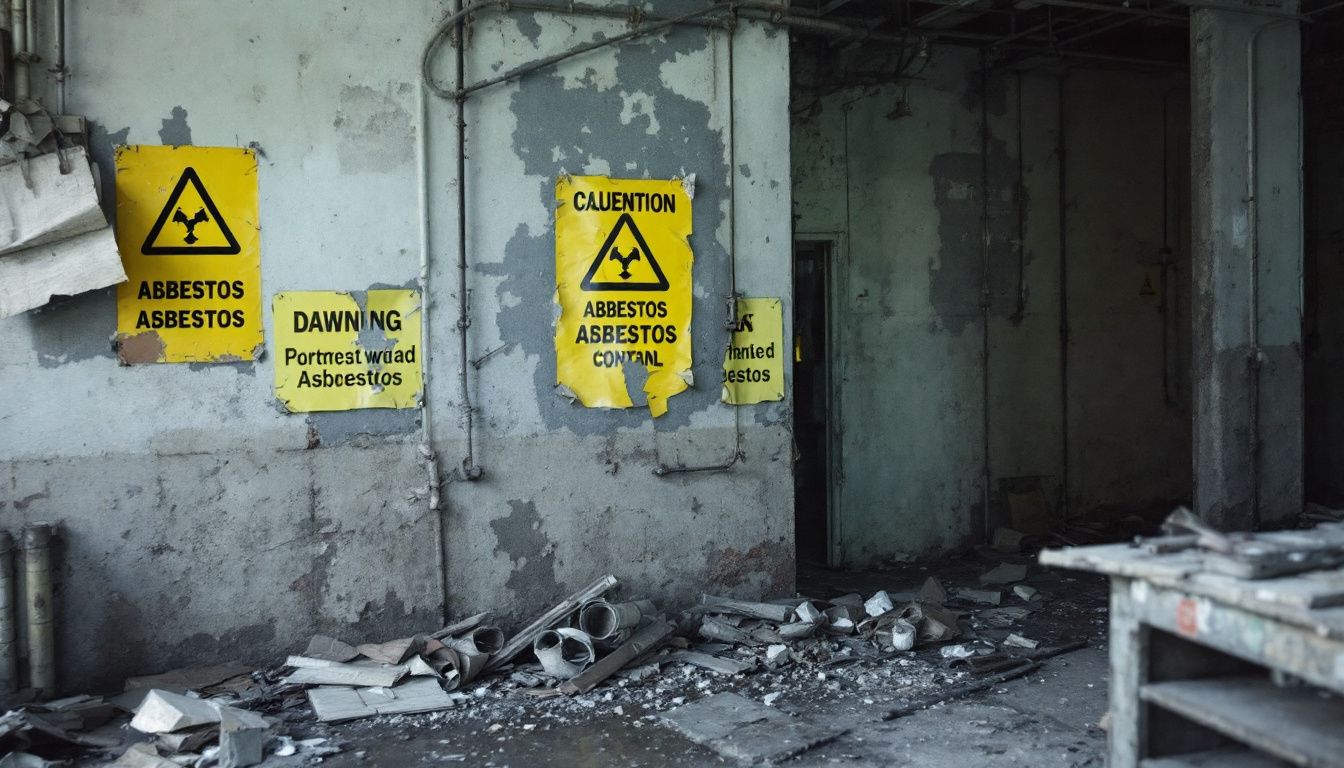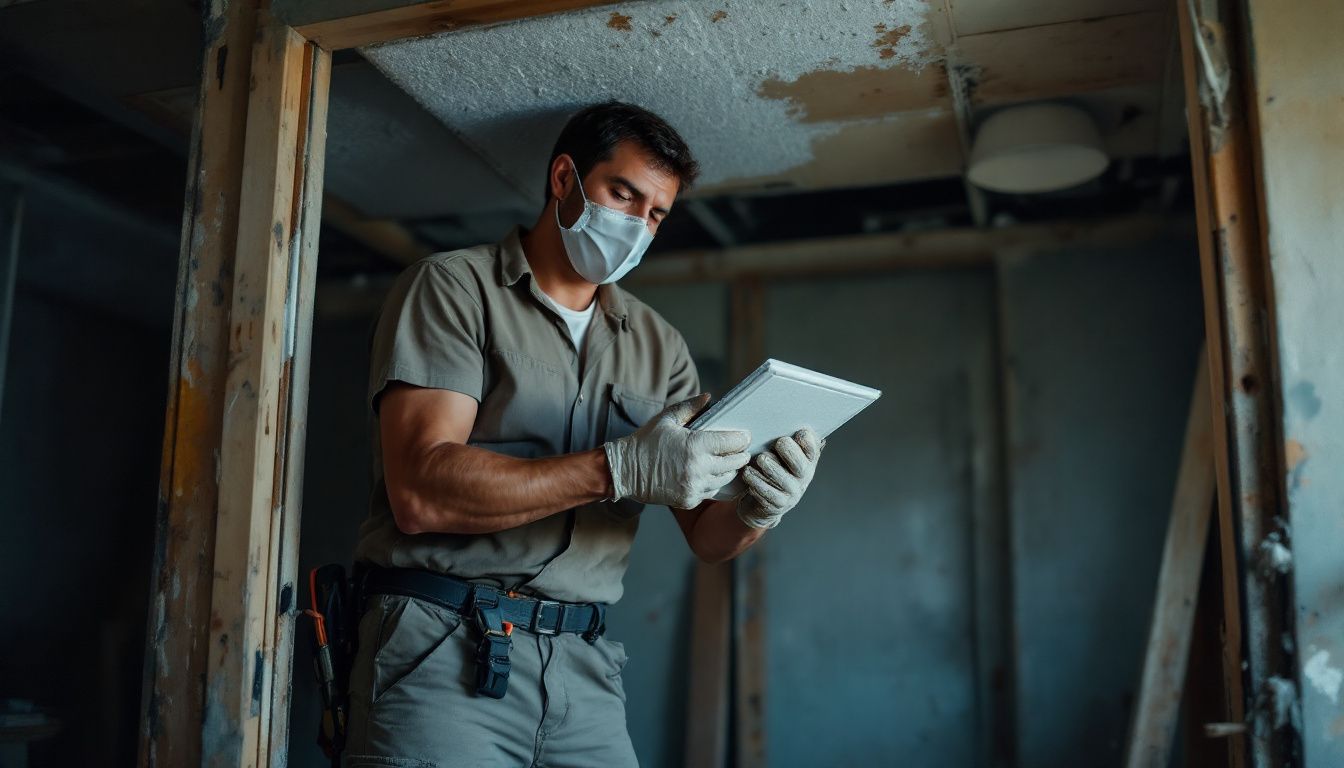
Category: Asbestos in the Construction Industry: Regulations and Precautions

  • Dealing with Asbestos Contamination in Construction Sites

    Dealing with Asbestos Contamination in Construction Sites

    Asbestos Surveying in Settle: What Property Owners and Managers Need to Know

    Settle is a market town surrounded by older stone-built properties, commercial premises, and agricultural buildings — many constructed during the decades when asbestos was routinely used across UK construction. If you own, manage, or are planning work on a building in the area, asbestos surveying in Settle is not optional. It is a legal duty, and getting it right protects everyone who lives or works in your property.

    Whether you are a landlord, facilities manager, or contractor, understanding what asbestos surveys involve, when they are required, and how to stay compliant with UK regulations will save you from serious legal and financial consequences — and far more importantly, from putting people’s health at risk.

    Why Asbestos Remains a Live Issue in Settle’s Building Stock

    Asbestos was widely used in UK construction from the 1950s through to the late 1990s. It was cheap, fire-resistant, and versatile — which is why it ended up in everything from ceiling tiles and floor coverings to pipe lagging, roof sheets, and textured coatings like Artex.

    Settle’s building stock includes a significant proportion of properties built or refurbished during this period. Many of these buildings have never been formally assessed for asbestos-containing materials (ACMs). That does not mean asbestos is absent — it almost certainly means it has simply never been looked for.

    When ACMs are disturbed during renovation, maintenance, or demolition work, fibres become airborne. Once inhaled, those fibres can cause mesothelioma, asbestosis, and lung cancer — diseases that typically take 20 to 40 years to develop, meaning the damage is often done long before any symptoms appear.

    When Is an Asbestos Survey in Settle Required?

    The Control of Asbestos Regulations place a legal duty on those responsible for non-domestic premises to manage asbestos. This is known as the duty to manage, and it applies to anyone who has responsibility for maintenance or repair of a building — not just the owner.

    There are three main scenarios where asbestos surveying in Settle is required or strongly advisable:

    • Before purchasing or taking on management of a commercial or industrial property — you need to know what you are inheriting.
    • As part of ongoing duty-to-manage compliance — non-domestic premises must have an up-to-date asbestos register and management plan.
    • Before any refurbishment, renovation, or demolition work — disturbing ACMs without prior identification is a criminal offence.

    Domestic properties are not covered by the duty to manage, but if you are a landlord or if any building work is planned, a survey is still strongly recommended. Tradespeople working in your property have the right to know what they may encounter.

    Types of Asbestos Survey Available in Settle

    Not all surveys are the same. The type you need depends on what you are trying to achieve — whether that is ongoing management of a building or preparation for physical works.

    Management Survey

    A management survey is the standard survey required for the ongoing management of a building. It identifies the location, type, and condition of any ACMs that could be disturbed during normal occupation, routine maintenance, or minor repair work.

    The surveyor carries out a visual inspection and takes samples from suspect materials. These are sent to a UKAS-accredited laboratory for analysis. The resulting report includes an asbestos register, a risk assessment for each ACM, and a management plan setting out what action — if any — is needed.

    Management surveys are not intrusive. They are designed to be carried out while a building is occupied and typically do not require access to voids, ceiling spaces, or areas that would need to be opened up.

    Refurbishment Survey

    If you are planning any building work in Settle — whether a full refurbishment, a loft conversion, a kitchen refit, or even just knocking through a wall — you need a refurbishment survey before work begins.

    This type of survey is fully intrusive. The surveyor accesses all areas that will be affected by the planned works, including voids, ceiling spaces, and floor cavities. The goal is to identify every ACM that could be disturbed so that appropriate removal or management measures can be put in place before any contractor starts work.

    Attempting to carry out refurbishment or demolition work without a prior survey is a breach of the Control of Asbestos Regulations and can result in prosecution, significant fines, and — in the worst case — workers and occupants being exposed to lethal fibres.

    Demolition Survey

    Where a building is being fully or partially demolished, a demolition survey is required. This is the most thorough and intrusive survey type, covering every part of the structure that will be affected.

    It must be completed before any demolition work commences, and the findings must be communicated to all contractors involved in the project. A demolition survey is a legal prerequisite, not a procedural formality — every area of the structure must be assessed and documented.

    Re-inspection Survey

    If your building already has an asbestos register, it needs to be kept up to date. The condition of ACMs can change over time — materials deteriorate, get damaged, or are partially disturbed during maintenance work.

    A re-inspection survey revisits known ACMs to check their current condition and updates the risk ratings accordingly. HSE guidance recommends that ACMs in normal condition are re-inspected at least annually. If a material is in poor condition or in an area of high activity, more frequent inspections may be required.

    Keeping your register current is not a bureaucratic nicety — it is a legal requirement under Regulation 4 of the Control of Asbestos Regulations.

    What Happens During an Asbestos Survey in Settle?

    Knowing what to expect makes the process straightforward. Here is how a survey with Supernova Asbestos Surveys works, step by step:

    1. Booking: Contact us by phone on 020 4586 0680 or request a free quote online. We confirm availability — often same week — and send a booking confirmation.
    2. Site visit: A BOHS P402-qualified surveyor attends at the agreed time and carries out a thorough inspection of the property, tailored to the survey type required.
    3. Sampling: Representative samples are collected from suspect materials using correct containment procedures to prevent fibre release during the process.
    4. Laboratory analysis: Samples are analysed under polarised light microscopy at our UKAS-accredited laboratory, providing legally defensible results.
    5. Report delivery: You receive a detailed asbestos register and risk-rated management plan in digital format, fully compliant with HSG264 guidance, within 3–5 working days.

    The report satisfies all legal requirements and gives you a clear, actionable picture of the asbestos situation in your property.

    Asbestos Testing: What Are Your Options?

    In some circumstances, a targeted approach to asbestos testing is appropriate before commissioning a full survey. This might apply where you have a specific material you want to identify quickly, or where you need to confirm whether a known material contains asbestos fibres.

    For homeowners undertaking minor DIY work, Supernova offers an asbestos testing kit that allows you to collect a sample safely and send it to our UKAS-accredited laboratory for analysis. Results are returned promptly, giving you the information you need before picking up a drill or a saw.

    However, for commercial properties, non-domestic premises, or any situation involving a formal duty to manage, a professional survey carried out by a qualified surveyor is required. A testing kit cannot replace the systematic inspection, risk assessment, and documented management plan that a professional survey provides. It is a useful tool in the right context — not a substitute for compliance.

    Asbestos Removal in Settle: When Is It Necessary?

    Not all asbestos needs to be removed. In many cases, ACMs that are in good condition and are not at risk of being disturbed can safely be left in place and managed. Removal introduces its own risks — disturbing materials that would otherwise remain stable is not always the right answer.

    However, there are situations where asbestos removal is the appropriate course of action:

    • The material is in poor condition and deteriorating.
    • The material is in an area where it is likely to be disturbed by maintenance or occupation activity.
    • Refurbishment or demolition works are planned that will affect the area.
    • The risk assessment indicates that management in situ is no longer adequate.

    High-risk asbestos work — including removal of sprayed coatings, pipe lagging, and loose-fill insulation — must be carried out by a licensed contractor. Other lower-risk work can be undertaken by trained and competent workers following the correct procedures. Your asbestos management plan will set out what category any identified materials fall into.

    The Legal Framework: Regulations You Need to Understand

    The legal framework around asbestos in the UK is clear and well-established. The key regulations and guidance documents you need to be aware of are:

    • Control of Asbestos Regulations: The primary legislation governing work with asbestos in Great Britain. It sets out licensing requirements, notification duties, and the obligation to protect workers and others from asbestos exposure.
    • HSG264 — Asbestos: The Survey Guide: The HSE’s definitive guidance on conducting management and refurbishment/demolition surveys. All Supernova surveys are conducted in accordance with HSG264 standards.
    • Regulation 4 — Duty to Manage: Owners and managers of non-domestic premises have a legal duty to identify ACMs, assess risk, and maintain an up-to-date asbestos register. This duty cannot be delegated away — it sits with whoever has responsibility for the building.

    Failure to comply can result in significant fines, prosecution, and — in the most serious cases — criminal liability. More importantly, non-compliance puts lives at risk. Asbestos-related diseases remain the leading cause of work-related deaths in the UK.

    Fire Risk Assessments: The Other Legal Obligation You Cannot Ignore

    If you manage a commercial or multi-occupancy property in Settle, asbestos management is not the only compliance obligation on your list. The Regulatory Reform (Fire Safety) Order requires responsible persons to carry out and regularly review a fire risk assessment for their premises.

    Supernova offers fire risk assessments alongside our asbestos survey services, making it straightforward to address both obligations at the same time. Combining these assessments can reduce disruption to your building’s occupants and streamline your compliance documentation.

    A fire risk assessment examines the potential sources of ignition, the means of escape, fire detection and suppression systems, and the procedures in place to protect occupants. It results in a written report identifying any shortfalls and the actions required to address them. Like your asbestos register, it must be reviewed regularly and updated whenever significant changes occur in the building or its use.

    Survey Costs and Pricing

    Supernova Asbestos Surveys offers transparent, fixed-price surveys across the UK, including Settle and the surrounding North Yorkshire area. Our pricing is competitive without any compromise on quality or compliance.

    As a guide:

    • Management Survey: From £195 for a standard residential or small commercial property.
    • Refurbishment and Demolition Survey: From £295, covering all areas to be disturbed prior to works.
    • Re-inspection Survey: From £150, plus £20 per ACM re-inspected.
    • Bulk Sample Testing Kit: From £30 per sample, posted to you for collection.
    • Fire Risk Assessment: From £195 for a standard commercial premises.

    All prices are subject to property size and location. Contact us for a fixed-price quote tailored to your specific requirements — there are no hidden fees and no obligation to proceed.

    Choosing the Right Asbestos Surveying Company in Settle

    Not every surveying company operates to the same standard. When selecting a provider for asbestos surveying in Settle, there are several things you should verify before committing:

    • Qualifications: Surveyors should hold the BOHS P402 qualification as a minimum. This is the industry-recognised standard for asbestos surveying in the UK.
    • Laboratory accreditation: Samples must be analysed by a UKAS-accredited laboratory. Results from non-accredited labs are not legally defensible and will not satisfy regulatory requirements.
    • HSG264 compliance: The survey must be conducted in accordance with HSG264 guidance. Ask your provider to confirm this explicitly.
    • Report quality: The report should include a full asbestos register, condition ratings, risk assessments, and a management plan — not just a list of materials found.
    • Insurance: Ensure the company holds appropriate professional indemnity and public liability insurance.

    Supernova Asbestos Surveys meets all of these standards as standard. With over 50,000 surveys completed nationwide, we have the experience and the infrastructure to deliver reliable, compliant results — and we cover Settle and the wider North Yorkshire area with no additional travel surcharges for most locations.

    What to Do If You Suspect Asbestos in Your Property

    If you suspect a material in your property may contain asbestos, the single most important thing to do is leave it alone. Do not drill, cut, sand, or disturb the material in any way until it has been assessed by a qualified surveyor.

    Asbestos is most dangerous when it is damaged or disturbed. Intact, undisturbed ACMs in good condition present a very low risk. The risk escalates dramatically when fibres are released into the air — and that happens when people interfere with materials they have not had properly assessed.

    Contact Supernova Asbestos Surveys, describe the material and its location, and we will advise you on the most appropriate course of action. In many cases, we can arrange a survey within days.

    Frequently Asked Questions

    Do I need an asbestos survey if my property was built after 2000?

    If your property was built after 2000, it is very unlikely to contain asbestos-containing materials, as the use of asbestos in UK construction was effectively banned before this point. However, if the building underwent significant refurbishment using older materials, or if there is any uncertainty about the construction date of specific elements, a survey is still advisable. When in doubt, it is always safer to confirm.

    How long does an asbestos survey in Settle take?

    The duration depends on the size and complexity of the property and the type of survey required. A management survey of a standard commercial premises typically takes two to four hours. A fully intrusive refurbishment or demolition survey of a larger or more complex building may take a full day or longer. Your surveyor will give you a realistic time estimate when you book.

    Can I manage asbestos in my building rather than having it removed?

    Yes — in many cases, managing asbestos in situ is the correct approach. ACMs that are in good condition and are not at risk of disturbance can safely remain in the building, provided they are documented in an asbestos register, monitored through regular re-inspections, and included in a management plan. Removal is only necessary when the condition of the material deteriorates or when works are planned that would disturb it.

    What is the difference between a management survey and a refurbishment survey?

    A management survey is a non-intrusive inspection designed to identify ACMs that could be disturbed during normal building use and routine maintenance. A refurbishment survey is a fully intrusive inspection required before any building works take place. It accesses all areas that will be affected by the planned works, including voids and cavities that a management survey would not open up. The two serve different purposes and one cannot substitute for the other.

    Is asbestos surveying in Settle covered by Supernova’s nationwide service?

    Yes. Supernova Asbestos Surveys operates across the whole of the UK, including Settle and the surrounding North Yorkshire area. We aim to offer same-week availability in most locations and provide fixed-price quotes with no hidden charges. Call us on 020 4586 0680 or visit asbestos-surveys.org.uk to request a quote.

    Get Your Asbestos Survey Booked Today

    Asbestos surveying in Settle is a legal requirement for non-domestic premises and a sensible precaution for any property owner planning building work. Delaying a survey does not reduce your risk — it increases it, and it leaves you exposed to legal liability if something goes wrong.

    Supernova Asbestos Surveys has completed over 50,000 surveys nationwide. Our BOHS-qualified surveyors, UKAS-accredited laboratory, and HSG264-compliant reports give you everything you need to meet your legal obligations and protect the people in your building.

    Call us today on 020 4586 0680 or visit asbestos-surveys.org.uk to request a free, no-obligation quote. We cover Settle and the wider North Yorkshire area and can typically arrange a survey within days of your enquiry.
  • A Comprehensive Look at Asbestos Regulations in Construction

    A Comprehensive Look at Asbestos Regulations in Construction

    Asbestos in Building Construction: What Every Dutyholder Needs to Know

    Asbestos in building construction remains one of the most significant occupational health hazards the UK has ever faced. Millions of tonnes of asbestos-containing materials (ACMs) were incorporated into British buildings before the full ban in 1999, and the vast majority of those structures are still standing, still occupied, and still capable of causing serious harm to anyone who disturbs them without proper precautions.

    If you manage, own, or work on a building constructed before the year 2000, the law places clear duties on you. Understanding those duties is not optional — and neither is acting on them.

    Why Asbestos Was So Widely Used in Building Construction

    Asbestos was considered a wonder material for much of the twentieth century. It was cheap, abundant, fire-resistant, and extraordinarily versatile — qualities that made it irresistible to builders, architects, and manufacturers across every sector of the construction industry.

    The six commercially used types — chrysotile (white), amosite (brown), crocidolite (blue), anthophyllite, tremolite, and actinolite — were all incorporated into building products at various points. Chrysotile, amosite, and crocidolite dominated UK construction, and each type carries serious health risks once fibres become airborne.

    By the time the UK banned all forms of asbestos, it had been used in hundreds of distinct building product types across residential, commercial, and industrial properties. That legacy is precisely what makes asbestos management such a pressing issue for property owners and facilities managers today.

    Where Asbestos Hides in Buildings

    One of the most challenging aspects of asbestos in building construction is that ACMs are rarely visible. They are often concealed behind walls, above ceiling tiles, beneath floor coverings, or wrapped around pipes in service voids. You cannot identify asbestos by sight — only laboratory analysis of a sample can confirm its presence.

    Common locations where ACMs are found in UK buildings include:

    • Sprayed coatings on structural steelwork and ceilings
    • Asbestos insulating board (AIB) in ceiling tiles, partition walls, and fire doors
    • Pipe and boiler lagging
    • Textured decorative coatings such as Artex
    • Vinyl floor tiles and associated adhesives
    • Roofing sheets, gutters, and rainwater pipes (asbestos cement)
    • Soffit boards and fascias
    • Rope seals and gaskets in older heating systems
    • Insulation around electrical panels and switchgear

    The condition of these materials matters enormously. ACMs that are intact and undisturbed present a much lower risk than those that are damaged, deteriorating, or about to be disturbed by building work. That distinction drives the entire framework of asbestos regulation in the UK.

    The Legal Framework: Control of Asbestos Regulations

    The primary legislation governing asbestos in building construction is the Control of Asbestos Regulations. These regulations set out clear legal duties for employers, building owners, and dutyholders — covering everything from identification and risk assessment through to licensed removal work and disposal.

    The regulations are supported by HSG264, the HSE’s definitive guidance on asbestos surveys, and the Approved Code of Practice: Managing and Working with Asbestos. Together, these documents provide the practical framework that surveyors, contractors, and building managers must follow.

    The Duty to Manage

    Regulation 4 of the Control of Asbestos Regulations places a specific legal duty on those responsible for non-domestic premises to manage asbestos. This is known as the duty to manage, and it applies to building owners, employers, and anyone with maintenance or repair obligations for a building.

    The duty to manage requires you to:

    1. Take reasonable steps to find out whether ACMs are present in the premises
    2. Presume materials contain asbestos unless there is strong evidence they do not
    3. Assess the risk from any ACMs identified
    4. Prepare and implement a written asbestos management plan
    5. Maintain an up-to-date asbestos register
    6. Provide information about the location and condition of ACMs to anyone who may disturb them
    7. Review and monitor the management plan regularly

    Failure to comply with the duty to manage is a criminal offence. The Health and Safety Executive has the power to issue improvement notices, prohibition notices, and prosecute dutyholders who fall short of their obligations.

    Licensing and Notification Requirements

    Not all asbestos work requires a licence, but the most hazardous types do. Work with sprayed coatings, asbestos insulating board, and lagging must only be carried out by contractors holding an HSE asbestos licence — this is non-negotiable.

    Some lower-risk work, such as work with asbestos cement, may be notifiable to the HSE without requiring a full licence, but still demands strict controls. Employers must provide appropriate personal protective equipment, respiratory protective equipment, and HEPA-filtered vacuum equipment. The airborne fibre control limit is 0.1 fibres per cubic centimetre of air, and employers must ensure this is not exceeded.

    Types of Asbestos Surveys: Choosing the Right One

    HSG264 and the Control of Asbestos Regulations identify two principal types of asbestos survey, each designed for a different purpose. Choosing the right survey for your circumstances is essential — the wrong survey type will not satisfy your legal obligations.

    Management Survey

    A management survey is the standard survey required to manage ACMs in a building during normal occupation. It locates, as far as reasonably practicable, ACMs that could be disturbed during everyday use, maintenance, and minor repair work.

    The surveyor will inspect accessible areas, take samples where necessary, and produce a risk-rated asbestos register. This register forms the foundation of your asbestos management plan and must be kept up to date. A management survey is the starting point for every dutyholder’s compliance journey.

    Refurbishment Survey

    If you are planning any building work — from a minor refurbishment to a significant structural alteration — you need a refurbishment survey before work begins. This is a more intrusive investigation that may involve breaking into walls, lifting floors, and accessing areas not normally disturbed.

    The purpose is to locate all ACMs in the area to be worked on so they can be removed or managed safely before the main contractor starts. Starting refurbishment work without this survey puts workers at serious risk and places the dutyholder in breach of the regulations.

    Demolition Survey

    Where a building or part of a building is to be demolished entirely, a demolition survey is required. This is the most intrusive survey type and must cover the whole structure, not just the areas where work will begin. All ACMs must be identified and removed before demolition commences — no exceptions.

    Re-inspection Survey

    Once ACMs have been identified and a management plan is in place, those materials must be monitored over time. A re-inspection survey assesses whether the condition of known ACMs has changed, whether new damage has occurred, and whether the risk rating needs to be updated.

    Re-inspections are typically carried out annually, though higher-risk materials may need more frequent monitoring. Keeping re-inspection records up to date is a core part of demonstrating ongoing compliance with the duty to manage.

    The Health Risks: Why This Cannot Be Ignored

    The health consequences of asbestos exposure are severe and irreversible. When asbestos fibres are inhaled, they become lodged in the lungs and pleural tissue, where they can cause serious diseases decades after the original exposure.

    The main asbestos-related diseases are:

    • Mesothelioma: A cancer of the lining of the lungs or abdomen, almost exclusively caused by asbestos exposure. It is always fatal.
    • Asbestos-related lung cancer: Caused by asbestos fibre inhalation, often in combination with smoking.
    • Asbestosis: Scarring of the lung tissue caused by prolonged asbestos exposure, leading to progressive breathing difficulties.
    • Pleural thickening: Thickening of the lung lining that restricts breathing and reduces quality of life.

    Asbestos-related diseases have a long latency period — symptoms may not appear until 20 to 40 years after exposure. This means workers exposed during construction and maintenance work in the 1970s, 1980s, and 1990s are still being diagnosed today. The UK has one of the highest rates of mesothelioma in the world, a direct consequence of the scale of asbestos use in its construction industry.

    Asbestos Management in Practice: A Step-by-Step Breakdown

    Understanding the regulations is one thing — putting them into practice is another. Here is a practical breakdown of what effective asbestos management looks like for a typical building owner or facilities manager.

    Step 1 — Establish Whether Your Building Is at Risk

    If your building was constructed or refurbished before 2000, assume ACMs may be present until a survey proves otherwise. Do not rely on previous owners’ assurances or outdated paperwork. Commission a qualified survey as your first action.

    Step 2 — Commission the Right Survey

    Engage a surveyor who holds the BOHS P402 qualification and works to HSG264 standards. Ensure samples are analysed by a UKAS-accredited laboratory. The resulting asbestos register must record the location, type, quantity, and condition of every ACM found, along with a risk rating for each material.

    Step 3 — Develop and Implement a Management Plan

    Your asbestos management plan must set out how each ACM will be managed — whether by leaving it undisturbed, encapsulating it, or arranging for removal. The plan must be written, accessible, and communicated to anyone who may work near or around the identified materials.

    Step 4 — Share Information with Contractors

    Before any maintenance, repair, or construction work takes place, provide contractors with a copy of your asbestos register. This is a legal requirement. Contractors cannot manage a risk they do not know about, and you cannot discharge your duty to manage by having a register that nobody sees.

    Step 5 — Review and Update Regularly

    An asbestos management plan is a living document. It must be reviewed at least annually and updated whenever circumstances change — following building work, after any disturbance of ACMs, or when re-inspection surveys reveal changes in condition.

    DIY Testing: When a Testing Kit Is Appropriate

    In some circumstances — particularly where a single suspect material needs to be identified quickly — a testing kit can provide a cost-effective first step. These kits allow a sample to be collected and sent to an accredited laboratory for analysis.

    However, a testing kit is not a substitute for a full management or refurbishment survey. It does not produce an asbestos register, does not assess risk across a whole building, and does not satisfy the duty to manage. Use it as a preliminary tool, not a compliance solution.

    Asbestos and Fire Safety: An Overlooked Connection

    Asbestos management and fire safety are more closely linked than many building managers realise. ACMs are frequently found in fire doors, fire-stopping materials, and structural fire protection systems. Disturbing these materials during fire safety upgrades — without a prior refurbishment survey — can create both an asbestos hazard and a compromised fire barrier simultaneously.

    A fire risk assessment should always be considered alongside your asbestos management obligations, particularly in older multi-occupied buildings where both hazards are likely to be present. Addressing them together ensures that remedial works are planned safely and that no single hazard is inadvertently worsened by action taken on the other.

    Nationwide Coverage From Supernova Asbestos Surveys

    Supernova Asbestos Surveys operates across the whole of the UK, with specialist teams covering every region of England, Scotland, and Wales. Whether you need an asbestos survey in London, an asbestos survey in Manchester, or an asbestos survey in Birmingham, our qualified surveyors are ready to help you meet your legal obligations quickly and professionally.

    With over 50,000 surveys completed nationwide, we have the experience and accreditation to support dutyholders across all property types — from small commercial premises to large industrial estates and multi-site portfolios.

    To book a survey or discuss your requirements, call us on 020 4586 0680 or visit asbestos-surveys.org.uk.

    Frequently Asked Questions

    What buildings are most likely to contain asbestos?

    Any building constructed or refurbished before the year 2000 may contain asbestos-containing materials. This includes commercial offices, schools, hospitals, industrial units, and residential flats. The risk is highest in buildings dating from the 1950s through to the 1980s, when asbestos use in UK construction was at its peak.

    Do I need an asbestos survey even if I have no plans to carry out building work?

    Yes. The duty to manage under the Control of Asbestos Regulations applies regardless of whether you are planning any work. If you are responsible for a non-domestic premises built before 2000, you are legally required to take reasonable steps to identify whether ACMs are present and manage any risks they pose.

    What is the difference between a management survey and a refurbishment survey?

    A management survey is designed for buildings in normal occupation and covers accessible areas that could be disturbed during routine maintenance. A refurbishment survey is required before any intrusive building work begins and involves a more thorough investigation, including areas that would normally be sealed or inaccessible. Using a management survey where a refurbishment survey is required is a breach of the regulations.

    Can I collect an asbestos sample myself?

    In some situations, a testing kit can be used to collect a sample from a suspect material for laboratory analysis. However, sampling must be carried out carefully to avoid releasing fibres, and the results only confirm whether a specific material contains asbestos — they do not replace a full survey or satisfy your duty to manage obligations.

    How often should ACMs be re-inspected?

    The HSE recommends that known ACMs are re-inspected at least annually. Materials in poor condition, or those in locations where they are more likely to be disturbed, may require more frequent monitoring. The results of each re-inspection must be recorded and used to update your asbestos management plan accordingly.

  • The Impact of Asbestos on the Health of Construction Workers

    The Impact of Asbestos on the Health of Construction Workers

    Asbestos Hazards in Construction: What Every Duty Holder Needs to Know

    One drilled soffit, one stripped plant room lining, one ceiling void opened without a second thought — that is all it takes for asbestos hazards in construction to shift from a paperwork concern to a genuine health emergency. On UK building sites, the danger rarely announces itself. It hides in ordinary materials, gets disturbed during routine work, and is often only recognised after fibres have already been released into the air.

    Asbestos is no longer manufactured or used in UK construction, but it remains embedded in a vast number of older buildings. If you manage property, commission contractors or plan works in premises built before 2000, understanding asbestos hazards in construction is not optional — it is a legal and moral duty.

    Why Asbestos Hazards in Construction Still Demand Attention

    Construction workers, maintenance teams and tradespeople continue to face asbestos exposure because older building materials are still in place across the country. This is not a risk confined to large demolition schemes. Small, everyday tasks — drilling, running cables, replacing a boiler, repairing a ceiling, lifting old floor tiles — can all disturb asbestos-containing materials just as effectively as a demolition crew stripping an entire floor.

    The mechanism is straightforward. Asbestos fibres are microscopic. When materials containing them are cut, broken, sanded or otherwise disturbed, those fibres become airborne. Once inhaled, they can lodge permanently in lung tissue. The health consequences are serious, well documented and irreversible.

    The Control of Asbestos Regulations place strict duties on those who manage buildings and those who carry out work within them. For property managers and duty holders, the practical lesson is this: never assume a material is safe because it looks intact, sealed or familiar. If the building predates 2000, asbestos must remain on your risk register until a suitable survey or test confirms otherwise.

    How Asbestos Exposure Affects Construction Workers’ Health

    One of the most insidious aspects of asbestos exposure is that the harm is rarely immediate. A worker can inhale fibres on a Monday morning and feel completely well for the next twenty or thirty years. That long latency period leads some people to underestimate the seriousness of asbestos hazards in construction — which is precisely why prevention must come before everything else.

    Asbestos exposure is associated with several serious and life-limiting diseases. These conditions can develop after repeated low-level exposure or after a single significant disturbance event, depending on the amount of fibre inhaled and individual susceptibility.

    The Main Asbestos-Related Diseases

    • Mesothelioma — an aggressive cancer affecting the lining of the lungs or abdomen, strongly and specifically associated with asbestos exposure.
    • Lung cancer — asbestos exposure significantly increases the risk, particularly where other respiratory risks are also present.
    • Asbestosis — progressive scarring of lung tissue that permanently restricts breathing capacity.
    • Pleural thickening — thickening of the lung lining that reduces lung function and causes persistent breathlessness.

    These are not theoretical outcomes. They are the reason HSE guidance places such strong emphasis on identifying asbestos before work begins, controlling exposure rigorously, and using competent professionals at every stage.

    Why the Latency Period Changes How Sites Must Be Managed

    Because symptoms can take decades to appear, workers may be exposed without any immediate indication that something has gone wrong. That makes proactive site management absolutely critical. By the time visible harm appears, the damage has long since been done.

    For employers and duty holders, the only rational approach is prevention first:

    • Identify suspect materials before work begins — not during it.
    • Share asbestos information with every person who might disturb those materials.
    • Stop work immediately if unexpected suspect materials are found.
    • Bring in competent surveyors and analysts rather than relying on assumption or guesswork.

    Where Asbestos Hazards in Construction Are Commonly Found

    Asbestos was widely used in UK construction because it resisted heat, improved insulation and added structural strength. That means it can still appear in a surprisingly broad range of materials across commercial, industrial, public and residential buildings of almost every type.

    Some materials carry relatively low risk when they are in good condition and left undisturbed. Others are highly friable — meaning they release fibres very easily — and present a serious hazard even with minor disturbance. The level of risk depends on the specific product, its current condition, and the nature of the work being carried out nearby.

    Common Asbestos-Containing Materials Found on Site

    • Pipe insulation and thermal lagging
    • Asbestos insulating board in partitions, service risers, soffits and ceiling voids
    • Sprayed coatings on structural steelwork or ceilings
    • Textured coatings on walls and ceilings
    • Vinyl floor tiles and bitumen adhesives beneath them
    • Roof sheets, wall cladding and rainwater goods made from asbestos cement
    • Gaskets, rope seals and insulation around plant, pipework and boilers
    • Ceiling tiles, panels and service duct linings

    On many projects, asbestos is encountered in areas that contractors open up as part of normal working. Ceiling voids, service risers, boxing, plant rooms, undercroft areas and roof spaces are all well-established trouble spots. Where no intrusive survey has been carried out, those hidden spaces can present serious and unquantified danger.

    Construction Activities That Carry the Highest Risk

    Certain tasks create a significantly higher chance of fibre release than others. These include:

    1. Demolition and full strip-out works
    2. Refurbishment and fit-out projects
    3. Drilling, chasing and core cutting through walls or floors
    4. Removing old floor finishes and adhesives
    5. Accessing plant rooms and service ducts
    6. Roof repairs on older sheeted or panelled roofs
    7. Electrical and plumbing upgrades in older premises

    Even minor works can trigger significant exposure if the planning is inadequate. A contractor routing a new cable can disturb asbestos insulating board just as effectively as a demolition team removing an entire wall.

    Who Is Most at Risk on Construction Projects

    Asbestos hazards in construction do not affect only specialist removal operatives. In practice, a wide range of trades face exposure when they work in older buildings without reliable asbestos information to hand.

    Trades Commonly Exposed to Asbestos

    • Demolition operatives
    • Builders and general labourers
    • Electricians
    • Plumbers and heating engineers
    • Carpenters and joiners
    • Roofers
    • Flooring contractors
    • Painters and decorators carrying out surface preparation
    • Maintenance teams and facilities management staff

    Property managers should also bear in mind that exposure is not limited to the person holding the tool. When asbestos dust is released, other workers in the vicinity, occupants in adjacent areas and cleaning staff can all be put at risk without realising it.

    Legal Duties for Managing Asbestos Hazards in Construction

    The legal position is clear and unambiguous. The Control of Asbestos Regulations require duty holders, employers and those in control of premises to prevent exposure so far as reasonably practicable. For non-domestic premises, the duty to manage asbestos is a central and enforceable requirement.

    That means knowing whether asbestos is present, assessing the condition of any materials found, keeping accurate records, and ensuring that anyone liable to disturb asbestos has the information they need before work starts.

    What Duty Holders Are Required to Do

    • Determine whether asbestos is present and, if so, where it is located
    • Assess the condition of asbestos-containing materials
    • Presume materials contain asbestos if there is reasonable suspicion and no evidence to the contrary
    • Maintain an up-to-date asbestos register and management plan
    • Review information regularly and after any relevant works
    • Provide asbestos information to contractors, maintenance teams and anyone planning work in the building

    Survey work should align with HSG264, the HSE’s guidance on asbestos surveying. HSE guidance is also clear that the right type of survey depends on the work being planned. A basic record of known materials is not sufficient where the project involves intrusive refurbishment or demolition.

    What Employers and Contractors Must Do

    Employers must carry out suitable risk assessments and ensure workers have the right information, instruction and training before they start. Contractors should never begin intrusive work in an older building without first checking the available asbestos information.

    If survey data is missing, out of date or clearly incomplete, the correct response is to stop and resolve that gap — not to press on and hope for the best. Proceeding without adequate information is exactly how uncontrolled exposure events happen.

    Surveys and Testing That Reduce Asbestos Hazards in Construction

    The most effective way to control asbestos hazards in construction is to identify the risk before tools come out. That means using the right type of survey, the right sampling approach, and the right level of follow-up based on the planned works.

    Management Survey

    A management survey is designed for buildings in normal occupation and those subject to routine maintenance. It helps duty holders locate, as far as reasonably practicable, the presence and extent of asbestos-containing materials that could be disturbed during everyday use. This survey is essential for ongoing compliance in occupied premises, but it is not a substitute for a more intrusive survey where major works are planned.

    Refurbishment and Demolition Planning

    For refurbishment, strip-out or demolition projects, you need a survey intrusive enough to inspect all areas affected by the planned works. Hidden voids, enclosed spaces and materials concealed behind surfaces often present the greatest risk, so assumptions simply are not good enough.

    Obtain the correct asbestos information before the programme is fixed. That avoids delays, emergency stoppages and unsafe decisions being made under pressure on site.

    Re-Inspection Survey

    Where asbestos is known and remains in place, a re-inspection survey confirms whether the condition of materials has changed and whether your management plan still reflects the actual risk. This is particularly valuable in buildings with frequent maintenance activity or areas subject to wear and accidental damage.

    Asbestos Testing and Sampling

    Sometimes a suspect material needs to be confirmed quickly and accurately. Professional asbestos testing allows samples to be analysed in an accredited laboratory so that decisions are based on evidence rather than assumption.

    For some straightforward situations, a compliant asbestos testing kit can be a practical option, provided the sampling is carried out carefully and the material is accessible and undamaged. If the material is friable, damaged, difficult to access or high risk, always use a professional rather than attempting to sample it yourself.

    Where laboratory confirmation is needed through a dedicated service, you can also arrange asbestos testing directly. The key principle is always to match the method to the level of risk involved.

    Practical Steps to Control Asbestos Hazards on Site

    Good asbestos management is not simply about having a survey report sitting in a folder. It is about translating that information into site controls that people actually understand and follow.

    Before Work Starts

    • Check the age and construction history of the building
    • Review the asbestos register and all relevant survey reports
    • Confirm whether the planned works are covered by the available information
    • Brief contractors fully before they mobilise to site
    • Mark or isolate known asbestos-containing materials where appropriate
    • Build asbestos controls into method statements and risk assessments

    If anything is unclear, resolve it before the first fix team arrives. Uncertainty about asbestos should always delay a task — never be quietly ignored.

    If Suspect Asbestos Is Found During Works

    1. Stop work immediately and keep people out of the affected area.
    2. Do not sweep, vacuum with standard equipment or disturb any debris.
    3. Report the issue to the site manager or duty holder without delay.
    4. Arrange assessment, sampling or surveying by a competent specialist.

    This straightforward response prevents a small issue becoming a full contamination event. Acting quickly also preserves evidence about what was disturbed and where, which matters both for remediation and for any subsequent investigation.

    PPE and Cleaning Controls

    PPE has a role, but it is never the first line of defence. The priority is always to avoid disturbing asbestos in the first place. Where work with asbestos is properly planned and permitted, suitable respiratory protective equipment, disposable coveralls and controlled cleaning methods will be required.

    Never use ordinary household or standard commercial vacuum cleaners on asbestos dust. Specialist equipment and procedures are required, and contaminated areas must be treated as hazardous until properly assessed and cleared.

    Asbestos Surveys Across the UK: Local Expertise Where You Need It

    Asbestos hazards in construction are present in buildings across every part of the country, from city centre office blocks to suburban industrial estates. Wherever your project is located, local survey expertise matters.

    If you are managing works in the capital, an asbestos survey London service gives you access to experienced surveyors who understand the specific building stock and regulatory environment in the city. For projects in the North West, an asbestos survey Manchester can be arranged quickly to keep your programme on track. And for works across the Midlands, an asbestos survey Birmingham provides the same standard of professional assessment from surveyors who know the region’s building types well.

    Supernova Asbestos Surveys operates nationwide, with over 50,000 surveys completed. Wherever your building is, the same rigorous standards apply.

    Why Asbestos Management Must Be Ongoing, Not One-Off

    A single survey carried out years ago is not sufficient if the building has been subject to works, changes in use or deterioration since then. Asbestos management is an ongoing responsibility, not a box-ticking exercise.

    Materials that were in good condition five years ago may have been damaged. New works may have opened up voids that were not previously assessed. Contractors may have disturbed materials without reporting it. Regular review, re-inspection and updated records are what keep people genuinely safe — not a static document gathering dust.

    For duty holders managing multiple premises or complex buildings, building asbestos management into planned maintenance cycles is far more effective than reacting to incidents. The cost of proper management is always lower than the cost of an uncontrolled exposure event, a prohibition notice or a prosecution.

    Frequently Asked Questions

    What are the most common asbestos hazards in construction work?

    The most common hazards arise from disturbing asbestos-containing materials during drilling, cutting, demolition, refurbishment and maintenance tasks. Asbestos insulating board, pipe lagging, textured coatings, floor tiles and asbestos cement products are among the materials most frequently encountered on older building sites. The risk increases significantly when work is carried out without prior survey information.

    Which buildings are most likely to contain asbestos?

    Any building constructed or refurbished before 2000 may contain asbestos. This includes commercial offices, schools, hospitals, industrial units, residential flats and houses, and public buildings. The risk is not limited to large or old structures — even buildings from the 1980s and 1990s can contain asbestos-containing materials, particularly in plant rooms, roof areas and service ducts.

    What should a contractor do if they suspect they have disturbed asbestos?

    Work should stop immediately. The area should be vacated and kept clear. No sweeping, standard vacuuming or further disturbance should take place. The site manager or duty holder must be informed, and a competent asbestos specialist should be called in to assess the situation, take samples if required, and advise on any remediation needed before work resumes.

    What type of survey do I need before starting refurbishment works?

    For any refurbishment, strip-out or demolition project, you need a survey that is intrusive enough to inspect all areas affected by the planned works — this goes beyond a standard management survey. HSG264 sets out the HSE’s guidance on survey types and their appropriate use. A competent surveyor will advise on the right approach based on the scope and location of the works.

    How often should an asbestos management plan be reviewed?

    The Control of Asbestos Regulations require duty holders to review and, where necessary, revise their asbestos management plan at regular intervals and following any works that may have affected asbestos-containing materials. In practice, annual review is considered good practice, with additional reviews triggered by any significant maintenance activity, change of use or damage to known materials.


    Supernova Asbestos Surveys has completed over 50,000 surveys across the UK, helping duty holders, property managers and contractors manage asbestos hazards in construction safely and compliantly. Whether you need a management survey, a refurbishment survey, re-inspection or laboratory testing, our UKAS-accredited team is ready to help.

    Call us on 020 4586 0680 or visit asbestos-surveys.org.uk to book a survey or request a quote.

  • Proper Asbestos Handling in Construction Sites: Why It Matters

    Proper Asbestos Handling in Construction Sites: Why It Matters

    Asbestos in Construction Sites: What Every Site Manager Needs to Know

    If your construction project involves a building erected before 2000, there is a very real chance asbestos is present somewhere on site. Asbestos in construction sites remains one of the most serious occupational health hazards in the UK, and mishandling it — even briefly — can have fatal consequences for workers, subcontractors, and members of the public nearby.

    The UK banned asbestos in 1999, but the legacy of its widespread use in the building industry is still being felt. Mesothelioma, asbestos-related lung cancer, and asbestosis continue to claim lives decades after initial exposure. Understanding your legal duties, the practical risks, and the correct procedures is not optional — it is the difference between a safe site and a catastrophic one.

    Why Asbestos Remains a Live Threat on UK Construction Sites

    Asbestos was used extensively across UK construction from the 1950s through to the late 1990s. It was valued for its fire resistance, durability, and insulating properties — which is precisely why it was incorporated into so many building materials.

    Common asbestos-containing materials (ACMs) found on construction sites include:

    • Pipe and boiler lagging
    • Sprayed coatings on structural steelwork and ceilings
    • Asbestos insulating board (AIB) used in partition walls, ceiling tiles, and fire doors
    • Asbestos cement roofing sheets and guttering
    • Floor tiles and vinyl floor coverings
    • Roofing felt
    • Textured decorative coatings such as Artex
    • Gaskets and rope seals in plant rooms

    Many of these materials are not immediately obvious. Asbestos fibres are invisible to the naked eye, and ACMs can look identical to non-hazardous alternatives. That invisibility is what makes asbestos so dangerous — workers can unknowingly disturb it and inhale fibres without realising anything has happened.

    The health consequences are severe and typically appear 20 to 40 years after exposure. By the time symptoms develop, the damage is irreversible.

    Your Legal Duties Under the Control of Asbestos Regulations

    The Control of Asbestos Regulations set out clear legal obligations for anyone who manages, works in, or carries out work on non-domestic premises. These regulations apply directly to construction sites and the people responsible for them.

    The Duty to Manage

    Duty holders — typically the building owner or the person responsible for maintenance — must take reasonable steps to find ACMs, assess their condition, and put a management plan in place. This duty does not disappear once construction work begins; it transfers to the principal contractor and the site team.

    Before any demolition, refurbishment, or significant maintenance work starts, a suitable asbestos survey must be carried out. Relying on an existing management survey is not sufficient for intrusive work — a refurbishment and demolition survey is required, as it involves accessing concealed areas that a standard survey would not examine.

    Regulation 24: Packaging, Labelling, and Transport

    Regulation 24 of the Control of Asbestos Regulations specifically addresses how asbestos waste must be handled once it has been removed. Asbestos waste must be:

    • Double-bagged in appropriate polythene sacks — a certified red inner bag and a clear outer bag for unbonded (friable) asbestos waste
    • Labelled clearly with the correct CDG (Carriage of Dangerous Goods) hazard labels
    • Stored securely on site before collection, away from other workers
    • Transported only by a licensed waste carrier in sealed skips or vehicles with lockable compartments
    • Disposed of at a licensed hazardous waste facility

    Failure to follow these steps is not just a procedural failing — it is a criminal offence that can result in significant fines and prosecution.

    Licensed vs Non-Licensed Work

    Not all asbestos work requires a licence, but the highest-risk tasks do. Work involving sprayed coatings, pipe lagging, and asbestos insulating board must only be carried out by contractors holding a licence issued by the HSE. This is non-negotiable.

    Notifiable non-licensed work (NNLW) covers tasks that do not require a full licence but still require notification to the relevant enforcing authority, medical surveillance for workers, and written records of the work carried out.

    Non-licensed work — such as minor work with asbestos cement in good condition — still requires a proper risk assessment, appropriate PPE, and safe working procedures.

    Conducting an Asbestos Risk Assessment Before Work Begins

    Before any construction or refurbishment work starts on a pre-2000 building, a thorough asbestos risk assessment is essential. This is not a tick-box exercise — it is a critical step that protects your workers and keeps you on the right side of the law.

    A proper risk assessment should cover:

    • The location and extent of all known or suspected ACMs
    • The condition of those materials — whether they are intact, damaged, or deteriorating
    • The type of asbestos present (white, brown, or blue — each carries different risk levels)
    • The likelihood of disturbance during the planned work
    • The controls required to prevent fibre release
    • Emergency procedures if ACMs are unexpectedly encountered

    The risk assessment should be completed by a competent person — someone with the training, knowledge, and experience to make accurate judgements about asbestos risk. In most cases, this means commissioning a professional asbestos survey from an accredited surveyor.

    If you are working in the capital, our asbestos survey London service covers the full city with rapid turnaround times to keep your project on schedule. For projects in the North West, our asbestos survey Manchester team operates across Greater Manchester and the surrounding region.

    Safe Handling Procedures for Asbestos in Construction Sites

    When ACMs are identified and work must proceed in their vicinity — or they must be removed — strict handling procedures must be followed without exception. There is no room for shortcuts here.

    Establishing a Controlled Work Area

    Any area where asbestos work is taking place must be clearly demarcated and access restricted to authorised personnel only. Warning signs must be displayed at all entry points.

    For licensed work, a fully enclosed and negatively pressurised enclosure is typically required to prevent fibre migration to other areas of the site. This is a technical requirement — not a precaution that can be skipped to save time or money.

    Personal Protective Equipment

    Workers handling asbestos must wear appropriate PPE at all times. This includes:

    • A correctly fitted RPE (respiratory protective equipment) — at minimum a FFP3 disposable mask, or a half-face or full-face respirator with P3 filters for higher-risk work
    • Disposable coveralls (Type 5, category 3) to prevent fibre contamination of clothing
    • Disposable gloves
    • Overshoes or disposable boot covers

    PPE must be properly donned before entering the work area and carefully removed in the correct sequence to avoid self-contamination. Contaminated PPE must be treated as asbestos waste and disposed of accordingly.

    Wet Methods and Suppression

    Where asbestos materials are being disturbed, wet methods should be used wherever practicable to suppress fibre release. Dampening ACMs before removal significantly reduces the number of fibres becoming airborne.

    Dry sweeping or using a standard vacuum cleaner is strictly prohibited — only H-class (HEPA) vacuum equipment should be used for any clean-up work in the area.

    Air Monitoring

    For licensed asbestos work, air monitoring must be carried out during and after removal to ensure that fibre concentrations remain below the control limit set by the HSE. A four-stage clearance procedure — including a visual inspection and air testing — must be completed before an enclosure is dismantled and the area returned to normal use.

    When to Commission a Demolition Survey

    A standard management survey is designed for occupied buildings under normal use. It is not suitable for construction projects involving significant structural work, refurbishment, or demolition. In those circumstances, a demolition survey is the correct instrument.

    A demolition survey is intrusive by design. It involves accessing voids, breaking into structural elements, and examining areas that would not be touched during routine maintenance. The goal is to locate every ACM that could be disturbed during the planned works — before a single tool is raised.

    Commissioning this survey early in your project planning is not just good practice — it is a legal requirement under the Control of Asbestos Regulations. Building it into your pre-construction programme avoids costly delays further down the line.

    Asbestos Removal: When to Call in Licensed Contractors

    There is a clear line between what site teams can manage themselves and what must be handed over to licensed specialists. Attempting to remove high-risk asbestos materials without the appropriate licence is illegal, dangerous, and will expose your organisation to serious liability.

    Licensed asbestos removal contractors are trained to work safely with the most hazardous ACMs. They carry HSE-issued licences, maintain detailed records of all work, and are subject to regular inspection. Engaging a licensed contractor is not just a legal requirement for certain work types — it is the only way to ensure the job is done safely and that your site can be signed off as clear.

    When selecting a removal contractor, check that they hold a current HSE licence, carry adequate insurance, and can provide a method statement and risk assessment specific to your site. Do not accept verbal assurances — ask for documentation before any work begins.

    Worker Training: A Non-Negotiable Requirement

    Every worker who is liable to disturb asbestos — or who supervises those who do — must receive appropriate asbestos awareness training. This is a legal requirement under the Control of Asbestos Regulations, not a recommendation.

    Asbestos awareness training should cover:

    • The properties of asbestos and why it is hazardous
    • The types of ACMs and where they are commonly found
    • How to recognise potential ACMs on site
    • The health effects of asbestos exposure and why they are serious
    • What to do if asbestos is suspected or discovered unexpectedly
    • The correct use of PPE and RPE
    • Emergency procedures

    Workers carrying out non-licensed or notifiable non-licensed work require additional, task-specific training beyond basic awareness. Licensed work requires formal training as part of the licensing regime.

    Training must be refreshed regularly — annual refresher training is standard practice and strongly recommended by the HSE. Records of training should be kept on file and available for inspection.

    What to Do If Asbestos Is Discovered Unexpectedly

    Despite thorough surveys, unexpected discoveries do happen on construction sites — particularly during demolition or when opening up concealed voids. Having a clear procedure in place before work starts means your team can respond quickly and correctly.

    If suspected asbestos is encountered unexpectedly, follow these steps:

    1. Stop work immediately in the affected area
    2. Do not disturb the material further
    3. Evacuate the immediate area and restrict access
    4. Inform the site manager or principal contractor
    5. Arrange for the material to be sampled and analysed by an accredited laboratory
    6. Do not resume work in the area until the material has been identified and appropriate controls are in place

    Attempting to carry on working and deal with it later is not an option. The consequences of further disturbance — both for health and for legal liability — are too serious to risk.

    The Financial and Legal Cost of Getting It Wrong

    The consequences of mismanaging asbestos in construction sites extend well beyond health risks. Enforcement action by the HSE can result in prohibition notices that shut down your site, improvement notices, substantial fines, and in serious cases, criminal prosecution of individuals and organisations.

    Beyond regulatory penalties, there is the civil liability exposure from workers or members of the public who develop asbestos-related disease as a result of exposure on your site. Claims can take decades to materialise, but when they do, the financial and reputational consequences can be devastating.

    Proper asbestos management is not a cost — it is risk mitigation. The expense of a professional survey and licensed removal is negligible compared to the potential liability of getting it wrong.

    For projects in the Midlands, our asbestos survey Birmingham service provides fast, accredited surveys to keep your construction programme moving safely.

    Frequently Asked Questions

    What types of asbestos surveys are required before construction work?

    For refurbishment or demolition work, a refurbishment and demolition survey (also known as an R&D survey) is required. This is a more intrusive survey than a standard management survey, as it involves accessing areas that will be disturbed during the works. It is carried out in accordance with HSG264, the HSE’s guidance on asbestos surveys. A management survey alone is not sufficient for construction or demolition projects.

    Does all asbestos work on a construction site require a licensed contractor?

    Not all asbestos work requires a licence, but the highest-risk tasks do — including work involving sprayed coatings, pipe lagging, and asbestos insulating board. Some lower-risk tasks fall under notifiable non-licensed work (NNLW) and require notification to the enforcing authority but not a full HSE licence. Even non-licensed work still requires a risk assessment, appropriate PPE, and safe working procedures. If you are unsure which category your work falls into, seek professional advice before proceeding.

    What happens if asbestos is found unexpectedly during construction?

    Work in the affected area must stop immediately. The material should not be disturbed further, and access to the area should be restricted. The site manager or principal contractor must be informed, and the material must be sampled and analysed by an accredited laboratory before work resumes. Having an emergency procedure written into your site safety plan before work begins ensures your team knows exactly what to do if this situation arises.

    Who is responsible for asbestos management on a construction site?

    Under the Control of Asbestos Regulations, the duty to manage asbestos sits with the duty holder — typically the building owner or the person responsible for the premises. Once construction work begins, the principal contractor takes on significant responsibility for ensuring that asbestos risks are properly managed on site. All parties in the supply chain, including subcontractors, have obligations to work safely and not disturb ACMs without appropriate controls in place.

    How often does asbestos awareness training need to be refreshed?

    The Control of Asbestos Regulations require that workers liable to disturb asbestos receive appropriate training. The HSE strongly recommends that awareness training is refreshed on an annual basis to ensure workers remain up to date with safe working procedures and current guidance. Workers carrying out non-licensed or notifiable non-licensed work require additional task-specific training, and those involved in licensed work must receive formal training as part of the licensing regime.

    Work Safely — Get the Right Survey First

    Supernova Asbestos Surveys has completed over 50,000 surveys across the UK, working with principal contractors, developers, and site managers to ensure construction projects start on solid, legally compliant ground. Whether you need a refurbishment and demolition survey ahead of a major project or rapid asbestos testing to keep your programme on track, our accredited team is ready to help.

    Call us on 020 4586 0680 or visit asbestos-surveys.org.uk to book your survey or speak to a member of our team about your site requirements.

  • Asbestos Regulations in the Construction Industry

    Asbestos Regulations in the Construction Industry

    What Construction Companies Must Know About the Legal Requirements for Asbestos

    Asbestos still kills more people in the UK each year than any other single work-related cause. For construction companies, that statistic carries real weight — because your workers are among those most at risk. Understanding the legal requirements for asbestos is not optional. It is a fundamental part of running a construction business safely and lawfully in the UK.

    Whether you are managing a refurbishment, a demolition, or routine maintenance on a pre-2000 building, the law places specific duties on you. Get them wrong and the consequences range from unlimited fines to imprisonment. Get them right and you protect your workers, your business, and your reputation.

    Why Asbestos Remains a Live Issue for Construction

    The UK banned the use of asbestos in 1999, with white asbestos (chrysotile) being the last type prohibited. But banning it did not make it disappear. Millions of buildings constructed before that date still contain asbestos-containing materials (ACMs), and construction workers disturb those materials every day.

    Asbestos fibres, when inhaled, can cause mesothelioma, asbestosis, and lung cancer — diseases that typically take decades to develop after exposure. This long latency period means workers exposed today may not show symptoms until the 2040s or beyond. The legal framework exists precisely to prevent that future harm.

    Construction trades — including electricians, plumbers, joiners, and demolition workers — face particularly high exposure risks because they routinely work in older buildings without always knowing what materials they are cutting, drilling, or disturbing.

    The Core Legislation: Control of Asbestos Regulations

    The primary legislation governing asbestos in the UK is the Control of Asbestos Regulations. These regulations consolidate earlier rules and set out a clear framework for how asbestos must be managed, handled, and removed across all workplaces, including construction sites.

    The regulations apply to any work that may disturb asbestos, and they place duties on employers, the self-employed, and dutyholders — those who own, occupy, or have responsibility for non-domestic premises.

    Regulation 4: The Duty to Manage

    Regulation 4 is the cornerstone provision for anyone responsible for a building. It requires dutyholders to take reasonable steps to find out whether ACMs are present, assess their condition, and put a written asbestos management plan in place.

    For construction companies, this means that before any work begins on a pre-2000 building, you must either obtain an existing asbestos management plan from the dutyholder or commission an asbestos survey yourself. Starting work without this information is not just risky — it is a legal breach.

    Notifiable and Non-Notifiable Licensable Work

    The regulations divide asbestos work into three categories, each with different requirements:

    • Licensable work — the highest-risk activities, such as removing asbestos insulation or asbestos insulating board. This work must be carried out by a contractor licensed by the HSE. It must also be notified to the relevant enforcing authority before work begins.
    • Notifiable non-licensable work (NNLW) — lower-risk work that does not require a licence but must still be notified to the enforcing authority. Workers must have medical examinations and the employer must keep health records.
    • Non-licensable work — the lowest-risk category, such as work with asbestos cement in good condition. A licence is not required, but workers must still be trained and the work must be properly managed.

    Misclassifying work — treating licensable activities as non-licensable — is one of the most common compliance failures in the construction sector. If you are unsure which category applies, seek specialist advice before proceeding.

    The Legal Requirements for Asbestos: What Construction Companies Must Do

    Meeting the legal requirements for asbestos as a construction company involves several distinct obligations. These are not suggestions or best practice guidelines — they are legal duties enforceable by the HSE and local authorities.

    1. Commission the Right Survey Before Work Starts

    There are two main types of asbestos survey, as set out in HSG264, the HSE’s guidance document on asbestos surveying:

    • Management survey — identifies ACMs that could be disturbed during normal occupation and routine maintenance.
    • Refurbishment and demolition survey — required before any refurbishment or demolition work. This is a more intrusive survey that locates all ACMs in the areas to be worked on, including those that are hidden.

    For construction work, a refurbishment and demolition survey is almost always required. A management survey alone is not sufficient if your team will be breaking into walls, ceilings, or floors.

    Supernova Asbestos Surveys carries out both types of survey across the UK. If you are working in the capital, our asbestos survey London service covers all areas of Greater London with rapid turnaround times. For projects in the North West, our asbestos survey Manchester team is on hand to support pre-construction assessments.

    2. Appoint a Competent Responsible Person

    Every organisation must designate a responsible person who has the skills, training, and authority to oversee asbestos management. In a small construction firm, this may be the owner or site manager. In larger organisations, it is typically a dedicated health and safety manager.

    Competence is not self-declared. The responsible person must have received appropriate training and must understand both the technical and legal requirements that apply to your work. The HSE expects this to be demonstrable — not just assumed.

    3. Provide Asbestos Awareness Training

    Any worker who could encounter asbestos during their work must receive asbestos awareness training. This is a legal requirement under the Control of Asbestos Regulations, and it applies broadly across the construction trades.

    Training must cover:

    • The properties of asbestos and its effects on health
    • The types of materials that are likely to contain asbestos
    • How to avoid disturbing ACMs
    • The correct procedures if asbestos is suspected or discovered
    • Emergency procedures in the event of accidental disturbance

    Training must be refreshed regularly — it is not a one-time exercise. Workers who move between sites and building types may need more frequent updates.

    4. Observe the Asbestos Control Limit

    The regulations set a control limit for asbestos exposure: 0.1 asbestos fibres per cubic centimetre of air, averaged over a four-hour period. Employers must ensure that workers are not exposed above this level.

    In practice, this means using appropriate controls — enclosures, RPE (respiratory protective equipment), and wet methods — and carrying out air monitoring where required. For licensable work, air monitoring is mandatory.

    5. Develop and Maintain an Asbestos Management Plan

    Where ACMs are present in a building you are responsible for, a written asbestos management plan must be in place. This plan must be reviewed and updated regularly — at least annually, and whenever circumstances change.

    The plan should detail the location and condition of all known ACMs, the actions being taken to manage them, and the procedures to follow if they are disturbed. It must be shared with anyone who could be affected, including contractors working on the building.

    CDM Regulations and Asbestos on Construction Projects

    The Construction (Design and Management) Regulations — commonly known as CDM — add another layer of legal obligation for construction projects. Under CDM, asbestos hazards must be identified and addressed during the pre-construction phase, not discovered during the build.

    Principal designers and principal contractors have specific duties to plan, manage, and coordinate health and safety across the project lifecycle. Asbestos surveys and management information must be included in the pre-construction health and safety information passed to the principal contractor before work begins.

    Failing to integrate asbestos management into CDM planning is a common gap — and one that the HSE increasingly scrutinises during inspections.

    Penalties for Non-Compliance

    The consequences of failing to comply with asbestos regulations are serious. The HSE has wide enforcement powers, and it uses them.

    • Improvement notices — requiring specific actions within a set timeframe
    • Prohibition notices — stopping work immediately until compliance is achieved
    • Prosecution — for serious breaches, companies and individuals can face prosecution in the magistrates’ court or Crown Court

    Fines for asbestos offences in the magistrates’ court can reach £20,000. In the Crown Court, fines are unlimited. Individuals — including directors and site managers — can face up to two years’ imprisonment for the most serious breaches under COSHH regulations.

    Beyond the legal penalties, the reputational damage of an asbestos enforcement action can be severe. Clients, insurers, and public sector procurement teams will scrutinise your compliance record.

    What to Do If Asbestos Is Discovered Unexpectedly

    Even with a thorough survey in place, unexpected discoveries happen. If your team suspects they have encountered asbestos — or if a material has already been disturbed — the immediate steps are:

    1. Stop work immediately in the affected area
    2. Prevent anyone else from entering the area
    3. Do not attempt to clean up disturbed material without specialist guidance
    4. Notify the site manager or responsible person immediately
    5. Arrange for a sample to be taken and analysed by an accredited laboratory
    6. Do not resume work until the material has been identified and appropriate controls are in place

    The worst decision in this situation is to continue working and hope for the best. Disturbing even a small quantity of certain asbestos types can create a significant exposure risk for everyone in the vicinity.

    Asbestos Removal: When and How It Must Be Done

    Not all ACMs need to be removed immediately. The decision to remove or manage in place depends on the type of asbestos, its condition, and whether it is likely to be disturbed by the planned work. However, when removal is necessary, it must be carried out correctly.

    For licensable materials, only an HSE-licensed contractor can carry out the removal. Our asbestos removal service is delivered by fully licensed professionals who operate in compliance with all regulatory requirements, from notification through to waste disposal.

    Asbestos waste is classified as hazardous waste and must be double-bagged, correctly labelled, and transported to a licensed disposal facility. Fly-tipping or improper disposal of asbestos waste is a serious criminal offence with significant penalties.

    For construction projects in the Midlands, our asbestos survey Birmingham team provides pre-removal surveys and can coordinate with our removal specialists to ensure a seamless process from identification to clearance.

    Keeping Records: The Documentation Trail That Protects You

    One aspect of asbestos compliance that construction companies sometimes underestimate is the importance of documentation. The law requires specific records to be kept, and those records can be the difference between demonstrating compliance and facing prosecution.

    Records you must keep include:

    • Asbestos survey reports
    • The asbestos management plan and all updates
    • Risk assessments for any work involving ACMs
    • Training records for all relevant workers
    • Health records and medical examination results for workers carrying out NNLW
    • Air monitoring results
    • Waste transfer notes for asbestos waste disposal

    Health records for workers who carry out notifiable non-licensable work must be kept for 40 years. This reflects the long latency period of asbestos-related diseases and the possibility that records may be needed decades after the work was done.

    Frequently Asked Questions

    What is the duty to manage asbestos and does it apply to construction companies?

    The duty to manage is a legal requirement under the Control of Asbestos Regulations, placed on anyone who owns, occupies, or has responsibility for the maintenance of non-domestic premises. For construction companies, this duty applies when you have control over a building — for example, if you are the principal contractor on a refurbishment project. You must take reasonable steps to find out whether ACMs are present, assess their condition, and put a management plan in place before work begins.

    Do I need an asbestos survey before every construction project?

    For any refurbishment or demolition work on a building constructed before 2000, a refurbishment and demolition survey is a legal requirement. This applies even if a management survey already exists, because a management survey is not sufficiently intrusive to locate all ACMs that may be disturbed during construction work. The survey must be carried out by a competent surveyor before work starts — not during the project.

    What training do my construction workers need for asbestos?

    Any worker who could encounter asbestos during their work must receive asbestos awareness training. This is a legal requirement under the Control of Asbestos Regulations. Workers who carry out non-licensable or notifiable non-licensable work need additional category-specific training. Training must be refreshed regularly and records must be kept. Simply issuing a leaflet or showing a video does not meet the legal standard for training.

    Can I remove asbestos myself as a construction contractor?

    It depends on the type and condition of the asbestos. Some lower-risk, non-licensable work — such as removing a small amount of asbestos cement in good condition — can be carried out without an HSE licence, provided workers are trained and proper controls are in place. However, the removal of higher-risk materials such as asbestos insulation, asbestos insulating board, or asbestos lagging must only be carried out by an HSE-licensed contractor. Attempting to remove licensable materials without a licence is a criminal offence.

    What happens if asbestos is found unexpectedly during construction work?

    Work must stop immediately in the affected area. The area should be secured to prevent access, and no attempt should be made to clean up any disturbed material. The responsible person must be notified straight away, and a sample should be taken for laboratory analysis before work resumes. The HSE must be notified if the unexpected discovery results in any exposure above the control limit. Continuing to work in an area where asbestos has been disturbed is both dangerous and illegal.

    Talk to Supernova Asbestos Surveys

    Supernova Asbestos Surveys has completed over 50,000 surveys across the UK, working with construction companies, property managers, and building owners to ensure full legal compliance. Whether you need a refurbishment and demolition survey before breaking ground, ongoing asbestos management support, or a licensed removal service, our team has the expertise to help.

    Do not leave asbestos compliance to chance. Call us on 020 4586 0680 or visit asbestos-surveys.org.uk to discuss your project requirements with one of our specialists.

  • Identifying and Managing Asbestos in UK Construction Sites

    Identifying and Managing Asbestos in UK Construction Sites

    Why Asbestos Remains the Deadliest Hazard on UK Construction Sites

    Asbestos kills more UK workers each year than any other single occupational cause — and the majority of those deaths trace back to construction. Identifying and managing asbestos on UK construction sites is not a box-ticking exercise; it is a legal duty that directly determines whether workers go home healthy or develop a fatal disease decades later.

    The challenge is that asbestos hides well. It was mixed into hundreds of building products before the full UK ban came into force in 1999, meaning any structure built or refurbished before 2000 could contain it. For construction teams, that covers an enormous proportion of the UK’s existing building stock.

    Below you will find exactly what you need to know: where asbestos hides on site, how to find it safely, what the law requires, and how to manage it properly once it is found.

    Understanding Asbestos and Why It Still Appears on Construction Sites

    Asbestos is a naturally occurring fibrous mineral used extensively in UK construction from the 1950s through to the late 1990s. Its properties — fire resistance, durability, and insulating capability — made it attractive to builders and manufacturers alike.

    Three types appear most commonly on UK construction sites:

    • Chrysotile (white asbestos) — the most widely used, often found in roofing sheets, ceiling tiles, and insulating board
    • Amosite (brown asbestos) — frequently used in thermal insulation, ceiling tiles, and fire protection boards
    • Crocidolite (blue asbestos) — considered the most hazardous, used in spray coatings and pipe insulation

    When asbestos-containing materials (ACMs) are disturbed — cut, drilled, sanded, or demolished — microscopic fibres become airborne. Once inhaled, those fibres can lodge permanently in lung tissue. The diseases that result, including mesothelioma, asbestosis, and asbestos-related lung cancer, typically take 20 to 40 years to develop, which is precisely why the hazard is so easily underestimated.

    The fact that a building looks modern or well-maintained does not mean it is asbestos-free. Refurbishments carried out before 2000 frequently introduced ACMs even into structures originally built much earlier.

    Where Asbestos Hides on Construction Sites

    Knowing where to look is half the battle. Asbestos was incorporated into so many different products that it can appear in almost any part of a building. Construction workers and site managers should treat the following locations with particular caution.

    Structural and Insulation Materials

    • Pipe lagging and boiler insulation
    • Sprayed coatings on structural steelwork and ceilings
    • Asbestos insulating board (AIB) used in partition walls, ceiling panels, and fire doors
    • Loose-fill insulation in wall cavities and roof spaces

    Floor and Ceiling Finishes

    • Vinyl floor tiles and the adhesive beneath them
    • Textured coatings such as Artex on ceilings and walls
    • Ceiling tiles in suspended grid systems

    Roofing and External Elements

    • Corrugated asbestos cement roofing sheets
    • Guttering, downpipes, and rainwater goods made from asbestos cement
    • Soffit boards and external wall cladding panels

    Mechanical and Electrical Components

    • Gaskets within boilers, heating systems, and pipework joints
    • Electrical switchgear panels and fuse boxes
    • Heat-resistant panels behind ovens and industrial equipment
    • Fire blankets in older commercial kitchens

    None of these materials can be confirmed as asbestos-containing by sight alone. Visual inspection can raise suspicion, but only laboratory sample analysis carried out by a trained professional provides a definitive answer.

    The Legal Framework: What UK Law Actually Requires

    The primary legislation governing asbestos on UK construction sites is the Control of Asbestos Regulations. These regulations place clear duties on employers, building owners, and those in control of premises.

    The key legal obligations include:

    • Duty to manage — those responsible for non-domestic premises must identify ACMs, assess their condition, and produce a written management plan
    • Asbestos surveys — a management survey is required before routine maintenance and occupation; a refurbishment and demolition survey is required before any structural work begins
    • Asbestos register — all identified ACMs must be recorded in a written register, kept on site, and made available to anyone who may disturb those materials
    • Training — any worker who may encounter asbestos during their work must receive appropriate asbestos awareness training
    • Licensed removal — certain high-risk ACMs, including sprayed coatings, AIB, and pipe lagging, must only be removed by a contractor holding a licence from the Health and Safety Executive (HSE)

    The HSE’s guidance document HSG264 sets out in detail how asbestos surveys should be planned, conducted, and reported. Following HSG264 is the recognised standard for compliance in the UK.

    Failure to comply is not simply a regulatory risk. Prosecutions under the Control of Asbestos Regulations can result in unlimited fines and custodial sentences for individuals found to have put workers in danger.

    How to Identify Asbestos on a UK Construction Site: A Step-by-Step Approach

    Identifying and managing asbestos on UK construction sites requires a structured process. Cutting corners at the identification stage creates serious risk downstream, both for workers and for the legal liability of the organisation responsible for the site.

    Step 1: Review Historical Records and Building Plans

    Before anyone sets foot in a building, gather whatever documentary evidence exists. Original construction drawings, previous survey reports, maintenance records, and planning applications can all indicate where ACMs were used and whether any have previously been removed or encapsulated.

    Do not assume that a previous survey means the building is clear. Surveys have varying scope, and conditions change over time.

    Step 2: Commission an Accredited Asbestos Survey

    An asbestos survey must be carried out by a surveyor holding UKAS-accredited qualifications. The type of survey required depends on the nature of the work planned:

    • A management survey is suitable for occupied buildings undergoing routine maintenance; it identifies ACMs likely to be disturbed during normal use
    • A demolition survey — more formally known as a refurbishment and demolition survey — is required before any intrusive construction, refurbishment, or demolition work; it involves destructive inspection to locate all ACMs that could be disturbed

    For construction projects, the refurbishment and demolition survey is almost always the appropriate choice. Attempting to proceed without one exposes workers to unquantified risk and the employer to prosecution.

    Step 3: Sample Analysis and Reporting

    Suspect materials identified during the survey are sampled and sent to a UKAS-accredited laboratory for analysis. The resulting report must confirm the location, type, extent, and condition of any ACMs found, along with a risk assessment for each.

    This report forms the basis of the asbestos register and the management plan. Treat it as a live document — it should be updated whenever conditions change or new materials are identified.

    Step 4: Engage Licensed Contractors Before Work Begins

    Once ACMs are identified, engage a licensed asbestos removal contractor before the construction programme begins. They will advise on sequencing, the scope of removal required, and the appropriate control measures for any ACMs that will remain in situ during the works.

    Working with a contractor who can handle both the survey and the removal gives construction clients a single point of accountability and removes the risk of critical information being lost between separate organisations.

    Managing Asbestos Safely During Construction Work

    Identification is only the first half of the obligation. Once ACMs are known, the site management team must implement robust controls to protect workers and the surrounding environment throughout the construction programme.

    Create and Maintain an Asbestos Register

    The asbestos register must be accessible to every contractor working on site. Before any trade begins work, they should sign to confirm they have reviewed the register and understand which materials in their work area are affected.

    Update the register whenever ACMs are removed, encapsulated, or newly discovered. An outdated register is as dangerous as having no register at all.

    Implement a Written Management Plan

    The management plan should set out precisely how each identified ACM will be dealt with — whether through removal, encapsulation, or monitoring. It should also define the procedures that will apply if asbestos is unexpectedly encountered during works.

    A “find and stop” protocol is standard practice. Every person with site management responsibilities should be familiar with this plan and know exactly what to do if an unexpected find occurs.

    Provide Appropriate PPE and Training

    Workers who may encounter asbestos must be equipped with the correct PPE. At a minimum, this includes:

    • FFP3-rated respiratory protective equipment (RPE)
    • Disposable coveralls (Type 5 minimum)
    • Nitrile gloves
    • Overshoes or boot covers

    PPE alone is not sufficient without training. Workers need to understand why the controls exist, how to don and doff protective equipment correctly, and what to do if they believe they have been exposed.

    Air Monitoring and Clearance Certification

    Following any licensed asbestos removal, an independent air monitoring assessment must be carried out before the area is re-occupied or other trades are permitted to enter. A four-stage clearance procedure — visual inspection, background air monitoring, enclosure re-inspection, and final air test — is the recognised standard.

    Only when a licensed analyst issues a clearance certificate should the area be signed off as safe for re-entry.

    Correct Disposal of Asbestos Waste

    Asbestos waste is classified as hazardous waste under UK environmental legislation. Disposal must follow strict procedures:

    1. Double-bag all waste in clearly labelled asbestos waste sacks
    2. Seal bags securely and place in rigid skips or containers lined for asbestos waste
    3. Use only licensed waste carriers to transport the material
    4. Dispose of waste only at a licensed hazardous waste facility
    5. Retain all waste transfer notes as evidence of compliant disposal

    Fly-tipping asbestos waste or using an unlicensed carrier carries severe penalties under environmental law. Keep waste transfer records for a minimum of three years.

    Common Mistakes That Put Construction Sites at Risk

    With over 50,000 surveys completed, the Supernova team has seen the same errors repeated across sites of all sizes. Avoiding these mistakes is straightforward once you know what to look for.

    Starting Work Before the Survey Is Complete

    This is the single most common and most dangerous mistake. Construction programmes create pressure to begin on site quickly, but commencing any intrusive work before a refurbishment and demolition survey is complete is both illegal and reckless.

    Even a brief delay to allow the survey to be completed properly can prevent workers from being exposed to fibres that would otherwise have been disturbed without warning.

    Using the Wrong Type of Survey

    A management survey is not sufficient for construction work. It is designed for occupied buildings under normal use conditions, not for intrusive refurbishment or demolition. Using a management survey where a refurbishment and demolition survey is required leaves large portions of the building uninspected and creates significant legal exposure.

    Failing to Share the Asbestos Register with Subcontractors

    The duty to share asbestos information extends to every contractor who may disturb ACMs — not just the principal contractor. If a subcontractor drills into an ACM because they were never shown the register, the principal contractor bears legal responsibility for that exposure.

    Make register sign-off a mandatory part of every subcontractor induction, without exception.

    Treating the Survey Report as a One-Off Document

    Asbestos surveys are a snapshot in time. As construction progresses, materials are removed, conditions change, and new ACMs may be uncovered. The survey report and register must be treated as live documents, updated in real time as the project develops.

    Appoint a named individual on site with clear responsibility for keeping the register current. That responsibility should be written into their role, not left as an informal arrangement.

    Assuming Newer-Looking Areas Are Safe

    A freshly plastered wall or a recently tiled floor does not guarantee that what lies beneath is asbestos-free. Encapsulation and overboarding were common practices during refurbishments carried out in the 1980s and 1990s. The refurbishment and demolition survey exists precisely to investigate below surface finishes — do not skip it on the basis of appearances.

    Asbestos Surveys Across the UK: Getting the Right Support for Your Site

    Construction sites operate across the full breadth of the UK, and the age of the building stock varies significantly by region. Wherever your project is located, the legal obligations are identical — and the need for accredited, experienced surveyors is the same.

    Supernova Asbestos Surveys operates nationwide. If your project is based in the capital, our asbestos survey London team is ready to mobilise quickly. For projects in the north-west, our asbestos survey Manchester service covers the region with the same UKAS-accredited standards. In the Midlands, our asbestos survey Birmingham team provides the full range of survey types required for construction and refurbishment projects.

    Wherever you are in the UK, local knowledge combined with national accreditation makes a genuine difference to how efficiently and safely a survey can be completed.

    What to Do If Asbestos Is Discovered Unexpectedly on Site

    Despite thorough preparation, unexpected finds do occur. When they do, the response must be immediate and structured.

    1. Stop work immediately in the affected area — do not attempt to continue or tidy up the material
    2. Evacuate the area and prevent re-entry until the situation has been assessed by a competent person
    3. Notify the principal contractor and the site manager without delay
    4. Do not disturb the material further — do not bag it, move it, or attempt to clean it up without professional guidance
    5. Commission a sample analysis to confirm whether the material contains asbestos before any further decision is made
    6. Engage a licensed removal contractor if the material is confirmed as a high-risk ACM
    7. Update the asbestos register to reflect the new find before work recommences in that area

    The “find and stop” protocol should be rehearsed as part of site inductions, not encountered for the first time when an actual discovery occurs. Every worker on site should know these steps before they begin work.

    Frequently Asked Questions

    Do I need an asbestos survey before every construction project?

    If the building was constructed or refurbished before 2000, a refurbishment and demolition survey is legally required before any intrusive construction, refurbishment, or demolition work begins. This applies regardless of the scale of the project. Even minor works such as installing new cabling or removing a partition wall can disturb ACMs if the survey has not been completed first.

    What is the difference between a management survey and a refurbishment and demolition survey?

    A management survey is designed for occupied buildings under normal use. It identifies ACMs that could be disturbed during day-to-day activities but does not involve destructive inspection. A refurbishment and demolition survey is far more intrusive — it involves accessing voids, removing panels, and inspecting behind finishes to locate all ACMs that could be disturbed during construction work. For any building project, the refurbishment and demolition survey is the appropriate choice.

    Who is legally responsible for asbestos management on a construction site?

    Responsibility sits with the duty holder — typically the building owner or the organisation in control of the premises — as well as the principal contractor under the Control of Asbestos Regulations. The principal contractor must ensure that all contractors working on site have access to the asbestos register and understand the risks. Responsibility cannot be delegated away simply by appointing subcontractors.

    Can asbestos be left in place rather than removed?

    In some circumstances, yes. ACMs that are in good condition and will not be disturbed during the works can be managed in situ through encapsulation or monitoring rather than removal. However, this decision must be made by a competent person following a risk assessment, and the material must be recorded in the asbestos register with clear instructions for future management. Any ACM that will be disturbed during the works must be removed by a licensed contractor before those works begin.

    What qualifications should an asbestos surveyor hold?

    Asbestos surveyors in the UK should hold UKAS-accredited qualifications and operate under a UKAS-accredited inspection body. The HSE’s guidance document HSG264 sets out the competency requirements for surveyors in detail. Always ask to see evidence of accreditation before commissioning a survey — using an unaccredited surveyor puts your legal compliance at risk and may result in an inadequate survey that fails to identify ACMs before work begins.

    Work With Supernova Asbestos Surveys on Your Next Project

    Supernova Asbestos Surveys has completed over 50,000 surveys across the UK, working with construction clients, principal contractors, and building owners who need accurate, accredited asbestos information before work begins.

    Our UKAS-accredited surveyors carry out management surveys, refurbishment and demolition surveys, and air monitoring assessments to the standards required by the Control of Asbestos Regulations and HSG264. We also provide licensed asbestos removal services, meaning you can manage the entire process through a single, accountable team.

    If you are planning construction, refurbishment, or demolition work on a pre-2000 building, do not wait until work has already started. Call us now on 020 4586 0680 or visit asbestos-surveys.org.uk to arrange a survey at a time that fits your programme.

  • The Role of Asbestos Surveys in Construction Projects

    The Role of Asbestos Surveys in Construction Projects

    Building Hazardous Materials Surveys: What Every Construction Project Needs to Know

    Hidden asbestos has derailed more construction projects than most people realise. Before a single wall comes down or a floor gets lifted, building hazardous materials surveys are the essential first step that separates a safe, compliant project from a costly, dangerous one. Whether you manage a commercial property, oversee refurbishments, or run demolition works, understanding what these surveys involve — and when you legally need them — is non-negotiable.

    Asbestos was used extensively in UK construction until it was fully banned in 1999. Any building erected before that date is a potential risk. The fibres released when asbestos-containing materials (ACMs) are disturbed are microscopic, invisible to the naked eye, and capable of causing fatal diseases including mesothelioma and asbestosis. There is no safe level of exposure.

    This is why the Health and Safety Executive (HSE) and the Control of Asbestos Regulations place such firm obligations on duty holders, contractors, and property managers. Getting the right survey done, by the right people, at the right time is both a legal requirement and a straightforward way to protect everyone on site.

    Why Building Hazardous Materials Surveys Matter on Construction Sites

    Construction sites are high-disturbance environments. Drilling, cutting, stripping, and demolishing building fabric are exactly the activities that release asbestos fibres into the air. Without a proper survey, workers have no way of knowing what they are disturbing.

    Under the Control of Asbestos Regulations, duty holders must treat asbestos as present in any building constructed before 2000 unless a survey has confirmed otherwise. That legal presumption exists because the consequences of getting it wrong are severe — both for health and for compliance. Non-compliance can result in significant fines and prosecution.

    Building hazardous materials surveys remove that uncertainty by providing documented, laboratory-confirmed evidence of what is present, where it is, and what condition it is in. More importantly, they protect the people on site from exposure to one of the most dangerous occupational hazards in the UK.

    Accurate surveys also protect project timelines. Discovering ACMs mid-project without a plan in place causes costly delays, emergency notifications to the HSE, and potential site shutdowns. A survey completed before works begin means hazards are identified, assessed, and managed before they become emergencies.

    The Three Main Types of Building Hazardous Materials Survey

    Not every survey is the same. The type required depends on what is happening at the property and the level of disturbance planned. Choosing the wrong survey type is a compliance failure in itself.

    Management Survey

    A management survey is the standard survey required for buildings that are occupied and in normal use. Its purpose is to identify ACMs that could be disturbed during routine maintenance or everyday activities, and to assess their condition so they can be managed appropriately.

    This type of survey is minimally intrusive. The surveyor will inspect accessible areas, take samples from suspect materials, and produce an asbestos register — a record of where ACMs are located, what condition they are in, and what risk they present. The register must be kept up to date and made available to anyone carrying out work on the building.

    Management surveys are required for all non-domestic premises built before 2000. They are also the foundation of any ongoing asbestos management plan.

    Refurbishment Survey

    Before any renovation, alteration, or refurbishment work begins, a refurbishment survey must be carried out in the areas to be disturbed. This is a more intrusive survey than a management survey because it needs to locate all ACMs within the fabric of the structure — including those hidden behind walls, above ceilings, and beneath floors.

    The surveyor will access voids, lift floor coverings, and inspect structural elements to ensure nothing is missed. Any ACMs found must be removed or made safe before refurbishment work proceeds.

    This survey is not optional — it is a legal requirement under the Control of Asbestos Regulations before any notifiable or licensed work takes place.

    Demolition Survey

    A demolition survey is the most thorough and intrusive of all survey types. It is required before any demolition work begins and must cover the entire building, not just specific areas.

    The surveyor will carry out a fully intrusive inspection of all building materials, structural elements, plant, and equipment. Every potential ACM must be identified and removed before demolition can proceed.

    For licensable asbestos removal work associated with demolition, a minimum two-week advance notification to the HSE is required. Failing to notify is a criminal offence.

    What Happens During a Building Hazardous Materials Survey

    Understanding the survey process helps you prepare the site and ensures the surveyor can do their job properly. A rushed or obstructed survey produces incomplete results — which defeats the entire purpose.

    Here is what a professional survey involves from start to finish:

    1. Initial site walk-through: The surveyor assesses the building layout, identifies potential hazards, and plans the inspection approach. Access requirements are confirmed at this stage.
    2. Visual inspection: All accessible areas are inspected for materials that may contain asbestos. The surveyor notes the location, extent, and apparent condition of suspect materials.
    3. Sampling: Small samples are taken from suspect materials using controlled techniques to minimise fibre release. Samples are sealed and labelled for laboratory analysis.
    4. Laboratory analysis: Samples are examined under polarised light microscopy (PLM) at a UKAS-accredited laboratory to confirm the presence or absence of asbestos and identify the fibre type.
    5. Air testing: Where required, air testing is carried out to measure airborne asbestos fibre concentrations. This includes background testing, personal monitoring, and reassurance testing.
    6. Clearance air testing: Following any removal work, a four-stage clearance process is completed to confirm the area is safe for reoccupation.
    7. Report delivery: A full written report is produced, including an asbestos register, risk assessment, site plan, laboratory certificates, and recommended actions.

    The final report must comply with HSG264 — the HSE’s definitive guidance on asbestos surveying. Every Supernova survey is produced to this standard.

    Re-Inspection Surveys: Keeping Your Asbestos Register Current

    A survey completed once is not a permanent solution. ACMs degrade over time, and their condition can change significantly — particularly in buildings subject to wear, water ingress, or maintenance activity.

    Arranging a re-inspection survey ensures your asbestos register remains accurate and your management plan reflects current conditions. The Control of Asbestos Regulations require duty holders to review and update their asbestos management plan regularly. Re-inspections are typically carried out annually for known ACMs, though higher-risk materials may need more frequent assessment.

    Neglecting re-inspections is a compliance failure and leaves you without the up-to-date documentation that regulators, insurers, and contractors will expect to see. It also means you could be making decisions about building works based on outdated information — which is exactly the kind of gap that leads to accidental disturbance of ACMs.

    What Happens After the Survey: Asbestos Removal

    When a survey identifies ACMs that cannot be safely managed in place — because of their condition, location, or the nature of planned works — asbestos removal is required.

    Not all removal work requires a licensed contractor, but higher-risk materials — including most sprayed coatings, lagging, and some insulating board — must only be removed by an HSE-licensed contractor. The survey report will indicate the risk rating of each ACM and whether licensed removal is required.

    Acting on this information promptly, before works begin, is the only way to keep a project compliant and on schedule. Supernova can advise on the appropriate removal route for every material identified in our surveys. Having the survey and removal managed through one experienced team removes the risk of miscommunication between separate contractors.

    Fire Risk Assessments and Hazardous Materials: The Broader Picture

    Asbestos is not the only hazard that needs to be assessed before construction or refurbishment work begins. A fire risk assessment is a legal requirement for all non-domestic premises and should be reviewed whenever significant changes are made to a building’s layout, use, or occupancy.

    Managing building hazards in isolation creates gaps. A property that has a current asbestos register but an outdated fire risk assessments record is still non-compliant. Addressing both together gives you a complete picture of the risks present and ensures you meet all your legal obligations as a duty holder or responsible person.

    DIY Sampling: When a Testing Kit Is Appropriate

    In some situations — particularly for homeowners or small landlords dealing with a single suspect material — a testing kit provides a cost-effective way to confirm whether asbestos is present before deciding on next steps.

    A testing kit allows you to collect a sample yourself and send it to a UKAS-accredited laboratory for analysis. The result confirms whether asbestos is present and identifies the fibre type.

    However, DIY sampling is only appropriate for low-risk, accessible materials where disturbance is minimal. It is not a substitute for a professional survey in commercial premises, prior to refurbishment, or where significant quantities of suspect material are involved. If in doubt, always instruct a qualified surveyor.

    The Legal Framework: What You Are Required to Do

    Building hazardous materials surveys sit within a clear legal framework. Understanding your obligations is the starting point for compliance.

    • Control of Asbestos Regulations: The primary legislation governing asbestos management in Great Britain. It establishes the duty to manage in non-domestic premises, licensing requirements for removal work, and notification duties for licensable work.
    • Regulation 4 — Duty to Manage: Owners and managers of non-domestic premises must identify ACMs, assess the risk they present, prepare a written management plan, and ensure the plan is implemented and reviewed regularly.
    • HSG264 — Asbestos: The Survey Guide: The HSE’s technical guidance on how surveys must be conducted, what they must cover, and what the resulting report must contain. Compliance with HSG264 is the benchmark for all professional surveys.
    • HSE Notification: Licensable asbestos removal work must be notified to the HSE at least two weeks before work begins. Failure to notify is a criminal offence.

    Duty holders who fail to comply face enforcement action, significant financial penalties, and — in serious cases — prosecution. The legal obligations are not difficult to meet when you work with accredited, qualified surveyors from the outset.

    Choosing the Right Surveying Company

    Not all asbestos surveyors are equal. When instructing a company to carry out building hazardous materials surveys, verify the following before committing:

    • BOHS P402 qualification: Surveyors should hold the British Occupational Hygiene Society P402 qualification as a minimum. This is the industry-recognised standard for asbestos surveying.
    • UKAS-accredited laboratory: Samples must be analysed by a laboratory accredited by the United Kingdom Accreditation Service (UKAS). Results from non-accredited labs are not legally defensible.
    • HSG264 compliance: The survey report must be produced in accordance with HSG264. Ask to see an example report before booking.
    • Insurance and accreditation: The company should hold appropriate professional indemnity and public liability insurance, and be able to demonstrate their accreditation on request.
    • Nationwide coverage: If your portfolio spans multiple locations, choose a company with genuine nationwide reach. Supernova covers the whole of the UK, including specialist teams for an asbestos survey London clients need and an asbestos survey Manchester clients require, as well as every region in between.

    A credible surveying company will be transparent about their qualifications, turnaround times, and what the report will contain. If a company cannot answer these questions clearly, that is reason enough to look elsewhere.

    Preparing Your Site for a Building Hazardous Materials Survey

    Getting the most from a survey starts before the surveyor arrives. Poor preparation leads to restricted access, incomplete inspections, and reports that do not cover everything they should.

    Here is how to prepare effectively:

    • Provide accurate building drawings or floor plans where available — these help the surveyor plan their inspection route and ensure full coverage.
    • Ensure all areas are accessible on the day, including plant rooms, roof spaces, basements, and service voids. Locked areas that cannot be accessed will appear as limitations in the report.
    • Brief your facilities team or site manager so they can assist with access and answer any questions about previous works or known materials.
    • Notify any tenants or occupants in advance, particularly if intrusive sampling is planned in occupied areas.
    • Have any previous asbestos records, surveys, or management plans ready for the surveyor to review — this avoids duplicating work and ensures continuity.

    A well-prepared site allows the surveyor to work efficiently and produces a more complete, reliable report. That is in everyone’s interest.

    Frequently Asked Questions

    What is a building hazardous materials survey?

    A building hazardous materials survey is a professional inspection of a property to identify materials that could pose a risk to health — most commonly asbestos-containing materials (ACMs). The survey involves visual inspection, sampling, and laboratory analysis, and produces a written report detailing the location, condition, and risk rating of any hazardous materials found. The type of survey required depends on whether the building is in normal use, being refurbished, or being demolished.

    When is a building hazardous materials survey legally required?

    A management survey is required for all non-domestic premises built before 2000 as part of the duty to manage under the Control of Asbestos Regulations. A refurbishment survey is required before any refurbishment or alteration work begins in the affected areas. A demolition survey is required before any demolition work commences. Failure to carry out the appropriate survey before works begin can constitute a criminal offence and expose duty holders to enforcement action.

    How long does a building hazardous materials survey take?

    The duration depends on the size and complexity of the building and the type of survey being carried out. A management survey of a small commercial premises may be completed in a few hours, while a fully intrusive demolition survey of a large industrial site could take several days. Laboratory analysis of samples typically takes between three and five working days, after which the full written report is produced. Supernova aims to deliver reports promptly without compromising on accuracy or compliance.

    Can I carry out my own asbestos survey?

    No. Asbestos surveys in commercial or non-domestic premises must be carried out by a competent, qualified surveyor — typically someone holding the BOHS P402 qualification. DIY sampling kits are available for homeowners dealing with a single suspect material in a domestic setting, but they are not a substitute for a professional survey and cannot be used to satisfy legal obligations in commercial premises or prior to refurbishment and demolition works.

    What should an asbestos survey report include?

    A compliant survey report produced in accordance with HSG264 should include: an asbestos register listing all ACMs identified; the location, extent, and condition of each material; a risk assessment for each ACM; laboratory certificates confirming the results of sample analysis; a site plan showing the location of ACMs; and recommended actions. The report should be clear, detailed, and sufficient for any contractor or duty holder to understand what is present and how to manage it safely.

    Talk to Supernova About Your Next Survey

    Supernova Asbestos Surveys has completed over 50,000 surveys across the UK. Our surveyors are fully qualified, our laboratory partners are UKAS-accredited, and every report we produce complies with HSG264. We cover all survey types — management, refurbishment, demolition, and re-inspection — as well as asbestos removal and fire risk assessments.

    If you have a construction project, refurbishment, or property portfolio that needs a building hazardous materials survey, get in touch with our team today. Call us on 020 4586 0680 or visit asbestos-surveys.org.uk to book your survey or request a quote.

  • How to Conduct an Effective Asbestos Report for Construction

    How to Conduct an Effective Asbestos Report for Construction

    Why Industrial Buildings Carry the Highest Asbestos Risk in the UK

    Factories, warehouses, power stations, and manufacturing plants built before 2000 are among the most asbestos-laden structures in the country. An industrial building asbestos survey is not simply a box-ticking exercise — it is a legal obligation and, in many cases, a matter of life and death for the people who work inside these buildings every day.

    Asbestos-containing materials (ACMs) were used extensively in industrial construction for decades. Insulation boards, pipe lagging, ceiling tiles, roofing sheets, and spray-applied coatings were all standard materials on industrial sites. Many of those materials are still in place today, often hidden behind cladding or buried beneath layers of subsequent refurbishment work.

    If you manage, own, or are responsible for an industrial premises, here is everything you need to know about getting the survey right.

    What Is an Industrial Building Asbestos Survey?

    An industrial building asbestos survey is a structured inspection of a commercial or industrial premises carried out by a qualified surveyor. Its purpose is to identify the location, type, quantity, and condition of any ACMs present — and to assess the risk those materials pose to occupants, workers, and contractors.

    The survey produces a legally required asbestos register and, where appropriate, an asbestos management plan. These documents form the backbone of your duty to manage asbestos under the Control of Asbestos Regulations.

    There are two primary survey types relevant to industrial buildings:

    • Management survey — identifies ACMs that could be disturbed during normal occupation and routine maintenance. This is the standard survey for buildings in active use.
    • Refurbishment and demolition survey — a more intrusive inspection required before any structural works, refurbishment, or demolition takes place. All areas to be disturbed must be surveyed.

    A third type — the re-inspection survey — is used to monitor the condition of known ACMs over time, ensuring your management plan stays current and accurate.

    Why Industrial Buildings Present Unique Surveying Challenges

    Industrial premises are significantly more complex to survey than domestic or standard commercial properties. The scale alone creates challenges — a single factory floor may span thousands of square metres, with multiple mezzanine levels, plant rooms, roof voids, and service ducts.

    Several factors make industrial building asbestos surveys particularly demanding:

    • Extensive pipework and plant equipment — lagging on pipes and boilers was almost universally applied using asbestos-based materials in older industrial buildings. Much of this lagging may still be present and deteriorating.
    • Asbestos cement roofing and cladding — corrugated asbestos cement sheets were the go-to roofing solution for warehouses and factories for much of the 20th century. These materials are often in poor condition due to weathering and mechanical damage.
    • Spray-applied coatings — some industrial buildings, particularly those built between the 1950s and 1970s, used sprayed asbestos as fireproofing on structural steelwork. This is one of the most hazardous forms of ACM.
    • Inaccessible areas — roof voids, confined service areas, and sealed plant rooms can make complete access difficult. HSG264 guidance requires surveyors to presume ACMs are present in any inaccessible area unless there is strong evidence to the contrary.
    • Ongoing operations — many industrial surveys must be carried out while the building remains in use, requiring careful coordination to avoid disrupting production or endangering workers.

    A surveyor experienced specifically in industrial environments will know where to look and how to manage these constraints safely and efficiently.

    The Legal Framework: What Industrial Duty Holders Must Know

    The Control of Asbestos Regulations places a clear legal duty on those who own, manage, or have responsibility for non-domestic premises. This is known as the duty to manage, and it applies directly to industrial building owners and facilities managers.

    Under this duty, you are legally required to:

    1. Identify whether ACMs are present in your premises
    2. Assess the condition and risk of those materials
    3. Produce and maintain an up-to-date asbestos register
    4. Create an asbestos management plan and act upon it
    5. Share asbestos information with anyone who may disturb the materials — including maintenance contractors, emergency services, and employees
    6. Review and update your register and management plan regularly

    Failure to comply is not a minor administrative failing. It can result in substantial fines, enforcement action by the HSE, and — most critically — serious harm to the people who work in or visit your building.

    HSG264, the HSE’s definitive survey guidance document, sets out the standards that all surveys must meet. Any survey you commission should be carried out in full compliance with HSG264 methodology.

    Choosing the Right Survey for Your Industrial Premises

    Management Survey for Occupied Industrial Buildings

    If your industrial building is in active use and you need to fulfil your ongoing duty to manage, a management survey is the starting point. It covers all reasonably accessible areas and identifies ACMs that could be disturbed during day-to-day operations or routine maintenance tasks.

    The survey will produce a risk-rated asbestos register, detailing each ACM’s type, location, condition, surface treatment, and accessibility. This register must be made available to anyone who might disturb those materials.

    Refurbishment Survey Before Any Works Begin

    If you are planning any structural alterations, fit-out works, or demolition of any part of your industrial premises, a refurbishment survey is a legal requirement before work begins. This is a fully intrusive survey — materials will be broken into, voids will be opened, and all areas to be disturbed will be thoroughly examined.

    Starting refurbishment or demolition work without this survey in place puts contractors at serious risk and exposes duty holders to significant legal liability.

    Demolition Survey for Full Structural Works

    Where an industrial building is being fully or partially demolished, a demolition survey is required. This is the most thorough and intrusive survey type — every part of the structure must be assessed before demolition can legally proceed. It ensures that all ACMs are identified, removed safely, and disposed of correctly before any structural work begins.

    Re-Inspection to Keep Your Register Current

    Once ACMs have been identified and a management plan is in place, those materials must be monitored on a regular basis. A re-inspection survey checks the condition of known ACMs and updates your register accordingly. If a material has deteriorated since the last inspection, the risk rating is revised and your management plan updated to reflect the change.

    Annual re-inspections are standard practice for most industrial premises. High-risk or fragile materials may require more frequent checks.

    What Happens During an Industrial Asbestos Survey

    Understanding what to expect on the day helps you prepare the site and ensure the survey runs efficiently. Here is how a professional industrial building asbestos survey typically unfolds.

    Step 1 — Pre-Survey Preparation

    Your surveyor will review any existing asbestos records, building drawings, and maintenance history before attending site. This helps focus the inspection and ensures no areas are overlooked. You should provide access to all areas of the building, including roof voids, plant rooms, and service ducts.

    Step 2 — Site Inspection

    The surveyor conducts a methodical visual inspection of the entire premises, recording the location and apparent condition of all suspect materials. In an industrial setting, this will typically include the roof structure, external cladding, internal walls and ceilings, pipework, boiler rooms, electrical switchgear areas, and any plant or machinery with insulation.

    Step 3 — Sampling

    Where suspect materials are identified, the surveyor will collect representative bulk samples using correct containment procedures to prevent fibre release. Samples are taken in sufficient numbers to characterise each distinct material. All sampling is carried out in line with HSG264 guidance.

    Step 4 — Laboratory Analysis

    Samples are sent to a UKAS-accredited laboratory for analysis, typically using polarised light microscopy (PLM). UKAS accreditation is essential — it ensures results are accurate and legally defensible. Results confirm whether asbestos is present and, if so, which type.

    Step 5 — Report Delivery

    You receive a detailed written report containing your asbestos register, a risk assessment for each ACM, photographs, site plans, and a management plan. The report is fully compliant with HSG264 and satisfies all requirements under the Control of Asbestos Regulations.

    Asbestos Types Commonly Found in Industrial Buildings

    Not all asbestos is the same, and the type found in your building affects both the risk level and the management approach required. The three most common types found in industrial premises are:

    • Chrysotile (white asbestos) — the most widely used type, found in asbestos cement products, floor tiles, and insulation boards. Still hazardous, despite being considered lower risk than other types.
    • Amosite (brown asbestos) — commonly used in insulation boards, ceiling tiles, and pipe insulation. More hazardous than chrysotile and frequently found in industrial buildings from the 1950s onwards.
    • Crocidolite (blue asbestos) — the most hazardous type, used in spray-applied fireproofing and some pipe insulation. Less common but still present in some older industrial structures.

    Your survey report will identify which type is present in each location, enabling accurate risk assessment and appropriate management decisions.

    When to Consider Bulk Sample Testing

    In some situations — particularly where a small number of discrete suspect materials need to be tested rather than a full survey commissioned — a testing kit can provide a useful starting point. Samples are collected and sent to a UKAS-accredited laboratory for analysis.

    However, bulk sample testing is not a substitute for a full industrial building asbestos survey. It does not produce an asbestos register, does not fulfil your duty to manage, and cannot identify materials you were not already aware of.

    For industrial premises, a professional survey carried out by a qualified surveyor remains the correct and legally compliant approach.

    Industrial Asbestos Surveys Across the UK

    Industrial premises requiring asbestos surveys are found across every region of the UK. Supernova’s qualified surveyors operate nationwide, with rapid availability in all major industrial areas.

    If you are based in the capital, our team provides a full asbestos survey London service covering all industrial and commercial property types. For businesses in the North West, our asbestos survey Manchester team is available for same-week appointments. In the Midlands, our asbestos survey Birmingham service covers the full range of industrial survey requirements.

    Wherever your premises are located, you will receive the same standard of service — BOHS P402-qualified surveyors, UKAS-accredited laboratory analysis, and a fully HSG264-compliant report.

    Don’t Overlook Fire Risk in Industrial Buildings

    Asbestos management and fire safety go hand in hand in industrial premises. Many of the same building elements that may contain asbestos — fire doors, ceiling voids, structural coatings — are also critical to fire safety.

    If you are commissioning an asbestos survey, it is worth considering whether a fire risk assessment is also due. Under the Regulatory Reform (Fire Safety) Order, responsible persons for non-domestic premises have a legal duty to carry out and maintain a suitable fire risk assessment. Combining both assessments in a single site visit can reduce disruption and ensure your compliance obligations are met efficiently.

    Survey Costs and What to Expect

    Pricing for an industrial building asbestos survey depends on the size and complexity of the premises, the type of survey required, and the number of samples taken. Industrial buildings typically attract higher survey costs than standard commercial premises — not because surveyors charge a premium, but because the work genuinely takes longer and requires greater expertise.

    As a guide, consider the following factors that affect pricing:

    • Floor area and number of levels — a large multi-storey factory will take considerably longer to survey than a single-storey warehouse.
    • Complexity of plant and services — extensive pipework, boiler rooms, and electrical installations all add to survey time.
    • Number of samples required — each distinct suspect material requires sampling. Industrial buildings often have a high volume of varied materials.
    • Access requirements — roof voids, confined spaces, and working-at-height situations may require specialist equipment or additional safety measures.
    • Survey type — a refurbishment or demolition survey is more intrusive and time-consuming than a management survey, and is priced accordingly.

    The cost of a survey is always far outweighed by the cost of non-compliance. HSE enforcement action, contractor claims, and the human cost of asbestos-related illness make cutting corners on surveying a false economy.

    Request a quote directly from Supernova to get an accurate price for your specific premises. We provide transparent, itemised quotations with no hidden charges.

    Preparing Your Site for an Asbestos Survey

    A well-prepared site makes for a more thorough and efficient survey. Before your surveyor arrives, take the following steps:

    • Gather any existing asbestos records, previous survey reports, and building plans — even if they are incomplete or out of date, they provide a useful starting point.
    • Arrange access to all areas of the building, including locked plant rooms, roof voids, and any areas currently out of use.
    • Inform relevant staff and contractors that a survey is taking place, so they can plan around any temporary access restrictions.
    • Identify a site contact who can accompany the surveyor and answer questions about the building’s history and any known maintenance or refurbishment works.
    • Flag any areas where production or sensitive processes are taking place, so the surveyor can plan the inspection sequence accordingly.

    The more information you can provide upfront, the more targeted and efficient the inspection will be.

    What to Do Once You Have Your Survey Report

    Receiving your asbestos register is the beginning of the process, not the end. Once your report is in hand, your obligations as a duty holder continue.

    Your immediate priorities should be:

    1. Review the risk ratings — any materials assessed as high risk or in poor condition may require immediate remedial action, encapsulation, or removal.
    2. Implement your management plan — the plan sets out what actions are required, by whom, and by when. It must be followed and kept up to date.
    3. Communicate the register — share asbestos information with all relevant parties, including maintenance contractors, cleaning staff, and any other workers who may disturb the materials.
    4. Schedule your re-inspection — do not wait until your register is out of date. Book your next re-inspection in advance so there is no gap in your compliance record.
    5. Keep records — document all actions taken in relation to ACMs, including maintenance works, contractor briefings, and any incidents involving suspect materials.

    Managing asbestos in an industrial building is an ongoing responsibility. A good survey report gives you the information you need — acting on it is what keeps your people safe and your business compliant.

    Get Your Industrial Building Asbestos Survey Booked Today

    Supernova Asbestos Surveys has completed over 50,000 surveys across the UK, including some of the country’s most complex industrial sites. Our surveyors are BOHS P402-qualified, our laboratory analysis is UKAS-accredited, and every report we produce is fully compliant with HSG264 and the Control of Asbestos Regulations.

    Whether you need a management survey for an occupied factory, a refurbishment survey ahead of planned works, or a re-inspection to keep your register current, our team is ready to help.

    Call us on 020 4586 0680 or visit asbestos-surveys.org.uk to request a quote or book your survey. Same-week appointments are available across the UK.

    Frequently Asked Questions

    Do all industrial buildings need an asbestos survey?

    Any non-domestic building constructed or refurbished before 2000 should be assumed to contain asbestos until proven otherwise. The Control of Asbestos Regulations places a legal duty on those responsible for non-domestic premises to manage asbestos — and that duty begins with identifying whether ACMs are present. If your industrial building has not been surveyed, commissioning an industrial building asbestos survey is not optional; it is a legal requirement.

    How long does an industrial asbestos survey take?

    Survey duration depends on the size and complexity of the premises. A small industrial unit may be completed in half a day. A large factory or multi-building industrial site could take several days. Your surveyor will give you a realistic time estimate once they have reviewed the site details. Laboratory results typically take three to five working days, after which your full report is issued.

    Can an industrial building asbestos survey be carried out while the site is operational?

    Yes — management surveys are specifically designed to be carried out in occupied buildings with minimal disruption. Your surveyor will work around operational areas and coordinate with your site team to avoid interrupting production. Certain high-risk sampling activities may require brief localised access restrictions, but these are planned in advance and kept to a minimum.

    What qualifications should an industrial asbestos surveyor hold?

    Surveyors should hold the BOHS P402 qualification as a minimum — this is the industry-recognised standard for asbestos surveyors in the UK. Laboratory analysis should be carried out by a UKAS-accredited facility. All surveys should be conducted in accordance with HSG264, the HSE’s definitive guidance on asbestos surveying. Always ask for evidence of qualifications and accreditation before appointing a surveyor.

    How often does an industrial asbestos register need to be updated?

    Your asbestos register must be reviewed and updated whenever there is reason to believe conditions have changed — for example, after any maintenance work, refurbishment, or incident involving suspect materials. In addition, a formal re-inspection survey should be carried out at least annually for most industrial premises. High-risk or deteriorating materials may need to be checked more frequently. Your management plan should specify the re-inspection schedule appropriate for your site.

  • Best Practices for Asbestos Management in the Construction Industry

    Best Practices for Asbestos Management in the Construction Industry

    Asbestos in Construction Sites: What Every Contractor and Site Manager Needs to Know

    Asbestos in construction sites remains one of the most serious occupational health hazards in the UK. Decades after its use peaked, fibres are still present in thousands of buildings across the country — hidden in ceiling tiles, pipe lagging, floor coverings, and structural panels, waiting to be disturbed by a drill, a saw, or a demolition crew working without the full picture.

    If you manage, own, or work on construction projects involving older buildings, this is not a risk you can afford to underestimate. The consequences — for workers’ health and your legal standing — are severe.

    Why Asbestos Is Still a Live Threat on UK Construction Sites

    The UK banned the import and use of all asbestos types in 1999. That sounds like a long time ago, but any building constructed or refurbished before that date could contain asbestos-containing materials (ACMs). That covers an enormous proportion of the UK’s built environment — schools, offices, factories, hospitals, and residential properties alike.

    Buildings constructed before 1985 are considered particularly high risk. During that era, asbestos was used extensively because it was cheap, fire-resistant, and versatile. Sprayed coatings, insulating boards, textured decorative coatings like Artex, roofing felt, guttering, and thermal pipe insulation all commonly contained asbestos.

    When construction work disturbs these materials — even something as routine as drilling into a partition wall — asbestos fibres can be released into the air. Once inhaled, those fibres can lodge permanently in the lungs and, over time, cause mesothelioma, asbestosis, and lung cancer. These diseases typically take decades to develop, which is precisely why so many workers don’t connect their illness to an exposure that happened years earlier on a building site.

    Your Legal Obligations Before Work Begins

    Before any refurbishment, demolition, or intrusive construction work begins on a building that may contain asbestos, the law is clear. The Control of Asbestos Regulations places a legal duty on dutyholders — typically building owners and employers — to identify and manage asbestos before work commences.

    Failing to do so is not a grey area. It is a criminal offence that can result in prosecution, significant fines, and in serious cases, custodial sentences.

    The Duty to Manage

    Regulation 4 of the Control of Asbestos Regulations places a specific duty to manage asbestos on the owners and managers of non-domestic premises. This means identifying whether ACMs are present, assessing their condition and risk, and putting in place a written management plan to control that risk.

    For construction sites, this translates directly into a requirement for a management survey on any building where ongoing occupation and routine maintenance may disturb ACMs. This type of survey is designed to locate, as far as reasonably practicable, the presence and extent of any suspect ACMs in the building.

    Refurbishment and Demolition Work

    If your construction project involves any intrusive work — knocking down walls, replacing floors, stripping out services, or full demolition — a management survey alone is not sufficient. You need a refurbishment survey before work begins.

    This is a more intrusive survey, designed to locate all ACMs in the areas where work will take place. It involves destructive inspection and must be carried out before any structural or refurbishment work commences. HSG264, the HSE’s definitive guidance on asbestos surveys, is explicit on this point.

    How to Identify Asbestos on a Construction Site

    You cannot identify asbestos by looking at it. Asbestos fibres are microscopic, and a material can look perfectly ordinary and still contain significant quantities of asbestos. This is one of the most dangerous misconceptions in the industry — that experienced tradespeople can spot asbestos by sight or texture.

    The only reliable way to confirm whether a material contains asbestos is through laboratory analysis. Samples must be collected correctly to avoid spreading contamination, then sent to a UKAS-accredited laboratory for analysis under polarised light microscopy.

    If you suspect a material may contain asbestos but need a quick preliminary answer before commissioning a full survey, Supernova’s testing kit allows you to collect a sample safely and have it analysed by our accredited laboratory. This is not a substitute for a full survey on a construction site, but it can be a useful first step in certain situations.

    On a construction site, the correct approach is always to commission a qualified surveyor. Supernova’s BOHS P402-qualified surveyors carry out surveys in full compliance with HSG264 and will provide you with a detailed asbestos register and risk assessment.

    Common ACMs Found on Construction Sites

    Understanding where asbestos is likely to be found helps site managers and contractors make informed decisions before work begins. Common locations include:

    • Sprayed coatings — used on structural steelwork and concrete for fire protection and insulation
    • Asbestos insulating board (AIB) — used in ceiling tiles, partition walls, and fire doors
    • Lagging — applied to boilers, pipes, and calorifiers for thermal insulation
    • Textured decorative coatings — such as Artex on ceilings and walls
    • Floor tiles and adhesives — particularly thermoplastic floor tiles in older commercial buildings
    • Roof sheets and guttering — corrugated asbestos cement was widely used on industrial and agricultural buildings
    • Gaskets and rope seals — found in boiler rooms and plant rooms
    • Bitumen products — including roofing felt and damp proof courses

    The presence of any of these materials in a building constructed before 1999 should be treated as suspect until proven otherwise by laboratory analysis.

    Safe Working Practices When Asbestos Is Present

    Once asbestos has been identified on a construction site, the approach taken depends on the type of ACM, its condition, and the nature of the work being carried out. Not all asbestos needs to be removed immediately — in good condition and left undisturbed, ACMs can be managed in place. But when construction work will disturb them, removal is usually necessary.

    Licensed vs Non-Licensed Work

    The Control of Asbestos Regulations distinguishes between licensed, notifiable non-licensed, and non-licensed asbestos work. The category determines who can carry out the work and what notification and record-keeping obligations apply.

    • Licensed work — required for high-risk materials such as sprayed coatings, AIB, and lagging. Only contractors holding a licence from the HSE can carry out this work. Employers must notify the relevant enforcing authority before licensed work begins.
    • Notifiable non-licensed work (NNLW) — lower-risk work that does not require a licence but must be notified to the relevant enforcing authority. Medical surveillance and records are required.
    • Non-licensed work — the lowest-risk category, but still requires risk assessment, appropriate controls, and correct PPE.

    Getting this classification wrong can have serious consequences. If in doubt, treat the work as licensed and engage a licensed contractor.

    Personal Protective Equipment and Hygiene Controls

    When working with or near asbestos, appropriate PPE is non-negotiable. This includes:

    • FFP3 disposable respirators or half-face respirators with P3 filters
    • Disposable coveralls (Type 5) — worn once and disposed of as asbestos waste
    • Disposable gloves
    • Rubber boots that can be decontaminated

    Hygiene controls are equally critical. Workers must not eat, drink, or smoke in areas where asbestos work is taking place. Decontamination units are required for licensed work, and air monitoring must be carried out during and after removal to confirm that fibre levels are within acceptable limits before the area is reoccupied.

    Waste Disposal

    Asbestos waste is classified as hazardous waste and must be disposed of accordingly. ACMs must be double-bagged in heavy-duty polythene bags, clearly labelled, and transported by a registered waste carrier to an authorised hazardous waste landfill site. Records of waste transfer must be retained.

    Fly-tipping asbestos waste is a serious criminal offence. Improper disposal exposes contractors and site managers to prosecution — there is no grey area here.

    Keeping Your Asbestos Register Up to Date

    An asbestos register is not a document you produce once and file away. On a construction site or in a managed building, it is a live document that must be reviewed and updated regularly. When conditions change — when materials are disturbed, removed, or deteriorate — the register must reflect that.

    Regular re-inspection survey visits are an essential part of any asbestos management programme. These surveys assess the condition of known ACMs and update the risk assessment accordingly. Annual re-inspections are standard practice for most non-domestic buildings, but on active construction sites where the risk profile shifts as work progresses, more frequent inspections may be necessary.

    Keeping this register current is not just good practice — it is a legal obligation under the Control of Asbestos Regulations. A register that doesn’t reflect the current state of the building offers no real protection to workers or dutyholders.

    Asbestos Training for Construction Workers

    Every worker on a construction site who is liable to disturb asbestos, or who supervises those who do, must receive adequate training. This is a legal requirement under the Control of Asbestos Regulations, not optional guidance.

    Training must cover:

    1. The properties of asbestos and its effects on health
    2. The types of materials likely to contain asbestos and where they are found
    3. How to avoid the risks — including how to recognise suspect materials and when to stop work
    4. Safe working methods and the use of PPE
    5. Emergency procedures
    6. Waste disposal requirements

    Training must be refreshed regularly — typically every three years for those carrying out asbestos work. Records of training must be maintained by the employer.

    Critically, workers should be empowered to stop work if they encounter a suspect material. The cost of halting work for a few hours to get expert advice is infinitely preferable to the consequences of disturbing asbestos without proper controls in place.

    Asbestos and Fire Risk: The Wider Safety Picture

    On construction sites and in older buildings undergoing refurbishment, asbestos management rarely exists in isolation. Many of the same buildings that contain ACMs also present fire safety risks — particularly where fire-resistant materials containing asbestos have been removed or damaged, or where the building’s fire compartmentation has been compromised by construction work.

    A fire risk assessment should be part of any thorough building safety programme. Supernova offers fire risk assessments alongside asbestos surveys, giving building owners and site managers a joined-up approach to compliance that addresses both hazards at the same time.

    When You Need Professional Asbestos Removal

    There are situations where managing asbestos in place is simply not an option — where construction work will inevitably disturb ACMs and removal is the only safe course of action. In these cases, engaging a licensed contractor for asbestos removal is not just best practice, it is a legal requirement for higher-risk materials.

    Licensed removal involves the establishment of controlled work areas with negative pressure enclosures, full decontamination procedures, air monitoring, and correct disposal of all waste. This is specialist work that requires specialist contractors — it is not something that general building contractors should attempt without the appropriate licence and training.

    Supernova works with licensed removal contractors and can advise on the correct approach for your specific situation, ensuring that removal is carried out safely, legally, and with minimal disruption to your programme.

    Asbestos Surveys Across the UK

    Asbestos in construction sites is a nationwide issue, and Supernova operates across the country to support contractors and site managers wherever they are working. Whether you need an asbestos survey in London, an asbestos survey in Manchester, or an asbestos survey in Birmingham, our qualified surveyors are available to mobilise quickly and deliver results that meet HSG264 requirements.

    With over 50,000 surveys completed nationwide, we have the experience and accreditation to support projects of every scale — from single-building refurbishments to multi-site demolition programmes.

    Frequently Asked Questions

    Do I need an asbestos survey before starting construction work on an older building?

    Yes. Before any refurbishment, demolition, or intrusive construction work begins on a building that may contain asbestos, the Control of Asbestos Regulations requires that the presence of ACMs is established. For intrusive work, a refurbishment survey is required. Proceeding without one is a criminal offence and puts workers at serious risk.

    What is the difference between a management survey and a refurbishment survey on a construction site?

    A management survey is designed for buildings in normal occupation, identifying ACMs that could be disturbed during routine maintenance. A refurbishment survey is required before any intrusive construction work begins — it is more thorough, involves destructive inspection, and must cover all areas where work will take place. HSG264 sets out the requirements for both.

    Can a general building contractor carry out asbestos removal on a construction site?

    Only for certain categories of lower-risk non-licensed work, and only with appropriate controls in place. For higher-risk materials — including sprayed coatings, asbestos insulating board, and lagging — only HSE-licensed contractors are permitted to carry out removal. Using an unlicensed contractor for licensed work is a serious legal breach.

    How often should an asbestos register be updated on an active construction site?

    More frequently than in a standard occupied building. On an active construction site, the condition and location of ACMs can change rapidly as work progresses. The register should be reviewed and updated whenever materials are disturbed, removed, or found to have deteriorated. Regular re-inspection surveys help ensure the register remains accurate and legally compliant.

    What should a construction worker do if they suspect they have disturbed asbestos?

    Stop work immediately. Leave the area and prevent others from entering. Do not attempt to clean up the material. Inform the site manager, who should arrange for a qualified asbestos surveyor to assess the situation. Air monitoring may be required before work can safely resume in the affected area.

    Talk to Supernova About Asbestos in Construction Sites

    Managing asbestos in construction sites correctly protects your workers, your business, and your legal standing. Supernova Asbestos Surveys has the expertise, accreditation, and nationwide reach to support your project at every stage — from pre-commencement surveys through to removal and ongoing register management.

    Call us on 020 4586 0680 or visit asbestos-surveys.org.uk to discuss your requirements with one of our qualified surveyors.

  • Complying with Asbestos Regulations: A Guide for Construction Companies

    Complying with Asbestos Regulations: A Guide for Construction Companies

    Asbestos Risk Assessments in UK Construction: What Every Contractor Needs to Know

    Asbestos kills around 5,000 workers in the UK every year — more than any other single work-related cause of death. For anyone working in construction, asbestos risk assessments in UK construction are not a box-ticking exercise. They are a legal obligation that sits at the centre of every project involving a building constructed before 2000, and getting them wrong can cost lives.

    Whether you are demolishing a Victorian warehouse, refurbishing a 1970s office block, or carrying out routine maintenance on a commercial property, the law is unambiguous: you must know what you are dealing with before anyone picks up a tool.

    Why Asbestos Is Still a Live Threat on UK Construction Sites

    Asbestos was not fully banned in the UK until 1999. That means a vast proportion of the existing building stock — offices, schools, hospitals, industrial units, and homes — still contains asbestos-containing materials (ACMs).

    Asbestos was used in everything from roof sheeting and floor tiles to pipe lagging, textured coatings, and fire-resistant panels. When ACMs are disturbed during construction or maintenance work, fibres become airborne. Once inhaled, those fibres can cause mesothelioma, asbestosis, and lung cancer — diseases that take decades to develop but are invariably fatal or seriously debilitating.

    The construction trades — plumbers, electricians, joiners, and demolition workers in particular — are among the highest-risk groups. Many of those dying today from asbestos-related disease were exposed on building sites in the 1970s and 1980s. The industry cannot afford to repeat those mistakes.

    The Legal Framework: What the Control of Asbestos Regulations Require

    The Control of Asbestos Regulations (CAR) set the legal baseline for all asbestos-related activity in Great Britain. Enforced by the Health and Safety Executive (HSE), they apply to anyone who owns, manages, or works on non-domestic premises — as well as the common parts of residential buildings.

    For construction companies, the key duties under CAR include:

    • Duty to manage: Under Regulation 4, those responsible for non-domestic premises must identify ACMs, assess the risk they present, and put a management plan in place. This duty falls on the building owner or the person with control of the premises.
    • Survey before work begins: Before any refurbishment, demolition, or intrusive maintenance work, a suitable asbestos survey must be carried out to identify ACMs that could be disturbed.
    • Notification requirements: Certain categories of asbestos work must be notified to the HSE before they begin. Licensed work, notifiable non-licensed work (NNLW), and non-licensed work each carry different notification and record-keeping obligations.
    • Licensing: Higher-risk asbestos work — such as removing sprayed coatings, lagging, or asbestos insulating board — must be carried out by a licensed contractor. Using an unlicensed contractor for licensable work is a criminal offence.
    • Training: Anyone liable to disturb ACMs during their work must receive appropriate asbestos awareness training. This applies to maintenance workers, electricians, plumbers, and others — not just specialist asbestos contractors.

    HSG264 — the HSE’s definitive survey guidance — sets out the standards that surveys must meet. All surveys carried out by Supernova Asbestos Surveys are conducted in full accordance with HSG264.

    Understanding Asbestos Risk Assessments in UK Construction Projects

    A risk assessment is not the same as a survey, though the two are closely linked. The survey identifies where ACMs are located and what condition they are in. The risk assessment then evaluates the likelihood of those materials releasing fibres and the potential consequences if they do.

    For construction companies, a robust asbestos risk assessment must consider:

    • The type of asbestos present — white, brown, or blue are all hazardous, but some carry greater risk than others
    • The condition of the material — is it friable, damaged, or deteriorating?
    • The location — is it in an area where workers will be active?
    • The nature of the planned work — will it disturb the material directly or indirectly?
    • The likely level of fibre release based on the activity involved
    • The number of workers and others who could be exposed

    This assessment then informs the control measures that need to be put in place — whether that means leaving the material undisturbed, encapsulating it, or arranging for removal before work proceeds.

    The Right Survey for the Right Situation

    The Management Survey: The Starting Point for Occupied Buildings

    For buildings in normal occupation, a management survey is the starting point. It identifies ACMs that could be damaged or disturbed during everyday activities and provides the information needed to manage them safely in place.

    The management survey produces an asbestos register — a live document that must be kept up to date and made available to any contractor working on the premises. If you are a construction company taking on work at a site, you are legally entitled to see this register before your workers begin.

    The Refurbishment Survey: Essential Before Any Intrusive Work

    Where construction, refurbishment, or demolition work is planned, a management survey is not sufficient. You need a refurbishment survey — a more intrusive investigation that accesses areas likely to be disturbed during the works.

    Refurbishment surveys may involve opening up ceiling voids, lifting floor coverings, breaking into wall cavities, and sampling materials that would not be accessible during a standard inspection. The aim is to ensure that no ACMs are concealed in areas where your workers will be operating.

    This survey must be completed — and the results acted upon — before any intrusive work begins. Carrying out a refurbishment without this survey in place is a serious breach of the Control of Asbestos Regulations.

    Keeping Records Current with Re-Inspection Surveys

    An asbestos register is only useful if it reflects the current state of the building. After any work that has affected ACMs — whether removal, encapsulation, or disturbance — the register must be updated.

    A re-inspection survey provides a periodic check on the condition of known ACMs to ensure the risk assessment remains accurate and the management plan remains valid. For construction companies managing multiple sites, scheduling regular re-inspections is a straightforward way to stay ahead of your compliance obligations.

    Practical Steps for Construction Companies: Getting Compliance Right

    Compliance with asbestos regulations is not a one-off exercise — it needs to be embedded into how your business operates day to day. Here is a practical framework to follow.

    Step 1: Obtain the Asbestos Register Before Work Starts

    Before your team sets foot on site, request the asbestos register from the building owner or principal contractor. If no register exists, or if it has not been updated recently, a fresh survey should be commissioned before work proceeds.

    Do not assume a building is asbestos-free because it looks modern or has recently been refurbished. ACMs can be concealed behind new finishes and within structural elements that appear untouched.

    Step 2: Carry Out a Site-Specific Risk Assessment

    Use the survey information to carry out a site-specific asbestos risk assessment for your planned works. Identify which ACMs, if any, fall within your work area. Assess the likelihood of disturbance and the controls needed, and document everything.

    Ensure the assessment is reviewed if the scope of work changes. Scope creep is common on construction projects — what starts as a straightforward partition removal can quickly extend into areas not covered by the original survey.

    Step 3: Implement the Right Controls

    Based on your risk assessment, put the appropriate controls in place:

    • If ACMs can be avoided entirely, plan the work to leave them undisturbed and clearly mark their location.
    • If ACMs must be removed before work can proceed, arrange for a licensed contractor to carry out asbestos removal before your team begins.
    • If work must proceed in the vicinity of ACMs, implement appropriate respiratory protective equipment (RPE) and containment measures.

    Step 4: Train Your Workforce

    Every worker on your team who could encounter asbestos during their work must receive asbestos awareness training. This is a legal requirement under CAR, not a recommendation.

    Training should cover:

    • What asbestos is and why it is dangerous
    • Where it is likely to be found in buildings
    • How to recognise potential ACMs
    • What to do if asbestos is suspected or discovered unexpectedly
    • The importance of the asbestos register and management plan

    Training records must be kept and updated regularly. Awareness training alone is not sufficient for workers carrying out non-licensed asbestos work — additional, task-specific training is required.

    Step 5: Have a Clear Emergency Procedure

    Despite best efforts, asbestos is sometimes encountered unexpectedly on site. Every construction company needs a clear procedure for what happens when a worker suspects they have disturbed ACMs:

    1. Stop work immediately and leave the area.
    2. Prevent others from entering the affected zone.
    3. Report to the site manager or principal contractor.
    4. Do not attempt to clean up or remove the material yourself.
    5. Arrange for a qualified surveyor to attend and assess the situation.
    6. Notify the HSE if required under the notification provisions of CAR.

    Asbestos and Other Site Safety Obligations

    Asbestos management sits within a broader framework of site safety obligations. Construction companies must also ensure their working environments are assessed for other hazards that can interact with asbestos management.

    A fire risk assessment is a legal requirement for most non-domestic premises and should be carried out alongside asbestos management planning — particularly where works may affect fire compartmentation or the integrity of fire-resistant materials that could contain asbestos.

    Integrated safety planning — covering asbestos, fire risk, and other hazards — reduces duplication and ensures that controls do not conflict with one another. It also demonstrates to the HSE and to clients that your business takes its duty of care seriously.

    When a Testing Kit Can Help — and When It Cannot

    In some situations — particularly where a small area of suspect material needs to be identified before a full survey is commissioned — a testing kit can provide a quick, cost-effective first step. Samples collected using the correct procedures are sent to a UKAS-accredited laboratory for analysis.

    It is important to understand the limitations of this approach. A testing kit can confirm whether a specific material contains asbestos — but it cannot replace a full survey, and it does not provide the risk assessment or management plan required under the Control of Asbestos Regulations.

    For any construction project, a properly scoped survey carried out by a qualified surveyor remains the appropriate route. A testing kit is a useful supplementary tool, not a substitute for professional assessment.

    The Consequences of Getting It Wrong

    The HSE takes asbestos enforcement seriously. Prosecutions for asbestos-related offences result in significant fines and, in serious cases, custodial sentences. Beyond the legal penalties, the reputational and financial damage to a construction business from an asbestos incident can be severe.

    More importantly, the human cost is real. Mesothelioma is an aggressive cancer with a poor prognosis. Workers diagnosed with asbestos-related disease face devastating consequences for themselves and their families. No construction contract is worth that risk.

    Duty holders who fail to manage asbestos can face improvement notices, prohibition notices, and prosecution. Principal contractors who allow work to proceed without adequate asbestos management in place are exposing themselves — and their workers — to serious legal liability.

    Supernova Covers the Whole of the UK

    Supernova Asbestos Surveys operates nationally, with surveyors available across England, Scotland, and Wales. Whether your project is based in the capital or further afield, we can provide fast, professional survey services wherever you need them.

    If you need an asbestos survey in London, our team covers all London boroughs and the surrounding area. For projects in the North West, our asbestos survey service in Manchester is available at short notice. And for clients in the Midlands, our asbestos survey team in Birmingham is ready to mobilise quickly.

    With over 50,000 surveys completed nationwide, we have the experience and accreditation to support construction companies of all sizes — from sole traders to principal contractors managing large-scale programmes.

    Frequently Asked Questions

    What is an asbestos risk assessment and is it a legal requirement for construction companies?

    An asbestos risk assessment evaluates the likelihood of ACMs releasing fibres during planned work and identifies the controls needed to protect workers. It is a legal requirement under the Control of Asbestos Regulations for anyone planning work that could disturb asbestos-containing materials. It must be based on a suitable survey and documented before work begins.

    Do I need a new asbestos survey if a building already has one?

    It depends on the type of survey and the nature of your planned work. A management survey is sufficient for routine maintenance but not for refurbishment or demolition — those activities require a refurbishment survey. If the existing survey is out of date or does not cover the areas where you will be working, a new or updated survey should be commissioned before work proceeds.

    What happens if asbestos is found unexpectedly during construction work?

    Work must stop immediately in the affected area. The zone should be secured to prevent others from entering, and the site manager or principal contractor must be informed. A qualified asbestos surveyor should be called to assess the situation. Depending on the nature of the disturbance, the HSE may need to be notified. Workers must not attempt to clear or remove the material themselves.

    Who is responsible for asbestos management on a construction site?

    Responsibility is shared. The building owner or duty holder is responsible for maintaining an asbestos register and management plan. The principal contractor is responsible for ensuring that asbestos risks are managed during construction work. Individual contractors and subcontractors are responsible for ensuring their workers are trained, that they have seen the asbestos register, and that appropriate controls are in place before work begins.

    Can I use an asbestos testing kit instead of commissioning a full survey?

    A testing kit can confirm whether a specific material contains asbestos, but it cannot replace a full survey. It does not provide the risk assessment, asbestos register, or management plan required under the Control of Asbestos Regulations. For construction projects, a properly scoped survey carried out by a qualified surveyor is the legally appropriate route. A testing kit may be useful as a supplementary tool in limited circumstances.

    Get Expert Support from Supernova Asbestos Surveys

    Supernova Asbestos Surveys has completed over 50,000 surveys across the UK. Our UKAS-accredited surveyors work with construction companies, principal contractors, facilities managers, and property owners to deliver fast, accurate, and fully compliant asbestos surveys and risk assessments.

    If you are planning construction, refurbishment, or demolition work and need asbestos risk assessment support, contact our team today. Call us on 020 4586 0680 or visit asbestos-surveys.org.uk to request a quote or book a survey. We respond quickly, work to your programme, and give you the clear, actionable information you need to keep your workers safe and your project compliant.

  • The Dangers of Asbestos Exposure in Construction Workers

    The Dangers of Asbestos Exposure in Construction Workers

    Why Construction Workers Still Face the Dangers of Asbestos Exposure

    Asbestos doesn’t announce itself. It sits quietly inside walls, ceiling tiles, pipe lagging, and floor adhesives — waiting to be disturbed. For construction workers, that disturbance is part of the job.

    The dangers of asbestos exposure for construction workers remain one of the most serious occupational health issues in the UK today, decades after the material was banned from new builds. Understanding where asbestos hides, what it does to the body, and how to work safely around it isn’t optional — it’s the difference between a long career and a life-limiting diagnosis.

    How Construction Workers Encounter Asbestos on Site

    The UK banned all asbestos-containing materials (ACMs) in construction in 1999. That sounds reassuring until you consider just how many buildings were constructed before that date. Offices, schools, hospitals, factories, and homes built between the 1950s and late 1990s are all potential sources of ACMs.

    Construction workers disturb these materials constantly — often without realising it. The most common activities that release asbestos fibres include:

    • Cutting, drilling, or sanding boards and ceiling tiles
    • Removing or replacing pipe insulation
    • Breaking out floor tiles or scraping adhesive
    • Stripping out textured coatings such as Artex
    • Demolishing internal partition walls
    • Working on roof materials containing asbestos cement

    Power tools are particularly hazardous. Angle grinders, saws, and drills generate fine dust that carries asbestos fibres directly into the breathing zone. In enclosed spaces with poor ventilation, those fibres linger in the air far longer than in open environments.

    Renovation and refurbishment work carries the highest risk. Unlike new builds, these projects involve disturbing existing materials — many of which were installed at a time when asbestos was considered a wonder material for its fire resistance and durability.

    Trades Most at Risk from the Dangers of Asbestos Exposure

    While all construction workers can be exposed, certain trades face higher risk by the nature of their work:

    • Plumbers and heating engineers — working with pipe lagging and boiler insulation
    • Electricians — drilling through walls and ceiling voids
    • Plasterers and drylining operatives — removing or cutting asbestos-containing boards
    • Roofers — handling asbestos cement sheets
    • Demolition workers — breaking out materials wholesale
    • General labourers — often working across multiple trades without specialist training

    The risk isn’t limited to those doing the cutting. Workers nearby — on the same floor or in adjacent rooms — can inhale fibres that have drifted through the air. Secondary exposure is a genuine concern on busy sites.

    The Health Consequences of Asbestos Exposure

    The dangers of asbestos exposure for construction workers are not immediate. Asbestos-related diseases have long latency periods — symptoms often don’t appear until 15 to 60 years after initial exposure. By the time a diagnosis is made, the disease may already be advanced.

    There are four primary conditions linked to asbestos exposure.

    Mesothelioma

    Mesothelioma is a cancer of the lining of the lungs (pleural mesothelioma) or abdomen (peritoneal mesothelioma). It is caused almost exclusively by asbestos exposure and has no cure. Prognosis is poor — most patients survive less than two years after diagnosis.

    The UK has one of the highest rates of mesothelioma in the world, a direct legacy of heavy asbestos use in industry and construction. This is not a historical footnote — it is an ongoing public health crisis with new cases diagnosed every year.

    Asbestos-Related Lung Cancer

    Asbestos exposure significantly increases the risk of lung cancer, particularly in workers who also smoke. The two risk factors combined create a multiplicative effect — not merely additive.

    Workers who smoked and were exposed to asbestos face a substantially higher risk than non-smokers with the same exposure history. This is one of the most compelling reasons to treat any potential asbestos exposure as a serious matter, regardless of how brief it seemed at the time.

    Asbestosis

    Asbestosis is a chronic lung disease caused by the scarring of lung tissue from inhaled asbestos fibres. It causes progressive breathlessness, a persistent cough, and in severe cases, respiratory failure. It is not cancer, but it is debilitating and irreversible.

    Workers with asbestosis often describe a significant reduction in quality of life — a reality that sets in gradually and worsens over time. There is no treatment that reverses the scarring once it has occurred.

    Diffuse Pleural Thickening

    This condition involves the widespread scarring of the pleura — the membrane surrounding the lungs. As the pleura thickens, it restricts lung expansion, causing breathlessness and chest tightness.

    It is a recognised consequence of asbestos exposure and can be seriously disabling even without progressing to cancer. All four conditions are preventable. None are curable once established. That asymmetry is exactly why prevention must come first.

    The Legal Framework Protecting Construction Workers

    The Control of Asbestos Regulations set out clear legal duties for employers and those in control of premises. These regulations apply to all work that may disturb asbestos, including construction, maintenance, and refurbishment activities.

    Under these regulations, employers must:

    1. Identify whether asbestos is present before any work begins
    2. Carry out a suitable and sufficient risk assessment
    3. Prepare a written plan of work before starting any notifiable work
    4. Ensure workers are adequately trained for the level of work they are undertaking
    5. Provide appropriate personal protective equipment (PPE) and respiratory protective equipment (RPE)
    6. Monitor air quality where required and maintain exposure below the control limit
    7. Arrange appropriate health surveillance for workers who may be exposed

    The HSE’s guidance document HSG264 provides detailed technical guidance on asbestos surveys and is the benchmark for anyone commissioning or carrying out a survey on a non-domestic property. It defines the two main survey types and sets out what each must cover.

    Notifiable non-licensable work (NNLW) and licensable work with asbestos each carry additional requirements. Licensable work must only be carried out by contractors holding an HSE licence — employers cannot simply assign this work to general operatives without proper authorisation.

    The Duty to Manage

    For those managing non-domestic premises, the duty to manage asbestos requires that an asbestos management survey is carried out, a register of ACMs is maintained, and that information is shared with anyone who may disturb those materials — including contractors.

    Sending a construction team into a building without sharing the asbestos register is a serious legal failing and a direct risk to workers’ lives. It is not a paperwork issue — it is a life safety issue.

    Practical Steps to Reduce the Dangers of Asbestos Exposure on Construction Sites

    Regulation sets the minimum. Good practice goes further. Here are the practical steps that genuinely reduce exposure risk for construction workers.

    Before Work Starts

    • Commission a demolition survey before any intrusive work begins on a pre-2000 building. This is a legal requirement for notifiable work, not an optional extra.
    • Review the asbestos register for the building and ensure all workers and supervisors are briefed on its contents.
    • Identify the scope of work and confirm whether it falls under non-licensable, NNLW, or licensable categories.
    • Never assume a building is asbestos-free because it looks modern — many older structures have been refurbished without ACMs being removed.

    During Work

    • Use wet methods where possible to suppress dust when cutting or removing ACMs.
    • Avoid using power tools on materials suspected to contain asbestos until they have been tested or confirmed clear.
    • Use Type H (HEPA-filtered) vacuum cleaners — standard vacuums spread asbestos dust rather than capturing it.
    • Wear the correct class of RPE for the work being done — not just a dust mask.
    • Establish a clean area for removing PPE and decontaminating before leaving the work zone.

    Waste Disposal

    • Double-bag all asbestos waste in clearly labelled, sealed bags.
    • Dispose of asbestos waste only at a licensed waste facility — it is classified as hazardous waste.
    • Maintain a waste transfer note as required by law.

    Training and Awareness: A Legal Requirement, Not a Recommendation

    All workers who may encounter asbestos in their work must receive asbestos awareness training. This is a legal requirement under the Control of Asbestos Regulations and covers what asbestos is, where it is found, the health risks, and what to do if suspected ACMs are encountered.

    This training must be refreshed regularly — it is not a one-off exercise. Workers carrying out non-licensable or licensable work need additional, more detailed training appropriate to the category of work involved.

    Supervisors and site managers also carry responsibility. If a supervisor sends workers into an area without confirming the asbestos status of the materials involved, they may be personally liable if exposure occurs.

    The dangers of asbestos exposure for construction workers are not reduced by good intentions — they are reduced by proper training, robust site management, and verified survey data before work begins.

    The Role of Asbestos Surveys in Protecting Workers

    An asbestos survey is the foundation of worker protection on any construction project involving a pre-2000 building. Without one, contractors are working blind — and the consequences can be fatal.

    A management survey identifies the location, condition, and extent of ACMs in a building under normal occupation. A refurbishment and demolition survey goes further — it is intrusive by design, intended to locate all ACMs in areas that will be disturbed during planned work.

    Both types must be carried out by a competent surveyor following HSG264 guidance. The survey report should not simply list what was found — it should tell you the condition of each ACM, its risk priority, and what action is recommended. That information directly shapes how construction work is planned and sequenced.

    If you are managing construction or refurbishment work in the capital, an asbestos survey London from a UKAS-accredited provider will ensure your team has the information they need before a single tool is picked up.

    For projects in the North West, an asbestos survey Manchester will give you the site-specific data required to plan work safely. For projects in the Midlands, an asbestos survey Birmingham covers the same requirements for that region.

    Health Surveillance and Early Detection

    Workers who carry out licensable work with asbestos, or who are regularly exposed to asbestos fibres as part of their role, are entitled to health surveillance under the Control of Asbestos Regulations. This involves periodic medical examinations, including lung function tests, carried out by an employment medical adviser or appointed doctor.

    Health surveillance does not prevent disease — but it can detect changes in lung function early, allowing for intervention and, where relevant, removal from further exposure. It also creates a medical record that may be important if a worker later develops an asbestos-related condition and pursues a compensation claim.

    Workers should not wait for symptoms to appear before raising concerns. Breathlessness, a persistent dry cough, or chest tightness following years of construction work should always be investigated promptly.

    The long latency period of asbestos-related diseases means that by the time symptoms are obvious, significant damage has already occurred. Early medical engagement matters — it can influence both outcomes and legal options.

    What to Do If Asbestos Is Unexpectedly Disturbed on Site

    If work is underway and asbestos is unexpectedly encountered — or if a material is disturbed that may contain asbestos — the correct response is clear and non-negotiable.

    1. Stop work immediately in the affected area.
    2. Prevent others from entering — cordon off the area and display warning notices.
    3. Do not attempt to clean up any debris or dust using standard equipment.
    4. Notify your supervisor or site manager immediately.
    5. Contact a licensed asbestos contractor to assess and, if necessary, make the area safe.
    6. Report the incident in accordance with your site’s accident and near-miss reporting procedures.
    7. Arrange air testing before anyone re-enters the affected area.

    The instinct to carry on — to not hold up the job — is understandable. It is also potentially catastrophic. A brief delay to deal with a suspected ACM is infinitely preferable to the consequences of continued exposure.

    Employers must also consider whether a RIDDOR report is required following a significant asbestos incident. HSE guidance sets out when this obligation applies, and failure to report when required is itself a legal breach.

    Why the Problem Hasn’t Gone Away

    The UK’s asbestos legacy is enormous. Millions of buildings constructed before the 1999 ban still contain ACMs in varying conditions. Many of those buildings are now reaching the age where major refurbishment or demolition is economically necessary.

    That means the volume of construction work disturbing asbestos-containing materials is not declining — it may well be increasing as the UK’s ageing building stock is upgraded, repurposed, or demolished. The dangers of asbestos exposure for construction workers are not a fading historical concern. They are a present and growing occupational hazard.

    Awareness alone is not enough. The construction industry needs robust systems: proper surveys before work begins, trained workers who know how to respond, supervisors who enforce safe systems of work, and employers who treat asbestos management as the serious legal and moral obligation it is.

    The HSE continues to prosecute employers and contractors who fail in their asbestos duties. Fines, improvement notices, and prohibition notices are all live enforcement tools — and in cases of gross negligence, personal liability for directors and managers is a real possibility.

    Frequently Asked Questions

    What are the most common ways construction workers are exposed to asbestos?

    Construction workers are most commonly exposed when they cut, drill, sand, or remove materials containing asbestos — such as ceiling tiles, floor adhesives, pipe lagging, textured coatings, and asbestos cement sheets. Using power tools on these materials without prior testing is particularly high-risk, as they generate fine dust that releases fibres into the breathing zone. Workers nearby can also be affected by fibres drifting through the air, even if they are not directly involved in the work.

    How long does it take for asbestos-related diseases to develop?

    Asbestos-related diseases typically have a latency period of between 15 and 60 years. This means a construction worker exposed in their twenties may not develop symptoms until their sixties, seventies, or later. By the time a diagnosis is made, the disease is often already advanced. This long delay is one of the reasons why prevention and early health surveillance are so critical — symptoms appearing decades later can easily be misattributed to other causes.

    Is asbestos awareness training legally required for construction workers?

    Yes. Under the Control of Asbestos Regulations, all workers who may encounter asbestos during their work must receive asbestos awareness training. This covers what asbestos is, where it is commonly found, the associated health risks, and the correct response if suspected ACMs are encountered. Workers carrying out non-licensable or licensable work require additional training beyond basic awareness. Training must be refreshed regularly — a single session is not sufficient to meet the legal requirement.

    Do I need an asbestos survey before starting refurbishment work on an old building?

    Yes. Before any intrusive refurbishment or demolition work begins on a building constructed before 2000, a refurbishment and demolition survey must be carried out. This is a legal requirement under the Control of Asbestos Regulations for notifiable work, and it is the only reliable way to identify all ACMs in areas that will be disturbed. A standard management survey is not sufficient for this purpose — the refurbishment survey is intrusive and specifically designed to locate hidden materials before work begins.

    What should a construction worker do if they accidentally disturb a material that might contain asbestos?

    Work must stop immediately in the affected area. The area should be cordoned off to prevent others from entering, and no attempt should be made to clean up using standard equipment. The site manager or supervisor must be notified straight away, and a licensed asbestos contractor should be called to assess the situation. Air testing should be completed before anyone re-enters the area. The incident should also be recorded through the site’s near-miss and accident reporting procedures, and the employer should consider whether a RIDDOR report is required.

    Work Safely with Supernova Asbestos Surveys

    Supernova Asbestos Surveys has completed over 50,000 surveys across the UK, providing construction teams, contractors, and property managers with the accurate, HSG264-compliant survey data they need to work safely. Whether you need a management survey for an occupied building or a full refurbishment and demolition survey before major works begin, our UKAS-accredited surveyors deliver clear, actionable reports that protect your workers and keep you legally compliant.

    Don’t start work on a pre-2000 building without the right information. Call us on 020 4586 0680 or visit asbestos-surveys.org.uk to book your survey today.