Category: Asbestos in Schools: Understanding the Risks

  • Are there any known health risks associated with asbestos in schools?

    Are there any known health risks associated with asbestos in schools?

    What Are Class 1 Carcinogens — And Why Asbestos in Schools Remains a Live Risk

    Asbestos is not a relic safely confined to history. It is a confirmed class 1 carcinogen — the highest risk category assigned by the International Agency for Research on Cancer — and it remains physically embedded in thousands of UK school buildings right now. Understanding what are class 1 carcinogens, and why asbestos sits firmly in that category, is the foundation of every legally compliant, genuinely responsible approach to managing a real public health hazard.

    What Are Class 1 Carcinogens? The Classification Explained

    The International Agency for Research on Cancer classifies substances according to the strength of evidence linking them to cancer in humans. Group 1 — the class 1 carcinogens — is reserved for substances where that evidence is sufficient and beyond reasonable scientific doubt.

    This is not a precautionary label applied to things that might be risky. It reflects decades of epidemiological research, clinical data, and occupational health studies carried out across multiple countries and industries.

    Familiar class 1 carcinogens include tobacco smoke, ionising radiation, and certain industrial chemicals. Asbestos has occupied this category for decades, and all six commercially used forms are included:

    • Chrysotile (white asbestos)
    • Amosite (brown asbestos)
    • Crocidolite (blue asbestos)
    • Anthophyllite
    • Tremolite
    • Actinolite

    There is no “safer” variety of asbestos. Every commercially used form carries the same classification, and that distinction matters enormously when managing buildings where people work and learn every day.

    Why the Class 1 Classification Has Real-World Consequences

    The class 1 designation is not merely a scientific label. It directly informs legal obligations, occupational health standards, and the duties placed on building owners and managers under UK law.

    Under the Control of Asbestos Regulations, duty holders are required to manage asbestos precisely because it is a confirmed human carcinogen with no demonstrated safe lower threshold of exposure. In practical terms, no level of asbestos fibre inhalation has been shown to be entirely without risk.

    That is what makes its continued presence in schools — environments occupied daily by children whose lungs are still developing — a matter requiring structured, professional management rather than passive assumption.

    Asbestos in UK Schools: The Scale of the Problem

    The majority of UK state school buildings constructed before 2000 contain some form of asbestos-containing material. This reflects the widespread use of asbestos throughout the post-war building boom, when it was valued for its fire resistance, thermal insulation properties, and low cost.

    Common locations for asbestos-containing materials in school buildings include:

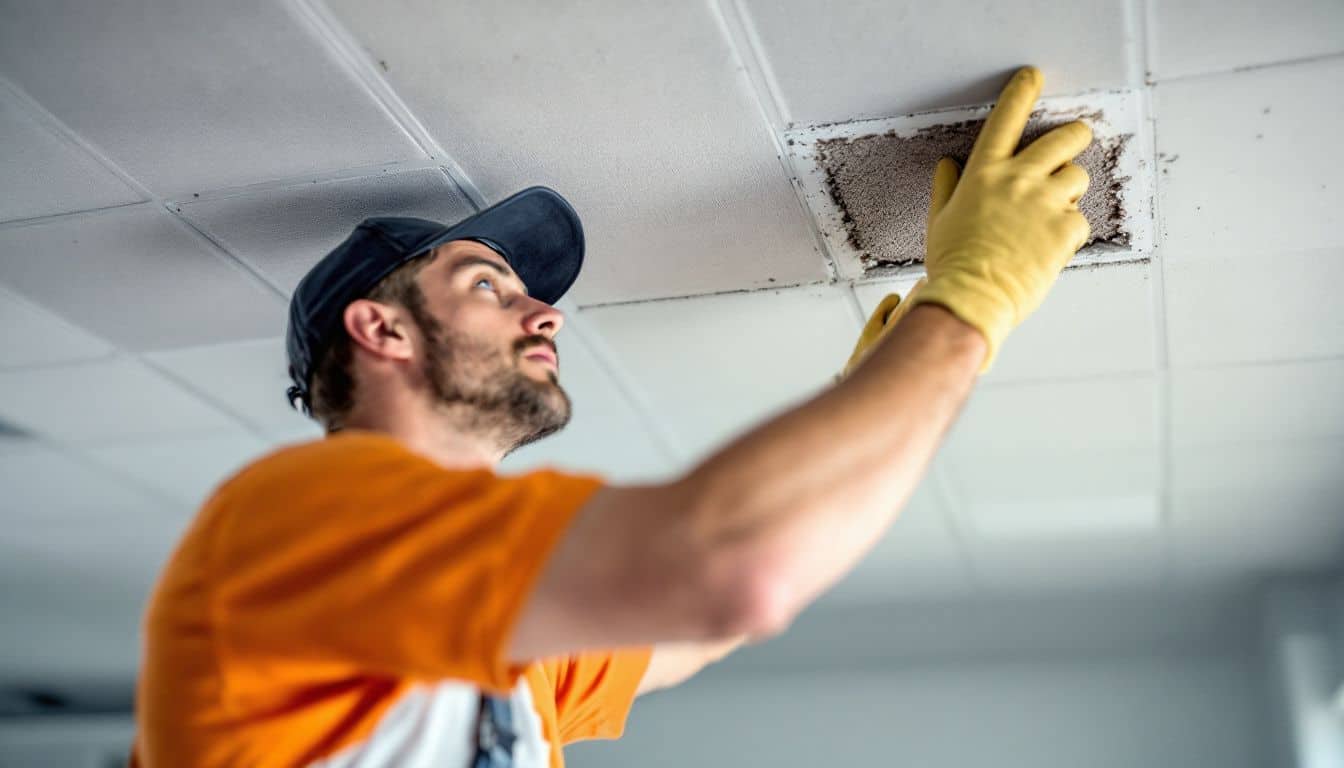
    • Ceiling tiles and suspended ceiling systems
    • Spray coatings on structural steelwork and concrete
    • Pipe lagging and boiler room insulation
    • Asbestos cement roof sheets and wall cladding panels
    • Floor tiles and their adhesive compounds
    • Partition boards and insulation boards around heating systems
    • Textured decorative coatings on walls and ceilings

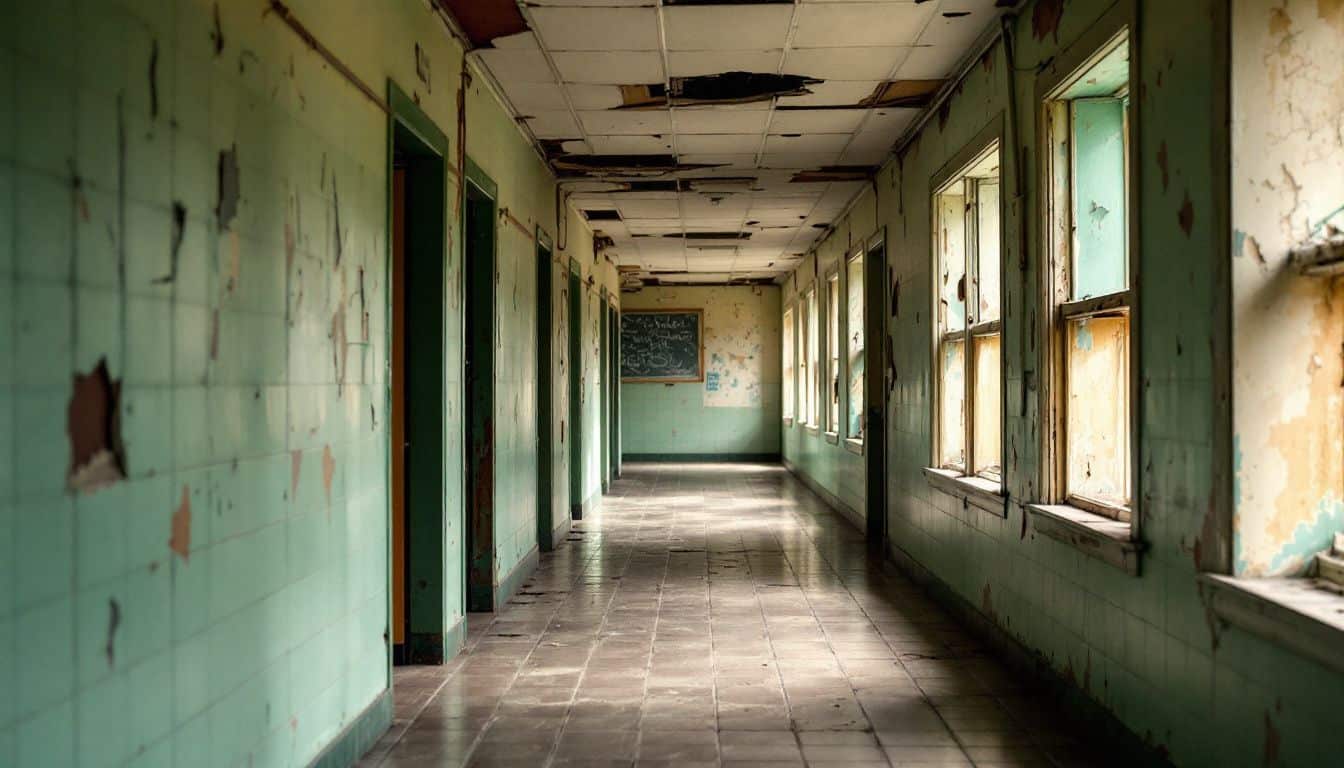
    Many of these materials, when undisturbed and in good condition, do not pose an immediate risk. The danger arises when they are damaged, deteriorating, or disturbed during routine maintenance or refurbishment — releasing microscopic fibres into the air that occupants can inhale without any awareness it is happening.

    A Legacy That Has Not Been Resolved

    Blue and brown asbestos were banned from new use in the UK in 1984 following mounting evidence of their severe carcinogenic properties. White asbestos remained in use until 1999, when it too was prohibited.

    However, banning new use did not remove materials already installed in existing buildings. Millions of square metres of asbestos-containing materials remain embedded in older school buildings across the country. This is an ongoing management challenge requiring active, documented, and legally compliant oversight — not a problem that resolved itself when the bans came into force.

    Health Risks of Asbestos Exposure: What the Evidence Shows

    Because asbestos is a class 1 carcinogen, its health effects are well-documented and severe. The diseases it causes are irreversible, often fatal, and characterised by a long latency period — symptoms may not appear until 20 to 50 years after the initial exposure occurred.

    This delay is one of the most insidious aspects of asbestos-related disease. A child exposed in a poorly managed school building today may not develop symptoms until well into adulthood.

    Mesothelioma

    Mesothelioma is a cancer of the mesothelium — the thin membrane lining the lungs, chest cavity, and abdomen. It is almost exclusively caused by asbestos exposure and carries a very poor prognosis. There is currently no cure, and survival rates remain low despite advances in treatment.

    The UK has one of the highest rates of mesothelioma in the world, a direct consequence of decades of widespread asbestos use across industry and construction.

    Asbestos-Related Lung Cancer

    Asbestos fibres lodged in lung tissue can trigger malignant changes over time. The risk is significantly elevated in individuals who have also smoked, as the two carcinogens appear to act synergistically — multiplying rather than simply adding to the overall cancer risk.

    Lung cancer caused by asbestos is clinically indistinguishable from lung cancer caused by other factors, which can complicate diagnosis and delay appropriate attribution.

    Asbestosis

    Asbestosis is a chronic, progressive lung disease caused by the scarring of lung tissue following prolonged asbestos fibre inhalation. It causes breathlessness, persistent cough, and significantly reduced lung function. While not a cancer, asbestosis is a serious and debilitating condition that can be fatal in its advanced stages.

    Pleural Diseases

    Asbestos exposure can also cause pleural plaques, pleural thickening, and pleural effusion — conditions affecting the lining of the lungs. Pleural plaques are the most common asbestos-related condition and, while not cancerous themselves, indicate that significant exposure has occurred and increase the likelihood of more serious disease developing over time.

    Short-Term Symptoms of Exposure

    In the short term, exposure to disturbed asbestos may cause coughing, wheezing, throat irritation, and chest tightness. Eye and skin irritation can also occur if fibres make direct contact.

    These immediate symptoms are not the primary concern. The long-term carcinogenic effects are what make asbestos genuinely dangerous, and they may manifest decades after the exposure event itself.

    Who Is Most at Risk in School Environments?

    The risk of asbestos-related disease is directly linked to the duration and intensity of exposure. In a school setting, the groups most at risk are not always the most obvious ones.

    Maintenance and facilities staff face the highest occupational risk. Drilling, cutting, or disturbing asbestos-containing materials during routine repairs can release large quantities of fibres in a short period. Without proper identification of ACMs and appropriate precautions in place, workers may be exposed repeatedly over many years without realising it.

    Teachers and classroom staff who spend years in rooms with deteriorating ceiling tiles or damaged insulation boards accumulate lower-level but sustained exposure. Given the long latency period of asbestos-related disease, this exposure may only manifest as illness decades after their time in the building.

    Children are not typically at high immediate risk if ACMs are intact and properly managed. However, their developing respiratory systems may be more vulnerable to the effects of fibre inhalation, and their longer life expectancy means there is more time for latent disease to develop if exposure does occur. This is precisely why proactive management matters.

    Legal Obligations for Schools Under UK Regulations

    Managing asbestos in schools is not optional. It is a legal duty under the Control of Asbestos Regulations, which form the central instrument governing how asbestos-containing materials must be identified, recorded, and managed in non-domestic premises — a category that explicitly includes school buildings.

    The Duty to Manage Asbestos

    The duty to manage asbestos applies to anyone responsible for the maintenance or repair of non-domestic premises. Duty holders — typically the governing body, local authority, or academy trust — must:

    1. Take reasonable steps to identify the presence and condition of asbestos-containing materials
    2. Presume materials contain asbestos unless there is strong evidence to the contrary
    3. Prepare and implement a written asbestos management plan
    4. Ensure the plan is monitored, reviewed, and kept up to date
    5. Provide information on ACM locations to anyone who may disturb them during maintenance or repair work

    The HSE’s guidance document HSG264 provides the technical framework for asbestos surveys and sets the standard against which survey quality is assessed. Schools commissioning surveys should ensure their chosen surveyor works to this standard as a minimum requirement.

    Other Relevant Legislation

    Beyond the Control of Asbestos Regulations, schools must also comply with the Health and Safety at Work etc. Act, which places a general duty of care on employers, and the Management of Health and Safety at Work Regulations, which require formal risk assessment processes.

    Failure to comply can result in enforcement action, improvement notices, prohibition notices, and — in serious cases — prosecution of individuals as well as organisations.

    A Practical Framework for Managing Asbestos in Schools

    Knowing that asbestos is a class 1 carcinogen is the starting point. Acting on that knowledge requires a structured, documented approach that satisfies both legal requirements and the genuine duty of care owed to everyone in the building.

    Step 1 — Commission a Professional Asbestos Survey

    The first step is always a survey carried out by a UKAS-accredited surveyor working to HSG264 standards. For most school buildings in normal operation, an management survey is the appropriate starting point — this identifies the location, extent, and condition of asbestos-containing materials accessible under normal occupancy conditions.

    If refurbishment or demolition work is planned, a more intrusive demolition survey is required before any work begins. This is a legal requirement, not a recommendation — work must not proceed until the full extent of ACMs in the affected area has been established.

    Step 2 — Create and Maintain an Asbestos Register

    Every asbestos-containing material identified during the survey must be recorded in an asbestos register. This document should detail the location, type, condition, and risk rating of each material.

    It must be readily accessible and provided to any contractor or maintenance worker before they begin work anywhere in the building. Keeping this register current is an ongoing obligation, not a one-off task.

    Step 3 — Develop a Written Asbestos Management Plan

    The management plan sets out how identified ACMs will be monitored, controlled, and — where necessary — remediated. It should include inspection schedules, named responsibilities, emergency procedures, and training requirements for relevant staff.

    This is a living document that must be reviewed regularly and updated whenever conditions change or new materials are identified.

    Step 4 — Train All Relevant Staff

    All staff who could encounter asbestos in the course of their work — including teachers, caretakers, cleaners, and visiting contractors — should receive appropriate asbestos awareness training.

    This does not mean training them to work with asbestos. It means ensuring they can recognise the risk, avoid disturbing ACMs, and know the correct reporting procedure if they suspect a problem has arisen.

    Step 5 — Plan Remediation Where Necessary

    Where ACMs are in poor condition, deteriorating, or at high risk of disturbance, remediation may be required. This can range from encapsulation — sealing the material to prevent fibre release — through to full removal by a licensed contractor.

    Removal is not always the right answer. Disturbing intact ACMs during removal can itself generate significant fibre release. The decision must be based on a professional risk assessment, not a blanket policy.

    Asbestos Surveys Across the UK: Where Supernova Works

    Supernova Asbestos Surveys operates nationwide, with specialist teams covering every region of the UK. Whether you manage a school in the capital or a multi-site academy trust in the north, professional surveying support is available.

    If you need an asbestos survey London for a school or educational premises, our London team can mobilise quickly and work around school hours to minimise disruption. For educational buildings in the north-west, our team providing asbestos survey Manchester services covers the full Greater Manchester area and surrounding regions. Schools in the West Midlands can access the same standard of UKAS-accredited surveying through our asbestos survey Birmingham team.

    Every survey we carry out is conducted to HSG264 standards, with full reporting, a detailed asbestos register, and clear guidance on next steps — giving duty holders exactly what they need to meet their legal obligations.

    Frequently Asked Questions

    What are class 1 carcinogens and why is asbestos in that category?

    Class 1 carcinogens are substances classified by the International Agency for Research on Cancer as having sufficient evidence of causing cancer in humans. Asbestos is placed in this category because decades of research across multiple countries has conclusively demonstrated that inhaling asbestos fibres causes mesothelioma, lung cancer, and other serious diseases. All six commercially used forms of asbestos carry this classification.

    Is asbestos in schools still a current risk, or is it a historical problem?

    It remains a current risk. While asbestos was banned from new use in the UK in 1999, the ban did not remove materials already installed in existing buildings. The majority of UK state school buildings constructed before 2000 are likely to contain asbestos-containing materials. Until those materials are professionally surveyed, managed, and — where appropriate — removed, the risk remains active.

    Who is legally responsible for managing asbestos in a school?

    Under the Control of Asbestos Regulations, the duty to manage asbestos falls on whoever is responsible for the maintenance and repair of the building. In practice, this means the governing body, the local authority, or the academy trust, depending on the school’s status. This is a legal duty, and failure to comply can result in enforcement action or prosecution.

    Do schools need an asbestos survey even if they think the building is safe?

    Yes. The Control of Asbestos Regulations require duty holders to take reasonable steps to identify the presence and condition of asbestos-containing materials. Assuming a building is safe without evidence is not legally compliant. A professional survey carried out to HSG264 standards is the only reliable way to establish what materials are present, where they are, and what condition they are in.

    What is the difference between a management survey and a demolition survey for a school?

    A management survey is used to identify and assess asbestos-containing materials under normal occupancy conditions. It is the standard survey for a school building in everyday use. A demolition survey is a more intrusive inspection required before any refurbishment or demolition work begins — it must locate all ACMs in the area to be worked on, including those hidden behind walls, above ceilings, and beneath floors. Both survey types must be carried out by a UKAS-accredited surveyor working to HSG264 standards.

    Get Professional Asbestos Surveying for Your School

    Supernova Asbestos Surveys has completed over 50,000 surveys across the UK, working with schools, academy trusts, local authorities, and facilities managers to deliver legally compliant, HSG264-standard asbestos management.

    If your school building was constructed before 2000 and you do not have a current, professionally produced asbestos register and management plan in place, you are carrying both a legal risk and a genuine duty of care risk. The right time to address that is before a problem occurs — not after.

    Call our team on 020 4586 0680 or visit asbestos-surveys.org.uk to discuss your requirements and arrange a survey at a time that works around your school’s schedule.


  • How often are schools required to conduct an asbestos survey?

    How often are schools required to conduct an asbestos survey?

    Asbestos Surveys for Schools: What Every Dutyholder Needs to Know

    Walk into almost any school built before 2000 and there is a reasonable chance asbestos-containing materials (ACMs) are present somewhere in the fabric of the building. Asbestos surveys for schools are not optional — they are a legal duty, and getting them wrong puts pupils, teachers, and maintenance staff at genuine risk. Here is everything you need to understand about your obligations, the survey process, and what happens when things go wrong.

    Why Asbestos Is Still a Problem in UK Schools

    The UK has one of the largest inherited asbestos problems in the world. Asbestos was widely used in construction until its full ban in 1999, which means the vast majority of school buildings erected before that date are likely to contain it in some form.

    Common ACMs found in schools include:

    • Sprayed asbestos coatings on structural steelwork and ceilings
    • Asbestos insulating board (AIB) used in ceiling tiles, partition walls, and door panels
    • Asbestos lagging around pipes, boilers, and hot water systems
    • Textured decorative coatings such as Artex
    • Vinyl floor tiles and their adhesive backing
    • Cement roofing sheets and guttering
    • Rope seals and gaskets in older heating systems

    Many of these materials are perfectly safe when undisturbed and in good condition. The danger arises when fibres become airborne — during maintenance work, renovations, or simply through deterioration over time.

    Inhaled asbestos fibres can cause mesothelioma, asbestosis, and lung cancer, often decades after exposure. That long latency period is precisely why robust asbestos management in schools matters so much — the decisions made today affect people’s lives long into the future.

    The Legal Framework: What the Regulations Actually Require

    The Control of Asbestos Regulations places a clear duty on those responsible for non-domestic premises — including schools — to manage asbestos. The dutyholder is typically the school’s governing body, the local authority (for maintained schools), or the academy trust.

    The regulations require dutyholders to:

    1. Take reasonable steps to find out whether ACMs are present and assess their condition
    2. Presume materials contain asbestos unless there is strong evidence they do not
    3. Make and keep an up-to-date written record — the asbestos register
    4. Assess the risk from any ACMs identified
    5. Prepare and implement a written asbestos management plan
    6. Provide information about the location and condition of ACMs to anyone who may disturb them

    The HSE’s guidance document HSG264 sets out exactly how surveys should be planned and conducted. It defines the two main survey types and the standards surveyors must meet. Compliance with HSG264 is the benchmark against which any enforcement action would be measured — it is not simply best practice.

    How Often Must Schools Conduct Asbestos Surveys?

    This is the question most school business managers and estates officers ask first, and the honest answer is: it depends on what is already in place and what is happening in the building.

    The Initial Survey

    If a school has never been surveyed, or if records are incomplete or out of date, the starting point is an initial management survey. This is a non-intrusive inspection designed to locate, as far as reasonably practicable, all ACMs in the normally occupied areas of the building. It forms the foundation of the asbestos register.

    Ongoing Periodic Inspections

    Once an asbestos register is in place, the dutyholder must ensure that ACMs are re-inspected at regular intervals — typically every 12 months — to assess whether their condition has changed. These are not necessarily full surveys each time, but they must be carried out by a competent person and formally documented.

    The frequency of full re-surveys depends on the condition of the materials, the level of activity in the building, and any changes to the structure. A school with ACMs in good condition and a stable building fabric might manage with periodic monitoring. A school where materials are deteriorating, or where significant maintenance work is ongoing, will need more frequent formal surveys.

    When a New Survey Is Triggered

    Certain events make a new or additional survey necessary regardless of when the last one was carried out:

    • Planned refurbishment or demolition work — any project that will disturb the building fabric requires a survey of the affected areas before work begins
    • Damage or deterioration — if ACMs are damaged by water ingress, physical impact, or general decay, an immediate re-inspection is required
    • Discovery of previously unknown materials — if maintenance staff or contractors encounter a material not recorded in the register, work must stop and a surveyor must assess it
    • Change of use — if a room or area is repurposed in a way that changes the risk profile, the register must be reviewed
    • Significant building work by contractors — contractors must be given access to the asbestos register before starting any work, and if the scope of work changes, a re-survey may be needed

    The Two Main Types of Asbestos Survey for Schools

    Management Surveys

    A management survey is the standard survey for occupied school buildings. The surveyor works through accessible areas, inspects materials that could reasonably be disturbed during normal occupation and routine maintenance, and takes samples where necessary for laboratory analysis.

    The output is a detailed asbestos register showing the location, type, extent, and condition of all identified or presumed ACMs. This register must be kept on site, kept up to date, and made available to anyone — including contractors — who might disturb the fabric of the building.

    Refurbishment and Demolition Surveys

    Before any significant building work, a refurbishment survey is required for the areas to be affected. Unlike a management survey, this type of inspection is fully intrusive — it may involve lifting floor coverings, opening up ceiling voids, and breaking into wall cavities to ensure all ACMs are identified before work starts.

    This matters enormously in a school context. Renovation projects — new classroom blocks, toilet refurbishments, boiler replacements — are common, and contractors disturbing hidden asbestos without prior identification is one of the most frequent causes of accidental asbestos exposure.

    Where an entire building is being demolished, a demolition survey is required. This is the most thorough and intrusive survey type, designed to locate every ACM in the structure before demolition begins. No demolition project should proceed without one.

    High-Risk Areas in School Buildings

    Not all areas of a school carry the same risk. Surveyors and dutyholders should pay particular attention to:

    • Roof voids and ceiling spaces — often contain sprayed asbestos or AIB, and are sometimes accessed by maintenance staff without proper precautions
    • Boiler rooms and plant rooms — lagging on pipework and boilers is among the highest-risk ACM types
    • Older classroom blocks — ceiling tiles, partition walls, and floor tiles are common locations
    • Science laboratories — older labs may contain asbestos-lined fume cupboards or heat-resistant surfaces
    • Corridors and communal areas — textured coatings and AIB panels are frequently found here
    • Sports halls and assembly halls — large spans often required structural steel, which was frequently coated with sprayed asbestos

    Areas where pupils could access and disturb materials — particularly during unsupervised activities — must be identified and managed as a priority. This is not just a surveying consideration; it should feed directly into the school’s asbestos management plan.

    What Happens During an Asbestos Survey in a School?

    Understanding the process helps dutyholders prepare properly and ensures minimal disruption to the school day. A well-planned survey causes far less disruption than most school managers expect.

    1. Pre-survey planning — the surveyor reviews any existing records, building plans, and the asbestos register. The scope of the survey is agreed, and access arrangements are confirmed.
    2. Site inspection — the surveyor systematically works through the agreed areas, visually inspecting materials and noting their type, location, extent, and condition.
    3. Sampling — where materials cannot be identified with certainty, small samples are taken using controlled techniques to minimise fibre release. The area is cleaned and sealed afterwards.
    4. Laboratory analysis — samples are sent to an accredited laboratory for analysis. Results confirm whether asbestos is present and, if so, which type.
    5. Report and register update — the surveyor produces a detailed report. The asbestos register is updated with all findings, including photographs, material assessment scores, and priority recommendations.
    6. Management plan review — the dutyholder reviews the asbestos management plan in light of the survey findings and updates it accordingly.

    Surveys should be carried out by a surveyor holding the relevant BOHS qualification (P402 for surveys) and by a company accredited by UKAS for asbestos surveying. Accreditation matters — it gives dutyholders assurance that the survey meets the standard required by HSG264.

    Asbestos Removal in Schools: When Is It Necessary?

    Removal is not always the right answer. In many cases, managing ACMs in situ — monitoring their condition and ensuring they are not disturbed — is the safer and more practical option. Unnecessary disturbance of stable ACMs can create more risk than leaving them in place.

    However, asbestos removal becomes necessary when:

    • Materials are in poor condition and actively deteriorating
    • Refurbishment or demolition work will inevitably disturb them
    • The material poses an unacceptable ongoing risk that cannot be managed effectively in situ

    Any asbestos removal from a school must be carried out by a licensed contractor for most ACM types, particularly AIB, sprayed coatings, and lagging. The work must be notified to the HSE in advance, and the area must be fully cleared and air tested before it is reoccupied. Cutting corners on removal is not just dangerous — it is a criminal offence.

    Compliance and Enforcement: What Schools Face If They Get It Wrong

    The HSE and local authorities have the power to inspect schools and audit their asbestos management arrangements. Inspectors can and do check whether surveys have been carried out, whether registers are up to date, and whether management plans are being followed.

    The consequences of non-compliance are serious:

    • Improvement notices — requiring specific action within a set timeframe
    • Prohibition notices — stopping work or closing areas of the school immediately
    • Prosecution — dutyholders, including individual governors or trustees, can face criminal prosecution and unlimited fines
    • Civil liability — if a staff member or pupil develops an asbestos-related disease linked to exposure at the school, the institution faces significant civil claims
    • Reputational damage — enforcement action against a school is a matter of public record

    Beyond the legal consequences, the human cost of getting asbestos management wrong is incalculable. Mesothelioma is invariably fatal, and it can take decades to develop. The decisions made today about asbestos management in schools affect people’s lives long into the future.

    Asbestos Surveys for Schools Across the UK

    Supernova Asbestos Surveys carries out asbestos surveys for schools and educational establishments across the country. Whether you need an asbestos survey in London, an asbestos survey in Manchester, or an asbestos survey in Birmingham, we have qualified surveyors ready to help.

    With over 50,000 surveys completed nationwide, we understand the specific challenges that come with surveying occupied educational buildings — from scheduling around the school day to communicating clearly with governors, business managers, and estates teams.

    If you are unsure whether your school’s asbestos records are up to date, or you need to commission a survey ahead of planned building work, call us on 020 4586 0680 or visit asbestos-surveys.org.uk to speak with a specialist.

    Frequently Asked Questions

    How often do schools legally need to carry out an asbestos survey?

    There is no single fixed interval set out in law, but the Control of Asbestos Regulations requires dutyholders to keep the asbestos register up to date and to re-inspect ACMs at regular intervals — in practice, at least annually. A full management survey should be repeated whenever the condition of materials changes significantly, when building work is planned, or when existing records are incomplete or out of date. A refurbishment or demolition survey is required before any intrusive work takes place.

    Who is responsible for asbestos management in a school?

    The dutyholder under the Control of Asbestos Regulations is the person or organisation with control over the premises. For maintained schools, this is typically the local authority or the governing body, depending on the nature of the work. For academy trusts, the trust itself holds the duty. In practice, responsibility is often delegated to a school business manager or estates officer, but the legal duty remains with the organisation at the top of that chain.

    Can a school manage asbestos without removing it?

    Yes — and in many cases, managing ACMs in situ is the correct approach. If materials are in good condition and are not at risk of being disturbed, leaving them in place and monitoring them is often safer than removal. The key requirement is that their condition is regularly assessed, recorded in the asbestos register, and that anyone who might disturb them is made aware of their presence. Removal becomes necessary when materials deteriorate or when building work will disturb them.

    What qualifications should an asbestos surveyor have?

    Surveyors carrying out asbestos surveys in schools should hold the BOHS P402 qualification, which covers building surveys and bulk sampling. The surveying company should also hold UKAS accreditation for asbestos surveying. These credentials confirm that the surveyor and the company meet the standards set out in HSG264. Always ask to see evidence of qualifications and accreditation before commissioning a survey.

    What should a school do if asbestos is discovered unexpectedly during maintenance work?

    Work must stop immediately. The area should be sealed off and no one should re-enter until a competent surveyor has assessed the material. If there is any reason to believe fibres may have been released, the area must be treated as a potential contamination zone and appropriate steps taken, including air monitoring. The incident should be recorded, and the asbestos register updated once the material has been formally assessed. Depending on the circumstances, the HSE may need to be notified.

  • What information is included in an asbestos report for schools?

    What information is included in an asbestos report for schools?

    When a school asbestos file is clear, current and easy to use, routine maintenance is safer, contractors can work with confidence, and the dutyholder can show they are managing risk properly. When asbestos reports are vague, outdated or missing key details, the opposite happens: decisions are delayed, work is disrupted, and the chances of accidental disturbance go up.

    That is why schools need more than a simple list of suspect materials. Good asbestos reports give you a practical record of what was inspected, what was found, how serious the risk is, and what needs to happen next. For headteachers, estates teams, academy trusts and local authorities, that report is the working foundation of asbestos management across the site.

    Why asbestos reports matter so much in schools

    Many school buildings still contain asbestos-containing materials, particularly where parts of the estate were built or refurbished before asbestos use was banned. These materials may be hidden in ceiling voids, service risers, floor tiles, pipe insulation, wall panels, textured coatings and roofing products.

    If those materials remain undisturbed and in good condition, they can often be managed safely. The problem starts when no one knows they are there, when their condition has changed, or when building work begins without the right information.

    Under the Control of Asbestos Regulations, the dutyholder for non-domestic premises must take reasonable steps to find out whether asbestos is present, assess the risk, and manage that risk. In a school, that duty usually sits with the employer, academy trust, governing body, local authority or another organisation with control over maintenance and repair.

    Accurate asbestos reports help schools to:

    • identify where asbestos-containing materials are located
    • understand the condition of those materials
    • plan maintenance without disturbing asbestos
    • brief contractors before any work starts
    • prioritise repair, encapsulation or removal
    • maintain an up-to-date asbestos register and management plan
    • demonstrate compliance with HSE guidance and HSG264

    Without reliable asbestos reports, a school cannot make informed decisions about day-to-day occupation, minor works or larger projects.

    Which surveys produce asbestos reports?

    Not all asbestos reports are created for the same purpose. The type of survey determines how intrusive the inspection is, what areas are accessed, and how the findings should be used.

    Management survey

    A management survey is the standard survey for an occupied school building. Its purpose is to locate, as far as reasonably practicable, any asbestos-containing materials that could be damaged or disturbed during normal occupation, routine maintenance or foreseeable minor works.

    This survey is usually non-intrusive or only slightly intrusive. It focuses on accessible areas and visible materials. The resulting asbestos reports support the asbestos register and management plan used during normal building occupation.

    Refurbishment and demolition survey

    Where planned works will disturb the fabric of the building, a management survey is not enough. Before major refurbishment, structural alteration or full demolition, a more intrusive survey is required. For project-specific intrusive inspections, a demolition survey is used to identify asbestos in the areas affected before work begins.

    This type of survey may involve opening up floors, walls, ceilings, ducts and voids. The area is often taken out of normal use while the inspection takes place. The asbestos reports produced from this work are essential before contractors start stripping out or demolishing any part of the premises.

    What information should asbestos reports include?

    HSG264 sets out what a suitable asbestos survey report should contain. In practice, schools should expect asbestos reports to be detailed enough for a competent person to understand exactly what was inspected, what was found, and what action is required.

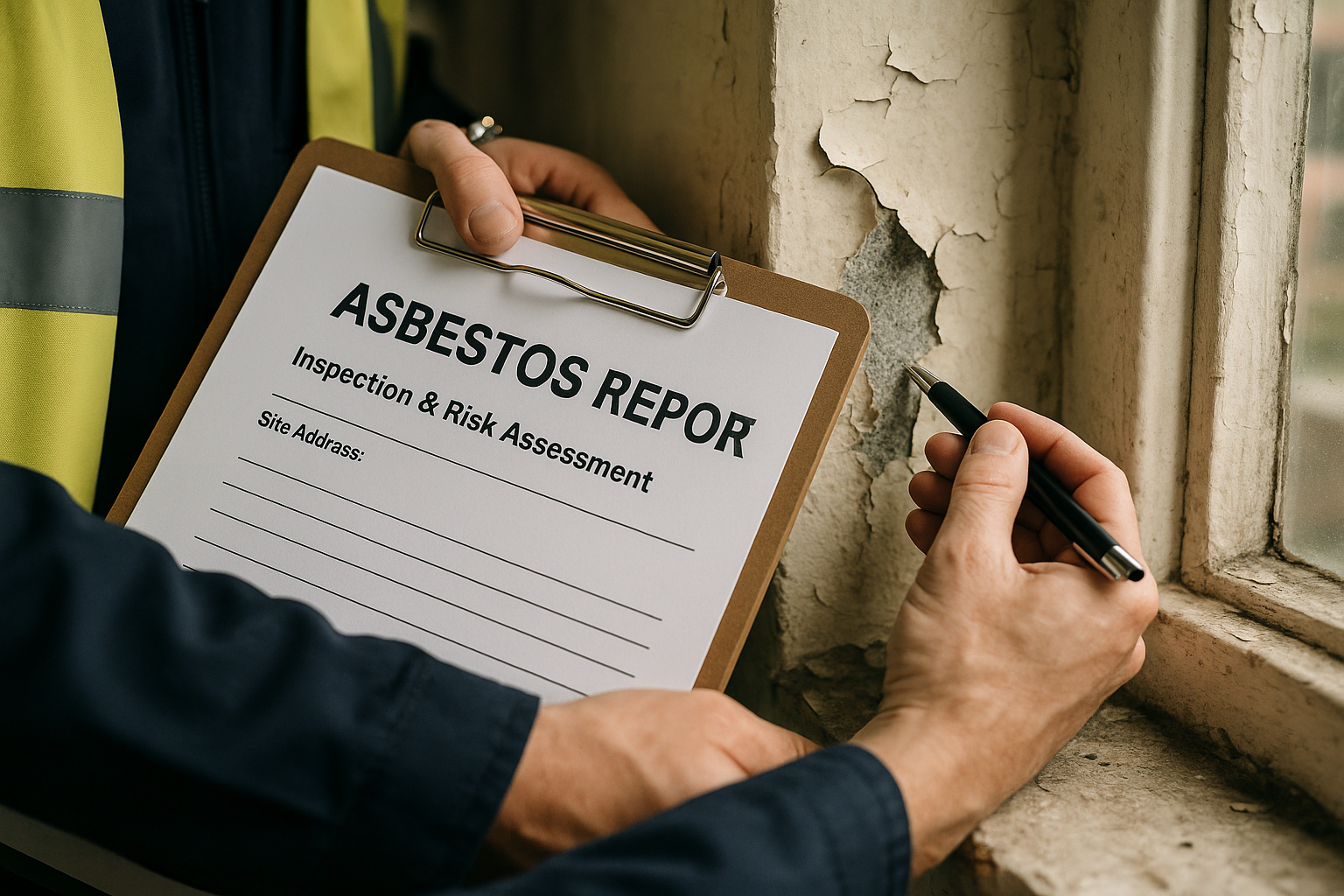
    asbestos reports - What information is included in an asbes

    1. Property and survey details

    The report should identify the school site clearly. That includes the building name, address, survey date, the type of survey completed, and the areas included or excluded.

    This matters because asbestos reports are only reliable within their stated scope. If a boiler room, roof void or locked storeroom was not accessed, that limitation needs to be recorded so the school does not assume the area is asbestos-free.

    2. Executive summary

    A useful summary helps the dutyholder understand the main findings quickly. It should highlight whether asbestos was identified, whether any urgent action is needed, and whether further inspection is recommended.

    For busy school estates teams, this section often becomes the starting point for immediate decisions.

    3. Presumed and confirmed asbestos-containing materials

    The core of asbestos reports is the material schedule. Each asbestos-containing material, or presumed asbestos-containing material where sampling was not carried out, should be listed clearly.

    The entry should normally include:

    • the room or area
    • the exact location within that room
    • the product type, such as insulating board, cement sheet or floor tile
    • the asbestos type if confirmed by analysis
    • whether the material was sampled, presumed or strongly presumed
    • the extent or quantity of the material

    Descriptions should be precise. “Panel above suspended ceiling in science prep room” is useful. “Boarding in corridor” is not.

    4. Location plans and annotated drawings

    Good asbestos reports do not rely on text alone. They include marked-up plans, sketches or photographs showing where asbestos-containing materials are located.

    This is one of the most practical parts of the report. A contractor, caretaker or project manager should be able to cross-check the written schedule against a floor plan and identify the material before any work starts.

    5. Material assessment and condition

    The report should assess the condition of each item. That means noting whether the material is sealed, damaged, exposed, deteriorating or otherwise vulnerable to disturbance.

    Many asbestos reports also include a material assessment score. This usually reflects factors such as:

    • product type
    • extent of damage
    • surface treatment
    • asbestos type

    This helps indicate how readily fibres could be released if the material is disturbed.

    6. Risk-based recommendations

    Schools need recommendations they can act on. For each item, asbestos reports should explain what is needed next.

    Typical recommendations include:

    • leave in place and monitor
    • repair minor damage
    • encapsulate or seal
    • label the material or area
    • restrict access
    • arrange removal before planned works
    • undertake further inspection if access was limited

    Where removal is needed, the report should make clear that the work must be planned and carried out by competent specialists. If you need licensed or non-licensed remedial work arranged, professional asbestos removal should always be based on the survey findings and the nature of the material involved.

    7. Photographs

    Photographs are not just helpful extras. In many school buildings, they make the report far easier to use. A clear image of a ceiling tile, riser panel or pipe elbow can prevent confusion later.

    Photos should be labelled so they correspond with the material schedule and plans.

    8. Sample and laboratory information

    Where samples were taken, asbestos reports should record the sample reference numbers and analysis results. The report should also confirm that testing was completed by a competent laboratory in line with recognised standards.

    Where a full survey is not required and only a suspect material needs testing, standalone sample analysis can be useful for targeted checks. That said, isolated testing is not a replacement for a suitable survey where the duty to manage applies.

    9. Surveyor details and limitations

    The report should identify who carried out the survey and the organisation responsible. It should also explain any limitations, such as inaccessible areas, fixed finishes that could not be disturbed, or parts of the site excluded from the instruction.

    This protects the school from making assumptions based on incomplete information. One of the most common problems with older asbestos reports is that exclusions are buried in the small print and then forgotten.

    How asbestos reports feed into the asbestos register and management plan

    Asbestos reports are not meant to sit in a folder untouched. Their findings should be transferred into the school’s live asbestos register and used to shape the asbestos management plan.

    The asbestos register

    The register is the day-to-day working record of known or presumed asbestos-containing materials in the building. It should reflect the latest survey information and be updated when materials are removed, repaired, encapsulated or re-inspected.

    For schools, the register needs to be accessible to anyone who may disturb the fabric of the building. That includes maintenance staff, visiting engineers, IT installers, fire alarm contractors and builders.

    The management plan

    The management plan explains how the school controls the risk from asbestos over time. It should cover responsibilities, communication, re-inspection arrangements, emergency procedures and planned actions for each item identified in the asbestos reports.

    A practical management plan will usually include:

    • named persons responsible for asbestos management
    • how contractors are briefed before work starts
    • how staff report damage to ceilings, panels or service areas
    • how often re-inspections are arranged
    • what happens if asbestos is accidentally disturbed
    • how records are updated following remedial work

    If the report identifies damaged materials but the management plan does not assign actions and timescales, the paperwork is not doing its job.

    What makes asbestos reports useful in real school settings?

    The best asbestos reports are technically sound, but they are also easy to use. In schools, that practical side matters just as much as the survey detail.

    asbestos reports - What information is included in an asbes

    A report becomes far more valuable when it helps people on site make quick, safe decisions.

    Clear room references

    Schools often rename rooms over time. A report that refers only to old plans can create confusion. Room numbers, block names and plain-English descriptions should all line up.

    Simple action wording

    “Monitor” is not enough on its own. Better asbestos reports explain what that means in practice, such as visual checks during routine inspections and formal re-inspection at suitable intervals.

    Useful for contractors

    Before any contractor drills, cuts, lifts, strips or accesses concealed spaces, they need the right asbestos information. Reports should make it easy to identify affected areas and avoid unsafe assumptions.

    Easy to update

    School estates change constantly. A classroom may be refurbished, a boiler replaced, or damaged panels removed during holidays. Asbestos reports should be structured so updates can be integrated into the wider asbestos record without confusion.

    Common problems found in poor asbestos reports

    Not every report gives a school what it needs. Some documents meet the bare minimum on paper but are difficult to use in practice.

    Watch for these warning signs:

    • no clear plans showing asbestos locations
    • vague material descriptions
    • missing sample references or unclear analysis results
    • no explanation of inaccessible areas
    • outdated room names or building references
    • recommendations that are too generic to act on
    • no obvious link to the asbestos register or management plan

    If any of those issues appear, it is worth reviewing whether the survey information is still suitable and sufficient for the school’s current needs.

    Practical advice for schools reviewing asbestos reports

    If you are responsible for a school site, do not wait until a project starts to check the paperwork. Review asbestos reports while there is still time to fix gaps.

    Use this checklist:

    1. Confirm the survey type. Make sure the report matches the intended use of the building or project.
    2. Check the scope. Look for excluded areas, locked rooms, roof spaces and service voids.
    3. Review the plans. Ensure asbestos locations are marked clearly and match the written schedule.
    4. Check recommendations. Every identified item should have a practical management action.
    5. Compare with the register. The live asbestos register should reflect the latest report.
    6. Plan re-inspections. Known asbestos-containing materials need regular review to confirm their condition has not changed.
    7. Brief contractors properly. Make asbestos information part of every permit-to-work or pre-start process.

    Where schools operate across multiple sites, consistency matters. Using one experienced provider can make records easier to compare and manage across the estate.

    Do schools in different cities need different asbestos reports?

    The legal duty is the same, but local building stock can vary a lot. Victorian schools, post-war system-built blocks, and later extensions all present different asbestos risks. That is why survey experience with education buildings is so useful.

    If your estate includes properties in the capital, a specialist asbestos survey London service can help with complex and heavily altered buildings. For schools in the north-west, an asbestos survey Manchester can support both single-site and multi-site requirements. And for education premises across the Midlands, an asbestos survey Birmingham service offers the same standard of reporting and compliance support.

    Wherever the school is based, the report should still align with the Control of Asbestos Regulations, HSG264 and current HSE guidance.

    When should asbestos reports be updated?

    Asbestos reports are not always one-and-done documents. They may need updating when the building changes, when access improves, or when the condition of a known material deteriorates.

    Typical triggers for review include:

    • planned refurbishment or demolition works
    • discovery of previously inaccessible areas
    • damage to known or presumed asbestos-containing materials
    • changes to room use that increase the likelihood of disturbance
    • completion of removal or encapsulation works
    • significant time passing since the last inspection

    Where asbestos remains in place, periodic re-inspection is a key part of the duty to manage. The report findings should continue to reflect the actual condition on site.

    Choosing a surveyor for school asbestos reports

    Schools should look for competence, clear reporting and experience with occupied education settings. The cheapest document is rarely the most useful one if it creates uncertainty later.

    Ask practical questions before appointing a surveyor:

    • Will the report include annotated plans and photographs?
    • How are inaccessible areas recorded?
    • How are recommendations prioritised?
    • Can the findings be integrated easily into the asbestos register?
    • Is sampling and analysis handled through competent, recognised processes?
    • Does the team understand how schools operate during term time and holidays?

    A good surveyor will explain the difference between survey types, define the scope clearly, and produce asbestos reports that are usable by both compliance teams and site staff.

    Frequently Asked Questions

    What is the difference between an asbestos survey and an asbestos report?

    The survey is the inspection process carried out on site. The report is the written record of that inspection, including findings, sample results, risk information, plans, photographs and recommendations. Schools need both the physical survey work and clear asbestos reports to manage risk properly.

    Do all schools need asbestos reports?

    Any school responsible for non-domestic premises must manage asbestos risk under the Control of Asbestos Regulations. If asbestos may be present, the dutyholder must have suitable information about its location and condition. In practice, that means having appropriate asbestos reports and keeping the asbestos register and management plan up to date.

    How often should school asbestos reports be reviewed?

    The report itself does not always need to be replaced on a fixed timetable, but known asbestos-containing materials should be re-inspected at suitable intervals and the records updated when conditions change. If refurbishment or demolition is planned, a more intrusive survey and new report will usually be required for the affected area.

    Can a school rely on old asbestos reports?

    Only if they are still relevant, accurate and suitable for the current building layout and use. Old asbestos reports often contain outdated room references, incomplete access information or findings that no longer reflect the site. If there is doubt, review the records before any work proceeds.

    What should a school do if an asbestos report recommends removal?

    The school should assess the recommendation in the context of the material’s condition, location and any planned works. Removal should be arranged through competent specialists, with the scope based on the survey findings and the applicable legal requirements. The asbestos register and management plan should then be updated once the work is complete.

    If you need clear, compliant asbestos reports for a school, Supernova Asbestos Surveys can help with management surveys, refurbishment and demolition surveys, sampling, and follow-on support across the UK. Call 020 4586 0680 or visit asbestos-surveys.org.uk to book a survey or discuss the right service for your site.

  • Are there specific regulations in place for managing asbestos in schools?

    Are there specific regulations in place for managing asbestos in schools?

    HSE Asbestos in Schools: What Every Dutyholder Needs to Know

    Asbestos is present in a significant proportion of school buildings across the UK — and parents, teachers, and governors are right to take it seriously. The HSE’s guidance on HSE asbestos in schools is unambiguous: managing this hazardous material is a legal duty, not a discretionary extra.

    If your school was built or refurbished before 2000, there is a real possibility that asbestos-containing materials (ACMs) are present somewhere on the premises. Understanding what the regulations actually require — and who is responsible for what — is the first step towards keeping pupils, staff, and visitors safe.

    Why Asbestos in Schools Remains a Live Issue

    Asbestos was used extensively in UK construction from the 1950s through to the 1990s. Schools built or renovated during this period frequently incorporated asbestos in ceiling tiles, pipe lagging, floor tiles, roofing materials, and boiler rooms.

    When these materials are undisturbed and in good condition, they pose a lower immediate risk. The danger arises when they are damaged, deteriorating, or disturbed during routine maintenance or building work.

    The HSE has consistently flagged asbestos in schools as a priority area for inspection and enforcement. Asbestos-related diseases — including mesothelioma — have a latency period of several decades. Exposure in a school environment today can have devastating consequences many years down the line, which is precisely why robust management is non-negotiable.

    The Legal Framework Governing HSE Asbestos in Schools

    Two pieces of legislation sit at the heart of asbestos management in educational settings. Understanding both is essential for any dutyholder.

    The Control of Asbestos Regulations

    The Control of Asbestos Regulations set out the legal duty to manage asbestos in non-domestic premises — which includes all school buildings. Under these regulations, the dutyholder must:

    • Take reasonable steps to identify whether ACMs are present, and determine their location and condition
    • Presume that materials contain asbestos unless there is strong evidence to the contrary
    • Assess the risk of exposure from any ACMs identified
    • Prepare and implement a written asbestos management plan
    • Review and monitor that plan on a regular basis
    • Provide information on the location and condition of ACMs to anyone liable to disturb them

    The regulations apply to all non-domestic premises regardless of construction date, though buildings built entirely after 2000 are generally presumed to be asbestos-free unless there is reason to suspect otherwise.

    The Management of Health and Safety at Work Regulations

    Alongside the Control of Asbestos Regulations, schools must also comply with the Management of Health and Safety at Work Regulations. These require dutyholders to carry out suitable and sufficient risk assessments covering all significant hazards — asbestos included.

    This means the asbestos management plan cannot sit in a filing cabinet gathering dust. It must be a living document that informs day-to-day decisions about maintenance, refurbishment, and building work.

    HSE Guidance: HSG264

    The HSE’s own guidance document, HSG264, provides the technical framework for asbestos surveys. It defines the two main survey types — management surveys and refurbishment and demolition surveys — and sets out what each must cover.

    Schools should be familiar with this guidance, as it underpins what a competent, accredited surveyor is expected to deliver. Any survey that does not conform to HSG264 standards is not fit for purpose.

    Who Is the Dutyholder in a School?

    This is one of the most commonly misunderstood aspects of asbestos compliance in education. The identity of the dutyholder depends on the type of school:

    • Community schools, voluntary-controlled schools, and maintained nursery schools: The local authority holds the duty to manage asbestos, as they are responsible for the premises.
    • Academy trusts and free schools: The academy trust itself is the dutyholder and bears full responsibility for asbestos management across its estate.
    • Voluntary-aided and foundation schools: School governors are typically the dutyholders.
    • Independent schools: Proprietors, governors, or trustees take on this role, depending on the governance structure.

    In practice, the dutyholder will often delegate day-to-day asbestos management to a named responsible person — a facilities manager, bursar, or site manager. However, legal accountability remains with the dutyholder. Delegation does not transfer liability.

    What Schools Are Actually Required to Do

    Knowing who is responsible is one thing. Understanding what they are required to do is another. Here is a practical breakdown of the key obligations.

    Commission a Management Survey

    Before anything else, the dutyholder must know what they are dealing with. A management survey — conducted by a competent, accredited surveyor — identifies the location, extent, and condition of any ACMs that could be disturbed during normal occupation and routine maintenance. This forms the basis of the asbestos register.

    If any refurbishment work is planned, a separate refurbishment survey is required for the affected areas before any work begins. This is a more intrusive investigation and must be completed prior to contractors entering the site.

    Maintain an Asbestos Register

    The asbestos register is a formal record of all ACMs found during the survey, including their location, type, condition, and risk rating. It must be kept up to date and made available to anyone who might disturb ACMs — including contractors, maintenance staff, and visiting tradespeople.

    Handing a contractor a site induction pack without including asbestos information is not acceptable practice and leaves the dutyholder exposed to enforcement action.

    Develop and Implement an Asbestos Management Plan

    The management plan sets out how identified ACMs will be managed over time. It should include:

    • A record of all ACMs and their risk assessments
    • Details of how each material will be managed — whether by monitoring, encapsulation, or removal
    • A schedule for periodic re-inspection
    • Emergency procedures in the event of accidental disturbance
    • Details of who is responsible for each element of the plan
    • Records of any work carried out on ACMs

    The plan must be reviewed whenever there is reason to believe it may no longer be valid — for example, after building work, following damage to an ACM, or when the condition of materials changes during a re-inspection.

    Conduct Regular Monitoring and Re-Inspections

    ACMs that are being managed in situ must be periodically re-inspected to check their condition has not deteriorated. The frequency of re-inspection should be proportionate to the risk — higher-risk materials in poor condition may need more frequent checks than well-encapsulated materials in low-traffic areas.

    As a general rule, schools should carry out asbestos re-inspections at least every three years, though annual re-inspections are common best practice for occupied educational premises.

    Provide Information and Training

    All staff who are liable to disturb ACMs — including caretakers, site managers, and maintenance personnel — must receive appropriate asbestos awareness training. Teachers and administrative staff should also be made aware of the asbestos register and management plan, even if their day-to-day work does not involve physical maintenance.

    Awareness training is not a one-off exercise. It should be refreshed regularly and whenever there are significant changes to the premises or the management plan.

    HSE Inspections and Enforcement in Schools

    The HSE treats asbestos in schools as a serious enforcement priority. Inspectors visit schools to check that dutyholders are meeting their legal obligations, and findings from these inspections have at times revealed significant gaps in compliance — particularly around the quality of asbestos registers, the adequacy of management plans, and the provision of information to contractors.

    Where the HSE finds non-compliance, it has a range of enforcement tools available, including:

    • Improvement notices — requiring the dutyholder to address specific failings within a set timeframe
    • Prohibition notices — stopping work or use of a particular area until the issue is resolved
    • Prosecution — which can result in substantial fines and, in serious cases, custodial sentences for individuals

    Non-compliance is not just a financial risk — it is a safeguarding issue. Governors and trustees have a duty of care to everyone on the premises, and failing to manage asbestos properly is a direct breach of that duty.

    The reputational damage to a school or trust found to have failed in its asbestos obligations can be equally severe and long-lasting. HSE enforcement action is a matter of public record.

    When Should Asbestos Be Removed from a School?

    Removal is not always the right answer. In many cases, ACMs that are in good condition and unlikely to be disturbed are best managed in situ. Unnecessary disturbance of intact asbestos can actually increase risk rather than reduce it.

    However, asbestos removal becomes the appropriate course of action when:

    • ACMs are in poor or deteriorating condition and cannot be effectively repaired or encapsulated
    • Refurbishment or demolition work will inevitably disturb the material
    • The material is in a location where it is frequently disturbed during routine maintenance
    • The overall risk assessment concludes that removal is the most effective long-term management option

    Any asbestos removal work in a school must be carried out by a licensed contractor, following strict HSE-approved methods. Licensed removal is legally required for most types of asbestos work, including work on sprayed coatings, lagging, and most asbestos insulating board.

    The work area must be properly contained, and air monitoring must be conducted to confirm that the area is safe before it is reoccupied. Where demolition work is planned, a demolition survey must be completed before any work commences to identify all ACMs that could be disturbed or released during the process.

    Asbestos Surveys for Schools Across the UK

    Supernova Asbestos Surveys works with schools, academy trusts, local authorities, and independent educational establishments across the country. Whether you need a management survey to establish your baseline position, a refurbishment survey ahead of building work, or a full review of an existing asbestos management plan, our accredited surveyors deliver clear, actionable reports that meet HSE and HSG264 standards.

    We cover educational premises nationwide. Schools in the capital can book through our asbestos survey London team, those in the Midlands can access our asbestos survey Birmingham service, and schools in the North West can use our asbestos survey Manchester team.

    With over 50,000 surveys completed, we understand the specific pressures and logistical challenges that come with surveying occupied school premises — including working around the school day, term times, and safeguarding requirements.

    Practical Checklist for School Dutyholders

    If you are a governor, academy trust officer, or facilities manager responsible for asbestos compliance, use this checklist to sense-check your current position:

    1. Has a management survey been carried out by an accredited surveyor?
    2. Is the asbestos register up to date and accessible to maintenance staff and contractors?
    3. Is there a written asbestos management plan in place?
    4. Has the plan been reviewed within the past three years — or sooner if building work has taken place?
    5. Do all relevant staff have up-to-date asbestos awareness training?
    6. Are contractors briefed on asbestos locations before any maintenance or refurbishment work?
    7. Is there a clear procedure for responding to accidental disturbance of ACMs?
    8. Are re-inspections of in-situ ACMs scheduled and recorded?

    If you cannot confidently answer yes to all of these, it is time to act.

    Frequently Asked Questions

    Does every school in the UK need an asbestos survey?

    Any school building constructed or refurbished before 2000 should have a management survey carried out by an accredited surveyor. The Control of Asbestos Regulations require dutyholders to take reasonable steps to identify whether ACMs are present. Buildings constructed entirely after 2000 are generally presumed to be asbestos-free, but even then, if there is any doubt, a survey is the only way to confirm it.

    Who is legally responsible for asbestos management in an academy school?

    In an academy school or free school, the academy trust is the dutyholder under the Control of Asbestos Regulations. The trust bears full legal responsibility for ensuring that a suitable asbestos management plan is in place and that all obligations — including surveying, record-keeping, staff training, and contractor information — are met. Day-to-day responsibility is often delegated to a site manager or facilities lead, but liability stays with the trust.

    How often should asbestos re-inspections take place in schools?

    There is no single fixed statutory interval, but HSE guidance and best practice point towards annual re-inspections for occupied school premises. The frequency should be proportionate to the risk — ACMs in poor condition or high-traffic areas warrant more frequent checks. The asbestos management plan should set out the re-inspection schedule, and all re-inspections must be recorded.

    Can a school carry out its own asbestos survey?

    No. Surveys must be carried out by a competent, accredited surveyor — typically one holding UKAS accreditation. The HSE’s guidance document HSG264 sets out the technical standards that surveys must meet. An in-house survey carried out by unqualified staff would not satisfy the legal duty to manage asbestos and could expose the dutyholder to enforcement action.

    What should a school do if asbestos is accidentally disturbed?

    The area should be evacuated immediately and access restricted. The dutyholder should contact a licensed asbestos contractor to carry out an assessment and, where necessary, arrange for air monitoring and remediation before the area is reoccupied. The incident must be recorded, and the asbestos management plan updated to reflect what happened and what action was taken. The HSE may also need to be notified depending on the nature and scale of the disturbance.

    To speak with an accredited surveyor who understands the specific requirements for educational premises, contact Supernova Asbestos Surveys on 020 4586 0680 or visit asbestos-surveys.org.uk to arrange a survey at a time that works around your school.

  • What is the current status of asbestos in schools in the UK?

    What is the current status of asbestos in schools in the UK?

    Asbestos in Schools: What Every Duty Holder Needs to Know

    A surprising number of school buildings across the UK still contain asbestos — and that makes asbestos in schools an active estates management issue, not a historical footnote. The real risk is rarely the mere presence of asbestos-containing materials. It is whether the school knows where those materials are, what condition they are in, and how to prevent staff, pupils, contractors, and maintenance teams from disturbing them.

    For headteachers, academy trusts, governors, bursars, estates managers, and local authorities, the question is a practical one. Can you demonstrate that asbestos in schools on your estate is identified, recorded, monitored, and controlled in line with the Control of Asbestos Regulations and relevant HSE guidance? If not, gaps in paperwork quickly become gaps in safety.

    Why Asbestos in Schools Is Still a Live Issue

    Many schools across the UK were built, extended, or refurbished during decades when asbestos-containing materials were widely used. That includes a large proportion of the post-war school estate, as well as older buildings that were altered and adapted over time.

    As a result, asbestos in schools is still commonly found in maintained schools, academies, independent schools, faith schools, nurseries, colleges, and specialist settings operating from older premises. A modern teaching block on the same site may be entirely asbestos-free, while an older boiler room, corridor ceiling, or service riser nearby may not be.

    The presence of asbestos does not automatically mean a school is unsafe. Where materials are in good condition and remain undisturbed, the immediate risk is often low. The problem starts when materials are damaged, drilled, broken, cut, sanded, or left to deteriorate without adequate controls in place.

    In practice, asbestos in schools tends to become a problem when:

    • Maintenance work starts before the asbestos register is checked
    • Contractors are not given the correct information before they begin
    • Small works are treated as routine without proper assessment
    • Staff damage building materials without realising what those materials contain
    • Water ingress, impact damage, or general wear and tear affects asbestos-containing materials
    • Refurbishment begins without the correct type of survey

    That is why asbestos in schools is fundamentally a management issue. Good intentions are not enough. Schools need systems that work every day, particularly when sites are busy, ageing, and under constant pressure.

    What Asbestos Is and Why It Was Used in School Buildings

    Asbestos is a naturally occurring mineral composed of microscopic fibres. Those fibres were incorporated into building products because they improved fire resistance, thermal insulation, structural strength, sound control, and durability. These properties made asbestos commercially attractive during large-scale school building programmes.

    Because it was used in both structural and finishing materials, asbestos in schools can appear in locations that look entirely ordinary and unremarkable. Historic uses included:

    • Fire protection around structural elements and door assemblies
    • Thermal insulation to pipes, boilers, ducts, and plant equipment
    • Ceiling tiles and wall boards in classrooms and corridors
    • Textured coatings and decorative finishes on walls and ceilings
    • Floor tiles, adhesives, and backing materials
    • Roof sheets, soffits, gutters, and external cladding panels
    • Service riser linings, heater cupboard linings, and partition walls

    One of the most common mistakes with asbestos in schools is assuming that the most obvious-looking materials always carry the highest risk. They do not. Damaged insulating board above a suspended classroom ceiling may present a greater risk than intact cement sheeting on an outbuilding roof. Identification, condition assessment, and clear records matter far more than visual assumptions.

    Why Asbestos in Schools Becomes Dangerous When Disturbed

    The primary danger arises from inhaling airborne asbestos fibres. When asbestos-containing materials are damaged or worked on, microscopic fibres can be released into the air and may remain suspended long enough to be breathed in. Once inhaled, those fibres can become permanently lodged in the lungs.

    Exposure to asbestos is associated with serious diseases including mesothelioma, asbestos-related lung cancer, asbestosis, and pleural thickening. These conditions typically develop many years after exposure, which is part of what makes asbestos so hazardous — the consequences of poor management today may not become apparent for decades.

    There is no need for alarm where asbestos in schools is intact and properly managed. Equally, there is no room for complacency. Risk depends on several factors:

    • The type of asbestos-containing material and how friable it is
    • Its current condition and whether it is deteriorating
    • Where it is located and how accessible it is
    • How likely it is to be disturbed during normal site activity

    Higher-risk materials are generally more friable, meaning they release fibres more readily when damaged. Lower-risk materials can still become hazardous if they are broken, drilled, cut, or allowed to deteriorate over time. Do not judge risk by appearance alone.

    Where Asbestos in Schools Is Commonly Found

    Asbestos in schools can appear across far more of a building than most people expect. It is not limited to boiler rooms or disused outbuildings. It may be present in classrooms, assembly halls, corridors, kitchens, laboratories, plant rooms, stores, toilet blocks, stairwells, and external structures.

    Typical Locations in Older School Buildings

    • Asbestos insulating board: Ceiling tiles, wall panels, riser doors, service duct linings, partition walls, fire doors, and heater cupboard linings
    • Pipe lagging and thermal insulation: Heating pipes, calorifiers, boilers, valve boxes, and plant equipment
    • Asbestos cement: Roof sheets, gutters, downpipes, flues, water tanks, soffits, and external cladding
    • Flooring materials: Vinyl floor tiles, bitumen adhesives, and backing layers beneath later floor coverings
    • Textured coatings: Decorative wall and ceiling finishes in older areas of the building
    • Sprayed coatings: Fire protection applied to structural steelwork in some larger buildings
    • Miscellaneous items: Toilet cisterns, fuse boards, gaskets, rope seals, laboratory bench surfaces, and window infill panels

    Not all of these materials present the same level of risk. Damaged lagging or insulating board typically calls for a more urgent response than intact asbestos cement in good condition. The point is not to guess — the point is to identify, record, assess, and manage.

    For occupied premises, a management survey is normally the starting point for locating asbestos-containing materials that could be disturbed during normal occupation, routine maintenance, or foreseeable installation work.

    Who Is Responsible for Managing Asbestos in Schools?

    Under the Control of Asbestos Regulations, the duty to manage asbestos in non-domestic premises sits with the person or organisation responsible for maintenance or repair of the building. In schools, that is not always the same person who is physically on site each day.

    The exact arrangement depends on the type of school, its ownership structure, lease arrangements, and how estates responsibilities are allocated. Common duty holder arrangements include:

    • Local authority-maintained schools: The local authority often holds the duty, although day-to-day tasks may be delegated to the school
    • Academies and free schools: The academy trust commonly acts as duty holder
    • Independent schools: The proprietor or governing body usually holds responsibility
    • Faith schools: Responsibility may be shared depending on ownership and maintenance arrangements

    Delegating tasks does not remove legal responsibility. If site managers, bursars, caretakers, or estates teams carry out day-to-day actions, the duty holder still needs assurance that the system is working effectively. HSE guidance and HSG264 set the standard for asbestos surveying and support sound management practice.

    In practical terms, anyone responsible for asbestos in schools should ensure the following are in place:

    1. A suitable and sufficient asbestos survey carried out by a competent surveyor
    2. An up-to-date asbestos register
    3. A site-specific asbestos management plan
    4. Regular reinspection of known or presumed asbestos-containing materials
    5. Clear reporting procedures for any damage or suspected disturbance
    6. Arrangements for informing staff and contractors before work begins
    7. Appropriate awareness training for anyone who may encounter or disturb asbestos

    If any one of those elements is missing, managing asbestos in schools becomes significantly more vulnerable to error.

    What an Asbestos Management Plan for Schools Should Include

    A management plan should be a working document, not a folder that only appears during an inspection or audit. It needs to reflect the actual building, the actual risks, and the way the site is used day to day.

    A practical plan for asbestos in schools should typically include:

    • The name of the duty holder and key responsible contacts
    • The location of the asbestos register and how to access it
    • A summary of known or presumed asbestos-containing materials across the site
    • Priority assessments based on occupancy levels and likelihood of disturbance
    • Inspection and reinspection schedules
    • Actions required — such as repair, encapsulation, labelling, or removal
    • Contractor control procedures and permit-to-work arrangements
    • Emergency procedures if damage is found or suspected
    • Staff communication and training records

    Schools should review the plan whenever conditions change, after any asbestos-related work, and as part of routine compliance checks. Ask yourself this: if a contractor arrived tomorrow to fix a leak, install data cabling, or replace lighting, would the site team know exactly what asbestos information to provide before work started?

    That is the practical test. If the answer is no, the management plan needs immediate attention.

    What Different Groups Need to Know About Asbestos in Schools

    Managing asbestos in schools is not solely the surveyor’s responsibility. Several groups inside and around the school need sufficient information to prevent accidental disturbance and respond appropriately when concerns arise.

    Site Managers and Caretakers

    These staff are often closest to the building fabric and most likely to encounter asbestos-containing materials during day-to-day work. They should know where the asbestos register is kept, understand which materials are known or presumed to contain asbestos, and never begin intrusive work without checking the register first.

    Teachers and Support Staff

    Teaching staff do not need detailed survey knowledge, but they do need to know how to report damage. A cracked panel, broken ceiling tile, debris following a leak, or damaged boxing around pipework should be escalated immediately rather than cleared up or ignored.

    Contractors

    Contractors must be given relevant asbestos information before any work begins on site. This is one of the most common failure points with asbestos in schools. If a contractor drills into asbestos insulating board because no one shared the register, the control system has already failed — regardless of how good the documentation looked on paper.

    Governors, Trustees, and Senior Leaders

    Decision-makers should ask direct questions about survey dates, reinspection arrangements, contractor controls, staff awareness, and whether the management plan is genuinely used in practice. Governance is most effective when it is specific rather than general.

    Parents

    Parents are entitled to ask sensible questions about asbestos in schools. A balanced response matters. A school is not automatically unsafe because asbestos is present, but it should be able to explain clearly how asbestos is identified, monitored, and controlled. Transparency builds confidence far more effectively than vague reassurance.

    Surveys, Reinspections, and When Different Survey Types Apply

    Not every situation calls for the same type of survey. Understanding the difference matters, particularly when schools are planning maintenance, refurbishment, or demolition work.

    Management Surveys

    A management survey is designed for occupied premises. It identifies asbestos-containing materials that could be disturbed during normal use, routine maintenance, or minor installation work. It does not involve significant intrusion into the building fabric. This is the survey type most schools need as a baseline and for ongoing compliance.

    Refurbishment and Demolition Surveys

    Before any refurbishment or demolition work begins, a refurbishment and demolition survey is required. This is a more intrusive survey that involves accessing areas which would otherwise remain undisturbed. It must be completed before work starts — not after contractors have already broken into the structure.

    Reinspections

    Known or presumed asbestos-containing materials should be reinspected periodically to assess whether their condition has changed. The frequency of reinspection should reflect the risk level, the location of materials, and the intensity of activity in that part of the building. A material in a busy corridor used by hundreds of pupils each day warrants closer attention than one in a sealed plant room rarely accessed by anyone.

    Schools in major cities can access specialist surveying services locally. If you need an asbestos survey in London, an asbestos survey in Manchester, or an asbestos survey in Birmingham, Supernova Asbestos Surveys provides accredited surveying across all three cities and nationwide.

    Common Compliance Failures in Schools

    Asbestos management in schools fails in predictable ways. Recognising these patterns makes it easier to close the gaps before they become incidents.

    • An outdated or incomplete asbestos register: A register that has not been updated since the original survey was carried out may not reflect changes to the building, damage to materials, or work that has already disturbed asbestos-containing materials.
    • No contractor control system: Contractors arriving on site without being shown the asbestos register or given relevant information about materials in their work area is a serious and common failure.
    • Presumed materials not recorded: Where a surveyor could not access an area or where sampling was not carried out, materials should be presumed to contain asbestos until proven otherwise. Leaving these out of the register creates blind spots.
    • Management plan not reviewed or used: A plan written several years ago and never revisited is unlikely to reflect the current state of the building or the current team responsible for managing it.
    • No staff awareness training: Site staff and teachers who have never received asbestos awareness training are more likely to disturb materials accidentally and less likely to report damage promptly.
    • Survey type mismatch: Commissioning a management survey before a refurbishment project — rather than a refurbishment and demolition survey — leaves the project team without the information they need to work safely.

    Each of these failures has appeared in real enforcement cases. None of them are difficult to prevent with the right systems in place.

    Practical Steps for Schools to Take Now

    If you are responsible for asbestos in schools and want to assess where your current arrangements stand, work through the following questions:

    1. Do you have a current asbestos survey that covers the whole site, including outbuildings, plant rooms, and any areas added or altered since the original survey?
    2. Is the asbestos register accessible to site staff, and do they know where to find it?
    3. Does your contractor control system require asbestos information to be shared before any work begins?
    4. Have all known or presumed asbestos-containing materials been reinspected within the required timeframe?
    5. Has relevant staff received asbestos awareness training, and is that training recorded?
    6. Does your management plan reflect the current building and the current team?
    7. If refurbishment is planned, has a refurbishment and demolition survey been commissioned before work begins?

    If any of those questions reveals a gap, address it before the next maintenance job, the next contractor visit, or the next inspection. Waiting for an incident to prompt action is not a strategy.

    Frequently Asked Questions

    Is asbestos still present in UK schools?

    Yes. A significant proportion of UK school buildings were constructed or refurbished during periods when asbestos-containing materials were routinely used. Many of those materials remain in place today. The presence of asbestos does not automatically make a school unsafe, but it does require active identification, monitoring, and management under the Control of Asbestos Regulations.

    Who is responsible for managing asbestos in schools?

    The duty to manage asbestos sits with whoever is responsible for the maintenance or repair of the building. In local authority-maintained schools, this is often the local authority, though day-to-day tasks may be delegated. In academies and free schools, the academy trust typically holds the duty. In independent schools, it is usually the proprietor or governing body. Delegating tasks does not transfer legal responsibility.

    What type of asbestos survey does a school need?

    Most occupied schools need a management survey as a baseline to identify materials that could be disturbed during normal use or routine maintenance. Before any refurbishment or demolition work, a refurbishment and demolition survey is required instead. The two survey types serve different purposes and are not interchangeable. HSG264 sets out the standards that govern both.

    How often should asbestos in schools be reinspected?

    Known or presumed asbestos-containing materials should be reinspected regularly, with the frequency determined by the risk level of each material. Higher-risk materials in frequently occupied or accessed areas warrant more frequent checks. The reinspection schedule should be documented in the school’s asbestos management plan and reviewed whenever conditions change.

    What should a school do if asbestos-containing material is damaged?

    If damage to a suspected or known asbestos-containing material is identified, the area should be isolated immediately, access should be restricted, and specialist advice should be sought before any further work takes place. Do not attempt to clean up debris or repair the material without professional guidance. The duty holder should be informed promptly, and the incident should be documented in line with the management plan.

    Get Expert Support for Asbestos in Schools

    Supernova Asbestos Surveys has completed over 50,000 surveys across the UK, working with schools, academy trusts, local authorities, and independent settings of all sizes. Our UKAS-accredited surveyors understand the specific demands of school environments — busy sites, complex building histories, multiple stakeholders, and the need for clear, actionable reports that site teams can actually use.

    Whether you need a baseline management survey, a reinspection of existing records, or a refurbishment survey ahead of planned works, we can help. Call us on 020 4586 0680 or visit asbestos-surveys.org.uk to find out more or request a quote.