Why a Ship Asbestos Survey Could Be the Most Important Safety Step You Take
Asbestos remains one of the most persistent hazards in the maritime industry. If you own, manage, or work on vessels built before the mid-1980s, a ship asbestos survey is not optional — it is a legal and moral necessity. Fibres disturbed during routine maintenance, repair, or decommissioning can cause mesothelioma, lung cancer, and asbestosis, often decades after exposure.
The UK maritime sector has made significant progress in tackling asbestos risks, but old vessels still carry the legacy of a material that was once considered indispensable. Understanding what a ship asbestos survey involves, which regulations apply, and how to manage findings properly could protect your workforce and keep you on the right side of the law.
Why Ships Are Particularly High-Risk for Asbestos
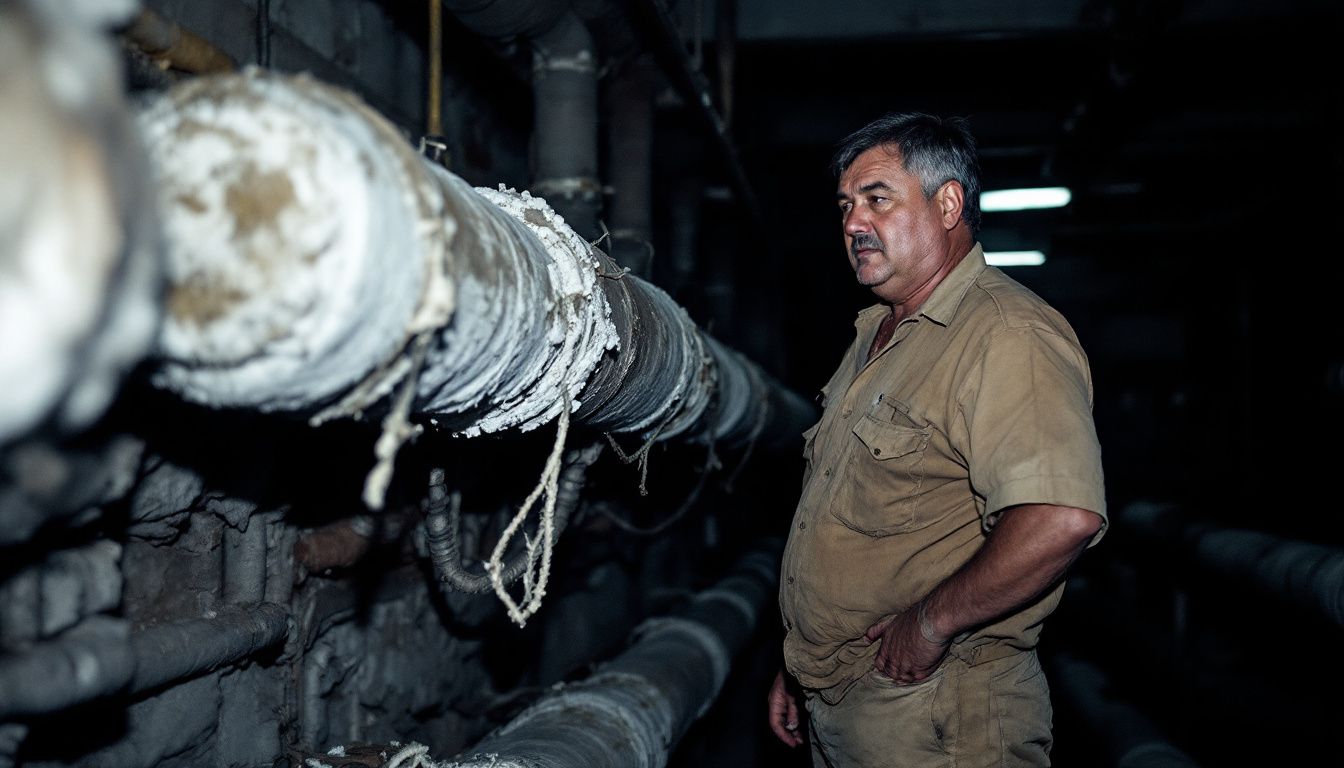
Asbestos was the shipbuilder’s material of choice for much of the twentieth century. It was cheap, durable, fire-resistant, and highly effective at insulating against the extreme heat generated by engines, boilers, and pipework in confined spaces. The result is that virtually every vessel built before the 1980s contains asbestos-containing materials (ACMs) somewhere on board.
The Royal Navy itself did not move away from asbestos towards alternatives such as glass fibre until the 1960s — and even then, the transition was gradual rather than immediate. Commercial shipbuilders followed a similar pattern, meaning that a vast number of vessels still afloat today were constructed with ACMs built into their very fabric.
Where Asbestos Is Typically Found on Ships
ACMs on vessels are not confined to insulation lagging. They can appear in a wide range of components and locations, including:
- Thermal insulation around boilers, pipes, and engine rooms
- Deck and floor tiles
- Gaskets and packing materials in pumps and valves
- Electrical cable insulation and junction boxes
- Adhesives and sealants
- Fire-resistant panels, bulkheads, and deckheads
- Cement-based materials and coatings
- Heat shields and thermal barriers
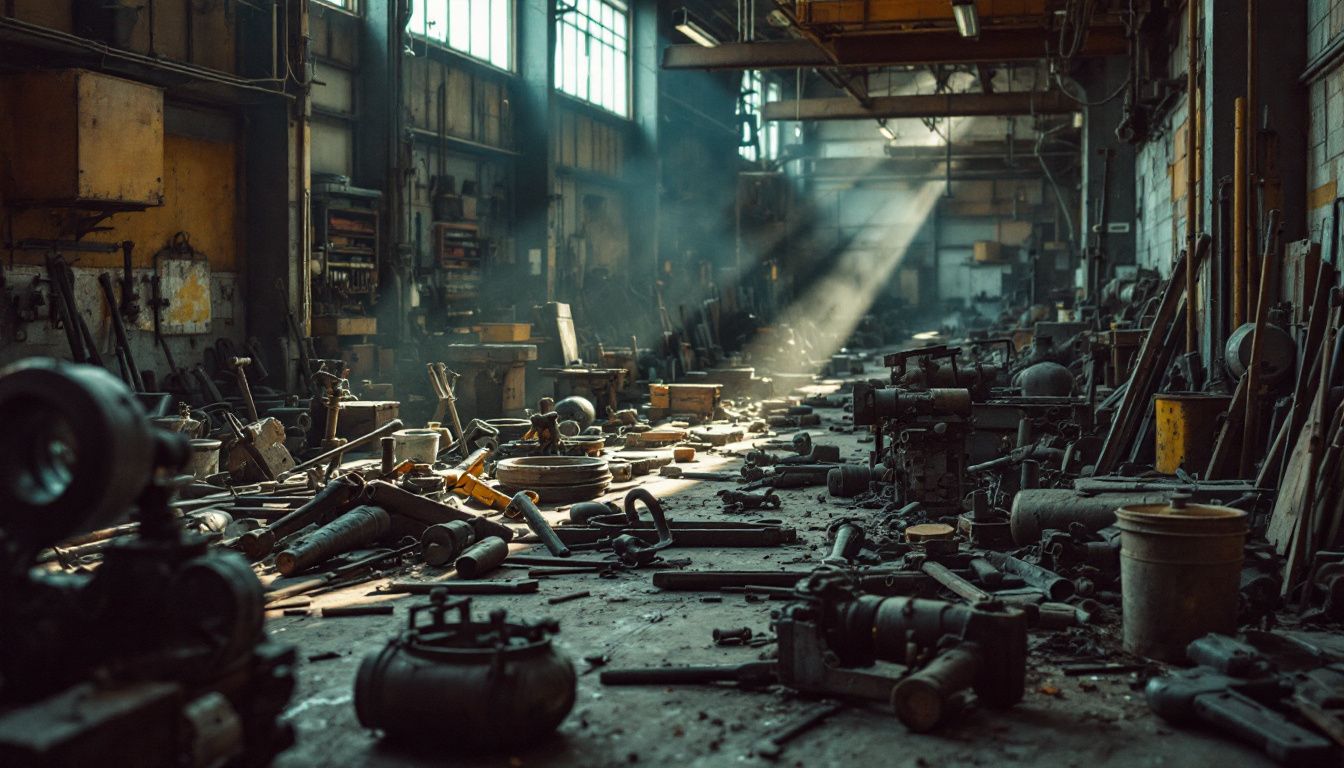
The problem is compounded by the confined, poorly ventilated nature of most shipboard working environments. When ACMs are disturbed — even during seemingly minor tasks — fibres can accumulate rapidly in the surrounding air with nowhere to dissipate. That combination of widespread ACM use and poor ventilation makes ships one of the most hazardous working environments where asbestos is concerned.
What a Ship Asbestos Survey Involves
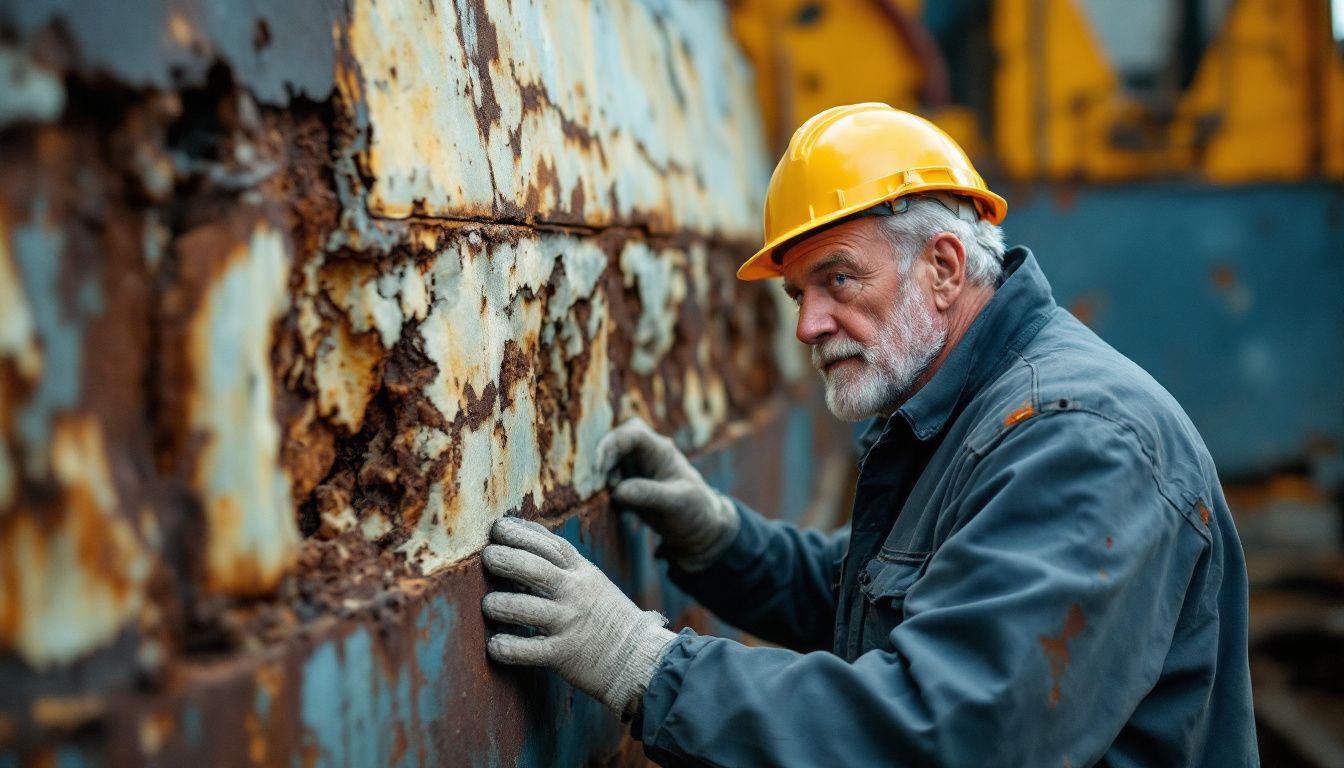
A ship asbestos survey follows the same fundamental principles as any commercial asbestos survey, but the environment presents unique challenges. Surveyors must navigate confined spaces, complex engineering systems, and materials that may have been repeatedly disturbed, repaired, or overcoated across decades of service.
Depending on the purpose of the survey, there are three main types relevant to maritime settings — each serving a distinct purpose and carrying different obligations for the duty holder.
Management Survey for Operational Vessels
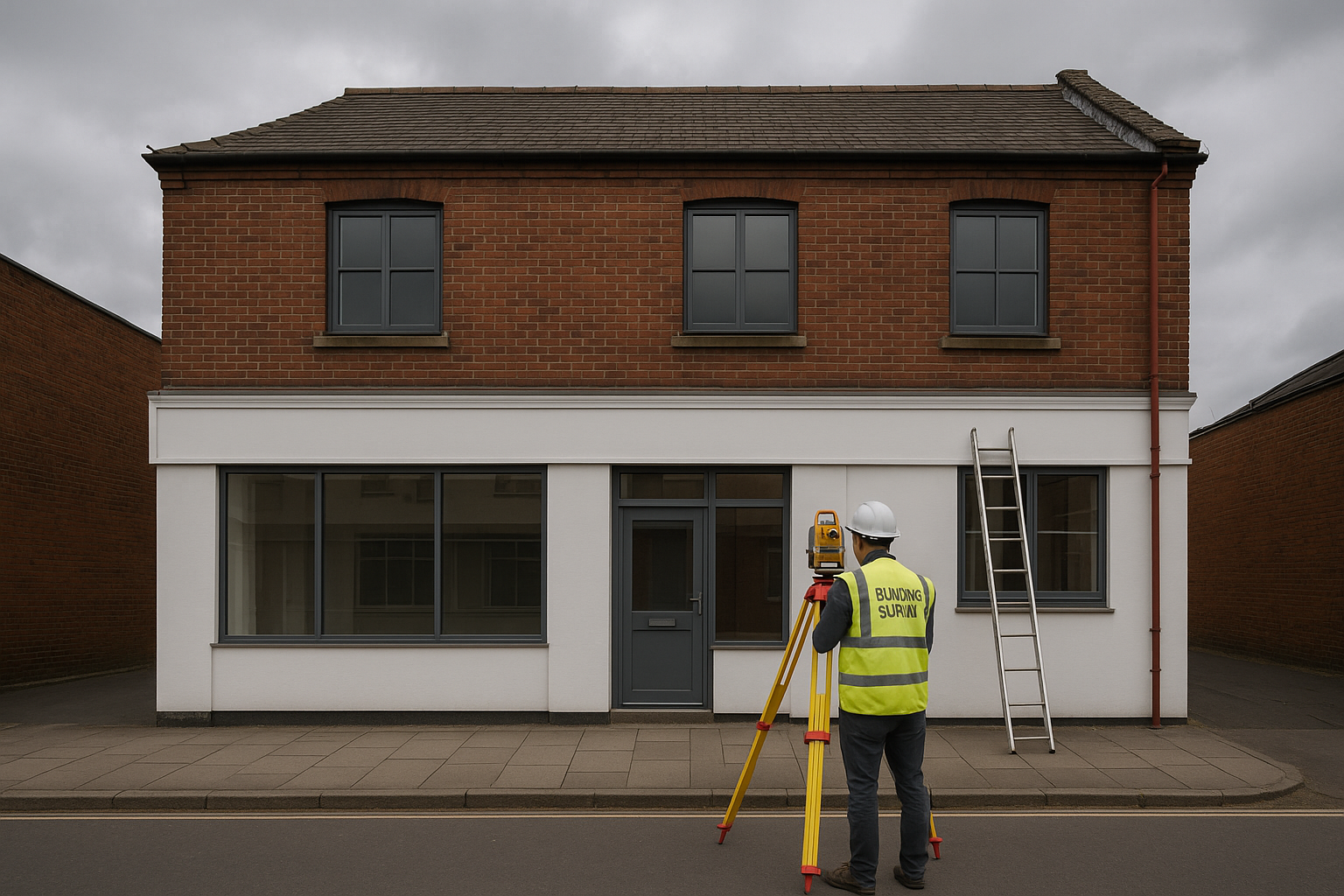
For a vessel that remains in active service, the starting point is a management survey. This identifies the location, condition, and extent of any ACMs that could be disturbed during normal operation or routine maintenance. The surveyor will produce an asbestos register and risk assessment, enabling the duty holder to put a management plan in place.
The management survey does not require destructive access to every area of the vessel. It focuses on materials that are reasonably accessible and likely to be encountered during day-to-day activity. The goal is to ensure that anyone working on the ship knows what they might encounter and how to respond safely.
Demolition Survey for Vessels Being Broken Down
When a vessel is being decommissioned, extensively refurbished, or broken up for scrap, a far more intrusive survey is required. A demolition survey must cover all areas that will be disturbed, including spaces that would normally remain inaccessible. Sampling is more extensive, and the resulting report must account for every ACM that workers might encounter during the planned works.
This is especially relevant in the context of the Inventory of Hazardous Materials (IHM), which is now required under international maritime regulations for vessels of a certain size. The IHM is essentially a comprehensive record of all hazardous materials on board, with asbestos being a primary concern.
Re-Inspection Surveys for Ongoing Monitoring
Once ACMs have been identified and a management plan is in place, the work does not stop there. Asbestos in ships is subject to ongoing physical stress from vibration, temperature fluctuation, and general wear. A re-inspection survey should be carried out periodically to check whether the condition of known ACMs has changed and whether the existing management plan remains adequate.
If ACMs have deteriorated — becoming friable or damaged — the risk profile changes significantly, and additional action may be required. Scheduling regular re-inspections is not just good practice; in many circumstances it is a regulatory obligation.
The Regulatory Framework Governing Ship Asbestos Surveys
The legal landscape for asbestos in the maritime sector draws from both domestic UK legislation and international maritime conventions. Understanding which rules apply to your vessel is essential before commissioning a survey.
Control of Asbestos Regulations
The Control of Asbestos Regulations apply to work carried out in Great Britain, including work on vessels in UK waters and in UK shipyards. They set out the duty to manage asbestos, the requirements for licensed and non-licensed work, and the obligations on employers to protect workers from exposure.
Under these regulations, any employer whose workers might encounter asbestos during their duties must ensure that appropriate surveys have been carried out and that workers are informed of the findings. Ignorance of the presence of ACMs is not a defence — the duty to identify them falls squarely on the duty holder.
HSE Guidance and HSG264
HSG264, the HSE’s surveying guidance, sets the technical standard for how asbestos surveys should be conducted and reported. Any reputable surveyor carrying out a ship asbestos survey should work in accordance with HSG264, ensuring that sampling, analysis, and reporting meet the required standard.
Surveys must be carried out by competent surveyors — ideally holding the BOHS P402 qualification — and laboratory analysis of samples must be conducted by a UKAS-accredited laboratory using polarised light microscopy (PLM). Any report that falls short of these standards is not worth the paper it is printed on.
International Maritime Organisation Requirements
The International Maritime Organisation (IMO) has required all new shipbuilding to be asbestos-free since 2011. For existing vessels, the IMO’s guidelines on the IHM require ship owners to document all hazardous materials, including any residual asbestos, and to maintain that documentation throughout the vessel’s operational life.
The Hong Kong International Convention on the Safe and Environmentally Sound Recycling of Ships also places obligations on vessel owners to ensure that ships are properly surveyed and certified before they enter a recycling facility. This means a thorough asbestos survey is a prerequisite for lawful ship recycling, not an optional extra.
Merchant Shipping Regulations
The Merchant Shipping Regulations add further specific requirements for vessels being broken down, requiring that hazardous materials including asbestos are properly identified and managed before and during the recycling process. These regulations complement both the IMO framework and domestic asbestos legislation, and non-compliance can result in significant penalties.
Assessing Exposure Risks for Shipyard Workers
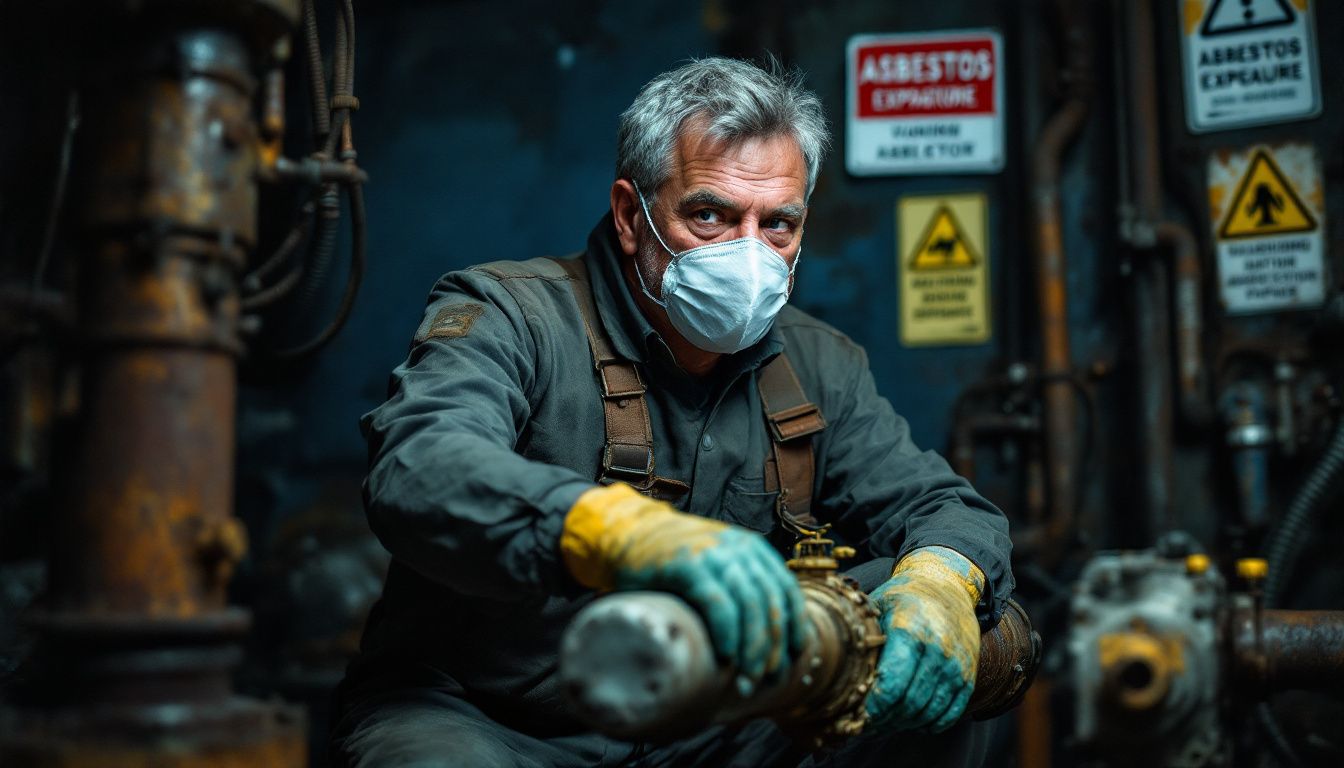
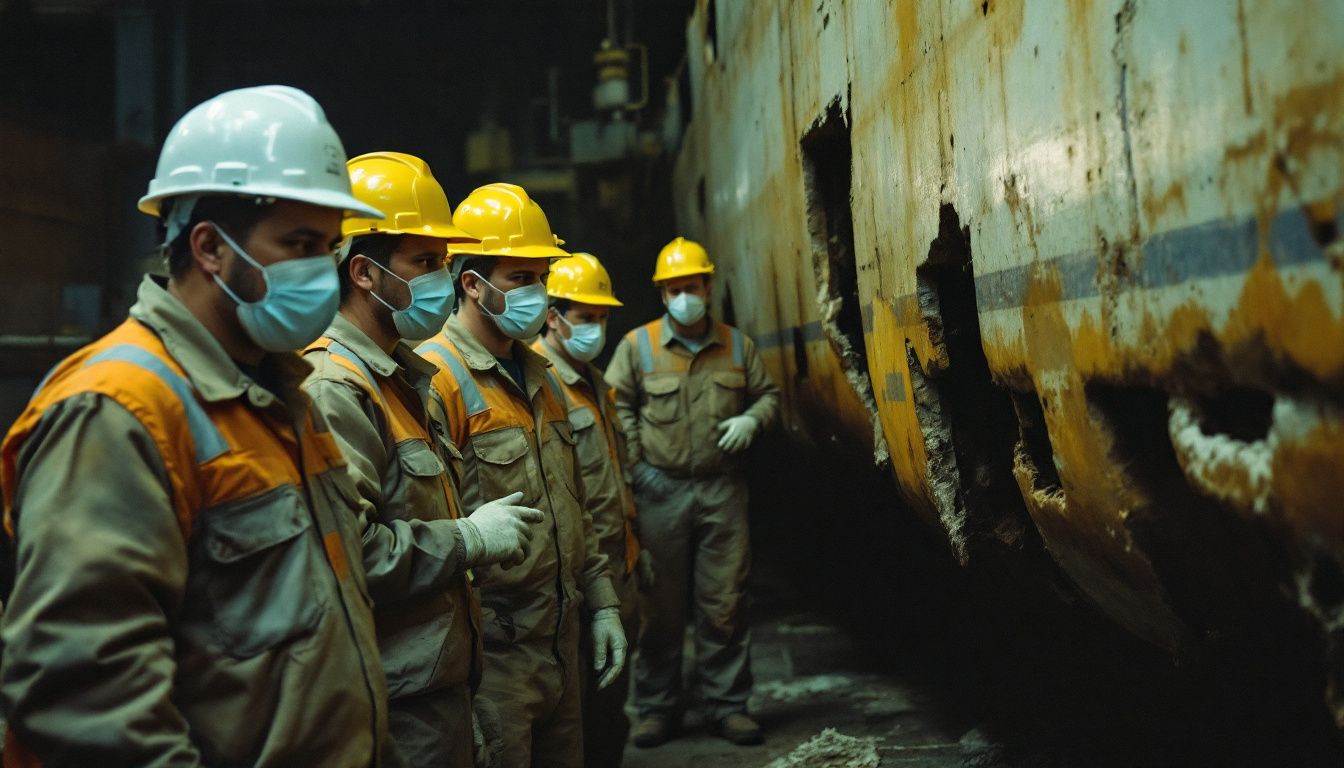
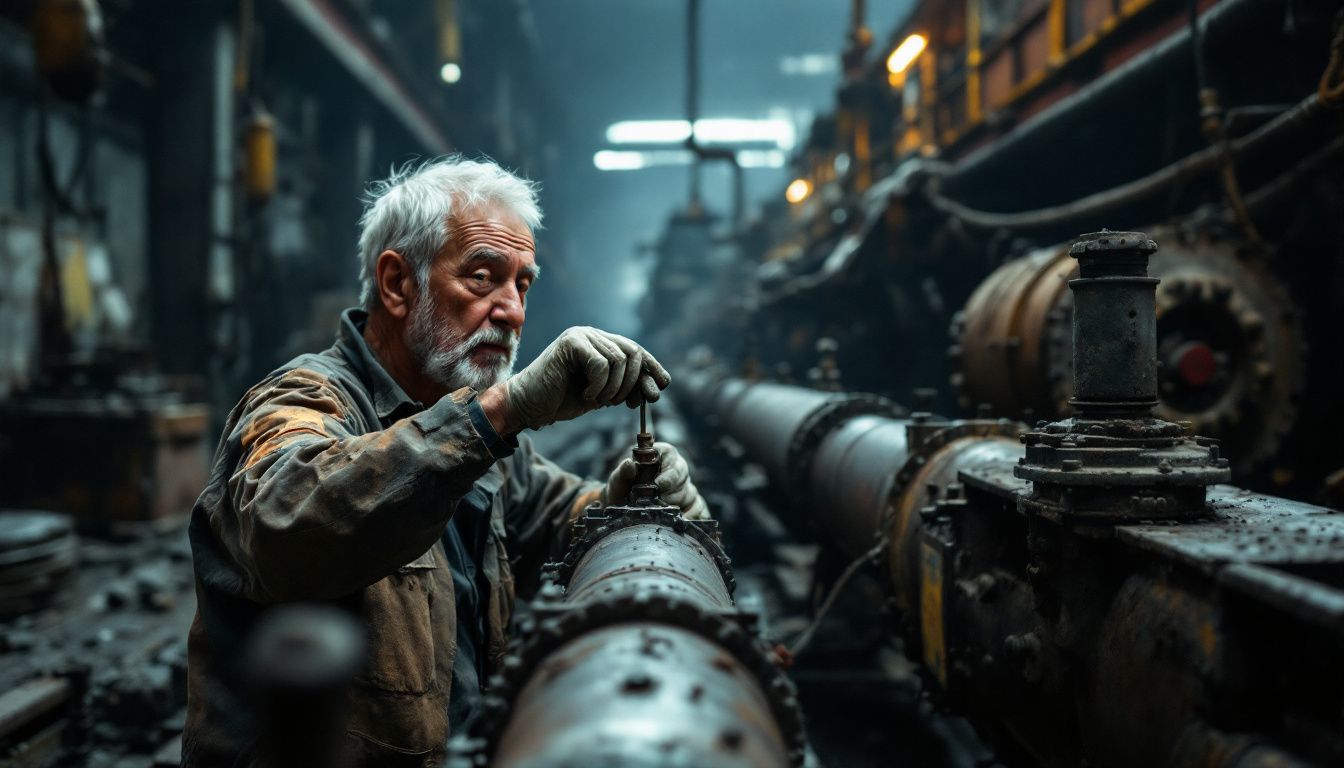
Shipyard workers face some of the highest occupational asbestos exposure risks of any sector. This applies not only to those involved in ship recycling or demolition, but also to engineers, welders, and maintenance crews working on operational vessels.
Tasks that routinely disturb ACMs in shipboard environments include:
- Removing or replacing pipe insulation and lagging
- Working on boilers, heat exchangers, or steam systems
- Drilling, cutting, or grinding through bulkheads or deckhead panels
- Replacing gaskets in pumps, valves, or flanges
- Electrical work involving old cable runs or junction boxes
- Stripping out accommodation areas with older flooring or ceiling tiles
Without a current ship asbestos survey and a properly maintained asbestos register, workers undertaking any of these tasks have no way of knowing what they are dealing with. The consequences of getting it wrong are severe — asbestos-related diseases typically manifest twenty to forty years after exposure, meaning that the harm done today may not become apparent for a generation.
Air Monitoring and Clearance Testing
Where asbestos removal or disturbance work is being carried out on a vessel, air monitoring should be conducted throughout and a four-stage clearance procedure completed before the area is handed back for use. This mirrors the approach required in buildings under HSE guidance and is equally applicable in the shipboard context.
Air monitoring is not simply a box-ticking exercise. It provides objective evidence that fibre levels have returned to a safe baseline, protecting both workers and the duty holder from future liability.
Safe Removal and Disposal of Asbestos from Ships
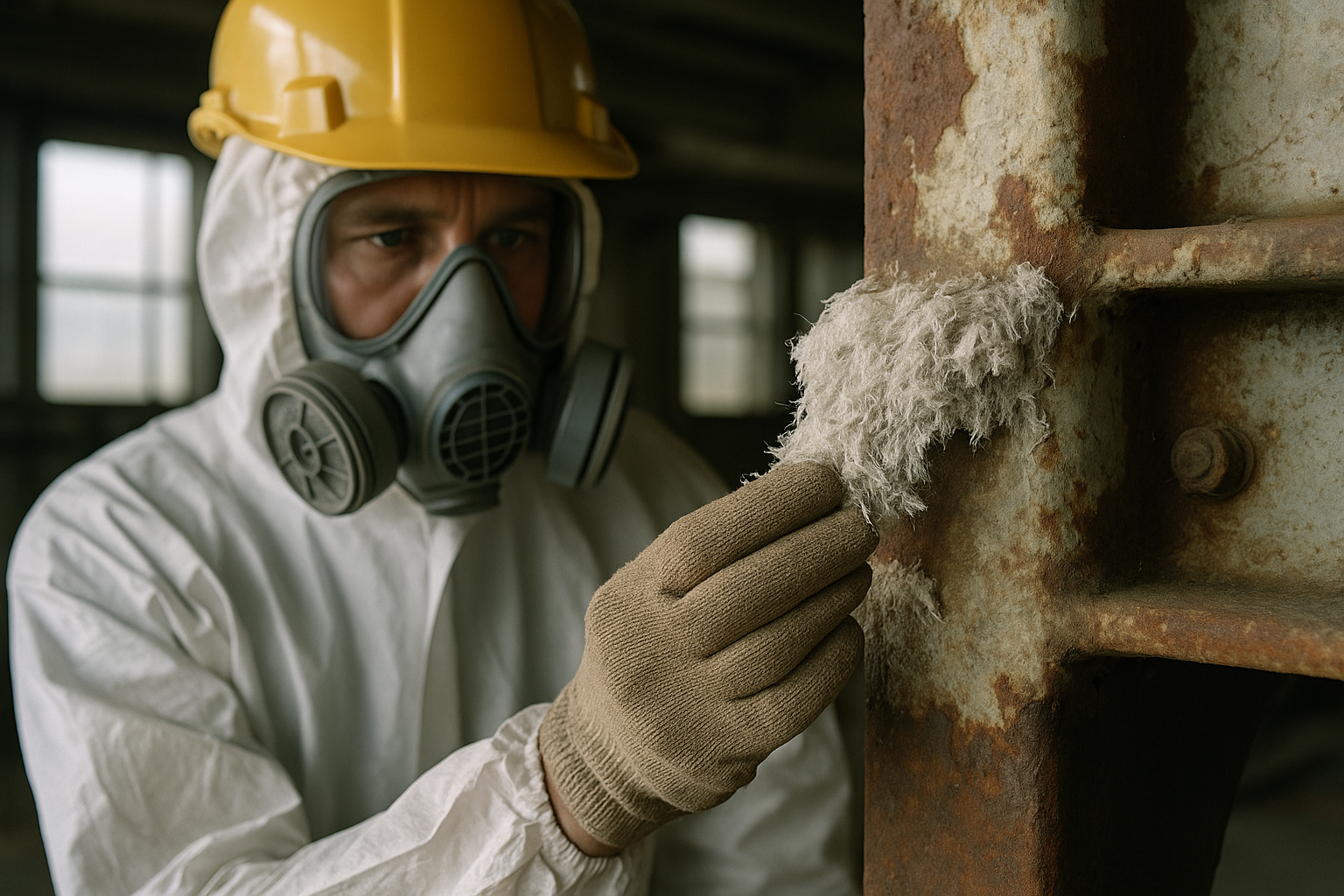
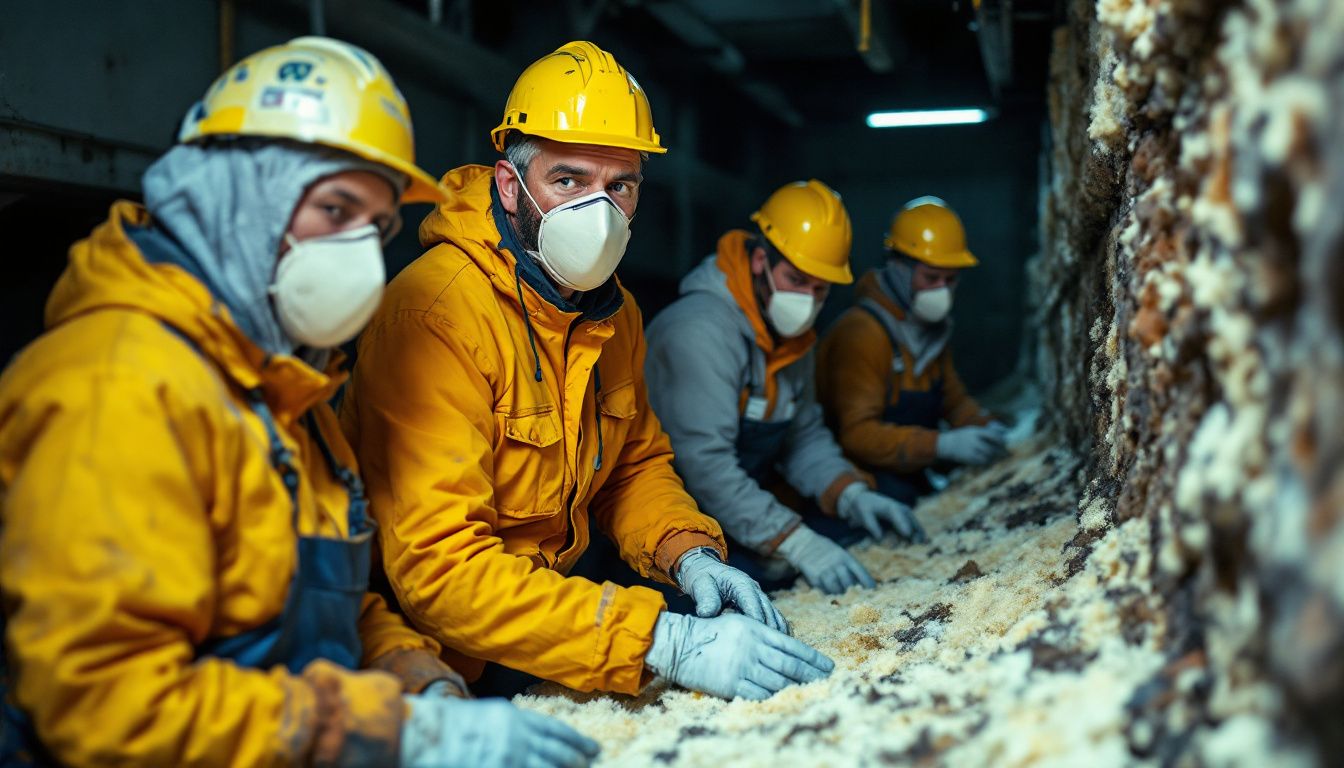
The asbestos removal process on vessels must be carried out by appropriately licensed contractors where the work falls within the scope of licensed asbestos work. This includes the removal of most thermal insulation, sprayed coatings, and other high-risk ACMs. Attempting to manage this work without the right expertise and licences is both dangerous and unlawful.
Key elements of a compliant asbestos removal programme include:
- A thorough pre-removal survey to identify all ACMs in the work area
- Preparation of a written plan of work and notification to the relevant enforcing authority where required
- Enclosure of the work area and use of negative pressure units to prevent fibre release
- Use of appropriate personal protective equipment (PPE) and respiratory protective equipment (RPE) by all workers
- Double-bagging of all asbestos waste in correctly labelled, UN-approved bags
- Transfer of waste to a licensed waste carrier for disposal at an authorised facility
- Full documentation of all waste transfers using consignment notes
Cutting corners on any of these steps not only puts workers at risk but also exposes the duty holder to significant regulatory and civil liability. The documentation trail matters — it is your evidence of compliance if questions are ever raised.
The Inventory of Hazardous Materials: A Practical Tool for Ship Owners
The IHM is increasingly recognised as best practice for vessel management, not just a regulatory compliance exercise. A well-maintained IHM provides ship owners, operators, and shipyard workers with a clear picture of where hazardous materials are located and what precautions are required when working near them.
The IHM should be updated whenever significant maintenance, repair, or modification work is carried out on the vessel. It is a living document, not a one-off exercise. Treating it as such — and ensuring that asbestos survey findings are properly integrated into it — is one of the most effective ways to manage ongoing risk across the vessel’s entire service life.
For vessels approaching the end of their operational life, a well-maintained IHM can also streamline the recycling process, reducing delays at the shipbreaking facility and demonstrating due diligence to regulators and insurers alike.
Practical Steps for Ship Owners and Operators
If you own or manage a vessel built before the mid-1980s and have not yet commissioned a ship asbestos survey, the following steps will help you establish a compliant and effective asbestos management programme:
- Commission a management survey carried out by a BOHS P402-qualified surveyor working to HSG264 standards — this is your baseline.
- Establish an asbestos register from the survey findings and ensure it is accessible to everyone who works on the vessel.
- Develop a written management plan that sets out how identified ACMs will be monitored and controlled.
- Schedule periodic re-inspections to track any changes in the condition of known ACMs and update the register accordingly.
- Ensure all workers and contractors are briefed on the location and condition of ACMs before undertaking any work on the vessel.
- Commission a demolition survey before any major refurbishment, decommissioning, or recycling work begins.
- Use licensed contractors for any removal work that falls within the scope of licensed asbestos work.
- Integrate all survey findings into your Inventory of Hazardous Materials and keep it updated.
None of these steps are optional if you are operating within UK jurisdiction or sending vessels to a recycling facility that must comply with international standards. The cost of getting this right is a fraction of the cost — financial, legal, and human — of getting it wrong.
Supernova Asbestos Surveys: Specialist Support for the Maritime Sector
Supernova Asbestos Surveys has completed more than 50,000 surveys across the UK, working with clients in industries where asbestos risks are anything but straightforward. Our surveyors are fully qualified, work to HSG264 standards, and understand the particular challenges that shipboard environments present.
Whether you need a management survey for an operational vessel, a demolition survey ahead of decommissioning, or periodic re-inspections to keep your management plan current, we can provide the expertise and documentation you need. We cover the full length and breadth of the country — including asbestos survey London, asbestos survey Manchester, and asbestos survey Birmingham — as well as coastal and port locations across England, Scotland, and Wales.
To discuss your requirements or arrange a survey, call us on 020 4586 0680 or visit asbestos-surveys.org.uk. Do not wait for a near-miss or an enforcement notice to prompt action — the time to survey is now.
Frequently Asked Questions
Is a ship asbestos survey a legal requirement in the UK?
Yes, in most circumstances. The Control of Asbestos Regulations require duty holders to identify and manage asbestos in workplaces, and vessels in UK waters or undergoing work in UK shipyards fall within scope. If your vessel is being decommissioned or recycled, additional requirements under Merchant Shipping Regulations and international IMO guidelines also apply. A ship asbestos survey is the essential first step in meeting these obligations.
What qualifications should a ship asbestos surveyor hold?
Surveyors should hold the BOHS P402 qualification as a minimum and must work in accordance with HSG264, the HSE’s guidance on asbestos surveying. Laboratory analysis of any samples taken must be carried out by a UKAS-accredited laboratory. Always ask to see evidence of qualifications and accreditation before appointing a surveyor — a survey that does not meet these standards may not satisfy your legal obligations.
How often should a ship asbestos survey be repeated?
A management survey establishes your baseline, but the condition of ACMs on a vessel can change over time due to vibration, heat cycling, and physical wear. Re-inspection surveys should be carried out at regular intervals — typically annually, though the frequency may vary depending on the condition of ACMs and the level of activity on the vessel. Your management plan should specify the re-inspection schedule, and this should be reviewed whenever significant work is carried out.
What is an Inventory of Hazardous Materials and how does it relate to asbestos?
The Inventory of Hazardous Materials (IHM) is a document required under IMO guidelines for vessels of a certain size, listing all hazardous materials on board — with asbestos being a primary concern. The IHM must be maintained throughout the vessel’s operational life and updated after significant maintenance or modification work. A ship asbestos survey provides the data needed to populate and maintain the asbestos-related sections of the IHM accurately.
Can asbestos removal on ships be carried out by any contractor?
No. Where the removal work falls within the scope of licensed asbestos work — which includes most thermal insulation, sprayed coatings, and other high-risk ACMs — it must be carried out by a contractor holding an HSE asbestos removal licence. Using an unlicensed contractor for licensed work is a criminal offence and puts workers at serious risk. Always verify a contractor’s licence status with the HSE before work begins.