Asbestos Waste Removal: What You Must Know Before Touching a Single Bag
Asbestos waste removal is one of the most tightly regulated activities in UK property management — and for good reason. Get it wrong and you face criminal prosecution, unlimited fines, and a genuine risk to public health. Get it right and you protect your property, your occupants, and yourself.
Whether you have a single sheet of asbestos cement or a full removal project underway, the rules are non-negotiable. This post covers legal duties, safe handling steps, packaging requirements, and your practical options as a homeowner or commercial property manager.
Why Asbestos Waste Is Treated Differently to Other Rubbish
Asbestos fibres are microscopic. Once airborne, they can be inhaled without any immediate symptoms — yet decades later they cause mesothelioma, asbestosis, and lung cancer. This is why asbestos waste is classified as hazardous waste under UK law, not just awkward building rubble.
Any material that contains asbestos — regardless of how small the piece or how intact it appears — must be handled, packaged, transported, and disposed of under strict controls. Tossing it in a general skip or leaving it in a household bin is not a grey area. It is illegal.
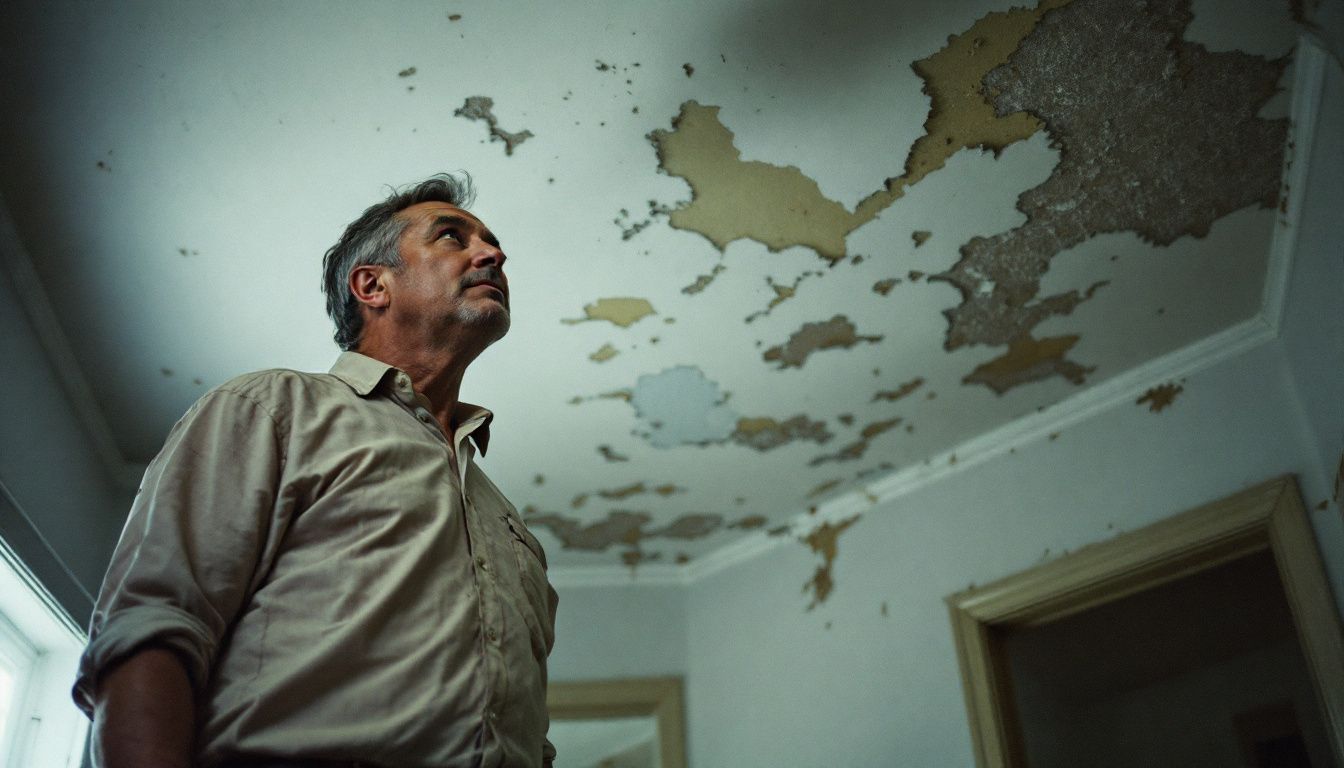
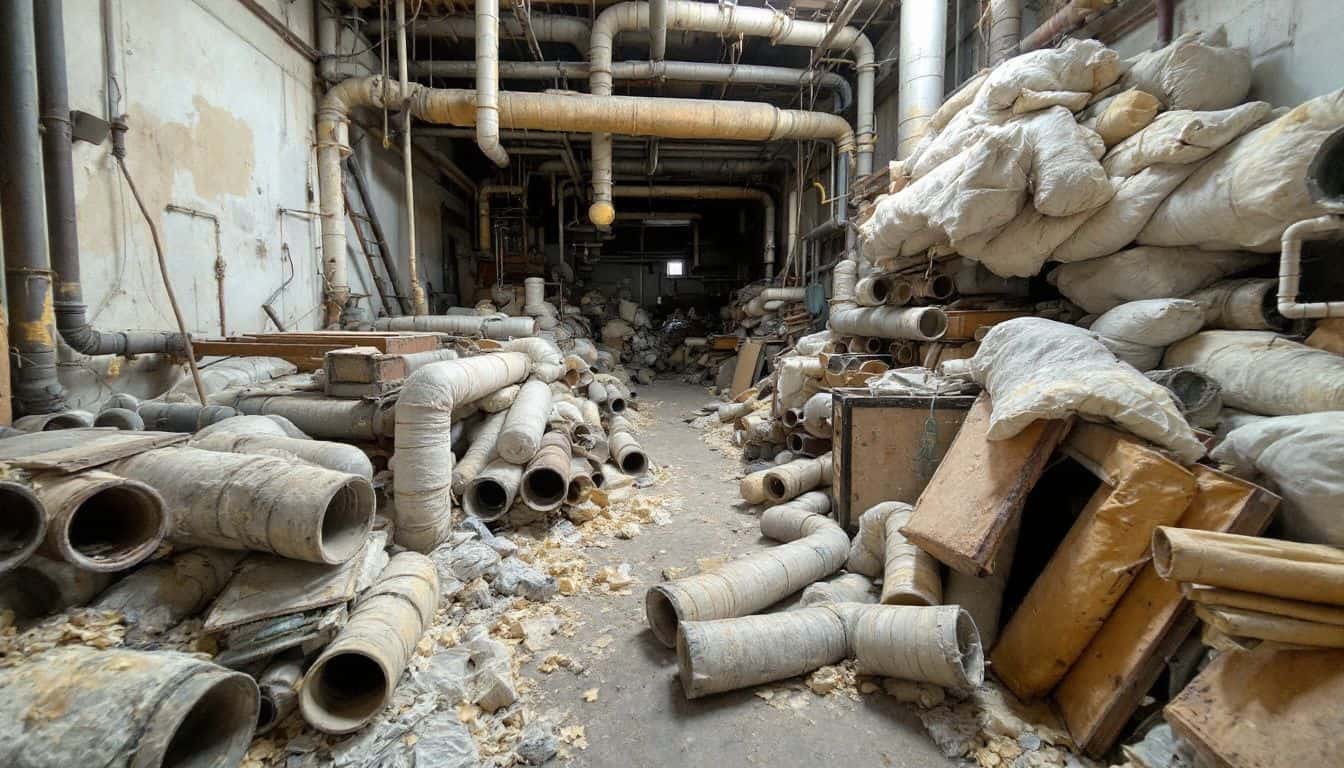
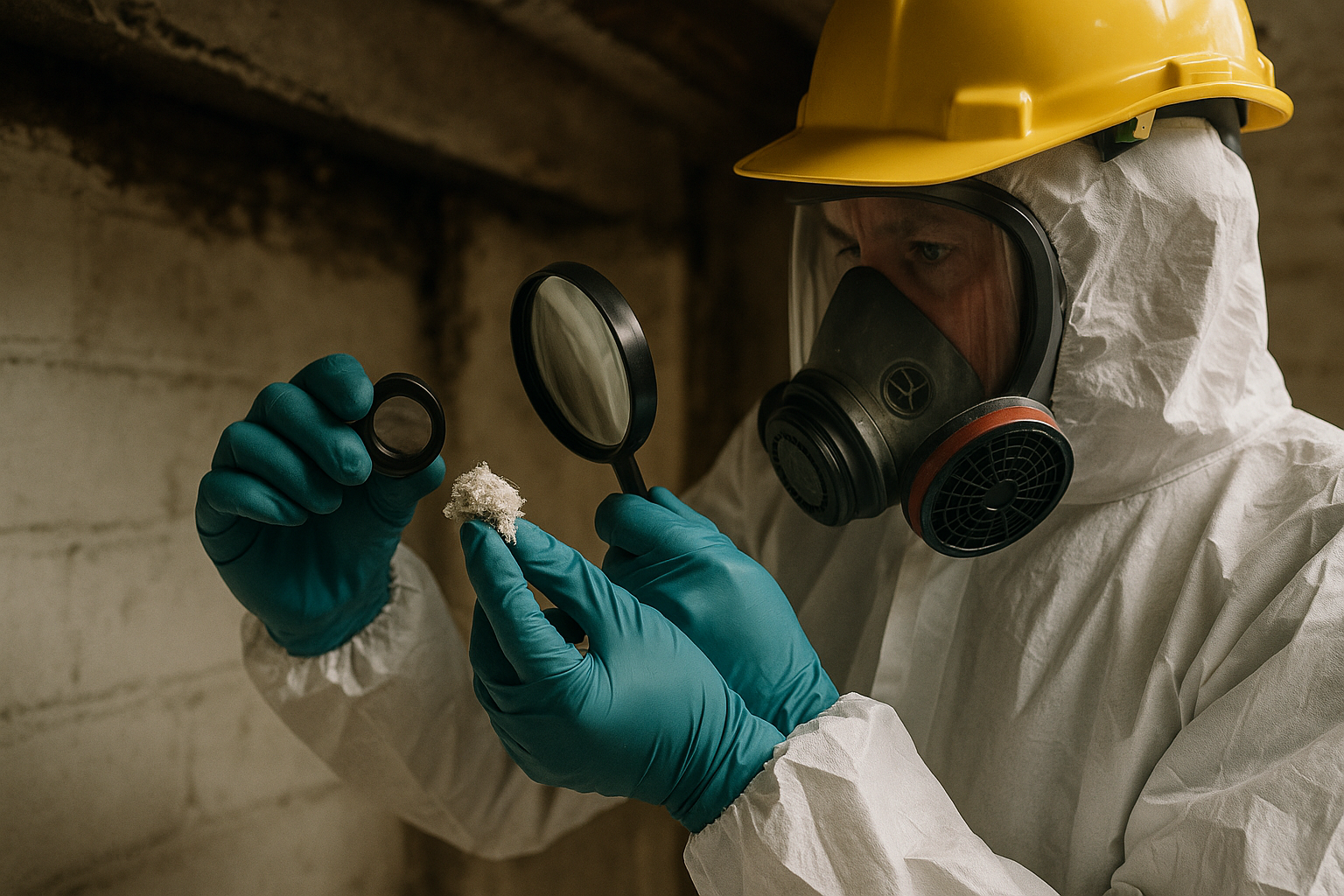
Properties built before 2000 are the most likely to contain asbestos-containing materials (ACMs). That includes artex ceilings, floor tiles, pipe lagging, insulation board, roofing felt, and cement panels. If you are unsure whether a material contains asbestos, treat it as though it does until a survey confirms otherwise.
The Legal Framework for Asbestos Waste Removal in the UK
Several pieces of legislation govern asbestos waste removal in the UK. Understanding which applies to your situation is essential before any work begins.
Control of Asbestos Regulations
The Control of Asbestos Regulations set the primary framework for managing and removing asbestos in the UK. They establish who can carry out removal work, what licences are required, and what records must be kept.
Licensed contractors must be used for the most dangerous materials — including amosite (brown asbestos), crocidolite (blue asbestos), and certain friable materials. For licensed removal work, health and safety records must be retained for a minimum of 40 years. This is a legal requirement, not a suggestion.
Hazardous Waste Regulations
All asbestos waste falls under the Hazardous Waste Regulations. Every consignment must be accompanied by a Hazardous Waste Consignment Note, which records the type of waste, its origin, the carrier’s licence details, and the receiving site.
This paperwork must be completed correctly. Incomplete or missing notes can result in enforcement action against both the carrier and the waste producer.
Environmental Permitting Regulations
Waste carriers must hold a current licence issued under the Environmental Permitting Regulations. Only licensed carriers can legally transport asbestos waste. The receiving facility must also be a licensed site — not a standard household recycling centre or general landfill.
Duty of Care
As the person or organisation responsible for the property, you hold a legal duty of care for any waste produced on your premises. This means you are responsible for ensuring the waste is correctly described, packaged, and handed to a licensed carrier. Ignorance of the rules is not a defence.
How to Package Asbestos Waste Safely
Correct packaging is the single most important step in preventing fibre release during asbestos waste removal. Poorly wrapped or damaged packages are a risk to everyone who handles them — and many licensed sites will refuse to accept them.
Follow these steps carefully:
- Dampen the material lightly before handling. Water suppresses fibre release. Do not soak the material, but keep it damp throughout the process.
- Do not break, drill, or cut bonded asbestos unless absolutely necessary. Keep sheets and panels whole wherever possible.
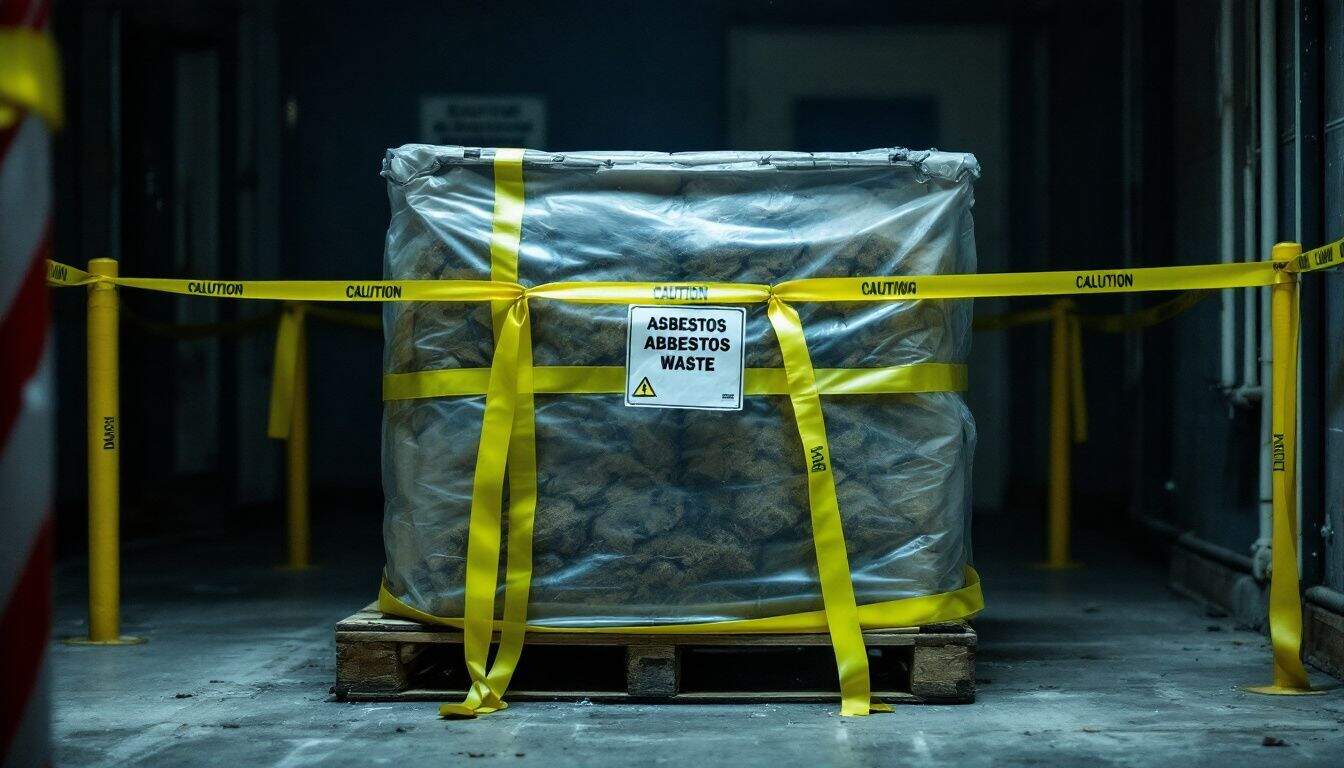
- Double-wrap all waste in 1000-gauge polythene sheeting or heavy-duty asbestos waste sacks. Single layers are not sufficient.
- Seal every seam with strong, purpose-made tape. There should be no gaps, tears, or loose ends.
- Label every package clearly with the words “Asbestos — Harmful” in accordance with the Carriage of Dangerous Goods regulations. Labels must be visible and legible.
- Minimise handling. Every time a package is moved or transferred, the risk of damage increases. Plan your route from removal to disposal in advance.
- Place wrapped packages into rigid, approved containers for transport. Soft bags alone are not sufficient for larger quantities.
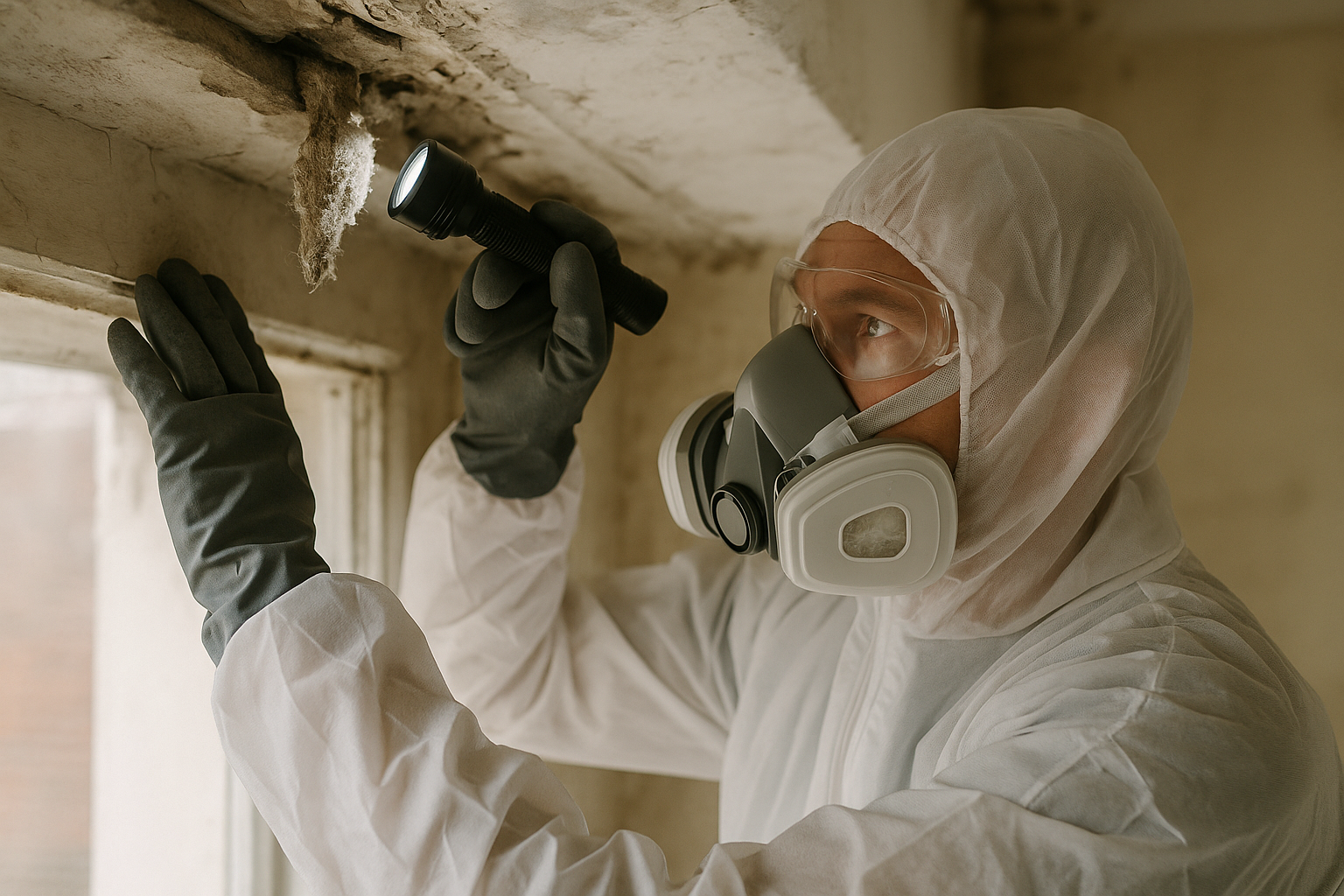
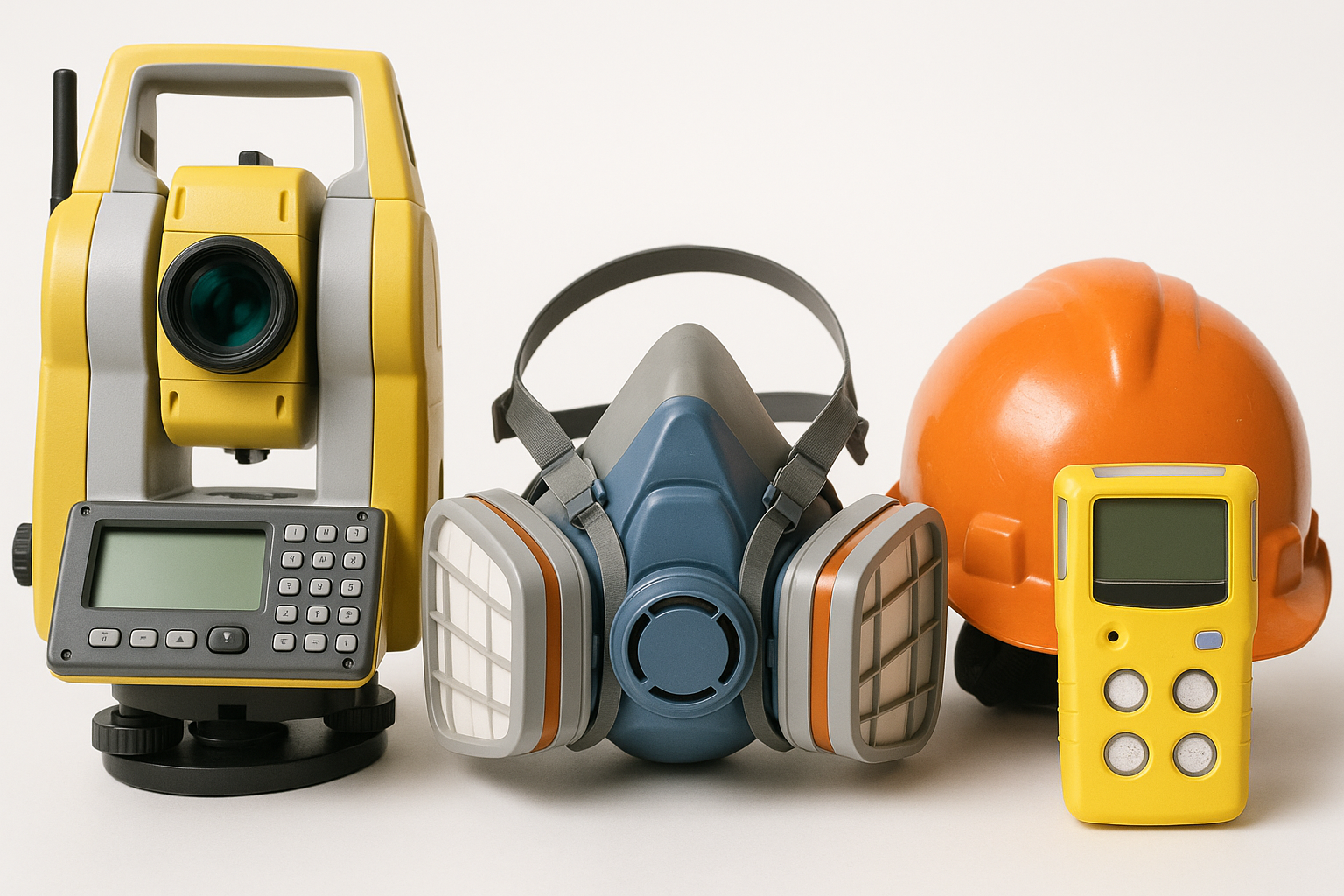
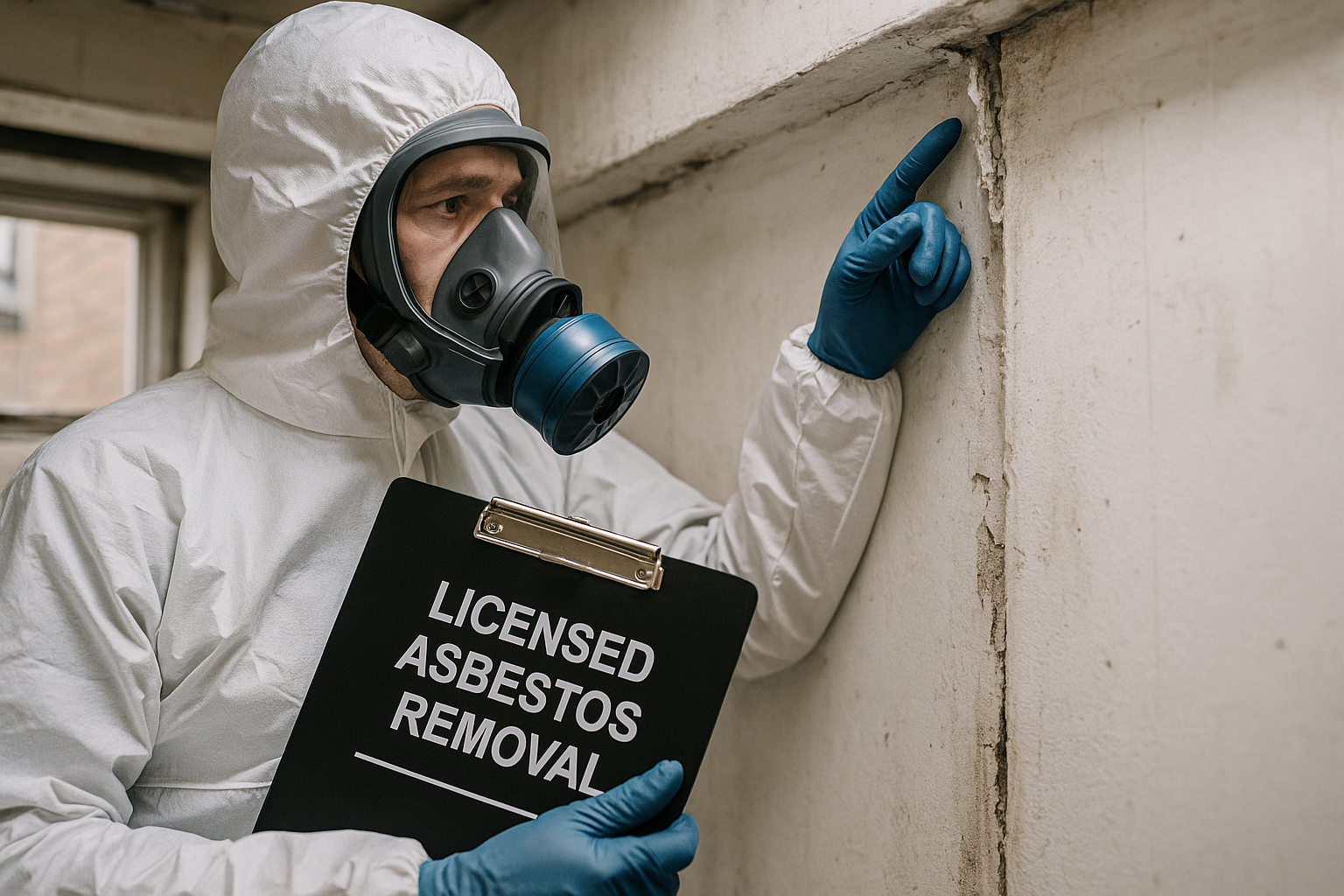
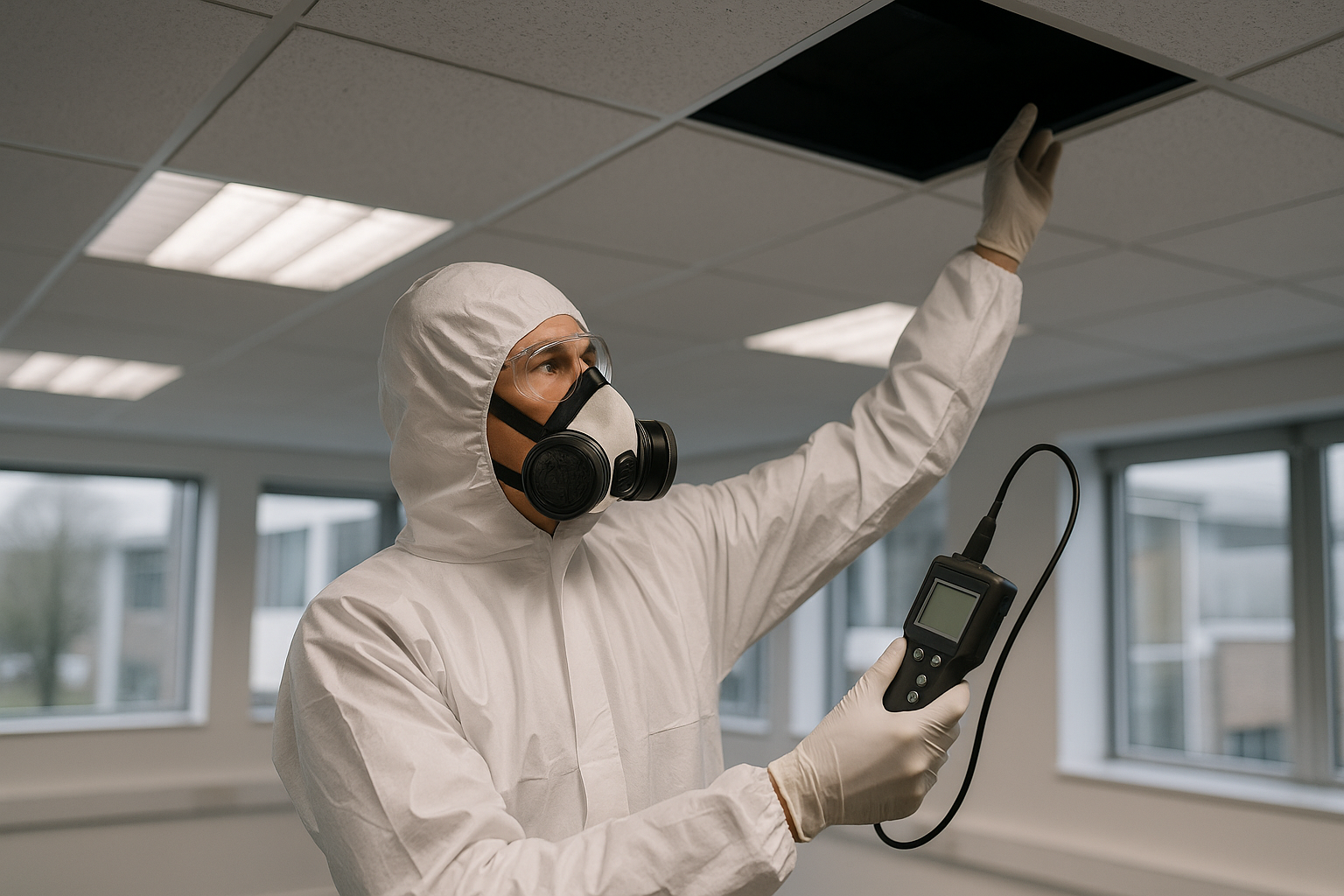
- Wear appropriate PPE throughout: a tight-fitting FFP3 respirator, disposable coveralls, gloves, and safety goggles. Ordinary dust masks do not provide adequate protection against asbestos fibres.
Who Can Carry Out Asbestos Waste Removal?
The level of licence required depends on the type of asbestos and the nature of the work. Understanding the distinctions before you begin could save you from a costly compliance failure.
Licensed Contractors
A full HSE licence is required for removing the most hazardous materials, including insulation, lagging, and asbestos insulation board (AIB). Licensed contractors are regulated by the HSE, must notify the relevant enforcing authority before starting work, and are subject to regular inspection.
If you are dealing with asbestos removal in a commercial building or a complex domestic project, a licensed contractor is almost certainly required. Do not attempt to cut costs by using an unlicensed operative — the liability falls back on you as the property owner or manager.
Notifiable Non-Licensed Work (NNLW)
Some lower-risk work — such as minor repairs to asbestos cement — falls into the category of notifiable non-licensed work. This still requires notification to the relevant enforcing authority and health surveillance for workers, but does not require a full HSE licence.
Non-Licensed Work
A small category of work involving intact, non-friable materials in good condition can be carried out without a licence. However, the waste produced still counts as hazardous waste and must be disposed of through licensed channels. The type of work does not change the classification of the waste.
Surveyors assessing the material before removal should hold relevant qualifications — the BOHS P402 certificate is a recognised benchmark for asbestos surveying competence in the UK.
Homeowner Options: Council Services vs Private Contractors
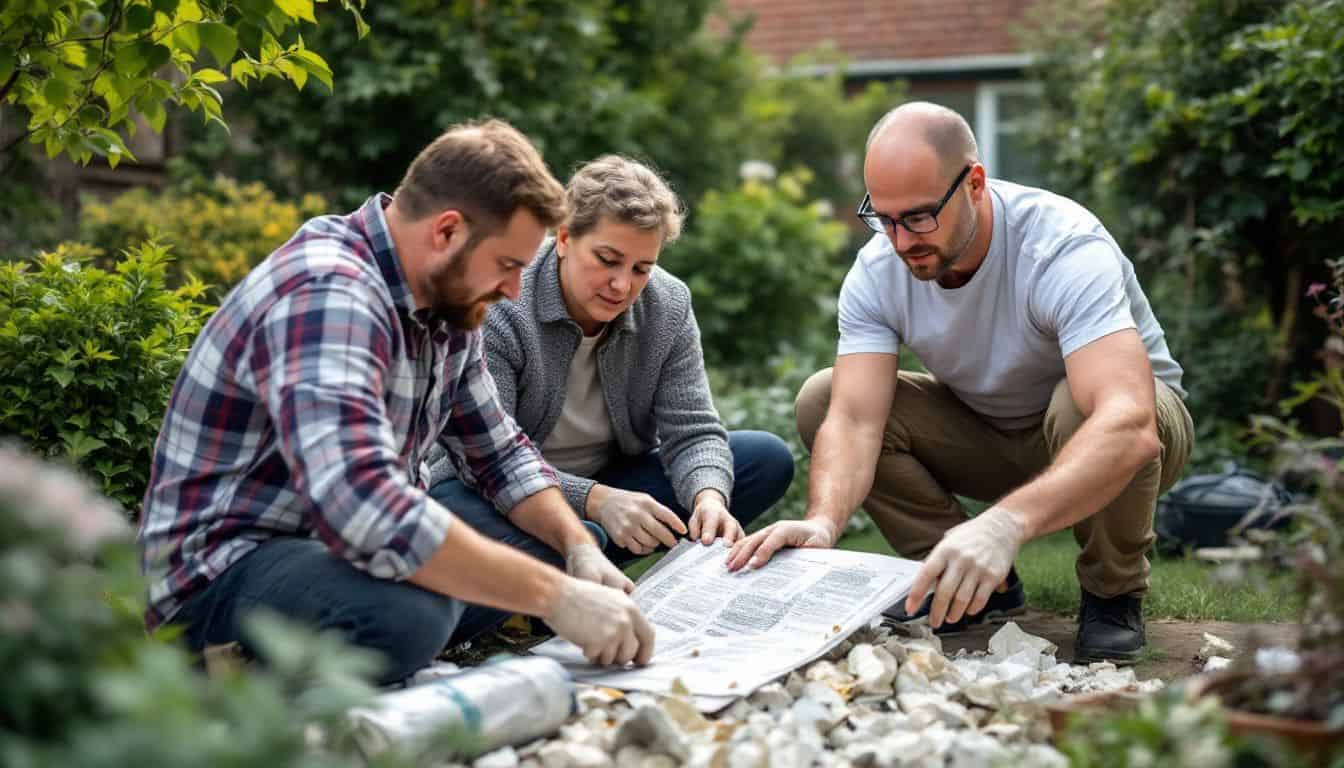
If you are a homeowner with a small quantity of asbestos waste — typically bonded materials such as asbestos cement sheets or floor tiles — you may have two practical routes available to you.
Using Your Local Council
Many local councils accept limited quantities of bonded asbestos waste from domestic properties at designated household waste recycling centres. Rules vary significantly between authorities, so always check before turning up with a car boot full of wrapped sheets.
Key points to be aware of:
- Council services are for domestic properties only — businesses cannot use them.
- Weight and volume limits apply. Some councils accept up to 40kg per visit, others up to 200kg.
- Advance booking is usually required. Some sites operate appointment-only systems.
- Not all recycling centres in a council area accept asbestos waste — check which specific site to use.
- Packaging must meet the council’s requirements before arrival. Staff will not wrap or handle unwrapped material on site.
- Some councils charge a fee for asbestos waste disposal, even for domestic residents.
- Council staff will not dismantle, remove, or wrap materials for you. You are responsible for all preparation work before the material arrives at the site.
Using a Private Licensed Contractor
For larger quantities, commercial properties, or any situation where the material is friable or in poor condition, a private licensed contractor is the appropriate choice. Contractors handle everything from removal and packaging through to transport and disposal at a licensed facility.
The advantages include:
- Full management of all legal paperwork, including the Hazardous Waste Consignment Note
- Faster response times compared to council booking queues
- Appropriate PPE and trained operatives throughout
- Licensed vehicles and approved disposal sites
- Reduced risk to you as the property owner or manager
Costs vary depending on material type, volume, access, and location. Always request a written quote and ask to see the contractor’s waste carrier licence and HSE licence before work begins. Membership of the Asbestos Removal Contractors Association (ARCA) is a positive indicator of a contractor’s commitment to standards, though it is not a legal requirement.
Asbestos Waste Removal Across the UK: Regional Considerations
Regulations are consistent across England, Scotland, Wales, and Northern Ireland, but the practical arrangements for disposal can differ between local authorities. If you are based in a major urban area, here is what to bear in mind.
In London, council arrangements vary borough by borough. Some boroughs offer free collection for small quantities; others charge. If you need an asbestos survey London before removal work begins, ensure your surveyor is familiar with the specific requirements of your borough and can advise on appropriate disposal routes.
In the North West, disposal facilities are available across Greater Manchester, but booking requirements and accepted quantities differ between authorities. If you are planning work and need an asbestos survey Manchester, confirm with your surveyor which disposal route is most appropriate for the materials identified.
In the West Midlands, similar variation applies. An asbestos survey Birmingham will identify the type and condition of any ACMs present, which directly determines whether you can use a council facility or need a licensed contractor.
Wherever you are in the UK, the starting point is always the same: know what you have before you touch it.
Common Mistakes That Lead to Enforcement Action
Asbestos waste removal enforcement is taken seriously by the HSE and Environment Agency. These are the most common errors that result in prosecution or fixed penalty notices:
- Fly-tipping asbestos waste. This is treated as a serious criminal offence, not a minor littering issue. Penalties include unlimited fines and imprisonment.
- Using an unlicensed waste carrier. If your carrier does not hold a valid Environment Agency licence, you as the waste producer can be held liable.
- Incomplete or missing consignment notes. Every movement of hazardous waste must be documented. Missing paperwork is a compliance failure, not a technicality.
- Disposing of asbestos at a non-licensed site. Even if you have packaged the waste correctly, taking it to a site that is not licensed to receive it is illegal.
- Breaking up or cutting asbestos to make it easier to transport. This releases fibres and is a breach of health and safety law.
- Using standard skips. General waste skips are not approved for asbestos waste. Skip hire companies are not licensed to carry or receive it.
What Happens to Asbestos Waste After Disposal?
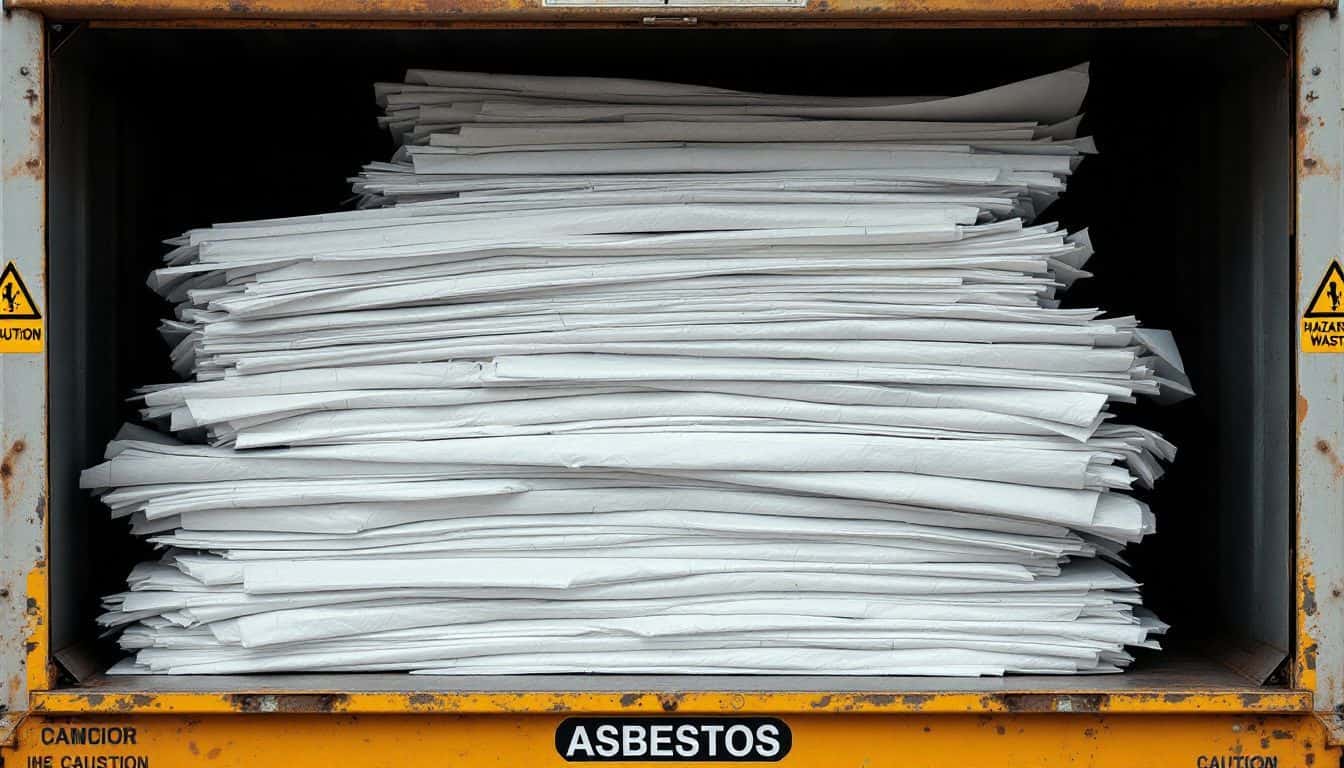
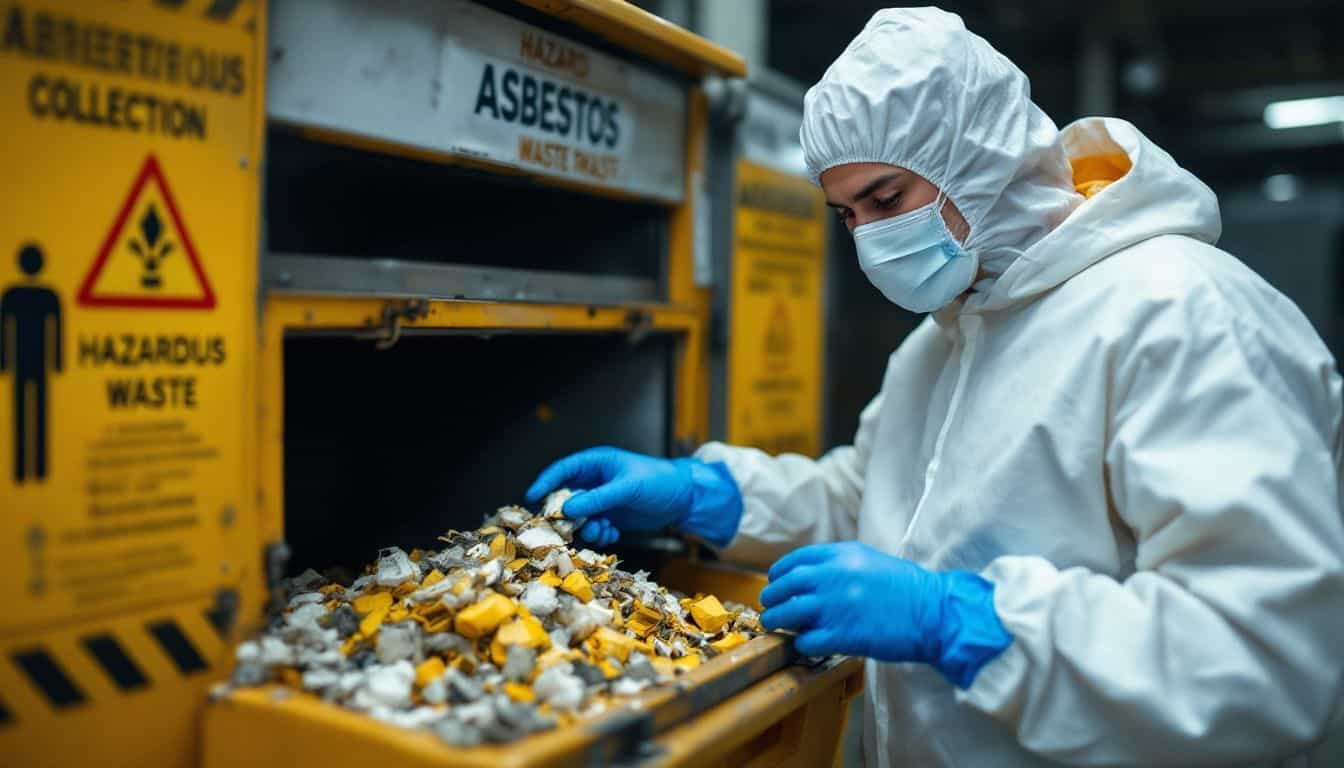
Asbestos waste that has been correctly packaged and transported is taken to a licensed hazardous waste landfill. Unlike some hazardous materials, asbestos cannot be recycled or treated — it must be buried in a designated cell within a licensed site, where it is contained to prevent any future fibre release.
The consignment note system means that every load is traceable from the point of production to the point of disposal. This audit trail is one of the reasons the paperwork requirements are so strict — it allows regulators to track the movement of hazardous waste and identify any gaps in the chain.
Once the waste is at a licensed facility, the site operator takes on responsibility for its ongoing containment. Your duty of care as the waste producer ends when the material is formally handed over to a licensed carrier with the correct documentation in place — not before.
The Role of an Asbestos Survey Before Any Removal Work
Before any asbestos waste removal takes place, you need to know exactly what you are dealing with. A refurbishment and demolition survey — carried out by a qualified surveyor — identifies the type, location, and condition of all ACMs in a property. This information directly determines your legal obligations for removal and disposal.
Attempting to remove materials without a prior survey is not only risky — it can mean you handle materials incorrectly, use the wrong type of contractor, or produce waste that cannot legally be accepted at your intended disposal site.
A management survey is appropriate for occupied buildings where no disturbance work is planned. A refurbishment or demolition survey is required before any significant building work or full demolition. Your surveyor will advise on which type is appropriate for your situation and what the findings mean for your next steps.
The survey report will also record the condition of any ACMs using a standard material assessment scoring system. Materials in poor condition or those likely to be disturbed during planned works will be prioritised for removal. This gives you a clear, defensible basis for your asbestos waste removal plan.
Costs and Timescales: What to Realistically Expect
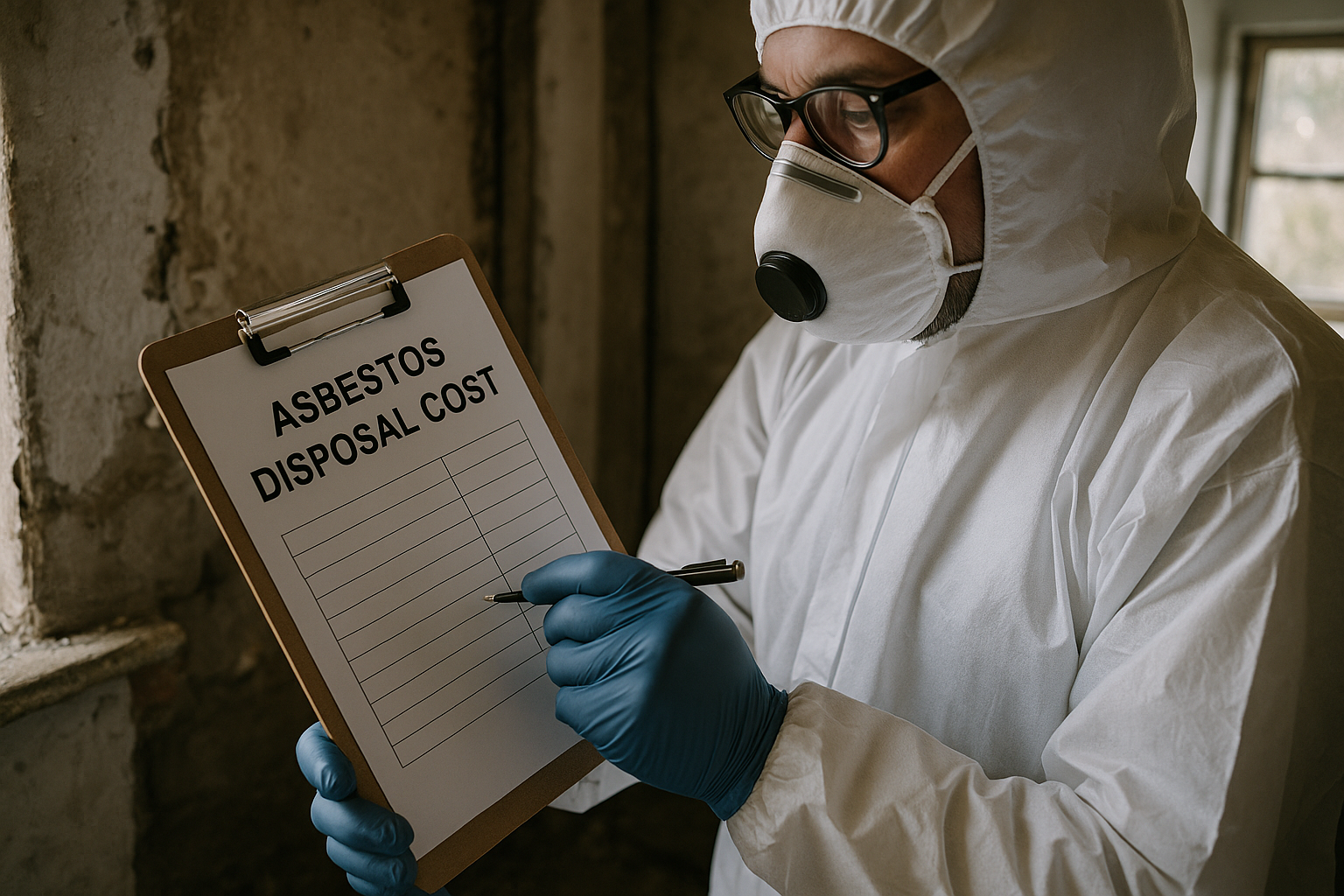
Asbestos waste removal costs vary considerably depending on the volume of material, its type and condition, site access, and your location. There is no single fixed price — any contractor who quotes without seeing the site should be treated with caution.
As a general guide:
- Small domestic jobs involving a few asbestos cement sheets may cost a few hundred pounds through a licensed contractor, or nothing if your council accepts them at a recycling centre.
- Larger commercial projects involving insulation board, lagging, or multiple material types will require a full licensed contractor and will be priced accordingly.
- Emergency or reactive removal — for example, following accidental damage — typically costs more due to the short notice and additional risk management required.
Timescales also vary. Licensed contractors are required to give advance notification to the relevant enforcing authority before starting certain types of work. This notification period must be factored into your project planning — last-minute arrangements are rarely possible for licensed work.
Always obtain at least two written quotes, confirm the contractor’s HSE licence is current, and check that their waste carrier licence covers the specific materials you need removed. These are not optional checks — they are your protection if anything goes wrong.
Frequently Asked Questions
Can I put asbestos waste in a skip?
No. General waste skips are not licensed to carry or receive asbestos waste. Placing asbestos in a standard skip is illegal and could result in enforcement action against you as the waste producer. Asbestos waste must be transported by a licensed carrier to a licensed hazardous waste disposal facility.
Can I take asbestos waste to my local tip?
Only if your local council’s household waste recycling centre is specifically licensed to accept asbestos waste, and only for domestic properties. Rules vary between councils — some accept limited quantities of bonded asbestos cement with advance booking, others do not accept asbestos at all. Always contact your local authority before attempting to drop off any asbestos waste.
Do I need a licensed contractor for all asbestos waste removal?
Not always. The licence requirement depends on the type and condition of the material. Licensed contractors are required for the most hazardous materials, including asbestos insulation board, lagging, and loose-fill insulation. Some work on intact, non-friable materials may fall into non-licensed or notifiable non-licensed categories. However, regardless of the work type, all asbestos waste must be disposed of through licensed channels.
What is a Hazardous Waste Consignment Note and do I need one?
A Hazardous Waste Consignment Note is a legally required document that must accompany every movement of asbestos waste. It records the type of waste, its origin, the carrier’s details, and the receiving facility. As the waste producer, you are responsible for ensuring this paperwork is completed correctly. If you use a licensed contractor, they will typically manage this process — but you should always request a copy for your records.
How do I find a legitimate licensed asbestos waste contractor?
Check that the contractor holds a current HSE licence for the type of removal work required and a valid Environment Agency waste carrier licence. You can verify HSE licences directly on the HSE website. Membership of the Asbestos Removal Contractors Association (ARCA) is a further positive indicator. Always request written confirmation of licences before any work begins, and never accept verbal assurances alone.
Get Professional Help With Asbestos Waste Removal
Supernova Asbestos Surveys has completed over 50,000 surveys across the UK. Our qualified surveyors identify exactly what materials are present in your property, what condition they are in, and what your legal obligations are — giving you the information you need to manage asbestos waste removal safely and compliantly.
We work with domestic and commercial clients across London, Manchester, Birmingham, and nationwide. Whether you need a survey before removal work begins or advice on your duty of care as a property manager, our team is ready to help.
Call us on 020 4586 0680 or visit asbestos-surveys.org.uk to book a survey or speak to one of our specialists.