Category: Asbestos Awareness in the Healthcare Industry

  • Essential Guide to Conducting an Asbestos Survey for NHS and Healthcare Buildings

    Why Asbestos Surveys in NHS and Healthcare Buildings Demand a Different Approach

    Healthcare buildings sit at the sharp end of asbestos management in the UK. Older hospitals, GP surgeries, dental practices, and clinics were constructed during the decades when asbestos was woven into almost every building material imaginable — and the majority of those buildings remain in daily use, with vulnerable patients, clinical staff, and contractors moving through them around the clock.

    An asbestos survey in NHS and healthcare buildings is not a box-ticking exercise. It is the foundation of every safe maintenance decision, every refurbishment project, and every duty holder’s legal compliance. Get it right and you protect lives. Get it wrong, and the consequences — for people and for organisations — can be severe and long-lasting.

    Legal Obligations for Asbestos in NHS and Healthcare Settings

    The law on asbestos in non-domestic buildings is clear and non-negotiable. The Control of Asbestos Regulations places a duty to manage asbestos on anyone who owns, occupies, or manages non-domestic premises. NHS trusts, GP practices, dental surgeries, private hospitals, and independent clinics all fall squarely within that definition.

    If you are a duty holder, you must know where asbestos-containing materials (ACMs) are located, record them accurately, assess the risk they pose, and manage that risk on an ongoing basis. Ignorance is not a defence, and the HSE takes enforcement in healthcare settings seriously.

    What the Control of Asbestos Regulations Requires

    The core obligations apply to every non-domestic building, regardless of size or NHS designation. For healthcare estates, that means taking the following steps:

    • Commission surveys carried out by competent, UKAS-accredited surveyors
    • Maintain an accurate, accessible asbestos register covering the whole estate
    • Produce and actively maintain a live asbestos management plan
    • Carry out task-specific risk assessments before any maintenance or construction work
    • Notify the relevant authority before notifiable non-licensed work begins
    • Provide appropriate training and information to staff who may encounter ACMs
    • Arrange medical surveillance for workers in relevant categories, with full records kept

    HSG264 — the HSE’s survey methodology guide — sets out the standard that competent surveyors must follow. Any NHS trust or healthcare operator commissioning a survey should expect their provider to work to this benchmark without exception.

    The Role of CDM Regulations in Healthcare Construction

    When refurbishment or construction work is planned, the Construction, Design and Management (CDM) Regulations also apply. Under CDM, clients, principal designers, and principal contractors all carry defined responsibilities for managing asbestos risk before and during the project.

    Clients must ensure that pre-construction information — including the asbestos survey — is made available to all relevant parties before work begins. Contractors must review that information, prepare suitable method statements, and implement controls to prevent fibre release.

    In a working hospital environment, where wards and clinical areas may be directly adjacent to construction works, those controls need to be particularly robust. Failure to comply with CDM and the Control of Asbestos Regulations can result in HSE enforcement action, improvement notices, prohibition notices, and prosecution.

    Types of Asbestos Survey Suitable for NHS and Healthcare Buildings

    Not every survey serves the same purpose. Choosing the right type for your NHS or healthcare building depends on what the building is being used for, what work is planned, and what information you already hold. Using the wrong survey type is one of the most common — and costly — mistakes duty holders make.

    Management Surveys

    A management survey is the standard survey for any building that remains in normal use. Its purpose is to locate, as far as reasonably practicable, the presence and condition of ACMs that could be disturbed during routine maintenance and occupancy.

    For a working hospital or clinic, surveyors will inspect accessible areas — plant rooms, boiler rooms, service corridors, ceiling voids, pipe lagging, and floor tiles — without causing significant disruption to clinical activity. The findings feed directly into your asbestos register and management plan.

    Management surveys should be the starting point for any healthcare building that does not already hold a current, accurate asbestos record. They give duty holders the baseline information needed to make safe decisions about day-to-day maintenance and to brief contractors before any work starts.

    Refurbishment Surveys

    When structural or intrusive work is planned — whether that is a ward refurbishment, a new imaging suite, or an extension to a clinical area — a refurbishment survey is legally required before work begins. These surveys are far more intrusive than a management survey.

    Surveyors will open up ducts, lift floor coverings, break into ceiling voids, and inspect hidden structural elements to locate every ACM in the affected area. The goal is to find everything — not just what is visible — so that safe removal can be planned and completed before contractors move in.

    In healthcare settings, these surveys must be carefully planned to avoid disrupting clinical services. Early engagement with your surveying team allows the work to be phased around operational requirements, minimising risk to patients and staff during the survey itself.

    Demolition Surveys

    Where a building or structure is to be fully demolished, a demolition survey is required. This is the most thorough and intrusive type of survey, designed to identify every ACM present so that complete removal can be carried out before demolition proceeds.

    For NHS estates undergoing redevelopment — including the replacement of ageing hospital buildings — demolition surveys are a legal necessity and a critical safety step. No demolition contractor should begin work until a demolition survey has been completed and all identified ACMs have been removed by a licensed contractor.

    Re-inspection Surveys

    Asbestos management is not a one-off event. ACMs left in place must be monitored regularly to check that their condition has not deteriorated. A re-inspection survey revisits the locations recorded in your asbestos register — typically every six to twelve months — and assesses whether materials remain stable or whether action is needed.

    In a busy healthcare environment, where maintenance activity is frequent and building fabric can be disturbed without anyone realising, regular re-inspections are essential. If a material has deteriorated, the re-inspection report triggers a fresh risk assessment and, where necessary, urgent remedial action or removal.

    Without regular re-inspections, your register quickly becomes out of date — and an out-of-date register is a liability, not an asset.

    Where Asbestos Hides in NHS and Healthcare Buildings

    Asbestos was used in an extraordinary range of building materials between the 1950s and 1999, when its use in construction was finally banned. Healthcare buildings from this era — which make up a significant proportion of the NHS estate — are likely to contain ACMs in multiple locations, many of them in areas that see regular maintenance activity.

    High-Risk Areas in Hospitals and Clinics

    The following locations are consistently identified as high-risk during asbestos surveys in NHS and healthcare buildings:

    • Pipe lagging and insulation — used extensively in boiler rooms, plant rooms, and service corridors. Often contains amosite (brown asbestos), which is particularly hazardous when disturbed.
    • Ceiling tiles — textured or acoustic ceiling tiles in wards, corridors, and administrative areas frequently contain chrysotile (white asbestos).
    • Floor tiles and adhesives — vinyl floor tiles and the bitumen adhesive used to fix them were commonly manufactured with asbestos content.
    • Boiler rooms and plant rooms — these spaces often contain multiple ACMs, including lagging, insulating boards, gaskets, and rope seals.
    • Sprayed coatings — applied to structural steelwork for fire protection, sprayed asbestos coatings are among the most hazardous ACMs found in older buildings.
    • Asbestos insulating board (AIB) — used in partition walls, ceiling panels, and fire doors. AIB is a licensed material and requires licensed contractors to remove it.
    • Roof materials — asbestos cement sheeting was widely used in outbuildings, plant rooms, and older hospital roofs.

    The challenge in a working healthcare building is that many of these locations are accessed regularly by maintenance teams, contractors, and clinical engineering staff. Without a current asbestos register and clear communication protocols, the risk of accidental disturbance is real and ongoing.

    The Particular Risks in Older NHS Estate Buildings

    A significant proportion of the NHS estate was built in the post-war decades, when asbestos use was at its peak. Many of these buildings have been modified, extended, and refurbished multiple times since — which means ACMs may have been disturbed, relocated, or partially removed without proper records being kept.

    Historical records, where they exist, should be reviewed alongside the physical survey findings. Discrepancies between what the records show and what surveyors find on site are common, and they must be resolved before any work proceeds.

    Why UKAS-Accredited Surveyors Matter in Healthcare Settings

    The quality of an asbestos survey is only as good as the competence of the people carrying it out. In a healthcare setting, where the stakes are high and the building is complex, using UKAS-accredited surveyors is not just best practice — it is the most reliable way to ensure your survey data is accurate and defensible.

    UKAS (United Kingdom Accreditation Service) accreditation means that a surveying organisation has been independently assessed against recognised standards for its methods, equipment, staff competence, and quality management systems. Accredited surveyors work to the methodology set out in HSG264, and their reports are produced to a consistent, auditable standard.

    For NHS trusts managing large, complex estates, accredited surveyors offer something else equally valuable: consistency. When the same rigorous methodology is applied across multiple sites, the data in your asbestos register is comparable and reliable — which makes estate-wide planning, prioritisation, and budgeting far more straightforward.

    The Control of Asbestos Regulations do not currently make UKAS accreditation mandatory, but industry practice and NHS procurement standards are moving firmly in that direction. Choosing accredited providers now positions your organisation ahead of that curve.

    Asbestos Removal in Healthcare Buildings: When Is It Necessary?

    Not every ACM needs to be removed immediately. The duty to manage asbestos is exactly that — a duty to manage, which may mean monitoring materials in good condition rather than disturbing them unnecessarily. Removal is not always the safest option, particularly in a working clinical environment where disturbance itself creates risk.

    However, there are circumstances where asbestos removal is the right course of action:

    • ACMs in poor or deteriorating condition that cannot be effectively encapsulated
    • Materials in areas where frequent maintenance makes disturbance unavoidable
    • Before refurbishment or demolition work in the affected area
    • Where a risk assessment concludes that the risk cannot be adequately controlled in situ

    In healthcare settings, removal work must be carefully planned to protect patients, visitors, and staff. Licensed contractors are required for higher-risk ACMs, including asbestos insulating board and sprayed coatings. Work should be phased, air-monitored, and formally signed off before the area is returned to clinical use.

    Building an Effective Asbestos Management Plan for Your Healthcare Estate

    A survey is the starting point, not the end point. The information it generates must be translated into a working asbestos management plan that guides day-to-day decisions across your estate.

    An effective asbestos management plan for a healthcare building should include:

    • A current, accurate asbestos register covering all surveyed areas and every identified ACM
    • A risk priority rating for each ACM, based on its condition, location, and likelihood of disturbance
    • Clear procedures for informing contractors and maintenance staff before any work begins
    • A defined re-inspection schedule, with records of every inspection carried out
    • An escalation process for materials whose condition deteriorates between inspections
    • Training records for all staff with a role in managing or working near ACMs
    • A clear record of any remedial work, encapsulation, or removal that has taken place

    The plan should be reviewed and updated whenever the building changes — whether that means a new survey, a refurbishment project, or a change in how areas of the building are used. A static plan that sits on a shelf is not compliance. It is a false sense of security.

    Asbestos Surveys Across the UK: Nationwide Coverage for Healthcare Estates

    NHS trusts and healthcare operators are spread across every region of the country, and the need for consistent, high-quality asbestos surveys is the same whether you are managing a teaching hospital in central London or a community clinic in the north-west.

    Supernova Asbestos Surveys provides asbestos survey services to healthcare organisations across the UK. If you are based in the capital, our team offers a dedicated asbestos survey London service covering NHS and private healthcare sites throughout Greater London and the surrounding area.

    For healthcare estates in the north-west, our asbestos survey Manchester service covers hospitals, GP practices, and specialist clinics across Greater Manchester and beyond.

    In the Midlands, our asbestos survey Birmingham team works with NHS trusts and independent healthcare providers across the region, delivering surveys that meet the standards your estate requires.

    Practical Steps for NHS and Healthcare Duty Holders

    If you are a duty holder responsible for asbestos management in a healthcare setting, the following steps provide a clear framework for getting your obligations in order:

    1. Review what you already hold. Check whether your building has an existing asbestos register and when it was last updated. An outdated register may be worse than no register — it creates false confidence.
    2. Commission a management survey if no current, accurate record exists. This gives you the baseline data you need to manage your estate safely and legally.
    3. Plan re-inspections. Put a schedule in place for regular re-inspection of known ACMs. Six to twelve months is the standard interval, but high-risk locations may warrant more frequent checks.
    4. Brief your contractors. Every contractor working on your premises must be informed about ACMs in their work area before they start. This is a legal requirement, not a courtesy.
    5. Commission the right survey before any refurbishment or demolition. Do not allow intrusive work to begin without a refurbishment or demolition survey covering the affected area.
    6. Choose accredited surveyors. UKAS-accredited providers give you survey data you can rely on and reports that will withstand scrutiny from the HSE or in legal proceedings.
    7. Keep records. Every survey, re-inspection, risk assessment, training session, and remedial action should be documented and retained. Records are your evidence of compliance.

    Frequently Asked Questions

    Do all NHS buildings need an asbestos survey?

    Any NHS building — or privately run healthcare building — constructed before the year 2000 should be presumed to contain asbestos until a survey has confirmed otherwise. The Control of Asbestos Regulations require duty holders to manage asbestos in all non-domestic premises, which includes every NHS trust, GP practice, dental surgery, and private clinic. If you do not have a current, accurate asbestos register for your building, commissioning a management survey is the correct first step.

    How often should asbestos be re-inspected in a hospital or clinic?

    ACMs left in place should be re-inspected at least every twelve months, and more frequently in areas subject to regular maintenance activity or physical disturbance. In a busy hospital environment, some high-risk locations — boiler rooms, plant rooms, service corridors — may warrant six-monthly re-inspections. The re-inspection schedule should be documented in your asbestos management plan and followed consistently.

    What is the difference between a management survey and a refurbishment survey in a healthcare setting?

    A management survey is carried out in buildings that remain in normal use. It identifies accessible ACMs that could be disturbed during routine maintenance, without causing significant disruption to building occupants. A refurbishment survey is required before any intrusive or structural work begins. It is more thorough, involves opening up building fabric, and is designed to locate all ACMs in the area to be worked on — including those hidden within walls, floors, and ceilings. Using a management survey in place of a refurbishment survey before construction work is a serious compliance failure.

    Can asbestos be left in place in a working hospital?

    Yes — in many cases, leaving ACMs in place and managing them is the safest option. Disturbance during removal can itself release fibres, so the risk of removal must be weighed against the risk of leaving materials in situ. ACMs in good condition that are unlikely to be disturbed can be managed through regular re-inspection and clear communication with maintenance teams. However, materials in poor condition, or those in areas where disturbance is unavoidable, should be removed by a licensed contractor at the appropriate time.

    Who is responsible for asbestos management in an NHS building?

    Responsibility lies with the duty holder — the person or organisation that has control of the premises. In an NHS trust, this typically means the estates and facilities management team, with overall accountability sitting at board level. In a GP surgery or dental practice operating from leased premises, responsibility may be shared between the occupier and the landlord, depending on the terms of the lease. Both parties should be clear on their respective obligations under the Control of Asbestos Regulations before any maintenance or construction work is commissioned.

    Get Expert Support for Your Healthcare Asbestos Survey

    Supernova Asbestos Surveys has completed over 50,000 surveys across the UK, including extensive work in NHS trusts, GP practices, dental surgeries, private hospitals, and specialist clinics. Our UKAS-accredited surveyors work to HSG264 methodology and provide clear, accurate reports that give your estates team the information needed to manage your buildings safely and in full compliance with the law.

    Whether you need a management survey to establish your baseline, a refurbishment survey ahead of planned works, or a programme of regular re-inspections across a multi-site estate, we can provide a solution that fits your operational requirements.

    Call us on 020 4586 0680 or visit asbestos-surveys.org.uk to discuss your healthcare estate’s asbestos survey requirements with our team.

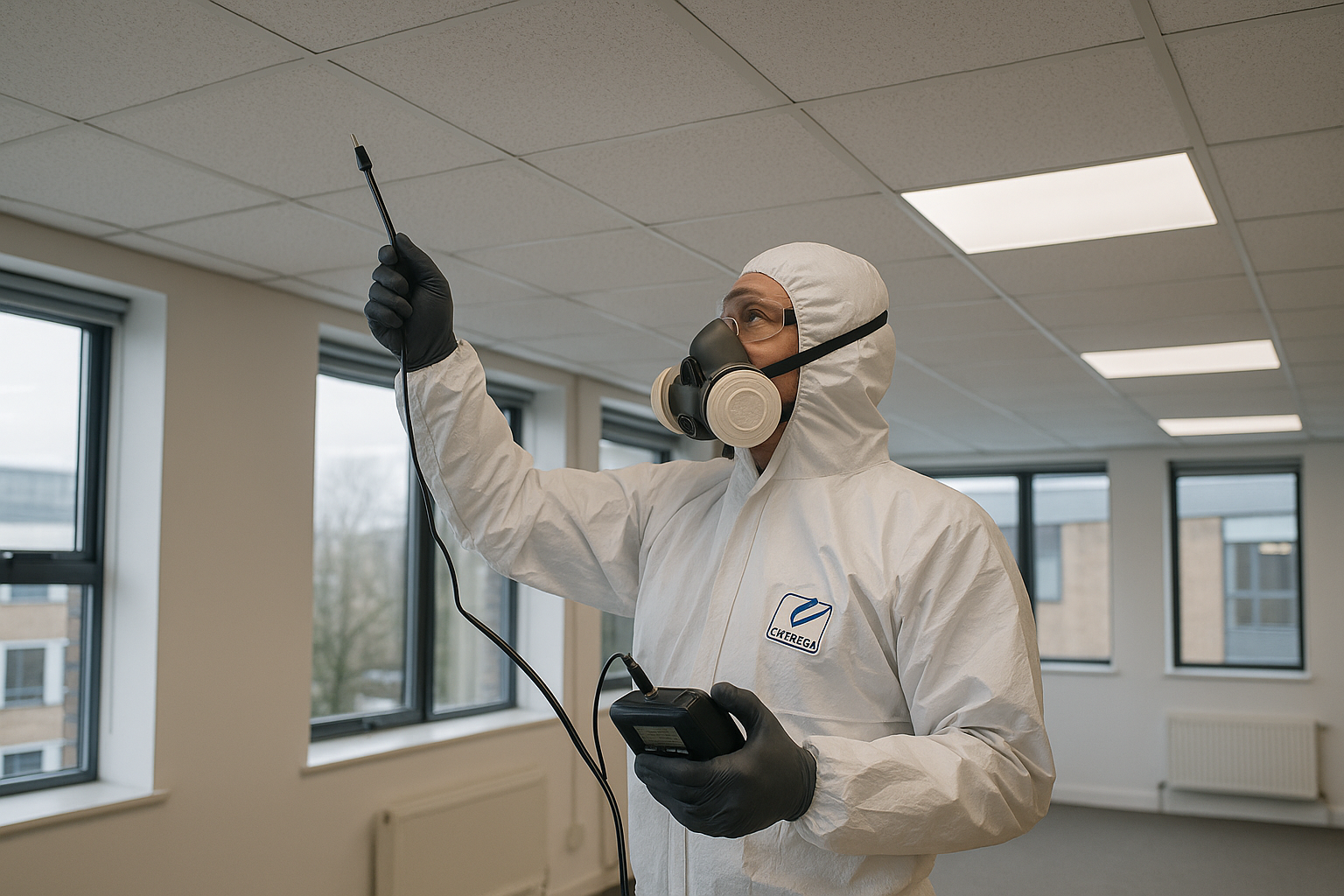
  • Asbestos Survey for Hospitals and Care Homes: Essential Guidelines and Best Practices

    Why Asbestos Surveys in Hospitals and Care Homes Are Non-Negotiable

    Healthcare buildings carry a burden that most commercial properties simply do not. Hospitals, care homes, GP surgeries, and private clinics built during the mid-to-late twentieth century contain asbestos-containing materials (ACMs) in places that are easy to overlook — ceiling tiles above patient beds, pipe lagging in service corridors, floor coverings beneath ward furniture, and partition walls that maintenance teams cut through routinely.

    An asbestos survey for hospitals and care homes is not a bureaucratic formality. It is the foundation of a genuine duty of care to people who cannot easily protect themselves — patients undergoing treatment, elderly residents who cannot be quickly evacuated, and clinical staff spending long shifts in these environments.

    Getting this right starts with understanding exactly what is present, where it is, what condition it is in, and what needs to happen next.

    The Legal Framework: What UK Regulations Require

    Healthcare duty holders — estate managers, facilities directors, NHS trust property teams, and private care home operators — work within a clear legal framework. Understanding these obligations is essential before commissioning any survey work.

    The Control of Asbestos Regulations

    The Control of Asbestos Regulations place a duty to manage asbestos on those responsible for non-domestic premises. Hospitals, care homes, GP surgeries, and medical centres all fall squarely within scope.

    The duty holder must take reasonable steps to find out whether ACMs are present, assess their condition, and put in place a written management plan. That plan must include regular monitoring of known ACMs, clear records, risk assessments, and arrangements for safe working near suspect materials.

    Failure to comply is not simply a regulatory inconvenience. It exposes organisations to HSE enforcement action, civil liability, and — most critically — genuine harm to the people in their care.

    HSG264: The Survey Standard

    The HSE’s guidance document HSG264, Asbestos: The Survey Guide, sets out exactly how asbestos surveys should be planned and carried out. Surveyors working in healthcare settings must follow this guidance.

    HSG264 covers sampling methodology, reporting standards, and the competence requirements for those conducting the work. Any survey that does not align with it is not fit for purpose — and will not hold up under HSE scrutiny.

    The Health and Safety at Work Act

    Beyond asbestos-specific legislation, the Health and Safety at Work Act places a broader duty on employers to protect workers and others from foreseeable risks. In a hospital or care home, that includes the risk of asbestos fibre release during maintenance, refurbishment, or routine cleaning activities.

    Employers must ensure staff receive appropriate training, follow safe systems of work, and use the correct personal protective equipment when working near suspect materials.

    Types of Asbestos Survey: Choosing the Right One for Your Healthcare Building

    Not every survey is the same, and choosing the wrong type leaves significant gaps in your asbestos management. Here is what each survey type involves and when it applies in a healthcare context.

    Management Survey

    A management survey is the standard survey for buildings in normal occupation and use. It identifies the location and condition of ACMs that could be disturbed during routine activities — maintenance work, minor repairs, or general building use.

    For a hospital ward or a care home communal area, this is typically the starting point. Surveyors will inspect accessible areas including service voids, ceiling spaces, plant rooms, and external areas, assigning each ACM a risk score based on its condition and likelihood of disturbance.

    The output is a detailed register that the duty holder uses to plan safe maintenance and demonstrate compliance. Management surveys must be reviewed and updated regularly — they are not a one-off exercise.

    Refurbishment Survey

    Before any significant upgrade, renovation, or alteration work begins in a healthcare building, a refurbishment survey is legally required. This is an intrusive survey — surveyors may need to open up walls, lift floor coverings, or access concealed voids to locate all ACMs in the area to be worked on.

    In a hospital setting, this might apply before a ward refurbishment, the installation of new medical equipment requiring structural alterations, or the upgrade of an HVAC system. The area being surveyed must be unoccupied during the inspection, which requires careful coordination with clinical teams to avoid disrupting patient care.

    Demolition Survey

    When a building or part of a building is to be demolished, a demolition survey is required. This is the most thorough and intrusive form of survey, designed to locate every ACM in the structure before demolition begins.

    All asbestos must be removed by licensed contractors before demolition proceeds. This applies to decommissioned hospital wings, redundant care home buildings, and any structure being taken down entirely.

    Developing a Robust Asbestos Management Plan

    The survey is the beginning, not the end. Once ACMs have been identified, every hospital and care home must have a working asbestos management plan in place. This is a legal requirement under the Control of Asbestos Regulations, not optional guidance.

    A well-constructed management plan sets out:

    • Who holds responsibility for asbestos management on site
    • The location and condition of all known ACMs, referenced against the asbestos register
    • How ACMs will be monitored and at what frequency
    • Arrangements for permit-to-work systems before any maintenance near ACMs
    • Procedures for informing contractors about known hazards before they begin work
    • Emergency procedures if fibres are accidentally released
    • Training requirements for different staff roles

    Prioritise areas of highest risk first. Damaged pipe lagging near patient areas, deteriorating ceiling tiles in occupied wards, or friable insulation in poorly ventilated plant rooms all warrant immediate attention.

    The plan must be reviewed regularly. Any building change, water damage, fire, or incident that could have disturbed ACMs should trigger an immediate review and update. An occupational hygiene specialist can provide valuable support when shaping safe working methods or assessing airborne fibre risk in complex clinical environments.

    Asbestos Testing: When Sampling Is Required

    Visual inspection alone cannot confirm whether a material contains asbestos. Where there is any doubt, asbestos testing through laboratory analysis is the only reliable method.

    Samples taken during a survey are sent to UKAS-accredited laboratories for analysis under polarised light microscopy or, in complex cases, transmission electron microscopy. The results determine whether a material is confirmed as an ACM and inform the risk score assigned in the register.

    In healthcare buildings, presumptive identification — where a surveyor assumes a material contains asbestos without sampling — may be used in some circumstances. However, where works are planned or where the material is in a high-risk location near patients or residents, actual sampling and laboratory confirmation is strongly advisable.

    Do not rely on presumption when patient or resident safety is at stake. Thorough asbestos testing gives you certainty, supports accurate risk scoring, and provides defensible records if your management approach is ever questioned by the HSE or in legal proceedings.

    Asbestos Removal in Healthcare Settings

    Not all ACMs need to be removed immediately. Where materials are in good condition and are unlikely to be disturbed, managing them in place — with regular monitoring — is often the appropriate approach under HSG264 guidance.

    However, when materials are damaged, deteriorating, or in areas where planned works will disturb them, asbestos removal by a licensed contractor is required. In an occupied healthcare building, this demands meticulous planning.

    Licensed contractors must erect appropriate enclosures, maintain negative pressure environments, and follow strict decontamination procedures. Clinical teams must be involved in scheduling to avoid any impact on patient care or resident welfare.

    After removal, an independent accredited analyst must conduct a four-stage clearance procedure — including a thorough visual inspection and air testing — before the area can be reoccupied. Never allow unlicensed contractors to carry out licensable asbestos work. The consequences for patient health, staff welfare, and your organisation’s legal position are severe.

    Staff Training and Awareness

    A management plan is only as effective as the people who implement it. Training is a legal requirement under the duty to manage, and different roles require different levels of instruction.

    Consider the following training tiers for healthcare settings:

    1. Asbestos awareness training — for all staff who could inadvertently disturb ACMs during their work. Porters, maintenance technicians, domestic staff, and facilities team members all fall into this category. This training teaches people to recognise suspect materials and know what to do if they encounter them unexpectedly.
    2. Non-licensable work training — for those who may carry out minor, non-licensable work near ACMs. This covers risk assessment, safe working methods, and emergency procedures.
    3. Supervisory training — for managers overseeing maintenance or refurbishment projects, ensuring they understand permit-to-work requirements and contractor management obligations.

    Keep training records. The HSE expects evidence that staff have received appropriate instruction, and refresher training should be scheduled whenever roles change or new risks are identified.

    In a large hospital trust or multi-site care home group, a training matrix helps track compliance across the whole organisation. This is particularly important where staff rotate between sites and where different buildings have different ACM profiles.

    Maintaining and Updating the Asbestos Register

    The asbestos register is a live document. It must be updated after every survey, inspection, or incident that affects the status of ACMs on site.

    An out-of-date register is worse than useless — it creates a false sense of security and can lead to workers unknowingly disturbing materials that are no longer where the record states, or in a condition that has changed since the last inspection.

    Good practice for register maintenance includes:

    • Reviewing the register at each management survey and updating condition scores accordingly
    • Removing entries once confirmed removal has taken place and clearance certificates have been issued
    • Adding new entries if additional ACMs are discovered during maintenance or refurbishment
    • Logging any accidental fibre releases immediately, in line with RIDDOR reporting obligations
    • Making the register accessible to contractors before they begin any work on site
    • Providing the register to buyers or new operators if the property is sold or transferred

    Engage UKAS-accredited analysts and surveyors for periodic independent reviews of the register. An external perspective catches gaps that in-house teams, through familiarity, may overlook.

    Selecting Competent Surveyors and Analysts

    The quality of your asbestos survey for hospitals and care homes is only as good as the people who carry it out. In a healthcare setting, the stakes are too high to cut corners on competence.

    When selecting a surveying organisation, look for:

    • UKAS accreditation for both surveying and laboratory analysis
    • Demonstrated experience in healthcare environments — hospitals, care homes, and clinical settings have specific access and operational constraints that require specialist knowledge
    • Strict adherence to HSG264 in survey methodology and reporting
    • Clear, detailed reports that include photographic evidence, sample locations, risk scores, and recommended actions
    • Independence — surveyors should have no financial interest in recommending removal over management, or vice versa
    • Evidence of ongoing training and refresher competence for their surveying team

    Always ask for proof of accreditation before instructing any surveyor. Duty holders remain legally responsible for the management of asbestos on their premises — choosing a competent, accredited surveyor is one of the most important decisions in discharging that responsibility.

    Asbestos Surveys Across the UK: Coverage That Matters

    Healthcare buildings are spread across every region of the UK, and asbestos management obligations apply equally whether your facility is in central London or a rural market town. Working with a surveying company that has genuine national reach means consistent standards, reliable scheduling, and surveyors who understand the operational pressures of healthcare environments.

    If you manage healthcare property in the capital, an asbestos survey London service provides rapid deployment and local expertise across NHS trusts, private hospitals, and care home groups throughout Greater London.

    For healthcare facilities in the North West, an asbestos survey Manchester covers the full range of survey types across the region, with surveyors experienced in the complex building stock that characterises many of the area’s older NHS sites.

    In the Midlands, an asbestos survey Birmingham service supports healthcare duty holders managing large hospital estates, independent care providers, and everything in between.

    Wherever your buildings are located, the same standards apply. UKAS accreditation, HSG264 compliance, and thorough reporting are non-negotiable regardless of geography.

    Practical Steps for Healthcare Duty Holders

    If you are responsible for asbestos management in a hospital, care home, or healthcare facility and are not certain your current arrangements are adequate, here is a straightforward sequence to follow:

    1. Establish whether a current, valid asbestos register exists. If not, commission a management survey immediately.
    2. Review the age and condition of your existing register. If it has not been reviewed within the last twelve months, arrange a re-inspection of any ACMs flagged as deteriorating or at risk.
    3. Check your management plan is documented and accessible. It should be available to all relevant staff and to contractors before they begin work.
    4. Verify that all planned maintenance and refurbishment work has been assessed against the register. Any work that could disturb ACMs requires a permit-to-work and, where applicable, a refurbishment survey first.
    5. Confirm that training records are up to date for all staff in roles that could bring them into contact with ACMs.
    6. Ensure that any removal work is carried out only by licensed contractors and that four-stage clearance is completed before reoccupation.

    These steps will not cover every scenario your building presents, but they will give you a clear baseline from which to identify gaps and prioritise action.

    Frequently Asked Questions

    Is an asbestos survey legally required for care homes and hospitals?

    Yes. Under the Control of Asbestos Regulations, duty holders responsible for non-domestic premises — which includes care homes, hospitals, GP surgeries, and private clinics — must take reasonable steps to identify whether ACMs are present, assess their condition, and produce a written management plan. A management survey is the standard mechanism for meeting this obligation in buildings that are in normal use and occupation.

    How often should an asbestos management survey be reviewed in a healthcare setting?

    The asbestos register and management plan should be reviewed at regular intervals, and the HSE expects this to reflect the risk profile of the building. In a busy healthcare environment where maintenance activities are frequent, annual reviews are considered good practice as a minimum. Any incident, refurbishment, or change in building use should trigger an immediate review, regardless of when the last scheduled inspection took place.

    Can asbestos removal take place in an occupied hospital or care home?

    Removal work in occupied healthcare buildings is possible but requires meticulous planning. Licensed contractors must use appropriate enclosures and negative pressure systems to contain fibres. Areas undergoing removal must be unoccupied during the work, and four-stage clearance — including independent air testing — must be completed before reoccupation. Clinical teams must be involved in scheduling to avoid any disruption to patient or resident care.

    What is the difference between a management survey and a refurbishment survey in a healthcare context?

    A management survey is designed for buildings in normal use — it identifies ACMs that could be disturbed during routine activities and informs the ongoing management plan. A refurbishment survey is required before any significant alteration, renovation, or installation work takes place. It is intrusive, requiring access to concealed areas, and the zone being surveyed must be unoccupied. In a hospital or care home, both survey types will be needed at different points in the building’s lifecycle.

    What should I look for when choosing an asbestos surveyor for a healthcare building?

    Look for UKAS accreditation for both surveying and laboratory analysis, demonstrated experience in healthcare or clinical environments, strict adherence to HSG264, and detailed reporting that includes photographic evidence and risk scores. Surveyors should be independent — they should have no financial interest in the outcome of their recommendations. Always ask for proof of accreditation before instructing any surveying organisation.

    Work With Supernova Asbestos Surveys

    Supernova Asbestos Surveys has completed over 50,000 surveys across the UK, working with healthcare organisations, care home operators, NHS trusts, and private medical facilities. Our surveyors are UKAS-accredited, fully trained to HSG264 standards, and experienced in the specific access, scheduling, and reporting requirements of healthcare environments.

    Whether you need a management survey for a care home, a refurbishment survey ahead of a ward upgrade, or specialist asbestos testing and removal support, we can help you meet your legal obligations and protect the people in your care.

    Call us on 020 4586 0680 or visit asbestos-surveys.org.uk to discuss your requirements and arrange a survey.

  • What measures should be taken to inform patients about the presence of asbestos in a healthcare facility?

    What measures should be taken to inform patients about the presence of asbestos in a healthcare facility?

    Asbestos Surveys for Hospitals: What Every NHS Trust and Healthcare Facility Needs to Know

    Walk through almost any NHS hospital built before 2000 and you are almost certainly walking through a building that contains asbestos. The material was used extensively in healthcare construction — in ceiling tiles, pipe lagging, insulation boards, floor coverings, and textured coatings. Asbestos surveys for hospitals are a legal requirement, and getting them right is one of the most critical duties any healthcare estate manager will ever carry out.

    This post covers the legal framework, what surveys involve in a healthcare setting, how to communicate risks to patients and staff, and how to maintain ongoing compliance.

    Why Asbestos Is Such a Significant Issue in Healthcare Buildings

    The UK banned the use of all asbestos in 1999, but the legacy of decades of widespread use remains embedded in thousands of buildings across the country. Healthcare facilities are particularly affected because many were built or substantially refurbished during the peak decades of asbestos use — the 1950s through to the late 1980s.

    A significant proportion of NHS trusts across England, Scotland, and Wales manage buildings that contain asbestos-containing materials (ACMs). Those requiring an asbestos survey London providers can trust will find the challenge particularly acute given the volume and age of healthcare stock in the capital.

    What makes hospitals especially complex is the nature of the environment. Maintenance work happens constantly. Walls are drilled for new equipment. Ceilings are accessed for electrical upgrades. Flooring is replaced as wards are refurbished. Every one of these activities carries the potential to disturb ACMs if the location and condition of asbestos is not properly mapped and managed.

    The Legal Framework: What the Regulations Require

    The Control of Asbestos Regulations places a clear duty on those responsible for non-domestic premises to manage asbestos. In a healthcare setting, this duty falls on the organisation — typically the NHS trust, the private hospital operator, or whoever holds management responsibility for the building.

    The duty to manage asbestos requires the responsible person to:

    • Identify whether ACMs are present in the building
    • Assess the condition and risk of those materials
    • Produce and maintain an asbestos register
    • Create a written asbestos management plan
    • Ensure the plan is implemented, monitored, and reviewed
    • Share information about the location and condition of ACMs with anyone who might disturb them

    The HSE’s guidance document HSG264 sets out the standards that asbestos surveys must meet. It defines two main types of survey — management surveys and refurbishment and demolition surveys — and specifies when each is required. Healthcare facilities typically need both types at different stages of their estate management cycle.

    Failure to comply is not just a regulatory risk. Compensation claims against health trusts for asbestos-related illness have historically run into significant sums, and regulatory enforcement action can carry serious reputational and financial consequences for any trust or operator found to be non-compliant.

    Types of Asbestos Surveys for Hospitals

    Management Surveys

    A management survey is the standard survey required to manage ACMs during the normal occupation and use of a building. In a hospital, this means surveying all accessible areas to locate and assess any asbestos-containing materials that could be disturbed during routine activities — cleaning, maintenance, minor repairs, and day-to-day use.

    The surveyor will inspect and sample suspected ACMs, assess their condition, and assign a risk rating. This information feeds directly into the asbestos register and management plan.

    Management surveys in hospitals need to be thorough and regularly reviewed, because the risk profile of a busy healthcare building changes constantly as maintenance work takes place and conditions evolve.

    Refurbishment and Demolition Surveys

    Before any refurbishment work begins — even relatively minor work such as replacing a ceiling, repositioning partitions, or upgrading pipework — a demolition survey must be carried out in the affected area. This is a more intrusive survey that may involve destructive inspection to access areas not examined in a standard management survey.

    In a hospital environment, where refurbishment projects are frequent and often urgent, having a reliable asbestos surveying partner who can respond quickly is essential. Delays caused by inadequate asbestos information can hold up clinical work and create significant operational pressure.

    Re-inspection Surveys

    Where ACMs are present and being managed in situ rather than removed, the condition of those materials must be monitored over time. A re-inspection survey allows estate managers to track whether previously identified ACMs are deteriorating and whether the risk level has changed.

    The frequency of re-inspections should be determined by the condition and risk rating of the materials. Higher-risk or more fragile materials will require more frequent monitoring than stable, well-encapsulated ACMs in low-traffic areas.

    What Makes Asbestos Surveys in Healthcare Settings Different

    Carrying out asbestos surveys for hospitals is not the same as surveying an office block or a warehouse. Healthcare facilities present a unique set of challenges that require surveyors with specific experience and a clear understanding of the clinical environment.

    Minimising Disruption to Clinical Operations

    Hospitals cannot simply close down a ward or department to allow survey work to proceed. Surveyors must work around active clinical areas, respect infection control protocols, and coordinate with estates teams to access areas at appropriate times.

    This requires careful planning, flexibility, and genuine experience of working in healthcare environments. A surveyor unfamiliar with clinical settings can cause significant disruption — and in some cases, genuine risk — if they do not understand how to operate within the constraints of a live hospital.

    Complexity of Building Stock

    Many NHS hospitals are a patchwork of buildings from different eras, with extensions, additions, and refurbishments layered over decades. Different parts of the same building may have been constructed at different times, using different materials.

    A surveyor needs to understand this complexity and approach the survey systematically to ensure nothing is missed. Assumptions based on one section of a building cannot safely be applied to another section built twenty years earlier or later.

    Volume of ACM Locations

    A large hospital may have hundreds of individual ACM locations recorded in its asbestos register. Managing this volume of information — keeping it accurate, accessible, and up to date — is itself a significant task.

    Good survey work produces clear, well-structured data that makes the estate manager’s job manageable rather than overwhelming. Poorly organised survey reports, by contrast, create confusion and increase the risk that critical information is overlooked.

    Vulnerability of Building Occupants

    Hospitals house some of the most vulnerable people in society. Patients with compromised immune systems, respiratory conditions, or serious illness are at heightened risk from any environmental hazard. This makes the stakes of poor asbestos management particularly high, and reinforces why thorough, professional survey work is non-negotiable.

    Communicating Asbestos Risks to Patients and Staff

    Once asbestos has been identified and assessed, the responsible organisation has an obligation to communicate that information clearly. This applies to staff who may disturb ACMs in the course of their work, and in appropriate circumstances to patients and visitors who may be present in affected areas.

    Clear Signage in Affected Areas

    Where ACMs are present in areas accessible to staff or the public, clear warning signage should be displayed. Signs should use straightforward language and recognisable symbols, and should be positioned where they will be seen before anyone enters the area.

    Signage alone is not sufficient — it must be supported by training, written procedures, and active management. The goal is to ensure that nobody disturbs asbestos-containing materials without being aware of the risk.

    Written Notifications and the Asbestos Register

    The asbestos register is the central document in any asbestos management system. It records the location, type, condition, and risk rating of every identified ACM in the building. In a hospital, this register must be readily accessible to estates staff, contractors, and anyone else who might carry out work that could disturb asbestos.

    Written notifications — whether in the form of briefing documents, contractor packs, or formal notices — ensure that anyone working in or around ACM locations has the information they need before they start work. This is a legal requirement under the Control of Asbestos Regulations, not simply good practice.

    Patient-Facing Communication

    When maintenance or remediation work involving asbestos is taking place in areas used by patients, clear communication is essential. Patients should be informed in plain language about:

    • What work is being carried out and why it is necessary
    • What safety measures are in place to protect them
    • How long the work is expected to take
    • Who to contact if they have concerns

    Avoid technical jargon. A dedicated point of contact — whether a helpline, a named member of staff, or a written FAQ — gives patients and visitors somewhere to direct their concerns. Responding to queries promptly and honestly builds trust and reduces anxiety.

    Staff Training and Awareness

    All staff who work in areas where ACMs are present should receive appropriate asbestos awareness training. This is particularly important for maintenance and estates staff, but clinical staff, domestic workers, and anyone else who might inadvertently disturb asbestos should also understand the risks.

    Training should cover:

    • What asbestos is and where it is likely to be found in the building
    • Why disturbing ACMs is dangerous
    • How to identify suspected asbestos-containing materials
    • What to do if asbestos is suspected or accidentally disturbed
    • How to access the asbestos register and management plan
    • Who to contact with concerns or questions

    Training should be refreshed regularly and updated whenever significant changes are made to the asbestos management plan or the building’s ACM profile.

    Using the Asbestos Register Effectively

    An asbestos register is only useful if it is accurate, up to date, and genuinely used. Too many healthcare facilities have registers that were compiled years ago and have not been updated to reflect subsequent work, changes in condition, or new survey findings. This creates a false sense of security and a real risk of harm.

    Effective use of the asbestos register in a hospital setting means:

    • Reviewing and updating the register after every survey, re-inspection, or piece of work that affects ACMs
    • Making the register accessible to all relevant staff and contractors before any work begins
    • Using the register to inform maintenance planning and prioritise remediation or removal where materials are in poor condition
    • Sharing relevant sections of the register with external contractors as part of pre-work briefings
    • Reviewing the overall management plan at regular intervals and whenever significant changes occur

    Individual trusts and healthcare operators should ensure their registers are digital, searchable, and easy to update. A register that exists only as a printed document filed in an office is not fit for purpose in a complex, active healthcare environment.

    Asbestos Surveys Across the UK: Regional Considerations

    The challenge of managing asbestos in healthcare buildings is national in scope. NHS trusts and private healthcare operators across the country face broadly the same legal obligations, but the practical demands vary by region depending on the age, size, and condition of local building stock.

    In major urban centres, the concentration of older hospital buildings makes the task particularly demanding. Those needing an asbestos survey Manchester will find that many of the region’s healthcare facilities include Victorian-era structures alongside mid-twentieth century additions — a combination that can present a wide range of ACM types and conditions within a single site.

    Similarly, healthcare providers seeking an asbestos survey Birmingham will encounter large hospital campuses where buildings from multiple decades sit side by side, each requiring careful, era-appropriate survey methodology. Working with a surveying partner who has direct regional experience is a practical advantage — familiarity with local building types, planning records, and the operational rhythms of regional NHS trusts all contribute to more efficient and reliable survey outcomes.

    Whatever the region, the legal obligations remain consistent. The Control of Asbestos Regulations applies equally to a hospital in Cornwall and one in Cumbria. What varies is the practical complexity of delivering compliance — and that is where choosing the right surveying partner makes a material difference.

    Choosing the Right Asbestos Surveying Partner for Healthcare

    Not every asbestos surveying company has the experience or capability to work effectively in a live healthcare environment. When selecting a surveying partner, healthcare estate managers should look for:

    • UKAS-accredited laboratory analysis — samples must be analysed by an accredited laboratory to ensure results are reliable and legally defensible
    • P402-qualified surveyors — the industry-recognised qualification for asbestos surveyors, as set out in HSG264
    • Demonstrable healthcare experience — the ability to work within infection control protocols, coordinate with clinical teams, and manage the operational constraints of a hospital environment
    • Clear, structured reporting — survey reports that produce an accurate, usable asbestos register rather than dense technical documents that are difficult to act on
    • Responsive service — the ability to mobilise quickly when refurbishment or emergency work creates an urgent survey requirement
    • Nationwide coverage — for NHS trusts managing multiple sites across different regions, a surveying partner with genuine national reach avoids the complexity of managing multiple regional contractors

    References from other healthcare clients, and a clear understanding of the NHS’s own guidance on asbestos management, are further indicators of a surveying company that genuinely understands the sector.

    Maintaining Ongoing Compliance: It Is a Process, Not a One-Off Task

    One of the most common mistakes healthcare organisations make is treating asbestos management as a project to be completed rather than an ongoing process to be maintained. Commissioning a survey, producing a register, and filing a management plan is not the end of the duty — it is the beginning.

    Asbestos management in a hospital is a continuous cycle:

    1. Survey — identify and assess all ACMs across the estate
    2. Register — record findings in an accurate, accessible asbestos register
    3. Plan — produce a written management plan that sets out how ACMs will be managed, monitored, and where necessary removed
    4. Communicate — share information with staff, contractors, and where appropriate patients
    5. Monitor — carry out regular re-inspections to track changes in condition
    6. Update — revise the register and plan as conditions change, work is carried out, or new ACMs are identified
    7. Review — periodically review the entire management approach to ensure it remains fit for purpose

    This cycle does not have a natural end point. As long as ACMs remain in the building, the duty to manage them continues. For healthcare organisations, embedding this cycle into routine estate management processes — rather than treating it as a standalone compliance exercise — is the most effective way to ensure ongoing legal compliance and genuine protection for patients, staff, and visitors.

    Frequently Asked Questions

    Are asbestos surveys for hospitals a legal requirement?

    Yes. The Control of Asbestos Regulations places a legal duty on those responsible for non-domestic premises — including hospitals — to manage asbestos. This includes identifying whether ACMs are present, assessing their condition, producing an asbestos register, and implementing a written management plan. Failure to comply can result in enforcement action, prosecution, and significant financial and reputational consequences.

    What types of asbestos survey does a hospital need?

    Most hospitals require a combination of survey types. A management survey is needed to identify and assess ACMs during normal building use. A refurbishment and demolition survey is required before any refurbishment or construction work begins in a specific area. Re-inspection surveys are needed at regular intervals to monitor the condition of ACMs that are being managed in situ. The frequency and scope of each survey type will depend on the building’s age, condition, and the nature of work being carried out.

    How should hospitals communicate asbestos risks to patients?

    When work involving asbestos is taking place in patient areas, hospitals should communicate clearly in plain language. Patients should be told what work is being carried out, what safety measures are in place, how long the work will take, and who to contact with concerns. A named point of contact or helpline is good practice. Technical jargon should be avoided, and any queries should be responded to promptly and honestly.

    How often should an asbestos register be updated in a hospital?

    The asbestos register should be reviewed and updated after every survey, re-inspection, or piece of work that affects ACMs. It should also be reviewed as part of the overall asbestos management plan at regular intervals — typically annually — and whenever significant changes occur to the building or its use. A register that is not kept current is a liability, not an asset.

    What qualifications should an asbestos surveyor have to work in a hospital?

    Surveyors carrying out asbestos surveys in hospitals should hold the P402 qualification, which is the industry-recognised standard for asbestos surveyors as referenced in HSG264. Samples should be analysed by a UKAS-accredited laboratory. Surveyors should also have direct experience of working in live healthcare environments, including an understanding of infection control protocols and the operational constraints of clinical settings.

    Work With Supernova Asbestos Surveys

    Supernova Asbestos Surveys has completed over 50,000 surveys across the UK, with extensive experience in complex healthcare environments. Our qualified surveyors understand the demands of working in live hospitals — from coordinating access around clinical operations to producing clear, actionable registers that estate managers can genuinely use.

    Whether you need a management survey, a pre-refurbishment demolition survey, or an ongoing programme of re-inspections, we provide a responsive, professional service backed by UKAS-accredited laboratory analysis.

    To discuss your hospital’s asbestos surveying requirements, call us on 020 4586 0680 or visit asbestos-surveys.org.uk.

  • How can healthcare facilities ensure compliance with asbestos regulations?

    How can healthcare facilities ensure compliance with asbestos regulations?

    Hospital Asbestos Surveys: What Every Healthcare Estates Team Needs to Know

    One damaged ceiling tile above a ward corridor. One unplanned drill hole into a service riser. Either can turn a manageable situation into a major incident — and in a live healthcare environment, the consequences are far more serious than in an empty office block.

    Hospital asbestos surveys are what prevent that from happening. They give estates teams, facilities managers and compliance leads the information they need before maintenance, refurbishment or emergency repairs put patients and staff at risk.

    Healthcare buildings are rarely straightforward. Hospitals, clinics, GP surgeries, dental practices and specialist treatment centres typically combine ageing fabric, continuous occupation and critical services that cannot simply be switched off for the day. Asbestos management in these settings has to be practical, current and closely tied to how each building actually operates.

    If you are responsible for a healthcare estate, the duty is clear even when the building is not. You need to know where asbestos is located, assess its condition, control the risk of disturbance and make sure anyone working on the premises has the right information before they start. Handled properly, hospital asbestos surveys support legal compliance under the Control of Asbestos Regulations, align with HSG264 and help you apply HSE guidance in a way that works on live, occupied sites.

    Why Healthcare Buildings Present Unique Asbestos Challenges

    Many NHS and private healthcare premises were constructed or significantly altered during the decades when asbestos-containing materials were in widespread use. Even where those materials remain in good condition, they still need to be identified, recorded and regularly reviewed.

    The challenge with hospital asbestos surveys is not simply finding asbestos. It is finding it in buildings that are busy, sensitive and often operating around the clock. A hospital estate may include operating theatres, imaging suites, plant rooms, wards, laboratories, outpatient areas and back-of-house service routes — all with different access rules, infection control requirements and security arrangements.

    Each of these areas demands a tailored approach that a standard commercial survey simply cannot deliver. Surveyors who lack experience of live clinical environments will miss things — not through incompetence, but because they do not understand how the building is actually used and maintained.

    Common Asbestos-Containing Materials in Healthcare Settings

    Asbestos was used extensively in construction and building services. In healthcare premises, surveyors commonly encounter:

    • Pipe lagging and thermal insulation on heating and hot water systems
    • Asbestos insulating board in partitions, risers and ceiling voids
    • Floor tiles and bitumen adhesives beneath them
    • Textured coatings on walls and ceilings
    • Ceiling tiles and suspended ceiling panels
    • Fire doors and fire protection products
    • Roof sheets, soffits and external cladding panels
    • Gaskets, rope seals and plant room components

    The risk is not the presence of these materials in itself. The risk is disturbance. That can happen during routine maintenance, reactive repairs, IT installations, medical equipment upgrades, fire stopping works or capital projects — often without anyone realising asbestos is involved until it is too late.

    Emergency Works Are a Particular Weak Point

    A burst pipe, failed fan unit or electrical fault creates pressure to act quickly. But urgency does not remove the duty to check asbestos records before intrusive work begins.

    A straightforward estates rule makes a significant difference: no intrusive work starts until the asbestos register has been checked. If records are unclear or incomplete, the correct response is to pause and seek competent advice — not to proceed on the assumption that the area is probably safe. That assumption is where avoidable exposures occur.

    Choosing the Right Type of Hospital Asbestos Survey

    Hospital asbestos surveys are not all the same, and selecting the wrong type can leave serious gaps in your knowledge of the estate. The correct survey depends on what you are trying to achieve, how the building is currently used and what works are planned.

    Before instructing a surveyor, it is worth asking a few practical questions:

    • Is the building in normal use and does it need an asbestos register for ongoing management?
    • Are you planning intrusive works such as rewiring, plant replacement or ward refurbishment?
    • Is part of the estate being demolished or stripped back completely?
    • Are there access restrictions due to infection control, patient privacy or clinical schedules?
    • Who needs the findings and how will they use them day to day?

    Those answers determine which survey type is appropriate for the situation.

    Management Surveys

    A management survey is the standard starting point for occupied healthcare premises. It identifies the location and condition of asbestos-containing materials that could be disturbed during normal occupation and routine maintenance.

    It supports the asbestos register and forms the foundation of your management plan across wards, offices, circulation routes and plant spaces that remain in active use. For most live healthcare sites, this is where the process begins.

    Refurbishment Surveys

    A refurbishment survey is intrusive and is required before any planned works that will disturb the building fabric. If you are upgrading theatres, replacing air handling plant, rewiring a department or altering washrooms, this is the correct route.

    A management survey does not cover intrusive refurbishment — using one in place of the other leaves significant risk unaddressed. This is one of the most common and costly errors on live healthcare projects.

    Demolition Surveys

    A demolition survey is the most intrusive option and is required before any structure is demolished. On healthcare estates, this may apply to old boiler houses, vacant outbuildings, redundant clinical blocks or garages.

    It must be completed before demolition contracts are awarded or work begins. This is not optional — it is a legal requirement under the Control of Asbestos Regulations.

    Planning Hospital Asbestos Surveys Around Clinical Operations

    Survey planning in healthcare settings requires more coordination than in most other property types. Out-of-hours access, permits, clinical escorts, infection prevention controls and engineering constraints all need to be agreed in advance.

    Failing to do this properly leads to incomplete inspections, repeat visits and gaps in the asbestos register. A practical approach to hospital asbestos surveys typically involves the following steps:

    1. Define the scope clearly. Identify the exact areas, their current use and the purpose of the survey.
    2. Confirm the correct survey type. Match the inspection to management, refurbishment or demolition needs.
    3. Coordinate access in advance. Agree times, escorts, permits and infection control arrangements with clinical and estates teams.
    4. Inspect and sample where required. Surveyors assess accessible materials and take representative samples in line with HSG264 guidance.
    5. Report in plain, usable language. Findings should be straightforward for estates teams and contractors to interpret and act on.
    6. Update the asbestos register. Survey results must feed directly into the live management system, not sit in a separate folder.
    7. Brief anyone likely to disturb asbestos. Information must reach maintenance teams, project managers and contractors before any work begins.

    This final step is where many healthcare organisations fall short. The survey itself may be technically sound, but the findings do not make it into permits, contractor briefings or work authorisation procedures. At that point, risk remains even though a report exists.

    Phased Projects Need Careful Scope Management

    Phased refurbishment projects create particular problems if the survey scope is too narrow. A ward may be included in the survey, but linked risers, ceiling voids or service cupboards may not be. Contractors then move outside the surveyed area and the control system breaks down.

    Make sure survey scopes reflect how contractors will actually access the work area — not just the rooms shown on a floor plan. Ceiling voids, risers, plant enclosures and back-of-house routes are often where asbestos risks catch people out.

    What a Compliant Asbestos Register Should Include

    Under the Control of Asbestos Regulations, dutyholders must take reasonable steps to find asbestos, assess its condition, presume materials contain asbestos unless there is clear evidence otherwise, and provide information to anyone liable to disturb it.

    Compliance is not just about having paperwork — it is about having paperwork that is current, accurate and actively used. A compliant asbestos register for a healthcare premises should record:

    • Location of all known or presumed asbestos-containing materials
    • Product type and asbestos type where identified through sampling
    • Extent or quantity of the material
    • Condition assessment and surface treatment
    • Accessibility and likelihood of disturbance
    • Risk information and recommended management actions
    • Inspection and reinspection dates
    • Details of any remedial works completed

    An asbestos management plan should sit alongside the register, explaining who is responsible for each element, how work is authorised, when the register is checked, what training is required and what happens if accidental disturbance occurs. That is the difference between a survey report and a working control system.

    Common Mistakes to Avoid on Healthcare Estates

    Across healthcare estates, the same avoidable problems appear repeatedly. Spotting them early can prevent an otherwise well-managed asbestos programme from breaking down at the point where it matters most.

    Using an Old Survey to Cover New Works

    A historic management survey does not automatically cover planned refurbishment. If works involve opening up the building fabric — even in a small area — the correct intrusive survey is needed for that specific location.

    Always verify what the existing survey actually covers before authorising any intrusive work. The age of the report matters, but so does the scope. An older survey that covered the relevant area in detail may still be valid; a recent survey that excluded a specific zone is not.

    Maintaining the Register but Not Using It

    An asbestos register only helps if contractors and in-house teams actually check it before starting work. If the information is difficult to access, poorly formatted or hard to interpret in the field, people will work around it.

    Accessibility and clarity are not optional extras — they are part of what makes a management system effective. Consider how the register is presented and whether it can be accessed quickly by those who need it most.

    Overlooking Hidden Service Areas

    Ceiling voids, service risers, plant enclosures and back-of-house routes are frequently where asbestos risks are missed. Survey scopes must reflect where contractors will actually be working, not just the visible surfaces in occupied rooms.

    A surveyor who does not understand how the building is maintained will miss areas that matter. Always appoint surveyors with demonstrable experience of live healthcare environments.

    Assuming Emergency Work Is Exempt

    Urgency does not remove the legal duty to manage asbestos. If records are missing, incomplete or unclear, the safest and legally correct response is to pause and verify before disturbing the building fabric.

    A short delay to check is far preferable to an uncontrolled asbestos release in a clinical environment. Estates teams should have a clear protocol for emergency works that includes an asbestos check as a mandatory first step.

    Failing to Keep the Register Current

    The asbestos register is a live document, not a one-off exercise. Every time works are completed, materials are removed or new areas are accessed, the register should be updated.

    An outdated register gives contractors false confidence and undermines the entire management system. Assign clear responsibility for register maintenance and build updates into project close-out procedures.

    Hospital Asbestos Surveys Across the UK

    Healthcare estates are spread across the country, and the regulatory obligations are the same whether your premises are in the capital or a regional town. What varies is local surveying capacity and the ability to respond quickly when reactive inspections are needed.

    For healthcare estates teams in the capital, asbestos survey London services need to be able to work around the particular complexity of large urban hospital sites, including restricted access, busy clinical schedules and multi-building campuses.

    In the North West, asbestos survey Manchester provision covers a significant concentration of NHS and private healthcare premises, many of which include buildings from the mid-twentieth century where asbestos use was most prevalent.

    Across the Midlands, asbestos survey Birmingham teams regularly work on healthcare estates ranging from large acute hospitals to smaller community health centres and GP-led facilities.

    Wherever your premises are located, the key is instructing surveyors who understand healthcare environments specifically — not just surveyors who can turn up and tick boxes.

    What to Look for When Instructing a Healthcare Asbestos Surveyor

    Not every asbestos surveying company has the experience or protocols needed for live clinical environments. When evaluating potential surveyors, consider the following:

    • UKAS-accredited laboratory analysis. Samples should be analysed by a laboratory accredited under UKAS for asbestos identification.
    • P402-qualified surveyors. The British Occupational Hygiene Society P402 qualification is the recognised standard for asbestos surveying in the UK.
    • Demonstrable healthcare experience. Ask specifically about previous work in NHS or private healthcare settings, including the types of sites and survey types completed.
    • Understanding of infection control requirements. Surveyors must be able to work within clinical environments without compromising infection prevention protocols.
    • Clear, actionable reporting. Reports should be formatted for use by estates teams and contractors, not written purely to satisfy a checklist.
    • Ability to phase and schedule around clinical activity. Flexibility to work out of hours, in sections and around clinical priorities is essential on live healthcare sites.

    A surveyor who ticks all of these boxes will produce a report that is genuinely useful — one that supports your management plan, satisfies your legal obligations and gives your estates team confidence when authorising work.

    Keeping Your Healthcare Estate Compliant Over Time

    Asbestos compliance on a healthcare estate is not a project with a defined end date. It is an ongoing responsibility that requires regular review, consistent processes and clear lines of accountability.

    Condition reinspections should be scheduled at intervals appropriate to the risk level of each material. Materials in good condition in low-disturbance areas may require less frequent review; damaged or deteriorating materials in active work zones need more regular attention.

    When capital projects are planned, the asbestos management process should be built into the project timeline from the outset — not added as an afterthought once contractors are mobilised. Leaving the survey to the last minute creates programme delays, cost pressure and the temptation to cut corners.

    Staff and contractor training is also part of the picture. Anyone who could disturb asbestos-containing materials in the course of their work should understand the basics: what asbestos looks like, how to check the register, when to stop and who to call. This does not require lengthy formal training for every individual, but it does require a structured approach to awareness across the estate.

    The estates teams that manage asbestos well in healthcare settings are those that treat it as a core part of how the building is operated — not a compliance exercise that happens once every few years and then gets filed away.

    Frequently Asked Questions

    Are hospital asbestos surveys a legal requirement?

    Yes. Under the Control of Asbestos Regulations, dutyholders — including those responsible for healthcare premises — must take reasonable steps to identify asbestos-containing materials, assess their condition and manage the risk. This applies to all non-domestic premises, including NHS and private healthcare buildings. Failing to comply can result in enforcement action, prohibition notices and prosecution by the HSE.

    How often should a healthcare premises be resurveyed for asbestos?

    There is no fixed legal interval for resurveying, but the asbestos register must be kept current. Condition reinspections are typically carried out annually for higher-risk materials, though the frequency should reflect the specific risk profile of each material and area. A new survey is required before any refurbishment or demolition works, regardless of when the last survey was completed.

    Can a management survey be used before refurbishment works on a ward?

    No. A management survey is designed for occupied premises under normal use and is not intrusive enough to identify all asbestos-containing materials that may be disturbed during refurbishment. Before any works that will open up the building fabric — including rewiring, partition removal, ceiling alterations or plant replacement — a refurbishment survey is required for the specific area involved.

    What happens if asbestos is disturbed accidentally during maintenance work?

    Work should stop immediately and the area should be vacated. The incident must be reported to the responsible person for asbestos management on the estate, and competent advice should be sought before the area is re-entered. Depending on the nature and extent of the disturbance, air monitoring, decontamination and licensed remediation may be required. The HSE may also need to be notified depending on the circumstances.

    Do GP surgeries and dental practices need asbestos surveys?

    Yes. The duty to manage asbestos applies to all non-domestic premises, including GP surgeries, dental practices, community health centres and any other healthcare facility where patients or staff are present. The survey type and scope will depend on the age of the building, its construction and what works are planned, but the legal obligation to identify and manage asbestos applies equally to smaller premises as it does to large acute hospitals.

    Speak to Supernova Asbestos Surveys

    Supernova Asbestos Surveys has completed over 50,000 surveys across the UK, including healthcare premises ranging from large NHS hospital sites to smaller community health facilities. Our surveyors understand the specific demands of live clinical environments and can plan and deliver hospital asbestos surveys that work around your operational constraints.

    Whether you need a management survey to underpin your asbestos register, a refurbishment survey ahead of a capital project, or a demolition survey before a structure comes down, we can help you get it right.

    Call us on 020 4586 0680 or visit asbestos-surveys.org.uk to discuss your requirements with a member of our team.