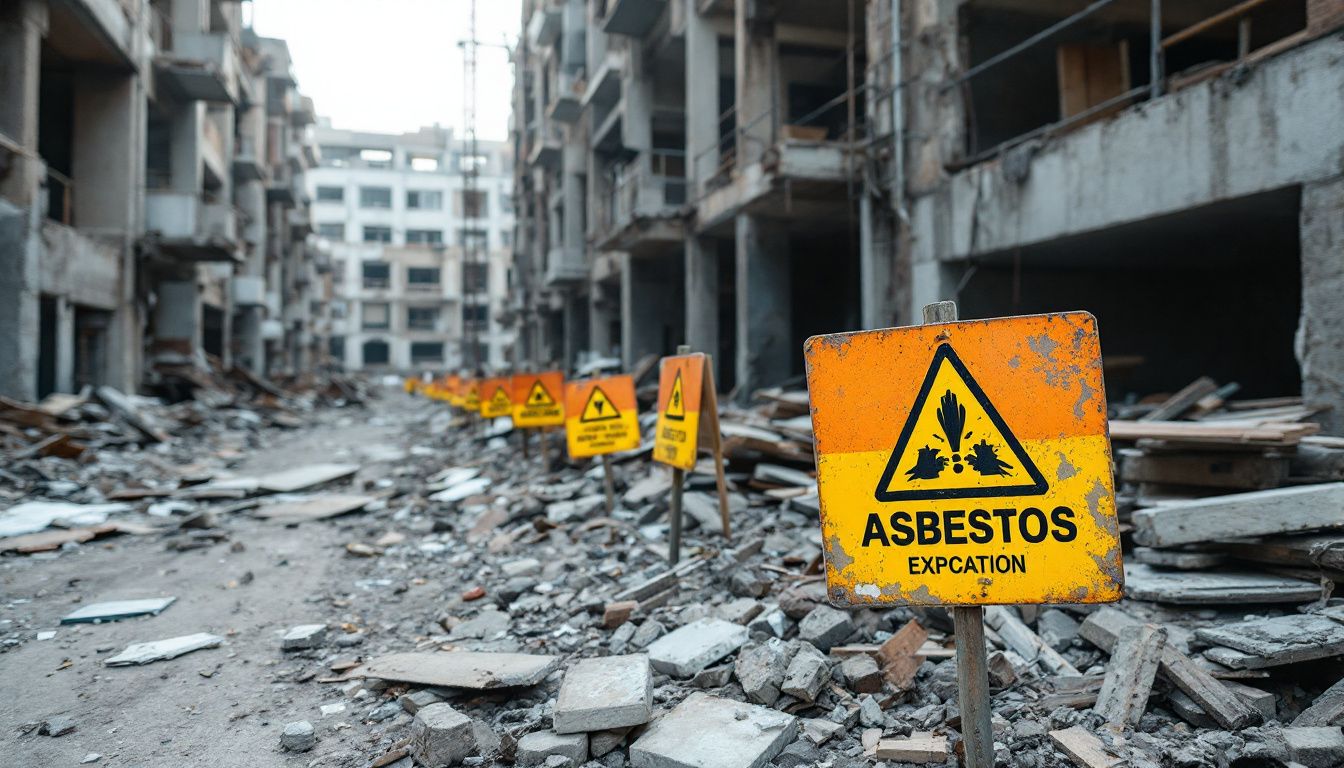
Why a Pre Construction Asbestos Survey Is Non-Negotiable Before Any Building Work Begins
Every construction project on a pre-2000 building carries one unavoidable question: is there asbestos, and where is it? A pre construction asbestos survey answers that question before a single wall is touched, a floor is lifted, or a ceiling is drilled. Without it, you are not just taking a health risk — you are breaking the law.
The Construction (Design and Management) Regulations and the Control of Asbestos Regulations work in tandem to make asbestos identification a legal duty at the planning stage. Understanding how these two frameworks intersect is essential for anyone commissioning, designing, or managing a construction project in the UK.
What Is a Pre Construction Asbestos Survey?
A pre construction asbestos survey is a specialist inspection carried out before any building, refurbishment, demolition, or significant maintenance work begins. Its purpose is to locate and assess all asbestos-containing materials (ACMs) that could be disturbed during the planned works.
This is distinct from a routine management survey, which is used to manage known or presumed asbestos in an occupied building during normal use. A pre construction survey — more formally called a refurbishment and demolition survey — is intrusive by design.
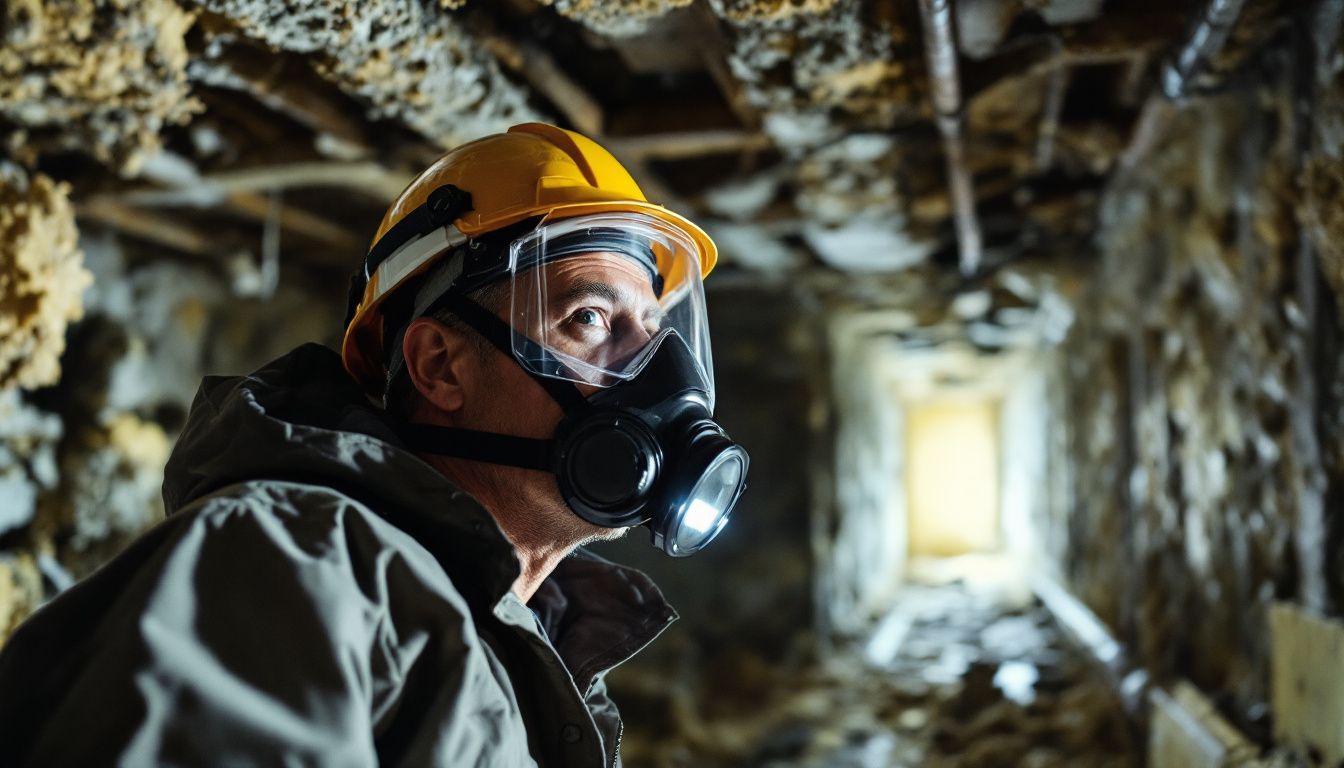
Surveyors access areas that would not normally be disturbed: inside wall cavities, beneath floor screeds, above suspended ceilings, and within service ducts. The result is a detailed report identifying the location, condition, and type of any ACMs, along with a risk assessment to inform safe working methods before construction begins.
The Legal Framework: CDM and the Control of Asbestos Regulations
Two sets of regulations govern asbestos management in construction, and they are designed to complement each other rather than operate in isolation.
The Construction (Design and Management) Regulations
The CDM Regulations place legal duties on clients, principal designers, principal contractors, and other duty holders throughout a construction project. One of the core obligations is that clients must provide pre-construction information — including details of any hazardous materials such as asbestos — to designers and contractors before work commences.
If no asbestos information exists for a pre-2000 building, the client cannot simply assume there is none. A pre construction asbestos survey must be commissioned to fulfil this duty. Passing on inaccurate or incomplete hazard information is a breach of CDM duties and exposes clients to significant legal liability.
The Control of Asbestos Regulations
The Control of Asbestos Regulations require that asbestos is identified before any work that could disturb it takes place. For refurbishment and demolition projects, this means a full intrusive survey is required — not just a review of existing records or a visual inspection.
The HSE’s guidance document HSG264 sets out the standards that asbestos surveys must meet. It defines the scope, methodology, and reporting requirements for both management surveys and refurbishment and demolition surveys. Any survey used to satisfy the legal duty must comply with HSG264.
Workers must not be exposed to asbestos fibre concentrations above the control limit of 0.1 fibres per cubic centimetre of air, averaged over a four-hour period. Only a thorough pre construction asbestos survey gives project teams the information needed to design safe working methods that keep exposure well below this limit.
Management Survey vs Refurbishment Survey: Knowing the Difference
One of the most common mistakes made during construction project planning is relying on an existing management survey when a refurbishment survey is actually required. The two serve very different purposes, and confusing them puts workers at serious risk.
Management Surveys
A management survey is designed for occupied, non-domestic premises during normal use. It is a relatively non-intrusive inspection that identifies ACMs which could be damaged or disturbed during everyday activities such as maintenance, cleaning, or minor repairs. It does not involve opening up the building fabric.
Management surveys are a legal requirement for non-domestic buildings under the duty to manage asbestos. They are not, however, sufficient for construction work that will disturb the building structure.
Refurbishment and Demolition Surveys
A refurbishment survey is required before any work that will disturb the fabric of a building. It is intrusive and destructive where necessary — surveyors will break into walls, lift floor coverings, and access concealed voids to locate ACMs that would be disturbed by the planned works.
The survey scope should match the works planned. For a full demolition survey, the entire structure must be inspected. For a partial refurbishment, the survey should cover only the areas affected by the works.
Using a management survey in place of a refurbishment survey when construction work is planned is not legally compliant and puts workers at serious risk.
Roles and Responsibilities Under CDM and Asbestos Regulations
A pre construction asbestos survey does not exist in isolation — it feeds directly into the duties of every party involved in the project. Understanding who is responsible for what avoids dangerous gaps in the safety chain.
Clients
- Commission a pre construction asbestos survey before work begins on any pre-2000 building
- Provide the survey results as part of the pre-construction information pack under CDM
- Ensure the survey is carried out by a competent, accredited surveyor
- Keep asbestos records and pass them on to future owners or occupiers
Principal Designers
- Use survey findings to eliminate or reduce asbestos risks at the design stage
- Ensure the pre-construction information is complete before design work progresses
- Flag any areas where additional survey work may be needed as the design develops
- Incorporate asbestos risk management into the Health and Safety file
Principal Contractors
- Review the asbestos survey report before work commences on site
- Develop a Construction Phase Plan that addresses asbestos risks
- Ensure only licensed contractors carry out notifiable asbestos work
- Train workers to recognise potential ACMs and stop work if unexpected asbestos is found
- Maintain records of all asbestos-related work carried out on site
Contractors and Workers
- Follow the safe working methods set out in the asbestos management plan
- Stop work immediately if suspected asbestos is encountered that was not identified in the survey
- Use appropriate personal protective equipment when working near known ACMs
- Report any concerns about asbestos to the site manager without delay
Which Types of Projects Require a Pre Construction Asbestos Survey?
There is sometimes confusion about which projects trigger the requirement for a pre construction asbestos survey. The short answer: if the work will disturb the fabric of a pre-2000 building, a refurbishment and demolition survey is required. This covers a wider range of projects than many clients initially assume.
Projects that require a pre construction asbestos survey include:
- Full or partial demolition of any pre-2000 structure
- Structural refurbishment, including extensions and conversions
- Fitting out or strip-out works in commercial or residential buildings
- Installation of new services — pipework, electrical conduit, mechanical plant — where walls, floors, or ceilings will be penetrated
- Window or door replacement where the surrounding fabric will be disturbed
- Roof replacement or repair where roof materials may contain asbestos
- Any maintenance work involving drilling, cutting, or breaking into the building structure
If you are unsure whether your project requires a survey, the safest course of action is to commission one. The cost of a survey is negligible compared to the cost of stopping a live construction site because unexpected asbestos has been discovered.
What Happens When Unexpected Asbestos Is Found During Construction?
Even with a thorough pre construction asbestos survey, there are occasions when previously unidentified ACMs are uncovered during works. This is most common in older buildings where previous surveys were limited in scope, or where concealed voids were inaccessible at the time of the survey.
When this happens, work in the affected area must stop immediately. The area should be secured and the principal contractor notified. A further survey of the newly exposed area is required before work can resume, and the asbestos management plan must be updated accordingly.
This is not a failure of the original survey — it is a known risk in older buildings, and the CDM framework is designed to manage it. What matters is that the response is swift, proportionate, and compliant with the Control of Asbestos Regulations.
If the newly discovered ACMs require removal, only a licensed contractor should carry out that work. Asbestos removal of notifiable materials — such as asbestos insulation, asbestos insulation board, or asbestos coating — must be carried out by a contractor licensed by the HSE, and the work must be notified to the HSE at least 14 days in advance.
How to Commission a Pre Construction Asbestos Survey
Commissioning the right survey for your project requires a clear understanding of the works planned and the building’s history. Follow these steps to get it right:
- Confirm the building’s age. Any building constructed or refurbished before 2000 should be treated as potentially containing asbestos until survey evidence confirms otherwise.
- Define the scope of works. The survey scope should match the areas to be disturbed. A full demolition requires a whole-building survey; a targeted refurbishment requires a survey of the affected areas only.
- Appoint a competent surveyor. The surveyor must be trained and competent in line with HSG264. Many clients choose UKAS-accredited surveyors for additional assurance.
- Review existing records. Check whether an asbestos register or previous survey reports exist. These can inform the new survey but cannot replace it for refurbishment and demolition purposes.
- Allow adequate time. Commission the survey early in the project programme — not at the last minute before works begin. Survey results need to be integrated into the design and Construction Phase Plan.
- Distribute the report. Ensure the survey report is shared with the principal designer, principal contractor, and all relevant subcontractors as part of the pre-construction information pack.
Matching the Survey Scope to the Works
One of the most practical decisions when commissioning a pre construction asbestos survey is defining the correct scope. A survey that is too narrow may miss ACMs in areas that are subsequently disturbed. A survey that is overly broad may delay the project unnecessarily and increase costs without adding value.
The survey scope should be defined in close consultation with the principal designer and principal contractor. At the point of survey commissioning, the design should be sufficiently developed to identify which parts of the building will be affected by the works.
Key questions to ask when defining scope include:
- Which floors, rooms, or zones will be physically disturbed?
- Will service routes pass through walls, floors, or ceilings not currently shown on drawings?
- Are there areas of the building where access is restricted that may later need to be opened up?
- Does the design allow for phased works that may require phased survey coverage?
Getting the scope right at the outset avoids the costly scenario of needing to commission additional survey work mid-project when contractors are already mobilised on site.
The Consequences of Getting It Wrong
Failing to carry out a pre construction asbestos survey, or proceeding with work based on inadequate information, carries serious consequences for both individuals and organisations.
The Health and Safety Executive has powers to issue improvement notices, prohibition notices, and prosecute duty holders. Convictions for breaches of the Control of Asbestos Regulations can result in unlimited fines and custodial sentences. Directors and senior managers can be held personally liable where there is evidence of negligence or deliberate non-compliance.
Beyond the legal penalties, the human cost is significant. Asbestos-related diseases — including mesothelioma, asbestos-related lung cancer, and asbestosis — typically take decades to develop after exposure. Workers unknowingly exposed on a construction site today may not experience symptoms for 20 to 40 years. There is no cure for mesothelioma.
A pre construction asbestos survey is not a bureaucratic box-ticking exercise. It is a direct intervention that prevents workers from being exposed to one of the most dangerous substances in the built environment.
Where Supernova Carries Out Pre Construction Asbestos Surveys
Supernova Asbestos Surveys operates nationwide, with specialist teams covering every region of England, Scotland, and Wales. Whether your project is in the capital or further afield, our surveyors are experienced in all building types and construction environments.
We regularly carry out pre construction asbestos surveys across major urban centres, including asbestos survey London projects spanning everything from Georgian townhouses to post-war commercial blocks. Our teams are equally active on large-scale industrial and civic projects across the North West, with asbestos survey Manchester instructions forming a significant part of our workload.
In the Midlands, our experienced surveyors handle a broad range of refurbishment and demolition projects, and our asbestos survey Birmingham service covers everything from residential conversions to large commercial fit-outs. Wherever your project is located, Supernova can mobilise quickly and deliver survey reports that comply fully with HSG264 and the Control of Asbestos Regulations.
Frequently Asked Questions
What is the difference between a pre construction asbestos survey and a management survey?
A management survey is a non-intrusive inspection used to manage asbestos in occupied buildings during normal use. A pre construction asbestos survey — formally a refurbishment and demolition survey — is intrusive and is required before any work that will disturb the building fabric. The two are not interchangeable, and using a management survey for construction work is not legally compliant.
Is a pre construction asbestos survey a legal requirement?
Yes. The Control of Asbestos Regulations require that asbestos is identified before any work that could disturb it takes place. The CDM Regulations additionally require clients to provide pre-construction information — including asbestos hazard data — to designers and contractors. Together, these regulations make a pre construction asbestos survey a legal duty for any pre-2000 building where intrusive work is planned.
Who is responsible for commissioning a pre construction asbestos survey?
Under the CDM Regulations, the client holds primary responsibility for commissioning a pre construction asbestos survey and providing the results as part of the pre-construction information pack. However, principal designers and principal contractors also have duties to ensure adequate asbestos information is in place before design work progresses and before work commences on site.
What happens if asbestos is found during construction that was not identified in the survey?
Work in the affected area must stop immediately and the area must be secured. The principal contractor must be notified, and a further intrusive survey of the newly exposed area is required before work can resume. If the newly discovered material requires removal, only an HSE-licensed contractor can carry out that work, and the HSE must be notified at least 14 days in advance for notifiable asbestos work.
Does a pre construction asbestos survey cover the whole building?
Not necessarily. The survey scope should match the areas that will be disturbed by the planned works. A full demolition requires a whole-building survey, while a targeted refurbishment requires a survey covering only the affected areas. The scope should be defined in consultation with the principal designer and principal contractor at the outset of the project, and reviewed if the design changes.
Commission Your Pre Construction Asbestos Survey with Supernova
Supernova Asbestos Surveys has completed over 50,000 surveys nationwide and has the expertise to support your project from initial planning through to completion. Our surveyors are fully trained in line with HSG264, and our reports are designed to integrate directly into your pre-construction information pack and Construction Phase Plan.
Do not let asbestos become a costly surprise mid-project. Call us on 020 4586 0680 or visit asbestos-surveys.org.uk to discuss your requirements and get a fast, accurate quote for your pre construction asbestos survey.