Category: Asbestos and its Hidden Dangers in the Workplace

  • What signs or symptoms of asbestos-related illnesses should employees be aware of?

    What signs or symptoms of asbestos-related illnesses should employees be aware of?

    Asbestos does not give you a warning on the day you breathe it in. That is what makes asbestos such a serious issue in older workplaces, schools, public buildings and commercial premises across the UK. Symptoms linked to asbestos exposure can take many years to appear, which means employees may feel completely well long after the original contact happened.

    For property managers, employers and dutyholders, that delay creates two risks at once. Staff may miss early signs of illness, and buildings may still contain asbestos-containing materials that can be disturbed during routine work, maintenance or refurbishment. Knowing what symptoms to watch for is vital, but preventing exposure in the first place matters even more.

    Why asbestos-related illness is so often missed

    The biggest challenge with asbestos-related disease is latency. In plain terms, symptoms often appear decades after exposure, so workers do not always connect current breathing problems or chest symptoms with work they carried out years earlier.

    This is especially relevant in sectors where asbestos was widely used, including construction, maintenance, manufacturing, shipbuilding, plant rooms, insulation work, schools, hospitals and older housing stock. Anyone who has drilled, cut, stripped, repaired or worked near damaged materials in a building constructed before 2000 should take possible exposure seriously.

    Asbestos fibres are microscopic. Once a material is disturbed, fibres can become airborne and be inhaled without causing any immediate pain or obvious reaction. Over time, those fibres may lead to inflammation, scarring or cancerous change, particularly in the lungs and pleura.

    Early symptoms of asbestos employees should not ignore

    Symptoms alone do not prove that asbestos is the cause. Many of them overlap with common respiratory illnesses. Even so, if there is any history of possible asbestos exposure, these signs should be discussed with a GP without delay.

    Shortness of breath

    Breathlessness is one of the most common early symptoms associated with asbestos-related lung disease. It may begin subtly, such as getting out of breath on stairs, while carrying equipment, or during tasks that used to feel routine.

    If breathing has changed and there is no clear reason, do not dismiss it as age, poor fitness or a recent cold. A gradual decline is still a decline.

    Persistent dry cough

    A cough that lingers for weeks deserves attention, particularly if it is dry and keeps returning. Ongoing irritation or scarring in the lungs can trigger a cough that does not resolve in the usual way.

    Anyone with a work history involving asbestos should mention that exposure clearly when speaking to a GP. That detail can influence what investigations are arranged.

    Wheezing

    Wheezing can happen when airways are narrowed or inflamed. In someone with suspected asbestos exposure, wheezing alongside breathlessness or a persistent cough should be checked, especially if there is no existing diagnosis such as asthma.

    Chest tightness

    Some people describe pressure or tightness in the chest before more severe symptoms appear. This may be linked to changes in the pleura, the lining around the lungs, and should not be ignored if it persists.

    More serious symptoms that may point to advanced asbestos-related disease

    Asbestos-related conditions can progress quietly. By the time symptoms become severe, the disease may already be well established. That is why any worsening pattern needs prompt medical review.
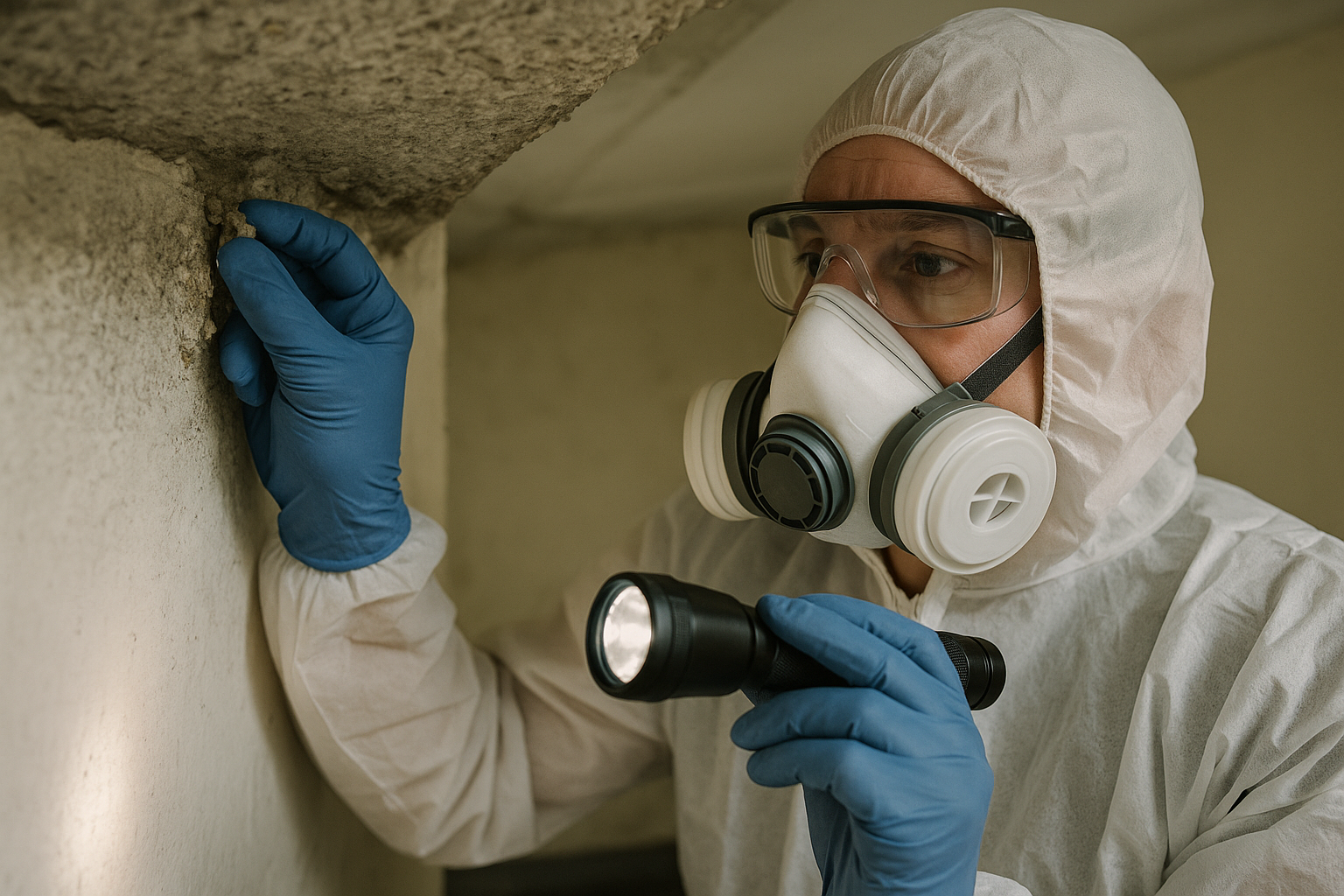
    asbestos - What signs or symptoms of asbestos-relat

    Chest pain

    Persistent chest pain, especially pain that worsens with deep breathing, coughing or movement, can be associated with pleural thickening or mesothelioma. It may feel dull and constant, or sharper during activity.

    Any unexplained chest pain needs proper assessment. If there has been known or suspected asbestos exposure, say so clearly during the appointment.

    Finger clubbing

    Clubbing is where the fingertips become broader and the nails curve more than usual. It develops gradually and can be easy to miss, but it may be a sign of chronic lung disease or malignancy.

    If a colleague, partner or clinician notices this change, it should not be brushed aside.

    Unexplained weight loss

    Losing weight without trying is always a warning sign. When it appears alongside breathlessness, chest symptoms or fatigue, it may indicate a serious underlying condition, including lung cancer or mesothelioma.

    Loss of appetite and fatigue

    People with asbestos-related disease often report unusual tiredness. That fatigue may result from reduced lung function, the effort of breathing harder, or the effects of more advanced illness.

    Loss of appetite can appear at the same time. Together, these symptoms warrant urgent medical advice.

    Main diseases linked to asbestos and how they present

    Understanding the diseases associated with asbestos helps explain why symptoms can vary so much. Some conditions are non-cancerous but still serious. Others are aggressive cancers strongly linked with asbestos exposure.

    Asbestosis

    Asbestosis is a chronic lung disease caused by inhaling asbestos fibres over time. Those fibres lead to scarring in the lung tissue, making it harder for the lungs to expand and transfer oxygen.

    Typical symptoms include:

    • Progressive shortness of breath
    • Persistent cough
    • Fatigue
    • Chest discomfort
    • In some cases, finger clubbing

    Asbestosis cannot be reversed. Management usually focuses on monitoring, symptom control, avoiding further asbestos exposure and reducing additional strain on the lungs.

    Mesothelioma

    Mesothelioma is a cancer affecting the lining of the lungs, abdomen or, more rarely, other organs. It is strongly associated with asbestos and often presents late because the early symptoms can be vague.

    Pleural mesothelioma may cause:

    • Chest pain
    • Breathlessness
    • Persistent cough
    • Fatigue
    • Weight loss

    Peritoneal mesothelioma may cause:

    • Abdominal pain
    • Abdominal swelling
    • Changes in bowel habit
    • Nausea
    • Loss of appetite

    Anyone with these symptoms and a history of asbestos exposure should seek medical advice quickly.

    Lung cancer

    Asbestos increases the risk of lung cancer, and that risk is higher in people who smoke. Symptoms can overlap with other asbestos-related conditions, which is why a clear exposure history is so useful when doctors decide what to investigate.

    Possible symptoms include:

    • A cough that does not go away
    • Coughing up blood
    • Chest pain
    • Breathlessness
    • Unexplained weight loss
    • Persistent tiredness

    Pleural thickening and pleural plaques

    Pleural thickening happens when the lining of the lungs becomes scarred and less flexible. This can restrict breathing and cause ongoing discomfort.

    Pleural plaques are localised areas of thickening on the pleura. They are not cancer, but they do indicate previous asbestos exposure and should prompt proper medical and occupational review.

    Non-respiratory symptoms of asbestos-related illness

    Not every asbestos-related condition starts with chest symptoms. Some people develop issues affecting the abdomen, particularly in cases of peritoneal mesothelioma.
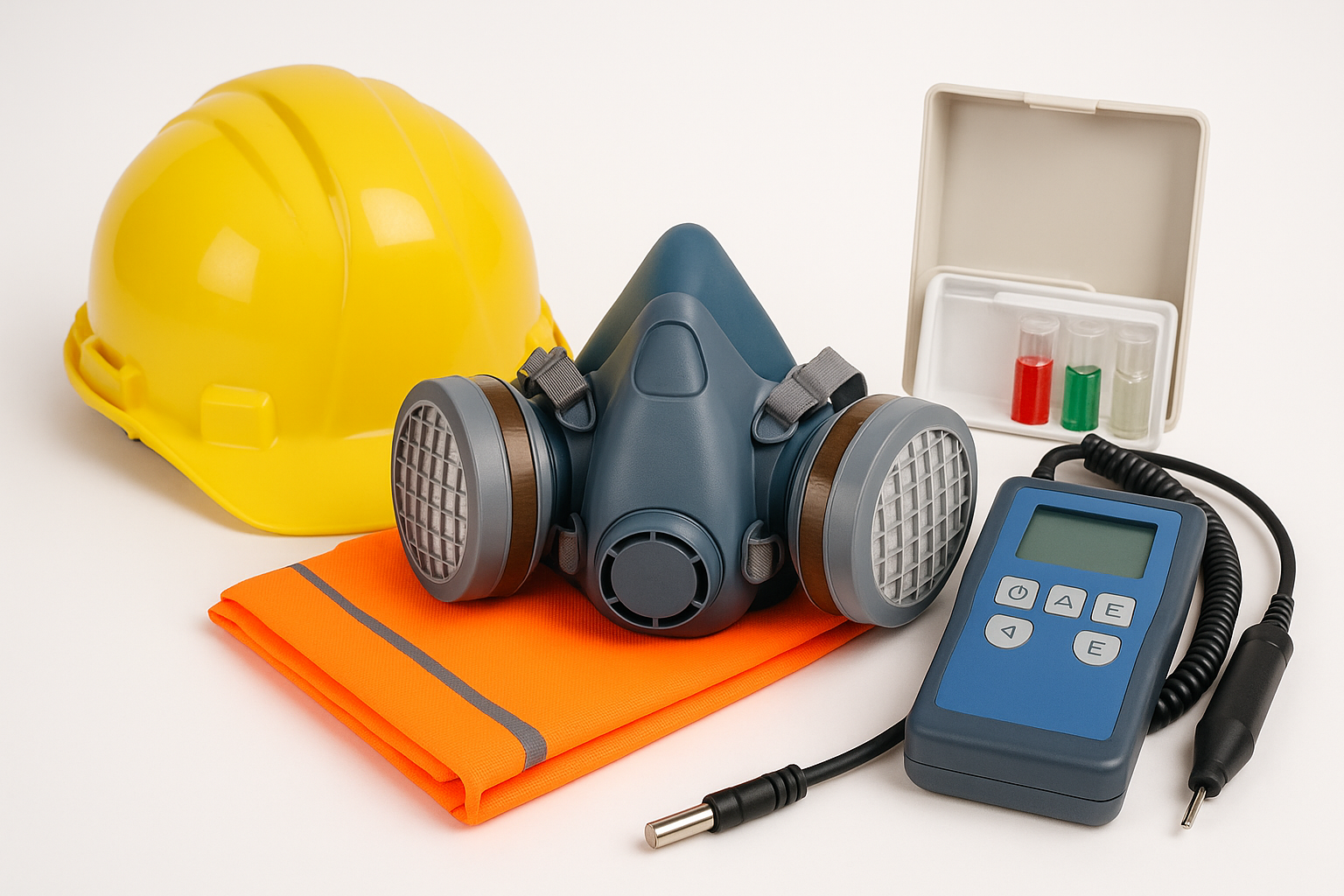
    asbestos - What signs or symptoms of asbestos-relat

    Symptoms to watch for include:

    • Abdominal pain
    • Abdominal swelling or bloating
    • Changes in bowel habits
    • Nausea
    • Unexplained weight loss
    • Anaemia
    • Fever or night sweats

    These signs are easy to mistake for digestive problems or general ill health. If there is any possibility of past asbestos exposure, that history should be mentioned clearly to a GP.

    When employees should seek medical advice

    The safest approach is simple: act early. Waiting to see if symptoms settle can delay diagnosis and treatment.

    An employee should contact their GP promptly if they:

    • Know or suspect they were exposed to asbestos at work
    • Have a cough lasting more than a few weeks
    • Notice new or worsening shortness of breath
    • Develop unexplained chest pain or tightness
    • Lose weight without trying
    • Feel persistently fatigued for no obvious reason
    • Notice finger clubbing or other unusual physical changes

    Practical detail helps at the appointment. Employees should explain:

    • What type of work they carried out
    • Which buildings, sites or materials they worked on
    • Whether dust was created during drilling, cutting, stripping or demolition
    • How long the exposure may have lasted
    • Whether respiratory protection or asbestos controls were in place

    That information can affect whether the GP arranges imaging, lung function tests or referral to a specialist.

    What employers and dutyholders need to know about asbestos

    Employers and those responsible for non-domestic premises have legal duties where asbestos may be present. Under the Control of Asbestos Regulations, dutyholders must identify asbestos-containing materials, assess risk, keep records and manage those materials so people are not exposed.

    Surveying and management should align with HSG264 and wider HSE guidance. In practice, that means having reliable information about where asbestos is located, what condition it is in and whether planned work could disturb it.

    If you manage a building built before 2000, do not assume asbestos is absent just because it is not visible. It can be found in textured coatings, insulation boards, pipe lagging, ceiling tiles, floor tiles, bitumen products, sprayed coatings, cement sheets, soffits, panels and many other materials.

    Key employer responsibilities

    • Identify whether asbestos is present
    • Keep an asbestos register up to date
    • Assess the condition of asbestos-containing materials
    • Prepare and maintain an asbestos management plan
    • Share information with anyone liable to disturb asbestos
    • Arrange suitable training for relevant staff
    • Ensure higher-risk work is carried out safely and, where required, by licensed contractors

    If employees are reporting dust exposure, damaged materials or possible symptoms, that should trigger an immediate review of your asbestos management arrangements.

    How asbestos surveys help prevent exposure

    The best way to reduce asbestos risk is to identify it before maintenance, refurbishment or demolition starts. The correct survey depends on what is happening in the building.

    For routine occupation and normal use, an management survey helps locate asbestos-containing materials that could be damaged or disturbed during everyday activities.

    If you are planning intrusive works, upgrades or strip-out, a refurbishment survey is needed to identify asbestos in the areas affected before work begins.

    Where a structure is due to be taken down, a demolition survey is required so asbestos can be identified and dealt with before demolition proceeds.

    If asbestos has already been identified and left in place for management, a re-inspection survey helps confirm whether the material condition has changed and whether your management plan is still suitable.

    For clients in the capital managing older premises, arranging an asbestos survey London service can be a practical starting point when you need local support and fast access to experienced surveyors.

    Testing and sampling options for suspected asbestos

    Sometimes the immediate question is whether a specific material contains asbestos. In that situation, professional asbestos testing can provide clarity before anyone disturbs it.

    If a sample has already been taken safely, sample analysis can confirm whether asbestos is present. This is useful where a competent person has obtained a representative sample without creating unnecessary risk.

    For straightforward domestic situations, an asbestos testing kit may seem convenient, but sampling always needs care. If there is any doubt about the material, its condition or the surrounding environment, using a surveyor is usually the safer option.

    Some people searching for a simple testing kit are actually dealing with a wider compliance issue. If the material forms part of a larger project, refurbishment, repair or maintenance plan, a survey is often the more appropriate route.

    Supernova also provides broader support through specialist asbestos testing services for domestic and commercial properties where suspect materials need expert assessment.

    Practical steps to take if asbestos is suspected in the workplace

    If staff uncover a suspicious material, the worst response is to carry on and hope for the best. Disturbing asbestos can turn a manageable issue into an exposure incident very quickly.

    Take these steps straight away:

    1. Stop work immediately in the affected area.
    2. Keep people away and prevent further disturbance.
    3. Do not sweep, vacuum or clean debris unless proper asbestos controls are in place.
    4. Check the asbestos register and management plan to see whether the material has already been identified.
    5. Arrange survey or testing if the material is unknown.
    6. Record the incident and notify the responsible health and safety lead.
    7. Review who may have been exposed and document what happened.

    If someone may have inhaled dust from a suspect material, make a written record while details are still fresh. Include the location, task being carried out, duration, visible dust, controls in place and names of those present.

    That record will not diagnose illness, but it can be useful later for occupational health review, internal investigation and future asbestos management.

    How to reduce asbestos risk before work starts

    Good asbestos control is not just about reacting when something goes wrong. It starts before the first tool comes out.

    Property managers and contractors should build these checks into routine planning:

    • Confirm the age and history of the building
    • Review the asbestos register before maintenance starts
    • Check whether the planned work is intrusive
    • Arrange the correct survey before access is given
    • Brief contractors on known asbestos locations
    • Stop work if site conditions do not match the available information

    If your asbestos records are old, incomplete or based on limited access, do not assume they are enough. Materials change condition over time, and previous surveys may not cover the area now being worked on.

    Common workplace materials that may contain asbestos

    Many people still think asbestos only turns up in pipe lagging or insulation. In reality, it was used in a wide range of products, some of which still catch building managers off guard.

    Common examples include:

    • Textured coatings
    • Asbestos insulating board
    • Pipe lagging
    • Ceiling tiles
    • Floor tiles and adhesive
    • Bitumen products
    • Cement sheets and roof panels
    • Soffits and gutters
    • Toilet cisterns and service ducts
    • Fire doors and fire protection materials

    The condition of the material matters. Undamaged asbestos-containing material is not always an immediate hazard, but once drilled, broken, cut, sanded or otherwise disturbed, the risk changes.

    What employees should report straight away

    Employees are often the first to notice signs of damaged materials, unplanned drilling or poor site controls. Clear reporting can prevent further exposure.

    Staff should report:

    • Broken ceiling tiles, boards or panels in older buildings
    • Dust created during maintenance in areas with unknown materials
    • Damaged pipe insulation or lagging
    • Contractors starting intrusive work without checking asbestos information
    • Debris left behind after repairs or strip-out
    • Any accidental disturbance of suspect materials

    A simple rule helps here: if the material is unknown and the building is older, treat it as suspect until proven otherwise.

    Why symptoms awareness is only one part of asbestos safety

    Recognising symptoms matters, but it is not a substitute for proper asbestos management. By the time illness appears, the exposure may have happened many years earlier.

    The stronger approach is prevention. That means suitable surveys, clear records, contractor communication, regular review and prompt action when materials are damaged or planned works could disturb asbestos.

    For property managers, the practical question is not just whether someone has symptoms today. It is whether your building information is good enough to stop the next exposure from happening.

    Frequently Asked Questions

    What are the first symptoms of asbestos-related illness?

    Early symptoms linked with asbestos can include shortness of breath, a persistent dry cough, wheezing and chest tightness. These symptoms are not specific to asbestos, but anyone with a history of possible exposure should seek medical advice and mention that history clearly.

    Can you feel ill straight after asbestos exposure?

    Usually not. Asbestos-related diseases often develop after a long latency period, which means symptoms may not appear for many years. That is why immediate illness is not a reliable sign of whether exposure has happened.

    What should an employer do if asbestos is suspected?

    Work should stop immediately in the affected area. The employer or dutyholder should prevent further disturbance, check the asbestos register, arrange suitable survey or testing, and review whether anyone may have been exposed.

    Do all buildings built before 2000 contain asbestos?

    Not all of them, but any building constructed before 2000 should be presumed to contain asbestos unless there is evidence to show otherwise. That is the practical starting point for safe management under UK asbestos duties.

    Is testing enough, or do I need a survey?

    Testing can confirm whether a specific material contains asbestos, but it does not replace a survey where wider building management or planned works are involved. If maintenance, refurbishment or demolition is planned, the correct survey is usually the safer and more compliant option.

    If you need clear advice on asbestos in a workplace, commercial property or residential building, Supernova Asbestos Surveys can help. We provide surveys, testing and re-inspections nationwide, with practical guidance that supports compliance and keeps projects moving safely. Call 020 4586 0680 or visit asbestos-surveys.org.uk to arrange expert support.

  • How Does the Government Regulate the Presence of Asbestos in the Workplace?

    How Does the Government Regulate the Presence of Asbestos in the Workplace?

    Asbestos at Work: How UK Law Regulates One of Britain’s Deadliest Hazards

    Asbestos at work remains the single largest cause of work-related deaths in Britain. Thousands of people die every year from asbestos-related diseases — mesothelioma, lung cancer, asbestosis — and the overwhelming majority of those deaths are directly linked to occupational exposure. If you own, manage, or maintain a non-domestic building, the law places specific, enforceable duties on you. Here is what you need to know.

    The Core Legislation: Control of Asbestos Regulations

    The Control of Asbestos Regulations is the primary legislation governing asbestos at work across the UK. It applies to virtually all non-domestic premises and sets out clear duties for employers, building owners, contractors, and anyone responsible for managing a property where asbestos may be present.

    Enforcement sits with the Health and Safety Executive (HSE), with local authorities taking responsibility for certain premises such as shops and offices. Non-compliance is not treated lightly — it can result in improvement notices, prohibition notices, unlimited fines, and criminal prosecution.

    Who Does the Law Apply To?

    The regulations impose obligations on several distinct parties. Understanding where you sit in that framework is the first step to genuine compliance.

    • Duty holders — anyone who owns, occupies, or is responsible for the maintenance of non-domestic premises
    • Employers — anyone whose workers may encounter asbestos-containing materials (ACMs) during their work
    • Contractors — those carrying out work that could disturb ACMs, including builders, plumbers, electricians, and demolition teams

    Domestic properties are not covered by the duty to manage. However, landlords of residential buildings still carry responsibilities under health and safety law where they control common areas or undertake maintenance work.

    The Duty to Manage Asbestos at Work

    One of the most important obligations under the regulations is the duty to manage asbestos. This applies to anyone responsible for maintaining or repairing non-domestic premises — from office blocks and schools to industrial units and NHS buildings.

    The duty requires you to take a structured, ongoing approach:

    1. Find out whether asbestos is present in the building and, if so, where it is and what condition it is in
    2. Assess the risk — is the material damaged, deteriorating, or likely to be disturbed?
    3. Record the findings in an asbestos register and keep it up to date
    4. Produce a written asbestos management plan setting out how risks will be controlled
    5. Inform anyone who might disturb the material — contractors, maintenance staff, emergency services
    6. Review and monitor the situation regularly

    The management plan is not a one-off document. It must be reviewed when conditions change — after refurbishment, if an ACM deteriorates, or if the building’s use changes significantly.

    Asbestos Surveys: Where Compliance Starts

    Before you can manage asbestos at work, you need to know where it is. A professional asbestos survey is the essential starting point, and there are three main types — each with a specific purpose and legal trigger.

    Management Survey

    A management survey is the standard survey required to fulfil the duty to manage. It identifies the location, extent, and condition of all ACMs that could be disturbed during normal occupation and routine maintenance.

    The inspection is designed to be minimally intrusive — walls and ceilings are not broken into unless necessary. This is the survey most duty holders will need first, and it forms the foundation of your asbestos management plan.

    Refurbishment Survey

    Before any renovation, fit-out, or refurbishment work takes place, a refurbishment survey is required for the affected areas. This is a more intrusive inspection — surveyors need access to all areas where work will be carried out, including above ceilings, inside wall cavities, and beneath floors.

    No refurbishment work should begin until this survey is complete. Starting work without one exposes contractors and duty holders to serious legal risk.

    Demolition Survey

    A demolition survey is required before any part of a building is demolished. It is the most comprehensive survey type and must cover the entire structure. All ACMs must be identified and removed before demolition begins — not during or after.

    All surveys must be carried out by a competent, qualified surveyor operating to UKAS-accredited standards and in accordance with HSG264 guidance. At Supernova Asbestos Surveys, our surveyors hold recognised qualifications and have completed over 50,000 surveys nationwide.

    Asbestos Licensing: Who Can Do What

    Not all asbestos work is the same. The regulations divide work into three categories based on risk level, each with different legal requirements.

    Licensed Work

    The highest-risk asbestos work — including the removal of sprayed coatings, lagging, and asbestos insulating board (AIB) — must only be carried out by a contractor holding an HSE asbestos licence. To obtain a licence, a contractor must demonstrate technical competence, robust health and safety management systems, and suitable health surveillance arrangements for their workers.

    Licences are typically valid for three years and are subject to reassessment. The HSE maintains a public register of licensed contractors — always check this before appointing anyone for asbestos removal work.

    Notifiable Non-Licensed Work (NNLW)

    Some asbestos tasks do not require a licence but are still notifiable to the relevant enforcing authority. This covers short-duration work on AIB or work on textured decorative coatings — such as Artex — that contain asbestos.

    Before commencing NNLW, employers must:

    • Notify the HSE (or relevant local authority) in advance
    • Keep records of the work carried out
    • Ensure workers are under medical surveillance, with examinations every three years
    • Provide appropriate training and use correct control measures

    Non-Licensed Work

    Lower-risk asbestos tasks — such as encapsulating undamaged asbestos cement in good condition, or minor work on asbestos-containing floor tiles — may be carried out without a licence and without notification. A thorough risk assessment is still mandatory, and all workers must have received appropriate training before starting.

    Asbestos Risk Assessments

    Before any work that could disturb asbestos at work begins, the employer must carry out a suitable and sufficient risk assessment. This is not a box-ticking exercise — it needs to genuinely evaluate the hazard and directly inform the controls you put in place.

    A proper risk assessment should consider:

    • The type of asbestos present — white, brown, or blue — all are hazardous, but some more so than others
    • The condition of the material — friable or damaged ACMs present significantly higher risk
    • The likelihood and extent of fibre release during the planned work
    • The duration and frequency of potential worker exposure
    • The number of people who may be affected, including others in the building
    • The adequacy of planned control measures

    The findings must be recorded in writing. For licensed work, the risk assessment forms part of a written plan of work that must be prepared before work starts.

    Exposure Limits and Control Measures

    The regulations set a control limit for asbestos of 0.1 fibres per cubic centimetre of air, measured as a four-hour time-weighted average. There is also a short-term exposure limit of 0.6 f/cm³ over any ten-minute period.

    These are legal limits, not targets. The aim should always be to reduce exposure to as low as reasonably practicable — well below the control limit wherever possible.

    The hierarchy of control measures runs as follows:

    1. Elimination — remove the ACM entirely if practical and safe to do so
    2. Encapsulation or enclosure — seal or enclose ACMs that are in good condition and unlikely to be disturbed
    3. Engineering controls — wet methods, local exhaust ventilation (LEV), and enclosed workstations to suppress fibre release
    4. PPE — respiratory protective equipment (RPE) and disposable coveralls where engineering controls alone are insufficient

    PPE is always the last line of defence, not the first. Relying solely on a mask and coveralls is not an acceptable approach where other controls are practicable.

    Air Monitoring and Clearance Testing

    During and after licensed asbestos removal work, air monitoring must be carried out by an independent UKAS-accredited analyst. Before a previously contaminated area is handed back for reoccupation, a four-stage clearance procedure must be completed — including a visual inspection and air testing to confirm fibre levels are below the clearance indicator of 0.01 f/cm³.

    Skipping or rushing this stage puts occupants at risk and exposes the duty holder to serious legal liability. Do not allow a contractor to pressurise you into reopening a space before clearance is confirmed in writing.

    Asbestos Training Requirements

    The regulations require that all workers who are liable to encounter asbestos during their work receive appropriate information, instruction, and training. The level required depends on the nature of the work they carry out.

    Asbestos Awareness Training

    Anyone whose work could foreseeably disturb asbestos — builders, plumbers, electricians, joiners, painters — must receive asbestos awareness training. This covers what asbestos is, where it is commonly found, the health risks, and what to do if they suspect they have encountered it. The HSE recommends this training is refreshed annually.

    Non-Licensed and Notifiable Non-Licensed Work Training

    Workers carrying out non-licensed or notifiable non-licensed asbestos work need additional, more detailed training. This covers correct working methods, use of PPE, decontamination procedures, and emergency arrangements — going well beyond basic awareness.

    Licensed Work Training

    Workers employed by licensed contractors must undergo comprehensive training that includes supervised on-the-job instruction, detailed understanding of the plan of work, and regular refresher courses. Competence is an ongoing requirement, not a one-time certificate.

    Professional Qualifications

    Beyond site-level training, professionals working in asbestos surveying and analysis are expected to hold recognised qualifications. Surveyors typically hold the RSPH Level 3 Award in Asbestos Surveying, while analysts hold qualifications covering air monitoring and fibre counting. These qualifications underpin the competence standards the HSE and clients should expect when appointing a surveying firm.

    Health Surveillance for Asbestos Workers

    Workers involved in notifiable non-licensed work and all licensed asbestos work must be placed under medical health surveillance. This involves an initial medical examination before they begin asbestos work, followed by repeat examinations at least every three years.

    Health records must be kept for a minimum of 40 years — a requirement that reflects the long latency period of asbestos-related diseases, which can take decades to manifest after exposure. This is not an administrative formality; it is a legal obligation with a direct human purpose.

    Record Keeping and Documentation

    Throughout all asbestos-related activities, thorough documentation is a legal requirement. Duty holders and employers must maintain:

    • An up-to-date asbestos register for the premises
    • A current asbestos management plan
    • Records of all asbestos surveys and re-inspection reports
    • Risk assessments and plans of work for asbestos tasks
    • Air monitoring results
    • Training records for all relevant workers
    • Health surveillance records
    • Waste transfer notes for asbestos waste disposal

    These records must be readily accessible — HSE inspectors or local authority officers can request them at any time. Failure to produce adequate documentation is, in itself, a breach of the regulations.

    HSE Enforcement and the Consequences of Non-Compliance

    The HSE takes asbestos compliance seriously. Inspectors conduct both planned inspections and reactive investigations following incidents or complaints. Where breaches are identified, they have the power to issue improvement notices, prohibition notices stopping work immediately, and to prosecute individuals and organisations.

    Prosecutions for asbestos offences can result in unlimited fines in the Crown Court, and custodial sentences are not uncommon in serious cases. Directors and senior managers can be held personally liable where failures stem from decisions made at a leadership level.

    The reputational damage that follows an HSE prosecution can be equally damaging as the financial penalties. Getting compliance right from the outset is always the better approach.

    Asbestos at Work Across the UK: Getting the Right Survey

    Wherever your premises are located, accessing a qualified, UKAS-accredited surveying team is straightforward. Supernova Asbestos Surveys operates nationwide, with dedicated teams covering major cities and surrounding regions.

    If you need an asbestos survey in London, our teams are available across all London boroughs and can typically mobilise quickly for both planned and urgent instructions. For clients in the North West, our asbestos survey service in Manchester covers the city and surrounding areas with the same standards applied nationwide. In the Midlands, our asbestos survey team in Birmingham supports commercial, industrial, and public sector clients across the region.

    Regardless of location, every survey we carry out follows HSG264 guidance and is delivered by qualified surveyors to UKAS-accredited standards.

    Frequently Asked Questions

    What is the duty to manage asbestos and who does it apply to?

    The duty to manage asbestos applies to anyone responsible for maintaining or repairing non-domestic premises. This includes commercial landlords, facilities managers, and building owners. The duty requires you to identify whether asbestos is present, assess the risk it poses, record findings in an asbestos register, produce a management plan, and ensure that anyone who might disturb the material is informed. It does not apply to private domestic properties, though landlords of residential buildings retain responsibilities in common areas and during maintenance work.

    Do I need an asbestos survey before refurbishment work?

    Yes. Before any refurbishment, fit-out, or renovation work begins, a refurbishment survey must be completed for the areas affected. This is a legal requirement under the Control of Asbestos Regulations, not just best practice. The survey must be carried out before work starts — not during or after. Starting refurbishment without a survey exposes both the duty holder and the contractor to enforcement action and significant legal liability.

    What is the difference between licensed and non-licensed asbestos work?

    The regulations divide asbestos work into three categories. Licensed work — covering high-risk tasks such as removing sprayed coatings, lagging, or asbestos insulating board — must only be carried out by a contractor holding a current HSE asbestos licence. Notifiable non-licensed work (NNLW) covers lower-risk tasks that do not need a licence but must still be notified to the HSE or local authority in advance. Non-licensed work covers the lowest-risk tasks, which require no licence and no notification but still demand a risk assessment and appropriate worker training.

    How long must asbestos health records be kept?

    Health surveillance records for workers involved in notifiable non-licensed and licensed asbestos work must be retained for a minimum of 40 years. This unusually long retention period reflects the fact that asbestos-related diseases — including mesothelioma — can take 20 to 50 years to develop after exposure. The records must be kept in a format that remains accessible throughout that period.

    What happens if I fail to comply with asbestos regulations at work?

    Non-compliance with the Control of Asbestos Regulations can result in HSE improvement notices, prohibition notices halting work immediately, unlimited fines, and criminal prosecution. In serious cases, custodial sentences have been handed down. Directors and senior managers can face personal liability where failures arise from decisions at leadership level. Beyond the legal consequences, inadequate asbestos management puts workers, contractors, and building occupants at genuine risk of life-threatening illness.

    Speak to Supernova Asbestos Surveys

    Managing asbestos at work is a legal obligation, but it does not have to be complicated. Supernova Asbestos Surveys has completed over 50,000 surveys across the UK and works with commercial landlords, facilities managers, local authorities, contractors, and housing providers to ensure full compliance with the Control of Asbestos Regulations.

    Whether you need a management survey, a refurbishment survey ahead of planned works, or specialist advice on a complex site, our qualified team is ready to help. Call us on 020 4586 0680 or visit asbestos-surveys.org.uk to request a quote or speak to a surveyor directly.

  • What Industries Are Most at Risk for Asbestos Exposure in the Workplace? A Comprehensive Analysis of High-Risk Sectors

    What Industries Are Most at Risk for Asbestos Exposure in the Workplace? A Comprehensive Analysis of High-Risk Sectors

    Which Occupational Groups in the UK Are Most at Risk from Exposure to Asbestos?

    One careless drill hole in an older building can turn a routine maintenance job into a serious asbestos incident. If you are asking which occupational groups in the UK are most at risk from exposure to asbestos, the answer starts with anyone who disturbs the fabric of pre-2000 premises — but it does not end there. Property managers, facilities teams and employers all need to understand who faces the greatest risk, where that risk appears, and what practical controls prevent exposure before work begins.

    Asbestos was used extensively across the UK because it offered heat resistance, excellent insulation and reliable fire protection. That legacy still sits inside schools, hospitals, offices, factories, warehouses, plant rooms, shops, farms and domestic housing stock built or refurbished before 2000. Under the Control of Asbestos Regulations, duty holders must manage asbestos in non-domestic premises, and survey work must follow HSG264 and current HSE guidance. For anyone responsible for a building, this is a live compliance obligation — not a historical footnote.

    The practical reality is straightforward. Workers who cut, drill, sand, strip out, repair or inspect older materials face the highest risk, especially when asbestos information is missing, out of date or simply ignored. Repeated low-level exposure over a working lifetime can be just as serious as a single high-profile incident.

    The Occupational Groups Most at Risk from Asbestos Exposure

    The highest-risk occupational groups are those most likely to disturb asbestos-containing materials during maintenance, repair, refurbishment or demolition. In many cases, exposure happens during ordinary, everyday tasks rather than large-scale construction projects.

    The following roles consistently appear among the most exposed in UK workplaces:

    • Electricians
    • Plumbers and heating engineers
    • Carpenters and joiners
    • Builders and general maintenance workers
    • Demolition and refurbishment contractors
    • Roofers
    • Plasterers and decorators
    • Facilities and estates teams
    • Caretakers and site managers
    • Industrial maintenance engineers
    • Shipbuilding and maritime workers
    • Power station and plant room operatives
    • Firefighters attending damaged older buildings

    These roles commonly bring people into contact with asbestos insulating board, pipe lagging, sprayed coatings, cement sheets, floor tiles, textured coatings, gaskets, rope seals, panels and fire protection products. The danger is not always obvious. Many asbestos-containing materials look completely ordinary, particularly when painted over, boxed in or concealed above ceilings and inside service risers.

    For property managers, there is a critical point here: the risk sits with both the person carrying out the work and the person authorising it. If contractors arrive on site without access to the asbestos register and relevant survey information, the conditions for accidental exposure are already in place.

    Why Certain Jobs Carry a Higher Asbestos Risk

    Not every worker in an older building faces the same level of danger. Risk increases significantly when a role involves frequent disturbance of building materials, hidden services or plant insulation.

    Trades That Disturb the Building Fabric

    Electricians are a classic high-risk group. They regularly access ceiling voids, service ducts, meter cupboards, risers and distribution areas where asbestos was commonly installed. Drilling for cable routes, replacing boards or opening old enclosures can release fibres rapidly if the material has not been identified beforehand.

    Plumbers and heating engineers also face regular exposure risks. Older pipework, boiler rooms and plant areas may contain lagging, insulation debris, gaskets and rope seals. Even small repair jobs can disturb asbestos if the system is part of an older installation that has never been fully assessed.

    Carpenters and joiners can encounter asbestos insulating board in partition walls, ceiling panels, soffits, service risers and fire doors. Cutting, sanding or removing these materials without proper information is a well-documented route to fibre exposure.

    Builders, roofers, plasterers and decorators are also regularly exposed in older premises. Cement roofing sheets, textured coatings, backing boards, wall linings and floor finishes can all contain asbestos. Breaking, sanding or stripping these products creates fibre release, particularly where materials are already damaged or degraded.

    Maintenance and Facilities Roles

    Facilities staff sit in a particularly exposed position because they often manage routine works across occupied buildings. They may not carry out every task themselves, but they are frequently the people responding to leaks, arranging contractor access, opening service areas or directing others to carry out works.

    That means they need accurate, up-to-date asbestos information at hand at all times. A suitable management survey identifies accessible asbestos-containing materials during normal building occupation, and the resulting asbestos register must be current, usable and available before any work starts.

    Where asbestos has already been identified, condition monitoring matters just as much as the original survey. A planned re-inspection survey confirms whether materials remain in good condition or whether damage, deterioration or changes in building use mean the management plan needs updating.

    Refurbishment and Demolition Workers

    Refurbishment and strip-out work creates one of the clearest asbestos exposure risks because hidden materials are deliberately disturbed. Ceiling voids are opened, wall linings removed, service routes altered and plant dismantled. If asbestos information is based only on a routine management survey, that is not sufficient for intrusive works.

    Before major strip-out or structural work, a suitable demolition survey is required to identify asbestos in all areas that will be disturbed or removed. Starting intrusive works without the right survey in place is one of the most common ways asbestos is uncovered unexpectedly — and dangerously.

    Industrial and Maritime Workers

    Shipyards, power stations, factories, foundries and heavy industrial sites used asbestos extensively around heat, steam and fire risks. Workers involved in shutdowns, decommissioning, repairs and plant upgrades may still encounter legacy materials in ducts, boilers, turbines, insulation systems and old panels.

    These environments often contain mixed-age assets, temporary repairs and concealed service runs. Assumptions are dangerous. If asbestos information is incomplete, work should pause until the risk is properly assessed by a competent professional.

    Public Sector and Occupied-Building Staff

    Teachers, office workers, healthcare staff and other building occupants are not usually in the highest-risk category for direct disturbance, but they can still be affected by poor asbestos management. The greatest danger in schools, hospitals and council buildings typically arises during maintenance tasks, IT installations, leak responses, minor works and unauthorised drilling.

    Caretakers, estates teams and site managers in these settings often sit closest to the risk because they coordinate works and respond to defects. Robust management protects both the workers carrying out tasks and the people who occupy the building day to day.

    Which Industries Used Asbestos — and Why That Still Matters Today

    Understanding historic asbestos use helps explain modern occupational risk. Asbestos appeared across a remarkably wide range of sectors because it was cheap, durable and effective for insulation and fire resistance.

    • Construction: insulating board, soffits, ceiling tiles, panels, risers, textured coatings and cement sheets
    • Shipbuilding: engine rooms, boiler rooms, pipework, bulkheads and fireproof linings
    • Power generation: turbines, boilers, ducts, switchgear and insulation systems
    • Manufacturing: plant rooms, ovens, machinery insulation and process lines
    • Rail and transport: insulation, brake components and vehicle parts
    • Chemical and paper works: thermal insulation and fire-resistant products
    • Agriculture: asbestos cement roofing and cladding in barns and outbuildings
    • Public sector estates: schools, hospitals, housing blocks and council buildings

    The lesson for property managers is clear. If your organisation occupies, maintains, refurbishes or demolishes a pre-2000 property, asbestos must be considered before any work starts — whether the building is a city office, a school, a warehouse or an industrial unit.

    Could You Have Been Exposed to Asbestos at Work?

    Many workers who were exposed to asbestos did not realise it at the time. Asbestos-containing materials often blend into the building fabric and may have been painted over, boxed in or covered by later finishes during subsequent refurbishments.

    You may have been exposed if you have:

    • Worked in buildings built or refurbished before 2000
    • Drilled into walls, ceilings, risers, soffits or service cupboards
    • Removed old floor tiles, boards, insulation or textured coatings
    • Carried out boiler, heating, plumbing or electrical work in older premises
    • Managed contractors without access to an asbestos register or survey information
    • Worked in schools, hospitals, factories or council buildings during maintenance or refurbishment
    • Entered plant rooms, basements, roof spaces or service voids containing damaged older materials

    If any of that sounds familiar, do not rely on memory, appearance or verbal reassurance. Ask for the asbestos register, survey reports and any sampling records. If they are missing, work should not continue until the risk is properly assessed.

    Warning Signs That Asbestos May Be Present

    Asbestos cannot be confirmed by sight alone, but certain situations should always trigger caution before work proceeds:

    • Pipe lagging in basements and plant rooms
    • Older ceiling tiles and partition boards
    • Textured coatings on walls and ceilings
    • Cement roofing sheets on garage roofs, sheds and wall cladding
    • Fire doors, lining panels and service cupboard boards in older buildings
    • Floor tiles and bitumen adhesive in pre-2000 properties
    • Insulation debris around old pipework or boiler plant

    If materials are damaged, dusty, flaking or likely to be disturbed by planned works, stop and get competent advice. Do not cut, clean, sample or remove suspect materials without the right controls in place.

    How to Identify Asbestos in Plaster and Plasterboard

    One of the most common questions raised on site is whether asbestos can be identified in plaster, plasterboard or decorative finishes. The honest answer is no — you cannot identify asbestos reliably by sight alone. Older plaster systems, textured coatings, joint compounds and some board products may contain asbestos fibres, but they can look completely ordinary to the untrained eye.

    Age and appearance are not sufficient to confirm safety. The correct process is:

    1. Check the asbestos register and any existing survey information first.
    2. Treat suspect materials as potentially asbestos-containing if documented evidence is missing.
    3. Stop drilling, sanding, chasing or removal work until the material has been properly assessed.
    4. Arrange sampling by a competent professional where required.
    5. Review the result and implement the appropriate control measure before work restarts.

    Never rely on guesswork. If there is no documented evidence of what a material contains, there is no certainty that it is safe to disturb.

    Asbestos Encapsulation — When Is It the Right Option?

    Removal is not always the first or best answer. In some cases, asbestos can remain safely in place if it is in good condition and unlikely to be disturbed during normal building use. That is where encapsulation may be appropriate.

    Asbestos encapsulation means sealing or protecting an asbestos-containing material so that fibres are less likely to be released. Depending on the material, this may involve specialist coatings, wraps, rigid boards or enclosed systems.

    Encapsulation may be suitable when:

    • The material is in good or reasonably stable condition
    • It is unlikely to be disturbed during normal occupation
    • Removal would create unnecessary disruption or greater short-term risk
    • The material can still be inspected and managed properly afterwards

    Encapsulation is not a shortcut, and it is not a substitute for proper asbestos management. It should sit within a documented asbestos management plan, with clear records, condition monitoring and periodic review in line with HSE guidance. If the material is friable, damaged, difficult to protect or likely to be disturbed by future works, removal may be the better option.

    Practical Steps for Property Managers to Reduce Occupational Exposure

    Understanding which occupational groups in the UK are most at risk from exposure to asbestos is useful, but it only changes outcomes if it influences how work is planned and authorised. The strongest protection comes from consistent management, not reactive responses.

    Key steps every property manager and duty holder should take:

    1. Maintain an up-to-date asbestos register — know what is in your building, where it is and what condition it is in.
    2. Share the register with contractors before work starts — not after an incident has already occurred.
    3. Commission the right type of survey for the work planned — a management survey is not sufficient for intrusive refurbishment or demolition.
    4. Schedule regular re-inspections — material condition changes, and your management plan must reflect that.
    5. Train your facilities team — the people coordinating works need to understand asbestos risk, not just the people carrying out the tasks.
    6. Use licensed contractors for notifiable work — certain categories of asbestos work legally require a licensed contractor under the Control of Asbestos Regulations.
    7. Do not allow assumptions to replace evidence — if the information is missing, the work should stop until the risk is assessed.

    Supernova Asbestos Surveys works with property managers, facilities teams, local authorities, schools, housing providers and commercial operators across the UK. Whether you need a survey for an occupied building or are planning major refurbishment works, we provide surveys that follow HSG264 and current HSE guidance — giving you the information you need to protect your workers and meet your legal duties.

    We cover locations nationwide, including asbestos survey London, asbestos survey Manchester and asbestos survey Birmingham, as well as hundreds of other towns and cities across England, Scotland and Wales.

    To discuss your requirements, call us on 020 4586 0680 or visit asbestos-surveys.org.uk to request a survey. With over 50,000 surveys completed nationwide, our team has the experience to help you manage asbestos risk properly — before it becomes a problem.

    Frequently Asked Questions

    Which occupational groups in the UK are most at risk from exposure to asbestos?

    The highest-risk groups are tradespeople who disturb the fabric of older buildings — particularly electricians, plumbers, heating engineers, carpenters, builders, roofers, plasterers and demolition workers. Facilities managers, caretakers and industrial maintenance staff also face significant risk because of their proximity to older building materials and their role in coordinating works. Risk is highest where asbestos information is absent, incomplete or not shared with contractors before work begins.

    Can asbestos still be found in UK buildings today?

    Yes. Asbestos was not fully banned in the UK until 1999, which means any building constructed or significantly refurbished before 2000 may contain asbestos-containing materials. These include insulating board, pipe lagging, cement sheets, textured coatings, floor tiles, fire doors and sprayed coatings. The presence of asbestos does not automatically create a risk — undisturbed materials in good condition can be managed safely in place — but they must be identified, recorded and monitored.

    What type of asbestos survey do I need before refurbishment or demolition work?

    A management survey identifies accessible asbestos-containing materials during normal building occupation and is suitable for routine maintenance planning. However, before any intrusive refurbishment or demolition work, a more thorough survey is required that accesses areas that will be disturbed — including voids, cavities and structural elements. The type of survey required depends on the scope of work planned, and a competent surveyor can advise on the correct approach for your specific project.

    How often should an asbestos re-inspection be carried out?

    The Control of Asbestos Regulations and HSE guidance require that asbestos-containing materials left in place are monitored at regular intervals. The frequency of re-inspection depends on the condition and type of materials, their location, and the level of activity in the building. In practice, annual re-inspections are common for occupied commercial premises, but higher-risk or deteriorating materials may need more frequent review. Your asbestos management plan should specify the inspection schedule.

    What should I do if asbestos is discovered unexpectedly during works?

    Stop work immediately in the affected area. Do not disturb the material further, and prevent other workers from entering the area until it has been assessed by a competent professional. Notify the relevant people, including your asbestos adviser and, depending on the circumstances, the HSE. Arrange for the material to be sampled and identified, and do not allow work to resume until a safe system of work is in place. Continuing to work after discovering suspected asbestos is a serious legal and health risk.

  • How can employees protect themselves from asbestos exposure in the workplace? A comprehensive guide for workers

    How can employees protect themselves from asbestos exposure in the workplace? A comprehensive guide for workers

    What to Do If Exposed to Asbestos at Work — And How to Protect Yourself Before It Happens

    Asbestos remains one of the most serious occupational health hazards in the UK. Despite being banned in 1999, it still lurks in millions of buildings across the country — and workers in construction, maintenance, facilities management, and the trades encounter it every single day, often without realising it. Knowing what to do if exposed to asbestos at work could, quite literally, save your life.

    This post covers where asbestos hides, your legal rights as a worker, the protective measures that genuinely make a difference, and exactly what to do if you suspect you’ve been exposed — including the steps most workers get wrong.

    Where Asbestos Hides in the Workplace

    Any building constructed or refurbished before 2000 could contain asbestos-containing materials (ACMs). That covers an enormous proportion of the UK’s commercial, industrial, and public building stock — schools, hospitals, offices, warehouses, and factories are all potentially affected.

    Knowing where ACMs are commonly found is the first practical step in protecting yourself.

    Common Locations of Asbestos-Containing Materials

    • Pipe and boiler lagging (insulation)
    • Sprayed coatings on ceilings, walls, and structural beams
    • Ceiling and floor tiles
    • Textured coatings — including Artex
    • Roofing sheets and felt
    • Cement panels and soffits
    • Partition walls and door linings
    • Electrical cable insulation and meter boxes
    • Gaskets and rope seals in industrial equipment

    Asbestos doesn’t advertise itself. It can look identical to non-hazardous materials — which is precisely why visual identification alone is never sufficient.

    If you suspect a material might contain asbestos, stop work immediately and report it to your supervisor or health and safety representative. Do not cut, drill, sand, or disturb it in any way. Asbestos fibres are only dangerous when airborne — undisturbed ACMs in good condition may pose a lower immediate risk, but the moment they’re damaged, microscopic fibres are released that can be inhaled and lodge permanently in the lungs.

    Your Legal Rights If Exposed to Asbestos at Work

    UK law is clear on this. Under the Control of Asbestos Regulations, employees have strong, enforceable rights — and employers have equally clear obligations. If your employer isn’t meeting those obligations, they are in breach of regulations.

    What Your Employer Must Do

    • Identify the location and condition of all ACMs in the workplace
    • Maintain an up-to-date asbestos register
    • Produce and implement an asbestos management plan
    • Ensure any work involving asbestos is carried out by appropriately licensed contractors
    • Provide adequate information, instruction, and training to workers who may encounter asbestos
    • Conduct suitable risk assessments before work begins in areas where ACMs may be present
    • Arrange appropriate health surveillance for workers with potential exposure

    Your Rights as a Worker

    Right to information: You can request to see the asbestos register and management plan for your workplace. Your employer must make this available to you.

    Right to refuse unsafe work: If you reasonably believe a task will expose you to asbestos without adequate controls in place, you have the legal right to refuse — without fear of dismissal or penalty.

    Right to health surveillance: If your role carries significant potential for asbestos exposure, your employer must provide regular health monitoring.

    Right to training: You must receive asbestos awareness training relevant to your work — not just a leaflet, but proper, documented instruction.

    Right to report: You can raise concerns with the Health and Safety Executive (HSE), confidentially if necessary. Whistleblower protections apply — you cannot be lawfully dismissed or penalised for reporting genuine safety concerns.

    These are legal entitlements, not optional extras. Know them and use them.

    What to Do If Exposed to Asbestos at Work — Immediate Steps

    Suspected or confirmed accidental exposure needs to be handled quickly and correctly. Here is exactly what to do, in order.

    Step 1: Leave the Area Immediately

    Leave calmly and deliberately — avoid disturbing materials further or tracking fibres into other parts of the building. Don’t rush in a way that stirs up dust, but don’t linger either.

    Step 2: Remove and Bag Contaminated Clothing

    Remove any contaminated clothing carefully, turning garments inside out as you do so. Place them in a sealed plastic bag and label it clearly. Do not take contaminated clothing home — this can expose family members to fibres.

    Step 3: Shower Thoroughly

    Wash your hair and body to remove any fibres that may have settled on your skin. Do not eat, drink, or smoke until you have fully decontaminated — fibres on hands or around the mouth can be ingested.

    Step 4: Inform Your Supervisor

    Report the incident verbally to your supervisor immediately, then follow up in writing. Do not rely on a verbal conversation alone — a written record protects you.

    Step 5: Ensure the Incident Is Formally Documented

    The following must be recorded in writing:

    • Date, time, and location of the incident
    • Nature of the work being carried out
    • Duration and likely extent of the exposure
    • What PPE was in use at the time
    • Names of any other workers present

    Keep a copy of the incident report. This documentation may be critical if health issues arise years or even decades down the line.

    Your employer must also arrange a medical examination following any significant uncontrolled exposure. If you feel your employer is not taking the incident seriously, report it directly to the HSE. You can do this anonymously.

    Practical Measures That Genuinely Reduce Your Risk

    Regulation provides the framework — but on the ground, it’s day-to-day practices that keep workers safe. Here’s what actually makes a difference.

    Personal Protective Equipment (PPE)

    When working in areas where asbestos exposure is a confirmed or possible risk, the right PPE is non-negotiable. Your employer must provide it at no cost to you.

    • Respiratory protection: A minimum FFP3-rated disposable mask, or for higher-risk work, a half-face or full-face respirator with P3 filters. Standard dust masks are completely inadequate for asbestos fibres.
    • Disposable coveralls: Type 5 disposable overalls prevent fibres settling on clothing and being carried out of the work area.
    • Gloves and boot covers: These prevent contact contamination and assist with decontamination.

    PPE must fit correctly. A poorly fitted respirator offers little real protection — face-fit testing is a legal requirement for tight-fitting respiratory equipment, not a recommendation.

    Safe Working Practices

    • Wet methods: Dampening materials before and during work reduces fibre release significantly.
    • HEPA-filtered vacuums: Standard vacuum cleaners will release asbestos fibres back into the air. Only H-class or M-class vacuums are appropriate.
    • Controlled work zones: Asbestos work should be isolated from other areas to prevent fibres spreading.
    • Minimal disturbance: Work methodically and deliberately — rushed or aggressive working increases fibre release.
    • Decontamination on exit: Contaminated coveralls must be removed inside the work area, turned inside out, and bagged before leaving.
    • Proper waste disposal: Asbestos waste is classified as hazardous. It must be double-bagged in labelled bags and disposed of at a licensed facility.

    Why Asbestos Surveys Matter — And What Type You Need

    Before any refurbishment, maintenance, or demolition work begins on a pre-2000 building, a professional asbestos survey should have been completed. If your employer is asking you to start work without one — particularly in an older building of unknown construction history — that’s a serious red flag.

    There are different survey types for different situations:

    You have every right to ask whether a survey has been completed before you pick up a tool. If you’re unsure whether a material might contain asbestos, asbestos testing by a UKAS-accredited laboratory is the only reliable way to confirm it. Guesswork is not an acceptable risk assessment.

    For workers who want to understand a specific material before calling in a professional, an asbestos testing kit allows you to safely collect a sample for laboratory analysis. However, sampling must be done carefully and correctly — if you’re not confident, use a professional surveyor.

    Health Monitoring: What to Expect and Why It Matters

    Asbestos-related diseases can take decades to develop after exposure. That’s what makes them so insidious — and why ongoing health monitoring is so important for workers in at-risk trades.

    What Health Surveillance Involves

    For workers regularly exposed to asbestos, health surveillance is a legal requirement under the Control of Asbestos Regulations. This typically includes:

    • A baseline medical assessment when starting work involving asbestos
    • Periodic medical examinations, which may include lung function tests
    • Review by an appointed doctor with expertise in occupational health
    • Maintained health records, which must be kept for a minimum of 40 years

    You have the right to access your own health records. If you change employer, ensure your new employer is aware of your exposure history — and keep your own copies of any records provided to you.

    Symptoms You Should Never Ignore

    If you’ve worked in environments where asbestos may have been present, seek medical attention promptly if any of the following develop:

    • A persistent dry cough that doesn’t resolve
    • Increasing breathlessness, particularly during physical activity
    • Chest pain or tightness
    • Unexplained fatigue or weight loss
    • Difficulty swallowing
    • Swelling in the face or neck

    Always tell your GP about your occupational history, including any potential asbestos exposure. This information directly affects how your symptoms will be investigated and what tests will be ordered.

    Asbestos Awareness Training: What You Should Be Receiving

    Training isn’t something your employer offers as a courtesy. For workers liable to encounter asbestos, it’s a legal requirement under HSE guidance and the Control of Asbestos Regulations.

    Proper asbestos awareness training should cover:

    • What asbestos is, where it’s found, and why it’s dangerous
    • The different types of asbestos and which are most hazardous
    • How to recognise common ACMs
    • The health risks associated with exposure
    • Your employer’s asbestos management procedures
    • What to do if you discover suspected asbestos
    • Emergency procedures in the event of uncontrolled exposure

    Training must be documented and refreshed regularly. If you’ve never received any formal asbestos awareness training and your work involves older buildings, raise this with your employer directly and in writing.

    Are You Self-Employed? The Rules Still Apply

    Self-employed workers must comply with the Control of Asbestos Regulations in exactly the same way that employed workers must be protected. If you carry out work on buildings where asbestos may be present, you must have appropriate training, follow safe working procedures, use correct PPE, and ensure any materials you suspect are ACMs are properly tested before you disturb them.

    Being your own boss does not exempt you from the duty to protect yourself — or others who may be affected by your work. The HSE takes enforcement action against sole traders and self-employed contractors as well as larger organisations.

    If you’re unsure whether a material you’re about to work on contains asbestos, arrange asbestos testing before proceeding. The cost of a test is negligible compared to the consequences of uncontrolled exposure.

    Getting a Survey Sorted — Wherever You Are in the UK

    Whether you’re a worker raising a concern, a facilities manager fulfilling your duty of care, or a contractor who needs clarity before starting a job, professional surveying is the foundation of any safe approach to asbestos management.

    If you need an asbestos survey London professionals can rely on, an asbestos survey Manchester teams trust, or an asbestos survey Birmingham specialists provide — Supernova Asbestos Surveys operates nationwide, with over 50,000 surveys completed across the UK.

    Our surveyors are fully qualified, our laboratories are UKAS-accredited, and our reports are clear, actionable, and legally compliant. We work with building owners, employers, contractors, and facilities teams to make sure the right information is in the right hands before work begins.

    Call us on 020 4586 0680 or visit asbestos-surveys.org.uk to book a survey or speak to a member of the team.

    Frequently Asked Questions

    What should I do immediately if I think I’ve been exposed to asbestos at work?

    Leave the area calmly without disturbing materials further. Remove and bag any contaminated clothing, shower thoroughly, and report the incident to your supervisor straight away — in writing as well as verbally. Make sure a formal incident report is completed and keep a copy for yourself. Your employer must arrange a medical examination following any significant uncontrolled exposure.

    Can I refuse to work if I think asbestos is present?

    Yes. Under the Control of Asbestos Regulations, you have the legal right to refuse work you reasonably believe will expose you to asbestos without adequate controls in place. You cannot be lawfully dismissed or penalised for doing so. If your employer pressures you, raise the matter with the HSE — you can do this confidentially.

    How do I know if a material at work contains asbestos?

    You cannot tell by looking at it. Visual identification is never reliable. The only way to confirm whether a material contains asbestos is through laboratory testing by a UKAS-accredited facility. A professional surveyor can collect samples safely, or you can use an asbestos testing kit to collect a sample yourself if you’re confident in doing so correctly.

    Does my employer have to tell me if there’s asbestos in my workplace?

    Yes. Under the Control of Asbestos Regulations, employers must maintain an asbestos register and management plan, and must make this information available to workers who may encounter ACMs. You have the right to request this information — your employer is legally obliged to provide it.

    What health problems can result from asbestos exposure at work?

    Asbestos exposure can cause mesothelioma (a cancer of the lining of the lungs and other organs), lung cancer, asbestosis (scarring of the lung tissue), and pleural thickening. These conditions typically take 20 to 50 years to develop after exposure, which is why early documentation of any exposure and regular health surveillance are so important. If you develop a persistent cough, breathlessness, or chest pain and have a history of working around older buildings, tell your GP about your occupational history immediately.

  • What training is necessary for employees who work in an environment with asbestos?

    What training is necessary for employees who work in an environment with asbestos?

    Asbestos Training in the Workplace: Who Needs It, What It Covers, and How to Get It Right

    One damaged ceiling tile, one drilled panel, one rushed maintenance job — that is all it takes for asbestos exposure to become a serious workplace incident. If your staff work in older buildings, asbestos training is not a box-ticking exercise. It is a legal duty, a practical safeguard, and often the difference between a controlled job and a dangerous one.

    For property managers, facilities teams, contractors and employers, the real question is not whether asbestos training is needed. It is which level applies, who needs it, how often it must be refreshed, and how it fits into your wider asbestos management arrangements.

    Why Asbestos Training Matters in the Workplace

    Asbestos was used extensively across UK buildings for decades — in insulation, ceiling tiles, textured coatings, cement products, floor tiles, pipe lagging and insulating board. Any non-domestic property built before 2000 should be treated with caution unless reliable survey information confirms otherwise.

    Workers do not need to be asbestos specialists to be at risk. Electricians, plumbers, joiners, decorators, telecoms engineers, caretakers, maintenance staff and facilities managers can all disturb asbestos-containing materials during routine tasks. That is why asbestos training sits at the heart of the Control of Asbestos Regulations.

    Employers must ensure that anyone liable to be exposed to asbestos — or anyone who supervises those workers — receives adequate information, instruction and training. Good training helps people:

    • Recognise likely asbestos-containing materials
    • Understand how exposure happens
    • Know the limits of their role
    • Stop work when something looks suspicious
    • Follow the asbestos register and management plan
    • Prevent accidental fibre release

    It also protects the organisation. If an employee disturbs asbestos and there is no evidence of suitable asbestos training, the legal and operational consequences can be severe.

    Who Needs Asbestos Training?

    Any employee whose work could foreseeably disturb the fabric of a building may need asbestos training. That includes direct employees, agency staff, subcontractors and supervisors. Typical roles include:

    • Maintenance operatives
    • Facilities and estates teams
    • Electricians
    • Plumbers and heating engineers
    • Carpenters and joiners
    • Painters and decorators
    • Roofers
    • Demolition workers
    • IT and cabling installers
    • Surveyors and project managers
    • Property managers and duty holders

    Office staff who never disturb the building fabric will not usually need formal asbestos training. But anyone arranging maintenance, reviewing contractor access, or managing building risk should understand the asbestos register and the organisation’s procedures.

    Asbestos Training for Property Managers and Duty Holders

    If you manage commercial property, schools, industrial premises, retail units or shared residential blocks, asbestos training is especially relevant. You may not carry out physical work yourself, but you still need enough knowledge to control risk properly.

    That means understanding your duty to manage asbestos in non-domestic premises, how different survey types differ from one another, how to read an asbestos register, when to arrange re-inspections, and when work requires licensed contractors. Training should match the decisions you are expected to make, not just the title on your email signature.

    The Three Main Categories of Asbestos Training

    HSE guidance recognises three broad categories of asbestos training. These are not interchangeable. The right course depends on the work being carried out and the level of risk involved.

    1. Asbestos Awareness Training

    Asbestos awareness training is the baseline for workers who may come across asbestos but are not expected to work on it. This is the most common form of asbestos training for general trades and maintenance staff, and its purpose is straightforward: help workers avoid disturbing asbestos.

    It does not qualify anyone to remove, sample, or carry out asbestos-related work. Asbestos awareness training typically covers:

    • What asbestos is and why it is hazardous
    • Common products and materials that may contain asbestos
    • Typical locations in buildings
    • Health effects of exposure
    • Emergency procedures if asbestos is damaged
    • How to use asbestos registers and management plans
    • Legal responsibilities under the Control of Asbestos Regulations

    This level of training is suitable for electricians, plumbers, decorators, caretakers and facilities staff who may encounter asbestos accidentally during day-to-day work.

    2. Training for Non-Licensed Asbestos Work

    Some tasks involve deliberate work on asbestos-containing materials that do not require an HSE licence. That still demands a higher level of asbestos training than awareness alone.

    Non-licensed work can include certain tasks involving lower-risk materials where fibre release is sporadic and of low intensity, provided the material is in the right condition and the work method is suitable. This area must be assessed carefully — assumptions are where people get into trouble. Training for non-licensed work typically covers:

    • Risk assessment and planning
    • Safe working methods
    • Control measures to reduce fibre release
    • Use of suitable PPE and RPE
    • Decontamination procedures
    • Waste handling and disposal
    • Emergency arrangements

    Workers doing this type of task need practical, task-specific instruction. A generic awareness certificate is not enough.

    3. Training for Licensed Asbestos Work

    Licensed work involves the highest-risk asbestos materials and activities — such as work on pipe lagging, sprayed coatings and some asbestos insulating board tasks. Only licensed contractors can undertake this type of work.

    This level of asbestos training is far more intensive and includes practical competence, controlled working methods, enclosure procedures, decontamination, air management and emergency response. It is specialist training for specialist work. If a contractor claims to handle high-risk asbestos but cannot clearly evidence the right training, licence status and systems of work, stop and ask more questions before allowing them to proceed.

    What Asbestos Training Should Include

    Not all courses are equal. Good asbestos training should be relevant to the worker’s role, the building type, and the tasks they actually perform. At a minimum, training should explain:

    • Where asbestos may be found in UK buildings
    • How to avoid disturbing suspect materials
    • What the asbestos register says for the site
    • Who to report concerns to
    • What to do if damage is discovered
    • Which tasks are prohibited without further controls

    For higher-risk roles, asbestos training should also include practical elements such as equipment use, controlled working methods, waste procedures and site decontamination.

    Awareness Is Not Competence to Work on Asbestos

    This distinction matters. A worker with asbestos awareness training should know when to stop and escalate. They should not start drilling, cutting, removing or sampling suspect materials because they have sat through a short course.

    If a material needs to be identified, arrange proper asbestos testing through a competent service rather than relying on guesswork. Visual identification alone is never sufficient to confirm whether a product contains asbestos.

    How Often Should Asbestos Training Be Refreshed?

    Asbestos training should be refreshed regularly, and annual refresher training is the normal expectation for most roles. Refresher sessions keep knowledge current, reinforce safe habits and address any changes in work methods, guidance or site arrangements.

    Refresher training is especially important when:

    • Workers change roles
    • New equipment or procedures are introduced
    • There has been an incident or near miss
    • Workers move onto different building types
    • The organisation updates its asbestos management plan

    Records matter as much as delivery. Keep clear evidence of who completed the training, what level it covered, when it was delivered and when the next refresher is due.

    Employer Responsibilities Under Asbestos Law

    The legal duty does not sit with the employee. Employers are responsible for providing suitable asbestos training to anyone who may be exposed during their work. Under the Control of Asbestos Regulations, training must be adequate for the role, and HSE guidance makes it clear that information should be understandable, relevant and proportionate to the work being done.

    In practice, employers should:

    1. Identify which roles may encounter asbestos
    2. Match each role to the right level of asbestos training
    3. Provide training before relevant work starts
    4. Keep training records
    5. Refresh training at suitable intervals
    6. Supervise work and enforce site procedures
    7. Make sure workers have access to the asbestos register

    If contractors are brought onto site, do not assume they have everything covered. Check their competence, ask for evidence, and make sure they receive site-specific asbestos information before work begins.

    Training Must Be Backed by Real Asbestos Information

    Even excellent asbestos training cannot compensate for missing survey data. Workers need to know what materials are present in the building and where the risk areas are. Without that information, training alone leaves people guessing.

    For occupied buildings, a management survey helps locate and assess asbestos-containing materials that could be disturbed during normal use, maintenance or installation work. This is the foundation of any sensible asbestos management approach.

    If asbestos has already been identified and is being managed in place, periodic monitoring is also required. A re-inspection survey checks whether known materials remain in a stable condition or whether the risk has changed since the last assessment.

    And if major structural work is planned, a demolition survey is required before work starts. This is a more intrusive inspection designed to identify materials likely to be disturbed during refurbishment or demolition — it goes significantly further than a standard management survey.

    For situations where material identification is needed quickly, sample analysis through an accredited laboratory can confirm whether asbestos is present. For smaller enquiries where a full site visit is not immediately required, a testing kit may be a practical starting point — provided samples are taken carefully and lawfully by someone with appropriate knowledge.

    How Asbestos Training Fits Into Day-to-Day Site Safety

    The best asbestos training is practical. Workers should leave knowing exactly what to do on a real site, not just what asbestos is in theory. Useful site rules that should flow directly from training include:

    • Check the asbestos register before starting any work
    • Do not drill, cut or break into unknown materials
    • Stop immediately if suspect materials are uncovered
    • Report damage to the responsible person at once
    • Prevent access to the area until it is assessed
    • Never sweep dust from suspect materials dry
    • Do not take samples unless trained and authorised

    For property managers, these rules should be built into permit-to-work systems, contractor induction procedures, maintenance planning and emergency reporting. Asbestos training is only effective when the systems around it support the right behaviour.

    What to Do If Asbestos Is Suspected or Damaged

    Asbestos training should always include a clear incident response protocol. If a worker suspects asbestos has been disturbed, the steps are straightforward but non-negotiable:

    1. Stop work immediately
    2. Keep others away from the area
    3. Avoid any further disturbance
    4. Report the issue to the responsible manager
    5. Arrange assessment by a competent professional
    6. Do not restart work until the area is declared safe

    If formal material identification is needed, asbestos testing by an accredited service is the only reliable way to confirm presence or absence. Do not rely on visual inspection alone — many asbestos-containing materials look identical to non-asbestos alternatives.

    Choosing a Competent Asbestos Training Provider

    Training quality varies considerably. A cheap course that leaves workers confused is worse than useless — it creates false confidence. When reviewing providers, look for:

    • Recognised asbestos training credentials or accreditation
    • Trainers with genuine industry experience
    • Role-specific course content rather than one-size-fits-all delivery
    • Clear learning outcomes
    • Proper record keeping and certification
    • Refresher options and ongoing support

    Ask direct questions. Is the course awareness only, or does it cover non-licensed work? Is it suitable for supervisors? Does it include practical instruction where needed? Can the provider tailor examples to schools, offices, retail units, industrial sites or housing stock?

    Asbestos training should reflect the actual jobs your people do. A maintenance team in a 1970s school has different needs from a project manager overseeing a commercial fit-out. The best providers understand that distinction and build it into their delivery.

    Asbestos Training Across Different UK Locations

    Asbestos training requirements are consistent across England, Scotland and Wales, but the buildings your teams work in will vary considerably by location, age and use. Whether your operations are based in London, Manchester or Birmingham, the same legal framework applies — and so does the need for site-specific survey information to back up your training programme.

    Supernova Asbestos Surveys provides professional asbestos survey services across the country. If you need an asbestos survey London, an asbestos survey Manchester, or an asbestos survey Birmingham, our teams are available to support you with accurate, actionable information that underpins your training and management obligations.

    Frequently Asked Questions

    Who is legally required to have asbestos training?

    Under the Control of Asbestos Regulations, any employee who is liable to be exposed to asbestos during their work — or who supervises workers who may be exposed — must receive adequate asbestos training. This includes maintenance staff, trades, contractors, supervisors and duty holders with responsibility for managing asbestos in buildings.

    What is the difference between asbestos awareness training and training for non-licensed work?

    Asbestos awareness training is designed for workers who might encounter asbestos accidentally. It teaches recognition and avoidance but does not qualify anyone to work on asbestos-containing materials. Training for non-licensed work goes further — it covers risk assessment, safe working methods, PPE and RPE use, decontamination and waste handling for tasks that involve deliberate contact with lower-risk asbestos materials.

    How often does asbestos training need to be refreshed?

    Annual refresher training is the standard expectation for most roles. Refreshers should also be arranged when workers change roles, when work methods or site arrangements change, or following any incident or near miss involving suspect materials. Employers must keep records of all training delivered, including dates and the level of training completed.

    Can workers visually identify asbestos without testing?

    No. Visual identification alone is not sufficient to confirm whether a material contains asbestos. Many asbestos-containing materials are indistinguishable from non-asbestos alternatives by appearance. Laboratory analysis of a sample taken by a competent person is the only reliable method of confirmation. Asbestos training should make this clear to all workers.

    What should happen if asbestos is accidentally disturbed on site?

    Work must stop immediately. The area should be vacated and access prevented. The incident must be reported to the responsible manager, and a competent professional should assess the situation before any work restarts. Asbestos training should include this response as a core element so that workers know exactly what to do without hesitation.

    Get the Survey Information Your Training Depends On

    Asbestos training gives your people the knowledge to work safely. But that knowledge only goes so far without accurate, up-to-date survey information about the buildings they work in. Training and surveys work together — one without the other leaves gaps.

    Supernova Asbestos Surveys has completed over 50,000 surveys nationwide. Our UKAS-accredited team can provide management surveys, re-inspection surveys, demolition surveys and asbestos testing services to support your compliance obligations and keep your asbestos training grounded in real site data.

    Call us on 020 4586 0680 or visit asbestos-surveys.org.uk to find out how we can help your organisation manage asbestos safely and legally.

  • Are There Any Warning Signs That Asbestos May Be Present in a Workplace? Recognizing the Telltale Signs of Asbestos Presence

    Are There Any Warning Signs That Asbestos May Be Present in a Workplace? Recognizing the Telltale Signs of Asbestos Presence

    Miss the asbestos warning signs in a workplace and the first clue may be a drilled panel, broken ceiling tile or disturbed lagging. That is exactly how routine maintenance turns into an exposure incident. If you manage a building, oversee contractors or hold responsibility for compliance, knowing what asbestos warning signs mean is not optional.

    Across UK workplaces, schools, shops, warehouses and communal areas of residential blocks, asbestos can still be present in materials that look ordinary. The challenge is that warning signs on doors, barriers and plant rooms only help when they are accurate, visible and backed by proper asbestos management. A sign is a control measure, not a substitute for a survey or an asbestos register.

    Why asbestos warning signs still matter

    Many older premises contain asbestos-containing materials, often called ACMs, in places staff and contractors may access without much thought. Common examples include insulation board, pipe lagging, sprayed coatings, floor tiles, textured coatings, cement sheets and ceiling products.

    Under the Control of Asbestos Regulations, duty holders in non-domestic premises must identify asbestos so far as is reasonably practicable, assess the risk and manage it properly. HSE guidance and HSG264 make it clear that asbestos information must be communicated to anyone liable to disturb it. That is where asbestos warning signs play a practical role.

    Used properly, asbestos warning signs help to:

    • alert staff, visitors and contractors before they enter a risk area
    • support the asbestos register and management plan
    • reinforce permit-to-work and contractor induction procedures
    • reduce accidental drilling, cutting, lifting or removal of suspect materials
    • mark temporary exclusion zones during damage incidents or removal works

    Used badly, they create confusion. A faded sign on a door with no matching register entry, no briefing and no site controls is poor management, not compliance.

    What asbestos warning signs can and cannot tell you

    One of the biggest mistakes in property management is assuming a sign answers every question. It does not. Asbestos warning signs tell you that asbestos is known, suspected or actively being dealt with in a specific area. They do not tell you the full story.

    A sign cannot confirm:

    • the asbestos type
    • the condition of the material
    • whether fibres are being released
    • whether the area is safe to enter
    • what work can proceed nearby

    That information comes from the survey, register, risk assessment and site controls. If asbestos has not been properly identified yet, the right next step is not to order more signage. It is to commission the correct survey.

    For normal occupation and routine maintenance, a management survey is usually the starting point. If intrusive works are planned, a refurbishment survey is required before the work begins. If a building is coming down, a demolition survey is needed before demolition starts. Where ACMs are already known and being managed in place, a re-inspection survey checks whether their condition has changed.

    The practical rule is simple: never rely on appearance alone. If the information is missing, unclear or out of date, stop and verify before any work continues.

    Common asbestos warning signs you may see on site

    Not all asbestos warning signs mean the same thing. The wording matters because it reflects the level of risk, the controls in place and whether the issue is historic asbestos in situ or live work involving disturbance.

    asbestos warning signs - Are There Any Warning Signs That Asbesto

    Danger asbestos

    This is the sign many people recognise first. It is commonly used on doors, access points, riser cupboards, plant rooms and service areas where known ACMs are present.

    It warns people to stop and check before entering or starting work. On its own, though, it is not enough. Anyone carrying out maintenance should still review the asbestos register and understand exactly what materials are present.

    Danger asbestos dust

    This wording suggests a more immediate risk because it refers to asbestos dust rather than simply asbestos being present. It is typically used where material has been disturbed, contamination is suspected or work is taking place that could release fibres.

    If you see this sign unexpectedly, do not enter casually. Access should already be restricted and there should be clear controls on PPE, supervision and decontamination.

    Danger asbestos dust – do not enter

    This is a clear exclusion message. It is appropriate where there is a realistic chance of airborne fibre release or where an incident area has not yet been made safe.

    You may see it:

    • outside a controlled enclosure
    • at the boundary of an accidental disturbance area
    • near damaged insulation board or lagging
    • during remedial works after contamination has been identified

    For building managers, the response is immediate: stop all nearby work, restrict access and confirm the status of the area with the duty holder or competent asbestos professional.

    Danger asbestos – no admittance, protective clothing required

    This sign means access is restricted and normal workwear is not acceptable. It should only be used where the controls behind it are real and active.

    In practice, that may include:

    • defined access procedures
    • suitable PPE and respiratory protective equipment
    • supervision by competent personnel
    • decontamination arrangements where needed

    If these arrangements are not in place, the sign is not doing its job. Signage must reflect actual site conditions.

    Danger asbestos being removed – no persons admitted

    This wording is used during active asbestos removal. It tells everyone except authorised personnel to stay out.

    Where this sign is displayed, you should expect to see a segregated work area, controlled access routes and communication to anyone affected by the exclusion zone. If you have commissioned the works, verify that the contractor is competent and the work scope matches the survey findings.

    Danger – asbestos removal in progress

    Of all asbestos warning signs, this is one of the clearest because it confirms that removal work is happening now. It should be visible at every realistic entry point to the work zone.

    If removal is underway, check that:

    • the survey identified the materials correctly
    • the work area is properly isolated from occupied spaces
    • other contractors on site have been informed
    • access is controlled and supervised
    • the removal strategy matches the risk

    Where removal is necessary, use competent specialists for the full process. Supernova can support both identification and asbestos removal, helping reduce delays between discovery, planning and action.

    Where asbestos warning signs should be placed

    The right sign in the wrong place is nearly as useless as no sign at all. Asbestos warning signs should be positioned where they change behaviour, right before someone enters, opens, drills, lifts or disturbs something.

    Typical locations include:

    • plant rooms and boiler rooms
    • electrical cupboards
    • service risers and duct access points
    • ceiling void hatches
    • roof spaces and loft access points
    • store rooms containing asbestos materials
    • doors to rooms with documented ACMs
    • temporary barriers around damaged materials or active works

    Direct labels may also be appropriate on specific materials, particularly where maintenance teams could disturb them during routine work. Pipe insulation, insulation board panels and some access panels are common examples.

    Good placement follows a few practical rules:

    1. Put the sign at the decision point, not down the corridor.
    2. Make sure it is visible before the door opens or the hatch is lifted.
    3. Use wording that matches the actual risk.
    4. Review signs when the building layout or use changes.
    5. Remove temporary signs when the temporary risk has ended.

    Permanent signage should align with the asbestos register. Temporary signage should align with the live site conditions.

    How to recognise possible asbestos presence before any sign is in place

    People often search for asbestos warning signs when what they really need is help spotting a potential asbestos risk in an unmanaged area. There may be no sign at all, especially in older premises with poor records.

    asbestos warning signs - Are There Any Warning Signs That Asbesto

    You cannot identify asbestos by sight alone, but certain situations should prompt caution. Treat the following as warning indicators that asbestos may be present and needs checking:

    • the building was constructed or refurbished in the period when asbestos was widely used
    • there are old service ducts, boiler rooms or risers with original linings
    • you find cement sheets, old floor tiles or textured coatings of unknown composition
    • pipework has aged insulation or boxing with no clear records
    • ceiling tiles, panels or boards are damaged and undocumented
    • maintenance teams are relying on memory rather than survey data

    These are not proof of asbestos. They are reasons to stop guessing and get competent advice.

    Materials that often raise concern

    In workplaces, suspected ACMs commonly appear in:

    • asbestos insulation board in partitions, soffits, risers and fire breaks
    • pipe lagging in plant rooms and service areas
    • sprayed coatings on structural elements
    • asbestos cement roofing, wall panels and flues
    • vinyl floor tiles and bitumen adhesives
    • textured decorative coatings
    • gaskets, rope seals and older plant components

    The risk varies widely depending on the material and its condition. Damaged lagging is not the same as sealed asbestos cement sheeting. That is why surveys and risk assessments matter far more than assumptions.

    What to do if you spot asbestos warning signs unexpectedly

    Unexpected asbestos warning signs should trigger a stop-and-check response. This is especially true if contractors are already on site, the area was not mentioned in the handover, or the sign does not match the records you have.

    Take these steps straight away:

    1. Stop work immediately if the task could disturb the area.
    2. Keep people away until the situation is clarified.
    3. Do not drill, cut, sand, sweep or clean anything nearby.
    4. Ask for the asbestos register and the relevant survey report.
    5. Check whether the sign relates to known ACMs, damage or active works.
    6. Escalate to the duty holder, facilities manager or responsible person.
    7. Arrange competent inspection or surveying if the information is missing or unclear.

    If material is visibly damaged, treat the area with extra caution. Do not use a standard vacuum cleaner. Do not bag debris yourself. Do not ask general maintenance staff to tidy it up.

    Where you need rapid support, Supernova can arrange local help through our asbestos survey London service, as well as regional teams for asbestos survey Manchester and asbestos survey Birmingham.

    How asbestos warning signs fit into legal compliance

    The law does not require you to manage asbestos by sticking signs on walls and hoping for the best. The duty is broader than that. Under the Control of Asbestos Regulations, duty holders must manage asbestos risk in a planned and documented way.

    That usually includes:

    • finding out whether asbestos is present, so far as is reasonably practicable
    • keeping an up-to-date record of ACM locations and condition
    • assessing the risk of anyone being exposed
    • preparing and implementing a management plan
    • making sure relevant information is given to anyone liable to disturb asbestos
    • reviewing the arrangements regularly

    Asbestos warning signs support these duties, but they do not replace them. If your register is outdated, if your survey is missing key areas or if contractors are not being briefed, signage alone will not keep you compliant.

    When signs are helpful and when they are not enough

    Signs are useful where they provide a clear warning at the point of risk. They are not enough when:

    • the building has never been properly surveyed
    • the sign wording is generic and does not reflect the actual hazard
    • access controls are missing
    • contractors have not seen the asbestos information
    • materials have deteriorated since the last inspection

    If ACMs are being managed in place, condition monitoring is essential. That is why periodic review and re-inspection matter just as much as initial identification.

    Practical advice for property managers and duty holders

    Most asbestos problems in workplaces are not caused by dramatic failures. They come from ordinary jobs done too quickly, with poor information. A cable install, a lighting upgrade or a leak investigation can all disturb asbestos if the controls are weak.

    To reduce that risk, build these habits into your site management:

    • keep the asbestos register easy to access and easy to understand
    • brief contractors before they start, not after they find a warning label
    • check that survey information reflects the actual work scope
    • review plant rooms, risers and hidden voids before maintenance programmes begin
    • use permit-to-work systems where intrusive work is planned
    • train staff to recognise asbestos warning signs and escalate concerns
    • arrange re-inspection where ACMs are being left in place

    If you manage multiple properties, standardise the process. The wording, placement and purpose of asbestos warning signs should be consistent across the portfolio, but still tailored to each building’s actual risks.

    A quick site checklist

    Before any maintenance or contractor visit, ask:

    1. Do we have a current survey for the relevant areas?
    2. Does the asbestos register match what is on site?
    3. Have contractors been shown the information?
    4. Are asbestos warning signs visible where they need to be?
    5. Do the signs reflect current conditions?
    6. Has any damage been reported since the last inspection?

    If the answer to any of these is no, fix that before work starts.

    Choosing the right response when asbestos is known, suspected or damaged

    Not every asbestos issue leads to removal. In many buildings, ACMs can remain safely in place if they are in good condition, unlikely to be disturbed and managed properly. The right response depends on the material, its condition, its location and the work planned nearby.

    Broadly, the options are:

    • Manage in place when the ACM is stable and unlikely to be disturbed
    • Repair or encapsulate where minor damage can be controlled safely
    • Restrict access where the area needs tighter control
    • Remove where the material is damaged, high risk or affected by planned works

    Asbestos warning signs may be used in any of these scenarios, but the sign should never be the only control. The decision must be based on competent assessment, not convenience.

    Frequently Asked Questions

    Do asbestos warning signs mean asbestos is definitely present?

    Not always. They usually indicate that asbestos is known or suspected, or that asbestos-related work is taking place. To confirm what is present, you need the survey report and asbestos register.

    Should every room with asbestos have a warning sign?

    Not necessarily. Signage should be used where it helps prevent accidental disturbance or unsafe access. The need depends on the material, location, who may enter the area and what work is likely to take place.

    What should I do if a contractor finds asbestos warning signs that were not mentioned beforehand?

    Stop the work immediately and check the asbestos register and survey. Do not allow intrusive work to continue until the information has been reviewed and the risk is understood.

    Can I identify asbestos just by looking at a material?

    No. Some materials may look suspicious, especially in older buildings, but visual inspection alone cannot confirm asbestos. Sampling and assessment by a competent professional are needed where there is uncertainty.

    When is a survey needed instead of just putting up asbestos warning signs?

    A survey is needed whenever asbestos has not been properly identified, when records are missing or outdated, or before refurbishment or demolition works. Warning signs support management, but they cannot replace competent surveying.

    If you need help interpreting asbestos warning signs, updating surveys or arranging urgent attendance, speak to Supernova Asbestos Surveys. We provide nationwide asbestos surveying, re-inspections and removal support for workplaces and managed properties. Call 020 4586 0680 or visit asbestos-surveys.org.uk to book a survey or discuss the right next step.

  • Are There Any Guidelines for Disposing of Asbestos in the Workplace? Understanding the Regulations

    Are There Any Guidelines for Disposing of Asbestos in the Workplace? Understanding the Regulations

    Asbestos Management in UK Workplaces: What the Law Requires and How to Get It Right

    If your building was constructed before 2000 and you haven’t got a clear asbestos management plan in place, you’re already behind. UK law doesn’t treat asbestos management as an optional consideration — it places specific legal duties on employers and property managers, and the consequences of getting it wrong range from substantial fines to criminal prosecution.

    This post covers the regulations, the survey types, the removal process, disposal requirements, and your responsibilities as a dutyholder. Whether you’re managing a commercial property, overseeing a refurbishment, or simply trying to understand what your obligations actually are, here’s the practical picture.

    Why Asbestos Management Is a Legal Duty, Not a Choice

    Asbestos was used extensively in UK construction throughout much of the 20th century and wasn’t fully banned until 1999. That means a significant proportion of commercial and residential buildings still contain asbestos-containing materials (ACMs) in some form — ceiling tiles, pipe lagging, floor tiles, textured coatings, roof sheets, and insulation boards, to name just a few.

    When ACMs are disturbed, microscopic fibres are released into the air. Inhaling those fibres causes mesothelioma, asbestosis, and lung cancer — diseases that can take decades to develop and have no cure. Asbestos-related disease remains the single largest cause of work-related deaths in the UK.

    Because of this risk, the Control of Asbestos Regulations places a legal duty on those responsible for non-domestic premises to manage asbestos proactively. This is known as the duty to manage, and it applies whether or not any work is planned. You don’t need to be planning a refurbishment to have obligations — simply occupying or managing a building that may contain ACMs is enough.

    The Key Regulations Governing Asbestos Management

    You don’t need to be a legal expert, but you do need to understand which pieces of legislation apply to you and what they require.

    The Control of Asbestos Regulations

    This is the primary legislation covering asbestos management in UK workplaces. It requires dutyholders to:

    • Identify the location, type, and condition of any ACMs in their premises
    • Assess the risk those materials present
    • Produce and maintain a written asbestos management plan
    • Keep an asbestos register and make it available to anyone who might disturb ACMs
    • Ensure only licensed contractors carry out high-risk removal work
    • Notify the HSE before any licensed asbestos work begins

    The HSE’s guidance document HSG264 sets out in detail how surveys should be planned and carried out. It’s the benchmark that qualified surveyors work to, and it’s the standard your documentation will be measured against if the HSE ever investigates.

    The Environmental Protection Act and Hazardous Waste Regulations

    Asbestos waste is classified as hazardous waste under UK law. It cannot be placed in a general skip or taken to a standard waste site. Every movement of asbestos waste must be documented using hazardous waste consignment notes, and it must be transported by a registered waste carrier to a licensed disposal facility.

    Failure to follow the hazardous waste chain — from correct packaging through to final disposal documentation — is a criminal offence, not an administrative oversight.

    The Carriage of Dangerous Goods Regulations

    When asbestos waste is transported on public roads, it must comply with dangerous goods transport requirements. That means appropriate packaging, correct labelling, and full documentation. A van and a bin bag is not a compliant solution.

    Understanding the Types of Asbestos Survey

    Effective asbestos management starts with knowing exactly what you’re dealing with. There are two main survey types, and choosing the wrong one — or skipping a survey entirely — is one of the most common compliance failures.

    Management Survey

    A management survey is the standard survey carried out in occupied buildings during normal use. It identifies the location, type, and condition of ACMs that could be disturbed by routine maintenance or minor works, and it forms the basis of your asbestos register and management plan.

    If you manage a commercial property and don’t have a current management survey on file, commissioning one should be your immediate next step.

    Refurbishment and Demolition Survey

    Before any intrusive work begins — whether that’s a full demolition or a targeted refurbishment — a refurbishment survey is required. This is a more thorough and destructive process that identifies all ACMs in areas that will be disturbed. It cannot be carried out in occupied areas, and it must be completed before work begins, not during it.

    Using only a management survey when a refurbishment survey is required is a serious compliance failure and puts workers at risk. If a full demolition is planned, you’ll also need a demolition survey to ensure every ACM in the structure is identified before any work commences.

    Asbestos Testing

    If a material is suspected to contain asbestos but hasn’t been formally confirmed, asbestos testing by an accredited laboratory is the only reliable way to establish the facts. Assuming a material is safe — or assuming it contains asbestos without testing — is not an acceptable approach under UK regulations.

    If you’ve found a suspicious material during building work, stop work immediately, don’t disturb the material further, and arrange for a sample to be tested. Supernova’s sample analysis service provides fast, accredited results so you can make informed decisions quickly.

    For smaller jobs or unexpected finds, an asbestos testing kit allows you to collect a sample safely and send it for laboratory analysis without waiting for a site visit.

    Licensed, Notifiable Non-Licensed, and Non-Licensed Work: What’s the Difference?

    Not all asbestos removal requires a licensed contractor, but the distinction matters enormously. Getting this wrong is one of the most common — and most serious — compliance failures.

    Licensed Work

    Licensed work is required for the removal of the highest-risk ACMs, including:

    • Sprayed asbestos coatings
    • Asbestos lagging on pipes and boilers
    • Asbestos insulating board (AIB)
    • Any ACMs in poor condition likely to release fibres

    Only contractors holding a current HSE licence can legally carry out this work. The HSE must be formally notified before licensed work starts. Air monitoring must take place during and after the work, and a written clearance certificate must be issued by an independent UKAS-accredited analyst before the area is reoccupied.

    Notifiable Non-Licensed Work (NNLW)

    Some lower-risk asbestos work doesn’t require a licence but must still be notified to the relevant enforcing authority. Workers must be medically examined, and records must be kept for 40 years. This category typically applies to short-duration, sporadic work on materials like asbestos cement in good condition.

    Non-Licensed Work

    A small category of very low-risk asbestos work can be carried out by trained, competent workers without a licence or formal notification. Even so, strict controls still apply — correct RPE, wet methods, proper waste packaging, and full hazardous waste disposal procedures are all required.

    If you’re unsure which category applies to your project, don’t guess. Contact a qualified asbestos surveyor before any work begins.

    The Asbestos Removal and Disposal Process: Step by Step

    Whether you’re overseeing licensed removal or managing a smaller project, understanding the correct process helps you verify that your contractor is working to the right standard.

    Step 1: Survey and Risk Assessment

    Before any removal begins, you need to know exactly what you’re dealing with. The survey determines the type, condition, and extent of ACMs present, which in turn determines what level of work is required and who can legally carry it out. For any planned refurbishment or demolition, a full refurbishment or demolition survey must be completed first — a management survey alone is not sufficient.

    Step 2: Planning the Removal

    A written plan of work must be produced before removal starts. For licensed work, this is a legal requirement. The plan must cover:

    • The type and extent of ACMs to be removed
    • The methods to be used
    • Containment and decontamination arrangements
    • PPE requirements
    • Waste packaging and disposal route
    • Emergency procedures

    Step 3: Containment and Controlled Removal

    For licensed work, the removal area must be isolated from the rest of the building using an airtight enclosure constructed from heavy-duty polythene sheeting. Negative air pressure is maintained inside the enclosure using extraction units with HEPA filtration, so that air flows inward rather than out.

    ACMs are removed using wet methods — dampening the material first significantly reduces fibre release. Mechanical tools that generate dust are avoided wherever possible. Only authorised personnel wearing the correct RPE and disposable coveralls may enter the enclosure.

    Step 4: Packaging Asbestos Waste

    This is where many non-specialists come unstuck. The requirements are specific:

    • All waste must be double-bagged in UN-approved, heavy-duty polythene bags, each sealed securely with tape
    • Bags must be clearly labelled with the asbestos warning symbol and the word “ASBESTOS” in clear text
    • Larger rigid items — such as asbestos cement sheets — must be wrapped in two layers of heavy-duty polythene and sealed
    • Sharp items must be wrapped to prevent puncture
    • Bags must be decontaminated on the outside before leaving the enclosure

    Waste should be removed through a dedicated waste airlock where possible, not through the same route workers use.

    Step 5: Decontamination

    All workers leaving the enclosure must go through full decontamination. This involves:

    1. Vacuuming down overalls with a HEPA vacuum while still inside the enclosure
    2. Removing and bagging disposable coveralls as asbestos waste
    3. Showering where facilities are available
    4. Changing into clean clothing before leaving the decontamination unit

    All equipment that has been inside the enclosure — tools, vacuums, sheeting — must also be decontaminated or disposed of as asbestos waste.

    Step 6: Air Testing and Clearance

    For licensed work, a four-stage clearance procedure must be completed before the area is returned to use. This includes a thorough visual inspection, air testing carried out by an independent UKAS-accredited analyst, and the issue of a written clearance certificate. No one should re-enter a previously licensed work area without that certificate.

    If you want to understand more about what this process involves, our guide to asbestos testing explains the standards that apply.

    Step 7: Transport and Final Disposal

    Asbestos waste must be transported to a licensed disposal facility by a registered waste carrier. A hazardous waste consignment note must accompany every load, recording what the waste is, how much there is, where it’s come from, and where it’s going. You must retain copies of all consignment notes.

    If you need professional asbestos removal carried out to the correct legal standard, Supernova works with licensed contractors across the UK and can advise on the right approach for your project.

    Record Keeping: How Long and What to Keep

    Documentation is not optional. Records relating to workers involved in licensed asbestos work must be kept for a minimum of 40 years. If an employee develops an asbestos-related disease decades later, those records may be critical — both for the individual and for your legal defence.

    Your asbestos management plan, register, survey reports, and disposal records should be retained for the life of the building and transferred to any new owner or occupier when the property changes hands. Keep the following on file:

    • Current asbestos register and management plan
    • All survey reports (management, refurbishment, and demolition)
    • Laboratory analysis results and any testing records
    • Plans of work for all removal projects
    • Air monitoring results and clearance certificates
    • Hazardous waste consignment notes
    • Worker health surveillance records (for licensed and NNLW work)
    • Contractor licences and insurance documentation

    If the HSE investigates an incident or complaint, these documents are the first thing they’ll ask to see. Having them in order — and readily accessible — is not just good practice, it’s your legal protection.

    Asbestos Management in London and Across the UK

    Asbestos management obligations apply equally whether you’re running a single commercial unit or overseeing a large portfolio of properties. For those managing buildings in the capital, our asbestos survey London service covers the full range of survey types with fast turnaround times and fully accredited surveyors.

    Supernova operates nationwide, with over 50,000 surveys completed across the UK. Whether you need a routine management survey, a pre-refurbishment inspection, or urgent testing of a suspect material, we can mobilise quickly and deliver results you can act on.

    What Happens If You Don’t Comply?

    Enforcement of asbestos management regulations is taken seriously by the HSE and local authority inspectors. The consequences of non-compliance can include:

    • Improvement notices requiring you to bring your management arrangements up to standard within a set timeframe
    • Prohibition notices stopping work immediately where there is a risk of serious personal injury
    • Prosecution resulting in unlimited fines and, in serious cases, custodial sentences
    • Civil liability if workers or building occupants suffer harm as a result of inadequate asbestos management

    The HSE publishes details of prosecutions and enforcement action. Reputational damage from a public enforcement notice can be as damaging as the financial penalty itself, particularly for contractors and property management companies.

    The most effective way to avoid enforcement action is straightforward: get a proper survey in place, maintain an up-to-date asbestos register, and follow the correct procedures for any work that might disturb ACMs.

    Frequently Asked Questions

    Who is responsible for asbestos management in a commercial building?

    The legal duty falls on the “dutyholder” — typically the building owner, employer, or the person or organisation responsible for maintaining the premises. In leased properties, the responsibility may be shared between landlord and tenant depending on the lease terms, but someone must be clearly identified as holding the duty to manage. If you’re unsure who holds this responsibility in your building, take legal advice — ignorance of the duty is not a defence.

    Do I need an asbestos survey if my building was built after 2000?

    Buildings constructed after 1999 are unlikely to contain asbestos-containing materials, as asbestos was banned from use in construction in the UK from that point. However, if there is any uncertainty about when the building was constructed or whether earlier materials were incorporated, a survey is still advisable. For buildings built before 2000, a management survey is a legal requirement for non-domestic premises.

    Can I remove asbestos myself?

    In very limited circumstances, non-licensed asbestos work can be carried out by a trained, competent individual — but this applies only to very low-risk materials in good condition. The vast majority of asbestos removal must be carried out by licensed contractors. Attempting to remove higher-risk ACMs without a licence is a criminal offence under the Control of Asbestos Regulations. If you’re in any doubt, contact a qualified surveyor before touching anything.

    How often does an asbestos management plan need to be reviewed?

    Your asbestos management plan must be reviewed and kept up to date. There is no fixed statutory interval, but HSE guidance recommends reviewing it at least annually, or whenever there is a reason to suspect it may no longer be accurate — for example, after building works, a change in occupancy, or if the condition of known ACMs has changed. The asbestos register should be updated whenever new information comes to light.

    What should I do if I discover a material I think might be asbestos?

    Stop any work in the area immediately and do not disturb the material further. Keep people away from the area until the material has been assessed. Arrange for a sample to be taken and sent for laboratory analysis — Supernova’s sample analysis service and asbestos testing kits make this straightforward. Once you have a confirmed result, you can make an informed decision about next steps, whether that’s encapsulation, ongoing monitoring, or removal by a licensed contractor.

    Get Your Asbestos Management Right — Talk to Supernova

    Supernova Asbestos Surveys has completed over 50,000 surveys across the UK, working with commercial property managers, local authorities, housing associations, contractors, and private clients. Our surveyors are fully qualified, our laboratories are UKAS-accredited, and our advice is practical and grounded in current UK regulation.

    Whether you need a management survey to establish your legal baseline, a refurbishment survey before planned works, urgent testing of a suspect material, or guidance on your overall asbestos management obligations, we’re ready to help.

    Call us on 020 4586 0680 or visit asbestos-surveys.org.uk to find out more or book a survey.

  • Is there a legal obligation for employers to remove asbestos from the workplace? Understanding the Asbestos Regulations Act of 2012

    Is there a legal obligation for employers to remove asbestos from the workplace? Understanding the Asbestos Regulations Act of 2012

    Asbestos at Work: Do Employers Have a Legal Duty to Remove It?

    Most employers get this wrong. They assume that having asbestos at work means they must strip it out immediately — or worse, they assume it’s someone else’s problem entirely. Neither approach is correct, and both carry serious legal risk.

    The legal position is clear but frequently misunderstood: you don’t always have to remove asbestos, but you absolutely must manage it. Understanding the difference — and knowing exactly what your obligations are — is what separates compliant duty holders from those facing HSE enforcement action.

    What the Law Actually Says About Asbestos at Work

    Asbestos management in UK workplaces is governed by the Control of Asbestos Regulations, enforced by the Health and Safety Executive (HSE). These regulations place a legal duty on those responsible for non-domestic premises to identify, assess, and control asbestos-containing materials (ACMs) — not necessarily to remove them.

    The duty holder is typically the employer, building owner, or anyone with maintenance and repair responsibilities under a contract or tenancy agreement. If you fall into any of those categories, the obligations apply to you directly.

    The HSE’s guidance document HSG264 sets out the practical standards surveyors and duty holders must follow. It is the benchmark for professional asbestos surveying in the UK and underpins how surveys should be planned, conducted, and reported.

    The Duty to Manage: What It Requires in Practice

    The duty to manage asbestos is a specific, enforceable legal requirement — not a guideline or best practice recommendation. It applies to any non-domestic premises and cannot be delegated away simply because you have a facilities manager or a managing agent.

    In practice, it means you must:

    • Find out whether ACMs are present in your premises
    • Assess the condition of any ACMs found and the risk they pose
    • Produce and maintain an asbestos management plan
    • Implement that plan, including control measures, monitoring, and staff information
    • Review and update the plan regularly
    • Ensure anyone who might work on or disturb ACMs is told where they are

    Failing to meet this duty is not a grey area. The HSE takes non-compliance seriously, and enforcement action can range from improvement notices through to prosecution and imprisonment in the most serious cases.

    Does Asbestos at Work Always Have to Be Removed?

    No — and in many cases, removal is not the safest option. If ACMs are in good condition, are not damaged or deteriorating, and are unlikely to be disturbed during normal building use, the regulations permit — and in some cases actively recommend — leaving them in place and managing them.

    Disturbing stable ACMs through unnecessary removal can release fibres that would otherwise remain safely locked within the material. The risk of removal can outweigh the risk of leaving well-managed asbestos where it is.

    That said, there are situations where removal becomes legally necessary or practically unavoidable:

    • Before demolition of a building or structure
    • Before significant refurbishment work that would disturb ACMs
    • When ACMs are in poor condition and pose an unacceptable risk of fibre release
    • When the material cannot be adequately maintained or monitored in situ
    • When ongoing maintenance or building use makes disturbance unavoidable

    The decision to remove or manage in place must always be based on a professional risk assessment — not assumptions, cost pressures, or personal preference.

    Getting the Right Survey: Your First Legal Obligation

    Before any decisions can be made about managing asbestos at work, you need to know what you’re dealing with. That means commissioning a professional asbestos survey carried out by a qualified, accredited surveyor. The type of survey you need depends on your situation.

    Management Survey

    A management survey is the standard survey for occupied buildings. It identifies the location, extent, and condition of any ACMs that could be disturbed during normal occupancy and routine maintenance.

    This is what most duty holders need to fulfil their day-to-day legal obligations. If you haven’t had one carried out, you are almost certainly not meeting your legal duties under the Control of Asbestos Regulations.

    Refurbishment and Demolition Survey

    A demolition survey is required before any refurbishment or demolition work takes place. It’s a more intrusive survey that aims to locate all ACMs in the affected area, including those hidden within the building fabric.

    Work cannot legally begin until this survey is complete and its findings have been acted upon. Skipping this step is one of the most common — and most costly — compliance failures in the construction sector.

    Re-Inspection Survey

    Once you have an asbestos register in place, you’re required to keep it current. A re-inspection survey — typically carried out annually — confirms the condition of known ACMs and identifies any changes that require action.

    It’s not optional; it’s part of your ongoing legal duty. The condition of asbestos-containing materials can change over time, particularly in buildings that see heavy use or are subject to maintenance work.

    Your Asbestos Register and Management Plan

    Once a survey has been completed, you need two key documents: an asbestos register and an asbestos management plan. Both are legal requirements, not administrative niceties.

    The Asbestos Register

    This is a record of all identified ACMs in your premises — their location, type, condition, and risk rating. It must be kept up to date and made available to anyone who might work on the building, including contractors and maintenance staff.

    Handing a contractor a drill without checking the asbestos register first isn’t just dangerous — it’s a legal failure on your part. If a worker is subsequently exposed to asbestos fibres, that failure will be scrutinised.

    The Asbestos Management Plan

    This document sets out how you intend to manage the ACMs identified in your survey. It should cover:

    • Who is responsible for asbestos management on site
    • What control measures are in place for each ACM
    • The schedule for monitoring and re-inspection
    • How relevant staff and contractors will be informed
    • What to do if ACMs are accidentally disturbed

    The plan is a living document. It needs to be reviewed whenever there are changes to the building, after any incidents, and at least annually as part of your re-inspection process.

    When Removal Is Required: What the Process Looks Like

    If a risk assessment determines that ACMs need to be removed — whether for refurbishment, demolition, or because material is in poor condition — the work must be carried out correctly and legally. Cutting corners on asbestos removal is not only dangerous; it’s a criminal offence.

    Licensed vs. Non-Licensed Removal Work

    Not all asbestos removal requires a licensed contractor, but a significant portion does. Work involving higher-risk materials such as sprayed asbestos coatings, asbestos insulation, and asbestos insulating board (AIB) must be carried out by a contractor holding a licence issued by the HSE.

    Some lower-risk work — such as removing a small number of cement asbestos sheets in good condition — may fall under the notifiable non-licensed work category. This still requires specific precautions and notification procedures, even without a full HSE licence.

    Using an unlicensed contractor for licensable work is a serious regulatory offence. Verify your contractor’s licence status before any removal work begins.

    What Safe Asbestos Removal Involves

    Regardless of the category of work, safe asbestos removal follows a rigorous process:

    1. A detailed removal plan and risk assessment prepared in advance
    2. Controlled access to the work area, with the space sealed off from the rest of the building
    3. Appropriate respiratory protective equipment (RPE) and disposable PPE for all workers
    4. Wetting of materials during removal to suppress fibre release
    5. Air monitoring throughout the work to ensure fibre levels remain safe
    6. Four-stage clearance procedure before the area is handed back for use
    7. Correct double-bagging, labelling, and disposal of asbestos waste at a licensed facility
    8. Waste transfer notes retained as part of your records

    Asbestos Testing: When You’re Not Sure What You’re Dealing With

    Sometimes you may suspect a material contains asbestos but need confirmation before deciding how to proceed. In these situations, asbestos testing provides a definitive answer through laboratory analysis of a collected sample.

    If you need to submit a sample for professional analysis, Supernova offers a sample analysis service through an accredited laboratory. Results are typically returned quickly, giving you the information you need to make informed decisions without unnecessary delay.

    For situations where you want to collect a sample yourself, an asbestos testing kit is available directly from the Supernova website. The kit includes everything needed to take a safe sample and send it for professional analysis — though if you’re in any doubt about how to collect a sample safely, it’s always better to ask a qualified surveyor to do it for you.

    Bear in mind that asbestos testing alone does not replace a full survey. It confirms whether a specific material contains asbestos — it doesn’t tell you what else might be present elsewhere in the building.

    Employer Training Obligations

    Employers have a duty to ensure that workers who might encounter asbestos during their work are properly trained. This applies not just to those directly handling asbestos, but to any employee whose work could disturb ACMs — maintenance workers, plumbers, electricians, joiners, and similar trades.

    There are three levels of training recognised under the regulations:

    • Asbestos awareness training — for anyone whose work could inadvertently disturb asbestos
    • Non-licensed work training — for those who carry out non-licensed asbestos work
    • Licensed work training — for workers employed by HSE-licensed removal contractors

    Failing to ensure appropriate training has been completed — and failing to keep records of that training — leaves you exposed both legally and practically. If an incident occurs, the absence of training records will be one of the first things the HSE examines.

    Which Industries and Building Types Face the Highest Risk?

    Asbestos was used extensively in UK construction from the 1950s through to the mid-1980s, and was only fully banned in 1999. Any non-domestic building constructed or refurbished before 2000 should be treated as potentially containing ACMs until proven otherwise.

    Sectors with consistently elevated asbestos risk include:

    • Construction and refurbishment — particularly trades working on pre-2000 buildings
    • Education — many school buildings from the 1960s and 70s contain significant quantities of ACMs
    • Healthcare — older hospital estate often includes extensive asbestos within the building fabric
    • Manufacturing and engineering — older factory and warehouse stock frequently contains asbestos in roofing, insulation, and plant
    • Facilities management — anyone managing a diverse estate of older buildings faces an ongoing asbestos management challenge

    If you manage buildings in any of these sectors, a robust asbestos management programme isn’t optional — it’s a core part of your legal and operational responsibilities.

    The Consequences of Non-Compliance

    The consequences of failing to meet your legal duties around asbestos at work are serious and well-documented. The HSE has powers to issue improvement notices, prohibition notices, and to pursue prosecution through the courts. Penalties include unlimited fines and, for the most serious breaches, custodial sentences.

    Beyond regulatory enforcement, there is the very real human cost. Asbestos-related diseases — including mesothelioma, asbestosis, and asbestos-related lung cancer — are invariably fatal or severely debilitating. These diseases have a latency period of decades, meaning the consequences of exposure today may not become apparent for 20 or 30 years.

    The legal and moral obligation to protect workers from asbestos exposure cannot be weighed against cost or convenience. The liability that comes from knowingly failing to manage asbestos correctly is not something any employer should be willing to accept.

    Asbestos and Fire Safety: An Often-Overlooked Connection

    Buildings that contain asbestos often also present fire safety challenges — particularly older properties where both risks can be present simultaneously. A fire risk assessment is a separate legal requirement for most non-domestic premises, and the two processes are best managed together as part of a joined-up building safety strategy.

    Managing asbestos and fire risk in isolation can create gaps. For example, fire stopping works in older buildings can easily disturb ACMs if the asbestos register hasn’t been consulted first. Treating both as part of a single, coordinated approach to building safety is the most effective way to stay compliant and protect the people who use your premises.

    Supernova provides both asbestos surveying and fire risk assessment services, making it straightforward to address both obligations with one trusted provider.

    Frequently Asked Questions

    Do employers have a legal obligation to remove asbestos from the workplace?

    Not necessarily. The law requires employers and duty holders to manage asbestos-containing materials safely — not to automatically remove them. Removal is only legally required in specific circumstances, such as before demolition or refurbishment, or when ACMs are in poor condition and pose an unacceptable risk. In many cases, managing asbestos in place is both the legal and the safer option.

    What happens if an employer ignores their asbestos duties?

    The HSE can issue improvement notices, prohibition notices, and pursue criminal prosecution. Fines are unlimited and, in serious cases, individuals can face custodial sentences. Beyond legal penalties, employers who fail to manage asbestos correctly expose workers to potentially fatal health risks, with significant civil liability consequences as well.

    How often does an asbestos management plan need to be reviewed?

    At a minimum, your asbestos management plan should be reviewed annually as part of your re-inspection process. It should also be reviewed after any changes to the building, following any incident involving ACMs, or whenever new information comes to light that affects the risk assessment. Treating it as a static document is a common compliance failure.

    Who is responsible for managing asbestos at work?

    The duty holder — typically the employer, building owner, or anyone with maintenance and repair responsibilities under a contract or tenancy agreement. If more than one party has responsibilities, it’s essential to establish clearly in writing who is accountable for each aspect of asbestos management. Ambiguity about responsibility is not a defence in the event of HSE enforcement action.

    Can I collect an asbestos sample myself?

    It is possible to collect a sample yourself using a properly equipped testing kit, which includes the materials and instructions needed to take a safe sample for laboratory analysis. However, if you have any doubt about how to do this safely, or if the suspected material is damaged or friable, you should always engage a qualified surveyor to collect the sample on your behalf. Disturbing asbestos incorrectly during sampling can cause the very fibre release you are trying to assess.

    Talk to Supernova About Asbestos at Work

    Supernova Asbestos Surveys has completed over 50,000 surveys across the UK. Whether you need an initial management survey, a demolition survey ahead of refurbishment, an annual re-inspection, or professional guidance on your asbestos management obligations, our team of qualified surveyors is ready to help.

    Don’t wait for an HSE inspection or a contractor incident to prompt action. Get in touch today to discuss your requirements and ensure your premises are fully compliant.

    Call us on 020 4586 0680 or visit asbestos-surveys.org.uk to book a survey or request a quote.

  • Exploring Alternatives: Are there any alternative materials to asbestos that can be used in the workplace?

    Exploring Alternatives: Are there any alternative materials to asbestos that can be used in the workplace?

    Amiante en Anglais : Tout Ce Que Vous Devez Savoir sur l’Asbeste en Contexte Britannique

    Si vous cherchez à comprendre ce que signifie amiante en anglais, la réponse directe est asbestos — mais derrière ce mot se cache une réalité bien plus complexe, notamment pour quiconque travaille ou gère des bâtiments au Royaume-Uni. L’amiante (asbestos en anglais) reste l’une des substances les plus réglementées et les plus dangereuses dans les environnements professionnels britanniques, et comprendre son vocabulaire, ses risques, et la législation qui l’entoure est essentiel.

    Que vous soyez francophone travaillant en Grande-Bretagne, un gestionnaire de propriété cherchant à naviguer la terminologie anglaise, ou simplement quelqu’un qui veut comprendre ce sujet crucial, ce guide vous donne les clés nécessaires — en français et en anglais.

    Amiante en Anglais : Vocabulaire Essentiel à Connaître

    La première étape pour comprendre l’amiante en contexte britannique est de maîtriser le vocabulaire anglais associé. Voici les termes clés que vous rencontrerez dans les documents officiels, les rapports de sécurité, et les communications avec les professionnels du secteur.

    Termes Principaux

    • Asbestos — amiante (terme générique)
    • Asbestos-Containing Materials (ACMs) — matériaux contenant de l’amiante (MCA)
    • Asbestos fibres — fibres d’amiante
    • Mesothelioma — mésothéliome (cancer causé par l’exposition à l’amiante)
    • Asbestosis — asbestose (maladie pulmonaire fibrosante)
    • Duty to manage — obligation de gestion (devoir légal des gestionnaires de bâtiments)
    • Asbestos register — registre amiante
    • Licensed contractor — entrepreneur agréé (pour le retrait de l’amiante)
    • Disturbance — perturbation (action de déranger des matériaux amiantés)
    • Friable asbestos — amiante friable (facilement émiettable, donc plus dangereux)

    Types d’Amiante en Anglais

    Il existe plusieurs types d’amiante, chacun avec son nom anglais spécifique :

    • White asbestos (Chrysotile) — amiante blanc (chrysotile)
    • Blue asbestos (Crocidolite) — amiante bleu (crocidolite)
    • Brown asbestos (Amosite) — amiante brun (amosite)
    • Tremolite, Actinolite, Anthophyllite — variétés moins courantes mais également dangereuses

    L’amiante bleu et l’amiante brun sont considérés comme les plus dangereux en raison de la forme de leurs fibres. Tous les types sont interdits au Royaume-Uni.

    Pourquoi l’Amiante (Asbestos) Était-il si Populaire ?

    Pour comprendre pourquoi l’amiante reste un sujet si présent dans les bâtiments britanniques, il faut comprendre pourquoi il était si largement utilisé. L’amiante offrait une combinaison de propriétés que peu de matériaux naturels ou synthétiques pouvaient égaler :

    • Résistance exceptionnelle à la chaleur et au feu (heat and fire resistance)
    • Haute résistance à la traction (high tensile strength)
    • Isolation thermique et acoustique (thermal and acoustic insulation)
    • Résistance chimique et électrique (chemical and electrical resistance)
    • Faible coût et disponibilité facile (low cost and easy availability)

    Le problème, bien sûr, est que lorsque les matériaux contenant de l’amiante sont perturbés (disturbed), ils libèrent des fibres microscopiques qui, une fois inhalées, peuvent causer l’asbestose, le mésothéliome et le cancer du poumon. Ces maladies n’apparaissent souvent que des décennies après l’exposition.

    Au Royaume-Uni, l’utilisation de l’amiante a été définitivement interdite en 1999. Pourtant, on estime que des millions de bâtiments construits avant cette date contiennent encore des matériaux amiantés.

    La Réglementation Britannique sur l’Amiante : Ce Que Dit la Loi en Anglais

    La législation britannique sur l’amiante est principalement encadrée par le Control of Asbestos Regulations — le Règlement sur le Contrôle de l’Amiante. Ce texte impose des obligations claires à tous ceux qui gèrent des locaux non-résidentiels.

    Le Duty to Manage (L’Obligation de Gestion)

    Le duty to manage — ou obligation de gestion — exige que les responsables de bâtiments non-domestiques identifient les matériaux contenant de l’amiante (asbestos-containing materials), évaluent leur état, et gèrent les risques qu’ils représentent.

    En pratique, cela signifie :

    1. Faire réaliser une inspection professionnelle (asbestos survey)
    2. Établir un registre amiante (asbestos register)
    3. Développer un plan de gestion (asbestos management plan)
    4. Informer les entrepreneurs et travailleurs avant tout travail
    5. Surveiller régulièrement l’état des matériaux amiantés

    Le non-respect de ces obligations peut entraîner des poursuites pénales et des amendes importantes. L’autorité de régulation compétente est le Health and Safety Executive (HSE) — l’équivalent britannique de l’inspection du travail.

    Le Document de Référence : HSG264

    Le document technique de référence pour les inspections amiante au Royaume-Uni est le HSG264Asbestos: The Survey Guide. Ce guide du HSE définit les méthodes et standards pour la réalisation des inspections amiante. Tout surveyor professionnel au Royaume-Uni doit suivre ses recommandations.

    Les Types d’Inspection Amiante en Anglais

    Si vous traitez avec des professionnels britanniques, vous rencontrerez plusieurs types d’inspections, chacun avec son nom anglais spécifique. Comprendre ces distinctions est fondamental.

    Management Survey (Inspection de Gestion)

    Le management survey est l’inspection standard pour un bâtiment occupé. Il identifie les matériaux contenant de l’amiante susceptibles d’être perturbés lors de l’occupation normale et de la maintenance courante.

    C’est le point de départ pour tout gestionnaire de bâtiment souhaitant remplir son duty to manage. L’inspection est non-intrusive et vise à établir un registre amiante complet pour le bâtiment en usage.

    Demolition Survey (Inspection de Démolition)

    Avant tout travail de rénovation importante ou de démolition, un demolition survey est légalement requis. Cette inspection est beaucoup plus intrusive — elle vise à localiser tous les matériaux contenant de l’amiante qui pourraient être perturbés lors des travaux.

    Elle nécessite souvent un accès destructif à certaines parties du bâtiment pour s’assurer qu’aucun matériau amianté n’est manqué. Aucun entrepreneur sérieux ne devrait commencer des travaux de démolition sans ce document en main.

    Re-Inspection Survey (Inspection de Réinspection)

    Une fois les matériaux amiantés identifiés et gérés, ils doivent être surveillés régulièrement. Le re-inspection survey est une vérification périodique de l’état des matériaux connus, permettant de s’assurer que le plan de gestion reste à jour et que les conditions n’ont pas changé.

    La fréquence de ces inspections dépend de l’état et de l’emplacement des matériaux. Certains nécessitent une vérification annuelle, d’autres peuvent être inspectés moins fréquemment si leur état est stable et leur risque de perturbation est faible.

    Les Matériaux Contenant de l’Amiante les Plus Courants dans les Bâtiments Britanniques

    Savoir où chercher l’amiante (asbestos) dans un bâtiment est essentiel. Voici les matériaux les plus fréquemment identifiés lors des inspections au Royaume-Uni, avec leur nom en anglais et en français :

    • Asbestos Insulating Board (AIB) — panneau isolant en amiante (utilisé dans les faux plafonds, les cloisons, les doublages de portes coupe-feu)
    • Sprayed asbestos / Limpet asbestos — amiante projeté (utilisé pour l’isolation thermique et la protection incendie des structures métalliques)
    • Asbestos cement — amiante-ciment (toitures ondulées, gouttières, conduits de fumée)
    • Pipe lagging — calorifugeage de tuyaux (isolation des canalisations)
    • Floor tiles and adhesive — dalles de sol et colle (fréquents dans les bâtiments des années 1950-1980)
    • Textured coatings — enduits texturés, dont le célèbre Artex (plafonds et murs)
    • Rope seals and gaskets — joints et cordons d’étanchéité (dans les équipements industriels et les chaudières)
    • Roofing felt — feutre de toiture (sous les tuiles dans certains bâtiments anciens)

    Tout bâtiment construit avant l’an 2000 au Royaume-Uni doit être présumé susceptible de contenir de l’amiante jusqu’à preuve du contraire.

    Les Alternatives à l’Amiante : Quels Matériaux en Anglais ?

    Depuis l’interdiction de l’amiante, plusieurs matériaux de remplacement se sont imposés. Voici les principaux, avec leur terminologie anglaise :

    Mineral Wool (Laine Minérale)

    La mineral wool — incluant la stone wool (laine de roche) et la glass wool (laine de verre) — est aujourd’hui le remplacement standard de l’amiante pour l’isolation dans la plupart des contextes. Elle est largement disponible, économique, et performante pour l’isolation thermique et acoustique.

    Calcium Silicate Boards (Panneaux de Silicate de Calcium)

    Les calcium silicate boards sont l’un des remplacements fonctionnels les plus directs pour les panneaux isolants en amiante (AIB). Ils offrent une résistance à haute température, une bonne résistance à la compression, et une résistance au feu et à l’humidité.

    Fibre-Cement Products (Produits Fibro-Ciment)

    Les produits en fibre-cement modernes — renforcés avec des fibres de cellulose, de verre ou synthétiques plutôt qu’avec de l’amiante — offrent des performances directement comparables pour les toitures, les gouttières et les bardages. Ils sont la solution de remplacement évidente pour l’amiante-ciment.

    Polyurethane Foam (Mousse Polyuréthane)

    La polyurethane foam (mousse PU) est l’un des matériaux d’isolation modernes les plus polyvalents. Sa structure à cellules fermées lui confère une forte résistance à l’humidité, ce qui la rend particulièrement utile dans les environnements humides.

    Tests et Analyses : Comment Identifier l’Amiante en Anglais

    Si vous suspectez la présence d’amiante dans un bâtiment, la seule façon fiable de le confirmer est de faire analyser un échantillon en laboratoire. Ne supposez jamais qu’un matériau ne contient pas d’amiante — et ne le perturbez pas avant d’en être certain.

    Supernova Asbestos Surveys propose plusieurs options pour l’identification de l’amiante :

    • Un service complet d’asbestos testing réalisé par des professionnels qualifiés
    • Un service d’sample analysis pour les échantillons que vous avez prélevés (dans le respect des protocoles de sécurité)
    • Un asbestos testing kit que vous pouvez commander directement depuis notre site web pour un prélèvement en toute sécurité

    Si vous préférez une approche entièrement professionnelle, notre service d’asbestos testing couvre l’ensemble du processus, de l’inspection à l’analyse en laboratoire accrédité.

    Pour ceux qui souhaitent utiliser un testing kit, des instructions claires sont fournies pour garantir un prélèvement sûr et des résultats fiables.

    Le Retrait de l’Amiante : Ce Que Signifie « Asbestos Removal » en Pratique

    Lorsque des matériaux amiantés sont endommagés, se détériorent, ou se trouvent dans une zone où ils risquent d’être perturbés, le retrait est généralement la décision appropriée. En anglais, ce processus s’appelle asbestos removal.

    Le retrait de la plupart des matériaux amiantés — notamment les panneaux isolants, les projections d’amiante et les calorifugeages — doit être effectué par un entrepreneur titulaire d’une licence délivrée par le Health and Safety Executive (HSE). Ce n’est pas une recommandation — c’est une obligation légale.

    Notre service d’asbestos removal est réalisé par des entrepreneurs agréés, dans le respect total des réglementations en vigueur. Les travaux de retrait sous licence doivent être notifiés à l’autorité compétente à l’avance, et des contrôles stricts s’appliquent au confinement, au retrait et à l’élimination des matériaux.

    Vérifiez toujours que l’entrepreneur que vous mandatez détient une licence de retrait d’amiante HSE en cours de validité avant de commencer tout travail.

    Asbestos Surveys à Londres et Partout au Royaume-Uni

    Si vous gérez des biens à Londres ou dans ses environs, notre équipe d’inspecteurs qualifiés est disponible pour intervenir rapidement. Notre service d’asbestos survey London couvre l’ensemble de la capitale et de ses environs, avec des délais d’intervention rapides et des rapports clairs et exploitables.

    Supernova Asbestos Surveys a réalisé plus de 50 000 inspections à travers le Royaume-Uni. Nos inspecteurs sont entièrement qualifiés, et tous les échantillons sont analysés par des laboratoires accrédités. Vous recevez un rapport clair et exploitable — pas un document qui soulève plus de questions qu’il n’en résout.

    Foire Aux Questions (FAQ)

    Quelle est la traduction exacte d’amiante en anglais ?

    Le mot amiante se traduit par asbestos en anglais. Ce terme désigne un groupe de minéraux fibreux naturels qui étaient largement utilisés dans la construction et l’industrie jusqu’à leur interdiction au Royaume-Uni en 1999. Dans les documents officiels britanniques, vous trouverez également l’abréviation ACMs pour Asbestos-Containing Materials (matériaux contenant de l’amiante).

    Quels sont les principaux types d’amiante et leurs noms en anglais ?

    Les trois types les plus courants sont l’amiante blanc (white asbestos ou chrysotile), l’amiante bleu (blue asbestos ou crocidolite), et l’amiante brun (brown asbestos ou amosite). L’amiante bleu et l’amiante brun sont considérés comme les plus dangereux. Tous les types sont interdits au Royaume-Uni et classifiés comme substances cancérogènes.

    Quelle loi régit l’amiante au Royaume-Uni ?

    La réglementation principale est le Control of Asbestos Regulations, qui impose aux gestionnaires de bâtiments non-domestiques une obligation de gestion (duty to manage). Le document de référence technique est le HSG264 du Health and Safety Executive (HSE). Le non-respect de ces obligations peut entraîner des poursuites pénales.

    Comment savoir si un matériau contient de l’amiante ?

    Il est impossible de déterminer visuellement si un matériau contient de l’amiante. La seule méthode fiable est l’analyse en laboratoire d’un échantillon prélevé par un professionnel qualifié. Supernova Asbestos Surveys propose des services d’inspection professionnelle, des kits de prélèvement, et des analyses en laboratoire accrédité. Ne perturbez jamais un matériau suspect avant d’avoir obtenu une confirmation.

    Puis-je retirer moi-même de l’amiante dans mon bâtiment ?

    Pour la plupart des matériaux amiantés — notamment les panneaux isolants, les projections d’amiante et les calorifugeages — le retrait doit être effectué par un entrepreneur titulaire d’une licence HSE. C’est une obligation légale, pas une recommandation. Seuls certains matériaux à faible teneur en amiante et en bon état peuvent faire l’objet d’un retrait non licencié, sous conditions strictes. En cas de doute, contactez un professionnel avant d’intervenir.

    Besoin d’une Inspection Amiante Professionnelle ?

    Que vous soyez francophone travaillant au Royaume-Uni, un gestionnaire de propriété cherchant à comprendre vos obligations légales, ou un professionnel souhaitant naviguer la terminologie anglaise autour de l’amiante, Supernova Asbestos Surveys est là pour vous accompagner.

    Avec plus de 50 000 inspections réalisées à travers le Royaume-Uni, notre équipe d’inspecteurs qualifiés peut vous aider à identifier, évaluer et gérer les matériaux contenant de l’amiante dans vos bâtiments — en toute conformité avec la réglementation britannique.

    Contactez-nous dès aujourd’hui :

    Notre équipe est disponible pour répondre à toutes vos questions et organiser une inspection adaptée à vos besoins, où que vous soyez au Royaume-Uni.

  • What steps can be taken to mitigate the risks of asbestos in the workplace: Essential measures for ensuring safety

    What steps can be taken to mitigate the risks of asbestos in the workplace: Essential measures for ensuring safety

    How to Mitigate the Risks of Asbestos in the Workplace

    Asbestos remains one of the most serious occupational health hazards in the UK. It’s the single largest cause of work-related deaths in the country, and the threat hasn’t gone away — thousands of buildings constructed before the year 2000 still contain asbestos-containing materials (ACMs) that can put workers at risk if disturbed.

    The good news is that asbestos can be managed safely. With the right approach — proper identification, legal compliance, trained workers, and a solid management plan — the risks can be significantly reduced. Here’s exactly what employers and duty holders need to do.


    Start With Identification: Know What You’re Dealing With

    You cannot manage what you haven’t found. The first step in any asbestos risk mitigation strategy is identifying whether ACMs are present in your building.

    Professional Asbestos Surveys

    A professional asbestos survey, carried out by a qualified surveyor, is the most reliable way to identify and assess ACMs. There are three main types:

    • Management survey — the standard survey for occupied premises. It locates ACMs that could be disturbed during normal use and forms the basis of your asbestos management plan.
    • Refurbishment survey — required before any refurbishment work begins. It’s more intrusive and covers all areas that will be affected by the works.
    • Demolition survey — required before a building is demolished. It’s the most comprehensive survey type and must cover the entire structure.

    Don’t rely on a previous survey if it’s more than a few years old or if the building has been altered. Conditions change, and an outdated survey can give you a false sense of security.

    Sample Testing and Analysis

    Where suspect materials are found, bulk samples are collected and sent to an accredited laboratory for analysis. Polarised light microscopy (PLM) is the standard method used to confirm the presence and type of asbestos fibres.

    If you need a quick preliminary result — for example, before minor maintenance works — testing kits are available. Supernova offers asbestos testing kits that you can order directly from the website, with samples analysed by an accredited UK lab.

    Air Monitoring

    Air monitoring measures the concentration of airborne asbestos fibres in a work area. It’s used before, during, and after asbestos work to confirm that fibre levels are within safe limits. This is particularly important following disturbance incidents or during licensed removal projects.


    Understand Your Legal Duties

    Asbestos management in the UK is governed by the Control of Asbestos Regulations. These place clear legal duties on employers, building owners, and anyone who manages premises.

    The Duty to Manage

    If you’re responsible for maintenance or repair of non-domestic premises built before 2000, you have a legal duty to manage asbestos. This applies to landlords, employers, and managing agents. The duty requires you to:

    • Find out whether ACMs are present in the premises
    • Assess the risk posed by any ACMs identified
    • Create and maintain a written asbestos management plan
    • Take steps to manage the risk — whether that means monitoring, encapsulation, or removal
    • Provide information about ACMs to anyone who may disturb them

    This isn’t optional — failing to meet your duty to manage is a criminal offence. The Health and Safety Executive (HSE) can prosecute duty holders, and penalties can include unlimited fines and imprisonment.

    When Is Removal a Legal Requirement?

    Asbestos doesn’t always need to be removed. If it’s in good condition and unlikely to be disturbed, managing it in place is often the safer option. However, removal becomes a legal requirement when:

    • ACMs are in poor condition and deteriorating
    • Refurbishment or demolition work will disturb the material
    • The risk assessment concludes that removal is the only practical control measure

    All licensed asbestos removal work must be notified to the HSE at least 14 days in advance. Work involving asbestos insulation, asbestos insulating board (AIB), and asbestos coatings must only be carried out by a licensed contractor.


    Build a Robust Asbestos Management Plan

    Once you’ve had a survey carried out, the survey findings must feed into a formal asbestos management plan. This is a living document — not something you file away and forget about.

    The Asbestos Register

    Your asbestos register records the location, type, condition, and risk rating of every ACM identified in your premises. It should be kept on-site and made accessible to contractors, maintenance workers, and anyone else who could disturb ACMs during their work.

    Keep the register up to date. Every time work is carried out that could affect an ACM — or when a re-inspection survey is completed — the register should be reviewed and updated accordingly.

    What Your Management Plan Should Include

    A thorough asbestos management plan covers more than just a list of where asbestos is found. It should set out:

    • Who is responsible for managing asbestos within your organisation
    • How ACMs will be monitored and re-inspected
    • Procedures for informing contractors and maintenance staff
    • Protocols for dealing with accidental disturbance
    • A schedule for regular review — at minimum annually
    • Details of any remedial or removal works planned

    If your premises are large or complex, consider appointing a dedicated asbestos coordinator. This is someone with the training and authority to oversee day-to-day asbestos management and keep the plan current.

    Re-Inspection Surveys

    ACMs that are managed in place need to be monitored over time. Their condition can deteriorate due to age, physical damage, or environmental factors. Re-inspection surveys — typically carried out annually — allow you to catch changes in condition before they become a risk.

    Supernova offers re-inspection surveys as part of its ongoing asbestos management services, helping duty holders stay compliant year on year.


    Safe Working Procedures for Asbestos Work

    Not all asbestos work requires a licence, but all of it requires a plan. Whether you’re dealing with a minor repair or a large-scale removal, safe working procedures must be in place before the work starts.

    Non-Licensed Asbestos Work

    Some lower-risk tasks — such as minor work on textured coatings or work on asbestos cement in good condition — can be carried out without a licence, but workers must still follow strict controls:

    • Prepare a written plan of work before starting
    • Isolate the work area and prevent unauthorised access
    • Use wet methods and hand tools to minimise dust generation
    • Use a vacuum with a HEPA filter — never sweep or use compressed air
    • Double-bag and label all asbestos waste before disposal at a licensed facility
    • Carry out thorough decontamination on completion

    Some non-licensed work is also notifiable to the HSE. Check the current HSE guidance to determine whether your specific task falls into the notifiable non-licensed work (NNLW) category.

    Licensed Asbestos Removal

    For higher-risk work — including work on asbestos insulation, AIB, or asbestos coatings — you must use an HSE-licensed asbestos removal contractor. Licensed contractors are required to:

    • Notify the HSE at least 14 days before work begins
    • Prepare a detailed written plan of work
    • Set up a licensed enclosure with negative pressure ventilation
    • Use full personal protective equipment and respiratory protection
    • Carry out four-stage clearance procedures including air testing before reinstatement

    Never cut costs by using an unlicensed contractor for licensed work. It puts workers and building occupants at serious risk — and as the duty holder, you remain legally responsible.


    Protect Your Workers

    Even with the best management plan in the world, people are still the last line of defence against asbestos exposure. Workers need the right equipment and the right training.

    Personal Protective Equipment

    PPE for asbestos work must meet current UK standards. For most asbestos work, this means:

    • Respiratory protective equipment (RPE) — typically a full-face respirator fitted with P3 filters. RPE must be face-fit tested for each individual user.
    • Disposable coveralls — Type 5 category, which provides protection against fine particles
    • Disposable gloves and overshoes

    PPE is a last resort — not a substitute for proper controls. Enclosure, wet methods, and HEPA vacuuming should all be in place before PPE becomes the final barrier.

    Training Requirements

    Anyone who is liable to disturb asbestos, or who supervises asbestos work, must receive appropriate training. The level of training required depends on the role:

    • Asbestos awareness training — required for anyone whose work could inadvertently disturb ACMs, such as electricians, plumbers, and general maintenance workers
    • Non-licensed work training — required for workers carrying out non-licensed asbestos tasks
    • Licensed work training — required for workers on licensed asbestos removal projects; must be delivered by an accredited training provider

    Training records must be maintained, and refresher training should be provided regularly. A worker who hasn’t been trained — even if they’re experienced — is a liability risk and a safety risk.


    Emergency Procedures: What to Do If Asbestos Is Disturbed

    Accidental disturbance happens, even in well-managed buildings. Having a clear emergency procedure means you can respond quickly and limit the damage.

    Immediate Steps

    If asbestos is accidentally disturbed, act immediately:

    • Stop work immediately and clear the area — ask everyone to leave calmly
    • Seal off the area to prevent others from entering
    • Do not attempt to clean up the debris yourself
    • Remove and bag any potentially contaminated clothing
    • Wash any exposed skin thoroughly
    • Contact a licensed asbestos contractor to assess the situation and carry out remediation

    The area must remain sealed until a licensed contractor has carried out remediation and air clearance testing confirms that fibre levels are safe.

    Reporting and Medical Surveillance

    Significant asbestos exposure incidents may need to be reported under RIDDOR (Reporting of Injuries, Diseases and Dangerous Occurrences Regulations). If workers have been exposed, they should be referred for medical evaluation — your occupational health provider can advise on this.

    Workers who carry out regular licensed asbestos work are entitled to health surveillance, including pre-placement health assessments and regular check-ups thereafter. Keep records of all health surveillance for at least 40 years.


    Keep Documentation in Order

    Good asbestos management leaves a clear paper trail. At minimum, your records should include:

    • Your current asbestos survey report and register
    • Your written asbestos management plan
    • Re-inspection survey reports
    • Records of all asbestos work carried out on the premises
    • Contractor licences and waste consignment notes
    • Worker training records and health surveillance documentation
    • Any incident reports involving asbestos disturbance

    These records protect you legally and help any future duty holder manage the building safely. Store them securely and make sure they’re accessible when needed.


    Get Professional Help — Don’t Try to Wing It

    Asbestos management is a specialist area. The regulatory framework is detailed, the health risks are serious, and the consequences of getting it wrong — for your workers and for you as a duty holder — can be severe.

    Working with an experienced asbestos surveying company takes the guesswork out of compliance. At Supernova Asbestos Surveys, we offer a full range of services to help employers and building managers meet their legal obligations and genuinely protect their workforce:

    • Management surveys — for occupied premises requiring a full asbestos register
    • Refurbishment and demolition surveys — before any building works begin
    • Re-inspection surveys — to keep your register and management plan current
    • Asbestos testing kits — for quick preliminary results, available to order online
    • Sample analysis — fast turnaround from an accredited laboratory
    • Asbestos removal — carried out by licensed professionals to the highest safety standards

    We cover the whole of the UK, and our surveyors are fully qualified and experienced across all building types — from commercial offices and schools to industrial sites and residential blocks.

    To discuss your requirements or book a survey, call us on 020 4586 0680 or visit asbestos-surveys.org.uk. Our team is based at Hampstead House, 176 Finchley Road, London NW3 6BT, with nationwide coverage across the UK.

    Managing asbestos risk isn’t just a legal box to tick — it’s a responsibility to the people who work in your building. Get it right, and you’ll have a safer workplace and the confidence that comes with genuine compliance.

  • Are There Any Long-Term Health Effects of Exposure to Asbestos in the Workplace? What You Need to Know

    Are There Any Long-Term Health Effects of Exposure to Asbestos in the Workplace? What You Need to Know

    The Long-Term Health Effects of Asbestos Exposure in the Workplace

    Asbestos is the single greatest cause of work-related deaths in the UK. That is not a scare tactic — it is a fact consistently recognised by the Health and Safety Executive (HSE). Thousands of people die every year from diseases directly linked to asbestos they encountered at work, often decades before their diagnosis.

    If you are asking are there any long term health effects of exposure to asbestos in the workplace, the honest answer is yes — and they are serious, progressive, and in most cases irreversible. This post gives you straight answers: what the diseases are, who is most at risk, how diagnosis works, and what employers and building managers must do under UK law to prevent further harm.

    Why Asbestos Exposure in the Workplace Is Still a Live Issue

    Asbestos was banned in the UK in 1999, but that did not make the problem disappear. Millions of tonnes of asbestos-containing materials (ACMs) are still sitting inside buildings constructed before the ban — offices, schools, hospitals, factories, and residential properties.

    Any time someone disturbs those materials — during a refurbishment, a routine repair, or even a maintenance job — fibres can be released into the air. Once inhaled, those fibres do not leave. They embed themselves in lung tissue and remain there for life, causing damage that may not become apparent for 20, 30, or even 50 years.

    This long latency period is what makes asbestos-related diseases so devastating, and so easy to dismiss until it is too late. Workers who were exposed in the 1970s and 1980s are still being diagnosed today — and the toll continues to rise.

    The Main Long-Term Health Effects of Asbestos Exposure in the Workplace

    Mesothelioma

    Mesothelioma is the disease most closely associated with asbestos exposure, and for good reason — asbestos is its primary cause. It is an aggressive cancer that develops in the mesothelium, the thin membrane lining the lungs (pleura), abdomen (peritoneum), and other organs.

    What makes mesothelioma particularly cruel is its latency period. It can take anywhere from 20 to 50 years after initial exposure before symptoms appear. By the time a diagnosis is made, the disease is frequently at an advanced stage.

    Symptoms to be aware of include:

    • Persistent shortness of breath
    • Chest pain or tightness
    • A persistent cough that does not improve
    • Unexplained weight loss
    • Fatigue
    • Swelling in the abdomen (in peritoneal mesothelioma)

    There is currently no cure for mesothelioma. Treatment — which may include surgery, chemotherapy, radiotherapy, or immunotherapy — focuses on extending life and managing symptoms. Prognosis remains poor, which is why prevention and early monitoring are so critical.

    Asbestos-Related Lung Cancer

    Asbestos exposure significantly increases the risk of lung cancer — a risk that multiplies dramatically for those who also smoked. Workers who were exposed to asbestos and smoked face a substantially higher combined risk than either factor alone would produce.

    Unlike mesothelioma, asbestos-related lung cancer develops in the lung tissue itself rather than the surrounding lining. The latency period is typically 15 to 35 years, and early symptoms often mirror other respiratory conditions, making diagnosis difficult without proper screening.

    Common symptoms include:

    • A persistent cough, possibly producing blood
    • Chest pain
    • Breathlessness
    • Recurring chest infections
    • Hoarseness

    Workers with a documented history of asbestos exposure should discuss lung cancer screening options with their GP, particularly if they also smoked.

    Asbestosis

    Asbestosis is a chronic, progressive lung condition caused by prolonged inhalation of asbestos fibres. When fibres become lodged in lung tissue, the body’s immune response triggers scarring — a process known as fibrosis. Over time, this scarring stiffens the lungs, making breathing increasingly difficult.

    Asbestosis typically results from heavy, sustained exposure over many years. It is most commonly seen in people who worked directly with asbestos materials in industries like construction, shipbuilding, and insulation.

    Symptoms include:

    • Gradually worsening breathlessness
    • A persistent dry cough
    • Chest tightness
    • Clubbing of the fingers in some cases

    There is no treatment that reverses the scarring. Management focuses on slowing progression, relieving symptoms, and preventing complications such as respiratory failure.

    Pleural Thickening and Pleural Plaques

    Pleural plaques are areas of calcified scarring on the pleura — the membrane surrounding the lungs. They are one of the most common signs of past asbestos exposure, but in most cases they do not cause symptoms on their own. Their presence is, however, a clear marker that exposure has occurred and that ongoing monitoring is warranted.

    Pleural thickening is more serious. It involves widespread scarring and thickening of the pleura, which restricts how far the lungs can expand. This leads to persistent breathlessness, reduced lung function, and a significantly reduced quality of life. In severe cases, it can be disabling.

    Both conditions are typically identified through chest X-ray or CT scan and confirmed by occupational history.

    Which Workers Face the Greatest Long-Term Health Risks?

    While asbestos exposure can affect anyone who spends time in buildings containing ACMs, certain occupations carry a historically higher burden of exposure. If you worked in any of the following roles before the late 1990s, your risk of developing an asbestos-related disease is elevated:

    • Construction and demolition workers
    • Electricians and plumbers
    • Carpenters and joiners
    • Roofers
    • Laggers and insulation workers
    • Shipbuilders and naval engineers
    • Heating and ventilation engineers
    • Maintenance workers in older buildings
    • Teachers and school staff in buildings with ACMs

    Many of these workers were not aware of the risks at the time, and many employers failed to take adequate precautions. If you worked in any of these sectors before the ban, speak to your GP about your occupational history and ask whether any monitoring would be appropriate.

    Secondary exposure is also a recognised risk. Family members of workers who brought asbestos fibres home on their clothing have developed mesothelioma without ever setting foot on a worksite.

    Key Factors That Influence Long-Term Health Outcomes

    Duration and Intensity of Exposure

    The longer and more intensely someone was exposed to asbestos fibres, the greater their risk of developing a related disease. A single brief encounter is unlikely to cause illness, but repeated exposure — particularly at high concentrations — accumulates risk over time.

    This is why past industrial workers, who spent years working with asbestos materials with little or no protection, are now being diagnosed with asbestos diseases at high rates. The cumulative nature of the risk is central to understanding why workplace controls matter so much.

    Type of Asbestos Fibre

    Not all asbestos is identical. The six recognised types fall into two main groups:

    • Serpentine (chrysotile / white asbestos): Curly fibres that the body can clear more effectively. The most commonly used type in UK buildings.
    • Amphibole asbestos (including amosite / brown asbestos and crocidolite / blue asbestos): Needle-like fibres that lodge more deeply in lung tissue and persist for longer. Associated with higher rates of mesothelioma.

    Crocidolite (blue asbestos) is considered the most hazardous. Amosite carries a significant risk too. Both were widely used in UK construction before being banned.

    Individual Susceptibility

    Genetics, overall health, and lifestyle choices all play a role in how asbestos exposure affects a specific individual. Smokers who were exposed to asbestos face a dramatically elevated lung cancer risk compared to non-smokers with similar exposure histories.

    Age at first exposure also matters — younger workers whose lungs are still developing may face greater long-term risks. No two individuals respond identically to the same level of exposure.

    The Role of Building Age and Condition

    Any building constructed before 2000 may contain asbestos. The risk is higher in buildings from the 1950s through to the 1980s, when asbestos use was at its peak in the UK.

    ACMs are generally safe if they are in good condition and left undisturbed. The danger comes when materials deteriorate, become damaged, or are disturbed by maintenance or refurbishment work. Friable ACMs — those that can be crumbled by hand — release fibres much more readily than bonded materials and require urgent management.

    If you manage a commercial or public building built before 2000, you have a legal duty under the Control of Asbestos Regulations to manage asbestos risk. That means knowing what is in your building, keeping records, and ensuring anyone who might disturb the fabric of the building is informed before work begins.

    Diagnosing Asbestos-Related Conditions

    Recognising the Warning Signs

    The challenge with asbestos diseases is that symptoms are often non-specific in the early stages — breathlessness, a persistent cough, and fatigue are common to many conditions. What matters is context.

    If you have a history of asbestos exposure and develop any of these symptoms, tell your doctor about that history explicitly. Do not assume it is simply a sign of ageing. Asbestos diseases are progressive, and earlier investigation leads to better management options.

    Diagnostic Tools Used by Medical Professionals

    When an asbestos-related disease is suspected, doctors have several diagnostic tools available:

    • Chest X-ray: A first-line investigation that can reveal pleural plaques, pleural thickening, or signs of fibrosis
    • High-Resolution CT (HRCT) scan: Provides far greater detail than a chest X-ray and can detect early-stage changes
    • Pulmonary function tests: Measure how well the lungs are working and identify restrictive patterns associated with asbestosis
    • Bronchoscopy: Allows direct examination of the airways and collection of tissue samples
    • Biopsy: Tissue sampling to confirm cancer diagnoses
    • Blood tests: Certain biomarkers can support a diagnosis of mesothelioma
    • PET and MRI scans: Used for staging cancers and planning treatment

    Health Surveillance for Exposed Workers

    Where workers are exposed to asbestos as part of their job, employers have legal obligations around health surveillance under the Control of Asbestos Regulations. This typically involves:

    • Pre-employment health assessments
    • Regular reviews by an employment medical adviser or appointed doctor
    • Maintenance of detailed medical records
    • Periodic chest assessments where clinically indicated

    Health surveillance is not a box-ticking exercise. It builds a documented history that can support workers if they develop a disease later in life, and it gives the best chance of catching problems as early as possible.

    What Employers and Building Managers Must Do to Prevent Long-Term Harm

    Commission a Professional Asbestos Survey

    The starting point for managing asbestos risk is a professional asbestos survey. There are two main types relevant to most duty holders:

    • A management survey identifies the location, condition, and extent of ACMs in an occupied building so they can be managed safely during normal use.
    • A demolition survey is required before any refurbishment or demolition work. It is more intrusive and designed to locate all ACMs that could be disturbed during the works.

    Without a survey, you genuinely do not know what you are dealing with — and neither do the contractors you send in. Sending workers into a building without that knowledge is both legally and morally indefensible.

    Maintain an Up-to-Date Asbestos Register

    Once you have survey data, it must be documented in an asbestos register and management plan. This must be kept current, made available to anyone who might disturb the building fabric, and reviewed regularly — particularly after any works are carried out.

    HSE guidance under HSG264 sets out clearly how asbestos surveys should be conducted and how records should be maintained. Following this guidance is not optional for duty holders — it is the legal standard.

    Use Licensed Contractors for High-Risk Work

    Certain asbestos removal work — particularly involving high-risk materials like sprayed coatings, lagging, and loose-fill insulation — must by law be carried out by a contractor licensed by the HSE. Using an unlicensed contractor for this type of work is not just legally risky; it puts workers and building occupants in serious danger.

    If ACMs in your building need to be removed, ensure you instruct a licensed specialist. You can find out more about what the process involves by looking into professional asbestos removal services from a qualified provider.

    Train and Inform Your Workforce

    Under the Control of Asbestos Regulations, anyone liable to disturb ACMs in the course of their work must receive appropriate information, instruction, and training. This applies to in-house maintenance staff as much as it does to contracted tradespeople.

    Training should cover how to recognise potential ACMs, what to do if they encounter suspect materials, and the correct procedures for reporting and stopping work. Awareness is the first line of defence.

    Asbestos Surveys Across the UK

    Asbestos risk does not respect geography. Whether you manage a commercial property in the capital, a school in the north-west, or an office block in the Midlands, the legal duty to manage asbestos applies equally.

    Supernova Asbestos Surveys carries out professional surveys nationwide. If you are based in the capital, our asbestos survey London service covers commercial and residential properties across all London boroughs. In the north-west, our asbestos survey Manchester team operates across Greater Manchester and the surrounding region. And in the Midlands, our asbestos survey Birmingham service is available to duty holders across the city and beyond.

    With over 50,000 surveys completed nationwide, we have the experience and accreditation to give you accurate, actionable information about the asbestos risk in your building.

    Frequently Asked Questions

    Are there any long term health effects of exposure to asbestos in the workplace?

    Yes — and they are severe. Prolonged or repeated workplace exposure to asbestos fibres can cause mesothelioma, asbestos-related lung cancer, asbestosis, pleural thickening, and pleural plaques. All of these conditions have long latency periods, meaning symptoms may not appear until 20 to 50 years after the original exposure. There is no safe level of asbestos exposure, and the diseases caused are largely irreversible.

    How long after asbestos exposure do symptoms appear?

    It depends on the condition, but asbestos-related diseases typically take between 15 and 50 years to develop after initial exposure. Mesothelioma commonly has a latency period of 20 to 50 years. Asbestos-related lung cancer typically appears within 15 to 35 years. This long delay between exposure and diagnosis is one of the reasons asbestos diseases are still being diagnosed today in people who worked with the material decades ago.

    Who is most at risk of long-term health effects from asbestos?

    Workers in trades that involved direct contact with asbestos materials carry the highest historical risk — including construction workers, electricians, plumbers, laggers, shipbuilders, and heating engineers. However, anyone who works in or regularly occupies a pre-2000 building that contains deteriorating or disturbed ACMs faces an ongoing risk. Secondary exposure — for example, family members of tradespeople — is also a recognised route of harm.

    What should I do if I think I was exposed to asbestos at work?

    Tell your GP about your occupational history as specifically as possible — the type of work you did, the dates, and the nature of your exposure. Your GP can arrange appropriate investigations and refer you to a specialist if needed. Do not wait for symptoms to appear before raising the issue. Early detection gives more management options, and having a documented medical history is important if you later wish to make a compensation claim.

    Does my employer have a legal duty to protect me from asbestos exposure?

    Yes. Under the Control of Asbestos Regulations, employers and duty holders have a legal obligation to manage asbestos risk in their premises. This includes commissioning professional surveys, maintaining an asbestos register, providing training to staff who may disturb ACMs, and using licensed contractors for notifiable removal work. Failure to comply can result in enforcement action by the HSE, prosecution, and significant financial penalties — as well as serious harm to workers.

    Get Expert Help Today

    If you need professional advice on asbestos in your property, our team of qualified surveyors is ready to help. With over 50,000 surveys completed across the UK, Supernova Asbestos Surveys delivers clear, actionable reports you can rely on.

    Call us on 020 4586 0680 or visit asbestos-surveys.org.uk for a free, no-obligation quote.

  • How can employers ensure the safety of their employees when working with asbestos

    How can employers ensure the safety of their employees when working with asbestos

    How Employers Can Ensure the Safety of Their Employees When Working With Asbestos

    Asbestos remains one of the most serious occupational health hazards in the UK. It’s still present in a vast number of commercial and public buildings constructed before 2000, and every year, thousands of workers are unknowingly put at risk during routine maintenance, refurbishment, and construction work.

    As an employer, the responsibility for protecting your workforce sits firmly with you. That’s not just a moral obligation — it’s a legal one. This guide covers exactly what you need to do: from identifying asbestos-containing materials (ACMs) to implementing robust management plans and keeping your team properly trained.


    Understanding Your Legal Duties Under the Control of Asbestos Regulations

    The Control of Asbestos Regulations set out clear, enforceable duties for employers and duty holders managing non-domestic premises. Ignorance of the law is not a defence, and the Health and Safety Executive (HSE) takes non-compliance seriously.

    Under these regulations, you are legally required to:

    • Identify whether asbestos is present in your premises, or assume it is and manage accordingly
    • Assess the condition and risk level of any ACMs
    • Produce and maintain a written asbestos management plan
    • Keep an up-to-date asbestos register
    • Share information about asbestos locations with anyone who might disturb it
    • Ensure any licensed asbestos work is carried out by a licensed contractor
    • Provide appropriate training for employees likely to encounter ACMs
    • Arrange health surveillance for workers who may be exposed

    Failing to meet these duties can result in prosecution, unlimited fines, and in serious cases, custodial sentences. Beyond the legal consequences, the human cost is devastating — asbestos-related diseases are entirely preventable, and every case represents a failure somewhere in the system.

    Who Is Responsible?

    The “duty to manage” applies to anyone who owns, occupies, or manages non-domestic premises — including landlords, facilities managers, employers, and managing agents. If you have control over maintenance decisions, the duty applies to you.

    In shared or multi-occupancy buildings, responsibility can be split — but it must be clearly defined and documented. Ambiguity is not acceptable when it comes to asbestos.


    Step One: Identifying Asbestos-Containing Materials

    You cannot manage what you don’t know about. The first step is always to establish whether ACMs are present in your premises — and if so, exactly where they are, what condition they’re in, and what risk they pose.

    Asbestos was used in hundreds of building products. Common examples include:

    • Sprayed coatings on structural steelwork and ceilings
    • Pipe lagging and boiler insulation
    • Ceiling tiles and floor tiles
    • Textured decorative coatings (such as Artex)
    • Asbestos cement roofing sheets and panels
    • Partition walls and door panels
    • Rope seals and gaskets in plant rooms

    If your building was constructed or refurbished before 2000, ACMs should be assumed to be present until a professional survey confirms otherwise.

    The Right Type of Survey for the Right Situation

    Not all asbestos surveys are the same. The type you need depends on what you’re planning to do with the building:

    • Management survey: For occupied, in-use premises. Locates ACMs likely to be disturbed during normal occupation and routine maintenance. Required as an ongoing duty under the regulations.
    • Refurbishment and demolition survey: Required before any structural work begins. More intrusive — it involves accessing areas that will be disturbed. Mandatory before any refurbishment or demolition project.
    • Re-inspection survey: A periodic reassessment of previously identified ACMs to check their condition has not deteriorated.

    At Supernova Asbestos Surveys, our qualified surveyors carry out all three survey types nationwide. We provide clear, detailed reports including an asbestos register, material condition assessments, and risk ratings — everything you need to build your management plan on solid foundations.

    If you’re unsure which survey you need, call us on 020 4586 0680 and we’ll point you in the right direction.


    Developing an Asbestos Management Plan That Actually Works

    Once your survey is complete and your asbestos register is in place, you need a written management plan. This isn’t a box-ticking document — it’s a living record that tells everyone in your organisation how asbestos is being managed on your premises.

    What a Good Management Plan Includes

    • A copy of or reference to your asbestos register
    • Details of the condition of each ACM and the risk it poses
    • Decisions made about each ACM — leave in place, encapsulate, repair, or remove
    • Named responsibilities — who is accountable for monitoring and actions
    • A schedule for re-inspections
    • Emergency procedures if ACMs are disturbed
    • Records of who has been informed about ACM locations (contractors, maintenance staff, etc.)
    • Training records for relevant staff

    Removal Is Not Always the Answer

    Many employers assume that asbestos must be removed as soon as it’s found. That’s not correct. ACMs in good condition and in locations where they won’t be disturbed are often best left alone and managed in place. Unnecessary removal can actually increase the risk of fibre release.

    What matters is that the material is monitored regularly, that its condition is documented, and that anyone who might disturb it knows it’s there.

    Keeping Your Plan Up to Date

    Your management plan must be reviewed regularly — at least annually, and whenever there are changes to the building, its use, or the condition of ACMs. An out-of-date plan is almost as dangerous as having no plan at all.

    Re-inspection surveys are essential here. They give you an objective, third-party assessment of whether your ACMs remain stable or whether action is needed.


    Training: What Your Employees Need to Know

    Training is a legal requirement, not optional. The level and type of training required depends on the likelihood that a worker will encounter asbestos during their job.

    Asbestos Awareness Training

    Anyone who could accidentally disturb asbestos during their normal work — electricians, plumbers, joiners, painters, general maintenance workers — must receive asbestos awareness training. This is sometimes called Category A training.

    It covers:

    • What asbestos is and where it’s likely to be found
    • The health risks associated with asbestos exposure
    • What to do if suspected ACMs are encountered or disturbed
    • How to avoid creating a risk — the importance of stopping work and seeking advice

    This training does not qualify workers to work with asbestos — only to recognise it and avoid disturbing it. It should be refreshed regularly.

    Non-Licensed Work Training

    Some asbestos work doesn’t require a licence but still requires specific training. Workers carrying out non-licensed work — such as minor work with asbestos cement or the removal of small quantities of textured coatings — must receive training appropriate to the task.

    Licensed Work

    Higher-risk asbestos work — including work with sprayed coatings, lagging, and insulating board — must be carried out by an HSE-licensed contractor. These operatives receive extensive training and are subject to rigorous controls. As an employer, your responsibility is to engage only licensed contractors for this type of work and to ensure appropriate supervision and oversight.


    Control Measures: Reducing Exposure at Source

    When asbestos work is unavoidable, a hierarchy of controls must be applied. The goal is always to eliminate exposure first, and only use PPE as a last resort — not a first one.

    Engineering Controls

    • Enclosures and negative pressure units to contain fibre release
    • Wet methods to suppress dust during removal
    • Local exhaust ventilation (LEV) systems at the point of work
    • HEPA-filtered vacuum equipment instead of dry sweeping or blowing
    • Shadow vacuuming during drilling or cutting operations

    Administrative Controls

    • Restricting access to work areas — clear signage, barriers, and permits to work
    • Scheduling intrusive work when the building is unoccupied
    • Decontamination procedures before leaving the work area
    • Documented safe systems of work for every asbestos task

    Personal Protective Equipment (PPE)

    PPE is the final layer of protection, not the primary one. The right PPE for asbestos work includes:

    • Appropriate respiratory protective equipment (RPE) — at minimum a half-face mask with P3 filter, upgraded to full-face or powered air-purifying respirator for higher-risk work
    • Disposable coveralls (Type 5 minimum) with hood
    • Disposable gloves and boot covers

    PPE must be properly fitted, regularly inspected, and disposed of correctly after use. Contaminated disposables must be double-bagged and disposed of as hazardous waste — they cannot go into general waste.


    Air Monitoring and Health Surveillance

    For notifiable non-licensed work (NNLW) and licensed asbestos work, air monitoring is required to ensure fibre concentrations remain within legal limits. Employers must keep records of monitoring results.

    Health surveillance is also mandatory for employees engaged in licensable work with asbestos. This involves a medical examination by an employment medical adviser or appointed doctor, with records kept for 40 years. The latency period for asbestos-related diseases means health records must be retained long after employment ends.


    The Long-Term Consequences of Getting It Wrong

    Asbestos-related diseases don’t develop overnight. Mesothelioma, asbestosis, pleural thickening, and asbestos-related lung cancer typically emerge 20 to 40 years after exposure. By the time symptoms appear, the damage is done — and there is no cure for mesothelioma.

    This long latency period is why employers sometimes underestimate the risks. The employee who’s exposed today may not become ill until they’re well into retirement. But the causal link will still point back to working conditions under your watch.

    The HSE consistently records thousands of asbestos-related deaths in Great Britain every year, the majority among tradespeople who worked with or around asbestos decades ago. That figure will only fall if employers today take their duties seriously.


    Practical Steps You Should Take Right Now

    If you’re not confident that your current asbestos management arrangements are compliant and effective, here’s where to start:

    1. Commission a management survey if you don’t have an up-to-date asbestos register. Don’t assume a survey done years ago is still current.
    2. Review your asbestos management plan. Is it current? Does it reflect the current condition of ACMs? Does it name the right people?
    3. Check your training records. Have all relevant employees received appropriate asbestos awareness training? When was it last refreshed?
    4. Audit your contractors. Do the contractors working on your premises know where the ACMs are? Are licensed contractors being used for licensed work?
    5. Schedule re-inspections. If your ACMs have been left in place and managed, when were they last assessed?

    How Supernova Asbestos Surveys Can Help

    We work with employers, facilities managers, housing associations, local authorities, and businesses of all sizes across the UK. Whether you need a management survey to establish what’s in your building, a refurbishment survey ahead of construction work, or an ongoing re-inspection programme to keep your register current — our team is here to help.

    We also offer asbestos sample testing, so if you’ve found a suspect material and need a definitive answer, we can arrange analysis quickly and professionally. And if removal is required, we can advise you on the right approach and connect you with the appropriate licensed contractors.

    Our surveyors are qualified, experienced, and based across the country — meaning we can get to you quickly, wherever you are.

    Call us on 020 4586 0680 or visit asbestos-surveys.org.uk to find out more or book a survey. You can also order asbestos testing kits directly from our website if you need a fast, cost-effective solution for suspect materials.

    Protecting your employees from asbestos isn’t complicated — but it does require a systematic, consistent approach. Get the foundations right, and everything else follows.


    Frequently Asked Questions

    Do I need an asbestos survey even if my building looks modern?

    If any part of your building was constructed or refurbished before 2000, asbestos-containing materials may be present — even if the interior looks contemporary. Many ACMs are hidden behind walls, above ceilings, or within plant rooms. A professional survey is the only reliable way to find out.

    How often does an asbestos management plan need to be reviewed?

    At a minimum, annually. It should also be reviewed whenever there’s a significant change to the building, a change of use, or evidence that the condition of ACMs has deteriorated. Your plan should also be updated following every re-inspection survey.

    Can I remove asbestos myself?

    Most asbestos work requires a licensed contractor. There are limited categories of non-licensed asbestos work, but even these require proper training, notification (in some cases), and strict controls. If you’re unsure, always assume the work requires a licence and seek professional advice before proceeding.

    What should I do if a worker accidentally disturbs asbestos?

    Stop work immediately. Evacuate and seal the area. Do not allow anyone to re-enter until an asbestos specialist has assessed the situation, carried out air monitoring if necessary, and given the all-clear. Notify the HSE if required under RIDDOR. Document everything.

    Is asbestos awareness training a legal requirement?

    Yes. Under the Control of Asbestos Regulations, employers must ensure that employees who are liable to disturb asbestos during their work receive adequate information, instruction, and training. This is a legal duty, not guidance — and it must be kept up to date.

  • How Does the Age and Condition of a Building Affect the Presence of Asbestos: Understanding the Impact

    How Does the Age and Condition of a Building Affect the Presence of Asbestos: Understanding the Impact

    What Every Property Manager Needs to Know About Asbestos in UK Buildings

    Asbestos still turns up in places people use every day — schools, offices, warehouses, shops, plant rooms, garages and communal areas of residential blocks. If a building was constructed or significantly refurbished before the year 2000, asbestos should never be treated as a remote possibility. It should be treated as a live management issue until a proper survey or test proves otherwise.

    The risk does not come simply from asbestos existing within a building. Danger arises when asbestos-containing materials are damaged, drilled, cut, broken, sanded or allowed to deteriorate. For property managers, landlords, contractors and employers, the practical question is always the same: where is it, what condition is it in, and what action is required?

    At Supernova Asbestos Surveys, we deal with these questions every day across the UK. The most effective approach is straightforward: identify suspect materials, assess their condition, follow HSE guidance, and choose the right survey before any maintenance, refurbishment or demolition work begins.

    What Is Asbestos?

    Asbestos is a naturally occurring mineral made up of microscopic fibres. Those fibres are strong, heat-resistant, chemically resistant and exceptionally durable — which is precisely why asbestos was used so widely in manufacturing and construction for decades.

    There is no single product called asbestos. Instead, it was blended into thousands of materials to improve fire resistance, insulation, strength and longevity. That is why asbestos can be found in everything from pipe lagging and insulating board to floor tiles, roofing sheets and textured coatings.

    In broad terms, asbestos minerals fall into two main groups:

    • Serpentine asbestos — mainly chrysotile, commonly called white asbestos
    • Amphibole asbestos — including amosite and crocidolite, commonly called brown and blue asbestos

    From a building management perspective, the exact fibre type matters less than the product itself, its condition, its friability and the likelihood of disturbance. A damaged high-risk insulation product presents a very different issue from intact asbestos cement on a garage roof.

    The History of Asbestos and Why It Became So Widespread

    Early Uses and the Industrial Era

    Asbestos has been known about for centuries. Historical references describe fibrous mineral materials being used wherever resistance to fire and heat was valued. Early uses were limited by extraction methods and the scale of production available at the time.

    asbestos - How Does the Age and Condition of a Buil

    The real growth in asbestos use came with industrialisation. Factories, shipbuilding, railways, power generation and construction all needed materials that could insulate heat, reduce fire spread and improve durability. Asbestos met those needs cheaply and effectively, and it was blended into cement, boards, textiles, gaskets, insulation products, sprayed coatings and friction materials.

    The word asbestos itself comes from Greek, broadly carrying the sense of something inextinguishable or unquenchable. That origin makes sense — it was prized for resisting heat and flame at a time when fire protection and industrial insulation were major engineering concerns.

    Discovery of Toxicity and the Regulatory Response

    Over time, the health risks associated with inhaling asbestos fibres became undeniable. That changed how asbestos was regulated, handled and ultimately banned. In the UK, asbestos work is now controlled through the Control of Asbestos Regulations, supported by HSE guidance and the surveying standard HSG264.

    For dutyholders, the legal position is straightforward in practice: if asbestos may be present, it must be identified and managed properly. Ignorance is not a defence, and the duty to manage applies regardless of whether a building owner suspects asbestos is present.

    Why Asbestos Was Added to So Many Products

    Asbestos production expanded because the material offered a rare combination of properties. It could resist heat, insulate pipes and boilers, strengthen cement products, improve coatings and reduce wear in industrial components. Manufacturers used it because it was:

    • Strong and flexible in fibre form
    • Resistant to heat and fire
    • Resistant to many chemicals
    • Effective as an insulator
    • Relatively inexpensive to incorporate into products
    • Suitable for large-scale industrial production

    That combination led to heavy use across construction and manufacturing for much of the twentieth century. In practical terms, it means asbestos may still be present in buildings of many types — not only in obvious industrial sites. Offices, hospitals, schools and residential blocks can all contain asbestos-containing materials.

    Common Asbestos-Containing Products Found in UK Properties

    One of the most common misconceptions is that asbestos only appears in old insulation. In reality, it was added to a huge range of products, some presenting higher risks and some lower.

    Common asbestos-containing products found in UK buildings include:

    • Pipe lagging and boiler insulation
    • Sprayed coatings on structural steelwork and ceilings
    • Asbestos insulating board (AIB)
    • Ceiling tiles and textured coatings
    • Cement roof sheets and wall cladding panels
    • Soffits, gutters and downpipes
    • Vinyl floor tiles and bitumen adhesives
    • Roof felt and some underlays
    • Gaskets, rope seals and packing materials
    • Fire doors and fire protection panels
    • Electrical flash guards and backing boards
    • Millboard and heat-resistant linings

    Higher-Risk Asbestos Materials

    Higher-risk materials release fibres more readily when disturbed. These include:

    • Pipe lagging and loose-fill insulation
    • Sprayed asbestos coatings
    • Asbestos insulating board in poor condition

    Work on these materials is often licensable and must follow strict procedures under the Control of Asbestos Regulations. They need particularly careful assessment and should never be disturbed without competent professional involvement.

    Lower-Risk Asbestos Materials

    Lower-risk materials are usually more tightly bound, meaning fibres are less likely to be released under normal conditions. Examples include:

    • Asbestos cement sheets and roofing panels
    • Guttering and downpipes
    • Some floor tiles and bitumen-based products

    Lower risk does not mean no risk. Cutting, breaking, sanding or removing these materials without appropriate controls can still release asbestos fibres into the air.

    Industries Where Asbestos Was Commonly Used

    Asbestos use was not confined to one sector. It spread across industries because it solved practical problems involving heat, fire, friction and insulation. Industries with significant historical asbestos use include:

    asbestos - How Does the Age and Condition of a Buil
    • Construction and building maintenance
    • Shipbuilding and marine engineering
    • Railways and transport
    • Power generation
    • Manufacturing and chemical processing
    • Automotive repair
    • Heating, ventilation and plumbing
    • Oil and gas
    • Agriculture, particularly in outbuildings and roofing
    • Public sector estates including schools and hospitals

    If you manage older premises linked to any of these sectors, asbestos should already be on your risk register. The same applies if you maintain service ducts, plant rooms, risers, ceiling voids or older external structures.

    How Building Age and Condition Affect Asbestos Risk

    Building age is one of the strongest indicators of possible asbestos presence. If a property was built or significantly refurbished before the turn of the millennium, asbestos may be present in the structure, finishes, services or external elements.

    Condition is the second major factor. Intact asbestos in sound condition often presents a lower immediate risk than damaged asbestos in a heavily trafficked area. Risk increases when materials become friable, are exposed to repeated impact, or are likely to be disturbed during planned works.

    Typical Risk Patterns by Building Age

    • Older buildings — more likely to contain a wider variety of asbestos materials, including higher-risk insulation products such as pipe lagging and sprayed coatings
    • Mid-century buildings — often contain asbestos in boards, coatings, flooring, plant insulation and cement products
    • Later twentieth-century buildings — may still contain asbestos, especially in cement products, floor finishes and some textured coatings

    What Causes Asbestos-Containing Materials to Deteriorate

    Even materials that were once in good condition can deteriorate over time. Common causes include:

    • Water ingress and leaks
    • Repeated impact or vibration
    • Poor previous maintenance
    • Age-related wear
    • Thermal movement around hot services
    • Uncontrolled DIY or contractor work

    For dutyholders, this is where practical management matters most. A known asbestos board inside a locked riser is a very different issue from damaged ceiling tiles in an actively used corridor. The condition of the material, its location and the likelihood of disturbance all feed into the management decision.

    Where Asbestos Is Commonly Found in Buildings

    Knowing where asbestos is typically located helps you avoid accidental disturbance and decide whether you need testing, a survey, encapsulation, monitoring or removal. Common locations include:

    • Plant rooms and boiler houses
    • Pipe runs and service risers
    • Ceiling voids and roof voids
    • Fire doors and fire stopping
    • Partition walls and ceiling tiles
    • Floor tiles and adhesives
    • Textured wall and ceiling coatings
    • External garages, sheds and outbuildings
    • Roof sheets, soffits and rainwater goods
    • Lift motor rooms and service cupboards
    • Behind electrical boards and fuse panels
    • Around old heaters, flues and ducts

    Some of these materials are visible and accessible. Others are hidden behind finishes or inside building fabric. That is why the scope of any survey matters so much — and why the right type of survey must be matched to the planned activity.

    Choosing the Right Type of Asbestos Survey

    Not all surveys are the same. The type of survey you need depends on what you are planning to do with the building and what information you already hold.

    A management survey is the standard survey for occupied buildings. It identifies accessible asbestos-containing materials, assesses their condition and forms the basis of an asbestos register and management plan. This is what most dutyholders need for ongoing compliance.

    A refurbishment survey is required before any intrusive maintenance, refurbishment or fit-out work begins. It involves a more thorough inspection of the areas to be worked on, including opening up of building fabric where necessary.

    A demolition survey is needed before any full or partial demolition. It is the most thorough type of survey and must be completed before demolition contractors begin work. It covers all accessible and inaccessible areas of the building.

    A re-inspection survey is used to monitor the condition of known asbestos-containing materials over time. Where asbestos is being managed in place rather than removed, periodic re-inspection is a legal requirement under the duty to manage.

    If you need to identify a specific material quickly — for example, following an accidental disturbance or before a targeted repair — asbestos testing can provide fast, laboratory-confirmed results without the need for a full survey.

    A Practical Guide to Asbestos Safety for Workers

    Workers do not need to be asbestos specialists to be at risk. Electricians, plumbers, decorators, joiners, telecoms engineers, maintenance staff, caretakers and general builders are often the people most likely to disturb asbestos during routine tasks.

    The starting rule is simple: do not assume a material is safe because it looks ordinary. Many asbestos-containing products are visually unremarkable and indistinguishable from non-asbestos alternatives without laboratory analysis.

    What Workers Should Do Before Starting Work

    1. Ask whether an asbestos survey or register exists for the premises
    2. Check whether the work area contains known or presumed asbestos
    3. Review the scope of work carefully, especially if it involves drilling, cutting or access into hidden voids
    4. Stop work and report immediately if suspect material is discovered unexpectedly
    5. Never rely on visual inspection alone to confirm a material is asbestos-free

    What Employers and Dutyholders Must Do

    Under the Control of Asbestos Regulations, employers and dutyholders have clear obligations. These include:

    • Maintaining an up-to-date asbestos register for non-domestic premises
    • Sharing asbestos information with contractors before work begins
    • Ensuring workers who may encounter asbestos receive appropriate awareness training
    • Commissioning the correct type of survey before any building work starts
    • Arranging re-inspections of managed asbestos at appropriate intervals

    Failing to share asbestos information with contractors is one of the most common compliance failures seen in the industry. The register exists to protect people — it must be used, not filed away.

    Asbestos Surveys Across the UK

    Supernova Asbestos Surveys operates nationwide, covering all building types and sectors. Whether you manage a single commercial unit or a large multi-site estate, our surveyors work to HSG264 and provide clear, actionable reports.

    We regularly carry out asbestos surveys in London across all property types, from period office buildings to modern mixed-use developments where older building fabric may remain behind later fit-outs.

    Our team also delivers asbestos surveys in Manchester, covering industrial premises, retail units, educational buildings and residential blocks across Greater Manchester and the surrounding area.

    For clients in the Midlands, we provide asbestos surveys in Birmingham, including pre-refurbishment and pre-demolition surveys for the region’s substantial stock of commercial and industrial property.

    If you are unsure which survey type you need, or whether asbestos testing is the right first step for your situation, our team can advise you based on the building type, planned activity and any information already held.

    Frequently Asked Questions

    Does every building built before 2000 contain asbestos?

    Not necessarily, but any building constructed or significantly refurbished before the year 2000 should be treated as potentially containing asbestos until a survey or sampling proves otherwise. Asbestos was used so widely across construction and manufacturing that its presence in older buildings is a reasonable assumption, not an exceptional one.

    Is asbestos always dangerous?

    Asbestos in good condition that is not being disturbed presents a much lower immediate risk than damaged or friable material. The danger arises when fibres become airborne and are inhaled. That is why condition, location and the likelihood of disturbance are all assessed as part of a proper survey — the presence of asbestos alone does not automatically mean removal is required.

    What is the difference between a management survey and a refurbishment survey?

    A management survey is designed for occupied buildings and covers accessible areas to support ongoing management of asbestos in place. A refurbishment survey goes further — it is required before intrusive work begins and involves opening up building fabric in the areas to be worked on. Using a management survey where a refurbishment survey is needed is a common and potentially serious compliance error.

    Can I test a material myself without using a professional?

    Collecting samples from suspect asbestos-containing materials without proper training and equipment can itself create a risk of fibre release. It is strongly advisable to use a competent surveyor or analyst to collect samples safely and send them to an accredited laboratory. Professional asbestos testing provides reliable, defensible results and avoids the risk of self-sampling creating the very exposure it is meant to assess.

    How often should known asbestos be re-inspected?

    Where asbestos is being managed in place rather than removed, the duty to manage under the Control of Asbestos Regulations requires that its condition is monitored at suitable intervals. In practice, annual re-inspection is common for most managed materials, though higher-risk or deteriorating materials may need more frequent review. A competent surveyor can advise on the appropriate frequency for your specific situation.

    Speak to Supernova Asbestos Surveys

    If you manage a property built or refurbished before 2000, asbestos management is a legal duty — not an optional extra. Whether you need a management survey, a pre-refurbishment inspection, demolition survey, re-inspection or rapid laboratory testing, Supernova Asbestos Surveys has the expertise and national coverage to help.

    With over 50,000 surveys completed across the UK, our team works to HSG264, produces clear and actionable reports, and provides straightforward advice on next steps. We cover all sectors, all building types and all regions.

    Call us on 020 4586 0680 or visit asbestos-surveys.org.uk to book a survey or discuss your requirements with our team.

  • What are the potential consequences of neglecting to address asbestos in the workplace: The Impact of Ignoring Asbestos

    What are the potential consequences of neglecting to address asbestos in the workplace: The Impact of Ignoring Asbestos

    What Happens When You Ignore Asbestos at Work

    Asbestos at work kills more people in the UK each year than any other single work-related cause. The deaths occurring right now are the direct result of exposure that happened decades ago — in buildings where asbestos was present and nobody took responsibility for managing it properly.

    If you manage, own, or operate a non-domestic premises built before 2000, the legal and moral weight of asbestos management sits squarely with you. Ignoring it doesn’t reduce the risk — it compounds it. And the consequences range from fatal illness to criminal prosecution.

    Where Asbestos Hides in Commercial Buildings

    Asbestos-containing materials (ACMs) were used extensively across UK construction until the full ban came into effect in 1999. Any building constructed or significantly refurbished before that date has a realistic chance of containing ACMs — sometimes in multiple locations throughout the structure.

    The materials aren’t always visible or obvious. They can be hidden behind walls, beneath floor coverings, or wrapped around pipework that hasn’t been touched in years.

    Here are the most common locations where ACMs are found in commercial premises:

    • Pipe and boiler lagging — insulation wrapped around heating systems and ductwork
    • Roofing materials — asbestos cement sheets, roof tiles, and roofing felt
    • Floor tiles — vinyl floor tiles and the adhesives used to bond them
    • Textured coatings — ceiling and wall finishes including Artex-style products
    • Fire protection — coatings applied to structural steelwork and fire doors
    • Sprayed coatings — applied to ceilings, walls, and structural beams
    • Electrical installations — switchboards, panels, and older fuse boxes
    • Cement products — wall cladding, corrugated sheeting, and water tanks
    • Gaskets and seals — in industrial pipework and older machinery

    ACMs are not automatically dangerous simply because they exist. The risk arises when they are disturbed, damaged, or deteriorating — releasing microscopic fibres into the air that can be inhaled by anyone nearby.

    The Three Types of Asbestos Found in UK Buildings

    Of the six recognised types of asbestos, three were used commercially in UK construction. Each carries serious health risks, and all three remain present in buildings across the country today.

    Chrysotile (White Asbestos)

    The most commonly encountered type, with curly fibres. Found across a wide range of building materials and products, from floor tiles to roofing sheets. Despite being the least hazardous of the three, it is still capable of causing fatal disease.

    Amosite (Brown Asbestos)

    Straight fibres, frequently used in insulation boards and ceiling tiles. Considered more hazardous than chrysotile and widely present in commercial buildings constructed between the 1950s and 1980s.

    Crocidolite (Blue Asbestos)

    The most dangerous of the three. Its thin, needle-like fibres penetrate deep into lung tissue and are particularly difficult for the body to clear. Historically used in spray coatings and pipe insulation.

    All three types are capable of causing fatal disease. There is no safe level of exposure to asbestos fibres — a fact that underpins the entire framework of UK asbestos law.

    The Health Consequences of Asbestos Exposure

    Once asbestos fibres are inhaled, the body cannot expel them. They lodge in the lung tissue and pleura, causing progressive, irreversible damage over many years. The diseases that result are serious, incurable, and frequently fatal.

    Mesothelioma

    Mesothelioma is an aggressive cancer that develops in the lining of the lungs, abdomen, or heart. It is almost exclusively caused by asbestos exposure, and there is no cure. Survival time following diagnosis is typically very short.

    What makes mesothelioma particularly devastating is its latency period — symptoms may not appear until 20 to 50 years after the original exposure. By the time someone is diagnosed, the disease is almost always at an advanced stage.

    Asbestos-Related Lung Cancer

    Prolonged asbestos exposure significantly increases the risk of developing lung cancer. For workers who also smoke, that risk is compounded substantially — the combination of asbestos and tobacco creates a far greater danger than either factor alone.

    Asbestosis

    Asbestosis is a chronic lung disease caused by long-term, heavy asbestos exposure. Inhaled fibres cause scarring of the lung tissue — a process known as pulmonary fibrosis — leading to breathlessness, chest pain, and a persistent dry cough. The condition is progressive, has no cure, and significantly reduces quality of life.

    Pleural Disease

    Asbestos exposure can cause thickening and calcification of the pleura, the membrane surrounding the lungs. This restricts lung expansion, causing breathlessness and reduced pulmonary function. While not always cancerous, pleural disease is debilitating and irreversible.

    These are not theoretical risks. They are affecting people right now — the direct result of asbestos at work going unmanaged in buildings where duty holders failed to act.

    Your Legal Duties Under the Control of Asbestos Regulations

    The Control of Asbestos Regulations place a clear legal duty on those who manage or have control over non-domestic premises to identify, assess, and manage any asbestos present. This applies to employers, building owners, landlords, and facilities managers alike.

    Being unaware that asbestos is present is not a legal defence. The duty to know — and to manage — rests with you as the duty holder.

    What the Law Requires You to Do

    Under the Control of Asbestos Regulations, duty holders must:

    1. Commission a suitable asbestos survey to identify any ACMs in the premises
    2. Assess the condition and risk posed by any ACMs found
    3. Produce a written asbestos management plan and implement it
    4. Ensure the plan is reviewed and kept up to date
    5. Share information about ACM locations with anyone who may work on or disturb them
    6. Provide appropriate asbestos awareness training to relevant employees
    7. Arrange safe removal or encapsulation by a licensed contractor where required
    8. Keep records of all surveys, assessments, and asbestos-related work

    The Health and Safety at Work Act also places broader duties on employers to protect the health, safety, and welfare of their employees. Asbestos management falls squarely within that obligation.

    Licensed vs Non-Licensed Work

    Not all asbestos work requires a licensed contractor, but higher-risk materials — including sprayed coatings, asbestos insulation board, and lagging — do. Using an unlicensed contractor for licensed work is itself a criminal offence, regardless of whether anyone is harmed as a result.

    The Real Consequences of Getting It Wrong

    The risks of failing to manage asbestos at work are not limited to health outcomes. The legal, financial, and operational consequences of non-compliance are serious — and entirely avoidable.

    Criminal Prosecution and Fines

    The Health and Safety Executive has the power to investigate, prosecute, and issue enforcement notices where asbestos regulations have been breached. Prosecutions for asbestos failures are not uncommon, and they result in substantial fines and, in serious cases, imprisonment for individuals found personally responsible.

    Magistrates’ courts can impose unlimited fines for health and safety offences. Crown Court cases involving gross negligence or wilful disregard for worker safety have resulted in custodial sentences. The courts treat asbestos breaches with the seriousness they deserve, because the consequences can be fatal.

    Civil Liability and Compensation Claims

    If an employee develops an asbestos-related disease and can demonstrate that exposure occurred as a result of your failure to manage asbestos properly, you face significant civil liability. Compensation claims for mesothelioma, asbestos-related lung cancer, and asbestosis can run into hundreds of thousands of pounds.

    Even where an employee was exposed decades ago, liability can still attach to the employer or building owner responsible at the time. Many businesses have faced substantial claims long after the original exposure occurred.

    Prohibition and Improvement Notices

    The HSE can issue improvement notices requiring specific remedial action within a defined timeframe, or prohibition notices that immediately halt certain activities or close parts of a premises. Either can cause significant operational disruption — and non-compliance with a notice is a further criminal offence in its own right.

    Reputational Damage

    Asbestos prosecutions are a matter of public record. Being found to have exposed workers to asbestos through negligence or non-compliance can cause lasting reputational damage — affecting relationships with clients, contractors, insurers, and prospective employees.

    The Financial Cost of Reactive Management

    Proactive asbestos management — surveys, a written management plan, and regular re-inspections — is straightforward and cost-effective. Reactive management, triggered by an incident or enforcement action, is dramatically more expensive.

    Emergency asbestos removal following an accidental disturbance, decontamination of a building, temporary rehousing of employees, and the legal costs associated with enforcement proceedings all accumulate rapidly. The financial case for doing things properly from the outset is compelling.

    The Operational Impact of Unmanaged Asbestos

    Airborne Contamination

    When ACMs are disturbed — during building works, maintenance, or even routine activities — asbestos fibres become airborne. They can remain suspended for hours and travel through ventilation systems, contaminating areas well beyond the original disturbance point.

    The legal control limit for airborne asbestos fibres is 0.1 fibres per cubic centimetre of air. Once a contamination event occurs, clearance testing is required before the area can be reoccupied — often resulting in significant and costly downtime.

    Disruption to Business Operations

    Unplanned asbestos incidents can force the closure of parts — or all — of a building while remediation takes place. For any business that relies on physical premises, that kind of disruption has a direct commercial impact that is entirely avoidable with proper management in place.

    Impact on Your Workforce

    Workers who discover they have been unknowingly exposed to asbestos experience real anxiety and distress. Poorly managed asbestos at work creates a culture of fear and mistrust that affects morale, productivity, and staff retention.

    Transparent, well-communicated asbestos management does the opposite — it demonstrates that you take your duty of care seriously and that your workforce can trust you to protect their health.

    How to Manage Asbestos at Work Properly

    Effective asbestos management is not complicated, but it does require the right approach from the outset. Here is what that looks like in practice.

    Step 1: Commission a Professional Survey

    If you don’t have an up-to-date asbestos survey for your premises, this is where everything starts. The type of survey you need depends on your circumstances:

    • An management survey is required for the routine management of asbestos in occupied premises. It identifies ACMs that could be disturbed during normal occupation and day-to-day maintenance activities.
    • A refurbishment survey is required before any refurbishment or fitting-out work begins. It is fully intrusive and identifies all ACMs in the areas to be worked on.
    • A demolition survey is required before any demolition work takes place. It is fully intrusive across the entire structure.

    All surveys must be carried out by a competent, qualified surveyor in line with HSE guidance set out in HSG264. The results must be documented in a formal survey report.

    Step 2: Produce and Implement an Asbestos Management Plan

    Once you know what ACMs are present and in what condition, you need a written plan for managing them. A robust plan should include:

    • The location and condition of all identified ACMs
    • Actions required — whether to monitor, encapsulate, or remove
    • Timescales and named responsibilities for those actions
    • Procedures for informing contractors before any work begins
    • Emergency procedures in the event of accidental disturbance

    This is a live document. It must be reviewed regularly and updated whenever circumstances change — whether that’s following a re-inspection, a change in the condition of an ACM, or planned works that affect the building.

    Step 3: Train Your Staff

    Anyone who could encounter asbestos during their normal working activities needs asbestos awareness training. This includes maintenance staff, cleaners, electricians, and anyone else who works in or on the fabric of the building.

    Training doesn’t need to be lengthy, but it must be appropriate and recorded. Staff should understand what ACMs look like, where they might be found, and what to do if they suspect they’ve disturbed one.

    Step 4: Keep Records and Review Regularly

    Asbestos management is an ongoing responsibility, not a one-off exercise. Re-inspections of known ACMs should be carried out at regular intervals — typically annually — to monitor their condition and update the management plan accordingly.

    Keep all survey reports, management plans, re-inspection records, and contractor documentation in a central, accessible location. These records are not just good practice — they are a legal requirement.

    Asbestos Surveys Across the UK

    Supernova Asbestos Surveys carries out professional asbestos surveys for commercial and non-domestic premises across the country. Whether you need an asbestos survey in London, an asbestos survey in Manchester, or an asbestos survey in Birmingham, our qualified surveyors are ready to help.

    With over 50,000 surveys completed nationwide, we have the experience and accreditation to carry out management, refurbishment, and demolition surveys to the standard required by HSG264 and the Control of Asbestos Regulations.

    Frequently Asked Questions

    Who is responsible for managing asbestos at work?

    The legal duty falls on the person or organisation that has control over the maintenance and repair of non-domestic premises. This is known as the duty holder and can include employers, building owners, landlords, or facilities managers. If there is no written agreement stating otherwise, the duty typically falls on the building owner.

    Do I need an asbestos survey if my building was built after 2000?

    The full UK ban on asbestos came into effect in 1999. Buildings constructed entirely after this date are very unlikely to contain ACMs. However, if your building was constructed or significantly refurbished before 2000, an asbestos survey is a legal requirement before any refurbishment or demolition work, and is strongly advisable for ongoing management purposes.

    What should I do if asbestos is accidentally disturbed at work?

    Stop all work in the affected area immediately and prevent anyone from entering. Do not attempt to clean up any debris. Inform your asbestos manager or duty holder, and arrange for a licensed contractor to assess the situation and carry out any necessary remediation. Clearance testing by an independent analyst will be required before the area can be reoccupied.

    What is the difference between a management survey and a refurbishment survey?

    A management survey is designed for occupied premises and identifies ACMs that could be disturbed during normal day-to-day activities. A refurbishment survey is required before any intrusive building work begins — it is more thorough, involves sampling from within the structure, and is carried out in areas that will be affected by the planned works. The two serve different purposes and are not interchangeable.

    Can I be prosecuted personally for asbestos failures at work?

    Yes. The Health and Safety Executive can bring criminal proceedings against individuals — not just organisations — where asbestos regulations have been breached. In cases involving gross negligence or wilful disregard for worker safety, Crown Court proceedings have resulted in custodial sentences for individuals found personally responsible. Directors and senior managers can be held personally liable.

    Get Expert Help with Asbestos at Work

    If you’re unsure whether your premises has been surveyed, whether your management plan is up to date, or whether you’re meeting your legal obligations under the Control of Asbestos Regulations, the time to act is now — not after an incident.

    Supernova Asbestos Surveys provides professional asbestos surveys, management plans, and asbestos removal services for commercial premises across the UK. Call us on 020 4586 0680 or visit asbestos-surveys.org.uk to arrange a survey or speak to one of our qualified surveyors.

  • Are There Any Specific Regulations for Handling Asbestos in the UK Workplace? Understanding the Requirements

    Are There Any Specific Regulations for Handling Asbestos in the UK Workplace? Understanding the Requirements

    One missed ceiling void or one contractor drilling into the wrong panel is all it takes to turn a routine job into an asbestos incident. That is why asbestos at work regulations matter so much: they are not just legal rules on paper, but the framework that protects staff, contractors, visitors and anyone else using a building.

    If you manage, occupy or maintain non-domestic premises, the law expects you to know where asbestos is, assess the risk and stop exposure before work starts. In practice, most failures happen when information is out of date, surveys do not match the planned works, or contractors are sent in without the right briefing.

    What asbestos at work regulations require

    When people refer to asbestos at work regulations, they are usually talking about duties under the Control of Asbestos Regulations, supported by HSE guidance and survey standards in HSG264. The core principle is straightforward: if asbestos is present, or likely to be present, the risk must be managed so nobody is exposed to fibres.

    These duties apply across a wide range of workplaces and other non-domestic premises. They can also apply to the common parts of some multi-occupied residential buildings.

    In practical terms, compliance usually means you must:

    • Find out whether asbestos-containing materials are present
    • Record where those materials are located
    • Assess their condition and the likelihood of disturbance
    • Keep an asbestos register up to date
    • Prepare and maintain an asbestos management plan
    • Share asbestos information with anyone who may disturb it
    • Review the condition of known materials over time
    • Use competent surveyors and contractors

    The point is prevention. Asbestos at work regulations are there to stop fibres being released during normal occupation, maintenance, refurbishment and demolition.

    Who is responsible for asbestos in the workplace?

    The person with responsibility is often called the duty holder. That might be the owner, landlord, tenant, employer, facilities manager, managing agent or another party with control over repair and maintenance.

    Sometimes responsibility sits with more than one organisation. Lease agreements, service contracts and maintenance obligations all matter, so it is worth checking exactly who is responsible for which parts of the building.

    The duty to manage

    The duty to manage applies to non-domestic premises and relevant common parts. If your organisation controls maintenance, you cannot simply assume somebody else is dealing with asbestos unless that responsibility is clearly assigned and evidenced.

    Ask these questions straight away:

    • Who holds the current asbestos register?
    • When was the building last surveyed?
    • Was the survey suitable for the work being planned?
    • Who updates the asbestos management plan?
    • How are contractors given asbestos information before starting?
    • When were asbestos-containing materials last reviewed?

    If those answers are unclear, your compliance process needs attention.

    Premises covered by the regulations

    Asbestos at work regulations affect many property types, including:

    • Offices
    • Schools and colleges
    • Retail units
    • Warehouses and factories
    • Hospitals and clinics
    • Hotels and leisure sites
    • Industrial estates
    • Communal areas in residential blocks

    Any building constructed before the UK asbestos ban may contain asbestos in some form. That does not mean every older building is dangerous, but it does mean guessing is not an acceptable strategy.

    Why surveys are the starting point for compliance

    You cannot manage asbestos properly if you do not know where it is. A suitable survey is the foundation of compliance because it identifies suspected asbestos-containing materials, records their location and supports decisions about risk.

    HSG264 sets out the purpose and approach for asbestos surveys. Just as importantly, the survey type must match the building use and the work being planned.

    Management surveys for occupied buildings

    For buildings in normal use, a management survey is usually the correct starting point. Its purpose is to locate, as far as reasonably practicable, the presence and extent of suspected asbestos-containing materials that could be disturbed during routine occupation, maintenance or foreseeable works.

    A management survey helps you:

    • Create or update the asbestos register
    • Assess material condition
    • Prioritise remedial actions
    • Brief contractors before minor works
    • Support the asbestos management plan

    For many duty holders, this is the baseline document needed to comply with asbestos at work regulations.

    Demolition and intrusive project surveys

    If you are planning strip-out, major refurbishment or demolition, a management survey will not be enough. You need a survey designed for intrusive works in the affected area.

    For major structural works and full takedown projects, a demolition survey is used to locate asbestos in all reasonably accessible areas, including hidden spaces such as voids, risers, ducts and behind finishes.

    Starting intrusive works without the right survey is one of the clearest ways to breach asbestos at work regulations. It also creates a very real risk of exposing workers to fibres.

    Re-inspection surveys and ongoing review

    Asbestos management is not a one-off exercise. Materials can deteriorate, become damaged or be affected by water ingress, vibration, poor maintenance or repeated access.

    A re-inspection survey checks known or presumed asbestos-containing materials and confirms whether their condition or risk profile has changed. Review frequency should reflect the material, its condition, location and likelihood of disturbance.

    If your register is based on an old report and no one has checked the materials since, that is a warning sign. Asbestos at work regulations depend on current information, not assumptions from years ago.

    What an asbestos management plan should include

    If asbestos is present or presumed to be present, your management plan needs to be practical and easy to use. A document buried in a shared drive will not protect anyone if contractors cannot access it before work starts.

    A workable asbestos management plan should include:

    • The current asbestos register
    • Locations of known or presumed asbestos-containing materials
    • Condition assessments and risk information
    • Actions required to manage risk
    • Named responsibilities for monitoring and review
    • Procedures for contractor control
    • Emergency arrangements if asbestos is disturbed
    • Review dates and record updates

    Keep the plan accessible to the people who need it. That often includes reception teams, maintenance staff, project managers, permit issuers and external contractors.

    Day-to-day control measures that make a difference

    Good asbestos management is usually built on simple habits carried out consistently. These are the checks that prevent avoidable incidents.

    • Check the asbestos register before authorising maintenance
    • Brief contractors during induction, not after work has started
    • Use permit-to-work controls where relevant
    • Make sure higher-risk areas are clearly identified
    • Stop work immediately if suspect materials are uncovered
    • Arrange sampling and assessment before anyone restarts the job

    Those steps are practical, proportionate and fully aligned with asbestos at work regulations.

    Licensed, non-licensed and notifiable asbestos work

    Not every asbestos task is treated in the same way. The legal category depends on the material, its condition, the work method and the likely level of fibre release.

    Licensed work

    Higher-risk work involving insulation, lagging, sprayed coatings and some damaged asbestos insulation board will often fall within licensed work. This must be carried out by a contractor holding the appropriate HSE licence.

    Licensed work comes with strict requirements around planning, control measures, notification, medical surveillance and records. If there is any doubt, get specialist advice before the scope of work is agreed.

    Notifiable non-licensed work

    Some tasks do not require a licence but still need notification because they are classed as notifiable non-licensed work. This can apply where the material is more friable or where the task causes more disturbance than lower-risk activities.

    Medical surveillance and health records may also be required for workers carrying out this type of work. Correctly categorising the job at the start is essential.

    Non-licensed work

    Lower-risk work with certain asbestos-containing materials in good condition may be classed as non-licensed. Even then, it is still regulated work.

    You still need:

    • A suitable risk assessment
    • A clear method statement
    • Task-specific training
    • Appropriate controls
    • Safe handling and waste arrangements

    Non-licensed does not mean informal. Under asbestos at work regulations, it still has to be planned and controlled properly.

    Training, information and contractor communication

    One of the most common failures is not the absence of a survey, but the failure to communicate its findings. A building can have an asbestos register and still be unsafe if the people doing the work never see it.

    Anyone who may disturb asbestos needs the right level of information, instruction and training for their role.

    Who needs asbestos awareness training?

    Asbestos awareness training is commonly needed for workers who could encounter asbestos accidentally, including:

    • Electricians
    • Plumbers
    • Joiners and carpenters
    • General maintenance staff
    • IT and cabling installers
    • Heating and ventilation engineers
    • Decorators

    Awareness training helps workers recognise likely asbestos-containing materials, understand the health risk and know what to do if they encounter suspect materials. It does not qualify someone to remove asbestos.

    Task-specific training

    Workers carrying out non-licensed or notifiable non-licensed work need more than awareness training. They need instruction matched to the task, the material, the equipment, the control measures and the decontamination procedures involved.

    Licensed asbestos work requires a much higher level of specialist competence and training.

    How to brief contractors properly

    If you bring in external contractors, build asbestos checks into your procurement and site control process. Do not leave it to chance.

    A sensible contractor briefing process should include:

    1. Confirm the scope of works before the visit
    2. Check whether the planned task could disturb building fabric
    3. Provide the relevant asbestos register information in advance
    4. Require contractors to acknowledge the information
    5. Stop the job if the survey information is missing, unclear or out of date

    That creates an audit trail and supports compliance with asbestos at work regulations.

    Safe handling, PPE and what to do if asbestos is disturbed

    The safest approach is always to avoid disturbing asbestos at all. Where work with asbestos is lawful and planned, the control measures must be proportionate to the risk and based on a suitable assessment.

    PPE and respiratory protection

    Personal protective equipment and respiratory protective equipment may be required depending on the task. The exact specification should be based on the risk assessment and method of work.

    However, PPE should never be treated as the first or only answer. HSE guidance is clear that preventing exposure through proper planning and controlled methods comes first.

    Emergency response if suspect asbestos is damaged

    If a worker drills, cuts, breaks or otherwise disturbs a suspect material, act quickly and keep the response simple.

    1. Stop work immediately
    2. Keep people out of the area
    3. Prevent dust and debris being spread further
    4. Report the incident internally
    5. Arrange competent inspection, sampling and advice
    6. Do not restart work until the area has been assessed

    Do not sweep up debris casually or let other trades carry on nearby. Fast, controlled action reduces the chance of wider contamination.

    Common mistakes that lead to breaches

    Most asbestos failures are avoidable. They usually come back to weak systems rather than a total lack of awareness.

    Common problems include:

    • Relying on an old survey without checking whether it is still valid
    • Using a management survey for intrusive refurbishment work
    • Failing to update the asbestos register after removal or remedial work
    • Not sharing asbestos information with contractors before attendance
    • Assuming low-risk materials can be drilled or removed casually
    • Leaving responsibility unclear between landlord, tenant and managing agent
    • Missing periodic review of known asbestos-containing materials

    If any of those sound familiar, now is the time to tighten up your process. Asbestos at work regulations are easier to comply with when responsibilities, records and communication are all clear.

    Practical steps for duty holders and property managers

    If you are responsible for a workplace, the best approach is to build asbestos control into normal property management rather than treat it as a separate compliance issue.

    Start with these steps:

    1. Identify who holds duty to manage responsibilities
    2. Check whether a suitable survey is already in place
    3. Review the asbestos register for accuracy and accessibility
    4. Confirm whether known materials have been re-inspected
    5. Update the management plan if responsibilities or site conditions have changed
    6. Build asbestos checks into maintenance, permits and contractor induction
    7. Stop intrusive works until the correct survey has been completed

    If you manage multiple sites, standardise the process. A consistent system across your portfolio makes it easier to demonstrate compliance and reduces the chance of one building being overlooked.

    Local survey support for multi-site organisations

    If your properties are spread across different regions, use competent survey support that understands both the regulations and the realities of active sites. Supernova can assist with projects ranging from a single office to a large estate, including asbestos survey London, asbestos survey Manchester and asbestos survey Birmingham.

    That matters when deadlines are tight and contractor access depends on getting the right survey information in place quickly.

    How Supernova helps you comply

    Compliance with asbestos at work regulations starts with accurate information and a survey that matches the building and the work planned. Supernova Asbestos Surveys has completed more than 50,000 surveys nationwide, supporting duty holders, landlords, employers, facilities teams and managing agents across the UK.

    Whether you need a management survey for an occupied site, an intrusive survey before major works, or a re-inspection to keep your register current, we can help you take the next step with confidence.

    If you need advice or want to arrange a survey, contact Supernova Asbestos Surveys on 020 4586 0680 or visit asbestos-surveys.org.uk.

    Frequently Asked Questions

    What are asbestos at work regulations in the UK?

    They are the legal duties that require asbestos risks in workplaces and other relevant premises to be identified, assessed and managed. In practice, this usually means surveying where appropriate, keeping an asbestos register, maintaining a management plan and sharing information with anyone who may disturb asbestos.

    Who is the duty holder for asbestos in a workplace?

    The duty holder is the person or organisation responsible for maintenance and repair of the premises. That could be the owner, landlord, tenant, employer, managing agent or facilities manager, depending on the agreement in place.

    Do I need an asbestos survey before refurbishment works?

    Yes, if the works are intrusive and could disturb building fabric, a management survey is not enough. You need the appropriate intrusive survey for the affected area before work starts.

    How often should asbestos materials be re-inspected?

    There is no single interval that fits every building. Re-inspection frequency should reflect the type of material, its condition, location and likelihood of disturbance. The key point is that known or presumed asbestos-containing materials must be reviewed at suitable intervals.

    What should I do if asbestos is accidentally disturbed at work?

    Stop work immediately, keep people away from the area, prevent dust from spreading and arrange competent assessment. Work should not restart until the material has been properly inspected and the area has been made safe.

  • Are All Industries Required to Conduct Asbestos Surveys in Their Workplace? Understanding the Legal Requirements

    Are All Industries Required to Conduct Asbestos Surveys in Their Workplace? Understanding the Legal Requirements

    What Industries Require Professional Hazardous Materials Surveys in the UK?

    If your business operates from a building constructed before 2000, hazardous materials — asbestos in particular — are almost certainly present somewhere on site. Understanding what industries require professional hazardous materials surveys is not a niche compliance question; it is a legal obligation that applies across virtually every sector in the UK economy.

    Employers across dozens of sectors remain unclear about exactly what the law demands of them and what the real-world consequences of getting it wrong actually look like. The short answer is unambiguous: if you have any responsibility over non-domestic premises built before 2000, you have legal duties. No industry is exempt.

    The Legal Framework Governing Hazardous Materials in UK Workplaces

    Asbestos management in UK workplaces is governed by the Control of Asbestos Regulations. These regulations place a legal duty on anyone who owns, occupies, manages, or has control of non-domestic premises to identify, assess, and manage any asbestos-containing materials (ACMs) found within those premises.

    This obligation is known as the “duty to manage” — and it applies regardless of your sector. Whether you run a school, a warehouse, a hospital, or a ship repair yard, the duty exists. There is no carve-out for small businesses, specific trades, or particular building types.

    The HSE’s technical guidance document HSG264 sets out the practical standards surveyors and duty holders must follow when conducting asbestos surveys. It is the benchmark against which all professional survey work is measured in the UK.

    Who Counts as a Duty Holder?

    A duty holder is anyone with responsibility for maintaining or repairing a non-domestic building. In practice, this covers a wide range of roles:

    • Building owners
    • Employers who occupy premises
    • Facilities managers and managing agents
    • Landlords of commercial property
    • Those responsible for common areas in multi-occupancy buildings

    Where no explicit contract states otherwise, responsibility typically falls on the building owner. In shared buildings, duty holders may need to collaborate to ensure full compliance across all areas.

    What the Duty to Manage Actually Requires

    The duty to manage is not a one-time exercise. It is an active, ongoing legal responsibility that demands the following:

    1. Identify whether ACMs are present in the building
    2. Assess the condition and risk level of any ACMs found
    3. Produce and maintain an asbestos register
    4. Create a written asbestos management plan
    5. Monitor, review, and act on that plan regularly
    6. Make asbestos information available to anyone who may disturb it — including contractors and maintenance workers

    An asbestos register that is not shared with contractors before work begins is one of the most common — and most dangerous — compliance failures encountered in practice. It is also one of the easiest to prevent.

    Which Industries Require Professional Hazardous Materials Surveys?

    There is no industry exemption under the Control of Asbestos Regulations. However, certain sectors face a significantly elevated risk due to the nature of their buildings, the age of their estates, and the type of work carried out. Understanding where your sector sits on that risk spectrum is essential for prioritising action.

    Construction and Demolition

    This is arguably the highest-risk sector when it comes to hazardous materials exposure. Workers regularly disturb materials in older buildings — precisely where ACMs are most likely to be present.

    A refurbishment survey or demolition survey is a legal requirement before any intrusive building work begins, without exception. Starting building work without the appropriate survey in place is not just a legal breach — it is how workers get exposed to asbestos fibres without even realising it.

    Education

    A significant proportion of school buildings in England were constructed during the period when asbestos use was at its peak. Headteachers and governors acting as duty holders must ensure asbestos management surveys are in place, registers are current, and re-inspections are carried out regularly.

    The vulnerability of school occupants — children and staff spending long hours in these buildings — makes robust asbestos management especially critical in this sector.

    Healthcare

    NHS trusts and private healthcare providers managing older hospital estates face complex asbestos management challenges. The combination of ageing buildings, continuous occupation, and frequent maintenance and upgrade work creates a particularly demanding compliance environment.

    In healthcare settings, any disruption to ACMs carries serious consequences — not only for workers but for patients who may be present during maintenance activities.

    Manufacturing

    Older factory buildings commonly contain asbestos in insulation, roof panels, ceiling tiles, and pipe lagging. Workers carrying out routine maintenance in these environments can be unknowingly exposed to asbestos fibres if ACMs have not been properly identified and managed.

    Manufacturing employers must ensure their asbestos registers are current and that maintenance teams are trained to recognise materials that may contain asbestos before they disturb them.

    Shipbuilding and Repair

    Asbestos was used extensively in ships built before the 1980s — for insulation, fireproofing, pipe lagging, and more. Shipyards and repair facilities must manage both the risk within their own buildings and the risk posed by the vessels they work on.

    This dual exposure risk makes shipbuilding one of the sectors with the highest historical incidence of asbestos-related disease in the UK.

    Power Generation and Utilities

    Older power stations and utility infrastructure relied heavily on asbestos for thermal insulation. Many facilities are now in various stages of decommissioning or repurposing, making a thorough demolition survey particularly critical before any structural work proceeds.

    The scale and complexity of these sites means asbestos management plans must be detailed, site-specific, and regularly reviewed.

    Plumbing, Heating, and Building Services

    Tradespeople working in this sector regularly encounter asbestos in pipe lagging, boiler insulation, and textured coatings such as Artex. Employers must ensure workers are trained to recognise potential ACMs and that proper procedures are followed whenever such materials are encountered.

    Assuming a material is safe without professional asbestos testing is a risk no employer in this sector can afford to take.

    Retail and Hospitality

    This sector is frequently overlooked, but older commercial premises — shops, hotels, pubs, and restaurants — are just as likely to contain asbestos as industrial buildings. The duty to manage applies equally here, and the fact that these buildings are occupied by members of the public makes compliance even more important.

    Refurbishments in retail and hospitality settings are common, and each one requires a proper survey before work begins.

    Local Government and the Public Sector

    Councils, government departments, and public bodies manage enormous and varied property portfolios — from civic offices and libraries to depots and leisure centres. Consistent, well-documented asbestos management across multiple sites is both a legal requirement and a significant operational challenge for this sector.

    A management survey tailored to each site is the starting point for any public sector asbestos compliance programme.

    Transport and Logistics

    Depots, warehouses, vehicle maintenance facilities, and rail infrastructure built before 2000 all fall squarely within the scope of the Control of Asbestos Regulations. Transport operators managing ageing estates must treat asbestos compliance with the same rigour as any other health and safety obligation.

    Rail infrastructure in particular has a long history of asbestos use, and organisations responsible for station buildings, maintenance depots, and rolling stock must maintain active management programmes.

    Agriculture and Rural Estates

    Farm buildings, rural outbuildings, and estate properties are not exempt from the duty to manage. Asbestos cement was widely used in agricultural construction — in roof sheets, wall cladding, and water tanks — and remains present across the UK countryside.

    Farmers and rural estate managers who employ workers or allow contractors on site must ensure they have fulfilled their legal obligations, even where buildings may appear low-risk or infrequently used.

    What Types of Hazardous Materials Survey Are Available?

    Choosing the right type of survey for your situation is not optional — it is a legal requirement under HSG264. The three main survey types serve distinct purposes, and selecting the wrong one can leave you exposed both legally and physically.

    Management Survey

    This is the standard survey for an occupied building. A management survey identifies the location and condition of ACMs that could be disturbed during normal occupation — routine maintenance, minor repairs, and day-to-day activities.

    It is the foundation of your asbestos register and management plan, and the starting point for any duty holder who has not yet had a survey carried out. If you operate from a pre-2000 building and have no survey in place, this is where you begin.

    Refurbishment and Demolition Survey

    This survey is required before any refurbishment or demolition work takes place. It is far more intrusive than a management survey — surveyors will access areas that are normally sealed off, including wall cavities, floor voids, and above suspended ceilings.

    The aim is to locate every ACM before work begins, so that any necessary asbestos removal can be carried out safely by licensed contractors prior to works commencing.

    Re-inspection Survey

    Once ACMs have been identified and a management plan is in place, periodic re-inspections are required to monitor the condition of those materials. A re-inspection survey should be carried out at least annually, or more frequently where materials are in poor or deteriorating condition.

    This is not a bureaucratic formality — it is how duty holders catch problems before they become exposures.

    How Often Should Surveys and Re-inspections Be Carried Out?

    There is no single fixed frequency that applies universally, but the following principles apply under HSE guidance:

    • Initial management survey: As soon as possible if you have not already had one done for a pre-2000 building
    • Re-inspections: At least annually for all identified ACMs
    • More frequent re-inspections: Required where materials are in poor condition, at risk of damage, or in high-traffic areas
    • Refurbishment or demolition survey: Before any invasive building work, regardless of when the last management survey took place

    Your asbestos management plan should specify re-inspection intervals for each ACM based on its individual condition and risk rating. A qualified surveyor will help you set these out clearly and practically.

    The Role of Asbestos Testing and Sample Analysis

    When suspect materials are identified during a survey or routine maintenance, professional confirmation is essential before any decisions are made about risk management or removal. Visual identification alone is not sufficient — many ACMs are indistinguishable from non-asbestos materials to the naked eye.

    Professional asbestos testing involves the collection of samples from suspect materials, which are then submitted for laboratory analysis. This process confirms whether asbestos is present, identifies the fibre type, and informs the appropriate management or removal response.

    Accredited sample analysis provides the documentary evidence you need for your asbestos register and, if required, for regulatory inspections. Cutting corners at this stage is a false economy — the cost of proper testing is negligible compared to the consequences of misidentification.

    Practical Steps for Employers and Duty Holders

    Regardless of your sector, these are the steps you need to have in place to meet your legal obligations under the Control of Asbestos Regulations:

    1. Commission a management survey from a qualified, accredited surveyor if you have not already done so for any pre-2000 non-domestic building you occupy, own, or manage
    2. Create and maintain an asbestos register based on the survey findings — this document must be kept up to date and made accessible to contractors before any work begins
    3. Produce a written asbestos management plan that sets out how identified ACMs will be monitored, managed, and — where necessary — removed
    4. Schedule annual re-inspections of all identified ACMs, with more frequent checks for any materials in poor condition
    5. Commission a refurbishment or demolition survey before any intrusive building work, regardless of your existing management survey
    6. Train relevant staff and contractors to recognise potential ACMs and follow correct procedures when they encounter suspect materials
    7. Arrange professional testing whenever suspect materials are found during maintenance or inspection activities

    These steps apply whether you manage a single retail unit or a portfolio of industrial sites across the country. The scale of your estate affects the complexity of your compliance programme — it does not affect whether the obligations apply.

    The Consequences of Non-compliance

    The HSE has powers to issue improvement notices, prohibition notices, and prosecute duty holders who fail to meet their obligations under the Control of Asbestos Regulations. Fines can be substantial, and in cases where negligence has led to worker exposure, criminal prosecution of individuals — not just organisations — is a real possibility.

    Beyond the legal consequences, the human cost of asbestos-related disease is severe. Mesothelioma and asbestos-related lung cancer are fatal conditions with long latency periods — workers exposed today may not develop symptoms for decades. Duty holders who fail to manage asbestos properly are not just risking regulatory action; they are risking lives.

    For businesses operating in London and the surrounding area, the density of pre-2000 commercial and industrial buildings makes proactive compliance particularly pressing. An asbestos survey in London carried out by an accredited team is the most direct way to establish where you stand and what action is needed.

    Frequently Asked Questions

    Are all industries in the UK required to carry out asbestos surveys?

    Yes. The Control of Asbestos Regulations apply to all non-domestic premises built before 2000, regardless of sector. There is no industry exemption. Whether you manage a school, a farm building, a retail unit, or an industrial facility, the duty to manage asbestos applies if you have responsibility for the building.

    What happens if I don’t commission an asbestos survey for my workplace?

    Failing to fulfil your duty to manage asbestos is a criminal offence under the Control of Asbestos Regulations. The HSE can issue improvement notices, prohibition notices, and prosecute duty holders. Fines can be significant, and in serious cases, individuals — not just companies — can face prosecution. The practical risk of workers being unknowingly exposed to asbestos fibres is equally serious.

    Which type of asbestos survey does my business need?

    The type of survey required depends on your circumstances. A management survey is the standard requirement for any occupied building where you need to identify and monitor ACMs during normal use. A refurbishment or demolition survey is required before any intrusive building work takes place. A re-inspection survey is required periodically — at least annually — once ACMs have been identified and a management plan is in place. A qualified surveyor will advise you on the correct approach for your specific situation.

    Do small businesses need to comply with asbestos regulations?

    Yes. The Control of Asbestos Regulations make no distinction based on the size of a business. If you are an employer or duty holder with responsibility for a pre-2000 non-domestic building, the legal obligations apply to you in full. The only exception is domestic premises — private homes are not covered by the duty to manage, though other regulations may apply when work is carried out on them.

    How do I know if my building contains asbestos?

    The only reliable way to confirm whether asbestos-containing materials are present is to commission a professional management survey from an accredited surveyor. Visual inspection alone is not sufficient, as many ACMs cannot be identified by appearance. Where suspect materials are found, professional asbestos testing and laboratory sample analysis will confirm whether asbestos is present and identify the fibre type, informing the appropriate management response.

    Get Your Survey Booked with Supernova Asbestos Surveys

    Supernova Asbestos Surveys has completed over 50,000 surveys across the UK, working with employers and duty holders in every sector covered in this article. Our accredited surveyors operate nationwide and deliver clear, actionable reports that meet the standards set out in HSG264 and the Control of Asbestos Regulations.

    Whether you need a management survey for an occupied building, a refurbishment or demolition survey ahead of building works, a periodic re-inspection, or professional asbestos testing and sample analysis, our team is ready to help.

    Call us on 020 4586 0680 or visit asbestos-surveys.org.uk to get a quote or book your survey today. Do not wait for a near-miss or an HSE notice to prompt action — the time to get compliant is now.

  • Are Employees Informed about the Presence of Asbestos in Their Workplace? Ensuring Employee Awareness of Asbestos Presence

    Are Employees Informed about the Presence of Asbestos in Their Workplace? Ensuring Employee Awareness of Asbestos Presence

    Digital Asbestos Labelling: The Modern Approach to Keeping Employees Informed

    If you manage a building constructed before 2000, there is a reasonable chance asbestos-containing materials (ACMs) are present somewhere on the premises. That alone is not the problem. The problem is when workers do not know about it — and digital asbestos labelling is rapidly becoming the most effective way to change that.

    Keeping employees informed about asbestos is not just good practice. It is a legal duty under the Control of Asbestos Regulations, and failing to meet it can result in enforcement action, civil claims, and — most critically — preventable harm to your workforce.

    What Is Digital Asbestos Labelling?

    Digital asbestos labelling is the use of technology — typically QR codes, NFC tags, or barcodes — to link physical labels attached to ACMs directly to detailed digital records. Instead of a static paper label that says little more than “asbestos present,” a digital label gives anyone who scans it immediate access to the full picture.

    That might include the type of asbestos identified, its condition rating, the date of the last inspection, the relevant section of the asbestos management plan, and any restrictions on work in that area. All of that information, available in seconds, on a mobile device, without needing to locate a paper file.

    For busy maintenance teams, visiting contractors, and building managers juggling multiple sites, this is a significant practical improvement over traditional methods.

    Why Traditional Asbestos Labelling Falls Short

    Conventional asbestos labels — printed stickers or metal tags fixed to plant, pipework, or building fabric — serve a basic function. They alert workers that a material contains or may contain asbestos. But they have real limitations.

    A label can fade, become obscured, or be painted over during redecoration. It cannot tell a maintenance engineer what type of asbestos is present, whether the condition has deteriorated since the last survey, or what precautions are required before work begins. It cannot be updated when circumstances change.

    Paper-based asbestos registers and management plans have similar weaknesses. They are often stored in an office, unavailable to the person who needs them most — the operative standing in front of a piece of suspect material at the other end of the building.

    Digital asbestos labelling solves this by putting live, accurate information exactly where it is needed.

    Where Asbestos Is Likely to Be Found in UK Workplaces

    Before digital labelling can be implemented effectively, you need to know what you are labelling. Asbestos was used extensively in UK construction and manufacturing until it was fully banned in 1999, and a large number of commercial and industrial buildings still contain ACMs today — many of which remain perfectly safe if left undisturbed and properly managed.

    The challenge is that asbestos is not always obvious. It can be concealed within building fabric, hidden behind linings, or incorporated into materials that look completely unremarkable.

    Common Locations to Be Aware Of

    • Insulation: Pipe lagging, boiler insulation, and loose-fill insulation in ceiling voids and wall cavities
    • Ceiling and wall materials: Textured coatings (including Artex), spray-applied fireproofing, and decorative plaster
    • Flooring: Vinyl floor tiles, sheet flooring, and the adhesives used to fix them
    • Roofing: Asbestos-cement roof sheets, guttering, downpipes, and soffits
    • HVAC systems: Duct insulation, boiler flue insulation, and gaskets
    • Electrical equipment: Arc chutes, switchgear panels, and partition boards
    • Cement products: Asbestos-cement cladding, partition panels, and moulded components
    • Fire-resistant materials: Fire blankets, rope seals, and door linings in older buildings

    Because ACMs can appear in so many forms, identification should always be carried out by a competent surveyor. A professional management survey is the standard starting point for occupied buildings, providing the foundation on which your digital labelling system is built.

    The Legal Framework: What Employers Are Required to Do

    The Control of Asbestos Regulations places a clear duty on those responsible for non-domestic premises to manage asbestos. This “duty to manage” applies to employers, landlords, building owners, and managing agents.

    Crucially, the duty does not end with identifying asbestos. It extends to communicating that information to anyone who could be affected by it — and digital asbestos labelling is one of the most effective mechanisms for doing exactly that.

    Your Core Legal Obligations

    • Asbestos management plan: A written plan identifying where ACMs are located, their condition, and how they are being managed. It must be kept up to date and accessible to employees and contractors.
    • Risk assessment: A formal assessment of the likelihood that ACMs will be disturbed, and the risk to workers if they are.
    • Employee notification: Workers must be told about the presence and location of ACMs in areas where they work. This applies to your own employees and to visiting contractors.
    • Safety signage: Visible warning signs must be displayed in areas where ACMs are present or where asbestos work is being carried out.
    • Asbestos awareness training: Any employee liable to disturb ACMs must receive appropriate training.
    • Record keeping: Surveys, risk assessments, management plans, and training records must all be maintained and made available to the HSE or local authority on request.
    • Emergency procedures: If ACMs are accidentally disturbed, clear procedures must be in place — and employees must know what to do.

    HSG264 — the HSE’s guidance on asbestos surveying — makes clear that information about ACMs must be both accurate and accessible. Digital asbestos labelling directly supports compliance with this requirement by making up-to-date records available to anyone with a mobile device and the right access permissions.

    How Digital Asbestos Labelling Works in Practice

    Implementing a digital labelling system does not have to be complicated. The core components are straightforward, and most organisations can have a working system in place within weeks of completing a professional survey.

    Step 1: Commission a Professional Survey

    You cannot label what you have not identified. A qualified surveyor must first locate and assess all ACMs in your building. Depending on the scope of work planned, this might be a management survey for a building in normal occupation, a refurbishment survey before renovation work begins, or a demolition survey prior to structural works.

    Where material type is uncertain, sample analysis provides laboratory confirmation of whether asbestos fibres are present and, if so, which type.

    Step 2: Create a Digital Register

    Survey findings are entered into a digital asbestos register — a structured database that records the location, type, condition, and risk rating of every ACM identified. This register forms the backbone of your digital labelling system and should be treated as a live document, not a one-off exercise.

    Step 3: Attach Digital Labels to ACMs

    QR codes or NFC tags are generated for each ACM and physically attached to the material or the surrounding structure. When scanned, they link directly to the relevant entry in the digital register, giving the user instant access to all recorded information.

    Labels should be durable, clearly visible, and positioned where workers are likely to encounter them before starting any work in the area.

    Step 4: Control Access and Permissions

    Good digital labelling platforms allow you to set different access levels. A maintenance operative scanning a label might see the condition rating and any work restrictions. A building manager might have access to the full survey report and management plan. Contractors can be given time-limited access before starting work on site.

    Step 5: Keep Records Current

    One of the most significant advantages of digital asbestos labelling is that records can be updated in real time. When a re-inspection survey identifies a change in condition, the digital register is updated immediately — and anyone scanning the label will see the current status, not information that is months or years out of date.

    The Benefits of Digital Asbestos Labelling for Employee Awareness

    The legal obligation to inform employees about asbestos is straightforward. The practical challenge is making sure that information actually reaches the right people at the right time. Digital asbestos labelling addresses this directly.

    Immediate Access at the Point of Risk

    A maintenance engineer working in a plant room does not need to return to the office to check the asbestos register. They scan the label on the pipework in front of them and have the information they need within seconds. This is the kind of practical, in-the-moment awareness that genuinely reduces risk.

    Consistent Information for Contractors

    One of the most common failures in asbestos management is contractors starting work without being shown the relevant sections of the management plan. With digital labelling, that information is embedded in the building itself. A contractor who scans a label before cutting into a wall gets the same accurate information as your own maintenance team.

    Audit Trail and Accountability

    Many digital labelling platforms log when a label is scanned and by whom. This creates an automatic audit trail — evidence that employees and contractors were informed before work began. In the event of an incident or an HSE inspection, that record can be invaluable.

    Reduced Risk of Information Being Lost or Outdated

    Paper registers go missing. Labels fade. Printed management plans become outdated the moment anything changes. A well-maintained digital system eliminates these risks, provided it is kept current through regular re-inspections and prompt updating after any changes to the building.

    Integrating Digital Labelling with Your Broader Asbestos Management Strategy

    Digital asbestos labelling is not a standalone solution. It works best as part of a broader approach to asbestos management that includes professional surveys, staff training, and a robust management plan.

    Asbestos Awareness Training

    Training remains a legal requirement regardless of how sophisticated your labelling system is. Employees whose work could accidentally disturb ACMs must receive asbestos awareness training — covering what asbestos is, where it might be found, the health risks, and what to do if they suspect they have encountered it. Digital labelling complements this training by giving workers a practical tool to use in the field.

    Toolbox Talks

    Brief, focused toolbox talks are one of the most effective ways to reinforce asbestos awareness. A ten-minute discussion before a maintenance shift — including a demonstration of how to scan a digital label and interpret what it shows — can be more memorable than a lengthy training session. Keep them regular and relevant to the specific work being carried out.

    Named Asbestos Responsible Person

    Having a named individual responsible for asbestos management ensures accountability and gives employees a clear point of contact. This person should be trained, competent, and responsible for keeping the digital register up to date after every survey, re-inspection, or change to the building fabric.

    Anonymous Reporting

    Employees sometimes hesitate to raise concerns about asbestos for fear of causing disruption. A confidential reporting mechanism — even a simple anonymous form — can surface issues before they become serious incidents. A link to this reporting channel can even be embedded in the digital label interface, making it easy for workers to flag concerns on the spot.

    Multilingual Access

    If your workforce includes employees whose first language is not English, digital labelling platforms can often display information in multiple languages. The legal duty to inform applies to all workers equally, and language should never be a barrier to understanding asbestos risks in the workplace.

    Digital Asbestos Labelling Across Different Property Types

    The principles of digital asbestos labelling apply across a wide range of property types, but the practical implementation varies depending on the building’s use, age, and complexity.

    Commercial Offices and Retail Premises

    In office and retail environments, the primary risk is from maintenance and refurbishment activities. Digital labels on ceiling tiles, partition walls, and service risers ensure that facilities teams and contractors have instant access to relevant information before any work begins. Multi-tenanted buildings benefit particularly, as each occupier can be given appropriate access to records for their own areas.

    Industrial and Manufacturing Sites

    Older industrial buildings often contain significant quantities of ACMs — particularly in plant rooms, roof structures, and process pipework insulation. The sheer volume of labelled materials in these environments makes a digital system especially valuable, as it removes the need to cross-reference physical labels with a separate paper register.

    Healthcare and Education

    Hospitals, schools, and universities built before 2000 frequently contain asbestos in a wide variety of forms. These buildings also tend to have large, mixed workforces with high contractor footfall. Digital asbestos labelling helps ensure that every person working in the building — from a visiting plumber to a full-time estates manager — has access to the same accurate, current information.

    Residential Blocks and Housing

    The duty to manage asbestos applies to the common areas of residential blocks, not individual flats. Managing agents and freeholders responsible for communal areas, plant rooms, and roof spaces can use digital labelling to ensure that maintenance contractors are properly informed before any work is carried out.

    Nationwide Coverage: Getting Started Wherever You Are

    Implementing digital asbestos labelling starts with a professional survey carried out by qualified, accredited surveyors. Supernova Asbestos Surveys operates nationwide, with local teams covering major cities and regions across the UK.

    If you manage properties in the capital, our asbestos survey London service provides fast, thorough coverage across all London boroughs. For properties in the North West, our asbestos survey Manchester team is on hand to carry out surveys across Greater Manchester and the surrounding region. In the Midlands, our asbestos survey Birmingham service covers Birmingham and the wider West Midlands area.

    Wherever your premises are located, the process is the same: a professional survey, a detailed digital register, and the foundation you need to implement an effective digital labelling system.

    Frequently Asked Questions

    Is digital asbestos labelling a legal requirement?

    Digital asbestos labelling is not explicitly mandated by law, but the Control of Asbestos Regulations requires duty holders to ensure that information about ACMs is accurate, accessible, and communicated to anyone who could be affected. Digital labelling is one of the most effective ways to meet this obligation in practice, and HSG264 guidance supports the use of accurate, accessible records in whatever format best serves that purpose.

    Can I implement digital asbestos labelling without commissioning a new survey?

    If you already have a current, professionally produced asbestos survey, you may be able to use those records as the basis for a digital register. However, if your survey is more than a few years old, or if the building has been altered since it was carried out, a new or updated survey is strongly recommended. Out-of-date information in a digital system is no safer than out-of-date information on paper.

    What happens when an ACM is removed or encapsulated?

    The digital register should be updated immediately following any remedial work. If an ACM is removed, its record should be closed and the associated label taken down. If it is encapsulated, the record should reflect the new condition and any revised risk rating. This is why having a named responsible person to maintain the register is so important.

    Do visiting contractors need to be told about asbestos before they start work?

    Yes. The duty to inform under the Control of Asbestos Regulations applies to contractors as well as directly employed staff. Before any work begins, contractors must be made aware of the location and condition of any ACMs that could be disturbed by their work. Digital asbestos labelling makes this process significantly easier, as relevant information can be shared directly from the register before the contractor arrives on site.

    How often should a digital asbestos register be updated?

    The register should be reviewed and updated whenever there is a change that could affect the condition or location of ACMs — including after any building works, following a re-inspection survey, or if damage to a labelled material is reported. As a minimum, a formal re-inspection should be carried out at least annually for materials in poor condition, or every three years for those in good condition, in line with HSE guidance.


    Supernova Asbestos Surveys has completed over 50,000 surveys nationwide and can help you implement a digital asbestos labelling system that is fully compliant, practical, and built on accurate survey data. Whether you need a management survey, a re-inspection, or laboratory sample analysis, our accredited team is ready to help.

    Call us on 020 4586 0680 or visit asbestos-surveys.org.uk to get a quote or book a survey.

  • How Often Should Asbestos Surveys Be Conducted in the Workplace? A Comprehensive Guide

    How Often Should Asbestos Surveys Be Conducted in the Workplace? A Comprehensive Guide

    What Is the Right Asbestos Management Survey Frequency for Your Building?

    It is one of the most common questions facility managers and property owners ask us: how often should asbestos surveys be carried out? The honest answer is that no single number applies to every premises. But there are clear legal duties, and getting the frequency wrong carries serious consequences — for your people and your business.

    Understanding asbestos management survey frequency is not just about ticking a compliance box. It is about maintaining a live, accurate picture of the asbestos-containing materials (ACMs) in your building and ensuring they remain safely managed over time.

    Your Legal Duty as a Dutyholder

    Under the Control of Asbestos Regulations, anyone responsible for the maintenance or repair of non-domestic premises has a legal duty to manage asbestos. This means identifying ACMs, assessing the risk they present, and putting a management plan in place — then keeping that plan up to date.

    That last part is where survey frequency becomes critical. A one-off survey filed away and forgotten does not fulfil your duty. The regulations require active, ongoing management.

    The Health and Safety Executive (HSE) is clear that dutyholders must review and revise their asbestos management plan whenever there is reason to believe it is no longer valid. In practice, this means regular re-inspections are not optional — they are a legal requirement.

    Understanding the Different Types of Asbestos Survey

    Before discussing frequency, it helps to understand that not all surveys serve the same purpose. Each type addresses a different set of circumstances and risks.

    Management Survey

    A management survey is the standard survey required for any building that may contain asbestos. It locates ACMs in areas likely to be disturbed during normal occupation and routine maintenance, helping you manage those materials safely over time.

    This is not designed to find every last trace of asbestos in a building. It focuses on the areas relevant to day-to-day use and maintenance activities.

    Refurbishment Survey

    A refurbishment survey is required before any works that could disturb the fabric of the building. It is a far more intrusive process, involving destructive inspection to locate ACMs that might be affected by planned works.

    This survey must be completed before work starts. There are no exceptions, and contractors cannot legally begin without it.

    Demolition Survey

    A demolition survey is legally required before any demolition work begins. Similar in approach to a refurbishment survey but covering the entire structure, it ensures all ACMs are identified and safely managed before the building is brought down.

    Re-Inspection Survey

    A re-inspection survey is the periodic check-up on ACMs already identified in your asbestos register. It monitors the condition of known materials and flags any deterioration or change in risk level.

    This is the survey type most directly relevant to the question of asbestos management survey frequency — and the one most often neglected.

    How Often Should Re-Inspections Happen?

    Annual re-inspections are the standard recommendation for most workplaces, and this is what HSE guidance points toward. But annual is a baseline, not a ceiling. The right frequency for your building depends on several factors specific to your premises and the condition of the ACMs within it.

    Higher-Risk Buildings May Need More Frequent Checks

    Some buildings warrant re-inspection more often than once a year. Consider increasing your frequency if any of the following apply:

    • ACMs are in poor or deteriorating condition
    • The building is older and has asbestos throughout multiple areas
    • There is high footfall or regular maintenance activity near ACMs
    • The building is used for industrial or high-activity purposes
    • Previous surveys have rated materials as moderate or high risk
    • The building has suffered water ingress, fire damage, or structural movement

    In these cases, six-monthly re-inspections are common. In some high-risk scenarios, quarterly checks are entirely appropriate.

    Your asbestos management plan should specify the frequency — and a competent surveyor should help you set that schedule based on actual risk, not a blanket policy.

    Lower-Risk Buildings

    If ACMs are in good condition, well-encapsulated, and located in areas unlikely to be disturbed, annual re-inspection may be entirely sufficient. The key is that the decision is documented, justified, and reviewed whenever circumstances change.

    Even in lower-risk buildings, you cannot simply assume nothing has changed. An annual check keeps your register current and your management plan valid.

    Circumstances That Require an Immediate Additional Survey

    Regardless of when your last survey was carried out, certain events trigger an immediate requirement for further assessment. Do not wait for the next scheduled re-inspection if any of the following apply.

    Before Refurbishment or Demolition

    A refurbishment or demolition survey is legally required before any works that could disturb the fabric of the building — whether you are stripping out a single office or demolishing an entire structure. Contractors cannot legally begin work without it in place.

    Damage to Known ACMs

    If any asbestos-containing material is damaged through accident, flood, fire, or structural failure, an immediate inspection is essential. Damaged ACMs may be releasing fibres, which creates an immediate health risk that must be assessed without delay.

    Discovery of Suspected ACMs

    If materials that could be asbestos are found during maintenance, decoration, or any other activity, work must stop immediately. A targeted survey or sample analysis should be carried out before work resumes.

    Change of Building Use

    If a building changes from storage to office use, or takes on additional occupants, the risk profile of existing ACMs changes too. More people in the building, or different patterns of use, can significantly affect the likelihood of disturbance — a re-evaluation is warranted.

    Property Acquisition or New Lease

    If you are buying or taking on a lease for a commercial property, do not rely on the previous owner’s survey. Asbestos conditions change, surveys become outdated, and you need a current picture of the asbestos status to fulfil your duty from day one.

    Post-Remediation

    After asbestos removal or encapsulation work, a follow-up survey confirms the work was completed properly and the area is safe. This is essential before the space is reoccupied.

    Following Regulatory or Guidance Updates

    If HSE guidance or best practice standards are updated, your management plan should be reviewed to ensure it reflects current requirements. Your surveyor can advise on whether an additional assessment is needed.

    What Your Asbestos Management Plan Should Specify

    Your asbestos management plan is a live document — not something to produce once and archive. It should clearly set out:

    • The location and condition of all identified ACMs
    • The risk rating for each material
    • The re-inspection schedule for each ACM, which may vary by material and location
    • Actions required — whether monitoring, encapsulation, or removal
    • Who is responsible for overseeing asbestos management on site
    • Records of all surveys, re-inspections, and any remedial work carried out

    The plan should be reviewed at least annually, or whenever there is a material change to the building or its use. It must be accessible to anyone who might disturb ACMs — including contractors working on site.

    If you have any doubt about whether your current plan is adequate, HSG264 — the HSE’s guidance document on asbestos surveys — provides detailed guidance on what a compliant management plan should contain.

    Can You Use Testing Instead of a Full Survey?

    Sample testing has a role to play, but it does not replace a full survey. If a material is found and you want to confirm whether it contains asbestos, a testing kit or professional asbestos testing service can provide a rapid answer.

    However, testing an individual sample tells you only whether that specific material contains asbestos. It does not assess the condition of ACMs throughout the building, identify materials you have not already found, or satisfy your duty to conduct a proper asbestos management survey.

    Use testing as a targeted tool — not as a shortcut to avoid a full survey.

    Who Can Carry Out Asbestos Surveys?

    Only competent, qualified surveyors should conduct asbestos surveys. For management surveys and refurbishment or demolition surveys, the HSE strongly recommends using surveyors accredited by UKAS (United Kingdom Accreditation Service) to ISO 17020.

    Using an unaccredited surveyor — or attempting a DIY assessment — is not only dangerous but is unlikely to satisfy your legal duty. If a health and safety incident occurs and your survey was carried out by someone without proper qualifications, the legal consequences for the dutyholder can be severe.

    All Supernova Asbestos Surveys surveyors are fully qualified, and our surveys are compliant with current HSE guidance and HSG264 requirements. We work with organisations across the UK, from single commercial properties to large multi-site portfolios.

    Asbestos and Fire Risk: Understanding the Overlap

    There is an important overlap between asbestos management and fire safety that many dutyholders overlook. A fire can damage ACMs, causing fibres to become airborne and creating a serious post-incident hazard. If your premises has experienced a fire, asbestos re-inspection should form part of your immediate response.

    Equally, if you are arranging a fire risk assessment for your premises, it is worth coordinating this with your asbestos management review. Both processes require access to building fabric information, and both contribute to a complete picture of your premises risk profile.

    Practical Steps to Get Your Survey Schedule Right

    If you are unsure whether your current asbestos management approach is adequate, work through the following steps:

    1. Check when your last survey was carried out — and confirm whether it was a management survey, a re-inspection, or a refurbishment survey. Each has a different scope.
    2. Review your asbestos register — does it reflect the current state of the building? Has anything changed since the survey was completed?
    3. Assess your re-inspection schedule — is it documented in your management plan? Is the frequency appropriate for the risk levels identified?
    4. Book a re-inspection if you are overdue — if your last survey was more than 12 months ago and conditions have changed, do not delay.
    5. Ensure contractors are aware — anyone working on your building should be given access to the asbestos register before they start work.
    6. Review ahead of any planned works — if refurbishment or demolition is on the horizon, commission the appropriate survey well in advance so it does not hold up your programme.

    Why Asbestos Management Survey Frequency Matters Beyond Compliance

    Staying on top of asbestos management survey frequency is not simply about avoiding enforcement action. ACMs that are left unmonitored can deteriorate silently — releasing fibres into the air without anyone realising. The health consequences of asbestos exposure are severe and irreversible, and they can take decades to manifest.

    For dutyholders, the reputational and financial consequences of a failure are equally serious. HSE investigations, improvement notices, prohibition notices, and prosecutions are all on the table when asbestos management is found to be inadequate. The cost of getting it right is a fraction of the cost of getting it wrong.

    Regular, properly documented surveys are your evidence that you have met your duty of care — to your staff, your contractors, and anyone else who uses your building.

    Get Expert Help With Your Asbestos Survey Schedule

    Supernova Asbestos Surveys has completed over 50,000 surveys across the UK. Whether you need an initial management survey, a periodic re-inspection, a refurbishment or demolition survey, or guidance on setting the right frequency for your premises, our qualified surveyors can help.

    Call us on 020 4586 0680 or visit asbestos-surveys.org.uk to book a survey or speak to our team about your asbestos management requirements. We will give you a straight answer and a clear plan — no jargon, no unnecessary upselling.

    Frequently Asked Questions

    What is the recommended asbestos management survey frequency for most workplaces?

    Annual re-inspections are the standard baseline recommended by HSE guidance. However, buildings with ACMs in poor condition, high levels of activity near asbestos materials, or extensive asbestos throughout may require re-inspections every six months or even quarterly. Your asbestos management plan should document the specific frequency for your premises, justified by the risk levels identified during survey.

    Does a new building need an asbestos survey?

    Buildings constructed after the year 2000 are extremely unlikely to contain asbestos, as its use in construction was banned. However, if there is any doubt about the construction date or materials used — particularly in refurbished or extended buildings — a survey provides certainty and protects you legally. When in doubt, survey.

    What if no asbestos was found in the initial survey?

    If a thorough management survey found no ACMs, you do not necessarily need regular re-inspections in the same way. However, your finding should be documented, and you must still commission a refurbishment or demolition survey before any intrusive works are carried out. A clean initial survey does not provide a permanent exemption from future obligations.

    Can I carry out my own asbestos re-inspection?

    No. Asbestos surveys and re-inspections must be carried out by competent, qualified surveyors. The HSE strongly recommends using UKAS-accredited surveyors for all survey types. Attempting a self-assessment does not satisfy your legal duty and could expose you to serious liability if an incident occurs.

    What happens if I do not keep up with asbestos re-inspections?

    Failing to maintain an up-to-date asbestos management plan and carry out regular re-inspections is a breach of the Control of Asbestos Regulations. The HSE can issue improvement notices, prohibition notices, and pursue prosecution. Beyond the legal consequences, unmonitored ACMs that deteriorate can pose a direct health risk to anyone in the building.

  • What Measures Can Be Taken to Protect Employees from the Dangers of Asbestos?

    What Measures Can Be Taken to Protect Employees from the Dangers of Asbestos?

    Is an Asbestos Mask Actually Enough to Keep You Safe?

    The short answer is: it depends entirely on which asbestos mask you’re using, how you’re wearing it, and what work you’re doing. Get any of those three things wrong, and respiratory protection offers very little real defence against one of the UK’s most dangerous occupational hazards.

    Asbestos fibres are invisible to the naked eye. They don’t smell. They don’t irritate your throat when you breathe them in. That invisibility is precisely what makes them so lethal — and why choosing the right asbestos mask, and using it correctly, is a matter of life and death rather than a box-ticking exercise.

    Why Respiratory Protection Matters So Much with Asbestos

    When asbestos-containing materials (ACMs) are disturbed — drilled, cut, sanded, or broken — microscopic fibres become airborne. Once inhaled, those fibres can lodge permanently in lung tissue. The diseases they cause — mesothelioma, asbestosis, asbestos-related lung cancer — typically take decades to develop, which means workers exposed today may not see the consequences for many years.

    There is no safe level of asbestos exposure. The Control of Asbestos Regulations place a legal duty on employers to reduce exposure as far as reasonably practicable — and where residual risk remains, to provide appropriate respiratory protective equipment (RPE).

    An asbestos mask is the last line of defence, not the first. Engineering controls — encapsulation, enclosure, wet suppression methods, local exhaust ventilation — must always come first. RPE supports those controls; it doesn’t replace them.

    Not All Masks Are Suitable for Asbestos Work

    This is where many employers and workers make a dangerous mistake. A standard dust mask — the kind you might pick up at a hardware shop — offers no meaningful protection against asbestos fibres. Neither does a surgical mask. The fibres are simply too fine to be captured by low-grade filtration.

    For any work where asbestos exposure is possible, you need RPE that meets specific performance standards. The HSE is clear on this: only correctly selected, properly fitted, and well-maintained RPE provides adequate protection.

    FFP3 Disposable Respirators

    FFP3 is the minimum acceptable standard for an asbestos mask used in lower-risk, non-licensed asbestos work. These filtering facepiece respirators filter at least 99% of airborne particles when properly fitted.

    The critical word is fitted. An FFP3 mask that doesn’t seal correctly against the face — because of facial hair, incorrect size, or improper donning — provides dramatically reduced protection. Fit testing is not optional; it’s a legal requirement for tight-fitting RPE under the Control of Asbestos Regulations.

    Half-Face and Full-Face Respirators with P3 Filters

    Reusable half-face or full-face respirators fitted with P3 particulate filters offer a higher level of protection than disposable FFP3 masks and are more appropriate for regular or prolonged exposure scenarios. Full-face versions also protect the eyes and face from fibre contamination.

    These must be properly maintained, with filters replaced according to the manufacturer’s guidance. A degraded or overloaded filter provides no meaningful protection regardless of the mask’s quality.

    Powered Air-Purifying Respirators (PAPRs)

    For higher-risk asbestos work — including licensed removal of sprayed coatings, lagging, and asbestos insulating board — powered air-purifying respirators (PAPRs) are typically required. These use a battery-powered blower to pass air through a HEPA filter before delivering it to the wearer, providing a higher assigned protection factor than tight-fitting disposable or reusable masks.

    PAPRs are also the preferred option where facial hair or other features prevent an adequate seal with tight-fitting RPE. They are more expensive and require more maintenance, but for licensed asbestos work they are often the only appropriate choice.

    Supplied Air Respirators

    In the most extreme scenarios — very high fibre concentrations, enclosed spaces, or complex licensed removal work — supplied air respirators that deliver clean air from an external source may be required. These are specialist items used by licensed asbestos removal contractors and are not relevant for most duty holders or facilities managers.

    Fit Testing: The Step Most Employers Miss

    Selecting the right grade of asbestos mask is only half the job. Under HSE guidance, all tight-fitting RPE must be fit tested before use — and the test must be repeated if the wearer’s face shape changes significantly, or if a different mask model is introduced.

    There are two types of fit test:

    • Qualitative fit testing — uses a bitter or sweet-tasting aerosol to check whether the wearer can detect any leakage around the seal. Simple and widely used for FFP3 disposable masks.
    • Quantitative fit testing — uses specialist equipment to measure the actual ratio of particles inside and outside the mask. More precise and required for higher-specification RPE.

    A mask that passes fit testing for one person may fail for another. Fit testing is individual, not generic. Handing a box of FFP3 masks to a team and assuming they’re protected is not compliance — it’s a liability.

    Wearing an Asbestos Mask Correctly

    Even the right mask, properly fitted, can fail if it’s worn incorrectly. Workers must be trained in correct donning and doffing procedures — and that training needs to be documented.

    Putting the Mask On

    1. Check the mask for damage before each use — discard if torn, deformed, or if the straps are degraded
    2. Ensure the face is clean-shaven in the seal area
    3. Position the mask over the nose and mouth, securing straps above and below the ears
    4. Mould the nose clip firmly to the bridge of the nose
    5. Perform a positive or negative pressure user seal check before entering the work area

    Removing the Mask Safely

    Doffing — removing the mask — is where secondary contamination most commonly occurs. Fibres that have settled on the outside of the mask can be transferred to hands, face, and clothing if removal isn’t handled carefully.

    1. Remove the mask only after leaving the contaminated area or decontamination unit
    2. Avoid touching the front of the mask — use the straps to remove it
    3. Dispose of disposable masks immediately into a sealed asbestos waste bag
    4. Wash hands and face thoroughly after removal

    Removing a mask inside a contaminated work area, or touching the filter face during removal, can expose workers to the very fibres the mask was designed to keep out.

    RPE Is Part of a Wider Protection System

    An asbestos mask doesn’t work in isolation. It’s one component of a broader protection framework that must be in place before any work involving potential asbestos disturbance begins.

    Know What’s There Before Work Starts

    Before any building work, maintenance, or refurbishment begins, the presence or absence of ACMs must be established. A management survey identifies ACMs in buildings that are in normal use and feeds directly into an asbestos management plan.

    For buildings about to undergo intrusive work, a refurbishment survey is required — this is a more invasive inspection that locates materials hidden above ceilings, inside walls, and beneath floors. Where full demolition is planned, a demolition survey must be completed before any structural work begins, ensuring all ACMs are located and safely removed before demolition crews move in.

    Verify Suspected Materials Before Exposure

    If a material is suspected to contain asbestos but hasn’t been confirmed, it must be treated as though it does — until asbestos testing confirms otherwise. For straightforward situations, Supernova offers a postal testing kit, and full laboratory sample analysis is available for more complex cases.

    Use the Right Coveralls and Protective Clothing

    An asbestos mask protects the respiratory system. It does nothing to prevent fibre contamination of skin, hair, and clothing. Workers must also wear:

    • Type 5 disposable coveralls — designed to resist penetration by fine particles including asbestos fibres. Standard workwear is not adequate.
    • Gloves — to prevent hand contamination during handling of ACMs
    • Overshoes or boot covers — to prevent fibres being tracked out of the work area
    • Eye protection — particularly where fibres could be projected towards the face

    All disposable PPE must be removed carefully and disposed of as asbestos waste — not placed in general waste bins.

    Contain the Work Area

    Physical containment prevents fibres from spreading beyond the immediate work zone. This includes sheeting off the area, using airlocks, and — for licensed removal work — establishing a full decontamination unit (DCU) through which workers pass before leaving the controlled area.

    Negative air pressure systems ensure that any air movement is inward rather than outward, preventing contaminated air from escaping into adjacent spaces.

    When Licensed Contractors Are Required

    Not all asbestos work can be carried out by a trained operative wearing an FFP3 mask. The Control of Asbestos Regulations define categories of work that can only be performed by contractors holding an HSE asbestos removal licence.

    Licensed work includes removal of:

    • Sprayed asbestos coatings
    • Asbestos lagging on pipes and boilers
    • Asbestos insulating board (AIB)
    • Any ACM in poor condition where significant fibre release is likely

    For these materials, the RPE requirements are more stringent, the containment procedures more complex, and the regulatory oversight more intensive. Using a non-licensed contractor — or attempting the work in-house — is a criminal offence under the Control of Asbestos Regulations, regardless of what PPE is worn.

    Supernova Asbestos Surveys can arrange safe, compliant asbestos removal where required, ensuring the work is carried out in full compliance with HSE requirements.

    Keeping Your Asbestos Management Current

    Even when ACMs are identified, documented, and managed in place, the work doesn’t stop. Materials deteriorate. Buildings change. New contractors arrive without awareness of what’s in the fabric of the building.

    A re-inspection survey — typically carried out annually — checks that the condition of known ACMs hasn’t changed and that the asbestos register remains accurate. It’s a legal requirement under the duty to manage, and it’s the mechanism that ensures your asbestos management plan stays fit for purpose rather than becoming an outdated document in a filing cabinet.

    Buildings that present additional fire risk should also have a current fire risk assessment in place. Fire can cause ACMs to break down and release fibres into smoke and debris — a risk that is compounded significantly when a building’s asbestos register is out of date or inaccessible to emergency services.

    A Practical Checklist for Employers and Duty Holders

    Before any building work involving potential asbestos disturbance, work through this checklist:

    1. Establish whether ACMs are present before any building work begins
    2. Commission the correct type of survey for your situation
    3. Maintain an up-to-date asbestos register and management plan
    4. Ensure contractors receive asbestos information before starting work
    5. Select the correct grade of asbestos mask for the specific task and risk level
    6. Ensure all tight-fitting RPE is individually fit tested and records are kept
    7. Provide Type 5 coveralls and full PPE alongside respiratory protection
    8. Train workers in correct donning, doffing, and decontamination procedures
    9. Use only HSE-licensed contractors for licensable removal work
    10. Schedule annual re-inspection surveys to keep the management plan current
    11. Keep records of all surveys, training, air monitoring, and asbestos-related activities

    Why Mask Selection Starts with Survey Data

    Choosing the right asbestos mask for a task requires knowing what type of ACM is present, what condition it’s in, and what work is being done to it. That information only comes from a professional survey — not from assumption, visual inspection, or guesswork.

    A building constructed before 2000 should be treated as potentially containing asbestos until a survey proves otherwise. That applies whether you’re planning a full refurbishment or simply replacing a ceiling tile. The type of ACM present directly determines the category of work, the RPE specification required, and whether a licensed contractor must be involved.

    Skipping the survey and reaching for a mask first is working backwards. The mask is the final layer of protection in a system that starts with knowledge — knowledge that only a properly commissioned asbestos survey can provide.

    You can learn more about the asbestos testing process and how it informs your overall management approach on our dedicated testing page.

    The Real Cost of Getting This Wrong

    Asbestos-related diseases remain among the leading causes of work-related deaths in the UK. The regulatory framework exists precisely because voluntary compliance has historically been insufficient to protect workers.

    Enforcement action under the Control of Asbestos Regulations can result in substantial fines and — in cases of serious negligence — criminal prosecution of individuals, not just organisations. Beyond the legal consequences, the human cost of preventable asbestos exposure is irreversible.

    The right asbestos mask, properly selected and correctly worn, is a genuine life-saving piece of equipment. But it only delivers that protection when it sits within a properly managed system — one that starts with knowing what’s in your building and ends with licensed, compliant removal where required.

    Frequently Asked Questions

    What is the minimum standard for an asbestos mask?

    FFP3 is the minimum acceptable standard for an asbestos mask used in lower-risk, non-licensed asbestos work. Standard dust masks and surgical masks offer no meaningful protection against asbestos fibres, which are too fine to be captured by low-grade filtration. For licensed asbestos removal work, higher-specification RPE such as powered air-purifying respirators (PAPRs) is typically required.

    Do I need to be fit tested for an asbestos mask?

    Yes. Under HSE guidance and the Control of Asbestos Regulations, all tight-fitting RPE must be individually fit tested before use. A mask that fits one person may not seal correctly on another. Fit testing must be repeated if the wearer’s face shape changes significantly or if a different mask model is introduced. Providing RPE without fit testing is not legal compliance.

    Can I wear an asbestos mask instead of hiring a licensed contractor?

    No — not for licensable work. The Control of Asbestos Regulations specify categories of work, including removal of sprayed coatings, asbestos lagging, and asbestos insulating board, that can only be carried out by contractors holding an HSE asbestos removal licence. Attempting this work in-house, regardless of the RPE worn, is a criminal offence. An asbestos mask alone does not make unlicensed work lawful or safe.

    How do I know if my building contains asbestos before work starts?

    A professional asbestos survey is the only reliable way to establish whether ACMs are present and in what condition. A management survey covers buildings in normal use; a refurbishment or demolition survey is required before intrusive or structural work begins. If you have a suspected material but no survey has been carried out, it must be treated as asbestos-containing until laboratory testing confirms otherwise.

    Is an asbestos mask enough on its own to protect workers?

    No. An asbestos mask protects the respiratory system only. Workers must also wear Type 5 disposable coveralls, gloves, overshoes, and eye protection to prevent fibre contamination of skin, hair, and clothing. The work area must be physically contained, and all disposable PPE must be disposed of as asbestos waste. RPE is the last line of defence in a system of controls — not a standalone solution.

    Talk to Supernova Asbestos Surveys

    If you’re unsure whether your building contains asbestos, what type of survey you need, or how to manage ACMs safely, Supernova Asbestos Surveys can help. With over 50,000 surveys completed across the UK, we provide management surveys, refurbishment and demolition surveys, re-inspection surveys, asbestos testing, and licensed removal coordination — everything you need to manage asbestos compliantly and keep your workers safe.

    Call us on 020 4586 0680 or visit asbestos-surveys.org.uk to book a survey or speak to one of our specialists.

  • How Does Exposure to Asbestos in the Workplace Affect Employee Health?

    How Does Exposure to Asbestos in the Workplace Affect Employee Health?

    Asbestos Exposure at Work: What Every Employer and Worker Needs to Know

    Asbestos remains the single greatest cause of work-related deaths in the UK. Yet the harm it causes is almost entirely invisible — no immediate symptoms, no warning signs, just microscopic fibres embedding themselves in lung tissue and quietly doing damage that won’t become apparent for decades. Asbestos exposure at work is not a historical footnote. It is an ongoing public health crisis, and every employer, building manager, and tradesperson operating in older premises needs to understand the risks, the diseases, and the legal duties involved.

    Why Asbestos Is Still a Live Workplace Hazard

    Asbestos was fully banned in the UK in 1999, but that ban came after decades of widespread use across construction, manufacturing, and shipbuilding. Any commercial or residential building constructed or refurbished before 2000 may contain asbestos-containing materials (ACMs). That covers an enormous proportion of the UK’s built environment — offices, schools, hospitals, warehouses, factories, and housing stock.

    When ACMs are left undisturbed and in good condition, they do not necessarily pose an immediate risk. The danger arises when materials are damaged, deteriorating, or disturbed during maintenance or construction work. The fibres released are microscopic — invisible to the naked eye — and the body has no effective mechanism to expel them once inhaled.

    Tradespeople are among the most at-risk groups. Electricians, plumbers, joiners, and decorators routinely work in buildings where asbestos is present, often without knowing it. A single session of drilling into an asbestos-containing ceiling tile or cutting through lagging can release a significant quantity of fibres.

    The Diseases Caused by Asbestos Exposure at Work

    Asbestos causes a distinct cluster of serious diseases. None are trivial. Several are fatal. Understanding each condition is essential for grasping why the regulations around asbestos are as strict as they are — and why compliance cannot be treated as optional.

    Mesothelioma

    Mesothelioma is an aggressive cancer that develops in the lining of the lungs (pleura), abdomen (peritoneum), or, less commonly, the heart. It is almost exclusively caused by asbestos exposure — there is no other significant cause. The latency period between first exposure and diagnosis can be anywhere from 20 to 50 years, which means workers exposed during the 1970s and 1980s are still being diagnosed today.

    By the time symptoms appear, the cancer is typically at an advanced stage. Common symptoms include:

    • Persistent chest pain or tightness
    • Breathlessness that worsens progressively
    • Unexplained weight loss
    • A persistent cough
    • Abdominal swelling in peritoneal cases

    Treatment options exist — surgery, chemotherapy, and immunotherapy — but mesothelioma remains extremely difficult to treat and prognosis is generally poor. There is no safe level of asbestos exposure when it comes to mesothelioma risk.

    Asbestos-Related Lung Cancer

    Asbestos fibres lodged in lung tissue can trigger the cellular changes that lead to lung cancer. The latency period is typically 15 to 35 years after initial exposure, making it difficult to connect a diagnosis back to its occupational cause. Workers who both smoked and were exposed to asbestos face a dramatically elevated risk — the two factors do not simply add together, they multiply the risk.

    Asbestos-related lung cancer is clinically identical to lung cancer caused by other factors, which is one reason it is sometimes under-reported as an occupational disease. Any worker with a significant asbestos exposure history should make their GP aware of it, particularly if respiratory symptoms develop.

    Asbestosis

    Asbestosis is a chronic, progressive lung disease caused by prolonged inhalation of asbestos fibres. The fibres cause scarring — pulmonary fibrosis — of lung tissue, gradually stiffening the lungs and making breathing increasingly difficult. Symptoms typically appear between 10 and 40 years after exposure and include:

    • Shortness of breath, initially on exertion and later at rest
    • A persistent dry cough
    • Chest tightness
    • Finger and toe clubbing in advanced cases
    • Cyanosis due to low blood oxygen levels

    There is no cure for asbestosis. Management focuses on slowing progression and maintaining quality of life. The condition also increases the risk of developing lung cancer.

    Pleural Thickening and Pleural Plaques

    Pleural plaques are areas of thickened, calcified tissue on the lining of the lungs. They are a marker of significant asbestos exposure and, while not directly harmful in themselves, indicate elevated risk of other asbestos-related diseases. Diffuse pleural thickening is more serious — extensive scarring of the pleural lining that restricts lung expansion and causes breathlessness. Like asbestosis, it is irreversible.

    Ovarian Cancer

    Research has established a link between asbestos exposure and ovarian cancer. The International Agency for Research on Cancer has classified asbestos as a cause of ovarian cancer, with fibres thought to reach the ovaries via the lymphatic system or bloodstream after inhalation or ingestion. Women who worked in high-exposure industries, or who were exposed through a family member’s contaminated workwear, face an elevated risk. Women with a history of asbestos exposure should inform their GP and seek appropriate monitoring.

    Employers’ Legal Duties Under the Control of Asbestos Regulations

    The Control of Asbestos Regulations place clear legal duties on employers, building owners, and anyone responsible for premises where asbestos may be present. Ignorance is not a defence — non-compliance can result in prosecution, unlimited fines, and imprisonment.

    The Duty to Manage

    If you are responsible for non-domestic premises built before 2000, you have a legal duty to manage asbestos on site. This means:

    1. Identifying whether asbestos is present, typically through a management survey
    2. Assessing the condition and risk level of any ACMs found
    3. Producing and maintaining an asbestos register
    4. Creating a written asbestos management plan
    5. Sharing information about ACMs with anyone who may disturb them
    6. Monitoring the condition of ACMs on an ongoing basis

    This is not a one-off exercise. The register must be kept current, and the management plan must be reviewed regularly and whenever building work is planned.

    Surveys Before Refurbishment or Demolition

    Before any refurbishment or demolition work begins, a more intrusive survey is legally required. A demolition survey — also called a refurbishment and demolition survey — accesses areas that would be disturbed during the works, including within walls, floors, and ceilings. Attempting refurbishment without this survey is one of the most common ways workers are unintentionally exposed to asbestos.

    Training and Information

    Employers must ensure that any worker who may come into contact with ACMs receives appropriate asbestos awareness training. This applies to maintenance workers, site managers, and any contractor working in buildings where asbestos may be present. The level of training required depends on the nature of the work being carried out.

    Licensed Removal Work

    Most work that disturbs asbestos insulation, asbestos insulation board, or asbestos coatings must be carried out by a contractor licensed by the HSE. Using unlicensed contractors for licensable work is a serious breach of the regulations and puts workers directly at risk. The HSE’s guidance document HSG264 provides detailed information on survey types, risk assessment, and management requirements — it is essential reading for anyone with asbestos management responsibilities.

    Practical Steps to Protect Your Workforce

    Regulatory compliance is the baseline. Genuinely protecting your workforce means going further. Here is what robust asbestos management looks like in practice.

    Commission the Correct Type of Survey

    A management survey is the starting point for occupied premises in normal use. It identifies ACMs in accessible areas and assesses their condition. A refurbishment or demolition survey is required before any intrusive building work. Using the wrong survey type can leave dangerous materials undiscovered in precisely the areas most likely to be disturbed — do not guess which you need.

    If you are unsure whether a material contains asbestos, professional asbestos testing is the only reliable way to find out. Never disturb a suspect material to investigate it — that is exactly how fibres are released.

    Keep Your Asbestos Register Current

    An asbestos register is only useful if it reflects the current state of the building. Update it after any works that may have disturbed or removed ACMs. Ensure it is accessible to contractors and maintenance staff before they begin any activity on site. A register that sits in a filing cabinet and is never consulted offers no real protection.

    Use Air Monitoring During Works

    Air monitoring measures airborne asbestos fibre concentrations during and after works, confirming that exposure levels are within safe limits and that clearance procedures have been effective. It provides documented evidence that work was carried out safely — valuable for both regulatory compliance and for protecting workers’ long-term health.

    Provide Appropriate PPE

    Where workers may be exposed to asbestos fibres, appropriate personal protective equipment is non-negotiable. This includes:

    • Respiratory protection: FFP3 disposable masks or half-face/full-face respirators with P3 filters, depending on the work
    • Disposable coveralls: Type 5/6 suits with sealed seams
    • Nitrile gloves to prevent skin contact
    • Protective footwear or disposable boot covers

    All PPE must be properly fitted. Respirators require fit-testing — an ill-fitting mask offers little real protection. Workers must also be trained in correct donning and doffing procedures to avoid self-contamination during removal.

    Implement Controlled Work Areas

    Any work that disturbs asbestos should be conducted in a clearly defined, restricted-access area with appropriate enclosure and decontamination facilities. Wet methods — dampening materials before disturbance — significantly reduce the release of airborne fibres and should be used wherever practicable.

    Handle Asbestos Waste Correctly

    Asbestos waste is classified as hazardous waste and must be disposed of in accordance with current hazardous waste regulations. This means double-bagging in purpose-marked polythene bags, clearly labelling the waste, and using a licensed hazardous waste carrier. Never place asbestos waste in general skips or standard waste streams — doing so is a criminal offence.

    Arrange Medical Surveillance

    Workers carrying out licensable asbestos work must be under medical surveillance by an HSE-appointed doctor. For other workers with regular asbestos exposure, health monitoring is strongly advisable — including baseline lung function tests and periodic review. Early identification of any respiratory changes allows for earlier intervention.

    Have a Clear Emergency Procedure

    Every workplace where asbestos is present should have a documented procedure for accidental disturbance. If a material is unexpectedly found or damaged, work should stop immediately, the area should be evacuated and secured, and a competent asbestos professional should be called to assess the situation before any further activity takes place.

    When You Need Sample Testing

    If you suspect a material may contain asbestos but are not certain, do not assume — and do not disturb it to find out. Professional asbestos testing is the only reliable method of identification. Supernova Asbestos Surveys offers professional sample analysis through accredited laboratory partners, giving you a definitive answer quickly and safely.

    Samples must be taken by a competent person using correct procedures to avoid unnecessary fibre release. The results will tell you exactly what you are dealing with — and from there, you can make informed decisions about management or removal.

    Asbestos Surveys Across the UK

    Supernova Asbestos Surveys operates nationwide, with surveyors covering every region of the UK. Whether you need an asbestos survey in London, an asbestos survey in Manchester, or an asbestos survey in Birmingham, our experienced surveyors can be with you quickly to carry out a thorough, accredited inspection.

    With over 50,000 surveys completed, we understand what different premises require and what different clients need. We do not offer a one-size-fits-all service — we give you the right survey for your specific situation, with clear, actionable results.

    Frequently Asked Questions

    What are the main health risks of asbestos exposure at work?

    Asbestos exposure at work can cause several serious diseases, including mesothelioma, asbestos-related lung cancer, asbestosis, diffuse pleural thickening, and ovarian cancer. All of these conditions have long latency periods — symptoms may not appear until 20 to 50 years after initial exposure, by which time the disease is often at an advanced stage.

    Who is most at risk of asbestos exposure in the workplace?

    Tradespeople — including electricians, plumbers, joiners, decorators, and builders — face some of the highest risks because they routinely work in older buildings where asbestos-containing materials may be present. Workers in manufacturing, shipbuilding, and construction industries historically had very high exposure levels. Anyone who maintains or works in buildings constructed before 2000 should be aware of the potential for asbestos to be present.

    What should I do if I think I have been exposed to asbestos at work?

    If you believe you have been exposed to asbestos fibres at work, report it to your employer immediately and seek medical advice from your GP. Inform your doctor of the potential exposure, as this will be relevant to any future monitoring of your respiratory health. Your employer is legally required to investigate the incident and take steps to prevent further exposure.

    Do employers have a legal duty to protect workers from asbestos?

    Yes. Under the Control of Asbestos Regulations, employers and those responsible for non-domestic premises have a legal duty to manage asbestos, including identifying ACMs, maintaining an asbestos register, and ensuring workers are not exposed to harmful levels of asbestos fibres. Failure to comply can result in prosecution, unlimited fines, and imprisonment.

    How do I find out if my workplace contains asbestos?

    The most reliable approach is to commission a professional asbestos management survey. A qualified surveyor will inspect the premises, identify any suspected asbestos-containing materials, assess their condition and risk level, and produce a written report. Where materials need laboratory confirmation, sample analysis will be carried out. Do not attempt to identify or test materials yourself — disturbing suspect materials without proper precautions can release harmful fibres.

    Talk to Supernova Asbestos Surveys

    If you have concerns about asbestos exposure at work — whether you need a survey, sample testing, or advice on your legal obligations — Supernova Asbestos Surveys is here to help. We are the UK’s leading asbestos surveying company, with over 50,000 surveys completed nationwide and a team of fully qualified, accredited surveyors.

    Call us on 020 4586 0680 or visit asbestos-surveys.org.uk to discuss your requirements. We will give you straightforward advice and get the right survey booked quickly — so you can protect your workforce and meet your legal obligations with confidence.