Asbestos Still Kills More People in the UK Than Road Accidents — Here’s What You Need to Know
The dangers of asbestos in the UK and why proper abatement is essential are not subjects confined to history books or crumbling Victorian factories. Asbestos remains one of the most serious ongoing public health crises this country faces, claiming thousands of lives every single year. If your building was constructed before 2000, there is a real possibility that asbestos-containing materials are present somewhere within its fabric.
This is not a legacy problem that has quietly resolved itself. It is an active, ongoing hazard affecting property owners, employers, contractors, and residents across every region of the UK right now. The decisions you make — or fail to make — about asbestos management could have consequences stretching decades into the future.
The Serious Health Risks of Asbestos Exposure
Asbestos fibres are microscopic. When materials containing them are disturbed, those fibres become airborne and can be inhaled without any awareness at the time. Once lodged deep in the lung tissue, they do not leave — and the damage they cause can take decades to manifest as disease.
That latency period is what makes asbestos so insidious. Someone exposed in the 1980s may only be receiving a diagnosis today. The gap between exposure and illness creates a false sense of safety that has cost countless lives.
Mesothelioma and Asbestos-Related Cancers
Mesothelioma is a rare and aggressive cancer that attacks the lining of the lungs, chest wall, and abdomen. It is almost exclusively caused by asbestos exposure, and the UK has one of the highest rates of mesothelioma in the world — a direct legacy of heavy industrial asbestos use throughout the twentieth century.
Lung cancer is also strongly linked to asbestos exposure, particularly in those who smoke. The two risk factors compound each other significantly, creating a disproportionately elevated risk for people with combined exposure histories. Symptoms typically emerge 20 to 30 years after initial exposure, by which point the disease is often advanced and extremely difficult to treat.
The Health and Safety Executive has confirmed that asbestos-related diseases claim more lives annually than road traffic accidents in the UK. That single fact underlines just how seriously the dangers of asbestos in the UK and why proper abatement is essential must be treated by every person responsible for a building.
Asbestosis and Pleural Thickening
Beyond cancer, prolonged asbestos exposure causes asbestosis — a chronic scarring of the lung tissue that progressively reduces breathing capacity. There is no cure. Once the scarring develops, it continues to worsen even after all exposure has stopped.
Pleural thickening affects the membrane surrounding the lungs, causing it to harden and restrict expansion. People living with this condition experience persistent breathlessness and chest pain, often finding even moderate physical activity difficult or impossible. Both conditions significantly reduce quality of life and can ultimately be fatal.
Children and young people face a particularly troubling risk. Because these diseases take so long to appear, exposure at a young age can lead to illness in mid-life, arriving with very little warning in between.
Where Asbestos Hides in UK Buildings
Asbestos was widely used in UK construction from the 1950s through to the late 1990s. It was valued for its fire resistance, durability, and insulating properties, and as a result it was incorporated into an enormous range of building materials across virtually every sector — commercial, industrial, and residential alike.
Common locations where asbestos-containing materials are found include:
- Ceiling tiles and textured coatings such as Artex
- Floor tiles and the adhesives used to fix them
- Pipe lagging and boiler insulation
- Roof panels and corrugated sheeting
- Partition walls and fireproofing boards
- Soffit boards and guttering
- Insulation around heating systems and ductwork
- Sprayed coatings on structural steelwork
Asbestos-containing materials that are in good condition and left undisturbed generally pose a lower immediate risk. The danger arises when materials are damaged, drilled, sanded, cut, or demolished — activities that release fibres into the air where they can be inhaled.
This is why any planned renovation or demolition work requires a refurbishment survey before work begins, without exception. Proceeding without one is not just dangerous — it is a breach of your legal obligations.
UK Legal Regulations: What Building Owners Must Know
The legal framework governing asbestos in the UK is robust, and ignorance of it is not a defence. The Control of Asbestos Regulations place clear, enforceable duties on those who own, manage, or occupy non-domestic premises. Failing to meet those duties carries serious consequences.
The Duty to Manage
Under the Control of Asbestos Regulations, anyone responsible for maintaining or repairing non-domestic premises has a legal duty to manage asbestos. This applies to offices, schools, hospitals, shops, factories, and the communal areas of residential buildings.
The duty requires you to:
- Identify whether asbestos-containing materials are present in your premises
- Assess the condition of those materials and the risk they pose
- Produce and implement a written asbestos management plan
- Keep records and review the plan on a regular basis
- Share information with anyone who may disturb the materials
A management survey is the standard starting point for fulfilling this duty. It establishes what is present, where it is, and what condition it is in — giving you the foundation for a legally compliant management plan.
Failure to comply with the duty to manage can result in unlimited fines and up to two years’ imprisonment. These are not theoretical penalties. UK courts have handed down significant sentences and substantial financial penalties to those who have neglected their asbestos obligations.
HSE Guidance and the Approved Code of Practice
The HSE’s guidance document HSG264 provides detailed technical guidance on asbestos surveys, setting out the standards that surveyors must follow when inspecting premises. The Approved Code of Practice accompanying the Control of Asbestos Regulations sets out practical steps for compliance.
The ACOP establishes a workplace exposure limit for asbestos fibres and specifies the control measures that must be in place during any work that disturbs asbestos-containing materials. It also defines which categories of work require a licensed contractor — and the rules here are strict.
Most significant asbestos removal must be carried out by a contractor holding a current HSE licence. Property managers should treat HSE guidance not as optional best practice, but as the minimum standard expected of them by law.
The Environmental Dangers of Asbestos: Why Proper Abatement Matters Beyond Your Building
The dangers of asbestos in the UK extend well beyond the buildings where it sits. Improper disposal creates environmental hazards that persist for decades, contaminating soil and water in ways that are extremely difficult and expensive to remediate.
Soil and Water Contamination
Asbestos fibres do not biodegrade. Once they enter the soil — through illegal fly-tipping, poor waste handling, or inadequate site management — they remain there indefinitely. Rain and wind can carry fibres further, spreading contamination well beyond the original site.
Water sources near improperly managed asbestos waste can become contaminated, posing risks to both human health and wildlife. Regulatory bodies take illegal asbestos disposal extremely seriously, and prosecutions under environmental legislation carry severe penalties alongside those available under health and safety law.
Long-Term Hazards to Communities
Asbestos waste that is not correctly contained and transported to a licensed disposal facility creates a legacy of risk for local communities. Fibres released into the environment can affect people with no connection to the original building or work activity — including children playing in parks or gardens near contaminated land.
This is why the waste management chain for asbestos is so tightly regulated. Every step — from removal through transport to final disposal — must be documented, carried out by licensed operatives, and completed at a facility authorised to accept hazardous waste. Cutting corners at any stage of this chain is both illegal and genuinely dangerous.
Why Professional Asbestos Abatement Is Non-Negotiable
It can be tempting to treat asbestos removal as a task that can be handled without professional help, particularly when the material appears to be in a minor location or small quantity. This is a serious mistake — one that has led to prosecutions, compensation claims, and entirely preventable illness.
Proper Identification and Risk Assessment
Not all asbestos-containing materials look the same, and not all types of asbestos carry the same level of risk. Amphibole asbestos fibres — including crocidolite (blue) and amosite (brown) — are considered more hazardous than chrysotile (white asbestos), though all types are dangerous and all are regulated.
Professional surveyors take samples and have them analysed by UKAS-accredited laboratories to confirm the type and condition of any asbestos present. This analysis informs the risk assessment and determines the appropriate course of action — whether that is encapsulation, management in situ, or full removal.
If you suspect asbestos-containing materials in your property, an asbestos testing kit can provide an initial indication. However, a professional survey is always the definitive step before any planned work begins and should never be bypassed.
Our dedicated asbestos testing service uses UKAS-accredited laboratories as standard, ensuring that every result you receive is accurate, legally defensible, and fit for purpose.
Safe Removal Procedures
Licensed asbestos removal contractors follow a strict sequence of procedures to protect workers, occupants, and the surrounding environment. These include:
- Sealing off the work area with heavy-duty polythene sheeting
- Using negative pressure enclosures to prevent fibre escape
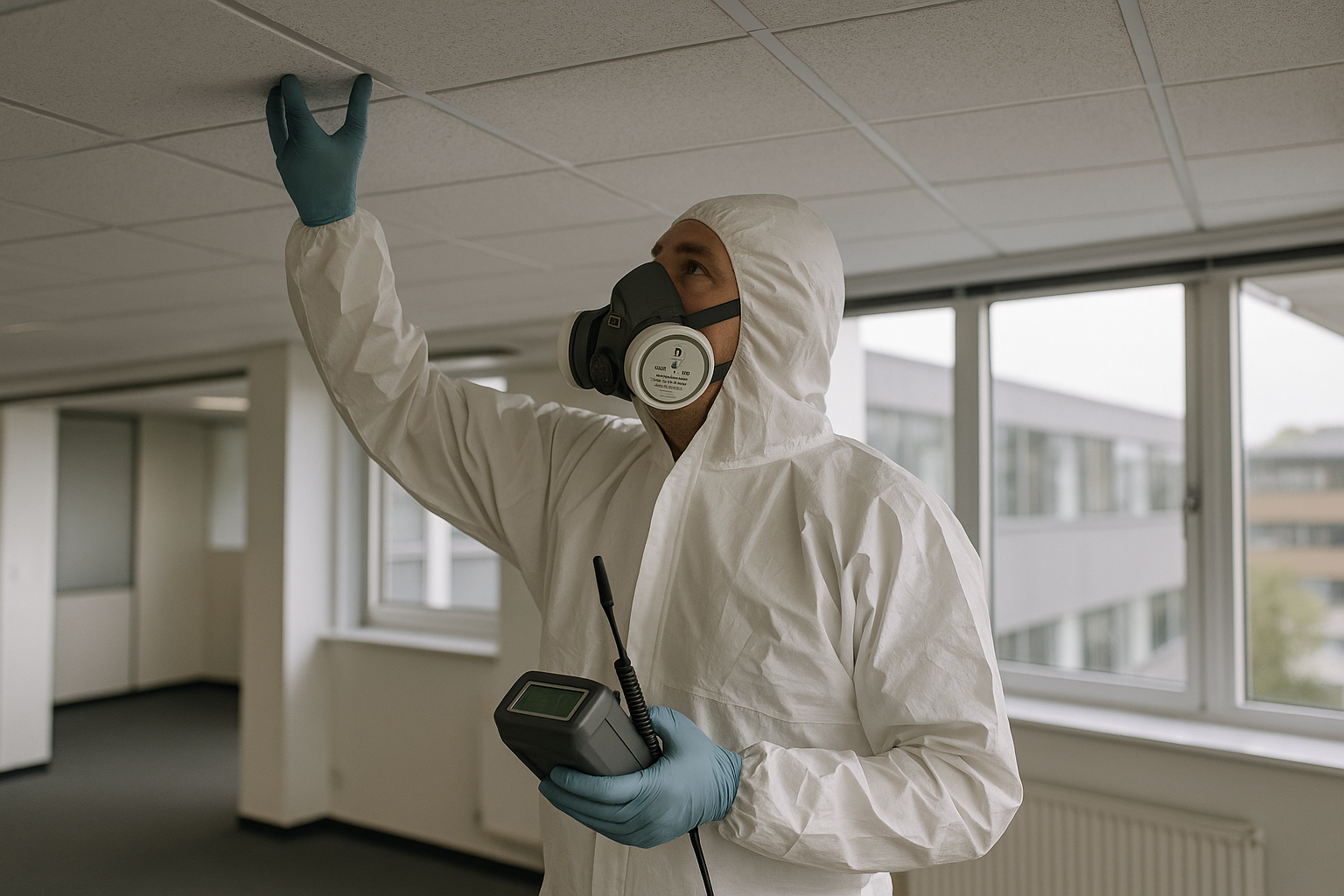
- Wearing full personal protective equipment including respirators, disposable suits, and gloves
- Wetting materials before removal to suppress dust
- Using HEPA-filtered vacuum equipment throughout the process
- Double-bagging and clearly labelling all removed material as hazardous waste
- Conducting air monitoring during and after the work
- Carrying out a thorough visual inspection and clearance air test before the area is reoccupied
Every stage is documented, and clearance certificates are issued only when independent air testing confirms that fibre levels are within safe limits. For full details of what this process involves, visit our dedicated page on asbestos removal.
What to Look for When Hiring an Asbestos Professional
Choosing the right contractor is critical. Before appointing anyone to carry out asbestos work, verify the following:
- HSE licence: Any contractor carrying out licensed asbestos removal must hold a current licence from the HSE. Ask to see it before work begins.
- UKAS-accredited laboratory: Samples must be analysed by an accredited lab, not assessed visually on site.
- Waste carrier licence: The contractor must be registered to transport hazardous waste legally.
- Insurance: Ensure the company holds adequate public liability and professional indemnity insurance.
- Experience and references: Look for a demonstrable track record with verifiable client references.
- Clear written quotation: A reputable company will provide a detailed scope of work and transparent pricing before starting.
For those requiring asbestos testing as part of a broader survey programme, our team can advise on the most appropriate approach for your specific premises and risk profile.
Asbestos Surveys Across the UK: Local Expertise, National Standards
The dangers of asbestos in the UK and why proper abatement is essential apply equally whether your property is a city-centre office block or a rural community hall. Supernova Asbestos Surveys operates nationwide, bringing consistent standards and UKAS-accredited laboratory analysis to every project we undertake.
If you are based in the capital and need an asbestos survey London property owners and managers can rely on, our London team is ready to assist. We also provide full surveying services in the North West — our asbestos survey Manchester service covers commercial, industrial, and residential premises throughout the region.
In the Midlands, our asbestos survey Birmingham team works with property managers, housing associations, and local authorities to ensure their buildings are properly assessed and their legal obligations met. Wherever you are in the UK, the same rigorous process applies.
Asbestos in Residential Properties: A Risk That Is Often Overlooked
The legal duty to manage asbestos applies specifically to non-domestic premises, but that does not mean homeowners are without risk. Properties built or refurbished before 2000 may contain asbestos in textured coatings, floor tiles, roof materials, and insulation — and many homeowners remain entirely unaware of this.
DIY work is one of the most common routes to accidental asbestos exposure in domestic settings. Drilling into an Artex ceiling, sanding a floor, or removing old insulation without knowing what is present can release fibres into a home environment where children and other vulnerable people are present.
If you are planning any work on an older property, ordering a testing kit or commissioning a professional survey before work begins is the single most effective step you can take to protect yourself and your family. The cost is minimal compared to the potential consequences of proceeding blind.
The Cost of Getting It Wrong
The financial consequences of mishandling asbestos can be severe. Regulatory enforcement action, civil compensation claims from workers or occupants who have been exposed, and the cost of remediation following an uncontrolled release can all run to very significant sums.
Beyond the financial exposure, there is the reputational damage to consider. An employer or landlord found to have exposed people to asbestos through negligence faces consequences that go far beyond any fine. Criminal prosecution, disqualification, and lasting reputational harm are all real possibilities.
Proper abatement, carried out by qualified professionals following the correct procedures, is not an overhead — it is protection. The cost of doing it right is always lower than the cost of dealing with the aftermath of doing it wrong.
Frequently Asked Questions
What are the main health risks of asbestos exposure in the UK?
Asbestos exposure is linked to several serious and life-limiting conditions, including mesothelioma, lung cancer, asbestosis, and pleural thickening. All of these conditions have long latency periods — symptoms may not appear until 20 to 40 years after exposure. The UK has one of the highest rates of mesothelioma in the world, largely due to the widespread industrial use of asbestos throughout the twentieth century.
Do I have a legal duty to manage asbestos in my building?
Yes, if you own, manage, or have responsibility for maintaining a non-domestic premises, the Control of Asbestos Regulations place a legal duty on you to manage asbestos. This includes identifying whether asbestos-containing materials are present, assessing the risk, and producing a written management plan. The communal areas of residential buildings are also covered. Failure to comply can result in unlimited fines and imprisonment.
What is the difference between a management survey and a refurbishment survey?
A management survey is carried out to locate and assess asbestos-containing materials in a building that is in normal use, so that they can be managed safely and the duty to manage obligation can be met. A refurbishment survey is a more intrusive investigation required before any renovation, refurbishment, or demolition work takes place. It ensures that workers will not unknowingly disturb asbestos during the works. Both types must be carried out by a competent surveyor following the standards set out in HSG264.
Can I remove asbestos myself?
In most cases, no. The Control of Asbestos Regulations specify that the majority of asbestos removal work must be carried out by a contractor holding a current HSE licence. Even for minor work that falls outside the licensed category, strict controls still apply. Attempting to remove asbestos without the correct training, equipment, and procedures is dangerous and likely to be unlawful. Always engage a qualified professional and verify their credentials before any work begins.
How do I know if my building contains asbestos?
The only reliable way to confirm whether asbestos-containing materials are present is through sampling and laboratory analysis by a UKAS-accredited laboratory. A professional asbestos survey will identify suspect materials, take samples where appropriate, and provide a detailed report. If you want an initial indication before commissioning a full survey, an asbestos testing kit can be used to take a sample for laboratory analysis, but this does not replace a professional survey for properties where significant work is planned.
Get Expert Help Today
If you need professional advice on asbestos in your property, our team of qualified surveyors is ready to help. With over 50,000 surveys completed across the UK, Supernova Asbestos Surveys delivers clear, actionable reports you can rely on.
Call us on 020 4586 0680 or visit asbestos-surveys.org.uk for a free, no-obligation quote.