Which Type of Asbestos Survey Do You Actually Need?
Choosing the wrong type of asbestos survey isn’t just an administrative inconvenience — it can leave hidden asbestos-containing materials (ACMs) undiscovered, expose workers to dangerous fibres, and put you on the wrong side of the law. The types of asbestos survey in the UK are defined by purpose, and picking the right one depends entirely on what you plan to do with your building.
Whether you manage a commercial property, are planning a refurbishment, or are about to bring a structure down, the Control of Asbestos Regulations sets out clear legal duties. Getting this right from the outset protects people, protects your business, and keeps the HSE off your doorstep.
What Is an Asbestos Survey and Why Does It Matter?
An asbestos survey is a formal inspection of a building carried out by a competent surveyor to locate, assess, and record any asbestos-containing materials. It isn’t a casual walk-through — it involves a structured visual inspection, sampling of suspect materials, and sample analysis at a UKAS-accredited laboratory.
The results feed directly into two critical documents: your asbestos register and your asbestos management plan. Both are legal requirements for duty holders of non-domestic buildings under the Control of Asbestos Regulations.
Asbestos was widely used in UK construction until it was fully banned in 1999. Any building constructed or refurbished before that date could contain ACMs — and many do, often in places you wouldn’t expect:
- Ceiling tiles and textured coatings (Artex)
- Floor tiles and adhesives
- Pipe lagging and boiler insulation
- Roof sheets and guttering
- Fire doors and partition walls
- Sprayed coatings on structural steelwork
Without a proper survey, you’re essentially guessing. And in the context of asbestos, guessing can be fatal.
The Three Main Types of Asbestos Survey in the UK
HSE guidance document HSG264 defines three distinct types of asbestos survey used in the UK. Each serves a different purpose and involves a different level of intrusiveness. Understanding the difference is the starting point for legal compliance.
- Management Survey
- Refurbishment Survey
- Demolition Survey
Let’s look at each in detail.
Management Survey: For Buildings in Normal Use
A management survey is the standard survey required for any non-domestic building that is in normal occupation and use. It’s the baseline legal requirement under the Control of Asbestos Regulations for duty holders — typically building owners, landlords, or facilities managers.
The purpose is straightforward: to locate ACMs that could be disturbed during everyday activities, routine maintenance, or minor works, and to assess their condition so that appropriate management action can be taken.
What Does a Management Survey Involve?
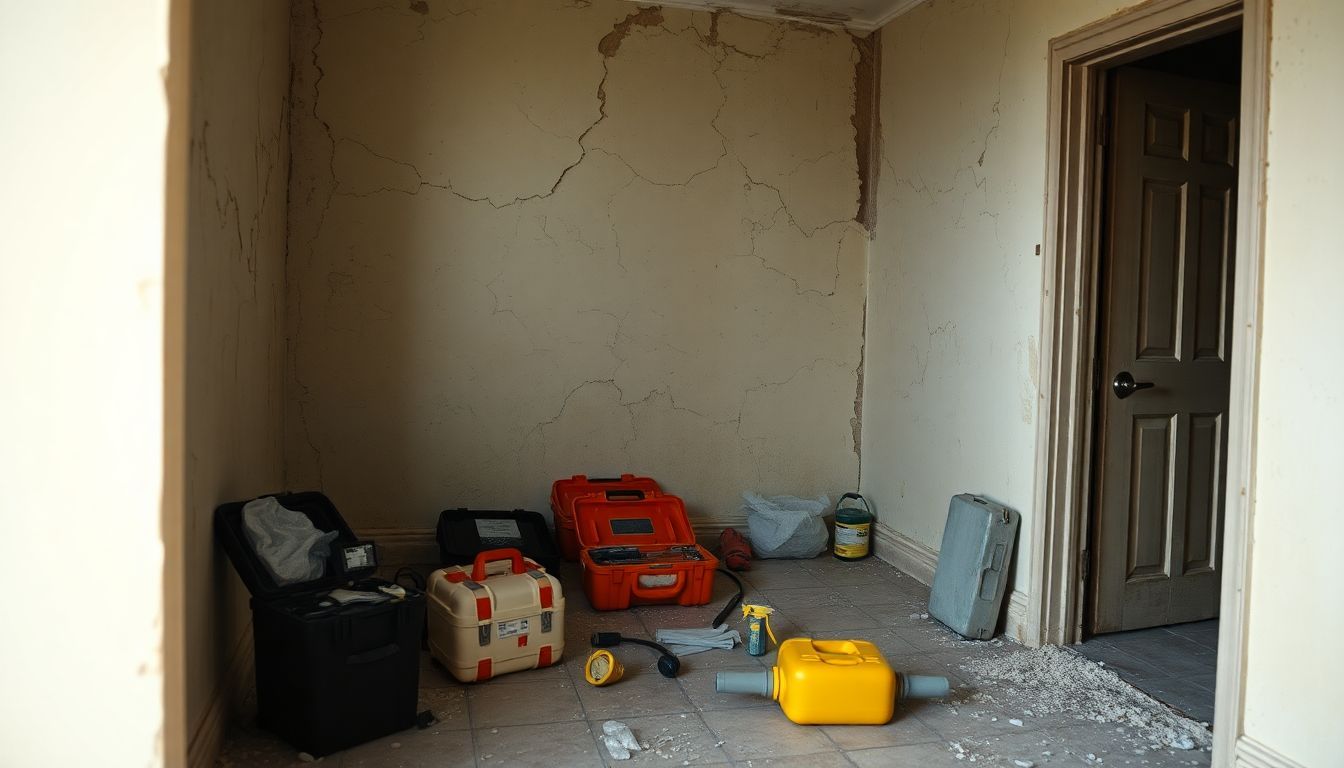
A management survey uses a combination of visual inspection and limited intrusive work. The surveyor will access all accessible areas of the building — offices, corridors, plant rooms, roof spaces, cellars, basements, service ducts, and external elements such as gutters and soffits.
Where materials are suspected of containing asbestos, small samples are taken and sent for laboratory analysis. Results confirm whether ACMs are present and help determine the risk they pose.
Critically, a management survey is not fully intrusive. It won’t involve breaking into sealed voids, lifting all floor coverings, or dismantling structural elements. That level of investigation is reserved for the other survey types.
When Is a Management Survey Required?
- Your building is in active use — occupied by staff, tenants, or the public
- The building was constructed or refurbished before 2000
- You are the duty holder responsible for maintaining the premises
- You need to create or update your asbestos register and management plan
- Routine maintenance or minor works are being carried out
The management survey is not a one-off exercise. Your asbestos management plan should be reviewed annually, and the register updated whenever there are changes to the building or its condition.
If a surveyor can’t access a particular area during the inspection, that area should be presumed to contain asbestos until proven otherwise. This presumption of presence is a fundamental principle in HSG264 — and one that duty holders must take seriously.
What Happens After a Management Survey?
Once the survey is complete, your surveyor will produce a detailed report. This includes the location and condition of all identified or presumed ACMs, a risk assessment for each, and recommended actions — whether that’s monitoring, encapsulation, or removal.
This data becomes the foundation of your asbestos management plan, which must be accessible to anyone who could disturb the materials — including contractors, maintenance staff, and emergency services.
Refurbishment Survey: Before Any Renovation or Upgrade Work
If you’re planning any significant work on a building — whether that’s a full fit-out, structural alterations, new heating systems, or even partial demolition — a refurbishment survey is legally required before work begins. A management survey simply doesn’t go far enough in these situations.
The refurbishment survey is far more intrusive than a management survey. It’s designed to locate all ACMs in the specific areas where work will take place — including those hidden behind walls, above suspended ceilings, beneath floor coverings, and within structural voids.
What Does a Refurbishment Survey Involve?
This type of survey uses destructive inspection techniques — that means physically opening up building fabric to access concealed spaces. The surveyor will lift floor tiles, remove ceiling panels, drill into walls, and investigate voids that a standard management survey would never reach.
Because of this destructive element, the area being surveyed must be vacated and cleared before the inspection begins. Occupants cannot remain in the space during a refurbishment survey.
Samples are taken from all suspect materials and sent for laboratory analysis. Once testing is complete and results are assessed, the surveyor can confirm whether the area is safe to reoccupy and for work to proceed. In many cases, a ‘fit for reoccupation’ certificate is issued once the process is concluded.
When Is a Refurbishment Survey Required?
- You are planning a refurbishment, fit-out, or renovation in a pre-2000 building
- Structural work will disturb walls, ceilings, floors, or service voids
- New installations — heating, electrics, plumbing — will require penetration of existing building fabric
- The area to be worked on has not been previously surveyed to this level of detail
- Your existing management survey doesn’t adequately cover the planned work areas
A refurbishment survey only needs to cover the areas where work is planned. If you’re upgrading one floor of a building, the survey focuses on that floor — not the entire structure. However, if the scope of works changes, the survey scope must be revisited immediately.
Why Can’t You Just Use a Management Survey?
A management survey is designed to find ACMs that might be disturbed during normal use — not during intrusive construction work. Refurbishment activities will inevitably disturb materials that a management survey never investigated.
Using a management survey as the basis for refurbishment work puts workers at serious risk and puts you in direct breach of the Control of Asbestos Regulations. If asbestos is found during the refurbishment survey, you’ll need to arrange asbestos removal by a licensed contractor before work can safely proceed.
Demolition Survey: Before Any Structure Comes Down
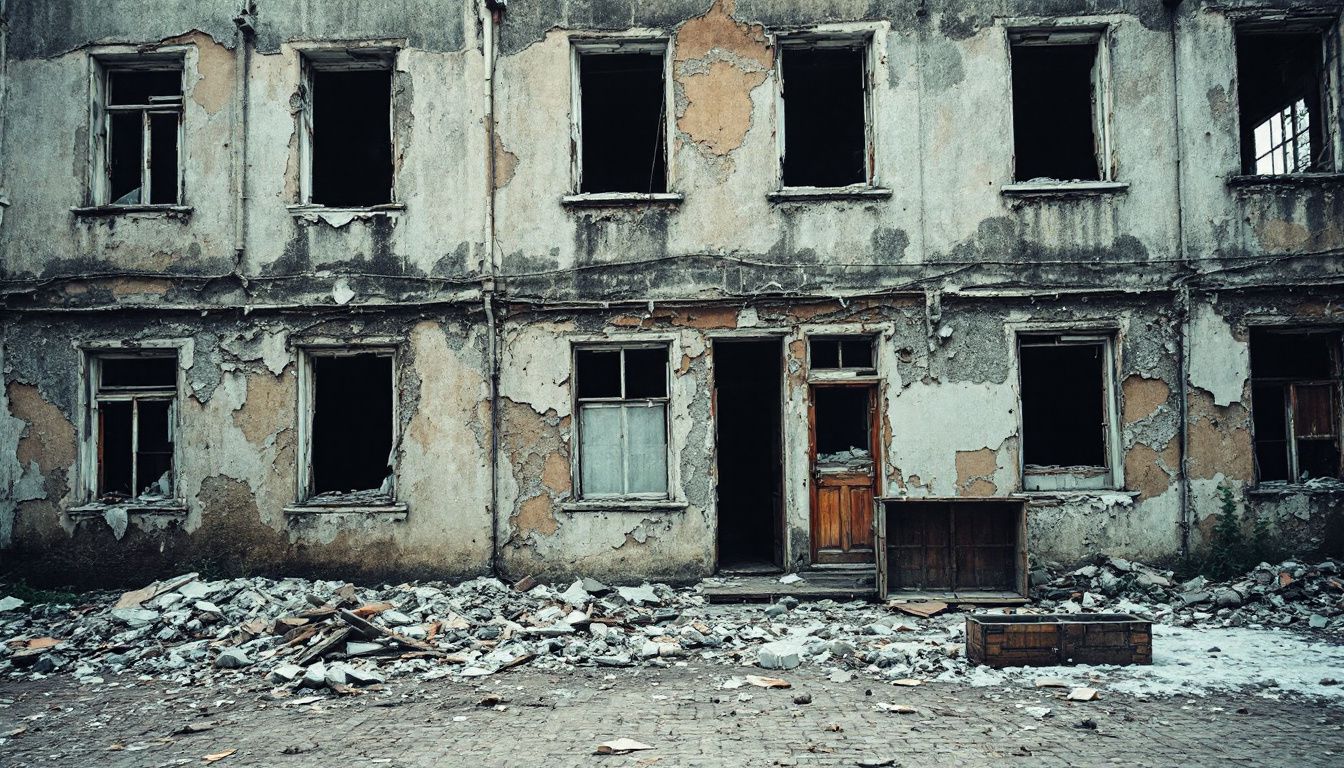
A demolition survey is the most thorough and intrusive of all three types. It’s required before any demolition work takes place on a building — whether that’s full demolition or the demolition of part of a structure.
The goal is absolute: every single ACM must be identified and accounted for before demolition begins. There is no margin for error, because demolition activities will release asbestos fibres from any material that hasn’t been removed beforehand.
What Does a Demolition Survey Involve?
This survey combines visual inspection, intrusive investigation, and fully destructive inspection techniques. The surveyor will access every part of the building — under floors, inside roof spaces, within wall cavities, behind structural elements, and beneath any fixtures or fittings. No area is off limits.
The building must be completely vacated during the survey. This is non-negotiable. The level of disruption involved in a demolition survey makes occupation unsafe, and the survey simply cannot be completed to the required standard if any areas are inaccessible.
All identified ACMs are logged in the asbestos register, and the findings feed into a detailed report that includes an executive summary, surveyor details, laboratory results, and recommended removal actions. All ACMs must be removed by a licensed contractor before demolition machinery moves in.
When Is a Demolition Survey Required?
- Full demolition of a building constructed before 2000 is planned
- Partial demolition of a pre-2000 structure is being carried out
- The building is being stripped back to its structural shell
- Any activity that will result in the complete destruction of building elements
Skipping a demolition survey isn’t just a regulatory failure — it’s a criminal offence. The Control of Asbestos Regulations makes this survey mandatory, and the HSE takes enforcement action seriously. Fines, prosecution, and site shutdowns are all real consequences.
How Do the Three Types of Asbestos Survey in the UK Compare?
Seeing the key differences side by side makes it much easier to choose the right survey for your situation.
Management Survey:
- Visual inspection with limited intrusion
- Building remains in normal use during the survey
- Covers the whole building
- Used for ongoing compliance and day-to-day management
Refurbishment Survey:
- Intrusive and destructive within the planned work zones
- Survey area must be vacated
- Covers specific areas where works are planned
- Required before renovation or upgrade works begin
Demolition Survey:
- Fully destructive throughout the entire structure
- Entire building must be vacated
- Covers every part of the structure without exception
- Required before any demolition work takes place
The surveys aren’t mutually exclusive either. A building might have an existing management survey in place, then require a refurbishment survey before a fit-out, and eventually a demolition survey before it’s torn down. Each survey serves its own purpose at its own stage of the building’s life.
The findings of one survey don’t automatically satisfy the requirements of another. A thorough management survey does not remove the need for a refurbishment survey before intrusive works — they are legally distinct requirements under HSG264.
Who Can Carry Out an Asbestos Survey in the UK?
All asbestos surveys must be carried out by a competent surveyor. HSE guidance is clear that surveyors should be appropriately trained and, ideally, hold certification from a recognised body such as the British Occupational Hygiene Society (BOHS) — specifically the P402 qualification for building surveys and bulk sampling.
Many duty holders also look for surveyors working within UKAS-accredited organisations, which provides an additional layer of quality assurance. The laboratory used for sample analysis must also be UKAS-accredited.
Attempting to carry out an asbestos survey yourself, or using an unqualified contractor, doesn’t just risk missing ACMs — it also means the survey won’t be legally defensible if the HSE investigates an incident. The cost of cutting corners here is simply not worth it.
Building Your Asbestos Register and Management Plan
Whichever survey type is relevant to your situation, the output matters just as much as the survey itself. A well-structured report should clearly identify every ACM or presumed ACM, state its location, describe its condition, assess the risk it poses, and recommend a course of action.
Your asbestos register must be kept up to date and made available to anyone who could disturb ACMs in the course of their work. This includes maintenance contractors, building services engineers, and emergency responders. Keeping this document locked in a drawer and inaccessible defeats the entire purpose.
Your asbestos management plan should set out how identified risks will be managed over time — through monitoring, encapsulation, or planned removal. It should be reviewed at least annually and updated following any survey, works, or change in the building’s use or condition.
Asbestos Surveys Across the UK: Where We Operate
Supernova Asbestos Surveys operates nationwide, with specialist teams covering major cities and surrounding areas. If you’re based in the capital, our asbestos survey London service provides fast, fully qualified inspections across all London boroughs.
For clients in the north-west, our asbestos survey Manchester team covers Greater Manchester and the surrounding region. And in the Midlands, our asbestos survey Birmingham service handles everything from single-site management surveys to large-scale demolition inspections.
Wherever your property is located, our surveyors hold the appropriate qualifications and work to the standards set out in HSG264 and the Control of Asbestos Regulations.
Frequently Asked Questions
What are the three types of asbestos survey in the UK?
The three types of asbestos survey defined by HSE guidance document HSG264 are the management survey, the refurbishment survey, and the demolition survey. Each serves a different purpose: the management survey is for buildings in normal use, the refurbishment survey is required before renovation or fit-out works, and the demolition survey is mandatory before any demolition activity takes place.
Do I need an asbestos survey for a residential property?
The legal duty to manage asbestos under the Control of Asbestos Regulations applies to non-domestic premises. However, if you are a landlord or housing association responsible for communal areas of a residential building — such as corridors, plant rooms, or roof spaces — you do have legal duties. For private homeowners, a survey is not a legal requirement but is strongly advisable before any renovation work on a pre-2000 property.
Can I use a management survey before starting refurbishment work?
No. A management survey is not sufficient for refurbishment or demolition work. It is designed to identify ACMs that could be disturbed during normal building use, not during intrusive construction activities. Using a management survey in place of a refurbishment survey puts workers at risk and constitutes a breach of the Control of Asbestos Regulations. A refurbishment survey must be completed — and any ACMs removed — before works begin.
How long does an asbestos survey take?
The duration depends on the size and complexity of the building, the type of survey required, and the number of samples to be taken. A management survey for a small commercial property might be completed in a few hours, while a demolition survey on a large industrial site could take several days. Laboratory analysis of samples typically takes a few working days, after which the full survey report is issued.
What qualifications should an asbestos surveyor hold?
Asbestos surveyors should hold the P402 qualification awarded by the British Occupational Hygiene Society (BOHS), which covers building surveys and bulk sampling. Many reputable surveying firms also operate within UKAS-accredited quality management systems. Always ask to see evidence of qualifications and accreditation before instructing a surveyor — a survey carried out by an unqualified individual will not be legally defensible.
Get the Right Survey First Time
Supernova Asbestos Surveys has completed over 50,000 surveys across the UK. Our fully qualified surveyors carry out management, refurbishment, and demolition surveys to HSG264 standards, with fast turnaround on laboratory results and clear, actionable reports.
Don’t leave your compliance to chance. Call us on 020 4586 0680 or visit asbestos-surveys.org.uk to book your survey or speak to one of our team about which survey type is right for your building.