Author: ☀️ Supernova

  • The Link Between Asbestos Exposure and Lung Disease

    The Link Between Asbestos Exposure and Lung Disease

    Asbestos Lung Diseases: What Every Property Owner and Worker Needs to Know

    Asbestos lung diseases are among the most devastating occupational health conditions in the UK — and every single one of them is entirely preventable. Tens of thousands of people have died as a direct result of past asbestos exposure, and new cases continue to emerge decades after those invisible fibres were first inhaled.

    Understanding how these diseases develop, who is at risk, and what practical steps you can take to protect yourself and others could genuinely save lives. The UK banned all types of asbestos in 1999, yet the legacy of its widespread use in construction remains very much with us. Millions of buildings still contain asbestos-containing materials (ACMs), and disturbance during renovation or routine maintenance continues to put people at risk every single day.

    What Is Asbestos and Why Is It So Dangerous?

    Asbestos is a group of naturally occurring fibrous silicate minerals that were used extensively in UK construction throughout the twentieth century. Its fire-resistant and insulating properties made it a popular material in everything from pipe lagging and ceiling tiles to floor coverings and roofing sheets.

    The danger lies in the fibres themselves. When asbestos-containing materials are disturbed, microscopic fibres are released into the air. These fibres are invisible to the naked eye, have no smell, and can remain airborne for hours. Once inhaled, they lodge deep in the lung tissue — and the body simply cannot expel them.

    There are two main categories of asbestos fibre:

    • Amphibole fibres (including amosite and crocidolite — brown and blue asbestos) — needle-like and highly durable, these remain in lung tissue for decades and are considered the most hazardous.
    • Serpentine fibres (chrysotile, or white asbestos) — curly and more soluble, the body can clear these more quickly, though they still pose a significant health risk.

    The persistence of amphibole fibres in the lungs is a key reason why asbestos lung diseases can take 20 to 40 years to develop after initial exposure. By the time symptoms appear, the damage is often severe and irreversible.

    How Asbestos Fibres Damage the Lungs

    When asbestos fibres reach the deepest parts of the lungs — the alveoli, where oxygen exchange takes place — the body’s immune system attempts to destroy them. Because the fibres cannot be broken down, the immune response becomes chronic and self-destructive.

    This ongoing inflammatory process triggers cellular damage over time. The fibres also interact with iron in the lung tissue, forming what are known as asbestos bodies — fibres coated with protein and iron compounds that are a hallmark finding in people with significant asbestos exposure.

    Over time, repeated cellular injury leads to fibrosis (scarring), genetic mutations in lung cells, and in some cases, malignant transformation. The longer and more intense the exposure, the greater the cumulative damage. There is no known safe level of asbestos exposure — even relatively brief contact carries some degree of risk.

    The Main Asbestos Lung Diseases

    Asbestos exposure is linked to a range of serious respiratory and pleural conditions. These are not rare or theoretical risks — they are well-documented, clinically recognised diseases that affect real people across the UK every year.

    Asbestosis

    Asbestosis is a chronic, non-cancerous lung disease caused by the inhalation of asbestos fibres over a prolonged period. The fibres cause progressive scarring (fibrosis) of the lung tissue, which stiffens the lungs and makes breathing increasingly difficult.

    Symptoms include breathlessness — particularly on exertion — a persistent dry cough, chest tightness, and in advanced cases, clubbing of the fingers. There is no cure for asbestosis; treatment focuses on managing symptoms and slowing progression. It is most commonly seen in people who worked in heavy industries such as shipbuilding, construction, and insulation installation.

    Mesothelioma

    Mesothelioma is a malignant cancer that affects the mesothelium — the thin tissue lining surrounding the lungs (pleura), abdomen (peritoneum), and other organs. It is almost exclusively caused by asbestos exposure and is one of the most aggressive cancers known.

    The prognosis for mesothelioma remains poor, with most patients surviving less than two years after diagnosis. The long latency period — typically 20 to 50 years — means that people diagnosed today were often exposed decades ago, frequently in occupations where asbestos use was commonplace and largely unregulated.

    The UK has one of the highest rates of mesothelioma in the world, a direct consequence of the country’s industrial heritage and the widespread use of asbestos in construction throughout the mid-twentieth century.

    Asbestos-Related Lung Cancer

    Asbestos exposure significantly increases the risk of lung cancer, and this risk is dramatically compounded by smoking. Workers exposed to asbestos who also smoked face a risk of lung cancer many times higher than non-exposed, non-smoking individuals.

    Unlike mesothelioma, asbestos-related lung cancer is histologically identical to lung cancer caused by other factors, which can make attribution challenging. However, occupational history is a critical part of any clinical assessment where asbestos exposure is suspected.

    Pleural Plaques

    Pleural plaques are areas of thickened, calcified tissue that form on the lining of the lungs and diaphragm. They are the most common manifestation of asbestos exposure and are found in a significant proportion of people with a history of occupational contact with asbestos.

    Pleural plaques are not cancerous and do not typically cause symptoms on their own, but their presence is a strong indicator of past asbestos exposure — often discovered incidentally on chest X-rays or CT scans. Critically, their presence confirms that a person has inhaled asbestos fibres, placing them at elevated risk for the more serious conditions described above.

    Pleural Effusion and Diffuse Pleural Thickening

    Benign pleural effusion — a build-up of fluid around the lungs — can occur as a direct result of asbestos exposure, sometimes within the first decade after contact. It may resolve on its own, but in some cases leads to diffuse pleural thickening, where extensive scarring of the pleural lining restricts lung expansion and causes breathlessness.

    Diffuse pleural thickening can be significantly disabling and, unlike discrete pleural plaques, is associated with measurable impairment of lung function.

    Recognising the Symptoms of Asbestos Lung Diseases

    One of the most dangerous aspects of asbestos lung diseases is that symptoms often do not appear until the disease is already well advanced. The long latency period — which can span several decades — means that by the time a person feels unwell, significant damage has already occurred.

    Symptoms to be aware of include:

    • Persistent shortness of breath, particularly during physical activity
    • A dry, persistent cough that does not resolve
    • Chest pain or tightness
    • Unexplained fatigue and weight loss
    • Finger clubbing (a widening and rounding of the fingertips) — associated with asbestosis
    • Coughing up blood — a serious symptom requiring immediate medical attention

    If you have a history of asbestos exposure — even from decades ago — and experience any of these symptoms, speak to your GP promptly. Make sure to inform them of your full occupational history. Early diagnosis improves the management options available, even where a cure is not possible.

    Who Is Most at Risk of Asbestos Lung Diseases?

    While anyone can be exposed to asbestos, certain groups face a substantially higher risk. Historically, the highest-risk occupations included:

    • Shipbuilders and shipyard workers
    • Construction workers, particularly those involved in insulation, roofing, and demolition
    • Electricians, plumbers, and heating engineers working in older buildings
    • Carpenters and joiners
    • Boilermakers and power station workers
    • Brake and clutch mechanics (due to asbestos in friction materials)
    • Factory workers in asbestos manufacturing

    Risk is not confined to those who worked directly with asbestos. Secondary — or para-occupational — exposure affected family members who laundered work clothes contaminated with fibres. Environmental exposure near asbestos mines or processing plants has also been documented as a cause of mesothelioma.

    Today, the most significant at-risk group is tradespeople working in buildings constructed before 2000. Electricians, plumbers, and builders who disturb ACMs without proper precautions are at real and ongoing risk. This is precisely why thorough asbestos management is both a legal and moral obligation for property owners and managers.

    The Legal Framework: Protecting People from Asbestos Lung Diseases

    The UK has a robust legal framework designed to minimise the risk of asbestos exposure. The Control of Asbestos Regulations places a duty on those responsible for non-domestic premises to manage asbestos effectively. This means identifying the location and condition of ACMs, assessing the risk they pose, and putting in place a management plan to prevent disturbance.

    The HSE’s guidance document HSG264 sets out the standards for asbestos surveying and is the benchmark against which all professional surveys are conducted. Compliance with this guidance is not optional — it is the foundation of a legally defensible asbestos management approach.

    Failure to manage asbestos properly is not just a regulatory offence. It puts workers, tenants, and visitors at genuine risk of developing the asbestos lung diseases described throughout this article. The consequences — both human and legal — can be severe and long-lasting.

    How Professional Asbestos Surveys Help Prevent Asbestos Lung Diseases

    The single most effective step a property owner or manager can take to prevent asbestos lung diseases is to commission a professional asbestos survey. A survey identifies where ACMs are present, assesses their condition, and provides a clear management plan to prevent fibre release.

    There are several types of survey depending on your circumstances.

    Management Survey

    A management survey is the standard survey required for the ongoing management of asbestos in an occupied building. It locates ACMs that could be disturbed during normal occupation and maintenance, and assesses their condition and risk.

    This is the survey most property managers and building owners require to fulfil their duty to manage under the Control of Asbestos Regulations. Without it, you have no reliable basis for managing the risk of asbestos exposure in your building.

    Refurbishment Survey

    Before any renovation, refurbishment, or structural work begins, a refurbishment survey is legally required. This is a more intrusive survey that locates all ACMs in areas to be disturbed, ensuring that contractors are not unknowingly cutting into or removing asbestos-containing materials.

    Skipping this step is one of the most common ways that tradespeople are inadvertently exposed to asbestos — and one of the most avoidable.

    Re-Inspection Survey

    Asbestos management is not a one-off exercise. ACMs left in place must be regularly monitored to ensure their condition has not deteriorated. A re-inspection survey checks the current condition of known ACMs and updates the asbestos register accordingly — a legal requirement under the Control of Asbestos Regulations for duty holders.

    Asbestos Testing

    If you need to confirm whether a specific material contains asbestos and a full survey is not immediately required, professional asbestos testing allows samples to be collected and analysed in an accredited laboratory. This can be a cost-effective way to confirm whether a specific material contains asbestos before deciding on next steps.

    Alternatively, if you want to collect a sample yourself before sending it for analysis, an asbestos testing kit provides everything you need to do so safely and correctly.

    Fire Risk Assessments

    Asbestos management often sits alongside other compliance obligations. A fire risk assessment is another legal requirement for most non-domestic premises, and combining both assessments is an efficient way to manage your compliance obligations in one visit.

    Asbestos in London and Urban Properties

    Urban properties — particularly those in large cities — often carry a higher density of asbestos risk due to the concentration of older commercial and residential buildings. If you manage or own property in the capital, commissioning an asbestos survey in London from a specialist team familiar with the local building stock is a sensible and legally sound approach.

    Older office blocks, converted warehouses, pre-war housing, and public buildings are all common locations for ACMs. Do not assume that a building’s age alone tells you everything — professional assessment is the only reliable way to know what you are dealing with.

    Reducing Your Risk: Practical Steps for Property Owners and Workers

    Whether you are a property manager, a contractor, or someone who works in an older building, there are practical steps you can take to reduce the risk of asbestos lung diseases.

    For property owners and managers:

    1. Commission a professional asbestos survey if you do not already have one — this is a legal requirement for non-domestic premises.
    2. Maintain an up-to-date asbestos register and management plan.
    3. Ensure all contractors are informed of known ACMs before beginning any work.
    4. Schedule regular re-inspection surveys to monitor the condition of ACMs in situ.
    5. Never allow work to proceed in areas where asbestos has not been assessed.

    For workers and tradespeople:

    1. Always ask to see the asbestos register before starting work in any building constructed before 2000.
    2. If no survey has been carried out, request one before proceeding — you are entitled to this information.
    3. Do not disturb any material you suspect may contain asbestos without proper assessment and appropriate controls.
    4. Use appropriate personal protective equipment (PPE) when working in environments where asbestos exposure is a possibility.
    5. Report any suspected ACMs to your supervisor or the building’s duty holder immediately.

    The key principle is straightforward: if in doubt, stop and get it checked. No job is worth the risk of developing an asbestos lung disease.

    The Human Cost — Why Prevention Matters

    Behind every statistic on asbestos lung diseases is a person — a parent, a colleague, a neighbour — who went to work and came home carrying invisible fibres that would, decades later, claim their life. The diseases caused by asbestos are cruel in their latency: by the time a diagnosis is made, treatment options are often limited.

    Mesothelioma, in particular, is almost always fatal. Asbestosis is progressive and irreversible. Asbestos-related lung cancer carries a poor prognosis. These are not conditions that can be reversed once they take hold — which is precisely why prevention, through rigorous asbestos management and professional surveying, is so critical.

    The good news is that the tools to prevent future cases exist right now. Professional surveys, proper management plans, and a culture of compliance can break the chain of exposure entirely. The responsibility lies with those who own and manage buildings — and the consequences of inaction are too serious to ignore.

    Frequently Asked Questions

    What are the most serious asbestos lung diseases?

    The most serious asbestos lung diseases are mesothelioma, asbestos-related lung cancer, and asbestosis. Mesothelioma is an aggressive cancer of the lining of the lungs or abdomen that is almost exclusively caused by asbestos exposure. Asbestosis is a progressive, irreversible scarring of the lung tissue. All three conditions have limited treatment options and can be fatal.

    How long after asbestos exposure do lung diseases develop?

    Asbestos lung diseases typically have a very long latency period — often between 20 and 50 years after initial exposure. This means someone exposed to asbestos in the 1970s or 1980s may only now be developing symptoms. This delayed onset is one of the reasons why new cases continue to be diagnosed despite the UK’s ban on asbestos use.

    Can a single exposure to asbestos cause lung disease?

    There is no known safe level of asbestos exposure. While the risk of developing an asbestos lung disease is generally linked to the duration and intensity of exposure, even a single significant exposure carries some degree of risk. Prolonged or repeated exposure — particularly to amphibole fibres such as blue or brown asbestos — substantially increases the likelihood of disease.

    Do I need an asbestos survey if my building was built before 2000?

    If you are responsible for a non-domestic building constructed before 2000, you are legally required under the Control of Asbestos Regulations to manage asbestos in that building. This almost always means commissioning a professional asbestos survey. Even in residential properties, a survey is strongly advisable before any renovation or refurbishment work begins.

    What should I do if I think I have been exposed to asbestos?

    If you believe you have been exposed to asbestos — whether recently or in the past — speak to your GP as soon as possible and provide a full occupational history. You should also report the exposure to your employer if it occurred in a workplace setting. Regular monitoring may be recommended depending on the nature and duration of the exposure. Early medical engagement is important, even if you have no symptoms at present.


    At Supernova Asbestos Surveys, we have completed over 50,000 surveys nationwide and understand the very real human stakes involved in asbestos management. Whether you need a management survey, a refurbishment survey, or straightforward asbestos testing for a specific material, our accredited surveyors are ready to help.

    Call us on 020 4586 0680 or visit asbestos-surveys.org.uk to book your survey and take the most important step you can towards protecting the people in your building.
  • The Deadly Legacy of Asbestos in Construction

    The Deadly Legacy of Asbestos in Construction

    Asbestos in Building Construction: What Every Property Owner, Manager, and Tradesperson Needs to Know

    Millions of UK buildings are still harbouring a silent killer. Asbestos in building construction was once considered a wonder material — cheap, durable, fire-resistant, and seemingly ideal for almost every application imaginable. For decades it was woven into the very fabric of the industry, used in everything from schools and hospitals to family homes and office blocks.

    The legacy of that widespread use is still being felt today, with thousands of deaths occurring every year as a direct result of past exposure. If you own, manage, or work in a building constructed before 2000, understanding the risks is not optional. It is a legal and moral obligation — one that carries serious consequences if ignored.

    A Brief History of Asbestos in Building Construction

    Asbestos was never a niche product. From the 1930s right through to the late 1980s, it was used across UK construction on a massive scale. Builders incorporated it into everything from roofing sheets and floor tiles to pipe lagging, textured coatings, and spray-applied insulation.

    Three main types were used commercially:

    • Chrysotile (white asbestos) — the most widely used type, found in cement products, roofing, and floor tiles
    • Amosite (brown asbestos) — commonly used in thermal insulation and ceiling tiles; strongly linked to mesothelioma
    • Crocidolite (blue asbestos) — considered the most hazardous type, used in spray insulation and pipe lagging

    The UK imported asbestos — primarily from Canada and South Africa — for the better part of 150 years. Brown and blue asbestos were banned in 1985, but white asbestos continued to be used until a total ban came into force in 1999.

    The problem is that decades of use means the material is embedded throughout the existing building stock. A ban does not make it disappear from the buildings where it was already installed.

    Where Asbestos Was Used in Buildings

    Understanding where asbestos was commonly installed helps you assess the risk in any given property. It was not confined to industrial sites — it was used in schools, hospitals, offices, and residential properties alike.

    Common Locations in Commercial and Public Buildings

    • Sprayed coatings on structural steelwork and concrete
    • Pipe and boiler lagging
    • Ceiling tiles and suspended ceiling systems
    • Partition walls and wall panels
    • Asbestos cement roofing sheets and guttering
    • Insulating board around fire doors and service ducts
    • Floor tiles and the adhesive used to fix them
    • Textured decorative coatings such as Artex

    Common Locations in Residential Properties

    • Artex and other textured ceiling finishes
    • Vinyl floor tiles
    • Asbestos cement garage roofs and outbuildings
    • Soffit boards and fascias
    • Boiler and hot water cylinder insulation
    • Lagging on central heating pipes

    The sheer variety of applications is why asbestos in building construction remains such a complex challenge. A single building may contain multiple asbestos-containing materials (ACMs) in different locations and in varying conditions — some posing immediate risk, others manageable if left undisturbed.

    The Scale of the Problem in the UK Today

    Hundreds of thousands of UK buildings still contain asbestos, with significant quantities of the material spread across the existing property stock. These are not abandoned warehouses — they include schools, NHS hospitals, offices, and family homes.

    A significant proportion of UK schools contain asbestos, as do the majority of NHS hospital buildings. These are environments where children, patients, and staff spend considerable time every day.

    The material is largely manageable when it is in good condition and left undisturbed. The danger arises when it is damaged, deteriorating, or disturbed during renovation and demolition work — which is precisely when fibres become airborne and inhalable.

    The Health Consequences of Asbestos Exposure

    Asbestos kills. That is not hyperbole — it is the documented reality of what happens when microscopic fibres are inhaled and become lodged in lung tissue. The UK has one of the highest mesothelioma death rates per capita in the world.

    Mesothelioma is an aggressive cancer of the lining of the lungs, almost exclusively caused by asbestos exposure. Survival rates remain extremely poor, with most patients surviving less than a year after diagnosis.

    Beyond mesothelioma, asbestos exposure is linked to:

    • Asbestosis — progressive scarring of lung tissue that causes breathlessness and reduced lung function
    • Lung cancer — particularly in those who were also smokers
    • Pleural plaques and pleural thickening — changes to the lining of the lungs that can cause discomfort and breathing difficulties

    One of the most insidious aspects of asbestos-related disease is the latency period. Symptoms may not appear until 20, 30, or even 40 years after initial exposure. By the time a diagnosis is made, the disease is often at an advanced stage.

    This means the people dying from mesothelioma today were typically exposed during the 1970s and 1980s — when asbestos in building construction was at its peak. The UK currently sees over 5,000 asbestos-related deaths every year, a figure expected to remain elevated for years to come.

    Your Legal Obligations as a Duty Holder

    If you own or manage a non-domestic property built before 2000, the law places a clear duty on you to manage asbestos. This is set out in the Control of Asbestos Regulations, specifically in Regulation 4, which establishes the duty to manage.

    In practical terms, this means you must:

    1. Identify whether asbestos-containing materials are present in your building
    2. Assess the condition and risk of those materials
    3. Produce and maintain an up-to-date asbestos register
    4. Implement a written asbestos management plan
    5. Ensure anyone who may disturb ACMs is made aware of their presence
    6. Arrange regular re-inspections to monitor the condition of known ACMs

    Failure to comply is not just a regulatory issue — it can result in significant fines, enforcement action, and, most critically, serious harm to the people who use your building.

    The HSE’s guidance document HSG264 sets out the standards for asbestos surveying and underpins how compliant surveys must be conducted. Any survey carried out on your behalf should follow HSG264 methodology.

    The Role of Asbestos Surveys in Managing the Risk

    A professional asbestos survey is the foundation of any compliant asbestos management programme. The type of survey you need depends on what you intend to do with the building and its current status.

    Management Surveys

    A management survey is the standard survey for buildings in normal occupation. It identifies the location, extent, and condition of any ACMs that could be disturbed during routine maintenance or day-to-day use.

    The output is an asbestos register and a risk-rated management plan that tells you what action, if any, is required for each material identified. This document forms the backbone of your legal compliance.

    Refurbishment Surveys

    Before any structural work or renovation takes place, a refurbishment survey is legally required. This is a more intrusive survey that involves accessing all areas to be disturbed, including voids, cavities, and areas above suspended ceilings.

    It ensures that contractors are not unknowingly disturbing asbestos during the works — a situation that puts workers and building occupants at serious risk.

    Demolition Surveys

    Where a building is to be demolished entirely, a demolition survey is required. This is the most thorough and intrusive type of survey, covering every part of the structure to ensure all ACMs are identified and safely removed before demolition begins.

    Proceeding with demolition without this survey in place is a serious breach of the Control of Asbestos Regulations and creates significant risk for demolition workers.

    Re-Inspection Surveys

    Once ACMs have been identified and a management plan is in place, the condition of those materials must be monitored over time. A re-inspection survey is carried out at regular intervals — typically annually — to check whether the condition of known ACMs has changed and whether the risk rating needs to be updated.

    Skipping re-inspections is a common compliance failure. The condition of asbestos can deteriorate due to building works nearby, water ingress, or general wear and tear — and what was low-risk last year may not be this year.

    What Happens During an Asbestos Survey

    A qualified surveyor carries out a thorough visual inspection of the property, taking samples from materials suspected to contain asbestos. Those samples are sent to a UKAS-accredited laboratory for analysis under polarised light microscopy.

    You will typically receive a written report within three to five working days. That report includes:

    • A full asbestos register detailing every suspected or confirmed ACM
    • A risk assessment for each identified material
    • A management plan setting out the recommended course of action
    • Photographic evidence and precise location information

    The report is fully compliant with HSG264 and satisfies the requirements of the Control of Asbestos Regulations. All Supernova Asbestos Surveys surveyors hold BOHS P402 qualifications — the recognised standard for asbestos surveying in the UK.

    Testing Kits and Bulk Sampling for Homeowners

    In some situations — particularly for homeowners who want to check a specific material before deciding on a course of action — a bulk sampling approach may be appropriate. Supernova offers a postal testing kit that allows you to collect a sample from a suspect material and send it to our UKAS-accredited laboratory for analysis.

    Results are returned promptly, giving you a clear answer on whether the material contains asbestos. This is not a substitute for a full survey in a commercial or public building, but it can be a useful and cost-effective first step for residential properties.

    Asbestos and Fire Safety: The Wider Risk Picture

    Asbestos is not the only legacy hazard in older buildings. Many properties that contain asbestos also have outdated fire safety systems, ageing electrical installations, and other structural risks that need to be assessed alongside asbestos management.

    A fire risk assessment is a legal requirement for all non-domestic premises and should be carried out as part of a joined-up approach to building safety. Managing both asbestos and fire risk together gives you a complete picture of the hazards present in your building and ensures you are meeting your obligations under both the Control of Asbestos Regulations and fire safety legislation.

    Treating these as separate, unrelated exercises is a missed opportunity. The most effective building safety programmes address all legacy hazards in a coordinated way.

    The Construction Industry and Ongoing Exposure Risk

    The construction industry remains one of the highest-risk sectors for asbestos exposure. Tradespeople — plumbers, electricians, joiners, and general builders — who regularly work in older buildings face ongoing exposure risks, particularly when they disturb materials without knowing they contain asbestos.

    Proper surveying and clear communication of asbestos locations before any work begins is essential. Under the Control of Asbestos Regulations, duty holders are required to share asbestos register information with contractors before they start work — this is not optional.

    The responsibility for compliance sits firmly with building owners and managers. If you manage a building and cannot confirm that your contractors have been informed of any known ACMs, you are already in breach of your duty. The consequences of inaction — both legal and human — are severe.

    Supernova Asbestos Surveys: UK-Wide Coverage

    Supernova Asbestos Surveys operates across the length and breadth of the UK, with local teams available to carry out surveys quickly and efficiently. With over 50,000 surveys completed nationwide, we have the experience and accreditation to support property owners, managers, and facilities teams at every stage of their asbestos management journey.

    Whether you need an asbestos survey London clients trust, an asbestos survey Manchester businesses rely on, or an asbestos survey Birmingham property teams depend on, our qualified surveyors are ready to help.

    To book a survey or discuss your requirements, call us on 020 4586 0680 or visit asbestos-surveys.org.uk. Do not wait until a contractor raises a concern on site — get ahead of the risk now.

    Frequently Asked Questions

    Is asbestos still present in UK buildings?

    Yes. Hundreds of thousands of UK buildings still contain asbestos-containing materials (ACMs). Any property built or refurbished before 2000 may contain asbestos, including schools, hospitals, offices, and residential homes. The material was not removed when it was banned — it remains in place wherever it was originally installed.

    How do I know if my building contains asbestos?

    The only reliable way to confirm whether a building contains asbestos is to commission a professional asbestos survey carried out by a BOHS P402-qualified surveyor. Visual inspection alone is not sufficient — many ACMs cannot be identified by appearance. Samples must be analysed by a UKAS-accredited laboratory to confirm the presence or absence of asbestos fibres.

    What are my legal obligations regarding asbestos in building construction?

    If you are the duty holder for a non-domestic property built before 2000, you are legally required under the Control of Asbestos Regulations to identify ACMs, assess their condition, produce an asbestos register, implement a management plan, and inform contractors of any known asbestos before they begin work. Failure to comply can result in enforcement action, prosecution, and significant fines.

    What is the difference between a management survey and a refurbishment survey?

    A management survey is carried out on occupied buildings to identify ACMs that could be disturbed during routine use or maintenance. A refurbishment survey is required before any renovation or structural work takes place — it is more intrusive and covers all areas that will be affected by the works. Both must be carried out by a qualified surveyor following HSG264 methodology.

    Can I test for asbestos myself?

    Homeowners can use a postal testing kit to collect a sample from a suspect material and have it analysed by a UKAS-accredited laboratory. This can be a practical first step for residential properties. However, it is not a substitute for a full professional survey, and duty holders responsible for non-domestic premises must commission a formal survey to meet their legal obligations under the Control of Asbestos Regulations.

  • The Dangers of Asbestos in Old Buildings

    The Dangers of Asbestos in Old Buildings

    Asbestos in Abandoned Factories: What Every Owner, Developer, and Surveyor Needs to Know

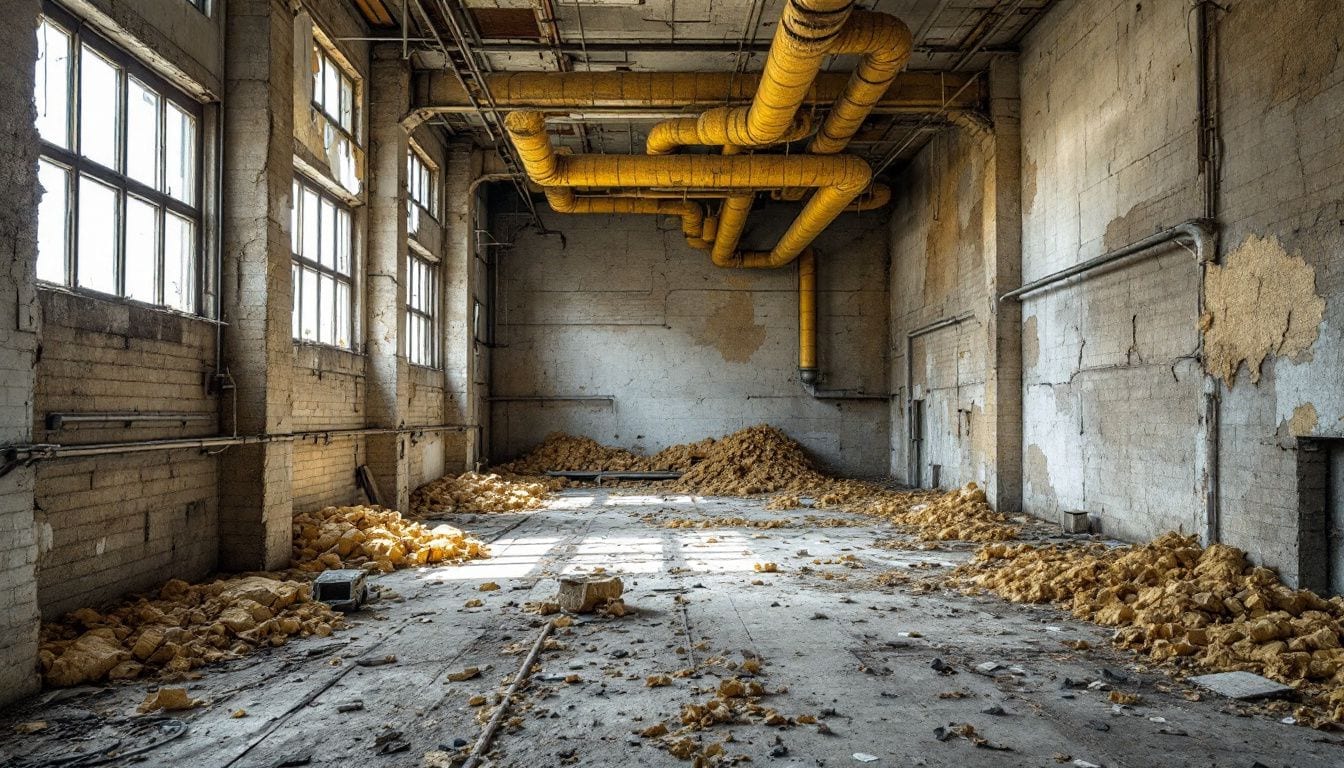
    Abandoned factories are among the most hazardous environments in the UK when it comes to asbestos exposure. Decades of heavy industrial use, followed by years — sometimes decades — of neglect, create conditions where asbestos in abandoned factories poses an extreme and often invisible threat to anyone who enters, works on, or lives near these sites.

    Whether you are a property developer eyeing a brownfield site, a local authority managing derelict land, or a demolition contractor preparing to move in, understanding what you are dealing with could save lives. This is not a theoretical risk.

    Industrial buildings constructed before 2000 routinely incorporated asbestos-containing materials (ACMs) throughout their fabric — in roofing, insulation, pipe lagging, floor tiles, wall panels, and more. When those buildings fall into disuse and begin to deteriorate, those materials do not stay put. They crack, crumble, and release fibres into the air.

    Why Abandoned Factories Are High-Risk Asbestos Environments

    Industrial buildings were built to withstand heavy use, and asbestos was the material of choice throughout most of the twentieth century. It was cheap, fire-resistant, thermally insulating, and durable — exactly what factories needed.

    The problem is that asbestos does not degrade harmlessly over time. It becomes more dangerous as the materials binding it deteriorate.

    In an abandoned factory, there is no maintenance regime, no heating to prevent freeze-thaw damage, no roof repairs to stop water ingress, and no staff to notice when something is crumbling. The result is a building where ACMs are often in a far worse condition than those found in occupied properties.

    Common Locations of Asbestos in Industrial Buildings

    A large industrial complex can contain dozens of distinct ACMs across different building elements. The most commonly encountered include:

    • Roof sheeting and roof panels — corrugated asbestos cement was the standard roofing material for factory buildings for decades
    • Pipe lagging and boiler insulation — amosite (brown asbestos) was widely used to insulate high-temperature pipework and boilers
    • Sprayed coatings — applied to structural steelwork for fire protection, these are among the most hazardous ACMs because they are friable and release fibres easily
    • Insulating board — used in partition walls, ceiling tiles, and fire doors
    • Floor tiles and adhesives — vinyl and thermoplastic floor tiles frequently contained chrysotile (white asbestos)
    • Gaskets and rope seals — used in industrial machinery and pipework joints
    • Textured coatings — applied to walls and ceilings in office and welfare areas within factory buildings
    • Electrical switchgear and fuse boxes — asbestos was used as an insulating material in older electrical installations

    Each one of these materials needs to be identified, assessed, and managed before any work begins on the site.

    The Health Risks: Why This Cannot Be Ignored

    Asbestos fibres are microscopic. When ACMs are disturbed — whether by deliberate demolition or by the natural deterioration of an abandoned building — those fibres become airborne and can be inhaled deep into the lungs. The body cannot expel them, and the damage they cause is cumulative and irreversible.

    The diseases associated with asbestos exposure include:

    • Mesothelioma — a terminal cancer of the lining of the lungs or abdomen, almost exclusively caused by asbestos exposure
    • Asbestosis — progressive scarring of the lung tissue causing severe breathing difficulties
    • Lung cancer — asbestos exposure significantly increases the risk, particularly in those who also smoke
    • Pleural plaques and pleural thickening — scarring of the pleural membrane that can cause chronic breathlessness and pain

    These diseases have long latency periods. Symptoms may not appear until twenty, thirty, or even forty years after exposure — which is part of what makes asbestos so insidious. Workers and visitors who enter abandoned factories without proper precautions may not know they have been exposed until it is far too late.

    The UK continues to record thousands of asbestos-related deaths every year, making it one of the leading causes of work-related mortality in the country. The HSE and successive governments have treated asbestos management as a serious public health priority, and the regulatory framework reflects that.

    Who Is at Risk In and Around Abandoned Factories?

    The risk extends well beyond those actively working on a site. Anyone who enters, passes by, or lives near an abandoned factory containing deteriorating ACMs could be affected.

    Demolition and Refurbishment Workers

    These workers face the highest exposure risk. Demolition activities disturb ACMs aggressively, releasing large quantities of fibres in a short period. Without a thorough refurbishment survey completed before work begins, workers may have no idea what they are disturbing or where the highest-risk materials are located.

    Urban Explorers and Trespassers

    Abandoned factories attract urban explorers, photographers, and in some cases rough sleepers. These individuals typically have no protective equipment and no awareness of where ACMs are located. They may disturb asbestos-containing materials simply by walking across a deteriorating floor or pushing open a door lined with insulating board.

    Neighbouring Properties and Communities

    When ACMs in derelict buildings deteriorate to the point of releasing fibres outdoors — through broken roofing, open windows, or structural collapse — the risk extends to anyone in the vicinity. This is particularly relevant in urban areas where abandoned industrial sites sit adjacent to housing, schools, or commercial premises.

    Emergency Services

    Fires in derelict buildings are unfortunately common, and firefighters attending these incidents can be exposed to asbestos fibres released by heat and physical disruption. Pre-incident planning that includes knowledge of ACM locations can reduce this risk, but it depends on accurate survey data being available and shared with the relevant authorities.

    The Legal Framework: What the Regulations Require

    The Control of Asbestos Regulations set out the legal obligations for anyone who owns, manages, or works in premises containing asbestos. For abandoned factories, the key obligations fall on the duty holder — typically the property owner or the organisation responsible for managing the site.

    The Duty to Manage

    Regulation 4 of the Control of Asbestos Regulations places a legal duty on those responsible for non-domestic premises to manage asbestos. This applies even when a building is empty and unused. The duty holder must:

    1. Take reasonable steps to identify the presence of ACMs in the premises
    2. Assess the condition of any ACMs found
    3. Prepare and implement a written plan to manage the risk
    4. Review and monitor the plan regularly
    5. Provide information about ACM locations to anyone who may disturb them

    An ongoing management survey is the standard mechanism for fulfilling this duty. It provides the asbestos register and risk assessment that form the backbone of any compliant management plan.

    Before Demolition or Major Refurbishment

    Before any demolition or significant refurbishment work begins, a full demolition survey must be completed. This is a more intrusive investigation than a management survey — it involves accessing all areas of the building, including voids, ceiling spaces, and structural elements, to locate every ACM that could be disturbed by the planned works.

    HSG264, the HSE’s definitive guidance on asbestos surveying, sets out exactly how these surveys should be conducted. Supernova Asbestos Surveys follows HSG264 standards on every inspection we carry out.

    Licensed Removal

    Many of the ACMs found in industrial buildings — particularly sprayed coatings, pipe lagging, and insulating board — are classified as licensable materials. Work with these materials can only be carried out by a contractor holding a licence issued by the HSE. Using an unlicensed contractor exposes the client to significant legal liability and puts workers at serious risk.

    Surveying Abandoned Factories: Unique Challenges

    Surveying an abandoned factory is not the same as surveying an occupied office or residential property. The conditions present specific challenges that require experienced surveyors and careful planning.

    Structural Instability

    Years of neglect mean that floors, roofs, and stairways may be structurally compromised. A competent surveyor will carry out a pre-survey assessment of the building’s condition before entering, and may require structural engineers to confirm that certain areas are safe to access before the survey proceeds.

    Inaccessible Areas

    Voids, ceiling spaces, and underground service runs may be difficult or impossible to access safely. The survey report must clearly document any areas that could not be inspected and make recommendations for further investigation before work begins.

    Multiple ACM Types in Varying Conditions

    A large industrial complex may contain dozens of different ACMs in varying states of deterioration. Surveyors need to assess not just the presence of asbestos but the condition of each material — whether it is intact and low-risk, or damaged and friable. This assessment directly informs the priority order for remediation.

    Absence of Historical Records

    Occupied buildings often have some documentation — previous survey reports, maintenance records, or building plans — that help surveyors understand what materials were used. Abandoned factories frequently have none of this. The survey must proceed on the assumption that asbestos could be present in any pre-2000 material until proven otherwise.

    If you are working on a site where conditions have changed since a previous survey was completed, a re-inspection survey can update the existing register and flag any materials whose condition has deteriorated since the original assessment.

    The Testing Process: Confirming the Presence of Asbestos

    Visual identification of asbestos is not reliable. Many ACMs look identical to non-asbestos-containing materials, and some materials that appear to contain asbestos do not. The only way to confirm the presence of asbestos is through laboratory analysis of physical samples.

    During a survey, the surveyor takes samples from suspect materials and sends them to a UKAS-accredited laboratory for analysis under polarised light microscopy. This process confirms whether asbestos is present and identifies the fibre type — important because different types of asbestos carry different risk profiles.

    For smaller-scale investigations, or where a property owner wants to check a specific material before commissioning a full survey, asbestos testing of individual samples is available. Supernova also offers a postal testing kit for situations where sample collection is appropriate and permitted under current guidance.

    Full information on the testing process — including how samples are collected, what the results mean, and what steps to take next — is available on our dedicated asbestos testing page.

    Fire Risk and Asbestos: An Overlooked Connection

    Abandoned factories present a heightened fire risk — whether from arson, electrical faults in ageing installations, or spontaneous combustion of stored materials. Fire and asbestos are a dangerous combination.

    When a fire burns through a building containing ACMs, it can release large quantities of asbestos fibres into the atmosphere, contaminating a wide area and creating a major public health incident. The aftermath of such a fire requires specialist environmental assessment and potentially extensive decontamination work.

    For any site where people may be present or where the building is being brought back into use, a fire risk assessment should be completed alongside the asbestos survey. The two disciplines are closely linked in derelict industrial properties, and addressing them together produces a more complete picture of the risks involved.

    Bringing an Abandoned Factory Back Into Use: Key Steps

    Industrial brownfield sites are increasingly attractive to developers. Residential conversions, mixed-use regeneration schemes, and commercial repurposing projects are all common. But the route from derelict factory to usable building must pass through a rigorous asbestos management process.

    Here is the sequence that responsible developers and duty holders should follow:

    1. Commission a management survey as soon as you take ownership or responsibility for the site. This establishes the baseline asbestos register and allows you to manage the risk while planning progresses.
    2. Commission a refurbishment or demolition survey before any intrusive work begins. This survey must cover the full extent of the planned works and identify every ACM that could be disturbed.
    3. Appoint licensed contractors to remove or encapsulate licensable ACMs before demolition or refurbishment commences. Ensure that all work is notified to the HSE where required.
    4. Obtain clearance certificates from an independent analyst following removal work, confirming that areas are safe to re-enter and that fibre levels are within acceptable limits.
    5. Update the asbestos register throughout the project as materials are removed or conditions change. Any residual ACMs in the completed development must be recorded and managed under an ongoing management plan.
    6. Complete a fire risk assessment for the finished building before it is occupied, taking into account any residual asbestos-related risks.

    Skipping any of these steps is not just a legal risk — it is a risk to the health of every person who works on or occupies the building.

    Asbestos Surveys for Abandoned Factories Across the UK

    Supernova Asbestos Surveys has completed over 50,000 surveys nationwide, including extensive experience with derelict and abandoned industrial properties. Our surveyors are trained to work safely in structurally compromised environments and are fully conversant with HSG264 and the Control of Asbestos Regulations.

    We cover the full length and breadth of the UK. If you need an asbestos survey in London for a former industrial site, or an asbestos survey in Manchester ahead of a brownfield redevelopment, our teams are available to mobilise quickly.

    We provide management surveys, refurbishment and demolition surveys, re-inspection surveys, and laboratory-accredited testing — everything you need to manage asbestos in abandoned factories safely and in full compliance with the law.

    To discuss your site and arrange a survey, call us on 020 4586 0680 or visit asbestos-surveys.org.uk.

    Frequently Asked Questions

    Is asbestos definitely present in an abandoned factory?

    Not every abandoned factory will contain asbestos, but any industrial building constructed before 2000 must be treated as potentially containing ACMs until a survey confirms otherwise. Given how widely asbestos was used in industrial construction throughout the twentieth century, its presence in pre-2000 factories is the rule rather than the exception. A professional survey is the only way to know for certain what you are dealing with.

    Can I enter an abandoned factory to inspect it myself?

    Entering an abandoned factory without proper precautions is strongly inadvisable. Beyond the structural risks — unstable floors, compromised roofs, and failing stairways — you may disturb ACMs without realising it. If you need to assess the condition of a site, engage a qualified asbestos surveyor who has the training, equipment, and personal protective equipment to do so safely.

    What type of asbestos survey do I need for a factory I am planning to demolish?

    You will need a refurbishment and demolition survey before any demolition work begins. This is a fully intrusive survey that accesses all areas of the building, including voids, ceiling spaces, and structural elements. It is a legal requirement under the Control of Asbestos Regulations and must be completed before any licensed or unlicensed removal work commences.

    Who is legally responsible for managing asbestos in an abandoned factory?

    The duty holder — typically the property owner or the organisation with responsibility for maintaining the site — is legally obligated under Regulation 4 of the Control of Asbestos Regulations to manage asbestos, even in an empty building. If ownership is unclear or disputed, the HSE may take enforcement action against anyone deemed to have control over the premises.

    How long does an asbestos survey of a large industrial site take?

    The duration depends on the size and complexity of the site. A management survey of a large factory complex may take several days. A full refurbishment and demolition survey of the same site — which involves intrusive sampling of all accessible areas — could take considerably longer. Your surveyor will provide a programme of works before starting, based on an initial assessment of the site’s scale and condition.

  • Hidden Asbestos: The Threat Lurking in our Walls

    Hidden Asbestos: The Threat Lurking in our Walls

    Asbestos in Walls: What Every Property Owner Needs to Know

    Millions of UK properties built before 2000 contain asbestos in walls, ceilings, floors, and roofing — and most owners have no idea it’s there. That’s not scaremongering; it’s the reality of a building material that was used extensively throughout the 20th century before its dangers were fully understood.

    If your property was built or refurbished before the UK’s 1999 ban on asbestos use in construction, there’s a genuine chance hazardous materials are hidden behind your plaster, beneath your tiles, or wrapped around your pipework.

    The good news is that asbestos in walls doesn’t automatically mean danger. Undisturbed, well-bonded asbestos materials pose a relatively low risk. The danger comes when those materials are drilled into, sanded, cut, or broken — activities that are entirely routine during renovations. Understanding where asbestos hides, what it looks like, and what you’re legally required to do about it is the first step to managing the risk properly.

    What Is Asbestos and Why Was It Used in Buildings?

    Asbestos is a naturally occurring fibrous mineral that was prized by the construction industry for decades. It’s fire-resistant, chemically stable, an excellent insulator, and remarkably strong — properties that made it seem like a miracle material at the time.

    From the 1950s through to the late 1990s, asbestos was incorporated into hundreds of building products: insulation boards, ceiling tiles, floor tiles, roof sheets, pipe lagging, textured coatings, and wall materials. It was cheap, effective, and widely available.

    The UK finally banned the use of all forms of asbestos in 1999, but by that point it had already been installed in an enormous proportion of the country’s housing and commercial building stock. The reason for the ban was stark: asbestos fibres, when inhaled, cause serious and often fatal diseases. Mesothelioma, asbestosis, and asbestos-related lung cancer are all linked to asbestos exposure, and these conditions can take decades to develop after initial contact with the fibres. There is no safe level of asbestos exposure.

    Where Is Asbestos Found in Walls — and the Rest of Your Property?

    Asbestos in walls is one of the most common — and most frequently overlooked — hazards in older properties. But walls are far from the only place it lurks. Here’s a breakdown of the key areas to be aware of.

    Wall Linings and Plasterboard

    Asbestos-containing insulating board (AIB) was used extensively as a wall lining material, particularly in commercial and public buildings. It was also used as fire protection around structural steelwork.

    In domestic properties, certain types of plasterboard produced before the ban may contain asbestos in small quantities. AIB is a high-risk asbestos material — it’s friable, meaning it can crumble easily and release fibres. Drilling, cutting, or even aggressively sanding these surfaces can generate dangerous levels of airborne fibres.

    Textured Coatings (Artex and Similar Products)

    Artex and similar textured wall and ceiling coatings were enormously popular from the 1960s through to the 1980s. Many formulations produced before the mid-1980s contained chrysotile (white asbestos), and these coatings are still present in a huge number of UK homes.

    In good condition and left undisturbed, textured coatings are generally considered low risk. The danger arises when homeowners attempt to sand them back, scrape them off, or drill through them without first establishing whether they contain asbestos.

    Pipe Lagging and Wall-Adjacent Insulation

    Pipes running through or along walls were commonly wrapped in asbestos rope, tape, or sectional lagging to provide thermal insulation and fire resistance. Boilers and heating systems were similarly insulated.

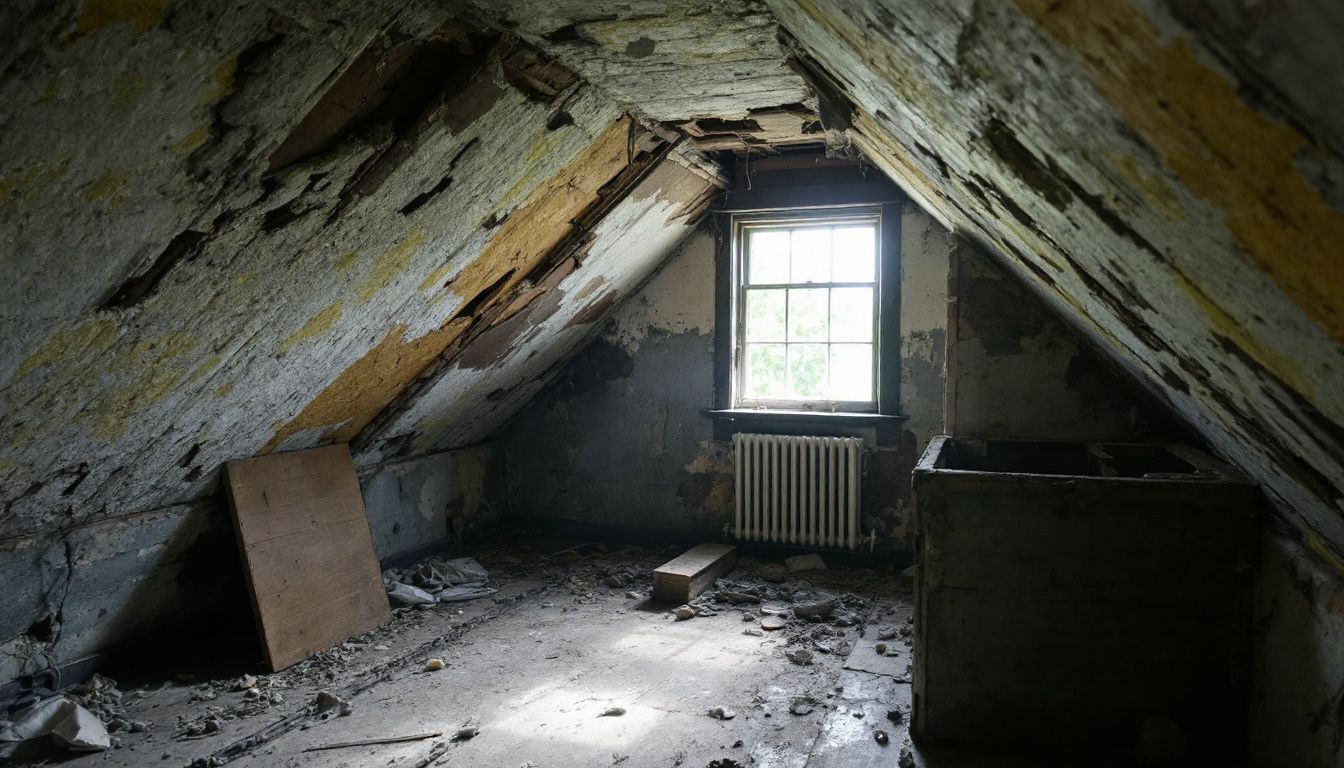
    As these materials age, they can deteriorate and become friable — increasing the risk of fibre release even without deliberate disturbance. If you can see crumbling or damaged insulation around older pipework, treat it as suspect until tested.

    Ceiling Tiles and Partition Systems

    Suspended ceiling tiles, particularly in commercial and industrial buildings, frequently contained asbestos. Partition wall systems — the kind used to divide office spaces — also incorporated asbestos-containing boards in many cases.

    These are high-priority materials to identify before any refurbishment work begins. Don’t assume a suspended ceiling is safe simply because it looks intact.

    Roofing, Soffits, and Outbuildings

    Asbestos cement was used extensively in roofing sheets, soffits, guttering, and cladding panels. Garages, outbuildings, and extensions built before the ban very commonly feature asbestos cement roofs and wall panels.

    While asbestos cement is a lower-risk material than AIB, it can still release fibres when broken, drilled, or weathered. Don’t let the lower risk classification lead to complacency.

    Floor Tiles and Adhesives

    Vinyl floor tiles, thermoplastic tiles, and the adhesives used to fix them often contained asbestos. Marley tiles — widely used in kitchens, bathrooms, and utility rooms — are a common example. These are generally low risk when intact, but removal without proper precautions can be hazardous.

    The Health Risks of Disturbing Asbestos in Walls

    When asbestos-containing materials are disturbed, microscopic fibres are released into the air. These fibres are invisible to the naked eye and can remain airborne for hours. Once inhaled, they become lodged in the lung tissue, where they can cause irreversible damage over time.

    The diseases linked to asbestos exposure include:

    • Mesothelioma — a cancer of the lining of the lungs or abdomen that is almost exclusively caused by asbestos exposure. It is invariably fatal.
    • Asbestosis — scarring of the lung tissue that causes progressive breathing difficulties.
    • Asbestos-related lung cancer — particularly common in those who were also smokers.
    • Pleural thickening — a condition where the membrane surrounding the lungs thickens, restricting breathing.

    These conditions typically have a latency period of 20 to 40 years, meaning someone exposed during a renovation project today may not develop symptoms until decades later. This delayed onset is one of the reasons asbestos continues to claim lives — people underestimate the risk because the consequences aren’t immediate.

    The HSE regards asbestos as the single greatest cause of work-related deaths in Great Britain. Tradespeople — plumbers, electricians, carpenters, plasterers — are at particular risk because they regularly work in older buildings without knowing what’s in the materials they’re cutting into.

    How to Identify Asbestos in Walls: What You Can and Can’t Do Yourself

    You cannot identify asbestos by looking at it. Asbestos-containing materials often look identical to non-asbestos equivalents. Age is a useful indicator — if your property was built or refurbished before 2000, suspect materials should be treated as potentially hazardous until proven otherwise — but visual inspection alone is never sufficient.

    If you want to test a specific material and the area is accessible and safe to sample from, a testing kit allows you to collect a sample yourself and send it to an accredited laboratory for analysis. This can be useful for a single suspect material in a domestic setting, but it’s not a substitute for a full professional survey.

    For any property where you need a complete picture of asbestos-containing materials — particularly before renovation work, or where you have a legal duty to manage asbestos — a professional survey is the only appropriate route.

    When in doubt, don’t disturb the material. Leave it alone, mark the area if possible, and arrange for a professional assessment before any work begins.

    Which Type of Asbestos Survey Do You Need?

    There are different types of asbestos survey designed for different circumstances. Choosing the right one matters both for compliance and for practical safety.

    Management Survey

    A management survey is designed to locate and assess the condition of any asbestos-containing materials in a building that might be disturbed during normal occupation and routine maintenance. It’s the standard survey required under the duty to manage asbestos in non-domestic premises.

    The surveyor will inspect accessible areas, take samples where necessary, and produce an asbestos register with a risk assessment and management plan. This document becomes the foundation of your ongoing asbestos management.

    Refurbishment Survey

    A refurbishment survey is required before any refurbishment or demolition work that could disturb the building fabric. It’s more intrusive than a management survey — surveyors may need to access areas behind walls, above ceilings, and beneath floors to ensure all asbestos-containing materials in the work zone are identified before contractors begin.

    This is the survey you need before any significant building work in a property of the relevant age. Starting renovation work without one isn’t just legally risky — it’s genuinely dangerous.

    Re-Inspection Survey

    Where asbestos-containing materials are known to be present and are being managed in situ, a re-inspection survey should be carried out periodically to check that those materials remain in good condition and haven’t deteriorated. The frequency of re-inspections depends on the material type and its condition rating.

    Your Legal Obligations Around Asbestos

    Asbestos management in the UK is governed by the Control of Asbestos Regulations. These regulations set out clear duties for those who own, manage, or occupy non-domestic premises.

    The duty to manage — established under Regulation 4 of the Control of Asbestos Regulations — requires those responsible for non-domestic buildings to identify whether asbestos is present, assess its condition, and put in place a written management plan. An up-to-date asbestos register must be maintained and made available to anyone who might disturb the fabric of the building.

    HSG264 — the HSE’s definitive guidance on asbestos surveying — sets out the standards that surveys must meet. Any survey carried out by Supernova Asbestos Surveys is conducted in full compliance with HSG264 and the Control of Asbestos Regulations.

    In domestic properties, the legal duties are less prescriptive — but homeowners still have a responsibility not to expose contractors or family members to asbestos hazards. Commissioning a survey before renovation work is not just best practice; in many cases it’s the only way to fulfil your duty of care.

    Failure to manage asbestos correctly can result in significant financial penalties and, far more seriously, in preventable illness and death.

    What Happens If Asbestos Is Found in Your Walls?

    Finding asbestos in walls doesn’t automatically mean it needs to come out. The decision depends on the type of asbestos material, its condition, and what you plan to do with the building.

    If the material is in good condition and won’t be disturbed, the recommended approach is often to manage it in place — monitoring its condition through periodic re-inspections and encapsulating or sealing it if necessary. Removal is not always the safest option, because the act of removal itself generates risk if not carried out correctly.

    Where asbestos does need to be removed — because it’s deteriorating, because renovation work requires access to the area, or because the building is being demolished — that work must be carried out by a licensed contractor. Asbestos removal for the highest-risk materials, including asbestos insulating board and sprayed coatings, is legally required to be performed under licence.

    The removal process involves strict containment procedures, specialist equipment, and proper disposal at a licensed facility. Never attempt to remove asbestos yourself. The risks are serious, the legal requirements are stringent, and the consequences of getting it wrong — both for health and legally — are severe.

    Additional Considerations for Commercial Property Owners and Managers

    If you manage a commercial property, your obligations go beyond simply identifying asbestos. You’ll need to ensure your asbestos register is current, that contractors are briefed on any known asbestos-containing materials before they begin work, and that re-inspections are carried out at appropriate intervals.

    Asbestos management isn’t a one-off exercise — it’s an ongoing responsibility. The register needs to be reviewed whenever building work is carried out, whenever the condition of materials changes, and whenever new information comes to light about materials that may have been missed.

    Contractors working on your premises have a right to know what hazardous materials are present. Failing to share that information isn’t just a legal failing — it puts people’s health at risk and exposes you to serious liability.

    Asbestos Surveys Across the UK: We Cover Your Area

    Supernova Asbestos Surveys operates nationwide, with specialist teams covering major cities and surrounding regions. Whether you need an asbestos survey in London, an asbestos survey in Manchester, or an asbestos survey in Birmingham, our accredited surveyors can be with you promptly.

    With over 50,000 surveys completed across the UK, we have the experience to handle everything from straightforward domestic assessments to complex commercial and industrial sites. Every survey is carried out to HSG264 standards, with clear, actionable reports delivered promptly.

    Practical Steps to Take Right Now

    If you own or manage a property built before 2000 and haven’t yet assessed it for asbestos, here’s what to do:

    1. Don’t disturb suspect materials. If you’re unsure whether something contains asbestos, leave it alone until it’s been tested or surveyed.
    2. Establish the age of your building. Properties built or significantly refurbished before 2000 should be treated as potentially containing asbestos until proven otherwise.
    3. Commission the right survey. A management survey for ongoing occupation and maintenance; a refurbishment survey before any building work. Don’t start work without one.
    4. Maintain your asbestos register. If you have a duty to manage, your register must be current, accurate, and accessible to contractors.
    5. Use licensed contractors for removal. If asbestos needs to come out, only a licensed contractor should do it. This isn’t optional for high-risk materials.
    6. Schedule re-inspections. Known asbestos-containing materials need to be checked periodically. Don’t assume that because something was fine last year, it’s still fine now.

    Frequently Asked Questions

    Can asbestos be present in the walls of a house built in the 1980s?

    Yes, absolutely. Asbestos was used in construction products right up until the UK ban in 1999. Properties built or refurbished throughout the 1980s and into the 1990s may contain asbestos in wall linings, textured coatings, floor tiles, pipe insulation, and other materials. Age alone isn’t a reliable indicator — only testing or a professional survey can confirm whether specific materials contain asbestos.

    Is it safe to live in a house with asbestos in the walls?

    In many cases, yes — provided the asbestos-containing materials are in good condition and are not being disturbed. Asbestos that is well-bonded, undamaged, and left alone poses a low risk. The danger arises when materials are drilled into, cut, sanded, or otherwise disturbed. If you know or suspect asbestos is present, commission a professional survey to assess its condition and get expert advice on managing it safely.

    What does asbestos in walls look like?

    You cannot identify asbestos by sight. Asbestos-containing materials look identical to their non-asbestos equivalents. Textured coatings, plasterboard, insulating board, and other wall materials may or may not contain asbestos regardless of how they appear. The only reliable way to determine whether a material contains asbestos is laboratory analysis of a sample taken by a professional or using an accredited testing kit.

    Do I need a survey before I renovate an older property?

    Yes. If your property was built or refurbished before 2000, a refurbishment survey is essential before any work that will disturb the building fabric — including replastering, rewiring, removing partition walls, or replacing flooring. This applies to both domestic and commercial properties. Starting work without a survey puts contractors, occupants, and yourself at serious risk, and in commercial settings it’s a breach of your legal obligations under the Control of Asbestos Regulations.

    How much does an asbestos survey cost?

    Survey costs vary depending on the size and complexity of the property and the type of survey required. A management survey for a small domestic property will cost considerably less than a refurbishment survey for a large commercial building. Contact Supernova Asbestos Surveys for a no-obligation quote — we’ll recommend the right survey type for your situation and provide a clear, upfront price.

    Get Expert Help With Asbestos in Walls and Beyond

    Supernova Asbestos Surveys has completed over 50,000 surveys across the UK. Our accredited surveyors work to HSG264 standards on every job, and our reports give you the clear, actionable information you need to manage asbestos safely and compliantly.

    Whether you need a management survey, a refurbishment survey ahead of building work, a re-inspection of known materials, or advice on removal, we’re here to help.

    Call us on 020 4586 0680 or visit asbestos-surveys.org.uk to book your survey or request a quote. Don’t start building work on an older property without knowing what’s in the walls.

  • Asbestos Litigation: Holding Companies Accountable for Negligence

    Asbestos Litigation: Holding Companies Accountable for Negligence

    What Are Asbestos Liabilities? A Clear Definition for Property Owners and Employers

    Asbestos liabilities sit at the heart of some of the most serious legal and financial risks facing UK property owners, employers, and building managers today. Understanding the asbestos liabilities definition — what they are, where they arise, and who bears responsibility — is not just useful knowledge. It is essential for anyone who owns, manages, or works in a building constructed before the year 2000.

    This post breaks down the legal framework, the types of liability you may face, how courts have approached these cases, and the practical steps you can take to protect yourself, your workers, and your business.

    The Asbestos Liabilities Definition: What Does It Actually Mean?

    In plain terms, asbestos liabilities are the legal and financial obligations that arise when a person or organisation fails to properly manage, identify, or disclose the presence of asbestos-containing materials (ACMs). These obligations can stem from civil claims, regulatory enforcement, or both.

    Liability can attach to a wide range of parties — not just manufacturers or demolition contractors. Landlords, employers, building owners, and facilities managers can all find themselves exposed if they fail to meet their legal duties under UK law.

    The core principle is straightforward: if you had a duty to manage asbestos and you failed to do so, and someone was harmed as a result, you may be held liable. That liability can translate into substantial compensation claims, regulatory fines, and lasting reputational damage.

    The UK Legal Framework Governing Asbestos Liability

    The UK has one of the most developed legal frameworks for asbestos management in the world. Understanding it is the first step to understanding where liability begins and ends.

    The Control of Asbestos Regulations

    The Control of Asbestos Regulations form the backbone of asbestos law in Great Britain. They set out clear duties for employers, building owners, and those who carry out work with asbestos.

    Critically, Regulation 4 — the Duty to Manage — places a specific legal obligation on the dutyholder of any non-domestic premises to identify ACMs, assess their condition and risk, and put in place a written management plan. Failure to comply is not simply an administrative oversight. It is a criminal offence that can result in prosecution, unlimited fines, and in serious cases, imprisonment.

    HSG264: The Survey Standard

    The Health and Safety Executive’s HSG264 guidance document sets out how asbestos surveys should be conducted. It defines the different survey types, the standard of investigation required, and how findings should be recorded.

    Courts and regulators use this guidance as a benchmark when assessing whether a dutyholder has met their obligations. If your survey does not meet HSG264 standards, it may offer you far less legal protection than you assume.

    The Compensation Act and the Diffuse Mesothelioma Payment Scheme

    The Compensation Act introduced important provisions for cases involving multiple employers and shared liability — particularly relevant in mesothelioma claims where a victim may have been exposed by several different employers over a working lifetime.

    The Diffuse Mesothelioma Payment Scheme provides a route to compensation for those who cannot trace a former employer or their insurer, ensuring victims are not left without recourse even when corporate trails have gone cold.

    Types of Asbestos Liability You Need to Understand

    The asbestos liabilities definition covers several distinct categories. Each carries different legal tests and different consequences. Knowing which type applies to your situation is critical.

    Negligence

    Negligence is the most common basis for asbestos liability claims. To succeed, a claimant must demonstrate four things:

    1. The defendant owed them a duty of care.
    2. That duty was breached — the defendant fell below the expected standard.
    3. The breach caused the claimant’s injury or loss.
    4. The claimant suffered quantifiable harm as a result.

    In asbestos cases, the duty of care is rarely in dispute. Employers have always owed their workers a duty to provide a safe working environment. The battles are usually fought over causation — proving that a specific exposure caused a specific disease, particularly given the long latency periods involved.

    Strict Liability

    In some circumstances, liability can arise without any need to prove fault. Product liability claims, for example, can hold manufacturers responsible for defective products — including asbestos-containing materials — even if the manufacturer took reasonable care at the time of production.

    The key question is whether the product was unsafe, not whether the manufacturer was careless. This distinction matters enormously when tracing liability back through supply chains.

    Failure to Warn

    A distinct but related head of liability concerns the failure to warn workers, occupants, or contractors about known asbestos risks. If a building owner knew — or ought to have known — that ACMs were present and failed to communicate that risk, they may face liability for any resulting harm.

    This is particularly relevant during refurbishment or demolition work, where undisclosed asbestos can put tradespeople at serious risk. Contractors who are not briefed before starting work are both endangered and a potential source of claims against you.

    Regulatory Liability

    Separate from civil claims, the Health and Safety Executive has enforcement powers to prosecute dutyholders who breach the Control of Asbestos Regulations. Enforcement notices, improvement notices, and prosecutions are all live possibilities.

    HSE inspectors do not need a victim to have been harmed — a failure to have an asbestos register in place, or to have commissioned a survey, can be enough to trigger enforcement action. Regulatory liability and civil liability can run in parallel.

    Who Bears Asbestos Liability? Understanding the Dutyholder

    One of the most common sources of confusion around the asbestos liabilities definition is identifying exactly who is responsible. The answer depends on the type of premises and the nature of the relationship between the parties.

    Non-Domestic Premises

    For commercial, industrial, and public buildings, the dutyholder is typically the person or organisation with the greatest degree of control over the premises. This might be the building owner, the tenant under a full repairing lease, or a facilities management company.

    In some cases, responsibility is shared. Building owners who lease to tenants may retain liability for common areas. Tenants who take on full repairing obligations may become the dutyholder for the premises they occupy. Managing agents and facilities managers can be held liable if they have been delegated responsibility for maintenance and compliance.

    Domestic Premises

    Private homeowners do not fall under the Duty to Manage in the same way as commercial dutyholders. However, landlords renting residential properties do have obligations — particularly where common areas such as stairwells, basements, and roof spaces are concerned.

    Liability can also arise if a landlord fails to disclose known asbestos risks to contractors carrying out work. Ignorance is not a defence once you are on notice that a property may contain ACMs.

    Employers

    Employers have a duty to protect their workers from asbestos exposure, both under the Control of Asbestos Regulations and under general health and safety law. This includes providing information, instruction, and training, as well as ensuring that any premises where employees work have been properly assessed for asbestos risk.

    An employer who sends workers into a building without first confirming its asbestos status is taking on significant and avoidable liability.

    The Challenges of Proving Asbestos Liability

    Asbestos-related disease cases are among the most legally complex personal injury claims in the UK. Several factors make proving liability genuinely difficult — even when the harm is clear.

    Latency Periods

    Asbestos-related diseases — including mesothelioma, asbestosis, and asbestos-related lung cancer — can take 20 to 50 years to develop after initial exposure. By the time a person becomes ill, the company responsible may have been dissolved, records may have been destroyed, and key witnesses may be unavailable.

    This latency problem is one reason why maintaining thorough, long-term records of asbestos management activity is so important. Those records may be needed decades from now.

    Multiple Exposures

    Many victims were exposed to asbestos by multiple employers over the course of a working life. Apportioning liability between them is a complex legal exercise. UK courts have developed principles around material contribution to risk that allow claims to proceed even where a single employer cannot be identified as the sole cause.

    This means that even a relatively minor or brief exposure on your premises could contribute to a liability claim against you.

    Insurer Resistance

    Insurers defending asbestos claims have historically used delay tactics and procedural challenges to resist or reduce payouts. Claimants need robust evidence — including medical records, employment histories, and expert testimony — to overcome these obstacles.

    For dutyholders, the lesson is the same: your documentation is your defence. Gaps in your records will be exploited.

    How Asbestos Surveys Reduce Your Liability Exposure

    The single most effective step any dutyholder can take to manage their asbestos liabilities is to commission a professional asbestos survey. A properly conducted survey identifies ACMs, assesses their condition, and provides the documented evidence you need to demonstrate compliance with the Control of Asbestos Regulations.

    There are three main survey types, each serving a different purpose.

    Management Survey

    A management survey is the standard survey required under the Duty to Manage. It identifies ACMs that could be disturbed during normal occupation and maintenance activities, and provides the foundation for your asbestos management plan.

    Without one, you are operating blind — and potentially liable for every maintenance task carried out on your premises.

    Refurbishment Survey

    Before any refurbishment, renovation, or demolition work begins, you need a refurbishment survey. This is a more intrusive investigation of the areas to be disturbed, ensuring that contractors are not unknowingly exposed to asbestos.

    Failing to commission one before works begin is a common — and costly — mistake. It is also one of the most straightforward failures for an HSE inspector or a claimant’s solicitor to identify.

    Re-Inspection Survey

    Asbestos management is not a one-off exercise. ACMs deteriorate over time, and your risk assessments need to be kept up to date. A periodic re-inspection survey ensures your asbestos register remains accurate and that any changes in the condition of known ACMs are captured before they become a risk — or a liability.

    Most dutyholders should be scheduling re-inspections annually, though higher-risk premises may require more frequent checks.

    Fire Risk and Asbestos: A Combined Liability

    Asbestos liability does not exist in isolation. Many buildings that contain asbestos also present fire safety challenges, and the two risks interact in ways that can compound your exposure. Disturbing ACMs during emergency works — or failing to account for asbestos in fire safety planning — can create layered liabilities across both asbestos and fire safety law.

    A professional fire risk assessment conducted alongside your asbestos management planning helps ensure that both risks are properly identified and managed. It also demonstrates to regulators and insurers that you are taking a holistic, joined-up approach to building safety — which matters when liability is being assessed.

    Practical Steps to Manage Your Asbestos Liabilities

    Managing asbestos liabilities is not about eliminating risk entirely — it is about demonstrating that you have taken all reasonable and practicable steps to identify, assess, and control that risk. The following actions form the foundation of a defensible position.

    • Commission a survey immediately if you own or manage a pre-2000 building and do not yet have an asbestos register. This is your legal baseline.
    • Maintain your asbestos register and keep it accessible to contractors, maintenance staff, and anyone else who may disturb the fabric of the building.
    • Review your management plan regularly — at least annually, and whenever significant works are planned or the condition of known ACMs changes.
    • Brief contractors before they start work. Provide them with relevant sections of your asbestos register and ensure they have read and understood the information.
    • Commission a refurbishment survey before any intrusive works. Do not rely on your management survey for this purpose — it is not designed for that level of investigation.
    • Keep records of everything. Survey reports, management plans, contractor briefings, re-inspection results — all of it. In litigation, what you cannot prove did not happen.
    • Seek specialist legal advice if you receive a claim or enforcement notice. The regulatory and civil liability landscape is complex, and early specialist input can make a significant difference to outcomes.

    Asbestos Liability Across the UK: Location Matters

    The legal framework for asbestos management applies across England, Scotland, and Wales, but the practical picture varies by location. The age, type, and condition of building stock differs significantly between regions, and local enforcement activity can vary too.

    If you manage premises in the capital, our asbestos survey London service covers the full range of survey types across all London boroughs. For businesses and property owners in the North West, our asbestos survey Manchester team operates across Greater Manchester and the surrounding region. In the Midlands, our asbestos survey Birmingham service provides the same rigorous, HSG264-compliant approach for commercial and residential clients alike.

    Wherever your premises are located, the obligation to manage asbestos is identical. The sooner you act, the stronger your position.

    What Happens When Asbestos Liability Is Ignored?

    The consequences of failing to manage asbestos liabilities properly are not theoretical. HSE enforcement action is a genuine and regular occurrence, with prosecutions resulting in substantial fines handed down to building owners, employers, and contractors who have fallen short of their obligations.

    Beyond regulatory penalties, civil claims can be pursued by workers, tenants, or visitors who develop asbestos-related diseases. Given the latency periods involved, you may face a claim decades after the exposure event — long after you have sold the property or wound up the business. Liability can follow individuals as well as organisations.

    The reputational consequences are equally serious. A prosecution or a high-profile civil claim can damage relationships with tenants, insurers, lenders, and business partners in ways that are difficult to recover from.

    The cost of a professional asbestos survey is modest compared to any of these outcomes. There is no rational case for delay.

    Frequently Asked Questions

    What is the asbestos liabilities definition in UK law?

    Asbestos liabilities are the legal and financial obligations that arise when a dutyholder fails to properly identify, manage, or disclose the presence of asbestos-containing materials. Under the Control of Asbestos Regulations, dutyholders in non-domestic premises have a legal duty to manage asbestos, and failure to do so can result in civil claims, regulatory prosecution, or both.

    Who is the dutyholder for asbestos purposes?

    In non-domestic premises, the dutyholder is typically the person or organisation with the greatest degree of control over the building. This could be the building owner, the tenant under a full repairing lease, or a managing agent. In some cases, responsibility is shared between parties, and lease terms are crucial in determining who bears which obligations.

    Do I need an asbestos survey if I own a residential property?

    Private homeowners are not subject to the Duty to Manage under the Control of Asbestos Regulations. However, landlords who rent out residential properties do have obligations, particularly for common areas. Any landlord who employs contractors to carry out work on a pre-2000 property should ensure the asbestos status of the building is known before works begin, to avoid liability for contractor exposure.

    How long can an asbestos liability claim be brought after exposure?

    Asbestos-related diseases have latency periods of 20 to 50 years, meaning a claim can be brought decades after the original exposure. UK courts have developed specific legal principles to deal with this complexity, including rules around limitation periods for disease claims. This is why long-term record-keeping is essential — your documentation today may be your defence in a claim brought many years from now.

    What is the difference between a management survey and a refurbishment survey?

    A management survey identifies asbestos-containing materials that may be disturbed during normal occupation and routine maintenance. It forms the basis of your asbestos management plan. A refurbishment survey is a more intrusive investigation carried out before any renovation, refurbishment, or demolition work, covering the specific areas to be disturbed. Using a management survey in place of a refurbishment survey before intrusive works is a common and potentially serious error.


    If you need expert guidance on managing your asbestos liabilities, Supernova Asbestos Surveys is here to help. With over 50,000 surveys completed nationwide, our accredited surveyors deliver HSG264-compliant reports that give you a clear, defensible record of your compliance. Call us on 020 4586 0680 or visit asbestos-surveys.org.uk to arrange a survey or speak to our team about your specific situation.

  • Asbestos Awareness: Educating the Public about the Dangers of Exposure

    Asbestos Awareness: Educating the Public about the Dangers of Exposure

    The Hidden Killer in Plain Sight: Why Asbestos Awareness Matters More Than Ever

    Asbestos awareness and educating the public about the dangers of exposure is not a niche concern reserved for health and safety professionals — it is a matter of life and death for anyone who lives or works in a building constructed before the year 2000. The UK banned asbestos in 1999, yet an estimated 1.5 million buildings across the country still contain it. That is a staggering number of properties where unsuspecting occupants, tradespeople, and maintenance workers could disturb dangerous fibres without even realising it.

    Asbestos-related diseases kill more people in the UK every year than road traffic accidents. These are preventable deaths — and the single most powerful tool we have is education.

    What Is Asbestos and Why Was It So Widely Used?

    Asbestos is a naturally occurring fibrous mineral used extensively in construction and manufacturing throughout the twentieth century. Its popularity was driven by genuinely impressive properties: it is highly resistant to heat, fire, and chemical damage, and it functions as an effective insulator.

    From the 1950s through to the 1980s, asbestos was incorporated into hundreds of building materials and products. Here is a snapshot of where it was commonly used:

    • Ceiling tiles and floor tiles
    • Pipe lagging and boiler insulation
    • Roof sheeting and guttering
    • Textured coatings such as Artex
    • Insulating board used in partition walls and around doors
    • Sprayed coatings on structural steelwork
    • Gaskets, rope seals, and friction materials

    The problem is that when asbestos-containing materials are disturbed — drilled, cut, sanded, or damaged — they release microscopic fibres into the air. Those fibres are invisible to the naked eye. You can breathe them in without any immediate sensation, and the consequences can take decades to emerge.

    The Health Risks of Asbestos Exposure: What the Science Tells Us

    Asbestos fibres, once inhaled, can become permanently lodged in the lining of the lungs and other organs. The body cannot break them down or expel them effectively. Over time — sometimes twenty, thirty, or even forty years later — this can lead to serious and often fatal diseases.

    Mesothelioma

    Mesothelioma is an aggressive cancer that affects the lining of the lungs (pleural mesothelioma) or, less commonly, the lining of the abdomen. It is almost exclusively caused by asbestos exposure. There is currently no cure, and life expectancy following diagnosis is typically measured in months rather than years.

    The UK has one of the highest rates of mesothelioma in the world — a direct consequence of the country’s heavy industrial use of asbestos during the twentieth century.

    Asbestos-Related Lung Cancer

    Asbestos exposure significantly increases the risk of developing lung cancer. When combined with smoking, the risk is dramatically compounded — the two factors work synergistically rather than simply adding together. A smoker who has also been exposed to asbestos faces a substantially higher risk than either factor alone would suggest.

    Asbestosis

    Asbestosis is a chronic lung condition caused by prolonged inhalation of asbestos fibres. The fibres cause scarring of the lung tissue, leading to progressive breathlessness, a persistent cough, and reduced lung function. It is not a cancer, but it is a serious, debilitating, and irreversible condition.

    Pleural Conditions

    Asbestos exposure can also cause pleural plaques (thickening of the lung lining), pleural thickening, and pleural effusions (fluid build-up around the lungs). These conditions can cause significant discomfort and breathing difficulties, and their presence often indicates past exposure.

    The latency period — the gap between exposure and the onset of disease — is one of the most insidious aspects of asbestos-related illness. Someone exposed in the 1980s may only be receiving a diagnosis today. This delay makes it all the more critical that people understand the risks now, rather than waiting for symptoms to appear.

    Asbestos Awareness: Educating the Public About the Dangers of Exposure

    Effective asbestos awareness and educating the public about the dangers of exposure requires more than a single leaflet or a one-off campaign. It requires a sustained, multi-layered approach that reaches different audiences with relevant, practical information.

    Who Needs Asbestos Awareness Training?

    Under Regulation 10 of the Control of Asbestos Regulations, employers are legally required to provide asbestos awareness training to employees who could be exposed to asbestos during their work. This is not limited to specialist asbestos contractors — it covers a wide range of trades and roles, including:

    • Electricians and plumbers
    • Plasterers, painters, and decorators
    • Carpenters and joiners
    • Building surveyors and architects
    • Facilities managers and maintenance personnel
    • Demolition workers
    • Housing association and local authority staff

    Essentially, if someone’s work could reasonably lead them to disturb asbestos-containing materials — even inadvertently — they need to understand what asbestos is, where it might be found, and what to do if they encounter it.

    The Three Levels of Asbestos Training

    The HSE recognises three distinct levels of asbestos training, each appropriate for different levels of risk and responsibility:

    1. Asbestos Awareness: The foundational level, designed to help workers recognise asbestos-containing materials and understand the risks. This is the minimum requirement for most tradespeople and maintenance workers.
    2. Non-Licensable Work with Asbestos: For those who may carry out low-risk, short-duration work with certain asbestos-containing materials. This requires more detailed training on safe working methods and control measures.
    3. Licensable Work: The highest level, required for those working with the most hazardous asbestos materials. This work requires a licence from the HSE and is subject to strict regulatory controls.

    Understanding which level applies to your work is itself part of the educational process. Attempting non-licensable or licensable work without appropriate training puts lives at risk.

    Public Awareness Beyond the Workplace

    Asbestos awareness is not solely a workplace issue. Homeowners carrying out DIY projects in properties built before 2000 are at real risk if they do not know what to look for. Drilling into an old ceiling, ripping out a bathroom, or removing a textured coating without first checking for asbestos can release dangerous fibres into a domestic environment — putting families, including children, at risk.

    Public awareness campaigns, online resources, and accessible guidance from bodies such as the HSE all play a role in reaching this audience. The message is straightforward: if you are working on an older property, assume asbestos may be present until a professional survey confirms otherwise.

    The Legal Framework: What UK Regulations Require

    The Control of Asbestos Regulations set out the legal duties that apply to those who manage, maintain, or work in non-domestic premises. The key duties include:

    • The Duty to Manage: Those responsible for non-domestic premises must identify whether asbestos is present, assess its condition, and manage the risk it poses. This typically involves commissioning a management survey.
    • Training Requirements: Regulation 10 mandates asbestos awareness training for relevant workers. Training must be provided by a competent person and kept up to date.
    • Notification and Planning: Certain types of asbestos work must be notified to the relevant enforcing authority before it begins. Licensed work is subject to additional requirements around planning, supervision, and air monitoring.
    • Keeping Records: Asbestos management plans must be documented, kept up to date, and made available to anyone who may disturb asbestos-containing materials.

    HSG264, the HSE’s guidance document on asbestos surveying, provides detailed technical guidance on how surveys should be planned and conducted. It distinguishes between management surveys, appropriate for occupied buildings during normal use, and refurbishment and demolition surveys, which are required before any intrusive work or structural changes.

    Failure to comply with these regulations can result in enforcement action, prosecution, and significant fines. More importantly, non-compliance puts people’s health at risk.

    Why Professional Asbestos Surveys Are Central to Public Safety

    No amount of awareness training can substitute for a professional asbestos survey carried out by a qualified surveyor. Surveys are the mechanism by which the location, type, and condition of asbestos-containing materials are identified and recorded — forming the basis of any effective management plan.

    At Supernova Asbestos Surveys, we have completed over 50,000 surveys across the UK. We work with property managers, local authorities, housing associations, schools, commercial landlords, and private homeowners to ensure that asbestos risks are properly identified and managed.

    If you are based in the capital and need expert help, our asbestos survey London service covers all London boroughs, with experienced surveyors who understand the particular challenges of the city’s diverse and often ageing building stock.

    For those in the North West, our asbestos survey Manchester team operates across Greater Manchester and the surrounding region, supporting everything from Victorian terraces to large commercial premises.

    And if you are in the Midlands, our asbestos survey Birmingham service provides the same high standard of professional surveying across the city and the wider West Midlands area.

    Practical Steps Everyone Should Take Right Now

    Whether you are a property manager, a tradesperson, or a homeowner, there are clear, actionable steps you can take to reduce asbestos risk without delay.

    For Property Managers and Duty Holders

    • Commission a management survey if you do not already have an up-to-date asbestos register for your building.
    • Ensure your asbestos management plan is documented and accessible to contractors and maintenance staff.
    • Review and update your asbestos register whenever building works are planned or completed.
    • Ensure all relevant staff and contractors have received appropriate asbestos awareness training.
    • Never allow refurbishment or demolition work to begin without a refurbishment and demolition survey first.

    For Tradespeople and Contractors

    • Before starting work on any building constructed before 2000, ask to see the asbestos register.
    • If no register is available, stop and request a survey before proceeding.
    • Complete asbestos awareness training and keep it up to date — the HSE recommends annual refresher training.
    • If you suspect you have disturbed asbestos, stop work immediately, leave the area, and seek specialist advice.

    For Homeowners

    • If your home was built before 2000, assume asbestos may be present in textured coatings, floor tiles, pipe lagging, or roofing materials.
    • Do not drill, sand, or remove materials that might contain asbestos without getting a survey first.
    • If materials are in good condition and undisturbed, they may be safe to leave in place — but always get professional advice before making that call.
    • Contact a reputable surveying company before planning any renovation work.

    The Role of Industry, Government, and Employers in Driving Awareness

    Asbestos awareness and educating the public about the dangers of exposure cannot rest solely on individuals. Employers, industry bodies, and government all have a role to play in making sure the right information reaches the right people at the right time.

    Employers have a legal duty to provide training — but the most responsible organisations go further than the minimum. They build asbestos awareness into induction programmes, make it part of toolbox talks, and ensure it is refreshed regularly rather than treated as a tick-box exercise.

    Industry bodies and trade associations can help by producing accessible guidance tailored to specific trades. A carpenter needs to know which materials they are most likely to encounter; a plumber needs to understand the risks associated with pipe lagging and boiler insulation. Generic training is a starting point, but trade-specific guidance makes the message stick.

    Government bodies such as the HSE continue to publish and update guidance, run awareness campaigns, and enforce the regulations that underpin safe practice. Staying engaged with HSE resources — and acting on them — is something every employer and duty holder should be doing as a matter of routine.

    Frequently Asked Questions

    What does asbestos awareness training actually cover?

    Asbestos awareness training covers what asbestos is, where it is commonly found in buildings, why it is dangerous, and what to do if you encounter or suspect asbestos-containing materials. It is designed to ensure workers can recognise potential risks before they inadvertently disturb asbestos. Training must be delivered by a competent person and, according to HSE guidance, should be refreshed regularly — typically on an annual basis.

    Is asbestos still present in UK buildings?

    Yes. Although the use of asbestos was banned in the UK in 1999, an estimated 1.5 million buildings still contain asbestos-containing materials. This includes schools, hospitals, offices, factories, and residential properties built before the turn of the millennium. The material does not need to be removed simply because it exists — but it must be identified, assessed, and properly managed.

    Can homeowners be affected by asbestos, or is it just a workplace issue?

    Homeowners are very much at risk, particularly those undertaking DIY work in older properties. Common domestic tasks such as drilling into textured ceilings, sanding floors, or removing old insulation can disturb asbestos-containing materials if they are present. Anyone planning work on a pre-2000 property should commission a survey before starting, rather than assuming the material is safe.

    What should I do if I think I have disturbed asbestos?

    Stop work immediately and leave the area without disturbing anything further. Do not attempt to clean up any debris yourself. Ventilate the space if possible, and seek advice from a licensed asbestos specialist before re-entering. If the disturbance occurred in a workplace, the incident should be reported to the relevant person responsible for health and safety on site.

    How do I find out if my building contains asbestos?

    The most reliable way to establish whether asbestos is present — and where — is to commission a professional asbestos survey. For occupied buildings in normal use, a management survey is the appropriate starting point. If you are planning refurbishment or demolition work, a refurbishment and demolition survey is required. Supernova Asbestos Surveys can help — call us on 020 4586 0680 or visit asbestos-surveys.org.uk to find out more.


    Asbestos awareness and educating the public about the dangers of exposure is not a job that is ever truly finished. As long as millions of buildings across the UK contain asbestos, the risk remains — and so does the need for clear, accessible, evidence-based education. Whether you manage a portfolio of commercial properties, work in the trades, or are simply planning a home renovation, the steps you take today could protect lives for decades to come.

    Supernova Asbestos Surveys has completed over 50,000 surveys nationwide and works with clients across every sector to identify and manage asbestos risk. To book a survey or speak to one of our qualified surveyors, call us on 020 4586 0680 or visit asbestos-surveys.org.uk.

  • The Asbestos Report: Understanding its Importance in Protecting Public Health

    The Asbestos Report: Understanding its Importance in Protecting Public Health

    What Is an Asbestos Report — and Why Does It Matter?

    If your building was constructed before 2000, there is a very real chance it contains asbestos. The question is not simply whether asbestos is present — it is whether you have a proper asbestos report that tells you exactly where it is, what condition it is in, and what you need to do about it.

    Without that document, you are managing one of the most serious health and legal obligations in UK property ownership completely blind. Mesothelioma, asbestos-related lung cancer, and asbestosis continue to claim lives decades after asbestos was banned from new construction. A thorough, accurate asbestos report is the foundation of everything that comes after — safe management, legal compliance, and the protection of everyone who enters your building.

    What an Asbestos Report Actually Contains

    An asbestos report is not simply a piece of paper confirming whether asbestos was found. It is a structured, technical document that gives you everything you need to manage asbestos-containing materials (ACMs) safely and lawfully.

    A properly prepared asbestos report should include all of the following:

    • An asbestos register — a complete log of every ACM identified in the building, including its precise location, type, and extent
    • Material condition assessments — an evaluation of whether each ACM is in good condition, damaged, or deteriorating
    • Risk assessments — a scored assessment of the risk each ACM poses based on its condition, accessibility, and likelihood of disturbance
    • Photographs and floor plans — visual references that make it easy to locate ACMs during future works or inspections
    • Laboratory analysis results — confirmation of asbestos fibre type from bulk sample testing carried out in an accredited laboratory
    • A management plan — clear recommendations on whether each ACM should be managed in place, repaired, encapsulated, or removed
    • Survey categorisation — identification of which type of survey was conducted and its scope

    Each of these elements serves a specific purpose. The register tells you what you have; the risk assessment tells you how concerned to be; the management plan tells you what to do next.

    The Different Types of Asbestos Survey — and the Reports They Produce

    Not all asbestos reports are the same, because not all surveys have the same purpose. The type of survey commissioned determines the scope of the report produced. Getting the wrong survey — and therefore the wrong report — can leave you legally exposed and practically uninformed.

    Management Survey Report

    A management survey is the standard survey required for all non-domestic premises under the duty to manage. It is designed to locate ACMs in the normal occupied and accessible areas of a building so that they can be managed safely during the building’s ongoing use.

    The report produced from a management survey forms the basis of your asbestos management plan. It is a living document — it needs to be reviewed and updated regularly as conditions change.

    Refurbishment Survey Report

    Before any renovation, refurbishment, or intrusive maintenance work begins, you need a refurbishment survey. This is more invasive than a management survey because it needs to assess areas that will be disturbed — inside walls, above ceilings, beneath floors.

    The resulting report must cover the specific areas affected by the planned works. It is a legal requirement before any contractor starts work in those areas.

    Demolition Survey Report

    If a building is being demolished, a demolition survey is required. This is the most thorough and destructive type of survey — every part of the building must be assessed, including areas that would be inaccessible under normal circumstances.

    The report from a demolition survey must account for all ACMs across the entire structure. It is used to plan safe asbestos removal before demolition work commences.

    Re-Inspection Survey Report

    Once an asbestos register is in place, it must be kept up to date. A re-inspection survey revisits known ACMs to check whether their condition has changed. The report records any deterioration, damage, or change in risk score.

    Annual re-inspections are recommended under HSG264 guidance. The re-inspection report updates the existing register and ensures your management plan remains current and accurate.

    How Asbestos Testing Supports the Report

    Visual inspection alone cannot confirm whether a material contains asbestos. That is why bulk sampling and laboratory analysis are an essential part of producing an accurate asbestos report.

    During a survey, a qualified surveyor takes samples from suspect materials using correct containment procedures to prevent fibre release. Those samples are then sent to a UKAS-accredited laboratory for analysis. The primary analytical method used in the UK is polarised light microscopy (PLM), which can identify the type and concentration of asbestos fibres present.

    The laboratory results are incorporated directly into the asbestos report, providing legally defensible confirmation of which materials contain asbestos and which fibre types are present.

    If you want to arrange asbestos testing as a standalone service, this can be done separately from a full survey. For smaller properties or situations where a full survey is not immediately required, a testing kit allows you to collect samples yourself and have them analysed professionally at an accredited laboratory.

    It is worth understanding the full scope of asbestos testing options available to you before deciding which route is most appropriate for your property and circumstances.

    The Legal Framework Behind the Asbestos Report

    The requirement to produce and maintain an asbestos report is not optional. It is embedded in UK law, and failure to comply carries serious consequences — both financial and, more critically, in terms of human health.

    The Control of Asbestos Regulations

    The Control of Asbestos Regulations are the primary legislation governing asbestos management in Great Britain. They set out licensing requirements for asbestos work, notification duties, and — critically — the duty to manage asbestos in non-domestic premises.

    Regulation 4, the duty to manage, requires dutyholders to:

    1. Identify whether ACMs are present in their premises
    2. Assess the condition and risk those materials pose
    3. Prepare a written plan for managing them
    4. Review and monitor that plan regularly

    An asbestos report is the documentary evidence that you are meeting this duty. Without it, you cannot demonstrate compliance — and the HSE takes a dim view of dutyholders who cannot produce one.

    HSG264 — The Survey Guide

    HSG264 is the Health and Safety Executive’s definitive guidance on asbestos surveying. It sets out the standards that surveys and reports must meet to be considered compliant. Any reputable asbestos report should be produced in accordance with HSG264 — if it is not, its legal standing is questionable.

    HSG264 covers everything from surveyor competence and sampling methodology to how findings should be recorded and presented in the final report. When commissioning a survey, always ask whether the report will be produced in line with HSG264.

    RIDDOR and Exposure Limits

    The Reporting of Injuries, Diseases and Dangerous Occurrences Regulations (RIDDOR) require that asbestos-related incidents — including uncontrolled asbestos disturbances — are reported to the HSE. A well-maintained asbestos report helps prevent these incidents from occurring in the first place by ensuring everyone who works in or on a building knows where ACMs are located.

    The Control of Asbestos Regulations also set a workplace exposure limit for asbestos fibres. The control limit is 0.1 fibres per cubic centimetre of air, averaged over a four-hour period. An accurate asbestos report is the starting point for planning work that keeps exposure as far below this level as reasonably practicable.

    Who Is Responsible for Commissioning an Asbestos Report?

    The duty to manage asbestos falls on the person responsible for maintenance and repair of non-domestic premises. This is typically the building owner, employer, or managing agent.

    If you are responsible for a commercial property, an industrial site, a school, a hospital, a housing association block, or any other non-domestic building, the duty applies to you. Ignorance is not a defence. If an employee, contractor, or building occupant is exposed to asbestos because you did not have an up-to-date asbestos report in place, the legal and financial consequences can be severe.

    For domestic properties, the legal duty is less prescriptive — but landlords and property managers still have responsibilities under health and safety law, particularly if contractors will be working in the building. A management survey and asbestos report is strongly advisable for any pre-2000 residential property where work is planned.

    What Happens After the Asbestos Report Is Produced?

    Receiving your asbestos report is the beginning of the process, not the end. What you do with it determines whether the people in your building are genuinely protected.

    Managing ACMs in Place

    Not all asbestos needs to be removed. In many cases, ACMs that are in good condition and are unlikely to be disturbed are best left alone and managed in situ. The report will tell you which materials fall into this category and what monitoring is required.

    Planning Safe Removal

    Where ACMs are damaged, deteriorating, or located in areas where work is planned, asbestos removal may be the safest option. The asbestos report provides the information that a licensed removal contractor needs to plan and execute the work safely and in compliance with the regulations.

    Sharing the Report With Contractors

    Before any contractor starts work on your premises, they must be informed of any known or suspected ACMs in the areas where they will be working. Your asbestos report is the document that enables you to do this. Failing to share it is a breach of your legal duty and puts workers at risk.

    Keeping the Report Updated

    An asbestos report is only as useful as it is current. If ACMs are removed, conditions change, or new areas are accessed, the register must be updated. Annual re-inspection surveys ensure the report reflects the current state of the building.

    Integrating With Other Safety Assessments

    Asbestos management does not exist in isolation. For commercial premises, it sits alongside a fire risk assessment and other health and safety obligations. A joined-up approach to building safety means all these assessments inform one another and are kept up to date together.

    What to Expect When You Book an Asbestos Survey With Supernova

    At Supernova Asbestos Surveys, every survey follows a clear, transparent process designed to deliver a compliant, accurate asbestos report with minimum disruption to your operations.

    Here is what happens from booking to delivery:

    1. Booking — Contact us by phone or online. We confirm availability and send a booking confirmation, often with same-week availability.
    2. Site Visit — A BOHS P402-qualified surveyor attends at the agreed time and carries out a thorough inspection of the property.
    3. Sampling — Representative samples are collected from suspect materials using correct containment procedures to prevent fibre release.
    4. Lab Analysis — Samples are analysed under polarised light microscopy (PLM) at a UKAS-accredited laboratory.
    5. Report Delivery — You receive a detailed asbestos register, risk-rated management plan, and full documentation in digital format, typically within 3–5 working days.

    Every report we produce is fully compliant with HSG264 guidance and satisfies all legal requirements under the Control of Asbestos Regulations. It is not just a document — it is your evidence of due diligence.

    We also offer standalone asbestos testing for situations where targeted sampling is required rather than a full survey. And if you need an asbestos survey in London, our surveyors cover the entire capital as well as locations across the UK.

    Survey and Testing Pricing

    Supernova Asbestos Surveys offers transparent, fixed-price services across the UK. Here is a guide to our standard pricing:

    • Management Survey: From £195 for a standard residential or small commercial property
    • Refurbishment and Demolition Survey: From £295, covering all areas to be disturbed prior to works
    • Bulk Sample Testing Kit: From £30 per sample, including laboratory analysis at a UKAS-accredited facility
    • Re-Inspection Survey: Priced based on building size and number of ACMs to be re-assessed

    All prices are provided upfront with no hidden charges. Contact us directly for a tailored quote based on your specific property and requirements.

    Frequently Asked Questions

    What is an asbestos report and do I legally need one?

    An asbestos report is a formal document produced following an asbestos survey. It records the location, type, condition, and risk rating of any asbestos-containing materials found in a building, along with recommendations for managing them. Under the Control of Asbestos Regulations, dutyholders responsible for non-domestic premises are legally required to identify ACMs and manage them — which means having a current, compliant asbestos report in place is a legal obligation, not a choice.

    How long does an asbestos report remain valid?

    An asbestos report does not have a fixed expiry date, but it must accurately reflect the current condition of the building. HSG264 guidance recommends that known ACMs are re-inspected at least annually. If building works take place, areas change use, or ACMs are removed, the report must be updated accordingly. A report that no longer reflects reality offers little legal protection and no practical value.

    Can I use the same asbestos report for refurbishment work?

    Not necessarily. A management survey report covers accessible areas under normal conditions. Before any refurbishment or intrusive works, you are legally required to commission a refurbishment survey covering the specific areas to be disturbed. Using a management survey report in place of a refurbishment survey report is a breach of the Control of Asbestos Regulations and puts contractors at serious risk.

    Who can produce a compliant asbestos report?

    A compliant asbestos report must be produced by a competent surveyor — typically someone holding the BOHS P402 qualification or equivalent. The survey must follow HSG264 guidance, and any laboratory analysis must be carried out by a UKAS-accredited facility. Reports produced by unqualified individuals or without accredited lab analysis may not be legally defensible and should not be relied upon.

    What should I do if my asbestos report identifies high-risk materials?

    If your asbestos report identifies ACMs that are damaged, deteriorating, or in areas where disturbance is likely, you should act on the recommendations promptly. Depending on the risk rating, this may mean arranging immediate removal by a licensed contractor, implementing interim control measures, or increasing the frequency of monitoring. Do not ignore high-risk findings — the report exists precisely to help you prioritise action and protect people in your building.

    Get Expert Help Today

    If you need professional advice on asbestos in your property, our team of qualified surveyors is ready to help. With over 50,000 surveys completed across the UK, Supernova Asbestos Surveys delivers clear, actionable reports you can rely on.

    Call us on 020 4586 0680 or visit asbestos-surveys.org.uk for a free, no-obligation quote.

  • Asbestos-Containing Materials: Identifying Potential Sources of Exposure

    Asbestos-Containing Materials: Identifying Potential Sources of Exposure

    Why Asbestos-Containing Materials Are Still a Daily Risk in UK Buildings

    If your property was built or refurbished before the year 2000, there is a realistic chance it contains asbestos. Identifying asbestos containing materials and potential sources of exposure is not simply a box-ticking exercise — it is the difference between a safe building and a serious, irreversible health risk. Knowing where asbestos hides, how it deteriorates, and what to do about it is knowledge every property owner, manager, and tenant needs.

    The Reason Asbestos Remains in Millions of UK Buildings

    Asbestos was not fully banned in the UK until 1999. Before that, it was used extensively across construction, manufacturing, and industry because of its exceptional heat resistance, durability, and low cost. The result is that a vast number of buildings across England, Scotland, Wales, and Northern Ireland still contain asbestos in one form or another.

    The material is not automatically dangerous when left undisturbed. The risk arises when asbestos-containing materials (ACMs) are damaged, disturbed, or begin to deteriorate — releasing microscopic fibres into the air that can be inhaled. Those fibres can cause serious and often fatal diseases, including mesothelioma, asbestosis, and lung cancer, sometimes decades after the original exposure.

    Under the Control of Asbestos Regulations, duty holders — anyone responsible for the maintenance or repair of non-domestic premises — are legally required to manage asbestos in their buildings. That obligation starts with knowing where it is.

    Common Asbestos-Containing Materials and Where They Are Found

    Asbestos was incorporated into hundreds of different building products. The following are among the most frequently encountered ACMs in UK properties, and understanding them is the first step in identifying potential sources of exposure.

    Insulation Materials

    Asbestos insulation board (AIB) was widely used in ceiling tiles, partition walls, fire doors, and around boilers and pipework. It is one of the more hazardous forms of ACM because it can release fibres relatively easily when disturbed.

    Pipe lagging — the material wrapped around heating pipes — frequently contained asbestos, particularly in properties built between the 1950s and 1970s. Loose-fill insulation is another serious concern. Some properties had loose asbestos fibres blown into cavity walls or roof spaces as insulation, and this material is particularly dangerous because it is friable and disturbs easily.

    Roofing and External Materials

    Corrugated asbestos cement roofing sheets were a staple of industrial buildings, garages, sheds, and agricultural structures. Asbestos cement is considered a lower-risk material because the fibres are bound within the cement matrix — but as it weathers and cracks with age, it becomes increasingly hazardous.

    Roof slates, guttering, downpipes, and external wall cladding panels from the mid-twentieth century may all contain asbestos cement. Do not assume that because a material is outside, it poses a lower risk.

    Floor and Ceiling Materials

    Vinyl floor tiles — particularly the 9-inch square variety common in schools, offices, and homes from the 1950s to 1980s — frequently contained chrysotile asbestos. The black mastic adhesive used to fix them often contained asbestos too. Removing these tiles without proper precautions can release fibres from both the tile and the adhesive beneath.

    Textured coatings on ceilings and walls — often referred to as Artex — were commonly applied using asbestos-containing compounds until the mid-1980s. Sanding, scraping, or drilling through these surfaces without testing first is a significant exposure risk.

    Fireproofing and Sprayed Coatings

    Sprayed asbestos coatings were applied to structural steelwork, columns, and beams as fireproofing in commercial and industrial buildings. This is one of the most hazardous forms of ACM — it is friable, crumbles easily, and can release large quantities of fibres when disturbed. Buildings constructed or refurbished between the 1950s and 1970s are most likely to contain sprayed coatings.

    Decorative and Composite Products

    Beyond textured coatings, other composite products also warrant attention. Rope, gaskets, and seals used around boilers, furnaces, and industrial equipment frequently contained asbestos. Older electrical equipment, fuse boxes, and storage heaters may also contain asbestos components that are not immediately obvious.

    Recognising Signs of Deteriorating Asbestos-Containing Materials

    You cannot identify asbestos by sight alone — laboratory analysis is the only way to confirm its presence. However, certain visual signs should prompt you to treat a material as suspect and seek professional assessment without delay.

    • Crumbling or powdery surfaces — particularly on pipe lagging, ceiling tiles, or insulation board. Friable materials are the most dangerous because they release fibres with minimal disturbance.
    • Water damage or staining — water ingress accelerates the degradation of ACMs, making fibre release more likely.
    • Visible damage — cracks, holes, or broken sections in materials that may contain asbestos should be treated as a potential exposure risk immediately.
    • Disturbed or missing sections — if insulation, ceiling tiles, or other materials show signs of having been removed, drilled through, or broken, fibres may already have been released into the area.
    • Age of the building — any property constructed or significantly refurbished before 2000 should be treated as potentially containing ACMs until proven otherwise.

    If you spot any of these warning signs, do not disturb the material further. Seal off the area if possible and arrange for professional assessment as soon as practicable.

    Health Risks Associated with Asbestos Exposure

    Understanding the health consequences of asbestos exposure reinforces why identifying ACMs matters so much. Asbestos-related diseases are entirely preventable — but once fibres have been inhaled, the damage cannot be reversed.

    • Mesothelioma — a cancer of the lining of the lungs, abdomen, or heart, caused almost exclusively by asbestos exposure. It has a latency period of 20 to 50 years, meaning people are often diagnosed long after the original exposure occurred.
    • Asbestosis — scarring of the lung tissue caused by inhaled asbestos fibres, leading to progressive breathing difficulties, chest tightness, and a persistent cough. There is no cure.
    • Lung cancer — the risk is significantly elevated in people who have been exposed to asbestos, particularly those who also smoked.
    • Pleural thickening — thickening of the membrane surrounding the lungs, which can cause breathlessness and chest discomfort.

    Short-term symptoms following a significant exposure event may include coughing, breathlessness, and chest discomfort. Anyone who believes they have been exposed to asbestos should seek medical advice promptly and inform their GP of the circumstances.

    What to Do If You Suspect Asbestos-Containing Materials

    Suspecting the presence of asbestos is not a reason to panic — but it is a reason to act carefully and systematically. Follow these steps.

    Step 1: Do Not Disturb the Material

    The single most important rule is to leave suspected ACMs alone. Do not drill, sand, scrape, cut, or break any material you believe may contain asbestos. If the material is intact and undisturbed, the risk is significantly lower than if it is broken or agitated.

    Step 2: Restrict Access to the Area

    If a material is damaged or deteriorating and you suspect it contains asbestos, restrict access to the area immediately. This is particularly critical in workplaces, where the Control of Asbestos Regulations places a clear duty of care on employers and building managers to protect workers and visitors.

    Step 3: Test the Material

    The only way to confirm whether a material contains asbestos is through testing. There are two practical options depending on your circumstances.

    For a straightforward initial check on a specific material, an asbestos testing kit allows you to collect a sample safely and send it to an accredited laboratory for analysis. This is a cost-effective first step when you want to check one or two materials without commissioning a full survey.

    For a thorough assessment of an entire property, professional asbestos testing carried out by a UKAS-accredited analyst provides reliable, legally defensible results across all suspect materials simultaneously.

    Step 4: Commission a Professional Asbestos Survey

    If you manage a non-domestic property, or if you are planning any building work, a professional asbestos survey is not optional — it is a legal requirement under the Control of Asbestos Regulations. HSE guidance document HSG264 sets out the standards that surveys must meet, including the qualifications required of surveyors and the format of the resulting report.

    There are two main types of survey to be aware of:

    • A management survey identifies ACMs in their current condition and assesses the risk they pose during normal occupation and routine maintenance. It is the standard survey for properties in day-to-day use.
    • A refurbishment survey is required before any demolition or refurbishment work begins. It involves a more intrusive inspection to locate all ACMs that could be disturbed by the planned work, including those hidden within the building fabric.

    Step 5: Follow Professional Advice on Management or Removal

    Not all ACMs need to be removed. In many cases, the safest approach is to manage them in place — monitoring their condition, preventing disturbance, and keeping an accurate asbestos register. Where removal is necessary, it must be carried out by a licensed contractor under strictly controlled conditions.

    Never attempt DIY removal of asbestos. Even well-intentioned efforts to remove suspect materials without proper training, equipment, and legal authorisation can cause serious harm and carry significant legal liability for the person responsible.

    Your Legal Obligations as a Duty Holder

    The Control of Asbestos Regulations place specific legal duties on those responsible for non-domestic premises. If you own, manage, or have responsibility for the maintenance of a commercial, industrial, or public building, you are likely a duty holder.

    Your core obligations include:

    1. Taking reasonable steps to find out whether ACMs are present in the premises and their location and condition.
    2. Presuming that materials contain asbestos unless there is strong evidence to the contrary.
    3. Making and keeping an up-to-date written record — the asbestos register — of the location and condition of all known or presumed ACMs.
    4. Assessing the risk from those materials and putting in place a written plan — the asbestos management plan — to manage that risk.
    5. Providing information about the location and condition of ACMs to anyone who is liable to disturb them, including contractors and maintenance workers.

    Failure to comply with these obligations is a criminal offence and can result in prosecution, substantial fines, and — most importantly — preventable harm to the people who use your building.

    Asbestos Surveys Across the UK

    Asbestos is not a regional problem — it is found in buildings throughout the United Kingdom, from city-centre offices to rural agricultural buildings. The legal obligations and the health risks apply equally regardless of location.

    Supernova Asbestos Surveys operates nationwide. If you need an asbestos survey London for a commercial or residential property in the capital, our teams cover all London boroughs. For properties in the North West, our asbestos survey Manchester service covers the city and surrounding areas. In the Midlands, our asbestos survey Birmingham team provides fast, accurate assessments for all property types.

    With over 50,000 surveys completed nationwide, Supernova Asbestos Surveys has the experience, accreditation, and local knowledge to handle properties of any size, age, or complexity.

    Take Action Before Work Begins — Not After

    The most dangerous moment in any building project is when work starts on a property that has not been properly assessed for asbestos. Contractors disturbing unknown ACMs, maintenance staff drilling through insulation board, or renovation teams sanding textured ceilings — these are the scenarios that lead to serious exposure events and, years later, life-limiting diagnoses.

    The good news is that identifying asbestos containing materials and potential sources of exposure is straightforward when you work with accredited professionals. A survey takes hours. The protection it provides lasts the lifetime of the building.

    If you are unsure whether your property has been assessed, or if you are planning any work that could disturb building materials, contact Supernova Asbestos Surveys today. Call us on 020 4586 0680 or visit asbestos-surveys.org.uk to arrange a survey or speak to one of our specialists. Do not wait until a material is disturbed to find out what it contains.

    Frequently Asked Questions

    What are asbestos-containing materials?

    Asbestos-containing materials (ACMs) are any materials or products in which asbestos fibres have been incorporated during manufacture. They include insulation board, floor tiles, textured coatings, pipe lagging, roofing sheets, and a wide range of other building products. ACMs are most commonly found in properties built or refurbished before 2000. When intact and undisturbed, they may pose a low risk — but when damaged or degraded, they can release harmful fibres into the air.

    How do I identify potential sources of asbestos exposure in my property?

    You cannot confirm the presence of asbestos by sight alone, but you can identify suspect materials by their age, location, and condition. Common sources include ceiling tiles, pipe lagging, textured wall and ceiling coatings, vinyl floor tiles, and asbestos cement roofing. Any material in a pre-2000 building that is crumbling, damaged, or in poor condition should be treated as a potential ACM until tested. A professional asbestos survey is the most reliable way to identify all sources of potential exposure across an entire building.

    Is it safe to leave asbestos-containing materials in place?

    In many cases, yes — provided the material is in good condition and is not at risk of being disturbed. The HSE and the Control of Asbestos Regulations both recognise that managing ACMs in place is often the safest approach. The key is to monitor their condition regularly, maintain an accurate asbestos register, and ensure that anyone working in the building is aware of the location of ACMs. Removal should only be considered when materials are deteriorating beyond safe management or when building work requires it.

    What is the difference between a management survey and a refurbishment survey?

    A management survey is carried out on a property in normal occupation. It identifies the location and condition of ACMs accessible during routine use and maintenance, and assesses the risk they pose. A refurbishment survey is required before any demolition or significant building work begins. It is more intrusive — surveyors may need to access voids, lift floor coverings, and inspect concealed areas — because it must locate every ACM that could be disturbed during the planned works. HSG264 sets out the requirements for both survey types.

    Can I test for asbestos myself?

    You can collect a sample for laboratory analysis using a testing kit, which is a legitimate and cost-effective way to check a specific material. However, sample collection must be done carefully to avoid disturbing fibres, and the kit instructions must be followed precisely. For a full property assessment, or where the results will be used to satisfy legal obligations, professional asbestos testing by a UKAS-accredited analyst is always the recommended route.

  • The Role of Asbestos Companies in Shaping Government Policies

    The Role of Asbestos Companies in Shaping Government Policies

    How Asbestos Companies Shaped Government Policy — And What That Means for Building Owners Today

    The role asbestos companies played in shaping government policies is one of the most consequential — and least examined — chapters in UK occupational health history. Decisions made in boardrooms and lobbying offices decades ago continue to affect the health of workers, residents, and building occupants right now. This is not historical curiosity. It directly informs how asbestos risk is managed across the built environment today.

    The UK has some of the highest mesothelioma rates in the world. That is a legacy of heavy industrial asbestos use and the slow pace at which regulation caught up with the evidence. That pace was not accidental.

    The Role Asbestos Companies Played in Shaping Government Policies

    For much of the twentieth century, the asbestos industry operated with considerable political influence. Companies with a financial stake in continued asbestos use actively participated in — and often steered — the policy debates that determined how, when, and whether asbestos would be regulated.

    The result was a pattern of gradual, delayed regulatory action rather than swift prohibition. Blue and brown asbestos (crocidolite and amosite) were banned in the UK in 1985. White asbestos (chrysotile) remained in use until 1999, when all forms were finally prohibited under the Asbestos Prohibition Regulations.

    That fourteen-year gap between partial and full prohibition reflects something important: the difference between what the science said and what the policy delivered. Industry influence played a documented role in that gap.

    Understanding it helps explain why so many buildings constructed before 2000 still contain asbestos-containing materials — and why the duty to manage those materials falls squarely on property owners and managers today.

    How the Industry Shaped the Regulatory Timeline

    Asbestos companies used several mechanisms to slow or soften regulatory action over the decades. These are not speculative claims — they are part of the documented record of how industry interests interacted with the policy process.

    • Funding research designed to cast doubt on the severity of certain asbestos fibre types
    • Engaging directly with policymakers through formal consultation processes
    • Arguing that prohibition would cause economic disruption without proportionate health benefit
    • Promoting the position that chrysotile (white asbestos) was significantly less dangerous than amphibole fibres

    That last argument — sometimes called the chrysotile defence — became a recurring theme in industry submissions to government. It delayed the full ban by years and allowed continued exposure in workplaces and buildings that were later confirmed to contain hazardous material.

    The chrysotile defence has since been widely challenged by independent scientific evidence. Chrysotile fibres are now understood to cause mesothelioma and other asbestos-related diseases, and no safe threshold of exposure has been established for any asbestos type.

    International Comparisons

    Similar patterns played out in other countries. France set a long-term national asbestos removal deadline following its own ban. Poland introduced a formal Asbestos Abatement Programme with structured removal targets. These frameworks reflect the scale of the legacy problem that accumulated during the years when industry lobbying kept prohibition off the table in multiple jurisdictions simultaneously.

    The UK’s own legacy is substantial. During peak use in the 1970s, the country consumed an estimated 30,000 tonnes of asbestos annually. That material is still present in a significant proportion of buildings constructed before 2000 — schools, offices, hospitals, factories, and residential properties alike.

    Lobbying Efforts and Their Impact on UK Enforcement

    The influence of asbestos companies on government policies did not end with the 1999 ban. The regulatory environment that followed — including enforcement capacity and inspection frequency — has also been shaped by broader industry lobbying around health and safety regulation.

    Funding for the Health and Safety Executive (HSE) fell substantially in the years following 2010, dropping from approximately £213 million in 2010/11 to around £136 million by 2019/20. Over the same period, HSE inspections declined and enforcement actions decreased.

    These reductions were not solely attributable to asbestos industry lobbying, but they reflect a political environment in which deregulatory arguments — frequently advanced by industry groups — gained significant traction.

    What Reduced Enforcement Means in Practice

    Fewer inspections mean less external pressure on duty holders to comply. When enforcement capacity shrinks, the risk of non-compliance rises — and it is workers and building occupants who bear the consequences, not the companies that lobbied for lighter-touch regulation.

    For property managers and employers, this context matters enormously. You cannot rely on regulatory pressure alone to drive compliance. The legal duty to manage asbestos under the Control of Asbestos Regulations sits with you, regardless of how often an inspector might visit your premises.

    A proper management survey is the foundation of that duty — and it is your responsibility to commission one if you manage a non-domestic building constructed before 2000. Waiting for an inspector to prompt you is not a viable strategy, legally or ethically.

    Collaboration Between the Asbestos Industry and Regulatory Bodies

    The relationship between the asbestos industry and regulators has not always been adversarial. In more recent decades, the HSE has worked collaboratively with industry bodies to improve compliance standards, develop technical guidance, and share knowledge about best practice.

    Prosecution outcomes from asbestos-related cases have shown strong conviction rates, and the Fee for Intervention scheme — which recovers costs from duty holders found to be in material breach — supports ongoing enforcement activity. These mechanisms do produce results.

    But they also confirm that a meaningful proportion of sites still fall short of their legal obligations. Proactive compliance remains essential precisely because enforcement cannot be everywhere at once.

    System-Built Schools: A Case Study in the Compliance Gap

    One area where the gap between legal obligation and practical compliance is particularly stark is system-built schools. Structures constructed using CLASP (Consortium of Local Authorities Special Programme) methods frequently incorporated asbestos-containing materials throughout their fabric.

    Research has found that the vast majority of schools examined in relevant studies contained asbestos, with a significant proportion having outdated surveys and incomplete location records. Duty holders in these settings cannot afford to wait.

    A re-inspection survey is the appropriate tool for reviewing and updating existing asbestos records in buildings where a management plan is already in place but may be out of date. It is not a luxury — it is a legal obligation where records have not been reviewed within the required timeframe.

    Construction Sector Compliance

    HSE construction campaigns have found that the majority of sites inspected demonstrate compliance with asbestos requirements, but a meaningful minority show moderate or poor compliance requiring improvement. Industry-regulator collaboration clearly moves the dial — but it does not eliminate the problem, and it certainly does not remove your individual duty to comply.

    The UK Legal Framework: What the Law Actually Requires

    Whatever the history of industry influence on policy, the current legal framework is unambiguous. The Control of Asbestos Regulations set out enforceable duties for anyone who owns, manages, or occupies non-domestic premises. These are not advisory guidelines — they are legal obligations with criminal penalties for non-compliance.

    The duty to manage under Regulation 4 requires duty holders to:

    1. Identify asbestos-containing materials (ACMs) in their premises
    2. Assess the condition and risk presented by those materials
    3. Produce and maintain an up-to-date asbestos register
    4. Develop and implement a written asbestos management plan
    5. Ensure that anyone who might disturb ACMs is informed of their location and condition

    HSG264 — the HSE’s definitive survey guidance — sets out how management and refurbishment/demolition surveys should be conducted. Compliance with HSG264 is the benchmark against which survey quality is assessed. Any surveyor who cannot demonstrate alignment with this guidance should not be trusted with your property.

    When Renovation or Demolition Is Planned

    If you are planning any renovation, refurbishment, or demolition work, the legal requirements become more stringent. A refurbishment survey is a legal requirement before any intrusive work begins — it must cover all areas to be disturbed and is more invasive than a standard management survey.

    For full demolition projects, a demolition survey is required, covering the entire structure including areas not normally accessible during day-to-day occupation. These are not optional steps that can be skipped because a site has not recently been inspected by the HSE. The obligation exists independently of enforcement activity.

    What Happens When Asbestos Is Found

    Finding asbestos-containing materials in a building does not automatically mean they need to be removed. Materials in good condition and unlikely to be disturbed can often be managed in place, with regular monitoring and a documented management plan.

    Where removal is necessary — prior to demolition, major refurbishment, or where materials are deteriorating and pose an active risk — asbestos removal must be carried out by a licensed contractor for the most hazardous material types. Attempting to remove licensable material without the appropriate licence is a criminal offence.

    If you are unsure whether a particular material contains asbestos, a testing kit can be used to collect samples for laboratory analysis. This is a practical first step for homeowners or small landlords dealing with a single suspect material, though it does not replace a full survey for duty holders with formal legal obligations.

    Fire Risk and Asbestos: An Overlooked Connection

    Asbestos management does not sit in isolation from other property safety obligations. Buildings that contain asbestos-containing materials often also require a fire risk assessment, and the presence of ACMs can affect both the assessment process and any subsequent remedial work.

    Managing these obligations together is more efficient and reduces the risk of one area of compliance being overlooked. If you are commissioning an asbestos survey, it is worth considering whether a fire risk assessment is also due — particularly in commercial or multi-occupancy premises.

    Why This History Still Matters for Property Managers Today

    Understanding the role asbestos companies played in shaping government policies is not an abstract exercise. It explains directly why the UK’s building stock contains such a significant legacy of asbestos-containing materials, why some regulations took so long to arrive, and why enforcement capacity has fluctuated over time.

    The practical implication for anyone responsible for a building constructed before 2000 is straightforward: do not assume that because a building has not been recently inspected, it is safe or compliant. The legal duty to manage asbestos is yours. The consequences of non-compliance — both legal and human — are serious.

    Decades of industry lobbying shaped the regulatory environment that created this legacy. The responsibility for managing it now sits with duty holders, not with the companies that delayed prohibition or the governments that accepted their arguments.

    Whether you need an asbestos survey in London, an asbestos survey in Manchester, or an asbestos survey in Birmingham, the starting point is the same: get a qualified, accredited surveyor on site and find out what you are dealing with.

    Supernova Asbestos Surveys has completed over 50,000 surveys across the UK. Our surveyors work to HSG264 standards and can advise on the full range of survey types, management planning, and removal options. Call us on 020 4586 0680 or visit asbestos-surveys.org.uk to book a survey or discuss your obligations.

    Frequently Asked Questions

    Why did it take so long for the UK to ban all forms of asbestos?

    Blue and brown asbestos were banned in 1985, but white asbestos (chrysotile) remained in use until 1999. The delay was partly driven by industry lobbying — particularly the argument that chrysotile was less dangerous than other fibre types. This claim has since been rejected by independent scientific evidence, but it was effective in slowing regulatory action for over a decade.

    Does the history of industry lobbying affect my legal obligations today?

    Not directly — your obligations under the Control of Asbestos Regulations are fixed regardless of how those regulations came about. However, understanding that enforcement capacity has been reduced over time reinforces why you cannot rely on external inspection pressure to stay compliant. The duty to manage is yours, and it applies whether or not an HSE inspector ever visits your premises.

    What type of asbestos survey do I need for my building?

    The type of survey depends on what you intend to do with the building. A management survey is appropriate for buildings in normal occupation where you need to identify and manage asbestos in place. A refurbishment survey is required before any intrusive work, and a demolition survey is required before a structure is demolished. A re-inspection survey is used to update existing records where a management plan is already in place.

    Is asbestos still present in UK buildings?

    Yes. Asbestos was widely used in UK construction until the full ban in 1999, and a significant proportion of buildings constructed before that date still contain asbestos-containing materials. These include schools, hospitals, offices, factories, and residential properties. The material does not automatically need to be removed — but it does need to be identified, assessed, and managed in accordance with the Control of Asbestos Regulations.

    What should I do if I suspect asbestos is present in my building?

    Do not disturb the material. Commission a management survey from an accredited surveyor to identify what is present and assess its condition. If you are planning refurbishment or demolition work, a more invasive survey type will be required before work begins. If you need to test a single suspect material as a first step, a laboratory testing kit can provide initial confirmation, though it does not replace a full survey for duty holders with legal obligations.

  • Asbestos Surveys: A Necessary Step Towards Safe Removal

    Asbestos Surveys: A Necessary Step Towards Safe Removal

    When Asbestos Survey and Removal Go Hand in Hand

    Asbestos doesn’t announce itself. It hides in ceiling tiles, floor coverings, pipe lagging, and roof sheets — silent and invisible until something disturbs it. For anyone responsible for a building constructed before 2000, understanding the relationship between asbestos survey and removal isn’t optional. It’s a legal and moral duty.

    Getting the survey right is what makes safe removal possible. Without an accurate picture of what’s in your building, where it is, and what condition it’s in, removal becomes guesswork — and guesswork with asbestos can be fatal.

    Why an Asbestos Survey Must Come Before Removal

    The Control of Asbestos Regulations sets out clear obligations for duty holders. Before any refurbishment, demolition, or intrusive work takes place, a survey must be conducted to identify asbestos-containing materials (ACMs) and assess their condition.

    This isn’t bureaucracy for its own sake. Disturbing asbestos without knowing exactly what you’re dealing with — its type, location, and friability — puts workers, occupants, and the wider public at serious risk of exposure to airborne fibres. Those fibres cause mesothelioma, asbestosis, and lung cancer, often decades after exposure.

    There are three types of asbestos that surveyors look for:

    • Chrysotile (white asbestos) — the most commonly used, found in roofing sheets, floor tiles, and textured coatings
    • Amosite (brown asbestos) — often found in thermal insulation and ceiling tiles
    • Crocidolite (blue asbestos) — considered the most hazardous, used historically in pipe insulation and spray coatings

    Each carries its own risk profile, and identifying which type is present — and in what quantity — directly shapes the removal strategy.

    Types of Asbestos Survey and What They Cover

    Not every survey is the same. The type you need depends on what you’re planning to do with the building and what information you already have.

    Management Survey

    A management survey is the standard survey for buildings in normal use. It identifies ACMs that could be disturbed during everyday activities — maintenance, minor repairs, or routine access. The result is an asbestos register and risk assessment that informs your ongoing asbestos management plan.

    This survey is primarily about managing asbestos in place, not necessarily removing it. However, it often reveals materials that warrant removal due to poor condition or high risk.

    Refurbishment Survey

    If you’re planning structural works, a refurbishment survey is mandatory before work begins. This is a more intrusive investigation — it involves accessing voids, lifting floors, and breaking into walls to locate all ACMs in areas that will be disturbed.

    This survey type is the essential precursor to any asbestos removal programme linked to refurbishment or demolition. Without it, contractors cannot safely price or plan the removal works.

    Demolition Survey

    When an entire structure is being taken down, a demolition survey is required. This is the most thorough and intrusive survey type, covering every part of the building — including areas not normally accessible. It must be completed in full before demolition work commences.

    The demolition survey gives contractors and duty holders a complete picture of all ACMs present, ensuring nothing is missed when the building comes down.

    Re-Inspection Survey

    Once ACMs have been identified and a management plan is in place, the duty holder is required to review and update that plan periodically. A re-inspection survey assesses whether the condition of known ACMs has changed — whether materials that were previously stable have deteriorated and now require intervention or removal.

    Re-inspections are not a formality. Asbestos materials degrade over time, and a material that posed low risk two years ago may now be damaged, friable, or at risk of disturbance.

    What Happens During an Asbestos Survey

    Understanding the process helps you prepare the site and get the most accurate results. Here’s how Supernova’s surveys work in practice.

    1. Booking: Contact us by phone or online. We confirm availability — often within the same week — and send a booking confirmation.
    2. Site Visit: A BOHS P402-qualified surveyor attends at the agreed time and conducts a thorough visual inspection of the property.
    3. Sampling: Representative samples are collected from suspect materials using correct containment procedures to prevent fibre release.
    4. Laboratory Analysis: Samples are analysed under polarised light microscopy (PLM) at our UKAS-accredited laboratory, confirming the presence and type of asbestos.
    5. Report Delivery: Within 3–5 working days, you receive a detailed asbestos register, risk-rated management plan, and full written report — fully compliant with HSG264 guidance.

    The report gives you everything you need: a clear record of ACMs, their condition, risk ratings, and recommended actions. If removal is required, the report provides the evidential basis for scoping and tendering that work.

    If you’d prefer to collect samples yourself from accessible, non-licensed materials, our testing kit allows you to send samples directly to our UKAS-accredited laboratory for analysis.

    From Survey to Safe Asbestos Removal

    Once the survey identifies ACMs that need to go, the removal process must follow strict protocols. Not all asbestos removal requires a licensed contractor — but much of it does.

    Licensed vs Non-Licensed Removal

    Work with high-risk materials — such as sprayed coatings, lagging, and insulation board — must be carried out by a contractor holding a licence from the HSE. This is non-negotiable. The surveyor’s report will indicate whether the identified ACMs fall under licensed, notifiable non-licensed, or non-licensed categories.

    For licensed work, the contractor must notify the HSE at least 14 days before work begins. Workers must hold appropriate training certificates, and health surveillance records must be maintained.

    Containment and Control During Removal

    Safe asbestos removal relies on creating controlled environments. Licensed contractors typically erect enclosures with negative pressure units to prevent fibres from escaping into the wider building. Respiratory protective equipment (RPE) and disposable coveralls are mandatory throughout.

    Air monitoring during and after removal confirms that fibre levels are within safe limits before the enclosure is taken down and the area is returned to use.

    Waste Disposal

    Asbestos waste is classified as hazardous waste under UK legislation. It must be double-bagged in UN-approved packaging, clearly labelled, and transported to a licensed waste disposal facility.

    Fly-tipping asbestos waste is a serious criminal offence with significant penalties. There are no shortcuts when it comes to disposal — and any contractor suggesting otherwise should be avoided entirely.

    The Legal Framework: What Duty Holders Must Know

    Compliance with asbestos legislation isn’t something you can defer. The key regulations governing asbestos survey and removal in the UK are:

    • Control of Asbestos Regulations: The primary legislation covering work with asbestos in Great Britain. It sets out licensing requirements, notification duties, and the obligation to protect workers and others from exposure. Regulation 4 places a specific duty to manage asbestos on owners and managers of non-domestic premises.
    • HSG264 — Asbestos: The Survey Guide: The HSE’s definitive guidance on conducting management and refurbishment/demolition surveys. Every Supernova survey is conducted in accordance with HSG264 standards.
    • RIDDOR: Asbestos-related injuries and dangerous occurrences must be reported under the Reporting of Injuries, Diseases and Dangerous Occurrences Regulations. This includes cases of mesothelioma and asbestosis diagnosed in workers.

    Failure to comply can result in substantial fines and, in serious cases, imprisonment. More importantly, non-compliance puts lives at risk — and that is a burden no property manager or owner should carry.

    Asbestos Survey and Removal: The Health Stakes

    Asbestos-related diseases remain a leading cause of occupational death in the UK. Mesothelioma — a cancer of the lining of the lungs caused almost exclusively by asbestos exposure — kills thousands of people every year in Great Britain.

    Asbestosis, a chronic scarring of lung tissue, causes significant long-term suffering. Both conditions have latency periods of 20–40 years, meaning exposure today won’t manifest as illness until decades later. That makes it impossible to undo harm once it’s done.

    Prevention — through proper surveying and controlled removal — is the only effective strategy. Clear asbestos management plans protect workers from occupational exposure, and health surveillance of staff who handle asbestos is a legal requirement for licensed work.

    Industrial hygiene monitoring during removal ensures that airborne fibre concentrations remain within legal limits throughout the works. It also provides a documented record of compliance — something that becomes critical if questions are ever raised about how work was conducted.

    Survey Costs and Transparent Pricing

    Transparent pricing matters. At Supernova, there are no hidden fees — you receive a fixed-price quote before any work begins. Here’s a guide to our standard pricing:

    • Management Survey: From £195 for a standard residential or small commercial property
    • Refurbishment and Demolition Survey: From £295, covering all areas to be disturbed prior to works
    • Re-inspection Survey: From £150, plus £20 per ACM re-inspected
    • Bulk Sample Testing Kit: From £30 per sample, posted to you for collection where permitted
    • Fire Risk Assessment: From £195 for a standard commercial premises

    All prices are subject to property size and location. If you’re also required to carry out a fire risk assessment — a legal requirement for most non-domestic premises — Supernova can arrange this alongside your asbestos survey, saving you time and cost.

    Get a free quote tailored to your specific requirements — no obligation, no pressure.

    Where We Work Across the UK

    Supernova operates nationwide, with surveyors covering every region of England, Scotland, and Wales. Whether you need an asbestos survey in London, an asbestos survey in Manchester, or cover anywhere else in the country, we have qualified surveyors ready to attend — often within the same week.

    Same-week availability is something we prioritise because surveys are frequently time-critical — tied to project timelines, property transactions, or urgent safety concerns. We don’t make you wait.

    Why Choose Supernova Asbestos Surveys

    With over 50,000 surveys completed and more than 900 five-star reviews, Supernova is one of the UK’s most trusted asbestos consultancies. Here’s what sets us apart:

    • BOHS P402/P403/P404 Qualified Surveyors: All our surveyors hold British Occupational Hygiene Society qualifications — the gold standard in asbestos surveying
    • UKAS-Accredited Laboratory: All samples are analysed in our accredited lab, ensuring accurate and legally defensible results
    • HSG264-Compliant Reports: Every report meets the HSE’s definitive survey guidance and satisfies all regulatory requirements
    • UK-Wide Coverage: We operate across England, Scotland, and Wales with same-week availability
    • Transparent Fixed Pricing: No hidden fees, no surprises — just clear, competitive pricing from the outset

    Don’t leave asbestos management to chance. Whether you need a management survey for ongoing duty of care, a refurbishment survey before renovation works, or a complete asbestos removal programme, Supernova is ready to help.

    📞 Call us on 020 4586 0680 to speak with a specialist today.
    🌐 Visit asbestos-surveys.org.uk to request your free quote online.

    Frequently Asked Questions

    What is the difference between an asbestos survey and asbestos removal?

    An asbestos survey identifies and assesses the condition of asbestos-containing materials within a building. It produces a register and risk assessment that informs your management plan. Asbestos removal is the physical process of safely extracting those materials — and it must always be preceded by an appropriate survey. The survey tells you what needs to go, where it is, and how it should be handled.

    Do I need a survey before asbestos removal can take place?

    Yes. A refurbishment and demolition survey is legally required before any work that will disturb asbestos-containing materials. Without it, contractors have no way of safely scoping or pricing the removal works, and proceeding without one would breach the Control of Asbestos Regulations. A management survey alone is not sufficient for planned removal works.

    How long does an asbestos survey take?

    The site visit itself typically takes between one and four hours depending on the size and complexity of the property. Samples are then sent to our UKAS-accredited laboratory for analysis, and you’ll receive your full written report — including the asbestos register and risk-rated management plan — within 3–5 working days of the site visit.

    Does all asbestos have to be removed?

    Not necessarily. The Control of Asbestos Regulations requires duty holders to manage asbestos — not automatically remove it. If ACMs are in good condition and are not likely to be disturbed, it is often safer to leave them in place and manage them through a documented asbestos management plan, with periodic re-inspections to monitor their condition. Removal is required when materials are damaged, deteriorating, or will be disturbed by planned works.

    Can I carry out asbestos removal myself?

    Some limited, low-risk asbestos work can be carried out without a licence — but only where the material falls into the non-licensed category and strict conditions are met. High-risk materials such as sprayed coatings, lagging, and asbestos insulation board must be removed by an HSE-licensed contractor. Attempting to remove licensed asbestos without the appropriate qualifications and controls is illegal and extremely dangerous. Always check the surveyor’s report to confirm the category of work before proceeding.

  • The Asbestos Industry’s Influence on Science and Regulation

    The Asbestos Industry’s Influence on Science and Regulation

    OSHA Asbestos PEL History: How Industry Influence Shaped the Rules That Were Meant to Protect Workers

    The history of OSHA asbestos PEL limits is not simply a story of scientific progress — it is a story of suppression, corporate interference, and a regulatory system that took decades to catch up with what researchers already knew. Understanding the OSHA asbestos PEL history matters today because it explains why asbestos remains one of the most tightly regulated substances in occupational health, and why the UK’s own regulatory framework takes such a firm stance on the material.

    This post traces how permissible exposure limits evolved, what forces shaped them, and what the legacy of that manipulation means for property owners and duty holders right now.

    What Is a Permissible Exposure Limit and Why Does It Matter?

    A permissible exposure limit (PEL) is the maximum concentration of a hazardous substance that a worker can be exposed to over a defined period — typically an eight-hour working day — without suffering harm. For asbestos, these limits are measured in fibres per cubic centimetre of air (f/cc).

    Setting the right PEL is a matter of life and death. Set it too high, and workers develop mesothelioma, lung cancer, and asbestosis years later. Set it too low, and industries face significant costs to comply. That tension between health protection and commercial interest is precisely what drove decades of manipulation in the asbestos sector.

    The Early Warning Signs That Were Ignored

    The dangers of asbestos were not a mystery to the industry. Records show that researchers identified serious health risks associated with asbestos exposure as far back as the 1930s. E.R.A. Merewether documented the link between asbestos dust and lung disease in 1933, and animal studies conducted in the 1940s demonstrated alarming tumour rates in exposed subjects.

    One experiment showed an 81.8% tumour incidence in mice exposed to asbestos fibres — a finding that was kept from public view. The industry did not dispute the science internally. Senior figures at companies like Johns Manville were warned by their own medical advisors that the evidence clearly linked asbestos exposure to serious disease. Despite this, the information was withheld.

    Studies were suppressed, altered, or simply not published. The goal was to prevent regulatory intervention that would cost money.

    The Role of Industry-Funded Research in Distorting the Record

    Metropolitan Life Insurance Company played a significant role in distorting the scientific record. Working alongside asbestos manufacturers, it helped shape research outcomes and policy positions that minimised the perceived risk of asbestos exposure.

    The BraunTruan report, commissioned by the Quebec Asbestos Mining Association, claimed that miners showed no elevated rates of lung cancer — a conclusion that directly contradicted established science. When internal voices at Johns Manville raised concerns that the report conflicted with the known link between asbestosis and lung cancer, those warnings were set aside.

    This kind of corrupted research became a recurring tool in the industry’s strategy to resist tighter exposure limits. It was not an isolated incident — it was a deliberate pattern.

    OSHA Asbestos PEL History: The Timeline of Limits

    The OSHA asbestos PEL history is best understood as a series of reluctant retreats. Each reduction in the permitted exposure level came only after sustained pressure from independent researchers, public health advocates, and eventually the courts.

    Pre-OSHA: The ACGIH Standards

    Before the Occupational Safety and Health Administration existed, workplace exposure limits in the United States were largely set by the American Conference of Governmental Industrial Hygienists (ACGIH). These were not legally enforceable standards — they were guidelines, and they were not always grounded in rigorous independent science.

    In 1953, the ACGIH declined to classify asbestos as a carcinogen, despite evidence pointing in that direction. The limits that existed at the time — measured in millions of particles per cubic foot (mppcf) — reflected the industry’s preferred position rather than the available evidence.

    1971: OSHA’s Emergency PEL of 5 f/cc

    When OSHA was established and began setting enforceable standards, it introduced an emergency asbestos PEL of 5 fibres per cubic centimetre in 1971. This was a significant moment — for the first time, there was a legally binding limit on asbestos exposure in American workplaces.

    However, the limit itself was widely considered inadequate by independent health researchers. Measurements taken by Pittsburgh Corning in 1968 had already shown that consumer use of asbestos products could generate airborne fibre concentrations reaching 80 times the existing mppcf limit. The 5 f/cc emergency standard was a starting point, not a safe threshold.

    1976: The PEL Drops to 2 f/cc

    By the mid-1970s, the scientific consensus around asbestos and cancer had become impossible to dismiss. The 1964 Selikoff conference had brought together international researchers who confirmed the carcinogenic nature of asbestos, and independent epidemiological studies were accumulating rapidly.

    OSHA responded by reducing the permissible exposure limit to 2 fibres per cubic centimetre. This was an improvement, but it still left workers exposed to levels that carried meaningful risk. Industry groups continued to resist further reductions, using the so-called state-of-the-art defence — arguing that at the time of exposure, the risks were not sufficiently understood — to fight legal claims.

    1986: The PEL Falls to 0.2 f/cc

    The most significant reduction in the OSHA asbestos PEL history came in 1986, when the limit dropped to 0.2 fibres per cubic centimetre. Regulatory estimates at the time indicated that even at this level, there remained a lifetime risk of approximately 6.7 deaths per 1,000 workers — a sobering figure that underlined just how dangerous asbestos exposure is at any level.

    The cost of compliance was substantial. Henry E. Moreno of Johns Manville estimated that meeting the lower OSHA PELs would require around $12 million in capital expenditure, plus $5 million annually. Johns Manville declared bankruptcy in 1982, overwhelmed by asbestos litigation. The US ultimately faced compensation claims exceeding $100 billion.

    How Industry Pushback Shaped the Regulatory Landscape

    At every stage of the OSHA asbestos PEL history, industry groups fought to slow or reverse regulatory progress. Their tactics were sophisticated and multifaceted:

    • Suppressing research: Studies showing harm were withheld from publication or altered before release.
    • Commissioning favourable reports: Industry-funded research consistently produced findings that minimised risk.
    • Exploiting regulatory processes: Companies used the cost of compliance as a primary argument against tighter limits, regardless of the health evidence.
    • The latency defence: Industry lawyers argued that because mesothelioma takes 20 or more years to develop, post-1964 exposures could not have caused pre-1980 diagnoses — a legally convenient position that ignored the cumulative nature of fibre exposure.
    • International resistance: As recently as 2013, seven countries opposed listing chrysotile asbestos under the Rotterdam Convention, demonstrating that industry influence on regulation was not confined to the United States.

    The consequence of this sustained resistance was that protective measures arrived late. Workers who were exposed during the 1950s, 1960s, and 1970s — when the industry knew the risks but the limits remained high — paid the price with their health and their lives.

    What Changed and What Drove the Shift

    The eventual tightening of asbestos PELs was driven by a combination of independent scientific research, legal pressure, and public awareness. The 1964 Selikoff conference was a turning point — it brought together global experts who collectively confirmed what the industry had been concealing, and its findings could not be dismissed as fringe science.

    Litigation also played a decisive role. As compensation claims mounted and companies faced bankruptcy, the financial case for suppressing research collapsed. The sheer scale of legal liability — over $100 billion in the US alone — made continued denial untenable.

    Paradoxically, the shift away from asbestos-containing products drove genuine innovation. The construction and automotive industries developed safer alternatives, and in many cases those alternatives proved to be superior in performance as well as safety.

    The UK Regulatory Response: A Stricter Framework

    While the OSHA asbestos PEL history is primarily an American story, its lessons directly informed how the United Kingdom approached asbestos regulation. The UK’s Control of Asbestos Regulations set out a comprehensive legal framework governing work with asbestos, including licensing requirements, notification duties, and the duty to manage asbestos in non-domestic premises.

    HSG264, the HSE’s definitive survey guidance, establishes the standards that surveyors must follow when identifying and assessing asbestos-containing materials. Unlike the early OSHA approach — where limits were set under industry pressure — the UK framework is grounded in the precautionary principle: where there is doubt, the assumption is that the material is hazardous until proven otherwise.

    For property owners and managers, understanding this regulatory history is not just academic. It explains why the duty to manage asbestos is taken so seriously, and why proper surveying and ongoing management are legal obligations rather than optional best practice.

    Your Obligations as a Duty Holder

    If you own or manage a non-domestic property built before the year 2000, you have a legal duty to identify any asbestos-containing materials, assess their condition and risk, and maintain an up-to-date asbestos register. Failure to comply can result in significant fines and, far more importantly, serious harm to the people who work in or visit your building.

    A management survey is the starting point for most duty holders — it identifies the location, type, and condition of any asbestos-containing materials present in areas that are normally occupied or accessed. This is the foundational document from which all other asbestos management activity flows.

    If you are planning renovation or demolition work, a refurbishment survey is required before any work begins. This is a more intrusive inspection that covers all areas to be disturbed, ensuring that workers are not exposed to asbestos fibres during the project.

    Once an asbestos register is in place, it must be kept current. A re-inspection survey checks the condition of known asbestos-containing materials at regular intervals, confirming whether the risk rating has changed and whether any remedial action is required.

    Asbestos management does not exist in isolation from other safety obligations. If your property requires a fire risk assessment, this should be carried out alongside your asbestos management programme — both are legal requirements for most non-domestic premises.

    Practical Steps for Property Owners Today

    The legacy of the asbestos industry’s interference in science and regulation is that we cannot take historical assurances at face value. Buildings constructed or refurbished before the year 2000 may contain asbestos in a wide range of materials, including:

    • Thermal insulation on pipes and boilers
    • Textured coatings such as Artex
    • Floor tiles and their adhesive backing
    • Ceiling tiles and partition boards
    • Roofing sheets and guttering
    • Insulating board used in fire doors and around structural steelwork

    If you are unsure whether materials in your property contain asbestos, do not disturb them. A testing kit allows you to collect a sample safely for laboratory analysis, giving you a definitive answer without the need for a full survey in straightforward cases.

    For anything more complex — or where you need a legally compliant asbestos register — a professional survey carried out by a UKAS-accredited surveyor is the appropriate route. The history of the OSHA asbestos PEL shows us precisely what happens when corners are cut and inconvenient evidence is ignored. Do not repeat that mistake in your own building.

    Asbestos Surveys Across the UK

    Supernova Asbestos Surveys operates nationwide, with specialist teams covering all major cities and regions. Whether you need an asbestos survey in London, an asbestos survey in Manchester, or an asbestos survey in Birmingham, our accredited surveyors can be with you quickly and deliver results that meet all HSE requirements.

    With over 50,000 surveys completed across the UK, we bring the experience and rigour that duty holders need. Every survey we carry out is underpinned by HSG264 guidance and the Control of Asbestos Regulations — the same robust framework that was built, in part, as a response to the regulatory failures documented in the OSHA asbestos PEL history.

    Frequently Asked Questions

    What is the OSHA asbestos PEL and how has it changed over time?

    The OSHA asbestos permissible exposure limit (PEL) is the maximum level of airborne asbestos fibres a worker can be exposed to in an eight-hour working day. When OSHA first introduced a legally binding standard in 1971, the limit was set at 5 fibres per cubic centimetre (f/cc). This was reduced to 2 f/cc in 1976 and then to 0.2 f/cc in 1986, following sustained pressure from independent researchers and mounting evidence of the health risks associated with asbestos exposure at higher levels.

    Why did it take so long for asbestos exposure limits to be tightened?

    The slow pace of regulatory change was driven largely by industry interference. Asbestos manufacturers and their insurers suppressed research, commissioned reports that minimised risk, and used the regulatory process itself to delay tighter limits. The financial cost of compliance was repeatedly prioritised over worker health, even as internal company documents showed that senior figures were aware of the dangers.

    Does the OSHA asbestos PEL history apply to the UK?

    The specific PEL figures are American standards, but the broader history of industry interference in asbestos regulation is relevant globally, including in the UK. The UK’s Control of Asbestos Regulations and HSE guidance under HSG264 were developed with the precautionary principle at their core — partly in response to the failures seen in other regulatory systems. The UK framework is widely regarded as one of the most robust in the world.

    What are my legal obligations as a property owner in the UK?

    If you own or manage a non-domestic property built before 2000, the Control of Asbestos Regulations place a legal duty on you to identify, assess, and manage any asbestos-containing materials. This typically begins with a management survey. If you are planning refurbishment or demolition work, a refurbishment survey is required before work starts. Asbestos registers must be kept up to date, and re-inspection surveys should be carried out at regular intervals to monitor the condition of known materials.

    How do I know if my building contains asbestos?

    You cannot identify asbestos by sight alone — many asbestos-containing materials look identical to non-asbestos alternatives. If your building was constructed or significantly refurbished before 2000, you should assume asbestos may be present until a professional survey confirms otherwise. For smaller-scale checks, a laboratory testing kit can be used to sample a specific material safely. For full legal compliance and a comprehensive asbestos register, a professional survey by a UKAS-accredited surveyor is required.

    Speak to Supernova Asbestos Surveys

    If you need an asbestos survey, re-inspection, or simply want to understand your obligations as a duty holder, our team is ready to help. Supernova Asbestos Surveys has completed over 50,000 surveys nationwide and works with property owners, facilities managers, housing associations, and contractors across every sector.

    Call us on 020 4586 0680 or visit asbestos-surveys.org.uk to book a survey or request a quote. Don’t let the mistakes of the past repeat themselves in your building.

  • Asbestos and Corporate Cover-Ups: The Truth Behind the Lies

    Asbestos and Corporate Cover-Ups: The Truth Behind the Lies

    The Asbestos Corporate Cover-Ups: Decades of Calculated Deception That Cost Thousands of Lives

    The asbestos corporate cover ups truth behind lies is not a conspiracy theory or a matter of disputed history. It is a documented, court-proven record of industrial betrayal on a massive scale. For decades, powerful corporations knowingly concealed evidence that their products were killing workers — deliberately, systematically, and with full awareness of the consequences.

    Understanding this history is not merely an exercise in looking backwards. It directly shapes why asbestos regulation exists today, and why property owners and employers must take their legal duties seriously.

    Early Warnings That Were Deliberately Buried

    The dangers of asbestos were not a sudden discovery. Reports flagging it as an occupational hazard emerged in the late 19th century across Canada, Europe, and the United States. Factory inspectors noted unusually high rates of lung disease among asbestos workers, and the evidence was accumulating long before the public heard a word of it.

    In 1924, physician William Cooke documented the death of a young asbestos worker and formally warned of the material’s risks. Research through the 1920s linked asbestos dust to asbestosis — a progressive, irreversible scarring of the lungs. By the 1930s, the connection between asbestos exposure and lung cancer had been established through peer-reviewed science.

    None of this information reached the workers breathing in the dust every day. Companies receiving these findings chose suppression over disclosure. Internal documents — later uncovered during legal proceedings — showed executives were fully aware of the risks and actively chose to conceal them from the people most at risk.

    The Key Players Behind the Asbestos Corporate Cover-Ups

    Several major corporations played central roles in orchestrating and sustaining the cover-ups over multiple decades. Their methods varied, but the underlying strategy was the same: protect profits at the expense of human life.

    Johns Manville

    Johns Manville was one of the largest asbestos manufacturers in the world and one of the most aggressive in suppressing evidence of harm. Between the 1920s and the 1970s, the company worked to prevent workers from learning the results of their own medical examinations.

    Lewis Brown, a senior executive, openly admitted in internal correspondence that workers were kept uninformed because disclosure would damage profits. This was not a grey area — it was a deliberate policy decision made at the highest levels of management.

    Raybestos-Manhattan

    Raybestos-Manhattan collaborated closely with Johns Manville to suppress critical research data. The two companies coordinated efforts to ensure that damaging scientific findings never reached the public domain. Internal memos exchanged between executives at both firms revealed a shared strategy of denial and deliberate delay.

    Turner & Newall

    In the United Kingdom, Turner & Newall became a global conglomerate built substantially on asbestos production. The company concealed health risks from its workforce for decades. What made this particularly egregious was the political dimension — prominent figures actively defended Turner & Newall in Parliament and lobbied for looser safety regulations, helping to extend the period during which workers remained unprotected.

    Metropolitan Life Insurance

    Metropolitan Life Insurance colluded with asbestos manufacturers to help suppress evidence of disease. The insurer had a direct financial interest in minimising compensation claims and worked alongside manufacturers to undermine the credibility of research linking asbestos to fatal illness. This was not passive negligence — it was active participation in the cover-up.

    Johnson & Johnson and Talcum Powder

    The cover-ups were not confined to construction materials. Reuters reported that Johnson & Johnson had been aware of asbestos contamination in its talcum powder products since the 1970s and concealed this from consumers. The company ultimately ceased global sales of talcum powder in 2023, decades after the internal knowledge of contamination was first documented.

    The Turning Point: Science, Law, and the Beginning of Accountability

    A significant shift came when Dr Irving Selikoff presented research demonstrating a powerful statistical link between occupational asbestos exposure and cancer. His work was rigorous, peer-reviewed, and impossible to dismiss — though corporations tried. Selikoff’s findings brought the issue into the public and scientific mainstream in a way that could no longer be entirely suppressed.

    The first asbestos-related lawsuit in 1971 marked the beginning of a legal reckoning that would eventually expose the full extent of corporate deception. Court proceedings forced the disclosure of internal documents that companies had spent decades keeping secret.

    What those documents revealed was not negligence — it was deliberate, calculated concealment carried out at the highest levels of corporate management. The truth behind lies that had been sustained for half a century began to unravel not through corporate conscience, but through litigation and the courage of independent researchers willing to challenge well-funded industry opposition.

    The Human Cost: Lives Lost to Corporate Deception

    The consequences of these asbestos corporate cover ups are measured not in financial penalties but in lives. The UK continues to record around 4,000 asbestos-related deaths each year — a figure that reflects exposures that occurred decades ago, given the long latency period of diseases like mesothelioma.

    Mesothelioma, the aggressive cancer of the lining of the lungs and other organs, is almost exclusively caused by asbestos exposure. It typically develops 20 to 50 years after initial exposure, which means people are still dying today from asbestos they encountered in the 1970s and 1980s — during the very years when the cover-ups were at their most active.

    Construction Workers and Tradespeople

    Construction workers, plumbers, electricians, and maintenance staff bore the heaviest burden. Approximately a quarter of mesothelioma victims in the UK worked in building and maintenance trades — people who handled asbestos-containing materials daily, often without any protective equipment and without ever being told what they were working with.

    These were not abstract statistics. They were individuals who went to work each day believing their employers were keeping them safe, while internal memos confirmed those same employers knew exactly what was happening to their lungs.

    Teachers and School Staff

    One of the most disturbing aspects of this legacy is the impact on school buildings. An estimated 13,000 schools were built using asbestos-containing materials. Between 1991 and 2000, 79 UK teachers died from asbestos-related disease.

    These were not industrial workers — they were educators in environments that should have been among the safest in the country. The failure to protect them was a direct consequence of the information suppression that had been sustained for decades.

    Compensation Failures

    Legal settlements have provided some measure of justice, but the process has been far from straightforward. The Turner & Newall compensation scheme left many victims without a fair share of the available funds. Globally, the legal and financial fallout from asbestos litigation has run into hundreds of billions of dollars — a scale of liability that reflects the scale of the original wrongdoing.

    Why the Cover-Ups Lasted So Long: The Structural Conditions of Deception

    Understanding how these deceptions persisted for so long requires looking at the structural conditions that enabled them. Asbestos was extraordinarily profitable. It was used in insulation, fireproofing, roofing, flooring, textiles, and vehicle components. The industries that depended on it had enormous economic and political influence.

    Regulatory bodies were slow to act, in part because the companies lobbying them were the same ones funding research and controlling the flow of scientific information. When independent researchers published damaging findings, industry-funded scientists were deployed to challenge, delay, and confuse.

    This playbook — funding doubt rather than admitting harm — has since been replicated by other industries facing inconvenient scientific consensus. Workers had little power to push back. The asymmetry of power between corporations and workers made sustained concealment not just possible, but easy to maintain across multiple decades and multiple countries.

    The specific mechanisms that enabled the cover-ups to persist included:

    • Companies controlling access to workers’ own medical examination results
    • Industry-funded research deployed to contradict independent science
    • Political lobbying that delayed regulatory action for years
    • Workers lacking legal resources to challenge powerful corporations
    • The long latency period of asbestos disease, which made causation harder to prove in the short term

    The Regulatory Response: What the Cover-Ups Built

    The eventual legal and regulatory response to the asbestos corporate cover ups fundamentally changed how asbestos is managed in the UK. The Control of Asbestos Regulations established a strict legal framework governing the identification, management, and removal of asbestos-containing materials.

    These regulations place a legal duty on the owners and managers of non-domestic premises to identify asbestos, assess its condition, and manage the risk it poses. This duty cannot be delegated, ignored, or treated as optional.

    The HSE’s HSG264 guidance sets out the technical standards for asbestos surveying — defining what surveys must include, how samples must be taken, and how findings must be reported. This guidance exists precisely because of the decades of corporate negligence that preceded it. Every clause in that document represents a lesson learned from preventable death.

    If you manage a commercial property, a school, a housing block, or any building constructed before the year 2000, you have legal obligations that cannot be sidestepped. These obligations are not bureaucratic inconvenience — they are the direct result of what happens when safety information is suppressed.

    Meeting Your Legal Obligations: The Surveys That Matter

    Management Surveys: The Starting Point for Compliance

    A management survey is the standard starting point for any duty holder. It identifies the location and condition of asbestos-containing materials and forms the basis of your asbestos management plan. Without one, you have no way of knowing what risks exist in your building or whether you are meeting your legal obligations.

    Given that the entire history of asbestos corporate cover ups was built on keeping people ignorant of the risks in their environment, commissioning a management survey is the most direct way to ensure that ignorance ends with you.

    Refurbishment Surveys: Essential Before Any Building Work

    Where renovation or demolition work is planned, a refurbishment survey is legally required before works begin. This is a more intrusive inspection that ensures no asbestos-containing materials will be disturbed unknowingly during construction activity.

    Disturbing asbestos without prior identification is not just a legal failure — it is precisely the kind of preventable exposure that the cover-up era made so catastrophically common. Do not allow work to proceed on any pre-2000 building without this survey in place.

    Re-Inspection Surveys: Ongoing Monitoring of Known Risks

    Once asbestos has been identified and a management plan is in place, conditions must be monitored over time. A re-inspection survey allows duty holders to track whether the condition of known asbestos-containing materials has deteriorated and whether risk ratings need to be updated.

    Asbestos management is not a one-off exercise. It requires ongoing vigilance — precisely because the risks do not disappear simply because they have been identified once.

    Fire Risk Assessments and Asbestos: A Complete Picture of Building Safety

    For properties where fire safety is also a consideration, a fire risk assessment should be carried out alongside asbestos management to ensure a complete picture of building safety obligations. Fire events can disturb asbestos-containing materials and create additional exposure risks — the two disciplines are closely linked in practice.

    Responsible property management means addressing both hazards together, not treating them as separate concerns. Supernova Asbestos Surveys can coordinate fire risk assessments alongside asbestos surveying to give you a fully integrated view of your building’s safety obligations.

    The Legacy of Lies and the Responsibility It Creates

    The asbestos corporate cover ups truth behind lies is a story about power, profit, and the calculated suppression of information that would have saved lives. It is also a story about how that suppression was eventually dismantled — through litigation, independent science, and the slow but irreversible force of legal accountability.

    The regulatory framework that exists today in the UK was not built on good intentions alone. It was built on the evidence of what happens when those with power over safety information choose concealment over disclosure. Every duty holder who commissions a survey, maintains an asbestos register, and monitors their building’s condition is doing something those corporations refused to do for decades: telling the truth about risk.

    Whether you manage a building in the capital and need an asbestos survey London, require an asbestos survey Manchester for a commercial property in the North West, or need an asbestos survey Birmingham for a site in the Midlands, Supernova Asbestos Surveys operates nationwide with over 50,000 surveys completed.

    The history of asbestos corporate deception is a permanent reminder that the consequences of ignoring risk do not disappear — they simply take decades to arrive. Act now, act correctly, and make sure the people in your building are protected by accurate information rather than the absence of it.

    Speak to Supernova Asbestos Surveys

    Supernova Asbestos Surveys is the UK’s leading asbestos surveying company, with over 50,000 surveys completed across the country. Our UKAS-accredited surveyors work to HSG264 standards, providing legally compliant reports that give duty holders the information they need to manage risk properly.

    To book a survey or discuss your obligations, call us on 020 4586 0680 or visit asbestos-surveys.org.uk. We cover the whole of the UK, with specialist teams operating in London, Manchester, Birmingham, and beyond.

    Frequently Asked Questions

    How long did asbestos companies know about the health risks before they disclosed them?

    Evidence suggests that major asbestos manufacturers were aware of serious health risks — including lung disease and cancer — from at least the 1920s and 1930s. In many cases, internal documents show executives were informed of these risks decades before any public disclosure was made. Court proceedings from the 1970s onwards forced the release of documents that confirmed this knowledge had been systematically suppressed.

    What diseases are caused by asbestos exposure?

    The primary diseases caused by asbestos exposure include mesothelioma (an aggressive cancer of the lining of the lungs, abdomen, or heart), lung cancer, asbestosis (progressive scarring of the lung tissue), and pleural thickening. Mesothelioma is almost exclusively linked to asbestos exposure and typically develops 20 to 50 years after initial contact with the material.

    Is asbestos still present in UK buildings?

    Yes. Asbestos was widely used in UK construction until its full ban came into effect. Any building constructed before the year 2000 may contain asbestos-containing materials. This includes schools, offices, hospitals, residential blocks, and industrial premises. The Control of Asbestos Regulations place a legal duty on owners and managers of non-domestic premises to identify and manage asbestos in their buildings.

    What is the legal duty for asbestos management in the UK?

    Under the Control of Asbestos Regulations, the duty holder for a non-domestic premises must identify whether asbestos-containing materials are present, assess their condition, and put in place a written management plan to control the risk. This typically begins with a management survey carried out by a qualified asbestos surveyor. Failure to comply can result in prosecution, unlimited fines, and imprisonment.

    Why do people still die from asbestos exposure today if it was banned decades ago?

    Asbestos-related diseases have an exceptionally long latency period — typically 20 to 50 years between initial exposure and the onset of disease. People dying from mesothelioma today were often exposed in the 1970s and 1980s, during the period when corporate cover-ups were at their most active and workers had little protection or information. The UK records around 4,000 asbestos-related deaths each year, a figure that reflects this delayed timeline of harm.

  • Asbestos-Related Diseases: The Devastating Consequences of Exposure

    Asbestos-Related Diseases: The Devastating Consequences of Exposure

    Asbestos related diseases rarely begin with a dramatic incident. More often, the harm starts quietly when fibres are released during routine maintenance, a fit-out, a boiler replacement, or a refurbishment in an older building. By the time symptoms appear, the original exposure may be decades in the past.

    That is exactly why asbestos still matters to property managers, landlords, employers, and dutyholders across the UK. If asbestos-containing materials are not identified and managed properly, people can inhale fibres without realising it. Those fibres can remain in the body for years and lead to serious, sometimes life-limiting illness.

    For anyone responsible for a building, the message is practical rather than theoretical: preventing exposure is the only reliable way to reduce the risk of asbestos related diseases. That means knowing what is in the building, understanding which materials are likely to be disturbed, and making sure the right controls are in place before work starts.

    What are asbestos related diseases?

    Asbestos related diseases are illnesses caused by breathing in asbestos fibres. These fibres are microscopic, durable, and resistant to breakdown, which means the body struggles to clear them once they reach the lungs or surrounding tissues.

    Not every condition linked to asbestos behaves in the same way. Some are cancers. Some are chronic respiratory diseases. Some are signs of previous exposure that may not always cause severe disability, but they still matter because they indicate contact with a hazardous substance.

    The main asbestos related diseases include:

    • Mesothelioma – a cancer affecting the lining of the lungs or abdomen
    • Asbestos-related lung cancer – lung cancer associated with asbestos exposure
    • Asbestosis – permanent scarring of lung tissue caused by heavy or prolonged exposure
    • Pleural plaques – localised thickening on the lining of the lungs, showing previous exposure
    • Diffuse pleural thickening – more extensive thickening that can restrict breathing
    • Benign pleural effusion – fluid build-up around the lungs linked to asbestos exposure

    HSE guidance also recognises that asbestos exposure has been associated with certain other cancers, including cancers of the larynx and ovary. For building managers, the practical point is simple: if asbestos is present and is disturbed, the health consequences can be severe and entirely avoidable.

    Why asbestos related diseases develop so long after exposure

    One of the most difficult aspects of asbestos related diseases is the latency period. A person may inhale fibres at work or during building maintenance and feel completely well for many years.

    Symptoms often do not appear until long after the original exposure. That delay can make it harder to connect illness with a past job, a refurbishment project, or time spent working in older premises.

    This long timescale is one reason asbestos management must be proactive. Waiting until someone becomes unwell is far too late. The proper approach is to prevent fibre release in the first place.

    Why fibres are so harmful

    Asbestos fibres are tiny enough to be inhaled deep into the lungs. Once there, some fibres can become lodged in lung tissue or the pleura, causing inflammation and scarring over time.

    The level of risk depends on several factors, including:

    • The type of asbestos present
    • The condition of the material
    • How easily fibres can be released
    • How long the exposure lasts
    • How often exposure occurs

    There is no sensible reason to take chances. If suspect materials are present, they should be assessed properly before anyone drills, cuts, sands, strips, or demolishes nearby building fabric.

    How exposure happens in buildings

    Most people are not exposed because they can see asbestos. They are exposed because asbestos-containing materials are hidden in ordinary parts of a building and are disturbed without the right checks.

    asbestos related diseases - Asbestos-Related Diseases: The Devastati

    Across the UK, asbestos may still be found in many premises built or refurbished before the ban. It can be present in commercial buildings, schools, industrial sites, communal residential areas, healthcare settings, and older homes.

    Common places asbestos may be found

    • Asbestos insulating board
    • Pipe lagging
    • Sprayed coatings
    • Textured coatings
    • Floor tiles and adhesive
    • Cement sheets and roofing panels
    • Soffits and gutters
    • Ceiling tiles
    • Boiler cupboards
    • Service risers
    • Panels behind heaters or within partition walls

    The risk is not the same in every case. A sealed cement sheet in good condition may present a lower risk than damaged insulating board in a service cupboard. The key issue is whether fibres can be released and whether the material is likely to be disturbed.

    Work activities that increase risk

    Exposure is more likely when work affects the fabric of a building. That includes planned construction work, but it also includes smaller jobs that are often treated as routine.

    • Drilling into walls or ceilings
    • Installing cables, alarms, or data points
    • Replacing boilers, pipework, or heating systems
    • Removing partitions or ceiling tiles
    • Breaking up old roof sheets or panels
    • Sanding, scraping, or stripping finishes
    • Intrusive inspections before refurbishment
    • Demolition and soft strip works

    If the asbestos information is missing, out of date, or unsuitable for the planned work, stop and review the risk before the job continues.

    Who is most at risk of asbestos related diseases?

    Historically, workers in heavy industry, shipbuilding, manufacturing, construction, and power generation faced significant exposure. That legacy still affects many people today because asbestos related diseases often emerge long after the exposure took place.

    Current risk remains highest among people who disturb hidden materials as part of their work. In many buildings, the danger is not obvious until a ceiling tile is lifted, a wall is opened, or an old plant room is altered.

    Groups commonly at risk include:

    • Electricians
    • Plumbers and heating engineers
    • Builders and joiners
    • Demolition workers
    • Roofers
    • Maintenance operatives
    • Caretakers and facilities teams
    • Fire and security installers
    • Surveyors carrying out intrusive inspections
    • Asbestos removal workers where controls fail

    There has also been secondary exposure in some cases, where fibres were carried home on contaminated clothing. That is another reason site controls, decontamination procedures, and competent supervision matter so much.

    Common asbestos related diseases and their effects

    Not every exposure will lead to illness, but asbestos related diseases are serious enough that no exposure should be treated casually. The more fibres inhaled, and the more frequent the exposure, the greater the risk tends to be.

    asbestos related diseases - Asbestos-Related Diseases: The Devastati

    Mesothelioma

    Mesothelioma is one of the best-known asbestos related diseases and one of the most serious. It is an aggressive cancer that usually affects the pleura, the lining around the lungs, although it can also affect the lining of the abdomen.

    It is strongly associated with asbestos exposure and can develop after a long latency period. Symptoms often include chest pain, breathlessness, fatigue, and unexplained weight loss.

    Because it is often diagnosed at a late stage, outcomes are frequently poor. That is why prevention is so critical.

    Asbestos-related lung cancer

    Asbestos can cause lung cancer, particularly after substantial exposure. The risk is higher for people who have both smoked and been exposed to asbestos, because the hazards act together.

    Possible symptoms include:

    • Persistent cough
    • Chest pain
    • Breathlessness
    • Recurrent chest infections
    • Coughing up blood
    • Unexplained weight loss

    These symptoms are not unique to asbestos related diseases, which is why a proper medical assessment and a clear occupational history are so important.

    Asbestosis

    Asbestosis is a chronic lung disease caused by inhaling asbestos fibres over time. The fibres cause scarring in the lungs, reducing elasticity and making breathing harder.

    People with asbestosis may experience:

    • Shortness of breath, especially on exertion
    • A persistent cough
    • Fatigue
    • Chest tightness
    • Reduced exercise tolerance

    Asbestosis is not a cancer, but it can be severely disabling and may worsen over time.

    Pleural plaques

    Pleural plaques are areas of thickening on the pleura. They are generally regarded as markers of previous asbestos exposure rather than a condition that always causes serious symptoms.

    Even so, they should never be dismissed. They can form part of a wider clinical picture and may indicate that a person has had a level of exposure worth discussing with a medical professional.

    Diffuse pleural thickening

    Diffuse pleural thickening is more extensive than pleural plaques and can restrict lung expansion. That can lead to breathlessness and long-term respiratory limitation.

    Where a person has a history of significant exposure, this condition can have a real impact on quality of life and work capacity.

    Benign pleural effusion

    This is a build-up of fluid between the pleural layers. It is non-cancerous, but it can still cause discomfort, breathing difficulty, and understandable concern.

    For anyone with known past exposure, it should be properly investigated rather than ignored.

    Symptoms that should never be ignored

    The early signs of asbestos related diseases can be vague. That is one reason people sometimes put off seeking help.

    If you have worked in construction, maintenance, industrial settings, or older buildings where asbestos may have been present, tell your GP about that history. Exposure history can be highly relevant when symptoms are being assessed.

    Symptoms that warrant medical attention include:

    • Persistent cough
    • Shortness of breath
    • Chest pain or tightness
    • Wheezing
    • Fatigue
    • Unexplained weight loss
    • Coughing up blood
    • Difficulty swallowing

    These symptoms do not automatically mean asbestos related diseases are present. They do mean you should seek medical advice promptly and provide a clear account of past exposure if you have one.

    Why the risk is still relevant in the UK

    Many people think asbestos is only a historical issue. It is not. The material is no longer used, but it remains in many existing premises across the UK.

    The current risk is less about manufacture and more about accidental disturbance during occupation, maintenance, refurbishment, and demolition. That is why the legal duty to manage asbestos still matters every day.

    Under the Control of Asbestos Regulations, those responsible for non-domestic premises must identify asbestos-containing materials, assess the risk, and manage that risk properly. Surveying work should follow HSG264 and relevant HSE guidance.

    In practical terms, that means:

    1. Do not assume a building is asbestos-free because nothing obvious is visible.
    2. Do not rely on old records without checking whether they are still suitable.
    3. Do not allow work to begin until the asbestos information matches the scope of the job.

    If a building is occupied and asbestos needs to be managed during normal use, a management survey is usually the starting point. It helps identify accessible materials that could be disturbed during routine occupation or maintenance.

    If intrusive work is planned, the survey type changes. Before major alterations, strip-out, or structural work, a refurbishment survey is typically required so hidden materials can be identified before they are disturbed.

    Where asbestos has already been identified and remains in place, a re-inspection survey helps confirm whether the condition has changed and whether the management plan still reflects the real risk.

    How to reduce the chance of asbestos related diseases

    The only dependable way to reduce asbestos related diseases is to prevent exposure. That means putting controls in place before fibres are released, not after.

    1. Identify asbestos before work starts

    Build asbestos checks into routine property management. If you manage older premises, make asbestos review part of planned maintenance, contractor induction, fit-outs, dilapidations, and lease events.

    Before any work begins, ask:

    • Do we already have asbestos information?
    • Is it current and suitable for this exact scope of work?
    • Does the survey cover the area being disturbed?
    • Have contractors seen the relevant information?

    If the answer to any of those is no, pause the job and resolve it first.

    2. Keep the asbestos register and management plan current

    A survey on its own is not enough. Dutyholders need an asbestos register showing the location, extent, and condition of asbestos-containing materials, supported by a management plan explaining how the risk will be controlled.

    Make sure the register is available to anyone who may disturb the material, including maintenance teams, visiting engineers, and external contractors.

    3. Use competent specialists for sampling and removal

    If a suspect material needs to be checked, sampling should be carried out safely and appropriately. In some low-risk domestic situations, a testing kit may be suitable, but homeowners should never treat sampling as risk-free.

    If the material is damaged, friable, difficult to access, or located in a higher-risk area, professional sampling is the safer route. Where asbestos needs to be taken out, use competent specialists for asbestos removal rather than relying on general trades.

    4. Train staff and brief contractors properly

    Many incidents happen because the asbestos information exists but is not shared. Contractors arrive, start work, and discover suspect materials only after they have already disturbed them.

    Set simple site rules:

    • No intrusive work without checking asbestos information
    • No drilling or cutting in older areas without authorisation
    • Stop work immediately if suspect materials are found
    • Report damage to known asbestos-containing materials straight away

    5. Consider asbestos alongside wider building safety

    Asbestos should not be managed in isolation. If you are reviewing compliance across a commercial property, it often makes sense to coordinate asbestos planning with a fire risk assessment so building safety decisions work together rather than creating new risks.

    Practical advice for homeowners, landlords, and property managers

    The right response depends on your role, the type of property, and the nature of the suspected material. The aim is not panic. It is informed action.

    For homeowners

    If you suspect asbestos in a domestic property, do not drill, sand, scrape, or remove the material yourself. Leave it undisturbed until it has been assessed properly.

    If you are planning renovations, check suspect areas before instructing trades. A small bathroom refit or kitchen alteration can still disturb hidden asbestos-containing materials.

    For landlords and managing agents

    Landlords should pay close attention to common parts, risers, corridors, plant rooms, service cupboards, and other shared areas. Keep records organised and make sure contractors are briefed before repair or maintenance works begin.

    If you manage mixed-use or commercial premises, responsibility for asbestos management should be clearly assigned and documented. Ambiguity creates risk.

    For commercial property managers

    Build asbestos review into your contractor control procedures. If your team only checks asbestos when a problem appears, you are relying on luck.

    Useful actions include:

    • Review asbestos information before every intrusive job
    • Link permits to work with asbestos checks
    • Keep digital copies of surveys and registers accessible
    • Schedule periodic reviews of known asbestos-containing materials
    • Escalate damaged materials immediately

    Choosing the right support in your area

    If you manage property across multiple locations, consistency matters. Surveying standards, reporting, and response times all affect how well asbestos risks are controlled on the ground.

    Whether you need support in the capital or other major cities, local coverage helps keep projects moving. Supernova provides services including asbestos survey London, asbestos survey Manchester, and asbestos survey Birmingham.

    The key is to match the survey and advice to the actual work being planned. A routine occupation issue, a fit-out, and a demolition project do not require the same level of inspection.

    What to do if asbestos is discovered unexpectedly

    Unexpected discoveries are common in older buildings, especially where historic records are incomplete. The worst response is to carry on and hope the material is harmless.

    If suspect asbestos is found:

    1. Stop work immediately.
    2. Keep people away from the area.
    3. Avoid further disturbance.
    4. Report the issue to the responsible manager or dutyholder.
    5. Arrange competent assessment or sampling.
    6. Do not restart work until the risk is understood and controlled.

    Fast decisions matter here. A short pause to assess the risk is far better than exposing workers, contaminating an area, and creating a larger legal and operational problem.

    Frequently Asked Questions

    What are the main asbestos related diseases?

    The main asbestos related diseases are mesothelioma, asbestos-related lung cancer, asbestosis, pleural plaques, diffuse pleural thickening, and benign pleural effusion. Some other cancers have also been associated with asbestos exposure.

    Can a single exposure cause asbestos related diseases?

    Risk generally increases with heavier or repeated exposure, but there is no sensible basis for treating any exposure as acceptable. Because asbestos related diseases can develop after fibres are inhaled, all exposure should be prevented wherever possible.

    How long do asbestos related diseases take to appear?

    They often develop after a long latency period, which can be many years or even decades after exposure. That is why old occupational history and past building work remain relevant during medical assessment.

    What should I do if I think I have been exposed to asbestos?

    If exposure may have happened recently, report it through the proper workplace or site process and seek advice if symptoms develop. If you have ongoing respiratory symptoms or a history of exposure, speak to your GP and explain when and where the exposure may have occurred.

    How can property managers help prevent asbestos related diseases?

    Property managers can reduce the risk by arranging the correct surveys, keeping asbestos registers up to date, briefing contractors properly, stopping work when suspect materials are found, and using competent specialists for assessment and removal where required.

    Asbestos related diseases are preventable when exposure is prevented. If you need expert help with surveys, re-inspections, sampling, or removal, contact Supernova Asbestos Surveys on 020 4586 0680 or visit asbestos-surveys.org.uk to arrange the right service for your property.

  • The Effects of Asbestos on Workers’ Health: From Discovery to Denial

    The Effects of Asbestos on Workers’ Health: From Discovery to Denial

    How Asbestos Destroyed Workers’ Health — And How Industry Tried to Hide It

    The effects of asbestos on workers’ health from discovery to denial is one of the most damning stories in occupational medicine. Thousands of people went to work, breathed in fibres they couldn’t see, and decades later paid with their lives — while the companies that employed them often knew exactly what was happening.

    This is not ancient history. Asbestos-related diseases still kill around 5,000 people in the UK every year, and the legacy of industrial exposure continues to ripple through communities across Britain. Understanding how we got here matters — for workers, property owners, and anyone responsible for managing buildings today.

    The Rise of Asbestos: A Material the World Couldn’t Get Enough Of

    Asbestos wasn’t adopted by accident. It was actively sought out. The mineral’s resistance to heat, fire, and chemical damage made it extraordinarily useful in a rapidly industrialising world, and from the early 20th century onwards, it was woven into the fabric of British industry.

    Shipbuilding, construction, insulation, textiles, brake linings, pipe lagging — the list of applications was vast. Global consumption climbed steadily, reaching approximately 4.7 million tonnes by 1980. In the UK, it was used extensively in schools, hospitals, factories, and homes built throughout the post-war decades.

    What makes this story so troubling is that the warnings came early. Medical observations flagging lung damage in asbestos workers appeared in the 1930s, and Britain responded — at least on paper — with the Asbestos Industry Regulations, introduced in 1931. These were among the first formal controls anywhere in the world.

    But regulation and enforcement are different things. Despite those early controls, industrial use continued to expand for decades. Workers in shipyards, power stations, and construction sites were routinely exposed to dangerous fibre levels with little meaningful protection.

    The Health Effects of Asbestos Exposure on Workers

    When asbestos fibres are disturbed, they become airborne. Once inhaled, they lodge deep in the lung tissue and stay there. The body cannot break them down or expel them. Over years and decades, they cause progressive, irreversible damage.

    Mesothelioma

    Mesothelioma is a cancer of the lining of the lungs or abdomen, and it is almost exclusively caused by asbestos exposure. Approximately 90% of mesothelioma cases occur in people who were exposed to asbestos at work. It has a latency period of 20 to 50 years, meaning workers who were exposed in the 1960s and 1970s were still dying from it well into the 21st century.

    There is no cure. Median survival after diagnosis is typically less than 18 months. In the UK, mesothelioma rates remain among the highest in the world — a direct consequence of the country’s heavy industrial use of asbestos.

    Lung Cancer

    Asbestos is a proven cause of lung cancer, and the risk is dramatically elevated in workers with significant exposure. Research has shown that the ratio of lung cancer deaths to mesothelioma deaths in exposed populations ranges from 11:1 to as high as 71:1, depending on the type of asbestos and the duration of exposure.

    Smoking compounds the risk significantly. An asbestos-exposed worker who smokes faces a multiplicative — not merely additive — increase in lung cancer risk compared to a non-smoking, unexposed person.

    Asbestosis

    Asbestosis is a chronic, progressive scarring of the lung tissue caused by prolonged asbestos inhalation. It reduces the lungs’ ability to expand and transfer oxygen into the bloodstream, leading to breathlessness, fatigue, and a steadily declining quality of life. There is no reversal. Britain formally recognised asbestosis as an occupational disease in the 1930s, yet workers continued to develop it for generations afterwards.

    Other Respiratory Conditions

    Beyond the headline diagnoses, asbestos exposure is associated with pleural plaques (scarring of the lung lining), pleural effusions (fluid build-up around the lungs), and diffuse pleural thickening. These conditions may not always be fatal, but they cause significant, lasting impairment to breathing and quality of life.

    Workers who lived through heavy exposure often describe years of worsening breathlessness, persistent coughing, and the psychological burden of waiting — knowing what they had been exposed to and what it might eventually mean.

    Corporate Denial: How Industry Concealed the Evidence

    The effects of asbestos on workers’ health from discovery to denial cannot be understood without examining how corporations responded to the evidence — and in many cases, actively worked to suppress it.

    The pattern was consistent across multiple companies and multiple countries. Internal documents showed awareness of the risks. External communications minimised or denied them.

    Early Suppression of Research

    The Braun-Truan report of 1958 is a stark example. Commissioned by industry, it deliberately downplayed the association between asbestos and cancer. Industry-funded research was shaped not to find the truth, but to create doubt — a tactic that would later become familiar in other public health controversies.

    Major manufacturers including Johns Manville and Union Carbide were aware of the health risks their workers faced, yet delayed regulatory action and suppressed findings that might have led to earlier controls. Internal memos from these companies, later disclosed in litigation, showed knowledge of the dangers going back decades before they acknowledged them publicly.

    Manipulating the Regulatory Process

    When regulators began to act, industry lobbied aggressively to water down protections. In the United States, industry representatives successfully pushed for asbestos warning labels that omitted the words “cancer” and “danger” — a deliberate effort to prevent workers from understanding the true risk they faced.

    In 1968, testing at a Pittsburgh Corning facility found asbestos fibre levels running at approximately 80 times above the threshold limit value considered safe at the time. This was not an anomaly discovered and quickly corrected — it was part of a broader pattern of exposure that continued for years while companies pursued liability avoidance strategies rather than worker protection.

    The “State of the Art” Defence

    When litigation finally came, corporations frequently deployed what became known as the “State of the Art” defence — arguing that at the time of exposure, the risks were not sufficiently understood to hold them liable. Given the volume of internal evidence that has since emerged, this defence was, in many cases, deeply misleading.

    Researchers with undisclosed industry funding, including David Bernstein, produced work that influenced regulatory decisions in ways that favoured manufacturers over workers. The concealment of funding sources made it difficult for regulators and courts to properly evaluate the independence of the research.

    The UK Regulatory Response: Progress, But Too Slow

    Britain’s regulatory journey with asbestos is a mixed record. The 1931 regulations were genuinely early by international standards. But the gap between regulation and effective enforcement remained wide for decades.

    Sweden banned asbestos use in the mid-1970s. The UK took considerably longer. A full ban on all forms of asbestos in Britain did not come into force until 1999. In the intervening decades, workers in construction, maintenance, and demolition continued to be exposed — often without adequate information or protection.

    Today, the Control of Asbestos Regulations set out clear legal duties for anyone who manages or works in buildings that may contain asbestos. The duty to manage asbestos applies to non-domestic premises, requiring dutyholder to identify asbestos-containing materials, assess the risk, and put a management plan in place. HSE guidance, including HSG264, provides detailed direction on how surveys should be conducted and records maintained.

    If you manage a commercial property in the capital, an asbestos survey London is not just good practice — it is a legal requirement if asbestos-containing materials may be present. The same applies across the country.

    The Legacy: Why This History Still Matters Today

    Asbestos is still present in a vast number of UK buildings. Any structure built or refurbished before 2000 may contain it. That includes offices, schools, hospitals, warehouses, flats, and public buildings. The fibres do not degrade or disappear — they remain hazardous for as long as the materials containing them are present.

    Maintenance workers, electricians, plumbers, and builders are among those at highest ongoing risk. These tradespeople may disturb asbestos-containing materials without knowing it — precisely the situation that the duty to manage is designed to prevent.

    The historical lesson is clear: ignorance, whether genuine or manufactured, costs lives. Property managers and employers who fail to take asbestos seriously today are repeating the same pattern of inadequate action that caused so much harm in the 20th century.

    If you’re responsible for a commercial property in the north-west, an asbestos survey Manchester will give you a clear picture of what’s present and what action, if any, is needed. Knowing is always better than not knowing.

    What Proper Asbestos Management Looks Like Now

    The Control of Asbestos Regulations require dutyholders to take a structured approach. That means:

    • Commissioning a management survey to identify asbestos-containing materials in premises
    • Assessing the condition and risk of those materials
    • Producing and maintaining an asbestos register
    • Sharing that register with anyone who may disturb the materials — contractors, maintenance staff, emergency services
    • Reviewing the management plan regularly and updating it when the condition of materials changes

    Where refurbishment or demolition work is planned, a more intrusive refurbishment and demolition survey is required before work begins. This ensures that any asbestos-containing materials are identified and properly managed or removed before contractors are put at risk.

    HSG264 sets out the HSE’s guidance on conducting surveys — covering survey types, sampling methodology, and reporting requirements. A competent surveyor will follow this guidance and produce a report that gives dutyholders everything they need to meet their legal obligations.

    For property managers in the Midlands, an asbestos survey Birmingham from a UKAS-accredited provider ensures the work is carried out to the standard the regulations require.

    The Human Cost Behind the Statistics

    It is easy to read about ratios and threshold limit values and lose sight of what these numbers represent. Behind every statistic is a worker who spent decades building ships, insulating pipes, or fitting out buildings — often proud of their trade — who then spent their final years fighting for breath.

    The effects of asbestos on workers’ health from discovery to denial is ultimately a story about what happens when profit is prioritised over people, when evidence is suppressed rather than acted upon, and when regulatory systems are too slow or too weak to protect those most at risk.

    That history carries a direct obligation for those managing buildings today. The information is no longer hidden. The risks are well understood. The regulations are clear. There is no defensible reason for failing to act.

    Frequently Asked Questions

    What diseases are caused by asbestos exposure in workers?

    The main diseases caused by occupational asbestos exposure are mesothelioma, lung cancer, and asbestosis. Workers may also develop pleural plaques, pleural effusions, and diffuse pleural thickening. All of these conditions result from inhaling asbestos fibres, and most have long latency periods — symptoms may not appear until 20 to 50 years after exposure.

    How did companies hide the dangers of asbestos from workers?

    Multiple major manufacturers suppressed internal research, funded studies designed to create doubt rather than establish truth, and lobbied regulators to weaken warning requirements. Internal documents disclosed during litigation showed that companies including Johns Manville and Union Carbide had knowledge of the health risks long before they acknowledged them publicly. Industry representatives also successfully pushed for product labels that omitted words like “cancer” and “danger.”

    When was asbestos banned in the UK?

    A full ban on all forms of asbestos in the UK came into force in 1999. However, asbestos remains present in a large number of buildings constructed or refurbished before that date. The Control of Asbestos Regulations place a duty on those who manage non-domestic premises to identify, assess, and manage any asbestos-containing materials that are present.

    Do I need an asbestos survey for my building?

    If you manage or own a non-domestic building that was built or refurbished before 2000, you are likely to have a legal duty to manage asbestos under the Control of Asbestos Regulations. This begins with commissioning a management survey to identify any asbestos-containing materials. If you are planning refurbishment or demolition work, a more intrusive refurbishment and demolition survey is required before work begins. A competent, accredited surveyor can advise on which type of survey is appropriate for your situation.

    How many people still die from asbestos-related diseases in the UK?

    Asbestos-related diseases continue to cause around 5,000 deaths in the UK every year, making Britain one of the countries with the highest rates of mesothelioma in the world. This reflects the scale of industrial asbestos use during the 20th century and the long latency period of asbestos-related cancers. Deaths are expected to continue at significant levels for years to come as a result of historical exposures.


    Supernova Asbestos Surveys has completed over 50,000 surveys across the UK, helping property managers, employers, and building owners meet their legal obligations and protect the people in their care. Whether you need a management survey, a refurbishment survey, or advice on your asbestos register, our experienced team is ready to help.

    Call us on 020 4586 0680 or visit asbestos-surveys.org.uk to book your survey or speak to one of our specialists.

  • Asbestos and the Power Industry: A Risky Relationship

    Asbestos and the Power Industry: A Risky Relationship

    Why Asbestos in Power Plants Remains a Live Hazard

    Asbestos in power plants did not become a solved problem the moment regulations tightened. It is an active, ongoing hazard affecting maintenance workers, site managers, and everyone responsible for ageing energy infrastructure across the UK. Decades of intensive use have left a legacy that demands professional management — and the consequences of getting it wrong are severe.

    Power generation facilities built before the 1980s used asbestos-containing materials (ACMs) throughout their structures. If you manage, maintain, or own a site with older plant rooms, boiler houses, or turbine halls, understanding exactly what you are dealing with is the first step towards keeping people safe and staying legally compliant.

    How Asbestos Was Used in Power Plants

    The power generation industry was one of the heaviest users of ACMs throughout most of the twentieth century. The reasons were straightforward: asbestos offered exceptional heat resistance, electrical insulation, and fire protection — all properties critically important in environments where temperatures and pressures are extreme.

    This was not incidental or occasional use. Asbestos was engineered into almost every high-temperature system in the plant, often in multiple layers applied during successive maintenance cycles over many decades.

    Common Applications of Asbestos in Power Plants

    • Pipe lagging and boiler insulation
    • Turbine casings and steam pipe wrapping
    • Arc chutes in electrical switchgear
    • Gaskets, packing materials, and rope seals
    • Acoustical plaster on walls and ceilings
    • Asbestos cement panels and external cladding
    • Fireproofing sprays on structural steelwork
    • Joint compounds, mastics, and adhesives
    • Asbestos blankets used during maintenance work
    • Firebricks and refractory materials in furnaces

    A single turbine hall could contain dozens of different asbestos products, many of them layered on top of each other. Early concerns about asbestos health risks emerged during the 1930s, yet widespread regulatory action did not follow until the 1970s. That gap meant generations of power plant workers were exposed without adequate protection or even basic awareness of the danger.

    Which Workers Face the Greatest Risk?

    Not everyone on a power plant site faces the same level of risk. Asbestos fibres become dangerous when ACMs are cut, drilled, abraded, or allowed to deteriorate to the point where they release dust into the air. The risk depends on how closely a worker interacts with ACMs and how frequently.

    Historically High-Risk Occupations

    • Insulators and laggers — who applied and removed asbestos lagging directly, often without any respiratory protection
    • Pipefitters and plumbers — working around heavily lagged pipework throughout the plant
    • Electricians — handling asbestos-containing arc chutes, cable runs, and switchgear
    • Welders — frequently working in close proximity to disturbed insulation materials
    • Maintenance technicians — carrying out routine repairs on boilers, turbines, and plant equipment
    • General labourers — tasked with cleaning up debris that frequently contained asbestos dust

    The insidious nature of asbestos-related disease is that symptoms do not appear immediately. Mesothelioma — the cancer most closely associated with asbestos exposure — has a latency period of between 20 and 60 years. A worker exposed in the 1970s may only now be receiving a diagnosis.

    This long latency period is one reason why asbestos in power plants remains a current health issue rather than a problem confined to the past. Workers on older sites today must be protected from exposure now, even if the consequences of any failure may not become apparent for decades.

    The Legal Framework Governing Asbestos in Power Plants

    In the UK, asbestos management is governed by the Control of Asbestos Regulations. These regulations place clear legal duties on employers and those in control of non-domestic premises, including power generation facilities. Ignorance of what is present on your site is not a legal defence.

    Key Legal Obligations for Site Managers

    • Duty to manage — owners and managers of non-domestic premises must identify whether ACMs are present, assess their condition and risk, and put in place a written management plan.
    • Asbestos register — a documented record of the location, type, and condition of all known or presumed ACMs must be maintained and kept up to date.
    • Information and training — anyone who may encounter ACMs during their work must receive adequate information about the risks and the precautions required.
    • Licensed work — certain categories of asbestos work, including removal of high-risk materials such as sprayed coatings and pipe lagging, must only be carried out by an HSE-licensed contractor.

    HSG264 — the HSE’s definitive survey guidance — sets out the standards for asbestos surveying in detail. Any survey carried out on a power plant or industrial facility must comply with this guidance to be considered legally defensible.

    Failure to comply with the Control of Asbestos Regulations can result in substantial fines, prohibition notices, and — most seriously — harm to workers and members of the public. The financial and legal exposure for non-compliant organisations is significant, but the human cost is greater still.

    Asbestos Surveys for Power Plants and Industrial Sites

    Given the complexity and scale of asbestos use in power generation facilities, a professionally conducted survey is not optional — it is the foundation of any compliant management approach. The type of survey required depends on the current status and intended use of the site.

    Management Survey

    A management survey is the starting point for any occupied or operational site. It identifies the location and condition of ACMs that could be disturbed during normal occupation, routine maintenance, and everyday activities.

    For a power plant, this is particularly important given the volume of ongoing maintenance work that takes place in boiler rooms, cable runs, and plant rooms. The management survey forms the basis of your asbestos register and management plan. Without it, contractors and maintenance workers have no reliable information about what they may encounter during their work.

    Refurbishment Survey

    Before any significant maintenance, upgrade, or decommissioning work begins on a power plant, a refurbishment survey is legally required. This is a more intrusive inspection that accesses all areas that will be disturbed during the works, including voids, ceiling spaces, and structural cavities.

    In an older power plant, this type of survey frequently reveals ACMs that were not identified during a management survey — particularly in concealed spaces and behind cladding that has never previously been accessed.

    Demolition Survey

    Where a power plant or part of a site is being taken out of service and demolished, a demolition survey is a legal prerequisite before any structural work begins. This is the most thorough and intrusive form of asbestos survey, designed to locate all ACMs across the entire structure so that they can be safely removed before demolition proceeds.

    Given the scale of asbestos present in a large power station, planning for demolition survey and subsequent licensed removal must form a core part of the project programme — not an afterthought added once structural work has already begun.

    Re-inspection Survey

    Once ACMs have been identified and recorded, their condition must be monitored over time. A re-inspection survey checks the current state of known ACMs, updates the asbestos register, and flags any materials that have deteriorated and now require remediation or removal.

    For a busy industrial site, annual re-inspections are typically required to maintain a current and accurate picture of risk.

    Fire Risk Assessment

    Asbestos management does not sit in isolation from other safety obligations. A fire risk assessment is also a legal requirement for any non-domestic premises, and in power plants where fire suppression systems, escape routes, and structural fire protection may all contain ACMs, the two assessments need to be considered together.

    A joined-up approach ensures that no safety obligation falls through the gaps.

    What Happens When Asbestos Is Found on a Power Plant Site?

    Finding asbestos on a power plant site does not automatically mean it needs to be removed. The condition and risk level of each ACM determines the appropriate management action. The decision should always be made by a qualified asbestos professional based on a current survey and risk assessment — never on assumption, convenience, or cost alone.

    The Three Management Options

    1. Manage in place — where ACMs are in good condition and are unlikely to be disturbed, the safest approach is often to leave them undisturbed, label them clearly, and monitor their condition through regular re-inspections.
    2. Remediation — sealing or encapsulating ACMs that are in a deteriorating condition but not yet requiring full removal. This buys time but is not a permanent solution.
    3. Removal — where ACMs are in poor condition, are likely to be disturbed by planned works, or pose an unacceptable ongoing risk, licensed removal by a qualified contractor is required.

    If you are unsure whether a specific material contains asbestos, a testing kit can be used to collect a bulk sample for laboratory analysis. This is a practical first step for smaller suspected ACMs where a full survey may not yet have been commissioned, allowing you to make an informed decision quickly.

    The Ongoing Challenge of Decommissioning Older Power Plants

    As the UK’s energy infrastructure continues to evolve, many older coal, gas, and nuclear power stations are being taken out of service. This decommissioning process creates significant asbestos management challenges that require specialist planning from the outset.

    Decommissioning disturbs materials that may have been undisturbed for decades. Sprayed asbestos coatings, heavily lagged pipework, and asbestos-containing insulation boards all become high-risk once demolition or strip-out work begins. Any disturbance without prior identification and controlled removal creates an immediate and serious risk to workers.

    The scale of asbestos present in a large power station can be enormous. Project teams must integrate asbestos identification, removal, and disposal into the core decommissioning programme from the earliest planning stages. This requires specialist surveyors with genuine industrial experience — not simply those accustomed to residential or light commercial work.

    Protecting Workers on Active Power Plant Sites Today

    For power plants that remain in operation, protecting workers from asbestos exposure requires a proactive, systematic approach. Reactive management — only acting when a problem becomes obvious — is not sufficient to meet legal obligations or to genuinely protect people’s health.

    Practical Steps for Active Sites

    • Maintain an up-to-date asbestos register that is accessible to all contractors before any work begins
    • Ensure all maintenance workers receive asbestos awareness training appropriate to their role and the areas they work in
    • Implement a permit-to-work system that requires asbestos checks before any intrusive maintenance activity
    • Schedule regular re-inspections of known ACMs to track any deterioration between full survey cycles
    • Appoint a responsible person with clear accountability for asbestos management on site
    • Ensure all contractors working on site are briefed on the location of ACMs and the precautions required before they begin work

    These measures are not bureaucratic box-ticking. They are the practical steps that prevent workers from being unknowingly exposed to one of the most dangerous occupational hazards in existence — and they are what the Control of Asbestos Regulations require of you.

    The Human and Financial Cost of Getting It Wrong

    Asbestos-related diseases — including mesothelioma, asbestosis, and asbestos-related lung cancer — are incurable. Every case represents a failure of protection that occurred years or decades earlier. The human cost is irreversible.

    The financial consequences for organisations that fail in their asbestos management duties are also substantial. Enforcement action by the HSE can result in significant fines and prohibition notices that halt operations entirely. Civil claims from workers who develop asbestos-related diseases can run into hundreds of thousands of pounds per case.

    Beyond the direct costs, the reputational damage to an organisation found to have exposed its workforce to asbestos through negligence or poor management is lasting. There is no commercial case for cutting corners on asbestos management — and there is certainly no moral one.

    Supernova Asbestos Surveys: Industrial Survey Expertise Across the UK

    Supernova Asbestos Surveys has completed over 50,000 surveys across the UK, including complex industrial and energy sector sites. Our surveyors understand the specific challenges posed by power generation facilities — the scale, the layered history of ACMs, and the need for surveys that stand up to regulatory scrutiny.

    Whether you need a management survey for an operational site, a refurbishment or demolition survey ahead of planned works, or ongoing re-inspection support, we deliver surveys that are thorough, accurate, and fully compliant with HSG264 and the Control of Asbestos Regulations.

    We work with clients across the country. If you need an asbestos survey in London, an asbestos survey in Manchester, or an asbestos survey in Birmingham, our teams are ready to mobilise quickly.

    Call us on 020 4586 0680 or visit asbestos-surveys.org.uk to discuss your site’s requirements and arrange a survey.

    Frequently Asked Questions

    Is asbestos still present in UK power plants?

    Yes. Many power plants and energy facilities built before the 1980s still contain significant quantities of ACMs. Unless a site has undergone a full, licensed asbestos removal programme, it is reasonable to assume that ACMs remain present in lagging, insulation, fireproofing, and other materials throughout the structure.

    Who is responsible for managing asbestos in a power plant?

    Under the Control of Asbestos Regulations, the duty to manage asbestos falls on the owner or person in control of non-domestic premises. In a power plant, this typically means the site owner, operator, or facilities manager. The duty holder must identify ACMs, assess their condition, and maintain a written management plan.

    What type of asbestos survey does a power plant need?

    The type of survey required depends on the circumstances. An operational site needs a management survey as a baseline. Any planned maintenance, refurbishment, or upgrade work requires a refurbishment survey before works begin. If the site is being demolished or decommissioned, a demolition survey is legally required before any structural work starts.

    Can asbestos in a power plant be left in place rather than removed?

    In many cases, yes — provided the ACMs are in good condition and are not likely to be disturbed. Managing ACMs in place, with clear labelling and regular re-inspections, is often the safest short-term approach. However, if materials are deteriorating, are at risk of disturbance, or if planned works will disturb them, licensed removal is required.

    How often should asbestos re-inspections be carried out on a power plant?

    For most industrial sites, including power plants, annual re-inspections are recommended as a minimum. High-traffic areas or locations where ACMs are in poorer condition may require more frequent checks. The re-inspection schedule should be set based on the risk assessment carried out during the original survey and reviewed if site conditions change.

  • Asbestos Use in the Automotive Industry: A Deadly Trend

    Asbestos Use in the Automotive Industry: A Deadly Trend

    The Hidden Danger in Every Garage: Asbestos and Automotive Workers

    For decades, mechanics across the UK worked daily with vehicle components that contained one of the most hazardous substances ever used in industry. Asbestos automotive workers were — and in some cases still are — exposed to dangerous fibres simply by doing their jobs. What makes this particularly troubling is that many had no idea the risk existed until symptoms of serious disease appeared years, sometimes decades, later.

    This is not a historical footnote. Older vehicles, classic cars, and some imported parts continue to carry asbestos-containing materials. If you work on vehicles, manage a garage, or own premises where automotive maintenance takes place, understanding this risk is not optional — it is essential.

    How Asbestos Became a Staple of the Automotive Industry

    Asbestos was considered a wonder material for much of the 20th century. It was cheap, widely available, and offered exceptional resistance to heat and friction — exactly the properties needed in vehicle components that generate intense heat during normal operation.

    Brake linings were among the most heavily affected components, with chrysotile (white asbestos) content commonly ranging from 35% to 65% in products manufactured from the 1960s through to the 1980s. Clutch facings, gaskets, heat shields, and valve packings all routinely contained asbestos during this period.

    Major manufacturers incorporated asbestos into their components as standard practice. This was not negligence by the standards of the time — it was the industry norm. The consequences, however, have been devastating.

    When Did the UK Ban Asbestos in Vehicles?

    The UK banned the use of asbestos in vehicles in 1999, bringing automotive components in line with the broader prohibition on asbestos use across industries. However, this ban applies to new materials — it does not eliminate the asbestos already present in vehicles manufactured before that date.

    Classic cars, vintage vehicles, and older commercial fleets may still contain original asbestos-containing brake linings, clutch assemblies, and gaskets. Anyone working on these vehicles needs to treat suspect components with the same caution they would apply in any asbestos-affected building.

    Which Vehicle Components Contain Asbestos?

    Understanding where asbestos was used in vehicles helps mechanics and garage operators identify the highest-risk tasks. The following components are most commonly associated with asbestos-containing materials in older vehicles:

    • Brake linings and pads — drum and disc brake systems were among the heaviest users of asbestos, with some linings containing up to 60% asbestos by composition
    • Clutch facings and pressure plates — friction materials in clutch assemblies frequently contained chrysotile asbestos
    • Head gaskets and exhaust gaskets — asbestos provided an effective seal under high-temperature conditions
    • Heat shields and insulation — used around exhaust systems and engine bays to manage heat
    • Valve stem packing — particularly in older commercial and industrial vehicles
    • Undercoating and sound deadening materials — some older vehicles used asbestos-containing compounds for noise reduction

    Brake and clutch work generates the highest risk because the act of machining, grinding, or even blowing dust from these components can release asbestos fibres into the air. Once airborne, those fibres are invisible to the naked eye and can remain suspended for hours.

    The Health Risks Facing Asbestos Automotive Workers

    The diseases caused by asbestos exposure are serious, progressive, and in many cases fatal. There is no safe level of asbestos fibre inhalation, and the latency period between exposure and diagnosis can span 20 to 50 years. This means mechanics who worked with asbestos-containing brake components in the 1970s and 1980s may only now be receiving diagnoses.

    Mesothelioma

    Mesothelioma is a cancer of the lining of the lungs, abdomen, or heart, caused almost exclusively by asbestos exposure. It is aggressive, difficult to treat, and typically fatal within months of diagnosis.

    Auto mechanics have been identified as an occupational group with elevated rates of mesothelioma, with case histories from the UK documenting mechanics who developed the disease after years of working with brake and clutch components. The latency of the disease means victims are often retired or elderly by the time symptoms emerge — making it all the more difficult to connect the diagnosis to workplace exposure decades earlier.

    Asbestosis

    Asbestosis is a chronic scarring of the lung tissue caused by prolonged asbestos fibre inhalation. It causes progressive breathlessness, reduced lung capacity, and significantly diminished quality of life. It is not curable, and in severe cases it is fatal.

    Clutch refabricators and mechanics who regularly worked with heavily contaminated components are among those documented with asbestosis diagnoses.

    Lung Cancer

    Asbestos exposure significantly increases the risk of lung cancer, particularly in individuals who also smoked. The combination of cigarette smoke and asbestos fibre inhalation creates a substantially elevated risk compared to either factor alone.

    Pleural Plaques and Pleural Thickening

    These are non-cancerous but indicative conditions caused by asbestos exposure. Pleural plaques — areas of scarring on the lining of the lung — are often discovered incidentally on chest X-rays and serve as a marker of past asbestos exposure. Diffuse pleural thickening can cause breathlessness and reduced lung function.

    The critical point for anyone in the automotive trade is this: the risk does not require heavy industrial exposure. Even relatively low-level, repeated exposure — such as regularly working on brake systems without adequate protection — carries genuine health risk over a working lifetime.

    Unsafe Practices That Increased Exposure

    Many of the most hazardous working practices in automotive maintenance were standard procedure for decades, precisely because the risks were not understood or acknowledged. Recognising these practices helps explain why so many mechanics developed asbestos-related disease — and why some risks persist today.

    Using Compressed Air to Clean Brake Assemblies

    Blowing brake dust from drum brake assemblies using compressed air was once routine. This practice aerosolised asbestos fibres directly into the breathing zone of the mechanic and anyone else in the vicinity. It is now prohibited, but older workers may have performed this task thousands of times throughout their careers.

    Dry Grinding and Machining

    Machining brake drums and grinding brake linings without wet suppression or local exhaust ventilation released significant quantities of asbestos fibre. The fine dust produced during these operations was easily inhaled and could linger in poorly ventilated workshops for extended periods.

    Working Without Respiratory Protection

    For much of the period when asbestos was in widespread automotive use, respiratory protective equipment was either not provided or not consistently worn. Workers often had no awareness that the dust they were breathing was hazardous.

    Inadequate Workshop Ventilation

    Many garages and workshops had poor ventilation, meaning that fibres released during brake and clutch work could accumulate in the air rather than being dispersed or extracted. Workers in adjacent bays could be exposed without directly handling asbestos-containing components at all.

    Current Regulations Protecting Automotive Workers

    The legal framework governing asbestos exposure in the UK is robust. The Control of Asbestos Regulations set out the obligations of employers and the self-employed when working with or near asbestos-containing materials. These regulations apply fully to automotive workplaces where asbestos-containing components may be encountered.

    Key requirements include:

    • Risk assessment — before any work that may disturb asbestos-containing materials, a suitable and sufficient risk assessment must be carried out
    • Exposure control — employers must prevent or, where that is not reasonably practicable, reduce asbestos fibre exposure to the lowest level reasonably achievable
    • Respiratory protective equipment — appropriate RPE must be provided where exposure cannot be adequately controlled by other means
    • Training and information — workers who may encounter asbestos must receive appropriate asbestos awareness training
    • Safe disposal — asbestos-containing waste, including old brake linings and gaskets, must be disposed of as hazardous waste in accordance with current legislation

    The HSE’s guidance document HSG264 provides the definitive framework for asbestos surveying and management, and its principles apply wherever asbestos-containing materials are present — including in automotive premises.

    Safe Working Methods for Brake and Clutch Work

    Where older vehicles with potentially asbestos-containing brake or clutch components must be worked on, the following safe methods should be applied:

    1. Never use compressed air to remove brake dust — use a HEPA-filtered vacuum system or wet cleaning methods instead
    2. Treat all brake dust from pre-2000 vehicles as potentially containing asbestos unless confirmed otherwise
    3. Use pre-ground or encapsulated replacement parts wherever possible to avoid generating dust
    4. Wear appropriate RPE — a minimum of an FFP3 half-mask respirator for low-level work
    5. Dampen components before handling to suppress fibre release
    6. Dispose of old components and contaminated materials as asbestos waste
    7. Ensure adequate ventilation in the work area and restrict access to others during the work

    Asbestos in Garage Premises: The Building Risk

    The risk for asbestos automotive workers is not limited to the vehicles themselves. Many garages, workshops, and service centres — particularly those built or refurbished before 2000 — contain asbestos in the building fabric itself. Asbestos cement roofing sheets, insulating boards, floor tiles, pipe lagging, and textured coatings are all commonly found in commercial premises of this era.

    If these materials are in good condition and left undisturbed, they may not present an immediate risk. However, any maintenance, refurbishment, or building work can disturb them and release fibres into the working environment.

    Management Surveys for Garage Premises

    Garage owners and managers have a legal duty to manage asbestos in their premises. This begins with a management survey — a thorough inspection of the building to identify, locate, and assess the condition of any asbestos-containing materials. The resulting asbestos register must be kept up to date and made available to anyone who may work on the building.

    Refurbishment Surveys Before Building Work

    Before any renovation, extension, or significant maintenance work, a refurbishment survey is required. This is a more intrusive inspection that ensures all materials in the areas to be disturbed are identified before work begins — protecting both the workers carrying out the renovation and the mechanics who use the building every day.

    Keeping the Asbestos Register Current

    Once an asbestos register is established, it should be reviewed regularly. A re-inspection survey checks the condition of known asbestos-containing materials over time, identifying any deterioration that might increase the risk of fibre release. This is not a box-ticking exercise — it is how you catch problems before they become emergencies.

    Fire Safety and Asbestos Management

    Garage premises carry significant fire risk alongside the asbestos hazard, and responsible premises managers should address both together. A fire risk assessment should be carried out alongside asbestos management as part of a complete approach to workplace safety. The two disciplines complement each other — and both are legal requirements for most commercial premises.

    Imported Parts: A Continuing Concern

    The UK ban on asbestos in vehicles applies to new components manufactured for the UK market. However, the global picture is more complicated. Some countries continue to manufacture friction materials containing chrysotile asbestos, and imported parts — particularly from markets where asbestos remains in use — may still contain asbestos.

    This is not a theoretical concern. Mechanics sourcing parts through online marketplaces or international suppliers should be aware that components marketed as brake pads, clutch facings, or gaskets may not comply with UK standards. Where there is any doubt, parts should be tested before use, or sourced exclusively from verified UK-compliant suppliers.

    The safest approach is to treat any unverified friction material as potentially asbestos-containing and apply the same safe working methods accordingly.

    Asbestos Awareness Training for Automotive Workers

    Asbestos awareness training is a legal requirement under the Control of Asbestos Regulations for workers who may encounter asbestos-containing materials during their normal work. For automotive workers, this includes not only mechanics working on older vehicles but also anyone involved in maintaining or refurbishing garage premises.

    Effective training covers:

    • The properties of asbestos and why it is hazardous
    • The types of asbestos-containing materials likely to be encountered in vehicles and buildings
    • How to recognise potentially asbestos-containing components
    • Safe working methods and the correct use of PPE
    • Emergency procedures if asbestos is accidentally disturbed
    • How to report concerns to management

    Training should be refreshed regularly — not treated as a one-off induction exercise. The automotive environment changes as older vehicle stock changes hands, and workers need current, relevant knowledge to protect themselves effectively.

    What to Do If You Suspect Asbestos Exposure

    If you believe you have been exposed to asbestos fibres — whether through vehicle components or building materials — there are clear steps to take.

    First, stop work immediately and prevent others from entering the area. Do not attempt to clean up dust or debris with a domestic vacuum or brush — this will spread fibres further. Report the incident to your employer or premises manager straight away.

    For anyone with a history of working with asbestos-containing brake or clutch components over a prolonged period, it is worth discussing this with your GP. Occupational health records and employment history can be relevant to any future medical assessment or legal claim. The latency of asbestos-related disease means that past exposures — even those from many years ago — remain medically relevant today.

    Getting a Survey for Your Garage or Workshop

    Whether you operate a single-bay workshop or manage a large commercial garage, the obligation to understand and manage asbestos in your premises is the same. Supernova Asbestos Surveys provides professional asbestos management, refurbishment, and re-inspection surveys for automotive premises across the UK.

    Our surveyors work with garage owners, fleet operators, and commercial property managers to identify asbestos-containing materials, produce accurate registers, and provide the practical guidance needed to keep workers safe and premises legally compliant.

    We cover the full length of the country. If you need an asbestos survey in London, our local team can be with you quickly. We also provide a dedicated asbestos survey service in Manchester and across the North West, as well as a full asbestos survey service in Birmingham and the wider Midlands region.

    With over 50,000 surveys completed nationwide, Supernova Asbestos Surveys has the experience and accreditation to handle any automotive premises — from a small independent garage to a multi-site commercial fleet operation.

    Call us today on 020 4586 0680 or visit asbestos-surveys.org.uk to book your survey or request a quote.

    Frequently Asked Questions

    Are modern vehicles still likely to contain asbestos?

    Vehicles manufactured for the UK market after 1999 should not contain asbestos-containing components as new parts. However, older replacement parts sourced from non-UK suppliers or markets where asbestos remains in use may still contain chrysotile asbestos. Any friction material of uncertain origin should be treated as potentially asbestos-containing until confirmed otherwise.

    Do I need an asbestos survey for my garage or workshop?

    If your garage or workshop was built or significantly refurbished before 2000, there is a reasonable likelihood that asbestos-containing materials are present in the building fabric. Under the Control of Asbestos Regulations, you have a legal duty to manage asbestos in non-domestic premises. A management survey is the starting point for meeting that duty and protecting everyone who works in or visits the building.

    What is the safest way to work on brake systems in older vehicles?

    Never use compressed air to clean brake assemblies. Use a HEPA-filtered vacuum or wet cleaning method instead. Wear an FFP3 respirator as a minimum, dampen components before handling, and dispose of all old brake materials as asbestos waste. Treat all brake dust from pre-2000 vehicles as potentially containing asbestos unless the components have been confirmed asbestos-free.

    Can mechanics claim compensation for asbestos-related disease?

    Yes. Mechanics who developed asbestos-related diseases as a result of occupational exposure may be entitled to compensation through civil claims against former employers, or through government schemes such as the Diffuse Mesothelioma Payment Scheme. Legal advice from a specialist in industrial disease claims is recommended. Employment records and occupational history are important in establishing the link between exposure and diagnosis.

    How often should an asbestos register be reviewed for a garage premises?

    An asbestos register should be reviewed at least annually through a formal re-inspection survey, and immediately before any maintenance, building, or refurbishment work takes place. The condition of asbestos-containing materials can change over time — particularly in busy workshop environments where physical damage, vibration, or moisture may accelerate deterioration. Regular re-inspection ensures the register remains accurate and that any increased risk is identified promptly.

  • Asbestos in Shipbuilding: The Dangerous Reality for Workers

    Asbestos in Shipbuilding: The Dangerous Reality for Workers

    Brown Shipbuilding Company Asbestos: What Workers and Families Need to Know

    Thousands of men and women who worked at Brown Shipbuilding Company and facilities like it across the UK were unknowingly exposed to one of the most dangerous substances ever used in industrial construction. Brown shipbuilding company asbestos exposure has left a devastating legacy — one that continues to affect former workers and their families decades after the shipyards fell silent.

    This is not a distant historical footnote. Asbestos-related diseases have latency periods of up to 60 years, meaning people who worked in shipyards during the mid-twentieth century are still being diagnosed today. Understanding what happened, why it happened, and what options exist is essential for anyone connected to this industry.

    Why Asbestos Was So Widely Used in Shipbuilding

    Shipbuilding and asbestos were, for much of the twentieth century, practically inseparable. The material’s extraordinary resistance to heat, fire, and chemical corrosion made it the go-to solution for an industry where fire at sea was a constant and catastrophic risk.

    Asbestos was used throughout vessel construction across dozens of applications:

    • Pipe lagging and thermal insulation throughout engine rooms and boiler spaces
    • Fireproof coatings on bulkheads, decks, and structural elements
    • Gaskets, seals, and packing materials in hydraulic and mechanical assemblies
    • Adhesives, cements, and jointing compounds
    • Insulating boards used in crew quarters, galleys, and officer cabins
    • Rope and textile products used in high-temperature areas

    Commercial vessels could contain substantial quantities of asbestos-containing materials (ACMs), while larger naval vessels carried significantly more. The sheer volume of ACMs aboard a single ship meant that workers involved in construction, fitting out, repair, or breaking were exposed on a daily basis — often in poorly ventilated, enclosed spaces where fibres had nowhere to go.

    Brown Shipbuilding Company: A History Tied to Asbestos Exposure

    Brown Shipbuilding Company, like many shipyards operating during the peak decades of the industry, worked at a time when asbestos use was not only accepted but actively encouraged. The material was cheap, effective, and readily available. Health warnings, where they existed at all, were routinely downplayed or ignored by employers and manufacturers alike.

    Workers at Brown Shipbuilding Company and comparable facilities were exposed across multiple trades. It was not only the laggers and insulators who faced risk — welders, plumbers, electricians, carpenters, and even painters worked in environments saturated with asbestos dust.

    In confined spaces like engine rooms and bilges, fibre concentrations reached levels that would be considered catastrophic by modern standards. The tragedy is compounded by the fact that many employers were aware of the risks far earlier than they publicly acknowledged. Internal documents from various shipbuilding companies and asbestos manufacturers, revealed through litigation over subsequent decades, showed that warnings were suppressed in the interests of productivity and profit.

    Which Trades Were Most at Risk?

    While exposure was widespread across shipyard workforces, certain trades faced particularly intense contact with asbestos:

    • Laggers and insulators — directly handled raw asbestos and asbestos-containing products daily
    • Boilermakers and plumbers — worked in close proximity to heavily lagged pipework and boiler systems
    • Welders and burners — cut through asbestos-containing materials, releasing fibres into the air
    • Electricians — worked with asbestos-insulated cables and switchgear throughout vessels
    • Shipbreakers — dismantled vessels containing decades of accumulated ACMs, often with minimal protection

    Bystander exposure was also significant. Workers in adjacent areas inhaled fibres carried by ventilation systems or simply stirred up by foot traffic through contaminated spaces. No one on a busy shipyard floor was truly safe from exposure.

    The Health Consequences of Brown Shipbuilding Company Asbestos Exposure

    The diseases caused by asbestos exposure are serious, progressive, and in many cases fatal. There is no safe level of exposure to asbestos fibres, and the conditions they cause can take decades to manifest — which is precisely why former shipyard workers are still receiving diagnoses today.

    Mesothelioma

    Mesothelioma is a cancer of the lining of the lungs (pleura) or abdomen (peritoneum), and it is almost exclusively caused by asbestos exposure. It is aggressive and currently has no cure. The average time between first exposure and diagnosis is between 30 and 50 years, and in some cases longer.

    Former shipyard workers represent one of the highest-risk groups for this disease. If you or a family member worked at Brown Shipbuilding Company and have received a mesothelioma diagnosis, specialist legal advice should be sought without delay.

    Asbestosis

    Asbestosis is a chronic, progressive scarring of lung tissue caused by the inhalation of asbestos fibres. It causes breathlessness, a persistent cough, and reduced lung function. There is no treatment that reverses the scarring, and the condition worsens over time.

    Workers who experienced heavy, prolonged exposure — as was common in shipbuilding — are at greatest risk. The condition may not become apparent until many years after the exposure occurred.

    Lung Cancer

    Asbestos exposure significantly increases the risk of lung cancer, particularly in workers who also smoked. The combination of asbestos and tobacco is not merely additive — it multiplies risk dramatically. Lung cancer linked to occupational asbestos exposure is a prescribed industrial disease in the UK, meaning affected workers may be entitled to compensation.

    Pleural Plaques and Pleural Thickening

    Pleural plaques are areas of thickened tissue on the lining of the lungs, caused by asbestos exposure. While not cancerous, they are a marker of significant past exposure and can cause discomfort and breathlessness. Diffuse pleural thickening is a more serious condition that can significantly impair lung function and quality of life.

    UK Legal Routes and Compensation for Former Shipyard Workers

    In the United Kingdom, former workers who developed asbestos-related diseases as a result of their employment have several legal routes available to them. The law recognises that employers had a duty of care to protect workers from known hazards, and that failure to do so gives rise to liability.

    Industrial Injuries Disablement Benefit

    The UK government provides Industrial Injuries Disablement Benefit (IIDB) for workers who developed prescribed diseases — including mesothelioma, asbestosis, and lung cancer — as a result of their employment. This is a no-fault benefit, meaning you do not need to prove your employer was negligent to receive it.

    The Diffuse Mesothelioma Payment Scheme

    Where a former employer has gone out of business and cannot be traced, or where an employer’s insurer cannot be identified, the Diffuse Mesothelioma Payment Scheme provides lump-sum payments to eligible mesothelioma sufferers and their dependants. This scheme was established specifically to ensure that victims are not left without recourse simply because companies have ceased trading.

    Civil Claims Against Employers and Manufacturers

    Where an employer or their insurer can be identified, civil claims for negligence remain an important route to compensation. Specialist solicitors with experience in asbestos litigation can trace insurance records and pursue claims even where the original company no longer exists.

    Compensation awards in successful cases can be substantial, reflecting the severity of the conditions involved. If you or a family member worked at Brown Shipbuilding Company or a similar facility and have received an asbestos-related diagnosis, seeking legal advice from a solicitor who specialises in industrial disease claims should be a priority.

    Asbestos in Buildings: The Ongoing Risk for Property Owners

    The legacy of brown shipbuilding company asbestos extends beyond the health of former workers. Buildings associated with the shipbuilding industry — offices, workshops, dry docks, warehouses, and administrative facilities — may contain asbestos-containing materials that pose an ongoing risk to anyone working in or visiting them today.

    Under the Control of Asbestos Regulations, the duty holder for any non-domestic premises has a legal obligation to manage asbestos. This means identifying where ACMs are present, assessing the risk they pose, and putting a management plan in place to ensure they are not disturbed.

    A management survey is the starting point for fulfilling this duty. It identifies the location, extent, and condition of any ACMs within a property, providing the information needed to manage them safely and comply with the law.

    Where renovation or demolition work is planned, a refurbishment survey is required before work begins. This more intrusive survey ensures that all ACMs in areas to be disturbed are identified before contractors are put at risk.

    Once ACMs have been identified and a management plan is in place, a re-inspection survey should be carried out periodically to monitor the condition of known materials and ensure the management plan remains current and effective.

    What to Do If You Suspect Asbestos in a Property

    If you are responsible for a building that may contain asbestos — particularly one associated with industrial or shipbuilding use — the first step is to commission a professional survey. Do not attempt to sample or disturb suspect materials yourself without proper training and equipment.

    For smaller-scale initial testing, a testing kit can be used to collect samples from accessible materials for laboratory analysis. However, for commercial or industrial properties, a full professional survey is always the appropriate route.

    Where ACMs are identified and assessed as requiring removal, asbestos removal must be carried out by a licensed contractor in accordance with the Control of Asbestos Regulations. Licensed removal is required for the most hazardous materials, including sprayed coatings, lagging, and asbestos insulating board.

    Buildings associated with shipbuilding or heavy industry may also benefit from a fire risk assessment, which considers the interaction between asbestos-containing materials and fire safety measures within the building. These two areas of compliance often overlap in older industrial premises.

    UK Regulations Governing Asbestos Management

    The legal framework governing asbestos in the UK is clear and demanding. Ignorance of your obligations is not a defence, and the consequences of non-compliance — both legal and human — can be severe.

    The Control of Asbestos Regulations set out the duties of employers, duty holders, and contractors in relation to asbestos. Key obligations include:

    1. Identifying asbestos-containing materials in non-domestic premises
    2. Assessing the condition and risk posed by those materials
    3. Maintaining an up-to-date asbestos register
    4. Producing and implementing an asbestos management plan
    5. Ensuring that anyone who may disturb ACMs is informed of their location and condition
    6. Using licensed contractors for notifiable non-licensed and licensed work with asbestos

    The HSE’s guidance document HSG264 provides detailed practical guidance on how asbestos surveys should be conducted and what they must contain. All surveys carried out by Supernova Asbestos Surveys are fully compliant with HSG264 and the Control of Asbestos Regulations.

    Protecting Workers Today: Lessons from the Shipbuilding Industry

    The story of brown shipbuilding company asbestos exposure is a stark reminder of what happens when commercial interests are placed above worker safety. The diseases being diagnosed today are the direct result of decisions made decades ago — decisions that prioritised productivity over the lives of the people doing the work.

    The lesson for modern employers, property managers, and duty holders is straightforward: the obligations that exist today under the Control of Asbestos Regulations are not bureaucratic inconveniences. They are the hard-won result of generations of workers paying an unacceptable price for their employer’s negligence.

    Whether you manage a former industrial site, a commercial building, or a property of any kind that may have been constructed or refurbished before the year 2000, your duty to manage asbestos is both a legal requirement and a moral one. The tools and expertise to fulfil that duty are readily available — there is no justification for inaction.

    Supernova Asbestos Surveys operates nationwide, with specialist teams covering asbestos survey London, asbestos survey Manchester, and asbestos survey Birmingham — as well as every other region of the UK. With over 50,000 surveys completed, our teams have the experience to handle properties of every type and complexity, including former industrial and shipbuilding sites.

    Frequently Asked Questions

    What diseases are associated with Brown Shipbuilding Company asbestos exposure?

    Former workers at Brown Shipbuilding Company and similar shipyards are at risk of mesothelioma, asbestosis, lung cancer, pleural plaques, and diffuse pleural thickening. These conditions can take between 20 and 60 years to develop following initial exposure, which is why diagnoses are still occurring today among people who worked in the industry during the mid-twentieth century.

    Can I claim compensation if I worked at Brown Shipbuilding Company and developed an asbestos-related disease?

    Yes. Several routes to compensation exist in the UK, including Industrial Injuries Disablement Benefit, the Diffuse Mesothelioma Payment Scheme, and civil claims for negligence against former employers or their insurers. Even if the company no longer exists, it may still be possible to trace insurance records and pursue a claim. You should consult a solicitor who specialises in industrial disease claims as soon as possible after receiving a diagnosis.

    What should I do if I own or manage a building associated with the shipbuilding industry?

    If you are the duty holder for a non-domestic premises — particularly one with an industrial or shipbuilding history — you are legally required under the Control of Asbestos Regulations to identify and manage any asbestos-containing materials. The first step is to commission a professional asbestos survey from a qualified surveyor. Supernova Asbestos Surveys can carry out management surveys, refurbishment surveys, and re-inspection surveys across the UK.

    Is asbestos still a risk in former shipbuilding areas and associated buildings?

    Yes. Buildings that were constructed, maintained, or used in connection with the shipbuilding industry — including offices, workshops, warehouses, and dry docks — may contain asbestos-containing materials that remain in place today. These materials are not necessarily dangerous if left undisturbed, but any planned maintenance, renovation, or demolition work requires a professional survey before work begins.

    How do I get an asbestos survey for a property with potential shipbuilding history?

    Contact Supernova Asbestos Surveys on 020 4586 0680 or visit asbestos-surveys.org.uk to arrange a survey. Our qualified surveyors operate nationwide and have extensive experience with former industrial properties. We will identify the type of survey you need, carry out the work to HSG264 standards, and provide you with a full written report and asbestos register.

  • Asbestos Use in Construction: From Insulation to Fireproofing

    Asbestos Use in Construction: From Insulation to Fireproofing

    Asbestos Fireproofing: What It Was, Where It Hid, and What You Need to Do Now

    Asbestos fireproofing was once considered a triumph of modern construction. Buildings went up faster, stayed warmer, and — on paper — seemed safer from fire. The reality turned out to be far more complicated, and the consequences are still being felt today.

    If you own, manage, or are planning work on a building constructed before 2000, understanding how asbestos was used for fireproofing and insulation is not just useful background knowledge — it is a legal and practical necessity.

    Why Asbestos Became the Go-To Fireproofing Material

    Asbestos is a naturally occurring silicate mineral with an exceptionally high melting point — somewhere in the region of 1,600°C depending on the fibre type. That single property made it extraordinarily attractive to engineers and builders throughout the mid-twentieth century.

    It could be spun into textiles, mixed into cement, sprayed onto steel beams, and pressed into boards. It was cheap, widely available, and appeared to solve multiple problems at once: fire resistance, thermal insulation, and structural reinforcement — all in one material.

    From roughly the 1940s through to the late 1970s, asbestos was incorporated into an enormous range of building products. Its use only began to decline as the health evidence became impossible to ignore. The UK prohibited all forms of asbestos in 1999, and the European Union followed with a ban on use, import, and export in 2005.

    The Two Main Types Used in UK Construction

    Not all asbestos is the same. Two broad categories saw widespread use in UK construction, and understanding the difference matters when assessing risk.

    Chrysotile (White Asbestos)

    Also known as serpentine asbestos, chrysotile was by far the most commonly used type. It featured in insulating boards, ceiling tiles, floor tiles, and textured coatings such as Artex. It was the workhorse of the industry — versatile, plentiful, and inexpensive.

    Amphibole Asbestos

    This group includes amosite (brown asbestos) and crocidolite (blue asbestos). Amphiboles are generally considered more hazardous due to the shape and durability of their fibres. They appeared less frequently but were favoured in high-temperature applications where even greater heat resistance was required — making them particularly prevalent in asbestos fireproofing contexts.

    Both types are now banned in the UK. Any building constructed or refurbished before the ban came into force should be treated as potentially containing either or both.

    Where Asbestos Fireproofing Was Actually Applied

    The term asbestos fireproofing covers a wide range of applications. Understanding where it was used helps you anticipate where it might still be present in older buildings today.

    Spray-Applied Fireproofing on Structural Steelwork

    One of the most significant uses was spray-applied asbestos coating on structural steelwork. Steel loses its load-bearing strength rapidly when exposed to high temperatures, so fire protection for steel frames was — and remains — a critical part of building safety.

    From the late 1950s through the 1960s and into the 1970s, a slurry of asbestos fibres mixed with a binder was sprayed directly onto steel beams, columns, and decking. The result was a thick, fluffy coating that insulated the steel from heat. It was effective. It was also one of the most hazardous forms of asbestos-containing material (ACM) because the fibres were loosely bound and could be released into the air with minimal disturbance.

    Spray-applied asbestos fireproofing has been found in commercial buildings, hospitals, schools, and industrial premises across the UK. If you are managing a large commercial or public building constructed between the 1950s and 1980s, this is one of the first things a qualified surveyor will look for.

    Asbestos Insulating Boards and Ceiling Tiles

    Asbestos insulating board (AIB) was produced with asbestos content of up to 40%. It was used extensively as partitioning, ceiling panels, soffit boards, and fire doors. Ceiling tiles with asbestos content were also widely installed.

    These materials served a dual purpose: thermal insulation and passive fire protection. They were designed to slow the spread of fire through a building by acting as a barrier — buying time for evacuation.

    AIB is considered a higher-risk material because, while it is not as friable as spray coatings, it can release fibres when drilled, cut, or broken. It is frequently encountered during refurbishment work when contractors disturb what they assume to be ordinary plasterboard.

    Pipe and Boiler Insulation

    High-temperature pipework, boilers, and heating systems were routinely lagged with asbestos-based insulation. In industrial settings, this extended to turbines, furnaces, and other plant equipment. The insulation here was doing double duty: keeping heat in where it was needed, and preventing fire spread where it was not.

    Pipe lagging containing asbestos is still found in the service areas, plant rooms, and ceiling voids of older buildings — often in poor condition after decades of maintenance disturbance.

    Roofing and Cement Products

    Asbestos cement was used in corrugated roofing sheets, guttering, downpipes, and flat roof coverings. While asbestos cement is considered lower risk than AIB or spray coatings — because the fibres are more tightly bound within the cement matrix — it still poses a risk when weathered, broken, or mechanically worked.

    Many agricultural buildings, factories, and garages across the UK still have asbestos cement roofing in place. Owners sometimes underestimate the risk because the material looks solid and intact, but condition can deteriorate quickly.

    Textiles and Protective Materials

    Asbestos was woven into fire-resistant textiles used to protect firefighters and industrial workers. Gaskets, rope seals, and woven blankets all used asbestos fibres. While less relevant to the building fabric itself, these materials may still be found in plant rooms and industrial premises — and they can catch maintenance teams off guard.

    The Health Consequences of Asbestos Fireproofing

    The same properties that made asbestos so useful — its fibrous structure and resistance to breakdown — make it extremely dangerous when inhaled. Asbestos fibres are microscopic, can remain suspended in air for hours, and once inhaled, lodge permanently in lung tissue.

    The diseases associated with asbestos exposure include:

    • Mesothelioma — A cancer of the lining of the lungs or abdomen. Almost exclusively caused by asbestos exposure. There is no cure.
    • Asbestosis — Scarring of the lung tissue that progressively reduces breathing capacity.
    • Lung cancer — The risk is significantly elevated by asbestos exposure, particularly in combination with smoking.
    • Pulmonary fibrosis — Thickening and scarring of lung tissue, reducing the ability to breathe.

    These diseases typically have a long latency period — symptoms may not appear until 20 to 40 years after exposure. This is why workers exposed during the construction boom of the 1950s to 1970s are still being diagnosed today.

    The risks are not just historical. Tradespeople working in older buildings — electricians, plumbers, joiners, decorators — continue to be exposed when they unknowingly disturb ACMs. The Health and Safety Executive consistently identifies tradespeople as one of the highest-risk groups for asbestos-related disease.

    The Legal Framework: What UK Regulations Require

    The management of asbestos in UK buildings is governed primarily by the Control of Asbestos Regulations, supported by the HSE guidance document HSG264. These regulations place clear legal duties on those who own or manage non-domestic premises.

    The Duty to Manage

    Under the Control of Asbestos Regulations, the duty holder — typically the building owner or manager — must take reasonable steps to find out whether asbestos-containing materials are present, assess the condition of any ACMs found, and put in place a written plan to manage the risk.

    This is not optional. Failure to comply can result in enforcement action by the HSE, significant fines, and — more importantly — serious harm to anyone who works in or visits the building.

    Licensed Work

    Work with certain high-risk ACMs — including spray-applied asbestos fireproofing and most asbestos insulating board — must be carried out by a contractor holding an HSE licence. This is not work that can be handed to a general builder or maintenance team, regardless of their experience.

    Notifiable Non-Licensed Work

    Some asbestos work falls into a category that does not require a licence but must be notified to the relevant enforcing authority before work begins. Understanding which category applies to your situation requires professional advice — getting this wrong exposes both workers and duty holders to serious legal and health consequences.

    How to Identify and Manage Asbestos Fireproofing in Your Building

    If your building was constructed before 2000, you should assume asbestos may be present until a survey proves otherwise. This is not alarmism — it reflects the scale of asbestos use in UK construction over several decades.

    Start with a Management Survey

    For occupied buildings, the starting point is an management survey. This involves a qualified surveyor inspecting accessible areas of the building, taking samples from suspect materials, and producing a written asbestos register with a risk assessment for each ACM found.

    The register tells you what is present, where it is, what condition it is in, and what risk it poses. This document forms the foundation of your duty-to-manage compliance and should be made available to anyone carrying out work on the premises.

    Before Any Refurbishment or Demolition Work

    If you are planning renovation, refurbishment, or demolition work, a management survey alone is not sufficient. You will need a refurbishment survey before any work begins. This is a more intrusive investigation that examines areas which will be disturbed during the works, including voids, cavities, and structural elements.

    This survey must be completed before contractors start work — not during, and certainly not after. Discovering spray-applied asbestos fireproofing on a steel frame once the building has been opened up is an expensive and dangerous situation to be in.

    Keep Your Asbestos Register Up to Date

    An asbestos register is not a one-time document. The condition of ACMs can change over time — materials deteriorate, buildings are altered, and maintenance work can disturb previously stable materials.

    A re-inspection survey should be carried out periodically to reassess the condition of known ACMs and update the register accordingly. The frequency of re-inspection depends on the risk rating of the materials present. Higher-risk materials in poor condition may need annual review; lower-risk materials in good condition may be reviewed less frequently.

    Consider the Interaction with Fire Safety

    There is an important intersection between asbestos management and fire safety that is often overlooked. Where asbestos fireproofing has been removed — or where its condition has deteriorated — the passive fire protection of the building may have been compromised.

    A fire risk assessment should be carried out alongside asbestos management to ensure that fire protection measures remain adequate. Removing spray-applied asbestos from steel beams without replacing the fire protection with a compliant modern alternative is a serious building safety failure.

    Testing Suspect Materials

    If you have identified a material you suspect may contain asbestos but are not yet ready to commission a full survey, a testing kit allows you to collect a sample and have it analysed at a UKAS-accredited laboratory. This can be a useful first step — but it does not replace a professional survey and should only be used where sampling can be done safely without disturbing the material excessively.

    Practical Steps for Property Managers and Building Owners

    Managing asbestos fireproofing risk does not have to be overwhelming. A structured approach, taken step by step, keeps you compliant and protects everyone who uses your building.

    1. Establish whether a survey has already been carried out. Check your property records. If a survey exists, confirm it is current and covers the areas relevant to any planned work.
    2. Commission a management survey if none exists. This is your legal baseline for any non-domestic building that may contain asbestos.
    3. Share the asbestos register with contractors before they start work. This is a legal requirement and a practical safety measure.
    4. Ensure any licensed work is carried out by an HSE-licensed contractor. Do not cut corners on spray-applied coatings or AIB removal.
    5. Plan refurbishment work properly. A refurbishment survey must be completed before work begins — not commissioned at the last minute.
    6. Review your fire protection arrangements whenever ACMs are disturbed or removed. The two disciplines are closely linked and must be considered together.
    7. Schedule periodic re-inspections. Set a reminder in your property management calendar. Do not leave your register to gather dust.

    Asbestos Surveys Across the UK

    Supernova Asbestos Surveys operates nationwide, with specialist teams covering every region. Whether you need an asbestos survey in London, an asbestos survey in Manchester, or an asbestos survey in Birmingham, our BOHS-qualified surveyors carry out management surveys, refurbishment surveys, and re-inspections to HSG264 standards.

    With over 50,000 surveys completed across the UK, we have the experience to identify asbestos fireproofing and other ACMs in even the most complex buildings — and to give you a clear, actionable plan for managing what we find.

    Frequently Asked Questions

    What is asbestos fireproofing and where is it most commonly found?

    Asbestos fireproofing refers to the use of asbestos-containing materials to protect buildings and their structural elements from fire. The most common application was spray-applied asbestos coating on structural steelwork — particularly steel beams, columns, and decking in commercial, industrial, and public buildings constructed between the 1950s and 1980s. Asbestos insulating board used in fire doors, ceiling panels, and partitions also served a fireproofing function. Both types are still found in older UK buildings today.

    Is asbestos fireproofing dangerous if it is left in place?

    It depends on the condition of the material and whether it is likely to be disturbed. Asbestos-containing materials that are in good condition and unlikely to be disturbed can often be managed safely in place rather than removed. Spray-applied asbestos is considered particularly hazardous because it is friable — the fibres are loosely bound and can be released into the air with very little disturbance. A professional survey and risk assessment will tell you whether the material in your building needs to be managed, encapsulated, or removed.

    Do I need a licensed contractor to remove asbestos fireproofing?

    Yes, in almost all cases. Spray-applied asbestos fireproofing and most forms of asbestos insulating board fall into the category of licensed work under the Control of Asbestos Regulations. This means the work must be carried out by a contractor holding a current HSE licence. Using an unlicensed contractor for this type of work is illegal and puts workers and building occupants at serious risk.

    What happens if I remove asbestos fireproofing without replacing the fire protection?

    This is a significant building safety issue. Asbestos fireproofing on structural steelwork was there for a reason — steel loses its structural integrity rapidly when exposed to fire. If the asbestos coating is removed without replacing it with a compliant modern fire protection system, the building’s passive fire protection is compromised. This could have serious consequences in the event of a fire and may also expose the duty holder to legal liability. A fire risk assessment should always be carried out when asbestos fireproofing is removed or has deteriorated significantly.

    How do I find out if my building contains asbestos fireproofing?

    The only reliable way to determine whether asbestos-containing materials are present — and what type and condition they are in — is to commission a professional asbestos survey carried out by a qualified surveyor in accordance with HSG264. For occupied buildings, a management survey is the appropriate starting point. If you are planning refurbishment or demolition work, a refurbishment survey is required before work begins. You can also use a testing kit to have a specific suspect material sampled and analysed, though this does not replace a full survey.

    Get Expert Help Today

    If you need professional advice on asbestos in your property, our team of qualified surveyors is ready to help. With over 50,000 surveys completed across the UK, Supernova Asbestos Surveys delivers clear, actionable reports you can rely on.

    Call us on 020 4586 0680 or visit asbestos-surveys.org.uk for a free, no-obligation quote.

  • Asbestos and World War II: How the Material Played a Role in the War Effort

    Asbestos and World War II: How the Material Played a Role in the War Effort

    National Gypsum, Asbestos Insulation, and the Cargo Ships That Won World War II

    The phrase national gypsum asbestos insulation cargo ships WWII might sound like a dry archival search term, but behind it lies one of the most consequential — and devastating — industrial decisions of the twentieth century. Millions of tonnes of asbestos-containing materials were built into Allied warships, Liberty cargo ships, and military installations worldwide, protecting steel hulls and engine rooms from catastrophic fire. The workers who installed those materials paid for it with their lives.

    This is the story of how asbestos became indispensable to the Allied war effort, why companies like National Gypsum supplied it at scale, and what the long-term consequences have been for workers, veterans, and the buildings many of us still occupy today.

    Why Asbestos Was the Material of Choice for WWII Shipbuilding

    Asbestos is a naturally occurring fibrous silicate mineral with extraordinary heat-resistant and insulating properties. It does not burn. It resists chemical corrosion. It can be woven into textiles, mixed into cement, sprayed onto steel, or compressed into boards.

    For military engineers racing to build a fleet capable of crossing the Atlantic, those properties were not merely useful — they were essential. Naval vessels and cargo ships present extreme fire risks. Engine rooms, boiler rooms, and pipe runs operate at temperatures that would ignite conventional insulation materials. Without effective thermal insulation, steel structures warp and fail. Asbestos solved that problem cheaply and at scale, which is precisely why Allied governments mandated its use.

    The Scale of Wartime Asbestos Consumption

    The numbers are staggering. US asbestos consumption rose sharply between 1937 and 1942, and by the peak of wartime production the military was consuming the material at a rate that dwarfed all previous civilian use. Government procurement orders issued during the early 1940s reserved asbestos exclusively for military and essential industrial purposes, effectively banning non-essential civilian applications.

    Every branch of the military consumed asbestos in vast quantities — the Navy most of all. Pipe insulation, boiler lagging, engine room linings, bulkhead coatings, and deck tiles all relied on asbestos-containing products. The material was not a minor component; it was woven into the structural identity of Allied naval power.

    Liberty Ships: The Cargo Vessels That Defined the War

    No discussion of national gypsum asbestos insulation cargo ships WWII is complete without understanding the Liberty ship programme. These were mass-produced cargo vessels designed to carry equipment, food, fuel, and ammunition across the Atlantic to Allied forces in Europe and the Pacific. They were built fast, built cheap, and built in enormous numbers.

    Between 1941 and 1945, 2,710 Liberty ships were constructed. Industrialist Henry Kaiser’s shipyards built approximately 43% of them, pioneering prefabrication techniques that reduced construction time from months to weeks. At peak production, a Liberty ship was being launched roughly every ten hours.

    How Asbestos Was Used Aboard Liberty Ships

    Each Liberty ship contained extraordinary quantities of asbestos-containing materials. The following applications were standard across the fleet:

    • Pipe lagging: Asbestos was wrapped around steam pipes and hot-water lines throughout the vessel to prevent heat loss and protect crew from burns.
    • Boiler insulation: Engine rooms relied on asbestos-based insulation boards and blankets to contain heat from boilers operating at extreme temperatures.
    • Bulkhead and deck coatings: Sprayed asbestos was applied to structural steel to provide fire resistance and thermal insulation.
    • Gaskets and packing: Asbestos fibre was compressed into gaskets used throughout engine and pipe systems.
    • Floor tiles: Asbestos-containing vinyl tiles were used in crew quarters and working areas.
    • Electrical insulation: Wiring and electrical components were insulated with asbestos-based materials to reduce fire risk.

    The combined weight of asbestos materials aboard a single Liberty ship could amount to hundreds of tonnes. Multiply that across 2,710 vessels and the scale of exposure becomes almost incomprehensible.

    National Gypsum and the Asbestos Supply Chain

    National Gypsum was one of several major American building materials manufacturers that supplied asbestos-containing products to the wartime construction and shipbuilding industries. The company produced asbestos-containing insulation boards and related products that found their way into military and industrial applications throughout the war years.

    National Gypsum, like many manufacturers of the era, was aware of the hazards associated with asbestos dust. Internal industry documents later revealed in litigation showed that health risks had been known — and in some cases deliberately concealed — for decades. The company eventually faced significant asbestos-related litigation and filed for bankruptcy protection in 1990, in large part due to the volume of personal injury claims arising from its asbestos products.

    The Broader Industrial Network

    National Gypsum was not alone. The wartime asbestos supply chain involved dozens of manufacturers, distributors, and contractors. Companies supplied raw asbestos fibre, processed it into finished products, and installed those products in shipyards, military bases, and munitions factories across the United States and United Kingdom.

    In Britain, similar dynamics played out. Shipyards in Belfast, Glasgow, Barrow-in-Furness, and Newcastle consumed asbestos at industrial scale. The Harland and Wolff shipyard in Belfast — famous for building the Titanic — was also a major producer of naval vessels during WWII, and its workers faced the same devastating exposures as their American counterparts.

    The Health Consequences: A Delayed Catastrophe

    Asbestos-related diseases do not appear immediately after exposure. Mesothelioma — the cancer most closely associated with asbestos — typically has a latency period of 20 to 50 years between first exposure and diagnosis. This delay meant that the true human cost of wartime asbestos use did not become fully apparent until decades after the war ended.

    Shipyard workers faced the most intense exposures. They worked in confined spaces — engine rooms, bilges, and enclosed decks — where asbestos dust accumulated with no adequate ventilation or respiratory protection. The mortality rates among shipyard workers from asbestos-related disease reached levels far exceeding those seen in other occupations.

    The Three Principal Diseases

    Workers exposed to asbestos during the war years faced three primary disease risks:

    1. Asbestosis: A chronic lung condition caused by the accumulation of asbestos fibres in lung tissue, leading to progressive scarring, breathlessness, and reduced lung function. There is no cure.
    2. Lung cancer: Asbestos exposure significantly increases the risk of lung cancer, particularly in combination with cigarette smoking. Many wartime workers smoked, compounding their risk substantially.
    3. Mesothelioma: An aggressive cancer of the lining of the lungs, abdomen, or heart. It is almost exclusively caused by asbestos exposure and carries a very poor prognosis. It is currently responsible for approximately 2,500 deaths per year in the UK alone.

    The Disease Burden in the UK

    The scale of resulting illness was — and remains — enormous. Northern Ireland, home to the Belfast shipyards, reported a disproportionately high number of mesothelioma deaths for a relatively small population. Belfast consistently recorded some of the highest mesothelioma rates in the United Kingdom, a direct legacy of its wartime shipbuilding industry.

    Those figures reflect exposures that occurred primarily during and after WWII — a sobering reminder that the consequences of industrial decisions made under wartime pressure can echo across generations.

    Asbestos in Military Vehicles and Ground Equipment

    Ships were not the only military application. Defence engineers incorporated asbestos into a wide range of ground-based military equipment throughout WWII. Vehicle brake linings, clutch facings, and engine compartment insulation all relied on asbestos-containing materials.

    Tanks, trucks, jeeps, and artillery vehicles were all affected. Thermal coatings on steel girders in military installations, aircraft hangar linings, and barrack buildings also used asbestos extensively. The 1942 Asbestos Conservation Order, signed by President Franklin D. Roosevelt, formalised the prioritisation of asbestos for essential military purposes and restricted civilian use accordingly.

    The legacy of this extends well beyond the war itself. Many former military sites, barracks, and Ministry of Defence properties in the UK still contain asbestos-containing materials from this era. Buildings constructed or refurbished in the 1940s and 1950s frequently require careful management survey work to identify and manage these materials safely before any occupation or maintenance activity takes place.

    The Legacy in UK Buildings Today

    The wartime and post-war asbestos boom did not stop at military applications. The same materials — insulation boards, sprayed coatings, pipe lagging, and asbestos cement — were used extensively in civilian construction throughout the 1940s, 1950s, 1960s, and into the 1980s.

    Any building constructed before the year 2000 may contain asbestos-containing materials. This means that the consequences of wartime asbestos use are not simply historical. They are present in schools, hospitals, offices, factories, and homes across the UK right now.

    If you manage or own a building constructed before 2000, you have a legal duty under the Control of Asbestos Regulations to identify, assess, and manage any asbestos-containing materials present. Failure to do so is not just a regulatory breach — it can have fatal consequences for the people who work or live in those buildings.

    What a Management Survey Covers

    A management survey is the standard survey required for occupied premises. It identifies the location, extent, and condition of any asbestos-containing materials that could be disturbed during normal occupation or routine maintenance. The surveyor will inspect accessible areas, take samples where necessary, and produce a risk-rated asbestos register.

    If you are planning renovation or demolition work on a property, you will need a refurbishment survey instead. This is a more intrusive investigation that examines areas which will be disturbed during the planned works, including voids, ceiling spaces, and structural elements.

    Keeping Your Asbestos Register Up to Date

    An asbestos register is not a one-time document. The condition of asbestos-containing materials changes over time, and your register must be reviewed and updated regularly. A re-inspection survey allows a qualified surveyor to assess whether previously identified materials have deteriorated, been disturbed, or had their risk rating changed by alterations to the building.

    Where asbestos is present in a building, it is also worth considering whether a fire risk assessment has been carried out. Fire can disturb and release asbestos fibres, and a thorough fire risk assessment will take the presence of asbestos-containing materials into account when evaluating overall risk.

    What to Do If You Suspect Asbestos in Your Property

    If you suspect a material in your property contains asbestos, do not disturb it. Asbestos fibres are released when materials are cut, drilled, sanded, or broken. In good condition and left undisturbed, many asbestos-containing materials pose a low risk. The danger arises when they are damaged or worked on without appropriate precautions.

    Your first step should be to have the material tested. You can order a testing kit that allows you to collect a sample safely and send it to an accredited laboratory for analysis. This gives you a definitive answer before you commit to any further action or spend money on unnecessary remediation.

    If testing confirms asbestos is present, or if you need a full survey of your premises, you should engage a qualified, accredited asbestos surveyor. The HSE’s guidance document HSG264 sets out the standards surveyors must meet, and any reputable company should be able to demonstrate UKAS-accredited laboratory support and appropriately qualified personnel.

    Surveys Across the UK

    Whether your property is a former industrial building with a wartime history or a 1960s office block, professional asbestos surveys are available nationwide. If you are based in the capital, an asbestos survey London can be arranged quickly and with minimal disruption to your operations. For properties in the North West, an asbestos survey Manchester covers the full range of residential, commercial, and industrial premises. In the Midlands, an asbestos survey Birmingham is available from experienced surveyors familiar with the region’s extensive industrial building stock.

    The Ongoing Responsibility

    The story of national gypsum asbestos insulation cargo ships WWII is ultimately a story about the gap between what was known and what was done. The hazards of asbestos dust were understood — at least within the industry — long before adequate protections were put in place for workers. The wartime emergency accelerated exposure on a massive scale, and the consequences played out in hospital wards and courtrooms for decades afterwards.

    That history has direct relevance today. The asbestos installed in wartime shipyards, military bases, and post-war buildings does not disappear. It ages, it degrades, and when disturbed it releases fibres that remain just as dangerous now as they were in 1943. Recognising that legacy is not just a matter of historical interest — it is a practical obligation for anyone who owns, manages, or works in a building from that era.

    The Control of Asbestos Regulations, supported by HSE guidance including HSG264, places a clear duty on those responsible for non-domestic premises to manage asbestos risk proactively. That means knowing what is in your building, keeping records up to date, and acting promptly when conditions change or works are planned.

    Supernova Asbestos Surveys has completed over 50,000 surveys across the UK. Our UKAS-accredited surveyors work with property managers, facilities teams, local authorities, and private owners to ensure that asbestos is identified, assessed, and managed in full compliance with current regulations. Call us on 020 4586 0680 or visit asbestos-surveys.org.uk to book a survey or speak to a member of our team.

    Frequently Asked Questions

    Why was asbestos used so extensively in WWII cargo ships?

    Asbestos offered unmatched fire resistance and thermal insulation at a cost and scale that no other material could match at the time. Liberty ships and naval vessels required extensive insulation in engine rooms, boiler rooms, and pipe systems — all environments where temperatures were extreme and fire risk was constant. Asbestos was mandated by Allied governments precisely because it solved these engineering problems cheaply and reliably.

    What did National Gypsum supply during WWII?

    National Gypsum was one of several major American manufacturers that produced asbestos-containing insulation boards and building materials used in wartime construction and shipbuilding. The company’s products were incorporated into military and industrial applications throughout the war years. It later faced extensive asbestos-related litigation and filed for bankruptcy protection in 1990 as a result of personal injury claims linked to its asbestos products.

    How long does it take for asbestos-related diseases to develop?

    Asbestos-related diseases typically have a long latency period. Mesothelioma, the cancer most closely associated with asbestos exposure, generally takes between 20 and 50 years to develop after initial exposure. This is why the full human cost of wartime asbestos use did not become apparent until the 1970s, 1980s, and beyond — long after the workers who built those ships had left the shipyards.

    Do UK buildings still contain asbestos from the wartime era?

    Yes. Many buildings constructed or refurbished during and after WWII — including former military sites, industrial premises, schools, and public buildings — still contain asbestos-containing materials. Any building built before the year 2000 may contain asbestos, and those from the 1940s and 1950s are particularly likely to do so. Under the Control of Asbestos Regulations, those responsible for non-domestic premises have a legal duty to identify and manage these materials.

    What should I do if I think my building contains wartime-era asbestos?

    Do not disturb any material you suspect may contain asbestos. If the building is a non-domestic premises, you are legally required to have an asbestos management survey carried out by a qualified surveyor. If you are planning any refurbishment or demolition work, a refurbishment survey is required before works begin. For a quick first step, a testing kit can help you confirm whether a specific material contains asbestos before commissioning a full survey. Contact Supernova Asbestos Surveys on 020 4586 0680 or visit asbestos-surveys.org.uk for professional advice.

  • Asbestos in the UK: A Legacy of Use and Controversy

    Asbestos in the UK: A Legacy of Use and Controversy

    How Asbestos Shaped — and Scarred — Britain

    Few industrial materials have left a deeper mark on Britain than asbestos. For the better part of 150 years, it was woven into the fabric of British construction, manufacturing, and everyday life — celebrated for its fire resistance and insulating properties, yet quietly devastating the health of those who worked with it.

    The history of asbestos in the UK is not merely an academic exercise. Millions of buildings constructed before the turn of the millennium still contain asbestos-containing materials (ACMs), and the decisions made by property owners and managers today are shaped directly by that industrial past.

    The History of Asbestos in the UK: From Victorian Industry to Modern Legacy

    Asbestos was imported into Britain on a significant scale from the mid-nineteenth century onwards, with Canada among the primary sources. Its properties — heat resistance, tensile strength, and affordability — made it enormously attractive to a rapidly industrialising nation. By the early twentieth century, it had become a staple material in shipbuilding, construction, and manufacturing.

    What makes the history of asbestos in the UK particularly troubling is how early the warning signs appeared — and how long they were ignored. Factory inspectors flagged health concerns as far back as 1898. A documented case of asbestos-related disease appeared in 1906. By 1929, Barking’s medical officer of health was warning publicly about the dangers of lung disease among asbestos workers.

    In 1945, officials were already describing asbestos as a deadly and dangerous commodity. Yet commercial use continued largely unabated for decades. A landmark 1965 report drew a direct link between mesothelioma cases and the Cape asbestos factory — one of the most significant moments in the long and damaging story of asbestos in British industry. Despite this, it would take another three decades for a full ban to arrive.

    The Decades of Widespread Industrial Use

    From the 1930s through to the 1980s, asbestos was used extensively across British construction and manufacturing. It appeared in ceiling tiles, pipe lagging, roof sheeting, floor tiles, boiler insulation, and spray coatings in schools, hospitals, offices, and homes.

    Europe, including the UK, accounted for a substantial share of the global asbestos trade throughout much of the twentieth century. The three main types — blue (crocidolite), brown (amosite), and white (chrysotile) — were all used commercially, though their relative hazard levels differ:

    • Blue asbestos (crocidolite) — considered the most dangerous type due to the fineness of its fibres
    • Brown asbestos (amosite) — also highly hazardous and widely used in thermal insulation
    • White asbestos (chrysotile) — the most commonly used type; still poses a serious health risk when fibres are released into the air, despite being sometimes described as less dangerous

    All three types were present in the post-war construction boom that produced much of Britain’s current housing stock and commercial building estate. The sheer scale of their use is why asbestos remains a live issue for property managers today.

    The Road to a Ban

    Regulatory action came gradually and, many would argue, far too slowly. Brown asbestos was banned in 1985. Blue and white asbestos were finally prohibited in 1999, completing a full ban on the importation and use of all asbestos types in the UK.

    By that point, the damage to public health had already been done on an enormous scale. The 1999 ban brought the UK into line with broader European efforts to eliminate asbestos use, but it could not undo the legacy of material already embedded in the built environment. That legacy is still being managed — and still claiming lives — today.

    The Health Consequences: Diseases Caused by Asbestos Exposure

    Asbestos fibres, when disturbed, become airborne and can be inhaled deep into the lungs. Once lodged, they can remain there for decades — in some cases up to 50 years — before triggering disease. This long latency period means that many people diagnosed today were exposed during the peak years of asbestos use in the 1960s and 1970s.

    The diseases caused by asbestos exposure include:

    • Mesothelioma — a cancer of the lining of the lungs, abdomen, or heart, almost exclusively caused by asbestos exposure
    • Lung cancer — significantly elevated risk for those with occupational asbestos exposure, particularly in combination with smoking
    • Asbestosis — a chronic scarring of the lung tissue caused by prolonged asbestos inhalation
    • Laryngeal cancer — linked to asbestos exposure in occupational settings
    • Ovarian cancer — recognised as causally linked to asbestos exposure

    Approximately 4,000 people in the UK die each year from asbestos-related diseases. The HSE has projected that deaths will remain at elevated levels for some years yet, given the long latency period of these conditions.

    Personal Stories Behind the Statistics

    Statistics alone cannot convey the human cost. The real impact is found in individual stories — families torn apart by diseases that were entirely preventable.

    Dennis Gaffney, aged 84, developed mesothelioma after visiting Hart’s Lane estate during the 1970s. George Dickerson died at 76 following childhood exposure at Northbury School — a reminder that asbestos risk was not confined to industrial workers.

    Jacqueline Merritt died of mesothelioma after laundering asbestos-covered overalls belonging to her husband, a pattern of secondary exposure that affected many wives and family members of asbestos workers. Graham Taylor developed asbestosis after beginning work at Cape at just 15 years old.

    Gordon Sanders and his brother Philip, aged 57 and 35 respectively, both died of asbestos-related lung disease. Helen Bone received a mesothelioma diagnosis in 2021 — a case that highlights the continuing and growing incidence of the disease among women.

    These are not isolated incidents. They represent a pattern of harm that stretched across generations and communities throughout the UK.

    Regulation, Legal Battles, and the Fight for Accountability

    The regulatory response to the history of asbestos in the UK has been shaped by a combination of scientific evidence, campaigning by affected families, and — at times — frustratingly slow institutional action. Today, asbestos management in non-domestic premises is governed by the Control of Asbestos Regulations, which place a legal duty on the owners and managers of non-domestic buildings to identify, assess, and manage any asbestos present.

    The HSE’s guidance document HSG264 sets out the standards for asbestos surveying and is the benchmark against which all professional surveys are assessed.

    Legal Battles and Compensation

    The courts have played a significant role in shaping how asbestos liability is understood in the UK. A House of Lords ruling denied compensation to sufferers of pleural plaques — thickening of the lung lining caused by asbestos exposure — despite the fact that those affected carry a substantially elevated risk of developing asbestos-related cancer. The decision was widely criticised by campaigners and medical professionals alike.

    Rita Ashdown died of mesothelioma, and her family received £40,000 in compensation — a figure that many regarded as inadequate given the circumstances. Cape Plc established a compensation fund for asbestos claimants, acknowledging the scale of harm caused by its operations.

    A parliamentary inquiry called for a 40-year programme to remove asbestos from all public and commercial buildings in the UK — a recognition that the existing approach of managing asbestos in situ is not a permanent solution. Countries including Belgium and Poland have developed more proactive national removal plans, and campaigners argue the UK must follow suit.

    Asbestos in Buildings Today: What Property Owners and Managers Need to Know

    The ban on asbestos came into force in 1999, but that does not mean asbestos has gone away. Any building constructed or refurbished before the year 2000 may contain ACMs. This includes schools, hospitals, offices, industrial premises, and residential properties — particularly those built during the post-war construction boom of the 1950s, 60s, and 70s.

    Asbestos does not always pose an immediate risk. When ACMs are in good condition and undisturbed, fibres are not released and the risk is low. The danger arises when materials are damaged, deteriorating, or disturbed during maintenance and renovation works — which is why professional surveying is so critical.

    Types of Survey and When You Need Them

    Understanding which type of survey applies to your situation is the first step in managing asbestos responsibly.

    A management survey is the standard survey required for the ongoing management of asbestos in occupied premises. It identifies ACMs that could be disturbed during normal occupation and maintenance, and forms the basis of your asbestos register and management plan.

    If you are planning renovation, refurbishment, or demolition work, you will need a refurbishment survey before any work begins. This is a more intrusive inspection of the specific areas to be disturbed, and it is a legal requirement under the Control of Asbestos Regulations before such work commences.

    Once you have an asbestos register in place, it must be kept up to date. A re-inspection survey allows you to monitor the condition of known ACMs over time and update your management plan accordingly — a legal obligation for duty holders in non-domestic premises.

    Where ACMs are damaged, deteriorating, or in areas that cannot be safely managed in situ, asbestos removal by a licensed contractor may be the appropriate course of action. Removal must always be carried out by a licensed contractor where notifiable work is involved.

    It is also worth noting that asbestos surveys often sit alongside other property safety obligations. A fire risk assessment is another legal requirement for most non-domestic premises, and many property managers choose to address both at the same time.

    DIY Testing: What Is and Is Not Appropriate

    If you suspect a material in a domestic property may contain asbestos, a testing kit can allow you to collect a sample for laboratory analysis. This is only appropriate in certain circumstances and must be done with care.

    For any commercial or non-domestic premises, a professional survey is required — DIY sampling is not a substitute for a formal management survey.

    Your Legal Obligations Under the Control of Asbestos Regulations

    The Control of Asbestos Regulations place clear legal duties on those responsible for non-domestic premises. These duties include:

    1. Taking reasonable steps to identify whether asbestos is present and its condition
    2. Assessing the risk from any asbestos found
    3. Preparing and implementing a written plan to manage that risk
    4. Providing information about the location and condition of ACMs to anyone who may disturb them
    5. Reviewing and monitoring the plan and the condition of ACMs regularly

    Failure to comply can result in significant financial penalties and, far more importantly, serious harm to building occupants and workers. The HSE’s guidance document HSG264 remains the definitive standard for how asbestos surveys should be conducted, and all Supernova Asbestos Surveys reports are prepared in full compliance with its requirements.

    Why the History of Asbestos in the UK Still Matters for Buildings Today

    Understanding how asbestos came to be so widespread in British buildings helps explain why the regulatory framework exists and why compliance is not optional. The industries and institutions that used asbestos most heavily — shipbuilding, construction, education, healthcare — are exactly the sectors where ACMs are most likely to be found today.

    The post-war housing and public building programmes of the 1950s, 60s, and 70s created an enormous stock of properties that now require careful management. Schools built in that era frequently incorporated asbestos ceiling tiles, lagging, and insulation boards. Hospitals installed asbestos pipe lagging as standard. Office blocks were sprayed with asbestos coatings for fire protection.

    The history of asbestos in the UK is embedded in bricks and mortar across the country — and that is precisely why the duty to manage it remains so pressing for anyone responsible for a pre-2000 building.

    Asbestos Surveys Across the UK: Where We Work

    Supernova Asbestos Surveys operates nationwide, providing HSG264-compliant surveys to property owners and managers across England, Scotland, and Wales. Whether you need an asbestos survey in London, an asbestos survey in Manchester, or an asbestos survey in Birmingham, our experienced surveyors are ready to help.

    With over 50,000 surveys completed, we have the experience and accreditation to support duty holders at every stage — from initial identification through to ongoing management and, where necessary, licensed removal.

    Frequently Asked Questions

    When was asbestos banned in the UK?

    The use and importation of all forms of asbestos were banned in the UK in 1999. Brown asbestos (amosite) was banned earlier, in 1985. Blue asbestos (crocidolite) was also banned in 1985, with white asbestos (chrysotile) following in 1999 to complete the full prohibition.

    How long has asbestos been used in the UK?

    Asbestos was imported into Britain on a significant scale from the mid-nineteenth century, with widespread industrial use accelerating through the early twentieth century. Its use peaked during the post-war construction boom of the 1950s, 60s, and 70s before declining following regulatory restrictions in the 1980s and the full ban in 1999.

    Is asbestos still a risk in UK buildings today?

    Yes. Any building constructed or refurbished before the year 2000 may contain asbestos-containing materials. When ACMs are in good condition and undisturbed they pose a low risk, but disturbance during maintenance, renovation, or demolition can release dangerous fibres. Duty holders in non-domestic premises are legally required to identify, assess, and manage any asbestos present under the Control of Asbestos Regulations.

    How many people die from asbestos-related diseases in the UK each year?

    Approximately 4,000 people in the UK die each year from asbestos-related diseases, including mesothelioma, lung cancer, and asbestosis. The HSE projects that deaths will remain at elevated levels for some years to come, due to the long latency period between exposure and the onset of disease — which can be up to 50 years.

    What should I do if I think my building contains asbestos?

    Do not disturb any material you suspect may contain asbestos. For non-domestic premises, you are legally required to commission a professional management survey to identify and assess any ACMs. For domestic properties where you wish to test a specific material, a laboratory testing kit can be used to collect a sample safely. In all cases, seek professional advice before undertaking any work that might disturb suspected ACMs.

    Speak to Supernova Asbestos Surveys

    The history of asbestos in the UK is long, damaging, and still unfolding. If you manage or own a pre-2000 building, your legal obligations under the Control of Asbestos Regulations are clear — and the consequences of getting it wrong are serious.

    Supernova Asbestos Surveys has completed over 50,000 surveys nationwide. Our accredited surveyors deliver HSG264-compliant reports, clear management plans, and practical guidance at every stage. Call us on 020 4586 0680 or visit asbestos-surveys.org.uk to book your survey or find out more about how we can help.