Asbestos Survey for Hospitality: What Every Hotel Owner and Manager Needs to Know
A hotel that opened in the 1970s. A conference centre refurbished in the 1980s. A boutique B&B with original period features. All of them carry the same invisible risk — and all of them fall under the same legal obligations.
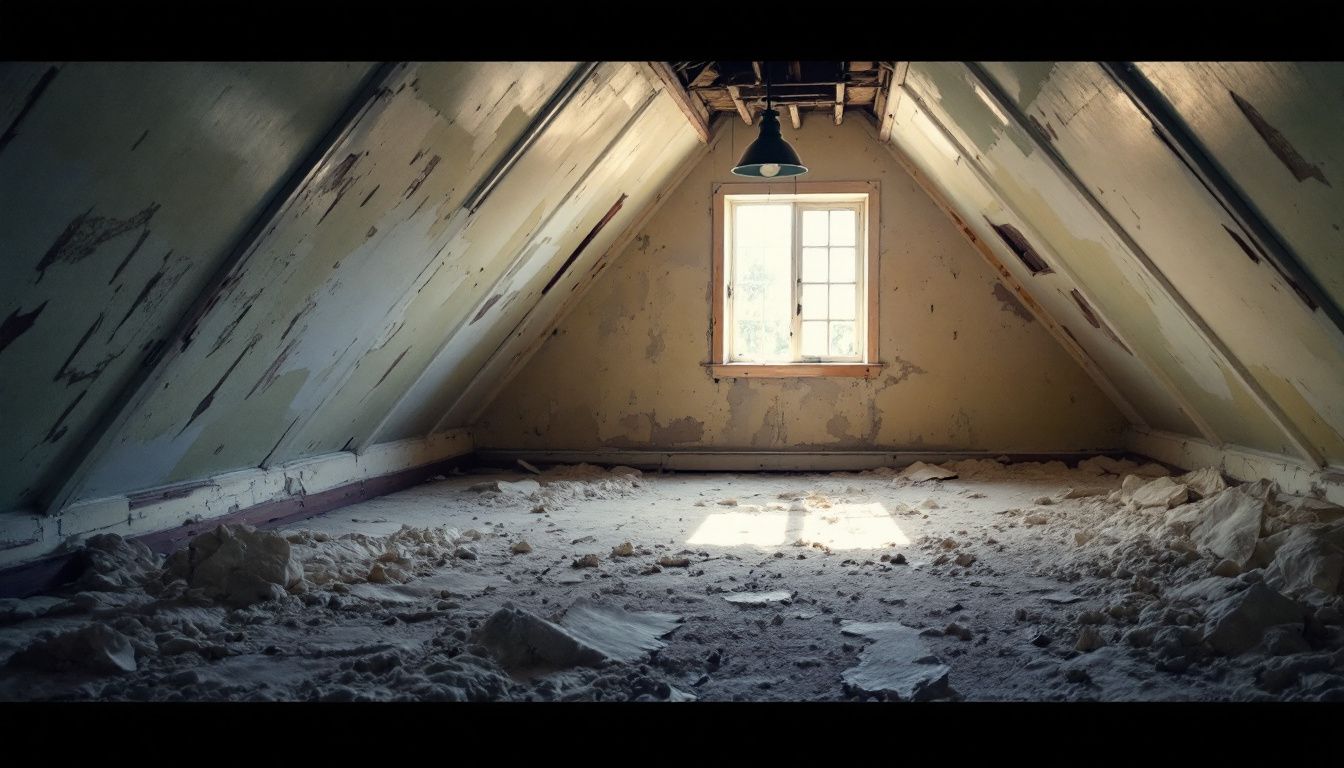
If your hospitality building went up before 2000, asbestos-containing materials (ACMs) are almost certainly present somewhere on the premises. An asbestos survey for hospitality properties is not a box-ticking exercise. It is the legal and practical foundation for protecting every guest, every member of staff, and the business itself.
Here is everything you need to know: your legal duties, where asbestos hides in hospitality buildings, how surveys work, and how to build a management plan that holds up under scrutiny.
Why Hospitality Properties Face a Particular Asbestos Risk
Hotels, restaurants, pubs, and event venues are not like empty office blocks. They are occupied around the clock, often undergoing rolling programmes of refurbishment, maintenance, and redecoration.
That constant activity is precisely what makes asbestos so dangerous in a hospitality setting. Maintenance engineers lift floor tiles. Decorators drill through walls. Kitchen contractors replace pipe insulation. Every one of those tasks, carried out without proper asbestos information, can disturb ACMs and release fibres into spaces where guests are sleeping, eating, and breathing.
Asbestos fibres cause mesothelioma, lung cancer, and asbestosis. These conditions develop over decades, which means exposure today may not become apparent for twenty or thirty years. The duty to act sits with the dutyholder — the owner, leaseholder, or managing agent — right now, not when symptoms appear.
Your Legal Duties Under the Control of Asbestos Regulations
The Control of Asbestos Regulations place a clear legal duty on anyone responsible for non-domestic premises built before 2000. That covers every type of hospitality property: hotels, guest houses, pubs, restaurants, clubs, and event venues.
The core obligation is the duty to manage. You must identify whether ACMs are present, assess their condition, and put a management plan in place to keep people safe. Ignorance is not a defence — if you have not had a survey done, you are already in breach of the regulations.
What the Regulations Require in Practice
- Commission a suitable asbestos survey carried out by a competent, qualified surveyor
- Maintain an up-to-date asbestos register for the premises
- Produce and implement an Asbestos Management Plan (AMP)
- Share information about ACM locations with anyone who may disturb them — contractors, maintenance staff, and emergency services
- Monitor the condition of known ACMs at regular intervals
- Ensure any planned refurbishment or demolition work is preceded by the appropriate survey
The Health and Safety Executive (HSE) enforces these requirements and can issue improvement notices, prohibition notices, and prosecute dutyholders. Fines and custodial sentences are both possible outcomes for serious breaches.
The reputational damage to a hospitality business — one that trades directly on guest trust — can be equally devastating.
The Health and Safety at Work etc. Act
Alongside the asbestos-specific regulations, the Health and Safety at Work etc. Act places a broad duty on employers to protect both employees and members of the public. For a hotel, that explicitly includes guests. Running a property with unmanaged asbestos risks falls squarely within the scope of this legislation.
Where Asbestos Hides in Hotels and Hospitality Buildings
Asbestos was used extensively in UK construction from the 1950s through to the late 1990s. It appeared in dozens of different building products, and many of them are still in place in hospitality properties across the country. Knowing where to look is the first step.
Common ACM Locations in Hospitality Properties
- Ceiling tiles — particularly in function rooms, dining areas, and guest corridors from 1970s and 1980s refurbishments
- Floor tiles and adhesive — vinyl floor tiles and the black bitumen adhesive beneath them frequently contain chrysotile asbestos, often hidden under carpets in lobbies and bedrooms
- Pipe lagging and boiler insulation — plant rooms, boiler rooms, and service risers in pre-2000 buildings commonly have asbestos-insulated pipework
- Asbestos insulating board (AIB) — used as fire protection in corridors, service ducts, lift shafts, and around structural steelwork
- Textured coatings — Artex and similar products applied to ceilings and walls before the mid-1980s often contain chrysotile fibres
- Asbestos cement — roofing sheets, guttering, and flue pipes in outbuildings, kitchen extraction systems, and basement areas
- Bathroom and kitchen panels — partition boards and wall linings in older wet rooms and commercial kitchen fit-outs
- Electrical equipment — fuse boards and consumer units installed before 2000 may contain asbestos backing boards
- Sprayed coatings — high-asbestos-content sprayed insulation was applied to structural steelwork in larger hotel and conference centre builds
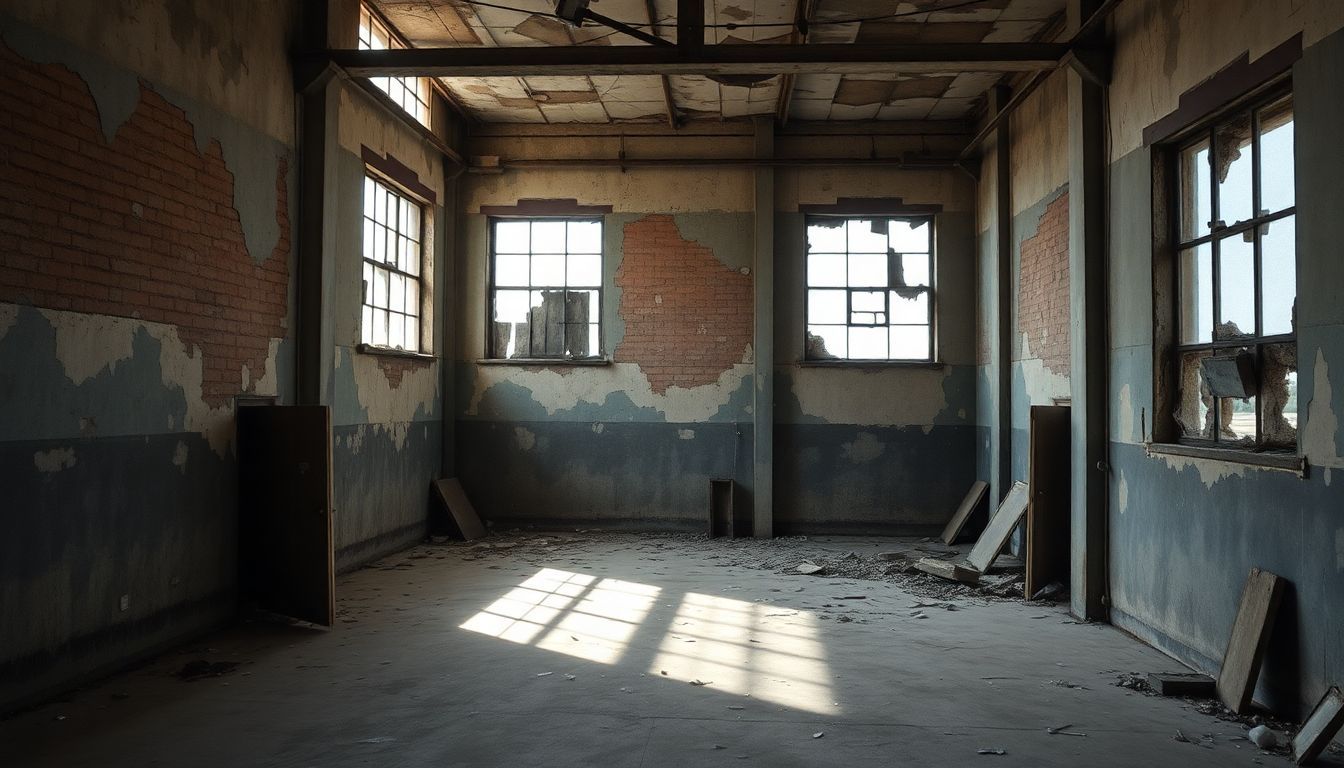
Water damage is a particular trigger for ACM deterioration. If your property has had leaks, flood damage, or persistent damp, any ACMs in the affected area may have been disturbed or degraded — and that warrants urgent professional inspection.
Recognising Signs of Disturbed Asbestos
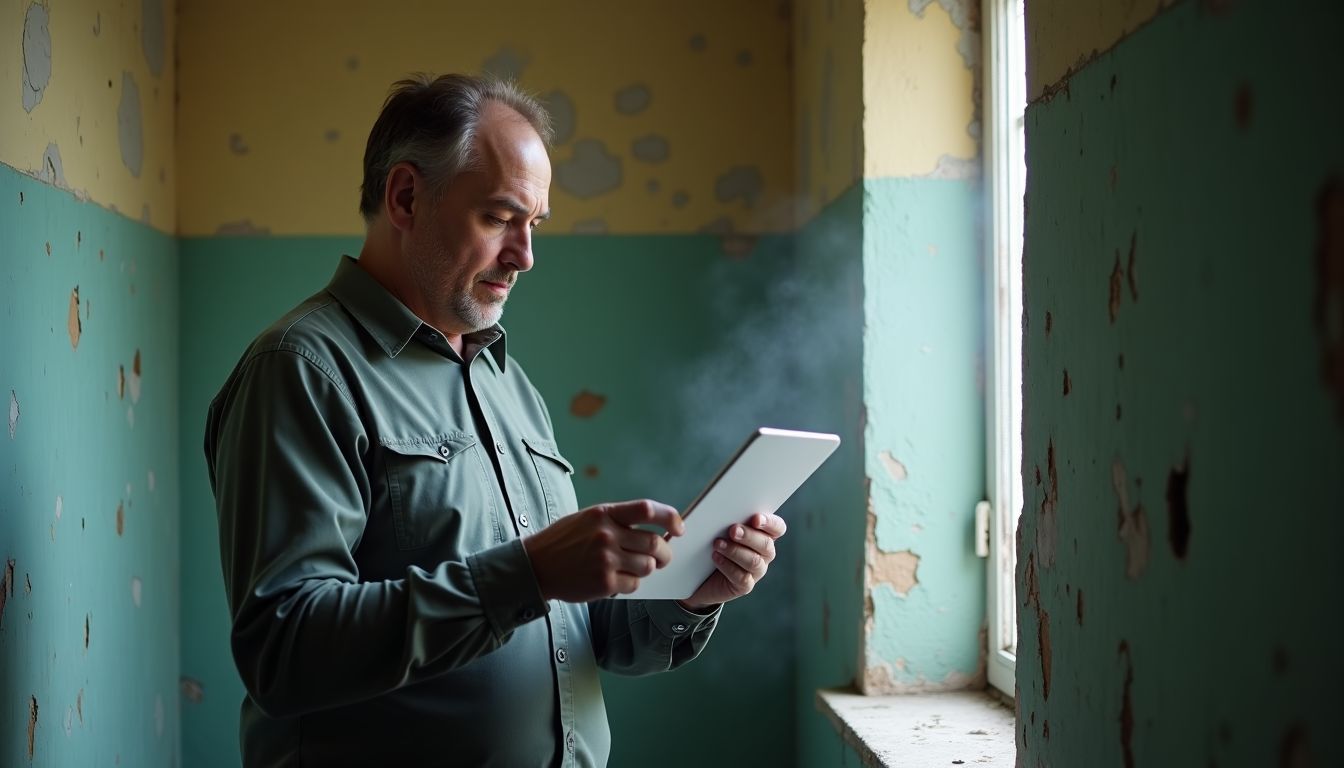
Crumbling ceiling tiles, cracked floor coverings, damaged pipe lagging, and fine dust around older materials are all warning signs. Maintenance staff should be trained to recognise these indicators and report them immediately rather than attempting any repair work themselves.
If you suspect ACMs have been disturbed, isolate the area, restrict access, and call a qualified surveyor without delay. Do not attempt to clean up dust or debris — this can spread fibres further and compound the risk significantly.
Types of Asbestos Survey for Hospitality Properties
Not every survey is the same. The type you need depends on what you are trying to achieve — routine management of an occupied building, or preparation for construction work. Getting this right matters, both legally and practically.
Management Survey
A management survey is the standard survey for an occupied building going about its normal operations. It covers all accessible areas — guest rooms, corridors, kitchens, plant rooms, lofts, stairwells, and stores — and identifies ACMs that could be disturbed during routine maintenance or minor works.
The surveyor takes samples of suspected materials, which are analysed by a UKAS-accredited laboratory. The resulting report tells you exactly what is present, where it is, what condition it is in, and what risk it poses. This forms the basis of your asbestos register and your Asbestos Management Plan.
For any hotel or hospitality property built before 2000, a management survey is a legal requirement. If you do not have one, commissioning it should be your immediate priority.
Refurbishment Survey
When you are planning construction or renovation work — a kitchen refit, bedroom refurbishment, bar extension, or roof replacement — you need a refurbishment survey before any work begins. This is a more intrusive process than a management survey, requiring access to areas that would normally remain undisturbed: ceiling voids, floor voids, wall cavities, and service risers.
The purpose is to identify every ACM that could be disturbed by the planned work, so it can be safely removed or managed before contractors move in. This survey must be completed before work begins — not during, and certainly not after.
Demolition Survey
For full demolition or major structural works, a demolition survey is required before any work commences. This is the most intrusive survey type, designed to locate all ACMs throughout the entire structure so that nothing is missed when the building is taken apart. The scope must cover the entire structure, not just the areas of immediate concern.
Which Survey Do You Need?
- No survey in place, building occupied: Management survey required immediately
- Planning refurbishment of specific areas: Refurbishment survey for those areas, in addition to any existing management survey
- Full demolition or major structural works: Demolition survey required before any work commences
- Existing survey but building layout has changed: Review and update of existing survey and register
How an Asbestos Survey Is Carried Out in a Hotel
A professional asbestos survey for hospitality properties follows a structured process set out in HSG264, the HSE’s guidance on asbestos surveying. Understanding what is involved helps you prepare the site and ensure the survey delivers the information you actually need.
Before the Survey
A competent surveyor will review any existing records, drawings, and previous survey reports before attending site. They will agree the scope with you — which areas are to be covered, what access is available, and whether any areas need to remain operational during the survey.
In a working hotel, this planning stage is particularly important. The surveyor needs to work around occupied rooms, live kitchens, and operational plant. A good surveying company will minimise disruption while ensuring thorough coverage — the two are not mutually exclusive.
On-Site Inspection and Sampling
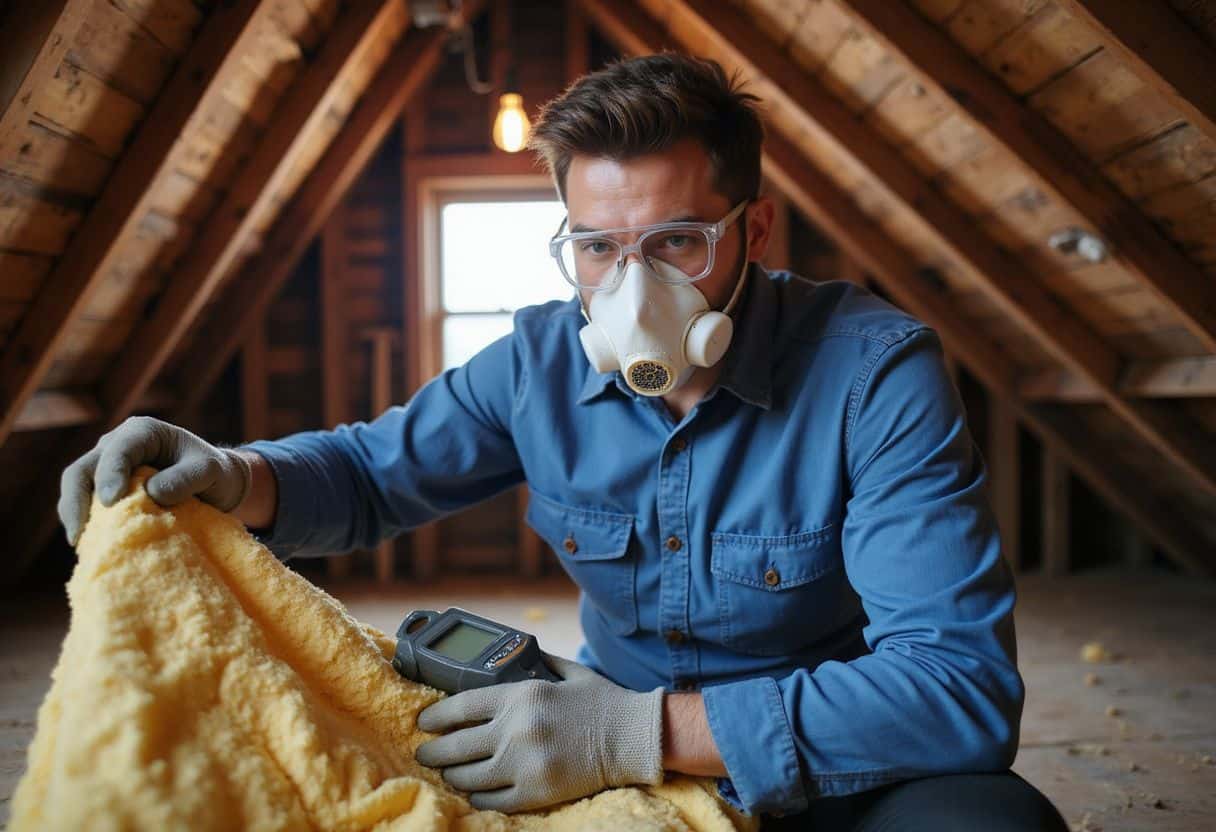
The surveyor carries out a systematic visual inspection of all areas within scope, identifying materials that may contain asbestos. Where materials are suspected, small samples are taken using controlled techniques to minimise fibre release. Sampling points are sealed and marked immediately.
The surveyor photographs all ACMs and suspected ACMs, records their location precisely, and assesses their condition and the risk they pose if disturbed. All of this information feeds into the final report.
Laboratory Analysis and Reporting
Samples are sent to a UKAS-accredited laboratory for analysis. Results confirm whether asbestos is present and identify the fibre type — chrysotile, amosite, crocidolite, or others.
The survey report presents findings clearly, with risk ratings, location plans, and recommendations for each ACM. At Supernova Asbestos Surveys, reports are delivered within 24 hours of the survey — giving you a document that meets the requirements of the Control of Asbestos Regulations and can be used immediately to update your asbestos register and management plan.
Building and Maintaining an Asbestos Management Plan
The survey gives you the information. The Asbestos Management Plan is what you do with it. A robust AMP is a live document — it needs to be updated as conditions change, works are carried out, and new information becomes available.
What Your AMP Should Include
- A complete register of all ACMs, with locations, material types, condition assessments, and risk ratings
- Clear responsibilities — who is the dutyholder, who is responsible for monitoring, who manages contractor access
- Inspection schedules — how often each ACM will be visually checked, and by whom
- Procedures for planned maintenance and minor works near ACMs
- Emergency procedures for accidental disturbance
- Contractor management — how asbestos information is shared with anyone working on the premises
- Training records for relevant staff
- A programme for remediation or removal where ACMs are in poor condition
The AMP must be accessible to anyone who needs it — maintenance staff, contractors, emergency services. Keeping it locked in a filing cabinet and never reviewing it is not compliance; it is a liability waiting to materialise.
Sharing Information with Contractors
Every contractor who works on your property must be given relevant asbestos information before they start. This is a legal requirement, not a courtesy. If a contractor disturbs an ACM because they were not told it was there, the dutyholder carries significant legal exposure.
Make it standard practice: before any contractor begins work, they receive a copy of the relevant section of your asbestos register, confirm in writing they have read it, and agree to stop work immediately if they encounter any suspected ACMs.
Managing Asbestos Across Multi-Site Hospitality Operations
If you manage a portfolio of hotels, pubs, or venues, the duty to manage applies to each property individually. You cannot rely on a single survey to cover multiple sites, and you cannot assume that because one property is clear, others will be too.
A sensible approach for multi-site operators is to establish a consistent framework: the same survey specification, the same reporting format, and the same AMP template applied across all properties. This makes it far easier to demonstrate compliance across the portfolio and to identify which sites carry the highest risk.
Central coordination matters too. If your maintenance team moves between sites, they need access to the relevant asbestos register for whichever property they are working in — not just the one they are based at.
Asbestos Surveys for Hospitality Properties Across the UK
Supernova Asbestos Surveys operates nationwide, with particular depth of coverage in major cities where hospitality stock is densest and buildings are often older.
If you operate in the capital, our team provides a fast, thorough asbestos survey London service covering hotels, restaurants, pubs, and event venues across all boroughs. For properties in the north-west, our asbestos survey Manchester team covers the city and surrounding areas. And for operators in the Midlands, our asbestos survey Birmingham service is available across the region.
Wherever your property is located, you can expect the same standard: BOHS-qualified surveyors, UKAS-accredited laboratory analysis, and reports delivered within 24 hours.
What to Look for When Choosing an Asbestos Surveying Company
Not all surveying companies are equal. When commissioning an asbestos survey for hospitality premises, there are specific things you should verify before signing anything.
Key Criteria
- Surveyor qualifications: Look for surveyors holding the BOHS P402 qualification or equivalent. This is the recognised standard for asbestos surveying in the UK.
- Laboratory accreditation: Samples must be analysed by a UKAS-accredited laboratory. Ask for confirmation of this before instructing.
- Experience with occupied buildings: Surveying a live hotel is different from surveying an empty warehouse. Choose a company with demonstrable experience in operational hospitality environments.
- Report quality: Ask to see a sample report. It should include clear location plans, photographic evidence, condition assessments, risk ratings, and actionable recommendations.
- Insurance: Confirm the company holds adequate professional indemnity and public liability insurance.
- Turnaround time: In a hospitality setting, delays cost money. A surveying company that cannot commit to a clear reporting timeline is not the right partner.
Choosing on price alone is a false economy. A poorly conducted survey that misses ACMs exposes you to far greater costs — legal, financial, and human — than the saving made upfront.
Frequently Asked Questions
Do I legally need an asbestos survey for my hotel or pub?
Yes. If your property was built or refurbished before 2000, the Control of Asbestos Regulations require you to identify whether ACMs are present and manage them accordingly. This means commissioning a management survey if one is not already in place. There is no exemption for smaller hospitality businesses — the duty applies regardless of the size of the property or the number of staff.
Can I carry out an asbestos survey while the hotel is still open?
Yes, and in most cases this is exactly how it works. A management survey is designed to be carried out in occupied buildings. A qualified surveyor will work around your operational requirements — surveying unoccupied rooms, working outside peak hours where needed, and ensuring that sampling is carried out using controlled techniques that minimise any risk to guests or staff. Good planning before the survey starts is key to keeping disruption minimal.
How often does an asbestos survey need to be updated?
A management survey does not have a fixed expiry date, but it must remain accurate and up to date. If the building layout changes, refurbishment work is carried out, or ACMs are removed or disturbed, the survey and register must be updated to reflect the new situation. The condition of known ACMs should also be reviewed at regular intervals as part of your Asbestos Management Plan — typically annually, though higher-risk materials may warrant more frequent inspection.
What happens if asbestos is found during a refurbishment?
Work must stop immediately in the affected area. The area should be isolated and access restricted. A qualified asbestos surveyor should be called to assess the situation, and depending on the nature of the material and the extent of any disturbance, a licensed asbestos removal contractor may need to be engaged before work can resume. This is precisely why a refurbishment survey must be completed before any construction work begins — discovering asbestos mid-project is far more disruptive and costly than identifying it in advance.
How much does an asbestos survey for a hotel cost?
The cost depends on the size of the property, the number of areas to be surveyed, and the type of survey required. A management survey for a small guest house will cost considerably less than a full refurbishment survey for a large conference hotel. The most straightforward way to get an accurate figure is to contact a qualified surveying company, provide details of your property, and request a written quotation. Be wary of very low quotes that do not specify the scope of work clearly — these often result in surveys that do not meet the legal standard.
Get Your Asbestos Survey Booked Today
Supernova Asbestos Surveys has completed over 50,000 surveys across the UK. Our BOHS-qualified surveyors understand the operational demands of the hospitality sector and work to minimise disruption while delivering thorough, legally compliant results.
Whether you need a management survey for an occupied property, a refurbishment survey ahead of planned works, or advice on updating an existing asbestos register, we are ready to help.
Call us on 020 4586 0680 or visit asbestos-surveys.org.uk to request a quote or speak to a member of our team.