What Actually Happens During Asbestos Testing — And Why It Matters
Around 5,000 people die in the UK every year from asbestos-related diseases. Many of those deaths trace back to exposures that happened decades earlier, in buildings where nobody realised asbestos was present.
Understanding how asbestos testing is conducted is one of the most practical steps any property owner, manager, or employer can take to protect the people in their buildings. If your property was built before 2000, there is a realistic chance it contains asbestos-containing materials (ACMs). The question is not just whether they are there — it is where they are, what condition they are in, and whether they pose a genuine risk.
Why Asbestos Testing Is a Legal and Practical Necessity
Asbestos was used extensively in UK construction throughout the 20th century. It was valued for its heat resistance, durability, and versatility — which is why it ended up in so many different parts of buildings, from pipe lagging and insulation boards to floor tiles and textured coatings.
The UK banned the importation and use of all forms of asbestos in 1999. That ban did nothing to remove the material already embedded in millions of existing structures. The HSE has made clear that vast numbers of homes and commercial buildings across the country may still contain asbestos.
Under the Control of Asbestos Regulations, duty holders — those responsible for non-domestic premises — are legally required to manage asbestos risk. That obligation begins with knowing whether asbestos is present, which means testing. For domestic property owners planning renovation or refurbishment, testing is equally critical even where the legal duty differs.
How to Identify Whether Your Property Needs Testing
Not every property carries the same risk profile, but certain factors significantly increase the likelihood of ACMs being present. Knowing what to look for helps you make the right call before any work begins.
Age of the Building
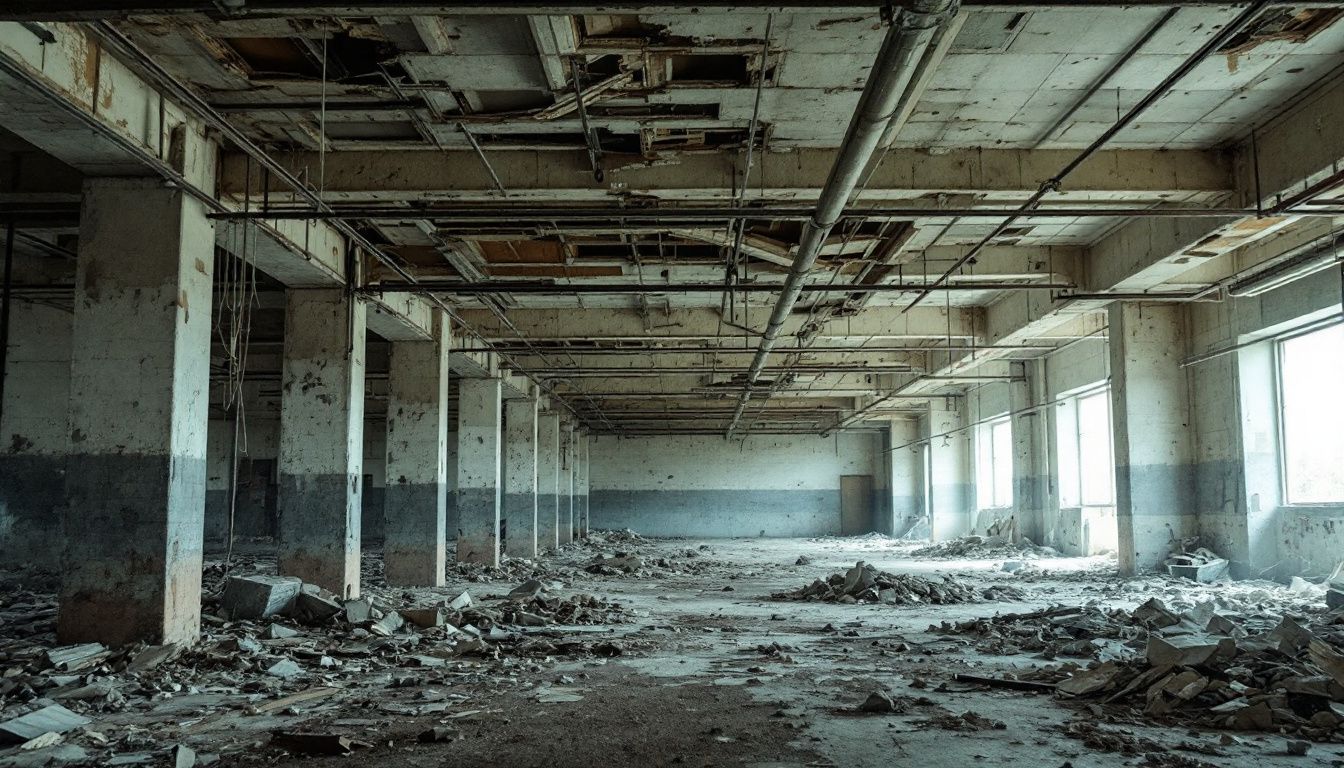
The single most reliable indicator is when the building was constructed. Any property built before 2000 could contain asbestos. Buildings constructed between the 1950s and 1980s are considered particularly high-risk, as this was the peak period of asbestos use in UK construction.
If you are unsure when your property was built, check your land registry documents, mortgage paperwork, or speak to your local council. A qualified surveyor can also advise based on the building’s construction type and materials.
Common Locations Where Asbestos Is Found
Asbestos was incorporated into a wide range of building materials. You cannot identify it by sight — it often looks identical to non-asbestos alternatives. Common locations include:
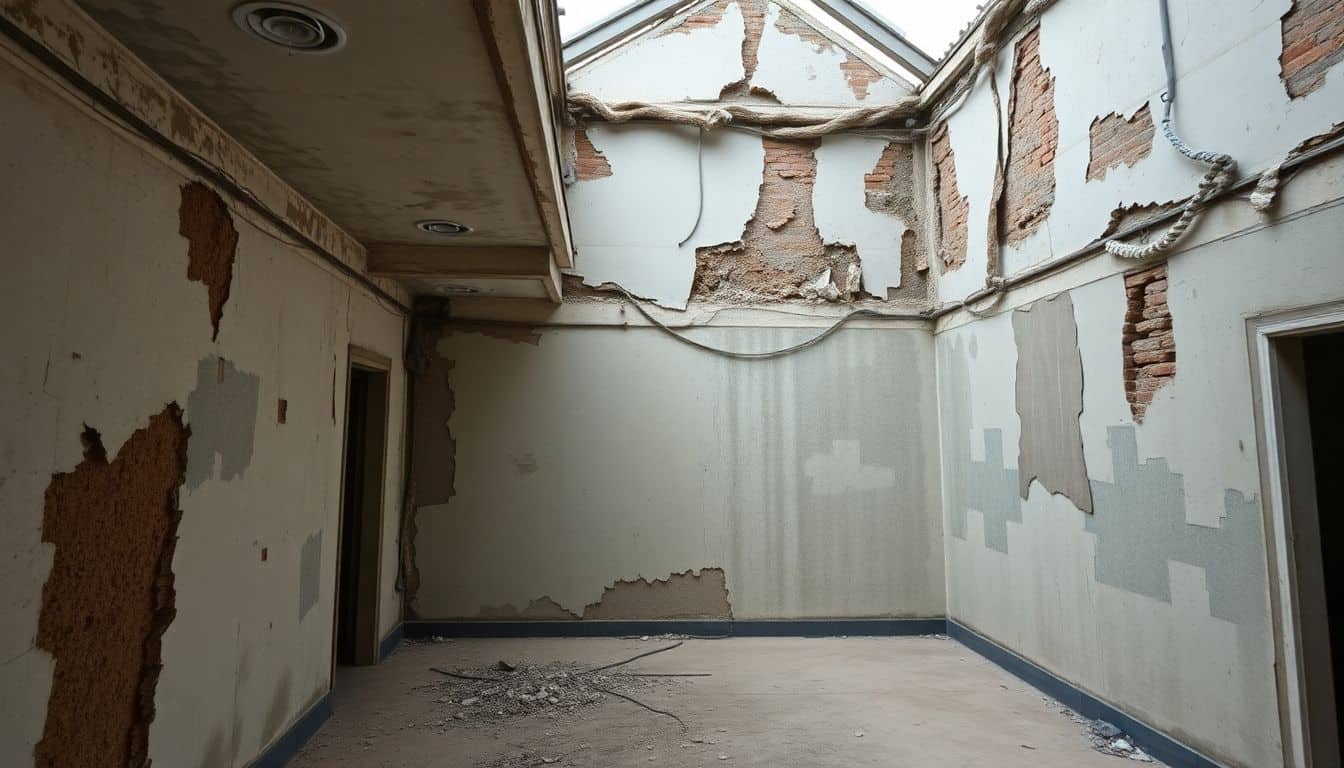
- Ceiling tiles and textured coatings such as Artex
- Floor tiles and the adhesive used to fix them
- Pipe lagging and boiler insulation
- Roof sheets and guttering, particularly corrugated cement products
- Partition walls and wall panels
- Electrical cable insulation and fuse boxes
- Sprayed coatings on structural steelwork
- Soffit boards and fascias
Laboratory analysis is the only reliable way to confirm whether a material contains asbestos. Visual inspection alone is never sufficient.
Planned Renovation, Refurbishment, or Demolition
If you are planning any construction or demolition work, asbestos testing is not just advisable — it is a legal requirement under the Control of Asbestos Regulations. Disturbing ACMs without prior identification is one of the most common causes of dangerous asbestos exposure in the UK.
Contractors have a duty to establish whether asbestos is present before work begins. As the property owner or manager, you share responsibility for providing that information. A demolition survey must be completed before any intrusive works proceed on a pre-2000 building.
How Is Asbestos Testing Conducted? The Main Methods Explained
Professional asbestos testing follows a structured process carried out by trained and accredited surveyors. The specific methods used depend on the purpose of the test, the type of property, and what information is needed. Here is a clear breakdown of each approach.
Building Material Sampling and Laboratory Analysis
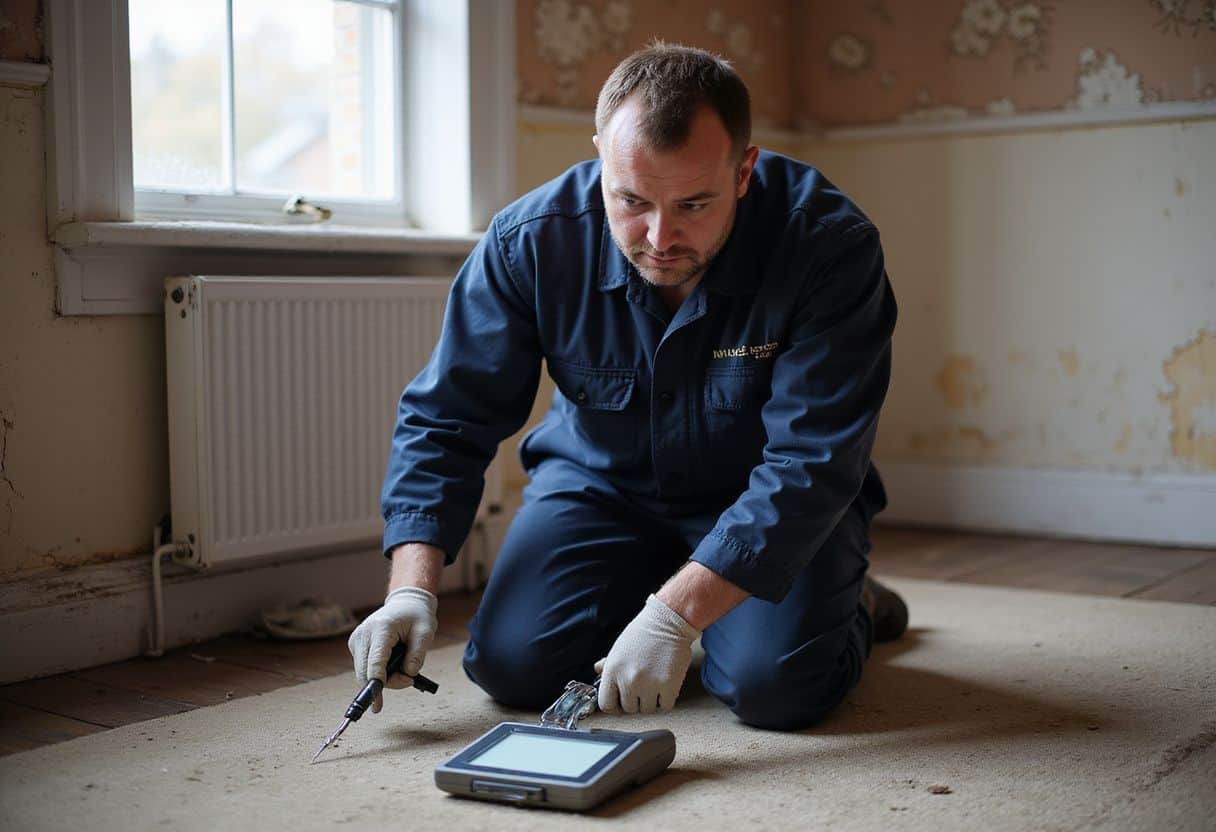
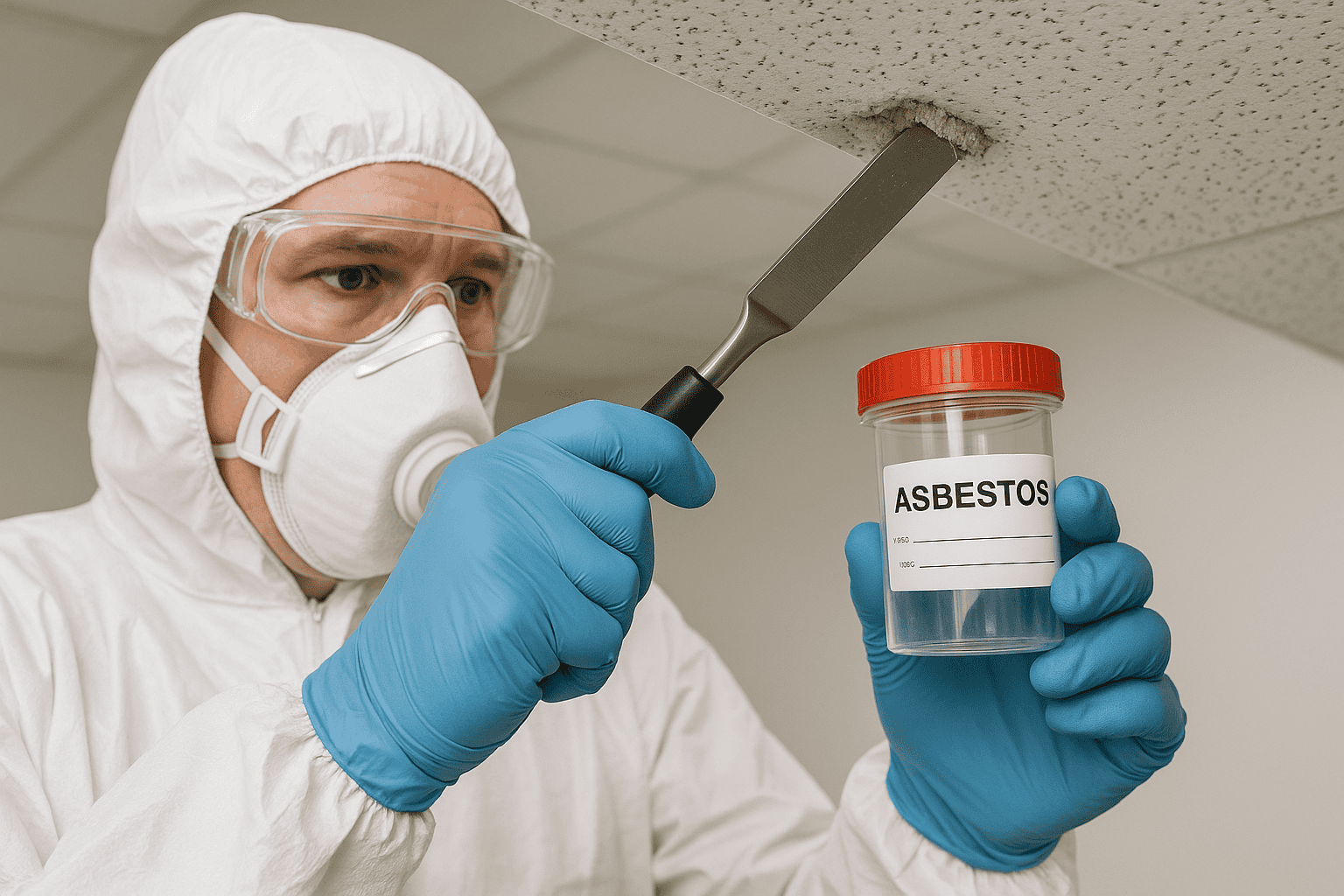
This is the most common form of asbestos testing and forms the foundation of most survey work. A trained surveyor visits the property and collects small samples — typically a few grams — from areas where ACMs might be present.
Samples are collected carefully using appropriate personal protective equipment (PPE) to avoid releasing fibres during the process. The sample site is then sealed immediately to prevent any further disturbance.
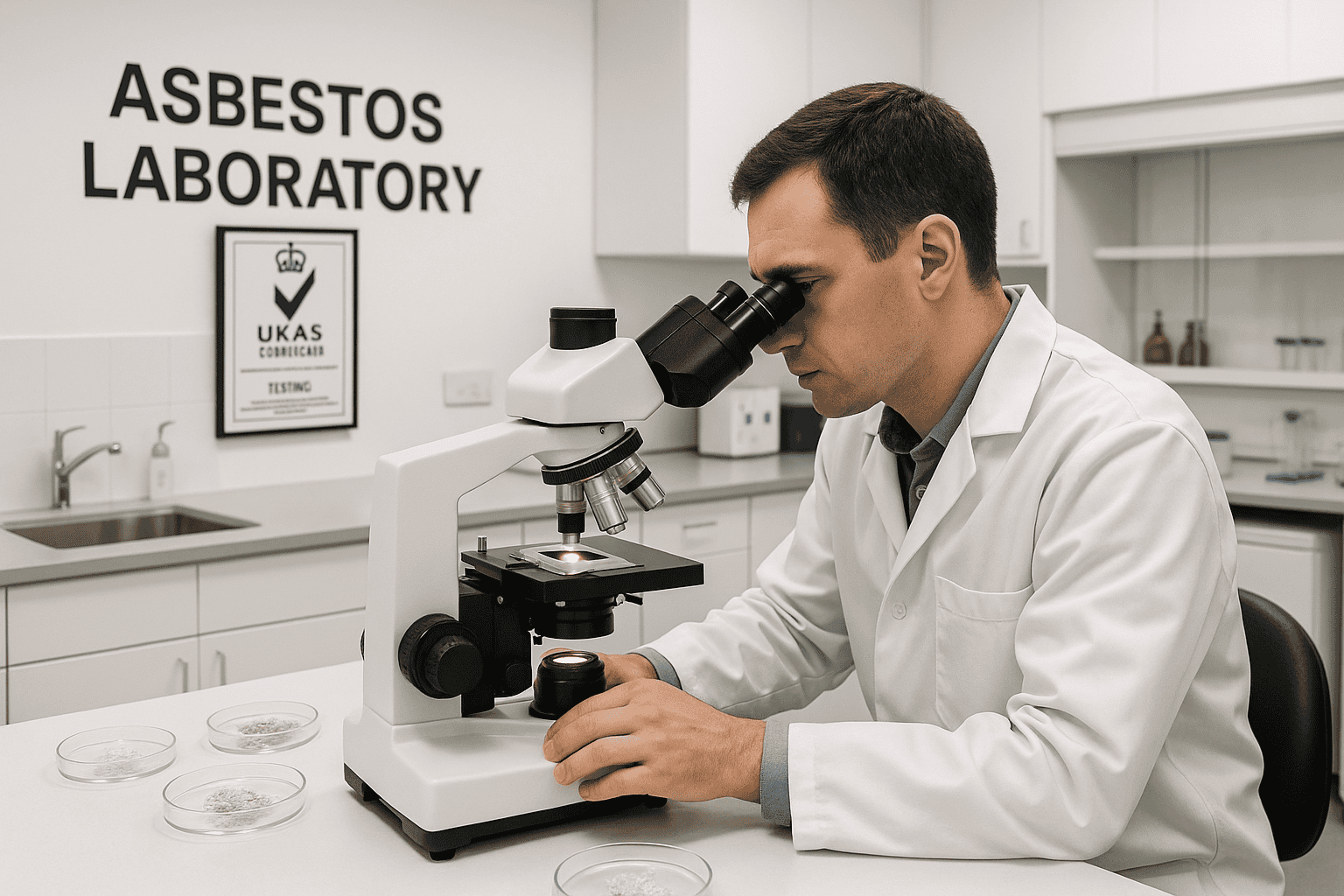
Once collected, samples are sent to a UKAS-accredited laboratory for analysis. The primary analytical method is polarised light microscopy (PLM). This technique uses polarised light to examine the physical and optical properties of fibres within the sample, allowing analysts to:
- Confirm whether asbestos is present
- Identify the specific type of asbestos (chrysotile, amosite, crocidolite, and others)
- Estimate the percentage of asbestos content within the material
Knowing the type of asbestos matters because different types carry different risk levels. Crocidolite (blue asbestos) and amosite (brown asbestos) are generally considered more hazardous than chrysotile (white asbestos), though all types are dangerous when fibres become airborne.
PLM is the standard method recommended in HSG264, the HSE’s guidance document setting out best practice for asbestos surveying in the UK. Any reputable surveying company will use UKAS-accredited laboratories that follow this methodology.
Air Sampling and Fibre Counting
Air sampling measures the concentration of asbestos fibres in the air within a building or area. It is used in specific circumstances rather than as a routine first step. Common applications include:
- After asbestos removal work, to confirm the area is safe for reoccupation
- Where ACMs are suspected to be releasing fibres into the environment
- During or after refurbishment work that may have disturbed asbestos
- As part of ongoing air monitoring in buildings with known ACMs
Air samples are collected using a pump that draws air through a membrane filter over a set period. The filter is then sent to a laboratory for analysis. Two main techniques are used:
Phase contrast microscopy (PCM) is the most widely used method for routine air monitoring. It counts all fibres above a certain size threshold and is relatively quick and cost-effective. However, it cannot distinguish asbestos fibres from other types, so it functions best as a screening tool or for clearance testing after removal work.
Transmission electron microscopy (TEM) is a more sophisticated technique capable of identifying individual asbestos fibres at a much finer scale. It is used when greater accuracy is required — for example, in environmental investigations or where very low fibre concentrations need to be detected.
Air sampling tells you whether fibres are currently present in the air. It does not tell you where asbestos is within your building. It is typically used alongside material sampling rather than as a standalone test.
Soil and Water Testing
Soil and water testing is used for environmental investigations rather than standard building surveys. This becomes relevant when asbestos has been illegally dumped — commonly referred to as fly-tipping — or where contaminated land is being assessed prior to development.
Professionals collect soil and water samples from the affected area and analyse them using PLM for soil samples and TEM for water, as TEM can detect the very fine fibres that may be present in suspension.
Fly-tipping of asbestos waste is a criminal offence in the UK. If you suspect asbestos has been illegally dumped on or near your land, contact your local authority and a licensed asbestos specialist immediately. Do not attempt to handle or move the material yourself under any circumstances.
The Role of Accredited Surveyors and Laboratories
Asbestos testing is not a DIY task. Collecting samples without proper training and equipment can disturb ACMs and release fibres into the air, creating a hazard where none previously existed. Results from unaccredited sources also carry no legal weight and cannot be relied upon for compliance purposes.
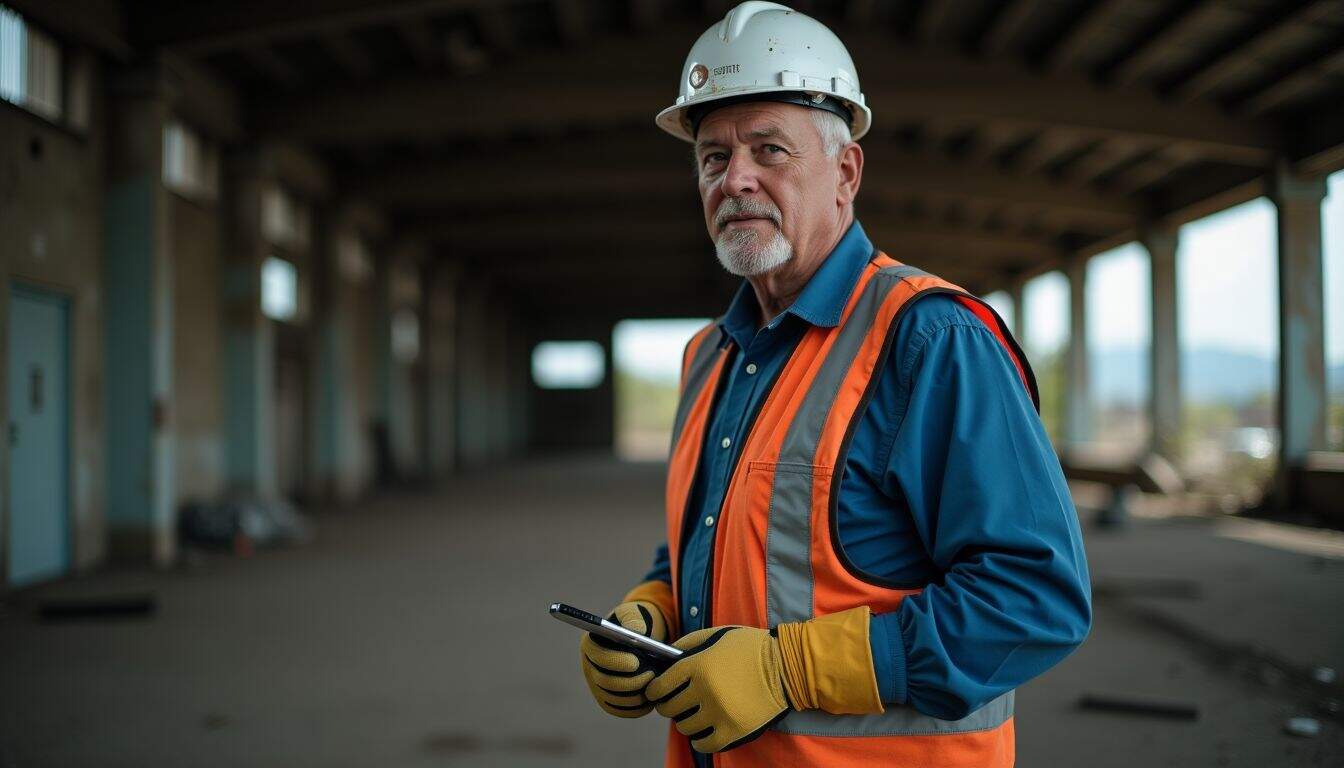
In the UK, asbestos surveys and testing should be carried out by surveyors holding the relevant P402 qualification (or equivalent), working for a company accredited by UKAS (United Kingdom Accreditation Service). Laboratory analysis must also be carried out by a UKAS-accredited laboratory.
When selecting a provider for asbestos testing, always ask for evidence of UKAS accreditation and confirm that the surveyor holds appropriate qualifications. A reputable company will provide this information without hesitation.
The Two Main Survey Types and When Each Applies
Understanding how asbestos testing is conducted also means understanding which type of survey is appropriate for your situation. The two main survey types under HSG264 guidance serve different purposes.
Management Surveys
A management survey is the standard survey used to locate and assess the condition of ACMs in a building that is in normal occupation and use. The surveyor inspects all reasonably accessible areas, takes samples of suspect materials, and produces a report that forms the basis of your asbestos management plan.
This type of survey is appropriate for ongoing duty holder compliance and for buildings where no intrusive work is planned. It does not involve opening up the fabric of the building beyond what is reasonably accessible.
Refurbishment and Demolition Surveys
Where any work will disturb the fabric of a building — whether a partial refurbishment or full demolition — a more intrusive survey is required. An asbestos management survey is not a substitute for a refurbishment and demolition survey when work is planned.
A refurbishment and demolition survey involves accessing areas that would not normally be examined during a management survey, including voids, cavities, and areas behind panels. This type of survey must be completed before any intrusive work begins — it is a legal requirement, not a recommendation.
What Happens After Asbestos Testing Is Complete
Once testing is complete, you will receive a detailed report from the surveying company. This report should include:
- The location of all sampled materials, with photographs and floor plans
- Laboratory results for each sample, including asbestos type and percentage where applicable
- A risk assessment for each identified ACM based on its condition and likelihood of disturbance
- Recommendations for management, remediation, or removal
Not all ACMs need to be removed immediately. In many cases, materials in good condition that are unlikely to be disturbed can be safely managed in place. The key is having accurate information so that informed decisions can be made.
For non-domestic premises, the results of asbestos testing must be incorporated into an asbestos management plan — a legal requirement under the Control of Asbestos Regulations. This plan must be kept up to date and made available to anyone who might disturb the materials, including contractors and maintenance workers.
Where materials do need to be removed, this must be carried out by a licensed contractor. Find out more about what that process involves on our asbestos removal service page.
How Long Does Asbestos Testing Take?
The duration of asbestos testing depends on the size and complexity of the property. For a standard residential property, a surveyor may complete the inspection and sampling in a few hours. Larger commercial or industrial premises can take a full day or more.
Laboratory turnaround times typically range from two to five working days for standard results. Expedited analysis is available from many UKAS-accredited laboratories when results are needed urgently — for example, ahead of a planned start date for construction or refurbishment work.
Once you have your results, acting on them promptly is essential. Delays in managing identified ACMs can increase risk and, for duty holders, may constitute a breach of your legal obligations under the Control of Asbestos Regulations.
Asbestos Testing Across the UK
Supernova Asbestos Surveys operates nationwide, with specialist teams covering major cities and surrounding regions. Whether you need an asbestos survey London property managers rely on, an asbestos survey Manchester businesses trust, or an asbestos survey Birmingham teams recommend, we have accredited surveyors ready to mobilise quickly.
With over 50,000 surveys completed across the UK, our teams understand the specific building stock, construction periods, and material types common to each region. That local knowledge translates into more thorough surveys and more accurate results.
Key Questions to Ask Before Booking an Asbestos Test
Before you commission any asbestos testing, make sure you are engaging a provider who meets the necessary standards. Ask these questions upfront:
- Are your surveyors P402-qualified or equivalent? This is the industry-recognised qualification for asbestos surveyors in the UK.
- Is your company UKAS-accredited? Accreditation confirms that your surveying and laboratory work meets independently verified quality standards.
- Which laboratory will you use? Confirm it is UKAS-accredited and uses PLM analysis as standard.
- What will the report include? A thorough report should cover sample locations, lab results, risk assessments, and clear recommendations.
- Do you carry appropriate insurance? Professional indemnity and public liability insurance are essential for any contractor working on your premises.
A professional surveying company will answer all of these questions clearly and without hesitation. If a provider is vague or cannot produce accreditation documentation, look elsewhere.
Frequently Asked Questions
How is asbestos testing conducted in a residential property?
A qualified surveyor visits the property and takes small samples from suspect materials — such as textured coatings, floor tiles, or pipe lagging. These samples are sealed and sent to a UKAS-accredited laboratory, where polarised light microscopy (PLM) is used to confirm whether asbestos is present and identify the type. The surveyor then produces a report detailing findings, risk assessments, and recommendations. The process is minimally disruptive and typically completed within a few hours for most homes.
Can I collect asbestos samples myself?
No. Collecting samples without proper training and equipment can disturb asbestos-containing materials and release dangerous fibres into the air. Results from unqualified sampling also carry no legal weight. Asbestos testing must be carried out by a surveyor holding the relevant P402 qualification (or equivalent), working for a UKAS-accredited organisation.
What is the difference between a management survey and a refurbishment and demolition survey?
A management survey is used for buildings in normal occupation where no intrusive work is planned. It identifies and assesses accessible ACMs to support an asbestos management plan. A refurbishment and demolition survey is required before any work that will disturb the fabric of a building. It is more intrusive, accessing voids, cavities, and concealed areas. Under HSG264 guidance, a management survey cannot be used as a substitute when refurbishment or demolition work is planned.
How long does it take to get asbestos test results?
Laboratory turnaround for standard asbestos sample analysis is typically two to five working days. Many UKAS-accredited laboratories offer expedited turnaround when results are needed urgently. The site survey itself usually takes a few hours for a residential property, or a full day or more for larger commercial premises.
What happens if asbestos is found during testing?
Finding asbestos does not automatically mean it needs to be removed. Materials in good condition that are unlikely to be disturbed can often be safely managed in place, with regular monitoring. Your survey report will include a risk assessment for each identified ACM and clear recommendations. Where removal is necessary, it must be carried out by a licensed contractor in accordance with the Control of Asbestos Regulations.
Book Your Asbestos Test With Supernova
Supernova Asbestos Surveys has completed over 50,000 surveys across the UK. Our UKAS-accredited surveyors work to HSG264 standards, deliver clear and actionable reports, and are available nationwide with fast mobilisation times.
Whether you need a management survey, a refurbishment and demolition survey, or standalone material sampling, we provide straightforward expert advice and reliable results.
Call us on 020 4586 0680 or visit asbestos-surveys.org.uk to get a quote or speak to a member of our team.