Author: ☀️ Supernova

  • What are the Symptoms of Asbestos-Related Diseases and How Can They be Treated? An Overview of Causes, Symptoms, and Treatments

    What are the Symptoms of Asbestos-Related Diseases and How Can They be Treated? An Overview of Causes, Symptoms, and Treatments

    Asbestos still turns up in places people least expect: behind riser panels, above suspended ceilings, inside plant rooms, on soffits, in old floor finishes and around pipework that has not been touched for years. For property managers, landlords, contractors and dutyholders, asbestos is not just a historical curiosity. It remains a live compliance, maintenance and health issue across the UK.

    The reason is simple. Asbestos was used so widely, for so long, and in so many building products that older premises can contain it in multiple locations at once. If it stays undisturbed and is properly managed, risk can often be controlled. If it is drilled, cut, broken, sanded or removed without the right checks, fibres can be released and people can be exposed.

    That makes practical understanding essential. You need to know what asbestos is, where the word came from, why it became so common, how its dangers were recognised, what the main types are, how exposure happens, and what UK law expects you to do now.

    What asbestos is and why it mattered so much

    Asbestos is the commercial name for a group of naturally occurring fibrous silicate minerals. These minerals split into microscopic fibres that are strong, heat resistant, chemically durable and effective at insulation. Those qualities made asbestos attractive to industry for decades.

    They also made it dangerous. Once asbestos fibres become airborne and are inhaled, the body struggles to break them down or remove them. That is why asbestos exposure is linked to serious respiratory disease and why disturbance control sits at the centre of modern asbestos management.

    In practical terms, asbestos was valued because it offered:

    • Fire resistance
    • Thermal insulation
    • Acoustic insulation
    • Chemical resistance
    • Tensile strength
    • Low cost compared with many alternatives used at the time

    Those properties explain why asbestos ended up in factories, schools, offices, hospitals, warehouses, housing stock, transport infrastructure and public buildings across the UK.

    Etymology: where the word asbestos comes from

    The word asbestos comes from ancient Greek and is usually understood to mean “inextinguishable” or “unquenchable”. That meaning reflects the feature people found most remarkable: its resistance to fire.

    Older references also describe asbestos in terms such as fireproof cloth or mineral wool. These names show how people understood the material long before modern occupational hygiene existed. They knew it could survive heat. They did not yet understand the long-term consequences of inhaling its fibres.

    That etymology still matters because it captures the reason asbestos spread so widely through construction and industry. It solved a problem that mattered enormously in the age of boilers, furnaces, engines, heavy manufacturing and fire protection.

    Early references and uses of asbestos

    Asbestos is not a modern discovery. Historical references to fibrous minerals go back thousands of years. Early civilisations are said to have used asbestos-like fibres in lamp wicks, textiles, burial cloths and heat-resistant items.
    asbestos - What are the Symptoms of Asbestos-Relate

    These early uses were limited. Mining, separating and processing the fibres was difficult, so asbestos remained more of a specialist material than a mainstream one for much of early history.

    Why early use stayed limited

    Before industrial extraction and processing improved, asbestos was hard to produce in large quantities. That meant it could not easily become a mass-market building material.

    Once industrial methods improved, that changed quickly. A mineral once treated as unusual became a routine commercial ingredient in thousands of products.

    How asbestos became a construction staple

    The rise of asbestos in construction was driven by performance and price. Builders, engineers and manufacturers needed materials that could resist heat, reduce fire spread, insulate services and reinforce products. Asbestos delivered all of that.

    It could be woven into textiles, mixed into cement, bonded into boards, sprayed as insulation, packed into gaskets and used in friction products. That flexibility made asbestos useful across nearly every stage of building design, plant installation and maintenance.

    Common asbestos-containing materials in buildings

    In UK premises, asbestos may still be found in:

    • Pipe lagging
    • Boiler and calorifier insulation
    • Sprayed coatings
    • Asbestos insulating board
    • Cement roof sheets and wall panels
    • Soffits, gutters and downpipes
    • Textured coatings
    • Floor tiles and bitumen adhesives
    • Ceiling tiles
    • Fire doors and fire-resistant panels
    • Rope seals, gaskets and packing
    • Electrical backing boards
    • Lift shaft linings
    • Service riser panels
    • Water tanks and cisterns

    Some of these materials are more friable than others. Pipe lagging, sprayed coatings and some insulating boards can release fibres more easily if damaged. Cement products are often more tightly bound, but they are still not safe to disturb without the right assessment.

    Construction settings where asbestos was widely used

    Asbestos use was especially common in:

    • Commercial offices
    • Schools and colleges
    • Hospitals and healthcare estates
    • Factories and workshops
    • Warehouses
    • Local authority buildings
    • Transport infrastructure
    • Plant rooms and service areas
    • Residential communal areas

    For dutyholders, the practical point is clear: if a building was constructed or refurbished before 2000, asbestos should be considered a real possibility unless reliable evidence shows otherwise.

    Types of asbestos

    There are six recognised asbestos minerals. In UK property management, the three most commonly encountered are chrysotile, amosite and crocidolite, but all six are hazardous.
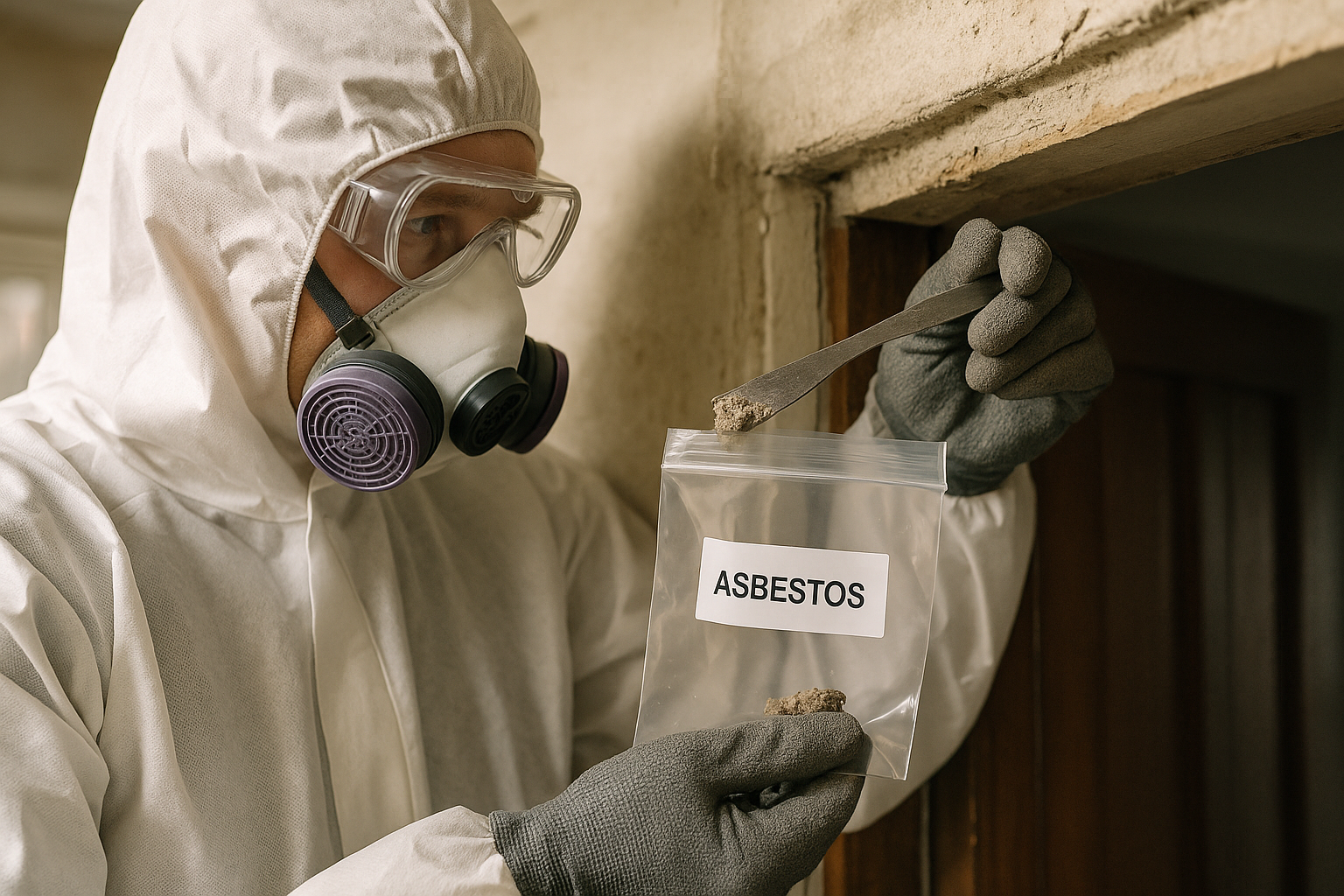
    asbestos - What are the Symptoms of Asbestos-Relate

    Serpentine group

    The serpentine group contains one asbestos mineral:

    • Chrysotile – often called white asbestos

    Chrysotile fibres are curly in structure. It was widely used in cement products, textured coatings, floor tiles, gaskets and many other manufactured items. Because it was so common in building products, chrysotile still appears regularly in surveys.

    Amphibole group

    The amphibole group contains:

    • Amosite – often called brown asbestos
    • Crocidolite – often called blue asbestos
    • Anthophyllite
    • Actinolite
    • Tremolite

    Amphibole fibres are generally straighter and needle-like in form. In buildings, amosite and crocidolite are the amphiboles most often discussed because of their historical use in insulation, insulating board and sprayed applications.

    Although some types were used more heavily than others, the management rule is the same: all asbestos types are dangerous if disturbed. There is no safe asbestos to cut, drill or remove casually.

    Phasing out asbestos use in the UK

    Asbestos did not disappear overnight. Its use was phased out over time as evidence of harm became harder to ignore and regulation tightened.

    Different asbestos types were restricted and prohibited in stages. That phased approach is one reason asbestos remains such a complex legacy issue. Buildings altered across different periods may contain a mix of products from different eras, and later refurbishments do not guarantee earlier asbestos materials were removed.

    Why phasing matters for property managers

    Phasing affects decision-making on site. You cannot assume that because one part of a building looks newer, the whole property is free from asbestos. Refurbishment often covers asbestos rather than removing it.

    That is why survey scope matters. If you manage an occupied property, a management survey helps identify asbestos-containing materials that could be disturbed during normal occupation and routine maintenance. If major intrusive works are planned, you need a survey designed for that purpose.

    Discovery of toxicity: when asbestos stopped looking harmless

    For years, asbestos was promoted for its performance while the health consequences were poorly understood or ignored. Over time, patterns of illness among workers in mining, manufacturing, insulation and heavy industry became clearer.

    Medical and occupational evidence linked asbestos dust exposure with serious disease. Workers handling raw fibre, lagging pipes, cutting insulating products and operating in dusty industrial settings were among the first groups where harm became visible.

    What changed once toxicity was recognised

    The discovery of toxicity changed asbestos from a useful industrial material into a regulated health hazard. The shift was gradual, but it drove several major changes:

    1. Greater awareness of dust risks in workplaces
    2. Controls on handling and exposure
    3. Restrictions on use
    4. Development of specialist surveying, sampling and removal practices
    5. Legal duties to identify and manage asbestos in buildings

    Today, the focus is prevention. The goal is not to react after fibres have been released. It is to identify asbestos before work starts, assess risk properly and stop avoidable exposure from happening at all.

    How can people be exposed to asbestos?

    Asbestos exposure happens when fibres become airborne and are breathed in. That usually occurs when asbestos-containing materials are disturbed, damaged or deteriorate.

    Many exposure incidents do not involve dramatic demolition. They happen during ordinary maintenance jobs carried out by people who did not realise asbestos was present.

    Typical exposure scenarios

    • Drilling into a wall panel that contains asbestos insulating board
    • Removing old floor tiles or scraping adhesive
    • Breaking cement sheets during repair work
    • Disturbing pipe lagging in a plant room
    • Lifting ceiling tiles and damaging debris above them
    • Cutting into service risers without checking survey information
    • Refurbishment work in older premises without intrusive asbestos investigation
    • Demolition that starts before asbestos is identified and planned for

    Exposure can also happen where materials are already damaged. Impact damage, water ingress, poor repairs, vandalism or repeated maintenance access can all increase the likelihood of fibre release.

    Who is most at risk?

    Risk is often higher for people whose work brings them into contact with the fabric of buildings. That includes:

    • Electricians
    • Plumbers
    • Heating and ventilation engineers
    • Joiners
    • Roofers
    • General maintenance staff
    • Demolition workers
    • Refurbishment contractors
    • Caretakers and site teams

    Occupants can also be affected if damaged asbestos is left unmanaged in accessible areas, though the main concern in many premises is disturbance during maintenance, refurbishment and demolition.

    Health effects linked to asbestos exposure

    The danger from asbestos comes from inhaling fibres, not from simply being in the same building as managed asbestos-containing materials in good condition. The risk increases when fibres are released into the air and people breathe them in.

    Diseases associated with asbestos exposure include:

    • Mesothelioma
    • Asbestos-related lung cancer
    • Asbestosis
    • Pleural thickening
    • Other pleural disease

    These conditions often develop after a long latency period. That is one reason asbestos management relies so heavily on prevention. You do not get a reliable immediate warning sign at the point of exposure.

    Risk depends on factors such as:

    • The type of asbestos
    • The condition of the material
    • The amount of fibre released
    • The task being carried out
    • The duration and frequency of exposure
    • The controls used during work

    If suspect material is uncovered during a job, the correct response is to stop work, prevent further disturbance and get competent advice. Carrying on to “finish quickly” is exactly how small incidents become serious exposure events.

    Asbestos laws and regulations in the UK

    The main legal framework is the Control of Asbestos Regulations. These regulations place duties on those who own, manage, occupy or maintain non-domestic premises, and they are central to how asbestos is handled in the UK.

    For many dutyholders, the key concept is the duty to manage. If you are responsible for a building, you may have legal obligations even if you did not install the asbestos and even if the property changed hands years ago.

    What the duty to manage involves

    • Finding out whether asbestos is present, or presuming it is unless there is strong evidence otherwise
    • Keeping an up-to-date record of its location and condition
    • Assessing the risk of exposure
    • Preparing and implementing an asbestos management plan
    • Providing information to anyone liable to disturb it
    • Reviewing information regularly and after changes in condition or use

    Surveying should align with HSG264, which sets out HSE guidance on asbestos surveys. That guidance covers survey planning, inspection, sampling, reporting and the purpose of different survey types.

    HSE guidance also includes practical information for employers, tradespeople and dutyholders, including task-based advice commonly referred to as asbestos essentials. The aim is straightforward: turn legal duties into safe actions on site.

    When different surveys are needed

    A management survey is suitable for normal occupation and routine maintenance. If you are planning intrusive works, you need a more intrusive survey of the affected area.

    Where a structure is due to be taken down, a demolition survey is required before work starts. A management survey is not a substitute for pre-demolition or pre-refurbishment investigation.

    Practical asbestos management in real buildings

    Good asbestos management is less about paperwork for its own sake and more about making sure the right people have the right information before work begins. That means survey reports must be current, accessible and relevant to the task.

    In day-to-day property management, sensible asbestos control usually includes:

    1. Reviewing existing survey information
    2. Checking whether planned work is routine, intrusive or destructive
    3. Confirming whether the survey scope matches the work
    4. Inspecting known asbestos-containing materials for condition changes
    5. Updating the asbestos register where needed
    6. Briefing contractors before they start
    7. Stopping work immediately if unidentified suspect material is found

    Common mistakes that create risk

    • Relying on an old survey without checking whether it covers the work area
    • Assuming a refurbished area must be asbestos-free
    • Letting contractors start before they see the asbestos information
    • Using visual judgement instead of sampling and analysis
    • Ignoring minor damage because the material “has been like that for years”

    Visual appearance alone cannot confirm whether a material contains asbestos. Sampling and analysis by a competent laboratory is the reliable route where confirmation is required.

    Where asbestos is commonly found in older properties

    Asbestos usually appears where fire resistance, insulation, durability or cheap reinforcement were needed. In practice, that means certain locations come up repeatedly during surveys.

    • Ceiling voids
    • Roof spaces
    • Plant rooms
    • Boiler houses
    • Pipe runs and ducts
    • Service risers
    • Partition walls
    • Floor finishes
    • Electrical cupboards
    • Fire doors
    • External roofs and cladding
    • Garages and outbuildings

    These areas often sit outside day-to-day view, which is exactly why asbestos can remain unnoticed until a contractor opens something up.

    Why location-specific survey support matters

    Asbestos risk is managed building by building, not by assumption. Premises age, construction type, refurbishments, occupancy and planned works all affect what you need.

    If you are responsible for property in the capital, arranging an asbestos survey London service can help you get site-specific advice for occupied buildings, maintenance planning and project work. The same applies in regional portfolios, where local support for an asbestos survey Manchester or an asbestos survey Birmingham can make scheduling and access management far more straightforward.

    The key is to match the survey to the building and the work. A generic assumption is not enough when contractors are about to disturb the fabric of the property.

    What to do if you suspect asbestos

    If you suspect asbestos, do not disturb it to check. That includes drilling a small hole, scraping a sample yourself or trying to remove a damaged piece for inspection.

    Take these steps instead:

    1. Stop work immediately
    2. Keep people away from the area if there is a risk of disturbance
    3. Check existing survey reports and the asbestos register
    4. Report the issue to the dutyholder or responsible manager
    5. Arrange competent assessment, sampling or surveying as needed
    6. Do not restart work until the risk has been properly managed

    That approach protects workers, occupants and the organisation. It also helps avoid unnecessary contamination, delays and enforcement problems.

    Why asbestos remains a live issue despite the ban

    Asbestos is banned from new use in the UK, but the ban did not remove asbestos already installed in existing buildings. That is why it remains a routine issue in estates management, maintenance and project planning.

    Many premises still contain asbestos in hidden or low-traffic areas. Even where materials are known and recorded, risk can change over time as buildings age, occupancy patterns shift and works are planned.

    For property managers, the practical lesson is simple: asbestos is manageable when it is identified, recorded, communicated and reviewed. It becomes dangerous when it is forgotten, assumed away or disturbed without planning.

    Action points for dutyholders and property managers

    If you are responsible for non-domestic premises, focus on actions that reduce real-world risk:

    • Check whether your asbestos information is current and suitable for the building’s use
    • Review the condition of known asbestos-containing materials regularly
    • Make sure contractors can access the asbestos register before work starts
    • Use the correct survey type for maintenance, refurbishment or demolition
    • Keep records updated after removals, repairs or newly identified materials
    • Train site teams to stop work and escalate concerns quickly

    Most asbestos incidents are avoidable. They happen when planning fails, information is missing or someone assumes a material is harmless.

    Why professional surveying matters

    Competent asbestos surveying gives you more than a list of suspect materials. It gives you a basis for decision-making. You can plan maintenance, brief contractors, prioritise remedial action and demonstrate that asbestos risk is being managed in line with legal duties and HSE guidance.

    That matters whether you oversee a single site or a national portfolio. A clear survey and register can be the difference between controlled maintenance and a costly stop-work incident.

    If you need help identifying and managing asbestos in a commercial, public or residential building, Supernova Asbestos Surveys can assist with surveys nationwide. Call 020 4586 0680 or visit asbestos-surveys.org.uk to arrange the right asbestos survey for your property.

    Frequently Asked Questions

    What is asbestos and why was it used so widely?

    Asbestos is a group of fibrous silicate minerals valued for heat resistance, insulation, strength and durability. It was used widely because it was effective, versatile and relatively cheap in many industrial and construction applications.

    Are all types of asbestos dangerous?

    Yes. Chrysotile, amosite, crocidolite, anthophyllite, actinolite and tremolite are all hazardous if disturbed. No type of asbestos should be assumed safe to cut, drill, sand or remove without proper assessment and controls.

    How can people be exposed to asbestos in buildings?

    Exposure usually happens when asbestos-containing materials are damaged or disturbed during maintenance, refurbishment, installation work or demolition. Fibres can become airborne and be inhaled, often without any obvious visible warning.

    What UK regulations apply to asbestos management?

    The main legal framework is the Control of Asbestos Regulations. Surveying should align with HSG264, and HSE guidance provides practical direction on managing asbestos safely, including the duty to manage in non-domestic premises.

    Do I need an asbestos survey before refurbishment or demolition?

    Yes, if the work will disturb the fabric of the building. A management survey is not enough for intrusive work. Refurbishment and demolition work requires the correct intrusive survey for the affected area before work begins.
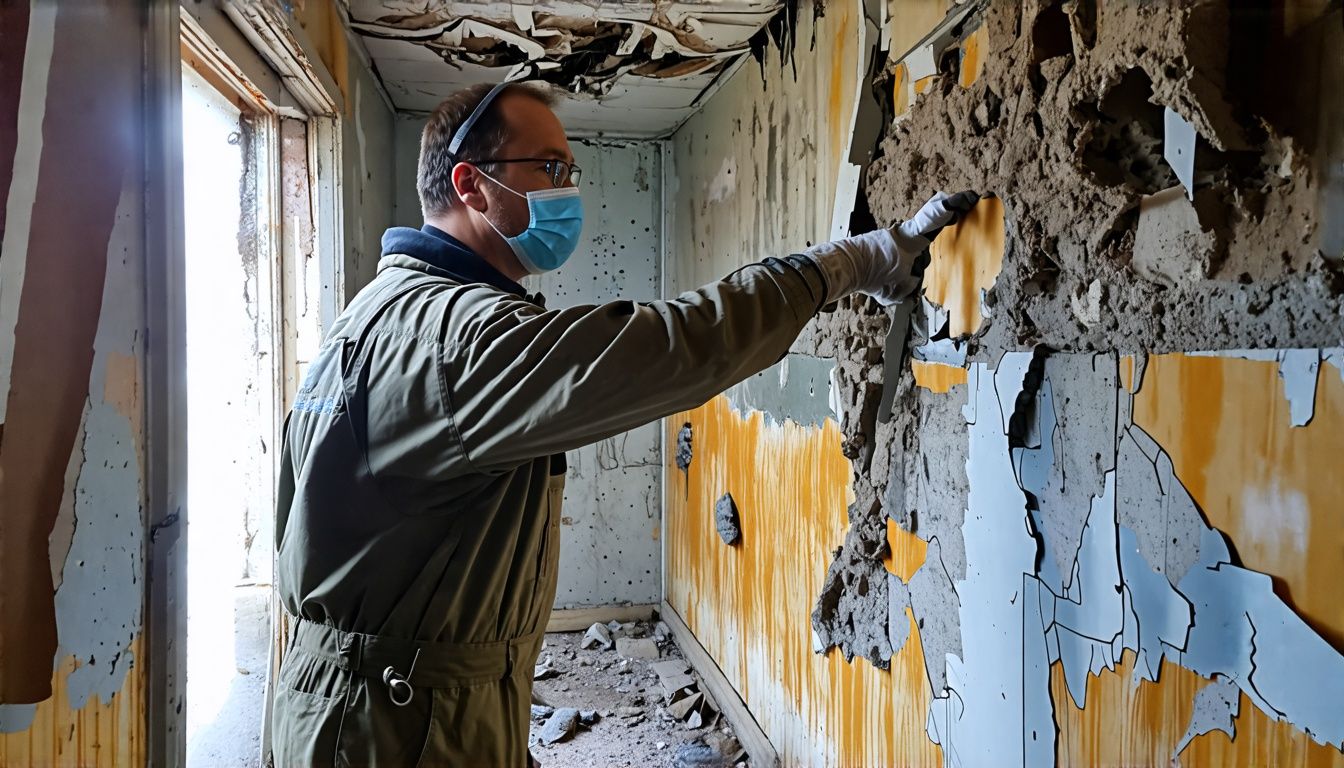

  • What measures can be taken to minimize the impact of asbestos on human health? Effective strategies to mitigate the effects of asbestos exposure.

    What measures can be taken to minimize the impact of asbestos on human health? Effective strategies to mitigate the effects of asbestos exposure.

    Minimising the Impact of Asbestos on Human Health: What Every Duty Holder Must Do

    Asbestos remains one of the most serious occupational health hazards in the UK. It is still present in thousands of buildings constructed before 2000, and the diseases it causes — mesothelioma, asbestosis, and asbestos-related lung cancer — are entirely preventable when the right measures are in place.

    If you own, manage, or work in an older building, understanding how to minimise asbestos risk is not optional. It is a legal and moral obligation. This post sets out the practical steps that duty holders, employers, and workers need to take — from identifying asbestos-containing materials (ACMs) through to safe removal, waste disposal, and long-term health monitoring.

    And yes, even seemingly unrelated decisions — such as choosing lockable skips in Blackheath for asbestos waste — matter more than many people realise.

    Identifying Asbestos-Containing Materials in Your Building

    You cannot manage what you have not identified. The first step in minimising asbestos risk is knowing where ACMs are located, what condition they are in, and whether they are likely to be disturbed during normal occupation or maintenance work.

    Visual Indicators: What to Look For

    Visual inspection alone is never conclusive, but it gives you a starting point. The following materials are commonly associated with asbestos use in UK buildings:

    • Textured coatings: Artex and similar stippled finishes on ceilings and walls frequently contained asbestos fibres, particularly in properties built or refurbished before the 1990s.
    • Pipe lagging and thermal insulation: Insulation around boilers, pipes, and storage heaters in older buildings is a common ACM — and often one of the more hazardous types.
    • Asbestos cement products: Corrugated roof sheets, water tanks, guttering, and flues made from asbestos cement were widely used in domestic and commercial construction throughout the mid-twentieth century.
    • Floor tiles and vinyl sheet flooring: Particularly those laid between the 1950s and 1980s. The adhesive used to fix them may also contain asbestos.
    • Sprayed coatings: Applied to structural beams and columns as fireproofing — among the most hazardous ACM types due to their friable nature.
    • Fire protection materials: Older fire doors, blankets, and rope seals may contain asbestos-based components.
    • Electrical equipment: Older switchboards and consumer units sometimes incorporated asbestos-based insulating materials.

    Any material installed before 2000 could contain asbestos. The older the building, the higher the likelihood. If you are not certain, do not disturb the material to investigate further — that is exactly how fibres get released into the air.

    When You Need Professional Confirmation

    The only definitive way to confirm whether a material contains asbestos is through laboratory analysis of a sample taken by a trained professional. Our accredited sample analysis service provides a rapid, reliable answer when visual identification is not sufficient.

    For buildings where a full picture is needed, a management survey is the appropriate starting point. It identifies ACMs throughout the areas of a building used during normal occupation and forms the basis for your asbestos register and management plan.

    Your Legal Responsibilities Under the Control of Asbestos Regulations

    Understanding your legal duties is non-negotiable. The Control of Asbestos Regulations set out the legal framework for managing asbestos across the UK, and ignorance is not a defence.

    The regulations apply primarily to non-domestic premises, but also cover the common areas of residential buildings — stairwells, plant rooms, communal hallways, and similar shared spaces.

    Key duties include:

    • Identifying the location and condition of all ACMs in the building
    • Assessing the risk posed by those materials
    • Producing and maintaining an asbestos management plan
    • Ensuring anyone who may work on or near ACMs is informed of their location and condition
    • Arranging regular re-inspections to monitor the condition of materials in situ

    Who Is the Duty Holder?

    The duty holder is typically the building owner, landlord, or employer — whoever has responsibility for maintenance and repair of the premises. If you manage or own a non-domestic building, this duty sits with you personally.

    The Health and Safety Executive (HSE) actively enforces these regulations. Prosecutions for breaches can result in significant fines and, in serious cases, custodial sentences. Compliance is not bureaucratic box-ticking — it is a fundamental duty of care.

    Employer Responsibilities for Workers

    If your employees may encounter asbestos — whether as maintenance staff, electricians, plumbers, or construction workers — you have additional obligations:

    • Provide appropriate asbestos awareness training (Category A) or licensed work training (Category B or C) depending on the work involved
    • Carry out suitable and sufficient risk assessments before any work that might disturb ACMs
    • Supply appropriate personal protective equipment (PPE)
    • Implement health surveillance for workers regularly exposed to asbestos
    • Keep accurate records of all asbestos-related activities

    Protective Measures During Asbestos Work

    When asbestos needs to be managed, repaired, or removed, the way the work is carried out makes all the difference. Cutting corners during asbestos work is how people end up with life-threatening diseases decades later.

    Personal Protective Equipment

    No one should work with or near ACMs without the right protection. The specific PPE required depends on the risk level and type of work, but typically includes:

    • Respiratory protective equipment (RPE): A minimum of a half-face FFP3 respirator for lower-risk work; a full-face powered air-purifying respirator (PAPR) or airline respirator for licensed work
    • Disposable coveralls (Type 5): Worn over work clothing and disposed of as asbestos waste after use — never taken home
    • Nitrile or neoprene gloves: To prevent skin contact with loose fibres
    • Safety goggles: Particularly important where materials are being cut or drilled
    • Disposable boot covers or rubber boots: To prevent fibres being tracked out of the work area

    RPE must be fit-tested to the individual — an ill-fitting mask provides little or no protection. This is a legal requirement under HSE guidance, not merely a recommendation.

    Safe Handling and Removal Practices

    The goal during any asbestos work is to keep fibre release to an absolute minimum. Practical controls include:

    • Wetting materials: Applying water or a wetting agent to ACMs before disturbing them significantly reduces the number of fibres released into the air
    • Containment: Sealing off the work area with polythene sheeting and maintaining negative air pressure using a negative pressure unit (NPU) to prevent fibres migrating to other areas
    • Using the right tools: Hand tools are preferred over power tools wherever possible — power tools generate far more airborne dust
    • HEPA vacuuming: Standard vacuum cleaners cannot capture asbestos fibres. Only H-class (HEPA-filtered) industrial vacuums are suitable for use in asbestos work areas
    • Three-stage decontamination: Workers must pass through a decontamination unit — dirty area, shower, clean area — before leaving the work zone

    Who Can Carry Out Asbestos Removal?

    Not all asbestos work is the same. The regulations distinguish between three categories:

    • Licensed work: High-risk removals — such as sprayed coatings, lagging, or friable ACMs — must only be carried out by a contractor licensed by the HSE. Our asbestos removal service works alongside licensed contractors to ensure full compliance from survey through to clearance.
    • Notifiable non-licensed work (NNLW): Certain lower-risk tasks must be notified to the HSE and require health surveillance, but do not need a licensed contractor.
    • Non-licensed work: Lower-risk tasks, such as minor work on asbestos cement, can be carried out without a licence — but still require proper training and controls.

    If you are unsure which category applies to your situation, call us on 020 4586 0680 before any work begins.

    Asbestos Waste Disposal and Lockable Skips in Blackheath

    Asbestos waste is classified as hazardous waste under UK law, and incorrect disposal is both illegal and dangerous. This is a point that often catches property owners and contractors off guard — particularly in areas like Blackheath, where older Victorian and Edwardian properties are commonplace and refurbishment projects regularly uncover ACMs.

    The subject of lockable skips in Blackheath may seem niche, but it speaks directly to a real compliance issue. When asbestos waste is being removed and temporarily stored on site, the container used must be appropriate for the material. Open skips are not acceptable for asbestos waste.

    The correct process involves:

    1. Double-bagging waste in heavy-duty polythene bags (minimum 0.15mm thick), clearly labelled with asbestos hazard warnings
    2. Keeping materials damp during bagging to suppress fibre release
    3. Using clearly labelled, sealed, lockable skips or rigid containers for larger volumes — only specialist waste carriers should be handling this material
    4. Transporting waste only to licensed hazardous waste disposal sites
    5. Completing consignment notes for all asbestos waste movements, which must be retained as required by waste regulations
    6. Maintaining disposal records for the period required under current waste regulations

    Not all skip hire services are equipped or licensed to handle asbestos waste. If your project involves significant quantities of ACMs, ensure your waste contractor is properly licensed and that all documentation is in order before the skip leaves site.

    Sealed, lockable skips are the appropriate choice for containing asbestos waste securely during transport — raise this explicitly with any waste contractor before work begins, and do not accept an open skip as a substitute. For properties in the Blackheath and wider south-east London area, where refurbishment activity is high and older building stock is prevalent, getting this detail right from the outset protects both public health and your legal position.

    If you are managing an asbestos survey in London, ensure your appointed surveyor can advise on compliant waste disposal routes as part of the wider project management process.

    Air Monitoring and Clearance Certificates

    Once licensed asbestos removal work is complete, the area must be independently verified as safe before re-occupation. This cannot be certified by the removal contractor themselves — it must be carried out by an independent, UKAS-accredited body.

    The four-stage clearance procedure involves:

    1. A thorough visual inspection of the cleared area
    2. Background air monitoring before the enclosure is dismantled
    3. A further visual inspection after the enclosure is removed
    4. Final air monitoring to confirm fibre levels are below the clearance indicator

    The result is a clearance certificate confirming the area is safe for reuse. Without this, the area should not be reoccupied under any circumstances.

    A Practical Asbestos Management Framework for Duty Holders

    If you are responsible for a commercial building, school, hospital, or any other non-domestic premises, here is what robust asbestos management looks like in practice.

    Step 1: Commission a Management Survey

    A management survey identifies ACMs in areas of the building used during normal occupation. It is the starting point for all asbestos management and is required before an asbestos register can be produced. Without a survey, you are managing blind.

    Supernova carries out asbestos surveys across London and nationwide, with results typically delivered within 24 hours of the survey being completed. We also cover major cities including asbestos surveys in Manchester and asbestos surveys in Birmingham.

    Step 2: Produce an Asbestos Register

    The register records the location, type, condition, and risk rating of every ACM found. It must be kept up to date and made available to anyone planning to carry out work on the building — contractors, maintenance staff, and emergency services all need access to this information.

    Step 3: Develop a Management Plan

    The plan sets out how each ACM will be managed — whether that means leaving it in place and monitoring it, encapsulating it, or arranging for removal. The plan must be reviewed regularly and updated whenever the condition of an ACM changes or new materials are discovered.

    Step 4: Inform and Train Relevant Personnel

    Everyone who works in or on the building — including contractors and maintenance staff — must be made aware of the asbestos register and the location of any ACMs they might encounter. Asbestos awareness training is a legal requirement for anyone liable to disturb ACMs in the course of their work.

    Step 5: Monitor, Review, and Re-inspect

    ACMs do not stay static. Materials that are in good condition today can deteriorate over time, particularly if the building is subject to vibration, water ingress, or physical damage. Regular re-inspections — typically annually — are required to ensure the register and management plan remain accurate.

    Health Surveillance and Long-Term Monitoring

    For workers who are regularly exposed to asbestos, health surveillance is a legal requirement. This involves periodic medical examinations carried out by an employment medical adviser or appointed doctor, and records must be retained for a minimum of 40 years.

    Health surveillance does not prevent disease — but it enables early detection and provides an important record should a worker develop an asbestos-related condition in later life. Employers who fail to implement health surveillance for at-risk workers are in breach of the Control of Asbestos Regulations.

    Workers themselves should also be aware of the latency period associated with asbestos-related diseases. Symptoms can take 20 to 50 years to manifest following exposure, which is why accurate record-keeping throughout a working life is so critical.

    Frequently Asked Questions

    What are the most common asbestos-containing materials found in UK buildings?

    The most frequently encountered ACMs in UK buildings include textured coatings such as Artex, pipe lagging, asbestos cement roofing and guttering, floor tiles, and sprayed fireproofing on structural steelwork. Any material installed before 2000 should be treated as potentially containing asbestos until confirmed otherwise by laboratory analysis.

    Why are lockable skips important for asbestos waste disposal in Blackheath?

    Asbestos waste is classified as hazardous waste under UK law. Open skips are not suitable for storing or transporting asbestos materials. Lockable skips in Blackheath — and anywhere else — are required to contain bagged asbestos waste securely, preventing fibre release and unauthorised access. Only licensed waste carriers should transport asbestos waste, and full consignment documentation must be completed for every movement.

    Who is responsible for managing asbestos in a commercial building?

    The duty holder — typically the building owner, landlord, or employer with responsibility for maintenance — is legally required to manage asbestos under the Control of Asbestos Regulations. This includes commissioning a management survey, producing an asbestos register, developing a management plan, and ensuring all relevant personnel are informed of ACM locations.

    Can I remove asbestos myself, or does it need a licensed contractor?

    It depends on the type and condition of the material. High-risk work — such as removing sprayed coatings, lagging, or friable ACMs — must be carried out by an HSE-licensed contractor. Some lower-risk tasks can be undertaken without a licence but still require training and proper controls. If you are unsure which category applies, contact Supernova on 020 4586 0680 before any work starts.

    How long does it take to get asbestos survey results?

    Supernova typically delivers asbestos survey reports within 24 hours of the survey being completed. Sample analysis results from our accredited laboratory are also turned around rapidly, making it straightforward to get the information you need without unnecessary delays to your project.


    Supernova Asbestos Surveys has completed over 50,000 surveys across the UK. Whether you need a management survey for a commercial property, urgent sample analysis, or advice on compliant waste disposal for a refurbishment project in Blackheath or beyond, our team is ready to help.

    Call us on 020 4586 0680 or visit asbestos-surveys.org.uk to book your survey or request a quote today.

  • What are the risks associated with living in a building with asbestos insulation? Understanding the Health Risks

    What are the risks associated with living in a building with asbestos insulation? Understanding the Health Risks

    Old insulation can sit quietly for years, then become a serious problem the moment someone opens a ceiling void, strips out a boiler cupboard or drills into a service riser. When asbestos insulation is present, the risk is not simply that it exists in the building, but that it can release dangerous fibres if it is damaged, disturbed or allowed to deteriorate.

    For landlords, property managers, homeowners and dutyholders, that creates a practical challenge. You need to know where asbestos insulation is commonly found, why it is considered high risk, what it can look like, and what to do next without turning suspicion into exposure.

    Why asbestos insulation is treated as high risk

    Asbestos insulation was used widely in older UK buildings because it offered strong thermal performance, fire resistance and sound reduction. It was installed around hot services, plant, structural elements and areas where heat retention or fire protection mattered.

    The problem is that many insulation products are friable. That means they can release fibres far more easily than lower-risk asbestos-containing materials such as some cement products.

    Common forms of asbestos insulation include:

    • Pipe lagging
    • Loose-fill insulation
    • Sprayed coatings
    • Sectional thermal insulation
    • Boiler insulation
    • Block insulation
    • Older blanket or wrapped insulation products

    Not every form behaves in the same way. Some are soft and dusty, while others are hidden beneath paint, cloth, foil, plaster-like coverings or metal jackets. What they have in common is that disturbance can release airborne fibres that are not visible to the naked eye.

    Under the Control of Asbestos Regulations, the duty to manage asbestos in non-domestic premises means asbestos risks must be identified and managed properly. Surveying and assessment should follow HSG264, while wider decisions on control measures and safe handling should align with HSE guidance.

    Health risks linked to asbestos insulation

    The main danger from asbestos insulation is inhalation of airborne fibres. If fibres are released and breathed in, they can lodge deep in the lungs.

    Diseases associated with asbestos exposure include:

    • Mesothelioma
    • Asbestos-related lung cancer
    • Asbestosis
    • Pleural thickening and other pleural disease

    These conditions usually develop after a long latency period. That is one reason asbestos insulation still needs careful control, even if the building material was installed decades ago.

    Why insulation products need extra caution

    Compared with many other asbestos-containing materials, insulation products often present a greater risk because they can contain a high proportion of asbestos and may be easy to crumble or break. Age, leaks, vibration, impact damage and previous poor-quality repairs can all make matters worse.

    In practical terms, fairly ordinary jobs can create exposure if asbestos insulation is hidden in the work area. Examples include:

    • Replacing valves or pipework
    • Rewiring in lofts or risers
    • Removing ceilings
    • Opening service ducts
    • Boiler replacement
    • Refurbishment strip-out

    That is why guessing is never a safe approach. If insulation in an older building is suspect, stop work and get it assessed properly.

    Where asbestos insulation is commonly found

    Asbestos insulation was used where heat retention, fire protection or acoustic performance was needed. In many properties it is not obvious during a quick walk-through, because it may be concealed behind later finishes or hidden in service areas.

    asbestos insulation - What are the risks associated with livin

    Common locations include:

    • Plant rooms
    • Basements
    • Boiler houses
    • Service risers
    • Lofts and roof voids
    • Ceiling voids
    • Older industrial areas
    • Service cupboards
    • Behind boxing or casings
    • Behind suspended ceilings

    You may also find asbestos insulation around:

    • Pipework, valves and elbows
    • Boilers and calorifiers
    • Storage heaters
    • Structural steel and beams
    • Soffits and ceilings with sprayed coatings
    • Industrial furnaces, kilns and process plant
    • Fire surrounds and heat-affected enclosures

    It can turn up in offices, schools, hospitals, warehouses, public buildings and residential blocks. If you manage a portfolio, do not assume later decoration or minor refurbishment removed the risk. Hidden asbestos insulation is often only discovered when intrusive work begins.

    Surveying before maintenance, refurbishment or demolition

    Before routine occupation and normal maintenance, a suitable management survey helps identify asbestos-containing materials that could be disturbed during everyday use or foreseeable maintenance.

    If major strip-out, structural alteration or demolition is planned, a demolition survey is needed before work starts. This is intrusive by design because hidden asbestos insulation is often located behind finishes, within voids or inside plant areas.

    What asbestos insulation looks like

    This is where many people get caught out. Asbestos insulation does not have one standard appearance, and visual inspection alone cannot confirm whether a material contains asbestos.

    Some forms look fluffy. Some look chalky or cement-like. Some appear plaster-like, rough or fibrous. Others sit completely hidden beneath paint, canvas, foil, plaster, metal cladding or later repair materials.

    What colour is asbestos insulation?

    Colour is one of the least reliable indicators. People often expect asbestos products to appear clearly white, brown or blue, but finished insulation products on site rarely present that neatly.

    Asbestos insulation may appear:

    • White
    • Off-white
    • Grey
    • Silver-grey
    • Buff
    • Beige
    • Dirty brown

    Pipe lagging may be painted over. Sprayed coatings may look rough and grey. Loose-fill material may look pale and fluffy. Thermal blocks may appear chalky or solid. None of that proves the presence or absence of asbestos.

    The sensible rule is simple: if insulation in an older property looks fibrous, crumbly, dusty, heat-related or unusual, treat it as suspect until professional sampling says otherwise.

    Warning signs you should not ignore

    • Cracked or damaged pipe lagging
    • Fluffy loft insulation of unknown type
    • Rough spray-applied coating above ceilings
    • Dust or debris beneath damaged insulation
    • Boiler insulation breaking away at the edges
    • Insulation exposed during strip-out works

    Do not sweep, vacuum, brush, cut, drill or bag suspect asbestos insulation yourself. Standard domestic vacuums are not suitable, and disturbance can rapidly increase the risk of fibre release.

    Types of asbestos insulation found in older buildings

    Different forms of asbestos insulation carry different levels of risk, but all require proper assessment. The key factors are friability, condition, accessibility and the likelihood of disturbance.

    asbestos insulation - What are the risks associated with livin

    Sprayed asbestos insulation

    Sprayed coatings were used for fire protection and thermal insulation on ceilings, walls, beams, columns and structural steel. They usually have a rough, uneven texture and can be highly friable.

    This is one of the more concerning forms of asbestos insulation because fibres may be released very easily if the surface is knocked, drilled, scraped or damaged. It may also be hidden above suspended ceilings or in plant spaces where contractors do not expect to find it.

    If you suspect sprayed asbestos insulation:

    1. Stop work immediately
    2. Keep people out of the area
    3. Do not touch or scrape the surface
    4. Arrange professional assessment and sampling

    Loose-fill asbestos insulation

    Loose-fill asbestos insulation is among the highest-risk forms because the fibres are unbound. It may look fluffy, soft or granular and is often found in lofts, roof voids and cavities.

    Even minor disturbance can spread fibres. Walking through a loft, moving stored items or running cables can contaminate a much wider area.

    Block insulation

    Block insulation was used around boilers, vessels, ovens and industrial equipment where rigid thermal protection was needed. It may look more solid than lagging, but that does not make it safe.

    If older block insulation is cut, broken or removed, fibres can still be released. Any dismantling of plant or opening up of service areas should be preceded by proper asbestos assessment.

    Pipe lagging and sectional insulation

    Pipe lagging is one of the most commonly encountered high-risk forms of asbestos insulation in older buildings. It was used heavily on heating systems, valves, bends and associated plant.

    Lagging may sit beneath plaster-like coatings, paint, bandages, canvas wraps or later encapsulation. Once cracked or damaged, it can release fibres very easily.

    Blanket or wrapped insulation

    Some older thermal products were supplied in blanket or wrap form around ducts, boilers and heated services. These may be hidden beneath outer jackets or repair coverings.

    If a wrap is torn or degraded, do not pull it back to inspect underneath. That kind of disturbance can turn a manageable situation into an exposure incident.

    Insulation materials that may be mistaken for asbestos insulation

    Not every older insulation product contains asbestos. Some materials are often confused with asbestos insulation, which can lead to either unnecessary alarm or unsafe assumptions.

    The key point is this: “probably not asbestos” is not the same as “definitely safe”. If the age, location or installation history is unclear, assessment is still needed.

    Cellulose insulation

    Cellulose insulation is usually made from recycled paper treated with fire retardants. It is often used as loose-fill loft insulation and commonly appears grey because of the paper content.

    Modern cellulose insulation does not contain asbestos. Even so, loose grey material in an older loft should not be assumed to be cellulose without proper assessment.

    Fibreglass insulation

    Fibreglass insulation is usually pink, yellow or light brown with a wool-like appearance. It is common in rolls or batts and widely used in lofts and cavity walls.

    Fibreglass is not asbestos, but it can still irritate the skin and respiratory system. Suitable handling precautions are still sensible.

    Mineral wool and rock wool

    Mineral wool and rock wool are common alternatives used for thermal and acoustic insulation. They are often supplied in slabs, batts or rolls and may appear yellow, greenish-brown or grey-brown.

    These products do not usually contain asbestos. The difficulty is that they can exist alongside older asbestos insulation in mixed or altered building areas.

    Foam board insulation

    Rigid foam boards used in modern refurbishments are not asbestos insulation. They are usually recognisable by their clean-cut board form and foil or plastic facings.

    Even so, newer boards can be installed over older building fabric. Asbestos insulation may still be present behind them.

    Practical identification tips

    • Do not rely on colour alone
    • Do not assume a product is safe because it looks newer than the building
    • Check whether hidden layers may remain behind later work
    • Use professional sampling where there is doubt

    If laboratory confirmation is needed, arrange asbestos testing rather than making assumptions from appearance.

    Who is most at risk from asbestos insulation exposure?

    Occupational exposure remains one of the main concerns with asbestos insulation. The people most at risk are often those carrying out practical work in older buildings, especially where hidden materials are disturbed during routine tasks.

    Higher-risk occupations include:

    • Plumbers and heating engineers
    • Electricians
    • Boiler engineers
    • Builders and general trades
    • Demolition operatives
    • Refurbishment contractors
    • Maintenance teams
    • Caretakers and site managers
    • Joiners working in service areas
    • Industrial workers around older plant
    • Roofers and loft conversion teams

    Many exposure incidents happen because insulation was hidden, misidentified or disturbed before anyone checked the asbestos information for the building.

    Settings where exposure often occurs

    • Plant room maintenance
    • Boiler replacement
    • Rewiring
    • HVAC upgrades
    • Loft boarding and insulation upgrades
    • Ceiling removal
    • Strip-out works
    • Demolition preparation

    Property managers should make sure contractors are not sent into suspect areas blind. Under the duty to manage, asbestos information needs to be available, current and relevant to the work being planned.

    What to do if you suspect asbestos insulation

    If you think you have found asbestos insulation, the safest response is controlled and practical. Panic helps no one, but neither does carrying on with the work.

    1. Stop work immediately. Do not continue drilling, cutting, lifting or stripping nearby materials.
    2. Keep others away. Restrict access to the area to prevent further disturbance.
    3. Do not touch the material. Avoid breaking, moving, brushing or sampling it yourself.
    4. Do not clean it up with a domestic vacuum. That can spread fibres rather than contain them.
    5. Check existing asbestos records. Review the asbestos register, previous survey information and building plans if available.
    6. Arrange professional inspection and sampling. If the material is unknown, have it assessed by a competent asbestos surveyor or analyst.

    Where confirmation is needed, professional asbestos testing provides laboratory analysis so decisions can be based on evidence rather than guesswork.

    Can you live in a building with asbestos insulation?

    Possibly, but only if the asbestos insulation is in good condition, has been properly identified, and is being managed so that it is not disturbed. The presence of asbestos insulation does not automatically mean a building is unsafe to occupy.

    The real issue is condition and control. Damaged, exposed or deteriorating asbestos insulation needs urgent professional attention because of the higher likelihood of fibre release.

    If you are a homeowner, landlord or block manager, practical next steps include:

    • Checking whether a survey already exists
    • Reviewing whether the suspect area is accessible or likely to be disturbed
    • Making sure maintenance staff and contractors know about the risk
    • Seeking advice before any repair, refurbishment or access work

    Surveying and asbestos management in practice

    Managing asbestos insulation is not only about identifying it once. It is about keeping accurate records, reviewing condition, controlling access and making sure planned works are matched to the right level of survey.

    HSG264 sets out the survey approach expected in the UK. In simple terms, the survey type should reflect what is happening in the building.

    When a management survey is suitable

    A management survey is used to locate, as far as reasonably practicable, asbestos-containing materials that could be disturbed during normal occupation or foreseeable maintenance. It helps dutyholders maintain an asbestos register and plan control measures.

    This is often appropriate for occupied buildings where routine use continues and there is no major intrusive work planned.

    When a refurbishment or demolition approach is needed

    If walls, ceilings, floors, risers, plant or structural elements are going to be opened up, a more intrusive survey is required. Hidden asbestos insulation is frequently found only when intrusive access is undertaken.

    That is why pre-works planning matters. Sending contractors in first and asking questions later is exactly how accidental disturbance happens.

    Location-specific support

    If works are planned in the capital, arranging an asbestos survey London service before contractors arrive helps reduce delays and avoid unsafe assumptions.

    For projects in the North West, an asbestos survey Manchester can help identify suspect insulation before maintenance or refurbishment starts.

    For Midlands properties, booking an asbestos survey Birmingham is a sensible step before intrusive works begin.

    Practical advice for property managers, landlords and homeowners

    When asbestos insulation is a possibility, good management is mostly about preparation. The aim is to avoid accidental disturbance and make sure decisions are based on proper information.

    • Keep asbestos records accessible and up to date
    • Brief contractors before they start work
    • Do not approve intrusive jobs without checking survey requirements
    • Reinspect known asbestos-containing materials where needed
    • Act quickly if damage, leaks or impact affect insulated areas
    • Do not rely on verbal assurances that a material is “probably fine”

    If suspect insulation is found unexpectedly, treat it as a work-stopping issue until assessed. That single decision can prevent exposure, contamination and expensive disruption.

    Need expert help with asbestos insulation in a home, commercial property or public building? Supernova Asbestos Surveys provides asbestos surveys, sampling and practical advice nationwide. Call 020 4586 0680 or visit asbestos-surveys.org.uk to arrange the right survey for your property.

    Frequently Asked Questions

    Is asbestos insulation more dangerous than asbestos cement?

    It often is, because asbestos insulation is usually more friable. That means fibres can be released more easily if the material is damaged or disturbed, whereas asbestos cement is generally more tightly bound.

    Can I identify asbestos insulation by sight alone?

    No. Visual appearance can raise suspicion, but it cannot confirm whether insulation contains asbestos. Professional sampling and laboratory analysis are needed for reliable identification.

    What should I do if I find damaged pipe lagging?

    Stop work, keep people away and do not touch or clean the material. Check any existing asbestos records and arrange professional assessment as soon as possible.

    Is it safe to stay in a building with asbestos insulation?

    It can be, if the material is in good condition, properly identified and effectively managed so it is not disturbed. Damaged or deteriorating asbestos insulation needs urgent professional attention.

    Do I need a survey before refurbishment works?

    Yes, if the work is intrusive. A management survey is not enough for major refurbishment or demolition where hidden asbestos insulation may be disturbed.

  • What are the differences in impact between short-term and long-term exposure to asbestos: Understanding the Impact

    What are the differences in impact between short-term and long-term exposure to asbestos: Understanding the Impact

    One accidental drill hole in the wrong ceiling tile can turn a routine job into a serious compliance issue. Short term asbestos exposure is often dismissed as a brief scare, but the real risk depends on the material disturbed, the amount of fibre released, and how quickly the area is controlled.

    If you manage property, oversee maintenance, or commission refurbishment works, you need clear, practical answers. A brief incident does not automatically lead to illness, but it should never be brushed aside.

    What short term asbestos exposure actually means

    Short term asbestos exposure usually means a one-off incident or a limited period of contact with airborne asbestos fibres. That could happen during maintenance, accidental damage, cleaning, refurbishment, or unplanned works in a building that contains asbestos-containing materials.

    The phrase only describes duration. It does not mean harmless.

    Common examples of short term asbestos exposure include:

    • Drilling into asbestos insulating board
    • Breaking pipe lagging during repairs
    • Sanding or scraping textured coatings without checking first
    • Lifting old floor tiles and disturbing adhesive beneath
    • Being in a room where asbestos-containing material has been damaged
    • Cleaning debris after a ceiling collapse in an older property
    • Opening up risers, ducts, or service voids during reactive maintenance

    The risk depends on fibre release, not simply how long the event lasted. A very brief disturbance of a high-risk material can create more danger than longer contact with a lower-risk bonded product.

    Short term asbestos exposure vs long-term exposure

    The main difference is cumulative dose. Long-term exposure usually involves repeated inhalation of fibres over months or years, often in construction, plant rooms, industrial settings, shipyards, maintenance roles, or refurbishment work where asbestos was regularly disturbed.

    Short term asbestos exposure usually involves a lower overall dose. That generally means the risk is lower, but lower does not mean zero.

    Why cumulative dose matters

    Asbestos-related disease is strongly linked to the number of fibres inhaled over time. Repeated exposure increases the chance of fibres remaining in the lungs and pleura, where they may contribute to disease many years later.

    A single incident adds less to lifetime exposure than years of uncontrolled work. Even so, a one-off high-dust event involving friable asbestos can still be significant and deserves proper follow-up.

    There is no guaranteed safe exposure level

    Under the Control of Asbestos Regulations, exposure must be prevented where reasonably practicable and, where prevention is not possible, reduced to as low as reasonably practicable. HSE guidance and HSG264 are clear that asbestos must be identified and managed properly before work starts.

    Control limits are not a promise of safety. They are legal thresholds used for control and monitoring, not a line below which all risk disappears.

    How dangerous is short term asbestos exposure?

    The honest answer is that it depends on the circumstances. Short term asbestos exposure can be low risk in one situation and much more serious in another.

    short term asbestos exposure - What are the differences in impact betwe

    These factors shape the level of risk:

    • Type of material: Pipe lagging, sprayed coatings and asbestos insulating board release fibres more easily than asbestos cement.
    • Condition: Damaged, cracked or deteriorating materials are more likely to release fibres.
    • Activity: Drilling, cutting, sanding, breaking and demolition create more airborne dust than leaving material undisturbed.
    • Duration: Longer exposure usually increases risk, but even a short event can matter if fibre levels are high.
    • Ventilation: Small enclosed spaces allow fibres to build up and remain airborne for longer.
    • Clean-up method: Dry sweeping or using a domestic vacuum can spread contamination further.
    • Respiratory protection: Unsuitable or badly fitted masks should not be relied on.
    • Smoking history: Smoking increases the risk of asbestos-related lung cancer in people with an exposure history.

    For property managers, the practical lesson is simple: never judge risk by appearance alone. A small amount of visible dust can still signal a serious asbestos issue if the material is friable.

    Can one-time asbestos exposure cause cancer?

    It can, but the probability is generally much lower than with repeated or prolonged exposure. Most people who experience a single short term asbestos exposure will not go on to develop an asbestos-related disease.

    That said, false reassurance helps no one. Mesothelioma has been linked to relatively limited exposures in some cases, including indirect and secondary exposure. It is not possible to look at one incident and guarantee there is no future risk.

    The sensible position is balanced:

    • Do not assume one incident means you will become ill
    • Do not assume one incident means there is no risk
    • Do record exactly what happened
    • Do stop any further disturbance until the material has been assessed

    Does all asbestos exposure lead to mesothelioma or asbestosis?

    No. Most people with short term asbestos exposure do not develop mesothelioma, asbestosis, or asbestos-related lung cancer.

    Mesothelioma is strongly associated with asbestos, but exposure does not make disease inevitable. Risk is influenced by fibre type, dose, duration, and individual susceptibility.

    Asbestosis is different again. It is usually linked to heavy or repeated exposure over time rather than a single low-level event. In practical terms, one brief incident is far less likely to cause asbestosis than years of poorly controlled work with friable asbestos materials.

    Which asbestos materials and fibre types are more hazardous?

    All asbestos types are hazardous. Amphibole fibres such as amosite and crocidolite are generally considered more dangerous in relation to mesothelioma because of how they behave in the body. Chrysotile is also dangerous and must never be treated as safe.

    short term asbestos exposure - What are the differences in impact betwe

    On site, the more immediate issue is usually the product rather than the fibre type. Some materials release fibres far more easily than others.

    Higher-risk asbestos-containing materials

    • Pipe lagging
    • Sprayed coatings
    • Loose fill insulation
    • Asbestos insulating board

    Lower-fibre-release materials when in good condition

    • Asbestos cement sheets
    • Roofing panels
    • Gutters and downpipes
    • Vinyl floor tiles
    • Bitumen products
    • Textured coatings, depending on condition and work method

    You cannot identify asbestos type reliably by eye. If a suspect material has been damaged, the right step is sampling and professional assessment, not guesswork.

    What happens in the body after short term asbestos exposure?

    When asbestos fibres are inhaled, some are trapped in the upper airways and cleared naturally. The greatest concern is the smallest fibres, which can travel deep into the lungs and, in some cases, reach the pleural lining.

    The body tries to remove these fibres using immune cells. Some fibres resist clearance and can remain for a very long time. Over many years, that persistence may contribute to inflammation, scarring, and cellular damage.

    This is why asbestos-related diseases usually have a long latency period. They do not appear immediately after short term asbestos exposure.

    Will you feel it happening?

    No. Asbestos fibres are microscopic and have no distinctive taste, smell, or sensation. You cannot tell from your throat or lungs whether fibres have been inhaled.

    Some people notice coughing or irritation after dust exposure, but those symptoms are not specific to asbestos. They do not tell you how serious the exposure was.

    What to do immediately after short term asbestos exposure

    If you suspect short term asbestos exposure, act quickly and calmly. The aim is to stop further fibre release, prevent spread, and create a clear record.

    1. Stop work immediately. Do not keep drilling, cutting, lifting, sweeping, or bagging debris.
    2. Keep people away. Close off the area if safe to do so and stop others entering.
    3. Do not dry sweep. Sweeping can re-suspend fibres into the air.
    4. Do not use a domestic vacuum. Only suitable H-class equipment should be used as part of the correct asbestos control measures.
    5. Avoid spreading contamination. Do not shake dusty clothing indoors or walk debris through occupied areas.
    6. Report the incident. Tell the dutyholder, site manager, employer, or health and safety lead straight away.
    7. Record the details. Note the location, suspected material, task being carried out, duration, and who was present.
    8. Arrange professional assessment. A competent asbestos surveyor or consultant should inspect the material and advise on next steps.

    If the incident happened during planned works, stop the job until the area has been assessed properly. Carrying on without confirmation can turn a small incident into a major contamination problem.

    Should you wash after exposure?

    If dust may have settled on your skin or hair, washing and showering is sensible. If clothing may be contaminated, bag it separately and seek advice before normal handling or laundering.

    Do not shake out overalls or dusty clothes indoors. That can release fibres back into the air.

    Should you go to A&E?

    Short term asbestos exposure does not usually need emergency treatment unless there is acute breathing difficulty or another urgent medical issue. Asbestos-related disease does not present as an immediate emergency after a single event.

    If you are worried, speak to your GP or occupational health provider and explain exactly what happened. Factual detail is far more useful than a vague description.

    Medical risk after short term asbestos exposure

    Most concern after an incident comes from uncertainty. People want to know whether a single exposure will definitely cause cancer, whether they need a scan, or whether symptoms will appear straight away.

    In most cases, the answer is no to all three. A single event usually means a relatively low risk compared with long-term occupational exposure, and asbestos-related conditions take years to develop.

    What matters medically is having an accurate exposure history. If you ever develop ongoing respiratory symptoms in the future, being able to describe the incident clearly will help your GP or specialist.

    When to speak to a doctor

    Contact your GP or occupational health provider if:

    • You are anxious about a known incident and want it recorded in your medical notes
    • You had heavy dust exposure in an enclosed space
    • You have repeated short term asbestos exposure from work over time
    • You later develop persistent breathlessness, cough, chest discomfort, or other unexplained respiratory symptoms

    Do not expect immediate tests to prove whether fibres were inhaled. After a recent incident, there is usually no quick medical test that can confirm the level of exposure.

    Asbestosis: causes, symptoms and day-to-day management

    Asbestosis is a chronic lung disease caused by inhaling asbestos fibres over time. It leads to scarring in the lungs, which affects breathing and oxygen transfer.

    It is most commonly linked to prolonged or heavy occupational exposure rather than one isolated short term asbestos exposure.

    Common causes of asbestosis

    • Repeated work with friable asbestos materials
    • Poor dust control during industrial or construction activity
    • Removal or repair work without suitable respiratory controls
    • Frequent exposure in enclosed or poorly ventilated spaces
    • Historic work carried out without effective asbestos management

    Symptoms of asbestosis

    • Shortness of breath, especially on exertion
    • Persistent cough
    • Wheezing
    • Fatigue
    • Chest tightness or discomfort
    • Clubbing of the fingertips in more advanced cases

    These symptoms are not unique to asbestosis, so medical assessment is essential. If you have any asbestos exposure history, mention it clearly when speaking to your GP.

    Managing asbestosis day to day

    • Stop smoking
    • Keep up with flu and pneumococcal vaccinations if advised by your clinician
    • Attend regular medical reviews
    • Stay active within your limits
    • Maintain a healthy weight
    • Avoid further exposure to asbestos and other airborne irritants

    Short term asbestos exposure in homes and commercial properties

    Many modern incidents happen outside heavy industry. They occur during routine maintenance, fit-outs, minor refurbishments, leak repairs, electrical work, and reactive jobs in buildings constructed before 2000.

    Common locations include:

    • Ceiling voids and service risers
    • Boiler rooms and plant areas
    • Textured coatings on walls and ceilings
    • Floor tiles and bitumen adhesives
    • Soffits, panels and cement products
    • Pipe boxing and column casings
    • Toilet cisterns, panels and ducts
    • Roof sheets, flues and outbuildings

    Domestic premises can also present risk, especially during DIY or small contractor jobs. A homeowner removing old boxing, lifting floor coverings, or drilling into a partition may have no idea asbestos is present until dust is released.

    Practical advice for property managers and dutyholders

    • Check the asbestos register before any intrusive work starts
    • Make sure contractors can access relevant asbestos information
    • Do not rely on old assumptions or verbal handovers
    • Update records when materials are removed, repaired, or damaged
    • Commission the right survey for the planned work

    If you are managing a site in the capital, a properly scoped asbestos survey London service can help identify suspect materials before maintenance or refurbishment begins.

    For North West properties, arranging an asbestos survey Manchester inspection before intrusive works is one of the simplest ways to reduce the chance of accidental fibre release.

    For Midlands portfolios, booking an asbestos survey Birmingham assessment gives contractors and dutyholders clearer information before work starts.

    How surveys and management plans help prevent incidents

    The best way to deal with short term asbestos exposure is to stop it happening in the first place. That means identifying asbestos-containing materials, assessing their condition, and making sure the right information reaches the right people.

    When a management survey is appropriate

    A management survey is used to locate, as far as reasonably practicable, the presence and extent of any suspect asbestos-containing materials that could be damaged or disturbed during normal occupation, including foreseeable maintenance.

    It supports the duty to manage asbestos in non-domestic premises under the Control of Asbestos Regulations.

    When a refurbishment or demolition survey is needed

    If the work involves intrusive access, stripping out, or demolition, a management survey is not enough. A refurbishment or demolition survey is required before work starts in the affected area.

    This is where many avoidable incidents begin. Contractors are sent in for opening-up works based on incomplete information, and a brief task becomes short term asbestos exposure for everyone nearby.

    What a good asbestos management approach looks like

    • An up-to-date asbestos register
    • Clear material assessments and priority information
    • Site-specific communication to contractors
    • Permit-to-work controls where needed
    • Regular review after damage, changes, or removal works

    Common mistakes after a suspected exposure

    Small errors after an incident can make contamination worse. These are the mistakes we see most often:

    • Continuing the task to “finish quickly”
    • Trying to clean up with a brush and pan
    • Using a standard vacuum cleaner
    • Letting multiple trades walk through the area
    • Bagging debris without proper controls
    • Failing to record who was present
    • Assuming cement products and textured coatings are always low risk
    • Restarting work before sampling results or professional advice

    If there is any doubt, pause the job and get competent advice. A short delay is far cheaper than a contaminated work area, exposed contractors, and a reportable compliance failure.

    Frequently Asked Questions

    Is short term asbestos exposure always dangerous?

    No, not always to the same degree. Short term asbestos exposure can range from very low risk to significant risk depending on the material, the task, the amount of dust released, and whether the area was enclosed. It should always be taken seriously and assessed properly.

    Can a single asbestos exposure cause mesothelioma?

    It is possible, but the likelihood is generally far lower than with repeated or prolonged exposure. No one can honestly guarantee zero risk after a single incident, which is why recording the event and preventing any further disturbance is so important.

    How long do asbestos symptoms take to appear?

    Asbestos-related diseases usually have a long latency period. Symptoms do not appear immediately after exposure and may take many years to develop. That is why accurate records matter, even if you feel completely well now.

    Should I get tested straight after short term asbestos exposure?

    There is usually no immediate medical test that can confirm how much asbestos you inhaled after a recent event. If you are concerned, speak to your GP or occupational health provider, explain the circumstances clearly, and ask for the exposure to be noted in your records.

    What is the first thing to do after disturbing suspected asbestos?

    Stop work immediately. Keep people out of the area, avoid sweeping or vacuuming, report the incident, and arrange professional assessment. Do not restart work until the material has been identified and the area has been made safe.

    If you need clear advice after short term asbestos exposure, or you want to prevent incidents before work starts, Supernova Asbestos Surveys can help. We carry out asbestos surveys nationwide for commercial, public sector and residential clients. Call 020 4586 0680 or visit asbestos-surveys.org.uk to book a survey or speak to our team.

  • How Does the Use of Asbestos in Construction and Building Materials Impact the Environment and Human Health?

    How Does the Use of Asbestos in Construction and Building Materials Impact the Environment and Human Health?

    Asbestos in Building Construction: Health Risks, Environmental Impact, and Your Legal Obligations

    Asbestos in building construction was once considered a wonder material. Cheap, fire-resistant, thermally insulating, and extraordinarily versatile — it was woven into the fabric of British buildings from the 1950s right through to the late 1990s. Roof sheets, pipe lagging, floor tiles, textured coatings, ceiling panels, insulation board: if a building went up before 2000, there is a reasonable chance asbestos is somewhere inside it.

    The same properties that made it so attractive to builders are precisely what make it so hazardous today. Its microscopic fibres are virtually indestructible. Once released into the environment — or inhaled into the lungs — they do not break down, and they do not leave.

    This post covers the full picture: where asbestos was used in UK buildings, what it does to the environment, the serious health consequences of exposure, who carries the greatest risk, and what UK law requires property owners and duty holders to do right now.

    Where Asbestos Was Used in Building Construction

    Understanding the scale of asbestos use in UK buildings helps explain why the problem remains so live today. This was not a niche material used in specialist applications — it was mainstream, and it was everywhere.

    Common ACM Locations in Pre-2000 Buildings

    • Sprayed coatings — applied to steel beams and structural elements for fire protection
    • Insulation board (AIB) — used in partition walls, ceiling tiles, door panels, and service ducts
    • Pipe lagging — wrapped around heating pipes and boilers throughout commercial and residential buildings
    • Textured coatings — Artex and similar products applied to ceilings and walls in homes and offices
    • Asbestos cement — used in roofing sheets, guttering, fascias, and external cladding
    • Floor tiles and adhesives — vinyl floor tiles and the bitumen adhesive beneath them frequently contained asbestos
    • Roofing felt — particularly in flat-roof construction
    • Gaskets and seals — within boilers, furnaces, and industrial plant

    The variety of applications means a single building could contain multiple types of asbestos-containing materials (ACMs), each in different conditions and with different risk profiles. A management survey is the standard starting point for identifying what is present and assessing the risk each material poses.

    The Three Types of Asbestos Used in UK Construction

    Not all asbestos is the same. Three main types were used commercially in the UK:

    • Chrysotile (white asbestos) — the most widely used, found in cement products, floor tiles, and textured coatings. Although sometimes considered less dangerous than other types, it is still classified as a Group 1 carcinogen.
    • Amosite (brown asbestos) — commonly used in insulation board and ceiling tiles. More hazardous than chrysotile due to its fibre structure.
    • Crocidolite (blue asbestos) — the most dangerous type. Used in spray coatings and pipe insulation. Its long, thin fibres penetrate deep into lung tissue and are strongly associated with mesothelioma.

    All three types are now banned in the UK and are subject to strict control under the Control of Asbestos Regulations.

    The Environmental Impact of Asbestos in Building Construction

    Most public discussion focuses on the direct health risks of asbestos exposure — but the environmental consequences are equally serious and far less understood. When ACMs deteriorate or are disturbed, the impact extends well beyond the immediate site.

    Air and Soil Contamination

    When asbestos-containing materials are disturbed — through demolition, refurbishment, or simple age-related deterioration — fibres are released into the air. They are so fine and light that they can remain suspended for hours, drifting considerable distances before settling.

    Once they settle, they do not degrade. Asbestos fibres can persist in soil for decades, creating a contamination risk long after the original structure has been demolished. Improper disposal — fly-tipping, unlicensed landfill, poorly managed demolition — accelerates this problem significantly.

    Fibres can be redistributed by wind, foot traffic, or excavation — often without anyone realising there is a problem. Contaminated soil near former industrial sites, shipyards, and demolition areas represents a genuine ongoing environmental hazard.

    Water Contamination and Aquatic Ecosystems

    Asbestos fibres can leach into groundwater and surface water from contaminated soil or deteriorating ACMs. This is a particular concern around former industrial sites, old asbestos cement pipe networks, and areas where ACMs have been improperly disposed of.

    Asbestos fibres have been detected in the digestive tracts of fish and shellfish, raising concerns about bioaccumulation in the food chain. While the primary human risk remains inhalation rather than ingestion, the presence of asbestos in aquatic environments is a long-term concern for ecosystem health that cannot be dismissed.

    Impact on Biodiversity

    Plants, insects, and animals are not immune to asbestos contamination. Research has indicated that asbestos fibres in soil can inhibit plant growth and reduce vegetation vitality in contaminated areas.

    Birds nesting in or near deteriorating asbestos structures may inhale fibres, and mammals living close to contaminated ground face respiratory risks comparable to those in humans. The full scale of asbestos’s impact on UK biodiversity is still being studied, but the evidence is sufficient to treat environmental asbestos contamination as a serious issue — not an afterthought to human health concerns.

    Health Risks of Asbestos Exposure

    There is no safe level of asbestos exposure. That is not alarmist — it is the scientific and regulatory position held by the HSE and international health bodies. The severity of risk does increase with the duration and intensity of exposure, but no threshold has been established below which exposure is considered harmless.

    How Asbestos Fibres Enter the Body

    Asbestos becomes dangerous when it is disturbed and fibres become airborne. Inhalation is the primary route of exposure. The fibres — particularly the long, thin amphibole types like crocidolite and amosite — penetrate deep into lung tissue, where the body’s natural clearance mechanisms cannot remove them.

    Over time, these embedded fibres trigger chronic inflammation and cellular damage that can lead to a range of serious diseases, some of which take decades to manifest.

    Asbestosis

    Asbestosis is a chronic, progressive lung disease caused by prolonged inhalation of asbestos fibres. The fibres cause scarring (fibrosis) of lung tissue, resulting in breathlessness, persistent cough, and steadily declining lung function. There is no cure.

    It is typically associated with heavy occupational exposure over many years — former insulation engineers, shipbuilders, and industrial workers are among those most affected. However, even lower-level exposure can contribute to disease over a sufficiently long period.

    Pleural Diseases

    Asbestos exposure causes a range of conditions affecting the pleura — the lining surrounding the lungs:

    • Pleural plaques — patches of fibrous thickening on the pleura; generally benign but a clear marker of past exposure
    • Pleural thickening — diffuse scarring of the pleural lining, which can significantly restrict breathing
    • Pleural effusion — fluid build-up around the lungs, causing discomfort and breathlessness

    These conditions don’t always cause severe symptoms, but their presence confirms significant past exposure and warrants ongoing medical monitoring.

    Lung Cancer

    Asbestos is a well-established cause of lung cancer. The risk is substantially higher for people who smoke and have been exposed to asbestos — these two risk factors interact multiplicatively, not additively.

    The latency period between exposure and diagnosis is typically 15 to 35 years, meaning many people diagnosed today were exposed during work in the 1970s, 1980s, or 1990s — often without any awareness of the risk.

    Mesothelioma

    Mesothelioma is the cancer most closely associated with asbestos exposure. It affects the mesothelium — the thin lining surrounding the lungs, abdomen, and in rarer cases the heart. Pleural mesothelioma is the most common form.

    The latency period is particularly devastating: mesothelioma typically takes 20 to 50 years to develop after initial exposure. By the time symptoms appear, the disease is usually at an advanced stage.

    The UK has one of the highest rates of mesothelioma in the world — a direct consequence of heavy asbestos use in British industry and construction throughout the twentieth century. Mesothelioma remains extremely difficult to treat, and most people diagnosed with it have a life expectancy measured in months. Prevention through proper asbestos management is the only effective strategy.

    Who Is Most at Risk from Asbestos in Buildings?

    While anyone can be exposed to asbestos, certain groups carry significantly higher risk due to the nature of their work or living circumstances.

    • Construction and maintenance workers — plumbers, electricians, carpenters, and roofers working in pre-2000 buildings are at particularly high risk of disturbing ACMs
    • Demolition contractors — working with structures that may contain multiple types of ACMs in varying conditions
    • Property managers and facilities teams — responsible for buildings with known or suspected asbestos who may not have adequate management plans in place
    • DIY homeowners — inadvertently disturbing ACMs during home renovation without professional guidance
    • Former industrial workers — shipbuilders, power station workers, and factory workers with legacy exposure

    Secondary exposure is also a genuine concern. Family members of asbestos workers were historically exposed to fibres carried home on work clothing — a route of exposure that contributed to mesothelioma cases in people who never set foot on a construction site.

    UK Regulations Governing Asbestos in Building Construction

    The UK has a robust regulatory framework governing asbestos in construction and in buildings. The cornerstone is the Control of Asbestos Regulations, which applies to all non-domestic premises. The HSE’s technical guidance document HSG264 provides the detailed methodology for asbestos surveys and underpins how duty holders must approach identification and management.

    The Duty to Manage

    Under the Control of Asbestos Regulations, anyone responsible for the maintenance or repair of a non-domestic property has a legal duty to manage asbestos within it. This duty applies to landlords, property managers, employers, local authorities, and building owners and occupiers.

    Meeting this duty requires you to:

    1. Identify whether ACMs are present — or presume materials contain asbestos where you are unsure
    2. Assess the condition and risk posed by those materials
    3. Produce and maintain an asbestos register
    4. Implement a written asbestos management plan
    5. Share information with anyone who may disturb ACMs — contractors, maintenance teams, emergency services
    6. Review and update the register and management plan regularly

    Failing to meet the duty to manage is a criminal offence. It also creates significant civil liability if someone is harmed as a result of unmanaged asbestos in your building.

    Refurbishment and Demolition Requirements

    Before any refurbishment or demolition work begins on a pre-2000 building, a demolition survey is legally required. This is a more intrusive survey than a management survey — it involves accessing and sampling all areas that will be disturbed during the works, including areas that are normally inaccessible.

    Work involving notifiable asbestos must be carried out by a contractor licensed by the HSE. Unlicensed removal of notifiable asbestos is illegal and creates serious liability for the building owner — regardless of whether they personally carried out the work.

    What Happens If You Ignore the Regulations?

    The HSE takes non-compliance with asbestos regulations seriously. Enforcement action can include improvement notices, prohibition notices, and prosecution. Fines for serious breaches can be substantial, and in cases involving gross negligence, custodial sentences are possible.

    Beyond the legal consequences, the reputational damage of an asbestos incident — particularly one involving worker or occupant exposure — can be severe. The cost of proper surveying and management is a fraction of the cost of enforcement action, remediation, or civil litigation.

    Practical Steps for Property Owners and Duty Holders

    If you own, manage, or are responsible for a pre-2000 building and you do not have an up-to-date asbestos register, the first step is straightforward: commission a survey from a UKAS-accredited surveying company.

    Here is what a sensible asbestos management approach looks like in practice:

    1. Commission a management survey — this identifies and assesses all reasonably accessible ACMs in the building and forms the basis of your asbestos register
    2. Produce an asbestos register and management plan — these documents must be kept up to date and made available to anyone working in the building
    3. Brief your contractors — before any maintenance, refurbishment, or repair work, contractors must be shown the asbestos register and instructed not to disturb any identified ACMs without appropriate controls in place
    4. Commission a refurbishment or demolition survey before any intrusive work — this is a legal requirement, not optional
    5. Use licensed contractors for notifiable work — not all asbestos removal requires a licence, but high-risk materials such as AIB and sprayed coatings do
    6. Review your management plan regularly — the condition of ACMs can change, and your plan must reflect the current state of the building

    If you are managing a portfolio of properties across multiple locations, working with a single surveying company that operates nationwide can significantly simplify your compliance obligations. Whether you need an asbestos survey in London, an asbestos survey in Manchester, or an asbestos survey in Birmingham, having consistent methodology and reporting across your estate makes ongoing management far more straightforward.

    The Bigger Picture: Why Asbestos in Building Construction Still Matters

    It is easy to think of asbestos as a problem from the past — something that was dealt with when it was banned. The reality is quite different. The UK’s built environment still contains an enormous quantity of asbestos-containing materials, the majority of which have not been removed.

    As buildings age, ACMs deteriorate. As the UK’s housing and commercial stock undergoes renovation and redevelopment, the potential for disturbance increases. The number of people diagnosed with mesothelioma each year in the UK reflects exposures that occurred decades ago — meaning the consequences of today’s poor management practices will not become fully apparent for a generation.

    Proper identification, management, and — where necessary — removal of asbestos in building construction is not a bureaucratic exercise. It is a direct intervention that prevents people from developing fatal diseases. That is a responsibility that falls on every duty holder, building owner, and property manager in the UK.

    The regulations exist because the alternative — leaving asbestos unmanaged in ageing buildings — has already cost tens of thousands of lives. The duty to manage is not an administrative burden. It is the minimum standard of care that workers, occupants, and the wider environment deserve.

    Frequently Asked Questions

    Is asbestos still present in UK buildings?

    Yes. Asbestos was used extensively in UK building construction until it was fully banned in 1999. The vast majority of buildings constructed before 2000 may contain asbestos-containing materials (ACMs) in some form. These materials are not always dangerous if left undisturbed and in good condition, but they must be properly identified and managed under the Control of Asbestos Regulations.

    What types of asbestos were used in building construction?

    Three main types were used in the UK: chrysotile (white asbestos), amosite (brown asbestos), and crocidolite (blue asbestos). All three are now banned. Crocidolite is considered the most dangerous due to the size and shape of its fibres, but all three are classified as Group 1 carcinogens and are subject to strict regulation.

    Who has a legal duty to manage asbestos in a building?

    Under the Control of Asbestos Regulations, the duty to manage asbestos falls on anyone who has responsibility for the maintenance or repair of a non-domestic property. This includes landlords, building owners, employers, facilities managers, and local authorities. The duty requires them to identify ACMs, assess their condition, maintain an asbestos register, and implement a written management plan.

    Do I need a survey before refurbishment or demolition?

    Yes. Before any refurbishment or demolition work begins on a pre-2000 building, a refurbishment and demolition survey is a legal requirement under the Control of Asbestos Regulations and HSE guidance (HSG264). This survey is more intrusive than a standard management survey and must cover all areas that will be disturbed during the works. Proceeding without one exposes the building owner to serious legal liability.

    Can asbestos harm the environment as well as human health?

    Yes. When ACMs are disturbed or deteriorate, asbestos fibres can be released into the air and settle in soil, where they persist for decades. Fibres can also leach into groundwater and surface water. Environmental contamination from asbestos poses risks to plant life, wildlife, and aquatic ecosystems, and represents a long-term hazard at former industrial and demolition sites.

    Speak to Supernova Asbestos Surveys

    Supernova Asbestos Surveys has completed over 50,000 surveys across the UK, working with property managers, landlords, local authorities, and contractors to identify and manage asbestos safely and in full compliance with UK regulations.

    Whether you need a management survey for an occupied building, a refurbishment and demolition survey before works begin, or advice on meeting your duty to manage, our UKAS-accredited surveyors are ready to help.

    Call us on 020 4586 0680 or visit asbestos-surveys.org.uk to book your survey or request a quote.

  • What regulations are in place to protect against the impact of asbestos on human health? Understanding the Regulations

    What regulations are in place to protect against the impact of asbestos on human health? Understanding the Regulations

    Why Is Asbestos Not Covered by the COSHH Regulations?

    If you’ve ever asked why is asbestos not covered by the COSHH regulations, you’re not alone. It’s one of the most common points of confusion for duty holders, facilities managers, and contractors who deal with hazardous substances in the workplace. The short answer: asbestos is considered so uniquely dangerous — and so deeply embedded in the UK’s built environment — that it demanded its own dedicated legal framework, entirely separate from general hazardous substances law.

    Understanding that distinction isn’t just academic. It has direct implications for how you manage your legal duties, what surveys you need, and who can lawfully carry out work on asbestos-containing materials (ACMs) in your building.

    Get it wrong, and you’re looking at criminal liability, unlimited fines, and — far more seriously — workers or occupants exposed to one of the most lethal substances ever used in construction.

    COSHH vs the Control of Asbestos Regulations: What’s the Difference?

    The Control of Substances Hazardous to Health Regulations (COSHH) provides the general legal framework for managing hazardous substances in the workplace. It covers chemicals, fumes, dusts, biological agents, and a wide range of materials that could harm workers’ health.

    However, COSHH explicitly excludes certain substances governed by their own, more specific regulations. Asbestos is one of them — alongside lead and radioactive materials.

    The reason is straightforward: the risks posed by asbestos fibres are so severe, and the legacy of asbestos use in UK buildings so extensive, that a general hazardous substances framework simply wasn’t sufficient. Instead, asbestos is governed by the Control of Asbestos Regulations (CAR). These regulations go considerably further than COSHH ever could — covering not just workplace exposure, but also the identification, management, surveying, licensing, removal, and disposal of ACMs across all non-domestic premises in Great Britain.

    Why a Separate Legal Framework Was Necessary

    COSHH is designed to manage the ongoing use of hazardous substances in work processes — substances that are actively introduced into the workplace and can, in principle, be substituted or eliminated. Asbestos presents a fundamentally different challenge.

    It’s already there. It’s embedded in millions of buildings across the UK. It isn’t being introduced — it was installed decades ago and is now largely dormant, but potentially lethal the moment it’s disturbed without proper controls.

    Managing that kind of legacy hazard required a legal framework specifically designed for the scale and nature of the problem. A framework built around substituting chemicals in a lab or factory process was never going to be fit for purpose.

    The Scale of the Problem

    Asbestos is the single greatest cause of work-related deaths in the UK. Diseases including mesothelioma, asbestosis, and asbestos-related lung cancer kill thousands of people every year — and the majority of those deaths are linked to exposures that occurred decades ago, often during routine maintenance or building work.

    Any building constructed or refurbished before the year 2000 may contain ACMs. There are millions of such buildings still in active use today — offices, schools, hospitals, warehouses, and residential blocks. The sheer scale of that legacy meant that a framework designed for managing chemicals in a controlled work process simply couldn’t do the job.

    Unlike a chemical substance that can be swapped out for a safer alternative, asbestos can’t be substituted. The only options are to manage it safely in situ or remove it entirely — and both require a regulated, structured approach that COSHH was never designed to deliver.

    The Control of Asbestos Regulations: The Core Legal Framework

    The Control of Asbestos Regulations consolidate earlier asbestos legislation into a single, unified framework. They apply to all non-domestic premises and place legal duties on anyone responsible for the maintenance or repair of a building — whether that’s a landlord, employer, facilities manager, or building owner.

    CAR covers every stage of the asbestos management process, from initial identification through to licensed removal and disposal. Its core requirements include:

    • Identification: Duty holders must take reasonable steps to find out whether ACMs are present in their premises and assess their condition.
    • Risk assessment: A formal assessment must determine the likelihood of fibre release and the level of risk posed by any ACMs identified.
    • Asbestos register: A written record of the location, type, and condition of all known or presumed ACMs must be maintained and kept current.
    • Asbestos management plan: A documented plan must set out how ACMs will be managed, monitored, and — where necessary — removed.
    • Information sharing: Anyone who may disturb ACMs, including contractors and maintenance workers, must be informed of their location and condition before work begins.
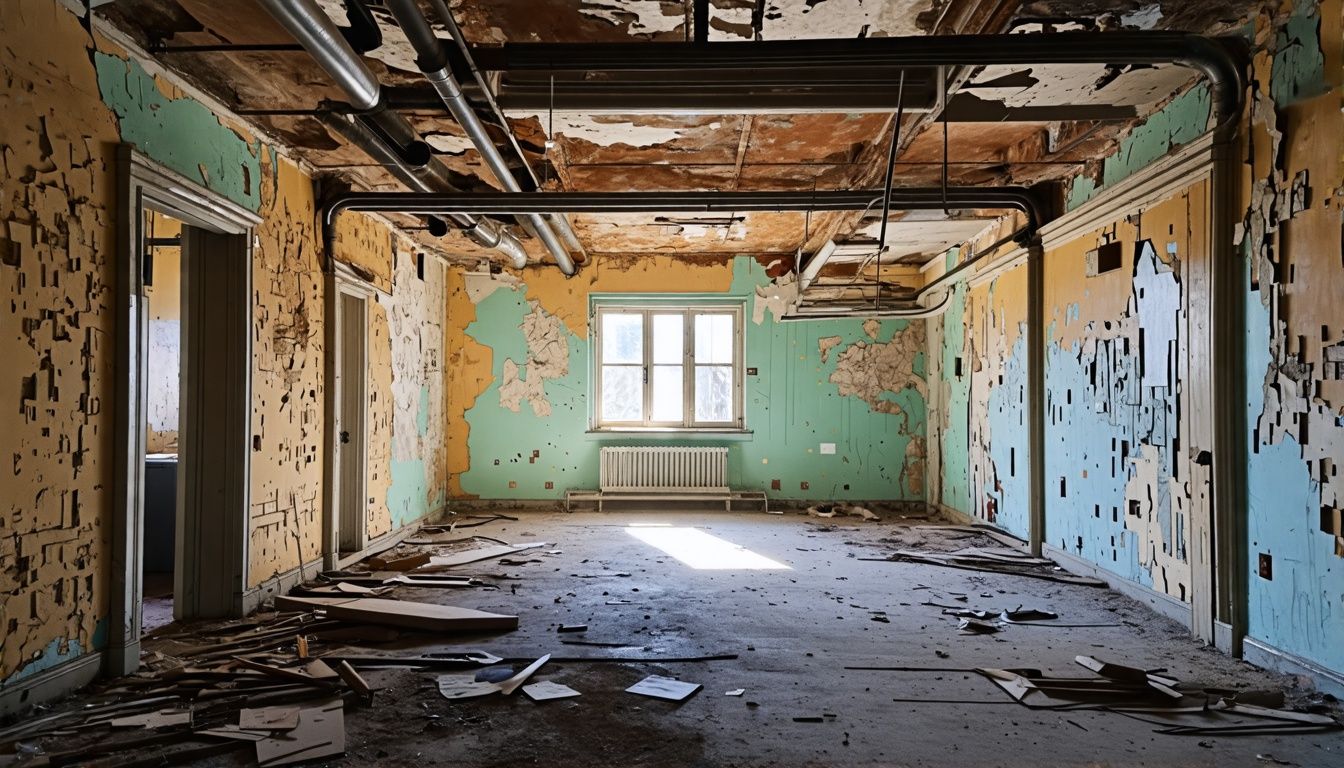
    • Training: Workers liable to encounter asbestos during their duties must receive appropriate training.

    Failure to comply with CAR is a criminal offence. The Health and Safety Executive (HSE) can issue enforcement notices, prohibit work activities, prosecute duty holders personally, and seek unlimited fines in the Crown Court.

    The Duty to Manage: Who Is Responsible?

    The duty to manage sits at the heart of CAR. If you own, occupy, or are responsible for maintaining a non-domestic building, this duty applies to you. That includes offices, shops, warehouses, schools, hospitals, and the communal areas of residential blocks such as corridors, stairwells, and plant rooms.

    Private homes are not covered in the same way, but landlords letting residential properties still carry obligations under other health and safety legislation — particularly where common areas are involved.

    What Managing Asbestos Actually Means in Practice

    The duty to manage does not mean you must immediately remove every piece of asbestos in your building. In many cases, ACMs in good condition and in low-risk locations are best left undisturbed and monitored.

    What the duty does require is that you:

    • Know what ACMs are present and where they are located
    • Assess the risk they pose in their current condition
    • Have a plan in place to manage that risk
    • Review and update your register and management plan regularly
    • Ensure anyone doing work in the building is made aware of ACMs before they start

    If you don’t have an asbestos register in place — or yours hasn’t been reviewed recently — you are very likely in breach of the regulations right now.

    Types of Asbestos Surveys Required Under CAR

    Before you can manage asbestos, you need to know what’s there. That requires a formal asbestos survey carried out by a qualified surveyor. There are three main survey types, each serving a distinct purpose under the regulations.

    Management Survey

    This is the standard survey required for occupied, non-domestic premises. A management survey locates and assesses ACMs that could be disturbed during normal occupancy — routine maintenance, minor repairs, fitting shelving, and similar day-to-day activities.

    It forms the basis of your asbestos register and management plan. If you don’t have one in place, this is where to start.

    Refurbishment Survey

    Required before any refurbishment work is carried out, a refurbishment survey is a more intrusive inspection that accesses areas not normally disturbed during day-to-day occupation — inside wall cavities, behind fixtures, beneath floors.

    It must be completed before refurbishment begins to protect contractors and satisfy CAR requirements. There are no shortcuts here — starting refurbishment without this survey in place puts lives at risk and exposes you to serious legal consequences.

    Demolition Survey

    A demolition survey is a full, intrusive inspection required before a building is demolished. Every ACM must be identified and removed before demolition can take place. This is the most comprehensive survey type and is a legal prerequisite for any demolition project — there are no exceptions.

    Re-inspection Survey

    Having an asbestos survey done once isn’t enough. The condition of ACMs changes over time — materials deteriorate, buildings get modified, and new risks emerge. A re-inspection survey should be scheduled at regular intervals — typically annually for higher-risk materials, and at least every two to three years for materials in better condition.

    If your register hasn’t been reviewed since it was first produced, it may no longer be accurate. Relying on an out-of-date register could put contractors and building occupants at serious risk — and won’t protect you from enforcement action.

    Asbestos Licensing: Who Can Actually Do the Work?

    One of the most important — and most frequently misunderstood — aspects of CAR is the licensing regime. Not all asbestos work is equal, and the regulations divide it into three categories based on risk.

    Licensed Work

    The highest-risk asbestos work must only be carried out by contractors holding an HSE asbestos licence. This includes removal of asbestos insulation, lagging, and sprayed coatings, as well as any work where fibres may be released in significant quantities.

    Licensed contractors must notify the relevant enforcing authority before starting work, and operatives must hold current medical surveillance certificates.

    Notifiable Non-Licensed Work (NNLW)

    Some lower-risk work doesn’t require a licence but must still be notified to the enforcing authority before it begins. Workers carrying out NNLW must receive appropriate training and medical surveillance. This category exists because the work still carries meaningful risk — it simply falls below the threshold requiring full licensing.

    Non-Licensed Work

    The lowest-risk category covers minor work on materials such as textured coatings or asbestos cement in good condition. No licence or notification is required, but work must still follow safe working practices and relevant HSE guidance.

    Getting this wrong has serious consequences. Commissioning unlicensed contractors for licensed work is a criminal offence — and claiming ignorance is not a defence.

    Exposure Limits and Control Measures

    Where asbestos work is taking place, CAR sets a control limit for airborne asbestos fibres. This is the maximum concentration of fibres permitted in the air that workers breathe during any given period. Critically, this is a legal ceiling — not a safe level.

    There is no known safe threshold for asbestos exposure. The objective is always to reduce exposure to as low as reasonably practicable, well below the control limit.

    In practice, this requires:

    • Enclosure and negative pressure units to contain fibre release
    • Respiratory protective equipment (RPE) appropriate to the level of risk
    • Disposable coveralls and decontamination facilities on site
    • Air monitoring during and after removal work
    • Clearance air testing before a licensed enclosure is re-occupied

    Personal protective equipment is the last line of defence, not a substitute for proper engineering controls. Any reputable asbestos contractor will always prioritise containment and enclosure before relying on PPE alone.

    The Role of HSE Guidance: HSG264 and Beyond

    Alongside CAR itself, the HSE publishes detailed technical guidance to help duty holders and contractors meet their legal obligations. The most significant of these is HSG264 — the HSE’s guidance document on asbestos surveying.

    HSG264 sets out the standards surveyors must meet, the methodology they should follow, and the information that survey reports must contain. It isn’t itself a legal requirement in the same way as CAR, but it represents the standard against which surveying work is judged.

    A survey that doesn’t comply with HSG264 is unlikely to satisfy your legal obligations under CAR. When commissioning a survey, always check that the surveyor works to HSG264 standards — and ask for evidence of their accreditation.

    The HSE also publishes approved codes of practice (ACoPs) for specific types of asbestos work, including licensed removal. An ACoP carries significant legal weight: if you’re prosecuted for a breach of the regulations, departing from the relevant ACoP without equivalent or better controls will be taken as evidence of non-compliance.

    Asbestos Surveys Across the UK: Getting the Right Support

    The legal obligations under CAR apply equally whether your premises are in central London, the North West, or the West Midlands. The challenge is ensuring the surveyor you appoint has the expertise, accreditation, and local knowledge to deliver a report that genuinely satisfies your duties.

    If you’re based in the capital and need an asbestos survey in London, Supernova’s teams operate across all London boroughs and can mobilise quickly for urgent requirements. For businesses and landlords in the North West, our asbestos survey Manchester service covers the city and surrounding areas with the same rigorous standards. And for properties across the Midlands, our asbestos survey Birmingham team delivers fully accredited surveys with fast turnaround times.

    Wherever your premises are located, the legal framework is the same — and so is the standard of work you should expect from your surveyor.

    Common Mistakes Duty Holders Make — and How to Avoid Them

    Even well-intentioned duty holders can fall foul of CAR. These are the most frequent errors we encounter:

    • Assuming a building is asbestos-free without a survey. If the building was constructed or refurbished before 2000, assumption is not enough — a formal survey is required.
    • Treating the survey report as a one-time document. Your register and management plan must be reviewed and updated regularly, not filed away after the initial survey.
    • Failing to share asbestos information with contractors. Every contractor working in your building must be made aware of known or presumed ACMs before they start. This is a legal duty, not a courtesy.
    • Using unlicensed contractors for higher-risk work. Always verify a contractor’s HSE licence before commissioning removal work — and keep a record that you did so.
    • Confusing COSHH and CAR responsibilities. If your health and safety management system treats asbestos under a general COSHH assessment, it’s almost certainly inadequate. Asbestos requires its own dedicated management arrangements under CAR.

    Frequently Asked Questions

    Why is asbestos not covered by the COSHH regulations?

    Asbestos is explicitly excluded from COSHH because its risks are so severe, and its presence in the UK’s built environment so widespread, that a general hazardous substances framework was insufficient. Instead, asbestos is governed by its own dedicated legislation — the Control of Asbestos Regulations — which covers identification, management, surveying, licensing, removal, and disposal of asbestos-containing materials across all non-domestic premises.

    What is the Control of Asbestos Regulations and who does it apply to?

    The Control of Asbestos Regulations is the primary UK legislation governing asbestos in the workplace and non-domestic buildings. It applies to anyone who owns, occupies, or is responsible for maintaining a non-domestic building — including landlords, employers, facilities managers, and building owners. It also applies to contractors carrying out work that may disturb ACMs.

    Do I need an asbestos survey if my building was built after 2000?

    Buildings constructed entirely after November 1999 are unlikely to contain asbestos, as its use in construction was banned in the UK by that point. However, if there is any doubt about construction or refurbishment dates, or if the building incorporated materials from an earlier structure, a survey is still advisable. If in doubt, always commission a survey — the cost of getting it wrong is far greater.

    How often should an asbestos management plan be reviewed?

    The Control of Asbestos Regulations require that asbestos management plans are kept up to date. In practice, this means scheduling regular re-inspection surveys — typically annually for higher-risk materials and at least every two to three years for materials in better condition. The plan should also be reviewed whenever there are changes to the building, its use, or the condition of known ACMs.

    What happens if I don’t comply with the Control of Asbestos Regulations?

    Non-compliance with CAR is a criminal offence. The HSE can issue enforcement notices, prohibit work activities, and prosecute duty holders personally. Cases heard in the Crown Court can result in unlimited fines and, in serious cases, custodial sentences. Beyond the legal consequences, the human cost of asbestos exposure — mesothelioma, asbestosis, and lung cancer — makes compliance a moral obligation as much as a legal one.

    Get Expert Asbestos Survey Support from Supernova

    With over 50,000 surveys completed across the UK, Supernova Asbestos Surveys has the expertise, accreditation, and nationwide reach to help you meet every obligation under the Control of Asbestos Regulations — from initial management surveys through to re-inspection programmes and specialist demolition surveys.

    Whether you’re a facilities manager getting your register in order for the first time, a landlord preparing for a refurbishment, or a contractor needing a fast-turnaround survey before work begins, our team is ready to help.

    Call us on 020 4586 0680 or visit asbestos-surveys.org.uk to book your survey or speak to one of our qualified surveyors today.

  • Are certain demographics more at risk for asbestos-related illnesses? Exploring the link between race, occupation, and asbestos exposure

    Are certain demographics more at risk for asbestos-related illnesses? Exploring the link between race, occupation, and asbestos exposure

    UK Deaths from Asbestos-Related Diseases: Who Bears the Greatest Risk?

    The data on UK deaths asbestos-related diseases 2011 and every year since paints a picture that is still unfolding decades after the last asbestos was installed. Mesothelioma alone kills over 2,500 people in Great Britain annually — and that figure excludes asbestosis, asbestos-related lung cancer, and pleural thickening. These are not historical footnotes. They are the ongoing consequences of exposure that happened 20, 30, even 50 years ago.

    Understanding who carries the greatest burden of risk is not an academic exercise. It determines who needs health monitoring, who has legal rights to pursue, and who urgently needs information about the buildings they work and live in right now.

    Why Occupational Exposure Remains the Dominant Driver of UK Deaths from Asbestos-Related Diseases

    The vast majority of asbestos-related disease cases in the UK trace directly back to workplace exposure. The Health and Safety Executive consistently identifies mesothelioma as predominantly an occupational disease, with most cases occurring in men who worked in trades and industries where asbestos use was routine before the full ban in 1999.

    The defining cruelty of asbestos is its latency period. Mesothelioma, asbestosis, and asbestos-related lung cancer can take 20 to 50 years to develop after initial exposure. Workers who inhaled fibres in the 1960s, 70s, and 80s are still being diagnosed today — and will continue to be for years to come.

    Construction Workers

    Construction remains the single highest-risk trade in the UK. Workers carrying out renovation, refurbishment, or demolition on buildings constructed before 2000 routinely disturb asbestos-containing materials (ACMs) — often without realising it.

    Artex ceilings, floor tiles, pipe lagging, partition boards, roof felt, and cement products all commonly contained asbestos. Cutting, drilling, sanding, or stripping these materials without proper controls releases fibres into the air that, once inhaled, cause irreversible damage.

    Electricians, plumbers, plasterers, joiners, and general builders are all at risk — not just those who worked directly with insulation materials. Trades that disturb existing building fabric repeatedly, across dozens of different sites over a career, accumulate significant cumulative exposure.

    Before any intrusive work begins on a structure that may contain ACMs, a demolition survey is a legal requirement — not an optional extra.

    Shipyard Workers

    Shipbuilding was among the most intensive users of asbestos throughout the 20th century. Asbestos was applied extensively for insulation, fireproofing, and lagging throughout vessels — in engine rooms, boiler rooms, and hull structures.

    Workers in UK shipbuilding centres — Clydeside, Tyneside, Belfast, Birkenhead — faced decades of heavy exposure. Many developed mesothelioma and asbestosis long after their shipyard careers ended, and the legacy is still being felt in these communities today.

    Secondary exposure is a documented reality here. Family members who inhaled fibres carried home on work clothing have been diagnosed with mesothelioma despite never setting foot in a shipyard — one of the starkest illustrations of how asbestos risk extended far beyond the immediate workplace.

    Industrial and Factory Workers

    Asbestos was used widely in manufacturing as a heat-resistant and fire-retardant material. Workers in textile mills, power stations, steel plants, chemical factories, and heavy engineering facilities were routinely exposed to asbestos-containing insulation, gaskets, machinery components, and building fabric.

    Many of these workers had no idea of the risk at the time. Asbestos was marketed as a wonder material, and its dangers were known to employers and manufacturers far earlier than the information reached the workforce.

    Other High-Risk Occupations

    • Laggers and insulators — directly handling asbestos insulation materials, often for decades
    • Boilermakers and plumbers — working around pipe lagging and boiler insulation in industrial and domestic settings
    • Heating and ventilation engineers — disturbing asbestos insulation during installation or maintenance
    • Firefighters — exposed to fibres released when burning buildings collapse or structural materials are disturbed
    • Teachers and school staff — many UK schools built in the 1950s to 70s contain significant amounts of asbestos; staff in buildings with deteriorating ACMs face ongoing low-level exposure
    • Healthcare workers — older NHS estate buildings frequently contain asbestos; maintenance and facilities staff face particular exposure risks

    Does Race Play a Role in Asbestos Risk?

    This is a more nuanced question than it might appear. In the UK context, racial or ethnic background alone does not determine biological susceptibility to asbestos-related disease. However, it intersects with occupational history, socioeconomic status, and access to healthcare in ways that affect both exposure risk and health outcomes.

    Occupational Segregation and Its Legacy

    Historically, communities facing economic disadvantage and discrimination in the labour market were concentrated in industries with the highest asbestos exposure. In the UK, migrant communities who arrived during the post-war period often entered heavy industry, manufacturing, and construction trades where asbestos use was commonplace.

    The long latency of asbestos disease means exposure from the 1960s, 70s, and 80s is only now manifesting as diagnosis in some of these communities. Awareness of legal rights and financial entitlements is not evenly distributed across the population — and that gap costs lives.

    Environmental Exposure and Neighbourhood Risk

    Lower-income communities — which in the UK are disproportionately more ethnically diverse — are more likely to live in older housing stock and near former industrial sites. Properties built before the 1980s are significantly more likely to contain asbestos in deteriorating condition.

    When ACMs in domestic or communal settings fall into poor repair, they can release fibres into living spaces. Residents who are unaware of the risk, or who cannot afford surveys or remediation, face ongoing low-level exposure at home.

    Healthcare Access and Diagnosis Inequalities

    Access to specialist healthcare, early screening, and informed medical practitioners varies significantly across the UK population. Communities with lower health literacy, language barriers, or limited access to specialist respiratory and oncology services face delayed diagnosis of asbestos-related conditions.

    Mesothelioma is difficult to diagnose in its early stages. Delayed diagnosis almost always means more limited treatment options and a poorer prognosis — making community-level awareness of symptoms every bit as important as clinical provision.

    Urban vs. Rural Exposure Patterns

    Urban environments carry a higher density of older commercial and residential buildings, industrial sites, and ongoing construction and refurbishment activity. The probability of encountering ACMs in a busy urban setting — whether as a worker, a resident, or a tradesperson — is higher than in most rural areas.

    For those managing properties in cities, an asbestos management survey is often the first practical step to understanding what is present and what condition it is in. Whether you need an asbestos survey London or an asbestos survey Manchester, acting before disturbance occurs is always the right approach.

    Rural exposure is not negligible, however. Agricultural buildings from the mid-20th century frequently used asbestos cement roofing and cladding, which is now in varying states of deterioration across farms and smallholdings nationwide. Weathered asbestos cement can become friable and considerably more hazardous over time.

    If you manage rural premises and have not yet commissioned a management survey, the risk may be closer than you think. Rural workers in agriculture, water management, and older industrial settings should not assume asbestos is exclusively an urban problem.

    Property managers in the Midlands should also be aware that specialist help is available locally — an asbestos survey Birmingham can be arranged quickly and provides the same rigorous assessment as anywhere else in the country.

    Socioeconomic Factors: How Poverty Amplifies Asbestos Risk

    Poverty compounds asbestos risk in several interconnected ways. Lower-income workers are more likely to be employed in trades with high asbestos exposure, in older and poorly maintained buildings, and with less access to proper training, protective equipment, or robust health and safety enforcement.

    Lower-income households are also more likely to undertake DIY renovation work rather than hire professionals — and DIY disturbance of asbestos-containing materials in domestic properties is a genuine, underappreciated exposure route. If you are unsure whether materials in your home contain asbestos, a testing kit allows you to take samples safely for laboratory analysis before any work begins.

    Limited financial resources can also delay people from seeking medical attention when symptoms appear. Breathlessness or chest pain may be attributed to other causes — or simply endured — by which point asbestos-related disease may have progressed significantly.

    Symptoms That Should Never Be Ignored

    Given the long latency of asbestos-related disease, anyone with a history of occupational or environmental exposure should be alert to the following symptoms — even if that exposure occurred decades ago:

    • Persistent breathlessness or shortness of breath, particularly on exertion
    • A chronic cough that does not resolve
    • Chest pain or tightness
    • Unexplained weight loss
    • Fatigue that cannot be explained by other factors
    • Pleural effusion (fluid around the lungs) — often detected incidentally on imaging

    If you have a history of working with or around asbestos and develop any of these symptoms, raise your occupational history with your GP explicitly. Mesothelioma and asbestos-related lung disease can be missed if the treating clinician is not aware of past exposure.

    Your Legal Rights and Financial Entitlements

    Workers who developed asbestos-related illness through occupational exposure have legal rights and may be entitled to significant financial support. The following routes are worth knowing:

    1. Industrial Injuries Disablement Benefit (IIDB) — available through the DWP for those diagnosed with prescribed asbestos-related diseases including mesothelioma, asbestosis, and diffuse pleural thickening
    2. The Diffuse Mesothelioma Payment Scheme — provides lump-sum payments for mesothelioma sufferers unable to pursue civil litigation
    3. Civil claims against former employers — specialist asbestos litigation solicitors can pursue claims even where the employer no longer exists, via the Employers’ Liability Tracing Office (ELTO) databases
    4. Mesothelioma UK — a charity providing specialist nursing support, information, and guidance to patients and families

    Do not assume a claim is impossible because the exposure happened 40 years ago or the employer has since closed. Specialist solicitors handle these situations routinely.

    Regulatory Duties for Property Owners and Employers

    The Control of Asbestos Regulations impose clear legal duties on employers, building owners, and duty holders. If you own or manage a non-domestic property, your obligations include:

    • Identifying ACMs in non-domestic premises
    • Assessing the condition and risk of identified materials
    • Maintaining an asbestos register
    • Implementing an asbestos management plan
    • Providing information to anyone liable to disturb ACMs
    • Ensuring workers who may encounter asbestos receive proper training

    Licensed asbestos removal work — covering the most hazardous materials including sprayed coatings, lagging, and loose-fill insulation — must be carried out by HSE-licensed contractors. Always verify that your contractor holds the appropriate licence before work begins. HSG264 sets out the standards for asbestos surveys and should be the benchmark against which any survey provider is assessed.
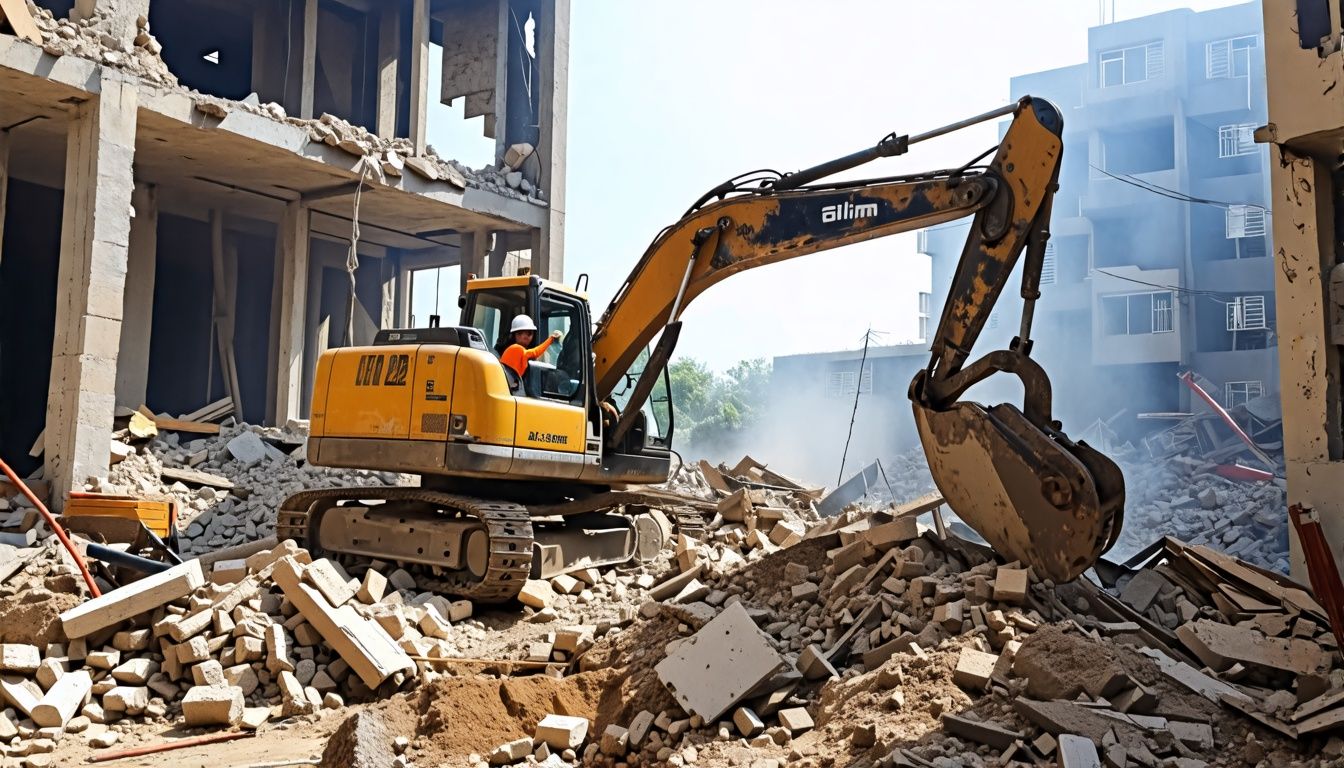
    Compliance is not a bureaucratic inconvenience. It is the mechanism by which the cycle of UK deaths from asbestos-related diseases is eventually broken — and it starts with knowing what is in your building.

    The Ongoing Legacy: Why the Death Toll Has Not Yet Peaked

    The UK’s asbestos death toll reflects decisions made in boardrooms and on building sites decades ago. The latency period means that even though the use of asbestos was banned in 1999, the human cost of its widespread use continues to accumulate year on year.

    Modelling by the HSE has indicated that mesothelioma deaths in Great Britain were expected to peak in the years following 2011 before gradually declining — but the decline is slow, and the numbers remain substantial. Asbestosis deaths have shown a different trajectory, with figures continuing to rise as the long-term consequences of lower-level, chronic exposure become apparent in ageing workers.

    The communities hit hardest are those that powered Britain’s industrial past: shipbuilding towns, manufacturing cities, mining regions, and construction hubs. The geography of UK deaths from asbestos-related diseases maps almost exactly onto the geography of 20th-century British industry.

    This is not a problem that will resolve itself. It requires active management — of buildings, of health, and of awareness.

    What You Can Do Right Now

    Whether you are a property manager, an employer, a tradesperson, or a homeowner, there are concrete steps you can take today:

    • Commission a survey before any renovation, refurbishment, or demolition work on a pre-2000 building
    • Maintain an asbestos register and ensure it is accessible to anyone who may disturb building fabric
    • Train staff — anyone liable to encounter asbestos in their work must receive appropriate awareness training
    • Do not disturb suspected ACMs — if in doubt, leave it alone and get it assessed
    • Use a testing kit if you need to identify materials at home before DIY work begins
    • Seek legal advice if you or a family member has been diagnosed with an asbestos-related condition linked to occupational exposure

    The single most effective thing a property owner or manager can do is ensure they have a current, accurate asbestos management survey in place. It is the foundation on which every other duty rests.

    Frequently Asked Questions

    How many people die from asbestos-related diseases in the UK each year?

    Mesothelioma alone accounts for over 2,500 deaths in Great Britain annually. When asbestosis, asbestos-related lung cancer, and pleural diseases are included, the total number of deaths attributable to asbestos exposure is considerably higher. The UK has one of the highest rates of mesothelioma mortality in the world, a direct consequence of the scale of industrial asbestos use throughout the 20th century.

    Which occupations carry the highest risk of asbestos-related disease in the UK?

    Construction workers, shipyard workers, laggers, boilermakers, plumbers, electricians, and heating engineers carry the highest historical risk. However, teachers, school staff, and healthcare workers in older buildings also face ongoing low-level exposure risk. Anyone who regularly works in or around pre-2000 buildings — particularly during refurbishment or maintenance — should be aware of the potential for ACMs to be present.

    Does ethnicity affect the risk of developing asbestos-related disease?

    Ethnicity alone does not create a biological difference in susceptibility to asbestos-related disease. However, historical occupational segregation, socioeconomic disadvantage, and unequal access to healthcare mean that some ethnic minority communities in the UK face compounded risk — both in terms of historical exposure and in terms of delayed diagnosis and reduced access to specialist treatment.

    What should I do if I think asbestos is present in my property?

    Do not disturb the material. If you need to confirm whether a substance contains asbestos, a testing kit can be used to take a sample safely for laboratory analysis. For a full assessment of a non-domestic property, commission an asbestos management survey from a qualified surveyor. If demolition or major refurbishment is planned, a demolition survey is a legal requirement under the Control of Asbestos Regulations.

    Can I make a legal claim if I was exposed to asbestos at work decades ago?

    Yes. Many successful claims are made for exposures that occurred 30 to 50 years ago. Specialist asbestos litigation solicitors can trace former employers through the Employers’ Liability Tracing Office (ELTO) even where those companies no longer exist. The Diffuse Mesothelioma Payment Scheme also provides a route to compensation for those who cannot pursue civil litigation. Do not assume a claim is impossible without seeking specialist legal advice.

    Speak to Supernova Asbestos Surveys

    Supernova Asbestos Surveys has completed over 50,000 surveys nationwide and operates across the UK, including London, Manchester, Birmingham, and beyond. Whether you need a management survey, a demolition survey, or advice on your legal duties under the Control of Asbestos Regulations, our qualified surveyors are ready to help.

    Call us on 020 4586 0680 or visit asbestos-surveys.org.uk to book a survey or request a quote. Do not wait until work has already started — the time to act is before the first drill goes in.

  • How Does Asbestos Exposure Affect the Mental Health of Those Affected? Exploring the Psychological Impact

    How Does Asbestos Exposure Affect the Mental Health of Those Affected? Exploring the Psychological Impact

    Asbestos Anxiety: The Psychological Toll That Rarely Gets Discussed

    When asbestos is mentioned, most people immediately think of mesothelioma, asbestosis, or lung cancer. What rarely gets the same attention is the profound psychological damage that follows exposure — the sleepless nights, the persistent dread, the health anxiety that colours every cough and every chest twinge. Asbestos anxiety is real, it is serious, and it deserves to be taken every bit as seriously as the physical risks.

    Whether you have received a formal diagnosis, discovered that you were exposed years ago at work, or are managing a building where asbestos has been found, the mental health consequences can be long-lasting and genuinely disabling. This post looks honestly at those consequences, who is most affected, and what practical support is available.

    Why Asbestos Anxiety Is Different From Other Health Fears

    Most health threats produce an immediate response. You feel ill, you seek help, you get a diagnosis. Asbestos does not work that way. The gap between exposure and the onset of disease can span decades — and that prolonged uncertainty creates its own distinct psychological burden.

    There is no immediate symptom after exposure. There is no test that can tell you definitively what, if anything, will develop. That ambiguity sits with people for years, sometimes for the rest of their lives, and it is psychologically corrosive in a way that is difficult to explain to someone who has not experienced it.

    The threat is real, the timeline is unpredictable, and there is very little that can be done to eliminate the uncertainty entirely. This is what makes asbestos anxiety a distinct phenomenon rather than ordinary health worry — and why it warrants specific recognition and support.

    The Most Common Psychological Responses to Asbestos Exposure

    Anxiety

    Anxiety is among the most prevalent mental health responses to known or suspected asbestos exposure. The triggers are entirely understandable: fear of developing a terminal illness, uncertainty about what a diagnosis might mean, concern for family members who may also have been exposed, and worry about financial security if health deteriorates.

    This anxiety often presents as persistent worry that is difficult to switch off, disrupted sleep, difficulty concentrating, and a generalised sense of dread. For many people, every cough or chest pain becomes something to catastrophise. The body becomes a source of threat rather than reassurance.

    Depression

    Depression is closely linked to anxiety in this context, and the two frequently occur together. Those who have received a diagnosis of an asbestos-related disease — particularly mesothelioma — often experience hopelessness, withdrawal from previously enjoyed activities, persistent low mood, changes in appetite, and a loss of purpose.

    The physical toll of treatment compounds this significantly. Chemotherapy and other interventions bring fatigue, nausea, pain, and changes to physical appearance. These effects erode self-esteem and can deepen depressive symptoms considerably, making the illness and its treatment mutually reinforcing sources of psychological distress.

    Chronic Stress

    Chronic stress is slower and quieter than acute anxiety or depression, but it is no less damaging. Living under sustained psychological pressure — worrying about health, managing treatment schedules, navigating benefits systems and legal claims — keeps the body in a prolonged state of stress response.

    This affects sleep quality, immune function, relationships, and the capacity to work. It can also worsen existing physical health conditions, creating a vicious cycle that is very difficult to break without proper support. The stress of managing asbestos-related illness often extends to everyone in a household, not just the person directly affected.

    Post-Traumatic Stress

    For some individuals — particularly those diagnosed with a serious or terminal asbestos-related disease — symptoms consistent with post-traumatic stress disorder can emerge. Court proceedings, invasive medical procedures, and repeated clinical conversations about prognosis can all function as triggers, bringing traumatic memories and distressing emotions to the surface in ways that feel uncontrollable.

    This is a recognised and legitimate clinical response to an extraordinarily difficult situation. It is not weakness, and it should not be treated as such by anyone involved in that person’s care or support network.

    The Specific Psychological Burden of Mesothelioma

    Mesothelioma is an aggressive cancer with a poor prognosis, and its psychological impact on patients is distinct from other asbestos-related conditions. Patients are frequently diagnosed at a late stage, leaving limited treatment options and very difficult conversations about life expectancy.

    Patients describe feeling robbed of their future — mourning milestones they may not reach, and struggling with the loss of identity that serious illness brings. This is a rational human response to an extraordinarily difficult situation, and it deserves to be treated as such by medical teams, families, and the wider support system around a patient.

    What helps is acknowledgement, access to psychological support, and the space to talk honestly about what is happening. Dismissing or minimising the fear surrounding prognosis does real harm. The asbestos anxiety experienced at this stage is not disproportionate — it is proportionate to a genuinely devastating situation.

    The Impact on Families and Carers

    Asbestos-related diseases do not affect patients in isolation. Partners, children, and close friends take on caring responsibilities, attend medical appointments, manage medications, and provide constant emotional support — often while managing their own grief about what is happening.

    Caregiver burnout is a real and underacknowledged problem. Those supporting a loved one with an asbestos-related illness are at genuine risk of developing anxiety and depression themselves, and they frequently neglect their own mental health in the process of prioritising someone else’s needs.

    If you are a carer in this situation, seeking support for yourself is not selfish — it is necessary. You cannot sustain care for someone else if you are running on empty, and your own psychological wellbeing matters independently of the role you are playing.

    Asbestos Anxiety Without a Diagnosis

    You do not need a formal diagnosis to experience significant psychological distress related to asbestos. Many people develop acute asbestos anxiety simply upon discovering they were exposed — through their work, through living in a building where asbestos was identified, or through historical contact with someone who worked with the material.

    Learning that you may have been exposed to a substance capable of causing cancer years from now is distressing in a way that is difficult to articulate. Even where the assessed risk is low, the knowledge stays with people.

    Health anxiety can escalate in specific and recognisable ways:

    • Interpreting normal bodily sensations as signs of illness
    • Avoiding medical check-ups for fear of what might be found
    • Seeking repeated reassurance that provides only temporary relief
    • Researching symptoms obsessively, which typically worsens rather than eases anxiety
    • Withdrawing from social contact because of persistent preoccupation with health

    This is a legitimate mental health consequence of asbestos exposure, and it deserves to be taken seriously — not dismissed because no disease has yet developed. The psychological harm is real regardless of whether physical illness follows.

    Coping Strategies That Are Actually Supported by Evidence

    Psychological Counselling and Therapy

    Cognitive Behavioural Therapy (CBT) is one of the most effective approaches for anxiety and depression associated with serious illness. It helps people identify unhelpful thought patterns, challenge catastrophic thinking, and develop more effective responses to difficult emotions — including the specific fears that accompany asbestos exposure.

    Counselling more broadly provides a structured, confidential space to process fear, grief, and anger. Many people find that talking to a professional — someone without the emotional stake that a family member has — allows them to be more honest about how they are really feeling.

    GPs can refer patients to talking therapies through NHS Talking Therapies, though waiting times vary. Specialist cancer centres often have their own psychological support teams for patients with mesothelioma and other asbestos-related cancers.

    Peer Support and Support Groups

    Connecting with others who share the same experience can significantly reduce feelings of isolation. Peer support groups — both in-person and online — allow people to share coping strategies, practical knowledge, and emotional understanding in a way that professional support alone cannot fully replicate.

    Organisations such as Mesothelioma UK and the Asbestos Victims Support Groups Forum offer access to specialist support services and communities of people who genuinely understand what living with asbestos-related illness involves. These connections can be invaluable, particularly in the early stages after diagnosis.

    Rebuilding a Sense of Control

    One of the most psychologically damaging aspects of asbestos-related illness is the sense of having lost control — over your health, your future, your body. Where possible, rebuilding that sense of agency is genuinely helpful.

    This might mean taking an active role in treatment decisions, setting achievable daily goals, or focusing energy on the things that remain within your control. For people who are not yet ill but know they were exposed, taking practical steps — such as commissioning an asbestos management survey on a building they manage, or speaking to a specialist — can replace helpless worry with constructive action.

    Doing something concrete transforms asbestos anxiety from a passive, corrosive experience into one that has an outlet. That shift matters more than it might sound.

    Physical Activity and Routine

    Where physical health permits, regular gentle exercise has strong evidence behind it as a mood regulator. Maintaining a daily routine also provides structure during a period when life can feel chaotic and unpredictable.

    Neither of these is a cure for asbestos anxiety, and it would be wrong to suggest otherwise. But both can support overall psychological resilience and make the harder days slightly more manageable.

    The Mental Health Cost of Legal Proceedings

    Many people affected by asbestos-related illness pursue compensation claims, particularly where exposure occurred in the workplace. This is often entirely appropriate — employers had a duty of care, and the Control of Asbestos Regulations exists precisely because of the well-documented dangers of the material.

    However, legal proceedings bring their own psychological costs. Cases can be lengthy and emotionally exhausting. Revisiting the history of exposure — often involving distressing memories of workplaces and colleagues, some of whom may have died — is painful.

    Depositions, medical examinations, and court appearances can trigger significant stress responses. Legal teams experienced in asbestos cases should be alive to this burden and work to minimise unnecessary distress. Specialist asbestos solicitors will often be able to signpost clients to psychological support services as part of their overall case management.

    How Proper Asbestos Management Reduces Psychological Harm

    For property managers, building owners, and anyone living or working in a building that may contain asbestos, uncertainty about what is present — and what the actual risk is — is one of the most significant drivers of asbestos anxiety. The most effective way to address that anxiety is to get accurate, professional information.

    A management survey will identify what asbestos-containing materials are present, assess their condition, and give you a clear picture of what action, if any, is required. That clarity replaces anxious speculation with facts — and facts, even difficult ones, are far easier to manage than uncertainty.

    Under the Control of Asbestos Regulations, duty holders have a legal obligation to manage asbestos in non-domestic premises. But beyond compliance, there is a genuine wellbeing argument for proper asbestos management. Knowing what is in your building, knowing it is being managed correctly, and knowing the people in that building are not at risk provides real and lasting peace of mind.

    This is not a minor consideration. Asbestos anxiety in building managers and occupants is a genuine and underappreciated consequence of poor or absent asbestos management. A professional survey does not just satisfy a legal requirement — it actively protects the mental health of everyone connected to that building.

    Where You Are in the UK Doesn’t Change the Risk — Or the Solution

    Asbestos is present in buildings across the entire country, and so is the anxiety that comes with discovering it. Whether you need an asbestos survey in London, an asbestos survey in Manchester, or an asbestos survey in Birmingham, the principle is the same: professional assessment replaces fear with fact.

    The buildings most likely to contain asbestos-containing materials are those constructed or refurbished before the year 2000. If you manage or own such a building and have not yet had it surveyed, the absence of information is itself a source of risk — both physical and psychological.

    Talking to Someone: Where to Start

    If you are experiencing asbestos anxiety — whether following a diagnosis, a disclosure of exposure, or simply the discovery of asbestos in your environment — the starting point is the same: tell someone.

    That might be your GP, who can assess your mental health needs and make appropriate referrals. It might be a specialist nurse at a cancer centre if you have a diagnosis. It might be a peer support group, or a counsellor accessed privately or through your employer’s occupational health provision.

    What it should not be is silence. Asbestos anxiety thrives in isolation. It feeds on the feeling that no one else could possibly understand, or that your distress is disproportionate, or that you should simply be getting on with things. None of those things are true.

    The distress is proportionate. The fear is understandable. And support is available — you just have to reach for it.

    Frequently Asked Questions

    Is asbestos anxiety a recognised mental health condition?

    Asbestos anxiety is not a standalone clinical diagnosis, but the anxiety, depression, chronic stress, and post-traumatic stress symptoms that can result from asbestos exposure are all well-recognised mental health conditions. They can be diagnosed and treated through standard NHS pathways and specialist support services. The fact that the trigger is asbestos-specific does not make the psychological response any less real or any less treatable.

    Can I experience asbestos anxiety even if I have never been diagnosed with an asbestos-related illness?

    Yes. Many people develop significant psychological distress simply upon learning they were exposed to asbestos — whether at work, at home, or in a building they spent time in. The uncertainty about whether illness will develop in the future is itself a genuine source of anxiety, and it deserves to be taken seriously and supported appropriately, regardless of whether a physical diagnosis ever follows.

    What is the most effective treatment for asbestos-related anxiety?

    Evidence supports Cognitive Behavioural Therapy (CBT) as one of the most effective approaches for health-related anxiety and depression. Counselling, peer support groups, and — where appropriate — medication can all play a role. Your GP is the best starting point for accessing support, and specialist cancer centres often have dedicated psychological support teams for patients with asbestos-related diseases.

    Does getting an asbestos survey actually help with anxiety about asbestos in a building?

    Yes, and significantly so. Much of the anxiety experienced by building managers and occupants stems from not knowing what is present or what risk it poses. A professional asbestos survey replaces that uncertainty with clear, factual information. Even where asbestos is found, knowing its location, condition, and risk level — and having a management plan in place — is far less distressing than unresolved uncertainty.

    Are family members and carers of people with asbestos-related illness at risk of mental health problems too?

    Yes. Caregiver burnout, anxiety, and depression are well-documented among those supporting loved ones with serious illness, including asbestos-related diseases. Carers frequently neglect their own mental health while prioritising the person they are supporting. Seeking help for yourself as a carer is not selfish — it is essential, both for your own wellbeing and for your ability to sustain the care you are providing.

    Speak to Supernova Asbestos Surveys

    If you manage a property and asbestos uncertainty is causing you concern, the most constructive step you can take is to get a professional survey carried out. Supernova Asbestos Surveys has completed over 50,000 surveys across the UK, providing property managers, employers, and building owners with the clear, accurate information they need to manage asbestos safely and confidently.

    We work nationwide — from London to Manchester to Birmingham and everywhere in between. Our surveyors are fully qualified, our reports are clear and actionable, and our team understands that the people commissioning surveys are often doing so because they are worried. We take that seriously.

    Call us on 020 4586 0680 or visit asbestos-surveys.org.uk to book a survey or speak to a member of our team about your building’s asbestos requirements.

  • What industries or occupations are at the highest risk for asbestos exposure and resulting health impacts? Identifying the Most At-Risk Industries and Occupations

    What industries or occupations are at the highest risk for asbestos exposure and resulting health impacts? Identifying the Most At-Risk Industries and Occupations

    Carpenters Asbestos Exposure: What Every Tradesperson and Employer Needs to Know

    Carpentry looks nothing like a high-risk profession on the surface. You’re cutting timber, fitting joinery, installing boards. But for anyone working in buildings constructed before 2000, carpenters asbestos exposure is a genuine and ongoing hazard — one that has already cost thousands of UK tradespeople their lives, and continues to claim more every year.

    Asbestos was banned in the UK in 1999, but it was never removed from the buildings where it was installed. It’s still there, embedded in insulation boards, floor tiles, ceiling coatings, soffits, and dozens of other building materials. Every time a carpenter drills, cuts, or sands into one of those materials without knowing what they contain, there’s a risk of inhaling fibres that can cause fatal disease decades later.

    This isn’t a historic problem. It’s a present-day one.

    Why Carpenters Face Such a High Risk of Asbestos Exposure

    Construction workers as a whole face elevated asbestos risk, but carpenters occupy a particularly exposed position within that group. Their work takes them directly into the fabric of buildings — cutting into boards, fitting into wall cavities, working around soffits and fascias, and installing or removing flooring.

    These are exactly the locations where asbestos-containing materials (ACMs) are most commonly found. Unlike some trades that interact primarily with surface finishes or services, carpenters routinely disturb structural and semi-structural materials — increasing both the frequency and intensity of potential fibre release.

    The trades most consistently identified as high-risk for asbestos exposure include:

    • Carpenters and joiners
    • Electricians
    • Plumbers and heating engineers
    • Plasterers and decorators
    • Roofers
    • HVAC technicians
    • General maintenance workers

    Carpenters face a specific combination of risks that makes their exposure profile particularly concerning. They work with materials that commonly contained asbestos, they use tools that generate significant dust, and they frequently work in spaces that haven’t been disturbed for decades — meaning any ACMs present may be in a fragile, friable condition that releases fibres more readily.

    Where Carpenters Encounter Asbestos on the Job

    Asbestos wasn’t used in just one or two building products. It was incorporated into a wide range of materials throughout the mid-to-late twentieth century, many of which a carpenter would routinely handle or work around.

    Asbestos Insulation Board

    Asbestos insulation board (AIB) was widely used as a fire-resistant lining material in buildings constructed from the 1950s through to the late 1990s. It looks very similar to ordinary building board — there’s nothing about its appearance that flags it as hazardous.

    Carpenters cutting, trimming, or removing what they believe to be standard boarding may be releasing asbestos fibres without any awareness that they’re doing so. AIB is considered a high-risk ACM because it releases fibres relatively easily when disturbed.

    Ceiling Tiles and Textured Coatings

    Textured coatings such as Artex were commonly applied to ceilings and walls throughout the 1970s and 1980s, and frequently contained chrysotile asbestos. Carpenters fitting new ceiling structures, removing old ones, or working around existing coatings can disturb these surfaces.

    Sanding or scraping Artex is particularly high-risk and should never be carried out without first confirming the coating is asbestos-free.

    Floor Tiles and Adhesives

    Vinyl floor tiles installed before the mid-1980s often contained asbestos, and the adhesives used to bond them sometimes did too. Carpenters laying new flooring over old substrates, or lifting and replacing existing tiles, can disturb these materials without realising the risk.

    Soffits, Fascias, and Roofline Products

    Many older properties have soffits and fascias made from asbestos cement. Carpenters replacing or repairing roofline products on pre-2000 buildings may encounter these materials regularly. Asbestos cement is generally considered lower-risk when intact, but cutting, drilling, or breaking it releases fibres — and those fibres are just as dangerous as those from higher-risk ACMs.

    Door Linings and Fire Doors

    Older fire doors and their surrounding linings sometimes incorporated asbestos-based materials as part of their fire-resistant construction. Carpenters removing or modifying fire doors in older commercial or public buildings should never assume these components are asbestos-free.

    Pipe Casings and Service Ducts

    Where carpenters construct or remove boxing around pipework, they may encounter asbestos pipe lagging beneath. Disturbing the boxing that surrounds degraded lagging can release fibres even if the carpenter never directly touches the lagging itself.

    The Health Consequences of Carpenters Asbestos Exposure

    Asbestos-related diseases are serious, largely irreversible, and in many cases fatal. What makes them particularly insidious is the latency period: symptoms typically don’t develop until 15 to 50 years after exposure. A carpenter who was regularly exposed to asbestos fibres in the 1980s or 1990s may only now be receiving a diagnosis.

    Mesothelioma

    Mesothelioma is a cancer of the lining of the lungs or, less commonly, the abdomen. It is almost exclusively caused by asbestos exposure and has no cure. The UK has one of the highest rates of mesothelioma in the world — a direct consequence of the country’s industrial history and the scale of asbestos use throughout the twentieth century.

    Asbestos-Related Lung Cancer

    Asbestos exposure significantly increases the risk of lung cancer. For workers who also smoke, the risk is substantially elevated — the two factors interact in a way that multiplies rather than simply adds to the overall risk.

    Asbestosis

    Asbestosis is a chronic lung condition caused by scarring of lung tissue following prolonged exposure to asbestos fibres. It causes breathlessness, persistent coughing, and reduced lung function. It is progressive and has no cure.

    Pleural Thickening and Pleural Plaques

    Pleural plaques are areas of scarring on the lining of the lungs and act as a marker of past asbestos exposure. Diffuse pleural thickening is more extensive and can significantly restrict lung function. Neither condition is cancer, but both indicate that exposure has occurred and that the individual carries an elevated risk of more serious disease.

    All of these conditions share one characteristic: by the time they’re diagnosed, the damage is already done. Prevention — through proper asbestos management and awareness before work begins — is the only effective strategy.

    The Legal Framework: What Employers and Duty Holders Must Do

    The Control of Asbestos Regulations places clear legal duties on employers, duty holders, and contractors. Ignorance of asbestos is not a legal defence — the regulations require duty holders to actively establish whether ACMs are present before any work takes place.

    For any non-domestic building built before 2000, the duty holder must:

    1. Commission an asbestos management survey to identify and record the location and condition of any ACMs present.
    2. Maintain an asbestos register — a live document that records all known ACMs and their condition.
    3. Ensure all contractors are informed about known ACMs before they start work on site.
    4. Commission a demolition survey before any intrusive refurbishment or demolition work takes place — this is a legal requirement, not a recommendation.
    5. Provide appropriate training — anyone liable to encounter asbestos in their work needs asbestos awareness training as a minimum.
    6. Re-inspect regularly — asbestos management surveys need periodic review as conditions in buildings change.

    The HSE’s guidance document HSG264 sets out the standards for asbestos surveying and provides the framework for how surveys should be conducted and recorded. It’s the benchmark against which all asbestos survey work is measured.

    Failing to comply with these requirements doesn’t just put workers at risk — it exposes employers and duty holders to significant legal liability, including prosecution and unlimited fines.

    What Carpenters Should Do Before Starting Work

    Carpenters themselves have a role to play in managing their own exposure risk. Regulatory compliance by building owners is essential, but workers should also be proactive about protecting themselves.

    Before starting any job in a pre-2000 building, carpenters should:

    • Ask whether an asbestos survey has been carried out. If the building owner or principal contractor can’t produce one, that’s a significant red flag.
    • Check the asbestos register. If one exists, review it before starting work to understand where ACMs are located and whether your work area is affected.
    • Treat unknown materials with caution. If you encounter a material you can’t identify and aren’t certain is asbestos-free, stop and seek guidance before proceeding.
    • Never dry-sand, drill, or cut suspect materials without confirmation they don’t contain asbestos.
    • Ensure you’ve received asbestos awareness training. This is a legal requirement for workers in trades likely to encounter ACMs.
    • Report concerns immediately. If you believe you’ve disturbed an ACM, stop work, leave the area, and report it to your employer or site manager without delay.

    Asbestos awareness training doesn’t authorise workers to work with or remove asbestos — it teaches them to recognise situations where asbestos may be present and to avoid disturbing it. Licensed asbestos removal contractors must handle the removal of most ACMs. If asbestos removal is required, it must be arranged through a properly licensed contractor before any carpentry work proceeds in the affected area.

    Other High-Risk Occupations Beyond Carpentry

    While carpenters asbestos exposure is the focus here, it’s worth understanding the broader occupational picture. Several other trades carry similarly elevated risks, and carpenters frequently work alongside them on the same sites.

    Electricians

    Electricians routinely work in wall cavities, ceiling voids, and floor spaces — exactly the areas where asbestos insulation board and lagging are commonly found. Installing new circuits or running cables through older buildings can disturb ACMs with no visible warning. Without a survey in place, electricians are working blind.

    Plumbers and Heating Engineers

    Pipe lagging in older properties frequently contained asbestos, particularly around boilers and in airing cupboards. Joint compounds, gaskets, and some older cement pipes also contained asbestos. When plumbers remove old pipework or strip lagging in pre-2000 properties, the potential for exposure is real and immediate.

    Maintenance and Facilities Workers

    Maintenance workers in commercial, industrial, and residential properties are among the groups at most consistent risk. Routine tasks — fixing a ceiling tile, repairing a floor covering, servicing pipework — can all disturb ACMs if not properly managed. Every building they work in should have an up-to-date management survey in place before any work is commissioned.

    Firefighters

    Firefighters face a unique form of exposure. When old buildings burn or collapse, ACMs can be destroyed and release fibres into smoke and debris. Exposure can occur during overhaul and investigation work after the immediate fire is out, even when breathing apparatus was worn during the incident itself.

    Roofers and Roofline Contractors

    Asbestos cement was used extensively in roofing sheets, guttering, and roofline products on commercial and residential buildings. Roofers working on older buildings regularly encounter these materials, and cutting or breaking asbestos cement sheets — even those that appear stable — releases respirable fibres.

    Getting the Right Survey Before Work Begins

    The single most effective way to protect carpenters and other tradespeople from asbestos exposure is ensuring the right survey is in place before any work starts. The type of survey required depends on the nature of the work being planned.

    For ongoing management of a building in normal use, a asbestos management survey identifies the location and condition of accessible ACMs and forms the basis of an asbestos register. This is the foundation of any responsible asbestos management programme.

    For any planned refurbishment, renovation, or demolition work — the kind of work that brings carpenters directly into contact with building fabric — a refurbishment and demolition survey is required. This is an intrusive survey that samples materials in the specific areas where work will take place, and it must be completed before work begins, not after.

    Supernova Asbestos Surveys operates across the UK, with local teams covering major cities and regions. Whether you need an asbestos survey London, an asbestos survey Manchester, or an asbestos survey Birmingham, our UKAS-accredited surveyors can provide the reports you need to keep workers safe and meet your legal obligations.

    Frequently Asked Questions

    Are carpenters at higher risk of asbestos exposure than other tradespeople?

    Carpenters are consistently identified as one of the highest-risk groups for asbestos exposure. Their work involves direct contact with the structural fabric of buildings — cutting, drilling, and fitting into boards, walls, ceilings, and floors — which are precisely the locations where asbestos-containing materials are most commonly found. Combined with the dust-generating nature of carpentry tools, this makes the exposure risk both frequent and potentially significant.

    How do I know if a building material contains asbestos?

    You cannot identify asbestos by appearance alone. Many ACMs look identical to non-asbestos alternatives — insulation board, floor tiles, and textured coatings all appear unremarkable. The only reliable way to confirm whether a material contains asbestos is to have a sample analysed by an accredited laboratory. An asbestos survey carried out before work begins will identify and record the location of ACMs, giving workers the information they need to stay safe.

    What should a carpenter do if they think they’ve disturbed asbestos?

    Stop work immediately, put down any tools, and leave the area without disturbing anything further. Do not sweep or vacuum the area — this can spread fibres. Report the incident to your employer or site manager straight away. The area should be assessed by a competent person before anyone re-enters, and any necessary remediation or removal should be carried out by a licensed contractor.

    Is asbestos awareness training a legal requirement for carpenters?

    Yes. Under the Control of Asbestos Regulations, employers must ensure that any worker who is liable to encounter asbestos during their work has received adequate information, instruction, and training. For carpenters working in pre-2000 buildings, asbestos awareness training is a legal minimum. This training does not authorise workers to disturb or remove asbestos — it teaches them to recognise potential risks and avoid creating exposure situations.

    What type of asbestos survey is needed before refurbishment work?

    A refurbishment and demolition survey is required before any intrusive work takes place in a building that may contain asbestos. Unlike a management survey — which covers accessible areas in a building in normal use — a refurbishment and demolition survey specifically examines the areas where work will be carried out, using intrusive sampling to confirm whether ACMs are present. This survey must be completed before work begins, and the results must be shared with all contractors on site.

    Protect Your Workers. Meet Your Legal Obligations. Book a Survey Today.

    Supernova Asbestos Surveys has completed over 50,000 surveys across the UK. Our UKAS-accredited team provides management surveys, refurbishment and demolition surveys, and asbestos sampling services — giving employers, duty holders, and contractors the information they need to keep carpenters and all tradespeople safe.

    Call us on 020 4586 0680 or visit asbestos-surveys.org.uk to book your survey or speak to one of our surveyors about your specific requirements.

  • What role does proper disposal of asbestos-containing materials play in mitigating its impact on human health? – Understanding the Crucial Role of Proper Disposal in Protecting Human Health

    What role does proper disposal of asbestos-containing materials play in mitigating its impact on human health? – Understanding the Crucial Role of Proper Disposal in Protecting Human Health

    Burying asbestos has been the standard disposal route for years, but many clients now want a better answer. Next generation asbestos disposal technologies beyond landfilling are attracting interest because they promise something landfill cannot: changing or destroying asbestos fibres rather than simply isolating them underground.

    That said, the UK legal position is still clear. Asbestos must be identified properly, managed in line with the Control of Asbestos Regulations, surveyed to recognised standards such as HSG264, handled in line with HSE guidance, and sent through lawful waste channels. For most asbestos waste in the UK, hazardous landfill remains the main approved route.

    Even so, understanding next generation asbestos disposal technologies beyond landfilling matters if you manage buildings, estates, refurbishment projects, or contractor procurement. It helps you challenge vague claims, ask the right compliance questions, and make disposal decisions that stand up to scrutiny.

    Why next generation asbestos disposal technologies beyond landfilling are getting attention

    Landfill is designed to contain asbestos, not neutralise it. If the waste is packaged, transported, and disposed of correctly, that can be lawful and effective, but the asbestos itself remains asbestos.

    That is the core reason next generation asbestos disposal technologies beyond landfilling are being discussed more often. These technologies aim to alter the mineral structure of asbestos so it no longer exists in a hazardous fibrous form.

    For property managers and dutyholders, this is not just a technical debate. Disposal choices affect programme risk, contractor selection, paperwork, cost planning, and long-term liability.

    • Health protection: destroying fibres could reduce the chance of future fibre release
    • Environmental performance: less reliance on permanent hazardous burial
    • Capacity planning: reduced pressure on specialist landfill space
    • Liability management: fewer concerns about buried hazardous waste in the future
    • Procurement clarity: better understanding of what is genuinely available and what is still experimental

    If you oversee offices, schools, housing stock, industrial units, hospitals, or retail properties, the practical point is simple. Disposal is the final stage of a much wider compliance chain, and weak decisions at the start usually create expensive problems at the end.

    The current UK position on asbestos disposal

    Before looking at alternatives, it helps to be clear about the present legal baseline. In the UK, asbestos waste is hazardous waste and must be handled in line with the Control of Asbestos Regulations, environmental rules, and relevant HSE guidance.

    Surveying is the starting point. HSG264 sets out how asbestos surveys should be planned, undertaken, and reported so dutyholders can make informed decisions about management, refurbishment, and demolition.

    If asbestos has not been identified properly, there is no reliable basis for deciding whether it should remain in place, be managed, or be removed for disposal. That is why disposal technology never replaces the need for competent surveying and lawful project planning.

    What compliance looks like in practice

    For most buildings, the process should follow a clear sequence from identification through to final waste destination.

    1. Locate and identify suspected asbestos-containing materials
    2. Assess condition, accessibility, and likelihood of disturbance
    3. Decide whether to manage in place or remove
    4. Plan the work using competent specialists
    5. Carry out licensed work where required
    6. Package and label waste correctly
    7. Transport the waste through the proper hazardous waste route
    8. Send it to an authorised facility
    9. Keep records, consignment notes, and supporting documents

    In occupied buildings, a professional management survey helps identify materials that could be disturbed during normal occupation, maintenance, or minor works.

    Before intrusive works or strip-out, a suitable demolition survey is essential so hidden asbestos can be found before contractors start opening up the structure.

    Where materials need to be taken out, compliant asbestos removal remains the immediate priority. Only once the waste has been generated safely does the disposal route become relevant.

    The limits of landfilling

    Landfill still dominates because it is established, regulated, and familiar to the industry. It is a lawful route when used correctly, but it does have obvious limitations.

    next generation asbestos disposal technologies beyond landfilling - What role does proper disposal of asbest

    First, landfill does not destroy asbestos. It stores it in a controlled environment intended to prevent exposure, but the fibres remain present.

    Second, specialist disposal capacity is not unlimited. Depending on the site location and waste type, transport distances may be significant, which adds handling stages, cost, and logistical pressure.

    Third, many clients now question whether permanent burial is the best long-term answer where treatment technologies may eventually convert asbestos into an inert material. That is where next generation asbestos disposal technologies beyond landfilling enter the conversation.

    Why this matters to property managers

    Landfill limitations affect more than waste operators. They affect anyone commissioning asbestos work.

    • Projects can slip if disposal arrangements are left too late
    • Costs can rise when transport and specialist handling increase
    • Procurement becomes harder when contractors make vague claims about alternative treatment routes
    • Audit risk increases if the waste destination is unclear or records are weak

    The safest approach is to apply the same scrutiny to disposal claims that you would apply to survey scope, removal plans, and air monitoring arrangements.

    How next generation asbestos disposal technologies beyond landfilling work

    Most emerging systems are built around one principle. Asbestos is dangerous because of its fibrous mineral structure. If a process destroys or fundamentally alters that structure, the material may no longer exist in the same hazardous form.

    That sounds straightforward, but proving it reliably is the difficult part. A treatment process has to do more than look convincing in a pilot project. It must work consistently, produce verifiable outputs, and fit within UK regulatory expectations.

    Different technologies try to achieve this in different ways. Some rely on very high heat, some on chemical reactions, and some use combined treatment stages to separate and then neutralise asbestos-bearing material.

    Thermal treatment and vitrification

    Vitrification is one of the best-known alternatives to landfill. It uses very high temperatures to melt asbestos-containing material and transform it into a glass-like product.

    The appeal is obvious. Instead of burying asbestos indefinitely, the process aims to create a non-fibrous end material.

    • It targets destruction of the asbestos fibre structure
    • It may reduce long-term liability compared with burial
    • It can produce a stable end product if process control is strong
    • It may support future reuse of treated material, subject to classification and regulatory acceptance

    The barriers are just as clear. Thermal treatment can be energy intensive, expensive to build, and difficult to scale. Waste streams also vary. Asbestos cement, insulation board, lagging debris, and mixed demolition arisings do not all behave the same way under treatment.

    Plasma treatment

    Plasma systems use extremely high temperatures generated by plasma arcs to break down hazardous materials. In asbestos treatment, the aim is again to destroy the fibrous structure and leave a stable residue.

    Plasma often sounds like the most advanced option, and technically it can be powerful. The challenge is not the concept itself. The challenge is cost, plant complexity, throughput, emissions control, and proving reliable commercial-scale performance.

    If a supplier promotes plasma treatment, ask for evidence of:

    • Regulatory compliance
    • Process validation
    • Waste acceptance criteria
    • Output classification
    • Lawful end destination for the treated material

    Chemical treatment

    Chemical methods attempt to alter asbestos minerals through reagents that attack the crystal structure. Research has explored acidic, alkaline, and other chemical pathways that may transform fibres into less hazardous forms.

    This area is attractive because it may offer lower-temperature alternatives to thermal destruction. But chemical treatment creates its own issues, including reagent handling, residue management, process control, and proof that transformation is complete.

    A process is not compliant simply because it sounds scientific. It must demonstrate that hazardous fibres are destroyed reliably and that any resulting material is classified and managed lawfully.

    Microwave and advanced heat-based systems

    Microwave-assisted treatment has also been studied as a way to heat some materials more efficiently. Some systems use additives to improve heat transfer and support the breakdown of asbestos minerals.

    The potential benefit is better energy efficiency in certain conditions. The practical difficulty is achieving even treatment across mixed waste streams and larger volumes.

    That is a recurring issue with next generation asbestos disposal technologies beyond landfilling. Laboratory success does not automatically translate into dependable field-scale use.

    Mechanical and combined treatment systems

    Some approaches combine crushing, separation, heat, and chemical stages. The idea is to isolate asbestos-rich fractions, reduce volume, and then apply a destruction process more efficiently.

    This may help where asbestos is mixed into wider mineral waste. But more stages also mean more handling, and more handling can mean more opportunities for fibre release if controls are poor.

    From a risk management point of view, complexity is only worthwhile if containment, validation, and process control are equally robust.

    What is realistic in the UK right now

    The honest answer is straightforward. Hazardous landfill remains the main lawful route for most asbestos waste in the UK.

    next generation asbestos disposal technologies beyond landfilling - What role does proper disposal of asbest

    Next generation asbestos disposal technologies beyond landfilling are promising, but they are not a shortcut around current duties. Property managers should still focus on getting the basics right every time.

    • Find asbestos before work starts
    • Use competent surveyors and analysts
    • Specify the right scope for removal
    • Check waste packaging, transport, and documentation
    • Keep records for audit, handover, and legal defence

    This matters across single sites and multi-property estates. Whether you need an asbestos survey London service for a commercial office, an asbestos survey Manchester visit for an industrial unit, or an asbestos survey Birmingham appointment for a school, healthcare property, or retail building, accurate identification comes first.

    How to assess claims about new disposal options

    If a supplier says they offer an alternative to landfill, do not accept the claim at face value. Ask practical questions and insist on clear evidence.

    Questions worth asking

    1. Is the process currently available at commercial scale in the UK?
    2. What evidence shows asbestos fibres are destroyed consistently?
    3. How is the output classified after treatment?
    4. What permits, approvals, or authorisations apply?
    5. What documentation will you receive for your records?
    6. Does the route change any legal duties earlier in the project?
    7. How is exposure controlled during loading, treatment, and discharge?

    If the answers are vague, that is a warning sign. Novel language is not the same as lawful disposal.

    Red flags to watch for

    • Claims that a technology makes surveys less necessary
    • Promises that asbestos can be treated with no need for strict waste controls
    • Unclear information about permits or facility authorisation
    • Little detail on residue testing or output classification
    • Marketing material that skips over handling risks before treatment

    A credible disposal route should fit into the full compliance chain, not sit outside it.

    Potential benefits if these technologies become mainstream

    If next generation asbestos disposal technologies beyond landfilling become widely available within a clear regulatory framework, the benefits could be significant.

    Destroying asbestos rather than burying it could reduce the long-term environmental burden associated with permanent hazardous waste storage. It could also reduce pressure on specialist landfill capacity and create more resilience in the waste chain.

    There may also be project-level benefits:

    • More disposal options for complex portfolios
    • Potential reductions in long-term liability concerns
    • Better alignment with sustainability targets where lawful and proven
    • Less dependence on remote hazardous landfill sites
    • Greater confidence for clients who want treatment rather than containment

    Those benefits are only meaningful if the technologies are validated properly. A disposal route is only useful when it is lawful, commercially available, and supported by reliable evidence.

    Practical advice for dutyholders and project teams

    If you are responsible for buildings, estates, or capital works, the safest approach is to treat disposal planning as part of the wider asbestos strategy, not as an afterthought.

    Build disposal thinking into early planning

    Do not wait until removal is underway to ask where the waste is going. Confirm likely disposal routes during project planning so you can assess cost, logistics, and documentation requirements early.

    Match the survey to the work

    Use the right survey for the job. Occupied premises usually require a management-focused approach, while refurbishment and demolition work needs intrusive surveying that identifies hidden asbestos before contractors disturb the fabric.

    Check contractor competence carefully

    Ask who is responsible for packaging, transport, consignment paperwork, and final waste destination. Make sure responsibilities are clear in writing rather than assumed.

    Keep records organised

    Store survey reports, plans of work, waste notes, and clearance-related documents in a way that can be retrieved quickly. This helps with audits, handovers, insurance queries, and future works.

    Be cautious with sustainability claims

    Many clients want better environmental outcomes, which is understandable. But a greener-sounding option is not automatically a lawful or proven option. Ask for evidence, not slogans.

    Where next generation asbestos disposal technologies beyond landfilling fit in the bigger picture

    It is easy to focus on disposal because it feels like the final answer. In reality, disposal is only one part of effective asbestos risk management.

    The bigger picture starts with knowing what is in the building, where it is, what condition it is in, and whether planned works will disturb it. Good surveys, sensible management plans, competent removal, and accurate records still do most of the heavy lifting.

    Next generation asbestos disposal technologies beyond landfilling may eventually change the final stage of the chain. They do not remove the need for compliant identification, planning, control, and documentation at every earlier stage.

    For most dutyholders today, the right mindset is balanced caution. Stay informed about emerging technologies, but keep decisions anchored to current UK law, recognised survey standards, and practical site realities.

    Frequently Asked Questions

    Are next generation asbestos disposal technologies beyond landfilling widely available in the UK?

    Not in routine mainstream use for most asbestos waste. Hazardous landfill remains the main lawful route in the UK, although treatment technologies continue to be researched and discussed.

    Do these technologies replace the need for an asbestos survey?

    No. Surveys are still essential. You must identify and assess asbestos properly before any decision is made about management, removal, or disposal. HSG264 remains central to how surveys should be planned and reported.

    Is landfill still legal for asbestos waste?

    Yes, when the waste is handled correctly and sent through the proper authorised route. Landfill remains the standard disposal option for most asbestos waste in the UK.

    What should I ask if a contractor offers an alternative to landfill?

    Ask for evidence of process validation, regulatory compliance, waste acceptance criteria, output classification, permits, and full documentation. If the answers are unclear, do not rely on the claim.

    What is the first step before thinking about disposal technology?

    The first step is accurate identification of asbestos-containing materials through the right type of survey for the building and the planned work. Without that, no disposal strategy can be planned properly.

    If you need expert help with asbestos identification, planning, or compliant project support, speak to Supernova Asbestos Surveys. We provide surveys and asbestos services nationwide, including management and demolition surveys, with practical advice you can act on. Call 020 4586 0680 or visit asbestos-surveys.org.uk to arrange support.

  • What Steps Can Individuals Take to Protect Themselves from the Impact of Asbestos on Their Health?

    What Steps Can Individuals Take to Protect Themselves from the Impact of Asbestos on Their Health?

    Asbestos Advice for UK Property Owners, Workers, and Dutyholders

    Asbestos is the UK’s single biggest occupational health killer — and it’s still present in millions of buildings across the country. Despite being banned from use in new construction since 1999, it remains hidden in homes, offices, schools, hospitals, and industrial premises that were built or refurbished before that date. If you need practical asbestos advice, you’re in the right place. The fibres are invisible, odourless, and completely tasteless, yet inhaling them can cause mesothelioma, asbestosis, and lung cancer — often decades after exposure occurred.

    The reassuring reality is that asbestos in good condition and left undisturbed poses a low risk. The danger arises when materials are damaged, deteriorating, or disturbed during work. Knowing what to do — and what not to do — makes an enormous difference.

    Where Asbestos Is Found in UK Buildings

    Any building constructed or refurbished before the year 2000 has a realistic chance of containing asbestos-containing materials (ACMs). This applies equally to residential properties, commercial premises, schools, and public buildings. It’s not just older-looking buildings either — plenty of 1980s and 1990s properties contain asbestos in forms that aren’t immediately obvious.

    Common locations where ACMs are found include:

    • Pipe and boiler lagging
    • Ceiling tiles and textured coatings such as Artex
    • Floor tiles and their adhesives
    • Roof sheets and cement-based guttering
    • Insulation boards around fire doors, boilers, and electrical panels
    • Soffit boards and exterior cladding
    • Spray-applied fire protection on structural steelwork
    • Partition walls and wall panelling

    Asbestos isn’t always tucked away in inaccessible voids. It can be in your wall panelling, beneath your lino flooring, or above a suspended ceiling. Many property owners are genuinely surprised when a survey reveals just how widespread it is throughout their building.

    You Cannot Identify Asbestos Visually

    One of the most dangerous misconceptions about asbestos is that you can spot it by looking. You cannot. A material might appear perfectly ordinary — smooth, intact, and unremarkable — and still contain significant quantities of asbestos fibres. The only reliable way to confirm whether a material contains asbestos is laboratory analysis of a physical sample.

    The Health and Safety Executive (HSE) is clear on this point. No visual inspection, however experienced the person carrying it out, can substitute for accredited testing.

    Who Is Most at Risk from Asbestos Exposure?

    High-Risk Trades and Occupations

    Certain workers face a significantly elevated risk due to the nature of their day-to-day activities. For anyone in the following roles, asbestos awareness is both a professional and legal necessity:

    asbestos advice - What Steps Can Individuals Take to Prote
    • Construction workers — particularly those involved in renovation, fitting, or repair of older buildings
    • Electricians and plumbers — drilling and cutting around materials that may contain asbestos
    • Demolition crews — direct disturbance of ACMs without prior survey is a serious risk
    • Joiners and carpenters — working with older building materials and panelling
    • Heating engineers — working around pipe lagging and boiler insulation
    • Firefighters — exposure during structural fires in older buildings
    • Facilities managers and maintenance staff — routine maintenance work in buildings with known or suspected ACMs

    Homeowners and DIYers

    It’s not only tradespeople who face risk. Homeowners undertaking DIY in pre-2000 properties are a consistently overlooked at-risk group. Drilling into an insulation board, sanding an old floor, or pulling up vinyl tiles without checking first — these everyday actions can disturb asbestos and release fibres into the air.

    If your home was built or refurbished before 2000, treat any material you haven’t had tested as potentially containing asbestos until proven otherwise. That’s not alarmism — it’s the approach the HSE recommends.

    Practical Asbestos Advice: Steps You Should Take

    1. Commission a Professional Survey Before Any Work Begins

    This is the single most effective action you can take. Before any renovation, refurbishment, or demolition work in a pre-2000 building, commission a professional asbestos survey from a qualified surveyor. There are different survey types depending on your situation:

    • A management survey is used for the routine occupation and management of a building. It identifies ACMs that could be disturbed during normal use and is the standard survey for dutyholders.
    • A refurbishment survey is required before any refurbishment or intrusive maintenance work. It’s more thorough and targeted at the areas to be worked on.
    • A demolition survey is the most comprehensive type, required before full or partial demolition of a structure.

    Getting the right survey type matters. Using a management survey where a refurbishment survey is required, for example, puts workers at risk and leaves you legally exposed.

    2. Don’t Disturb Materials You’re Unsure About

    If you come across a material you suspect might contain asbestos — whether during routine maintenance, a renovation, or a property inspection — leave it alone. Don’t drill into it, sand it, break it, or attempt to remove it. Get it assessed first.

    Asbestos that is in good condition and left undisturbed poses a low risk. The danger arises when fibres are released into the air through disturbance. Patience at this stage is not just sensible — it’s legally required in many circumstances.

    3. Use Accredited Asbestos Testing

    If you need to check a specific material before work begins, there are two practical options. You can arrange professional asbestos testing through a qualified surveyor, or you can use a postal asbestos testing kit to take a small sample yourself and send it to an accredited laboratory.

    If you’re collecting a sample yourself, follow safe sampling guidance carefully:

    1. Dampen the material slightly with water to suppress fibre release
    2. Take a small sample using a sharp implement — avoid dry brushing or scraping
    3. Seal the sample in a double bag immediately
    4. Wash hands thoroughly and dispose of any clothing that may have been contaminated
    5. Submit the sample for sample analysis at an accredited laboratory

    A definitive laboratory result gives you the certainty you need to make the right decision about how to proceed.

    4. Ensure Removal Is Carried Out by a Licensed Contractor

    Under the Control of Asbestos Regulations, certain categories of asbestos work can only be carried out by contractors holding a licence from the HSE. This includes work on higher-risk materials such as asbestos insulation, asbestos insulating board (AIB), and sprayed asbestos coatings.

    Even for notifiable non-licensed work, strict controls apply. Never instruct an unlicensed general contractor to remove asbestos informally during a renovation — the legal and health consequences can be severe. Professional asbestos removal should include waste disposal, air monitoring, and a clearance certificate on completion.

    5. Know Your Legal Duties as a Dutyholder

    If you own or manage a non-domestic building — a commercial premises, a block of flats, a school, or a rental property — you have legal duties under the Control of Asbestos Regulations. These duties require you to:

    • Assess whether ACMs are present in the building
    • Produce and maintain an asbestos register and written management plan
    • Ensure anyone who may disturb ACMs is made aware of their location and condition
    • Arrange regular re-inspection survey visits to monitor the condition of known ACMs

    Failing to meet these duties isn’t just a regulatory risk — it puts contractors, tenants, and visitors in genuine danger. The HSE takes enforcement action seriously, and prosecutions do occur. HSG264 provides the technical guidance surveyors and dutyholders are expected to follow.

    6. Use the Correct PPE When Working Near Potential ACMs

    If you work in a trade where asbestos exposure is a known risk, personal protective equipment (PPE) is an essential safeguard — but it’s a last line of defence, not a substitute for correct procedures. For any work involving potential asbestos disturbance, appropriate PPE includes:

    • A correctly fitted FFP3 disposable respirator or full-face respirator with P3 filter — not a surgical mask or standard dust mask
    • Disposable Type 5/6 coveralls, worn once and then sealed in a waste bag
    • Disposable gloves and boot covers
    • A proper decontamination procedure before removing PPE to avoid spreading fibres

    PPE should always be used alongside — not instead of — professional surveying and safe working practices.

    7. Complete Asbestos Awareness Training

    If you work in the built environment — in construction, maintenance, facilities management, or property management — asbestos awareness training is strongly recommended and, in many roles, effectively mandatory under your employer’s duty of care obligations. Training should cover how to recognise potential ACMs, what to do if you suspect you’ve disturbed asbestos, and your rights and responsibilities under the Control of Asbestos Regulations. Refresher training should be completed regularly, not treated as a one-off exercise.

    Health Monitoring After Potential Asbestos Exposure

    Speak to Your GP

    If you believe you’ve been exposed to asbestos — whether through your occupation, a DIY incident, or living or working in a building where ACMs were disturbed — tell your GP as soon as possible. Be specific about the nature of the exposure, how long it lasted, and when it occurred.

    asbestos advice - What Steps Can Individuals Take to Prote

    Asbestos-related diseases have long latency periods, often 20 to 40 years between exposure and diagnosis. Early detection significantly improves treatment outcomes, which is why monitoring matters even if you feel well now.

    What Health Monitoring Typically Involves

    Your GP may refer you to an occupational health specialist or respiratory consultant. Monitoring can include:

    • Chest X-rays to detect changes in lung tissue or pleural abnormalities
    • Pulmonary function (spirometry) tests to assess lung capacity
    • CT scans where more detailed imaging is required

    Be thorough and honest about your exposure history. The more detail a clinician has, the better placed they are to identify early warning signs.

    Symptoms to Watch For

    Asbestos-related diseases don’t always present in obvious ways. If you have a history of asbestos exposure and experience any of the following, seek medical advice promptly rather than waiting to see if symptoms resolve:

    • Persistent shortness of breath, particularly on exertion
    • A chronic cough that doesn’t clear up
    • Chest tightness or pain
    • Unexplained weight loss or fatigue
    • Finger clubbing — a thickening and curving of the fingertips

    None of these symptoms are specific to asbestos-related disease, but they warrant prompt investigation when combined with a known exposure history.

    Reporting Unsafe Asbestos Work

    If you witness asbestos being disturbed unsafely — on a construction site, in a workplace, or in a public building — you have every right to report it. In a workplace setting, raise the issue with your employer or health and safety representative first. If that doesn’t result in action, report it directly to the HSE.

    Workers cannot legally be dismissed or penalised for raising legitimate health and safety concerns. Whistleblower protections apply under UK law. For asbestos incidents in public buildings — schools, council properties, or commercial premises — your local authority’s environmental health team is the appropriate point of contact.

    Other Services That Protect Building Occupants

    Asbestos management doesn’t exist in isolation. If you’re responsible for a building, you’ll also need to consider your obligations under fire safety legislation. A fire risk assessment is a legal requirement for most non-domestic premises and should be carried out alongside your asbestos management duties — not treated as a separate afterthought. Many of the same buildings that contain ACMs also have fire safety risks that need professional assessment.

    Supernova Asbestos Surveys provides both asbestos surveying and fire risk assessments, so you can address both obligations through a single trusted provider.

    Frequently Asked Questions

    Is asbestos still found in UK homes?

    Yes. Any residential property built or refurbished before the year 2000 may contain asbestos-containing materials. This includes textured coatings, floor tiles, insulation boards, pipe lagging, and more. The only way to confirm whether a specific material contains asbestos is accredited laboratory analysis.

    What should I do if I think I’ve disturbed asbestos?

    Stop work immediately, leave the area, and keep others away. Don’t attempt to clean up dust or debris with a vacuum or brush — this can spread fibres further. Ventilate the area if possible without disturbing the material further, and contact a licensed asbestos contractor for advice on next steps. If the disturbance occurred in a workplace, inform your employer and record the incident.

    Do I need a survey before DIY work at home?

    If your home was built or refurbished before 2000, it’s strongly advisable to have materials tested before carrying out any work that involves drilling, cutting, sanding, or removing them. A postal asbestos testing kit is a cost-effective way to check individual materials before you start. For larger renovation projects, a professional refurbishment survey is the appropriate step.

    What is the difference between a management survey and a refurbishment survey?

    A management survey is designed for the routine occupation and management of a building. It identifies ACMs that could be disturbed during normal use and informs the asbestos register and management plan. A refurbishment survey is more intrusive and is required before any renovation or maintenance work that will disturb the building fabric. The two serve different purposes and should not be substituted for one another.

    Who is legally responsible for managing asbestos in a building?

    Under the Control of Asbestos Regulations, the duty to manage asbestos falls on the dutyholder — typically the owner or person responsible for maintaining a non-domestic building. This includes landlords of residential blocks, commercial property owners, and employers who control premises. Dutyholders must assess ACMs, maintain an asbestos register and management plan, and ensure anyone who may disturb ACMs is informed of their location and condition.

    Get Expert Asbestos Advice from Supernova

    Whether you’re a homeowner planning a renovation, a facilities manager with a duty of care, or a contractor trying to work safely, getting the right professional asbestos advice is the foundation of everything else. At Supernova Asbestos Surveys, we’ve completed over 50,000 surveys nationwide and provide clear, actionable guidance — not jargon.

    Our services include management surveys, refurbishment and demolition surveys, re-inspection surveys, asbestos testing kits, accredited sample analysis, professional removal by licensed operatives, and fire risk assessments. We cover the whole of the UK, our surveyors are fully qualified, and our laboratories are accredited.

    Call us on 020 4586 0680, visit asbestos-surveys.org.uk, or write to us at Hampstead House, 176 Finchley Road, London NW3 6BT. Don’t start work on an older building until you know exactly what you’re dealing with.

  • How have laws and regulations regarding asbestos changed over time in relation to its impact on human health? – The Evolution of Asbestos Laws and Regulations and Their Impact on Human Health

    How have laws and regulations regarding asbestos changed over time in relation to its impact on human health? – The Evolution of Asbestos Laws and Regulations and Their Impact on Human Health

    Asbestos and the Law: How UK Legislation Has Evolved — and What It Means for You Today

    Asbestos was once celebrated as a wonder material — fireproof, durable, and cheap enough to use almost everywhere. For decades, it was built into schools, hospitals, offices, and homes across the UK. Today, it is the single greatest cause of work-related deaths in Britain, claiming thousands of lives every year.

    Understanding asbestos and the law is not merely a history lesson. For anyone who owns, manages, or works in a building constructed before 2000, it is a live legal obligation with serious consequences for getting it wrong.

    The Early Days: When Asbestos Was Considered Indispensable

    By the late 19th century, asbestos had become a cornerstone of industrial Britain. Shipyards, power stations, factories, and construction sites all relied on it heavily. It was woven into insulation, roofing materials, floor tiles, pipe lagging, and fire-resistant textiles.

    It seemed indispensable — until workers started getting sick. Factory doctors began noticing unusually high rates of respiratory disease among those working closely with asbestos fibres. These were not vague, transient symptoms. They were progressive, debilitating lung conditions.

    The warnings were there early. The regulatory response was painfully slow.

    The First Legal Controls: Asbestos Industry Regulations 1931

    In 1930, Dr E.R.A. Merewether, a British factory inspector, published research examining asbestos textile workers. He found a striking incidence of pulmonary fibrosis — a severe scarring of the lungs caused by inhaled fibres. His findings prompted the UK’s first legally binding asbestos controls.

    The Asbestos Industry Regulations 1931 introduced:

    • Mandatory exhaust ventilation in asbestos textile factories
    • Regular medical examinations for exposed workers
    • Basic dust suppression requirements

    These were significant for their time, but critically limited in scope. The regulations only applied to asbestos textile factories, leaving workers in construction, shipbuilding, and dozens of other industries completely unprotected.

    Enforcement was inconsistent, and understanding of the full range of asbestos-related diseases remained incomplete. It was a starting point — but decades of inadequate protection would follow before the law began to catch up with the science.

    Growing Evidence, Slow Response: The Mid-20th Century

    Through the 1940s and 1950s, medical evidence against asbestos continued to accumulate. Researchers began documenting cases of mesothelioma — a rare and aggressive cancer of the lining of the lungs and abdomen — in asbestos workers. The link between asbestos and lung cancer also became increasingly clear.

    Despite this, industrial use of asbestos continued to grow. The post-war construction boom saw asbestos used extensively in public buildings, schools, hospitals, and housing estates. Many buildings constructed between the 1950s and 1980s contain significant quantities of asbestos-containing materials (ACMs) that surveyors are still identifying today.

    The gap between scientific knowledge and regulatory action during this period had devastating long-term consequences. Many mesothelioma deaths recorded today are the result of exposures that occurred 30, 40, or even 50 years ago — a sobering reminder of asbestos’s long latency period, which can stretch to several decades before disease manifests.

    Tightening Controls: Asbestos Legislation from the 1960s to the 1990s

    As the evidence became impossible to ignore, the UK began introducing progressively stronger controls. Each decade brought new legislation — though progress was often slower than the science demanded.

    The Asbestos Regulations 1969

    These extended protections beyond textile factories for the first time, covering a broader range of industries where asbestos was used. Exposure limits were introduced and employers were required to take practical steps to reduce dust levels.

    It was progress — but the limits set were still far too high by modern standards, and enforcement remained inconsistent across sectors.

    The Asbestos (Licensing) Regulations 1983

    This was a genuinely significant milestone. For the first time, contractors carrying out asbestos insulation work were required to hold a licence from the Health and Safety Executive (HSE). The principle was clear: asbestos removal is not something just anyone can do. It requires specialist training, proper equipment, and formal accountability to a regulatory body.

    Banning the Most Dangerous Types

    The UK progressively banned the most hazardous forms of asbestos:

    • Blue asbestos (crocidolite) and brown asbestos (amosite) were banned in 1985
    • White asbestos (chrysotile) — by far the most widely used — was banned in 1999

    The 1999 ban on chrysotile effectively ended the use of asbestos in new products and construction in the UK. But it did nothing about the millions of tonnes of asbestos already embedded in the country’s building stock — a legacy that property managers and duty holders are still grappling with today.

    Asbestos and the Law Today: The Control of Asbestos Regulations

    The primary legislation governing asbestos management in the UK today is the Control of Asbestos Regulations. This consolidated and strengthened previous regulations, creating a comprehensive framework that covers everyone from duty holders managing buildings to licensed contractors carrying out removal work.

    The HSE’s guidance document HSG264 sets out the detailed requirements for asbestos surveys and is the standard against which all survey work is assessed.

    The Duty to Manage Asbestos

    One of the most important provisions in the Regulations is the duty to manage asbestos in non-domestic premises. This places a clear legal obligation on anyone who owns, occupies, or manages a non-domestic building to:

    1. Find out whether the building contains asbestos and assess its condition
    2. Presume materials contain asbestos unless there is strong evidence they do not
    3. Produce and maintain a written asbestos management plan
    4. Ensure the plan is implemented and reviewed regularly
    5. Share information about asbestos with anyone who might disturb it

    This duty applies to commercial premises, industrial sites, schools, hospitals, community halls, and the common areas of residential blocks. If you manage any of these, the law requires you to act — not simply to be aware.

    Commissioning an asbestos management survey is the standard starting point for discharging this duty, as it identifies the location and condition of any ACMs present in areas where people live, work, or have access.

    Licensing Requirements for High-Risk Work

    The Regulations maintain a strict licensing system for the most hazardous asbestos work. Licensed contractors, approved by the HSE, are required for work involving:

    • Asbestos insulation and insulating board
    • Sprayed asbestos coatings
    • Any work where significant fibre release is likely

    Licensed contractors must meet rigorous standards, maintain proper equipment and procedures, and submit to regular HSE audits. The HSE publishes a public register of licensed asbestos contractors.

    Using an unlicensed contractor for licensable work is a serious criminal offence — not just for the contractor, but potentially for the client who commissioned the work.

    Notifiable Non-Licensed Work

    Not all asbestos work requires a licence, but some lower-risk tasks still fall into a category called Notifiable Non-Licensed Work (NNLW). This includes minor repairs to asbestos cement or the removal of small amounts of asbestos insulating board.

    For NNLW, employers must notify the relevant enforcing authority before work begins, ensure workers receive medical surveillance, and maintain records of all work carried out.

    The distinction between licensed, NNLW, and non-licensed work is not always straightforward. If there is any doubt about which category applies to a specific job, speak to a qualified asbestos surveyor before work starts — not after.

    Training Requirements

    The Regulations require that anyone who may encounter asbestos during their work receives appropriate training. This applies not just to specialist contractors, but to maintenance workers, electricians, plumbers, and any tradesperson working in buildings that may contain ACMs.

    Asbestos awareness training is a legal requirement — it is the employer’s responsibility to ensure it is provided.

    Penalties for Non-Compliance

    The HSE is responsible for enforcing asbestos regulations across the UK. Inspectors have the authority to enter workplaces, inspect records, issue improvement and prohibition notices, and initiate prosecutions.

    The consequences of non-compliance are severe:

    • Fines of up to £20,000 in the Magistrates’ Court
    • Unlimited fines in the Crown Court
    • Imprisonment for the most serious breaches
    • Director disqualification
    • Civil liability and reputational damage

    The HSE publishes enforcement notices and prosecutions publicly. Organisations found to have put workers or the public at risk from asbestos face consequences that extend well beyond financial penalties.

    Enforcement activity tends to focus on construction and refurbishment projects, schools and public buildings, and facilities where duty holders have failed to carry out adequate surveys or implement management plans.

    Asbestos in Public Buildings: Schools, Hospitals, and Local Authority Properties

    Some of the most significant asbestos challenges in the UK involve public sector buildings. Schools built between the 1950s and 1980s frequently incorporated asbestos-containing materials in ceiling tiles, floor tiles, pipe lagging, roofing, and partition boards.

    The duty to manage applies fully to these buildings. Head teachers, governors, local authorities, and facilities managers all carry responsibilities under the Regulations. Asbestos management surveys, up-to-date management plans, and staff awareness training are legal requirements — not optional extras.

    For public sector organisations managing large and varied building portfolios, a systematic, well-documented approach across multiple sites is essential. Regular re-inspection survey visits are a key part of this — they ensure that the condition of known ACMs is monitored over time and that any deterioration is identified and acted upon before it becomes a risk.

    Why Asbestos Remains a Live Issue

    Despite the ban on new asbestos use, the UK’s asbestos problem is far from resolved. A significant proportion of the country’s non-domestic building stock still contains asbestos. Every refurbishment, fit-out, or demolition project has the potential to disturb ACMs — and every disturbance without proper controls puts people at risk.

    Mesothelioma, asbestosis, and asbestos-related lung cancer continue to claim lives in the UK every year. Many of those deaths are among tradespeople — plumbers, electricians, joiners, and decorators — who disturbed asbestos without knowing it was there.

    The legal framework has improved enormously over the past century. But the law only protects people when it is followed. And following it properly starts with knowing what is in your building.

    What Building Owners and Managers Should Do Right Now

    If you are responsible for a non-domestic building constructed before 2000, the following should be in place:

    1. A management survey — to locate and assess the condition of any ACMs in areas where people work or have access
    2. A written asbestos management plan — documenting what has been found, its condition, and how it will be managed
    3. Regular re-inspections — to monitor the condition of known ACMs and keep records current
    4. A demolition survey before any intrusive work — mandatory before structural alterations, fit-outs, or full demolition
    5. Staff awareness — ensuring anyone who works in or maintains the building knows where asbestos is located and what to do if they suspect they have disturbed it

    If your building has not been surveyed, or if your existing survey records are out of date, you are likely already in breach of your legal duties. The time to act is before an incident occurs — not after.

    Where ACMs are found to be damaged, deteriorating, or at risk of disturbance, professional asbestos removal by a licensed contractor may be the safest long-term solution. A qualified surveyor can advise on whether removal, encapsulation, or ongoing management is the most appropriate course of action for your specific situation.

    Asbestos Surveys Across the UK

    Asbestos and the law applies equally whether your building is in the centre of London or a rural business park. Supernova Asbestos Surveys operates nationwide, with experienced surveyors covering the length and breadth of the country.

    If you need an asbestos survey in London, our teams are well-versed in the particular challenges of the capital’s diverse and ageing building stock — from Victorian warehouses to post-war office blocks.

    For clients in the North West, our asbestos survey Manchester service covers the full range of commercial, industrial, and public sector properties across the region.

    In the Midlands, our asbestos survey Birmingham team works with property managers, local authorities, and contractors to ensure legal compliance and protect building occupants.

    Wherever you are based, our surveyors follow HSG264 guidance and deliver clear, actionable reports that help you meet your legal obligations without unnecessary delay.

    Frequently Asked Questions

    Who has a legal duty to manage asbestos under UK law?

    The duty to manage asbestos falls on anyone who owns, occupies, or has maintenance responsibilities for a non-domestic building. This includes commercial landlords, employers, facilities managers, local authorities, school governors, and managing agents. The duty applies to the common areas of residential blocks as well as fully commercial premises. If you are in any doubt about whether the duty applies to you, seek advice from a qualified asbestos surveyor.

    What happens if I ignore my asbestos legal obligations?

    Failure to comply with the Control of Asbestos Regulations can result in significant financial penalties — unlimited fines in the Crown Court — as well as imprisonment for the most serious offences. Directors and senior managers can also face personal prosecution and disqualification. Beyond the legal consequences, there is the very real risk of harm to workers, occupants, and contractors who may unknowingly disturb unmanaged asbestos.

    Do I need a survey before refurbishment or demolition work?

    Yes. Before any intrusive refurbishment or demolition work, a refurbishment and demolition survey is legally required. This type of survey is more intrusive than a standard management survey and is designed to locate all ACMs that may be disturbed during the planned works. Starting refurbishment or demolition without this survey in place is a breach of the Control of Asbestos Regulations and puts workers at serious risk.

    Is asbestos always dangerous?

    Asbestos that is in good condition and unlikely to be disturbed does not necessarily pose an immediate risk. The danger arises when asbestos-containing materials are damaged, deteriorating, or disturbed — releasing fibres into the air that can be inhaled. This is why the law requires duty holders to assess the condition of ACMs and manage them appropriately, rather than simply requiring their immediate removal in all cases.

    How often should an asbestos management plan be reviewed?

    The Control of Asbestos Regulations require that asbestos management plans are kept up to date and reviewed regularly. In practice, this means conducting periodic re-inspections of known ACMs — typically annually, though the frequency may vary depending on the condition and location of materials. Any change to the building, such as refurbishment or a change of use, should also trigger a review of the plan.


    Supernova Asbestos Surveys has completed over 50,000 surveys across the UK, helping building owners, managers, and contractors meet their obligations under asbestos and the law. Whether you need an initial management survey, a pre-demolition survey, or ongoing re-inspection support, our experienced team is ready to help.

    Call us on 020 4586 0680 or visit asbestos-surveys.org.uk to discuss your requirements and book a survey.

  • How Education and Awareness About the Dangers of Asbestos Can Help Prevent its Impact on Human Health

    How Education and Awareness About the Dangers of Asbestos Can Help Prevent its Impact on Human Health

    Why Understanding Asbestos Could Protect You, Your Family, and Everyone Around You

    Asbestos remains the single largest cause of work-related deaths in the UK. It exists in tens of thousands of buildings across the country — schools, hospitals, offices, and homes — and most people inside those buildings have absolutely no idea it’s there. The material itself isn’t always the immediate problem. The real danger is the ignorance surrounding it.

    When people don’t know what asbestos is, where it hides, or what it does to the human body, they cannot protect themselves or others. Education is the most powerful tool we have — and sharing that knowledge is one of the most responsible things anyone can do.

    What Is Asbestos and Why Is It Still a Threat?

    Asbestos is a naturally occurring fibrous mineral that was used extensively throughout UK construction and manufacturing during the 20th century. It was cheap, durable, fire-resistant, and heat-resistant — which made it enormously popular before the full extent of its dangers was understood.

    The UK banned the final remaining types of asbestos in 1999. But any building constructed or refurbished before that date may still contain asbestos-containing materials (ACMs). That covers a vast proportion of the existing UK building stock — commercial properties, rented housing, schools, GP surgeries, and public buildings of every kind.

    Asbestos in good condition and left completely undisturbed poses a relatively low risk. The danger arises when it is damaged, deteriorating, or disturbed — during maintenance, renovation, or demolition — releasing microscopic fibres into the air that can be inhaled without anyone realising.

    The Types of Asbestos Found in UK Buildings

    There are six types of asbestos, but three are most commonly encountered in UK buildings:

    • Chrysotile (white asbestos) — The most widely used type historically. Found in roofing sheets, ceiling tiles, floor tiles, and textured coatings such as Artex. Its curly fibres are still highly hazardous.
    • Amosite (brown asbestos) — Frequently used in thermal insulation, ceiling tiles, and insulating boards. Its straight, rigid fibres penetrate deep into lung tissue.
    • Crocidolite (blue asbestos) — Considered the most dangerous type. Extremely fine fibres that are highly persistent in the lungs. Used in spray coatings and pipe lagging.

    You cannot identify asbestos by sight alone. The only reliable way to confirm whether a material contains asbestos — and which type — is through laboratory analysis of a sample taken by a trained professional. If in doubt, treat the material as suspect and do not disturb it.

    What Asbestos Does to the Human Body

    This is the knowledge that matters most, because it explains precisely why awareness is so critical. Asbestos-related diseases are catastrophic — and almost entirely preventable.

    Mesothelioma

    A rare and aggressive cancer affecting the lining of the lungs, abdomen, or heart. It is almost exclusively caused by asbestos exposure. There is no cure, and prognosis remains poor — most patients survive less than two years from diagnosis.

    Asbestosis

    Chronic scarring of lung tissue caused by prolonged asbestos inhalation. It causes progressive breathlessness and significantly reduces quality of life. The damage is irreversible.

    Asbestos-Related Lung Cancer

    Asbestos exposure substantially increases the risk of lung cancer. The combination of asbestos exposure and smoking is particularly dangerous — the two risks compound each other significantly.

    Pleural Thickening and Pleural Plaques

    Scarring and thickening of the pleura — the membrane surrounding the lungs — can restrict breathing and cause persistent chest pain. Pleural plaques themselves are benign but act as a marker of significant past exposure.

    What makes these diseases particularly devastating is their latency period. Symptoms may not appear until 20, 30, or even 40 years after exposure. By the time a diagnosis is made, the damage has long since been done — often to someone who had no idea they were ever at risk.

    Who Is Actually at Risk — It’s Not Just Construction Workers

    One of the most damaging misconceptions about asbestos is that it only affects workers who directly handled the material decades ago. The reality is far broader than that.

    Tradespeople and Maintenance Workers

    Electricians, plumbers, carpenters, painters, and decorators working in older buildings are among the highest-risk groups today. Drilling into an asbestos insulating board, sanding an Artex ceiling, or cutting through old pipe lagging — these everyday tasks can release significant quantities of asbestos fibre if the worker doesn’t know what they’re dealing with.

    Property Managers and Employers

    Anyone responsible for managing a non-domestic premises built before 2000 has a legal duty to manage asbestos under the Control of Asbestos Regulations. That duty includes knowing whether asbestos is present, keeping a record of its location and condition, and ensuring anyone who might disturb it is properly informed. Ignorance of this duty is not a legal defence.

    DIY Homeowners

    Home renovation is one of the most common causes of preventable asbestos exposure today. Many homeowners working on pre-2000 properties encounter asbestos in textured coatings, floor tiles, soffit boards, and pipe lagging — often without realising it until it’s too late. The advice is simple: before you drill, cut, or sand anything in an older property, find out what you’re dealing with first.

    Families and Secondary Exposure

    Workers who brought asbestos dust home on their clothing historically exposed their families without anyone being aware. Children playing near contaminated clothing, partners laundering work clothes — these were real and serious exposure routes. They illustrate just how far the impact of a single worker’s exposure could spread, and why awareness must extend beyond the workplace.

    The Practical Advice Everyone Should Know

    Education about asbestos is only valuable if it translates into clear, practical action. Here is the advice that genuinely makes a difference — whether you’re a property manager, a tradesperson, or a homeowner.

    Use Appropriate Safety Gear When Working With Insulation

    Anyone working with or near home insulation in a pre-2000 building should treat the material as potentially hazardous until proven otherwise. Use appropriate respiratory protective equipment (RPE) — specifically a correctly fitted FFP3 mask as a minimum — along with disposable coveralls. This is not optional; it is the baseline protection that safety guidance requires.

    Do not rely on a standard dust mask. Asbestos fibres are microscopic and will pass straight through inadequate face coverings. If you are unsure whether the insulation material contains asbestos, stop work and arrange asbestos testing before proceeding.

    Never Disturb a Suspect Material Without Testing It First

    If you encounter a material you suspect may contain asbestos, the rule is straightforward: stop, leave it alone, and get it tested. Do not drill, cut, sand, scrape, or disturb it in any way. Keep others away from the area and contact a professional surveyor.

    For situations where a quick, cost-effective result is needed, a professional testing kit allows you to take a sample safely and send it for laboratory analysis. For anything more complex, a full professional survey is the correct approach.

    Commission a Professional Survey Before Any Building Work

    Before any refurbishment, maintenance, or demolition work begins on a pre-2000 building, a professional asbestos survey is essential. The type of survey required depends on the nature of the work:

    • A management survey is used for the ongoing management of asbestos in an occupied building. It identifies ACMs that could be disturbed during normal use and routine maintenance.
    • A refurbishment survey is required before any refurbishment or intrusive maintenance work. It is more thorough, involving sampling and analysis of all areas to be disturbed.
    • A demolition survey is required before full or partial demolition. It must locate all ACMs to allow for safe removal before works begin.

    Maintain and Act on Your Asbestos Register

    A survey alone is not enough. The findings must be recorded in an asbestos register, shared with anyone likely to disturb those materials, and reviewed regularly. ACMs in poor condition require a management plan — whether that means monitoring, encapsulation, or removal by licensed contractors.

    Known ACMs left in place should also be subject to periodic re-inspection survey assessments to check whether their condition is deteriorating. A management survey provides a snapshot in time; re-inspection ensures that snapshot stays accurate.

    Ensure Hands Are Washed Thoroughly After Any Potential Contact

    This is a simple but genuinely important step. Anyone who has been working in an area where asbestos fibres may be present should wash their hands and face thoroughly before eating, drinking, or smoking. Fibres can transfer from hands to mouth, and this secondary ingestion route is a real — if often overlooked — risk.

    The same principle applies to children in buildings where asbestos has been disturbed. Ensuring that children’s hands are washed frequently when in older buildings undergoing any kind of maintenance or renovation is a straightforward precaution that costs nothing.

    Never Take Contaminated Clothing Home

    Tradespeople and maintenance workers should change out of work clothing on site after working in areas where asbestos may have been disturbed. Contaminated clothing should be bagged, sealed, and disposed of as hazardous waste — not taken home and laundered alongside family clothing. This single step can prevent secondary exposure to family members who were never near the work site.

    The Legal Framework Every Property Manager Must Understand

    The Control of Asbestos Regulations set out clear legal duties for anyone responsible for maintaining or managing non-domestic premises. These are not optional guidelines — they are enforceable legal obligations.

    Key duties include:

    • Taking reasonable steps to find out whether asbestos is present and assessing its condition
    • Presuming materials contain asbestos unless there is strong evidence they do not
    • Making and keeping an up-to-date written record of the location and condition of all ACMs
    • Assessing the risk from identified ACMs and preparing a written management plan
    • Taking the steps identified in the management plan to manage the risk
    • Reviewing and monitoring the plan and the condition of ACMs on a regular basis
    • Providing information about ACMs to anyone who is liable to work on or disturb them

    Failure to comply is a criminal offence. HSE guidance — including HSG264 — provides detailed practical direction on how to meet these obligations. Beyond legal compliance, fulfilling these duties is a straightforward act of care towards the people who use your building every day.

    Asbestos Awareness Training: A Legal Requirement, Not a Formality

    Asbestos awareness training is a legal requirement for anyone whose work could foreseeably disturb asbestos. Under the Control of Asbestos Regulations, this training must cover:

    • The properties of asbestos and its effects on health
    • The types of materials likely to contain asbestos and their typical locations in buildings
    • The increased risk from combining asbestos exposure with smoking
    • How to avoid risks and what to do if asbestos is encountered unexpectedly
    • Safe working practices and emergency procedures

    This training must be refreshed regularly. The workforce changes, regulations evolve, and complacency sets in over time. Regular training keeps awareness sharp and ensures that new workers are not left without the knowledge they need to protect themselves.

    What to Do If You Think You’ve Found Asbestos

    This is one of the most critical pieces of practical knowledge to pass on. If you encounter a material you suspect may contain asbestos:

    1. Stop work immediately
    2. Do not drill, cut, sand, scrape, or disturb the material in any way
    3. Keep other people away from the area
    4. If fibres may have been released, ventilate the area and leave it
    5. Contact a professional surveyor to assess the material and arrange sample analysis
    6. Do not re-enter the area until it has been assessed and declared safe

    If removal is confirmed as necessary, this work must be carried out by a licensed contractor. Licensed asbestos removal is a legal requirement for the most hazardous ACMs — including sprayed coatings, asbestos insulating board, and pipe lagging. Attempting to remove these materials yourself is not only dangerous; it is illegal.

    Beyond Asbestos: The Broader Picture of Building Safety

    Asbestos management does not exist in isolation. Buildings that contain ACMs often have other legacy safety considerations that responsible property managers need to address. A fire risk assessment is a legal requirement for most non-domestic premises and should be carried out alongside — not instead of — asbestos management. The two disciplines overlap in important ways, particularly where fire-resistant materials that may contain asbestos are involved.

    Treating building safety as a joined-up responsibility — rather than a series of isolated tick-box exercises — is the mark of genuinely competent property management.

    Spreading Awareness: How to Share This Knowledge Effectively

    If you’ve learned about the dangers of asbestos and want to help others reduce their risk, here are the most effective ways to share that knowledge:

    • Talk to tradespeople — Ask contractors working on your property whether they’ve checked for asbestos before starting work. A simple question can prompt a potentially life-saving pause.
    • Share information with neighbours — If you live in a pre-2000 property, your neighbours likely do too. Sharing what you know about common locations for ACMs — Artex ceilings, old floor tiles, garage roofs — could prevent accidental disturbance.
    • Raise it with employers — If you work in an older building and you’re unsure whether an asbestos register exists, ask. Employees have a right to know about hazards in their workplace.
    • Encourage professional surveys before renovation — Anyone planning building work on a pre-2000 property should be encouraged to commission a professional survey first, not after the fact.
    • Don’t assume modern-looking buildings are safe — Refurbishments can conceal older materials. Age of original construction matters more than how a building looks today.

    Frequently Asked Questions

    What is the most important thing to do if I find a material I think contains asbestos?

    Stop all work immediately and do not disturb the material further. Keep others away from the area and contact a qualified asbestos surveyor to assess it and arrange professional sample analysis. Do not attempt to remove or test the material yourself without proper training and equipment.

    Do I need to wear safety gear when working with insulation in an older property?

    Yes. Any insulation material in a building constructed or refurbished before 2000 should be treated as potentially containing asbestos until confirmed otherwise. Use a correctly fitted FFP3 respirator and disposable coveralls as a minimum. Standard dust masks do not provide adequate protection against asbestos fibres.

    Can washing hands and changing clothes really make a difference to asbestos exposure?

    Yes — these are genuinely effective precautions. Asbestos fibres can be carried on skin, hair, and clothing, creating secondary exposure risks for family members who were never near the original work area. Washing hands and face thoroughly, and changing out of work clothing before leaving a site, are simple steps that can prevent fibres being transferred to a home environment.

    Who is legally responsible for managing asbestos in a building?

    Under the Control of Asbestos Regulations, the duty holder — typically the owner or person responsible for the maintenance and management of a non-domestic premises — is legally required to manage asbestos. This includes identifying whether ACMs are present, maintaining an asbestos register, and ensuring contractors are informed before any work begins. Failure to comply is a criminal offence.

    How often should asbestos in a building be re-inspected?

    ACMs left in place should be re-inspected at regular intervals — typically annually, though the frequency may vary depending on the condition and location of the materials. A re-inspection survey assesses whether ACMs have deteriorated since the last assessment and whether the management plan needs to be updated. HSE guidance recommends a proactive, scheduled approach rather than waiting for visible deterioration.

    Talk to Supernova Asbestos Surveys

    At Supernova Asbestos Surveys, we’ve completed over 50,000 surveys nationwide. We work with property managers, employers, housing providers, contractors, and homeowners across the UK to make asbestos management straightforward, legally compliant, and genuinely protective of health.

    Whether you need a management survey, a refurbishment or demolition survey, re-inspection services, sample analysis, removal, or a fire risk assessment, our qualified team can help. We also offer professional DIY testing kits for situations where a quick, cost-effective result is needed.

    Call us on 020 4586 0680 or visit asbestos-surveys.org.uk to find out how we can help you manage asbestos safely and legally.

  • How does the impact of asbestos on human health differ between developed and developing countries: Understanding the Differential Impact

    How does the impact of asbestos on human health differ between developed and developing countries: Understanding the Differential Impact

    WHO Asbestos Health Risks: What the Global Evidence Tells Us — and Why It Still Matters in the UK

    Asbestos kills. That is not hyperbole — it is a straightforward fact confirmed by decades of medical evidence and acknowledged by the World Health Organisation (WHO). What is far less straightforward is how dramatically WHO asbestos health risks play out differently depending on where in the world you live, work, or manage property.

    In the UK, asbestos is banned. We have established regulations, trained surveyors, licensed removal contractors, and a legal framework designed to protect workers and building occupants. In parts of Asia, Africa, and South America, asbestos is still being mined, manufactured into products, and used in construction — often with no meaningful protection for the people handling it.

    This gap is not a regulatory footnote. It represents a profound and ongoing public health crisis — one with direct lessons for how we manage asbestos risk in the UK today.

    Where Asbestos Is Still Being Used Around the World

    Global asbestos use has declined significantly since the latter half of the twentieth century, but it has not stopped. Russia, China, and Kazakhstan remain the world’s dominant producers, accounting for the vast majority of global output. India, Indonesia, and several African nations continue to be significant consumers, largely in the construction sector.

    More than 60 countries have implemented comprehensive bans on the production, import, and use of asbestos — including all EU member states and the UK. But a substantial number of developing nations either lack formal bans or lack the enforcement capacity to make existing rules meaningful.

    The result is a two-speed world: one where asbestos is a managed legacy risk in ageing buildings, and another where it is still being actively introduced into the environment every day.

    WHO Asbestos Health Risks: What Exposure Actually Does to the Human Body

    Before examining how risk differs between countries, it is worth being precise about what asbestos does to the body. There is no safe level of asbestos fibre exposure — the risk is dose-dependent, but even relatively limited exposure can trigger fatal disease decades later.

    Mesothelioma

    Mesothelioma is a cancer of the mesothelium — the thin lining surrounding the lungs, heart, and abdomen. It is almost exclusively caused by asbestos exposure and is almost always fatal, typically within 12 to 18 months of diagnosis.

    The UK has one of the highest rates of mesothelioma in the world, a direct consequence of widespread industrial asbestos use throughout the twentieth century. The disease has a latency period of 20 to 50 years, meaning someone exposed in the 1980s may only now be developing symptoms — which makes linking disease to exposure genuinely difficult.

    Asbestosis

    Asbestosis is a chronic, progressive lung disease caused by the inhalation of asbestos fibres over time. The fibres embed in lung tissue, causing irreversible scarring that progressively reduces lung capacity. There is no cure.

    Symptoms — breathlessness, persistent cough, chest tightness — worsen over time and can be severely debilitating. Workers with prolonged high-level exposure face the greatest risk, though the disease has also been recorded in people with lower-level exposure over extended periods.

    Lung Cancer and Other Malignancies

    Asbestos is a recognised cause of lung cancer, and the risk is dramatically higher for those who smoke. Pleural plaques, pleural thickening, and diffuse pleural thickening are also associated with asbestos exposure, ranging from asymptomatic to significantly impairing lung function.

    There is also evidence linking asbestos exposure to laryngeal and ovarian cancers. All of these conditions share one characteristic: they are preventable. The tragedy is that the exposure causing them often occurred years or decades before the dangers were properly communicated — or before those in authority chose to act on what was already known.

    How Regulation Differs Between Developed and Developing Nations

    The UK Regulatory Framework

    The UK’s approach to asbestos is governed by the Control of Asbestos Regulations, which place clear legal duties on dutyholders — typically the owners or managers of non-domestic buildings. Those duties include identifying asbestos-containing materials (ACMs), assessing their condition and risk, and managing them safely.

    Key requirements under UK law include:

    • Conducting an asbestos management survey before a building is occupied or used
    • Carrying out a demolition survey before any refurbishment or intrusive works begin
    • Maintaining an asbestos register and a written management plan
    • Ensuring workers who may disturb ACMs are trained and appropriately protected
    • Using licensed contractors for the removal of high-risk asbestos materials

    The Health and Safety Executive (HSE) enforces these regulations, and failure to comply can result in significant fines and prosecution. HSG264 — the HSE’s technical guidance on asbestos surveys — sets out detailed methodology for surveyors and is the benchmark against which survey quality is assessed.

    This framework is not perfect. Enforcement can be inconsistent, and asbestos in domestic properties remains largely unregulated. But it represents a robust, evidence-based approach to managing a known hazard — one that has taken decades to build and that genuinely saves lives.

    The Regulatory Reality in Developing Countries

    In many developing nations, the picture is starkly different. Where regulations exist on paper, enforcement is often minimal. Occupational health and safety infrastructure may be underfunded, understaffed, or simply absent at site level.

    Workers in asbestos mining, manufacturing, and construction may have no training, no protective equipment, and no access to health monitoring. Economic pressure compounds the problem — asbestos is cheap, and alternatives carry a higher upfront cost that is genuinely prohibitive in low-income construction markets.

    This is not a justification. It is a structural problem that requires international support to resolve, not simply domestic willpower from nations that may lack the resources to act unilaterally.

    The Public Health Burden: A Tale of Two Systems

    How the UK Is Managing Its Asbestos Legacy

    The UK is dealing with asbestos as a legacy issue. The material was used extensively throughout the twentieth century in everything from pipe lagging and ceiling tiles to floor adhesives and roofing sheets. It remains present in a significant proportion of buildings constructed before 2000.

    The public health burden is real and ongoing. Mesothelioma deaths in the UK remain persistently high, and asbestosis continues to claim lives every year. The NHS bears the cost of diagnosing and treating these diseases, and specialist oncology services are under sustained pressure to manage an ageing cohort of patients with asbestos-related conditions.

    There is also a significant legal and compensation infrastructure. The UK has well-established routes for asbestos disease sufferers to claim compensation from former employers or their insurers. This system, while imperfect, provides a degree of financial support to patients and their families — something largely absent in countries without comparable legal frameworks.

    The Crisis Facing Developing Countries

    Developing nations face a fundamentally different — and in many ways more acute — challenge. They are dealing not with a legacy of past use but with active, ongoing exposure combined with healthcare systems that are often ill-equipped to respond.

    The barriers are significant and interconnected:

    • Diagnostic capacity: Mesothelioma and asbestosis require specialist imaging and pathology to diagnose accurately. These resources are scarce in many low-income countries, meaning cases are frequently missed, misdiagnosed, or identified only in the terminal stages.
    • Treatment access: Even where diagnosis occurs, access to oncology treatment — chemotherapy, immunotherapy, palliative care — is severely limited. Outcomes are correspondingly worse.
    • Data gaps: Without robust occupational health surveillance or disease registries, the true scale of asbestos-related illness in many countries is unknown. Underreporting is endemic.
    • Awareness: Workers may simply not know that the material they are handling is dangerous. Asbestos fibres are invisible to the naked eye, and symptoms do not appear for decades after exposure.

    The cumulative effect is a silent epidemic in slow motion. Countries currently using asbestos extensively will face a rising tide of disease in the coming decades — precisely when their populations may be least prepared to manage it.

    The Economic Argument: Short-Term Savings, Long-Term Costs

    One of the most persistent arguments made by asbestos-producing nations is that the material supports economic development — jobs in mining, affordable housing construction, accessible roofing materials. There is a surface logic to this that cannot simply be dismissed.

    But the economics look very different over a longer time horizon. The healthcare costs associated with asbestos-related diseases are enormous. Lost productivity from workers who develop fatal illnesses in their fifties and sixties represents a significant economic drag. And as global awareness grows, countries with active asbestos industries face reputational and trade consequences that can offset any short-term gains.

    In developed countries, the legal costs alone have been staggering. Companies that manufactured or used asbestos products have faced decades of litigation, with some driven into bankruptcy by compensation claims. Insurers have had to set aside vast reserves for asbestos-related liability.

    For developing nations, the lesson should be clear: the perceived savings from cheap asbestos are a false economy. The bill comes due — it just arrives a generation later, and it is far larger than the initial saving.

    The UK vs High-Use Nations: A Study in Contrasts

    The contrast between the UK’s experience and that of high-use countries is instructive. The UK banned asbestos comprehensively and has invested heavily in survey, management, and removal infrastructure. While mesothelioma deaths remain high due to historical exposure, the trajectory is downward — a direct result of stopping new exposure decades ago.

    In countries where asbestos use continues at scale, the disease burden has not yet peaked. The 20-to-50-year latency period means that populations exposed today will not begin to experience peak rates of mesothelioma until well into the middle of this century. By that point, the scale of the crisis may be very difficult to manage.

    Brazil offers a nuanced example. Once a major asbestos producer, Brazil implemented a national ban following a sustained legal and public health campaign. The transition was economically disruptive but demonstrated that change is achievable with sufficient political will and international support.

    What the International Community Is Doing — and What Still Needs to Happen

    The WHO has consistently called for a global ban on all forms of asbestos, and the International Labour Organisation has developed guidance on protecting workers from asbestos exposure. The Rotterdam Convention — an international treaty on hazardous chemicals — has been the site of ongoing debate about whether chrysotile (white asbestos) should be subject to prior informed consent procedures, a move blocked repeatedly by producing nations.

    Progress has been frustratingly slow, but there are grounds for cautious optimism:

    • More countries are implementing bans with each passing decade
    • International research is building an evidence base that is increasingly difficult to ignore
    • Civil society organisations in affected countries are advocating effectively for change
    • Affordable alternative materials are becoming more accessible in developing markets

    The direction of travel is clear. The question is whether it will happen quickly enough to prevent the next wave of preventable deaths.

    What This Means for UK Property Owners and Managers Today

    Understanding the global context of WHO asbestos health risks is not merely an academic exercise. It reinforces why the UK’s regulatory framework exists and why compliance with it matters — not just legally, but morally.

    If you own or manage a non-domestic building constructed before 2000, the probability that it contains asbestos is high. The Control of Asbestos Regulations place a legal duty on you to know what is in your building, where it is, and what condition it is in. Ignorance is not a defence.

    Practical steps you should be taking right now:

    1. Commission a management survey if you do not already have one. A management survey identifies the location and condition of any ACMs in your building so you can manage them safely.
    2. Keep your asbestos register up to date. Circumstances change — materials deteriorate, buildings are modified. Your register should reflect current conditions.
    3. Brief your contractors. Anyone carrying out maintenance or repair work should be shown the asbestos register before they start. This is a legal requirement, not a courtesy.
    4. Plan ahead for any refurbishment. If you are planning significant works, a refurbishment and demolition survey must be completed before work begins. This protects your contractors and keeps you legally compliant.

    5. Use accredited surveyors. Survey quality varies enormously. Always use a UKAS-accredited surveying company with demonstrable experience.

    Whether you need an asbestos survey in London, an asbestos survey in Manchester, or an asbestos survey in Birmingham, the principles are the same: know what you have, manage it properly, and act before problems arise rather than after.

    Frequently Asked Questions

    What are the main WHO asbestos health risks identified by medical research?

    The WHO identifies mesothelioma, lung cancer, asbestosis, and laryngeal and ovarian cancers as the primary asbestos-related diseases. All are caused or exacerbated by the inhalation of asbestos fibres, and all are preventable through eliminating exposure. There is no established safe level of asbestos fibre exposure — any exposure carries some degree of risk.

    Why does the UK still have high rates of mesothelioma if asbestos is banned?

    Mesothelioma has a latency period of 20 to 50 years between exposure and the development of disease. The UK’s high rates today reflect the widespread use of asbestos in industry, shipbuilding, and construction during the twentieth century. As the cohort of workers exposed during that era ages, mesothelioma rates are expected to gradually decline — but this process takes decades.

    Is asbestos in my building dangerous if it is not disturbed?

    Asbestos-containing materials that are in good condition and are not being disturbed do not typically release fibres and do not pose an immediate risk. The danger arises when ACMs are damaged, deteriorating, or disturbed by maintenance or construction work. This is why identifying and monitoring ACMs through a management survey is so important — so that deteriorating materials can be managed or removed before they become a hazard.

    What is the difference between a management survey and a demolition survey?

    A management survey is designed for buildings in normal use. It locates and assesses ACMs that could be disturbed during routine occupation and maintenance. A demolition or refurbishment survey is far more intrusive — it involves accessing all areas of a building, including behind walls and above ceilings, to locate all ACMs before significant works begin. Both are required under different circumstances by the Control of Asbestos Regulations.

    Do developing countries face worse asbestos health outcomes than the UK?

    In many cases, yes — for several compounding reasons. Active asbestos use means ongoing new exposure rather than a managed legacy. Healthcare systems in many developing nations lack the diagnostic and treatment capacity to respond effectively to asbestos-related diseases. And without robust disease surveillance, the true scale of harm is often not captured in official data. The WHO and international health bodies have consistently highlighted this as a major and growing global public health concern.

    Talk to Supernova Asbestos Surveys

    With over 50,000 surveys completed nationwide, Supernova Asbestos Surveys is one of the UK’s most experienced asbestos surveying companies. Our UKAS-accredited surveyors work across England and Wales, delivering management surveys, refurbishment and demolition surveys, and asbestos testing services to property owners, managers, and contractors.

    If you are unsure about your legal obligations, concerned about asbestos in your building, or need a survey completing quickly and accurately, get in touch with our team today.

    Call us on 020 4586 0680 or visit asbestos-surveys.org.uk to request a quote or find out more about our services.

  • What are the economic costs associated with the impact of asbestos on human health?

    What are the economic costs associated with the impact of asbestos on human health?

    The Asbestosis Treatment Market and the True Economic Cost of Asbestos in the UK

    Asbestos was once marketed as a miracle material — cheap, durable, and fire-resistant. Decades on, the UK is still counting the cost. The asbestosis treatment market is a direct consequence of widespread historic exposure, and the economic damage stretches far beyond hospital budgets.

    It touches families, businesses, insurers, property owners, and the public purse in ways that most people never fully appreciate. This is not a closed chapter. Asbestos remains present in a significant proportion of UK buildings constructed before 2000, and the financial consequences of mismanagement continue to grow every year.

    Understanding Asbestos-Related Diseases and Why the Costs Are So Hard to Contain

    To understand the economic scale of the problem, you first need to understand what asbestos does to the human body. Asbestos fibres, once inhaled or ingested, become permanently lodged in tissue. The diseases they cause can take 20 to 50 years to develop — meaning someone exposed during the 1970s or 1980s may only be receiving a diagnosis today.

    That latency period is precisely why the asbestosis treatment market and the wider cost of asbestos-related disease are so difficult to contain. You cannot simply draw a line under historic exposure and move on.

    The Main Asbestos-Related Conditions

    • Mesothelioma — An aggressive cancer of the lining of the lungs, chest wall, or abdomen. Almost exclusively caused by asbestos exposure, with a very poor prognosis. The UK has one of the highest rates of mesothelioma in the world.
    • Asbestosis — Chronic scarring of the lung tissue caused by prolonged fibre inhalation. It causes progressive breathlessness and significantly reduces quality of life. It is the condition that gives the asbestosis treatment market its name.
    • Asbestos-related lung cancer — Clinically similar to smoking-related lung cancer but with a distinct causal pathway. The risk multiplies significantly for those who both smoke and have been exposed to asbestos.
    • Pleural plaques and pleural thickening — Scarring and thickening of the pleura, the membrane surrounding the lungs, which can cause chest pain and restrict breathing.
    • Laryngeal and ovarian cancers — Both have confirmed causal links to asbestos exposure, as recognised by the International Agency for Research on Cancer.

    None of these conditions are minor. Most are life-limiting. Many are fatal. And every single one generates substantial, sustained costs across the healthcare system and the wider economy.

    Direct Medical Costs: What the NHS and Individuals Are Actually Spending

    The asbestosis treatment market encompasses a wide range of clinical interventions — and treating asbestos-related diseases is expensive, prolonged, and rarely curative. The NHS bears the majority of these costs in the UK, but individuals and families face significant out-of-pocket expenses too.

    Diagnosis

    Diagnosis alone is complex and costly. Imaging, CT scans, biopsies, and specialist respiratory consultations all accumulate — often before a definitive diagnosis is even reached. Late-stage diagnoses are common precisely because symptoms may not appear until decades after exposure.

    Treatment Pathways and Their Costs

    Depending on the condition and its stage, treatment may involve:

    • Chemotherapy courses, which can run to tens of thousands of pounds per cycle
    • Radiotherapy programmes
    • Surgical interventions, including pleurectomy or extrapleural pneumonectomy for mesothelioma
    • Immunotherapy — increasingly used for mesothelioma, but at significant cost
    • Ongoing prescription medications for symptom management
    • Pulmonary rehabilitation programmes for asbestosis patients

    Treatment for mesothelioma alone can cost the NHS well in excess of £30,000 to £100,000 per patient, depending on the clinical pathway. Given that mesothelioma is almost always terminal, much of this spend is palliative rather than curative.

    Hospitalisation and Long-Term Care

    Many asbestos-related diseases require repeated hospitalisation, particularly in advanced stages. Patients may require intensive respiratory care, and hospital stays for acute deterioration can run to thousands of pounds per admission.

    Long-term and end-of-life care — whether provided at home, in a hospice, or in a care facility — adds a further sustained layer of cost. These are not one-off expenses. They stretch over months or years.

    Indirect Economic Costs: The Financial Damage Beyond the Hospital

    The direct medical costs, significant as they are, do not capture the full picture. Asbestos-related disease generates enormous indirect costs that ripple through the broader economy.

    Lost Productivity and Workforce Impact

    Asbestos-related diseases primarily affect people who were exposed during their working-age years. Many victims are diagnosed in their 60s or 70s, but some in their 50s — cutting careers short and removing experienced workers from the workforce entirely.

    The economic losses include:

    • Extended sick leave and absenteeism before diagnosis
    • Early retirement due to declining lung function
    • Loss of highly skilled tradespeople and professionals with decades of experience
    • Costs to employers of replacing and retraining staff
    • Reduced tax revenue to government from workers no longer in employment

    The Health and Safety Executive has previously estimated that asbestos-related deaths cost the UK economy billions annually when lost productivity, healthcare spend, and legal costs are combined. This is not a niche issue — it is a major and ongoing drag on economic output.

    The Burden on Unpaid Carers and Families

    When someone receives a terminal diagnosis, the financial consequences extend well beyond that individual. Family members often reduce working hours or leave employment entirely to provide care. Household income drops. Savings are depleted.

    The emotional and psychological toll — anxiety, depression, grief — can lead to further health issues within the family, generating their own costs to the NHS and the economy. This secondary economic burden is rarely captured in headline figures, but it is very real.

    The Asbestosis Treatment Market: What It Includes and Where It Is Heading

    The asbestosis treatment market is not simply about managing one condition. It spans a range of clinical and pharmaceutical interventions across multiple asbestos-related diseases, and it continues to evolve as new therapies emerge.

    Current Treatment Approaches

    For asbestosis specifically, there is currently no cure. Treatment focuses on managing symptoms and slowing progression. This includes:

    • Oxygen therapy for patients with reduced lung function
    • Pulmonary rehabilitation to maintain quality of life
    • Bronchodilators and other respiratory medications
    • Vaccination against respiratory infections to prevent complications
    • In some cases, lung transplantation — though this is rare and carries its own significant costs

    Emerging Therapies and Research Investment

    Significant research investment is being directed towards immunotherapy and targeted therapies for mesothelioma, with some treatments showing meaningful improvements in survival. Organisations such as Mesothelioma UK continue to fund research into better treatment options.

    Each new therapy that enters clinical use adds to the overall cost base of the asbestosis treatment market — though it may also extend survival and reduce the need for more intensive palliative care downstream. The economic calculus is complex.

    The Long Tail of Demand

    Because asbestos-related diseases have such long latency periods, demand within the asbestosis treatment market will not simply disappear. New cases will continue to emerge from historic exposures for decades to come, sustaining demand for specialist respiratory care, oncology services, and palliative support well into the future.

    Legal and Compensation Costs: A Sustained Financial Liability

    The UK has a well-established framework for asbestos compensation claims, and the total paid out annually is substantial.

    Civil Litigation

    Victims of asbestos-related disease, or their families, can pursue compensation from former employers, building owners, or other parties responsible for negligent exposure. Mesothelioma claims in particular tend to result in significant settlements or court awards, reflecting the severity of the disease and the direct causal link to specific exposures.

    Defendants — typically companies, insurers, or their successors — face not just compensation payments but considerable legal costs in defending or settling claims.

    Government Compensation Schemes

    Where a liable employer can no longer be traced or has ceased trading, the government has established schemes to ensure victims still receive compensation. These schemes represent a direct and ongoing cost to public finances — another way that historic asbestos use creates sustained economic liability for the state.

    Insurance Industry Exposure

    UK insurers carry significant long-tail liability for asbestos-related claims. Policies written decades ago continue to generate claims today, and the actuarial uncertainty around future mesothelioma diagnoses remains a live issue for the industry. This sustained liability affects insurance pricing across the construction and property sectors.

    Regulatory Compliance Costs for Businesses and Property Owners

    Under the Control of Asbestos Regulations, dutyholders — anyone responsible for the maintenance or repair of non-domestic premises — have a legal duty to manage asbestos. Non-compliance carries serious legal and financial consequences.

    Asbestos Surveys and Management Plans

    The first step for any dutyholder is commissioning a management survey to identify the location, condition, and type of any asbestos-containing materials (ACMs) within the premises. This must be carried out by a competent, qualified surveyor — not an internal check or desktop exercise.

    Survey costs vary depending on building size, complexity, and location, but represent a necessary and legitimate business expense. The alternative — being unaware of ACMs — risks illegal disturbance, prosecution, and potentially fatal exposure for workers or occupants.

    Refurbishment and Demolition Surveys

    Before any structural work, refurbishment, or demolition, a more intrusive survey is legally required. A demolition survey is more disruptive and therefore more costly than a management survey, but it is essential to ensure asbestos is not disturbed during works.

    Re-Inspection and Ongoing Monitoring

    ACMs that are in good condition and low-risk do not always require immediate removal — but they do need to be monitored. A regular re-inspection survey must be carried out to check for deterioration, and accurate records must be maintained. This is a recurring cost of responsible asbestos management.

    Asbestos Testing

    Where the presence or type of asbestos in a material is uncertain, asbestos testing is required to confirm the nature of the risk. Samples are analysed in an accredited laboratory, and the results inform decisions about management or removal.

    If you need to collect samples yourself, you can order a testing kit directly and send them for sample analysis at an accredited facility.

    Removal and Remediation

    Where ACMs are damaged, deteriorating, or in a location where disturbance is unavoidable, asbestos removal by a licensed contractor is required. Costs vary considerably based on:

    • The type of asbestos involved — licensable materials such as sprayed coatings or lagging carry higher removal costs
    • The volume and accessibility of material
    • Enclosure, air monitoring, and decontamination requirements
    • Specialist disposal at a licensed facility

    For large commercial or industrial buildings, full remediation projects can run into hundreds of thousands or even millions of pounds. For smaller properties, even relatively minor ACM removal can be a significant unexpected cost — particularly for landlords, schools, or local authorities managing older building stock.

    The Cost of Doing Nothing: Why Non-Compliance Is Never the Cheaper Option

    Some property owners and dutyholders attempt to avoid compliance costs by ignoring their asbestos obligations. This approach invariably backfires — and often at far greater expense than the original compliance cost would have been.

    The consequences of non-compliance can include:

    • Prosecution by the HSE, with unlimited fines for serious breaches
    • Prohibition notices halting construction or refurbishment projects
    • Civil liability for any workers or occupants subsequently diagnosed with an asbestos-related disease
    • Decontamination costs following uncontrolled fibre release — often significantly higher than planned removal would have been
    • Reputational damage and loss of contracts in regulated sectors

    The HSE’s guidance document HSG264 sets out clearly what is required of dutyholders. Ignorance of those requirements is not a defence.

    How the Costs Differ Across Property Types and Sectors

    The economic burden of asbestos management is not evenly distributed. Some sectors face disproportionate compliance and remediation costs, reflecting both the scale of historic asbestos use and the nature of their property portfolios.

    Commercial and Industrial Properties

    Older factories, warehouses, and office buildings often contain significant quantities of ACMs — particularly sprayed coatings, pipe lagging, and asbestos insulating board. Remediation costs in this sector can be substantial, and they frequently emerge as unexpected liabilities during property transactions or redevelopment projects.

    Schools and Public Buildings

    A large proportion of UK schools were built during the peak era of asbestos use. Managing ACMs across an estate of school buildings represents a significant and ongoing financial commitment for local authorities and academy trusts alike.

    Residential Properties

    Homeowners and private landlords are not exempt from asbestos risk — particularly in properties built before 1980. While the duty to manage applies specifically to non-domestic premises, residential landlords have obligations under health and safety law, and the cost of managing or removing ACMs in rental properties falls to them.

    Whether you need asbestos testing for a residential property or a full survey for a commercial building, getting the right professional advice early is always the most cost-effective approach.

    Regional Variation in Costs

    Survey and removal costs vary by location, reflecting local market conditions and the density of older building stock. If you are based in the capital, an asbestos survey London can be arranged quickly through a qualified local team. For properties in the north-west, an asbestos survey Manchester is equally straightforward to commission.

    What Good Asbestos Management Actually Saves You

    Framing asbestos management purely as a cost misses an important point. Proactive, well-documented asbestos management actively reduces financial exposure across several dimensions.

    A current, accurate asbestos register:

    • Reduces the risk of accidental disturbance during maintenance works
    • Protects against civil liability claims from workers or occupants
    • Supports smoother property transactions by providing due diligence evidence
    • Enables contractors to plan works safely, reducing delays and unexpected costs
    • Demonstrates regulatory compliance to the HSE, insurers, and lenders

    The businesses and property owners who manage asbestos well tend to face lower long-term costs than those who treat it as an afterthought. The upfront investment in surveys, testing, and management planning pays dividends across the lifecycle of a building.

    Frequently Asked Questions

    What is the asbestosis treatment market?

    The asbestosis treatment market refers to the range of medical, pharmaceutical, and clinical services involved in diagnosing and treating asbestosis and related asbestos-caused diseases. It includes respiratory medications, pulmonary rehabilitation, oxygen therapy, and — for conditions such as mesothelioma — chemotherapy, immunotherapy, and surgical interventions. Because asbestos-related diseases have a latency period of 20 to 50 years, demand within this market continues even decades after asbestos use was banned in the UK.

    How much does asbestos-related disease cost the UK economy?

    The total economic cost is substantial and difficult to quantify precisely. It encompasses direct NHS treatment costs, long-term care, lost productivity, compensation payments, legal costs, and the burden on unpaid family carers. The HSE has previously indicated that asbestos-related deaths impose billions of pounds of economic cost on the UK annually when all these factors are combined. The cost is ongoing because new cases continue to emerge from historic exposures.

    Who is legally responsible for managing asbestos in buildings?

    Under the Control of Asbestos Regulations, the legal duty to manage asbestos falls on the dutyholder — typically the owner or person responsible for the maintenance of non-domestic premises. This duty requires them to identify ACMs, assess the risk they present, produce a written management plan, and ensure the plan is implemented and kept up to date. Failure to comply can result in prosecution, unlimited fines, and civil liability.

    Can I test for asbestos myself?

    You can collect samples using a properly equipped testing kit and send them for professional sample analysis at an accredited laboratory. However, sample collection must be done carefully to avoid releasing fibres. For a thorough and legally defensible assessment of a non-domestic property, a professional survey carried out by a qualified surveyor is required. DIY sampling is not a substitute for a formal management survey or demolition survey where those are legally required.

    How can Supernova Asbestos Surveys help reduce my asbestos-related costs?

    Supernova Asbestos Surveys provides the full range of professional asbestos services — from management surveys and demolition surveys to re-inspection surveys, asbestos testing, and licensed removal coordination. With over 50,000 surveys completed nationwide, we help property owners, landlords, and businesses meet their legal obligations efficiently and cost-effectively. Getting the right survey done properly from the outset is always cheaper than dealing with the consequences of unmanaged asbestos.

    Speak to Supernova Asbestos Surveys

    The economic costs associated with asbestos — from the asbestosis treatment market through to compensation claims, compliance costs, and remediation — are substantial and ongoing. The most effective way to protect yourself, your workers, and your finances is to understand what is in your building and manage it properly.

    Supernova Asbestos Surveys has completed over 50,000 surveys across the UK. Our qualified surveyors provide fast, accurate, and fully compliant asbestos surveys, testing, and management support for properties of every type and size.

    Call us on 020 4586 0680 or visit asbestos-surveys.org.uk to arrange a survey or discuss your requirements with our team.

  • What Role Do Government Agencies Play in Monitoring and Regulating the Impact of Asbestos on Human Health?

    What Role Do Government Agencies Play in Monitoring and Regulating the Impact of Asbestos on Human Health?

    How Health and Government Agencies Control the Effects of Asbestos Exposure

    Asbestos rarely makes headlines anymore, but the systems built to protect people from it never stop running. If you have ever wondered how does a federal health agency most likely control health effects from asbestos exposure, the answer is far more layered than most people expect — and understanding it matters if you own, manage, or work in a building constructed before 2000.

    Effective asbestos control is never just one thing. It combines disease surveillance, enforceable worker guidelines, preventative public education, and clinical support into a system where each element reinforces the others.

    Here is how that system works — and what it means for your obligations as a duty holder in the UK.

    Why Asbestos Remains an Active Public Health Concern

    The UK banned asbestos in 1999, but that did not end the problem. Millions of buildings constructed before that date still contain asbestos-containing materials (ACMs), and the diseases caused by historical exposure — mesothelioma, asbestosis, asbestos-related lung cancer, and pleural disease — continue to claim lives every year.

    Mesothelioma has a latency period measured in decades. People receiving diagnoses today were often first exposed in the 1970s and 1980s, when asbestos use was at its peak. That time lag means health agencies cannot treat asbestos as a historical footnote — it demands continuous monitoring, active regulation, and sustained public communication.

    The scale of the legacy problem in the UK is significant. Asbestos was used extensively in schools, hospitals, offices, industrial premises, and residential blocks. Until a building is surveyed and its materials properly assessed, there is no reliable way to know what is present or what condition it is in.

    The Four Core Methods: How Health Agencies Control Asbestos Health Effects

    There is no single lever that health and regulatory agencies pull to manage asbestos risks. The approach is multi-layered, and the methods used in the UK reflect both domestic legislation and international best practice. Each of the following methods plays a distinct and essential role.

    1. Monitoring Disease Rates and Recording Diagnosed Cases

    One of the most fundamental tools available to any health agency is systematic disease surveillance — recording the number of asbestosis, mesothelioma, and other asbestos-related disease cases diagnosed each year. In the UK, national programmes track new diagnoses and deaths annually, giving policymakers reliable data on whether disease rates are declining as expected following the ban.

    This surveillance data does several things simultaneously. It tells policymakers whether rates are falling in line with projections, or whether there are unexplained increases in specific regions or occupational groups. It also helps the NHS plan treatment capacity and forms the evidence base for regulatory decisions.

    If rates plateau or rise unexpectedly, that signals a need for stronger enforcement or updated guidance. Without rigorous case recording, agencies would be making decisions without evidence. Surveillance is the foundation on which everything else is built, and it is one of the primary ways a health agency monitors and controls the long-term population-level effects of asbestos exposure.

    2. Creating Guidelines for Workers in Construction and Building Maintenance

    Another critical method is developing clear, enforceable guidelines for people who work on or in buildings where asbestos may be present. In the UK, the Health and Safety Executive (HSE) is the primary body responsible for this, operating under the Control of Asbestos Regulations and the technical guidance document HSG264.

    These guidelines do not simply offer advice — they create legal duties. Duty holders, meaning those who own, occupy, or manage non-domestic premises, are required to:

    • Identify whether ACMs are present in their buildings
    • Assess the condition and risk those materials present
    • Create and maintain a written asbestos management plan
    • Ensure contractors and maintenance workers are informed of ACM locations before starting work
    • Arrange regular re-inspection surveys to monitor the condition of known materials

    Workers in higher-risk trades — electricians, plumbers, joiners, and general builders — receive targeted guidance about the risks of disturbing ACMs during routine maintenance. The HSE’s long-running awareness campaigns have been specifically designed to reach these groups with practical, behaviour-changing information.

    For licensable asbestos work — such as removing sprayed coatings, pipe lagging, or heavily damaged insulation board — only contractors holding a current HSE licence can legally carry out the work. This licensing requirement creates a minimum standard of competence that protects both workers and building occupants.

    3. Providing Preventative Health Services and Educating the Public

    Education and prevention are arguably the most cost-effective tools available to health agencies. Once asbestos fibres have been inhaled, there is no treatment that reverses the damage. Preventing exposure in the first place is the only reliable way to reduce disease rates in future generations.

    The HSE publishes extensive free guidance for duty holders, covering everything from how to commission a management survey to what an asbestos management plan should contain. This guidance is sector-specific — there are dedicated resources for schools, hospitals, local authorities, housing associations, and commercial landlords.

    Internationally, the World Health Organisation (WHO) plays a central role in public education. The WHO has consistently classified all forms of asbestos — including chrysotile (white asbestos) — as Group 1 carcinogens, meaning substances known to cause cancer in humans. This scientific position underpins the UK’s complete ban and strict occupational exposure limits.

    Preventative health services in this context also include medical surveillance for workers involved in notifiable non-licensed asbestos work (NNLW). Workers in this category must undergo health monitoring, which helps detect early signs of asbestos-related disease and ensures that occupational exposure is tracked over time.

    4. Supporting People Already Affected by Asbestos-Related Illness

    Health agencies also carry a responsibility towards those already suffering from asbestos-related conditions. Mesothelioma, asbestosis, and asbestos-related lung cancer require specialist clinical pathways, and ensuring those pathways exist and are adequately resourced is itself a form of asbestos control.

    In the UK, NHS specialist centres provide diagnosis, treatment, and palliative care for mesothelioma patients. Occupational health services support workers who develop asbestosis or other conditions as a result of workplace exposure. These services do not prevent new cases, but they reduce suffering and generate clinical data that feeds back into surveillance systems.

    Compensation and legal frameworks — including the Diffuse Mesothelioma Payment Scheme — ensure that people who cannot trace a liable employer can still access financial support. These mechanisms are part of the broader government response to the legacy of asbestos use.

    Enforcement: Turning Guidelines Into Accountability

    Guidelines and education only work when backed by meaningful enforcement. The HSE carries out both planned and reactive inspections across higher-risk sectors — construction, utilities, manufacturing, and building maintenance — targeting workplaces where asbestos exposure is most likely.

    When inspectors identify failings, they have a range of enforcement tools available:

    • Improvement notices — requiring specific corrective action within a defined timeframe
    • Prohibition notices — stopping work immediately where there is a risk of serious personal injury
    • Prosecution — for serious or persistent breaches, with courts able to impose unlimited fines and, in the most serious cases, custodial sentences

    Reactive inspections are triggered by complaints, incident reports, or notifications of licensable asbestos work that raise concerns. Duty holders who knowingly ignore their obligations face significant penalties — and more importantly, put people in real danger.

    The UK Legal Framework: Control of Asbestos Regulations

    The Control of Asbestos Regulations form the legal backbone of asbestos management in Great Britain. They apply to non-domestic premises and place duties on anyone who owns, occupies, or manages a building.

    Regulation 4 — the duty to manage — is the most significant provision for building owners and facilities managers. Under this duty, asbestos must be actively managed throughout its lifespan, not simply removed reactively when it becomes a visible problem.

    This means commissioning a formal survey, recording findings in an asbestos register, and reviewing that register regularly. If you own or manage a commercial, industrial, or public building constructed before 2000 and you do not have a current asbestos management plan in place, you are very likely in breach of this duty.

    For any building undergoing significant refurbishment or demolition, a demolition survey is legally required before intrusive work begins. This is a more thorough, destructive survey designed to locate all ACMs that might be disturbed or removed during the works.

    International Collaboration and Global Standards

    Asbestos is a global problem, and no single country regulates it in isolation. International bodies shape best practice and set scientific standards that inform national legislation.

    The World Health Organisation

    The WHO’s classification of all asbestos types as Group 1 carcinogens is the scientific foundation for the UK’s complete ban and for strict occupational exposure limits worldwide. The WHO also advocates for a global ban on asbestos mining and use, supporting developing countries in establishing their own regulatory frameworks.

    Asbestos continues to be mined and used in parts of Asia, Africa, and Latin America. This ongoing international trade represents a significant public health challenge, and the WHO’s advocacy work is directly aimed at reducing future disease burden in those regions.

    The Rotterdam Convention

    The Rotterdam Convention on hazardous chemicals includes chrysotile asbestos on its list of substances subject to Prior Informed Consent (PIC) procedures. Countries exporting asbestos must formally notify importing countries of its hazards before trade takes place.

    This creates transparency and accountability in the international movement of asbestos-containing materials, even where outright bans do not yet exist. It is one of the mechanisms through which international health agencies exert influence on global asbestos use.

    Post-Brexit Regulatory Alignment

    Since leaving the European Union, the UK has maintained its own asbestos regulatory framework. UK law continues to reflect the high standards previously established by EU directives on worker protection and asbestos exposure limits.

    There has been no weakening of asbestos regulation as a result of Brexit, and the HSE continues to operate to the same enforcement standards. Duty holders in Great Britain remain subject to exactly the same obligations they always have been.

    What This Means for Building Owners and Duty Holders

    Understanding how health agencies control asbestos risks is not purely academic. It has direct, practical implications for anyone responsible for a building constructed before 2000.

    The regulatory system places the primary burden of day-to-day asbestos management on duty holders — not on government inspectors. That means you are responsible for knowing what is in your building, keeping records, informing workers, and arranging periodic assessments.

    Here is what that looks like in practice:

    1. Commission a survey — if you do not have an up-to-date asbestos register, start here. A qualified surveyor will inspect the building, sample suspected materials, and produce a written report.
    2. Create a management plan — document how identified ACMs will be managed, monitored, and communicated to contractors.
    3. Arrange re-inspections — the condition of ACMs can change. Regular re-inspections ensure your records remain accurate and your management plan stays relevant.
    4. Inform workers and contractors — anyone working in your building must be told about ACM locations before they begin work.
    5. Use licensed contractors for high-risk work — if any ACMs need to be disturbed or removed, ensure the contractor holds the appropriate HSE licence.

    Failing to follow these steps is not just a regulatory risk — it is a genuine risk to human health. The regulatory system exists precisely because the consequences of getting this wrong can be fatal, and often are not apparent for decades.

    Understanding All Four Control Methods Working Together

    When asking how does a federal health agency most likely control health effects from asbestos exposure, the honest answer is that no single method is sufficient on its own. The four core approaches — monitoring diagnosed cases, creating guidelines for construction and maintenance workers, providing preventative health services and public education, and supporting those already ill — are designed to work as an integrated system.

    Surveillance data informs guidelines. Guidelines shape education campaigns. Education reduces new exposures. Health services support those already affected while generating data that feeds back into surveillance. Each element depends on the others.

    In the UK, this system is delivered through the HSE, NHS specialist services, public health bodies, and the broader legal framework of the Control of Asbestos Regulations and HSG264. Duty holders are not passive recipients of this system — they are active participants, required by law to manage asbestos within their own premises.

    If you manage properties across multiple regions, it is worth knowing that qualified surveyors operate nationwide. Whether you need an asbestos survey in London, an asbestos survey in Manchester, or an asbestos survey in Birmingham, the same legal standards and professional requirements apply wherever your buildings are located.

    Frequently Asked Questions

    How does a federal health agency most likely control health effects from asbestos exposure?

    Health agencies use a combination of four core methods: monitoring the number of asbestosis and mesothelioma cases recorded each year, creating enforceable guidelines for people who work on or in buildings where asbestos may be present, providing preventative health services and public education to reduce new exposures, and supporting those already suffering from asbestos-related illness. No single method is sufficient — the approaches are designed to work together as an integrated system.

    What is the duty to manage asbestos under UK law?

    The duty to manage is set out in Regulation 4 of the Control of Asbestos Regulations. It applies to those who own, occupy, or manage non-domestic premises. It requires them to identify whether ACMs are present, assess their condition, create a written management plan, inform workers and contractors of ACM locations, and arrange periodic re-inspections to monitor known materials.

    Do I need an asbestos survey if my building was constructed after 2000?

    If your building was constructed after the UK’s 1999 asbestos ban came fully into effect, it is unlikely to contain ACMs. However, if there is any uncertainty about the construction date or materials used — particularly in refurbished or extended buildings — a survey is the only way to confirm this with certainty. HSG264 provides guidance on when surveys are required.

    What is the difference between a management survey and a demolition survey?

    A management survey is used for buildings in normal occupation. It identifies ACMs that could be disturbed during routine maintenance and forms the basis of an asbestos management plan. A demolition survey is required before any significant refurbishment or demolition work and is more intrusive — it is designed to locate all ACMs that could be disturbed or removed during the works, including those in areas not accessed during a standard management survey.

    Who enforces asbestos regulations in the UK?

    The Health and Safety Executive (HSE) is the primary enforcement body for asbestos regulations in Great Britain. The HSE carries out planned and reactive inspections, can issue improvement notices and prohibition notices, and can prosecute duty holders for serious or persistent breaches. Local authorities also have enforcement responsibilities for certain premises types.

    Get Expert Asbestos Survey Support from Supernova

    Supernova Asbestos Surveys has completed over 50,000 surveys across the UK, helping building owners, facilities managers, and duty holders meet their legal obligations and protect the people in their buildings.

    Whether you need a management survey, a demolition survey, a re-inspection, or straightforward advice on your asbestos management plan, our qualified surveyors are ready to help — nationwide.

    Call us on 020 4586 0680 or visit asbestos-surveys.org.uk to book a survey or speak to a member of our team.

  • How does asbestos exposure impact children and their development?

    How does asbestos exposure impact children and their development?

    Why Are Younger People at a Greater Risk of Developing Asbestos-Related Diseases Compared to Those Exposed Later in Life?

    Asbestos is dangerous at any age — but exposure during childhood or adolescence carries risks that go far beyond what adults face. The question of why are younger people at a greater risk of developing asbestos-related diseases, compared to those who are exposed later in life, has a clear biological answer: developing bodies are fundamentally more vulnerable, and the decades of life that follow early exposure create a longer window in which disease can take hold.

    If you’re a parent, school governor, landlord, or anyone responsible for a building where children spend time, understanding this distinction isn’t alarmist — it’s essential.

    The Biology Behind Greater Vulnerability in Younger People

    It isn’t simply a matter of dose. Children’s and young people’s bodies respond to asbestos fibres differently to adult bodies, and that difference has profound implications for long-term health outcomes.

    Still-Developing Respiratory Systems

    Children’s lungs are not fully formed. Their airways are narrower, their lung tissue is still maturing, and they breathe more rapidly than adults — meaning they inhale a proportionally greater volume of air relative to their body size.

    Any fibres suspended in that air are drawn deeper into lung tissue, where they can lodge and cause damage that accumulates silently over many years. In a developing respiratory system, this damage doesn’t simply sit inert — it interacts with tissue that is still growing and differentiating, creating conditions in which cellular injury can have wider and longer-lasting consequences than the same exposure would cause in a fully mature adult lung.

    Rapid Cell Division Amplifies Risk

    Children’s cells divide far more rapidly than those of adults — this is, of course, essential for normal growth and development. But that same rapid division means that any cellular damage caused by asbestos fibres has significantly more opportunity to replicate and establish itself before the immune system can clear it.

    Asbestos fibres are known to cause chromosomal damage and trigger inflammatory responses that can, over time, lead to malignant changes. In a body where cells are dividing quickly, the window for those changes to propagate is wider. This is a key part of why early-life exposure carries a disproportionately elevated risk compared to exposure that begins in middle age or later.

    A Longer Latency Period Ahead

    Asbestos-related diseases are not immediate. Mesothelioma, asbestosis, and asbestos-related lung cancers typically take between 20 and 50 years to develop after initial exposure. An adult who encounters asbestos at 50 may develop symptoms in their 70s or 80s.

    A child exposed at seven may not receive a diagnosis until their 40s or 50s — by which point the connection to their childhood environment may be extremely difficult to establish. This extended latency period delays diagnosis, complicates legal attribution, and means the true scale of harm caused by historic childhood exposures is still playing out in GP surgeries and oncology wards today.

    How Children and Young People Are Exposed to Asbestos

    Understanding the routes of exposure is the first step towards preventing them. Childhood asbestos exposure tends to fall into three main categories.

    Environmental Exposure in Buildings

    Asbestos-containing materials (ACMs) are present in a significant proportion of UK buildings constructed before 2000. When those materials are damaged, deteriorating, or disturbed without proper controls, fibres become airborne. Children spending time in older homes, schools, or public buildings are at risk if ACMs are in poor condition and not being properly managed.

    Schools are a particular concern. Thousands of UK school buildings were constructed during the post-war period, when asbestos use was at its height. Many still contain ACMs today. A professional management survey is the legally required starting point for any duty holder responsible for such a building — and for schools, that duty is not optional.

    Secondary and Para-Occupational Exposure

    This route of exposure is frequently underestimated, yet it has been documented as a cause of mesothelioma in people who were never themselves in a workplace with asbestos. Workers in construction, plumbing, electrical trades, and other industries with legacy asbestos exposure can carry fibres home on their clothing, skin, hair, and tools.

    Children can then inhale those fibres in the family home — in the hallway, the living room, or during ordinary physical contact. If you work in a trade where asbestos exposure is possible, changing out of work clothes before entering the home and washing them separately is not overcautious. It is genuinely protective for your family.

    Older Consumer Products and Household Materials

    Asbestos was used in a surprisingly wide range of consumer products — from floor tiles and textured coatings to certain talc-based products. UK regulations now prohibit its use in new products, but older items found in storage, inherited from relatives, or present in pre-2000 properties may still contain ACMs.

    Parents and caregivers should be alert to this possibility and seek professional advice before disturbing or disposing of any suspect materials.

    The Health Conditions Linked to Early Asbestos Exposure

    The diseases caused by asbestos are serious, progressive, and currently without cure. Early-life exposure puts the following conditions at play across a lifetime.

    Mesothelioma

    Mesothelioma is a cancer of the mesothelium — the thin lining surrounding the lungs, abdomen, and heart. It is almost exclusively caused by asbestos exposure and carries a poor prognosis. Children exposed to asbestos are not immune from developing mesothelioma; they are simply further from the point of diagnosis.

    The earlier in life exposure occurs, the longer the window during which cancer can develop, and the greater the cumulative risk over a lifetime.

    Asbestosis

    Asbestosis is a chronic, progressive scarring of lung tissue caused by asbestos fibre inhalation. It leads to increasing breathlessness, reduced lung capacity, and a significantly diminished quality of life. There is no cure — management is supportive rather than curative.

    Children who sustain asbestos exposure during development are at risk of carrying this damage silently into adulthood, with symptoms potentially emerging in middle age or later.

    Lung Cancer and Other Malignancies

    Asbestos exposure is a well-established risk factor for lung cancer, particularly in combination with smoking. It is also associated with cancers of the larynx and ovaries. Early-life exposure increases cumulative risk, especially given the decades that follow in which damaged cells can progress to malignancy.

    The combination of asbestos exposure and later smoking is particularly dangerous — the two risks interact multiplicatively rather than simply adding together.

    Pleural Conditions

    Pleural plaques, pleural effusion, and diffuse pleural thickening can all result from asbestos exposure. Whilst pleural plaques themselves are not cancerous, they indicate significant past exposure and can impair breathing over time.

    Their presence is often the first clinical sign that a person has had meaningful asbestos contact — and in younger patients, they can appear decades before any malignant condition develops.

    Why Are Younger People at a Greater Risk? The Key Factors Summarised

    To bring this together clearly, the reasons why younger people face a disproportionately elevated risk from asbestos exposure compared to those exposed later in life come down to several compounding factors:

    • Immature respiratory anatomy — narrower airways and faster breathing rates mean fibres penetrate more deeply into developing lung tissue
    • Rapid cell division — cellular damage caused by asbestos fibres has more opportunity to replicate in a growing body
    • Extended latency period — a child exposed today has 40 to 50 years ahead in which disease can develop, compared to a much shorter window for someone exposed in later life
    • Longer cumulative exposure window — more years of life means more time for any residual or repeated exposure to compound the original damage
    • Diagnostic delay — the connection between a childhood environment and a disease diagnosed in middle age is often missed entirely, meaning some cases go unattributed

    None of these factors operate in isolation. They reinforce one another, which is why childhood asbestos exposure is treated with particular seriousness by occupational health specialists and oncologists alike.

    Legal Duties: What Property Managers and Duty Holders Must Do

    The Control of Asbestos Regulations place a clear legal duty on anyone responsible for a non-domestic premises to manage asbestos. This applies to schools, nurseries, community centres, rented residential blocks, and any other building where children may spend time. The HSE’s guidance document HSG264 sets out in detail how that duty should be fulfilled.

    In practice, compliance means:

    1. Commissioning a professional asbestos management survey to identify and assess ACMs
    2. Maintaining a written asbestos register and management plan
    3. Ensuring all relevant staff — including maintenance and cleaning teams — are aware of the register
    4. Scheduling regular re-inspection survey visits to monitor the condition of known ACMs
    5. Acting promptly if materials deteriorate or are at risk of disturbance
    6. Commissioning a demolition survey before any refurbishment or demolition work begins

    Complacency is one of the most common causes of unnecessary asbestos exposure. A building that has felt familiar for years can still harbour ACMs in deteriorating condition. The duty doesn’t diminish because a property feels well-maintained.

    Asbestos in the Home: Practical Guidance for Parents

    Homeowners are not subject to the same statutory duty as commercial duty holders — but the risks to children living in pre-2000 properties are just as real.

    If your home was built before 2000, there is a realistic possibility it contains ACMs. Common locations include:

    • Artex and other textured ceiling or wall coatings
    • Vinyl floor tiles and the adhesive beneath them
    • Pipe lagging and boiler insulation
    • Roof and wall panels in garages and outbuildings
    • Soffit boards and fascias
    • Material around fireplaces and behind storage heaters

    The key principle is straightforward: asbestos in good condition and left undisturbed poses minimal risk. The danger arises when materials are damaged, drilled, sanded, or disturbed — releasing fibres into the air that children in the property will then breathe.

    If you’re planning renovation, extension, or maintenance work on an older property, commission a professional survey before work begins. This protects your family, your tradespeople, and your neighbours. Where licensed asbestos removal is required, never attempt it yourself — certain materials legally require a licensed contractor, and the risks of doing otherwise are severe.

    Practical Steps to Protect Children from Asbestos Exposure

    Whether you’re a parent, a school administrator, or a landlord with families in your properties, these principles apply directly.

    Don’t Disturb, Don’t DIY

    If you suspect a material may contain asbestos, leave it alone and seek professional advice. Many ACMs are perfectly safe as long as they remain undisturbed — it is DIY work that turns a manageable situation into a dangerous one. Drilling, cutting, sanding, or breaking ACMs without proper controls releases fibres that can remain airborne for hours.

    Commission the Right Survey for the Right Situation

    A management survey identifies ACMs in a building that is in normal use. A refurbishment or demolition survey goes further — it is required before any intrusive work begins and involves a more thorough, potentially destructive inspection. Using the wrong type of survey for the situation is a common and costly mistake.

    Keep Records Up to Date

    An asbestos register that was accurate five years ago may not reflect the current condition of materials in your building. Regular re-inspections are not bureaucratic box-ticking — they are how you catch deteriorating ACMs before they become a hazard. This is especially critical in schools and childcare settings where children are present daily.

    Address Secondary Exposure at Home

    If you or your partner works in a trade with asbestos exposure risk, change out of work clothes before entering the home. Wash work clothing separately and at high temperature. Shower before close contact with children. These are simple steps that significantly reduce the risk of para-occupational exposure in the family home.

    Document Exposure History

    If a child has had known asbestos exposure — whether through their home environment, a family member’s occupation, or a school building — discuss this with their GP so it can be flagged in their medical record. There is currently no screening programme for asbestos-related diseases, but documenting exposure history ensures that any future symptoms are assessed in the right context.

    Supernova Asbestos Surveys: Protecting the Buildings Where Children Live and Learn

    Supernova Asbestos Surveys has completed over 50,000 surveys across the UK, working with schools, landlords, local authorities, housing associations, and private homeowners to identify and manage asbestos safely. Our surveyors are BOHS-qualified and fully independent — we don’t remove asbestos ourselves, which means our surveys are never influenced by what might generate further work.

    We cover the full length of the country. If you need an asbestos survey in London, an asbestos survey in Manchester, or an asbestos survey in Birmingham, our teams are ready to mobilise quickly and deliver clear, actionable results.

    If you’re responsible for a building where children spend time — whether that’s a school, a rented home, a nursery, or a community facility — don’t wait for a problem to become visible. The whole point of asbestos management is that you identify and control risks before fibres ever become airborne.

    Call us on 020 4586 0680 or visit asbestos-surveys.org.uk to book a survey or speak with one of our team.

    Frequently Asked Questions

    Why are younger people at a greater risk of developing asbestos-related diseases compared to those exposed later in life?

    Younger people face greater risk for several compounding reasons. Their lungs are still developing, meaning fibres penetrate more deeply and cause damage to tissue that is actively growing. Their cells divide more rapidly, giving any asbestos-induced chromosomal damage more opportunity to replicate. And crucially, they have far more years ahead of them — asbestos-related diseases typically take 20 to 50 years to develop, so a child exposed today has a much longer window in which disease can emerge than someone exposed in their 50s or 60s.

    Can children develop mesothelioma from asbestos exposure?

    Yes, though the long latency period means that mesothelioma resulting from childhood exposure typically doesn’t manifest until adulthood — often in a person’s 40s or 50s. The earlier the exposure occurs, the longer the period during which the disease can develop, and the more difficult it can be to trace the illness back to its original cause. Childhood exposure is not a theoretical risk; there are documented cases of mesothelioma in adults whose exposure occurred during childhood through school environments or family members’ occupations.

    What should I do if I think my home contains asbestos?

    If your home was built before 2000, there is a realistic possibility it contains asbestos-containing materials (ACMs). The most important rule is not to disturb suspect materials. Don’t drill, sand, or break anything you’re uncertain about. Commission a professional asbestos survey before carrying out any renovation or maintenance work. If ACMs are identified and need to be removed, use a licensed contractor — certain materials are legally required to be handled by licensed professionals, and attempting removal yourself puts your family at serious risk.

    Are schools legally required to manage asbestos?

    Yes. Under the Control of Asbestos Regulations, duty holders responsible for non-domestic premises — including schools, nurseries, and other educational settings — have a legal obligation to manage asbestos. This means commissioning a management survey, maintaining an asbestos register and management plan, informing relevant staff, and arranging regular re-inspections to monitor the condition of known ACMs. The HSE’s guidance document HSG264 provides detailed practical guidance on meeting this duty.

    What is para-occupational or secondary asbestos exposure?

    Para-occupational exposure — sometimes called secondary exposure — occurs when a worker brings asbestos fibres home on their clothing, skin, hair, or equipment, and family members then inhale those fibres in the domestic environment. This has been documented as a cause of mesothelioma in people who never worked directly with asbestos themselves. Children are particularly vulnerable because they spend significant time in close contact with parents and caregivers. Workers in trades with asbestos exposure risk should change out of work clothes before entering the home, wash work clothing separately, and shower before close physical contact with children.

  • How has the use and regulation of asbestos evolved in the UK over the years?

    How has the use and regulation of asbestos evolved in the UK over the years?

    Britain’s history of asbestos regulations still affects day-to-day property management across the UK. Asbestos is no longer used in new materials, but it remains in thousands of schools, offices, warehouses, shops, flats and public buildings, which means the legal duty has shifted from use to control.

    If you manage a building built or refurbished before 2000, this is not just background law. The history explains why asbestos is still found so often, why surveys matter, and why getting the right advice early can prevent disruption, enforcement issues and avoidable exposure.

    The history of asbestos regulations in the UK

    The history of asbestos regulations in the UK is a gradual move from limited industrial controls to a much broader legal framework covering buildings, maintenance work, refurbishment and demolition. For many years asbestos was treated as a practical building material first and a health risk second.

    That changed as medical evidence became stronger and workplace law developed. Over time, the UK moved from narrow controls in factories to a full ban on new use, alongside clear duties to identify and manage asbestos already present in premises.

    Why asbestos became so widely used

    Asbestos was used on a huge scale because it was cheap, durable and resistant to heat, fire and chemical damage. It could be mixed into many products, which made it attractive to builders, manufacturers and engineers.

    It appeared in both heavy industry and everyday construction. That is why the history of asbestos regulations matters so much now: the legacy is still inside many standing buildings.

    • Pipe lagging and thermal insulation
    • Sprayed coatings
    • Asbestos insulating board
    • Floor tiles and adhesives
    • Textured coatings
    • Roof sheets and soffits
    • Fire doors and ceiling products
    • Cement panels, rainwater goods and service ducting

    Post-war building programmes accelerated its use. Schools, hospitals, council buildings, factories, offices and housing stock all made extensive use of asbestos-containing materials.

    Why older buildings still present a risk

    Many asbestos products were built to last. A material installed decades ago may still be present today, hidden behind newer finishes or above suspended ceilings.

    That means appearance alone is never enough. A tidy, modern-looking space can still contain asbestos in risers, plant rooms, partition walls or service voids.

    Why regulation came so slowly

    The health risks from asbestos were not unknown, but legal control lagged behind the evidence. Early rules focused on specific industrial processes rather than the full range of trades and workplaces where asbestos dust was being created.

    history of asbestos regulations - How has the use and regulation of asbest

    This delay is a major part of the history of asbestos regulations. By the time stronger controls arrived, asbestos had already been installed across a vast number of UK premises.

    The problem of delayed illness

    Asbestos-related disease often develops many years after exposure. That long latency made the problem harder to confront because the harm was not always immediate or visible.

    For today’s duty holders, the practical lesson is simple: low awareness in the past is not a defence now. If asbestos may be present, it must be identified and managed properly.

    Who faced the highest historical exposure

    Some of the highest exposures historically occurred in industries and trades where asbestos was cut, drilled, sprayed, mixed or removed.

    • Shipbuilding and ship repair
    • Construction and demolition
    • Plumbing and heating work
    • Power generation
    • Manufacturing and engineering
    • Maintenance and installation trades

    Secondary exposure also occurred. Workers could carry fibres home on contaminated clothing, exposing other people in the household.

    Early asbestos use before modern regulation

    Long before detailed asbestos law existed, asbestos fibres were valued for their fire-resistant and insulating qualities. Industrial production turned that limited use into widespread commercial use across construction, transport and manufacturing.

    Boilers, steam systems, industrial plant and later ordinary buildings all used asbestos products. By the middle of the 20th century, asbestos was not just an industrial material. It had become part of mainstream building practice.

    That is one reason the history of asbestos regulations remains relevant to property managers. The legal issue is no longer about encouraging safer manufacturing. It is about controlling the risk left behind in occupied premises.

    When the health risks became impossible to ignore

    As medical evidence strengthened, the case against asbestos became much harder to dismiss. Heavy exposure was linked to serious respiratory disease, and the understanding of asbestos-related cancers developed further over time.

    history of asbestos regulations - How has the use and regulation of asbest

    Asbestosis was one of the earliest recognised conditions associated with asbestos dust. Later, the established links to mesothelioma and asbestos-related lung cancer drove much stricter legal control.

    For anyone managing property, the practical point is clear: materials that seem stable should still be treated with caution. The risk rises when asbestos-containing materials are damaged, drilled, cut, broken or otherwise disturbed.

    Key milestones in the history of asbestos regulations

    The history of asbestos regulations is best understood as a series of legal and practical steps. Each stage widened responsibility and increased the expectation on employers, building owners and duty holders.

    Early asbestos-specific controls

    The earliest UK asbestos controls focused mainly on factory processes and dust suppression. Measures such as ventilation, medical surveillance and improved working conditions were introduced for certain settings.

    Those rules were limited. They did not cover the full range of workplaces where asbestos materials were being installed, maintained or disturbed.

    The wider health and safety framework

    As workplace health and safety law developed, asbestos stopped being treated as a niche factory issue. It became part of a broader duty to protect employees and others from harmful exposure.

    That shift matters because it laid the groundwork for modern enforcement. Today, asbestos compliance sits within mainstream property and workplace risk management.

    Partial bans on the most hazardous asbestos types

    The UK moved first to prohibit the import and new use of the most dangerous amphibole asbestos types before moving to a complete ban on asbestos use. This reflected the growing recognition that limited workplace controls were not enough.

    Even after partial bans, some asbestos-containing products remained in circulation. As a result, asbestos continued to be installed in some settings after the earliest restrictions had already begun.

    The full ban on new use

    The full ban stopped new asbestos-containing materials from being imported, supplied and used in the UK. That was a major milestone, but it did not create a duty to remove every asbestos product already in place.

    This distinction is central to the history of asbestos regulations. A ban on new use is not the same as mandatory removal from all buildings. In many cases, asbestos can remain in place if it is in good condition and unlikely to be disturbed.

    Control of Asbestos Regulations and current legal duties

    The modern legal position is built around the Control of Asbestos Regulations. These regulations set out duties for those responsible for premises, employers and contractors where asbestos may be present.

    The law does not expect guesswork. It expects a structured approach based on evidence, competent advice and proper records.

    The duty to manage asbestos

    For non-domestic premises, one of the most important legal duties is the duty to manage asbestos. This applies to many workplaces and to common parts of domestic buildings such as shared corridors, plant rooms and stairwells.

    In practical terms, duty holders should:

    1. Find out whether asbestos is present, or presume it is unless there is strong evidence otherwise
    2. Record the location and condition of asbestos-containing materials
    3. Assess the risk of exposure
    4. Prepare and implement an asbestos management plan
    5. Review the information regularly
    6. Share relevant details with anyone who may disturb the material

    If records are missing or out of date, arranging a management survey is often the right starting point.

    Surveying standards and HSG264

    Survey work should follow HSG264, the HSE guidance for asbestos surveying. This guidance explains the purpose of each survey type, how surveys should be planned, and how findings should be recorded and reported.

    The practical message is straightforward: match the survey to the work. If a building is occupied and needs routine management, an asbestos management survey is suitable. If intrusive works are planned, a basic inspection is not enough.

    Training, licensing and removal controls

    The regulations also deal with training, licensed work, notifiable non-licensed work and exposure control. Anyone likely to encounter asbestos during their work needs suitable information, instruction and training.

    Where materials need to be removed, the work must be assessed properly to determine the correct method and whether a licensed contractor is required. If removal is necessary, use specialist asbestos removal services rather than relying on general trades.

    What the history of asbestos regulations means for buildings today

    The history of asbestos regulations is not just legal background. It directly affects how buildings should be managed now, especially where the structure was built or refurbished before 2000.

    Many premises still contain asbestos because removal was not always required when the law changed. In many cases, the correct approach was and still is management in place, backed by surveys, records and regular review.

    Why asbestos is still found so often

    Asbestos was used in a huge variety of products, many of them durable and long-lasting. Cement sheets, insulating boards, floor tiles and textured coatings can remain in place for decades.

    If they are in good condition and left undisturbed, the immediate risk may be lower. Problems usually arise during maintenance, accidental damage, refurbishment, strip-out or demolition.

    Common locations in commercial and public buildings

    Property managers should stay alert to asbestos in areas such as:

    • Service risers and plant rooms
    • Ceiling voids and boxed columns
    • Pipe insulation and boiler rooms
    • Partition walls and fire doors
    • Floor coverings and bitumen adhesive
    • Roof sheets, soffits and rainwater goods
    • Textured coatings and backing boards

    If there is any uncertainty, arrange asbestos testing rather than relying on visual assumptions. Many asbestos-containing materials look similar to modern non-asbestos products.

    Choosing the right asbestos survey

    One of the most common compliance mistakes is ordering the wrong survey. The history of asbestos regulations has led to a system where survey type matters because the purpose of the survey matters.

    Management surveys for occupied premises

    A management survey is designed to locate, as far as reasonably practicable, the presence and extent of asbestos-containing materials that could be disturbed during normal occupation, including routine maintenance.

    This is the survey many duty holders need as the basis of an asbestos register and management plan. It is suitable for ongoing occupation and day-to-day building control.

    Refurbishment and demolition surveys

    Before intrusive works begin, a more intrusive survey is required in the affected area. If the project involves strip-out, structural change or demolition, a demolition survey or refurbishment and demolition survey is essential.

    This type of survey is intentionally disruptive because it is designed to find asbestos that would be disturbed by the planned works. It is not a substitute for routine management in occupied areas.

    Re-inspection surveys

    Known or presumed asbestos-containing materials should not be left unchecked. A periodic re-inspection survey helps confirm whether materials remain in the same condition or whether damage, deterioration or increased risk has developed.

    That review supports better decision-making. It also helps keep the asbestos register accurate and up to date.

    Testing, sampling and analysis in practice

    Surveying and management often rely on sampling to confirm whether a suspect material contains asbestos. Laboratory analysis provides the evidence needed for sound decisions about management, repair or removal.

    If a material is damaged, unclear or due to be worked on, sampling is often the safest way to remove doubt. For standalone confirmation in specific locations, specialist asbestos testing can help clarify the next step quickly.

    When testing is useful

    • Before maintenance work on suspect materials
    • When old records are missing or unreliable
    • When a refurbishment project is being scoped
    • After accidental damage to a ceiling, wall, panel or insulation product
    • When verifying whether a material is asbestos-free before disposal or repair

    Testing should be planned properly. Random disturbance by untrained staff can create the very exposure you are trying to avoid.

    Practical advice for duty holders and property managers

    The best response to the history of asbestos regulations is not panic. It is organised control. A few practical steps can make asbestos compliance much easier to manage.

    1. Check the age and refurbishment history of the building. If it was built or refurbished before 2000, asbestos should be considered possible.
    2. Review your asbestos records. Make sure surveys, registers and plans are current and accessible.
    3. Match the survey to the task. Occupation, refurbishment and demolition all require different approaches.
    4. Share asbestos information with contractors. Anyone drilling, cutting or accessing hidden areas needs the right information first.
    5. Arrange re-inspections. Known materials should be reviewed periodically, not forgotten.
    6. Do not rely on appearance. If in doubt, test before work starts.
    7. Use competent specialists. Surveying, sampling and removal should be handled by experienced professionals.

    These steps are practical, proportionate and aligned with HSE guidance. They also reduce the chance of delays once maintenance or project work begins.

    The history of asbestos regulations and enforcement today

    The modern enforcement approach reflects the long development of asbestos law. Regulators expect duty holders to know whether asbestos is present, to keep records, and to control the risk before work begins.

    Common failings include outdated surveys, poor communication with contractors, missing management plans and intrusive works starting without the correct survey. These are avoidable problems.

    The history of asbestos regulations shows why enforcement now focuses so heavily on planning and documentation. The law developed precisely because informal assumptions failed to protect people in the past.

    Regional support for surveys and asbestos compliance

    Whether you manage a single site or a national portfolio, local access to competent surveyors makes compliance easier. If you need support in the capital, Supernova can help with an asbestos survey London service tailored to commercial, public and residential settings.

    For clients in the North West, our asbestos survey Manchester team supports landlords, managing agents, schools and businesses. In the Midlands, we also provide an asbestos survey Birmingham service for occupied premises, planned works and compliance reviews.

    Frequently Asked Questions

    Is asbestos completely illegal in the UK?

    New use, import and supply of asbestos-containing materials are banned, but asbestos already present in existing buildings is not automatically illegal. The key legal requirement is to identify it, assess the risk and manage it properly under the Control of Asbestos Regulations.

    Does every older building need an asbestos survey?

    If a building was constructed or refurbished before 2000, asbestos may be present. In many non-domestic premises and common parts of residential buildings, a suitable survey is often needed to support compliance and safe management.

    What is the difference between a management survey and a demolition survey?

    A management survey is used for normal occupation and routine maintenance. A demolition survey, or refurbishment and demolition survey, is intrusive and is required before major structural work, strip-out or demolition in the affected area.

    Can asbestos be left in place?

    Yes, if the material is in good condition and unlikely to be disturbed, management in place may be the correct approach. That decision should be supported by proper surveying, risk assessment, records and regular review.

    What should I do if I suspect asbestos has been disturbed?

    Stop work immediately, keep people away from the area and seek specialist advice. Do not sweep, vacuum or attempt to remove the material yourself unless you are properly trained and the work is lawfully assessed.

    Need expert help with asbestos compliance?

    The history of asbestos regulations explains why asbestos management still matters so much today, but you do not need to handle it alone. Supernova Asbestos Surveys provides surveys, testing, re-inspections and project support across the UK for landlords, duty holders, managing agents and commercial clients.

    To book a survey or discuss the right next step, call 020 4586 0680 or visit asbestos-surveys.org.uk. Supernova can help you identify asbestos risks, stay compliant and plan work safely.

  • Are there any studies or ongoing research on the long-term effects of asbestos exposure? – A Question about Ongoing Research

    Are there any studies or ongoing research on the long-term effects of asbestos exposure? – A Question about Ongoing Research

    Asbestosis: What It Is, How It Develops, and What the Research Now Tells Us

    Asbestosis doesn’t give you much warning. By the time symptoms appear — the persistent cough, the breathlessness that worsens with effort, the tightening in the chest — the damage to lung tissue has often been accumulating for decades. It’s a disease defined by delay, which is precisely why understanding asbestosis matters so much, and why research into its long-term effects remains as active as ever.

    Whether you’ve worked in an industry where asbestos exposure was common, manage a building that may contain asbestos-containing materials (ACMs), or simply want to understand the risks, here’s what the current science tells us — and what it means in practical terms.

    What Is Asbestosis?

    Asbestosis is a chronic, progressive lung disease caused by prolonged inhalation of asbestos fibres. When those fibres are breathed in, they become lodged deep in the lung tissue. The body cannot expel them, and the resulting inflammation triggers a process of scarring — known as fibrosis — that progressively stiffens and restricts the lungs.

    Unlike some occupational lung diseases, asbestosis is irreversible. There is no cure. Treatment focuses on managing symptoms, slowing progression where possible, and improving quality of life.

    How Long Does Asbestosis Take to Develop?

    The latency period for asbestosis is one of the most clinically significant features of the disease. Symptoms typically emerge anywhere from 10 to 40 years after first exposure — which means many people diagnosed today were exposed during heavy industrial work in the 1970s and 1980s.

    This long latency makes early detection extremely difficult and reinforces why understanding exposure history is so critical in any respiratory assessment. If you worked in shipbuilding, construction, insulation installation, or any trade involving asbestos-containing products, that history is medically relevant — even now.

    Who Is Most at Risk of Asbestosis?

    Asbestosis typically results from sustained, high-level exposure over a prolonged period. The occupational groups historically at greatest risk include:

    • Shipyard workers and shipbuilders
    • Insulation installers and laggers
    • Construction workers and demolition crews
    • Electricians, plumbers, and heating engineers working in older buildings
    • Asbestos manufacturing workers
    • Miners involved in asbestos extraction

    Secondary exposure — where family members were exposed to fibres brought home on work clothing — has also been documented as a cause of asbestosis and related conditions. This is sometimes called para-occupational exposure, and it underlines just how far the consequences of industrial asbestos use have reached.

    Other Diseases Linked to Asbestos Exposure

    Asbestosis is not the only serious condition associated with asbestos inhalation. The same exposure that causes asbestosis also raises the risk of several cancers, and understanding the full picture matters for anyone with a known exposure history.

    Mesothelioma

    Mesothelioma is a rare but aggressive cancer affecting the lining of the lungs (pleura), abdomen (peritoneum), or, less commonly, the heart. It is almost exclusively caused by asbestos exposure, and the UK has one of the highest rates of mesothelioma in the world — a direct legacy of the country’s extensive industrial use of asbestos throughout the 20th century.

    The latency period for mesothelioma is typically 20 to 50 years. Many cases being diagnosed now are linked to workplace exposures from decades ago. Prognosis has historically been poor, though newer treatments — including immunotherapy — have improved outcomes for some patients.

    Lung Cancer

    Asbestos exposure significantly increases the risk of lung cancer, particularly when combined with smoking. The fibres cause cellular damage over time that can lead to malignant tumour formation. Latency periods typically range from 15 to 35 years, making occupational history a critical factor in any respiratory cancer assessment.

    Other Associated Cancers

    The International Agency for Research on Cancer (IARC) classifies all forms of asbestos as Group 1 carcinogens — definitively cancer-causing in humans. Beyond mesothelioma and lung cancer, the evidence supports associations with cancers of the larynx and ovaries, with ongoing investigation into links with pharyngeal, stomach, and colorectal cancers.

    What Current Research Into Asbestosis and Asbestos-Related Disease Is Focused On

    The broad health risks of asbestos are well established. What researchers are now working to refine is the detail — who is most susceptible, how to detect disease earlier, and how to treat it more effectively.

    Genetic Susceptibility

    Not everyone exposed to similar levels of asbestos develops disease at the same rate, and genetics appears to play a significant role in that variation. Research has identified mutations in genes such as BAP1 as potential markers of elevated mesothelioma risk following asbestos exposure.

    This work is opening the door to more personalised risk assessment — the idea that individuals with certain genetic profiles might be prioritised for earlier and more frequent monitoring if they have a known exposure history. Advances in genomic sequencing have accelerated this field considerably.

    Biomarkers for Early Detection

    One of the biggest challenges with asbestosis and related diseases is that symptoms often don’t appear until the condition is already advanced. Research into blood and tissue biomarkers aims to change that.

    Scientists have identified specific proteins — including fibulin-3 and soluble mesothelin-related peptides (SMRPs) — that appear at elevated levels in patients with mesothelioma. These could eventually form the basis of routine screening for high-risk individuals, though the technology is still being refined for wider clinical use.

    Improved Imaging Techniques

    Low-dose CT scanning has transformed the early detection of lung abnormalities. Unlike standard chest X-rays, high-resolution CT can identify subtle pleural changes, early-stage fibrosis, and small tumours before symptoms develop.

    Trials are ongoing to determine the most effective screening protocols for people with significant asbestos exposure histories. For asbestosis specifically, earlier identification of fibrosis allows for earlier management and a better quality of life outcome.

    Advances in Treatment

    Immunotherapy — particularly checkpoint inhibitor drugs — has shown real promise in mesothelioma treatment and is now used in clinical practice in the UK. Research continues into combination approaches that pair immunotherapy with chemotherapy or targeted therapies.

    For asbestosis itself, there is currently no treatment that reverses fibrosis. However, research into anti-fibrotic drugs — some of which have shown benefit in related conditions such as idiopathic pulmonary fibrosis — may eventually yield options for slowing the progression of asbestosis more effectively.

    International Collaboration in Asbestos Research

    Asbestos-related disease is a global problem, and the research reflects that. Large-scale international studies allow scientists to pool data across different populations, occupational groups, and exposure types, producing far more robust findings than any single-country study could achieve.

    • The IARC coordinates multinational research projects tracking mesothelioma and lung cancer incidence across countries
    • UK and Australian researchers collaborate on genetic susceptibility studies, given both countries share similarly high mesothelioma rates
    • Scandinavian countries contribute long-term follow-up data from shipbuilding industries, where asbestos exposure was historically intense
    • The World Health Organisation (WHO) coordinates global policy efforts, supporting countries in implementing asbestos bans and providing guidance on safe management and removal
    • The International Labour Organisation (ILO) drives workplace safety standards internationally, protecting workers in countries where asbestos use has not yet been banned

    While the UK banned all use of asbestos in 1999, many countries continue to mine and use it. The global research effort is therefore not only about understanding historical exposure — it’s about preventing ongoing harm where asbestos remains in active use.

    How UK Regulation Has Responded to the Evidence on Asbestosis

    UK asbestos regulation has tightened considerably as the evidence base has grown. The Control of Asbestos Regulations set the current legal framework, placing clear duties on those who own or manage non-domestic premises to identify, manage, and where necessary remove asbestos-containing materials.

    Key obligations under this framework include:

    • Conducting a suitable and sufficient asbestos survey before any refurbishment or demolition work
    • Maintaining an up-to-date asbestos register for all premises built before the year 2000
    • Ensuring anyone liable to disturb ACMs has received appropriate training
    • Arranging regular re-inspection surveys to assess the condition of known asbestos
    • Using licensed contractors for the removal of higher-risk asbestos materials

    The Health and Safety Executive (HSE) actively enforces these requirements. Non-compliance can result in substantial fines and, in serious cases, prosecution.

    Workplace exposure limits for asbestos fibres have also been progressively lowered as research has confirmed there is no known safe level of exposure — a precautionary approach grounded firmly in the science around asbestosis and related conditions. HSG264 provides the HSE’s detailed guidance on asbestos surveys and is the standard against which survey quality is assessed across the UK.

    What This Means If You Own or Manage a Building

    The research is unambiguous: asbestos that is disturbed or damaged poses a genuine health risk. If your building was constructed or refurbished before 2000, there is a realistic possibility it contains asbestos in some form — whether in floor tiles, ceiling tiles, pipe lagging, textured coatings, or roofing materials.

    Asbestos in good condition and left undisturbed is generally considered lower risk. But before any maintenance, renovation, or demolition work, you need to know what’s there. The consequences of getting this wrong — measured in decades, not months — are too serious to leave to guesswork.

    The Practical Steps for Building Owners and Managers

    1. Commission a management survey to identify and assess the condition of any ACMs in your property.
    2. Keep an asbestos register and make it accessible to contractors before they carry out any work.
    3. Arrange a re-inspection survey periodically to check whether conditions have changed and update your register accordingly.
    4. Commission a refurbishment survey before any intrusive work begins — a management survey alone is not sufficient for this purpose.
    5. If demolition is planned, a demolition survey is a legal requirement and must be completed before any demolition activity commences.
    6. Use accredited analysts and licensed contractors for any asbestos removal.

    Asbestos Testing: A Practical First Step

    If you suspect a material in your property contains asbestos but don’t yet have a full survey in place, sample analysis is a practical starting point. Supernova Asbestos Surveys offers an asbestos testing kit via our website, allowing you to take a sample and have it analysed by an accredited laboratory.

    That said, for any comprehensive assessment of a commercial, industrial, or residential property, professional asbestos testing carried out by a qualified surveyor remains the gold standard. It gives you a complete picture — not just confirmation of one suspect material, but a full inventory of what’s present, where it is, and what condition it’s in.

    Our asbestos testing service is available across the UK and is carried out by UKAS-accredited analysts, ensuring results you can rely on and documentation that satisfies your legal duties under the Control of Asbestos Regulations.

    The Link Between Research and Responsible Property Management

    Every advance in our understanding of asbestosis reinforces the same fundamental point: there is no safe level of asbestos exposure, and the effects of exposure can take decades to manifest. The science continues to evolve, but the core message has been consistent for many years.

    For building owners and managers, that translates into a straightforward obligation: know what’s in your building, manage it properly, and don’t disturb it without the right surveys and precautions in place. The research into asbestosis and related diseases is a sobering reminder of what happens when those precautions are ignored.

    The good news is that the regulatory framework and the professional services to support compliance are well established. Acting on them is not complicated — it just requires making the right decisions before work begins, not after.

    Frequently Asked Questions

    What is the difference between asbestosis and mesothelioma?

    Asbestosis is a non-cancerous lung disease caused by the scarring of lung tissue following prolonged asbestos fibre inhalation. Mesothelioma is a cancer — specifically, a malignant tumour affecting the lining of the lungs, abdomen, or heart. Both are caused by asbestos exposure and both have long latency periods, but they are distinct conditions with different prognoses and treatment pathways.

    Can asbestosis be cured?

    No. Asbestosis is irreversible — the fibrosis (scarring) of lung tissue cannot be undone with current treatments. Medical management focuses on slowing progression, relieving symptoms, and improving quality of life. Research into anti-fibrotic drugs may offer future options, but there is currently no treatment that reverses the damage caused by asbestosis.

    How long after asbestos exposure does asbestosis develop?

    The latency period for asbestosis typically ranges from 10 to 40 years after first exposure. This means symptoms can appear long after the original exposure has ended, making the connection between exposure and diagnosis easy to overlook without a thorough occupational history.

    Do I need an asbestos survey if my building was built before 2000?

    If your building was constructed or significantly refurbished before 2000, it may contain asbestos-containing materials. Under the Control of Asbestos Regulations, duty holders managing non-domestic premises are legally required to identify and manage any ACMs. A management survey is the standard starting point, with additional surveys required before refurbishment or demolition work.

    Is asbestos in good condition still dangerous?

    Asbestos that is in good condition and left completely undisturbed is generally considered lower risk. The danger arises when fibres are released into the air — through damage, deterioration, or disturbance during maintenance or building work. Regular re-inspection surveys help ensure that ACMs in your building are monitored and that any deterioration is identified and managed before fibres can be released.


    Supernova Asbestos Surveys has completed over 50,000 surveys across the UK. If you need a management survey, refurbishment survey, demolition survey, or professional asbestos testing, our UKAS-accredited team is ready to help. Call us on 020 4586 0680 or visit asbestos-surveys.org.uk to book your survey or order a testing kit today.

  • Exploring the Connection: Is there a link between smoking and asbestos-related illnesses?

    Exploring the Connection: Is there a link between smoking and asbestos-related illnesses?

    Can smoking cause mesothelioma? It is a question that comes up again and again, especially when someone has a history of both smoking and working in older buildings or high-risk industries. The clear answer is no: smoking does not cause mesothelioma. Mesothelioma is strongly linked to asbestos exposure, while smoking is associated with lung cancer, chronic obstructive pulmonary disease, and other serious respiratory illness.

    That distinction matters. If you manage property, oversee maintenance, or are responsible for contractor safety, you need to separate myth from fact quickly. Smoking can complicate someone’s health picture, but it should never distract from the real issue when mesothelioma is being considered: past exposure to asbestos fibres.

    Can smoking cause mesothelioma? The direct answer

    No, smoking is not recognised as a cause of mesothelioma. Mesothelioma develops after asbestos fibres are inhaled and later affect the lining of the lungs, known as the pleura, or less commonly other linings in the body.

    Smoking exposes the lungs to harmful chemicals and carcinogens, but it does not trigger the same fibre-related disease process. So when people ask can smoking cause mesothelioma, the medically and legally accurate answer remains the same: mesothelioma is associated with asbestos exposure, not tobacco use.

    This is more than a technical point. It affects how exposure histories are assessed, how workplace risk is understood, and how property managers should respond when concerns are raised about older premises.

    Why people confuse smoking and mesothelioma

    The confusion is understandable because smoking and asbestos exposure often appear in the same life story. Many people who worked in construction, shipbuilding, engineering, insulation, demolition, rail maintenance, power generation, and heavy industry were exposed to asbestos and may also have smoked.

    Symptoms can overlap as well. Breathlessness, chest pain, coughing, fatigue, and weight loss may appear in smoking-related disease, lung cancer, and asbestos-related conditions. Similar symptoms do not mean the cause is the same.

    There are a few common reasons this misunderstanding persists:

    • Shared occupational history: older industrial workforces often had both smoking prevalence and asbestos exposure
    • Overlapping symptoms: chest symptoms can look similar in different diseases
    • Long latency: mesothelioma often develops decades after exposure, making the original cause less obvious
    • General awareness gaps: many people know asbestos is dangerous but are less clear on which diseases it causes

    For anyone responsible for buildings, this matters because assumptions can lead to poor decisions. If a former worker or contractor raises concerns, smoking history should not be used to dismiss possible asbestos exposure.

    Mesothelioma is not the same as lung cancer

    This is where many people get caught out. Mesothelioma and lung cancer both affect the chest, but they are different diseases.

    can smoking cause mesothelioma - Exploring the Connection: Is there a lin

    Mesothelioma usually affects the lining around the lungs. Lung cancer starts in the lung tissue or airways. Smoking is a major cause of lung cancer. Asbestos can also contribute to lung cancer. But when the question is can smoking cause mesothelioma, the answer is still no because mesothelioma follows a different disease pathway linked to asbestos fibres.

    Key differences at a glance

    • Mesothelioma: associated with asbestos exposure and usually affects the pleura
    • Lung cancer: can be caused by smoking, asbestos exposure, and other factors, and starts in the lung itself
    • Asbestosis: a non-cancerous scarring of the lungs caused by substantial asbestos fibre inhalation

    That is why a proper occupational and environmental history matters so much. If someone has mesothelioma, investigators and clinicians will look closely at where asbestos exposure may have occurred, whether at work, at home, or through contaminated environments.

    How asbestos causes mesothelioma

    To understand why can smoking cause mesothelioma has such a clear answer, it helps to look at what asbestos does inside the body. Asbestos fibres are microscopic, durable, and resistant to breakdown. Once inhaled, some fibres can lodge deep in the lungs or migrate to the pleura.

    Over time, those fibres can trigger chronic inflammation and cellular damage. Disease may develop only after a very long latency period, which is why exposure from decades ago can still be relevant today.

    Common historic sources of asbestos exposure in the UK include:

    • Pipe and boiler lagging
    • Sprayed coatings
    • Asbestos insulating board
    • Asbestos cement sheets and roof panels
    • Floor tiles and adhesives
    • Textured coatings
    • Gaskets, ropes, and insulation products

    For property managers, the lesson is practical. If a building was constructed or refurbished during the period when asbestos use was widespread, asbestos may still be present. You should not rely on visual assumptions or old paperwork alone.

    What smoking does affect in asbestos-exposed people

    Although smoking does not provide a yes to the question can smoking cause mesothelioma, it can make other health risks much worse. The biggest concern is lung cancer.

    Smoking damages the airways, affects ciliary function, increases inflammation, and introduces carcinogens that can damage DNA. In someone who has also inhaled asbestos fibres, that creates a far more dangerous respiratory picture.

    How smoking worsens asbestos-related harm

    • Reduced mucociliary clearance: the lungs become less effective at clearing inhaled particles
    • Persistent inflammation: smoking adds ongoing irritation to already stressed tissue
    • DNA damage: tobacco smoke brings carcinogens that increase cancer risk
    • Impaired lung reserve: existing lung damage leaves less capacity to cope with illness
    • More complex diagnosis: symptoms and scans can be harder to interpret

    This is why clinicians ask about both smoking history and asbestos history. One does not cancel out the other, and one should not be used to explain away the other.

    Smoking, asbestos and lung cancer

    This is the part of the discussion where smoking has the greatest impact. Smoking and asbestos both increase the risk of lung cancer, and together they are especially harmful.

    So if someone asks can smoking cause mesothelioma, the fuller answer is this: no, but smoking can greatly increase the risk of asbestos-related lung cancer and worsen overall respiratory health.

    That distinction is essential when discussing health concerns with staff, reviewing historic exposure, or responding to queries from contractors and tenants. Mesothelioma points back to asbestos exposure. Lung cancer may involve both smoking and asbestos.

    Why the combination is so harmful

    Asbestos fibres can remain in lung tissue and contribute to chronic inflammation and injury. Tobacco smoke adds carcinogens, damages airway defences, and interferes with normal repair processes.

    The result is a much more favourable environment for lung cancer to develop. Occupational health professionals have long recognised this interaction, which is why both histories should always be taken seriously.

    Practical steps if there is a history of both risks

    1. Take any past asbestos exposure seriously, even if the person also smoked.
    2. Act promptly on persistent respiratory symptoms.
    3. Encourage smoking cessation to reduce avoidable future harm.
    4. Review whether current buildings or work areas could still contain asbestos.
    5. Arrange the correct survey before maintenance, refurbishment, or demolition begins.

    Smoking and asbestosis

    Smoking does not cause asbestosis either. Asbestosis is a diffuse scarring of the lungs caused by substantial inhalation of asbestos fibres. It is not a cancer, but it is serious and irreversible.

    Smoking can make the day-to-day effects of asbestosis worse. A person with both may experience more breathlessness, poorer exercise tolerance, and a greater likelihood of additional smoking-related disease such as chronic bronchitis or emphysema.

    What smoking changes in someone with asbestosis

    • Greater breathlessness because lung reserve is reduced
    • More chronic cough and sputum production
    • Higher risk of respiratory infections
    • More difficult interpretation of scans and lung function tests
    • Greater overall risk of lung cancer

    Stopping smoking will not reverse fibrosis, but it can reduce further avoidable harm. That is a practical message worth repeating whenever exposure history is being discussed.

    Why exposure history matters so much

    Someone may have smoked for years and also worked around lagging, insulation board, cement products, floor tiles, or textured coatings. If they become unwell decades later, it is easy for others to assume smoking explains everything.

    That would be a mistake. For mesothelioma, asbestos exposure is the key issue. A proper history should look at:

    • Past occupations and trades
    • Work on older buildings or industrial plant
    • Refurbishment or demolition activity
    • Domestic exposure through contaminated clothing
    • Environmental exposure near asbestos-using sites

    For dutyholders and property managers, this has a direct operational lesson. You need reliable information about the building fabric before work starts. If the premises are occupied and the aim is to locate asbestos-containing materials that could be disturbed during normal use or routine maintenance, a management survey is usually the starting point.

    If a building is due to be structurally altered or taken down, the survey requirement changes. In that situation, a demolition survey is needed so asbestos can be identified before intrusive work begins.
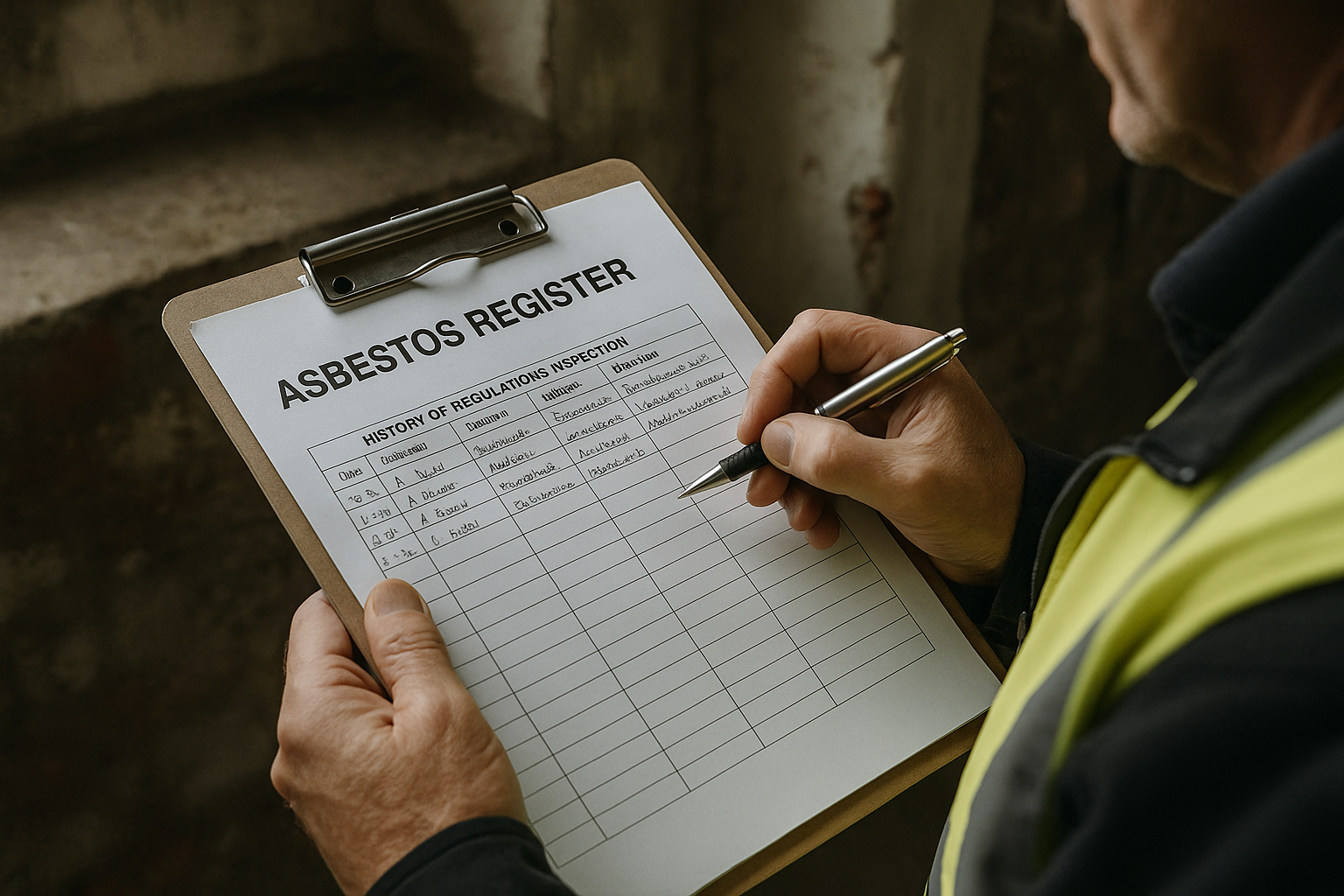
    Mesothelioma symptoms and when concerns should be taken seriously

    Mesothelioma symptoms can be vague at first. They may overlap with other chest conditions, including smoking-related disease, which is one reason the question can smoking cause mesothelioma keeps appearing.

    Common symptoms include:

    • Progressive breathlessness
    • Chest pain
    • Persistent cough
    • Fatigue
    • Unexplained weight loss
    • Recurrent pleural effusions

    These symptoms do not prove mesothelioma. They do mean a person with known or possible asbestos exposure should seek medical assessment without delay.

    For employers and property managers, the right response is not to speculate about diagnosis. It is to review whether there may have been exposure in the workplace or building and make sure records, surveys, and registers are available.

    Why this matters for property managers and dutyholders

    For those managing non-domestic premises, the question can smoking cause mesothelioma often appears during wider conversations about liability, contractor safety, and historic exposure. The immediate task is not to debate old habits. It is to control present-day asbestos risk properly.

    Under the Control of Asbestos Regulations, those responsible for non-domestic premises must identify whether asbestos is present, assess the risk, and ensure information is provided to anyone liable to disturb it. Survey work should be carried out in line with HSG264 and relevant HSE guidance.

    In practical terms, that means:

    • Knowing what asbestos-containing materials are present
    • Understanding their condition and risk of disturbance
    • Keeping an up-to-date asbestos register
    • Sharing relevant information with staff and contractors
    • Reviewing survey needs before maintenance, refurbishment, or demolition

    If asbestos-containing materials are in good condition and unlikely to be disturbed, they may often be managed in place. If works are planned that could affect them, you need the correct survey and control measures before anyone starts.

    When to arrange an asbestos survey

    You should consider an asbestos survey whenever there is uncertainty about the building fabric and planned work could disturb materials. This applies across offices, schools, retail units, warehouses, industrial sites, and public buildings.

    Typical triggers include:

    • You manage an older commercial or public building
    • Maintenance teams may drill, cut, or access hidden voids
    • Refurbishment works are planned
    • Tenant fit-out works could disturb the fabric of the building
    • There is incomplete or outdated asbestos information
    • Demolition is proposed

    If you need support in the capital, arranging an asbestos survey London service before works begin can reduce the risk of accidental disturbance.

    For sites in the North West, booking an asbestos survey Manchester visit can help identify suspect materials early and give contractors clear information.

    And for properties in the Midlands, an asbestos survey Birmingham inspection can give dutyholders a much firmer basis for planning safe works.

    Common scenarios where this question comes up

    The question can smoking cause mesothelioma usually appears in a few familiar situations. Knowing how to respond can help you handle concerns more confidently and avoid dangerous assumptions.

    A former tradesperson becomes unwell

    If someone worked in construction, insulation, plant maintenance, shipyards, demolition, or heavy industry, asbestos exposure should be considered even if they were also a smoker. Smoking history should not distract from investigating likely contact with asbestos materials.

    A tenant or employee worries about past building work

    If refurbishment was carried out without clear asbestos information, the next step is to review records, identify what materials were disturbed, and seek competent advice. Guesswork is not enough where asbestos may be involved.

    A manager assumes smoking explains respiratory illness

    That is a risky assumption. Smoking may explain some disease, but it does not explain mesothelioma. If there is any realistic possibility of historic asbestos exposure, it must be taken seriously.

    A contractor finds suspect material on site

    Work should stop in the affected area until the material is assessed properly. The priority is to prevent disturbance, restrict access, and obtain competent asbestos advice.

    Actionable advice if you are managing asbestos risk now

    Whether anyone on site smokes is separate from your legal duty to manage asbestos. If you oversee estates, maintenance, compliance, or health and safety, the following steps will put you in a stronger position.

    1. Check whether an asbestos survey already exists. Make sure it is suitable for the type of work being planned.
    2. Review the asbestos register. Confirm it is current, accessible, and understood by those who need it.
    3. Do not rely on assumptions. Older materials should be treated cautiously until properly identified.
    4. Match the survey to the job. A management survey and a refurbishment or demolition survey are not interchangeable.
    5. Brief contractors properly. Anyone likely to disturb the building fabric should have relevant asbestos information before starting.
    6. Stop work if suspect materials are found. Isolate the area and seek competent advice before proceeding.
    7. Keep records organised. Survey reports, plans, sampling results, and remedial actions should be easy to retrieve.
    8. Train the right people. Staff who may encounter asbestos should understand what to do if they find suspect materials.

    These steps reduce exposure risk in the real world. They matter far more than trying to infer disease causes from smoking history alone.

    What to remember

    If you only take one point away, make it this: can smoking cause mesothelioma? No. Mesothelioma is associated with asbestos exposure.

    Smoking is still extremely relevant because it causes other serious respiratory disease and greatly increases the risk of lung cancer, including in people who have also been exposed to asbestos. But it is not the cause of mesothelioma.

    For property managers and dutyholders, the practical priority is straightforward:

    • Identify asbestos-containing materials
    • Assess their condition and risk
    • Use the correct survey for the planned work
    • Share information with anyone who may disturb building fabric
    • Follow the Control of Asbestos Regulations, HSG264, and HSE guidance

    If you need clear, competent asbestos advice, Supernova Asbestos Surveys can help. We carry out surveys nationwide for commercial, public, and residential property portfolios. Call 020 4586 0680 or visit asbestos-surveys.org.uk to arrange the right survey before work starts.

    Frequently Asked Questions

    Can smoking cause mesothelioma?

    No. Smoking does not cause mesothelioma. Mesothelioma is associated with asbestos exposure, usually after fibres are inhaled and affect the lining around the lungs.

    Does smoking make asbestos exposure more dangerous?

    Yes. Smoking can greatly increase the risk of lung cancer in people exposed to asbestos and can worsen overall respiratory health. It does not, however, cause mesothelioma.

    Can smoking cause asbestosis?

    No. Asbestosis is caused by substantial inhalation of asbestos fibres. Smoking can worsen symptoms and reduce lung function further, but it is not the cause of asbestosis.

    What should I do if I manage an older building and asbestos may be present?

    Check whether you have a current asbestos survey and register, review the condition of any known asbestos-containing materials, and make sure contractors have the information they need before starting work. If the information is missing or unsuitable, arrange the correct survey.

    When do I need a management survey instead of a demolition survey?

    A management survey is used to locate asbestos-containing materials that could be disturbed during normal occupation or routine maintenance. A demolition survey is required before a building is demolished, as it is designed to identify asbestos in areas that will be disturbed by that work.