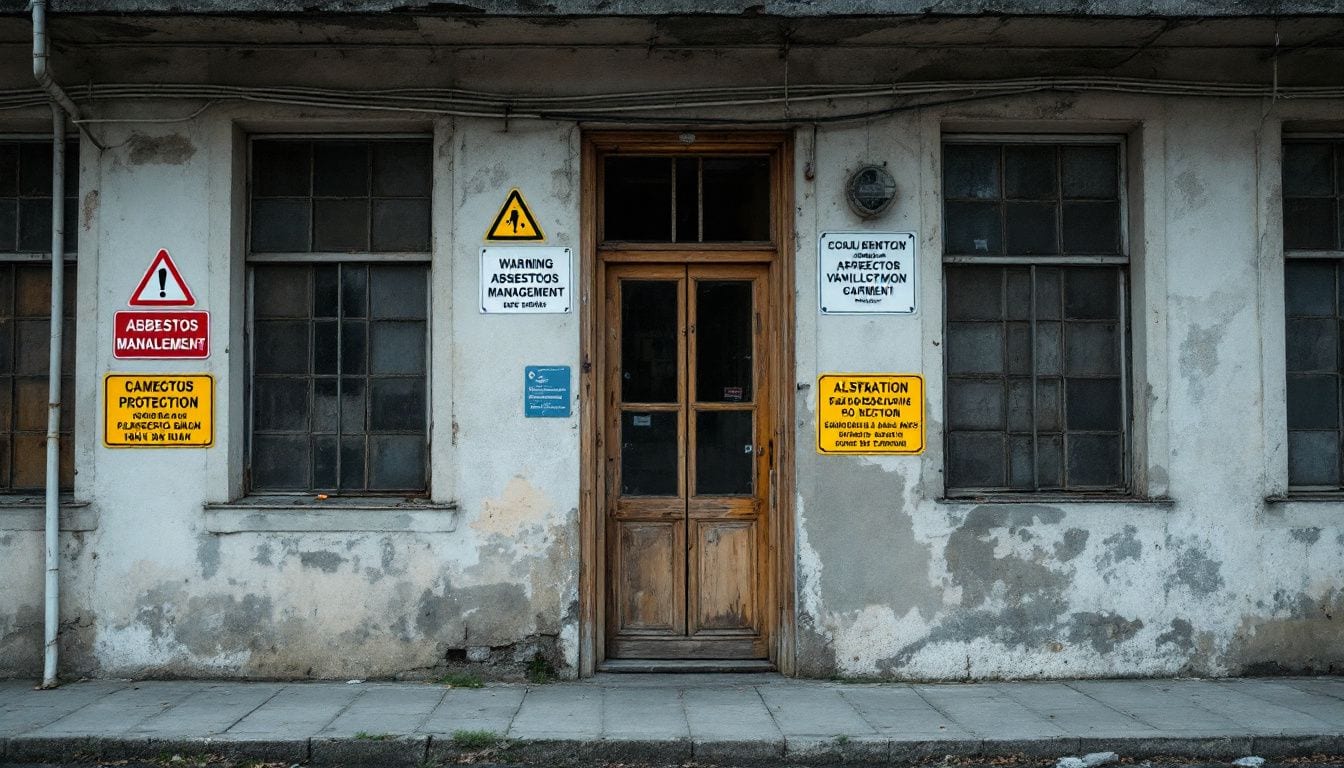
How the UK Stacks Up Against the World on Asbestos Management
Asbestos kills more people in the UK each year than road accidents. That single fact explains precisely why lessons from other countries comparing the UK’s approach to asbestos management matter — not just to policymakers, but to every property owner, facilities manager, and contractor working with older buildings today.
The UK’s regulatory framework is genuinely one of the most developed in the world. But that doesn’t mean there’s nothing left to learn. Looking outward at how other nations handle this persistent hazard reveals both the genuine strengths of the British system and the gaps that still need closing.
The UK’s Asbestos Framework: Where It Stands Today
Britain banned all forms of asbestos in 1999 — one of the earliest comprehensive bans among major economies. The Health and Safety Executive (HSE) enforces compliance through the Control of Asbestos Regulations, which set out clear duties for those who manage non-domestic premises.
The regulatory backbone is supported by HSG264, the HSE’s technical guidance document on asbestos surveys. This document defines the principal survey types used across the country:
- Management survey — used during normal building occupation to locate and assess asbestos-containing materials (ACMs)
- Demolition survey — required before any intrusive refurbishment or demolition work begins
- Re-inspection survey — periodic checks to monitor the condition of known ACMs
Duty holders are legally required to manage asbestos in their premises, maintain an asbestos register, and ensure that anyone working on the building is aware of any known or presumed ACMs. It’s a system built on information sharing and ongoing vigilance rather than a one-off tick-box exercise.
Asbestos-related diseases still claim thousands of lives in the UK every year. The legacy of heavy industrial use — shipbuilding, construction, insulation manufacturing — means the problem is far from historical. Millions of buildings constructed before 2000 still contain asbestos in some form.
The United States: Regulatory Gaps That Cost Lives
The contrast with the United States is stark. Despite being a global economic powerhouse, the US has never achieved a full asbestos ban. The Environmental Protection Agency attempted a comprehensive ban in 1989, but a federal court ruling largely overturned it two years later.
What remains is a patchwork of regulations that prohibit certain uses of asbestos but leave significant gaps. Chrysotile (white asbestos) can still be legally imported and used in specific applications — a situation that would be unthinkable under UK or EU law.
Enforcement is fragmented across multiple federal and state agencies, creating serious inconsistency. Workers in states with weaker oversight face meaningfully higher risks than those in states with stricter regimes. The UK’s centralised HSE model, with uniform national standards, is a clear structural advantage here.
The lesson is straightforward: a centralised regulatory body with genuine enforcement powers matters enormously. Fragmented oversight creates the conditions for chronic non-compliance.
The European Union: Strict Bans and Advanced Detection
The EU banned all forms of asbestos across member states, aligning with the UK’s position both before and after Brexit. EU-OSHA, the European Agency for Safety and Health at Work, has invested significantly in developing and promoting advanced asbestos detection technologies — including X-ray fluorescence (XRF) analysers and fibre identification tools that go beyond traditional polarised light microscopy.
Several EU countries have also pioneered national asbestos registers — centralised databases recording the location and condition of ACMs in public buildings. Finland, the Netherlands, and France have all made significant progress in this area. The UK has no equivalent national register, relying instead on individual duty holders to maintain their own records.
This is arguably the most transferable lesson for the UK: a centralised, publicly accessible database of asbestos in public buildings would reduce exposure risk, improve contractor safety briefings, and make enforcement more targeted.
What the EU’s Enforcement Model Shows
Financial penalties for non-compliance within EU member states vary significantly by jurisdiction and severity. This financial deterrent, combined with proactive enforcement, drives higher compliance rates across the bloc.
The principle — that meaningful penalties change behaviour — is one the UK’s own enforcement approach already reflects, though there remains room to increase the consistency of prosecution.
Australia: Survey Innovation and Cross-Border Collaboration
Australia has one of the highest per-capita rates of mesothelioma in the world — a direct consequence of its asbestos-heavy construction industry in the mid-twentieth century. This grim legacy has driven some of the most innovative asbestos management thinking globally.
The UK-Australia Asbestos Safety Partnership brought together survey professionals from both countries to share methodology, harmonise risk assessment approaches, and trial emerging technologies — including robotics for remote asbestos inspection in confined or high-risk spaces. Robotic survey tools reduce exposure risk to human surveyors and can access areas that would otherwise require extensive protective measures.
Australia’s Dedicated Regulatory Body
Australia’s national Asbestos Safety and Eradication Agency provides a model of dedicated, single-purpose regulatory oversight. It focuses exclusively on asbestos — unlike the HSE, which covers the full spectrum of workplace health and safety.
There’s a reasonable argument that a specialist body brings sharper focus. The counterargument is that asbestos risk rarely exists in isolation from other site hazards, and a broader remit allows for integrated risk management. Both perspectives have merit, and the debate is worth having in the UK context.
Canada: Monitoring Technology and Digital Record-Keeping
Canada’s asbestos history is complex. The country was one of the world’s largest asbestos exporters until relatively recently, and domestic regulation lagged behind the UK for many years. Canada has since banned asbestos and moved quickly to build a more robust management framework.
The Anglo-Canadian Asbestos Monitoring Initiative brought together technical expertise from both nations to develop shared monitoring protocols using XRF analysers and real-time fibre counting technology. These tools allow surveyors to obtain faster, more accurate readings on-site rather than waiting for laboratory analysis — reducing the window of uncertainty during which workers might be inadvertently exposed.
Integrating Asbestos Data with Building Information Modelling
Canada has also invested in digital record-keeping systems that integrate asbestos data with building information modelling (BIM) platforms. For large commercial or public sector estates, this means asbestos information is embedded in the building’s digital record from the outset, rather than existing as a separate paper document that can be lost or overlooked.
This approach has direct practical relevance for UK property managers overseeing large or complex portfolios. The technology exists — the question is whether the industry adopts it consistently. For those requiring asbestos removal as part of a wider building programme, having this data integrated digitally from the start reduces delays and improves planning accuracy significantly.
China and India: The Challenge of Enforcement at Scale
China and India represent a different category of challenge: countries where regulatory frameworks exist on paper but enforcement remains inconsistent or weak in practice.
China has banned blue (crocidolite) and brown (amosite) asbestos — the most acutely dangerous forms — but continues to permit the use of white asbestos (chrysotile) in rural and industrial applications. Enforcement varies significantly between provinces, and the scale of the construction sector makes comprehensive oversight extremely difficult.
India introduced an asbestos ban but implementation has been slow. Asbestos cement products continue to be manufactured and used, particularly in low-cost housing and agricultural buildings. Regulatory capacity at the local level is limited, and awareness among workers and building owners remains low.
The lesson for the UK is not complacency — it’s about the importance of sustained public awareness alongside regulation. Rules without awareness don’t protect people. The HSE’s ongoing public guidance, combined with professional training requirements for licensed asbestos removal contractors, reflects an understanding that compliance requires both legal compulsion and informed decision-making.
International Initiatives Shaping Best Practice
Several multilateral initiatives have directly influenced how the UK approaches asbestos management, and they’re worth understanding in detail.
Tri-National Asbestos Waste Management Initiative
Drawing on practices from France and Germany, this initiative focused specifically on asbestos waste — how it’s packaged, transported, and safely processed. Both France and Germany have developed recycling methods that convert certain asbestos-containing materials into inert compounds through high-temperature treatment, reducing the volume of hazardous landfill waste.
The UK has been exploring similar approaches, though widespread adoption remains limited by infrastructure and cost. As those constraints ease, this is an area where the UK could meaningfully reduce its environmental impact from asbestos disposal.
UK-Netherlands Asbestos Training Exchange
The Netherlands has historically had some of Europe’s most rigorous asbestos containment protocols, developed partly in response to the high density of older industrial buildings in Dutch cities. The UK-Netherlands Training Exchange brought together survey professionals and safety officers to share containment techniques and refine risk assessment methodologies.
Practical knowledge transfer of this kind is often more immediately impactful than regulatory change alone. When experienced professionals share real-world techniques, the benefits reach the workplace faster than any legislative update.
What the UK Does Better Than Most
It’s easy to focus on gaps, but the UK genuinely leads in several areas that other countries are still working to replicate:
- Duty to manage — The legal requirement for duty holders to actively manage asbestos, rather than simply avoid disturbing it, is more proactive than most comparable regimes worldwide.
- Licensed contractor system — The HSE’s licensing regime for high-risk asbestos work creates a traceable, accountable workforce. Not every country has an equivalent.
- Survey methodology — HSG264 provides one of the most detailed and practically useful survey frameworks in the world. Many countries lack equivalent technical guidance.
- Awareness in the construction sector — Asbestos awareness training is embedded in construction industry induction programmes in a way that has no direct parallel in many comparable economies.
- Comprehensive ban — Banning all forms of asbestos in 1999 placed the UK ahead of many nations that still permit chrysotile use today.
Where the UK Still Has Ground to Cover
Acknowledging strengths doesn’t mean ignoring weaknesses. The international comparison reveals several areas where the UK could meaningfully raise its game.
No National Asbestos Register
The absence of a centralised, publicly accessible database of ACMs in public buildings is a genuine gap. Individual duty holders maintaining separate records creates fragmentation — exactly the kind of information silo that leads to contractors working blind.
Countries like Finland and France have demonstrated that national registers are achievable and operationally valuable. The UK has the regulatory infrastructure to support such a system. What’s missing is the political will to mandate it.
Slow Adoption of Detection Technology
XRF analysers and real-time fibre counting tools are in use in Australia, Canada, and several EU member states. UK adoption has been gradual. Faster, more accurate on-site detection reduces the risk window and improves survey quality — both outcomes that benefit duty holders and workers alike.
Survey professionals across the UK — whether conducting an asbestos survey in London, an asbestos survey in Manchester, or an asbestos survey in Birmingham — would benefit from wider industry adoption of these technologies as standard practice.
Asbestos Waste Disposal
The UK’s approach to asbestos waste disposal remains largely reliant on licensed landfill. The high-temperature treatment methods pioneered in France and Germany offer a more sustainable alternative. Scaling those methods in the UK would require investment, but the long-term environmental benefit is clear.
Digital Integration
The integration of asbestos data with BIM platforms, as developed in Canada, remains patchy in the UK. For large estates and public sector property portfolios, this represents a missed opportunity to embed safety information at the core of building management rather than treating it as a separate administrative function.
What This Means for UK Property Managers and Duty Holders
Understanding where the UK sits in the global picture isn’t just an academic exercise. It has direct practical implications for anyone responsible for managing asbestos in a building.
The international evidence reinforces several principles that should already be driving decisions at a property level:
- Don’t treat surveys as a one-off event. Countries with the strongest outcomes treat asbestos management as a continuous process — surveying, monitoring, re-inspecting, and updating records over time.
- Invest in quality survey work. The difference between a thorough, well-documented survey and a superficial one is the difference between genuine risk control and false reassurance.
- Keep records in good order. The international push towards centralised registers reflects the fundamental importance of accessible, accurate information. Even without a national register, your own records should be maintained to the same standard.
- Use licensed professionals for removal. The UK’s licensed contractor system exists for good reason. When ACMs need to be disturbed or removed, cutting corners on who does the work is not a risk worth taking.
- Stay current with guidance. HSE guidance evolves. International best practice feeds into that evolution. Staying informed means staying compliant.
The global picture makes one thing clear: the countries that protect people most effectively are those that treat asbestos management as a living, ongoing commitment — not a box to tick once and forget.
Frequently Asked Questions
How does the UK’s asbestos ban compare to other countries?
The UK banned all forms of asbestos in 1999, making it one of the earliest major economies to achieve a comprehensive ban. By contrast, the United States has never implemented a full ban, and countries including China and India still permit the use of chrysotile (white asbestos) in certain applications. The UK’s position aligns with EU member states, which also operate under a full ban.
What is the Control of Asbestos Regulations and who does it apply to?
The Control of Asbestos Regulations is the primary UK legislation governing asbestos management. It applies to duty holders — typically those who own, occupy, or are responsible for non-domestic premises. It requires them to identify asbestos-containing materials, assess the risk they pose, and put a management plan in place to control that risk. Failure to comply can result in prosecution and significant penalties.
Why does the UK not have a national asbestos register?
Currently, the UK relies on individual duty holders to maintain their own asbestos records rather than contributing to a centralised national database. Countries including Finland, France, and the Netherlands have developed national registers for public buildings, which improve contractor safety and support more targeted enforcement. There is growing discussion in the UK about whether a similar system should be introduced, but no legislative requirement currently exists.
What survey types are required under HSG264?
HSG264, the HSE’s technical guidance on asbestos surveys, defines three principal survey types. A management survey is used during normal building occupation to locate and assess ACMs. A demolition survey is required before any intrusive refurbishment or demolition work. A re-inspection survey is carried out periodically to monitor the condition of known ACMs and update the asbestos register accordingly.
How can emerging technology improve asbestos surveying in the UK?
Technologies including X-ray fluorescence (XRF) analysers and real-time fibre counting tools are already in use in Australia, Canada, and several EU countries. These allow surveyors to obtain faster, more accurate results on-site rather than relying solely on laboratory analysis. Robotic inspection tools can also access confined or high-risk spaces with reduced exposure to surveyors. Wider adoption of these technologies in the UK would improve survey accuracy and reduce the time workers spend in areas of potential risk.
Work With Surveyors Who Understand the Full Picture
Supernova Asbestos Surveys has completed over 50,000 surveys across the UK, working with property managers, facilities teams, local authorities, and contractors to deliver surveys that meet the full requirements of the Control of Asbestos Regulations and HSG264.
Whether you need a management survey for an occupied building, a demolition survey ahead of refurbishment work, or ongoing re-inspection services to keep your asbestos register current, our team of qualified surveyors operates to the highest professional standards — informed by best practice from across the industry, including the international developments covered in this post.
Call us on 020 4586 0680 or visit asbestos-surveys.org.uk to discuss your requirements with our team.