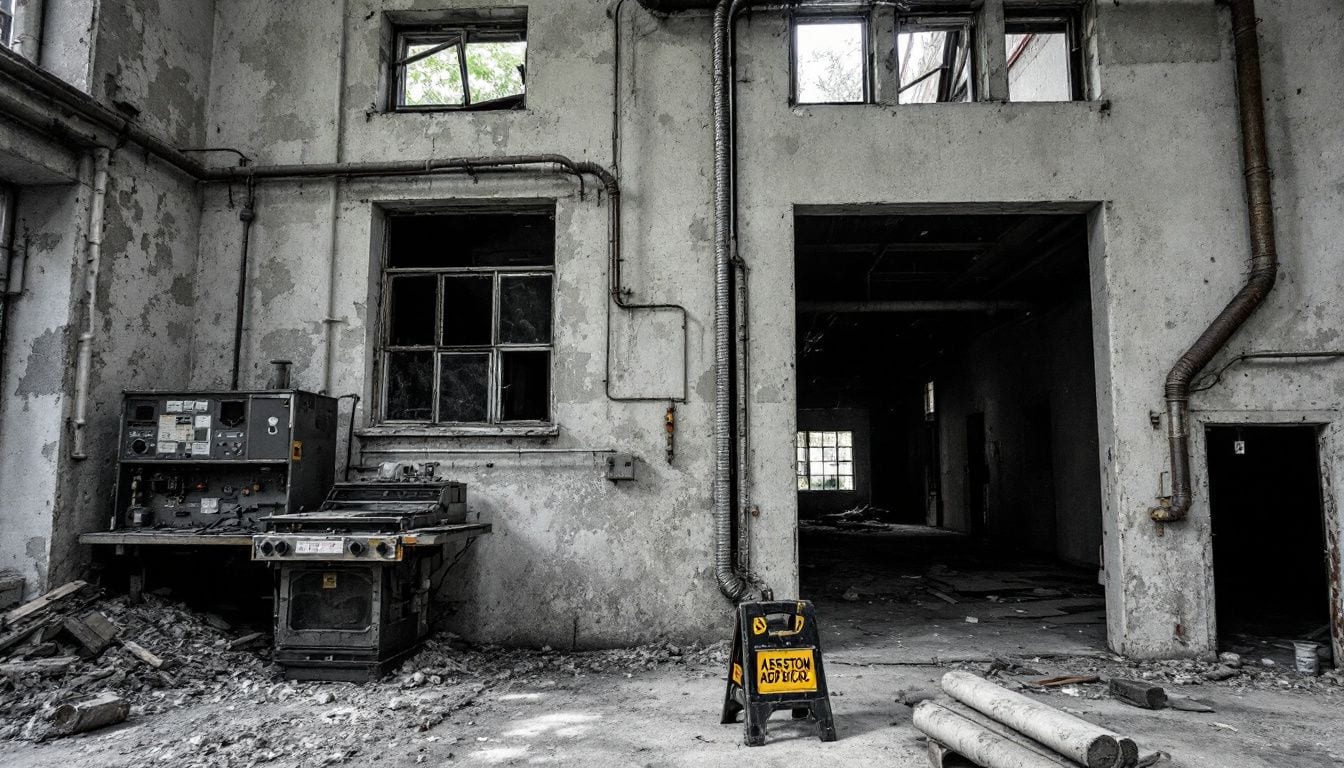
Why Asbestos Remains the UK’s Deadliest Workplace Hazard
The impact on workers’ health and safety concerns surrounding asbestos in the UK is not a historical footnote — it is an active, ongoing crisis that claims thousands of lives every year. Asbestos is still present in a vast number of buildings constructed before 2000, and every time those buildings are disturbed without proper management, workers are placed in serious danger.
Whether you manage a commercial property, run a construction programme, or work in a trade that regularly takes you into older buildings, understanding the health consequences, the legal framework, and the practical steps required to protect workers is fundamental. This is not optional knowledge — it is a legal and moral obligation.
The Health Risks of Asbestos Exposure
Asbestos fibres are microscopic. When asbestos-containing materials (ACMs) are disturbed — by drilling, cutting, sanding, or even just knocking a wall — those fibres become airborne and can be inhaled without the person ever realising it. Once embedded in lung tissue or the lining of the chest cavity, the body cannot expel them. The damage is irreversible.
Diseases caused by asbestos exposure typically take 20 to 40 years to develop, which is one of the key reasons the death toll remains so high today. Many of those dying now were exposed during work carried out in the 1970s and 1980s. Prevention, not treatment, is the only realistic strategy.
Mesothelioma
Mesothelioma is an aggressive cancer that attacks the lining of the lungs, abdomen, or heart. It is almost exclusively caused by asbestos exposure and has no cure. Median survival after diagnosis is typically measured in months, not years.
The UK has one of the highest rates of mesothelioma in the world — a direct consequence of the country’s industrial heritage. The widespread use of asbestos in shipbuilding, construction, and manufacturing throughout the twentieth century has left a devastating legacy that continues to unfold decades later.
Asbestosis
Asbestosis is a chronic scarring of the lung tissue caused by prolonged asbestos inhalation. It causes progressive breathlessness, chest tightness, and a persistent cough. Symptoms typically emerge decades after initial exposure and worsen steadily over time.
There is no treatment that reverses the scarring. Management focuses on slowing progression and improving quality of life, but asbestosis significantly shortens life expectancy and can leave workers unable to continue employment long before retirement age.
Lung Cancer
Asbestos exposure substantially increases the risk of lung cancer, and the risk is compounded dramatically for those who also smoke. Workers exposed to asbestos who smoke face a risk of lung cancer that is many times higher than either factor alone — making occupational asbestos exposure particularly dangerous for tradespeople who smoke.
Pleural Diseases
Pleural plaques, pleural thickening, and pleural effusions are conditions affecting the membrane surrounding the lungs. While pleural plaques themselves are not cancerous, their presence confirms significant past asbestos exposure and is associated with an increased risk of more serious disease.
Diffuse pleural thickening can cause severe breathlessness and disability, significantly affecting a worker’s ability to remain in employment and having a profound impact on overall quality of life.
The Scale of the Problem in the UK
The impact on workers’ health and safety concerns surrounding asbestos in the UK becomes stark when you examine the numbers. Asbestos-related disease is the single largest cause of work-related deaths in Great Britain. The HSE publishes annual statistics on mesothelioma deaths and asbestos-related lung cancer, and the figures remain stubbornly high despite asbestos having been banned from new use for over two decades.
The reason is straightforward: asbestos is still present in an enormous number of buildings constructed before 2000, and it will remain so for many decades to come. An estimated 1.5 million non-domestic buildings in the UK are thought to contain ACMs. Every time those buildings are refurbished, maintained, or demolished without proper management, workers are placed at risk.
The problem is not confined to large industrial sites. It exists in schools, hospitals, offices, residential blocks, and retail units across the country — including in major cities. If you need an asbestos survey London professionals can rely on, or an asbestos survey Manchester or asbestos survey Birmingham property owners trust, getting the right survey in place is the essential first step.
High-Risk Occupations for Asbestos Exposure
While anyone working in a building that contains asbestos could potentially be exposed, certain occupations carry significantly higher risk due to the nature of the work involved. The impact on workers’ health and safety concerns surrounding asbestos in the UK is felt most acutely in these trades and sectors.
Construction and Maintenance Workers
Builders, plumbers, electricians, carpenters, and general maintenance workers are among the most at-risk groups. Their work routinely involves drilling, cutting, sanding, or otherwise disturbing building materials — precisely the activities most likely to release asbestos fibres into the air.
Many of these workers move between multiple sites and properties, increasing both the frequency and variety of their potential exposure. The cumulative risk over a full career can be substantial, and many workers remain unaware of the danger until it is far too late.
Firefighters
Firefighters attending incidents in older buildings face a dual exposure risk. The fire itself may release asbestos fibres from burning or damaged materials, and salvage and investigation work in the aftermath can disturb ACMs that remain in place. Respiratory protection during and after incidents is critical.
Shipyard Workers
Asbestos was used extensively in shipbuilding for insulation, fireproofing, and pipe lagging. Workers in shipyards — and those involved in ship repair and decommissioning — historically faced some of the highest levels of occupational asbestos exposure.
The legacy of this exposure continues to manifest in elevated rates of mesothelioma among former shipyard workers and, in some cases, their families through secondary exposure.
Power Plant and Industrial Workers
Asbestos was commonly used in power stations, refineries, and heavy industrial facilities for its heat-resistant properties. Workers in these environments may encounter asbestos in pipe lagging, boiler insulation, gaskets, and ceiling tiles. Long-term exposure in these settings has been associated with significant lung function impairment.
Teachers and School Staff
A less obvious but very real risk group, school staff — particularly those working in older buildings — may be exposed to deteriorating asbestos in ceiling tiles, floor tiles, and pipe insulation. The HSE has specific guidance for managing asbestos in schools, and duty holders must take this seriously. Asbestos in educational settings affects a significant number of buildings across the country.
The Legal Framework: What Duty Holders Must Know
The legal framework governing asbestos in the UK is robust and places clear duties on both employers and property managers. Ignorance of the law is not a defence, and the consequences of non-compliance — both human and legal — are severe.
The Control of Asbestos Regulations
The Control of Asbestos Regulations are the primary legislation governing work with asbestos in Great Britain. They set out licensing requirements for higher-risk work, notification duties, and the obligation to protect workers and others from exposure. The regulations establish a legal exposure limit of 0.1 fibres per cubic centimetre of air, and any work that risks exceeding this must be carried out under strict controls.
Regulation 4 — the Duty to Manage — requires owners and managers of non-domestic premises to identify ACMs, assess their condition and risk, and maintain an up-to-date asbestos register. This duty applies regardless of whether any work is planned, and it is not optional.
HSG264 — The Survey Guide
HSG264 is the HSE’s definitive guidance on conducting asbestos surveys. It sets out the methodology for management surveys and refurbishment and demolition surveys, and specifies the qualifications required of surveyors. Any survey not conducted in accordance with HSG264 is unlikely to be legally defensible and may leave duty holders exposed to enforcement action.
The Health and Safety at Work Act
The Health and Safety at Work Act places a general duty on employers to ensure, so far as is reasonably practicable, the health, safety, and welfare of their employees. This encompasses the duty to protect workers from asbestos exposure through risk assessment, safe systems of work, and appropriate training.
Reporting and Notification Requirements
Asbestos-related diseases are reportable under RIDDOR — the Reporting of Injuries, Diseases and Dangerous Occurrences Regulations. Employers must report cases of asbestosis, mesothelioma, and other asbestos-related conditions diagnosed in workers. Certain notifiable asbestos work must also be reported to the relevant enforcing authority before work begins.
Asbestos Prohibitions
The use of asbestos in new products has been prohibited in the UK for many years. White asbestos (chrysotile) — the last type to remain in use — was banned from new applications in 1999. The prohibition on new use does not, of course, remove the asbestos already present in existing buildings. That is the challenge that duty holders, employers, and workers continue to face every day.
Practical Steps to Protect Workers from Asbestos
Compliance with the law is the minimum standard. Good asbestos management goes further, embedding a culture of awareness and vigilance that protects workers before, during, and after any work that might involve ACMs.
Commission the Right Survey Before Any Work Begins
Before any refurbishment, maintenance, or demolition work, the duty holder must know what asbestos is present, where it is, and what condition it is in. An management survey establishes the baseline — identifying ACMs in their normal in-use condition and assessing the risk they pose to anyone working in or around the building.
For any intrusive work, a refurbishment survey is required. This involves a more invasive inspection of the areas to be disturbed and must be completed before work starts. Where a building is being demolished in full, a demolition survey is required to locate all ACMs — including those in inaccessible areas — before any structural work begins.
Never assume a building is asbestos-free because it looks modern or well-maintained. Many ACMs are concealed within wall cavities, floor voids, and above suspended ceilings.
Maintain and Update the Asbestos Register
An asbestos register is only useful if it is kept current. ACMs degrade over time, and their risk rating may change as a result. A re-inspection survey should be carried out at regular intervals — typically annually — to reassess the condition of known ACMs and update the register accordingly.
The register must be made available to anyone who might disturb ACMs, including contractors, maintenance workers, and emergency services. Failing to share this information with workers is not just a legal failing — it can be fatal.
Provide Adequate Training
Anyone who might come into contact with asbestos during their work must receive appropriate training. This includes not only those carrying out licensed or notifiable work, but also tradespeople, maintenance staff, and supervisors who need to be able to recognise ACMs and understand what to do if they suspect they have found one.
Training should be refreshed regularly and documented. It is not a one-off exercise. A training record that lapses is not evidence of compliance — it is evidence of complacency.
Use Competent, Accredited Surveyors
Not all asbestos surveys are equal. The survey is only as good as the surveyor conducting it, and HSG264 is explicit about the competence required. Surveyors should hold appropriate qualifications and work for a UKAS-accredited organisation. Using an unqualified or unaccredited provider may invalidate your survey entirely — leaving you legally exposed and your workers unprotected.
When selecting a surveying company, ask for evidence of accreditation, check that their methodology aligns with HSG264, and ensure their reports are clear, complete, and fit for purpose.
Implement a Robust Asbestos Management Plan
For duty holders managing non-domestic premises, having an asbestos register is not enough on its own. The Control of Asbestos Regulations require a written asbestos management plan that sets out how identified ACMs will be managed, monitored, and — where necessary — remediated. The plan must be reviewed regularly and kept up to date as circumstances change.
The plan should specify who is responsible for asbestos management, how information will be communicated to workers and contractors, and what action will be taken if ACMs deteriorate or are accidentally disturbed.
Establish a Clear Procedure for Accidental Disturbance
Despite best efforts, ACMs are sometimes disturbed unexpectedly. Every organisation working in or managing older buildings should have a clear, documented procedure for what happens when this occurs. That procedure should include:
- Stopping work immediately and isolating the area
- Preventing others from entering the affected zone
- Notifying the duty holder and seeking specialist advice
- Arranging air testing and, where necessary, decontamination
- Reporting the incident in accordance with RIDDOR where required
Workers should know this procedure before they begin work on site — not after an incident has already occurred.
The Human Cost: Why This Cannot Be Treated as a Compliance Exercise
The impact on workers’ health and safety concerns surrounding asbestos in the UK is, ultimately, a human story. Behind every statistic is a worker who went to work, did their job, and unknowingly inhaled fibres that would eventually kill them. Many of those workers had no idea of the risk they were taking. Some were never told. Others were told and not given the means to protect themselves.
The families left behind — spouses, children, siblings — often carry the burden of that loss for decades. In some cases, family members developed asbestos-related disease themselves through secondary exposure, having simply washed a worker’s contaminated clothing or been present when they came home from a shift.
Treating asbestos management as a box-ticking exercise is not just legally reckless — it is morally indefensible. The tools, the guidance, and the expertise exist to manage this risk effectively. There is no acceptable justification for failing to use them.
What Good Asbestos Management Actually Looks Like in Practice
Good asbestos management is not complicated, but it does require commitment and consistency. In practical terms, it means:
- Having a current, HSG264-compliant survey in place for every non-domestic building you manage
- Maintaining an up-to-date asbestos register and sharing it with everyone who needs it
- Ensuring all contractors are briefed on the presence of ACMs before starting any work
- Conducting annual re-inspections and updating the management plan accordingly
- Providing documented asbestos awareness training to all relevant workers
- Using only UKAS-accredited surveyors and licensed contractors for higher-risk work
- Reviewing your asbestos management plan whenever there is a change in the use of the building or the condition of known ACMs
None of these steps is optional. All of them are achievable. And all of them can be the difference between a worker going home at the end of their career and a family attending a funeral far too soon.
Frequently Asked Questions
Who is responsible for managing asbestos in a workplace?
The duty to manage asbestos falls on the person or organisation responsible for maintaining and repairing non-domestic premises — typically the owner, landlord, or managing agent. Under Regulation 4 of the Control of Asbestos Regulations, this duty holder must identify ACMs, assess the risk they pose, and put in place a written management plan. Employers also have duties under the Health and Safety at Work Act to protect their workers from asbestos exposure, regardless of whether they own the building.
What types of asbestos survey are available and when is each required?
There are three main types of asbestos survey. A management survey is used to identify and assess ACMs in a building under normal use — it is the standard survey required for ongoing duty-to-manage compliance. A refurbishment survey is required before any intrusive work that will disturb the fabric of the building. A demolition survey is required before any full or partial demolition and is the most thorough of the three, requiring access to all areas including those that may be inaccessible during normal occupation.
How often should an asbestos register be updated?
An asbestos register should be reviewed and updated at least annually through a re-inspection survey. The condition of ACMs can deteriorate over time, and the risk rating of materials may change as a result. The register must also be updated whenever new ACMs are discovered, when remedial work is carried out, or when the use of the building changes in a way that affects the risk posed by existing ACMs.
What should a worker do if they think they have disturbed asbestos?
Work should stop immediately and the area should be isolated to prevent others from entering. The duty holder or site manager must be notified straight away, and no attempt should be made to clean up the area without specialist advice. Air testing may be required before the area can be re-entered. The incident may be reportable under RIDDOR depending on the circumstances, and specialist contractors should be engaged to assess and remediate the situation before work resumes.
Is asbestos in a building always dangerous?
Not necessarily. Asbestos-containing materials that are in good condition and are not being disturbed pose a relatively low risk. The danger arises when ACMs are damaged, deteriorating, or disturbed during work — releasing fibres into the air where they can be inhaled. This is why managing ACMs in place, rather than automatically removing them, is often the recommended approach. However, management only works if the condition of ACMs is regularly monitored and the register kept up to date.
Speak to Supernova Asbestos Surveys
Supernova Asbestos Surveys has completed over 50,000 surveys nationwide, working with property managers, employers, contractors, and local authorities to ensure that asbestos is identified, managed, and handled safely. Our surveyors are fully qualified and work in accordance with HSG264 and the Control of Asbestos Regulations.
Whether you need a management survey, a refurbishment or demolition survey, a re-inspection, or simply expert advice on your obligations as a duty holder, our team is ready to help. We operate across the UK, including London, Manchester, Birmingham, and beyond.
Call us on 020 4586 0680 or visit asbestos-surveys.org.uk to arrange a survey or speak to one of our specialists.