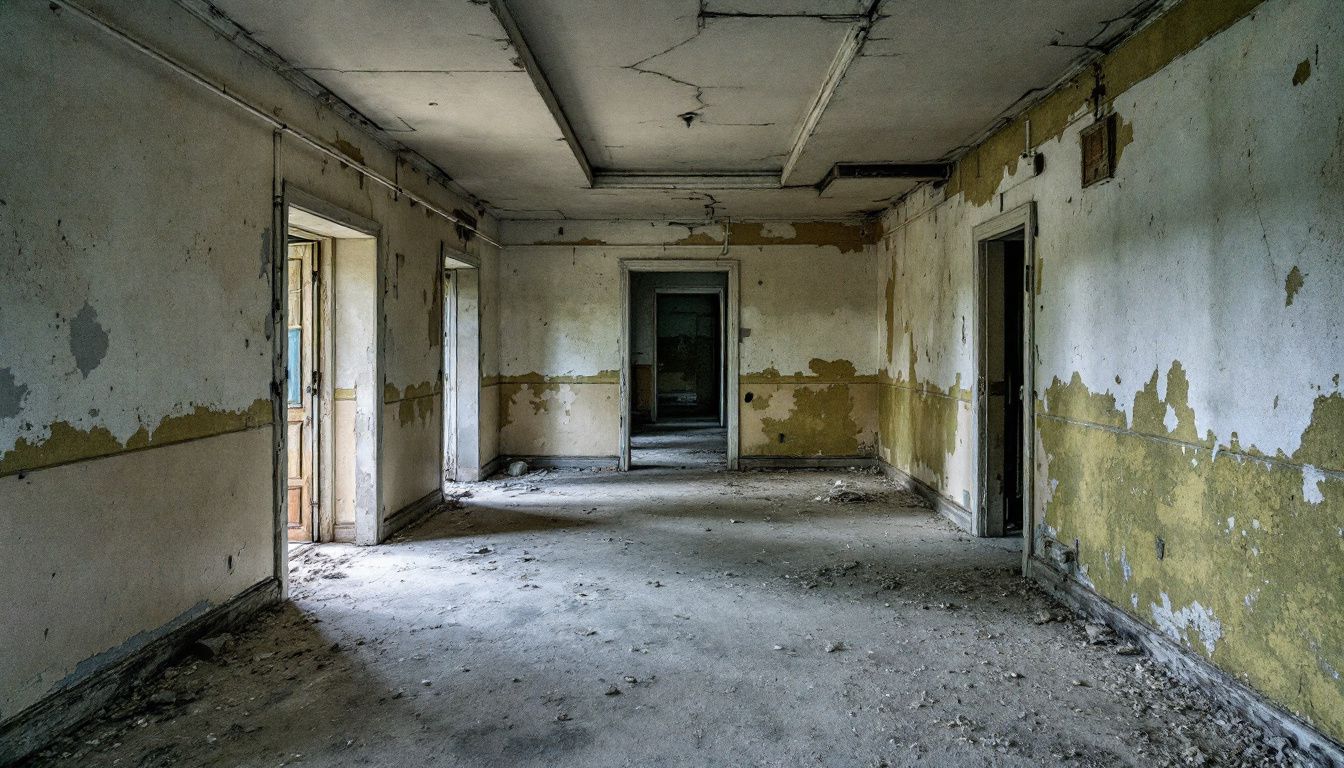
The Silent Killer Still Hiding in Britain’s Buildings
Asbestos kills more people in the UK every year than road accidents. That is not a scare statistic — it is the lived reality of a building material used extensively for decades, now embedded in hundreds of thousands of structures across the country. Fighting silent killer efforts to address asbestos in the UK today remains one of the most pressing public health challenges we face, yet it rarely commands the attention it deserves.
If you own, manage, or work in a building constructed before 2000, this issue affects you directly. Here is what is happening, what the law requires, and what practical steps you can take right now.
The Scale of the Asbestos Problem Across the UK
More than 5,000 people die every year in the UK from asbestos-related diseases. That figure has remained stubbornly high for years, driven largely by the long latency period of conditions like mesothelioma — a cancer of the lung lining that can take 20 to 40 years to develop after initial exposure.
These are not historical figures. They reflect exposure that happened decades ago, which means the consequences of poor asbestos management today will continue to be felt well into the 2040s and beyond. The disease pipeline is already full.
Mesothelioma alone accounts for thousands of deaths annually, and asbestos-related lung cancer adds significantly to that toll. The UK has one of the highest rates of mesothelioma in the world — a direct legacy of the country’s industrial past and the widespread use of asbestos in construction, shipbuilding, and manufacturing.
Where Is Asbestos Still Hiding?
The HSE estimates that between 210,000 and 410,000 non-domestic premises in the UK still contain asbestos-containing materials (ACMs). Any building constructed before 2000 is potentially affected — whether that is a Victorian terrace, a 1970s office block, or a postwar school.
Approximately 80% of UK schools are believed to still contain asbestos in some form. As these buildings age and deteriorate, the risk of fibre release increases. Disturbance during routine maintenance or renovation is one of the most common causes of accidental exposure.
Common locations for ACMs in older buildings include:
- Ceiling tiles and textured coatings such as Artex
- Pipe and boiler lagging
- Insulating board used in partition walls and fire doors
- Roof sheeting and guttering
- Floor tiles and adhesives
- Soffit boards and fascias
- Sprayed coatings on structural steelwork
The problem is that asbestos fibres are invisible to the naked eye. You cannot see them, smell them, or feel them — and by the time the health consequences emerge, the exposure happened long ago.
Fighting Silent Killer Efforts: What the Law Requires
The Control of Asbestos Regulations sets out clear legal duties for anyone who owns or manages a non-domestic building. Regulation 4 — the Duty to Manage — requires dutyholders to identify whether ACMs are present, assess the condition and risk they pose, and put in place a written management plan to control that risk.
This is not optional guidance. Failure to comply can result in significant fines, enforcement notices, and in serious cases, criminal prosecution. The HSE’s guidance document HSG264 sets the standard for how surveys must be conducted, and any survey worth commissioning will be carried out in line with that guidance.
Management Surveys
A management survey is the standard requirement for occupied buildings. It identifies ACMs that could be disturbed during normal occupation and routine maintenance, and it forms the basis of your asbestos management plan.
This is typically the starting point for any dutyholder who does not yet have a current survey in place. Without one, you are operating outside the law and without any clear picture of the risks present in your building.
Refurbishment Surveys
If you are planning any renovation, refurbishment, or demolition work, you will need a refurbishment survey before work begins. This is a more intrusive inspection of the specific areas to be disturbed, and it is a legal requirement under the Control of Asbestos Regulations before any licensed work can take place.
Commissioning this survey after work has started is not compliance — it is an enforcement risk. Contractors who disturb ACMs without prior identification face serious legal consequences, as do the building owners who permitted the work.
Re-Inspection Surveys
Once you have a management plan in place, your obligations do not end there. A re-inspection survey is required at regular intervals — typically annually — to check whether the condition of known ACMs has changed and whether your risk assessment remains valid.
Conditions change, buildings deteriorate, and a static management plan quickly becomes a liability. Annual re-inspections are not a formality; they are the mechanism by which your management plan stays meaningful.
Enforcement and Compliance: Where Things Currently Stand
The HSE has been active in enforcing asbestos regulations across the construction and facilities management sectors. There have been measurable improvements in compliance over the years, and the HSE maintains a strong prosecution record for asbestos-related offences.
However, gaps remain. Research has found that a significant proportion of construction workers had never checked an asbestos register before starting work on a site. That is a failure not always of regulation, but of awareness and workplace culture.
HSE funding has also been squeezed over the years, and the number of licensed asbestos removal inspections has fallen as a result. Fewer inspections mean less deterrence for those tempted to cut corners — and in an industry where the consequences of shortcuts are measured in human lives, that matters enormously.
A persistent minority of construction sites continue to show poor compliance. Given the scale of the UK construction industry, even a small percentage represents a substantial number of sites and workers at risk.
Trade Unions, Campaigners, and the Push for Stronger Action
The campaign to tackle asbestos more aggressively in the UK has gained significant momentum, driven by trade unions, health campaigners, and MPs frustrated with the pace of progress. The TUC and GMB union have both pushed hard for more robust asbestos removal programmes and increased government funding.
Their position is straightforward: managing asbestos in place is not the same as eliminating the risk. The UK’s current approach — which prioritises management over removal — leaves too many workers and building users exposed, particularly in schools, hospitals, and public offices where vulnerable people spend significant time.
The Case for a National Asbestos Register
One of the most significant proposals in recent years has been the creation of a central national asbestos register — a publicly accessible database recording the location and condition of ACMs in buildings such as schools, hospitals, and public offices.
Proponents argue that such a register would dramatically improve transparency, reduce accidental disturbances, and give workers and building users far better information about the risks they face. France has already implemented a long-term asbestos removal plan, and Poland runs a government-backed asbestos abatement programme. The UK is increasingly out of step with comparable European nations on this issue.
Parliamentary Pressure and the Airtight on Asbestos Campaign
MPs have repeatedly raised asbestos in Parliament, with proposals to clear ACMs from all public and commercial buildings within a defined timeframe. The Airtight on Asbestos campaign has called for routine environmental air monitoring in buildings known to contain ACMs, arguing that passive management is insufficient when occupants — including children in schools — are present every day.
The political will is growing. Whether it translates into funded, time-bound removal programmes remains to be seen, but the direction of travel is clear: the UK is moving — however slowly — towards a more proactive approach to asbestos elimination rather than indefinite management in place.
What Building Owners and Managers Should Do Right Now
Whatever the legislative landscape looks like in five or ten years, your obligations as a dutyholder exist today. Waiting for government policy to evolve is not a compliance strategy.
Here is a practical checklist of what you should have in place:
- Conduct a management survey if you do not already have one — this is your legal starting point for any non-domestic building.
- Maintain an up-to-date asbestos register — document all known or presumed ACMs, their location, condition, and risk rating.
- Implement a written management plan — this must explain how ACMs will be monitored and controlled, and who is responsible.
- Schedule regular re-inspections — typically annual, or more frequently if conditions change or the building is heavily used.
- Commission a refurbishment survey before any building work — no exceptions, even for seemingly minor works that could disturb materials.
- Ensure contractors are informed — anyone working on your premises must be told about known ACMs before they start work.
- Arrange licensed removal where required — certain types of asbestos work can only be carried out by HSE-licensed contractors.
If you are unsure whether a material contains asbestos, do not guess and do not disturb it. A testing kit can be used to collect samples from suspect materials for laboratory analysis — a straightforward and cost-effective first step before commissioning a full survey.
When Management Is No Longer Enough: The Case for Removal
Managing asbestos in place is legally acceptable when materials are in good condition and are not likely to be disturbed. But there are situations where removal is the right — or legally required — course of action.
If ACMs are deteriorating, if you are planning significant building works, or if occupancy patterns mean that materials are regularly at risk of disturbance, asbestos removal by a licensed contractor may be the most appropriate solution. Removal eliminates the ongoing management burden and removes the liability from your hands permanently.
It is also worth noting that asbestos surveys and fire safety obligations often go hand in hand in older buildings. Many asbestos-containing materials — particularly insulating board used in fire doors and fire-resistant partitions — are directly relevant to both your asbestos management obligations and your fire safety compliance.
A fire risk assessment carried out alongside your asbestos survey gives you a clearer picture of the overall safety profile of your building, and helps ensure that the materials protecting you from fire are not simultaneously posing a different kind of risk. Addressing both at the same time makes practical and financial sense.
Regional Compliance: The Picture Across the UK
Asbestos is not a problem confined to any one part of the country. The legacy of heavy industry, postwar construction, and widespread commercial development means that ACMs are present in buildings from the Scottish Highlands to the south coast of England.
In major cities, the volume of older commercial and residential stock means that the demand for professional surveying services is particularly high. If you manage property in the capital, an asbestos survey in London carried out by qualified, HSG264-compliant surveyors is essential before any building work or change of use.
In the North West, the industrial heritage of the region means that many commercial and public buildings carry a significant ACM burden. Commissioning an asbestos survey in Manchester from experienced surveyors familiar with the local building stock is a sound first step for any dutyholder in the area.
The Midlands presents a similar picture. An asbestos survey in Birmingham is frequently required by property managers and landlords dealing with the region’s substantial stock of postwar commercial and industrial buildings. In all cases, the principle is the same: know what is in your building before anyone disturbs it.
The Long View: Why This Problem Will Not Resolve Itself
There is a temptation to treat asbestos as a legacy issue — something from the past that is gradually working its way out of the system. That view is dangerously complacent. The materials are still there, in buildings that are still in use, being maintained and occasionally renovated by workers who may not always know what they are dealing with.
The latency period of asbestos-related diseases means that the decisions made today — by building owners, facilities managers, contractors, and regulators — will determine the death toll of the 2040s and 2050s. That is a sobering responsibility, and it is one that the law places squarely on the shoulders of dutyholders.
Fighting silent killer efforts to address asbestos in the UK today is not just a matter of regulatory compliance. It is a matter of protecting the people who use, maintain, and work in buildings every single day. The tools to do that exist. The legal framework is in place. What is required now is consistent, professional, and properly resourced action.
The good news is that the path forward is clear. Commission the right surveys. Maintain your management plan. Act on what the surveys tell you. And when removal is the appropriate course of action, do not delay it.
How Supernova Asbestos Surveys Can Help
Supernova Asbestos Surveys has completed over 50,000 surveys nationwide, working with property managers, landlords, local authorities, schools, and commercial clients across the UK. Our surveyors are fully qualified and work in strict accordance with HSG264, delivering clear, actionable reports that give you everything you need to meet your legal obligations.
Whether you need a management survey for an occupied building, a refurbishment survey ahead of planned works, annual re-inspections to keep your management plan current, or guidance on licensed removal, we can help. We also offer fire risk assessments alongside asbestos surveys, giving you a complete picture of your building’s safety profile in a single visit.
To speak to a member of our team, call us on 020 4586 0680 or visit asbestos-surveys.org.uk to book a survey or request a quote. Do not wait for a near-miss or an enforcement notice — get the information you need to manage your building safely and legally, starting today.
Frequently Asked Questions
What is the Duty to Manage under the Control of Asbestos Regulations?
Regulation 4 of the Control of Asbestos Regulations places a legal duty on anyone who owns or has responsibility for a non-domestic building to identify whether asbestos-containing materials are present, assess the risk they pose, and put in place a written management plan to control that risk. This applies to the vast majority of commercial, industrial, and public buildings constructed before 2000.
How do I know if my building contains asbestos?
The only reliable way to confirm whether a material contains asbestos is through laboratory analysis of a sample. A management survey carried out by a qualified surveyor in accordance with HSG264 will identify suspected ACMs and confirm their presence through sampling. If you want a preliminary indication before commissioning a full survey, a testing kit allows you to collect a sample safely for laboratory testing.
Is managing asbestos in place always sufficient, or does it need to be removed?
Managing asbestos in place is legally acceptable when materials are in good condition and are unlikely to be disturbed. However, removal becomes necessary when ACMs are deteriorating, when significant building works are planned, or when the ongoing risk to occupants cannot be adequately controlled through management alone. A licensed asbestos removal contractor must carry out any notifiable removal work.
How often does asbestos need to be re-inspected?
Once an asbestos management plan is in place, the condition of known ACMs must be reviewed at regular intervals — typically annually. The frequency may need to increase if the building is heavily used, if conditions change, or if maintenance activities create a higher risk of disturbance. Re-inspection surveys provide the evidence base for keeping your management plan current and legally defensible.
Do asbestos regulations apply to residential properties?
The Duty to Manage under the Control of Asbestos Regulations applies specifically to non-domestic premises. However, landlords of domestic properties still have obligations under the regulations when it comes to common areas of multi-occupancy buildings, and all employers have a duty to protect workers from asbestos exposure. If you are a landlord or managing agent, it is worth taking professional advice on your specific obligations.