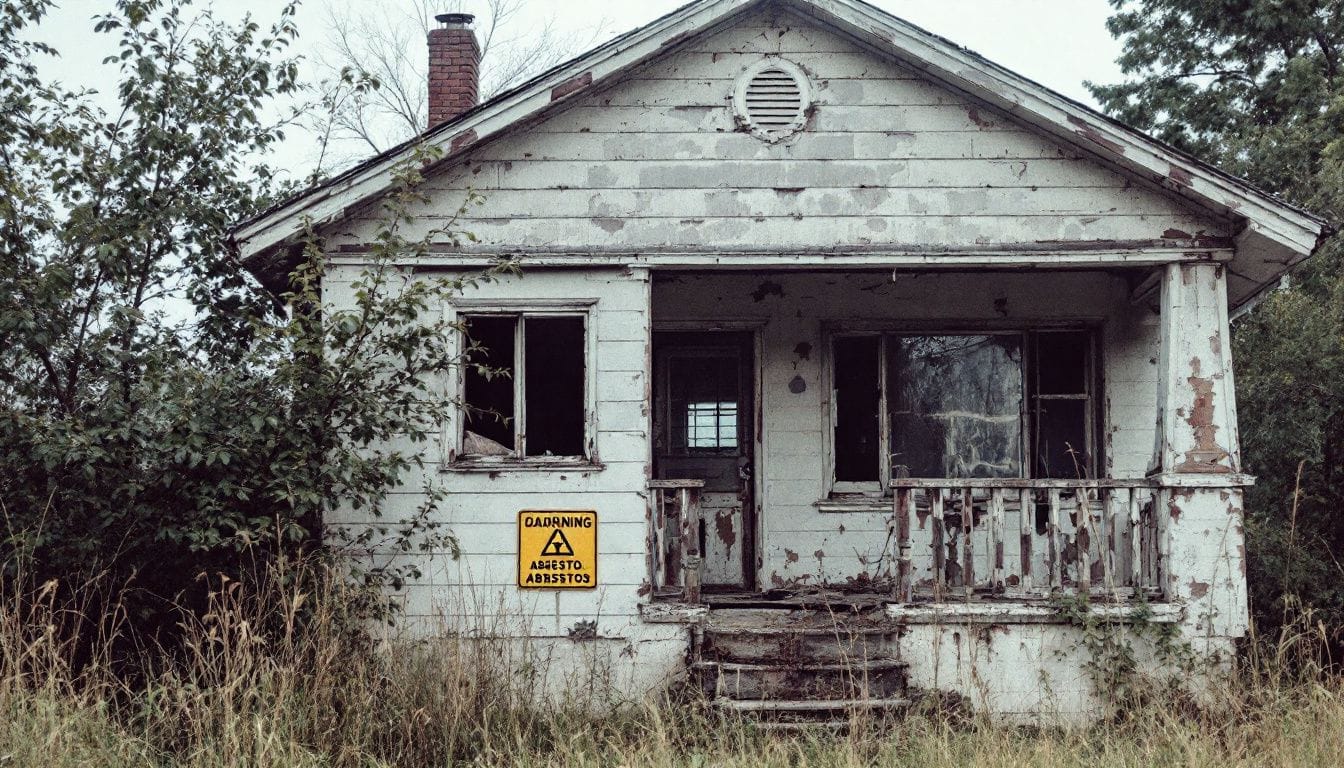
Why Asbestos Is Still a Serious Problem in the UK — and What You Can Do About It
Asbestos was banned in the UK over two decades ago, yet it remains one of the country’s most persistent and deadly occupational health threats. The asbestos problem hasn’t gone away — it’s simply been buried in walls, ceilings, floor tiles and pipe lagging across millions of buildings, quietly waiting to be disturbed. If you own, manage or occupy a property built before the year 2000, this affects you directly.
Understanding why the UK still hasn’t resolved this crisis, and what your legal and practical obligations are, could protect lives — including your own.
The Scale of the UK’s Asbestos Problem
The numbers are stark. More than 5,000 people die every year in the UK from asbestos-related diseases, making it the single largest cause of work-related deaths in the country. Mesothelioma, asbestosis and asbestos-related lung cancer continue to claim lives — often decades after the original exposure.
Before the full ban took effect in 1999, the UK imported approximately six million tonnes of asbestos. A significant proportion of that material still sits inside buildings across the country — in schools, hospitals, offices, factories and homes. Blue and brown asbestos were banned in 1985, but white asbestos (chrysotile) remained in use until the final prohibition. By that point, it had been incorporated into an enormous range of building products.
The legacy of that era is still playing out. Teachers, nurses, office workers and tradespeople continue to be exposed through contact with ageing asbestos-containing materials (ACMs) in the buildings where they work. This isn’t a historical problem — it’s an active one.
How Regulatory Failures Have Made the Asbestos Problem Worse
The UK’s regulatory framework around asbestos is not without substance. The Control of Asbestos Regulations and HSG264 guidance set out clear duties for building owners and managers. The problem is that enforcement has been inconsistent, and successive governments have resisted taking the bold action needed to tackle the scale of the challenge.
In 2022, a parliamentary committee called for a structured, 40-year national programme to remove asbestos from all public buildings. The government rejected the proposal — and offered no alternative plan. That decision left millions of people continuing to work and study in buildings where asbestos remains present, often unmanaged or poorly monitored.
The White Asbestos Myth
One of the most damaging regulatory failures has been the slow rejection of the so-called chrysotile defence — the argument that white asbestos was significantly less dangerous than blue or brown varieties. This misconception was used for years to justify continued use and delayed action. The scientific consensus has firmly disproved it: all forms of asbestos are carcinogenic, and white asbestos poses a genuine and serious health risk.
The persistence of this myth in industry and policy circles contributed directly to delayed regulation and, ultimately, to preventable deaths.
Enforcement Notices and Prosecutions
When enforcement does happen, the consequences for those who ignore their duties are significant. The HSE issued over 1,600 enforcement notices in a single recent year. Court cases have resulted in a construction company being fined over £1 million for exposing workers to asbestos during a school refurbishment. Two company directors received custodial sentences after knowingly exposing workers during a demolition project. A property management firm was fined hundreds of thousands of pounds for failing to maintain a proper asbestos register.
These aren’t edge cases — they’re a warning to anyone who manages buildings and thinks asbestos compliance can be deferred indefinitely.
The Public Health and Economic Cost of Inaction
The cost of neglecting the asbestos problem isn’t just measured in fines and legal fees. Mesothelioma UK data has highlighted that healthcare workers and education professionals continue to die from asbestos-related diseases at rates that reflect ongoing exposure in the buildings where they work. These are people who never worked directly with asbestos — they were simply in the wrong building at the wrong time.
Beyond the human cost, there are substantial economic consequences. Legal disputes, compensation claims, remediation projects and lost productivity all add up. Businesses that fail to manage asbestos properly face not only regulatory penalties but civil liability — and the reputational damage that follows a serious incident can be severe.
The argument that asbestos management is too expensive to prioritise ignores the far greater cost of getting it wrong.
What Building Owners and Managers Are Legally Required to Do
If you’re responsible for a non-domestic building — whether you own it, manage it or have control over maintenance — you have a legal duty to manage asbestos under the Control of Asbestos Regulations. This is known as the Duty to Manage, and it applies whether or not you believe asbestos is present.
Your obligations include:
- Taking reasonable steps to identify whether ACMs are present in your building
- Assessing the condition and risk level of any ACMs found
- Maintaining an up-to-date asbestos register
- Putting in place — and keeping under review — a written asbestos management plan
- Sharing information about ACMs with anyone who may disturb them during maintenance or refurbishment work
Failing to meet these obligations isn’t just a legal risk — it’s a direct risk to the health of everyone who enters your building.
When You Need a Management Survey
A management survey is the standard starting point for most duty holders. It identifies the location, extent and condition of ACMs that could be disturbed during normal occupation or routine maintenance. It forms the basis of your asbestos register and management plan, and it’s the evidence you need to demonstrate compliance.
If your building already has a survey but it’s more than a year old, or if the condition of materials may have changed, you should also commission a re-inspection survey to ensure your records remain accurate and current.
When You Need a Refurbishment Survey
Planning any building work — even something as straightforward as replacing a ceiling or fitting new pipework? Before any contractor touches a wall, floor or ceiling in a pre-2000 building, you need a refurbishment survey covering the areas to be disturbed. This is a legal requirement under the Control of Asbestos Regulations, and it protects both your workers and your business.
When Removal Is the Right Option
Not all asbestos needs to be removed immediately. The HSE guidance advises that ACMs in good condition and unlikely to be disturbed can be managed in place. However, where materials are deteriorating, where refurbishment is planned, or where the risk assessment indicates removal is the safer long-term option, asbestos removal by a licensed contractor is the appropriate course of action.
Removal must only be carried out by contractors licensed by the HSE for notifiable work. Attempting to remove asbestos without proper training, equipment and licensing is illegal and extremely dangerous.
Practical Steps You Can Take Right Now
Whether you’re a commercial landlord, a facilities manager, a school business manager or a homeowner planning renovation work, there are concrete actions you can take to address the asbestos problem in your property.
- Commission a survey — if you don’t have an up-to-date asbestos register, this is your first step. Don’t assume a previous owner dealt with it.
- Review your management plan — if you have a register, check when it was last updated and whether conditions have changed.
- Brief your contractors — anyone carrying out maintenance or repair work must be told about known ACMs before they start. This is a legal requirement.
- Test suspect materials — if you’re a homeowner and you’re concerned about a specific material, a postal testing kit allows you to collect a sample safely and have it analysed in an accredited laboratory.
- Don’t disturb suspect materials — if you think something might contain asbestos, leave it alone until you’ve had it tested or surveyed.
If your building also requires a fire risk assessment, it makes practical sense to coordinate this alongside your asbestos management activity — both are legal requirements for most non-domestic premises, and combining them reduces disruption.
The Asbestos Problem Across the UK
Asbestos isn’t concentrated in any one region — it’s a nationwide issue affecting properties in every town and city. If you’re based in the capital and need an asbestos survey in London, Supernova covers the full metropolitan area with same-week availability. For those in the North West, our team provides a full range of surveys for an asbestos survey in Manchester and the surrounding region. In the Midlands, we offer equally responsive service for an asbestos survey in Birmingham and beyond.
Wherever your property is located, Supernova’s BOHS P402-qualified surveyors can attend, assess and report — typically within the same week.
What an Asbestos Survey With Supernova Involves
Booking a survey with Supernova is straightforward. Here’s what to expect from the process:
- Booking — contact us by phone or through our website to confirm availability. We’ll send a booking confirmation and details of what to expect.
- Site visit — a qualified P402 surveyor attends at the agreed time and carries out a thorough visual inspection of the property.
- Sampling — representative samples are collected from suspect materials using correct containment procedures to prevent fibre release.
- Laboratory analysis — samples are analysed under polarised light microscopy at our UKAS-accredited laboratory.
- Report delivery — you receive a detailed asbestos register and risk-rated management plan in digital format, typically within 3–5 working days.
All reports are fully compliant with HSG264 guidance and satisfy the legal requirements under the Control of Asbestos Regulations.
Survey Pricing and Options
Supernova offers transparent, fixed-price surveys with no hidden fees. Our standard pricing guide is as follows:
- Management Survey — from £195 for a standard residential or small commercial property
- Refurbishment & Demolition Survey — from £295, covering all areas to be disturbed prior to works
- Re-inspection Survey — from £150, plus £20 per ACM re-inspected
- Bulk Sample Testing Kit — from £30 per sample, posted to you for collection
- Fire Risk Assessment — from £195 for a standard commercial premises
Pricing varies based on property size and location. Request a free quote online for a tailored figure with no obligation.
Why Property Professionals Choose Supernova
With over 50,000 surveys completed and more than 900 five-star reviews, Supernova Asbestos Surveys has built its reputation on accuracy, reliability and clear communication. Our surveyors hold BOHS P402, P403 and P404 qualifications — the industry gold standard — and all samples are analysed in our own UKAS-accredited laboratory.
We operate nationwide, offer same-week availability, and provide fixed-price quotes before we begin. There are no surprises — just accurate, legally compliant reports that give you the information you need to protect your building and the people in it.
To speak with a specialist or book a survey, call us on 020 4586 0680 or visit asbestos-surveys.org.uk to request your free quote today.
Frequently Asked Questions
Is asbestos still a problem in UK buildings?
Yes. Despite being banned in 1999, asbestos remains present in a large number of buildings constructed before that date. It’s estimated that millions of tonnes of asbestos-containing materials are still in place across the UK in schools, hospitals, offices and homes. Until those materials are properly managed or removed, the asbestos problem remains very much live.
What are my legal obligations as a building owner or manager?
If you have responsibility for a non-domestic building, the Control of Asbestos Regulations impose a legal Duty to Manage asbestos. This means identifying whether ACMs are present, assessing the risk, maintaining an asbestos register, and putting a management plan in place. Failure to comply can result in enforcement notices, substantial fines and, in serious cases, criminal prosecution.
Do I need an asbestos survey before renovation work?
Yes. Before any refurbishment or demolition work in a pre-2000 building, a refurbishment survey is legally required for the areas to be disturbed. This applies even if a management survey has already been carried out — refurbishment surveys are more intrusive and specifically designed to identify all ACMs that could be disturbed during the planned work.
Can I test for asbestos myself?
Homeowners can use a postal testing kit to collect a sample from a suspect material and have it analysed in an accredited laboratory. However, sampling must be done carefully to avoid releasing fibres. For commercial properties, or where multiple materials are suspect, a professional survey carried out by a qualified surveyor is strongly recommended and may be legally required.
How long does an asbestos survey take?
The duration depends on the size and complexity of the property. A survey of a small residential or commercial property can typically be completed within a few hours. Larger or more complex buildings may require a full day or more. Reports are generally delivered within 3–5 working days of the site visit, following laboratory analysis of any samples taken.