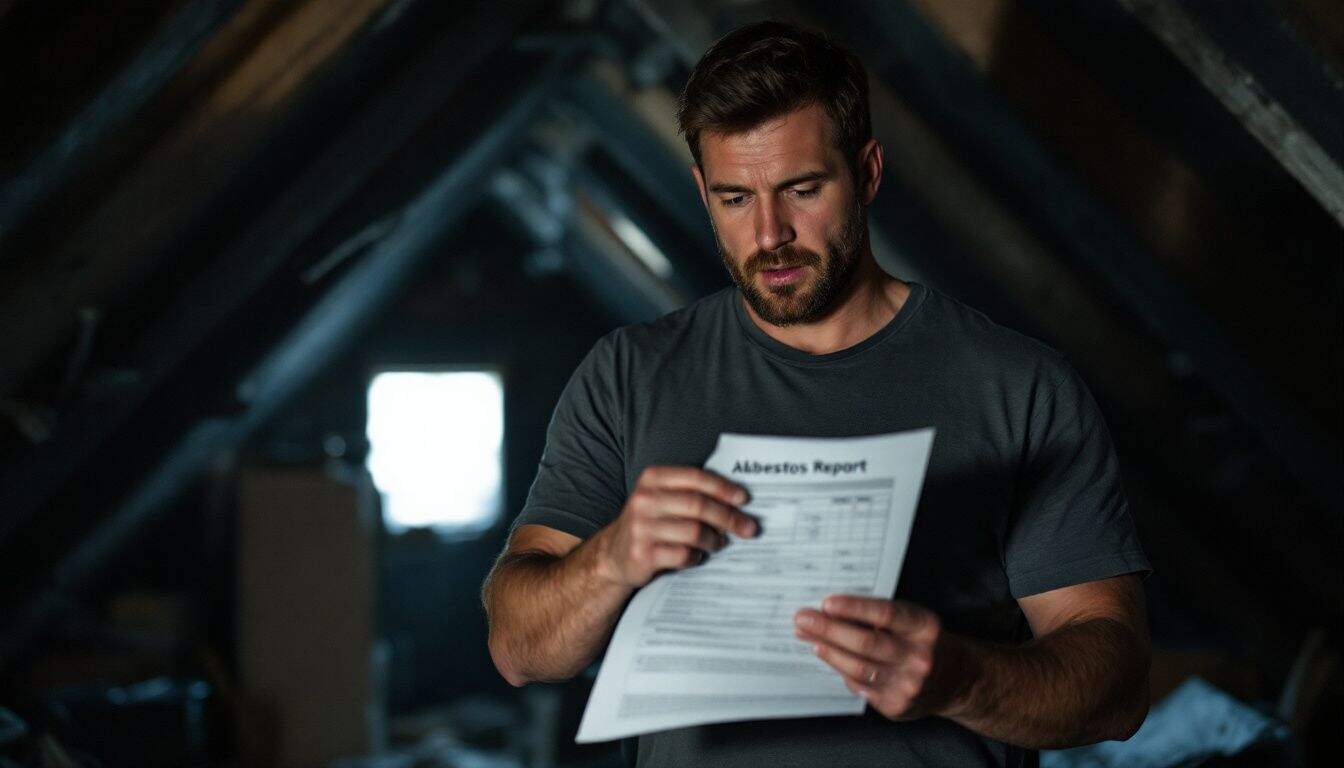
Why Asbestos Exposure Assessments Are the Foundation of Safe Building Management
Asbestos doesn’t announce itself. It hides in ceiling tiles, pipe lagging, floor adhesives, and fire doors — often in buildings that look perfectly ordinary from the outside. Without proper asbestos exposure assessments, the people who live and work in those buildings have no way of knowing what risks they’re facing.
That’s not a minor oversight. It’s a serious legal and health liability — one that can result in criminal prosecution, civil claims, and, most importantly, irreversible harm to human health.
What Are Asbestos Exposure Assessments?
An asbestos exposure assessment is a structured process used to identify whether asbestos-containing materials (ACMs) are present in a building, determine their condition, and evaluate the risk they pose to occupants and workers. It goes beyond simply locating asbestos — it quantifies and contextualises the risk so that informed decisions can be made.
These assessments are a core requirement under the Control of Asbestos Regulations, which place a legal duty on those responsible for non-domestic premises to manage asbestos risks. The Health and Safety Executive’s guidance document HSG264 sets out the standards surveyors must follow when conducting these assessments.
A properly conducted assessment will tell you:
- Where ACMs are located within the building
- What type of asbestos is present
- The current condition of those materials
- The likelihood of fibre release under normal or disturbed conditions
- What management or remediation action is required
The Health Risks That Make This Non-Negotiable
Asbestos fibres, when inhaled, can cause a range of serious and often fatal diseases. These include mesothelioma, asbestosis, asbestos-related lung cancer, and pleural disease. None of these conditions develop immediately — they can take decades to appear after initial exposure, which is precisely what makes early identification so critical.
Construction and maintenance workers are among those at highest risk, simply because their work regularly disturbs building materials. But office workers, teachers, and tenants in older buildings can also face exposure if ACMs are damaged or deteriorating.
The absence of an up-to-date asbestos exposure assessment doesn’t mean there’s no risk. It means the risk is unknown — and unmanaged.
How Asbestos Exposure Assessments Work in Practice
The Initial Survey
Everything starts with a physical inspection of the building. A qualified surveyor will carry out a thorough examination of accessible areas, looking for materials that may contain asbestos. The type of survey required depends on what the building is being used for and what work is planned.
For occupied buildings where no significant work is planned, a management survey is typically the appropriate route. Where renovation work is being considered, a refurbishment survey is required — this is more intrusive and may involve accessing areas behind walls, above ceilings, and beneath floors to ensure nothing is missed before contractors begin work.
Sampling and Laboratory Analysis
When a surveyor suspects a material contains asbestos, they take a small sample for laboratory analysis. This is the only reliable way to confirm the presence and type of asbestos. Visual inspection alone is never sufficient.
Samples are sent to an accredited laboratory where analysts use techniques such as polarised light microscopy to identify asbestos fibre types. If you’re managing a smaller-scale investigation, a testing kit can be used to collect samples safely for submission to a UKAS-accredited laboratory.
For professional asbestos testing, Supernova’s surveyors handle the entire process — from sampling through to a full written report with risk ratings for each material identified.
Risk Evaluation and Scoring
Once the laboratory confirms the presence of asbestos, the surveyor assesses the risk. This involves scoring the material based on its condition, location, surface treatment, and the likelihood of it being disturbed.
A material in good condition that’s unlikely to be touched poses a very different risk to one that’s crumbling in a high-traffic area. The resulting risk score determines the recommended management action — whether that’s monitoring, encapsulation, or full removal.
What a Completed Asbestos Exposure Assessment Should Include
A report that doesn’t give you actionable information isn’t fit for purpose. A thorough asbestos exposure assessment should provide:
- A site plan or floor plan showing the location of all identified ACMs
- Material descriptions including type, condition, and surface treatment
- Risk scores for each material based on a standardised assessment algorithm
- Laboratory results confirming fibre type for sampled materials
- Recommended actions with priority levels — immediate, medium-term, or managed in situ
- An asbestos register that can be incorporated into your management plan
- Surveyor credentials confirming they hold the relevant qualifications under HSG264
If a report you’ve received doesn’t include these elements, it may not be compliant with current HSE guidance. Don’t assume a brief written summary constitutes a full assessment.
Asbestos Exposure Assessments and Legal Compliance
The Control of Asbestos Regulations impose a duty to manage asbestos on anyone responsible for the maintenance or repair of non-domestic premises. This includes landlords, employers, managing agents, and facilities managers.
Failing to carry out adequate asbestos exposure assessments is not just a health risk — it’s a criminal offence. The Health and Safety Executive can and does prosecute duty holders who fail to comply. Enforcement action can result in substantial fines and, in serious cases, prosecution.
Beyond the regulatory consequences, duty holders who fail to manage asbestos risks can face civil claims from workers or occupants who suffer harm as a result. Maintaining a current, accurate asbestos register and management plan — based on a proper assessment — is your primary defence. It demonstrates that you’ve taken your duty seriously and acted on professional advice.
When Do You Need a New Assessment?
Asbestos exposure assessments aren’t a one-time exercise. You should commission a new or updated assessment when:
- You’re purchasing or taking on management of an older building
- Planned refurbishment or demolition work is scheduled
- The condition of known ACMs has changed or deteriorated
- Work has been carried out that may have disturbed previously identified materials
- Your existing survey is more than a few years old and the building has changed significantly
- An incident occurs that may have released asbestos fibres
Regular reviews — typically every 12 months for the management plan, with physical re-inspections as required — are considered best practice under HSE guidance.
Using Assessment Results to Drive Safe Management
Immediate Actions for High-Risk Materials
Where an assessment identifies materials in poor condition with a high risk of fibre release, immediate action is needed. This typically means restricting access to the affected area and arranging for licensed contractors to carry out asbestos removal, ensuring all waste is disposed of correctly using licensed waste carriers and appropriate consignment notes.
Workers involved in any disturbance work must be provided with appropriate personal protective equipment (PPE) and must be trained in safe working procedures. This isn’t optional — it’s a legal requirement under the Control of Asbestos Regulations.
Managing Lower-Risk Materials in Situ
Not every ACM needs to be removed. Where materials are in good condition and are unlikely to be disturbed, the safest approach is often to leave them in place and manage them through regular monitoring.
This means recording their location in the asbestos register, inspecting them at set intervals, and updating the risk assessment if their condition changes. Encapsulation — sealing the surface of ACMs to prevent fibre release — can be an effective interim measure for materials in moderate condition.
Informing Contractors Before Work Begins
One of the most practical uses of an asbestos exposure assessment is sharing it with contractors before any maintenance or construction work begins. Under the Control of Asbestos Regulations, duty holders must share asbestos information with anyone who may disturb ACMs during their work.
Handing a contractor a current asbestos register before they start work isn’t just good practice — it’s a legal obligation. Failure to do so can expose both the duty holder and the contractor to significant risk.
Professional Sample Analysis: Getting Accurate Results
The accuracy of any asbestos exposure assessment depends entirely on the quality of the sampling and analysis. Submitting samples to a UKAS-accredited laboratory for sample analysis ensures results are reliable, legally defensible, and produced to the standard required by HSE guidance.
Be cautious of any service that offers asbestos identification without laboratory confirmation. Visual assessment alone cannot reliably distinguish between asbestos-containing materials and similar-looking non-hazardous materials. Only laboratory analysis provides certainty.
If you want to understand more about the full process, Supernova’s asbestos testing service page outlines exactly what’s involved from initial inspection through to final report.
Asbestos Exposure Assessments Across the UK
Supernova Asbestos Surveys operates nationally, with surveyors covering all major cities and regions. Whether you need an asbestos survey London for a commercial property in the capital, an asbestos survey Manchester for an industrial unit in the north-west, or an asbestos survey Birmingham for a mixed-use building in the Midlands, our team can mobilise quickly and deliver compliant, detailed reports.
With over 50,000 surveys completed, we have the experience to handle straightforward assessments and complex multi-site programmes alike.
Choosing the Right Surveyor for Your Asbestos Exposure Assessment
Not all asbestos surveys are equal. When selecting a surveyor, look for the following:
- UKAS accreditation — the surveying organisation should hold accreditation to ISO 17020 for inspection bodies
- Qualified surveyors — individuals should hold the P402 qualification as a minimum for building surveys and sampling
- Clear reporting — reports should be structured in line with HSG264 and include all the elements listed above
- Transparent pricing — no hidden charges for laboratory analysis or report preparation
- Responsiveness — particularly important when assessments are needed urgently ahead of planned works
Cutting corners on surveyor selection is one of the most common mistakes property managers make. A cheaper survey that doesn’t meet HSE standards offers no legal protection and may leave dangerous materials unidentified.
Frequently Asked Questions
What is the difference between an asbestos survey and an asbestos exposure assessment?
An asbestos survey is the physical inspection process used to locate and sample materials that may contain asbestos. An asbestos exposure assessment is broader — it incorporates the survey findings alongside a risk evaluation that determines how likely those materials are to release fibres and cause harm. In practice, a professionally conducted management or refurbishment survey will include both elements in the final report.
Who is legally required to carry out asbestos exposure assessments?
The duty to manage asbestos under the Control of Asbestos Regulations applies to those responsible for the maintenance and repair of non-domestic premises. This includes commercial landlords, employers who control a workplace, managing agents, and facilities managers. Domestic properties are generally outside the scope of this duty, though landlords of multi-occupancy residential buildings do have obligations where common areas are concerned.
How long does an asbestos exposure assessment take?
The duration depends on the size and complexity of the building. A straightforward survey of a small commercial unit may be completed in a few hours, while a large multi-storey building could require several days. Laboratory analysis of samples typically adds a further few working days before the final report is issued. Supernova can advise on timescales when you request a quote.
Can I carry out an asbestos exposure assessment myself?
While there is no absolute legal prohibition on a duty holder conducting their own assessment, HSG264 makes clear that surveyors must be competent — meaning they hold the appropriate qualifications, equipment, and experience. In practice, a self-conducted assessment is unlikely to meet the standard required and offers no legal protection. Instructing a UKAS-accredited surveyor is strongly recommended.
How often should asbestos exposure assessments be reviewed?
The asbestos management plan should be reviewed at least annually. Physical re-inspections of known ACMs should be carried out at intervals determined by the risk level of individual materials — higher-risk materials may warrant more frequent checks. A new full assessment is required whenever significant building work is planned or the condition of materials changes.
Get Your Asbestos Exposure Assessment from Supernova
Supernova Asbestos Surveys has completed over 50,000 surveys across the UK. Our UKAS-accredited surveyors deliver fully compliant asbestos exposure assessments — from initial inspection and sampling through to detailed written reports and ongoing management support.
Don’t leave asbestos risks unmanaged. Call us on 020 4586 0680 or visit asbestos-surveys.org.uk to request a quote or find out more about our services.