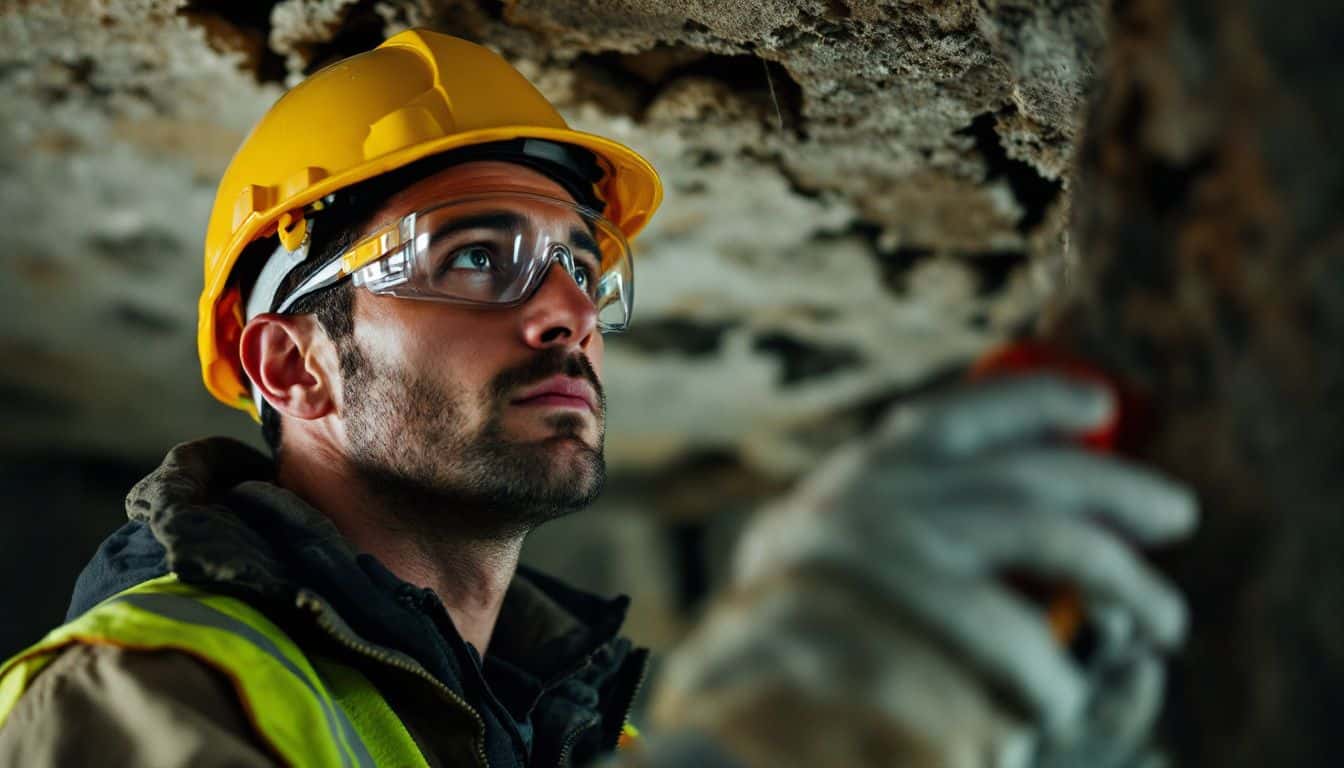
Unexpected exposure to asbestos can lead to some of the most serious and irreversible health conditions known to medicine — and the tragedy is that most people don’t realise they’ve been exposed until decades later. The UK banned asbestos in 1999, yet millions of older buildings still contain it, silently waiting to cause harm during a renovation, a repair job, or even a routine maintenance visit.
If you live or work in a pre-2000 building, this isn’t a distant risk. It’s a present one. Here’s what you need to know.
Why Unexpected Exposure to Asbestos Can Lead to Lifelong Health Consequences
Asbestos fibres are microscopic. You cannot see them, smell them, or taste them. When asbestos-containing materials (ACMs) are disturbed — drilled into, cut, sanded, or simply broken — those fibres become airborne and can be inhaled deep into the lungs.
The body cannot expel them. Over time, those trapped fibres cause progressive, irreversible damage. The diseases that result are not treatable in the conventional sense — they are managed, but rarely cured.
What makes this especially dangerous is the latency period. Symptoms may not appear for 10 to 60 years after exposure. By the time a diagnosis is made, the damage has been accumulating for decades.
The Diseases Linked to Asbestos Exposure
Mesothelioma
Mesothelioma is a cancer of the lining of the lungs, abdomen, or heart. It is almost exclusively caused by asbestos exposure and has an extremely poor prognosis — most patients survive fewer than 12 months after diagnosis.
The vast majority of cases are linked to occupational exposure, with construction workers, plumbers, electricians, and shipyard workers historically among the highest-risk groups. However, around 400 women die from mesothelioma each year in the UK, many without any identifiable direct workplace exposure — a stark reminder that secondary and environmental routes are just as real.
The HSE estimates that around 5,000 people die each year in the UK from asbestos-related diseases. Mesothelioma accounts for a significant proportion of those deaths, and the majority of fatalities occur in people aged over 75 — reflecting that long latency window between exposure and diagnosis.
Asbestosis
Asbestosis is a chronic lung disease caused by prolonged inhalation of asbestos fibres. The fibres cause scarring of the lung tissue — a process called pulmonary fibrosis — which progressively reduces the lungs’ ability to function.
Symptoms include a persistent cough, shortness of breath, chest tightness, and fatigue. There is no cure. Management focuses on slowing progression and improving quality of life, but the damage to lung tissue is permanent.
Asbestosis is most commonly associated with heavy, sustained occupational exposure — but even lower-level exposure can contribute to its development over time.
Lung Cancer
Asbestos exposure significantly increases the risk of lung cancer, particularly in individuals who also smoke. The combination of smoking and asbestos exposure is not simply additive — it is multiplicative, meaning the combined risk is far greater than either factor alone.
Lung cancer linked to asbestos is not always distinguishable from lung cancer caused by other factors, which means many cases go unattributed. This likely means the true burden of asbestos-related lung cancer is underestimated.
Pleural Plaques and Pleural Thickening
Not all asbestos-related conditions are immediately life-threatening, but they are all significant. Pleural plaques are areas of hardened tissue on the lining of the lungs. They do not cause symptoms themselves, but their presence confirms past asbestos exposure and indicates an elevated risk of more serious disease.
Diffuse pleural thickening can cause breathlessness and reduced lung capacity. Both conditions serve as important markers that the body has been exposed and that ongoing monitoring is warranted.
How Unexpected Exposure to Asbestos Can Lead to Harm — The Routes You May Not Expect
Occupational Exposure
The most well-documented route is through work. Tradespeople working in older buildings — plumbers, electricians, carpenters, plasterers, and builders — are at particular risk because they regularly disturb materials that may contain asbestos without realising it.
Around 1.8 million workers in the UK are estimated to be at risk of asbestos exposure through their work. This includes not only those in construction but also teachers and healthcare workers who spend time in older buildings that may contain ACMs.
The Control of Asbestos Regulations place a legal duty on employers to manage asbestos risks in the workplace. This includes conducting a management survey before any work begins in a building that may contain asbestos, and ensuring workers are not put at risk from disturbed materials.
Environmental Exposure
Living near former asbestos factories or processing sites can result in environmental exposure through contaminated soil, dust, and air. The UK has historically had some of the highest mesothelioma rates in the world, partly reflecting the scale of industrial asbestos use throughout the 20th century.
Environmental exposure is harder to quantify and often goes unrecognised. People may have no idea they were ever exposed — and yet the fibres were there, in the air of their neighbourhood or playground.
Secondary (Indirect) Exposure
Secondary exposure occurs when asbestos fibres are carried home on clothing, hair, or skin by someone who has worked with or near asbestos. Family members — particularly spouses and children — can inhale those fibres without ever setting foot on a worksite.
This explains why approximately 60% of female mesothelioma cases have no identifiable direct exposure history. The fibres came home with a partner or parent. It is a sobering illustration of just how far the consequences of asbestos exposure can reach.
DIY and Home Renovation
One of the most common and preventable routes of unexpected exposure today is DIY work in older homes. Drilling into an artex ceiling, removing old floor tiles, cutting through insulation board, or disturbing pipe lagging — any of these activities can release asbestos fibres if the materials involved contain asbestos.
Many homeowners have no idea that the materials in their property could contain asbestos. If your home was built before 2000, it is worth having suspect materials tested before you start any work. A testing kit can help you take samples safely for laboratory analysis, giving you certainty before you pick up a drill.
Where Asbestos Hides in Buildings
Asbestos was used extensively in UK construction from the 1950s through to the late 1990s. It was valued for its fire resistance, durability, and insulating properties — and it was incorporated into a huge range of building materials.
Common locations where asbestos-containing materials may be found include:
- Textured coatings (artex) on ceilings and walls
- Insulation board used in partition walls, ceiling tiles, and fire doors
- Pipe lagging and boiler insulation
- Vinyl floor tiles and the adhesive beneath them
- Roof sheets and guttering (particularly asbestos cement)
- Soffit boards and fascias
- Spray-on insulation in older commercial buildings
- Gaskets and rope seals in heating systems
The presence of asbestos in a material does not automatically mean it is dangerous. Asbestos-containing materials that are in good condition and left undisturbed pose a low risk. The danger arises when those materials are damaged, deteriorating, or disturbed during work.
UK Regulations: What the Law Requires
The Control of Asbestos Regulations set out the legal framework for managing asbestos in the UK. Under these regulations, anyone responsible for a non-domestic building — a landlord, employer, or managing agent — has a duty to manage asbestos on the premises.
This duty to manage requires:
- Identifying whether ACMs are present through a suitable survey
- Assessing the condition and risk of those materials
- Producing a written asbestos management plan
- Keeping an asbestos register and making it available to anyone who may disturb the materials
- Reviewing the plan and register regularly
For buildings where refurbishment or demolition work is planned, a more intrusive survey is required before work begins. This ensures that workers are not inadvertently exposed to asbestos during the project.
HSE guidance document HSG264 sets out the standards for asbestos surveys and provides detailed guidance on how surveys should be conducted, sampled, and reported.
Where ACMs are identified and need to be removed — either because they are in poor condition or because work will disturb them — asbestos removal must be carried out by a licensed contractor in accordance with strict procedural requirements, including 14 days’ prior notification to the HSE for licensable work.
What to Do If You Suspect You’ve Been Exposed
If you believe you have been exposed to asbestos — whether recently or in the past — there are several steps you should take.
Seek Medical Advice
Tell your GP about the exposure, including when it happened, how long it lasted, and in what context. Your GP can arrange appropriate monitoring and refer you to a specialist if needed. Early detection of asbestos-related disease significantly improves outcomes — particularly for mesothelioma, where stage 1 diagnosis is associated with substantially better survival rates than later-stage diagnosis.
Stop Any Work That May Be Disturbing Asbestos
If you are in the middle of renovation or maintenance work and suspect you have disturbed asbestos, stop immediately. Leave the area, close it off if possible, and do not attempt to clean up any dust or debris yourself. Contact a qualified asbestos professional to assess the situation.
Get Your Building Surveyed
If you are unsure whether your building contains asbestos, commission a professional survey. This is the only reliable way to identify ACMs, assess their condition, and understand what risk they pose. A survey gives you the information you need to make safe decisions about your property.
Keep Records
If exposure has occurred in a workplace context, document everything — dates, locations, the nature of the work, who was present. This information can be critical if a health condition develops years later and a legal claim becomes relevant.
Asbestos Awareness: Prevention Is the Only Effective Strategy
There is no medical intervention that can reverse the damage caused by asbestos fibres once they are lodged in the lungs. Prevention — through awareness, proper surveying, and safe working practices — is the only strategy that works.
Public awareness campaigns have played a significant role in educating workers and property owners about the risks. The HSE’s Hidden Killer campaign highlighted that asbestos remains the single greatest cause of work-related deaths in the UK. Awareness in schools and healthcare settings has also grown, recognising that these environments often occupy older buildings with potential ACMs.
For property managers, landlords, and employers, the message is straightforward: know what is in your building, manage it properly, and never allow work to proceed without first establishing whether asbestos is present.
Supernova Asbestos Surveys operates across the UK, including dedicated teams for an asbestos survey London, an asbestos survey Manchester, and an asbestos survey Birmingham — ensuring fast, qualified, and fully compliant survey services wherever your property is located.
Protecting Yourself and Others: Practical Steps
Whether you are a homeowner, a landlord, a facilities manager, or a contractor, the following practical steps will significantly reduce the risk of unexpected asbestos exposure:
- Always assume asbestos is present in any building constructed before 2000 until a survey proves otherwise
- Commission a survey before any renovation, refurbishment, or demolition work — this is a legal requirement in commercial settings and best practice in residential ones
- Never drill, cut, sand, or disturb suspect materials without first having them tested
- Ensure contractors are informed of any known or suspected ACMs before they begin work
- Keep your asbestos register up to date and accessible to anyone who may need it
- Arrange regular condition checks on known ACMs to ensure they have not deteriorated
- Use a licensed contractor for any removal work involving licensable asbestos materials
How Supernova Asbestos Surveys Can Help
Supernova Asbestos Surveys has completed over 50,000 surveys across the UK. Our surveyors are BOHS P402-qualified, our laboratory analysis is carried out at a UKAS-accredited facility, and our reports are fully compliant with HSG264 guidance and the Control of Asbestos Regulations.
When you book a survey with us, here is what happens:
- Booking: Contact us by phone or online. We confirm availability and send a booking confirmation, often with an appointment available within the same week.
- Site Visit: A qualified P402 surveyor attends at the agreed time and carries out a thorough visual inspection of the property.
- Sampling: Representative samples are collected from suspect materials using correct containment procedures.
- Lab Analysis: Samples are analysed under polarised light microscopy (PLM) at our UKAS-accredited laboratory.
- Report Delivery: You receive a detailed asbestos register and risk-rated management plan in digital format within 3–5 working days.
Our pricing is transparent and fixed. Management surveys start from £195 for standard residential or small commercial properties. Refurbishment and demolition surveys start from £295. If you want to test a specific material before commissioning a full survey, our postal testing kits start from £30 per sample.
Don’t wait until work has already started. Call us on 020 4586 0680 or visit asbestos-surveys.org.uk to book your survey today.
Frequently Asked Questions
Can unexpected exposure to asbestos lead to disease even after a single incident?
A single, brief exposure to asbestos fibres carries a much lower risk than prolonged or repeated exposure. However, there is no established safe threshold for asbestos exposure — any inhalation of fibres carries some degree of risk. If you believe you have been exposed, even briefly, it is worth speaking to your GP and ensuring your property is properly surveyed to prevent further incidents.
How long after exposure do asbestos-related diseases develop?
The latency period for asbestos-related diseases is typically between 10 and 60 years. This means that someone exposed in their 20s or 30s may not develop symptoms until they are in their 60s, 70s, or even 80s. This long gap between exposure and diagnosis is one of the reasons asbestos remains such a significant public health issue in the UK today.
Is asbestos only a risk in old industrial or commercial buildings?
No. Asbestos was used extensively in residential construction throughout the second half of the 20th century. Any home built before 2000 may contain asbestos-containing materials, including textured coatings, floor tiles, insulation board, and pipe lagging. Domestic DIY work is now one of the most common routes of unexpected asbestos exposure in the UK.
What should I do if I find a material I think might contain asbestos?
Do not touch, drill, cut, or disturb it. If the material is in good condition and undamaged, the risk is low provided it is left alone. Arrange for it to be tested by a professional or use a postal testing kit to send a sample to an accredited laboratory. If the material is damaged or deteriorating, contact a qualified asbestos surveyor immediately.
Who is legally responsible for managing asbestos in a commercial building?
Under the Control of Asbestos Regulations, the duty to manage asbestos falls on the person or organisation responsible for maintaining or repairing the building — typically the owner, landlord, or employer. This duty requires identifying ACMs through a survey, assessing their condition, and putting a written management plan in place. Failure to comply can result in prosecution and significant penalties.