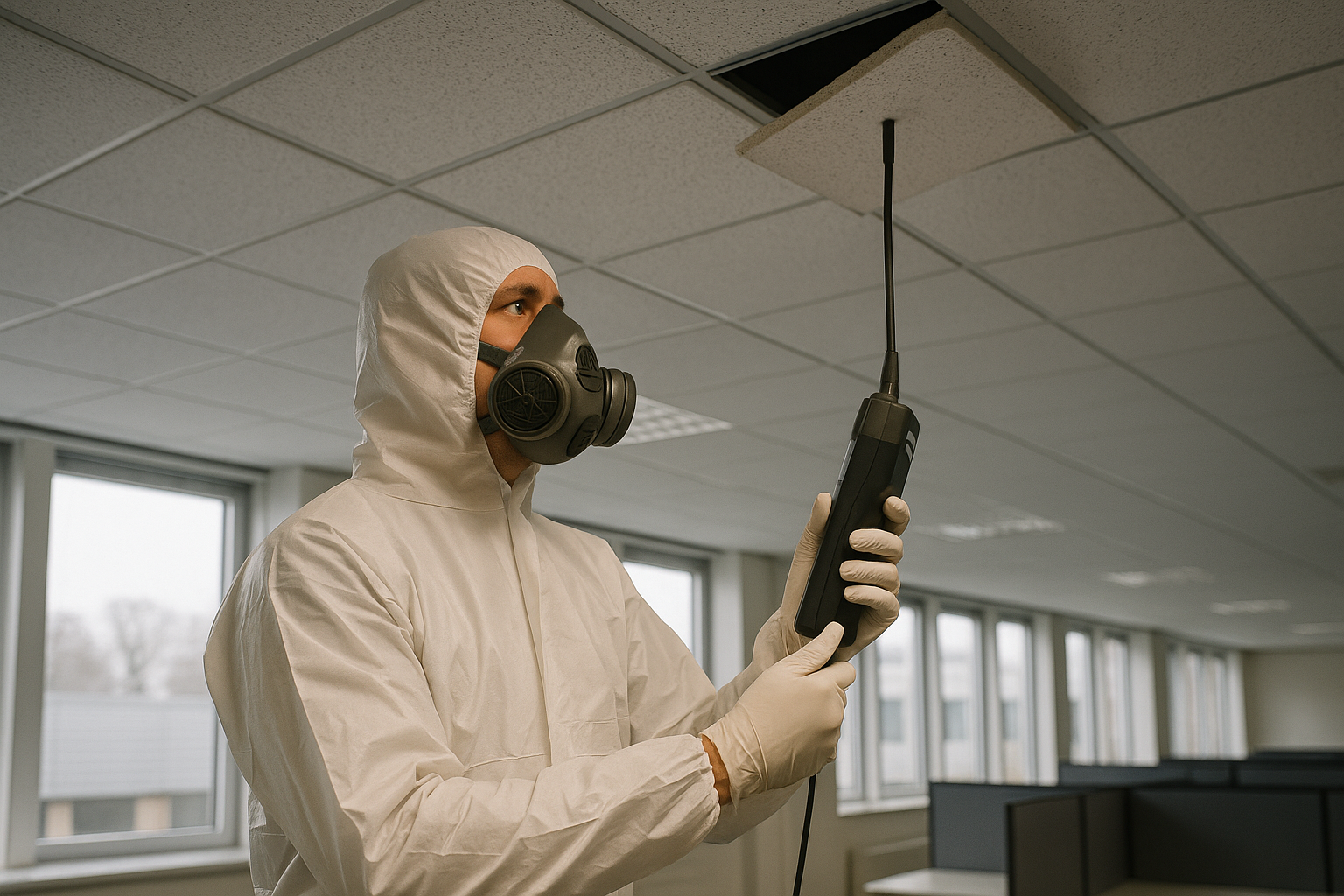
Choose the wrong survey and asbestos can stay hidden until a contractor drills into it, opens a ceiling void or starts a strip-out. Understanding asbestos survey types is how property managers, landlords and dutyholders avoid that mistake, stay compliant and keep projects moving without expensive surprises.
If a building was constructed before 2000, asbestos-containing materials may still be present in ceilings, floor coverings, risers, plant rooms, textured coatings, roof sheets, ducts and wall linings. The right survey tells you what is there, where it is, what condition it is in and what needs to happen next.
At Supernova Asbestos Surveys, we have completed more than 50,000 surveys across the UK. That experience matters because a school in daily use, a retail unit due for fit-out and an industrial site heading for demolition all need a different approach.
Why asbestos survey types matter
Different asbestos survey types exist because buildings are used in different ways and work activities create different levels of disturbance. A survey for day-to-day occupation is not suitable for intrusive refurbishment, and a refurbishment survey is not enough for demolition.
Under the Control of Asbestos Regulations, those responsible for non-domestic premises and the common parts of domestic buildings must identify and manage asbestos risk. HSE guidance and HSG264 make it clear that the survey type must match the purpose.
In practical terms, the survey you need depends on:
- Whether the building is occupied and in normal use
- Whether routine maintenance or repair work is planned
- Whether refurbishment will disturb the building fabric
- Whether part or all of the property will be demolished
- Whether an existing asbestos register needs updating
Get that decision right at the start and everything else becomes easier. Contractors know what they are dealing with, the asbestos register is reliable and you can plan work without avoidable disruption.
What are the main asbestos survey types?
There are four main asbestos survey types that property professionals need to understand. Each one has a distinct purpose, and none should be used as a shortcut for another.
- Management surveys
- Refurbishment surveys
- Demolition surveys
- Re-inspection surveys
The names sound straightforward, but confusion still causes problems on live sites. The safest approach is to match the survey to the work you are actually planning, not the survey you happen to already have on file.
Management surveys for occupied buildings
A management survey is the standard survey for an occupied building in normal use. Its purpose is to locate, so far as reasonably practicable, the presence and extent of asbestos-containing materials that could be damaged or disturbed during normal occupation, routine maintenance or foreseeable installation work.
For most dutyholders, this is the starting point of effective asbestos management. If you need a formal management survey, the report should give you enough information to create or update your asbestos register and management plan.
What a management survey is designed to achieve
A good management survey helps you answer four practical questions:
- Is asbestos present or likely to be present?
- Where is it located, or where should it be presumed?
- What condition is it in?
- What action is needed to prevent disturbance?
That information supports day-to-day compliance. It also helps maintenance teams and contractors avoid disturbing materials that can remain safely in place if properly managed.
What is included in an asbestos management survey
A properly executed asbestos management survey should inspect all reasonably accessible areas relevant to occupation and routine maintenance. Sampling is carried out where appropriate, and suspect materials are assessed and clearly recorded.
Depending on the building, this may include:
- Offices, classrooms and working areas
- Corridors, stairwells and reception spaces
- Plant rooms, boiler rooms and service cupboards
- Toilets, kitchens and welfare areas
- Basements, loft access points and roof voids where accessible
- Meter cupboards, risers and service ducts
- Garages, outbuildings, soffits and roof sheets
- Communal areas in residential blocks
Where access is restricted, the report should say so clearly. If an area cannot be inspected safely, materials may need to be presumed to contain asbestos until proper access is arranged.
When a management survey is the right choice
This survey is usually appropriate when:
- You are responsible for a non-domestic property built before 2000
- You manage the common parts of a residential building
- You have taken over a site with no reliable asbestos register
- Your existing survey is unclear, incomplete or outdated
- You are carrying out due diligence before a lease or purchase
A management survey is not designed for intrusive construction work. If walls, ceilings, floors, ducts or fixed elements will be opened up, you need one of the more intrusive asbestos survey types instead.
Refurbishment surveys before intrusive work
A refurbishment survey is required before work that will disturb the building fabric. That includes projects such as rewiring, replacing kitchens, altering partitions, upgrading heating systems, installing air conditioning, removing ceilings or opening service risers.
If you are planning alterations, a dedicated refurbishment survey is the correct starting point rather than relying on an older management report. This is one of the most commonly misunderstood asbestos survey types because many projects described as minor still involve intrusive work.
Why refurbishment surveys are intrusive
A refurbishment survey is intrusive by design. Surveyors need to inspect the exact areas affected by the planned works, including hidden voids and concealed materials behind walls, ceilings, boxing and floor finishes.
The aim is simple: identify asbestos before contractors disturb it. That protects workers, prevents contamination and reduces the risk of delays once the project has started.
When you need an asbestos refurbishment survey
An asbestos refurbishment survey is usually needed before:
- Strip-outs and fit-outs
- Kitchen and bathroom replacements
- Electrical rewires
- Heating and ventilation upgrades
- Partition removal or new openings
- Suspended ceiling changes
- Major repairs affecting walls, floors or ceilings
- Shop, office or school refurbishments
The survey area should normally be vacant during inspection. Access may involve lifting floors, opening up enclosures and breaking into the building fabric, which is not suitable in occupied spaces without proper controls.
Practical advice before commissioning a refurbishment survey
Be precise about the work scope. If the contractor is refurbishing only one floor, one riser or one flat stack, the survey must match that exact area.
Provide drawings if available and confirm whether the work affects adjacent spaces. Vague instructions lead to vague survey coverage, and that is where risk starts to creep in.
Demolition surveys before buildings come down
A demolition survey is required before a building, or part of one, is demolished. Among the main asbestos survey types, this is usually the most intrusive because the objective is to identify all asbestos-containing materials, so far as reasonably practicable, within the area to be demolished.
Where demolition is planned, commission a dedicated demolition survey. This applies whether you are taking down an entire structure or only a defined section of a larger site.
What makes a demolition survey different
Demolition surveys go further than management or refurbishment surveys because the whole structure is being removed. Hidden voids, sealed service runs, plant enclosures and inaccessible construction details may all need destructive inspection.
The area should be unoccupied and isolated where necessary. Locked rooms, restricted plant spaces and difficult access points should be resolved before demolition starts, not after suspect materials are found during soft strip.
When demolition surveys are needed
You are likely to need this survey before:
- Full building demolition
- Partial demolition of a wing or extension
- Major structural removal
- Redevelopment projects involving complete strip-back of a structure
- Demolition of outbuildings, warehouses, garages or industrial units
Do not assume a refurbishment survey can cover demolition. If the structure is coming down, the survey scope must reflect that.
Re-inspection surveys keep the register current
Re-inspection surveys are often overlooked, yet they are a core part of effective asbestos management. If asbestos-containing materials remain in place, their condition can change because of wear, leaks, vibration, accidental damage or changes in building use.
A re-inspection survey updates the condition of known or presumed asbestos-containing materials that are already recorded. It is not a substitute for the other asbestos survey types, but it is essential for keeping your records live.
What a re-inspection survey should do
A re-inspection should confirm whether materials are still present, whether their condition has changed and whether the likelihood of disturbance has increased. It should also record discrepancies between the existing asbestos register and the current site condition.
That can lead to practical decisions such as:
- Continue to manage in place
- Repair minor damage
- Encapsulate exposed surfaces
- Restrict access to vulnerable areas
- Arrange removal where risk is no longer manageable
When re-inspection is useful
This type of survey is particularly useful:
- As part of your routine asbestos management plan
- After leaks, impact damage or unplanned disturbance
- Before renewing maintenance contracts
- After tenant changes or changes in building use
- Where previous reports recommended periodic monitoring
Do not rely on an old register indefinitely. If the building has seen regular maintenance, tenant churn or alterations, the information can quickly become unreliable.
How to choose the right asbestos survey type
If you are unsure which of the asbestos survey types applies, start by asking one question: what work is actually going to happen in this building? The answer usually points you in the right direction.
Use this simple rule of thumb:
- Normal occupation and routine maintenance: management survey
- Intrusive alterations or fit-out: refurbishment survey
- Building or structural demolition: demolition survey
- Updating known asbestos records: re-inspection survey
Where clients go wrong is assuming one survey can do everything. A management survey may be perfectly suitable for ongoing occupation, but it will not provide the intrusive inspection needed before major works.
Questions to ask before you book
- Is the building occupied or vacant?
- Will the work disturb walls, ceilings, floors, risers or fixed plant?
- Is the project limited to one area or across the whole site?
- Do you already have an asbestos register, and is it reliable?
- Are there access restrictions that need resolving first?
Answer those questions clearly and share the details with your surveyor. The more accurate the brief, the more useful the survey report will be.
Common mistakes property managers should avoid
Most asbestos problems on projects are not caused by the material itself. They are caused by poor planning, vague scopes and relying on the wrong information.
These are the mistakes we see most often:
- Using a management survey before refurbishment works
- Assuming a survey for one area covers the whole building
- Failing to share the asbestos register with contractors
- Ignoring inaccessible areas listed in the report
- Not updating records after removal or remedial work
- Letting old survey data remain in circulation after site changes
- Starting strip-out before intrusive surveying is complete
The fix is usually straightforward. Match the survey to the task, review exclusions carefully and make asbestos information part of your project planning rather than an afterthought.
What a good asbestos survey report should include
Not all reports are equally useful. A survey should do more than list suspect materials. It should give you practical information you can act on.
A strong report will usually include:
- Clear description of the survey type and scope
- Areas inspected and areas not accessed
- Location references and photographs
- Sample results from UKAS-accredited laboratory analysis where applicable
- Material assessments
- Recommendations for management, encapsulation, monitoring or removal
- Priority actions where relevant to the survey purpose
Read the exclusions section carefully. If a void, riser, roof area or locked room was not accessed, you may need further action before work starts.
What happens after asbestos is identified?
Finding asbestos does not automatically mean everything has to be removed. One of the biggest misunderstandings around asbestos survey types is the idea that every positive result leads straight to expensive remedial work.
In many cases, asbestos-containing materials in good condition can remain in place and be managed safely. The right response depends on material type, condition, location and likelihood of disturbance.
Typical next steps after a survey
- Create or update the asbestos register
- Review the management plan
- Label or otherwise identify higher-risk areas where appropriate
- Brief maintenance teams and contractors
- Schedule re-inspections for materials left in place
- Arrange remedial works or removal where needed
If removal is recommended, use competent specialists and make sure the removal scope matches the survey findings. Where required, professional asbestos removal should be completed before other trades begin disturbing the area.
Asbestos survey types for different property scenarios
The same building can need different surveys at different stages of its life. That is why understanding asbestos survey types matters so much for estate management and project planning.
Office building in normal use
If the building is occupied and no intrusive works are planned, a management survey is usually the right choice. That gives you the baseline information needed for compliance and contractor control.
Retail or office fit-out
If partitions, ceilings, finishes or services will be altered, a refurbishment survey is likely to be required in the affected area. A general management survey will not be enough.
School or hospital estate
Large estates often need a combination of survey types. Management surveys support ongoing occupation, re-inspections keep records current and refurbishment surveys are commissioned for project-specific works.
Industrial unit due for redevelopment
If the structure is being taken down, a demolition survey is required. If only part is being altered while the rest remains in use, you may need both management and refurbishment surveys for different areas.
Residential block communal areas
The duty to manage applies to the common parts of domestic buildings. That often means a management survey for corridors, service cupboards, stairwells, plant rooms and other shared spaces.
Local survey support across the UK
Survey quality matters, but so does practical delivery. You need a team that can attend site promptly, understand the building type and produce reports your contractors can actually use.
Supernova provides local support across major UK locations, including asbestos survey London, asbestos survey Manchester and asbestos survey Birmingham. Whether you manage one property or a national portfolio, the key is getting the right survey type booked at the right stage.
Frequently Asked Questions
What is the difference between a management survey and a refurbishment survey?
A management survey is for occupied buildings in normal use and focuses on materials that could be disturbed during routine occupation or maintenance. A refurbishment survey is intrusive and is required before works that will disturb the building fabric.
Can I use an old management survey before refurbishment works?
Usually not. A management survey is not designed to identify all asbestos in the areas affected by intrusive works. Before refurbishment, you normally need a dedicated refurbishment survey covering the exact work area.
Is a demolition survey needed for partial demolition?
Yes, if part of a building is being demolished, the area affected still requires a demolition survey. The survey scope should match the section being taken down.
How often should asbestos be re-inspected?
There is no single fixed interval that suits every property. Re-inspection frequency should reflect the condition of the materials, the likelihood of disturbance and the requirements of your asbestos management plan.
What should I do if asbestos is found in good condition?
Do not disturb it. Update your asbestos register, assess the risk, put management controls in place and arrange periodic re-inspection. Removal is not always necessary if the material is stable and unlikely to be damaged.
Need help choosing the right survey?
If you are not sure which of the asbestos survey types fits your building or project, Supernova Asbestos Surveys can help. We carry out management, refurbishment, demolition and re-inspection surveys nationwide, with clear reporting and practical advice you can act on.
Call 020 4586 0680 or visit asbestos-surveys.org.uk to book a survey or discuss your site requirements with our team.