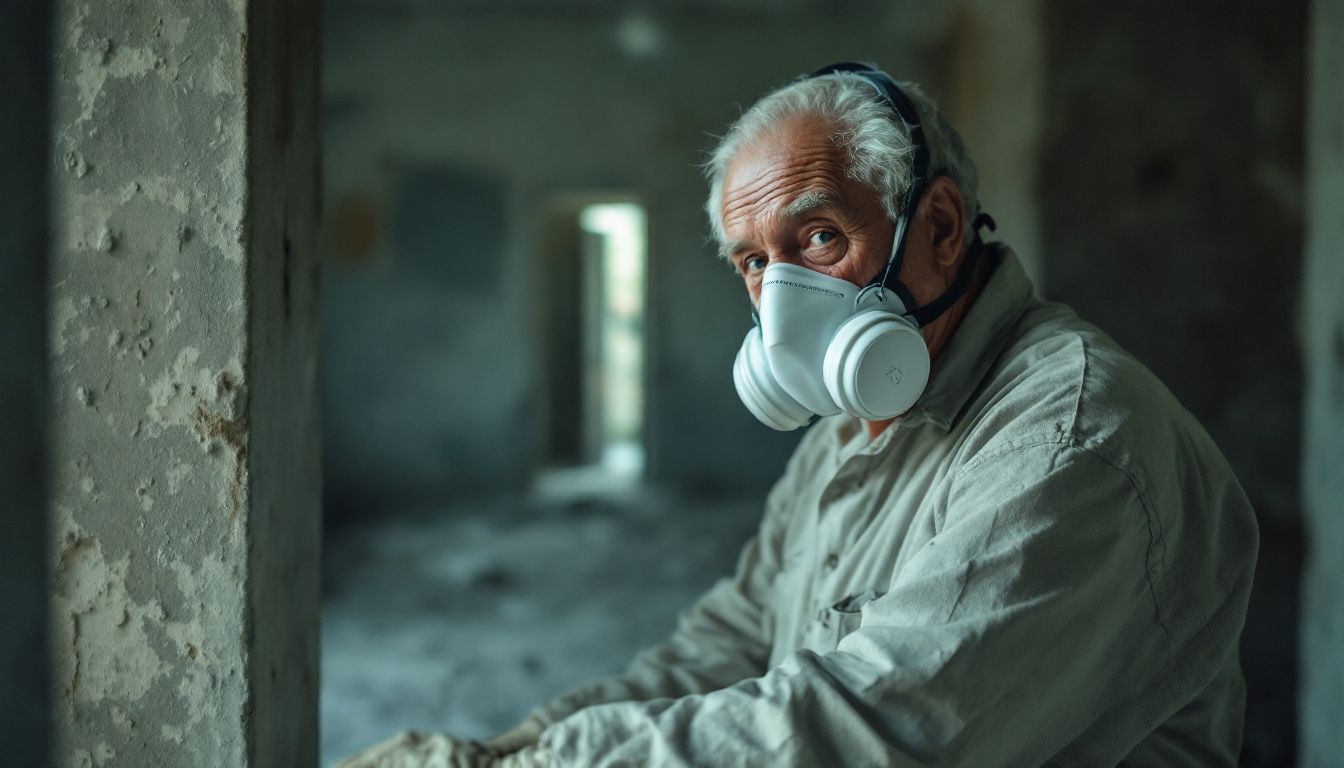
Asbestos and Interstitial Lung Disease: What Every Property Owner Needs to Know
Asbestos fibres don’t just damage lungs — they fundamentally alter them. When inhaled, these microscopic fibres trigger a cascade of biological responses that can lead to interstitial lung disease, a broad term for a group of conditions that scar and stiffen lung tissue over decades. Understanding how this happens, what it looks like, and how to prevent exposure is essential for anyone who owns, manages, or works in a building constructed before the year 2000.
The tragedy of asbestos-related illness is that it’s almost entirely preventable. The danger doesn’t come from asbestos sitting undisturbed in a wall or ceiling — it comes from fibres becoming airborne during renovation, demolition, or deterioration. Knowing where asbestos is, and managing it properly, is the first line of defence.
What Is Interstitial Lung Disease?
Interstitial lung disease (ILD) is not a single condition but a family of disorders that affect the interstitium — the tissue and space surrounding the air sacs in your lungs. When this tissue becomes inflamed or scarred, the lungs lose their elasticity and struggle to transfer oxygen into the bloodstream efficiently.
Asbestos is one of the most well-documented causes of ILD. The fibres — particularly the longer, thinner varieties — penetrate deep into lung tissue where the body cannot expel them. Over time, the immune system’s repeated attempts to neutralise these fibres cause chronic inflammation, and that inflammation eventually leads to fibrosis: permanent, progressive scarring.
What makes asbestos-related ILD particularly insidious is the latency period. Symptoms rarely appear until 20 to 40 years after initial exposure, by which point the disease may already be significantly advanced.
How Asbestos Fibres Damage Lung Tissue
Fibrosis and Scarring
When asbestos fibres lodge in the lung’s interstitium, the body sends macrophages — immune cells — to engulf and destroy them. But asbestos fibres are often too long and too durable for macrophages to neutralise. The cells die trying, releasing inflammatory chemicals in the process.
This cycle of attempted destruction and cellular death repeats continuously. Over years and decades, the damaged tissue is replaced by dense scar tissue — a process called fibrosis. Scarred lung tissue is stiff, inelastic, and far less effective at exchanging gases. Patients find themselves breathless during activities that once required no effort at all.
The scarring doesn’t stop once exposure ends. Even after someone leaves a contaminated environment, the fibres remain, and the fibrotic process continues its slow, relentless progression.
Inflammation and Oxidative Stress
Beyond mechanical damage, asbestos fibres generate reactive oxygen species — unstable molecules that attack cell membranes and DNA. This oxidative stress compounds the inflammatory damage, accelerating the deterioration of lung tissue and increasing the risk of malignant transformation.
The inflammatory response also affects the pleura — the thin membrane lining the lungs and chest cavity. Chronic pleural inflammation contributes to conditions like pleural thickening and pleural plaques, both of which restrict lung expansion and reduce overall lung function.
Asbestos-Related Conditions That Fall Under Interstitial Lung Disease
Asbestosis
Asbestosis is the most direct form of asbestos-induced interstitial lung disease. It’s characterised by diffuse pulmonary fibrosis — widespread scarring throughout both lungs — caused specifically by asbestos fibre inhalation. The condition develops gradually, typically following prolonged or heavy exposure, and is irreversible once established.
Early signs include a persistent dry cough and mild breathlessness on exertion. As the disease progresses, breathlessness becomes severe, and patients may develop finger clubbing — a distinctive broadening and rounding of the fingertips associated with chronic low oxygen levels. Crackling sounds on inhalation, known as crepitations, are a hallmark finding when a doctor listens to the chest.
There is no cure for asbestosis. Management focuses on slowing progression, relieving symptoms, and preventing complications such as respiratory infections and right-sided heart failure — a condition called cor pulmonale that develops when the heart struggles to pump blood through fibrosed lung tissue.
Pleural Thickening and Pleural Plaques
Pleural thickening is another asbestos-related condition classified within the ILD spectrum. It occurs when the pleura — the membrane surrounding the lungs — becomes scarred and thickened, restricting the lungs’ ability to expand fully. Diffuse pleural thickening can cause significant breathlessness and is considered a prescribed industrial disease in the UK.
Pleural plaques are discrete areas of fibrosis on the pleura. They are the most common manifestation of asbestos exposure and, while not themselves a form of ILD, serve as a marker that significant exposure has occurred and that monitoring for more serious conditions is warranted.
Mesothelioma
Mesothelioma is a malignant cancer of the mesothelium — the lining of the lungs, abdomen, or heart — and is almost exclusively caused by asbestos exposure. While technically distinct from interstitial lung disease, it is a direct consequence of the same fibre inhalation pathway and is deeply connected to the broader picture of asbestos-related lung damage.
The disease has a long latency period, often 30 to 40 years between exposure and diagnosis. By the time symptoms appear — typically chest pain, breathlessness, and a persistent cough — the cancer is frequently at an advanced stage. Prognosis remains poor, though treatment options including surgery, chemotherapy, and immunotherapy continue to develop.
The UK has one of the highest rates of mesothelioma in the world, a legacy of widespread industrial asbestos use throughout the twentieth century. The Health and Safety Executive publishes annual mesothelioma statistics that reflect the ongoing toll of historical exposure.
Asbestos-Related Lung Cancer
Asbestos exposure significantly increases the risk of primary lung cancer, independent of mesothelioma. The risk is multiplicative rather than simply additive for people who both smoke and have been exposed to asbestos — meaning the combined risk is far greater than the sum of each individual risk factor.
Lung cancer caused by asbestos affects the lung tissue itself rather than the surrounding lining. Symptoms overlap with other asbestos conditions: persistent cough, haemoptysis (coughing up blood), chest pain, and unexplained weight loss. Early detection through regular monitoring significantly improves outcomes for those with known exposure histories.
Recognising the Symptoms
Early Warning Signs
Because interstitial lung disease caused by asbestos develops so slowly, early symptoms are easily dismissed or attributed to ageing, fitness levels, or unrelated respiratory infections. The most common early indicators include:
- Breathlessness during physical activity that was previously manageable
- A persistent dry cough that doesn’t resolve
- Mild chest tightness or discomfort
- Unexplained fatigue
- Gradual reduction in exercise tolerance
Anyone with a history of asbestos exposure — whether occupational or environmental — who notices these symptoms should seek medical assessment promptly. Do not wait for symptoms to worsen before consulting a GP.
Advanced Symptoms
As ILD progresses, symptoms become more pronounced and debilitating. Advanced-stage asbestos-related lung disease may present with:
- Severe breathlessness at rest
- Finger and toe clubbing
- Cyanosis — a bluish tinge to the lips or fingertips indicating low oxygen levels
- Audible crackling or rattling sounds when breathing
- Ankle swelling associated with right heart strain
- Significant weight loss
- Recurrent chest infections
At this stage, the impact on quality of life is severe. Simple daily activities — climbing stairs, preparing a meal, walking short distances — can become exhausting. Patients typically require supplemental oxygen and intensive pulmonary support.
Diagnosis: How Doctors Identify Asbestos-Related ILD
Diagnosing interstitial lung disease caused by asbestos requires a combination of clinical history, imaging, and functional testing. A thorough occupational history is crucial — patients should inform their doctor of any past work in construction, shipbuilding, manufacturing, insulation, or any other trade where asbestos exposure was common.
Diagnostic tools typically include:
- High-resolution CT scanning — the gold standard for detecting ILD, showing the pattern and extent of fibrosis with far greater detail than a standard chest X-ray
- Chest X-ray — useful for identifying pleural changes, pleural plaques, and advanced fibrosis
- Pulmonary function tests — spirometry and diffusion capacity testing reveal the degree of functional impairment and help track disease progression
- Bronchoscopy and bronchoalveolar lavage — examining fluid from the airways can identify asbestos bodies and fibres
- Blood oxygen monitoring — pulse oximetry and arterial blood gas analysis assess how effectively the lungs are oxygenating the blood
- Lung biopsy — in complex cases, a tissue sample may be needed to confirm the diagnosis and rule out other causes of ILD
Regular follow-up appointments are essential for anyone diagnosed with asbestos-related ILD, as the conditions are progressive and management strategies need to be adjusted over time.
Treatment and Management Options
There is currently no treatment that reverses asbestos-induced fibrosis. Management is focused on slowing progression, managing symptoms, and maintaining quality of life for as long as possible.
Medical Interventions
Anti-fibrotic medications have shown promise in slowing the progression of certain forms of pulmonary fibrosis. Corticosteroids and immunosuppressants are used in some cases to manage inflammation, though their effectiveness in asbestos-specific ILD is limited.
Supplemental oxygen therapy is often prescribed as lung function declines, helping to reduce breathlessness and maintain activity levels. In end-stage disease, lung transplantation may be considered for eligible patients, though this remains a complex and resource-intensive option.
Pulmonary Rehabilitation
Pulmonary rehabilitation programmes — combining supervised exercise, breathing techniques, and education — can significantly improve a patient’s ability to manage daily life despite reduced lung capacity. These programmes don’t improve lung function directly, but they help patients use their remaining capacity more efficiently and reduce the psychological burden of chronic breathlessness.
Lifestyle Modifications
Smoking cessation is non-negotiable for anyone with asbestos-related lung disease. Smoking dramatically accelerates the progression of ILD and multiplies the risk of lung cancer. Patients should also avoid further dust or fume exposure, maintain vaccinations against respiratory infections, and attend all scheduled monitoring appointments.
Prevention: Why Proper Asbestos Management Matters
The only way to prevent asbestos-related interstitial lung disease is to prevent exposure to asbestos fibres in the first place. In the UK, the Control of Asbestos Regulations place a legal duty on those responsible for non-domestic premises to manage asbestos-containing materials (ACMs) and ensure they do not pose a risk to anyone who works in or visits the building.
The HSE’s HSG264 guidance sets out the standards for asbestos surveys, sampling, and management planning. Compliance is not optional — it’s a legal requirement, and failure to comply can result in prosecution, significant fines, and most importantly, preventable illness and death.
Asbestos surveys are the essential first step. A management survey identifies the location and condition of ACMs in a building that is in normal use. A refurbishment and demolition survey is required before any intrusive work begins. Both must be carried out by a competent, accredited surveyor.
If your property is in London, our team provides thorough asbestos survey London services across all boroughs, helping duty holders meet their legal obligations and protect building occupants from exposure.
For properties in the North West, our asbestos survey Manchester service covers commercial, industrial, and residential buildings throughout Greater Manchester and the surrounding region.
In the Midlands, our asbestos survey Birmingham team delivers the same high standard of surveying to help property owners and managers understand and manage their asbestos risk effectively.
Who Is Most at Risk?
Occupational exposure remains the primary driver of asbestos-related ILD in the UK. Those historically at greatest risk include:
- Construction and demolition workers
- Plumbers, electricians, and heating engineers who worked in older buildings
- Shipyard workers
- Insulation installers
- Boilermakers and pipe laggers
- Teachers and school staff in buildings with deteriorating asbestos
- Firefighters attending fires in older structures
- DIY enthusiasts who have unknowingly disturbed ACMs during home renovation
Secondary exposure — through contact with the clothing or equipment of someone who worked with asbestos — has also caused ILD in family members, particularly spouses who laundered work clothing.
Today, the greatest risk comes from tradespeople and contractors working in buildings constructed before 2000, where asbestos may still be present in floor tiles, ceiling tiles, pipe lagging, roofing felt, artex coatings, and many other materials. Without a current asbestos register and survey, any intrusive work carries an unnecessary and unacceptable risk.
Frequently Asked Questions
What is the connection between asbestos and interstitial lung disease?
Asbestos fibres, when inhaled, penetrate deep into lung tissue and trigger chronic inflammation and scarring — the hallmarks of interstitial lung disease. Conditions including asbestosis, pleural thickening, and related disorders are all classified within the ILD spectrum and are directly caused by asbestos fibre inhalation. The damage accumulates over decades, which is why symptoms often don’t appear until long after exposure has ended.
How long after asbestos exposure do symptoms of interstitial lung disease appear?
The latency period for asbestos-related interstitial lung disease is typically 20 to 40 years. This means someone exposed during their working life in the 1970s or 1980s may only now be developing symptoms. This long delay between exposure and disease is one of the reasons asbestos-related conditions remain a significant public health issue in the UK today.
Can asbestos-related interstitial lung disease be cured?
No. Once lung fibrosis caused by asbestos has developed, it cannot be reversed. Treatment focuses on slowing the progression of the disease, managing symptoms such as breathlessness and fatigue, and maintaining quality of life through pulmonary rehabilitation, oxygen therapy, and medication. Lung transplantation may be an option in severe cases for eligible patients.
Is it safe to stay in a building that contains asbestos?
Asbestos that is in good condition and left undisturbed does not pose an immediate risk. The danger arises when asbestos-containing materials are damaged, deteriorating, or disturbed during maintenance or renovation work, releasing fibres into the air. A professional asbestos survey will assess the condition and risk of any ACMs in your building and advise on appropriate management or removal.
Who is legally responsible for managing asbestos in a building?
Under the Control of Asbestos Regulations, the duty to manage asbestos falls on the “dutyholder” — typically the owner, employer, or managing agent responsible for maintaining a non-domestic building. This duty includes arranging an asbestos survey, maintaining an asbestos register, and ensuring that anyone who might disturb ACMs is informed of their location and condition. Failure to meet this duty is a criminal offence.
Protect Your Building, Protect Your People
Interstitial lung disease caused by asbestos is a devastating, irreversible condition — but it is preventable. The single most effective action any property owner or manager can take is to commission a professional asbestos survey and ensure that all asbestos-containing materials are properly identified, documented, and managed.
Supernova Asbestos Surveys has completed over 50,000 surveys across the UK. Our UKAS-accredited surveyors work to HSG264 standards, providing clear, actionable reports that help duty holders meet their legal obligations and keep people safe. Whether you need a management survey, a refurbishment and demolition survey, or ongoing asbestos management support, we’re here to help.
Call us on 020 4586 0680 or visit asbestos-surveys.org.uk to book a survey or speak with one of our team.