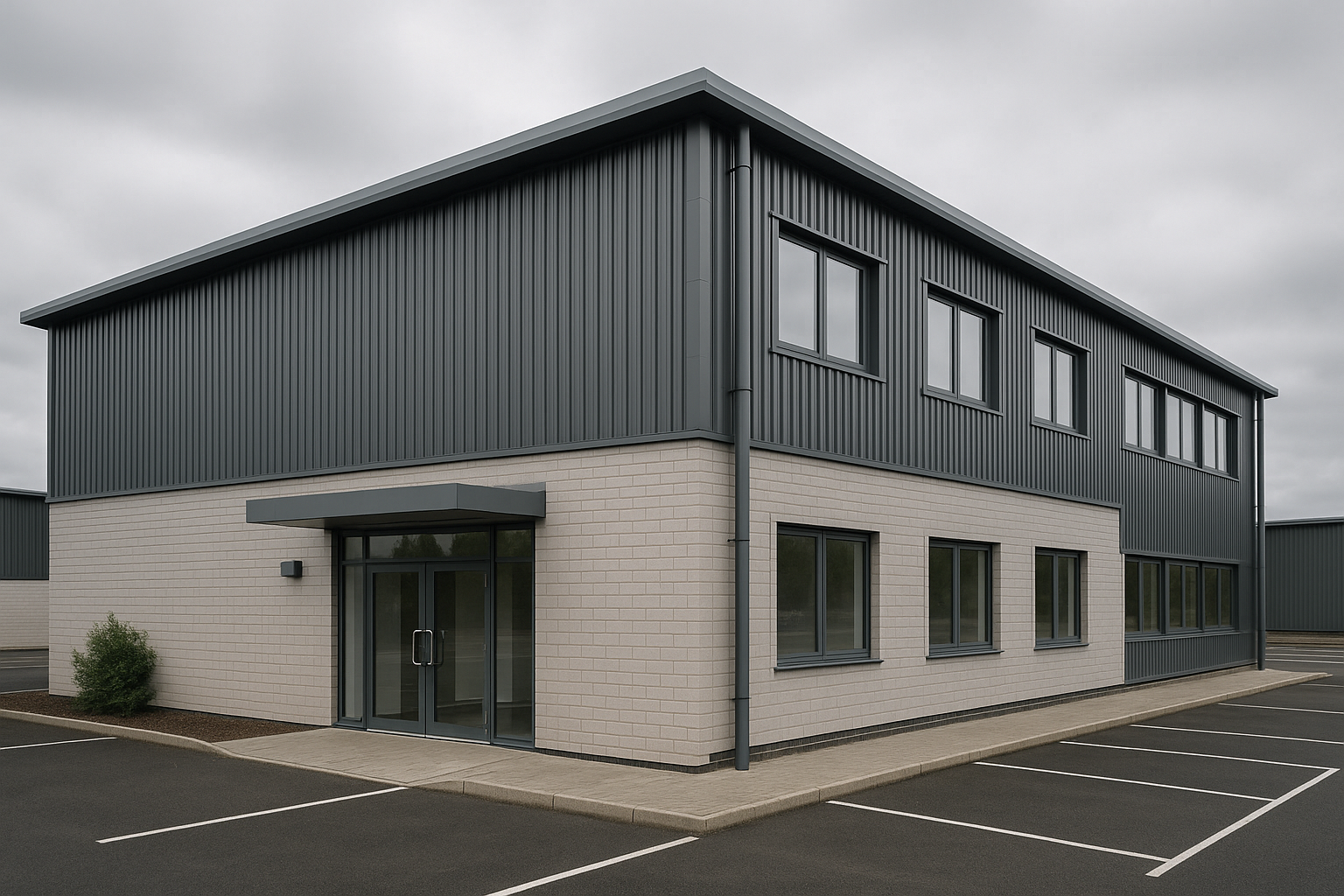
You cannot see asbestos fibres in the air, and that is exactly why asbestos air testing matters. When refurbishment starts, a ceiling tile breaks, or licensed removal is underway, decisions about safety should never rely on guesswork. Property managers, duty holders, landlords and contractors need evidence they can act on, and air monitoring provides it.
Under the Control of Asbestos Regulations, asbestos risks must be identified, assessed and controlled. HSE guidance and HSG264 support that approach by setting expectations around competent inspection, assessment and asbestos management. Where there is a concern that fibres may be airborne, asbestos air testing helps show what is happening in real terms and whether an area, task or control measure is acceptable.
At Supernova Asbestos Surveys, we use asbestos air testing as part of a wider risk management approach. If you need to confirm whether a material contains asbestos, our asbestos testing service deals with bulk sampling and laboratory analysis. Air testing answers a different question: what people may actually be breathing.
What asbestos air testing actually measures
Asbestos air testing involves drawing a measured volume of air through a specialist filter. Any fibres collected on that filter are then analysed to assess fibre concentration in the sampled air.
That distinction matters. A material can contain asbestos without releasing significant fibres at that moment, while damaged or disturbed materials can create a much more immediate airborne risk.
In practical terms, asbestos air testing is used to assess:
- Potential exposure during asbestos-related work
- The effectiveness of control measures
- Conditions around enclosures and work areas
- Whether accidental disturbance has created an airborne risk
- Whether an area is suitable for reoccupation after licensed removal
A sound sampling strategy is essential. Testing without a clear purpose can waste time and money, while targeted testing gives you defensible records and a clearer path to action.
Why asbestos air testing matters for compliance and risk control
The legal duty is not simply to know asbestos may be present. The duty is to manage the risk of exposure.
That means identifying asbestos-containing materials, assessing their condition, preventing disturbance where possible and reducing exposure to the lowest level reasonably practicable where work must proceed. Asbestos air testing supports those duties with measurable data rather than assumptions.
For property managers and duty holders, air monitoring can help you:
- Check whether enclosures and control measures are working properly
- Assess worker exposure during specific tasks
- Support method statements and safe systems of work
- Respond to incidents, complaints or suspected contamination
- Provide evidence before handing areas back to occupants
- Keep clearer records for audits and investigations
If you manage older premises, especially non-domestic buildings where asbestos may still be present, air monitoring should be considered whenever work could disturb known or hidden asbestos-containing materials. That is particularly relevant during maintenance, strip-out, plant replacement and intrusive refurbishment.
When asbestos air testing is usually needed
Not every site needs air monitoring, but there are common situations where it is sensible or expected. The right decision depends on the material, its condition, the planned work and the likelihood of fibre release.
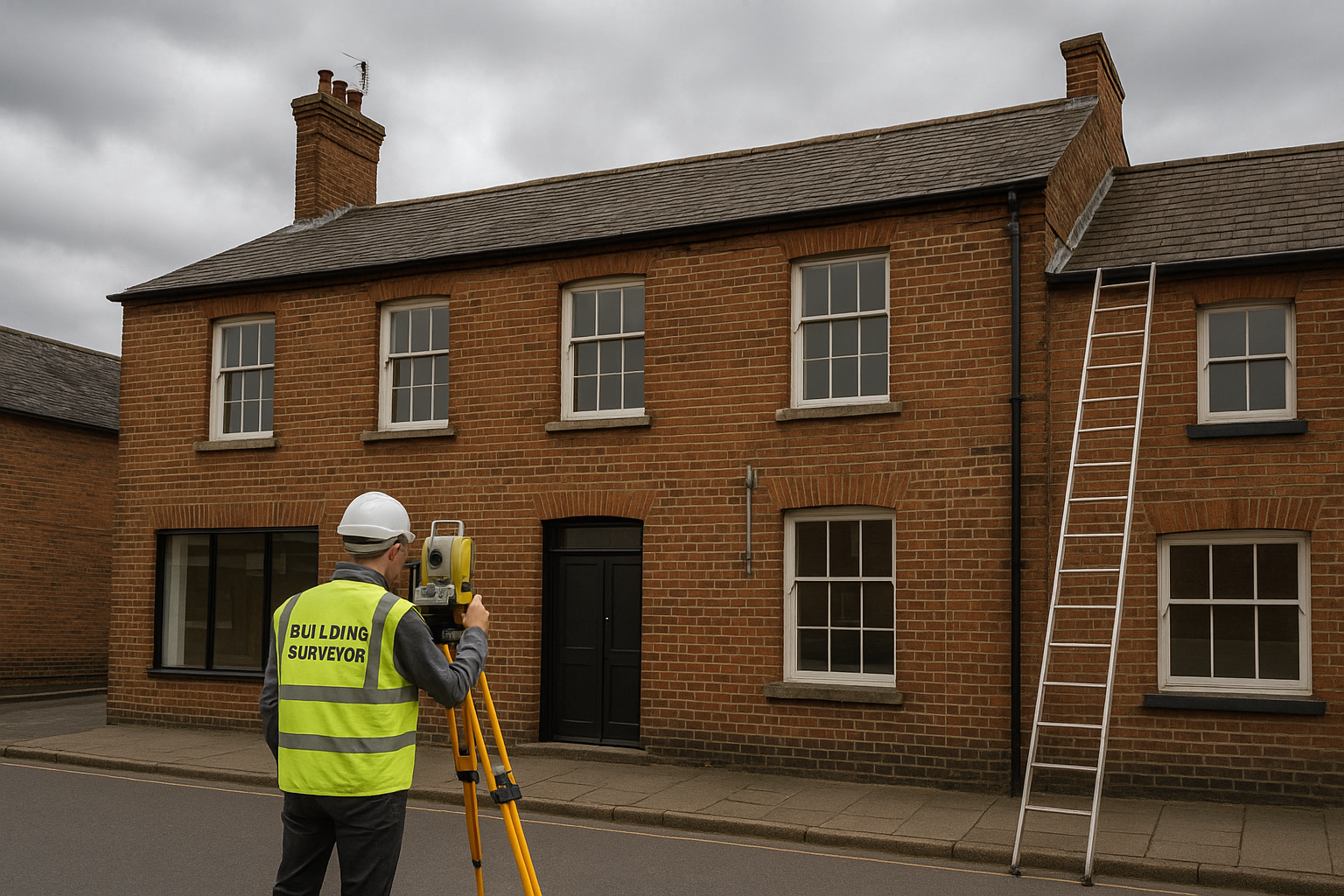
Typical triggers for asbestos air testing include:
- Before intrusive work where there are concerns about historic contamination
- During licensed asbestos removal
- After accidental damage to suspect materials
- Following poor workmanship or debris discovery
- Where staff or occupants need reassurance after an incident
- When assessing worker exposure during repeated tasks
- As part of four-stage clearance after licensed removal
If there is uncertainty, get advice before work starts. Building air monitoring into a planned job is far easier than trying to explain later why exposure was never assessed properly.
Types of asbestos air testing used on site
Different monitoring methods answer different questions. Choosing the wrong one can produce results that are technically valid but practically unhelpful.
Background air testing
Background testing is carried out before asbestos-related work starts. It helps establish existing airborne fibre conditions where there are concerns about damaged materials, historic contamination or uncertainty about the building environment.
This can be useful before refurbishment or removal, especially where later results need context. A baseline helps you understand whether site conditions changed once work began.
Static air monitoring
Static monitoring uses pumps placed at fixed positions. These may be near a work area, outside an enclosure or in nearby occupied spaces where reassurance is needed.
It is useful for understanding conditions in a defined location, but it does not tell you what a worker is breathing during a task. For that, personal monitoring is usually more relevant.
Personal air monitoring
Personal monitoring measures air in the worker’s breathing zone while the task is being carried out. The pump is worn on the body, with the sampling head positioned close to the nose and mouth area.
This is often the most meaningful form of asbestos air testing for employers because it reflects real working conditions. It shows whether methods, tools, suppression and respiratory controls are actually reducing exposure in practice.
Leak testing
Leak monitoring is used around enclosures during asbestos removal work. Its purpose is to identify whether fibres may be escaping from the controlled area.
If results suggest a problem, the enclosure, work methods and decontamination arrangements should be reviewed immediately. Delay can allow contamination to spread beyond the work zone.
Reassurance testing
Reassurance testing is commonly requested after accidental disturbance, debris discovery or concern from building occupants. It can be useful, but only when the sampling plan reflects the actual incident.
Testing the wrong area or testing before cleaning and isolation are complete can produce misleading comfort. The site history and likely source of disturbance should shape the approach.
Clearance air testing
After licensed asbestos removal, the area must pass the four-stage clearance process before it can be returned to normal use. Air testing forms part of that process and supports the certificate of reoccupation.
This must be carried out independently and in line with HSE guidance. It should never be treated as a box-ticking exercise.
What is asbestos personal air monitoring and testing?
Asbestos personal air monitoring and testing is a specific form of asbestos air testing designed to measure the exposure of an individual worker during a task. Rather than sampling the room generally, it samples air from the worker’s breathing zone.
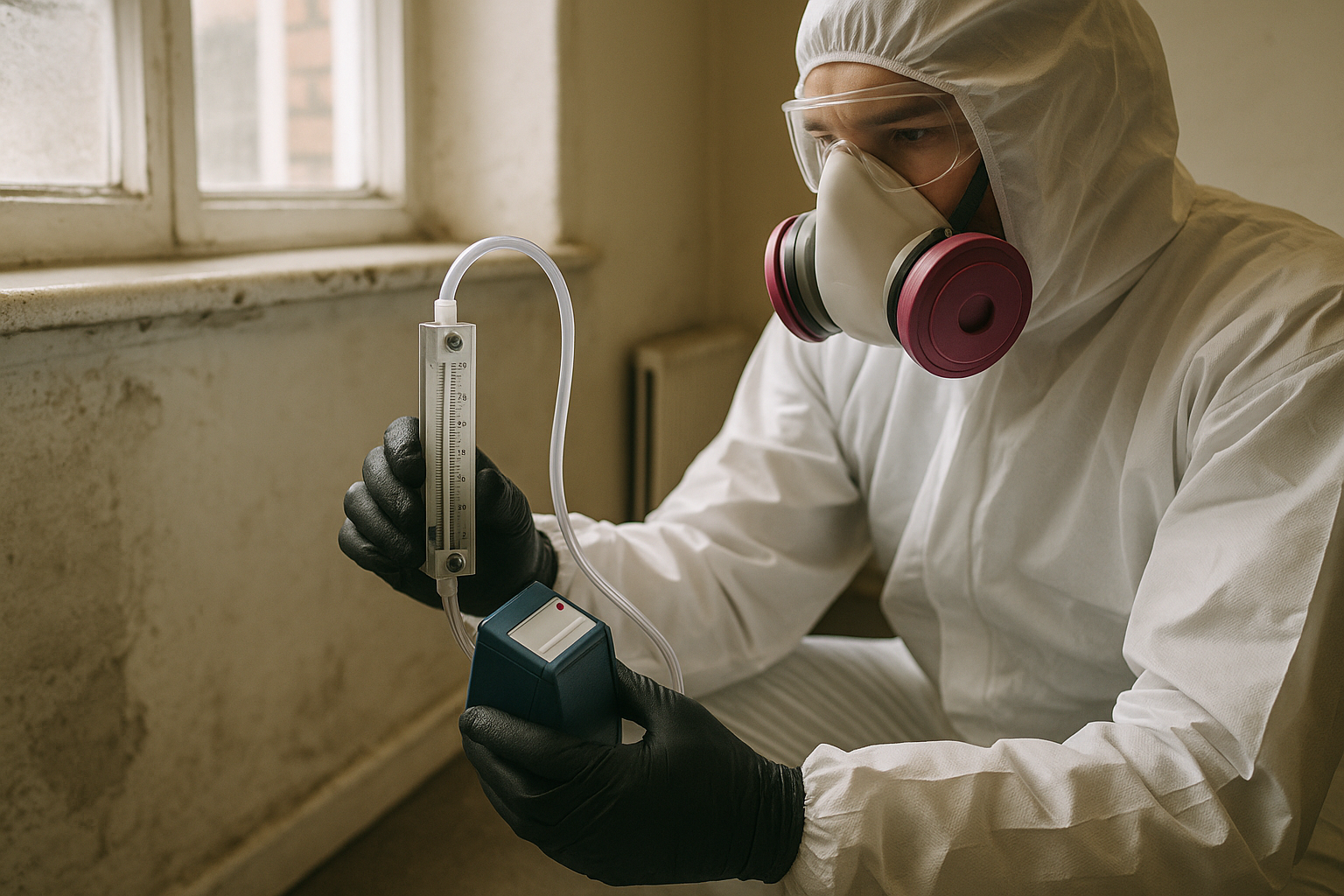
That makes it especially valuable where you need to know whether a method of work is safe in reality, not just on paper. If a contractor is removing asbestos insulating board, cleaning debris, drilling near suspect materials or carrying out maintenance in a known asbestos environment, personal monitoring can provide meaningful exposure data.
For employers and managers, personal monitoring helps answer practical questions such as:
- Are workers being exposed during this task?
- Is the method statement working under real site conditions?
- Are wetting methods and shadow vacuuming effective?
- Does respiratory protective equipment appear suitable for the activity?
- Do exposure records need updating and retaining?
Where work is repeated, personal monitoring can also improve future planning. If exposure is higher than expected, the task can be redesigned before the problem becomes routine.
When asbestos personal air monitoring and testing is necessary
There is no single trigger for personal monitoring, but there are many situations where it forms part of proper asbestos risk management. The key factors are the nature of the task, the type and condition of the asbestos-containing material, likely exposure and whether existing information is enough to assess that exposure reliably.
Common examples include:
- Licensed asbestos removal work
- Notifiable non-licensed work where exposure data is needed
- Work on friable, damaged or degraded materials
- New or modified working methods
- Repeated maintenance tasks involving known asbestos risks
- Concerns about control failure or enclosure leakage
- Unexpected incidents where workers may have been exposed
If you are unsure whether monitoring is needed, seek independent advice before the task starts. That protects both the workforce and the organisation responsible for the work.
Benefits of asbestos air testing for property managers and contractors
Done properly, asbestos air testing is not just a compliance exercise. It gives you evidence you can use to make better decisions on site.
It measures actual exposure risk
Bulk sampling tells you whether a material contains asbestos. Air monitoring helps show whether fibres are airborne and whether people may be inhaling them.
It checks whether controls are working
Enclosures, wet removal methods, local controls, decontamination procedures and respiratory protection all need to perform properly together. Air testing helps verify that they do.
It strengthens your records
Measured results are far more useful than assumptions when dealing with audits, insurance queries, incident investigations or long-term exposure records.
It improves future working methods
Monitoring often highlights practical changes that reduce fibre release. A different sequence of work, better access, improved waste handling or stronger supervision can make a real difference.
It protects occupants as well as workers
Where buildings remain partly occupied, air monitoring can help assess whether work is affecting adjacent areas. That is especially useful in offices, schools, healthcare settings and mixed-use premises.
How asbestos personal air monitoring and testing is carried out
Personal monitoring needs to be methodical. Small mistakes in calibration, positioning or documentation can undermine the value of the sample.
The process should always be handled by competent professionals using suitable procedures and properly maintained equipment.
The right equipment
Personal asbestos air testing typically uses:
- A calibrated sampling pump with a stable flow rate
- A filter cassette with the correct membrane filter
- Flexible tubing and secure fittings
- A calibration device or flow meter
- A harness or belt arrangement that does not interfere with the work
- Labels, field records and chain-of-custody documentation
The pump must be safe and practical for the task. The sampling head needs to remain in the breathing zone throughout the monitored activity.
Airflow measurement and calibration
Before sampling starts, the airflow must be checked and set correctly. The final result depends on the volume of air drawn through the filter, so an incorrect or unstable flow rate can make the sample unreliable.
Good practice includes recording:
- The target flow rate
- Pre-sampling calibration reading
- Post-sampling calibration reading
- Sampling duration
- Total volume sampled
These records are essential for interpreting the result properly and defending the quality of the monitoring if questions arise later.
Preparation before sampling
Preparation determines whether the sample will answer the right question. Before work begins, the analyst should understand the task, the material involved, the likely level of disturbance and the controls in place.
The worker should also be briefed. If the pump or sampling head is moved casually during the task, the result may no longer reflect real exposure.
The sampling process
Once fitted and calibrated, the worker carries out the task as normally as possible. The point is to capture a realistic picture of exposure, not an artificial demonstration.
During the sampling period, the analyst records relevant details such as:
- The activity being carried out
- Start and finish times
- Changes in method or pace
- Condition of the material
- Use of wetting or shadow vacuuming
- Any interruptions, equipment issues or unusual events
This context matters. A fibre result without a clear task record can be difficult to interpret properly.
Laboratory analysis and reporting
After sampling, the filter is analysed and the result is reported as a fibre concentration. The report should explain what was sampled, under what conditions and what the result means in context.
A useful report does more than list numbers. It should help the client decide whether controls were effective, whether further action is needed and whether future work methods should be adjusted.
Common mistakes that make asbestos air testing less useful
Air monitoring is only as good as the planning behind it. Several common errors can limit its value.
- Testing without a clear objective – if you do not know what decision the result is meant to support, the exercise may achieve very little.
- Using the wrong type of monitoring – static monitoring cannot replace personal monitoring where worker exposure is the real question.
- Poor timing – reassurance testing before cleaning or isolation may simply confirm the obvious.
- Sampling the wrong location – a result from an unaffected area may give false comfort.
- Weak documentation – without proper notes on the task, controls and calibration, the result becomes harder to defend.
- Relying on air testing alone – monitoring supports risk assessment, but it does not replace surveying, sampling, planning and competent site control.
Where asbestos-containing materials are unknown or not properly recorded, the first step may be a survey rather than air monitoring. If you need location-specific support, Supernova can help with an asbestos survey London, an asbestos survey Manchester or an asbestos survey Birmingham.
Asbestos air testing, bulk sampling and removal: knowing which service you need
Clients often use similar terms for very different services, which can cause delays. The right service depends on the question you need answered.
- Asbestos air testing asks whether fibres are airborne and whether exposure may be occurring.
- Bulk sampling asks whether a material itself contains asbestos.
- Surveying asks where asbestos-containing materials are, what condition they are in and how they should be managed.
- Removal deals with the safe enclosure, stripping and disposal of asbestos-containing materials where that is the right control option.
If you suspect a material contains asbestos, start with sampling rather than air monitoring. Supernova offers both project-based and standalone asbestos testing to identify suspect materials accurately.
If asbestos-containing materials are damaged, likely to be disturbed or no longer suitable to manage in place, removal may be required. In those cases, professional asbestos removal should be planned alongside the right monitoring, clearance and documentation.
Practical advice before you arrange asbestos air testing
If you think air monitoring may be needed, a few simple steps will make the process more useful and more cost-effective.
- Define the concern clearly. Is the issue worker exposure, enclosure leakage, accidental damage or reoccupation?
- Gather existing asbestos information. Surveys, registers, plans and previous sampling results help shape the monitoring strategy.
- Record what has happened. If there has been an incident, note the location, time, material involved and who may have been affected.
- Avoid disturbing the area further. Unnecessary access can worsen contamination and complicate interpretation.
- Use competent specialists. Air testing must be planned, undertaken and interpreted by people who understand asbestos risk in real site conditions.
The more accurate the briefing, the more useful the monitoring will be. Good information at the start usually leads to faster decisions and fewer repeat visits.
Why independent judgement matters
With asbestos, the pressure to keep a project moving can tempt people to look for the quickest answer rather than the right one. That is risky.
Asbestos air testing should be based on site conditions, regulatory expectations and the decision that needs to be made. Independence matters, particularly where clearance, reoccupation or exposure concerns could affect legal duties, contractor performance or occupant confidence.
A competent consultant will tell you when air testing is necessary, when it is not, and what other steps should come first. That honesty is often more valuable than the sample itself.
Frequently Asked Questions
What is asbestos air testing used for?
Asbestos air testing is used to assess whether asbestos fibres are airborne and whether people may be exposed. It is commonly used during removal work, after accidental disturbance, around enclosures and as part of clearance before reoccupation.
Does asbestos air testing tell me if a material contains asbestos?
No. Air testing measures fibres in the air, not the asbestos content of a material. If you need to identify a suspect material, bulk sampling and laboratory analysis are required.
When is personal asbestos air monitoring needed?
Personal monitoring is often needed when you must assess what an individual worker is breathing during a task. It is especially useful for licensed work, higher-risk materials, repeated tasks and situations where the effectiveness of controls needs to be checked.
Can reassurance air testing prove an area is definitely safe?
It can provide useful evidence, but only when the testing strategy matches the actual incident and the area has been properly isolated and cleaned where necessary. Results should always be interpreted in context.
Who should carry out asbestos air testing?
It should be carried out by competent professionals with the right equipment, procedures and understanding of asbestos risk, HSE guidance and site conditions. Poorly planned monitoring can be misleading.
If you need clear advice on asbestos air testing, surveying, sampling or project support, speak to Supernova Asbestos Surveys. We provide nationwide asbestos services for commercial, public sector and residential clients. Call 020 4586 0680 or visit asbestos-surveys.org.uk to arrange expert support.