Asbestos is still one of the most common hidden risks in UK property. It turns up in ceiling voids, service risers, pipe boxing, floor tiles, roof sheets and plant rooms, often sitting undisturbed for years until a repair, refit or demolition job brings it into play.
If you manage, own or work on a building constructed or altered before 2000, asbestos should never be treated as a remote possibility. It is a live compliance, safety and project-planning issue, and the right response starts with knowing what asbestos is, where it was used and how different types behave in buildings.
What is asbestos and why does it still matter?
Asbestos is the name given to a group of naturally occurring fibrous minerals. These fibres are strong, heat resistant, chemically stable and resistant to electricity, which is why asbestos was used so widely in construction, engineering and manufacturing.
The problem is not simply that asbestos exists. The risk arises when asbestos-containing materials are damaged, drilled, cut, sanded, broken or otherwise disturbed, releasing microscopic fibres into the air where they can be inhaled.
From a practical property management point of view, a few principles matter most:
- Asbestos in good condition is not always an immediate danger
- Damaged or disturbed asbestos can create serious exposure risk
- You cannot confirm asbestos by sight alone
- Surveying and sampling are the proper way to identify asbestos
- Records must be kept up to date and shared with anyone who may disturb asbestos
That is the thinking behind the duty to manage asbestos under the Control of Asbestos Regulations. In occupied non-domestic premises, dutyholders must take reasonable steps to find out whether asbestos is present, assess risk and prevent accidental disturbance.
HSE guidance and survey standards such as HSG264 set the framework for how asbestos should be surveyed, assessed and recorded. For property managers, the takeaway is simple: if asbestos may be present, you need clear information before anyone starts work.
Where the word asbestos comes from
The word asbestos comes from a Greek term often translated as “inextinguishable” or “unquenchable”. That meaning reflects the feature that made asbestos so attractive for centuries: it does not burn easily.
Long before asbestos became a routine building material, it was valued for heat-resistant textiles, lamp wicks and other specialist products. Once industrial mining and processing expanded, asbestos moved from niche use into mainstream manufacturing.
The history of asbestos use in UK buildings
Early and industrial use
Small-scale use of asbestos-like fibrous minerals goes back a long way, but the major spread of asbestos only came with industrial expansion. Steam power, shipbuilding, railways and heavy engineering all demanded materials that could cope with heat, friction and chemical exposure.
Asbestos fitted that need extremely well. It was versatile, relatively cheap and easy to mix into other products.
Post-war construction and widespread use
In the UK, asbestos became especially common during post-war rebuilding and expansion. Homes, schools, hospitals, offices, warehouses, factories and public buildings all made use of asbestos in one form or another.
That legacy is why asbestos remains such a major issue now. New use is banned, but asbestos-containing materials are still present in many existing properties and must be managed in line with HSE guidance.
Recognition of harm
Over time, the health effects of asbestos exposure became impossible to ignore. Workers handling asbestos dust developed serious respiratory disease, and regulation tightened as the evidence grew.
That history still matters because asbestos is not only a historic problem. In many buildings, it is a present-day management issue waiting to surface when maintenance or refurbishment begins.
Why asbestos was used so widely
Asbestos became popular because it solved several building and industrial problems at once. It was not used in one narrow category of products. It appeared across a huge range of materials because it improved performance in practical ways.
Manufacturers used asbestos to:
- Improve fire resistance
- Add strength and durability
- Provide thermal insulation
- Reduce noise transfer
- Increase chemical resistance
- Improve resistance to wear and friction
- Support electrical insulation in some products
That breadth of use explains why asbestos is still found in so many different locations today. It may be obvious, such as cement roof sheets on a garage, or hidden behind finishes, inside ducts or above suspended ceilings.
What are the different types of asbestos?
There are six regulated types of asbestos. These fall into two mineral groups: serpentine and amphibole.
For anyone managing property, the key point is that all types of asbestos must be treated seriously. Some were used more often than others, and some are associated with higher-risk materials, but none should be disturbed without proper assessment.
Serpentine asbestos
The serpentine group contains one commercially important type of asbestos: chrysotile, often called white asbestos.
Chrysotile fibres are curly and flexible. That made this type of asbestos easier to weave and easier to mix into products such as cement sheets, floor coverings, gaskets and textured coatings.
In UK survey work, chrysotile remains one of the most commonly identified forms of asbestos. It appears in many lower-friability materials, but that does not mean it is safe to disturb.
Amphibole asbestos
The amphibole group includes:
- Crocidolite – often called blue asbestos
- Amosite – often called brown asbestos
- Anthophyllite
- Tremolite
- Actinolite
These asbestos fibres are straighter and more needle-like than chrysotile. In practical terms, crocidolite and amosite are especially significant because they were used in some of the higher-risk asbestos-containing materials found in buildings.
Anthophyllite, tremolite and actinolite were less commonly used commercially, but they can still be encountered in specialist products or as contaminants in other materials.
Why the type of asbestos is only part of the picture
The type of asbestos matters, but the material it is bound into matters just as much. A damaged asbestos insulating board can present a more urgent risk than an intact asbestos cement sheet, even though both contain asbestos.
When assessing asbestos risk, surveyors look at more than fibre type. They also consider condition, surface treatment, friability, accessibility, occupancy and the likelihood of disturbance.
Chrysotile asbestos
Chrysotile is the asbestos type most people are likely to encounter in UK buildings. It was used extensively because its fibres were flexible and easy to incorporate into manufactured products.
Common examples of chrysotile asbestos include:
- Asbestos cement roof sheets and wall cladding
- Textured coatings
- Floor tiles and some adhesives
- Gaskets and seals
- Vinyl sheet backing
- Some insulation products
Because chrysotile asbestos was so widely used, it often appears in both domestic and commercial settings. That is one reason surveys are so important. Materials that look ordinary may still contain asbestos.
Crocidolite asbestos
Crocidolite, or blue asbestos, is one of the amphibole forms of asbestos. It was used in products requiring strong heat resistance and chemical durability.
Crocidolite asbestos may be found in:
- Sprayed coatings
- Pipe insulation
- Some cement products
- Certain insulating materials
In building risk terms, crocidolite asbestos is particularly concerning where it exists in friable or damaged materials. If there is any suspicion of debris, deterioration or previous disturbance, stop work and arrange professional assessment straight away.
Amosite asbestos
Amosite, often called brown asbestos, is another amphibole form that appears regularly in UK survey findings. It was commonly used in asbestos insulating board, ceiling tiles, thermal insulation products and some fire protection materials.
Typical locations for amosite asbestos include:
- Partition walls
- Soffits
- Service risers
- Fire doors and linings
- Ceiling panels
- Plant rooms and boiler areas
Amosite asbestos is a major reason intrusive work must never begin without the correct survey. It is often hidden behind finishes or inside service spaces, only becoming visible when work is already underway.
Anthophyllite, tremolite and actinolite asbestos
These three types of asbestos are less commonly encountered in mainstream UK buildings, but they are still regulated and still relevant.
Anthophyllite asbestos was used in some insulation products and composite materials, though far less widely than chrysotile, crocidolite or amosite.
Tremolite asbestos and actinolite asbestos were not major commercial asbestos products in the same way as the better-known types, but they may appear as contaminants in other minerals or materials.
For dutyholders and contractors, the practical message is the same across all asbestos types: identification must be based on inspection, sampling where appropriate and competent analysis, not guesswork.
Common asbestos-containing materials in UK properties
One of the biggest mistakes in asbestos management is assuming asbestos only appears in obvious industrial products. In reality, asbestos was added to a wide range of everyday building materials.
Common asbestos-containing materials include:
- Asbestos cement roof sheets, wall cladding, gutters and downpipes
- Asbestos insulating board in partitions, soffits and service risers
- Pipe lagging and boiler insulation
- Sprayed coatings on ceilings and structural steel
- Textured coatings on walls and ceilings
- Floor tiles and bitumen adhesives
- Vinyl floor backing
- Moulded products such as cisterns and tanks
- Rope seals, gaskets and packing materials
- Fire blankets and heat-resistant textiles
- Electrical backing boards and older fuse board components
- Fire doors, panels and protective linings
Not every asbestos-containing material presents the same level of risk. Broadly speaking, softer and more friable asbestos materials release fibres more easily when disturbed than firmly bound products such as asbestos cement.
Where asbestos is commonly found in buildings
Asbestos often sits in parts of a building that people stop noticing. It may be hidden above ceilings, inside ducts, behind boxing or in little-used service areas.
Typical locations include:
- Garage roofs and outbuildings
- Soffits and fascias
- Ceiling tiles and suspended ceiling voids
- Partition walls and service boxing
- Pipe insulation in boiler rooms
- Lift shafts and risers
- Electrical cupboards and plant rooms
- Floor tiles, underlays and adhesives
- Wall panels and textured coatings
- Fire doors and fire protection linings
- Industrial units, stores and workshops
If you manage an older property, pay close attention to hidden service areas. Asbestos is frequently discovered in risers, ceiling voids and plant spaces just before intrusive work begins, which can halt a project and increase costs fast.
Property types and industries with heavy historic asbestos use
The original use of a building can offer strong clues about where asbestos may be present. Some sectors relied on asbestos more heavily than others.
Buildings and industries with significant historic asbestos use include:
- Construction and demolition
- Shipbuilding and marine engineering
- Railways and transport depots
- Power generation facilities
- Factories and heavy industry
- Steelworks and foundries
- Chemical processing sites
- Oil and gas facilities
- Automotive workshops
- Boiler houses and plant buildings
- Schools, hospitals and public sector estates
- Older offices, shops and warehouses
A converted building needs particular care. A former industrial site now used as offices may still contain asbestos in hidden structural elements, ducts or old plant areas even if the occupied space looks modern.
What to do if you suspect asbestos
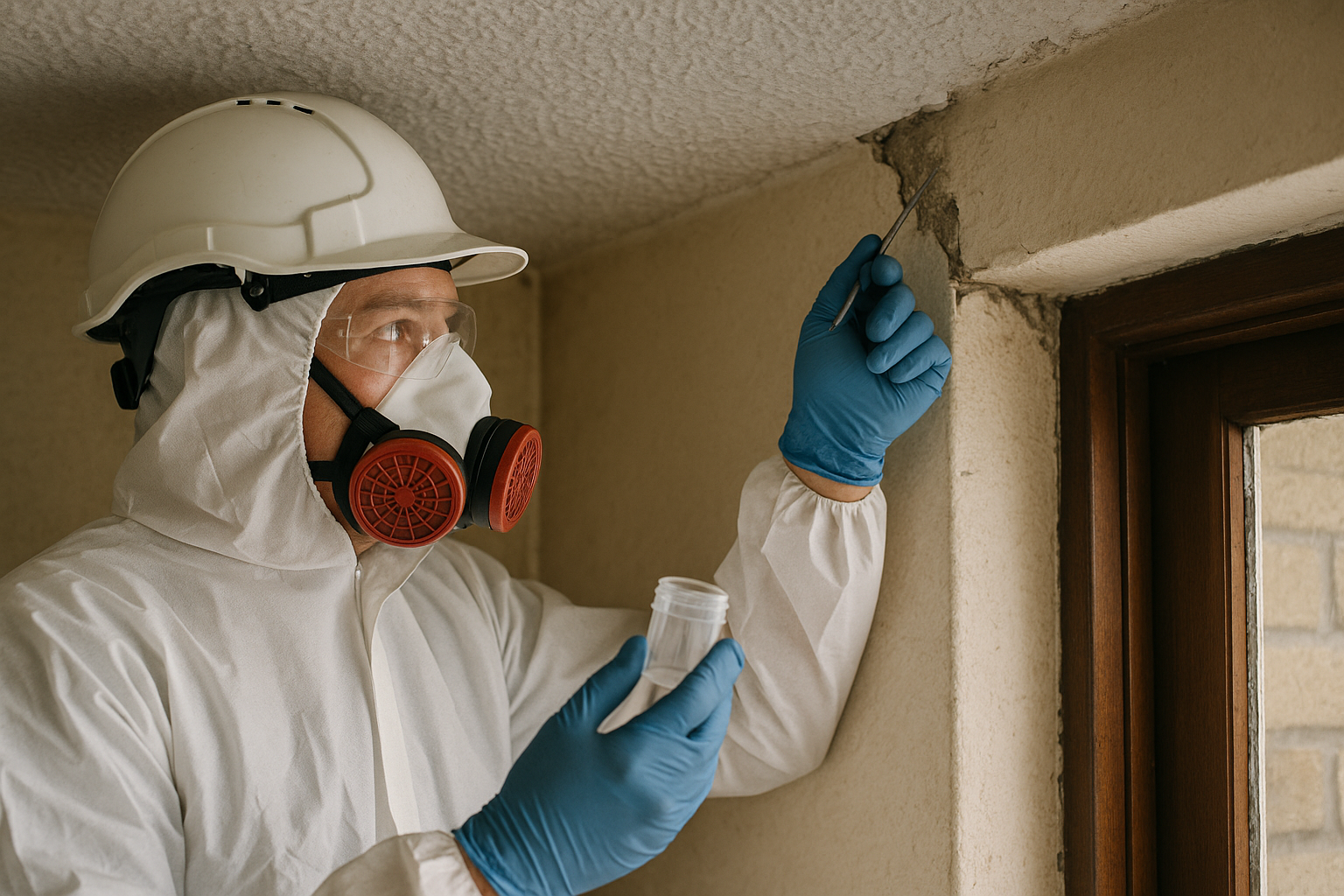
If you think a material may contain asbestos, do not disturb it. Many avoidable exposures happen because someone drills, sands, cuts or removes a suspect material before checking what it is.
Take these steps immediately:
- Stop work if the material could be disturbed
- Keep people away from the area if the material is damaged or debris is visible
- Check your records, including asbestos surveys, registers and management plans
- Arrange inspection and sampling by a competent professional if needed
- Inform contractors about known or suspected asbestos before any work starts
If there is visible debris, do not sweep it and do not use a standard vacuum cleaner. Leave the area alone until it has been professionally assessed.
Good asbestos management is usually about disciplined decisions rather than dramatic action. Know what is there, keep records current and make sure nobody starts work blind.
Choosing the right asbestos survey
Using the correct asbestos survey is one of the most important decisions a dutyholder can make. The wrong survey can leave asbestos undiscovered and create unnecessary risk, delays and cost.
Management survey
For normal occupation and routine maintenance, a management survey is usually the starting point. Its purpose is to locate, as far as reasonably practicable, the presence and extent of asbestos-containing materials that could be damaged or disturbed during normal occupancy, including foreseeable maintenance.
This type of asbestos survey supports the duty to manage asbestos. It helps you build or update your register and decide what needs monitoring, labelling, repair or control.
Demolition survey
If major strip-out or demolition is planned, a demolition survey is required. This is a fully intrusive asbestos survey designed to identify asbestos in the areas affected so it can be dealt with safely before work starts.
Relying on a standard management asbestos survey before intrusive work is a common and expensive mistake. A survey for occupation is not designed to make demolition or major strip-out safe.
Practical survey advice for dutyholders
- Do not assume an old asbestos survey still reflects the current building layout
- Check whether all relevant areas were accessed
- Review asbestos findings before every significant maintenance project
- Make sure contractors receive asbestos information before arriving on site
- Update the asbestos register when materials are removed, repaired or re-inspected
If your property portfolio covers multiple sites, consistency matters. Use the same process for checking asbestos records before works, and make sure site teams know who holds the latest information.
How workers can stay safe around asbestos
Workers do not need to be asbestos specialists to come across asbestos. Electricians, plumbers, joiners, decorators, telecoms engineers, caretakers, maintenance teams and general builders can all disturb asbestos during routine tasks.
The simplest rule is still the best one: if you do not know what the material is, do not disturb it.
Key safety rules include:
- Check the asbestos register before starting work
- Read the survey information for the exact area involved
- Stop immediately if unexpected suspect material is found
- Never drill, cut, sand or break a material just to see what is behind it
- Report damaged asbestos or debris straight away
- Make sure subcontractors receive the same asbestos information as direct staff
For planned works, asbestos information should be part of the job pack, not an afterthought. That one step prevents a large number of avoidable incidents.
Asbestos management in day-to-day property operations
Effective asbestos management is not just about surveys. It is about using the information properly once you have it.
In practical terms, that means:
- Maintaining an accurate asbestos register
- Carrying out regular reinspection where asbestos remains in place
- Labelling or otherwise controlling access where appropriate
- Briefing staff and contractors before work begins
- Reviewing asbestos information whenever the building changes
Asbestos does not always need removal. In many cases, asbestos in good condition can remain in place and be managed safely. The key is making sure its location, condition and risk are understood and communicated.
Local support for asbestos surveys
If you need site-specific help, local knowledge can make the process faster and more practical. Supernova provides asbestos surveying across the UK, including services for clients who need an asbestos survey London, an asbestos survey Manchester or an asbestos survey Birmingham.
That matters when projects are moving quickly. Whether you are managing a single property or a wider portfolio, having the right asbestos survey in place before maintenance, refurbishment or demolition saves time and avoids unnecessary disruption.
Frequently Asked Questions
Can you identify asbestos just by looking at it?
No. Some materials may strongly suggest asbestos, especially in older buildings, but asbestos cannot be confirmed by appearance alone. Proper identification requires a competent survey and, where appropriate, sampling and analysis.
Is asbestos always dangerous if it is present?
Not always. Asbestos that is in good condition and not being disturbed may present a lower immediate risk than damaged or friable asbestos. The real danger comes when asbestos fibres are released through damage, deterioration or work activity.
When do I need an asbestos survey?
You may need an asbestos survey if you are responsible for managing a non-domestic building, planning maintenance, arranging refurbishment or preparing for demolition. The correct survey type depends on what the building is used for and what work is planned.
What is the difference between a management survey and a demolition survey?
A management survey is used to help manage asbestos during normal occupation and routine maintenance. A demolition survey is fully intrusive and is needed before demolition or similar destructive work so asbestos can be identified and dealt with safely.
What should I do if contractors uncover suspected asbestos during works?
Stop work immediately, prevent further access if needed, check the asbestos records and arrange professional assessment. Do not allow work to continue until the suspect material has been properly identified and the right controls are in place.
Need expert help with asbestos?
If you need clear, reliable advice on asbestos in a commercial, public or residential property, Supernova Asbestos Surveys can help. We carry out asbestos surveys nationwide, including management and demolition surveys, with practical reporting that helps dutyholders act quickly and correctly.
Call 020 4586 0680 or visit asbestos-surveys.org.uk to book a survey or speak to our team about the right asbestos service for your property.