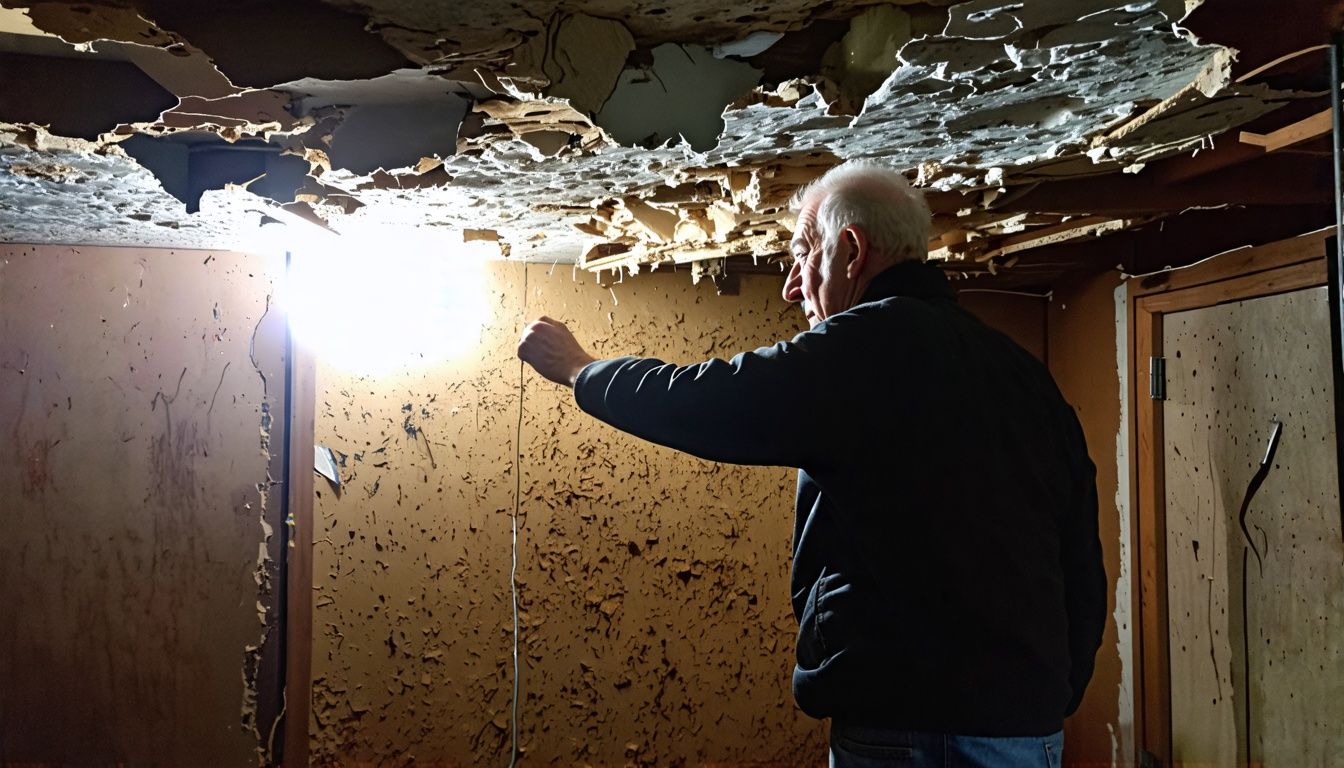
Asbestos Testing 1899: How One Doctor’s Findings Changed Everything
In 1899, a physician named Dr Montague Murray examined a dying factory worker in London. The man’s lungs were heavily scarred — the result of years breathing asbestos dust. He was the last survivor of a group of ten colleagues who had worked alongside him. That clinical observation represents asbestos testing 1899 in its earliest form: one of the first documented links between asbestos exposure and fatal lung disease in Britain.
It would take another century for the full consequences to be understood, regulated, and enforced. But the story of how that understanding evolved matters enormously for every building owner, dutyholder, and property manager operating in the UK today.
Ancient Use: A Remarkable Material With a Hidden Danger
Humans have used asbestos for thousands of years. Ancient Greek and Roman civilisations mined it for its extraordinary resistance to heat. The Roman naturalist Pliny the Elder recorded that slaves working with asbestos cloth suffered from lung ailments — arguably the earliest observation of asbestos-related illness, though nobody understood it as such at the time.
In ancient Persia and Egypt, asbestos fibres were woven into ceremonial textiles. The material appeared almost magical: it simply would not burn. That apparent invincibility made it enormously attractive — and set the stage for centuries of widespread, unprotected use.
There was no concept of occupational disease in the ancient world. Illness among workers was attributed to poor constitution or bad luck, never to the materials they handled. That ignorance would persist, in various forms, for a very long time.
The Industrial Revolution: Asbestos Deployed at Scale
By the mid-19th century, industrialisation created an insatiable demand for fire-resistant, durable materials. Asbestos was the obvious answer. Factories began producing asbestos-insulated pipes, boilers, and roofing materials at scale. Textile manufacturers wove it into fireproof clothing and theatre curtains.
Demand accelerated sharply through the first half of the 20th century. Shipbuilding, construction, power generation, and the military all relied heavily on asbestos. It appeared in brake linings, floor tiles, ceiling boards, and spray-applied insulation coatings. In the UK, use peaked during the post-war building boom of the 1950s and 1960s.
Asbestos wasn’t merely tolerated during this period — it was actively promoted. Manufacturers marketed it as modern and safe. The health consequences were beginning to surface, but the economic incentives to ignore them were enormous.
The Medical Evidence Builds: From Asbestos Testing in 1899 Onwards
The Significance of Dr Murray’s 1899 Findings
Dr Montague Murray’s examination of that London factory worker was remarkable for its time. His clinical notes described severe pulmonary fibrosis consistent with prolonged asbestos dust inhalation. While his findings were not widely publicised or acted upon immediately, they represent a crucial early data point in the medical history of asbestos-related disease.
Asbestos testing in 1899 was rudimentary by any modern standard. There were no air monitoring tools, no fibre counting techniques, no laboratory analysis protocols. Murray was working from post-mortem observation and clinical examination alone. Yet his conclusion was essentially correct: breathing asbestos dust destroys lung tissue.
Around the same period, factory inspectors in Britain were already noting unusually high death rates among asbestos textile workers. The evidence existed. It was simply not acted upon with the urgency the situation demanded.
Asbestosis: Named and Confirmed
In 1924, Dr W.E. Cooke published a landmark case study documenting severe lung fibrosis in a woman who had worked with asbestos for many years. He named the condition asbestosis — the first formal medical recognition of a distinct asbestos-related disease.
Through the 1920s and 1930s, further research confirmed that inhaling asbestos fibres caused progressive, irreversible scarring of lung tissue. The result was chronic breathlessness and, ultimately, respiratory failure. These findings were difficult to dismiss, and they finally began to generate a regulatory response.
The Cancer Link: Mesothelioma and Lung Cancer
The connection between asbestos and cancer took longer to establish. By the 1950s, researchers were identifying unusually high rates of lung cancer among asbestos workers, particularly those who also smoked. The two exposures together multiplied risk dramatically.
Then came the mesothelioma connection. Mesothelioma — a cancer of the lining of the lungs and abdomen — was so rare in the general population that its elevated incidence among asbestos workers was statistically unmistakable. By the 1960s, the scientific consensus was unambiguous: asbestos caused cancer, and there was no known safe level of exposure to certain fibre types.
The argument had shifted. It was no longer about whether asbestos was harmful. It was about what to do about it — and how quickly.
Regulatory Responses in the UK
The 1931 Asbestos Industry Regulations
The UK was ahead of many countries in its early regulatory response. The Asbestos Industry Regulations of 1931 were the first legislation in the world specifically designed to control asbestos dust in factory settings. They required improved ventilation, dust suppression measures, and medical examinations for workers in asbestos manufacturing.
These were meaningful steps, but their scope was narrow. The vast majority of asbestos use — in construction, shipbuilding, and maintenance — remained unregulated for decades longer. Millions of workers continued to be exposed without adequate protection.
Bans and Tightening Controls
Through the 1970s and 1980s, the regulatory framework steadily tightened. Crocidolite (blue asbestos) was banned in the UK in 1985. Amosite (brown asbestos) followed. Chrysotile (white asbestos) was finally banned in 1999, completing a prohibition on all new use of asbestos in products.
The current overarching framework is the Control of Asbestos Regulations, enforced by the Health and Safety Executive (HSE). These regulations impose a duty to manage asbestos on those responsible for non-domestic premises, and set strict requirements for surveying, management planning, training, and licensed removal work.
The Duty to Manage
One of the most significant developments in UK asbestos law was the introduction of the duty to manage. This places a legal obligation on the person or organisation responsible for a non-domestic building to:
- Identify whether asbestos-containing materials (ACMs) are present
- Assess their condition and the risk they pose
- Produce and maintain an asbestos management plan
- Ensure anyone who might disturb ACMs is informed of their location
- Monitor the condition of ACMs regularly
Failure to comply is a criminal offence. The HSE takes enforcement action, and prosecutions have resulted in substantial fines and custodial sentences. Ignorance is not a defence.
What We Understand Today: The Science of Asbestos Risk
The Three Main Types and Their Risk Profiles
Modern understanding distinguishes between the different types of asbestos and their relative risk profiles. All types are hazardous, but there are important differences:
- Crocidolite (blue asbestos) — the most dangerous type, with long, thin fibres that penetrate deep into lung tissue and are extremely biopersistent
- Amosite (brown asbestos) — also highly dangerous, commonly used in insulation boards and ceiling tiles throughout the post-war building era
- Chrysotile (white asbestos) — the most widely used type historically; while considered slightly less potent than the amphibole types, it remains classified as a Group 1 carcinogen
Fibre type, duration of exposure, and exposure intensity all influence individual risk. However, there is no known safe threshold for asbestos exposure. The only safe approach is to prevent inhalation entirely.
Disease Latency: Why This Is Not a Problem of the Past
One of the most important and frequently misunderstood aspects of asbestos-related disease is the latency period. Mesothelioma typically develops 20 to 50 years after initial exposure. People exposed during the construction boom of the 1960s and 1970s may only now be developing disease.
Asbestos-related diseases remain a serious public health issue in the UK. Mesothelioma mortality rates have been among the highest in the world, directly attributable to the scale of industrial asbestos use in previous decades. This is not history — it is an ongoing reality with a long tail.
The Legacy in Buildings: Where Asbestos Hides Today
Any building constructed or refurbished before the year 2000 may contain asbestos-containing materials. That covers an enormous proportion of the UK’s built environment — schools, hospitals, offices, industrial units, housing blocks, and public buildings of every description.
Common locations include:
- Insulation on pipes, boilers, and calorifiers
- Asbestos insulating board (AIB) used in ceiling tiles, partition walls, and fire doors
- Textured coatings such as Artex on ceilings and walls
- Roof sheeting and guttering made from asbestos cement
- Floor tiles and the adhesive used to fix them
- Lagging on heating and ventilation systems
- Sprayed coatings on structural steelwork
ACMs in good condition and left undisturbed present a low risk. The danger arises when materials are damaged, deteriorating, or disturbed during maintenance and refurbishment work. That is precisely why surveying and management planning are not optional extras — they are legal requirements.
If your building requires routine inspection and risk assessment, an management survey is the appropriate starting point. It identifies the location, extent, and condition of ACMs that could be disturbed during normal occupation and maintenance activities.
If your building is being prepared for demolition or major refurbishment, a demolition survey is a legal prerequisite under the Control of Asbestos Regulations. This type of survey is intrusive by design — it must locate all ACMs before any structural work begins.
Modern Asbestos Surveying and Detection Methods
Asbestos surveying methodology has become far more rigorous and scientifically grounded since Dr Murray’s clinical observations in 1899. Modern surveys are conducted in accordance with the HSE guidance document HSG264, which sets out the standards for management surveys and refurbishment or demolition surveys.
Laboratory analysis of bulk samples typically uses polarised light microscopy (PLM) or transmission electron microscopy (TEM) for fibre identification. Air monitoring uses phase contrast microscopy (PCM) to count airborne fibres during and after removal work. These are established, peer-reviewed techniques — a far cry from the post-mortem examinations that constituted asbestos testing in 1899.
There are also advances in non-destructive screening tools, including portable X-ray fluorescence (XRF) analysers that can screen building materials for asbestos content without requiring sample removal. These are useful for initial screenings, though bulk sampling and laboratory analysis remain the definitive standard for confirmation.
Robotic systems are increasingly being developed for removal work in confined or particularly hazardous spaces, reducing the need to place workers in direct contact with friable materials. The field continues to evolve — but the fundamental principle established in 1899 remains unchanged: asbestos fibres in the lungs cause irreversible harm.
Professional asbestos testing today is a rigorous, accredited process — a world away from Murray’s clinical notes, but built on the same foundational understanding he helped establish.
Training, Awareness, and the Gaps That Remain
The Control of Asbestos Regulations require that anyone liable to disturb asbestos during their work must receive appropriate information, instruction, and training. This applies to a wide range of tradespeople — electricians, plumbers, joiners, and general maintenance workers — not just specialist asbestos contractors.
Despite this requirement, awareness gaps persist. Tradespeople working in pre-2000 buildings without adequate training or information about ACMs continue to be exposed. Unannounced disturbance of asbestos-containing materials during routine maintenance remains one of the most common routes to uncontrolled exposure.
Dutyholders have a responsibility not just to identify and manage ACMs themselves, but to communicate their location clearly to all contractors working on site. An asbestos register that sits in a filing cabinet and is never shared is not fulfilling the spirit — or the legal requirements — of the duty to manage.
If you are unsure whether your building has been properly surveyed or whether your asbestos register is current, the right step is to commission professional asbestos testing from an accredited surveying company. Do not wait until a contractor raises a concern on site.
Regional Considerations: Asbestos Risk Across the UK
The scale of asbestos risk is not uniform across the country. Areas with heavy industrial heritage — shipbuilding towns, manufacturing centres, port cities — tend to have higher concentrations of heavily insulated older buildings where asbestos use was intensive.
In London, the sheer density of pre-2000 commercial and residential stock means that asbestos management is a near-universal concern for property managers and building owners. Our team provides asbestos survey London services across the capital, covering everything from Victorian office conversions to mid-century tower blocks.
In the North West, the legacy of industrial manufacturing means that many commercial and industrial premises require careful investigation. We carry out asbestos survey Manchester work across the region, including refurbishment surveys for buildings undergoing conversion or redevelopment.
The Midlands has a similarly significant industrial legacy, with many warehouse, factory, and mixed-use buildings dating from the post-war era. Our asbestos survey Birmingham service covers the full range of commercial, industrial, and public sector premises across the region.
Wherever your building is located, the legal obligations are identical. The Control of Asbestos Regulations apply nationwide, and the HSE enforces them consistently.
From 1899 to Today: What Has — and Has Not — Changed
The distance between Dr Murray’s post-mortem notes in 1899 and a modern UKAS-accredited asbestos survey is vast. The analytical tools, the regulatory framework, the professional standards, the legal obligations — all of these have developed enormously over more than a century.
What has not changed is the underlying biology. Asbestos fibres, once inhaled, remain in lung tissue. They cause inflammation, scarring, and — in many cases — cancer. The diseases they cause are not treatable in any curative sense. Prevention is the only effective strategy.
That is why the work of identifying, managing, and where necessary removing asbestos-containing materials from the UK’s built environment remains so important. Every survey completed, every management plan maintained, every contractor briefed on ACM locations represents a continuation of the work that began — however tentatively — with asbestos testing in 1899.
The knowledge exists. The legal framework exists. The professional expertise exists. What is required now is consistent, diligent application of all three.
Frequently Asked Questions
What was asbestos testing in 1899 and why does it matter?
In 1899, Dr Montague Murray conducted what is now recognised as one of the earliest documented clinical investigations linking asbestos dust inhalation to fatal lung disease in Britain. He examined a factory worker whose lungs showed severe fibrosis consistent with prolonged asbestos exposure. While his methods were rudimentary compared to modern laboratory analysis, his findings established the foundational understanding that asbestos fibres cause irreversible damage to lung tissue. That understanding underpins every aspect of UK asbestos regulation and professional surveying practice today.
Which buildings in the UK are most likely to contain asbestos?
Any building constructed or refurbished before the year 2000 may contain asbestos-containing materials (ACMs). This includes schools, hospitals, offices, industrial units, housing blocks, and public buildings. Common locations for ACMs include pipe and boiler insulation, ceiling tiles, partition walls, textured coatings such as Artex, floor tiles, roof sheeting, and fire doors. A professional management survey is the appropriate way to identify the presence, location, and condition of ACMs in any pre-2000 building.
What are the legal obligations for managing asbestos in non-domestic buildings?
The Control of Asbestos Regulations impose a duty to manage on those responsible for non-domestic premises. This requires dutyholders to identify whether ACMs are present, assess the risk they pose, produce and maintain an asbestos management plan, inform contractors of ACM locations, and monitor the condition of materials regularly. Failure to comply is a criminal offence enforceable by the HSE. Dutyholders who are unsure of their obligations should seek professional advice and commission an up-to-date asbestos survey without delay.
What is the difference between a management survey and a demolition survey?
A management survey is designed for buildings in normal occupation and use. It identifies ACMs that could be disturbed during routine maintenance and day-to-day activities, and forms the basis of an asbestos management plan. A demolition survey — also known as a refurbishment and demolition survey — is required before any major structural work, refurbishment, or demolition takes place. It is intrusive by design and must locate all ACMs throughout the building, including in areas not accessible during a management survey. Both survey types must be carried out in accordance with HSE guidance document HSG264.
How does modern asbestos testing differ from early methods?
Early asbestos testing, as exemplified by Dr Murray’s work in 1899, relied on post-mortem examination and clinical observation. Modern asbestos testing uses accredited laboratory techniques including polarised light microscopy (PLM) and transmission electron microscopy (TEM) to identify fibre types in bulk samples. Air monitoring uses phase contrast microscopy (PCM) to count airborne fibres. Non-destructive screening tools such as portable X-ray fluorescence (XRF) analysers are also available for initial screening. All professional asbestos testing in the UK must be carried out by accredited analysts in accordance with HSE standards and HSG264 guidance.
Commission a Professional Asbestos Survey Today
Supernova Asbestos Surveys has completed over 50,000 surveys across the UK. Our fully accredited team carries out management surveys, demolition surveys, and asbestos testing for commercial, industrial, public sector, and residential clients nationwide.
If you manage a pre-2000 building and are unsure whether your asbestos obligations are being met, do not delay. Call us on 020 4586 0680 or visit asbestos-surveys.org.uk to discuss your requirements and arrange a survey at a time that suits you.