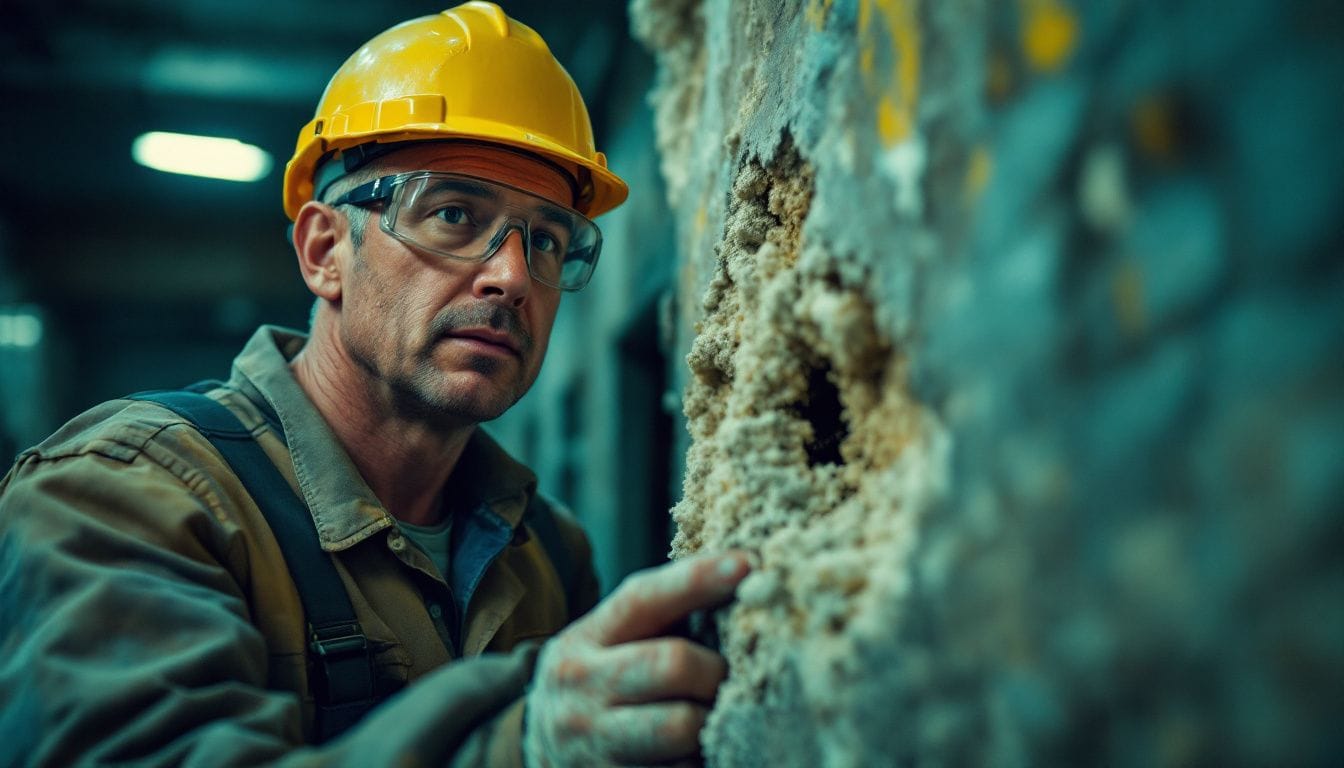
Asbestos doesn’t look dangerous. It sits quietly inside walls, ceiling tiles, pipe lagging, and floor coverings — completely invisible until someone disturbs it. But the asbestos and mesothelioma risk that comes with that disturbance is one of the most serious occupational health threats the UK has ever faced, and it hasn’t gone away.
The UK banned asbestos in 1999, yet the material remains present in an enormous number of buildings constructed before that date. Anyone who works in, manages, or owns older properties needs to understand exactly what that means for health, legal duty, and practical safety.
What Is Asbestos and Why Is It Still a Problem?
Asbestos is a naturally occurring fibrous mineral used extensively in UK construction from the 1950s through to the 1990s. It was valued for its fire resistance, durability, and insulating properties — which is precisely why it ended up in so many building materials.
Common asbestos-containing materials (ACMs) found in older UK buildings include:
- Sprayed coatings on structural steelwork and ceilings
- Pipe and boiler lagging
- Insulating board used in partitions, ceiling tiles, and fire doors
- Asbestos cement in roofing sheets, gutters, and external cladding
- Floor tiles and the adhesive beneath them
- Textured decorative coatings such as Artex
Over 1.5 million UK buildings are estimated to contain asbestos, and a significant proportion of UK schools are believed to have ACMs present. Despite the ban, the material is still very much part of the built environment — and will be for decades to come.
The challenge is that asbestos in good condition and left undisturbed poses a low immediate risk. The danger begins the moment it is disturbed — and in working buildings, disturbance happens constantly through maintenance, refurbishment, and everyday wear and tear.
How Asbestos Exposure Leads to Mesothelioma
The asbestos and mesothelioma risk arises when ACMs are disturbed — during renovation, maintenance, demolition, or even routine drilling and cutting. When disturbed, asbestos releases microscopic fibres into the air that are invisible to the naked eye, have no smell, and can remain airborne for hours.
When inhaled, asbestos fibres lodge deep in the lung tissue and the lining of the lungs and abdomen — a layer of tissue known as the mesothelium. The body cannot break these fibres down or expel them. Over time, often spanning decades, this causes inflammation, scarring, and ultimately malignant changes.
What Is Mesothelioma?
Mesothelioma is a rare but aggressive cancer that develops in the mesothelium — the thin protective lining surrounding the lungs, abdomen, and other organs. It is almost exclusively caused by asbestos exposure, and there is no cure. The prognosis remains poor even with modern treatment.
The disease has a long latency period, typically between 20 and 50 years from first exposure to diagnosis. This means that workers exposed to asbestos in the 1970s and 1980s are still being diagnosed today — and will continue to be diagnosed for years to come.
Other Asbestos-Related Diseases
Mesothelioma is not the only disease caused by asbestos exposure. Workers and building occupants also face the risk of:
- Asbestosis — a chronic lung condition caused by scarring of lung tissue from inhaled fibres
- Lung cancer — the risk is significantly elevated in those with asbestos exposure, particularly smokers
- Pleural plaques and pleural thickening — changes to the lining of the lungs that can cause breathlessness and discomfort
UK mortality data consistently shows thousands of deaths each year attributable to asbestos-related diseases, making this an ongoing public health concern rather than a historical one.
Who Is Most at Risk in the Workplace?
Certain occupations carry a significantly higher asbestos and mesothelioma risk than others. Workers who regularly disturb building fabric in older structures face the greatest exposure.
High-Risk Trades and Occupations
The following trades have historically faced — and continue to face — elevated exposure risks:
- Construction workers — particularly those involved in refurbishment, demolition, and maintenance of pre-2000 buildings
- Electricians and plumbers — who regularly work inside wall cavities, ceiling voids, and service ducts
- Heating and ventilation engineers — who work around boilers, pipe lagging, and ductwork
- Carpenters and joiners — cutting and drilling into insulating board and other ACMs
- Roofers — working with asbestos cement sheets common on industrial and agricultural buildings
- Firefighters — who face repeated exposure when attending fires in older buildings
- Power station workers — who worked extensively with heavily insulated plant and equipment
Research into occupational exposure has consistently highlighted power station workers and former naval dockyard workers as groups with particularly elevated mesothelioma risk — in some studies, several times higher than the general population.
Secondary Exposure
Asbestos exposure is not limited to those who work directly with the material. Secondary or para-occupational exposure — where family members of workers were exposed to fibres brought home on clothing — has also been linked to mesothelioma diagnoses.
This underlines just how dangerous even low-level, indirect exposure can be. There is no established safe threshold for asbestos fibre inhalation.
The Legal Framework: What Dutyholders Must Do
UK law takes asbestos exposure seriously. The primary legislation governing asbestos management in non-domestic premises is the Control of Asbestos Regulations, which places clear duties on those who manage or have responsibility for buildings.
The Duty to Manage
Under the Control of Asbestos Regulations, dutyholders — typically employers, building owners, or managing agents — are legally required to:
- Identify whether ACMs are present in their premises
- Assess the condition and risk of any ACMs found
- Produce and maintain an asbestos register
- Implement an asbestos management plan
- Ensure that anyone liable to disturb ACMs is informed of their location and condition
- Monitor the condition of ACMs on an ongoing basis
Failure to comply with these duties is a criminal offence. The Health and Safety Executive (HSE) can prosecute dutyholders, with penalties ranging from substantial fines to imprisonment for directors and managers in the most serious cases.
HSE Guidance and HSG264
The HSE’s guidance document HSG264 sets out in detail how asbestos surveys should be carried out. It defines two main types of survey — a management survey for routine use and a refurbishment and demolition survey required before any intrusive work is undertaken.
Following HSG264 is not optional for survey providers; it is the industry standard that underpins all compliant asbestos surveying work in the UK.
Workers’ Rights and Compensation
Workers who have been exposed to asbestos and subsequently develop an asbestos-related disease have legal routes available to them. These include:
- Workers’ compensation claims through the employer’s liability insurance
- Personal injury lawsuits where negligence by an employer or dutyholder can be demonstrated
- Asbestos trust fund claims where the responsible employer is no longer trading
- Industrial Injuries Disablement Benefit — a state benefit available to those diagnosed with certain asbestos-related conditions
Anyone in this position should seek advice from a solicitor who specialises in asbestos litigation, as the legal process can be complex and time-sensitive.
How to Manage Asbestos and Mesothelioma Risk in Practice
Understanding the risk is one thing — managing it effectively is another. Whether you are an employer, a facilities manager, or a building owner, there are clear practical steps you should be taking right now.
Step 1: Commission a Professional Asbestos Survey
If you manage or own a non-domestic building constructed before 2000 and you do not have an up-to-date asbestos register in place, commissioning a professional asbestos survey is your first and most important step.
A management survey will identify the location, type, and condition of any ACMs within the accessible areas of the building. If you are planning refurbishment or demolition work, a more intrusive demolition survey is required before work begins — regardless of whether a management survey already exists.
These are two distinct survey types with different scopes, and one cannot substitute for the other.
Step 2: Maintain an Up-to-Date Asbestos Register
An asbestos register is only useful if it is current. ACMs deteriorate over time, and building works can change the risk profile of a premises significantly.
Your register should be reviewed regularly and updated whenever works are carried out or the condition of materials changes. The register must be accessible to anyone working in or on the building — locking it in a drawer and forgetting about it is not compliance, it is a liability.
Step 3: Inform and Train Relevant Workers
Everyone who works in or on your building and might disturb ACMs must be made aware of the asbestos register. Contractors must be briefed before any work begins, and this briefing should be documented.
Where workers may be at risk of disturbing asbestos, appropriate training and, where necessary, licensed asbestos removal must be arranged. Never allow unlicensed operatives to carry out notifiable asbestos work.
Step 4: Never Disturb Suspected ACMs Without Assessment
If you suspect a material contains asbestos, treat it as though it does until proven otherwise. Do not drill, cut, sand, or otherwise disturb it without first having it assessed or sampled by a competent professional.
The cost of sample analysis is minimal compared to the potential consequences of getting it wrong. A single bulk sample sent to an accredited laboratory can confirm or rule out the presence of asbestos fibres within days.
Reducing Asbestos and Mesothelioma Risk: A Shared Responsibility
Protecting workers from asbestos exposure is not solely the responsibility of employers. It requires a joined-up approach involving building owners, facilities managers, contractors, and the workers themselves.
Employers must provide suitable personal protective equipment (PPE) where exposure risk exists, ensure adequate ventilation and hygiene facilities on site, and never allow unlicensed workers to carry out notifiable asbestos work.
Workers must follow safe systems of work, report suspected ACMs immediately, and not take shortcuts that could put themselves or colleagues at risk.
The long latency period of mesothelioma means that exposure happening today may not result in a diagnosis for another 20 to 40 years. The decisions made now — about surveying, management, and safe working practices — will determine who receives a diagnosis in the future. That is not an abstract risk; it is a direct consequence of choices being made in workplaces and buildings across the UK right now.
Where Supernova Asbestos Surveys Operates
Supernova Asbestos Surveys operates across the UK, providing professional management surveys, refurbishment and demolition surveys, and asbestos sampling to commercial and residential clients.
Our teams provide rapid-response asbestos survey London services, dedicated asbestos survey Manchester coverage, and asbestos survey Birmingham support across the Midlands — with nationwide reach beyond these areas.
Every survey we carry out follows HSG264 guidance and is delivered by accredited surveyors with the experience to identify ACMs accurately and report clearly. With over 50,000 surveys completed, we understand the duty of care that comes with this work.
To book a survey or discuss your asbestos management obligations, call us on 020 4586 0680 or visit asbestos-surveys.org.uk.
Frequently Asked Questions
What is the connection between asbestos and mesothelioma risk?
Mesothelioma is almost exclusively caused by exposure to asbestos fibres. When asbestos-containing materials are disturbed, microscopic fibres are released into the air and can be inhaled. These fibres become permanently lodged in the lining of the lungs or abdomen, where they can cause malignant changes over a period of decades. There is no established safe level of asbestos exposure, which is why managing ACMs in buildings is a legal duty in the UK.
How long after asbestos exposure does mesothelioma develop?
Mesothelioma has an unusually long latency period — typically between 20 and 50 years from first exposure to diagnosis. This is why many people being diagnosed today were exposed during the 1970s and 1980s, when asbestos use in UK construction was at its peak. It also means that exposure occurring now could result in a diagnosis many decades in the future.
Which workers face the highest asbestos and mesothelioma risk?
Trades that regularly work inside the fabric of older buildings face the greatest risk. These include electricians, plumbers, heating engineers, carpenters, roofers, and construction workers involved in refurbishment or demolition of pre-2000 buildings. Power station workers and former naval dockyard workers have historically faced some of the highest recorded exposure levels. Secondary exposure — through contact with a worker’s contaminated clothing — has also resulted in mesothelioma diagnoses in family members.
What are my legal obligations as a building owner or manager?
Under the Control of Asbestos Regulations, dutyholders in non-domestic premises must identify whether ACMs are present, assess and record their condition, maintain an asbestos register, implement a management plan, and inform workers and contractors of any ACMs they might encounter. Failure to meet these duties is a criminal offence. The starting point for compliance is commissioning a professional asbestos survey carried out in accordance with HSG264.
Can asbestos be removed rather than managed in place?
In some circumstances, removal is the appropriate course of action — particularly where materials are in poor condition, where refurbishment is planned, or where ongoing disturbance is unavoidable. However, removal is not always necessary and must only be carried out by licensed contractors for notifiable work. In many cases, ACMs in good condition are safely managed in place with regular monitoring. A professional survey will advise on the most appropriate course of action for each material identified.