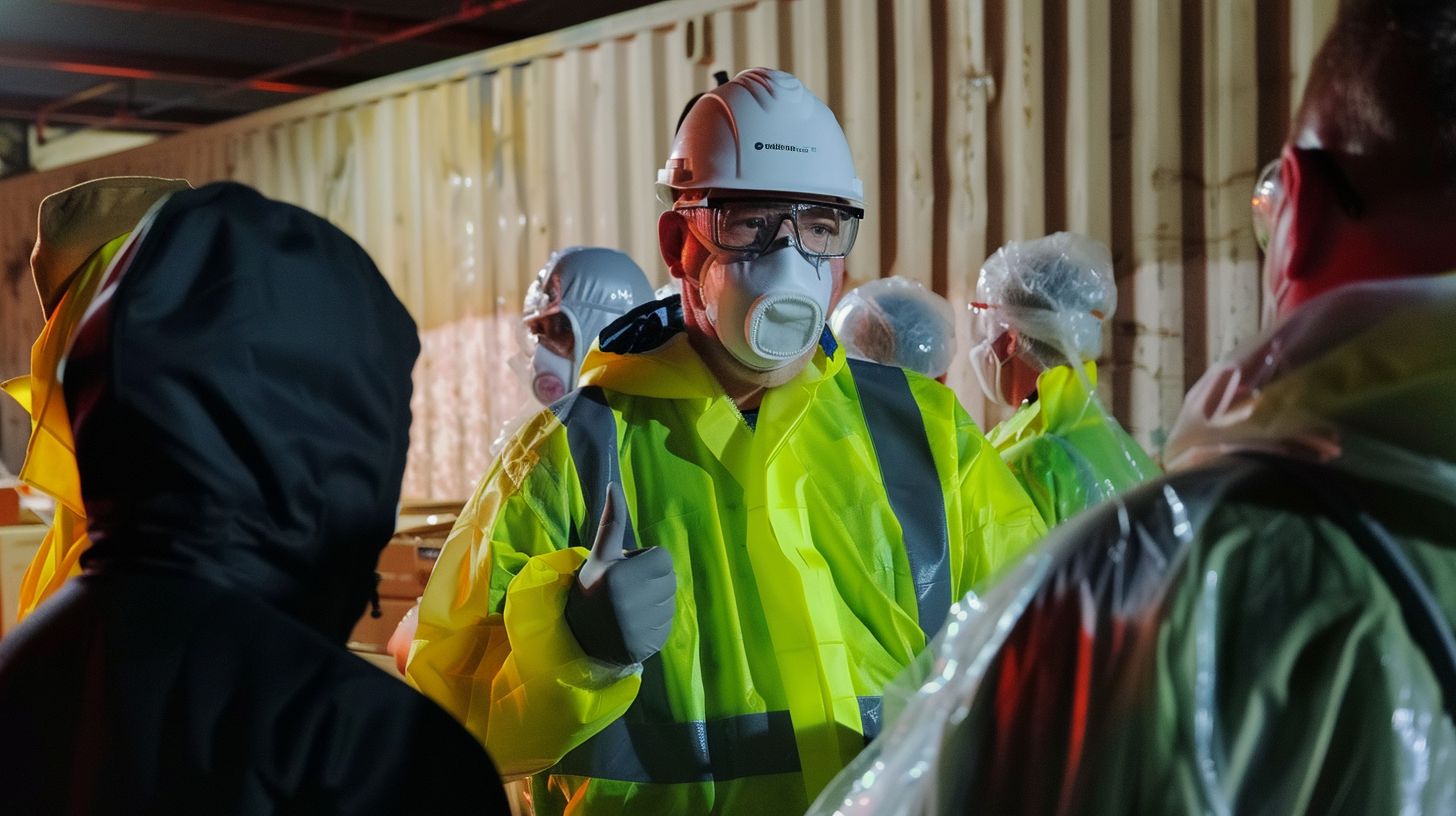
Asbestos Education in the UK: How Professionals Are Trained to Manage the Risk
Asbestos remains the single largest cause of work-related deaths in the UK. It was banned from new use in 1999, yet it persists in millions of buildings constructed before that date — and anyone working in construction, facilities management, or building maintenance is likely to encounter it. Effective asbestos education isn’t a nicety; for many professionals, it’s a legal requirement backed by criminal sanction.
The UK government’s response to this ongoing risk is a structured, tiered training framework rooted in the Control of Asbestos Regulations. Understanding how that framework operates — and where your obligations sit within it — is essential for employers, duty holders, and tradespeople alike.
The Three Tiers of Asbestos Education and Training
The Control of Asbestos Regulations establish three distinct levels of training, each calibrated to the type of work a professional is likely to carry out. Getting this right matters: undertrained workers risk their health, and untrained ones risk prosecution.
Tier One: Asbestos Awareness Training
This is the baseline — the minimum level of asbestos education for anyone whose work could inadvertently disturb asbestos-containing materials (ACMs). That includes plumbers, electricians, joiners, plasterers, and general maintenance workers. If your trade involves cutting, drilling, or disturbing building fabric, this training applies to you.
The training covers:
- What asbestos is, where it’s found, and which building materials commonly contain it
- The health risks — including asbestosis, mesothelioma, and asbestos-related lung cancer
- Why you should never disturb suspected ACMs without proper assessment
- Your legal duties and those of your employer
- What to do if you accidentally disturb asbestos
Awareness training does not qualify anyone to work with or remove asbestos. It exists purely to help workers recognise the risk and stop work immediately if they suspect ACMs are present. The HSE recommends refreshing this training annually — and given the consequences of getting it wrong, that’s a sensible minimum rather than an arbitrary box-ticking exercise.
Tier Two: Non-Licensable Work Training
Some asbestos-related tasks sit below the threshold requiring a licence but still carry meaningful risk. These include short-duration work with lower-risk materials such as asbestos cement sheeting or asbestos insulation board (AIB) in small quantities, provided exposure levels remain below the control limit.
Professionals carrying out this type of work need specific training that goes well beyond basic awareness. The curriculum typically includes:
- How to carry out a suitable risk assessment before starting work
- Safe working methods to minimise fibre release
- Correct selection and use of personal protective equipment (PPE) and respiratory protective equipment (RPE)
- How to set up a controlled work area
- Decontamination procedures
- Correct bagging, labelling, and disposal of asbestos waste
It’s worth noting that some non-licensable work — particularly work with AIB — still requires notification to the relevant enforcing authority and medical surveillance. Quality training programmes should cover these obligations explicitly rather than glossing over them.
Tier Three: Licensable Work Training
This is the highest tier of asbestos education, required for work with the most hazardous asbestos materials or where exposure levels are likely to exceed the control limit. This includes removing sprayed asbestos coatings, pipe lagging, and loose-fill insulation — materials that release fibres readily and in high concentrations.
Only companies holding a licence issued by the HSE can legally carry out this work. That licence is not granted lightly, and it cannot be obtained without demonstrating that all operatives have received appropriate training and are medically fit.
Licensable work training is multi-day, combining classroom theory with extensive practical assessment. Topics covered include:
- Advanced removal techniques including wet methods, shadow vacuuming, and enclosure construction
- Full decontamination unit (DCU) procedures
- Air monitoring and clearance testing requirements
- Completing risk assessments and method statements (RAMS) for licensable work
- Notification procedures under the Control of Asbestos Regulations
- Emergency procedures and incident management
Annual refresher training is mandatory for licensable workers. Competence must be continually demonstrated — this is not a qualification earned once and forgotten.
What Every Quality Asbestos Education Programme Must Cover
Regardless of tier, well-designed asbestos training shares certain non-negotiable elements. If a course doesn’t address these thoroughly, treat that as a red flag.
The Health Risks — and Why They Matter
Professionals need to understand not just that asbestos is dangerous, but why. Asbestos fibres are microscopic — invisible to the naked eye — and when inhaled, they lodge permanently in lung tissue. The body cannot break them down or expel them.
The diseases caused by asbestos exposure — mesothelioma, asbestosis, asbestos-related lung cancer, and pleural thickening — typically have latency periods of 20 to 40 years. Someone who disturbs asbestos carelessly today may not suffer the consequences for decades. Training that communicates this clearly, rather than simply listing diseases on a slide, is the kind of asbestos education that actually changes behaviour on site.
Correct Use of PPE and RPE
This is an area where theory alone is insufficient. Workers must have hands-on practice selecting the right grade of respiratory protection, fitting it correctly, checking the seal, and removing it without self-contamination.
The wrong RPE — or correctly-specified RPE worn incorrectly — offers little meaningful protection. A P3 filter-fitted half-mask or full-face respirator is typically required for asbestos work. Training must specify not just the equipment type but the fit-testing requirements that make it effective. Trainees should also understand how to inspect, maintain, and dispose of PPE correctly — contaminated disposable coveralls and gloves are asbestos waste and cannot go in a general skip.
Safe Systems of Work
Every element of an asbestos task — from initial assessment through to final clearance — should follow a documented safe system of work. Training must give professionals the knowledge to both write and follow these systems, not just gesture towards them in a method statement.
This includes understanding which tasks genuinely fall under each tier of regulation, how to determine whether work requires a licence, and when to stop and call in specialist contractors rather than pressing on.
Certification, Records, and What Employers Must Do
Training Records and Certificates
When a worker completes an approved asbestos training course, they receive a certificate from the training provider. This document should clearly state the individual’s name, the course completed, the date, and the level of training achieved.
Employers are legally required to keep these records. Given that asbestos-related diseases can manifest decades after exposure, training records must be retained for a minimum of 40 years. This creates a traceable record that can be critical in any future investigation or compensation claim. Employers should audit their training records regularly and maintain a renewal schedule — an employee whose awareness training lapsed two years ago is, from a regulatory standpoint, untrained.
What “Competence” Actually Means
The Control of Asbestos Regulations require that anyone who carries out work on ACMs is competent to do so. Competence isn’t simply a matter of having attended a course — it means having the knowledge, skills, and experience to carry out the work safely in practice.
For licensable contractors, the HSE assesses competence as part of the licence application and renewal process. For others, demonstrating competence means ensuring training is current, relevant to the actual tasks being performed, and delivered by a credible, industry-recognised provider.
Choosing the Right Training Provider
Not all asbestos education is equal. The market includes providers of widely varying quality, and a cheap online-only course may satisfy a checkbox without genuinely equipping workers to manage risk. When evaluating providers, look for:
- UKATA accreditation — The UK Asbestos Training Association accredits providers who meet defined quality standards. UKATA-accredited training is widely recognised by the HSE and industry bodies as meeting regulatory requirements.
- RSPH or BOHS qualifications — The Royal Society for Public Health and the British Occupational Hygiene Society both offer asbestos-related qualifications that carry significant professional weight, particularly for surveyors, analysts, and consultants.
- Practical, not just theoretical, delivery — For non-licensable and licensable work training, classroom instruction alone is not sufficient. Providers should offer hands-on practice with equipment, decontamination procedures, and real-world scenario assessment.
- Trainers with genuine field experience — The best trainers are practitioners who have worked in asbestos removal or surveying, not simply trained educators with no site experience.
- Up-to-date course materials — Regulations, best practice guidance, and HSE expectations evolve. Course content should reflect current requirements, not an outdated version of the regulations.
The HSE does not maintain a formal approved list of training providers, but it does provide guidance on what compliant training should contain. Cross-referencing a provider’s course content against HSE guidance documents — including HSG264 for surveying work — is always worthwhile.
The Duty Holder’s Role in Asbestos Education
Training obligations don’t sit with workers alone. The Control of Asbestos Regulations place specific duties on those who manage non-domestic premises — the “duty holder” — to manage asbestos risk, maintain an asbestos register, and ensure that anyone likely to disturb ACMs has received appropriate information and training.
For facilities managers, property managers, and building owners, this means:
- Commissioning a management survey if one doesn’t exist or is out of date
- Ensuring the asbestos register is accessible to contractors before they start work
- Verifying that contractors working on site hold appropriate training and, where required, an HSE licence
- Keeping the asbestos management plan under regular review
Many duty holders underestimate the scope of their legal responsibility here. Ignorance of where asbestos is located in a building you manage is not a defence — the duty to know is explicit in the regulations.
Before any significant building works, a refurbishment survey is a legal requirement to identify ACMs that could be disturbed. For sites scheduled for demolition, a demolition survey must be completed before any structural work begins. These aren’t optional steps — they’re embedded in the regulatory framework that governs asbestos education and management across the UK.
Asbestos Surveying: A Specialism With Its Own Education Requirements
Asbestos surveyors are a distinct professional group with their own training and qualification requirements. To carry out management, refurbishment, or demolition surveys, surveyors must hold the RSPH Level 3 Award in Asbestos Surveying or an equivalent qualification — and must work for a surveying body that holds UKAS accreditation.
This matters enormously for duty holders. An asbestos survey carried out by an unqualified individual or a non-accredited company has no legal standing. If it misses ACMs, the consequences can be severe — both for the workers exposed and for the duty holder who commissioned inadequate work.
The guidance document HSG264, published by the HSE, sets out in detail the standards that asbestos surveys must meet. Any surveying company worth instructing will be able to demonstrate how their work aligns with that guidance.
Refresher Training and Ongoing Competence
Asbestos education is not a one-and-done exercise. The HSE’s expectation — and for many workers, the legal requirement — is that training is refreshed regularly to maintain genuine competence rather than just a certificate on file.
For awareness-level training, annual refresher courses are the recognised standard. For licensable workers, annual refresher training is mandatory. Even for non-licensable work, refresher training should be built into any responsible employer’s workforce development schedule.
Refresher training isn’t just about ticking a compliance box. Regulations evolve, best practice guidance is updated, and new products and materials occasionally emerge that require fresh assessment. A worker who completed their training several years ago may be operating on outdated assumptions about which materials require notification, which require a licence, or how to correctly set up a controlled work area.
Employers should treat training renewal as an ongoing programme, not a one-off event. Maintaining a simple training matrix — listing each worker, their training level, the date completed, and the renewal date — makes this manageable and provides an auditable record if the HSE or a local authority ever comes knocking.
What Happens When Asbestos Education Fails
The consequences of inadequate asbestos training are not abstract. Workers who disturb ACMs without proper knowledge or protection face the genuine risk of developing mesothelioma or asbestos-related lung cancer — diseases that are invariably fatal and for which there is currently no cure.
From a legal standpoint, employers who fail to ensure their workers are properly trained face prosecution under the Control of Asbestos Regulations. Duty holders who allow work to proceed on buildings where the asbestos status is unknown face similar exposure. Fines, improvement notices, and prohibition notices are all tools available to the HSE — and in serious cases, custodial sentences have been handed down.
Where asbestos is identified and needs to be removed, that work must be carried out by appropriately licensed and trained contractors. Professional asbestos removal is the only safe route — attempting to manage removal without the correct training, equipment, and licence is both dangerous and illegal.
Frequently Asked Questions
Who is legally required to have asbestos education and training in the UK?
Anyone whose work could foreseeably disturb asbestos-containing materials must receive appropriate asbestos awareness training as a minimum. This includes tradespeople such as electricians, plumbers, joiners, and plasterers, as well as facilities managers and building maintenance staff. Employers are legally required under the Control of Asbestos Regulations to ensure their workers are trained before they carry out any work that could put them at risk.
How often does asbestos training need to be refreshed?
The HSE recommends annual refresher training for asbestos awareness. For workers carrying out licensable asbestos work, annual refresher training is a mandatory legal requirement. For non-licensable work, refresher training should be carried out regularly — most responsible employers treat annual renewal as the standard. Lapsed training is treated as no training from a regulatory compliance standpoint.
What is the difference between UKATA and BOHS qualifications in asbestos?
UKATA (UK Asbestos Training Association) accredits training providers who deliver asbestos awareness and working-with-asbestos courses. BOHS (British Occupational Hygiene Society) and RSPH (Royal Society for Public Health) offer higher-level qualifications aimed at surveyors, analysts, and consultants — including the P402 and RSPH Level 3 Award in Asbestos Surveying. Both routes are recognised by the HSE, but they serve different professional groups and levels of practice.
Does online asbestos awareness training meet the legal requirement?
Online asbestos awareness training can meet the regulatory requirement for the awareness tier, provided it covers all the content specified in the Control of Asbestos Regulations and is delivered by an accredited provider. However, for non-licensable and licensable work training, online-only delivery is not sufficient — hands-on practical elements are required. If in doubt, check that the provider holds UKATA accreditation and that the course content aligns with current HSE guidance.
What surveys does a duty holder need to commission before building work begins?
Before any refurbishment work that could disturb building fabric, a refurbishment survey is legally required. Before demolition, a demolition survey must be completed. Both must be carried out by a UKAS-accredited surveying company whose surveyors hold the relevant qualifications. A management survey is used for ongoing management of asbestos in occupied premises and does not fulfil the requirements for pre-refurbishment or pre-demolition work.
Talk to Supernova Asbestos Surveys
At Supernova Asbestos Surveys, we’ve completed over 50,000 surveys nationwide. Our surveyors are fully qualified, and we operate under full UKAS accreditation — so every survey we produce carries genuine legal weight.
Whether you need a survey in asbestos survey London, an asbestos survey Manchester, or an asbestos survey Birmingham — or anywhere else across the UK — our nationwide team is ready to help you meet your legal obligations and protect the people in your buildings.
Call us on 020 4586 0680 or visit asbestos-surveys.org.uk to book your survey or discuss your asbestos management requirements.