What Does an Asbestos Surveyor Actually Do — and Why Does It Matter?
Whether you own a commercial building, manage a residential block, or are in the middle of a property transaction, understanding what is the role of an asbestos surveyor could be one of the most consequential things you do as a dutyholder. Asbestos remains the single largest cause of work-related deaths in the UK, and surveyors are the frontline professionals who identify, assess, and help manage that risk before it becomes a tragedy.
This is not a box-ticking exercise. A skilled asbestos surveyor brings technical knowledge, legal understanding, and practical judgement to every inspection — and their findings can shape property values, legal obligations, and the safety of everyone who enters a building.
The Core Role of an Asbestos Surveyor
At its most fundamental level, an asbestos surveyor inspects buildings to locate asbestos-containing materials (ACMs), assess their condition, and determine the risk they pose to occupants and workers. But that description barely scratches the surface.
A qualified surveyor must understand how buildings are constructed, where ACMs are likely to be concealed, and how different types of asbestos behave when disturbed. They must also be familiar with the Control of Asbestos Regulations and the HSE’s guidance document HSG264, which sets the standard for how surveys should be planned and carried out.
Their role spans three broad areas:
- Physical inspection of the building and its materials
- Coordination of laboratory analysis for sampled materials
- Preparation of a clear, compliant survey report
Each stage demands precision — because an error at any point can lead to undetected asbestos, inadequate management plans, or legal non-compliance.
Types of Survey an Asbestos Surveyor Carries Out
Management Surveys
A management survey is the standard survey carried out on buildings that are in normal use and occupation. Its purpose is to locate ACMs that could be disturbed during routine maintenance or everyday activities, and to assess their condition so that an appropriate management plan can be put in place.
During a management survey, the surveyor will inspect all accessible areas of the building — including service ducts, ceiling voids, floor spaces, and plant rooms where possible. They will take samples of suspect materials and send them to an accredited laboratory for analysis. The findings feed directly into an asbestos register, which the dutyholder is legally required to maintain and keep up to date.
An asbestos management survey does not involve destructive inspection — walls are not broken open and floors are not lifted. That distinction matters, because it means some areas may be presumed to contain asbestos rather than confirmed. A good surveyor will be transparent about those presumptions in their report.
Refurbishment and Demolition Surveys
When a building is going to be refurbished, extended, or demolished, a far more intrusive survey is required. A demolition survey — also known as a refurbishment and demolition survey — must locate all ACMs in the areas affected by the planned work, including those that would normally be inaccessible.
This type of survey is destructive by nature. Surveyors may need to break into walls, lift floor coverings, remove ceiling tiles, and access roof spaces. The building or affected area is typically vacated during this process, and the surveyor works in full personal protective equipment (PPE).
The stakes here are higher. Contractors who begin refurbishment or demolition work without an adequate survey risk disturbing hidden asbestos and exposing workers to potentially lethal fibres. The asbestos surveyor’s role in this context is to ensure that simply cannot happen.
What Happens During the Physical Inspection?
Before setting foot in the building, a qualified surveyor will review any existing asbestos records, building plans, and maintenance history. This preparation helps them identify high-risk areas and plan the inspection efficiently.
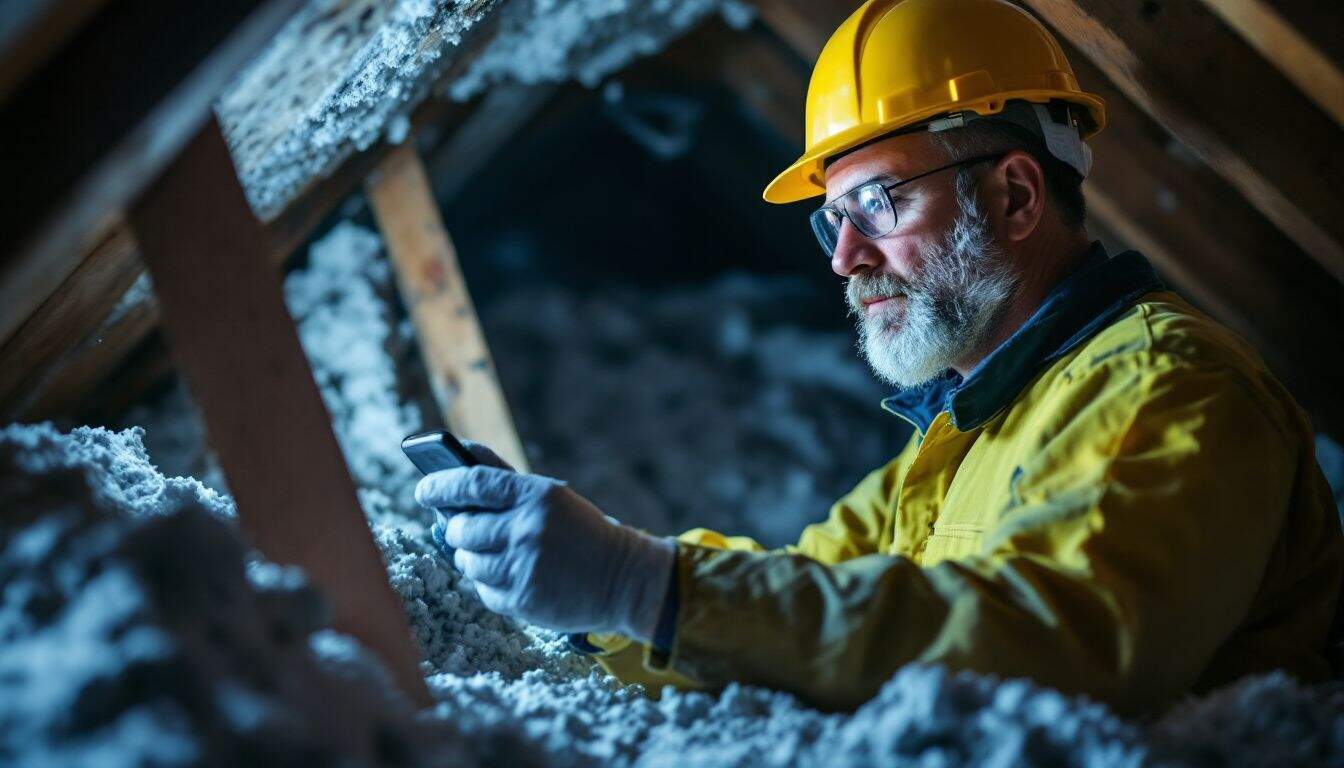
On site, they will systematically work through the building, visually inspecting materials that could contain asbestos — floor tiles, ceiling tiles, pipe lagging, spray coatings, partition boards, roof sheets, and many others. They will assess the condition of each suspect material: is it intact and undisturbed, or is it damaged and friable? The more friable a material, the greater the risk of fibre release.
Where sampling is required, the surveyor takes a small amount of material, seals it in a labelled container, and sends it to an accredited laboratory for analysis under polarised light microscopy. This confirms whether asbestos is present and, if so, which type — chrysotile, amosite, crocidolite, or another variety. Each type carries a different risk profile, and the surveyor must factor that into their overall assessment.
The Role of Asbestos Testing in the Survey Process
Sampling and laboratory analysis are central to what a surveyor does. Visual identification alone is not sufficient to confirm the presence of asbestos — many materials that look like they could contain it do not, and some that look perfectly ordinary do. Asbestos testing provides the definitive answer.
Samples are analysed by UKAS-accredited laboratories, and the results are incorporated into the surveyor’s report. Without that laboratory confirmation, any risk assessment is incomplete.
In some situations — particularly where there is concern about airborne fibres following disturbance — air monitoring may also be carried out. This form of asbestos testing measures the concentration of fibres in the air and is used to verify that an area is safe to reoccupy after remediation work has been completed.
Preparing the Asbestos Survey Report
The survey report is arguably the most important output of the surveyor’s work. It must be clear, accurate, and detailed enough to serve as a working document for building managers, contractors, and health and safety professionals for years to come.
A compliant report produced under HSG264 will typically include:
- A complete asbestos register listing every ACM found, its location, type, and condition
- Photographs of each ACM and its location within the building
- A risk assessment for each material, scored against factors such as surface treatment, extent of damage, and likelihood of disturbance
- Recommendations for action — whether that means monitoring in place, encapsulation, or full removal
- Floor plans or drawings showing ACM locations
- Laboratory analysis certificates for all samples taken
- A clear record of any areas that were inaccessible or presumed to contain asbestos
The report must be made available to anyone who might disturb the materials — contractors, maintenance workers, and emergency services. Keeping it locked in a filing cabinet defeats its entire purpose.
Developing an Asbestos Management Plan
For many buildings, the surveyor’s role extends beyond the report itself. They will often assist in developing an asbestos management plan — the document that sets out how identified ACMs will be managed over time.
An effective management plan will specify:
- Who is responsible for managing the asbestos (the designated dutyholder)
- How and when each ACM will be reinspected
- What information will be passed to contractors before they begin work
- What action will be taken if an ACM deteriorates or is accidentally disturbed
- How the asbestos register will be kept up to date
Under the Control of Asbestos Regulations, dutyholders in non-domestic premises have a legal duty to manage asbestos. The management plan is the practical mechanism through which that duty is discharged.
A surveyor who helps their client build a robust, workable plan is providing genuine value — not just completing a survey form. Where materials are in poor condition and pose an active risk, the surveyor may also recommend asbestos removal as the most appropriate course of action.
Asbestos Surveyors and Property Transactions
When a property changes hands, the asbestos status of the building becomes commercially and legally significant. Buyers need to understand what they are taking on; sellers need to demonstrate transparency and compliance. An asbestos survey carried out prior to a transaction gives both parties a clear picture.
If ACMs are found in good condition and properly managed, that is very different from discovering friable, heavily deteriorated materials throughout the building. The surveyor’s report provides the objective evidence that allows negotiations to proceed on a factual basis.
Where asbestos removal is recommended, the cost of that work will typically be factored into the sale price or agreed as a condition of the transaction. Buyers who proceed without commissioning a survey — particularly on older commercial properties — are taking a significant financial and legal risk.
Sellers, meanwhile, should be aware that failing to disclose known asbestos issues can lead to legal action after completion. A properly conducted survey protects both parties and keeps the transaction on solid ground.
Qualifications and Accreditation: What to Look For
Not everyone who calls themselves an asbestos surveyor has the qualifications to back it up. When commissioning a survey, you should look for surveyors who hold the P402 qualification (Building Surveys and Bulk Sampling for Asbestos), which is the industry-recognised standard for this work.
The surveying company should also hold UKAS accreditation to ISO 17020, which demonstrates that their inspection processes meet independently verified standards. This is not a marketing claim — it is a formal assessment carried out by the United Kingdom Accreditation Service.
Beyond qualifications, experience matters. A surveyor who has inspected hundreds of buildings across different sectors will have a far better instinct for where asbestos is likely to be hiding than one who has completed only the minimum required training. Always ask how many surveys the company has completed and whether they have experience with your specific building type.
Common Misconceptions About Asbestos Surveyors
Surveys are only needed for old or derelict buildings
Asbestos-containing materials were used extensively in UK construction right up until 1999, when the final ban came into force. Any building constructed or refurbished before that date could contain ACMs — including relatively modern-looking commercial premises that show no obvious signs of age or deterioration.
If asbestos is found, it must be removed immediately
That is not the case. Many ACMs in good condition are best left in place and managed — removal itself carries risks if not carried out correctly, and disturbing intact asbestos can cause more harm than leaving it undisturbed. The surveyor’s role is to make that judgement call objectively, based on evidence and the specific circumstances of the building.
A general building survey covers asbestos
It does not. Asbestos surveys are a specialist discipline, governed by specific regulations and requiring specific qualifications. A standard chartered surveyor’s report will not tell you what you need to know about asbestos risk. If asbestos is a concern, you need a dedicated survey carried out by a qualified specialist.
Asbestos Surveys Across the UK
Asbestos is found in buildings across every region of the UK, and the need for qualified surveyors is nationwide. If you are based in the capital, an asbestos survey London can be arranged quickly and efficiently by an experienced local team.
For those in the North West, an asbestos survey Manchester is equally accessible. And in the Midlands, an asbestos survey Birmingham is available from accredited professionals with extensive regional experience.
Supernova Asbestos Surveys operates nationwide, covering commercial, industrial, residential, and public sector properties. With over 50,000 surveys completed, our teams have the experience and accreditation to handle any building type, anywhere in the country.
Frequently Asked Questions
What is the role of an asbestos surveyor in a commercial building?
An asbestos surveyor inspects the building to locate asbestos-containing materials, assesses their condition and risk level, takes samples for laboratory analysis, and produces a formal report. In a commercial setting, they also help the dutyholder develop an asbestos management plan that meets the requirements of the Control of Asbestos Regulations.
Do I need an asbestos survey before selling a property?
There is no legal requirement to commission a survey before selling, but it is strongly advisable for any commercial property built before 2000. A survey provides transparency for buyers, protects sellers from post-completion legal disputes, and allows the transaction to proceed on an accurate, factual basis. Failing to disclose known asbestos issues can have serious legal consequences.
How long does an asbestos survey take?
The duration depends on the size and complexity of the building. A management survey of a small office might be completed in a few hours, while a large industrial site could take a full day or more. Refurbishment and demolition surveys typically take longer due to their intrusive nature. Your surveyor should give you a clear time estimate before work begins.
What qualifications should an asbestos surveyor hold?
Surveyors should hold the P402 qualification — Building Surveys and Bulk Sampling for Asbestos — which is the recognised industry standard. The surveying company should also hold UKAS accreditation to ISO 17020, confirming that their inspection processes have been independently assessed and verified.
What happens after an asbestos survey is completed?
You will receive a detailed survey report including an asbestos register, risk assessments, photographs, laboratory results, and recommendations for each material identified. Depending on the findings, you may need to put a management plan in place, arrange for encapsulation of certain materials, or commission licensed removal works. Your surveyor should walk you through the next steps clearly.
Commission Your Asbestos Survey with Supernova
Supernova Asbestos Surveys is the UK’s leading asbestos surveying company, with over 50,000 surveys completed nationwide. Our UKAS-accredited surveyors hold the P402 qualification and have extensive experience across all building types and sectors.
Whether you need a management survey for an occupied building, a refurbishment and demolition survey ahead of construction work, or independent asbestos testing, our team is ready to help. We provide clear, compliant reports that give you everything you need to manage your legal obligations with confidence.
Call us on 020 4586 0680 or visit asbestos-surveys.org.uk to request a quote or speak to a member of our team.