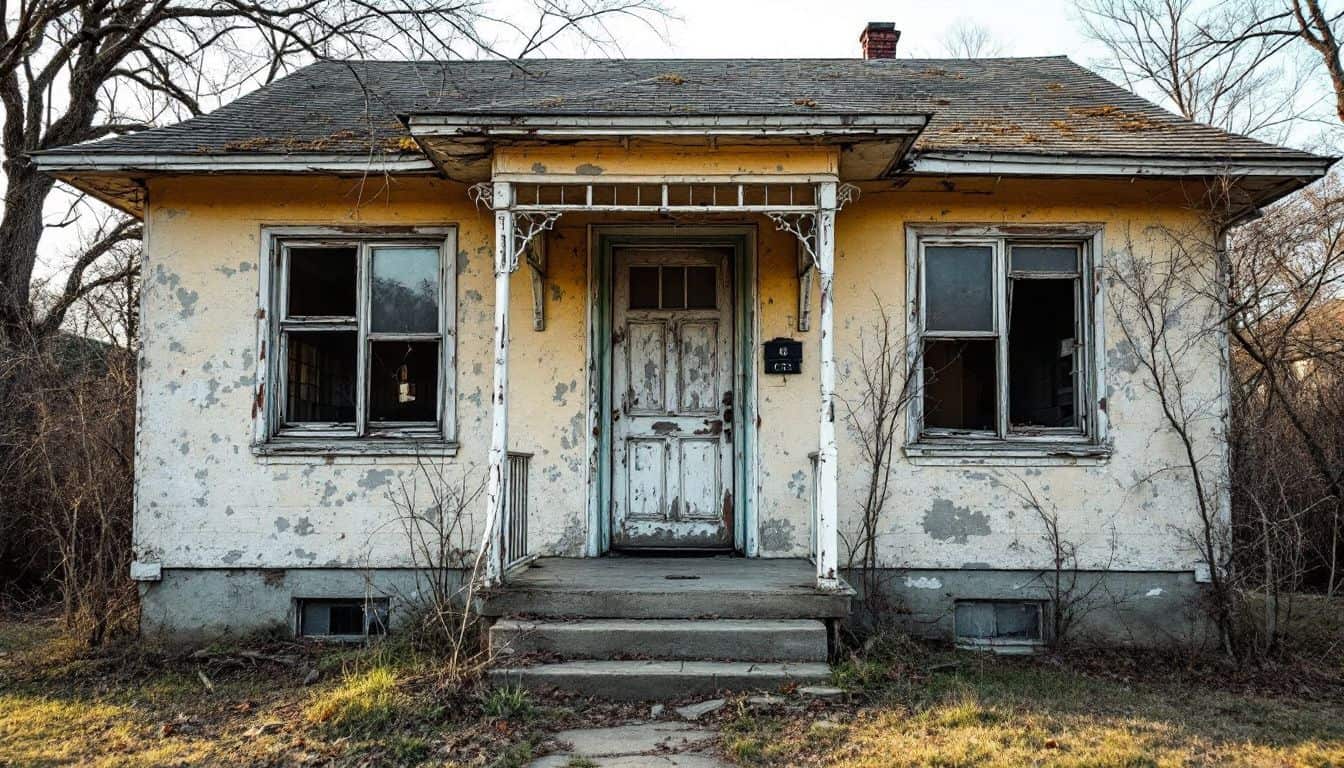
Does Your Property’s Age Put You at Risk? What Every Owner Needs to Know About Asbestos
The age of your property is the single most reliable indicator of whether asbestos might be hiding inside it. If your building was constructed or refurbished before the year 2000, there is a genuine chance asbestos-containing materials (ACMs) are present — and understanding that risk is not optional, it is essential. Asbestos-related diseases remain the UK’s leading cause of work-related deaths, and the danger is not abstract or distant. It is embedded in the walls, floors, ceilings, and roofs of millions of British buildings still in daily use.
With the right knowledge and a professional survey, you can understand exactly what you are dealing with and manage it safely and legally. This starts with one simple question: when was your building built?
Why Property Age Is the Starting Point for Any Asbestos Risk Assessment
Asbestos was not used in isolation — it was woven into the fabric of British construction for decades. From the 1940s right through to the late 1980s, it was considered a wonder material: cheap, fire-resistant, durable, and widely available. Builders used it in everything from roof tiles to floor adhesives without hesitation.
The older a building is, the more likely it was constructed during a period when asbestos use was standard practice. Properties built between 1950 and 1980 sit firmly in the highest-risk bracket, though buildings from the 1930s and 1940s are not immune — asbestos use was already growing during that period.
After 1980, use began to decline as health risks became more widely understood and publicised. The UK eventually implemented a full ban on all forms of asbestos in 1999, meaning any building constructed entirely after that date should not contain asbestos in its original materials. However, refurbishments using pre-ban materials can complicate this picture significantly.
The Three Eras of Asbestos Use in UK Buildings
Understanding which era your property falls into is the foundation of any sensible risk assessment. Here is how the risk profile breaks down across different construction periods:
- Pre-1940s: Asbestos use was growing but not yet universal. Lower risk than later periods, but not zero — particularly in industrial or commercial buildings.
- 1940s–1980s: Peak asbestos use. Virtually every building type — residential, commercial, industrial, educational — could contain ACMs. This is the highest-risk era.
- 1980s–1999: Use declined sharply but did not stop. Certain products continued to be manufactured with asbestos until the 1999 ban. Buildings from this period still warrant careful assessment.
- Post-1999: New construction should be asbestos-free. However, older ACMs may have been incorporated into refurbishments of existing structures, so vigilance is still warranted in any building with an older core.
If you are unsure which era applies to your property, check planning records, building documentation, or speak to the previous owner or agent. Do not assume — verify.
Where Asbestos Hides: Common Materials in Pre-2000 Properties
Asbestos appeared in hundreds of building materials across every part of a structure. Understanding where it commonly hides is essential for any property owner or manager conducting a risk assessment — and for briefing contractors before any work begins.
Inside the Building
- Textured coatings and Artex: The bumpy, swirled ceiling finish common in homes and offices from the 1960s to 1980s frequently contained chrysotile asbestos.
- Floor tiles and adhesives: Vinyl and asphalt floor tiles, along with the adhesive used to fix them, often contained asbestos fibres for added strength and durability.
- Pipe and boiler insulation: Lagging around hot water pipes, boilers, and heating systems was one of the most common uses of asbestos in domestic and commercial properties.
- Ceiling tiles: Acoustic and decorative ceiling tiles in offices, schools, and public buildings regularly contained asbestos.
- Insulation boards: Used as fire breaks and partition linings, asbestos insulation board (AIB) is considered a higher-risk ACM because it is more easily damaged and releases fibres readily.
- Loose-fill insulation: Some properties insulated in the 1960s and 1970s had amosite or crocidolite (blue asbestos) blown into cavity walls and loft spaces — one of the most hazardous forms of ACM.
Outside the Building
- Asbestos cement roofing and cladding: Corrugated asbestos cement sheets were used extensively on garages, outbuildings, agricultural buildings, and industrial units.
- Guttering and downpipes: Older properties sometimes used asbestos cement for external drainage components.
- Soffit boards: The boards beneath roof overhangs on many 1960s and 1970s properties were commonly made from asbestos cement.
Identifying these materials visually is not sufficient for a definitive assessment. Only asbestos testing of samples by an accredited laboratory can confirm whether a material contains asbestos fibres. Do not attempt to take samples yourself — disturbing a suspected ACM without proper controls can be extremely dangerous.
The Legal Framework: What UK Law Requires
Asbestos management in the UK is governed primarily by the Control of Asbestos Regulations, supported by HSE guidance including HSG264. These regulations place clear duties on those who own, manage, or occupy non-domestic premises — and they also apply to landlords of residential properties.
The Duty to Manage
Under the Control of Asbestos Regulations, duty holders — typically building owners or managers — must take reasonable steps to identify whether asbestos is present, assess its condition, and put a management plan in place. This applies to all non-domestic properties built before the year 2000.
Ignoring this duty is not just a legal risk. It is a health risk to everyone who uses the building, including maintenance workers, contractors, and regular occupants. Enforcement action, prosecution, and unlimited fines are all possible consequences of non-compliance.
Surveys Before Refurbishment or Demolition
Before any significant refurbishment or demolition work begins on a pre-2000 building, a specific type of survey is legally required. A demolition survey is required when a building is being stripped out or demolished, as it must locate all ACMs before work begins — including those within the structure that would not normally be accessible.
For ongoing management of a building in active use, a management survey is the appropriate starting point. This identifies ACMs in areas likely to be disturbed during normal occupancy and maintenance, and informs the asbestos management plan.
Failing to commission the correct survey before refurbishment work begins can result in workers unknowingly disturbing ACMs, triggering prosecutions, enforcement notices, and — most critically — serious and irreversible harm to health.
The Health Consequences of Getting This Wrong
Asbestos fibres are invisible to the naked eye. When ACMs are disturbed — by drilling, cutting, sanding, or even rough handling — microscopic fibres are released into the air. These fibres can be inhaled deeply into the lungs, where they become permanently lodged in tissue.
The diseases caused by asbestos exposure are severe and, in most cases, fatal:
- Mesothelioma: An aggressive cancer of the lining of the lungs or abdomen, almost exclusively caused by asbestos exposure. There is currently no cure.
- Asbestosis: A chronic scarring of the lung tissue that causes progressive breathlessness and significantly reduces quality of life.
- Asbestos-related lung cancer: Linked to prolonged exposure, particularly in those who also smoked.
- Pleural thickening: Scarring of the membrane surrounding the lungs, causing chest pain and breathing difficulties.
One of the most alarming aspects of asbestos-related disease is the latency period — symptoms often do not appear until 20 to 40 years after exposure. This means exposure happening today might not manifest as illness until decades from now, making prevention the only effective strategy.
Undisturbed asbestos in good condition does not pose an immediate risk. The danger arises when materials are damaged or disturbed. This is precisely why knowing what is present — and managing it correctly — is so critical.
What Type of Survey Does Your Property Need?
Not all asbestos surveys are the same. The type your property requires depends on its age, its current condition, and what you plan to do with it. Commissioning the wrong type of survey — or no survey at all — can leave you legally exposed and workers at risk.
Management Survey
This is the standard survey for a building that is occupied and in normal use. It identifies ACMs in accessible areas, assesses their condition, and provides the information needed to create or update an asbestos management plan. This type of survey is minimally intrusive and does not require the building to be vacated.
Refurbishment and Demolition Survey
This is a more invasive survey required before any refurbishment or demolition work. It must identify all ACMs in the areas affected by the planned work — including those hidden behind walls, above ceilings, or within floor voids. The building or affected area usually needs to be unoccupied during this type of survey.
If you are uncertain which survey type applies to your situation, speak to a qualified surveyor before commissioning anything. Getting this decision wrong has real consequences.
Supernova Asbestos Surveys operates across the full length of the UK. Whether you need an asbestos survey London across any of the capital’s boroughs, an asbestos survey Manchester across Greater Manchester, or an asbestos survey Birmingham throughout the West Midlands, our qualified surveyors are ready to help.
Safe Removal: When Asbestos Cannot Simply Be Managed in Place
In some situations, leaving asbestos in place and managing it is not viable — particularly when materials are in poor condition, when refurbishment is planned, or when the risk to building users is considered too high. In these cases, removal is the appropriate course of action.
Professional asbestos removal must be carried out by licensed contractors for the most hazardous ACMs, including asbestos insulation board, asbestos insulation, and sprayed coatings. For lower-risk materials, a notifiable non-licensed contractor may be appropriate — but this determination should always be made by a qualified professional, never assumed.
The removal process involves:
- Setting up a controlled work area with appropriate enclosures to prevent fibre spread
- Using respiratory protective equipment (RPE) and full protective clothing throughout
- Carefully removing ACMs using wet methods where possible to suppress fibre release
- Double-bagging and clearly labelling all asbestos waste in accordance with regulations
- Transporting waste to a licensed disposal facility
- Carrying out a thorough clearance inspection and air test before the area is reoccupied
Attempting to remove asbestos without the correct training, equipment, and licences is illegal for certain material types and extremely dangerous for all of them. Never instruct an unlicensed contractor to handle materials you suspect may contain asbestos.
Practical Steps for Property Owners and Managers
If you manage or own a property built before 2000, here is a clear, practical approach to managing your asbestos risk effectively:
- Establish the age of the property — check planning records, building documentation, or speak to the previous owner or agent.
- Commission a management survey if one does not already exist — this is your baseline for understanding what is present and where.
- Review the asbestos register — if a survey has been done previously, ensure the register is up to date and accessible to all relevant contractors and maintenance staff.
- Brief all contractors before any work begins — anyone working in or on the building must be made aware of any known ACMs and their locations before they start.
- Commission a refurbishment or demolition survey before any intrusive work — do not assume the management survey is sufficient for this purpose.
- Arrange asbestos testing if you suspect a material but are not certain — do not disturb it in the meantime.
- Review the management plan annually and update it whenever the condition of ACMs changes or new information becomes available.
These steps are not bureaucratic box-ticking. They are the practical difference between a building that is managed safely and one that is putting people at risk without anyone realising it.
Frequently Asked Questions
Does the age of a property definitely mean asbestos is present?
Not definitively — but it significantly increases the probability. Properties built between the 1940s and 1980s are at highest risk because asbestos was in widespread use during this period. Buildings from the 1980s to 1999 carry a lower but still meaningful risk. Only a professional survey and laboratory testing can confirm whether ACMs are actually present in your specific building.
My property was built after 1999 — do I still need to worry about asbestos?
If the building was constructed entirely from new materials after the 1999 ban, the risk is very low. However, if any part of the structure is older — for example, a converted or extended building with a pre-2000 core — asbestos could still be present in those sections. If there is any doubt, a survey is the only way to be certain.
Can I identify asbestos-containing materials myself by looking at them?
No. Asbestos cannot be identified reliably by visual inspection alone. Many ACMs look identical to non-asbestos materials. The only way to confirm whether a material contains asbestos is through laboratory analysis of a sample taken by a trained professional. Do not attempt to take samples yourself — disturbing a suspected ACM without proper controls can release harmful fibres.
What is the difference between a management survey and a demolition survey?
A management survey is designed for buildings in normal active use. It identifies ACMs in accessible areas and informs the asbestos management plan. A demolition survey is a more invasive assessment required before any significant refurbishment or demolition work — it must locate all ACMs, including those hidden within the structure. Using a management survey when a demolition survey is legally required is a serious compliance failure.
How quickly can Supernova Asbestos Surveys carry out a survey?
Supernova Asbestos Surveys operates nationwide and can typically arrange surveys at short notice. With over 50,000 surveys completed across the UK, our qualified surveyors are experienced in all property types and sizes. Contact us on 020 4586 0680 or visit asbestos-surveys.org.uk to discuss your requirements and get a quote.
Get Expert Help From Supernova Asbestos Surveys
If your property was built before 2000 and you do not have an up-to-date asbestos survey on file, you are carrying a legal and health risk that is entirely preventable. Supernova Asbestos Surveys has completed over 50,000 surveys across the UK, working with property managers, landlords, local authorities, and businesses of every size.
Our UKAS-accredited surveyors carry out management surveys, refurbishment and demolition surveys, asbestos testing, and can advise on safe removal options — all in one place. We cover the entire UK, with dedicated teams in London, Manchester, Birmingham, and beyond.
Call us today on 020 4586 0680 or visit asbestos-surveys.org.uk to book your survey or speak to a qualified surveyor about your property’s specific needs.