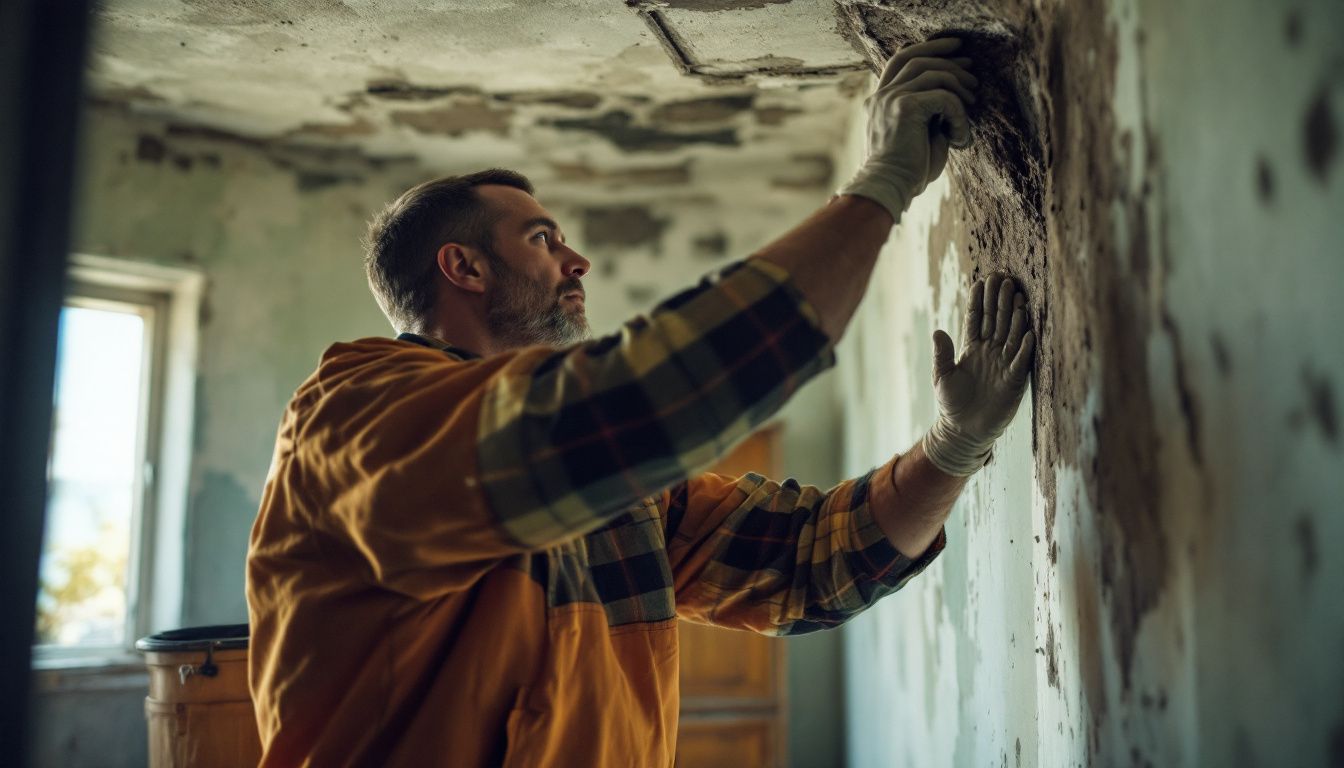
Why Asbestos Surveys Are the Cornerstone of Safe Property Management
Older buildings carry secrets in their walls, ceilings, and floors — and not all of them are harmless. For property managers, ensuring safety of occupants is the central purpose of asbestos surveys in property management, and it is a responsibility that carries real legal weight. Get it wrong, and the consequences range from enforcement action to serious harm to the people who live or work in your building.
Whether you manage a single commercial unit or a large residential portfolio, the principles are the same. Here is what you need to know about the types of surveys available, what the law requires, how the process works, and what it costs.
The Hidden Danger in Older Buildings
Asbestos was used extensively in UK construction throughout the twentieth century. It appeared in sprayed coatings, insulating boards, ceiling tiles, pipe lagging, floor tiles, and asbestos cement products. Buildings constructed or refurbished before 2000 may contain any number of these materials.
The danger is not always visible. Asbestos-containing materials (ACMs) in good condition may pose a low risk. But once disturbed — during maintenance, renovation, or accidental damage — fibres become airborne. Inhaling those fibres is linked to mesothelioma, asbestosis, and lung cancer, all of which can develop decades after exposure.
That is why a proactive approach to identifying and managing ACMs is essential, not optional. Waiting until something goes wrong is not a strategy — it is a liability.
Ensuring Safety of Occupants: The Purpose of Asbestos Surveys in Property Management
An asbestos survey does not simply confirm whether asbestos is present. It tells you where it is, what condition it is in, and what level of risk it poses. That information forms the foundation of an effective asbestos management plan.
For property managers, the survey report is a practical working document. It guides decisions about encapsulation, repair, or removal. It tells contractors which areas to avoid. It protects you legally by demonstrating that you have fulfilled your duty to manage.
Without a current, accurate survey, you are managing blind. Any maintenance work, refurbishment, or even routine inspection could inadvertently disturb ACMs and put occupants and workers at serious risk.
What an Asbestos Survey Covers
A thorough survey will access every part of the building — not just the obvious areas. Surveyors inspect:
- Lofts, roof spaces, and voids
- Basements and plant rooms
- Service ducts and risers
- External structures and outbuildings
- Communal areas and stairwells
- Individual rooms and units where access is granted
Where areas cannot be accessed, surveyors apply the precautionary principle: those areas are presumed to contain asbestos until inspection proves otherwise. This is not overcaution — it is the correct approach under HSG264, the HSE’s definitive survey guidance.
Types of Asbestos Survey: Choosing the Right One
Not every situation calls for the same type of survey. The three main types serve distinct purposes, and using the wrong one can leave you exposed — legally and physically.
Management Survey
A management survey is the standard survey for occupied buildings. Its purpose is to locate ACMs that could be disturbed during normal occupation and routine maintenance. It is the survey that satisfies the ongoing duty to manage under Regulation 4 of the Control of Asbestos Regulations.
The survey is minimally intrusive and designed to be carried out with the building in use. It produces an asbestos register, a risk assessment for each material found, and recommendations for management. This document should be reviewed and updated regularly.
Refurbishment Survey
Before any renovation or building work begins, a refurbishment survey is required for the areas to be disturbed. This is a more intrusive survey — surveyors may need to break into the fabric of the building to check behind walls, above ceilings, and beneath floors.
This survey must be completed before contractors begin work. Discovering asbestos mid-project causes delays, additional costs, and potential exposure incidents. A refurbishment survey eliminates that risk entirely.
Demolition Survey
When a building is being partially or fully demolished, a demolition survey is mandatory. This is the most intrusive type — every part of the structure must be assessed, including areas that would normally remain undisturbed.
The survey ensures that all ACMs are identified and safely removed before demolition work starts. Skipping this step is not only dangerous — it is a criminal offence.
Re-Inspection Survey
An asbestos management plan is not a one-off exercise. ACMs that are being managed in situ need to be monitored over time. A re-inspection survey updates the condition rating of known ACMs, identifies any deterioration, and ensures your register remains current and legally defensible.
Annual re-inspections are standard practice for most commercial and residential properties. The frequency may increase if ACMs are in poor condition or located in high-traffic areas.
Legal Requirements: What Property Managers Must Know
The legal framework governing asbestos management in the UK is clear and enforceable. Ignorance is not a defence, and the penalties for non-compliance are significant.
The Control of Asbestos Regulations
The Control of Asbestos Regulations set out the legal obligations for anyone who manages non-domestic premises. The key duty — Regulation 4, the Duty to Manage — requires dutyholders to:
- Identify whether ACMs are present in the premises
- Assess the condition and risk level of any ACMs found
- Produce and maintain an up-to-date asbestos register
- Create and implement an asbestos management plan
- Share information about ACMs with anyone who may disturb them
The duty applies to the common parts of residential buildings as well as all non-domestic premises. If you manage flats, the duty covers shared areas such as corridors, plant rooms, and roofs.
HSG264: The Survey Standard
HSG264 is the HSE’s guidance document on conducting asbestos surveys. It defines the methodology, competency requirements, and reporting standards that surveyors must follow. Any survey that does not comply with HSG264 is not fit for purpose — it will not satisfy your legal obligations and may not be accepted by contractors or insurers.
Always use a surveyor who explicitly follows HSG264 and whose samples are analysed by a UKAS-accredited laboratory. These are non-negotiable requirements, not optional extras.
Asbestos Removal: When Management Is Not Enough
Not all ACMs can or should be managed in situ indefinitely. Where materials are in poor condition, at high risk of disturbance, or in an area scheduled for refurbishment, asbestos removal may be the appropriate course of action.
Licensed removal work must be carried out by a contractor holding an HSE licence. The work requires advance notification to the HSE, isolation of the work area, use of appropriate PPE and respiratory protective equipment, and correct disposal of asbestos waste.
Non-licensed work — covering lower-risk materials — still requires trained operatives and safe working procedures. Your survey report will clearly identify which materials require licensed removal and which can be managed by other means.
The Asbestos Survey Process: Step by Step
Knowing what to expect from a survey makes the process straightforward. Here is how Supernova Asbestos Surveys approaches every job.
Step 1 — Booking
Contact us by phone or through our website to discuss your requirements. We confirm availability — often within the same week — and send a booking confirmation. We will ask for basic details about the property: size, type, age, and any known history of asbestos.
Step 2 — Site Visit
A BOHS P402-qualified surveyor attends at the agreed time. Surveys are typically scheduled during low-occupancy periods or outside working hours to minimise disruption. The surveyor carries out a thorough visual inspection of all accessible areas.
Step 3 — Sampling
Representative samples are collected from materials suspected to contain asbestos. Correct containment procedures are used throughout — the sampling process itself is managed carefully to prevent fibre release.
If you prefer to collect your own samples from lower-risk materials, our testing kit is available from our online shop and provides a straightforward way to get materials analysed quickly.
Step 4 — Laboratory Analysis
All samples are analysed under polarised light microscopy (PLM) at our UKAS-accredited laboratory. UKAS accreditation is the benchmark for analytical quality — results from accredited labs are legally defensible and accepted by all relevant authorities.
Step 5 — Report Delivery
You receive a detailed asbestos register and risk-rated management plan in digital format, typically within three to five working days. The report is fully compliant with HSG264 and satisfies all requirements under the Control of Asbestos Regulations. It includes the location, condition, and risk rating of every ACM identified, along with clear management recommendations.
Survey Costs and Pricing
Transparent pricing matters. Here is a guide to Supernova’s standard survey costs:
- Management Survey: From £195 for a standard residential or small commercial property
- Refurbishment & Demolition Survey: From £295, covering all areas to be disturbed prior to works
- Bulk Sample Testing Kit: From £30 per sample, posted to you for collection where permitted
- Re-Inspection Survey: From £150, plus £20 per ACM re-inspected
- Fire Risk Assessment: From £195 for a standard commercial premises
All prices are subject to property size and location. If you manage a portfolio of properties, ask about our multi-site pricing. Request a free quote online for a fixed-price figure tailored to your specific requirements.
Asbestos Management and Fire Safety: A Combined Approach
Property managers with responsibilities under health and safety law often need to address more than one risk at a time. A fire risk assessment is a separate legal requirement for most non-domestic premises and the common parts of residential buildings.
Combining your asbestos survey and fire risk assessment into a single site visit can save time and reduce disruption for occupants. Supernova offers both services, carried out by qualified professionals, with clear documentation to support your compliance obligations.
Asbestos Surveys Across the UK
Supernova Asbestos Surveys operates nationwide, with surveyors covering England, Scotland, and Wales. Whether you need an asbestos survey in London or an asbestos survey in Manchester, our team can typically schedule a visit within the same week.
With over 50,000 surveys completed and more than 900 five-star reviews, we are one of the most trusted names in asbestos consultancy in the UK. Our surveyors hold BOHS P402, P403, and P404 qualifications — the gold standard in the industry.
Why Proactive Asbestos Management Protects Your Property and Your People
Reactive management — waiting until something goes wrong — is both dangerous and expensive. An undiscovered ACM disturbed during routine maintenance can result in an exposure incident, a site shutdown, enforcement action, and significant remediation costs.
Proactive management — regular surveys, an up-to-date register, a maintained asbestos management plan — keeps occupants safe, keeps contractors informed, and keeps you on the right side of the law. It also adds demonstrable value when selling or leasing a property, as buyers and tenants increasingly expect documented compliance.
The investment in a proper survey is modest. The cost of getting it wrong is not.
Book Your Asbestos Survey Today
Supernova Asbestos Surveys is ready to help you meet your legal obligations and protect everyone who uses your building. Whether you need a management survey, a refurbishment survey ahead of planned works, or an annual re-inspection, our qualified team delivers accurate, HSG264-compliant reports with fast turnaround.
📞 Call us on 020 4586 0680 to speak with a specialist today.
🌐 Visit asbestos-surveys.org.uk to learn more or book online.
Frequently Asked Questions
Do I legally need an asbestos survey for my property?
If you manage non-domestic premises, or the common parts of a residential building, you have a legal duty under the Control of Asbestos Regulations to manage asbestos. This requires you to identify whether ACMs are present, assess their condition, and maintain an asbestos register. A survey is the only reliable way to fulfil this obligation. The duty applies regardless of the age of the building, though properties built after 2000 are less likely to contain ACMs.
How long does an asbestos survey take?
The duration depends on the size and complexity of the property. A standard management survey for a small commercial unit or residential property typically takes between one and three hours. Larger or more complex properties — multi-storey buildings, industrial sites, or properties with extensive voids and service areas — will take longer. Your surveyor will give you a realistic time estimate when you book.
What happens if asbestos is found during a survey?
Finding asbestos does not automatically mean it needs to be removed. Many ACMs can be safely managed in situ, provided they are in good condition and not at risk of disturbance. Your survey report will assign a risk rating to each material and recommend the appropriate management action — whether that is monitoring, encapsulation, or removal. The key is to act on those recommendations promptly and keep your register updated.
How often should I have an asbestos re-inspection?
For most commercial and residential properties, an annual re-inspection is standard practice. However, the frequency should reflect the condition and location of the ACMs identified in your original survey. Materials in poor condition, or in areas subject to regular disturbance, may require more frequent monitoring. Your asbestos management plan should specify the re-inspection schedule, and that schedule should be reviewed whenever the condition of the building changes.
Can I manage asbestos myself, or do I need a specialist?
The survey itself must be carried out by a competent surveyor who follows HSG264 and uses a UKAS-accredited laboratory for sample analysis. This is not a task for untrained individuals. However, some lower-risk activities — such as collecting bulk samples from certain materials — may be permissible using a proper testing kit, provided the correct procedures are followed. For any work involving licensed asbestos materials, you must engage a contractor holding an HSE licence.