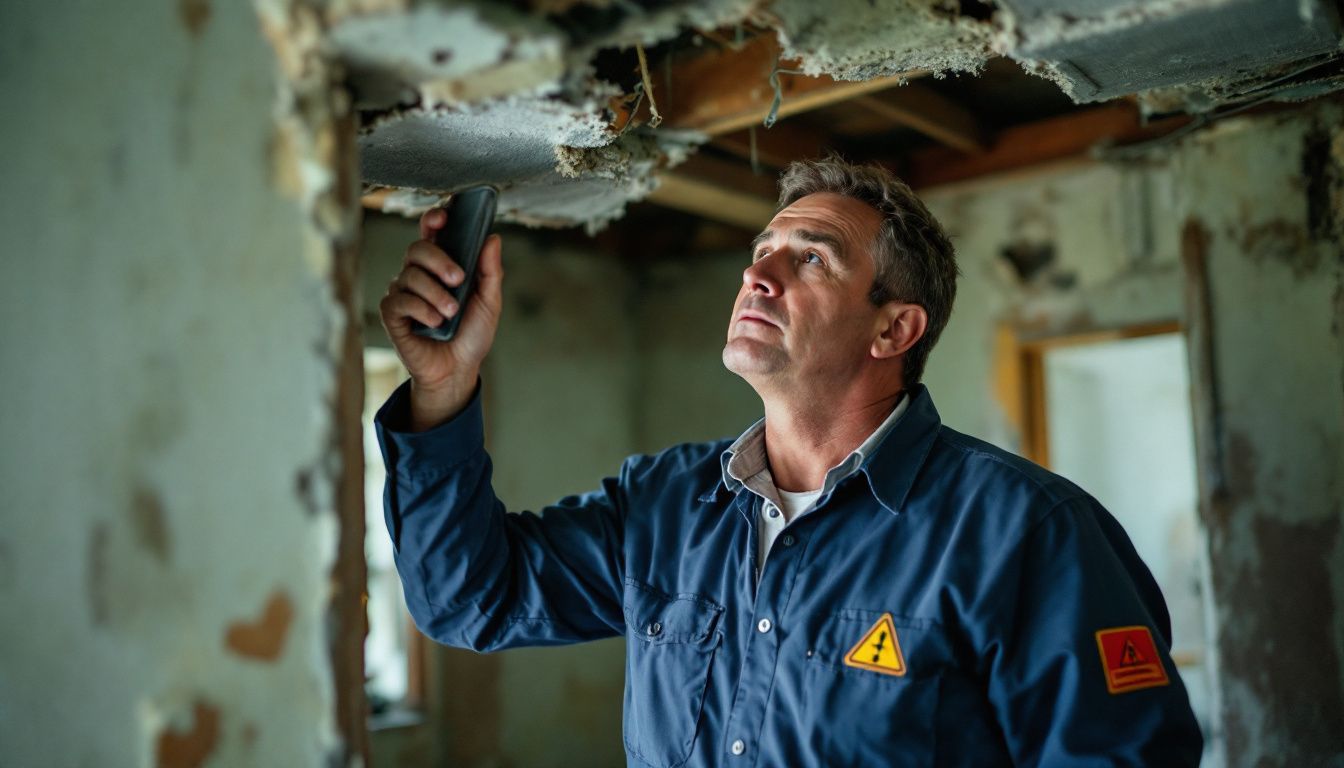
Why Asbestos Surveys Are a Crucial Aspect of Property Management
Hidden hazards have a way of staying hidden — until someone disturbs them. For property managers responsible for older buildings, asbestos-containing materials (ACMs) can sit undetected behind walls, beneath floors, and above ceilings for decades. Asbestos surveys are a crucial aspect of property management precisely because they bring those hidden risks into the light, giving you the information needed to protect occupants, contractors, and yourself.
Whether you manage a commercial office block, a block of flats, or an industrial unit, your legal obligations under the Control of Asbestos Regulations are clear. Failing to identify and manage ACMs isn’t just a compliance issue — it’s a genuine risk to human health.
What Is an Asbestos Survey?
An asbestos survey is a structured inspection of a building carried out by a qualified surveyor. Its purpose is to locate, identify, and assess the condition of any materials that may contain asbestos.
Surveyors will visually inspect accessible areas of the building and take physical samples from suspect materials. Those samples are then sent to a UKAS-accredited laboratory for analysis under polarised light microscopy.
The results feed into a written report that includes an asbestos register, a risk assessment, and — where required — a management plan. The survey must be carried out in line with HSG264, the HSE’s definitive guidance on asbestos surveying. Any survey that doesn’t follow this guidance isn’t worth the paper it’s printed on when it comes to demonstrating legal compliance.
Who Needs an Asbestos Survey?
The duty to manage asbestos applies to owners and managers of non-domestic premises. This includes offices, warehouses, schools, hospitals, shops, and any commercial property built before the year 2000.
It also applies to the common areas of multi-occupancy domestic premises — stairwells, plant rooms, roof spaces, and communal corridors in blocks of flats, for example.
If you’re responsible for maintenance or repair of any such building, the law requires you to:
- Find out whether ACMs are present
- Assess their condition and the risk they pose
- Produce and maintain an asbestos register
- Put a management plan in place
- Share that information with anyone who may disturb those materials
Ignoring these obligations can result in substantial fines and, far more seriously, preventable harm to the people who live and work in your buildings.
The Four Types of Asbestos Survey Explained
Not every survey is the same. The type of survey you need depends on what you’re planning to do with the building. Getting the right survey for the right situation is essential — commissioning the wrong type can leave you exposed both legally and practically.
Management Survey
A management survey is the standard survey required for buildings in normal occupation and use. It’s designed to locate ACMs that could be disturbed during routine maintenance or by occupants going about their day-to-day activities.
The surveyor will inspect all accessible areas, including above suspended ceilings and inside service risers where safe to do so. Sampling is kept to a minimum — the aim is to identify risk without causing unnecessary disturbance to materials.
The resulting asbestos register forms the backbone of your ongoing duty to manage.
Refurbishment Survey
Before any structural alteration, rewiring, pipe replacement, or invasive maintenance work, you’ll need a refurbishment survey for the areas affected. This is a more intrusive inspection than a management survey — the surveyor needs to access all areas that will be disturbed, including cavities, voids, and structural elements.
This type of survey must be completed before work begins. Contractors cannot safely price or carry out refurbishment work without knowing what they might encounter. Starting work without one puts workers at risk and exposes you to serious legal liability.
Demolition Survey
If a building is being partially or fully demolished, a demolition survey is required. This is the most thorough and intrusive of all survey types — every part of the building must be inspected and sampled, including areas that would normally remain undisturbed.
The demolition survey must be completed before any demolition work commences. Any ACMs identified must be removed by a licensed contractor before the structure comes down. The Health and Safety Executive takes demolition-related asbestos breaches extremely seriously.
Re-Inspection Survey
Once ACMs have been identified and a management plan put in place, the story doesn’t end there. Materials can deteriorate over time, and their condition must be monitored.
A periodic re-inspection survey checks the condition of known ACMs, updates their risk rating, and ensures your asbestos register remains accurate and current. Most management plans require a reinspection at least annually, though higher-risk materials may need more frequent monitoring.
Keeping your register up to date isn’t optional — it’s a legal requirement under Regulation 4 of the Control of Asbestos Regulations.
Asbestos Testing: When Sampling Alone Is Needed
In some situations, you may not need a full survey. You may simply need to confirm whether a specific material contains asbestos before carrying out localised work.
Asbestos testing on targeted samples can provide that answer quickly and cost-effectively. For smaller properties or situations where you want to collect samples yourself, a testing kit is available from Supernova. Samples are collected following safe handling guidance and posted to our UKAS-accredited laboratory for analysis, with results returned as a clear written report.
DIY sample collection is only appropriate in certain circumstances. Where materials are damaged or friable, or where there’s any doubt about how to collect a sample safely, a qualified surveyor should always be used instead.
The Health Risks That Make Surveys Non-Negotiable
Asbestos is the single greatest cause of work-related deaths in the United Kingdom. When ACMs are disturbed, microscopic fibres become airborne and can be inhaled deep into the lungs. The consequences can be devastating — and crucially, they don’t appear for decades after exposure.
The diseases linked to asbestos exposure include:
- Mesothelioma — an aggressive and incurable cancer of the lining of the lungs or abdomen, almost exclusively caused by asbestos exposure
- Lung cancer — asbestos exposure significantly increases the risk, particularly in those who also smoke
- Asbestosis — a chronic scarring of lung tissue that causes progressive breathlessness and has no cure
- Pleural thickening — a thickening of the membrane surrounding the lungs that can severely restrict breathing
There is no safe level of exposure. Even a single significant exposure can be enough to trigger disease decades later. This is why identifying ACMs before any work begins — and keeping them in good condition when they’re left in place — is so important.
UK Regulations Every Property Manager Must Know
Asbestos management in Great Britain is governed by a robust legal framework. Understanding your obligations is the first step to meeting them.
Control of Asbestos Regulations
This is the primary legislation. It sets out licensing requirements for work with asbestos, notification duties, and the obligations placed on duty holders to protect workers and building occupants.
Regulation 4 — the duty to manage — is the provision most directly relevant to property managers. It requires you to take reasonable steps to find ACMs, assess the risk they pose, and manage that risk effectively.
HSG264 — Asbestos: The Survey Guide
HSG264 is the HSE’s definitive guidance on how asbestos surveys should be planned and carried out. It covers survey types, sampling methodologies, laboratory analysis, and report requirements.
Any survey that doesn’t follow HSG264 standards will not be considered legally compliant. Supernova’s surveyors follow HSG264 on every job, without exception.
The Ongoing Duty to Manage
The duty to manage is not a one-off task — it’s an ongoing obligation. You must keep your asbestos register up to date, review your management plan regularly, and ensure that anyone who might disturb ACMs is made aware of their location and condition.
This includes contractors, maintenance staff, and emergency services. A register that hasn’t been reviewed or updated is not a register that will protect you.
What to Expect When You Book an Asbestos Survey
Booking a survey with Supernova is straightforward. Here’s how the process works from start to finish:
- Booking: Contact us by phone or online. We’ll confirm availability — often within the same week — and send you a booking confirmation.
- Site Visit: A BOHS P402-qualified surveyor attends at the agreed time and carries out a thorough inspection of the relevant areas.
- Sampling: Representative samples are collected from suspect materials using correct containment procedures to prevent fibre release.
- Laboratory Analysis: Samples are analysed under polarised light microscopy at our UKAS-accredited laboratory.
- Report Delivery: You receive a detailed asbestos register and risk-rated management plan in digital format, typically within three to five working days.
The report is fully compliant with HSG264 and satisfies all legal requirements under the Control of Asbestos Regulations. It gives you exactly what you need to demonstrate your duty of care.
Asbestos Survey Costs and What Affects Pricing
One of the most common questions we hear is: how much does an asbestos survey cost? The honest answer is that it depends on the size and complexity of the property — but our pricing is transparent and fixed, with no hidden fees.
Here’s a guide to Supernova’s standard pricing:
- Management Survey: From £195 for a standard residential or small commercial property
- Refurbishment & Demolition Survey: From £295, covering all areas to be disturbed prior to works
- Re-inspection Survey: From £150, plus £20 per ACM re-inspected
- Bulk Sample Testing Kit: From £30 per sample, posted to you for collection where permitted
- Fire Risk Assessment: From £195 for a standard commercial premises
To put those figures in perspective: a management survey typically costs a fraction of what asbestos removal costs once materials have been disturbed and a problem has escalated. Early identification through regular surveys is always the more cost-effective path.
Many property managers also combine their asbestos survey with a fire risk assessment, which can be arranged through Supernova at the same time. Bundling inspections saves time and minimises disruption to occupants.
Request a free quote tailored to your specific property and requirements — there’s no obligation, and our team will advise you on the most appropriate survey type for your situation.
Why Property Managers Choose Supernova
Supernova has completed over 50,000 asbestos surveys across the UK, building a reputation for accurate reporting, clear communication, and reliable turnaround times. Our surveyors hold BOHS P402, P403, and P404 qualifications — the gold standard in the industry — and all samples are analysed in our own UKAS-accredited laboratory.
We cover the whole of England, Scotland, and Wales. Whether your property is in central London, the north of England, or rural Wales, we can get a qualified surveyor to you, often within the same week.
Our clients include property management companies, local authorities, housing associations, schools, and private landlords. What they all have in common is a need for surveys they can rely on — accurate, compliant, and clearly written reports that hold up to scrutiny.
Call us on 020 4586 0680 or visit asbestos-surveys.org.uk to speak with our team and get your survey booked.
Frequently Asked Questions
Why are asbestos surveys such a crucial aspect of property management?
Asbestos surveys give property managers the information they need to meet their legal duty to manage under the Control of Asbestos Regulations. Without a survey, you cannot know whether ACMs are present, what condition they’re in, or whether they pose a risk to occupants and contractors. A survey also provides the documented evidence you need to demonstrate compliance if the HSE ever investigates.
How often should an asbestos survey be carried out?
An initial management survey should be carried out as soon as you take responsibility for a pre-2000 building. After that, a reinspection survey should be completed at least annually to check the condition of known ACMs and update your register. If you’re planning any refurbishment or demolition work, an additional survey specific to those works is required before they begin.
What happens if asbestos is found during a survey?
Finding asbestos doesn’t automatically mean it needs to be removed. If ACMs are in good condition and unlikely to be disturbed, they can often be safely managed in place. Your survey report will include a risk rating for each material and recommendations on whether to manage, encapsulate, or remove. Where removal is necessary, it must be carried out by a licensed contractor.
Can I collect asbestos samples myself?
In some circumstances, yes. A testing kit can be used to collect samples from intact, non-friable materials for laboratory analysis. However, if a material is damaged, crumbling, or in a location that’s difficult to access safely, you should always use a qualified surveyor. Disturbing damaged asbestos without proper controls puts you and others at risk.
Does a management survey cover refurbishment work?
No. A management survey is designed for buildings in normal use and does not involve the intrusive inspection required before refurbishment or demolition work. If you’re planning any work that will disturb the fabric of the building — even something as routine as replacing a boiler or rewiring — you’ll need a separate refurbishment survey for the affected areas before work starts.