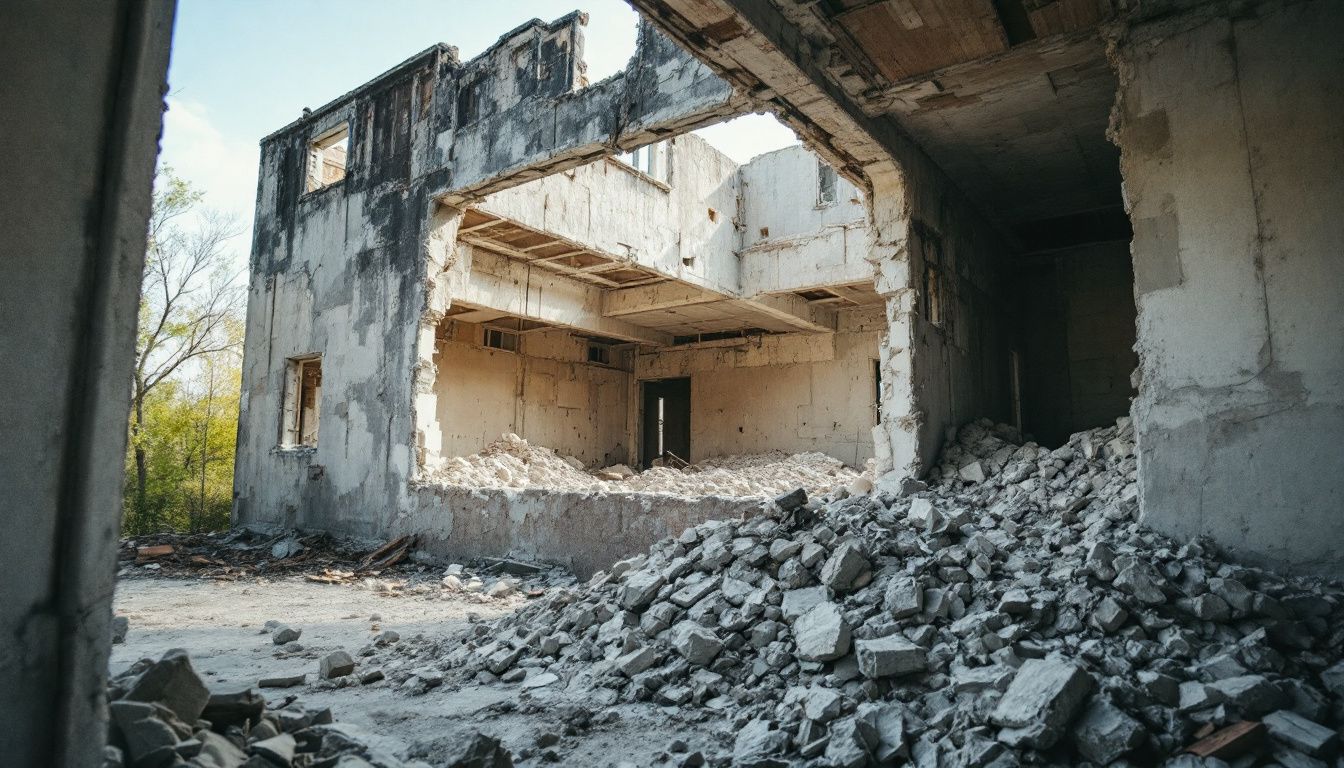
Why Asbestos Surveys Are Non-Negotiable Before Property Demolition
Demolishing a building without a proper asbestos survey is one of the most costly mistakes a property owner can make. Asbestos remains present in a significant proportion of UK buildings constructed before 2000, and the legal and financial consequences of missing it are severe. Utilising asbestos surveys to minimise legal and financial risks in property demolition is not optional — it is a legal requirement, and ignoring it can result in criminal prosecution, six-figure remediation bills, and civil claims that drag on for years.
This is not a niche concern reserved for large commercial developers. It applies equally to landlords, housing associations, local authorities, and private owners planning any demolition or significant refurbishment work. If your project involves breaking into the fabric of a pre-2000 building, you need to understand what the law requires — and what it costs when things go wrong.
What the Law Actually Requires Before Demolition
The Control of Asbestos Regulations place a clear duty on those responsible for non-domestic premises — and on those commissioning demolition work — to identify and manage asbestos before any intrusive work begins. The HSE’s guidance document HSG264 sets out exactly how surveys must be conducted and what standards surveyors must meet.
For demolition specifically, a fully intrusive survey is mandatory. This is not a visual inspection or a management-level check. It involves physically accessing concealed areas — inside walls, above ceilings, beneath floors — to locate every asbestos-containing material (ACM) that could be disturbed during the demolition process.
Failure to commission this survey before work starts is a criminal offence. The Health and Safety Executive has the power to issue improvement notices, prohibition notices, and prosecute dutyholders. Courts have handed down substantial fines and, in serious cases, custodial sentences.
Which Asbestos Survey Do You Need?
There are three main types of asbestos survey, and choosing the wrong one leaves you exposed. Each serves a different purpose, and the scope of your project determines which applies.
Management Survey
A management survey is used for the routine management of asbestos in occupied buildings. It checks accessible areas and is not sufficient for demolition or major refurbishment work. If you are planning to knock a building down and you only have a management survey in place, you are not compliant.
Refurbishment Survey
A refurbishment survey is required before any renovation or intrusive work. It involves breaking into the building fabric to locate ACMs in the specific areas where work will take place. This is appropriate for targeted refurbishment projects but does not cover the whole structure.
Demolition Survey
A demolition survey is the most intrusive type and is required before any full or partial demolition. It covers the entire structure and must be completed before demolition activity begins. There are no shortcuts here — partial surveys or management-level inspections will not satisfy the legal requirement.
If you are unsure which applies to your project, speak to a qualified surveyor before work is scoped or contracted. Getting this wrong at the planning stage creates problems that are far more expensive to fix later.
The Legal Risks of Proceeding Without a Survey
The legal exposure from proceeding without a survey extends well beyond an HSE fine. Property owners, principal contractors, and clients all carry duties under the Construction (Design and Management) Regulations, and liability can attach to multiple parties simultaneously.
Criminal Prosecution
Breaching the Control of Asbestos Regulations is a criminal matter, not just a civil one. The HSE investigates incidents where asbestos has been disturbed without proper controls, and prosecutions are not uncommon. Fines issued by courts are unlimited for the most serious breaches, and individuals — not just companies — can face prosecution.
Civil Claims From Workers and Third Parties
If asbestos fibres are released during demolition and workers or nearby residents are exposed, civil claims can follow. Asbestos-related diseases — mesothelioma, asbestosis, lung cancer — have long latency periods, meaning claims can emerge decades after the exposure event.
The property owner, demolition contractor, and anyone else in the duty chain can be named in litigation. These cases are complex, expensive, and deeply distressing. A single mesothelioma claim can result in a compensation award running into hundreds of thousands of pounds, plus legal costs on both sides.
Liability for Undisclosed Asbestos
Property owners carry a duty to disclose known asbestos when selling or transferring a property. If asbestos is later discovered that should have been identified and recorded, the seller can face claims for misrepresentation or breach of duty.
An asbestos register — a formal record of the location, type, and condition of all ACMs — is a legal document that protects you as much as it protects others. Without one, you are exposed on multiple fronts simultaneously.
The Financial Consequences of Getting It Wrong
Even setting aside criminal penalties, the financial cost of undetected asbestos during demolition can be enormous. Understanding where these costs come from helps property owners appreciate why investing in a survey upfront is always the more economical choice.
Emergency Remediation Costs
When asbestos is discovered mid-demolition, work stops immediately. The site must be made safe, air monitoring must be carried out, and a licensed asbestos removal contractor must be brought in to deal with the material under controlled conditions. Emergency mobilisation costs significantly more than planned removal.
Delays to the demolition programme add further costs through extended contractor hire, site security, and project management time. In complex cases — where asbestos has been spread through a site before discovery — decontamination costs can run into six figures. This is not a hypothetical. It happens regularly on sites where surveys were skipped or inadequately scoped.
Removal and Disposal Costs
Licensed asbestos removal is a specialist operation. Contractors must hold a licence issued by the HSE, use appropriate respiratory protective equipment and enclosures, and dispose of waste at licensed facilities. These costs are substantial even when the removal is planned and orderly. When it is reactive and unplanned, they escalate sharply.
Property Devaluation
Buildings with unresolved asbestos issues are harder to sell, harder to finance, and harder to insure. Buyers and lenders will discount the value of a property where asbestos has not been properly managed.
In some cases, the stigma of an asbestos incident during demolition — particularly if it attracted regulatory attention — can make a site effectively unsaleable until full remediation and independent verification has been completed.
Litigation Costs
Legal disputes arising from asbestos exposure are among the most protracted and expensive in the construction sector. Solicitor fees, expert witness costs, court fees, and the management time involved in defending a claim add up quickly. Even where a case is ultimately successfully defended, the cost of doing so is significant. Where it is not, the financial consequences can be catastrophic for smaller businesses and individual property owners.
How Asbestos Surveys Protect Your Insurance Position
The relationship between asbestos surveys and insurance is increasingly direct. Many commercial property insurers and contractors’ all-risks policies now require evidence of an asbestos survey before they will provide cover for demolition or major refurbishment works. Without that evidence, you may find that a claim is declined on the basis that you failed to take reasonable precautions.
Insurers Are Tightening Requirements
Underwriters are well aware of the scale of asbestos-related liabilities in the UK construction sector. As a result, policy wordings have become more specific. Some policies now explicitly exclude asbestos-related claims where no pre-demolition survey was carried out.
Others require the survey to have been conducted by a UKAS-accredited laboratory or a surveyor holding the BOHS P402 qualification. If your insurance position is unclear, request written confirmation from your broker before demolition work commences. Do not assume cover exists simply because a policy is in place.
Employer’s Liability and Public Liability
Contractors working on the site carry their own insurance obligations, but the client and property owner retain duties that cannot be fully transferred. If an employer’s liability or public liability claim arises from asbestos exposure and it can be shown that the property owner failed to commission a survey, insurers may seek to recover costs or decline to indemnify.
A survey is one of the most straightforward ways to demonstrate that reasonable precautions were taken. It is documented evidence that you fulfilled your duty of care.
The Health Risks That Drive Every Legal and Financial Exposure
It is easy to focus on the legal and financial dimensions of asbestos risk, but the reason those risks exist is the devastating impact asbestos has on human health. Understanding this context matters, because it shapes how courts, regulators, and juries view failures to comply.
Asbestos fibres, when inhaled, can cause mesothelioma, asbestosis, and lung cancer. These are serious, often fatal diseases with no cure. Mesothelioma in particular — a cancer of the lining of the lungs — is almost exclusively caused by asbestos exposure. The latency period between exposure and diagnosis can be 20 to 40 years.
This means that a demolition worker exposed to asbestos fibres today may not develop symptoms for decades. By the time a claim is made, the company responsible may have changed hands, been dissolved, or changed its insurance arrangements multiple times. Tracing liability back through the chain is possible, and the courts have become experienced at doing so.
Demolition activities are particularly high-risk because they involve breaking up building materials rather than simply accessing them. Every cut, drill, or impact has the potential to release fibres. Workers on site, and members of the public in adjacent areas, face real exposure risks if asbestos has not been identified and removed or managed before work begins.
What Happens During a Demolition Asbestos Survey
Understanding the survey process helps property owners plan effectively and ensures they commission the right scope of work.
A demolition survey is fully intrusive. The surveyor will access all areas of the building, including those that are normally concealed or inaccessible — breaking into walls, lifting floor coverings, accessing roof voids, and inspecting plant rooms, service ducts, and any other spaces that could contain ACMs.
Samples are taken from materials suspected of containing asbestos and sent to a UKAS-accredited laboratory for analysis. Thorough asbestos testing is central to this process — laboratory analysis confirms whether a material contains asbestos and, if so, which type. This affects both the risk level and the method of removal required.
The results are used to produce a detailed report identifying the location, type, and condition of all ACMs found, along with recommendations for their management or removal prior to demolition. The survey report forms the basis of the asbestos management plan for the demolition project. Licensed removal contractors use it to plan their work, and it is also required by the HSE for notification purposes where licensable work is involved.
For those who want to understand more about the analytical process behind survey results, the asbestos testing process explains how samples are processed and what the results mean for your project.
Choosing the Right Asbestos Surveyor
Not all asbestos surveys are equal. The quality of the report you receive is only as good as the competence of the surveyor who conducted it and the rigour with which the survey was scoped and carried out.
When selecting a surveyor, look for the following:
- BOHS P402 qualification — the recognised competency standard for asbestos surveyors in the UK
- UKAS accreditation — for the laboratory analysing your samples
- Experience with demolition surveys specifically — not just management surveys
- A clear scope of works — agreed in writing before the survey begins
- A detailed, structured report — with photographs, sample locations, and clear recommendations
A cheap survey that misses ACMs is not a bargain — it is a liability. The cost of commissioning a thorough, properly scoped demolition survey is negligible compared to the cost of dealing with the consequences of one that is not.
Supernova Asbestos Surveys operates across the UK, with specialist teams covering major cities and regions. Whether you need an asbestos survey in London, an asbestos survey in Manchester, or an asbestos survey in Birmingham, our surveyors are qualified, experienced, and ready to deliver the standard of work your project demands.
Practical Steps Before Your Demolition Project Begins
If you are approaching a demolition project and have not yet commissioned an asbestos survey, here is what you should do now:
- Establish the age of the building. If it was constructed or refurbished before 2000, assume asbestos may be present until proven otherwise.
- Review any existing asbestos records. Previous surveys, registers, or management plans may provide useful background — but they will not substitute for a demolition-standard survey.
- Commission a demolition survey from a qualified surveyor. Do not allow demolition work to be scoped or contracted until this is in place.
- Ensure the survey scope covers the entire structure. Partial surveys are not compliant for demolition purposes.
- Use the survey report to plan licensed removal. Where ACMs are identified, removal must be completed by a licensed contractor before demolition begins.
- Notify the HSE where required. Licensable asbestos removal work requires advance notification to the HSE. Your surveyor and removal contractor can advise on this.
- Retain all documentation. Keep survey reports, removal certificates, and waste transfer notes. These form your evidence trail if questions arise later.
Following these steps will not eliminate every risk, but it will demonstrate that you took your legal duties seriously — which matters enormously if regulatory scrutiny or litigation follows.
Frequently Asked Questions
Is an asbestos survey legally required before demolition?
Yes. Under the Control of Asbestos Regulations and HSE guidance set out in HSG264, a fully intrusive demolition survey is a legal requirement before any full or partial demolition of a pre-2000 building. Proceeding without one is a criminal offence and can result in prosecution, unlimited fines, and prohibition of works.
What is the difference between a demolition survey and a management survey?
A management survey covers accessible areas and is used for the ongoing management of asbestos in occupied buildings. A demolition survey is fully intrusive — it accesses all concealed and inaccessible areas of the entire structure. For demolition purposes, only a demolition survey meets the legal requirement. A management survey is not sufficient.
What happens if asbestos is found during demolition?
Work must stop immediately. The site must be secured, air monitoring carried out, and a licensed asbestos removal contractor engaged to deal with the material under controlled conditions. Emergency mobilisation is significantly more expensive than planned removal, and the delay to your programme can be substantial. This is precisely why a thorough pre-demolition survey is always the more economical approach.
Can I use a previous asbestos survey for a demolition project?
Only if that survey was conducted to demolition standard — meaning it was fully intrusive and covered the entire structure. Management surveys and refurbishment surveys that cover only specific areas are not sufficient for demolition purposes. If there is any doubt about the scope or standard of a previous survey, commission a new demolition survey before work begins.
How do I find a qualified asbestos surveyor for a demolition project?
Look for surveyors holding the BOHS P402 qualification and working with UKAS-accredited laboratories. Supernova Asbestos Surveys has completed over 50,000 surveys across the UK and provides fully compliant demolition surveys for projects of all sizes. Call us on 020 4586 0680 or visit asbestos-surveys.org.uk to discuss your project.
Get Your Demolition Survey Right — First Time
Utilising asbestos surveys to minimise legal and financial risks in property demolition is not a box-ticking exercise. It is a fundamental part of responsible project management — one that protects your workers, your finances, your insurance position, and your legal standing.
Supernova Asbestos Surveys has completed over 50,000 surveys across the UK. Our qualified surveyors deliver thorough, compliant demolition surveys that give you the information you need to proceed with confidence. We work with property owners, developers, housing associations, and contractors of all sizes.
Call us today on 020 4586 0680 or visit asbestos-surveys.org.uk to get a quote or discuss your project requirements. Do not let an avoidable oversight become an expensive crisis.