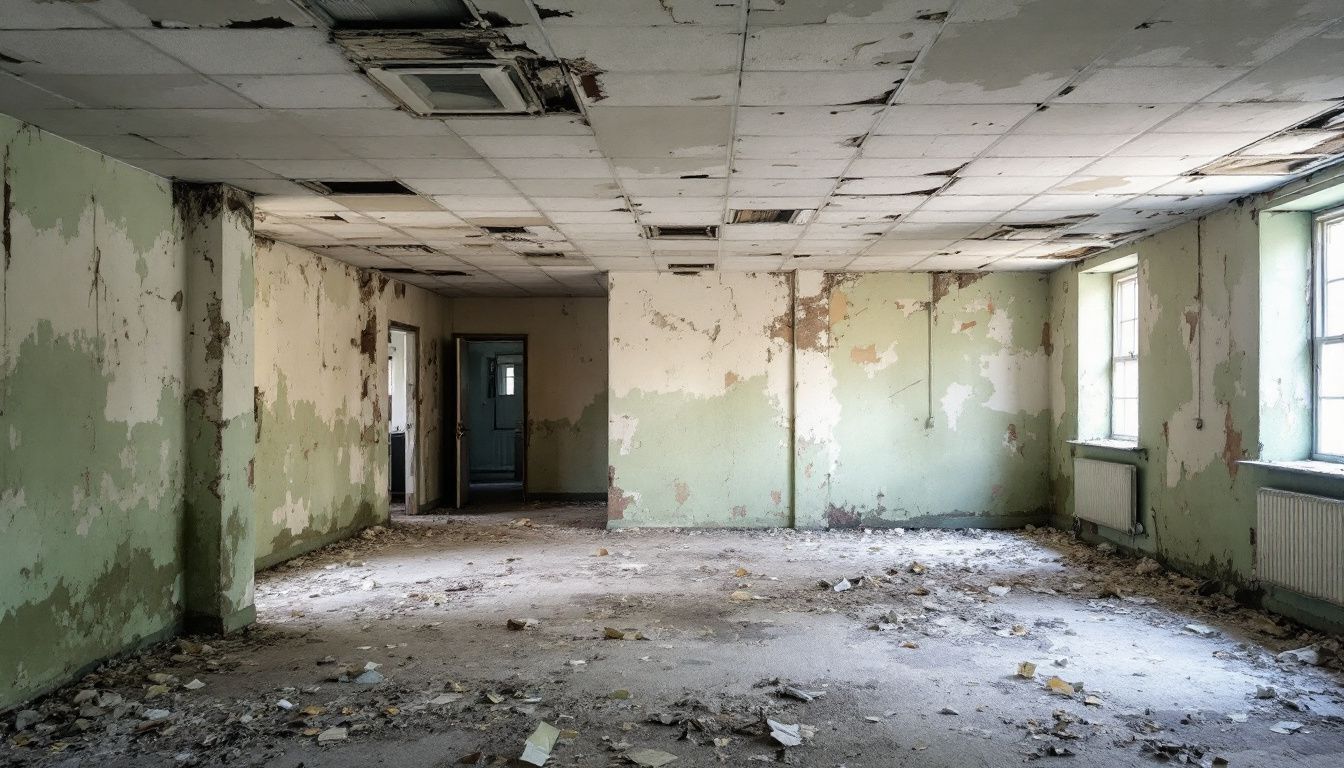
Demolishing a Building Without an Asbestos Survey Is a Criminal Offence
Understanding the importance of asbestos surveys in property demolition planning is not a matter of preference — it is a legal obligation that carries real criminal consequences. Any structure built before 2000 may contain asbestos-containing materials (ACMs), and disturbing them without proper identification puts workers, neighbouring residents, and the public at risk of fatal disease.
This is not bureaucratic box-ticking. It is a fundamental duty, and getting it right from the outset protects lives, protects your project timeline, and keeps you on the right side of the Health and Safety Executive (HSE).
Why Asbestos Remains a Live Danger on Demolition Sites
Asbestos was used extensively in UK construction throughout most of the 20th century. It appeared in floor tiles, roof sheeting, pipe lagging, ceiling tiles, textured coatings, fire doors, and insulation boards — often in locations that are not immediately obvious during a visual inspection.
When ACMs are disturbed during demolition, microscopic fibres become airborne. Once inhaled, those fibres can lodge permanently in lung tissue and cause mesothelioma, asbestosis, and lung cancer — diseases that may not manifest for decades after exposure. There is no safe level of exposure, and there is no cure for mesothelioma.
Demolition work represents one of the highest-risk activities for uncontrolled fibre release. A thorough survey before any work begins is the only reliable way to understand what you are dealing with and plan accordingly.
Understanding the Importance of Asbestos Surveys in Property Demolition Planning: The Legal Framework
The Control of Asbestos Regulations places clear legal duties on anyone responsible for non-domestic premises — and those duties extend to demolition contractors and project managers. The regulations require that asbestos is identified, its condition assessed, and a management plan put in place before any work that could disturb it commences.
HSE guidance document HSG264 provides the technical standard for how surveys must be conducted. It defines survey types, sampling requirements, and the competency standards surveyors must meet. Compliance with HSG264 is not optional — it is the benchmark against which any enforcement action would be measured.
The HSE has powers to issue prohibition notices, halt demolition work immediately, and prosecute both individuals and organisations. Fines are unlimited in the Crown Court, and custodial sentences are possible in serious cases. There is no legal route around a pre-demolition asbestos survey for any building that may contain ACMs.
Who Holds the Legal Duty?
The duty to manage asbestos falls on the dutyholder — typically the building owner, the principal contractor, or whoever has control of the premises. In demolition projects, this responsibility often transfers to the demolition contractor once they take control of the site.
Passing a building over to a contractor without providing asbestos survey information does not absolve the owner of responsibility. Equally, a contractor who proceeds without requesting survey data is exposing themselves to serious legal and financial risk. Both parties must understand their obligations clearly before a single brick is touched.
The Two Survey Types You Need to Know
Not all asbestos surveys are the same, and using the wrong type for a demolition project is a common — and costly — mistake. HSG264 defines two distinct survey types, each designed for different circumstances.
Management Survey
A management survey is designed for buildings in normal occupation. It identifies ACMs in accessible areas that could be disturbed during routine maintenance or day-to-day use, and it informs an asbestos register and ongoing management plan.
It is not sufficiently intrusive for demolition work. If you are planning to bring a building down, a management survey will not satisfy the legal requirements of a pre-demolition survey — you need to go further.
Refurbishment and Demolition Survey
A refurbishment survey — or, in the case of full demolition, a demolition survey — is fully intrusive. The surveyor must access all areas of the building, including structural voids, cavities, service ducts, and spaces above suspended ceilings. This may involve breaking into walls, lifting floorboards, and removing ceiling tiles.
The building must be unoccupied during this type of survey, because the process itself can disturb ACMs. Every room, every void, and every accessible space must be examined. Samples taken from suspected materials are sent to a UKAS-accredited laboratory for analysis.
For full demolition, an asbestos demolition survey must cover the entire structure — not just the areas being worked on first. The findings must be made available to all contractors involved in the project before any physical work begins.
When Must the Survey Be Completed?
The survey must be completed before demolition work starts — not during it, and certainly not after an unexpected find has already put workers at risk. In practice, you should commission the survey at least six weeks before your planned start date.
This allows time for laboratory analysis of samples, preparation of a full written report, and — critically — time to plan and arrange licensed asbestos removal if ACMs are identified. Licensed removal must be notified to the HSE in advance, and that notification period alone demands forward planning.
Rushing a survey to meet a tight demolition schedule is a false economy. Discovering asbestos mid-demolition causes far greater delays, far greater cost, and far greater legal exposure than commissioning the survey early and building the findings into your project plan from the outset.
What About Renovation and Refurbishment Work?
The same principles apply to any work that involves disturbing the fabric of a building — not just full demolition. Kitchen refits, bathroom installations, loft conversions, extensions, and structural alterations on pre-2000 properties all require a refurbishment and demolition survey before work begins.
A management survey already in place does not satisfy this requirement. The intrusive nature of refurbishment work demands an intrusive survey. If you are unsure which survey type applies to your project, speaking to a qualified surveyor before committing to a programme of works is always the right approach.
What Happens During a Demolition Survey?
Understanding what a demolition survey actually involves helps project managers and building owners prepare properly and get the most from the process.
A qualified surveyor will begin with a thorough review of any existing asbestos information — previous surveys, building records, or management plans. This provides useful context but does not replace the physical inspection.
The physical survey involves a systematic, room-by-room inspection of the entire building. The surveyor will:
- Inspect all accessible and inaccessible areas, including roof spaces, service ducts, and structural voids
- Identify all materials that may contain asbestos, based on their appearance, age, and location
- Take samples from suspected ACMs for laboratory analysis
- Record the location, condition, and extent of each suspected material
- Assess the risk posed by each identified material
The resulting report will map every identified or suspected ACM, provide laboratory confirmation of asbestos presence and type, and recommend appropriate action — whether that is asbestos removal before demolition, encapsulation, or careful management during the demolition process itself.
Who Can Conduct a Demolition Survey?
Only surveyors with appropriate qualifications and experience should be commissioned for demolition surveys. The relevant qualification is the British Occupational Hygiene Society (BOHS) P402 certificate — the industry-recognised standard for asbestos surveying in the UK.
The laboratory analysing samples must be UKAS-accredited. Using a non-accredited laboratory means your results may not be legally defensible, and you may face challenges from the HSE or from contractors who rely on the data to plan safe working methods.
At Supernova Asbestos Surveys, all surveyors hold BOHS P402 qualifications, and all samples are processed through UKAS-accredited laboratories. Reports are typically available within 24 hours of survey completion.
The Consequences of Skipping the Survey
The consequences of proceeding with demolition without a proper asbestos survey are severe, and they fall on multiple parties simultaneously.
Legal Consequences
The HSE can issue prohibition notices that halt demolition work immediately. Prosecutions under the Control of Asbestos Regulations can result in unlimited fines in the Crown Court, and individuals — including site managers and directors — can face custodial sentences where negligence is demonstrated.
Local authorities also hold enforcement powers, and planning conditions on demolition projects increasingly require evidence of asbestos survey completion before demolition consent is granted.
Health Consequences
Workers exposed to asbestos fibres during unplanned disturbance face a genuine risk of developing mesothelioma or other asbestos-related diseases. These are fatal conditions with no effective treatment, and a latency period of 20 to 40 years means workers may not know they have been harmed until decades later.
Neighbouring residents and members of the public can also be exposed if fibres are released from a demolition site without adequate controls in place — widening liability exposure considerably.
Financial Consequences
Unexpected asbestos finds mid-demolition can halt a project for weeks. Emergency licensed removal is significantly more expensive than planned removal, and decontamination of equipment and the site itself adds further cost. Civil litigation from exposed workers can follow years or even decades later.
Against these risks, the cost of a pre-demolition survey is negligible. It is one of the most cost-effective risk management decisions you can make on any demolition project.
Best Practice for Demolition Project Managers
If you are managing a demolition project on a pre-2000 building, the following steps represent current best practice and will keep you legally compliant and operationally protected.
- Commission the survey early. Build it into your project plan from the outset — not as an afterthought once a start date is confirmed. Six weeks minimum before works begin is a sensible baseline.
- Use a qualified, accredited surveyor. Verify BOHS P402 qualifications and confirm that the laboratory used is UKAS-accredited before you sign anything.
- Ensure the survey covers the entire structure. Partial surveys create gaps that cause problems later. The survey must be fully intrusive and cover every accessible space without exception.
- Share survey findings with all contractors. Every contractor working on the demolition must have access to the asbestos survey report before they begin work. This is a legal requirement, not a courtesy.
- Plan licensed removal before demolition begins. Where ACMs require removal by a licensed contractor, factor in the HSE notification period and arrange removal well in advance of your demolition start date.
- Keep records. Retain all survey reports, laboratory certificates, removal notifications, and waste transfer notes. These documents protect you in the event of any future enforcement action or civil claim.
Asbestos Surveys Across the UK: We Cover the Whole Country
Supernova Asbestos Surveys operates nationwide, with experienced surveyors available across England, Scotland, Wales, and Northern Ireland. Whether your demolition project is in the capital or the north of England, we can mobilise quickly and deliver results on your timeline.
If you need an asbestos survey London teams can rely on, we cover all London boroughs and the surrounding areas. For projects in the north-west, our asbestos survey Manchester service provides the same fast turnaround and accredited reporting. In the Midlands, our asbestos survey Birmingham team is ready to support demolition projects of any scale.
Every survey we conduct — regardless of location — is carried out by BOHS P402-qualified surveyors, with samples analysed by UKAS-accredited laboratories and reports delivered promptly so your project can move forward without unnecessary delay.
Ready to Commission Your Pre-Demolition Survey?
Supernova Asbestos Surveys has completed over 50,000 surveys nationwide. Our surveyors understand the pressures of demolition project timelines, and we work to deliver accurate, legally compliant reports that give you the information you need to proceed with confidence.
Do not leave your demolition project exposed to legal risk, project delays, or the devastating consequences of uncontrolled asbestos release. Call us today on 020 4586 0680 or visit asbestos-surveys.org.uk to request a quote or speak to a qualified surveyor about your project.
Frequently Asked Questions
Is an asbestos survey legally required before demolition?
Yes. Under the Control of Asbestos Regulations and HSE guidance document HSG264, a fully intrusive asbestos survey is legally required before demolition work begins on any building that may contain asbestos-containing materials. This applies to all structures built before 2000. Proceeding without one can result in prohibition notices, unlimited fines, and — in serious cases — custodial sentences for individuals responsible.
What is the difference between a management survey and a demolition survey?
A management survey is designed for occupied buildings and identifies ACMs in accessible areas to support ongoing management. A demolition survey is fully intrusive — the surveyor accesses every void, cavity, and structural space within the building. The demolition survey is the only type that satisfies legal requirements before a building is demolished or subject to major structural work.
How far in advance should I commission a pre-demolition asbestos survey?
You should commission the survey at least six weeks before your planned demolition start date. This allows sufficient time for laboratory analysis of samples, preparation of the written report, and — where ACMs are found — arrangement of licensed asbestos removal, including the mandatory HSE notification period that applies to licensed removal work.
What happens if asbestos is found during the demolition survey?
The survey report will identify the type, location, condition, and extent of any ACMs found. Depending on the findings, the recommended action may be licensed removal before demolition, unlicensed removal by trained operatives, or controlled management during the demolition process. Where licensed removal is required, this must be carried out by a licensed contractor and notified to the HSE before work begins.
Can I use an existing asbestos management plan instead of commissioning a new survey?
No. An existing management survey or management plan does not satisfy the requirements for a pre-demolition survey. Demolition demands a fully intrusive survey that examines all areas of the structure, including those not assessed during a management survey. Any existing asbestos information can provide useful background context for the surveyor, but it does not replace the physical inspection and sampling required under HSG264.